EASA Removes CZIBs: Middle East Risk Gets Harder to Read

Earlier this year, EASA withdrew its CZIBs (Conflict Zone Information Bulletins) for Israel and Iran, citing de-escalation. At the time, we wrote that the move seemed premature.

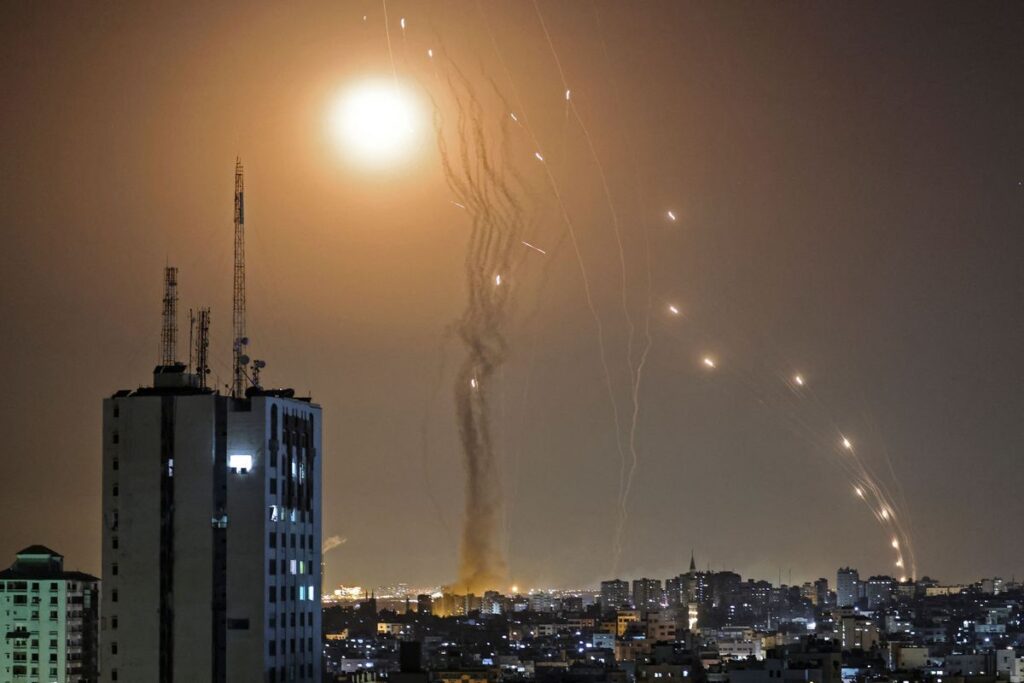
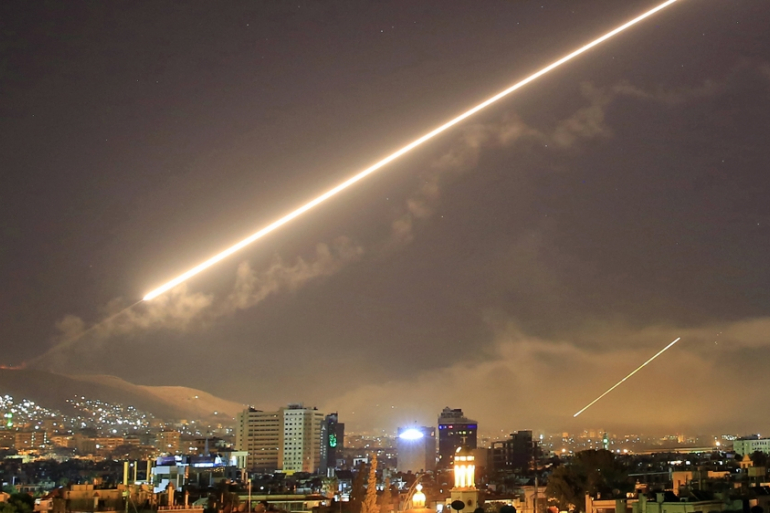
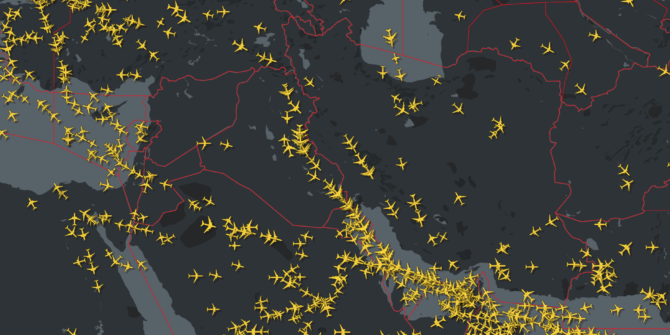
Then in June, the region saw one of its worst escalations in decades, with Israel and Iran trading missile strikes, the US and Gulf states scrambling to protect airbases, and most of the Middle East airspace system grinding to a halt.

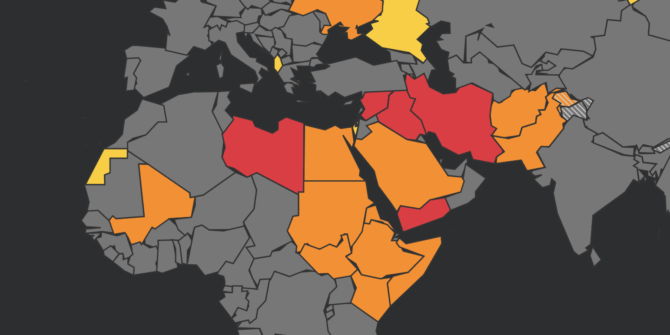
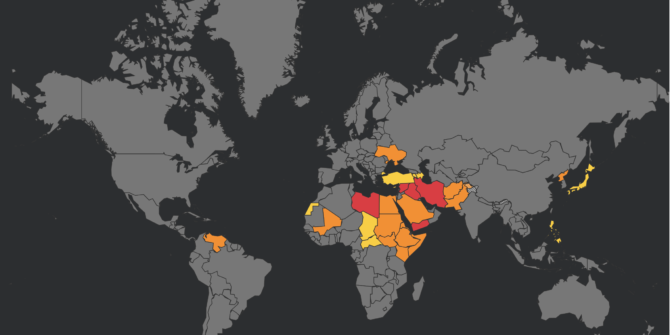
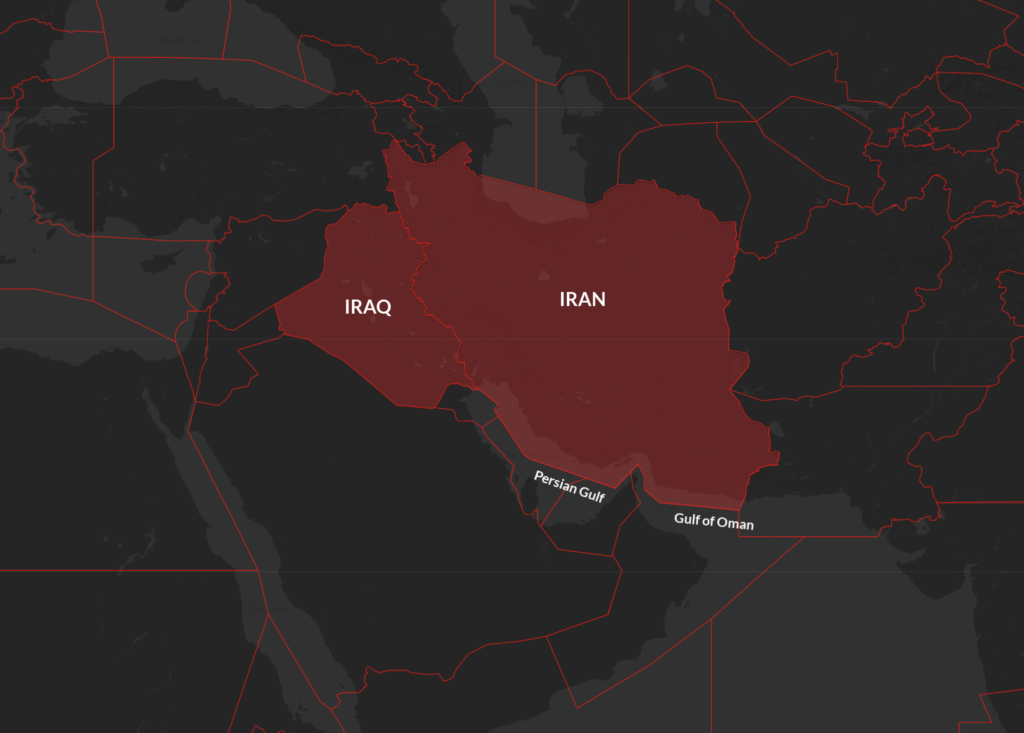
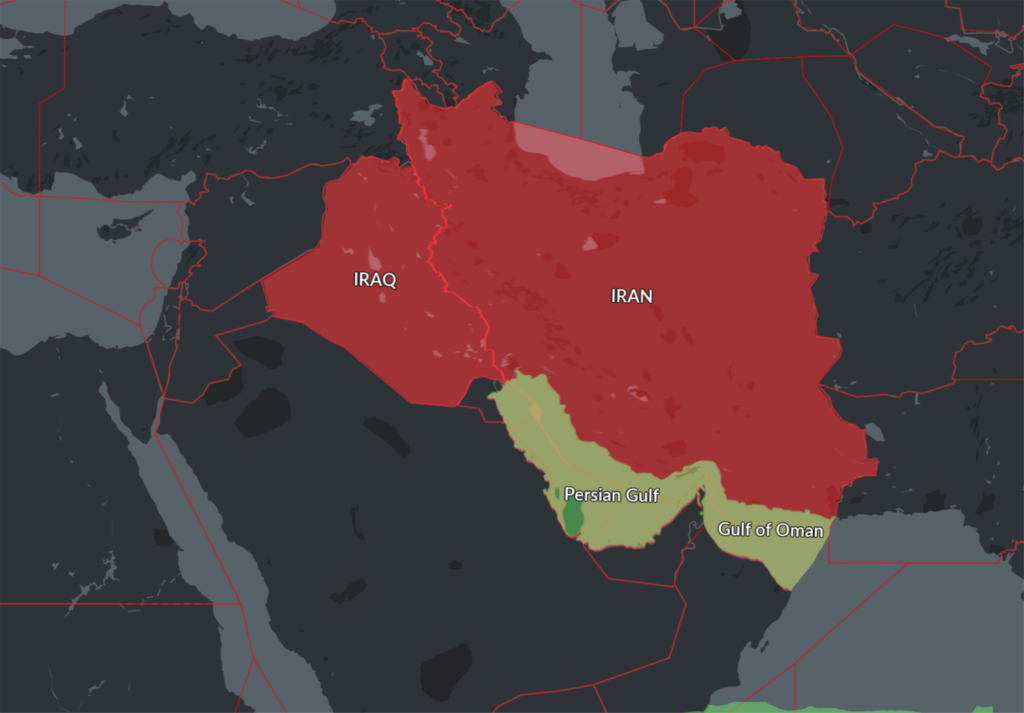
EASA responded by reissuing updated CZIBs advising operators to stay well clear of Iran, Iraq, Israel, Jordan, and Lebanon. They also flagged the risk of spillover into parts of Egypt and Saudi Arabia.

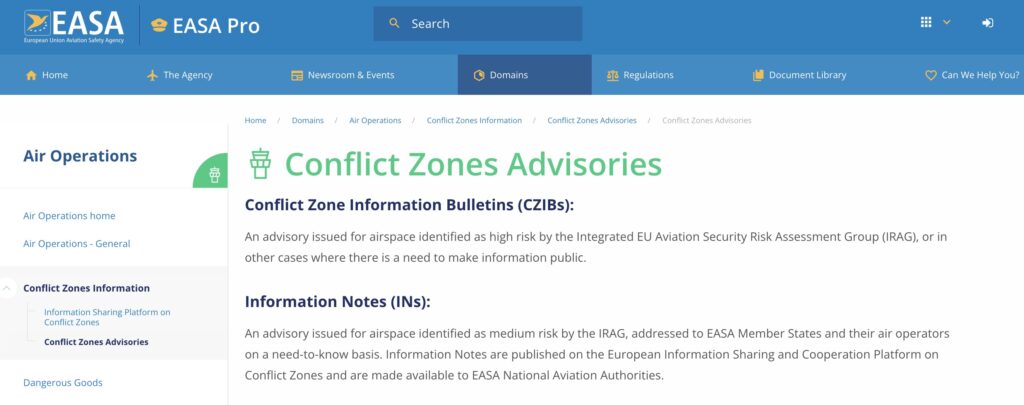
Now, just weeks after that guidance, those CZIBs have been withdrawn again. And once again, they’ve been replaced by vague and inaccessible “Information Notes” — only available to EU-based commercial operators, civil aviation authorities, and EU agencies. Everyone else (mainly biz jets and non-EU carriers) is locked out.

What’s changed?

To recap: Following a ceasefire in early July, most FIRs across the region reopened. Iran reopened its OIIX/Tehran FIR in stages — first the east, then limited use of the west, and finally full ops. Israel began accepting traffic to LLBG/Tel Aviv on specific routings. Iraq reopened its airspace. Syria and Lebanon reopened too, albeit amid some brief re-closures. OPSGROUP members can access a full briefing here.

But the risks haven’t vanished. Most carriers are still avoiding direct routings over Iran. GPS spoofing remains widespread. FIRs across the region are fragile — especially the corridor between Israel and Iran, which could close again at short notice if the conflict resumes.

The CZIBs are gone, again.

EASA’s logic for removing them now appears to mirror their reasoning back in January — improving conditions, a reduction in active hostilities, and a belief that risk has subsided enough to no longer warrant a public advisory.

But here’s the key problem: the new “Information Notes” replacing CZIBs are not public. Unless you’re part of the inner circle of EU-based airlines or national regulators, you don’t get to see them. And the publicly accessible version doesn’t contain any detailed analysis, routing recommendations, or clarity on thresholds for escalation.

CZIBs were never binding, but they were visible — offering a common European position on conflict zone risk. The shift to restricted-access notes marks a change in how EASA communicates that risk.

A continuing need for caution

The removal of CZIBs shouldn’t be interpreted as an all-clear. The ceasefire between Israel and Iran remains fragile. Regional tensions persist. GPS interference continues to impact operations across the eastern Mediterranean and Persian Gulf. Routes through Athens and Nicosia FIRs remain congested as many operators still choose to avoid overflights of Iran and Israel altogether.

EASA’s risk assessments will of course evolve as the situation does — but for operators outside the EU system, the reduced visibility makes it more important than ever to consult a variety of sources: state-level airspace warnings, Notams, real-time airspace activity, and third-party guidance.

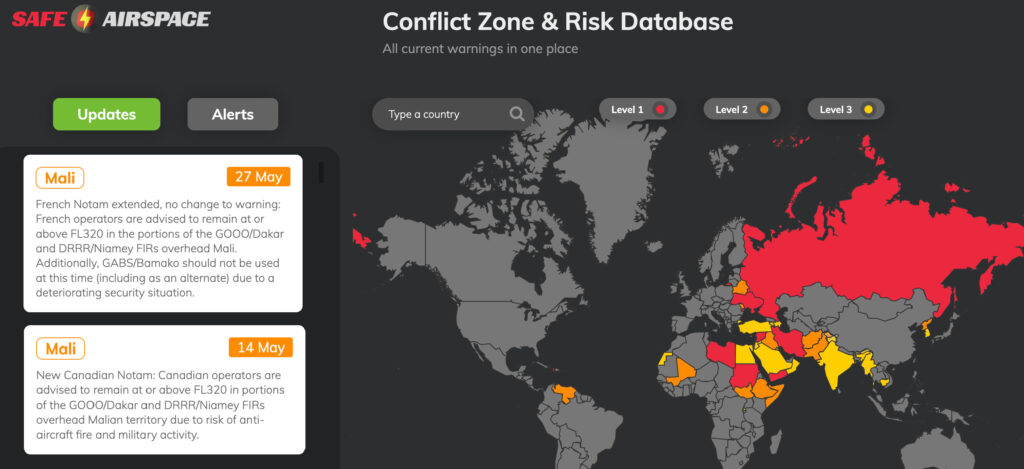
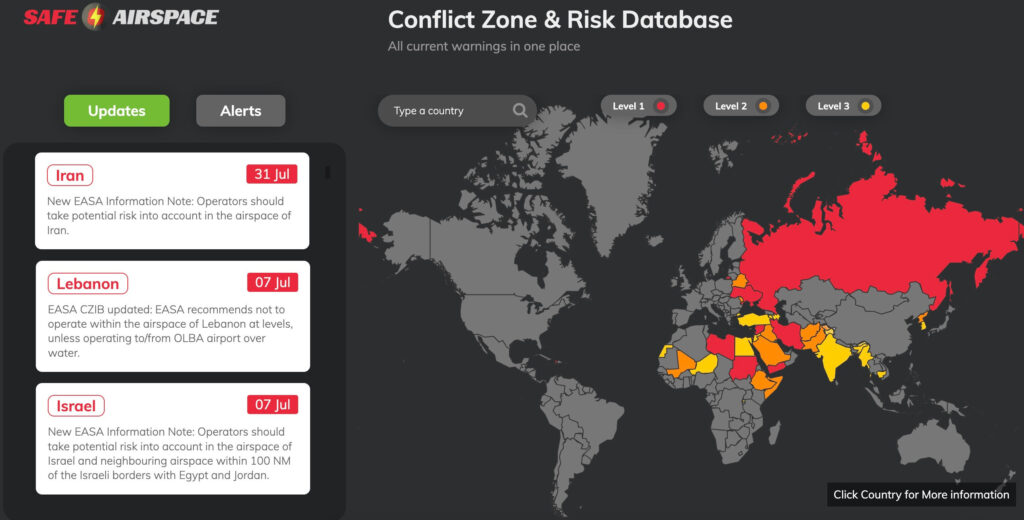
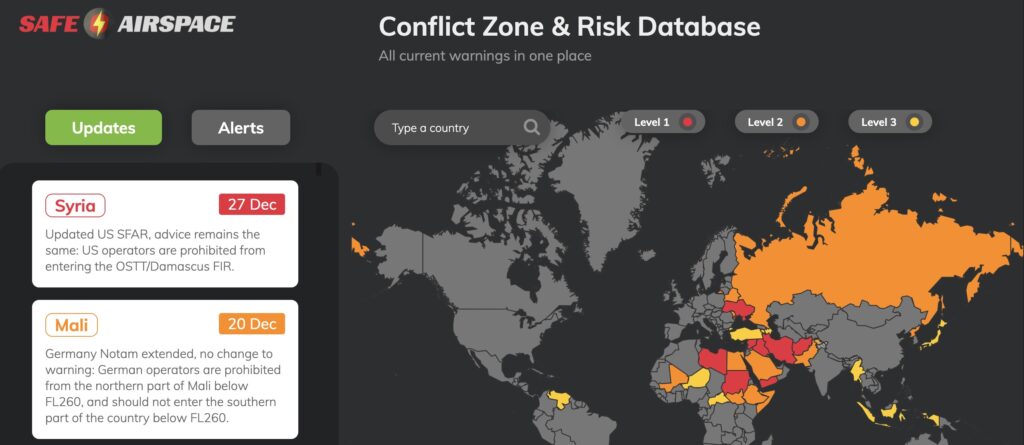
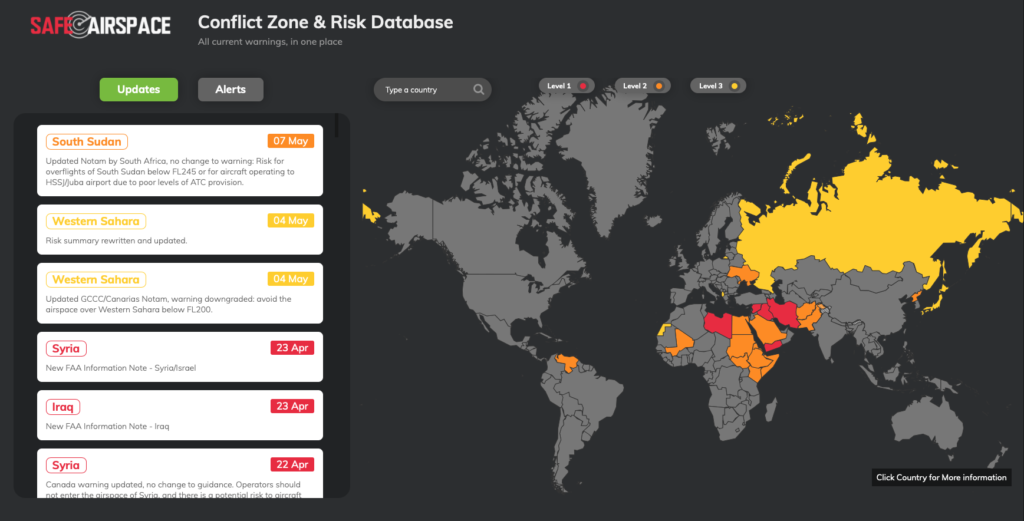
We maintain a full database of state issued airspace warnings at SafeAirspace.net, freely accessible to everyone.

The bottom line

While EASA’s decision to withdraw its CZIBs reflects improved conditions in parts of the region, the underlying risks remain dynamic. Operators should continue to treat Middle East operations with care — especially in and around Iran and Israel — and stay alert to changes that could result in rapid airspace restrictions or closures.

In short: just because EASA has stopped talking about it doesn’t mean the threat has gone away.


West Africa Ops: Routing Options and Restrictions

Flying into or out of West Africa is becoming increasingly tricky, with operators having to navigate a patchwork of airspace bans, conflict zones, and overflight restrictions. Two directions present the most complexity: north to Europe, and east to the Middle East.

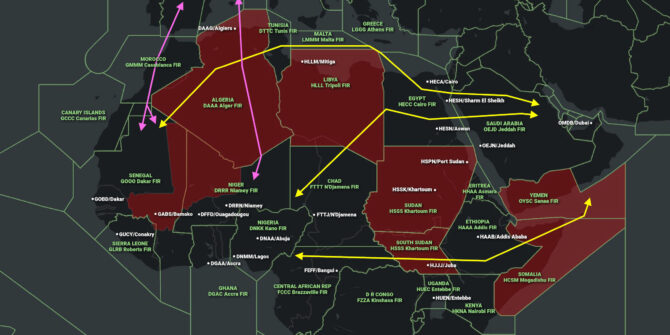
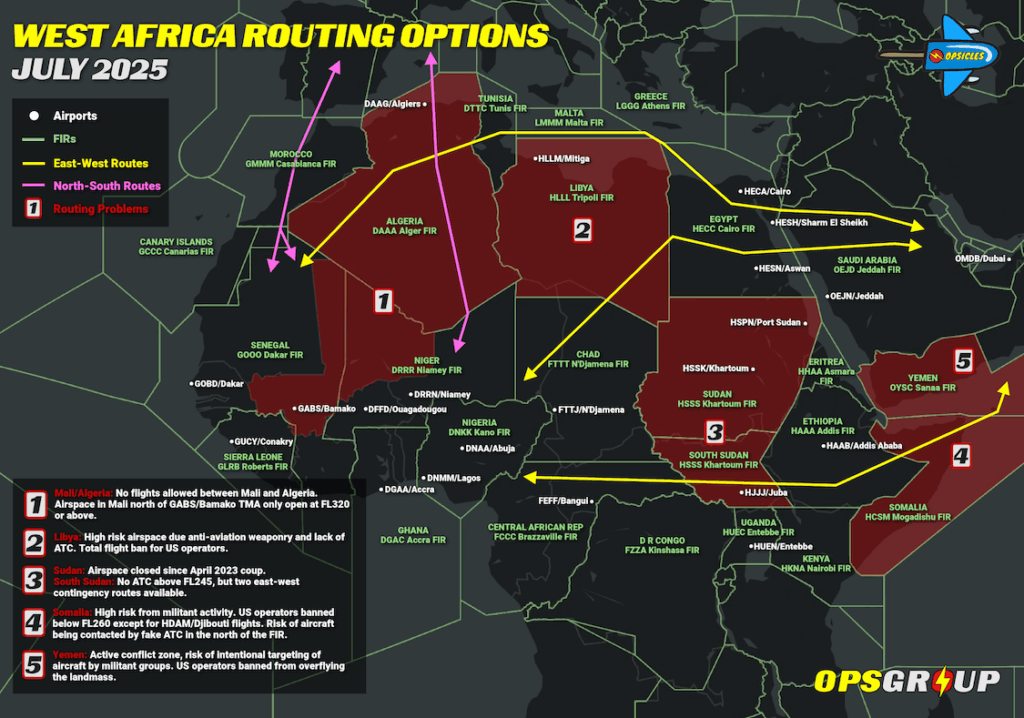
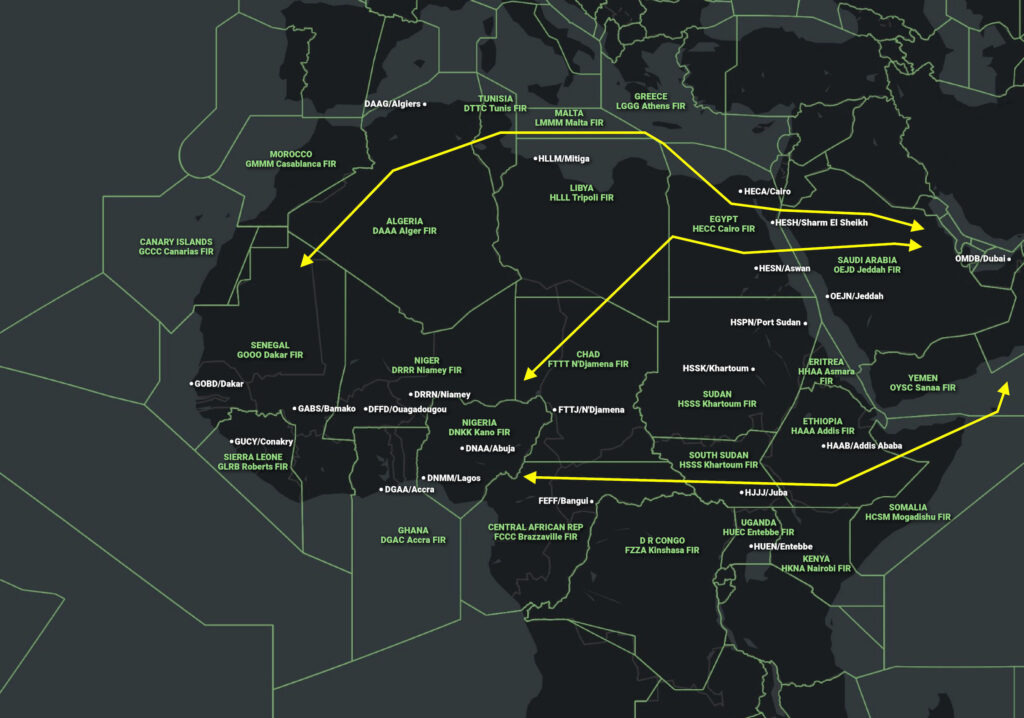
OPSGROUP members can download this map to see exactly how these restrictions affect routing.

There’s a cluster of major airports in West Africa — from Lagos to Accra to Dakar — that handle the bulk of international traffic in the region.

But getting to these hubs from Europe or the Middle East is complicated by airspace risks and closures in five key areas: Mali/Algeria, Libya, Sudan/South Sudan, Somalia, and Yemen. 

Here’s a more detailed look at each of these.

Mali/Algeria

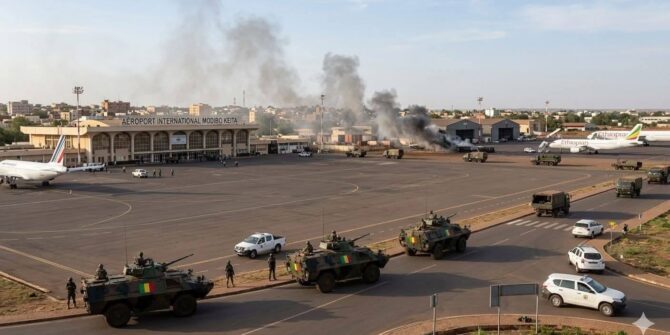
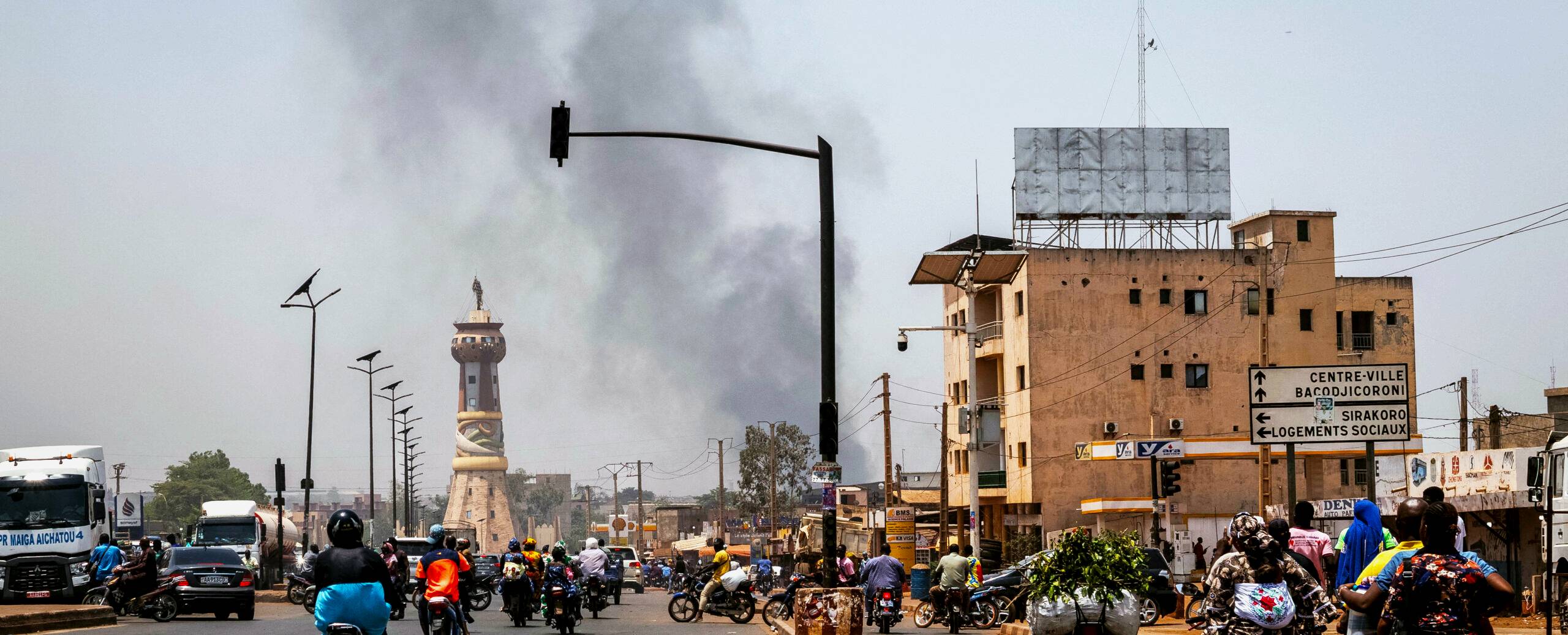
  • Northern Mali remains a war zone — ongoing since 2012.
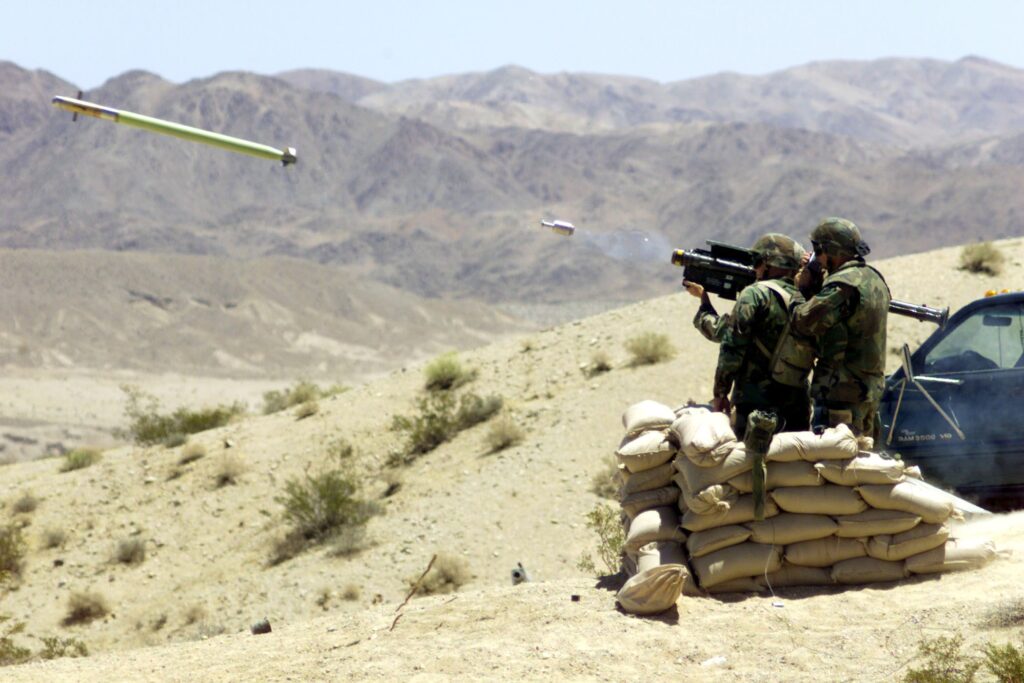
  • MANPADS, rockets, and mortars pose a threat to low-flying aircraft.
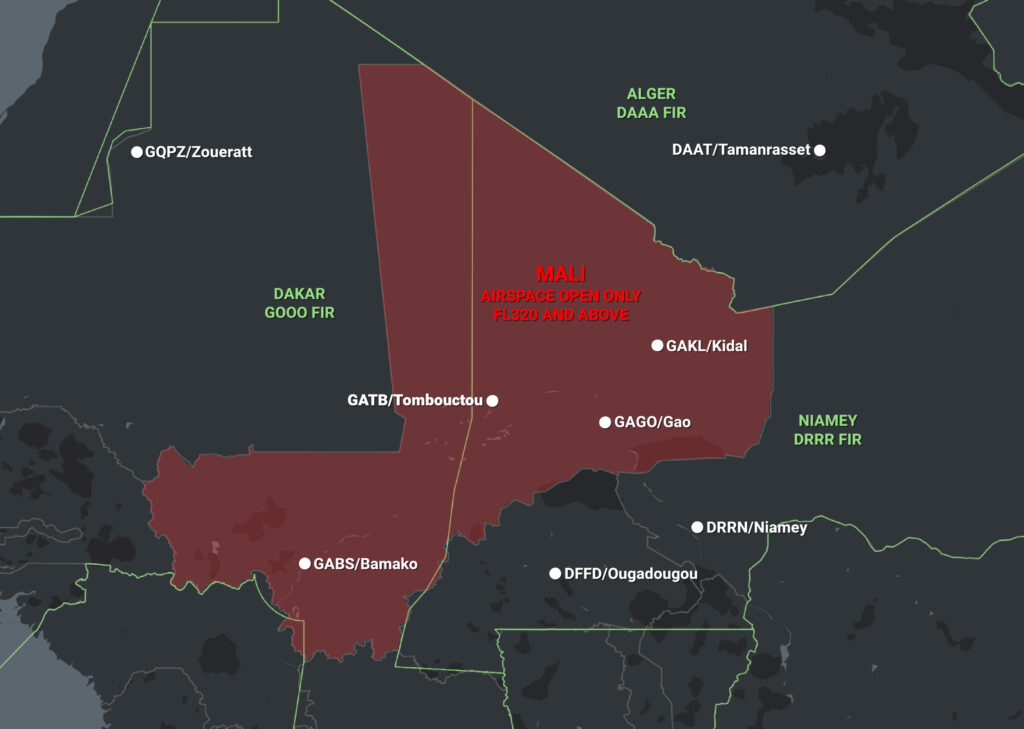
  • US advises caution at all flight levels; several states restrict ops below FL250/260.
  • Overflights above FL320 permitted, per long-standing Notams from GOOO/Dakar and DRRR/Niamey FIRs.
  • Airports GATB, GAGO, GAKL should be avoided.
  • A reciprocal airspace ban with Algeria (since April 2025) prohibits all flights between the two countries — even overflights.
  • Routing via Mauritania remains open. Algerian ATC may reroute flights via Niger.
  • More info here.

Libya

  • Active conflict zone since 2014.
  • HLLL/Tripoli FIR is high-risk. Total ban for US and UK operators.
  • Threats include misidentification by air defense systems, militia threats near Tripoli, and unreliable ATC.
  • Frequent radar and comms outages; some flights rely on Malta ATC for guidance.
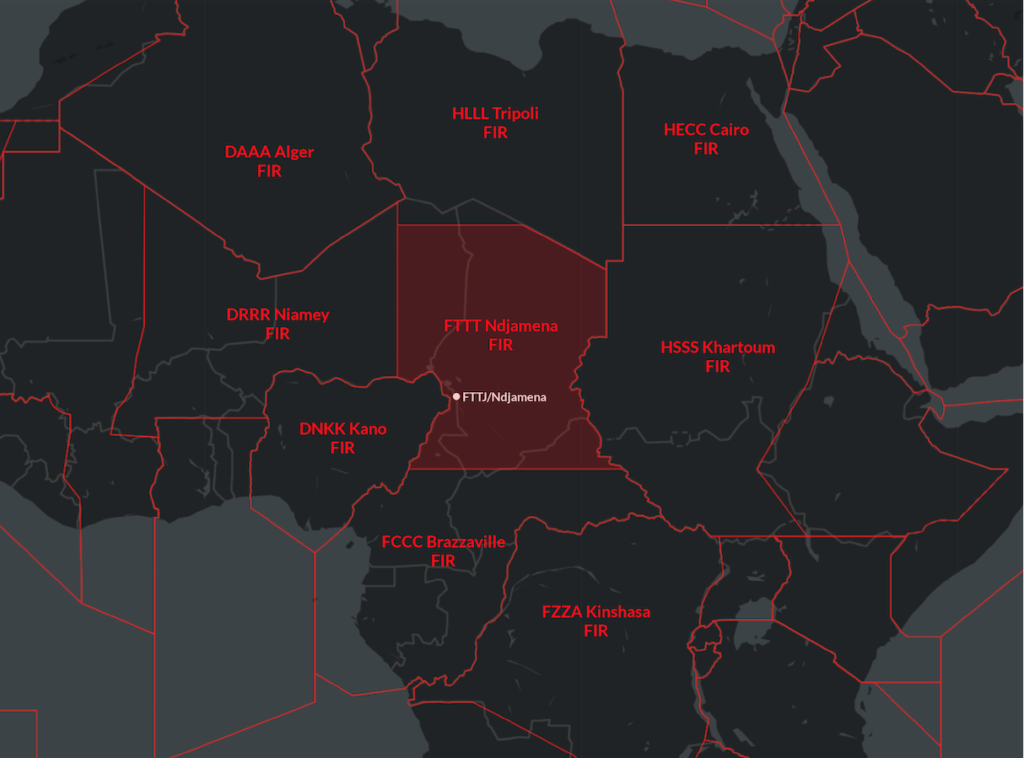
  • Strongly advised to avoid all Libyan airspace, regardless of altitude. However, some airline flights between West Africa and the Middle East operate over the south-eastern corner of the HLLL/Tripoli FIR between Egypt and Chad rather than routing around Libya to the north or via South Sudan to the south.
  • More info here.

Sudan/South Sudan

  • Airspace fully closed since the April 2023 coup.
  • HSSK/Khartoum Airport is shut; no Notams are being issued.
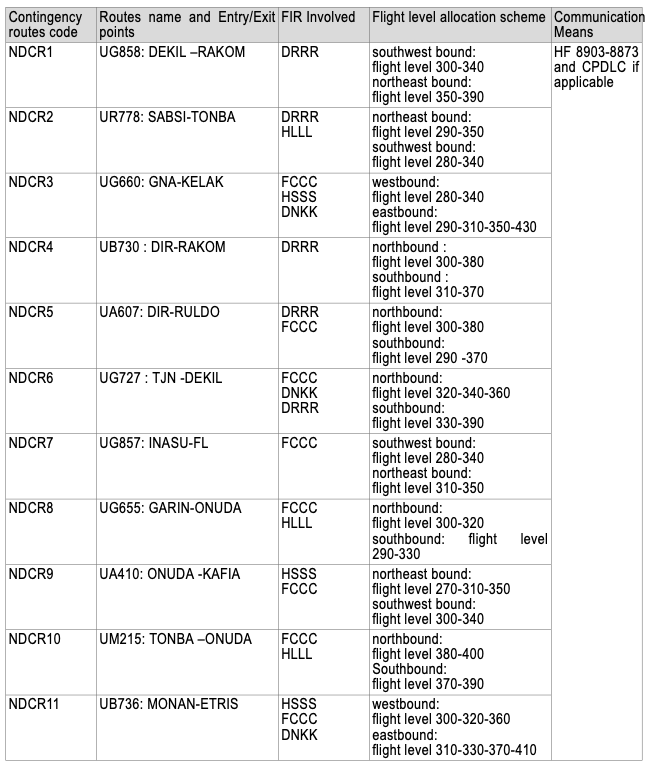
  • There are some contingency routes available for flights to HSPN/Port Sudan, but security remains volatile.
  • Several states prohibit overflights due to military activity and anti-aircraft threats.
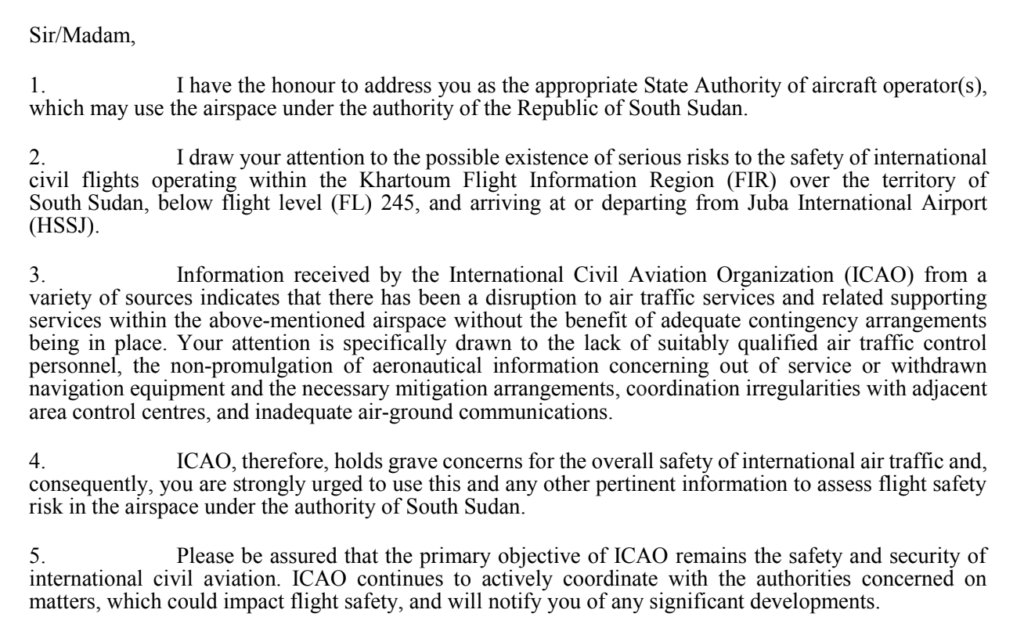
  • In South Sudan, there’s no ATC above FL245, but two east-west contingency routes are available for overflights.
  • South Sudan is open for flights to HJJJ/Juba.
  • More info here.

Somalia

  • Government control is limited; attacks by extremist militants are ongoing.
  • US prohibits flights below FL260 (except overwater to/from HDAM/Djibouti).
  • Risk of being targeted at lower altitudes by anti-aircraft weapons.
  • Reports of unauthorized ATC units issuing contacting aircraft and issuing them instructions in the northern part of the HCSM/Mogadishu FIR – genuine ATC here will only issue level changes by
    CPDLC or SATCOM.
  • More info here.

Yemen

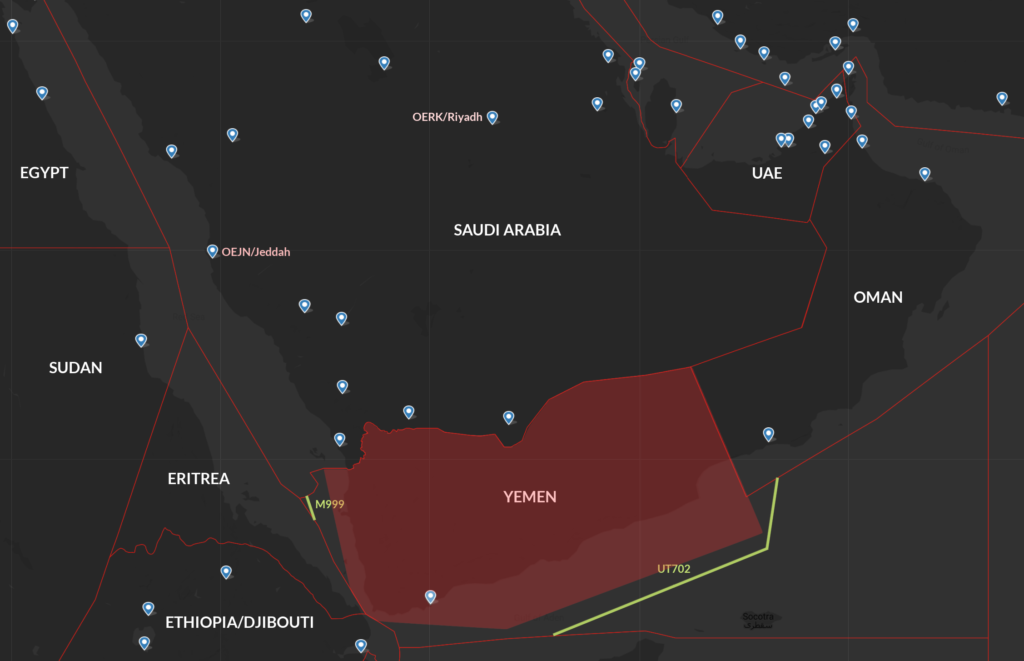
  • Active warzone — avoid all land portions of the Sanaa FIR (OYSC).
  • US operators permitted to use offshore routes UT702 and M999.
  • Other states allow overwater-only routing, avoiding the landmass.
  • Threats include drones, missiles, and intentional targeting by militants.
  • Military strikes by Saudi Arabia and Israel have been ongoing for a few years.
  • More info here.
Routing Options: West Africa to Europe

Two main options here:

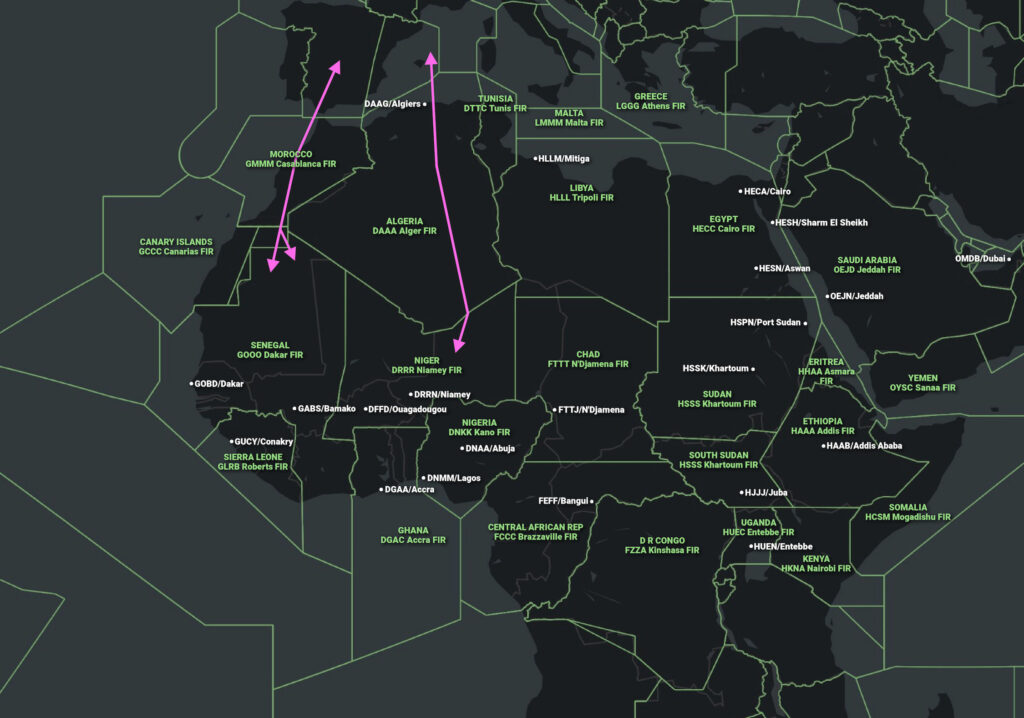
Central route via Niger/Algeria: Due to the Mali-Algeria airspace ban, overflights between these two countries is not possible. Add to that the security risks at the lower levels in northern Mali, many operators choose to avoid Mali entirely by routing east into Niger, and then turning north into Algerian airspace from there.

Western route via the Atlantic: Flights route westward over the Atlantic, before turning northeast via the Canary Islands or Morocco and into Europe. This route bypasses the entire Sahel region and avoids any involvement with Mali or Algeria. Common for flights heading to Western Europe (eg. Spain, France, Portugal).

Routing Options: West Africa to the Middle East

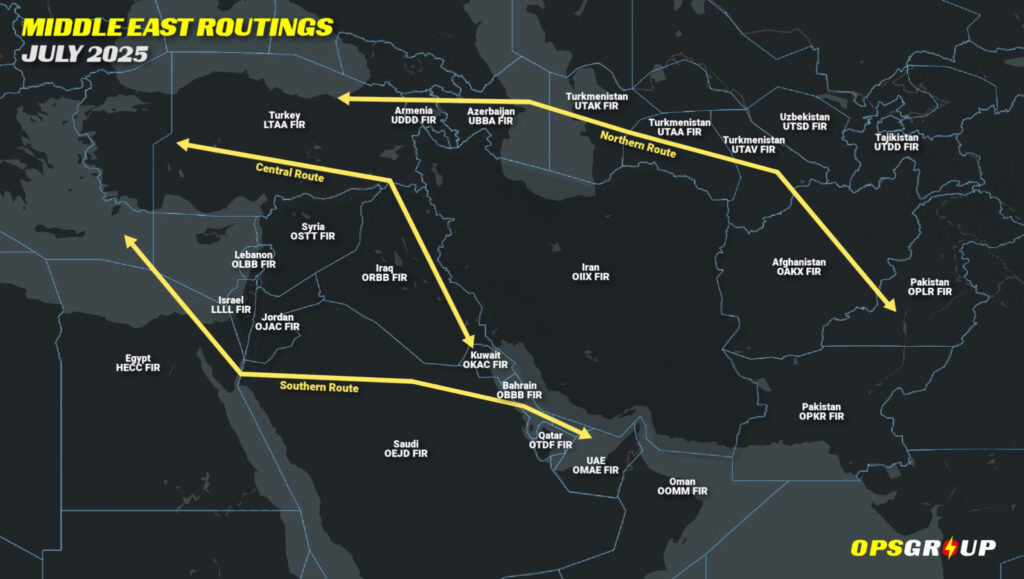
With Libya risky, Sudan closed, and Somalia/Yemen partially restricted, operators have three main options:

Central route via Libya: The shortest option routes east from Chad into the southeastern corner of Libya, then across Egypt into the Middle East. This path clips Libyan airspace, and while still considered high-risk, some airlines are using it. ATC reliability is poor, but the routing avoids longer detours.

Southern route via South Sudan: This uses one of two east-west contingency routes above FL245, then crosses Ethiopia and exits via the Gulf of Aden off the coast of Yemen and on towards the Middle East. This avoids Libya and Sudan entirely, but adds an extra 500NM or so when compared with the central route. If South Sudan isn’t viable, flights may reroute even further south via Uganda or Kenya.

Northern route avoiding Libya: This takes a northern dogleg through Niger and Algeria, then across Tunisia and Malta and into Egypt. This route avoids all high-risk airspace but is the longest of the three. It’s commonly used by operators with stricter risk thresholds or where insurance policies exclude Libyan or South Sudanese airspace.

If you’re flying any of these routings (or know of any clever alternatives we haven’t covered here), we’d love to hear from you. Email us at blog@ops.group — we’ll update this briefing and help keep other pilots and operators in the know!


Airspace Risk Update – Important Changes You May Have Missed

While operational news has been quiet for the start of 2024, some important changes to airspace risk have been gracing the OPSGROUP news feed in recent days. Here’s a brief summary of what you may have missed…

Syria

The FAA has extended its ban on US operators entering Syrian airspace (the OSTT/Damascus FIR) by a full five years. The new SFAR expires in 2028.

And with good reason – it is an active conflict zone. There are multiple risks to civil aviation there at all levels, including the very real threat of coming under fire from Syrian air defenses.

In addition to the US flight ban, several other states maintain active airspace warnings for the region. Almost no traffic overflies Syria – give it a wide berth. The updated SFAR 114 provides some updated background info on the airspace. Safeairspace.net also has a useful briefing.

Egypt

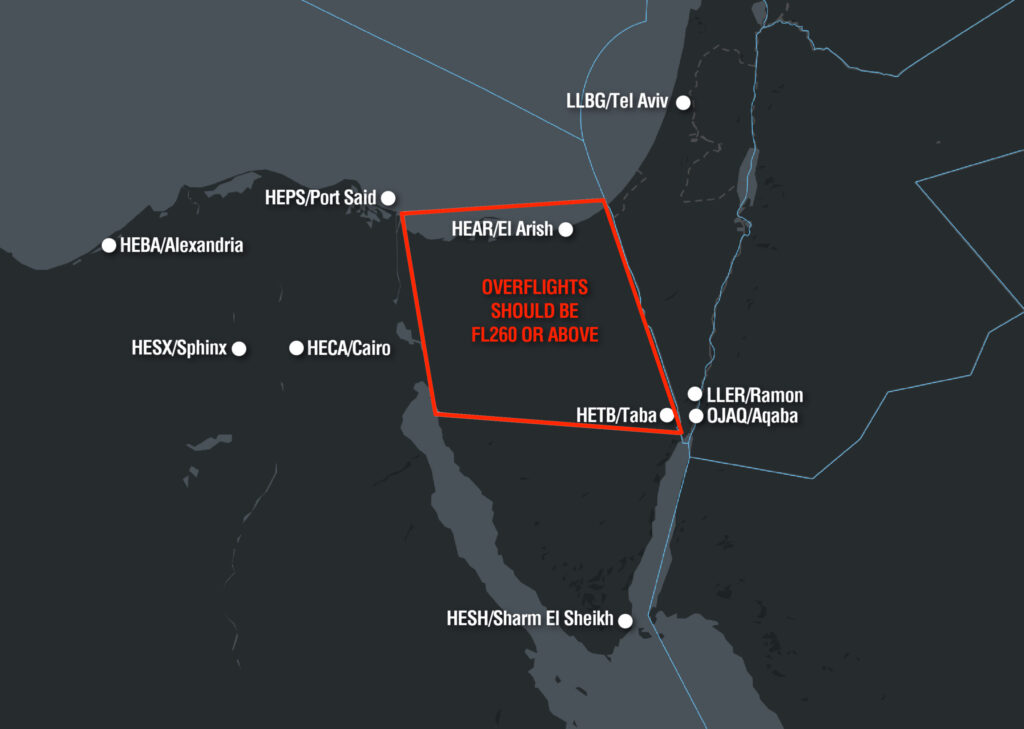
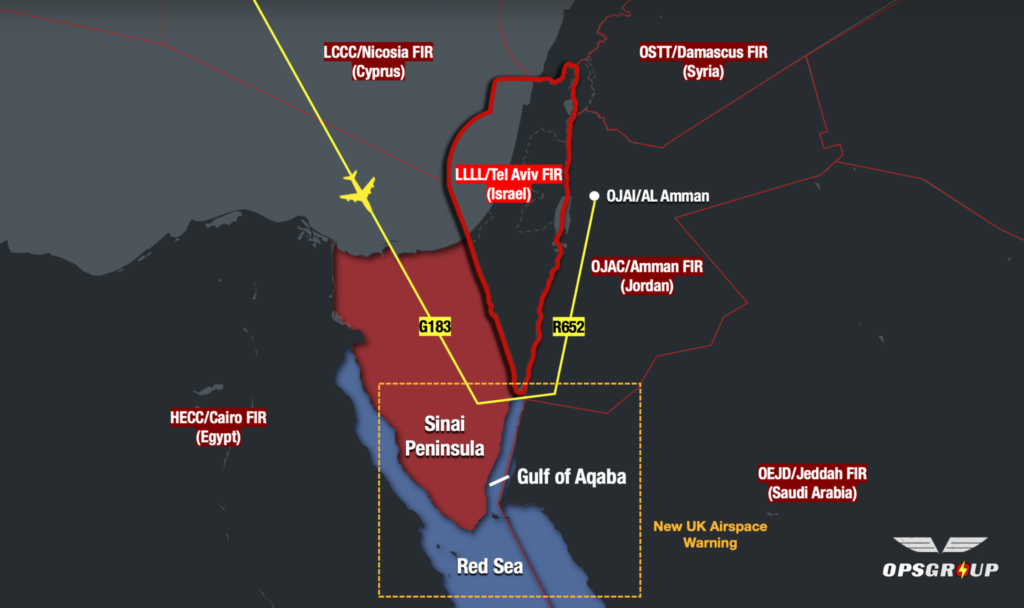
EASA has withdrawn its Conflict Zone Information Bulletin (CZIB) for Egypt – and we’re not really sure why. These CZIBs are largely based on what airspace warnings other countries have issued, and the UK and Germany still have active airspace warnings for Egypt – both countries advise against overflights below FL260 in the northern part of the Sinai region.

HEAR/Al Arish airport in particular near the Egypt/Gaza border has been identified as a potential terrorist target due to its use in humanitarian efforts. And since November 2023, the UK has been warning of risks to aircraft operating over the Red Sea due to military activity (more on that below).

Bottom line, we’re not seeing a reduction in risk. If anything, the threat to aircraft has likely escalated.

The Red Sea

Sporadic drones and missiles continue to be intercepted in the Southern Red Sea by foreign militaries. On January 9, the largest single attack yet happened with over twenty-four shot down by US forces in the area. This represents a significant increase in risk for civil aviation. The culprits are Houthi rebels in Yemen who are typically targeting western vessels, or Israel itself.

Back in November, the UK issued a new airspace warning due to these types of events. The threat is typically low level (below FL160) but the frequency of these occurrences is a major concern. Some OPSGROUP members have already reported flying longer, alternative routes to avoid the area.

The primary risks to overflights are from misidentification or mis-targeting. The military air defence equipment present is advanced, and capable of reaching all levels.

The Middle East

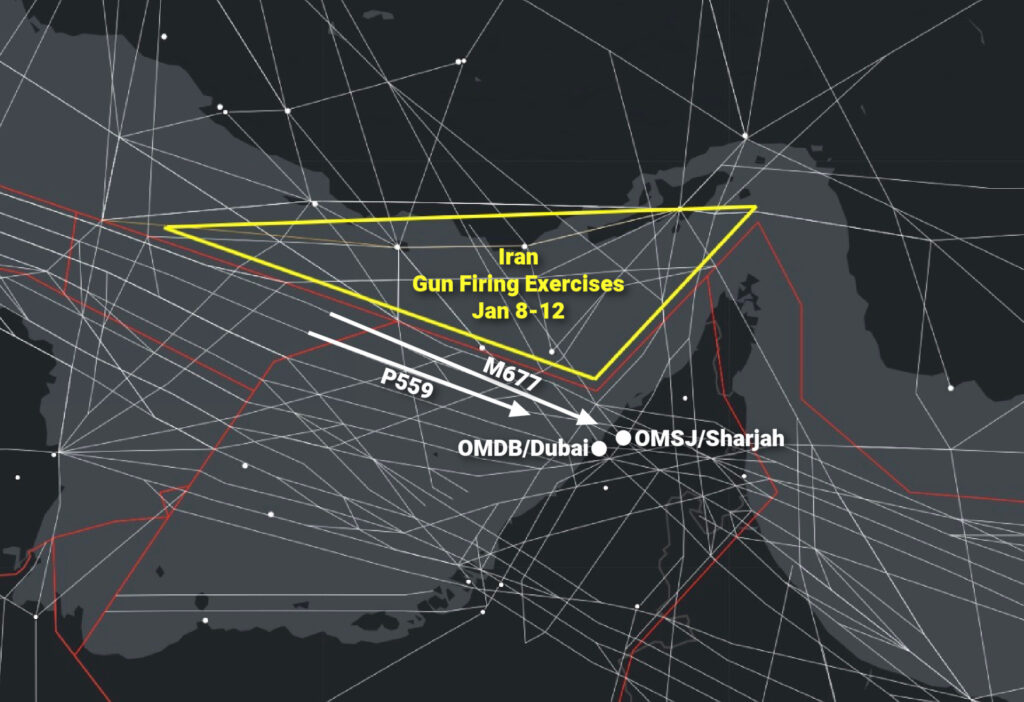
Iran has published a whole bunch of Notams under the OIIX/Tehran FIR code warning of ‘gun firing and military exercises’ between Jan 8-12 in the Strait of Hormuz. This is the sea just north of Dubai.

The areas where this will be happening are very close to overwater airways in the adjoining OMAE/Emirates FIR which get heavily used by flights heading from Europe to Dubai airports.

The US has a longstanding warning to avoid these airways nearest to the OIIX/Tehran FIR whenever possible, to reduce the risk of miscalculation or misidentification by air defence systems – good advice, especially for this period of time.

Taiwan

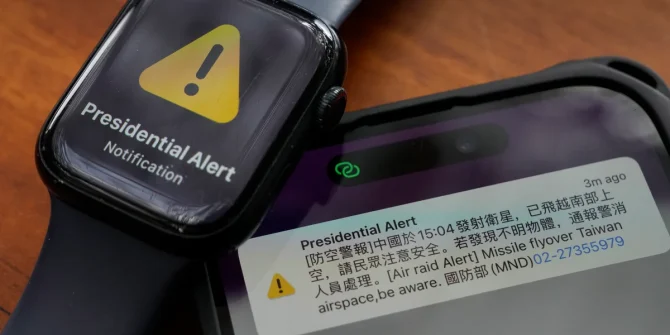
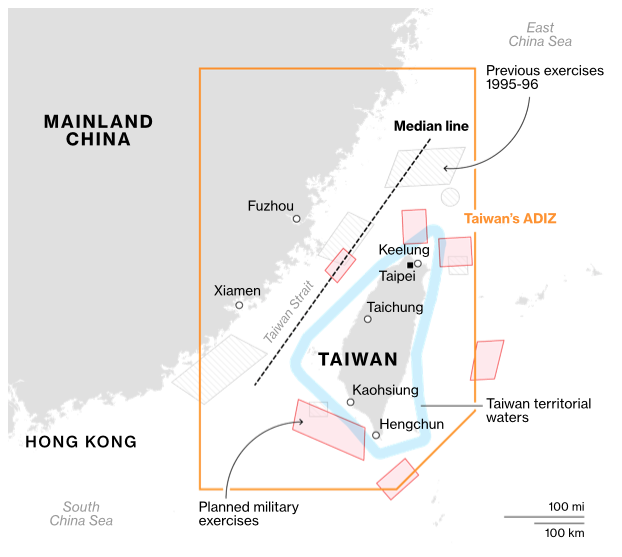
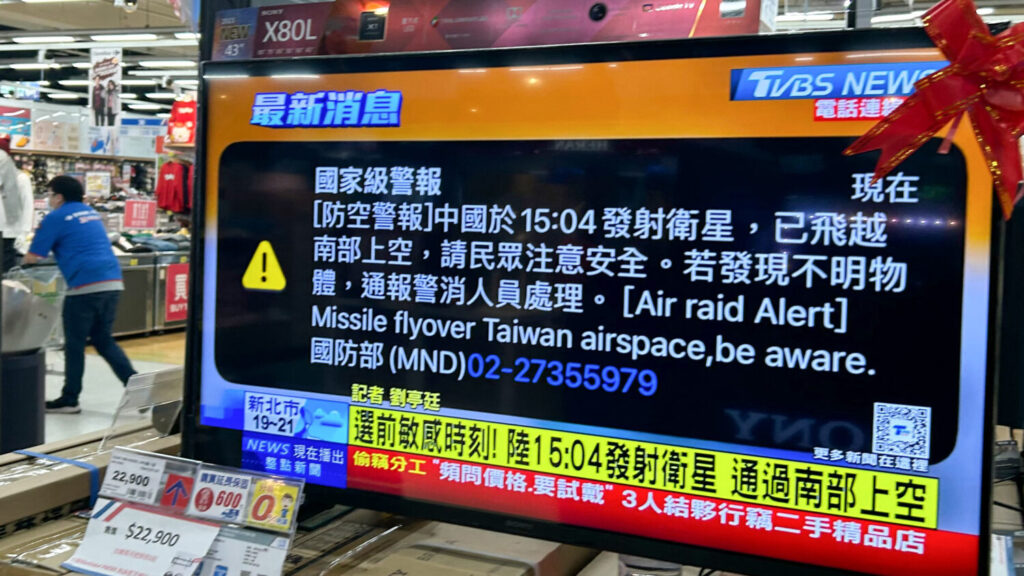
There was some panic on January 9 when a presidential missile warning was issued by authorities for Taiwanese airspace. It was the first time this has happened.

It was later clarified that this was due to the launch of a Chinese satellite (not a missile) and posed a minor debris risk. Taiwan is on the eve of a major presidential election – and tensions with China are high.

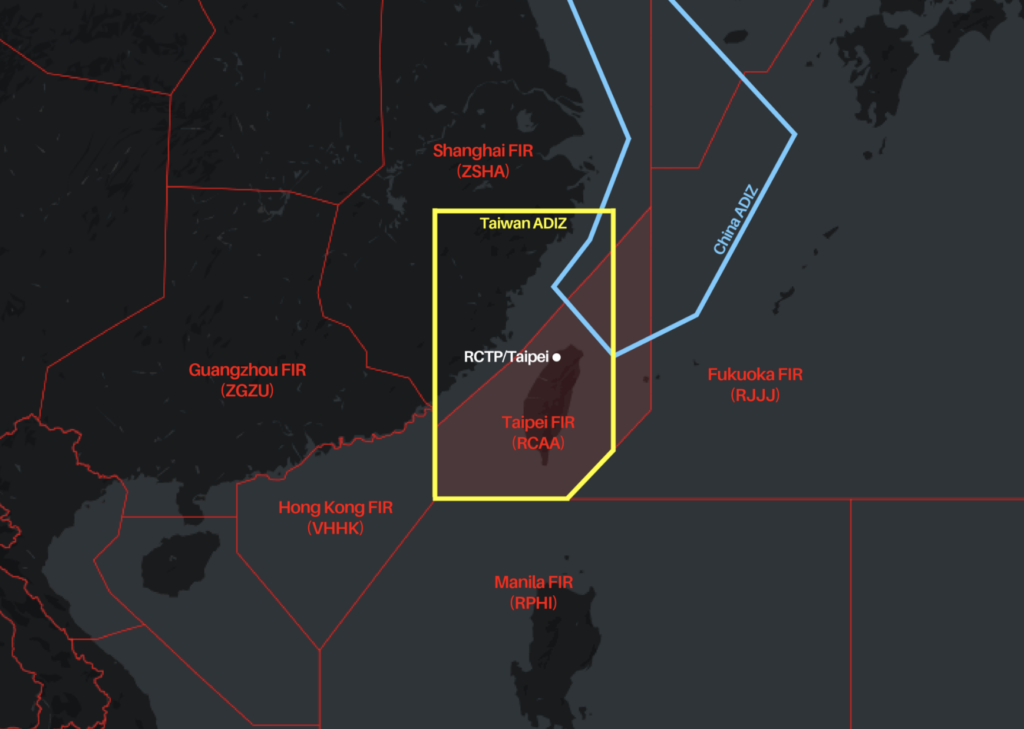
There appears to be a renewed level of military posturing from both sides which can increase the risk of mistaken identity – especially in the Taiwanese air defence identification zone (ADIZ) if proper procedures are not followed.

These are known risks but are worth reviewing. Some sources are suggesting an escalation is possible this year, which carries the risk of a new and dangerous conflict. In this case, regional overflights would be heavily affected. We’ll continue to monitor the situation closely.

GPS Spoofing in the Black Sea

We’re continuing to receive frequent pilot reports of significant GPS spoofing events in the busy southwestern corner of the Black Sea.

In some cases, this has carried the threat of an unintentional deviation into Russian or Turkish airspace without a clearance.

Reports have been received from various aircraft types on different airways, and have included a complete loss of all navigation capability, transponder functions or nuisance EGPWS warnings.

So far manufacturers and aviation authorities have been slow to react to this emerging threat. Although some type-specific guidance has been issued, the universal mitigator remains disabling GPS before entering an area of known spoofing.

An important reminder – IRS systems are not immune to GPS interference. By the time you identify spoofing, it may be too late to rely on them alone. We’ve written about this topic extensively – read all about it here.

Updates

We continue to monitor for signs of changing airspace risk. We report these changes on safeairspace.net and via alerts issued to OPSGROUP members.

If you know or hear something, please share it with us. You can reach us at team@ops.group. We’d love to hear from you.


Get ready for more North Korean missiles

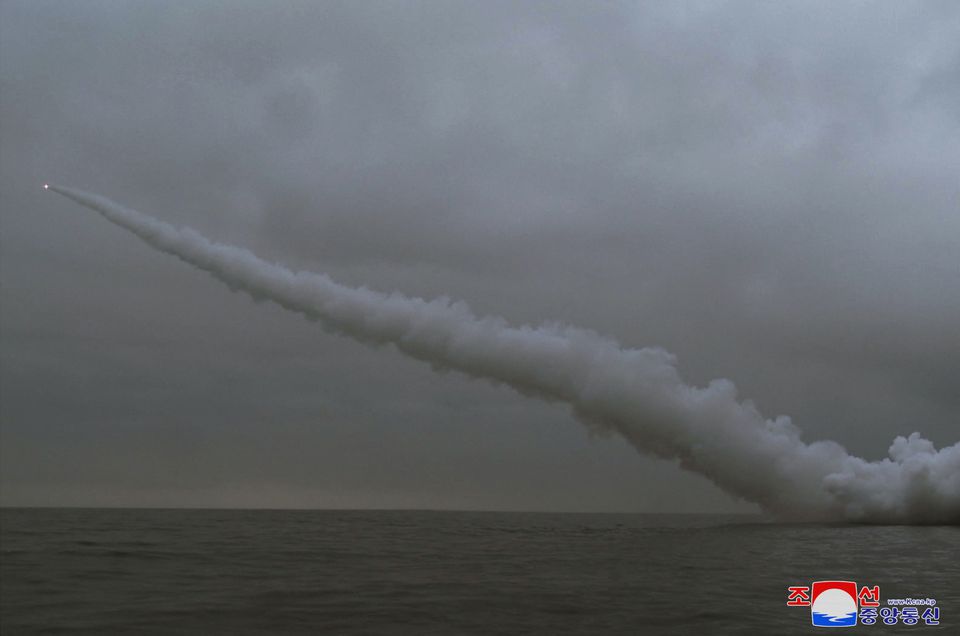
Exercise “Freedom Shield” is happening now – which means that more North Korean missile tests are likely in the coming days.

What is Freedom Shield?

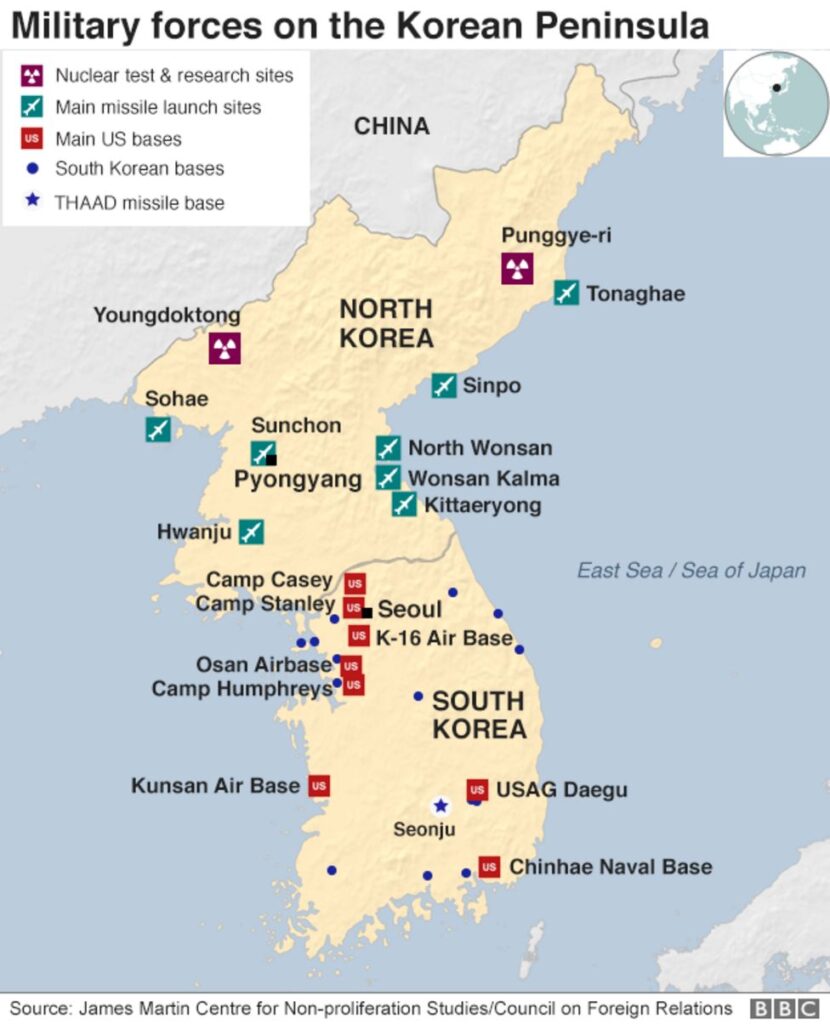
Freedom Shield is a joint US-South Korean military exercise. They run joint exercises every year, but this one is the largest in a long while and so is likely to cause more ‘retaliatory responses’ from North Korea. Particularly as South Korea is specifically simulating responses to potential North Korean threats.

The exercises run for 11 days from March 12th.

It is not clear where the exercises will take place, but the general advice is stick to flight plan routes, maintain a very good listening watch on the radio, follow ATC instructions and keep a good look out.

What is the risk?

North Korea tend to respond to these exercises with significant missile activity, which they never announce. This exercise is likely to see similar levels of response, if their ‘announcement’ is anything to go by…

Pyongyong is resolved to respond with “overwhelming powerful forces” to so-called military manoeuvres by the “the US imperialists and the South Korean puppet forces”. So probably a lot of missile launches.

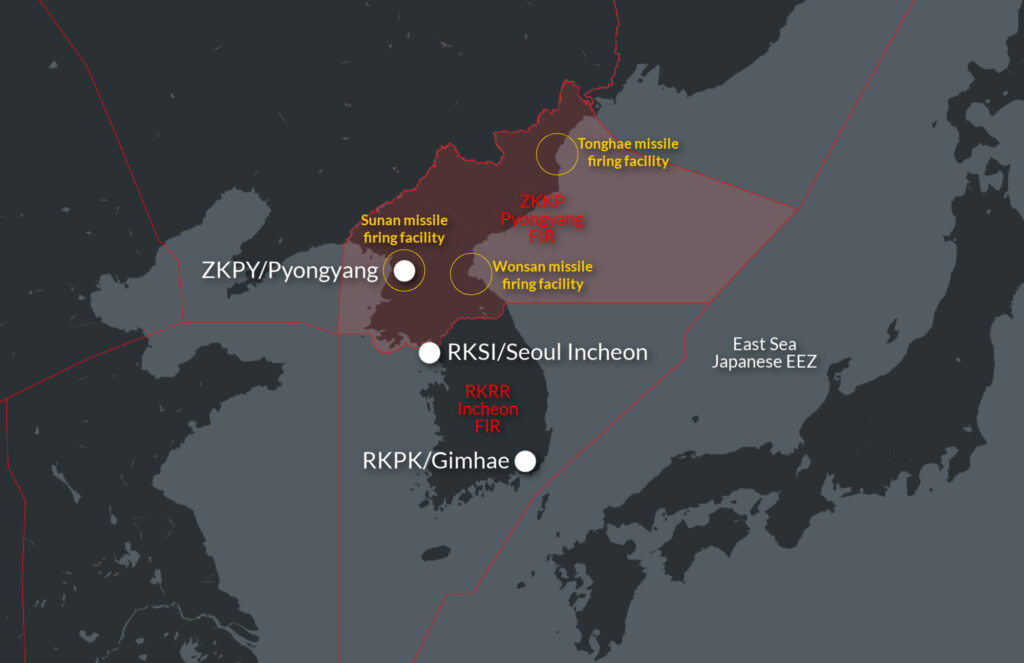
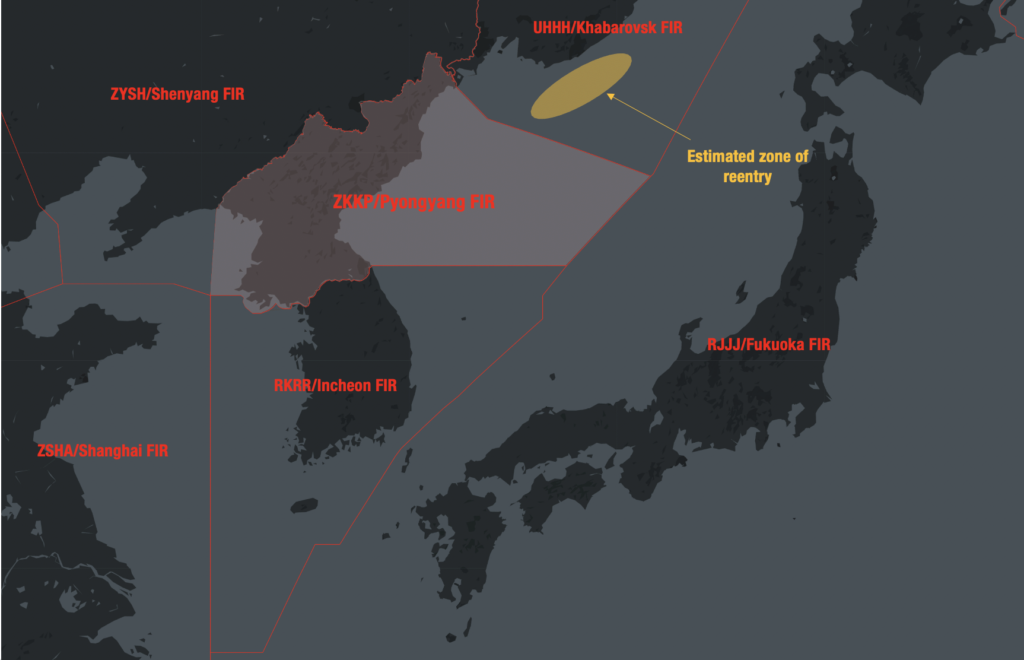
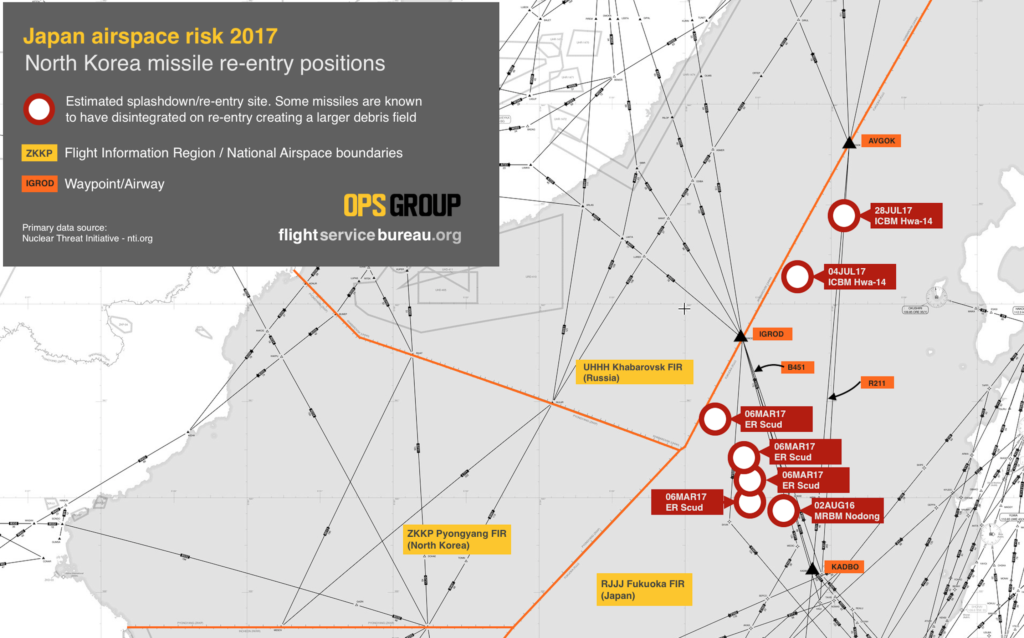
The missiles rarely have any impact, generally falling into the East Sea (Sea of Japan) outside the EEZ. However, they do pose a threat within the Pyongyang FIR, and a higher level of activity is expected this year.

Here is an earlier post covering this is more detail.

While North Korea do not announce missiles, South Korea do release notams (although generally after the event).

As of March 14, they have fired:

  • Two strategic cruise missiles, from a submarine off the east coast of North Korea
  • Two short-range ballistic missiles fired towards the East Sea, from Jangyon
  • They ran their own military exercises in Feb 2023, firing several long range cruise missiles
  • At the end of 2022, 180 North Korean ‘warplanes‘ were detected in North Korea, but did not infringe on South Korean airspace
  • 5 North Korean drones entered South Korean airspace in December 2022

In other North Korean news…

Not a lot.

They have been trialling ADS-B in their airspace since 2009, according to Notam A0050/09

For full updates on the airspace risk in North Korea, as well as Japan and South Korean, visit Safeairspace.


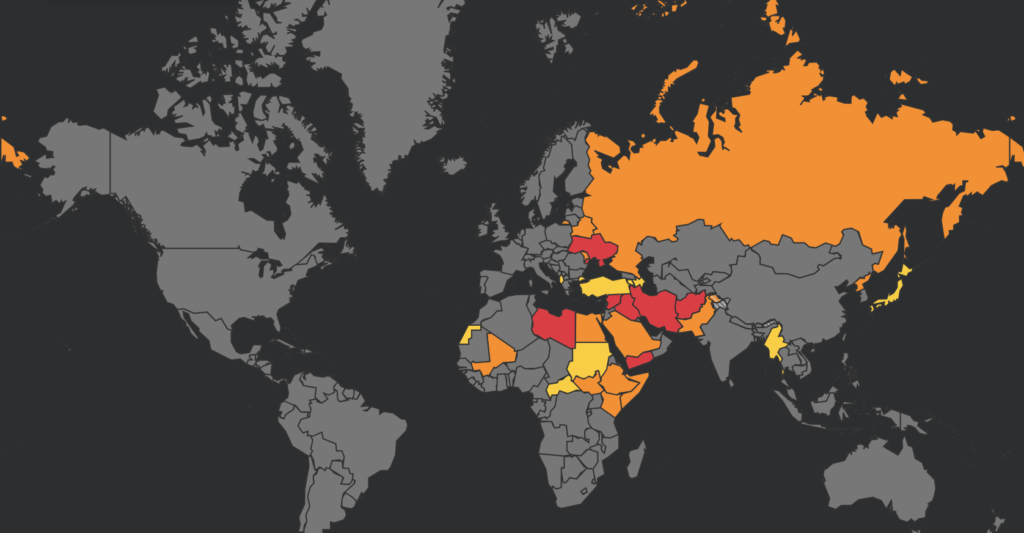
Airspace Risk: Conflict Zones and Security in 2023

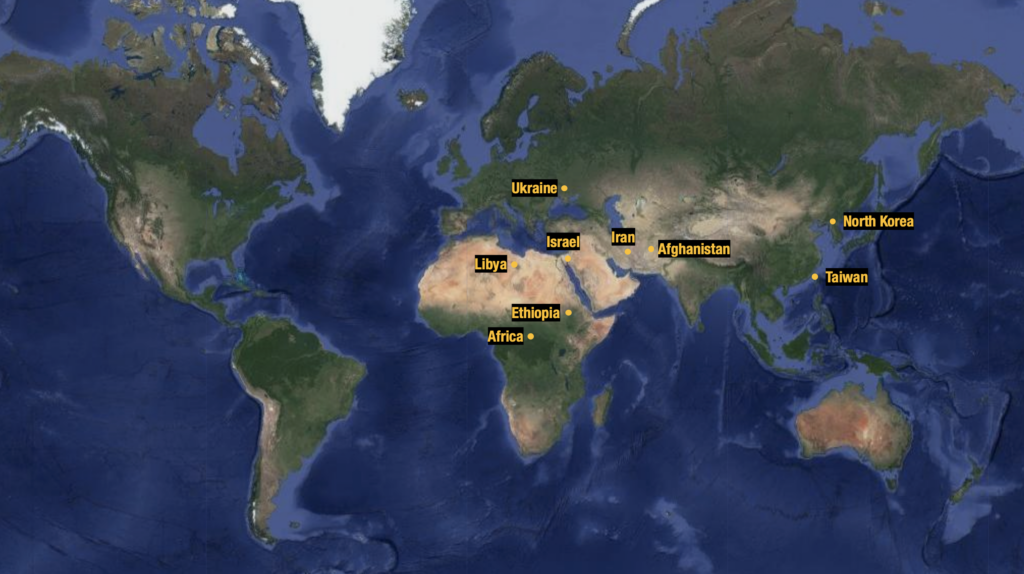
Over the past twelve months we have reported changes to a number of conflict zones which have the potential to affect airspace risk, along with other security concerns.

With the arrival of 2023, here’s another look at these regions which have had the biggest impact on civil aviation safety.

Active conflict zones

We cover all the current conflict zones, with information on the context and details of current notams and warnings, on safeairspace.net

There are a number of conflict zones which remain active, but which have seen little change to the situation or risk rating. The following mentions refer to those which have seen substantial change over the last year only.

 Ukraine/Russia 

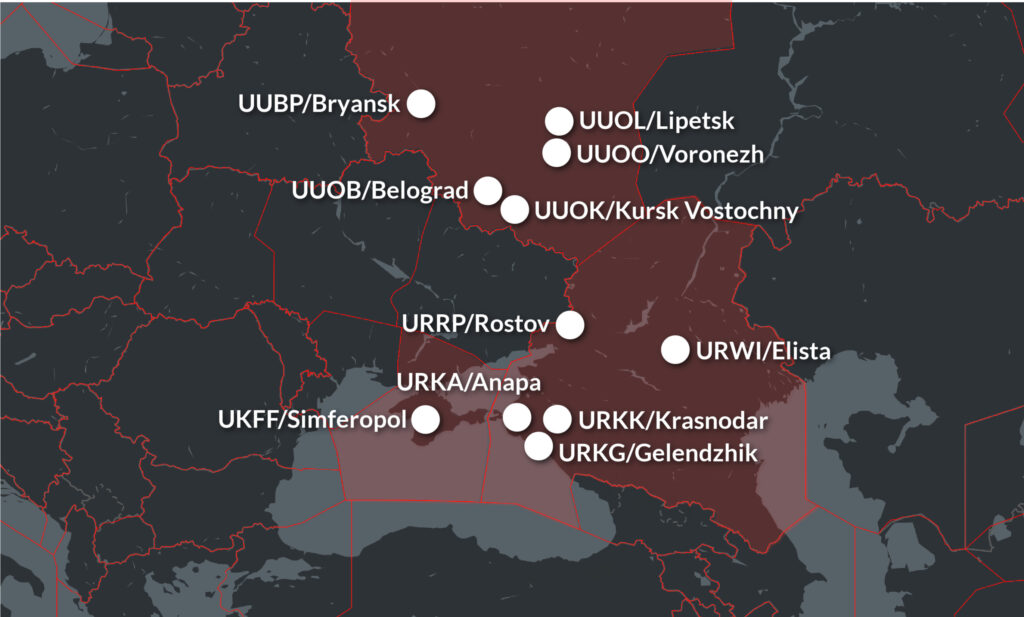
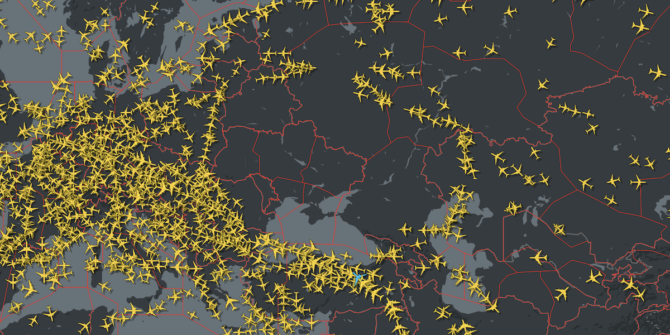
The war has continued since February last year with significant impact on airspace in Europe. Ukrainian airspace remains closed at all levels due to ongoing and intensive military activity. Russia has also persisted with flight disruptions at ten airports in Southwestern Russia, and another in Russian-annexed Crimea.

They include:

  • URKA/Anapa
  • UUOB/Belgorod
  • UUBP/Bryansk
  • URWI/Elista
  • URKG/Gelendzhik
  • URKK/Krasnodar
  • UUOK/Kursk Vostochny
  • UUOL/Lipetsk
  • URRP/Rostov-on-Don
  • UUOO/Voronezh
  • UKFF/Simferopol  (Crimea)

Ukrainian airspace remains extremely dangerous due to military activity. Those risks have also been shown to spill over into open airspace that borders it. Special care needs to be taken when operating anywhere near the conflict zone.

Official Advice

Major authorities continue to recommend avoiding Russian airspace, and prohibit against operations in Ukrainian airspace. They also advise to use caution for operations within 200nm of the Ukrainian border.

On Jan 14, debris from a Russian rocket was found in Northeastern Moldova near the Ukrainian border. It is the third such report since October last year. Spill over risks from the war in Ukraine are a known threat to civil aircraft in the LUUU/Chisinau FIR, which is mostly off limits. AIP Sup 01/23 allows flights in and out of LUKK/Chisinau under certain conditions only.

 Iran/Iraq 

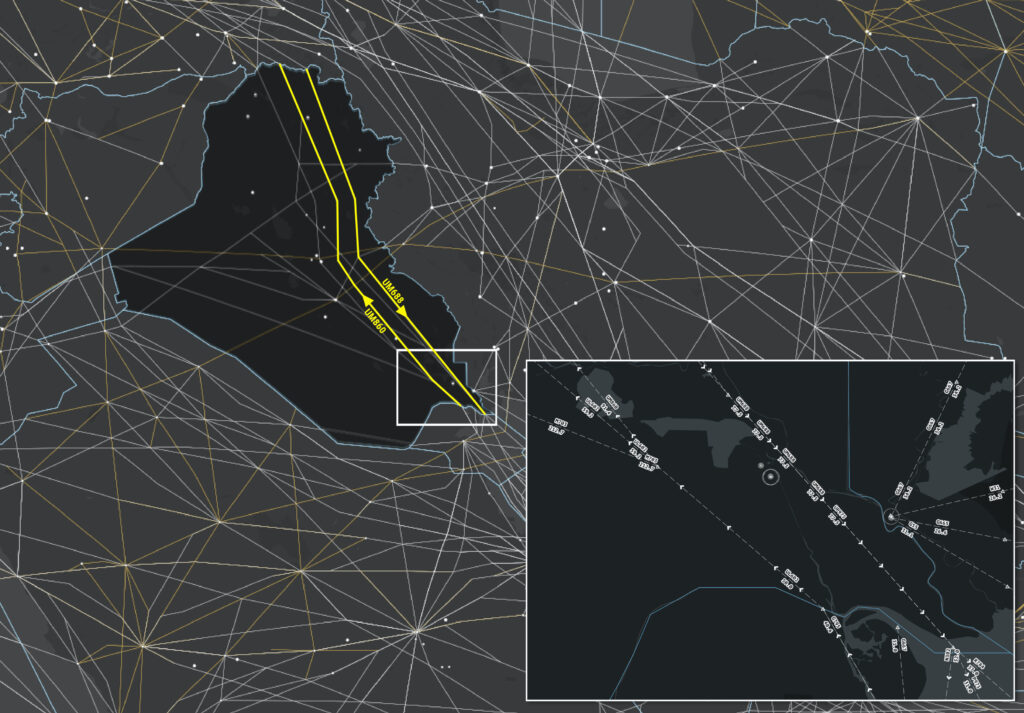
The end of 2022 saw an increase in activity between Iran and Iraq, with multiple rocket attacks reported in the ORER/Erbil region. In September, Iran closed a section of airspace in the north of the country along the border with Iraq, and is using the area to launch missile and drone attacks at targets near ORER/Erbil Airport. Iran is warning their own operators against flying in Iraqi airspace.

Ongoing political turmoil, militant activities, and military operations in Iraq poses an elevated risk to aviation and airspace safety. In recent months, militants have fired rockets in Baghdad’s Green Zone, causing flight disruptions at nearby ORBI/Baghdad airport; Iran continues to target northern Iraq with missile and drone attacks; and Turkey has been launching attacks along Iraq’s northern border.

Official Advice

The airways in the vicinity of the border should be operated on with caution.

Towards the end of 2022, the US FAA extended their restrictions on Iran and Iraq by two years – US operators are prohibited from the ORBB/Baghdad FIR below FL320, and completely prohibited from OIIX/Tehran FIR. Other major authorities caution against operations below certain flight levels.

Potential Risk & Conflict Zones

 North Korea 

North Korea test fired an unprecedented number of missiles in 2022, all without prior notice. Things escalated late last year to coincide with South Korean military exercises. A large number of the missiles landed in the Sea of Japan, with one splashing down just 30nm off the coast of South Korea. Another overflew Japanese territory.

From December 26, there were further disruptions. Several North Korean drones flew across the demilitarised zone  and entered the RKRR Incheon FIR, resulting in military jets being scrambled. Ops at RKSI/Seoul and RKSS/Gimpo were briefly suspended. We wrote about that here.

The South Korean president has gone public announcing that any further incidents could threaten a military pact between the two countries, which has potential to greatly increase overflight risk.

Official Advice

The US prohibits flights across all North Korean airspace, including the oceanic part of the ZKKP/Pyongyang FIR over the Sea of Japan. Several other countries have airspace warnings in place which advise caution due to the risk posed by unannounced rocket launches.

The primary risk remains from debris from missile re-entries striking aircraft overflying the oceanic part of the ZKKP/Pyongyang FIR over the Sea of Japan. However, the escalation in tensions between North and South Korea, and the incursions on the Japanese EEZ raise the caution level within both Japanese and South Korean airspace.

 China/Taiwan 

In mid-2022, the US reported an increase in what they consider ‘unsafe, unprofessional or non-standard intercepts’ by Chinese military aircraft in the South China Sea region. The China Sea Dispute is a growing concern.

China has also increased political pressure on Taiwan. Various military exercises by the Chinese took place throughout 2022. In August, China designated six areas of airspace as danger zones for a “military exercise,” effectively barricading the country’s airspace.

Official Advice

There are no reports of intercepts impacting civilian aircraft, but extra caution is advised because of a growing amount of military traffic active in the area.

Aircraft operating in Taiwan’s ADIZ need to pay close attention to proper procedures – effectively squawk a discrete code and remain in contact with ATC at all times.

 Turkey 

Turkey has seen an increase in spillover effects from Syrian and Iranian conflicts. Reports say shelling and rocket strikes have occurred near a town in southern Turkey, near the border with Syria. Turkey has been carrying out airstrikes on Syria and Kurdish regions of Iraq since an earlier attack on Istanbul. The escalation in airstrikes, and risk in southern Turkish airspace from Syrian insurgents poses an ongoing threat to civil aircraft.

Official Advice

More caution should be taken if operating in southern regions of Turkey, along the border with Syria. GPS jamming within border areas can be expected.

Civil Unrest and Crime

Economic pressures around the world over the past twelve months seem to have escalated instances of widespread civil unrest that have directly impacted aviation.

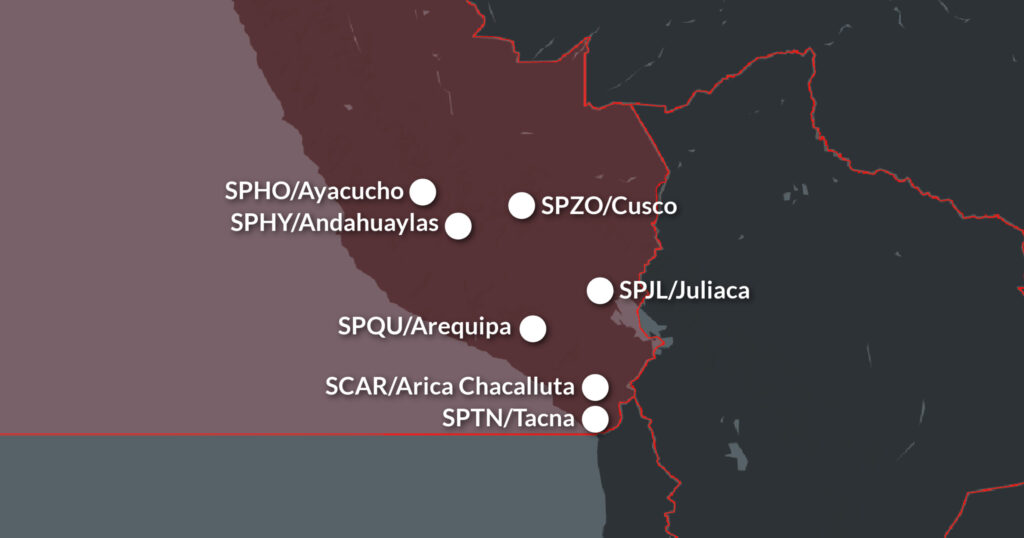
Peru is the latest. It has been experiencing political turmoil since late last year which led to protests and riots. Demonstrators blocked access to several airports. The situation is still developing.

We also reported on similar issues in Sri Lanka when a state of emergency was declared back in July, 2022. Fortunately, in this case the situation was resolved.

Mexico has seen a rise in civil unrest since the start of January 2023, in response to the arrest of a primary member of a cartel. The unrest has been limited to the Sinoloa region, but has seen three airports impacted significantly.

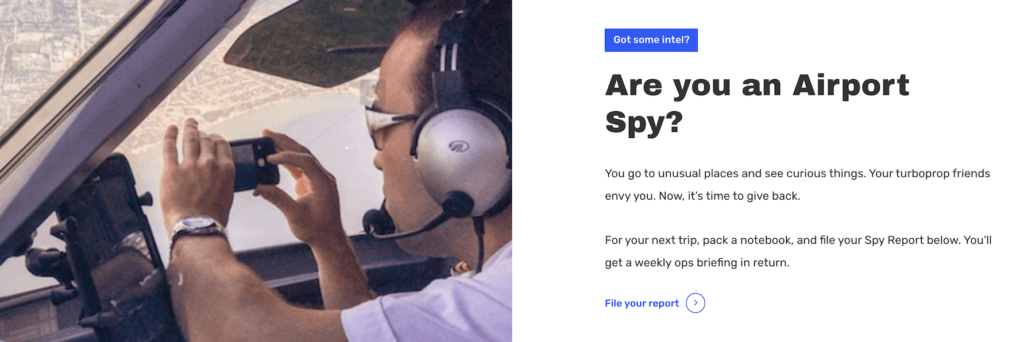
Bouts of civil unrest can occur without warning and have potential to close down airports, and put crew on the ground at risk. The US Department of State is our best source of travel advisories and warnings. For operations to less developed countries in particular, it is important to monitor the political and security situation before visiting unfamiliar spots (and if you have, please share with us at team@ops.group or via Airport Spy).

2022 also saw a notable number of less common security issues, including bomb threats, the use of fake airline IDs and even imprisonment of crew without charge. A keyword search on your Member’s Dashboard will help you find more information on all these things.


Ukraine-Russia Spillover Risks: Nov 2022

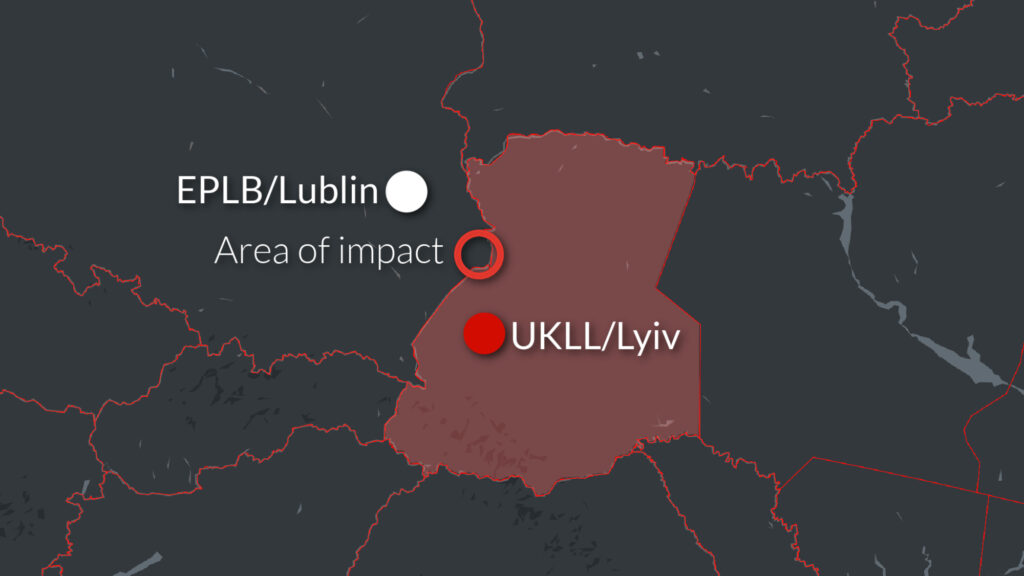
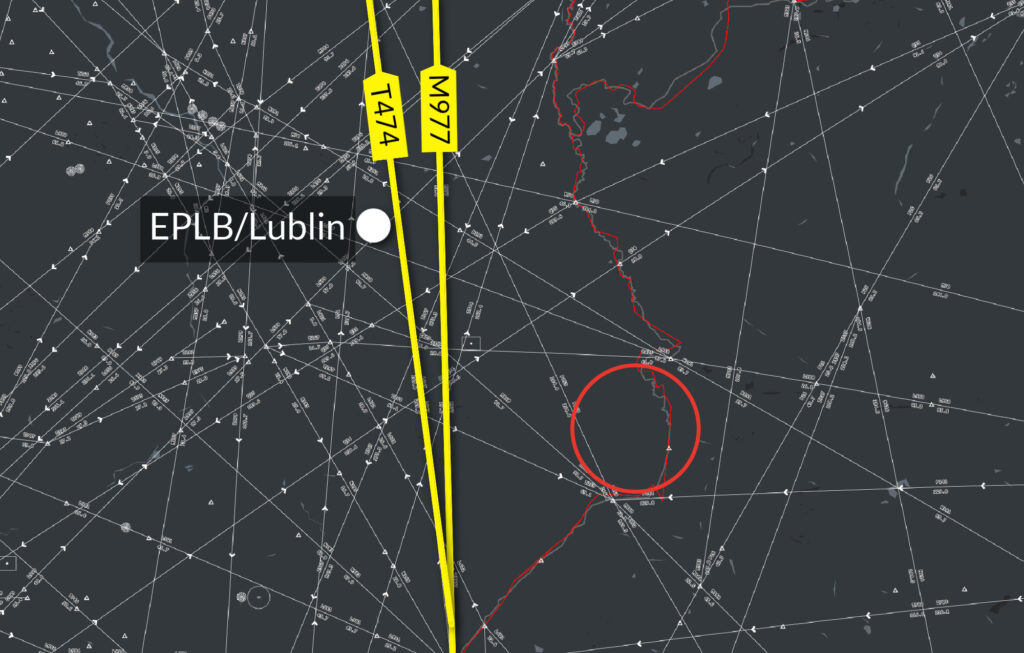
A missile involved in the Russia-Ukraine conflict fell in Poland on Nov 15, close to the border with Ukraine. There are no prohibitions or warnings for Polish airspace, however the border region is (clearly) high risk and operators should avoid flights in or over this area.

The following map shows two airways which lie in proximity to the border and which may be used by overflying aircraft. The airways routing into Ukraine, Belarus or utilised for routes into prohibited airspaces have not been highlighted.

The ongoing conflict between Russia and Ukraine continues to pose challenges and risks to international flight operations.

We covered these previously in this post which looked at:

  • Ukraine, Moldova, Russia and Belarus airspace closures.
  • Which countries have banned Russian aircraft and operators, and which countries has Russia banned in response?
  • The differences between the sanctions imposed on Russia by the US, the UK, and the EU, and the nuances of how these sanctions may impact your flight.
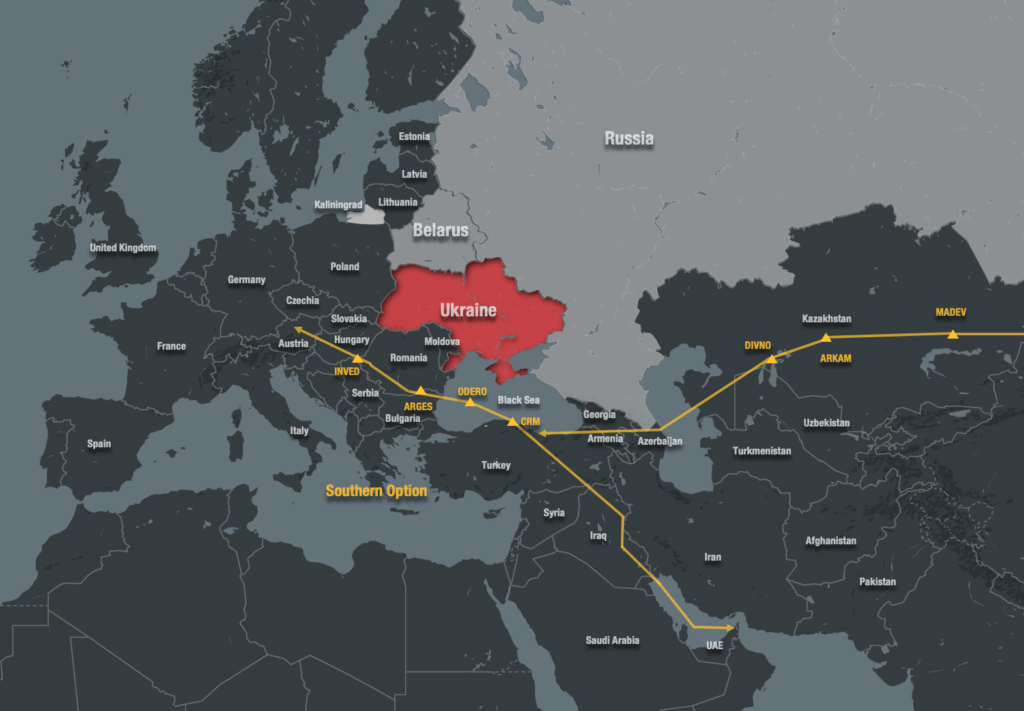
  • Considerations for operators now looking to route around Russian airspace.
  • Information on Humanitarian relief missions.

What has changed?

In terms of the above, very little. Ukrainian airspace remains closed and poses a significant risk to aircraft.

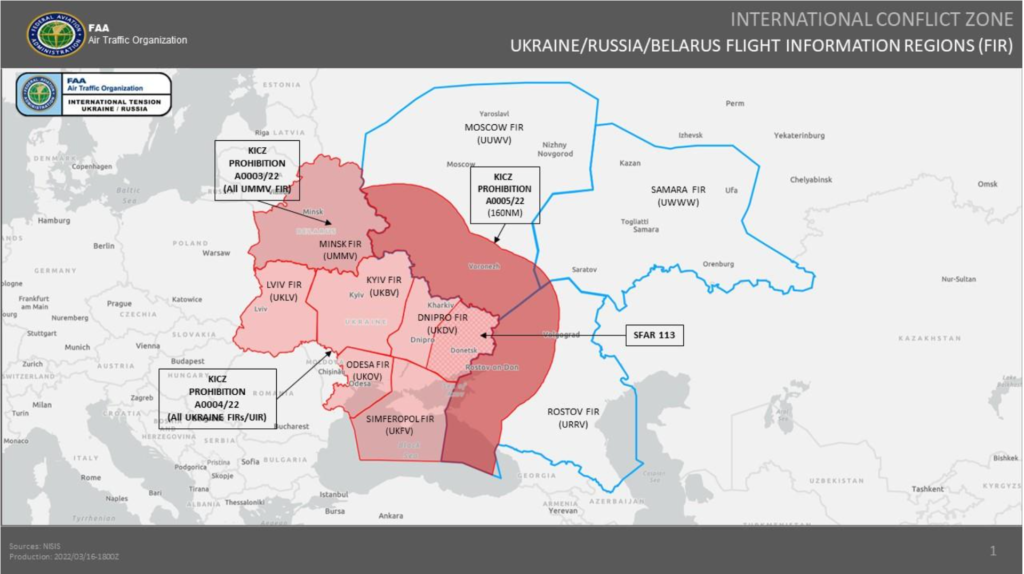
All the major countries who regularly issue airspace warnings (the US, UK, Canada, France, Germany, plus several more) have issued total flight bans for Ukraine due to risk from military activity at all levels.
The primary risk is an unintended targeting of civil aircraft by military, including misidentification (as with MAS17, UIA752).

What has changed is the potential spillover risk. The FAA has released an Information Note regarding this, which you can read here.

What does it say?

Pretty much an updated report of what we said in this post back in March 2022.

In a nutshell – “Russia’s increased use of developmental weapons, use of weapons in nontraditional roles, and long-range missile strikes into western Ukraine increases potential spillover risk concerns for U.S. civil aviation operations in adjacent airspace.”

In other words, the risks and hazards are not necessarily confined to the geographical borders which are used to define ‘risky airspace’ (the areas covered by current conflict-related flight prohibition NOTAMs and other warnings).

The three main points in the FAA Information Note are these:

  1. Russia periodically launches missiles targeting Ukraine which transit Moldovan airspace.
  2. There have been reports of comms and GPS jamming outside the conflict zone, particularly over the Black Sea and Caspian Sea.
  3. Drone/UAS activity has expanded, especially around Crimea and eastern Ukraine.

1. Missile launches

Russia periodically launches missiles targeting Ukraine from positions in the Black Sea and Caspian Sea. The flight paths for these generally route across Moldovan airspace.

Moldova initially closed all their airspace, but have since opened a section on their western border with the LRBB/Bucharesti FIR for flights to LUKK/Chisinau airport.

On Nov 15, a missile fell in Poland, close to the border with western Ukraine. It is not clear whether this was launched by Russia or by Ukrainian Air Defenses, but it signifies a heightened level of risk in regions bordering the conflict zone which are not necessarily covered in prohibitions and warnings.

An awareness of the proximity to significantly high risk airspace is advised.

The FAA SFAR related to the conflict and listing the prohibited airspaces can be read here.

2. GPS Jamming

This has been reported beyond the regions outlined in NOTAMs and airspace warning areas.

Civil aircraft flights who route close to the borders of the conflict zone, or which transit the southern Black Sea or northern Caspian Sea may experience jamming.

A member reported – “Flew recently from the UAE over Iraq and Turkey and over the western edge of the Black Sea. Once inside Turkey, the GPS signal was lost and remained out until northwest of the of western Black Sea. Dual GPS plus a portable GPS receiver confirmed the loss of signal. Also, no satellite wifi during same period.”

EASA has issued Safety Information Bulletin on Global Navigation Satellite System (GNSS) jamming in the Baltic Sea area which you can find here.

3. Drone/UAS hazard

The use of Unmanned Aircraft Systems (UAS) has been increasing, on the Russia side.

These fly at lower altitudes (they say a max of about 16,000′) and there is a risk of ‘errant activity’ ie not flying where they should fly. In June 2022, one such errant UAS was reported in eastern Turkey.

These represent a hazard to aircraft given their size, the fact they are generally weaponised, and the fact they are not always where they are supposed to be.

Other spillover risks

These are not covered in the FAA note, but we figured worth mentioning anyway:

  • Increased traffic levels: Turkey is seeing higher traffic levels due airspace closures, as aircraft now transit their airspace. There is also an increase in military traffic in airspace bordering the conflict zones.
  • Crew fatigue: Longer routes, more challenges en-route, operational and planning challenges have not gone away, we are just staring to see them as the ‘status quo’.
  • Ongoing fuel and energy supply issues: These are more indirect, but the increase in costs and availability has led to some supply issues, as well as protests across many regions which means potential disruptions and security concerns.

Stay updated!

A full briefing on the airspace risks with up to date notice and NOTAM references can be found at Safeairspace.net

Please report back to us any new info you come across (be it airspace risk related, or simply sharing your experience of a recent flight) and we can help redistribute that info back out to the group so that all are aware.

You can email us at news@ops.group, or file a report of a recent trip on our Airport Spy page here: ops.group/blog/spyreport


North Korea Missile Threat

North Korea regularly launch projectiles without announcement. These have minimal impact on international flight operations since they fall short of the major airways.

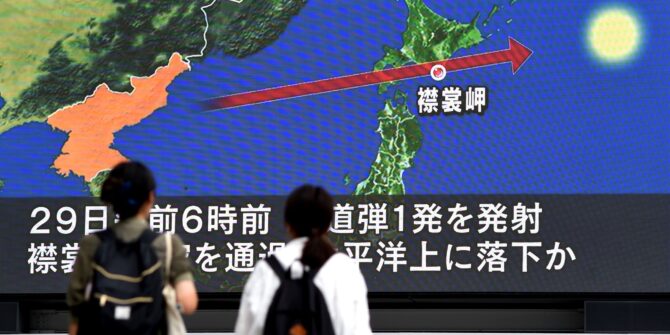
However, this past week has seen five projectiles launched from Pyongyang, and the most recent – a ballistic missile – did pose a very significant threat due to a path which carried it directly over Japan.

Several governments have issued statements regarding the latest launch, and previous launches.

Where did the missile go?

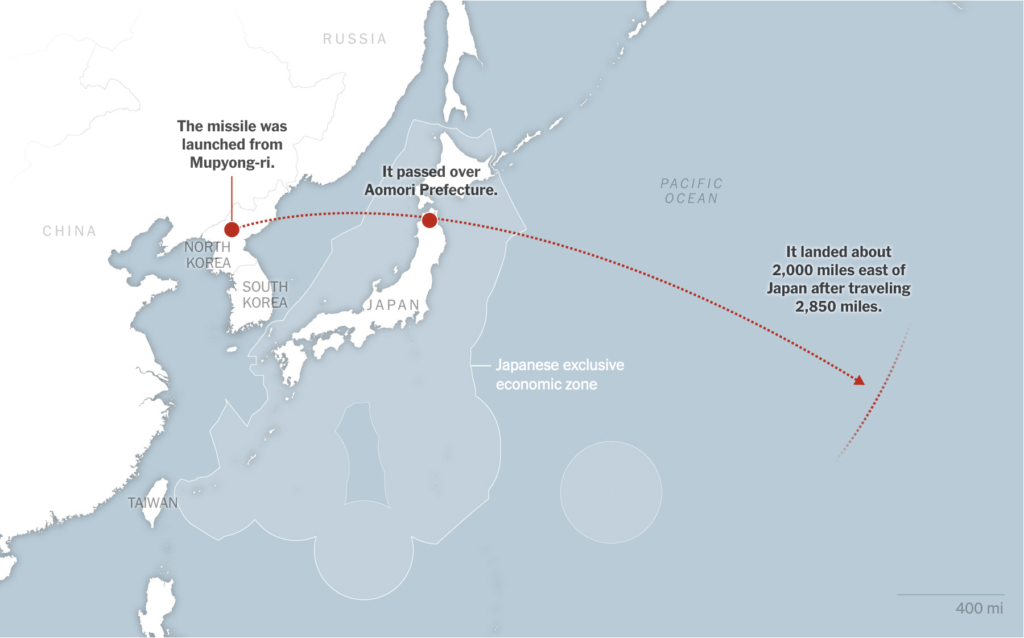
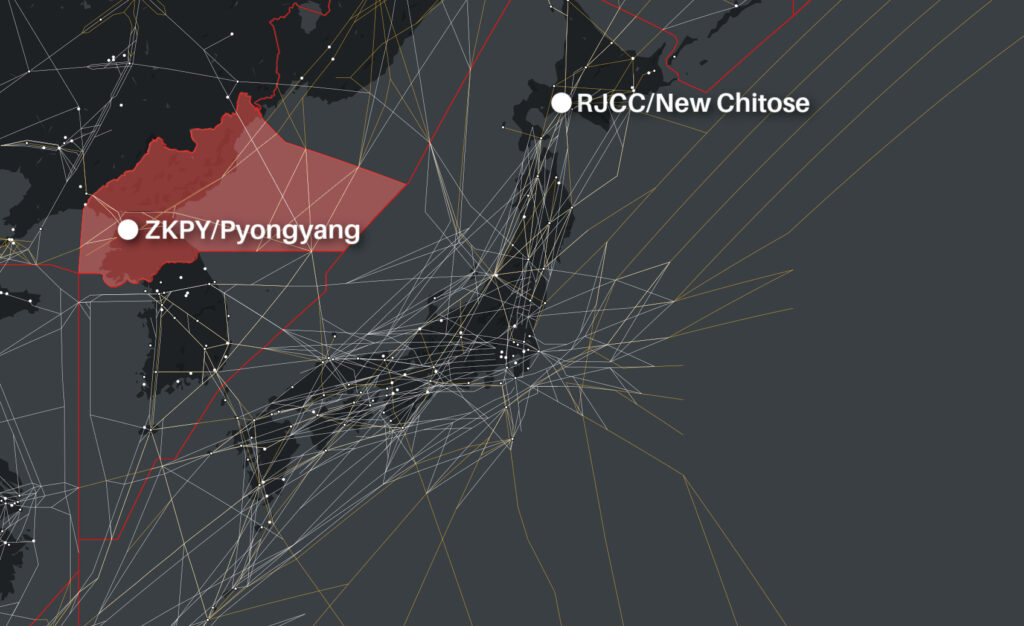
On October 4, Pyongyang launched a suspected ballistic missile over Japan. The path took the missile directly over Hokkaido island, prompting Japan to issue alerts to their citizens. It subsequently fell into the Pacific Ocean.

The 2800 mile path is depicted below. The missile reached an altitude of around 1000km.

Previous launches.

This is the fifth launch in the last week. The launches often coincide with joint US, South Korean and Japanese military drills, or political meetings. There have been a spate of them throughout 2022, with the last reported in August.

In 2018, five launches were carried out over 10 days after a US aircraft carrier made a port call in South Korea.

This is the first launch since 2017 which has seen a projectile incur on Japanese airspace.

How high is the Threat Level?

Following talks with the US in early 2018, North Korea agreed with ICAO that it would provide adequate warning of all “activity hazardous to aviation” within its airspace. However, in May 2019 North Korea resumed launching missiles into the Sea of Japan, without providing any warning by Notam.

The ZKKP/Pyongyang FIR is rarely utilised for overflights by foreign aircraft, and the missiles are usually launched into the Sea of Japan, causing little damage or disruption and falling outside the Japanese EEZ. However, there is an ongoing threat to aircraft operating in the ZKKP/Pyongyang FIR due to unannounced launches and risk from falling debris. 

North Korea has multiple airspace warnings from several major authorities. The threat level has not changed.

A full list of the current major cautions and warnings regarding the airspace, and a full briefing on North Korea can be found on Safeairspace.net

Japan threat levels.

Launches towards or over Japan pose a much more significant threat, because the path towards the sea and the debris fall area are crossing or within sections of airspace used by civilian flights.

North Korea is suspected of attempting to show how their range could impact US military bases in Guam and is not directly targeting Japan, or threatening the airspace. The missiles fall well beyond the airways, however, with the launches being unannounced and potentially growing in frequency, a higher risk level and caution should be taken with operating in the region.


Russia-Ukraine Conflict Timeline

The tensions between Russia and the Ukraine continue to rise, and questions over whether Russia will mobilise troops into the Ukraine is raising concerns for the safety of the region and its airspace.

For a full background to the situation, you can read this post.

Here is a timeline of the current situation and risk warnings, with latest updates on any changes as they occur.

Timeline – Airspace Risk

Jan 26 2022 – **Latest Update**

  • Belarus and Russia advise they will holding joint exercise through to February 20. These will take place near the southern border with the Ukraine. The drills will involve tests of the air defense systems which use advanced anti-aircraft weaponry, able to reach all levels of civilian utilised airspace.

January 2022

  • Russia warned of “the most unpredictable and grave consequences for European security” in relation to plans for the Ukraine to join NATO which is further destabilising the situation.
  • NATO has increased air forces in Eastern Europe in case intervention is required.
  • Warnings and prohibitions remain in place for the airspace along the border between Russia and Ukraine.

December 2021

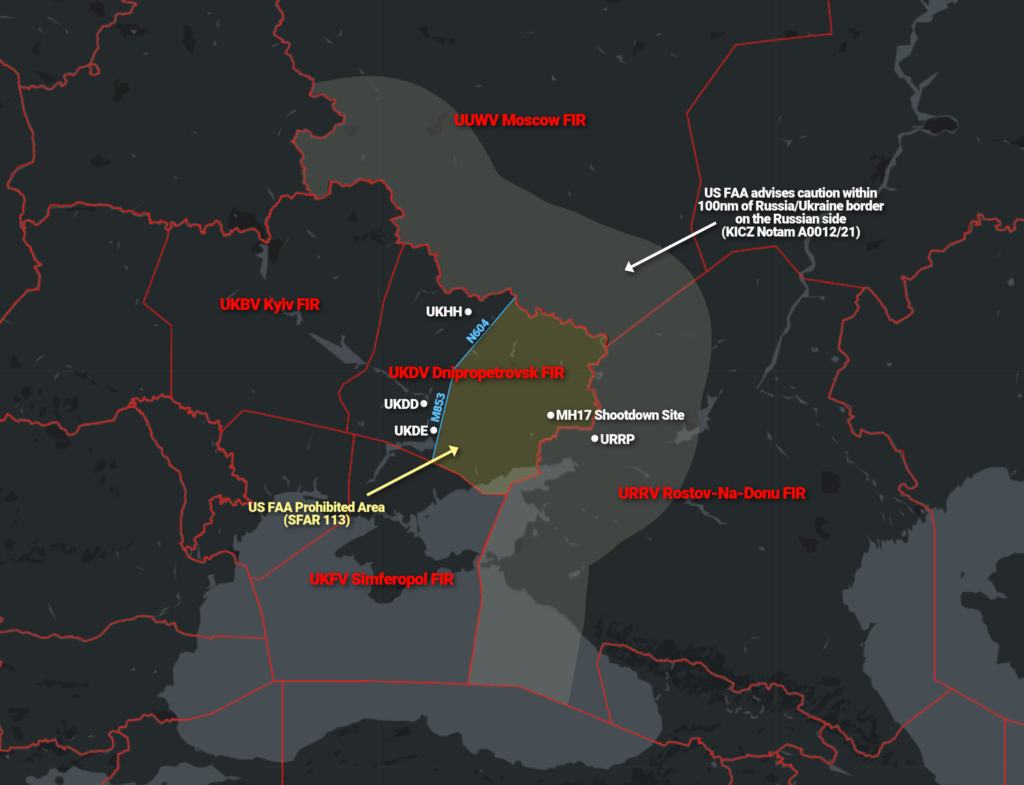
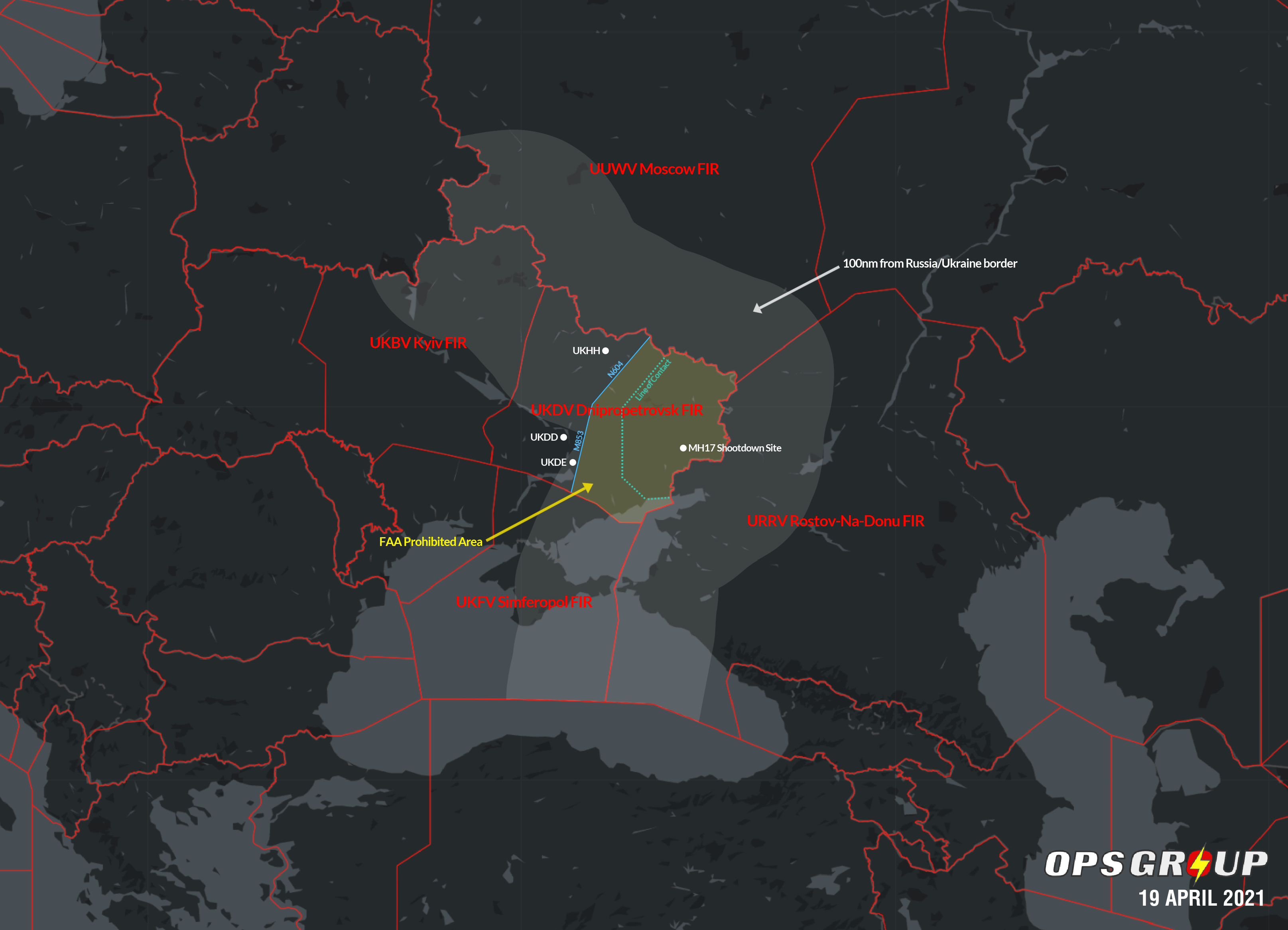
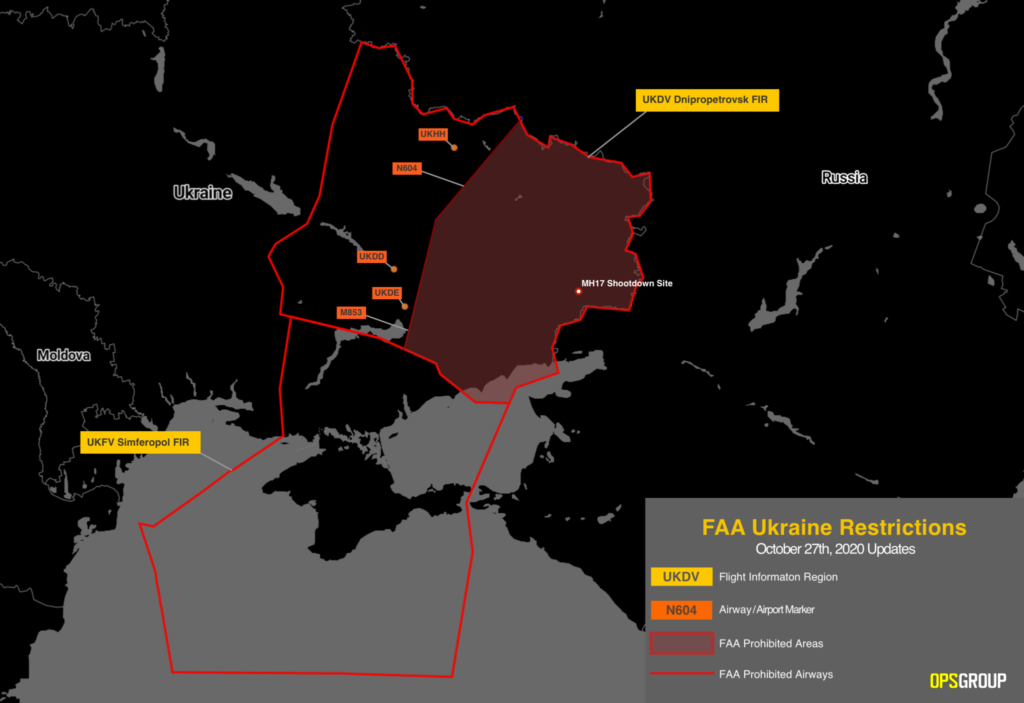
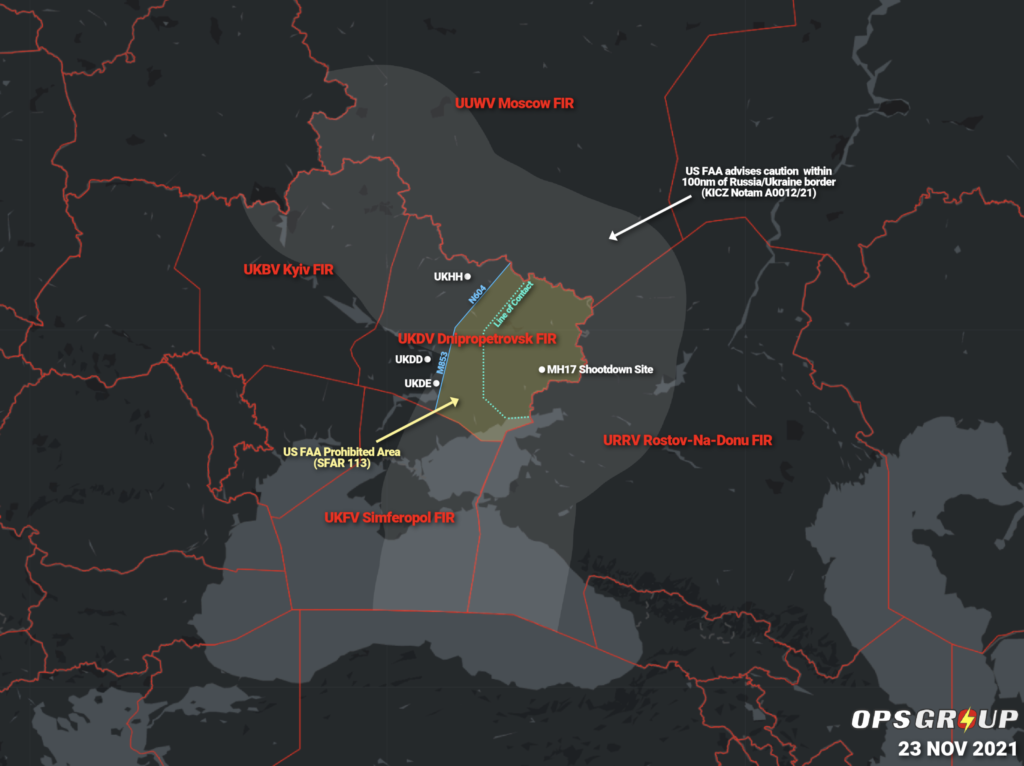
  • The FAA published updated information on overflight risks near the border, particularly in the URRV/Rostov FIR near the UKDV/Dnipro FIR boundary. This is the region where MH17 wash shot down in 2017.

November 2021

  • Russia increased military activity along their border with the Ukraine, and based significant numbers of troops around URRP/Platov International Airport in Roston-On-Don Oblast.
  • The Ukraine hold drills of their airborne units in the Kyiv region, in response to increased Russian activity.

October 2021 

  • The FAA extended their ban on US operators overflying the eastern part of the UKDV/Dnipro FIR. This is in force until October 2023.

April 2021

  • Russia established several large danger areas throughout the UKFZ/Simferopol FIR airspace over the Crimea, increasing tensions between Russia and the Ukraine. ICAO does not recognise Russia’s jurisdiction over this airspace.
  • Increasing reports of GPS jamming along the border and in east Ukraine suggestion heightened surveillance. Increasing military presence was reported.
  • The FAA and Canada published updated airspace warnings. Canada recommended operators avoid the UKFV/Simferopol and the UKDV/Dnipro FIR.

Within the Ukraine

January 2022

  • Cyberattacks caused disruption to government and public services, and are likely to continue.
  • Several countries including the UK and Canada have now advised their nationals to leave, and advise against all but essential travel.
  • Provinces located in the eastern and northern regions of Ukraine, including capital Kyiv and Odessa are on elevated travel alert, with significant concerns about safety and security on the ground.

December 2021

  • Protests in major cities, particularly Kyiv, occurred as civil unrest increases. The security situation in major cities is worsening.


Airspace Risk: Conflicts to watch in 2022

Conflict zone risk assessments aren’t easy. Airspace dangers are heavily dependent on what is happening on the ground, which can improve or deteriorate quickly and with little warning. For an aircraft to be at risk, there must be someone present who has both the ability and intent to either deliberately target an airplane, or endanger one indirectly.

But in order to prove that these two things are present in any given airspace, regulators and operators have to rely on intelligence and inherently limited information to make educated decisions about what is safe, and what is not.

The best defence? Know what is happening down there. Or in other words, an idea of the geo-politics playing out thousands of feet beneath you. Often the warning signs are there, even before Notams have had a chance to catch up. The best defence is always situational awareness.

Here is a summary of some the conflicts making headlines that are worth keeping a close eye on in 2022 which may have an impact on the safety of overflights.

Ukraine

Tensions are high near the eastern border with Russia right now. In the latter half of 2021, the Russian military began to mobilise equipment and troops on their side of the border. This has continued to cause international concern that a major offensive may be possible in 2022.

There is advanced anti-aircraft weaponry present on both sides of the border which could present risks to civil aviation at all levels if things escalate. There are also separatist groups active in the region, and it is possible they have access to the same weapons. MH17 was shot down in this region in similar circumstances in 2014.

Overflights near the border – especially in the western part of the URRV/Rostov FIR near the UKDV/Dnipro FIR boundary should keep monitoring the situation closely.

Click here for a full briefing.

Israel/Palestine

Events in April-May 2021 lead to a sudden escalation involving hundreds of Hamas rockets being fired at Tel Aviv and Israeli air strikes in Gaza. Civilian traffic was heavily impacted, while LLBG/Tel Aviv airport was forced to close on several occasions.

Recent events have hinted that things may be no better in 2022. On Jan 1, several rockets were fired at Tel Aviv, followed by airstrikes in Gaza. Surface-to-air missiles were launched at military helicopters during the strikes.

Aircraft in the LLLL/Tel Aviv FIR may continue to be at risk from these types of events with little notice this year.

Click here for a full briefing.

Taiwan

Mainland China continues to show political interest in Taiwan. While an armed conflict is still unlikely, it is not impossible. And the consequences of one would be a big deal with other major world players likely to become involved.

Last year a record number of Chinese military aircraft carried out exercises near Taiwanese airspace, while in October a wave of aircraft entered Taiwan’s air defence identification zone (ADIZ). This caused authorities to issue warnings by radio and mobilise their air defence systems.

In 2022, the primary risk to aircraft in the region continues to be risk of being misidentified by the Taiwanese military. It is important to follow the correct procedures when entering Taiwan’s ADIZ airspace.

Click here for a full briefing.

Iran

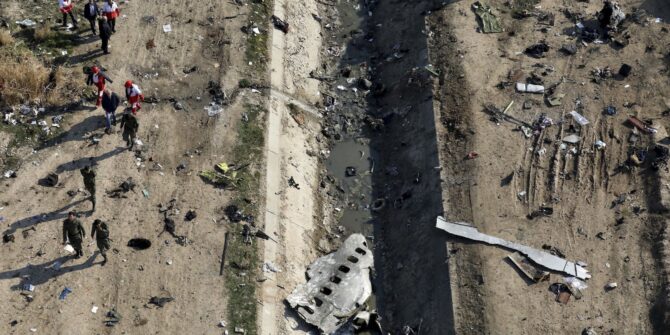
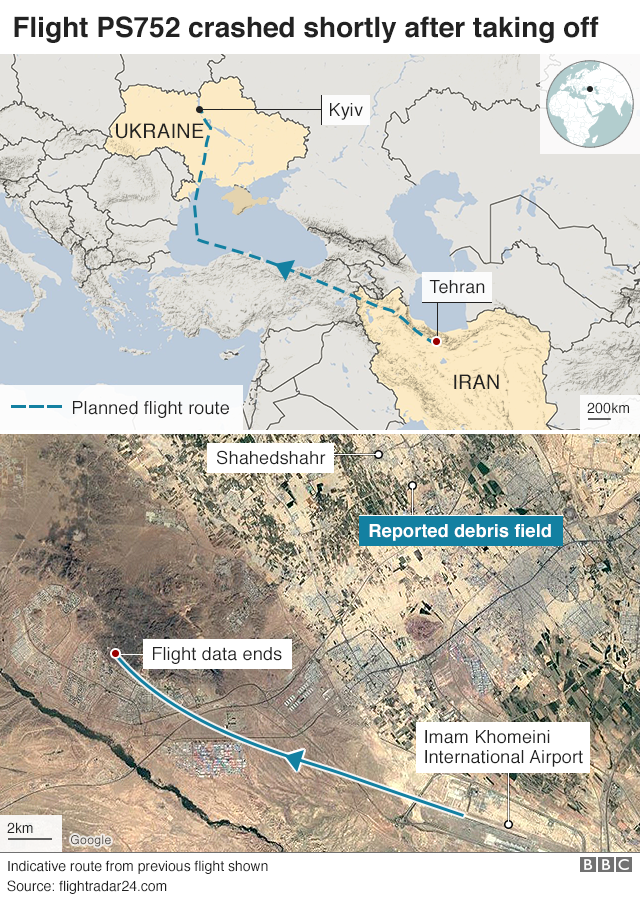
Tensions between Israel and Iran are at an all time high. Various sources are speculating that airstrikes on nuclear targets in Iran could rapidly escalate the situation. If this were to happen, the overflight risk in the OIIX/Tehran FIR would increase dramatically. Anti-aircraft weapons are present there that can reach all levels. Iran has previously shown willingness to use them during heightened tensions and in close proximity to heavily flown international air routes. In January 2020, a Ukrainian 737 passenger jet was shot down over Tehran by the military after being mistaken for a missile.
Click here for a full briefing.

Militant activity in Africa

Militant groups throughout several African countries with links to terrorist organisations such as Al Qaeda or Al Shabaab have been mobilising in recent years. Often engaged in fighting with weakened states, these militia may have a desire to make international statements, and are known to actively target civilians which could include overflying aircraft.

Hotspots to look out for: In the west, Nigeria, Mali and Burkina Faso. In Central Africa, Niger, Chad and the Democratic Republic of Congo. And to the east, take particular care when operating over the Horn of Africa – especially Somalia and Sudan. New groups are also emerging in Mozambique, and Uganda.

These groups typically have access to man portable air defence systems (MANPADS), rockets and other similar weapons that pose a primary threat to aircraft at lower levels (below FL250). Although this should be considered carefully on a case-by-case basis.

Other mentions

In Libya, an election has been delayed indefinitely and armed groups are mobilising throughout country, which could see the civil war escalate in 2022.

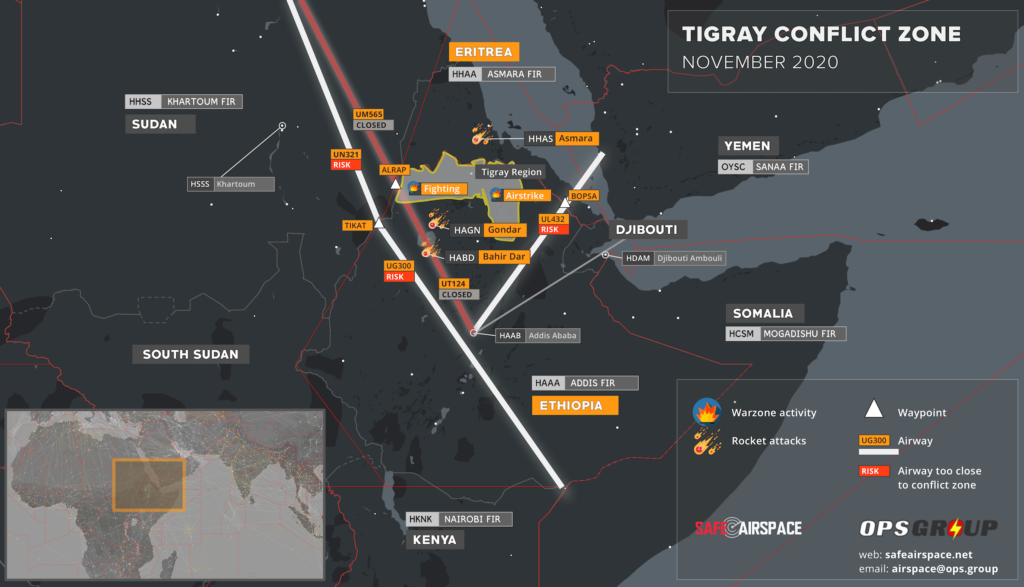
The conflict in the Tigray region of Northern Ethiopia remains unpredictable. Despite signs of improvement in Dec 2021, the conflict in the north has intensified again with military operations in western and southern Tigray. The Amhara region north of Addis Ababa is also under curfew. The 6 month state of emergency remains in place. Several states continue to warn aircraft throughout the HAAA/Addis FIR to maintain minimum flight levels due to anti-aircraft weaponry.

The situation in Afghanistan also remains volatile for 2022. The country is firmly under Taliban control, and the OAKX/Kabul FIR without ATC. A humanitarian crisis is developing there and it’s hard to predict what the international response (if any) will be, and how the Taliban might respond. Watch this space.

Stay updated

Safeairspace.net is our conflict zone and risk database. Our team updates it constantly with risk, security and hazard alerts from around the world. Click below for a full PDF briefing on hotspots around the world, or add your email to our risk briefing that goes out every second Monday.


Get your FAA Airspace KICZ here

Our SafeAirspace website contains all the current airspace warnings from major authorities for various airspace regions around the world.

If you are a US registered operator, then you can find info on the FAA warnings here too.

But we thought we would make a brief summary for you here, just as a refresher on what the current KICZ status is for each country.

Where can I find them?

SafeAirspace pulls all the latest info from the US FAA’s dedicated webpage which contains all their ‘Prohibitions, Restrictions and Notices’. This is where you can find their International Security NOTAMs (KICZ) and Special Federal Aviation Regulations (SFAR), plus information relating to the background of the situations and the prohibitions/restrictions.

A summary

Here is a summary of the countries with a US FAA airspace prohibition/restriction in force, and what it (very briefly) says for each one.

Afghanistan

US Operators are prohibited from operating in the OAKX/Kabul FIR. Overflights are still allowed on airways P500 and G500 which run alongside the eastern boundary of the Kabul FIR.

Why? There is a risk of direct and indirect fire targeting airports and from surface-to-air fire targeting aircraft operating at low altitudes. Additionally, the recent Taliban takeover has led to zero ATC control across the entire airspace and an extreme threat to aircraft and crew safety and security on the ground. Air defense forces in all neighboring states are likely at high alert status within respective border regions – target misidentification by military air defense operators remains a credible scenario.

Belarus

US operators are to exercise extra caution when operating over, within, in or out of the UMMV/Minsk FIR.

Why? Well, they recently “caused” a commercial aircraft to land and it is not entirely clear how secure the region is and if there are any safety implications for US operators at this time.

Egypt

US operators are to exercise extra caution when operating over, within, in or out of the Sinai Peninsula within the HECC/ Cairo FIR below FL260.

Why? There is ongoing fighting between military and extremist forces and they have anti-aircraft capable weapons.

Iran

US operators are prohibited from operating in the OIIX/Tehran FIR.

Why? There are signifiant security and safety issues in the region and the US and Iran are not on the best of terms. There was also an aircraft shoot-down due to mis-identification of their anti aircraft defence systems.

Iraq

US operators are prohibited from operating in the ORBB/Baghdad FIR.

Why? Similar to Iran, there are heightened military activities and increased tensions which present and inadvertent risk to US civil aircraft due potential for mis-identification.

Kenya

US operators are to exercise extra caution when operating over, within, in or out of Kenyan airspace east of 40 degrees East longitude (the border region with Somalia), at altitudes below FL260. The caution applies to the ground as well.

Why? Because there’s possible militant activity and with it a threat of damage to aircraft from mortars, rockets and anti-aircraft capable weapons.

North Korea

US operators are prohibited from operating in the ZKKP/Pyongyang FIR, including the oceanic part of the ZKKP/Pyongyang FIR over the Sea of Japan.

Why? Because there are hazards and risk to civil aircraft safety from North Korea due their military capabilities and activities, including unannounced missile and air defense weapons testing.

Libya

US operators are prohibited from overflying the HLLL/Tripoli FIR except for altitudes at or above FL300 “outside of Libyan territorial airspace” – which is basically the international airspace over the southern Mediterranean Sea that is managed by Libya.

Why? Because of ongoing conflict between the government and the Libyan National Army over territory, government control and resources – and all this means fighting, often with weapons which could damage aircraft.

Mali

US operators are to exercise extra caution when operating over, within, in or out of Mali below FL260.

Why? There is a risk of militant and extremist activity and mortars, rocket and anti aircraft fire.

Pakistan

US operators are to exercise extra caution when operating over, within, in or out of Pakistan.

Why? There is a risk of militant and extremist activity and mortars, rocket and anti aircraft fire.

Persian Gulf

Exercise caution operating in overwater airspace above the Persian Gulf and Gulf of Oman in the OKAC/Kuwait, OEJD/Jeddah, OBBB/Bahrain, OOMM/Muscat and OMAE/Emirates FIRs.

Why? There is a lot of military posturing and political tensions in the region and this bit is particularly close to the OIIX/Tehran FIR which is prohibited for US operators.

Somalia

US operators are prohibited operating below FL260 in the airspace of Somalia.

Why? There are active extremists in the region which pose a threat.

Syria

US operators are prohibited from entering the OSTT/Damascus FIR, and should exercise caution if within 200nm of Syrian airspace.

Why? It is a complex and ongoing conflict there, and it poses a risk to US operators.

Ukraine

US operators are prohibited from entering the UKDV/Dneptropetrovsk FIR (the UKFV/Simferepol FIR is ok).

Why? There is ongoing military action and the potential for aircraft misidentification there.

Venezuela

All operations below FL260 are prohibited unless specifically approved or they need to for an emergency.

Why? Mainly poor infrastructure, and political conflict between the two countries.

Yemen

US operators are basically prohibited from overflying the landmass of Yemen, but certain offshore routes within the OYSC/Sanaa FIR are allowed.

Why? Because of ongoing fighting, instability and possible terrorist activity.

An even briefer summary

For further information on the situation in each country and to see the prohibitions and restrictions recommended by other authorities, visit the SafeAirspace site.

The concept of SafeAirspace is this: to have a single source for all risk warnings issued about an individual country, independent of any political or commercial motivation, so that a pilot, flight dispatcher, security department, or anyone responsible for flight safety can quickly and easily see the current risk picture.

Travel Advisories

Travel Advisories and Airspace Warnings are different things. But for US operators flying internationally, it’s worth checking out the latest country-specific Travel Advisories issued by the US Dept of State. Each country’s Travel Advisory also has a link to the local US Embassy website in that country – these will show announcements on all the latest security-related news and incidents there.

Further reading

  • US and allied forces have now pulled out of Afghanistan, and the Taliban have taken control of the country. Afghanistan’s airspace is now effectively closed to overflights – the OAKX/Kabul FIR is uncontrolled, and overflying traffic should route around the country. Here is our latest update on what is happening.
  • The US reissued their Ukraine warnings in 2021. However, certain regions are Ukrainian airspace are now deemed safe for overflight.
  • Information on the aircraft shootdown in Iran, and ongoing concerns with their airspace safety.
  • Assessing the risk to routing over or into conflict zones is much more than just an “is there a weapon down there?” question. Gathering and sharing information on airspace risk is still one of the biggest barriers to safety. Are we actively seeking this information, or simply waiting for it to come our way? Read our article.


Intercepted: What You Need To Know

There are several reports that amidst the events surrounding the forced diversion of Ryanair Flight 4978 to Belarus last month, at least one MiG-29 was scrambled to intercept and escort the 737 to Minsk airport.

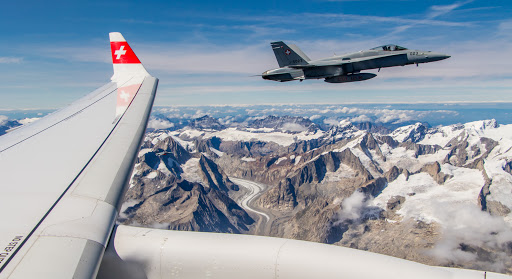
While military interceptions of civilian airliners are very rare, they can happen and for serious reasons. Which poses an important question – if a jet were to appear off your wing tip tomorrow, would you know what to do?

Each interception is potentially hazardous which is why ICAO publish rules and procedures (Annex 2) that both military and civilian aircraft should be following to minimise the risk. Each state is responsible for its own airspace, but where possible they should be following ICAO’s guidelines. For crew this includes knowing the actions to be taken and the visual signals to be used.

Here’s a break-down of what you need to know.

Why do they happen?

ICAO are very specific – an interception should be avoided and only used as a last resort. ATC must try and establish communications with you first. The primary reason is that they haven’t been able to talk to you.

There are lots of simple reasons why this can happen – usually a wrong frequency or perhaps they’ve forgotten to hand you over. In this instance they will try and contact you on 121.5 (which is one reason we monitor Guard), or via another aircraft. If that fails, ATC have a problem. You’re flying through their airspace and you’re not talking. It is not clear what is happening on board.

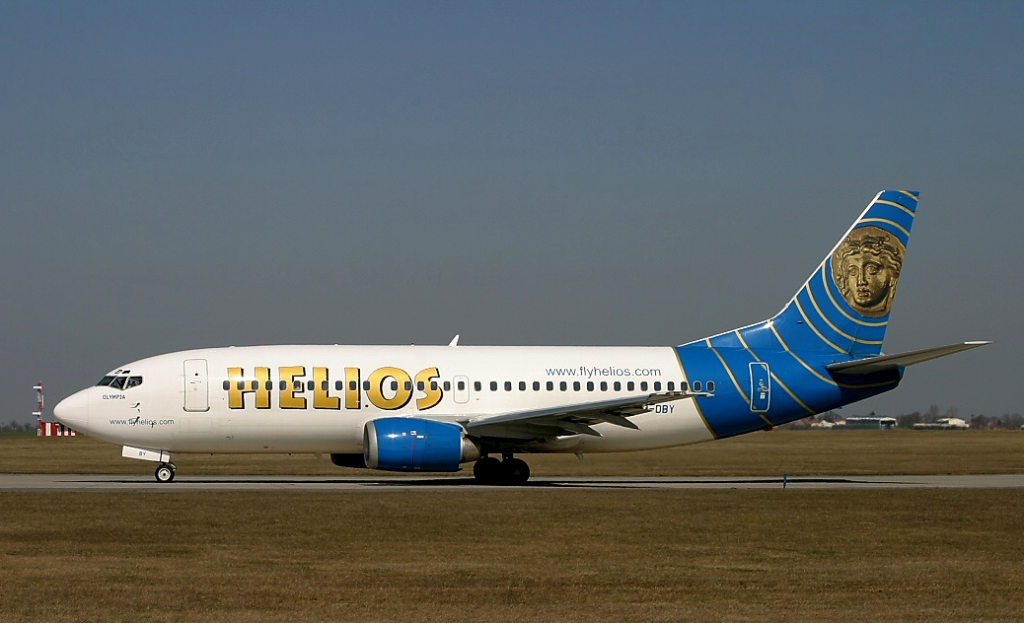
Incapacitation is a biggie, the crew may have fallen asleep or perhaps something more serious has happened as Helios 522 tragically reminds us. Or the aircraft may have been hijacked. Either way, they need to get someone up there to check things out.

What will they want us to do?

One of three things, depending on what the problem is. They’ll either want to identify you, communicate with you or re-direct you. The latter may be because you have strayed off-course or busted some kind of restricted airspace. Far less often it is because authorities may believe you are involved with illegal activity (such as drug smuggling) or or you are for some reason hazardous to other aircraft.

The Interception Manoeuvre.

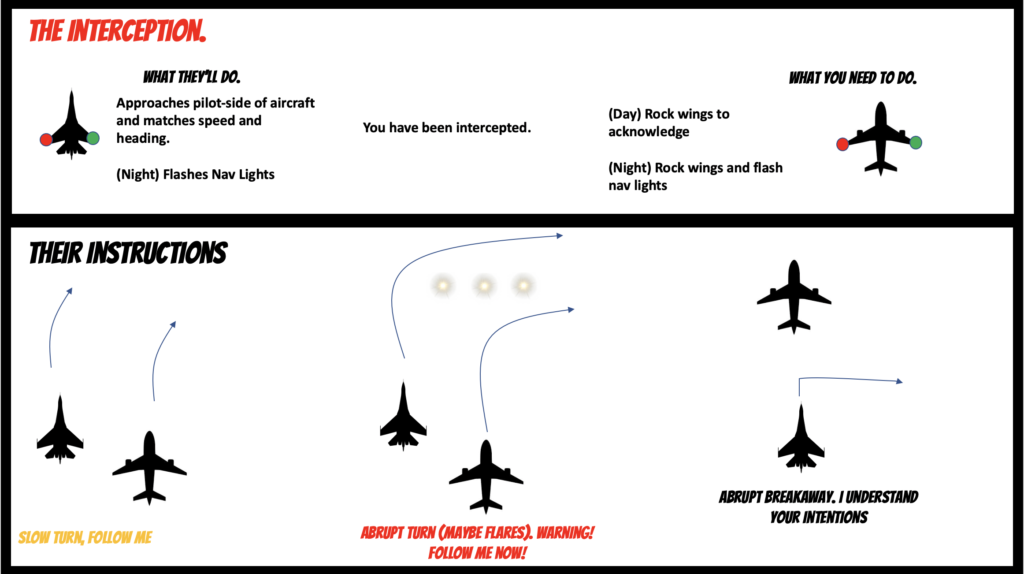
ICAO have a standard procedure for military aircraft to follow to minimise startle factor for you and decrease collision risk. A standard interception will take place in three phases, here’s how it works.

Phase I.

Intercepting aircraft should approach you from astern (behind). They will disable pressure reporting on their transponders – not to hide from you, but to avoid triggering a nuisance RA. They should still be visible on your TCAS but only as a TA. The lead aircraft will take up a position on the left, ahead and slightly above at a distance so as not to cause startle and to be clearly visible to the captain. It is likely there will be an accompanying aircraft which will remain behind you throughout. They will be trying to contact you on guard frequency (121.5) using the callsign ‘INTERCEPTOR’ or ‘INTERCEPT CONTROL.’

Phase II.

The lead aircraft will close slowly with you but not closer than needed to establish communications. All other aircraft will remain well clear of you.

Phase III.

What happens next depends on the situation. If they have finished their interception (they have identified you, re-established your comms with ATC or understand your intentions) they will perform a break away procedure to clear you.

Or they may need to divert or re-route you. In which case they will remain in position and clearly visible at all times.

What you need to do in the flight deck.

Stay calm. You’ll likely be startled. Slow it down and remember the following:

  • Notify ATC (if possible). Make sure you have 121.5 active, the volume turned up and that your headset or speaker is working. Try and establish contact with them. Listen out for the callsigns above.
  • Select Mode A on your transponder and squawk 7700 (unless ATC tell you otherwise). If you have ADS-B or ADS-C onboard, select the appropriate emergency function.
  • Communicate (more on that below).

How do we talk to them?

The primary way they will want to talk to you will be in plain English on 121.5.

If they can’t raise you on that, they will use visual signals which is why they need to get so close to you.

There are ICAO standard signals used across most member states (including the US) that you need to know (or at least know how to find quickly). Here’s how they work:

When they want you to land.

If they can’t talk to you and want you back down on the ground they will direct you to an airport, turn on their landing lights, lower their gear and begin to circle.

If you intend to land you should lower your own gear and land. If the airport is inadequate, you should continue to circle 1000 – 2000ft, raise your gear and flash your landing lights until your escort re-directs you some place else.

What about if their instructions contradict someone else’s?

According to ICAO, if you receive contradictory instructions from other sources you should continue to comply with those from the intercepting aircraft.

Their duty of care.

You have to do as you’re told, but they should be looking after you. ICAO are very clear that nothing can be done during interceptions to unnecessarily put your aircraft or its passengers at undue risk. So, when they are requiring you to land, it is important to know they must take care to ensure your safety.

Firstly, they should not divert you to an airfield which is unsafe for your aircraft type. For civil aircraft this means the runway must be equivalent to at least 2,500m long at sea level, and have a bearing strength that is strong enough. The surrounding terrain must be suitable to allow for a safe approach and missed approach.

They must also take steps to ensure that you have sufficient fuel and if possible the airport they want you to land at is published in the relevant AIP.

Finally, they should give you sufficient time to prepare for the landing, including giving the crew a chance to check landing performance and brief.

Should I be worried about being shot at?

Seeing a fighter on your wing is an intimidating sight. But the use of weapons is very unlikely, especially if you are complying with instructions or are obviously unable to respond. ICAO have asked all contracting states for a commitment that all measures will be taken to refrain from the use of weapons (including to attract attention) as they endanger the lives and safety of everyone on board. However, that’s not to say they can’t be used. So the best defence is always to follow instructions.

Military interception of a civil aircraft is extremely rare.

While the diversion and alleged interception of Ryanair last month raises valid concerns throughout the aviation community it is important to remember that ICAO’s procedures have been designed to minimise risk across a broad range of scenarios. It’s important that we stay aware of them and how to apply them.


Assessing the Risk: Operations Over Conflict Zones

ICAO Doc 10084, if you have not come across it, is a sixty plus page document looking at ‘Risk Assessment for Civil Aircraft Operation Over or Near Conflict Zones’. Important stuff.

But despite manuals and procedures, regulations and recommendations telling us how to watch out for, assess, mitigate and manage the risk of conflict zones, there remains a much bigger and more significant risk to safety because of conflict zones.

So, what is this risk, and more importantly, what can we do about it in the aviation community?

Information

The huge hindrance to maintaining safety does not lie just with the SAMs themselves. It lies with information – the quality, quantity, reliability and promulgation of it. The result is that risk assessments are fundamentally flawed, understanding is limited and critical information does not reach those who need it.

So, there are four big points that need considering when we look at conflict zones and their impact on airspace safety:

  1. The Bigger Question – A risk assessment is much more than just asking “Is there a weapon down there?”
  2. Rules alone do not change the behavior of states – Information from states is critical, but it is often not shared, or not shared very well.
  3. Are we actively seeking information, or simply waiting for it to come our way? – The safety process does not stop at the state level, it continues (should continue) dynamically with operators and with the pilots, so understanding the situation is important.
  4. How can we do better? – Individuals and the industry have a responsibility to ensure information and strategies are shared.

1. The Bigger Question

The bigger question is to do with how risk is assessed, and it is a complex process even when information is available.

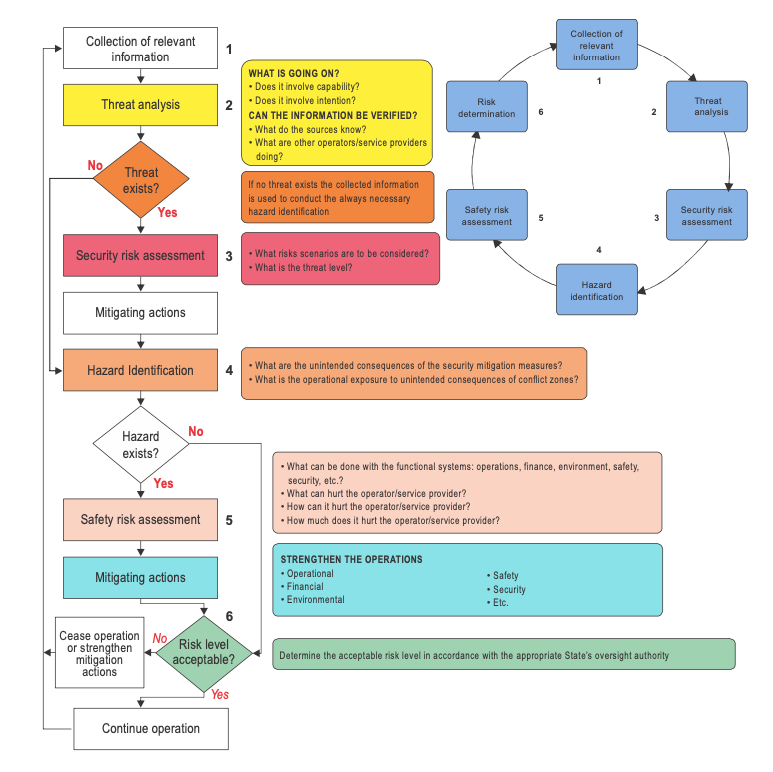
ICAO Doc 10084 lays out the risk assessment process. It’s an interesting read and worth taking a few minutes to think about because understanding the background to conflicts and what the key factors at play are is the only way for safety strategies and risk assessments to continue, and continue they should – it does not stop when a Notam is released.

The process is dynamic and needs to continue with the operator and the pilots too.

What are the key factors in a risk assessment?

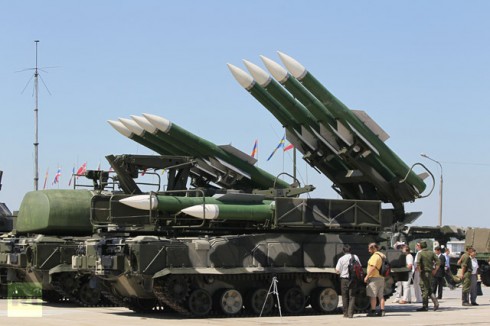
First up, what are we actually talking about here? Long-range Surface-to-air missiles (SAMs) can reach aircraft cruising in excess of 25,000ft (7600m). They are often linked with radar sensor systems to help identify targets, and are mobile and easily and quickly relocated.

So we need an assessment of what danger these pose to airlines and airplanes, and this means we need to know who has them (the capability) and also their intent (who or what do they plan to target).

But it is not that simple. Where there is intent, there is not always capability; and as importantly, where there is capability there is not always intent. The Iranian shoot down is a clear example of this. So we also need to consider the unintentional risks as well.

The questions asked look something like this:

  • Is there use of military aircraft in combat roles or for hostile reconnaissance (including unmanned aircraft)?
  • Are aircraft used to transport troops into the area and do these routes coincide with civil air corridors, or lie close and so pose a risk of misidentification between civil and military aircraft operating in the area?
  • What are the politics relating to the region?
  • What are the training levels of SAM operators and what is the military deployment of SAMs? How reliable and credible is the information shared by the state regarding this?
  • Is there a lack of effective air traffic management over the relevant airspace? Is the state fully in control of their own territory and do they fulfil all their ATC, coordination and promulgation (of information) obligations?
  • Do civil aircraft route pass over or close to locations or assets of high strategic importance or which may be considered vulnerable to aerial attack in a conflict situation?

But, the risk continues beyond this initial assessment because we also have to identify any ongoing consequences of an event. If a major airport is targeted, the impact is not only with the initial damage – if that initial damage is to the ATC systems required to maintain control and separation of aircraft then now we have reduced safety in the airspace and a much larger level of disruption.

So, we must think about the overall severity, and with that the tolerability of an infrastructure or operation. We are asking both ‘What can it hurt?’ and ‘How much it will hurt?’ 

This assessment, according to the ICAO document, is thrown into a matrix and churns out a ‘Risk Level’ which leads to the actions taken. 

Sounds simple, but there is one key point here – 

This info is not easy to come by. It is rarely reliable, and there is a qualitative narrative that makes it very subjective. The information has to be promulgated from states.

Which leads us to Point Number 2.

2. Rules do not change the behavior of a state….

States are responsible for sharing info on hazards, on what mitigation strategies they have in place, and the assessed impact of the strategies they adopt.

This often does not happen, or it does not happen well. Look at Ethiopia/Tigray region situation – misleading Notams and no guidance from the Ethiopian authorities led to Opsgroup issuing our own warning regarding the situation.

Further to that, ICAO only mandated the reporting of hazards in notices to pilots since 2020, and some states are still failing to do so.

3. People are not seeking information, they are waiting for it to come their way

This is why SafeAirspace was created.

Information is not being shared well and risk assessments are fundamentally flawed because the information on key factors is simply not available or reliable most of the time.

What’s more, people are rarely questioning whether the information they received was reliable, accurate or complete. Few proper risk assessments are taking place because those responsible are waiting for the information to come to them, and without a proper risk assessment, mitigation strategies are not sufficient, and are not being passed on to those who need them – the pilots.

What is the Operator’s continued role in the process?

Every operator is responsible for continuing the risk assessment. It is not enough to simply direct crew to a Notam. Ensuring crew have a full briefing on the threat and any mitigation strategies is important.

  • Emergency and abnormal procedures should be considered in advance. Take Mogadishu airspace where only flights on specific airways over the water are allowed. What is the strategy here in case of an engine failure or depressurization? If you operate over this region, you should have access to this information.
  • Operators are also responsible reviewing fuel requirements – ensuring additional fuel is provided for potential diversions around conflict zones.
  • If aircraft will be operating into conflict zones, then a review of MEL items which can be deferred is a good call – can the aircraft get out again without requiring maintenance or fueling?

What is the pilot’s continued responsibility in the process?

The information and strategies we see at the operations end are things like these:

  • Coordination between military authorities, security and ATS units
  • Briefings of personnel
  • Identification of civil aircraft by military units
  • Issuance of warnings and navigation advice
  • Air Traffic Restrictions
  • Closure of Airspace

But this does not mean the full risk has been removed. Understanding this, understanding how the situation got to this point, and understanding the risk assessment and safety management that has taken place is vital because the process now continues with you, the pilot, and this a fundamental step in continuing to manage safety.

  • The Crew, and the Commander of the aircraft are responsible for the safety of the aircraft and the passengers. Of course, we all know that, but if you are given a Notam saying “this airspace ain’t great, maybe avoid it” and then you fly through it, where does the responsibility of your operator end and yours begin?
  • Reading notams, the AIPs, AICs, and being aware of the threats of the airspace you might be asked to operate into is vital. More than that, ensure you are aware of any mitigation strategies required.
  • Pre-prepare for diversions and know where you can safely go. Some diversions might take you through prohibited airspace so if you are operating in the vicinity of some, have a route ready in box two so you can easily avoid airspace when you need to.
  • Be aware of security threats and hazards on the ground, in advance.
  • Consider the serviceability of aircraft equipment before you go – critical equipment would be communication systems, and those required to ensure military units can identify them as civilian;
  • Have an awareness of the potential political implications if diverting into some regions with certain nationalities onboard. If you divert there, what will happen to your passengers and crew, and why?
  • Report things. Keep the information loop going.

4. How can we do better?

Aeronautical info from states and authorities is your first point of call. AICs, AIPs and Notams are going to contain info on advisories, restrictions and recommendations.

If you are an FAA operator, then the FAA put out KICZ notams and this page has all the current ones for airspace.

Networks and organizations such as us here at OPSGROUP try to share relevant and up-to-date information on airspace, conflicts and the risks that are out there.

Open sources like social media and news sites are also good – but be careful, these may come from unconfirmed or unreliable sources. We recommend checking info with other sources too, like handling agents in the area.

Finally, talk to other pilots and operators, and be sure to report information you have from operating in or through airspace.


Western Sahara Airspace Update

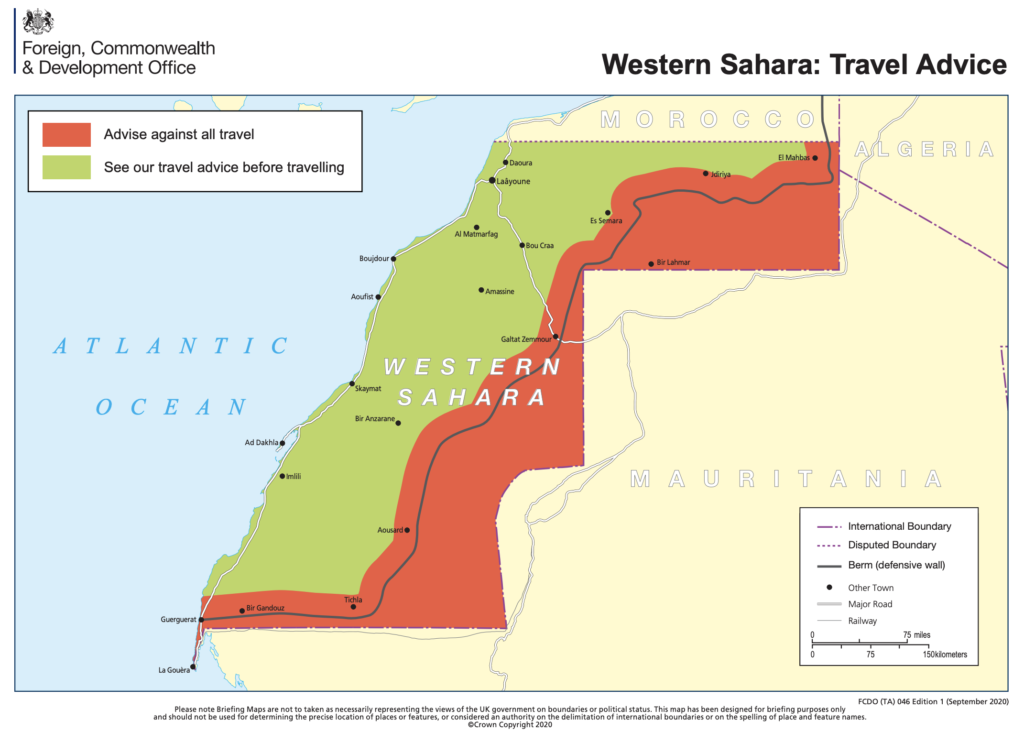
On May 4, the GCCC/Canarias FIR updated their airspace warning for Western Sahara, due to the ongoing conflict there.

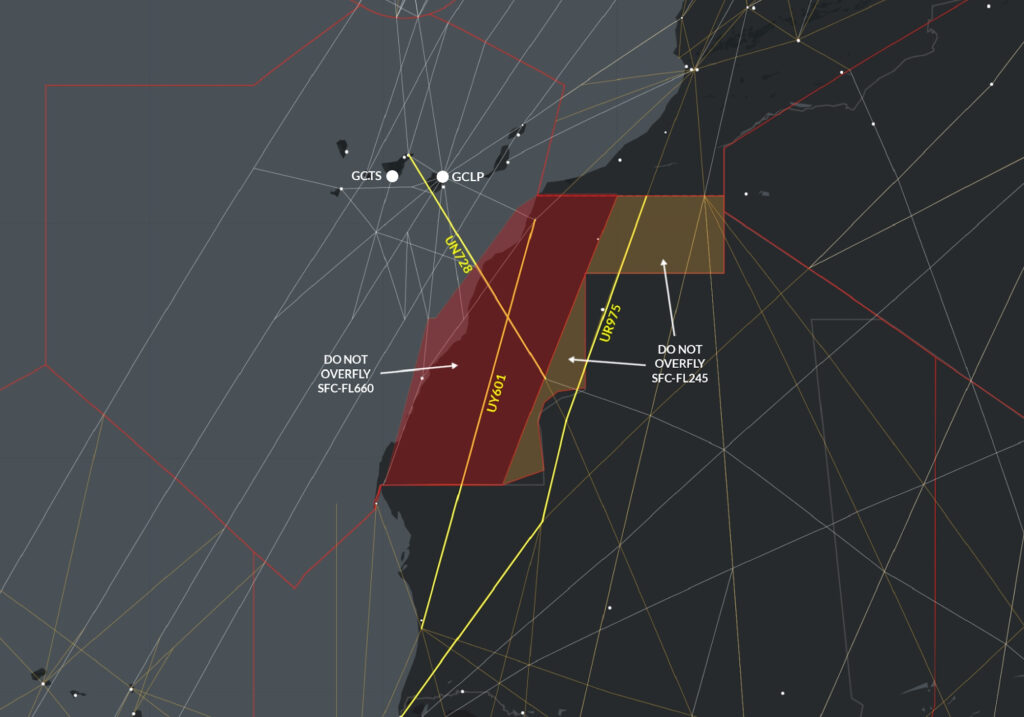
Previously, they said that aircraft overflights should be completely avoided in the eastern part of the country (i.e. airways UY601 and UN728), and should not be below FL245 in the western part. Here’s how that looked:

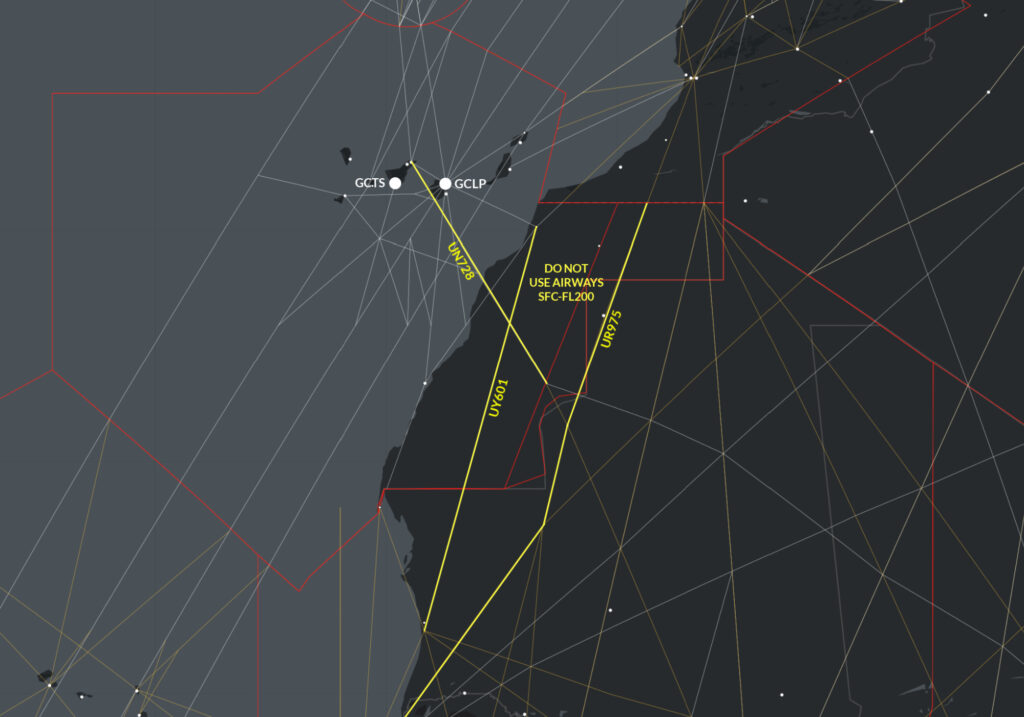
However, the updated warning issued on May 4 simply advises operators to avoid using the airways over Western Sahara below FL200:

Here’s the Notam:

GCCC B3323/21  - OPERATORS ARE REQUESTED TO EXERCISE PARTICULAR CAUTION 
DURING FLIGHT OPERATIONS IN WESTERN SAHARA AS PART OF FIR CANARIAS. 
IT IS RECOMMENDED TO AVOID OVERFLIGHT AT FLIGHT LEVELS BELOW FL200 
ON THE FOLLOWING ROUTES: UY601, UN728 AND UT975. 
04 MAY 08:53 2021 UNTIL 04 JUN 23:59 2021 ESTIMATED. 
CREATED: 04 MAY 08:54 2021

Still, not much of a warning. What’s really important is exactly what is missing: why.

The answer: Because the airways are over an active conflict zone, with a known threat of anti-aircraft fire.

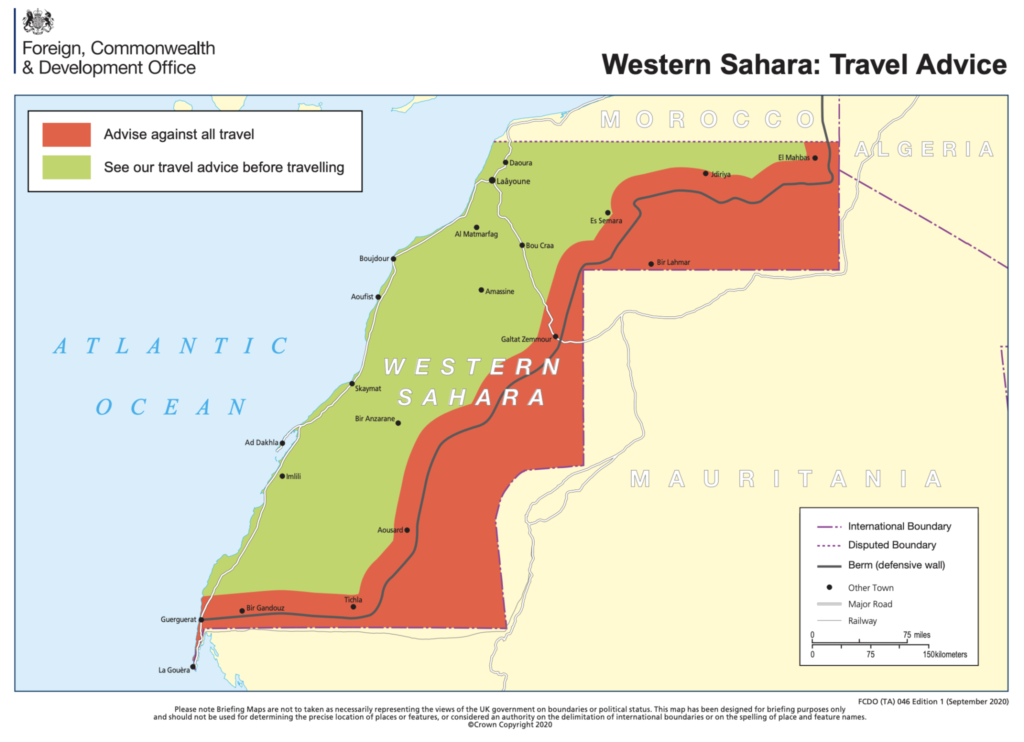
Western Sahara is effectively divided straight down the middle, literally by a wall. Morocco controls one side, while the region’s independence movement (the Polisario) controls the other. In Nov 2020, the Polisario declared war on Morocco.

Why do they want to fight?

The two have never gotten along. The Polisario want independence and were at war with the Moroccan Government for a very long time, until a fragile ceasefire agreement in 1991. Since then there has always been tension.

In early Nov 2020, a Polisario protest blocked a whole bunch of Moroccan truck drivers at the border with Mauritania, shutting down an essential route that connects Morocco to the rest of Sub-Saharan Africa. Morocco weren’t happy, and breached the ceasefire agreement by sending forces into the demilitarized zone to remove them.

The Polisario immediately declared war on Morocco, and clashes began straight away.

Why does it matter?

The FAA were onto it when they immediately carried out a risk assessment and published a notice. The big deal is that the Polisario are likely to have access to anti-aircraft weaponry left over from the previous war. This includes man-portable air defence systems (MANPADS) and surface-to-air missiles. The FAA think these weapons pose a risk to aircraft as high as 12,000 feet.

To make matters worse, they are suspicious that Morocco are flying drones over their territory – something that has been denied by Morocco. It wouldn’t be the first time an aircraft has been shot down there either – the Polisario downed two DC-7 airliners with missiles back in 1988.

What about airspace?

The sky over Western Sahara airspace is split between two FIRs –GCCC/Canarias and GOOO/Dakar. If the conflict escalates further, this is likely to complicate things.

So far there has been only one warning from the Canarias side – the NOTAM above. Nothing from Dakar yet.

There are currently three major airways affected. Two of them (UY601 and UT975) run the length of the region in a south westerly direction – likely to be used by aircraft transiting some routes between Europe and South America. The other airway, UN728 is a direct track from the coast to GCTS/Tenerife which may be used by smaller aircraft or those doing tech stops in the Canary Islands.

So if you’re  planning flights to the Canaries, or overflying central Africa, pay close attention to the risks involved. Continue to monitor Safeairspace.net as the situation develops.


The Bermuda Triangle: Fact or Fiction?

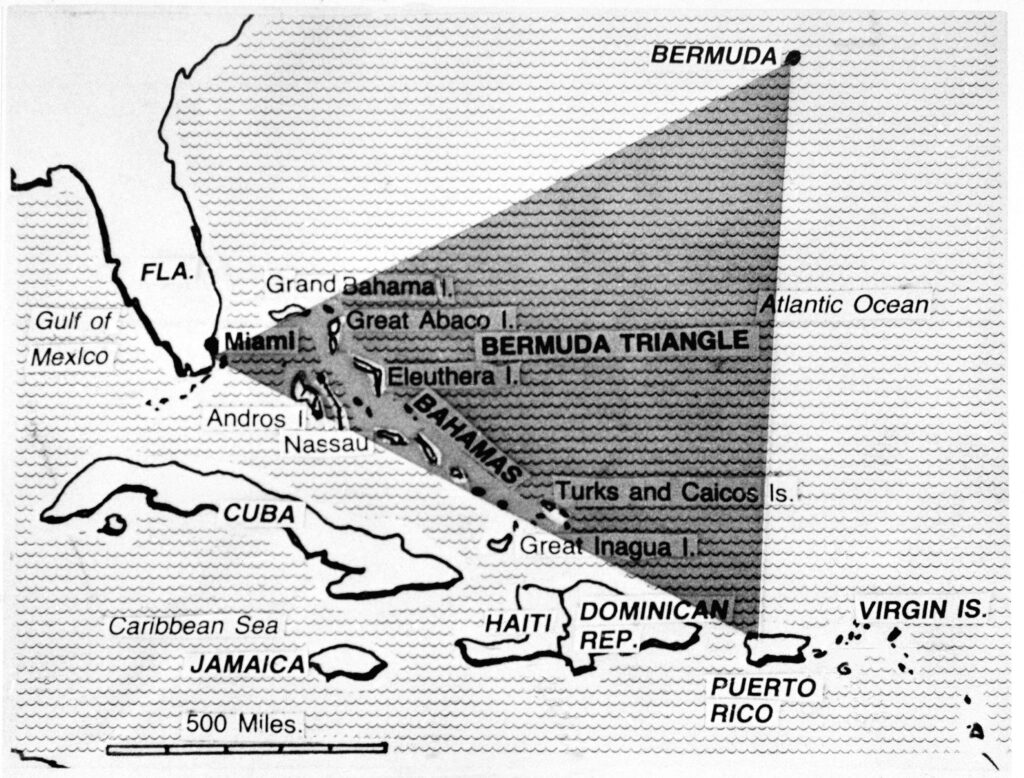
The Bermuda Triangle. A place of myths and legends. But how real is it, and what affect if any does it have on aircraft flying through it?

Where exactly?

The Bermuda is a fairly loosely defined area out in the great Atlantic Ocean, generally mapped out with its three corners reaching Bermuda, Miami and the northwestern corner of Puerto Rico. It varies in size from around 500,000 sq. miles to 1,500,000 sq. miles depending on how its boundaries are drawn.

Why do we talk about it in Aviation?

It has a reputation for disappearances – sinking ships and vanishing airplanes, dots on the radar that are gone in a blink, never to be seen again. Some say it is haunted, some say aliens use it as a human abduction point, others reckon it is home to an immense Kraken that swallows ships whole…

These might be tall tales, but in fact is has been the location of a higher-than-its-fair-share of naval and aviation disappearances, and random technical malfunctions too. Somewhere in the region of 50 ships and 20 airplanes since folk started paying attention.

In 2017, a Turkish Airlines A330-200 experienced a series of electrical and mechanical malfunctions while routing over the Triangle. Routing from Istanbul to Cuba, they ended up making a diversion to Washington Dulles. Flight 19 was a squadron of five Torpedo Bombers that disappeared in the area. And of course the famous Amelia Earhart’s final flight was rumored to have gone down in this general location.

It gained its name from an article written back in 1964, which started with an attention grabbing hook –

Fact or Fiction?

Read through the list of sea and air incidents and accidents and you will notice something – the vast majority of events happened last century. Aside from TK183 and a few light aircraft accidents, all the rest generally took place between the 1940s and 1970s.

The investigations into Flight 19 and Amelia Earhart’s disappearance both concluded that poor weather, a loss of situational awareness regarding their actual positions, and ultimately running out of fuel were most likely to blame.

Flight 19 was attributed to the Flight Leader mistaking the Bahamas for the Florida Keys, a broken compass and the fact that the advice for if you got lost in the area back then was to just “take up a heading of 270”. And the Turkish Airlines flight was a fairly uneventful malfunction and diversion.

The high numbers of events can also be put down to the high amount of traffic that routes through this region. It is a fairly major shipping route between the East Coast of the US and the Gulf of Mexico, and in more modern times it has become a fairly busy area for aircraft too.

What is causing it all then?

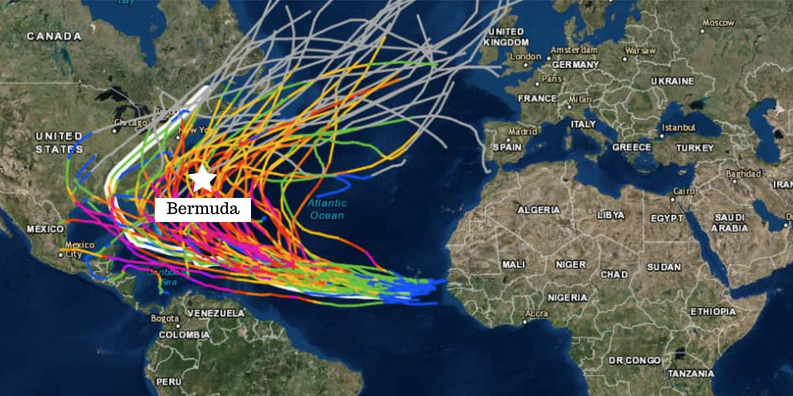
Well, weather seems an obvious answer. It is a pretty popular area for hurricanes to aim towards. In fact, Bermuda (the island) sits in Hurricane alley – the more frequent path taken by Atlantic Hurricanes. So it is no surprise old airplanes and ships without the use of modern weather radar systems might fly into this region and be surprised by some really nasty ship-sinking / airplane-crashing storms.

Another explanation offered up by science is to do with magnetism. You all know this, but the Earth’s magnetic pole isn’t quite in the same spot as True North. Your compass points to magnetic north, but there are these things called Agonic Lines which line up magnetic and true north and along these your compass is Truly (pun intended) accurate. One such line runs from Lake Superior and down through the Gulf of Mexico.

Back in the days before GPS, when pioneering navigators relied on compasses and stars (which they couldn’t see because of all the bad weather), they would have potentially corrected for Magnetic to True. But correcting along an agonic line would actually have led them astray.

Then there is the depth of the trenches in this area of the ocean. Most of the sea floor is as far down as 19,000 feet, some areas over 27,500 feet. Which means when things do sink there, they are not easily found. So your sunken ship or ditched airplane is not likely to be found and the conspiracies about aliens and wormholes start to run rampant.

So, the lack of recent aviation events attributable to supernatural phenomena do suggest that it was probably due to more standard reasons that incidents were higher here than in others areas. Added to the fact it makes a good story, and we find we just have an area of bad weather, lots of traffic, and disappointingly unexciting reasons for accidents.

Are there any things modern aviators should look out for in the region?

Yes. Those hurricanes are worth keeping an eye on. The main Atlantic Hurricane season runs from June to the end of November. We wrote a bit about it here.

If you are flying to Bermuda itself then the fact it is a very remote island is also worth thinking about. TXKF/Wade International is your main airport, and some of the nearest alternates lie a good 650 miles away on the east coast of the US.

Some serious fuel planning is a good idea then – Isolated Airport Procedures usually require you to carry at least 2 hours additional fuel (at normal cruise consumption above the destination aerodrome). Here is a useful CAA produced checklist for Isolated Airport Procedures.

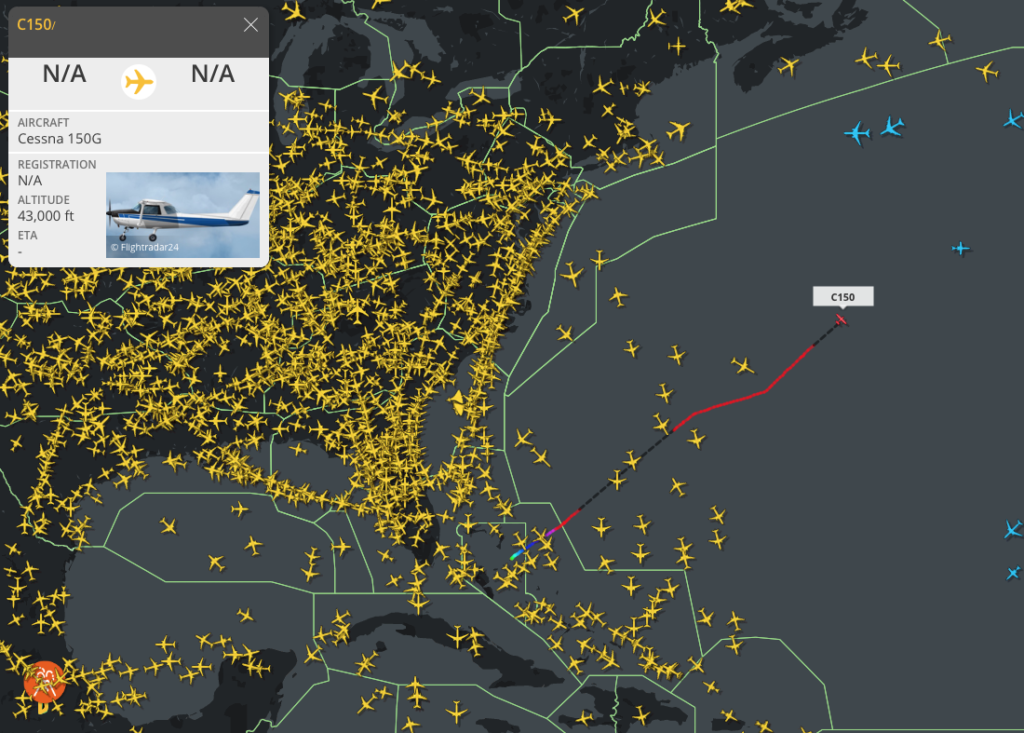
The surrounding airspace is also a threat. To the East you have the open Atlantic and all the procedures and challenges associated with that. To the West you have the East coast of the US, including the Florida Metroplex airspace, along with KMIA/Miami and KFLL/Fort Lauderdale – two of the busiest airports, in some of the busiest airspace of the USA.

Did you know there is a Bermuda Triangle in space?

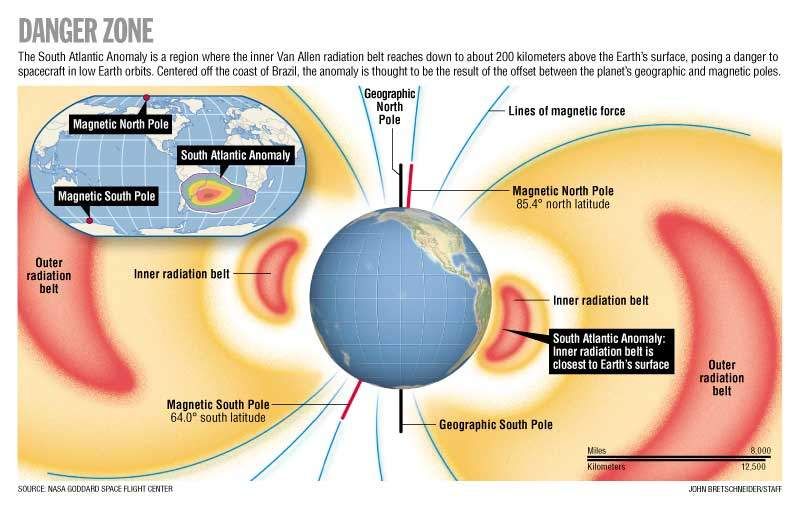
Yep, astronauts have their own ‘Bermuda Triangle’ to contend with. It lies over the South Pacific, stretching between Chile and Zimbabwe, and is rather more real than its earthly counterpart.

This area of space is where the inner Van Allen radiation belt comes closest to the Earth. These rings of charged particles – loads of electrons in the outer ring and high-energy protons in the inner –  surround the planet, and are caused by the Earth’s magnetic field which protects us from this harmful radiation by trapping these particles in its magnetic grip.

Unfortunately, in this particular area, the Earth’s magnetic field is weakest, so all those particles are free to swoosh around more. They have also managed to get much closer to the Earth which means our satellites, space equipment and space travelers sometimes orbit through it.  This pretty much messes with electrical equipment, and people for that matter.

For the Hubble telescope, which passes through it about 10 times a day, it means a disruption in its workings for about 15% of each day. Satellites often experience temporary system failures when passing through during high flux days, and the astronauts onboard the ISS have to be shielded to prevent excess radiation. They often report seeing random white flashes, and having issues with communication equipment.

Disappointingly then it seems the Bermuda Triangle is just the stuff of fiction

Most authorities and Scientific organizations agree, but if you fancy reading some more about it then these are some good places to head to:


Chad Airspace Update

Chad’s long term President, Idriss Déby died this week, having spent more than three decades in power as one of Africa’s longest-serving leaders. So why did his death result in the temporary closure of the country, and what is the impact to aviation?

The background

Chad is a large landlocked country in Africa, bordered by Sudan, Libya, the CAR, Cameroon,Nigeria and Niger.

Déby was focused on building a more democratic society and he had strong allies in France and with other Western powers through his continued fighting against Jihadist groups. Provincial elections were already underway with projections suggesting he would be successful in winning a sixth term.

However, Chad is also one of the poorest nations in the world, with big problems around poverty, corruption and human rights, and with that came civil unrest.

What happened?

Déby was injured during a visit to troops who were battling against rebels belonging to a group called Fact (the Front for Change and Concord in Chad). The big concern now is who will become the next leader – Déby’s son has stepped in – but the government has been dissolved and conflict is escalating in the country as opposing parties fight for power.

The military elected initially to close land and maritime borders, but then closed all airports as well, whilst putting in a strict countrywide curfew.

The Impact for Aviation

Initially, a Notam was issued stating that FTTJ/Ndjamena airport was closed, and that Contingency Procedures were in effect across the FTTT/Ndjamena FIR. Then a couple of days later, on Apr 21, the Notam was cancelled and the US Embassy issued a Security Alert advising that FTTJ airport has reopened.

In the short term however, landings are not advised, and overflying aircraft should be familiar with Contingency Procedures. You can download the Contingency Plan from the Acesna AIP here.

This plan lays out the arrangements for situations where the Air Navigation Services are partially or totally disrupted, and aims to ensure overflights remain possible. Effectively, it aims to coordinate with neighboring ATS units so control of the N’Djamena UIR is temporarily assigned to them – Brazzaville ACC and Niamey ACC are the primary units being used.

Pilot operating procedures while Contingency Procedures are activated are shown under section 8.3 and the advises the following:

  • Maintain contact with Brazzaville or Niamey control until entering, and contact the next control at least 10 minutes prior to exiting.
  • Operate along the assigned contingency route (as listed in the table), although SLOP is recommended.
  • Reach your assigned level at least 10 minutes prior to entering N’Djamena UIR and maintain throughout unless an emergency arises requiring you to diverge from it.
  • Listen out on 12.6 and transmit position reports.

What else do we know?

N’Djamena in the past was a popular fuel stop in central Africa, but multiple travel warnings now advise against travel here (see the UK advice here, and the US advice here). No official state Notams have been issued, but risk remains high. A state of emergency remains in place for the Lake Chad region. Overall there is a high threat for terrorism and it is strongly advised to avoid landings.


US FAA issues new airspace warning for Russia and Ukraine

On April 17, the US FAA published new Notams warning operators to exercise extreme caution within 100nm of the entire Russia-Ukraine border, due to risks associated with recent increased tensions between the two countries. Should hostilities escalate here, the airspace on both sides could be exposed to potential weapons activity posing a risk to civil aircraft from misidentification or miscalculation.

The eastern part of Ukraine along the border with Russia is still an active conflict zone. The main hotspot is the Line of Contact which runs north-south through the UKDV/Dnipropetrovsk FIR. Throughout April 2021 there has been a large military build-up and an increase in ceasefire violations in this area, plus reports of GPS jamming and surveillance of civil flights by military systems – similar conditions to those prior to the shoot-down of MH17 in 2014.

This new airspace warning from the FAA follows the Information Note they published on April 13, which provides more background on the situation.

The FAA’s previous warning for Ukraine, as per SFAR 113, remains in place – US operators are banned from overflying the eastern part of the UKDV/Dnipropetrovsk FIR due to a continued threat of arms fire in the region. Essentially, everything east of ABDAR–M853–NIKAD–N604–GOBUN is prohibited. Airways M853 and N604 are off-limits as well. Flights to UKHH/Kharkiv, UKDD/Dnipropetrovsk and UKDE/Zaporizhzhia airports are permitted.

Put that all together – the old warning and the new one – and here’s how it looks:

Several other countries have airspace warnings in place for eastern Ukraine, including Canada who recently published a Notam advising operators to avoid the UKFV/Simferopol and UKDV/Dnipropetrovsk FIRs due to the risk from heightened military activity and anti-aviation weaponry. Check SafeAirspace.net for more info.

What about the UKFV/Simferopol FIR?

For the past few years, the risk here has been quite separate to that affecting the UKDV/Dnipropetrovsk FIR. It stems from the fact that the UKFV/Simferopol is disputed airspace, with aircraft potentially receiving confusing and conflicting air traffic control instructions from both Ukrainian and Russian ATC. 

In March 2014, Russia annexed Crimea, and Ukraine disputed this. The ATC Center is in Simferopol, Crimea, and is now run by Russia. Russia claims the airspace, and now refer to it as the URFV FIR. Ukraine refuses to recognise the change, and still calls it the UKFV FIR – and asks crews to talk to Ukrainian controllers in Dnipro/Odesa ACC instead of Simferopol ACC.

In October 2020, the US entirely removed their restrictions on overflights of the UKFV/Simferopol FIR, as they said the security situation had sufficiently improved here. While Russia continued to assert territorial claims over this region, Ukraine had established appropriate risk management measures to ensure safe operations for aircraft along the Black Sea routes.

In simple terms – since 27th October 2020, US operators have been able to overfly the Simferopol FIR.

However, tensions have been on the rise in this region throughout 2021. Russia seem to be going on a renewed military offensive here, focusing their efforts on the area of disputed airspace over Crimea, and establishing several large danger areas over the water surrounding the Crimea Peninsula at all flight levels. These danger areas are most likely due to military activity which may include live firing exercises –  so use extreme care in the UKFV/Simferopol FIR at this time as the situation is unpredictable.
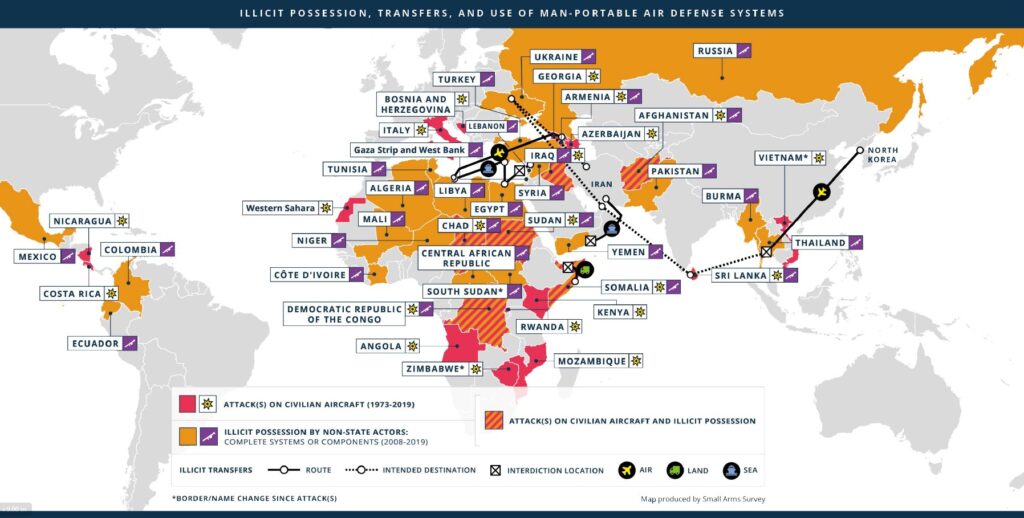
For more info on these latest developments in the UKFV/Simferopol FIR, see our dedicated article here.

What are other countries saying about Ukraine?

Aside from the US, several other countries consistently publish airspace warnings: the UK, Germany, France, and Canada

UK and France: both have warnings in place advising against all ops over both of these Ukrainian FIRs, with the exception of airways Black Sea routes in the UKFV/Simferopol FIR.

Germany: does not have any published warnings in place at all.

Canada: avoid the UKFV/Simferopol and UKDV/Dnipropetrovsk FIRs due to risk from heightened military activity and anti-aviation weaponry. Exercise caution across the rest of Ukraine’s airspace.

For more details on Ukraine and other airspace warnings, head to SafeAirspace.net


Greece-ing the Turkey: The Aegean Dispute

The dispute between Turkey and Greece is one we have mentioned before. Not because it was having a particularly big impact on aviation operations, but because of the vaguely amusing Notam battle they have been waging against each other for the last few years.

But what appears to be a rather silly conflict actually has a more serious side to it, so we thought we would take a little look at what is going on.

What are they arguing over?

This dispute is about what disputes always seem to be about – who owns some bit of land, or in this case, a Continental Shelf (so a bit of land that is submerged under several miles of Eastern Mediterranean Sea). Turkey want it because it is a treasure chest of energy resources, while Greece want it because, well, they reckon it was always theirs.

The dispute goes a bit “higher” than the continental shelf though. Like those annoying neighbours who keep pushing their fence backwards into your garden, so Greece have decided that their airspace extends not the usual 6nm (based off territorial waters), but 10nm. Turkey refuse to recognise those extra 4nm as Greek. Nor do ICAO who have a 1948 statute saying airspace must coincide with territorial water boundaries. 

So we would say that’s one:nil to Turkey, except for Greece’s point that they actually laid claim to those extra 4nm way back in 1931 before ICAO came along with their statute. Plus, this isn’t the only area Turkey has had disputes over, so maybe Greece have a bit of a point.

But do we care, or can we just let them keep bickering?

Well, the permanent Notam battle can be ignored with a simple filter that removes the likes of these from your Notam package:

However, that is not the only repercussion. Actually, all this makes for some messy airspace controlling because it impacts FIRs and with that, who controls military flight activity. This has led to a bunch of provocations from both sides, with them regularly sending military aircraft into the 4nm disputed bit just to annoy the other side. And this is a problem, because it often escalates with retaliations. In 1996, Turkey claimed one of their aircraft had been shot down by a Greek fighter jet, and in 2014 the number of Turkish incursions into Greek airspace rose to nearly 1,500.

Tensions flared up again in 2020 when Turkey finalised their purchase of Russian S-400 mobile surface-to-air missile system. Now, this wasn’t specifically aimed at Greece, but it did go against NATO and US orders, resulting in big sanctions against Turkey.

Greece spent 2020 developing stronger defensive ties with their neighbouring countries, and at the start of this year, placed an order for 18 French Rafale fighter jets to pad out their Air Force. 

A bit of a jam

Deliberate GPS Jamming is also a major issue in the Eastern Mediterranean and across Turkish airspace, adding to the list of threats commercial aircraft have to consider.

So is this a conflict to watch?

2020 was a tense year between the two nations, and 2021 seems unlikely to see much de-escalation. While direct conflict between the two will likely be prevented by neighbouring countries and the EU and NATO, the dispute is still simmering away.

For commercial flight operations, the impact remains primarily in the Notam world, but attention does need to be paid to any temporary prohibited or restricted airspaces which might pop up because of increased military activity in the region.

Additionally, Turkey is a large country and their airspace provides a major overflight route between Asia, the Middle East and Western Europe. Having an awareness of the political tensions between the two countries is important, particularly if routing to or from Greece, or carrying Greek nationals onboard, since this might compound your problems if you have to divert into a Turkish airport.


SafeAirspace: 2021 Update

2020 was a heck of a ride. But therein lies the risk – what else might you have missed amongst all the Covid-related noise? Sadly, conflicts and their risks to civil aviation have not taken a break during the pandemic.

As it’s a new year, we thought a summary of Airspace Risk was called for. Here’s what’s making headlines at the moment:

Saudi Arabia & Yemen

Houthi rebels in Yemen are regularly firing explosive drones and rockets across the border into Saudi Arabia, and these usually target airports in the south such as OEAH/Abha and OEGN/Jizan. Their latest attack was on OYAA/Aden airport in late December which resulted in mass casualties.

Saudi Arabia continues to retaliate with airstrikes. The latest was in the capital Sanaa just weeks ago, where multiple munitions landed near the airport.

The risk to aviation is that overflying aircraft may get caught in the crossfire or might be misidentified by Saudi air defences. Active terrorist groups in Yemen may also use anti-aircraft weaponry to target foreign interests.

The FAA prohibit all US operators from entering most of the OYSC/Sanaa FIR at any level. Only two airways are allowed, and they are well off the coast – UT702 and M999.

There are no restrictions on Saudi Arabia but use caution in the southern regions. France and Germany have issued their own warnings.

SafeAirspace Yemen page – click here.
SafeAirspace Saudi Arabia page – click here.

Iraq

Rocket attacks on military interests at airports have become a common occurrence. They are generally fired by local militia without warning. ORBI/Baghdad is frequently targeted, along with other airports including ORER/Erbil. There is a clear risk to aircraft at low levels.
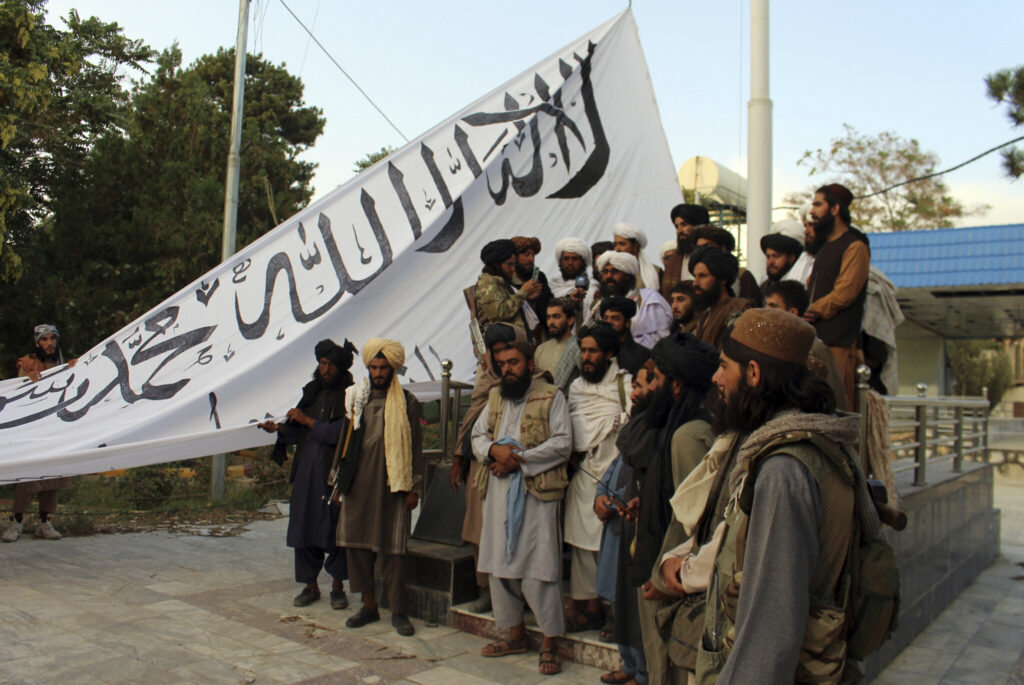
US relations were further strained through 2020 with multiple attacks on the US embassy in Baghdad. The tensions escalated to a point where the US considering closing it.

Foreign aircraft continue to be at risk from armed militia who have access to portable anti-aircraft weaponry, while misidentification by the air defence systems of multiple foreign forces in the country is also possible.

The FAA has extended its ban on US operators entering the Baghdad FIR at any level. Even though the SFAR says you can enter above FL320, the long-running Notam KICZ A0036/30 says otherwise.

SafeAirspace Iraq page – click here.

Syria

There have been several recent Israeli airstrikes on targets throughout Syria. In late December there are reports that Israeli fighters transited Lebanese airspace at low level causing alarm in Beirut before attacking targets in Western Syria. Just weeks ago, several sites around Damascus were targeted by Israeli missiles.

The primary risk is that aircraft may be misidentified by Syrian air defence systems which are regularly activated. Civil operators may get caught in the crossfire as missiles may erroneously lock on to the wrong aircraft.

The FAA are taking no chances – the ban on US operators entering the OSTT/Damascus FIR at any level has been extended a full three years to 2023.

SafeAirspace Syria page – click here.

South Sudan

Just this week ICAO issued a concerning warning about the risk to aircraft operating below FL245 in the HSSX/Khartoum FIR over South Sudan, or flying in and out of HSSJ/Juba. They are ‘gravely’ concerned about ATC disruptions, a lack of contingencies, inadequate training of controllers, limited info about equipment outages and a lack of co-ordination with other ATS units.

SafeAirspace South Sudan page – click here.

Emerging Conflict Zones

2020 saw three new conflict zones emerge, here is what is happening with them now.

Ethiopia

A civil conflict erupted in October last year in the Tigray region of Northern Ethiopia. The government went to war with the TPLF – a regional force seeking independence.

The region’s airports were closed and TPLF showed an intent to internationalise the conflict by attacking aviation interests. They fired rockets into Eritrea targeting HHAS/Asmara, and also attacked multiple airports to the South of the Tigray region.

Two airways were closed (T124, and M308) with no explanation of the risk.  Other airways remained open but uncomfortably close to the fight – especially UG300, UN321 and UL432. No airspace warnings were issued despite the dangers.

What’s the latest?

In late November Ethiopian forces captured the region’s capital Mekelle and regained control. Remaining TPLF forces have retreated leaving behind a humanitarian disaster and a vow to continue the fight. Since then, the airway closures have been removed and things have gone quiet, but an airspace risk remains – armed militia continue to be active in Northern regions and may be looking to make a statement. Be wary of operating in the area.

Western Sahara

Late last year the region’s independence movement (the Polisario) declared war on Morocco for breaching a ceasefire agreement. The FAA published a warning that the Polisario might have access to anti-aircraft weaponry left over from previous conflicts.

What’s the latest?

It is still an active conflict zone.  The fight has reached the international stage after the US declared their support for Morocco. The Polisario have indicated they are willing to at least talk, but so far have not put down their weapons. So, it is a wait-and-see type deal.

The risk to overflying aircraft remains. The GCCC/Canarias FIR keep extending a Notam advising operators to not fly below FL200 on the following airways: UY601, UN728 and UT975.  However, the reason is still missing: because of the risk of anti-aircraft fire. The GOOO/Dakar FIR haven’t issued any warnings despite the threat. Take care if operating in the area.

Armenia-Azerbaijan

In September last year, an ethnic conflict erupted over a disputed territory in Western Azerbaijan – Nagorno-Karabakh. The fight was between Azerbaijan and Armenia.

As a major air corridor for en-route traffic, there were significant flight disruptions. Azerbaijan swiftly closed all but one west/eastbound airway and routed traffic via Georgia. Armenia asked aircraft to take extra fuel and expect re-routes. The conflict was short but intense, with heavy artillery fire from both sides. The conflict eventually spread beyond the contested regions with longer range weapons. The entire border region posed a risk for civil aircraft.

What’s the latest?

For once the news is good. In November a ceasefire agreement was signed with the help of Russia. Armenia effectively lost and withdrew from the region and the conflict was officially over. Armenia removed its airspace warning, while Azerbaijan re-opened the affected airways and a large section of airspace near the border.

With the conflict now over, and no new reports of significant fighting since the peace agreement in November, direct crossing traffic between the two countries is now technically possible again.  However, most East-West flights are currently still electing to go further north instead, connecting between Azerbaijan and Georgia’s airspace, avoiding Armenia.

What about Safeairspace.net?

Our conflict zone and risk database is updated constantly. We assess risk with official sources and build a simple picture for you of those need-to know-places.

There are currently 5 regions which are assessed as a Level 1 Risk – No Fly. These are: Iraq, Iran, Yemen, Libya, and Syria.

Head over to SafeAirspace.net and take a look. With a single click you can download a risk briefing of the entire world in just a few pages of nice simple English.

The mission of SafeAirspace is this: to provide a single, independent, and eternally free resource for all airspace risk warnings, so that airlines and aircraft operators can easily see the current risk picture for unfamiliar airspace. If you know of a risk not listed on the site, or you have anything else to add, please get in touch with us at news@ops.group


The November Mega OpsChat – All the Links…

The November 24th “East/West-One-Day-Two-Calls” OpsChat Bonanza was great! Thank you to all who joined us, and those who shared some useful intel with the group.

Boy, did we cover a lot! The good news is if you missed the show, you can re-watch the recording here:

During the chat, we provided a bunch of links for each topic covered. If you weren’t quick enough to catch them at the time (we don’t blame you), here’s a little summary….


November Updates…

Greenland

What? Baffling Notam issued declaring Greenland’s airports were closed.

What else? Panic not, a better one was then reissued, saying that you could still use Greenland’s airports for ETOPS and diversion alternates. We called them and they said that tech-stops and ferry flights are also allowed (although not listed in the Notam). They’ve basically just banned passenger flights, and don’t want people staying overnight.

More Info:
Greenland Closes Its Airports To (Nearly) All Passenger Flights – Opsgroup Blog Post
Official Word from The Danish Civil Aviation 

Israel

What? You can now overfly Israel (as well as Jordan, Saudi Arabia and Bahrain).

What else? You need a local sponsor, should depart from an approved airport (but they do make exceptions) and need a permit.

More Info:
Israel overflights now allowed – Opsgroup Blog Post

Hong Kong

What? Strange ILS behaviour, especially on Runway 07R/25L. Pretty much down to antennas, terrain and Boeing AFDS…

What else? They have also updated their Covid entry restrictions for crew – it’s now slightly harder to get in.

More info:
The Thing About the ILS
Hong Kong Entry Rules for Flight Crew – OpsGroup Blog Post
The Official Word

CENEMAR (Central America)

What? There are some new flight planning requirements you need to know about.

What else? You can flight plan direct above FL200, and must include the new AFTN address MHFPZYZX when filing your flight plan.

More info:
CENEMAR: New Flight Planning Requirements – Opsgroup Blog Post


Other big updates from 2020…

November 5th ICAO changes

When? Er… November 5th!

What? We are talking changes to wake turbulence categories, NAT Contingency Procedrues, SLOP and Gross Navigation Errors.

More info:
The 511 on Nov 5th Changes – Opsgroup Blog Post
Hopefully a Link to the New 4444

Other overflights that are now ok

What? FAA SFAR updates – where US operators can’t go!

Where?
– Ukraine: UKFV/Simferopol FIR is ok, UKDV/Dnipro FIR is not ok.
– Iran: Not ok, but the Gulf of Oman and Persian Gulf are – Emirates, Kuwait, Bahrain and Muscat FIRs.

More info:
Safeairspace
Overflying Crimea – Opsgroup Blog Post

Russian Me-trics

What? Russia are moving to feet (referenced to QNH) below transition through their airspace, starting with major airports.

When? From December 3rd.

More info:
Russia are still playing me-trics on us – Opsgroup Blog Post
The Russian AIP (don’t worry, it is in english too)

ADS-B

What? When will you get in trouble for not having it.

Where?
– Europe: ADS-B is required from June 2023, but have your retrofit plan in by December 7 (unless your AoC is before 1995).
– US: ADS-B is required anywhere Mode C, or in the picture below.
– Rest of World: Above FL290, pretty much.

More info:
European ADS-B Mandate – Opsgroup Blog Post
The FAA FAQs on ADS-B

North Atlantic Datalink Mandate

What? The North Atlantic Datalink Mandate (NAT DLM) is the thing that came into effect in Jan 2020, which meant that CPDLC was then required between FL290-FL410 throughout the entire NAT region. Simply put, you must be equipped with CPDLC and ADS-C if you want to fly between these flight levels.
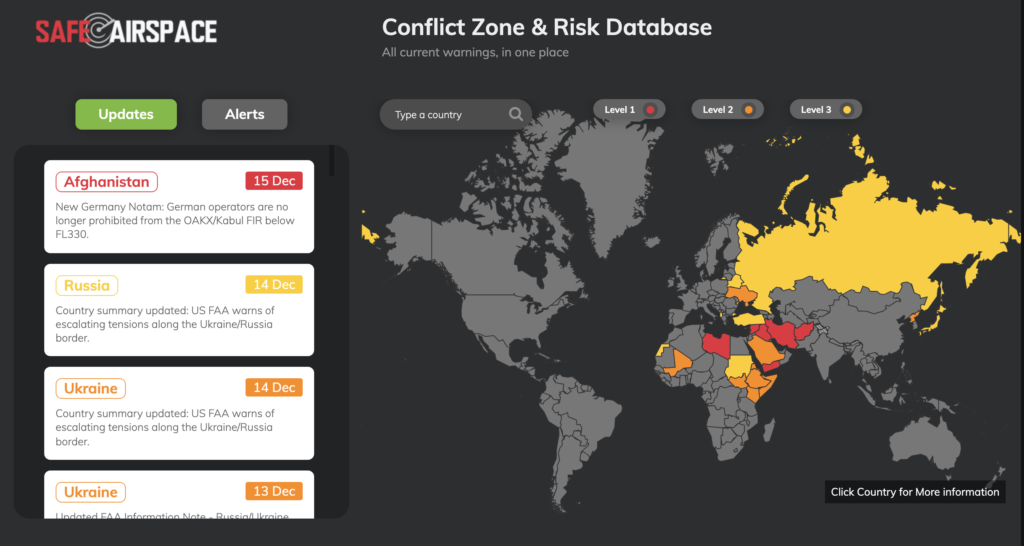
And then what happened? Then Covid happened. Because of the resulting reduction in traffic they suspended this mandate, and it looks set to stay this way until the end of Feb 2021. Bottom line, aircraft which do not have CPDLC and ADS-C can continue to operate across the North Atlantic between FL290-410 until then.

More info:
North Atlantic Datalink Mandate – Opsgroup Blog Post


SafeAirspace Update…

Ethiopia

What? Escalating conflict – Danger to overflying aircraft – beware of open airways!!

Where? Ethiopia – the Tigray region bordering Eritrea

More info:
Safeairspace – Ethiopia
Airspace Risk Warning: Eritrea and Ethiopia – Opsgroup Blog Post

Saudi Arabia

What? Drone and ballistic missile strikes continue from Yemen, no end in sight.

Where? Southern Saudi Arabia particularly, but Jeddah and Riyadh have also been attacked.

More info:
Safeairspace

Armenia/Azerbaijan

What? The conflict is ‘officially’ over, but the airspace remains dangerous!

Where? The airspace between Azerbaijan’s UBBA/Baku FIR and Armenia’s UDDD/Yerevan FIR.

More info:
Safeairspace

Western Sahara

What? An emerging conflict zone, with the threat of anti-aircraft weaponry. Little info or warnings, that may well affect aircraft operating into the Canarias.

Where? Northwestern Africa – a area region between Morocco and the Polisario.

More info:
Safeairspace


Stay tuned for our next Ops Chat coming up in January 2021!


UIA flight 752: Iran military shot down plane after chain of errors

Iran has released its first official report into the shoot-down of UIA flight 752 in Tehran on Jan 9. They blame a misaligned missile battery, miscommunication between troops and their commanders, and a decision to fire without authorization as the major factors which led to the shoot-down of the plane by Iran’s Revolutionary Guard.

All 176 people on board were killed when the plane was hit by two missiles shortly after take-off in Tehran.

Iran initially denied responsibility for the incident, only admitting fault days later after Western nations presented extensive evidence that Iran had shot down the plane.

Iran’s air defences had been on high alert at the time. Just hours prior to the shoot-down, the US FAA issued “Emergency Order” Notams banning all US operators from overflying the airspace of Iraq and Iran. This was in response to an Iranian missile strike on US military bases in Iraq, which had just occurred the same night.

A full version of the report has not been made publicly available, but excerpts have been published by state news agency Fars. It places the blame entirely on those manning the missile system, and details a series of key moments where the shoot-down could have been avoided, the main two being:

  • The surface-to-air missile system had recently been relocated and was not properly calibrated. As a result, it misidentified the civilian plane as a hostile object.
  • Those manning the system could not communicate with their command centre, and fired on the plane without receiving official approval.

“If each had not arisen, the aircraft would not have been targeted,” the report said.

It also notes that the flight had done nothing unusual prior to the missile launch, with its transponder and other data being broadcast. It claims that the troops manning the missile system tried to contact the Coordination Centre with details of a potential target but they did not manage to get through, and that firing on the aircraft under these circumstances was against approved protocol:

“The system operator began analysing the observable information and categorised the detected target as a threat… At 02:44:41, without receiving any response from the Coordination Centre, the air defence unit operator fired a missile at the threatening target he had detected… Under the applicable procedures, if the defence system operator cannot establish communication with the Coordination Centre and does not receive the fire command, they are not authorised to fire.”

After repeated delays, Iran has said it will release the aircraft’s black box to officials in France on July 20, where Ukrainian and French experts are expected to examine it.

Airspace warnings

In the days and weeks following the shoot-down, several other countries followed the US in issuing airspace warnings of their own for Iran, including: the UK, Ukraine, Canada, Germany, and France. The US and Ukraine are the only countries to have issued outright flight bans on Iranian airspace, but all the others advise against landing or overflying the country at the lower flight levels. Check SafeAirspace.net for a full summary.
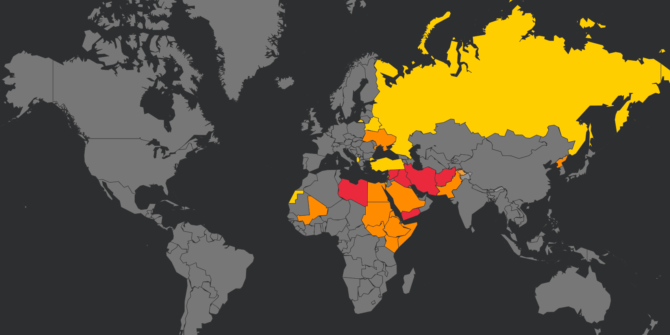
Traffic flows

It’s worth considering that most airlines other than Middle Eastern carriers are still avoiding Iran. For traffic that normally operates through the Tehran FIR, a predominant alternative for east-west flights into the Dubai area is a southerly routing via Saudi Arabia and Egypt. There are warnings for both of these airspaces as well. Northerly reroutes for Europe-Asia flights are predominantly using a Turkey-Armenia-Azerbaijan-Turkmenistan routing. If entering Afghanistan airspace, note the current warnings there too.

Unfamiliar routes

For many operators wanting to avoid Iran, you may be using routes that are unfamiliar. Take the time to ensure you have the full package of charts, are aware of the risks in each FIR, are aware of the potential for GPS outages en-route (especially in the Turkish, Tel Aviv, Amman, and Jeddah FIRs), and have considered drift down over mountainous areas on the northerly routes.

Advice

Every air operation different. We know OPSGROUP has a huge variety of members – some conducting routine airline flights, some business aviation, charter flights, private ops, military, government flights. Therefore, offering blanket advice is difficult. You must undertake you own risk assessment, but paying close attention to the international warnings as well as what other carriers are doing is a good place to start.

On SafeAirspace.net, we continue to list Iran as Level One: Do Not Fly. The same goes for Iraq. Outside those two countries, just consider carefully what connections to the current situation there may be. Nowhere in the Middle East is without some level of risk.


Iran and Iraq airspace restrictions

Please note: This article refers to the airspace warnings for Iran and Iraq following the shootdown of UIA flight 752 in Tehran in Jan 2020. We are keeping the article here for reference purposes only. For updated airspace warnings, check safeairspace.net


Following the events of Jan 8, when an Iranian missile strike on US military bases in Iraq was quickly followed by the shooting down of Ukraine Int Airlines flight 752 in Tehran by the Iranian Armed Forces, multiple western countries issued warnings to avoid the airspace of Iraq and Iran completely.

But in the weeks that followed, some of these countries issued updated advice, allowing overflights to resume at the higher flight levels.
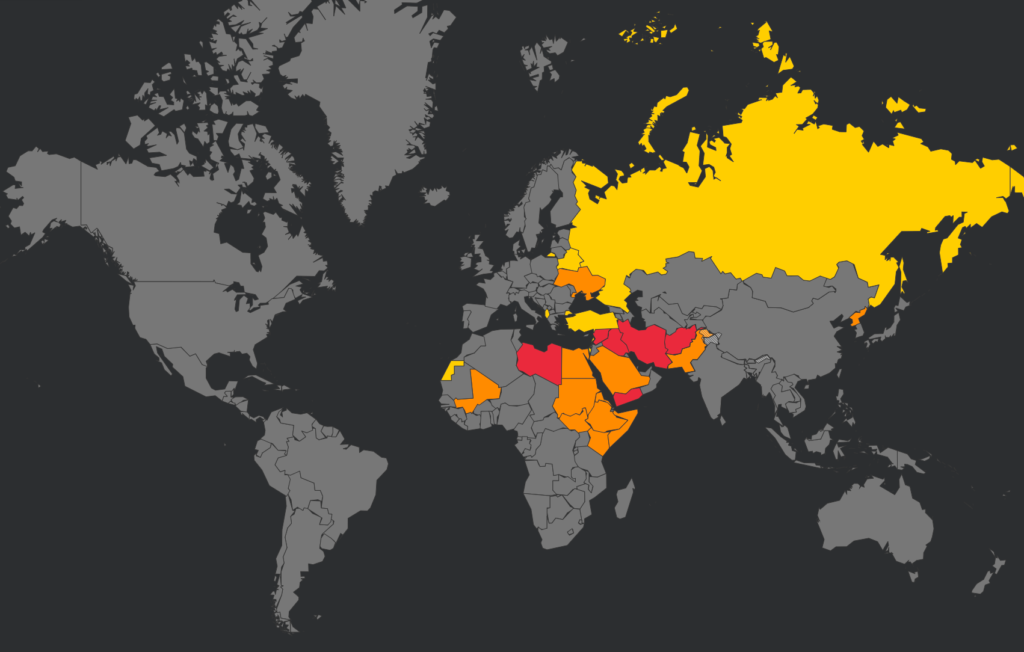
Here’s a summary of what the main countries/agencies who regularly publish airspace warnings have said with regards to Iraq and Iran:

The US
As of Mar 12, the US prohibit all flights in the airspace of Iraq and Iran, but allow flights in the Persian Gulf and Gulf of Oman. Here are the details for each:

On Feb 27, the US loosened its restrictions on Iraq, issuing an updated Notam and Background Notice document which advised that US operators were now permitted to overfly Iraq at FL320 or above. They said there has been a de-escalation in military activity and diminishing political tensions in the region, but there was still a risk at the lower flight levels from armed militias who are likely responsible for multiple recent attacks on US armed forces in Iraq, as well as rocket attacks targeting the US Embassy and ORBI/Baghdad International Airport.

Then on Mar 12, the US issued an emergency order that once again banned US operators from overflying Iraq with immediate effect. This came after US warplanes hit militia weapons storage facilities in southern Iraq in a strike designed to destroy rockets like those fired at US troops earlier this week.

The US downgraded its airspace warning for the overwater airspace in the Persian Gulf and Gulf of Oman on Feb 17 – the new guidance now just advises caution in this region, and recommends to avoid the airways nearest to the OIIX/Tehran FIR whenever possible, to reduce the risk of miscalculation or misidentification by air defence systems. The crucial change with this new warning is that overflights in this region are now permitted. So for US operators wanting to transit the OKAC/Kuwait, OBBB/Bahrain, OMAE/Emirates and OOMM/Muscat FIRs – you can now do so.

The US ban on the airspace of Iran is still in place – US operators are prohibited from entering the OIIX/Tehran FIR.

Germany
Germany just advises caution for both Iraq and Iran overflights – at no point since the events of Jan 8 have they issued outright bans on the airspace of these two countries.

France
France initially issued a Notam on Jan 9 advising operators to avoid the airspace of Iraq and Iran. Then on Feb 14, they changed their advice for Iran, saying that the only chunk of airspace which should be avoided is the western half of the country (everywhere west of 54 Degrees East longitude); they recommended that overflights of the eastern half should be at or above FL320. This guidance was then incorporated into AIC 14/20. The French Notam for Iraq lapsed on Feb 12, and was not renewed – therefore the French advice for Iraq has reverted back to that contained in AIC 14/20 which says that overflights should be at or above FL320, and only on certain airways.

The UK
The UK published Notams on Jan 9 prohibiting operators from entering the airspace of both Iraq and Iran. Then on Jan 17, they issued a new Notam for Iran, and cancelled the one for Iraq, advising operators to revert back to the guidance contained in the AIP ENR 1.1 (1.4.5). Bottom line, the UK advice for both countries is now this: do not overfly below 25,000ft AGL.

EASA
EASA published a notice on Jan 11 specifically warning operators against overflying Iraq and Iran. They said this should be taken as a precautionary measure, following the events of Jan 8. EASA don’t normally issue blanket warnings/recommendations like this. Then on Jan 29, they withdrew that advice, and reaffirmed the position previously stated in their Conflict Zone Information Bulletins (CZIB) – Iraq overflights should be avoided except on two specific airways (UM688 and UM860), and Iran overflights should be avoided below FL250.

Further discussion

  • The #FlightOps channel on Slack is open for Iran/Iraq discussion
  • Email team@ops.group with any intel or analysis you can share


FAA eases Gulf airspace restriction

The FAA has downgraded its airspace warning for the overwater airspace in the Persian Gulf and Gulf of Oman.

They previously said that US operators should avoid this airspace except when flying to/from the main airports in Bahrain, Kuwait and Qatar, UAE and Saudi Arabia.

The new guidance now just advises caution in this region, and recommends to avoid the airways nearest to the OIIX/Tehran FIR whenever possible, to reduce the risk of miscalculation or misidentification by air defence systems (remember, the US ban on Iran overflights is still in place).

The crucial change with this new warning is that overflights in this region are now permitted. So for US operators wanting to transit the OKAC/Kuwait, OBBB/Bahrain, OMAE/Emirates and OOMM/Muscat FIRs – you can now do so.

This new Notam represents a further loosening of the total airspace ban on the Persian Gulf and Gulf of Oman initially applied by the FAA shortly after the Iranian missile strike on US military bases in Iraq on Jan 8, which was quickly followed by the shooting down of Ukraine Int Airlines flight 752 in Tehran by the Iranian Armed Forces, having mistaken the aircraft radar return for an inbound missile.

The FAA cited Iranian military de-escalation as the reason for the change. “The FAA assesses there is sufficiently reduced risk of Iranian military miscalculation or misidentification that could affect U.S. civil aviation operations in the overwater airspace above the Persian Gulf and the Gulf of Oman,” the agency said in their Background Information statement, issued on 18th Feb 2020.

Here’s the Background Information statement in full:

Iran has de-escalated its military posture in the Persian Gulf and the Gulf of Oman as of early February 2020. Given this de-escalation, the FAA assesses there is sufficiently reduced risk of Iranian military miscalculation or misidentification that could affect U.S. civil aviation operations in the overwater airspace above the Persian Gulf and the Gulf of Oman in the Kuwait Flight Information Region (FIR) (OKAC), Jeddah FIR (OEJD), Bahrain FIR (OBBB), Emirates FIR (OMAE), and Muscat FIR (OOMM) to permit U.S. civil flight operations to resume.

While the risk to U.S. civil aviation operations in the above-named area has decreased, military posturing and political tensions in the region remain elevated, and there remains some inadvertent risk to U.S. civil aviation operations due to the potential for miscalculation or misidentification. As a result, on 14 Feb 2020, the FAA issued Notice to Airmen (NOTAM) KICZ A0014/20 (reissued on 17 Feb as A0016/20) permitting U.S. civil flight operations to resume in the above-named area while advising operators to exercise caution and to avoid operating on air routes nearest to the Tehran FIR (OIIX) boundary whenever possible. The situation in the region remains fluid and could quickly escalate if circumstances change.

The 8 January 2020 accidental shoot down of Ukraine International Airlines Flight 752 shortly after takeoff from Tehran’s Imam Khomeini International Airport (OIIE)tragically highlights the airspace deconfliction concerns, which pose an inadvertent risk to civil aviation from air defense engagements during periods of heightened tensions and associated military activity. Following the accidental shoot down, the region has seen a lowering of tensions, despite Iran’s continued air defense coverage along its southern coast. In June 2019, there were two incidents of surface-to-air missile fire from the southern coast of Iran targeting U.S. unmanned aircraft systems operating in the Gulf of Oman.

Iran possesses a wide variety of anti-aircraft-capable weapons, including surface-to-air missile systems (SAMs), man-portable air defense systems (MANPADS) and fighter aircraft capable of conducting aircraft interception operations. Some of the anti-aircraft-capable weapons have ranges that encompass key international air routes over the Persian Gulf and the Gulf of Oman. Although Iran likely has no intention to target civil aircraft, the presence of multiple long-range, advanced anti-aircraft-capable weapons in a tense environment poses a risk of miscalculation or misidentification, especially during periods of heightened political tension and military activity.

There is also the potential for Iran to use Global Positioning System (GPS) jammers and other communications jamming capabilities, which may inadvertently affect their command and control capabilities and potentially pose a risk to U.S. civil aviation operating in the above-named area.

The FAA will continue to monitor the risk environment for U.S. civil aviation operating in the region and make adjustments, as appropriate, to safeguard U.S. civil aviation.

Here’s the new Notam in full:

A0016/20 (Issued for KICZ)
SECURITY..UNITED STATES OF AMERICA ADVISORY FOR OVERWATER AIRSPACE ABOVE THE PERSIAN GULF AND THE GULF OF OMAN.

THOSE PERSONS DESCRIBED IN PARAGRAPH A BELOW SHOULD EXERCISE CAUTION WHEN OPERATING IN OVERWATER AIRSPACE ABOVE THE PERSIAN GULF AND THE GULF OF OMAN IN THE KUWAIT FLIGHT INFORMATION REGION (FIR) (OKAC), JEDDAH FIR (OEJD) , BAHRAIN FIR (OBBB), EMIRATES FIR (OMAE), AND MUSCAT FIR (OOMM) DUE TO CONTINUED ELEVATED MILITARY POSTURING AND POLITICAL TENSIONS IN THE REGION.

NOTAM KICZ A0002/20, WHICH PROHIBITS U.S. CIVIL AVIATION OPERATIONS IN THE TEHRAN FIR (OIIX), REMAINS IN EFFECT UNTIL FURTHER NOTICE.

A. APPLICABILITY. THIS NOTAM APPLIES TO: ALL U.S. AIR CARRIERS AND COMMERCIAL OPERATORS; ALL PERSONS EXERCISING THE PRIVILEGES OF AN AIRMAN CERTIFICATE ISSUED BY THE FAA, EXCEPT SUCH PERSONS OPERATING U.S. REGISTERED AIRCRAFT FOR A FOREIGN AIR CARRIER; AND ALL OPERATORS OF AIRCRAFT REGISTERED IN THE UNITED STATES, EXCEPT WHERE THE OPERATOR OF SUCH AIRCRAFT IS A FOREIGN AIR CARRIER.

B. PLANNING. THOSE PERSONS DESCRIBED IN PARAGRAPH A PLANNING TO OPERATE IN THE ABOVE-NAMED AREA MUST REVIEW CURRENT SECURITY/THREAT INFORMATION AND NOTAMS AND COMPLY WITH ALL APPLICABLE FAA REGULATIONS, OPERATIONS SPECIFICATIONS, MANAGEMENT SPECIFICATIONS, AND LETTERS OF AUTHORIZATION, INCLUDING UPDATING B450.

C. OPERATIONS. AVOID AIR ROUTES NEAREST TO THE TEHRAN FIR (OIIX) BOUNDARY, WHENEVER POSSIBLE, TO REDUCE THE RISK OF MISCALCULATION OR MISIDENTIFICATION BY AIR DEFENSE SYSTEMS. ADDITIONALLY, AIRCRAFT OPERATING IN THE ABOVE-NAMED AREA MAY ENCOUNTER INADVERTENT GPS INTERFERENCE AND OTHER COMMUNICATIONS JAMMING, WHICH COULD OCCUR WITH LITTLE OR NO WARNING.

THOSE PERSONS DESCRIBED IN PARAGRAPH A MUST REPORT SAFETY AND/OR SECURITY INCIDENTS TO THE FAA AT +1 202-267-3333. ADDITIONAL INFORMATION IS PROVIDED AT: HTTPS://WWW.FAA.GOV/AIR_TRAFFIC/PUBLICATIONS/US_RESTRICTIONS/.

SFC – UNL, 17 FEB 19:54 2020 UNTIL PERM. CREATED: 17 FEB 20:00 2020


For more on these, and for a full list of current warnings about Iran and Iraq from other states, see SafeAirspace.net


Passenger plane almost shot down over Syria

In the early hours of Feb 6, a commercial flight en-route to Damascus was forced to divert to Russia-controlled Khmeimim air base after coming under fire from Syrian air defences.

The Cham Wings A320, with 172 people on board, was flying from ORNI/Najaf to OSDI/Damascus when the incident took place. According to The New York Times, Syrian air defences directed anti-aircraft gun and missile fire against the Airbus, but failed to hit the aircraft.

Russia’s Ministry of Defense has since blamed Israel for the near-miss – at the time the incident occurred, the Syrian air defence systems had engaged four Israeli F-16s, and Russia claims that these fighter jets were using civilian aircraft as “cover” while conducting air strikes.

Russia has accused the Israeli military of putting commercial flights like this at risk in the past, by timing their airstrikes on Syria too close to flights arriving at Beirut and Damascus airports. In the past few months there have been a number of air strikes by Israel against military targets in Syria, including OSDI/Damascus airport, with the Syrian government firing its own missiles over Syrian airspace and along the Lebanese border to repel the attacks.

This latest incident comes just a month after a Ukraine International Airlines passenger plane was shot down shortly after take-off from Tehran, killing all 176 people on board. Iran later said its forces had shot it down unintentionally, having mistaken the aircraft radar return for an inbound missile to Tehran.

In the days following, many countries issued warnings to avoid the airspace of Iran and Iraq, and most airlines other than Middle Eastern carriers have now stopped overflying these countries entirely.

The same is true of Syria – there are multiple airspace warnings in place, including a total flight ban by the US and German authorities. Some countries add the additional warning to exercise caution when operating anywhere within 200 nautical miles of the country – advice that came into sharp focus in September 2018, when Syrian forces shot down a Russian IL-20M transport category aircraft over international waters 20nm off the coast, mistaking it for an Israeli fighter.

That event significantly changed the risk picture for civil aircraft operating in the vicinity of Syria. We wrote about it here, and the advice still stands – there is a clear risk to civil aircraft operating over Syria, as well as in the overwater airspace east of Cyprus. The risk picture is two-fold: misidentifcation of your aircraft as a military one, and an errant missile launched at another aircraft that locks onto you instead.

Further reading:

SafeairspaceManaged by OpsGroup, this is our public repository and first point of warning for Airspace Risk for airlines, pilots, dispatchers, and aircraft operators.

Why are we still flying airline passengers over war zones?OpsGroup article from Sept 2018, following the shoot-down of the Russian IL-20M off the coast of Syria, with a new note to members on the airspace risk in the Eastern Mediterranean.


Germany publishes new concerns for Iraq overflights

Late Monday evening, the German LBA published a new warning for Iraq, indicating areas of concern for overflying traffic, together with a new warning on ORBI/Baghdad Airport.

Notam B0007 of 2020 (issued Jan 6) replaces Notam 0002 (issued on Jan 2nd), and these are the routes that Germany now considers a potential risk for aircraft below FL260:

Airway UM860 NAMDI – NINVA
Airway UM688 RATVO – SOBIL
Airway L718 TAGRU – KABAN
Airway L417 MUTAG – VUSEB
Airway M434 UMESA – BOXIX
Airway R652 MUTAG – DAVAS

Seen on the map below, all these airways are in the north east of Iraq: the yellow lines are the warnings that existed on and prior to Jan 2nd, and the orange lines show the additional areas flagged in Mondays Notam.

Of the other primary states that issue airspace warnings – the UK, France, and the US – none have issued updated guidance yet this year.

There is no doubt that the events of Jan 3, 2019 at ORBI/Baghdad Airport have created an extremely tense situation between the US and Iran. The aviation security picture in the Middle East, already fragile and unstable, is now unpredictable. A response by Iran to the US airstrike of Jan 3rd seems possible.

Specific to the Baghdad Airport incident, it seems early reports of Katyusha rockets can be discounted, that it was an attack carried out on vehicles near the airport by US Apache Helicopters. Civil traffic resumed operations shortly after the attack with several departures operating ‘as normal’. Overflights continued during the attack.

As to the Iranian response, anything that looks like a US asset or ally could be a target – military or civil. US operators, at a minimum, should be avoiding the Tehran FIR, and considering security carefully when operating in other countries in the region, most notably Israel, Lebanon, and Kuwait – as a response may target airports in those countries or foreign aircraft. That said, it’s a guessing game right now, and predicting the specifics of a response is extremely difficult.

For full analysis, and a listing of all current warnings, see Safe Airspace.


Libya Airspace Update Oct 2019

On 23rd Oct 2019, the US issued an emergency order prohibiting U.S. operators from flying in Libyan airspace. The guidance here is very clear: do not operate anywhere in the HLLL/Tripoli FIR, at any flight level.

This follows months of civil war in Libya, with militia from the east mounting a campaign to seize control of Tripoli, including HLLM airport, and threatening to shoot down aircraft operating in western Libya.

In recent months there have been a number of airstrikes targeting HLLM/Mitiga airport, the latest coming on Aug 15, which reportedly killed two people and forced the airport to close. There are videos on social media showing planes landing at the airport as shells are falling in the background.

Prior to yesterday’s announcement, the U.S. guidance on Libya was that operators were allowed to overfly Libya at FL300 or above, except an area in the north-western part of the country over Tripoli, where all flights were prohibited. Here’s what that looked like:

But this guidance is now defunct. The FAA website now shows the updated guidance for Libya – including the Background Notice.

Germany and Malta still have warnings in place which mirror the old advice of the U.S. – do not fly over the north-western part of Libya, but overflights of the rest of the country are permitted at the higher flight levels. The UK and France advise against all overflights. These warnings may be updated in the coming days, following the new advice from the U.S.
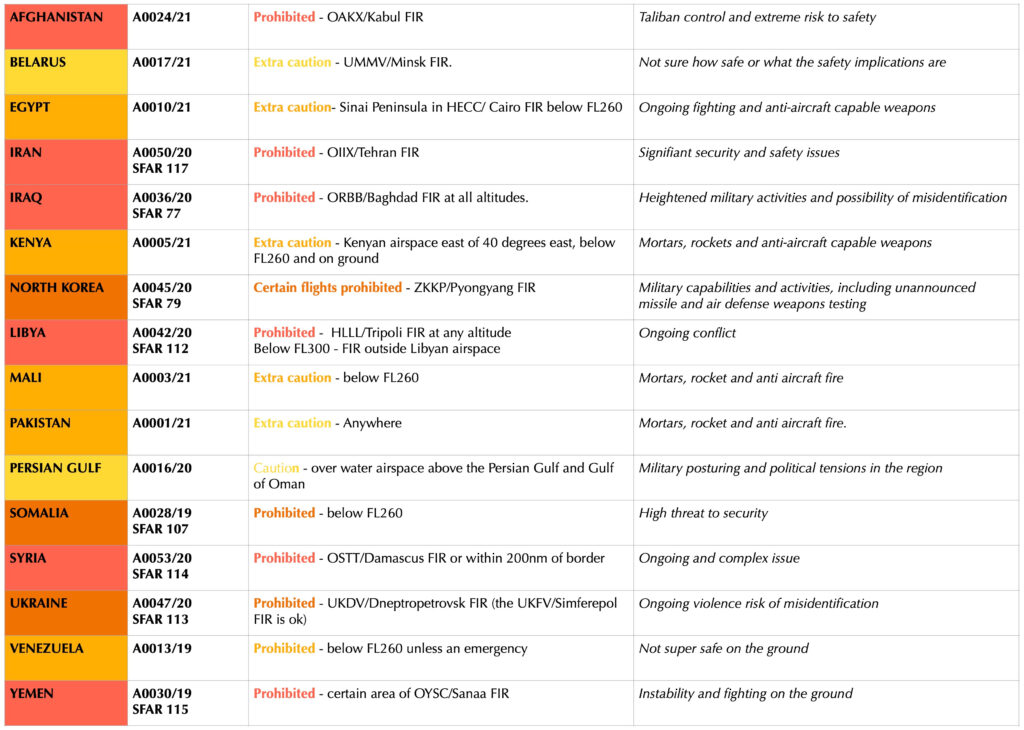
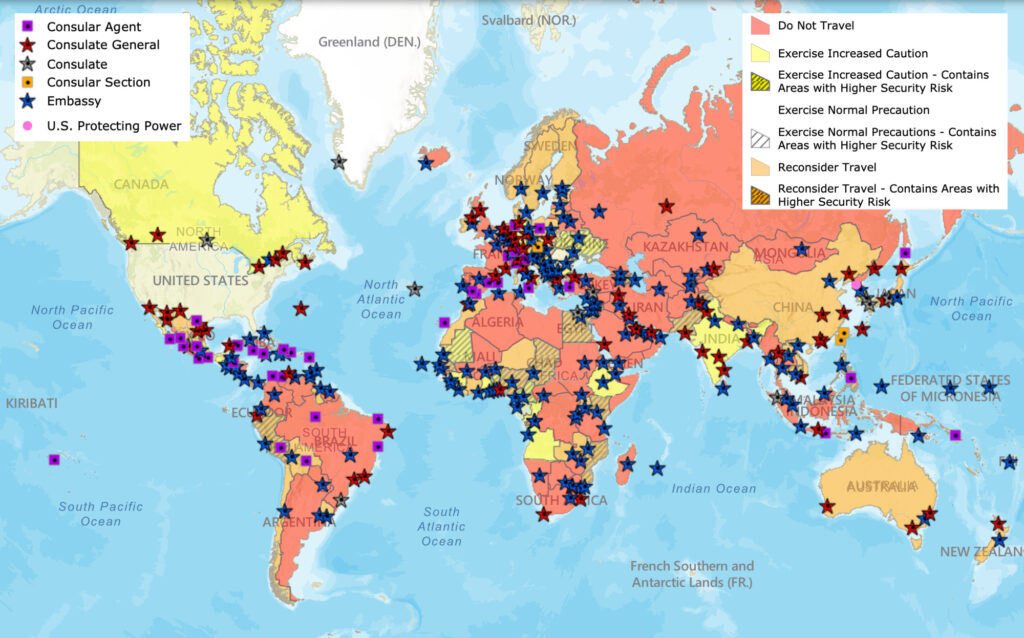
Libya remains politically unstable, with a fragile security situation across the country. In their SFAR issued back in March 2019, the U.S. said that the main threat to aviation at the lower flight levels stems from the widespread proliferation of man-portable air-defence systems (MANPADS) across the country:

“Both GNA and advancing LNA forces have access to advanced man portable air defense systems (MANPADS) and likely anti-aircraft artillery. These ground-based weapon systems present a risk to aircraft, but only at altitudes below FL300. LNA forces have tactical aircraft capable of intercepting aircraft at altitudes at and above FL300 within the self-declared military zone in Western Libya, which may present an inadvertent risk to civil aviation operations in Western Libya. While the LNA tactical aircraft threat is likely intended for GNA military aircraft, an inadvertent risk remains for civil aviation at all altitudes due to potential miscalculation or misidentification.”

However, there are factions on the ground in Libya which possess weapons capable of targeting aircraft above FL300. The LNA is one of many armed groups in Libya which continues to use various rocket systems looted from Gaddafi’s stockpiles at the end of the war in 2011. In May 2018, the LNA proudly displayed a refurbished Russian-made surface-to-air missile system at HLLB/Benina Airbase in Benghazi. This system has the capability to engage aircraft at altitudes up to FL450.

The opposing GNA forces have surface-to-air missile systems of their own. Some reports indicate that the GNA are in possession of the Russian-made SA-3 system, which has the capability to engage aircraft at altitudes over FL800.

With the current conflict between these and other rival factions on the ground in Libya now escalating, it’s not clear what level of control the main players hold over their missile systems.

Bottom line, there’s still a potential risk to aircraft at all altitudes and across all parts of Libya.

Even if you are allowed to overfly the country, there are only two approved routes available, in the far north-eastern corner of the country, as per HLLL Libyan Notam A0063/17:

Northbound: LOSUL UP128 LAB UM979 RAMLI UZ270 OLMAX (even levels)
Southbound: RASNO UY751 LOSUL (odd levels)

Even on these routes, reliable ATC services cannot be guaranteed. The past few years have seen regular ATS and radar outages across the HLLL FIR airspace, and severe limitations in VHF capability, with operators having to communicate with Malta ATC for guidance.

Given the current security concerns, we continue to list the entire country as “Level 1 – Avoid” at SafeAirspace.net