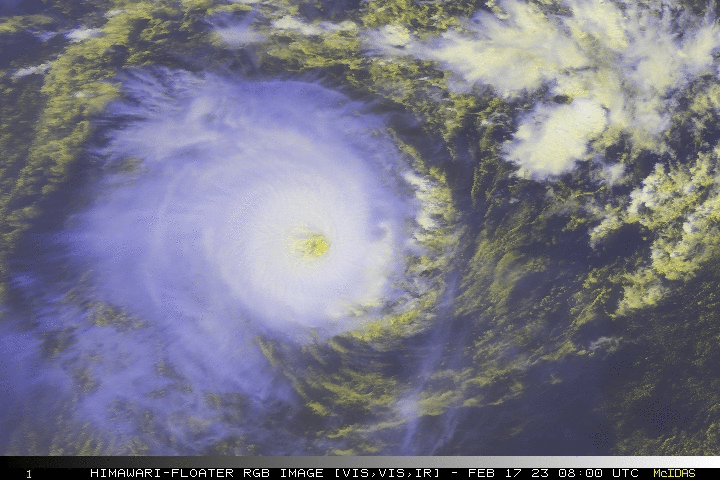
Hurricane Freddy: Still going strong

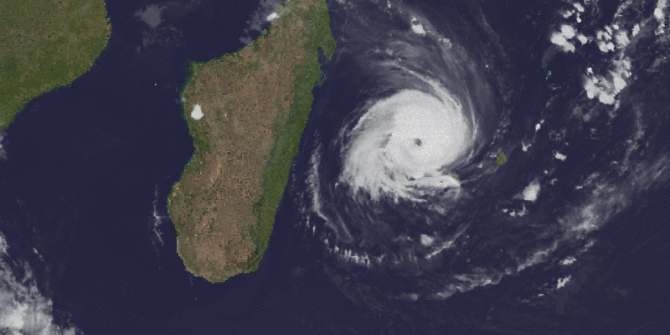
Update 7 March: Freddy has passed over Madagascar and initially deintensified, but with the warm waters of the Mozambique Channel feeding him, he is growing again. He is expected to reach category 2 levels with winds over 90knot. Landfall over Mozambique is forecast on March 11. The west coast of Madagascar, and the coastal regions of Mozambique, including FQMA/Maputo will see some bad weather for the next few days.

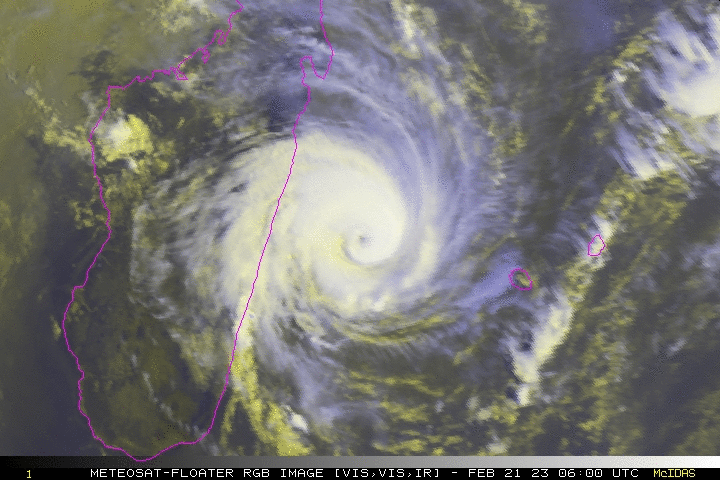
Update 21 February: Freddy is decreasing to a category 1 hurricane with wind speeds between 80-85knots. It is due to make landfall over Madagascar in the afternoon of Feb 21.


We don’t often post about tropical storms unless they are monumental and expected to cause a severe level of disruption and damage.

Freddy is fairly big, and it’s a Friday, so I figured I would give him his 10 minutes of fame.

Just how big?

He is currently a Category 4 hurricane which means his wind speeds are topping 120 knots. The likes of Hurricane Katrina reached Category 5 levels (although she was only a 3 when she made landfall). Hurricane Harvey was a 4 when he hit Texas in 2017.

So Freddy is big, and Freddy is bad. But Freddy is also, currently, still swirling about the Indian Ocean and nothing more than a blob on your SigWx chart that you might detour around slightly.

Where is Freddy heading?

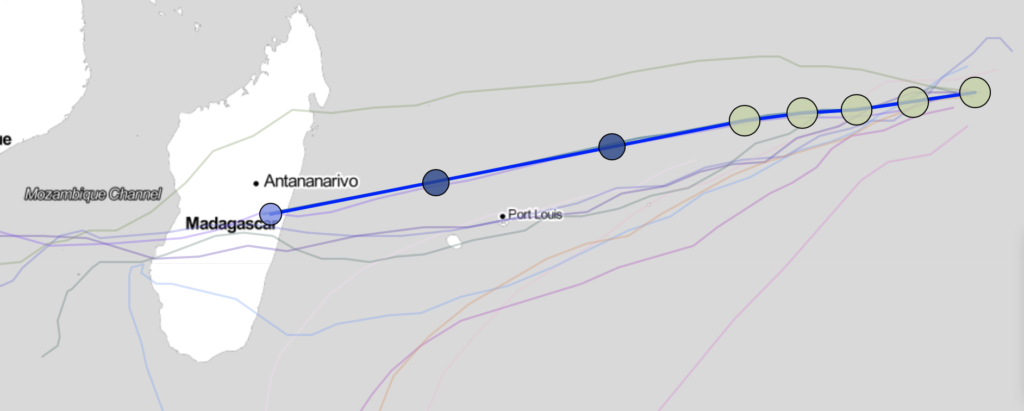
Freddy is heading west, towards Mauritius and Madagascar.

He will reach the Port Louis area in the next 2 days, and is forecast to have de-intensified to a Category 3, with wind speeds around 110 knots. The following airports will likely experience severe weather conditions as the storm passes:

  • FIMP/Sir Seewoosaur Ramgoolam (Port Louis)
  • FMEE/Roland Garros (Reunion)

Landfall is forecast around Feb 22, south of FMMI/Ivato (Antananarivo) Madagascar.

Forecast track. Source: Cyclocane

How much disruption is expected?

When Freddy makes landfall he is expected to have reduced to a Category 2 hurricane, with winds around 90 knots. However, the region lacks good infrastructure and damage may be increased because of this.

The airports in this area are relatively remote, island airports, with few diversion options (particularly if the weather is hammering them all) so plan that fuel and those alternates accordingly if you are in the region over the next few days.

Follow Freddy

You can track Freddy here.

We also recommend staying in contact with handling agents and confirming conditions with them prior to operating. Here are two contact suggestions in case you need:


Cow Farts and Aviation

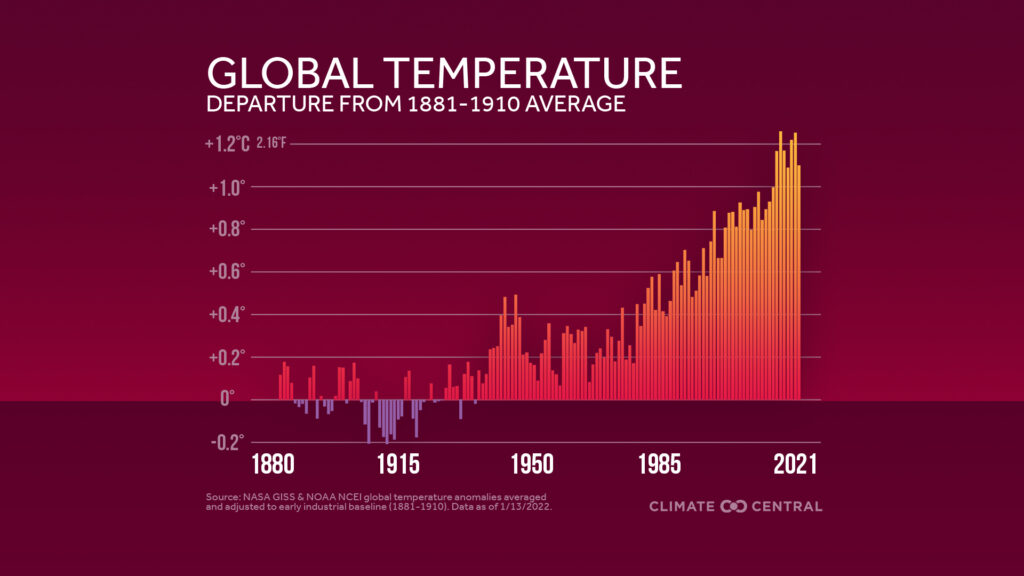
Did you know that cow farts are one of the major contributors to global warming?

Go ahead – google it. Just know that your search history will take some explaining later.

In fact they account for eighteen percent of the problem. They’re flatulent creatures, and their trouser coughs contain methane gas which is almost one hundred times more powerful at trapping heat than good ol’ carbon dioxide. In fact their flatulence is so strong, it can cause acid rain. Umbrella anyone?

Why are you reading this on an aviation website? Fair question.

Because regardless of where you stand on the cause of global warming, we know for a fact that the earth is heating up. And aviation is poised to be one of the victims.

Let me explain.

Bumpy Road

As the earth warms, jet streams will become stronger – along with wind shear. As we hitch a ride on those long routes eastbound, clear air turbulence is set to become much more frequent, and much more dangerous.

They’ve done studies, you know – and those jet streams are already fifteen percent more sheary than they were back in the 70s. And things are accelerating.

The bottom line is this: scientists believe there is going to be two to three times as much severe turbulence in the next few decade thanks to cow farts (and of course all other contributing factors).

How severe is severe?

We’re not talking light chop.

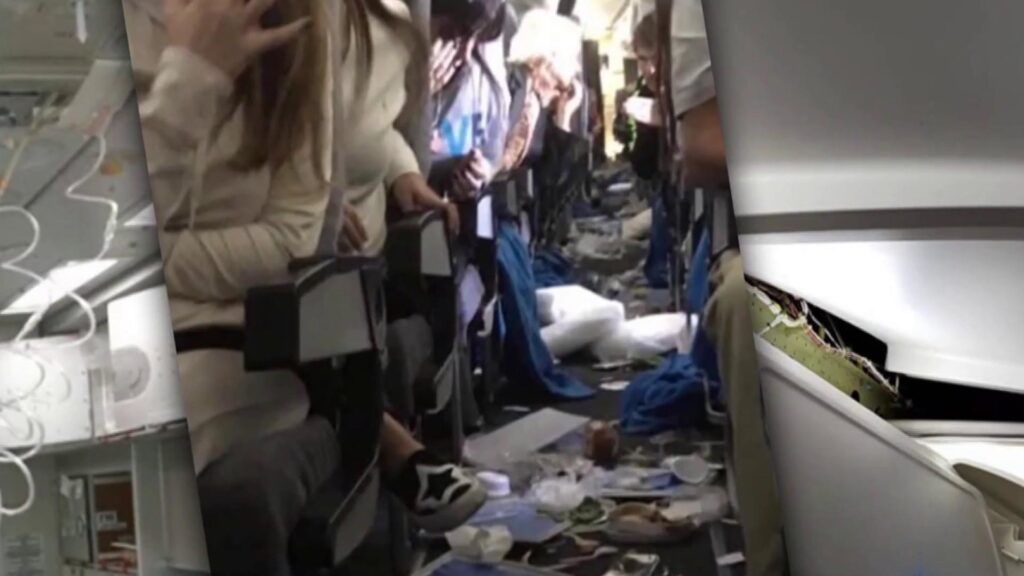
There are two levels of turbulence we’re most concerned with. The first is severe – essentially large and abrupt changes in altitude or attitude. Your aircraft may even be out of control momentarily.

Beyond that turbulence can also be extreme. It doesn’t make for pleasant reading, but the official definition is when the aircraft is violently tossed about and almost impossible to control. You may even take damage.

Both are nasty.


What does this mean for ops?

Perhaps the most at risk are flight attendants. The NTSB reckons they are twenty-four more times more vulnerable to injury from CAT than their passengers. They account for eighty percent of all turbulence related injuries. This make sense as they are often on their feet, pushing carts that can weigh upwards of 300lbs.

Here’s another startling statistic – between 2009 and 2018, in almost thirty percent of turbulence related incidents, there was no warning.

CAT is the enemy you cannot see, because it mostly happens in clear air. It isn’t associated with storms or clouds, and weather radars need moisture to work. Our eyes are useless too.

Granted, planes aren’t about to start falling from the sky. But we can expect the amount of time spent in turbulent conditions on an average flight across the Atlantic to exceed thirty minutes in the years to come. Darn cows.

Great, what can we do about it?

Actually three things. Protect your crew, predict where it will happen, and care about sustainability. Let’s dig a little deeper.

Crew

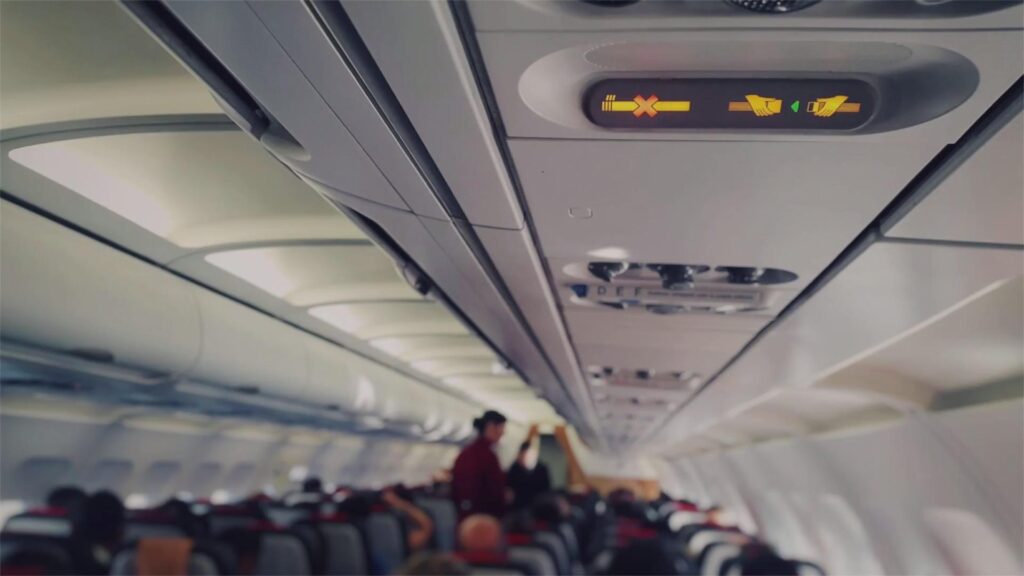
The absolute best way to protect everyone on board during CAT is to have them seated with their belts on. The head of a major flight attendant union is calling for changes. It is becoming increasingly dangerous for them to still be on their feet, while passengers are strapped in.

The NTSB agrees and is recommending more stringent rules when those seatbelt signs turn on – especially for crew. The notion is a seat for everyone – including infants and young children who may be sitting on an adult’s lap and riding gratis.

While it may feel reassuring that all pax are safely seated, don’t underestimate how at risk cabin crew are if they are still up and working.

Spotting the stuff.

Predicting CAT isn’t an exact science, and this ain’t no met class. But in a nutshell it is caused due to the difference of speed at high altitude (usually well above FL150) when flying near the boundary of two air masses.

Jet streams are typically strongest in colder months, and weaker in warmer ones.

Two things to look out for: dramatic changes in temperature, and dramatic changes to wind speed and direction.

Both are tell tale signs of CAT.

Along with that information in your flight plan, shear rates, sig wx charts and pilot reports (pireps) are also valuable sources of information.

Likewise, if you find some let ATC (and the traffic around you) know.

There are also turbulence information sharing platforms available to crew which provide real time updates on where the rough air is.

Sustainability

There is a lot of noise at the moment about sustainability, alternative fuels and ‘net carbon zero.’ It can all get a little dry.

But it is the operational impact of global warming that is really going to matter to us on a day to day basis, which is why we need to care. More than numbers.

Asides from clear air turbulence, as the jets grow stronger, westbound flights will take longer, burn more fuel and cost more. Not to mention more time away from being poolside at the Holiday Inn.

Then there’s the sea level. It is rising as the polar ice cubes melt. One study suggested by 2100, one hundred airports around the world will be below sea level, and close to half a thousand will be at serious risk of flooding and storm surges unless things change  – affecting up to twenty percent of all routes. That’s a lot of water.

Where to from here?

The cows aren’t about to stop farting, so we need to mitigate. This may mean spending more time and attention on the risk that clear air turbulence poses while we flirt with the time saving benefits of the world’s jet streams on a daily basis.

We can also support the overall industry push to operate cleaner in the long run. A great no-nonsense source to keep track of these industry trends are IATA updates – you can view those here.


Beware Big Balloons

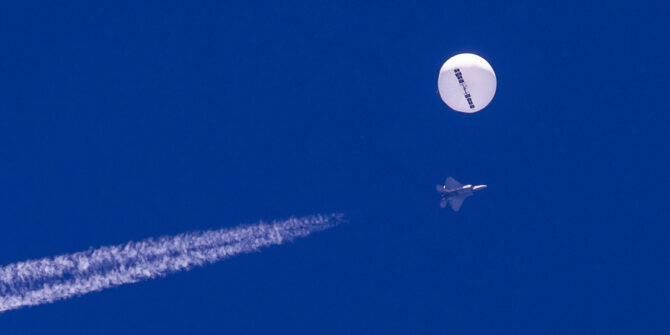
It started with a balloon. A rather large one, sent by the Chinese for ‘purposes unknown’, and rapidly removed from the skies as soon as it became safe to do so.

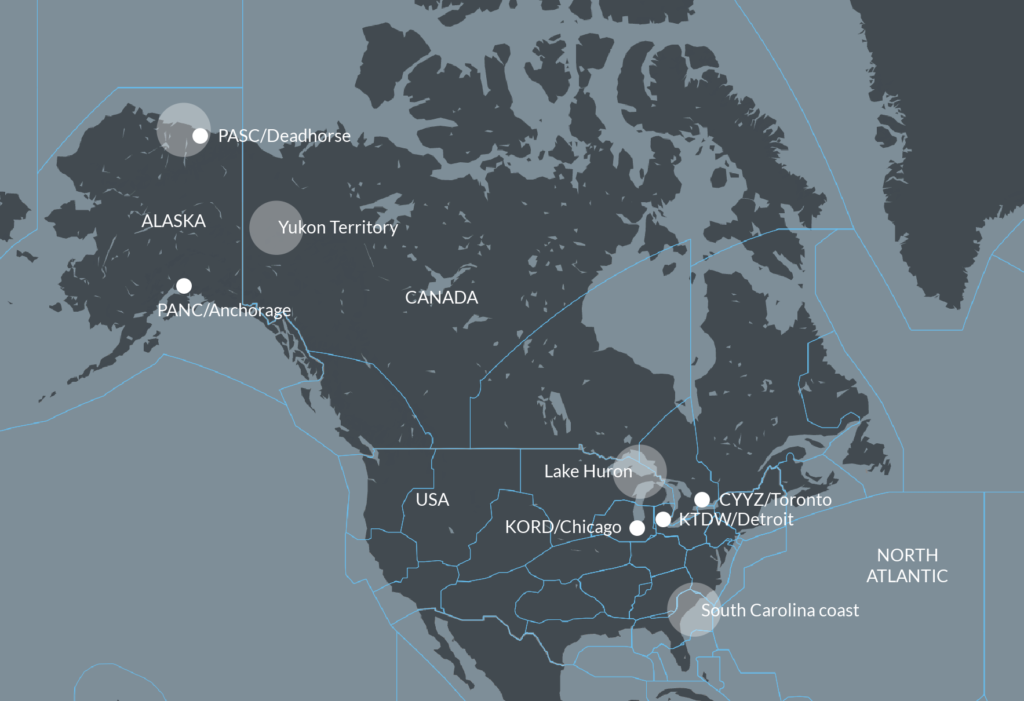
However, there has been a spate of further ‘unidentified objects’ wafting about the upper levels of the northern American atmosphere, and they are potentially something of a hazard.

The Balloon

This was spotted over the US, working its way northwards around February 3.

There isn’t much to say on this that hasn’t already been said – it was big, it came from China and it was almost definitely not one that had just accidentally drifted of course. Politics and conspiracies aside, this did not post much of a risk for civilian aviation because of the altitude it was operating at.

The (probably a) surveillance balloon operated from around 80,000 to 100,000′ – well above the levels which would impact commercial airliners.

Object Number 2

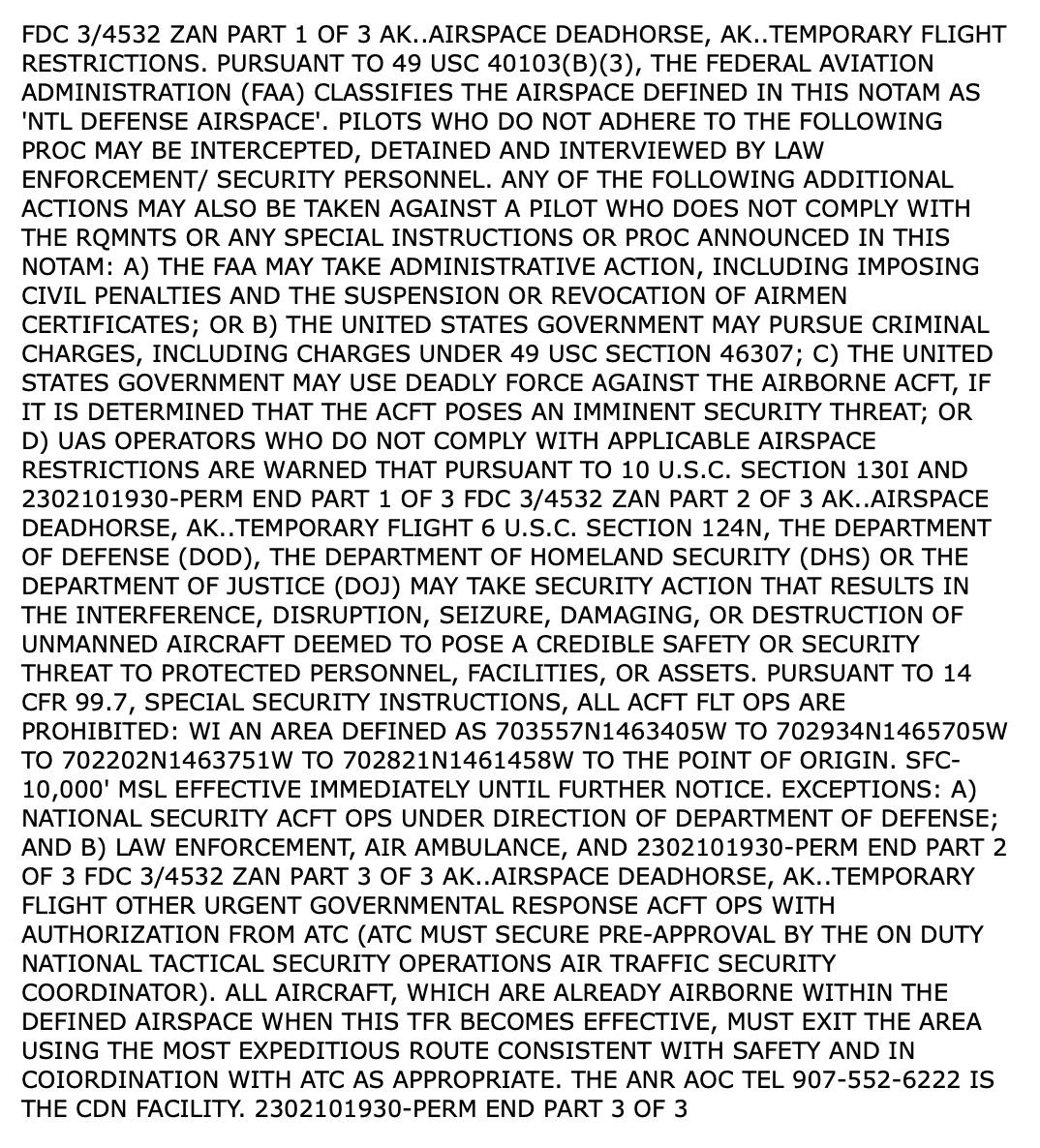
On February 10, an unidentified object was spotted overflying the northern coast of Alaska towards the North Pole region, at around 40,000′, moving at approximately 20-40mph.

It was deemed a “reasonable threat” to civilian aviation due to its size and altitude, despite being quite a bit smaller than the Chinese Balloon (very big, these sort of small car sized).

Reports suggest several aircraft were diverted, with one stopping at PANC/Anchorage and another to PAOM/Nome due to airspace closures.

Object Number 3

Another object was spotted and shot down on February 11. This one was routing over Canada, approximately 100 miles from the US border, and at around 40,000′

The airspace over the Great Lakes region was closed while the object was taken down, but a Canadian TFR is still in force in the area.

The Notams and TFRs related to this are labelled ‘active air defense operation’.

Object Number 4

The third of the smaller UFOs (yep, I said it, but just mean unidentified flying object) occurred on February 13, near to Lake Huron which shares a border with Canada.

There are unverified reports suggesting pilots reported interference from it with their “sensors”.

The FAA temporarily shut down a chunk of airspace over Northern Wisconsin and Northern Michigan to ‘support Department of Defense activities’.  Reopened now, but the a smaller TFR remains in place.

Risk for aviation

The objects are generally cruising at around 40,000′ – well within the altitude range commercial airliners operate at. They pose a hazard because of their size and speed.

However, they are ‘spotted’ easily and early, and both the US and Canada are maintaining a constant watch for further objects.

Crew operating in these areas should be aware of the ongoing possibility for further hazards. Report sightings to ATC.

If an object is identified, expect possible re-routes around the surrounding ‘Danger’ area whilst military traffic operates to deal with it.

It isn’t just the US..

Moldova closed the LUUU/Chisinau FIR on Feb 14, reportedly because of a “balloon shaped object”. And on Feb 10, they had concerns with a Russian missile reportedly crossing their airspace…


Storm in the Cockpit: Tales of Conflict and Clashes

We’ve said it before, and we’ll say it again – the flight deck is a weird little world to work in. We lock ourselves into our button-filled booth, with one other person, and sit there for hours on end, putting ourselves through no end of challenging things.

I am talking things like fatigue, boredom, stress and, yep, dealing with people.

You’re one, I’m one, they’re one (if they’re not then you’ve got an even bigger problem). Point is, we’re all people, people can be challenging. and dealing with those challenges is a big part of our jobs. But we rarely talk about it. At least not in a very human way.

Well that stops now!

We want to talk about human stuff. The good, the bad and the ugly stuff that makes us human, and often ‘not such ok’ humans from time to time.

We wrote a little book.

It’s just 3 stories. Tales of things that happened to pilots (to us!) where there was a storm brewing, a conflict growing, a nugget of irritation and anger flowering.

You can download the PDF here.

We want pilots (people) to share these stories, because these are the experiences we can all learn from, think about, probably have happen to us.

So, if you have a story, share it – please – we will even add it in (anonymously if you prefer). Send it to team@dangerrr.club

A normal day at work, as a pilot, is often anything but normal.

Just think about it for a moment – everything you do is monitored, you are strapped into a little box and expected to work away for hours on end, doing things where one little error can easily escalate, where one small slip can slide you into a catastrophe. And you can’t step out if you feel off.

You can’t even step out to have a simple bathroom break with having to prioritise it, and awkwardly announce it to the other person.

The airplane “office” is a strange spot to work in at the best of times, and then we add in a whole load of challenges that make living up to the ‘ok pilot’ standards even more difficult.

What are we talking about?

All the things that make our little, puppy brains act even more strangely:

Fatigue – flying at crazy hours of the day and night, across timezones, and expecting our brains to go “yeah, ok, I’m good with this! I don’t need sleep.”

Boredom –  yeah, I’ve said it. Sitting in the cruise in the middle of the night, monitoring monitoring monitoring can get tedious, and a bored brain can be a bad (or at least not as good as usual) brain.

Stress – The pilot job can be a tricky one. Things happen. Often they are things we don’t like having happen, but we’re the only two up there in that cockpit who can sort it.

Random pressure – it’s all over the shop. At home, from the company, from the passengers, from inside your own little brain.

And of course… People – The behaviour, attitude, values, ideas, smell, sounds, way they put a glove on to fly all impacts how we act too.

Whether it’s a ‘Stranger Danger’ (working with someone you don’t know at all, and maybe are struggling to find any common ground with) to the ‘Friendly Foe’ (flying with the same person you always fly with, who you know really, really well…), and all the others in between. They all have their challenges. People do weird stuff from time to time, but we never talk about how to deal with it.

Not really.

I mean really talk about how to deal with someone doing something weird, or how to spot it in yourself when you’re getting cranky, grumpy, grouchy, slouchy, slack or mad or mean.

So, we’re here to talk about it.

Now, before we do, let’s have a quick chat on CRM courses. These are of course great.

Sometimes.

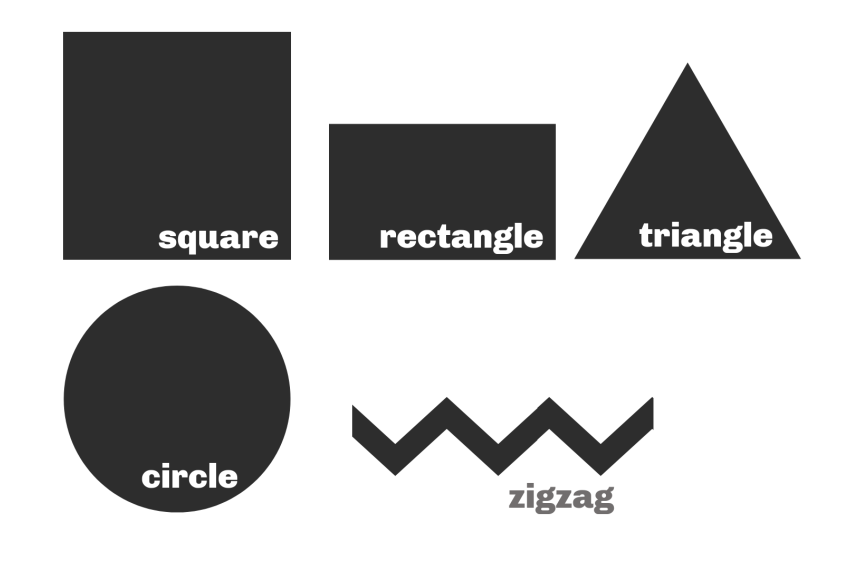
Especially the ones where you have to pick which shape appeals to you most. In fact, let’s do it now quickly –

Which shape appeals to you most?

Right, so, whichever shape you have picked tells us so much about you as a person…

  • The square is a tireless worker. Diligent, patient, methodical, neat, organised, logical. Predictable, rational, data driven.
  • The Rectangle is a transitional shape which means this person is curious, inquisitiveness, adventurous, motivated. Always trying new things, always lively and interested.
  • The Triangle is the shape that symbolises leadership. This person focuses on goals, analyses situations fast, is confident, thinks they’re always right, assertive and argumentative. Their career gives their life meaning.
  • The Circle is a harmonious person who loves good interpersonal relationships. They value people and wellbeing, are the glue that holds the team together. They have sympathy, and empathy, lots of emotional IQ and often super creative.
  • The Zigzag is (not a shape!) but a symbol of creativity, imagery, conceptualism and aesthetics. They live for experience and reflection, new ideas and methods, possibilities rather than actual realisation.

I bet you fit perfectly into one, and not any others right?

No? No! Of course you didn’t! Because we aren’t defined by one shape and a couple of sentences about said shape.

We can change on a fairly daily basis (or by the minute, if you’re like me and particularly susceptible to things like hunger rage). What’s more, this does very little to actually help us establish how to work with a triangle if I’m a circle, or to deal with that flimsy whimsical zigzag while you, the square, are trying to get a basic job done.

Human Factors has some answers though.

They do indeed have some.

We have (thankfully) moved a long way from simple symbols and SHELL models to tell us what sort of errors and mistakes, biases and behaviours can cause concerns in the cockpit. We know about our non-tech competencies, we know about those hazardous attitudes. We know that a too steep cockpit gradient might lead to an unassertive FO not speaking up, and we even know that there is a risk of the too friendly flight deck and the risk of complacency.

The thing is, we read the reports, accident investigations, and we think about how that crew crashed. 

But what we rarely talk about is the bits that lead to that. The off day, the slight challenge, the things we see and experience all the time which never lead to the big bad accident, but which could, one day, if we don’t deal with it right. The reason we don’t is… well, why would we? Unless you bring them up yourself then they aren’t in an accident investigation report, they generally aren’t covered in a CRM manual, because they just aren’t big enough.

Which means we are never talking about us, each other, our experiences. We assume we all know how to deal with them, because they are everyday human things. But in the cockpit, in that locked chamber, these are what often amplify.


Major Earthquake in Turkey

A major earthquake has disrupted operations at several airports in Turkey. Here is the current situation (Feb 9).

Magnitude 7.8 earthquake

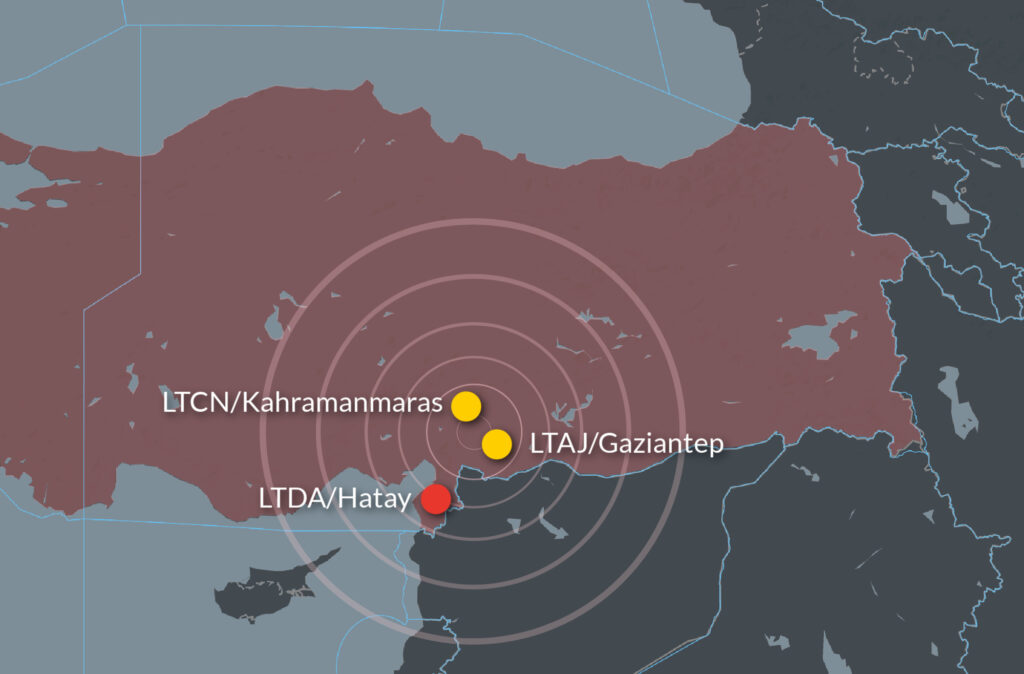
The main earthquake registered at 3:17am on February 6, with the epicentre approximately 20nm west-northwest of Gaziantep. Tremors were fell through parts of Syria and Lebanon.

Several large aftershocks have been felt, with aftershocks expected to continue through February 6.

Turkish airport closures

This website was shared with us and provides a good resource for the current status of airports and which are receiving flights providing relief aid.

Severe damage has been reported in Gaziantep, and all civilian flights to LTAJ/Gaziantep are currently suspended as the airport is being used as the primary airport for relief flights.

LTAF/Adana Reports suggest Adana airport closed initially but is not open for relief aid flights. It is not clear whether it is available for passenger flights. The airport always requires a PPR due parking capacity so confirm with an agent prior to heading there.

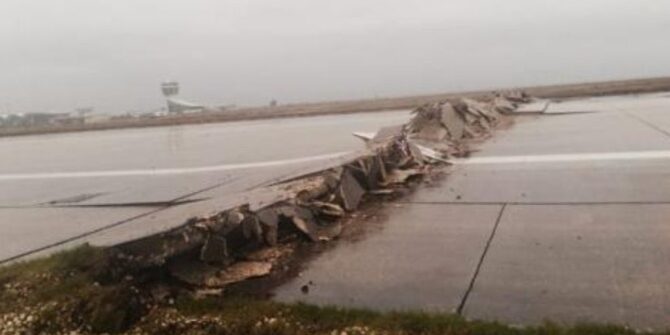
LTDA/Hatay airport, in the most southerly region, bordering Syria to the west is closed indefinitely due severe damage to the runway.

LTCN/Kahramanmaraş airport north of Gaziantep is also reportedly closed to civilian traffic.

LTCS/Sanliurfa airport has als0 been closed to civilian flights while being used as a relief airport.

Reports suggest some airspace in Southwestern Turkey may be impacted due power outages. Flightradar shows aircraft operating on the main airways.

The southwest region bordering Syria is considered a high risk area due to the conflict with Syria and is generally avoided due to the risk of military traffic, USA, and the proximity to airstrikes.

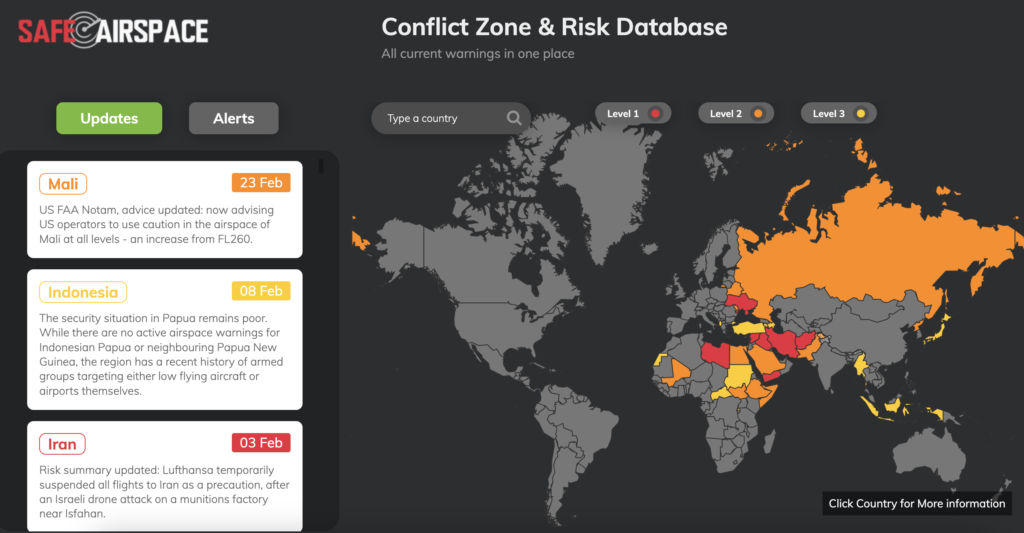
For further information on the airspace risk, see Safeairspace.net


Optimise your Descent

Thee FAA has ‘stepped up’ their game in reducing emissions and save fuel by reducing the number of ‘step down’ approaches into some major airports.

Here is a mini ‘what you need to know’ about CDAs, OPDs and how and where to fly them.

What’s the difference?

Seems a good question to answer first.

There are generally three types of descent you can expect when you head into a big, controlled airport.

  • The Step Down
  • A CDA
  • An OPD

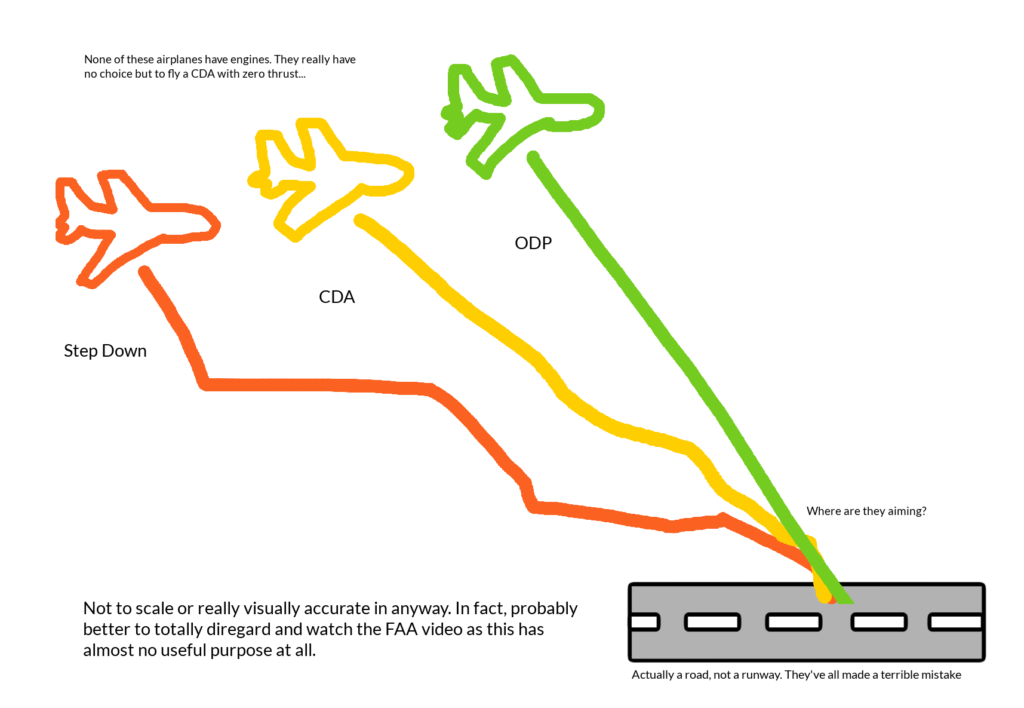
The Step Down is exactly what it sounds like – you descend, level off, maintain that for a bit, then descend again, level off again, maintain it for a bit again…

This generally sucks for three reasons. One it is annoying for pilots because it means you have to do more. Two it can be a lot noisier on the ground if airplanes are roaring along low level, at lower speeds and three it is obviously a lot less fuel efficient.

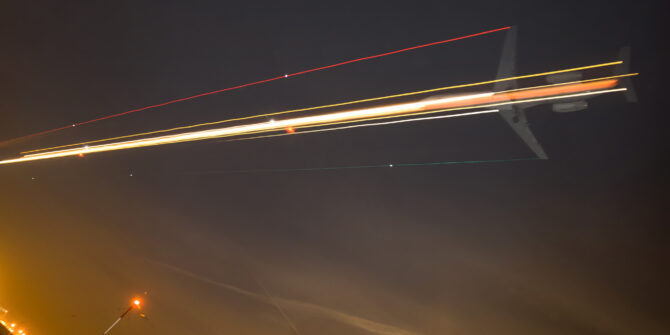
Next up, you have the CDA – the constant descent approach. Again, exactly what it sounds like. (I feel like I don’t really need to explain this to pilots reading this but who knows, maybe a non-pilot has taken a random interest in it because of the excellent picture I used for the header).

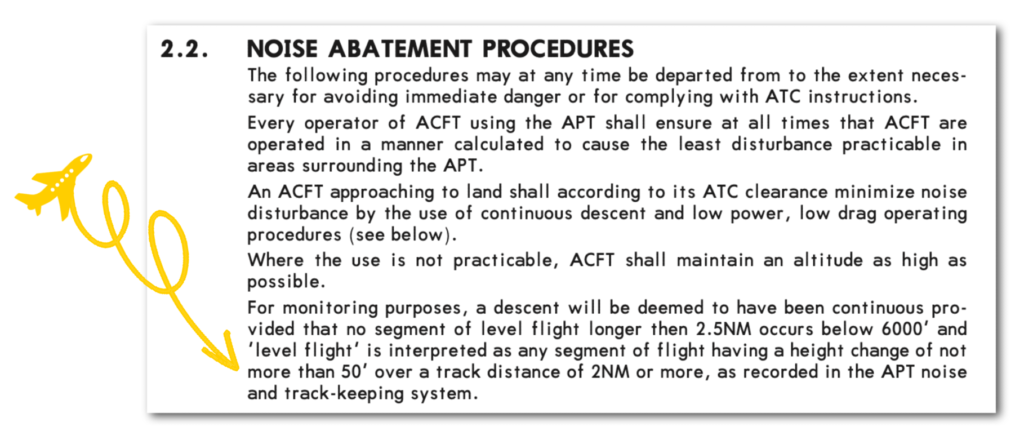
So, with a CDA ATC, or the pilot, attempts to continue descending without levelling off. This is better for the reasons already stated above, but it is not the best because a CDA can mean descending with thrust on. A good example is EGLL/London Heathrow who still consider it a CDA if you’ve descend more than 50 feet in 2nm, and don’t have a level segment of more than 2.5nm below 6000′.

Which brings us to the OPD.

This acronym stands for ‘optimised profile descent’. Sorry, optimized (because its an American name so I’ll give it the ‘z’).

Not to be confused with ODP (Obstacle Departure Procedures). I feel like we may have reached a point in aviation where every acronym possible has been used.

Anyway, the ODP tries to have the aircraft descend with close to idle thrust, meaning they will be at a more fuel efficient altitude for longer, and descend in the most fuel efficient way.

If you’re still confused, then the FAA made this video explaining it, and I made this excellent visual representation of it below.

Where in the USA are these happening?

There are 11 airports that have had OPDs implemented recently:

  • KBCT/Boca Raton Airport
  • KFXE/Fort Lauderdale Executive Airport
  • KMCI/Kansas City International Airport
  • North Palm Beach County General Aviation Airport (F45)
  • KOMA/Eppley Air Field, Nebraska
  • KOFF/Offutt Air Force Base, Nebraska
  • KMCO/Orlando International Airport
  • KLNA/Palm Beach County Park Airport
  • KPBI/Palm Beach International Airport
  • KPMP/Pompano Beach Airpark
  • KRNO/Reno Tahoe International Airport

But wait! These are not the only ones. There are in fact others which got them in 2021:

  • KDFW/Dallas-Ft. Worth International Airport
  • KFLL/Fort. Lauderdale-Hollywood International Airport
  • KLAS/Harry Reid International Airport
  • KNEL/Lakehurst Maxfield Field
  • KDAL/Dallas Love Field
  • KMIA/Miami International Airport
  • KVGT/North Las Vegas Airport
  • KMCO/Orlando International Airport
  • KCMH/Port Columbus International Airport
  • KPDX/Portland International Jetport
  • Numerous other mid-size airports

There might even be more. This isn’t really a new thing and any US based folk reading this are probably thinking “why did we read this?” But we figured some of the non-US based folk might find it useful or vaguely interesting.

Especially as it can make things trickier – check out the likes of KRNO/Reno Tahoe. If you are flying All the Way to Reno then You’re Gonna be (flying) a STAR and it might involve an OPD. This airport is at a nice high elevation of 4415′, and has some decent terrain around it (the MSA is 12,000′) so there ain’t much room to mess up if you mess up your OPD.

Where else in the world can I expect these?

Eurocontrol have a whole task force dedicated to this. You can read their action plan here.

They refer to them as CCO and CDOs (constant climb or descent operations), and I’m not sure specifically which airports use them, but I’m thinking a fair old few.


OPSGROUP is coming to AIROPS23!

AirOps is an event for business aviation flight ops people, put on by the European Business Aviation Association, where ground handlers, airports and FBOs meet with trip-planners and operators. And this year, we’re going to be there too!

When and where?

The Event Lounge in Brussels, Belgium. It’s a three-day event, from Feb 13-15, featuring an exhibition, along with training and flight ops info sessions.

For more info on what to expect and who’s going to be there, check the AirOps23 page here. (And to see some snaps of the last event in 2020, click here).

Come see us!

We’ll be running our world famous Ops Quiz at the end of Day 2. Test your ops knowledge with questions like these ⬇️, pit your wits against other teams, and ease into the evening with a fun, interactive session. (And yes, there will be prizes for the winning teams!)

If you’re able to make it, we’d love to see you! Come meet OPSGROUP’s Rebecca and Dave in person, share your knowledge, swap stories, and discover some recent ops updates you might have missed.

OPSGROUP members can take advantage of discounted rates – just enter the code  AIROPS2023_OPS_GROUP  in the ‘coupon’ section when registering. See you there!


Africa Airspace Risk: Jet Shot in Rwanda

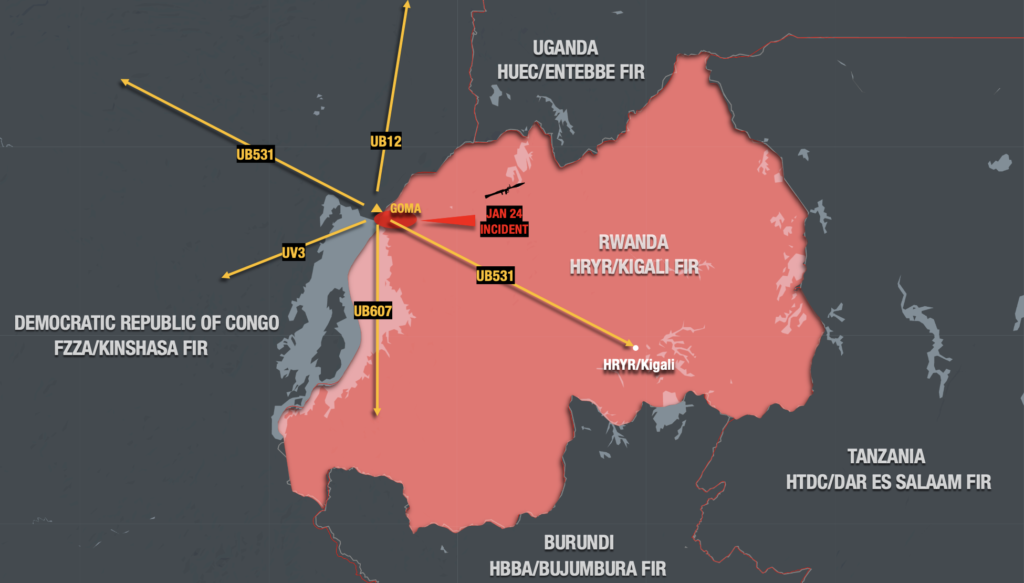
On Jan 24, the Rwandan military shot at a fighter jet from the Democratic Republic of Congo which they claimed had busted Rwandan airspace near Goma.

This has captured our attention for three major reasons:

  • There are no active airspace warnings for either the FZZA/Kinshasa or HRYR/Kigali FIRs.
  • The incident occurred at low level, but in an area of open airways.
  • The aircraft was hit in close proximity to an international airport.

This was a major escalation following months of conflict between the two countries – so much so that the DRC announced the shooting as an ‘act of war.’

Here’s a look at exactly what happened and what this might mean for risk to civil aviation operating into, or overflying the Central African region.

The January 24 Incident

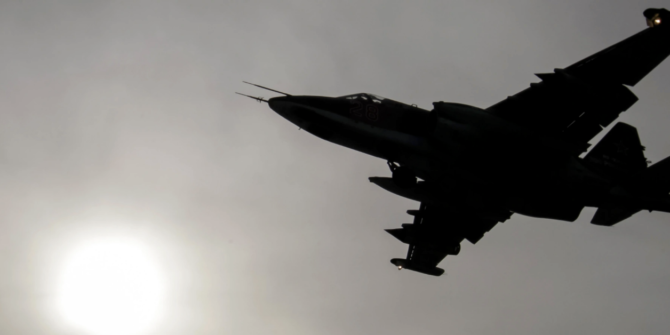
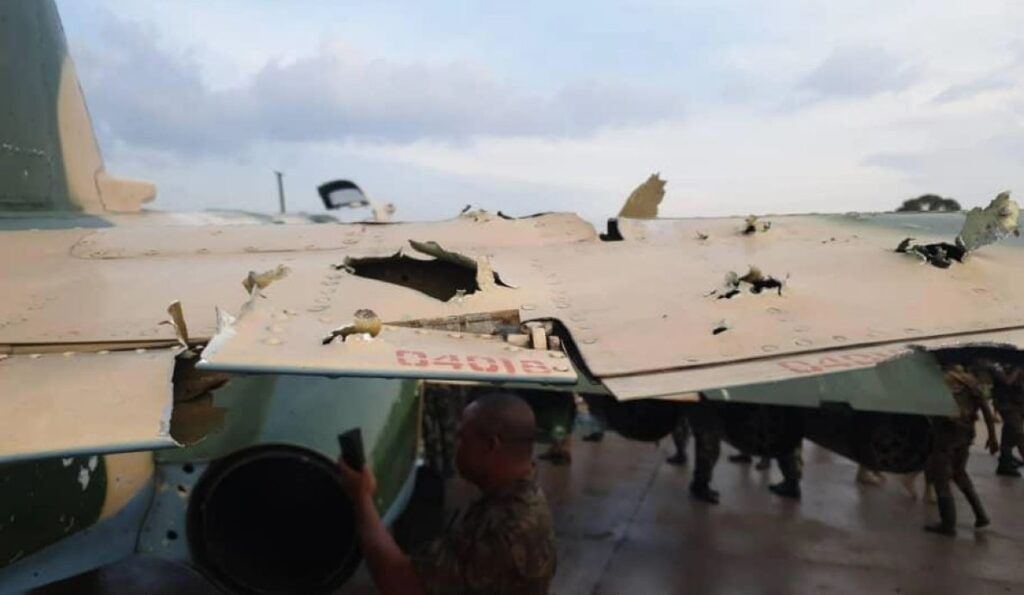
During daylight hours, a Sukhoi-25 military jet operated by the Democratic Republic of Congo reportedly violated Rwandan airspace between Goma and Gisenyi, without a clearance.

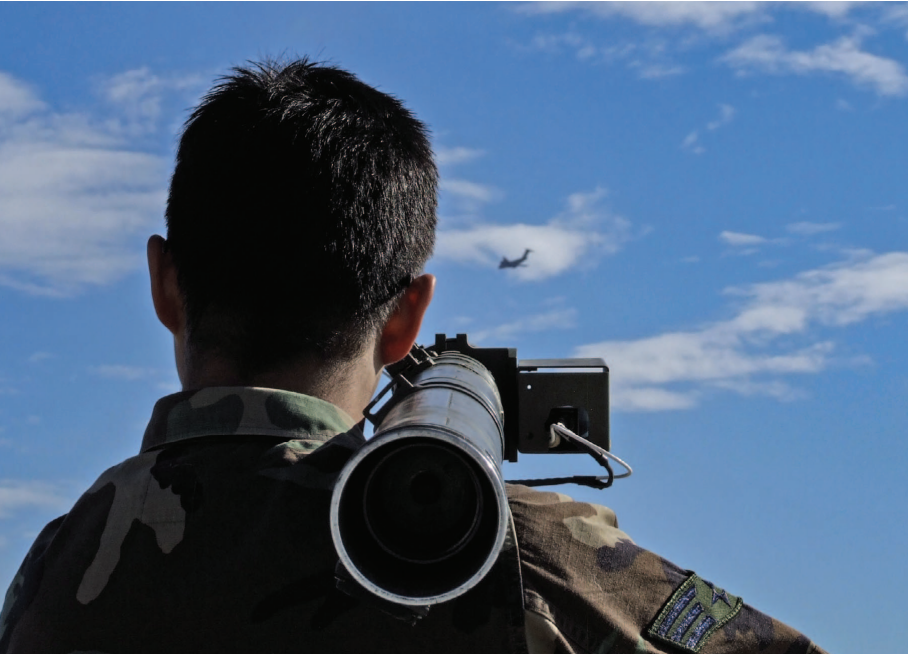
There are several unverified videos circulating of the jet being struck at low level by a surface-to-air missile, fired from a MANPAD. These are small, light, shoulder launched anti-aircraft weapons

The jet landed safely but sustained heavy damage. The incident raises concerns because there are contradictory accounts of how the situation unfolded, debate over which side is responsible, and so a lack of reliable information over what the safety implications might be for civil aircraft.

Escalating Conflict

This is the latest escalation of a conflict that has been worsening for months, and a strong indication that it may be putting overflying aircraft at risk as it grows – especially near the shared border.

In late 2021 heavy tensions erupted between the Democratic Republic of the Congo and Rwanda. An armed insurgency is underway in the DRC by a recently re-emerged militant group known as the March 23 Movement (or just M23 for short).

The DRC (along with the US and UN) have accused Rwanda of supporting M23, and in some cases even fighting alongside them. Although this hasn’t been proven.

The ethnic and political background to the conflict run deep and are beyond the scope of this article, but the bottom line is frequent skirmishes by both Congolese and Rwandan forces in each other’s territory.

Airways

The January incident happened near Goma – a city that lies on the DRC side of the border, and straddles the boundary between the FZZA/Kinshasa and HRYR/Kigali FIRs.

Several international airways run through the same airspace where the incident occurred.

Also use caution on airways UM216, UA618 and UL442 away from Goma but which skirt the shared border where skirmishes have been occurring.

Is this a high or low-level threat?

Short answer, low – but there’s more to it than that.

Militaries from both sides, along with the M23 rebels, are all known to have anti-aircraft weaponry.

The most common is the MANPAD. They are easy to use, portable and require little if any training. They are unfortunately prolific throughout Africa in both legitimate and illegitimate hands – Rwanda and DRC are no exception. And the intent to use them is now clear.

They typically target aircraft flying low, and slow. Which means aircraft taking-off and landing are most at risk. However publicly available information indicates MANPADs can reach aircraft as high as FL250.

Anti-aircraft guns along with ballistic weapons such as rockets and other artillery are also known to be present, and are potentially dangerous to aircraft, once again at low level.

Neither side has shown any intent to actively target civilian aircraft. But there are several risk factors at play.

The DRC/Rwandan border is an active conflict zone, where military activity and the transport of troops and equipment is common. Aircraft surveillance in the area is rudimentary, and the conflict has become territorial not just on the ground, but now in the air too.

All the warning signs are there, only with no actual warnings.

Once again, mistaken identity has become the number one threat.

With this in mind, overflying jet traffic at higher flight levels are not at risk – if ops are normal.

The problem becomes if you need to descend or divert. And aircraft operating into the region’s airports are especially exposed. Extra caution needs to be taken at FZNA/Goma – the site of the January incident.

Official Warnings

There are none.

History has taught us that we need to be more responsive to airspace threats – a danger may exist or develop before states publish official airspace warnings or restrictions. All of that takes time. And if your flight is today, you need to know now.

We’ll continue to report on changes in Rwanda and DRC as they happen over at safeairspace.net – our conflict zone and risk database.


NAT Doc 006/008 Changes 2023

Read all about it! ICAO are changing up the NAT docs!

Here, for you, is our summary of the *exciting amendments to our *favourite documents.

*They aren’t that exciting. Also aren’t our favourites, clearly that is 007.

First up, Doc 008

NAT Doc 008 ‘Application of Separation Minima North Atlantic Region’ contains exactly what the title suggests: info on the application of separation minima. The standards that it doth contain apply to aircraft in the NAT Region who are communicating via a radio station or via CPDLC and also when in ‘Direct Controller Pilot VHF voice Communication’.

Excellent. We saw an amendment notification and we headed over to see what the change was. With baited breath we clickethed upon the link. Fingers tapping as it slowly downloaded itself and opened. We scrolled with frantic enthusiasm to the ‘amendments’ table. What would the change be? Is it big? Is it exciting?

It is not.

They have just amended paragraph 3.4.2.D to say that longitudinal separation is ‘10 minutes between aircraft on same/intersecting tracks, whether in level, climbing or descending flight, provided the aircraft have ADS-C periodic contracts with a maximum reporting interval of 20 minutes or are being tracked by an ATS surveillance system.’

‘or are being tracked by an ATS surveillance system’ appears to be the only change, at least that we can see anyway.

Doc 006

This one looks more interesting. First up, a review of what Doc 006 is.

In case you aren’t familiar with this one, it used to be:

  • Part I – Contingency Situations Affecting ATC Facilities
  • Part II – Contingency Situations Affecting Multiple FIRs
  • Now it has Part III – Contingency Situations Caused By Space Weather Events, which ‘considers events which are likely to affect one or more than one facility within the NAT region, specifically the contingency processes applied to minimize operational impacts of space weather events.’

You can find the updated Doc 006 parts here.

Part I of Doc 006 – Air Traffic Management Operation Contingency Plan.

The only change in this bit is the insertion of some text onto Page 1 about Part III – The Space Weather Contingencies.

There is also this newly amended table which, while grey and joyless, is actually very handy indeed. This covers general loss of ATC which could be space weather related, but could also not be space weather related.

Doc 006 Part III

I’ve given it a section of its own. This is the Space Weather bit, but, there is an actual document – Doc 10100 – which talks about space weather. 10100 can be found here and this is where you should go for *all your space weather knowledge needs.

*Not all, but a good start. 

Doc 006 Part II is all (only) about the contingencies in the event of issues with ATC, navigation, systems etc because of space weather.

A little bit of space weather info before we dive all the way in:

Space weather can play havoc on our GNSS systems, satellite stuff, HF, RF, power grids, even our microwaves (microwave links whatever they be). It can also have effects beyond just one FIR, or even the whole NAT region. So it’s a great thing that we now have a document to help.

Space Weather peaks around every 11 years, but we’ve seen a load of pretty decent (but not severe) space weather stuff of late. Things like:

  • Disruptions and even total unexpected loss of HF, SATVOICE, CPDLC etc
  • Issues with GNSS (that impacts out ADS-B and C)
  • Weird and random reboots of electronic stuff onboard
  • Passengers and crew growing extra limbs/glowing green etc

The Contingency Phases

They’ve broken the actions down into a few phases.

Initial Action (Reactive Phase):

What is happening during this phase is some space weather is whizzing its way over and an ANSP has become aware of it and so they start telling everyone about it, putting contingency plans into action, getting in touch with other ANSPs for support etc.

If you’re an airplane that is not yet in the NAT region then the general plan is to warn you about what might be awaiting you, and possibly (if it is really bad) re-route you.

If you are already in the NAT then you should do what you would normally do if you lose comms, or have some technical issue and that’s follow the published contingency procedures.

Subsequent Action (Proactive Phase):

What is happening in this phase depends on the severity of the situation, but basically a whole load of communication (about the severity of the situation) and stuff to help manage it.

Long term contingency plans:

This is for the really bad stuff that knocks out comms or satellites of what have you for really long amounts of time.

That… wasn’t very helpful

Doc 006 is really just more of an outline of what ATC will do (and so what the pilots can expect).

So, refer to the nice table, refer to the AIPs, go read your actual contingency procedures, and use this Doc 006 Part III as a helpful guide on what to expect.


NAT Doc 007 Changes 2023

We knew it would happen! We predicted it would happen! And now it has happened! The annual late Christmas present from ICAO that always seems to get lost in the post and then turns up in January – an updated version of the NAT Doc 007.

NAT Doc 007 is the main go-to guidance doc for ops over the North Atlantic. All the specifics about how to operate your aircraft safely through the complex airspace of the region are here. The updated version is valid from Jan 2023. You can download it from ICAO at the source here, or click on the image below:

The summary of changes by ICAO

They always post a little summary at the start, so here is a screenshot of it for you.

The summary of changes by us

Hideous indeed. So here is a less hideous (but possibly less informative) summary of the changes we spotted as we scrolled through the 174 pages of Nat Doc 007 V.2023-1. We decided to go chapter by chapter so you can head on in and read the full info direct from the NAT Doc 007 itself if it interests you to.

Chapter 1: Operational Approval & Aircraft System Requirements for Flight in the NAT HLA

Something about Target Levels of Safety

This is probably of interest if you’re a huge fan on the “Where you all went wrong this year” updates from the NAT HLA. They set the ‘maxima’ to 5×10⁻⁹  fatal accidents per flight hour, which I think means one in every 500 millionth or something.

OK, moving on.

Equipment related stuff

This is all stuff you probably know already, but they have updated and edited it so we figured we would recap on the important bits as well.

RVSM: Two handy links have been added in providing you info on RVSM equipment requirements. 

This one from the FAA.

And this one from Skybrary

Along with a reminder that because the NAT HLA is RVSM, you need to be RVSM approved to fly in it.

Clocks: Make sure yours is accurate and synchronised to an ‘acceptable’ UTC time signal before heading off. A lot of aircraft have clocks that can only be updated on the ground so check before you fly.

LRNS: Do you fly an aircraft with only 1 LRNS (and it’s a GPS)? Then its got to be approved in accordance with FAA TSO-C129 or whatever the EASA equivalent is (it is ETSO-C129a).

CPDLC: Don’t have FANS 1/A “or equivalent”? (we still aren’t totally sure what “or equivalent” really means!) Then you can still request to climb or descend through the NAT DLM airspace, and there are some exceptions for specific flights where you might even get let in – 

  • Scientific research type flights (probably not any of you)
  • If your equipment fails on you post take off then you might be ok, talk to ATC
  • If you’re in the NAT DLM and your equipment fails then you might be re-cleared (to move you out of the way of less dysfunctional folk), but they aim is to try and keep you on the plan you were already on

They have also clarified three specific areas where datalink is not required. This one has been bugging us for a long time with previous NAT Doc updates! Datalink exempt areas have always been these three:

  1. Airspace north of 80° North
  2. New York Oceanic East flight information region (FIR);
  3. Airspace where an ATS surveillance service is provided by means of radar, multilateration and/or ADS-B, coupled with VHF voice communications as depicted in State Aeronautical Information Publications (AIP), provided the aircraft is suitably equipped (transponder/ADSB extended squitter transmitter).

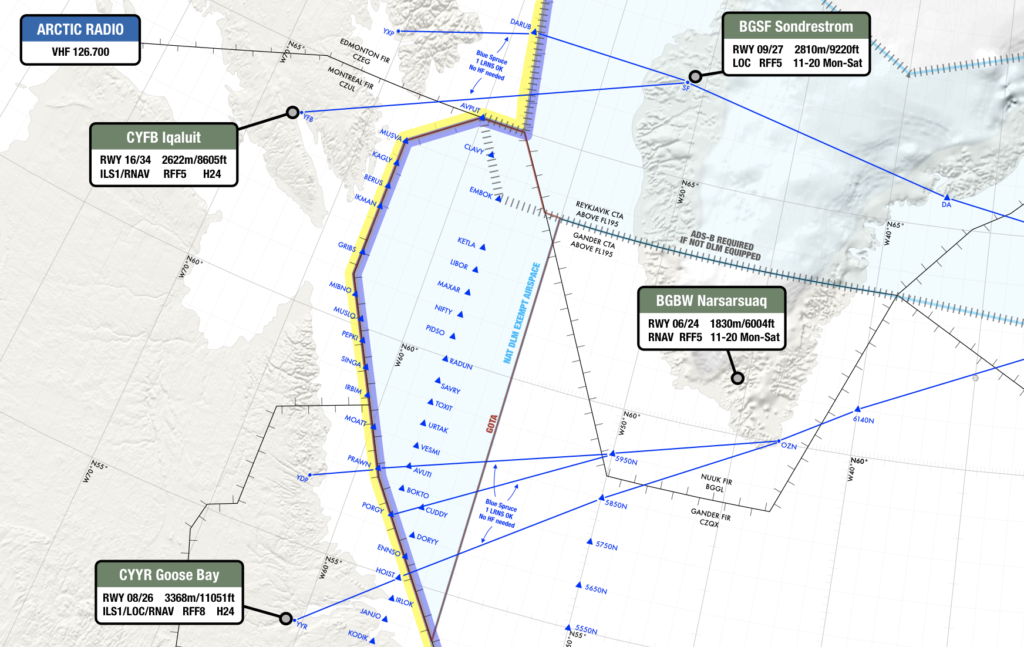
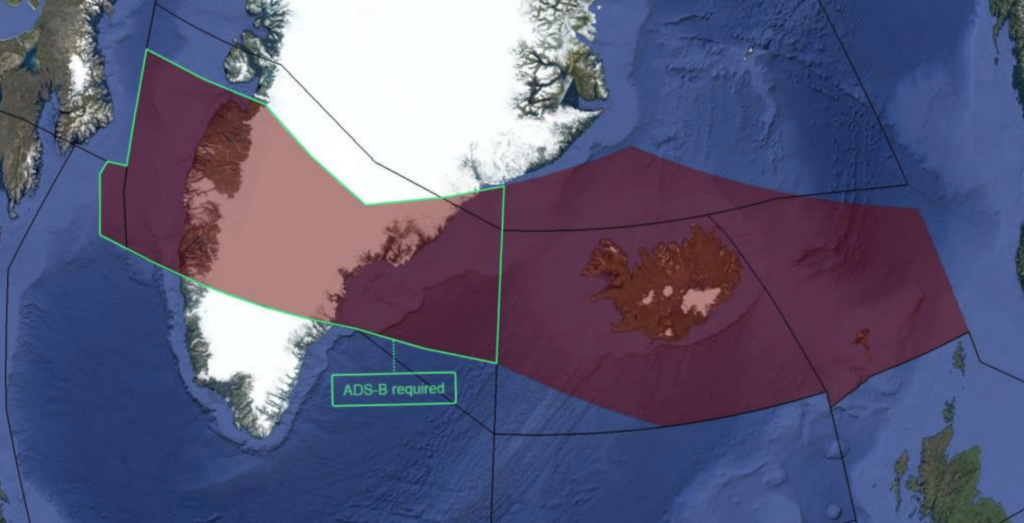
We’ve never understood what number 3 means – until now. The new NAT Doc now specifically lists where these areas are: a chunk of airspace over Iceland/Greenland, one over the Azores, and another in Bodo. They have even provided some maps and coordinates too.

Update 3 APR 2023: There have been some changes to the boundaries of the datalink exempt airspace in the northern bit of the North Atlantic. This used to extend down south to SAVRY, but now only goes as far as EMBOK. So now you need datalink in the NAT oceanic airspace over Greenland controlled by Gander. Check this post for more info.

Chapter 2: The OTS

More reminders on things you know rather than any major new stuff.

  • If you want to fly on the half-spaced PBCS Nat Tracks, you need RNP 4 approval but also RCP240/RSP180 equipment (and a state approval). That’s been the case for a while.
  • You will also get messages saying “SET MAX UPLINK DELAY VALUE TO 300 SEC”. Do it.
  • Nat Tracks are now from FL340 to FL400 inclusive. (Remember, Nat Tracks at FL330 and below were removed back in March 2022).
  • If there is a particularly strong westerly jetstream then Shanwick will post a split westbound structure which means you might see two adjacent landfall and exit points at the Eastern NAT boundary for the daytime eastbound flow to use.

Chapter 3: Routes, Route Structure, Transition areas

They have updated the maps and info on the bits adjacent to the NAT HLA (your NOTA, BOTA, SOTA and GOTAs).

Chapter 4: Flight Planning

Doc 7030 is the main reference for flight planning in the NAT (and state AIPs). There are little bitty edits here but nothing new.

Chapter 5: Oceanic Clearances

A cruise climb can be requested if you’re fat and heavy and want to climb little more flexibly as your drop weight (burn fuel). ATC will do their best to accommodate this.

Chapter 6: Comms and Position Reporting Procedures

The “When Able Higher” report is no longer mandatory in the New York OCA. The only place it’s still required is when entering the Santa Maria OCA. 

There’s also an update in this section about where the VHF stations are. Remember, when you’re on VHF you might not be talking direct with an ATSU. You can request a direct patch-through on HF or GP/VHF if you need it (and are on Iceland Radio or Shanwick Radio).

They’ve updated the big pink blob map to show where you should be able to get VHF coverage. Here it is.

INTERESTING SIDE-NOTE: Now, DON’T PANIC, they haven’t put this in the updated Doc, but we saw it in the ‘proposed changes that might one day come in’ document… You currently need 2 LRCS and one of them must be HF (generally). This isn’t changing, but if you lose HF then you might (when they make the change) be able to enter so long as you have two other LRCS systems that are appropriate for the route. Exciting…

Chapter 7: Application of Mach Number Technique

Don’t get confused between RNP10 and RNAV 10. Not the same thing, but they can’t be bothered to correct everyone all the time on it so they’ve added a note saying this.

Also, don’t make Gross Navigation Errors. They ain’t good and will be investigated. Here’s the tip: if you’re on a random route, a single digit error in latitude could put you pretty darn near another aircraft so be careful!

Chapter 8: Flight Ops & Navigation Procedures

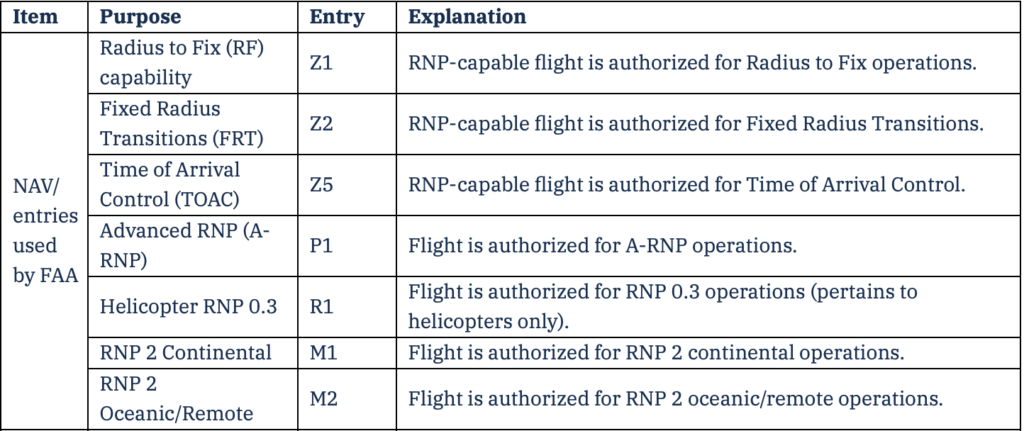
They have provided a very helpful Checklist. This chapter goes into full detail on it, and Attachment 4 has it nicely summarised.

Chapter 9: RVSM

FAA AC 91-85 has all your info on state approvals.

Chapter 10: ATS Surveillance Services

This is the ATS Surveillance Services chapter. They’ve updated the guidance on your squawking.

When you’ve been in the NAT HLA for 30 minutes you should set your squawk to 2000 (the domestic controller on the other side might not want you to use the same one). But there are some exceptions this:

  • While in the Reykjavik ACC stick with your assigned code because you’re in radar control (in the south eastern part) and they don’t want you to change it until you’re told to.
  • All eastbound flights routing Reykjavik – Shanwick – Scottish should squawk 2000 after 10 minutes.
  • Routing on T9 squawk 2000 10 minutes after passing BEGAS (northbound) or LASNO (southbound).
  • Routing on T290 squawk 2000 10 minutes after ADVAT or GELPO

ADS-B is only mandated on T9 and T290.

Chapter 11: Monitoring of Aircraft Systems & Flight Crew Performance

This chapter has a nice list of things to report/things ATC will report:

  • Erosions of longitudinal separation between aircraft, within the NAT HLA, of 3 minutes or more (so if you find yourself getting to close).
  • Anytime you have to do something to prevent a GNE.
  • Lateral deviations from cleared route of less than 25 NM.
  • Discrepancies of 3 minutes or more between an ETA/ATA at a waypoint.
  • Occasions when an operator is suspected of not being in possession of an NAT HLA/RVSM approval.
  • Diversions or turnbacks, noting in particular whether the appropriate published contingency procedure was correctly adopted.
  • ACAS RAs.
  • Wake turbulence reports.
  • Incorrect application of the SLOP (e.g. a left offset).

Chapter 12: Procedures in Event of Navigation System Degradation or Failure

No noteworthy newness (none that we could find, at least).

Chapter 13: Special Procedures for In-flight Contingencies

This covers all your loss or sudden withdrawal of ATC services. So it is basically a mini summary of Doc 006 and also covers the ‘What to do it?’ situations.

They have also updated the contact info for SATVOICE. So here you go –

Chapter 14: Guarding Against Common Errors

Updated to list recent ones.

Chapter 15: The Prevention of Lateral Deviations from Track

No newbies.

Chapter 16: Guidance for Dispatchers

There is some updated info on planning codes. Take a look.

Chapter 17: Flight Operations below the NAT HLA

So this stuff all applies for flights FL280 and below. Actually an interesting read! There aren’t any massive changes here though. Mainly these one:

  • Reminder the SLOP should be right of track.
  • They re-iterate that they still haven’t managed to get a decent map of VHF coverage of the North Atlantic. If we want one, we should go scratching around in State AIPs (where we still won’t find any – we’ve looked).
  • If you’re in trouble, you don’t just have VHF 121.5 to turn to. Also try 123.450, SATVOICE, or “any other communication device you may have”.

End of the Doc: All the attachments

Mostly forms and stuff, but Attachment 4 is that handy sample checklist we mentioned and Attachment 9 is an equally handy checklist for dispatchers covering equipment and what have you.

Phew, done!

Another year, another NAT Doc. Well, let’s hope so – they do sometimes release a sneaky Version 2 update some time around July/August. But for now, we can relax.

Did you spot any big updates in this new NAT Doc? Haven’t read it yet and don’t want to scroll to the top of the page to find the link again? No worries, just click here. If you do spot anything significant that we missed, please let us know! You can email us at news@ops.group


Taking the Trash Out: Let’s fix NOTAMs

After a hiatus of a year or so, we’re back working on NOTAMs. In 2021 we ran a campaign with ICAO (and IFALPA, and IFAIMA) to improve NOTAMs. We focused on “Old” NOTAMs, ones that sit in the system for no good reason, sometimes for as long as 20 years. They are mostly gone – including the Albanian NOTAM about the Y2K problem.

That’s good, but the NOTAM problem isn’t fixed. Rob, below, summed it up nice and simply last week.

So, let’s continue the work. Why do we have a system that makes it extremely easy to miss critical items? And how do we fix it? Let’s visualize the problem.


NOTAMs are like containers on a ship

Imagine you’re the pilot of a Boeing 787 about to sit down at a briefing table to review NOTAMs for your flight from Copenhagen to Bangkok today. You will get a folder containing a printout of NOTAMs for your route. Here they come.

Each container is a NOTAM. Unlike actual containers on actual ships, there is no manifest. We don’t know what’s in the container until we open it and take a look. That means that we can’t automatically sort them out beforehand, and we can’t put them in any order of importance. Therefore, the pilot gets a random list of NOTAMs, and it’s up to them to make sense of it.

If you only had six NOTAMs to take a look at, no big deal. You’ll spot that the airport is closed today. But we usually have somewhere between 100 and 1,000. The result? A system that makes it extremely easy to miss critical information.


Finding the simple fix

This is a simplified version of the problem, but not by much.

Question, then: How do we improve the NOTAM system so we can sort and filter them? 

Let’s get a technical for a moment, since we’re going to need some smart people that understand the system architecture. Here are some basics that are important.

  1. There isn’t really an international “NOTAM system”. Each country issues NOTAMs for their airspace, and keeps a local list of them for pilots in that country. Other countries can query that list (done via the AFTN, with an RQL message), and get a copy of new NOTAMs (by sending an RQN message). Not every country does this, but if they do, they’ll then have a limited database of NOTAMs from selected other countries. A tiny handful of countries, regions, and organizations do this for every country, which makes for a fairly reliable international database of NOTAMs. Examples of this are the FAA (NOTAM Search), US DoD (DINS), and Europe (EAD). These databases form the source data used by pilots and operators, often via service providers like Jeppesen, LIDO, Foreflight etc. who may apply some final processing to attempt to sort and filter them for their customers.
  2. Since there isn’t an international NOTAM system, then logically, nobody is in charge of it. ICAO sets the standards for when a country should issue a NOTAM (Annex 15), how they are formatted (Doc 10066), and what codes to use (Doc 8400). Eurocontrol publishes a guidance manual (called OPADD). That’s about it. Nobody has the job of monitoring all international NOTAMs for quality or quantity.
  3. The NOTAM structure is very limited. It uses a limited character set called ITA2, which pre-dates ASCII. This limits messages to UPPER CASE. The format is set in Doc 10066, giving a NOTAM 7 sub-parts from A to G, preceded by a Qualifier called the “Q-code“. In theory, the Q-code tells the reader what the NOTAM is about (magically solving the container problem above), but in practice, it doesn’t work. Why? There are too many choices, and therefore they are often applied incorrectly, or not at all. The Q-code categories were dreamed up in 1950, and there are 13,783 possible Q-codes. 20% of NOTAMS don’t have a Q-code at all (The NOTAM office often enters XX or XXXX, meaning “not sure”).


What’s in the NOTAM container?

Let’s get back to the yard, and lower down one NOTAM container and take a look.

We know it came in on the NOTAM ship so it relates in some way to our route today, but we don’t know what’s in it. Therefore, we can’t sort it or filter it out. It just joins all the other NOTAMs that we load up into the pilot’s briefing, and leave it to them to make sense of.

But if the shipper (the originating NOTAM Office) puts a label on it saying “BIRDS“, then we immediately know what to do with it.

Pretty quickly we can start organizing the containers. Each operator can figure out the order they want to put them in, and which ones to leave at the back of the yard.

By knowing what the NOTAM is about, in advance, we can set up some basic processing rules. Each aircraft operator is different: Airlines don’t care about broken obstacle lights 5 miles from the airport, but a Police helicopter does. Perhaps someone cares about birds, most pilots don’t. It doesn’t matter; let the operator decide for themselves how important each label is, and what order to put them in (or discard).


Sounds easy, but is it?

In a huge list of NOTAMs, the ability to sort and filter them is the key to making them manageable. If they are sorted and filtered, then it’s unlikely a pilot will miss the big ones. Back to what Rob said (⬆️)  the problem is that it’s extremely easy to miss critical items, and that’s what we want to change.

We have some limitations:

  1. It must be a simple change. There are 193 countries that are ICAO members, each one ultimately resistant to a system-wide change that will cost money and require infrastructure investment. It would be lovely to start from scratch with a new system, but it’s not feasible. We need a simple change to the format with big impact. Conversely, if you think even that is impossible, just remember that Snowtams changed format in 2021.
  2. We can’t use Item E. To be able to sort and filter, a computer has to be able to know what the NOTAM is about, without having to read the content text. It can’t make sense of the text in Item E (the text of the NOTAM) – we tried this some years ago with machine learning, and after 2 millions passes, AI wasn’t able to formulate an algorithim that worked. There are just too many countries with different ways of writing NOTAMs to use Item E. So we must have a label of some kind.
  3. We must change the back end, not the front end. This must be a change available to everyone. Sure, Foreflight does good stuff, especially with US domestic NOTAMs. There’s a bunch of software and apps that can help to make NOTAMs more digestible. Some can be displayed graphically, but not many. Big airlines have back-office staff to organize and even rewrite some NOTAMs. But they all do it differently, and not many of them solve much of the big problem. We’re still getting dozens, even hundreds, of pages of NOTAMs to read.

That’s where the work begins. We don’t have all the answers, and we need some smart NOTAM-folk to help. It’s not the intention here to present a vague solution and say “This is it” – this article is intended to generate some critical thought and discussion on what the “Big Fix” looks like. Labelling them in some way seems the way to go, but we’re not sure.


Remember this …

There’s nothing like saying “NOTAMs, what do you think?” to generate a slew of pilot complaints, jokes (some great memes after the January outage!), and things that need to be fixed. We’ve been working on this here for a couple of years, but efforts to fix the b*rds date back almost 60 years. With that in mind, addressing the most common talking points may help.

  1. NOTAMs suck. We know. We’re just a bunch of pilots and dispatchers that really don’t like them, and we’re doing our best to make change happen. But if we want to solve them, we have to find the one thing that fixes most of the big problem in one hit. UPPER CASE is tough to read, but that’s not the big problem. Abbreviations are annoying, but that’s still not the big problem. The Big Problem is that we can’t see the critical stuff because we have to read hundreds of them before flight in no particular order. If we can sort and filter them, that means we’ll see the important stuff first, and don’t have to read such a long list.
  2. General ranting at the FAA, ICAO, IATA, or even the government doesn’t help. Instead, help us to help find a sensible solution, draw it out, think it out, test it, and we can then present it to those that can help implement it.
  3. Digital Notams. Sometimes this comes up as a solution that’s on the horizon, and will fix everything. That conversation has been happening for at least 20 years, and while a lot of good people are working on this, it doesn’t fix the problem we have right now. In a perfect world, SWIM and Digital Notams will come online in 2028 (five years from now), and start to solve some of the issues. Problem is, we live in an imperfect world, and the chances that this will solve our woes as they exist today are slim.
  4. Hey, I made a thing that solves NOTAMs. Like we said above, yes, there are some really great apps, graphical tools, and software that help make some sense of NOTAMs. Foreflight is a favourite amongst us pilots. But despite some of the advances, the originating NOTAM is still a brutalist remnant of the early 20th century, and the vast majority of pilots still get giant chunks of NOTAM text to plod through. We want to fix the problem at source. At the same time, it’s likely that the smart people that made these things can also be the smart people to solve the source problem!


So, what now?

We want to hear from you! Write to us at team@fixingnotams.org. We can only solve this as a community group, and we’re working on a few events to get people together for some discussion. We’ll set up a few group chats on Zoom to get the discussion started and some ideas flowing.

Ultimately, the plan is to start funnelling some ideas along the pipeline until we reach one that really seems to work, and take that to the organizations that can implement it. So, it’s up to you. Want to get involved? You’re awesome! Please reach out to us.


Super Bowl 2023: Special Procedures in Phoenix

It’s time to stock up on chicken wings – Super Bowl LVII is just around the corner.

This year, kick-off will be in Glendale, Arizona on February 12.

Airports within the area will be extremely busy – not just in Arizona, but across the state line in Nevada too.

The FAA are onto it, and have published their safety plan for the event. If you’re flying into (or near) the game, here’s what you need to know.

Parking

A ramp reservation program is already open (including for drop-and-goes) for airports in the Phoenix area from Feb 8 – 14, along with those in Las Vegas. Essentially, you have to reserve a parking spot in advance during this period.

This includes the following airports:

Arizona

  • KPHX/Phoenix Sky Harbor
  • KSDL/Scottsdale
  • KDVT/Phoenix Deer Valley
  • KGEU/Glendale
  • KGYR/Goodyear
  • KCHD/Chandler
  • KFFZ/Falcon Field
  • KIWA/Williams Gateway

Nevada

  •  KLAS/Las Vegas
  • KVGT/North Las Vegas
  • KHND/Henderson

Who to talk to for your reservation

Talk to your FBO (sooner rather than later). They are the ones with the slot allocations and will be able to keep you updated on any changes nearer the time. No FBO? You can also get in touch with the airport authority directly.

There will be Special Air Traffic Procedures

Expect traffic jams and hold ups. To help keep things flowin’, ATC will implement the usual culprits including ground delay programs, holding, reroutes, miles-in-trail and other restrictions.

Your best defence will be to avoid arriving and departing at peak periods.

These are expected to be between: 07:00am to 19:00pm local (14 – 00z) daily between Feb 8 – 13.

A head’s up that it can also be extremely busy for departures on game day well into the wee small hours of the morning too. Last year over one hundred and fifty jets had already left the LA Basin area within five hours of the game ending.

Also beware that ATC will not allow aircraft to pick up IFR clearances airborne, or change destinations within 200nm of Phoenix Terminal airspace.

Security

Two TFRs will be established on February 12, centred around State Farm Stadium in Glendale, approx. 7nm northwest of downtown Phoenix.


Those details will be published via the FDC Notams, usually 3-5 days before kick-off. But you can expect standard stuff – a very restrictive 10nm inner ring, and a less restrictive one out to 30nm.

There should be minor impact for IFR aircraft but expect additional communication requirements and discrete transponder operations.

Getting in and out

There are preferred routes for all IFR turbojet aircraft arriving and departing the Phoenix area from 17z Feb 10 until 23z Feb 12. You can view those here.

The FAA has also summarised tower hours for major airports near the event, many of which will be extended.

For real time info on delays, airport status and other flow related issues, the FAA NASS website is the place to check.

Other stuff to think about

Consider your alternates. Options are going to be limited and restricted because of the high traffic levels. Unless you have a bona fide emergency, you’ll need to plan ahead.

Gas Up. With all the traffic management programs in place, there could be lengthy delays. Consider extra holding and taxi fuel.

Check your documents. Make sure you have everything you need onboard, including crew licences, medicals, aircraft docs and confirmation of all reservations and confirmations. Increased security measures may involve ramp checks, searches, or other TSA requirements.

One last thing…..chicken.

It’s just not Super Bowl weekend without wings. Looking for the best ones in Phoenix? This article may help.


Mogadishu Wishes You a Class A New Year

The Mogadishu FIR is that chunk of Somalian airspace which you have probably flown through if you regularly route from the Middle East to southern Africa.

Since 2022 they have been trialling the return of controlled airspace, and we have an update on that for you.

First up though, why are we interested in this FIR?

Somalia and its direct neighbours are all fairly high risk regions in terms of airspace safety. Yemen is a no fly zone, Eritrea and Djibouti are both fairly unstable, Somalia has issues with Al-Shabab, and the Tigray region in Ethiopia has an ongoing conflict to contend with.

So if we want to head from the Middle East into Africa or from Asia to Africa, we have to make a fairly large detour around these spots, or risk overflying areas considered unsafe and which also have limited diversion options due to safety and security concerns on the ground.

Having part of the Mogadishu FIR available doesn’t help fix the safety and security on the ground (or lack of diversion options) issue, but there are airways which keep you over the oceanic region here, which means the overflight safety risk is reduced, which means we don’t have to detour as far.

So the HCSM/Mogadishu FIR offers a direct connection from the Mumbai FIR, and from Omani (Muscat) airspace into Africa.

But it has issues of its own?

That it does.

The situation on the ground in Somalia is highly unstable. The central government has little control of the major cities and ports, with ongoing attacks from extremist militants targeting civilians who continue to show an intent to target aviation interests. The primary risk is to overflying aircraft at the lower flight levels, which may be targeted by anti-aircraft-capable weapons.

What warnings should I know about?

  • The US prohibits flights across Somalia’s airspace below FL260 (except for flights transiting the overwater portion of the airspace going to/from HDAM/Djibouti airport across the border in Ethiopia).
  • Several other countries have issued airspace warnings advising against operating below FL260 (Note UR401 SIHIL-AXINA is excluded from this by one authority).

There is also a secondary risk related to a lack of ATC service for overflights of the HCSM/Mogadishu FIR. The airspace was Class G uncontrolled airspace for sometime, requiring IFBP and HF comms (and a fair amount of looking out) for crew.

However, from 11 May 2022 they started trialling Class A airspace again, from FL245 each day from 0300-1800z.

Tell us more about this airspace then!

We wrote about the trials here.

From November 2022, they extended the Class A operating hours to H24.

From 26 Jan 2023 it will become full operational, fixed, permanent, sorted and set via AIP SUP 01/23 (no, we aren’t sure where you can access that directly!).

HCSM/Mogadishu FIR Notam A0012/23 is the one with the info. It looks like this:

A0012/23 - TRIGGER NOTAM AIRAC AIP SUP 01/23 WEF 00:01 UTC 26 JAN 2023. 
OPERATIONAL IMPLEMENTATION OF CLASS ''A'' AIRSPACE WITHIN THE MOGADISHU 
FLIGHT INFORMATION REGION AT AND ABOVE FL245. 26 JAN 00:01 2023 UNTIL 
08 FEB 23:59 2023. CREATED: 19 JAN 07:45 2023

It is worth noting they are still training ATC. This takes place from 0300-1800z, so go easy on the trainees if you’re flying during those times.

The “upgrading” of the airspace is down to the Somalia Airspace Special Coordination Team (SASCT), comprising of the Somali CAA, IATA, ICAO, adjacent FIRs, and core RCG (Regional Coordination Group) airline team members. Thanks folks! They are going to monitor the progress and performance over the next 6 months so send in your feedback to IATA_AME@IATA.ORG

Tell us some comms stuff.

You have VHF 132.5 within 240nm of MOGDU. In case you can’t find it, that’s a point over HCMM/Aden Adde airport.

There are a whole bunch of HF frequencies as well:

  • Day 11300/8879/13288
  • Night 5517/11300/3467

They have CPDLC for FANS1 equipped folk. Logon: HCSM.

And they have a whole load of SATCOM numbers you can try if you get really stuck:

  • +252 61 335 0046
  • +252 62 3350047
  • +252 1857390
  • +252 1857391
  • +252 1857392
  • +252 1857393

What else do I need to know?

That is about it. There are contingency procedures, and fairly standard equipment and all that which you can read about in full in here.

We also say check your weather, check your fuel, check your alternates because there are not many options nearby if routing this way. You can find more information on airspace safety here.


Peru: Airport Closures due to Civil Unrest

Ongoing unrest across Peru has led to the closure of SPZO/Cusco and SPQU/Arequipa airports on Jan 20. SPJL/Juliaca remains closed since Jan 11.

All three airports closed following clashes between security forces and protestors. At SPQU/Arequipa, reports indicate that there has been damage to the runway, ATC office, perimeter fences, safety signs, and more.

There were widespread demonstrations in Lima on Jan 19. So far, SPJC/Lima airport has remained open and operational, but security forces are only allowing ticketed passengers to enter.

Peru has declared a 30-day state of emergency in several parts of the country, including Lima, which essentially allows military forces to assist local police in maintaining law and order. Protests have been ongoing since early December, and the security situation may change without warning.

Advice for crew

  • Any crew overnighting in Lima are advised to stay close to the airport and not travel in the city.
  • Avoid making any comments about the government or the situation.
  • Operations may be impacted if protestors block access roads, and security is likely to be much higher leading to some delays and disruption.
  • The US advice is to reconsider travel to Peru at this time. The UK government issued the following information.


RNP-AR: New Arrival Procedures at Toronto

Everyone loves an aviation acronym, don’t they? So this post is about an acronym that causes a lot of confusion. Is an RNP-AR the same as an RNAV, and what if you add GNSS on the end?

It is also about CYYZ/Toronto Pearson airport because they have just implemented the ‘biggest’ deployment of ICAO E0R standard at any major international airport in the world.

OK, so what exactly have they done?

If you haven’t heard the term EoR before, then it just means Established on RNP-AR”  and means they can use reduced separation standards.

So in simple terms, they’ve started using RNP-AR approaches. Which is great because reduced separation standards means reduced track miles for you, which means reduced fuel costs and time and all that joylessness at the end of a long and tiring flight.

So, RNP-AR approaches are way better.

Nav Canada says this – “The EoR separation standard allows aircraft to be considered established on final as soon as they’re on the RNP-AR procedure, which is now in use for both ends of Toronto Pearson’s north runway (05-23). As a result, some aircraft approaching from the south will have the opportunity to fly up to 1,000 feet higher when aircraft to the north are established on an RNP-AR procedure, thereby providing aircraft with the opportunity to reduce their noise over communities located south and downwind of the airport.”

And here’s a little video to learn even more about the project.

But before you disappear, here are some of Toronto’s charts and a little discussion on these approaches in case you’re seeing them for the first time ever.

The Charts.

General RNP-AR Info.

Because a lot of folk find the RNP, RNAV, RNAV RNP, RNAV GNSS, RNP AR terminology just a little confusing (it is!), here is a link to a post talking all about it.

A mini summary:

  • RNAV is the original name. The system doesn’t require alerting (when you go outside the required tolerance)
  • RNP is the new name, and the system requires alerting
  • In the US they call RNAV approaches GPS approaches, and RNAV (RNP) when they need authorisation
  • RNAV/RNP (GNSS) requires GPS. If it doesn’t, it might use something like DME/DME to back-up accuracy
  • AR means authorisation required, which means you need training and approval to fly them
  • They all come under PBN which stands for Performance Based Navigation

CYYC/Calgary

Calgary is next in line to get them (probably).

There is a ‘period of public comment’ open now until Feb 3rd 2023, so get your voice heard if you have comments on these plans.


Airspace Risk: Conflict Zones and Security in 2023

Over the past twelve months we have reported changes to a number of conflict zones which have the potential to affect airspace risk, along with other security concerns.

With the arrival of 2023, here’s another look at these regions which have had the biggest impact on civil aviation safety.

Active conflict zones

We cover all the current conflict zones, with information on the context and details of current notams and warnings, on safeairspace.net

There are a number of conflict zones which remain active, but which have seen little change to the situation or risk rating. The following mentions refer to those which have seen substantial change over the last year only.

 Ukraine/Russia 

The war has continued since February last year with significant impact on airspace in Europe. Ukrainian airspace remains closed at all levels due to ongoing and intensive military activity. Russia has also persisted with flight disruptions at ten airports in Southwestern Russia, and another in Russian-annexed Crimea.

They include:

  • URKA/Anapa
  • UUOB/Belgorod
  • UUBP/Bryansk
  • URWI/Elista
  • URKG/Gelendzhik
  • URKK/Krasnodar
  • UUOK/Kursk Vostochny
  • UUOL/Lipetsk
  • URRP/Rostov-on-Don
  • UUOO/Voronezh
  • UKFF/Simferopol  (Crimea)

Ukrainian airspace remains extremely dangerous due to military activity. Those risks have also been shown to spill over into open airspace that borders it. Special care needs to be taken when operating anywhere near the conflict zone.

Official Advice

Major authorities continue to recommend avoiding Russian airspace, and prohibit against operations in Ukrainian airspace. They also advise to use caution for operations within 200nm of the Ukrainian border.

On Jan 14, debris from a Russian rocket was found in Northeastern Moldova near the Ukrainian border. It is the third such report since October last year. Spill over risks from the war in Ukraine are a known threat to civil aircraft in the LUUU/Chisinau FIR, which is mostly off limits. AIP Sup 01/23 allows flights in and out of LUKK/Chisinau under certain conditions only.

 Iran/Iraq 

The end of 2022 saw an increase in activity between Iran and Iraq, with multiple rocket attacks reported in the ORER/Erbil region. In September, Iran closed a section of airspace in the north of the country along the border with Iraq, and is using the area to launch missile and drone attacks at targets near ORER/Erbil Airport. Iran is warning their own operators against flying in Iraqi airspace.

Ongoing political turmoil, militant activities, and military operations in Iraq poses an elevated risk to aviation and airspace safety. In recent months, militants have fired rockets in Baghdad’s Green Zone, causing flight disruptions at nearby ORBI/Baghdad airport; Iran continues to target northern Iraq with missile and drone attacks; and Turkey has been launching attacks along Iraq’s northern border.

Official Advice

The airways in the vicinity of the border should be operated on with caution.

Towards the end of 2022, the US FAA extended their restrictions on Iran and Iraq by two years – US operators are prohibited from the ORBB/Baghdad FIR below FL320, and completely prohibited from OIIX/Tehran FIR. Other major authorities caution against operations below certain flight levels.

Potential Risk & Conflict Zones

 North Korea 

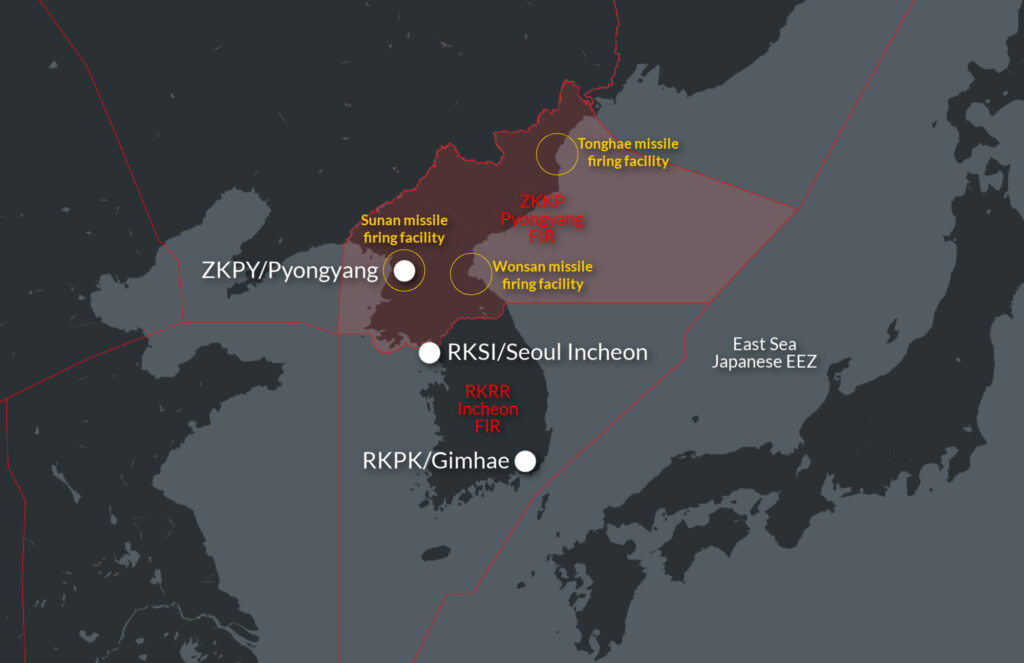
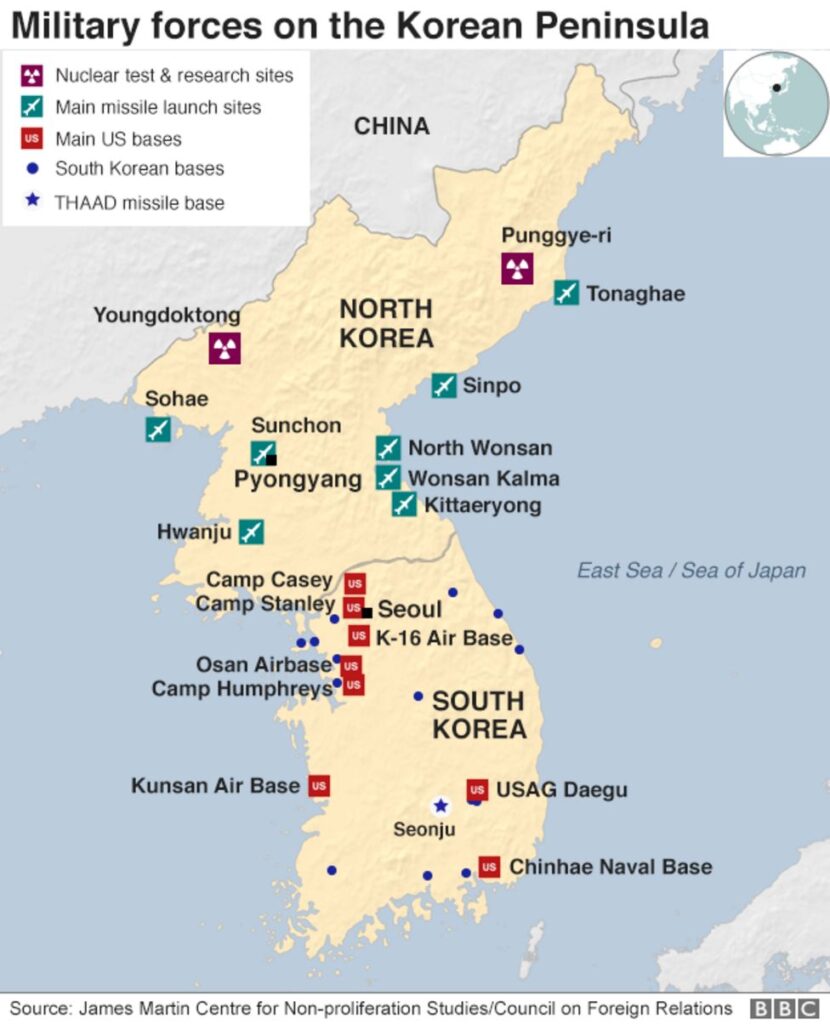
North Korea test fired an unprecedented number of missiles in 2022, all without prior notice. Things escalated late last year to coincide with South Korean military exercises. A large number of the missiles landed in the Sea of Japan, with one splashing down just 30nm off the coast of South Korea. Another overflew Japanese territory.

From December 26, there were further disruptions. Several North Korean drones flew across the demilitarised zone  and entered the RKRR Incheon FIR, resulting in military jets being scrambled. Ops at RKSI/Seoul and RKSS/Gimpo were briefly suspended. We wrote about that here.

The South Korean president has gone public announcing that any further incidents could threaten a military pact between the two countries, which has potential to greatly increase overflight risk.

Official Advice

The US prohibits flights across all North Korean airspace, including the oceanic part of the ZKKP/Pyongyang FIR over the Sea of Japan. Several other countries have airspace warnings in place which advise caution due to the risk posed by unannounced rocket launches.

The primary risk remains from debris from missile re-entries striking aircraft overflying the oceanic part of the ZKKP/Pyongyang FIR over the Sea of Japan. However, the escalation in tensions between North and South Korea, and the incursions on the Japanese EEZ raise the caution level within both Japanese and South Korean airspace.

 China/Taiwan 

In mid-2022, the US reported an increase in what they consider ‘unsafe, unprofessional or non-standard intercepts’ by Chinese military aircraft in the South China Sea region. The China Sea Dispute is a growing concern.

China has also increased political pressure on Taiwan. Various military exercises by the Chinese took place throughout 2022. In August, China designated six areas of airspace as danger zones for a “military exercise,” effectively barricading the country’s airspace.

Official Advice

There are no reports of intercepts impacting civilian aircraft, but extra caution is advised because of a growing amount of military traffic active in the area.

Aircraft operating in Taiwan’s ADIZ need to pay close attention to proper procedures – effectively squawk a discrete code and remain in contact with ATC at all times.

 Turkey 

Turkey has seen an increase in spillover effects from Syrian and Iranian conflicts. Reports say shelling and rocket strikes have occurred near a town in southern Turkey, near the border with Syria. Turkey has been carrying out airstrikes on Syria and Kurdish regions of Iraq since an earlier attack on Istanbul. The escalation in airstrikes, and risk in southern Turkish airspace from Syrian insurgents poses an ongoing threat to civil aircraft.

Official Advice

More caution should be taken if operating in southern regions of Turkey, along the border with Syria. GPS jamming within border areas can be expected.

Civil Unrest and Crime

Economic pressures around the world over the past twelve months seem to have escalated instances of widespread civil unrest that have directly impacted aviation.

Peru is the latest. It has been experiencing political turmoil since late last year which led to protests and riots. Demonstrators blocked access to several airports. The situation is still developing.

We also reported on similar issues in Sri Lanka when a state of emergency was declared back in July, 2022. Fortunately, in this case the situation was resolved.

Mexico has seen a rise in civil unrest since the start of January 2023, in response to the arrest of a primary member of a cartel. The unrest has been limited to the Sinoloa region, but has seen three airports impacted significantly.

Bouts of civil unrest can occur without warning and have potential to close down airports, and put crew on the ground at risk. The US Department of State is our best source of travel advisories and warnings. For operations to less developed countries in particular, it is important to monitor the political and security situation before visiting unfamiliar spots (and if you have, please share with us at team@ops.group or via Airport Spy).

2022 also saw a notable number of less common security issues, including bomb threats, the use of fake airline IDs and even imprisonment of crew without charge. A keyword search on your Member’s Dashboard will help you find more information on all these things.


Operation Orion: French Airspace Closures

France are worried about “the deterioration of the international context”. Basically, they are worried about the state of the world. So, they have decided to run a fairly major crisis management readiness, preparedness sort of a thing over a 3 year period.

As they put it, it will “consider the hypothesis of a major engagement of high intensity as possible” and help the armed forces prepare for it by practicing a whole bunch of exercise.

Or as we put it – “a great big load of military mayhem in French airspace to look out for”.

Sounds big?

It will be. The biggest in 30 years in fact, involving a whole load of NATO members. But the main impact is going to be within French airspace.

Orion is the first of the 3 exercises which are planned over the next 3 years. It consists of 4 phases, expected to take place on the following dates:

  • Phase 1 & 3 (computer assisted exercises, so no impact to ops)
  • Phase 2: from 21 Feb to 10 March (taking place in the southern part of France)
  • Phase 4: from 17 April to 5 May (taking place in the north-eastern part of France)

What does that mean for flight ops?

We heard someone say it will have a “huge impact on the network” with numerous flights impacted through re-routes, delays and probably cancellations because of airspace capacity reductions.

So, what do we need to worry about?

Phases 1 and 3 are computer assisted, but phase 2 involves real people and real military stuff including real military airplanes in real bits of airspace we normally really like to fly in.

The ramp up for this will start on Feb 16 so you can expect disruption from them, through to March 10 when the phase finishes.

The maps aren’t the best quality but you can view them in the document here. We have recreated the two main upper level ones for you below.

Because there are various different areas scattered across the region, flights may be disrupted in the areas between resulting in significant re-routes for overflights, with the impact felt across France and into UK airspace with NATS managing the routings that end.

A summary of possible threats:

  • Re-routes and inflight delays
  • Congested airspace resulting in slots and disruption, possibly cancellations
  • Reduced diversion options in France during exercises
  • Military traffic to watch out for
  • Complex danger and prohibited areas across multiple levels and regions to be aware of

There will be more information though right?

Yes, plenty hopefully:

  • AIP SUP is due out imminently.
  • Eurocontrol are expected to run some conferences on this which will be announced by their Network Operations Portal here.
  • The specific danger and prohibited areas will have notams issued closer to the dates.

You can find a calendar of NATO planned exercises here to give a heads-up on future plans (and AIPs and Notams to look out for).

So, watch this space and be prepared for some frustrating planning and routing disruptions through Feb and March, and again in April.


US Grounds All Flights After NOTAM System Failure

Update 12Jan 1100z:

The Misery Map of flight delays in the US isn’t looking too bad today, following yesterday’s Notam system meltdown that resulted in a nationwide ground stop and the cancellation of more than 10,000 flights according to FlightAware. The FAA has said the Notam system “continues to remain operational and stable” today. For ops to/within the US today, keep an eye on the latest FAA Advisories here.


The US grounded all flights on the morning of Jan 11, due to a glitch with the Notam system.

Here’s the ATCSCC advisory giving the order:

The Notam system failed at 2028 UTC on Jan 10, after which time no new Notams or amendments were processed.

The FAA lifted the ground stop shortly before 9am EST on Jan 11, saying that “normal air traffic operations are resuming gradually”. Later that night, they announced that the outage was likely due to a software issue.


Springer’s Final Thought

We all hate Notams.

Let’s qualify that. A significant number of pilots and dispatchers have told us that they are concerned about Notams, and would like to see an improved system.

The FAA has said last week’s meltdown was due to a damaged database file. Our focus has never really been on the software on the back-end of the Notam system, but on the impact of Notams on pilots and operators.

We’ve been campaigning for changes to the current Notam system for a long time – not because the system might crash, but because of the daily impact to pilots who are forced to use an archaic briefing system from the 1920’s that causes critical flight information to be missed.

If you’ve read the news today about this mysterious “Notam system” causing widespread travel misery, and you want to learn more about this ongoing issue, you can start your adventure here.


North Korean Drones Over Seoul

On Dec 26, several North Korean drones entered South Korean airspace. Ops at both RKSI/Seoul and RKSS/Gimpo were disrupted while military jets were dispatched to intercept them.

While it’s no secret that North and South Korea don’t get along, this is the first drone incursion in the RKRR/Incheon FIR in half a decade. And it didn’t go down well. So much so that there is now talk of ending a military pact that has stood since 2018 – especially if there is another incursion.

From an aviation standpoint, this has potential to spell trouble as it threatens the status of a military no-fly zone that buffers the two countries. In which case, the risk to aircraft in the skies of South Korea could deteriorate quickly – especially anywhere near its northern border.

In the absence of any active airspace warnings, here’s what you need to know.

The Dec 26 Incident

At around 10:30am local time, at least five North Korean drones entered South Korean airspace over the Military Demarcation Line near the city of Gimpo – just northeast of Seoul.

It appeared to have caught South Korean military by surprise, who temporarily suspended ops at RKSI/Seoul and RKSS/Gimpo to scramble military jets to intercept them. They fired at least one hundred rounds at the drones supposedly as warning shots.

There are no reports that any of the drones were shot down. One returned to North Korea, while the status of the other four isn’t known.

This has attracted some negative shade in the media, where some felt that the military’s response was inadequate.

In the days that followed, South Korea responded by sending surveillance aircraft into the ZKKP/Pyongyang FIR. The South Korean president has also said that the drone incident could cast serious doubt on a military pact between the two countries – the one that protects border airspace from military incursions.

North Korea’s recent ballistic missile tests haven’t helped either – in recent weeks several unannounced launches have taken place with scant regard to civil aviation. The past twelve months have seen a huge upswing in these types of incidents, at one point triggering a ground stop on the US West Coast. And they send a very clear message to South Korea.

Political Posturing

So, are we about to see an outright conflict? Probably not, but ‘quid pro quo’ can be dangerous, especially where airspace is being used as the stage.

Add to that the potential for increased posturing on the border and civil aviation needs to take note. Mistaken identity and mis-targeting is a very real threat. This will escalate should the agreement which upholds the demilitarised buffer zone between them get dismantled.

Previous Airspace Warnings

The FAA has previously had warnings in place for the RKRR/Incheon FIR, but they have long since expired.

The first related to unannounced North Korean missile tests and regional instability. The second was a Notam on GPS interference that was cancelled back in 2019. It was purely advisory – that caution should be taken near the border as the signal may be interfered with.

Since then, things have been quiet. But it is worth keeping in mind that operations in and out of Seoul particularly, are only 30nm away from the demilitarised zone. And beyond it lies the ZKKP/Pyongyang FIR, where US operators are currently banned at all levels.

You can check Safeairspace.net for a summary of the airspace risk, including warnings issued by each country.

What does the South Korean AIP say?

Essentially, don’t stray north.

There is a large area of prohibited airspace which runs along the military demarcation line – a strip of land around 2.5 miles wide which acts as a buffer between North and South Korea more or less defined by the 38th parallel.

No aircraft can enter the area at any level, 24 hours per day. As it is just north of RKSI/Seoul, operators there are advised to give it a wide berth. So much so there is a note to exercise extreme caution in a sector of airspace north of the field. You don’t want to bust it.

As a general rule, the military can impact civil aviation operations without prior notice. This is precisely what went down on December 26.

Where to from here?

We watch and wait. Tension on the Korean Peninsula isn’t new – but the December 26 incident is a reminder of just how volatile things can be at short notice. Should the military pact between the two countries genuinely implode, the risk to civil aviation could change overnight.


Mayhem in Mexico: Airports Closed Amid Cartel Violence

There were violent clashes between cartel members and security forces in Culiacan on Jan 5, after the arrest of a son of notorious drug kingpin “El Chapo”. Further clashes were reported throughout Sinoloa state in response – cartel members set up road blocks, set fire to vehicles and attacked a local airport, where two planes were hit by gunfire.

Airport closures

Several airports in the region were forced to close:

MMCL/Culiacan – during the clashes on Jan 5, an Aeroméxico E190 was hit by gunfire on departure here, resulting in an aborted takeoff. One bullet hit the tail of the aircraft.

Elsewhere in Sinaloa, other airports remain closed on Jan 6 – MMMZ/Mazatlan, MMCN/Ciudad Obregon, and MMLM/Los Michos.

All airports have now re-opened, but operators should continue to be cautious. It is recommended to pre-arrange transportation and hotels, and check that routes are not affected by any airspace closures.

Mexico overview

Up until now safety and security issues have been relatively few and far between for Mexico.

The following alerts are currently active (Jan 2023):

  • MMUN/Cancun If you are a GA operator heading to Cancun then keep an eye on notams restricting when you can operate there. A0064/23 and A0065/22 are currently active, with restrictions on Jan 7 and 8. Issued Jan 04, 2023
  • MMTO/Toluca There’s a new form that all passengers and crew of international flights need to fill out before arrival at MMTO/Toluca. It’s fairly standard stuff – just health screening. Issued Jan 02, 2023
  • MMZZ/Mexico Local agents have reported that operators should expect increased ramp checks at Mexican airports through to Jan 20. Check our article for a list of everything you should carry on board for trips to Mexico in case you get ramp checked. Issued Dec 22 2022
  • MMZZ/Mexico Mexico has scrapped daylight saving time (DST) in most parts of the country, which means that clocks won’t change come April. Standard time will apply all year round, apart from in the municipalities that border the US – these will continue to observe it. Issued Dec 06, 2022
  • MMZZ/Mexico Fifteen Mexican airports have changed their fuel from Jet A1 to Jet A (actually it happened back in March but we didn’t spot it until now). The list includes some big international airports – MMMY/Monterrey, MMPR/Puerto Vallarta, MMCL/Culiacan, and a few more. The main difference is the freezing point (minus 40 degC for Jet A). So check what you’re filling up with. Issued Oct 20, 2022
  • MMMX/Mexico City A near-miss and last minute go-around at the airport on May 7 follows a series of other events which have caused concerns over safety standards at the airport. Many of these are attributed to the recent opening MMSM/Felipe Angeles airport leading to increased airspace complexity. The government plan to reduce capacity at MMMX/Mexico City over the next few months to improve the situation. Issued May 11, 2022

Do you have any further information?

Please contact us at team@ops.group if you have any more information on the current situation in Mexico.


We Want to Talk to Lebanon

We want to talk to Lebanon, more specifically, someone in the Lebanese Aviation Authority (the DGCA).

But since they probably won’t speak to us, we’ll talk to you instead… with a little warning about operating there.

What is this all about?

It is all about a tradition in Lebanon where they fire guns about willy nilly, often into the air, when they celebrate.

They do it at graduations, birthdays, weddings, and even funerals or when a political leader just talks on television (although that one happens less now because a lot of folk there aren’t so happy with the government).

There was renewed attention from authorities in 2016, but reports of it occurring across Lebanon are still common despite the practice having been outlawed since then.

Reports suggest OLBA/Beirut airport sees an average of 7-8 incidents involving indiscriminate gunfire per year.

New Year’s Eve 2022 saw reports that two MEA A320s parked at OLBA/Beirut were damaged by bullets during the celebrations. A passenger was also almost hit as he left the terminal.

On Nov 10, 2022, a stray bullet hit a commercial jet on the approach to OLBA/Beirut.

Why is there no security?

Actually, the reason Beirut airport seems to be at higher riskis as much to do with the fact it is the main international airport, as with the airport’s positioning to the city and populated areas.

OLBA/Beirut’s approaches both cross densely populated areas, and there is little separation between the airport area and land side areas. The final approach to runway 03 also passes over hotels along the coast where celebrations are often held.

What can you do about it?

Unfortunately, person-with-gun spotting on short finals probably isn’t an ideal plan. There is limited mitigation for this without support of the authorities to improve security and safety.

  • If you do spot anything then report it immediately to ATC
  • Be aware of the risk, particularly if operating during holiday periods
  • Do not hold at low level over populated areas of Lebanon (unlikely you will, but a reminder)
  • Consider climb performance on departure (get up as quick as possible!)

Does this happen anywhere else?

Risk of low level weapons fire is usually associated with conflict zones. Here are a few, there are no doubt more (and if you know of any, let us know. We’ll add to the list so other operators have a heads-up too.)

  • OPPS/Peshawar The airport in Pakistan lies in close proximity to the mountainous region which borders Afghanistan. The mountains are a known region for rebel groups. Crew are advised not to hold or overfly the area due to the risk of gunfire. More info
  • ORER/Erbil The Iraqi airport is the main airport for Erbil, the capital of the Kurdistan region of Iraq. There is currently ongoing conflict in this region. The approach to Runway 18 / departure from Runway 36 both cross a region of high terrain where there have been multiple reports of gunfire risk. Crew are advised to avoid descending or holding, or crossing this region until they have reached a suitable altitude. More info
  • In Sep 2022, a man was hit inside an aircraft flying at 3500′, routing to VYKL/Loikaw airport in Myanmar. The bullet source was unconfirmed, but linked to conflict between rebel and government groups in the area. More info

Turkey and the Philippines also (sporadically) see a similar tradition occurring.

It’s not the only threat in Lebanon

Lebanon has seen a period of growing instability and unrest because of political and economic turmoil. Riots and protests are a particular security concern in Beirut.

Lebanon’s relationship with neighbour Israel has had its ups and downs. Lebanon has not yet followed in the footsteps of other countries in the region to improve ties (and airspace access) with Israel. Saudi Arabia and the UAE have both entered a ‘normalisation’ agreement, also known the Abraham Accords Peace Agreement, which opened up (some possibilities) for using Israel’s airspace.

The country also sees increasing spillover risk from the Syrian conflict. The conflict often results in Israeli fighter jets transiting their airspace with no clearance. It is repeatedly a persistent issue, and raises concerns over airspace risk and safety in the border areas of Lebanon. The Israeli airforce sometimes target Syria from this region resulting in missile attacks and airstrikes close to OLBA/Beirut.

The primary risk in Lebanon’s airspace (the OLBB/Beirut FIR) from the Syrian conflict is that civil aircraft may be targeted in error, or caught in crossfire during ongoing air attacks involving Israel, Russia, Iran. Missiles may erroneously lock on to civil aircraft. There is a risk to civil aircraft operating on airways UL620, UW74, UR18, and UP62. 

Several countries have issued airspace warnings for Syria, banning operators from entering the OSTT/Damascus FIR. Many of these warnings include include the note that there is a potential risk to aircraft within 200nm of the Damascus FIR which includes the OLBB/Beirut FIR. There is also risk of GPS interference and communication jamming.

For a full briefing and information on current warnings visit Safeairspace:

Back to our call to the DGCA

The risk of indiscriminate gunfire impacting flight operations is a growing concern and the DGCA need to put measures into place to better protect aircraft operating into the country, particularly at OLBA/Beirut International.

So, here is our call to them to do something.


New US Rule for China Arrivals

There’s mixed news from China.

On the one hand, it is finally about to get rid of quarantine on arrival. On the other, Covid is surging badly. Which means that nations around the world are beginning to introduce new rules for people who have been there – including the US.

News from the US is that from Jan 5, all passengers will need to provide a negative Covid test, or proof of recovery, to board a flight to the US.

Here’s everything you need to know.

What’s going on in China?

Its zero-covid strategy is being abandoned amidst sky-rocketing case numbers. So much so that it is estimated that up to forty percent of its 1.4 billion have had it.

It’s not panic stations yet though, as the same path has been well-trodden by other countries in the past twelve months. But there is international concern over the accuracy of the statistics being reported, and more importantly the tests that identify new or potentially dangerous strains of the virus that might emerge.

Which is why we’re seeing new rules again for passengers who have been there.

Ironically there has also just been a big announcement that anyone headed to China no longer has to quarantine from Jan 8. Which means demand for travel back to the US for those who return is about to soar.

Enough of that. What’s the impact?

From 00:01z on January 5, anyone allowing a passenger to board a flight from China to the US will need to see proof of a negative Covid test taken within two days of departure, or certified proof of recovery that is less than 90 days old.

The rule will apply to all flights from mainland China, Hong Kong and Macau including GA/BA flights.

It will apply to all passengers, including US citizens, regardless of vaccination status.

You can check the official announcement of all this from the US here.

What type of tests will be accepted?

Viral tests that have been approved by the CDC.

Self-tests (including rapid antigen) are allowed, but must include at least a tele-health service to oversee the test, and certify the results along with the traveller’s identity.

I’ve just had Covid. Do I need to test?

A certified proof of recovery is also acceptable, provided it meets two requirements – it has to be more than ten days old, but no more than 90.

I’ve only transited through China, do I still need to test?

No, provided passengers have stayed airside, they do not need to meet the new requirement.

What about crew?

Good news, you will be exempt. But you’ll need to be either operating, or positioning on the aircraft. It’s recommended you travel with a letter (paper or electronic) from your employer certifying you meet the requirements of the exemption. Another option for deadheading crew is that they are included on the gendec.

If you’re commuting, travelling for training (such as sims) or flying for other business reasons, bad luck. You will need to meet the same requirements as passengers.

Another gotcha.

The rule is also extended to passengers who have been in China, Hong Kong or Macau in the past ten days, and are arriving on flights from RKSI/Seoul, CYYZ/Toronto or CYVR/Vancouver.

What is the rest of the world doing?

It is likely we’ll see similar testing rules introduced globally, at least in the short term.

Several countries have already announced similar restrictions to the US: Canada, UK, France, Italy, Spain, Australia, India, Japan, Malaysia, Taiwan, South Korea, Morocco.

The good news is that there doesn’t appear to be any suggestion of quarantine or entry bans being added back to the mix. Just typical uncertainty of a pandemic-weary world. But we’ll continue to report on major changes that might affect you operationally as we see them.

If you’re headed to China, we recommend calling ahead.

Especially for crew.

China has had some of the most confusing and inconsistent entry rules since the start of the pandemic. They seem to vary from port-to-port. With the promise that crew no longer need to quarantine on a widespread scale, we’d love to hear from you if you’re headed there – especially if you encounter something you weren’t expecting.


The Day After Tomorrow is Now…

Pilots and operators are definitely not the ones hoping for a white Christmas because it means horrible weather, delays and disruption.

Unfortunately for all, weather news sites are calling a ‘storm of epic proportions’ is heading towards North America. It might already have reached you even…

So here is the update on the weather forecast, and a hopefully handy refresher on some of the challenges this might mean for aviation. (So you know we care and are thinking about you while we sit cosy in our warm houses drinking Eggnog).

The Forecast.

On a scale of 1 to bad, they are calling this a ‘once in a generation’ weather event, a ‘looming winter storm of historic proportions’. Not quite A Day After Tomorrow level weather phenomena, but not far off…

The weather is being caused by a severe low pressure system known colloquially as a ‘bomb cyclone’ because of the rapid and significant pressure drop that occurs – around 24 millibars in 24 hours (and that right there is one thing to be cautious about).

The arctic storm is expected to fully impact the east coast of the US and Canada later on December 23, and the following warnings are in place:

  • Powerful winter storm bringing sharp cold front and severe snowfall from Midwest to Ohio Valley: Dec 23 onwards
  • Powerful winter storm bringing sharp cold front and severe snowfall through Great Lakes and interior Northeast: Weekend Dec 24-25 onwards
  • Extreme cold and high gusts over central an eastern US: Dec 23 onwards
  • Flooding in the Northeast: Weekend Dec 24 onwards
  • States of emergency declared across New York, Kentucky, North Carolina, West Virginia, Georgia and Oklahoma. An ‘energy emergency’ in Wisconsin.

What is the impact for aviation?

Here is a general ‘things to look out for’ list:

  • Airports are likely to see significant disruption, cancellations and closures leading to limited alternate options. En-route airspace will be more congested with diversions and detours taking place
  • Significant ground delays for de-icing/anti-icing, and during periods of extreme weather operations will be grounded leading to significant backlogs, parking issues and congestion
  • Power outages are likely in the Midwest and Canada which may have a knock on effect for airports
  • Staff shortages may occur if folk are unable to commute to airports
  • Oil prices are leaping up. Check the costs for fuel.

You can find the National Weather Service page on the storm warnings here. They post regular updates via their Twitter page as well.

You can monitor the current US National Airspace System Status here.

Is there anything you can prepare for?

The weather conditions are severe, they are saying things like “life-threatening wind chills” so think about that before sending your poor First Officer out, unless you want a fingerless icicle trying to fly with you. It really is going to get nasty in places.

Here is our list of Winter Chillers & Thrillers to look out for:

  • Conditions might really get too severe so don’t push it if they do. Look after yourselves!
  • There are going to be significant delays in the air and on the ground. Take fuel and make a plan B (preferably before you need it).
  • HOTs are going to be hard to manage: Anyone who has ever operated out of JKF on a winter’s day and has waited 7+ hours for de-icing knows what I am talking about. With queues of traffic and bad weather there is a good chance you’ll go out of your HOT so keep an eye on the clock.
  • The Global Reporting Format is great but if it is saying things like 1/1/1 then you might find you can’t stop so well, so check that performance. Some operators don’t allow takeoff on icy runways unless treated, for example.
  • Ice pellets, hail etc, and severe icing ain’t great. Check them SigWx charts too.
  • Refresh on Cold Weather operations procedures.We found some that might or might not be helpful:
  • Look after your batteries – they have minimum temperature limits and you might need to take them off if you’re parking up outside.
  • Watch the fuel temperatures – JET A1 freezes at -47°C, Jet A at -40°C.
  • Check your altitudes – apply those cold temperature corrections
  • Snow and blizzards bring LVPs

We have a few posts which you might find handy for swotting up on all things chilling:

Be careful!

Not much more to say than that. Stay warm and safe.


UK Airport Border Force Strikes

Border Force workers are planning to strike at several major UK airports from December 23 – 31. In some case the impacts are expected to be major, and will affect GA/BA operations along with scheduled airlines.

Here’s a rundown of everything we know so far.

What’s happening?

The UK’s Border Force union has announced one thousand workers will strike over the holiday period amidst an ongoing dispute over pay and conditions.

It goes without saying it is a busy time of year – ten thousand flights, and hundreds of thousands of passengers, are set to be directly affected. The Government has rushed to bring in military staff, civil servants and other volunteers to temporarily try and take up some of the slack.

Which airports are affected?

Six big ones:

  • EGLL/Heathrow (Terminals 2 – 5)
  • EGKK/Gatwick
  • EGBB/Birmingham
  • EGFF/Cardiff
  • EGPF/Glasgow
  • EGCC/Manchester

Signature FBO advise that impacts will be felt at all airports, but EGLL/Heathrow looks set to be the most heavily affected.

Dates and Times

The strike action will be 24 hours a day, with the exception of December 26 and 31, where it will end at 7am.

What will the impact be?

Passengers are likely to experience extensive delays through passport control. For FBOs, it is important to advise them of your planned arrival as early as possible so they can make arrangements. They may struggle to find available staff to attend to you and your passengers.

Inbound aircraft may also be hit with traffic jams leading to extended holding and possible diversions.

On December 22, the UK CAA published the following Notam:

The moral of the story seems to be to take more fuel.

If you do find yourself in a queue and low on gas, they want you to be familiar with the correct terminology with ATC to get the message across. The Notam above references the following three docs:

UK CAA Safety Notice – Protecting Final Reserve Fuel and The Minimum Fuel Declaration.

UK AIC W084/2022 – Diversion Requests in UK Airspace.

EASA Safety Bulletin 2018-08 – In Flight Fuel Management.

I don’t have time for that. Just give it to me straight.

The docs all deal with unanticipated delays and give a reminder that it is up to the crew to monitor fuel in flight and advise ATC if they will be landing with minimum legal reserves, or less.

There are two ways to do it:

Say ‘minimum fuel.’ This isn’t an emergency, but you’re already landing close to final reserve fuel. You cannot accept any further delays without chewing into your FRSV.

Declare an emergency, ‘Mayday, mayday, mayday fuel….’ The rule is pretty clear cut on this one. If you will be landing at the nearest suitable aerodrome with less than your planned reserve fuel, you must declare an emergency.

There is also some guidance on how to request a diversion. In a nutshell, ask for it early. The CAA advise it takes ATC 5-10 minutes to grant a request, sometimes longer. Behind the scenes, there are phone calls to be made.

It is also not uncommon in the UK for a requested diversion to be refused – it is at the aerodrome operator’s discretion. Stand availability, handling and other factors all come into play. They recommend operators pre-arrange their options for diversion.

Bear in mind the weather is also a challenge at the moment and may compound the situation!

More Information About the Strikes

The UK FCO has the official word. You can find it here.

We’ll Keep You Updated

We’ll update this article, along with any operational impacts, as more info comes to hand. If you experience disruptions yourself, we’d love to hear from you. You can reach us on news@ops.group


2022 Flight Ops Changes: The Big Ones

Dear Santa…

We do hope we’ve been good little boys and girls this year. Last Christmas we received no presents from you at all, which was disappointing.

We did get one from ICAO that got lost in the post and then turned up in January – an update to the NAT Doc 007. Truth be told, Santa, we didn’t actually like that very much.

It’s been another busy year of international flight ops changes, Santa!

We thought you probably missed most of it, hunkered down in your Arctic grotto, beavering away on all the presents you must be making for us this year. So we’ve written you a little list – just the big stuff that’s happened this year.

If you don’t want to read it all, that’s okay, we know you’re busy! You can get nearly all the same info by playing our Snakes On A Plane & Ladders game that we made! 🐍 🪜

We designed it in bright  RED  and  YELLOW  colours to make it easier for you to play in the dim pre-dawn light as you’re zipping around the skies on Christmas Eve! 🎅

You can download a PDF of the game here, or just click on the picture!

In fact, before we get to the long-version list of stuff that’s happened…

Our Christmas Wishlist

  • No more hurricanes, volcanic eruptions, floods, domestic conflicts, international invasions, drone and missile attacks, or global pandemics please. We’ve put this one at the top, because this is the one we really want the most.
  • An EU-LISA teddy bear. The one where you press its tummy and it tells you a nice clear definition of what a “carrier” is.
  • A set of walkie-talkies. We’ll keep one and give the other to North Korea, so they can use it to tell us when they’re launching test missiles.
  • A big pair of scissors. So when we’re doing flights over Greece or Turkey we can snip out all the pages of whingey, irrelevant Notams they publish about each other.
  • Some earplugs. We’ll use them in January when the postman knocks on the door with ICAO’s annual NAT Doc 007 present, late again.

Ok, Santa, on to the good stuff – here’s the long-version list of stuff that’s happened…

January

  • The US went into a ground stop at their west coast airports after North Korea launched a missile. Read
  • The US delayed their 5G roll out because of concerns at airports. Read
  • Honduras got new airport – MHPR/Palmerola. Read
  • UAAA/Almaty airport, Kazakhstan closed (and later reopened) due to violent protests and unrest across the country. Read
  • The Yemen conflict reached the UAE when several ballistic missiles targeted Abu Dhabi. Read
  • NFTF/Fua’amotu airport in Tonga closed after the eruption of Hunga-Tonga-Hunga-Ha’apai, and the ash also disrupted some overflights in the South Pacific. Read

February

  • Airlines started to avoid Ukrainian airspace after Russia’s invasion, and insurance companies started cancelling cover for flights in Ukraine. Read
  • Singapore mandated RNP4 and RNP10 on some of its main oceanic airway from FL290 and above. Read
  • NAT Tracks were abolished from FL330 and below. Read

March

  • As the Russia-Ukraine conflict escalated, Russia brought in “tit for tat” flight bans, including bans on all US operators, and operators had to start finding new routes avoiding Ukraine and Russia. Read
  • Spillover into Europe from the conflict and “traffic jams” in other airspace started occurring. Read
  • We first heard mention of EASA’s new dreaded EU-LISA (EES/ETIAS) system. Read
  • Iran kicked off against Iraq again, sending missiles towards ORER/Erbil region. Read
  • In the US, the military ran tests on GPS interference and it jammed civilian aircraft. Read
  • Fuel shortages in Nigeria and bandits at the airport raised concerns. Read
  • Ethiopia announced a ceasefire between fighting factions in the Tigray region. Read

April

  • EASA’s new fuel policy was announced and it was really hard to read. Read
  • A new airport opened in Mexico City (MMSM/Santa Lucia) and everyone said don’t use it. Read
  • Fuel prices started rising due sanctions particularly on US east coast; and in other countries they started to announce shortages, particularly across Africa. Read
  • FAA announced new flight planning codes for advanced capabilities. Read
  • Iceland became completely covered with ADS-B. Read
  • The mass ATC walkout in Poland was narrowly avoided. Read

May

  • Reports of flights being tracked for nefarious reasons started to concern BizAv folk. Read
  • We talked about EMAS because no-one seemed to know what it was. Read
  • ATC returned to Somalia with Class A reinstated above FL245 during the day. Read
  • We took a look at some common NAT Conundrums! Read
  • US eased rules for flights to Cuba. Read

June

  • Everyone was still confused by EU-LISA, who still couldn’t make it clear which operators need to register to use the new system (i.e. who counted as a “carrier”). Read
  • The South China Sea dispute got worse with China building islands and putting weapons on them and running lots of military drills. Read
  • Sri Lanka completely ran out of fuel Read
  • Bahamas delayed their Click2Clear because no-one understood it. Read
  • Antigua brought in new Nav/ATC fees that they want in advance if you’re overflying up to FL245. Read
  • Saudi Arabia risk level was reduced as Houthi attacks drop off. Read
  • We published a book on European Slot Rules. Read
  • Kathmandu got RNP (and you should use it). Read
  • The 5G rollout was delayed in US. Read

July

  • We decided Safety used to be far more sexy and tried to bring it back again. Read
  • Flights to/from Israel got easier as Israel got friendlier with their neighbours. Read
  • EASA published new All Weather Operations stuff and we were all confused by it. Read
  • EU-LISA is postponed (thank goodness!). Read
  • VHHH/Hong Kong’s new runway finally opened. Read
  • ICAO expanded SELCAL to include new codes. Read
  • The FAA postponed the final phase of Northeast Corridor Atlantic routes project until April 2023. Read
  • We made a picture book to help people understand the new EASA fuel rules. Read

August

  • Qatar finally got the go-ahead from ICAO to set up their own airspace. Read
  • China got angry with Taiwan and held massive drills that shut Taiwan because they effectively surrounded it with prohibited areas. Read
  • Canada delayed their ADS-B mandate until Aug 2023 to give folk time to install equipment. Read
  • NAT 006 is updated, and we’re proud of our James Bond pun which no-one else got. Read
  • EIDW/Dublin opened a new runway. Read
  • We put together on the London Airport options, made with help from the London Underground tube map publishers, circa 1962. Read
  • EASA updated their RIM and we posted a reminder of all the things people keep getting into trouble with during ramp checks! Read

September

  • The hurricane season was in full force with Earl closing Bermuda, Kay closing La Paz in Mexico and then the massive Fiona reaching Canada, and Ian devastating parts of Florida.
  • A big military exercise threatened to close a chunk of EGGX/Shanwick impacting the NAT, but then it didn’t. Read
  • EASA delayed their ELT mandate by 2 years. Read
  • Azerbaijan and Armenia kicked off again and the border airspace closed, then quickly reopened. Read
  • CYYZ/Toronto capped slots for GA/BA flights. Read
  • African ATC went on a mega strike! They brought in fake ATC and we put out a big safety alert over it. Read
  • The FAA extended their Iran and Iraq warnings for another 2 years. Read

October

  • North Korea sent a missile directly over Japan causing them to issue a public warning. Read
  • Major airways in Iraq are in close proximity to areas of airspace with high risk from drones and missiles. Read
  • Florida airports reopened after Hurricane Ian raged through.
  • We discovered more info on the CPDLC trial in the US and how BizAv are (or aren’t) involved. Read
  • The FAA published new winter holdover times. Read
  • Everyone started planning for the Qatar world cup because Doha is small and no-one was sure where to park. Read

November

  • A cyber attack brought down a fair few Jeppesen planning products. Read
  • ADS-B privacy issues reared its head again with more groups questioning the privacy and security. Read
  • Shannon published info on level busts and US BizAv are to blame for a lot of them! Read
  • KTEB/Teterboro added new waypoints to help with the challenging circle for RWY 01. Read
  • Canada published a safety watchlist that applies to everyone, everywhere really. Read
  • The Russia-Ukraine spillover impacted more countries, with a wayward missile hitting Poland and concerns about UAS. Read
  • Saudi Arabia got CPDLC from FL150 up. Read
  • We started to worry about Turkey – they are fighting with Syria and Iraq and their southern region is higher risk. Read
  • Germany issued a warning against low level flights in Myanmar. Read
  • An Emirates aircraft might have been hijacked. Read

December

  • Possibly because of power outage issues, but South Africa lost CPDLC and FAOR/Johannesburg Oceanic airspace turned into one big IFBP area for a day or so. Read
  • Ski season started in Europe with parking restrictions and PPR requirements aplenty. A lot of folks also head off to the Caribbean this time of year. We made our own pirate map. Read
  • Auckland got bad fuel. Not ideal for long haul flights (so any flight trying to get to Auckland). Read
  • Someone asked us about weird Mexican timezone changes and we realised that in April 2023 most of Mexico will stop using DST but some places along the border won’t. Highly bamboozling. Read
  • France banned domestic airline flights under 2.5 hours. Read
  • KPHL/Philadelphia decided they didn’t want international GA flights heading in there anymore. More

Fare-thee-well, 2022

And that brings us bang up to date, Santa, if you’re still reading.

If not, we hope this whirlwind of flight ops bulletpoints has been of interest to someone out there. Maybe a few of you weary aviation folk who have stuck with us throughout the year 👍