The North Atlantic Datalink Mandate – 2024 update

A period of temporary relief of the North Atlantic Datalink Mandate (NAT DLM) rules ended in Feb 2021. So since then, aircraft need to be CPDLC and ADS-C equipped to operate between FL290-410 throughout the NAT region.

Exceptions – areas where you DON’T need datalink

– Everything north of 80°North.

– New York Oceanic East FIR.

Tango Routes T9 and T290. The other Tango routes (T213, T13, T16) all require datalink.

– GOTA airspace. We discovered this in Aug 2022, after some lengthy discussions with the authorities.

– ATS Surveillance airspace, where surveillance service is provided by means of radar and/or ADS-B, coupled with VHF. This includes the Azores, Bodo, and Iceland-Greenland corridor.

Tell me more about this “ATS Surveillance airspace”

This is a tricksy one.

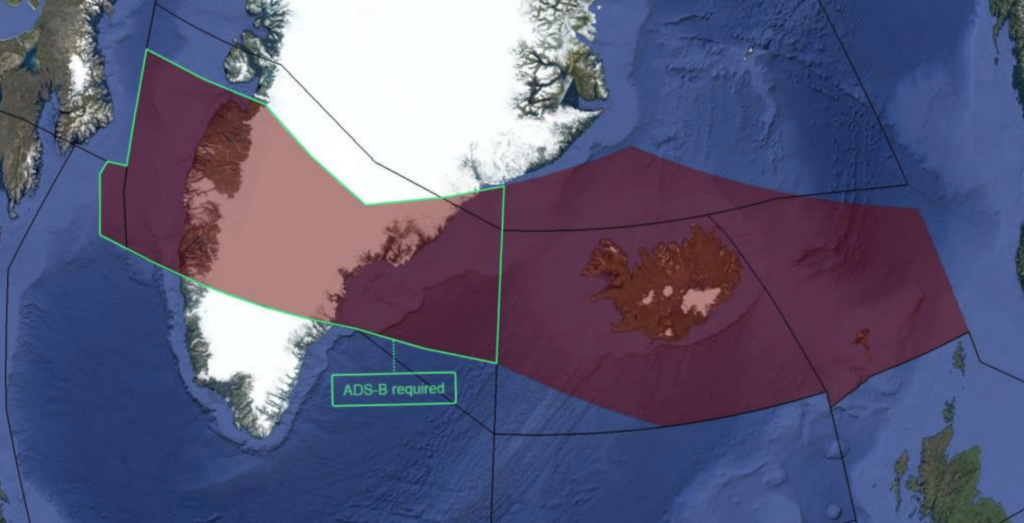
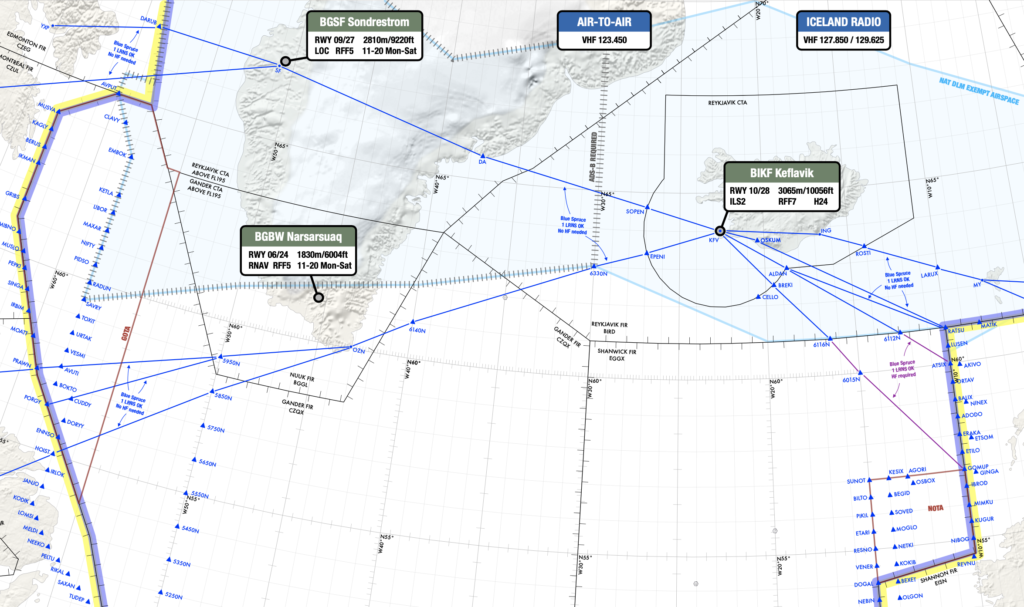
NAT Doc 007 sets out the exempted ATS Surveillance airspace over Greenland and Iceland where you can still fly if you don’t have datalink (though if you don’t have it, you must have ADS-B!)

This area is bounded by the following:

Northern boundary: 65N000W – 67N010W – 69N020W – 68N030W – 67N040W – 69N050W – 69N060W – BOPUT.
Southern boundary: GUNPA (61N000W) – 61N007W – 6040N010W – RATSU (61N010W) – 61N020W – 63N030W – 6330N040W – 6330N050W – EMBOK.

Here’s how that looks:

The southerly Blue Spruce routes

These go over Greenland linking Canada with Iceland via waypoint OZN, and are not fully contained in the exempted airspace. So if you’re flying these southerly Blue Spruce routes you will have to meet the NAT DLM requirements or fly outside of the vertical parameters of DLM airspace (i.e. below FL290 or above FL410). In other words: you need CPDLC and ADS-C to fly on the southerly Blue Spruce routes between FL290-410.

The northerly Blue Spruce routes

These are the ones going overhead BGSF/Sondrestrom airport. These do fall within the exempted area of airspaceso datalink is not mandatory if you’re flying here.

Only the northerly Blue Spruce routes are fully exempt from the NAT DLM.

Aircraft without datalink can request to climb/descend through datalink mandated airspace, but will only be considered on a “tactical basis” by ATC (i.e. you have to ask them on the day, and they’ll let you know, depending on how busy it is).

Flights that file STS/FFR, HOSP, HUM, MEDEVAC, SAR, or STATE in Field 18 of the FPL, are permitted to flight plan and fly through datalink mandated airspace, but may not get their requested flight levels.

For more details about the datalink mandate, check out the NAT Doc 007 in full here.

So, to recap…

  • Datalink Airspace: Remember, NAT DLM airspace only applies from FL290-410. Below or above that, you don’t need datalink in the North Atlantic.
  • If you have full datalink (CPDLC and ADS-C): You can go where you like. But watch out here – “full datalink” means you have Inmarsat or Iridium. HF datalink alone (ACARS) does not meet the satcom part of the NAT DLM requirement. So if you want to fly in NAT DLM airspace (FL290-410 in the NAT region) “J2” in field 10a of your FPL isn’t enough – you need “J5” for Inmarsat or “J7” for Iridium.
  • For GOTA airspace: You need a transponder, automatic pressure-altitude reporting equipment and VHF. If you have ADS-B, that’s helpful for ATC.
  • For the Blue Spruce Routes: You need datalink for the southerly ones, but not the northerly ones. (If you’re flying on these then you’re probably doing so below FL290 anyway, in which case you’re below NAT DLM airspace and don’t need datalink).

NAT FAQ: No Datalink, Where can we go?

If you don’t have datalink, this is how to make a crossing.

Save


Libya Airspace Risk: An Idiot’s Guide

Key Points
  • EASA has amended its Conflict Zone Information Bulletin (CZIB) for Libya. They no longer recommend against flights to “airports located on the coast” – as long as you approach from the sea, talk to ATC, and do a risk assessment.
  • This new advice is curious, because it’s not clear there has actually been any reduction in airspace risk here. None of the Libya airspace warnings issued by other countries (US, Canada, Germany, France, UK, etc), have changed recently. Everyone says the same thing – there remains a high risk to civil aircraft in Libyan airspace (HLLL/Tripoli FIR), and it should be avoided.
  • Read on for a 7-Step Idiot’s Guide to Libya – a look at airspace risk, with some maps, pictures, analysis, and advice for operators.

An Idiot’s Guide to Libya

I’m Dave, and I’m an idiot. It’s been 12 days since I last did something stupid.

I know almost nothing about Libya.

Back in the day, I worked for a cargo airline that did flights there. We picked up some cheap fuel in Tripoli before jetting off down to Entebbe to pick up fresh fish to take back to Europe.

God knows why. Fly to Uganda to get some fish to take back to the UK? A country literally surrounded by sea needs to send a plane to Africa to get some fish? Makes no sense, does it. But it never occurred to me – because I’m an idiot.
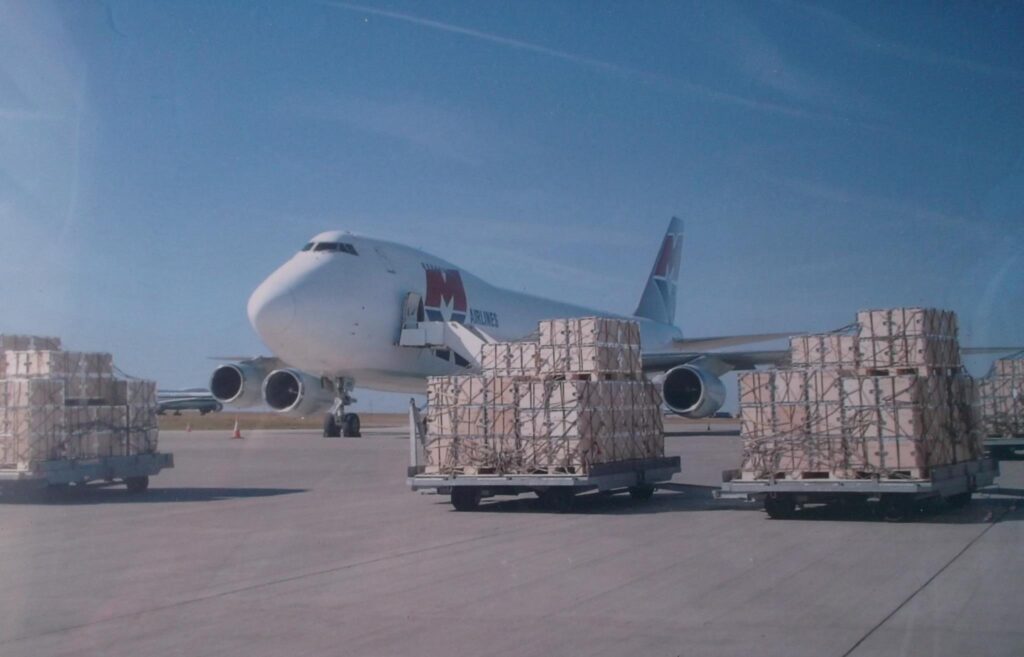
I bashed out a few flight plans – Ostende to Tripoli to Entebbe and back again – and hoped for the best. And most times, things went just fine.

We stopped operating in 2010. No more Libya, no more Uganda, no more fish.

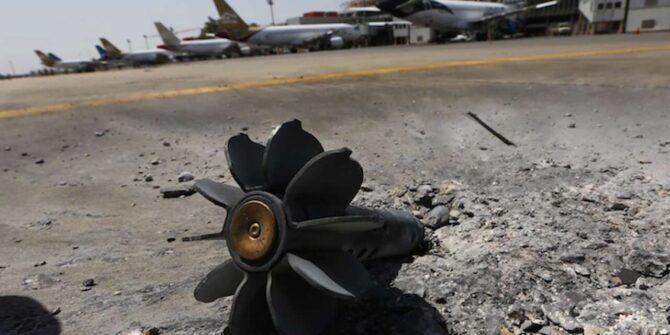
Good thing too, because four years later, Libya descended into chaos with the outbreak of a civil war that saw HLLT/Tripoli airport closed after clashes between rival militias destroyed most of the airport’s facilities. The airport remains closed to this day; most flights operate out of the city’s other airport – HLLM/Mitiga.
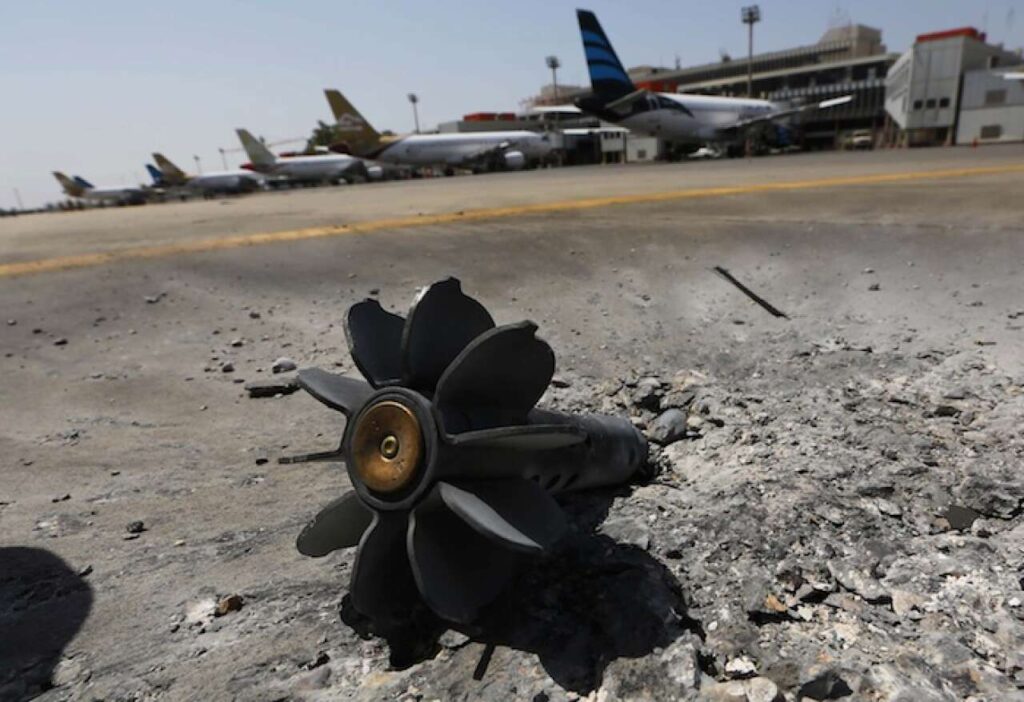
All the standard “Do Not Travel” warnings followed soon after, and people stopped flying to Libya.

So here we are, ten years later, and EASA are now saying it’s probably OK to start flying to airports on Libya’s coastline again – as long as you approach from the sea, talk to ATC, and do a risk assessment…

Hmm, sounds weird, doesn’t it? Why on earth would we want to do that? Well, let’s have a look…

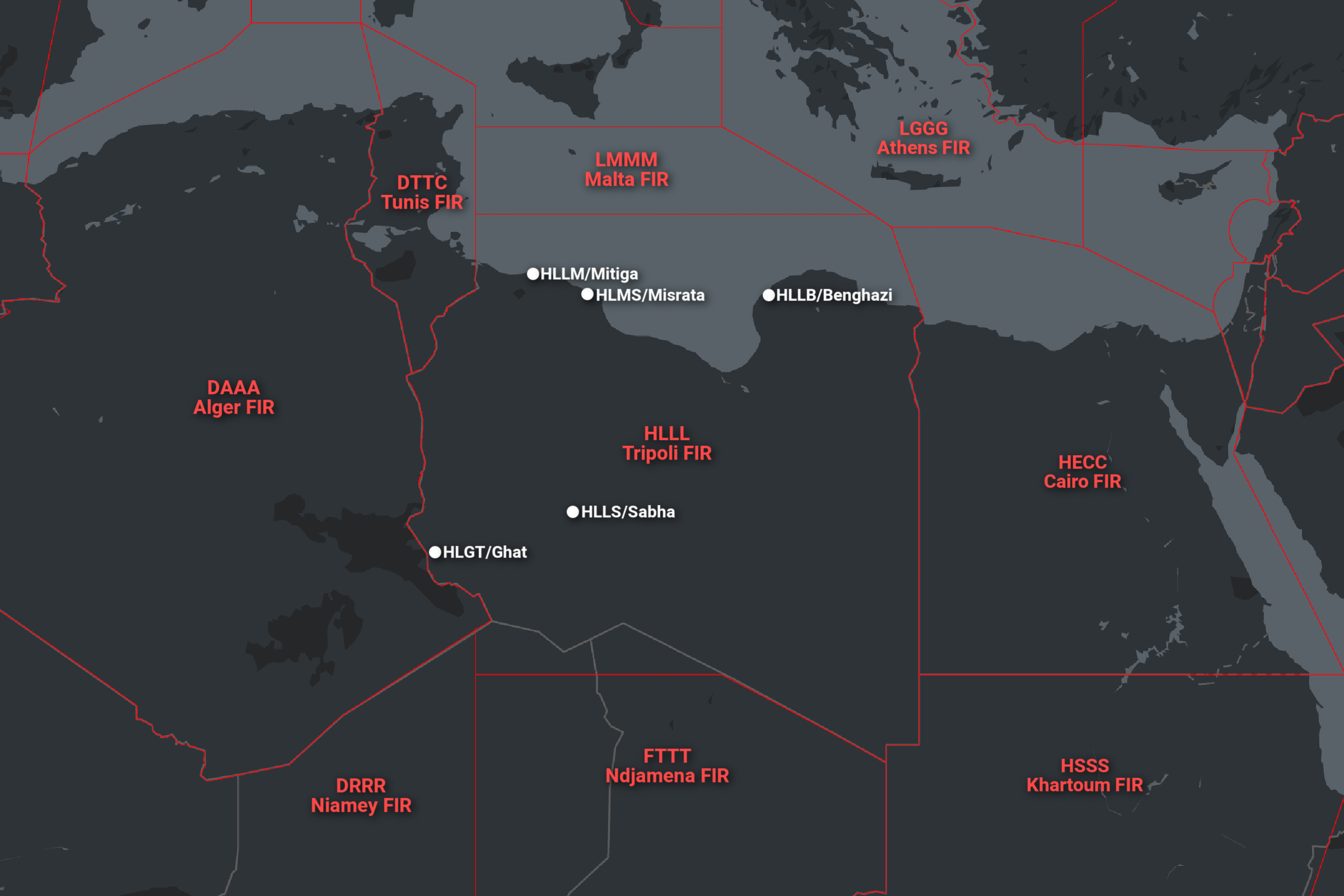
Step 1: Find Out Where It Is

Remember, this is an “Idiot’s Guide” where I know almost nothing about Libya. So this is where we start.
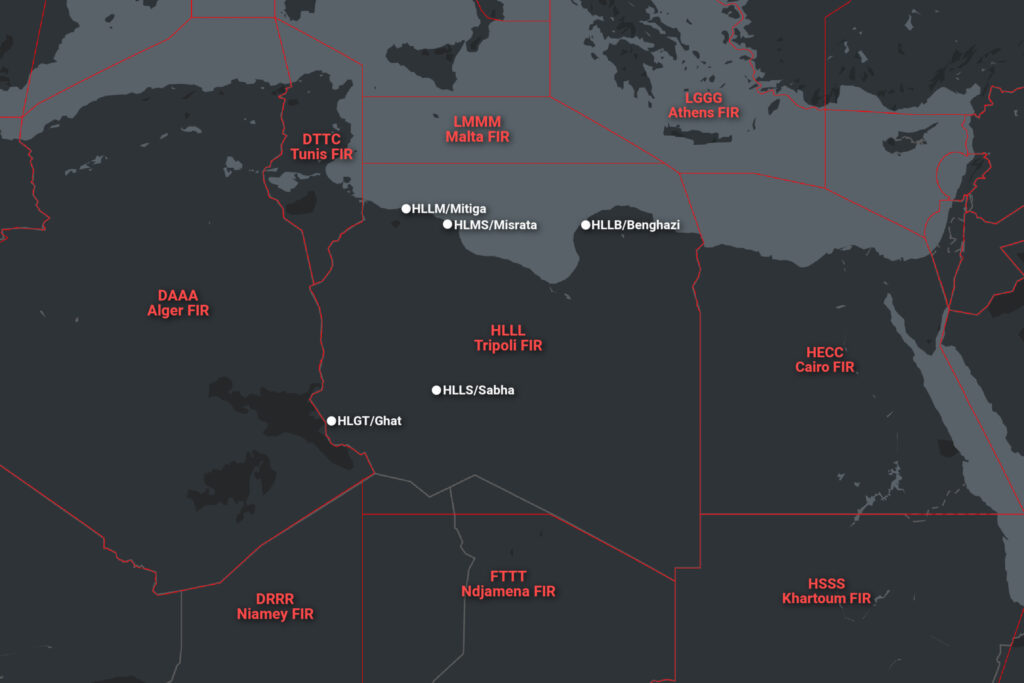
Step 1 complete!

Step 2: Find Out How Scary It Is
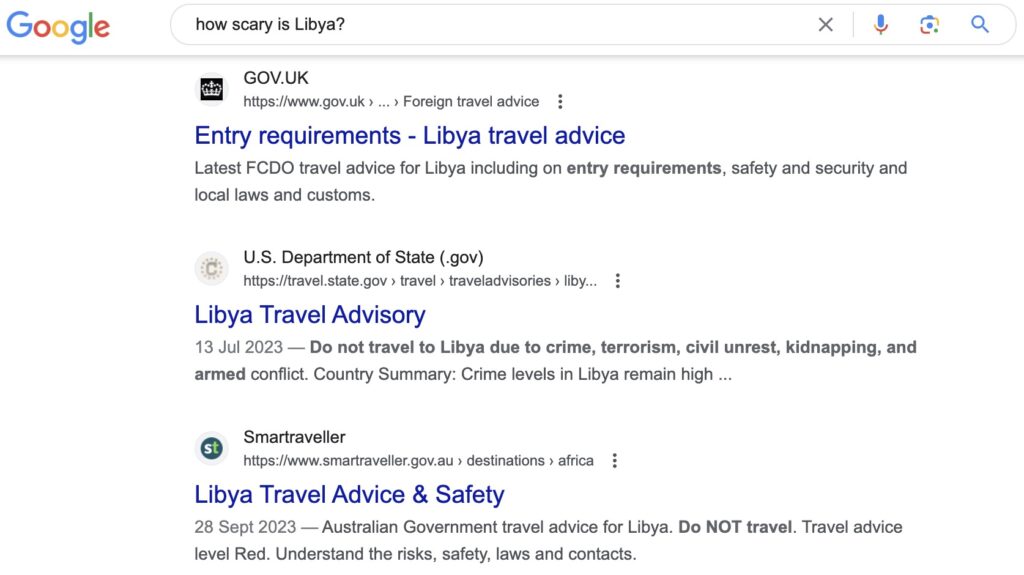
Yeah but that’s travel advice for passengers. We’re pilots, so we want to know about airspace and missiles and stuff…
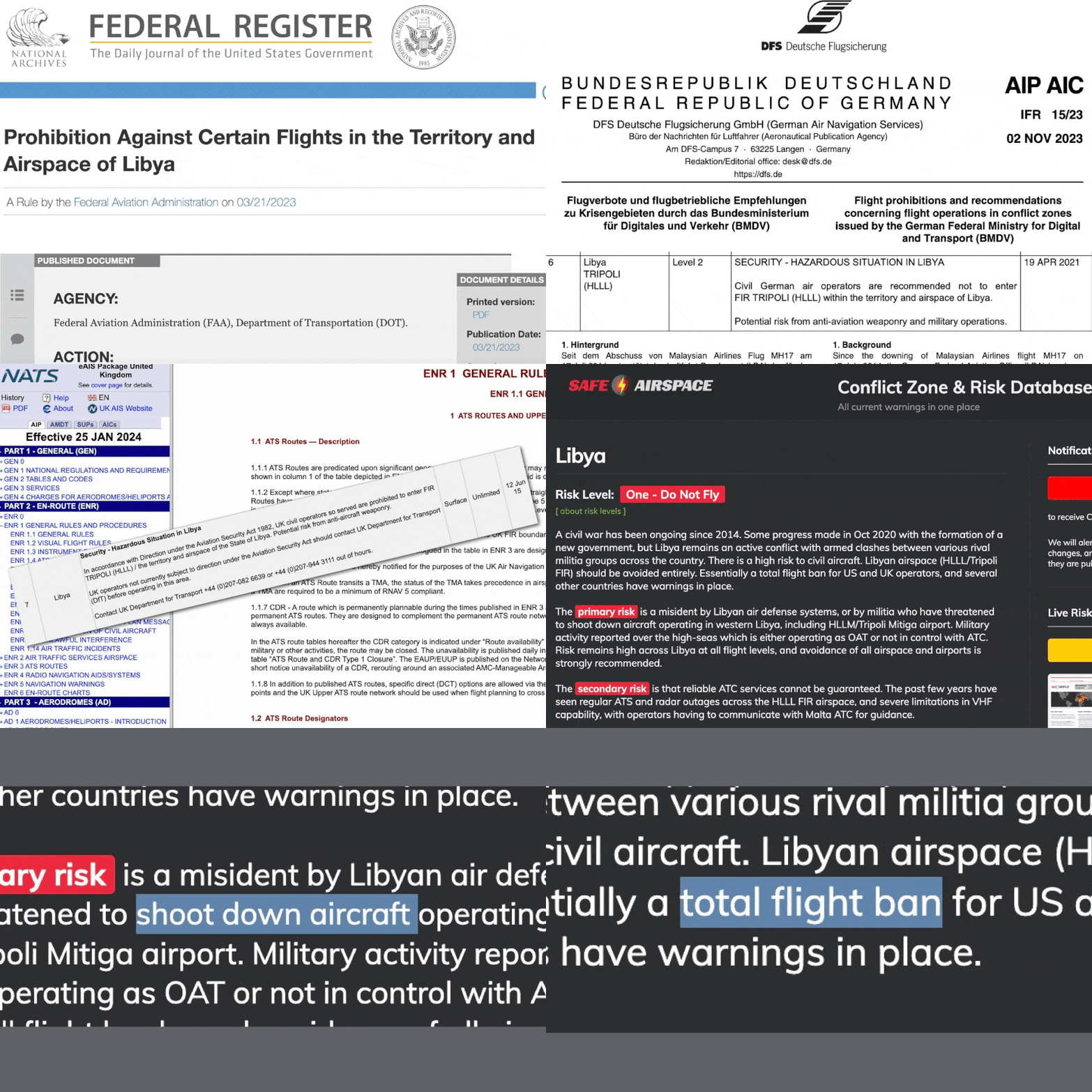
Oh dear. None of that looks great either, does it?

Step 3: Actually Read The Warnings In The GIF

Just like the classic 80’s tv advert said: GIFs are for Christmas, Airspace Warnings are for life. 

Or was it dogs? GIFs are for dogs, not just for Christmas? Christmas is for GIFs, not just for dogs?

Something like that. What I mean is – GIFs are hardly a solid basis for a risk decision of this magnitude. It’s worth taking some time to check out what the official airspace warnings actually say…

Safeairspace.net is our Conflict Zone & Risk Database. It will tell you what you need to know about airspace warnings.

The short story for Libya is this: Several countries have airspace warnings for Libya, and all say pretty much the same thing – operators should avoid Libya’s HLLL/Tripoli FIR entirely, due to the potential risk from anti-aviation weaponry and military operations. Libya remains an active conflict zone with armed clashes between various rival militia groups across the country, and there is a high risk to civil aircraft.

Starting to get the feeling like we’ve been here before? That’s because we have. We asked all these exact same questions back in 2022, and again in 2023, and decided that no, Libya probably wasn’t safe to fly to.

But anyway, that was then and this is now. On with the guide…

Step 4: Check The News

August 2023: Major evacuation of aircraft from Tripoli due to violent clashes and gunfire at Mitiga airport. More info.

Aug 2022: Militia air defense forces claimed to have shot down a US drone operating in the vicinity of Benghazi during a period of increased tensions and threats of renewed violence between competing militias vying for control of Tripoli.

June 2022: Failed attempt by militia to enter Tripoli to seize control of government offices, resulting in armed clashes and suspension of flights at HLLM/Mitiga airport.

Jan 2020: Multiple airstrikes targeting HLLM/Mitiga airport. Videos on social media showing planes landing at the airport as shells are falling in the background.

Nov 2019: Militia advancing on the capital, Tripoli, declared a no-fly-zone around the city, threatening to shoot-down civil aircraft attempting to fly to HLLM/Mitiga airport.

And that’s just the big-ticket aviation related stuff. For a full history of the endless horrors suffered by the poor people of Libya stretching back to 2011, check here.

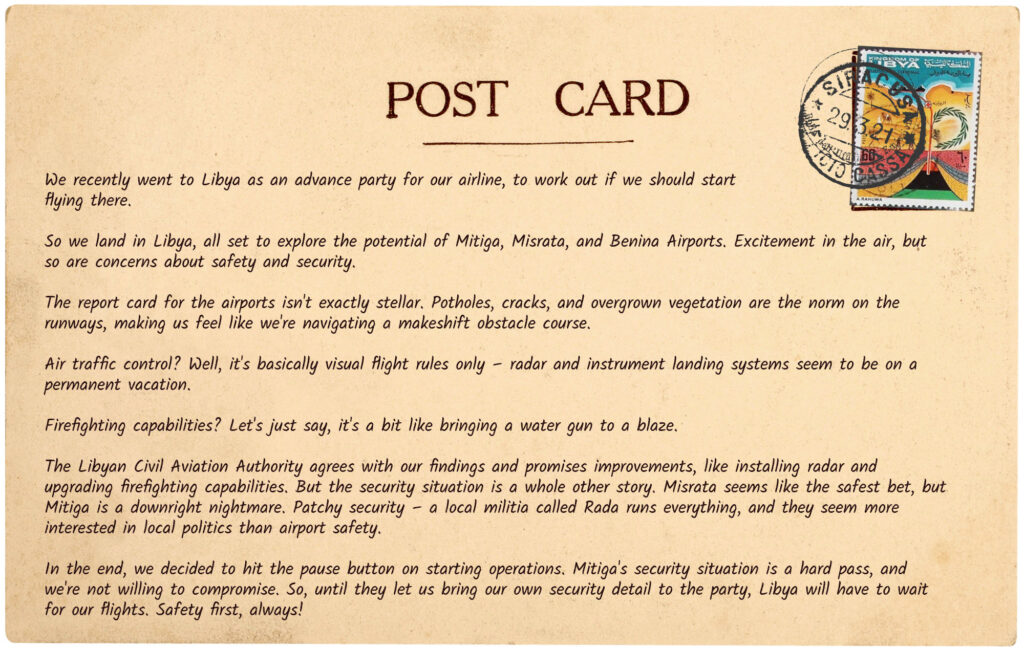
Step 5: Ask Someone Who’s Gone There

If in doubt, just look at what other people are doing. 

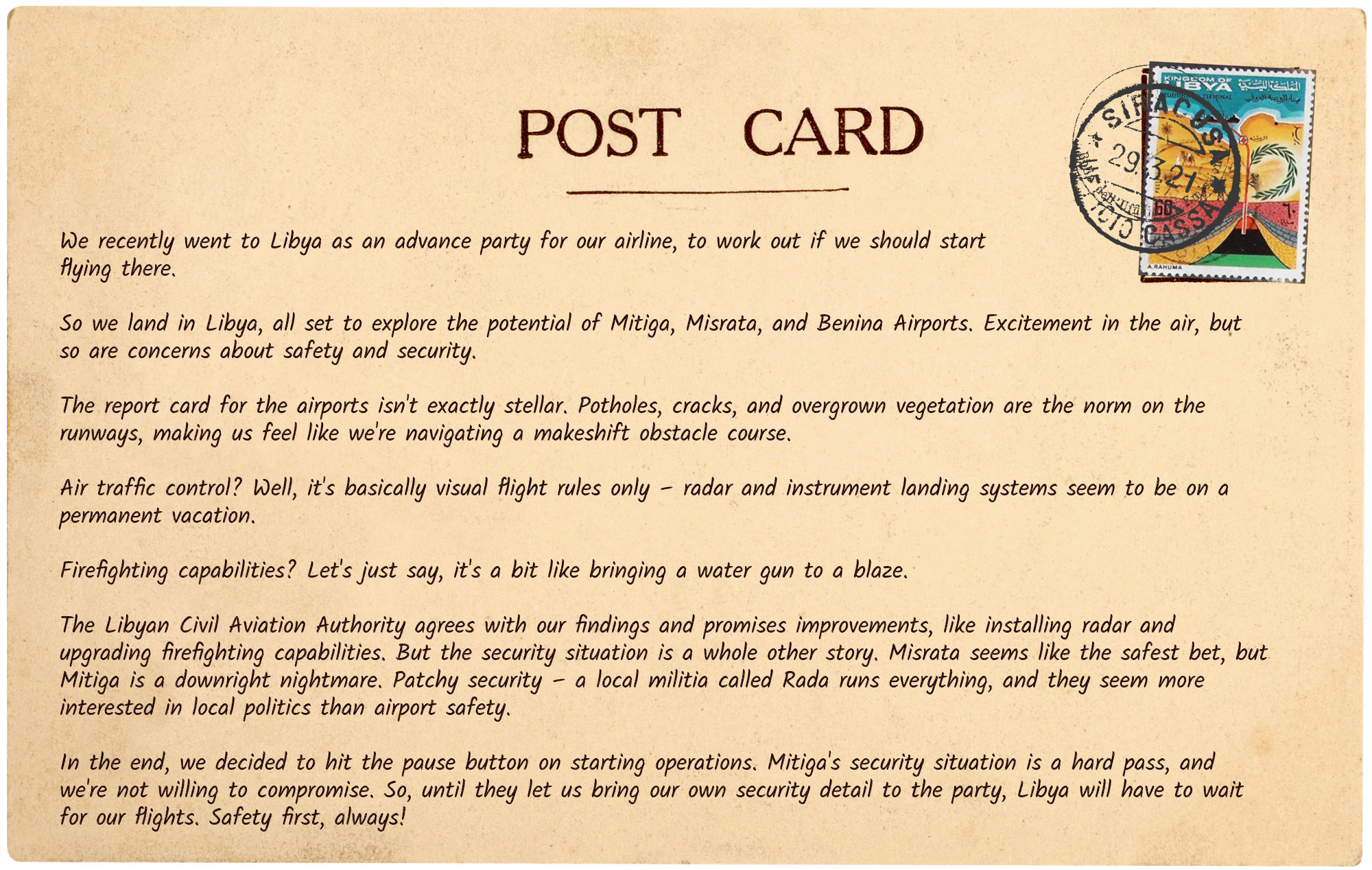
Here’s a report we recently received from an operator who went to Libya:
Step 6: Ask Someone Who Has To Deal With It ALL THE TIME

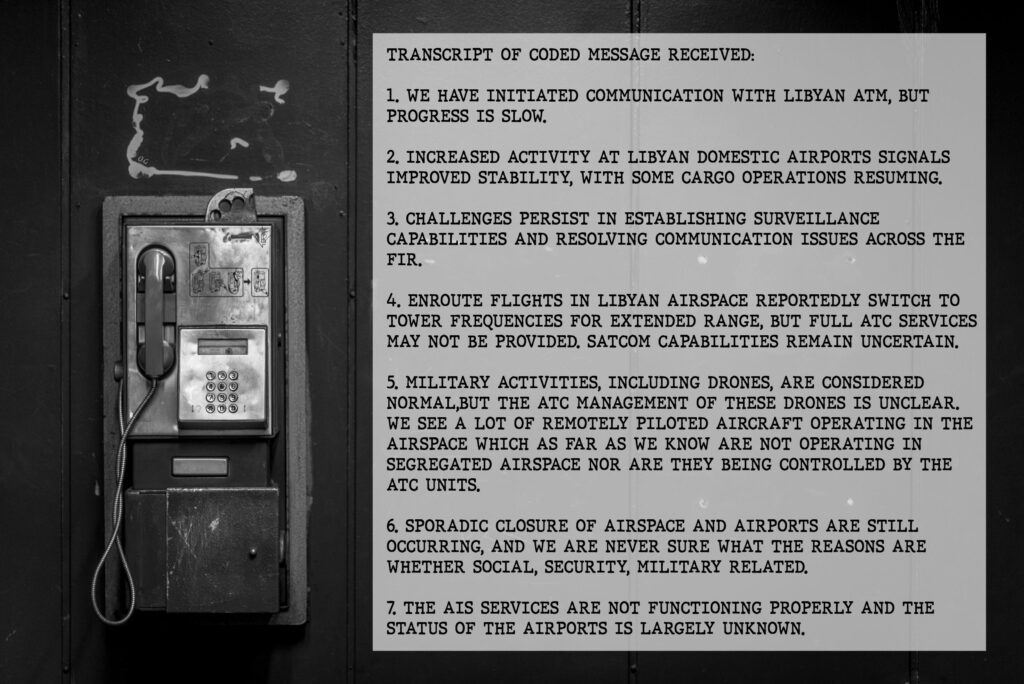
The ultimate shortcut to solving complex stuff you don’t know much about? Ask someone who knows a whole bunch about it. 

Here’s a report from ATC in a neighbouring ACC to Libya:
Step 7: Conclusion

The conclusion to this Idiot’s Guide to Libya? NO. Do Not Fly. Avoid. 

If you need reminding, you can print out this helpful Opsicle, and take it with you in your flight bag.
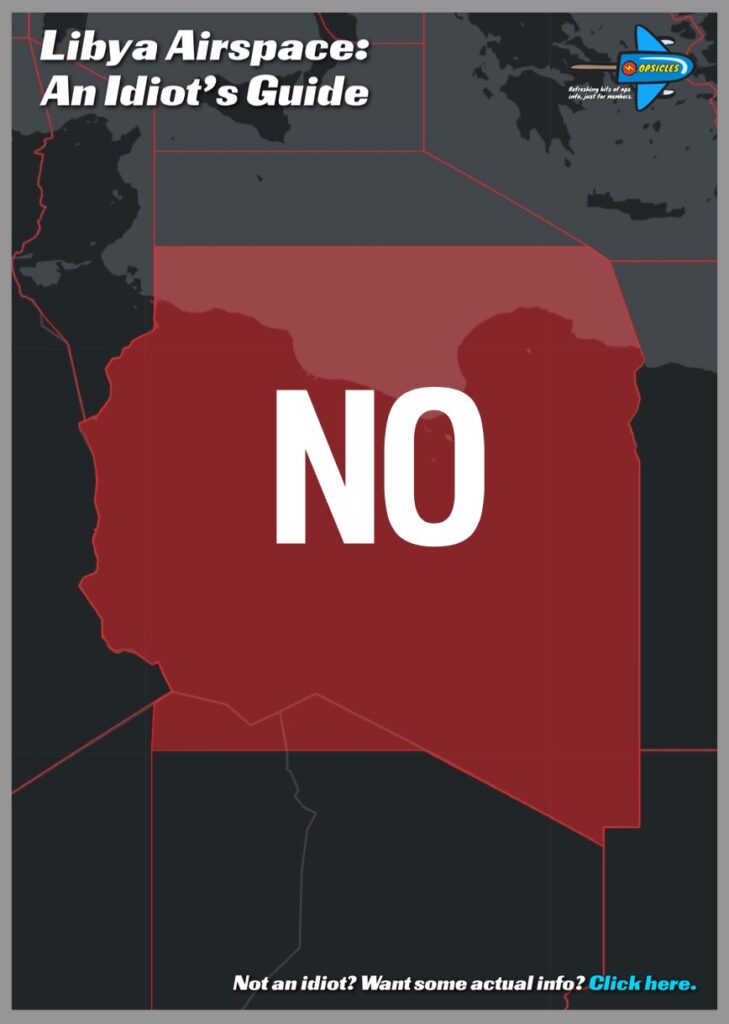
⬆️ You can click the image above to download the PDF.

Postscript: The Curious Case of the EASA CZIB

We mentioned this at the start. And in the middle. Now again here at the end.

In their amended CZIB, EASA are now saying it’s probably OK to start flying to airports on Libya’s coastline again – as long as you approach from the sea, talk to ATC, and do a risk assessment.

If you’re a European airline keen to resume flights to Libya, you might like this piece of news. Everyone’s risk appetite is different, after all.

Some history here: In July 2023, Italy cancelled its 10-year ban on flights to/from Libya, the idea being to resume airline flights between the two countries at some point. So aircraft are technically no longer banned from Italian airports and airspace if they want to fly from Libya (apart from Libyan operators, who are still banned from EU airspace). You still need to get special permission from the Malta CAA if you want to do this, as per the LMMM Notams.

Why is the amended EASA CZIB “curious”? Because there’s no evidence that there has actually been any reduction in airspace risk here. None of the state airspace warnings have changed, and EASA have not provided any of the reasoning behind the decision to ease their warning.

So for now, our advice remains the same: Libyan airspace (the HLLL/Tripoli FIR) should be avoided entirely.

See you again next year for another look at why you might want to avoid Libya!


Free Route Airspace in Africa

Key Points
  • Free Route Airspace (i.e. you can fly direct between waypoints) is now available across most parts of ASECNA airspace in Africa, FL250 and above, as of 25 Jan 2024.
  • There are a few other places in Africa where FRA is available too.
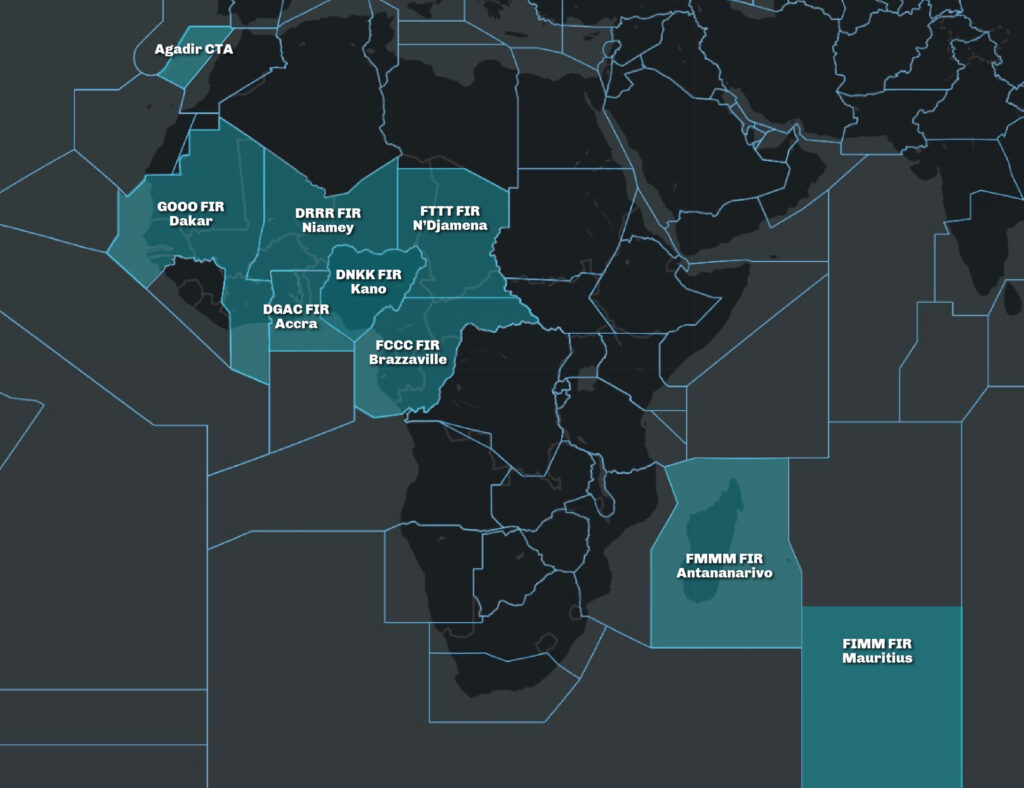
  • There doesn’t seem to be a map of where all the FRA regions in Africa are, so we made one (check the map right at the bottom of this article!)

Where is ASECNA airspace?

Here:

Which parts have Free Route Airspace here?

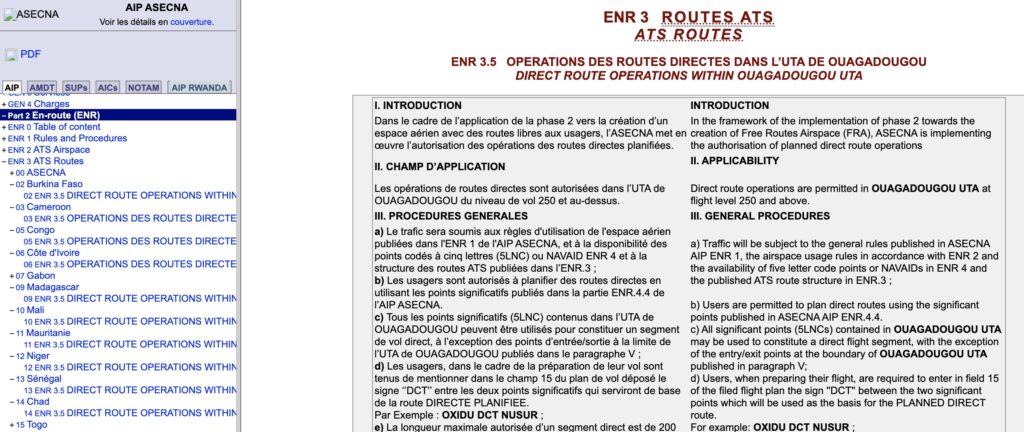
These UTAs: Nouakchott, Bamako, Ouagadougou, Abidjan, Lome, Niamey, Douala, Libreville, and Brazzaville.

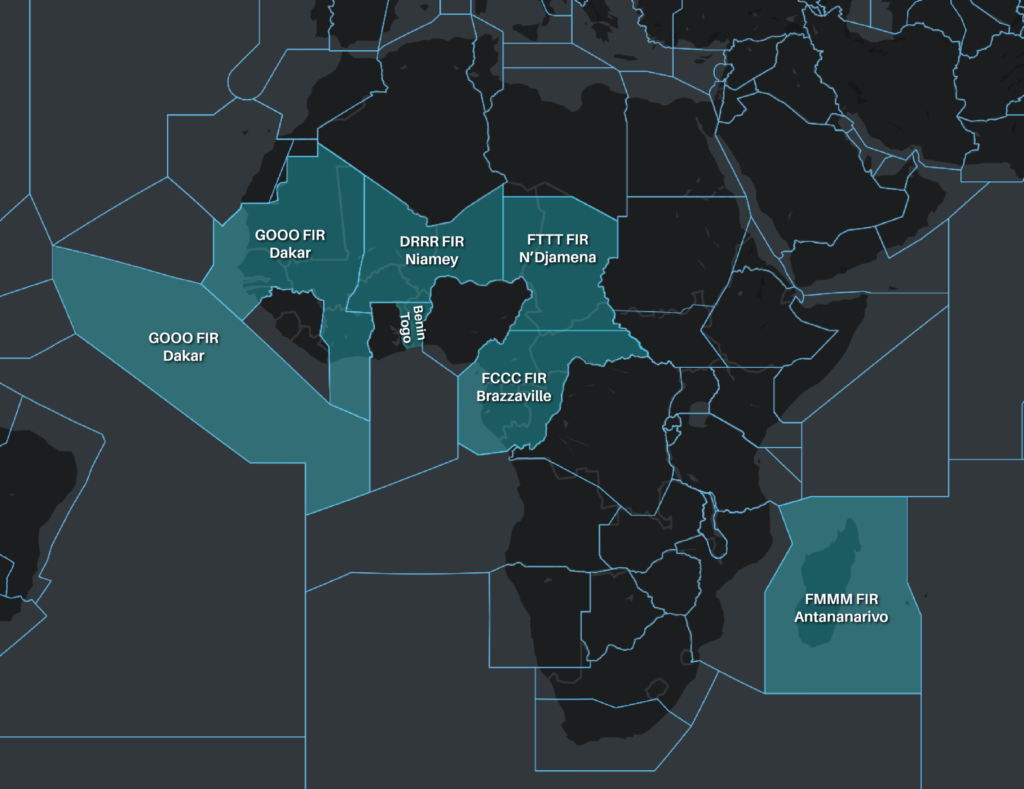
These FIRs: GOOO/Dakar, FTTT/Ndjamena, and FMMM/Antananarivo.

Flights can plan direct between the reporting points of the boundary of the respective UTA or FIR.

Unfortunately, there doesn’t seem to be one nice big map showing exactly where these all are.

We grabbed the waypoints from the ASECNA AIP ENR Section 3. We tried plotting all these on one map, but it quickly became very messy. So here’s a turgid list of waypoints for you (sorry!) just in case you want them:

Ouagadougou UTA: OPUGO TAREN DEKAS OXIDU UMOVO NAVON TUMUT NANGA BIGOM TUXID ANIXA EBSUD EDGIB ONUSI TAVOT NUSUR.

Douala UTA: OBUDU TAKUM PONDO KEMOX ARKEV DESAM TAPEK VOLMU ARASI BTA IPOVO GEBRO ARDEX RALIN ILBAS IKROP.

Brazzaville UTA: PONDO GADUV INIGO ASSAM TJN NAMOR NARTU UMOSA EDGUM RULDO NASED MISRU ONUDA KITEK ASKON AMPER BOSKI POGBA MERON OPDAK GOPUR MPK PIPLO AGTOM EMSAT BAMAV AMSIK BZ PIRMI LIKAD ARAKI TIMAK NERUP SEMUL ARKOS GARLA ONLEN EDOTO PILVI TAPIL MOVOD NEBEX MISTI ONKAR TAPEK DESAM ARKEV KEMOX.

Abidjan UTA: BIGOM AMSAT TUSEK ONESI SESIG EGADU ARABA GANKA INAKA RASAD EMTAL URAPI ATANI ARLEM IPEKA DEVLI MEGOT UBUTU AMPAS ERMIT GUREL TUXID.

Libreville UTA: BIPIV GEBRO IPOVO BTA ARASI VOLMU ONKAR MISTI NEBEX MOVOD TAPIL PILVI EDOTO ONLEN VORET ILDAN NURIP AGSIM AGRUB GULEP BOVGA.

Bamako UTA: GUREL VOLNA MOPAL UBATI NEGLO GATAX IPUGA MESER KIMGA ILDES EREMO ONTOL ONIMI ONUSI EDGIB EBSUD ANIXA INPOS.

Nouakchott UTA: NEVDI DEMIL POVIN MOKOD TIPAD ILDES EREMO ONTOL ONIMI POTOL ODATA SBITA BRENA BULIS ECHED MIYEC.

Niamey UTA: TERAS ZAWAT INAMA EREBO ERKEL TOBUK IKTAV RAKOM NAMIS INISA IPANO SABSI RIPOL KORUT RISUB DETAR MOLIT USNAV POMPA NANOS UBEVA DOGON GULEN BOVDA LITAK SIRTO TATAT BATIA GAPAG ENOXO BULSA TAREN OPUGO GALIV NUSUR TAVOT MTI ONIMI ODATA POTOL USRUT IPOBA MOKAT.

Lome UTA: GAPAG BATIA TATAT SIRTO LITAK NASTO GANDA TENTU SEVAX OPALA TEMSA POLTO KIPSA EPITI GASLO KETAT NEPRO USTIX PAMPA BUDNO IPORI ARLEX TAMIL ENOXO.

FTTT/Ndjamena FIR: IPONO LIGAT TONBA GARIN DEKTU RAKOM NAMIS INISA IPANO SABSI RIPOL ENBUT RAVOT ONTOP SIGAL KELAK MOMIG ONSEV EBIMU ETRIS GATAG INIGO ASSAM TJN NAMOR NARTU UMOSA EDGUM RULDO NASED MISRU ONUDA KAFIA MONAN KISAL KURAM ILBIB GENEI.

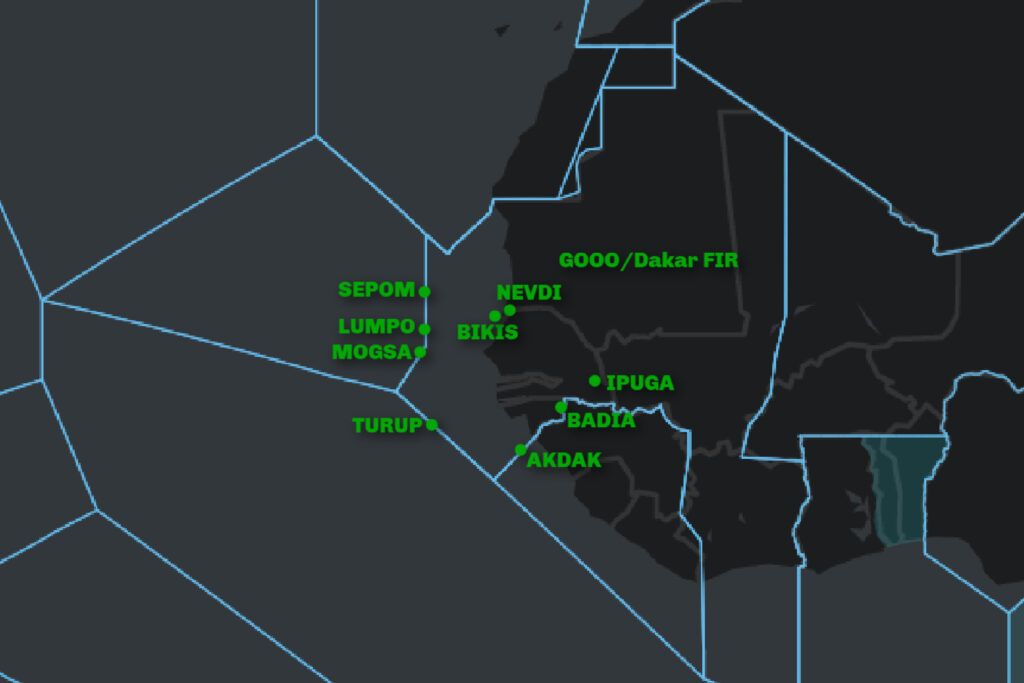
GOOO/Dakar FIR: SEPOM LUMPO MOGSA AKDAK BADIA IPUGA NEVDI BIKIS.

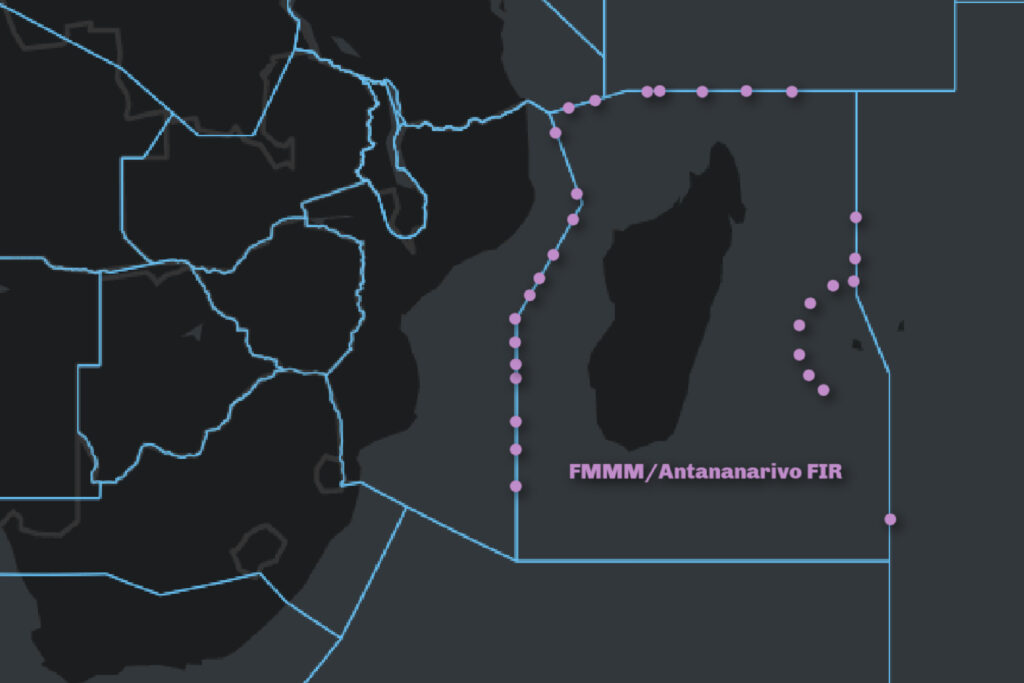
FMMM/Antananarivo FIR: ETGUN TETRO SUNIR EROPA EGMAD NERUL IXEMA IMKIB ETLEG GADNO ETLOP ENDEL SOLAL KINAN TABNO BERIL ATOLA NESAM DENLI ANKOR MIROV RUPIG AMBOD IBMAT APKOT APLEM UVENA DOBUT EGLIP UNKIK GERAG GETIR.

We did make a little map of the FMMM/Antananarivo (Madagascar) ones, cos they’re kinda funky:

And we made this little map of the GOOO/Dakar (Senegal) ones too, just because the airspace covers a massive area (and there’s also the Dakar Oceanic FIR too) but you can only plan direct within a very small area:

For more info, check the full details in the ASECNA AIP ENR 3.5 sections.

Where else in Africa has Free Route Airspace?

Good question! We think it’s just these places:

Morocco: FL195-FL460 in the Agadir CTA (currently only available between 2200-0600z)

Ghana: FL290-FL460 in the DGAC/Accra FIR between latitudes 2N and 11N.

Nigeria: FL245 and above in the DNKK/Kano FIR.

Mauritius: FL245-FL460 in the southern part of the FIMM/Mauritius FIR South of 25S.

So, putting that all together on one map (which is the thing we really wanted in the first place)…

Here are all the places in Africa which now have Free Route Airspace!

Phew, we made it there in the end.

If you know of any more places which should be added to this map (FIRs, UTAs, CTAs, etc), let us know: news@ops.group


Who is Eddie? And what does he have to do with turbulence?

The other day, before another oceanic crossing, I settled in to brief myself on that afternoon’s flight plan.

As I scalded my mouth with a hastily purchased airport coffee and began to peruse the carefully collated collection of fuel burns and leg times, my eyes fell upon the dispatcher’s remarks. As I stared, the following note stared right back at me…

“Sorry guys, unavoidable EDR 60 at TOC…”

Apology accepted. But what on earth is EDR 60?

With the weight of the braid on my shoulder, multiplied by a factor of my stupidity as a proficient but highly ‘human’ aviator, I realised I needed to call in the big guns – this was a job for Google.

A powerful blankness ensued as I surveyed the answer… Eddy Dissipation Rate. The official metric of ICAO and World Met Organization turbulence reporting since I was in high school. Had I been living in a cave?

This thing mattered, and so I needed to dig deeper.

Here’s what I found out:

…it’s an aircraft-independent meteorological field expressed in meters squared per second cubed…

Not helpful. I read on…

…the cube root of the dissipation rate of turbulent kinetic energy…

I took another sip of coffee. I didn’t have time for this.

Sign-on was approaching, along with hundreds of passengers expecting me to protect them from this ‘EDR 60′ with my big fancy license. All I knew was that it meant bumps. Clearly, I needed to get a better grasp on this.

If you already know what EDR is, and could explain it to me on a napkin, there’s no need to read on. If you’re ‘asking for a friend,’ here is a crash course, written in human.

The Simplest Answer

You don’t need to cube anything. Except maybe the confidence you lost (like me) in not knowing what an EDR is. It’s pretty simple (ignoring the arithmetic of measuring it).

The higher the number, the more intense clear air turbulence may be…if you encounter it.  Anything over 50 may result in moderate to severe CAT.

But that interpretation also depends on the type of aircraft you are flying.

So, there may be some nasty stuff around. But if you want to get your head around it, you’ll need to dig a little deeper.

So, let’s dig…

When we talk about turbulence, we refer to light, moderate, severe, and extreme. We attempt to categorise these with useful definitions like ‘loss of control.’

The problem is that it is quite challenging to quantify the severity of CAT concerning different aircraft types – what’s bad in a 152, may not be as bad in a Gulfstream. It varies from aeroplane to aeroplane, and forecasters don’t know what equipment you operate.

This is where EDR comes into it – it doesn’t cares about what aircraft you fly. It is just a measure of something.

An eddy is simply the swirling of fluid. And air behaves like a fluid. A turbulent atmosphere will make these eddies disappear quicker. A calmer one will allow them to persist.

So, if we know what is happening to these eddies, it can give us an indication of how ‘churny’ the atmosphere is, along with a healthy dose of mathematics, of course.

Eddies dissipate quickly = a turbulent atmosphere.

An EDR is measured with a value of between 0 and 1. But seeing a value of 0.4 for instance, doesn’t exactly leap off the page of your flight plan.

So, we multiply it by a factor of 100 to make it easier to use.

Cool, we’re almost there…

One size doesn’t fit all

Once we have an EDR, we must know what to do with it.

As mentioned, every aircraft is different and will respond differently to turbulence. This is where weight begins to matter.

An EDR of 20 might produce moderate turbulence for a King Air, but gently shake the champagne glasses of an A380 and nothing more.

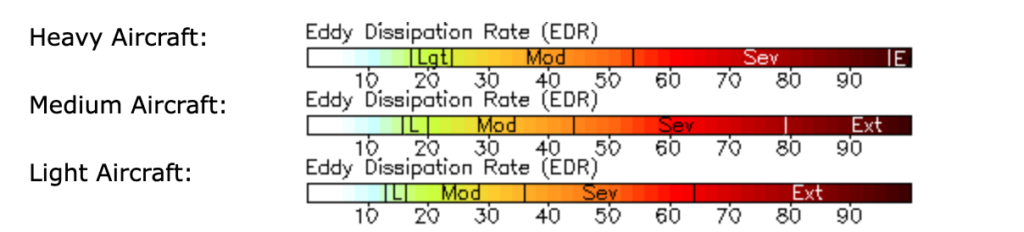
The clever folk at the National Center for Atmospheric Research, therefore did a study and came up with three weight classes to help you understand an EDR:

Where do I find this EDR?

Many non-airline folk don’t have the luxury of a friendly dispatcher like I had.

But you can quickly look it up. Better yet, it is as simple as paint by numbers (if you know what to do with the answer).

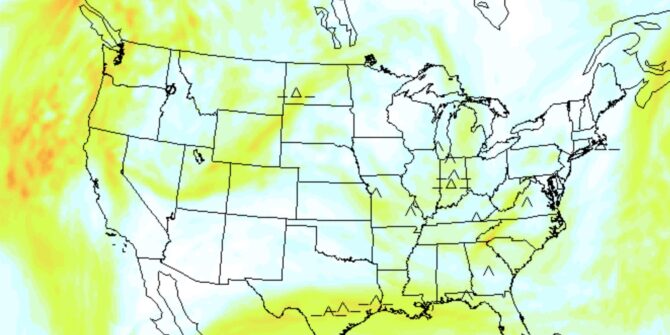
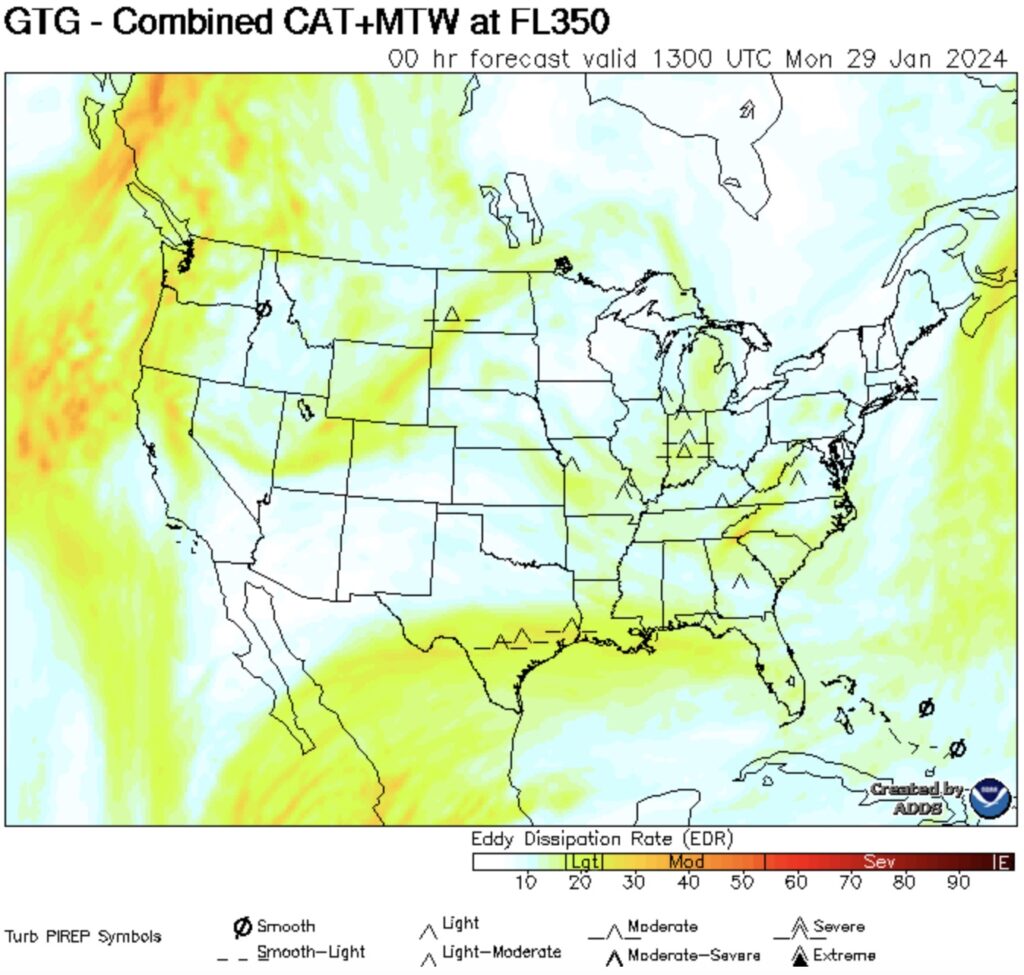
It would help if you had GTG (graphical turbulence guidance) like the one below. And the colours change depending on how heavy your aeroplane is.

Better yet, the way EDRs are presented can be changed. For instance, cross-sections of a route can also give pilots a good indication of the smoothest levels.

Check out the NOAA website here.


March 2024 Singapore Airspace Changes

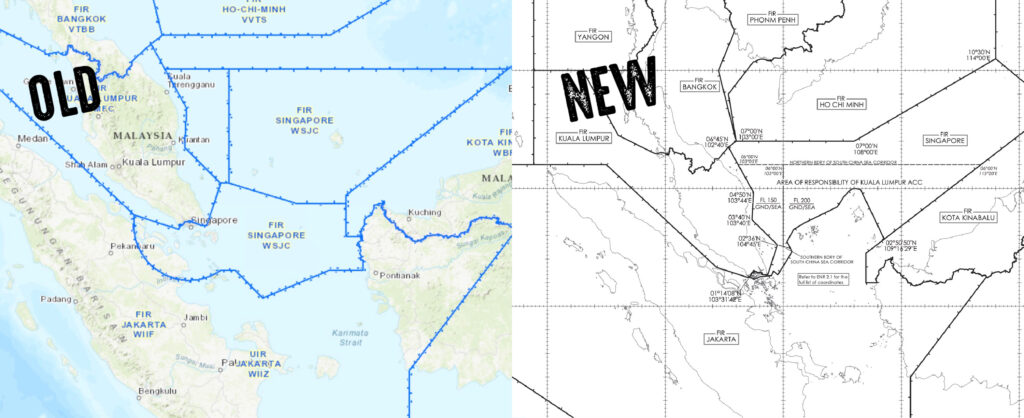
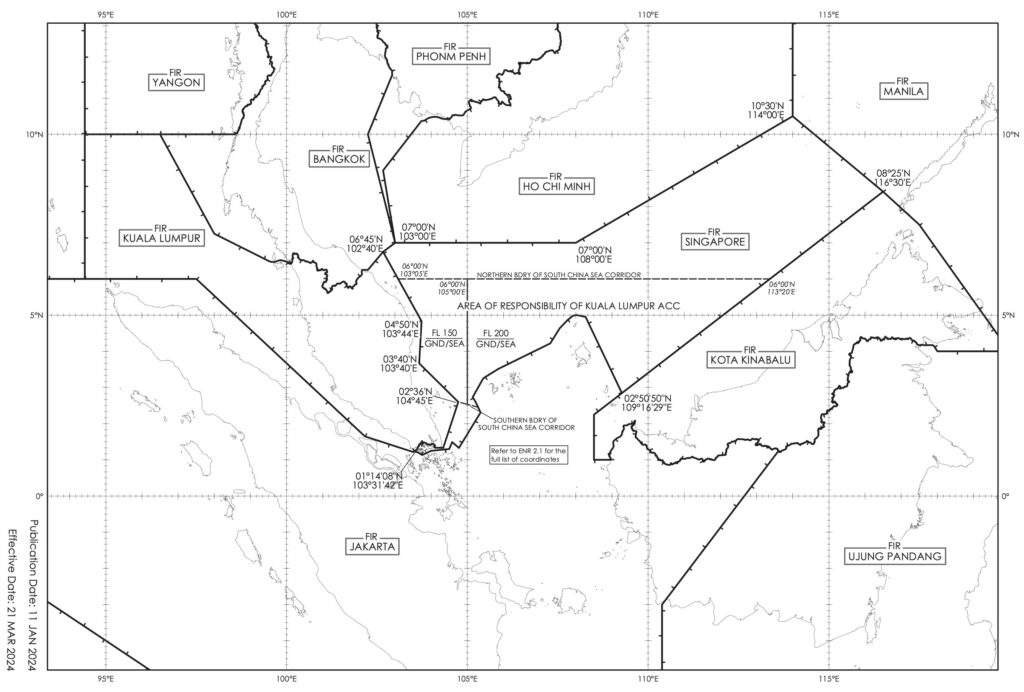
Singapore and Indonesia will realign their FIRs from 21 Mar 2024.

They agreed to do this so that the new FIR boundary (between the WSJC/Singapore and WIIF/Jakarta FIRs) will be generally more aligned with Indonesia’s territorial boundaries.

It looks like not much will change in terms of flight ops, as Singapore will continue to control the airspace. For full details of the upcoming change, check SUP 18/2024.

But there is one important issue this FIR realignment will hopefully fix for good – it will now be more clear that overflights of Indonesia’s Riau Islands require an Indonesia overflight permit!

This has been an issue in the past, with some flights not realizing they needed an Indonesia overflight permit to overfly these islands – as they sat under the WSJC/Singapore FIR. 

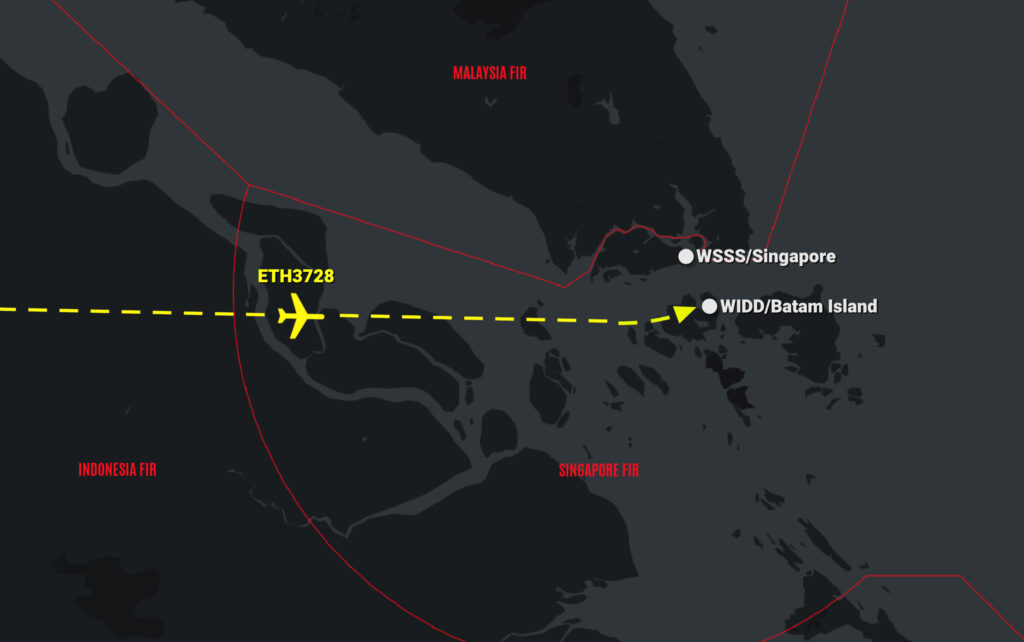
In 2019, two Indonesian F-16s intercepted an Ethiopian Airlines cargo flight for flying across Indonesian airspace without permission. The aircraft was initially supposed to operate from HAAB/Addis Ababa to VHHH/Hong Kong, but was modified at the last minute to route via WSSS/Singapore instead. The aircraft was intercepted forced to land at WIDD/Batam Island.

There have been several other incidents both before and since then, including some where Indonesia blamed US and Indian military planes of violating their airspace without permission.

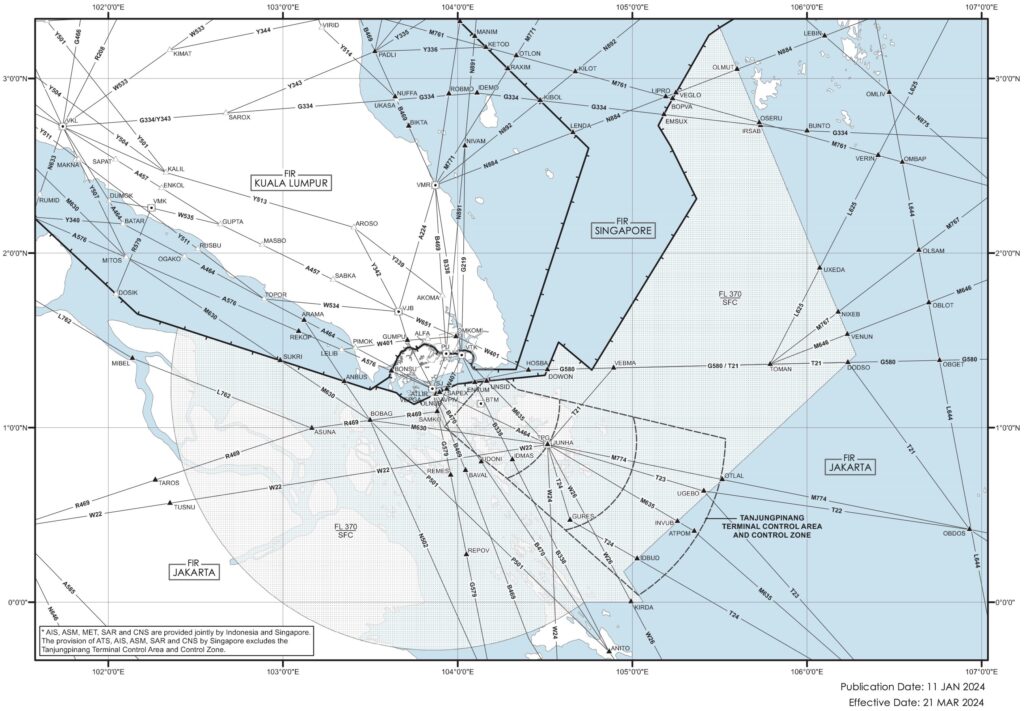
But when the FIRs realign on 21 Mar 2024, there should hopefully be no more confusion about permit requirements for this chunk of airspace! You can find all the details in SUP 18/2024, but here’s how it’s going to look:

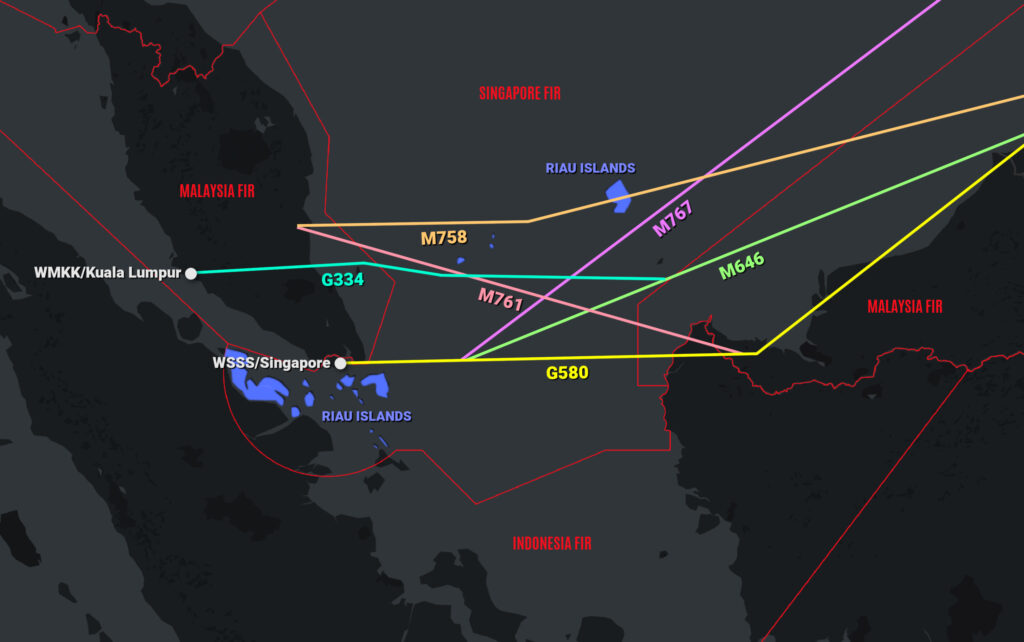
And this one is maybe useful too – this shows the airspace which will continue to be controlled by Singapore ATC:


Japan Boosts ATC Procedures and Lessons from Haneda

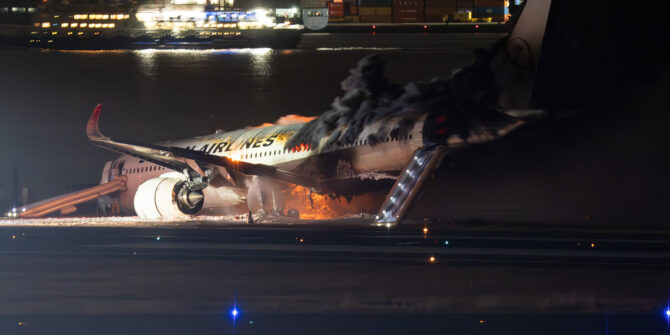
Japan has announced changes (in Japanese) to ATC protocols at airports throughout the country. This follows the tragic collision of an Airbus A350 and Dash 8 on an active runway at RJTT/Haneda on Jan 2.

While we wait for more answers, authorities have been quick to implement new procedures. Here’s what you need to know (translated), if you’re headed to Japan tomorrow.

Visually Clear

Authorities are urging operators to mandate a check by aircrew that the runway is visually clear before landing or entering. In other words – don’t rely on a clearance alone.

You may need to take this one with a grain of salt. For a myriad of reasons, it may not be practical or possible for pilots to make an accurate assessment that a runway is vacant. Take the example below – how would you fare?

But from an airmanship perspective, the intention is that our eyeballs may become the last line of defense.

Forget your place in the queue

Early indications from the accident transcript indicate that the crew of the Dash 8 may have misinterpreted the use of the phrase ‘number 1’ when cleared to the runway’s holding point.

To a fluent English speaker, the implication may appear quite simple – you are number one in the queue to depart.

But to the crew of the Dash, it may have meant you are number one for the runway.

So, from now on ATC will no longer advise aircraft of their place in the sequence for departure.

Their official note says there are now only four phrases that will be used to imply an aircraft can enter a runway. These are:

  • Cleared for take-off.
  • Line up and wait.
  • Cross runway.
  • Taxi via runway.

If you hear anything else, it is non-standard. Stop and make sure you clarify the clearance.

Behind the Scenes

There are changes happening in the tower too. While they have no operational impact for pilots, it may be reassuring to know about them.

Essentially the bulletin reinforces there will be more staff on hand to constantly monitor ground radar for early detection of potential runway incursions.

And work is underway to improve the visibility of paint and signage at runway holding points, especially where no stop-bars are installed or working.

As a collective, the industry needs to do more

Can I address an elephant in the room?

Having read the above bulletin, I find myself flipping the page over to see what’s on the other side.  I can’t help but ask myself… is that it? 

Japan’s bulletin is, for all intents and purposes a reminder of what should be happening anyway.

In my opinion, it seems to offer little more than a gesture of reassurance that authorities have been seen to act in the face of another tragedy.

The reality is that this wasn’t just a Japan problem. All the warning signs were there before Haneda, around the world.

Have you seen this report? Back in November it was assembled by a team of specialists who cast doubt over the future safety of the US NAS.

In a six-week period, there had been no less than five near-miss incidents involving runway incursions and passenger jets at major US airports. Five, in six weeks – the highest rate in over half a decade.

In the report they identified risk factors (such as staff shortages, aging infrastructure and inconsistent funding) as issues endemic to these near-misses. No amount of bulletin-writing can fix these problems.

With the news that traffic levels will soon surpass those seen before the pandemic, I feel unsettled that the bullish outlook for global aviation is quickly outgrowing the safety infrastructure that protects us.

Perhaps it’s time for us to collectively tap the brakes and put safety ahead of profit, lest Haneda be the first of a number of lessons.

As a parting shot, it’s important to note that technologies already exist to solidly improve runway safety far beyond bulletins like the one above. Take for instance, the final approach runway occupancy signal (FAROS).

This independent and fully automatic safety addition to runway status lights warn pilots on final approach in real time that a runway is occupied. Consider the impact this may have had that evening in the darkness of Haneda’s Runway 34R.

What’s needed is the time, money and willingness of industry stakeholders to implement them. We need to do more to prevent accidents like Haneda, rather than react to them. At the very least, Haneda is a wake-up call that the time to act on truly preventing runway incursions at busy airports is now, and not next time.


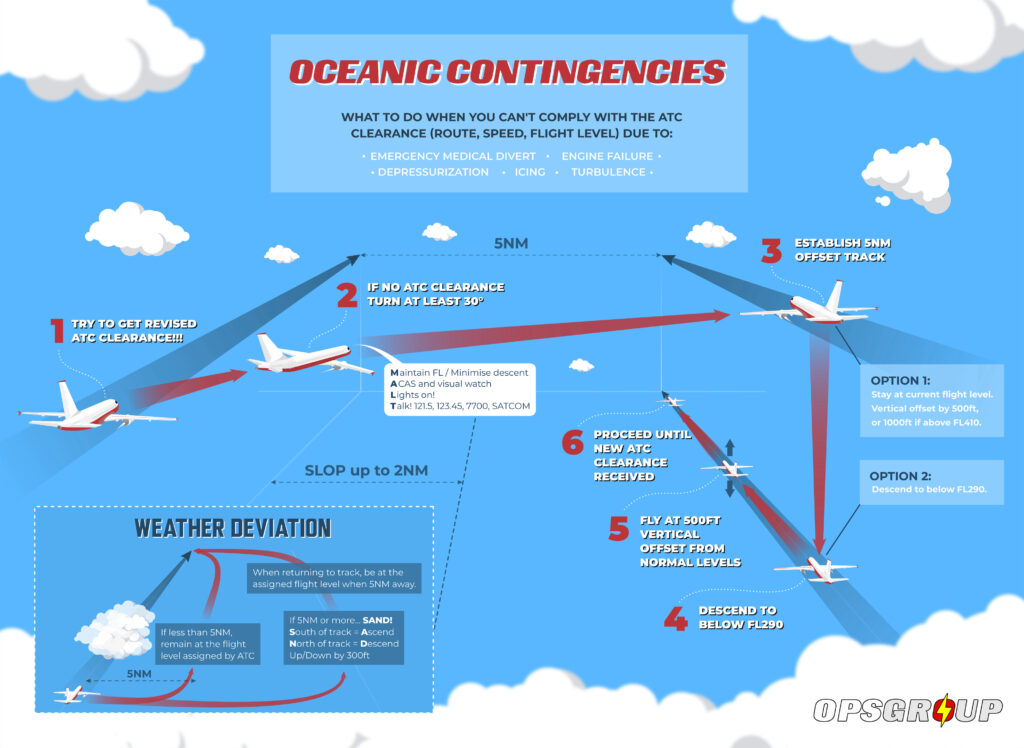
NAT Conundrums Volume IV: Contingency Procedures


Mexico Permit Chaos: New Rules Explained

Key Points
  • From 1 Jan 2024, Single Entry Permits and Multiple Entry Permits for private flights have been replaced by the Single Entry Authorization (AIU).
  • This AIU is valid for 180 days. With it, you can fly to Mexico as much as you like during this timeframe, and can do as many internal domestic flights as you want.
  • You should apply for the AIU at least 2 days prior to the flight.
  • Before the AIU can be issued, they Mexican airport you’re flying to must obtain the authorization number from AFAC Headquarters in Mexico City. Timeframe for this is varying between 5 minutes to 2 days. 
  • These changes only impact private flights. Rules for charter flights work the same as before (i.e. you get a blanket charter permit).

All these recent changes to permit procedures have been causing stress and delays for ops to Mexico. Before we get stuck into all the painful details, let’s begin with a story…

A Cautionary Tale

I just completed my first trip to MMSL/Cabo San Lucas since the new procedures came into effect, and thus needed the new permit. I use the local FBO for all of my permit applications, etc.  All paperwork was submitted and accepted days in advance. This FBO is unquestionably one of the best that I ever use.

When I landed, they said “we now wait for Mexico City to issue your Special Use Permit which they will only do after landing”.  I suggested that my passengers (family and friends) go on to the hotel in case it took a little while. Good decision.

While sitting in the FBO waiting, I started to chat with other waiting crews. One crew had been waiting for 3 hours already, another crew was down for 2 hours.

The FBO manager indicated that the new Mexican permit process has been total chaos since it went into effect with huge delays. In the end, I waited 3 hours, and then was told to come back the next day.

As I left, one crew was still waiting. They had done a part 135 drop-off and had planned to head back to the US. They had been delayed so long that customs at their US destination airport was closed, and they couldn’t reliably file a return eAPIS into the US because they didn’t know their departure time (and you have to give the US at least one hours notification).

Hopefully, the new permit process settles down in the weeks ahead, but in the meantime, crews should be ready for a many-hour or overnight delay. Another pilot who flies regularly into Mexico told me that his delay (at a different airport) was less than 30 minutes. So, your mileage may vary, but in the meantime we all have to anticipate some delays.

The Full Story

Thanks to Rick Gardner of CST Flight Services for the report that follows. CST Flight Services provides a wide range of international trip support services in Mexico, Central and South America, The Bahamas and the Caribbean. You can contact them for more info at: customersvc@cstflightservices.com

Ancient History

To understand the impact that the recent change to Mexico’s entry procedures has had on private aircraft arrivals, one has to understand the history of how foreign private aircraft have been allowed to enter Mexico in the past.

For well over 20 years, Article 29 of Mexico’s Civil Aviation law decreed that foreign (non-Mexican) aircraft could enter Mexico by landing at an official international Airport Of Entry (AOE) in Mexico and obtaining a Single Entry Authorization (subsequently called the single entry permit) or a Multiple Entry Authorization (subsequently called the multiple entry permit).

In 2014, a Mandatory Circular (CO SA 02/14 R1) was generated that updated the procedures and documents required for authorizing the issuance of a single, or multiple, Entry Authorization. This circular was a heavy-handed intent to address illegal charters and illegal cabotage in Mexico which caused great confusion because it inserted confusing procedures for recording, and updating, the list of passengers authorized to fly on board a private aircraft and it eliminated an essential federal document that was relied upon by not only Mexican Civil Aviation officials but also by Mexican Immigration and by Mexican Customs.

The fallout of this new procedure resulted in several Mexican AOE’s being unable to receive international flights for many months while the issues were resolved but eventually work-arounds were found and things settled down despite the confusing procedure.

Although tweaked periodically, Article 29 of Mexico’s Civil Aviation Law remained unchanged until May 05, 2023 when the entire Civil Aviation Law received a major update in many areas. Amongst the many changes made in the new version of the Law, the concept of “single entry” and “multiple entry” authorizations were eliminated and the ambiguous phrase “corresponding authorization” was inserted.

December 2023 changes

On December 27, 2023, 4 days before the end of the year, an internal AFAC document (Oficio 4.1.2.4197) was published to all of the Civil Aviation offices at Mexico’s AOEs informing them that a new procedure was being issued for the authorization of private aircraft entering Mexico. This internal document specified the following:

  • This internal document had a validity of 180 days.
  • The changes to how entry authorizations were to be handled would go into effect January 1, 2024.
  • It clarified that the reference to a Single Entry Permit and a Multiple Entry Permit were not correct and contrary to law and that the concept of a “Single Entry Authorization” (Autorización de Internación Única – AIU) was being adopted.
  • That the AIU would be valid for 180 days from the date of issuance.
  • That during the 180 day period, aircraft could freely travel in Mexican territory in a manner similar to the prior Multiple Entry Permit.
  • That to issue an AIU the foreign operator needed to present their request for an AIU at least 2 days before their planned arrival in Mexico.
  • That the Civil Aviation officials at the AOE could no longer unilaterally process an entry authorization but rather needed to request an AIU authorization number from Civil Aviation headquarters in Mexico City before the AIU could be issued. The request for the AIU number must be sent via email to a central email address and accompanied by:
    • Make of aircraft
    • Model of aircraft
    • Registration (Tail) number
    • Number of crew
    • Number of passengers
    • Name of Civil Aviation Inspector in charge of the AIU request
    • Name of Civil Aviation Comandante (or acting representative) who approved the AIU request
    • The request needed to be emailed to a central email address in Mexico City
  • As a measure of added security and due to different legal “issues”, a Layout Of Passenger Accommodations (LOPA) needed to be presented.
  • That for additional guidance on how the authorizations should be issued, AFAC officials needed to refer to the confusing 2014 Mandatory Circular (which was created for Entry Permits, which are now prohibited) until a new Circular could be published.

Confused? You are not alone.

January 2024 onwards

Almost immediately, there was an outcry about what was indicated, and not indicated, in the new procedure such as:

  • Had the AFAC headquarters in Mexico City calculated how many aircraft arrive in Mexico per day and ensured that they had the email systems and staffing required to receive and process requests and issue the AIU authorization number for all AOE’s in Mexico?
  • How long would it take to get the authorization number?
  • Many aircraft don’t have the luxury to provide the 2-day required notification. (This was unofficially quickly watered down to a 2-day recommendation.)
  • The Authorization is NOT VALID without the authorization number provided by the central AFAC headquarters.
    • What if an aircraft needed to make a quick turn and depart Mexico before the AIU was issued?
    • What if an aircraft needed to continue on to another airport in Mexico before the AIU was issued?

Almost immediately, we saw a divergence in how each of these scenarios was being addressed and how the new procedures were being implemented across the many Mexican AOE’s across the country. Amongst the most notable issues we have seen are:

  • It has been clarified that aircraft that were already in Mexico under the old Single Entry Permit that was issued in 2023 could remain in Mexico but needed to depart before those permits expired.
  • The time to obtain an AIU authorization number was taking from several minutes to multiple days with no evident criteria for what made one request take longer than another.
  • If the AIU authorization number is not received, some airports were allowing the aircraft to depart but without a valid AIU. This means that if they make a subsequent international flight to another Mexican airport, they will be treated as a new arrival and be obligated to process yet another AIU and pay the fee again because the AIU they had requested on their previous trip was never received.
  • At some airports, flights wanting to fly on to another Mexican airport were approved on a discretionary basis by the local AFAC comandante with the requirement that they return to the original AOE where they entered the country.
  • Aircraft that had been issued an AIU and reentered Mexico with different crew and/or passengers are being required to process a new AIU.
  • Some airports are requiring a picture of the inside of aircraft, in addition to a LOPA, in order to approve an AIU. Without it, approvals are delayed.
  • Some airports require a picture of the exterior of the aircraft in order to approve an AIU.
  • Some pilots who had completed the forms to request an AIU left Mexico believing they had received an AIU when all they had was the request form (they are all in Spanish).

One always has to look for a bright side to things, and the one bright side of this new procedure is that it resolves an issue that had plagued the old Multiple Entry Permit which expired on December 31, 2023.

Aircraft operators who entered Mexico with a Multiple Entry Permit who had an AOG at the end of December or who wanted to spend New Years in Mexico could face severe fines if they did not remove their aircraft from Mexico before their permit expired. With the new AIU, you always have a 180 day window for its use with multiple entries during that time.

What now?

At the present, there is a lot of confusion, frustration and miscommunication at all levels within the AFAC as well as at airports and FBO’s in Mexico. The implementation of the AIU approval procedures will remain in flux while AFAC headquarters, regional comandantes and airport comandantes address the issues and come up with a better way to handle this.

In the meantime, expect some turbulence ahead – have pictures and LOPA’s, expect to have to pay multiple times for AIUs if you travel to different airports in Mexico and expect possible delays. The good news is that the beaches are still nice, the food is still delicious, the people are still friendly and the beer is still cold.


Santa Maria HF – Unauthorised Transmissions

An OPSGROUP member recently reported they experienced extended interference on Santa Maria Radio (HF frequency 11309). They were unable to use it for nearly ten minutes due to a continuous broadcast in a foreign language.

This was reported directly to Nav Portugal, and the member was kind enough to share their response with the group. Here is what they had to say.

Unknown Broadcasts

The Radio Supervisor did report significant voice interference on the same day for a period of nearly twenty minutes. It didn’t coincide with the time the member’s aircraft was inside the Santa Maria FIR, but they were quick to point out this may mean it hadn’t been reported yet.

In other words, this is likely not an isolated issue.

Nav Portugal advised that in the past twenty-four months, they’ve observed increasing levels of interference on the HF frequencies assigned by Santa Maria. These are often caused by voice transmissions, but have also included radar signals – essentially ‘pinging.’

These have been confirmed to originate from Eastern Europe, and the Middle East.

There is no evidence the broadcasts are malicious

While they seem to emanate from regions of high political tension, there are no indications the broadcasts are an attempt to impede the communication of air traffic.

They are simply an inconvenience. Nevertheless, they are occurring in one of the largest FIRs on the planet serving hundreds of flights per day, a number of NAT tracks, and traffic in and out of the Azores.

So, it is important to know what to do if you encounter this on your next crossing.

I don’t care, I have CPDLC

It’s true that CPDLC services are available to all FANS 1/A equipped aircraft in the Santa Maria FIR (logon LPPO).

But look out for this chestnut, from Santa Maria themselves…

…attention is called to flight crew that the use of data link services do not exempt the requirement of establishing voice communications with Santa Maria Radio at or before the FIR Boundary, whether on HF or VHF, even if a CPDLC connection is established

So HF interference begins to matter for everyone, when outside of VHF coverage.

Try the other line

Your next option is the ol’ sat phone.

Santa Maria’s contact information is listed in NAT Doc 003, but to save you some time, their Inmarsat short code is 426305, and the direct dial for the supervisor is +351 296 820 401.

There are also alternative HF frequencies listed in the attached document. As a general rule, lower frequencies work better at night, and higher during the day.

If ionospheric propagation floats your boat, we’re not here to judge. You can read more about it here.

Phone a Friend

If you’re not satvoice equipped, and you can’t reach Santa Maria Radio directly – what then?

In the first instance, attempt to raise a nearby aircraft on 121.5 or 123.45 who can relay your position report for you.

Or you can try and contact adjacent ATC oceanic sectors – namely Shanwick, Gander, New York Oceanic or Piarco. Nearby radar units may also be able to assist too – Lisboa, Canarias, Sal or Madrid Controls.

Failing that, you’re into the lost comms procedure. You can find that here.

Here’s a quick sheet the team previously put together…

Keep Reporting

If you encounter HF frequency interference, it is important that you report it. The more detail the better – including the UTC time, position, altitude, duration and any other identifying details. It’s likely you’re not the only one who will encounter the problem.

We’d also love to hear from you too – you can reach us on team@ops.group


Secret Overflight Requirements in Antigua

There’s a secret Antigua overflight requirement that’s been going on for a while but is still catching some people out.

If you enter the Antigua TMA/TCA (the airspace around Antigua up to FL245), you’ll need to apply for a “cross-border permit”. Without it, they won’t let you enter the airspace!

If you’re headed to TAPA/Antigua airport itself, you don’t have to do this – you just get billed when you land. You only need it for any flight through this airspace below FL245.

So this is going to mainly affect flights to TKPK/St Kitts & Nevis airport, as well as low-level flights between islands in the region – the likes of St Maarten and the Virgin Islands in the northwest, down through Guadeloupe, Dominica, Martinique, and St Lucia in the southeast.

As one OPSGROUP member reported – “Inbound to TKPK we were asked for the Antigua airspace permit. Apparently this is new so we did not have it and got a reroute of about a 100NM, it almost caused low fuel situation. Be aware!”

You have to apply online at the vcbirdats.com site at least 6 hours prior to the flight.

Fees depend on aircraft MTOW, as a long-since deleted TAPA Notam explains:

Up to 5,000 pounds - 25 USD
5,001 to 10,000 pounds - 35 USD
10,001 to 15,000 pounds - 45 USD
15,001 to 25,000 pounds -55 USD
25,001 to 50,000 pounds - 65 USD
50,001 to 100,000 pounds - 80 USD
100,001 to 200,000 pounds - 95 USD
200,001 to 300,000 pounds - 110 USD
300,001 and over - 125 USD

On the vcbirdats.com site, you will need to register an account. If you’re not an airline, you won’t have an IATA code, so just use “00” as the code making the account. You will then you’ll be presented with a screen that looks like this:

One intrepid Opsgroup member who tried this out said that after they submitted all the info for the cross-border permit it was issued instantly via email. Just make sure that on the permit it says the callsign or tail number so ATC joins the two when approaching the airspace.

It’s worth noting that this cross-border permit is not actually an overflight permit – it’s basically just the fees you have to pay in advance for Nav and ATC. In this neck of the woods, real overflight permits are not required. For landings, only scheduled and charter flights require landing permits. For these, contact paula.fredrick-hunteab.gov.ag for Antigua, and foreigna@sisterisles.kn for St Kitts & Nevis. (Unless you know some better email addresses than these – in which case, let us know!)

And if you’ve been to the region recently, please file an Airport Spy report so we can share the info with everyone else in the group!


Airspace Risk Update – Important Changes You May Have Missed

While operational news has been quiet for the start of 2024, some important changes to airspace risk have been gracing the OPSGROUP news feed in recent days. Here’s a brief summary of what you may have missed…

Syria

The FAA has extended its ban on US operators entering Syrian airspace (the OSTT/Damascus FIR) by a full five years. The new SFAR expires in 2028.

And with good reason – it is an active conflict zone. There are multiple risks to civil aviation there at all levels, including the very real threat of coming under fire from Syrian air defenses.

In addition to the US flight ban, several other states maintain active airspace warnings for the region. Almost no traffic overflies Syria – give it a wide berth. The updated SFAR 114 provides some updated background info on the airspace. Safeairspace.net also has a useful briefing.

Egypt

EASA has withdrawn its Conflict Zone Information Bulletin (CZIB) for Egypt – and we’re not really sure why. These CZIBs are largely based on what airspace warnings other countries have issued, and the UK and Germany still have active airspace warnings for Egypt – both countries advise against overflights below FL260 in the northern part of the Sinai region.

HEAR/Al Arish airport in particular near the Egypt/Gaza border has been identified as a potential terrorist target due to its use in humanitarian efforts. And since November 2023, the UK has been warning of risks to aircraft operating over the Red Sea due to military activity (more on that below).

Bottom line, we’re not seeing a reduction in risk. If anything, the threat to aircraft has likely escalated.

The Red Sea

Sporadic drones and missiles continue to be intercepted in the Southern Red Sea by foreign militaries. On January 9, the largest single attack yet happened with over twenty-four shot down by US forces in the area. This represents a significant increase in risk for civil aviation. The culprits are Houthi rebels in Yemen who are typically targeting western vessels, or Israel itself.

Back in November, the UK issued a new airspace warning due to these types of events. The threat is typically low level (below FL160) but the frequency of these occurrences is a major concern. Some OPSGROUP members have already reported flying longer, alternative routes to avoid the area.

The primary risks to overflights are from misidentification or mis-targeting. The military air defence equipment present is advanced, and capable of reaching all levels.

The Middle East

Iran has published a whole bunch of Notams under the OIIX/Tehran FIR code warning of ‘gun firing and military exercises’ between Jan 8-12 in the Strait of Hormuz. This is the sea just north of Dubai.

The areas where this will be happening are very close to overwater airways in the adjoining OMAE/Emirates FIR which get heavily used by flights heading from Europe to Dubai airports.

The US has a longstanding warning to avoid these airways nearest to the OIIX/Tehran FIR whenever possible, to reduce the risk of miscalculation or misidentification by air defence systems – good advice, especially for this period of time.

Taiwan

There was some panic on January 9 when a presidential missile warning was issued by authorities for Taiwanese airspace. It was the first time this has happened.

It was later clarified that this was due to the launch of a Chinese satellite (not a missile) and posed a minor debris risk. Taiwan is on the eve of a major presidential election – and tensions with China are high.

There appears to be a renewed level of military posturing from both sides which can increase the risk of mistaken identity – especially in the Taiwanese air defence identification zone (ADIZ) if proper procedures are not followed.

These are known risks but are worth reviewing. Some sources are suggesting an escalation is possible this year, which carries the risk of a new and dangerous conflict. In this case, regional overflights would be heavily affected. We’ll continue to monitor the situation closely.

GPS Spoofing in the Black Sea

We’re continuing to receive frequent pilot reports of significant GPS spoofing events in the busy southwestern corner of the Black Sea.

In some cases, this has carried the threat of an unintentional deviation into Russian or Turkish airspace without a clearance.

Reports have been received from various aircraft types on different airways, and have included a complete loss of all navigation capability, transponder functions or nuisance EGPWS warnings.

So far manufacturers and aviation authorities have been slow to react to this emerging threat. Although some type-specific guidance has been issued, the universal mitigator remains disabling GPS before entering an area of known spoofing.

An important reminder – IRS systems are not immune to GPS interference. By the time you identify spoofing, it may be too late to rely on them alone. We’ve written about this topic extensively – read all about it here.

Updates

We continue to monitor for signs of changing airspace risk. We report these changes on safeairspace.net and via alerts issued to OPSGROUP members.

If you know or hear something, please share it with us. You can reach us at team@ops.group. We’d love to hear from you.


US Airport Fact Sheets (CBP)

Did you know there are such things as US Customs & Border Protection Airport General Aviation Fact Sheets?

These are 1-page documents written by US CBP about select airports in the US, and they tell pilots pretty much all the important stuff they’d need to know about customs procedures at each one:

  • Opening Hours
  • Contact Info
  • Permission To Land Procedures
  • Some blurb on what to expect for the Inspection Process

What do they look like?

This:

Got any more I can download?

As of Jan 2024, the NBAA is now hosting more than 300 of these Factsheets in a centralized database.

NBAA members can download them here.

If you’re not an NBAA member, we still have a few knocking about from 2023 which you can download for free here:

KBFI/Boeing Field, WA
KBGR/Bangor, ME
KDAL/Dallas Love Field, TX
KELP/El Paso, TX
KFLL/Fort Lauderdale, FL
KFXE/Fort Lauderdale Executive Airport, FL
KHOU/Houston, TX
KHPN/White Plains, NY
KIAD/Washington Dulles, VA
KLAX/Los Angeles, CA
KMIA/Miami, FL
KOPF/Opa-locka Executive, FL
KPBI/Palm Beach, FL
KTEB/Teterboro, NJ
KTMB/Miami Executive, FL
KTUS/Tucson, AZ
TJIG/Fernando Luis Ribas Dominicci, San Juan
TJSJ/Luis Munoz Marin, San Juan
KRIC/Richmond, VA
KPDX/Portland, OR
KCLT/Charlotte, NC
KMEM/Memphis, TN
KSUS/St Louis, MO
KPTK/Oakland County, MI
KFAR/Fargo, ND
KAFW/Fort Worth, TX
KABQ/Albuquerque, NM
KMCO/Orlando, FL
KAUS/Austin, TX
KSJC/San Jose, CA
KMSY/New Orleans, LA

CBP update these Fact Sheets fairly regularly, so if you’re heading somewhere and want the most up-to-date version, contact CBP at that specific airport and ask for the latest copy. It’s also nice to speak to them in person! Tell them about your planned flight, and they’ll tell you what you need to know.

You can email CBP at the address shown in the Fact Sheet, or else contact them at GASupport@cbp.dhs.gov


Slots required at all Paris airports until mid-Feb

France is slowly rolling out a new ATC system called 4-Flight, and from Jan 9 to Feb 14 there’s a live trial happening which is going to cause delays at all four airports in the Paris area: LFPB/Le Bourget, LFPG/De Gaulle, LFPO/Orly and LFOB/Beauvais.

During this period, the operational capacity for the entire airspace will be reduced by 30%. The real-world result of all this is that LFPG and LFPO will have fewer slots available, and LFPB and LFOB will require slots (normally they don’t).

For GA/BA flights headed to any of these airports, you should request slots via your handling agent, and you need to make sure you add the slot ID number to your flight plan, in a very specific format:

RMK/ASL directly followed by the 14-character authorization number, 
the first 4 of which are the ICAO code for the aerodrome for which 
the slot has been issued :
RMK/ASL (14 CHARACTER AIRPORT SLOT ID).

Example :
RMK/ASLLFPBA123456789 (arrival) or RMK/ASLLFPBD123456789 (departure) 
for Paris-Le Bourget.

There may also be some impact to overflights through the Paris ACC – especially at weekends when it’s busy with ski flights heading south to the Alps.

Check AIC 19/23 for more info.


Ops to Mexico? Prepare to get ramp checked!

Authorities have announced a ramp check program will be in place from now until mid-Jan 2024.

They had a similar surge in ramp checks last year during the same period – the official line then was that this was instituted to ward off cabotage.

Make sure you have all the required docs on board – big fines apply for anyone missing anything important. Local agents advise these checks are taking up to 40 mins to complete. 

Ramp Check Reports 

We’ve had a few recent reports from OPSGROUP members who have been ramp checked at airports in Mexico:

MMZO/Manzanillo (Jan 2024)

Part 91 trip, Falcon. The Mexican ramp check/arrival was a bit more detailed than we’ve previously experienced. We frequent this airport and the customs/immigration officers opened every available panel, bag onboard, AND wanted us to open the avionics nose cone which was odd. We explained screwdrivers and a ladder were required – and they didn’t make us open it. An important note: we were repositioning empty into the airport and leaving with Pax that the handler is quite familiar with (in a good way).

Airport Permit /paperwork was issued without problems, but every potential crew member will need to be listed on the aircraft’s paperwork.  Handler suggested operators should submit all possible names to prevent delays to their future ops. We requested the permit 48 hrs prior to landing and it came through just a few hours before we headed down there. Short notice trips will be unlikely.  Permit good for 6 months, at this airport only. 

MMTP/Tapachula (Oct 2023)

Part 91 customs stop, the whole process took exactly one hour from Block in to Block out. G600 with 15 pax and three crew.

– Upon arrival, the military and drug sniffing dogs were plane-side waiting for all the bags to come off(including crew bags).
– They were snapping photos nonstop.
– They did not want us to take our trash bags out. We just double bagged and left them in the lav.
– Myself, our FA, along with our pax and handler walked about 100 yards to the customs building, in a light drizzle.
– Bags got x-rayed and we waited while there was some back and forth between the customs agents. They stamped docs and permits which took a good 30-40 minutes.
– Walked back out to the jet and departed with no issues.

MMTO/Toluca (Aug 2023)

Part 91 operator came in from the Caribbean on our way to Toluca. The ramp and customs personnel were there waiting for us and marshalled us to an area of the GA ramp. 30 yards or so from a covered entrance to the terminal. We were able to Leave the APU running with a crew member onboard. Passengers and crew were escorted into the terminal to clear. They did an exterior sweep and came on board the aircraft. I do believe all bags came off and went through security in a private area. I don’t recall any specific questions but the whole process took probably 25-30 minutes.

Been to Mexico recently? How did it go? Please file a quick report here!

What docs to carry onboard?

Here’s the list of everything you should carry on board for trips to Mexico in case you get ramp checked:

1) Airworthiness Certificate
2) Registration Certificate
3) Worldwide and/or Mexican Insurance stating Private use when flying Far Part 91 and Charter use when flying Far Part 135. When flying Far Part 135, it is mandatory to have both insurances: worldwide and Mexican.
4) Pilot’s licenses: both sides and stating aircraft type rating.
5) Pilot’s medical certificates: valid document according to crew role (Pilot in Command or Second in Command), type of flight and according to pilot’s age.
6) If holding Multiple Entry Authorization (MEA), this document and its corresponding payment receipt, must be on board.
7) For Charter operations, the following additional documents are required:
a. Valid Air Operator Certificate (AOC): Copies are accepted considering this document might include many tail numbers (fleet). Payment receipt should also be included.
b. FAA OST 4507 FORM copies are accepted considering this document might include many tail numbers. Alternatively, the appropriate exemption document, Certificate of Public Convenience and Necessity is also accepted.
c. If holding a Mexican Indefinite Blanket Permit (IBP), this should be accompanied by the Mexican AOC, and the Yearly Verification (including payment receipt) for it to be considered valid. Copies are accepted considering this document might have many tail numbers.
8) The logbook (maintenance logbook) stating the most recent information about maintenance performed on the aircraft.
9) The authorization to operate as a mobile radio aeronautic station; (Aircraft radio station license/authorization).
10) The Flight Manual.
11) Noise Certificate.
12) The Minimum Equipment List (MEL) when the type certificate indicates it.
13) Mexican AIP (for Private flights, a Jeppesen Airway Manual has been sufficient in the past for this. Charter operators, however, are required to carry a copy of the Mexican AIP – you will need to subscribe to the AIP through AFAC and carry electronic copies onboard).
14) The preflight checklist.
15) If full or partial (inbound/outbound Mexico) route involves overflying the ocean, then a life raft and/or life jackets are required to be on board, according to the type of aircraft. Please note this is also a usual requirement, but Mexican CAA will also be double checking for this.
16) Weight and Balance Manifest.
17) First Aid Kit.
18) Jeppesen Manuals, (at least electronic format).
19) If operating Far Part 91 – Private flights, it is required to present a document stating the purpose of the flight, to include the name of the lead passenger and to declare its connection with the aircraft (owner, employees, etc). If accompanied, letter must declare the relationship of the passengers with the lead passenger (family, friends, employees, etc). This will prove there is no commercial purpose under any circumstance. To present this letter, having it notarized is not necessary.

Private flights watch out!

Private flights to Mexico on aircraft that are used for both private and charter flights should watch out – the authorities in Mexico will likely require further proof that you are, in fact, a private flight. So if the aircraft is not registered in the name of the pilot or one of the pax, the best thing to do is prepare a notarized letter identifying the legal owner of the aircraft and that the owner is authorizing the crew and pax to be on board. The letter should also clarify that the flight is a private, non-commercial flight. 

Further Reading

For a look at some of the long-standing challenges affecting General Aviation ops to Mexico, as well as some of the more recent issues which maybe haven’t been widely reported yet, check out our article.


2023 Flight Ops Changes: The Big Ones

“The only constant in life is change” – once said a Greek philosopher… or maybe Russel Crowe in Gladiator.

Either way, it’s been another busy year of change in the world of international flight ops! Here are some of the big’uns from 2023…

January

  • Beirut Gunfire Damage: At OLBA/Beirut, two jets (and almost a person) were hit by falling bullets. Celebratory gun fire is common in Lebanon – including on New Years. Read
  • FAA Equipment Codes: Addition of new equipment codes for Field 18 in international flight plans. Read
  • US Flight Grounding: FAA grounded all flights due to a Notam system glitch. Read
  • Somalia Airspace: US reg aircraft remain banned but now allowed to transit for flights to HDAM/Djibouti. Read
  • ICAO Doc 007: New ICAO Doc 007 for the North Atlantic with significant changes. Read

February

  • More ICAO Doc Updates: ICAO updated more of their North Atlantic Docs, not just 007! Both NAT Doc 006 (the one about Contingency Situations) and NAT Doc 008 (the one about Separation Minima) too. Read.
  • Africa Airspace Risk: Alert regarding border airspace between Rwanda and Congo DRC, after a military jet was shot at near FZNA/Goma. Read
  • US Arrivals: The US FAA introduced continuous descent arrivals into eleven airports in Florida, Kansas City, Omaha and Reno. Read
  • Big Fuss Over Big Balloons: And then other unidentified objects in the upper levels of North American airspace. Read
  • Ops Differences: Comparison between ops in Europe and the US. Read
  • Haneda Airport Update: Publication of a runway incursion hazard map for RJTT/Tokyo Haneda airport. Read

March

  • Mali Warning: Expanded airspace warning for Mali by the US FAA. Read
  • Oman’s Open Skies: Oman allows flights to overfly its territory, easing routes between Israel and Asia. Read
  • Private Flights to US: Deeper insights for private operators to the US. Read
  • Aviation Safety in Indonesia: Deteriorating security in Indonesia’s Papua region and incidents targeting aircraft. Read
  • Global Reporting Format: Insights on the Global Reporting Format for runway surface conditions. Read
  • China Reopens: China reopened its doors to tourists after three years of border restrictions.
  • MAYDAYs: Danger Club looked at why pilots are getting MAYDAYs wrong. Between us all, we did some figuring out. Read

April

  • NAT Datalink Exempt Airspace: North Atlantic datalink exempt airspace boundaries changed – airspace over Greenland now requires it. Read
  • US Aviation Rules: New rules for foreign operators doing P135 charter flights to the US. Read
  • Updated Risks on the South China Sea: Recent incidents involving civil aircraft and military warships. Read
  • European Flight Planning: Insights on planning flights in Europe without alternate routes. Read
  • Sudan Airspace Closure: Sudan’s airspace was closed following a military coup. Read

May

  • Circling Approaches: We wrote about the dangers of circling approaches, and the difference between PANS OPS and TERPS. Read
  • Formidable Shield 2023: North Atlantic airspace closures for Formidable Shield exercises. Read
  • FAA’s Northeast Improvements: The FAA finally finished its big North-East Corridor Improvement Project. Operators need to file preferred routes to avoid delays. Read
  • NOTAMs Fixed: We hosted the Great Notam Sprint. Three hundred volunteers found an AI-based solution that fixes the Notam problem – a working model that ingests all NOTAMs for a flight, and outputs a simple, colourful, ranked and pilot-friendly briefing the way we want it. Read
  • US Airport CBP Fact Sheets: With help from the NBAA, we built a collection of handy CBP cheat sheets. Read
  • NOPAC Routes Redesign: Redesign of the North Pacific NOPAC routes by the FAA. Read
  • North Korea’s Satellite Launch: Potential risks to aircraft due to North Korea’s recent satellite launch. Read

June

  • TCAS in North Atlantic: We talked to Shanwick and Gander about whether TCAS was essential to cross the NAT. Read
  • 5G Retrofit Deadline: FAA’s decision not to delay the 5G aircraft retrofit deadline. Read
  • Mexico Challenges: Overview of challenges affecting bizav ops to Mexico. Read
  • ADS-B Mandates: Changes and mandates for ADS-B globally. Read
  • China’s Limits Lifted: China’s removal of domestic sector limits for foreign bizav flights. Read
  • ATC Short Codes: Inmarsat published an updated list of Short Codes for getting hold of various ATC & ACC centres worldwide. Read

July

  • NAT Region Changes SSR Transponder Procedures: EGGX/Shanwick FIR updated, with other NAT FIRs to follow. Read
  • US Operators Can Overfly Venezuelan Airspace Below FL260: Long-standing Notam cancelled, allowing overflight. Read
  • INMARSAT Device Registration for China: You might need to register your INMARSAT device if headed to China.
  • Tightened Passport Control in Iceland: Increased scrutiny during tech-stops. Expect to have to get off the plane for passport checks, even in grotty weather. Read
  • Air Traffic Controller Shortage in Australia: Uncontrolled airspace due to staff shortage. Read
  • Portugal’s New Punishment Tax: New tax in Portugal, targeting business aviation and small aircraft. Similar costs can be expected for an Azores (LPAZ, LPLA for example) tech stop. Read
  • Mexico City Airport Safety Alert: Several reports of loss of GNSS signal in the terminal area. Read
  • New Datalink Mandate in France: If you’re flying in France above FL195 and you have ATN CPDLC – you must use it! Read

August

  • US Operators Can Overfly Afghanistan at FL320: Contingency routes in place, but risks persist. Read
  • Niger Airspace Closure Due to Coup: Significant impact on Central Africa traffic. Read
  • ZSSS/Shanghai Off-Limits: Bizjets had to re-route to ZSPD/Pudong for a few months. Read
  • Libya: Aircraft Evacuation Due to Clashes: Reminder of ongoing risks here. Avoid! Read
  • Navigating NO FIR Airspace in Eastern Pacific – Procedures for uncontrolled oceanic airspace. Read
  • Approved Airports for Flights to Israel: Our guide on all things “ops to Israel” related. Read
  • CPDLC Gotcha – Clearance Busts: In 2022, the FAA recorded 20 aircraft deviations due to issues with CPDLC and partial reroute messages. Here’s what not to do! Read

September

  • Canada Mandates ADS-B Above FL180: Flight plan requirements, exemptions, and application process. Read
  • Niger Airspace Reopens After Coup: Major airlines resume traffic, but security concerns persist. Read
  • EU Temporary Admission of Aircraft: OPMAS debunks myths about EU aircraft admission. Read
  • Armenia-Azerbaijan Airspace Risk: Brief flare-up in the conflict, closure of cross-border waypoints, most East-West flights started avoiding the region and routed via Georgia’s UGGG/Tbilisi FIR instead. Read
  • WATRS Renamed: The US FAA officially renamed WATRS airspace to WAT. Existing B050 authorizations will be re-issued within 24 months. Read
  • GPS Spoofing in Iraq: We several reports of enroute aircraft being targeted with fake GPS signals, leading to complete nav failures. Read

October

  • OPSGROUP Goes To Vegas: We had the pleasure of meeting up with OPSGROUP members at NBAA-BACE 23 in Las Vegas! Read
  • New Rules for Outbound US Private Flights: APIS updates for passenger changes and ETD. Read
  • EU-LISA Screening System Postponed: The EES bit will be delayed to some time towards the end of 2024, and the ETIAS bit will start no earlier than 2025. Read
  • Tel Aviv Airspace Risk: Israel is now an active war zone. The Safe Airspace assessment is at Level 1 – Do Not Fly. Operators should especially avoid LLBG/Tel Aviv, despite assurances from the authorities that the airspace is “safe”. It isn’t! Read
  • Bizav Clampdown at Amsterdam Airport: Reduction in slots with potential future ban for bizav. Read
  • NAT Changes 2024 Announced: No more Oceanic Clearances, simplified procedures, squawking changes. Read
  • US Border Overflight Exemptions: We made a super simple How-to Guide. Read
  • More GPS Spoofing: Watch out if you’re in the Cairo, Nicosia, or Amman FIRs – at some point, your GPS sensor inputs may try to tell you you’re overhead LLBG/Tel Aviv airport. Read

November

  • Bizav Roadblock: Turkey and Armenia: Turkey blocks bizav overflights to/from Armenia. Read
  • GPS Spoofing Update and Types Identified: GPS spoofing incidents detailed, including the Beirut scenario. Read
  • The Annual Shanghai Airports Meltdown: Restrictions in November for bizav flights. Read
  • UK Airspace Warning for Red Sea and Gulf of Aqaba: Caution urged due to increased military activity. Read
  • North Atlantic Volcanic Threat: Iceland impending eruption may impact NAT traffic. Read
  • US Visual Approaches: Ooh, people got angry about this one! A cautionary tale involving a crew of an a A350 inbound to KSFO who found themselves in a seemingly unnecessary last-minute diversion to Oakland after a long-haul flight. The incident highlighted issues with visual approaches in the US, particularly during late-night arrivals. Read
  • New GPS Spoofing Scenario – The Black Sea: Several reports from members of GPS spoofing over the Black Sea in Turkish airspace. Read
  • Datalink Rules in Europe: All your European Datalink questions answered! Plus there are now some additional places where Datalink logon will soon be mandatory. Read

December

  • UK Implements ETA for Passengers: Electronic Travel Authorisation scheme for passengers. Read
  • US Domestic Enroute CPDLC Update: CPDLC available with specific avionics. Read
  • New Approaches at KDEN/Denver: RNAV/RNP Approaches introduced to mitigate TCAS RA events. Read
  • Niger Overflights: Several reports of aircraft being denied entry into Niger airspace at short notice, even though a valid overflight permit was in place.
  • Anti-Aviation Protests: Some anti-aviation protestors targeted a couple of airports in Belgium. Here’s a look at some of the most notable incidents over the past few years. Read

As the year draws to a close, we wanted to say a big “thank you” to everyone in OPSGROUP for showing up, sharing stories, experiences, and information, and in turn keeping us all safe and up to date.

We’ll be taking some time off from the Daily Brief and Bulletin emails over the holiday period. It’s all fairly straightforward this year dates-wise, we’ll basically be closed from Mon 25 to Fri 29 Dec – as this tasteful, festive postcard points out.

Happy Holidays everyone, and see you in 2024! ❤️⚡✈️🧑‍✈️


Iceland ATC strikes at Keflavik

Update 19 Dec 1230z – The ATC strike at BIKF/Keflavik on Dec 20 has been cancelled due to a volcanic eruption on the Reykjanes Peninsula. 


An Icelandic ATC strike took place on Dec 12, 14, and 18, with another planned for Dec 20 (now cancelled).

The Dec 12/14 strikes affected both BIKF/Keflavik and BIRK/Reykjavik. But the Dec 18/20 strikes were only planned at BIKF/Keflavik – no flights were allowed to operate in or out from 04-10z/

BIKF A0802/23 - DUE TO INDUSTRIAL ACTION KEFLAVIK CTR IS CLOSED. 
BIKF TWR SERVICES IS LIMITED TO AMBULANCE FLIGHTS, EMERGENCY FLIGHTS 
AND FLIGHTS ON BEHALF OF THE ICELANDIC COAST GUARD. 
18 DEC 04:00 2023 UNTIL 18 DEC 10:00 2023. 
CREATED: 15 DEC 13:40 2023

The Notams said that emergency flights were exempt. We confirmed with Isavia that all diversions were accepted, including emergency, and that carrying BIKF as an alternate (including ETOPS) was OK.

The strikes have gone quite smoothly so far, with minimal disruption to flights. Negotiations between controllers and employers are ongoing… 🤞


A Brief History of Anti-Aviation Protests at Airports in Europe

As expected, anti-aviation protestors targeted a couple of airports in Belgium this weekend.

  • At EBAW/Antwerp, they tried to disrupt private jets by gathering at the aircraft parking area, but were stopped by police.
  • And at EBLG/Liege, they tried to block a warehouse next to the airport to stop cargo planes from being unloaded and to stop trucks from leaving the site.

Recent protests like this at other airports in Europe have become increasingly aggressive, with protestors causing damage to aircraft and disrupting airport ops for several hours.

Their focus is:

  1. Stopping aviation entirely (they don’t like aircraft in general)
  2. Cargo ops (too many unnecessary plastic items from China)
  3. Business Aviation (which they call ‘Luxury Flights’).

When protests like these are planned, a drop-and-go is a good option if you must operate – longer-parked aircraft are often the target. If you absolutely have to operate to one of the airports threatened by protests, make sure you park well away from the perimeter fences – or ideally park in a hangar if one is available.

A Brief History of Anti-Aviation Protests at Airports in Europe

Here’s a look at some of the most notable incidents over the past few years.

LEIB/Ibiza Airport, Spain (July 2023):
Protestors vandalised an Embraer Phenom 300E at Ibiza Airport, causing damage to the aircraft.

EDXW/Sylt Airport, Germany (June 2023):
Protesters covered a Cessna Citation Mustang in paint, resulting in the aircraft being declared a write-off due to extensive damage.

LFMD/Cannes-Mandelieu Airport, France (May 2023):
Protestors used a remote-controlled car to block a private jet, releasing smoke as a decoy. The incident caused disruption and highlighted a failure in airport perimeter security but didn’t result in significant damage to the aircraft.

LSGG/Geneva Airport, EBACE, Switzerland (May 2023):
Protesters breached security controls, causing damage to at least one displayed aircraft, leading to disruptions in airport ops, and flight diversions (not to mention increased fuel consumption due to the airport closure).

EHEH/Eindhoven, Netherlands (March 2023):
Protestors cut a hole in the perimeter fence, entered airside and blocked the area where private jets park. They did not enter the runway. More than 100 were subsequently arrested.

Coordinated campaign across 13 countries, COP27 (November 2022):
Multiple protests occurred during the COP27 climate-change conference, with security managing to keep most protesters outside the FBOs. The protests caused disruptions but didn’t lead to significant damage to the airports or aircraft. Protests took place outside several airport terminals at airports including Berlin, Milan, Stockholm, Trondheim, and London-area airports Farnborough and Luton.

EHAM/Amsterdam Schiphol Airport, Netherlands (November 2022):
Protesters breached the airport’s fence, blocking private jets. Several individuals faced prosecution, but only a few were charged despite causing considerable damage to aircraft.

EGLC/London City Airport, UK (October 2019):
A sole protestor aimed to disrupt flights by climbing on top of a British Airways aircraft. Only two flights were cancelled, and the airport said they remained fully operational throughout the day.

EGKK/Gatwick Airport, UK (Dec 2018):
Gatwick Airport experienced a significant disruption due to drone sightings near the airfield. The airport was forced to close its runway for around 24hrs, leading to extensive flight cancellations and delays affecting tens of thousands of passengers over several days.


For an excellent write-up on these recent protests, including the industry’s response, legal complexities, security measures, and the global impact on business aviation, click here.


Computer Says No: Why FAA RVSM Approvals Matter in Europe

An OPSGROUP member recently received the following message after their N-Reg flight plan was rejected by Eurocontrol:

Or in other words ‘computer says no – it seems you’re not RVSM approved…’

The issue stemmed from something called NAARMO – the North American Approvals Registry and Monitoring Organisation.

This is the agency responsible for monitoring the safe and proper use of RVSM throughout North American airspace including the US, Canada and Mexico. They maintain a list of every US-registered commercial and turbine GA aircraft approved to operate in RVSM airspace.

It may come as a surprise, but this same list is used across the pond by Eurocontrol (and its monitoring agency).

OPSGROUP has been advised that every three months, Eurocontrol carry out a flight plan audit using the FAA NAARMO list to identify non-approved aircraft operating in RVSM airspace.

If a registration is flagged, after further consultation, it may be added to a list of aircraft which will have their flight plans rejected. This was the case above.

Herein lies the problem: if your aircraft’s RVSM-status is recorded incorrectly on the US NAARMO list, you may find your flight plans getting bounced over in Europe.

If this happens to you, here’s how to fix it.

Contact NAARMO directly.

Yep, even though it’s a problem in European airspace the solution rests with NAARMO back in the US.

You’ll need to figure out why your aircraft doesn’t appear on the FAA’s database, and get that corrected first, before Eurocontrol can remove your aircraft from their naughty list. Once you get it corrected on the NAARMO database, they are apparently pretty good at sending Eurocontrol a specific notification so they can remove it from their list too (the day they receive the update, or the next working day).

You may not have been intentionally naughty either. There are some quite innocent reasons why this may be case – usually missing information related to airworthiness or other overlooked details.

To get in touch with NAARMO directly, use this form and email it to naarmo@faa.gov.


(No More) Danger in Denver

Back in 2022, the FAA issued a Safety Alert (SAFO) for KDEN/Denver, after a high number of TCAS RA events were recorded between aircraft landing on the parallel runways (16L/16R).

This was compounded by a number of factors:

  • High elevation
  • Reduced separation
  • Controller workload
  • Possible complacency caused by regular nuisance TAs.

It was a moody brew leading to the FAA becoming concerned about potential for a midair collision. If you’re like to know more, here’s an article we wrote at the time.

The good news is that last month, new approaches were introduced to alleviate the risk. Here’s an update on what has changed.

Offset Approaches

On November 30, Runway 16R received two new approaches (offset by 3 degrees) – the RNAV (Y) and RNP (Z).

It was previously determined that 3-degrees would be enough to mitigate nuisance TCAS activations and allow operators to continue using full TA/RA mode throughout their approach and landing.

Along with these offset approaches, the FAA has published new procedures for their use found in this Information Note for Operators.

The procedures will be in use anytime Runways 16L and R are operating simultaneously, and visual approaches are in use on at least one of the runways.

New Procedures

Listen out for the following phrase on the ATIS:


If you’re landing on 16R, there are effectively now two scenarios:

Instrument Approach – Follow the RNAV (Y) or RNP (Z) charted procedure. Easy.

or

Visual Approach – Here’s where things get a little more complicated. Even though the FAA regs say that an aircraft on a visual approach does not need to follow a specific track or vertical profile, in the case of KDEN, the FAA strongly suggests you do.

Aside from assuring you stay inside Class B airspace, it will also mitigate nuisance TCAS RA’s that can lead to unstable approaches, go-arounds and level busts.

In their Info Note the FAA goes even further and says don’t fly a straight-in approach to 16R (including via the existing ILS) unless specifically cleared to do so.

So when can we line up with the runway?

Whether you are on an instrument approach, or a visual, the FAA says don’t break off the offset until you can see the runway and have crossed the FAF.

Look out for these chart notes…

Because the above procedure will only be used when conditions permit a visual approach on at least one of the two parallel runways, technically the whole deal doesn’t fall within the realm of ‘simultaneous IFR operations.’

So, you can disregard the following two chart notes:

…although the last one is still recommended by the FAA.

Still have questions?

You can get in touch with the folk at the Flight Technologies and Procedures Division at 9-AWA-AVS-AFS-400-Flight-Technologies-Procedures@faa.gov (yes, that’s the real address) or on the phone via (202) 267- 8790.

Or talk to us! team@ops.group. We’d love to hear from you.


“Resume Normal Speed” on the NAT

An OPSGROUP member recently reported some confusion with ATC during their eastbound crossing of the NAT, related to the CDPLC-issued instruction: RESUME NORMAL SPEED.

After increasing their cruise speed by M0.02, they advised ATC as per ICAO procedures and received the following message from a controller who appeared to believe that they had just busted their clearance

No paperwork was filed, but the crew involved were left scratching their heads as to what exactly they’d done wrong.

In the absence of any obvious explanation, we reached out to Gander directly who quickly replied. The answer was nothing – in this case, it was the controller who misinterpreted the rule.

Turns out the RESUME NORMAL SPEED instruction implies some pretty specific things. Here is exactly what you need to know next time you get this message on your NAT crossing.

Operations Without a Fixed Speed

OWAFS been happening over the NAT since 2019. O-WTF, you might be saying. But it stands for Operations Without An Assigned Fixed Speed.

It works like this. You get a normal oceanic clearance, with a fixed mach number, like you always did. But then somewhere after the Oceanic Entry Point, you may get a CPDLC message saying RESUME NORMAL SPEED.

Just reply with WILCO. Happy days.

But what this actually means is this – fly ECON, or a cost index with variable mach. You can fly within 0.01 up or down of your cleared Mach number without saying a word. But if it varies by 0.02 or more, you must advise ATC.

The big thing to note here is advise. No clearance is needed, you just need to tell them what you’re doing.

If you’re looking for a reference, ICAO DOC 007 section 5.1.12 is where you’ll find it.

Keep Reporting

If a clearance has you scratching your head, please let us know. Chances are if you’re confused, a lot of us will be too.

As this event illustrates, this can also help ATC who are human – just like us pilots. Misunderstanding between pilots and controllers, especially with respect to oceanic re-clearances, is one of the leading causes of procedural errors on the NAT.

You can reach us on team@ops.group, or if you’re an OPSGROUP member, via the Crew Room.


US Visual Approaches: lessons from the LH458 incident

On October 16, the crew of a Lufthansa A350 inbound to San Francisco found themselves in an unenviable situation: a seemingly unnecessary last-minute diversion to Oakland after a long-haul flight. The diversion was forced by ATC, following the crews inability to accept a visual approach. The incident highlights issues with visual approaches in the US, particularly during late-night arrivals.

LH458 – What happened?

Here’s how it went down:

ATC: Expect a visual approach.
CREW: We can’t do visual approaches at night-time due to company procedures.
ATC: In that case, expect delays. 

At this point in the story, instead of a visual approach on runway 28R, the crew were told to expect an ILS approach on runway 28L. They were then put into a hold – perfectly understandable for their integration into the approach sequence. After holding for 20 minutes, ATC advised there would be another 10-minute delay. 10 minutes go by.

4 minutes later:

CREW: If we can’t land soon, we’ll have to declare a fuel emergency. 
ATC: What’s your diversion airport?
CREW: Oakland.
ATC: You need vectors to Oakland?
CREW: Er, no. What’s the problem here?
ATC: I can’t have this conversation with you. Either divert to Oakland, or you can continue to hold, it’s up to you.
CREW: Okay, you promised me 10 minutes, that ran out four minutes ago. So how many more minutes?
ATC: Conversation is over. You want to divert? Or you want to continue with the delay?
CREW: We’re diverting to Oakland.

This resulted in a flight time of over 12 hours, landing in Oakland an hour after commencing the approach to KSFO (and at 7 am Munich local time – the crew’s local time). After one hour of turnaround, the crew resumed their flight to KSFO, which took another 45-minutes block to block.


The delays are crucial to this story. It’s not uncommon for delays to occur, but ATC announcing a 10-minute delay (which is essentially treated as an EAT or Expected Approach Time), and then not adhering to it (especially after 30 minutes of holding) is not great. This significantly alters the situation and could have had more severe consequences.

A video of the flight path, including part of the audio between the crew and ATC is here:

What’s the problem?

In terms of flight safety, one can question the wisdom of subjecting the crew to signficiant extra fatigue after a long flight. Was it really not possible to create an additional two or three nautical miles of spacing between two aircraft for over 30 minutes to accommodate this flight?

Long Haul operations entail heightened risks due to extended duties and activities during circadian lows. While instrumental in facilitating aviation, the prevailing attitude within the US ATC tends to prioritize maximizing movements without seemingly adequate consideration for the nature of specific operations. It’s essential to recognize that not all arrivals are equal; when a pilot communicates inability, it’s not mere difficulty but a conscientious acknowledgment of the immense responsibility for the safety of hundreds on their shoulders. After a lengthy night of flying, we would all find it challenging to justify opting for a visual approach as the safer choice.

The FAA prohibits visual separation on an ILS. Consequently, questions arise about the request made to the crew in this regard, as well as the system that forces night-time visual approaches on all aircraft, regardless of the fatigue level of the crews and their unique circumstances.

This is a systemic issue. But it does feel like there is room to hope for a more comprehensive systemic approach to avoid putting a crew in a potentially safety-compromising situation.

Why was there a delay in the flight’s approach?

While a delay in air traffic is understandable, adhering to the announced duration (which clearly had the characteristics of an Expected Approach Time) is crucial to ensure safety. In this case, the crew experienced confusion when their EAT was not met, leading to concerns about fuel reserves and potential emergencies. Efficient coordination between ATC and crews is essential to prevent such situations.

Could the flight have been accommodated within the initially announced timeframe?

Considering that the flight had already spent over 30 minutes holding, it seems reasonable to think that they could have been inserted and provided with a few nautical miles in a thirty-minute sequence.

Based on the announcement of an additional 10-minute holding, this crew could have converted their diversion reserves into holding time, as allowed by regulations, and found themselves unable to divert and potentially facing a fuel emergency. This would have disrupted the sequence far more than adjusting a few nautical miles over 30 minutes.

Some aircraft, like the 777, may have to land with reduced flap settings in case of low fuel quantity, further diminishing margins. This outcome does not align with improved safety, and ATC should consider this for these long-haul approach flights.

It should be remembered that the pilots of this flight did all they could to communicate in a clear manner (sans the frustration at the end of the conversation) that they were unable to do what was initially conveyed. The fact that they were forced into a corner of a very near fuel emergency by the actions of ATC should highlight just how critical it is for us to get this fixed, pronto.

What can be done to improve safety and coordination in such cases?

Air traffic management needs to communicate effectively with flight crews, announce and adhere to EAT’s, and consider unique circumstances, especially for long-haul flights at night.

The FAA’s Safety Alert for Operators (SAFO) 21005 states that ‘it is the pilot’s responsibility, according to 14 C.F.R. § 91.3, to advise ATC as soon as possible if a visual approach is not desired.’ This SAFO recommends ‘Communicating “UNABLE” to ATC when, in the judgment of the pilot-in-command, compliance with a specific instruction, request, or clearance may reduce safety.’

Ultimately, a crew adhering to the FAA’s SAFO should not find themselves in a situation that compromises the safety of their flight by subjecting them to additional fatigue. The situation is even more concerning given the example of this flight and its implications for the crew, substantial financial consequences for the airline, and potentially for some passengers. This may make future crews hesitant about declining a visual approach, even when safety would necessitate it, as emphasized by the SAFO.

Why are visual approaches important?

Visual approaches allow for increased airport efficiency when weather conditions permit.

At KSFO/San Francisco, efforts were made in 2016 to enhance airport efficiency through new approach procedures, such as the RNP to GLS study. Being the seventh busiest airport in the US at the time, the airport could, during good weather conditions, sequence arrivals to runways 28L and 28R using visual separation, resulting in a peak arrival rate of 56 per hour. However, less favourable weather conditions necessitated instrument approach procedures, reducing airport efficiency to 28 to 36 arrivals per hour. This highlights the critical role of visual separation in maximizing KSFO’s capacity, despite runways being only 750 feet apart.

However, we must remember that separations primary objective is safety, as evidenced by recent updates in the FAA’s Order on Simultaneous Dependent Approaches to Closely Spaced Parallel Runways, which consider Consolidated Wake Turbulence (CWT) procedures.

The visual approaches involve reducing the spacing between arriving aircraft, which can lead to higher traffic capacity and profitability. But they also shift some responsibility to the flight crew, particularly the captain, who must accept the risk of wake turbulence and become responsible for maintaining proper spacing to benefit the system.

This dual nature of visual approaches underscores the delicate balance between efficiency and safety in aviation operations.

How does the US differ from international standards regarding visual approaches?

The US aviation regulations do not strictly adhere to the ICAO standards regarding visual approaches. In the US, air traffic controllers may initiate a visual approach without the explicit consent of the pilot, unlike standard ICAO procedures, which require pilot agreement. This difference in approach procedures can lead to unique challenges. For more info, have a read of this IFALPA Bulletin.

Key Issues

This recent incident in San Francisco highlights several issues:

  1. Crew’s Spacing Responsibility: Visual approaches in airports enhance efficiency but shift responsibility to flight crew for maintaining spacing and managing risks.
  2. US vs ICAO Practices: There is a discrepancy between US aviation practices and ICAO standards.
  3. ATC-Crew Safety Coordination: The incident shows the need for precise coordination between air traffic management and flight crews to ensure the safety of operations.
  4. Night Approach Restrictions: Certain airlines have procedures that prohibit crews from conducting night visual approaches, and ATC needs to be aware of and accommodate these restrictions.
  5. Managing Approach Delays: The delay in the flight’s approach raises questions about managing holding times and adhering to announced durations.
  6. Risks in Night Approaches: Long-haul flights arriving at night using visual approaches might pose safety risks, considering crew fatigue and FAA’s SAFO.
  7. Safeguarding Flight Operations: A comprehensive systemic approach is required to prevent compromising situations for flight crews, emphasizing effective communication, adherence to EAT’s, and crew judgment.
  8. ATC Safety Guidelines: ATCs must be aware of safety guidelines (SAFOs) to ensure crew adherence and avoid jeopardizing safety.
  9. Crew Safety Priority: Prioritizing safety over convenience is essential for flight crews.


This final point – ensuring flight crews are not hesitant to prioritize safety over convenience – is vital to maintaining the highest level of aviation safety. The KSFO incident serves as a reminder that aviation is a delicate balance of safety, efficiency, and coordination.


New GPS spoofing incident shows how it works

An OPSGROUP member reported a new GPS spoofing encounter yesterday in the Ankara FIR, while flying southbound between UDVET and INPOR.

The encounter began around 1200Z, when both selected GPS positions began to show the aircraft position as being over OLBA/Beirut – approx 120nm away.

The crew had disabled GPS inputs prior to the area, but briefly selected them again on the PNF side – when the spoofing began. The route flown during the event was essentially a straight line from LTAF/Adana to LCLK/Larnaca.

The aircraft was a Global Express 7500 at FL470. OLBA/Beirut is in one of the three hotspot areas for GPS spoofing, but this one over Adana is perhaps the furthest away yet to report the problem.

Analysis

This is a great example of how GPS spoofing works. The Nav Display shows the fake GPS position with the star symbol – located exactly at OLBA/Beirut airport.

The aircraft position however – thanks to the crew disabling GPS sensors – is correctly shown over LCLK/Larnaca.

If the crew had not proactively disabled those sensors, the aircraft position would also be shown as over OLBA – and if the spoofing was subtle, the FMS would tend to start suggesting a right turn back to the track inbound ODELO.


Further reading:


North Atlantic Volcanic Threat

Key Points
  • One of Iceland’s volcanoes (10nm southwest of BIKF/Keflavik) is showing signs it’s about to erupt.
  • If it does, NAT crossing traffic is likely to be affected at short notice.
  • ICAO have a Contingency Plan ready to go if it does erupt (PDF below).
  • Pilots and Operators: There is a list of things to watch out for if you do fly through volcanic ash, and a recommended procedure to follow.

Iceland is on high alert for an imminent eruption at one of the volcanoes on the Reykjanes Peninsula – a stone’s throw southwest of Keflavik. If it does erupt, it has potential to seriously impact North Atlantic traffic.

The last time this happened in 2010, the (try pronouncing this one) Eyjafjallajökull volcano closed almost every country’s airspace in Western Europe in the weeks that followed. Nearly 100,000 commercial flights were grounded.

Where are we talking about?

What happens if it erupts?

So far, it’s just a warning. But it’s credible enough for Iceland to declare a state of emergency. Recent earthquakes in the area are an ominous sign. If it does erupt, there are several possible scenarios that could affect air traffic.

  • BIKF/Keflavik may close. Unlike previous eruptions, this one is just 10nm away from the airport and a little further from the Icelandic capital, Reykjavik. Aside from being a major airport in its own right, BIKF is a commonly used ETOPS/EDTO alternate for traffic crossing the NAT.
  • Part of the NAT HLA may become unusable depending on the spread of ash. More southerly routes than usual may become a requirement which means extended flight times and more fuel.
  • Major airspace closures could occur for an extended period of time.  The European mainland may once again be in the firing line, thanks to the mid-latitude westerlies.

Yeah but what ACTUALLY happens?

If the volcano warning goes to code RED (it’s currently code ORANGE), that basically means an eruption has started. In this case, the airspace within a 120nm radius will close, until they confirm there’s no ash cloud. They currently think there is a 15km long line where magma is flowing and moving towards the surface – an eruption could happen anywhere close to that line.

120nm of closed airspace around BIKF/Keflavik airport (remember, the volcano is just up the road) would look something like this:

There’s also a thing called the Volcanic Ash Contingency Plan that ICAO put together. This doc is the one you want to read – there are a few more scattered around online, but they’re all older versions of this one.

This doc sprang from the misery caused by the eruption in 2010, and aims to set out what actually happens if a big volcano erupts.

Essentially, it goes like this:

  1. Volcano erupts. There’s ash all over the place.
  2. Volcanic ash people issue a volcanic ash warning.
  3. Notam people issue a Notam.
  4. Pilots/Operators read the Notam and don’t fly into the ash. ATC help them.

What should I do if I fly through ash?

Don’t fly through ash.

But if you do, then do this:

  1. Reduce thrust.
  2. Do a 180 degree turnback.
  3. Put masks on.
  4. Declare MAYDAY.
  5. Panic a bit as you do whatever emergency tasks you need to do.
  6. Divert somewhere pronto.

Or as it says in more official language in the Contingency Plan:

If I do fly through ash, how scary will it be?

Very scary. Don’t do it. Here’s a list of nightmarish things that will probably happen if you do:

  1. Smoke, fumes or dust may appear in the cockpit. Get those masks on.
  2. Engine malfunctions, stalls, over-temperature, thrust loss, engine failure.
  3. Reduced visibility due to the abrasive effects of ash on windshields and landing lights.
  4. Pitot tubes may become blocked, so airspeed indications may become unreliable.

Advice: disconnect the autopilot, set engine thrust to an appropriate value and maintain the aircraft’s pitch attitude manually. This will keep the aircraft at a safe speed, but will probably result in difficulty to maintain the assigned altitude. Increased separation is required (above and below).

Advisories and Warnings

The London Volcanic Ash Advisory Center (VAAC) is responsible for issuing any ash advisories for this region. You can access those here.

The current alert level is Orange. Verbatim, this means that the volcano is ‘exhibiting heightened unrest with increased likelihood of eruption; or that an eruption is underway with minor ash emission…’ Or in other words, it may be about to erupt.

If you’re not familiar with the volcanic alert scale, here’s how it works:

All traffic crossing the NAT or operating over Western Europe right now should be keeping a close eye on this one.

What’s the latest at BIKF/Keflavik Airport?

We’ve had a couple of reports from members who have been through there recently. If you’ve got anything to add, please file a report at Airport Spy! For info from the airport, you can contact the local handlers at jetcenter@icelandair.is or ops@southair.is.


GPS Spoofing: Pilot QRH – Hotspots and What To Expect

This quick reference shows the hotspots for the new GPS Spoofing incidents.

There are only 3 areas where spoofing (fake signal) has been seen. Each aircraft is different, but the key pilot action is to de-select GPS as a sensor input – before entering these areas, or immediately on discovering spoofing.

Download the OPSGROUP GPS Spoofing Hotspots – Pilot QRH (14 Nov 2023)


For further on this topic:


GPS Spoofing Update: Map, Scenarios and Guidance

Key points in this update
  • Two new types of GPS spoofing being reported, one leading to new critical nav failures
  • Three distinct scenarios (Baghdad, Cairo, and Beirut types) – Spoofing Map published
  • ALL CALL summary available in your Dashboard

It’s been 5 weeks since the real-world discovery of a fundamental flaw in avionics design: If a GPS position signal is faked, most aircraft are incapable of detecting the ruse. For many, it has lead to total navigation failure. For others, it has led to subtle and undetected erroneous tracking.

In the worst cases, the impact has been severe: complete loss of on-board nav requiring ATC vectors, IRS failure, and unnoticed off-track navigation towards danger areas and hostile airspace. The industry has been slow to come to terms with the issue, leaving flight crews alone to find ways of detecting and mitigating GPS spoofing.

Two entirely new types of GPS spoofing have been reported in other areas since the first GPS Spoofing report we published on 26 September. These include critical nav failures on departure from Tel Aviv leading aircraft towards Lebanon, and spoofed signals received by multiple aircraft in the Cairo FIR showing a stationary position over LLBG. We have now identified three distinct spoofing scenarios, shown on the map below and detailed in this briefing.

On Friday last, we asked OPSGROUP members for a group ALL CALL to gather the latest intel that we have in the community. This article will summarize at high level what we know. Full details are in your members dashboard (Special Briefings section).

Note: This summary article is being continuously updated as we get more information. If you have anything to add or comment on, please email the team.


Three scenarios: different types of spoofing

The GPS Spoofing reports received by OPSGROUP can be divided into three main scenarios, which correspond to the areas on the map below.


Key Flight Crew concerns

  • Uncertainty as to the best way to mitigate GPS spoofing activity
  • Wide concern over IRS spoofing, previously thought to be impossible
  • Potential for the issue to recur in other geographic areas
  • Potential for surprise and startle effect with sudden loss of nav capability
  • Lack of useful guidance from aviation authorities, OEM’s and avionics manufacturers


Worst case reports

In all, OPSGROUP has received close to 50 reports of GPS spoofing activity. Further down, we identify three distinct spoofing scenarios reported by flight crew. First, we highlight the most troubling reports to show how critical the impact can be.

  • A Gulfstream G650 experienced full nav failure on departure from LLBG/Tel Aviv (25 Oct). The crew reports, “ATC advised we were off course and provided vectors. Within a few minutes our EPU was 99.0, FMS, IRS, and GPS position were unreliable. The navigation system thought it was 225nm south of our present position.” [Full report – Members Dashboard].
  • A Bombardier Global Express was spoofed on departure from LLBG/Tel Aviv (16 Oct). A false GPS position showed position as overhead OLBA/Beirut. Crew advises “The controller warned us that we are flying towards a forbidden area”. [Full report – Members Dashboard].
  • A Boeing 777 experienced a 30 minute GPS spoofing encounter in the Cairo FIR (16 Oct). A false GPS position showed the aircraft as stationary overhead LLBG for 30 minutes.
  • A Bombardier Global 7500 was spoofed 3 separate times in the Cairo FIR (16 Oct 2023). Crew advises: “The first took out one GPS, the second took out a GPS and all 3 IRS’s, and the third time took both GPS’s and all 3 IRS’s.” The distance from LLBG was roughly 220-250 miles, and the spoofing stopped once we were approx 250nm west of LLBG.
  • An Embraer Legacy 650 enroute from Europe to Dubai. They tell us, “In Baghdad airspace, we lost both GPS in the aircraft and on both iPads. Further, the IRS didn’t work anymore. We only realized there was an issue because the autopilot started turning to the left and right, so it it was obvious that something was wrong. After couple of minutes we got error messages on our FMS regarding GPS, etc. So we had to request radar vectors. We were showing about 80 nm off track. During the event, we nearly entered Iran airspace (OIIX/Tehran FIR) with no clearance.
  • A Bombardier Challenger 604 experienced spoofing in the Baghdad FIR and required vectors all the way to Doha. “Nearing north of Baghdad something happened where we must have been spoofed. We lost anything related to Nav and the IRS suggested we had drifted by 70-90 miles. We had a ground speed of zero and the aircraft calculated 250kts of wind. The FMS’s reverted to DR (Dead Reckoning) and had no idea where they were.We initially took vectors to get around the corner at SISIN. Nav capability was never restored, so we required vectors all the way from Iraq to Doha for an ILS. We never got our GPS sensors back until we fired up the plane and went back to home base two days later.


Scenario 1: Baghdad type.

Affected area: Primarily Northern Baghdad FIR, especially on airway UM688. Also, northern Tehran FIR, Baku FIR

The Baghdad spoofing type involves GPS spoofing of enroute aircraft, nav failures follow. This was the first type of spoofing, initially reported on August 29, 2023, with a large amount of further reports starting in September 2023.

Dashboard: See full briefing on this type, with the original full crew reports.


Scenario 2: Cairo type

Affected area: Primarily within the Cairo FIR (L560, and locations near CVO VOR), also Nicosia FIR (Cyprus), Amman FIR (Jordan)

These reports first surfaced around Oct 16. Most reports are within the Cairo FIR. All crew reported similar circumstances, where a false or spoofed GPS position is received by the aircraft, incorrectly showing the aircraft position as being over LLBG/Tel Aviv. Locations vary from airways over the eastern Mediterranean, Egypt, and also on approach into Amman, Jordan (OJAM). Reports range from 100nm to as far as 212nm from LLBG.

Dashboard: See full briefing on this type, with the original full crew reports.


Scenario 3: Beirut type.

Affected area: Primarily within the Tel Aviv FIR, also Nicosia FIR (Cyprus), Amman FIR (Jordan)

Here, the spoofed position shows the aircraft over OLBA/Beirut, or creates subtle tracking towards OLBA. This type has been responsible for wayward tracking on SID departures from LLBG since October 25.

Dashboard: See full briefing on this type, with the original full crew reports.


How to identify spoofing

The big question for flight crew is: how do I know this is happening to us? As always, we are in the front line of dealing with this. What will you do at 2am over the Middle East when the aircraft starts drifting off course and saying “Position Uncertain”? With almost zero guidance, we’re largely on our own to figure things out.

The following are based on the reports submitted to OPSGROUP by crews that have experienced spoofing:

1. Sudden increase in EPU (Estimated Position Uncertainty). GPS jamming will not create this, but a spoofed position will cause a “jump” and hence EPU values have jumped from 0.1nm to 60nm, and >99nm in quick order.
2. An EFIS warning relating to Nav. Some aircraft have gone straight to “DR” mode (Dead Reckoning).
3. A sudden large change in the aircraft clock UTC time. Reports vary from a couple of hours to 8 hour and 12 hour changes in the aircraft clock time.

Obviously, every aircraft has different system architecture and will behave differently, but these tell-tale indicators should help to identify the first signs of spoofing.


Mitigation – BEFORE entering known areas

At base level, there is no effective way to prevent the actual GPS spoofing from happening. If it exists, a false signal will be received by the aircraft. As mentioned above, most aircraft are not able to understand that this is happening – there is no software logic that detects large sudden jumps in GPS position as being potentially false.

1. The critical first step is knowing when you are entering a potential GPS spoofing area (see locations above)
2. Consider de-selecting GPS as a sensor input to the FMS (to avoid nav uncertainty)
3. Consider, if possible, de-selecting GPS updating to the IRS (to avoid loss of IRS)
4. Monitor ATC for any other aircraft comments that indicate spoofing (time checks, position checks)
5. Identify conventional navaids that can be used instead (VOR, NDB)
6. Departure – there is uncertainty as to whether de-selecting GPS inputs on the ground before departure into known spoofing areas is sensible. Some OEM’s have said this may lead to other issues.


Mitigation – DURING active spoofing

If you experience GPS spoofing

1. As soon as possible, de-select any GPS inputs (FMS, IRS). Crew reports suggest that quick action here (within 60 seconds) can prevent wider nav failure
2. Switch to using conventional navaids (VOR, NDB)
3. If you know that for your aircraft type the IRS is not capable of being spoofed, obviously IRS navigation is preferable for accuracy.
4. Report the occurance to ATC, primarily to warn other flight crew on the same frequency.

Please also report the occurance to OPSGROUP, to continue building a picture of where these events are occuring. All reports are anonymous and de-identified.


ALL CALL Summary – GPS Spoofing

An ALL CALL to the group pools our knowledge on particular topics. This ALL CALL went out on Nov 2. View the original email, or scroll to the end of this post. If you have anything to add, please email news@ops.group. As we get updates, we’ll post them here.

View the live-updates in the ALL CALL response here.


Further reading