EU Updates Lost Comms and Emergency Descent Rules

On May 1, the Standardised European Rules of the Air (SERA) were updated – bringing new procedures for lost comms, emergency descents, and even a brand-new transponder code.

SERA is essentially the rulebook that ensures consistent flight procedures across EU airspace. It’s developed by EASA and is legally binding for all EU member states.

Each country still publishes its own AIP, but when SERA is updated, it overrules anything outdated in those local documents. So even if a country’s AIP hasn’t caught up yet, you’re still expected to follow the new SERA rules!

You can download the updated SERA guidance here, but here’s a quick look at the main changes:

Radio Communication Failure Procedures

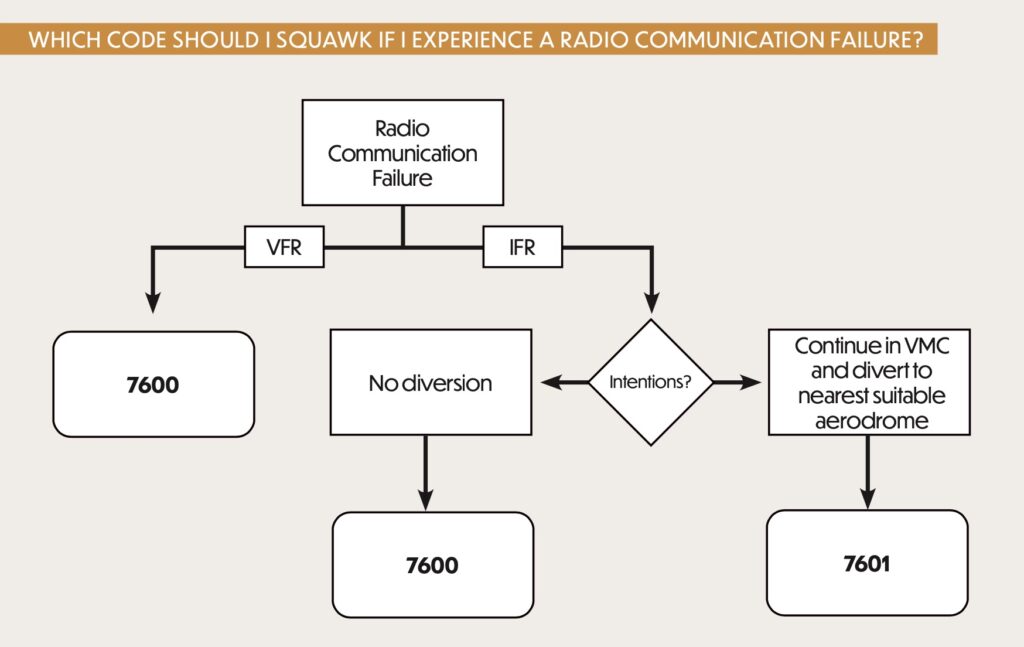
Lost comms? The new SERA rules introduce a second transponder code, and defines which one to use – depending on whether or not you’re diverting.

🟦 Squawk 7600 = Not diverting

Use 7600 if you’re flying under IFR and:

  • You’ve lost radio communication, and
  • You’re continuing with your IFR flight – even if you’re in VMC.

This means you’re sticking to the standard lost comms procedures: continue based on your last clearance, possibly to your destination or alternate, and let ATC protect that airspace.

One important change to be aware of when using the 7600 code: the old 7-minute rule in lost comms situations has been replaced. Under the updated rules, if you’re continuing under IFR after losing communications, you must now maintain your last assigned level and speed for 20 minutes (instead of 7) before taking further action under lost comms procedures. This extended buffer gives ATC more time to identify your position and protect your track.

🟩 Squawk 7601 = You ARE diverting

Use 7601 if:

  • You’re flying under IFR
  • You’ve lost comms
  • You’re in VMC, and
  • You decide to land at the nearest suitable airport instead of continuing the flight.

So 7601 is a brand-new code introduced to give ATC a clear picture of what you’re doing. Instead of guessing whether you’re continuing IFR or trying to land visually, ATC knows right away: you’re diverting to land, and they can adjust separation and support accordingly.

From the helpful PDF published by Skeyes (the Belgium air navigation service provider). Click to download.

Emergency Descent Procedure

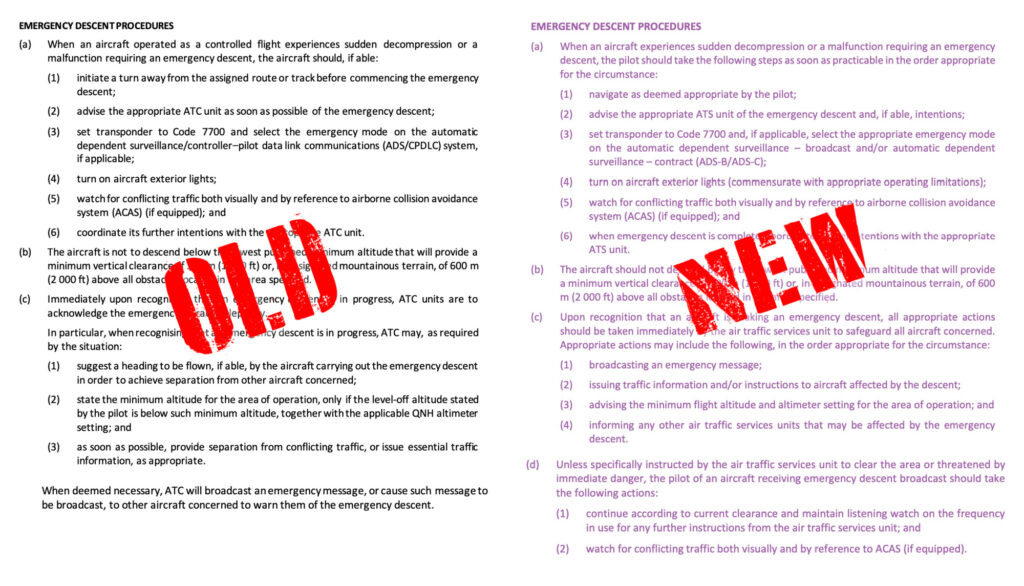
This has been updated with clearer priorities! The procedure now starts with “Navigate as deemed appropriate by the pilot” – replacing the older instruction to always turn off route before beginning the descent. So the new rule gives the pilot full discretion to navigate as needed – possibly turning, possibly descending straight ahead.

There are also some changes to what ATC should do: broadcasting an emergency message now comes first (not just “if necessary”), and there’s clearer guidance to inform other ATS units (this wasn’t explicitly stated before).

Plus some guidance on what other aircraft should do if they hear the emergency descent broadcast: keep flying their current clearance, maintain listening watch, and watch for conflicting traffic visually and with ACAS. Pretty standard stuff, but this wasn’t explicitly mentioned in the previous guidance.

Notams and AIP Updates

One issue to be aware of here – most countries won’t update their AIPs until May 15 with the next AIRAC cycle. But these new SERA rules are legally binding from May 1 and take precedence over any outdated AIP content, so you must follow the updated SERA guidance!

So far, France appears to be the only country that has issued a Notam acknowledging/warning us about the changes:

LFFF F0627/25 (Issued for LFBB LFEE LFFF LFMM LFRR) - 
APPLICATION OF THE NEW EUROPEAN REGULATION IR SERA 2024/404 
IN FORCE ON MAY 1ST, 2025 WITH THE INTRODUCTION OF POINT SERA.14083 
RELATING TO PROCEDURES IN CASE OF RADIO COMMUNICATION FAILURE. 
MODIFICATION OF RADIO FAILURE PROCEDURE : INTRODUCTION OF THE NEW 
EMERGENCY CODE 7601 AND MODIFICATION OF THE 7-MINUTE RULE TO 20 MINUTES. 
REF AIP ENR1.1. 01 MAY 00:00 2025 UNTIL PERM. CREATED: 30 APR 10:03 2025

And another issue to be aware of – some non-EU countries in Europe are not updating their rules! 

Switzerland have decided to confuse everyone by saying they won’t be implementing the 7601 code anytime soon:

LSAS A0252/25 - IFR FLT SHALL USE SSR CODE 7600 IN CASE OF RCF EVEN WHEN 
CONTINUING IN VMC TO THE NEAREST SUITABLE AD. SSR CODE 7601 AS DEFINED 
BY SERA.14083 NOT YET IMPLEMENTED. 15 MAY 00:00 2025 UNTIL 31 JAN 23:59 2026. 
CREATED: 02 MAY 10:01 2025

And the UK has published this doc saying that no changes are being made to the UK’s RCF procedures.

As the UK and Switzerland are not EU countries, they can do what they like. EU countries don’t have this option – they’re all legally required to apply new SERA rules on the effective date.

Bottom line: keep an eye out for more AIRAC/AIP updates and Notams from other European countries in the coming days as they clarify how they’re implementing the new SERA procedures!


EASA: New Ops Risks in Europe

In 2020, the industry fell off a cliff as the world went into hiding. Things in 2021 weren’t much better. Then finally last year the wheels started to turn properly again – albeit while still pushing against outdated travel restrictions, quarantine and covid testing.

It is really only this year that the brakes have well and truly been released and the industry has been allowed to return to a full gallop. So with peak summer season coming up, EASA has issued a new Safety Information Bulletin on the emerging new safety risks in Europe.

Here’s a look at some of the main ones…

The Speed of the Recovery

Business is booming, the world is travelling again, and operators are making up for lost time – cash flow has never been more welcome.

But herein lies the problem. The sheer speed at which things have started up again is a threat. The primary issue EASA identifies is that the industry just isn’t keeping up with the pace of change. We’re not managing things as well as we should. And they smell risk – with a delayed fuse…

Shortages of People and Things

There is currently a lack of qualified operational staff across the board. This isn’t just limited to pilots either – cabin crew, engineers and air traffic controllers to name a few are all in hot demand. And for the ones already employed and working, fatigue is becoming a major concern.

For new ones, lack of experience is likely to emerge more often in incident and accident reports. EASA are worried about the lack of time and resources to train them all at the pace the industry is demanding of them. The problem with this is that the safety impact may not be immediately obvious but could emerge later.

But it isn’t just people. It is the tools they use – there is a significant shortage of aircraft and the parts needed to fix them. Supply chain problems are leading to cancelled flights and maintenance delays. Carriers are increasingly turning to old and retired aircraft in storage to fill the void as order lists for new ones fill up.

Cyber Attacks

A busy and overloaded system is a vulnerable one, and this leaves aviation at risk from those who want to harm it. There have been several instances of this reported in the past months. EASA are concerned that the busy peak season may put aviation in the firing line for digital criminals who are capable of wreaking havoc on Europe’s skies.

Lack of Capacity

All of those aircraft need room in the sky and the airways system will be pushed to capacity. That means delays and difficulty securing slots, further exacerbating two major safety elephants in the room – commercial pressure, and fatigue.

Disruptive Passengers

It’s not just operational staff who feel the heat. Passengers dealing with delays, strikes or other inconveniences to their travel plans may act up.

In fact, it is a becoming a major problem worldwide. Just weeks ago IATA put out a new report showing that the number of cases of unruly pax had almost doubled year-on-year after the pandemic.

It’s Not Just Europe

EASA may have concerns for Europe, but the lessons in their bulletin apply broadly as the industry accelerates away from the nastiness of the past few years. In our enthusiasm to see better times, we need to be aware of the threats that we may be steadily introducing. And this simple document is a good place to start.

Inside it has important suggestions for what a bunch of stakeholders (including operators!) can do to start mitigating these threats now, to avoid the fallout later.


Ops in Europe vs USA: The Differences

Someone asked us what pilots can expect if they fly their plane to Europe compared to what they can expect in the US, and we suddenly thought to ourselves “Good question! What are the differences?” 

So here’s a quick rundown of some of the main ones.

Altimeter Stuff

Both countries use altimeters, and they use them in feet. Here’s a question for you – why are they not called Altifeeters? Anyway, they work the same, except for one key difference…

Europe uses millibars, which are hectopascals, sort of. They give QNH’s which sound like “one zero one three” and that is in mb (or hPa, because 1 of one is the same as the other one). The US however does it in Inches of Mercury (inHg) which means theirs sounds more like “two niner daysimal niner two”. So plenty of room right there to set wrong thing and for things to go wrong…

Europe also doesn’t use standard transition altitudes and levels. They change them all over the place, and sometimes they are really low. Which means there is room (or rather no room) for things to go wrong here too, and they do. Particularly in EINN/Shannon which we mentioned on behalf of Shannon airport right here.

CPDLC Stuff

CPDLC in the US is FANS 1/A, as it is across the NAT HLA and even into the UK. But leave those green and frosty pastures for the European Mainland and you will find yourself in a land of ATN B1 fun.

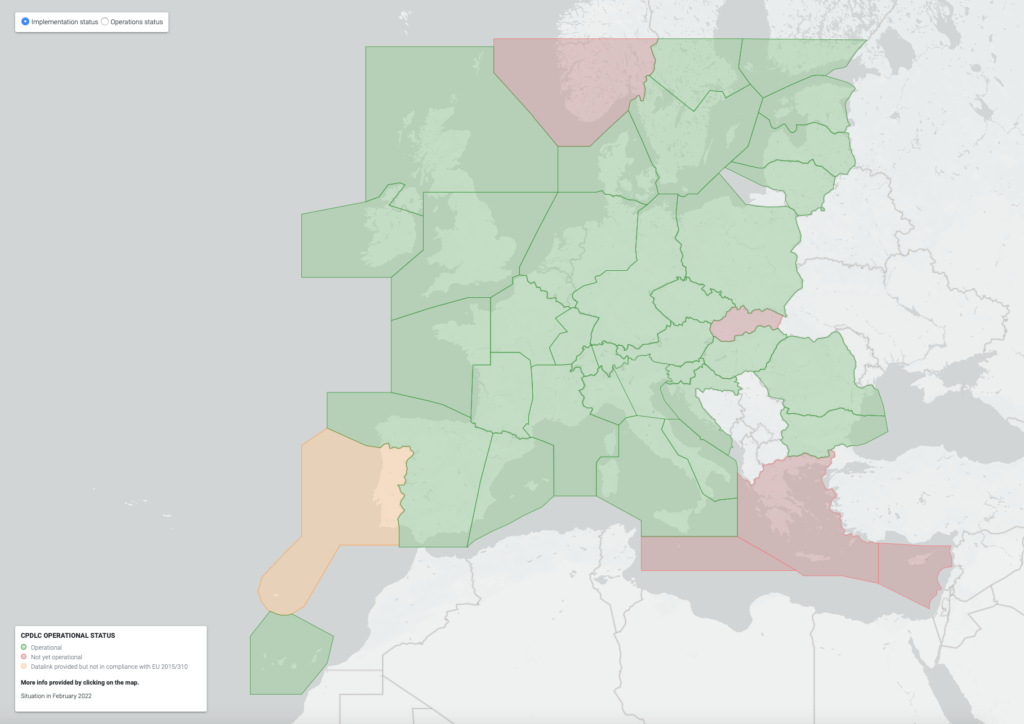
It isn’t that fun actually because your FANS equipment won’t work, and there are also a lot of rules about who needs CPDLC and at what levels. You can read about it all here, and if you click on the map in the post (or here) then you will get transported straight to an implementation table which is very handy.

There is also a thing called a Logon List in Europe, which used to be called the White List, which you need to fill out in order to register to use CPDLC in Switzerland, Germany, and Maastricht-UAC.

The US has CPDLC but has not really mandated it. They are running trials on it though, which some BizAv aircraft might be able to join in on. We recommend reading this to find out more about that.

Flight Planning

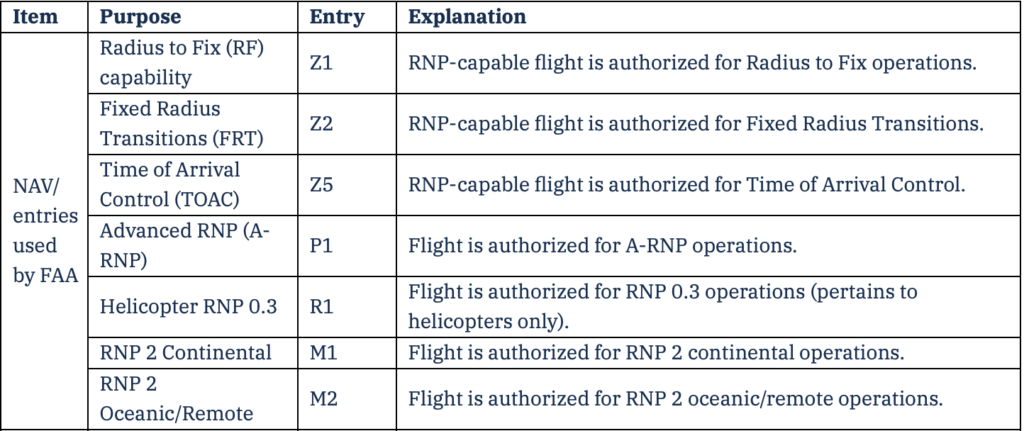
In the US, the FAA has different codes and we aren’t sure when they will become codes for using in Europe too. So your flight plan filings might be a little different.

The codes mainly apply to new RNP type stuff and they go in Item 18 of your FPL.

EU-LISA

No Comment.

Fine, EU-LISA

The currently delayed EU-LISA thing is sort of like the ESTA visa waiver stuff in the US. It is a system to allow for better monitoring and recording of people heading into Europe.

And that is all we are going say on it.

ADS-B

ADS-B privacy is a bit of a question anywhere, but in the US (in their territorial bit) you can sign up for certain stuff to make yourself less conspicuous – the LADD system, PIA etc. These won’t work in Europe.

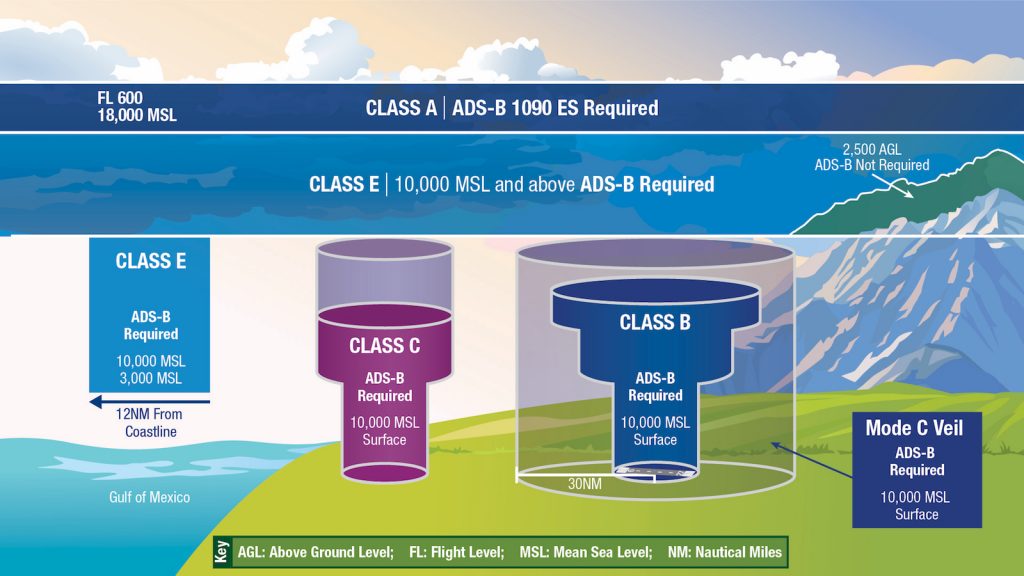
Both the US and Europe have ADS-B mandates, although they apply at different levels.

MAYDAY calls

That’s right, even these differ. Sort of.

In Europe you really need to say “MAYDAY, MAYDAY!” and when you do everyone still generally shush up, although ATC will start asking your intentions and trying to help you. You can tell them to standby if you want to.

In the US you might find you need to say “We are declaring an emergency” and might get a whole lot of questions straight after. They of course use ICAO calls (you can find the whole FAA info on that here) but occasionally (so we’re told) that this is something confirmed as well.

You can listen to an example here.

Europe also uses ‘Minimum Fuel’, which you should let ATC know about if you find yourself getting low on it (but are still fine so long as nothing else changes). They’ll help if they can, but will only properly be able to jump you in the queue if you call ‘Mayday Fuel’.

Strikes

I mean they have these both sides of the Atlantic, but they happen fairly regularly in Europe, particularly in France and Italy. If it is an airport workers type strike then your best point of call is going to be your local agent. 

If it is an ATC strike then the Eurocontrol Network Operations Portal is going to have the info on it.

While we are talking about France and ATC, it is worth noting that they generally speak French here, especially at LFPG/Paris, and it can make things confusing at times.

Strikes tend to happen over major holidays so summer is a time to watch, Christmas and Easter coming in close second and third.

Airspace Issues

First up, Europe is the continent and the UK is still part of Europe. As, actually, is Russia and also Turkey, although since they border other continents they are often thought of as part of them.

EASA is the main authority for EU countries, which means the UK is not covered by them but by the UK CAA. So where you get your permits from is different. Emissions schemes are also separate.

Eurocontrol is the main airspace manager for want of a better title. Turkey and Ukraine are both member states, Israel and Morocco are sort of semi members. That doesn’t mean you are going to get the same level of ATC standards across them all though.

Turkey has a lot of issues with GPS jamming, and it borders certain countries with major conflicts meaning areas of the southern border and border with Iraq are not always risk free. They also have disputes with Greece over certain bits of airspace which is worth knowing about because it makes the communication and radio work more complex.

Ukraine’s airspace is currently closed due to the ongoing conflict with Russia. Moldova is mostly out of bounds. Poland has some safety concerns in the regions bordering Ukraine.

As far as we know, the US airspace is all considered fairly safe although there are some local procedures and airspaces to look out for – New York and the Florida metroplex area are two which spring to mind (although there are probably others? Let us know!).

Europe, because it is loads of countries not one big one, tends to see a fair old number of military airspaces activated so Notam and AIP SUP checks are important for info on those. Major military exercises in Europe are published through the NOP. The US of course has TFRs and other restricted and danger areas which are published here.

Ramp Checks (and MELs because they sort of fit into it as well)

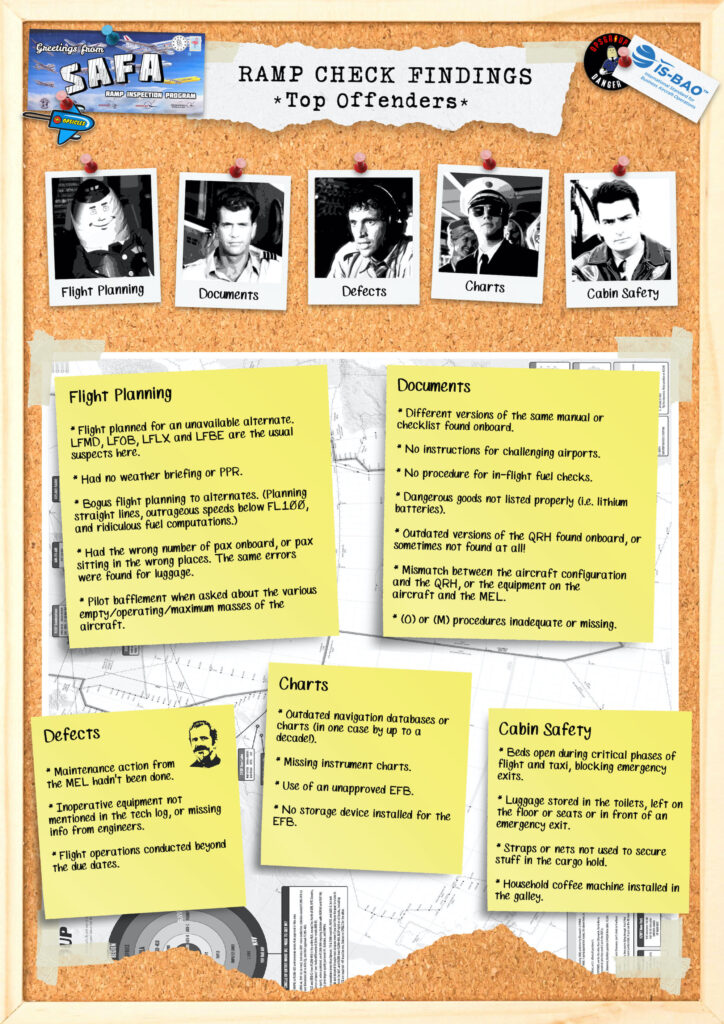
Ramp Checks are rife in Europe. We recently received intel on the main issue items in French ramp checks, but these probably apply everywhere.

One big area of difference it the MEL vs MMEL thing. In Europe an MMEL is not usually accepted – they want an MEL specific for your aircraft. That said, there are some exemptions.

General ‘vocab’

This might just be something only I struggle with, but I once had a humiliating experience flying into KIAD/Washington Dulles international where ATC asked if we “have Dulles insight?” I (pompously) informed him that no, we did not have ‘Dallas’ in sight, because we were heading for Washington.

Not used to being asked if visual, and not used to referring to airports by name got me good on that one.

And accents, ‘colloquialisms’ and of course actual differences in clearances can catch you out. There are differences in things like your arrival and descent clearances even.

In the US, in airports like KLAX/Los Angelas (an example I am familiar with) then often clear you (and there is a chance I am getting this wrong now) on the arrival which includes the descent clearance as per the arrival as well. I want to say “descend via” or maybe ‘cleared via’ (it’s a while since I’ve been there…)

Anyway, the clearance is for you to descend down to the lowest altitude on the arrival, but in Europe we don’t tend to do so without explicitly hearing the altitude.

Low Vis Stuff

OK, someone asked me to add this and I have to go get the old manuals out and look it up. In the meantime – watch out because we do stuff like RVR differently. And TERPS.

Fuel Tax, Curfews and other random things

Fuel tax is a thing in Europe, but also a thing you can attempt to claim back. In some places anyway.

A lot of European airports have curfews. It is worth knowing which countries have them so you don’t get caught out.


Big Summer Slots (a Storybook)

This summer is going to be worst ever in Europe for delays (so we’re told), which means if you’re going there you’re going to get a nasty CTOT sooner rather than later.

So rather than writing a long and helpful blog post to help you navigate the slot rules, instead we’ve put together a vacuous and infantile story book.

But, it might still help a little to figure out how NMOC (the artists formerly known as CFMU) at Eurocontrol works, how to deal with a bad slot, requesting improvement, how and when to file, and when you should or should not contact NMOC for help.

Once you’ve enjoyed (or not) storytime, be sure to scroll down for some more “adult” links to the in-depth material 😊

Click above for the PDF version (which you can also download directly).

If you prefer, try this “Book” version …


So, onto the adult version… Eurocontrol NMOC have published a really useful guide to slots this month, for the Summer of 2022. Download that here as a PDF (31 pages)

For the full bible, you want the IFPS users manual, and the ATCFM operations manual.

Do you have any other useful links or documents about European slots? Tell us! ops.team@ops.group.


Park It! A look at some of Europe’s busiest summer airports

Europe in the summer is a lovely thing. Sunshine, beaches, ice cream… and then the downside – parking restrictions!

Let’s talk about some of those known airports that always have parking problems – where they are, what your options are and anything else which we can think of that might help.

Why so tight?

We mean parking spots for private and corporate biz jets, not the swim trunks of French beaches.

Anyway, the problem is a simple one – everyone wants to go where it is nice, which means a lot of traffic converging on places which have minimal parking. Add on some summer sporting events and a few summits are it gets even tighter.

So here is a list of (some of) the places to think about in advance.

ITALY

Italy is a hugely popular tourist destination and during peak season many of its smaller airports fill up as fast as an elephant at a breakfast buffet.

In addition, some of the southern airports have been used in the past for overflow parking for the equally busy Greek airports.

Peak season is generally July through September.

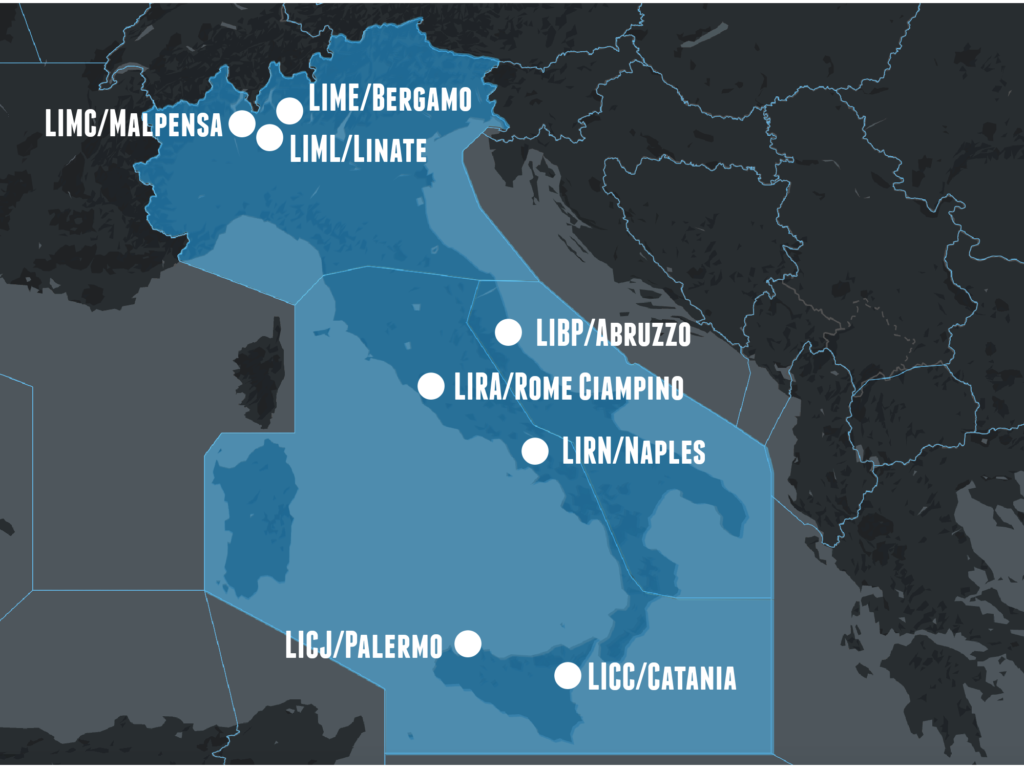
You also have the Italian Grand Prix September 9-11 to contend with. This is held at the Monza circuit (south of Lake Como) so your Milan airports, particularly LIMC/Malpensa, are going to see extra traffic around this time.

Italy have quite specific charter permit rules. For non-EU registered aircraft which are applying for the first time, or which haven’t operated in during the last two seasons, then you’re going to want to submit well in advance. It can take 20-45 days for approvals to be issued.

Naples

LIRN/Naples generally only allow turnarounds during their peak weeks – overnight parking is hard to come by.

Their traffic is predominantly international scheduled aircraft (64%), domestic scheduled (32%) and then  charter and general aviation/transits making up the last few percent. The totals have risen from just over 6000 total in 2015 to just under 11,000 (10,860) in 2019.

So this airport has seen a major increase in traffic, without a major increase in capacity ability. With Covid “ending” and everywhere opening up, 2022 might prove as busy.

Milan

Milan is generally considered a good spot for General Aviation.

LIML/Linate is Milan’s “city” airport with easiest connections into the city, while LIMC/Malpensa is the bigger but further away one (although closer to the lakes).

LIML/Linate has a dedicated GA terminal and ramp and can accept all types of aircraft, but you will need to pre-arrange parking on the local apron. During peak peak (during the Italian F1) remote areas might be utilised, and charters may be restricted to 36 hours on the ground (actually, this is across all of Italy). Hangar space is harder to come by.

Bergamo

LIME/Bergamo is also only about 40 minutes drive from the Monza track so a good one to consider if you’re heading over for the F1.

Other Airports

LICC/Catania and LIRA/Rome Ciampino also might be an issue. Check for parking availability as early as possible.

Members have suggested looking into LIBP/Abruzzo and LICJ/Palermo as reposition and parking options in previous years.

GREECE

Anywhere and everywhere in Greece seems to have parking problemos. 

Slot coordination for Greece is handled through the Hellenic Slot Coordination Authority and, we don’t want to say it, but the first half of the name should tell you what slot getting in peak season can be like here…

Here are their guidelines.

There are 17 coordinated (IATA level 3) airports which you need to get a slot for prior to operating in, and you can organise this with the coordinator at slot@hsca.gr between 0800-1600LT Mon-Fri. 

The earliest you can request a slot is 14 days in advance. Oh, but before you do that, you need to organise a PPR with the airport operator.

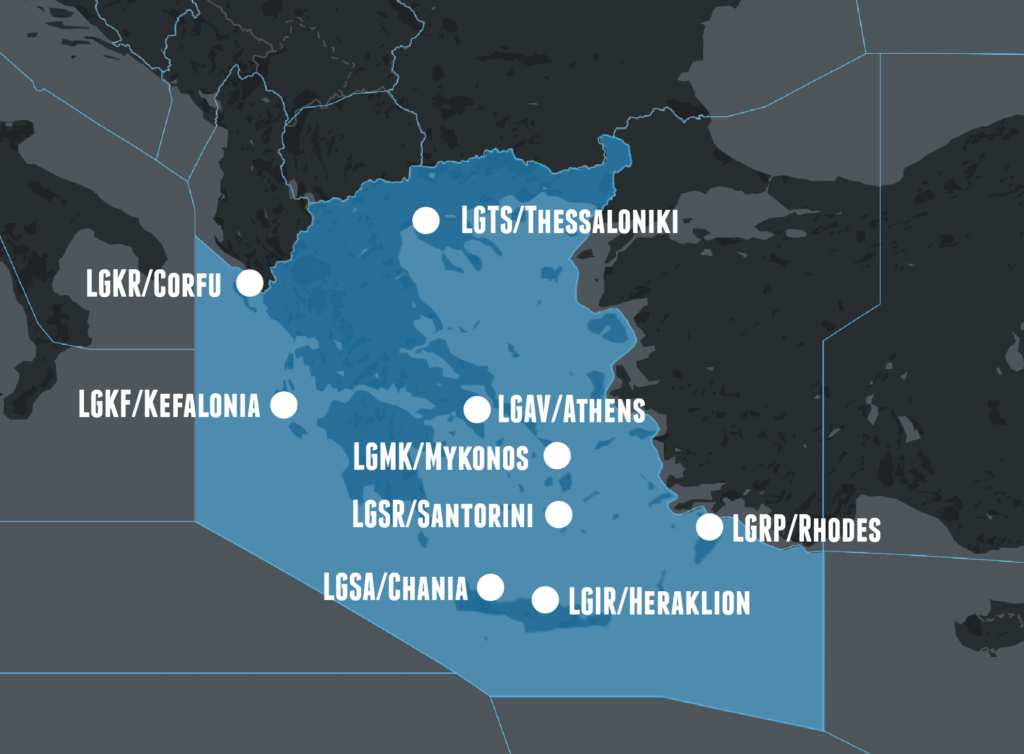
The most popular destinations (from previous years) seem to be:

  • LGSR/Santorini
  • LGMK/Mykonos
  • LGKR/Corfu
  • LGRP/Rhodes
  • LGSA/Chania
  • LGIR/Heraklion
  • LGKF/Kefalonia
  • LGTS/Thessaloniki

During peak times most of these will have a 60 minute on the ground restriction (sometimes less!) meaning you can drop and go, but not stay and park. LGRS/Santotini, LGMK/Mykonos and LGZA/Zakynthos have had this in place for the past few years so you can count on it at them.

Mykonos

Your only airport here is LGMK/Mykonos and it is small and it has very limited parking space (3 spaces available). It is also popular which means you are going to have to
a) get a slot to land and
b) probably coordinate parking somewhere else.

The slots are fought over by GA and scheduled ops, and guess who gets priority…

The GA slot requirements came in July 2015. So, you’re going to want to request a slot as early as you can (which is 14 days before because they restrict that for GA).

During peak times you will only get an hour on the ground – this is between June and September (but they have been known to extend it if the sunny weather sticks around).

So, what are the options? Well, fly somewhere else and then organise a helicopter or boat transfer. Or drop your pax off, refuel fast and then go drop the airplane somewhere else until it is needed again.

So, where can you go?

LGAV/Athens is sort of the biggest so, unsurprisingly, is one of the best option for somewhere to go park. However, Athens gets busy too. They have started to issue Notams for the peak season requiring a PPR if you wish to remain there more than 2 hours.

Your next best options are going to be Croatia or Montenegro which are not the same country (in case you hadn’t noticed). So early planning is a good plan.

SPAIN/IBIZA

Ibiza in the summer is a very busy spot.

LEIB/Ibiza is often reported as having parking issues in the summer season, while at LEBL/Barcelona you may find slot restrictions in place.

As an alternate try LEVC/Valencia.

TURKEY

Members reported cancelling trips to smaller airports like LTFE/Bodrum due to lack of overnight parking. The major airports should be able to accommodate but costs will be much higher.

Local FBOs advised there is a 3 hours max applied during busy periods. Watch out though, they may recommend flying to nearby Greek island airports to overnight instead, but you’re going to find them just as busy.

WHERE ELSE?

All the above are based off reports from members from previous years, so if we have missed one let us know!

If you have any secret spots which are good for parking please do share (although you might want to keep it a secret if it’s a really good one or everyone will be trying to use it). You can send us an email at news@ops.group.


Traffic Jam in Europe: Airspace Bottlenecks & ATC Disruption

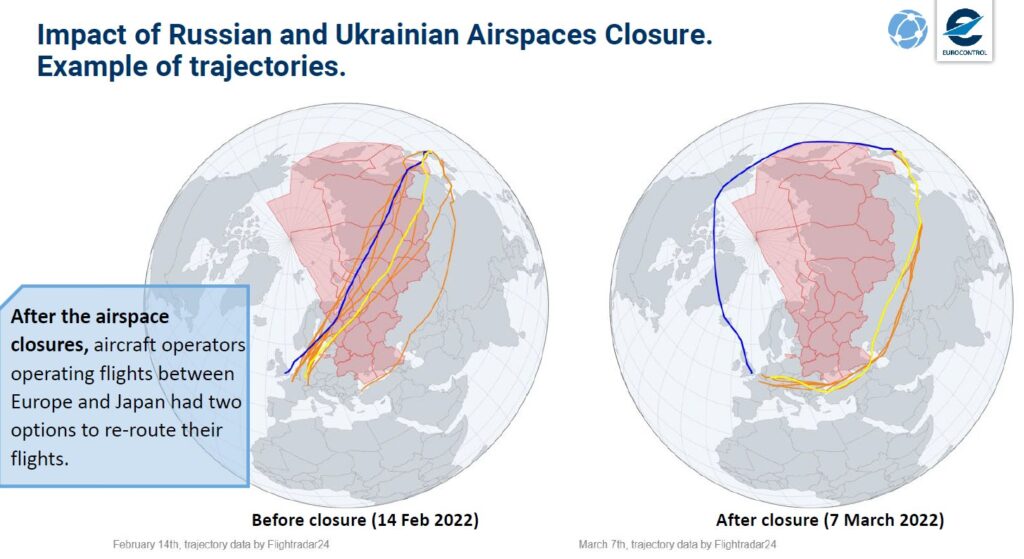
Since the Ukraine conflict began at the end of Feb, options to overfly Europe have become increasingly complicated – especially for aircraft transiting between Western Europe and the Middle East and Asia.

We’ve talked about this a couple of times already. Here’s our article with considerations for operators now looking to route around closed airspace. And here’s a follow-up report on the spillover risks near the conflict zone in Ukraine, including undetected military drone incursions and GPS interference.

But there’s another aspect we haven’t discussed yet – the impact of increased congestion in Europe and the potential for ATC disruption.

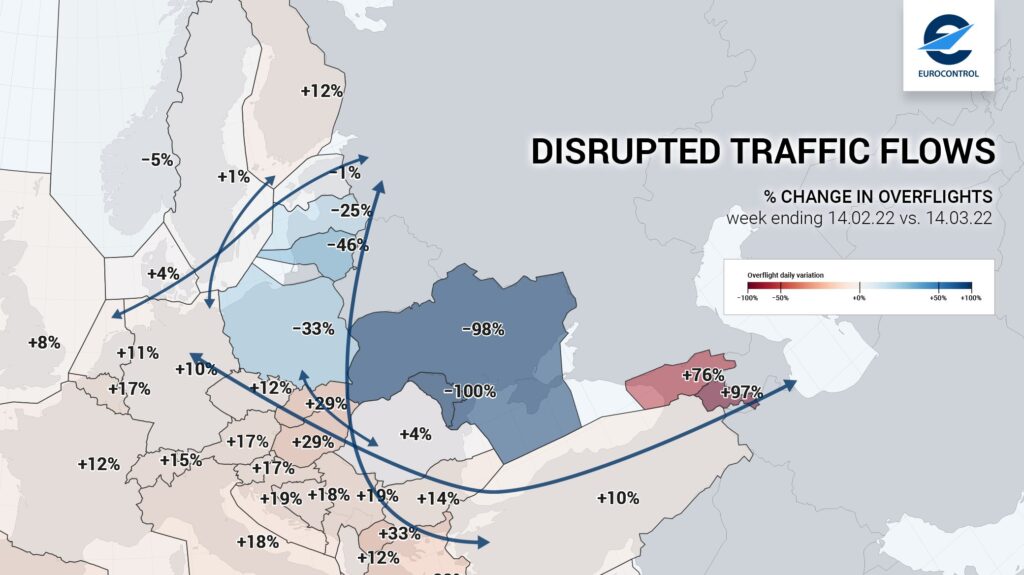
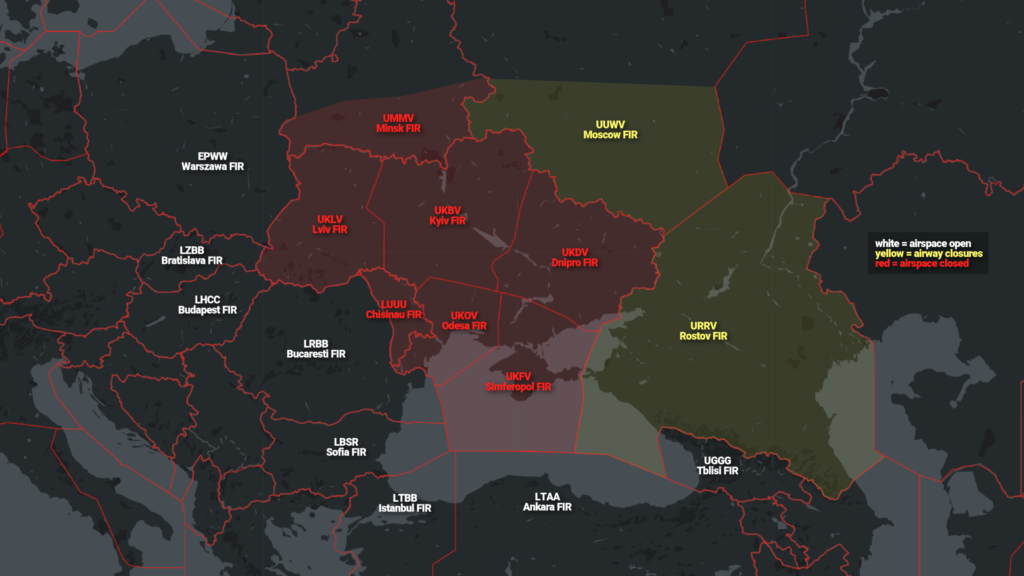
With the winter weather fading, and Covid restrictions easing up, we’re seeing a major upturn in traffic throughout Europe. But the ongoing closure of Ukrainian airspace is shifting traffic flows across the region – especially in those FIRs to the southeast of Ukraine where traffic levels have significantly increased:

On March 25, Eurocontrol hosted a webinar looking at the impact to European aviation following the airspace closures in Ukraine and surrounding regions. This webinar covered a bunch of topics – the spiralling cost of jet fuel, the increase in flight times between Europe and Asia, and the traffic forecast for the upcoming summer season:

One thing also discussed was the impact of reroutes to Polish airspace – how increased military use is causing more reroutes for civilian traffic, plus increased workload on Polish ATC as a result.

The Poland situation

Polish controllers at Warsaw ACC are currently facing a revised contract (pay cuts and changes to working conditions), which has prompted some resignations already.

The Air Traffic Controllers European Unions Coordination (ATCEUC) have reported that if an agreement is not reached soon, hundreds of flights will have to re-routed out of Polish airspace and into neighbouring states – mostly into Germany, which may not be able to handle all the extra flights.

The Germany situation

With Germany potentially receiving the lion’s share of traffic affected by ATC staff shortages in Poland, the problem simply becomes capacity. It is already extremely busy airspace. German ATC has reportedly announced that it could only handle no more than two hundred extra flights per day – just a portion of aircraft potentially re-routed from Poland.

The France situation

Major changes to ATC systems in the LFEE/Reims FIR are being rolled out on April 5.

For the first two weeks, capacity is likely to reduce by at least 50% leading to significant delays and other disruptions. This will be followed by a steady decrease in capacity reductions which will offer additional capacity at the rate of about 10% every four weeks or so, ending in ‘normal’ capacity resumption hopefully by the end of July.

The LFMM/Marseille FIR follows later this year, and then LFFF/Paris (Winter 2023/24) and LFBB/Bordeaux & LFRR/Brest (2024/25).

On March 31 at 1230z, Eurocontrol is holding a telcon to brief the impacts of this new ATC system. To dial in, call +44 2030 095710 and use the conference ID 5998424. We’ll hopefully get some more clarity during the telcon, but the current prognosis for the overall reduction in capacity and service doesn’t look good.

The perfect storm?

With all of these factors taken into account, we are likely to see unprecedented bottlenecks in the coming weeks in European airspace. All eyes are on Eurocontrol to provide operational updates and guidance via their Network Portal, which you can access here – it’s the best place to stay up to date.


Spillover Effect: New Airspace Risks in Europe

As the war in Ukraine continues, the risk to aircraft in European airspace may be changing.

There have been several incidents in recent weeks that highlight that the spillover effects of the conflict have begun putting aircraft at risk in nearby FIRs. Or in other words – busy, open airspace with no airspace warnings in effect.

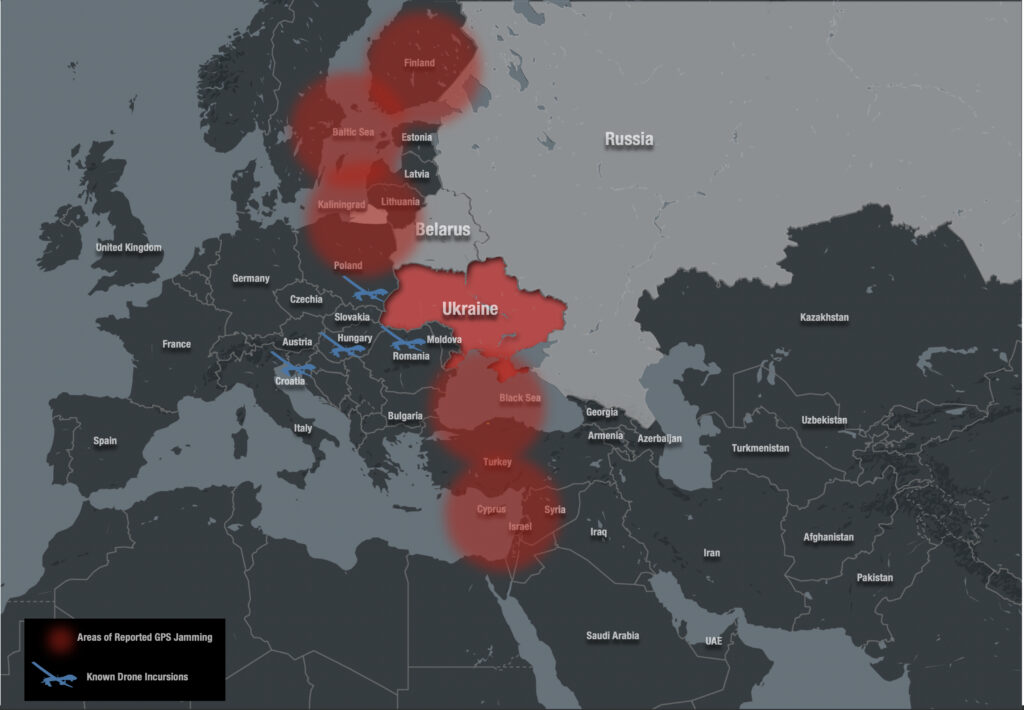
These include undetected military drone incursions in NATO member airspace and extensive GPS interference for aircraft operating across different regions of Europe.

And it is a new and emerging issue. So concerned are IFALPA and EASA, that they both published new bulletins last week to both operators and ANSPs regarding these risks.

Here’s a break-down of what you need to know.

Drone Incursions

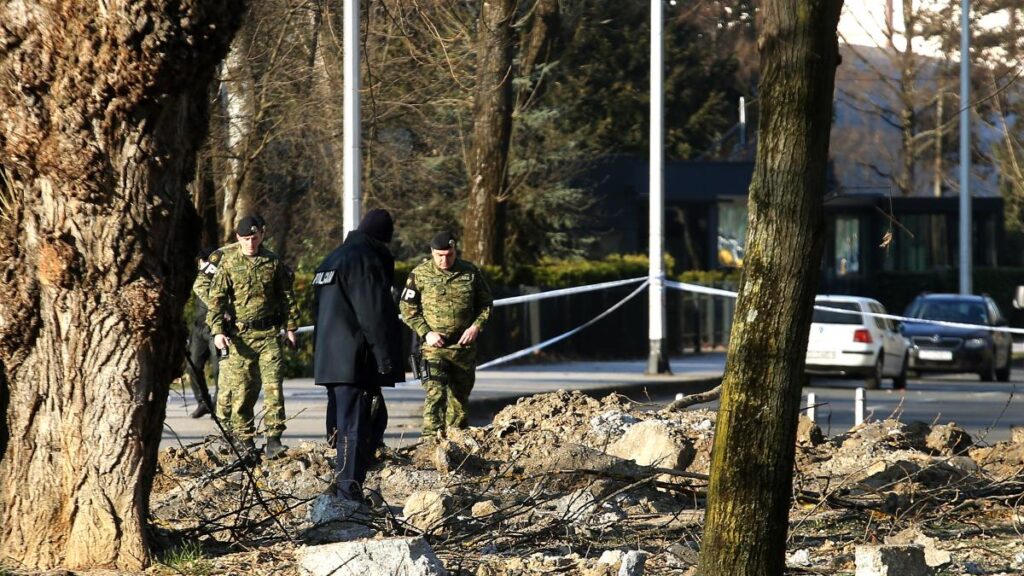
On March 12, a large weaponised military drone malfunctioned and left the Ukrainian conflict zone. It flew undetected through the airspace of Romania and Hungary, before entering Croatia and crash landing on the outskirts of the capital, Zagreb.

This was followed by an incident on March 14, where widespread reports emerged that a surveillance drone had briefly entered Polish airspace before being shot down by Ukrainian military as it re-entered their own.

Around the same time, yet more news surfaced that a Russian surveillance drone had been discovered crashed in a village of Northern Romania – the exact date of the incursion isn’t known.

IFALPA responded by issuing a Safety Bulletin on March 16. They report that these incursions are highly likely to re-occur as fighting continues. This may pose a threat to aircraft both on the ground or in the air. The risk comes from the drones themselves, as well as from air defence activities that attempt to destroy them.

This is all in addition to the political impact of Russian aircraft entering NATO member airspace without clearance. While there has been no indication that these incursions were intentional, it does increase military surveillance of the skies over these countries, including the remote risk that a civilian aircraft may be misidentified and targeted in error.

GPS Interference

Since February EASA has identified four regions near Ukraine where GPS interference has significantly increased. This includes instances of jamming and spoofing – if you’re unfamiliar with the latter, it means to deliberately introduce errors into the signal so that GPS receivers become inaccurate or erroneous.

The four hotspot regions are:

  • Kaliningrad, the Baltic Sea, and neighbouring states.
  • Eastern Finland
  • The Black Sea (a portion of which is currently part of a major air corridor between the Middle East and Europe).
  • The Eastern Mediterranean near Cyprus, Turkey, Lebanon, Syria, and Israel.

Reports have come from various phases of flights and had led to re-routing and even diversions.
For operating aircraft, the effects can be significant. A complete loss of GPS is immediately noticeable and leads to issues navigating, or carrying out ops that require RNP.

More worrying is spoofing, which can be far more insidious. Erroneous GPS signals can lead to false triggering of hard GPWS warnings, inaccurately displayed information, loss of ADS-B, faults with wind shear and terrain warnings, failure of aircraft systems that rely on GNSS for reference and even airspace busts. All nasty stuff.

On March 17, EASA published a Safety Information Bulletin on the issue. It includes a list of things that both operators and ANSPs can do to help mitigate the risks during this time. Absolutely worth a read if you’re flying in European airspace right now.

Proximity to the Fight

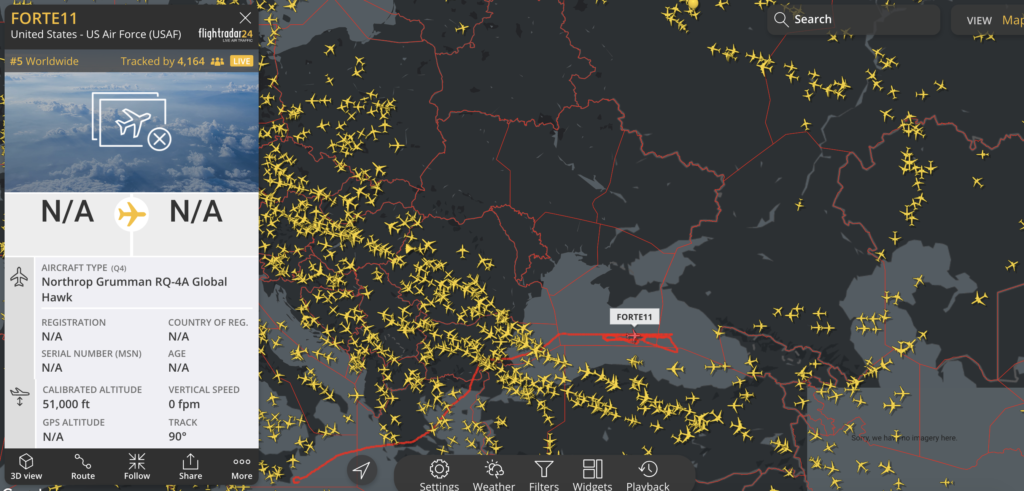
These events indicate that risk is present near the conflict zone, not just within it. And with flight tracking indicating aircraft frequenting open airways near the Ukraine border, but clear of closed airspace, perhaps we need to be collectively paying a bit more attention.

Case-in-point. On March 13, Russia carried out an air strike near the city of Lviv, in Western Ukraine where at least thirty missiles were fired towards various targets. This occurred just 15 miles (25km) from the Polish border, along with open airways that run adjacent to the border (particularly T344 and Z367).

There are currently no active airspace warnings in Poland.

Stay Updated

Both IFALPA and EASA have agreed that operators need to carry out their own risk assessments when operating in the region at the moment. That starts with verified, accurate and timely information. Make sure you keep checking safeairspace.net – our conflict zone and risk database.

And please report back to us any new info you come across (be it airspace risk related, or simply sharing your experience of a recent flight) and we can help redistribute that info back out to the group so that all are aware.

You can email us at news@ops.group, or file a report of a recent trip on our Airport Spy page here: ops.group/blog/spyreport


Europe CPDLC: The Mandate We Missed

A brief little refresher on the datalink mandate in Europe, because some of the temporary exemptions have now ended.

What actually happened?

The EU had a datalink mandate which came into force from February 2020. It applied to all aircraft operating above FL285 throughout Europe.

But, there were exemptions. Two sets in fact – one of a fairly permanent sort, and another that was only temporary. It is the temporary exemptions which have now ended.

When did this happen?

5th February 2022. And no, they haven’t extended it.

What were the exemptions?

There are two articles (you can read all this ‘officially’ here if you would like).

Basically, if you fit under Article 1 then you can get a permanent exemption. If you fit under Article 2 then you probably had (but don’t have anymore) the temporary exemption.

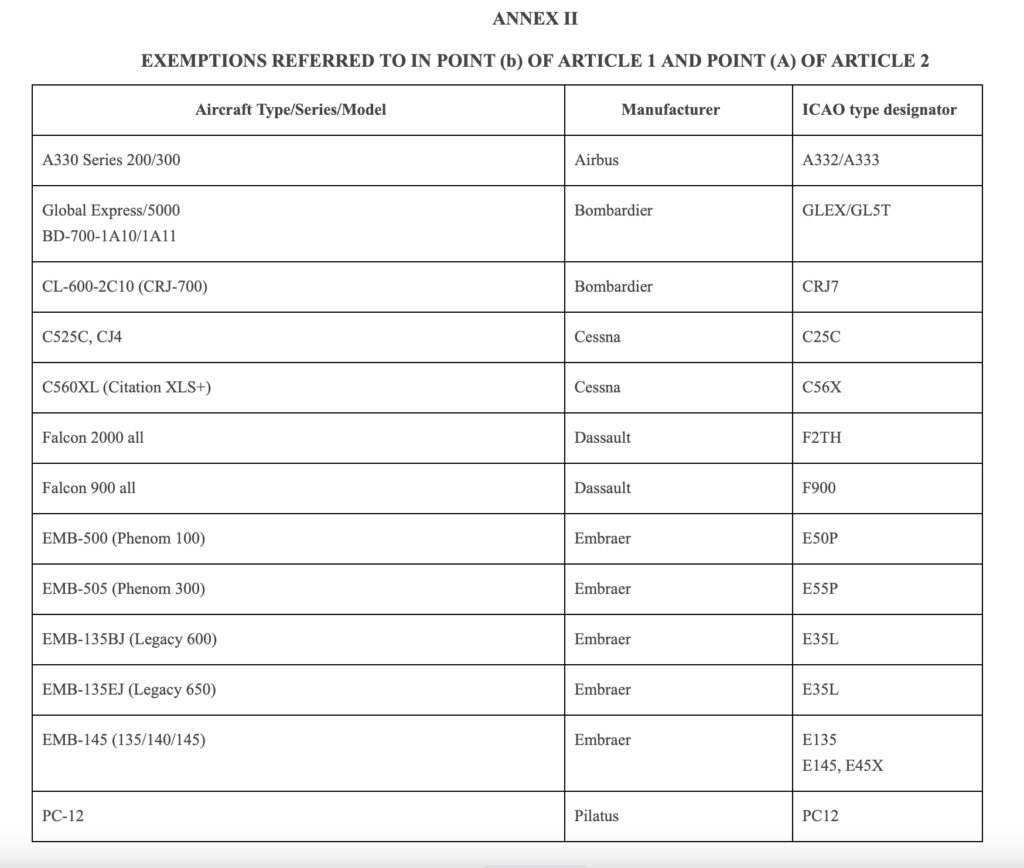
Article 1 covers all aircraft listed in Annex I, and any in Annex II whose first certificate of Airworthiness was issued prior to Feb 5 2020. Article 2 is any aircraft listed in Annex II with an airworthiness certificate issued on or after Feb 5th 2020, and any aircraft specified in Annex III.

Give it to me straight!

Ok, ok, here are the aircraft which are permanently exempt, and those which had the temporary exemption until 5 Feb 2022 to do the avionics retrofit…

Aircraft permanently exempt:

  • Aircraft in Annex I
  • Aircraft in Annex II with a CofA issued before 5 Feb 2020

Aircraft which had up to 5 Feb 2022 to do the avionics retrofit:

  • Aircraft in Annex II with a CofA issued after 5 Feb 2020
  • Aircraft in Annex III

There are a lot of aircraft listed in these annexes, but Annex II in particular contains a fair few Bizav aircraft, so we’ve whacked that in below for you to see. We mentioned how GA/BA aircraft might be exempted here, before.

So does this affect you?

See above. It depends on those criteria.

Basically, most BizAv aircraft probably do meet the requirements of Article 3(3)(d) as well, which covers aircraft with a certified maximum seating capacity of 19 passengers or less and a maximum certified take-off mass of 45 359 Kg (100 000 lbs) or less and with a first individual certificate of airworthiness issued before 5 February 2020. If they do, they are exempted permanently.

This is all really a “reminder” of what’s already happened because if you don’t already know about this, it’s too late now anyway!

Tell us more about the mandate.

Actually, rather than do that, just head here to read what we’ve written before. This covers all the info you (hopefully) need on white list logons and all that jazz.

The entire consolidated version of Commission Regulation (EC) No 29/2009 is available here for your perusal, while the EC Implementing Decision 2019/2012 is here if needed.

The FAQs

EASA have published some (fairly) useful FAQs on all things datalink and CPDLC which you can read here on their ‘Airspace Usage requirements – DLS/CPDLC’ page.

One we see a lot, is do you have to register on the ‘White List’. The answer is no, it’s not  a regulatory requirement.

One final exemption.

If your equipment is temporarily inoperative you can still continue to operate within the applicable airspace if your MEL allows, and if you tell them about it in your flight plan. You do this with a “Z” in item 10 and the indicator “DAT/CPDLCX” in item 18 of your flight plan.

A final final one – you are also exempt if it is a delivery flight.

What EASA said when we asked for clarification.

Basically what we’ve put above, but to make it extra clear, here is a quote from their response –

“The EC Implementing Decision 2019/2012 in Article 2 refers to the 5 February 2022 date. Depending on the specific aircraft type/model and the first CofA date, the aircraft were either exempted or only temporarily exempted until 5 February 2022. There is no extension to this date and no change to this Decision since it has been adopted.

On the other hand, it should be noted that most business aircraft may meet the requirements of Article 3(3)(d) of the Commission Regulation (EC) No 29/2009 referring to aircraft which have a certified maximum seating capacity of 19 passengers or less and a maximum certified take-off mass of 45 359 Kg (100 000 lbs) or less and with a first individual certificate of airworthiness issued before 5 February 2020. If this is the case, the operator’s aircraft is exempted.

So if you were exempted under the earlier Article you are still exempted. If you weren’t but fulfil the criteria in Annex I of the new article then you are permanently exempted. If you fall in the list in the new Annex of only exempted until Feb 5th, then you are no longer exempted.

Any other questions?

You can read SIB 03 2020 here. If you have any other questions, you can ask EASA directly on atm@easa.europa.eu. We asked them some things a while ago and they took a week or two to respond but were super helpful when they did.


European ADS-B Mandate Postponed

There was supposed to be a European ADS-B mandate coming in June 2020, but the deadlines are being pushed back.

Here’s the nutshell version of the amended requirements:

  • Any aircraft with a CofA from between 1995-2020 (i.e. pretty much everyone) won’t have to be fitted with ADS-B until 7th June 2023, but they will need to have a “retrofit program” established before 7th Dec 2020 (more on that below).
  • EXEMPT: Aircraft with a CofA before 1995; aircraft ceasing operations within the EU airspace prior to Oct 2025; aircraft doing maintenance or export/delivery flights.
  • One requirement that’s staying – all aircraft need to be equipped with Mode S ELS before 7th Dec 2020.

All of this has been published on the SESAR ADS-B webpage as one nice, neat little image:

On 29th April 2020, the EU approved and published these measures as Regulation 1207/2011 – the full text is available here.

And for guidance on exactly what your retrofit program should look like, check out the guidance here, as well as the FAQs here.


Most GA/BA aircraft now exempt from Europe’s 2020 Datalink Mandate

Europe’s datalink mandate takes effect today – 5th Feb 2020!

The original plan was that datalink would be required for all aircraft operating in Europe above FL285 from this date, but then the EU announced that this would not be required for several categories of aircraft, the main two being:

  • Aircraft with a certificate of airworthiness first issued before 1 Jan 2018 and fitted prior to this date with FANS 1/A.
  • Aircraft with 19 seats or less and a MTOW of 45359 kg (100000 lbs) or less, with a first individual certificate of airworthiness issued before 5 Feb 2020.

In other words – most GA/BA aircraft! (You can read the rule here – latest version in 2023).

Added to that, in early Decemebr 2019 the EU Commission approved plans to pass an additional resolution that makes a bunch of other aircraft exempt too:

Aircraft permanently exempt:

  • Aircraft in Annex I
  • Aircraft in Annex II with a CofA issued before 5 Feb 2020

Aircraft which have up to 5 Feb 2022 to do the avionics retrofit:

On Feb 3, EASA issued a Bulletin which says that operators who are exempt from the mandate should include the letter “Z” in Field 10 and the indicator “DAT/CPDLCX” in Field 18 of their flight plan. If you don’t, ATC won’t know you’re exempt, and you may struggle to fly above FL285!

Bottom line, for operators who are exempt from the mandate, these flights should not be restricted to the lower flight levels below FL285. Logged-on traffic might just get better directs and faster climbs, that’s all.

It should be noted that the Datalink Mandate is not the same thing as the Logon List. The Logon List is the thing you need to get registered on if you want to get CPDLC when flying in Maastricht, France, Switzerland and Portugal. And it only applies to ATN CPDLC aircraft. If you’ve only got FANS1/A, Maastricht will let you log on, but France, Switzerland and Portugal will not.


The Backstory…

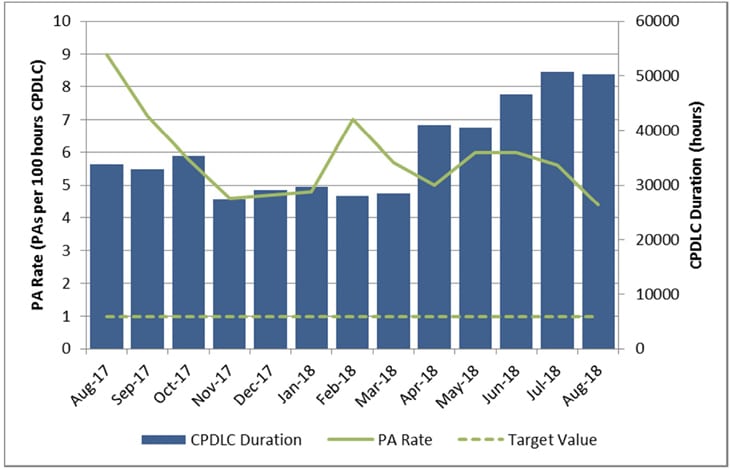
This mandate was actually supposed to come into force back in Feb 2015, but got delayed to Feb 2020 due to technical issues with the system, particularly disconnections, known as ‘provider aborts’ – which is where an aircraft loses datalink connection with the ground for more than six minutes.

The high amount of these provider aborts has led some sectors (Maastricht UAC, France, Switzerland, and Portugal) to implement the Logon List (formerly known as the “White List”), which effectively means that CPDLC is only provided to those aircraft with avionics that are known to suffer a lower provider abort rate. The Logon List only applies to ATN B1 equipped aircraft, not those with FANS1/A – Maastricht are planning to introduce a similar list for FANS1/A aircraft at some point in the future, to ensure that only aircraft that have the latency timer feature will be able to log on.

In their original postponement of the mandate back in 2015, the EU said the following:

“This excessive rate of random provider aborts causes a degradation in the network performance potentially presenting aviation safety risks by increasing the pilots and controllers’ workload and creating confusion leading to a loss of situational awareness.”

Their goal was to get the number of provider aborts down to 1 per 100 flight hours. By mid-2018, the number had dropped to a rate of 4.4 per 100 flight hours, and data from this year has that figure down to 3.9 per 100.

Added to that, they wanted to get at least 75% of flights across the network filing with datalink. Current data suggests this is still lingering at around the 40% mark. So if the datalink mandate had been implemented as planned in Feb 2020 without these new exemptions, that would have meant that approximately 60% of the traffic would have been restricted to below FL290!

As the EU make clear in their new ruling, that is ultimately why the new raft of exemptions has now been brought in, ahead of the Feb 2020 mandate:

“Acknowledging the ongoing data link implementation issues and corrective actions taken and recognising the objective that at least 75 % of the flights should be equipped with data link capability, the criteria for exemptions should be amended. Those criteria should remain effective, without placing an undue economic burden on specific operator categories which contribute significantly less to the overall number of flights. Such categories should include operators of aircraft with Future Air Navigation Systems (FANS) 1/A systems installed, operators of older aircraft, and of aircraft designed to carry 19 passengers or less.”

Ultimately, when the datalink mandate comes in on 5 Feb 2020, it now looks like most GA/BA aircraft will be exempt from this, meaning that those without CPDLC will be able to continue to operate above FL285.


Thanks to the European Business Aviation Association for their help with this article!

Article header photo by @Zelgomat


European ATC delays are up 133%

In Short: European ATC delays are on the increase, caused by staffing and capacity shortages. Monitor the Network Operations Portal and be flexible in your routing options if bad weather or capacity constraints are expected.

It’s been a great few days on a sun-soaked Mediterranean island. Your passengers are onboard, you are about to close the door, and then you get told your Calculated Take Off Time (CTOT) is an hour from now! Sound familiar? You’re not alone! ?
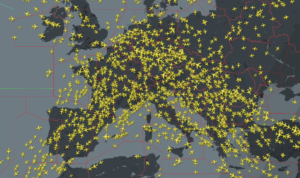
European air travel this summer is surging and about to hit maximum intensity. Problem is, the ATC system doesn’t seem to be coping, and the misery of long flight delays keeps getting worse.

Delays are up

IATA has recently reported the following:

“Data from Eurocontrol shows that in the first half of 2018, Air Traffic Management (ATM) delays more than doubled to 47,000 minutes per day, 133% more than in the same period last year. Most of these delays are caused by staffing and capacity shortages as well as other causes such as weather delays and disruptive events such as strikes. The average delay for flights delayed by air traffic control limitations reached 20 minutes in July, with the longest delay reaching 337 minutes.”
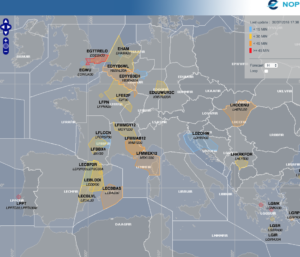
As an operator, you may be used to seeing alerts like these daily:

EDYY (Maastricht)

Several sectors regulated due to Airspace Management and ATC Staffing/Capacity.

Moderate to high delays.

LFMM (Marseille)

Several sectors regulated due to ATC Capacity/Staffing.

Moderate to high delays.

So is it a story of too many planes and not enough airspace (capacity) or just not enough controllers (staffing)?

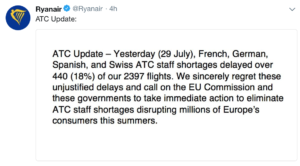
Local airlines are not impressed. Ryanair took to twitter this week calling the delays “unjustified”.

In a unusually aggressive statement IATA commented that “key ANSPs in Europe have not made needed investments in their businesses, preferring instead to make super-normal profits.”


Some of the things we recommend to keep on top of expected delays

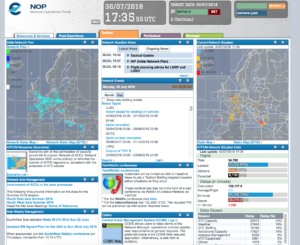
  • Review the Network Operations Portal regularly – This will assist in making operational planning decisions based on the current delays and capacity restrictions. Also keep an eye on the NOC tactical briefing for the following day which may also assist.
  • Avoid the early morning rush of departures if you can (0900z).
  • Be flexible in your routing options if bad weather or capacity constraints are expected.
  • Discuss with the local FBO for latest on-ground situation to better plan arrival and departure.
  • Monitor Opsgroup – members are always posting the latest information on recent airport and overflight experiences. Not yet a member? Go here!
  • Subscribe to our Daily Brief to get all the latest info on ATC strikes, Airport  closures, and everything else causing delays.

Got any tips or tricks on how to avoid or minimise most of these delays? Is there certain bit of airspace, airports or a time of day you’ve found that works best? Let us know!

Extra Reading:


Here’s what happens when Europe’s slot system crashes

On 3rd April 2018, a failure with the central European slot computer plunged the entire ATC system into crisis mode, with multiple knock on effects. Here’s what happened:

1. The system that allocates ATC slots to flights, and therefore manages the flow of traffic across Europe, failed at 1026 UTC. It’s called the ETFMS (Enhanced Tactical Flow Management System), but aka “The Slot Computer”

2. There is a Contingency Plan for this situation. Airports are supposed to use this, which gives a quick table of departure intervals allowed according to the destination. You can view the plan here and see what it looks like for all the main airports: http://www.eurocontrol.int/publications/network-manager-atfcm-procedural-contingency-plan

3. Some airlines reported that Istanbul, amongst others, were initially holding all departures, as local authorities were not well versed in the Contingency Plan and were unclear as to how to handle the situation. Eurocontrol then started calling round the 70 main airports to make sure they knew what they were supposed to do!

4. All flight plans filed before 1026Z were lost. Operators were instructed to re-file all their FPL’s, as well as those for the rest of the day, as Eurocontrol said they would only switch back on the slot computer once they reached a critical mass of filed flight plans in the system.

5. With the Contingency Plan in place, there was around a 10% total capacity reduction across the whole of Europe. Actual delay numbers – usually available on the NOP – were impossible to verify, because of all the missing FPL’s in the system.

6. Normally, Eurocontrol will re-address your FPL to ATC Centres outside the IFPZ. During the slot computer outage, operators had to do this manually, ie. find the FIR’s they would cross, get their AFTN addresses (like HECCZQZX), and send them their FPL.

7. The actual system failure was fixed at around 1400Z, but only went back online at around 1800Z, after it had been thoroughly tested and Eurocontrol were happy there were enough FPL’s back in the system.

In over 20 years of operation, Eurocontrol said “the ETFMS has only had one other outage which occurred in 2001. The system currently manages up to 36,000 flights a day.”


EUROPE: Third Country Operators (TCO)

A TCO is an authorization issued by EASA to any third-country operator wishing to perform commercial air transport in any of the following European countries:

  • 28 EU Member States
  • Iceland, Liechtenstein, Norway, Switzerland

Plus the following territories:

  • Gibraltar, Aland Islands, Azores, Madeira, Canary Islands, Guadeloupe, French Guiana, Martinique, Reunion, Saint-Martin, Mayotte

Applications are made directly to EASA using their application form.

https://www.easa.europa.eu/document-library/application-forms/fotco00160

You will need to provide the following documentation:

  • AOC
  • Operating Specifications
  • Insurance

Contact details for applications are made to:

European Aviation Safety Agency
Applications Handling Department
Postfach 10 12 53
D-50452 Köln
Germany

Fax: +49 (0)221 89990 ext. 4461
E-mail: tco.applications@easa.europa.eu

Should EASA deem the application in order the operating authorization process is completed in approximately 30 days.  Some flights can avoid this requirement, such as Air Ambulance or Humanitarian flights.

Please note:

  • Overflights of the above states do not require a TCO permit.
  • EU member states cannot issue a permit for their country if the operator does not already hold a TCO operating authorization.

If you plan to operate to these areas, we’d suggest getting your TCO right away, even if you don’t have a planned flight at the moment.  They can take some time to obtain.


European Ramp Checks – most popular questions from inspectors

Of late, the level of interest in OpsGroup for European Ramp Checks has been very high.  There has been a lot to think about. First, we discovered in March that French inspectors had started recording a finding for operators that were using the Manufacturer MEL instead of a customized one, and it turned out that across EASA-land inspectors were raising the same issue. There is an update on that below.

One of our members posted a great list of the most popular findings/issues raised by EASA Inspectors in the last 12 months, together with the skinny on “how to fix these, so you don’t get a finding”.

So, first let’s look at the Top 3 Categories, with the subset questions, and then an update on the D095 MMEL/MEL issue.

Popular European Ramp Check Items

Visiting and locally based aircraft may be subjected to ramp inspections as part of a States’ Safety Programme. The EU Ramp Inspection Programme (EU RIP) is one such inspection regime which currently has 48 participating states. The EU Ramp Inspectors review findings and use this intelligence as a basis for prioritising areas to inspect during a ramp check.

The most frequent findings and observations raised since January 2016 follow. This information can be used to help avoid similar findings being raised during future ramp inspections on your aircraft.

Most Frequent Findings

The main 3 categories of findings, relate to: Minimum Equipment Lists, Flight Preparation and Manuals.

1. Under the category of Minimum Equipment List, the finding is.
• MEL not fully customised.

2. Under the category of Flight Preparation, the main findings are:
• PBN Codes recorded on the flight plan which the operator did not have operational approval for
• Use of alternates which were not appropriate for the aircraft type; and
•[blur]Use of alternate airports which were closed[/blur]

[blur]3. Under the category of Manuals, the main finding is.
• AFM was not at the latest revision.[/blur]


[blur]Simple Steps to Avoid Similar Findings[/blur]

[blur]1.    Review your MEL, especially amendments made to the MEL after the initial approval, and ensure it is fully customised:
•    Where the MMEL and/or TC holders source O&M procedures require the operator to develop ‘Alternate Procedures’ or ’Required Distribution’ etc. these must be specified in the operators MEL and/or O&M procedure;[/blur]


Full report in your OpsGroup Dashboard, including the standard ramp checklist PDF:

Opsgroup Dashboard login Join OPSGROUP for access

To get the full report and checklist – there are two options:

  1. OPSGROUP Members, login to the Dashboard and find it under “Publications > Notes to Members”. All FSB content like this is included in your membership, or 
  2. Join OPSGROUP with an individual, team, or department/airline plan, and get it free on joining (along with a whole bunch of other stuff), or


Midweek Briefing 06JUL: Hong Kong capacity problems, Iceland: The fun continues

Hong Kong capacity problems 06JUL During this year, the Hong Kong CAA has issued a couple of warnings to operators to stick carefully to their allocated slots, but it’s not making much of a difference to operations there. Read the article.

Iceland: The fun continues 06JUL Last week there were some really positive indications that the ATC strike in Iceland was coming to an end, but it’s now worse than ever, with Westbound, Eastbound, and landing traffic all affected. Read the article.


HECC/Cairo FIR A restriction exists for traffic to and from the Amman FIR, so if overflying Jordan and then Egypt, or vice versa, you can only use the waypoint METSA.

OMAE/Emirates FIR has some updated peak times. Departures need a slot between 0630-0730Z and 1700-0000Z. Arrivals will be spaced 5 mins apart during these times also, as will aircraft entering the OMAE FIR from nearby airports like Muscat, Isa, and Baghdad.

EIDW/Dublin Runway 10/28 is closed overnight until 09JUL.

OERK/Riyadh, Saudi Arabia will be hosting the ‘Global Ministerial Aviation Summit’ 29AUG-31AUG. 55 different ministers from various countries are expected to be in attendance. Be aware of potential restrictions leading up to and after the event.

CYFB/Iqaluit Another NAT alternate favourite, CYFB has some runway closures throughout July.

EGCC/Manchester is doing some work on 05L/23R overnight until 08JUL and has advised operators to carry some extra gas due possibility of holding.

LOWW/Vienna has published a helpful list of rush hour periods – worth avoiding these times as holding is common at VIE. The times are: 0530-0750, 0920-1030, 1140-1240, 1340-1500, 1615-1800, and 1840-1940Z.

BIZZ/Iceland Despite optimistic reports of a resolution to the ATC dispute in Iceland last week, the situation remains unresolved. Last night BIRD Oceanic was closed to most Eastbound traffic once again, as was BIKF. A new addition to restrictions is a closure to many Westbound flights on Wednesday 06JUL – “DUE TO STAFF SHORTAGE IN REYKJAVIK OACC WESTBOUND TFC PLANNING TO ENTER BIRD FROM ENSV VIA GUNPA,VALDI, IPTON, INGAL, ISVIG AND EGPX VIA LIRKI, GONUT, OLKER, MATIK AND RATSU AND THEN PROCEEDING INTO EGGX OR CZQX SHALL REMAIN SOUTH OF BIRD CTA” Read the article.

EDYY/Maastricht ATC have requested crews operating through the Maastricht UIR to log on to CPDLC EDYY, if you have datalink. While voice remains the primary comms method, you might get an uplink message if the frequency is busy – it’s not a test, you should confirm – most of these uplinks are likely to be frequency changes.

EPZZ/Poland has advised operators to check carefully whether permission is required in advance of operations at airports other than EPWW/Warsaw. Many countries including Poland have reinstated Border Controls within the Schengen zone. Best advice is to treat each country as having full Border Controls for the moment (so think Passport, GenDec, etc.)

SPIM/Lima FIR (Note that the airport is now SPJC, distinct from the FIR code) is shutting down airway UG427 after 21JUL.

SUEO/Montevideo ACC (Uruguay) has some comms issues in it’s airspace, and has advised of some extreme spacing between aircraft irrespective of FL – 40nm. For now, this ends today (06JUL) but may happen again.

WSZZ/Singapore Qualifying citizens of Singapore are now eligible to apply for US Global Entry membership – and benefit from expedited entry to the United States at designated airports. Similarly, qualified U.S. citizens are eligible for enrolment in Singapore’s enhanced-Immigration Automated Clearance System (eIACS).

ZMUB/Ulaanbaatar, Mongolia is downgraded to RFF Cat 7 until 10JUL. Also, from 12-16JUL, you can’t file this as an alternate which may limit your options somewhat.

LFPG/Paris due to maintenance on the ILS for Runway 08L/26R from 18JUL to 02OCT. The only approaches that will be available will be RNAV based procedures (LNAV/VNAV, LPV, LNAV) and VOR/DME.

GQNN/Nouakchott, Mauritania has moved to a new international airport this June. Located approximately 10nm north of the city, it has an annual passenger capacity of 2 million. Infrastructure from the capital’s old airport was transported to the new one.

SECU/Cuenca Following the landing incident on 28APR of an E190, all inbound flights will be reportedly be held if the runway is wet – until end of August.

LFMH/St Etiennee Fuel outage on 07JUL, 0800-1100 UTC.

Canada/Mexico From 01DEC2016, Mexican nationals will be able to travel to Canada without a visa for business and tourism for up to 90 days.

Turkey/Russia Russia has lifted the travel restrictions on tourists between the two countries. The ban was put in place following the downing of a Russian military aircraft last year.

Bangladesh Germany, Australia and the U.K. have banned direct cargo flights from Bangladesh due to security concerns.

Israel/China The Israeli parliament has ratified a multiple-entry visa agreement with China, under which Chinese business visitors and tourists can enter Israel multiple times with the same ten-year visa and vice versa.

EZZZ/Europe the European Union updated Air Safety list (aka the Airline Blacklist) on 17JUN, and lifted a ban on Zambian air carriers.

Uganda Introduction of ‘e-visa’ system. You must show a valid yellow fever vaccination certificate on arrival.

ZJSA/Sanya FIR, China has an ADS-B trial up and running on L642 and M771. Radar is still the primary separation tool, but ATC ask that you check your Flight ID matches your FPL.

View the full International Bulletin 06JUL2016


Summer of ATC Strikes: This weeks update

European Air Traffic Controllers are striking in a fight against changes emanating from labour reform and the Single European Sky initiative. Curiously, Greece – normally a big fan of ATC strikes during the summer – has remained off the radar.

Here’s the latest, and it’s a growing list:

France
– Ongoing ATC Strikes – the latest ended on 06JUL at 0400Z. Nothing else on the horizon – for now.
– French overseas territories are also included in these strikes – so Tahiti, New Caledonia, Martinique, Guadeloupe have all joined in the action when it takes place.

Italy
– Strike announced for 23JUL, affecting Area Control Centre’s and Airports in Italy. Normally Italian strikes permit overflying traffic without restriction.

Iceland
– Ongoing sporadic strike action affecting BIKF, BIRK airports, and BIRD Oceanic FIR. Occasional entire closures of the airspace except for Emergency and scheduled flights. Eastbound Traffic from the US/Canada to Europe not accepted during these closures unless destination is in Scandinavia, the Baltics, or Russia.
– Since first week of July, westbound traffic is also not accepted in BIRD during strike periods. Check BIRD Notams.

Portugal
– Strikes announced for every Friday in July were cancelled last week

We’ll keep this page updated as we get updates.


Rules revised: SAFA Ramp Checks for ‘Suspect Aircraft’

01JUN: EASA have published new guidelines for inspectors to assess which aircraft should be prioritised for SAFA ramp checks in Europe and SAFA compliant states. ARO.RAMP.100(b) in the Part-ARO contains the updated list of aircraft that will be selected for priority checking:

(a) (when EASA receive) information regarding poor maintenance of, or obvious damage or defects to an aircraft;

(b) reports that an aircraft has performed abnormal manoeuvres that give rise to serious safety concerns in the airspace of a Member State;

(c) a previous ramp inspection that has revealed deficiencies indicating that the aircraft does not comply with the applicable requirements and where the competent authority suspects that these deficiencies have not been corrected;

(d) previous lists, referred to in ARO.RAMP.105, indicating that the operator or the State of the operator has been suspected of non-compliance;

(e) evidence that the State in which an aircraft is registered is not exercising proper safety oversight; or

(f) concerns about the operator of the aircraft that have arisen from occurrence reporting information and non-compliance recorded in a ramp inspection report on any other aircraft used by that operator;

(g) information received from EASA Third-Country Operator (TCO) monitoring activities;

(h) any relevant information collected pursuant to ARO.RAMP.110. (“whistleblowers”)


The revised Part-ARO, issued in May 2016, contains a large number of revisions and operators should take a close look at the changes.

For a general guide to SAFA Ramp Checks, have a look at our other article: Avoiding the Pain of a Ramp Check.

References:


Midweek Briefing 25MAY: Cairo airspace -GPS jamming, Australia: new RNP rules (again)

Cairo airspace – GPS jamming 25MAY Egypt notified operators yesterday that GPS jamming is a concern to HECA/Cairo arrivals and overflights, and warned against conducting RNP/RNAV arrivals or approaches. Read the article.

Australia: new RNP rules (again) 25MAY A last minute relaxation by CASA has exempted Foreign private operators from having to be RNP2 compliant, ahead of many Navaids being switched off on Thursday. Foreign Commercial operators have a two year window to comply. Read the article.


LFZZ/France A French national strike is being called for on 26MAY by the DNSA. French Strike Regulation plan will be applied from 26/0400 UTC to 27/0400 UTC. Monitor NOP.

NTAA/Tahiti may not have fuel available from 25-28MAY due to strike action.

KZMA/Miami FIR A Falcon 9 rocket is set for launch from Cape Canaveral on 26MAY, a 2-hour launch window opens at 2140Z. 27MAY is the back-up day for the launch. Check KZMA/KZJX FIR NOTAM’s for restrictions.

VECF/Kolkata has updated SATCOM and local phone numbers: Kolkata Oceanic is at 441921 or 00870762092876 and Area Control is at 441902 or 00913325119520. The Satcom numbers are routed through the public telephone system.

EBLG/Liege Not available from 1530-2000 due to Staffing issues (which may recur later in the week).

MZZZ/Mexico A new law in Mexico expands the business, tourist and transit visa exemption for up to 180 days to visa nationals with a Canadian, Japanese, Schengen or UK visa, effective immediately, and to visa nationals who are permanent residents of Chile, Colombia or Peru effective July 1. APEC Business Travel Card (ABTC) holders, certain airplane crew members remain eligible for this exemption.

MROC/San Jose On 21MAY Mount Turrialba erupted. The volcano is located approximately 30NM west of MROC. Some flights were cancelled in response to the eruption. Please monitor the Washington VAAC for further advisories.

EZZZ/Europe Eurocontrol has confirmed the date of 01JAN18 for all aircraft to be 8.33 kHz compliant. Currently 8.33 kHz is required only above FL195 but as of 01JAN18 it will be required below FL195 to the surface. Europe has an ongoing shortage of voice communication frequencies.

KZZZ/USA The U.S. Department of Transport has banned e-cigarettes from checked airline baggage over fire risks. This includes both passengers and flight crew.

USHH/Khanty-Mansiysk is closed until 30MAY at 1500Z due to the runway being repaired.

FACA/Cape Town FIR CPDLC/ADS-C is not available until 31MAY.

LLLL/Tel Aviv FIR has updated their security procedures for entering the the LLLL FIR. Please see AIC 2/16.

VGEG/Chittagong Flight operations at Chittagong airport have resumed after suspension due to cyclone Roanu.

OPZZ/Pakistan has issued AIC 03/16 covering NAVAID outages due to scheduled maintenance until June.

NZQN/Queenstown New Zealands most challenging airport is now open for night traffic but only for airlines that meet CAA approval to operate to very specific RNP procedures. The first are Air New Zealand and Jetstar.

View the full International Bulletin 25MAY2016


Midweek Briefing 18MAY: Brazil Airspace changes for Olympics, Increase in Fake Nav Charges

Brazil Airspace changes for Olympics 18MAY A number of airspace changes, and specific procedures for aircrew and ATC, have been created for Brazil in advance of the 2016 Olympic Games, which start on 05AUG. Read the article.

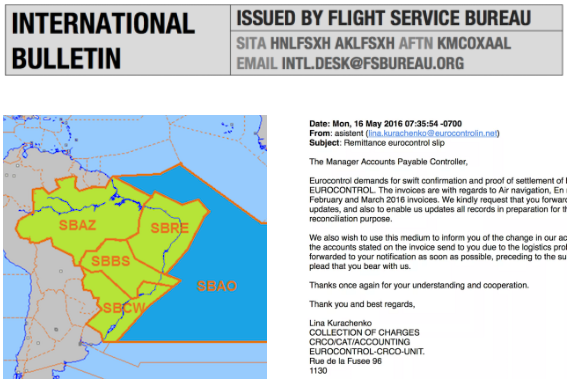
Increase in Fake Nav Charges 18MAY We’ve seen an increasing variety of bogus emails, that at first glance look like they are from Eurocontrol – but aren’t. It’s a concern: instead of sending your Nav Fees payment to Eurocontrol, you’ve actually sent it to a suburb of Lagos. Read the article.


LFZZ/France A French national call to strike is planned for 19MAY. Several public service unions have echoed this call, including USAC-CGT for the DGAC. Please check the NOP Portal for the latest advisories.

BIKF/Keflavik Closures here and in BIRD/Reykjavik Oceanic airspace continue due to ATC Industrial action. Plan all flights to or within Icelandic airspace with caution. Iceland strike continues … Read Full Article.

UIBB/Bratsk has multiple new restrictions of ATC hours, RFF categories, and availability as alternate. Check A1923.

PLCH/Christmas Island will not supply JetA1 to non-scheduled flights, shortage until 26MAY. Landing permits are now required at least three days prior, and can be obtained via email at cal02@mcttd.gov.ki.

EGLL/London Heathrow will have an emergency exercise on 21MAY. If you see smoke or fire, it’s most likely from there.

N90/New York Airports The FAA has withdrawn its proposed slot program which was extremely restrictive to non-scheduled operators. The FAA is withdrawing the NPRM to allow for further evaluation of these changes.

KZZZ/United States the FAA has updated it’s list of Critical DME’s. When these critical DME’s are not available, it results in navigation service which is not sufficient for DME/DME/IRU operations along all or portions of a specific route or procedure. This is mainly an issue for Non-GPS equipped aircraft.

CYUL/Montreal has added a new International wing to the terminal as of 12MAY. The 65,620-square-foot expansion includes 8,611 square feet of additional retail space and six new boarding gates.

SOOO/Cayenne FIR issued NOTAM A0141/16 advising that the due to the SOCA CPDLC system trail, datalink connection may be lost. If unable to communicate by CPDLC then they advise to contact SOOO or SOCA VIA normal HF frequencies until 24JUN.

North Atlantic The London Met Office has issued it’s North Atlantic tropical storm seasonal forecast for 2016.

EZZZ/Europe an annual large scale military exercise called “NATO Tiger Meet 2016” will be held from 16MAY to 27MAY in Spain. NOTAMs LE D1109/16 and D1272/16 have been issued along with a map detailing the area.

LOWW/Vienna has introduced 2 new RNP(AR) approaches RNAV (RNP) N RWY 16 and RNAV (RNP) E RWY 16. The Austrian AIS has issued AIC A 5/16 covering the additions.

LKPR/Prague officials stated that they are working to assess the security at LKPR as they begin to implement the government’s security recommendations. The measures, including face recognition technology, should be fully introduced within 12 to 18 months. Security has increased in response to the attacks in Brussels. Heavily armed soldiers continue to patrol LKPR.

Arabian Peninsula on 11MAY the Centre for Disease Control CDC issued an Alert Level 2 for MERS in the Arabian Peninsula.

NZZC/Christchurch FIR has issued NOTAM B2740/16 advising of recent activity for Volcano Mount Ruapehu. No current eruption but concern for increased likelihood of eruption exists.

FHSH/St. Helena has received its certification to begin commercial flight operations. An 1850 meter runway, a 3500 sq m airport terminal and other associated infrastructure, such as access roads, bulk fuel installations, water supplies and aerodrome ground lighting have been installed and are ready for operational use. However – concerns remain about windshear which is currently delaying acceptance of traffic.

HKZZ/Kenya The U.S filed an advisory with IATA stating that Kenyan airspace is unsafe due to a possibility of extremist or militant activity within Kenyan airspace as Al Shabaab has demonstrated the capability and intent to conduct terrorist attacks in Kenya targeting, among others, US/Western interests including aviation interests.

EGPX/Scottish Scottish Control is changing to a new ATC system this week: expect airspace restrictions. ATC advises a fundamental level of change in the method of operation within Scottish Upper Airspace will result. There is no change to the Oceanic Operation, and Domestic CPDLC will be available at all times from 17MAY.

CYMM/Fort McMurray, Canada remains closed due to Forest Fires; only emergency and evacuation flights are allowed.

EHZZ/Amsterdam FIR The Netherlands has revised procedures for obtaining Special Permission for overflying or landing aircraft on delivery, ferry flights, or other circumstances where a normal Certificate of Airworthiness is not in place. Read the article. Questions should be directed to our ferry team at service@fsbureau.org.

View the full International Bulletin 18MAY2016


Midweek Briefing 04MAY: New US CBP Airport, Iceland ATC Strike continues

New US CBP Airport 04MAY A new US Customs facility opened in KMTH/Marathon on 20APR, to facilitate increased traffic to Cuba. Read the article.

Iceland ATC Strike continues 04MAY Icelandic controllers are in a pay dispute with Isavia, leading to multiple strike actions at BIKF/Keflavik and BIRK/Reykjavik. Last week BIKF was closed overnight at short notice. Read the article.


EHAM/Amsterdam and other Dutch airports will observe a two minute silence on ATC frequencies today, 04MAY, from 1800-1803Z. ATC will arrange traffic flow so that no aircraft will land or taxi during this period, meaning likely delays, albeit for a short period.

SECU/Cuenca, Ecuador remains closed after an E190 slid off the main runway on 29APR, latest estimate is no reopening before 06MAY.

CZZZ/Canada Visa-exempt foreign nationals can enter and exit Canada by air without an Electronic Travel Authorization until 29SEP2016. After that date, these travelers will need to obtain online authorization to visit.

BIZZ/Iceland Multiple ATC Strike actions for BIRK and BIKF are ongoing, check NOTAMS and with handler for latest. Read article.

TFFR/Guadeloupe has ongoing main runway closures due to WIP, current shown are 04MAY 0200-1015Z, 17MAY 1000Z- 18MAY 1600Z. Only helicopters will be allowed to operate during these periods.

UIBB/Bratsk has a fuel shortage until 31MAY, non-scheduled movements are by PPR only.

NWWW/Tontouta has an ATC staff shortage and requires slots for arrival until 31MAY, Tel +687 352437. Work on 11/29 is also ongoing, check NOTAMS for any current outages, which will close the airport.

EGGX/Shanwick is trialling transferring westbound flights direct to a HF frequency rather than via an initial VHF frequency, using CPDLC. The default frequencies will be HF 5649 H24, 2872 0000-0900 and 1800-2400, and 8879 0900-2100.

PAZA/Anchorage has published new procedures Eff 28APR for User Preferred Routes within the PAZA FIR, refer A0075/16.

SVZZ/Venezuela changed timezones on 01MAY to UTC-4. In addition, all public offices, including public ministries, will only operate on Mondays and Tuesdays until further notice.

TTZP/Piarco FIR is trialing ADS-C and CPDLC with ident TTZP until 31MAY. Flights entering the FIR east of 57W should log on 15 minutes prior to the boundary with TTZP.

UHSS/Yuzhno has advised that B777 aircraft are limited to 310T during the summer period.

UIAA/Chita is only available as alternate for one specific airline (Aurora) between 0930-2100Z. Outside these times ops normal.

WSZZ/Singapore has introduced a fingerprint clearance system to verify the thumbprints of arriving and departing travelers ages six and above at select immigration checkpoints. The system will be progressively implemented starting at the manned immigration counters of sea and land checkpoints, followed by air checkpoints until full implementation is completed in the months ahead. Travelers should be prepared for slightly longer immigration clearance times at manned checkpoints, especially during the initial implementation stage of the project.

YZZZ/Australia Border Force employees have been banned from taking industrial action at airports for three months; the threat of ongoing strike action caused much concern for operations in March.

RJTT/Haneda the airport authority has changed the number of slots available for general aviation aircraft. Effective 25APR, slots for GA during the daytime (0600-2259 local) will be increased to 16 total for arrival and departure (from eight in the past). Note that there are no slots restrictions for night time operations (2300-0559 local).

CYVR/Vancouver will have one of its main runways 08R/26L closed nightly between the hours of 05-13Z 08MAY-02SEPT for construction. During the day (13-05Z) the runway will have the ILS on 08R/26L out of service, along with no approach lighting on runway 26L.

SLZZ/Bolivia Certain medications prescribed for personal use are treated as narcotics in Bolivia, with severe penalties for import or export without a valid prescription from a doctor; make sure you carry a letter from a doctor describing the medical condition and any prescribed drugs and that they are in their original containers and clearly labelled.

EBBR/Brussels has partially reopened the departure hall, which has remained closed since 22MAR. 110 Check-in counters will be open in the airport departure hall along with an additional 36 counters that are housed in temporary buildings. The EBBR airport authority expects this will bring the airport up to 80% of capacity.

EZZZ/Europe Bulgaria, Turkey and Romania will begin a project to interface their ATC systems so they can handle a significant build-up of airspace traffic in the Black Sea area. New routes are expected by mid 2016.

LEZZ/Spain The Spanish F1 Grand Prix is being held from 13MAY-15MAY and will bring heavier than normal traffic to LEBL/Barcelona and LEGE/Girona.

HEZZ/Egypt Individual travellers will in the future require a visa before entering Egypt. The exact date of the implementation of this rule is not yet determined. The visa must be applied for from the Egyptian embassy and the consulate generals before departure.

GVZZ/Cape Verde Aviation officials issued a statement announcing that national airports are open and operational. The statement was released following reports that flight operations had been suspended at the country’s airports.

ORZZ/Iraq Iran canceled all flights to Baghdad following a breach of the International Area by protesters on 30APR. The demonstrations have caused problems for pilgrimage flights to Baghdad, and those flights will operate instead to ORNI/Najaf.

VIDP/Delhi has opened a new ATC tower (which is the country’s tallest at 60 metres). VIDP will also be starting construction on a 4th runway this year and is expected to be completed by 2018 which will increase the airport arrival rate to 105 landings an hour, and will mitigate the common airborne holding.

View the full International Bulletin for 04MAY 2016


Midweek Briefing 27APR: Rome Airport Closures, Strike: Germany, France

Rome Airport Closures 27APR Private flights (any non-commercial traffic) will not be allowed to operate to or from LIRA or LIRF on 30APR and 01MAY, as the result of a Papal Restriction. Refer to Italian NOTAMs for details.

Strike: Germany, France 27APR Widespread, mostly without notice, strike action across Europe today affecting operations for the coming few days. France and Germany worst affected (EDDF, EDDM, EDDK in particular); Lufthansa has cancelled all domestic flights. Monitor Eurocontrol NOP for latest.


KLAX/Los Angeles Due to a runway and taxiway construction project at LAX, arrivals (mostly general aviation) from the north and west can expect to be routed to arrive on the south side of the airport via the LEENA FIVE STAR between 09MAY and 06AUG.

KTPA/Tampa Due to an unforeseen required runway repair, TPA has closed 01R/19L and 10/28 until 09MAY. The airport is operating under single runway ops so you can expect ATC delays until the runway is fixed.

KDEN/Denver has opened a new train line that connects the airport to downtown. Named the ‘A Line’, it will take passengers to downtown in 37 minutes and cost $9 USD each way.

MKJS/Montego Bay increased traffic and possible delays into and out of MBJ 27APR-29APR due to the Airports Council International Convention.

SEZZ/Ecuador As of 23APR, 654 people have been killed, 113 people have been rescued alive, 58 people remain missing, and more than 25,000 remain displaced as a result of the 7.8 magnitude earthquake that struck off the coast of Ecuador on 16APR.

LZBB/Bratislava will be introducing free route airspace in their FIR above FL245 on 28APR. All ATS routes have been withdrawn above this flight level.

MTPP/Port au Prince, Haiti On 24APR, approximately 2,000 protesters marched through Port-au-Prince in opposition of the postponement of the runoff elections. While the protest did not turn violent, it severely disrupted traffic in Port-au-Prince, as protesters set up roadblocks of burning tires in the streets

EZZZ/Europe The European Commission has officially offered citizens of Ukraine visa-free travel across Europe.

HEZZ/Egypt UK FCO Advice: there is a heightened threat of terrorist attacks targeting celebrations of Orthodox Easter (24APR-01MAY).

RJFT/Kumamoto has reopened after closing for several days following the Japanese earthquakes. At this point, the airport can only handle arrivals, due to damage the terminal building sustained, which has effected the airports ability to perform security checks and handle luggage.

RZZZ/Japan The Immigration Bureau will be closed 29APR through 05MAY for Golden Week holiday observance. Foreign nationals should expect processing delays for immigration applications filed before or after this period.

ZZZZ/Worldwide On 25APR the World Health Organization (WHO) warned of a likely increase in the upcoming months in worldwide cases of Zika. Experts believe Europe will be next to experience an increase of Zika virus cases due to the approaching summer.

ZSHC/Xiaoshan The airport authority has requested that all private flights arrive with their specific tow-bar on board to mitigate any departure delays. The expectation is in effect until SEP16.

ZKZZ/North Korea At 0930Z on 23APR the North Korean military launched a submarine-based ballistic missile off the Sea of Japan. The missile flew for approximately 16nm before falling into the sea.

VIAR/Amritsar is currently in the process of upgrading the CAT II ILS to a CAT IIIB ILS which will allow CAT III capable aircraft to land in visibility down to 50 meters. Currently the only other city in India that has a CAT III ILS is Delhi.

View the full International Bulletin for 27APR2016


US, Canada may lose EU visa rights, More Free Route Airspace for Northern Europe

US and Canada may lose EU visa rights 13APR The European Commission published warning on 12APR that visa-free travel by US and Canadian citizens to Europe is at risk, due to the lack of a full reciprocal arrangement for EU citizens. Read the full article.

More Free Route Airspace for Northern Europe 13APR Sweden, Finland, Denmark, Estonia and Latvia will be increasing free route airspace from 23JUN16. This allows operators to utilize User Preferred Routes above FL285. Details of the implementation can be found through the AIC A3/2016 from Sweden.


RKSS/Gimpo is set to open South Korea’s first purpose-built FBO next month. It includes a passenger terminal with customs and a large hangar that can accommodate up to eight large jets. The FBO is a partnership between Korea Airport Crop and Avjet Asia.

EBBR/Brussels Controversial ATC Strike occurred without notice yesterday 12APR, restricting traffic at EBBR and in Belgian Airspace. Eurocontrol advises 4 of 6 sectors operational Wednesday 13APR, at this stage no significant further effect likely.

KZZZ/USA New security measures in the U.S. are being enacted in response to the Brussels Airport Bombings. The Senate voted to increase the vetting of airport workers, expand the number of TSA viper teams that sweep through airports unannounced to stop and search suspicious people, and double the number of TSA’s bomb-sniffing dogs. Also, local law enforcement may also conduct random checks of cars and taxis heading towards the airport.

KZZZ/USA the FAA has provided its NextGEN update for 2016. It highlights all the completed items along with the expected achievements for the year. You can find all the info through the NextGEN website.

EZZZ/Europe as of 05APR Eurocontrol as been publishing Target Time information together with Calculated Take-off time (CTOT) in the Slot Allocation and Slot Revisions Messages (SAM and SRM). The purpose of the initiative is to provide flight crew with operational awareness of their flight’s planned time at the congestion point in the air, rather than solely providing the corresponding delayed departure time (CTOT) to implement ATFM measures.

EGZZ/United Kingdom A large scale military exercise named ‘Joint Warrior 16-1’ has been taking place since 09APR16 and will last until 22APR06. EGPX and EGTT FIR/UIRs are affected. However, low to medium impact on airline operations is expected.

LFZZ/France beginning 03MAY16 France will be implementing CPDLC services within LFFF, LFEE, LFRR, LFMM and LFBB FIR’s. The full details of the IOC can be found in AIC 10/16.

EGGX/Shanwick OCA implemented a trail of 5 minute separation minimum between aircraft which are following the same track, irrespective of whether they are East or Westbound. Full details can be found through AIC Y 022/2016.

LOWW/Vienna every weekend until 24MAY16 LOWW will be operating under single runway ops beginning 2100 on the Friday until 1600 on the Sunday. The closures are weather dependent and the closure will be recalled if the forecast calls for the use of runway 11/29. In any single runway scenario use at Vienna delays are a guarantee.

OEZZ/Saudi Arabia The U.S. State department updated a travel warning to Saudi Arabia on 11APR16. It outlines the risk to travellers due to an increased risk with the threat of terrorism.

SKZZ/Colombia The U.S. State department has updated the travel warning to Colombia. They have actually improved the travel warning as the security in the country has improved significantly in recent years. Foreigners should still exercise caution though.

LTCC/Diyarbakir is now able to handle international flights due to a new terminal building that has opened.

OLBA/Beirut two airport employees were detained on suspicion of terrorist activity involvement on 08APR16. Traces of explosives and a handgun were found on the two individuals.

DIAP/Cote D’Ivoire has reduced the passenger departure tax by 50% and have also removed the solidarity contribution tax levied on airline tickets.

GABS/Mali began renovations last month (MAR16) to increase the airports capacity to handle 1.5 million passengers which is up from the 800,000 annual passenger traffic. The project is expected to be completed by the end of the year.

View the full International Bulletin for 13APR2016


MHTG ‘Interesting Approaches’ to end, Greeks or Italians? ATC strikes:

MHTG ‘Interesting Approaches’ to end 06APR MHTG/Tegucigalpa Dangerous approaches at MHTG will be consigned to history, as a new airport was finally confirmed at the weekend by the Honduran government. Read the full article.

Greeks or Italians? ATC strikes this week 06APR There will be an ATC strike this week in Europe, maybe by Greece, maybe by Italy, maybe by both. These strikes are often cancelled shortly before starting, but at this pre-planning stage, it seems likely to go ahead. Read the full article.


EBBR/Brussels has now reopened but operations are still very restricted. The airport is not expected to be fully operational until June or July by current estimates. The airport authority has instituted new security measures that include a requirement for passengers to arrive 3 hours prior to their departure time. The terminal is still closed to busses and trains. Slots must still be requested from the Brussels Airport Authority if you intend to operate in or out of EBBR.

ZKPY/Pyongyang FIR Many reports that North Korea is jamming GPS signals, also reported by South Korea RKRR NOTAM A0450/16. Signals have been reported as unreliable or lost when operating in or near to North Korean airspace. Exercise caution if you rely on GPS in those areas. Read our DPRK Overflight Risk article from a few weeks ago.

LIZZ/Italy Eurocontrol has confirmed an Italian ATC strike is set for April 9th. NOTAMS A2062/16A2 and A2063/16A2 have been issued covering the proposed strike.

MHTG/Tegucigalpa Dangerous approaches at MHTG will be consigned to history, as a new airport was finally confirmed at the weekend by the Honduran government. Full article here.

LFXX/France an Operational Trial of CPDLC Services in French Airspace of Reims (LFEE), Paris (LFFF) and Marseille (LFMM) ACC will be in effect from 05APR to 11APR.

EZZZ/Europe The U.S. State Department along with numerous other countries have issued a Europe wide travel warning in response to the attack in Brussels. While extra vigilance should be exercised it is also a very generic response to a threat that has yet to be fully understood from a commercial aviation perspective. If you would like to be kept up to date on specific travel alerts from the U.S. State Department you can sign up through their STEP program.

EHAM/Amsterdam reports of near misses with drones have recently been reported by crews. The location of the near misses was on the approach path but no specific runway was mentioned.

KEWR/Newark The FAA will be increasing the number of available slots to EWR, available at the end of October. The change is in response to the improved efficiency of the airport and the ability to increase the ATC arrival rate.

FAA/United States has issued Advisory Circular 00-30C. It describes the various types of CAT (Clear Air Turbulence) along with avoidance techniques and possible future forecast systems for helping Dispatchers and Pilots in the planning stages.

KZZZ/USA Check your passport! Effective 01APR16, if you’re travelling to the United States under the Visa Waiver Program, you will also need to have a valid e-Passport along with your ESTA.

CZVR/Vancouver ACC will begin to use ADS-C on 18APR In their Oceanic sectors, for both alerting service (SAR) and improved ATC separation purposes.

UDDD/Yerevan FIR Due to Air Defence activity ATC route segments with Yerevan FIR
Crossing FIR boundary points MATAL, ELSIV, PEMAN and VETEN between Yerevan FIR and Baku FIR are not available.

UBBA/Baku FIR Entry/Exit points VETEN, PEMAN, ELSIV, MATAL are closed.
Baku FIR Entry/Exit points BARAD, DISKA closed from GND to FL305. NOTAMS A0030/16 and A0032/16 have been issued as well.

UHSS/Yuzhno will be closed daily 10APR-14MAY between the hours of 12-21Z.

OMZZ/United Arab Emirates will begin charging a $9.50 USD Passenger Tax effective 30JUN, to be imposed on all travellers over the age of 2 through all airports including those only transiting the UAE. A driving factor in this new charge appears to be low oil prices affecting the Gulf States.

UUZZ/Russia has stated that aviation authorities are intensifying its ramp inspections of all aircraft (especially foreign aircraft, we guess) in the wake of the Rostov accident.

FZZZ/Nigeria The Nigerian National Petroleum Corporation has stated that steps are currently being taken to end the countries fuel shortage, but may take upwards of 2 months. We suggest to check with local handlers for the availability aviation fuel supply until the issue is resolved.

VNKT/Kathmandu We have received some reports that VNKT ATC weather reports are inaccurate, especially regarding visibility. Any feedback please let us know.

VIAR/Amritsar has suspended all night operations for 1 year due to the planned reconstruction of the airports runways.

View the full International Bulletin for 06APR2016


Pavlof Eruption wreaking havoc, Brussels Airport remains closed: Midweek Briefing 30MAR

Pavlof Eruption wreaking havoc 30MAR16 Volcano Pavlof erupted on Sunday and is currently on aviation colour code ‘RED’. It has caused havoc for North Pacific, Alaskan and Northern Canadian operations. The latest predictions have the ash upwards of FL400 and extending over Northern Alaska and Canada. You can find the latest information through the Alaskan VAAC.

Brussels Airport remains closed 30MAR16 EBBR is still closed with the possibility of opening later this week. Currently all commercial flights are still prohibited from operating into EBBR. Only ferry, emergency, SAR, State, general aviation and cargo flights are authorized with a slot that can be coordinated through the Belgium Slot Coordination website.


EZZZ/Europe The U.S. State Department along with numerous other countries have issued a Europe wide travel warning in response to the attack in Brussels. While extra vigilance should be exercised it is also a very generic response to a threat that has yet to fully understood from a commercial aviation perspective. If you would like to be kept up to date on specific travel alerts from the U.S. State Department you can sign up through their STEP program.

FAA/United States there have been 583 reported hazards from Aug 22/2015-Jan 31/2015 between aircraft and Drones. None of these incidents have caused any collisions or damage but extra vigilance must be exercised until the FAA can regulate the use of these drones in the terminal areas.

RPHI/Manila has issued an advisory for aircraft operating in the vicinity of the Bulusan Volcano and the Kanlaon Volcano due to an alert level 1 of activity. Flights operating in the vicinity are advised to avoid flying close to the summit.

LFXX/France a general strike has been declared for March 31st. Possible impact to airline operations. Please make sure you check with Eurocontrol or FIR NOTAMs for further restrictions.

FXXX/Nigeria The NNPC or Nigerian National Petroleum Corporation has stated that steps are currently being taken to end the countries fuel shortage but may take upwards up 2 months. Please check with local handlers for the availability aviation fuel supply until the issue is resolved.

LXXX/Turkey has issued a nationwide terror alert and the Israeli Counter-Terrorism Bureau has advised for all of it’s citizens to leave the country. Extra vigilance should be exercised if operating to and from Turkey for the foreseeable future.

UXXX/Russia has stated that aviation authorities are intensifying it’s inspections of aircraft from Russian and International budget carriers in wake of the Rostov-on-Don accident.

DGAC/Ghana FIR issued NOTAM A0128/16 due to VHF freq 130.9 being not reliable for all Oceanic traffic entering ACCRA FIR from the South East due to maintenance. All traffic must contact ACCRA on HF 8903KHZ or logon to ADS-C/CPDC “DGAC” until positive VHF contact is established.

VNKT/Katmandu There have been a few reports that the Tower at VNKT has been reporting erroneous weather to pilots. One example of such a report  was “Tower informed us that there was some 3 km of visibility this morning but it to be less than 1.5 km while Kathmandu was engulfed by haze”. If you encounter any issues while operating into VNKT please send us a note to bulletins@fsbureau.org.

VIAR/Amritsar has suspended all night operations for 1 year due to the planned reconstruction of the airports runways.

VTBD/Bangkok Officials approved an expansion that will allow for more aircraft, passengers and vehicle parking. The plan also includes provisions to cut landing fees during off-peak hours at VTBD and VTBS in an effort to increase usage of both airports. The project includes plans to extend the runway, add office buildings, and create additional parking zones for aircraft. The expansion is expected to be completed in 2025.

Angola The Ministry of Health in Angola has reported an ongoing outbreak of yellow fever in Luanda Province. The government of Angola requires all travelers older than 9 months to show proof of yellow fever vaccination on arrival. The CDC has a ‘Watch Level 1, Practice Usual Precautions’ advisory in place.

FAA/United States has issued Advisory Circular 00-30C. It describes the various types of CAT (Clear Air Turbulence) along with avoidance techniques and possible future forecast systems for helping Dispatchers and Pilots in the planning stages for proactive flight planning.

View the full International Bulletin for 30MAR2016


Midweek Briefing:EU Border Controls Expanded, New NAT Plotting Chart published

EU Border Controls expanded 02MAR Travellers and crews operating to Denmark, Belgium and other EU countries will need to present travel documents to enter from another Schengen country. The security checks will likely cause travel delays for EU and non-EU travellers into the Schengen area.

New NAT Plotting Chart published 02MAR With the multitude of changes on the North Atlantic in the last few months, including new Tracks, end of MNPS, new HLA, RNP4 – we have published an updated and revised Plotting Chart for the NAT region, showing all new requirements and with updated Airport and Fuel pricing. It’s effective 03MAR.


VOXX/India has expanded its e-Tourist Visa (eTV) program to applicants from 37 additional countries. Eligible visitors under the eTV include business visitors and those traveling to sightsee, visit friends or relatives or to make short medical visits. Nationals from a total of 150 countries are now eligible for the program.

EXXX/Europe Due to the introduction and continuation of border controls in the European Union, travellers to Denmark, Belgium and other EU countries will need to present travel documents to enter from another Schengen country. The security checks will likely cause travel delays for EU and non-EU travellers into the Schengen area. Belgium has instituted border controls at its borders with France. The security checks will remain in place until at least 23MAR.

KTEB/Teterboro will close 0500-1700Z (12 hour closure) this weekend – from midnight Saturday until noon Sunday. This closure is necessary to install new, mandatory hold short signs on Runway 19, which will close the runway intersection. Helicopter operations will be permitted during the closure.

HKXX/Kenya A visa on arrival is now available again at Nairobi, reversing the previous procedure established last year forcing all visitors to obtain one prior to flying. Online visas are still available. http://evisa.go.ke/evisa.html

NFXX/Fiji As of 25FEB, there are 42 confirmed deaths in Fiji due to the damage caused by Cyclone Winston, which made landfall over the 20-21 February weekend. Approximately 35,000 people are sheltering in evacuation centers. There has been little to no contact with remote islands; therefore, the number of casualties and people displaced is likely much higher. Concern about the outbreak of mosquito-borne viruses, such as Zika and dengue fever.

WAXX/Indonesia Australian DFAT updated its travel advice for Indonesia, which reads: “We advise you to exercise a high degree of caution in Indonesia, including Jakarta, Bali and Lombok, due to the high threat of terrorist attack. We continue to receive information that indicates that terrorists may be planning attacks in Indonesia”

SKXX/Colombia is introducing ADS-B, with associated new phraseologies that crew should be aware of. ATC may ask “Notify capacity ADS-B”; response “ADS-B transmitter”, “ADS-B Receiver”, or “Negative ADS-B”. Full AIC.

LOWW/Vienna has a couple of new RNP AR (Authorisation Required) approaches to RWY 16 and 34 on test.

LIXX/Italy is joining the Free Route Airspace (FRA) bandwagon, airspace trial this coming weekend 05-07MAR at FL370 and above in Roma, Milano, Padova and Brindisi ACC, and Malta ACC.

UKXX/Ukraine Did you know that there was reduced horizontal separation in Ukraine airspace (RHSM)? Neither did we. Check out AIC 02/16.

UIBB/Bratsk has fuel supply issues again, current shortage until 31MAR.

View the full International Bulletin 02MAR2016