Signal Jam: US GPS Interference Testing This Month

For the remainder of March, the US military are carrying out GPS interference testing in three locations around the US for extended periods of time. During these periods, aircraft within 350nm of the tests may lose GPS signal completely – including WAAS and ADS-B.

Here’s a quick summary of what’s happening, and when.

Wait. It ain’t broken – why do they have to interfere with it in the first place?

Simply put, because the military need to be prepared if GPS signals are lost due to enemy jamming. That way it allows service personnel to train in an environment where it is not available.

In the event of a large-scale conflict, it is likely that the constellation of GPS satellites may be targeted or interfered with to erode the other’s side’s ability to navigate, deploy weapons accurately or even operate surveillance drones or other unmanned vehicles.

We’ve written about GPS jamming before – take a look at our article if you’d like to know a little more.

Unfortunately, aviation is forced to make way for these exercises. Despite being heavily dependent on GPS, the exercises simply have to happen. And in fact, they are happening more often than ever before. They are four times as frequent as they were just ten years ago.

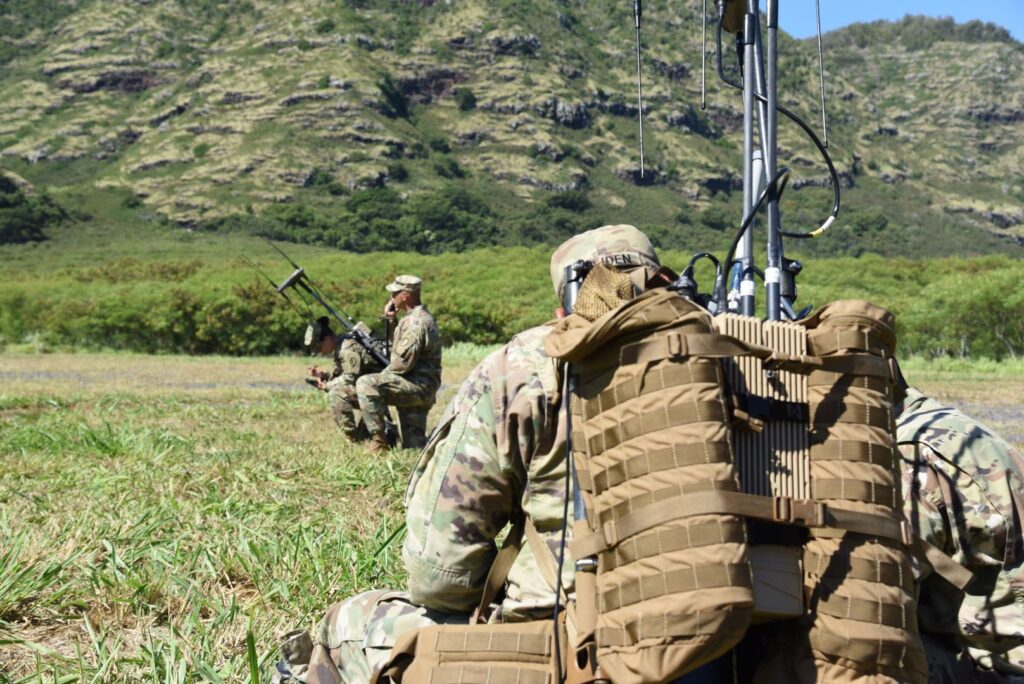
The military are training to operate when GPS isn’t available. Courtesy: Defence Talk

Back to what’s happening this month.

There are three tests to be aware of (the range of outages increases with flight level).

Southeastern US

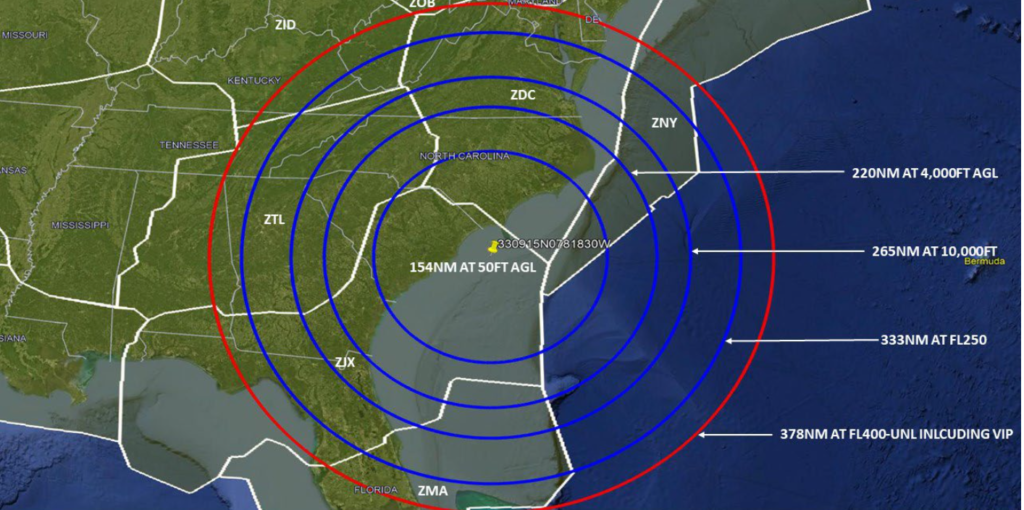
A Carrier Strike Group will be carrying out tests off the coast of South Carolina. Three days are affected:

15 March 1900z – 2130z

17 March 1200z – 1630z

28 March 1200z – 1630z

……..(Local time GMT-4)

Here is a map of the affected area:

South Carolina Courtesy: FAA

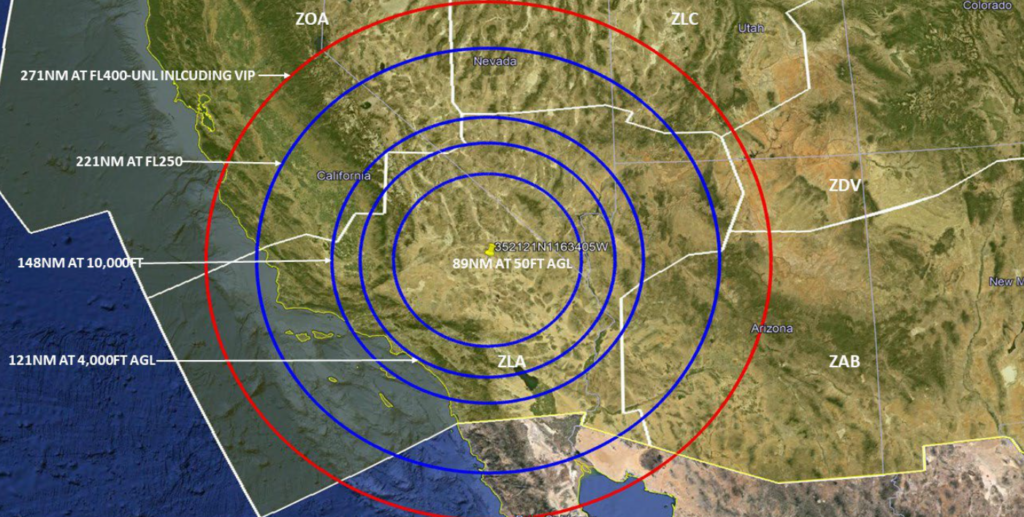
More testing is happening over at Fort Irwin, California. The test days are much more frequent than the other side of the country:

16 March 0700z – 1259z

18 March 0700z – 1259z

19 March 0700z – 1259z  1830z – 2200z

20 March 1830z – 2200z

21 March 0700z – 1259z  1830z – 2200z

22 March 1830z – 2200z

……..(Local time GMT-7)

Here’s a map of the affected area:

California Courtesy: FAA
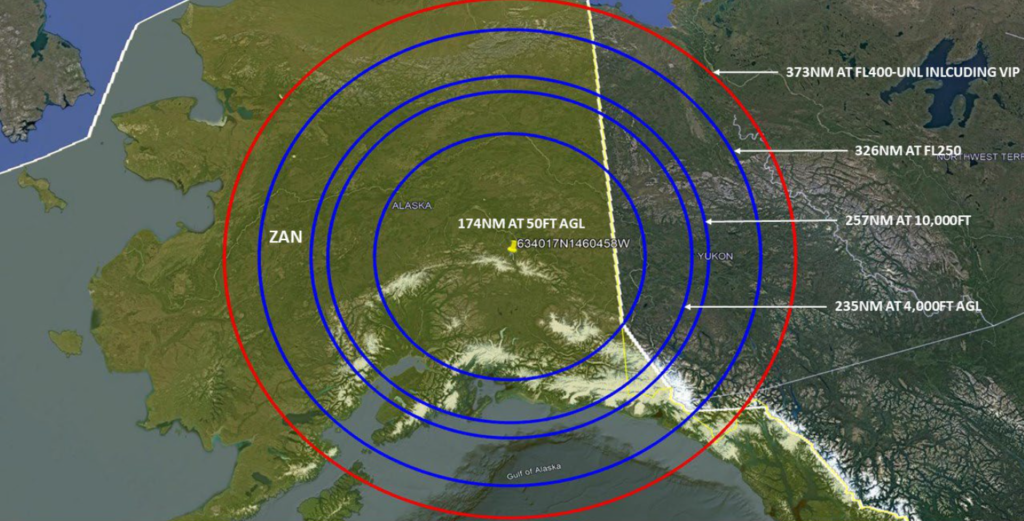
Testing will also be carried out up North at Ft. Greely in South-eastern Alaska across multiple days:

15 March 0001z – 0300z  0900z – 1200z

16 March 0001z – 0600z  1700z – 2000z

17 March 1800z – 2300z

18 March 2200z – 2359z

19 March 1800z – 2300z

20 March 2200z – 2359z

21 March 1800z – 2300z

22 March 1000z – 1700z

23 March 2200z – 2359z

24 March 1800z – 2300z

25 March 2200z – 2359z

……..(Local time GMT-8)

Here’s a map of the affected area:

Alaska Courtesy: FAA

Don’t forget to report any outages.

It is important that any GPS interference is reported to the FAA – even though the interference is deliberate. There’s a proper process to follow for that which you can find in the Aeronautical Information Manual (AIM).

The relevant bits are paragraphs 1-1-13 and 5-3-3. Here’s a link to that document.

But in a nutshell, aircraft should notify ATC, use a different source of navigation and if necessary, request an amended clearance. It would also be a good time to grab a pen and write down as many details as you can as they’ll want a whole bunch of information in your report to the FAA. This will need to be submitted when you’re back on good ol’ terra firma. Click the link to see just how much information they’re after.

Why should we bother reporting?

Because GPS jamming tests are an ongoing issue for civil aviation and it is important to keep tabs on just how much of a problem it is. They are having a growing impact on the US NAS which is becoming more and more dependent on GPS always being fully operational. Work is ongoing to safely accommodate these tests alongside aviation and the more info the industry has, the better.


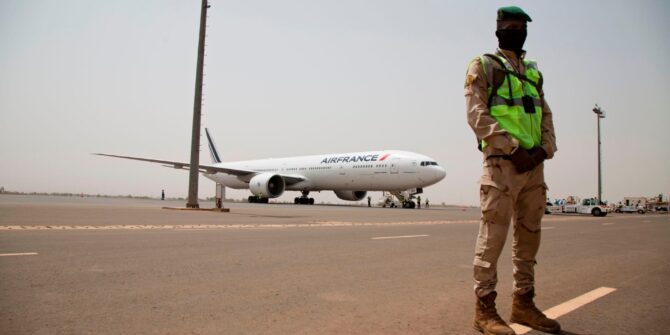
Sanctions-hit Mali bans flights from neighbouring countries

Update March 10:

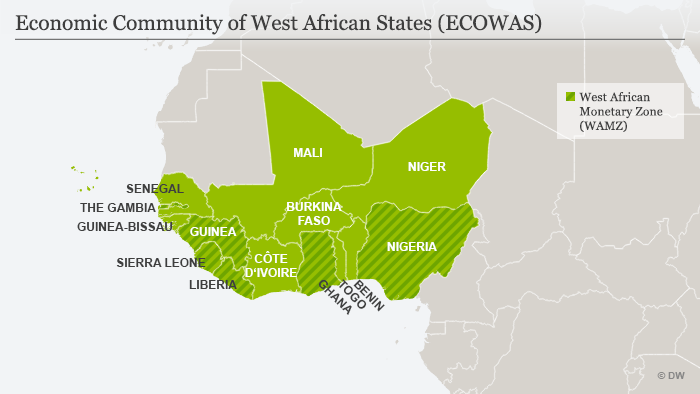
ECOWAS (14 of Mali’s neighbour countries) has extended their sanctions against Mali, and in response, Mali’s land and air borders are still closed to traffic routing direct from an airport in ECOWAS to Mali. Although international flights can operate into Mali, and overfly ECOWAS and Mali, permits for Mali are problematic as must be approved by the military and then the CAA.  Mali is relatively high risk due to internal conflict and instability.


Story from Jan 20:

Mali underwent a military coup in 2020, and authorities have reneged on an agreement to hold elections in February 2022, delaying them instead to December 2025.

The result is a series of escalating sanctions from Mali’s neighbouring countries which are now impacting aviation in Mali.

What measures have been taken?

The Economic Community of West African States (ECOWAS) – a 15 state regional bloc – have condemned the Malian authority’s actions as an act of “taking the Malian people hostage.”

The result is the suspension of Mali’s membership in ECOWAS and sanctions including the freezing of assets and suspension of non-essential financial transactions. Fuel supplies are still being  permitted via regional borders at this time.

Neighbouring countries have closed both road and air borders with Mali. These closures are so far limited to preventing Mali registered aircraft movements and trade.

Then on Jan 10, Mali closed its own borders in protest. Several airlines have since cancelled flights, citing “security risks”, but have not provided further detail.

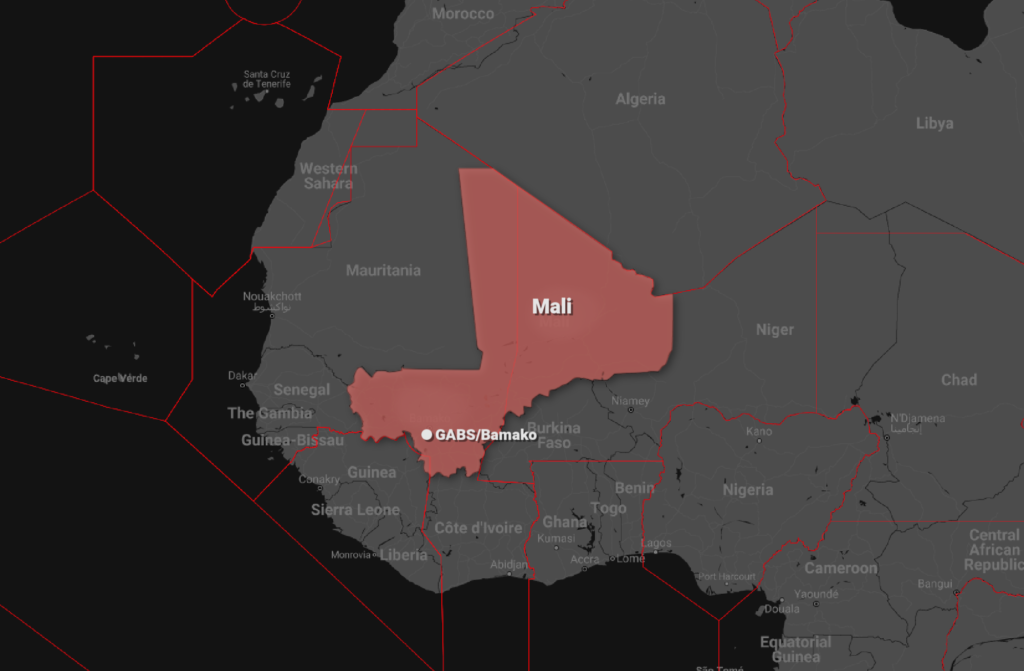
There is no indication international flights overflying Mali airspace are impacted, and GABS/Bamako airport remains open for flights to/from non-ECOWAS countries.

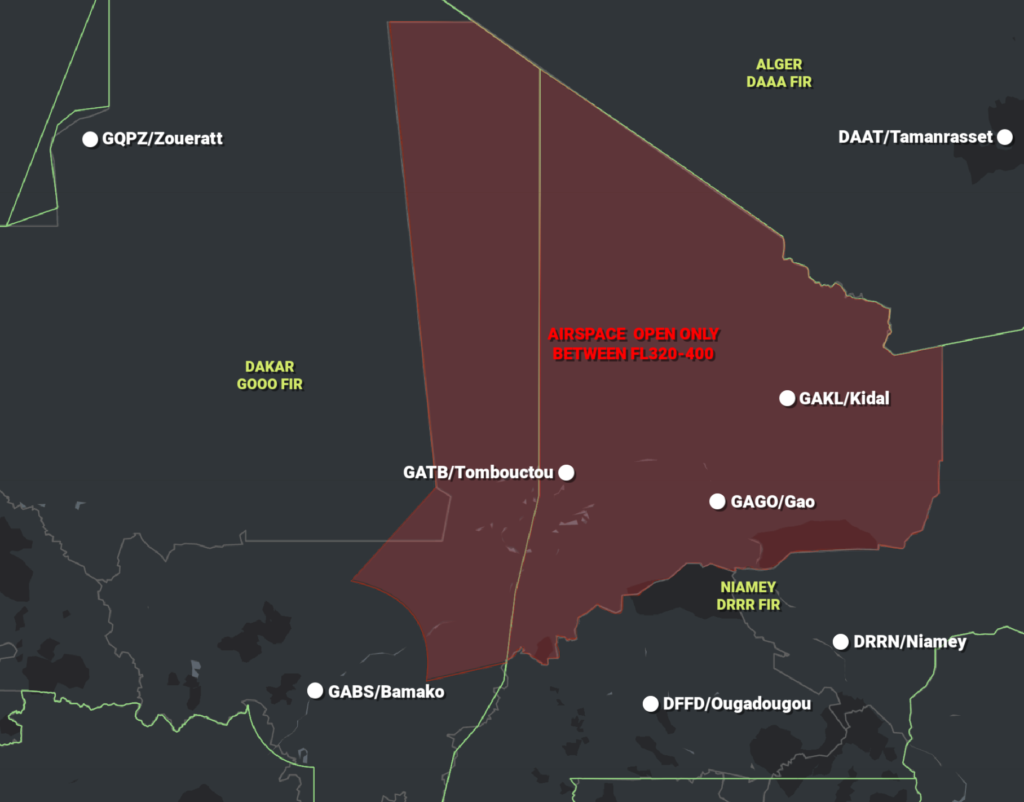
Mali’s and borders do not match the FIR regions for the airspace.

What might these risks be?

Security and safety in the capital, Bamako, is a high cause for concern and authorities warn against all but essential travel here. 

Large scale protests which may escalate to armed conflict are likely in Bamako as political volatility increases. Heightened security and transport disruptions are likely. Safety may be impacted if protests and riots become violent.

What risk warnings are currently in place?

Current warnings in place relate only to the ongoing threat from terrorist and militant activity. We wrote this piece in 2017 which discusses various risks including that posed by ground weapons. These risks remain and full details can also be found on the Safeairspace page.

Several countries have warnings in place advising caution if overflying or operating in Mali airspace below FL260 due to ‘ongoing fighting and extremist/militant activity’. Militants often target UN or Malian forces bases, however these are often based in close proximity to Malian civil airports and so attacks might indiscriminately impact civilian operations as well.

Warnings are in place for the Niamey FIR.

GABS/Bamako operations

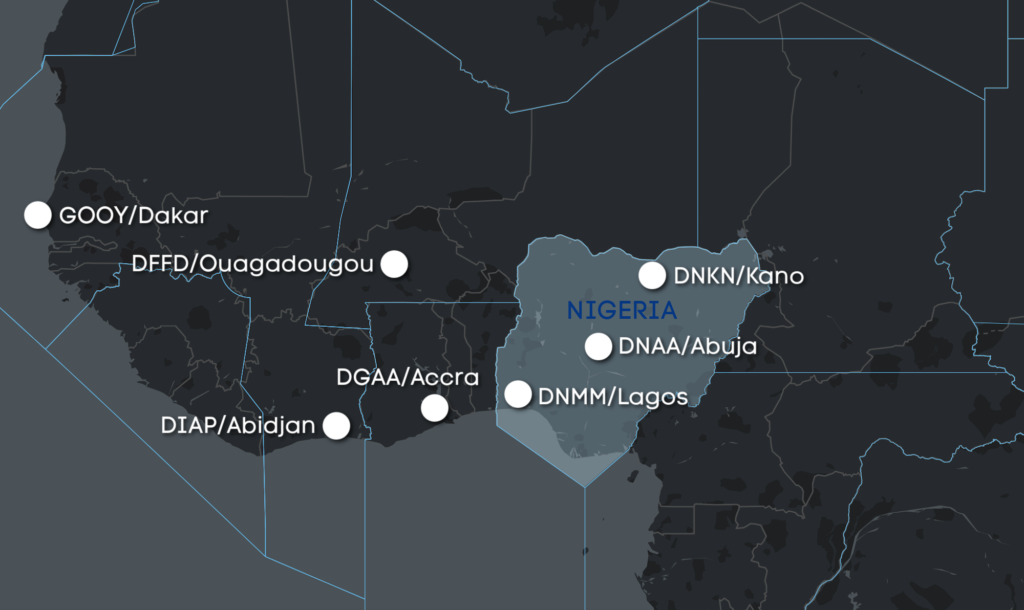
Bamako International airport is a relatively important one due its position on the continent. It is a major alternate for western and southwestern coast airports such as GOOY/Dakar, Senegal. The interior of Africa provides few diversion options so Bamako also serves as a good en-route option.

The Risk to Aviation

The current airspace risk remains the same. The risk to safety and security on the ground may be deteriorating as political and civil conflict escalates, and armed protests and riots occur. Sanctions against the country by the region will likely also lead to more volatility. 

Contact information if operating to Mali

Permits are required for any flight looking to overfly or to land in Mali. These can be obtained from the aviation authority ANAC – +223 20 20 55 24 / +223 20 20 29 05 / survol@anac-mali.org

For more info on what services are available at GABS/Bamako airport, get in touch with local FBO Aurora Aviation: +971 4 523 5888 / ops@aurora-aviation.aero


Impact of Russia Sanctions on Corporate Aviation

As the conflict in Ukraine continues, the world has been responding with sanctions against Russia. This includes the US, Canada, the UK and EU.

The problem is that these sanctions are having far-reaching impacts on aviation – especially for charter operators who may not even be aware that they are breaking the rules. And it’s important to stay on the right side of the law, as the penalties can be severe – even if the lines are blurry.

Here is a rundown of what we know for US operators, and things to be aware of.

First up, what actually is a sanction?

Simply put, commercial and financial penalties that are applied by one or more countries against another state or group.

They are a tool that falls short of military force for punishing or deterring some form of action. In this case – Russia’s ongoing military offensive in Ukraine. Sanctions mean that our ways of doing business, or interacting financially, are restricted by law – including the payment for, and delivery of, services for those restricted by the sanction. This is where things start to become complicated for aviation. Perhaps more than you may realise.

So, what can’t we do?

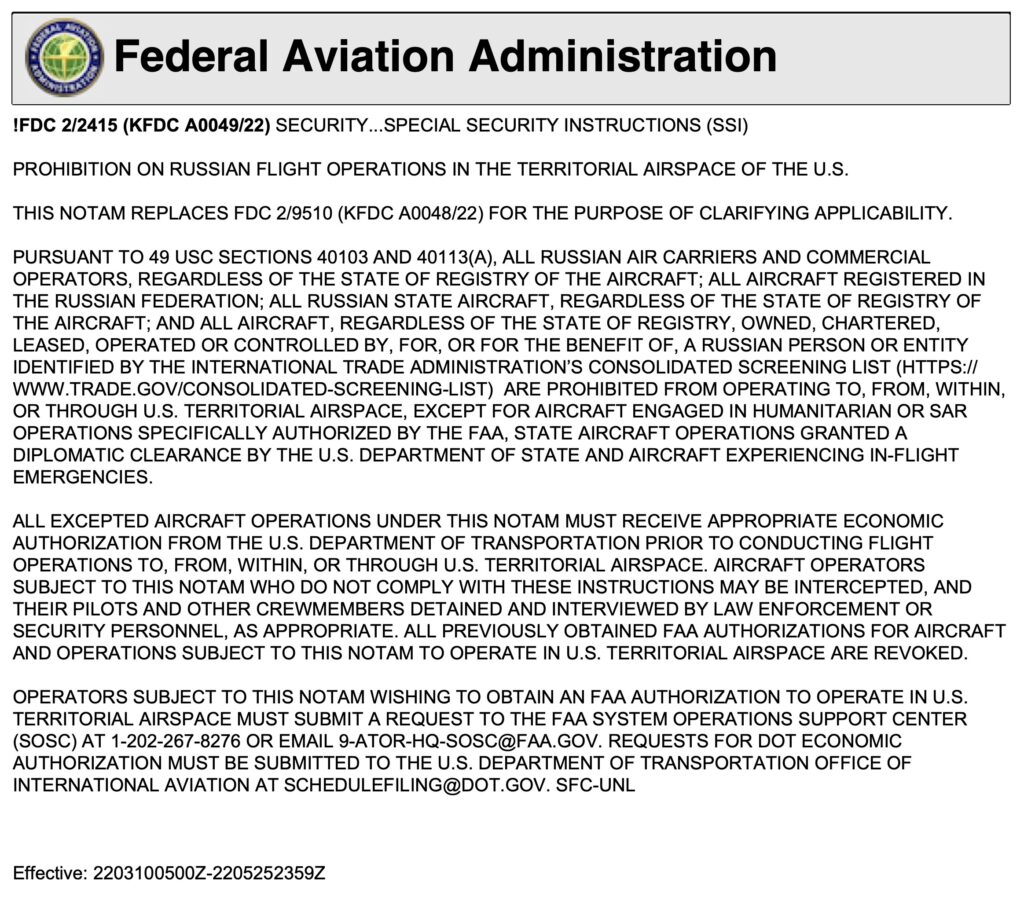
US operators can find that information in KFDC Notam 2/2415 below:

So, regardless of where an aircraft is registered – if it is owned, chartered, leased, operated or controlled by or for the benefit of a Russian person or entity on a specific list (www.trade.gov/consolidated-screening-list), it can cannot be operated in US airspace. This includes overflights. Exemptions are available but only with special diplomatic approval.

The issue is that the italicised words above are open to interpretation which can lead commercial operators, especially charter providers up the garden path. And as the Notam eludes to, rule breakers can be detained or even face prison time. It may be tempting to try and sneak under the radar but be careful. The US Government has established a task force known as ‘KleptoCapture’  to actively enforce the sanctions. They have the ability to arrest, prosecute and even seize the assets of anyone breaking the rules.

Let’s take a closer look at what you need to be careful of.

Who owns the bird?

Fractional ownership of private jets can be complicated. There can be numerous owners of a single tail number. It may have a N-Reg, but that doesn’t mean part of that tail isn’t owned by Russian interests. Even if it’s only a small part. Which means just flying it will put you on the wrong side of the law. The reality right now is that ownership share may need to be re-allocated.

Things can become more complicated  too – it may not be an individual that owns a share, but a company. And what if that company is, or has since been purchased, by those with interests in Russia? This can also be buried deep in the legalities of business.

Be careful with fractional ownership arrangements. Even if only one piece breaches the sanction, it can’t fly in US airspace.

I need a ride – the charter conundrum.

As they stand, current sanctions do allow you to carry Russian passengers. But, they can’t be the ones who have specifically chartered your aircraft. Or in other words, Russian nationals and companies can’t be the ones to thumb the ride – but they can take a seat if someone else is picking up the tab.

There is also the issue of dual citizenship, or dual passports. Where does the duty of care for operators lie, and how would they know? It is a question to which we are still looking for answers.

Buying new airplanes.

Purchasing an aircraft is also currently problematic – particularly if it is currently owned by Russian interests. That is also no-bueno. If you’re in the market for a new ride, make sure you understand exactly who you are buying it from – in terms of legal and beneficial owners, along with the broker you are using and how you plan on financing and insuring your purchase.

Stuck on the ground.

The effect of sanctions and airspace restrictions means that moving expensive aviation assets out of Russia right now is a risk. Put it this way – there are currently somewhere in the vicinity of five hundred leased jets effectively grounded there. That’s literally billions of dollars’ worth of aviation assets waiting to be recovered, with no obvious solution in sight.

And even if you get airborne, are you allowed to be operating in their airspace? Russia has been reciprocating western airspace bans with bans of their own – check out the UUUU Notams for the lengthy list of those.

Then there is the issue of what happens if your airplane breaks. You will struggle to secure the supply of parts, services and other support for aviation assets in Russia as you would effectively be in breach of sanctions. Be aware that even if you can operate an aircraft into Russia right now, you may find yourself stuck when it is time to leave again.

Fuel.

Sanctions are also having an impact on operating costs around the world. Restrictions on the importation of Russian oil has seen oil prices, and the cost of jet fuel, sky rocket in recent weeks. It has increased by thirty percent in the last week alone, and has effectively doubled compared to this time last year. That’s rampant inflation.

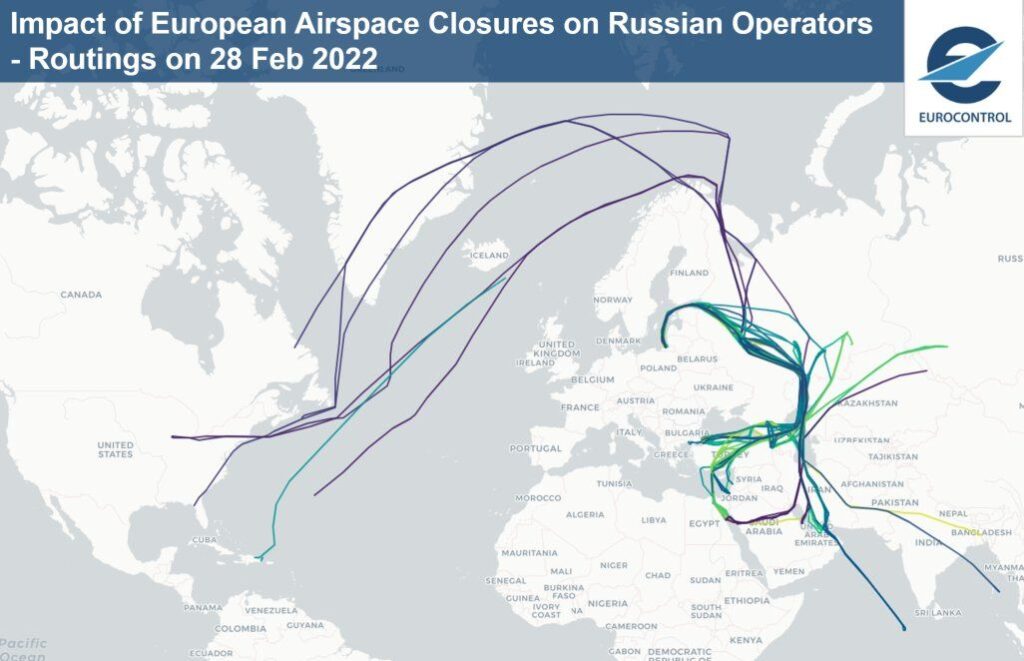
Add to that that the majority of the world’s traffic are having to bypass over six million square miles of airspace to and from Western Europe and you can quickly begin to get your head around the combined costs of these issues to our industry.

And in Russia there is also an emerging problem of availability. Earlier this week we reported to OPSGROUP members that at least one major carrier had cancelled flights to Moscow due to being unable to uplift fuel. It is important to gauge availability ahead of time.

Jet fuel shortages have been reported at some Russian airports.

Getting an exemption.

So you have a pressing reason to break the rules of the sanctions? You may still be able to fly, but it’s vital you get diplomatic approval first – even if only operating domestically in US airspace. There are two things you’ll need. First is an economic approval from the US Department of Transport Office via schedulefiling@dot.gov. You’ll also need to submit a request to the FAA System Operations Support Centre (SOSC). You can reach them on 1-202-267-8276 or via the email 9-ator-hq-sosc@faa.gov.

Permission is most likely to be granted to flights engaged in humanitarian, SAR or other essential work.

Where else to look for help.

If in doubt, it is better to seek clarification on the rules before you fly. This may mean seeking legal advice. The OPSGROUP team may also be able to help – you can reach us on team@ops.group and we’ll do our best to give you a hand.


Russia Reroutes: Alaskan Airport Options

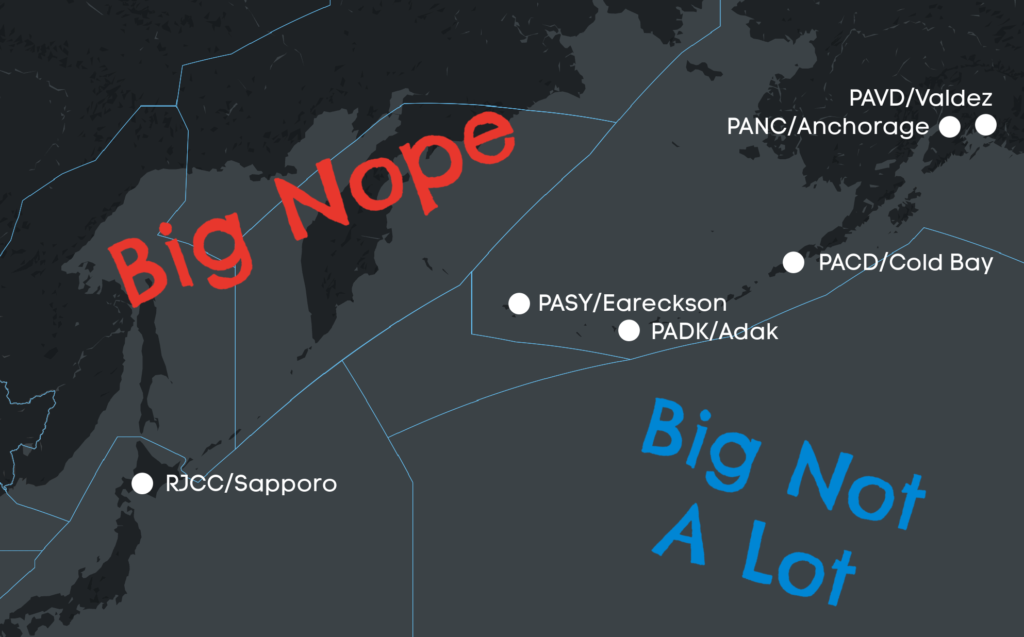
With Russian airports and airspace now off limits for many operators, what airports across Alaska (and also Asia) are available, suitable, and useable for things like ETOPS alternates, fuel stops, and tech stops?

To be honest, very few! Once you cross into the Bering Sea you are extremely limited in the westerly direction, and probably looking at a far more southerly route initially because of the awkward “extra chunk” of Russia that sticks out the bottom.

Why is Russia off limits?

As part of a range of political sanctions imposed on Russia, several countries have now banned Russian aircraft and operators from their airspace – The European Union along with some non-EU countries, the US and Canada. In response, Russia has banned aircraft and operators of many of these countries from Russian airspace.

The exception, at present, is the US –  Russia has still not officially banned US aircraft/operators from its airspace. However, some local agents are saying that they are not able to provide Russian landing and overflight permits to US registered aircraft/operators, and we’ve had similar reports from some locally based OPSGROUP members. Major US carriers are already avoiding Russian airspace, which is sensible action to follow given the uncertainty.

This is affecting a lot of operators at present, who are now having to route around Russian airspace.

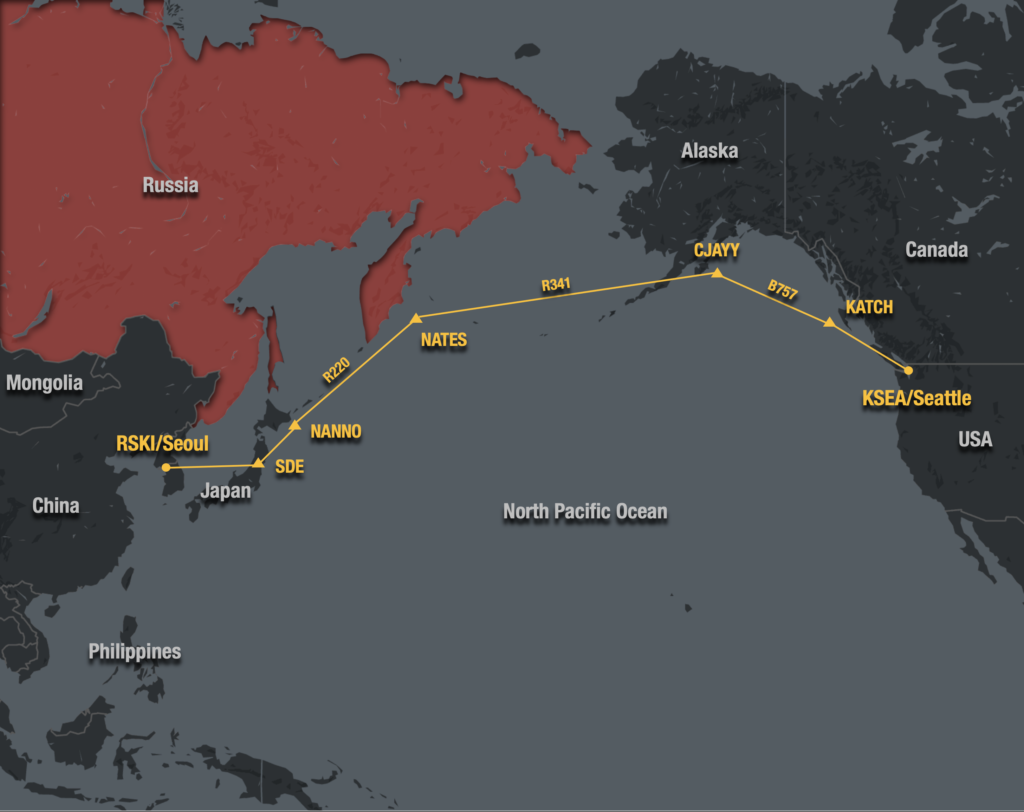
The Alaskan Options

A report on a recent routing from Anchorage to India considered the following airports as possible options.

  • PASY/Eareckson Air Station 
    • 10,004’/3050m x 45m
    • ILS 28 / RNAV 10
    • Fuel and maintenance support unknown
    • More an emergency option that a fuel or tech stop option
    • Talk to them on +1 907-552-3443 / +1 907-392-3361
    • ARFF Cat 7
    • PCN 132/F/A/W/T
  • PADK/Adak
    • 7790′ / 2374m x 60m
    • ILS 23 only
    • Some pretty mean terrain around and windshear warnings
    • Fuel available, maintenance support unknown
    • Talk to them on +1 907-269-0751 / +1 907-592-8026
    • ARFF Cat 01
    • PCN 49/R/B/X/T
  • PACD/Cold Bay
    • 10,179′ / 3102m x 45m
    • ILS 15 / RNAV 33
    • High terrain to the south
    • Gets some serious fog!
    • Fuel available, efficient services here
    • Talk to them on +1 907-532-5000 / +1 907-465-1788
    • ARFF Cat 06
    • PCN unknown
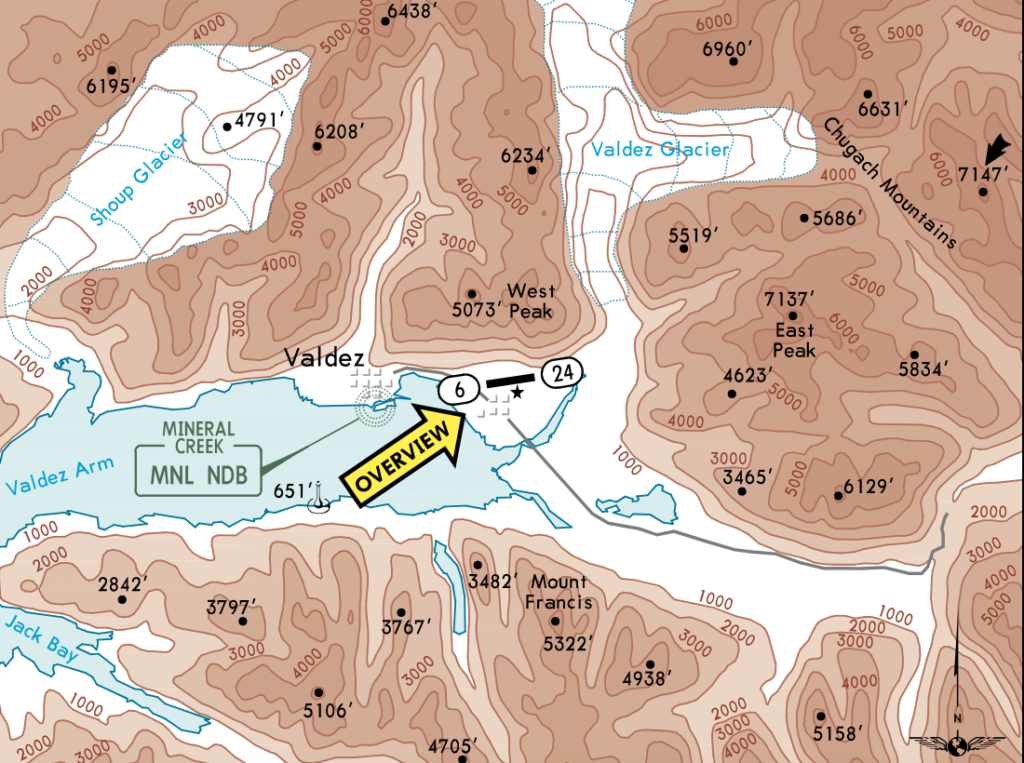
  • PAVD/Valdez (if routing from further east and you don’t fancy Anchorage)
    • 6500′ / 1981m x 45m
    • There are no straight in approaches of 05/23 because there is some serious mountainous terrain here. You need to have trained for this spot before you try it!
    • Talk to them on +1 907-451-5217 / +1 907-835-5658
    • Fuel and minor maintenance
    • ARFF Cat 01
    • PCN 54/F/B/X/T

A definite ‘try before you fly’ airport.

The major international airpots of Alaska lie further east and aren’t so useful range-wise if routing westbound.

PANC/Anchorage to PADK/Adak is approximately 3:15 hours flying time, or 1900km. PASY/Eareckson Air Station lies further east.

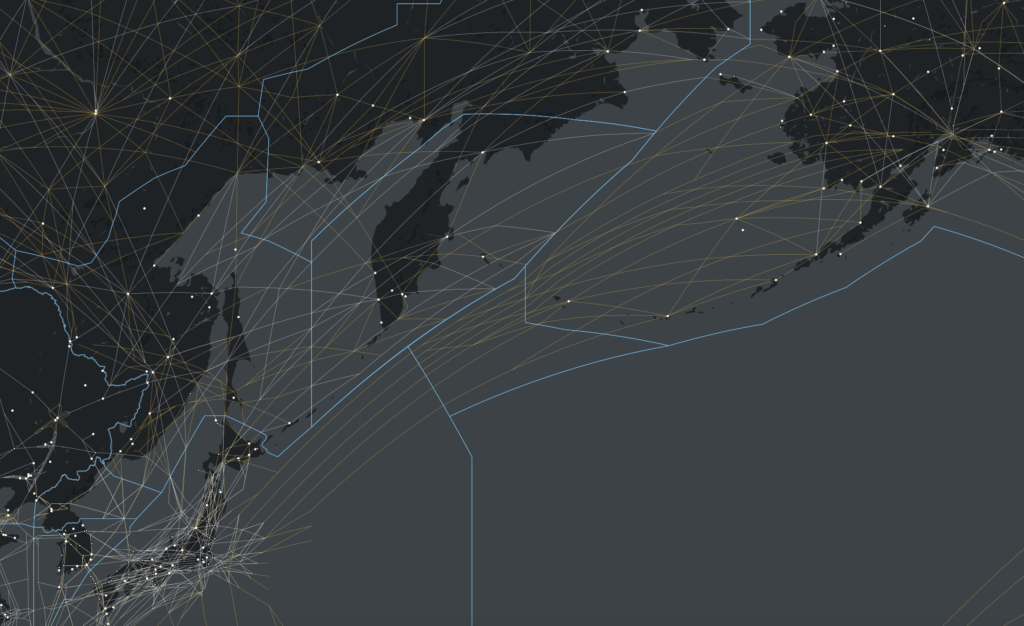
The westerly route options from Alaska to Asia.

The Asia Options

With Russian airspace now off limits for many operators, aircraft attempting to route westbound from the US (via Alaska) are most likely going to have to take a more southeasterly route initially, bringing them over Japan before routing further into Asia. Past Japan, another southern dogleg (albeit it smaller) is needed to avoid North Korean airspace as well.

The following airport has been recommended by other operators:

  • RJCC/New Chitose (Sapporo) 
    • Multiple runways 9843′ / 3000m x 60m
    • ILS CAT II/III available
    • Major international airport with all the facilities
    • RFF Cat 9
    • Talk to any of the many agent and handler options

The direct distance between PADK/Adak and RJCC/New Chitose is approximately 3,300km

The Don’t Go area vs the Nowhere to Go area

For the pilots and planners

Range, suitability and availability are all going to be a bit of a problem with routes heading this direction. Considerations on weather conditions are probably one of the major things to think about. Your only real option if you need fuel or tech support is Adak airport and then onto Sapporo, depending on aircraft range.

There are limited options available to you if you have an emergency. Plan, prepare and monitor.

Where else?

The full list of airports we’ve heard suggested are as follows:

  • PANC/Anchorage
  • PACD/Cold Bay
  • PASY/Eareckson
  • PAFA/Fairbanks
  • RJCC/Chitose
  • RJAA/Tokyo
  • PADK/Adak
  • PABE/Bethel
  • PAKN/King Salomon
  • RJSM/Misawa
  • PAOM/Nome
  • PASN/St. Paul Island

If you are operating westbound and have been impacted by the Russian airspace bans, let us know what airports you considered at team@ops.group


Europe CPDLC: The Mandate We Missed

A brief little refresher on the datalink mandate in Europe, because some of the temporary exemptions have now ended.

What actually happened?

The EU had a datalink mandate which came into force from February 2020. It applied to all aircraft operating above FL285 throughout Europe.

But, there were exemptions. Two sets in fact – one of a fairly permanent sort, and another that was only temporary. It is the temporary exemptions which have now ended.

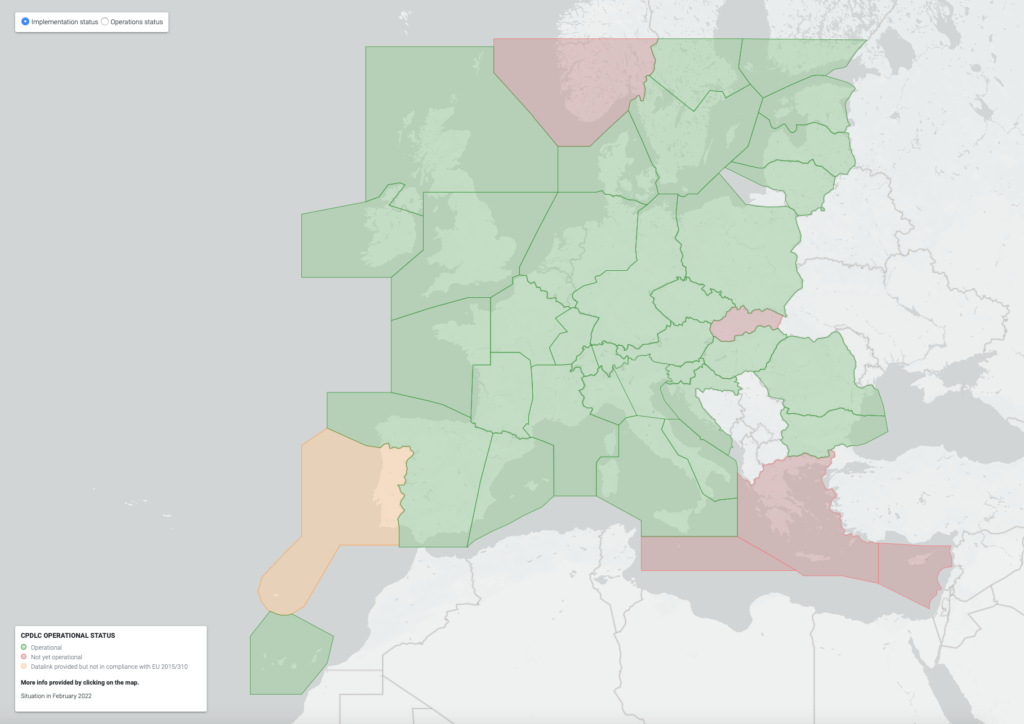
Click on this to link to the current Eurocontrol map

When did this happen?

5th February 2022. And no, they haven’t extended it.

What were the exemptions?

There are two articles (you can read all this ‘officially’ here if you would like).

Basically, if you fit under Article 1 then you can get a permanent exemption. If you fit under Article 2 then you probably had (but don’t have anymore) the temporary exemption.

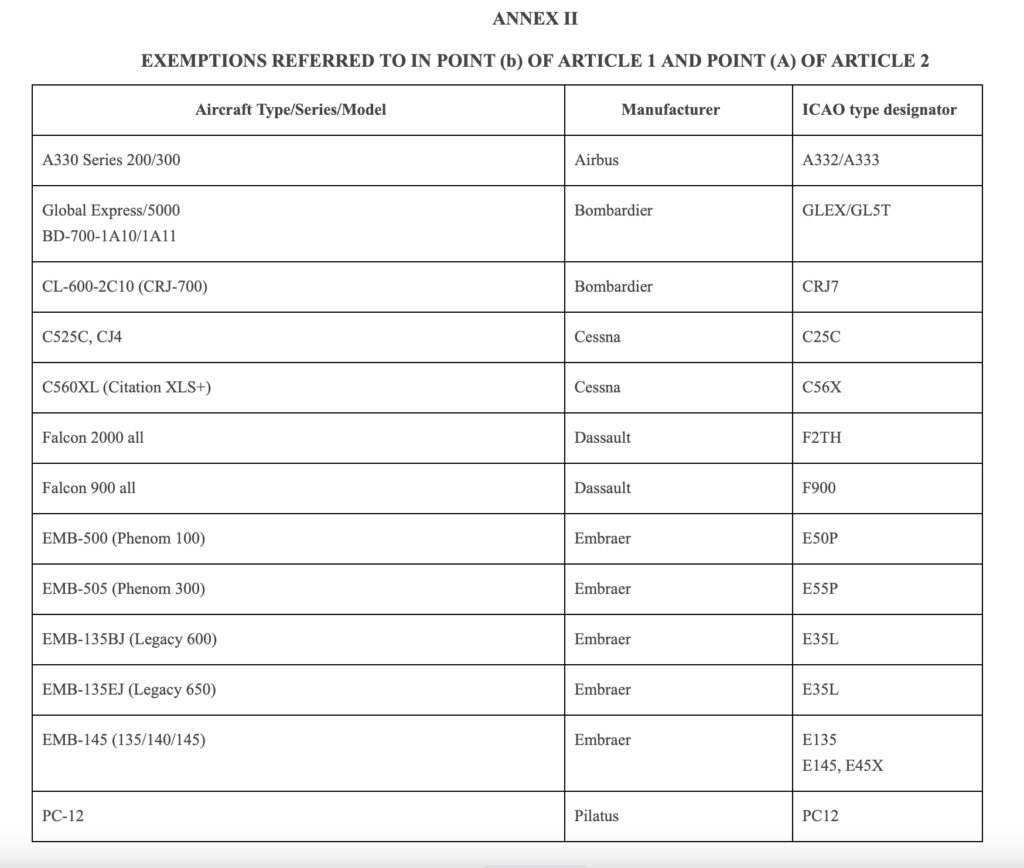
Article 1 covers all aircraft listed in Annex I, and any in Annex II whose first certificate of Airworthiness was issued prior to Feb 5 2020. Article 2 is any aircraft listed in Annex II with an airworthiness certificate issued on or after Feb 5th 2020, and any aircraft specified in Annex III.

Give it to me straight!

Ok, ok, here are the aircraft which are permanently exempt, and those which had the temporary exemption until 5 Feb 2022 to do the avionics retrofit…

Aircraft permanently exempt:

  • Aircraft in Annex I
  • Aircraft in Annex II with a CofA issued before 5 Feb 2020

Aircraft which had up to 5 Feb 2022 to do the avionics retrofit:

  • Aircraft in Annex II with a CofA issued after 5 Feb 2020
  • Aircraft in Annex III

There are a lot of aircraft listed in these annexes, but Annex II in particular contains a fair few Bizav aircraft, so we’ve whacked that in below for you to see. We mentioned how GA/BA aircraft might be exempted here, before.

The smallest annex, so we could screenshot it here.

So does this affect you?

See above. It depends on those criteria.

Basically, most BizAv aircraft probably do meet the requirements of Article 3(3)(d) as well, which covers aircraft with a certified maximum seating capacity of 19 passengers or less and a maximum certified take-off mass of 45 359 Kg (100 000 lbs) or less and with a first individual certificate of airworthiness issued before 5 February 2020. If they do, they are exempted permanently.

This is all really a “reminder” of what’s already happened because if you don’t already know about this, it’s too late now anyway!

Tell us more about the mandate.

Actually, rather than do that, just head here to read what we’ve written before. This covers all the info you (hopefully) need on white list logons and all that jazz.

The entire consolidated version of Commission Regulation (EC) No 29/2009 is available here for your perusal, while the EC Implementing Decision 2019/2012 is here if needed.

The FAQs

EASA have published some (fairly) useful FAQs on all things datalink and CPDLC which you can read here on their ‘Airspace Usage requirements – DLS/CPDLC’ page.

One we see a lot, is do you have to register on the ‘White List’. The answer is no, it’s not  a regulatory requirement.

One final exemption.

If your equipment is temporarily inoperative you can still continue to operate within the applicable airspace if your MEL allows, and if you tell them about it in your flight plan. You do this with a “Z” in item 10 and the indicator “DAT/CPDLCX” in item 18 of your flight plan.

A final final one – you are also exempt if it is a delivery flight.

What EASA said when we asked for clarification.

Basically what we’ve put above, but to make it extra clear, here is a quote from their response –

“The EC Implementing Decision 2019/2012 in Article 2 refers to the 5 February 2022 date. Depending on the specific aircraft type/model and the first CofA date, the aircraft were either exempted or only temporarily exempted until 5 February 2022. There is no extension to this date and no change to this Decision since it has been adopted.

On the other hand, it should be noted that most business aircraft may meet the requirements of Article 3(3)(d) of the Commission Regulation (EC) No 29/2009 referring to aircraft which have a certified maximum seating capacity of 19 passengers or less and a maximum certified take-off mass of 45 359 Kg (100 000 lbs) or less and with a first individual certificate of airworthiness issued before 5 February 2020. If this is the case, the operator’s aircraft is exempted.

So if you were exempted under the earlier Article you are still exempted. If you weren’t but fulfil the criteria in Annex I of the new article then you are permanently exempted. If you fall in the list in the new Annex of only exempted until Feb 5th, then you are no longer exempted.

Any other questions?

You can read SIB 03 2020 here. If you have any other questions, you can ask EASA directly on atm@easa.europa.eu. We asked them some things a while ago and they took a week or two to respond but were super helpful when they did.


Dodging Airspace: The Bendy Road to Western Europe

Update Mar 4, 2100z:

Some local agents are now saying that they are not able to provide Russian landing and overflight permits to US registered aircraft and operators. We’ve had similar reports from some locally based OPSGROUP members. Russian authorities still haven’t published a UUUU Notam for this yet, but for most operators planning trips in the region ensure you avoid Russian airspace entirely for the time being.


Original story from Mar 2:

In just a short week the skies over Europe have dramatically changed.

In response to the conflict in Ukraine, the EU, the US, Canada, along with several other countries have now introduced blanket bans on Russian aircraft and operators from their airspace. Russia has responded by banning many of these countries’ aircraft and operators from Russian airspacewe’re still waiting for Russia to ban those from the US, but we expect it to be issued soon.

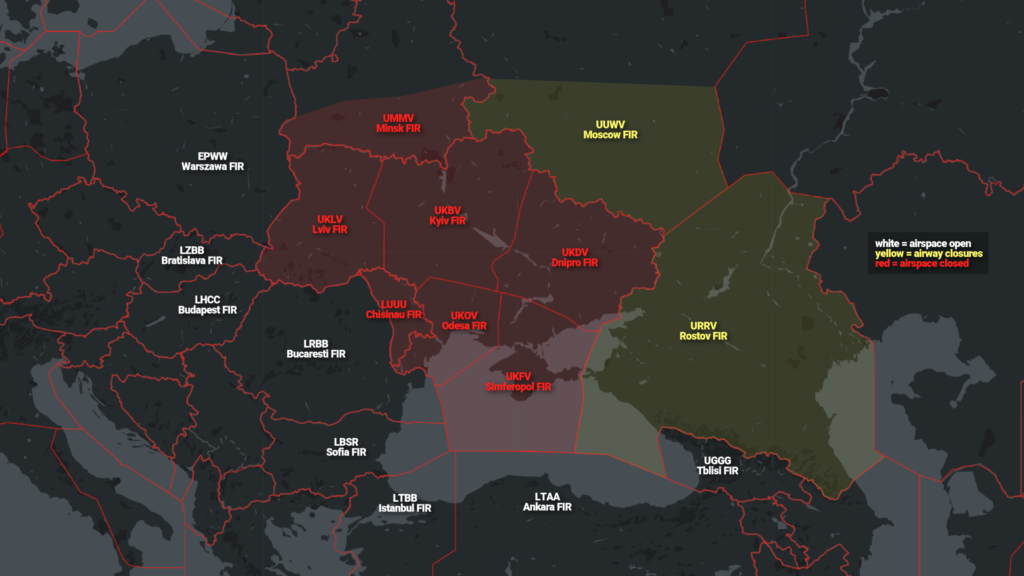
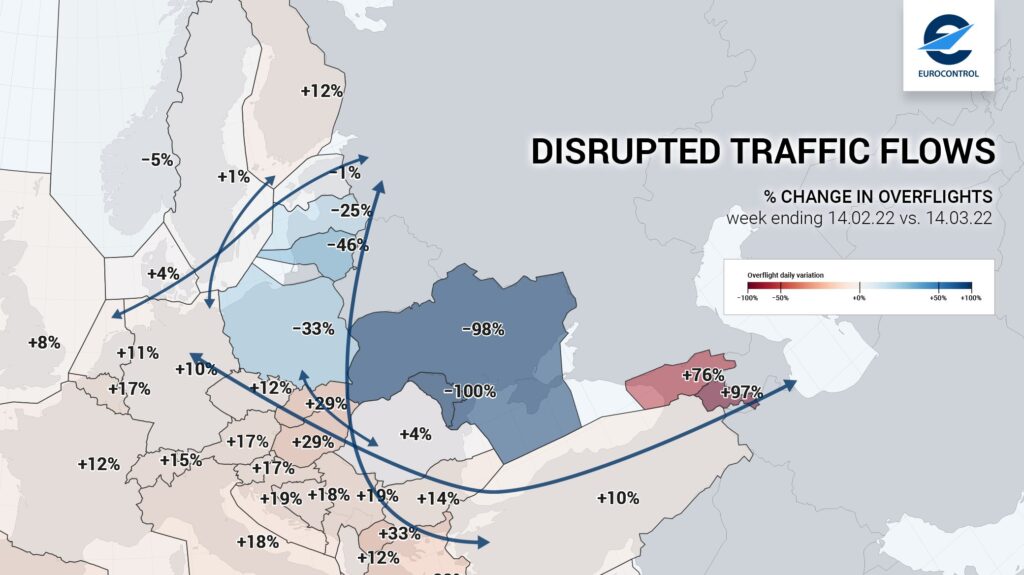
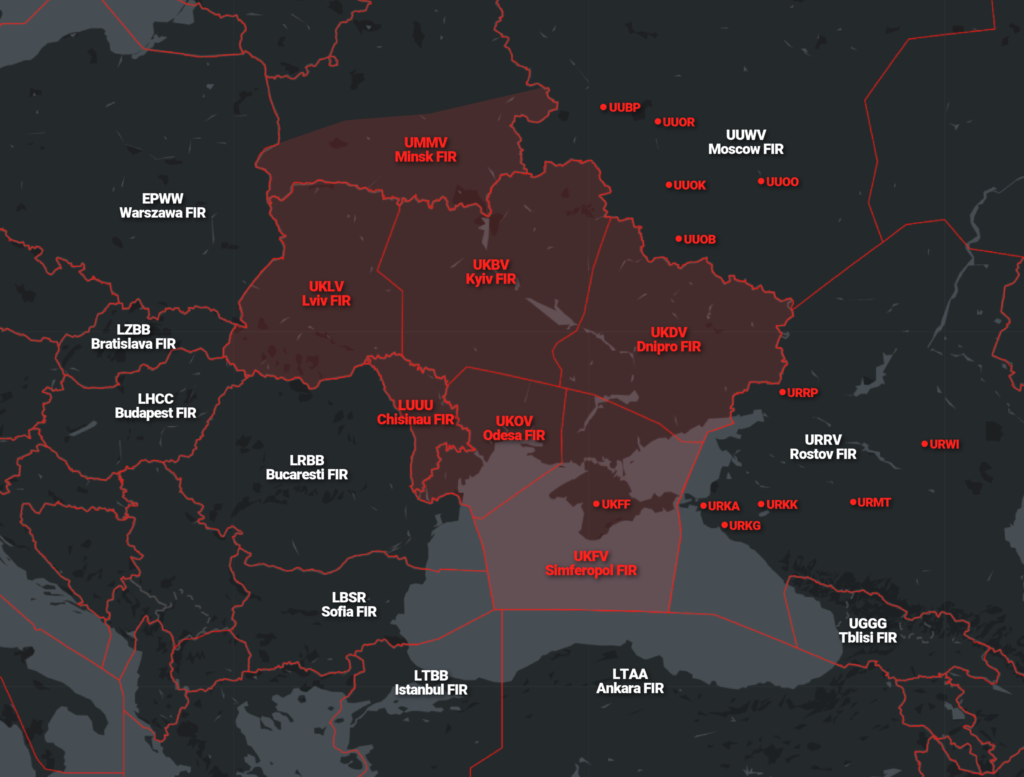
In addition to the complete closure of Ukrainian, Moldovan and portions of Russian and Belarusian airspace, options to overfly Europe have become increasingly complicated – especially for aircraft transiting between Western Europe and the Middle East, Asia and Australasia.

Closed airspace and airports are shown in red.

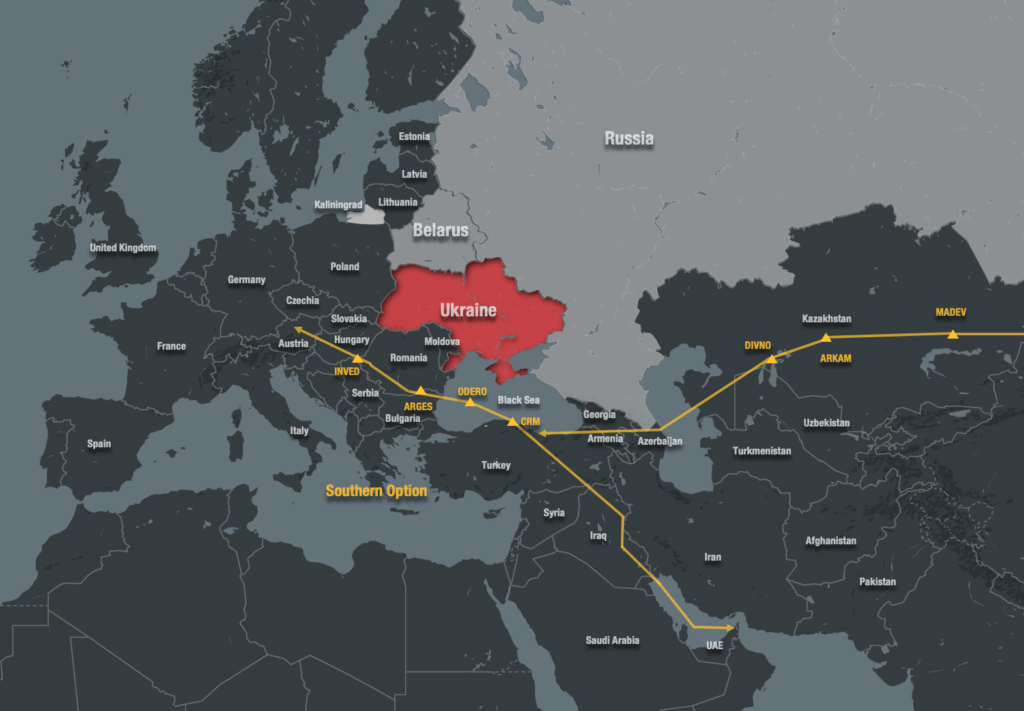
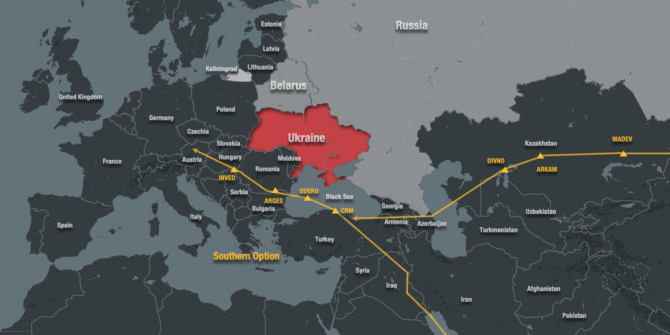
Major carriers now appear to be following two major air corridors – one that extends from the Persian Gulf to Romania, the other from China to the Black Sea. Here’s what that looks like:

Example of routes currently being flown by major operators.

The routes take aircraft in close proximity to several danger spots, and so here is a guide to what you need to know…

The Middle East

The southerly route begins over the Persian Gulf through both the OBBB/Bahrain and OKAC/Kuwait FIRs which are considered safe.

It is, however, a narrow corridor that takes aircraft close to Iranian airspace to the east that should be avoided entirely. Following the shoot down of a Boeing 737 there in January 2020, several countries have active airspace warnings in place for the OIIX/Tehran FIR – including the FAA’s outright ban on US operators. The risk there is from the use of advanced anti-aircraft weaponry at levels.

See the official airspace warnings for Iran here.

Beyond the Persian Gulf, this route continues through Iraqi airspace. Iraq itself remains an active conflict zone so the airways and levels used should be considered carefully.

But is it safe? The general consensus is on eastern airways UL602, UM860 and UM688 at or above FL320, yes. Elsewhere, no. Although the US FAA recently re-allowed Iraqi overflights throughout the ORBB/Baghdad FIR, it is not advisable. Canada, the UK and France also recommend against flights at lower levels where aircraft are at risk of being intentionally targeted by terrorist groups.

See the official airspace warnings for Iraq here.

To the West lies Syria – the OSTT/Damascus FIR should be considered extremely dangerous. There is a high risk to aircraft here at all levels due to active fighting, and the potential to be misidentified by Syrian air defence systems. Give it a wide berth.

See the official airspace warnings for Syria here.

Europe

The flight path then threads North through Turkish airspace where there are some risks to be aware of, despite being considered safe.

The first is mistaken identity – there are militia active in the country who infrequently target Turkish military aircraft with anti-aircraft weaponry at lower levels. The second is due to GPS jamming. There are reports of widespread signal interference in the LTAA/Ankara FIR especially on the border between the ORBB/Baghdad and OIIX/Tehran FIRs.

More on the risks in Turkish airspace, here.

Further north the route being flown heads over the Black Sea before a westerly turn towards Romania. The further north you route, the higher the risk. Most operators appear to be heading no further than the waypoint ODERO.

Beyond that you will approach the active conflict zone in Ukraine. While all Ukrainian airspace is closed, there is likely ongoing military activity in the Black Sea – including naval and air force operations with little regard for civilian traffic. The consensus of OPSGROUP members is to avoid the area as much as possible.

The route then continues through Romania and Hungary. There are no airspace warnings for these countries which are considered safe and reliable. It is worth remembering though that they share a border with Ukraine. If flight planning further north be careful of your proximity to it – risks may be present on either side of the border.

The impact for Russian operators

The more northerly route – China and the ‘Stans.’

Aircraft crossing Europe from the Far East, such as Japan and China, may also follow routes through China’s airspace. Airways in mountainous regions such as the Himalayas require extra planning – especially with regards to escape routes in event of engine failure or depressurisation.

As such, OPSGROUP members report that Chinese authorities have been reluctant to allow foreign operators to use routes such as L888 (also known as the ‘Silk Road’) without meeting special requirements – you can read more about this here, and if you’re heading this way make sure you download our Himalayan Routing Guide here.

Flights over Afghanistan should be avoided. The OAKX/Kabul FIR is still uncontrolled following the Taliban’s offensive late last year. There are also serious threats to aircraft at low level from anti-aircraft fire, in addition to serious security issues for crew on the ground. You can find more info on these risks here.

There are also active airspace warnings for Pakistan, although it is generally considered safe for overflights. Care should be taken in the disputed northeastern part of the country (the Kashmir region). The general consensus is that higher is better in the OPLR/Lahore and OPKR/Karachi FIRs. For more on these warnings, click here.

Assessing the Risk

With such dramatic changes to the risk picture of Europe’s airspace it can be challenging to wrap your head around just how much risk is acceptable, and how much is not. It is also important to remember that you shouldn’t enter airspace unless you are able and willing to land there.

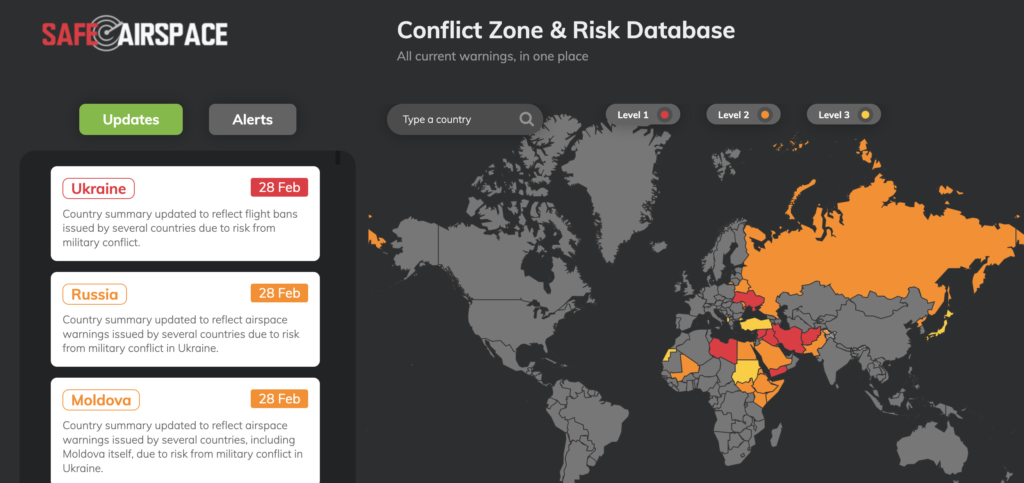
There’s a few ways that OPSGROUP can help. The first is with safeairspace.net, our Conflict Zone & Risk Database which we update with official state warnings and our own analysis around the clock. We’ve also written an article about how to assess risk which you can read here.

Help and support from others in OPSGROUP

Every Tuesday at 2000z we hop online to talk about these things in our regular OPS CHAT. You can read about these here.

This week our members discussed the situation in Ukraine and its impact on international flight ops.

Here’s the link to the replay of yesterday’s OPS CHAT, plus a text summary of all the main topics discussed: Russian operator ban, Russia reroutes, areas of concern in Polish airspace, aircraft getting stuck in Russia, and how OPSGROUP might be able to help with operational support and information.

Or reach out to the team with your question – we’re always around at team@ops.group, and we’d love to hear from you.


OPSCHAT Summary 01 MAR

Hello members,

We had a rather busy OPSCHAT call this afternoon; here is an outline of the topics discussed.
– The full call is available to replay in your Members Dashboard: OPSCHAT 01MAR Recording.
– The full text summary of the discussion points, with useful links and FAQ, is here: OPSCHAT Call Summary 01MAR.

Topics discussed:

  • Russian operator ban – We clarified some of the rules regarding who specifically is affected. EU definition, impact on operators, impact on Russian passport holders, how this is already working in practice. FAQ on sanctions also uploaded.
  • Russia Reroutes – Many operators looking at new routes and unfamiliar airports. Caution especially Himalyan routes if these are unfamiliar – high terrain, challenging airports. OPSGROUP preparing some specific guidance to assist
  • Polish Airspace – Area of concern in south east portion of Warsaw FIR. High level of military activity. Short notice airspace closures are happening in Poland, be prepared – especially in the northern part of Polish airspace.
  • Aircraft stuck in Russia – Discussion regarding leased aircraft and other foreign aircraft potentially being held in Russia.
  • OPSGROUP assistance – Offer from Team to assist where possible with any operational support, information, questions – as well as #flightops or #questions in the OPSGROUP Slack channels.

Please see the full text summary and recording in the Dashboard for full details.


Canada to reopen more airports to international flights

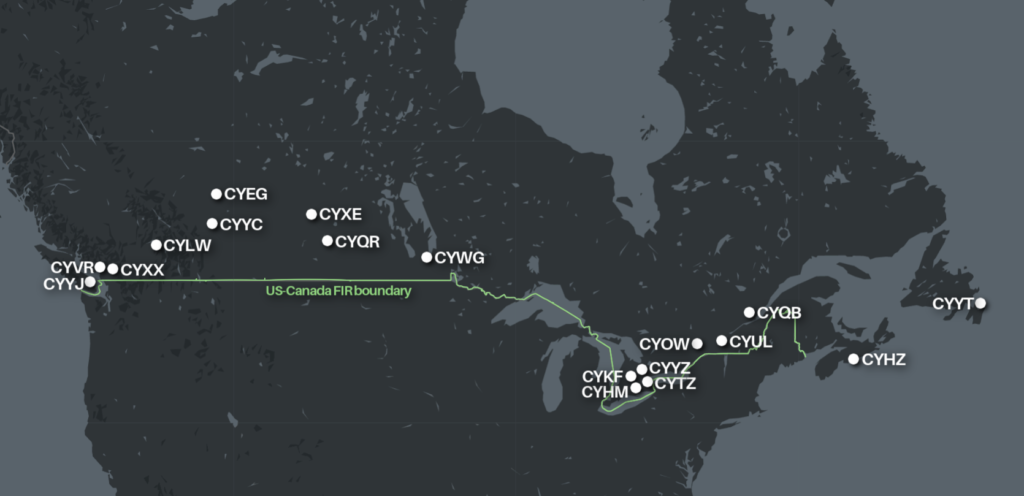
On Feb 28, Canada will reopen more airports to international passenger flights. Currently these flights can only arrive at one of 18 airports, but the government has confirmed this restriction will end on Feb 28.

The 18 Canadian airports currently available to international passenger flights.

CYQX/Gander is one of those airports not currently on the list – although they have been able to handle tech-stops all through the pandemic, international pax have not been able to disembark here for over a year.

So until Feb 28, here are the airports allowed to receive international passenger flights:

  • CYUL/Montreal
  • CYQB/Quebec
  • CYYC/Calgary
  • CYEG/Edmonton
  • CYXE/Saskatoon
  • CYQR/Regina
  • CYWG/Winnipeg
  • CYYZ/Toronto Pearson
  • CYTZ/Toronto Billy Bishop
  • CYHM/Hamilton
  • CYKF/Waterloo
  • CYOW/Ottawa
  • CYVR/Vancouver
  • CYYJ/Victoria
  • CYLW/Kelowna
  • CYXX/Abbotsford
  • CYHZ/Halifax
  • CYYT/St Johns

And here’s the Notam in question, which will expire on Feb 28:

H3740/21 (Issued for CZUL CZQX CZQM) COVID-19: FLIGHT RESTRICTIONS
UNTIL FURTHER NOTICE, WITH THE INTENT TO PREVENT THE SPREAD OF 
COVID-19 THROUGHOUT CANADA, ALL COMMERCIAL AIR SVC, PRIVATE OPR 
(CAR SUBPART 604) AND FOREIGN BUSINESS AVIATION, THAT ARE 
TRANSPORTING PASSENGERS TO CANADA MUST COMPLY WITH THE PROVISIONS 
OF THE INTERIM ORDER RESPECTING CERTAIN REQUIREMENTS FOR CIVIL 
AVIATION DUE TO COVID-19, ISSUED BY THE MINISTER OF TRANSPORT AND 
CURRENTLY IN FORCE. THIS INCLUDES A REQUIREMENT PASSENGERS TO 
WEAR FACE MASKS AND PROVIDE EVIDENCE OF A NEGATIVE RESULT FOR A 
COVID-19 MOLECULAR TEST PRIOR TO BOARDING. 
IN ADDITION TO ABV, AND PURSUANT TO SECTION 5.1 OF THE 
AERONAUTICS ACT, ALL COMMERCIAL AIR SVC, PRIVATE OPR 
(CAR SUBPART 604) AND FOREIGN BUSINESS AVIATION, THAT ARE 
TRANSPORTING PASSENGERS TO CANADA MUST, FOR THE PURPOSE OF 
DISEMBARKING PASSENGERS, LAND AT ONE OF THE FOLLOWING AP: 
- AEROPORT INTL DE MONTREAL-TRUDEAU (CYUL)
- AEROPORT DE QUEBEC-JEAN LESAGE (CYQB)
- CALGARY INTL AIRPORT (CYYC)
- SASKATOON INTL AIRPORT (CYXE)
- REGINA INTL AIRPORT (CYQR) 
- WINNIPEG INTL AIRPORT- JAMES ARMSTRONG (CYWG)
- TORONTO-PEARSON INTL AIRPORT (CYYZ)
- TORONTO-BILLY BISHOP TORONTO CITY (CYTZ)
- HAMILTON INTL AIRPORT (CYHM)
- WATERLOO INTL AIRPORT (CYKF)
- OTTAWA INTL AIRPORT (CYOW)
- VANCOUVER INTL AIRPORT (CYVR)
- VICTORIA INTL AIRPORT (CYYJ)
- KELOWNA INTL AIRPORT (CYLW)
- ABBOTSFORD INTL AIRPORT (CYXX)
- HALIFAX INTL AIRPORT-STANDFIELD (CYHZ)
- ST. JOHN'S INTL AIRPORT (CYYT)
THIS RESTRICTION DOES NOT APPLY TO ACFT OPERATED IN THE FLW 
CIRCUMSTANCES: 
- DIRECT FLT FM SAINT-PIERRE-ET-MIQUELON 
- MEDEVAC FLT 
- FERRY AND CREW REPATRIATION FLT 
- CARGO FLIGHTS CARRYING ONLY AIRCREW OR AIRLINE EMPLOYEES 
- TECHNICAL STOPS WHERE PASSENGERS DO NOT DISEMBARK 
- AT ALTERNATE AP IDENTIFIED IN A FLT PLAN TO ADDRESS WX
- ACFT SAFETY SITUATIONS, OR 
- IN THE CASE WHERE SPECIAL
AUTH HAS BEEN GRANTED BY TRANSPORT CANADA: 1-888-857-4003. 
SFC - UNL, 30 NOV 05:01 2021 UNTIL 28 FEB 21:00 2022. 
CREATED: 23 NOV 14:27 2021

Also effective Feb 28, testing rules will be eased for vaccinated passengers. Essentially, the change here is that travellers will now have the option of using a rapid antigen test (taken the day prior to their flight) instead of a PCR test (taken no more than 72 hours before their flight) if they wish. However, the rapid antigen test still needs to be administered in a health care facility, so although it might be slightly cheaper than getting a PCR test, it’s not really any less onerous.

There’s no impact on crew, who are exempt from testing. However, since 15 Jan 2022, all foreign crew need to be vaccinated to enter Canada. The same rule applies to all passengers aged 12 and older. Crew who are Canadian citizens/residents do not need to be vaccinated, along with several other exempted categories which you can read more about here.

Ultimately, if you’re unsure about Canada’s entry rules, the best thing to do is use their official online tool to quickly work these out depending on your circumstances.


Go For Launch: Lift Off in California

On February 25, Space X is planning to launch its Falcon 9 rocket from Vandenberg Space Force Base – 100nm (ish) north of Los Angeles.

It will carry no less than fifty satellites (yes fifty) into Earth’s lower orbit. As a result, three aircraft hazard areas will be established which may affect oceanic traffic in the Eastern Pacific, along with some of the Pacific Organised Track System (PACOTS). Here’s a brief rundown of the potential impact.

Primary and Back Up Launch Days

Lift-off is planned for Feb 25. However, the period of Feb 26 – Mar 1 is also designated as a back-up.

While the launch itself will be short-lived, the window for each attempt is quite long – almost five hours. The exact timings vary each day, but will extend from early morning until early afternoon (Pacific Standard Time).

Here’s a rundown of the airspace to look out for.

Los Angeles FIR

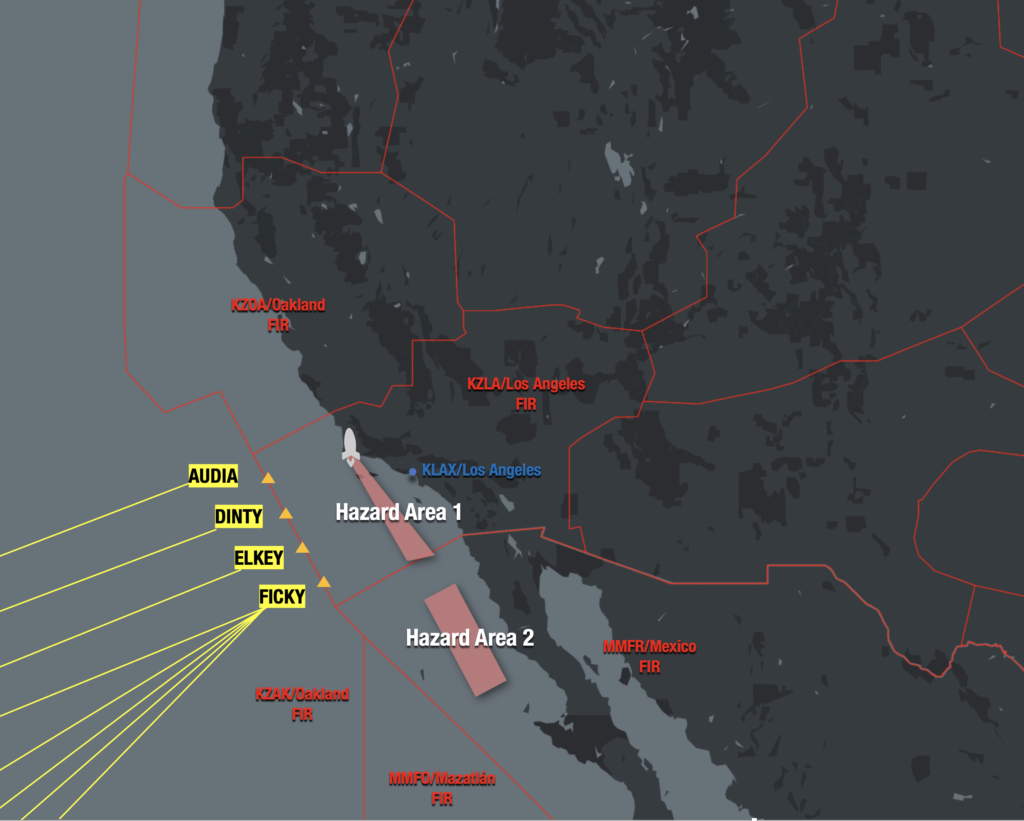
A small hazard area will exist from the launch site to approximately 125nm south, off the Californian coastline. Aircraft transiting via oceanic transitions FICKY, ELKEY, DINTY and AUDIA may all be impacted. This includes several airways linking Hawaii to the US mainland.

The Mexico FIR

A second hazard area will exist further south, off the Baja California Peninsula and is unlikely to cause any significant impact.

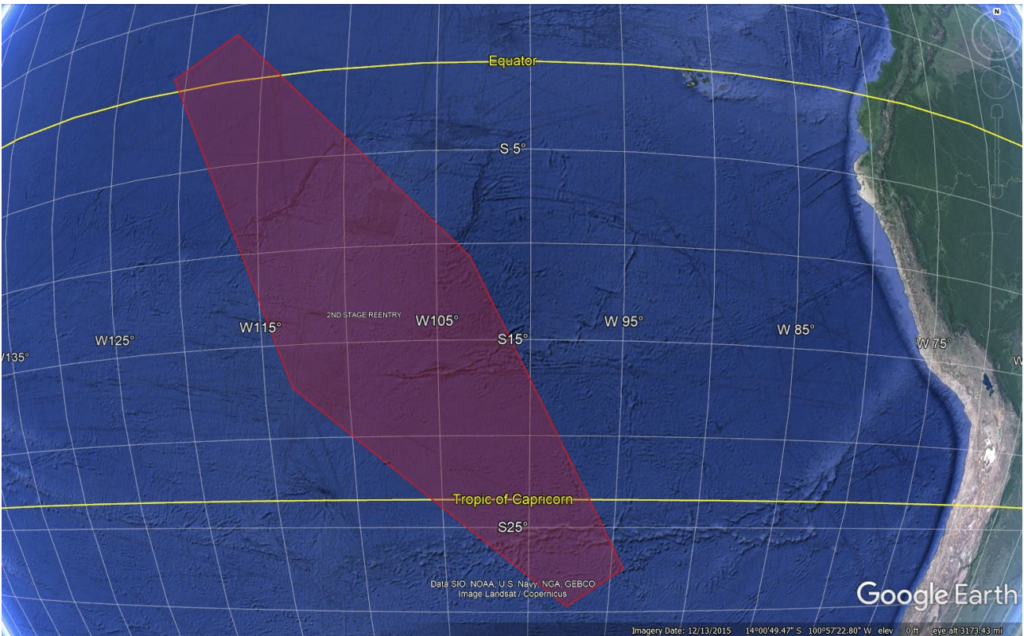
Here’s a picture of both:

South of the Equator

A large and remote section of airspace in the South-Eastern Pacific will be affected – 1300nm off the coast of South America. It occupies both part of the NO FIR zone (XX01) and the SCIZ/Isla de Pascua FIR. This is because the second stage (or piece) of the rocket will splash down in this area.

The Impact

Essentially, delays. But the good news is that they’re expected to be only minor. ATC may reroute aircraft to protect the hazard areas, or apply mile-in-trail restrictions. In all cases they don’t expect to hold aircraft up by more than a few minutes.

However, be on the lookout for unusual or unexpected changes to your clearance – if you’re wondering why, the launch is likely the reason.

Commercial Aviation vs Space Flight

The impact of commercial space operations on the world’s airspace is becoming a problematic issue. And in one way or another both the aviation and space industries will need to find better, or more efficient ways to share. This launch shows we’re not there just yet. If you’d like to read more about this particular conundrum – check out our recent article here.


What’s Happening at O’Hare?

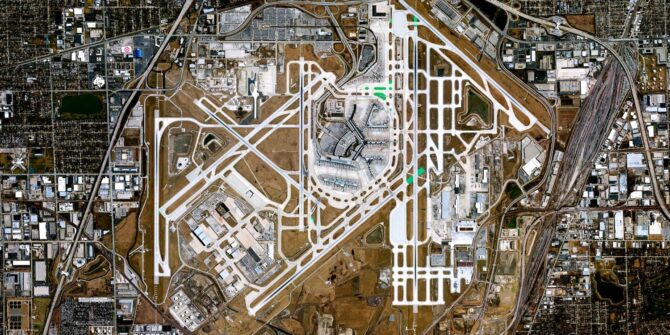
If you’re familiar with KORD/Chicago O’Hare Airport then you probably know that there are a lot of runways there. 8 if you’re just counting strips of tarmac, 16 to be really specific.

You might also know that it has had some works done on its runways recently, so here is a look at what’s happened, what’s coming next and most importantly, what to expect if you’re thinking of heading in there.

The One that got Built

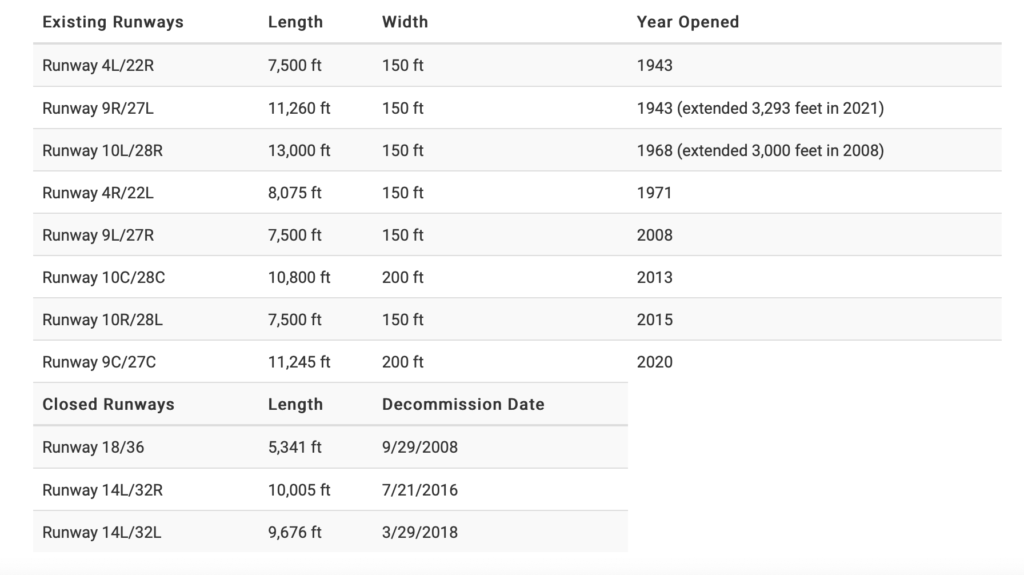
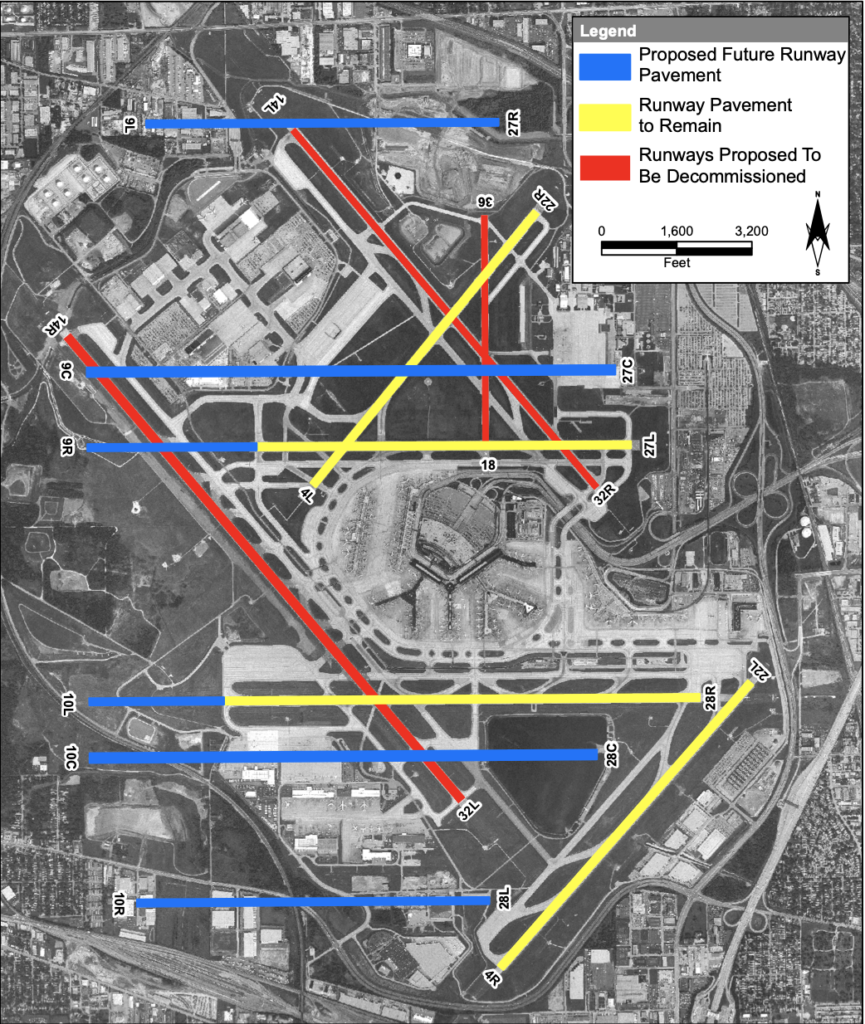
Runway 9C/27C opened on November 5th, 2020.

This is the last runway to be built as part of their modernisation program, and there is a very handy video on how it is being used, which you can check out here on the FAA’s main ‘Great Lakes (AGL) O’Hare Modernization Program (OMP) page.

The One that got Extended

Runway 9R/27L has been extended, and it re-opened for operations on December 2, 2021. 

The Rundown on the Runways.

Which runway can you expect?

Arrival operations on 9R/27R are currently limited, and will remain so through at least the first half of 2022 while they get their ILS system fully setup and tested.

So, right now, they have the following operations planned for their daytime ops, which it might be worth familiarising yourself with if you’re heading in, just so you know what to plan for.

When its a Westerly Flow:

Landing: 27R, 27C, 28C

Departing: 22L, 27L, 28R

When its a Easterly Flow:

Landing: They only use 3 runways at a time, but have multiple combinations:

9L, 10C, 10R (the top choice)

9C, 10C, 10R (the other top choice)

9L, 9C, 10C

9L, 9C, 10R

Departing: 9R, 10L

Diagram of runway plans

Some non-operational (but interesting) facts:

The O’Hare 21 plan is hoping to create the “most efficient and accessible gateway in the world.” A good plan given the airport hit a (pre-pandemic) record in 2019, with around 84.6 million passengers travelling through.

There are 193 gates available, which sounds a lot, but bear in mind the majority of these are already leased by the big hub carriers. Which leads us to the next point…

Let’s talk about the other options

KORD/O’Hare is a massive hub airport utilised by the major carriers. It is busy. The airspace is busy. To be honest, you probably don’t to fly in here unless you have a good reason to, like being a scheduled commercial carrier, if you like really busy complex airspace and taxying.

The ‘Chicago Square Mile’ is the arguably the busiest bit of airspace in the world of arrivals and departures, but luckily there are some other airpots in the area which you might want to look into, namely KMDW/Midway and KGYY/Gary.

KMDW/Midway

The smaller, but by no means small KMDW/Midway airport is right next door. They have 43 gates and are far more equipped for catering to General Aviation folk. 

The airport has 4 runways laid out in a big cross (and one tiny fifth runway). One of the big threats here is the fact they cross and you need to keep a good look and listen out for traffic and avoiding runway hotspot incursions.

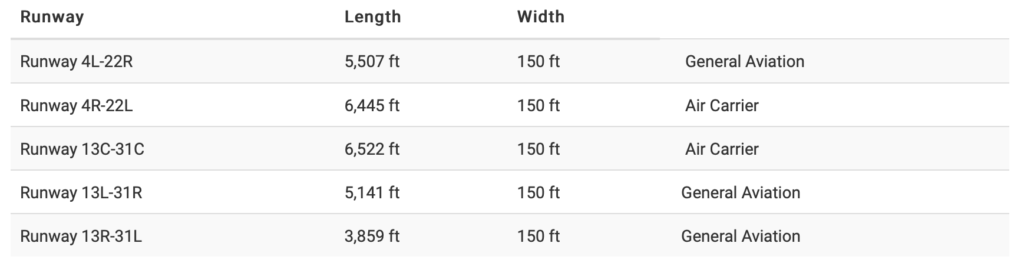
The longest runway is 6522 foot (1988m), and they have ILS CAT I available on three runways, and RNAV on pretty much everything else.

The Midway runways.

KGYY/Gary

And then there is Gary.

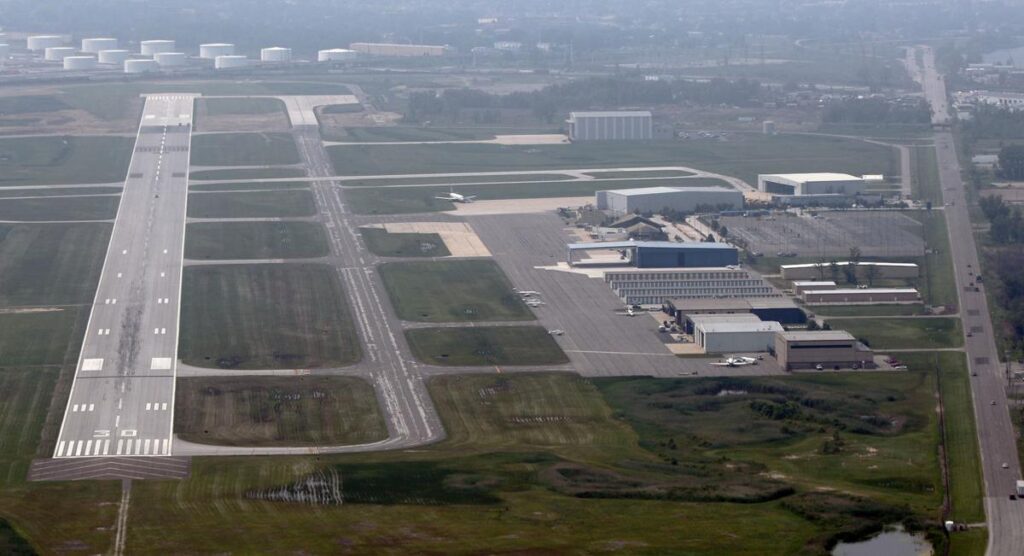
KGYY/Gary is also an International airport and a great one for corporate and “weekend” flyers heading to Chicago. It has an 8,859 foot runway and is a ‘full service’ airport. There are major airframe and engine maintenance facilities available, and ILS approach for runway 30, or RNAV for the others.

Gary is also one of the newest CBP facilities in northwest Indiana and the Chicago metropolitan region.

You will need to give them 24 hours notice, and can call them on 773-948-6330. Customs is also limited to a total of 20 people per aircraft (that’s crew and passengers).

Already a decent size, and plans to expand are not popular with locals.

Send us your spies

Send us your Airport Spy reports for all these airports so we can share the gotchas, the things to know, contacts to contact and anything else useful.


Russian Incursions into UK Airspace

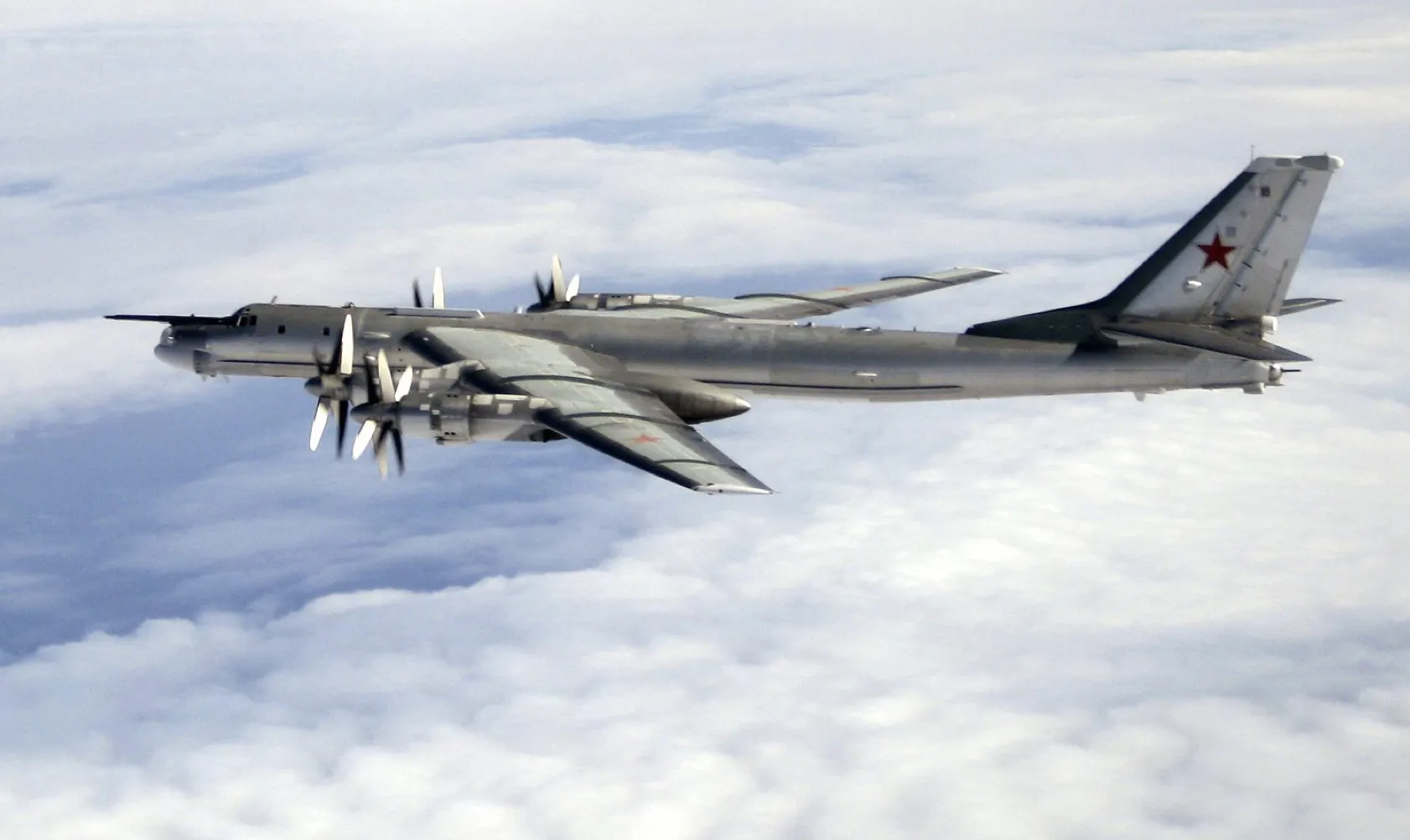
Russia have sent four TU-95 “Bear” bomber aircraft towards UK airspace two days in a row, resulting in “Quick Reaction Alert” missions by RAF Typhoon fighters to intercept and prevent any incursions.

They were of course escorted away without further incident, but these are not a one-off occurrences. Aside from the obvious posturing, do these events pose any actual threat or hazard to civilian operations?

What is a Quick Reaction Alert?

Countries sometimes like to send aircraft towards airspace they should not head towards. They generally do so without contact with ATC, and without squawks. These aren’t “aggressive” incursions but more tests of NATO response times.

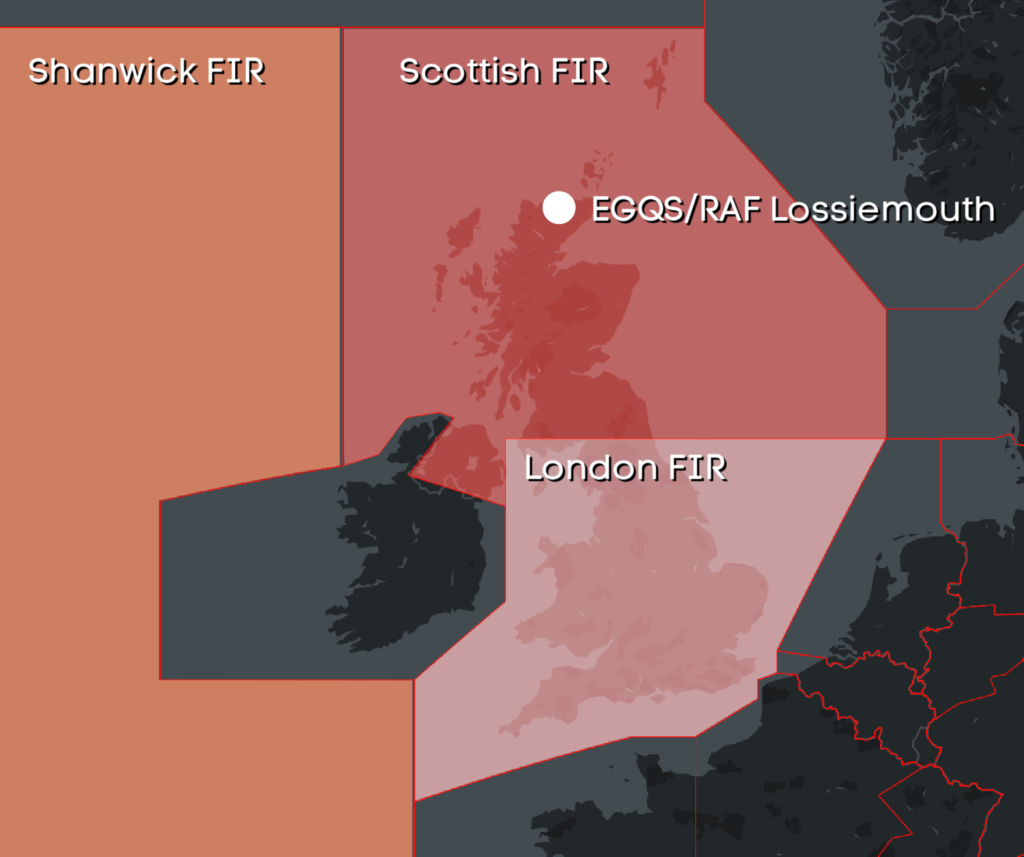
When “unidentified” aircraft are spotted,  the RAF scrambles fighters, usually from EGQS/RAF Lossiemouth and often back up by a taker from Brize Norton to go tell ‘em off and to “preserve the security of Alliance airspace”.

QRAs are not uncommon, and with mounting tensions in eastern Europe the frequency of these seems to be increasing.

EGQS is the primary QRA base for the UK.

Which areas of the UK are affected?

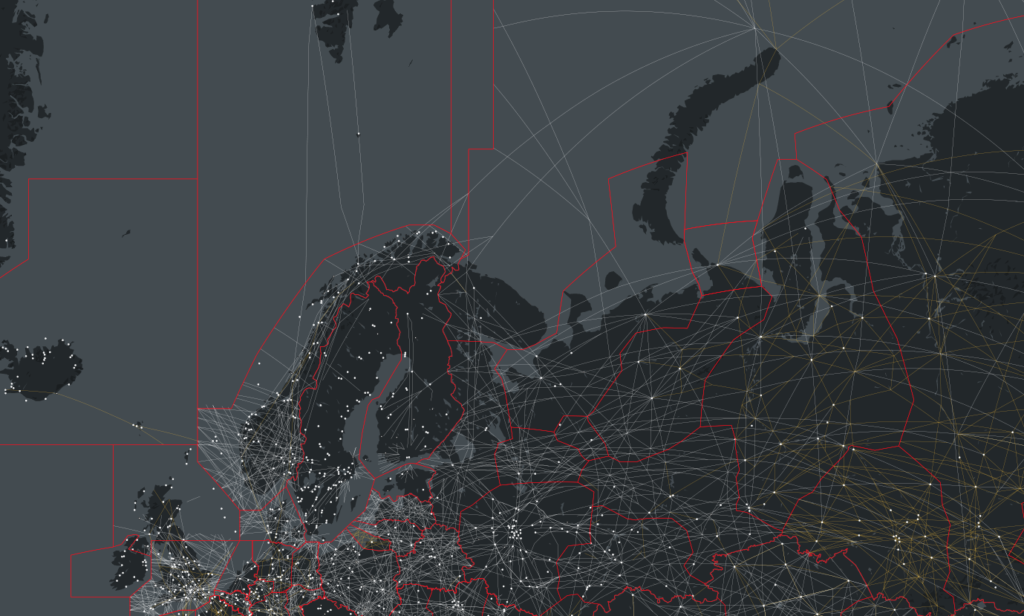
The Russian aircraft do not actually enter UK sovereign airspace – that’s the bit above the country which extends 12nm out across their territorial waters. They do incur on airspace that falls under the ‘UK area of interest’ though – areas controlled by the UK ATC – particularly the EGGX/Shanwick and EGPX/Scottish FIRs.

The airspace where these incursions take place are not generally utilised much by civilian traffic, but is of security and political interest because it is the airspace between countries such as Russia and the UK.

Airspace above the UK, Norway and linking Russia are “areas of interest”.

When else has it happened?

At the same time as the first UK incursion in Feb 2022, Russian aircraft had also breached the airspace of Estonia, where a large number of British troops are currently based.

A similar incursion took place last November when Russia sent two TU-160 bombers towards the UK. There have been several hundred such events into UK and Irish airspace over the decades where tensions with Russia have been heightened.

In March 2021, NATO saw a peak of incursions, at one point aircraft scrambled 10 times in a 6 hour period across several regions including the UK, Norwegian coast and over the Black Sea.

The US Air Force suggested over 60 intercepts took place in 2020, with many more monitored but not intercepted, around the Alaskan ADIZ region.

A Russian TU-95 “Bear” Bomber.

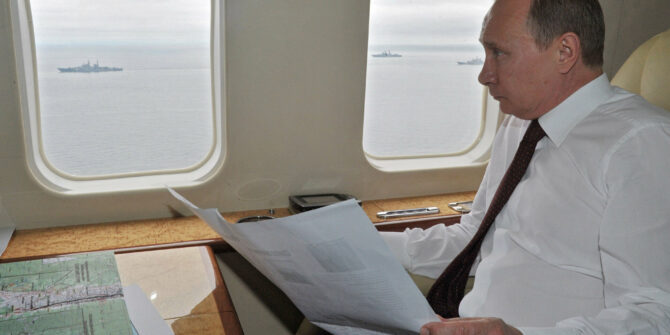
A threat to safety, or just Putin on a show?

There appears to be no intent from the Russian side to do anything more than provoke a reaction, and to test the reaction from NATO defences.

The threats and risks to civilian aircraft are therefore more along the following lines (with some mitigation strategies to help):

  • Unidentified aircraft in international airspace –
    • The aircraft are not on ATC frequencies and do not squawk
    • They do generally remain over areas with limited civilian traffic
    • Monitor TCAS carefully
    • Follow ATC instructions closely to avoid conflict with UK military QRA traffic.
  • Sudden activation of military zones –
    • Temporary danger areas and prohibited areas should be checked via notams
    • Avoid accidental detours due weather or other reasons into these.
  • Failure to check in with ATC may be treated with more seriousness due current tensions –
    • Maintain a good listening watch on frequency and on 121.5
    • Ensure you are familiar with Loss of Comms and Interception procedures
    • We wrote about Interceptions here, but consult the AIP for countries you are operating in.

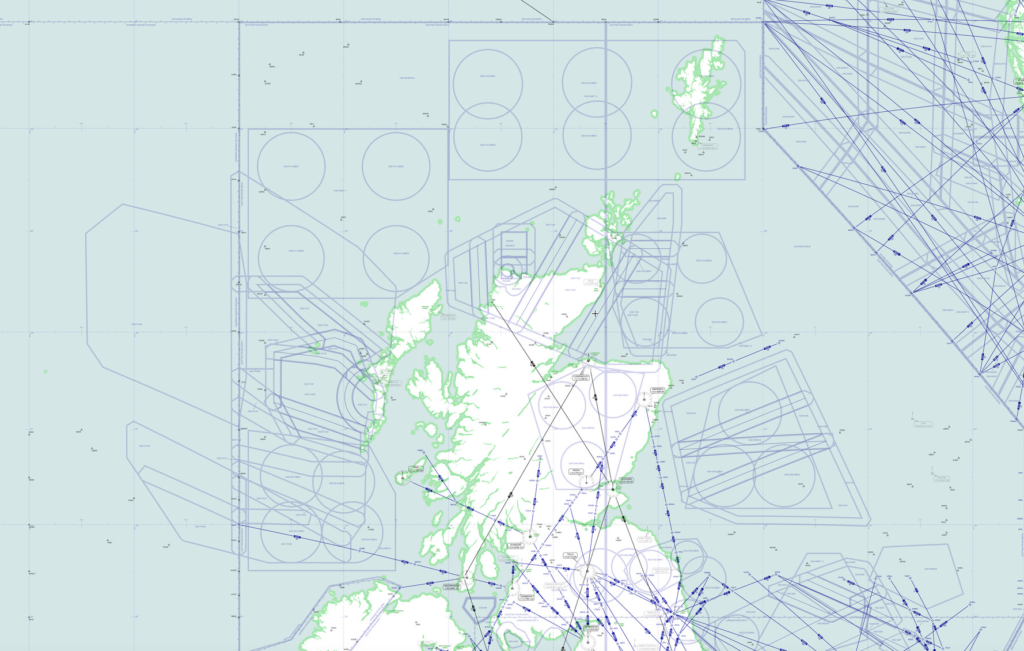
Monitor UK prohibited, restricted and danger areas for activation.

What are the “laws” on flying into other airspace?

“Cujus est solum ejus est usque ad coelum et ad inferos”

Which means, for aviation purposes, that “Airspace is now generally accepted as an appurtenance of the subjacent territory and shares the latter’s legal status”.

Which has a lot of tongue twisting words and basically means “the air over your land and up to space is yours.”

This is written in the 1944 Chicago Convention, with the 1958 Geneva Convention going into a bit more detail about what that means. The Chicago Convention also contains the 5 ‘Freedoms of the Air’ which apply to scheduled air service and what have you.

All this is a little less applicable to military aircraft though for obvious reasons.

Fly a military aircraft into Sovereign Airspace and that is going to be seen as an act of aggression. Fly it into airspace controlled by, but not sovereign to a country, and it might not quite be an act of aggression but it is definitely a breach of procedures – in this case, because they failed to adhere to ATC and squawk regulations amongst other things.


No more NAT tracks at FL330 and below

Big news from the NAT. From March 1, 2022, FL330 and below will no longer be part of the NAT Organised Track Structure (OTS).

What does this mean?

It means operators will have the flexibility to file random routes at FL330 and below when flying between Europe and North America.

Particularly for operators unable to file routes across OTS tracks with active flight levels, this means much greater flexibility in choosing their own trajectory.

Why is this helpful?

NATS quoted a study which suggested every extra minute over the ocean equates to about £51, or $70. It might not be the most radical change, but it is a step towards further improving the efficiency for operators, and ultimately to reducing fuel burn.

Why now?

It comes down to the introduction of ADS-B. This allows controllers to receive updates every 7-8 seconds instead of every 840 seconds (14 minutes).

What about the rest of the tracks?

This change forms part of NATS 2030 NAT vision, and more improvements can be expected. Unfortunately, it isn’t a direct result of their NAT tracks NIL experiment and abolishment of all the OTS isn’t on the cards anytime soon.

However, studies from the ‘OTS Nil’ trial are being reviewed and there are plans to simulate further OTS Nil on busier traffic days to see if viable, useful, doable…

What do you need?

If you want to fly at FL330 or below (down to FL285) then remember you are still in the NAT HLA, just not on the OTS, so the same HF, long range nav and comms requirements apply, as do datalink mandates.

This is our NAT Airspace Circle of Entry 2021 – easily check what you need for Nav, Comms and ATC Surveillance depending on which bit of the NAT you will be flying through.

Anything else?

Unfortunately no, that’s the news for now. Any questions on this feel free to direct them to us at team@ops.group

If you want to read the “official” NATS notice then you can do so here. We don’t yet have a reference for the official NAT Docs.


Ops Down Under: Borders Opening Up

Throughout the pandemic, Australia and New Zealand have both had some of the strictest entry rules for foreigners in the world. They have remained firmly in place since the doors first slammed shut early in 2020, and haven’t budged since.

Until now…there is finally light at the end of the tunnel. There have been two big announcements this week from both countries that they intend to open up in the coming months.

If you’re planning to head down under, here’s a rundown of how the current entry rules work, and what is set to change in the first half of 2022.

Australia

What’s been announced…

Australia is reopening its borders to vaccinated travellers on Feb 21, after almost two years of restrictions. Passengers will need to have a visa, a pre-arrival PCR test, and must also complete an Australia Travel Declaration (ATD) at least 72 hours before departure. Unvaccinated passengers will still need a valid travel exemption to enter.

Travellers to Australia will also need to comply with requirements in the state or territory of their arrival, which may include quarantine and post-arrival testing requirements. Quarantine requirements in Australia are determined by State and Territory governments.

How things work right now

To enter Australia, all foreigners must currently apply for an exemption first. There is a long list of what qualifies but in almost all cases leisure travel is a no-go. The only exception to this rule is for citizens of New Zealand, Singapore, Japan, and South Korea.

To apply for an exemption, passengers have to use this online portal. It takes a least seven working days to process each one, sometimes longer, so it’s important they apply early.

Testing and Quarantine

Pre-departure, all pax need to get a negative PCR or rapid antigen test that is less than 72 hours old.

After landing is where things can get a little tricky. Australia is made up of individual states and territories. Each one has their own subtle differences when it comes to pax testing and quarantine rules. So, what needs to be done next depends on where you’re landing, and whether your passengers are vaccinated or not.

Rule hack: With the exception of Western Australia (YPPH/Perth), vaccinated passengers only need to self-isolate until they receive the results of a Covid test on arrival. Unvaccinated passengers have to apply for, and stay in managed hotel quarantine for 14 days. Passengers arriving in Perth still need to enter approved quarantine even if vaccinated for at least eight days, with a full two weeks required for unvaccinated pax.

For the official state rules of where you’re headed, check out the attached links at the end of the article.

Individual territories and states publish their own rules – the good new is there are only subtle differences.

What about crew?

All crew are exempt from pre travel testing.

On arrival you will be health screened and given a Covid test. Fully vaccinated crew will only need to self-isolate until the result (approx. 24 hours) and then will be free to enjoy the layover.

Unfortunately unvaccinated crew will need to stay in their hotel until the flight out.

GA/BA Flight Approvals

If you’re operating a charter flight, you’ll need to apply for a bunch of approvals first (at least 72 hours in advance). You can find detailed information on that process here.

All non-scheduled flights to Australia have to fill in a request form.

New Zealand

What’s been announced…

On Feb 3, the NZ Government announced they would be getting rid of managed quarantine for fully vaccinated travellers altogether. This will apply to citizens returning from Australia from the end of February, and from all other countries from the end of March. Unvaccinated travellers will still need to quarantine. It is unclear yet whether international crew will be allowed to enter the community under the same rules.

It was also announced that borders would be progressively re-opened to foreigners throughout the year. This will start for study and business visa holder from April, before all travellers (including tourists) will be allowed in by October.

How things work right now

The rules for foreigners are even tighter than Australia’s. Aside from exemptions for permanent residents and relatives, foreigners can only enter the country if they hold a ‘critical purpose’ visa. The application for this can take up to two weeks.

Testing and Quarantine

Anyone travelling to New Zealand needs to get a PCR test that is less than 48 hours old at time of departure.

All passengers must then spend ten days in managed quarantine when they arrive. Reserving a spot is extremely difficult – you basically need to enter a lottery to reserve one via the MIQ website and then keep your fingers crossed.

Even if a passenger can get in, reserving a quarantine slot in NZ is extremely difficult. This is set to change.

What about crew?

Crew must be fully vaccinated to enter, and provide the results of a PCR test taken within seven days of their flight down. They’ll then need to isolate in an approved hotel until their flight out. You can find the full details here.

GA/BA Flight Approvals

You’ll need to contact the Ministry of Transport. You can find more info on that process here.

Links to Official Rules

Australia

New Zealand

See the official government website here.


The 2022 Big Events Calendar

We are barely into 2022 but there are already a bunch of events showing on the calendar which you might want to have a think about, because some events equal more traffic and more traffic means more restrictions in terms of slots and parking, while other “events” mean stricter security and possible safety measures…

So, from major sporting events to general elections, airshows to other stuff – here is your Major 2022 Events Calendar, with the What, Where, When and Why we think it could impact your international flight ops.

February

WHAT: 2022 Winter Olympics

WHERE: Beijing, China

WHEN: 4-20 February

WHY: The majority of events will take place in and around Beijing, but there are a few airports to think about. 

Unless you are a scheduled passenger flight, maybe avoid these as there will be significant parking restrictions:

  • ZBAA/Beijing Capital
  • ZBAD/Beijing Daxing

Plan for more restrictions including parking, and higher traffic levels at:

  • ZBNY/Beijing Nanyuan
  • ZBZJ/Zhangjiakou

Keep an eye out for Notams advising of restrictions of traffic flow procedures at the major airports. We’ve also written a ‘Top Tips on China Ops’ post with some more info on navigating the Chinese airspace, rules and regulations, which you can read here.

WHAT: Super Bowl LVI

WHERE: Los Angeles, California

WHEN: 13 February

WHY: This is a big event. So big (in terms of the impact on flight ops) that we gave it its own post. In short, a lot of the big airports will be too busy to handle you unless you’ve made reservations. The smaller airports will also likely have traffic flow procedures in place, and you can expect disruptions throughout the surrounding airspace.

WHAT: Singapore Airshow

WHERE: Changi, Singapore

WHEN: 15-18 February

WHY: WSSS/Changi airport is going to be busy busy busy with airshow aircraft. In fact, they will be limiting traffic in and out from the 10th Feb. We’ve done a whole post on this for you which you can read here.

March

WHAT: South Korean Presidential Election

WHERE: South Korea

WHEN: 9 March

WHY: This is major election, or rather the outcome will have a potentially major impact on the democracy and economy of South Korea, which means protests, heightened security and ground transport disruptions are possible in major cities.

Most importantly, government services may well be unavailable on the day of the election, so plan those permit applications in advance.

Korea Airport Services (KAS) are a good agent to use. You can get hold of them on kbas@kbas.com / +82 32 744 3443

WHAT: Hong Kong Chief Executive Election

WHERE: Hong Kong

WHEN: 27 March

WHY: A relatively major political event, but this year marks the 25th anniversary of the Handover to China from British Rule. Hong Kong has seen several years of protests and riots against growing Chinese (mainland) government regulations. Protests, heightened security and ground transport disruptions are likely in major public areas.

Government services may well be unavailable on the day of the election, so plan permit applications in advance.

Hong Kong Business Aviation Centre are one agent to use if needed. Available at hkbac@hkbac.com / +852 2949 9000

April

WHAT: French Presidential Election

WHERE: France

WHEN: 10 April – 24 April

WHY: The French election this year could be quite a big deal because, well, every other time it has been, leading to a lot of protests, some riots and of course strikes. Keep an eye on the situation in France and stay in touch with your handling agent to check services and security if operating in during these dates.

May

WHAT: The Cannes Film Festival

WHERE: Cannes, France

WHEN: 17 – 28 May

WHY: It is a big film festival which sees a lot of people from all over the world flying in, and a lot of jets trying to park up. LFMN/Nice Côte d’Azur is the closest “big” airport and parking restrictions will be, well, restrictive, so expect to do drop and goes if operating here during this period.

WHAT: Monaco F1 Grand Prix

WHERE: Monaco

WHEN: 26 -29 May

WHY: The F1 moves all round the world, but this is the one that causes aviation ops the most hassle because of limited slots and parking at nearby airports. The most convenient is LFMN/Nice Côte d’Azur and this will take some early planning if you want to use it. Try Aviapartner Executive on +33 4 93 21 37 37 / executive.nce@aviapartner.aero

WHAT: UEFA Champions League Final

WHERE: St Petersburg, Russia

WHEN: 28 May

WHY: A big football event which is likely to bring slot and parking restrictions to ULLI/St Petersburg Pulkovo airport in the days leading up to and after the event. Don’t plan on using nearby ULSS/Rzevka as a backup, it isn’t clear if its actually operational or still being used as a car dealership…

A-Group at ULLI will have all the info on slots and parking if you want to plan in advance +7 812 677 76 45 / ledops@a-group.aero

WHAT: French Open

WHERE: Paris, France

WHEN: 22 May – 5 June

WHY: It is a big sporting event that folk like to attend. Parking and slots at LFPG/Paris Charles De Gaulle might prove hard to come by. LFPO/Paris Orly is the smaller, quieter next door neighbour. You also have LFPB/Le Bourget airport nearby which is the “business aviation” airport and LFOB/Beauvais airport which predominantly serves domestic flights.

LFPB/Le Bourget have confirmed they don’t have slot restrictions during this time and parking shouldn’t be a problem, but get planning early just in case.

There are several FBOs at Le Bourget:

June/July

WHAT: US Open (the Golf)

WHERE: Boston USA

WHEN: 16 – 19 June

WHY: Mainly added so you don’t confuse it with the tennis. This is a major golfing event that takes place up near Boston. There are a fair few airports in this area serving business aviation and private flights.

  • KBOS/Boston Logan International (the main international airport in the area)
  • KBED/Bedford
  • KEWB/New Bedford
  • A few regional and municipal ones… you know what, go check this page because they list them all with contact info as well.

WHAT: Wimbledon

WHERE: London, UK

WHEN: 27 June – 10 July

WHY: Another big sporting event. The major London airports – EGLL/London Heathrow, EGKK/London Gatwick and EGSS/London Stansted can be hard at the best of times to get a slot into, and this summer they have raised the “use it or lose it” requirement for the scheduled airlines.

So you might do better to look into the smaller airports. If you have the approval/training to land then EGLC/London City is right in the city! EGKB/Biggin Hill is a smaller airport south of London, but is very convenient for the city (and a lot closer than the big international airports).

You also have EGTK/Oxford Kidlington (London Oxford Airport) and EGLF/Farnborough airport which are both convenient for London and cater for predominantly business aviation.

WHAT: 2022 Commonwealth Games

WHERE: Birmingham, UK

WHEN: 28 July – 8 August

WHY: The next big summer sporting event. EGBB/Birmingham airport is going to see some heavy traffic loads during this period, and there isn’t a huge amount of extra parking available here.

Thankfully, the UK is small and the big cities are well connected. EGTK/Oxford Kidlington is only 1 hour 30 down the road and might a better option if you want to park up for a few days. You can contact the FBO on ops@londonoxfordairport.com / +44 1865 290 600

August

WHAT: US Open (the Tennis)

WHERE: New York, USA

WHEN: 29 August – 11 September

WHY: Another big tennis tournament, and one that takes place in New York. You have a bunch of options for airports here, we ain’t going to list them all. 

One we will mention though is KHTO/East Hampton because this public airport is going private. It will close temporarily in February, and when it reopens it will have stricter limits on traffic numbers and prior permission will be required.

Later in the year…

WHAT: 2022 FIFA World Cup

WHERE: Qatar

WHEN: 12 November – 18 December

WHY: Big football event being held in a very small country… which luckily has two very large international airports, and is used to catering for private and business aviation.

  • OTBD/Doha International
  • OTHH/Hamad International

You can expect some parking and traffic restrictions during this period. Keep an eye on Notams nearer the time.

Qatar has had some political tensions with neighbouring countries. These are now resolved and the blockade on their airspace and traffic ended in 2021. The region is relatively volatile though. If operating in, check out Safeairspace for details on some of the other warnings and risk levels for the region.

Qatar is also planning on changing the airspace structure, which probably won’t take place in 2022, but keep an eye out just in case.

That’s all folks.

We will update as we continue to hear or spot more events that might affect you. Email us at team@ops.group if you have queries or think of any we haven’t covered.


Top Tips on China Ops

Where you can fly

China has a bunch of flight restrictions beyond the Covid related ones. You will need overflight and landing permits for anywhere in China.

They get grumpy if you make a lot of changes to your flight planning. Particularly avoid last minute changes. Avoid diverting to an airport that is not a planned alternate, unless an absolute emergency.

China only allow certain airways for usage by non Chinese registered aircraft. These mostly run north-south. It is often recommended to offset 1-5nm due congestion, but this is only allowed by ATC. Don’t apply SLOP without confirming with ATC first. Any other airway requires you to have a Chinese navigator onboard, and you generally won’t find these published in your Jeppesen or LIDO manuals. The same goes for some smaller domestic airfields.

There are multiple restricted areas across the country. Some of them are not always obvious… which means you will rarely get “Direct To…” clearances, and may often find your levels are restricted or you are given seemingly random re-routes. Fuel planning is critical, as is accurate route tracking.

Limited airways are available in China for non-Chinese registered aircraft.

How they do it.

China do it in meters. You should have procedures in place for this. If you are in RVSM airspace you might notice the ‘feet’ levels are all +100’. This is because the Chinese meter levels only provide 300m (900’) separation, and RVSM requires 1000’ minimum separation. 

Flights departing China and heading east often report being ‘held down’ at sub-optimal flight levels. Shanghai seems to be one of the worst spots for this, due to a corridor south of Korean and Japanese airspace.

What about parking?

ZBAA/Beijing has had stricter parking restrictions in place since 2015. If you are GA, you are limited to 24 hours. ZBTJ/Tianjin is a good and relatively nearby alternate for parking – it is also an airport of entry, and has less parking restrictions but be warned, it also has much less in terms of facilities and is not available H24.

ZBSJ/Shijiazhuang is another option, as is ZBHH/Hohhot.

Some of the main airports for maintenance. Despite the size, China is one time zone.

What about maintenance?

If routing in the general region, VHHH/Hong Kong and VMMC/Macau are probably easier options for finding maintenance support, or WSSS/Singapore.

Of course, if you can’t make it to these airports then ZBAA/Beijing, ZGGG/Guangzhou, ZSAM/Xiamen and ZPSD/Shanghai do have some big maintenance facilities available, but most other airports might struggle to help corporate aircraft.

Parts and support are usually sent in from Hong Kong or Singapore. Having contacts in place and a “plan” are probably a good call to avoid big delays though.

Anything else?

Different airports and regions have different customs within the airport, and outside. In Beijing you will find most social media and many websites blocked, including google. Some VPNs will enable use. Shanghai tends to be much less strict and Hong Kong is fine.


Ops Planning for the 2022 Singapore Airshow

The Singapore Airshow is back, and taking place from Feb 15-18 at WSSS/Changi airport.

As one of the largest aviation events in Asia, things are going to get busy.

If you’re flying in, here is a rundown of everything you’ll need to know before you get there.

Airport Closures

From Feb 10-18 Changi will close to all arrivals and departures for over an hour in the middle of each day. This is to allow for practice displays and then the main event.

The closures all commence late in the morning and vary slightly each time. You can find the exact timings below – Singapore’s time zone is UTC + 8.

The restricted airspace covers a large portion of Changi’s CTR and will apply from surface to 10,000 feet.

Here’s a picture:

Nearby WSSL/Seletar will not be affected by the closures.

Rush Hour

Avoid planning to take-off or land on either side of the closure windows. There will likely be a back log of traffic and extensive delays. Arriving aircraft are advised to plan for at least an extra twenty minutes of holding fuel.

If you’re arriving from a major airport in the Asian region, also be aware of Singapore’s ground delay program which may be activated. Here’s the relevant page from Singapore’s AIP, but if you are departing an affected airport for Changi, you may need to stick to a calculated take off time (CTOT). The allowance is -5/+10 min. Outside of this window you’ll need to ask for a new CTOT.

Once airborne, if you get held up by more than 15 minutes make sure you let them know. Their AFTN address is WSJCZQZX.

Permits

Both private and commercial operators need a landing permit for Singapore. Commercial ones reportedly take a number of working days to process so apply early. You can speak to the CAA directly on +65 65 42 1122 or caas_atlas_admin@caas.gov.sg. If you’d prefer the help of a local agent, we’d suggest SG World Aviation Services. You can reach them on +65 85 774830 or ops@sgworld.net.

Weather

Singapore is found just one degree north of the equator, and so convective thunderstorms are common all year round, and can be quite severe. The worst times are in the afternoon and evenings. Expect to use additional fuel for deviations or holding.

Covid Entry Rules

The rules for foreigners to enter Singapore are tight. But there are ways they can enter with no quarantine. The most common is via the ‘Vaccinated Travel Lane,’ which most travellers are eligible for. There’s a bunch of boxes to tick here, so we recently put together this article that should help.

Crew have two choices. You can enter under the standard rules which don’t require a vaccination or Covid test. But you’ll be stuck isolating in the hotel until departure. If you want to get out (and enjoy the show) you can also apply for the VTL above if you follow the same requirements as your passengers.

Seletar

If you’re planning on flying into nearby WSSL/Seletar, the biggest issue is likely to be parking. If you haven’t already, make sure you get in touch with your agent to make sure you reserve a spot as the airport can quickly fill up.

The airport itself can be operationally challenging – there are no instrument approaches, and it is in close proximity to military airspace. Click here for a full briefing on what to expect.

WSSL/Seletar – 8nm west of Changi. Parking can be very limited.

The Official Word

You can find the official Singapore AIP Supp (026/2022) for the event here.


Last Line of Defence? Anti-missile Tech on Civilian Aircraft

According to an FAA document that’s hot off the press, back in 2019 a major US cargo carrier asked the FAA for the nod to install surface-to-air missile defence systems on some of its narrow body jet aircraft.

The FAA was left scratching its head – there were no rules in place to allow them to respond with a yay, or even a nay. It is almost un-chartered territory for commercial aviation. So much so that they’re asking the public for feedback.

But with surface-to-air weaponry a growing threat to aviation in conflict zones around the world, why is flying higher or avoiding them our only line of defence, when these counter-measures could be installed as our last? After all, they work for the military. Why not for us?

The answer may not be so simple. So let’s take a closer look.

What do we mean by counter-measures?

Simply put, technology designed to deter surface-to-air missiles. How they achieve this depends on how the missile is guided. While there are different ways, the two biggest threats to civil aircraft are from missiles that use radar or heat.

Radar

Radar guided missiles tend to be more advanced. Which is why airspace warnings found around the world refer to ‘advanced’ anti-aircraft weaponry – they can fly further and higher. They need fancy equipment on the ground, and trained operators to deploy or use them. MH17 was shot down by a radar guided ‘Buk’ missile in 2014 at FL330.

The military’s answer to this is Chaff. Or in other words, a cloud of small thin pieces of metal, metallized glass or plastic to bamboozle the radar with a cluster of targets. The Chaff is then generally lit up or ‘illuminated’ by a signal from the target aircraft so that the radar can’t distinguish between the two.

Chaff systems spread a cloud of small, thin pieces of radar reflective material.

Heat

 This is the biggest danger. Why? Because the majority of MANPADS use it. MANPADS stands for ‘man portable air defence system’. As the name implies, they’re light, self-guided and can be fired by a single person with little or no training.

What’s worse is that they’re scattered around the globe in the hands of non-state actors such as terrorist groups and can remain useable in storage for over twenty years. Which is why they’re so hard to control. In fact, over a million of them have been produced and now exist in over one hundred countries the world over. Since 73’ there have been sixty-five MANPAD attacks on civilian aircraft.

The possession of non-state actors with access to weapons such as MANPADS is cause for industry wide concern. Africa especially stands out. Courtesy: Small Arms Survey

MANPADS generally can’t reach aircraft above FL250, and are short range – typically around 25nm. Which is why aircraft landing and departing are most at risk.

Aircraft are most at risk from MANPAD attack during take off and landing – like this A300 which took heavy damage to its wing departing Baghdad airport.

MANPAD missiles lock on to the heat an aircraft’s engines produce. Which is why they’re deterred with heat decoys. Military aircraft deploy flares – pyrotechnic devices that light up like fireworks. They burn magnesium which is far hotter than an engine’s exhaust.

Another method is the use of infrared. This is what our friends at the cargo airline are hoping to use. There are no fireworks with this device. Instead, it can detect an inbound missile and direct an infrared beam towards it to confuse its heat seeking abilities.

The recent application to the FAA was to install infrared pods like this one. The problem for the industry is cost.

Sounds great, sign me up.

The problem for civil aviation is that it is not the military.

For starters there’s the cost – which sadly is astronomical. That old chestnut. For instance, an infrared system like the one above would cost over a million USD to install – per airplane. This doesn’t include the extra cost of more weight and more drag.

Then there are the fireworks – chaff and flares. The military have specialists to install, service and store the equipment and the infrastructure to do it safely. And they are acutely aware of things that explode. Maintaining an industry-wide team of professionals who have the right training might be a step too far.

Large numbers of highly trained technicians would be needed for the industry to maintain flare and chaff systems.

But here’s what the FAA are most concerned about. What happens if these systems deploy at the wrong time or accidentally? Especially over built-up areas, on the ground at airports or onboard an aircraft itself. Magnesium, for example, burns at four thousand degrees fahrenheit and can’t be extinguished with water or halon. It’s dangerous stuff.

Magnesium flares burn extremely hot and cannot be put out with water or halon. Which is why accidental activations are a major concern on the ground, and aboard the aircraft.

Israel’s carrier El Al has previously installed missile counter-measures on their aircraft which were banned from operating at some European airports.

All of these factors add up to risk and cost. And when measured against the actual risk of an aircraft being actively attacked by a surface-to-air missile, it may simply be cheaper to rely on existing measures. In other words, avoidance.

Finding the right fit.

This doesn’t mean all hope is lost. There is likely some type of future for military style counter-measures in civilian aircraft – for the right operation. Operators with small numbers of aircraft who regularly fly in high-risk airspace could immediately benefit from current tech, such as infrared systems without necessarily bankrupting themselves.

Or we can wait for the tech to become cheaper and more accessible. As is often the case, technology can develop from a military application into a civilian one. We just might not be ready for a straight swap just yet.

Back to the FAA.

It sounds like they think there is a future in it too. And work is underway to come up with a plan to approve applications for infra-red anti-missile systems on civil aircraft. This will include special safety conditions to mitigate some of the threats along with standard markings, training and other info to keep people interacting with these systems safe.

Want to contribute? You can read the FAA’s proposal here, and submit your comments. Just make sure you do it before March 4.


Countries with crew vaccine mandates

Here’s a simple thing: a list of countries which require crew to be vaccinated to be able to enter.

We will keep adding to the list if/when more countries adopt this requirement.

Note that the info for each country is just a quick heads-up summary, not an extensive explanation of the rules in detail. For that, click on the links provided, or contact local agents for more info.


Update Jan 27

Antigua

There are no special exemptions for crew in Antigua! So that makes the rules pretty straightforward here – everyone aged 18 or older needs to be vaccinated, have a pre-arrival test, and have a booking to stay at “certified accommodation”. There’s no quarantine on arrival as long as you tick all these boxes. Full guidance here. Contact local agent anu@signatureflight.com for more info.

Chile

Crew vaccination is not absolutely required, but local agents say it’s highly recommended in order to avoid potentially having to quarantine in their hotel room until departure. Note that you need to validate your vaccination and obtain a “mobility pass” on this website and this process might take up 30 days. Essentially, crew should follow the same procedure as passengers – get the mobility pass, take pre-arrival test, take another test on arrival and remain in quarantine until they receive a negative test result.

The best site we’ve found for easy-to-read and clear guidance is the UK FCO page for Chile. Contact local agent fbo@aerocardal.com for more info.

Hong Kong

Hong Kong don’t absolutely require crew to be vaccinated, but things get tricky if they’re not. The Hong Kong crew rules are excruciatingly complex, but essentially, crew who have been to “High Risk Places” (i.e. pretty much everywhere) within the past 21 days will have to self-isolate on arrival. Here’s where the vaccination status becomes important – vaccinated crew only have to self-isolate in an airport hotel until departure, but unvaccinated crew must stay at a designated quarantine hotel for a full 21 days.

Full guidance here. And for an up-to-date list of what countries are in the “High Risk Places” list, click here. Local agent Asia Flight Services have summarised all this pretty clearly in a crib-sheet which you can download here.

Qatar

Crew are allowed to enter as long as they are vaccinated and have a pre-arrival test. How long they must quarantine for depends on which country they are flying in from. The US, Canada, and most European countries are currently on Qatar’s “Red List”, which means a 2 day hotel quarantine on arrival with a Covid test conducted at the end of the second day.

Full guidance here. Contact local agent handling@qatarexec.com.qa for more info.

Thailand

Crew need to be vaccinated and have a pre-arrival test, and must self-isolate in their hotel room until departure (yep, the room).

However, vaccinated crew are free to apply for the “Test&Go” or “Sandbox” options instead, if they prefer. These are the two schemes Thailand has in place for travellers to avoid lengthy quarantine. The requirements for each scheme are bit complex (read about Test&Go requirements here, and Sandbox requirements here), but they are probably worth considering if crew are planning on staying in Thailand for longer than just a night or two.


Update Jan 25

Anguilla

Crew need proof of vaccination, a pre-arrival test (various different types accepted, within varying timeframes), and will get tested again on arrival. They then have to stay in their hotel until the results come back – usually within 24 hours. Crew staying for more than 8 days may be tested again on day 4. Full guidance here.

Argentina

Crew must be vaccinated to enter. They don’t need a pre-arrival test, but must take a test between the 3rd and 5th day after arrival. Contact local agent info@transair-fbo.com for more info.

Canada

Effective Jan 15, all foreign crew must be vaccinated to enter Canada. There are several exemptions for Canadian citizens and residents, one of which is for crew. You can use Canada’s online tool to quickly work out what the entry rules are for you, depending on your circumstances.

Cambodia

All foreign crew must be vaccinated. They must take a pre-arrival test if travelling to VDPP/Phnom Penh or VDSV/Sihanoukville, but this is not required for flights to VDSR/Siem Reap. At all airports, crew will be tested on arrival – results take up to 20 minutes. Contact local agent occ@asiaflight.aero for more info. Full guidance here.

France

Crew operating domestic flights need either a pre-arrival test, proof of vaccination, or a certificate of recovery. These rules do not apply to crew operating international flights as they are still exempted from all requirements. Full guidance here.

French Polynesia

Crew need to be vaccinated to enter, unless they have a “compelling motive” and obtain permission from the High Commissionaire’s Office in advance – in which case they must quarantine on arrival. A pre-arrival test is also required. Contact local agent nuutea@tascfbo.com for more info.

Galapagos Islands (Ecuador)

Crew traveling to the Galapagos Islands need proof of vaccination plus a pre-arrival test. Also not that SEGS/Galapagos airport is not an airport of entry – you must do customs and immigrations through SEQM/Quito or SEGU/Guayaquil on Ecuador’s mainland first. Contact local agent info@pike-aviation.com for more info.

Singapore

Crew and pax entering Singapore via the Vaccinated Travel Lane scheme need to jump through a lot of hoops: proof of vaccination, a pre-departure test, another test on arrival plus self-isolation until they get an SMS with a negative test result (this is likely to arrive within 24 hours, but for scheduled arrivals at Changi airport it is taking 6 hours or less). Full guidance here.

But from Jan 24, if they can prove they had Covid and recovered from it (between 7-90 days before the date of departure for Singapore) they are exempt from all these requirements. Full guidance here.


If you know of somewhere not on the list, but which should be, send us an email at news@ops.group


Russia-Ukraine Conflict Timeline

The tensions between Russia and the Ukraine continue to rise, and questions over whether Russia will mobilise troops into the Ukraine is raising concerns for the safety of the region and its airspace.

For a full background to the situation, you can read this post.

Here is a timeline of the current situation and risk warnings, with latest updates on any changes as they occur.

The Ukraine FIRs  and prohibited airspace.

Timeline – Airspace Risk

Jan 26 2022 – **Latest Update**

  • Belarus and Russia advise they will holding joint exercise through to February 20. These will take place near the southern border with the Ukraine. The drills will involve tests of the air defense systems which use advanced anti-aircraft weaponry, able to reach all levels of civilian utilised airspace.

January 2022

  • Russia warned of “the most unpredictable and grave consequences for European security” in relation to plans for the Ukraine to join NATO which is further destabilising the situation.
  • NATO has increased air forces in Eastern Europe in case intervention is required.
  • Warnings and prohibitions remain in place for the airspace along the border between Russia and Ukraine.

December 2021

  • The FAA published updated information on overflight risks near the border, particularly in the URRV/Rostov FIR near the UKDV/Dnipro FIR boundary. This is the region where MH17 wash shot down in 2017.

November 2021

  • Russia increased military activity along their border with the Ukraine, and based significant numbers of troops around URRP/Platov International Airport in Roston-On-Don Oblast.
  • The Ukraine hold drills of their airborne units in the Kyiv region, in response to increased Russian activity.

Russia military aircraft close to the Ukraine border.

October 2021 

  • The FAA extended their ban on US operators overflying the eastern part of the UKDV/Dnipro FIR. This is in force until October 2023.

April 2021

  • Russia established several large danger areas throughout the UKFZ/Simferopol FIR airspace over the Crimea, increasing tensions between Russia and the Ukraine. ICAO does not recognise Russia’s jurisdiction over this airspace.
  • Increasing reports of GPS jamming along the border and in east Ukraine suggestion heightened surveillance. Increasing military presence was reported.
  • The FAA and Canada published updated airspace warnings. Canada recommended operators avoid the UKFV/Simferopol and the UKDV/Dnipro FIR.

Within the Ukraine

January 2022

  • Cyberattacks caused disruption to government and public services, and are likely to continue.
  • Several countries including the UK and Canada have now advised their nationals to leave, and advise against all but essential travel.
  • Provinces located in the eastern and northern regions of Ukraine, including capital Kyiv and Odessa are on elevated travel alert, with significant concerns about safety and security on the ground.

December 2021

  • Protests in major cities, particularly Kyiv, occurred as civil unrest increases. The security situation in major cities is worsening.


Here’s something we had Hima-layan around

Flying over the Himalayas can be tough. It’s a challenging place and there are a lot of things to think about. Big things – like the big mountains under you. Chilly things that can send shivers down your spine – like the chilly weather. Or things that might just trip you up – like converting meters to feet.

So we decided to make a handy guide for you, filled with things to think about if you are heading over the Himalayas for the first time, or for the first time in a long time.

What is the Purpa-se of the guide?

To provide some handy info to help you on your way. It is just a guide though. Don’t use it to replace your company ops manuals, AIPs or anything else. Do use it to refresh yourself on stuff you might want to know about before you go.

(And if you don’t get the Purpa pun then check out page 5.)

We also wrote a related post a while ago.

We called it ‘The Hills have Ice’ which we found amusing. This guide expands on some of the things we put in there.

What will you find inside?

Things to think about like what your safe altitudes might be, how to plan for a depressurisation, what airports are available or weather to watch out for…

We also threw in some contacts, calculations, cold weather considerations, airspace info, comms advice and a couple more witty puns for good measure.

It won’t help you move mountains…

But maybe it will help you move over them more smoothly.

Download the Guide

Opsgroup members can download the guide as a PDF direct from the dashboard here, or click on the image:

If you want to become a member of Opsgroup, click here.


Our little disclaimer: This really is just to provide some handy insights into what you might want to study up on more. Your operator will have their own procedures, official calculations etc and this is not to replace them, more to remind you that you might want to take another look at them.


Burkina Faso: Military Coup in Ouagadougou

On January 24, news broke that an attempted coup was underway by military rebels in Burkina Faso’s capital, Ouagadougou. The president has since been detained.

Here is a look at the ongoing situation and the potential impact on international flight operations.

What is happening there?

The Western African region is an area of significant unrest and one we highlighted to watch throughout 2022 for potential conflicts.

Burkina Faso itself has been volatile since it gained its independence in 1960, and several coups have been attempted over the decades. It has also been struggling with increased levels of Islamist Insurgency given its proximity to Mali.

Tensions have been escalating for some time, and on January 22 there were reports of anti-government protests in the capital, Ouagadougou. Gunfire was reported near DFFD/Ouagadougou airport, and several military bases were attacked. There were fears an armed coup was underway.

Then on January 24, the president was reportedly detained by soldiers. It’s not clear yet if the entire military is involved, or just a smaller faction.

Air Burkina is the national carrier.

What is the impact so far on international ops?

Security

The US Embassy advise that scheduled flights have been suspended at DFFD/Ouagadougou until the security situation stabilises. The airport itself appears to still be open, and on January 25 the government confirmed the air borders were open, but land borders remained closed.

The primary risk to aviation is security on the ground. As things could change quickly, it should be considered dangerous to stop here at this time. There are reports that non-essential embassy staff have been asked to leave. The ability of embassies in Burkina Faso to help foreigners should be considered limited.

This may create problems for flight planning as DFFD is often used for en-route and destination alternates for aircraft transiting Africa. It is considered to have better infrastructure and support available. GABS/Bamako in Mali is another option, but things are volatile there as well. So extra thought may need to put into crew security in the event of diversions.

Consider DGAA/Accra airport in Ghana as a safer option. The security situation there is more stable than neighbouring countries, and the airport has good and reliable facilities. We recommend Apogee as your agent – you can contact them at fly@apogee.aero, or +971 4 295 40 41.

The FIR boundaries do not coincide with state boundaries.

Overflights

Burkina Faso is not responsible for its en-route airspace. It is found within the DRRR/Niamey FIR,  and controlled from neighbouring Niger. Therefore overflights are not likely to be affected by the events in Ouagadougou. Check Safeairspace warnings for Mali and impact on flights through the Niamey FIR.

Warnings are in place for the Niamey FIR.

The Mali Situation

There was also a coup in Mali this month and civil unrest is ongoing. It was condemned by other countries in the region and has led to sanctions against Mali. The US Department of State maintain its highest level of travel warning for Mali, which should also be considered a dangerous option.

The ECOWAS region is generally very volatile.

The Overall Risk Assessment

The impact on aviation safety is generally low. However stops in Burkina Faso should be avoided until the situation stabilises. The risk is ground based – the security of crew and passengers cannot be guaranteed at this time. However airports and communication infrastructure remain up and running at time of writing.


L888 – The Silk Road Airway

We received this interesting question this week:

We said: “There are four airways over the Himalayas (L888, Y1, Y2, Y3) which the Chinese authorities will only let you use if you have ADS, CPDLC and satellite voice communication, and operators need to verify their equipment with them at least 60 days in advance! So they recommend that only regular scheduled flights apply to use these airways.”

Member said: “We’ve not been allowed to fly these routes, costing time between Europe and Hong Kong. I’ve been unable to get a direct answer of why not from our local Universal Aviation reps except, “the authorities won’t allow it”. Per above, there appears to be a procedure to use these airways. What is the process to gain access to these airways? Our equipment is Gulfstream with everything including the kitchen sink.”

We will start with the answer

The process to apply for access to these airways is found in AIP CHINA Section ENR 3.3.2.4 “L888, Y1, Y2”.

Excerpt from AIP CHINA published by CAAC:

12.1 A formal application shall be submitted to Air Traffic Management Bureau of the Civil Aviation Administration of China before air carriers operate data-link route, the application shall include:

” City pairs;
” Schedules;
” Starting time;
” Type of aircraft used;
” Satellite telephone numbers for the fleet;
” Procedure of emergent escape. (Y1, Y2 exceptive)

12.2 Flight plan notification of data-link capability is required before data-link services can be provided.

12.3 Aircraft equipped with serviceable ATS data-link equipment shall fill in ICAO flight plan forms as follows:
a. Advice of data-link capability shall be included in Field 10 (Communication and Navigation) by using an abbreviation “J”. b. Advice of available data-link media shall be included in field 18 by use of the prefix DAT/followed by one or more letters, as follows:

” DAT/S for satellited data-link,
” DAT/H for HF data-link,
” DAT/V for VHF data-link,
” DAT/M for SSR mode data-link,
” DAT/SAT for satellite phone.

12.4 Serviceable ADS equipment carried will be annotated by adding the letter D to the SSR equipment carried.

12.5 Air Carriers are required to provide a list of satellite telephone numbers with each aircraft which flying along route L888, Y1, Y2.

Now, onto the interesting stuff. The process requires submission of a “Procedure of emergent escape”.

The available alternate airports for route L888 are (according to the AIP);

  • ZPPP/Kunming airport;
  • ZUUU/Chengdu airport;
  • ZWWW/Urumqi airport; and
  • ZWSH/Kashi airport.

This is where it can get a little complicated. The handful of “air carriers” authorized to operate over these airways have type specific ‘escape’ procedures such as this example which shows a B777-300ER ‘Depressurization Terrain Considerations’ on Y1.

There is also the consideration of additional crew and passenger oxygen. The GRID MORA is over 20,000ft for several hours.

If you’re flying routes over this airspace regularly with the same aircraft, meet the onboard aircraft requirements and are willing to invest in developing type specific escape procedures, then a submission to CAAC might be in order. Even then, it’s a complicated approval process and there is always the potential requirement to carry an approved onboard navigator for travel to certain domestic airports.

Another tip we picked up was to make sure you don’t change callsigns between the submission of your application and the date you fly. Some flight plans have been getting rejected close to departure due to callsign confusion.

Some history…

As you’ll probably already know, the Silk Road or Silk Route was an ancient network of trade routes that were for centuries central to cultural interaction originally through regions of Eurasia connecting the East and West.

The concept behind the Silk Road initiative was not new. As long ago as 1997, the Australian airline QANTAS commissioned a study that crossed part of the Tibetan plateau which determined that there would be substantial benefits for their B747-400 aircraft, and that suitable depressurization escape routes were able to be determined.

As recently as 2013 ICAO was working to expand routes over this airspace:

“ICAO presented information on a possible high density routing initiative for traffic from Southeast Asia or Southern China to Europe via north of the Himalayas, taking advantage of the latest Performance-based Navigation (PBN) navigation specifications. The Silk Road initiative was a proof- of-concept ATS route study, utilising RNP 2, RNAV 2 or RNAV 5 navigation specifications, and was first presented to the Asia/Pacific Regional ATM Contingency Plan Task Force (RACP/TF) as a possible future contingency system for traffic operating on Major Traffic Flow (MTF) AR-4, in case of airspace unavailability in South Asian FIRs.”

Further Reading:


NAT Doc 007 Changes 2022

It has happened again. They have made amendments to NAT Doc 007. We took a look and the first thing we noticed is a lot of red text!

Thankfully, on reading it, we have determined there are not really any actual changes (i.e. nothing that you probably don’t already know about). It is more a great rewording to incorporate things you already know about in a tidier and more coherent way.

So here is a summary of the changes, and here is a link in case you do want to take a look for yourself. Version 2022-1 is applicable from Jan 2022. 

The Very Simple Summary

MNPS is out

They have removed all historical references to it.

OWAFS is in

Well, it was already but now we have some definitions and a few additional paragraphs on it.

OWAFS (in case you don’t know) means ‘Operations Without an Assigned Fixed Speed’ and it means that the requirement to issue a fixed Mach in the NAT has been removed. If you are told to ‘Resume Normal Speed’ this means you can fly at your chosen cost index speed. Just let ATC know if it is a big change (M.02 or more).

The Chapter by Chapter Review

Chapter 1

MNPS references have been removed, as have the old MNPS performance specs. Now it is all PBN. They have also taken out the old bits about trials and implementation because MNPS evolution to NAT HLA and PBN has happened.

Chapter 2

They have amended the examples of NAT Track Messages. No great difference.

Chapter 3

5.1.12 is the new paragraph on OWAFS and it says this:

“With the implementation of OWAFS, flight crews can expect ATC to issue the clearance RESUME NORMAL SPEED when traffic permits after oceanic entry. This clearance allows the flight crew to select a cost index (ECON) speed instead of a fixed Mach number with the condition that ATC must be advised if the speed changes by plus or minus Mach .02 or more from the last assigned Mach number.”

Chapter 6

There are some subtle word changes here. The one to know is under 6.1.22 (and throughout the chapter). When using HF, SATVOICE or CPDLC flight crew SHALL maintain a continuous air-ground communication.

‘Shall’ not ‘should’. It also used to just say ‘listening’ instead of that continuous air-ground bit.

Chapter 7 

This whole chapter is about ‘Application of Mach Number Technique’. So more OWAFS info. 

In summary – You should receive a ‘RESUME NORMAL SPEED’ clearance after oceanic entry. If it doesn’t come through automatically then request normal speed.

ATC will still occasionally use mach number technique to maintain longitudinal spacing so if they give you an assigned mach number, stick to it. But if you get that “resume normal speed” clearance then you can fly at your cost index (ECON) speed and just let ATC know if it is more than a M0.02 difference.

Chapter 10

Another ‘should’ to ‘shall’ change.

If you are on T9 route then you shall change your squawk to 2000 10 minutes after passing BEGAS or LASNO. If you are on T290 then you shall change it 10 minutes after ADVAT or GELPO

A permanent military area also looks like it has been removed.

That’s all we saw.

If you spot any changes we have missed please share them with us at news@ops.group

Further reading

To see a full version of this new NAT Doc 007, with all the changes incorporated, go here.

The last time they updated it was back in July 2020, which you can read about here.


US 5G Roll Out: Launch Day, More Delays, New Notams and FAA Buffers

**Update, Jan 19 – New**

While most of the 5G network has been switched on, several 5G providers have delayed rolling out services at stations close to the major airports. It isn’t clear how the long the delay is for.

Over the weekend, the US FAA said it had cleared 45 percent of the US commercial aircraft fleet for operation in low-visibility conditions at 48 of the 88 airports directly affected by 5G C-band interference. This latest delay is most likely to allow the FAA to continue confirming the safety consequences at the major airports, after pressure from US and foreign carriers.

**Update, Jan 19**

The big day has arrived for the new 5G networks. They are set to be switched on.

New FAA Notams with operating restrictions at a large number of airports across the US become effective. Make sure you check them for any airport you may be operating at (including alternates) – especially if you are expecting low visibility operations. You may not be able to carry out Cat II/III approaches. You can search for the new Notams here, using the keyword ‘5G.’

Several industry heavy weights have asked the US Government directly to further restrict 5G networks near major airports and the outcome is still pending. Both Verizon and AT&T has reportedly already agreed to limit services near some – more details will follow as they come to hand.

Major international carriers have also begun cancelling or restricting flights to the US until more is known about the safety implications of the new networks.

**Update, Jan 14**

At least 100 airports have Notams banning or restricting operations such as Autolands, HUD usage, or any other manoeuvre reliant on radio altimeters, unless the aircraft is equipped with another means of compliance (with altitude monitoring).

The Autoland ‘ban’ is of significant concern due to its potential impact on safety and efficiency during low visibility and poor weather conditions. This could limit alternate options and result in significant delays and fuel situations if airports are unable to accommodate traffic during these conditions.

Several major airports are impacted including KORD/Chicago, KFDW/Dallas Fort Worth, KIAH/Houston, KJFK/New York, KSEA/Seattle, KBOS/Boston and KLAX/Los Angeles.

The Situation

The US FAA has published a list of fifty major US airports which will have 5G buffers in place to ensure safe operations.

Here’s an update on the latest and what this all means.

Flicking the ‘ON’ Switch

Verizon and AT&T will activate major new 5G networks in the US on January 19. This follows a two-week delay as the industry scrambles to assess just how much of a safety risk this might be to civil aviation.

Powerful new 5G networks will be activated on Jan 19.

The Concern

These new 5G services will operate in a frequency band that is uncomfortably close to what radio altimeters use. This could lead to erroneous signals and mess with safety-critical systems – especially auto land and TAWS.

For more details information on these issues, including how you can mitigate them, see our recent article.

How will these ‘buffer zones’ work?

Both Verizon and AT&T have made an agreement with the FAA to turn off transmitters in close proximity to select major airports for a further six months. During this time the FAA will be able to better assess the potential for interference.

These buffer zones will apply within the last twenty seconds of flying time in all directions from the airport.

FAA Buffer Zone

How did the FAA choose the list?

A number of factors were taken into account. These included traffic volume, how many low visibility days there are each year, and how close the airports were to the new antennas.

Other major airports were not included for various reasons such as those in areas where the networks aren’t being rolled out, ones that are far enough away from the antennas, or  fields with no CAT II/III facilities.

CAT II/III equipment and frequency of fog were two of the factors that helped the FAA decide which airports would be ‘buffered.’

Important US Resources

In recent months the FAA has published a number of important documents for pilots dealing with this looming 5G issue:

….for a detailed breakdown of these, click here.

The US isn’t alone.

There have also been some developments north of the border in Canada, where 5G networks are being progressively rolled out.

On Dec 23, Transport Canada published its own Safety Alert (CASA 2021-08) with some important recommendations for pilots. This was the big one – avoid flying RNP AR approaches that are not protected by buffer zones in IMC conditions, unless you have another way to identify terrain (such as weather radar). This is because the TAWS may not be reliable.

What next?

Industry efforts to understand the safety impact to aviation from these networks are ongoing. That means working directly with airlines and manufacturers, and it will take time. Temporary buffer zones help, but long-term solutions are needed.

But there’s 5G in other countries. Why is this such a big issue in the US?

A few reasons. Signal strengths will be much higher in the US than in other countries’ networks around the world.

Other design features and protections in place for aviation overseas have not been mandated on network providers. These include measures such as tilting antennas down, introducing permanent buffer zones, rules on how close antennas can be to airports and reduced power levels.

Other countries have 5G, but the new US networks present some unique challenges. Courtesy: Statista

Stay Updated

There are two places to stay updated as this all develops. The first is the FAA’s official 5G website found here. The NBAA have also published a handy resource you can access by clicking here.


Has The Yemen Conflict Reached The UAE?

On January 17, bomb laden drones reportedly struck oil tankers and a construction site in Abu Dhabi, UAE. The impact sites were close to OMAA/Abu Dhabi International Airport.

Around the same time, Al-Houthi rebels claimed the group would be launching an attack “deep in the UAE”. While this attack in itself caused no disruption at the airport, it does highlight some serious concerns for safety in UAE airspace, and the wider impact of the conflict and volatility across the Middle East region in general.

What are the concerns?

The precise technical capabilities of the Yemeni rebel forces are not entirely known. In general their drone attacks have primarily targeted Saudi airports OEAB/Abha and OEGN/Jazan which lie close to the Yemen border. The capability and intent to send weapons through Saudi Arabia and to target the UAE is an escalation on what they have previously carried out.

Drone attacks in Saudi Arabia are a fairly common and persistent threat, however, Saudi Air Defence systems manage to intercept the vast majority before damage occurs. How these drones avoided detection is a concern.

Smoke and flames from oil tankers targeted near OMAA/Abu Dhabi Airport.

What is the situation in Yemen?

Yemen has been an active conflict zone since 2014, with Saudi Arabia leading a coalition of countries from North Africa and West Asia against the rebel forces. OYSN/Sana’a airport has been impacted by multiple airstrikes throughout 2017 and 2018, and continues to be targeted in response to attacks such as this one, along with other regions of Yemen with known rebel activity.

Yemen airspace is prohibited by most major authorities. Saudi Arabian airspace has cautions for the southern Jeddah FIR bordering Yemen.

What is the general situation in the region?

While missile and drone attacks in Saudi territory have intensified recently, attacks against the UAE by the Al-Houthi group have never been confirmed until now.

OEJD/Jeddah lies almost 400 km north along the western coast and has seen some attempted attacks by drones throughout 2021, as well as attempted missile attacks.

OERK/Riyadh which lies in central Saudi Arabia has seem a number of attempts as well, however, Al-Houthi rebels denied they were responsible for a recent attempt in Riyadh. This took place in January 2021 and Saudi Air Defences destroyed the drone before any damage occurred. It was attributed to an Iraqi militant group.

Yemen airspace is prohibited and the southern Jeddah FIR bordering it has cautions in place.

Does this change the risk level for UAE airspace?

The rebels have suggested they will continue to target the UAE, however, they are targeting ‘sensitive sites’ on the ground such as oil refineries. There is no apparent intent to target aircraft or civilian airports. Unfortunately, such sites tend to be located along the coast and are in proximity to busy airspace and major airports.

Abu Dhabi airport lies along the coast, close to a major port and oil refinery.

Can we mitigate any of the risk?

The UAE have significant military defense capabilities as well. If you are operating into the region, be aware of increased military helicopter traffic. Maintain a good listening watch on frequency, and on 121.5.

The UAE do not use special procedures (like the Saudi ESCAT ones) but are proactive in closing their airspace if drones are identified within it – be aware of what your route options and alternate options are in case this occurs.

Keep an eye on Safeairspace for further updates or changes to the risk rating.