Hurricane Nicole: Florida Airport Closures – Nov 10 1000z

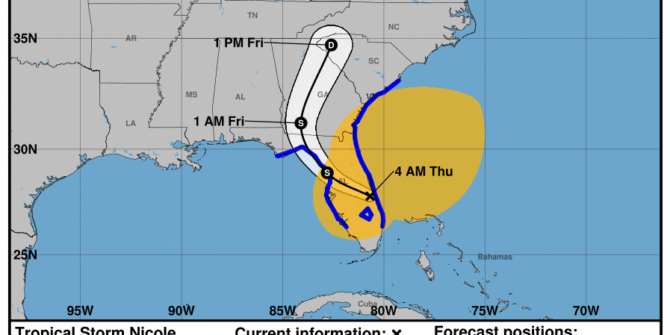
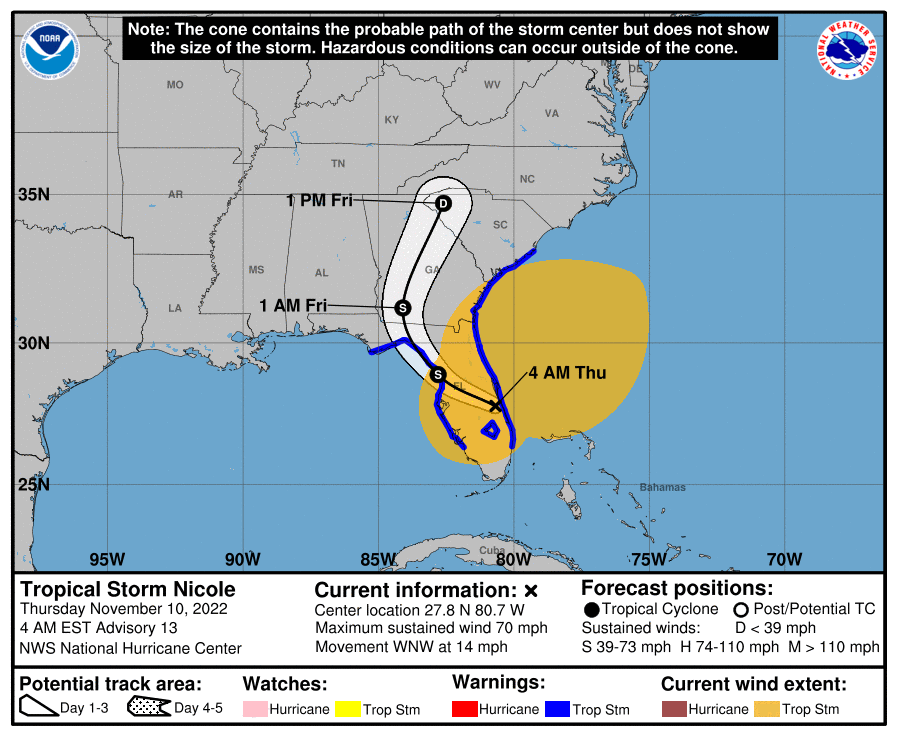
Hurricane Nicole made landfall this morning over east-central Florida as a large tropical storm, with winds of around 60kts. Nicole is forecast to move across Florida this morning towards the Gulf Coast, and then move north up along the Florida Panhandle and Georgia tonight and Friday.

National Hurricane Center’s Advisory, issued 4am EST Nov 10:

At 400 AM EST (0900 UTC), the center of Tropical Storm Nicole was
located inland over east-central Florida near latitude 27.8 North, 
longitude 80.7 West. Nicole is moving toward the west-northwest 
near 14 mph (22 km/h). A turn toward the northwest and 
north-northwest is expected later today and tonight, followed by an 
acceleration toward the north and north-northeast on Friday. On 
the forecast track, the center of Nicole will move across central 
Florida this morning, possibly emerge over the far northeastern 
Gulf of Mexico this afternoon, and then moving across the Florida 
Panhandle and Georgia tonight and on Friday.

Maximum sustained winds have decreased to near 70 mph (110 km/h) 
with higher gusts. Additional weakening is forecast while 
Nicole moves over land during the next day or two, and the storm is 
likely to become a tropical depression over Georgia tonight or 
early Friday. Nicole is expected to merge with a frontal boundary 
over the Mid-Atlantic United States by Friday night.

Nicole remains a large tropical storm. Tropical-storm-force winds 
extend outward up to 450 miles (720 km) from the center, 
especially to the north. A sustained wind of 47 mph (76 km/h) and a 
gust to 62 mph (100 km/h) were recently reported at Patrick Air 
Force Base, Florida. Winds are increasing near the west coast of 
Florida. A sustained wind of 38 mph (61 km/h) and a gust to 45 mph 
(72 km/h) were recently reported at Clearwater Beach.

The estimated minimum central pressure based on surface 
observations is 981 mb (28.97 inches).

Airport Closures

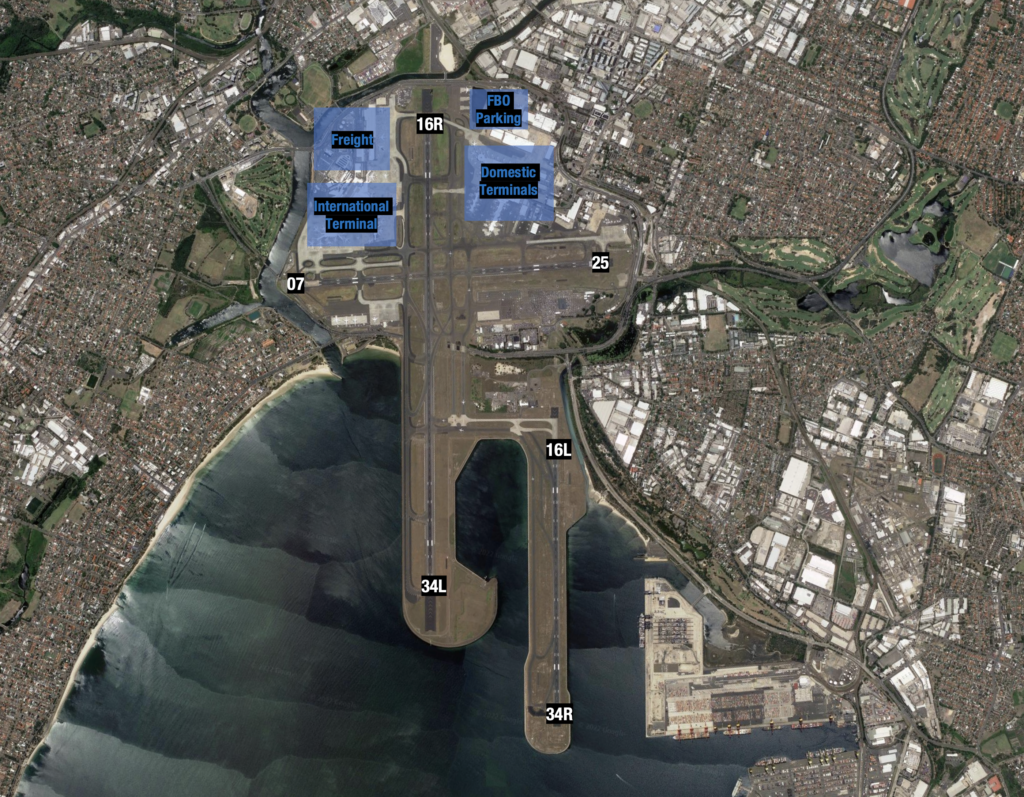
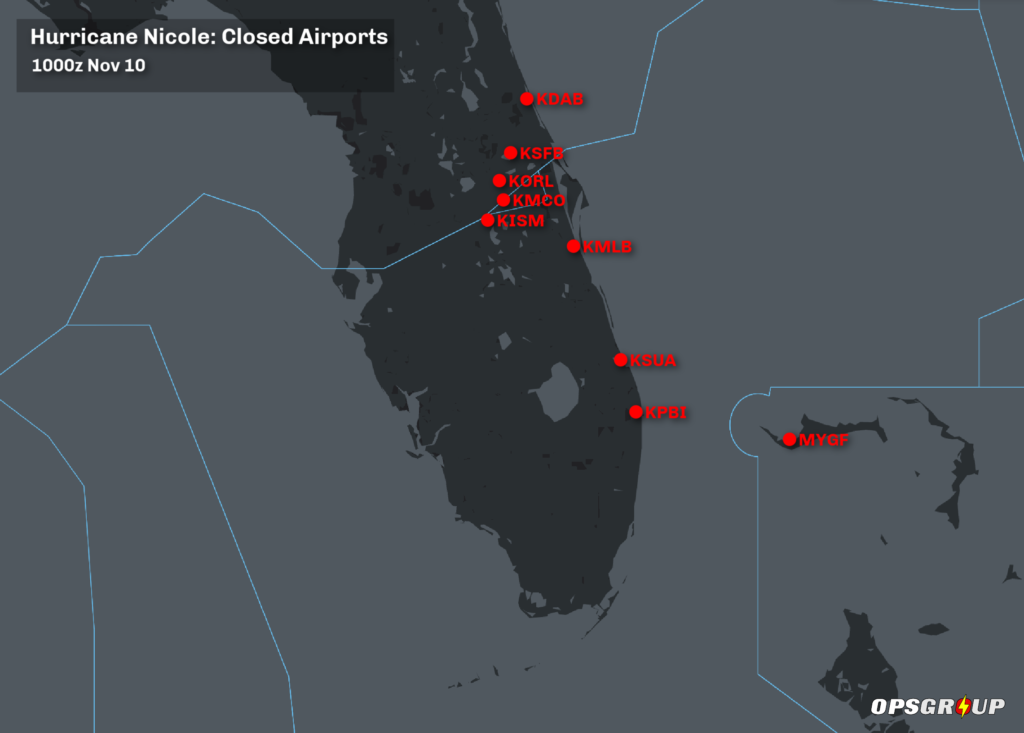
Several airports across the region are now closed for the passage of the storm. Here are the ones we know about as of 1000z on Nov 10:

And here are the Notams that carry the announcements of the closures:

MYGF/Grand Bahama
A0604/22 – AD CLSD. 08 NOV 22:30 2022 UNTIL 14 NOV 11:30 2022. CREATED: 08 NOV 15:07 2022

KPBI/Palm Beach
A2072/22 – AD AP CLSD EXC MIL, EMERG ACFT 1HR PPR 561-471-7440. 09 NOV 14:00 2022 UNTIL 10 NOV 13:00 2022. CREATED: 09 NOV 11:02 2022

KSUA/Witham Field
11/130 – AD AP CLSD EXC MIL OPS AND EMERG ACFT. 09 NOV 19:00 2022 UNTIL 10 NOV 17:00 2022. CREATED: 09 NOV 13:53 2022

KMLB/Melbourne
A0565/22 – AD AP CLSD EXC MIL OPS AND EMERG ACFT 1HR PPR 321-508-1319. 09 NOV 19:00 2022 UNTIL 10 NOV 21:00 2022. CREATED: 08 NOV 19:51 2022

KISM/Kissimmee
A0400/22 – AD AP CLSD. 09 NOV 17:00 2022 UNTIL 11 NOV 11:59 2022. CREATED: 08 NOV 23:29 2022

KMCO/Orlando
A3251/22 – AD AP CLSD EXC EMERG ACFT AND MIL OPS AND CARGO. 09 NOV 22:00 2022 UNTIL 11 NOV 17:00 2022. CREATED: 09 NOV 21:30 2022

KORL/Orlando Executive
A3204/22 – ORL AD AP CLSD TO FIXED WING EXC HEL AND EMERG HEL AND MIL HEL OPS. 09 NOV 21:00 2022 UNTIL 11 NOV 17:00 2022. CREATED: 08 NOV 21:48 2022

KSFB/Orlando Sanford
A1063/22 – AD AP CLSD EXC EMERG ACFT AND SAR 1HR PPR 407-247-1212. 09 NOV 21:00 2022 UNTIL 11 NOV 14:00 2022. CREATED: 09 NOV 14:27 2022

KDAB/Daytona Beach
A1969/22 – AD AP CLSD EXC MIL, EMERG ACFT 1HR PPR 386-547-0298. 09 NOV 19:09 2022 UNTIL 11 NOV 11:00 2022. CREATED: 09 NOV 19:09 2022

More info

  • Cyclocane have a tracker page for Nicole here, which includes tracking map and source info from the National Hurricane Center.
  • The FAA have a page on airport closures here.
  • The NBAA have a page on Nicole here, which includes airport closures, equipment shutdowns, and route info.

If you have any additional info to add, please email us at news@ops.group


Cloaking Devices: The ADS-B Privacy Issue

ADS-B is fantastic bit of technology that has big safety and efficiency benefits for air traffic. The trouble is, there is also a growing level of insecurity about security surrounding it, because it doesn’t just allow ATC to know precisely where you are at all times – anyone who wants to can find that info too.

Are you ADS-Being watched?

We said all this about it before.

If you can’t be bothered to read it, then it basically says this:

  • Big benefit because it gives ‘radar like coverage’ in remote regions like the North Atlantic.
  • Big problem because it reduces privacy, and this could lead to security issues.

Whilst airlines don’t mind/aren’t really bothered about this as much (you can kinda tell where they are heading to and from, and get other info on the airplanes, with relative ease), the business aviation and private aviation world are more concerned.

The OPSGROUP ‘All Call’.

Here’s the frustration: The FAA runs a program called LADD which offers “hiding” of our ID on tracking sites (like FlightRadar24). The theory is good, but we’re now at a point here LADD simply highlights your aircraft on tracking sites that don’t play by those rules (like ADS-B exchange).

Here’s a video. One click shows everyone airborne that has requested privacy!

And then there is the issue of everywhere not the US because the FAA PIA system only works in US airspace. Cross the invisible boundary and you’re visible again. This includes offshore routes to the Caribbean or across the Gulf of Mexico.

Changing the PIA back to the ICAO one is a bit of a mission, and if you aren’t using it, then you’re not going to be able to log on to Domestic Enroute CPDLC, ARINC and SITA stations won’t recognise you. You’ll have to switch to a new flight plan provider to get the required call sign. In other words, it is not practical for a lot of operators.

We wanted to get an idea of how bothered folks are, and to share some of the info, so we sent out an ‘All Call’ to our members. The response was big. The concern and frustration is big.

So what has been happening?

ICAO held their 41st assembly earlier in 2022, and Saudi Arabia submitted a technical paper asking ICAO to fix the problem. Read it here.

The key points from the paper:

  • ADS-B Tracking of flights creates safety, security and privacy concerns.
  • There are some ways to hide your ID, but they don’t really work.
  • ICAO, please fix this.

So, maybe ICAO will take a look at it, but there isn’t an easy fix. It’s an inherent system problem that needs the system to change (maybe encryption, maybe dynamic hex codes, maybe something else…)

The NBAA are on it.

A panel to discuss the growing issue was held at NBAA-BACE on Oct 19, 2022. There is a great article on it which you can read here.

Here’s what we picked out of it:

  • Pre-ADS-B systems worked on interrogation – so you knew who was asking for the info.
  • The issue got bigger with ADS-B Out.
  • ADS-B isn’t going away because it is useful.

So they laid out a 4 step plan:

  • Aircraft registration should be held by a trust or LLC so there is a layer of separation between the principle owner and the name on the certificate of registration (because that’s on the public record and anyone can view it).
  • Folk should make sure their aircraft is participating in the LADD program (it does still do something). Find that here.
  • Use a third-party call sign. You can get this from a bunch of vendors like Foreflight and FltPlan.com.
  • The most important one: Take steps to change your 24-bit code associated with your registration. You can do this through the PIA system. Basically, the FAA assigns you an alternate 24-bit code to fool the sneaky flight trackers into seeing a different registration number.

The FAA are on it.

They have a whole site dedicated to ADS-B privacy which you can find here.

The info is pretty much everything we’ve said above, but they have some handy links and things too.

Is it enough though?

We aren’t sure it is.

It is an ongoing thing, which lots of people are looking into. In the meantime, we do have these questions, and your answers to them might help:

  • How have you solved this problem?
  • Have you worked out some black magic that hides your ID?
  • Have you found something that other operators can use?
  • Since LADD appears almost pointless, does PIA work for you?
  • Have you experienced any security or privacy issues because of public tracking?
  • Any suggestions or thoughts to share?

Drop us an email at news@ops.group if you have any answers/idea/suggestions/tips/questions/queries or other…


Shannon, BizJets and Level Busts

Level busts at EINN/Shannon Airport are a problem. A big problem. Big enough that the IAA have made a presentation on them, alongside the NBAA. Why the NBAA? Well, because a disproportionate number involve North American Business jets.

We’ll start with a little story.

Once upon a time, not so long ago, a pilot called Hank* (*name changed for anonymity) was flying his Business Jet over from the US to Europe, and he decided to stop off at Shannon airport. Shannon is, after all, on the Emerald Coast so it’s very pretty but more importantly its just on the other side of the Atlantic, you can do your US customs stuff there, and they have fuel for your airplane and Guinness for you.

So off Hank heads, and he’s done his homework. He’s planned for the whole NAT HLA bit. Alas, though, he has not planned for the actual landing into Shannon bit. Tired, distracted by the thoughts of Guinness and caught out by a much lower transition altitude, Hank forgets to change his altimeter from inches mercury to hectopascals, and when ATC says “Set QNH 988” what does he do?

He sets 2988inHg…

And so he descends down, aiming to level off at a nice safe altitude. Only his altimeter is over-reading by 720 feet. Hank gets within 2nm and 500ft of some pretty sticky-uppy terrain before ATC spots the errant aircraft and saves the day…

So, Hank was added to a long list of North American Business Jet operators who had a nasty level bust in Shannon and was embarrassed.

Now, the story really begins…

I am not a North American BizJet operator so it doesn’t apply to me?

Well, it could and it’s useful for anyone to think about really. Level busts are an issue all over, and if you operate into any high traffic density spot (London is a particularly good example) then even the most minor of busting can result in a traffic conflict.

Then there is the risk of CFIT – controlled flight into terrain. Busting downwards in areas with high terrain could lead to this. In fact, most CFITs occur during the approach and landing phase.

300 feet is your limit. Anything beyond that and you’ve got a bust on your hands.

What’s with Shannon and North American BizJet operators?

EINN/Shannon is a US Customs and Border pre-clearance airport, and it is in a handy spot on the west coast of Ireland making it perfect for aircraft with slightly less range to hop between the US and Europe. So it gets a higher number of BizJets from the US. In fact, 30% of their flights are North American BizJets (out of 25,000 or so flights a year).

But despite being only 30% of traffic, they are involved in the majority of level busts. In 2019, 68% of busts in Shannon were, you guessed it, by the NABJ brigade. So far, in 2022, they’ve been responsible for a whopping 100%!

So why does Shannon see so many?

Well, in all fairness, there are some things that make it more complicated if you’re used to flying in the US. 

Shannon, like most of Europe, uses hPa instead of inches of mercury, and this can lead to “mis-setting” on the QNH. Like we saw with poor Hank (based on an actual true story) – this is probably the most common cause of level busts in Shannon.

Then there is the transition altitude. Unlike the US and their nice standard always 18,000ft, Shannon uses 5000ft which can lead to a late (or early) change to and from local QNH. Chuck in some weather and particularly non-ISA one and there’s your problem.

And of course, folk heading in from a long North Atlantic night flight might be tired, unfamiliar, or just not planning it very well.

So what can pilots do to avoid level busts?

  • Add a mention of the risk into your briefing if you’re heading to Shannon. Or anywhere where level busts are an issue.
  • Remember “High to low: careful go!”
  • Don’t forget to set QNH in hectopascal and not inches mercury when operating into Europe.
  • Check the transition altitude, and plan ahead if it’s a low one.
  • Avoid aggressive descents – you can ask ATC for more track miles if you need.
  • Read the NBAA/IAA presentation for more info.


Africa ATC Strike

Update 01NOV

The threat of further ATC strikes in West Africa and Madagascar hasn’t completely gone away. The air traffic controllers union USYCAA have published an update claiming that ASECNA (the ATC agency) haven’t been sticking to the terms of an agreement reached on Oct 17 – they have been forcibly returning controllers to their countries of origin, cutting salaries, and freezing leave. There’s another meeting planned for Nov 7, so we should know more then.

You can read the original announcement (in French) here, or this translated copy.


Update 19OCT

USYCAA has cancelled any further strike action, following a meeting with ASECNA on Oct 17.

It looks like ASECNA have agreed to some demands (suspend pay cuts, provide indemnity insurance, set up a committee to talk with the union) but some still need to be resolved – mainly to restore all sanctioned controllers to their positions.

You can read the original announcement (in French) here, or this translated copy.


Update 11OCT

USYCAA has accused ASECNA of intimidating behaviour towards controllers ahead of a planned meeting on Oct 17 for negotiations to avert any further strike action. They cite “freezing without explanation of annual leave, verbal invectives, the unwritten suspensions of several air traffic controllers” among their claims.

You can read the original announcement (in French) here, or this translated copy.


Update 27SEP

USYCAA has suspended all strike action to allow for further negotiation with ASECNA planned for Oct 17.

You can read the original announcement (in French) here, or this translated copy.

ASECNA have also released a statement, which essentially claims there were no safety incidents during the strike, but doesn’t really say much more. You can read it from the source here (in French) or this translated copy.


Update 24SEP

As of 1200Z today, the ASECNA ATC strike action itself has ended. Per the controllers union, ops normal now. Arrested controllers have been freed, suspended controllers reinstated. However, caution should still be taken by crews as their grievances remains unresolved – both sides are now entering further negotiations for 10 days.

With so many FIR’s, ACC’s, and Terminal areas involved, the strike action has caused chaos in parts of African airspace. The heavy handed response by ASECNA, which included arresting striking controllers, has created a very sour atmosphere for ATC. This creates potential for lapses in judgement and safety concerns, even with the strike action over.

The major concern yesterday was the replacement of licensed controllers with military and other non-qualified staff, without any Notam or notification. Coordination between different units was unreliable, and many ATC centres were confused as to what the situation was.

For now, ops normal to some degree again – but all crews should still take great care until things settle down.

You can read the original announcement (in French) here, or this translated copy.


Update 23SEP

A very dangerous situation is developing today in the African ATC strike. Crews and operators should be aware that in a number of FIRs/ACCs/Towers, the normal controllers have been replaced earlier today with unqualified and unrated people. In simple terms, the voice on the radio is NOT an Air Traffic Controller.

From local sources we understand that GOOO/Dakar Oceanic and domestic, DXXX/Lomé, and FKKD/Douala all have unlicensed staff that have taken over the faciltiies. In FCBB/Brazzaville and FMCX/FMCH/Comoros, controllers have been arrested. In Niger and Madagascar, controllers have been suspended.

The situation is chaotic in many places and still developing. As of now, OPSGROUP recommends avoiding ALL ASECNA airspace unless you have certainty that the ATC service is licensed and safe, and until the situation is more clear.

If you do have to operate through these FIR’s, be careful and cautious. ASECNA controls these areas: FMMM/Antananarivo, FCCC/Brazzaville, GOOO/Dakar Oceanic and Terrestrial, DRRR/Niamey, FTTT/N’Djamena, and the airspace of Togo and Benin.

We will update this further as we get more information. We also ask members to share any information they may have – email team@ops.group or WhatsApp the OPSGROUP Team at +1 747 200 1993

IFALPA have just published a bulletin about the situation.

And an update from USYCAA, the ASECNA Controllers union:


Update 22SEP

Note: These updates relate to the situation when the strike was routine – before reports of unlicensed controllers started to emerge. Please use the info as background only.

  • The ATC strike in West Africa and Madagascar is now underway, and is scheduled to continue until 0800z on Sep 25.
  • The strike is taking place across several African countries covered by ASECNA: the FIRs of FMMM/Antananarivo, FCCC/Brazzaville, GOOO/Dakar Oceanic and Terrestrial, DRRR/Niamey and FTTT/N’Djamena; and the airspace of Togo and Benin.
  • For flights in these regions, the Contingency Plans now apply. Check here for those.
  • The strike is also affecting flights in neighbouring airspace of GCCC/Canarias and DAAA/Algiers – Eurocontrol have published some rules and restrictions on flight planning there until the strike is over (see below).

GCCC/Canarias:

  • Traffic crossing GCCC and exiting to the south into Cabo Verde will be restricted with low rates to FL340 and 380 on UN741 as well as FL300, 340, 360 and 380 on UN873 (except traffic arriving to GV).
  • UN857 will be closed southbound from LZR to GUNET (except traffic arriving to GV).
  • Traffic crossing GCCC and arriving to GV must file via EDUMO or IPERA.
  • Traffic departing GC via LPPOOCA to GV can not fly via GOBEG, INSAD, IXILU, KUXOV, LAPTU.

DAAA/Algiers:

  • Flight plans exiting DAAA airspace southbound not flying the contingency available routes will be invalidated with EU restrictions (i.e. For flights from Europe transiting through Algeria and into GOOO or DRRR airspace where the strike is happening, you have to make sure you flight plan to join where one of the contingency routes starts, otherwise Eurocontrol will reject your flight plan).

Where the ATC strike is happening:

ATC will ensure a minimum service is provided for flights involving:

  • heads of state and government
  • military
  • carrying out medical evacuations
  • of a purely humanitarian nature
  • participating in search and rescue operations.

The Contingency Plans

ASECNA publish Contingency Plans, with a focus on maintaining overflights for international operations in cases of no, or limited, ATC services. You can find all the Contingency Plans here.

The Contingency plans effectively transfer control to neighbouring ATC controllers. An ‘ASECNA wide’ strike will therefore disrupt the level of effectiveness of these contingency plans.

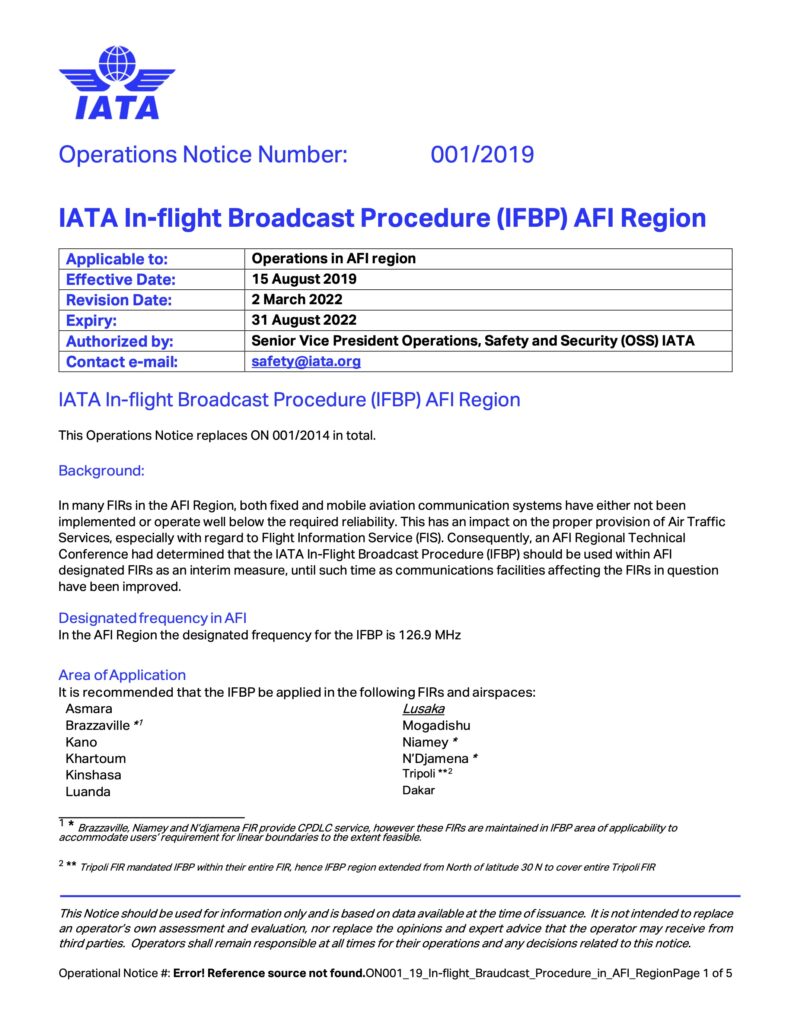
There does tend to be a prioritisation, or at least measures to help ensure overflights can continue to a certain extent. Parts of African airspace already operate or have provisions for IFBP.

Other issues for ASECNA states

The ASECNA states have faced a fair few disruptions over the past few years.

ECOWAS states closed their land and air borders to Mali following a military coup.

Chad (FTTJ/Ndjamena FIR) had some issues back in 2021 during a period of escalating conflict and military control. Initially airspace and airports were closed, before contingency procedures came into force.

The African region is volatile, with security concerns on the ground in many countries, and some overflight cautions and warnings. Libya is a ‘No Fly’ country. There are warnings in place for Sudan, South Sudan, Eritrea, (northern) Ethiopia, Somalia, Kenya (bordering other countries), Western Sahara and Mali.

The limited diversion options across certain parts of the region due to safety and security concerns present planning issues for flights routing over northern and central Africa in particular. You can find more information on this by visiting Safeairspace.


Germany don’t like it if you’re late

There is an old stereotype about Germans blocking poolside seats with their towels so others can’t use them. Well, it turns out they do something similar at their airports – sticking strict night flight restrictions and curfews on them so no-one else can use them until morning.

OK, that isn’t actually remotely similar, but the bit about the night flight restrictions is, so we thought a little refresher on them might be handy since we are heading into Christmas market season soon and Germany is one of the very best spots for that.

Why do they have such strict restrictions and curfews?

Noise mainly. They like their people to get a good nights sleep.

What do the restrictions look like?

It differs from airport to airport depending on the laziness of the locals (that’s a joke), but in general it looks like a strict cut-off time followed by no flying at night.

You can find them in the Aerodrome bit of the AIP.

There is also a very handy tool on the German Slot Coordination website. It has info on night restrictions at IATA level 2/3 airports, (much easier than scrolling through the AIP).

But here is a brief look at some of the main airports and their restrictions (all times in local) to give you an idea:

EDDH/Hamburg

The restriction is from 23:00-06:00

If you are scheduled to land before 23:00 and you’ve got a really good reason (ie not your fault you’re late), then they do have some special regulations allowing flights to take off and and up to midnight.

EDDB/Berlin

Berlin’s retraction is 00:00-05:00 for all regular scheduled flights.

They have a reduced number of movements between 23:00 and midnight, and between 05:00 and 06:00 (31 movements are allowed), and they reserve 05:00-05:30 and 23:30-00:00 for delayed flights only.

EDDP/Leipzig

23:30-05:30 with a 30 minute window either side for late flights.

Cargo flights have no restriction but no, you can’t call passengers cargo. 

EDDL/Dusseldorf

22:00-06:00, but they allow landings up to 23:00 (up to 23:30 if you’re on their “bonus” list)

You can also get in even later/earlier if Dusseldorf is a proper maintenance base for you (basically a home base)

EDDF/Frankfurt

23:00-05:00

Frankfurt has a bunch of special regulations based on your noise certs, scheduled movement restrictions, if you’re trying to land on the north-west runway. Basically…. 11pm to 5am is going to apply unless you’re lucky or special.

EDDS/Stuttgart

22:00-06:00, but you’ve got a 30 minute lateness window for landing.

There are some different exemptions if you’re a prop aircraft for example.

EDDM/Munich

10pm to 6am as part of a ‘modern, restrictive noise quota system’.

That noise thing can win you a spot of their bonus list which means you might be able to land within the restricted hours (but probably not between midnight and 5am which is their ‘core night’ period).

What’s “noisy”? 

Well, again it differs from airport to airport but generally something around the 75dB[A] mark is what the likes of EDDM/Munich measure.

But then they say this, so we aren’t really sure:

You’re better checking it directly at the airport than us trying to summarise them all.

What is the bonus list?

It is something published by the “Bundesministrium für Verkehr, Bau und Wohnungswesen” and basically lists a bunch of types which are exempt from the noise regulations. We can’t find it, but we do know that the B737-600/700/800 is included on it, if that helps anyone.

Who is restricted?

Probably you. The restrictions reply to pretty much everyone, save a few exceptions.

These are the exceptions (that we know of):

  • Emergency diversions
  • Flights needing to use them as an alternate due weather, tech or safety reasons (that doesn’t mean planning them as weather alternates after hours though)
  • Disaster relief flight
  • Medical flights
  • Search and rescue flights
  • Police flights
  • Mail flights
  • Flights that have special permits pre-arranged

What do I do if I’m late?

Well, try not to be, but if you really can’t help it…

Whatever the lateness reason, getting a message to your handler at the airport to help pre-arrange things is probably a good idea.

These are strict curfews though, there ain’t no wiggle room. The only way you’ll be getting in inside of them is if it is a genuine emergency.

  • If you are delayed en-route then chances are you will not be cleared the arrival or approach and will be sent on a diversion elsewhere
  • If you are on the arrival this doesn’t mean you’ll definitely be allowed to land
  • If you are on the approach then you may not be given landing clearance. Harsh, but I’ve heard it happening
  • If you have been cleared to land then you have been cleared to land and all should be good
  • If you end up flying a missed approach then whether they can accept you for a second approach and landing depends on the situation. No ATC is going to prioritise a noise curfew over safety, but, we’ll say it again, those curfews are strict! It may need to be an emergency
  • If you are delayed on the ground then you’re not going anywhere

When considering alternates, remember it isn’t just in Germany – there are several spots in Europe with similar restrictions.


Seven things about Hong Kong

The Hong Kong Sevens is a major rugby tournament, and one which hasn’t taken place for three years. So this one is probably going to be quite popular.

Here are seven things for you to know about if you’re planning on heading to Hong Kong during this event.

1. Tournament Info

The tournament takes place November 4-6.

You can find all the info on it here, but from a flying perspective the main thing to know is that teams from 16 countries will be taking part and that means a lot of extra BizAv airplanes heading to Hong Kong around these dates.

2. Hong Kong Covid Info

Hong Kong have been one of the stricter (and slower) countries in terms of easing up on Covid entry stuff, but at the start of October 2022 they made it a lot easier for crew and passengers to head in.

The main thing was the dropping of mandatory hotel quarantine for fully vaccinated crew.

Essentially, crew can choose between entering without isolating if they take multiple PCR & RAT tests during their stay in Hong Kong, or not entering under closed loop arrangements to self-isolate at the Airport Hotel (Skycity Marriott Hotel) until their next departure.

They also have to complete their online health declaration and get a QR code before they board the flight into Hong Hong. You can find that here.

We received a report from someone who operated there recently, and they said they were not able to test on arrival as crew, but were offered the option to declare themselves a passenger and pay for a $2000HK test in the terminal. Otherwise, they were not allowed out.

3. Permits and Slots.

You need to talk to HKCAD to get prior clearance if you’re a private, non-revenue flight. They take about 3 days so hurry up if you haven’t already sorted this.

We actually wrote a whole load on the process here, but in general they need what you’d expect them to need:

  • What you are flying
  • Where it is registered
  • Who the operator is
  • Which ground handling agent you are using
  • Dates and times
  • Insurance stuff
  • Proof you meet all their AIP specifications.

Slots are mandatory as well. Thankfully the airport operates 24/7 but they do have restrictions between 10pm and 7am local so don’t assume you can avoid the crowds by heading in in the middle of the night.

There is a whole load of info in here which the Airport and Authority posted about slots in 2021. The main bits are probably this:

  • Generally you need 14 days to set up a new account and get slots booked (or your handling agent can do this for you through their account)
  • It isn’t just the runway slot you need. You need a parking ‘slot’ and ground handling arranged
  • The online slot system is here
  • Talk to the folk at Hong Kong Business Aviation Centre – hkbac@hkbac.com – for help with your slots.

4. Parking

Parking at Hong Kong isn’t too big an issue because its a big airport. Here is an unhelpful picture out of their AIP:

If you do find you can’t get a space there though, then there are some alternate options which you could use to swing by Hong Kong from:

  • VMMC/Macau Right next door, 11,024’/3360m runway, smaller and more limited parking options though
  • RCTP/Taipei A little bit further away, a 12,467’/3800m and a 12,008’/3660m runway, and a big airport with a load of parking
  • VVNB/Hanoi About the same distance as Taiwan, a 10,499’/3200m and a 12,467’/3800m runway to pick from and plenty of parking.

What we don’t recommend is China Mainland because…

5. China Mainland stuff

They get a bit funny about it. Not half as funny a they do with Taiwan-China Mainland operations, but it can still be a real hassle with visas for your crew and maintenance for your aircraft, and all that.

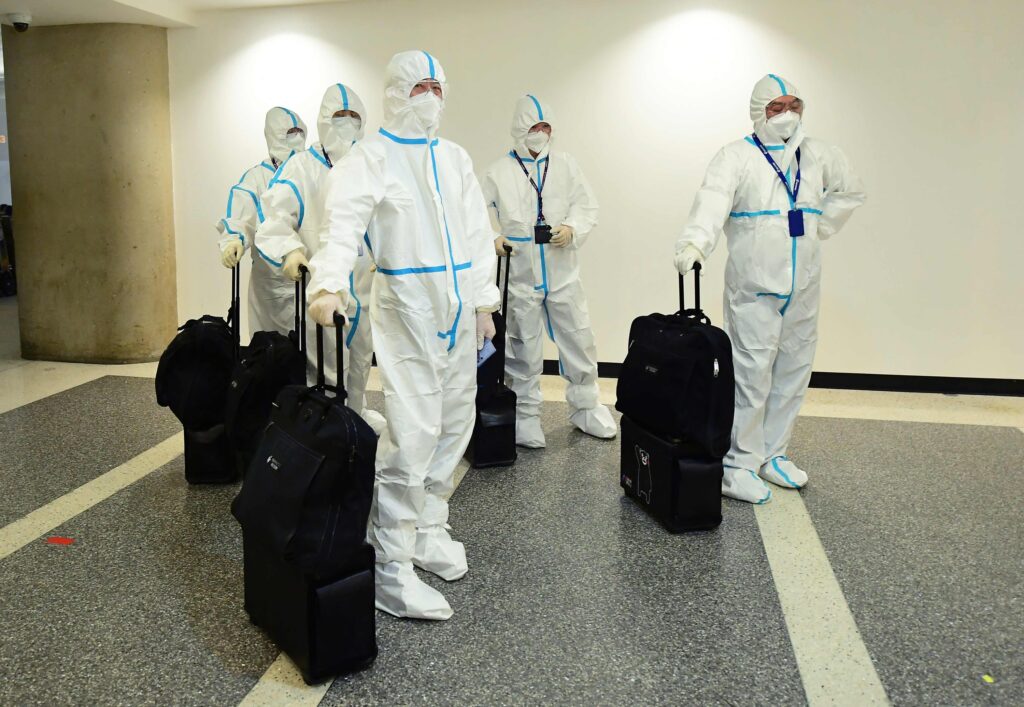
And a little thing called Covid which will probably still have you in boiler suits, escorted to and from locked hotel rooms.

6. Operational Stuff at Hong Kong

Here is the online AIS which is a good spot to start if you’ve not been to Hong Kong before.

It is a well managed airport, but there are a few things to know about.

  • They just got a new runway Well, earlier in 2022, but they did and you might not have used it yet so here is a post about it.
  • Issues with the ILS An ongoing thing which has earned its own special AIC. It basically says watch out for false capture because terrain means it doesn’t totally conform to standard ICAO ILS specs
  • Terrain is annoying there It gets in the way of things like the go-around and one engine out stuff. You might want to check the gradients because they are quite high
  • You need ADS-B or you’ll be stuck down at rubbish levels

If you’re an Opsgroup member, then give VHHH a search on Airport Spy because there are a lot of reviews, documents and other useful things there on Hong Kong, including an Airport Lowdown.

7. What else…

I said 7 because of the Rugby Sevens thing, but I can’t think of another one.

Oh, ok, weather – ’tis the season of typhoons so keep a look out for them. This is a good page to do it on.

Don’t just worry about the weather at Hong Kong, check it for your alternates as well because the whole region can get some pretty nasty weather when these storms start brewing.


Winter is Coming: Updated Holdover Time Guidelines

Sorry, the GoT reference still hasn’t grown old. Anyway, every year the FAA & Transport Canada releases a new set of Holdover Time (HOT) guidelines for the winter season. The one for winter 2022 is available here. So if you want to update your de-icing procedures, manuals, and training in line with the guidance from the feds, here’s what you need to know…

What’s changed?

They’ve added some fluids and removed some fluids which are really good for middle speed aircraft. So basically, check what fluid is being used on your aircraft, confirm it is a good one for your aircraft Vr, and then make sure you use the right table.

Standard Winter Ops 101.

Type II generic holdover times have increased (because they removed a fluid called Beijing Something or other that was holding them back). How much by? A few minutes here, a few minutes there, mainly in the -3 °C and above (27 °F and above) section.

They also did a load of tests which means you now get HOTs for very cold snow (cold enough to turn your legs to ice blocks if you accidentally step into it because its colder than -14°C cold). This applies to a bunch of new Type II and IV fluids and is great because that’s the sort of stuff you’re going to want to escape from for sure.

Double check those tables!

If you’re heading into the generic fluid tables then that’s fine but you actually need to make sure the Type II or Type IV fluid is listed in table 55 or 57.

It might seem a little contrary to the point of a ‘generic table’ but there we go. If it isn’t in the table, and if it doesn’t have its own specific table, then chances are you’re in some dodgy airport where they’re spraying you with homemade, bootlegged moonshine and it might not be very safe.

Freezing Fog.

There are changes to the HOTs for FZFG if it’s mixed with ice crystals or mist. Same for snow mixed with ice crystals.

My opinion: You need some pretty trustworthy Met officer telling you exactly what is out there to start getting this specific. If in doubt, always go with the most limiting and then take a good look before taking off!

A note on a note.

You can takeoff up to 90 minutes after the start of fluid application with a few conditions. This isn’t a new change, this has always been the case, but still worth mentioning.

Small Hail.

This hasn’t changed but it is a confusing one so they’ve added a new note on it. It says this (give or take one or two inaccuracies):

  • GR in the Metar means small hail, which means hail less than 1/4 inch… if you’re in the US.
  • Outside the US, small hail is anything less than 5mm, and is reported as GS. If it says GR that means big hail (5mm or more). Don’t get them mixed up.
  • If it doesn’t specify intensity then use the moderate ice pellets or small hail times.
  • If you aren’t sure and don’t have a tape measure then send your FO out and check the bruise sizes when they return.

‘Snowfall intensities as a function of prevailing visibility’.

You know the one – they use it in your yearly Winter Ops sim to try and catch you out by overcomplicating which table you want to use and hoping you forget or get confused and then they can enjoy lecturing you on it during the debriefing…

Anyway, it has been changed, reformatted and updated. Compare them at your leisure. We like the new one much better.

Must, shall, required, and should…

The document has these new disclaimer sheets at the start of each section:

In case you aren’t familiar with these nuances of aviation lingo, here you go:

  • Must: Really no grey area. You gotta do it no question, no bending, no ignoring. Just do it.
  • Shall: A little bit more ambiguous – not quite the same level of necessity but a strong assertion of importance!
  • Required: More a regulatory, meeting standards sort of a thing. If you want to two step de-ice then some de-icing fluid is required. You can try without but won’t get very far…
  • Should: A wonderful word but don’t get carried away – it’s more of a “really should unless you really can’t” rather than an “only if you fancy it” sort of a meaning. So a shall *unless you have a good reason not to.

A final thought.

Don’t forget GRF changed in November 2021. You might not have operated in conditions needing a runway surface condition assessment since then so it’s worth a quick read of what it now looks like.

Also, thanks to Avioscribe for this handy video on the main highlights and changes to the Holdover Time Guidelines for Winter 2022-2023. Trying to compare the two documents was a mission we weren’t prepared to undertake and you’ve done a spot on job.


Ops Planning for the World Cup 2022

Here’s some info on Qatar to help prepare if you’re planning on heading there during the World Cup 2022.

UPDATE: Bombardier are trying to negotiate support for Challengers and Globals / QAS just put their prices up

The dates to know about.

The World Cup takes place from November 20 to December 18. So anytime during those dates (and probably a few days either end) it is going to be just a little bit busier.

Get parking requests, handling requests, and permit requests in early!

Before we get into it, I’m going to share THIS LINK because it takes you through to the full slot coordination page which has a lot of info on to you might need. Not just on slots, but on regulations, handling stuff, and all that jazz.

There is also a new AIP SUP 32/2022 effective Nov 3 which contains , and if you still ain’t sure then daily CDM conferences take place at 0800 UTC, with an ATFM Daily Plan published at 1000 UTC.

The airports to know about.

You have two choices if you want to actually fly to the World Cup – OTHH/Doha International (actually called Hamad) or OTBD/Doha International (actually called Doha).

You should probably also be aware of OTBH/Al Udeid Airbase because it is fairly close to the Double Dohas, has two big runways and has been known to confuse some people.

OTHH/Hamad is the main international airport in Qatar.

You will find:

  • 2 giant runways (4250m and 4850m)
  • All the runways are CAT II/III
  • RFF 10

If you want to head in here, then bear in mind this is the main international airport for the country and it is already busy with scheduled airline traffic.

You can find info on the general fees for operating here in the AIM. 

The official FBO is Qatar Executive reachable at request@qatarexec.com.qa or +974 4022 1700

All their rates and fees are available here. There may be different charges for operating during the World Cup though so get in touch with them soon!

We discovered this updated fee list from QAS. It has jumped up just a little during the World Cup period so don’t rely on old fees…

OTBD/Doha is the older international airport and was pretty much decommissioned for a while there. It looks like it will be used for charter and private stuff, and some airline overflow traffic. 

You have:

  • One runway – RWY 15/33
  • 4570m / 14,993’
  • CAT I ILS 15 / CAT II/III ILS 33
  • RFF 9

A quick bit on Slots, because they are quite a big deal.

Slots are already filling up fast. And they are mandatory. And there is an official process for requesting them which you can read about here.

If you haven’t already organised it then get on this fast. I can’t stress that enough. Do it now!

There are a few things to know:

  • You will need to pay a 5000USD deposit
  • The deposit will be deducted from airport charges
  • There will be hefty penalties applied for:
    • No shows or Go shows
    • Misuse (seriously late aircraft)
    • Using a different aircraft type to the one mentioned in the slot request
    • Cancelling on the day

There are exceptions to the penalties. Basically for anything outside the operator’s control:

  • If your airplane gets damaged (presumably not through your own fault)
  • If the weather is particularly adverse
  • Delays due to issues with Air Traffic management
  • Industrial action
  • Security related stuff (of the mandatory sort)

What sort of penalties are you looking at?

  • If you cancel on the day or don’t show up then on top of losing the slot booking deposit, you can expect the following penalties:
    • 100USD per seat (per flight) if you’re a passenger charter flight
    • 20,000USD if you’re a GA/BA flight
    • 30,000USD if you’re a charter cargo flight
  • If you just ‘misuse’ your slot then they’ll fine you the following:
    • 5,000 USD for arrivals more than 20 minutes outside the approved slot time, for flights 5 hours or less
    • 5,000USD for arrivals outside 35 minutes of the slot, for flights longer than 5 hours
  • Finally, if you take a different type in then expect a 5,000USD fine for each higher ICAO category than the one approved.

We got all this info from here – the official local slot rule spot.

If you sort it all out, get your slot, and plan to use it properly, then on the day, you’ll need to do this:

If you don’t want to stick around in Qatar…

There are some handy and fairly close other places which you might want to consider using instead (if you can’t get parking in Doha). These are probably what you’ll file as your alternates for Doha anyway, given the size and airport numbers in Qatar (2).

Next to Qatar you have Bahrain and OBBI/Bahrain International. A very good alternate, although we are currently checking whether flights direct between the two countries are possible.

Just past Bahrain you have Saudi Arabia, and OEDF/Dammam International. This is a good alternate, although not as good as OBBI. A little bit further into Saudi and you have OERK/Riyadh.

On the other side of Qatar you have some water and then the UAE with OMAA/Abu Dhabi, OMDB/Dubai, OMDW/Another Dubai are all good alternates. We also heard that OMSJ/Sharjah FBO Gama Aviation is offering 7 days free parking there.

Head north and you’ll find OKBK/Kuwait. Also a good alternate. I forgot to put it on the map, it is up there just outside the edge of the picture though.

Some things to know about the country.

You need permits for both landings and overflights. To get all your flight clearances stuff,  try these folk at the Civil Aviation Authority Qatar: doha.comm@caa.gov.qa / khalid.alnsiri@caa.gov.qa / rakesh.attavar@caa.gov.qa / airlines.affairs@caa.gov.qa or AFTN: OTBDYAYX / AFTN: OTBDYFYX

Their AIP is available online, for free, if you need it. You can find it here.

They have a new airspace. Yes indeed. Read about that here.

You really, really can’t take alcohol into Qatar. Or a lot of medication (anything containing Codeine will get you into trouble. Anything else, just carry a prescription for it).

Because Qatar is fairly small and hotel rooms fairly limited, most are requiring tickets to the game so you might have trouble finding space for your crew if they’re overnighting.

It will be mandatory to have a maintenance agreement in place with your ground handling agent if you are operating into Qatar, or else you’ll have to carry your own engineer/maintenance person with you onboard – even for a drop and go.

  • Bombardier are negotiating with Qatar Executive for them to provide support for the Challenger and Global series of aircraft. It’s not been finalised yet, but hopefully will all be in place before things ‘kick off’ (if you’ll pardon the pun).

Some Covid stuff.

As of at the moment, Air Crew can enter Qatar for 96 hours. To do this, you need a vaccination certificate and a PCR taken in Qatar within 72 hours of your arrival. Unvaccinated crew will not be allowed in.

A quick definition.

Football = Soccer (if you’re American).


Where have Africa’s Notams gone?

ASECNA have a secret treasure trove of AIP SUPs on all kinds of airport closures and other fairly essential info that doesn’t seem to be getting published by Notam. 

Now, it might be because these are relatively long things and as you may recall, Notams shouldn’t really be valid for longer than 3 months because then it is less temporary and more, well, lengthy.

But there are still some in there that we really would expect to see as notams. Such as:

  • FOON/Franceville, Gabon having potholes in its runway and so not allowing operations on runway 33 from Oct 4 to Dec 31.
  • GOSS/Saint Louis, Senegal is closed to all traffic for works from Oct 5 to Dec 27.
  • DXXX/Lome, Togo is having works until Dec 31 so folk should watch out for workers and their machinery during taxi.
  • GOGG/Ziguinchor, Senegal is closed from Sep 19 to Feb 28 2023 because of security works.

And that’s just the obvious ones we spotted – there are plenty more! Here’s the list of ‘latest news’ list they publish:

So the point really is, check this page if you are planning Togo into or over ASECNA countries because things that could impact your operation do not seem to be Notam-ed, and they could have a significant impact, particularly with regards alternate and en-route aerodromes.

And if you’ve Benin an ASECNA country or airspace and have experienced issues (with un-Notamed stuff or anything else) then please drop us an email with the details on news@ops.group so we can share the info around to other folk.

(Sorry for the puns. It’s been nice Chad-ing).

ASECNA are raising their fees.

Specifically, their en-route fees another airport lighting fees.

AIC 33/A/22GO was issued Oct 10 and is effective from January 1 2023. 26/A/22FC came out at the same time (and says the same thing).

  • En-route fees will increase by 5%
  • Runway lighting fees will increase by 3%

So, if you are an international flight this means the following:

  • If you weight less than 4 tonnes you won’t get charged.
  • If you weigh between 4 and 14 tonnes you will be charged 220.76 Euro
  • If you weigh more than 14 tonnes then you will be charged 110.38 Euro

But then there is the co-efficient bit, and then there are these two tables as well…

Again, here is the ASECNA AIC/AIP page so you can find any others to check them as well.

Wait… what is ASECNA?

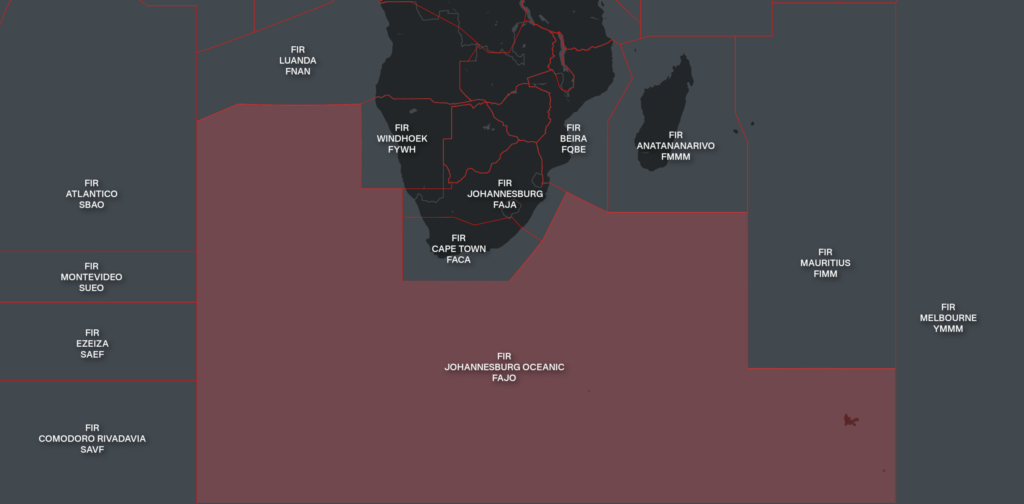
ASECNA is the Agency for Security of Air Navigation in Africa and Madagascar. They look after Benin, Burkina Faso, Cote d’Ivoire, Guinea Bissau, Mali, Mauritanie, Niger, Senegal, Togo, and Madagascar.

Which in terms of FIRs, means the FMMM/Antananarivo, FCCC/Brazzaville, DRRR/Niamey, FTTT/N’Djamena and GOOO/Dakar oceanic and terrestrial.

That all looks a little like this:

What else has been happening here recently?

Well, if you missed it, then a big ATC strike in October 2022 caused some trouble because they started using non-trained personnel to fill the ATC seats – a very risky practice which we obviously don’t like.

It hasn’t been all bad news with them though. In June 2022 they also started implementing Free Route Airspace, and they have a pretty decent ADS-B service set up across the region.

Then there has been the fuel shortage woes. This isn’t necessarily within ASECNA airspace, but impacts the entire region so worth a mention.

What about airspace safety?

Chad (the FTTT/N’Djamena FIR and FTTJ/N’Djamena international) saw land and air borders closures in 2021 following the death of their President and effectively a military rule brought in.

Mali had a military coup and reneged on agreements to hold elections, leading to sanctions from the rest of ECOWAS (their neighbours) which resulted in closures of land and air borders.

Flown in to any of these countries recently? Send us your report!

Please send us your Airport Spy reports so we can share the gotchas, the things to know, contacts to contact and anything else useful.

What’s Airport Spy? Well, you write a quick little postcard with “what happened” when you went to some airport somewhere. Then you, and others (that’s the magic), can refer to your notes for future flights to the same place. Try it here if you haven’t already.


Japan Reopens: Crew & Passenger Entry Rules Explained

Japan will reopen for individual tourist travel from October 11. Prior to this, travellers needed to be part of tourist groups, or heading there for business or study purposes. But from Oct 11 anyone can enter!

Passenger rules.

  • Visa free entry has resumed for the 68 countries it previously applied to. Passengers from everywhere else will need a visa.
  • Passengers will need either proof of vaccination (3 doses) or proof of negative test taken within 72 hours before departure.
  • There’s no testing on arrival and no quarantine, regardless of vaccination status. And there’s no more checking of which blue/yellow/red countries you’re coming from – that whole matrix has been scrapped.
  • Passengers are still encouraged to use the MySOS app and register required docs, for fast track entry.

The full passenger rules can be found here.

Crew rules.

  • Just like for pax, you need either proof of vaccination or proof of negative test taken within 72 hours before departure. If you can’t provide either of these, they’ll let you in but you’ll have to quarantine in the hotel.
  • If you have a passport from one of the 68 visa exempt countries, that’s all you need. If not, you’ll get issued a crew shore pass on arrival which allows you to stay in Japan for up to 7 days without holding a visa.
  • Crew don’t need to use the MySOS app. Instead, they should submit a “plan of stay” form on arrival.

The basic crew rules can be found here, which we fleshed out with help from local handling agent Aeroworks. Contact them at fltops@aeroworks.jp for further info.

Are you heading to Japan?

Let us know how it goes! Send us your Airport Spy reports so we can share the gotchas, the things to know, contacts to contact and anything else useful.

What’s Airport Spy? Well, you write a quick little postcard with “what happened” when you went to some airport somewhere. Then you, and others (that’s the magic), can refer to your notes for future flights to the same place. Try it here if you haven’t already.

If you have any further knowledge or recent experience to share, please let us know!


What we know about the US CPDLC trial

There is a CPDLC trial running in the US, but it isn’t open for everyone…

General CPDLC stuff

CPDLC is basically a sort of ‘text messaging’ system that lets ATC contact you, and you contact them.

Combine it with ADS-C and you’ve got Datalink, which is mandated in a bunch of places like the NAT HLA, Europe and the UK above FL290 etc.

Some other useful info:

  • Europe have a logon list. If you want an answer then register.
  • Europe use ATN, everywhere else uses FANS. If you only have FANS then you can still call yourself ‘CPDLC in Europe’ if your original certificate of registration is pre 2018.
  • Just to be clear, the US requires FANS 1/A.
  • If your airplane is younger than 2014 then the system also needs a message recording function.
  • PBCS tracks need a performance standard of RCP240 (ADS-C is RSP180).
  • AO56 is the LOA to get (or maybe A003).

We actually made A little Opsicle on CPDLC just the other day. It is quite a silly one, but here it is if you want a look:

CPDLC in the US

The US has CPDLC in a bunch of places. It isn’t really mandatory yet though. At least not the domestic en-route CPDLC. This is the bit they are running a trial for, and they’re doing it with L3Harris.

The trial is actually, specifically, for the business and general aviation community. The likes of Boeing and Airbus (or rather their avionics configurations) have already been approved.

So, here is the FAA info on it. Or rather, this is the notice talking about who can participate in the trial. They released this because a bunch of folk were participating, but their avionics version or configuration wasn’t good enough and it was messing up the results.

So how do you know if you’ve got what it takes?

All the systems are listed on the L3Harris site. If your aircraft type is missing from the Trial List (shown below), this means that operational acceptability hasn’t been determined yet for that specific aircraft type. If that’s you, you can fill in the form and email it to them at DCIT@L3Harris.com and they will check to see whether you have the spec to participate in the trial.

If your aircraft type (system) is not on it, then don’t file as capable of en-route CPDLC and don’t try and ‘participate’.

For those of you who are on it…

Here is a map of current active CPDLC sites:

ZID/Indianapolis, ZKC/Kansas City, ZMP/Minneapolis, ZDC/Washington, ZOA/Oakland, and ZMA/Miami en-route control facilities are all up and running 24/7 now.

We’ve so far only found a table showing 61 airports where CPDLC DCL services are currently available:

But we know this is a bit out of date. We’ve counted 65 airports currently operational including these:

  • KJAX/Jacksonville
  • KPBI/Palm Beach
  • KCVG/Cincinnati/Northern Kentucky
  • KADW/Joint Base Andrews

Some stuff on using it

OK, so if you take-off from an airport that has CPDLC DCL and which is in an en-route CPDLC area then KUSA (because they’re who you’ll basically be logged onto on the ground) is going to stay active and there is nothing else to do once airborne.

If you take-off logged onto KUSA and only get into the en-route CPDLC bit later then again, KUSA stays on and there’s nothing more for you to do.

If you take-off logged onto KUSA and then are leaving all CPDLC airspace, it will auto log off when it needs to.

For all other scenarios, you probably need to manually log on when you reach the place where CPDLC is available.

KUSA is available on the ground in the lower 48 states, San Juan and Puerto Rico.

This info is all available here.

L3Harris are very active in all this and get in touch if they spot any irregularities with aircraft involved in the trial (nice to know they’re out there, watching).

Handing over the ‘info baton’

So far, all this has been snatched from a bunch of very handy guides that L3Harris publish, so here are the links to those for further info:

And if you are an operator in the US with questions about this, then speak to these folk – DCIT@L3Harris.com


North Korea Missile Threat

North Korea regularly launch projectiles without announcement. These have minimal impact on international flight operations since they fall short of the major airways.

However, this past week has seen five projectiles launched from Pyongyang, and the most recent – a ballistic missile – did pose a very significant threat due to a path which carried it directly over Japan.

Several governments have issued statements regarding the latest launch, and previous launches.

Where did the missile go?

On October 4, Pyongyang launched a suspected ballistic missile over Japan. The path took the missile directly over Hokkaido island, prompting Japan to issue alerts to their citizens. It subsequently fell into the Pacific Ocean.

The 2800 mile path is depicted below. The missile reached an altitude of around 1000km.

Previous launches.

This is the fifth launch in the last week. The launches often coincide with joint US, South Korean and Japanese military drills, or political meetings. There have been a spate of them throughout 2022, with the last reported in August.

In 2018, five launches were carried out over 10 days after a US aircraft carrier made a port call in South Korea.

This is the first launch since 2017 which has seen a projectile incur on Japanese airspace.

How high is the Threat Level?

Following talks with the US in early 2018, North Korea agreed with ICAO that it would provide adequate warning of all “activity hazardous to aviation” within its airspace. However, in May 2019 North Korea resumed launching missiles into the Sea of Japan, without providing any warning by Notam.

The ZKKP/Pyongyang FIR is rarely utilised for overflights by foreign aircraft, and the missiles are usually launched into the Sea of Japan, causing little damage or disruption and falling outside the Japanese EEZ. However, there is an ongoing threat to aircraft operating in the ZKKP/Pyongyang FIR due to unannounced launches and risk from falling debris. 

North Korea has multiple airspace warnings from several major authorities. The threat level has not changed.

A full list of the current major cautions and warnings regarding the airspace, and a full briefing on North Korea can be found on Safeairspace.net

Japan threat levels.

Launches towards or over Japan pose a much more significant threat, because the path towards the sea and the debris fall area are crossing or within sections of airspace used by civilian flights.

North Korea is suspected of attempting to show how their range could impact US military bases in Guam and is not directly targeting Japan, or threatening the airspace. The missiles fall well beyond the airways, however, with the launches being unannounced and potentially growing in frequency, a higher risk level and caution should be taken with operating in the region.


What on earth is a Medicane?

Hurricane season in the Med is not something you hear said often. But it is a thing, sort of.

So today we thought we’d take a look at ‘Medicanes’ and try to answer two things with this post. Firstly, what is a Medicane and secondly, surely there is a better name for it?

What is it?

A Medicane is a ‘tropical like’ cyclone that forms in the Mediterranean.

Now don’t worry, the Med isn’t getting storms the size of the Atlantic ones, or Pacific ones for that matter. But they are getting ones which are bigger than seen in previous years, and this does mean additional safety considerations and threats you might not be too aware of.

For example, this area has a lot of aircraft operating in it, and high density traffic and weather avoidance often don’t go well together.

Where do they generally form?

They are seen most often developing in the watery area bounded by the coasts of Spain, France, Corsica and Algeria. They also form occasionally in the area between the gulf of Sidra up to the Ionian Sea.

They can occur year round, but tend to be most common between September and January.

How big and bad are they?

They are only seen about 1-2 times a year actually so nothing like the frequency of the Atlantic hurricanes.

They tend to only have a radius of between 70-200km, and last about 3 days. A small proportion have achieved Category 1 hurricane level winds, but this is rare.

All in all they lack the size, intensity and duration of their bigger counterparts in other regions of the world. But don’t dismiss them just yet, because they can still pack a punch and they are growing more frequent.

We mentioned the region they form in.

This is important because Europe is, at the best of times, some busy airspace to deal with. Throw an unexpected storm into the mix and things can get particularly messy.

Move them over airports and you get some serious delays and disruption.

Should we do anything?

Knowing they are there and planning routes that don’t take your poor airplane and crew through them is probably the best idea.

Deviations to avoid mean more fuel burn and effort for ATC, and like we said the airspace can be busy in this area, so planning or asking for this early is important.

Don’t underestimate how disruptive these can be, and monitor their development. A good spot to monitor is the Medicane watch centre twitter page.

And let your crew know about these so they can be on the look out on SigWx charts, (or just in the skies).

Now let’s talk about the name.

Mediterranean Hurricane. Yep, I don’t like it.

Surely ‘mediclone’ would have been more amusing? We’re guessing it sounds too, well, sci-fi – conjuring up images of evil doctors creating monsterish clones.

Medicane sounds like a boring zimmer frame manufacturer though so we would like to officially suggest a renaming, and offer these options:

  • A Mediterror (A combination of mediterranean and terror)
  • A Hurrorterranean (a mix of hurricane, horror and mediterranean)
  • An Ouragan (‘hurricane’ but in French because the French always seem a little put out that French isn’t used more in aviation lingo, and that sounds a bit Ogreish)
  • A Stormy Mcstormface (I’m British and our public vote naming system remains the best)

Anyway, not important really. 

Want some more (proper) info?

If you want more info on this weird weather phenomenon then check out this very informative EASA post (which is where we took 90% of the info here).

Check out this info on a mighty Medicane which ‘hit’ Greece in 2020.


Hurricane Ian: Florida Airport Closures – Sep 30 1200z

Tropical Storm Ian, which impacted Florida as a hurricane on Wednesday, is gaining new strength as it approaches South Carolina today. Forecasts say landfall could take place this afternoon.

The entire coast of South Carolina is under a hurricane warning. Once it makes landfall, Ian is expected to weaken back to a tropical storm as it makes its way across the southeastern US.

Meanwhile, Florida is still assessing the mass of damage from Ian, mostly from flooding.

National Hurricane Center’s Advisory, issued 1200z Sep 30:

At 800 AM EDT (1200 UTC), the center of Hurricane Ian was located
near latitude 31.4 North, longitude 79.1 West. Ian is moving toward
the north near 9 mph (15 km/h). This general motion with an 
increase in forward speed is expected this morning, followed by a 
turn toward the north-northwest by tonight. On the forecast track, 
the center of Ian will approach and reach the coast of South 
Carolina today, and then move farther inland across eastern South
Carolina and central North Carolina tonight and Saturday.

Maximum sustained winds remain near 85 mph (140 km/h) with higher
gusts. Little change in strength is expected before Ian reaches the
coast later today. Rapid weakening is expected after landfall, and
Ian is forecast to become an extratropical low over North Carolina
tonight or on Saturday. The low is then expected to dissipate by
Saturday night.

Hurricane-force winds extend outward up to 70 miles (110 km) from
the center and tropical-storm-force winds extend outward up to 485
miles (780 km). A sustained wind of 40 mph (65 km/h) and a gust to
58 mph (93 km/h) were recently reported at a WeatherFlow 
station on Fort Sumter Range Front Light in South Carolina. 

The estimated minimum central pressure is 984 mb (29.06 inches).

Airport Closures

Several airports across the region have closed for the passage of the storm. Here are the ones we know about as of 1200z on Sep 30:

And here are the Notams that carry the announcements of the closures:

KAPF
09/097 – AD AP CLSD EXC 2HR PPR 239-564-1692. 30 SEP 12:00 2022 UNTIL 03 OCT 23:00 2022. CREATED: 29 SEP 22:04 2022
09/096 – AD AP CLSD DLY SS-SR. 30 SEP 23:00 2022 UNTIL 04 OCT 12:00 2022. CREATED: 29 SEP 21:56 2022

KRSW
09/112 (A0845/22) – AD AP CLSD EXC HUM 30MIN PPR 239-590-4460. 29 SEP 13:18 2022 UNTIL 07 OCT 16:00 2022. CREATED: 29 SEP 13:19 2022

KFMY
09/075 (A0470/22) – SVC TWR CLSD MNT CTAF 119.0. 29 SEP 17:08 2022 UNTIL 01 OCT 11:00 2022. CREATED: 29 SEP 17:08 2022
09/073 (A0466/22) – RWY 05/23 CLSD EXC HUM. 29 SEP 14:23 2022 UNTIL 01 OCT 16:00 2022. CREATED: 29 SEP 14:23 2022

KTPA
09/275 (A3155/22) – AD AP CLSD EXC EMERG ACFT AND CARGO. 29 SEP 23:01 2022 UNTIL 30 SEP 14:00 2022. CREATED: 29 SEP 16:19 2022
Plans on reopening at 10am on Sep 30: https://twitter.com/FlyTPA

KLAL
09/063 – APRON TERMINAL RAMP CLSD EXC EMERG ACFT AND SAR. 29 SEP 18:15 2022 UNTIL 07 OCT 21:00 2022. CREATED: 29 SEP 18:15 2022

KISM
09/041 (A0346/22) – AD AP CLSD EXC PPR 407-518-2537. 29 SEP 17:52 2022 UNTIL 01 OCT 10:59 2022. CREATED: 29 SEP 17:52 2022
More info: https://twitter.com/flyKissimmee

KMCO
09/200 (A2653/22) – AD AP CLSD EXC EMERG ACFT AND MIL OPS 2HR PPR 407-825-2036. 30 SEP 00:12 2022 UNTIL 30 SEP 14:00 2022. CREATED: 30 SEP 00:12 2022

KORL
09/040 (A2617/22) – ORL AD AP CLSD EXC EMERG ACFT AND MIL OPS 2HR PPR 407-825-1681. 28 SEP 14:30 2022 UNTIL 30 SEP 16:00 2022. CREATED: 27 SEP 19:43 2022
Although they say they will be reopening at 12pm on Sep 30: https://twitter.com/mco

KSFB
09/044 (A0904/22) – AD AP CLSD EXC SAR 1HR PPR 407-247-1212. 28 SEP 05:00 2022 UNTIL 30 SEP 21:00 2022. CREATED: 27 SEP 19:54 2022
More info: https://twitter.com/sfb_airport

KEVB
09/014 – AD AP NOT ATTENDED. 28 SEP 14:21 2022 UNTIL 01 OCT 16:00 2022. CREATED: 28 SEP 14:21 2022
09/013 – AD AP SFC COND NOT REP. 28 SEP 14:20 2022 UNTIL 01 OCT 16:00 2022. CREATED: 28 SEP 14:20 2022
09/012 – SVC TWR CLSD MNT CTAF 119.675. 28 SEP 14:00 2022 UNTIL 01 OCT 11:00 2022. CREATED: 28 SEP 13:39 2022

KDAB
09/166 (A1752/22) – AD AP CLSD EXC FOR MIL AND EMERG ACFT 1HR PPR 386-547-0298. 28 SEP 16:35 2022 UNTIL 05 OCT 22:00 2022. CREATED: 28 SEP 15:22 2022

KSGJ
09/019 – AD AP CLSD EXC EMERG ACFT. 28 SEP 21:30 2022 UNTIL 01 OCT 16:00 2022. CREATED: 28 SEP 21:30 2022

KJAX
09/058 (A0987/22) – SVC TWR CLSD TWR 118.3 NOW CTAF CLASS C VFR OPS NOT PERMITTED EXC MEDEVAC AND LAW ENFORCEMENT CTC JACKSONVILLE ARTCC FOR CLASS C ARR COM ON 124.67, FOR CLR DELIVERY AT 904.845.1592. 29 SEP 00:42 2022 UNTIL 01 OCT 00:42 2022. CREATED: 29 SEP 00:42 2022
Although they say they will be reopening at 12pm on Sep 30: https://twitter.com/JAXairport

KHXD
09/032 (A0615/22) – AD AP CLSD. 29 SEP 19:08 2022 UNTIL 01 OCT 14:00 2022. CREATED: 29 SEP 19:08 2022

KMYR
09/033 (A0448/22) – SVC TWR CLSD CLASS C SER NOT AVBL CTC JACKSONVILLE ATCSCC ON 134.37. 29 SEP 23:15 2022 UNTIL 01 OCT 12:30 2022. CREATED: 29 SEP 22:05 2022

KFLO
09/023 – SVC TWR CLSD TWR 125.1 NOW CTAF. 30 SEP 02:00 2022 UNTIL 01 OCT 10:30 2022. CREATED: 29 SEP 23:51 2022

KCPC
09/003 – AD AP CLSD. 30 SEP 05:00 2022 UNTIL 01 OCT 12:00 2022. CREATED: 30 SEP 00:35 2022

More info

  • Cyclocane have a tracker page for the Hurricane here, which includes tracking map and source info from the National Hurricane Center.
  • The FAA have a page on airport closures here.
  • The NBAA have a page on the Hurricane here, which includes airport closures, equipment shutdowns, and route info.

If you have any additional info to add, please email us at news@ops.group


Iraq Airspace Risk For Overflights

International operators overflying Iraq should take note of recent events impacting airspace risk in the region.

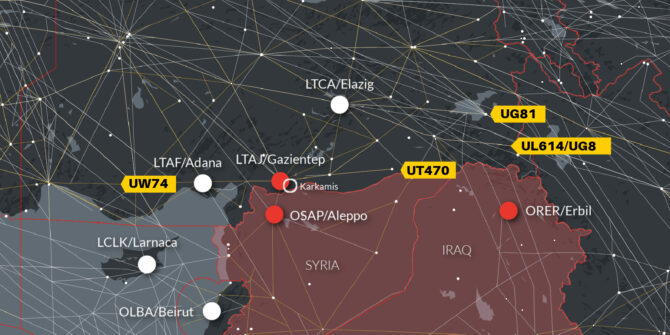
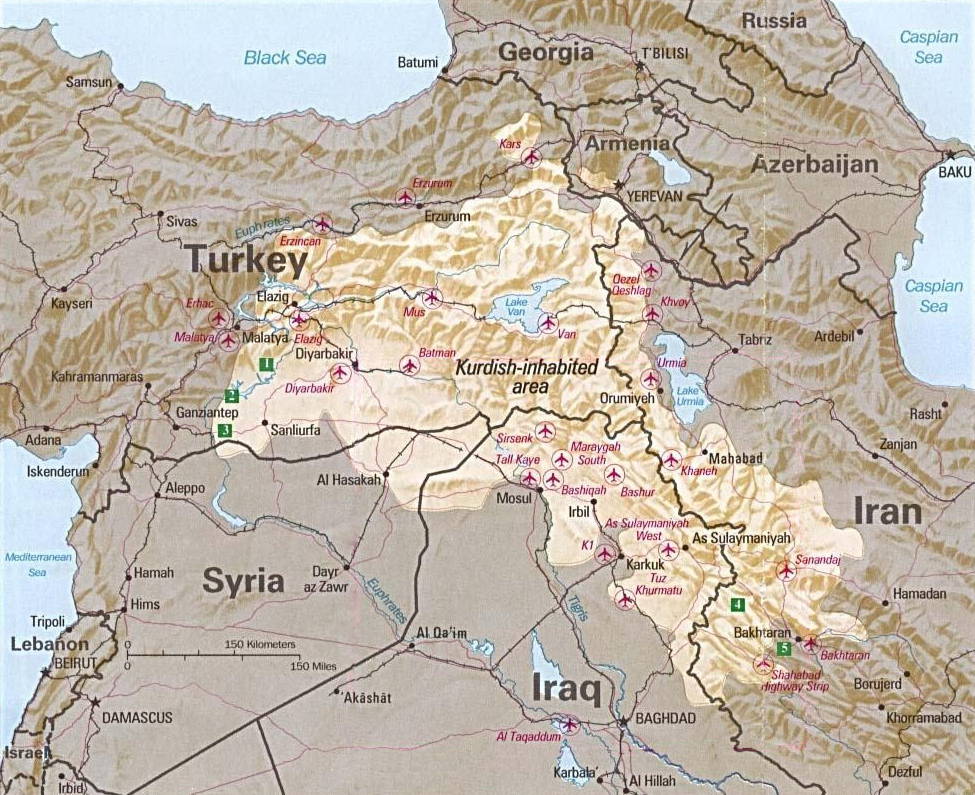
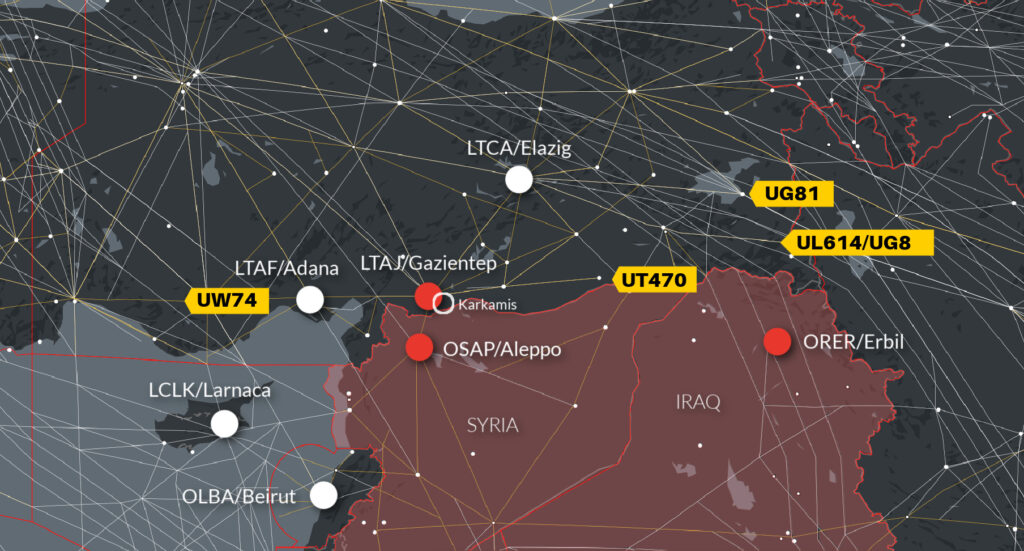
Iran have closed a section of airspace in the north of the country along the border with Iraq, and are potentially using the area to launch missile and drone attacks at targets near ORER/Erbil airport, in close proximity to heavily flown international air routes.

Iranian attacks

Iran are warning their own operators against flying in Iraqi airspace, and especially at Erbil airport, which came under direct fire from Iranian surface-to-surface ballistic missiles in Feb 2021 and again in March 2022. Iran launched further attacks this week on an area 35 miles east of Erbil, reportedly targeting a Kurdish opposition group in the region – an armed opposition force that is banned in Iran.

Here is the warning issued by Iran:

OIIX A2959/22 - AIRSPACE SAFETY AND SECURITY WARNING ISSUED BY IRAN CAA IN
RESPONSE TO THE HAZARDOUS SITUATION WITHIN THE TERRITORY AND
AIRSPACE OF BAGHDAD FIR (ORBB),
IRANIAN REGISTERED AIR OPERATORS ARE ADVISED TO TAKE
ALL POTENTIAL RISKS INTO ACCOUNT IN RISK ASSESSMENT AND FLT
PLANNING DECISIONS WHEN OPERATING AT AIRPORTS WHICH ARE LOCATED
WITHIN BAGHDAD FIR (ORBB) ESPECIALLY ERBIL INTERNATIONAL AIRPORT
(ORER), DUE TO THE RISK POSED BY
MILITANT ACTIVITY AND LIMITED RISK MITIGATION CAPABILITIES IN IRAQ. 28 SEP 17:35
2022 UNTIL 05 OCT 18:30 2022 ESTIMATED. CREATED: 28 SEP 17:43 2022

Iraq airspace risk

Several countries warn against overflights of both Iran and Iraq. The US FAA bans N-reg aircraft from the OIIX/Tehran FIR, and says that overflights of the ORBB/Baghdad FIR must be at FL320 or above – and just last week they extended these rules to 2024.

But the Iranian attacks in northern Iraq raise questions and concerns about overflights of Iraq. Airways UM688 (southbound) and UM860 (northbound) through Iraq are popular routes for international flights between Europe and the Middle East. Is it really safe to fly these routes now, even above FL320?

It’s worth digging into the US FAA guidance on Iraq a bit deeper to get a clearer picture of exactly what the risk is here. SFAR 77 has the info, and this is (some of) what it says:

  • Iranian-aligned militia groups (IAMGs) have access to UAS and anti-aircraft capable weapons systems which present inadvertent risks to the safety of U.S. civil aviation operations in the ORBB/Baghdad FIR at altitudes below FL320 and at potentially targeted airports.
  • IAMGs likely lack the ability to conduct effective target identification and airspace de-confliction, increasing the risk of an accidental shoot down of a civil aircraft due to misidentification or misperception.
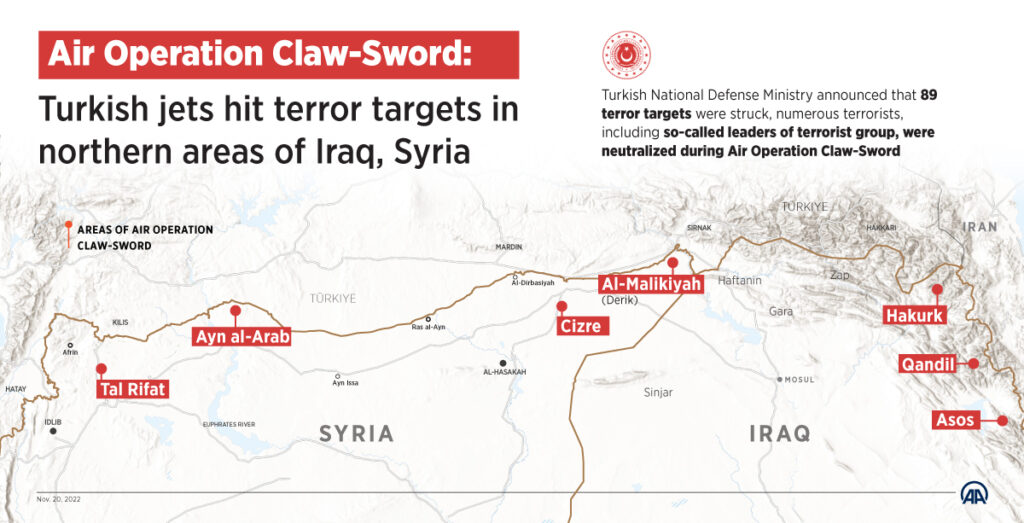
  • In addition, the FAA remains concerned about cross-border military activity. Both Iran and Turkey have previously conducted various no-notice, cross-border operations striking targets in northern Iraq using a variety of weapons, including short-range ballistic missiles, rockets, and weaponized UAS. In a recent example, on March 12, 2022, up to twelve Fateh-110 surface-to-surface ballistic missiles launched from western Iran and impacted near the construction site of the new U.S. consulate in Erbil, Iraq, and Erbil International airport (ORER). While this attack did not pose a direct threat to the airport, the missile trajectories possibly presented an inadvertent risk to aircraft in flight that might have been operating at low altitude in the vicinity of Erbil International airport (ORER) during the time of the attack.
  • In general, unannounced third-party cross-border operations in the Baghdad FIR (ORBB) present a low altitude safety-of-flight risk for aircraft flying in the vicinity of the targeted location(s) and for aircraft on the ground at airports co-located with, or in close proximity to, the intended targets. These activities also pose an airspace de-confliction challenge.

Should I avoid overflying Iraq?

For most Europe-Middle East flights, the route through Saudi-Egypt is a safer option than Iraq.

Even routing through Iran is probably a safer bet at the moment (although we don’t advise that either!). We received a report from an OPSGROUP member this week who routed through Iran:

“I would estimate our flights through Iran vs Iraq are taking (approximately) 10-15 mins longer, but at significantly less risk. We only consider airports that are served by either Emirates or FlyDubai as suitable for diversion, but only as a last resort, such as OIIE, OISS and OIFM. The company we use for support and handling if such diversions are required is Hadid. They are excellent for sorting any problems/permits in the Middle East.”

Here’s the Iraq risk, as we see it:

  • Potential of intentional targeting by terrorist organisations who possess portable anti-aircraft weaponry.
  • Civil aircraft may be misidentified by the air defence systems of both local and foreign military who are active in the country.
  • Iraq is politically unstable, and security and safety on the ground is unpredictable and likely to be high risk.
  • The US have pulled their troops out and so there is little protection at the major airports. 
  • ORBI/Baghdad and ORER/Erbil airports are common target for rocket attacks. Militia and terrorist groups are active in these areas.

Want a full briefing?

Just click here. Safeairspace.net is our conflict zone and risk database run by OPSGROUP. We continually assess the risk to operators the world over. It presents that information in a way that will always be simple, clear, and free. You can also add your email to our new fortnightly airspace risk briefing that contains only what you need to know, delivered every second Monday.


Ops to Taiwan? You’ll have to avoid China

  • Can I fly between China and Taiwan?
  • If I make a stop in Hong Kong, is that ok?
  • What about overflights?
  • Can I overfly China to get to Taiwan?

There’s a boring answer to these questions, and there’s a fun answer.

The Fun Answer

OPSGROUP members have all the fun – you guys get to play the game. We tested it out and managed to find the ‘cheat mode’, so we left the screen open for you. You can download this (along with all the other Opsicles we’ve made) via your Dashboard here.

The Boring Answer

You can’t fly between China and Taiwan in a foreign-registered aircraft.

The Chinese authorities are reluctant to provide any kind of official document stating any of this – we haven’t been able to find any precise wording anywhere in their AIP which states these restrictions.

To test the theory, we applied to the Chinese authorities for a landing permit for a direct flight from Taiwan to China. After we applied, we received an immediate call from CAAC emphasising that they will not deal with such applications for foreign registered aircraft. They advised they will not process this application and verbally rejected it.

The Chinese authorities circulate an official document to Chinese handling agents about this issue, which sets out the rules quite clearly. For some reason, they don’t like these to be distributed outside of China… so naturally, we got our hands on a translated copy:

So, to summarize:

  • Foreign-registered aircraft are prohibited from operating direct between China and Taiwan.
  • You’ve got to make a tech stop somewhere between the two countries – most choose to do so in either VHHH/Hong Kong or VMMC/Macau.
  • Importantly, the same rules apply for China overflights – if you’re flying to Taiwan from any third country, you can’t overfly China. China allow some airline flights to Taiwan to overfly China, then the Hong Kong FIR. But they don’t allow non-sched and private flights to do this. 
  • Only Chinese and Taiwanese registered aircraft are able to operate direct between China and Taiwan.

There’s one more scenario that is apparently also not allowed:

You can’t overfly both China and Taiwan and then land in a third country. For example: you’re departing from RPLL/Manilla in the Philippines, then overflying Taiwan (RCAA FIR), then overflying China (ZSHA FIR), and then landing in a third country like RKSI/Seoul in South Korea – according to the Chinese authorities, this is not allowed, and they won’t issue an overflight permit!

Further reading:

  • For some general top tips on ops to China, check here.
  • Make sure you know about the hidden permit costs of operating to China here.
  • Read about the latest goings on in the South China Sea here.
  • OPSGROUP members can download a Himalayan Routing Guide here.


Japanese Prime Minster Funeral: Tokyo Restrictions

Japan is hosting a state funeral for former Prime Minister Shinzo Abe in Tokyo on September 27.

While airport operations should not be disrupted to the extent London airports have been for Queen Elizabeth’s funeral (a noise thing), you can expect some disruptions (a capacity thing).

The Funeral

The funeral will take place on September 27th, in Tokyo. 

Around 190 foreign dignitaries are expected to attend and RJTT/Haneda will likely be accommodating the majority of flights coming in for it.

Ground disruption

Activists are planning to hold protests in the city on the same day, and will most likely gather at major public spaces. 

This probably won’t include airports given the higher levels of security, and more restricted access at them. Security across the city will be increased though, with additional check points in place, and police monitoring.

Ground transport delays are therefore likely, and access across the city is probably going to be reduced.

Airport Disruptions

There are no planned restrictions for scheduled commercial flights into RJTT/Haneda or RJAA/Narita, in fact the Japanese CAB (Civil Aviation Bureau) are yet to release any specific restrictions.

However, previous ceremonies have resulted in restrictions, and restrictions which particularly impact General/Business Aviation so here’s what we think might happen:

  • Loads of visiting dignitaries means loads of visiting aircrafts which means loads less parking and handling capacity for other aircraft.
  • From Sep 24-29, no non-commercial or general aviation will be accommodated at RJTT/Haneda unless approved though diplomatic channels.
  • It is a big event which is already generating good and bad reactions in Japan, so security is going to be higher, which means some airspace restrictions may be put into place. You can definitely expect something like a 25nm radius around the Imperial Palace as a prohibited area.
  • More restrictions at the already busy RJAA/Narita. Mostly night ones (2300-0559 local type things).

Other options

Narita and Haneda aren’t your only two airports. You have a few more worth looking at.

And remember Japan has an amazing high speed train so it’s easy to get from airport to airport.

RJCC/Sapporo New Chitose Two 3000m runways, all equipped with ILS approaches (CAT II/III on the southerly direction runways). But, it has construction going on, so a lot of stuff is unserviceable. Check notams and temporary charts before heading in here.

RJBB/Kansai Two 4000m runways, CAT II equipped, and all they have amusing “human” names for a lot of their arrivals and departures. Another one with works on though so look out.

RJGG/Nagoya Chubu A 3500m runway, CAT II/III equipped.

RJSS/Sendai 3000m runway, CAT I both ends.

These all have restrictions on overnight parking with priority given to VIP flights.

What about the Covid entry rules?

Ah yes, we almost forgot! Japan’s Covid-related entry rules are different for passengers and crew.

For passengers: you can check the (fairly straightforward) info on entry rules on the official website here.

For crew: technically, the rules are written here, but with some extra info supplied from local agents, here’s the lowdown:

  • To avoid hotel quarantine, crew who have been in a ‘blue’ listed country within the past 14 days need to be either vaccinated (3 doses) or get a PCR test issued within 72hrs of departure. Crew who have been in ‘yellow’ countries must be vaccinated – they don’t have the option of a PCR test. You can see the list of yellow countries here.
  • Crew don’t need to complete the form at the MySOS site, and they don’t need to get a visa in advance – they get issued a shore pass on arrival.

If you need the help of a local handling agent in Japan, we recommend you get in touch with Aeroworks at fltops@aeroworks.jp


Queen Elizabeth II Funeral: Restrictions in London

The Funeral of Her Majesty Queen Elizabeth II will take place on September 19th, from 0900-1900z. There are likely to be significant restrictions in and around London on the day.

September 19 will also become a new Bank Holiday, and a greater than usual number of closures of businesses can be expected on the day.

Here’s what we currently know as of September 14:

(All times in Zulu… we think)

All London Airports

Have a read of our post on London Airport options, and general top tips.

All the airports will operate at a reduced capacity. Except a similar thing to what you see on public holidays.

  • A two hour ground limit is likely at most airports
  • No helicopters will be allowed (except probably a lot of police helicopters over London, look out for them)

Demand is already building so get your requests in soon if you need to operate in. Important folk from about 120 countries are likely to be attend and guess where they’ll all be flying into…

Security is going to be significantly higher as well.

EGLL/London Heathrow

The issue is noise levels, and trying to manage it alongside where the procession will be taking place, which is why they have something called “Operation London Bridge”. The main ‘quiet time’ will likely be from 1350-1440z.

At the moment, a full stop on operations has not been suggested. However, there is probably going to be significant reductions in operations. So, here’s the current plan:

Westerlies are expected to be in use, and if they are then the plan is this:

  • 0900-1230 Stop on all arrivals, but departures will still operate
  • 1050-1105 Stop on all arrivals and departures during the National two minutes silence. This will be managed tactically (so you’ll probably just hold a little longer)
  • 1230-1400 Stop on all arrivals and all departures
  • 1400-1900 Stop on all departures, arrivals will still operate
  • 1900 Operations will begin to return to normal

If Easterlies are in use then it gets a bit more complicated.

  • Departures will be stopped in the morning
  • Arrivals will be stopped in the afternoon
  • But no departures means no space on the ground, which means a further reduction in the morning for arrivals as well.

The CAA has confirmed that any cancellations due to all this will be alleviated, so make sure you reference ‘London Bridge’ when making your request.

Filing EGLL as an alternate on this date is probably not advisable as they are unlikely to be able to accept you (except on an Emergency). In fact, the AIP says not to.

EGKK/Gatwick

Gatwick has some closures from Sep 14-16:

  • 15 Sep Whole airport closed 0355-0415z
  • 16 Sep Whole airport closed 0250-0405z
  • 17 Sep Open but no arrivals or departures 0225-0420z
  • 18 Sep Open but no arrivals or departures 0310-0425z

So basically tiny night closures. Notams A6976/22, A6977/22, A7020/22 and A7021/22 are the ones to check. We haven’t seen anything specific for the 19th.
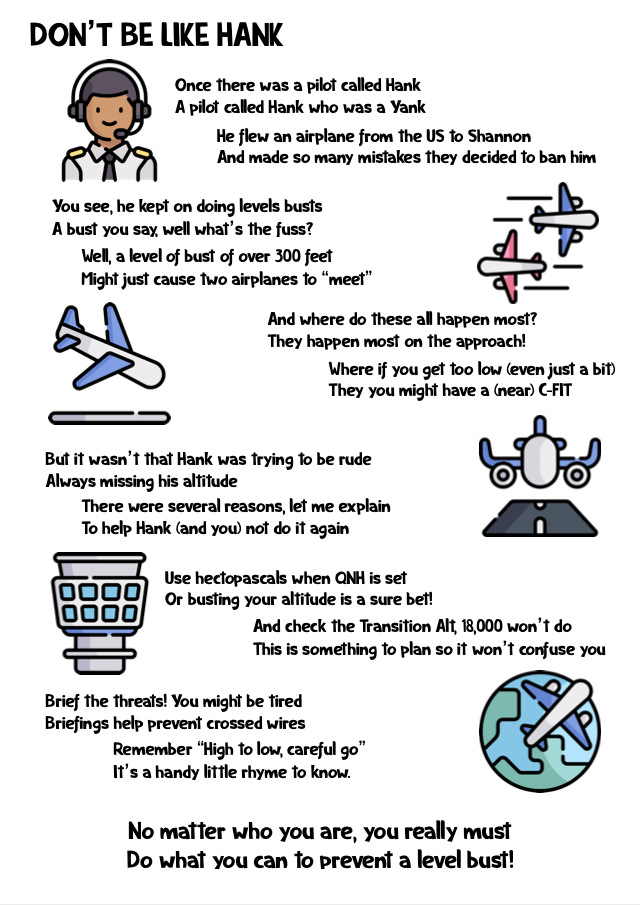
Signature Handling is also going to be temporarily handed over to the Foreign Commonwealth and Development office so expect slower responses to slot requests and monitor for more restrictions by notam.
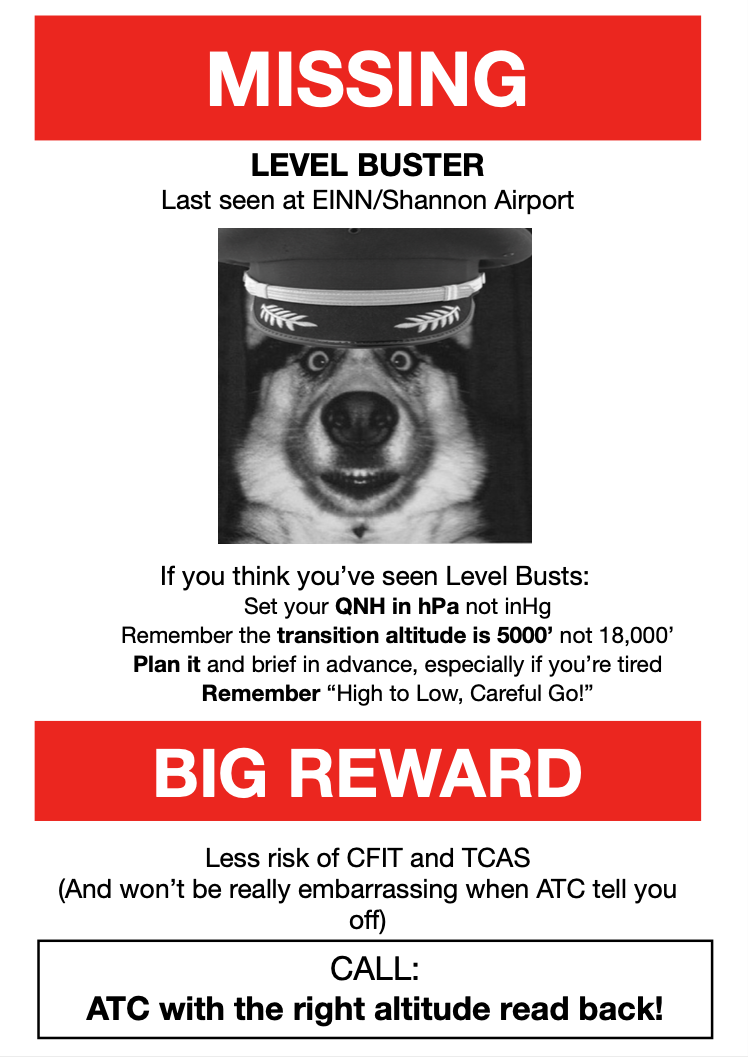
EGKB/Biggin Hill

We’ve not see any restrictions on Sep 19th, but there is a flypast on the 17th so it will be closed 1650-1700z (Notam C5209/22)

EGLC/London City

If the westerly Runway 27 is in use then arrivals will be impacted less, but departures that continue west may be an issue. Early turns and significant extra routing might be required.

If it is the easterly Runway 09 in use its more difficult again because northerly arrivals and the approach are over the City. There are likely to be restrictions here as well in that case.

EGGW/Luton

  • Closed on Sep 18th from 1845-1915 (Notam A6988/22)
  • Closed on Sep 19th for 2 hours… but we’re not sure the time yet
  • Also closed 0000-0530 17-18 for annual maintenance (Notam A6554/22)

EGSS/Stansted

Stansted is expected to be handling the majority of traffic coming in for the funeral. Currently, slots are taking longer to get approved because the FCDO is sorting this.

Parking is already filling up fast too so if you need it, book it soon.

  • Night Restrictions are still in place between 0520-2220z daily
  • Only emergency diversions will be accepted on Sep 19th due parking and ground capacity limits

EGMC/Southend

  • Closed 0530-1300z on the 19th (we haven’t seen a notam for this yet)
  • The airport is ‘strictly PPR’ until the 22nd (Notam P0144/22)

EGTK/Oxford

(Because it’s not really London) they aren’t expecting any restrictions or capacity problems.

EGLF/Farnborough

We haven’t spotted any restrictions for here. The FBO says ‘normal weekend/public holiday restrictions’.

EGWU/Northolt

RAF Northolt has a full civilian ban in place between 1215- 1300z and an arrivals embargo between 1710-1810z on the 19th. The airport itself will operate 1100-1800z

Other UK Airports

The operational stop during the 2 minutes silence can be expected at airports across the UK.

Other bits of the World

The UK Monarch is Head of State for 14 Commonwealth countries, and has ties with another 44 or so. So a fair few countries may turn Sep 19 into a Public Holiday.

  • Bermuda Sep 19th
  • New Zealand One off Memorial Day Sep 26th
  • Australia Public Holiday Sep 22nd
  • Canada Sep 19th
  • British overseas territories Sep 19th

Notams

Notams will be published confirming the planned restrictions. However, the situation may change short notice due a change in wind direction.

If a departure cancellation is required, it is likely the arrival will be as well (and vice versa, although that’s rather obvious). They won’t be accepting rescheduling of flights until they have a better idea of capacity levels, how quickly it will return to normal, and how many stands they have available.


The Toronto Slot Machine

CYYZ/Toronto Pearson has construction works planned this Fall (that’s autumn for European folk), which is going to mean some slot restrictions. Here’s the info on it.

What are they doing?

They have been rehabilitating one of the runways – 06L/24R – since April 2022. The overhaul will give it another 30 or so years of life.

So far they’ve sort of done one third of it, and are finishing up the mid section, so just have the end bit to go – but this is the longest section to complete.

After this they’ll be whacking in a lot of LED lights and also working on new bay areas.

You can read all about it here.

What does it mean for traffic?

This is actually their second busiest runway which means fairly big disruption. Normally Toronto runs a dual or triple runway configuration when it gets busy, but since they can’t do that, they’ve been maximising the efficiency of the other two where they can.

With the biggest bit of the construction coming up, they have put some slot restrictions in place to manage the traffic, effective Aug 2.

This will mainly impact Business and General Aviation flights.

  • First up, there are limited slots between 15:00 and 19:59 local time, each day
  • This applies to arriving and departing aircraft
  • BizAv/GenAv flights looking to operate between 06:30 to 12:29 must file a reservation with the Airport Reservation Office Online Coordination System (ARO OCS)

Good news though – any unallocated capacity (with an hour to go) will be available for BizAv/GenAv flights. So you might be able to sneak in last minute (although we wouldn’t recommend depending on it).

ARO OCS?

Find all the info on that here, and if you’re not already registered then do it because it takes 7 days.

Actually that link takes you directly to Toronto’s site on it and there is a bunch of handy info there like who is exempted, how to do it, forms etc.

The Directive.

The official stuff on it can be read here. It says what we said, but you can also find some handy contact info in there too, in case you have any questions on it all.


NAT Ops: Atlantic Thunder 22

Remember that big NAT military exercise a couple of years ago? And then the one that happened last year (Formidable Shield) around May time?

Well, now Atlantic Thunder is happening, which means once again large parts of North Atlantic airspace will be closed to all flights for several hours at a time.

Not quite as big as Formidable Shield though, but still big enough to have a conference about it.

The Conference.

They are holding one so you can find out exactly what the deal is.

Join it by visiting the Eurocontrol NOP page and find the link there under ‘latest news’. They have one before each of the days where the most impact is expected, so the first takes place on September 6th at 14:30 UTC (and then on the 8th and the 10th).

The Event itself.

Atlantic Thunder will take place from September 1-12, but the main exercise takes place on the Sep 7 (or Sep 9 or 11 if it doesn’t go ahead on Sep 7).

The official PDF issued by Shanwick is available here, and has lots of lists of everything closed and when…

We prefer pictures though.

So first up, danger area EGD701 

This area is tricksy because as you can see, it is made up of loads of smaller bits that can be activated at different times (and to different levels). They affect a bunch of the routes out of the NAT HLA, and potentially both the EGGX/Shanwick and EGPX/Scottish FIRs.

Initially it will be closed 1-6, and then on the 12th as well. The timings are annoying. Sometimes it is FL200, sometimes it is FL270, but then bits of it, between 1400-2359, are shut to FL UNL.

Like we said, tricksy.

But then…

But then there is Configuration 2 which involves the closure of EDG701 and also EGTHUN1 and EGTHUN2, which is a bigger area looking like this –

Of course, they only publish the exact timings and configurations 24 hours in advance so you’re going to have to keep your eyes out for Notams and info on those.

Routing around the closed airspace.

Aeronautical Information Messages (AIM) will be issued prior to the start of each exercise, which will include suggested routings for flight planning around the closed areas.

Traffic overflying around these closed areas can expect to get 30NM separation if in NAT HLA airspace (FL285-420), or 60NM separation if flying at lower levels.


Danger in Denver: Collision Risk

On August 3, the FAA put out a new Safety Alert (SAFO) for KDEN/Denver. Here it is if you want a read.

The issue is the high number of TCAS alerts being recorded when aircraft are shooting parallel approaches to Runways 16L/16R.

It turns out that TCAS, high elevation, and reduced separation aren’t a great mix, and the FAA are worried there are chances of a collision.

Here’s a breakdown of the situation.

Elbow to Elbow.

Since 2004, KDEN has been operating two parallel runways (16L and R). The two runways sit literally elbow to elbow, with only 2600’ (709m) between them. For simultaneous close parallel approaches, 3600′ separation between runway centrelines is generally required. In Denver, typically two separate controllers are feeding traffic onto the approach cones for each runway, which means coordination can be a challenge.

From early on it became apparent that nuisance TCAS alerts were a problem. The FAA sought to fix the issue, and so in June 2019 Denver TRACON started separating aircraft vertically by 1000’ in case someone busted through a localizer.

Trouble is, this didn’t fix the issue. Instead, now the majority of TCAS events are happening when aircraft are established on the final approach course. The big threat here is the number of folk selecting TA only (a good 20%), and there is now a healthy dose of desensitisation thrown into the mix from so many nuisances warnings in the past.

Then there’s the elevation.

Fun fact: TCAS becomes more sensitive with altitude. Or in other words, the trigger thresholds for both TAs and RAs increase the higher you get.

Enter Denver – the ‘Mile High City’ – called that because it sits exactly a mile above sea level. That’s around a 5,300’ elevation.

The next iteration of TCAS, (the romantically named ACAS XO), promises better tolerances for these conditions but it’s not here yet, so right now users of TCAS 7.1 get all the warnings when all the warnings are not necessary.

What the FAA are concerned about.

Operate into Denver, and the threat of simultaneous parallel approaches isn’t new, but awareness of the threats needs to be improved. The basic idea is folk should:

  • Have an awareness of how the close in approach setup might increase the threat
  • Brief how operating in TA only mode adds to this
  • Know exactly where to be and what’s around by listening out on the radio and monitoring TCAS carefully
  • Think about to remember to re-select TA/RA mode in the event of a missed approach
  • Be aware of how nuisance TCAS cautions and warnings may desensitize crew.

In fact, this could be useful guidance anywhere where there are similar operational and environmental conditions which might increase the risk of collision.


Dublin Airport’s North Runway Opens

Dublin Airport has a brand new runway! Sláinte!

It opened on August 24, 2022, only 15 years after its original planning permission was approved. It’s actually the airport’s third runway because everyone seems to oddly forget about 16/34 (which is a none too shabby 2072m with an ILS and RNP approach, so perfectly useable!)

Anyway, 10L/28R has opened and is ready for use. There are a load of new charts effective from August 19 for you to check out if heading in.

What’s it got?

It’s got:

  • 10,200’ (3109m) x 45m of tarmac.
  • A CATII/III ILS onto 10L (but no published approach to 28R).
  • The ILS is very standard. 3000’ platform altitude and 3° glideslope.
  • There are restricted areas to the south so the missed approach is to the north. Keep an eye on this if there are any storms passing through.
  • A new apron area (5H) which is still under construction, so watch out if you’re taxying around the end of 10L (threefold of 28R). The second phase starts from September 8 so check the chart validity carefully.

You can find the Irish AIP here if you need it.

Anything else to know about the airport?

  • They favour the 28s, and you can expect these in use until the tailwind reaches 10 knots.
  • Read the airport briefing because there are a bunch of taxiways you mustn’t stop on when vacating certain runways, because they won’t actually get you clear of the runway.
  • They have NABT for certain categories of aircraft.
  • Sometimes they talk fast and give you a thousand taxi clearances in one go so be ready to copy the clearance down!
  • The aprons get congested. Probably because some clever person built loads of nice little cul-de-sacs for the airplanes to park in, not remembering airplanes can’t do three point turns to get out again.

Other than that it is a nice, easy airport to operate into.

And also…

EIDW/Dublin does have a pre-clearance service for the US, but it’s only available to scheduled airline traffic. If you want to get this service for your private/charter flight, you’ll have to go to EINN/Shannon instead.

Here’s some more info on all that US pre-clearance stuff.

A little bit of history.

If you want the boring historical facts then go and look at Wikipedia. This is some of the lessor known stuff.

Dublin actually means Black Pool, but locals (well, folk who speak Irish) know it as Baile Átha Cliath.

Collinstown Aerodrome (as Dublin airport was originally known) was the spot where the most successful raid against the British took place, in 1919, during the war of Independence. 25 or so raiders broke in, poisoned the guard dogs (well, actually they did that in the afternoon and just timed it well), then silently captured any human sentries and managed to nab a whole load of ammunitions and weapons before escaping. They also amusingly left the Brits unable to give chase because they’d sledgehammered all their cars in the garage.

Nowadays, Dublin Airport seems to be a place where people leave stuff, rather than raid stuff from it. It has a history of random items abandoned there by passengers including an urn of ashes, a 42” television, some large paintings, 7 grandmothers (on separate occasions) and a toilet. One of those is not true. I’ll let you guess which.


The Doha FIR: Qatar is finally getting its own airspace

For such a small place, Qatar has some big history. It is in the news (and in aviation news) a fair old amount over the past few years.

And now another newsworthy event is occurring, because it is finally 

getting

its 

own 

airspace!

We feel like we should send a house (well, airspace) warming gift? Send us ideas. Or maybe just go and use the airspace.

What’s the story?

We posted this back in 2021 when the news first hit the headlines that Qatar was looking to get its own airspace.

In short, (in case you can’t be bothered to click the link and read it), with the exception of the OTHH/Doha terminal area, all the airspace was controlled by Bahrain. Which was never a problem until Qatar had a fairly large ‘diplomatic dispute’ with many of their neighbours, and it reignited the campaign to get their own airspace.

They pushed the idea, there was some feedback, it wasn’t good, so they put in a new proposal fixing the issues, and it was approved.

Now it is actually happening!

The OTDF/Doha FIR will be established, effective from 8th September 2022.

Here is a map of what the lateral boundaries look like.

If you click here, you’ll be transported to a lovely high res PDF fresh from the AIM (and minus the badly done highlighting) so you can see it all much more clearly.

The vertical boundaries will be surface level to FL245, which means flights above FL245 will still be in the Bahrain FIR and under their control. So if you’re overflying, you probably aren’t going to notice much during Phase 1.

You can access all the info on this in the Qatar AIP, available here.

So that’s it?

No, that’s not it, because there are several phases.

Phase 2 is when Doha Control grabs control of all the airspace above the State of Qatar and their waters. This means surface level to somewhere unlimited above them. 

Bahrain will still be responsible for controlling the international waters bits nearby, but only up to FL245. Now you might notice the difference if you’re overflying, but not much – just some new frequencies to talk to.

This will come in from 23rd March 2023.

Finally…

Sometime after the end of 2024, Doha will become the ‘responsible authority’ for the entire FIR, surface level to unlimited, including over the international waters.

What is important to know?

Communications:

Well, initially there won’t be much change at all if you’re only overflying. 

Obviously, if you descend down into Doha then you are going to be speaking to someone not in Bahrain, but you would have been anyway once you entered the OTHH/Doha terminal area. Now it will just be a little earlier.

There have never been issues with the handover between Bahrain and Doha.

Flightplannng:

OTHHZPZX is the current general flight plan one.

All flight plans and departures messages for flights planning on operating through or within the Doha FIR must include addresses OTDFZQZX

If you’re going to overfly on the A453, L602, L768, M600, M677, P559, P699, T308, T872, Y856 ATS Routes (via North of Qatar) then make sure you use OTBDYWYX in the message address.

In the absence of AFS, you can email: doha.comm@caa.gov.qa or fax at (974) 4462 1052 / (974) 4470 5075. An acknowledgement of receipt must be obtained via tel (974) 4470 5080 / (974) 4470 5081.

ATC (in general):

Controllers in the Doha TMA were always well trained and a good standard. There is no reason to suspect the new controllers responsible for the FIR won’t also be.

Procedures are unlikely to have changed, it will now just be a Dohasian rather than a Bahrainian controller calling the shots.

(No, Dohasian isn’t a real name, I made it up).

Weather:

Weather avoidance might require you to talk to both Doha and Bahrain if you’ll be crossing the temporary boundary (into the international waters area). 

Contingency procedures:

Until the official AIM is published this isn’t confirmed, but the assumption is this will remain the same.

It’s so small, why do we care?

While the airspace is smallish in the schemes of airspace size, it is biggish in terms of importance for the region. Around over thirty percent of traffic in and out of the UAE routes via Bahrain (soon to be Qatari) airspace, Kuwait and then up via Iraq to Europe, avoiding Iranian airspace to the right.

OTHH/Doha and OKBK/Kuwait provide two “final” alternates for en-route diversions for aircraft routing over Iraq, and also for aircraft routing south if UAE airspace closes. They are also close to Saudi airspace and useful alternates if ESCAT procedures prevent aircraft from operating into Saudi Arabia.

Anything else?

Not that we can think of, but you can tell us if you experience anything worthy of reporting once it goes live this September.

We did make this Airport Lowdown for OTHH/Doha in case you need it.


The Flight of Fright: Tales of Startle and Surprise

We may have brought this up before. I think we referred to it as “that old chestnut”, and talked about how the lack of currency (a lot of folk were heading back to the cockpit after big periods of Covid-no-flying) made it a big threat to think on.

But it turns out lack of flying isn’t the only issue. In fact, Startle and Surprise are a bit less “old chestnut” and a lot more “giant conkers still encased in their spiny suits, falling on pilots’ head from 40,000 feet”. They can affect anyone, and regardless of experience or currency, can be hard to deal with.

So we thought we’d take another look, and a slightly more personal look, to see if that might help folk be less, well, startled when something startles them, (or surprised by something surprising).

It’s all in your head.

It really is, which means reading about the Science of Amygdala and the Theory of ‘fight and flight’ is great, but it probably won’t actually change your reaction. At least, not the one that counts. You may say “oh, so that’s why my brain did that!” several hours afterwards when the adrenalin has worn off, but in the heat of the moment?

Knowing the theory probably won’t help.

If you want to know how to not react the ‘wrong’ way to Startle or Surprise, then you need to think about how you do currently react – analyse those past events and what your brain did during them – because once you understand and are aware of that, then you can start to think about how to control it a little more.

A very wise lady wrote an interesting thing of this for the RAeS magazine. She pointed out that one of the big issues with training for Startle & Surprise is the fact that you can’t really do it that effectively in a simulator. 

  • First of all, we all go to the sim expecting hideous things to happen and are generally quite primed for it. 
  • Secondly, unless your sim is particularly high tech then chances are they have to build up to a lot of those startlingly surprising things. Like the old “close your eyes and only open them when I say ready” UPRT practice. If you know what’s coming, the effect is less.
  • Thirdly, as much as we’re told to treat the sim like a real flight, our little brains always know deep down that it is just a sim and we aren’t going to really be in any life threatening jeopardy, which can change just how much ‘fight or flight’ it really goes for.

So it is hard to really experience a full Startle or Surprise in the sim. But we can still benefit from the practice by using it to review our reactions and thinking about how they felt, what we did, how we recovered – we can mentally prepare ourselves for the real deal should we ever encounter it.

Are you a ‘flight’ risk?

I am a naturally very jumpy person. My husband takes great amusement in making me jump at every opportunity which sadly has only further developed my “scream first, think later” response. 

Would I have a similar reaction in an airplane?

Embarrassingly, yes. I once flew into my wind shear memory items after the system yelled “Wind Shear!” at me. Great. Nice to know I’m that well conditioned. Only the warning had gone off at 12,000’ because the system had malfunctioned, and me hurling it into TOGA basically all out panicked the poor thing. 

Are you a ‘fight’ risk?

I’ve seen other pilots startled by the dings of ECAM during an engine start, seen the EGT skyrocketing and yanked the start master off – de-powering a bunch of the systems the clever FADEC probably would have used to help the situation.

Both the flight or fight reactions generally have us wanting to do something immediately – to take action, to get ‘out of danger’ – and generally before we’ve really understood the situation and all the information in front of us.

The ‘duh!’ Moment

The other response is the ‘freeze up’. 

A prime example of this occurred in the French Bee go-around incident of 2018. Startled by an unexpected wind shear warning the FO seemed to freeze – cognitive incapacitation. This was quite an extreme example (extreme in how long it lasted).

I’ve heard folk say “I really froze up!” when they were startled or surprised, “There was this moment of cluelessness, where I just didn’t know what to do!” This isn’t the same as the poor French Bee FO though who, after carrying out that probably amounted to a conditioned memory reaction then checked out entirely for almost the entirety of the go-around procedure.

Is a momentary freeze up such a bad thing?

That ‘duh’ moment is a pause. It is your brain trying to work out what is going on, and this can be to your benefit if you recognise it, and use it as a trigger to start getting the brain back into gear.

https://giphy.com/gifs/movie-film-1990s-1aKKuZOjn3qUg

The worst thing to do would be to do something because you feel you need to. You need to give your brain time, but how can you do this?

What should that response be?

A lot of folk say “sit on your hands” but this is easier said than done. 

I mean, you’re not literally going to sit on your hands. Mine tend to go into a sort of weird claw shape when I’m truly startled, which I’ve never understood because what use is that? I’m not a clawed apex predator, and it makes sitting on my hands particularly uncomfortable.

What I think the phrase is aiming for is giving yourself a couple of seconds to allow your brain to get out of the startled state and start actually taking in the information and processing it properly. So a better method, or technique, is the deep breath trick.

Literally one big guzzling breath of air. 

I like this one for two reasons – one it really works, and two it turns what would have been a mortifying yelp into a sort of wheezing gasp which is less startling for the person sat next to me.

Be a rock. 

Or rather a ROC – Relax, Observe, Confirm.

Actually, ROCK works too – Relax, Observe, Confirm, Know (what to do).

This is a really good mantra to get into your brain. Deep breaths to clear the mind. Look at what is in front of you. Vocalise it so the other pilot knows what’s going on.

The point is, you are going to be startled at some point. Things are gong to surprise you, and chances are, you will have the age old human survival reaction to this. You probably can’t help it, but if you can recognise it in yourself and stop it from taking over totally, then that is a good thing.

After all, the other ‘old chestnut’ CRM thing – the one about stress levels and how well you perform (because adrenalin is a useful thing, to a point) is also a science fact.

So – a challenge.

Try and think of a time when you’ve been startled, or surprised, and try and remember the feeling.

Once you start to recognise it, and to understand how you react, then you can really start to condition yourselves with a better response, or at least a way to manage it.

Then try to think of a situation when an immediate response really is required. Aside from the obvious “TERRAIN AHEAD, PULL UP!” or a really violent wind shear warning, there are very few. Engine fire? You still need to confirm the right one. TCAS? RTO? They build in the natural delay.

We’ve put together a bunch of ‘stories’ – A Startle and Surprise Story Book.

We aren’t astronauts.

Chris Hadfield, Canadian Astronaut, once talked about how astronauts sometimes might only have the time they can hold their breath for to solve a problem. I tend to yelp which means I let all the air out, so I would be awful in this situation. 

Thankfully, we aren’t astronauts, and there is rarely going to be a moment when you have to act right this second or that’ll be it. So taking two seconds, two breaths, to calm down and work out what actually does need to be done is pretty much always going to be a good thing to do.

Want to read some other stuff?

Try this for size. (It’s the old post we wrote about this very subject when folk were heading back into the skies after long periods off).

And here’s our book again in case you didn’t already download it. If you have a personal story to share of a time when you fought the twin headed gorgon of Startle & Surprise, send it in and we will add it (anonymously of course). Email us at news@ops.group


NAT Basics: An Unofficial Checklist For Pilots

We have a handy ‘My First North Atlantic Flight is tomorrow’ briefing guide which is for everyone – the planners, the operators, the pilots. Everyone involved in getting airplanes across the NAT. If you want it, head to the shop (or member’s dashboard) and grab it.

This post is just a mini slice of that – just for the pilots. Not because you don’t already know how to ‘do the NAT’, and not because your operator doesn’t already have a procedure in place, but just because we thought it might be a handy little guide on the basic stuff to do if you’re a pilot heading into the NAT HLA…

On the Ground

We’ll start when you’re sat in the plane getting ready to go. There are three things you probably want to do at this point:

1. Check the Techlog.

Make sure you have the equipment you need. That means none of it is broken. The vast proportion of the NAT HLA requires Datalink now, so make sure you’re CPDLC and ADS-C are functioning (because you need both of them to be able to do the Datalink). Also check bits like HF, altimeters and all the usual stuff you’d need for general RVSM-ing while you’re at it as well.

2. Check what you’re loading in the FMS.

If all your waypoints are five letter named ones then this is less annoying to do, but getting the other pilot to independently check there are no discontinuities or rogue vowels that might send you off in the wrong direction is still a good idea.

If you have the dreaded LAT/LONG points on your flight plan then you are going want to check more thoroughly.

  • First up, make sure there are no funky ones stored in your box by a different pilot from an earlier flight.
  • Load yours in using the correct format, and get the other pilot to independently confirm you haven’t messed up the numbers with half degrees (or no half degrees if they are supposed to be there).
  • Check the track and distances between all your points (from Entry to Exit) and make sure what is in the box matches the flight plan. It’s a whole lot easier to fix it on the ground if it doesn’t.

3. Have a little look over the weather and Notams for the en-route alternates in the NAT region.

Places can get nasty in winter, and there aren’t many, so if one of them is under 10 feet of snow or has some hideous Notam then you’re better off knowing before you go so you can make a different plan.

Check the old space weather stuff too because if there are some storms raging up there you might experience some HF blackouts or satellite navigation issues and again, good to know what to expect (and what to do about it) before you’re in it.

In the air (approaching the NAT HLA)

  • Make sure you know who you need to Logon to for the clearance, and when to do it.
  • Check everything is still working.
  • Once you get your clearance make sure both of you check it. That means checking what you’ve been cleared is what you have in the box. If it has changed then you’ll need to do those track and distance checks again. Select North Ref to TRUE for this but don’t forget to set it back to MAG once the checks are done.
  • Make sure you have the right Mach set (if it’s a constant mach segment).
  • Check the RNP and Nav Accuracy is High.
  • Check your altimeters are all within 200’ of each other.
  • Brief your contingencies again and think about whacking something in the secondary to help if you want to.

Entering the NAT HLA

In you go…

Put that SLOP in (0/1/2nm RIGHT of track, or 0.1 increments if your airplane is that clever) and select 123.45MHz on VHF1 (unless you still have an active ATC VHF). Keep a good listen on 121.5MHz on VHF2. If you’re heading into HF land then check in and do your SELCAL check.

When you’re 30 minutes in, set your squawk to 2000.

Now, some do this, some don’t, and a lot do it different – it depends whether you’re old school and using a plotting chart, or new school and EFB-ing. But even if you are in a high tech aircraft this is still one good method for checking you don’t get any GNEs:

  • As you cross over a waypoint, set your timer.
  • After 10 minutes, check your GPS position in your FMS, and plot it on your chart/compare it to where your airplane is showing on your (electronic) map. If it doesn’t match then you’ve got yourself a problem.

Keep an eye on those alternates and their weather. Plan stuff in advance so if anything happens you’re not flailing about in the sky like a headless chicken.

UH OH! I’ve got issues…

Use the contingencies, but not before trying to talk to ATC. 

  • If it’s a weather thing and you only need up to 5nm to detour around it then maintain your assigned level. If you’re going to need more than 5nm then use SAND – if your turn moves you South then ascend (climb) 300’. If your detour moves you North than descend 300’.

Always check the tracks and traffic proximity first. Turning the direction which will mean a longer detour might keep you more clear of traffic.

  • If it’s a serious technical problem then turn 30° and offset laterally by 5nm. Once established, climb or descend 500’ (1000’ if above FL410) or descend all the way down below FL290.
  • If it’s a communication issue then stick with your assigned clearance and do what you can to get in touch with someone.
  • If it’s an ATC issue (ie they’ve evacuated and aren’t there anymore) then follow the published contingency procedures.
  • If it’s some sort of navigation problem then get in touch with ATC and go from there.

I made it!

Congrats. Delete the SLOP, set the speed to what you need and out you go, smug in the knowledge you traversed the NAT HLA without mistakes.

A checklist for you 🙂

We turned all this info into an Opsicle. It has London pigeons in it because they are clearly the masters of crossing the North Atlantic. Grab it here.