NAT Guide 2025 – My First NAT Flight is Tomorrow

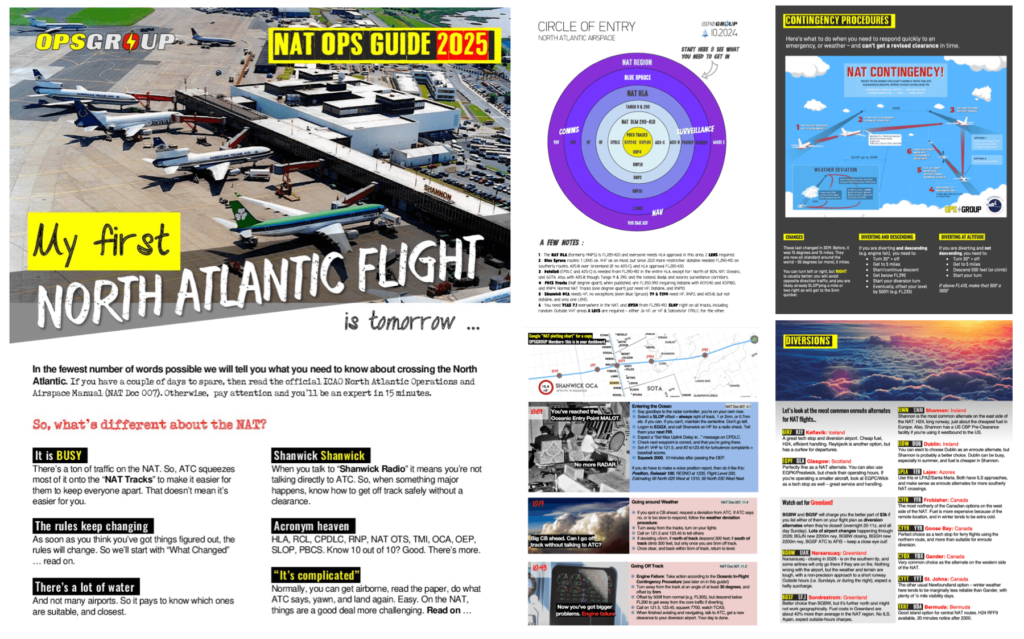
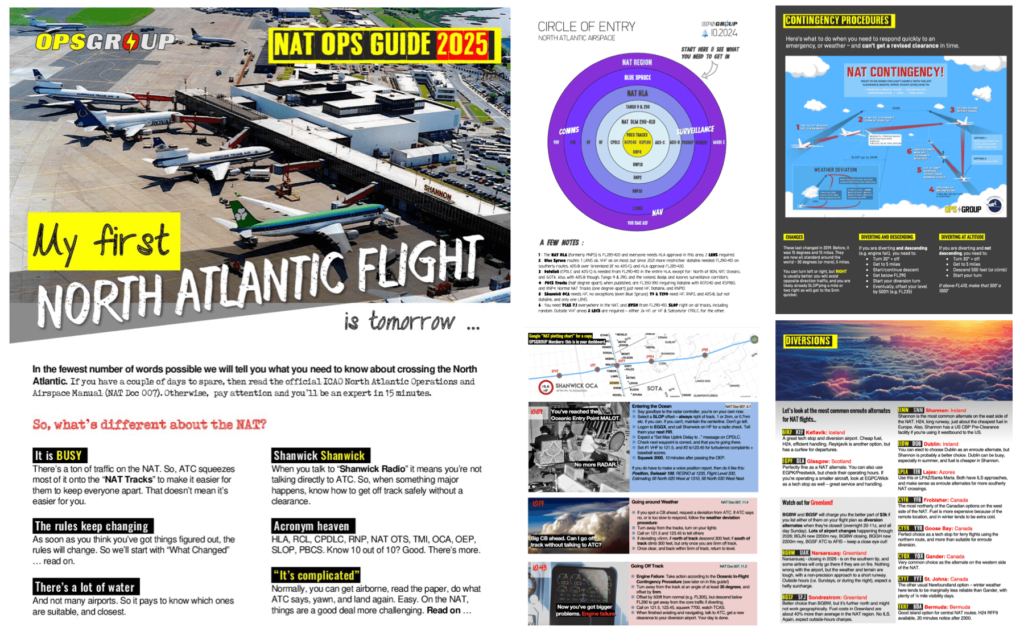
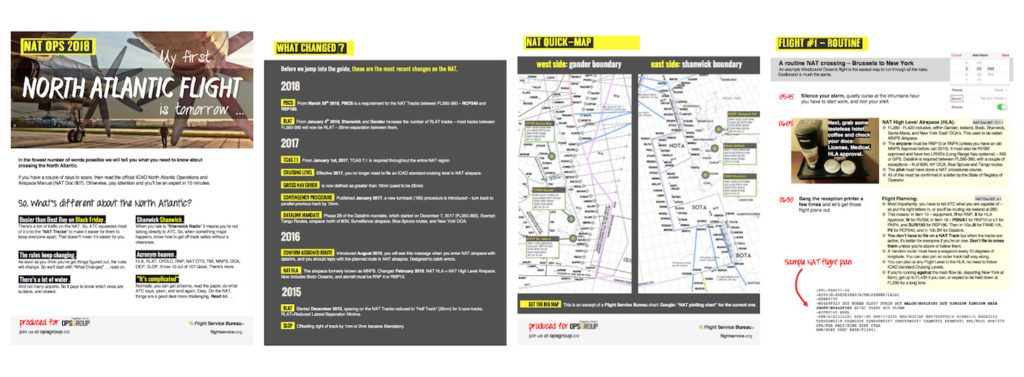
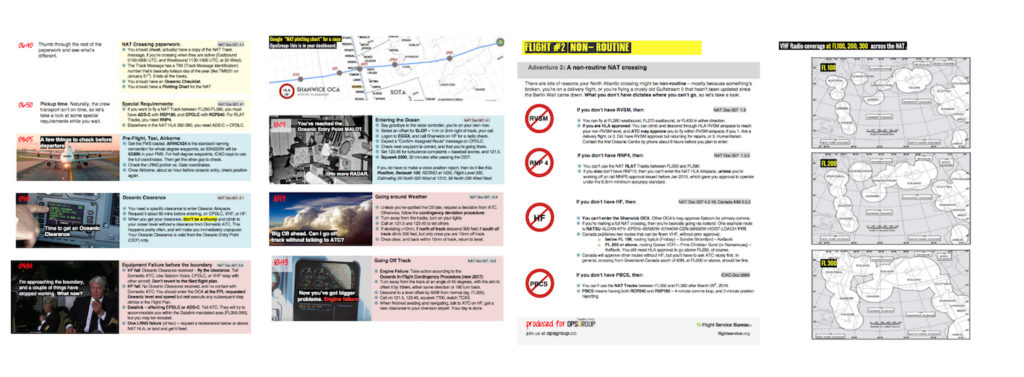
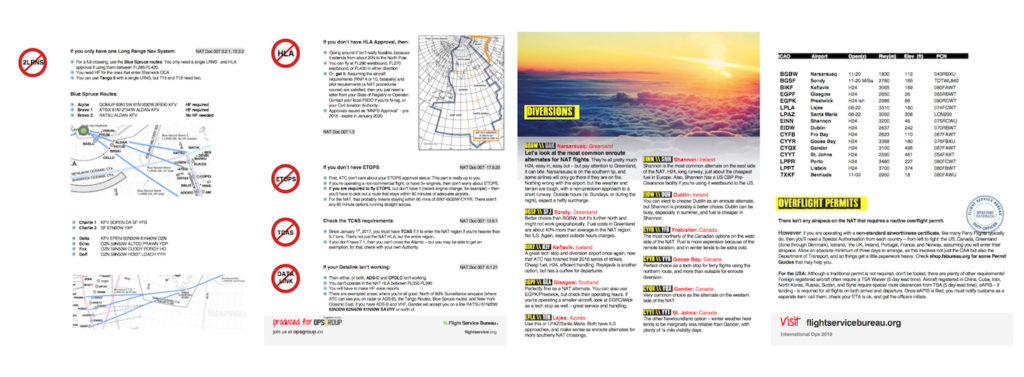
The latest edition (2025) of the NAT Guide (“My First North Atlantic Flight is Tomorrow”) has now been published. This 24-page guide is for pilots and dispatchers, to help you understand the basics of North Atlantic flying.

Contents:

  • 1. What’s different about the NAT?

  • 2. Changes in 2024, 2023, all the way back to 2016.

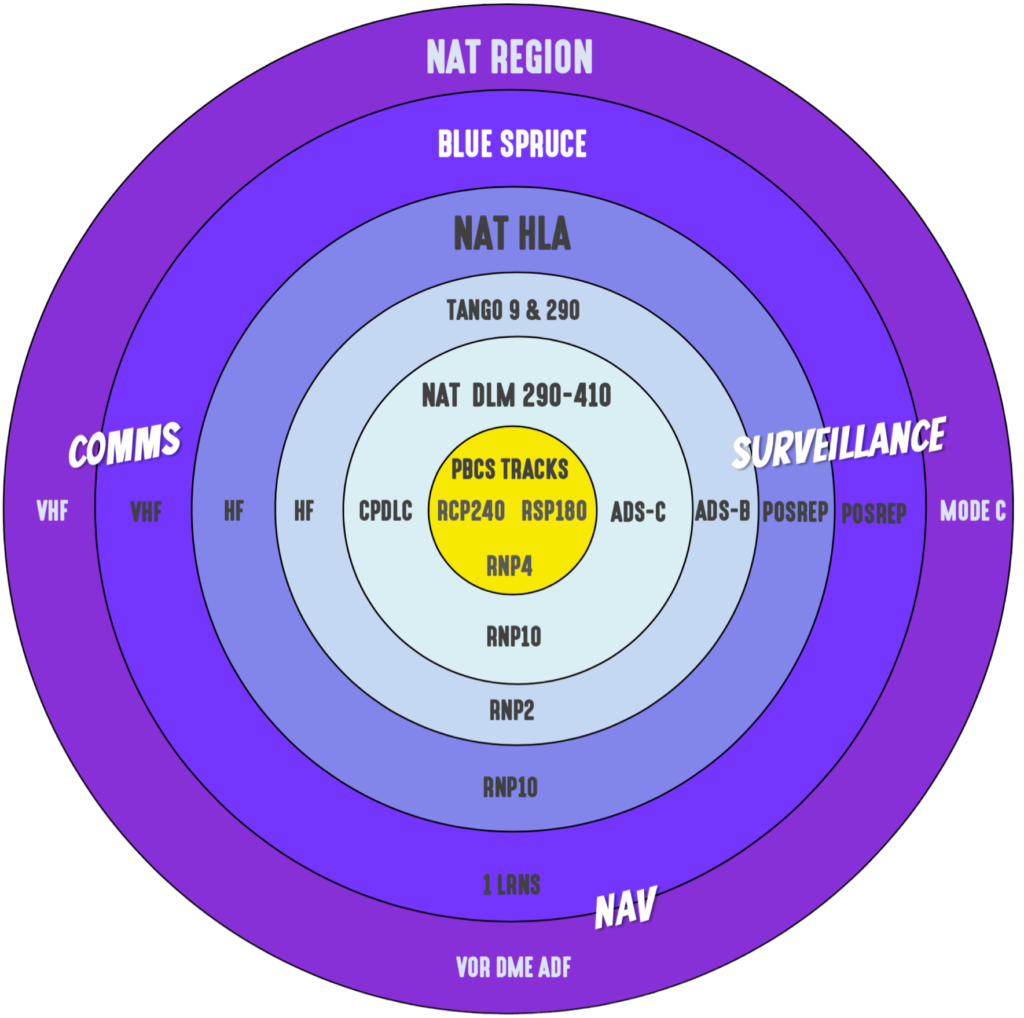
  • 3. (Updated 2024) Circle of Entry – a visual depiction of what equipment is needed to enter the different parts of the NAT region airspace.

  • 4. NAT Quick Map – Gander boundary, Shanwick boundary

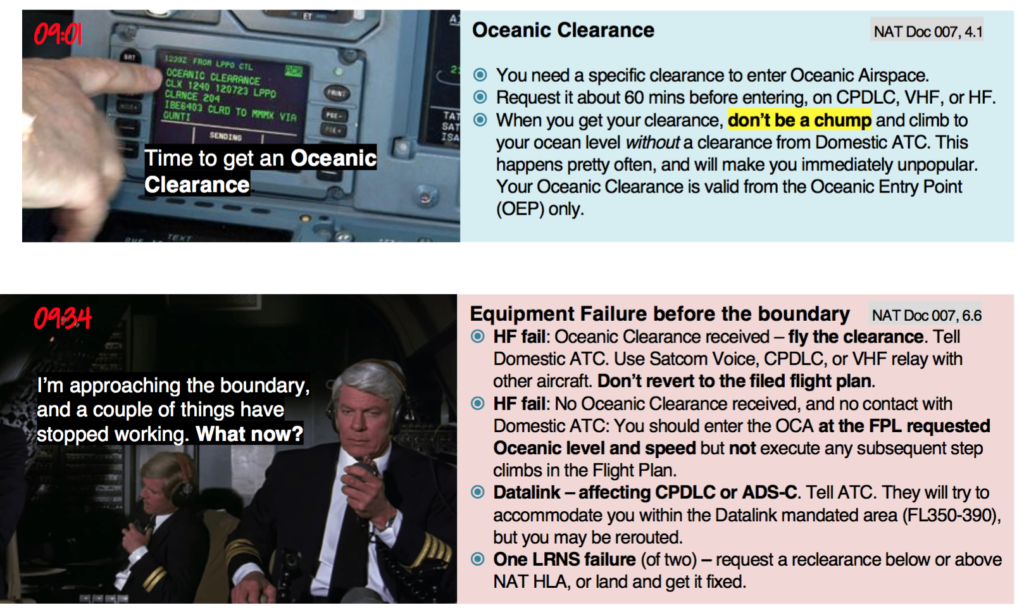
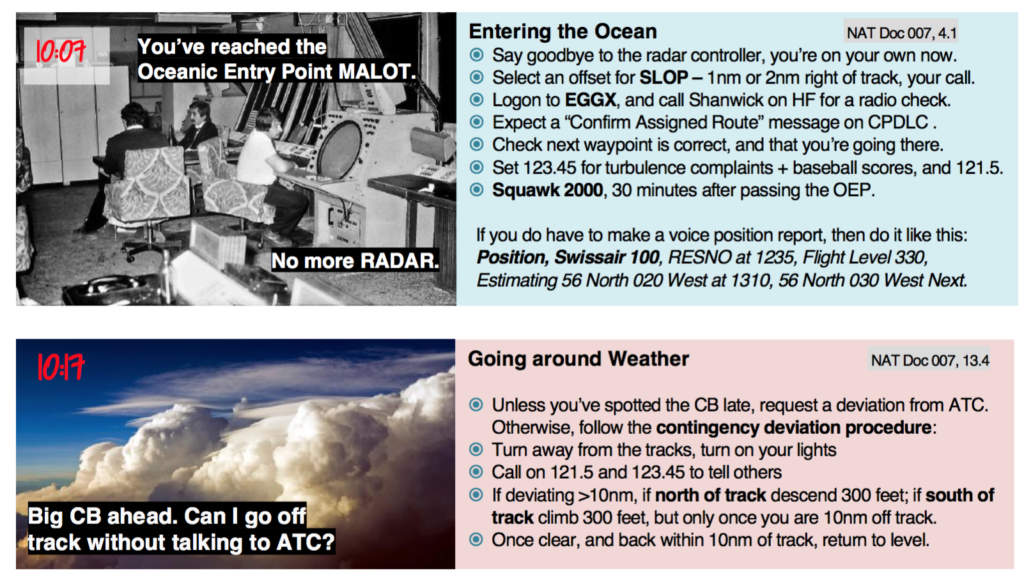
  • 5. Routine Flight Example #1 – Brussels to JFK (up at 5.45am) – NAT HLA certification, Oceanic Paperwork, Special requirements, getting an Oceanic Clearance, Equipment failure, Weather deviation, and going off track.

  • 6. Non Routine-Flights: No PBCS, No RVSM, No RNP4, No HF, 1 LRNS, No HLA, No ETOPS, No TCAS, No Datalink – what you can do and where you can go.

  • 7. Diversion Airports guide: A couple of notes on each of the most popular diversion airports from Shannon to Goose Bay: What to expect.

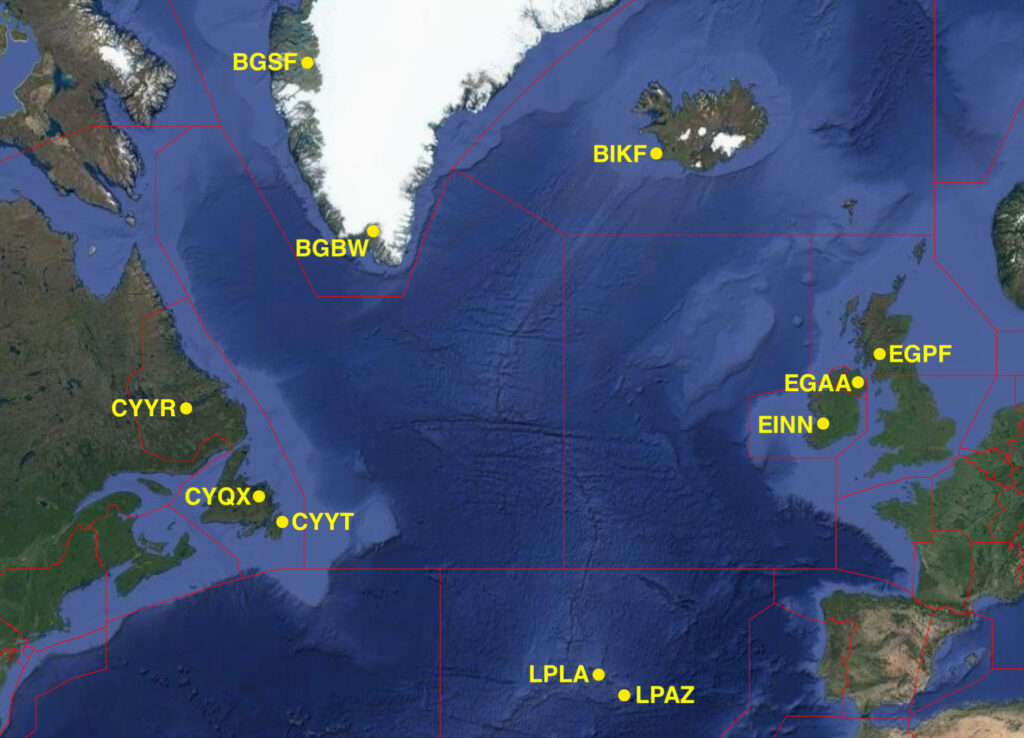
  • 8. Airport data: BGBW Narsarsuaq, BGSF Sondy, BIKF Keflavik, EGPF Glasgow, EGPK Prestwick, LPLA Lajes, LPAZ Santa Maria, EINN Shannon, EIDW Dublin, CYFB Fro Bay, CYYR Goose Bay, CYQX Gander, CYYT St. Johns, LPPR Porto, LPPT Lisbon, TXKF Bermuda.

  • 9. Overflight permits – routine and special, non-standard airworthiness, how to get one.

  • 10. Special NAT procedures: Mach number technique, SLOP, Comms, Oceanic Transition Areas, A successful exit, Screwing it up, Departing from Close Airports

  • 11. North Atlantic ATC contacts – Shanwick, Gander, Iceland, Bodo, Santa Maria, New York – ATC Phone, Radio Station Phone, AFTN, Satcom, CPDLC Logon codes; and adjoining Domestic ATC units – US, Canada, Europe.

  • 12. NAT FPL Codes and Flight Levels

  • 13. The Contingency procedure – weather and diversions

  • 14. Flight Plan Filing Addresses by FIR

  • 15. NAT Clearance or no Clearance, guide to the new RCL process.
  • 16. Common Gotchas: ATC and OPSGROUP Member favorites.

  • 17. Links, Questions, Guidance


There are two options to download a copy of the NAT Guide 2025 (24 pages, 6Mb)


OPSGROUP Members

You can get it in your Dashboard, under Briefings and Guides.


Get it from the OPSGROUP Store

Not a member? Get a copy from the OPSGROUP Store.


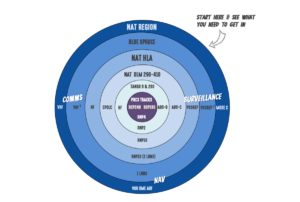
NAT Circle of Entry (2025)

For the latest changes and updates on the North Atlantic, including our most recent Guides and Charts, use our NAT reference page at ops.group/blog/nat/

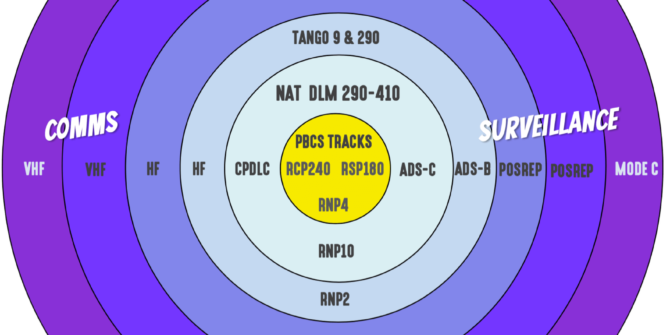
We’ve updated the NAT Circle of Entry for 2025. As always, changes on the NAT continue without pause for breath – this version is the latest information as at October 2024. The Circle of Entry tells you what you need to get into each different sliver of North Atlantic airspace.

Click on the circle to download the more detailed PDF.


We’ve also published a new version of the NAT Guide (“My First North Atlantic Flight is Tomorrow”)

Get a copy here.


NAT Ops: Atlantic Thunder 22

Remember that big NAT military exercise a couple of years ago? And then the one that happened last year (Formidable Shield) around May time?

Well, now Atlantic Thunder is happening, which means once again large parts of North Atlantic airspace will be closed to all flights for several hours at a time.

Not quite as big as Formidable Shield though, but still big enough to have a conference about it.

The Conference.

They are holding one so you can find out exactly what the deal is.

Join it by visiting the Eurocontrol NOP page and find the link there under ‘latest news’. They have one before each of the days where the most impact is expected, so the first takes place on September 6th at 14:30 UTC (and then on the 8th and the 10th).

The Event itself.

Atlantic Thunder will take place from September 1-12, but the main exercise takes place on the Sep 7 (or Sep 9 or 11 if it doesn’t go ahead on Sep 7).

The official PDF issued by Shanwick is available here, and has lots of lists of everything closed and when…

We prefer pictures though.

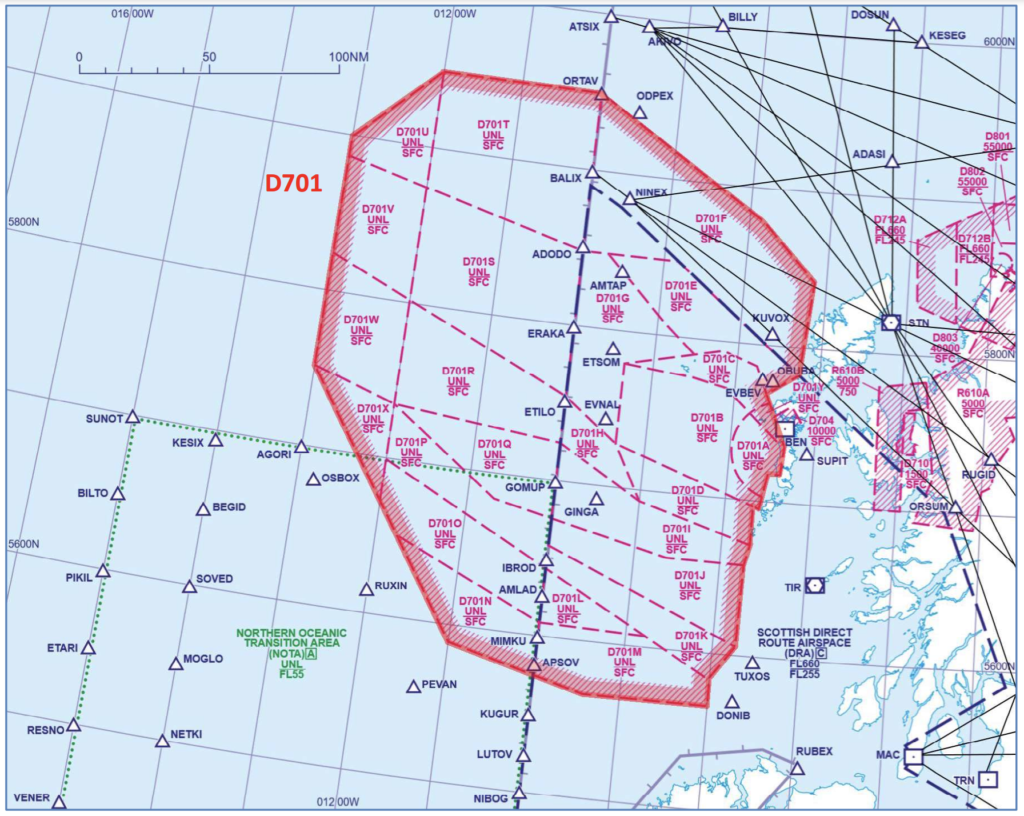
So first up, danger area EGD701 

This area is tricksy because as you can see, it is made up of loads of smaller bits that can be activated at different times (and to different levels). They affect a bunch of the routes out of the NAT HLA, and potentially both the EGGX/Shanwick and EGPX/Scottish FIRs.

Initially it will be closed 1-6, and then on the 12th as well. The timings are annoying. Sometimes it is FL200, sometimes it is FL270, but then bits of it, between 1400-2359, are shut to FL UNL.

Like we said, tricksy.

But then…

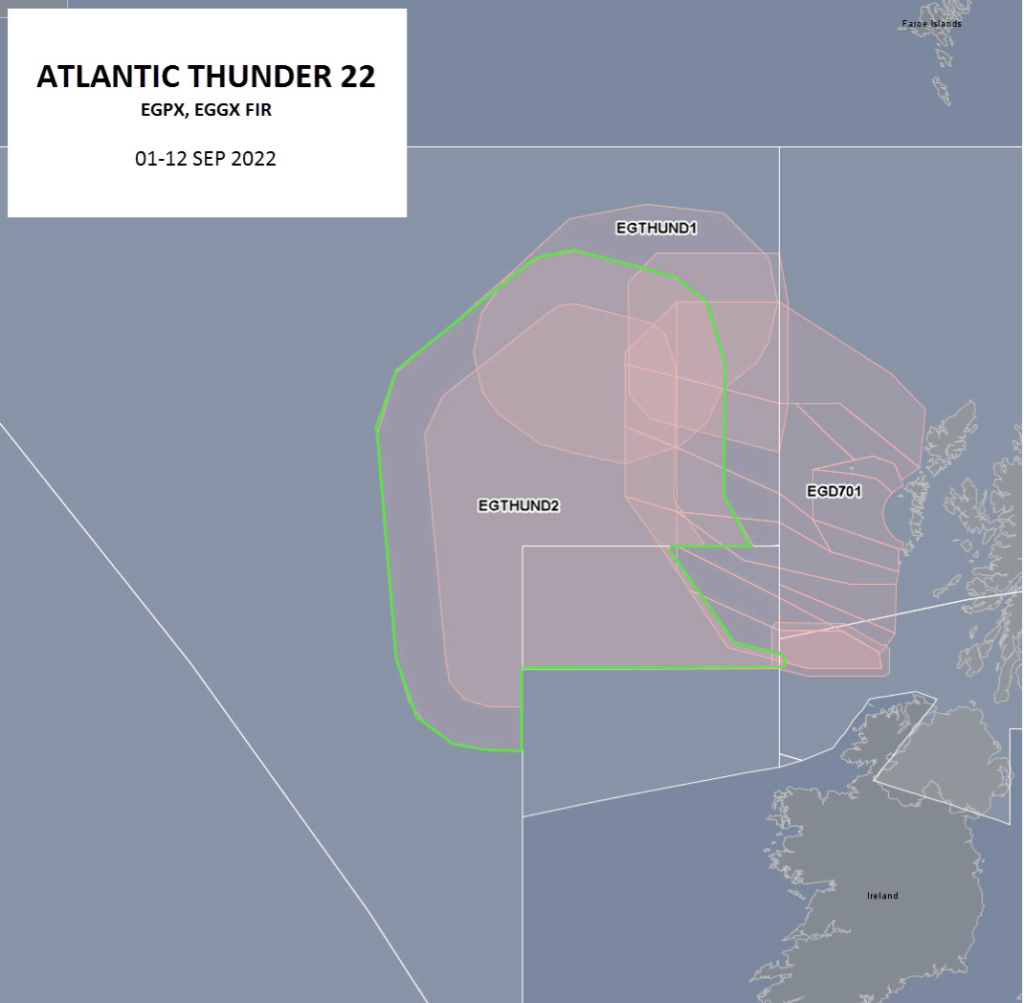
But then there is Configuration 2 which involves the closure of EDG701 and also EGTHUN1 and EGTHUN2, which is a bigger area looking like this –

Configuration 2

Of course, they only publish the exact timings and configurations 24 hours in advance so you’re going to have to keep your eyes out for Notams and info on those.

Routing around the closed airspace.

Aeronautical Information Messages (AIM) will be issued prior to the start of each exercise, which will include suggested routings for flight planning around the closed areas.

Traffic overflying around these closed areas can expect to get 30NM separation if in NAT HLA airspace (FL285-420), or 60NM separation if flying at lower levels.


NAT Conundrums: Volume II

Questions about the North Atlantic pop up a lot, and every time we think we’ve got all the answers, someone else manages to come up with a question we can’t (immediately) answer.

We wrote NAT Conundrums: Volume I last year, which you can read here. That post covered the following three conundrums:

  1. To SLOP, or not to SLOP?
  2. What’s the difference between the NAT Region and the NAT HLA?
  3. Can I fly across the North Atlantic without Datalink?

So today we thought we’d take a look at three more questions we’ve seen recently including an interesting ‘what to do if…?’ scenario.

4. Do you need to plot on Blue Spruce Routes?

Plotting is less drawing your position on a big paper map and more confirming there are no errors with your navigation, which means you can do this on paper, or via some sort of electronic system.

The reason we want to check for errors is because the North Atlantic is a big place, without radar, (although ADS-B is helping with this a lot now), and we are very reliant on our GPS navigation systems. Some routes use just lat/long points meaning there is an added chance of input error by the pilot. So we check where we are and make sure it is where we should be. 

But the Blue Spruce Routes are defined routes so there’s no risk? Well, no, there still is, because you’re still flying over big chunks of ocean without much backup. So checking for errors is still a very good idea.

5. Do we still fly Weather Contingency Procedures on Blue Spruce routes?

The Weather Contingency Procedures are more oceanic contingency procedures than NAT HLA specific one.

In fact, since Nov 2020, there has been one standard set of Contingency and Weather Deviation Procedures for all oceanic airspace worldwide – and there are no special exemptions for the Blue Spruce routes.

So they are a good thing to do if you encounter a weather situation and cannot get a re-clearance from ATC.

Which leads us to the big question…

6. When can we disregard an ATC clearance and follow the contingency procedure instead?

Let’s set the scene.

You’re flying in the NAT and there is a big old storm up ahead which you need to deviate around. Obviously, whatever happens, you can’t fly into it.

So what do you do?

Well, NAT Doc 007 provides you with some guidance: Apply the weather avoidance contingency procedures.

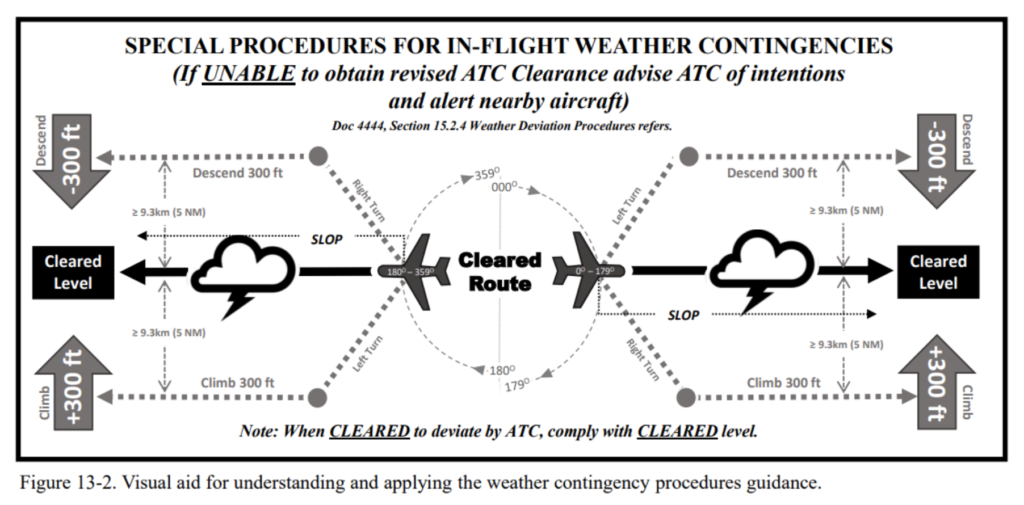
They are fairly straightforward. If the deviation you need will be less than 5nm then stay at your level, if its more than 5nm, then you’ll need to climb or descend 300’ depending on which way you’re avoiding. You can use ‘SAND’ for that – turning south? Ascend. Turning north? Descend.

Which way to turn depends on whether there are busy tracks to the left or right of you, and how much you’ll need to deviate by based on storm position (and wind). Use your TCAS and some airmanship on this.

Right, scene set. So, do you just launch straight into the contingencies?

No. It comes down to whether or not you can get a clearance from ATC.

You can keep this fairly simple as well:

  1. You can’t get a clearance because there just ain’t time. In this case, it is probably best to declare a PAN and go straight into the avoidance contingency procedure. Don’t delay waiting for ATC clearance if its not safe. Aviate and avoid the weather, talk to ATC as you do it.
  2. What if you can’t get a clearance because you just can’t get hold of ATC? Another easy one – follow the contingency procedure, but keep transmitting what you’re doing so other traffic know.
  3. What if ATC can’t give you a clearance? This might happen if it is particularly busy out, perhaps other aircraft are already avoiding, and so they can’t guarantee separation. In this case, they should inform you of the issue and ask you what your intentions are. Which will probably be following that contingency procedure, because you obviously aren’t going to fly into the storm.

Which brings up to situation number 4. The less simple one.

  1. What to do if ATC give you a clearance that isn’t acceptable to you? First up, if you have time to request a re-clearance then do this, advising why their first one doesn’t work for you. If you don’t have time, then a PAN call with your intentions (contingency procedure) is going to be the way to go. 

But remember – you need a good reason to disregard an ATC clearance like an immediate threat to safety. You can’t just do it because they told you to go right and it means a bigger detour than left, or because you just don’t fancy a temporary level change.

This is where the conundrum comes in – because folk have different views on what is an acceptable reason for disregarding a clearance.

  • Obvious and immediate threat to safety? Do whatever you need to do to stay safe
  • Might have a future fuel concern because of a larger deviation, or a level change? Well, it’s not immediate and the traffic conflict you get yourself into by disregarding may be the bigger priority here…

Contingencies – for when going through isn’t an option.

We asked around.

The general consensus was that fuel is unlikely to constitute enough of an ‘immediate threat’ to be an acceptable reason. Things like ETOPS fuel are for dispatch planning so is not particularly relevant in flight. However, if you’ve already burned through your contingency, and are already running some calculations because the fuel is looking tight, then a ‘Pan’ call and doing what you need to do might be acceptable.

What does Doc 007 actually say?

It says the pilot should either follow the clearance or state their intentions.

There is a level of ambiguity here because there is always that need for the Commander to be able to decide another course of action is safer. A good way of thinking about it is that a crew never have to follow the letter of the law – it isn’t there just to be the law, it is there to try and keep us safe – so doing what is most safe, with the same intent for safety in mind, is always acceptable.

What do other rules and regulations say?

The US FARs have this as fairly general rules:

’91.123 Compliance with ATC clearances and instructions.

(a) When an ATC clearance has been obtained, no pilot in command may deviate from that clearance unless an amended clearance is obtained, an emergency exists, or the deviation is in response to a traffic alert and collision avoidance system resolution advisory;

(Something about changing from IFR to VFR, and then -)

(b) Except in an emergency, no person may operate an aircraft contrary to an ATC instruction in an area in which air traffic control is exercised.’

What did a helpful person in the North Atlantic ICAO office say?

Well, much the same. The contingencies are there to account for situations where ATC is unable to provide a clearance, or where the clearance they can provide doesn’t solve the flight’s problem. In these cases, the pilots should advise ATC their intentions and do what they need to do to stay safe.

Again, no clear line drawn as to where ‘staying safe’ might necessarily fall, particularly when it is a concern over fuel.

They did say they would never issue a weather deviation clearance requiring a climb without a ‘negotiation’ first.

So, the answer is…

Well, we don’t have it. At least not a clear cut, black and white one.

The general view seems to be that it needs to be a judgement call. If you have a genuine safety reason that makes you question whether you should be following an ATC clearance, then declare a PAN, state your intentions, and do what you must.

Just be comfortable that your decision does still maintain that same intent for safety. Definitely going to result in a low fuel situation? Or just don’t fancy being stuck at a lower level? There is a line, but where you set it might come down to that flight, on that day, in those specific circumstances.


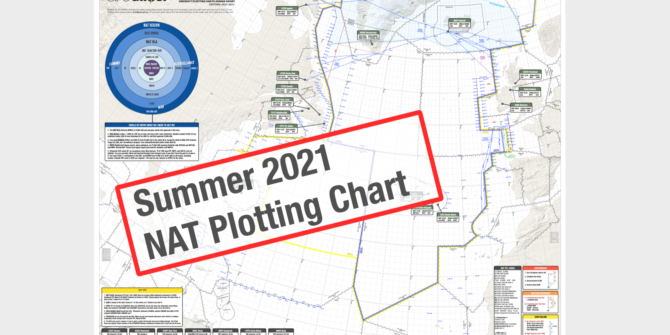
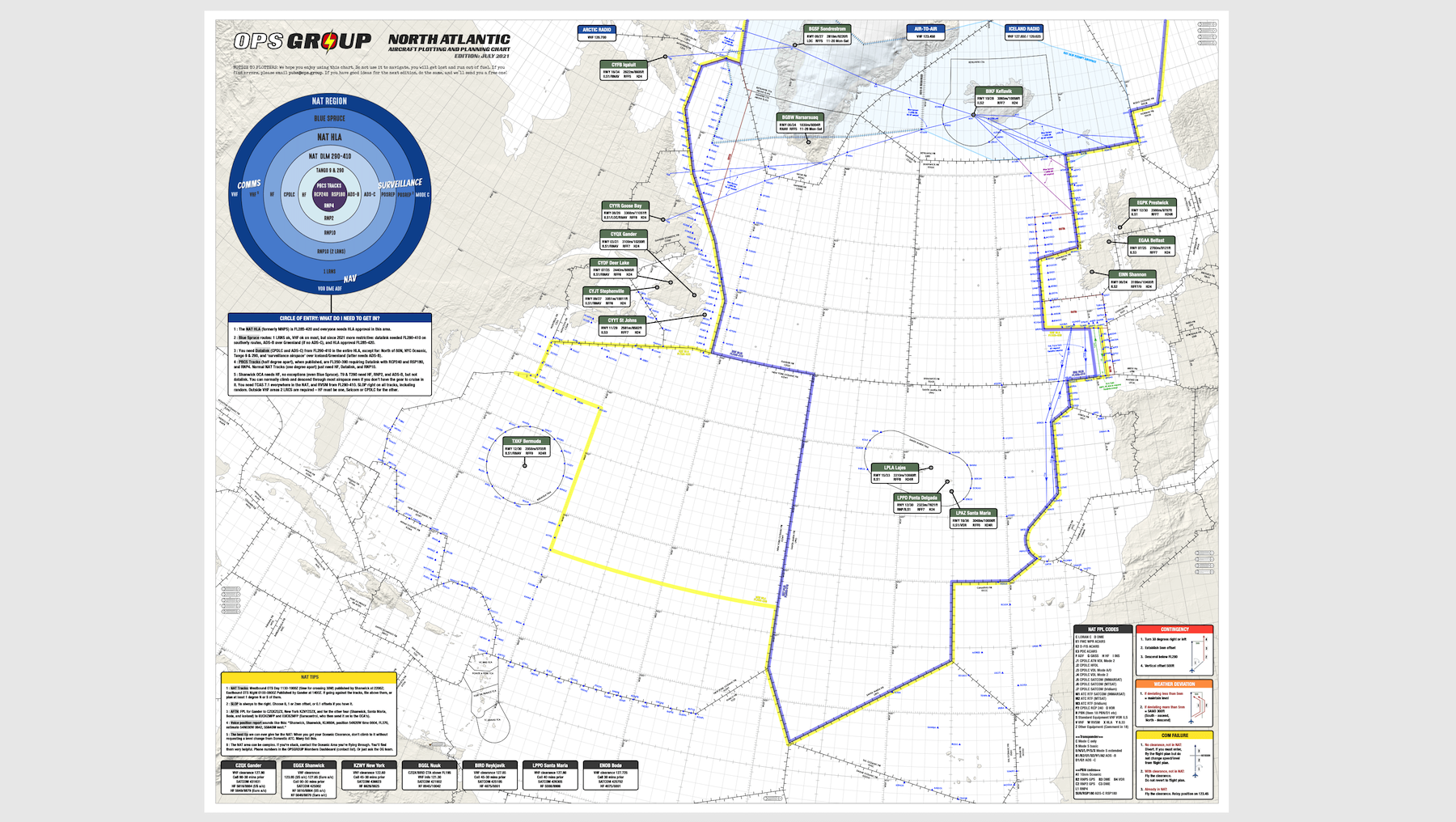
2021 New North Atlantic Plotting & Planning Chart

Hi members!

First, thanks to all the group members who were part of making this. We sat down from scratch and wanted to build the best possible NAT chart we could. A lot of work went into this, and we’re grateful to you all! With this format and structure, we’re also looking at making useful plotting charts for other areas like the Pacific, Africa, etc. – but for now, enjoy this completely updated NAT map for 2021.

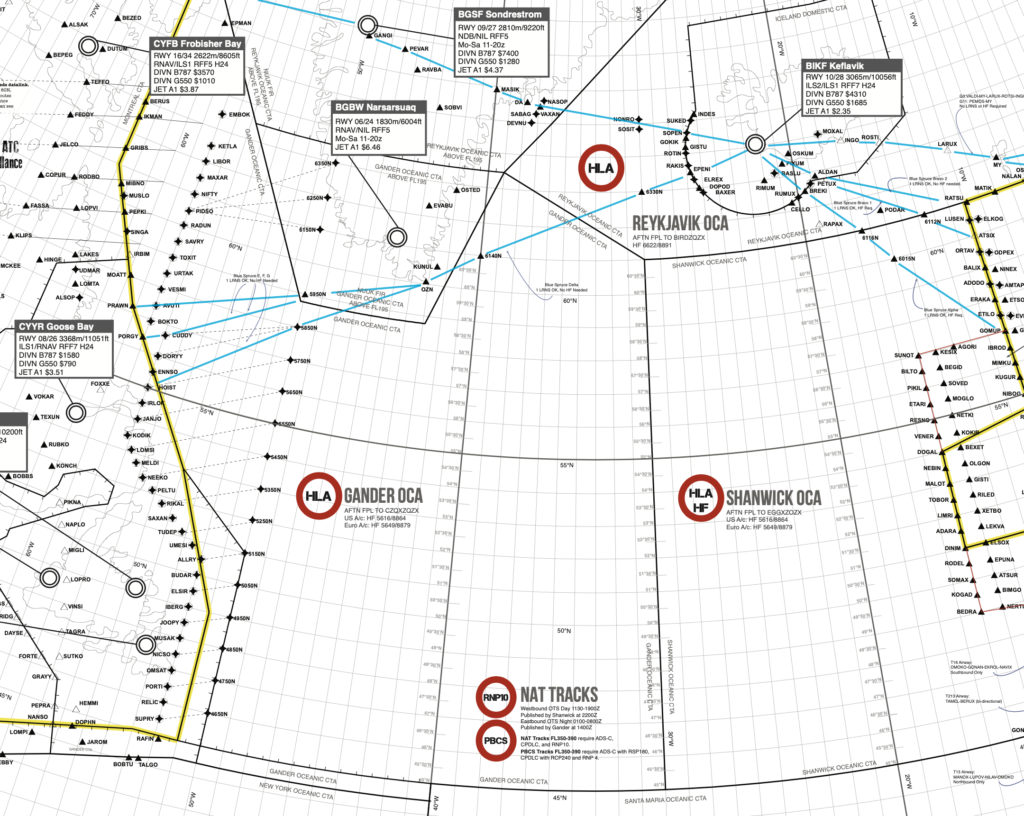
So .. It’s ready! You can grab it in Slack, or in your Dashboard. View it on your iPad or Laptop etc. as a PDF, or print it out as a giant wall map! It prints really well up to 15 feet wide – but you can also just put it onto A3 or A2 size paper.

If you’re not a member, read on for how to get a copy.


About the 2021 NAT Chart

This chart is completely new – we started from scratch, expanded the coverage area, and then worked as a group to add all the useful things we could think of that a pilot or dispatcher crossing the North Atlantic might need.

New on this chart – effective July 2021:

  • FULLY UDPATED for 2021 post-COVID flying!
  • EXPANDED coverage area – much further down into the Atlantic, and further west.
  • NEW! NAT Tips – using NAT Tracks, SLOP, filing an Oceanic Flight Plan, and helpful tips
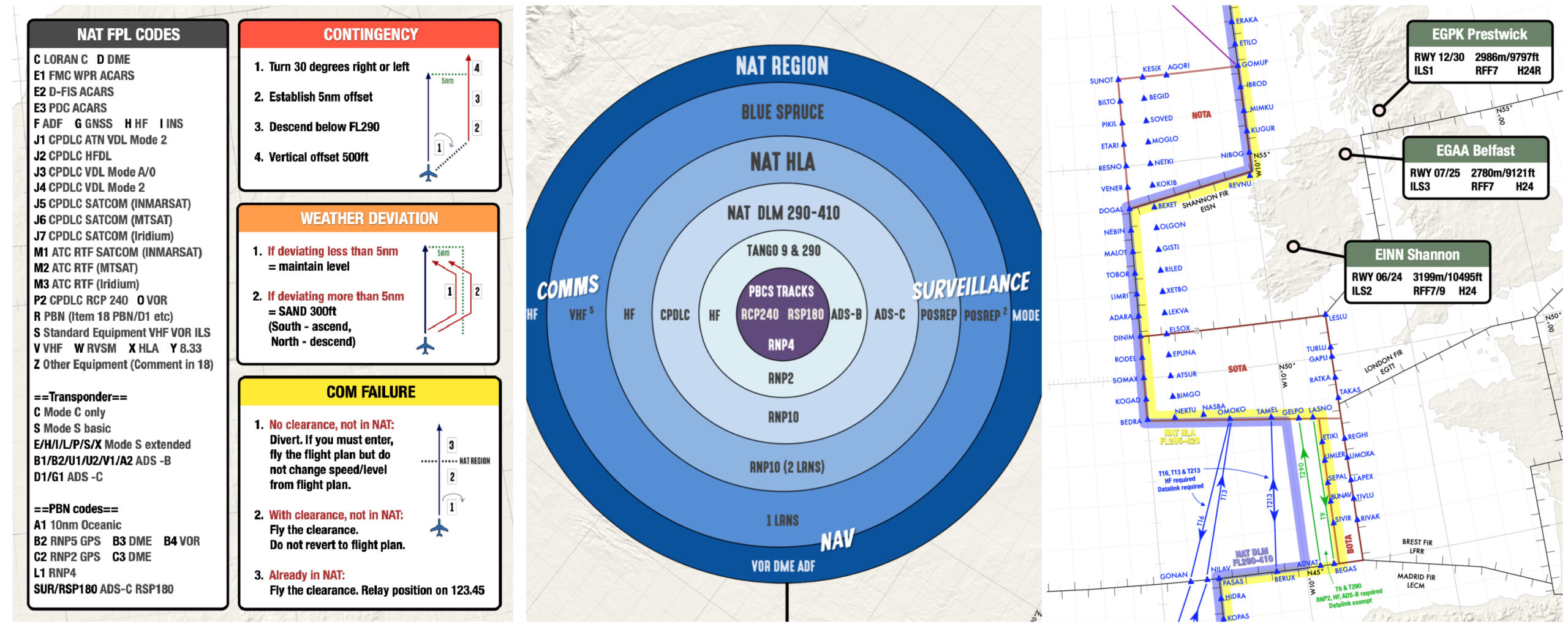
  • NEW! Quick reference for contingency, weather, and comms failure with easy graphics.
  • Updated: NAT Airspace Circle of Entry 2021 – easily check what you need for Nav, Comms and ATC Surveillance depending on which bit of the NAT you will be flying through.
  • Additional diversion airports, now 16 total primary NAT alternates with runway, approach, length, RFF, and hours
  • Easy view of boundaries for HLA and DLM/Datalink mandated airspace
  • Updated NAT FPL codes, clearance frequencies, Satcom, and HF
  • Fully updated “South East Corner” with new Tango routes
  • and … Treasure Boxes!

Other chart features:

:: Requirements for NAT tracks, PBCS tracks, datalink mandate.
:: Common NAT Diversion Airports.
:: Runway Orientation, Length, best IFR Approach.
:: RFF Category and Opening hours.
:: NAT FPL Codes and sample FPL.
:: Blue Spruce routes and equipment requirements.
:: All NAT Entry/Exit points with associated required landfall fixes.


How to get the new chart, if you’re not a member?

OPSGROUP members get this and other publications free of charge, all available through your member dashboard.

There have been many changes on the North Atlantic since we published our previous chart in 2019.  Here’s a few things to read up on:

We hope you find it super useful, but also have fun using it!


July 2021 North Atlantic Changes

Just when you thought it was safe to go back in the water…

Yep. Barely five months since the last version of the NAT Doc 007 was published, we now have a new one.

First things first – links…

To see just the new changes, click here.

To see the new NAT Doc 007 in its entirety, click here.

To see the old NAT Doc 007, and painstakingly cross-check all the changes compared to the new version (i.e. what we did so we could write this post), click here.

Here’s the lowdown of what’s changed…

The Datalink Mandate

No changes to the rules here. The old NAT Ops Bulletin 2017_001 which contained all the info about the Datalink Mandate has been discontinued, and the essential info incorporated into the NAT Doc 007.

Key points:

  • Aircraft without datalink can request to climb/descend through datalink mandated airspace, but will only be considered on a tactical basis by ATC.
  • Flights without datalink that file STS/FFR, HOSP, HUM, MEDEVAC SAR, or STATE in Field 18 of the FPL, may be permitted to flight plan and fly through datalink mandated airspace, but may not get their requested flight levels.
  • For datalink failure before departure, you should re-file your FPL to stay clear of NAT DLM airspace. If it fails after departure or whilst in NAT DLM airspace, ATC may let you continue based on “tactical considerations” (i.e. how much other traffic is around).

Which brings us neatly on to…

ATS Surveillance Airspace

This one has had us scratching our heads for a while now…

So, there is an updated chart showing the areas of ATS Surveillance Airspace in the NAT:

Blob-fest

We have to say, we really don’t like this chart very much. The green blobs are misleading. Here’s what we mean…

Essentially, the NAT Doc 007 says that these are the datalink-exempt bits within the NAT Region:

1. Everything north of 80°North.
2. New York Oceanic East FIR.
3. Tango Routes T9 and T290.
4. ATS Surveillance Airspace, where surveillance service is provided by means of radar and/or ADS-B, coupled with VHF.

So these green blobs give a rough idea of where ATS surveillance service is provided by radar and/or ADS-B within VHF range. But rough ideas don’t win prizes, and neither do they explicitly tell you what the rules are. Where is this mythical ATS Surveillance airspace in reality? Give me some hard coordinates!

Thing is, they actually do, right there in the NAT Doc 007, they just don’t say it very clearly.

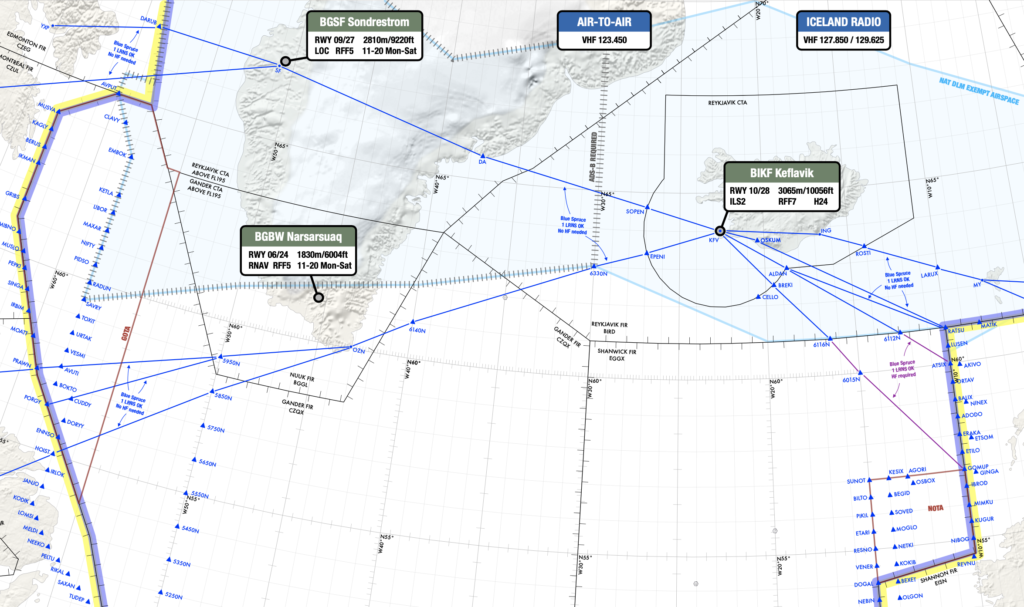
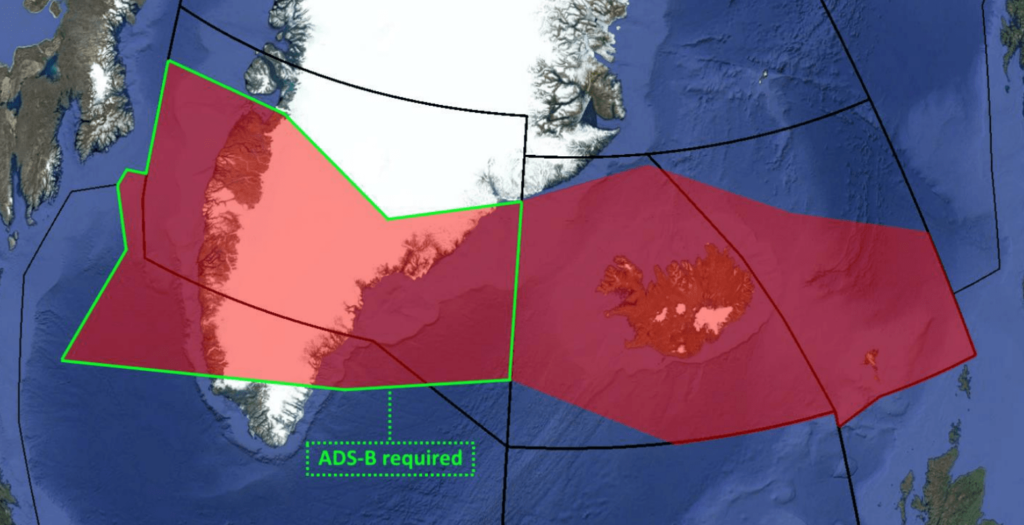
Here’s the answer (we had to get in contact with Gander and Reykjavik ATC to confirm this): ATS Surveillance Airspace is the area over Greenland and Iceland shown in this picture below. This is where you’re allowed to fly above FL290 if you don’t have datalink.

There is no special datalink exemption for the Blue Spruce routes. That’s another key point here.

The southerly Blue Spruce routes are not fully contained in the exempted airspace. So if you’re flying these routes you will have to meet the NAT DLM requirements or fly below FL290 or above FL410.

The northerly Blue Spruce routes are different (i.e the ones going overhead BGSF/Sondrestrom airport). These do fall within the exempted area of airspace – so datalink is not mandatory if you’re flying here.

Confused? We don’t blame you. Here’s something that might alleviate some misery though – our NAT Airspace Circle of Entry. OPSGROUP members can download the full hi-res PDF version here. The Circle shows you what equipment you need – like CPDLC, ADS-C, HF – for each different type of airspace in the North Atlantic. With the datalink requirement effective Feb 2021, and the introduction of new requirements for the Tango Routes on the eastern side of the Shanwick OCA (T9 & T290), there are some important changes.

This NAT Airspace Circle of Entry will also appear on the new NAT Plotting/Planning chart that we are finalizing at the moment, and we’ll send you that when it’s ready.

Our in-house bakers perfecting the recipe for a new version of our NAT Plotting & Planning chart, coming soon…

“SET MAX UPLINK DELAY VALUE TO 300 SECONDS”

This thing started back in 2018 – a new procedure designed to prevent pilots from acting on any old CPDLC messages that might have been delayed in the network.

So, we have CPDLC where ATC can basically ‘text’ you some sort of message. Usually a clearance to do something. There is a risk though that the message is latent meaning ‘existing but not yet developed or manifest; hidden or concealed’. Basically lost for a longish time in the digital void and it means there is a risk pilots might get a message to do something way after they were supposed to do it, and it is no longer valid (or safe to) anymore.

The old NAT Ops Bulletin 2018_002 about CPDLC Uplink Message Latency Monitor Function has been discontinued, and the essential info is now incorporated into the NAT Doc 007. But there is some new info to be aware of.

The key change here is that all the NAT ANSPs have agreed on 300 seconds as the period of time all aircraft should set their uplink timers to (any message that takes longer than that to reach you will be deemed ‘latent’). Also, they will be sending this to all CPDLC connected aircraft immediately after they enter each control area – so you might receive the message a bunch of times (a bit annoying) but the procedure is the same regardless of whether you’ve “done it already” or not.

This procedure is covered in section 8.50.20 of the new NAT Doc 007, and it works like this:

  • When you receive the message to set your max uplink delay to 300 seconds, acknowledge it with a Roger [ACCEPT].
  • If you don’t have a message latency monitoring function available then you still have to acknowledge the message but say ‘TIMER NOT AVAILABLE’.
  • Now, if you do have the function available then change the max uplink delay to 300 seconds and you’re done.

If the system gives you an indication that a message has been delayed over 300 seconds then don’t follow what it says but get in touch with ATC (by voice) and let them know so they can confirm whether they still want you to do carry out whatever the clearance told you to do. They will also close the message out of the system.

Bottom line: don’t act on a delayed uplink message until you’ve checked with ATC.

Weather Deviation Procedures

No new rules here, they’ve just made a nice little graphic to help understand the Procedures.

Funky! If you prefer a slightly simpler version, check out this one we made earlier:

Click to download hi-res version.

Almost finished now. That’s the big stuff done…

Climbs in Gander and Shanwick airspace

Gander and Shanwick have decided that they will advise crew in their OCA when a higher flight level becomes available. Basically, they have a function in their ATM system which lets them interrogate the flight’s vertical profile to determine when a higher level is available. They will then check there is no separation issue and if not, will offer the new level.

What did it used to say?

It used to say that clearances tend to specify a single flight level, but that sometimes there might be ‘scope’ for higher climb. It had some stuff about how, if you got a re-clearance you should climb without delay. It also said that if you aren’t CPDLC equipped you should tell ATC as soon as you’ve left your old level and when you reach the new level.

Actually it still says that in the new document but now it has a new bit about how Shanwick and Gander will be a bit more proactive about letting you know when the levels become available.

PBCS operations

The only changes in this section are wording changes. Separation minima is no longer “as low as” – it is now “as small as”“How small can you go” doesn’t have quite the same ring to it…


And that’s it!! That’s all the changes!! At least, we think so. If you have spotted any biggies not listed here, send us an email at: news@ops.group

And if all this is not enough for you, and you want a comprehensive timeline of all the old significant changes on the North Atlantic stretching back to the dawn of time (actually, just to 2015), then click here.


NAT Tracks NIL – an experiment

The long-awaited and much discussed scenario on the North Atlantic finally happened this week: No published NAT Tracks, with all aircraft on Random Routes. The concept of free-routing on the NAT is one that airlines in particular have been keen to see for a long time: the ability to decide their own routes, unconstrained by an overlay of tracks that may be tangential to their flight-planning whims.

This is an experiment being led by NATS and Nav Canada (or Shanwick and Gander, if you prefer), and on the face of it, it appears straightforward. Traffic levels are lower at present – about 40% of normal. In January 2021, Shanwick managed 15,241 flights (averaging 491 flights per day), 41% of the January 2020 figure of 36,782 (averaging 1,189 flights per day). A reduction in volume goes hand in hand with a reduction in complexity from an ATC perspective. Without published tracks to assist in separation, the burden on the controller is increased – but the lower traffic levels mean it can be safely managed. Ideal time to try it out.

The concept has garnered much media interest, not least because of the timing of a scientific research paper from Reading University that suggests efficiencies of up to 16.4% can be achieved with this “new idea”. As a result, in the past 10 days the NAT Tracks have featured on CNN (“Airlines can now pick their own routes across the Atlantic. Huge fuel savings could follow”) and the Independent (“‘Surfing the wind’ could allow aircraft to cut carbon emissions and reduce flight times”). Headline: New York-London journeys could be cut by 21 minutes.

The media, and even our own industry news coverage, would have us believe that somehow we’ve just stumbled onto some preternatural scheme of harnessing the power of the wind, to spirit our hulking lumps of metal across the pond. Jet streams, you say? Pray tell.

Let’s clarify something first. Aviation contributes around 2% of global CO2 emissions. Global warming is a danger to our entire existence. We are an industry founded on innovation and ingenuity, and we should be looking for every opportunity to do something more than just shave a few dollars off a route cost. We need to open our minds, stop being quite so defensive about aviation, collaborate with science and research, and above all recognise the impact that aircraft are having on the environment. We need dramatic change.

In the cold light of operational reality, however, all is not as the public coverage seems. The Shanwick/Gander No-Tracks experiment itself is founded on solid ground – the results will provide useful insight, and the reasoning for it is sound. The research paper, however, and associated media fanfare, has shakier foundations. In fact, there are fundamental flaws in the assumptions made to reach the headline proclamations of 16.4% and 230km (125 nautical mile) savings on route distance.

We’ll look at three things in this article …

One: How an aircraft operator actually chooses a route across the NAT
Two: The ATC perspective; why No NAT Tracks is not as easy as it might sound.
Three: A review of the research report from Reading University.

Part One: How does a NAT route get chosen?

The hardest thing in life is knowing what you want. It’s no different on the NAT. The process for selecting a route across the ocean is more complex than it might seem. At first glance, it might appear that the most logical route is the best wind route, in other words, the track across the ocean where we can take maxium advantage of the jet stream. In the Reading University report, this is called the “OFW: Optimized for Wind Route“. Let’s see why this is not the case.

There are four track calculation options available to most aircraft dispatchers and flight planing systems:

A. MDT: Minimum Distance Track. Departure to destination with shortest distance (ie. Great Circle track). Only sensible if there is no wind, which never happens.
B. MFT: Minimum Fuel Track. Departure to destination with lowest possible fuel burn. Equivalent to the OFW/Optimized for Wind Route.
C. MTT: Minimum Time Track. Departure to destination in shortest possible time. Often very similar to the MFT.
D. MCT: Minimum Cost Track. Departure to destination with lowest cost – considering not just fuel, but navigation fees, and the cost of time (eg. knock on schedule effects, missing curfews etc.)

Which is the most commonly used? Minimum Cost Track, by far. Minimum Fuel is good. But for aircraft operators, we have to consider whether saving 100 kgs in fuel results in being 10 mins late to stand, or makes us overfly a much more expensive country, or miss a curfew time at the airport.

A North American OPSGROUP airline dispatcher told me: “To give you an idea of cost, a Minimum Time Track (MTT) or Minimum Fuel Track (MFT) for our Boeing 777 from the west coast of North America to east Asia can cost anywhere from $10,000 to $15,000 more than taking an MCT. The difference? The MTT and MFT will go through Russia [where navigation fees are much higher]. The MCT stays on the North Pacific in Oakland and Fukuoka airspace. But that cheaper route can be 30+ minutes longer.

And even then, that’s not the track the operator might want to fly. One big consideration: Turbulence.

In the winter months in particular, the eastbound jet stream can be nasty. The place where the most efficient route lies is efficient because that’s where the winds are strongest. This is often also where the core ‘efficient’ NAT Track Xray or Zulu lies these days. A 200 knot tailwind is great, but it comes with a sting in the tail: severe turbulence. The same dispatcher told me: “In the last week, we’ve not flown the NAT Tracks because of multiple patches of severe turbulence, both forecast and reported by other airlines”.


Planning a real-life NAT route from start to finish: eight steps

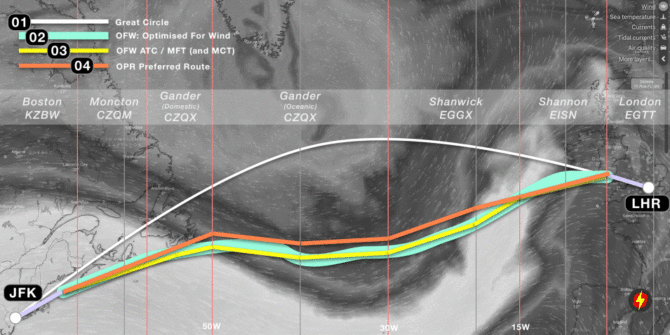
We’ll look at an eastbound flight from New York Kennedy (JFK/KJFK) to London Heathrow (LHR/EGLL). Given that the research paper mentioned above identifies maxium fuel savings eastbound of 16.4%, this is a good example to choose. On the maps that follow, you will see the there are eight steps, starting with the great circle track, and working through what happens in practice until we reach the actual route flown. The aircraft in this example is a Boeing 787, which has an optimum altitude of FL390 (presure level of 200 hPa) at operational weight (~85% of MTOW). Therefore, the winds shown are those at FL390. For track planning, we will consider only the track from Top of Climb (first point of cruising altitude) to Top of Descent (beginning of descent into LHR). The map also shows the ATC areas that will control the flight in the enroute phase. The jet stream is shown as background: the whiter, the faster.
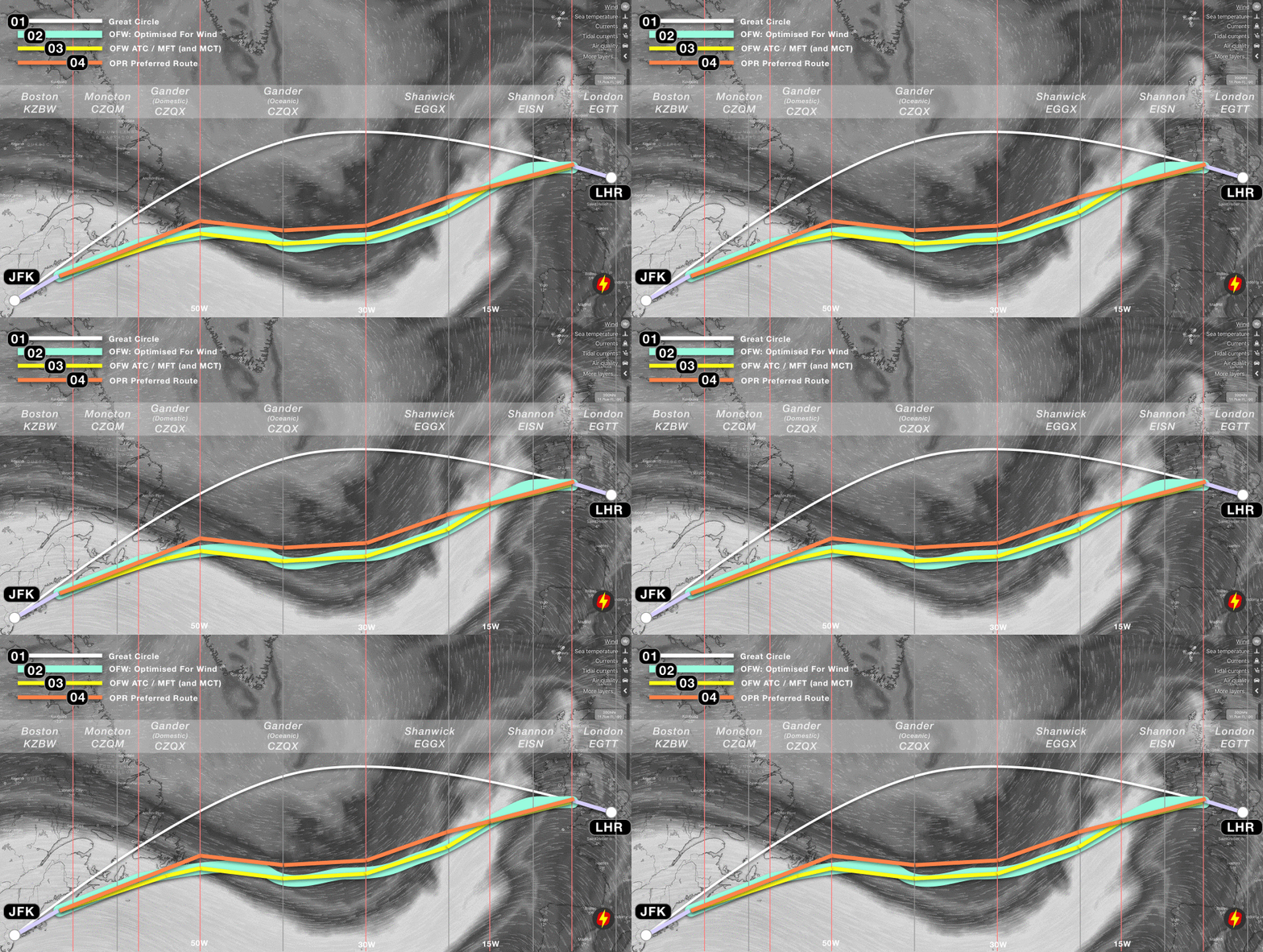
01: GC: Great Circle Route. The shortest distance between JFK and LHR. This does not take winds into account, so to find the best wind route, we must add wind from the forecast for FL390 for our time of flight.

02: OFW: Optimised For Wind route. The track taking maximum advantage of the winds at FL390 (39,000 feet, or the 200 hPa pressure level in ISA).

03: OFW ATC route. The OFW route as adjusted for oceanic ATC flight planning limitations – which are: 1. You must use fixed 1/2 degree latitude points at every 10 degrees of longitude from Oceanic Entry Point to Oceanic Exit Point. 2. You must fly a straight line from that point to the next 10 degree longitude line. This route equates to the MFT (Minimum Fuel Track) in flight planning systems, and in our case here, also the MTT (Minimum Time Track). For some NAT routes, overflight fees will be a consideration (for example, avoiding higher charges in UK and Swiss airspace on routes that go further into Europe) – but here, they are not, so MCT (Minimum Cost Track) is also the same. In other words, OFW ATC = MFT = MTT = MCT.

04: Operator Preferred Route. The next big consideration is turbulence. In this example flight, there are moderate-severe turbulence warning patches at several points on the ATC OFW/MCT route above, so the dispatcher elects to move it a little further north – still gaining from the eastbound jetstream, but outside the core jetstream which has the highest turbulence.

We can now move on to the next stage of planning in a real-world scenario: accounting for a high volume of other traffic, ie. matching the Operator Preferred Route to the closest NAT Track of those published for the day of flight.
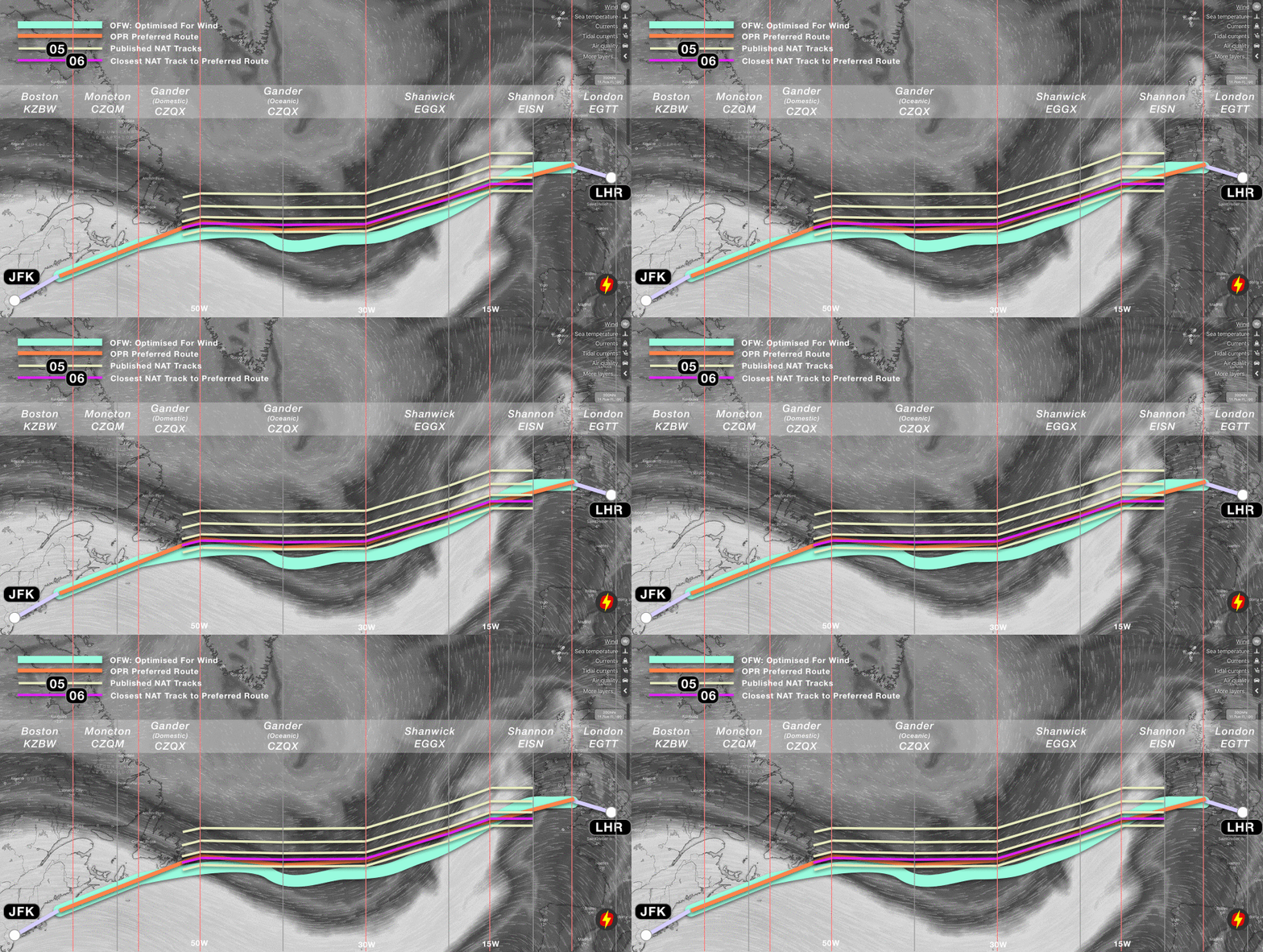
05: Published NAT Tracks. Once a day, Gander issues the NAT Track Message for Eastbound Tracks, which allows Air Traffic Control to safely separate the peak flow of flights from the US to Europe. In this case, there are five tracks.

06: Closest NAT Track to Preferred Route. This is a simple calculation – which NAT Track most closely matches the Operator Preferred Route across the ocean. In this case, it is highlighted in purple, and is a relatively close match.

Finally, we can account for what will happen at the time of flight …
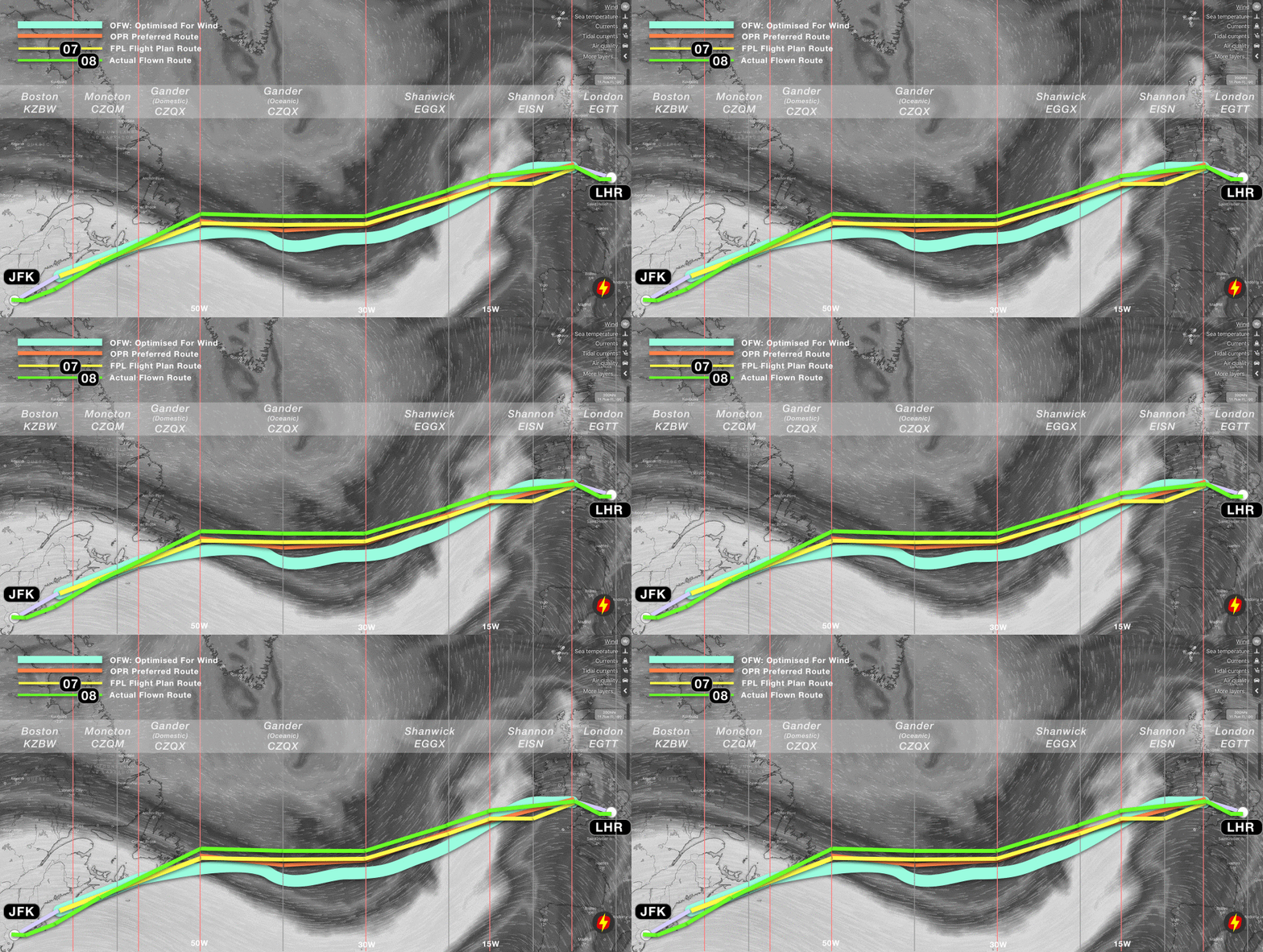
07: Flight Plan Route (FPL). With the choice of track made, the operator will then file the Flight Plan with their requested route, several hours in advance of the flights’ departure from JFK. The purple track above at Step 6 (closest NAT Track) becomes the yellow track in this step, to which the domestic ATC routings are added. Once airborne and enroute, about an hour from the Oceanic Entry Point at 50W, the crew will request their Oceanic Clearance from Gander, as per this flight plan route.

08: Actual Flown Route.  For this flight, the requested track was not available at FL390 (because of other traffic ahead). The crew were given a choice of either a more notherly NAT track at their preferred level (FL390), or their requested NAT track at FL370. The altitude difference would have made for a greater fuel burn than a slightly longer distance, so the crew elected to take the more northerly track (30 nautical miles further north laterally, but in terms of distance flown adding about 20 nautical miles). At 15W, the flight is under radar coverage from Shannon, and was cleared direct to the Strumble (STU) beacon in Wales (which was the original planned Top of Descent). The green track therefore depicts the actual route flown.


Where did we lose most efficiency?

Since the background to this article is considering the benefits of not having to follow prescribed NAT Tracks, the key question is – where has most efficiency been lost on this flight?

  1. Loss 1: The difference between the Minimum Fuel Track (MFT) (or “ATC OFW”) and the Optimized for Wind Route (OFW). Some efficiency is lost because the OFW is constrained by flight planning requirements – specifically having to flight straight lines between each 10 degrees of longitude, and having to cross each 10 degrees of longitude at 1/2 degrees of latitude. The “route of straight lines” is, of course, longer.
  2. Loss 2: The difference between the MFT and the Operator Preferred Route. In this case, the operator chose to move the track further north to avoid turbulence. This decision creates an efficiency loss in terms of fuel burn, because the minimum fuel track is no longer being followed.
  3. Loss 3: The difference between the Operator Preferred Route and the closest matching NAT Track. This is the key efficiency difference when considering gains from the “No NAT Track’s” experiment.
  4. Loss 4: The difference between the NAT Track requested (Flight Plan Route) and the Actual Route flown. There is a mixed bag here. On the one hand, if the operator has to fly anthing other than the requested route, they lose efficiency to some degree. In this case, ATC could only offer a lower level, or a more northerly route. On the other, domestic ATC (using radar) often provide shortcuts which lessen the track miles flown.

A scientific analysis of a series of actual flights would reveal the numbers involved in the four different areas of efficiency loss – and this is roughly the aim of the OTS NIL experiment that Shanwick and Gander are conducting,


Part Two: Why we might still need NAT Tracks

The narrative in the majority of recent reports about the North Atlantic tell us that because we now have ADS-B satellites, and thereby excellent surveillance, this changes the entire landscape, and allows for the disbanding of NAT Tracks. But this overlooks a key point: it’s not a surveillance problem, it’s a comms problem.

We’ve got surveillance nailed – it’s basically the same as radar, now that the full complement of Aireon ADS-B satellites are up and running, complementing the ADS-C coverage already in place. So, controllers can see the aircraft in much the same way as a domestic radar controller. That’s exciting.

However, it’s a bridge too far to assume that just because surveillance is good, we can start treating the Air Traffic Control of NAT aircraft as if it were somewhere in the centre of Europe.

And the reason: instant communication. In a domestic ATC environment, the approximate sequence of events goes like this (callsigns dropped from some calls for clarity):

Controller (thought):Hmmm, Delta and Speedbird are getting a little close. I’ll climb the Delta.
Controller: Delta 63, climb FL360.
Delta 63: Sorry, unable 360, we’re still too heavy.
Controller: Delta 63, roger, turn right 10 degrees due traffic.
Delta 63: Roger, right turn heading 280.

And Delta turns. Conflict solved. That entire sequence of events takes about 10 seconds. Now consider the Oceanic environment. CPDLC is a hell of a lot better than HF, but the target time for the same sequence of events is 240 seconds, or 4 minutes. That’s the basis of RCP240.

See the ATC problem? We can see the traffic now, but we can’t be sure that we can move it around in the same way as a real radar environment, because we don’t have VHF.

This is why the new satellite coverage does not go all the way to allowing a full reduction in separation to the standard enroute value of 5 nautical miles. Oceanic ATC, even with this additional surveillance, remains more of a procedural environment – and separation standards cannot yet drop. In the same vein, we’re not yet at the point where we can solve enroute conflicts with a few vectors and “on your way”.

And therefore, removing the NAT Organized Track Structure for high volumes of traffic is a big challenge.

Part Three: The Reading University Report

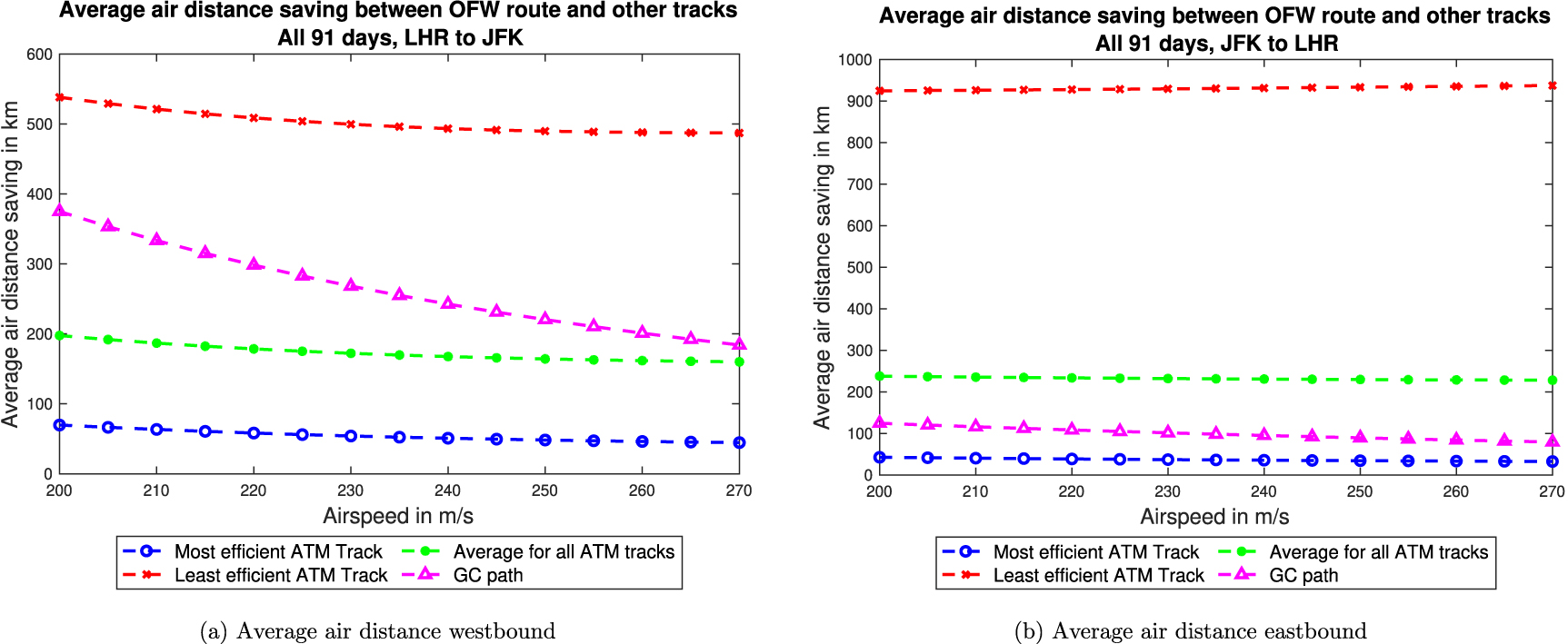
Published in January 2021, a paper from Reading University titled “Reducing transatlantic flight emissions by fuel-optimised routing” suggested that “current flight tracks [on the North Atlantic] have air distances that are typically several hundred kilometres longer than the fuel-optimised routes”, that by using the optimal wind route eastbound flights would save on average 232 km, and that an efficiency gain of up to 16.4% would be possible. These headline figures are the ones taken by the media in the last few weeks resulting in articles suggesting that the average New York-London flight could arrive 21 minutes earlier [Independent >].

The paper shows these graphs, with the eastbound plot on the right:
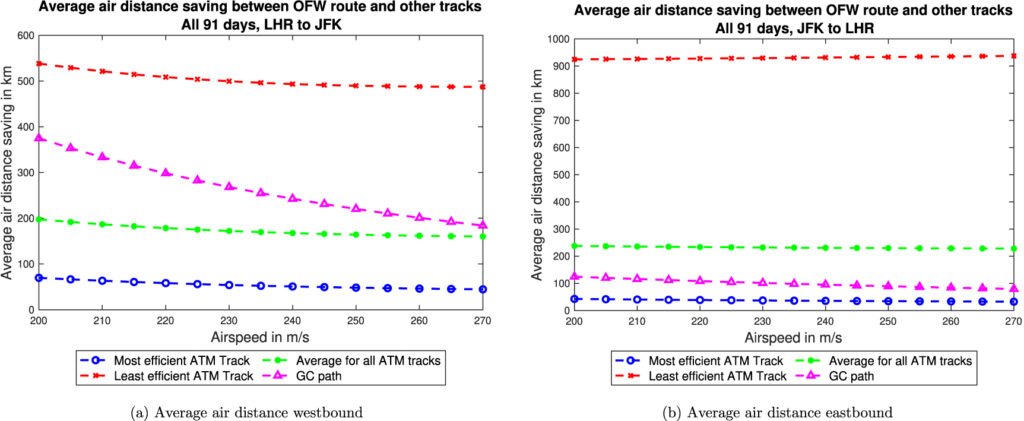
 

From an operational perspective, however, the promise of 232km (125nm) average route savings, and 16.4% increases in efficiency do not ring true. If you are a dispatcher, or pilot, you will share my instinct that this number feels extremely high.  The term “potential increase in efficiency” really means “current inefficiency” – and my gut feeling says it’s not always ideal, but far from that bad. Many plans are indeed sub-optimal, and crossing the NAT certainly has the potential to result in a track a half-degree north or south of the one requested or a level below the optimum – but is the inefficiency really that high?

Closer analysis shows that at least some of the assumptions in the report to be fundamentally flawed.

The report itself makes the flaw clear here: “Taking the results for an airspeed of 240 m s−1 and averaging savings in air distance between the most efficient ATM track and the OFW route across all 91 days of winter 2019–2020 for flights from JFK to LHR, gives an air distance saving of 37 km, but the saving for the least efficient ATM track is over 931 km. The average saving for all ATM tracks is 232 km”

The problem is that to reach these high numbers, the paper is assuming that “airlines use all provided tracks equally“. This is not what happens in reality, by any stretch. There are normally 8-10 NAT Tracks eastbound. An airline, or aircraft operator will request their Preferred Track, as we have seen in the example above. Almost all of the time, the requested track is granted, albeit with potentially a lower level (or higher) than requested. Very ocasionally, a track one north or one south is given by ATC.

The efficiency figure of 16.4% is created by dividing the air distance between LHR-JFK by additional distance flown on the least efficient eastbound NAT Track (2,997nm/503nm ~ 16.4%). That least efficient NAT Track (which will usually be Track Zulu in non-Covid ops for an eastbound flight) is normally a southerly Caribbean area route intended for traffic departing places like Miami, the Bahamas, or even Trinidad and Tobago. It will never be flown by a New York-London flight.

Therefore, we have to disregard these higher numbers entirely.

The report does identify, when looking at actual flights, that efficiency savings of “2.5% for eastbound flights and 1.7% for those flying west” would be obtained by flying the optimum wind route (OFW). Those numbers look far closer to what we might expect as total efficiency losses identified at the end of Part One, above.

However, consider further that we looked at four different types of efficiency loss: flight planning constraints, avoiding turbulence, the NAT Tracks requirement, and tactical routing by ATC. It is clear, then, that the presence of the NAT Tracks accounts only for a portion of those inefficiencies. Again, real world analysis of actual flights with the full compendium of information as to what caused the ineffciencies would give the most insight, and this is what we will hopefully see from NATS and Nav Canada as a result of the “OTS NIL” experiment.

A further paper as an iteration of the first, applying a collaborative approach with the operational world (ATC, Airlines, Aircraft Operators, Flight Crew), would be beneficial.

Over the past 25 years, there has been continual improvement in ATC efficiency. The NAT region was the first to implement reduced vertical separation (RVSM), in March 1997, and subsequent improvements in surveillance (ADS-B, ADS-C), and communications (CPDLC), have led to lateral separation improvement from 60nm to 19nm, and longitudinal from 80nm (or 10 minutes) to as low as 14nm – in addition to the altitude separation reduction from 2,000 to 1,000 feet. In simple terms, the number of aircraft that can fly closer to the optimum route for a city pair has dramatically increased.

Despite the inaccuracies in the numbers, we should look at the bigger picture: The paper does identify a key point that we should digest in this industry: “Airlines currently choose routes that minimise the total cost of operating a flight (by specifying a Cost Index, which is the ratio of time-related costs to fuel costs), not the fuel consumption or emissions.”

This, I think, is important to consider. We are not currently flight planning to minimise emissions – we flight plan to minimse cost. With the reality of our warming planet, and the thankfully growing recognition that a corporation’s profit should not come ahead of the greater good of humankind, focus should be placed on how we can operate flights more efficiently – where ‘efficient’ does not mean reduced costs, but reduced emissions.

Feb 2021 North Atlantic Changes

2021 is off to a flying start again with NAT changes aplenty!

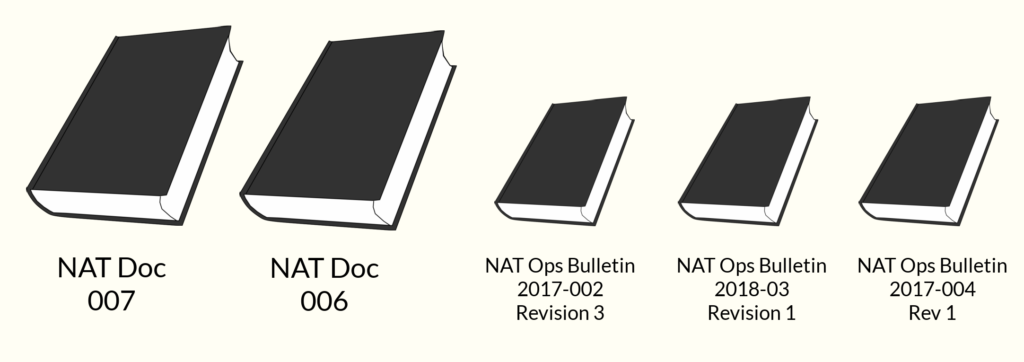
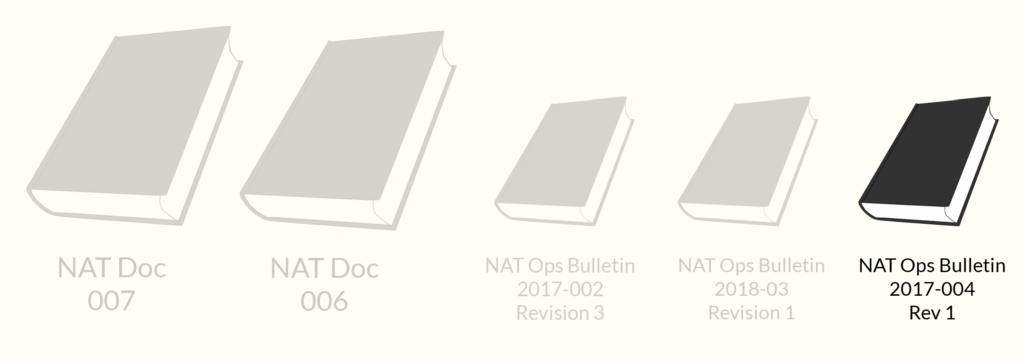
We’ve got a new edition of the NAT Doc 007 (the big one with pretty much everything you need to know in it), Nat Doc 006 (the one which tells you what happens when things go wrong – also pretty big), and three updated NAT Ops Bulletins (the small-to-medium-sized ones which give more info about specific topics).

Words-words-numbers-numbers…

This image shows the docs which have changed – lots of meaningless letters and numbers in there. Fear not, we’ll go through each one and explain what it is, and what has changed

NAT Doc 007


NAT Doc 007 is the Bible of the North Atlantic. It’s full of NAT goodness – all the specifics about how to operate your aircraft safely through the complex airspace of the region is here. And they’ve just published a new edition – effective Feb 2021.

As aviation documents go, it’s written in pretty digestible language. There’s just a lot in it. But the latest release is slightly more user-friendly than previous updates, as ICAO have now included a little summary document which explains all the changes.

You can download a pdf of the new NAT Doc 007 here.

And you can get the little explainer doc here.

We’ve been looking at this latest edition for 12 hours or so now, and we think the changes are minor. We use that word with trepidation. The most significant changes seem to be as follows:

  1. No more NOROTS – these were a system of domestic westbound tracks published daily by Nav Canada for aircraft transiting between Europe and the Northwestern US. These have been disbanded.
  2. Mach Number Technique – they want any aircraft capable of maintaining a mach number to flight plan their requested number (not just turbojets).
  3. The southerly Blue Spruce route which used to start/end at “HO” now does so at “PORGY” instead. HO/Hopedale NDB has been removed from service.
  4. Some clarification on Comms requirements. Basically two long-range comms systems are needed throughout the NAT if outside of VHF coverage. One must be HF. The other may be CPDLC/Sat Voice but Inmarsat systems do not count when you’re really really far north (north of 80N).

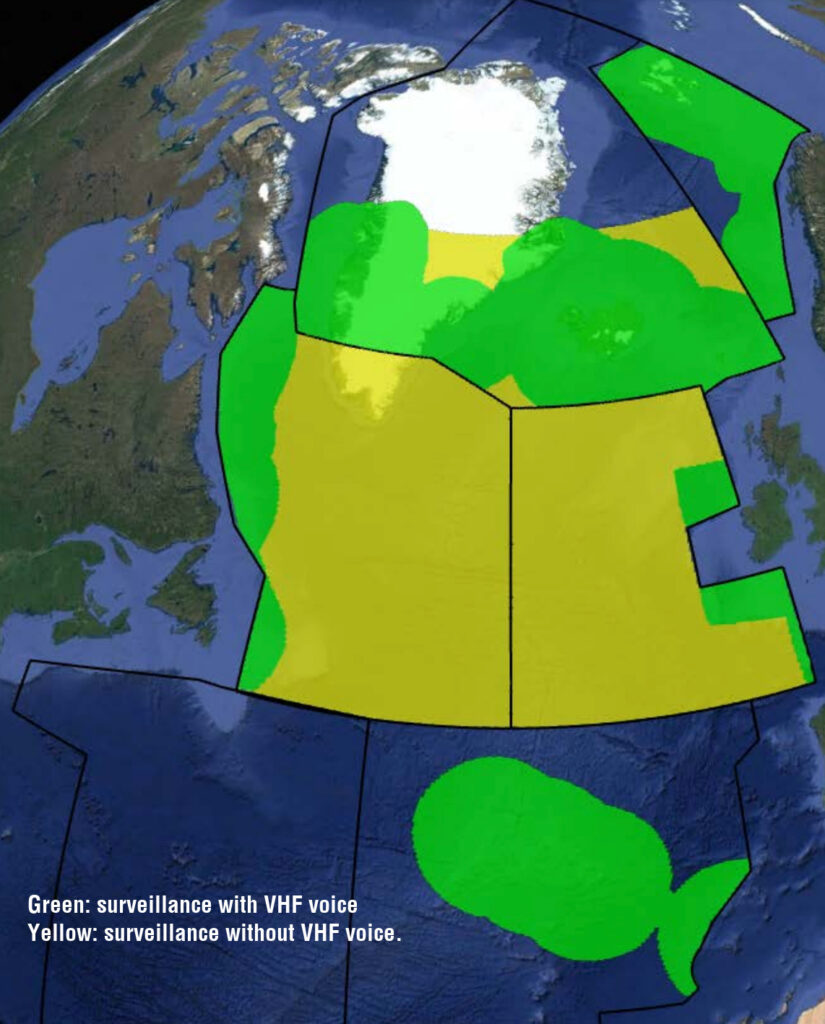
Here is latest VHF coverage chart they refer too in Doc 007 (although it says it needs updating):

Relief from the HF requirement is available for flights going for repairs, ferry flights, and special cases. This requires permission from each and every Oceanic Area Control Centre you’re passing through (i.e. Gander, Shanwick, etc). Include your approval in Item 18 of your flight plan.

NAT Doc 006


Also known as the Air Traffic Management Operational Contingency Plan – North Atlantic Region.

Also known as the ATMOCP-NAR.

The dreaded ATMOCP-NAR, spotted on an aircraft wing somewhere over Greenland.

Not really. There’s no such thing as an ATMOCP-NAR.

NAT Doc 006 is about a different kind of monster – it tells the tale of what happens on the North Atlantic when ATC goes down for any reason. It’s the official go-to manual to check the Contingency Plan they put in place during these so-called “ATC Zero” events.

You can download a pdf of the new NAT Doc 006 here.

And you can get the little explainer doc here.

Summary of what’s changed:

  • They have updated the section talking about contingency plans for the Gander Oceanic FIR. There is basically some updated contact info, updated contingency routes in the event of Gander Evacuations, and some wording changes clarifying the procedures to be used in event of a comms disruption or full loss of ground-air comms capability.
  • The plan only applies to Gander Oceanic FIR, and has removed the ADS-B designated airspace over Greenland because Gander no longer provide ground based ADS-B separation.

For a breakdown of each of the big changes in this NAT Doc 006, in chronological order (i.e. following the order they appear in the NAT Doc 006 guidance doc!), check out our separate article here.


So NAT Doc 007 and 006 are the “big ones” that have changed.

But remember, there are some changes to three NAT Ops Bulletins too!

Here’s the lowdown:

1. The “How Not To Make Oceanic Errors” NAT Ops Bulletin


Real name: “ICAO NAT Ops Bulletin 2017-002 Revision 3. Subject: OESB – Oceanic Errors”.

Download it here.

This is the one which has all the advice for operators on how to avoid the common mistakes when flying the North Atlantic. These include: Gross Nav Errors, Large Height Deviations, and Longitudinal Separation busts. There’s also some advice on Flight Planning, SLOP, and some CPDLC things to watch out for.

The changes in this latest version:

  • It now has up-to-date guidance on Contingency and Weather Deviation Procedures, to reflect the new procedures that were introduced on the NAT in March 2019 and then extended to all oceanic airspace worldwide in Nov 2020.

Click here for our article which has more info on all this.

2. The “How To Punch In Waypoints Correctly” NAT Ops Bulletin


Real name: “ICAO NAT Ops Bulletin 2018-03 Revision 1. Subject: Waypoint Insertion / Verification Special Emphasis Items”.

Download it here.

There are some specific procedures to know when it comes to proper waypoint insertion and verification. This is considered a critical method of mitigating the risk associated the rapidly changing procedures (contingency) as well as reduced separation operations (ASEPS and PBCS) within the North Atlantic.

The changes in this latest version:

  • Oceanic Clearances containing a re-route issued by voice/OCL may include half-degree waypoints. Operators should ensure that their flight crew procedures and associated training are sufficiently robust to mitigate against navigational error due to waypoint insertion errors.
  • Flight Crews are reminded they have the option to respond “UNABLE” to an oceanic re-route and negotiate with ATC accordingly.

3. The “How To Use Datalink Properly” NAT Ops Bulletin


Real name: “ICAO NAT Ops Bulletin 2017_004_Revision 1. Subject: NAT Data Link Special Emphasis Items”.

Download it here.

This Bulletin basically gives a tonne of guidance to operators on how to follow the correct datalink procedures in the North Atlantic.

The changes in this latest version:

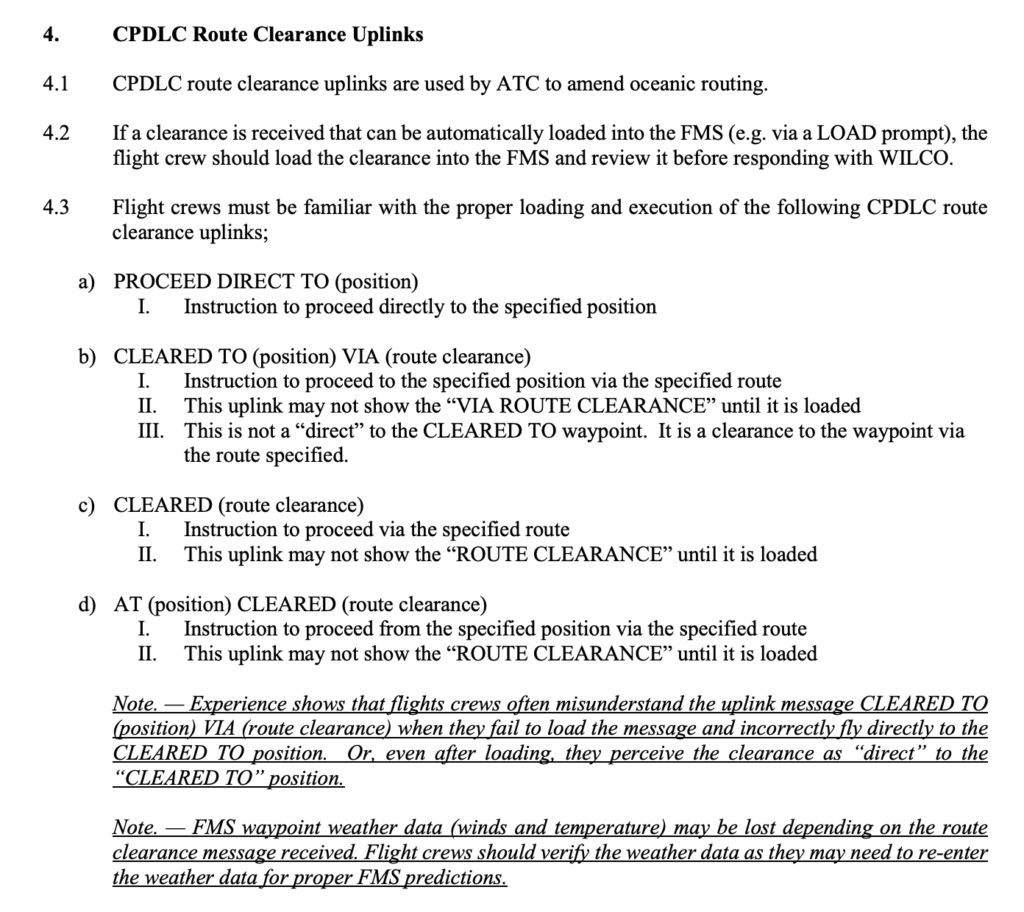
  • It now includes a new section on the use of CPDLC route clearance uplinks:


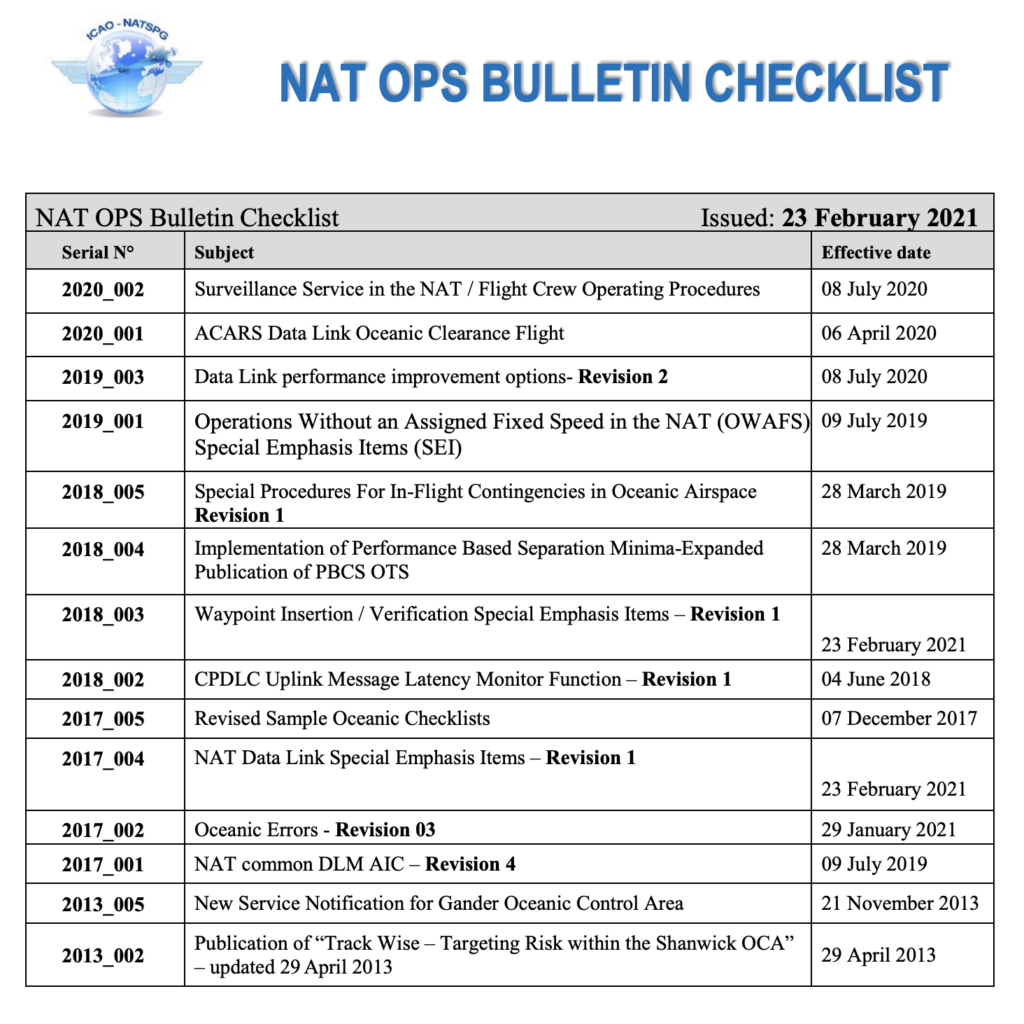
So as far as the ICAO NAT Ops Bulletins go, the full list of current Bulletins is as follows:

You can download each Bulletin from the ICAO page here.


And that’s it!! That’s all the changes!! At least, we think so. If you have spotted any biggies not listed here, send us an email at: news@ops.group

And if all this is not enough for you, and you want a comprehensive timeline of all the old significant changes on the North Atlantic stretching back to the dawn of time (2015, actually), then click here.


2019: Safety Net on the NAT

2019 seems so long a go. A golden age for aviation with airplanes swooshing happily through the skies, and none so happy as those crossing the NAT.

Or were they?

Well, now we can check because the NAT Systems Planning Group 2019 Annual Safety Report has just been released. 2019 might seem a fair old while ago, but the report speaks of a time before Covid when aviation was at normal levels and so offers good guidance on what’s up in the NAT world normally.

What is monitored?

If you were thinking the only things you’re monitored on are your competencies and KSAs in sim assessments, then think again. You are being watched all the time, and especially so in the NAT where 12 Safety Key Performance Indicators are watched like a hawk watches a juicy mouse in long grass.

Targets for reducing the number of errors in these areas are set using three year rolling data.

So, how did we all do?

Well, in 2019, six of the targets were met and there were notable improvements in these three areas:

  • Percentage of long duration height deviations
  • Rate of long duration height deviations where datalink was not in use
  • Number of minutes spent at wrong fight level for aircraft not using datalink

So, pilots have got better at reading their altimeters and not flying at the wrong altitude.

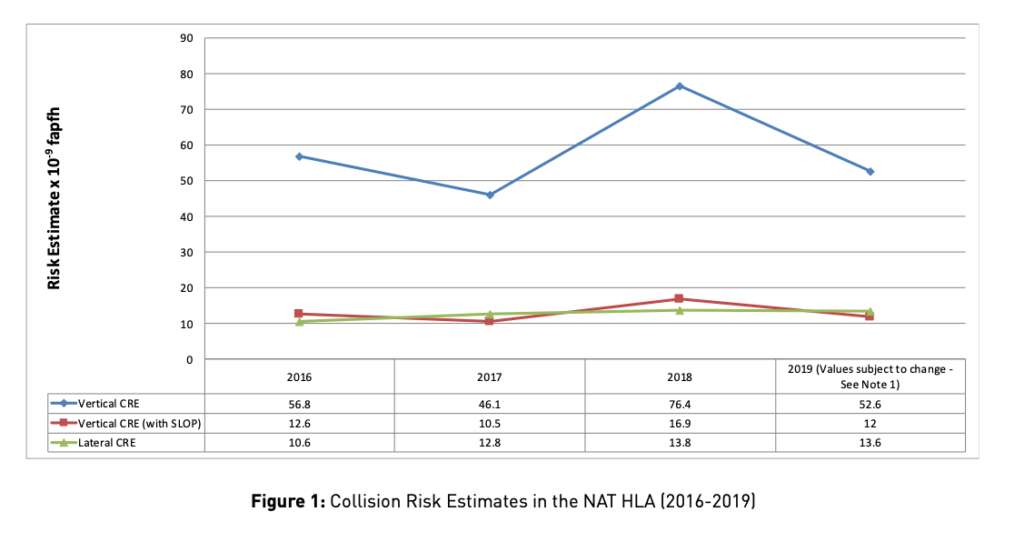
The risk of vertical collision estimate saw an impressive 30% improvement, and they reckon with the use of SLOP this can be reduced another 77% making it… 30/100*77{equation stuff}#100[somethingbysomethingoversomethingelse]… a lot less likely we will fly into each other. Good job all.

Vertical events went down. Get it? Down… instead of up…

What is going less well?

Lateral collision risk estimates reduced, but there were still 80 reported lateral deviations. So we’re flying at the right altitude, but sometimes in the wrong place.

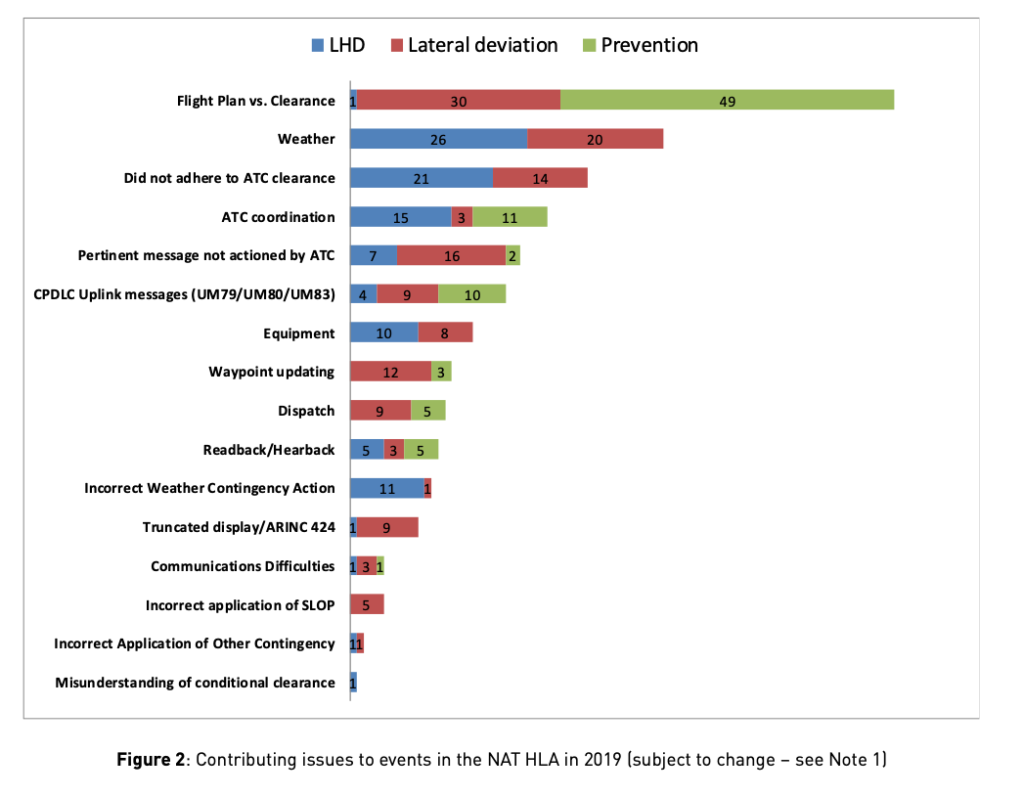
Flight plan versus what ATC actually cleared pilots to do are the top of the list, making up 30% of  the total. 49 of those were prevented by ATC. Not adhering to ATC clearances increased from 10% in 2018, to 13% in 2019, and weather was another biggie making up 17% of all lateral deviations.

ATC coordination errors were also in the top 5 (11%) so don’t congratulate them too much. ATC were also provided with conformance monitoring tools which highlighted cleared versus selected level differences, and route assignment monitoring tools to help them intervene and prevent deviations. With these in place, the performance in the second half of 2019 did improve a lot.

Ok, congratulate them a lot, they’ve made it much safer for us up there.

Overall, what’s the verdict?

No gold star because there were still 266 events reviewed in 2019 by the SPG. These included:

  • 83 large height deviations
  • 118 (actual) lateral deviations including
    • 42 GNEs
    • 44 ATC interventions where ATC prevented pilots making GNEs
  • 73 prevented events where ATCOs stopped aircraft flying an uncoordinated flight profiles or entering the wrong airspace sort of things.

It isn’t always pilots going wrong though. Some of these were down to equipment issues, some down to ATC not responding quick enough. Here is the full breakdown – 

The complete kaboodle. If you had one of these events, you know who you are!

What else is going on up there?

Well, in 2019, when a normal number of aircraft were still flying, they were able to properly monitor the communication and surveillance side of things too, and a whopping 70% of core NAT traffic were using ADS-B. 83% of aircraft were making use of CPDLC over HF radio as well, and the use of these is a big factor in improving the safety and efficiency up there.

The report says this leads to a ‘greater focus on strategic rather than tactical techniques’ which sounds like ‘we are now planning aircraft not to fly near each other’ rather then ‘when aircraft get too close we move them out of each other’s way’.

As a reminder, you have until February 25 to get yourself Datalinkable – the NAT Datalink mandate comes in then.

What next?

2020 data might be a little skewed given a lot less traffic flew, (and many of those who did probably did so after a big gap of not flying), but the overall trend is big improvements. ADS-B is an excellent thing, ATC have a bunch of tools to help them make us safer, and pilot errors are reducing.

There is also a NAT2030 vision plan which is aiming for:

  • more flexibility through ‘dynamic airborne rerouting”
  • improved contingency procedures
  • better comms and surveillance and new technologies
  • a focus on improving the environmental impact
  • and maybe even some new visitors to the region in the shape of unmanned aircraft supersonic aircraft and even balloons

Until then, get out your own balloons and have a little celebration because safety is improving on the NAT. Now put them away. There is still work to be done.

The full report can be checked out here


Planning for “ATC Zero” events in Oceanic Airspace

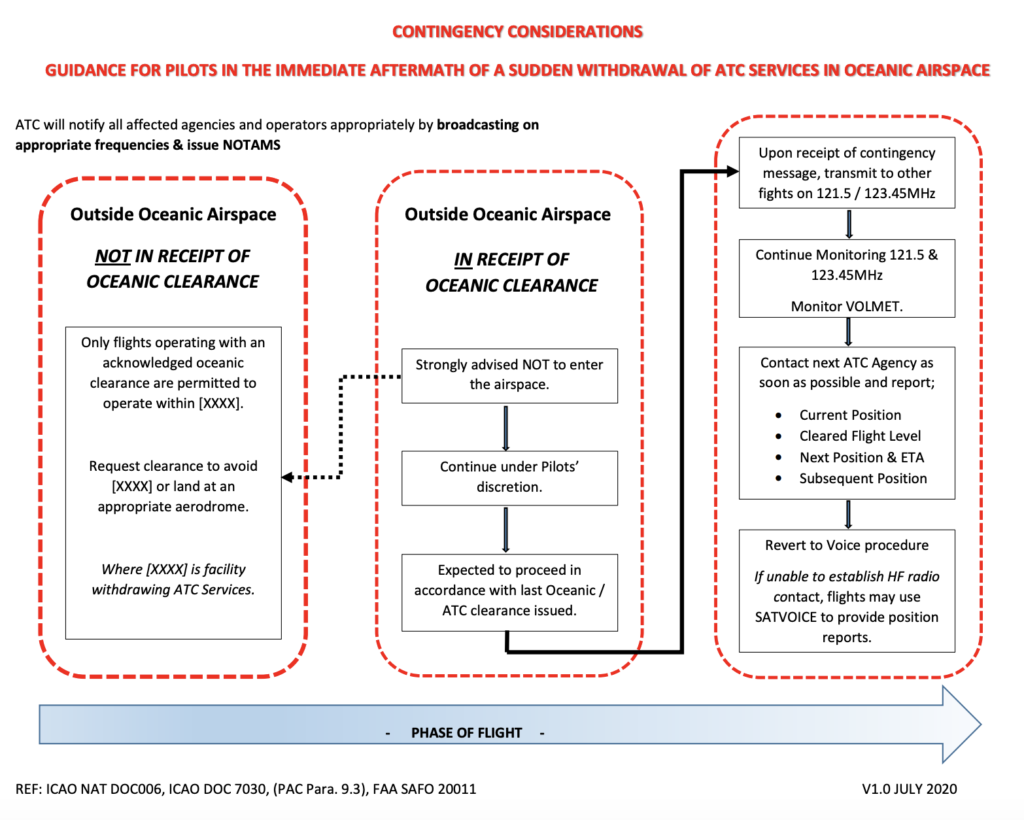
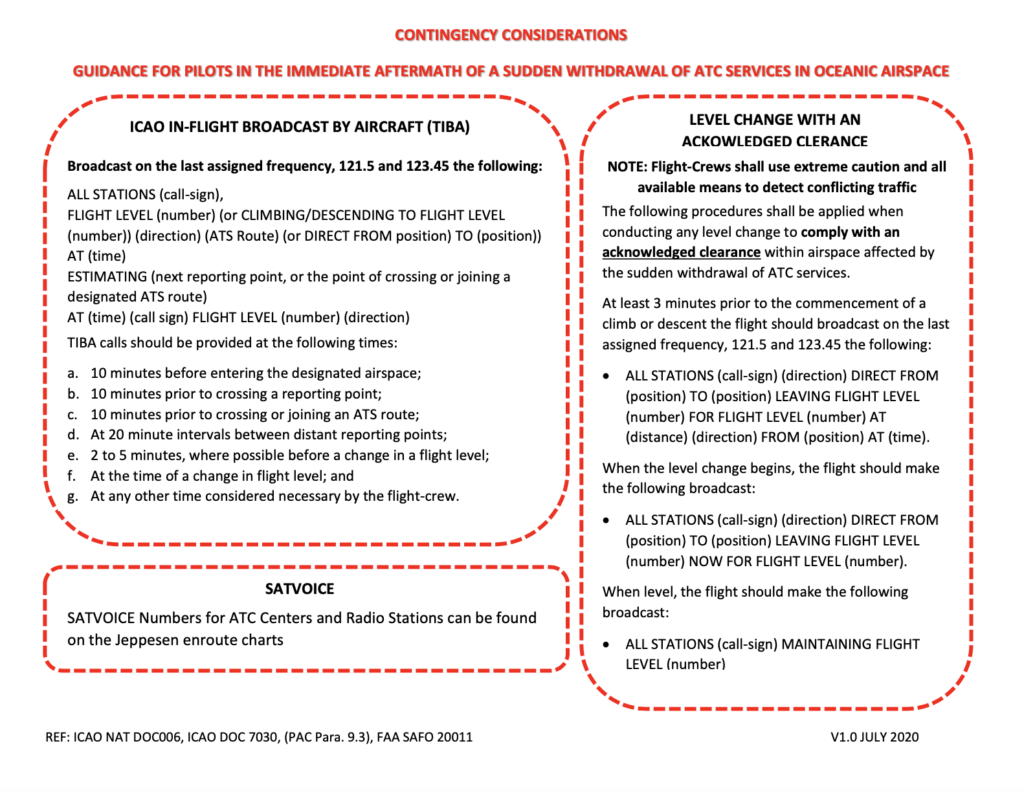
You’re halfway across the Atlantic when ATC declares that they are suspending all services. TIBA procedures are now in effect. Would you know what to do next? As Covid infections impact ATC facilities, short notice closures are currently a constant risk. With the possibility of an entire oceanic ATC area being shut down due to Covid, there are some big questions to consider, and to factor in to your planning: Are you tankering enough fuel if you suddenly have to fly around large sections of oceanic airspace? Where are your ETPs? Do you have a wet footprint?

Back in 2011, there was an incident where transatlantic flights were not allowed to enter CYQX/Gander oceanic airspace due to a smoke situation in ATC control centre which meant that controllers had to be evacuated. They issued a Notam, but that wasn’t much use to the traffic en-route at the time, which all had to be re-routed around the CYQX/Gander Oceanic FIR – a vast portion of oceanic airspace.

Fast forward to March of this year, where New York Air Route Traffic Control Center was forced to temporarily close due to a controller testing positive for Covid-19. The affected airspace restricted flights into New York area airports, with aircraft having to take longer routes in order to avoid closed sectors, as well as Oceanic airspace which stretches from New York past Bermuda and services flights heading to the Caribbean, Europe, South America, and Africa.

The New York ARTCC is not the only ATC center that has been affected over the past few months due to controllers coming down sick with coronavirus. Eleven sites across the US, including at major airports in New York, Chicago, and Las Vegas, have been temporarily closed for cleaning, affected flight operations. Some facilities have been closed for several days leaving inbound and departing aircraft left to their own devices for taxi, take-off, and landing.

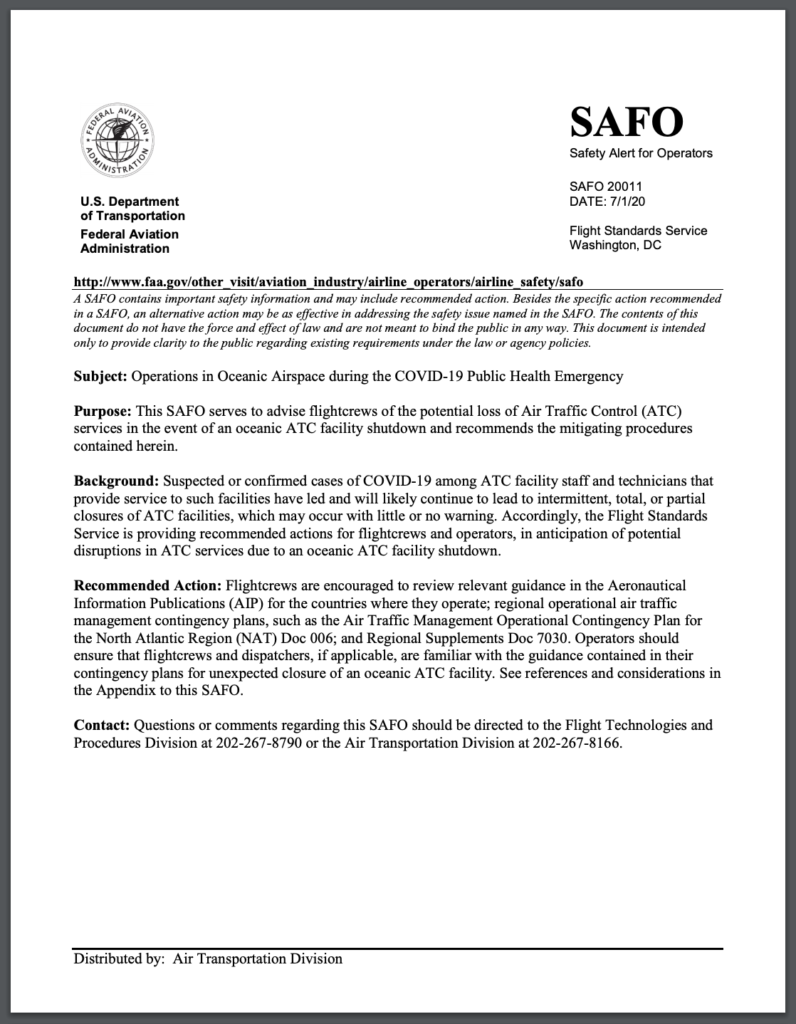
NAT Doc 006 is the official go-to manual to check what happens during these “ATC Zero” events on the North Atlantic, but the spate of recent ATC shutdowns in the US led the FAA to re-examine the increased potential for these situations occurring during the Covid crisis, and in early July they published a SAFO as a result.

The NAT Doc 006 and the US SAFO are great resources, but here are two more which you might not know about!

Code7700.com has published an excellent 2-page crib sheet with clear guidance for pilots on what to do in these situations. You can download it here:

And 30WestIP.com have recorded a video webinar discussing this topic in more detail, which you can view here:


July 2020 North Atlantic Ops Update

July 2020: There’s a bunch of new things to tell you about the North Atlantic this month! Here’s a summary:
– Two new ICAO NAT Ops Bulletins
– An updated NAT Doc 007 from ICAO (aka the North Atlantic “Ops Bible”)
– A guide for pilots from the FAA about what to do if ATC suddenly has to suspend services
– Some juicy Notams from all the NAT FIRs extending the relaxation of the North Atlantic datalink mandate rules until the end of September.

ICAO NAT Ops Bulletins

Two new ICAO NAT Ops Bulletins have been published this week, but it looks like there’s no need to panic.

First up, there’s 2019_003 Rev 2: Data Link Performance Improvement Options, which is just an updated list of common datalink errors and what to do about them.

Second, there’s a new Bulletin called 2020_002: Surveillance Service in the NAT Region / Flight Crew Operating Procedures. This is a strange one. The message seems to be this: back in the old days, you used to get a call from ATC saying “radar service is terminated” or “surveillance service is terminated” when heading out into the NAT, or when crossing from one oceanic control centre to the next. But nowadays, with improved SSR equipment and ADS-B more widely implemented, you might not get this message anymore.

ICAO NAT Doc 007 (2020, Version 2)

ICAO has published an updated version of the NAT Doc 007, applicable from July 2020. There are only some minor changes from the previous version, concerning the Tango Routes:
  • There’s now a specific note saying that state approval is required to operate on these.
  • There’s also a change to the transponder procedures when using T9 or T290: normally you change transponder code to 2000 30mins after NAT entry, but because of the limited time spent in the NAT HLA when flying on T9 and T290 you should instead make this change 10mins after joining either of those routes.

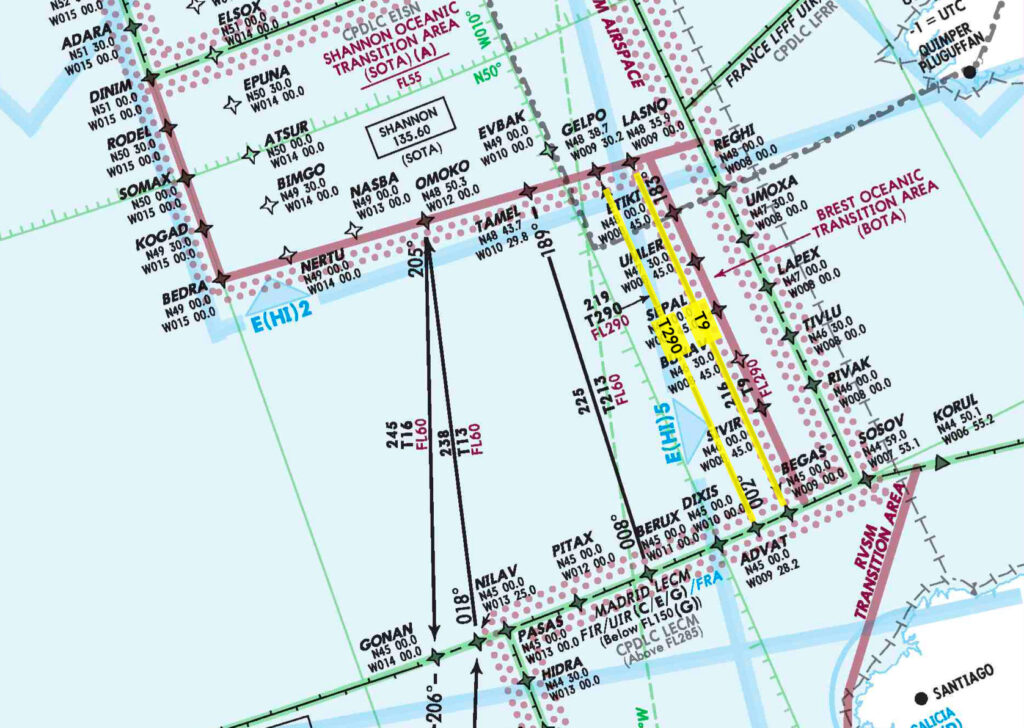
T9 is southbound only, even levels between FL300-400. T290 is northbound only, odd levels from FL290-410. For more info on the Tango Routes, check out our article here.

What to do during “ATC Zero” events

You’re halfway across the Atlantic when ATC declares that they are suspending all services. TIBA procedures are now in effect. Would you know what to do next? As Covid infections impact ATC facilities, short notice closures are currently a constant risk.

The FAA has published a safety alert for international flight crew with contingency procedures in the event of loss of ATC services in Oceanic airspace. It’s a good one to have in your flight bag. Dispatchers and flight crew are reminded to be thoroughly familiar with AIP specific procedures and traffic management contingency plans for the regions they are operating in. You can read the FAA’s alert here.

They have also published another one for ATC Zero events in Terminal airspace, which you can read here. There have been multiple ‘ATC Zero’ events at major air traffic control centres due to Covid prevention and the subsequent cleaning required. The alert contains important information regarding instrument approach selection, TCAS use, alternate minima, aerodrome lighting and other CTAF procedures at unattended airports. There are also important considerations applicable to Part 121 operations discussed.

NAT Datalink Mandate

EGGX/Shanwick, BIRD/Reykjavik, CZQX/Gander, KZWY/New York Oceanic West and LPPO/Santa Maria have all published Notams extending the relaxation of the North Atlantic datalink mandate rules until the end of September. This is due to the fact that there’s still significantly less traffic because of all the Covid restrictions. Non-datalink mandate compliant aircraft may therefore continue to flight plan and operate across the North Atlantic between FL290-410 until Sept 30. For more info on the NAT Datalink Mandate, check out our article here.

In addition, ICAO are saying that due to the decrease in traffic, there is a significantly higher chance of flights being cleared as requested, and are encouraging operators to file and request their optimal profiles at all stages of the flight. Read ICAO’s guidance here.


For a brief history of the most significant North Atlantic-related ops changes, check out our dedicated article here.


Covid impact on North Atlantic diversion airports
Planning diversion alternates is always fun – particularly when flying across vast tracts of open ocean like the North Atlantic. Check a few Notams, google some airport pics to work out just how scary the runway is, stick a couple of en-route alternates into your flight plan, and away you go…
The reality is it’s a bit more complicated than that. For use as a diversion alternate, an aircraft operator must ensure that the airport concerned meets basic criteria to be classified as ‘adequate’. In other words, just a runway is not enough – if only it were that simple!

Here are the kinds of things we’re interested in:

  • Sufficient weather forecasting.
  • ATC (or Flight Information Service) hours of operation.
  • Runway availability.
  • Instrument approach availability.
  • Runway Lighting.
  • Runway slope guidance (PAPI, VASI, Glideslope or similar).
  • RFF (Rescue Fire) operational status.
  • Status of facilities: refuelling, handling, parking bays etc.

During the course of the Covid-19 pandemic, a number of airports have used the lull in traffic to undertake work that can affect their operational status. As a result, these changes may create additional operational issues for pilots and flight planners seeking diversion alternates that meet their requirements.

Also, due to the general chaos of Covid-19, many airports have limited staff which has an effect on how your aircraft, passengers and crew will be handled on the ground if you do need to divert.

Here’s a summary of changes to operational status of airports commonly used as diversion alternates for aircraft crossing the North Atlantic. (Unless stated otherwise, airports listed below are open H24 for emergency diverts).
The Biggies

BGSF Kangerkussuaq Airport, Greenland – Airport is open 1000-1900z Monday to Saturday. Closed on Sundays. If you want them to stay open for you outside their opening times, you have to request it in advance – watch out for hefty fees if doing this, which get charged even if you don’t end up actually diverting there. Same applies if you just casually list BGSF as an en-route alternate on your flight plan if operating out of hours. More info on that here.
However, until at least June 10 the airport is classified as ‘non-instrumental.’ Effectively you can only use it during daylight hours in good conditions (NOTAM A0283/20 refers).

BGBW Narsarsuaq, Greenland – Similar deal to BGSF – airport is only open 1000-1900z Monday to Saturday, and closed on Sundays. And again, extra fees which get charged if filing BGBW as an en-route alternate on flight plans. RFF category 5, but grab a coffee because it requires 3 hour’s notice (NOTAM A0098/20 refers). Officially, the current rules for Greenland are that crew and pax will not be allowed to disembark, not even for diverts. Unofficially, the local handler says that if a divert was to happen, they’d “find a solution”.

LPLA Lajez, Azores – Several restrictions apply due to Covid. Essentially you can go there if you really need somewhere to land but expect chaos once you do. The airport is currently closed to international arrivals unless it’s an emergency. And even then you cannot disembark without permission and strict quarantine measures apply (NOTAM A1487/20 refers). Unscheduled arrivals of emergency aircraft can expect ‘extensive handling delays’ (NOTAM A1485/20 refers). All passengers and crew must wear face masks, and once you and your passengers leave the aircraft you will be quarantined in the local air force base (room service is unlikely).

LPAZ Santa Maria, Azores. If you have to divert there, no crew or pax are allowed to disembark. For medical emergencies, they actually recommend you go to LPLA instead!

EINN Shannon, Ireland – Aerodrome is currently only operational from 0500-2100z due to the impact of Covid (NOTAM A1062/20 refers). The airport has confirmed they are not available outside of these hours for emergency diverts – so if you’re operating overnight, the nearest available H24 airports are EGAA/Belfast and EIDW/Dublin.

And watch out for these potential ‘gotchas’

CYYR Goose Bay, Canada – Until June 29, runway 16/34 is closed. In strong northerly or southerly conditions, cross wind limitations may be reached – so keep an eye on your ETOPs alternate minima (NOTAM E3107/20 refers).

CYQX Gander, Canada – In case of divert, crew/pax all need to fill out a Government Declaration COVID form to stay overnight, and need to have proper PPR (Masks, Gloves and Sanitary Cleaner). RFF category 5 which requires at least 30 minutes notice.

BIKF Keflavik, Iceland – RFF category 8 from 0500-1900z, RFF category 7 from 1900-0500z (NOTAM A0123/20 refers).

EGAA Belfast, Ireland – Until June 13, RFF category 6 overnight between 1800-0600z (NOTAM A1968/20 refers). And until June 11, this is reduced to just RFF cat 4 between the daytime hours of 0600-1800z (NOTAM A1993/20 refers).

EGPF Glasgow, Scotland. Until June 16, available RFF category is 6 for the majority of the day due to staffing issues caused by Covid (NOTAM A1983/20 refers).


In other NAT-related news, the datalink mandate rules have been relaxed until the end of June, due to the fact that there’s now significantly less traffic because of all the COVID restrictionsNon-datalink mandate compliant aircraft may therefore flight plan and operate between FL290-410 until June 30. ICAO are saying that due to the decrease in traffic, there is a significantly higher chance of flights being cleared as requested, and are encouraging operators to file and request their optimal profiles at all stages of the flight. More info on the NAT Datalink Mandate can be found here.


Your MNPS approval is about to expire (so don’t get banned from the NAT)

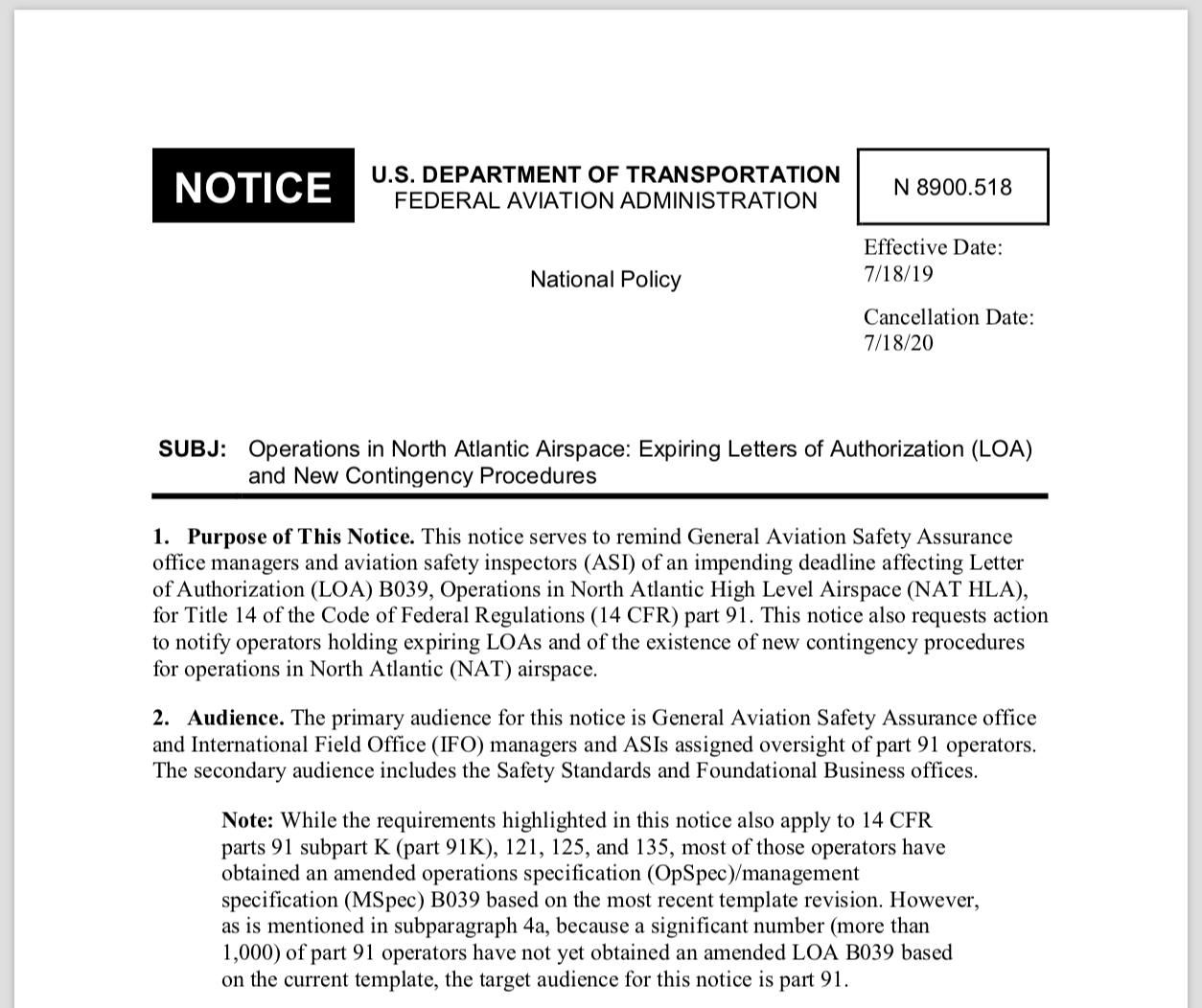
U.S. operators with the old MNPS approvals issued before 2016 have until 31 Dec 2019 to get these updated if they want to keep flying on the North Atlantic!

The FAA issued new guidance on this on 18 July 2019:

They say that there could be more than 1,000 GA operators who still have old NAT MNPS approvals, and all these operators will need to get new B039 LOAs to be able to continue flying on the North Atlantic beyond 31 Dec 2019.

The new B039 LOA is for “Operations in the North Atlantic High Level Airspace”. To get it, operators need to provide evidence of compliance with the NAT HLA requirements particularly in regard to RNP 10 equipage, flight crew training (including the new contingency procedures), and have operating procedures in place.

Operators will also need to make sure they have an B036 LOA for “Oceanic and Remote Continental Navigation Using Multiple Long-Range Navigation Systems”.

Here’s the lowdown: If you have an old MNPS approval, you need to apply for the B039 LOA very, very soon! The closer we get to the Dec 31 deadline, the stronger the chance that it will take longer for the FAA to process yours, and this means that 2020 will not get off to a good start when you have to explain why you’ve been banned from the NAT! Help yourself, and the FAA, get through this by applying for it as soon as possible.

Mitch Launius is an International Procedures Instructor Pilot with 30West IP and can be contacted through his website: www.30westip.com


Two is Not Enough: New NAT Doc 007 (Version 3) – August 2019

NAT Doc 007 is the Bible of the North Atlantic. It’s full of NAT goodness – all the specifics about how to operate your aircraft safely through the complex airspace of the region is here.

And there’s another new edition!

The NAT changes over the last few years have been coming thicker and faster than the sandwiches at Katz’s Deli on the Lower East Side. And now, there’s more. Effective August 7th, 2019, NAT Doc 007, Version 3, is the latest tome to digest. As aviation documents go, it’s written in pretty digestible language. There’s just a lot in it. But this is the first time we’ve had 3 editions of this in one year.

So, we’re going to start naming them after 007 Movies to keep track of them all. This is the “Two is Not Enough” edition.

NAT Doc 007, Version 3, 2019:
Download the full NAT Doc 007.

So, here are the three things that have changed this time:

1. We got new SLOP rules! This is a biggie. Instead of the three previous choices (0, 1, or 2nm), we now have Twenty One choices! More on this below.

2. 99 problems and Datalink is one. The short version: check that you’ve got the latest software update for your datalink.

3. The next datalink mandate (2C) is capped at FL410. This comes in January 30th next year. And so, the Checklist for Dispatchers is updated.

The new SLOP rules

Now, let’s take a closer look at the big change – SLOP (Strategic Lateral Offset Procedure). To get up to speed, check out our full article on SLOP – the how, and why (and where).

The change here is that instead of just being able to SLOP 1 or 2 nm right of track, (or fly the centreline), you go from these three choices to twenty one – you can use any one of 21 Micro-SLOP offsets. Specifically: 0.0 nm, 0.1 nm, 0.2 nm …. OK, you get it. All the way up to 2.0 nm Right of track.

Simple, right?

Not quite. It’s not yet fully clear which of the OCA’s have given the green light for this, even though NAT Doc 007 now says you should Micro-SLOP if you can.

But, phoning around the Oceanic Houses, we’ve got this to tell you:

1. Gander – you can micro-SLOP right now! An AIP amendment will follow soon.
2. Shanwick – you can micro-SLOP right now! A Notam will be published soon, and the AIP will be updated in Dec 2019.
3. New York – they will allow micro-SLOP from 12th Sept 2019, and will update the AIP in Jan 2020.
4. Santa Maria – you can micro-SLOP right now! Nothing published officially yet, but that’s what the good people from the oceanic control centre have told us.
5. Iceland – just like New York, they will allow micro-SLOP here from 12th Sept 2019 as well. When that happens, you will still not be allowed to SLOP below FL285 within the Reykjavik CTA (that’s the domestic part over Iceland, and the airspace over Greenland above FL195). We asked them to publish a Notam about this – and they actually did!! Check it out!
6. Bodo – Nothing official yet, but ATC say they “have no objections” to operators micro-SLOPing right now. (Currently, SLOP is only allowed here above FL285 within the OCA.)

That’s the current picture as of 1100z on Monday 19th Aug.

We will update this as soon as we get more info. Got something for us? Email us!


New NAT Contingency Procedures for 2019

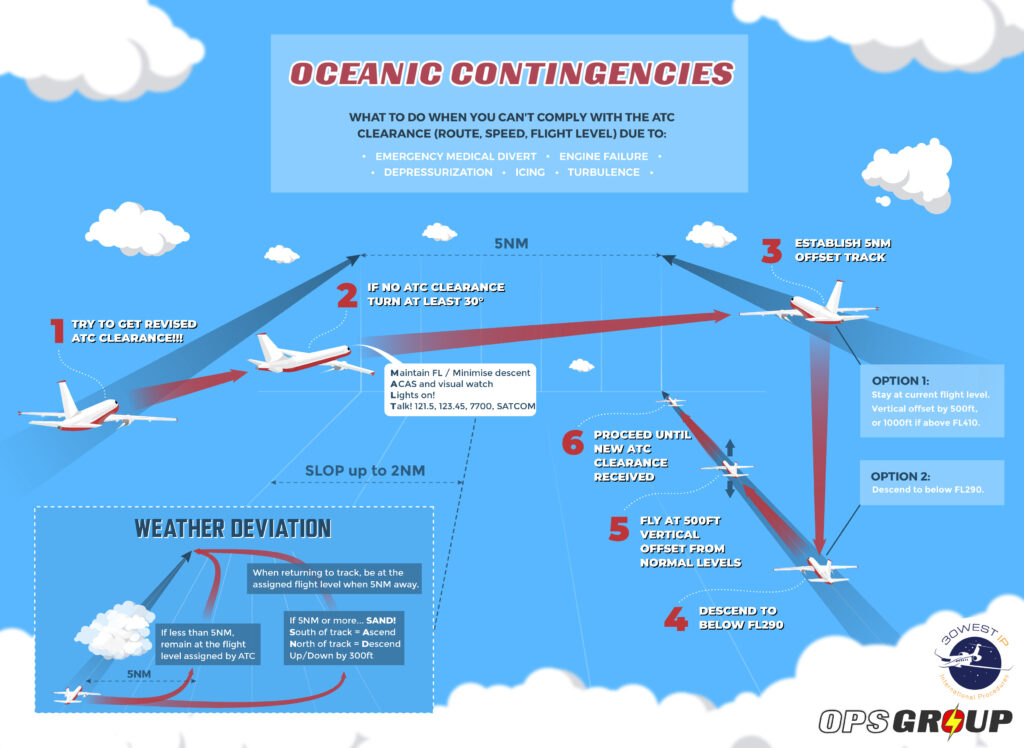
Starting 28th March 2019, there will be some changes to the contingency and weather deviation procedures on the NAT. ICAO has published a new NAT Ops Bulletin with all the details.

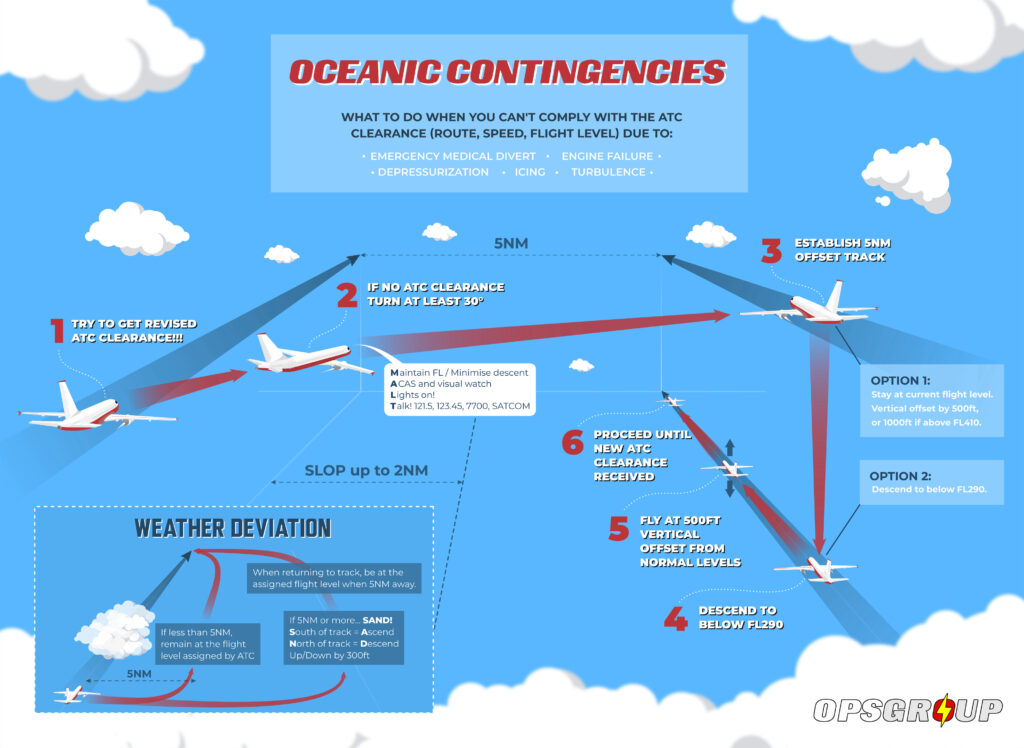
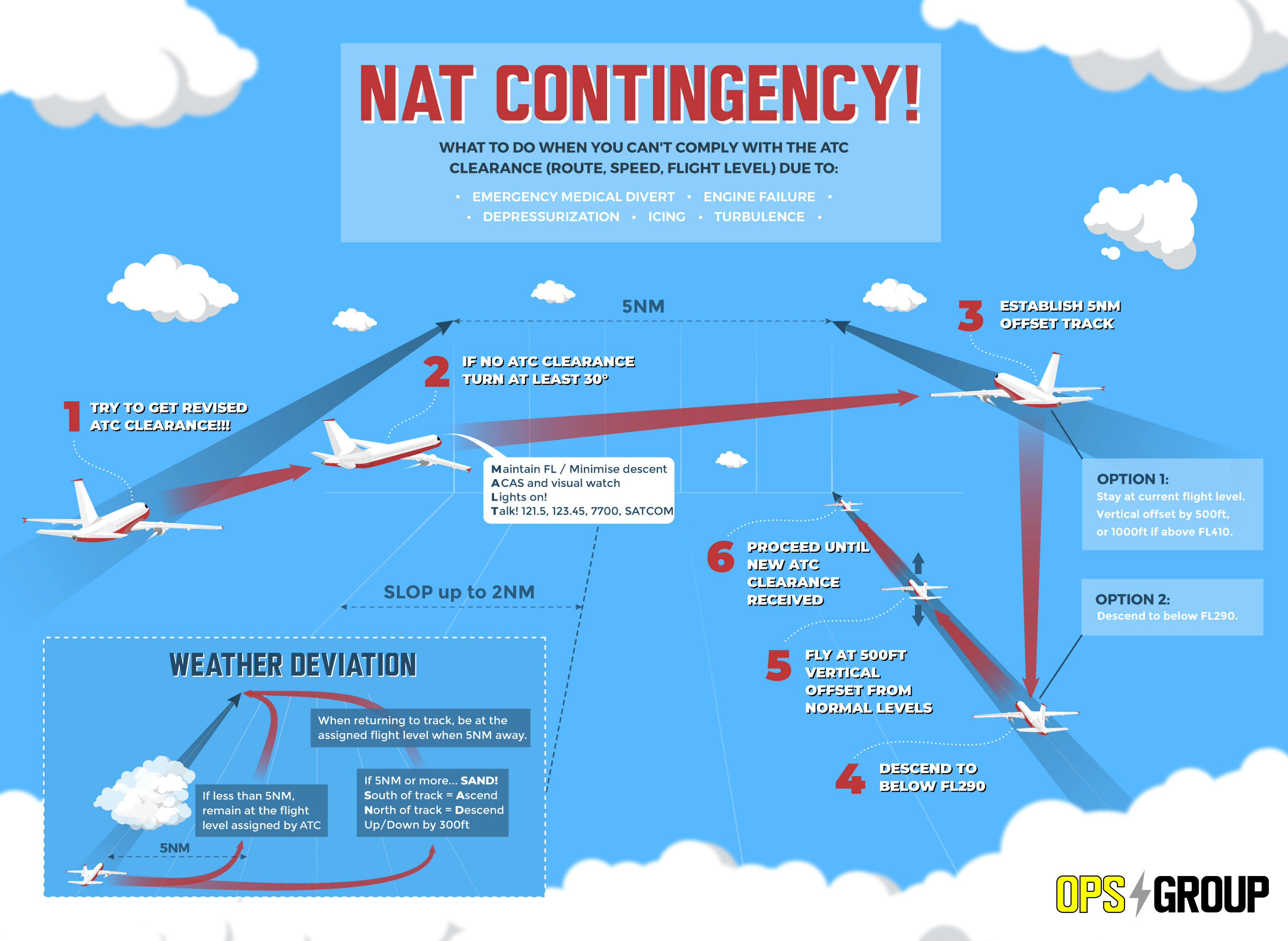
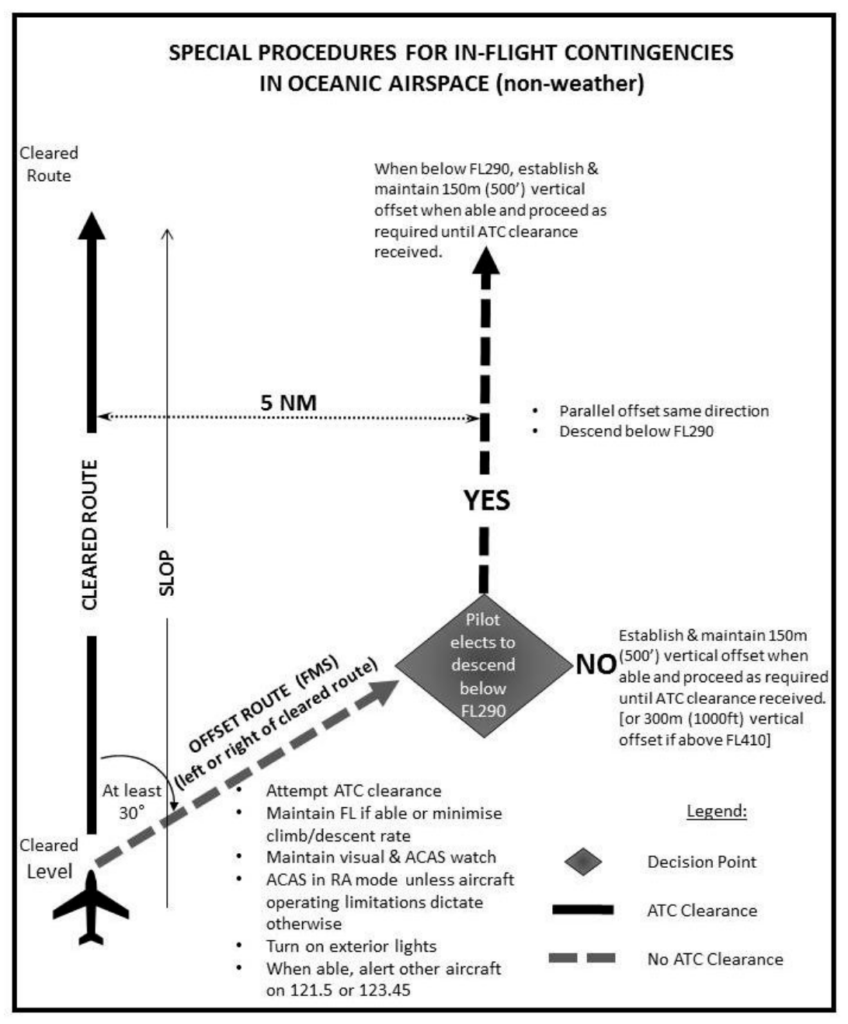
Before, there was a lot of confusion around the wording of these two procedures – but ICAO has now made this much clearer, and they have even included a little graphic to help us understand how it will work.

Thing is, it’s still a little clunky. So we decided to make our own version!

Click on the image to open larger version.

What’s new?

The simple answer is this: contingency offsets that previously were 15 NM with actions at 10 NM are basically now all 5 NM offsets with a turn of at least 30 degrees (not 45 degrees).

Rarely do we see ICAO oceanic contingency procedures undergo a formal revision. The last time a major revision occurred was in 2006 when ICAO standardized a 15 NM offset executed with a turn of at least 45 degrees. Prior to that, the North Atlantic and the Pacific had used different offset distances and a 90 degree turn.

Where and when?

A trial implementation is scheduled to begin in the NAT Region and New York Oceanic West starting 28th March 2019. ICAO is expected to formally publish the Standard in an update to PANS-ATM (ICAO Doc 4444) on 5 November 2020.

Why?

To support reduced separation being implemented in conjunction with Advanced Surveillance Enhanced Separation (ASEPS), Space Based ADS-B surveillance. The details for the ASEP trial can be found in NAT OPS Bulletin 2018-006 Trial Implementation of ASEPS using ADS-B.

Old version vs New version – full wording

Here’s the old version, as per the latest version of the NAT Doc 007, paragraph 13.3. (Note – this will be valid UNTIL 27 March 2019):

The aircraft should leave its assigned route or track by initially turning at least 45° to the right or left whenever this is feasible.

An aircraft that is able to maintain its assigned flight level, after deviating 10 NM from its original cleared track centreline and therefore laterally clear of any potentially conflicting traffic above or below following the same track, should:
a) climb or descend 1000 ft if above FL410
b) climb or descend 500 ft when below FL410
c) climb 1000 ft or descend 500 ft if at FL410

An aircraft that is unable to maintain its assigned flight level (e.g due to power loss, pressurization problems, freezing fuel, etc.) should, whenever possible, initially minimise its rate of descent when leaving its original track centreline and then when expected to be clear of any possible traffic following the same track at lower levels and while subsequently maintaining a same direction 15 NM offset track, descend to an operationally feasible flight level, which differs from those normally used by 500 ft if below (or by 1000 ft if above FL410).

Before commencing any diversion across the flow of adjacent traffic or before initiating any turn-back (180°), aircraft should, while subsequently maintaining a same direction 15 NM offset track, expedite climb above or descent below the vast majority of NAT traffic (i.e. to a level above FL410 or below FL290), and then maintain a flight level which differs from those normally used: by 1000 ft if above FL410, or by 500 ft if below FL410. However, if the flight crew is unable or unwilling to carry out a major climb or descent, then any diversion or turn-back manoeuvre should be carried out at a level 500 ft different from those in use within the NAT HLA, until a new ATC clearance is obtained.

And here’s the new version, as per the NAT OPS Bulletin 2018-005 Special Procedures for In-flight Contingencies in Oceanic Airspace (Note – this will be valid FROM 28 March 2019):

If prior clearance cannot be obtained, the following contingency procedures should be employed until a revised clearance is received:

Leave the cleared route or track by initially turning at least 30 degrees to the right or to the left, in order to intercept and maintain a parallel, direction track or route offset 9.3 km (5.0 NM).

Once established on a parallel, same direction track or route offset by 9.3 km (5.0 NM), either:
a) descend below FL 290, and establish a 150 m (500 ft) vertical offset from those flight levels normally used, and proceed as required by the operational situation or if an ATC clearance has been obtained, proceed in accordance with the clearance; or
b) establish a 150 m (500 ft) vertical offset (or 300 m (1000 ft) vertical offset if above FL 410) from those flight levels normally used, and proceed as required by the operational situation, or if an ATC clearance has been obtained, proceed in accordance with the clearance.

Note. — Descent below FL 290 is considered particularly applicable to operations where there is a predominant traffic flow (e.g. east-west) or parallel track system where the aircraft’s diversion path will likely cross adjacent tracks or routes. A descent below FL 290 can decrease the likelihood of: conflict with other aircraft, ACAS RA events and delays in obtaining a revised ATC clearance.

So to reiterate, the important change is that contingency offsets that previously were 15 NM with actions at 10 NM are basically now all 5 NM offsets with a turn of at least 30 degrees (not 45 degrees).

Weather deviations

If you have to deviate from your assigned track due to anything weather-related, there’s a whole different procedure to follow. Again, the NAT Ops Bulletin has all the details for this, but the bottom line seems to be:

For deviations of less than 5 NM, remain at the flight level assigned by ATC.

For deviations of 5 NM or more, when you are at the 5 NM point initiate a change as follows:

If flying EAST, descend left by 300ft, or climb right by 300ft.

If flying WEST, climb left by 300ft, or descend right by 300ft.

In other words – SAND! (South of track = Ascend, North of track = Descend; Up/Down by 300ft)

But remember, going right is probably better – it gets you out of the way of all the SLOP offset traffic that might be coming at you from the opposite direction!

Turnback procedure

In both the NAT Ops Bulletin and the new NAT Doc 007 which will take effect from 28 Mar 2019, ICAO has left out any specific reference to how to divert across the flow of traffic or turn-back procedure, and instead simplified it to just “proceed as required by the operational situation”. Turning back would assume you either employ the 5NM offset as per the new contingency procedure, or else get a new revised clearance.

Bottom line

If you operate in the NAT HLA, we recommend you read and review the NAT Ops Bulletin in its entirety. It’s relatively short but, beginning 28 March 2019, the procedures are expected to be implemented. You might want to prepare changes for your Ops Manuals and checklists too.

Make sure you stay tuned to OPSGROUP for changes that may occur as we approach 28 March 2019!

Further reading:

  • On Nov 1st we had a call with 140 OPSGROUP members about upcoming changes on the NAT in 2019, and how we can effect change. OPSGROUP members can find the PDF notes of this in your Dashboard.
  • A big thing driving the ASEPS trial is the rollout of Space-based ADS-B, which is scheduled to complete its deployment by 30 Dec 2018, giving us worldwide, pole-to-pole surveillance of aircraft. For more on that, and how it will affect operations on the NAT specifically, read the article by Mitch Launius here.
  • Use our quick guide to figure out where you are welcome on the NAT, depending on what equipment and training you have.


New CPDLC procedure on the NAT

There’ll soon be a new CPDLC procedure on the NAT, designed to prevent pilots from acting on any old CPDLC messages that might have been delayed in the network.

ICAO have published a new Bulletin for all the NAT Air Navigation Service Providers (ANSP’s) to use as a basis for implementing this new procedure. They recommend that all aircraft should receive a message immediately after they enter each control area telling them to “SET MAX UPLINK DELAY VALUE” to a certain number of seconds. The idea is that this will prompt the pilot to enter the specified latency value into the aircraft avionics, so that it will ignore/reject any old CPDLC messages.

So far, only Iceland’s BIRD/Reykjavik FIR have implemented this procedure, effective May 24. All other sectors of NAT airspace (Gander, Shanwick, Bodo, Santa Maria, New York Oceanic) are busy writing their own AIC’s and will implement later in the year. 

So when entering the BIRD/Reykjavik FIR, expect to receive a CPDLC message from ATC instructing you to “SET MAX UPLINK DELAY VALUE TO 300 SECONDS”. A copy of their AIC with more guidance can be found here.

The latency monitor function varies from one aircraft type to another: some just automatically reject old CPDLC messages, some will display a warning to the pilot that the message has been delayed, some have deficient equipment, and some do not have the message latency monitor function implemented at all.

Because of this, ICAO note that “it is impossible for ATC to tailor the uplink of the message… to different aircraft types. It has therefore been decided among the NAT Air Navigation Service Providers (ANSPs) to uplink this message to all CPDLC connected aircraft immediately after they enter each control area. An aircraft may therefore receive this message multiple times during a flight.”

So here’s the lowdown on what you need to do:

1. Work out in advance what kind of message latency monitor function your aircraft has, and what it is designed to do when it receives the CPDLC message “SET MAX UPLINK TIMER VALUE TO XXX SECONDS”.

2. When you receive this message, respond with the voice message “ACCEPT” or “ROGER”. If your aircraft has a functioning message latency monitor, punch in the specified number of seconds. If you don’t have functioning equipment, respond with the free text message “TIMER NOT AVAILABLE”.

3. If anything goes wrong, revert to voice comms.

Back in November 2017, we reported on an equipment issue with Iridium satcom that prompted a ban by a number of Oceanic ATC agencies. Some aircraft were receiving massively delayed clearances sent by ATC via CPDLC – and one took the instruction and climbed 1000 feet, even though the message was meant for the flight the aircraft operated previously.

Although the bans were dropped after Iridium fixed the problem at ground level (by ensuring the system no longer queued CPDLC uplinks for more than five minutes), this new CPDLC procedure on the NAT should ensure this kind of situation doesn’t happen again. It’s officially being brought in as one of the safety requirements for the roll-out of reduced lateral and longitudinal separation minima across the NAT, which is predicated on Performance Based Communication and Surveillance (PBCS) specifications – that means having CPDLC capable of RCP240 (4 minute comms loop), and ADS-C capable of RSP180 (3 minute position reporting).

Further reading:
ICAO NAT Bulletin 2018_002: CPDLC Uplink Message Latency Monitor
Iceland’s AIC on the new CPDLC procedure for the BIRD/Reykjavik FIR
– The latest PBCS rumours and facts
The latest NAT changes, including EGGX/Shanwick, CZQX/Gander, BIRD/Iceland, ENOB/Bodo, LPPO/Santa Maria, and KZWY/New York Oceanic East.
IRIDIUM satcom fault fixed


My first North Atlantic Flight is tomorrow – NAT Ops Guide (Updated 2018)

For the latest changes and updates on the North Atlantic, including our most recent Guides and Charts, use our NAT reference page at flightservicebureau.org/NAT.

Of all the hundreds of questions we see in OPSGROUP, one region stands out as the most asked about – the NAT/North Atlantic. So, we made one of our legendary guides, to get everything into one PDF.  It’s called “My first North Atlantic Flight is tomorrow” – and now we’ve updated it for 2018!

Contents:

  • 1. What’s different about the NAT?
  • 2. Changes in 2018, 2017, 2016, 2015
  • 3. NAT Quick Map – Gander boundary, Shanwick boundary
  • 4. Routine Flight Example #1 – Brussels to JFK (up at 5.45am)

  • 5. Non Routine-Flights: No RVSM, No RNP4, No HF, 1 LRNS, No HLA, No ETOPS, No TCAS, No Datalink – what you can do and where you can go
  • 6. Diversion Airports guide: Narsarsuaq, Sondy, Kef, Glasgow, Dublin, Shannon, Lajes, Fro Bay, Goose Bay, Gander, St. Johns
  • 7. Airport data
  • 8. Overflight permits – routine and special

  • 9. Special NAT procedures: Mach number technique, SLOP, Comms, Oceanic Transition Areas, A successful exit, Screwing it up, Departing from Close Airports
  • 10. North Atlantic ATC contacts for Shanwick, Gander, Iceland, Bodo, Santa Maria, New York – ATC Phone, Radio Station Phone, AFTN, Satcom, CPDLC Logon codes; and adjoining Domestic ATC units – US, Canada, Europe.
  • 11. NAT FPL Codes
  • 12. NAT Flight Levels
  • 13. Flight Plan Filing Addresses by FIR
  • 14. Links, Questions, Guidance

Excerpt from the Routine Flight #1:


Buy a copy ($20)   Get it free – join OPSGROUP

To get your copy – there are three options:

  1. OPSGROUP Members, login to the Dashboard and find it under “Publications > Guides”. All FSB content like this is included in your membership, or
  2. Join OPSGROUP with an individual, team, or department/airline plan, and get it free on joining (along with a whole bunch of other stuff), or
  3. Purchase a copy in the Flight Service Store!


Oceanic ATC’s tell us their position on Iridium Satcom

Last week we reported on an equipment issue with Iridium satcom that prompted a ban by a number of Oceanic ATC agencies. Some aircraft were receiving massively delayed clearances sent by ATC via CPDLC – and one took the instruction and climbed 1000 feet, even though the message was meant for the flight the aircraft operated previously.

Today, we checked-in again with all the oceanic ATC centres, to see what their current policy is on the issue.

EGGX/Shanwick told FSB that they are aware of the issue, reviewed it, but have decided not to ban the use of Iridium for either CPDLC or ADS-C just yet. LPPO/Santa Maria have the same position. So, in this airspace, you can use Iridium, for now.

CZQX/Gander said they did a safety analysis of it, and decided not to ban it. They have all kinds of conformance alerts in place to prevent any problems from happening – so if aircraft deviate they get notified immediately.

BIRD/Reykjavik aren’t that concerned about the issue – they use HF most of the time anyway.

Chile (SCIZ)
Japan (RJJJ)
Anchorage (PAZA)
Oakland (KZAK)
New York (KZNY and KZWY)
All these centres have published Notams instructing crews not to use Iridium for CPDLC or ADS-C. Until the fault is fixed, in those regions you’ll have to either use HF for ATC comms, or use another SAT provider.

Auckland (NZZO) and Brazil (Atlantico SBAO) have applied the ban to CPDLC alone. Use ADS-C if you like.


From Iridium themselves, they told FSB: “We’ve updated their queue management system. Every minute, there is a queue check. If there is any message that is older than 4 minutes, it marks as timed out, and will not be delivered. This update was done at ground level, so it does not require any software updates by the user. We’re still waiting on feedback from FAA workgroup on the fix and if it’s sufficient to allow use of Iridium for CPDLC and ADS-C.”

That’s it for now! We’ll keep you posted, or, even better – tell us below in the comment section if you hear news.


2017 Edition: NAT Doc 007 2017 – North Atlantic Airspace and Operations Manual

The 2017 version of NAT Doc 007, North Atlantic Airspace and Operations Manual, was published in January 2017 by ICAO/NAT SPG.

Download the original document here (PDF, 5mB), and see also:


Feb 15th, 2017 In the first six weeks of 2017 there have been some important changes on the NAT/North Atlantic. These are published in the latest edition of NAT Doc 007, January 2017.

  • TCAS 7.1: From January 1st, 2017, TCAS 7.1 is required throughout the entire NAT region.
  • Cruising Level: Effective 2017, you no longer need to file an ICAO standard cruising level in NAT airspace.
  • Gross Nav Error:  is now defined as greater than 10nm (used to be 25nm)
  • Contingency Procedure: Published January 2017, a new turn-back (180) procedure is introduced – turn back to parallel previous track by 15nm.
  • Datalink Mandate Exemptions: Announced January 2017, new exemptions for Phase 2B of the Datalink mandate, which will start on December 7, 2017 (FL350-390). Exempt: Tango Routes, airspace north of 80N, and New York OCA.

Feb 15th, 2017: FSB published the full NAT Crossing Guide “My first North Atlantic Flight is tomorrow“.

– What’s different about the NAT, changes in 2017, 2016, 2015, NAT Quick Map
– Routine Flight Example #1 – Brussels to JFK (up at 5.45am)
– Non Routine-Flights: No RVSM, No RNP4, No HF, 1 LRNS, No HLA, No ETOPS, No TCAS, No Datalink – what you can do and where you can go
Take a look.