Belarus: Politics, Piracy or Airspace Risk?

Several countries and aviation bodies have urged airlines and operators to avoid the airspace of Belarus following the country’s interception of an international flight bound for Lithuania and forced to land in Minsk.

Is there any cause for additional concern? Or was this a one-off event that poses no additional threat to airspace safety?

Here’s what happened:

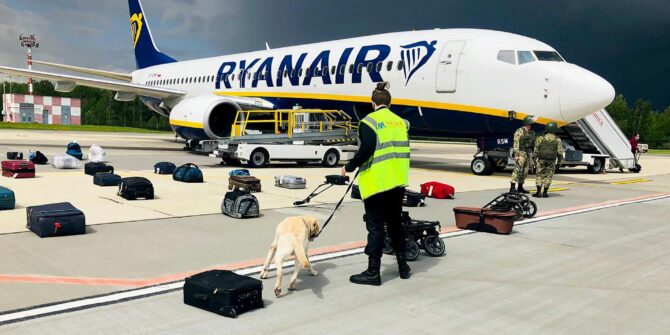
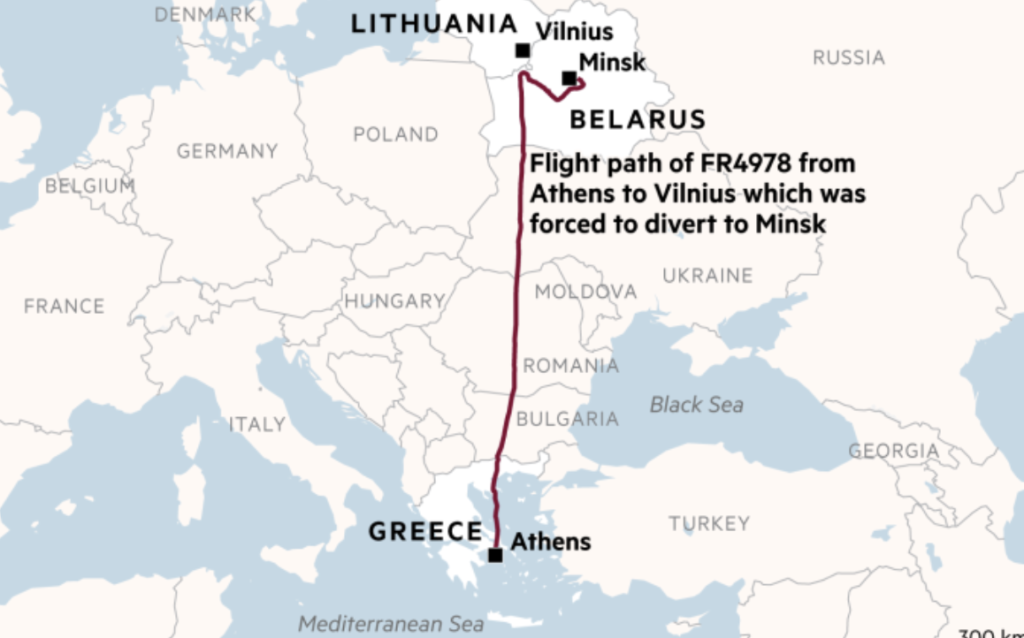
  • On Saturday, a Polish registered Ryanair 737-800 was operating a commercial flight between Athens and the Lithuanian capital, Vilnius. Toward the end of the flight while overflying the UMMV/Minsk FIR, ATC suddenly instructed the flight to divert to UMMS/Minsk due to a security threat onboard.
  • They were not allowed to exit Belarusian airspace despite being closer to EYVI/Vilnius at the time.
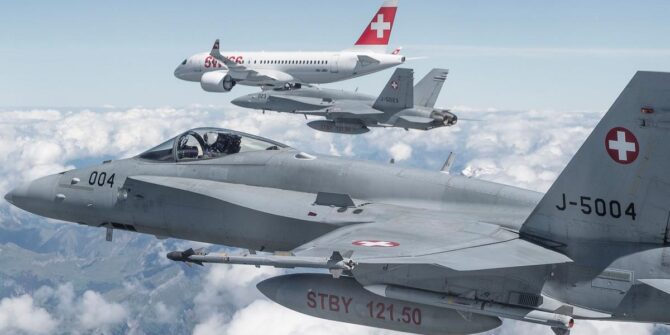
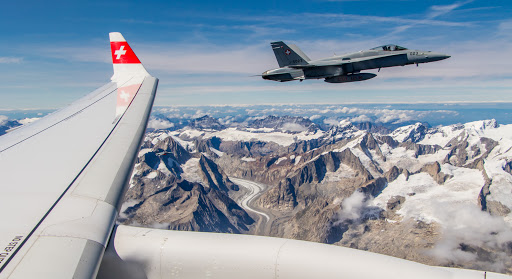
  • There are unconfirmed reports it was escorted to Minsk by a fighter aircraft.
  • Believing the threat to be genuine the crew squawked 7700 and made an emergency landing where all passengers were subjected to additional security screening. One passenger of particular political interest to Belarusian authorities was arrested and detained.
  • No bomb was found and the flight was cleared to depart seven hours later. It continued on to Vilnius (minus the arrested passenger).

Track of the Diverted Aircraft

Operational impact and airspace risk

The forced landing of this flight was politically motivated, and the crew were misled into believing that there was a credible security threat against the aircraft. Understandably, this is of major concern to civil aviation.

The perspective that OPSGROUP takes on any aviation-related incident or situation, is formed solely through the lens of operational impact to our members; in other words, “what does this mean for the flight we want to operate tomorrow“. If I am a pilot planing to operate a flight through the Minsk FIR tomorrow, am I subject to heightened risk of any kind?

Purely from this standpoint, we view this as a one-off incident, that is not likely to recur. We do not consider there to be additional risk to aircraft flying through the Minsk FIR.

But it’s still a major incident …

That does not mean that we are downplaying the magnitude of this event. The conventions and agreements that protect civil aviation are and should continue to be sacrosanct. Aviation itself here has been hijacked, not just this Ryanair aircraft: a dictator-led state has used the civil aviation system for its own nefarious, political purposes.

And as we have seen from the EU ban on Belarus related flights announced this week, the political response has been swift and strong.

But again, purely from an operational perspective, we must differentiate between political sanctions and genuine airspace risk warnings. The Belarus response is heavily weighted to the former, not the latter.

What aviation authorities are now saying

ICAO has issued brief statements online expressing concern, but are waiting for the circumstances of the incident to be investigated further.

EASA has published a Safety Information Bulletin saying that both EU and Third Country Operators should avoid the UMMV/Minsk FIR. However, EASA says it does not believe the safety concern relating to the incident comprises an “unsafe condition” that would warrant a Safety Directive which would force airlines to comply.

Latvia and Lithuania have banned all flights to/from their airports if overflying the UMMV/Minsk FIR. The UK, France, and Canada have all published Notams advising operators not to overfly the airspace of Belarus, and it seems highly likely that more countries will issue warnings in the coming days.

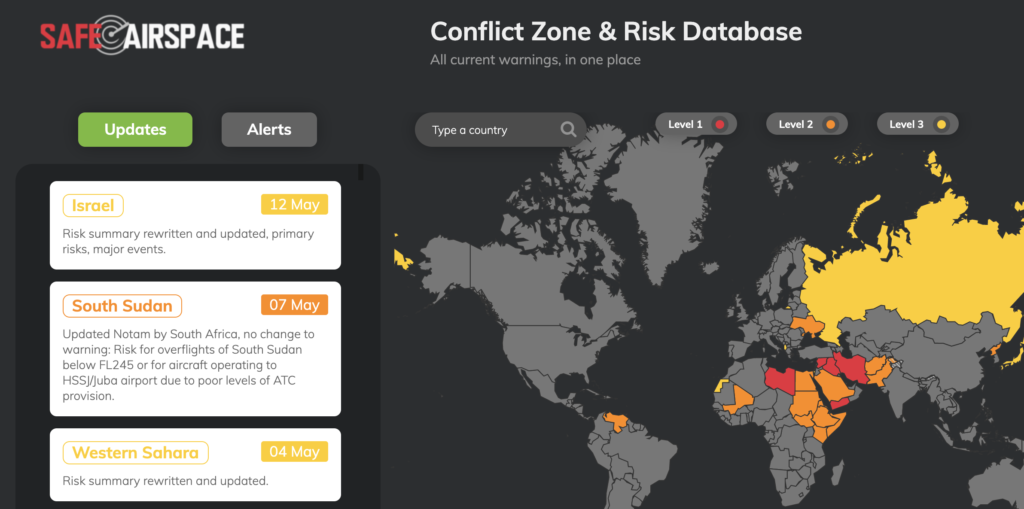
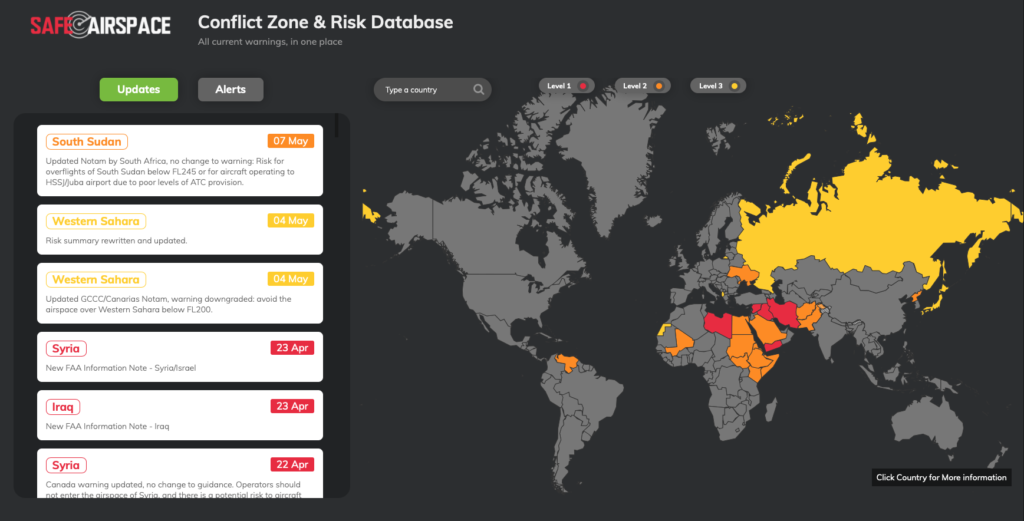
For an up-to-date list of these warnings and advisories, you can check the SafeAirspace.net page for Belarus here. SafeAirspace is a Conflict Zone & Risk Database, and we maintain this warning system to alert operators to tangible, credible threat information that should impact their flight planning decisions. To repeat – we do not consider there to be additional risk to aircraft flying through the Minsk FIR following this recent incident. However, with SafeAirspace.net we simply want to ensure that operators have a single source for all official risk warnings and advisories issued about individual countries, and it’s for that reason we have listed Belarus on the site.

How unprecedented is this?

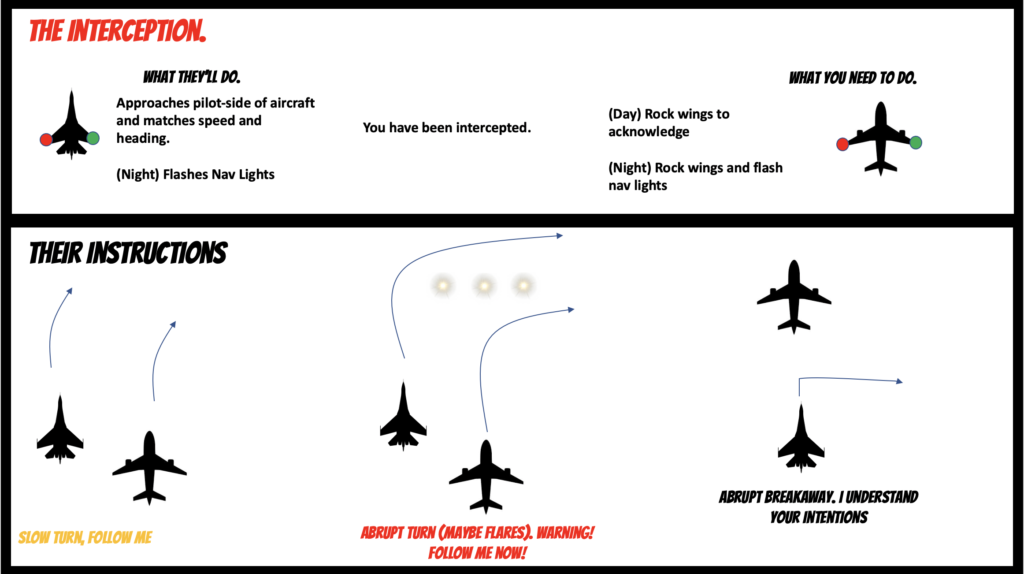
It’s not a routine event for a country to force an overflying aircraft to land, but it’s also not as rare as you might think. Usually, a forced landing and/or fighter intercept occurs because of unpaid navigation charges, or the lack of an overflight permit. Each country publishes intercept procedures, so that pilots know how to respond to a military interception.

Indonesia is well known for this, and it doesn’t usually make headline news, but it did in 2019 when they forced an Ethiopian Airlines aircraft to land in Bantam. In 2016, Iran forced a Fly Dubai aircraft to land in Iran, following confusion about its flight plan. Peru is also known for forcing enroute aircraft to land because of issues with overflight permits.

Politically motivated interceptions are also not without precedent. In 1985, the Interception of EgyptAir 2843 followed US intelligence received reports that four Palestine Liberation Front Terrorists, responsible for hijacking a cruise ship, were located at an airfield near Cairo, and that Egypt was planning on flying them out to Tunis aboard an EgyptAir airliner. The flight was expected to route over international waters, close to a US Navy ship, and so the US coordinated with local ATC to ensure the aircraft was refused landing at both Tunis and Athens, and a pair of Tomcats were sent up to force the airliner to divert to a NATO base in Italy. Once on the ground the hijackers were removed and detained. 

In 1977, Lebanon accused Israel of ‘Air Piracy’ after they forced a Lebanese Middle East Airlines aircraft to land in Israel. The aircraft was en-route from Beirut to Baghdad, when it was intercepted by two Israeli fighters and diverted to an Israeli military air base in Haifa. Israeli intelligence thought the aircraft was carrying leaders of the Popular Front for the Liberation of Palestine. In fact, it did not have them onboard but had been chartered by Iraqi airlines following a delay by one of their own aircraft. The crew and passengers were all forcibly removed from the aircraft add interrogated, according to reports, but were released and able to depart some two hours later.

Bottom line

For now, our guidance to crews and aircraft operators is to follow whatever your national aviation authority prescribes in the first instance – and we may expect to see a US FAA KICZ Notam on the way in similar fashion to the EU ban announced this week.

Outside that, it’s your choice as to whether to operate through Belarussian airspace, or not – but be aware of the difference between politically motivated sanctions (even if that motivation is highly justifiable) and genuine airspace risk.

In rushing to respond to this unusual hijacking of civil aviation protocols, we must be careful not to create another hijack in turn – the trustworthiness of conflict zone and airspace risk warnings.


When Worlds Collide: Commercial Space And Civil Aviation

Change is in the stars, literally.

Cheaper launch costs, reusable rockets and the world’s insatiable appetite for space based technologies have dangled a cosmic carrot for private enterprise to make money in space. The commercial space industry is booming. It turns over hundreds of billions of dollars each year and will hit the trillions by 2040.

This means more launches and re-entries than ever before as demand for earth’s lower orbit soars. In the US alone there have been sixty-five licensed commercial launches since the start of last year shared among twelve different launch sites – that’s a lot of rockets.

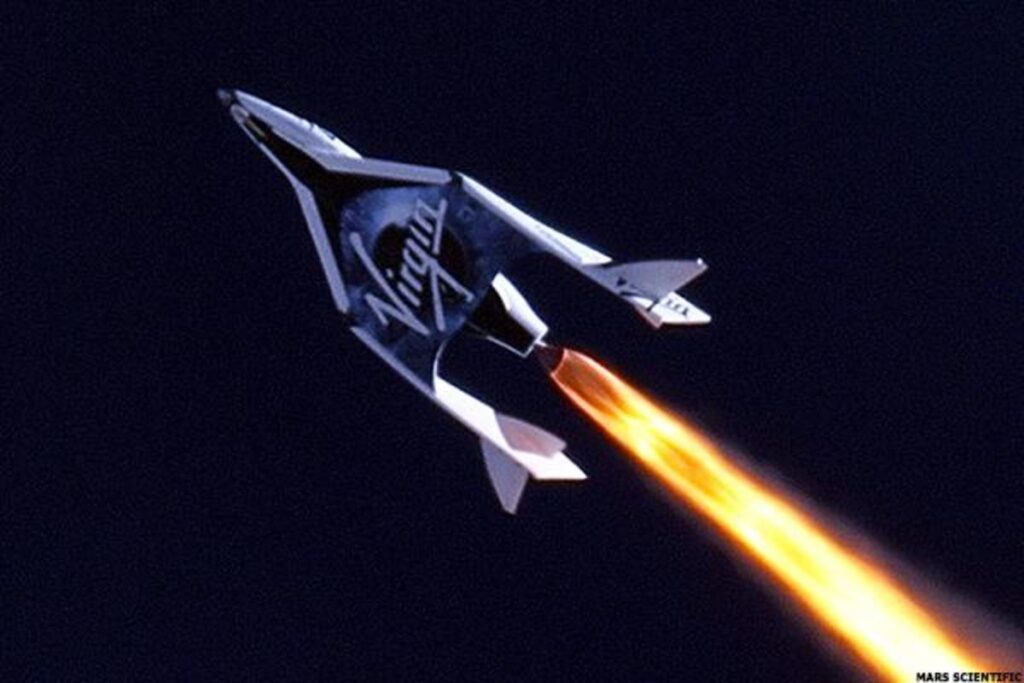
Space is also the realm of the billionaire visionary. Richard Branson’s Virgin Galactic aims to soon make space tourism a reality. Over at Space X, Elon Musk dreams of colonizing Mars while Jeff Bezos seeks to inhabit our moon. Ambitious plans are on the horizon.

We’re on a Collision Course

The problem for commercial aviation is that the space industry needs our airspace more than ever. There’s no other way to the stars than straight through it.

Unless we find new and more efficient ways of sharing it, an increasing burden will be put on aviation to accommodate more and more launches in our skies.

The cost will come in more time, more fuel and more emissions.

Here’s the problem.

Space launches used to be a pretty rare occurrence. Across its career, the Space Shuttle for instance averaged only five launches each year.

Procedures haven’t changed a great deal since then either. When a rocket is launched, large chunks of airspace are closed for long periods of time. And once it’s all over, everything gets reopened. Safe right? But practical?

Not really, when staring down the barrel of hundreds of launches per year.

Take the US for example. The majority of launch sites are located on the coast and affect oceanic airspace. When you factor in the type of launch vehicle, its trajectory, where it will go if it needs to abort, where its boosters will land and any other hazards the airspace closures quickly become huge.

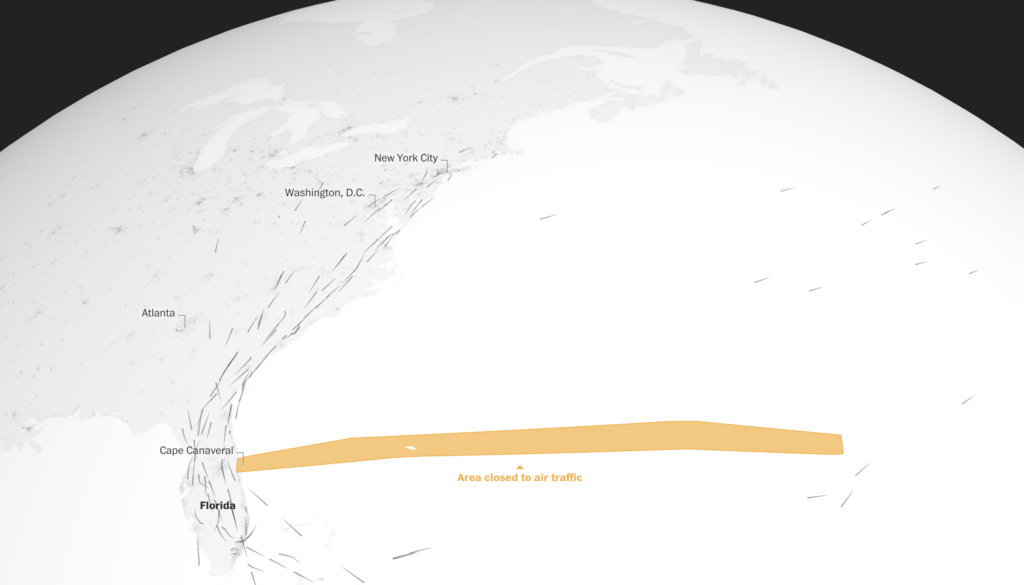
Launch sites in California affect Pacific routes. A single mission can affect half of the airspace between Hawaii and the West Coast. Launch sites in Virginia and Florida affect North Atlantic routes and lead to congestion in other airspace, such as Jacksonville.

Launch windows are also hours long, with backup windows in case of poor weather.

A famous Space X launch back in 2018 is a great example. You might remember the one – it delivered a small red Tesla Roadster to space in the very first test launch of the Falcon Heavy rocket.

Its launch window was open for two and half hours. Due to unfavourable winds, it used up most of that. In the meantime, the FAA couldn’t re-open the airspace above it.

While the world waited for a ten minute launch, 563 flights were delayed and 34,841 extra miles were flown. 5,000 square miles were affected resulting in cumulative delays of seventy-seven hours.

That’s an expensive ride to space.

What’s the solution?

ALPA suggested that the current approach is based on segregation – keeping airplanes away from rockets. But the future relies on integration.

In a nutshell, here’s what they suggest to make it happen:

Better Comms.

 Broadly speaking, spaceflights need to be operated using similar procedures to how we manage earth-bound traffic.

Just like flight plans, launch plans could be introduced with similar details which can be communicated to all other airspace users and controllers in real time and amended when disruptions inevitably happen.

Existing technology used for remote or oceanic airspace can help here too. Fancy things such as next-gen HF and datalink could be used for live communication between pilots, air traffic control and space operators.

Better Surveillance.

 It’s already on the way. The FAA’s Space Data Integrator is a huge step forward in automating and simplifying the flow of live launch and re-entry data so that areas of risk to aircraft can be more efficiently predicted. The project has global potential.

Space-based ADS-B is another opportunity. Already making a big impact over the NAT, it could also be used for spacecraft, including their boosters during re-entry to help air traffic controllers manage airspace closures far more efficiently.

Better Sep.

With technology leading the way, we can begin to safely reduce the margin between aircraft and spacecraft. New international standards would need to be developed to make this happen – and both industries would need to be onboard.

With all these launches, what about debris?

Are we actually at risk?

The uncontrolled re-entry of debris from China’s Long March 5 rocket raised a few eyebrows (including NASA’s) a couple of weeks back when it splashed down east of the Maldives in the Indian Ocean.

For several days no one could say for sure where or when it would re-enter, making the issue of accurate aviation warnings impossible.

The launch and re-entry phases of space flight are usually protected by airspace restrictions designed to keep us well away from anything that could go boom. And unlike anti-aircraft weaponry designed to actively seek out aircraft, space-bound rockets only present a ballistic risk – in other words, being in the wrong place at the wrong time. But this is solved by closing airspace.

Space debris is another danger, albeit a tiny one. It poses far more danger to people on the ground that it does to us up in the air. Admittedly there is a bunch of it up in orbit – 170 million pieces to be precise, but the US Government estimates that only about 400 of them re-enter each year. That’s about one per day.

A recent study actually crunched the numbers. The chances of a single piece of space debris (such as that from China’s Long March 5) hitting an aircraft is somewhere in the realm of a tiny fraction of a percent. That’s not to say it can’t happen – back in 2007 an A340 operating over the South Pacific came uncomfortably close, but the odds of a direct hit are almost zilch.

So far more pressing right now is how we fit two industries into one sky.

The sky’s the limit.

NASA and the FAA have an MOU regarding spaceflight, where they have committed to working together to improve safety and integration between space and earth based operations.

The FAA have also recently announced new symbols on their navigation charts, showing launch sites for better pilot awareness. Your first point of call remains the published TFR list, and notams regarding launch windows.

The potential benefits of commercial space travel are huge. But practically speaking both industries need to keep working on better and more efficient ways to share airspace. Otherwise we are all headed for one heck of a traffic jam up there.


Dangerous Goods: The Bad Ones

IATA recently ‘urged action’ over rogue lithium-battery shippers. Folk are apparently sneaking them onboard without proper notification or packaging, and this could turn into one big, hot mess for airlines.

So, here is a closer look at Lithium Ion batteries, what they are, what they can do, and how to better deal with them onboard.

What are they?

In big terms they are things that power a lot of our airplanes. In smaller terms, they are the batteries in our phones and portable electronics.

And in super simple terms (and with some creative licence thrown in) they are a cell that contains an electrolyte liquid. Lithium Ions get all charged up, and when they are feeling particularly positive, they dive into the electrolyte and swim through it. The movement of them gets the electrons all excited too, and they go zooming along from the current collector, through the device (your phone, laptop, airplane) which sucks out their charge, and then they get collected up by the negative current collector. 

They are different to regular Lithium (without the ion) batteries because they are rechargeable. They also have no memory effect (they don’t get lazy when repeatedly recharged) and they have good energy-to-weight ratios.

What is the risk?

They sometimes go into thermal runaway, usually when charging, but also if you bash them about (think iPhone stuck under business class seat, getting repeatedly run over by the chair mechanism as the passenger tries to pull it out again).

Thermal runaway, as the name suggests, involves them getting really hot – so hot it reaches the melting point of the metallic lithium and causes a pretty horrid reaction when it just keeps getting hotter and hotter until flame, fire, explosion…

You might think a small phone would not be much of a hazard but there are a lot of very flammable things in your airplane cabin. And there are a lot of things with lithium ion batteries in them that people bring onboard.

Then there are airplane batteries themselves. Boeing had an issue early on with their 787 Lithium Ion batteries leading to an All Nippon Airways 787 having a pretty serious incident with one before the problem was resolved.

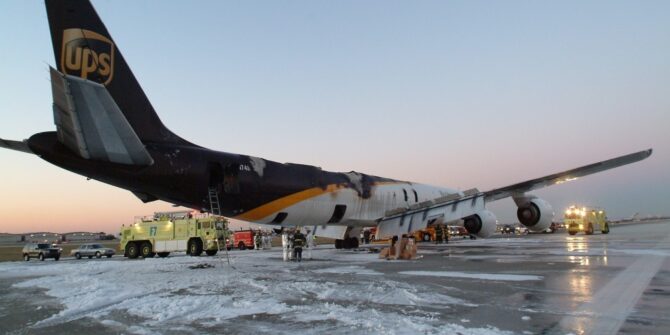
The biggest risk though comes from those in the cargo bay. Particularly the ones that you don’t know are there, should not be there, and which you cannot monitor. A UPS 747 crashed in Dubai after LI batteries in the cargo hold caught fire. The report suggested the heat and smoke from the fire disabled the crew oxygen system and entirely obscured their view within 3 minutes of the initial warning.

What can we do about them?

Most airlines will have a procedure written into their manuals, but it is worth a quick recap because there are some important bits to note.

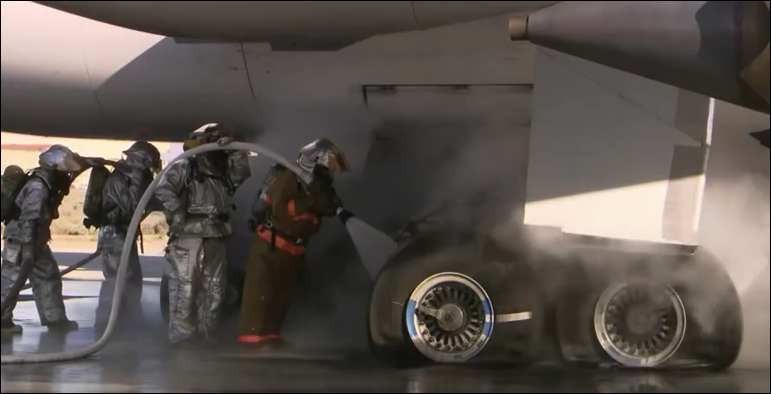
  • If it has flames, use Halon. If you are using halon (in the cockpit) make sure at least one of you puts a smoke hood on – the stuff is very bad for you.
  • If there are no flames and it is just smoking hot, then cool it down by pouring water or a non-alcoholic liquid on it. If it is a laptop or something fixed in the cockpit then have a little think before you go slugging water on it though, because there are other electrics around which might not like it that much.
  • Don’t try to pick it up (without gloves on). Don’t cover it with ice thinking this will help cool it better, because it actually just insulates it more making it hotter. Don’t put it in fire resistant bags for the same reason.
  • Once it is safe to move, use fire gloves and put it in a receptacle – things like waste bins are good. Fill with water and store it somewhere safe where you can keep monitoring it.

Getting your crew to be vigilant for phones under seats (and passengers not moving said seat until phone is retrieved) is a good plan too.

The Cargo Concern

Lithium Ion batteries in the cargo hold are a different matter. If you have Dangerous Goods approval then you will have manuals and info on this. If you don’t have DG approval then any mention of Lithium Ion batteries on a NOTOC should be concerning you.

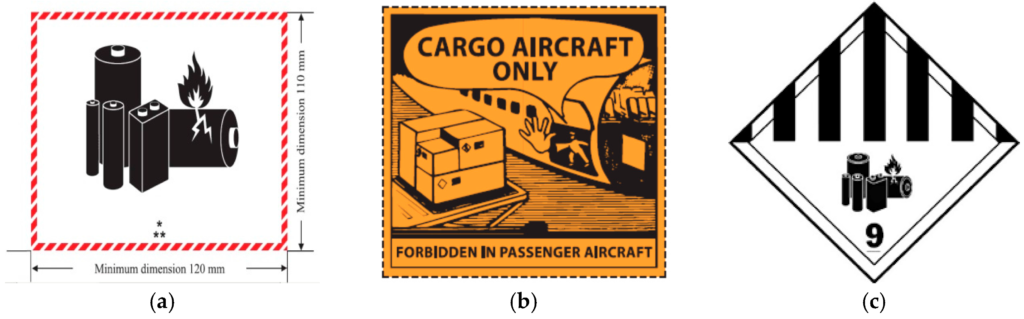
Lithium Ion batteries are a Class 9 Dangerous Good. The ones to look out for are the UN3480 and UN3090 numbers:

  • UN 3090, Lithium metal batteries (shipped by themselves). These are are not rechargeable and are designed to be chucked out after their initial use. They are actually Lithium Metal batteries. These are prohibited for carriage on passenger aircraft.
  • UN 3480, Lithium ion batteries (shipped by themselves). These are the rechargeable ones found in your phones and things.
  • UN 3091, Lithium metal batteries contained in equipment or packed with equipment
  • UN 3481, Lithium ion batteries contained in equipment or packed with equipment

Lithium Ion batters are allowed to be carried on cargo aircraft so long as they have been handled properly. The proper handling, packing, labelling and loading (what they need to be separated from) is all covered by IATA in their massive DG Manual. You can get that here, and find some handy online while you’re at it.

Again, if your operator doesn’t have DG Approval then this is just for info. If you’re wondering whether they do have approval then they don’t – crew have to undergo a yearly Dangerous Goods refresher course and you would remember this (because it is generally quite boring).

So, the simplest thing is to not carry them…

That would be great, but unfortunately it is not that simple. Lithium Ion batteries are in everything nowadays. They come in all shapes and sizes. So the first step is ensuring your passengers know what they are in, and are aware that they shouldn’t be putting these in their checked baggage.

Here is a handy info brochure to give to passengers.

This is a general ‘heads up’ list of some of the things an LI battery might be lurking within:

  • First up, those luggage bags which have them installed in them – if the battery can’t be removed and is more than 0.3g or 2.7Wh it probably shouldn’t be carried. If the battery is under those limits, or if it is removable then it can come onboard but only in the cabin, not in checked baggage.
  • Any lithium ion battery that is under 2g or 100Wh can generally be brought into the cabin. There is often a limit here (20 per person) but this varies with different operators.
  • Mobility aids – electric wheelchairs – often cause problems because folk don’t always know what their battery details are, and it is the airport staff who have to deal with this. The battery on these has to be in an enclosed container to prevent short circuits, and it must be attached as per the manufacturer instructions, or removed if it can be. If it is removed then it must not exceed 300 Wh or 160Wh if there are two of them on the device.
  • Hidden batteries – A lot of devices contain batteries. eBikes. Drones. Things that passengers don’t always think about.

The Captain probably needs to know about the location of these, so if you see stuff being loaded on and haven’t been informed about it, ask.

Finally, rogue shippers. Because of the restrictions, people are sneaking them onboard hidden in incorrect packaging, and without declaring them. They key to stopping this is going to lie with the airlines, operators and ground staff who need to be vigilant. The crew cannot do much more than mitigate the situation if some are onboard, and do cause issues.

Here is the full note from the US Department of Transport and IATA

What to do if you have an incident

If you have a Dangerous Goods Incident, you need to report it, and usually quite quickly. The FAA info page is here to help.

Lithium Ion battery fires are extremely hot and burn incredibly fast. If you think you have LI onboard that might be compromised, get that airplane on the ground as quickly as possible, and get your passengers off.

Want to read some more?


Going Viral: The non-Covid nasties to watch out for

With Covid running rampant across the globe, other risky diseases have been forgotten somewhat, but there are a fair few out there which can pose a threat to crew on layovers.

So here’s a quick round up on the regions where you might need to cover up, dose up, or just be extra cautious during your international flight operations, split into sections based on the active travel health alerts that the CDC and other health authorities have out at the moment.

Red Warning Level 3: Avoid all non-essential travel

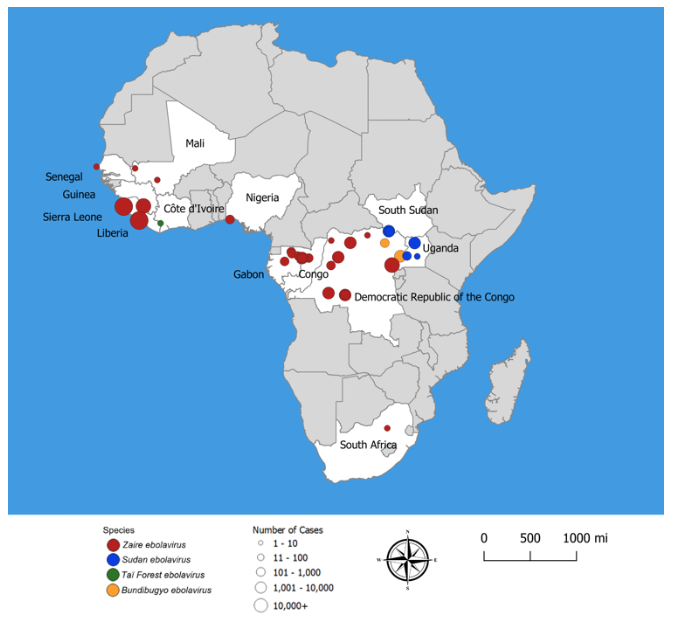
Guinea – Ebola

They had a serious outbreak earlier in 2021. Actually, cases have reduced significantly and the US has just removed their travel restriction which required travelers coming from Guinea to enter the US via 6 main airports only. Caution is still very much advised though if traveling in the country.

Venezuela – Infrastructure

Not a specific disease caution here, just a warning that their healthcare infrastructure is breaking down and if you are taken ill here you may not be able to access treatment. One to think about if you ever have crew on a layover here.

Amber Warning Level 2: Extra caution

Fiji – Leptospirosis

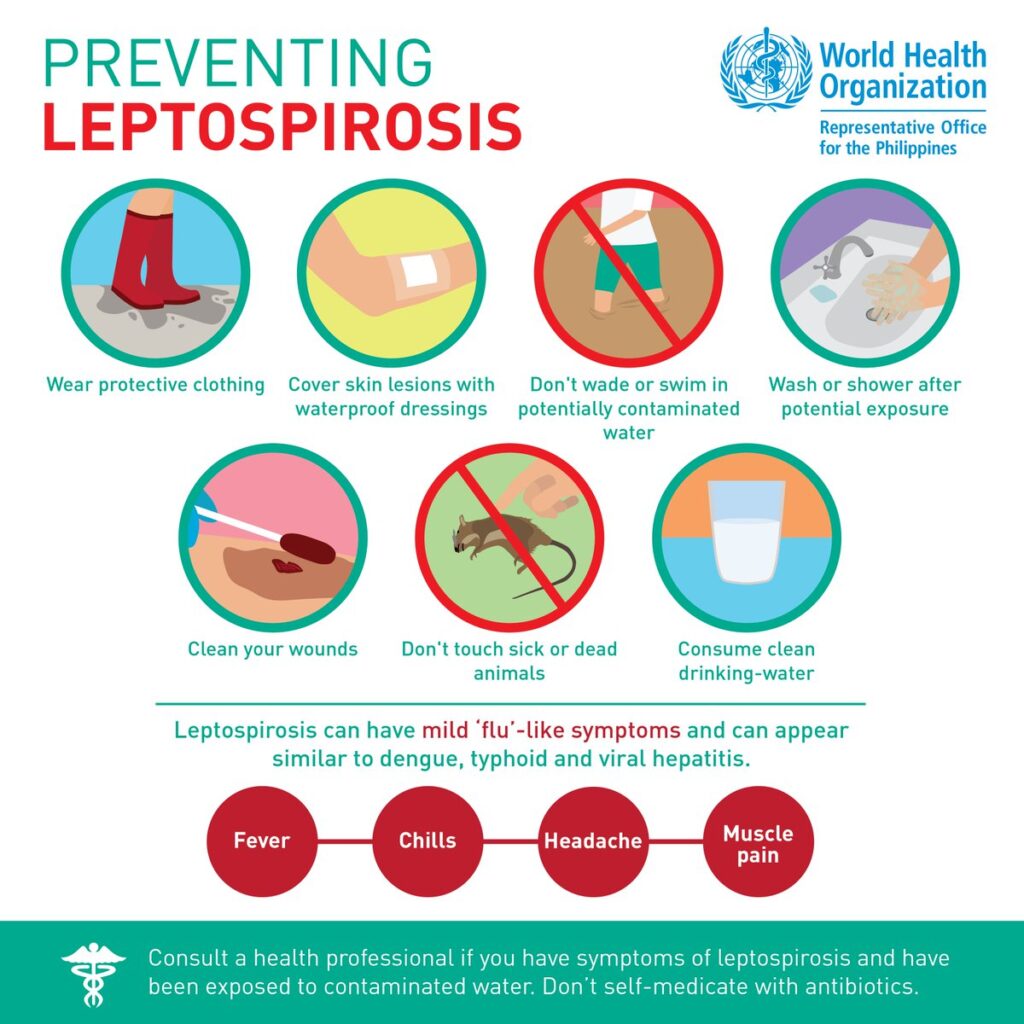
This really prevalent in Fiji at the moment, particularly rural areas. It is caused by a bacteria spread around by animal pee, and can get into water and soil and live there for months. The main guidance is to avoid swimming or wading in water that could have had infected animals in it. Wear protective clothing and footwear and cover any cuts and scratches with waterproof bandages.

Haiti – Rabies

Haiti currently has a big problem with rabid dogs. The bigger issue is that there is an extremely limited supply of treatment drugs in Haiti, so the recommendation is to get vaccinated before you head there.

Avoid dogs, and cats for that matter – even the cute baby ones. You can catch it if you are bitten, scratched or even licked, and treatment is only effective if administered early. Once symptoms present themselves it is often fatal. Plus, getting bitten by anything is never pleasant.

Polio – Africa and Asia

Everyone should be vaccinated against this. If you are not, get vaccinated (or don’t travel) because this is continues to be very prevalent in African countries and there is always a risk.

Nigeria – Yellow Fever

Consider getting vaccinated if you head here regularly, and try to prevent mosquito bites (also, because they carry loads of horrid stuff).

International flight crew generally are required to have had Yellow Fever Vaccinations – if you have not then take care because some countries will not allow crew (anyone) to enter who does not have a vaccination booklet if they have traveled to a Yellow Fever region recently.

What else to watch out for

Malaria

Malaria is a parasite carried around by mosquitos. There are actually four types of it, and it is in a lot of places!

The big risk here is it can take a while for symptoms to show. They reckon you’re most likely to have symptoms between 10 days and 4 weeks from being infected, but it could take as long as a year. The little beasties also like to loiter around in your liver, popping out at random times when you’re run down, and so can cause recurring illness for as long as 4 years after infection.

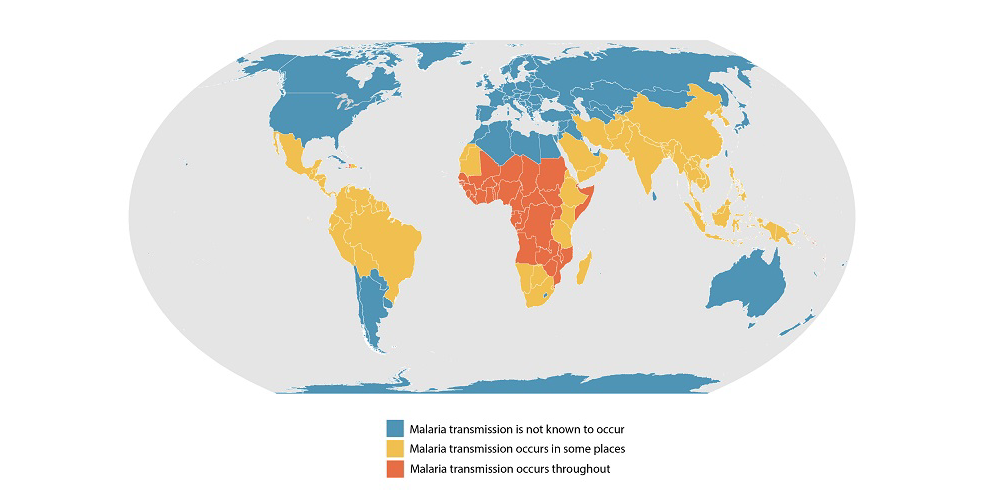
Where?

According to the CDC it is found in warmer regions, which doesn’t narrow it down an awful lot – basically anywhere hot and humid where there are places for mosquitoes to breed and grow. Just after rainy season is likely to be the worst, and rural areas will be more risky.

We have borrowed the CDC map because it is easier than trying to list everywhere to watch out.

How to prevent it

If you are going to a Malaria riddled area then you can take preventative medicine, but watch out! Not many are approved for operating pilots because they can have some nasty side effects. Malarone is the most commonly approved (and generally has the least side effects) but we ain’t no doctor so check with an AME from your licensing state before taking.

The other option is to slather yourself in deet and wear long clothing to prevent the little nippers from getting at you in the first place.

The Symptoms

  • Fever, sweats ad chills
  • Muscle ache
  • Nausea and sickness

So, basically generic symptoms of about a thousand other possible diseases.

If you have been to a malaria area and are thinking “I got chills, they’re multiplying”, don’t write them off as a random cold – tell a doctor so you can get tested because it can get very serious!

Dengue Fever

Another one to blame on the pesky mosquito, Dengue is common in over 100 countries, and over 400 million people catch it every year, 100 million getting sick and 22,000 dying. Dengue Fever is Malaria’s bigger, badder brother, and there is no specific treatment.

Like Malaria, there are also different strains of the virus meaning you can get different sorts, multiply times.

Where?

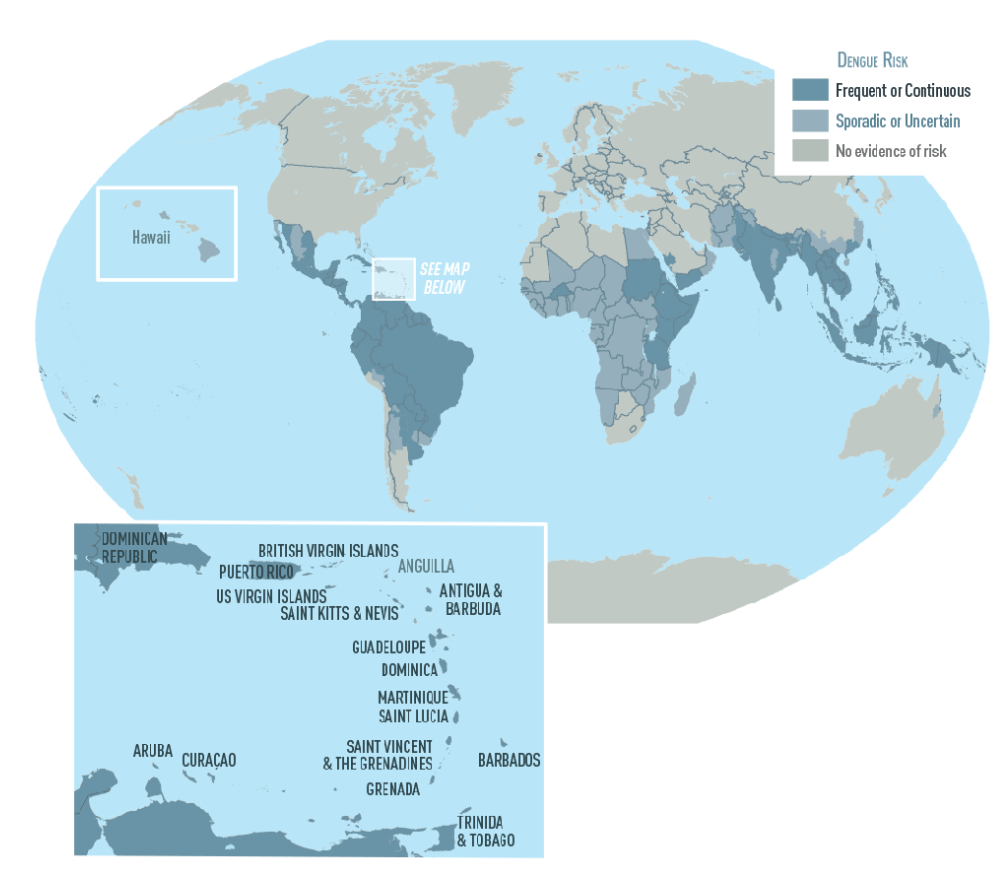
Outbreaks are coming across the Americas (including North America, although the mosquitoes aren’t there, people just head in already infected), Africa, the Middle East and Asia, and the Pacific Islands. It is most prevalent in tropical and sub-tropical areas.

There is currently a growing outbreak in Reunion.

Brazil has the highest rate of Dengue fever in the world.

How to prevent it

Best plan, don’t get bitten. Insect repellent is smelly, sticky stuff but it works. Here’s what the CDC recommends:

  • DEET
  • Picaridin (known as KBR 3023 and icaridin outside the US)
  • IR3535
  • Oil of lemon eucalyptus (OLE)
  • Para-menthane-diol (PMD)
  • 2-undecanone

There is a vaccine but it is only given to people who have been infected before and have a risk of getting severe Dengue, and for kids between 9-16 who live in a Dengue area.

The Symptoms

The early, mild ones tend to get confused with other diseases so again, ff you’ve been somewhere with Dengue, don’t assume it is something else. Go get tested.

Initial symptoms usually appear within 4 to 10 days:

  • Nausea and sickness
  • Rash
  • Aches and pains, especially behind the eyes and in bone joints and muscles

These last around a week, unless you develop serious Dengue fever, which 1 in 20 do:

  • Belly pain
  • Vomiting (a lot)
  • Bleeding from nose and gums
  • Lethargy

Zika

This one made the news a few years ago as it can cause serious birth defects. The symptoms for most tend to be fairly mild though.

It is also transmitted by our old friend the mosquito and there is no particular treatment so your preventative tricks are the best – don’t get bitten!

Chikengunya

Transmitted by mosquitoes, this has very similar symptoms to Dengue Fever and Malaria, and is found in all the same spots.

There is no treatment for it and no vaccine to prevent it, so preventing bites is really important.

There are currently serious outbreaks in Brazil, and in Asia (Vietnam, Philippines)

Ebola

This is a nasty one, often deadly, and causes lasting damage. They don’t really know where it comes from but it possibly started with monkeys and apes and was passed onto us human folk.

It is spread through direct contact with all the gory stuff that comes out of sick people.

Where?

Guinea had a major outbreak in 2021, but cases have fallen again. The US previously restricted travelers from here, and from the DRC, only allowing entry through 6 specific airports.

In 2020, the DRC (formerly Zaire) had a major outbreak.

It is most common in African countries, particularly the central African countries, and along the north west coast.

How to prevent it

It is spread through bodily fluids so avoiding contact with these is important. You also should avoid contact with animals that live in Ebola regions. Bats, primates, forest antelope all carry stains of the virus. So don’t eat them.

There is a vaccine but it is only used in areas where an outbreak is occurring. There is medicine for treating it, and the do help survival rates. You also need medication to support blood pressure, to manage the fever etc, so this really is a serious disease which you do not want to catch

The symptoms

These can appear between 2 and 21 days of infection, usually around the 8 day mark. The main symptoms are:

  • Fever
  • Severe aches and pains
  • Sore throat
  • Loss of appetite
  • Gastrointestinal symptoms
  • Unexplained hemorrhaging, bleeding and bruising

Yellow Fever

This is pretty rare nowadays, but still on to watch out for across Africa and South America. It gets its name from the fact it generally causes jaundice.

Insect repellant works well. It is transmitted by the mosquito (again)

There is also a vaccine. It has been used for 80 years and it pretty well tested, safe and effective, with 1 dose providing life long protection. In fact, many countries require travelers to have had the vaccine if they are entering from a country (or have visited one) where there are high incidences of Yellow Fever.

Meningitis

This is serious – it makes your brain and spinal cord membranes swell up which sounds horrid and painful. It can be bacterial, viral, parisitic, fungal, amebic… so there are a bunch of different sorts all with varying degrees of nastiness.

Good news though, there is treatment for most, and vaccines. You have likely had some already, it is another one that flight crew are often vaccinated for because this can be caught from all over the place. Bacterial in particular can be in food.

General travel recommendations

The CDC has good guidance for flight crew which you can read here.

Many international airlines require their crew to have the following vaccinations, and they are often recommended in general for any traveller:

Cholera – Africa, Asia, Central America and the Caribbean

Diphtheria – Africa, south Asia, former Soviet Union. This protects you against Diptheria, polio and tetanus

Hepatitis A – Africa, Asia, Middle East, Central and South America. This is common in places with poor sanitation and hygiene and can be picked up a lot of ways.

Hepatitis B – Africa, Asia, Middle East, Central and South America. This is spread by bodily contact generally.

Japanese Encephalitus – Common in rural areas of Asia with a tropical climate, after the rain season. It is also found in western Pacific island and near Pakistan, China and Australia. Actually, it is rarely found in Japan because they did a mass immunization program years ago. There is a tick borne version too. Also with a vaccine available.

Typhoid  – the Indian sub continent, south and south east Asia, South and Central America, Middle East


Belarus: A closer look at their aviation industry

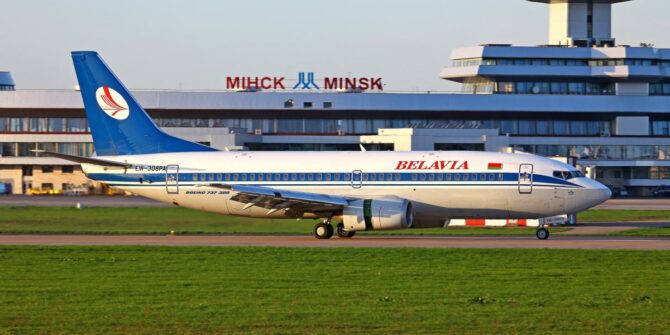
Belarus is in the spotlight at the moment for their recent, controversial decision to force a foreign civilian aircraft to land under false pretences and for political reasons.

We thought we would take a look at their aviation industry, what you might experience if operating into the region, and a brief review of what it will mean if other countries ban use of their airspace.

Who is ‘Belarus’

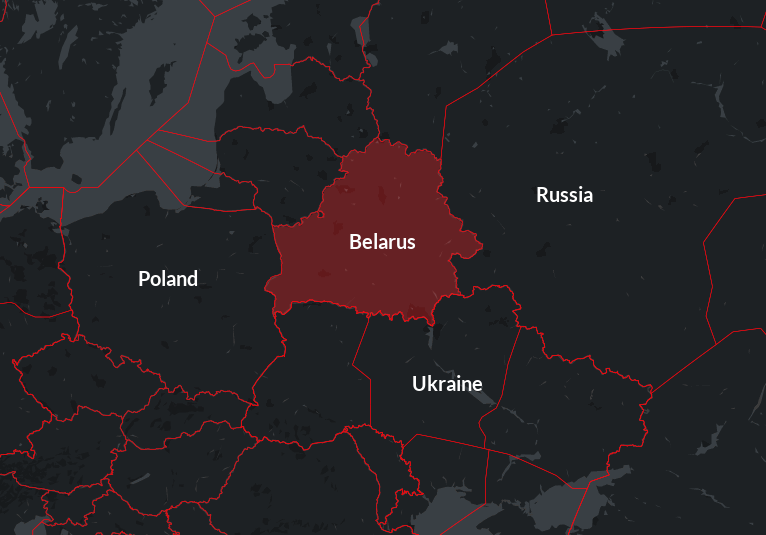
The Republic of Belarus is a landlocked country in Eastern Europe. They border Russia, Ukraine, Poland, Lithuania and Lativia. The capital is Minsk. Before gaining their independence in 1991, the country was known as Belorussia, or ‘White Russia’, and was a small Slavic Republic included in the Soviet Union (along with Russia and the Ukraine.)

The are considered a developing country and rank pretty high on the Human Development Index. They are a member the UN and have a decent bilateral agreement with the EU, but are not a member of it.

Tell us about their airports.

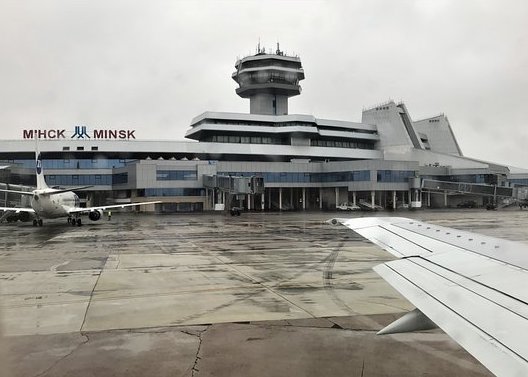
The main international airport is UMMS/Minsk:

  • 13R/31L    11,946ft/3641m    ILS CAT I
  • 13L/31R    12,139ft/3700m    ILS CAT III / CAT I

It is a decent airport with good facilities and no major threats for operating in.

Aside from UMMS, you also have the following airports with customs facilities (although none of them have a runway longer than 9000ft)

  • UMBB/Brest (not to be confused with Brest, France) with an 8596ft/2620m runway 11/29
  • UMGG/Gomel also known as Homiel/Gomel/Pokalubichi with an 8428ft/2569m runway 10/28
  • UMMG/Grodna with a 8399fr/2560m runway (limited taxi and apron space) 17/35
  • UMOO/Mogilev offering a 8419ft/2566m runway 13/31 (there is one taxiway off the runway so 180° turns and backtracks required here, and very limited facilities)
  • UMII/Vitebsk why 8550fr/2606m runway 05/23 (also very limited)
  • UMIO/Orsha opened in November 2020, offering a new cargo hub for the country. Runway 05/23 is a decent 9846ft/3001m with a CAT II ILS

Tell us about their airspace.

The airspace is what most operators are really interested in. Belarus is a fairly decent sized country which is the main airspace between Russia and Poland, and Western Europe (unless aircraft want to route further north through Lithuania and Latvia).

Above FL275 in the UMMV FIR is Free Route Airspace meaning you can plan directs between Entry and Exit points (AIP ENR 4.1)

Several authorities are currently banning their operators from routing through Belarus Airspace. This means significant detours to the north for aircraft routing to Russia.

The Ukraine borders Belarus and Russia has multiple airspace warnings and restrictions preventing many operators from overflying their airspace, so Belarus is a fairly important trade route for aircraft routing from Western Europe to Russia.

Using Minsk as a connection to Russia can have some customs issues though. Reports suggest Russia considers flights between the two as domestic (leading to cabotage issues with Russian customs), and so most operators seem to opt for EYVI/Vilnius or EVRA/Riga instead.

Tell us about their infrastructure.

Belarus’ infrastructure is a relatively aging ex-Soviet one. However, they have focused on improving their aviation infrastructure over the last decade or so. The major airports all offer at least a CAT I ILS landing system, and their en-route navigation facilities meet ICAO standards.

In 2020, the Belarussian government announced they would offer Minsk as a Fifth Freedom hub, allowing foreign operators to layover in Minsk, and fly onto other long-haul destinations.

The Aviation Market in Belarus was (pre-Covid) outpacing the growth of the wider Eastern and Central European market, with short haul carriers such as Wizz looking to increase flights to the country.

Tell us who to talk to if we want to fly there.

You need overflight and landing permits if you are a private or commercial operator. Easiest way is to fill out Form 2 and send it by AFTN direct to the authorities. They need 3 days notice if you’re heading to an international airport, and 5 if you want to fly to a domestic one.

The email for the Belarus CAA is ops@ban.by
AFTN: UMMDYAYX +375 17 222 5517

If you want to get in touch direct with someone at UMMS/Minsk airport then their admin number is +375 17 279 1436 or you can try one of the main handling agent, Belavia at +375 17 220 2555.

The Belarus AIP is available online http://www.ban.by/AIP/Belarus210715/html/index.html

Anything else to tell us?

Notam O0401/21 is in force from Apr 30 to July 31 closing runway 13R/31L at UMMS

For updated information on current airspace advisories and restrictions, check out our article on the current events surrounding Belarus.


The Gateway to the Skies

If you have not heard of the IFP Information Gateway then here is a little summary for you. It is the Instrument Flight Procedures Information Gateway which is, according to the FAA who run it, your centralized instrument flight procedure data portal.

It’s a handy site because it provides you with a single-source, one-stop-shop, first place to visit if you need info on any of the following:

  • Charts
  • The IFP Procedures plan
  • IFP Coordination (forms and things)
  • IFP Documents
  • IFP Request form – this is where you can submit a request or query on an IFP. SO if you fly somewhere and think an IFP needs creating, amending or cancelling, you can do it here!

And this isn’t just for US pilots – it is pretty handy for anyone flying into the US who flies IFR procedures.

The Optimisation Project

This is a major project that the FAA are undertaking. They are reviewing their entire inventory of equipment and procedures as part of a plan to modernize the National Airspace infrastructure – to improve airspace and airport efficiency and safety.

The NAS covers an area of something like 30 million square miles, so it is a big project.

What is the plan?

The introduction of PBN (performance based navigation) is a big part of the modernization. If you fly into the US then you need to know about this, because it is going to mean changes to routes and procedures, airspace and equipment required.

Charts are being updated to remove unnecessary clutter. In 2020 they cancelled 1,000 procedures and took out things like circling minima on charts that no longer needed it. You need to know about this because it will impact chart validity, and things like minimus are airports you might use.

As for the inventory check – they are reviewing all the procedures at airports and deciding which to keep, which to cease, and which just plain old need updating. This will start with the decommissioning of any ancient VORs and NDBs which no longer support the operations network. You need to know about this because there will be ongoing changes to the approaches available at airport.

Give us some more details on the inventory checks

The FAA are going to review all procedures.

Why?

Well, because having looked over some data they reckon at least 20% of current IFPs have pretty limited benefits to the NAS. If procedures are not being used then retiring them means lower admin, maintenance and training costs. It also means more efficient and effective airspace management, which means improved safety and access.

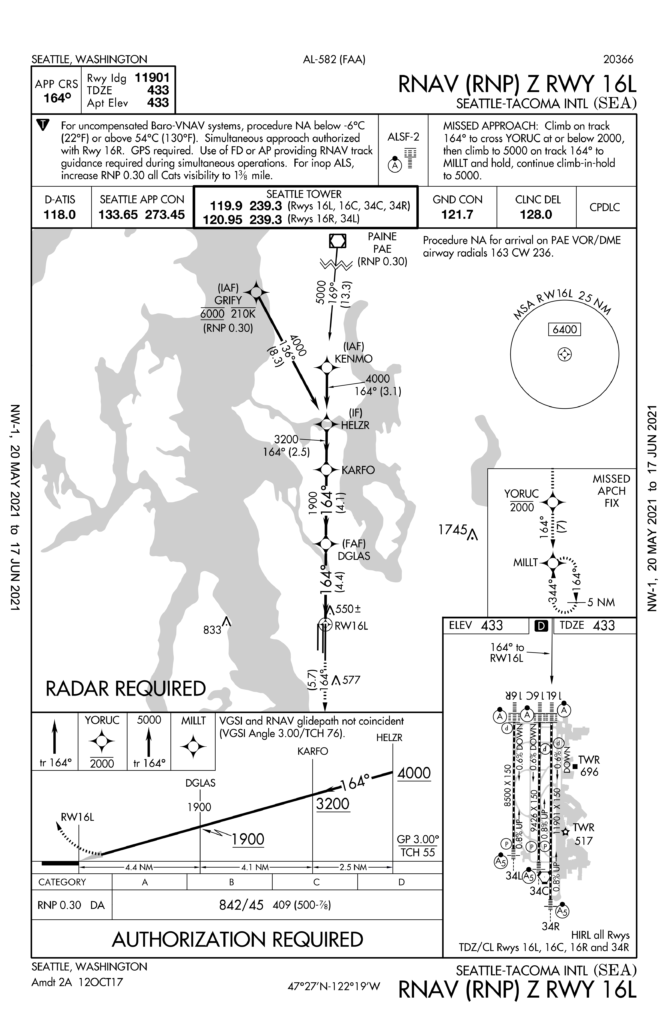
Take KSEA/Seattle for example. They have an RNAV RNP approach and a GPS approach for runway 16L. The RNAV RNP was only flown 17 out of a whopping 191,448 IFR arrivals.

It has higher minimum and an identical flight path to the GPS approach so there is really no reason for this approach to exist.

KPAE/Paine Field is another one worth looking at. It has a VOR-A approach which was only flown 95 times out of 10,348 IFR arrivals. It is under-utilized, costs a bunch to maintain and there are plenty other options. So it is a good one to chop.

What about KSBA/Santa Barbara airport and their VOR or GPS approach runway 25? This was also significantly under-utilized, being flown just 1,732 out of 17,174 arrivals. However, it is the most commonly used approach for GA traffic, and is the only one available when the wind is favoring that runway. Not such a good one to delete.

The IFP plan won’t just review data and statistics, it also engages with the folk using the IFPs to make sure changes are benefiting those it needs to benefit. Santa Barbara won’t lose the procedure just yet, although they might get itself a nice new space-based one out of this at some point.

Comments and feedback

If you fly into airports and have comments or feedback on IFPs then get in touch, either by filing in the form, or emailing at 9-AMC-Aerochart@faa.gov. This project is a long, ongoing one, but one that will benefit any operator who flies in or out of the US, and there are opportunities there to provide input.

Check out the info


May 2021: Israel Airspace Risk

Update May 23, 2000z:

  • The ceasefire between Israel and Hamas in Gaza agreed on May 21 is continuing to hold.
  • Israel has now removed its Notam advising caution to operators in the LLLL/Tel Aviv FIR.

Update May 15, 1200z:

  • The Israeli CAA have now published a Notam advising caution in the LLLL/Tel Aviv FIR due to the ongoing conflict between Israel and Gaza. Operators can contact the Israel Airports Authority for operational info: contactus@iaa.gov.il.
  • Militants continue to launch rockets and drones at towns in central Israel, while the Israeli Defense Force continue to target locations in the Gaza.
  • LLBG/Tel Aviv airport will be closed all day tomorrow, May 16.
  • The US has updated its Travel Advisory for Israel, increasing the level of advice to “Level 3: Reconsider Travel”.

Story from May 12:

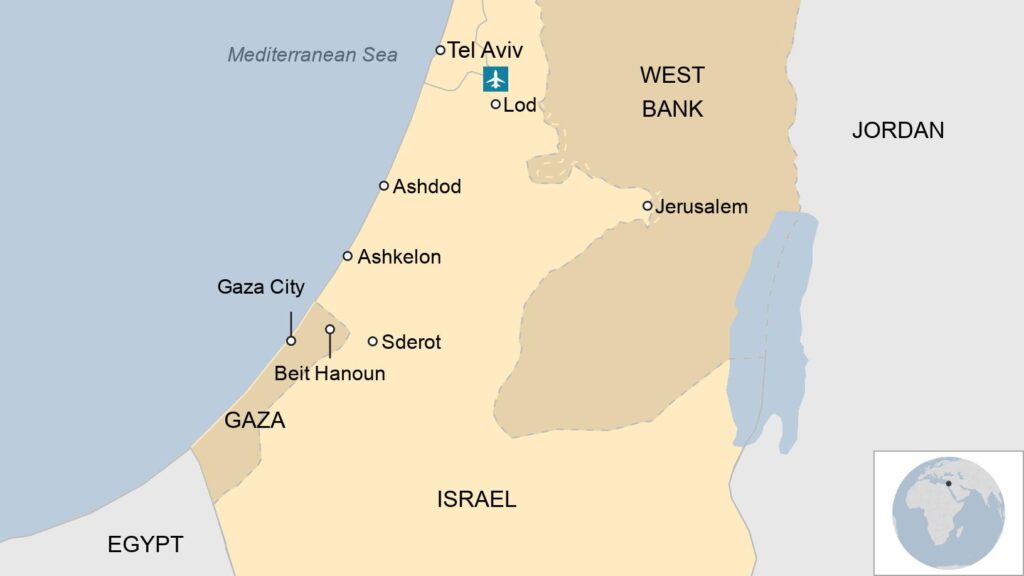
Flights at LLBG/Tel Aviv Airport were temporarily suspended on May 11, with some diverting to Greece and Cyprus, as the city was bombarded with multiple long range rockets launched by militant groups in Gaza. No damage has been reported at the airport, although some airlines have cancelled flights this week.

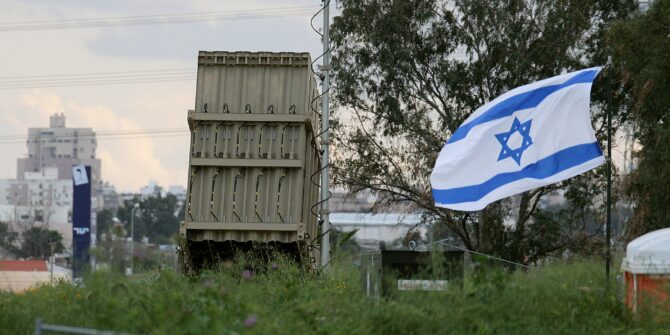
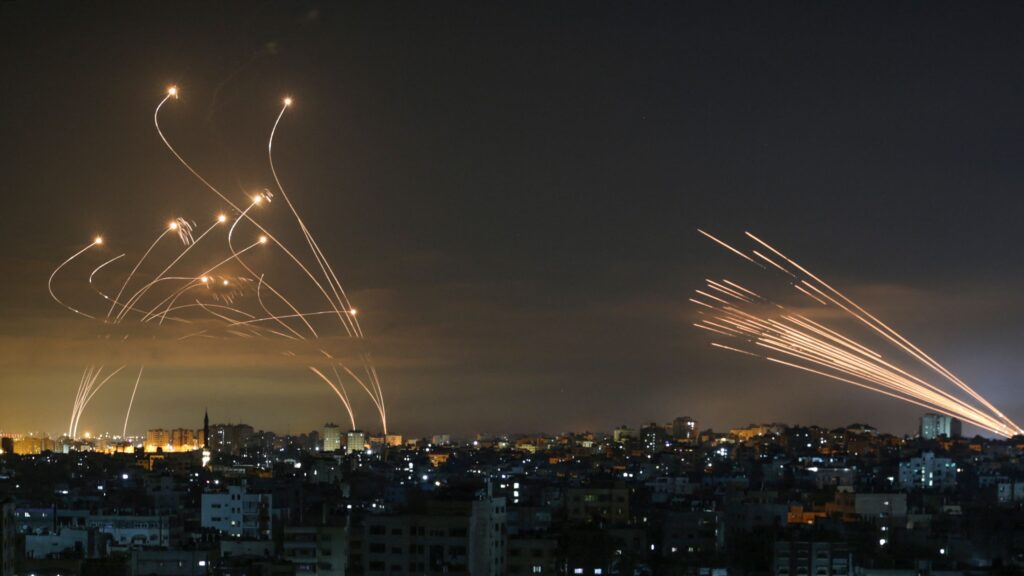
Israel has an Air Defense System – “Iron Dome” which protects populated areas of Tel Aviv from rocket attacks by launching interceptor missiles to ensure rockets detonate prior to reaching the ground, minimizing damage. However, the sheer number of rockets launched resulted in several impacting the city.

Sporadic rocket attacks in Southern Israel are not unusual but don’t often target Tel Aviv itself, and certainly not on this scale. One look at the footage of the attack and you will begin to see just how dangerous the skies of Israel became on Tuesday night.

The conflict has been escalating throughout the month of Ramadan, which coincides this year with the significant religious Jewish event Shavuot.

Earlier on Tuesday, a series of Israeli airstrikes in Gaza led to the collapse of a residential building and the reported deaths of several people. Militant groups in Gaza immediately retaliated by unleashing a large-scale rocket attack on Central Israel, forcing the temporary suspension of flights at LLBG/Tel Aviv Airport as air defence systems were activated around the country.

It marks a major escalation in the conflict which may present a new risk to aviation.

Are there new airspace warnings?

EASA have published a warning, available via the Eurocontrol homepage:

12/05/2021 16:15

Considering the heightened tensions in Israel, including exchange of rocket fire 
and retaliatory airstrikes, air carriers operating within Israeli airspace and 
to or from Ben Gurion International Airport (LLBG/TLV) in particular, should 
monitor closely these developments and adapt their operations according to 
Israeli Authorities aeronautical publications. Several NOTAMs are already in 
place for FIR Tel Aviv (LLLL) and its commercial aerodromes rerouting civilian 
aviation flight paths as necessary to ensure safety and security of the air 
operations. Due to the unstable regional situation, these publications may be 
more restrictive within short notice. The situation in the region remains a 
matter of high concern for commercial aviation – It is recommended to exercise 
caution by taking into account any relevant information, alongside available 
guidance or directions from your national authorities as appropriate.

So just a warning for now – no firm restrictions on flights. The most recent incident of major rocket fire from Gaza against Tel Aviv was in 2014 during the Gaza War. Back then, the US FAA responded quickly by imposing restrictions at LLBG/Tel Aviv airport for a two day period, and EASA advised that operators should suspend flights, which ultimately resulted in 30 airlines cancelling flights.

What are the risks?

There are parallels between the situation in Israel and similar rocket attacks carried out recently on Saudi Arabia’s major cities. Previously issued guidance on those and the threat which they pose to civil aircraft may also be relevant here.

The major risks identified from rocket attacks were:

  • Misidentification or miscalculation by air defence systems.
  • Falling debris from air defence activities.
  • Ballistic impact while on the ground.
  • Short notice airspace closures.

Where to from here?

We’re likely to see further rocket attacks on Israel and Israeli air strikes on Gaza. From an operator’s perspective, perhaps the most significant development here stems from the fact that militant groups are now showing renewed ability and intent to mount major aerial attacks on Tel Aviv.

Keep an eye on the SafeAirspace.net page for Israel where we will report changes as they happen, and continue to monitor the situation if planning to operate within the LLLL/Tel Aviv FIR – the events of this week have shown us just how quickly quiet skies can become active conflict zones.


Helping you fly when it’s Hot & High

Here’s a look at some of the hottest and highest airports out there, and the challenges you might want to think about if operating into them.

Airplanes like to play it cool

What is it about hot and high airports that our airplanes don’t like? The obvious one is the air density – engines like their air cold for better performance, and wings like air nice and thick for better lift.

What can you do to keep them happy? 

  • Think about how you start the engines – If it is hot out, the air is thin, and you start throwing things like tailwinds into the mix, then it is going to be a recipe for some grumpy engines
  • Consider towing – move to a different start point for better air flow
  • Check that ground power unit – You might want to ask the engineer to see if two might be better (they can over heat too!)
  • Check that take-off performance – and check it early. If it is limited you’re going to have to throw some passengers or cargo off, or put less fuel on to keep the weight down
  • Watch you altitude constraints – If you are particularly heavy your climb performance is going to suck and where the airport is high, there is often other high stuff to think about too
  • Once you’re in the air – if you are struggling to meet restrictions then keep the speed back, make sure you’re using all the thrust available to you and if that still don’t work – let ATC know!

People like to play it cool

People get grumpy when they are stuck in a jam-packed, sweaty tube. And I am not just talking about your passengers. Think about the poor F/O too.

If you’ve sent them out into the sweltering heat to do the walk around then it might be kind to have an APU running and some cool air blowing for their return. It will help with the rest of the flight too – you probably don’t want to be sat next to someone who is sweaty up a stinky storm for the next however many hours.

Jokes aside, it can be a safety thing too. A performance study by NASA showed operators in temperatures of 80°F (27°C) made approximately 5 errors an hour, 29 errors over 3 hours. At 90°F (32°C) this increased to 60 in 1 hour and 138 in 3 hours. So 1 mistake a minute. If you consider how many critical tasks a pilot carries out in that hour on the ground prior to departure that’s concerning.

When your environment heats up above 95°F usual cooling methods like radiation and convection stop working. Your body’s only option is to pump blood to the skin to release heat and get you to perspire. Up to 48% of your blood is pumped to the surface level, which means useful things like your brain which are less close to the surface are getting nearly 50% less than normal.

Brakes break

High OATs means hotter brakes, and longer cooling times. But it is the high elevation that really causes issues here because your groundspeed is going to be much greater for the same IAS. The result is much more work for your brakes which have to slow down that big hunk of metal.

If you are lucky enough to have brake fans then switch them on as soon as possible. If you don’t, then keep an eye on those temperatures, especially during the taxi out.

How long it will take your brakes to cool down is dependent on your type of brakes, type of aircraft, how hot it is outside, how hot the brakes actually got. Aircraft will have their own max temperature for takeoff limit which is important because retracting your gear with hot brakes is an increased fire hazard, and aborting the take-off with already hot brakes is an even bigger hazard.

A (very) general rule of thumb is something like 2 degrees every minute (at 15°C OAT) will give you a (very) rough estimate.

Energy Management

Make sure you have some coffee and a snack. Oh, sorry, the airplane energy. Also worth thinking about because it is going to be harder to slow down and cranking out the old speed brake will have less affect with thinner air because, well, something to do with drag.

This can all get really critical really fast on the approach. A higher groundspeed also means a higher rate of descent, again making slowing down tough. Plan that configuration and manage the energy early.

At very high elevation airports (especially if they have terrain around) you might be trying to reduce your speed above your flap limiting altitude so keep an eye on your minimum clean speed and your flap operating limits.

FLARE!!

A higher ROD, reduced lift, turbulence from thermals can all mess with your flare. We aren’t here to tell you how to fly, so will leave it at a “have a think about it before you get there” top tip. Especially if your FO is taking the sector and hasn’t landed in these conditions before.

One more tip…

Celsius to Fahrenheit Formula: (°C x 1.8) + 32 = °F

Fahrenheit to Celsius Formula: (°F – 32) / 1.8 = °C

Which airports are highest on the list?

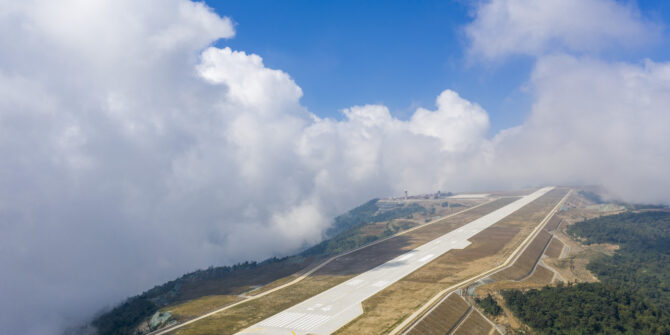
Topping the list is ZUDC/Daocheng Yading Airport which sits at a whopping 14,472ft. ZUBD/Qamdo Bamda airport holds the number two spot at 14,216ft closely followed by ZUKD/Kangding airport at 14,042ft. 

These airports are so high that the hot bit is less of a factor, but the altitude is a major one – 14,000ft is a limitation on some aircraft.

Airports at these altitudes will have special procedures for take-off and landing and you are unlikely to be operating into them without prior training. So, which should we pay attention to?

The Hot and the High

FAOR/Johannesburg airport sits at an elevation of 5558ft. Predominantly NW winds on the ground often lead to a tailwind for the approach to runway 03L/R which makes the energy management more challenging.The runways are 14,505ft and 11,171ft (so you have enough).

Johannesburg can heat up to the high twenties (80°F) in the summer.

HAAB/Addis Ababa Bole airport has an elevation of 7625ft and also some very high MSAs in the near vicinity. There are high altitude constraints for the departure due to close in terrain, and they need to be monitored (particularly if you are heavy and it is hot out). A challenging RNAV approach makes flight path and energy management more challenging.

The radar at Addis is fairly intermittent so you are going to have watch that terrain avoidance and energy management yourself.

MMMX/Mexico City This spot has an elevation of 7297ft, and MSAs of 19,400ft, 14,800ft and 12,100ft. The terrain surrounding the airport means some interesting arrivals and departures and the need for some accurate tracking. The tight arrival also means some low platform altitudes. The ILS for the 05 runways are slightly steeper (3.1°) adding to your energy management concerns. We’ve also heard that ATC sometimes keep you fast until 5000′, which can make slowing down last minute more tricky.

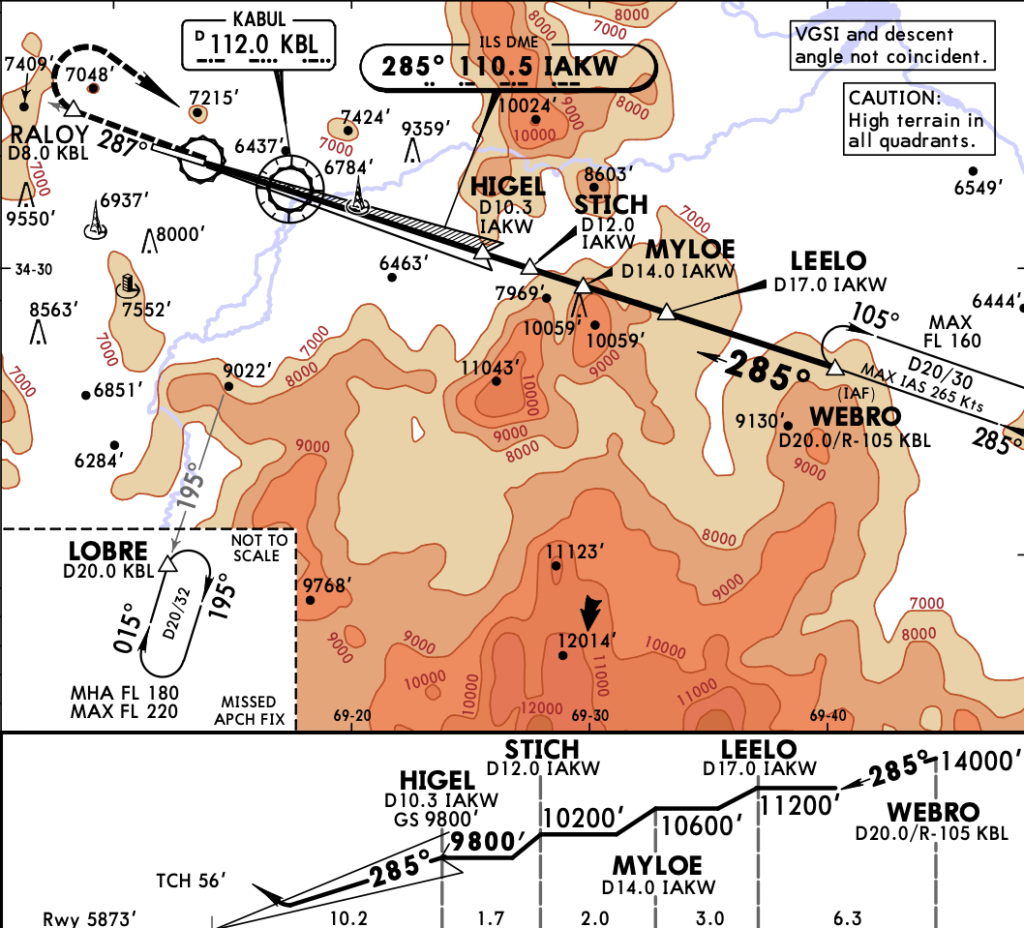
OAKB/Afghanistan I know what you’re thinking – there are probably bigger threats at this airport than the elevation, but despite the security risks here, it is a fairly frequented airport. Kabul tips the big three boxes – it has an elevation of 5877ft, an MSA of 17,500ft and it can get toasty warm in the summer months. The ILS for runway 29 starts from 14,000ft and the need to keep aircraft high due terrain can mean you suddenly find yourself diving down, while trying to slow down, with not many track miles to go.

You will probably want to keep you speed back on the departure to meet the minimum climb rate of 450ft per 1nm.

The just plain high

SLLP/La Paz Ok, we will add this one because its a fairly major international airport. The Bolivian airport has a 13,124ft runway which lies at an elevation of 13,314ft making this an Overall Top Ten winner. The surrounding terrain (it sits in the Andes Mountains) means MSAs up in the flight levels – FL220, FL230 and a paltry 18,000ft.

Your TAS here is going to be around 25% higher than your IAS. The high elevation means it is generally cooler, but the density is still going to be low leading to lower performance.

The just plain hot

Basically anywhere in the Middle East in the middle of summer is going to tick this box. 

OMDB/Dubai has been known to hit temperatures of 50°C. Hot means bumpy – you can expect some crazy thermals on the approach and an easy tendency to mess up the flare and float when that thermal catches you at 30 feet. Some airports (Dubai being one of them) temperature correct the ILS to account for the extra heat, so if you are doing height checks be aware of the discrepancy because of temperature.

OEJN/Jeddah is another spot known for getting very hot. It is also a very large airport with looooong taxis so keep a good eye on those brake temperatures for departure.

Where else?

Let us know any airports you think deserve to be on this list! Leave a comment or send us an email.

OPSGROUP members can check out AirportSpy – we have started to add Airport Lowdowns in here which cover the big threats (like hot and high!)


Assessing the Risk: Operations Over Conflict Zones

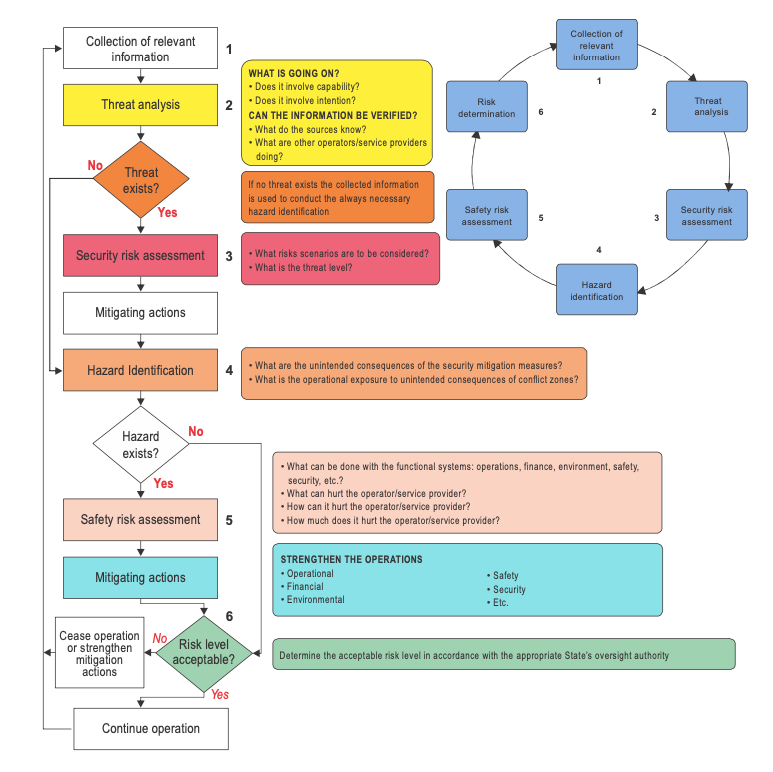
ICAO Doc 10084, if you have not come across it, is a sixty plus page document looking at ‘Risk Assessment for Civil Aircraft Operation Over or Near Conflict Zones’. Important stuff.

But despite manuals and procedures, regulations and recommendations telling us how to watch out for, assess, mitigate and manage the risk of conflict zones, there remains a much bigger and more significant risk to safety because of conflict zones.

So, what is this risk, and more importantly, what can we do about it in the aviation community?

Information

The huge hindrance to maintaining safety does not lie just with the SAMs themselves. It lies with information – the quality, quantity, reliability and promulgation of it. The result is that risk assessments are fundamentally flawed, understanding is limited and critical information does not reach those who need it.

So, there are four big points that need considering when we look at conflict zones and their impact on airspace safety:

  1. The Bigger Question – A risk assessment is much more than just asking “Is there a weapon down there?”
  2. Rules alone do not change the behavior of states – Information from states is critical, but it is often not shared, or not shared very well.
  3. Are we actively seeking information, or simply waiting for it to come our way? – The safety process does not stop at the state level, it continues (should continue) dynamically with operators and with the pilots, so understanding the situation is important.
  4. How can we do better? – Individuals and the industry have a responsibility to ensure information and strategies are shared.

1. The Bigger Question

The bigger question is to do with how risk is assessed, and it is a complex process even when information is available.

ICAO Doc 10084 lays out the risk assessment process. It’s an interesting read and worth taking a few minutes to think about because understanding the background to conflicts and what the key factors at play are is the only way for safety strategies and risk assessments to continue, and continue they should – it does not stop when a Notam is released.

The process is dynamic and needs to continue with the operator and the pilots too.

What are the key factors in a risk assessment?

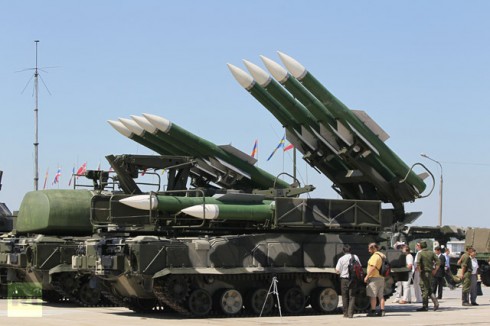
First up, what are we actually talking about here? Long-range Surface-to-air missiles (SAMs) can reach aircraft cruising in excess of 25,000ft (7600m). They are often linked with radar sensor systems to help identify targets, and are mobile and easily and quickly relocated.

So we need an assessment of what danger these pose to airlines and airplanes, and this means we need to know who has them (the capability) and also their intent (who or what do they plan to target).

But it is not that simple. Where there is intent, there is not always capability; and as importantly, where there is capability there is not always intent. The Iranian shoot down is a clear example of this. So we also need to consider the unintentional risks as well.

The questions asked look something like this:

  • Is there use of military aircraft in combat roles or for hostile reconnaissance (including unmanned aircraft)?
  • Are aircraft used to transport troops into the area and do these routes coincide with civil air corridors, or lie close and so pose a risk of misidentification between civil and military aircraft operating in the area?
  • What are the politics relating to the region?
  • What are the training levels of SAM operators and what is the military deployment of SAMs? How reliable and credible is the information shared by the state regarding this?
  • Is there a lack of effective air traffic management over the relevant airspace? Is the state fully in control of their own territory and do they fulfil all their ATC, coordination and promulgation (of information) obligations?
  • Do civil aircraft route pass over or close to locations or assets of high strategic importance or which may be considered vulnerable to aerial attack in a conflict situation?

But, the risk continues beyond this initial assessment because we also have to identify any ongoing consequences of an event. If a major airport is targeted, the impact is not only with the initial damage – if that initial damage is to the ATC systems required to maintain control and separation of aircraft then now we have reduced safety in the airspace and a much larger level of disruption.

So, we must think about the overall severity, and with that the tolerability of an infrastructure or operation. We are asking both ‘What can it hurt?’ and ‘How much it will hurt?’ 

This assessment, according to the ICAO document, is thrown into a matrix and churns out a ‘Risk Level’ which leads to the actions taken. 

Sounds simple, but there is one key point here – 

This info is not easy to come by. It is rarely reliable, and there is a qualitative narrative that makes it very subjective. The information has to be promulgated from states.

Which leads us to Point Number 2.

2. Rules do not change the behavior of a state….

States are responsible for sharing info on hazards, on what mitigation strategies they have in place, and the assessed impact of the strategies they adopt.

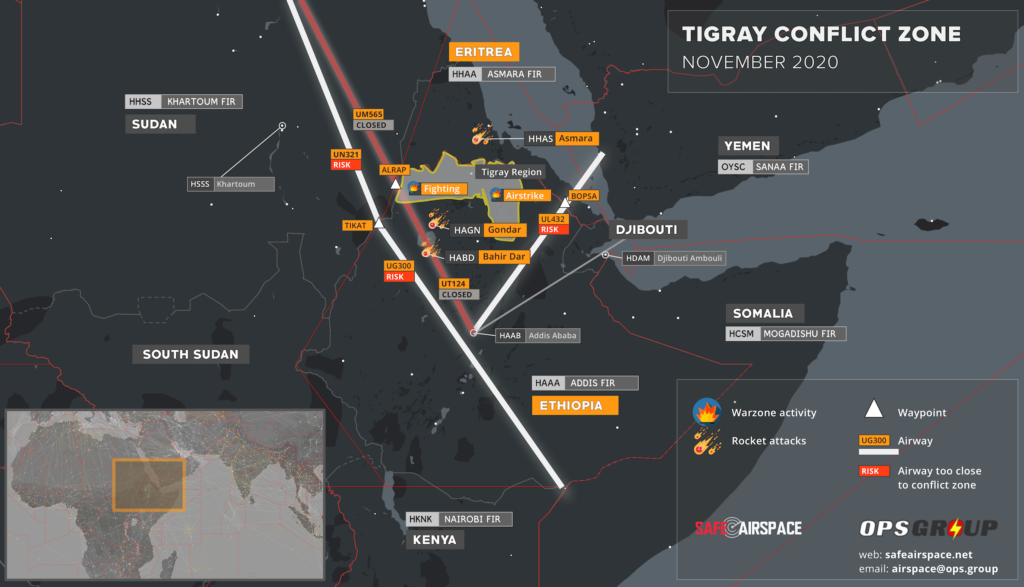
This often does not happen, or it does not happen well. Look at Ethiopia/Tigray region situation – misleading Notams and no guidance from the Ethiopian authorities led to Opsgroup issuing our own warning regarding the situation.

Further to that, ICAO only mandated the reporting of hazards in notices to pilots since 2020, and some states are still failing to do so.

3. People are not seeking information, they are waiting for it to come their way

This is why SafeAirspace was created.

Information is not being shared well and risk assessments are fundamentally flawed because the information on key factors is simply not available or reliable most of the time.

What’s more, people are rarely questioning whether the information they received was reliable, accurate or complete. Few proper risk assessments are taking place because those responsible are waiting for the information to come to them, and without a proper risk assessment, mitigation strategies are not sufficient, and are not being passed on to those who need them – the pilots.

What is the Operator’s continued role in the process?

Every operator is responsible for continuing the risk assessment. It is not enough to simply direct crew to a Notam. Ensuring crew have a full briefing on the threat and any mitigation strategies is important.

  • Emergency and abnormal procedures should be considered in advance. Take Mogadishu airspace where only flights on specific airways over the water are allowed. What is the strategy here in case of an engine failure or depressurization? If you operate over this region, you should have access to this information.
  • Operators are also responsible reviewing fuel requirements – ensuring additional fuel is provided for potential diversions around conflict zones.
  • If aircraft will be operating into conflict zones, then a review of MEL items which can be deferred is a good call – can the aircraft get out again without requiring maintenance or fueling?

What is the pilot’s continued responsibility in the process?

The information and strategies we see at the operations end are things like these:

  • Coordination between military authorities, security and ATS units
  • Briefings of personnel
  • Identification of civil aircraft by military units
  • Issuance of warnings and navigation advice
  • Air Traffic Restrictions
  • Closure of Airspace

But this does not mean the full risk has been removed. Understanding this, understanding how the situation got to this point, and understanding the risk assessment and safety management that has taken place is vital because the process now continues with you, the pilot, and this a fundamental step in continuing to manage safety.

  • The Crew, and the Commander of the aircraft are responsible for the safety of the aircraft and the passengers. Of course, we all know that, but if you are given a Notam saying “this airspace ain’t great, maybe avoid it” and then you fly through it, where does the responsibility of your operator end and yours begin?
  • Reading notams, the AIPs, AICs, and being aware of the threats of the airspace you might be asked to operate into is vital. More than that, ensure you are aware of any mitigation strategies required.
  • Pre-prepare for diversions and know where you can safely go. Some diversions might take you through prohibited airspace so if you are operating in the vicinity of some, have a route ready in box two so you can easily avoid airspace when you need to.
  • Be aware of security threats and hazards on the ground, in advance.
  • Consider the serviceability of aircraft equipment before you go – critical equipment would be communication systems, and those required to ensure military units can identify them as civilian;
  • Have an awareness of the potential political implications if diverting into some regions with certain nationalities onboard. If you divert there, what will happen to your passengers and crew, and why?
  • Report things. Keep the information loop going.

4. How can we do better?

Aeronautical info from states and authorities is your first point of call. AICs, AIPs and Notams are going to contain info on advisories, restrictions and recommendations.

If you are an FAA operator, then the FAA put out KICZ notams and this page has all the current ones for airspace.

Networks and organizations such as us here at OPSGROUP try to share relevant and up-to-date information on airspace, conflicts and the risks that are out there.

Open sources like social media and news sites are also good – but be careful, these may come from unconfirmed or unreliable sources. We recommend checking info with other sources too, like handling agents in the area.

Finally, talk to other pilots and operators, and be sure to report information you have from operating in or through airspace.


2020 Vision: A look at Safety

2020 was an interesting year for aviation. It was dominated by Covid, which saw traffic numbers fall to the levels of several decades before – which is why a review of the accident statistics is an interesting one to consider.

What sort of accidents are taking place?

The primary accidents seen in 2020 are unsurprisingly similar to those seen over the last decade:

  • Runway excursions
  • Loss of control in flight
  • CFIT
  • Abnormal runway contact (hard landings and tail strikes)
  • Actually missing the runway (undershoot and overshoots)
  • System malfunction or failure
  • Fire

We wrote a bit about these in a bit more detail not that long ago. We called it the ‘Seven Deadly Things’ and you can read it here.

What are the 2020 stats?

Well, first up, 2020 was roughly the same in terms of capacity as 1998 – a year known for Bill Clinton, the inception of the Euro and the movie ‘Titanic’. Yep, that long ago. So, same traffic levels, but different accident rates – 1998 saw 10 fatal accidents and 24 hull losses compared to “just” 3 and 6 in 2020.

But if we compare the 2020 numbers to 2019 it paints a different picture. Or rather, it is actually a very similar picture. While there there were only roughly 50% the number of flights in 2020 that took place in 2019, there were still 75% the number of fatal accidents. 

OK, this isn’t a very telling statistic since we’re talking 3 instead of 4 and neither is huge, but it does mean the fatality rate and hull loss rate went up per million flights in 2020. It was not a significant increase, but it is enough to suggest that yes, not flying regularly can lead to more accidents and incidents. 

Not really news there then, but something worth considering.

Point number 1 – Lack of flying leads to mistakes

If we take a leap back to 1958 and look at the accident rates through the decades then there has been a steady overall decline, and now we are sitting “comfortably” at under 5 fatal accidents per year, while flights have increased from about 12.5 million (1989 sort of time) to 35.8 million (the peak in 2019).

So, in thirty years the rate per million flights has dropped significantly to around the 0.17 per million flights point, and hull losses to 0.34 per million.

How did it get so low?

Significant leaps have been made in aircraft design over the years and this has had a huge impact on safety levels. Of course, training, CRM, Human Factors awareness and all of that has played a part too, but the major pat on the back goes to the airplane builders. For every silly mistake a pilot has made, they have generally identified it and then helped prevent it by building us better instruments, more robust systems, or things that catch our mistakes for us.

In fact, if you look at the fatal accident rates per million and then break it down into aircraft generation, it has dropped from 3.0 to 0.1 , and 5.4 to 0.2 for the hull losses. So technology is helping us. A lot.

Those big ones – the CFITs and LOC-I accidents – have reduced by 86% and 89% because of technology upgrades from Generation 1 to Generation 4 aircraft. This is down to the introduction of things like glass cockpits, FMW and TAWS systems.

How low can it go?

Can we reduce the occurrences to zero? If not, even with all this handy automation, then why not?

Well, these statistics offer us an answer there as well.

They are taken from across civil aviation, revenue flights on western built commercial jet aircraft that carry over 40 passengers, and also big cargo ones. It doesn’t include non-western built aircraft (possibly because the safety records on them ain’t great), and it doesn’t include Business Aviation.

Why not? Well, because the operational environment is very different, and very different in challenging ways. 

So, we are looking at the accidents which have involved nice, relatively modern commercial aircraft generally piloted by experienced folk going into places they have gone into many times before. And yet they are still managing to get it wrong.

What’s more, we’ve seen how automation is helping – it has brought us down to a very steady level.  So what is going on? We recently published a piece on the ‘Hidden Risks of Automation’, which we think offers some of the answer.

The ‘Problem of the Person’

Unfortunately, the solution to the Problem of the Person is not a simple one.

‘Human Factors’ might give us some reasons – poor decision making, bad workload management, lack of understanding the systems, but none of these really provide the answer to correcting it. The work now comes down to us.

1. Don’t Become Complacent: We have multiple systems put there to provide another layer of safety but we are seeing pilots rely on them as the only level of safety. These systems are a last line of defence though, not the the only defence.

ROW/ROP should supplement good landing performance assessment and stabilized approach management.

TAWS and GPWS systems give us a hard floor that we must not go below, but our own situational awareness should keep us well away from ever having to hear those calls.

Autopilots, flight protections and warnings should be a final alert, but basic airmanship and handling skills should correct our flightpath long before we reach a level that needs those systems to help.

2. Poor Decision Making and Workload Management: None of our clever automation and systems have the ability to think and question for us. So we need to make sure we are doing this, and we need to make sure we are doing it in the right way. Ask the right questions, gather information and use your resources properly.

Ask “What does this mean?” – Diagnose the problem not based on what has happened, but on what the impact and consequence of that failure is.

Ask “What has changed?” –  Review your decisions. Don’t fit new information into the solution you’ve already picked, rather adapt your solution to consider the new information. 

Ask “What do you think?” – Open-ended questions that gather input from someone else might catch things you have missed, or misinterpreted.

3. Just Do better

When we have seen automation and systems reduce the number of occurrences down to this point where the vast majority of accidents are down to human error, there really is no better solution than us Just Doing Better.

But this ‘better’ falls on the whole industry.

Sharing information, experiences, supporting development in others and improving training and pilot resilience. 

There are multiple projects out there:

  • IATA and the Flight Safety Foundation have just released their recommendations for reducing runway excursions (GAPRE).
  • ICAO are implementing new Runway Condition Assessment and Reporting standards from the end of this year.
  • UPRT training is being developed and improved.
  • IATA and ICAO Evidence Based Training development is shifting the training paradigm to train competencies rather than practicing solutions to singular events.

At the end of the day, aviation has grown progressively safer and more efficient over the last few decades, but the trend is flattening out and the same events seem to be occurring, for the same reasons. The ball is now in our court to try and fix the remaining issue – because, as harsh as it sounds, that issue is us.

Fancy reading some more?


PBN, RNP and what it all means

All across Europe, ‘Airspace Improvement Events’ are occurring. It sounds huge. We were expecting new regions, routes, maybe some special-filtered cleaner air being puffed out into it…

Alas, we read through all the Airspace Improvement Event notices, and from what we gather, it is part of a big, ongoing project to implement things like Free Route Airspace, more PBN routes, and to basically tidy up the airspace a little. This is not limited to just Europe though – the world is going PBN.

So, less an ‘Event’ and more a ‘Something’?

Everything is moving to Performance Based Navigation. It has something to do with being compliant with EC Regulation 2018/1048, but really just comes down to more efficient, better, safer, increased capacity airspace and approach benefits for everyone.

As simply as possible – VORs are out, Waypoints are in.

In a bit more detail – fixed ATS routes will continue to be implemented for better flow management and lateral separation, you’ll hear more about Free Route Space, and you’ll start seeing more RNP approaches popping up at airports.

So it is actually quite a big change, but one that will be slow to get implemented. Actually, most countries brought in things like RNAV5 routes and SIDs/STARs that use RNAV1 and GNSS instead of old-fashioned, Navaid-based manoeuvrings quite some time ago, so this isn’t something pilots will necessarily notice and there is no Big Date to look out for.

Except for one – December 1 2022 (but we will get to that later).

Why don’t we like conventional Navaids anymore?

Well, old Navaids need a lot of maintenance and they break a lot. Ok, not a lot, but they do potentially double the chance of some sort of issue for an airplane relying on them. Take your bog standard ILS for example – it has ground transmitters and aircraft receivers (and all the bits around them and in between then) and if any one of these conks out then you can’t fly the ILS (quite so well) anymore.

Your GPS approach on the other hand relies on the aircraft system only, which means less to go wrong.*

*Actually satellites can have issues too – GPS Jamming is a big problem and the plan to decommission Navaids is being delayed because of this.

So, what does this all actually mean, practically?

For operators, it doesn’t mean a whole lot. Most aircraft will have been operating to RNAV5 for a fair old while now, so the only noticeable change will probably some newly named waypoints, and some slightly more efficient routings.

You might need to pay a little more attention to any MELs that affect your performance capabilities, and be aware that approaches might no longer have conventional Navaids as backups in the future because a bunch of these are getting decommissioned.

But overall, it really means keeping an eye on them charts to see what’s happening where, and to make sure you pull the right plate out for your arrival.

PBN, Say Again?

So, PBN, again. And December 1 2022. What happens then?

ICAO has ordered all approach charts to reflect the new specifications by December 1, 2022.

What is changing?

All charts will say RNP APCH on them (or RNP AR APCH) instead of RNAV, RNP (GNSS) or whatever other random title they currently have. The chart should have the three lines of minima on it which you will need to know – your LNAV, LNAV/VNAV or your LPV.

Which country is winning the chart race?

ICAO post updates on the implementation which you can follow here, although they last updated it in 2017 so let’s hope it is looking a little better now.

All the R’s

In case you are still lost at RNP instead of RNAV, here is a quick recap on some terms for you:

  • GNSS is your Global Navigation Satellite System and it is a generic terms for all satellite navigation systems including GPS, Galileo, GLONASS, and ones augmented by ABAS, SBAS, GBAS… all the BASes.
  • LNAV, VNVAV, LPV, LP are your different minimus given on an RNP approach chart.
  • PBN is Performance Based Navigation based on performance requirements of the aircraft on a route or approach or in designated airspace.
  • RNP is required navigation performance which basically means the onboard monitoring and alerting system your aircraft has.
  • RNP Approach is a generic term for any approach which uses GNSS to enable it and an RNP system to fly it.
  • RNAV Approach is what RNP approaches used to be called.
  • RNP APCH is the name of the navigation specification in the ICAO PBN manual for the 4 types of approach:
    • LNAV (GPS NPA)
    • LP (SBAS-based NPA)
    • LNAV/VNAV (APV Baro-VNAV)
    • LPV (APV SBAS or SBAS Cat I)
  • RNP AR APCH is an approach the requires a specific aircraft qualification and operational approval. Usually because it takes places in an environment “rich in obstacles”. The AR stands for ‘approval required”. So you might be allowed to fly an RNP (RNAV) but not an RNP AR and your OpSpec (and training) are going to make this pretty clear.

What is Free Route Airspace?

FRA is a specified volume of airspace in which users can freely plan a route between defined entry and exit points. It makes the sector much more efficient.

And because we mentioned it earlier, what about RNAV?

Way back in the olden days (not as far back as when airplanes just had a compass and a map to use, but before GPS came in), there used to be Navaids. Ancient relics called VORs and NDBs which helped pilots work out where they were.

But then GPS came along and brought with it a way more effective and accurate way to navigate. How accurate is defined by ICAO under their four main navigation specifications – RNAV10, RNAV5, RNAV2 and RNAV1

RNAV5 is actually fairly basic. It has been around in Europe since 1998 and is mandated in pretty much all high level airspace there. 

The 5 bit refers to the requirement for aircraft to operate to a minimum navigational accuracy of +/-5nm for 95% of the time.

RNAV1 is your precision RNAV (1 being +/-1nm). RNAV10 is generally what you find over the oceans, and RNAV2 is generally used in en-route areas of the US.

Fun fact: The UAE and Bahrain FIRs implemented RNAV1 a while back, which means you need GPS Primary to route into here. If you’ve encountered GPS jamming en-route, (common in Turkey, Iran, Iraq etc, read all about that here), then this might cause problems for you.

What do you need for RNAV5 operations?

You need some sort of FMS, 1 IRS, 1 GPS or VOR/DME receiver and 2 nav displays.

What about RNP?

If it is an RNP navigation specification then there is also a requirement for on-board performance monitoring and alerting. RNAV refers to ‘area navigation’ and it is slightly different to an RNP system (the monitoring and alerting requirements). PBN requires an RNAV or RNP system, while and RNP APCH specifically requires an RNP system.

What else?

Actually, that’s about it. Except for the poor old UK that will no longer support LPV approaches from June.

Need to know more?

Here is ICAO EUR Doc 025 which contains all the EUR RNP APCH Guidance Material.


Western Sahara Airspace Update

On May 4, the GCCC/Canarias FIR updated their airspace warning for Western Sahara, due to the ongoing conflict there.

Previously, they said that aircraft overflights should be completely avoided in the eastern part of the country (i.e. airways UY601 and UN728), and should not be below FL245 in the western part. Here’s how that looked:

However, the updated warning issued on May 4 simply advises operators to avoid using the airways over Western Sahara below FL200:

Here’s the Notam:

GCCC B3323/21  - OPERATORS ARE REQUESTED TO EXERCISE PARTICULAR CAUTION 
DURING FLIGHT OPERATIONS IN WESTERN SAHARA AS PART OF FIR CANARIAS. 
IT IS RECOMMENDED TO AVOID OVERFLIGHT AT FLIGHT LEVELS BELOW FL200 
ON THE FOLLOWING ROUTES: UY601, UN728 AND UT975. 
04 MAY 08:53 2021 UNTIL 04 JUN 23:59 2021 ESTIMATED. 

CREATED: 04 MAY 08:54 2021

Still, not much of a warning. What’s really important is exactly what is missing: why.

The answer: Because the airways are over an active conflict zone, with a known threat of anti-aircraft fire.

Western Sahara is effectively divided straight down the middle, literally by a wall. Morocco controls one side, while the region’s independence movement (the Polisario) controls the other. In Nov 2020, the Polisario declared war on Morocco.

Why do they want to fight?

The two have never gotten along. The Polisario want independence and were at war with the Moroccan Government for a very long time, until a fragile ceasefire agreement in 1991. Since then there has always been tension.

In early Nov 2020, a Polisario protest blocked a whole bunch of Moroccan truck drivers at the border with Mauritania, shutting down an essential route that connects Morocco to the rest of Sub-Saharan Africa. Morocco weren’t happy, and breached the ceasefire agreement by sending forces into the demilitarized zone to remove them.

The Polisario immediately declared war on Morocco, and clashes began straight away.

Why does it matter?

The FAA were onto it when they immediately carried out a risk assessment and published a notice. The big deal is that the Polisario are likely to have access to anti-aircraft weaponry left over from the previous war. This includes man-portable air defence systems (MANPADS) and surface-to-air missiles. The FAA think these weapons pose a risk to aircraft as high as 12,000 feet.

To make matters worse, they are suspicious that Morocco are flying drones over their territory – something that has been denied by Morocco. It wouldn’t be the first time an aircraft has been shot down there either – the Polisario downed two DC-7 airliners with missiles back in 1988.

What about airspace?

The sky over Western Sahara airspace is split between two FIRs –GCCC/Canarias and GOOO/Dakar. If the conflict escalates further, this is likely to complicate things.

So far there has been only one warning from the Canarias side – the NOTAM above. Nothing from Dakar yet.

There are currently three major airways affected. Two of them (UY601 and UT975) run the length of the region in a south westerly direction – likely to be used by aircraft transiting some routes between Europe and South America. The other airway, UN728 is a direct track from the coast to GCTS/Tenerife which may be used by smaller aircraft or those doing tech stops in the Canary Islands.

So if you’re  planning flights to the Canaries, or overflying central Africa, pay close attention to the risks involved. Continue to monitor Safeairspace.net as the situation develops.


The Bermuda Triangle: Fact or Fiction?

The Bermuda Triangle. A place of myths and legends. But how real is it, and what affect if any does it have on aircraft flying through it?

Where exactly?

The Bermuda is a fairly loosely defined area out in the great Atlantic Ocean, generally mapped out with its three corners reaching Bermuda, Miami and the northwestern corner of Puerto Rico. It varies in size from around 500,000 sq. miles to 1,500,000 sq. miles depending on how its boundaries are drawn.

Why do we talk about it in Aviation?

It has a reputation for disappearances – sinking ships and vanishing airplanes, dots on the radar that are gone in a blink, never to be seen again. Some say it is haunted, some say aliens use it as a human abduction point, others reckon it is home to an immense Kraken that swallows ships whole…

These might be tall tales, but in fact is has been the location of a higher-than-its-fair-share of naval and aviation disappearances, and random technical malfunctions too. Somewhere in the region of 50 ships and 20 airplanes since folk started paying attention.

In 2017, a Turkish Airlines A330-200 experienced a series of electrical and mechanical malfunctions while routing over the Triangle. Routing from Istanbul to Cuba, they ended up making a diversion to Washington Dulles. Flight 19 was a squadron of five Torpedo Bombers that disappeared in the area. And of course the famous Amelia Earhart’s final flight was rumored to have gone down in this general location.

It gained its name from an article written back in 1964, which started with an attention grabbing hook –

Fact or Fiction?

Read through the list of sea and air incidents and accidents and you will notice something – the vast majority of events happened last century. Aside from TK183 and a few light aircraft accidents, all the rest generally took place between the 1940s and 1970s.

The investigations into Flight 19 and Amelia Earhart’s disappearance both concluded that poor weather, a loss of situational awareness regarding their actual positions, and ultimately running out of fuel were most likely to blame.

Flight 19 was attributed to the Flight Leader mistaking the Bahamas for the Florida Keys, a broken compass and the fact that the advice for if you got lost in the area back then was to just “take up a heading of 270”. And the Turkish Airlines flight was a fairly uneventful malfunction and diversion.

The high numbers of events can also be put down to the high amount of traffic that routes through this region. It is a fairly major shipping route between the East Coast of the US and the Gulf of Mexico, and in more modern times it has become a fairly busy area for aircraft too.

What is causing it all then?

Well, weather seems an obvious answer. It is a pretty popular area for hurricanes to aim towards. In fact, Bermuda (the island) sits in Hurricane alley – the more frequent path taken by Atlantic Hurricanes. So it is no surprise old airplanes and ships without the use of modern weather radar systems might fly into this region and be surprised by some really nasty ship-sinking / airplane-crashing storms.

Another explanation offered up by science is to do with magnetism. You all know this, but the Earth’s magnetic pole isn’t quite in the same spot as True North. Your compass points to magnetic north, but there are these things called Agonic Lines which line up magnetic and true north and along these your compass is Truly (pun intended) accurate. One such line runs from Lake Superior and down through the Gulf of Mexico.

Back in the days before GPS, when pioneering navigators relied on compasses and stars (which they couldn’t see because of all the bad weather), they would have potentially corrected for Magnetic to True. But correcting along an agonic line would actually have led them astray.

Then there is the depth of the trenches in this area of the ocean. Most of the sea floor is as far down as 19,000 feet, some areas over 27,500 feet. Which means when things do sink there, they are not easily found. So your sunken ship or ditched airplane is not likely to be found and the conspiracies about aliens and wormholes start to run rampant.

So, the lack of recent aviation events attributable to supernatural phenomena do suggest that it was probably due to more standard reasons that incidents were higher here than in others areas. Added to the fact it makes a good story, and we find we just have an area of bad weather, lots of traffic, and disappointingly unexciting reasons for accidents.

Are there any things modern aviators should look out for in the region?

Yes. Those hurricanes are worth keeping an eye on. The main Atlantic Hurricane season runs from June to the end of November. We wrote a bit about it here.

If you are flying to Bermuda itself then the fact it is a very remote island is also worth thinking about. TXKF/Wade International is your main airport, and some of the nearest alternates lie a good 650 miles away on the east coast of the US.

Some serious fuel planning is a good idea then – Isolated Airport Procedures usually require you to carry at least 2 hours additional fuel (at normal cruise consumption above the destination aerodrome). Here is a useful CAA produced checklist for Isolated Airport Procedures.

The surrounding airspace is also a threat. To the East you have the open Atlantic and all the procedures and challenges associated with that. To the West you have the East coast of the US, including the Florida Metroplex airspace, along with KMIA/Miami and KFLL/Fort Lauderdale – two of the busiest airports, in some of the busiest airspace of the USA.

Did you know there is a Bermuda Triangle in space?

Yep, astronauts have their own ‘Bermuda Triangle’ to contend with. It lies over the South Pacific, stretching between Chile and Zimbabwe, and is rather more real than its earthly counterpart.

This area of space is where the inner Van Allen radiation belt comes closest to the Earth. These rings of charged particles – loads of electrons in the outer ring and high-energy protons in the inner –  surround the planet, and are caused by the Earth’s magnetic field which protects us from this harmful radiation by trapping these particles in its magnetic grip.

Unfortunately, in this particular area, the Earth’s magnetic field is weakest, so all those particles are free to swoosh around more. They have also managed to get much closer to the Earth which means our satellites, space equipment and space travelers sometimes orbit through it.  This pretty much messes with electrical equipment, and people for that matter.

For the Hubble telescope, which passes through it about 10 times a day, it means a disruption in its workings for about 15% of each day. Satellites often experience temporary system failures when passing through during high flux days, and the astronauts onboard the ISS have to be shielded to prevent excess radiation. They often report seeing random white flashes, and having issues with communication equipment.

Disappointingly then it seems the Bermuda Triangle is just the stuff of fiction

Most authorities and Scientific organizations agree, but if you fancy reading some more about it then these are some good places to head to:


Resisting the Pull: Should We Still Be Using Magnetic North?

In recent years NAV CANADA has been leading a charge to move the industry away from magnetic north to true north. And it makes sense.

Modern technology has arguably rendered magnetic north obsolete. So why are we still using it? The simple answer is because we always have. Delve into ICAO Annex 4 and you’ll see that bearings, tracks and radials must still be published in degrees magnetic. But this begs the question – do we actually need it anymore?

When humans first took to the skies, things were different. They needed a directional reference. Back in those days it had to be something simple and light – enter the magnetic compass. Nature was guiding the way because it had too.

With modern navigation systems these days all the magic happens reference to true north. Inertial and GPS systems both use simple conversions so that the information can be displayed to crew as a magnetic reference to match our charts and procedures.

But because we are still using magnetic north as a reference we are forced to deal with magnetic variation – the angular difference between the true and magnetic poles. It is an issue that costs the industry many millions of dollars a year to manage and can potentially lead to serious safety issues if things aren’t handled properly on the ground and in the sky.

Let’s get science-y.

The earth has its own magnetic field. That’s because its outer core contains molten iron. Writhing lobes of magnetic flux surround the earth and meet near the top and bottom of the globe – the spots we know as the magnetic north and south pole.

Open up a compass and the steel needle will align itself to the magnetic field lines around it and hey presto, it will point directly at the magnetic north pole.

But here’s the problem – molten iron is a liquid, and it moves around. Which means the magnetic north pole does too. It never sits still. In fact in recent times it has put its foot down and is now moving close to 40 miles each year. As of last year, it was about 250nm away from the true pole and headed for Siberia.

The magnetic north pole is of no use to modern navigation systems because it is constantly on the move. Instead, they operate using a ‘geodetic reference system’ – a really fancy name for co-ordinates that may impress people at your next cocktail party.

Two variables, the ol’ lat and long, come together and allow us to define any spot on the surface of the earth. All meridians of longitude are anchored to the true north pole because it never changes. It is simply the northern end of the axis around which the world and that globe on your desk spins. Latitude on the other hand is reference to the equator which never moves either.

In fact, the only way either could change is if the earth’s angle of tilt moved too in which case we’d have bigger things to worry about. So, when we combine the two we can divide the surface of the world into a grid and pinpoint exactly where we are – a process that both inertial and GPS systems use to stop us getting lost out there.

Here are the issues.

All of our procedures, bearings, tracks, VOR radials, even our runway designators are still presented in degrees magnetic because the regs say they have to be.

And because of that every time the magnetic north pole moves, magnetic variation changes and the industry has to get out there and re-jig everything. Literally every computer that references magnetic north in some way has to be updated.

Magnetic variation is constantly changing. Credit: NOAA

All our IFR procedures from enroute, to terminal and approach phases have to be changed and re-published. Our FMS’s have to be programmed to match too. VORs have to be rotated and navaids flight tested. Radars have to be realigned and airport signs replaced. Even runways have to be repainted. It literally costs ANSPs, airports, avionics manufacturers and operators millions.

Take KTPA/Tampa for example. In 2012 changes to variation forced the airport to renumber its primary runway, no less than 140 signs had to be replaced.

It is also a safety issue. The whole system depends on everyone updating everything at the same time which seldom happens. A small change can have a big impact too. The PBN systems we rely on to keep us safe can be compromised by changes to variation if not updated. Synthetic vision systems can begin to tell pilots lies.

Anchorage in 2012 serves as a cautionary tale. The FAA updated its magnetic variation of the airport. Because operators didn’t update their aircraft’s avionics quickly enough, in some cases there was a mismatch.  Flight tests revealed that using the old value, Cat II and III approaches were no longer within lateral guidance limits  – not what you want to hear when you’re in the soup. The FAA temporarily changed procedures back to old value to allow time for operators to catch up.

We know that it works too – Canada has been using conventional and PBN procedures using True North for some time throughout a huge chunk of its northern domestic airspace successfully, where magnetic references become unusable.

So why can’t we just turn it off?

That’s the beauty of it – we can. Technically, it’s as simple as flicking a switch. Converting things from true to magnetic is just a process that we can just turn off. A lot of aircraft even have that very switch already.

Photo credit: Ken Hoke @AeroSavvy

Practically speaking though, the problem is the huge legal, administrative and legislative implications that would follow. Rome wasn’t built in a day and neither would a huge change to aviation procedures around the world. It would literally take years to implement.

But that may be no excuse for change, otherwise we will continue to expose ourselves to known risks. Take Notams for example. We are still communicating critical safety information using a format that has existed since 1924 – an invention for teleprinters.

The industry is beginning to see that the status quo isn’t necessarily the safest way forward. OPSGROUP have recently begun to work with ICAO and other partners on a global campaign to improve Notams, and it has only just begun.

No longer using magnetic north is no different – it is only a hurdle to something better, more consistent and safer for everyone.


Bomb Onboard: Do you know your procedures?

Airport security means the threat of a bomb onboard is greatly reduced. But if you do receive a bomb threat, or find a suspicious package onboard, what procedure does your operator have in place for you to follow?

How much risk is there?

You have probably all heard the Shoe Bomber attempt from 2001. This was thwarted by some brave passengers and crew, and also the fact the bomber had sweaty feet – his swamp foot dampened the trigger preventing it from igniting.

In 2016, an aircraft made an emergency at HCMM/Mogadishu airport after a bomb exploded onboard. The bomb was likely brought on concealed within a laptop. This flight was lucky though – the impact of the bomb was minimal, limited because the bomb exploded while the aircraft was at a lower altitude (11,000ft).

In 2020 a European airline found a ‘bomb note’ onboard. The flight was escorted to a safe landing and passengers disembarked without incident.

So bomb threats, and attempted bombings, do occur, and while security is getting better and better, unfortunately terrorists are getting more creative in finding ways to bring items on board. The attempts are not always aimed at causing destruction either – threats alone cause a huge amount of disruption to operations. So understanding how to assess the risk and credibility of a threat is as important as knowing how to deal with a possible explosive device if one is found onboard.

Is the threat credible?

Threats received regarding an aircraft need to be assessed, and the credibility determined. The threat classification will generally be based around how specific the threat is. Most operators will have a procedure in place for determining this, and probably take into account something along the following lines:

If a threat mentions a specific target, or is made by a known terrorist organization and is deemed credible then this is going to be considered more serious. Often these are referred to as a red threat.

On the other hand, a threat which is vague, general, and doesn’t specify targets might be considered less credible. A hand scribbled note in the toilet for example. This would be categorized as a green threat.

However, regardless of the assessed credibility, a bomb threat has to be taken seriously and treated as a genuine situation.

If you are on the ground

The simplest and safest option if you are on the ground is to disembark and carry out a full search of the aircraft. It might be a hassle and result in some big delays, but the possible alternative is much worse.

A serious threat may require a precautionary disembarkation – which will result in offloading the passengers as quickly and as safely as possible. This creates a risk to safety in itself, and generally the credibility of the threat will be communicated to the crew so that they can judge the risk of waiting (for steps) versus disembarking immediately to clear the aircraft (but have passengers hurling themselves towards the tarmac).

If you are in flight

If a threat is received against your aircraft while in flight, carry out a search checking those places which are often overlooked during security checks on the ground, but where an article might easily be concealed – toilets, galleys, jump seats, stowage areas, closets etc. Try and do it discreetly to avoid unnecessary worry for passengers.

If an article is found, do not move it or touch it. Move passengers away from the immediate area, and remove any flammable items and have fire extinguishers ready in case. A PA asking for anyone onboard with ‘BD or EOD experience’ might help – these are terms which experts will recognize without saying “Hey, passengers, is there a bomb expert onboard?”

Not terrifying your passengers is probably a good call, but ensuring they are following your crew’s orders, and that they are prepared for the situation on the ground, is also necessary. This means providing them with clear information, but without dramatizing the situation.

“Ladies and Gentlemen, we have received a message that a threat has been made against one of our aircraft/an aircraft in this airspace. These threats do happen, however, until we can establish how credible it is, we will take all possible precautions and therefore intend to land at… in…”

If you find a suspicious article

Most manufacturers provide checklists for bomb-on-board situations. Know where this is, and understand what it says. 

There are a few measures you might want to consider:

  • Talk to ATC so they know exactly what is going on and what you need. They all assist with locating an airport with services needed, and coordinating with military if necessary.
  • Try to avoid routes over heavily populated areas.
  • Consider carefully the choice between flying fast to minimize airborne time versus flying slow to minimize air-loads and damage (in the event of fuselage rupture).
  • Request remote parking on the ground if there isn’t a designated bomb location.
  • Brief your crew for a possible emergency landing, and in any event, brief them to ensure passengers are disembarked quickly and moved to at least 200m upwind from the aircraft.
  • Avoid large and rapid changes to pressure altitude – consider using manual cabin altitude controls to minimize rapid pressure changes while still lowering the cabin altitude to reduce the differential pressure.

Aircraft are designed to not ‘explode’ if there is a rupture in the fuselage – that’s why they tend to have a lot of smaller sections attached together. It makes the overall structure more resilient to the effects of an explosive decompression, aiming to keep it “localized”.

Reducing the differential pressure to around 1 PSI will also reduce the damage if an explosion does occur. Maintaining a slight differential will ensure the blast moves outwards, but the lower differential limits the force of air from the cabin outwards. 

1psi is the equivalent of about 2,500 feet difference, but flying at an altitude that allows you to manually reduce the differential will probably mean a much lower level and much higher fuel burn.

Where is your aircraft’s LRBL?

A Least Risk Bomb Location is an area where the least damage will occur should a bomb explode. This should be specified in your aircraft manual. These are often near aft doors or in washroom stowage areas. The area provides the least risk, in the event of an explosion, to flight critical structures and systems.

If the article is deemed unsafe to move, cover it in plastic to prevent any liquids getting in, and then pile blankets and pillows, seat cushions and soft clothing around it. We’re talking as big a pile as you can, and once done, saturate in water to minimize fire risk in case an explosion does occur. Don’t forget the plastic sheets first though –  liquid damage to electrical components is also a big risk.

If you can move it, and only if it is deemed essential to do so, then check that LRBL. Once in place, build up the barricade.

Always minimize movement to any article as much as possible, and don’t put anything directly on top of it. An igloo of saturated cushions around it and the gaps stuffed with blankets etc is good.  This ‘cushioning’ will help minimize the force if an explosion does occur. Never put inside an oven or trolley though as a sealed container will amplify the pressure and explosive force of a bomb.

Where to go

You will likely be accompanied by fighter jets to an airport with a designated bomb area – usually a remote apron away from buildings, fuel supplies and other aircraft.

What next?

Getting your aircraft safely on the ground is Step One. Getting your aircraft to a safe point to disembark/evacuate your passengers and crew is Step Two and coordinating this with ATC and airport services is important. Knowing in advance where you will taxi to will get you there more quickly and safely. Landing, slamming on brakes and bursting tires will get you nowhere fast, so plan ahead and be prepared.

A bomb threat or bomb onboard situation is difficult to plan for because the ‘where you are and what will happen’ is not something we can prepare for, other than being ready to follow our procedures and remaining calm. Chances are this is not a situation many of us will (thankfully) find ourselves in, but understanding the resources you have to assist, and knowing the onboard procedures so you can coordinate passengers and crew will no doubt help if it ever does occur.


The Hidden Risks of Automation

Over the past decades our industry has undergone an automation revolution.

Basic autopilots from eras-past were little more than wing levellers. Today they are sophisticated computers capable of awe-inspiring accuracy.

The industry has welcomed automation with open arms. And it’s no surprise. The vast majority of aviation accidents are caused by us, humans. Mechanical failure on the other hand only accounts for less than a quarter of all accidents.

So for operators and manufacturers alike the benefits of automation are clear – safety and efficiency. We are simply not as predictable or consistent as a computer because we are human. And automation has become a major line of defence.

But herein lies the problem…

It’s easy to see that a pilot’s role in the flight deck has changed forever as we interact with higher and higher levels of automation. Some might even argue that we are being progressively designed out of the cockpit completely and to some extent this may be true. Whether we like it or not, full autonomy is coming. Take the Xwing Project for instance – their concept can be retrofitted to conventional aircraft enabling them to fly without a pilot.

But right now the more pressing issue is that our role continues to transition more and more from flying airplanes to managing automation. Put it this way. A recent study found that across a large sample of flights aboard the Airbus A319, pilots were spending on average only 120 seconds manually flying each flight. And that was the middle of the curve.

This creates a unique set of risks that the industry collectively needs to better address.

Good Automation

By no means is this an attempt to detract from the positive impacts that good automation continues to have in our skies. The benefits are no secret. When used as intended it is a huge work-load reducer. It allows us better flight path control and liberates us from repetitive and non-rewarding tasks – something humans are known be no good at. We become less fatigued and have more capacity to deal with other things.

It also works in unison with systems like ECAM and EICAS to better help us manage things when something goes wrong.

Automation has also improved the skies we fly in. Fantastic things like RVSM and PBN have allowed us to fly closer together and make better use of crowded airspace. While around the world minimas grow ever closer to the ground thanks to things like RNP approaches where automation can help us ‘thread the needle’ in some one the world’s most challenging approaches.

Take Queenstown for example. The notorious airport down in New Zealand boasts beautiful scenery but a reputation amongst pilots as being one of the most demanding in the world due to the intimidating terrain that surrounds it. RNP approaches have dropped minimas from over 3000 feet off the deck to less than 300. And now you can land there at night.

Bad Automation. Here is where things start to go wrong.

All positives aside, automation is also having an effect on us pilots. And it is important to remember  just that – we are still pilotsWe must never lose the ability to fly without automation. Back in 1997 the late and well-respected Airline Captain Warren Vanderburgh saw it coming and coined the phrase you are no doubt familiar with – Children Of The Magenta Line.

This remains true to this day. If we become too reliant on automation, avoidable accidents happen. Here’s why.

It Erodes Skills.

Slowly but surely automation is chipping away our manual and cognitive flying skills. You know the ones – your stick and rudder. We are being actively encouraged to keep automation on and control our trajectory through it. Do that for long enough and we begin to forget how to do it the other way – with our hands, eyes and feet.

It Distracts.

Because we are so used to flying our airplanes through automation, when something unexpected happens such as short notice changes from ATC our immediate response is to try and figure out how to make the automation accomplish it. We go heads-down precisely when we should be going heads-up – and the clock is ticking.

It Confuses.

Chances are if you have operated anything with high levels of automation, at least once you’ve uttered the infamous phrase “what’s it doing now?”

And yet still we are reluctant to turn it off. As soon you identify that the aircraft is not going where it should, that’s your cue to intervene. The minute you don’t, you are simply along for the ride. Pilots around the world would agree, this is never good enough.

Mode confusion is another. Modern automation features many different ways of achieving the same outcome, but with subtle and sometimes dangerous differences. We need to understand the limitations of each one because if we don’t, we know that tragedies can happen.

A little known incident in Australia serves as a good example. Snowbird, an Airbus A319, was on approach at YMML/Melbourne airport on a clear calm evening. A tired but highly experienced crew were flying an unremarkable STAR and ILS approach at the highest level of automation. All was going well until the pilot flying reached up to arm the approach in a dimly lit cockpit. He pressed the wrong button. Over the next 39 seconds chaos ensued.

What followed was a series of rapid fire mode changes, confusion and attempts to salvage the approach through the automation. Three EGPWS warnings were triggered and an altitude alert issued by the tower as the airplane reached just over 1,000 feet off the deck at 315 kts before they regained their situational awareness and executed a missed approach.

After the incident neither pilot could recall exactly what happened, what modes they had engaged and neither had heard any of the EGPWS warnings. The automation had performed flawlessly throughout by providing the crew exactly what it was told to do. When it all went wrong, it seems the pilots were reluctant to turn it all off.

It Startles.

Automation is designed to give you back control when something goes wrong. For crew our first indication is usually a loud aural alert and a flashing red light. For systems that seem to operate flawlessly flight after flight, day after day, the affect can be startling.

Pilots are suddenly given full control because we are supposed to be the ultimate fail safe.

We are not even supposed to be there unless we can fly our aircraft manually without hesitation. But the problem is we are not used to flying manually anymore. We are used to flying through automation, so when it’s suddenly not there it’s like going back to school.

There have been a number of instances where pilots have been faced with failing automation and have been unable to keep the aircraft flying safely using manual control.

Air Asia Flight 8501 is a good example. To get rid of a nuisance alert the crew pulled a single circuit breaker to one of the aircraft’s flight control computers. As an unintended consequence the autopilot disconnected and the aircraft transitioned into a degraded mode of flight where the automation was no longer available and flight protections were removed. It had done what it was designed to do – hand back control to the pilots.

Tragically the pilot flying, startled by having to fly manually in a degraded mode, stalled the aircraft from straight and level flight. The crew never managed to regain control.

As an industry our approach to how we interact with automation has to change.

Automation dependency is not a new issue. But as automation becomes more sophisticated and complex we have to continue to manage how we interact with it.

It was never intended to replace our core skills and abilities as aviators, only to better support them. Like the image below our core ability to fly manually is supposed to be a constant.

But there are some ways to help.

SOPs. They must be flexible enough to allow pilots to turn the automation off when it is appropriate. You have to give pilots the freedom and confidence to use their hands and feet. Six months between sim sessions is too long.

Training. Evidence based training is revolutionising our sim sessions. There is opportunity there to encourage manual flight. To turn it all off without warning and give us the much needed confidence back.

Monitoring. We need to encourage active monitoring so that we can intervene quickly if we need too. We should always be mentally flying the plane even if an autopilot is flying. One way to do this is by keeping our hands on the controls during dynamic phases of flights. It is a tactile reminder that we are still in control and can take over at any stage.

Practice. It makes perfect. It’s what we got into this game for. When conditions are right and workload low, take the opportunity to turn it all off. It’s right there waiting for you again if things get busy.

Automation is here to stay.

What matters is how we use it. We cannot allow it replace our abilities to fly an airplane without it because for the foreseeable future we will still be the ultimate failsafe.


Introducing: Airport Operational Lowdowns

Ever been bamboozled when flying into airports you’ve never been to before? You’re on your approach and all looks good – straightforward, easy, no threats – and then, they cut 50nm off your arrival track and suddenly you’re high and fast and this is when your co-pilot (who has been there before) turns around and says – “Oh yeah, they always do that!”

Or what about that airport where they built a really big hanger in a really silly spot, and you don’t find out about the wind shear off it until you are there, at 30 feet, battling with it?

Calling All Pilots… 

  • All pilots who operate into random, challenging or interesting airports.
  • All pilots who do not operate into the same airports regularly.
  • And all operators, ATC, anyone with a bit of knowledge about an airport for that matter.

Following on from our OpsChat where some of you raised the idea of briefings on specific airports, we have started to put these together…

What’s the idea?

The idea is a lot of pilots, particularly corporate folk (but this is still for everyone) might not have access to loads of shared information on specific airports. If you do not fly somewhere regularly, or do not work for a big airline, then the only information you will have on certain airports is what you can read off the charts and in the AOIs.

But we all know there are airports out there which have specific challenges you only discover when you operate in. The useful, practical, operational stuff. The threats, risks and gotchas that you discover with experience.

Introducing: Operational Lowdowns

Our Operational Lowdowns are our new way of trying to share this information between you all.

If you have experience going into an airport and spotted something unusual, odd, tricky or interesting then send in that Airport Spy report. Or even drop us an email with a full lowdown about it.

If you are operating into a new airport and want some additional info before you go, then check the airport on our Airport Spy app – there might already be a Lowdown Briefing in there. If there isn’t, let us know and we will do some digging and try and put one together for you.

Sharing is caring…

… and it is also safety!

Knowing about specific operational challenges, environmental threats and tricky procedures before you get there, so you can BRIEF about it and come up with a plan to mitigate any risks, is important.

So we hope you find these useful, and keep getting in touch with info you have to share, and what info you would like to know.

Take a look at the Operational Lowdown for KTEB if you want to see what we’re talking about 😃 ✈️


ATC Zero in Class A Airspace: Is It Dangerous?

IFALPA has issued a new safety bulletin this week expressing concerns that existing US FAA contingency procedures that allow aircraft to continue using Class A airspace during ‘ATC Zero’ events are inadequate. They argue that the procedures expose aircraft to unacceptable risk and that more needs to be done to ensure their safety.

ATC Zero Events have become more common

Before Covid, ATC Zero events were quite rare. They’d usually only occur if controllers were forced to evacuate a facility. Fire, a force of nature, bomb threat – those sorts of things.

But then Covid came along and as we all know, it is super contagious. Amidst border closures and quarantine and testing rules, a new threat began to emerge in our skies.

ATC facilities began to be impacted by Covid infections, and short notice closures for cleaning have become a constant risk.

Last year we published an article on how to manage ATC Zero events in Oceanic Airspace after the New York ARTCC shut down affecting traffic crossing the NAT. The US FAA were sufficiently concerned that they published their own SAFO.

However since then the US has continued to be affected by ATC Zero events over land which affect large portions of Class A airspace, often for hours at a time.

What the FAA have to say about it

The FAA are satisfied that it is safe for aircraft to continue using Class A airspace when no ATC services are available, as long as you follow contingency procedures.

What contingency procedures?

Well, they can be broken down into two parts.

  1. When an ATC Zero event is scheduled, a NOTAM will be published. It will restrict traffic to specific routes through the affected airspace which contain compulsory reporting points. If you don’t intend to the fly the prescribed routes, you’re not allowed in.
  2. TIBA – Traffic Information Broadcasts by Aircraft. The FAA expects you to use them. Recent feedback from members who have operated under these conditions indicate that many aircraft either don’t know, or are choosing not to use them while operating in ATC Zero airspace. That in itself is concerning.

So what exactly are the TIBA procedures?

You can find them in ICAO Annex 11, or buried in lengthy NOTAMs if you prefer your procedures capitalised, abbreviated and barely punctuated.

Here’s a quick unofficial rundown:

1. Dial up your TIBA frequency. If you have two VHF comms, leave one on the normal ATS frequency to listen out for a controller.

2. Maintain a listening watch on the TIBA frequency.

3. In most cases you’ll need to remember ’10 minutes’. A radio call is required 10 minutes before entering the affected airspace, or if you have just taken off from an airport within the airspace as soon as you can.

4. Enroute, you’ll need to make routine position reports:

  • 10 minutes before crossing a reporting point
  • 10 minutes before you cross or join an airway.
  • And if your waypoints are really far apart, make a call every 20 minutes.

5. If you’re changing levels you need to make a radio call 2-5 minutes beforehand.

So what do you actually need to say?

The short answer: Who you are, what level you’re at, where you are and where you’re going next.

The slightly longer answer:

- ALL STATIONS
-  Call Sign
- FLIGHT LEVEL
- AIRWAY (or direct to/from)
- POSITION AT TIME
- ESTIMATING (next reporting point or crossing/joining airway) 
  AT TIME AND FLIGHT LEVEL

Don’t forget to listen

It’s important to remember: When you enter Class A airspace during an ATC Zero event, you are responsible for your own separation. You’re on your own. Which means you need to hear and be heard.

What if a conflict is likely?

There’s a procedure for that too. If you can’t solve the problem with right of way rules, here’s what you need to do:

So why are IFALPA worried?

For starters, there may be aircraft operating in Class A airspace without TCAS which greatly increases the risk of a collision. Secondly there is a lack of training standards about how to apply the contingency procedures. Lastly given that no one is watching, you may be exposed to other aircraft breaching the regs.

Until things change, they recommend you avoid the affected airspace by flight planning around it. If that’s not practical here are their suggestions:

  • Minimise the risk by taking the shortest possible path through it.
  • Make sure you review the contingency procedures beforehand.
  • Make sure there are no procedures in your in your manuals that will be affected by a lack of ATC.
  • Submit a safety report afterwards.

The threat remains

ATC Zero events are likely to continue in the near term, along with the risks they pose. It is important that pilots take those properly into account before they enter affected airspace.

Love them or hate them, sticking to the contingency procedures like glue is everyone’s biggest risk mitigator until new or better ones eventually come along.


Aviation in Indonesia: How safe is it?

If you haven’t watched Worst Place To Be A Pilot then take a look. The series follows Susi Air pilots who fly into some of the most remote and dangerous airports around Indonesia, taking supplies to local tribes.

This post, however, is looking at some of the threats that might be present for larger commercial operations. Indonesia poses security, environmental, and operational risks to flights, and recently these risks have been increasing in severity.

What is the security situation?

Indonesia does not rate as a risk on our SafeAirspace site because the risks are ground based. However, there are threats to security risk of flight disruption which are worth considering.

Islamic State affiliated militants are active in the Surabaya region to the west of Bali, and attacks have been increasing since 2018. However, these are generally ‘low capability’ attacks with no immediate threat to flight operations. Security at the major international airports is good, and these groups are unlikely to present a serious threat.

However, there has also been an increase in insurgency movements, particularly in the Papua Province to the east, with groups targeting security forces with the intention of disrupting flight operations. In April, a militant group attacked Aminggaru Airport in the Ilaga District and torched a private helicopter. Similar attempts have been occurring since January 2021 with increasing frequency.

Particularly in more rural regions, businesses rely on air transport to bring goods in, and by disrupting these through direct attacks on the airports, aircraft, or by targeting security groups, the insurgents intend to damage both the foreign businesses, and social stability.

If you are operating in you can expect heightened security measures and increased military and security personnel. Possible disruption is also likely so contact handling agents in advance to confirm any security or risk.

What is their Infrastructure like?

Transport infrastructure is poor in Indonesia, especially in rural regions. Which brings us back to The Worst Places to be a Pilot – many rural villages, especially in mountainous areas, are extremely cut off. So they build runways, and Susi Air fly in food and supplies. Probably not the places you are planning to fly though.

Indonesia does have some major airports and the standard between these, and small domestic airports is marked. WIII/Soekarno-Hatta (formerly Jakarta) is a major international airport with three runway options, the longest being 07R/25L at 12,008’/3660m. However, they are only equipped to CAT I capability and during the monsoon rains, visibility can be seriously degraded.

The airspace here is also very congested, and reports suggest ground operations can be challenging with poor taxiway lighting and markings, and ATC often giving non-standard taxi routings.

Aside from Jakarta, you also have WIMM/Medan airport serving the Sumatra region in the north, WADD/Denpasar serving the Bali region and WARR/Juanda serving the Surabaya area.

Keep an eye on weather forecasts and take additional fuel during monsoon season. Pre-briefing the taxi routes and maintaining a high level of situational and traffic awareness on the ground is important.

Do I need to worry about poor Safety Standards?

Indonesia has had a very high number of serious air accidents. Since 2001, there were at least 40 accidents resulting in fatalities in Indonesian airspace, giving Indonesia one of the worst safety records in the region. In January 2021, a Swirijaya Air 737 crashed into the Java Sea – preliminary reports suggests poor maintenance and weather were primary factors.

Past accidents have been attributed to poor pilot training, mechanical failures, air traffic control issues and poor aircraft maintenance leading to 59 Indonesian airlines which are currently banned from flying in EU airspace.

IATA forecast it will become the sixth largest market for air travel over the next decade or two. Much of the issue with safety has been down to the rapid expansion of the industry with little oversight or quality control during the initial expansion. However, this has been improving recently with a focus now on licensing for operators, pilots and ATC within the country, along with better maintenance standards and technical skills.

So, if you are operating into the larger international airports, ATC, facilities and general standards at these is ok. However, if you are flying to smaller regional airports, watch out for below standard ATC and maintenance, and caution procedures of other aircraft in the area.

The FAA currently rates Indonesia as Category 2 in its International Aviation Safety Assessment program which includes areas such as inspection procedures and technical expertise. If you are operating in, it is still a good idea to use a handling agent and maintenance company who work with major airlines and have a proven work standard and reliability.

Are there any Airspace Issues?

Back in 2019 we wrote this about Indonesian airspace. They are strict about overflight permits and if you are operating in the Singapore FIR and accidentally stray into Indonesian airspace they don’t like it. At best, they issue a fine, at worst you will be intercepted by Indonesian Air jets and forced to land to be detained in Indonesia. During the monsoon and storm season, early planning for weather avoidance is important to avoid this.

Indonesia has mandated ADS-B throughout its airspace. Overflight control is generally of a decent standard.

Keep an eye on volcanoes

Mount Sinabung (sounds sort of like Cinnabun) is one of the most active volcanoes in the ‘Ring of Fire’ region. It is currently on alert level 4, which means ‘highly dangerous’. There is a 7km exclusion zone around the volcano.

The volcano erupted in February 2021, sending ash up to FL400. The ash was blown over water so operations into nearby WIMM/Medan airport were not impacted.

Keep two eyes on the Weather

Indonesia has a big monsoon season and is prone to abundant rain, which often leads to abundant flooding. Delays are likely and extra fuel should be carried. ATC are generally ok, but with congested airspace they may not be the most efficient or responsive in high workload, bad weather situations.

Summary

Improvements to Indonesia’s infrastructure continue, and they are paying attention to international concerns regarding their standards and safety.

If you are operating into a major airport, the biggest threats you will face are likely to be weather related. If you are operating into smaller airports, particularly in the Papua Province, then paying attention to local security situations is important, along with a caution with the general standards of operation and facilities.


ATC VS PILOTS: The Battle for the Skies

The great battle of the skies! Pilots trying to fly wherever and however they like, free like birds, while mean old air traffic controllers tell them off and put a stop to the fun having…

OK, not quite. Our ATC colleagues are a vital part of the safety infrastructure and it is only with their support and services that operations remain safe and efficient. Which is why we should be asking how their pandemic situation is going as well. So, this is a look into the concerns, challenges and events that ATC are dealing with because of Covid, and some feedback on how pilots and ATC can work together to fix ‘em.

So, if you are all sitting comfortably…

What’s been going on inside the towers?

  • Challenge #1 Low workload, low arousal levels

ATC have seen reductions in traffic to as low as 20% pre-covid levels, but workload is not linear to traffic reduction, it is exponentially lower. So this is a challenge for ATC who thrive on dynamic, high workload environments. In one area of the UK, 7 sectors previously controlled by 7 individual controllers is now handled by just one to ensure the workload (and arousal levels) are at a level which can maintain skills and concentration.

  • Challenge #2 Technical & Procedural changes

The risk of Covid has meant bit changes in how procedures are carried out, in an attempt to avoid ATC Zero events due rampantly spreading sickness. But this means ‘situational awareness’ handovers traditionally carried out face-to-face are now not leading to potential communication risk and lack of effectiveness. Safety management procedures have had to adapt, fast.

  • Challenge #3 Different events requiring different mitigations

New events, previously not even thought of events are happening, and like our pilot CRM, ATC use TRM (team resource management) to debrief and learn from them. But unlike pre-Covid days they don’t have oodles of time to disseminate information across the operational audience – the learning and sharing has to happen fast to avoid repeats. So they are dealing with new situations, quickly.

What events have been happening?

  • Event Type #1 Altitude busts

Level deviations aren’t a new thing but apparently numbers have increased in some regions. The UK and parts of Europe have variable transition altitudes and these can be low, which means your level-off on departure could be a fairly low flight level. Add to this some low atmospheric pressures and it can get messy. For example, if you take off with 983hPa set and forget to change to standard, you’ll find yourself 900 feet higher than you should be.

  • Event Type #2 CPDLC

Frequencies across Europe were at saturation level pre-Covid which is why CPDLC was getting popular. It is a great thing, we like it, and controllers are still encouraging the use of it now ready for when those traffic levels pick up and the frequencies get busy again. But they are also reporting a few issues with it.

First up, pilots are reverting to voice when CPDLC doesn’t give them the direct or the level they want. If you get a “negative” on CPDLC then it is going to be the same controller giving you the same “negative’ over the radio, only a little more irritatedly since they’ve already told you once.

Secondly, directs are causing issues (for once, not a pilot’s fault). When you receive a clearance by voice it usually goes something like “Route alpha then bravo”. When you receive it by CPDLC it might be formatted “Route Bravo via Alpha”… and when you receive this on certain systems the message might be truncated leaving the pilots thinking “we are cleared direct Bravo”. So check your CPDLC message carefully if in doubt, then double check.

  • Event Type #3 Airspace Incursions

Empty airspace means more directs are possible, but it also means some GA pilots cutting corners into airspace where big planes are playing. ATC do their best to kick them out again before they get in your way, but keep a good watch out on your TCAS for errant traffic.

Unstable Approaches

This one gets a section of its own.

Let’s step back a few miles from the 300 knots, 6000 feet at 12 miles though, and ask how we got ourselves into that position in the first place? Was it the moment ATC offered us a shortcut? Was it at 15nm when, honestly, it was looking a little tight but they would have said something?

Feedback from ATC is that they are there to help, and they want to offer the most efficient approaches they can, cutting down our track miles wherever possible… and lower traffic levels mean this is much more possible at the moment. Problem is, back in pre-Covid days when traffic levels were higher and most approaches were kept “standard”, ATC knew what to look for. If an aircraft looked a bit high, a bit fast, compared to “normal”, they could give us a cheeky “do you need a few more miles?” prompt.

Fast forward to post-Covid times though and ATC have much less idea of what is “normal”. It might be ok for you, and your aircraft type, to do 300 knots at 12nm, but ATC do not necessarily know. So we cannot depend on ATC to say something when it doesn’t look right – the pilots need to do this. If you are too high, too fast, too close, speak up, you will get those track miles, but don’t rely on ATC to recognize it is all going a bit wrong.

The big point?

The big point is this – we are in it together. ATC and pilots, directly tackling the operational challenges that this pandemic has brought.

So next time you are out flying, have some of these points in mind when working with ATC. Talk to them, work with them, and above all support them because they are what are keeping us safe in the skies.


Chad Airspace Update

Chad’s long term President, Idriss Déby died this week, having spent more than three decades in power as one of Africa’s longest-serving leaders. So why did his death result in the temporary closure of the country, and what is the impact to aviation?

The background

Chad is a large landlocked country in Africa, bordered by Sudan, Libya, the CAR, Cameroon,Nigeria and Niger.

Déby was focused on building a more democratic society and he had strong allies in France and with other Western powers through his continued fighting against Jihadist groups. Provincial elections were already underway with projections suggesting he would be successful in winning a sixth term.

However, Chad is also one of the poorest nations in the world, with big problems around poverty, corruption and human rights, and with that came civil unrest.

What happened?

Déby was injured during a visit to troops who were battling against rebels belonging to a group called Fact (the Front for Change and Concord in Chad). The big concern now is who will become the next leader – Déby’s son has stepped in – but the government has been dissolved and conflict is escalating in the country as opposing parties fight for power.

The military elected initially to close land and maritime borders, but then closed all airports as well, whilst putting in a strict countrywide curfew.

The Impact for Aviation

Initially, a Notam was issued stating that FTTJ/Ndjamena airport was closed, and that Contingency Procedures were in effect across the FTTT/Ndjamena FIR. Then a couple of days later, on Apr 21, the Notam was cancelled and the US Embassy issued a Security Alert advising that FTTJ airport has reopened.

In the short term however, landings are not advised, and overflying aircraft should be familiar with Contingency Procedures. You can download the Contingency Plan from the Acesna AIP here.

This plan lays out the arrangements for situations where the Air Navigation Services are partially or totally disrupted, and aims to ensure overflights remain possible. Effectively, it aims to coordinate with neighboring ATS units so control of the N’Djamena UIR is temporarily assigned to them – Brazzaville ACC and Niamey ACC are the primary units being used.

Pilot operating procedures while Contingency Procedures are activated are shown under section 8.3 and the advises the following:

  • Maintain contact with Brazzaville or Niamey control until entering, and contact the next control at least 10 minutes prior to exiting.
  • Operate along the assigned contingency route (as listed in the table), although SLOP is recommended.
  • Reach your assigned level at least 10 minutes prior to entering N’Djamena UIR and maintain throughout unless an emergency arises requiring you to diverge from it.
  • Listen out on 12.6 and transmit position reports.

What else do we know?

N’Djamena in the past was a popular fuel stop in central Africa, but multiple travel warnings now advise against travel here (see the UK advice here, and the US advice here). No official state Notams have been issued, but risk remains high. A state of emergency remains in place for the Lake Chad region. Overall there is a high threat for terrorism and it is strongly advised to avoid landings.


Russia restricts flights over Crimea and Black Sea

The airspace warnings for the Ukraine are on the rise again, and for good reason – Russia seem to be going on a renewed military offensive, focusing their efforts on the area of disputed airspace over Crimea.

Following Russia’s annexation of Crimea in March 2014, the ATC Center in Simferopol has been run by Russia. Russia claims the airspace, and publishes Notams under the URFV code they invented for it. Ukraine refuses to recognise the change, and still controls the airspace under the internationally-recognised UKFV code.

So what jurisdiction do Russia have, and how much attention should we be paying to the Notams which they issue for an area of airspace that is not theirs to control?

What are Russia saying?

Russia have published a long series of URFV Notams advising of danger areas and limitations to airways across the Simferopol FIR. These run from April 20-30 – some only apply from FL350 upwards; others apply to all flights from SFC right up to altitudes higher than most aircraft can fly (we saw a FL670 thrown in there). These danger areas are most likely due to military activity, which may include live firing exercises.

The zone of restriction of flights includes some areas over the southern part of Crimea, from Sevastopol to Feodosia, the territorial waters adjacent to the Southern coast of Crimea, and part of the international waters of the Black Sea, and are possibly in relation to Russia’s plan to move warships into the area.

What are Ukraine saying?

Ukraine aren’t happy about it, and have issued a bunch of Notams for the same periods effectively establishing danger areas at all levels in the portions of the FIR that are over water – i.e big chunks of the Black Sea and Sea of Azov (to the northeast of Crimea).

All the Ukrainian UKFV Notams advising about these danger areas carry this note:

DUE ACTIVITY PUBLISHED BY RUSSIAN FEDERATION.
THE PUBLICATION BY RUSSIAN FEDERATION OF INFORMATION 
RELATED TO AIRSPACE UNDER RESPONSIBILITY OF UKRAINE 
DOES NOT COMPLY WITH THE PROVISIONS OF THE ICAO 
AIR NAVIGATION PLAN - EUROPEAN REGION (DOC 7754) 
AND THE ICAO ANNEXES 11 AND 15.

In other words – although Russia do not have jurisdiction in this airspace, they have published a bunch of danger areas here, so we (Ukraine) had better do the same, to make the warning “official”.

What are other authorities saying?

So far, none of the other state authorities around the world have published or updated their own warnings in response to this recent issue specific to the airspace over Crimea.

Just last week, the US FAA updated their airspace warning for Ukraine – but this was in relation to the UKDV/Dnipropetrovsk FIR in the east of the country along the border with Russia. The US warning to operators in this region was to exercise extreme caution within 100nm of the entire Russia-Ukraine border, due to risks associated with recent increased tensions between the two countries. They said that if hostilities escalate here, the airspace on both sides could be exposed to potential weapons activity posing a risk to civil aircraft from misidentification or miscalculation.

The most recent US advice for the UKFV/Simferopol FIR came in October 2020, when they actually removed their restrictions on overflights of this airspace. At that time, they said the security situation had sufficiently improved here – while Russia continued to assert territorial claims over the region, Ukraine had established appropriate risk management measures to ensure safe operations for aircraft along the Black Sea routes.

Several other states have existing warnings in place for Ukraine. Canada advise operators to avoid the UKFV/Simferopol and UKDV/Dnipropetrovsk FIRs entirely, whereas the UK and France say that overflights of eastern Ukraine should only be planned on airways over the Black Sea to the south of Crimea.

For more details on Ukraine and other airspace warnings, head to SafeAirspace.net

What are we saying?

Two major points –

  1. Russia do not have jurisdiction over the Simferopol airspace, so the Notams to follow are those published by Ukraine under the UKFV code.
  2. Regardless of what is out there, clearly extreme caution in this area is required. Russia are making all the moves to increase their military presence and potentially reignite the ongoing conflict.


The Central Florida Metroplex

Behold, Metroplex! The gigantic, towering Autobot warrior! The Walking City, capable of channeling awesome energies!

Wait, what? The Central Florida Metroplex, you say? Oh. Yeah, that’s different. Ok, let’s take a look…

The Central Florida Metroplex an area encompassing various airports including (but not limited to) these big ones –

  • KMIA/Miami
  • KMCO/Orlando
  • KFLL/ Fort Lauderdale
  • KTPA/Tampa

It also includes other sightly less big ones, executive ones and basically any airport in the area. Here is a map of said area:

Phase One

The reason we are hearing about it a lot is because there is a major project underway to improve the safety and efficiency of the airspace here, and Phase One is just about to be implemented.

The start of the project is all about improving climb and descent profiles, so on April 22 a whopping 54 new procedures are going to come into force, many of which will enable more direct routings of flights.

All this means arrivals and departures will be optimized. Fear not though, the new procedures have been developed to follow current flight tracks where possible, so you hopefully won’t see major, confusing changes – just changes to make it all more efficient.

And then…

ATC are going to get their own new procedures as well. 17 of them coming in around August time. The ATC facilities have been enhanced over the last few years and automation advancements will tie in with these procedures.

What are the new procedures?

Well, we will have to wait until April 22 to actually see them in action, but it is mainly going to be changes to routings of SIDs and STARs, as well as some changes to altitudes. There are also a bunch of amendments to SIAPs and associated takeoff minimums as well as obstacle departure procedures based on the commissioning of new navigational facilities, adding of new obstacles, and general air traffic requirement changes.

The FAA published this list so you can take a look and see which are changing and when to check those charts for the correct and up to date version.

There will also be changes to routes – in particular the T routes. V routes will still be available but the plan is to phase these out over time so you are encouraged to file on Tangos.

And theeennnn…

The FAA have proposals in for an overhaul of the airspace across most of Florida, including changes to airspace boundaries around major Florida airports in order to more safely operate VFR and IFR traffic in close proximity.

Currently, the airspace surrounding KMIA/Miami is Class B, which is the most restrictive airspace around the busiest airports in the country. Miami’s Class B airspace extends to 20 nautical miles around the airport up to 7,000 feet in altitude. The FAA want to expand this out to 25 nautical miles east and west of the airport. The top will remain the same, while the bottom of the airspace gradually increases from the surface to 4000 feet as it extends out from the airport.

Then there is the airspace around KFLL/Fort Lauderdale. Another major, busy airport, they are surrounded by Class C airspace, which is less restrictive, but still highly controlled. Fort Lauderdale’s Class C airspace extends to 10 nautical miles up to 4,000 feet in altitude, and the proposal looks to extend this also out to 25 nautical miles to the east, and 20 nautical miles to the west, with its top and bottom following the same design as Miami’s class B.

There are also changes planned for the Northeast Corridor Atlantic Coast Routes (NEC ACR).

7 new Q routes are being added and something called ZDC ultra-high sector 30 will go live in September. By the end of the upgrading there will be something like 40 new Q and Y routes which will replace the north-south high-altitude route structure over the East Coast.

The big plan here is the decrease in reliance in ground based navaids, and some fuel and time efficiency improvement for operators.

What can the pilots expect?

You can expect to see changes to charts and procedures – so keep an eye on them and make sure you are operating with the most up to date. You can also expect to see more efficient and safer airspace as the phases of this are implemented over the next year or two.


US FAA issues new airspace warning for Russia and Ukraine

On April 17, the US FAA published new Notams warning operators to exercise extreme caution within 100nm of the entire Russia-Ukraine border, due to risks associated with recent increased tensions between the two countries. Should hostilities escalate here, the airspace on both sides could be exposed to potential weapons activity posing a risk to civil aircraft from misidentification or miscalculation.

The eastern part of Ukraine along the border with Russia is still an active conflict zone. The main hotspot is the Line of Contact which runs north-south through the UKDV/Dnipropetrovsk FIR. Throughout April 2021 there has been a large military build-up and an increase in ceasefire violations in this area, plus reports of GPS jamming and surveillance of civil flights by military systems – similar conditions to those prior to the shoot-down of MH17 in 2014.

This new airspace warning from the FAA follows the Information Note they published on April 13, which provides more background on the situation.

The FAA’s previous warning for Ukraine, as per SFAR 113, remains in place – US operators are banned from overflying the eastern part of the UKDV/Dnipropetrovsk FIR due to a continued threat of arms fire in the region. Essentially, everything east of ABDAR–M853–NIKAD–N604–GOBUN is prohibited. Airways M853 and N604 are off-limits as well. Flights to UKHH/Kharkiv, UKDD/Dnipropetrovsk and UKDE/Zaporizhzhia airports are permitted.

Put that all together – the old warning and the new one – and here’s how it looks:

Several other countries have airspace warnings in place for eastern Ukraine, including Canada who recently published a Notam advising operators to avoid the UKFV/Simferopol and UKDV/Dnipropetrovsk FIRs due to the risk from heightened military activity and anti-aviation weaponry. Check SafeAirspace.net for more info.

What about the UKFV/Simferopol FIR?

For the past few years, the risk here has been quite separate to that affecting the UKDV/Dnipropetrovsk FIR. It stems from the fact that the UKFV/Simferopol is disputed airspace, with aircraft potentially receiving confusing and conflicting air traffic control instructions from both Ukrainian and Russian ATC. 

In March 2014, Russia annexed Crimea, and Ukraine disputed this. The ATC Center is in Simferopol, Crimea, and is now run by Russia. Russia claims the airspace, and now refer to it as the URFV FIR. Ukraine refuses to recognise the change, and still calls it the UKFV FIR – and asks crews to talk to Ukrainian controllers in Dnipro/Odesa ACC instead of Simferopol ACC.

In October 2020, the US entirely removed their restrictions on overflights of the UKFV/Simferopol FIR, as they said the security situation had sufficiently improved here. While Russia continued to assert territorial claims over this region, Ukraine had established appropriate risk management measures to ensure safe operations for aircraft along the Black Sea routes.

In simple terms – since 27th October 2020, US operators have been able to overfly the Simferopol FIR.

However, tensions have been on the rise in this region throughout 2021. Russia seem to be going on a renewed military offensive here, focusing their efforts on the area of disputed airspace over Crimea, and establishing several large danger areas over the water surrounding the Crimea Peninsula at all flight levels. These danger areas are most likely due to military activity which may include live firing exercises –  so use extreme care in the UKFV/Simferopol FIR at this time as the situation is unpredictable.

For more info on these latest developments in the UKFV/Simferopol FIR, see our dedicated article here.

What are other countries saying about Ukraine?

Aside from the US, several other countries consistently publish airspace warnings: the UK, Germany, France, and Canada

UK and France: both have warnings in place advising against all ops over both of these Ukrainian FIRs, with the exception of airways Black Sea routes in the UKFV/Simferopol FIR.

Germany: does not have any published warnings in place at all.

Canada: avoid the UKFV/Simferopol and UKDV/Dnipropetrovsk FIRs due to risk from heightened military activity and anti-aviation weaponry. Exercise caution across the rest of Ukraine’s airspace.

For more details on Ukraine and other airspace warnings, head to SafeAirspace.net


ATC Farm-out must be prohibited

If you’re overflying the Tirana FIR tonight, the Air Traffic Controller in whose hands the safety of your flight rests will be one of these three: a Turkish controller, who has just been drafted in and who has never seen the airspace before; or an Albanian controller who has been forced to work under huge duress, while colleagues remain in prison.

And if you think there will be a NOTAM to tell you about any of this, you’re mistaken. Albania does not want you to know.

There are a plethora of troubling issues in the ongoing Albanian ATC dispute. Arresting workers for organizing industrial action is draconian and aggressive, and an approach discarded by nations that have moved beyond totalitarian regimes of the past. But the issue that presents the greatest risk to aircraft operations is the farm-out of ATC service: a practice whereby the ATC authority recruits foreign, untrained controllers in an attempt to break a strike.

The same scenario occurred in the Ethiopian ATC strike of 2018. The Ethiopia CAA recruited stop-gap controllers from Kenya, Sudan, Zimbabwe, Malawi, and other countries, and at the same time, launched a PR campaign declaring that “everything is operating normally”, including this bizarre attempt at Photoshopping a duo of Ethiopian Airlines aircraft onto an image of Addis Tower.

In the Ethiopian case, the cover-up belied the fact that the Air Traffic Control service was in tatters – many ATCO’s were in prison, many were fired, and the idea that a busload of controllers from Sudan could somewhow safely replace the local controllers was tantamount to attempted manslaughter on the part of the Civil Aviation Authority. Safety was well down the pecking order of motivating factors – commerce, politics, and thinly-veiled vengeance came first.

In Tirana, tonight, the situation is almost identical. Three Albanian controllers are in prison, and those at work in the Tirana ACC are there only because they have been forced onto position by their government. Albcontrol has clearly signalled its intent to draft in Turkish controllers to replace the unhappy domestic ones.

This tactic carries a profound danger that at first glance may not be obvious. If we cross to the other side of the microphone, and look at pilots, we could argue that a 737-rated pilot could fly from Adelaide to Melbourne as easily as they could fly from Dublin to London, and apart from some company procedures and airport familiarisations, that would be largely true. If a group of airline pilots go on strike, management could therefore replace them with a group of other airline pilots with the same type rating – who would earn the monniker of Strikebreaker (or worse). A deeply unpopular move, which happens from time to time, but not one that carries the same risk as attempting to do this with controllers.

Why? Because safe Air Traffic Control is predicated on deeply-learned local familiarity with the airspace, the terrain, the boundaries, and above all, how the traffic flows. This is why it takes six months, on average, for a controller trained in one country to re-qualify in another. For a newly-qualifying controller, that time line is closer to two years.

OK, where are the mountains again?” is not a question you’d want to know was being asked on the floor of an Approach Control unit. But that is precisely the level of vague airspace acquaintance that a drafted-in controller, even one with thirty years experience in another unit, would have. It is simply not possible to provide a safe ATC service with a weeks training. Even more importantly, the normal time required is based on the training relationship between student and trainer being supportive and co-operative. With the resentment that a Strike breaking controller would face, that cooperation would be entirely absent: the atmosphere will be hostile.

And so, it is a fundamental breach of trust for a sovereign nation to provide ATC service to foreign aircraft under the guise of “operations normal”, when such a catastrophically misguided attempt has been made to solve the dispute.

The relationship between the ATC provider (the state), and the customer (the foreign aircraft), is an extremely unusual one. There is no written contract, no KPI’s, no audit of quality. There is nothing other than a sacrosanct, inherent commitment to safely separate aircraft, crew, and passengers flying over the state. International convention, not corporate agreement, dictates this foundational principle.

And so, international convention must make it clear to countries and ATC authorities alike, that the practice of farming out ATC to untrained, unfamiliar controllers from other countries as a strike-breaking tactic is absolutely unacceptable. Countries must find ways of solving domestic disputes without subjecting uninvolved, unaware pilots and passengers to high-risk scenarios such as this.

Organizations and agencies like CANSO, ICAO, and in this case, EASA, must ensure that this flawed and covertly dangerous pseudo-solution is placed firmly back under the rock it crawled out from.