Western Sahara Airspace Update

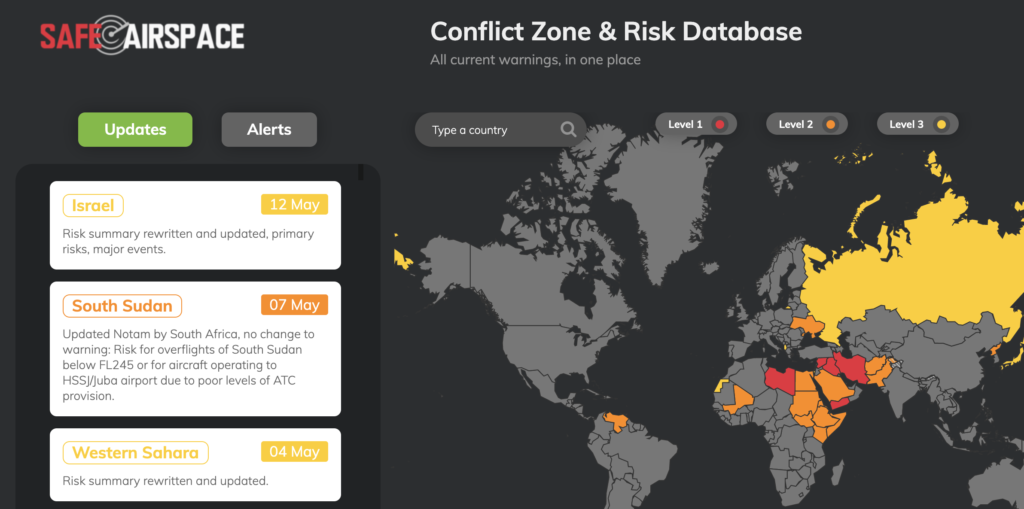
On May 4, the GCCC/Canarias FIR updated their airspace warning for Western Sahara, due to the ongoing conflict there.

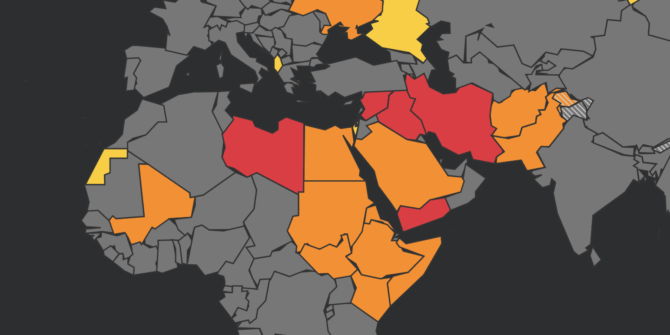
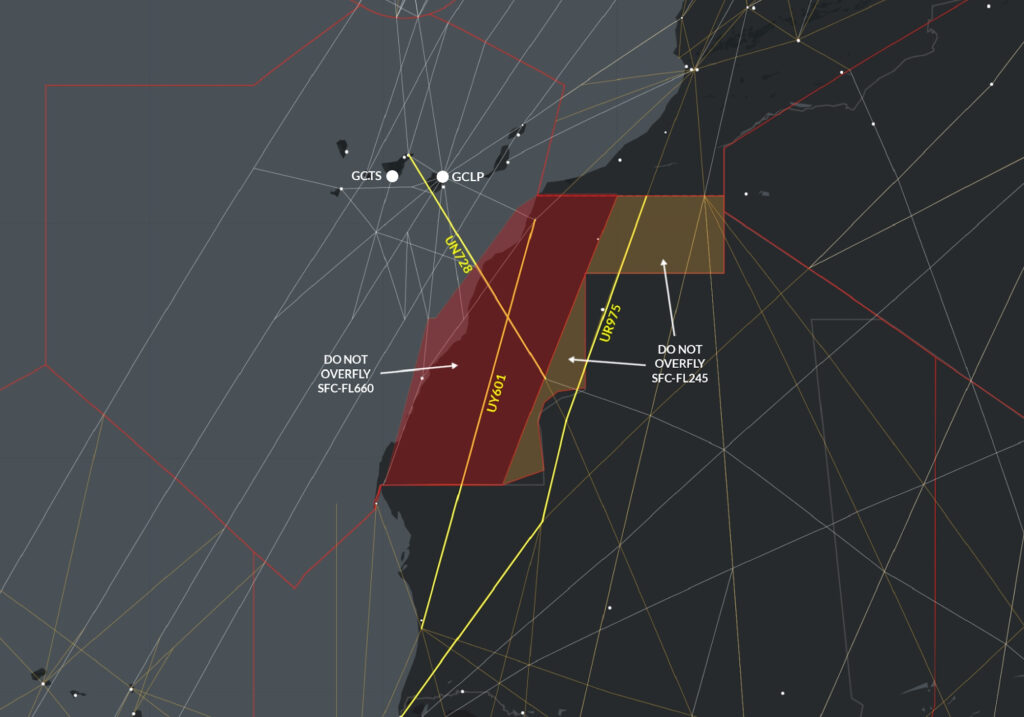
Previously, they said that aircraft overflights should be completely avoided in the eastern part of the country (i.e. airways UY601 and UN728), and should not be below FL245 in the western part. Here’s how that looked:

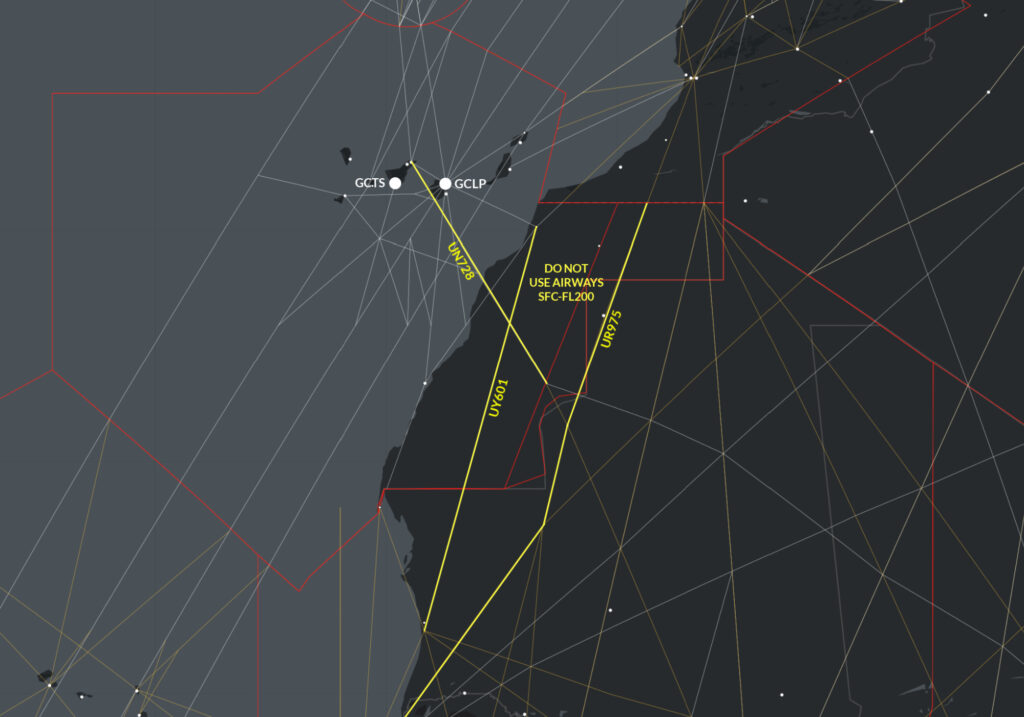
However, the updated warning issued on May 4 simply advises operators to avoid using the airways over Western Sahara below FL200:

Here’s the Notam:

GCCC B3323/21  - OPERATORS ARE REQUESTED TO EXERCISE PARTICULAR CAUTION 
DURING FLIGHT OPERATIONS IN WESTERN SAHARA AS PART OF FIR CANARIAS. 
IT IS RECOMMENDED TO AVOID OVERFLIGHT AT FLIGHT LEVELS BELOW FL200 
ON THE FOLLOWING ROUTES: UY601, UN728 AND UT975. 
04 MAY 08:53 2021 UNTIL 04 JUN 23:59 2021 ESTIMATED. 
CREATED: 04 MAY 08:54 2021

Still, not much of a warning. What’s really important is exactly what is missing: why.

The answer: Because the airways are over an active conflict zone, with a known threat of anti-aircraft fire.

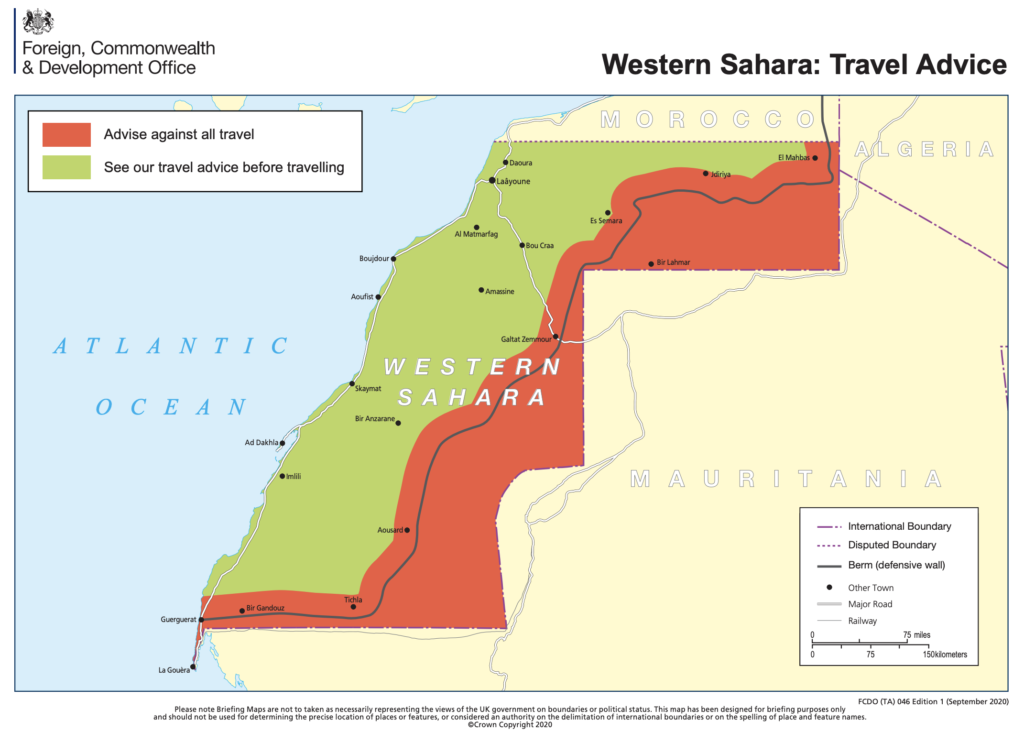
Western Sahara is effectively divided straight down the middle, literally by a wall. Morocco controls one side, while the region’s independence movement (the Polisario) controls the other. In Nov 2020, the Polisario declared war on Morocco.

Why do they want to fight?

The two have never gotten along. The Polisario want independence and were at war with the Moroccan Government for a very long time, until a fragile ceasefire agreement in 1991. Since then there has always been tension.

In early Nov 2020, a Polisario protest blocked a whole bunch of Moroccan truck drivers at the border with Mauritania, shutting down an essential route that connects Morocco to the rest of Sub-Saharan Africa. Morocco weren’t happy, and breached the ceasefire agreement by sending forces into the demilitarized zone to remove them.

The Polisario immediately declared war on Morocco, and clashes began straight away.

Why does it matter?

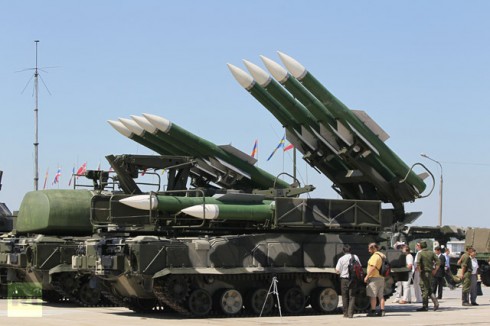
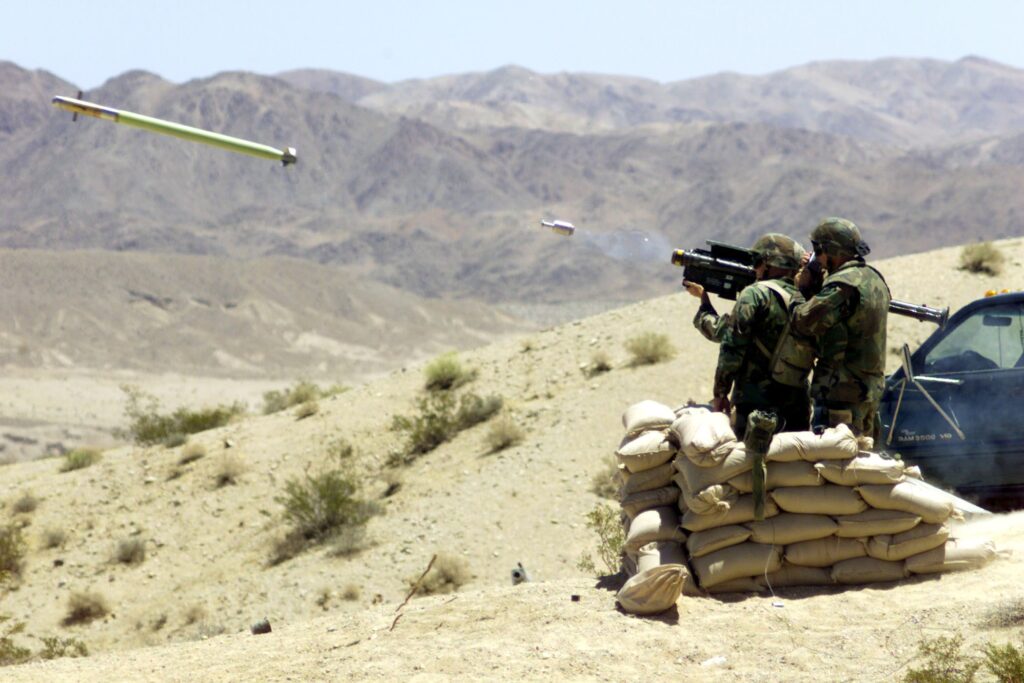
The FAA were onto it when they immediately carried out a risk assessment and published a notice. The big deal is that the Polisario are likely to have access to anti-aircraft weaponry left over from the previous war. This includes man-portable air defence systems (MANPADS) and surface-to-air missiles. The FAA think these weapons pose a risk to aircraft as high as 12,000 feet.

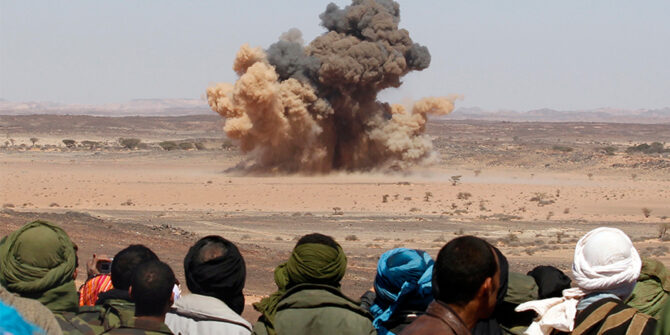
Example of a MANPAD system in action.

To make matters worse, they are suspicious that Morocco are flying drones over their territory – something that has been denied by Morocco. It wouldn’t be the first time an aircraft has been shot down there either – the Polisario downed two DC-7 airliners with missiles back in 1988.

What about airspace?

The sky over Western Sahara airspace is split between two FIRs –GCCC/Canarias and GOOO/Dakar. If the conflict escalates further, this is likely to complicate things.

So far there has been only one warning from the Canarias side – the NOTAM above. Nothing from Dakar yet.

There are currently three major airways affected. Two of them (UY601 and UT975) run the length of the region in a south westerly direction – likely to be used by aircraft transiting some routes between Europe and South America. The other airway, UN728 is a direct track from the coast to GCTS/Tenerife which may be used by smaller aircraft or those doing tech stops in the Canary Islands.

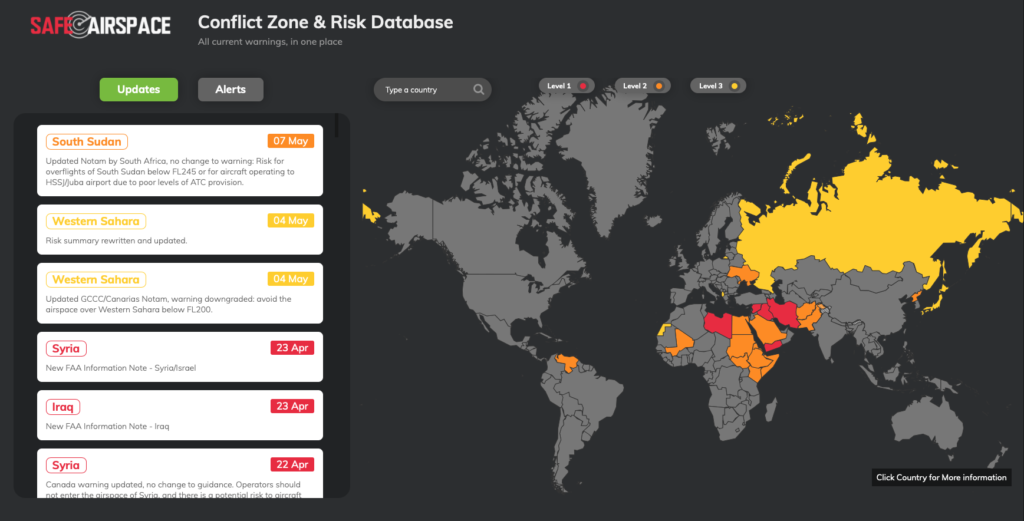
So if you’re  planning flights to the Canaries, or overflying central Africa, pay close attention to the risks involved. Continue to monitor Safeairspace.net as the situation develops.


The Bermuda Triangle: Fact or Fiction?

The Bermuda Triangle. A place of myths and legends. But how real is it, and what affect if any does it have on aircraft flying through it?

Where exactly?

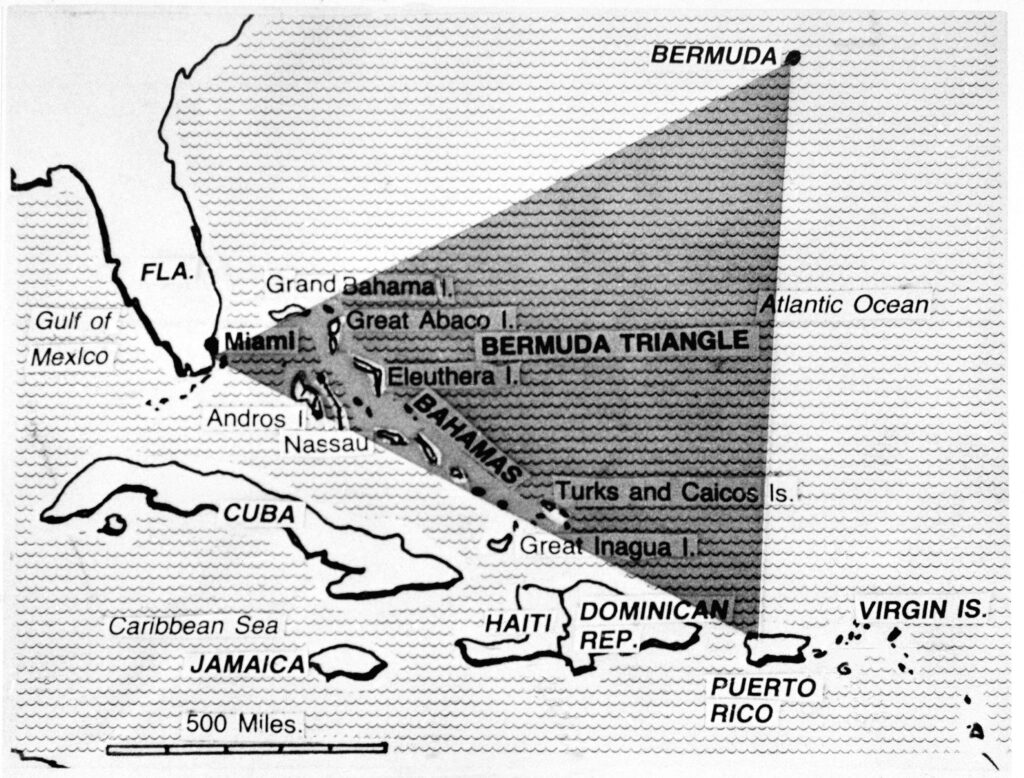
The Bermuda is a fairly loosely defined area out in the great Atlantic Ocean, generally mapped out with its three corners reaching Bermuda, Miami and the northwestern corner of Puerto Rico. It varies in size from around 500,000 sq. miles to 1,500,000 sq. miles depending on how its boundaries are drawn.

An oldish map of the Bermuda Triangle

Why do we talk about it in Aviation?

It has a reputation for disappearances – sinking ships and vanishing airplanes, dots on the radar that are gone in a blink, never to be seen again. Some say it is haunted, some say aliens use it as a human abduction point, others reckon it is home to an immense Kraken that swallows ships whole…

These might be tall tales, but in fact is has been the location of a higher-than-its-fair-share of naval and aviation disappearances, and random technical malfunctions too. Somewhere in the region of 50 ships and 20 airplanes since folk started paying attention.

In 2017, a Turkish Airlines A330-200 experienced a series of electrical and mechanical malfunctions while routing over the Triangle. Routing from Istanbul to Cuba, they ended up making a diversion to Washington Dulles. Flight 19 was a squadron of five Torpedo Bombers that disappeared in the area. And of course the famous Amelia Earhart’s final flight was rumored to have gone down in this general location.

It gained its name from an article written back in 1964, which started with an attention grabbing hook –

Fact or Fiction?

Read through the list of sea and air incidents and accidents and you will notice something – the vast majority of events happened last century. Aside from TK183 and a few light aircraft accidents, all the rest generally took place between the 1940s and 1970s.

The investigations into Flight 19 and Amelia Earhart’s disappearance both concluded that poor weather, a loss of situational awareness regarding their actual positions, and ultimately running out of fuel were most likely to blame.

Flight 19 was attributed to the Flight Leader mistaking the Bahamas for the Florida Keys, a broken compass and the fact that the advice for if you got lost in the area back then was to just “take up a heading of 270”. And the Turkish Airlines flight was a fairly uneventful malfunction and diversion.

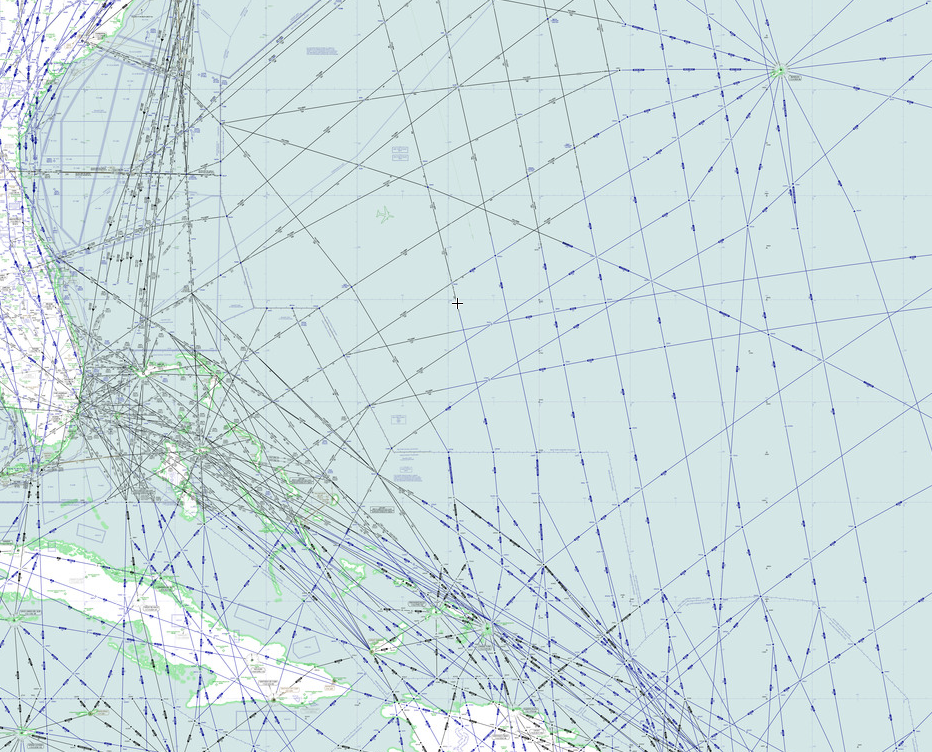
The high numbers of events can also be put down to the high amount of traffic that routes through this region. It is a fairly major shipping route between the East Coast of the US and the Gulf of Mexico, and in more modern times it has become a fairly busy area for aircraft too.

Airways and routes in the region

What is causing it all then?

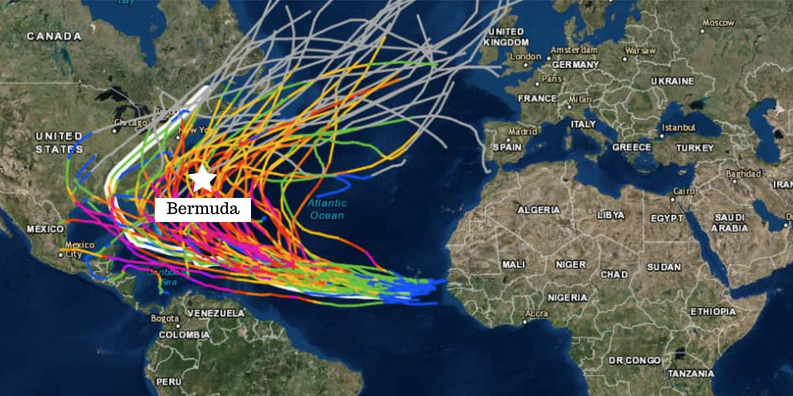
Well, weather seems an obvious answer. It is a pretty popular area for hurricanes to aim towards. In fact, Bermuda (the island) sits in Hurricane alley – the more frequent path taken by Atlantic Hurricanes. So it is no surprise old airplanes and ships without the use of modern weather radar systems might fly into this region and be surprised by some really nasty ship-sinking / airplane-crashing storms.

Hurricane Alley

Another explanation offered up by science is to do with magnetism. You all know this, but the Earth’s magnetic pole isn’t quite in the same spot as True North. Your compass points to magnetic north, but there are these things called Agonic Lines which line up magnetic and true north and along these your compass is Truly (pun intended) accurate. One such line runs from Lake Superior and down through the Gulf of Mexico.

Back in the days before GPS, when pioneering navigators relied on compasses and stars (which they couldn’t see because of all the bad weather), they would have potentially corrected for Magnetic to True. But correcting along an agonic line would actually have led them astray.

Then there is the depth of the trenches in this area of the ocean. Most of the sea floor is as far down as 19,000 feet, some areas over 27,500 feet. Which means when things do sink there, they are not easily found. So your sunken ship or ditched airplane is not likely to be found and the conspiracies about aliens and wormholes start to run rampant.

So, the lack of recent aviation events attributable to supernatural phenomena do suggest that it was probably due to more standard reasons that incidents were higher here than in others areas. Added to the fact it makes a good story, and we find we just have an area of bad weather, lots of traffic, and disappointingly unexciting reasons for accidents.

Are there any things modern aviators should look out for in the region?

Yes. Those hurricanes are worth keeping an eye on. The main Atlantic Hurricane season runs from June to the end of November. We wrote a bit about it here.

If you are flying to Bermuda itself then the fact it is a very remote island is also worth thinking about. TXKF/Wade International is your main airport, and some of the nearest alternates lie a good 650 miles away on the east coast of the US.

Some serious fuel planning is a good idea then – Isolated Airport Procedures usually require you to carry at least 2 hours additional fuel (at normal cruise consumption above the destination aerodrome). Here is a useful CAA produced checklist for Isolated Airport Procedures.

The surrounding airspace is also a threat. To the East you have the open Atlantic and all the procedures and challenges associated with that. To the West you have the East coast of the US, including the Florida Metroplex airspace, along with KMIA/Miami and KFLL/Fort Lauderdale – two of the busiest airports, in some of the busiest airspace of the USA.

Nothing odd in the area… except maybe this?

Did you know there is a Bermuda Triangle in space?

Yep, astronauts have their own ‘Bermuda Triangle’ to contend with. It lies over the South Pacific, stretching between Chile and Zimbabwe, and is rather more real than its earthly counterpart.

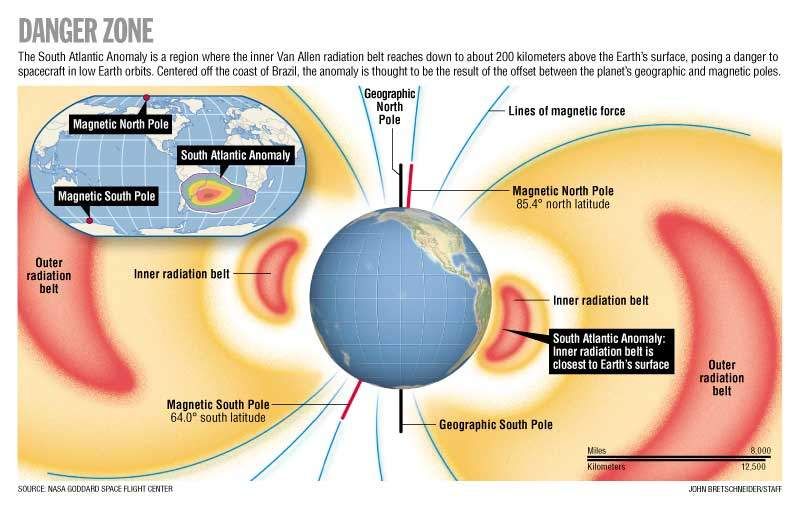
This area of space is where the inner Van Allen radiation belt comes closest to the Earth. These rings of charged particles – loads of electrons in the outer ring and high-energy protons in the inner –  surround the planet, and are caused by the Earth’s magnetic field which protects us from this harmful radiation by trapping these particles in its magnetic grip.

Unfortunately, in this particular area, the Earth’s magnetic field is weakest, so all those particles are free to swoosh around more. They have also managed to get much closer to the Earth which means our satellites, space equipment and space travelers sometimes orbit through it.  This pretty much messes with electrical equipment, and people for that matter.

For the Hubble telescope, which passes through it about 10 times a day, it means a disruption in its workings for about 15% of each day. Satellites often experience temporary system failures when passing through during high flux days, and the astronauts onboard the ISS have to be shielded to prevent excess radiation. They often report seeing random white flashes, and having issues with communication equipment.

Van Allen explained

Disappointingly then it seems the Bermuda Triangle is just the stuff of fiction

Most authorities and Scientific organizations agree, but if you fancy reading some more about it then these are some good places to head to:


Resisting the Pull: Should We Still Be Using Magnetic North?

In recent years NAV CANADA has been leading a charge to move the industry away from magnetic north to true north. And it makes sense.

Modern technology has arguably rendered magnetic north obsolete. So why are we still using it? The simple answer is because we always have. Delve into ICAO Annex 4 and you’ll see that bearings, tracks and radials must still be published in degrees magnetic. But this begs the question – do we actually need it anymore?

When humans first took to the skies, things were different. They needed a directional reference. Back in those days it had to be something simple and light – enter the magnetic compass. Nature was guiding the way because it had too.

With modern navigation systems these days all the magic happens reference to true north. Inertial and GPS systems both use simple conversions so that the information can be displayed to crew as a magnetic reference to match our charts and procedures.

But because we are still using magnetic north as a reference we are forced to deal with magnetic variation – the angular difference between the true and magnetic poles. It is an issue that costs the industry many millions of dollars a year to manage and can potentially lead to serious safety issues if things aren’t handled properly on the ground and in the sky.

Let’s get science-y.

The earth has its own magnetic field. That’s because its outer core contains molten iron. Writhing lobes of magnetic flux surround the earth and meet near the top and bottom of the globe – the spots we know as the magnetic north and south pole.

The earth’s ever changing magnetic field.

Open up a compass and the steel needle will align itself to the magnetic field lines around it and hey presto, it will point directly at the magnetic north pole.

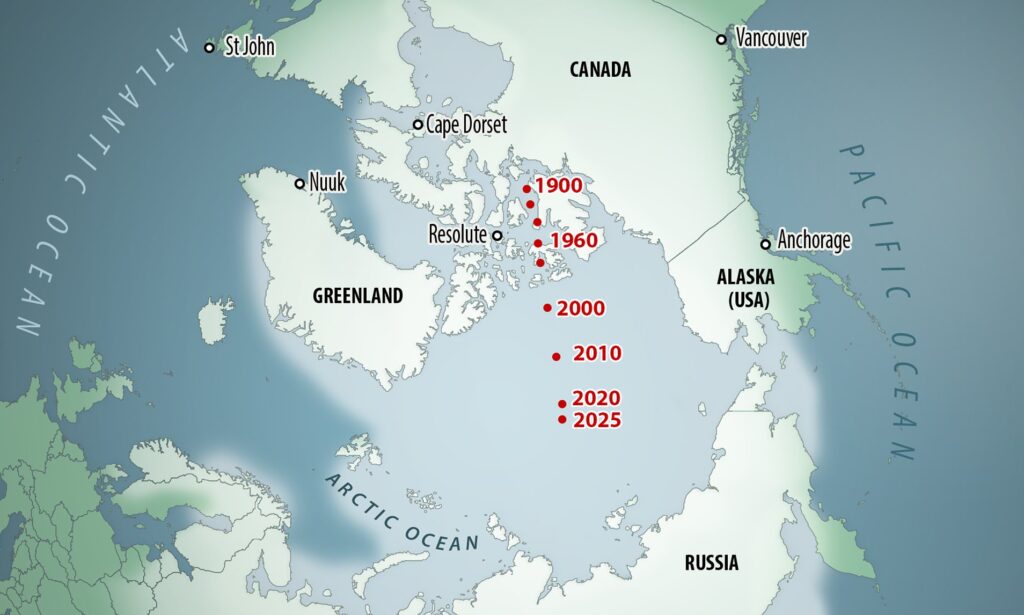
But here’s the problem – molten iron is a liquid, and it moves around. Which means the magnetic north pole does too. It never sits still. In fact in recent times it has put its foot down and is now moving close to 40 miles each year. As of last year, it was about 250nm away from the true pole and headed for Siberia.

The constantly moving magnetic north pole over time.

The magnetic north pole is of no use to modern navigation systems because it is constantly on the move. Instead, they operate using a ‘geodetic reference system’ – a really fancy name for co-ordinates that may impress people at your next cocktail party.

Two variables, the ol’ lat and long, come together and allow us to define any spot on the surface of the earth. All meridians of longitude are anchored to the true north pole because it never changes. It is simply the northern end of the axis around which the world and that globe on your desk spins. Latitude on the other hand is reference to the equator which never moves either.

In fact, the only way either could change is if the earth’s angle of tilt moved too in which case we’d have bigger things to worry about. So, when we combine the two we can divide the surface of the world into a grid and pinpoint exactly where we are – a process that both inertial and GPS systems use to stop us getting lost out there.

Lat and Long – anchored by the equator and earth’s axis of rotation.

Here are the issues.

All of our procedures, bearings, tracks, VOR radials, even our runway designators are still presented in degrees magnetic because the regs say they have to be.

And because of that every time the magnetic north pole moves, magnetic variation changes and the industry has to get out there and re-jig everything. Literally every computer that references magnetic north in some way has to be updated.

Magnetic variation is constantly changing. Credit: NOAA

All our IFR procedures from enroute, to terminal and approach phases have to be changed and re-published. Our FMS’s have to be programmed to match too. VORs have to be rotated and navaids flight tested. Radars have to be realigned and airport signs replaced. Even runways have to be repainted. It literally costs ANSPs, airports, avionics manufacturers and operators millions.

Take KTPA/Tampa for example. In 2012 changes to variation forced the airport to renumber its primary runway, no less than 140 signs had to be replaced.

It is also a safety issue. The whole system depends on everyone updating everything at the same time which seldom happens. A small change can have a big impact too. The PBN systems we rely on to keep us safe can be compromised by changes to variation if not updated. Synthetic vision systems can begin to tell pilots lies.

Anchorage in 2012 serves as a cautionary tale. The FAA updated its magnetic variation of the airport. Because operators didn’t update their aircraft’s avionics quickly enough, in some cases there was a mismatch.  Flight tests revealed that using the old value, Cat II and III approaches were no longer within lateral guidance limits  – not what you want to hear when you’re in the soup. The FAA temporarily changed procedures back to old value to allow time for operators to catch up.

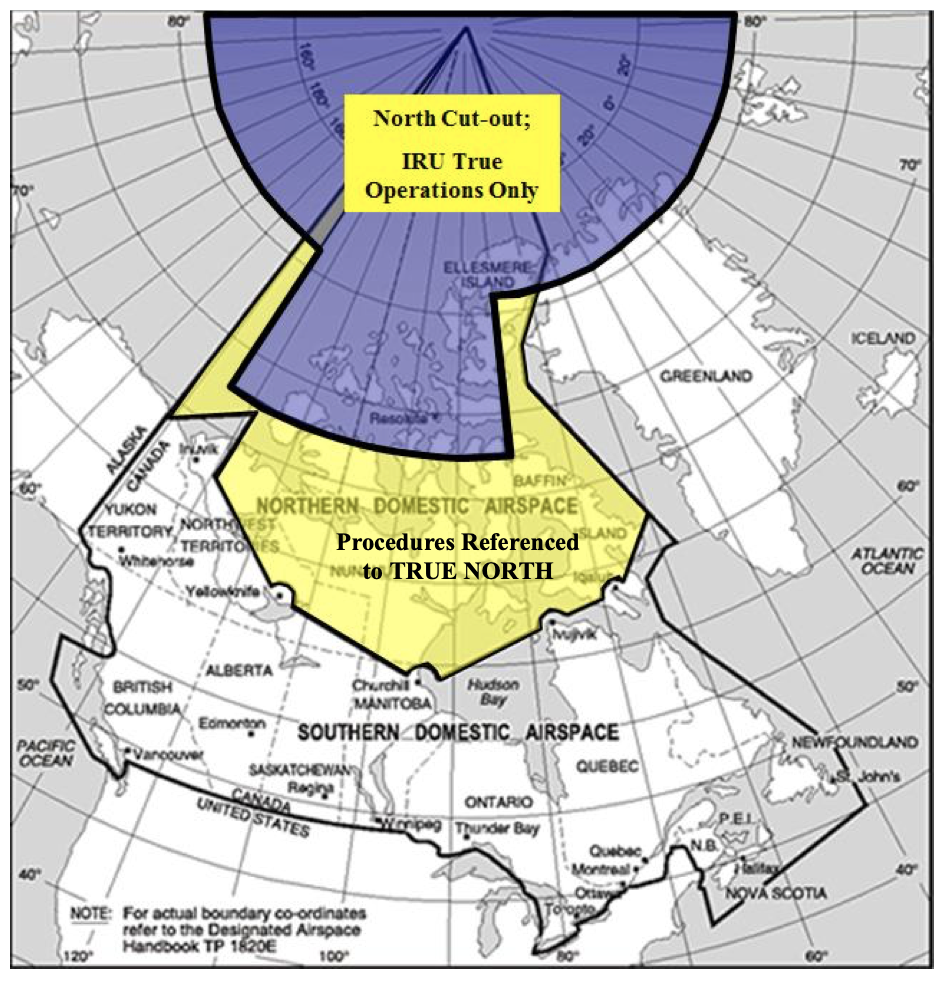
We know that it works too – Canada has been using conventional and PBN procedures using True North for some time throughout a huge chunk of its northern domestic airspace successfully, where magnetic references become unusable.

True north operations in Canadian domestic airspace.

So why can’t we just turn it off?

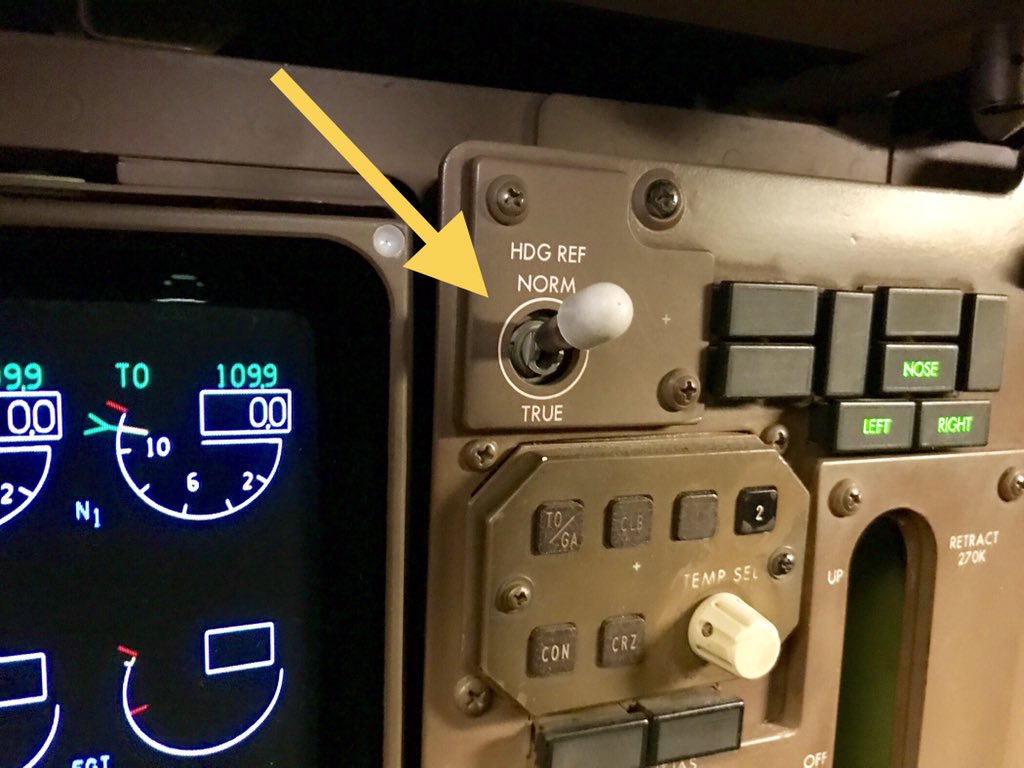
That’s the beauty of it – we can. Technically, it’s as simple as flicking a switch. Converting things from true to magnetic is just a process that we can just turn off. A lot of aircraft even have that very switch already.

As easy as flicking a switch?

Photo credit: Ken Hoke @AeroSavvy

Practically speaking though, the problem is the huge legal, administrative and legislative implications that would follow. Rome wasn’t built in a day and neither would a huge change to aviation procedures around the world. It would literally take years to implement.

But that may be no excuse for change, otherwise we will continue to expose ourselves to known risks. Take Notams for example. We are still communicating critical safety information using a format that has existed since 1924 – an invention for teleprinters.

The industry is beginning to see that the status quo isn’t necessarily the safest way forward. OPSGROUP have recently begun to work with ICAO and other partners on a global campaign to improve Notams, and it has only just begun.

No longer using magnetic north is no different – it is only a hurdle to something better, more consistent and safer for everyone.


Bomb Onboard: Do you know your procedures?

Airport security means the threat of a bomb onboard is greatly reduced. But if you do receive a bomb threat, or find a suspicious package onboard, what procedure does your operator have in place for you to follow?

How much risk is there?

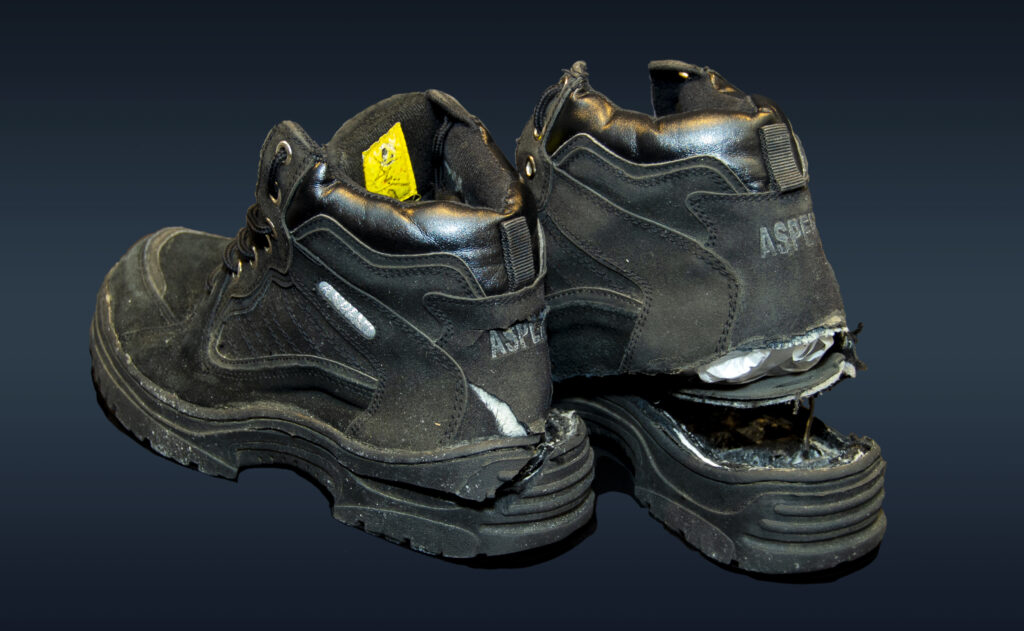
You have probably all heard the Shoe Bomber attempt from 2001. This was thwarted by some brave passengers and crew, and also the fact the bomber had sweaty feet – his swamp foot dampened the trigger preventing it from igniting.

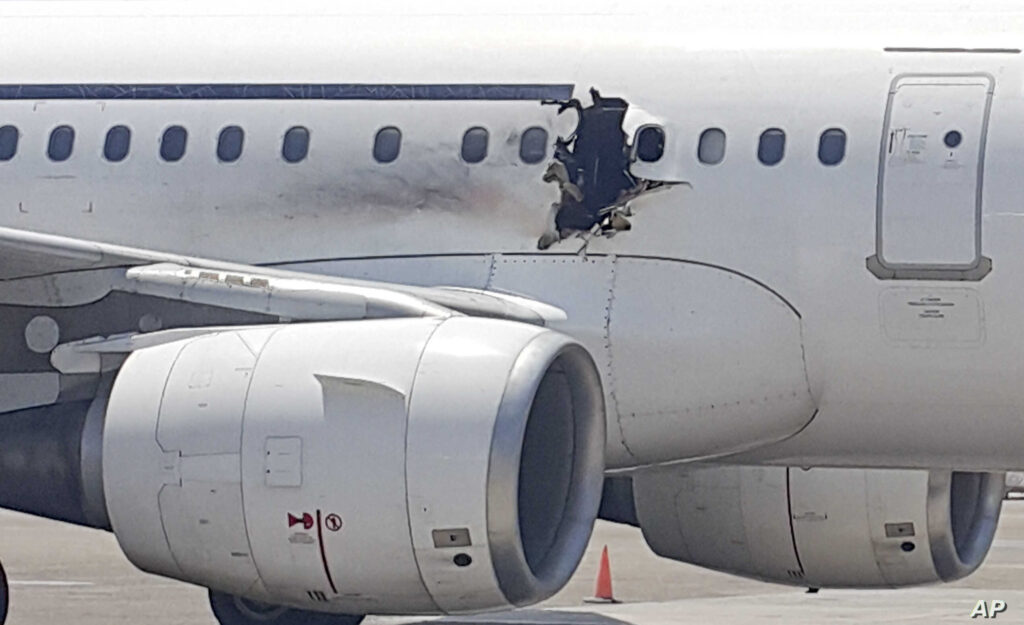
In 2016, an aircraft made an emergency at HCMM/Mogadishu airport after a bomb exploded onboard. The bomb was likely brought on concealed within a laptop. This flight was lucky though – the impact of the bomb was minimal, limited because the bomb exploded while the aircraft was at a lower altitude (11,000ft).

In 2020 a European airline found a ‘bomb note’ onboard. The flight was escorted to a safe landing and passengers disembarked without incident.

So bomb threats, and attempted bombings, do occur, and while security is getting better and better, unfortunately terrorists are getting more creative in finding ways to bring items on board. The attempts are not always aimed at causing destruction either – threats alone cause a huge amount of disruption to operations. So understanding how to assess the risk and credibility of a threat is as important as knowing how to deal with a possible explosive device if one is found onboard.

Th shoe bomber was thwarted by his own sweaty feet

Is the threat credible?

Threats received regarding an aircraft need to be assessed, and the credibility determined. The threat classification will generally be based around how specific the threat is. Most operators will have a procedure in place for determining this, and probably take into account something along the following lines:

If a threat mentions a specific target, or is made by a known terrorist organization and is deemed credible then this is going to be considered more serious. Often these are referred to as a red threat.

On the other hand, a threat which is vague, general, and doesn’t specify targets might be considered less credible. A hand scribbled note in the toilet for example. This would be categorized as a green threat.

However, regardless of the assessed credibility, a bomb threat has to be taken seriously and treated as a genuine situation.

If you are on the ground

The simplest and safest option if you are on the ground is to disembark and carry out a full search of the aircraft. It might be a hassle and result in some big delays, but the possible alternative is much worse.

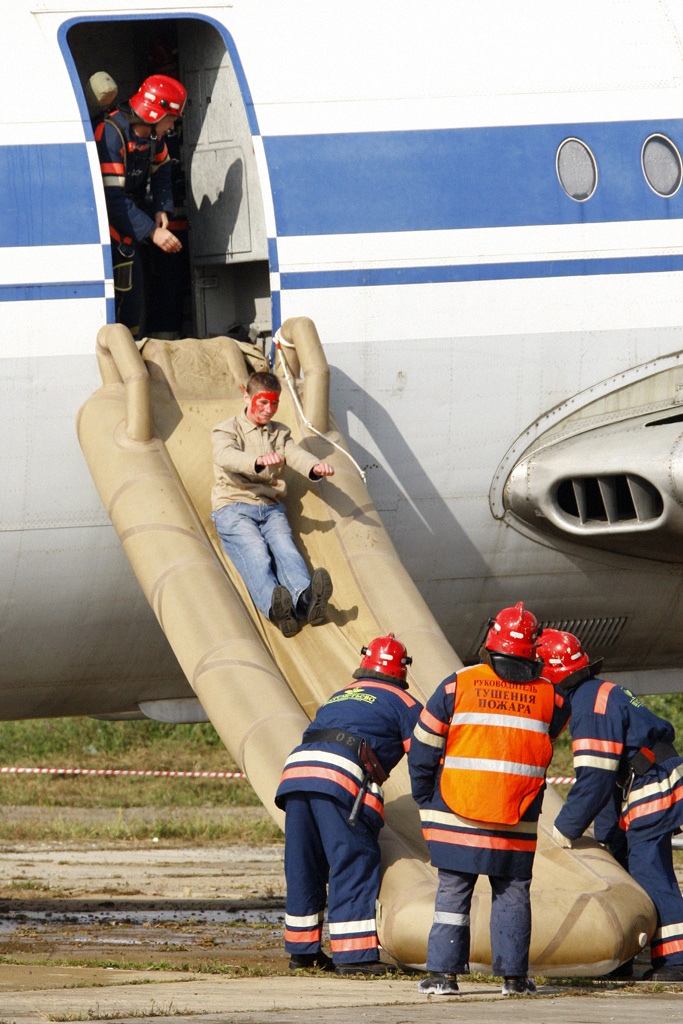
A serious threat may require a precautionary disembarkation – which will result in offloading the passengers as quickly and as safely as possible. This creates a risk to safety in itself, and generally the credibility of the threat will be communicated to the crew so that they can judge the risk of waiting (for steps) versus disembarking immediately to clear the aircraft (but have passengers hurling themselves towards the tarmac).

His face is the red threat apparently

If you are in flight

If a threat is received against your aircraft while in flight, carry out a search checking those places which are often overlooked during security checks on the ground, but where an article might easily be concealed – toilets, galleys, jump seats, stowage areas, closets etc. Try and do it discreetly to avoid unnecessary worry for passengers.

If an article is found, do not move it or touch it. Move passengers away from the immediate area, and remove any flammable items and have fire extinguishers ready in case. A PA asking for anyone onboard with ‘BD or EOD experience’ might help – these are terms which experts will recognize without saying “Hey, passengers, is there a bomb expert onboard?”

Not terrifying your passengers is probably a good call, but ensuring they are following your crew’s orders, and that they are prepared for the situation on the ground, is also necessary. This means providing them with clear information, but without dramatizing the situation.

“Ladies and Gentlemen, we have received a message that a threat has been made against one of our aircraft/an aircraft in this airspace. These threats do happen, however, until we can establish how credible it is, we will take all possible precautions and therefore intend to land at… in…”

If you find a suspicious article

Most manufacturers provide checklists for bomb-on-board situations. Know where this is, and understand what it says. 

There are a few measures you might want to consider:

  • Talk to ATC so they know exactly what is going on and what you need. They all assist with locating an airport with services needed, and coordinating with military if necessary.
  • Try to avoid routes over heavily populated areas.
  • Consider carefully the choice between flying fast to minimize airborne time versus flying slow to minimize air-loads and damage (in the event of fuselage rupture).
  • Request remote parking on the ground if there isn’t a designated bomb location.
  • Brief your crew for a possible emergency landing, and in any event, brief them to ensure passengers are disembarked quickly and moved to at least 200m upwind from the aircraft.
  • Avoid large and rapid changes to pressure altitude – consider using manual cabin altitude controls to minimize rapid pressure changes while still lowering the cabin altitude to reduce the differential pressure.

Aircraft are designed to not ‘explode’ if there is a rupture in the fuselage – that’s why they tend to have a lot of smaller sections attached together. It makes the overall structure more resilient to the effects of an explosive decompression, aiming to keep it “localized”.

Reducing the differential pressure to around 1 PSI will also reduce the damage if an explosion does occur. Maintaining a slight differential will ensure the blast moves outwards, but the lower differential limits the force of air from the cabin outwards. 

1psi is the equivalent of about 2,500 feet difference, but flying at an altitude that allows you to manually reduce the differential will probably mean a much lower level and much higher fuel burn.

The Mogadishu bomb exploded at low altitude so differential pressure was lower

Where is your aircraft’s LRBL?

A Least Risk Bomb Location is an area where the least damage will occur should a bomb explode. This should be specified in your aircraft manual. These are often near aft doors or in washroom stowage areas. The area provides the least risk, in the event of an explosion, to flight critical structures and systems.

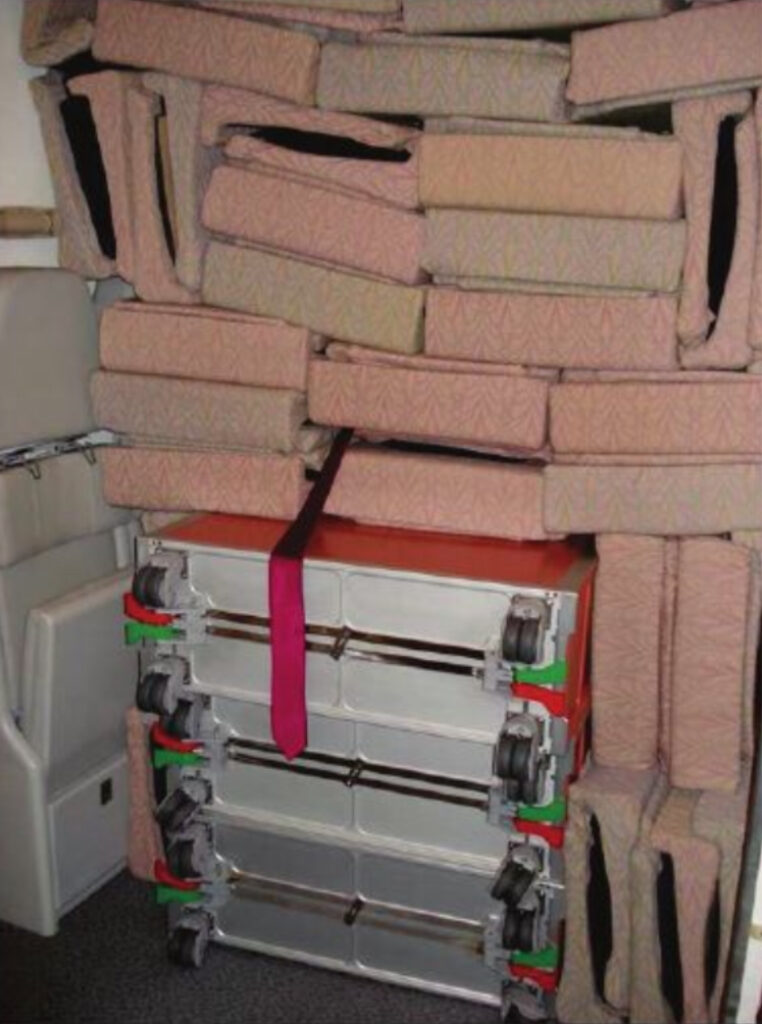
If the article is deemed unsafe to move, cover it in plastic to prevent any liquids getting in, and then pile blankets and pillows, seat cushions and soft clothing around it. We’re talking as big a pile as you can, and once done, saturate in water to minimize fire risk in case an explosion does occur. Don’t forget the plastic sheets first though –  liquid damage to electrical components is also a big risk.

If you can move it, and only if it is deemed essential to do so, then check that LRBL. Once in place, build up the barricade.

Always minimize movement to any article as much as possible, and don’t put anything directly on top of it. An igloo of saturated cushions around it and the gaps stuffed with blankets etc is good.  This ‘cushioning’ will help minimize the force if an explosion does occur. Never put inside an oven or trolley though as a sealed container will amplify the pressure and explosive force of a bomb.

Stack soft furnishings around the bomb and secure in place

Where to go

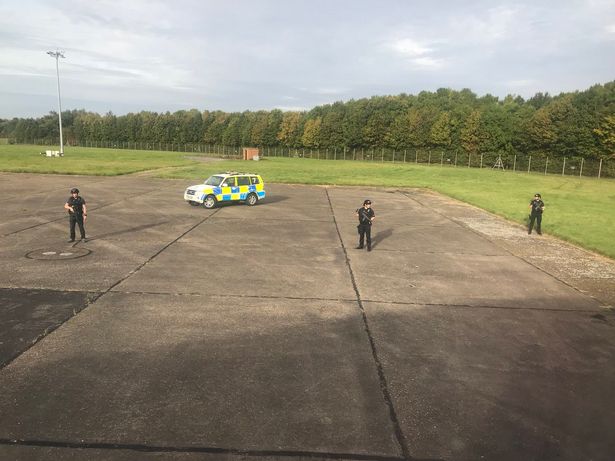
You will likely be accompanied by fighter jets to an airport with a designated bomb area – usually a remote apron away from buildings, fuel supplies and other aircraft.

EGSS/Stansted in the U.K. is the designated “emergency” airport because of its proximity to RAF bases, and the special apron for hijacking and bomb threat parking.

What next?

Getting your aircraft safely on the ground is Step One. Getting your aircraft to a safe point to disembark/evacuate your passengers and crew is Step Two and coordinating this with ATC and airport services is important. Knowing in advance where you will taxi to will get you there more quickly and safely. Landing, slamming on brakes and bursting tires will get you nowhere fast, so plan ahead and be prepared.

A bomb threat or bomb onboard situation is difficult to plan for because the ‘where you are and what will happen’ is not something we can prepare for, other than being ready to follow our procedures and remaining calm. Chances are this is not a situation many of us will (thankfully) find ourselves in, but understanding the resources you have to assist, and knowing the onboard procedures so you can coordinate passengers and crew will no doubt help if it ever does occur.


The Hidden Risks of Automation

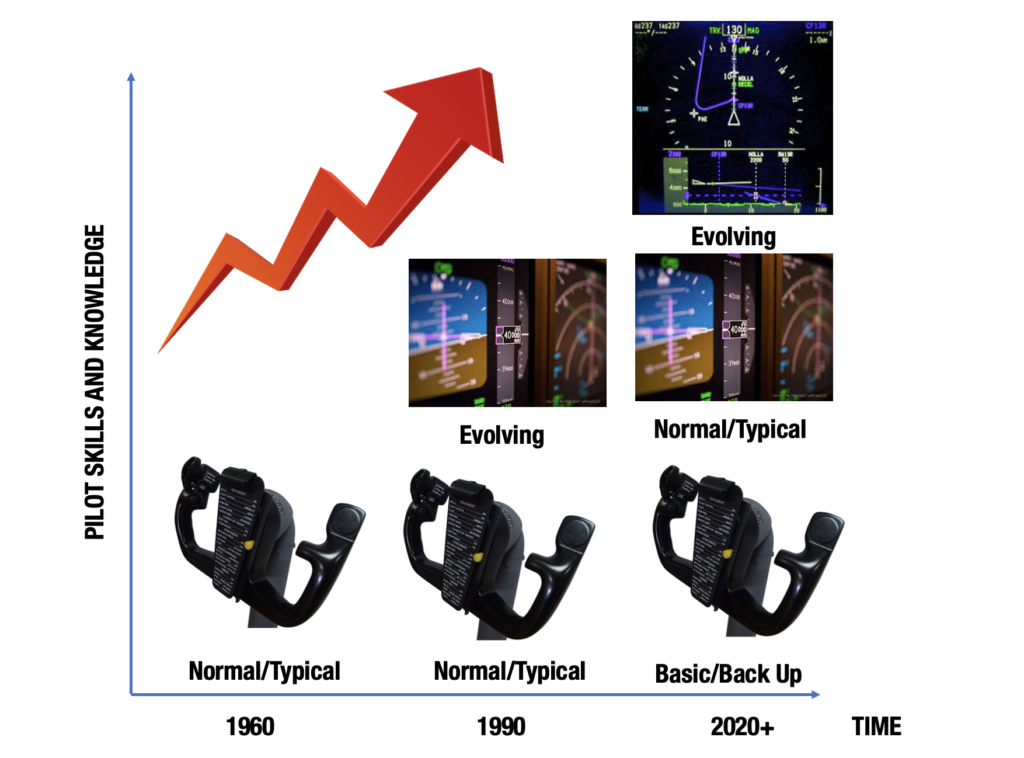
Over the past decades our industry has undergone an automation revolution.

Basic autopilots from eras-past were little more than wing levellers. Today they are sophisticated computers capable of awe-inspiring accuracy.

The industry has welcomed automation with open arms. And it’s no surprise. The vast majority of aviation accidents are caused by us, humans. Mechanical failure on the other hand only accounts for less than a quarter of all accidents.

So for operators and manufacturers alike the benefits of automation are clear – safety and efficiency. We are simply not as predictable or consistent as a computer because we are human. And automation has become a major line of defence.

But herein lies the problem…

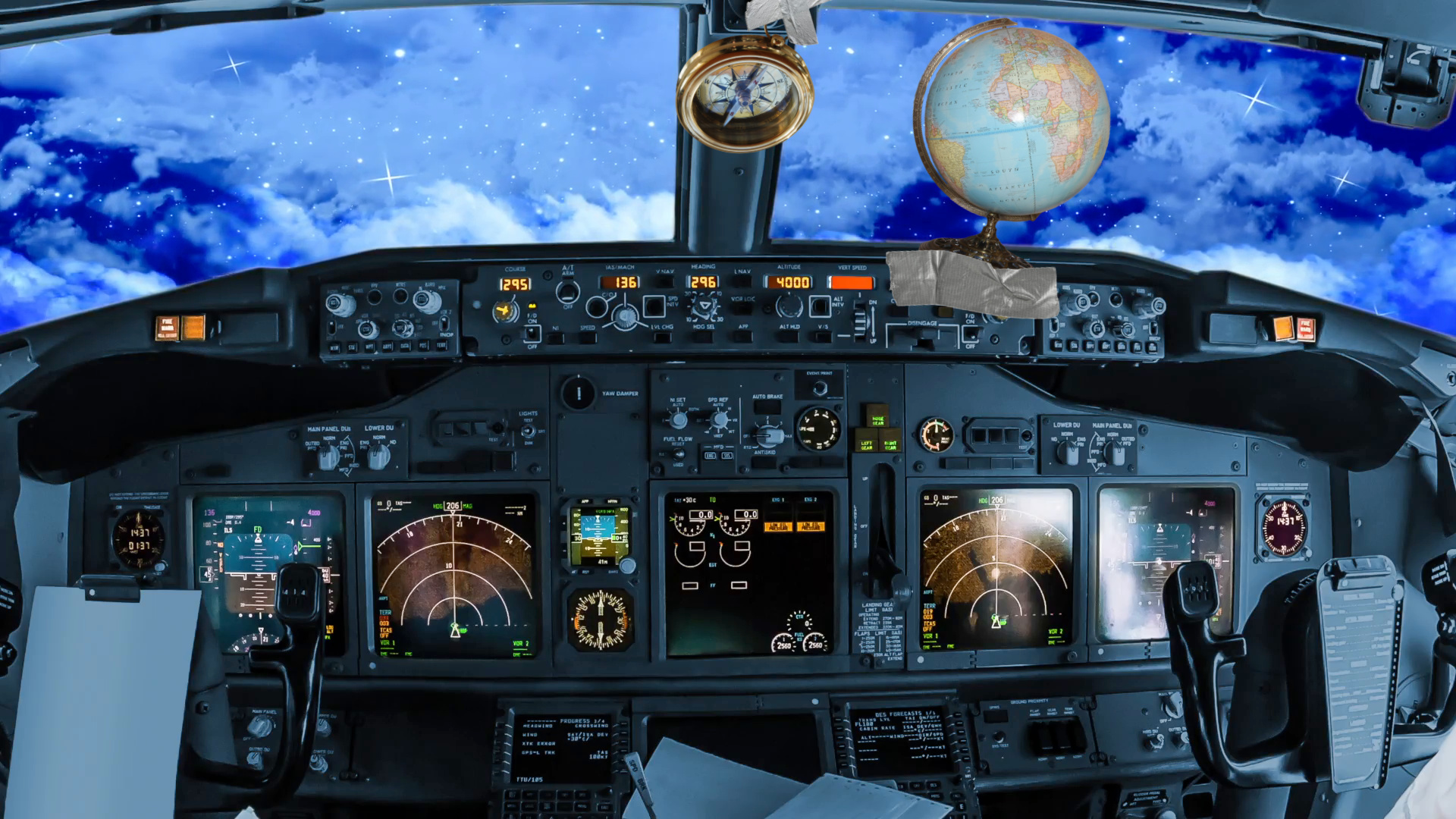
It’s easy to see that a pilot’s role in the flight deck has changed forever as we interact with higher and higher levels of automation. Some might even argue that we are being progressively designed out of the cockpit completely and to some extent this may be true. Whether we like it or not, full autonomy is coming. Take the Xwing Project for instance – their concept can be retrofitted to conventional aircraft enabling them to fly without a pilot.

But right now the more pressing issue is that our role continues to transition more and more from flying airplanes to managing automation. Put it this way. A recent study found that across a large sample of flights aboard the Airbus A319, pilots were spending on average only 120 seconds manually flying each flight. And that was the middle of the curve.

This creates a unique set of risks that the industry collectively needs to better address.

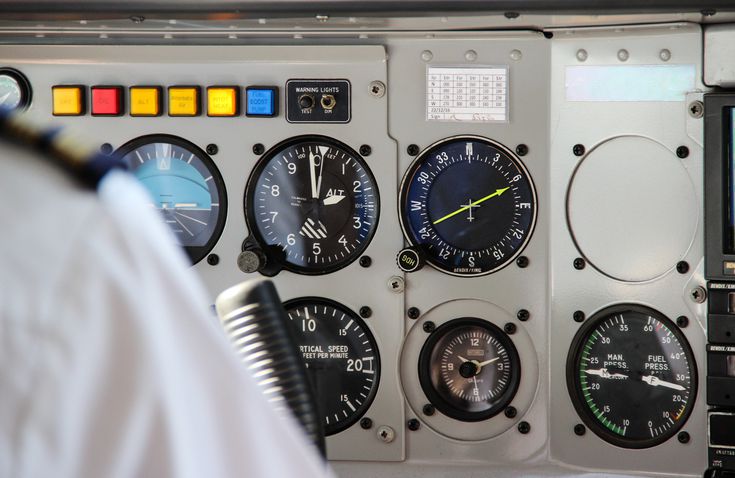
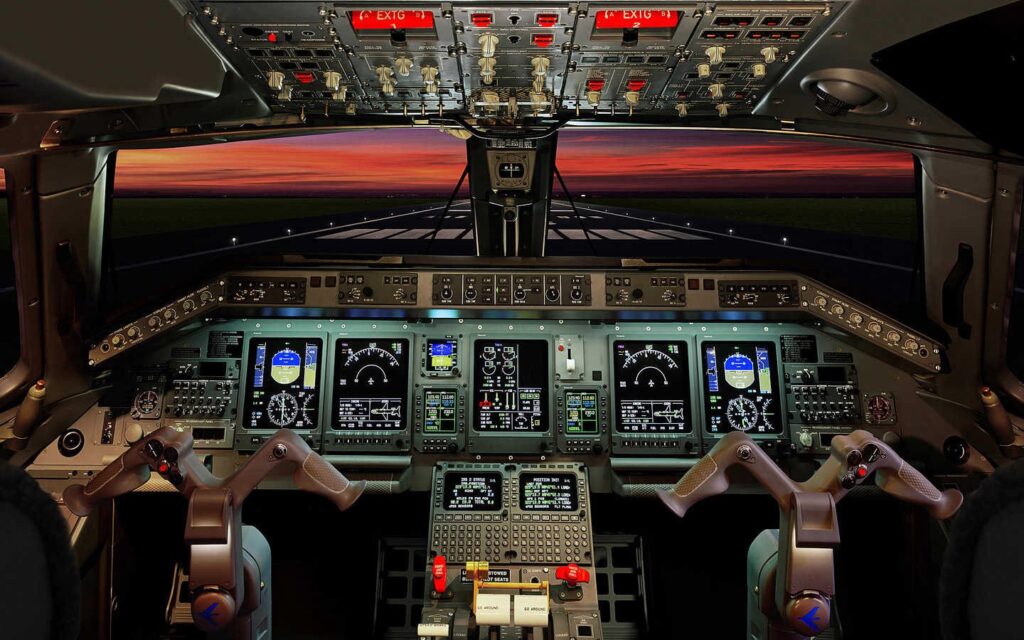
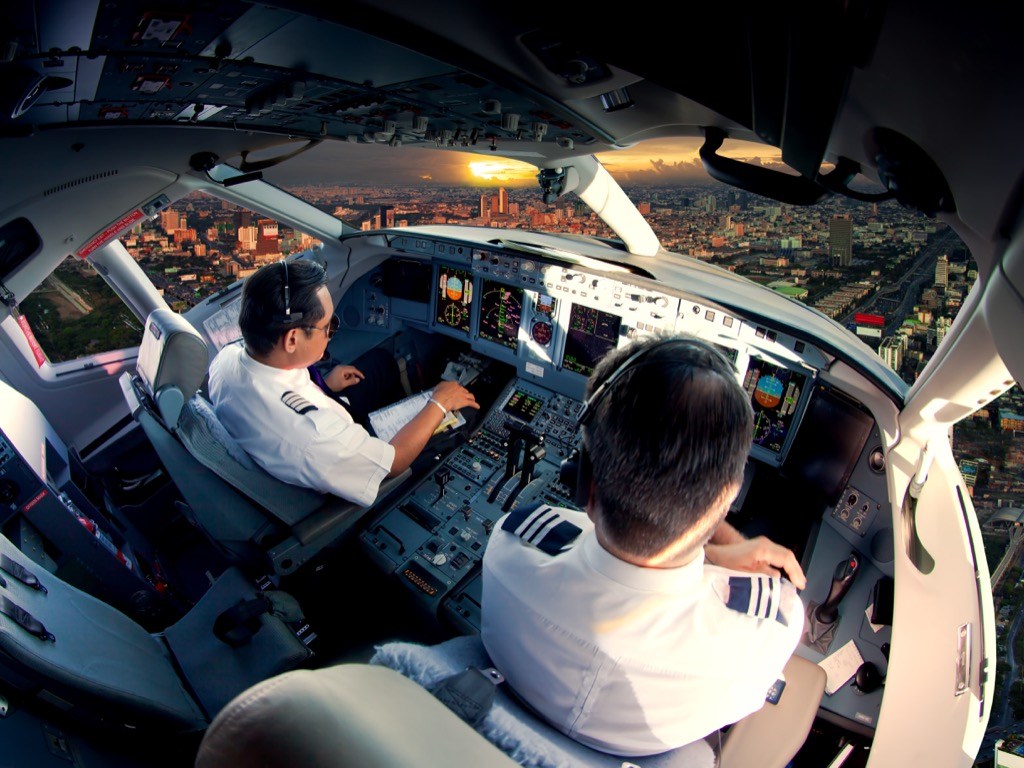
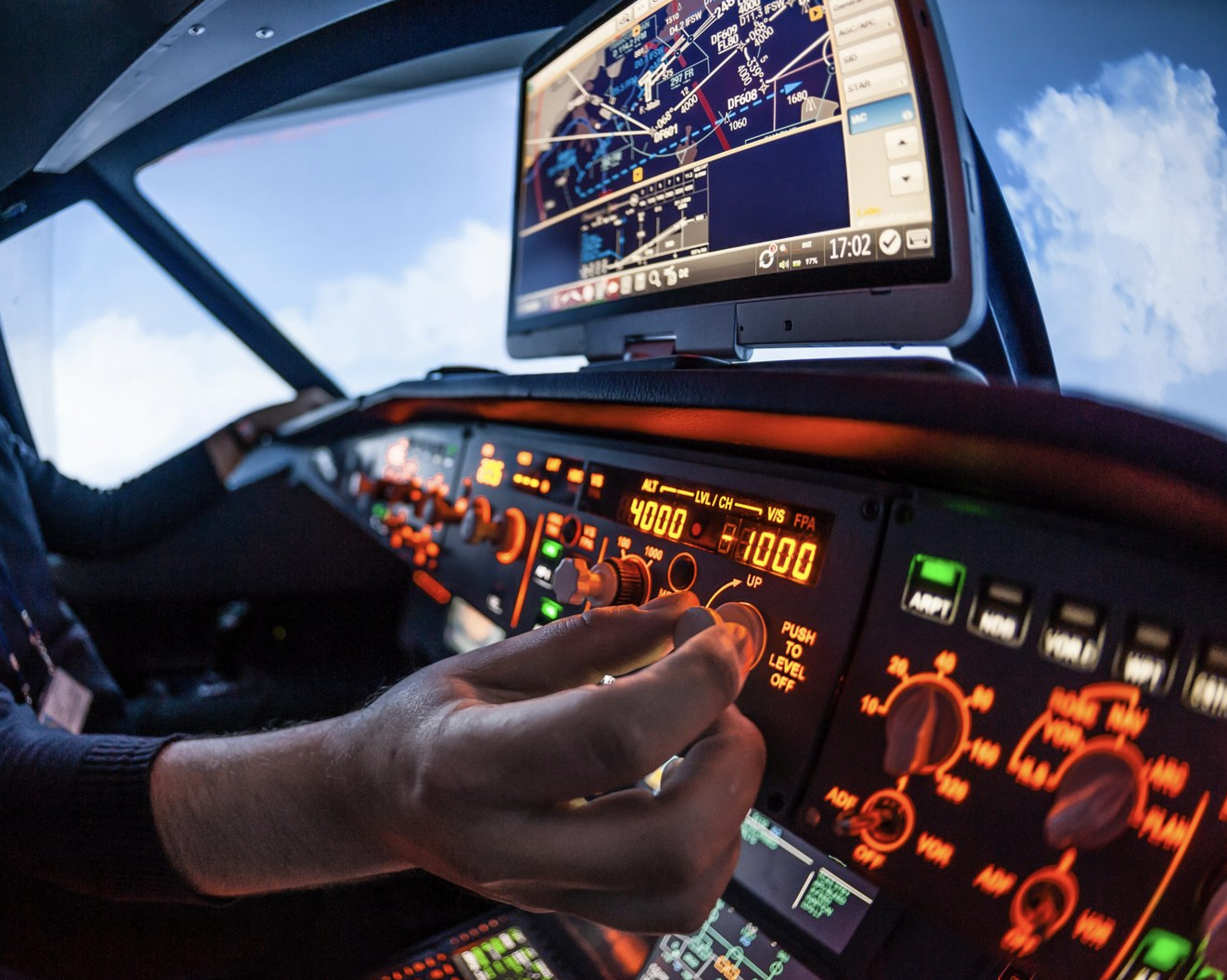
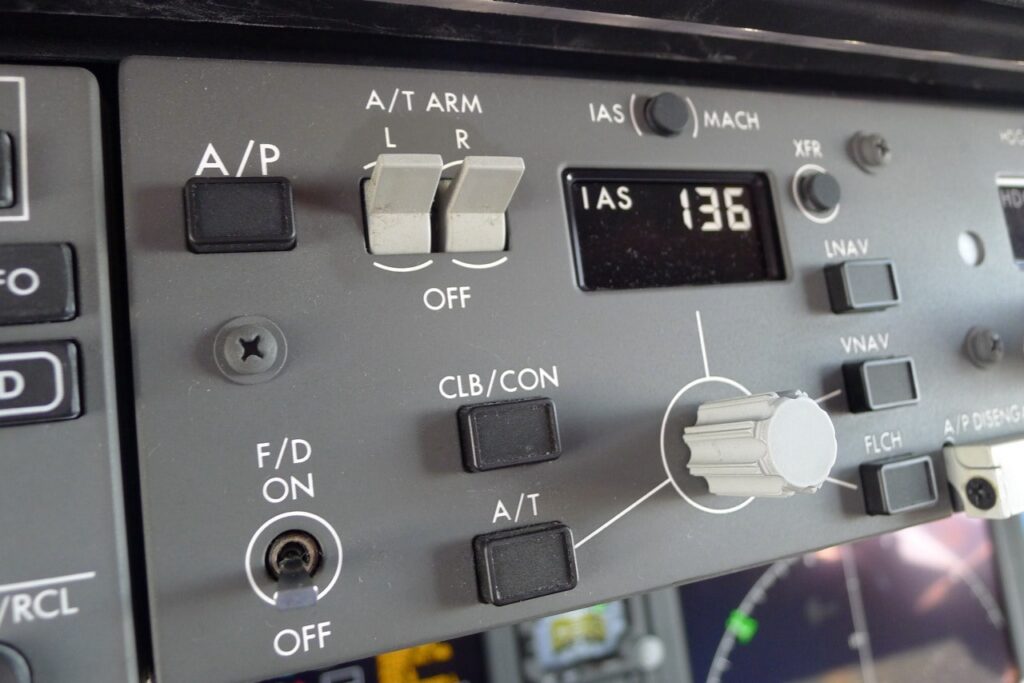
The majority of time we spend flying is through panels like these.

Good Automation

By no means is this an attempt to detract from the positive impacts that good automation continues to have in our skies. The benefits are no secret. When used as intended it is a huge work-load reducer. It allows us better flight path control and liberates us from repetitive and non-rewarding tasks – something humans are known be no good at. We become less fatigued and have more capacity to deal with other things.

It also works in unison with systems like ECAM and EICAS to better help us manage things when something goes wrong.

Automation has also improved the skies we fly in. Fantastic things like RVSM and PBN have allowed us to fly closer together and make better use of crowded airspace. While around the world minimas grow ever closer to the ground thanks to things like RNP approaches where automation can help us ‘thread the needle’ in some one the world’s most challenging approaches.

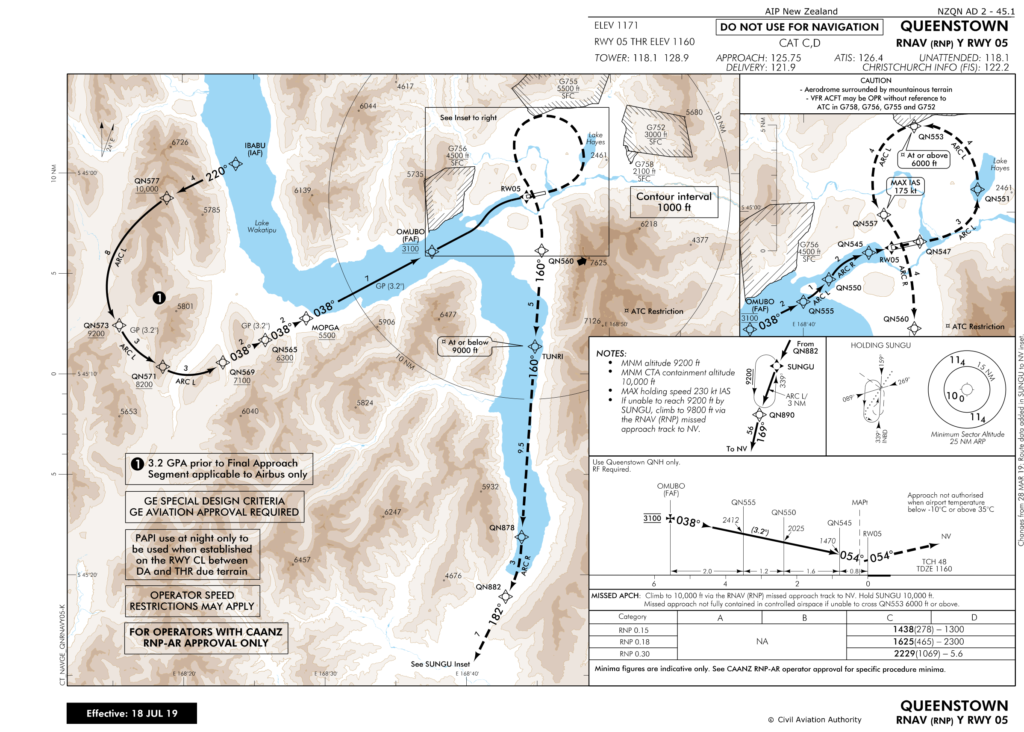
Take Queenstown for example. The notorious airport down in New Zealand boasts beautiful scenery but a reputation amongst pilots as being one of the most demanding in the world due to the intimidating terrain that surrounds it. RNP approaches have dropped minimas from over 3000 feet off the deck to less than 300. And now you can land there at night.

Threading the needle at Queenstown – check out those spot heights.

Bad Automation. Here is where things start to go wrong.

All positives aside, automation is also having an effect on us pilots. And it is important to remember  just that – we are still pilotsWe must never lose the ability to fly without automation. Back in 1997 the late and well-respected Airline Captain Warren Vanderburgh saw it coming and coined the phrase you are no doubt familiar with – Children Of The Magenta Line.

This remains true to this day. If we become too reliant on automation, avoidable accidents happen. Here’s why.

It Erodes Skills.

Slowly but surely automation is chipping away our manual and cognitive flying skills. You know the ones – your stick and rudder. We are being actively encouraged to keep automation on and control our trajectory through it. Do that for long enough and we begin to forget how to do it the other way – with our hands, eyes and feet.

It Distracts.

Because we are so used to flying our airplanes through automation, when something unexpected happens such as short notice changes from ATC our immediate response is to try and figure out how to make the automation accomplish it. We go heads-down precisely when we should be going heads-up – and the clock is ticking.

It Confuses.

Chances are if you have operated anything with high levels of automation, at least once you’ve uttered the infamous phrase “what’s it doing now?”

And yet still we are reluctant to turn it off. As soon you identify that the aircraft is not going where it should, that’s your cue to intervene. The minute you don’t, you are simply along for the ride. Pilots around the world would agree, this is never good enough.

Mode confusion is another. Modern automation features many different ways of achieving the same outcome, but with subtle and sometimes dangerous differences. We need to understand the limitations of each one because if we don’t, we know that tragedies can happen.

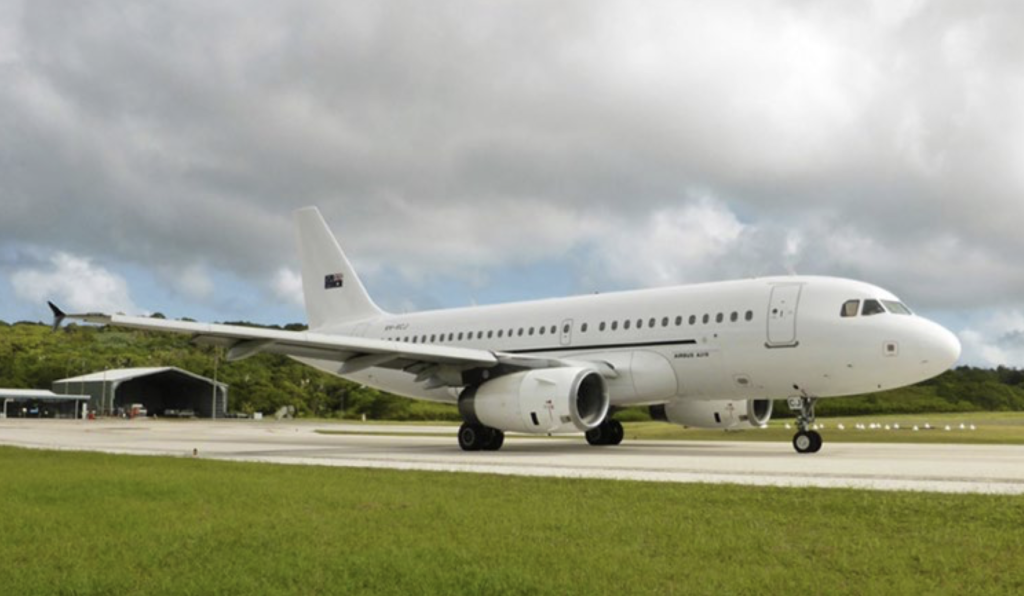
A little known incident in Australia serves as a good example. Snowbird, an Airbus A319, was on approach at YMML/Melbourne airport on a clear calm evening. A tired but highly experienced crew were flying an unremarkable STAR and ILS approach at the highest level of automation. All was going well until the pilot flying reached up to arm the approach in a dimly lit cockpit. He pressed the wrong button. Over the next 39 seconds chaos ensued.

What followed was a series of rapid fire mode changes, confusion and attempts to salvage the approach through the automation. Three EGPWS warnings were triggered and an altitude alert issued by the tower as the airplane reached just over 1,000 feet off the deck at 315 kts before they regained their situational awareness and executed a missed approach.

After the incident neither pilot could recall exactly what happened, what modes they had engaged and neither had heard any of the EGPWS warnings. The automation had performed flawlessly throughout by providing the crew exactly what it was told to do. When it all went wrong, it seems the pilots were reluctant to turn it all off.

Snowbird. A great example of when good automation goes wrong.

It Startles.

Automation is designed to give you back control when something goes wrong. For crew our first indication is usually a loud aural alert and a flashing red light. For systems that seem to operate flawlessly flight after flight, day after day, the affect can be startling.

Pilots are suddenly given full control because we are supposed to be the ultimate fail safe.

We are not even supposed to be there unless we can fly our aircraft manually without hesitation. But the problem is we are not used to flying manually anymore. We are used to flying through automation, so when it’s suddenly not there it’s like going back to school.

There have been a number of instances where pilots have been faced with failing automation and have been unable to keep the aircraft flying safely using manual control.

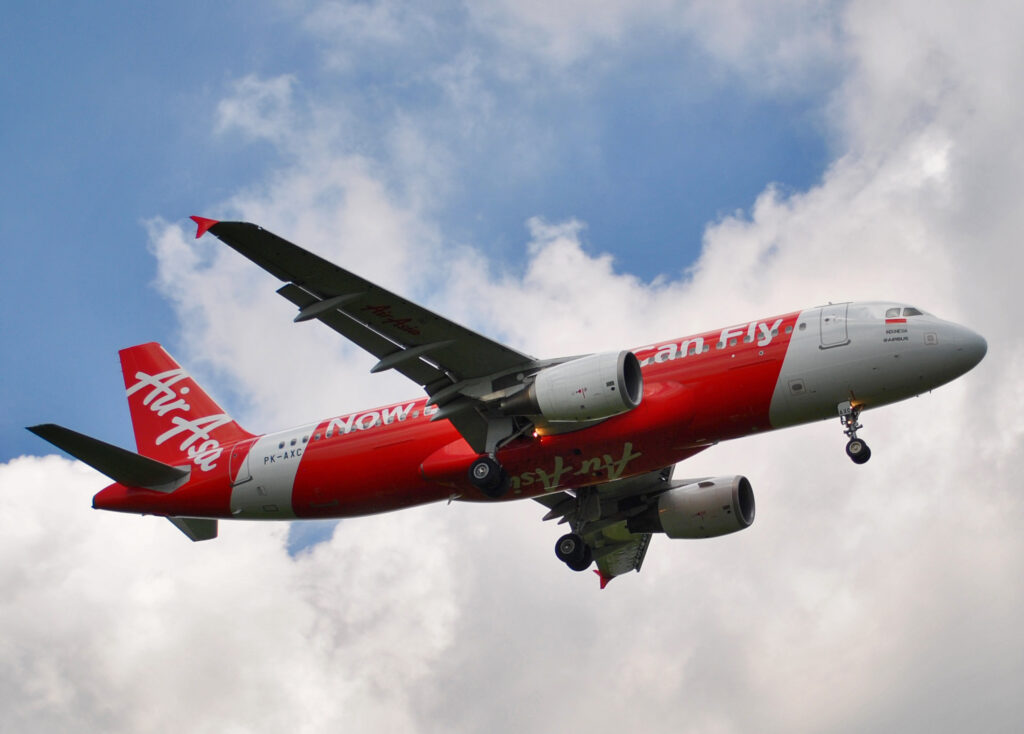
Air Asia Flight 8501 is a good example. To get rid of a nuisance alert the crew pulled a single circuit breaker to one of the aircraft’s flight control computers. As an unintended consequence the autopilot disconnected and the aircraft transitioned into a degraded mode of flight where the automation was no longer available and flight protections were removed. It had done what it was designed to do – hand back control to the pilots.

Tragically the pilot flying, startled by having to fly manually in a degraded mode, stalled the aircraft from straight and level flight. The crew never managed to regain control.

The accident aircraft of Air Asia Flight 8501 – a sad reminder on how the sudden loss of automation can lead to tragedy.

As an industry our approach to how we interact with automation has to change.

Automation dependency is not a new issue. But as automation becomes more sophisticated and complex we have to continue to manage how we interact with it.

It was never intended to replace our core skills and abilities as aviators, only to better support them. Like the image below our core ability to fly manually is supposed to be a constant.

But there are some ways to help.

SOPs. They must be flexible enough to allow pilots to turn the automation off when it is appropriate. You have to give pilots the freedom and confidence to use their hands and feet. Six months between sim sessions is too long.

Training. Evidence based training is revolutionising our sim sessions. There is opportunity there to encourage manual flight. To turn it all off without warning and give us the much needed confidence back.

Monitoring. We need to encourage active monitoring so that we can intervene quickly if we need too. We should always be mentally flying the plane even if an autopilot is flying. One way to do this is by keeping our hands on the controls during dynamic phases of flights. It is a tactile reminder that we are still in control and can take over at any stage.

Practice. It makes perfect. It’s what we got into this game for. When conditions are right and workload low, take the opportunity to turn it all off. It’s right there waiting for you again if things get busy.

Automation is here to stay.

What matters is how we use it. We cannot allow it replace our abilities to fly an airplane without it because for the foreseeable future we will still be the ultimate failsafe.


Introducing: Airport Operational Lowdowns

Ever been bamboozled when flying into airports you’ve never been to before? You’re on your approach and all looks good – straightforward, easy, no threats – and then, they cut 50nm off your arrival track and suddenly you’re high and fast and this is when your co-pilot (who has been there before) turns around and says – “Oh yeah, they always do that!”

Or what about that airport where they built a really big hanger in a really silly spot, and you don’t find out about the wind shear off it until you are there, at 30 feet, battling with it?

Calling All Pilots… 

  • All pilots who operate into random, challenging or interesting airports.
  • All pilots who do not operate into the same airports regularly.
  • And all operators, ATC, anyone with a bit of knowledge about an airport for that matter.

Following on from our OpsChat where some of you raised the idea of briefings on specific airports, we have started to put these together…

What’s the idea?

The idea is a lot of pilots, particularly corporate folk (but this is still for everyone) might not have access to loads of shared information on specific airports. If you do not fly somewhere regularly, or do not work for a big airline, then the only information you will have on certain airports is what you can read off the charts and in the AOIs.

But we all know there are airports out there which have specific challenges you only discover when you operate in. The useful, practical, operational stuff. The threats, risks and gotchas that you discover with experience.

Introducing: Operational Lowdowns

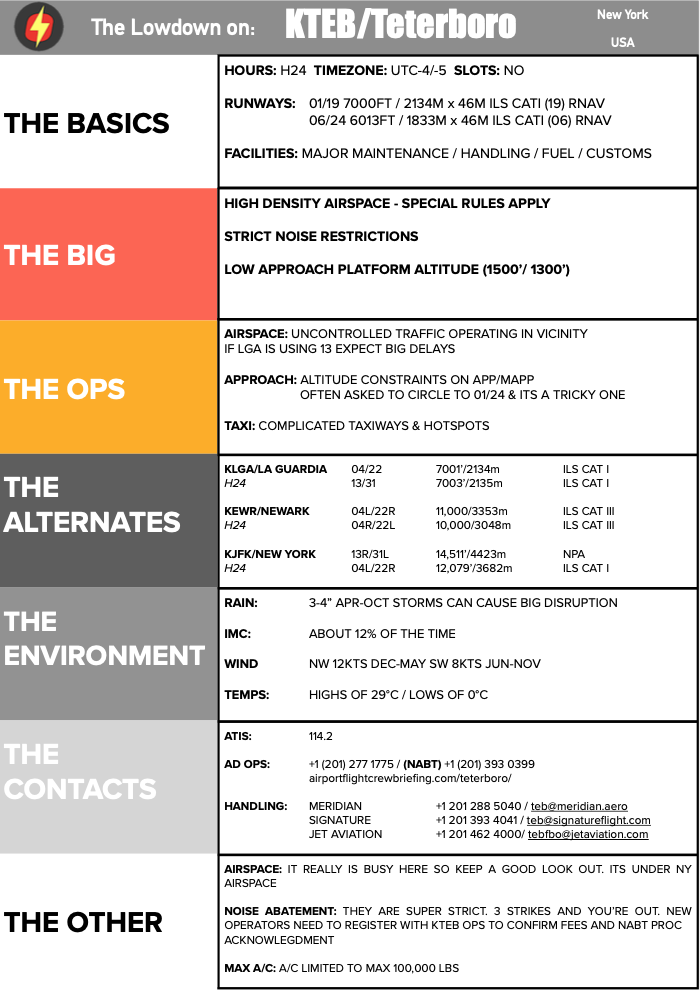
Our Operational Lowdowns are our new way of trying to share this information between you all.

If you have experience going into an airport and spotted something unusual, odd, tricky or interesting then send in that Airport Spy report. Or even drop us an email with a full lowdown about it.

If you are operating into a new airport and want some additional info before you go, then check the airport on our Airport Spy app – there might already be a Lowdown Briefing in there. If there isn’t, let us know and we will do some digging and try and put one together for you.

Sharing is caring…

… and it is also safety!

Knowing about specific operational challenges, environmental threats and tricky procedures before you get there, so you can BRIEF about it and come up with a plan to mitigate any risks, is important.

So we hope you find these useful, and keep getting in touch with info you have to share, and what info you would like to know.

Take a look at the Operational Lowdown for KTEB if you want to see what we’re talking about 😃 ✈️


ATC Zero in Class A Airspace: Is It Dangerous?

IFALPA has issued a new safety bulletin this week expressing concerns that existing US FAA contingency procedures that allow aircraft to continue using Class A airspace during ‘ATC Zero’ events are inadequate. They argue that the procedures expose aircraft to unacceptable risk and that more needs to be done to ensure their safety.

ATC Zero Events have become more common

Before Covid, ATC Zero events were quite rare. They’d usually only occur if controllers were forced to evacuate a facility. Fire, a force of nature, bomb threat – those sorts of things.
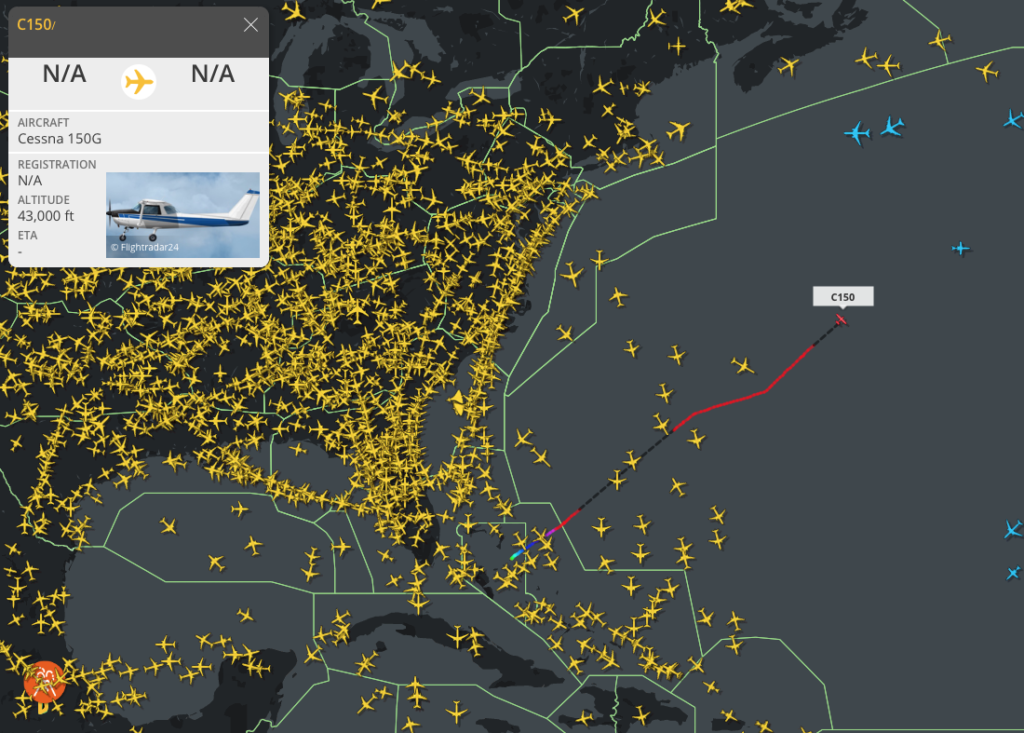
But then Covid came along and as we all know, it is super contagious. Amidst border closures and quarantine and testing rules, a new threat began to emerge in our skies.

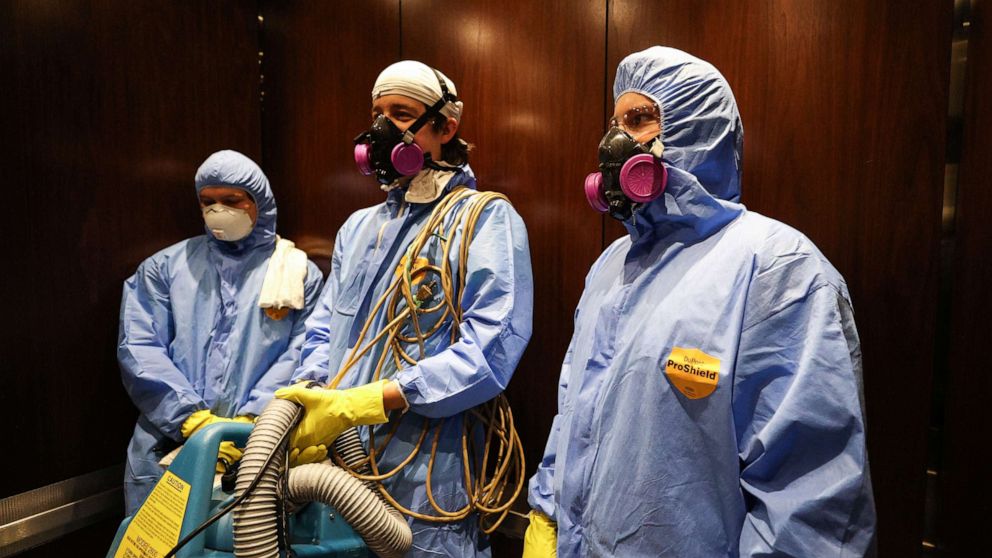
ATC facilities began to be impacted by Covid infections, and short notice closures for cleaning have become a constant risk.

Last year we published an article on how to manage ATC Zero events in Oceanic Airspace after the New York ARTCC shut down affecting traffic crossing the NAT. The US FAA were sufficiently concerned that they published their own SAFO.

However since then the US has continued to be affected by ATC Zero events over land which affect large portions of Class A airspace, often for hours at a time.

Covid cleaning can take hours.

What the FAA have to say about it

The FAA are satisfied that it is safe for aircraft to continue using Class A airspace when no ATC services are available, as long as you follow contingency procedures.

What contingency procedures?

Well, they can be broken down into two parts.

  1. When an ATC Zero event is scheduled, a NOTAM will be published. It will restrict traffic to specific routes through the affected airspace which contain compulsory reporting points. If you don’t intend to the fly the prescribed routes, you’re not allowed in.
  2. TIBA – Traffic Information Broadcasts by Aircraft. The FAA expects you to use them. Recent feedback from members who have operated under these conditions indicate that many aircraft either don’t know, or are choosing not to use them while operating in ATC Zero airspace. That in itself is concerning.

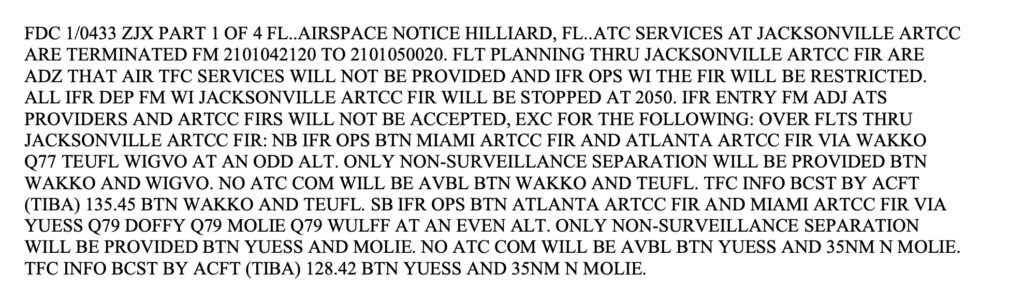
Part of a sample NOTAM with required routes through ATC Zero airspace. How’s that head ache?

So what exactly are the TIBA procedures?

You can find them in ICAO Annex 11, or buried in lengthy NOTAMs if you prefer your procedures capitalised, abbreviated and barely punctuated.

Here’s a quick unofficial rundown:

1. Dial up your TIBA frequency. If you have two VHF comms, leave one on the normal ATS frequency to listen out for a controller.

2. Maintain a listening watch on the TIBA frequency.

3. In most cases you’ll need to remember ’10 minutes’. A radio call is required 10 minutes before entering the affected airspace, or if you have just taken off from an airport within the airspace as soon as you can.

4. Enroute, you’ll need to make routine position reports:

  • 10 minutes before crossing a reporting point
  • 10 minutes before you cross or join an airway.
  • And if your waypoints are really far apart, make a call every 20 minutes.

5. If you’re changing levels you need to make a radio call 2-5 minutes beforehand.

So what do you actually need to say?

The short answer: Who you are, what level you’re at, where you are and where you’re going next.

The slightly longer answer:

- ALL STATIONS
-  Call Sign
- FLIGHT LEVEL
- AIRWAY (or direct to/from)
- POSITION AT TIME
- ESTIMATING (next reporting point or crossing/joining airway) 
  AT TIME AND FLIGHT LEVEL

Don’t forget to listen

It’s important to remember: When you enter Class A airspace during an ATC Zero event, you are responsible for your own separation. You’re on your own. Which means you need to hear and be heard.

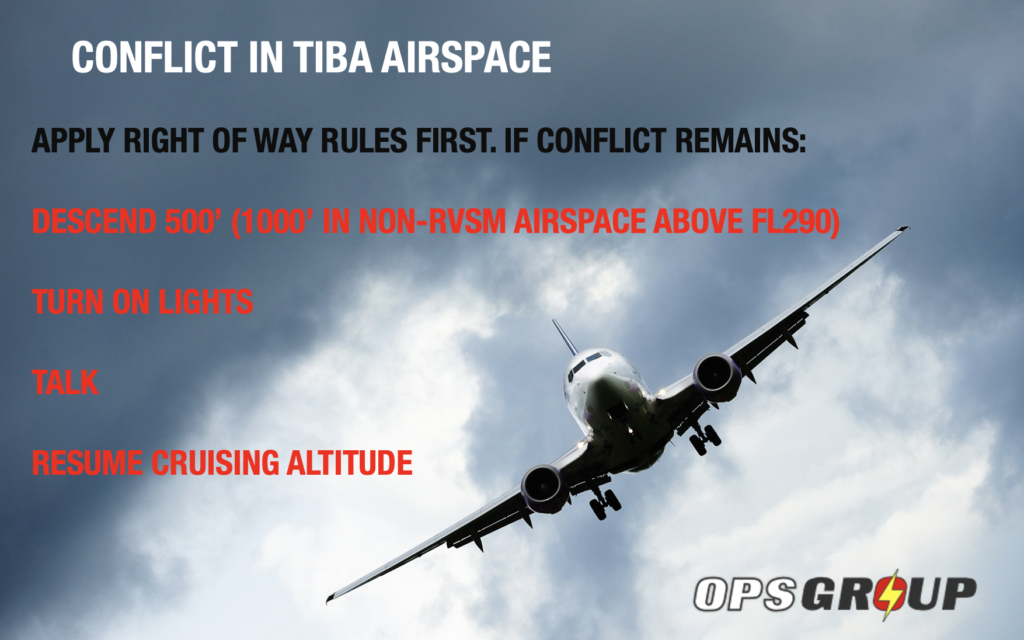
What if a conflict is likely?

There’s a procedure for that too. If you can’t solve the problem with right of way rules, here’s what you need to do:

So why are IFALPA worried?

For starters, there may be aircraft operating in Class A airspace without TCAS which greatly increases the risk of a collision. Secondly there is a lack of training standards about how to apply the contingency procedures. Lastly given that no one is watching, you may be exposed to other aircraft breaching the regs.

Until things change, they recommend you avoid the affected airspace by flight planning around it. If that’s not practical here are their suggestions:

  • Minimise the risk by taking the shortest possible path through it.
  • Make sure you review the contingency procedures beforehand.
  • Make sure there are no procedures in your in your manuals that will be affected by a lack of ATC.
  • Submit a safety report afterwards.

The threat remains

ATC Zero events are likely to continue in the near term, along with the risks they pose. It is important that pilots take those properly into account before they enter affected airspace.

Love them or hate them, sticking to the contingency procedures like glue is everyone’s biggest risk mitigator until new or better ones eventually come along.


Aviation in Indonesia: How safe is it?

If you haven’t watched Worst Place To Be A Pilot then take a look. The series follows Susi Air pilots who fly into some of the most remote and dangerous airports around Indonesia, taking supplies to local tribes.

This post, however, is looking at some of the threats that might be present for larger commercial operations. Indonesia poses security, environmental, and operational risks to flights, and recently these risks have been increasing in severity.
What is the security situation?

Indonesia does not rate as a risk on our SafeAirspace site because the risks are ground based. However, there are threats to security risk of flight disruption which are worth considering.

Islamic State affiliated militants are active in the Surabaya region to the west of Bali, and attacks have been increasing since 2018. However, these are generally ‘low capability’ attacks with no immediate threat to flight operations. Security at the major international airports is good, and these groups are unlikely to present a serious threat.

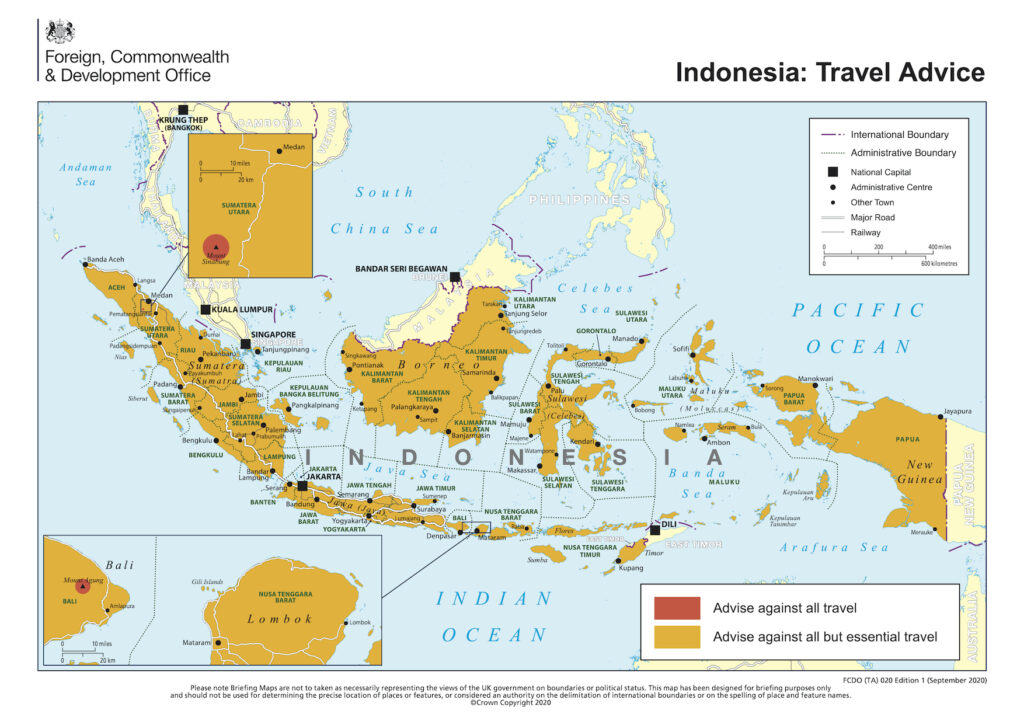
From the UK FCO travel advice. Click on map to download hi-res version.

However, there has also been an increase in insurgency movements, particularly in the Papua Province to the east, with groups targeting security forces with the intention of disrupting flight operations. In April, a militant group attacked Aminggaru Airport in the Ilaga District and torched a private helicopter. Similar attempts have been occurring since January 2021 with increasing frequency.
Particularly in more rural regions, businesses rely on air transport to bring goods in, and by disrupting these through direct attacks on the airports, aircraft, or by targeting security groups, the insurgents intend to damage both the foreign businesses, and social stability.

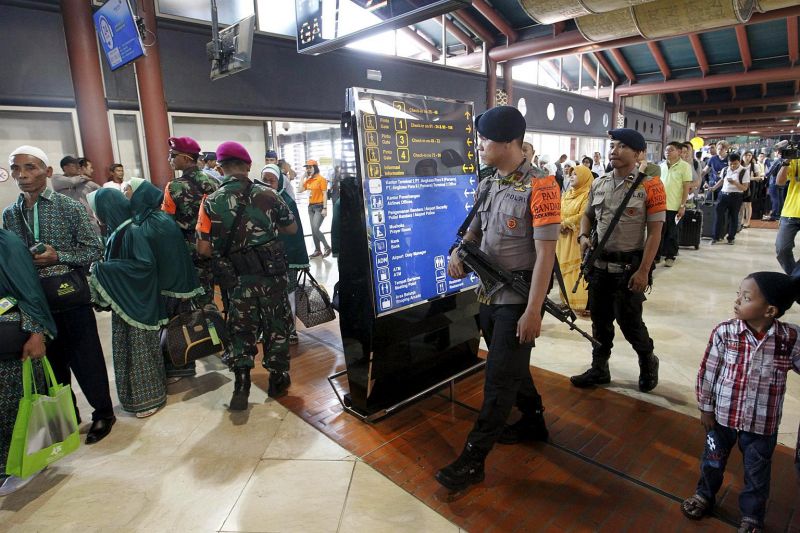
If you are operating in you can expect heightened security measures and increased military and security personnel. Possible disruption is also likely so contact handling agents in advance to confirm any security or risk.

Security in airports is increasing response to attacks

What is their Infrastructure like?

Transport infrastructure is poor in Indonesia, especially in rural regions. Which brings us back to The Worst Places to be a Pilot – many rural villages, especially in mountainous areas, are extremely cut off. So they build runways, and Susi Air fly in food and supplies. Probably not the places you are planning to fly though.

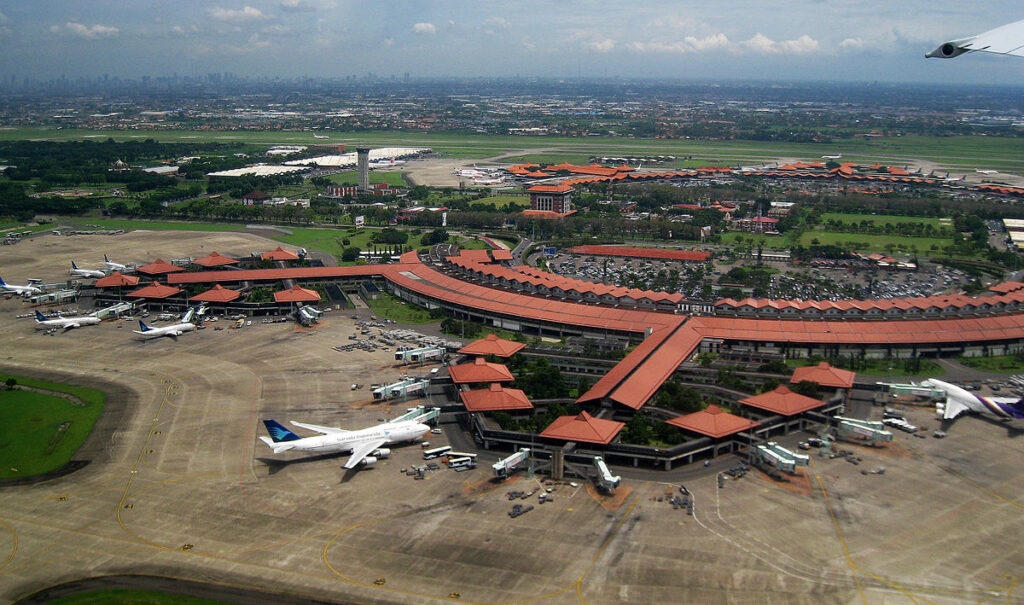
Indonesia does have some major airports and the standard between these, and small domestic airports is marked. WIII/Soekarno-Hatta (formerly Jakarta) is a major international airport with three runway options, the longest being 07R/25L at 12,008’/3660m. However, they are only equipped to CAT I capability and during the monsoon rains, visibility can be seriously degraded.

The airspace here is also very congested, and reports suggest ground operations can be challenging with poor taxiway lighting and markings, and ATC often giving non-standard taxi routings.

Aside from Jakarta, you also have WIMM/Medan airport serving the Sumatra region in the north, WADD/Denpasar serving the Bali region and WARR/Juanda serving the Surabaya area.

Keep an eye on weather forecasts and take additional fuel during monsoon season. Pre-briefing the taxi routes and maintaining a high level of situational and traffic awareness on the ground is important.

Indonesia has some of the most remote and dangerous airports

Do I need to worry about poor Safety Standards?

Indonesia has had a very high number of serious air accidents. Since 2001, there were at least 40 accidents resulting in fatalities in Indonesian airspace, giving Indonesia one of the worst safety records in the region. In January 2021, a Swirijaya Air 737 crashed into the Java Sea – preliminary reports suggests poor maintenance and weather were primary factors.

Past accidents have been attributed to poor pilot training, mechanical failures, air traffic control issues and poor aircraft maintenance leading to 59 Indonesian airlines which are currently banned from flying in EU airspace.

IATA forecast it will become the sixth largest market for air travel over the next decade or two. Much of the issue with safety has been down to the rapid expansion of the industry with little oversight or quality control during the initial expansion. However, this has been improving recently with a focus now on licensing for operators, pilots and ATC within the country, along with better maintenance standards and technical skills.

So, if you are operating into the larger international airports, ATC, facilities and general standards at these is ok. However, if you are flying to smaller regional airports, watch out for below standard ATC and maintenance, and caution procedures of other aircraft in the area.

The FAA currently rates Indonesia as Category 2 in its International Aviation Safety Assessment program which includes areas such as inspection procedures and technical expertise. If you are operating in, it is still a good idea to use a handling agent and maintenance company who work with major airlines and have a proven work standard and reliability.

Soekarno-Hatto

Are there any Airspace Issues?

Back in 2019 we wrote this about Indonesian airspace. They are strict about overflight permits and if you are operating in the Singapore FIR and accidentally stray into Indonesian airspace they don’t like it. At best, they issue a fine, at worst you will be intercepted by Indonesian Air jets and forced to land to be detained in Indonesia. During the monsoon and storm season, early planning for weather avoidance is important to avoid this.

Indonesia has mandated ADS-B throughout its airspace. Overflight control is generally of a decent standard.

Keep an eye on volcanoes

Mount Sinabung (sounds sort of like Cinnabun) is one of the most active volcanoes in the ‘Ring of Fire’ region. It is currently on alert level 4, which means ‘highly dangerous’. There is a 7km exclusion zone around the volcano.

The volcano erupted in February 2021, sending ash up to FL400. The ash was blown over water so operations into nearby WIMM/Medan airport were not impacted.

The 2021 eruption

Keep two eyes on the Weather

Indonesia has a big monsoon season and is prone to abundant rain, which often leads to abundant flooding. Delays are likely and extra fuel should be carried. ATC are generally ok, but with congested airspace they may not be the most efficient or responsive in high workload, bad weather situations.

Summary

Improvements to Indonesia’s infrastructure continue, and they are paying attention to international concerns regarding their standards and safety.

If you are operating into a major airport, the biggest threats you will face are likely to be weather related. If you are operating into smaller airports, particularly in the Papua Province, then paying attention to local security situations is important, along with a caution with the general standards of operation and facilities.


ATC VS PILOTS: The Battle for the Skies

The great battle of the skies! Pilots trying to fly wherever and however they like, free like birds, while mean old air traffic controllers tell them off and put a stop to the fun having…

OK, not quite. Our ATC colleagues are a vital part of the safety infrastructure and it is only with their support and services that operations remain safe and efficient. Which is why we should be asking how their pandemic situation is going as well. So, this is a look into the concerns, challenges and events that ATC are dealing with because of Covid, and some feedback on how pilots and ATC can work together to fix ‘em.

So, if you are all sitting comfortably…

Let’s take a look inside…

What’s been going on inside the towers?

  • Challenge #1 Low workload, low arousal levels

ATC have seen reductions in traffic to as low as 20% pre-covid levels, but workload is not linear to traffic reduction, it is exponentially lower. So this is a challenge for ATC who thrive on dynamic, high workload environments. In one area of the UK, 7 sectors previously controlled by 7 individual controllers is now handled by just one to ensure the workload (and arousal levels) are at a level which can maintain skills and concentration.

  • Challenge #2 Technical & Procedural changes

The risk of Covid has meant bit changes in how procedures are carried out, in an attempt to avoid ATC Zero events due rampantly spreading sickness. But this means ‘situational awareness’ handovers traditionally carried out face-to-face are now not leading to potential communication risk and lack of effectiveness. Safety management procedures have had to adapt, fast.

  • Challenge #3 Different events requiring different mitigations

New events, previously not even thought of events are happening, and like our pilot CRM, ATC use TRM (team resource management) to debrief and learn from them. But unlike pre-Covid days they don’t have oodles of time to disseminate information across the operational audience – the learning and sharing has to happen fast to avoid repeats. So they are dealing with new situations, quickly.

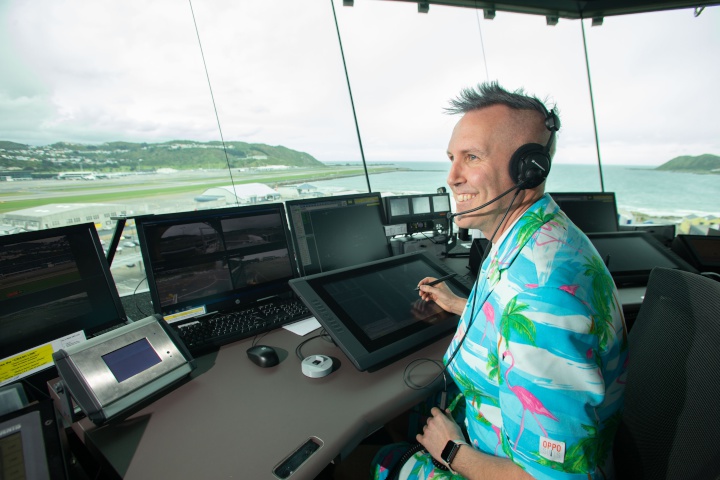
We like this guy in Wellington, he looks fun

What events have been happening?

  • Event Type #1 Altitude busts

Level deviations aren’t a new thing but apparently numbers have increased in some regions. The UK and parts of Europe have variable transition altitudes and these can be low, which means your level-off on departure could be a fairly low flight level. Add to this some low atmospheric pressures and it can get messy. For example, if you take off with 983hPa set and forget to change to standard, you’ll find yourself 900 feet higher than you should be.

  • Event Type #2 CPDLC

Frequencies across Europe were at saturation level pre-Covid which is why CPDLC was getting popular. It is a great thing, we like it, and controllers are still encouraging the use of it now ready for when those traffic levels pick up and the frequencies get busy again. But they are also reporting a few issues with it.

First up, pilots are reverting to voice when CPDLC doesn’t give them the direct or the level they want. If you get a “negative” on CPDLC then it is going to be the same controller giving you the same “negative’ over the radio, only a little more irritatedly since they’ve already told you once.

Secondly, directs are causing issues (for once, not a pilot’s fault). When you receive a clearance by voice it usually goes something like “Route alpha then bravo”. When you receive it by CPDLC it might be formatted “Route Bravo via Alpha”… and when you receive this on certain systems the message might be truncated leaving the pilots thinking “we are cleared direct Bravo”. So check your CPDLC message carefully if in doubt, then double check.

  • Event Type #3 Airspace Incursions

Empty airspace means more directs are possible, but it also means some GA pilots cutting corners into airspace where big planes are playing. ATC do their best to kick them out again before they get in your way, but keep a good watch out on your TCAS for errant traffic.

Maintain your own SA and keep a good look out

Unstable Approaches

This one gets a section of its own.

Let’s step back a few miles from the 300 knots, 6000 feet at 12 miles though, and ask how we got ourselves into that position in the first place? Was it the moment ATC offered us a shortcut? Was it at 15nm when, honestly, it was looking a little tight but they would have said something?

Feedback from ATC is that they are there to help, and they want to offer the most efficient approaches they can, cutting down our track miles wherever possible… and lower traffic levels mean this is much more possible at the moment. Problem is, back in pre-Covid days when traffic levels were higher and most approaches were kept “standard”, ATC knew what to look for. If an aircraft looked a bit high, a bit fast, compared to “normal”, they could give us a cheeky “do you need a few more miles?” prompt.

Fast forward to post-Covid times though and ATC have much less idea of what is “normal”. It might be ok for you, and your aircraft type, to do 300 knots at 12nm, but ATC do not necessarily know. So we cannot depend on ATC to say something when it doesn’t look right – the pilots need to do this. If you are too high, too fast, too close, speak up, you will get those track miles, but don’t rely on ATC to recognize it is all going a bit wrong.

The big point?

The big point is this – we are in it together. ATC and pilots, directly tackling the operational challenges that this pandemic has brought.

So next time you are out flying, have some of these points in mind when working with ATC. Talk to them, work with them, and above all support them because they are what are keeping us safe in the skies.


Chad Airspace Update

Chad’s long term President, Idriss Déby died this week, having spent more than three decades in power as one of Africa’s longest-serving leaders. So why did his death result in the temporary closure of the country, and what is the impact to aviation?

The background

Chad is a large landlocked country in Africa, bordered by Sudan, Libya, the CAR, Cameroon,Nigeria and Niger.

Déby was focused on building a more democratic society and he had strong allies in France and with other Western powers through his continued fighting against Jihadist groups. Provincial elections were already underway with projections suggesting he would be successful in winning a sixth term.

However, Chad is also one of the poorest nations in the world, with big problems around poverty, corruption and human rights, and with that came civil unrest.
What happened?

Déby was injured during a visit to troops who were battling against rebels belonging to a group called Fact (the Front for Change and Concord in Chad). The big concern now is who will become the next leader – Déby’s son has stepped in – but the government has been dissolved and conflict is escalating in the country as opposing parties fight for power.

The military elected initially to close land and maritime borders, but then closed all airports as well, whilst putting in a strict countrywide curfew.

The Impact for Aviation

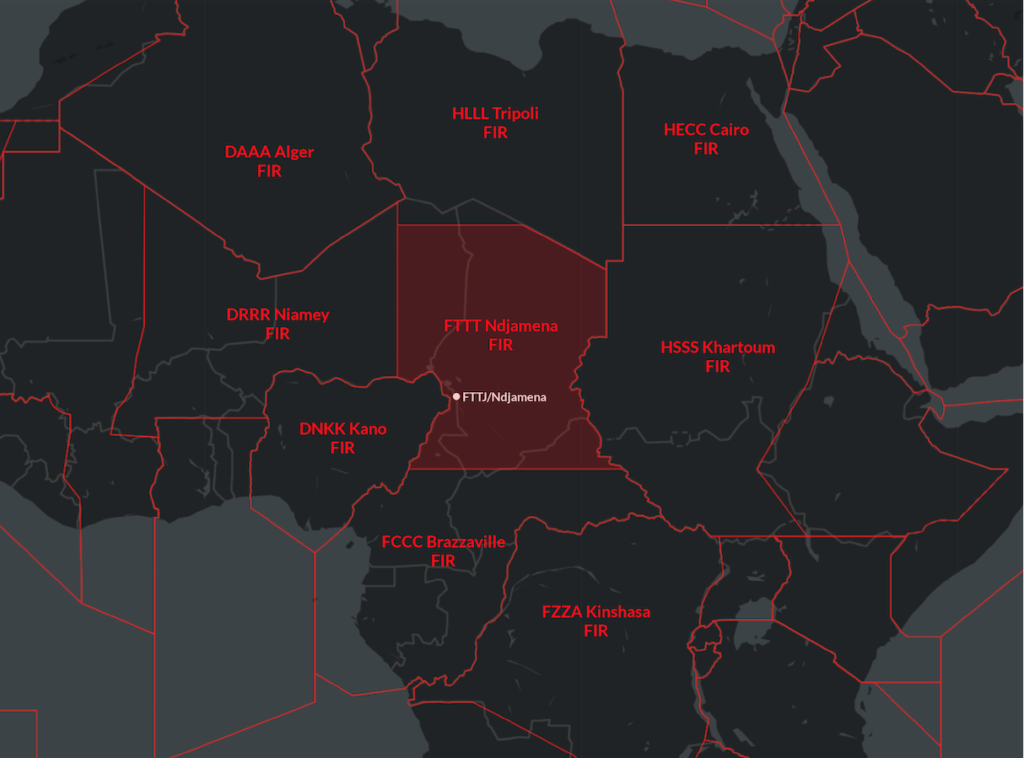
Initially, a Notam was issued stating that FTTJ/Ndjamena airport was closed, and that Contingency Procedures were in effect across the FTTT/Ndjamena FIR. Then a couple of days later, on Apr 21, the Notam was cancelled and the US Embassy issued a Security Alert advising that FTTJ airport has reopened.

In the short term however, landings are not advised, and overflying aircraft should be familiar with Contingency Procedures. You can download the Contingency Plan from the Acesna AIP here.

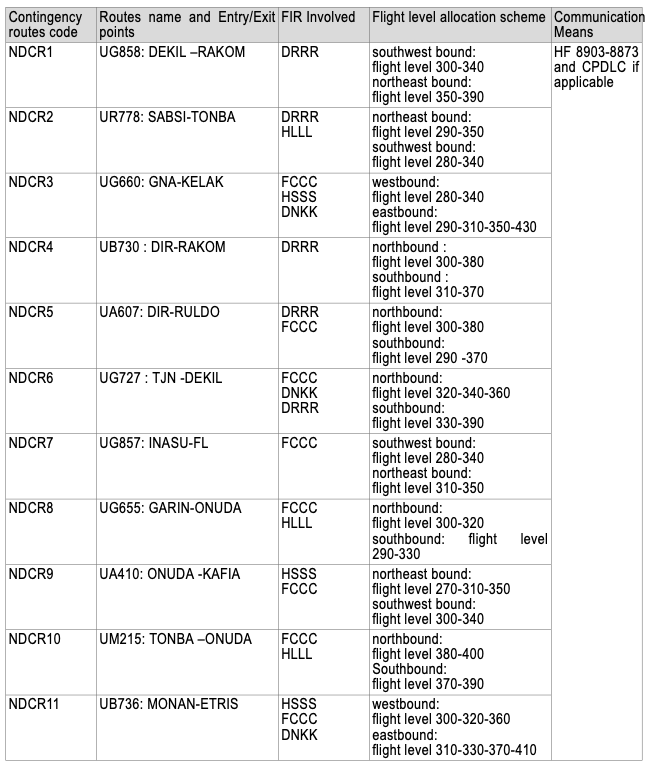
This plan lays out the arrangements for situations where the Air Navigation Services are partially or totally disrupted, and aims to ensure overflights remain possible. Effectively, it aims to coordinate with neighboring ATS units so control of the N’Djamena UIR is temporarily assigned to them – Brazzaville ACC and Niamey ACC are the primary units being used.

Pilot operating procedures while Contingency Procedures are activated are shown under section 8.3 and the advises the following:

  • Maintain contact with Brazzaville or Niamey control until entering, and contact the next control at least 10 minutes prior to exiting.
  • Operate along the assigned contingency route (as listed in the table), although SLOP is recommended.
  • Reach your assigned level at least 10 minutes prior to entering N’Djamena UIR and maintain throughout unless an emergency arises requiring you to diverge from it.
  • Listen out on 12.6 and transmit position reports.

Contingency routes laid out in the ASECNA AIP ENR 1.8

What else do we know?

N’Djamena in the past was a popular fuel stop in central Africa, but multiple travel warnings now advise against travel here (see the UK advice here, and the US advice here). No official state Notams have been issued, but risk remains high. A state of emergency remains in place for the Lake Chad region. Overall there is a high threat for terrorism and it is strongly advised to avoid landings.


Russia restricts flights over Crimea and Black Sea

The airspace warnings for the Ukraine are on the rise again, and for good reason – Russia seem to be going on a renewed military offensive, focusing their efforts on the area of disputed airspace over Crimea.

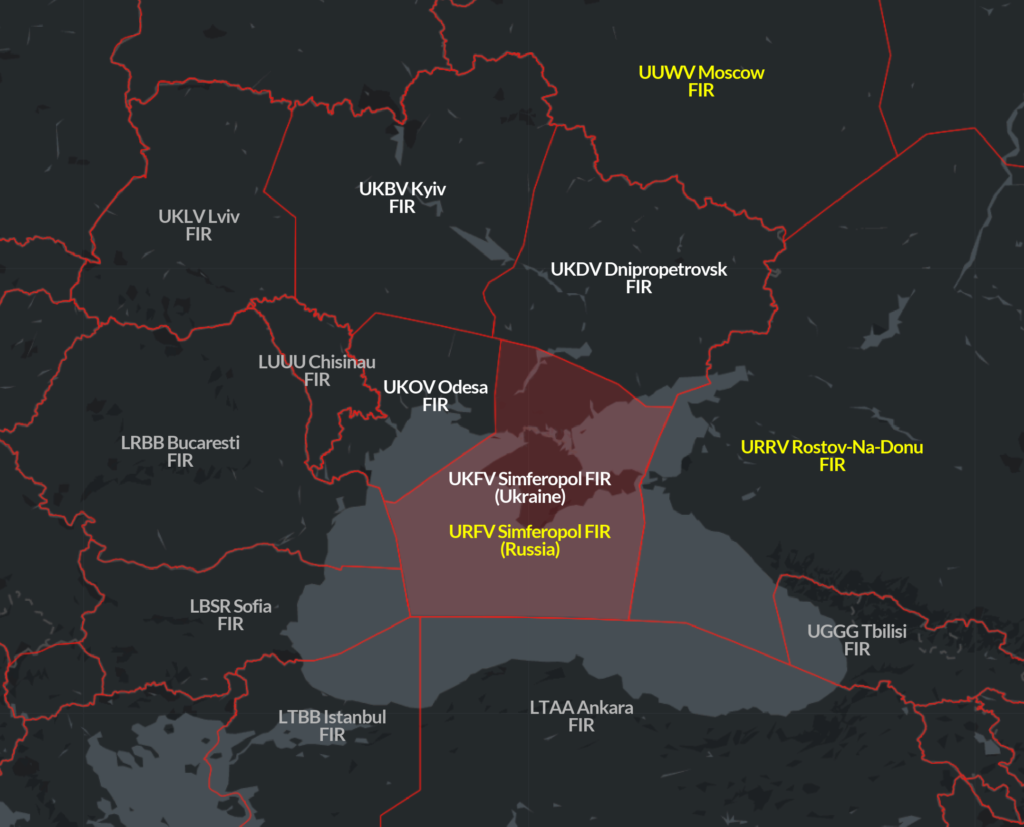
Following Russia’s annexation of Crimea in March 2014, the ATC Center in Simferopol has been run by Russia. Russia claims the airspace, and publishes Notams under the URFV code they invented for it. Ukraine refuses to recognise the change, and still controls the airspace under the internationally-recognised UKFV code.

So what jurisdiction do Russia have, and how much attention should we be paying to the Notams which they issue for an area of airspace that is not theirs to control?

What are Russia saying?

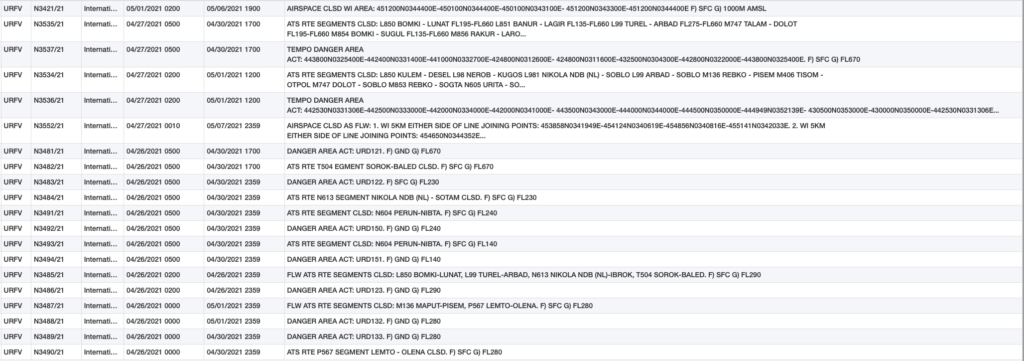
Russia have published a long series of URFV Notams advising of danger areas and limitations to airways across the Simferopol FIR. These run from April 20-30 – some only apply from FL350 upwards; others apply to all flights from SFC right up to altitudes higher than most aircraft can fly (we saw a FL670 thrown in there). These danger areas are most likely due to military activity, which may include live firing exercises.

The zone of restriction of flights includes some areas over the southern part of Crimea, from Sevastopol to Feodosia, the territorial waters adjacent to the Southern coast of Crimea, and part of the international waters of the Black Sea, and are possibly in relation to Russia’s plan to move warships into the area.

A long list of Notams from Russia

What are Ukraine saying?

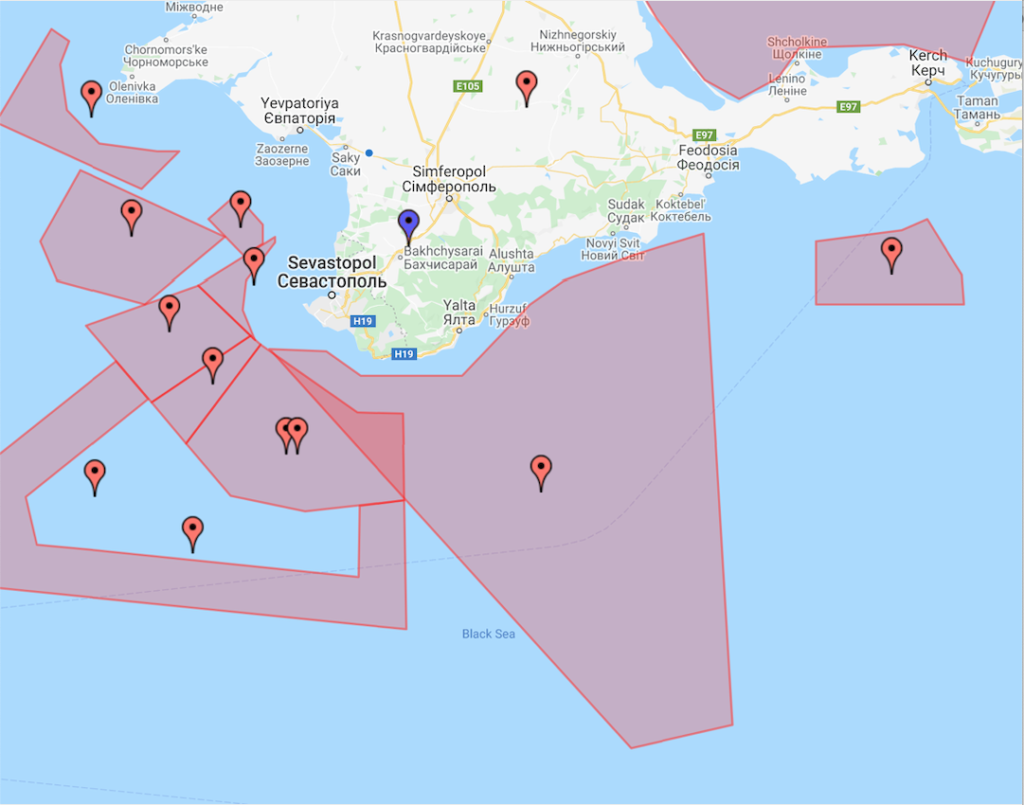
Ukraine aren’t happy about it, and have issued a bunch of Notams for the same periods effectively establishing danger areas at all levels in the portions of the FIR that are over water – i.e big chunks of the Black Sea and Sea of Azov (to the northeast of Crimea).

All the Ukrainian UKFV Notams advising about these danger areas carry this note:

DUE ACTIVITY PUBLISHED BY RUSSIAN FEDERATION.
THE PUBLICATION BY RUSSIAN FEDERATION OF INFORMATION 
RELATED TO AIRSPACE UNDER RESPONSIBILITY OF UKRAINE 
DOES NOT COMPLY WITH THE PROVISIONS OF THE ICAO 
AIR NAVIGATION PLAN - EUROPEAN REGION (DOC 7754) 
AND THE ICAO ANNEXES 11 AND 15.

In other words – although Russia do not have jurisdiction in this airspace, they have published a bunch of danger areas here, so we (Ukraine) had better do the same, to make the warning “official”.

A quick plot of the danger areas published by Ukraine under the UKFV code looks something like this

What are other authorities saying?

So far, none of the other state authorities around the world have published or updated their own warnings in response to this recent issue specific to the airspace over Crimea.

Just last week, the US FAA updated their airspace warning for Ukraine – but this was in relation to the UKDV/Dnipropetrovsk FIR in the east of the country along the border with Russia. The US warning to operators in this region was to exercise extreme caution within 100nm of the entire Russia-Ukraine border, due to risks associated with recent increased tensions between the two countries. They said that if hostilities escalate here, the airspace on both sides could be exposed to potential weapons activity posing a risk to civil aircraft from misidentification or miscalculation.

The most recent US advice for the UKFV/Simferopol FIR came in October 2020, when they actually removed their restrictions on overflights of this airspace. At that time, they said the security situation had sufficiently improved here – while Russia continued to assert territorial claims over the region, Ukraine had established appropriate risk management measures to ensure safe operations for aircraft along the Black Sea routes.

Several other states have existing warnings in place for Ukraine. Canada advise operators to avoid the UKFV/Simferopol and UKDV/Dnipropetrovsk FIRs entirely, whereas the UK and France say that overflights of eastern Ukraine should only be planned on airways over the Black Sea to the south of Crimea.

For more details on Ukraine and other airspace warnings, head to SafeAirspace.net

What are we saying?

Two major points –

  1. Russia do not have jurisdiction over the Simferopol airspace, so the Notams to follow are those published by Ukraine under the UKFV code.
  2. Regardless of what is out there, clearly extreme caution in this area is required. Russia are making all the moves to increase their military presence and potentially reignite the ongoing conflict.


The Central Florida Metroplex

Behold, Metroplex! The gigantic, towering Autobot warrior! The Walking City, capable of channeling awesome energies!

Wait, what? The Central Florida Metroplex, you say? Oh. Yeah, that’s different. Ok, let’s take a look…

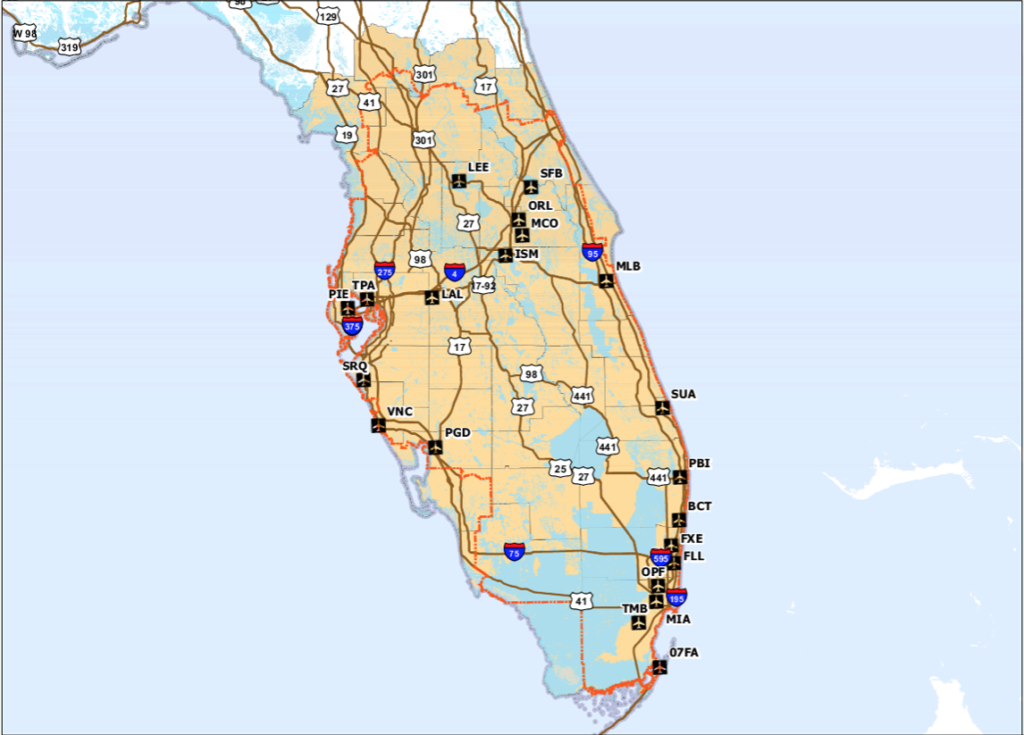
The Central Florida Metroplex an area encompassing various airports including (but not limited to) these big ones –

  • KMIA/Miami
  • KMCO/Orlando
  • KFLL/ Fort Lauderdale
  • KTPA/Tampa

It also includes other sightly less big ones, executive ones and basically any airport in the area. Here is a map of said area:

The Metroplex area

Phase One

The reason we are hearing about it a lot is because there is a major project underway to improve the safety and efficiency of the airspace here, and Phase One is just about to be implemented.

The start of the project is all about improving climb and descent profiles, so on April 22 a whopping 54 new procedures are going to come into force, many of which will enable more direct routings of flights.

All this means arrivals and departures will be optimized. Fear not though, the new procedures have been developed to follow current flight tracks where possible, so you hopefully won’t see major, confusing changes – just changes to make it all more efficient.

And then…

ATC are going to get their own new procedures as well. 17 of them coming in around August time. The ATC facilities have been enhanced over the last few years and automation advancements will tie in with these procedures.

What are the new procedures?

Well, we will have to wait until April 22 to actually see them in action, but it is mainly going to be changes to routings of SIDs and STARs, as well as some changes to altitudes. There are also a bunch of amendments to SIAPs and associated takeoff minimums as well as obstacle departure procedures based on the commissioning of new navigational facilities, adding of new obstacles, and general air traffic requirement changes.

The FAA published this list so you can take a look and see which are changing and when to check those charts for the correct and up to date version.

There will also be changes to routes – in particular the T routes. V routes will still be available but the plan is to phase these out over time so you are encouraged to file on Tangos.

And theeennnn…

The FAA have proposals in for an overhaul of the airspace across most of Florida, including changes to airspace boundaries around major Florida airports in order to more safely operate VFR and IFR traffic in close proximity.

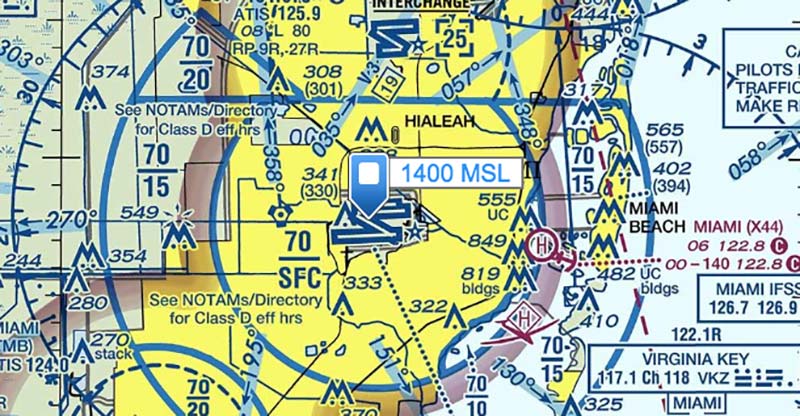
Currently, the airspace surrounding KMIA/Miami is Class B, which is the most restrictive airspace around the busiest airports in the country. Miami’s Class B airspace extends to 20 nautical miles around the airport up to 7,000 feet in altitude. The FAA want to expand this out to 25 nautical miles east and west of the airport. The top will remain the same, while the bottom of the airspace gradually increases from the surface to 4000 feet as it extends out from the airport.

Class, B, C, D, Busy…

Then there is the airspace around KFLL/Fort Lauderdale. Another major, busy airport, they are surrounded by Class C airspace, which is less restrictive, but still highly controlled. Fort Lauderdale’s Class C airspace extends to 10 nautical miles up to 4,000 feet in altitude, and the proposal looks to extend this also out to 25 nautical miles to the east, and 20 nautical miles to the west, with its top and bottom following the same design as Miami’s class B.

There are also changes planned for the Northeast Corridor Atlantic Coast Routes (NEC ACR).

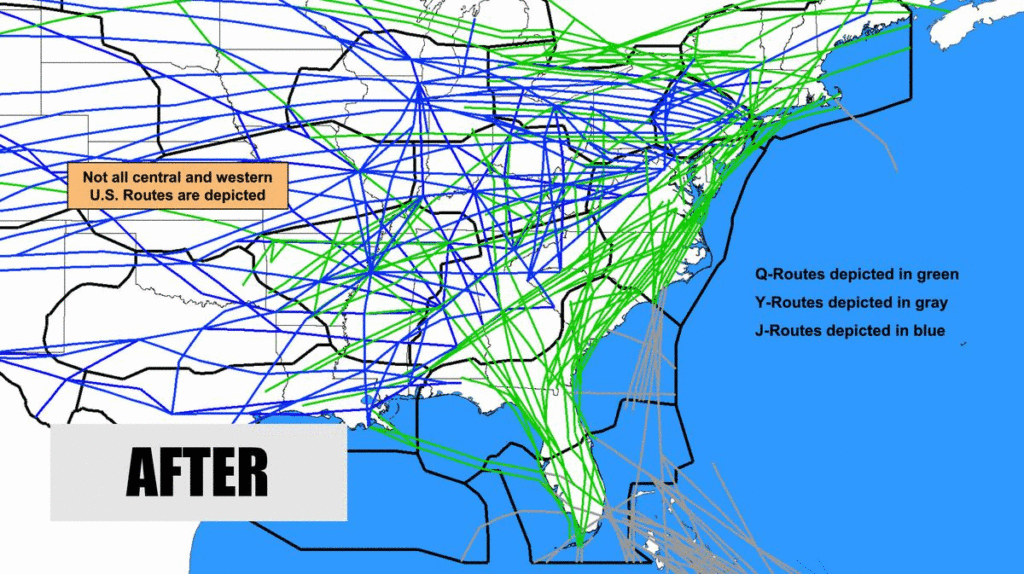
7 new Q routes are being added and something called ZDC ultra-high sector 30 will go live in September. By the end of the upgrading there will be something like 40 new Q and Y routes which will replace the north-south high-altitude route structure over the East Coast.

The big plan here is the decrease in reliance in ground based navaids, and some fuel and time efficiency improvement for operators.

What can the pilots expect?

You can expect to see changes to charts and procedures – so keep an eye on them and make sure you are operating with the most up to date. You can also expect to see more efficient and safer airspace as the phases of this are implemented over the next year or two.


US FAA issues new airspace warning for Russia and Ukraine

On April 17, the US FAA published new Notams warning operators to exercise extreme caution within 100nm of the entire Russia-Ukraine border, due to risks associated with recent increased tensions between the two countries. Should hostilities escalate here, the airspace on both sides could be exposed to potential weapons activity posing a risk to civil aircraft from misidentification or miscalculation.

The eastern part of Ukraine along the border with Russia is still an active conflict zone. The main hotspot is the Line of Contact which runs north-south through the UKDV/Dnipropetrovsk FIR. Throughout April 2021 there has been a large military build-up and an increase in ceasefire violations in this area, plus reports of GPS jamming and surveillance of civil flights by military systems – similar conditions to those prior to the shoot-down of MH17 in 2014.

This new airspace warning from the FAA follows the Information Note they published on April 13, which provides more background on the situation.

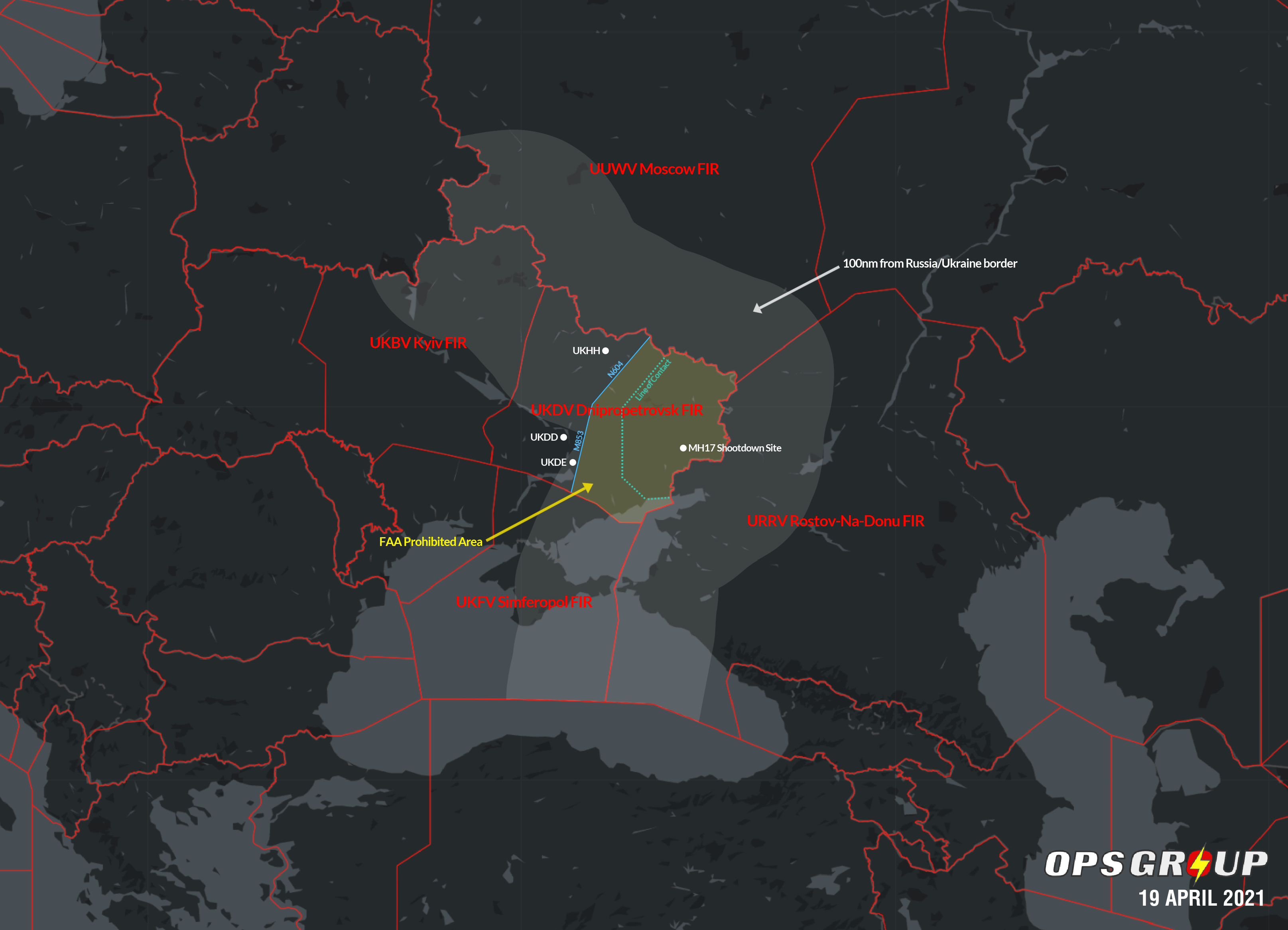
The FAA’s previous warning for Ukraine, as per SFAR 113, remains in place – US operators are banned from overflying the eastern part of the UKDV/Dnipropetrovsk FIR due to a continued threat of arms fire in the region. Essentially, everything east of ABDAR–M853–NIKAD–N604–GOBUN is prohibited. Airways M853 and N604 are off-limits as well. Flights to UKHH/Kharkiv, UKDD/Dnipropetrovsk and UKDE/Zaporizhzhia airports are permitted.

Put that all together – the old warning and the new one – and here’s how it looks:

Click for hi-res version.

Several other countries have airspace warnings in place for eastern Ukraine, including Canada who recently published a Notam advising operators to avoid the UKFV/Simferopol and UKDV/Dnipropetrovsk FIRs due to the risk from heightened military activity and anti-aviation weaponry. Check SafeAirspace.net for more info.

What about the UKFV/Simferopol FIR?

For the past few years, the risk here has been quite separate to that affecting the UKDV/Dnipropetrovsk FIR. It stems from the fact that the UKFV/Simferopol is disputed airspace, with aircraft potentially receiving confusing and conflicting air traffic control instructions from both Ukrainian and Russian ATC. 

In March 2014, Russia annexed Crimea, and Ukraine disputed this. The ATC Center is in Simferopol, Crimea, and is now run by Russia. Russia claims the airspace, and now refer to it as the URFV FIR. Ukraine refuses to recognise the change, and still calls it the UKFV FIR – and asks crews to talk to Ukrainian controllers in Dnipro/Odesa ACC instead of Simferopol ACC.

In October 2020, the US entirely removed their restrictions on overflights of the UKFV/Simferopol FIR, as they said the security situation had sufficiently improved here. While Russia continued to assert territorial claims over this region, Ukraine had established appropriate risk management measures to ensure safe operations for aircraft along the Black Sea routes.

In simple terms – since 27th October 2020, US operators have been able to overfly the Simferopol FIR.

However, tensions have been on the rise in this region throughout 2021. Russia seem to be going on a renewed military offensive here, focusing their efforts on the area of disputed airspace over Crimea, and establishing several large danger areas over the water surrounding the Crimea Peninsula at all flight levels. These danger areas are most likely due to military activity which may include live firing exercises –  so use extreme care in the UKFV/Simferopol FIR at this time as the situation is unpredictable.

For more info on these latest developments in the UKFV/Simferopol FIR, see our dedicated article here.

What are other countries saying about Ukraine?

Aside from the US, several other countries consistently publish airspace warnings: the UK, Germany, France, and Canada

UK and France: both have warnings in place advising against all ops over both of these Ukrainian FIRs, with the exception of airways Black Sea routes in the UKFV/Simferopol FIR.

Germany: does not have any published warnings in place at all.

Canada: avoid the UKFV/Simferopol and UKDV/Dnipropetrovsk FIRs due to risk from heightened military activity and anti-aviation weaponry. Exercise caution across the rest of Ukraine’s airspace.

For more details on Ukraine and other airspace warnings, head to SafeAirspace.net


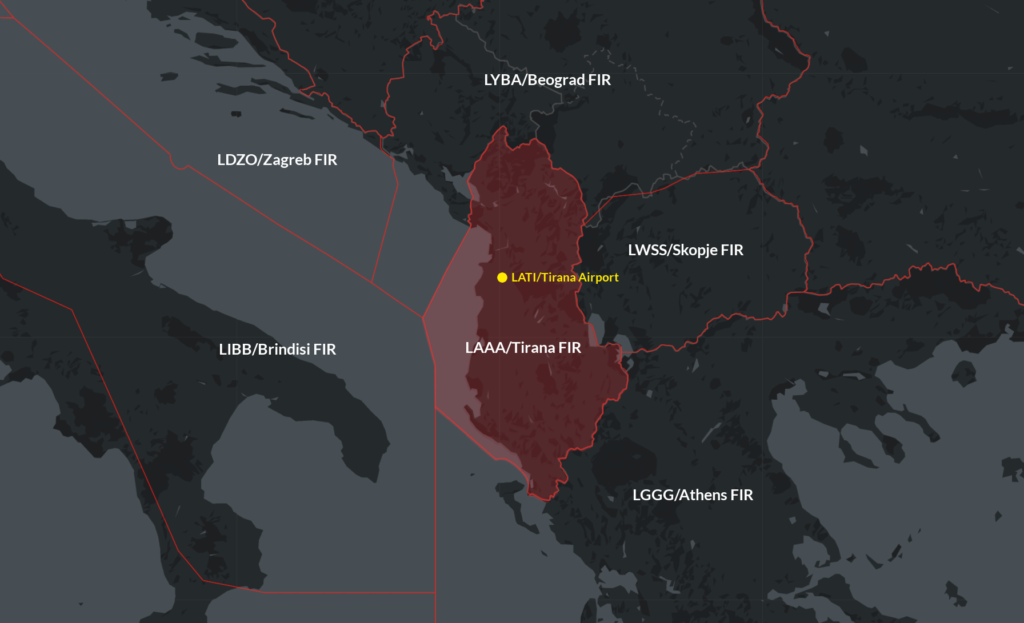
New warning for Albanian airspace

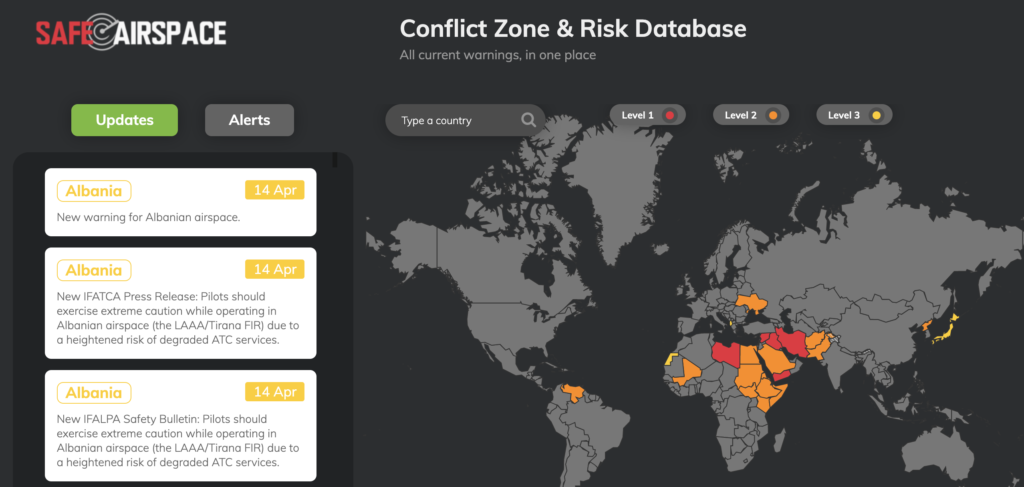
On April 8, Albanian airspace (the LAAA/Tirana FIR) along with LATI/Tirana Airport was forced to close, after a number of local air traffic controllers declared themselves temporarily unfit to work. Several international organisations, including IFALPA and IFATCA, have since issued statements warning pilots to exercise extreme caution while operating in Albanian airspace due to a heightened risk of degraded ATC services.

Why? Two reasons:

  1. Local controllers are now back at work but under significant duress, having been threatened with being fired (or worse – being arrested and jailed) if they do not declare themselves fit for duty.
  2. Foreign controllers have reportedly been brought in to replace some local controllers who were arrested, despite the fact that they are not trained or rated on any of the local positions.

What happened?

Mid-2020

  • Albcontrol (the National Air Traffic Agency) cut the salary of the controllers by up to 70%.

Early April 2021

  • Some controllers declared themselves temporarily unfit to work due to stress caused by these pay cuts. They were fired by Albcontrol.

April 6

  • A large number of local controllers (estimated at around 60-70% of ATCOs) declared themselves temporarily unfit to work due to stress, in line with the EASA regulations and the international standards. What these regulations essentially say is that being ‘fit for work’ is a personal assessment by the controller to avoid undue pressure from management to perform safety critical tasks when unfit for duty.

April 7

  • LATI/Tirana Airport issues closed at 1000z due to lack of ATC staff. Albanian airspace (the LAAA/Tirana FIR) closed at 1800z. Both stayed closed until 0659z on April 9, with a few exceptions when they reopened for short periods of time to allow humanitarian and medevac flights to operate.
  • Albania’s government sent troops and police to clear the “protesting” controllers out of the tower and their offices. About two dozen controllers were questioned by police. Three were arrested, charged with ‘abuse of office’. Two remain in jail; the third is under house arrest.

April 8

  • Several reports emerged that the Albanian Government had brought in Turkish controllers to replace the local ones. No official announcement was made, so their status as to training and local ratings is unknown.

April 9

  • LATI/Tirana Airport and Albanian airspace reopened at 0659z.
  • The Albanian Government issued an order officially recognising foreign ATCO licenses, allowing for foreign air traffic controllers to take over in emergency situations in Albania – an attempt to justify its actions the previous day and establish legal authority for the foreign controllers already installed.
  • Local controllers returned to work (except those still in jail/under house arrest) and were forced to sign a “fit for work” declaration.

What’s been the response?

The international response has been unequivocally damning, with IFALPA, IFATCA and ATCEUC all issuing several statements denouncing the action of the Albanian authorities (both the government and Albcontrol).

IFALPA have published a Safety Bulletin advising pilots to exercise extreme caution while operating within Albanian airspace, providing more detail in a Press Release calling on the Albanian authorities to adhere to international regulations. IFATCA have published similar info here, and ATCEUC has also issued a statement which can be found here.

Advice to operators

Reminiscent of the Ethiopian ATC strike and subsequent cover-up by the authorities in 2018, the action of the Albanian authorities should be seen for what it is – a terrible misjudgement, creating a safety risk across Albanian airspace.

IFATCA define it best, in their April 10 press release

“The International Convention on Civil Aviation prohibits an air traffic controller from exercising the privileges of their licences and related ratings at any time when they are aware of any decrease in their medical fitness which might render them unable to safely and properly exercise these privileges. It is considered unsafe to have a person perform air traffic control that is physically or mentally impaired in any way, or unqualified and untrained for the position.

It is the obligation of the Service Provider to provide a safe and functional workplace environment that supports the personnel to perform these complex safety roles free from distraction and duress.

The Albanian authorities continue to have disregard for the safety critical nature of these roles…

Albanian authorities have taken an irresponsible gamble on safety and stability of the air traffic services over their territory and the Network by attempting to continue operations with unlicensed and unqualified staff to operate, masquerading as a safe and functional service.”

At SafeAirspace.net we are now listing Albania as “Level 3 – Caution” following these events. Pilots should exercise extreme caution while operating in Albanian airspace (the LAAA/Tirana FIR) due to a heightened risk of degraded ATC services.

Further reading:


Eruption in the Caribbean: The La Soufrière Volcano

A tiny island in the Southern Caribbean has made headlines this week after a volcano, dormant for decades, suddenly erupted on Friday almost without warning. It ejected ash as high as FL440.

The La Soufrière volcano is found on the main island of Saint Vincent and the Grenadines, a small country nestled amongst the southeast Windward Islands of the Lesser Antilles. It is neighbours with Saint Lucia to the north, Barbados to the east and Grenada to the South.

St. Vincent and the Grenadines – home to the La Soufrière volcano.

The volcano first made headlines on Thursday when scientists detected large seismic tremors – an ominous sign that the La Soufrière volcano was stirring. It had last erupted back in 1979.

Evacuations began for people living near the volcano which is found only 10nm north of the country’s main airport, TVSA/Argyle. Scientists believed an eruption was imminent.

Then on Friday La Soufrière literally exploded back to life with several violent eruptions producing massive amounts of ash. Since then, sporadic eruptions have continued. The latest was on Monday, and scientists believe there is no end in sight. It may continue to erupt (and produce ash) for weeks.

What’s the current operational impact?

The initial VAAC advisories indicated a large ash cloud extending up to FL440 and moving in an easterly direction away from land and into the Central Atlantic:

However, the most recent VAAC Advisory, dated 1358z on April 14, only shows a small area still affected by volcanic ash up to FL280, forecast to dissipate by 1930z:

Two main airports have been shut down by the eruption:

TVSA/Argyle has been closed until further notice having been coated in thick ash. TVSA Notam A0591/21 has that info and is due to expire at 00z on April 15 however it is very likely to be extended.

Further east, winds carried ash toward Barbados closing down TBPB/Bridgetown. It is due to reopen at 1600z on April 16, but further disruptions are possible (TBPB Notam A0585/21 refers).

St. Vincent Island and it’s airport, TVSA/Argyle, have been coated in thick layers of ash.

Outlook

The La Soufrière Volcano remains at Aviation Colour Code Red, meaning a major eruption is underway with significant ash emissions.

The amount of ash it produces depends on the strength of each eruption which is difficult to predict. So far they have been many and varied.

Airports in neighbouring Saint Lucia and Grenada have remained open but may be impacted by further eruptions depending on prevailing winds. Disruptions and closures are possible throughout the South-Eastern Caribbean.

Scientists have seen no sign that the volcano is slowing down and it appears to be following the same patterns as previous eruptions that lasted for extended periods of time – so things may get worse before they get better.

More info

  • You can view the latest VAAC advisories for La Soufrière here.
  • For the dangers of flying in volcanic ash along with operational advice, see our recent article here.


Squawk 7800 for Hacked

An airplane is circling over Seattle. Onboard, the Captain, Reece Roberts, is desperately trying to control it, but cannot – she is locked out from the flight control systems because the main computer has been hacked. It is a race against time for the crew to regain control before they run out of fuel. Dom Dom DOOOOMMMMM!!

Not real, just a movie, but…

This might sound like the plot from a terrible movie (it is), but how possible is this, and are there any mechanisms in place to prevent it?

Hack attack

Back in 2015, a cyber security expert, Chris Roberts, was detained by the FBI after making some claims on social media about hacking into an aircraft computer and briefly assuming control of it. According to Roberts he had hacked into several planes over a four year period, using the in-flight entertainment system as his way in.

On this particular occasion, Roberts claims he managed to overwrite some code and issued a “climb” command to the airplane which then caused one of the engines to increase thrust. His actual statement was that he made the airplane “fly sideways” (which possibly discredits the whole story just a little).

This is not the only claim of aircraft hacking though. In 2016, a Boeing 757’s system were also breached, and this one was slightly more disturbing because it actually, definitely happened. It was also less worrying because the aircraft was on the ground and the whole thing was carried out by the US Department of Homeland Security as an exercise to see how possible a hack attack actually would be.

The Aerospace sector is the fifth most targeted sector for cyber-attacks. A high level then, but while some of those attempts are aimed at aircraft flight control computers, and an equally small number at infiltrating airport infrastructure systems, the large majority are of the data gathering nature – attempts to steal sensitive passenger info, credit card data and that sort of thing.

Taken from a Thales report.

How serious are we talking?

Our aircraft are intelligent. The computer brains that run them are complex beasts made up of multiple data generating sensors, and just as many parts giving out orders to various aircraft systems. Take the FADEC on an engine – this is a self-monitoring, automated system. It controls the engine start, deciding when to open valves up, when to add fuel. It also monitors parameters and can stop a start, run a cooling cycle, and try all this again without pilot intervention. The system also controls inflight restarts.

Rolls-Royce launched an ‘intelligent engine’ concept in 2018 – an engine so connected that it has the basic AI algorithm “intelligence” to assess, analyse and learn from its experiences, as well as those of its “peers” (other engines that all share their data).

All this level of automation is great, but what if it is no longer in control, and is being controlled with the pilot effectively locked out?

Then there is the connectivity

Aircraft are increasingly digitalized and increasingly connected, and these connections might be less secure than we think. One highlighted “weakness” in aircraft onboard systems is the encryption levels within the comms and reporting systems. You might point out that aircraft are fairly visible on Flightradar, but this only gives general whereabouts, and transponder data is no longer shared. Being able to pinpoint exact locations in real time has far greater consequences if the wrong people are able to access this information.

There is growing speculation that Malaysia Airlines Flight 370 may have been electronically hijacked, or at the very least had its position spoofed leading to the initial confusion over its whereabouts, and later the difficulty finding the crash site.

Aircraft are increasingly connected to the ‘open world’

The good news

The good news is there are protections within aircraft systems. First up, there is no way to access a critical system via a non-critical one. Network architecture prevents this and various experts have stated it is impossible to move from, for example, the in-flight communications system to the avionics.

Airbus incorporate a switch in the flight deck – the NSS (Network Server System) gatelink pushbutton is effectively an added ‘disconnect’ which separates all cockpit systems from the ‘open’ world, cutting off any potential link to the aircraft flight management systems should a threat be perceived.

Then there is the risk of “locking” the pilot out – gaining access of a system and sending commands to it is one thing, but pilots have the ability with most systems to disconnect and get back to basics. For a hacker to lock a pilot out – prevent them from disconnecting – this would require a command that is not currently in the system and this level of hacking and re-programming is not, most suggest, all that feasible.

The avionics bay

The bad news

There are other ways to disrupt operations.

 GPS jamming is not direct interference, but the impact it has on aircraft systems is a known one – with a jammed GPS, aircraft lose the ability to navigate with accuracy and must rely on dated radio navigation systems. Not such a big issue, but removing the capability for an aircraft to carry out an RNP or RNAV approach means they are reliant on older ILS equipment, or having to fly non-precision approaches.

ILS equipment relies on both ground and aircraft systems, meaning there are much more “parts” which can fail. These systems are also older and require more maintenance on the ground meaning the likelihood of one part malfunctioning is higher, and when it does, the level of safety redundancy for aircraft which have had GPS jamming problems is suddenly really reduced.

The risk of interference to GPS and radio signals also creates a vulnerability in UAV operations.  The controllability of an aircraft might not be in question, but the ability of a hacker to take over and control a UAV – and potentially “control” it into an aircraft – is a growing threat.

A report looking into potential airport weakness identified a large number of “weak spots” where targeted hack attacks might result in disruption. The airside points ranged from spoofed ILS signals to changing airplane signatures on docking system from larger to smaller aircraft, reducing the wingtip clearance margins and safety significantly.

What is being done?

Technologies to prevent UAVs in airports is well underway with systems in place already at many major airports, and the FAA trialling more this year. Solutions to GPS jamming are also a high priority with several conferences and work groups already taking place, identifying both the threat and the root cause of why jamming takes place.

As for the direct cyber security risk to aircraft, this is not a new “idea”. The FAA moved it in the right direction with their Aircraft Systems Information Security Protection (ASISP) initiative in 2015. This initiative asked the questions, and asked manufactures to start thinking up answers, and they are responding. Manufacturers of major avionics, entertainment systems, communication systems, and aircraft are all analyzing the risks, and upping the protections, securities and preventions.

We might not see them in our aircraft, but they are there, and until aircraft become completely secure we still have that last trick up our sleeve – the one where we just turn it off and get back to basics and fly it ourselves.

So ‘Cabin Pressure’ might just be collection of movie cliches surrounding a troubled plane that no-one takes seriously, but the threat of cyber terrorism in aviation is one that everyone else is taking very seriously indeed, and for good reason.


MAYDAY, MEDICAL: In-flight Emergencies

Fly the line long enough and chances are you’ll experience an in-flight medical emergency. They are relatively common, but also inherently challenging – they happen in a complex environment, in a confined space and with limited medical equipment often hours from help.

Just how common?

In approximately 1 per 600 flights. Or if you look at it another way, for every million passengers carried, 24 will have a medical emergency.

That may not seem like a lot but wait til you crunch the numbers. At pre-Covid levels four billion passengers were flying annually which meant at least 260 in-flight medical emergencies were happening each and every day. Other reports suggest the real numbers were much higher.

So it is a risk that we take on every time we launch upwards into the wild blue yonder and yet concerningly one we practice for far less often than almost all other inflight emergencies. It is well worth taking a closer look.

Why do people get so sick at altitude?

One of the most common thoughts we have following an in-flight medical emergency is “but he was totally fine when he boarded...”

The reality is the pressurized cabin of an airplane is a terrible environment for someone experiencing a medical situation.

Passengers with existing conditions are probably not aware of the environment they are entering and the effect that it may have on them. They may feel fit to fly on the ground, but in the sky it can be a whole other ball game.

In most cases we are breathing oxygen equivalent to an elevation of between 5000 and 8000 feet. It’s not dangerous, but even healthy people will be mildly hypoxic with oxygen levels almost ten percent lower than normal. At sea level with similar blood oxygen levels an ER would have you on oxygen. Throw in a heart or lung condition and you have a dangerous combination.

Then there’s the issue of sitting down for hours on end which can inhibit the flow of blood in your veins. This can trigger some truly nasty things such as thrombosis (blood clots) and embolisms which can lead to seizures, strokes and heart attacks.

Then there’s the cabin air itself. Re-circulated air can expose passengers to allergens and potentially anaphylaxis – a life threatening allergic reaction. Ever wonder why peanuts in planes aren’t that common anymore? Even something as simple as dehydration can make a passenger become seriously unwell.

A few innocent peanuts a few rows down can lead to a life-threatening medical emergency.

So which ones are the most common?

Almost half of in-flight medical emergencies are caused by neurological conditions, and the vast majority of those are headaches, fainting or dizziness. In most cases they are not serious but may indicate or lead to something far more dangerous.

In second place are gastric symptoms – yep, stomach problems. Beware the dodgy airport taco. Nausea, vomiting and cramping. No one enjoys ‘riding the porcelain express,’ especially in an airplane, but acute food poisoning can become incapacitating very quickly – and the same applies to crew as well as passengers.

And tied for third are respiratory issues (problems breathing) and cardiovascular symptoms (heart related things).

The most common causes of inflight medical emergencies.

Which symptoms do we need to be most worried about?

Human bodies are complex machines but these are historically the biggest warning signs:

  • Unconsciousness with slow or no recovery.
  • Chest Pain.
  • Seizures.

So how do we best manage in-flight medical emergencies?

Prevention is your first line of defence. Don’t board a passenger you have concerns about unless you are completely confident they are fit to fly. This may include speaking to a service like Medlink or asking for medical clearance from a doctor. They may be feeling okay now, but not so much after wheels-up.

Have a plan.

Just like you have a checklist for a mechanical issue in the air, you should have a standard operating procedure for inflight medicals.

Serious health problems often begin with very mild symptoms. Be alert for any medical issues, however minor. A report from the cabin that someone is feeling unwell is your cue to become diversion minded. Start thinking about what is around you, what the weather is doing, and of course those pesky Notams. But the point is: work hard now so if things escalate you are already ahead of the airplane.

Stay calm.

Things are going to get busy but don’t forget that your primary responsibility is to protect your airplane. Remember to fly. If you are multi-crew, make sure one pilot is actively monitoring and has the radios at all times.

Communicate.

This is vitally important. If you plan to use a service like Medlink the first thing they will need is informationand lots of it. Establish communication with the cabin and get that pen and paper out. There are also forms available online to help. Don’t wait until you have the doctor on the line.

Ask for help. You’d be surprised how often you carry passengers with medical experience. In the US they are protected from any liability by the Good Samaritan Law, while in most other countries they have their own provisions which will allow them to assist. Unless they are grossly negligent they simply cannot get in trouble for helping.

Use a medical advisory service. They are invaluable and put you in direct contact with a team of physicians who are trained in ER medicine and airline protocols. They are multi-lingual and available around the clock. They will work with your cabin crew with confident instructions including the use of a physician’s kit. Medlink is a solid example and widely used by carriers around the world. You can contact them via SATPHONE, HF/VHF radio or even ACARS.

Medlink physcians are trained in both ER medicine and airline protocols.

Don’t forget ATC. Don’t be afraid to declare an emergency, or a PAN. They will assist you with priority handling, an ambulance and paramedics on arrival and can even contact your company for you.

Remember security.

It is easy to be distracted during a medical event. Your cabin crew will likely be busy, and you may have to open the flight deck door multiple times. Be aware that medical episodes have previously been used to create a distraction for someone else to try and gain access to the flight deck. Or you may be carrying someone who simply seizes the opportunity. Stick strictly to your security and access procedures.

Don’t forget your security – beware of distractions.

Decide. The hard part. 

The decision to divert is a complicated one and unfortunately no two situations are the same. But there are a few operational considerations you need to take into account before you hit the old direct-to button.

It’s important to remember medical advice from a service like Medlink is a decision making tool. They cannot make the decision to divert for you – that responsibility sits firmly in the hands of the pilot-in-command.

They can advise you to divert, but remember, they are not aviators. They may not be familiar with the operational risks to you and your passengers of nearby diversion airports. Beware of inherent risks of where you decide to point the nose.

By no means an exhaustive list, but here are some of things you might need to consider above and beyond the emergency on hand:

  • Are we over weight? Do we need to dump fuel?
  • What’s the current weather? Can we even get in?
  • What about terrain? We’re not familiar, are there special procedures?
  • Is ATC on watch?
  • What about the NOTAMs? Is the runway open?
  • Is the runway long enough?
  • Is there customs there?
  • What do we do when we land? Are there services available?
  • Can we gas up there?
  • What about the security situation?

You get the picture.

Then there is the standard of medical care. You may give a sick passenger better odds by diverting further afield to land somewhere with better medical response. The closest airport is not always the best one.

And of course cost – the elephant in the room. Some symptoms are clearly life threatening and that must always come before cost. But in other cases it is not always so clear. Professional medical advice does not always take into account the sometimes extreme cost of diverting. For a jet aircraft this can range from $20,000 USD up to $700,000 USD for a large one in logistical costs.

The diversion decision – harder than it looks.

What about illnesses that are contagious?

Now, more than ever before, we are aware of germs. A passenger may suffer a medical emergency because they are carrying something contagious. It is very important that if you suspect a passenger might be infectious that you report it to the right people.

In fact ICAO requires it. If you delve into the depths of ICAO Doc 4444 you’ll find that the pilot-in-command must report to ATC if they suspect they have an infectious passenger on board.

How would you know? ICAO can help with that too. It you have passenger with a temperature greater than 38°C/100°F along with symptoms such as vomiting, coughing, problems breathing, rashes or confusion you can suspect they’re carrying something nasty.

The exact procedures vary from AIP to AIP, but in the US the FAA require pilots to advise either ATC or your company. You can read more about that here.

The problem’s not going away.

Unless you have discovered the ultimate cure for all things medical, in-flight medical emergencies aren’t going away. It is a risk we take every time we take passengers or ourselves into the air. It is up to us to mitigate through knowledge, procedures and preparedness. Chances are when one happens, you won’t be expecting it…


What’s the delay in the USA?

We took a look at the stats the FAA publish about on-time performance to find out what the most common causes of delays are, which airports are worst affected, and what we can do to manage it.

On your marks…

First up, what counts as a delay? Your airline or operator might be a bit stricter on this, but the FAA consider a flight delayed if it arrives more than 15 minutes late. Which is probably what your passengers really care about as well.

The FAA gather their info from a bunch of carriers, and break it all down into five basic categories of delay:

  • Air Carrier: This is something under the airline’s control like crewing, maintenance type issues. So that time you wanted a Starbucks coffee and the queue was really long and you held the flight up.
  • Extreme Weather: We are talking the big, bad stuff like hurricanes, blizzards, tornadoes… the things that shut airports for hours.
  • National Aviation System: This is pretty broad and covers ATC, airport ops, high traffic volume sorts of situations. They also throw general weather into this (the stuff that airplanes and ATC should be able to deal with).
  • Late-arriving aircraft: A knock on effect from a previous flight delay.
  • Security: Broken X-ray machines, long queues because of that passenger who thought he could sneak a tiger on in his hand luggage type scenarios.

Security is surprisingly the least to blame for delays

Pick a month

Here come the statistics…

In January 2021, 89.16% of flights were on time – which ain’t bad, but ain’t great. So, of the remaining 10.84%, what were the reasons for the delay?

Air Carrier Delays are the big offender, checking in at 3.63%. The airlines only have themselves to blame…

Although, NAS came in a close second with 3.6%.

Then there was the knock-on effect of one late flight making the next flight late. This accounted for 1.94% of delays, with 1.17% because of previous cancellations and diversions.

Extreme weather came in at just 0.46%, while security delays only resulted in 0.04% (probably because those passengers were just left behind).

The Stats for Jan

Weathering the delays

Weather only accounts for 4% of delays, which might seem low, but remember we are talking ‘extreme weather’. Non-extreme weather should be manageable which is why “normal weather” causing delays falls under NAS.

If we dig a bit deeper and take a snapshot look at a random month (we picked May 2019 because everything was fairly normal back then), then weather was the reason for 65.62% of NAS delays. That is a whopping 27,864 delayed flights or 1,822,469 minutes.

Which airport is the worst?

Let’s take a look at the airports to look out for.

KDFW/Dallas Fort Worth in Texas. A check of all the 29 major US airports in Jan 2021, and Dallas was the only one coming in with an on time performance below 80%.

10.48% of KDFW’s delays were down to NAS. But let’s not be too quick to tell off ATC yet. Just under 21% was due to high volumes of traffic. Just under 31% was because of runway closures and a whopping 45% was due to nasty weather (major winter storms).

The runners-up for worst delays were KORD/Chicago and KFLL/Fort Lauderdale which came in at 84.58% and 86.44% respectively. Fort Lauderdale’s NAS accounted for just over 6% and 8% was because of traffic volume problems.

Dallas Fort Worth was hit by some major snow storms in early 2021

Stop boring me with statistics

OK, that is enough facts and figures. What are we really talking here? Well, the two biggies are the Air Carrier delays and delays from NAS (most of which seem to boil down to weather).

Bad weather means a backlog of traffic, often a lot of detour requests to manage, or diversions to support and this means a much higher workload for our ATC colleagues to try and deal with. Even when it is “just” rain, or a windy day, this leads to delays. We can’t change the weather, but we can plan for it.

Delays are not just a cost and customer service issue – they are also a big fuel consideration…

So what can we do about them?

  • Check the forecasts. Planning for those delays in advance is a good idea because chances are they are going to result in some long holds, and long holds need fuel. Don’t just think about your destination weather – have a look at the alternates as well because when one airport shuts because of weather, others nearby probably will as well. If they don’t, then they are going to fill up fairly fast with diverting traffic.
  • Check the peak times. If you are not a scheduled carrier then try to plan your flights to head in at non-peak times to avoid high traffic volume delays.
  • En-route stuff. If you are delayed out of somewhere then you can try and make that time up en-route. Speeding up might seem like a good plan, but in reality unless you’re talking a mega long flight this probably isn’t going to make a huge difference to your time (but probably will to your fuel burn). Asking for directs however, is a good way to chop the time down.
  • Check the schedule. If you depart late then check your schedule time. With a decent tailwind you might find your flight time still brings you in early in which you don’t want to go speeding up and then find yourself having to wait for a parking spot
  • Winter planning. Winter (de-icing) is probably the biggest cause of delays out so get those calls in early if you need to de-ice and plan ahead.

On-time performance is great, but sometimes delays are just unavoidable. So while we can all “think on time” a bit more, thinking about safety (and not rushing) is still the best mentality any pilot can have.


Re-inventing the Overnight: Layover Lowdowns

Aviation is awesome.

  • It connects – countries, cultures, people and ideas.
  • It helps – allowing aid to reach people during natural disasters not to mention humanitarian, medical, peacekeeping and firefighting flights to name a few.
  • It is dynamic – the progress in aviation is exciting. New developments, technologies and pioneering ideas.

But it easy to forget one other – it is supposed to be fun. Aviation leads to adventure, travel and discovery. In 2020 it seems the industry lost its way.

Here at OPSGROUP our mission is to make aviation more human-friendly – not just by trying to fix Notams and sharing safety critical information, but in other ways too.

So we want to try something new.

We don’t really know what it will become yet,  so we thought we’d dive right on in anyway.

It is a new way to build the OPSGROUP community that we know so many of you enjoy, while also connecting other members together. It’s about bringing the fun and adventure back to your day job.

Introducing Layover Lowdowns

Chances are you’ve spent much of the last year alone in hotel rooms with people hassling you to put a stick up your nose. The good news is that vaccines are here and we are beginning to see crew once again being allowed to roam free in the wild.

Layover Lowdowns is our new Instagram-based adventure – a place for insider reviews of the best things to do on layovers that you won’t find in any brochure. Think delicious food, epic drink spots and new experiences that are off the ‘beaten trail.’

Whether you are a seasoned crew member who has seen and done it all,  a corporate pilot who doesn’t visit the same place often and needs help finding the decent spots, or are just tired of hanging out with the same crew every flight we hope that this will help!

We know that sometimes layovers are rubbish. Lonely things that take you away from you home, family, friends, which take hours and hours to get to… so we hope these will help you find some little spark of excitement about having to do that flight for the fifth time this month.

Hop onto @layoverlowdowns and start looking at our first secret spots – 100% endorsed and tested by our awesome community of OPSGROUP-ers. See some photos and flick through a a wonderfully simple description of what makes them great. Then with a single click, you’ll get directions on how to find them.

We need you to help us build the page into something special for crews around the world!

If you like what you see, follow our page and help other members by sharing  your own favorite spots and secret finds in the comment sections or via direct message. Let us know what to include and what you like about them and we’ll do our best to feature as many as we can.

Feel free to talk to each other – you may even find yourself in the same place at the same time! All the more reason to meet up and help build the community even more.

Go on – have an adventure!


Is it time to lose a bit of weight?

Don’t worry, we are talking about your airplane, not you. Looking at whether you can reduce your aircraft weight is a good idea though because less pounds = less £/$/€ spent on fuel.

But how can you go about reducing your aircraft weight? Well, here are a few quick ’n’ easy methods to consider, because whether the motivation to reduce your burn is down to the environment, or down to money, we reckon both are good reasons.

Bath time

First up, give your airplane a good scrub. Operators are focused on Cabin Covid Cleaning, but there is more to be saved if you really clean out the muck from all the nooks and crannies. We rarely think about the accumulation of dirt onboard in terms of weight build up, but it can be significant.

  • The Outside: Your aircraft is designed to be clean and shiny so it can glide through the air with ease. Anything stuck to the airframe is going to disrupt airflow and increase drag which in turn increases your fuel burn. A study by Airbus suggested a clean airplane could save between 0.5 to 2% on fuel;
  • The Inside: Seat pockets and headrests are filthy, but we aren’t here to talk about what is festering inside your furnishings, but rather to think about the added weight. Given a mattress apparently gains a good 5lbs in dirt and dust through its general lifetime, just think how much those seats filled with dropped food and all the other people debris might mean in added mass;
  • The Cargo Bays: Giving your cargo bay a bit of an enema is also going to help reduce weight. The build up of dirt, ripped off luggage tags and probably a few mouse droppings is literally not worth its weight in fuel.

Scrub it down

The Rain in Planes

(I stole that title from this article, but it is a great one).

Condensation is a problem in aircraft. A 747 can find an extra 700kg added onto its weight through liquid alone. That is the equivalent of seven non fare-paying passengers every flight, using your fuel without paying a penny in compensation.

With the level of Covid cleaning and spraying of surfaces going on, the additional liquid content swamping up your airplane interior is going to be higher. Reducing this is not easy – much of it comes down to aircraft design and maintenance. However, there are options such as Sweden-based CTT Systems and their ‘Zonal Drying’ technology which feeds cabin air through a rotor filled with a desiccant of silica gel.

Boeing make some of their own recommendations too, so it is worth considering ways to reduce condensation and other unwanted fluid build-up because it not only helps reduce weight, but is good for general airframe lifespan too.

Condensation and vapor from AC units results in a big build up of unwanted moisture

Go paperless

In 2018, United Airlines started using thinner paper for their in-flight magazines, reducing their weight by 1oz per copy. That might sound like not a lot at all, but if you think of how many magazines are onboard each flight then that’s a fair few ounces – and ounces mean fuel. Turns out it saved them around $15 of fuel per flight, which worked out at about 170,000 gallons of fuel over the year.

Now, you aren’t going to see savings like that unless you have a large fleet, but even 1% of that saving will add up over time.

Cutting down on paper weight without cutting down on passenger service

And the paper savings don’t stop there – paperless cockpits can mean a big weight saving. Swapping from old school charts to a nice lightweight tablet, and digital flight plans instead of reams of Notam-riddled paper printouts can drop about 40lbs from your load.

It’s also so much better for the poor pilot’s back.

Water it down

The potable water tank is often overlooked as a potential saving spot. An A320 tank has around about 200 liters capacity but the amount you carry can be reduced based on the number of passengers.

Repaint

Paint weighs a lot. The coating and painting on an A380 weighs between 650kg and 1000kg. Ok, so your smaller jet won’t need quite that much, but there can still be a fairly hefty reduction for you if you opt to use lightweight paint.

Modern paint technology can also mean a lower drag profile, while using  new component coating technology can save 30 to 70% of the weight on 3-4m components.

Try and color within the lines

Update your interior

You probably can’t rebuild the outside of your airplane with a nice lightweight composite, but you can take a look at what you’ve got inside.

There are pretty strict regulations on aircraft trolley design. Who knew. But designers have managed to bring the weight down while still ticking the regulatory check boxes and nowadays an ultra lightweight trolley can weigh as little as 15kgs.

A decade or so ago regulators raised safety standards. Excellent. But this also meant a requirement for safer seats which suddenly added around 5 tonnes to the average weight of an aircraft. Well, seat design has also moved on since then and slim line, composite seats are available, potentially reducing their weight by up to 25%.

Thomas Cook (sadly no longer flying) reckoned they averaged at 300kg savings per flight by using lighter seats.

Seats, air conditioning systems, carpets, oxygen bottles… there are a lot of new technologies out there and while a full retrofit can be a pricey process, if the savings outweigh the costs then it might be time to take a look at where you can update your cabin.

The original onboard bar

Passenger weight

Although some airlines have adopted this measure, we don’t suggest charging passengers based on their weight – it doesn’t make them very happy. That said, using actual weight versus standard ones can be beneficial (it might also be necessary if your aircraft relies on accurate data for its weight and balance).

Check out this EASA report into standard passengers weights and how actual passengers compared.

Cut the fuel directly

We definitely don’t mean reducing flight plan fuel and carrying the bare minimum on every operation, but there are ways to help reduce your flight plan fuel requirements over time.

Let’s take a step back though and look at our contingency fuel. If you are using statcon fuel then you are taking a statistical amount based on analysis of previous flights. So we can reduce this by reducing the fuel burn on “previous” flights.

Flying economically means more than just best altitude or airspeed. It also means more direct routings, using free route airspace better and achieving constant descent approaches.

Using a robust fuel planning system that takes into account all factors will also help produce a planned fuel that is efficient and accurate.

Whack on some winglets

Winglets improve fuel burn. Improved fuel burn means you don’t have to carry as much in the first place.

Explains the winglet saving better than I can

Do the math

Carrying an extra squirt of fuel is going to burn more fuel. You can easily go down a rabbit hole here of saying “I need an extra tonne, but that means an extra 250kg burned, so I’ll take 1,250kg, but that will burn another…”

The logic here is actually fairly simple though. If you need a tonne at destination, then take the fuel needed to carry it so when you get destination, that 1000kg is still there ready for use. If you think you might need “a bit extra” for the journey then you don’t need to carry more to carry this because you are carrying it to burn en-route anyway.

The Hidden Savings

Of course all these measures have to be balanced – the cost of fuel savings versus the cost of implementing the changes. But don’t forget – there are hidden savings too. Lighter aircraft mean less wear and tear on their poor old undercarriages.

So, putting your aircraft on a diet can mean a lot of savings down the line.


UK: No more LPV approaches after June

On June 25 the UK’s current EGNOS working agreement comes to an end, and they are not renewing it. This means their access to EGNOS will stop – which means LPV approaches at UK airports will no longer be possible.

So let’s talk LPVs. What exactly are they? What on earth is EGNOS? And what has Brexit got to do with all of this?

What is an LPV approach?

If you read this and are thinking “That isn’t something I’ve ever flown” then you can probably stop reading (unless you’re interested in a bit of aviation geekery), because this probably won’t have much of an impact on you. If you do fly these, and fly them in the UK, then read on.

LPV means localizer performance with vertical guidance. It is a GPS based approach sort of like LNAV/VNAV but also, confusingly, sort of like an ILS.

More confused? Us to. Let’s dig deeper.

An LPV has vertical guidance but is not a precision approach (which your standard ILS of course is). Instead, it is classified as an ‘approach with vertical guidance’, or APV for short.

So an LPV is an APV? Yes, and the point of this distinction is that it’s a lot cheaper, quicker and easier to implement than an ILS because there is a lot less paperwork involved, but it still offers “nearly” the same precision as an ILS – meaning you get down low if you need to.

You might also see the term SBAS used in the same breath. SBAS stands for satelitte-based augmentation system, and is a generic term for the use of geostationary satellites which broadcast augmenting information.

What uses what and where

That’s the basics, but how does it actually work?

They provide lateral and guidance down to a DA, just like an ILS. And just like an ILS, they get more sensitive the closer to the runway you get, which is what allows you to operate down to lower minimas than, say, your less sensitive LNAV option.

There are a few things you also need to know – first up, you need a special receiver on your plane for it (which is probably why a lot of folk are scratching their chins and wondering what on earth as LPV is).

Secondly, if you’re planning on using an airport without an ILS or some sort of ground based navaid as your alternate, then the FAA wants you to plan on LNAV minimas.

Why do we like them?

Well, because they get us nice and low so we can see the runway in not so nice weather.

They also use GPS, so the equipment you need is on your plane. An ILS needs a whole bunch of ground and plane equipment meaning there is a lot more that can fail on us. RNP and SBAS approaches are the future.

The LPV minima is the same as the ILS Cat I minima

Okay, so what is EGNOS?

Not to be confused with the delicious Christmassy drink, EGNOS stands for ‘European Geostationary Navigation Overlay Service’. It is basically a bunch of European satellites, (actually just 3 out of the Galileo GNSS system, and a network of 30 referencing stations), that improves positioning measurements and gives much better accuracy than GPS alone.

In fact, it has 95% accuracy, which translates into the locating of a position to 1-3 meters horizontal accuracy, and between 2-4 meters vertical accuracy.

So EGNOS is what gives LPVs their precision.

Brexit…

Yep, we’re pretty bored of it now too. Brexit means the leaving of the UK from the EU. Not to be confused with Europe the continent – the UK is still part of that. But leave the EU it has, which means leaving all EU related programs including EGNOS (even though the UK’s NATS was one of the founders of EGNOS…)

Anyway, the EGNOS working agreements are not going to be renewed, so as of 25 June 2021, the UK will not longer participate in the EGNOS program and their LPV approaches will no longer have the accuracy assurance that EGNOS provided.

EGNOS RIMS stations (Ranging Integrity Monitoring Stations)

How many airports are affected?

The UK has 125 licensed aerodromes and out of these 69 have at least one instrument approach (surprisingly low given how miserable the weather often is in the UK.)

Anyway, ILS is still the most popular in the UK with 81 runways having an ILS approach available on them. Only 45 runways use LPVs and 20 of those have an ILS as well anyway, but that does leave a few airports where the other option is your old school, much higher minima non-precision approach.

Like poor old EGPL/Benbecula for example, which only has a VOR. A very old VOR which they are really hoping to retire. Or EGHE/St Mary’s which has a timed NDB…

Benbecula airport out in the Outer Hebrides

The first LPV approach in the UK only went operational in 2014 at EGTE/Exeter airport, with Flyer magazine saying the country no longer needed to “hang its head in shame” because they had finally caught up with the rest of the modern aviation world…

The Impact

It isn’t huge – most airports have alternative approaches. However, there are a few points to think about:

  • Where there is an ILS, the minima will be the same, but the redundancy for approaches is now reduced.
  • Where this is only an LNAV, or non-precision approach, the minima will be higher so watch out for that poor weather.

The official word on it all

Here are the official FAQs on the UK leaving the EGNOS program.

The FAQs have the following statement in them –

If EGNOS or an alternative SBAS SoL service becomes available before 31st December 2021, the LPV may be notified subject to the following:

  • An impact assessment to confirm nothing has changed since the time of approval before implementation.
  • IFPs shall be safeguarded against the latest obstacle data to ensure the procedures are obstacle clear.

Alas, unless the UK renegotiate the EGNOS Working Agreements (EWAs), or are able to find a replacement solution, then from 25 June 2021 the LPV approaches in the UK will stop.

Up for some further reading?


Bad Air: Fumes and Contamination

Fumes. Chances are if you’ve been flying for a while you’ve already experienced them. A recent study showed that in the US alone there are on average five fume events reported every day, and those are just the ones we know about. NASA previously eluded that these reports are just the ‘tip of the iceberg.’

It’s an industry-wide issue and there’s no magic bullet in sight to fix it. As long as we continue operating aircraft that use bleed air, the risk will persist and we need to take it seriously.

Each time we hop in an airplane we run the risk of being exposed to bad air – a threat that has potential to incapacitate both pilots. It’s happened before – just google Spirit Airlines Flight 708.

What do we actually mean by ‘fumes’?

It’s important to understand they are not the same thing as a smell. Smells can be unpleasant but are not necessarily a cause for concern. Your first officer may be to blame, or perhaps a dirty oven. They can also indicate a fume, but aren’t necessarily dangerous on their own.

Fumes on the other hand – are dangerous. In a nutshell, they are anything that produce physiological symptoms when inhaled. Fumes can be colourless, odourless and difficult to detect until they are already affecting you.

It’s important to understand the difference between a smell and a fume.

What about the regs?

So if it’s that bigger deal, why aren’t we testing the air? Both FAA and EASA airworthiness rules require cabin air to be free from harmful or hazardous gases and vapours but fall short of ongoing testing.

Detection systems are also required for safety critical systems but they have never been enforced for monitoring bleed air. Which is surprising considering it is what we breathe. Both IFALPA and ICAO have previously expressed concern at the lack of regulation out there to protect us and our passengers from contaminated air.

The reality is that most airplanes don’t have air detection – nor are they required to. Essentially it has become an acceptable risk that we need to deal with.

So, what can we do about it?

Knowledge is key. The more we know about fumes, where they come from and what to do in the air, the better we can deal with them safely.

Where are they coming from?

(Almost) all turbine aircraft in service use heated air drawn or ‘bleed’ from the engines or the APU for air conditioning and pressurisation. This is air is taken through ports before being cooled and mixed with recirculated air and distributed into the cabin and cockpit.

Great performance, fun to look at, but what is it exposing us too?

We rely on seals to keep the air clean of a load of nasty chemicals that turbine engines need to operate properly. Unfortunately when those seals leak or fail they allow toxic substances to enter the air we breathe.

What kind of substances?

Modern aircraft are complex, and we can be exposed to a surprising variety of chemicals – none of which do our bodies any favors.

Here are some of the major ones:

Synthetic engine oil. The number one culprit. Engines need it for lubrication and to keep bearings spinning smoothly. While accessories such as starter generators and accessory gear boxes rely on it. The problem is that it contains organophosphates – manmade chemicals that are toxic when inhaled. Oil contamination is often described as smelling like dirty socks, mustiness or ‘wet dog.’

Hydraulic fluid. Leaks and spills on the fuselage can be drawn into the APU inlet along with air intended for the cabin. They also contain organophosphates and are often characterised by a very acrid, bitter and oily smell.

De-icing and anti-icing fluid. Be careful of this one. There are usually some pretty specific procedures to follow. If they’re not done properly fumes can enter the aircraft through a running engine or APU intake. These fluids often contain chemicals that are dangerous to humans such as Diethylene Glycol.

Great at making it safe to fly, just don’t inhale it.

Fuel. Fuelling operations at the airport, tank venting and failed relights can all allow fumes to enter the cabin. Excessive build ups will start to make people feel very unwell very quickly. Ventilation is your friend here.

Electrics. Electrical fumes can be caused by failed or faulty electrical systems and may precede a fire. Recirculation fans are also known to fail and produce smoke in the cabin.

Speaking of which, don’t forget the cabin! There are lots of things in there capable of producing fumes including what passengers have brought on (nail polish remover is a classic), cleaning products, galley equipment (dirty ovens, anyone?) and the lavatories.

Know the signs…

How badly fumes affect you depends on what you have been exposed to and how much of it was in the air. Generally speaking, most “fume events” result in some of the following:

What to look out for, and we don’t mean his boxer shorts.

Here’s the good news. In the overwhelming majority of cases, bad symptoms will last a few hours or perhaps a few days. Long term effects are possible but rare. The initial actions should be about protecting yourself and those in your aircraft.

So if you think you have fumes, what should you do?

Get on Oxygen. And 100% too. Don’t dilute it as you’ll still be breathing in what you’re trying to keep out.

Communicate. Get in contact with your cabin crew. At this stage you need to figure out what it is. Your two biggest clues will be where is it coming from, and it’s odour. Also talk to ATC – let them know you have an issue.

Run your safety procedures. Get that QRH out and look for a fumes removal checklist. Be careful if your checklist is combined with smoke removal. In some cases you will increase pack flow. But if that’s where the problem is coming from, it may make things worse.

Think about health. You may have incapacitated crew or passengers. If it’s a pilot, you likely have a procedure for that too. Consider getting help from a service such as MedLink. If things have gotten really bad, you may need to declare an emergency and divert.

You’re back on the ground and breathing that good ol’ fresh air again. Here’s what you need to do.

De-brief your crew. Find out whether anyone felt unwell or couldn’t perform their duties properly. If so they should stop operating right away until they have seen a doctor.

Report it! As much as you can, no matter how minor. Most operations have a form which will help you. Try and include as much detail as you can as trying to find a ‘bad smell in cabin’ is like trying to find a needle in a hay stack. Don’t forget the tech-log too – help the engineers help you.

ICAO’s fume event reporting form. Click to download PDF.

Consider visiting your doctor, particularly if you have persistent symptoms.

What can the industry do to stop this happening?

The ultimate solution is bleed free design. And the future is now – check out the Boeing 787. It’s the poster boy/girl of this huge leap forward. But for most of us out there, we’re stuck with it.

Filtration. They’re not 100% effective but bleed air filters are a far cry from simple recirculation filters which are about as useful for fumes as a glass hammer.

Better chemicals. Okay, this one is out of our hands, but the industry should be prioritising this.

Detection and monitoring. The smoking gun. We are literally surrounded by chemicals that are bad for us in our tin cans up there. More needs to be done to make sure the air we are breathing is good air. We need to be able to know when something bad is in the air we breathe. It’s a no-brainer.

The elephant in the room. Which airplanes are the worst?

The moment you’ve all been waiting for. Don’t shoot the messenger. But statistics show that the BAe 146 and Boeing 757 appear to be the worst culprits. But the reality is if you are flying any airplane, you are at risk of fumes.

The mighty 146! Sadly one of the worst culprits.

What about Aero-toxicity?

The question of long term effects from exposure to chemicals in planes is beyond the scope of this article and the research is inconclusive. But if you’re worried about it, the Aerotoxic Association is a good place to start.

There’s a ton of reading out there too if you want it. Here are a few good ones.


UK to make permit applications tougher for EU operators

From April 2021 onwards, most European operators wanting to do commercial flights to the UK will have to apply for landing permits on a trip by trip basis.

After Brexit finally happened back in January, the UK government continued to issue Block Permits to EU operators – essentially just permits which last several months and cover any number of flights. These get renewed after three months, conditional on each EU country giving the same deal to UK operators.

Here we are, three months later, and with a number of EU countries still not providing these reciprocal deals, the UK government has finally got fed up!

So from April onwards the UK will only issue Block Permits to operators registered in countries which provide reciprocal deals to UK operators. According to the EBAA, so far these reciprocal deals have been agreed with Italy and France – more countries may follow, but the UK CAA say it’s not looking likely at this late stage in the game.

Important to note: it is operators who are registered in these countries (i.e. France and Italy) who can still get Block Permits, not operators flying to the UK from these countries. The EBAA explains it like this:

“For example a flight from Munich to London, the UK CAA would allow for it to be operated by a French operator with a UK Block Permit, under a reciprocal understanding between the UK and France that an equivalent system is in place for UK airlines. In parallel, a German operator would have to apply for a permit for each individual flight on the same route if no reciprocal understanding on a similar approval for UK airlines had not been reached with the German authorities.”

EBAA is advising all affected EU operators to contact their respective aviation authorities to raise awareness on what the withdrawal of the UK Block Permit scheme would mean for them.

How to get a UK landing permit

So, all non-UK operators wanting to do commercial flights to the UK need to get a Foreign Carrier Permit beforehand. That’s your landing permit. If you’re applying for a Block Permit, you use form CPG3201. If you’re applying on a trip by trip basis, you use form CPG3200.

If you’re operating a private flight, or just overflying the country – no permit is required (unless you’re doing some kind of delivery or maintenance flight with non-standard airworthiness).


For more info on Brexit’s impact on ops, check out our article from Jan 2021 here. There have been a few semi-important-to-know-about changes, but ultimately, the big ticket items are all still the same, and life goes on much the same as it did before – you still need a permit to do a commercial flight, the UK is still part of Eurocontrol, slots are still needed for busy airports, and nav charges are still expensive.


Rolling the dice with de-ice

Snow might look lovely on a Christmas card, but on the wing of an airplane (especially if it is the wing of the airplane you’re about to go fly in, and especially if it is 3am and you’ve got a long flight ahead of you) then I think we can all agree it is less ‘pretty winter frosting’ and more ‘horrid winter frustration’.

Snow, ice, sleet, hail – basically anything made out of really, really cold water means one thing – delays! Sorry, I meant to write de-icing there.

Feeling frosty

There are a few reasons why folk feel frosty about de-icing. First, it is a bit annoying – it does often mean delays. It also means extra things to think about, work out, and worry over. De-icing is an extra, and often slippery step, in an otherwise nicely structured turn-around.

Secondly, it is pricey. De-icing and anti-icing fluids are expensive stuff. For a small private jet you are probably looking at about $1200 , and more like $15000 for a large airliner. The call out fee alone is generally a few hundred bucks, and although we all have safety as a priority, most of us have called the de-icing rig out only to watch them spray copious amount of fluid all over the place while we wonder whether that little patch of frost on the wing really wouldn’t have melted off as we taxied out.

Lastly, and maybe not one everyone worries about, but anything with glycol in it creates high level of biochemical oxygen demand. What does that mean? Well, just that it is a bit bad for fish or anything that lives in water and likes to breath oxygen. So it ain’t the friendliest stuff for the environment.

Let’s be honest though, point 2 (with a bit of 1 thrown in) are probably the main reasons why we sometimes wait, fingers crossed, and fuel pumps a-swilling in the hope it just melts off before we go.

That middle of the night 2 hour wait for de-icing

De-ice-iding to go

There is of course a big reason why we do need to de-ice. We are all fairly well aware of it – safety! Or more specifically – performance! Because a little bit of ice means a big bit of (lost) lift. (Don’t worry, not an icy accident movie, just a video of a poor de-icing decision).

Let’s re(snow)cap on it

Most airlines and operators apply something close to a “clean aircraft” policy, which means that all critical surfaces should be clear of contaminant.

Simple – see something on a bit of the airplane that’s used for getting the airplane up in the air? Get if off before you go. This rules applies to bits like the wings, the horizontal stabilizer, and don’t forget in the engines – ice shedding after a prolonged taxi in wintery weather is going to help shake off any chunks of ice clinging to them.

Ground ice-shedding might be necessary

Back to those critical surfaces though – if you see a bit of frost (less than 3mm thick and so you can see the paint markings through it) underneath the wings? That’s ok. 

Look out for clear ice – not always very visible (being clear and all).

So, step 1 in the “Do I need to de-ice?” decision making process is pretty straightforward:

  • Is there ice or contaminant anywhere on the airplane?
  • Is it more than a little bit of frost on the underside of the wing?
  • Is it more than really thin layer that won’t melt once warmer fuel is added in, or with the airplane sat out in the sunshine?

If you answer ‘Yes’ to any of these than you probably need to de-ice. If you’re not sure, get a second opinion from your co-pilot or engineer.

Hard to say if this needs de-icing or not

Snow idea if you need to anti-ice?

De-icing is the process of getting any contaminant off. Sometimes blowing hot air is enough, sometimes a Type I fluid is used to melt it off. This one-step process is fairly quick and unless there is a big old queue you probably won’t delayed too much.

Anti-icing comes in when there is a chance ice and stuff will build up again. So if you send the FO out on the walk around and they return red nosed with icicles on their eyebrows then you probably need to anti-ice as well. Simple in theory: de-icing takes it off, anti-icng stops more getting on.

So what options do we have for this, aside from wrapping the airplane up in a giant woolly sock until it is time to take-off?

Well, you have four types of de-icing/anti-icing fluid options open to you. Not all airports will carry all options so if you think you need something specific, check with an agent before heading there. These four fluids are all typically made out of ethylene glycol or propylene glycol, with a bunch of thickening agents, wetting agents, corrosion inhibitors, colors and some UV-sensitive dye thrown in.

  • Type I ain’t gonna give you much of a holdover time, but its useful for clearing stuff off. If applied heated it does provide some anti-icing protection as well. It is usually orange. The good thing with this stuff is it is thin and shears off easily so there is no restriction on your rotation speed.
  • Type II is clear or strayed colored and needs at least 100knots rotation speed. Its pretty common to see this being used either 100% or diluted to 75%, and as part of a two step process.
  • Type III is less common. This yellowy green fluid as a much lower rotation speed requirement – just 60 knots – so its good for smaller, slower aircraft.
  • Type IV is your good ‘n’ thick stuff, great for longer hold over times, less great for aircraft that rotate slower than 100 knots.

Our top tip: Let your passengers know you’re going to de-ice. If they haven’t seen it before, having dinosaur like rigs pull up to the airplane, or seeing the windows fog up with thick smoky smoggy fluid has been known to panic one or two..

Larger aircraft use 2 or even 4 de-icing rigs at a time

HOT Stuff

Your HOT – ‘Holdover Time’ – is what we really worry about when we need to anti-ice. There is no definite “this fluid will last this long” calculation. Instead we have tables for checking how long you’re probably ok for, depending on a few factors:

  • What sort of fluid was used.
  • Whether it was diluted.
  • What is going on outside.

The table is going to give you two times – a minimum and a maximum, and your best bet is to take the minimum one and if you reach it, take a look at your critical surfaces and see what is going on with the fluid. Actually, a pre-departure contamination inspection is mandatory in most cases. If its look ok (really looks ok) then you’re good to takeoff. Exceed that though and you’re going to need to taxi back, clear it off and start over.

In nasty conditions, keeping an eye on the fluid and the hold over times is super important. There are actually no published HOTs for anything more than light freezing rain. Snow pellets and hail also get messy because these sticky morsels and strong and like to stick to anti-icing fluid, instead of getting melted by it.

A generic Type II HOT Table

If you are looking at rain or light freezing rain on cold soaked wings then your HOT could be as low as 9 minutes. If you have snow pellets or snow grains bouncing off the windows, and it is colder than about -14°C (so anywhere in Canada, Russia etc in the midst of winter), then these blighters are going to reduce your HOT to as little as 1 to 2 minutes (good luck getting anywhere in that time!)

Hitting the hold over time might suck, but there isn’t much you can do about it except call the cabin for another, stronger coffee, and settle in for a long, cold flight.

Another top tip – check those HOTs and if they are unrealistic then wait for the weather to clear, ask for remote de-icing, go for a different fluid dilution… whatever you do don’t ignore it though and think it’ll all be ok.

Looks like this outside? Probably need to anti-ice

Messing with your schedule

Back to Point 1… or was it 2? The one about delays and messing up of your schedule. Winter weather is going to mean delays. There are no two ways about it. The extra steps added into our pre-flight process also raises the risk of forgetting bits we need to do. So here is a handy checklist of items to remember to remember:

  • Flaps – we usually leave these up for the de-icing process, and to avoid picking up any chunks of ice during the taxi. Don’t forget to set them before you try to take-off.
  • Control checks – often recommended that you do these after de-icing to make sure there are no sticky fluids gumming up your flight controls.
  • The gear – if you are taxiing though slush and sludge then check that performance and if possible, leave the gear down just a little longer to let all the pieces drop off before retracting.

The future looks cold

So de-icing delays aren’t going away anytime soon, but there are some interesting technologies out there being trialled.

Our favorite is this one – originally developed as a de-frosting method for cars, it could eventually be applied to aircraft too. It works off the principle that ice actually has an electric charge, so the idea is if you pass a big charged-up electrode over a frosty surface, it will remove it.

This isn’t a totally new idea either, inflight de-icing technologies are also starting to look at using electromagnetic induction over traditional heating methods to prevent ice build up.

Until then, all we can do is buy a big cup of coffee from the airport, prepare for a long wait, and remember to “keep it clean” (and safe).

Fancy reading a bit more?


Blinded By The Light: Laser Strikes

The FAA recently reported that even after traffic levels fell off a Covid-induced cliff during 2020, the number of laser strike incidents actually increased year on year. There were nearly 7,000 of them last year in the US alone – that’s almost 20 a day.

It’s a dangerous and common problem which is proving difficult to control. The FAA take it so seriously they regard a laser strike as a bona fide in-flight emergency.

Here’s why

In the majority of cases, laser strikes are intended as pranks or to cause nuisance. They tend to occur during critical phases of flight – approach, landing and take-off in other words, when you are low, slow and busy.

When struck by a laser, there are several things that can happen to the crew:

Startle factor and distraction. Right when you don’t need it. You can picture the scenario – it’s the last leg, it’s late and you’re tired. The picture outside is looking good, two reds, two whites, and you’re in the groove… and suddenly a green light appears to the side of the runway that zaps your flight deck. Your scanning breaks down, your attention is divided. Very quickly your approach can become unstable.

Distracting? The startle factor can be more dangerous than damage to your eyes.

Glare. Stronger lasers create a veil of light that obscures your ability to see your instruments. The colour green creates the worst glare.

Flash Blindness. This is potentially the most dangerous outcome of a laser strike. It is a temporary loss of vision after the laser has been turned off. An after image-remains on your retina, possibly for several minutes after exposure that obscures your ability to see. It is the same effect you experience after someone takes a photo of you using a flash.

Flash blindess – that dull patch in your vision after someone takes a photo of you at night.

Permanent Eye Damage. Fear not. Yes, it’s possible, but very unlikely. The laser would have to remain in one spot on your retina stationary for several seconds. While it is unpleasant to stare down the beam of a laser, FAA studies have shown there have been almost no cases of flight crew with permanent eye damage from a laser strike.

So there’s been reports of laser strikes in the area. What do we do next?

There are two camps here. How to avoid laser strikes in the first place (mitigate), and then what to do if you’re hit by one (react).

Mitigate

Here’s where a little background helps. We know that the vast majority of them occur between 7 and 11pm at night, and they’re far more common on Friday and Saturday nights. Public holidays such as New Years and July 4th are especially bad. Be sure to brief it as a risk.

Listen out for the phrase “UNAUTHORISED LASER ILLUMINATION EVENT.” ATC have a set process to follow if they receive a report. It will be followed by where it happened and at what altitude. They’ll broadcast it every five minutes for twenty minutes after the latest report. The same warning will also be put on the ATIS for an hour.

The FAA recommends that if you hear laser reports from ATC or other aircraft within the preceding 20 minutes you should avoid the area by requesting a re-route or alternate approach (if possible).

And keep those lights bright. An eye in a bright environment is less vulnerable to the effects of a laser strike.

React

Right, so you’ve just been blasted by a laser. Here’s what you need to do to limit its impact.

Don’t stare at it. Okay, this one may seem like an obvious one but don’t look at the beam. It will maximise your chances of encountering any of the nasty stuff above. Instead look down at your instruments.

Eye’s down, don’t look at that beam!

Protect your eyes – you can use your hand, a clipboard, iPad anything really. But try to get something between you and the laser.

Resist the urge to rub your eyes afterwards. A laser strike may irritate them or make them sore. Don’t start rubbing them – you run the risk of scratching or irritating your cornea which is going to be far worse.

Keep flying the plane! Turn on the autopilot and stabilise the aircraft. Make sure you communicate with each other.

Transfer control – if your offsider wasn’t exposed, get them flying and heads down on instruments. Don’t let them start looking out the window or you run the risk of a double exposure.

Consider a Go-Around – self-explanatory really but it may be the safest outcome.

Tell ATC. They need to know to protect other aircraft and help law enforcement find the laser-wielding halfwit and make them pay.

How to report ’em

The FAA want you to do it right away, and it’s easy. While you’re in the aircraft, get on the radio and talk to ATC. They want to know where it happened, your altitude, the colour of the beam, the direction it came from and any other information you think would help law enforcement.

Once you land there is a little paperwork to do. The FAA want you to fill in an online questionnaire. You’ll need to either fax it to (202) 267-5289 or email it to laserreports@faa.gov.

Other things to read

  • FAA Advisory Circular 70-2A – A full rundown of everything the FAA wants you to know about laser strikes.
  • FAA Laser Incident Reports You can view the full database of laser strikes including where they are happening most. The information is completely open to the public.
  • Laser Tag For Newbies: Tips, Tricks, and Strategies. How to shoot people with lasers in a way that doesn’t break the law 😊