US CBP biometrics: BizAv rollout still unclear

Update Jan 2026

Universal is reporting a clarification from US CBP that the widely cited 26 Dec 2025 date is not an implementation deadline for BizAv operations. (Note: CBP uses the broader term General Aviation, but for the purposes of this article we’re sticking with BizAv!)

Although CBP now has legal authority to collect biometric entry and exit data from non-US citizens, it has not yet defined how this will work for BizAv, and no operational rollout has been announced. Until CBP publishes specific guidance in the Federal Register, BizAv flights will carry on as they did before. Much of the confusion comes from treating the rule’s effective date as if it were an enforcement date – which CBP is now saying it isn’t.

What’s changing

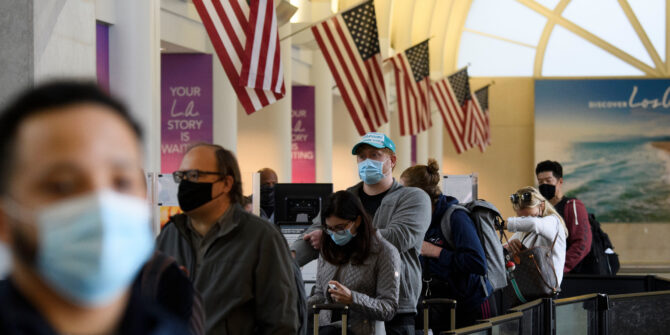
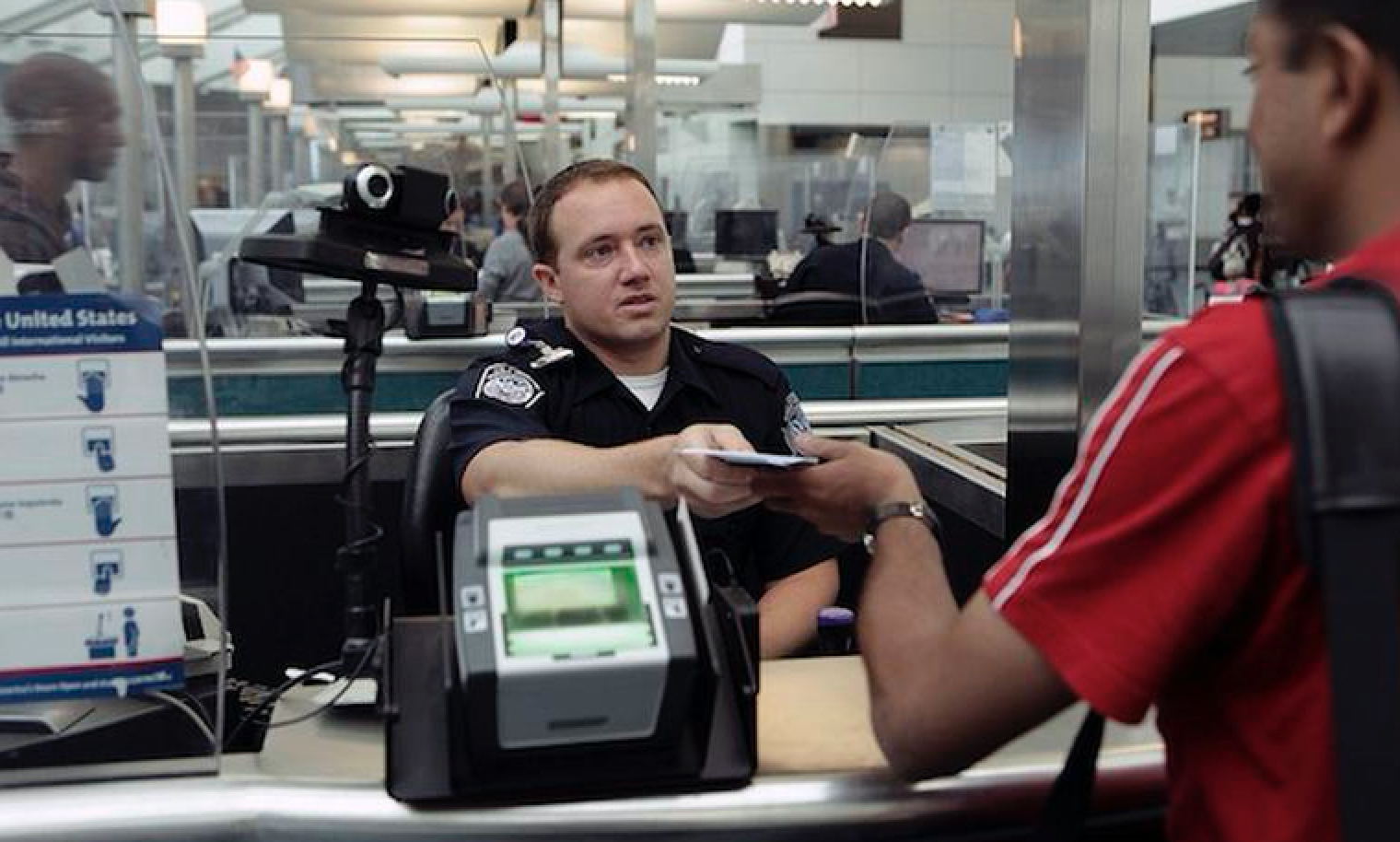
From 26 Dec 2025, a rule took effect that gives CBP legal authority to collect facial biometrics from all non-US passengers and crew entering or exiting the US, across all modes of travel, including BizAv. This is a legal change, not an operational one. The rule removes previous limitations on who CBP may collect biometrics from, including exemptions that applied to certain nationalities and categories such as many Canadian nationals and diplomats.

What’s actually new

CBP has collected biometric data on entry for years, and biometric exit already exists for airline flights at many airports. What’s new is the legal scope, not the process. The rule makes biometric entry and exit a nationwide requirement in law for all non-US nationals, regardless of how they travel. For BizAv, the unresolved issue is how this will be applied in practice, particularly on departure, where biometric exit has not previously been routine.

Airport reality and BizAv impact

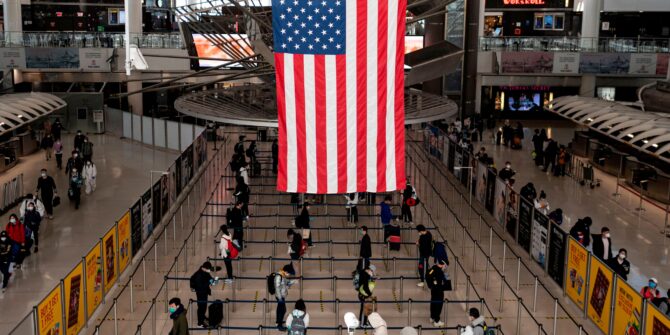
OPSGROUP members report that there’s no single way biometrics are handled today. Sometimes CBP clears passengers onboard using a mobile device, sometimes everyone goes into the CBP office, and sometimes it depends entirely on the officer. With no BizAv guidance published yet, that variability isn’t likely to go away any time soon.

What operators should do now

For now, don’t treat 26 Dec 2025 as an enforcement deadline for BizAv. No immediate operational changes are required. Continue normal CBP arrival and departure procedures as before!

Separate proposal: ESTA changes under review

CBP has published a separate proposal to significantly change how the ESTA works for non US travellers. These changes are not final and are open for public comment until 9 Feb 2026. You can check the official proposal here, and send an email to CBP_PRA@cbp.dhs.gov if you want to submit any comments.

If adopted, ESTA would become far more app based and data heavy. Proposals include a mobile app only ESTA, mandatory live selfies, and a big expansion in the personal info travellers must provide. That includes several years of social media history, along with phone numbers, emails, and family and business contacts. Yes, they really want the socials!

There is also a proposal to let travellers confirm their departure via a CBP app using a selfie and location data. That would help CBP close long standing exit gaps, but it sounds like it wouldn’t remove any existing operator admin.

Bottom line, these are proposals, not requirements. If adopted, ESTA would push more work onto pax and add more ways for trips to get stuck before departure! Expect more chasing pax for app downloads, selfies, and old social accounts. Yay! 😁


US Shutdown Ends and FAA Lifts Flight Restrictions

Update Nov 17:
  • The US shutdown is over and the FAA says it will end the emergency order at 0600 EST on Nov 17, which means the nationwide flight-reduction limits on the US NAS are being cancelled.
  • That opens the door for airlines to get back to normal schedules. In fact, most of them had already started running full programs over the weekend because they expected the cuts to be cancelled. The system coped, but it will still need a bit of time to fully settle after weeks of strain.
  • And the big news for BizAv: the Notams that shut out GA at the 12 major airports have now been cancelled, so access is open again.
Original story from Nov 11:
  • Congress passed a funding bill late on Nov 10 that’s expected to end the shutdown once signed into law.
  • The FAA hasn’t lifted any of its traffic limits or BizAv bans yet, so everything below still applies until official guidance changes.
  • ATC recovery won’t be instant. Weeks of six-day schedules, long shifts, and financial strain have left facilities short-staffed. Even after the shutdown ends, it will take time for the FAA to rebuild staffing, lift flight-reduction orders, and restore normal capacity. Expect ongoing delays and flow programs in the meantime.

ATC staffing shortages caused by the shutdown have already changed how the country’s busiest airports are operating. Delays have surged, major metro areas are tightening up, and the FAA has put formal limits in place to keep traffic manageable. With the funding deal now in place, these measures should begin to unwind once staffing stabilises – but for now, they remain fully in force.

These limits arrived in two steps:

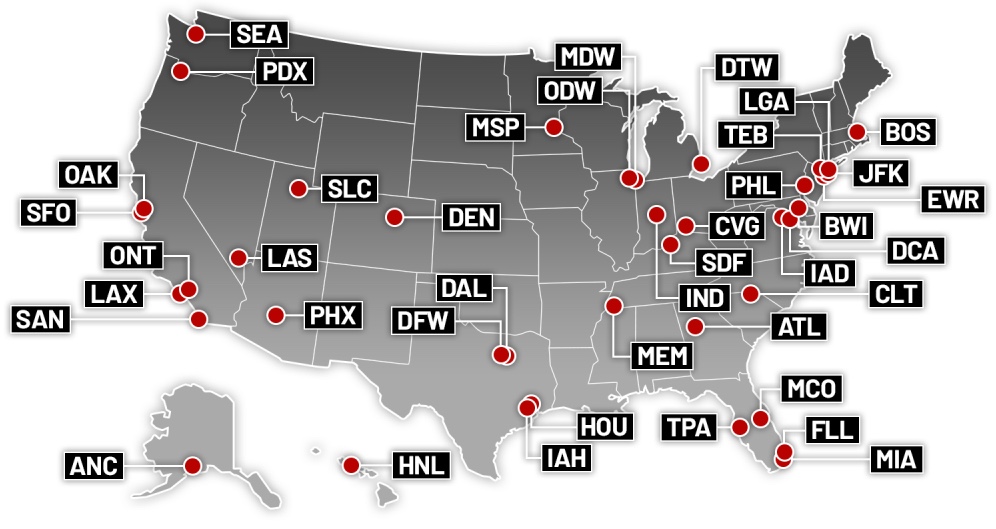
Nov 7: An Emergency Order issued on Nov 7 reduces airline traffic at 40 major airports and gives the FAA the option to restrict BizAv flights when staffing becomes too thin.

Nov 10: A series of Notams went further, temporarily banning most domestic BizAv flights at 12 of those same airports. These Notams effectively strengthened the restriction powers created under the Emergency Order.

Confusing! Yes indeed. Finer details as follows…

The Nov 7 Emergency Order reducing airline flights at 40 airports

You can view this here.

This applies only to Part 121 airlines and to commuter or scheduled Part 135 carriers, (and for simplicity, let’s just call these guys airlines for the rest of this article).

So, airlines must now reduce their scheduled domestic flights at 40 “High Impact Airports” during the daytime hours of 0600-2200 local. The reduction rises from 4% on Nov 7, to 10% by Nov 14.

On-demand Part 135 flights and private Part 91 flights are not part of the mandatory cuts (and again for simplicity, let’s just call these guys BizAv for the rest of this article!)

The Order also gave the FAA the option to reduce BizAv activity at these airports if staffing levels drop further – which is what then happened with the Notam splurge on Nov 10! (see below for info on that)

The forty airports listed in the Emergency Order are:

  • KANC/Anchorage
  • KATL/Atlanta
  • KBOS/Boston
  • KBWI/Baltimore
  • KCLT/Charlotte
  • KCVG/Cincinnati
  • KDAL/Dallas Love
  • KDCA/Washington National
  • KDEN/Denver
  • KDFW/Dallas Fort Worth
  • KDTW/Detroit
  • KEWR/Newark
  • KFLL/Fort Lauderdale
  • KHNL/Honolulu
  • KHOU/Houston Hobby
  • KIAD/Washington Dulles
  • KIAH/Houston Intercontinental
  • KIND/Indianapolis
  • KJFK/New York JFK
  • KLAS/Las Vegas
  • KLAX/Los Angeles
  • KLGA/New York LaGuardia
  • KMCO/Orlando
  • KMDW/Chicago Midway
  • KMEM/Memphis
  • KMIA/Miami
  • KMSP/Minneapolis St Paul
  • KOAK/Oakland
  • KONT/Ontario
  • KORD/Chicago O’Hare
  • KPDX/Portland
  • KPHL/Philadelphia
  • KPHX/Phoenix
  • KSAN/San Diego
  • KSDF/Louisville
  • KSEA/Seattle Tacoma
  • KSFO/San Francisco
  • KSLC/Salt Lake City
  • KTEB/Teterboro
  • KTPA/Tampa

The Nov 10 BizAv restrictions at 12 major hubs

Three days later, the FAA issued a much stronger measure: Notams at 12 major hubs that temporarily prohibit most BizAv flights (ie. private Part 91 and on-demand Part 135). You can view the list of Notams here.

These Notams apply only to airports already in the Emergency Order list, which shows they are a targeted escalation rather than a separate policy. Only based aircraft, emergency or public-service flights, or operations authorised by the ATCSCC may use these airports.

The twelve airports with these BizAv restrictions are:

  • KORD/Chicago O’Hare
  • KDFW/Dallas Fort Worth
  • KDEN/Denver
  • KBOS/Boston
  • KIAH/Houston Intercontinental
  • KATL/Atlanta
  • KJFK/New York JFK
  • KLAX/Los Angeles
  • KEWR/Newark
  • KPHX/Phoenix
  • KDCA/Washington National
  • KSEA/Seattle Tacoma

This means the FAA has used the BizAv-reduction authority provided in the Emergency Order and applied the most restrictive version of it at these 12 hubs. Instead of trimming activity, BizAv access has been mostly removed – for now.

The National Air Transportation Association (NATA) has since reported that the FAA told them these restrictions only apply to domestic non-scheduled flights. According to NATA, international Part 135 operations may still be approved with prior coordination through the FAA Command Center. This hasn’t been formally confirmed, so treat it cautiously until the FAA issues official guidance.

Operational impact for BizAv

40 High Impact Airports: Although most BizAv flights are not part of the mandatory Airline reductions, they are still affected by the resulting compression. Expect more flow programs and occasional reroutes at the 40 High Impact Airports.

12 specific BizAv-restricted airports: Access is effectively unavailable for domestic flights unless you meet an exemption. NATA says international Part 135 operations may still be possible with prior coordination through the FAA Command Center, but this has not been formally confirmed. Surrounding satellite airports will likely absorb the displaced traffic, so expect parking shortages there too.

What happens next?

Now that funding’s been approved, the shutdown should finally end – but things won’t bounce back right away. The FAA still has to rebuild staffing, unwind the flight-reduction orders, and reopen the restricted airports.

It’s a familiar story. During the 2018-19 shutdown, a single LaGuardia ground stop sparked nationwide delays and helped force a deal in Washington. This time, the same pattern has played out: rising ATC strain, mounting cancellations, and political pressure finally pushed Congress to act.

Expect a slow return to normal. Delays, flow programs, and limited capacity will likely continue for weeks as the system stabilises. We’ll keep tracking Notams and any FAA updates to the Emergency Order as the situation evolves.


FAA Housekeeping: Foreign Instrument Procedures, Approach Chart Clutter

Recently, the FAA has been doing some spring cleaning. You might have missed them, but recent changes to the FAA’s advisory circulars and charting notices are quite important.

This article covers two of them:

  • Effective June 2025, the FAA officially shifted the responsibility for evaluating and approving foreign instrument procedures to aircraft operators themselves.
  • From October 2, instrument approach charts will be decluttered by removing unnecessary comms data.

Let’s take a look at each of these in more detail.

Removing approvals for specific foreign procedures

Recently, the FAA advised those operating under Part 91(K), 121, 125 and 135 of changes to foreign instrument procedure authorizations.

It has removed outdated references to specific foreign instrument procedures by title from operator authorizations (OpSpec C058, C358 and H107).

Others were simplified (C059, C060, and C384) to remove references to specific foreign airports and procedures.

The end result? Operators are no longer required to obtain FAA approval for specific foreign instrument procedures listed by name — but they must still hold the required FAA authorization (OpSpec, MSpec, or LOA) to conduct the type of procedure (e.g., RNP AR, CAT II/III), regardless of where it’s flown.

So, does this mean I can now fly any foreign procedure without FAA involvement?

Not quite. While you no longer need FAA approval for each individual foreign procedure, you still need FAA authorization for the procedure type and must comply with host country requirements.

For instance, if Germany requires local authorisation for an RNP (AR) approach into EDDM/Munich, you must obtain it without FAA involvement.

ICAO (Annex 6) says operators are still required to obtain approvals when the host state mandates it, and crews must comply with any local procedures or limitations.

Why the change?

Without delving too much into the specifics, there are a few reasons:

  • Less paperwork – foreign procedural reviews are cumbersome and labor intensive, and lead to delays in approval.
  • Less workload – inspectors no longer have to approve each foreign procedure individually.
  • Improved design – there has been significant improvement in procedural design around the world thanks to the proliferation of ICAO PANS OPS.
  • Empowerment – operators can perform their own risk assessments and use globally standardised instrument procedures without the extra weight of FAA approvals.

So the onus is now on the operator – what next?

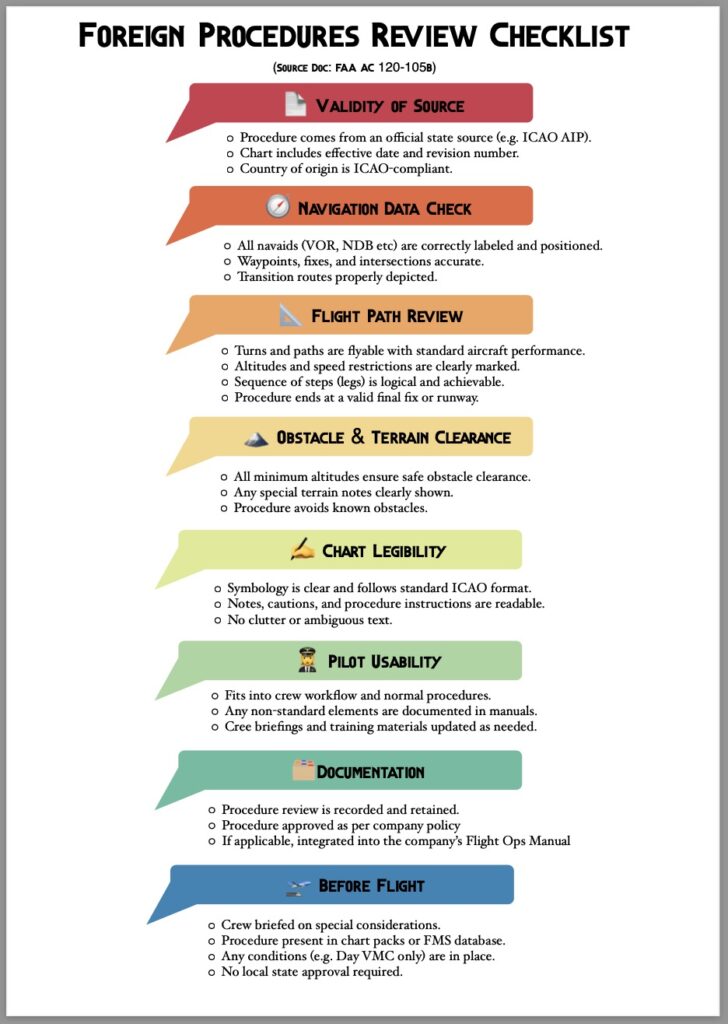
That’s where AC 120-105B comes into play. It provides guidance for US operators on reviewing and accepting foreign instrument procedures outside the US.

This includes a list of your areas of responsibility, recommended tools and checklists to help with your review, and advice on incorporating a review process into your company’s manuals, SOPs and pilot training.

If you operate abroad, it’s important you’re familiar with this revised AC. We’ve also put together the following checklist based on its advice to help get you started:

De-cluttering Approach Charts

On July 3, the FAA issued a new charting notice (advance notification of significant changes to charts and publications).

The news is that from October 2, the FAA will begin removing redundant comms data from instrument approach charts. This includes departure ATIS, CLNC DEL and the availability of CPDLC if all of this is shown on the corresponding airport diagram.

Listing it again on instrument approach charts is unnecessary and can reduce readability during critical phases of flight while critical frequencies remain prominent (don’t worry, tower and ground ain’t going anywhere).

While we have you, a couple more FAA-related tidbits to brush off the table.

  • Notams. Big changes are coming to the US system. By September, it will be completely overhauled. The new system will be a fast, cloud-based, and (hopefully) rock-solid stable. A renewed focus on improved safety throughout the US NAS has escalated the project, and the targets are ambitious – user testing is expected to start later this month.
  • FAA-license holders abroad. This is our last reminder! July 7 has come and gone, which means anyone holding US licences/ratings and living outside of the US must have provided a US based address for service to the FAA via the USAS portal. If you haven’t yet, your license is effectively now invalid until you do – whatever you do, don’t operate an aircraft while un-licensed.

Have we missed a spot?

Please get in touch with us around the clock via blog@ops.group


Do I need a TSA Waiver for a flight to the US?

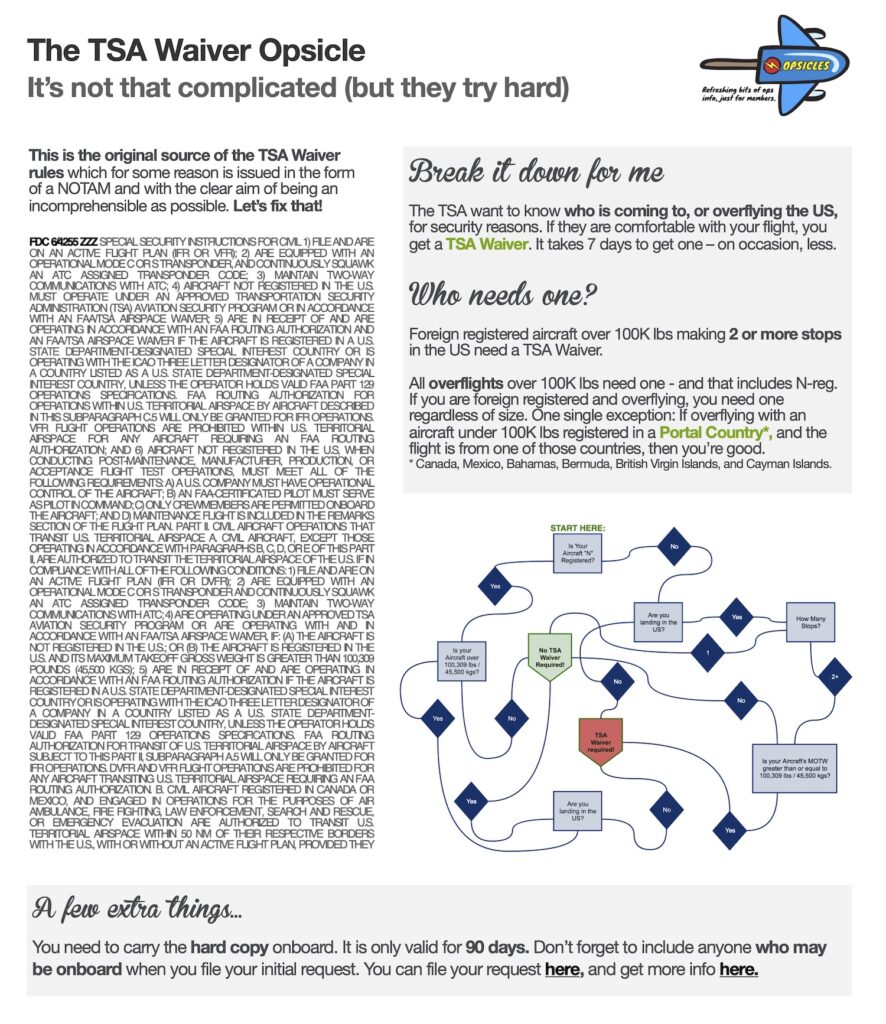
If you’re heading to the US and are trying to work out whether you need a TSA Waiver for your flight, we have an Opsicle to help with that.

OPSGROUP members can download a copy for free here.

If you’re not an OPSGROUP member, but you’d like to be, you can join here.

Let’s start with the basics

Here is the TSA Waiver site. This is where you submit your requests.

And here is the TSA site on waivers. This is where you can find info on Waivers.

Which Waiver is Right for You?

There are a few types. You have your Disney Theme Park, Washington DC Special Flight Rules Area/Flight Restricted Zone, Major Sporting Events and Special Events Waivers.

And then you have your International Waivers which include International Air Ambulance, No Transponder and International Single Trip Waivers – this last one is what we’re interested in.

The Guidance

International Waivers are required for ‘various aircraft to fly within US airspace, which includes the airspace above the United States and its territories’.

Whether you need one depends on your aircraft size, where it is registered and where you’re coming from.

Flying to and from the US

International TSA Waivers are not required for any aircraft arriving to or departing from the US or its territories. So this applies if you only make one stop in the US (i.e. you fly in and straight back out again).

Flying within US airspace

Planning to make more than one stop in the US? You’ll need an International Waiver if you do this in a foreign registered aircraft which is heavier than 100,309 pounds MTOW (45,500 kg).

But, since most private aircraft generally fit under this weight limit, you probably don’t need one.

Overflying the US

OK, here we go, the bit to know – this is for when you take off and land somewhere not in the US or its territories, and overfly the US in between.

If your aircraft weighs 100,309 lbs MTOW or more: you need a Waiver, even if your aircraft is US registered.

If your aircraft weighs less than 100,309 lbs MTOW: US registered aircraft do not need one. If you are foreign registered and overflying, you do need one – unless your aircraft is registered in a “Portal Country”, and is flying directly from any one of these (prior to entering US airspace).

The Portal Countries:

  • Canada
  • Mexico
  • Bahamas
  • Bermuda
  • Cayman Islands
  • British Virgin Islands

Special Interest Countries

The black sheep of the World of Waivers. Probably the easiest category to work out the rules for. You’ll need an International Waiver for everything – ops to, from, within and over the US, if your aircraft is registered in one of these countries. The list currently includes: Cuba, Iran, North Korea, China, Russia, Sudan, and Syria.

To recap…

Landings: Foreign registered aircraft over 100K lbs making 2 or more stops in the US need a Waiver.

Overflights: All overflights over 100K lbs need one – and that includes N-reg. If you are foreign registered and overflying, you need one regardless of size. There’s one single exception: If overflying with an aircraft under 100K lbs registered in a Portal Country, and the flight is from any of those countries, then you’re good.

Special Interest Countries: Aircraft registered in these need a Waiver for everything – ops to, from, within and over the US.

Where is this officially written?

There were some official, permanent Notams published back in 2016. FDC 6/4255 and FDC 6/4256 (KFDC A0006/15 and A0006/16). These have vanished though and we can’t find any replacements.

The best spot to read it (officially) seems to be in the AIM Chapter 5 (Air Traffic Procedures), Section 6 (National Security and Interception Procedures), and take a look at 5-6-7 for the stuff on transiting US airspace.

How to get it and what to do with it.

You need to submit your request to the Authorization Office here. It is recommended that you submit your request at least 7 days before your planned flight to the US.

When you apply, don’t forget to include all those who may be onboard in your request.

Once you have it, it is only valid for 90 days. You need to carry the hard copy onboard with you.

Any other things to know?

If you do operate over US airspace then you need to stick to their rules which also require that you:

  • Use an active VFR or IFR flight plan
  • Be equipped with a Mode C or S transponder and use an ATC-assigned transponder code
  • Communicate clearly with ATC

Any other gotchas?

A couple, as reported by an OPSGROUP member:

Watch your weight: One in particular issue I have seen a few times is that of Private Global 7500s. Most owners of this aircraft are usually stepping up from a previous version like the Global 6000 series. Many fail to recognize that this step up has a significant impact on their US TSA requirements. I think most miss the weight class change and simply think of the aircraft as a Global XRS with better range.  The implications of not having a valid waiver can be significant.

Validity period: A waiver can be valid for “up to 90 days” with the required dates being set during the initial application. A waiver may be modified up to three times with the end date being fixed (i.e. the end date on the original application must remain the same for each subsequent modification). There is a caveat I should mention regarding the number of allowed modifications, being that this is only valid within a calendar year.

Anything we missed?

Let us know, at team@ops.group


Private Flights to the US

Update Sep 29:
  • There are some changes to APIS procedures for private flights departing from the US.
  • If you change any pax details or the ETD by more than 60mins, you now have to cancel the old APIS and file a new one – and the new one needs to be filed at least 60mins before departure.
  • Also, CBP will reportedly be increasing spot checks and in-person clearances.
Article from March 2023:

This article is from Rick Gardner of CST Flight Services. We asked if he could talk to us about Private flights to the US – not the standard stuff, but some of the real tips and gotchas that international pilots might want to know about.

Private flights to the US… you probably know the basics already: maybe get a TSA Waiver, file your APIS, contact CBP to get your Permission to Land, and if you’re coming from the south make sure you land at one of the Designated Airports (or else get a Border Overflight Exemption).

But after many years of working with US Customs and Border Protection (CBP) to collaborate on General Aviation issues – here’s a bit of a deeper dive into some of the most common topics and gotchas that private aircraft operators to the US should be aware of…

Arriving from the South

CBP differentiates between aircraft arriving from places “south” of the US versus other countries. Basically, every country in the Western Hemisphere, with the exception of Canada and Bermuda, is considered “south”!

When arriving from one of these countries “south” of the US we must make our first landing at a CBP “Designated” airport closest to our point of border or coastline crossing – unless we have obtained a Border Overflight Exemption (BOE). (More on BOEs in a moment.)

There is a specific list of 32 “Designated” southern airports of entry in the regulations (actually, there are only 31, because KNEW/New Orleans Lakefront is not longer a Designated airport), and that not all CBP airports in Florida or along the Gulf of Mexico coastline nor the US-Mexico border are “Designated” airports. Again, we must make our first landing at the Designated Airport closest to where we cross the US-Mexico border or the US coastline.

However, there are a few exceptions:

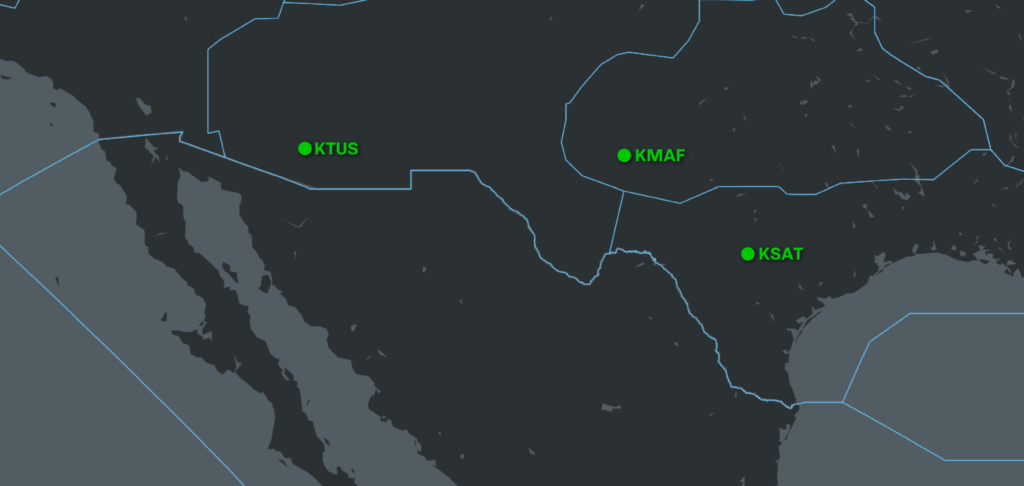
KTUS/Tucson, KSAT/San Antonio, KMAF/Midland
While these airports are Designated Airports, you cannot get to them without overflying another Designated airport. Nonetheless, if you are granted Permission to Land, you may use these airports as your closest airport to the border.
KMTH/Marathon
While not on the list of Designated Airports, KMTH/Marathon is a CBP port and can be used in lieu of a Designated Airport. Be sure to contact CBP at the airport to obtain Permission to Land. (More on Permission to Land in a moment.)

Miami Field Office Airports
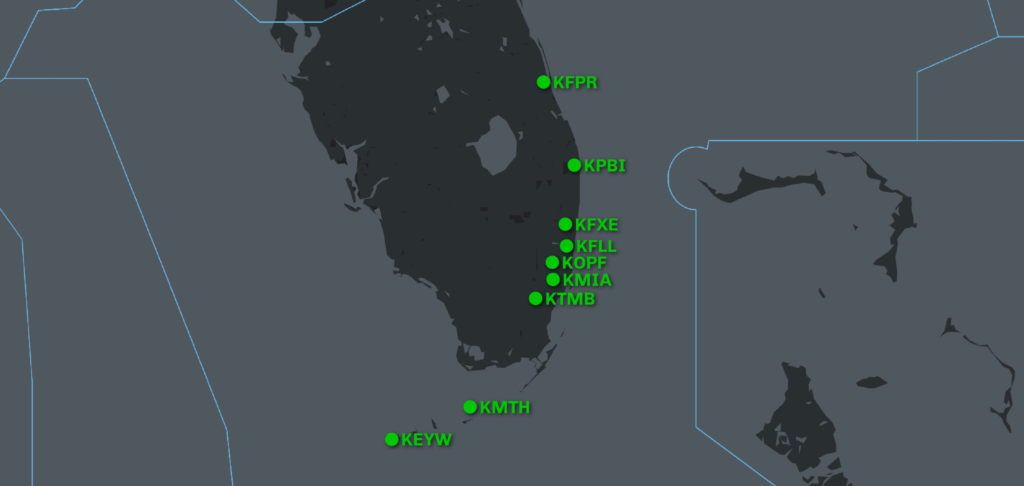
So we’re talking about 8 airports here: KEYW/Key West, KTMB/Miami Executive, KMIA/Miami International, KOPF/Opa Locka, KFXE/Fort Lauderdale Executive, KFLL/Fort Lauderdale International, KPBI/Palm Beach, KFPR/Fort Pierce.

The CBP Miami Field Office (MFO) has established that “Flights which are required to land at a nearest designated airport to the border or coastline crossing point may proceed directly to any of the eight designated airports… without an overflight exemption, even if the airport of intended landing is not the one closest to the US coastline crossing point.”

So, if you were returning to the US from Cancun, Mexico, you could overfly Key West and continue up the east Florida coastline all the way to Fort Pierce and you would be in compliance. What you cannot do when returning from The Bahamas is to overfly any of these MFO airports and land in KTPA/Tampa even though Tampa is one of the 32 Designated airports!
Border Overflight Exemptions (BOE)

One way to avoid having to deal with Designated Airports is to obtain a BOE from CBP.

How it works
One of the great things that CBP Headquarters has accomplished is to get rid of the old Forms 442 and 442A and to centralize the BOE approval process. In addition, they have eliminated the previous requirements of having to list all aircraft, foreign ports, crew and passengers that would be authorized under the BOE. Today, all you have to do is identify the operator to whom the BOE will be issued and any aircraft, crew, passengers and foreign ports are all systematically vetted through APIS when the manifest is transmitted.

Per CBP regulations, BOE’s can take up to 30 days to process, so don’t waste time. For more information regarding the application process, contact GAsupport@cbp.dhs.gov.

Gotchas
A BOE holder has to ensure that the Operator specified in the APIS manifest MUST be the Operator to whom the BOE was issued. In addition, to legally use a BOE, the flight must be under IFR, fly above 12,500 feet and not make any intermediate stops.

A BOE is obtained by demonstrating a history of compliance. If you are subject to an enforcement action, the pilot can lose their BOE privileges for 6 months and repeated violations can result in the Operator losing their BOE privilege also.

Advanced Passenger Information System (APIS)

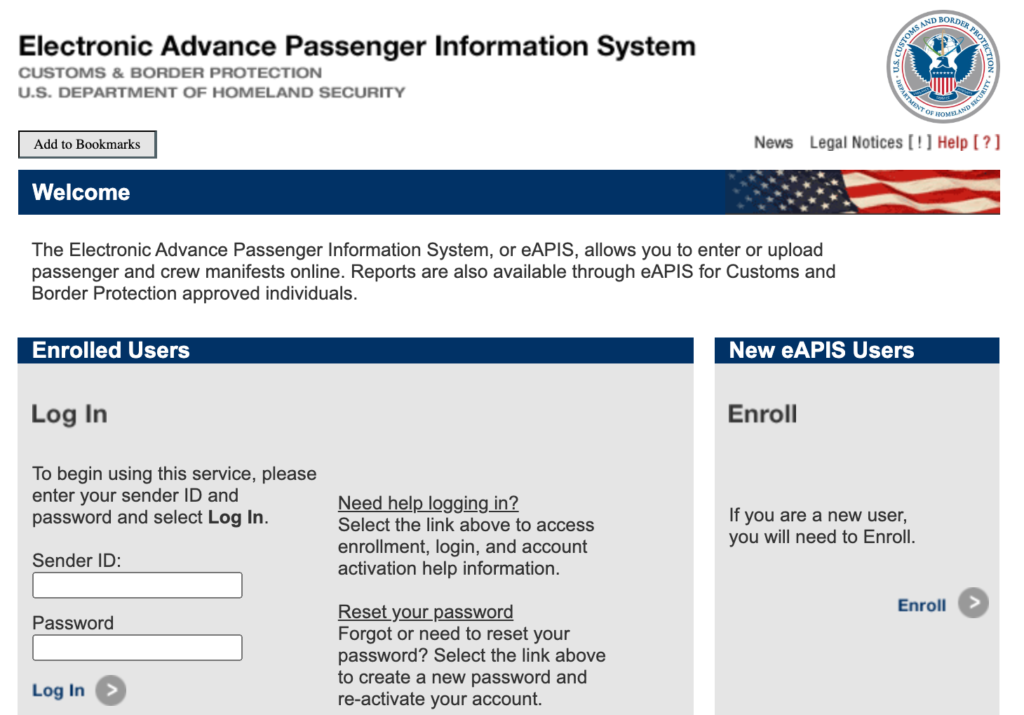
Since Nov 2008, operators of private flights have been required to file a DEPARTURE APIS manifest using the Electronic Advanced Passenger Information System (eAPIS) portal when departing the US for a foreign country, and an ARRIVAL APIS manifest when returning to the US from a foreign country.
How it works
DEPARTURE and ARRIVAL APIS manifests must be filed and authorization from the Department of Homeland Security (DHS) must be received no later than 1 hour prior to departure from the US or foreign country. This DHS authorization comes in the form of a receipt email which contains a summary of the date, time, departure and arrival airports.

As there is no limitation on how early an APIS manifest may be submitted, I recommend that you submit it as soon as possible once your itinerary and crew/passenger information is established.  CBP always advises, “Transmitting for next week is fine if your plans have firmed up but next Christmas is too far away.”  Leaving things to the last minute just invites Murphy’s law.

You should never be asked to provide Personally Identifiable Information (PII) such as DOB, passport number, SSN, etc. via FAX or email. If you do get such a request, ask for the supervisor, contact CBP headquarters or contact us at +1 786 206 6147.

Gotchas
Double check that the information in the DHS receipt email is accurate! Failing to get the receipt email from DHS means you have not received authorization to depart so you definitely should not depart. Sometimes failing to receive a DHS receipt email may be due to issues with the CBP systems or typos in your email address. Check your SPAM folder to make sure that the email was not sent there. If you share the eAPIS account you are using with someone else, check to see if they changed the email address and ask them to forward the authorization to you. One last resort is to contact CBP at the port and ask if they can determine if the authorization was issued, write down the officer’s name or initials (they might only be willing to give you their badge number) in the event that there is ever a question about whether you received authorization.

The rules also require that if you add/remove/substitute crew and/or passengers or if you make a change to the travel calendar date in either a DEPARTURE or ARRIVAL manifest then you must resubmit a new manifest to CBP. Any authorizations related to the originally submitted manifest are no longer valid and you must wait for a new authorization from DHS. Changes to departure time, arrival time or arrival location may be made by phone.

Another gotcha is failing to make sure that the passenger names on the filed APIS exactly match the names on the passports. 

Arriving in the US

In addition to submitting an ARRIVAL APIS manifest and getting the receipt email from DHS, the regulations specifically require us to also contact CBP at the arrival airport and obtain Permission to Land (sometimes referred to as, “Landing Rights”).

Recent changes to how it works!
Historically, different CBP ports have implemented varied procedures for requesting and granting Permission to Land, however that is now becoming more standardized through the efforts of CBP headquarters.

One significant change is that CBP will no longer grant Permission to Land unless you have successfully submitted your APIS ARRIVAL manifest first. When you are granted Permission to Land by CBP at the arrival port, you should receive an email from CBP (in addition to the one sent by DHS) confirming that Permission to Land has been granted and any specific instructions that CBP may have. If you are denied Permission to Land, you will also receive an email from the port confirming that Permission to Land was denied.

Failing to receive the email confirming Permission to Land is an indication that either the port has not yet adopted the new procedure or that Permission to Land was not properly issued by the CBP officer who responded to your request and a follow up request would be advisable. Be prepared to prove who gave you permission to land – the receipt email from DHS alone does not grant you Permission to Land.

Check those attachments!
The email granting Permission to Land will have several attachments. The first attachment is called “CBP Private Aircraft Arrival Information” which contains an overview of what the operator of a private aircraft is expected to do in order to comply with CBP regulations.

In addition, you may also find attached a “General Aviation Airport Fact Sheet” which contains detailed information on what you need to know about the CBP requirements for the specific airport you are landing at. Not only do these two documents clarify what is expected of you, they serve as proof to a CBP officer that you have followed procedures correctly.

Lastly, there is a third document called “Tip of the month” which is a review of important topics that pilots should be aware of and this document is updated monthly. Of the 392 airports where CBP is present, approximately 250 have published Airport Fact Sheets.

Changes to your schedule
The Permission to Land email messages grant permission based on what you have transmitted in APIS and also include port-specific time tolerances; a +/- time allowance based on port operations. If you need to ARRIVE in the US at a time significantly different from that submitted in your ARRIVAL manifest, you need to contact CBP to re-secure Permission to Land for your new arrival time. Many aircraft land at Designated Airports and CBP must ensure that they have the space and manpower to receive and process inbound aircraft.

When you arrive
When arriving in the US, CBP procedures may vary slightly, depending on where you land.

CBP at many airports expect you to keep the door closed until authorized to open it by the CBP Officer. At KTEB/Teterboro, for example, if you deplane before authorized you will be subject to a hefty fine. CBP officers at some airports may not come out to meet the aircraft and may wait inside the building until the crew/PAX come inside. Other airports may have signs with instructions – follow them.

In all cases, especially where health and safety concerns present or exist, CBP always emphasizes to exercise reasonable and responsible judgement. If your aircraft Auxiliary Power Unit (APU) exhaust is 8 feet or higher above the ground, you do not have to power it down. However, CBP can require you to shut down the APU, though, in cases of enforcement actions.

Departing the US

You do not need to depart the US from an airport where CBP is present – you can depart from any airport in the US.

How it works
In your APIS DEPARTURE manifest you should enter the airport code of the nearest CBP airport to the departure site and then in the “Actual Departure Location Description” field, describe the actual place from which the aircraft will depart. This is an optional field which should be used only when the location of actual departure differs from the airport listed in the “CBP Airport” field. The “City” field should be the actual city from which the aircraft is departing.

When you submit an APIS DEPARTURE manifest to CBP and you receive DHS authorization to depart, the authorization is based on the information that you have submitted, including the departure time.

Spot checks!
On occasion, CBP conducts random departure inspections on aircraft departing from the US (it has happened to me) and officers will be dispatched to your departure airport location. If they arrive and you have departed before the time you specified or if you are nowhere to be found and then depart after the time specified, you could be subject to enforcement action. Always update departure times with CBP!

Canceling or postponing a flight

You are required to advise CBP if you are going to cancel your flight or postpone it to another date (which will require that you file a new manifest). This is important because CBP plans their workload and staffing based on manifests that they can see in the system.

How it works
Under CBP’s updated procedures, when you cancel an APIS manifest, you will also receive an email confirming that your APIS manifest has been canceled. If you transmitted multiple APIS manifests for the same date, the CBP port may cancel the unnecessary manifests which can trigger an email saying that the “APIS was cancelled”. Remember that each submitted APIS manifest has a unique eAPIS number as does the DHS receipt email and CBP cancellation email so you can match them. If you are ever in doubt, you should contact the port to confirm.

Transporting currency

Another important point is that you must always report if you are taking into, or out of, a country more than $10,000 USD. It is not illegal to transport more than that amount, but failing to report it is illegal.

The nitty gritty
When you transport, attempt to transport, or cause to be transported (including by mail or other means) currency or other “monetary instruments” in an aggregate amount exceeding $10,000 or its foreign equivalent) at one time from the US to any foreign country, or into the US from any foreign country, you must file a report with US Customs and Border Protection.  This report is called the Report of International Transportation of Currency or Monetary Instruments, FinCEN Form 105.  This form can be obtained at all U.S. ports of entry and departure or on the Web at FinCEN Form 105 (Rev. 7-2003).

Alternatively, the report can be filed electronically, an eCMIR, at this website.  Travelers will be able to enter information into an eCMIR up to three days prior to travel, creating a provisional document on the CBP.gov website. Foreign countries will also have their own documents and procedures. Failing to report can result in seizure of the monetary instruments, fines, or worse.

CBP officer says it’s OK

One topic that comes up repeatedly is that a CBP officer “Buddy” says its OK to land without a BOE or approves some other deviation from the rules.

Don’t do it!
CBP headquarters has made it very clear that no CBP officer has the authority to override US law. Doing so could get both you and the officer into trouble. Don’t succumb to the temptation of listening to what you want to hear versus what you need to know! Enforcement actions can cost you money, ruin your reputation with CBP and cause you to lose BOE privileges.

Visa Waiver / ESTA

Part of the joy of having a private aircraft is to share the experience with family and friends…

Visa Waiver gotcha
If any of those are citizens of Visa Waiver countries and they do not have a US Visa, then they cannot fly into the US on a private aircraft unless you are a signatory carrier or under some very isolated and specific circumstances. Contact CBP before you attempt to do so to avoid unpleasant surprises. If there is any chance that you may transport citizens from Visa Waiver countries, submit your request to become a signatory carrier now, while there is time.

PIC Responsibility

Yep, you know this already. As PIC you are ultimately responsible for compliance with all the regs. In the case of CBP, the PIC is responsible for ensuring that valid passports are brought aboard the aircraft that match the APIS manifest information submitted to CBP and that authorizations to depart are properly received.

Getting it wrong
If you ever do face an enforcement action, best to just be honest. CBP is not out to get us, what they want is compliance and have repeatedly demonstrated a willingness to work with General Aviation to achieve it. Work with them and they will work with you. This is not a guarantee that CBP will not take enforcement action, those determinations are made on a case-by-case basis and much depends on the nature and circumstances of the violation as well as the way you handle it. Violations are usually the result of either an oversight or wilful intent – you don’t want to give CBP the reason to believe that you are part of the latter if that isn’t the case!

Illegal Charters

Unless you have a burning desire to find out more about both the US and foreign legal systems, do not misrepresent yourself as a private aircraft flight when in fact you are operating as a commercial aircraft operator!

Understanding the Regs
CBP defines a “commercial aircraft” as “any aircraft transporting passengers and/or cargo for some payment or other consideration, including money or services rendered” as per 19 CFR 122.1 (d). Note that CBP’s definition of private and commercial are different from those used by the FAA.

Some US pilots believe that US regs apply to them when flying internationally, but 14 CFR 91.703 (a) (2) clearly states that they must abide by the laws of the foreign countries where they operate. Many of these countries also have much more basic definitions of commercial and non-commercial operations.

Bottom line – don’t try to walk a fine line with Part 91 definitions as this could land you in hot water with the CBP as well as with the civil aviation authorities of foreign countries.

Puerto Rico and US Virgin Islands

Time for some bulletpoints, all nicely colour-coded…

  • Flights between the continental US and Puerto Rico are considered domestic flights as long as the flight is conducted under IFR, the flight is above 12,500 feet and there are no intermediate stops.
  • Flights from Puerto Rico to the US require a US Department of Agriculture (USDA) inspection in Puerto Rico prior to departure.
  • Flights from the US and Puerto Rico to the US Virgin Islands are considered domestic flights BUT flights from the US Virgin Islands to the US and Puerto Rico are treated as international flights.
  • When departing the US Virgin Islands to the US, always go through the pre-clearance process with CBP in the US Virgin Islands before departing. APIS must be transmitted as an ARRIVAL into the US.

Other Gotchas!

Check those pesky passports again
The PIC should verify that the doc that were used for the submission of the APIS manifest are on board the aircraft. This can maybe be a bit awkward, but it is the PIC’s reputation with CBP and a possible enforcement action and loss of BOE privileges that are at stake. Some of the more common issues that arise are:

  • Missing passport, the passenger forgot to bring it
  • Bringing a different passport form the one use in the APIS manifest, passenger has 2 passports
  • Bringing spouse’s or child’s passport by mistake
  • Bringing a passport card instead of a passport, passport cards are not valid for use on an aircraft

Remember, an APIS manifest needs to contain verified and accurate information, the PIC must validate that what they have submitted is correct. CBP has told us repeatedly that transmitting bad data is always grounds for enforcement action.

Guns
Another common gotcha is trying to reenter the US with firearms after a hunting trip. You should present firearms to CBP along with CBP Form 4457 before leaving the US.

 Diamonds are a girl’s CBP officer’s best friend 
Same as above! Any high value item such as camera/video equipment, jewelery, etc need to be declared to CBP before leaving the US.


Q&A

1. General Aviation Airport Fact Sheets. These sound interesting! Are these fact sheets located anywhere on the CBP website? Or elsewhere on the internet?
CST Flight Services has all the CBP Fact Sheets. If you email us we can send you the latest for the airport you need: customersvc@cstflightservices.com. We plan to have a self-serve web page up and running shortly, where you can access the files 24/7.

2. Can operators start the BOE process before 45 days? Just to ensure they have this before it expires and they have to stop somewhere that’s inconvenient?
You can try but it will almost certainly be rejected. CBP does not want any renewal requests that are more than 30-45 days out with 45 days being the upper limt.

3. When arriving in the US, do all your FPL alternates also need to be airports with CBP on site? What would happen if you had to divert somewhere else?
Safety of flight always comes first, however you can expect some tough questions like “why didn’t you select a planned alternate where CBP is present?”
If the diversion is a true emergency (smoke in the cockpit, engine failure, medical emergency), I think CBP would work with you. An emergency due poor flight planning such pushing the aircraft’s range or something similar may not go so well.
In the 20 years of working with CBP headquarters the mantra has been “reasonable and responsible.” If you can demonstrate that your actions were reasonable and responsible then you should be OK, if you cannot, then it probably will not be OK!

4. The same question, but for a flight arriving from the south, without a BOE. Can they only list Designated Airports as their FPL alternates?
Same answer as above. The reality is that with the exception of KILM/Wilmington, the Designated Airprots are along the US-Mexico border, Gulf of Mexico shoreline and South Florida. There are a plethora of possible alternates that are Designated Airports, so you may have a hard time explaining why you didn’t choose one of those.

Anything we missed?

If you have questions about any of the above, or if you think there’s something we missed, let us know!


About the author:
Rick Gardner of CST Flight Services, a company which provides a wide range of international trip support services for both owner-pilots and professional pilots. Rick is also the representative for the Aircraft Owners and Pilots Association (AOPA) in Mexico, Central America, The Bahamas and the Caribbean as well as a Bahamas Flying Ambassador, member of The Bahamas Civil Aviation Council and has participated on aviation committees of other foreign countries.
www.cstflightservices.com / customersvc@cstflightservices.com / +1 786 206 6147

Are you someone with knowledge to share?
Know something worth knowing about something? Want to write about it? Let OPSGROUP know! Maybe we can work together and write an article on it.

Ops in Europe vs USA: The Differences

Someone asked us what pilots can expect if they fly their plane to Europe compared to what they can expect in the US, and we suddenly thought to ourselves “Good question! What are the differences?” 

So here’s a quick rundown of some of the main ones.

Altimeter Stuff

Both countries use altimeters, and they use them in feet. Here’s a question for you – why are they not called Altifeeters? Anyway, they work the same, except for one key difference…

Europe uses millibars, which are hectopascals, sort of. They give QNH’s which sound like “one zero one three” and that is in mb (or hPa, because 1 of one is the same as the other one). The US however does it in Inches of Mercury (inHg) which means theirs sounds more like “two niner daysimal niner two”. So plenty of room right there to set wrong thing and for things to go wrong…

Europe also doesn’t use standard transition altitudes and levels. They change them all over the place, and sometimes they are really low. Which means there is room (or rather no room) for things to go wrong here too, and they do. Particularly in EINN/Shannon which we mentioned on behalf of Shannon airport right here.

CPDLC Stuff

CPDLC in the US is FANS 1/A, as it is across the NAT HLA and even into the UK. But leave those green and frosty pastures for the European Mainland and you will find yourself in a land of ATN B1 fun.

It isn’t that fun actually because your FANS equipment won’t work, and there are also a lot of rules about who needs CPDLC and at what levels. You can read about it all here, and if you click on the map in the post (or here) then you will get transported straight to an implementation table which is very handy.

There is also a thing called a Logon List in Europe, which used to be called the White List, which you need to fill out in order to register to use CPDLC in Switzerland, Germany, and Maastricht-UAC.

The US has CPDLC but has not really mandated it. They are running trials on it though, which some BizAv aircraft might be able to join in on. We recommend reading this to find out more about that.

Flight Planning

In the US, the FAA has different codes and we aren’t sure when they will become codes for using in Europe too. So your flight plan filings might be a little different.

The codes mainly apply to new RNP type stuff and they go in Item 18 of your FPL.

EU-LISA

No Comment.

Fine, EU-LISA

The currently delayed EU-LISA thing is sort of like the ESTA visa waiver stuff in the US. It is a system to allow for better monitoring and recording of people heading into Europe.

And that is all we are going say on it.
ADS-B

ADS-B privacy is a bit of a question anywhere, but in the US (in their territorial bit) you can sign up for certain stuff to make yourself less conspicuous – the LADD system, PIA etc. These won’t work in Europe.

Both the US and Europe have ADS-B mandates, although they apply at different levels.

MAYDAY calls

That’s right, even these differ. Sort of.

In Europe you really need to say “MAYDAY, MAYDAY!” and when you do everyone still generally shush up, although ATC will start asking your intentions and trying to help you. You can tell them to standby if you want to.

In the US you might find you need to say “We are declaring an emergency” and might get a whole lot of questions straight after. They of course use ICAO calls (you can find the whole FAA info on that here) but occasionally (so we’re told) that this is something confirmed as well.

You can listen to an example here.

Europe also uses ‘Minimum Fuel’, which you should let ATC know about if you find yourself getting low on it (but are still fine so long as nothing else changes). They’ll help if they can, but will only properly be able to jump you in the queue if you call ‘Mayday Fuel’.

Strikes

I mean they have these both sides of the Atlantic, but they happen fairly regularly in Europe, particularly in France and Italy. If it is an airport workers type strike then your best point of call is going to be your local agent. 

If it is an ATC strike then the Eurocontrol Network Operations Portal is going to have the info on it.

While we are talking about France and ATC, it is worth noting that they generally speak French here, especially at LFPG/Paris, and it can make things confusing at times.

Strikes tend to happen over major holidays so summer is a time to watch, Christmas and Easter coming in close second and third.

Airspace Issues

First up, Europe is the continent and the UK is still part of Europe. As, actually, is Russia and also Turkey, although since they border other continents they are often thought of as part of them.

EASA is the main authority for EU countries, which means the UK is not covered by them but by the UK CAA. So where you get your permits from is different. Emissions schemes are also separate.

Eurocontrol is the main airspace manager for want of a better title. Turkey and Ukraine are both member states, Israel and Morocco are sort of semi members. That doesn’t mean you are going to get the same level of ATC standards across them all though.

Turkey has a lot of issues with GPS jamming, and it borders certain countries with major conflicts meaning areas of the southern border and border with Iraq are not always risk free. They also have disputes with Greece over certain bits of airspace which is worth knowing about because it makes the communication and radio work more complex.

Ukraine’s airspace is currently closed due to the ongoing conflict with Russia. Moldova is mostly out of bounds. Poland has some safety concerns in the regions bordering Ukraine.

As far as we know, the US airspace is all considered fairly safe although there are some local procedures and airspaces to look out for – New York and the Florida metroplex area are two which spring to mind (although there are probably others? Let us know!).

Europe, because it is loads of countries not one big one, tends to see a fair old number of military airspaces activated so Notam and AIP SUP checks are important for info on those. Major military exercises in Europe are published through the NOP. The US of course has TFRs and other restricted and danger areas which are published here.

Ramp Checks (and MELs because they sort of fit into it as well)

Ramp Checks are rife in Europe. We recently received intel on the main issue items in French ramp checks, but these probably apply everywhere.

One big area of difference it the MEL vs MMEL thing. In Europe an MMEL is not usually accepted – they want an MEL specific for your aircraft. That said, there are some exemptions.

General ‘vocab’

This might just be something only I struggle with, but I once had a humiliating experience flying into KIAD/Washington Dulles international where ATC asked if we “have Dulles insight?” I (pompously) informed him that no, we did not have ‘Dallas’ in sight, because we were heading for Washington.

Not used to being asked if visual, and not used to referring to airports by name got me good on that one.

And accents, ‘colloquialisms’ and of course actual differences in clearances can catch you out. There are differences in things like your arrival and descent clearances even.

In the US, in airports like KLAX/Los Angelas (an example I am familiar with) then often clear you (and there is a chance I am getting this wrong now) on the arrival which includes the descent clearance as per the arrival as well. I want to say “descend via” or maybe ‘cleared via’ (it’s a while since I’ve been there…)

Anyway, the clearance is for you to descend down to the lowest altitude on the arrival, but in Europe we don’t tend to do so without explicitly hearing the altitude.

Low Vis Stuff

OK, someone asked me to add this and I have to go get the old manuals out and look it up. In the meantime – watch out because we do stuff like RVR differently. And TERPS.

Fuel Tax, Curfews and other random things

Fuel tax is a thing in Europe, but also a thing you can attempt to claim back. In some places anyway.

A lot of European airports have curfews. It is worth knowing which countries have them so you don’t get caught out.


Optimise your Descent

Thee FAA has ‘stepped up’ their game in reducing emissions and save fuel by reducing the number of ‘step down’ approaches into some major airports.

Here is a mini ‘what you need to know’ about CDAs, OPDs and how and where to fly them.

What’s the difference?

Seems a good question to answer first.

There are generally three types of descent you can expect when you head into a big, controlled airport.

  • The Step Down
  • A CDA
  • An OPD

The Step Down is exactly what it sounds like – you descend, level off, maintain that for a bit, then descend again, level off again, maintain it for a bit again…

This generally sucks for three reasons. One it is annoying for pilots because it means you have to do more. Two it can be a lot noisier on the ground if airplanes are roaring along low level, at lower speeds and three it is obviously a lot less fuel efficient.

Next up, you have the CDA – the constant descent approach. Again, exactly what it sounds like. (I feel like I don’t really need to explain this to pilots reading this but who knows, maybe a non-pilot has taken a random interest in it because of the excellent picture I used for the header).

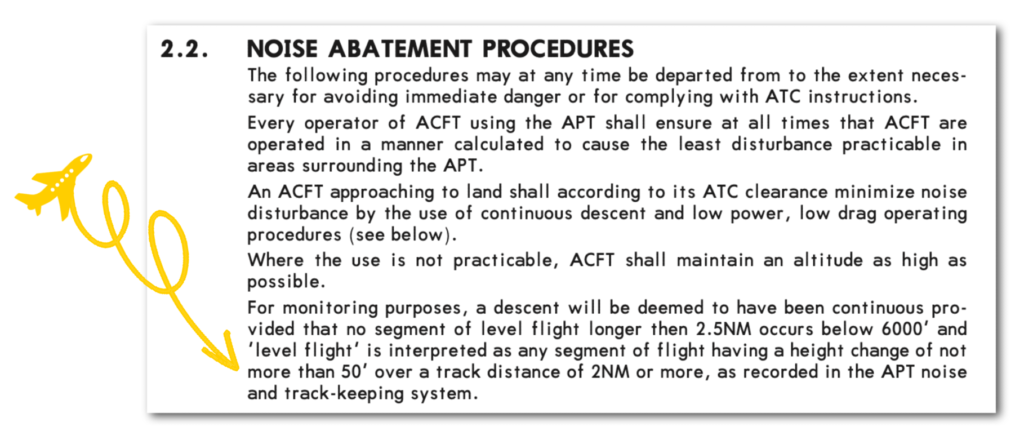
So, with a CDA ATC, or the pilot, attempts to continue descending without levelling off. This is better for the reasons already stated above, but it is not the best because a CDA can mean descending with thrust on. A good example is EGLL/London Heathrow who still consider it a CDA if you’ve descend more than 50 feet in 2nm, and don’t have a level segment of more than 2.5nm below 6000′.

Which brings us to the OPD.

This acronym stands for ‘optimised profile descent’. Sorry, optimized (because its an American name so I’ll give it the ‘z’).

Not to be confused with ODP (Obstacle Departure Procedures). I feel like we may have reached a point in aviation where every acronym possible has been used.

Anyway, the ODP tries to have the aircraft descend with close to idle thrust, meaning they will be at a more fuel efficient altitude for longer, and descend in the most fuel efficient way.

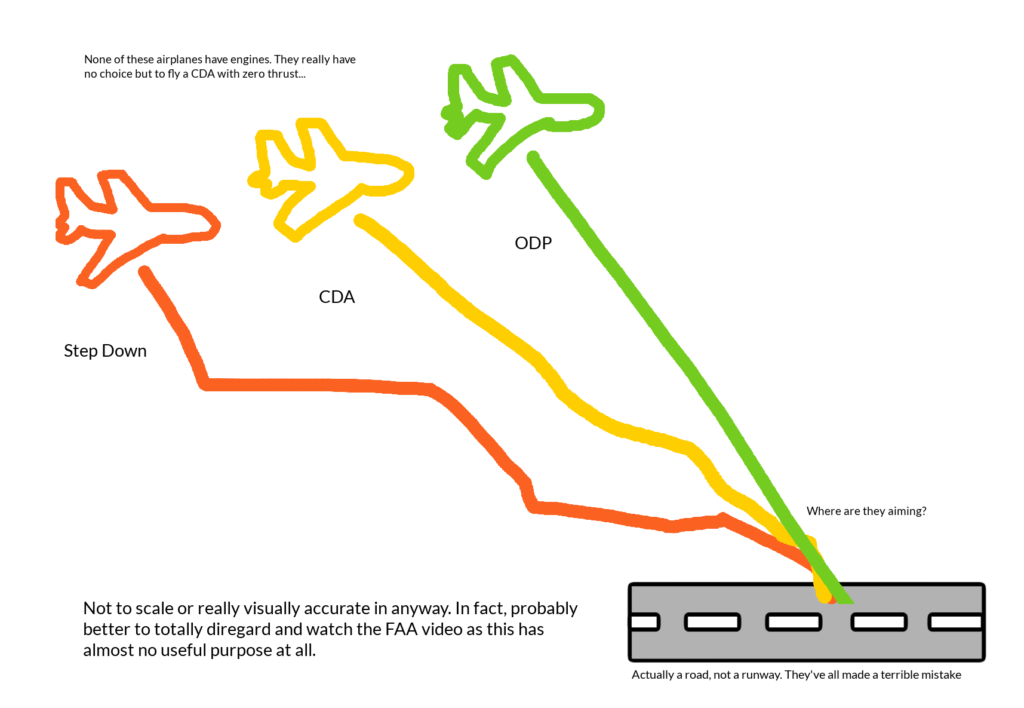
If you’re still confused, then the FAA made this video explaining it, and I made this excellent visual representation of it below.

Where in the USA are these happening?

There are 11 airports that have had OPDs implemented recently:

  • KBCT/Boca Raton Airport
  • KFXE/Fort Lauderdale Executive Airport
  • KMCI/Kansas City International Airport
  • North Palm Beach County General Aviation Airport (F45)
  • KOMA/Eppley Air Field, Nebraska
  • KOFF/Offutt Air Force Base, Nebraska
  • KMCO/Orlando International Airport
  • KLNA/Palm Beach County Park Airport
  • KPBI/Palm Beach International Airport
  • KPMP/Pompano Beach Airpark
  • KRNO/Reno Tahoe International Airport

But wait! These are not the only ones. There are in fact others which got them in 2021:

  • KDFW/Dallas-Ft. Worth International Airport
  • KFLL/Fort. Lauderdale-Hollywood International Airport
  • KLAS/Harry Reid International Airport
  • KNEL/Lakehurst Maxfield Field
  • KDAL/Dallas Love Field
  • KMIA/Miami International Airport
  • KVGT/North Las Vegas Airport
  • KMCO/Orlando International Airport
  • KCMH/Port Columbus International Airport
  • KPDX/Portland International Jetport
  • Numerous other mid-size airports

There might even be more. This isn’t really a new thing and any US based folk reading this are probably thinking “why did we read this?” But we figured some of the non-US based folk might find it useful or vaguely interesting.

Especially as it can make things trickier – check out the likes of KRNO/Reno Tahoe. If you are flying All the Way to Reno then You’re Gonna be (flying) a STAR and it might involve an OPD. This airport is at a nice high elevation of 4415′, and has some decent terrain around it (the MSA is 12,000′) so there ain’t much room to mess up if you mess up your OPD.

Where else in the world can I expect these?

Eurocontrol have a whole task force dedicated to this. You can read their action plan here.

They refer to them as CCO and CDOs (constant climb or descent operations), and I’m not sure specifically which airports use them, but I’m thinking a fair old few.


Is the Fuel Pool Drying Up?

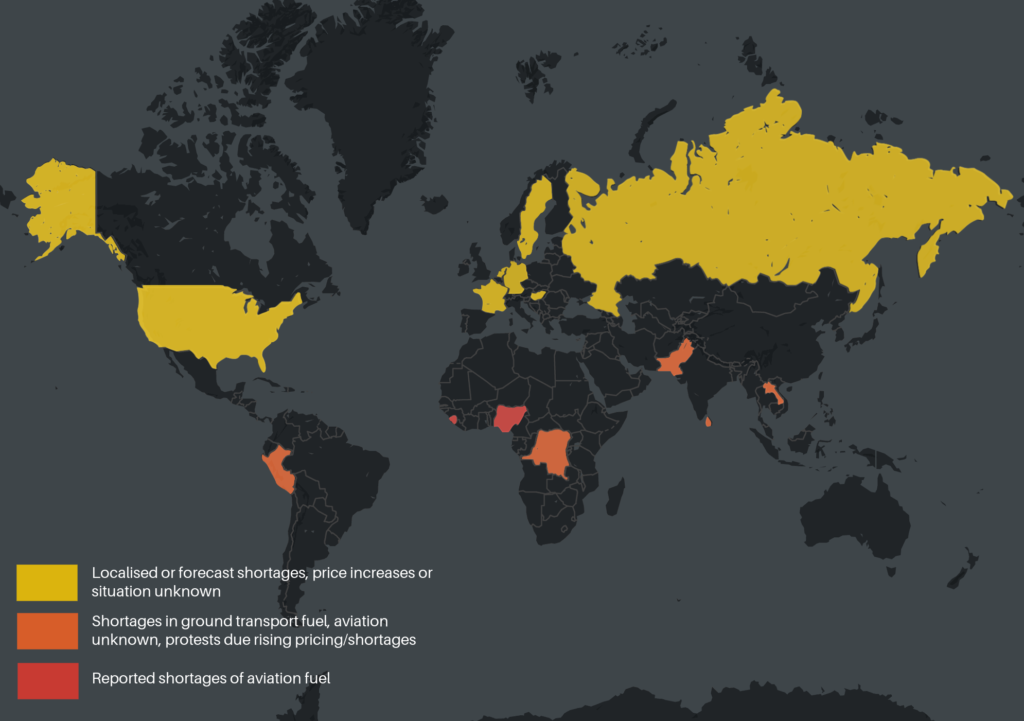
From Laos to Lima there is a growing fuel shortage and while the shortages (and fuel price hikes) have mainly been impacting road users, the problem is beginning to be felt in aviation as well.

So we figured we’d take a look at the situation.

What’s causing it?

The Ukraine Russia conflict.

Russia is the third largest supplier of oil behind the USA and Saudi Arabia, supplying around 12% of the world’s needs.

The conflict is seeing oil prices zoom up, recently hitting $139 a barrel (a 14 year high). Spot prices in New York Harbour went over $7.30 a gallon which is double what it normally would be this time of year.

But why is the USA short?

Good question.

The USA gets its fuel from lots of places, predominantly domestically and from across the border in Canada and Mexico. What you might not realise though is it also sources almost 10% of its supply from Russia. It’s a big number when you consider 329 million people live in the US. Take into account that Europe is also feeling the pinch of this ‘tightening global energy market’, ‘ it’s no wonder prices are on the charge, and supply running thin.

Back in 2021…

Back in 2021 the USA suffered fuel shortages at a bunch of airports. This was actually due to a bunch of reasons:

  • There weren’t enough truckers to drive it around
  • The pipelines had all been shifted during covid and hadn’t been shifted back again
  • There was a cyber attack on one of the main pipelines disrupting the supply
  • Some supplies were diverted away from leisure airports and to airports where wildfire fighting aircraft needed it
  • Leisure routes were getting busier as Covid restrictions loosened

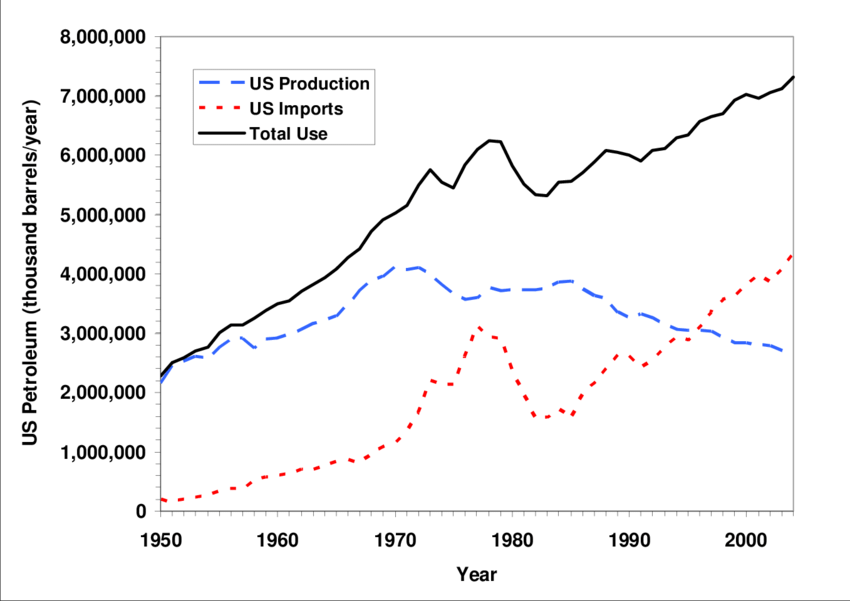
Fast forward to 2022 and while flying levels are around 95% of the peak 2019 levels, fuel production is still only around 80%. So there is, simply, a shortage.

Let’s talk about the East Coast.

The East Coast has been particularly hard hit for two reasons:

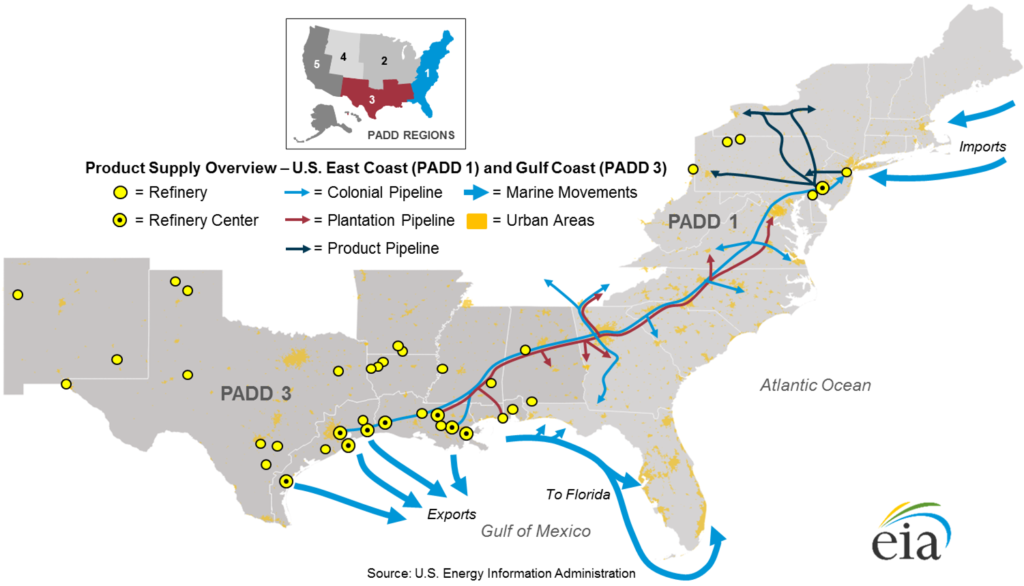
  • One, because the California refineries suffered some technology issues earlier in 2022 and couldn’t make as much,
  • Two, because they receive their supply mostly from Texas and also Europe – and Europe ain’t sending much at the mo.
    • Distallite PADD 1 imports (the stuff a quick google search showed me is used for Kerosene – Jet fuel) is down 60%.

What are we seeing, where?

  • Smaller, regional airports are reporting shortages
  • Leisure routes are being cancelled due rising costs
  • International shortages/rising costs leading to security situations
  • Uncertainty as to ongoing availability
  • And of course, the rising costs globally…

In the USA

We have seen reports for several spots across the USA, and expect to see more particularly for the east coast airports.

  • KEYW/Key West has reported rising costs
  • KAUS/Austin has seen surge in passenger number and operators were asked to tanker where possible for at least the next few weeks.
  • KSDL/Scottsdale had a report from member of fuel shortages. One FBO confirmed their supply was ok, but other FBOs were running low.

If you have visited an airport recently which has fuel supply problems, or where costs are rising significantly, please let us know.

Elsewhere in the world

Nigeria and Russia have both had reports of aviation fuel shortages. The other countries on the list are seeing fuel shortages and rising costs leading to protests and security situations, however whether there is an impact on aviation fuel supplies is currently unknown.

  • Russia started to see fuel shortages around the start of March.

Whilst Russia are a major oil producer, much of their supply may be getting redirected for military operations. One major operator cancelled flights to UUDD/Moscow due being unable to uplift. With the current situation and lack of operators heading in, it is hard to get any clear picture of the situation though.

  • Nigeria have a big, ongoing shortage.

Although initially due to a batch of poor quality fuel, the situation has been growing as the costs of buying in more keep rising. This has been impacting domestic and some Interational airlines for over a month now. We wrote about it here.

  • Laos have a nationwide shortage but reports are not clear as to whether this impact aviation fuel as well.
  • Peru have seen protests and strikes in the transportation sector over rising fuel prices. There are no reports of this impacting aviation yet.
  • Sri Lanka has also been seeing an increase in protests over rising economic issues including fuel shortages. An FBO at VCBI/Colombo-Bandaranaike informed us that jet fuel supplies are good.
  • Pakistan are seeing rising demand, but are struggling to buy in fuel from their suppliers as Europe call in additional supply.
  • DRC has a shortage in ground transport fuel. No impact reported on aviation fuel, but significant security issues due protests.
  • Sierra Leone have a notam advising Jet A1 only available for scheduled flights at GFLL/Freetown until at least April 20.

What to do about it?

  • Keep an eye on notams
  • Confirm availability with agents prior to heading in
  • Consider signing up to services such as AvHopper that can keep updated on fuel costs and availability
  • Tanker where possible to maximise cost efficiency
  • When planning alternates consider fuel availability
  • Think about crew security on the ground if laying over, and crew transport issues
  • Share it if you operate to an airport or region and experience fuel issues.

You can let us know about it on team@ops.group and we will post an alert so others know about it as well.


US West Coast flights halted: North Korean missile threat, or coincidence?

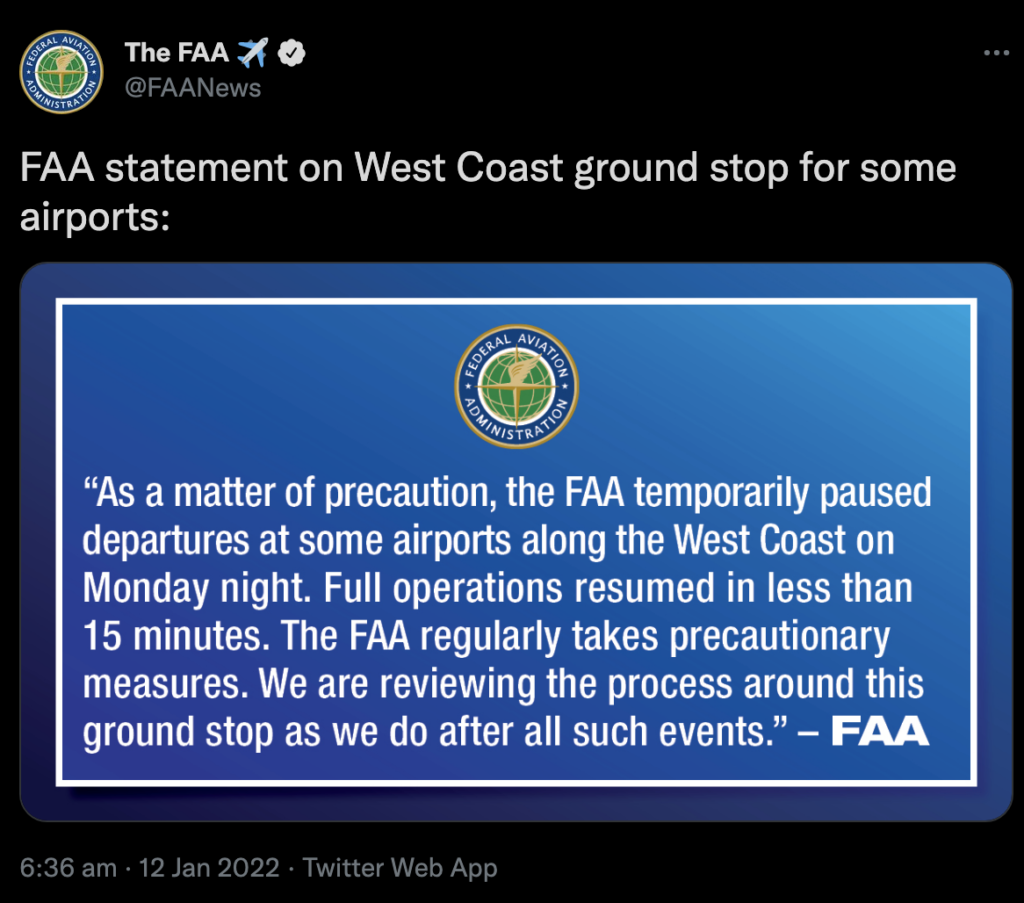
The US FAA has released a brief statement confirming that on Jan 10, a ground stop was put in place at major airports on the West Coast due to “precautionary measures.”

Around the same time, North Korea carried out a missile test – the second in a week. The missile landed well off the coast of the Korean Peninsula, in the Sea of Japan.

It is now being widely speculated that the two events were likely related, however no authority has confirmed this as fact.

Here’s what happened.

At approx. 14:30 PST (2230z) on January 10, a ground stop was ordered by the FAA at airports throughout the Western United States. There are also reports of airborne aircraft being directed to land.

The disruption was short lived (about twenty minutes), before operations went back to normal.

The speculation about why the ground stop came into effect arose for three reasons;

  • Information on why a ground stop is in place is usually provided
  • The air traffic control measure is generally used to slow or stops the flow of aircraft to a particular airport, due to weather or an operational hazard. This one impacted all west coast airports, and airborne aircraft
  • An unannounced test launch of a missile took place in North Korea, landing approximately 400nm off the coast around the same time.

Hypersonic missiles

North Korea state outlet KCNA has claimed these latest two tests were hypersonic missiles. Of course, North Korean is known for its own propaganda…

But hypersonic missiles are dangerous, for two main reasons:

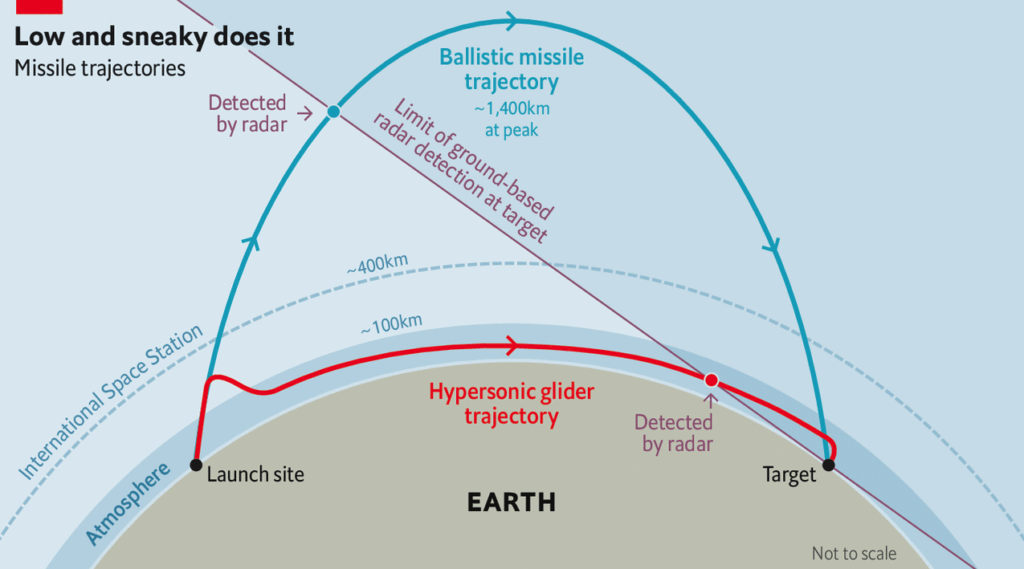
  • Unlike ballistic missiles, which have a fairly predictable trajectory, hypersonic missiles can fly much closer to the earth’s surface and are more difficult to intercept.
  • Hypersonic missiles can travel up to five times the speed of sound, meaning they can hit a target in a much shorter flight time.

Only a handful of countries are reported to be working on the development of hypersonic missiles: the US, Russia, India, and China, and North Korea.

What could explain it.
The launch in North Korea was not announced beforehand, and it is possible that it was detected as a threat leading to the activation of protocols that include notifying the FAA.

Although this looks likely, it’s important to remember that nothing official has been announced to confirm this yet.  The North American Aerospace Defense Command (NORAD) have since advised that it did not issue an official warning.

It did however detect the launch, which was assessed not to be a danger to the mainland US. It is also standard procedure for the FAA to be in constant contact with them and so the FAA may have been compelled to act as a precaution.

The North Korean Missile Threat.

There have been several test launches carried out from North Korea in the past six months. These are typically intended to be a display of capability, rather than an intent to use them.

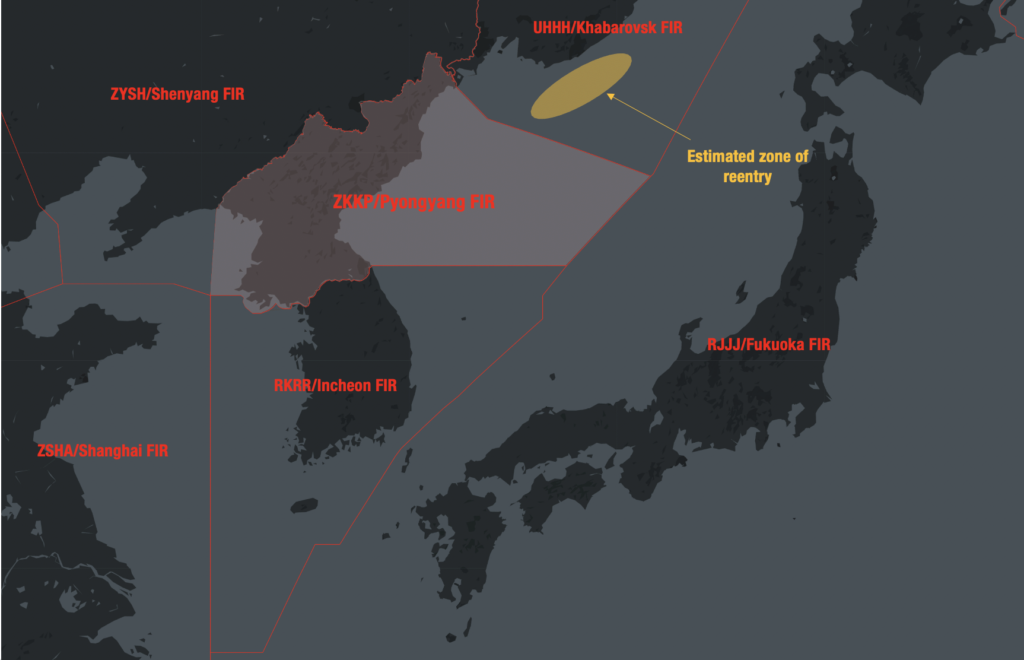
For aviation the threat is primarily based in the oceanic portions of the ZKKP/Pyongyang FIR, and UHHH/Khabarovsk FIRs west of Japan. As the launches have repeatedly been carried out with no advance warning, aircraft are exposed to risk from falling debris from missile tests. You can find more information on this in a previous article which you can read here.

Outlook for 2022

Most experts seem to agree that North Korea faces some big challenges on the home front this year, including its economy and a worsening humanitarian crisis. Its missile program has continued and there has been no recent reassurance that it intends to work on bettering its relationship with the US, or South Korea, nor any intent to provide advance warning of test launches.

These events might not be related, but the speculation itself demonstrates an ongoing concern regarding North Korean actions. The events of January 10 also show how a large impact on US airspace with little or no warning can, and does occasionally occur, and is a reminder to all operators to have policies and preparations in place for dealing with such events.

Do you have more intel, or were you flying as it happened?

We’d love to hear from you. You can reach us at team@ops.group.


US to mandate vaccines for all foreign arrivals

The US Government has revealed big changes to entry requirements. From November 8, all non-US citizens/residents will need to be fully vaccinated to enter the US – from anywhere. For Americans, the rules around pre-travel testing will be tightened too.

Here’s a quick rundown of how this will all work.

For Foreigners

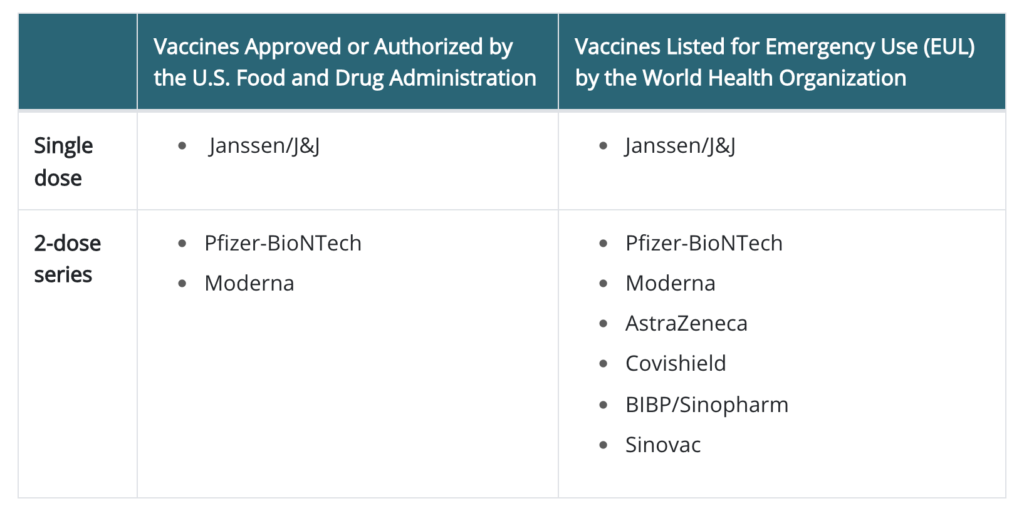
Starting November 8, any foreigner who wants to board a flight to the US will need to prove that they have been fully vaccinated. This means that they will need to have received a full dose of either an FDA or WHO approved vaccine at least a full 14 days prior.

Exemptions

Spoiler alert: there are hardly any. A very small list of unvaccinated foreigners will be allowed to enter.

This includes people participating in vaccine trials, those with medical conditions or anyone travelling on non-tourist visas from countries where vaccines aren’t readily available. Exemptions may also be granted for humanitarian or emergency reasons with approval from the US Government in the form of a letter.

Seven days of self-quarantine and additional testing may be required.

Don’t forget the kids.

Anyone under 18 will be exempt from the vaccine mandate. Instead they will need a pre-departure test. If their guardian(s) are fully vaccinated this can be done within three days of departure. If they’re travelling with an unvaccinated adult or alone, this is reduced to just one day.

For US Citizens and Residents

The vaccine mandate will not apply. But the rules around pre-travel testing are being tightened.

From the same date, any US citizen or resident who isn’t fully vaccinated will need to a negative viral test (PCR or Antigen) within just one day of departure. Those who have had the vaccine will still need to get a pre-travel test too. But they will have the existing three days to do so.

What about Crew?

Both foreign and local crew entering the US will be exempt from these new rules. Instead they will need to continue following existing CDC guidelines which you can read here.

Contact Tracing

There will also be a new requirement for air operators to collect contact information from all passengers and provide it to CDC ‘quick smart’ –  just in case they need to get in touch with anyone. More details on this are set to follow.

Travel Ban

November 8 is a big day for US borders for another reason too. For the first time since the start of the pandemic the entry ban on passengers from the UK, Ireland, much of Western Europe, China, Iran, Brazil, South Africa, and India is finally being lifted. You can read more about that announcement in our recent article here.

Handy Links

The official Presidential announcement of the vaccine mandate.

The official CDC Guidance on the new rules, including a useful FAQ section.


US to lift travel ban for vaccinated travellers

From Nov 8, the US will lift its Covid travel restrictions to allow fully vaccinated passengers to enter from those countries currently on the banned list:

  • The UK
  • Ireland
  • The 26 Schengen countries in Europe without border controls (Austria, Belgium, Czech Republic, Denmark, Estonia, Finland, France, Germany, Greece, Hungary, Iceland, Italy, Latvia, Liechtenstein, Lithuania, Luxembourg, Malta, Netherlands, Norway, Poland, Portugal, Slovakia, Slovenia, Spain, Sweden, and Switzerland).
  • China
  • Iran
  • Brazil
  • South Africa
  • India

The rules right now

The travel ban has been in force since March 2020, when the pandemic first began gathering pace. Under the current policy, only certain people can travel into the US if they have been in a banned country within the previous 14 days:

  • US citizens and their immediate families.
  • Green card holders.
  • Flight crew if traveling to the US on C, D or C1/D visas.
  • Those with national interest exemptions (NIE). (Amongst other things, these also allow foreign crew to enter to pick up aircraft and do delivery/maintenance flights etc despite their travel history.)

For more details on the current restrictions and exemptions, check the US CDC webpage here.

The rules from Nov 8

There are no guidelines yet on the new requirements due to take effect in November – these are expected to be announced in the coming days. The few crumbs of info we know so far:

  • Before departure – Travellers to the US will need to show proof of vaccination in addition to a negative Covid test taken within three days of the flight. There will be some exemptions to the vaccine policy, including for children not yet eligible to be vaccinated.
  • On arrival – Travellers will not need to quarantine upon arrival in the US, but airlines will be asked to collect their contact info for contact tracing purposes.
  • Which vaccines will be accepted? All FDA and WHO approved vaccines will be accepted.
  • Any changes for US travellers? – Yes. US travellers will also be subject to stricter requirements and will need to take a Covid test a day before they leave the US, and another one when they return.

We will update this page as new info is announced.


Red Sky at Night, Aviator’s Fright

Summer in the Northern Hemisphere means a few additional challenges for aviation, particularly in the USA – Hurricanes (which we wrote about here) and Wildfires.

You probably read ‘Hurricanes’ and think yeah, I get that, but fires?

Wildfires do pose a fairly major risk to aviation though, so we thought we’d take a quick look at what those risks might be and what the forecast is for the 2021 Wildfire season.

Too hot to handle.

Wildfires are prevalent across the US during the hotter summer months, typically running from May through October.

Looking back to previous years, California saw 13 fires in 2019, but over 30 major ones in both 2018 and 2017. The 2018 fires led to over 1.8 million acres of land being burned. 2020 saw the first ‘rain free’ February (in San Francisco) since 1864 and the drier months, and warmer spring resulted in some of the worst wildfires in California’s history. 

The outlook for 2021 is not much better. 

There have been extended dry periods with over 90% of the West now in drought conditions. There have also been record high temperatures in the Pacific Northwest, Northern Rockies and northern Great Basin with warmer than normal conditions forecast for the summer. Add to that an increase in lightening activity and you are left with a recipe for significant wildfire risk.

In fact, the figures so far for 2021 are already at a ten year high.

Where can you monitor the fires?

There are multiple sites which track and monitor wildfires. This is a particularly good one and will link to specific info on the major fires.

But the risk to aviation is often not from the fires themselves. The big hazards comes from:

  • Smoke
  • Increased traffic levels, diversions and ATC capacity
  • Changes to localized weather conditions.

Out of the frying pan and into the fire.

Major airports generally have good protection from wildfires, and are a distance away from areas which will readily burn. However, smaller and more remote airports may not and damage to infrastructure, or disruptions to ground transport has a knock on effect. Fires also lead to power outages which impact services at the airports.

The major hazard comes from smoke though, and this can cause significant disruptions through reduced visibility.

Smoke has been known to reduce visibility to around 200m. In 2005 all four major airports in Honduras closed because of limited visibility from wildfires. In 2010, the visibility at KBOI/Boise Municipal Airport reduced from 10 miles down to 1 3/4 miles in just 9 minutes after a shift in wind direction carried smoke from nearby wildfires into the airport vicinity.

KSFO/San Francisco has also experienced delays and cancellations due to smoke from nearby Butte Country wildfires.

While Sonoma Country airports faced multiple closures in 2019.

Then there is the reduced Air Quality.

The health hazard this poses to ground workers means airports may find themselves understaffed and reduced resources lead to reduced services, which lead to more disruptions for aircraft and operations.

The smoke hazard isn’t just at ground level.

In 2013, a NASA satellite captured images of smoke from Canadian and Colorado wildfires which extended over the North Atlantic, and in 2020 an aircraft diverted into CYYT/St John’s after smelling fumes in the flight deck which were attributed to wildfires (again in Colorado).

What’s cooking.

Disruptions at airports lead to increased traffic levels requiring ATC support for diversions.

Smaller, regional airports have less capability for dealing with the impact of nearby wildfires, and when small regional airports in areas like Oakland, San Jose, Silicon Valley which have a high density of private jet traffic close, this can mean a lot of diversions happening very suddenly, and where they go can becomes an issue.

In addition to diverting aircraft, there is the firefighting aircraft to factor in as well. They might operate low-level, but they are not small and they need to operate from somewhere and this is added pressure for ATC.

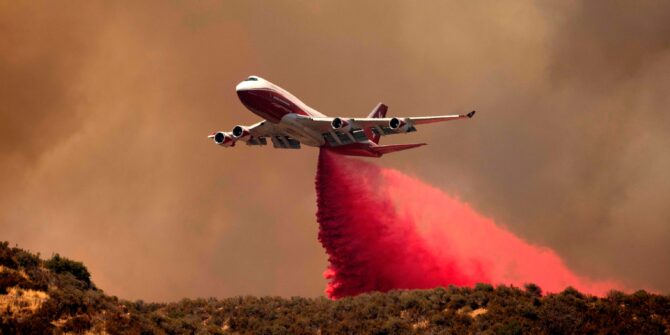
MD-10s and BAE 146s are commonly used. The world’s largest is a B747 Supertanker which can carry up to 19,600 US gallons of fire retardant or water.

TFR zones are set up for major fire zone areas to allow for safe movement of the firefighting aircraft. You can check these here.

Where there are fires, the risks of incidents increases and between 2000 and 2013 there were 298 wildfire firefighter fatalities in the US. 26% of these were caused by ‘aviation associated’ activities which occurred across 41 separate events involving 42 firefighting aircraft. Three of these were midair collisions.

Pyromania.

Wildfires can impact the weather environment as well.

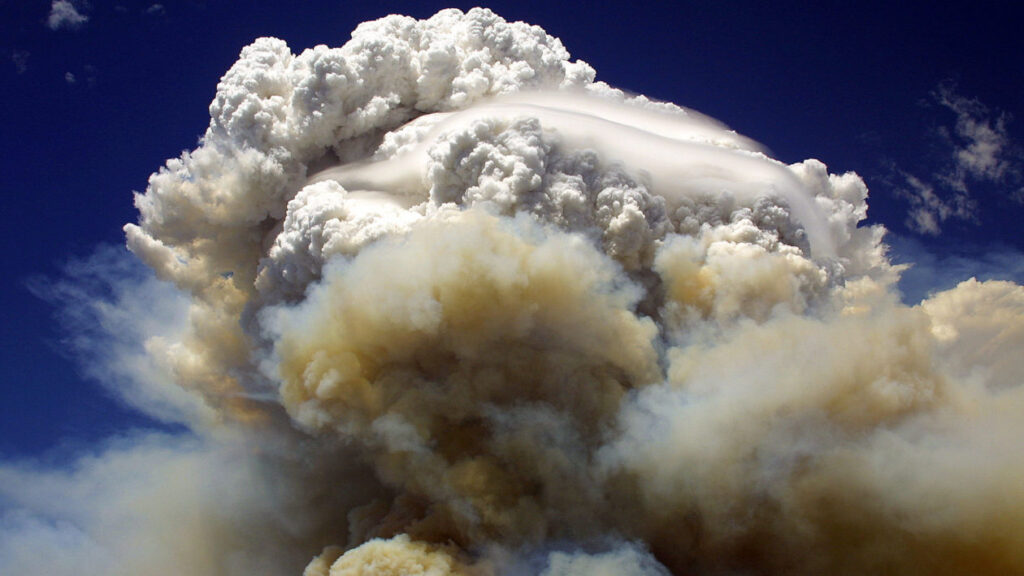
When large enough, Pyrocumulus cloud (also called Flammegenitus clouds) filled with rising ash and aerosols can build. These aerosols often carry a charge that increases the likelihood of lightning and with that an increased chance of fires spreading rapidly.

The “Station Fire’ of 2009, which burned more than 160,000 acres just outside of Los Angeles, also produced a convective column estimated to reach around 23,000 ft. Other majors fires have produced ones reaching as high as 40,000 ft.

These huge clouds are similar to cumulonimbus, only without rain. But they still contain significant up and downdrafts and can result in localized wind shear from gust fronts. The change in ground temperatures can result in significant thermals and large temperature gradients can result in significant localized vertical and horizontal winds.

There are ways to help.

Check those TFRs and check the wildfire maps. If you are operating into an area showing significant activity, consider how much busier ATC might be, and remember to check the capacity at your airport destination.

Report fires when you see them. Early notification of developing fires means the authorities can deal with them quicker, before they grow out of control.

Consider other ways to help. If you have an aircraft available, consider using it to help with evacuation flights. Airlines pulled together in 2016 following some major fires in Canada, and helped evacuate more than 80,000 residents. They also helped them bring their pets out safely. Be warned – you will have a tear in your eye after reading this one so open at your own risk!

The Forecast

There is a full seasonal outlook published here. But for a quicker summary of the 2021 Wildfire Forecast:

  • Alaska has ‘normal’ fire potential through summer and into the fall.
  • The Northwest is expected to experience significant and above average fire potential into September.
  • Northern California and Hawaii also have above normal significant fire potential expected.
  • Southern California will be at high risk through September (although this is ‘normal’ for the region).
  • The Northern Rockies region is expected to be above normal through August and September.
  • The Great Basin is expected to see increasing fire potential through August and possibly into September
  • The Southwest is expected to remain normal.
  • The Eastern Area is expected to be normal.
  • The Southern Area is expected to be below normal.

Wildfires pose a significant risk to aviation operations. They also pose a huge risk to those living there, the infrastructure and the economy. The Fire Fighter pilots are an extraordinary bunch of aviators and we wish them the best for this year.

There is a very interesting podcast available here if anyone wants to hear more about what their ‘Day at Work’ involves.


The Central Florida Metroplex

Behold, Metroplex! The gigantic, towering Autobot warrior! The Walking City, capable of channeling awesome energies!

Wait, what? The Central Florida Metroplex, you say? Oh. Yeah, that’s different. Ok, let’s take a look…

The Central Florida Metroplex an area encompassing various airports including (but not limited to) these big ones –

  • KMIA/Miami
  • KMCO/Orlando
  • KFLL/ Fort Lauderdale
  • KTPA/Tampa

It also includes other sightly less big ones, executive ones and basically any airport in the area. Here is a map of said area:

Phase One

The reason we are hearing about it a lot is because there is a major project underway to improve the safety and efficiency of the airspace here, and Phase One is just about to be implemented.

The start of the project is all about improving climb and descent profiles, so on April 22 a whopping 54 new procedures are going to come into force, many of which will enable more direct routings of flights.

All this means arrivals and departures will be optimized. Fear not though, the new procedures have been developed to follow current flight tracks where possible, so you hopefully won’t see major, confusing changes – just changes to make it all more efficient.

And then…

ATC are going to get their own new procedures as well. 17 of them coming in around August time. The ATC facilities have been enhanced over the last few years and automation advancements will tie in with these procedures.

What are the new procedures?

Well, we will have to wait until April 22 to actually see them in action, but it is mainly going to be changes to routings of SIDs and STARs, as well as some changes to altitudes. There are also a bunch of amendments to SIAPs and associated takeoff minimums as well as obstacle departure procedures based on the commissioning of new navigational facilities, adding of new obstacles, and general air traffic requirement changes.

The FAA published this list so you can take a look and see which are changing and when to check those charts for the correct and up to date version.

There will also be changes to routes – in particular the T routes. V routes will still be available but the plan is to phase these out over time so you are encouraged to file on Tangos.

And theeennnn…

The FAA have proposals in for an overhaul of the airspace across most of Florida, including changes to airspace boundaries around major Florida airports in order to more safely operate VFR and IFR traffic in close proximity.

Currently, the airspace surrounding KMIA/Miami is Class B, which is the most restrictive airspace around the busiest airports in the country. Miami’s Class B airspace extends to 20 nautical miles around the airport up to 7,000 feet in altitude. The FAA want to expand this out to 25 nautical miles east and west of the airport. The top will remain the same, while the bottom of the airspace gradually increases from the surface to 4000 feet as it extends out from the airport.

Then there is the airspace around KFLL/Fort Lauderdale. Another major, busy airport, they are surrounded by Class C airspace, which is less restrictive, but still highly controlled. Fort Lauderdale’s Class C airspace extends to 10 nautical miles up to 4,000 feet in altitude, and the proposal looks to extend this also out to 25 nautical miles to the east, and 20 nautical miles to the west, with its top and bottom following the same design as Miami’s class B.

There are also changes planned for the Northeast Corridor Atlantic Coast Routes (NEC ACR).

7 new Q routes are being added and something called ZDC ultra-high sector 30 will go live in September. By the end of the upgrading there will be something like 40 new Q and Y routes which will replace the north-south high-altitude route structure over the East Coast.

The big plan here is the decrease in reliance in ground based navaids, and some fuel and time efficiency improvement for operators.

What can the pilots expect?

You can expect to see changes to charts and procedures – so keep an eye on them and make sure you are operating with the most up to date. You can also expect to see more efficient and safer airspace as the phases of this are implemented over the next year or two.


What’s the delay in the USA?

We took a look at the stats the FAA publish about on-time performance to find out what the most common causes of delays are, which airports are worst affected, and what we can do to manage it.
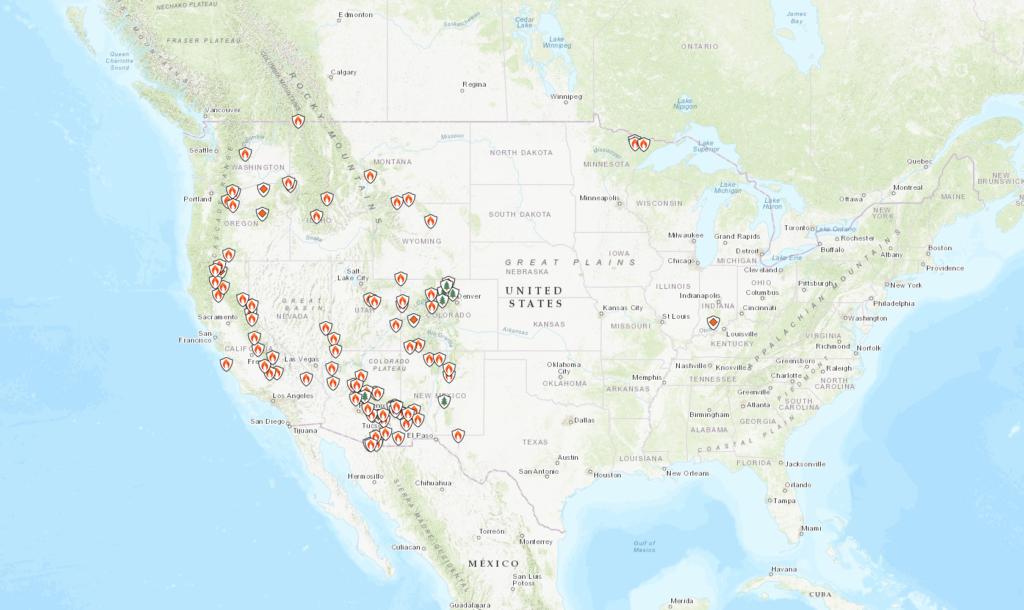
On your marks…

First up, what counts as a delay? Your airline or operator might be a bit stricter on this, but the FAA consider a flight delayed if it arrives more than 15 minutes late. Which is probably what your passengers really care about as well.

The FAA gather their info from a bunch of carriers, and break it all down into five basic categories of delay:

  • Air Carrier: This is something under the airline’s control like crewing, maintenance type issues. So that time you wanted a Starbucks coffee and the queue was really long and you held the flight up.
  • Extreme Weather: We are talking the big, bad stuff like hurricanes, blizzards, tornadoes… the things that shut airports for hours.
  • National Aviation System: This is pretty broad and covers ATC, airport ops, high traffic volume sorts of situations. They also throw general weather into this (the stuff that airplanes and ATC should be able to deal with).
  • Late-arriving aircraft: A knock on effect from a previous flight delay.
  • Security: Broken X-ray machines, long queues because of that passenger who thought he could sneak a tiger on in his hand luggage type scenarios.

Pick a month

Here come the statistics…

In January 2021, 89.16% of flights were on time – which ain’t bad, but ain’t great. So, of the remaining 10.84%, what were the reasons for the delay?

Air Carrier Delays are the big offender, checking in at 3.63%. The airlines only have themselves to blame…

Although, NAS came in a close second with 3.6%.

Then there was the knock-on effect of one late flight making the next flight late. This accounted for 1.94% of delays, with 1.17% because of previous cancellations and diversions.

Extreme weather came in at just 0.46%, while security delays only resulted in 0.04% (probably because those passengers were just left behind).

Weathering the delays

Weather only accounts for 4% of delays, which might seem low, but remember we are talking ‘extreme weather’. Non-extreme weather should be manageable which is why “normal weather” causing delays falls under NAS.

If we dig a bit deeper and take a snapshot look at a random month (we picked May 2019 because everything was fairly normal back then), then weather was the reason for 65.62% of NAS delays. That is a whopping 27,864 delayed flights or 1,822,469 minutes.

Which airport is the worst?

Let’s take a look at the airports to look out for.

KDFW/Dallas Fort Worth in Texas. A check of all the 29 major US airports in Jan 2021, and Dallas was the only one coming in with an on time performance below 80%.

10.48% of KDFW’s delays were down to NAS. But let’s not be too quick to tell off ATC yet. Just under 21% was due to high volumes of traffic. Just under 31% was because of runway closures and a whopping 45% was due to nasty weather (major winter storms).

The runners-up for worst delays were KORD/Chicago and KFLL/Fort Lauderdale which came in at 84.58% and 86.44% respectively. Fort Lauderdale’s NAS accounted for just over 6% and 8% was because of traffic volume problems.

Stop boring me with statistics

OK, that is enough facts and figures. What are we really talking here? Well, the two biggies are the Air Carrier delays and delays from NAS (most of which seem to boil down to weather).

Bad weather means a backlog of traffic, often a lot of detour requests to manage, or diversions to support and this means a much higher workload for our ATC colleagues to try and deal with. Even when it is “just” rain, or a windy day, this leads to delays. We can’t change the weather, but we can plan for it.
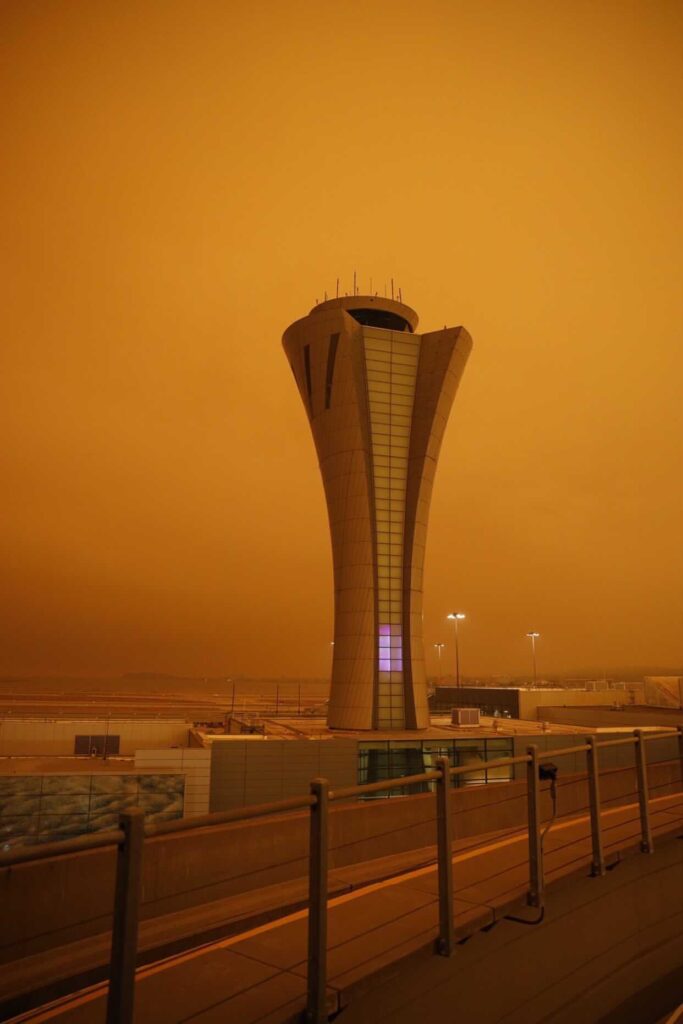
Delays are not just a cost and customer service issue – they are also a big fuel consideration…

So what can we do about them?

  • Check the forecasts. Planning for those delays in advance is a good idea because chances are they are going to result in some long holds, and long holds need fuel. Don’t just think about your destination weather – have a look at the alternates as well because when one airport shuts because of weather, others nearby probably will as well. If they don’t, then they are going to fill up fairly fast with diverting traffic.
  • Check the peak times. If you are not a scheduled carrier then try to plan your flights to head in at non-peak times to avoid high traffic volume delays.
  • En-route stuff. If you are delayed out of somewhere then you can try and make that time up en-route. Speeding up might seem like a good plan, but in reality unless you’re talking a mega long flight this probably isn’t going to make a huge difference to your time (but probably will to your fuel burn). Asking for directs however, is a good way to chop the time down.
  • Check the schedule. If you depart late then check your schedule time. With a decent tailwind you might find your flight time still brings you in early in which you don’t want to go speeding up and then find yourself having to wait for a parking spot
  • Winter planning. Winter (de-icing) is probably the biggest cause of delays out so get those calls in early if you need to de-ice and plan ahead.

On-time performance is great, but sometimes delays are just unavoidable. So while we can all “think on time” a bit more, thinking about safety (and not rushing) is still the best mentality any pilot can have.


US to require Covid tests for all international passengers

From January 26, all international passengers need a negative Covid test that is less than 72 hours old to board a flight to the US.

The US CDC has published the full details of the requirements here, and they’ve done a good job too – it includes a pretty thorough Q&A section split into separate sections for passengers and crew.

Here’s a summary of the main points:

  • All international travellers aged two years or older need a test, including citizens and foreigners.
  • Applies to all flights, including private and charter flights.
  • Applies only to international flights – from “anywhere that is not a state, territory, or possession of the United States”. Therefore, passengers do not need a test if coming from: American Samoa, Guam, the Northern Mariana Islands, Puerto Rico, and the US Virgin Islands.
  • It needs to be a “viral test” (NAAT or antigen test) – antibody tests will not be accepted. The PCR test is a type of NAAT test (Nucleic Acid Amplification Test), so those are accepted. You can read more about the different types of tests here.
  • The test must be done within three calendar days of departure to the US. If passengers have one or more connecting flights to the US, it gets a bit more complicated.
  • Airlines and operators will need to check that their passengers meet the requirements prior to travel.
  • For crew travelling to the US: you don’t need to get a Covid test in advance as long as you’re “active crew” – i.e. you’re operating the flight or travelling in an assigned deadhead status. You also have to follow the health and safety rules set out in the FAA’s SAFO 20009. However, we’ve had several reports saying that if you are positioning crew into the US via an airline for any reason, the reality is that you will likely be asked to show proof of a Covid test. More guidance on the definition of “active crew”, check out the CDC’s dedicated webpage.
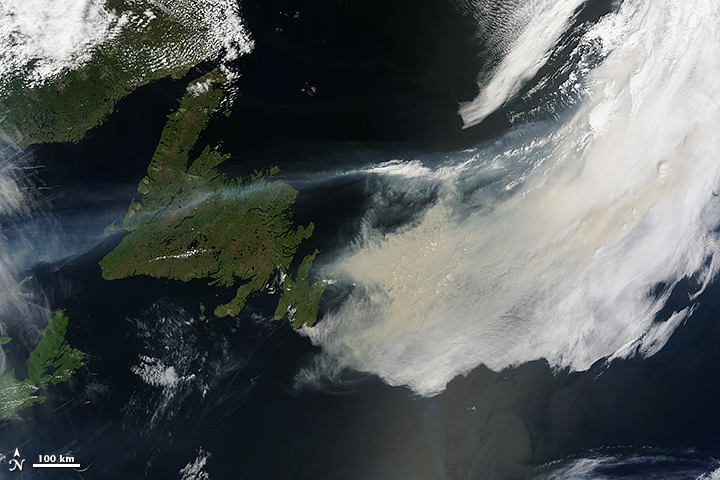
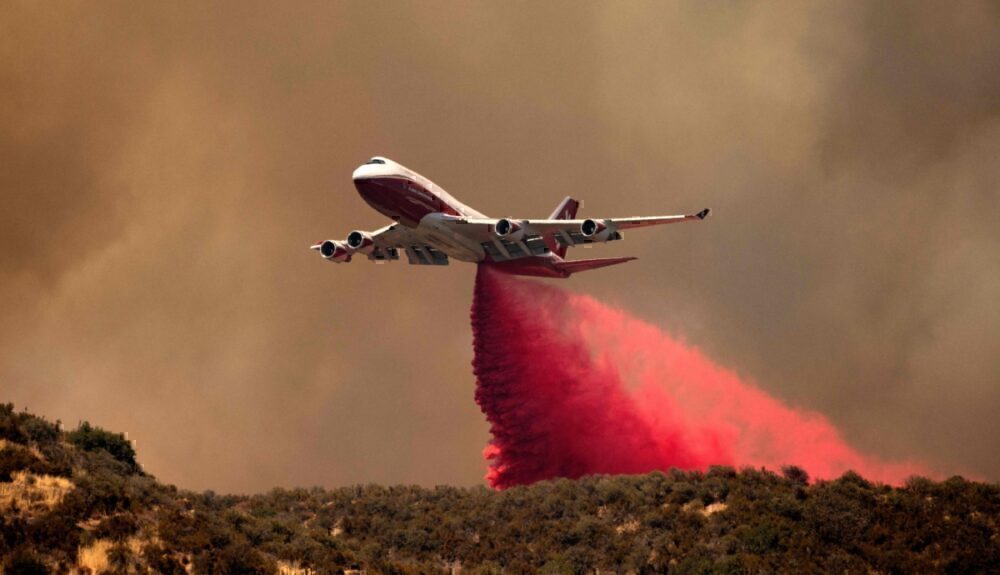
  • If crew/pax can prove they have already had Covid, have recovered from it, and can provide documentation to this effect, they don’t need to get a test.
  • Operators must distribute and collect Passenger Attestation Forms prior to embarkation, and keep copies of these for 2 years. Operators do not need to keep copies of passenger test results.
  • If you’re heading out of the US, and plan to return within 72hrs, you will still need a test. You can get this done in the US before you leave. But if you end up staying out of the US for more than 72hrs, you will need to be retested before your return flight.
  • Quarantine rules: Technically, all pax inbound to the US now have to quarantine for 10 days upon arrival, as per the Executive Order that went into effect on Jan 26. However, it looks like the CDC will not actually be enforcing this – at least for now.

Important to note: the old rules banning certain pax from entry still stands: with specific exemptions, foreign nationals who have been present within the past 14 days in the European Schengen area, the UK and Ireland, mainland China, Iran, and Brazil will still be barred from entry – with or without a negative test. The ‘specific exemptions’ part basically means this: US residents and family members, and flight crew traveling to the United States on C, D or C1/D visas. For more details on this rule, check the US Government webpage here.


US no longer limiting international arrivals to 15 airports

From September 14, the US is no longer limiting international arrivals from higher risk countries to specific airports. Under previous rules, any passenger from China, Iran, the Schengen area of Europe, the UK, Ireland and Brazil had to enter the United States through one of fifteen centralised airports capable of providing enhanced health screening. This is no longer be the case.

The previous system was deemed ineffective because so many people who transmit the disease don’t show symptoms. A new approach is being launched, which authorities say will better mitigate the risk of Coronavirus by focusing more on the individual passenger. Here’s how it will work:

  • Pre-departure, in-flight and post-arrival health education for passengers.
  • Robust illness response at airports.
  • Voluntary collection of contact information from passengers using electronic means as proposed by some airlines to avoid long lines, crowding and delays associated with manual data collection.
  • Potential testing to reduce the risk of travel-related transmission of the virus that causes COVID-19 and movement of the virus from one location to another.
  • Country-specific risk assessments to assist passengers in making informed decisions about travel-related risk.
  • Enhancing training and education of partners in the transportation sector and at U.S. ports of entry to ensure recognition of illness and immediate notification to CDC.
  • Post-arrival passenger recommendations for self-monitoring and precautions to protect others, with enhanced precautions, including staying home to the extent possible for 14 days for people arriving from high-risk destinations.

You can read the announcement by the Centers for Disease Control and Prevention here, and confirmation from US CBP here.

Although the 15-airports rule has gone away, all other US rules on inbound travel remain in place. The main one is this – with specific exemptions, foreign nationals are not allowed to enter the US if they have been in any of the following countries within the past 14 days: the European Schengen area, the UK and Ireland, mainland China, Iran, and Brazil. The ‘specific exemptions’ part basically means this: US residents and family members, and flight crew traveling to the United States on C, D or C1/D visas. For more details, check the US Government webpage here.


Covid restrictions by US state

With the United States seeing new hotspots for Covid-19 cropping up, varying forms of restrictions have been implemented by the individual states. Restrictions imposed at the state level are below, and also include links that may be helpful. States in red text have stronger regulations than the standard ‘mask and social distancing’ and are worth a closer look. All information is accurate to the best of our knowledge as of 28 July 2020. 

However, here are a few things to keep in mind regardless of where you plan to fly:

  • Always check all NOTAMs and relevant publications before flying
  • Consider fuel levels and alternates in light of unexpected ATC closures/restrictions
  • Follow CDC and state/local government guidance – this may include masks, gloves, Covid-19 testing, and cleaning/disinfection regimes
  • Check with your handler or airport representative to verify that city or county government regulations do not differ from the state regulations, and to confirm availability of services at the airport
  • Aviation is considered an essential business by the U.S. Federal Government, but some states may not have explicitly named it as such in their regulations. 

However, keep in mind that U.S. federal regulations still restricts international travel into the U.S. for those who are not citizens or permanent residents. There’s a long list of countries where passengers are not allowed to have travelled to within the past 14 days if they want to enter the US. This includes the European Schengen area, the UK and Ireland, mainland China, Iran, and Brazil. Passengers who have been in one of these countries in the past 14 days but who are exempt from the restriction to enter the US (i.e. they are US residents or family members), are only able to land at one of 15 airports: ATL, BOS, ORD, DFW, DTW, HNL, LAX, MIA, JFK, EWR, SFO, SEA, IAD, FLL and IAH. More information can be found on the Centres for Disease Control website

Alabama:

  • All individuals are required to wear a mask when within six feet of a person from another household.
  • Social distancing of six feet is also required between members of different households. 
  • https://covid19.alabama.gov/

Alaska:

  • All travellers from outside Alaska must fill out a declaration form, and present results of a negative Covid-19 PCR test from within the last 72 hours. If your test results are from the previous five days, you must be tested again on arrival.
  • In either case, those remaining in Alaska must also take another PCR test 7-14 days after arrival.
  • There is no mandate to wear a mask or social distance, but it is strongly encouraged. 
  • Alaska has a large number of remote settlements that may not have a robust healthcare system, and as a result may have instated stronger regulations – check local resources.
  • https://covid19.alaska.gov/

Arizona:

  • There is no statewide mandate to wear a mask or social distance, but it is strongly encouraged. 
  • Phoenix (Maricopa County), Mesa, Tucson, Flagstaff, Tempe, and a host of other cities have enforced masks/face covering requirements – check local resources. 
  • http://azhealth.gov/COVID19

Arkansas:

  • There is a statewide mandate requiring masks/face coverings to be worn in indoor public areas, and in outdoor areas where social distancing cannot be guaranteed.  
  • https://govstatus.egov.com/ar-covid-19

California:

  • There is a statewide mask/face covering mandate in place, and social distancing is encouraged.
  • https://covid19.ca.gov/

Colorado:

Connecticut:

  • Visitors to Connecticut from certain high risk states are required to quarantine for 14 days upon arrival and fill out this form. The states are: Alaska, Alabama, Arizona, Arkansas, California, Delaware, Florida, Georgia, Idaho, Indiana, Iowa, Kansas, Louisiana, Maryland, Mississippi, Missouri, Montana, Nebraska, Nevada, New Mexico, North Carolina, North Dakota, Ohio, Oklahoma, South Carolina, Tennessee, Texas, Utah, Virginia, Washington and Wisconsin.
  • Face coverings are required in all public areas where social distancing cannot be maintained.
  • https://portal.ct.gov/Coronavirus

Delaware:

District of Columbia (Washington, D.C.): 

  • Masks are required in public areas and social distancing is encouraged.
  • Those who have participated in non-essential travel to/from high risk states must quarantine for 14 days upon arrival. The states are: Arkansas, Arizona, Alabama, California, Delaware, Florida, Georgia, Idaho, Iowa, Kansas, Louisiana, Mississippi, Missouri, Montana, Nebraska, Nevada, New Mexico, North Carolina, North Dakota, Ohio, Oklahoma, South Carolina, Tennessee, Texas, Utah, Washington, Wisconsin.
  • https://coronavirus.dc.gov/

Florida:

  • There is no statewide mask/face covering requirement, but many individual cities and counties have one in place this site lists them.
  • Visitors from the Tri-State area (New York, New Jersey, Connecticut) must isolate for 14 days upon arrival. 
  • Florida is emerging as a hotspot, and many local authorities are rolling back plans to open businesses as a result – check with local contacts for the most up to date information.
  • https://floridahealthcovid19.gov/

Georgia:

Hawaii:

  • All interstate travellers must quarantine for 14 days on arrival in Hawaii, although this may be avoided from September 1 through the presentation of a negative PCR test from the preceding 72 hours. 
  • Inter-island travellers must fill out this form.
  • There is a statewide mask/face covering mandate in place, and social distancing is encouraged.
  • https://hawaiicovid19.com/

Idaho:

  • Ada County, which includes Boise, is encouraging a 14 day quarantine for those entering the area. Other counties are further along in their reopening plans and do not request a quarantine. 
  • Some counties are requiring the usage of masks/face coverings and others only encourage them. Social distancing is still encouraged. 
  • https://coronavirus.idaho.gov/

Illinois:

  • There is a statewide mask/face covering mandate in place, and social distancing is encouraged.
  • Travelers from the following states should quarantine upon arrival in Chicago: Alabama, Arkansas, Arizona, California, Florida, Georgia, Idaho, Iowa, Kansas, Louisiana, Mississippi, North Carolina, Nevada, Oklahoma, South Carolina, Tennessee, Texas, and Utah. Effective Friday, July 31, travelers from Missouri, Wisconsin, Nebraska, and North Dakota will also be directed to quarantine.
  • https://coronavirus.illinois.gov/

Indiana:

Iowa:

Kansas:

  • There is a statewide face covering mandate in place, and social distancing is encouraged.
  • Those who have travelled to/from Florida will be required to quarantine for 14 days upon arrival in Kansas. The same applies to anyone arriving from China, Iran, the European Schengen area, the United Kingdom, the Republic of Ireland and Brazil, and anyone returning from a cruise ship. 
  • https://covid.ks.gov/

Kentucky:

  • There is a statewide face covering mandate in place, and social distancing is encouraged. 
  • Individuals who have travelled to/from Alabama, Arizona, Florida, Georgia, Idaho, Mississippi, Nevada, South Carolina, Texas, and Puerto Rico are advised to quarantine for 14 days upon arrival in Kentucky. 
  • https://govstatus.egov.com/kycovid19

Louisiana:

  • There is a statewide face covering mandate in place, and social distancing is encouraged. Local areas have the ability to opt out of the mask mandate if they meet certain criteria.
  • http://ldh.la.gov/Coronavirus/

Maine:

  • There is a statewide mask/face covering mandate in place, and social distancing is encouraged.
  • Only those residents of Vermont, New Hampshire, Connecticut, New York and New Jersey can enter the state without restriction. All others must have a negative test result or must quarantine for 14 days – and must sign a Certificate of Compliance which is necessary to check-in to lodging in Maine. 
  • Maine residents who visit one of the five exempted states may return without restriction, but visits to any other states are still subject to testing and/or quarantine upon return. 
  • https://www.maine.gov/covid19/

Maryland:

Massachusetts:

  • There is a statewide mask/face covering mandate in place, and social distancing is encouraged.
  • All those entering the state must complete the Massachusetts Travel Form and quarantine, unless coming from a low-risk state or able to present a negative test result from the preceding 72 hours. Low-risk states are Connecticut, New York, New Hampshire, New Jersey, Hawaii, Maine, Rhode Island, Vermont. 
  • https://www.mass.gov/info-details/covid-19-updates-and-information

Michigan:

  • There is a statewide mask/face covering mandate in place, and social distancing is encouraged. Businesses may deny entry to those not wearing face coverings. 
  • https://www.michigan.gov/coronavirus/

Minnesota:

Mississippi:

Missouri:

Montana:

  • There is a statewide mask/face covering mandate in place for counties with more than four active cases – 25 counties currently meet the criteria. Social distancing is encouraged.
  • The state also includes multiple areas of tribal land governed by local councils – check local resources to see what rules may apply. 
  • https://www.visitmt.com/montana-aware

Nebraska:

Nevada:

New Hampshire:

  • There is no statewide mask/face covering mandate, but the use of them is encouraged along with social distancing. 
  • Those travelling into the state from outside the New England area are encouraged to quarantine for 14 days. 
  • https://www.nh.gov/covid19/

New Jersey:

  • There is a statewide mask/face covering mandate in place, and social distancing is encouraged.
  • Travellers from high-risk states are asked to voluntarily quarantine for 14 days, and provide contact information. States include Alaska, Alabama, Arizona, Arkansas, California, Delaware, Florida, Georgia, Idaho, Indiana, Iowa, Kansas, Louisiana, Maryland, Mississippi, Missouri, Montana, Nebraska, Nevada, New Mexico, North Carolina, North Dakota, Ohio, Oklahoma, South Carolina, Tennessee, Texas, Utah, Virginia, Washington and Wisconsin. 
  • https://covid19.nj.gov/

New Mexico:

  • There is a statewide mask/face covering mandate in place, and social distancing is encouraged.
  • All out of state travellers are required to quarantine for 14 days upon arrival.
  • https://cv.nmhealth.org/

New York:

  • There is a statewide mask/face covering mandate in place, and social distancing is encouraged.
  • Those who have spent more than 24 hours in a high-risk state must quarantine for 14 days upon arrival. The states include Alaska, Alabama, Arizona, Arkansas, California, Delaware, Florida, Georgia, Idaho, Indiana, Iowa, Kansas, Louisiana, Maryland, Mississippi, Missouri, Montana, Nebraska, Nevada, New Mexico, North Carolina, North Dakota, Ohio, Oklahoma, South Carolina, Tennessee, Texas, Utah, Virginia, Washington and Wisconsin.
  • Those arriving at New York area airports will be required to fill in a Health Department traveller form. 
  • https://coronavirus.health.ny.gov/home

North Carolina:

North Dakota:

Ohio:

  • There is a statewide mask/face covering mandate in place, and social distancing is encouraged.
  • Travellers from high-risk states are asked to voluntarily quarantine for 14 days. States include Alabama, Arizona, Florida, Georgia, Idaho, Mississippi, Nevada, South Carolina and Texas.
  • https://coronavirus.ohio.gov/

Oklahoma:

  • There is no statewide mask/face covering requirement, but many individual cities and counties have one in place, including Oklahoma City. 
  • https://coronavirus.health.ok.gov/

Oregon:

Pennsylvania:

  • There is a statewide mask/face covering mandate in place, and social distancing is encouraged.
  • Travellers from high-risk states are asked to voluntarily quarantine for 14 days. States include Alabama, Arizona, Arkansas, California, Florida, Georgia, Idaho, Iowa, Kansas, Louisiana, Mississippi, Nevada, North Carolina, Oklahoma, South Carolina, Tennessee, Texas and Utah.
  • https://www.health.pa.gov/topics/disease/coronavirus/Pages/Coronavirus.aspx

Rhode Island:

  • There is a statewide mask/face covering mandate in place, and social distancing is encouraged.
  • Travellers from high-risk states are asked to voluntarily quarantine for 14 days, although this can be avoided with a negative test result from the preceding 72 hours. States include Alabama, Arizona, Arkansas, California, Colorado, Florida, Georgia, Idaho, Indiana, Iowa, Kansas, Kentucky, Louisiana, Maryland, Minnesota, Mississippi, Missouri, Nebraska, Nevada, North Carolina, North Dakota, Ohio, Oklahoma, Oregon, Pennsylvania, South Carolina, South Dakota, Tennessee, Texas, Utah, Virginia, Washington, Wisconsin and Wyoming. Visitors from Puerto Rico must also quarantine.
  • https://health.ri.gov/diseases/ncov2019/testindex.php

South Carolina:

South Dakota:

  • There is no statewide mask/face covering requirement, and social distancing is encouraged. 
  • The state also includes multiple areas of tribal land governed by local councils – check local resources to see what rules may apply. 
  • https://covid.sd.gov/

Tennessee:

Texas:

  • There is a statewide mask/face covering mandate in place for counties with more than twenty active cases. Social distancing is encouraged. 
  • https://www.texas.gov/covid19/

Utah:

  • There is no statewide mask/face covering requirement, but many individual cities and counties have one in place, including Salt Lake City.
  • https://coronavirus.utah.gov/

Vermont:

  • There will be a statewide mask/face covering mandate in place effective August 1, and social distancing is encouraged.
  • Most arrivals to the state have to quarantine for 14 days, unless coming from a list of approved states/counties. Unlike other states, you may quarantine elsewhere before entering Vermont, provided you travel in a private vehicle and only make essential stops while wearing a mask. Quarantine may be shortened to seven days with a negative test result. 
  • https://www.healthvermont.gov/response/coronavirus-covid-19

Virginia:

Washington:

West Virginia:

Wisconsin:

  • There is no statewide mask/face covering requirement, but many individual cities and counties have one in place, including Milwaukee.
  • Wisconsin residents have been asked not to travel to summer or holiday homes, and local restrictions may apply.
  • https://www.dhs.wisconsin.gov/covid-19/travel.htm

Wyoming:

  • There is no statewide mask/face covering requirement, but many individual cities and counties have one in place.
  • https://covid19.wyo.gov/

For more information on some of the wider restrictions in place at US state level beyond the realm of aviation, Kayak.com keeps a pretty neat little page updated here.


Indy Center kicks off CPDLC trials – the system is live!

The United States is rolling out En Route FANS CPDLC during 2018-19, for all equipped, trained and permitted operators. The FAA’s Advisory Circular AC 90-117 outlines the requirements for U.S. operators.
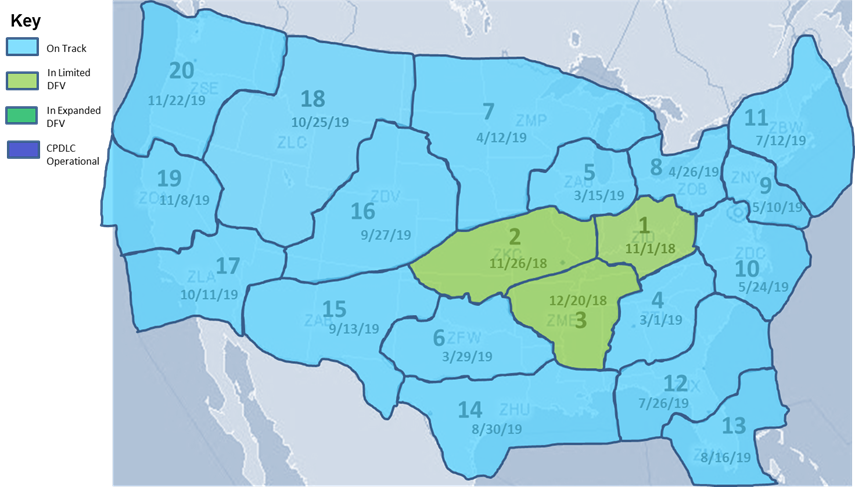
Trials have begun with KZID/Indianapolis going live with 24/7 ops starting last week.

We also understand that KZME/Memphis and KZKC/Kansas City are still in the testing phase with CPDLC and voice read back happening 1-2 nights per week during the midnight shift.

The current deployment schedule as it stands can be found in this graphic. [if you know what DFV means, let us know!]

How to participate:

  • The FANS logon is “KUSA” for the entire country and you may logon at any time. The CPDLC connection will become active after departure, and the crew is notified via a welcome message uplink. If En Route FANS CPDLC enabled airspace is active, you will stay logged on. If the aircraft transitions from En Route FANS CPDLC enabled airspace into non-Data Link airspace with an active CPDLC connection then the connection will terminate approximately seven minutes after exiting.
  • To participate, file “DAT/FANSE” in Field 18 of the ICAO Flight Plan.
  • Equipment required is VDL Mode 2, indicated as “J4” in Field 10a of the ICAO Flight Plan.
  • If an operator wants to use domestic En Route FANS CPDLC and is already using FANS DCL then the the majority of operations will fall into one of these scenarios:
    • (1) The operator uses FANS DCL via the “DAT/1FANS2PDC” preference in Field 18 of the ICAO Flight Plan. In that case, update the preference to “DAT/1FANSE2PDC“.
    • (2) The operator uses FANS DCL via the FAA’s Subscriber Database. In that case, the operator will want to add the entry “DAT/FANSE” in Field 18 of the Flight Plan.

Some things to keep in mind:

  • Domestic En Route FANS CPDLC enabled airspace will be seamlessly integrated with foreign (Canadian) and Oceanic FANS CPDLC enabled airspace.
  • The Oceanic Clearance will not be delivered via FANS CPDLC. You will still need to request the clearance via AFIS/ACARS or obtain it via voice.

Have you had the chance to try it out recently? Let us know!
Extra Reading:


Russian bombers intercepted off Alaskan coast (again)

Reports this week of two Tu-95 Russian bombers being intercepted by US F22 fighters off the coast of Alaska.

The Tu-95 bombers were flying in the Air Defense Identification Zone in the Bering Sea north of the Aleutian Islands, where they were visually identified and shadowed by the U.S. jets at 10 a.m., said Navy Capt. Scott Miller, a North American Aerospace Defense Command spokesman.
The bombers did not enter North American sovereign airspace, he said in a statement. Miller declined to say how close the bombers came to U.S. land. Some outlets reported they flew as close as 55 miles off Alaska’s west coast.

Friday’s encounter was the first of its kind in just more than a year, Miller said. A similar incident occurred off Alaskan waters in April 2017 in what U.S. officials have described as routine if not tense encounters between adversarial aircraft where territorial lines meet.
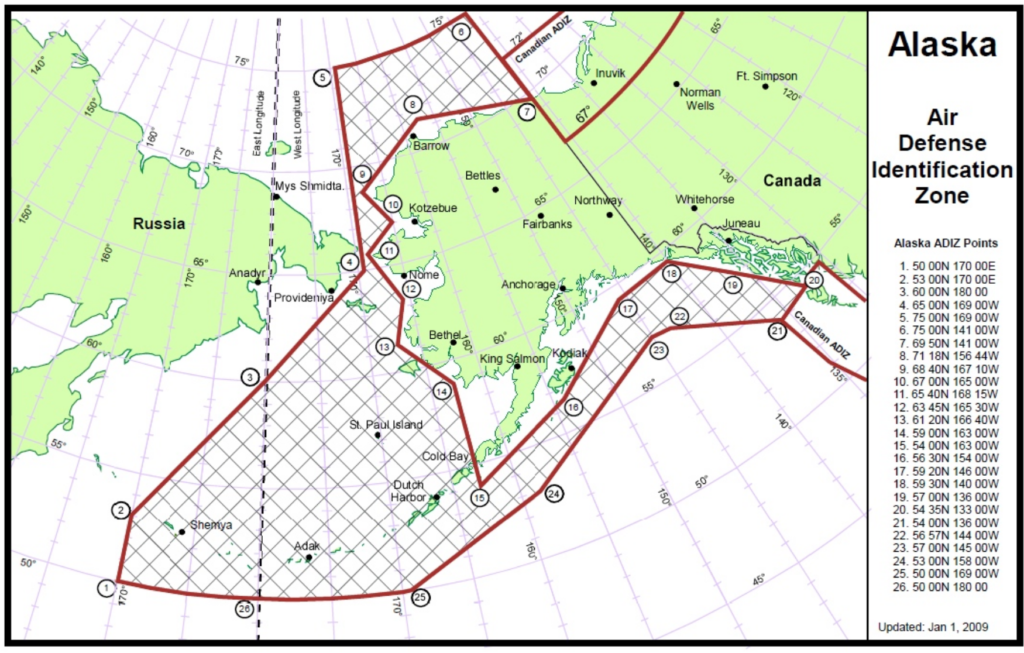
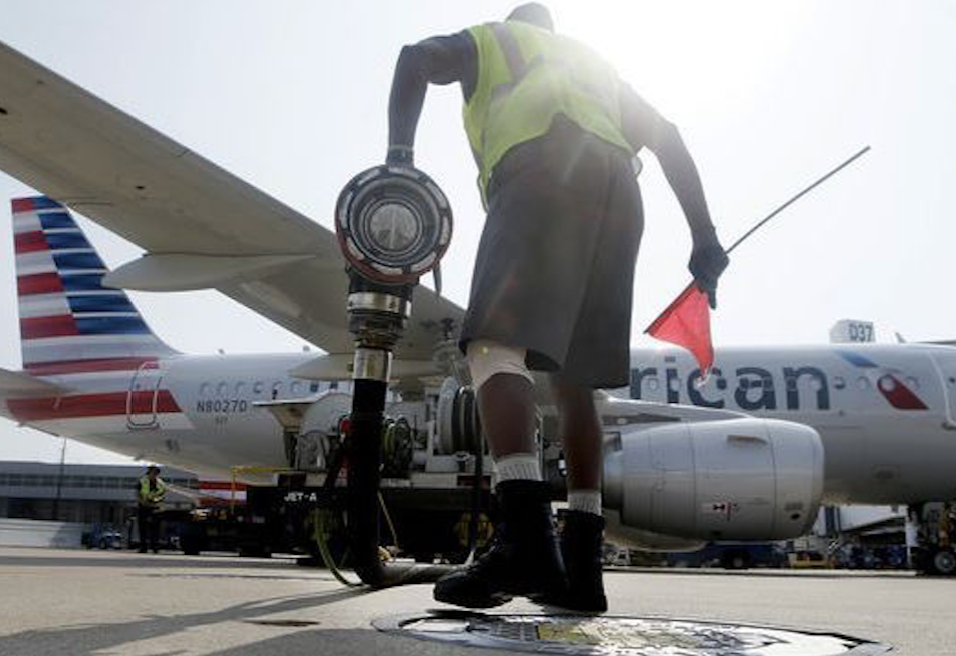
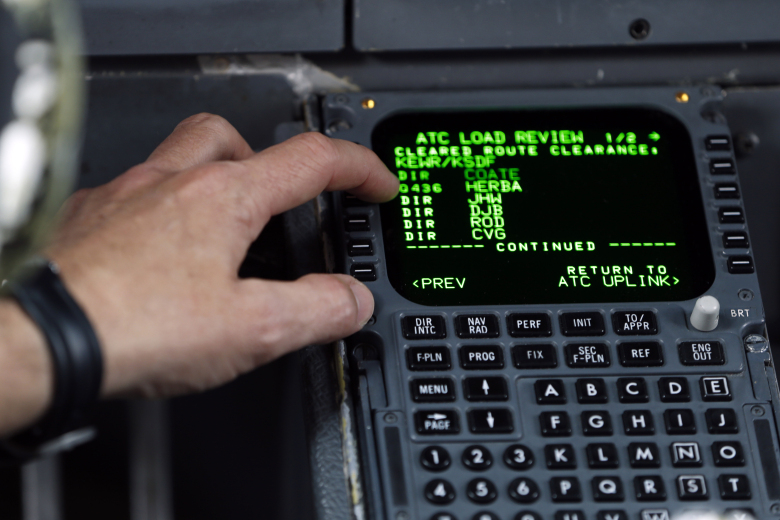
The ADIZ extends about 200 miles off the Alaskan coast and is mostly international airspace, Miller said, though Russian military activity will often prompt an in-kind response for U.S. warplanes. Intercepts in the zone occurred about 60 times from 2007 to 2017, The New York Times reported last year.

Extra Reading:


FAA warns about fuel contamination

The FAA Safety Team have issued a mysterious new Notam today, about a possible fuel contamination problem at airports in the central U.S.

Update: The FAA has sent a follow up, seems things weren’t as widespread as they made it sound:

SPECIAL..NOTICE..

THE FAA CONTINUES TO INVESTIGATE A FUEL CONTAMINATION PROBLEM. SUBSTANTIAL EVIDENCE INDICATES THE CONTAMINATION HAS BEEN ISOLATED TO GENERAL AVIATION AND MILITARY AIRCRAFT AT EPPLEY AIRFIELD, OMAHA, NE (KOMA) DURING THE TIME PERIOD NOVEMBER 18-20, 2017. FAA RECOMMENDS THAT ALL AIRCRAFT OPERATORS CHECK NOTAMS FREQUENTLY FOR POSSIBLE CHANGES TO THIS ONGOING SITUATION.

FOR FURTHER INFORMATION CONTACT FLIGHT STANDARDS AIR TRANSPORTATION DIVISION AT 202-267-8166.

Here’s what they have to say:

FDC 7/4900 (A1362/17) - FL..SPECIAL NOTICE..THE FAA IS CURRENTLY INVESTIGATING 
A FUEL CONTAMINATION PROBLEM THAT HAS RECENTLY APPEARED IN JET FUEL WI THE CENTRAL U.S. THE EXACT SOURCE AND THE GEOGRAPHICAL SCOPE OF THE CONTAMINATION IS UNKNOWN. THERE HAVE BEEN REPORTS OF BLOCKAGES IN FUEL FILTERS, FUEL NOZZLES, AND FUEL TANKS. THIS HAS RESULTED IN SEVERAL ENGINE FLAMEOUTS AND OTHER ERRATIC ENGINE OPS. ALL OPERATORS ARE ADZ TO CLOSELY FOLLOW FUEL SAMPLING PROC AND REPORT ANY DISCOVERY OF CONTAMINATION OR ERRATIC ENGINE OPS TO THEIR FLIGHT STANDARDS DISTRICT OFFICE OR NEAREST FAA FACILITY. 30 NOV 00:20 2017 UNTIL 30 DEC 00:20 2017. CREATED: 30 NOV 00:48 2017

We haven’t seen or heard any reports about this issue recently. The FAA Safety Team say that this is currently still under investigation, and can’t provide any additional information just yet. We’ve also reached out to a few of the major suppliers, who are saying pretty much the same thing – no more info yet, beyond the Notam.

Several sources are telling us the NOTAM is related to a fuel issue at KOMA, limited to a single truck at a single FBO:

F0013/17 NOTAMN Q) ZMP/QFUXX/IV/NBO/A/000/999/4118N09553W005 A) KOMA B) 1711211550 C) 1712212359 E) [DEFENSE LOGISTICS AGENCY ENERGY ADVISORY] CONTRACT FUEL NOT AVAILABLE TRUMAN ARNOLD COMPANIES DBA TAC AIR IS HEREBY NOTIFIED TO CEASE REFUELING ON ALL U.S. AIRCRAFT UNDER INTO-PLANE CONTRACT SPE600-16-D-0066 AT LOCATION KOMA – EPPLEY AIRFIELD AIRPORT, NEBRASKA. DUE TO SAFETY OF FLIGHT ISSUES REPORTED ON TWO AIR FORCE AIRCRAFT REFUELED AT THEIR FACILITY 18 NOV 2017 THAT RESULTED IN EMERGENCY LANDINGS. REFUELING OF U.S. GOVERNMENT AIRCRAFT IS IMMEDIATELY SUSPENDED AND SHALL REMAIN SO UNTIL THE DLA ENERGY CONTRACTING OFFICER NOTIFIES YOU OTHERWISE IN WRITING.


If you’ve experienced any fuel contamination issues recently, we’d love to hear about it! Email us at team@flightservice.org


New, single CPDLC logon for US airspace

In case you missed the several hundred Notams this week, KUSA is the new identifier for all datalink logons in the US, including CPDLC-DCL, and enroute, which came into use on October 22nd. Now, the only logon you need is KUSA.

For all you could possibly want to know about Datalink operations in the US, take a peek at the new AC90-117, ” an overview of data link communication operations for U.S. domestic
operations and in oceanic and remote continental airspace”, which we’ve uploaded here.

More readable is the FAA’s CPDLC-DCL guide, uploaded here.

There are some comments that it doesn’t work properly if you don’t have an active FPL in the box, let us know your experiences on that in the comment section below.


Enhanced Security – new rules for US Inbounds

KZZZ/USA The US has opted for ‘Enhanced Security’ instead of a wider laptop ban. In fact, the existing ban is likely to end once airports can comply with the new rules. The information in the official DHS release is somewhere between vague and zero, which kind of makes sense.

So, the story is pretty simple – there is no wider laptop ban, but no specifics have yet been released publicly as to what exactly ‘Enhanced Security’ means for Aircraft Operators. The DHS will work directly with larger AO’s directly affected.


Immediate US Visa ban on 7 countries – Aircrew also

KZZZ/USA Now in force, is an immediate ban on US visas (and therefore US travel) for citizens from 7 countries: Iraq, Iran, Syria, Yemen, Sudan, Somalia and Libya. This is distinct from the Visa Waiver Program ban in effect since January 2016. The ban is posted for 90 days, but may last longer.

Admission will be refused to visitors with a passport issued by the following 7 countries: Iran, Iraq, Libya, Somalia, Sudan, Syria, and Yemen, and holding a valid immigrant or non-immigrant visa for the US.

This travel ban does not apply to:
– Lawful Permanent Residents (Green Card holders) of the USA who also hold a passport issued by one of the aforementioned countries
– Dual Nationals, holding and traveling with a valid passport issued by USA as well as a passport issued by one of the aforementioned countries
– Dual Nationals holding and traveling with a valid passport issued by a third country as well as a passport issued by one of the aforementioned countries
– Passengers with diplomatic visas, North Atlantic Treaty Organization visas, C-2 visas for travel to the United Nations and G-1 ,G-2 ,G-3 ,and G-4 visas

Aircrew
This affects aircrew as well, whether travelling on a C1/D visa, or whether on duty or off duty.

That’s the situation as we understand it, we’ll keep this page updated.


Germany issue new warnings, Manila may not ban GA after all

Germany issues new warnings 25JAN Germany has issued fresh warnings on the airspace of EgyptSouth Sudan, and North Korea, in three separate Notams issued in the last week. We have updated the SafeAirspace.net country information pages with the specifics. Read the article


Manila may not ban GA after all 25JAN RPLL/Manila is not moving as quickly towards a complete ban of non-scheduled and General Aviation traffic as feared. This is good news for International Operators. Read the article.


HEZZ/Egypt, HSZZ/South Sudan, ZKZZ/North Korea Germany has issued fresh warnings on the airspace of EgyptSouth Sudan, and North Korea, in three separate Notams issued in the last week. We have updated the SafeAirspace.net country information pages with the specifics.

RPLL/Manila is not moving as quickly towards a complete ban of non-scheduled and General Aviation traffic as feared. This is good news for International Operators. Read the article.

NTAA/Tahiti The airport is open again as of Monday morning local time, after closing due to flooding after torrential rains, but many taxiways remain flooded. Expect delays in handling and tech stops.

KZZZ/USA Announced yesterday and expected to come into force this week, is an immediate ban on US visas (and therefore US travel) for citizens from 7 countries: Iraq, Iran, Syria, Yemen, Sudan, Somalia and Libya. This is distinct from the Visa Waiver Program ban in effect since January 2016.

GBZZ/Gambia FSB Risk Level changed from Level Three to “No Warnings” on Jan 24. New president has taken power. Parliament revoked State of Emergency. Situation calm.

SBZZ/Brazil In the last bulletin we had a headline about a Boeing 767 shot on approach in Brazil. A bullet was found lodged in the wing. Some updates to that story are here, and safeairspace.net’s Brazilpage is updated.

VZZZ/Southeast Asia Don’t forget it’s New Year in Asia this weekend. Travel-related delays and government office and business interruptions will peak 27 Jan to 01 Feb, and could last longer in Taiwan, Vietnam and China, where the holiday will be celebrated through 02 Feb.

EDDB/Berlin Brandenburg will now not open until 2018, as they found more problems with the fire system this week. This is a recurring story, which dates back to 2012. So, for the foreseeable, you’re stuck with Tegel and Schoenefeld.

LTFJ/Sabiha Gökçen (Istanbul) Due to insufficient capacity at LTFJ, applications for individual non-scheduled flights will be refused, and private/charter flights can only be operated at “non-busy hours”.

KBPI/Palm Beach is going to see some new TFR restrictions due to the proximity of Donald Trumps Mar-a-Lago estate. If operating when he’s down here, you’ll have to depart from a gateway airport to PBI – those are TEB, HPN, IAD, MCO and FLL. NBAA has the details.

LSGG/Geneva EBACE is on from Monday, 22 May through Wednesday, 24 May 2017. Now would be a good time to get those slots booked if you’re planning to head over.

LFMN/Nice has a new procedure where ATC will alert crews to windshear.

MSLP/San Salvador‘s only runway 07/25 will be closed from 1600-1700 each day until Feb 3rd.

VGHS/Dhaka The UK Department for Transport (DfT) announced today that it recently carried out assessments of security at Dhaka International Airport. Following this, the DfT has assessed that security at Dhaka airport does not meet some international security requirements (they haven’t said which).

OMAD/Abu Dhabi (Al Bateen) is hosting the International Defence Exhibition in February, so will not be available to IFR traffic daily between 0600-0800Z until Feb 23rd. There are also restrictions on using it as an alternate.

DNAA/Abuja The latest on the Abuja closure is that it will be completely closed to all traffic from March 8th – April 19th.

SKCG/Cartagena‘s only runway 01/19 is closed daily 0530-1100Z until Feb 6th.

NVZZ/Vanuatu Health authorities have declared a dengue outbreak following a large increase in suspected cases in December 2016 and January 2017. Protect yourself against mosquito bites

WSZZ/Singapore is implementing the new ICAO SID/STAR phraseologies from March 2nd. Read AIP SUP 29/17.

LIRF/Rome Fiumicino is working on 16R until March, so 25 will be used for deps and 16L for arrivals. This means delays, especially if you want 16L/34R for departure – they say up to a 60 minute taxi time.

UKZZ/Ukraine amended the military boundaries of its airspace on Monday Jan 23rd, identifying the Donbas conflict zone region as a separate area. More details here.


View the full International bulletin 25JAN2017


Midweek Briefing: Taiwan ADS-B requirement, Costa Rica volcano

Taiwan ADS-B requirement 21SEP Yesterday, Taiwan pushed the requirement for ADS-B above FL290 for all aircraft, back to 2020 – as a fast approaching deadline of December this year was looming. Read the article.

Costa Rica volcano 21SEP MROC/San Jose, Costa Rica has reopened after the eruption of the Turrialba volcano on Monday. A risk of further closures continues. Read the article.


OPZZ/Pakistan Some airspace in the north of the country (Kashmir region) has been closed by the Pakistan CAA. Details are unclear but reports indicate Gilgit, Skardu and Chitral Airports are affected by the closure.

BIKF/Keflavik Departing KEF eastbound? Icelandic ATC would love you to file the following as a standard route: PIXUM PETUX ORTAV ODPEX, or 63N022W CELLO if you’re planning to cross 10W at GOMUP or south of.

EDDL/Dusseldorf has closed 05L/23R for a couple of days to remove a WW2 bomb. Some delays at peak times may result.

HLGT/Ghat, Libya Three foreign nationals were kidnapped along the road that leads to Ghat Airport on 19SEP, located in the Fezzan province along the southwest border with Algeria. The foreigners were construction workers employed by the Italian-owned Conicos company to service Ghat Airport. There are numerous armed militia and terrorist groups active in the area and the foreigners were said to be operating under discretion due to the security risk.

EDHL/Lubeck will closed on Oct 4th for repairs – all day.

ENGM/Oslo will introduce new RNP AR approaches in November, available to all runways. Auth from Norwegian CAA is required to use them.

FKKD/Douala now requires PPR 72 hours prior arrival, for non-scheduled flights, due to upcoming space restrictions as a result of WIP. You can make requests directly to Airport admin at pce.douala@adcsa.aero.

GBZZ/Gambia In a change to procedure, Overflight Permits, and Landing Permits for traffic operating to GBYD/Banjul, are now issued by the Department of Flight Safety Standards at the GCAA.

HCMM/Mogadishu has issued a security reminder to operators: “OPERATORS SHOULD EXER EXTREME CTN AND FULLY ASSESS THE POTENTIAL FOR RISKS TO FLT SAFETY AND SECURITY WHEN PLANNING OR CONDUCTING OPS INTO MOGADISHU AIRPORT DUE TO LACK OF INFORMATION ON ARMED CONFLICT AND LACK OF AERONAUTICAL INFORMATION.”

FAZZ/South Africa The CAA has updated its warnings for operators, with new guidance for two airspace blocks: that affected by the Syrian conflict – namely Baghdad, Damascus, and Tehran FIRs; and that affected by recent concerns over the Northern Sinai – their advice is to overfly at FL260 or higher.

LMML/Malta airshow coming up on 24-25 Sept, multiple restrictions, check before operating or filing as alternate.

FZZZ/DRC Congo Since September 19 large-scale demonstrations have been resulting in violent clashes between demonstrators and security forces in Kinshasa and elsewhere in the country. The situation is particularly tense in Kinshasa where violence has caused casualties. These demonstrations could continue over the next few days and the situation could further degenerate. The sole road to the Kinshasa airport could be blocked and some flights have been cancelled.

OJZZ/Jordan It’s White Stork migration season, and Jordan has issued warnings for all of its airports, for crews to be mindful of the high chance of presence of large flocks of them on arrival and departure.

SKED/Bogota has some comms issues on north/south bound routes to Peru (Lima FIR); 10 minute separation is applied betwen aircraft on these routes until at least Sept 26th.

KZZZ/USA For some good reading, the FAA (thanks Andy for passing this on), have updated their Aviation Weather guidance doc. This is the first revision to the document since 1975.

Input: ATC, Pilots, Dispatchers: Any topical items that you think should be going out to the community? Let us know, and we’ll get your message out there. tellus@opsgroup.co.

View full International Bulletin 21SEP2016