Russian bombers intercepted off Alaskan coast (again)

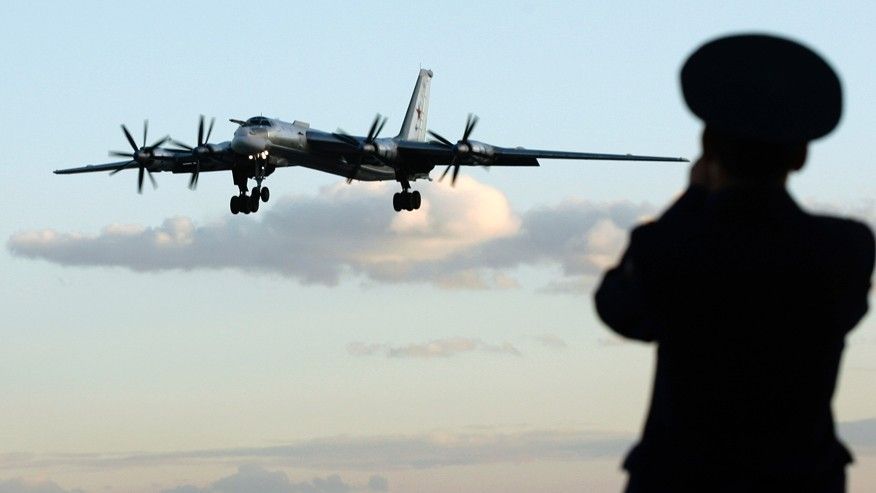
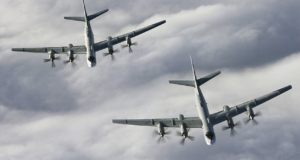
Reports this week of two Tu-95 Russian bombers being intercepted by US F22 fighters off the coast of Alaska.

The Tu-95 bombers were flying in the Air Defense Identification Zone in the Bering Sea north of the Aleutian Islands, where they were visually identified and shadowed by the U.S. jets at 10 a.m., said Navy Capt. Scott Miller, a North American Aerospace Defense Command spokesman.
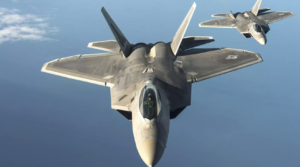
The bombers did not enter North American sovereign airspace, he said in a statement. Miller declined to say how close the bombers came to U.S. land. Some outlets reported they flew as close as 55 miles off Alaska’s west coast.

Friday’s encounter was the first of its kind in just more than a year, Miller said. A similar incident occurred off Alaskan waters in April 2017 in what U.S. officials have described as routine if not tense encounters between adversarial aircraft where territorial lines meet.
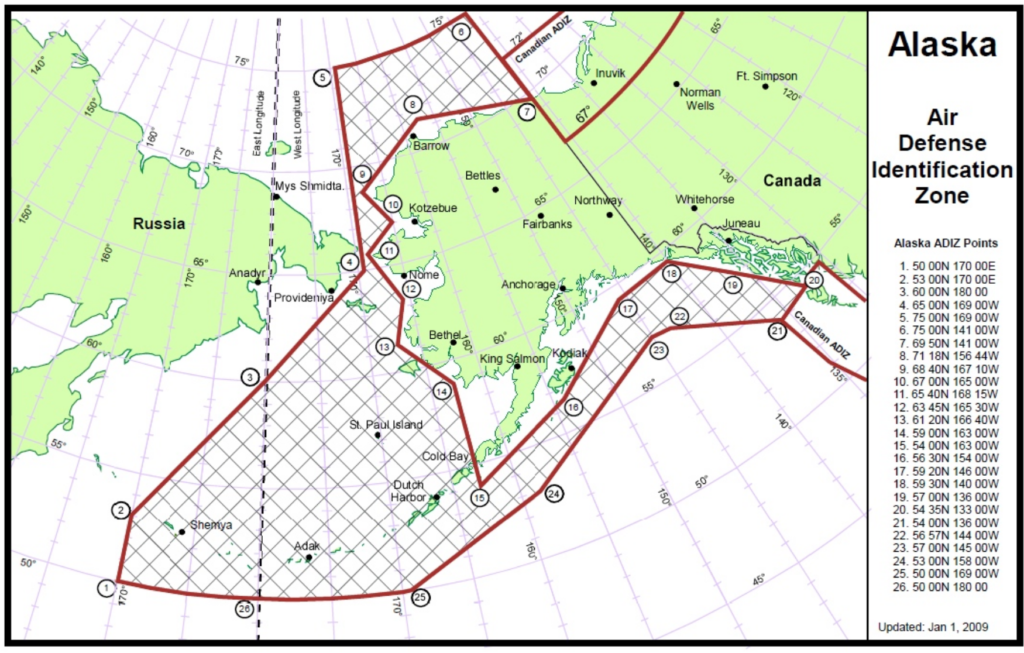
The ADIZ extends about 200 miles off the Alaskan coast and is mostly international airspace, Miller said, though Russian military activity will often prompt an in-kind response for U.S. warplanes. Intercepts in the zone occurred about 60 times from 2007 to 2017, The New York Times reported last year.

Extra Reading:


Bad NOTAMS = Runway overruns in Hamburg

If you’re headed to Hamburg, watch out. The runway is shortened, and the Notams are vague.

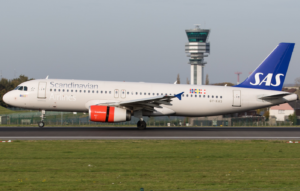
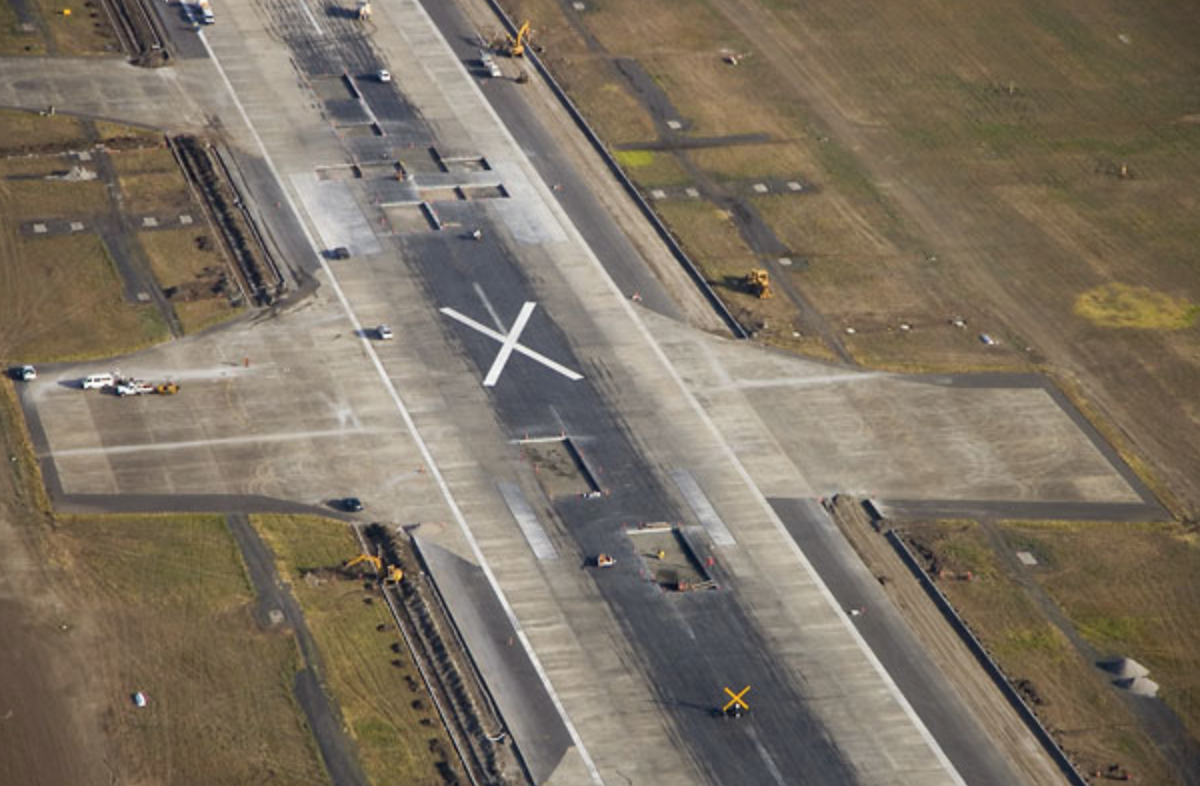
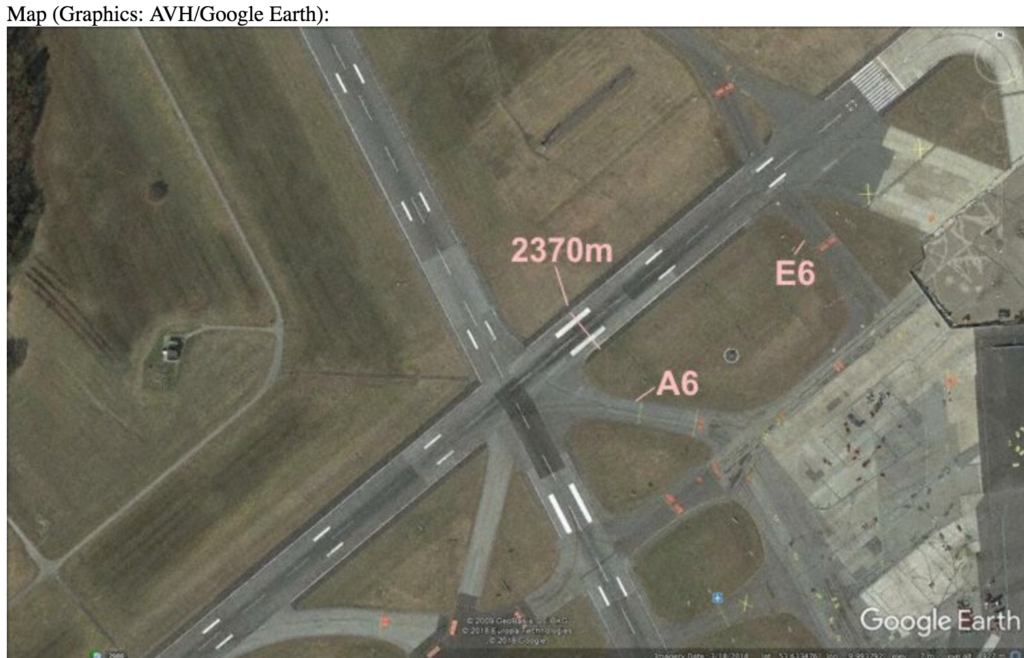
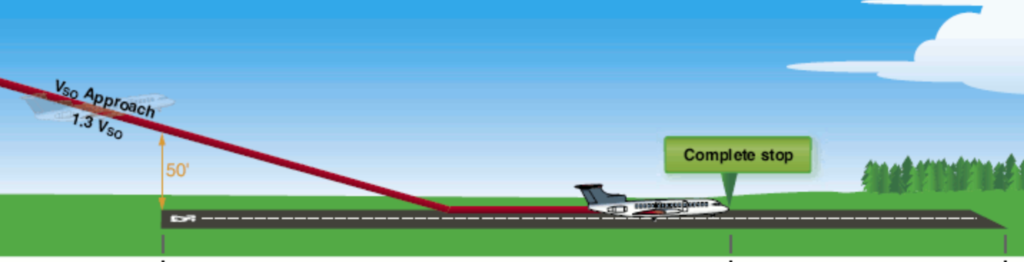
Poorly written NOTAMs struck again this week in Hamburg, Germany, when an A320 and a B737 both overran Runway 05 on landing – the first by SAS on May 11  and the second by Ryanair on May 15.

Runway 05 in EDDH/Hamburg has been undergoing works and a litany of related NOTAMs and AIP SUP were issued to explain.

A1608/18 – RWY 05 LDA 2370M. 12 APR 04:00 2018 UNTIL 23 MAY 21:00 2018. CREATED: 05 APR 09:50 2018

A1605/18 – SHORTENED DECLARED DISTANCES FOR RWY 05/23. AIP SUP IFR 09/18 REFERS. 12 APR 04:00 2018 UNTIL 23 MAY 21:00 2018. CREATED: 05 APR 09:42 2018

A2223/18 – TWY A1, A3, A4, A5 CLOSED. 02 MAY 10:26 2018 UNTIL 01 JUL 04:00 2018. CREATED: 02 MAY 10:27 2018

A2044/18 – ILS RWY 05 NOT AVBL. AIP SUP IFR 09/18 REFERS. 23 APR 09:17 2018 UNTIL 23 MAY 21:00 2018. CREATED: 23 APR 09:17 2018

A1725/18 – CONSTRUCTION EQUIPMENT IN DEP SECTOR ALL IFR DEPARTURES RWY 05. PSN WITHIN AN AREA 533810N 0095948E AND 533805N 0100023E. MAX ELEV 89 FT. NOT MARKED AND LIGHTED. SUP 09 2018, CONSTRUCTION WORK EDDH REFER. 12 APR 04:00 2018 UNTIL 23 MAY 20:00 2018. CREATED: 09 APR 13:10 2018

A1609/18 – RWY 23 CLOSED FOR ARR. 12 APR 04:00 2018 UNTIL 23 MAY 21:00 2018. CREATED: 05 APR 09:52 2018

Despite this, both were unable to stop before the last open exit (A6) and vacated further down the runway. Thankfully both resulted in no injury because all construction equipment was kept clear of, and beyond, taxiway E6.

A better NOTAM may have been:

RWY 05 IS SHORTER THAN USUAL DUE TO CONSTRUCTION WORK AT 23 END. REDUCED LANDING DISTANCE IS 2370M. LAST TAXIWAY OPEN FOR EXIT IS A6. CONSTRUCTION EQUIPMENT ON RUNWAY BEYOND TAXIWAY A6. 

You get the idea. Concise and plain language in one NOTAM to make it clear what the issue is and the consequences of going beyond 2370m of runway.

They did, to their credit, try and tidy it up since the incidents:

A2563/18 – RWY 05 CLSD EAST OF TWY A6. RWY 05 LDA 2370M. RWY 05 NON STANDARD TDZ AND AIMING POINT MARKINGS AT 400M FM THR ISO 300M. ADJUST LDG PERF ACCORDINGLY. 17 MAY 16:30 2018 UNTIL 23 MAY 21:00 2018. CREATED: 17 MAY 16:31 2018

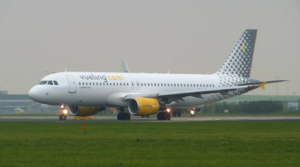
In another serious incident associated with these runway works, a Vueling A320 (another foreign operator) nearly landed at the wrong airport on May 11. Thankfully ATC intervened on that one.
All incidents are now the subject of investigation.

Naturally it’s imperative for crew and disptachers to check and read all NOTAMS thoroughly. But with over 40 current just for EDDH/Hamburg right now, it’s easy to understand why things get missed.

Until then “adjust landing performance accordingly”.

Extra Viewing:


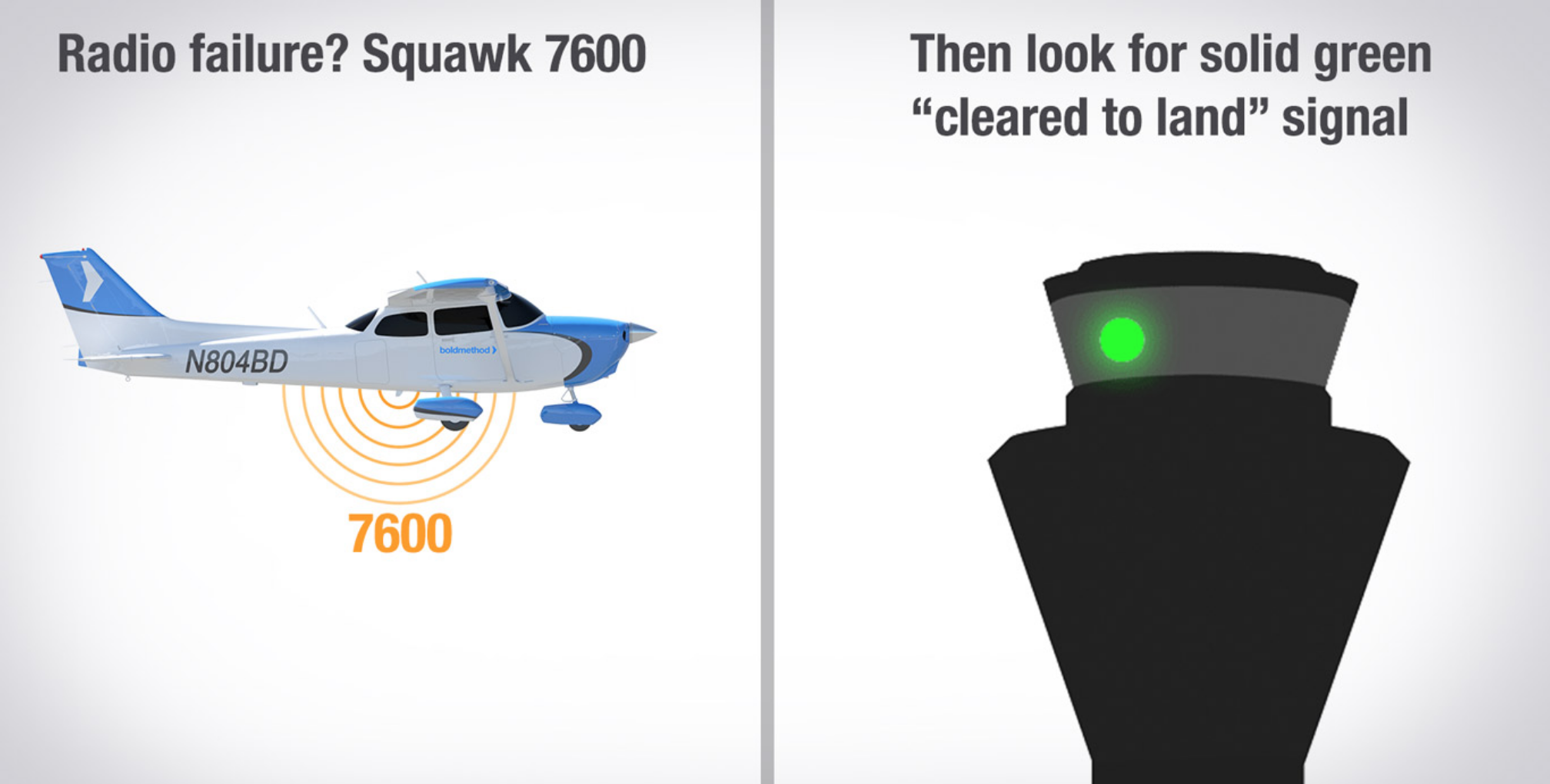
Europe squawks 7600 on ops in the Eastern Med

As we reported last month,  Eurocontrol published a ‘Rapid Alert Notification’ on their website regarding imminent air strikes into Syria.

“Due to the possible launch of air strikes into Syria with air-to-ground and / or cruise missiles within the next 72 hours, and the possibility of intermittent disruption of radio navigation equipment, due consideration needs to be taken when planning flight operations in the Eastern Mediterranean / Nicosia FIR area.”

Around this time LCCC/Nicosia FIR released this vague (and now deleted) NOTAM:

A0454/18 – INFORMATION TO AIRSPACE USERS

THE DEPARTMENT OF CIVIL AVIATION OF THE REPUBLIC OF CYPRUS IS CONTINUOUSLY MONITORING THE GEOPOLITICAL DEVELOPMENTS IN THE REGION AND WILL NOTIFY THE AVIATION COMMUNITY IF AND WHEN ANY RELEVANT AN RELIABLE INFORMATION IS AVAILABLE THE DEPARTMENT OF CIVIL AVIATION IS TAKING ALL APPROPRIATE ACTION TO SAFEGUARD THE SAFETY OF FLIGHTS. 12 APR 15:25 2018 UNTIL 12 JUL 15:00 2018 ESTIMATED. CREATED: 12 APR 15:26 2018

Beyond this alert and NOTAM though; nothing else happened. A few days later, the conflict escalated.
Very few commercial flights operate over Syria, and authorities in the US, UK, France and Germany have all previously issued warnings for Syrian airspace.

But many airlines regularly transit the LCCC/Nicosia FIR: there are frequent holiday flights to the main Cypriot airports of LCLK/Larnaca and LCPH/Paphos; overflight traffic from Europe to the likes of OLBA/Beirut, OJAI/Amman and LLBG/Tel Aviv; as well as traffic from Istanbul heading south to the Gulf and beyond.

What has happened in the few weeks since then?

Normal Eurocontrol protocol is (during expected ATC strike for example) – regular teleconferences with operators, active re-routes and removal of certain overflight approval requirements. So did that happen this time? No.

Essentially just radio silence on Syria and operations in the Eastern Mediterranean Sea.

Right now, it’s a busy place. With all the normal holiday traffic in the region, there is also a large number of military surveillance aircraft from numerous nations patrolling the region. United States assets operating from Greece and Italy. UK air power from Cyprus and the French from bases in Jordan. Add to that the normal Israeli defense air frames and even the odd Swedish gulfstream surveillance flight!  Then there are the Russians conducting aerial operations and defense exercises in and around Syria.

Cyprus has activated a litany of “temporary reserved/segregated areas” inside of Nicosia FIR.

On May 3rd, Cyprus issued this vague information, to ‘exercise caution’.

A0580/18 – NAVIGATIONAL WARNING TO ALL CONCERNED. EXTENSIVE MILITARY OPERATIONS IN NICOSIA FIR PILOTS TO EXERCISE CAUTION AND MAINTAIN CONTINUOUS RADIO CONTACT WITH NICOSIA ACC. 03 MAY 12:00 2018 UNTIL 31 MAY 23:59 2018. CREATED: 03 MAY 11:25 2018

There is also a current warning about GPS interruptions.

A0356/18 – RECENTLY, GPS SIGNAL INTERRUPTIONS HAVE BEEN REPORTED BY THE PILOTS OF THE AIRCRAFT OPERATING WITHIN SOME PARTS OF NICOSIA FIR. AIRCRAFT OPERATORS OPERATING WITHIN NICOSIA FIR ARE ADVISED TO EXERCISE CAUTION. 20 MAR 10:04 2018 UNTIL PERM. CREATED: 20 MAR 10:05 2018

It may be unfair to blame the authorities completely. At the end of the day, due to the lack of appropriate communication from the various security agencies it’s hard to get accurate information out there. Still, there was enough warning to alert civilian operators of imminent strike – but then nothing else. Shouldn’t airspace customers and users expect more?

So what to make of all this?

Let’s end it with this great 2009 (and still current) NOTAM from the Cypriots.

A0687/09 – NAVIGATION WARNING TO ALL CONCERNED.

15 SEP 09:30 2009 UNTIL PERM. CREATED: 15 SEP 09:34 2009


Ramadan 2018 – country by country

In most of the world, Ramadan in 2018 is expected to begin on May 16 and end on June 14, with both dates depending on lunar sightings. Eid-al-Fitr is expected to be observed June 14-15, though the exact dates will vary by country. Across the countries which celebrate the holiday, there will be delays processing permits, slots, and other operational requirements involving CAA’s and Airport Authorities.

Foreign nationals and their employers can expect immigration processing delays over the coming weeks in the Middle East, North Africa, Turkey and parts of Asia during the observance of the month of Ramadan and Eid-al-Fitr. Many government offices worldwide reduce their hours and/or close during Ramadan and Eid-al-Fitr.

Algeria:  The month of Ramadan is expected to begin May 16 or 17 and end June 13 or 14, depending on lunar sightings.  While public offices are not officially closed during Ramadan, most government offices will open at 10:00 a.m. and close at 3:30 p.m.  Government offices will also likely be closed on Eid-al-Fitr.  Processing delays can be expected for initial and renewal applications due to the reduced working hours.

Bangladesh:  The month of Ramadan will begin on May 15. While government offices will operate with reduced workforce during this month and until June 17, they will be closed from June 15 to 17 in observance of Eid-ul-Fitr. Processing delays of pending applications should be expected throughout the month of Ramadan.

Brunei:  The Ramadan season will begin on May 16 in Brunei. Government offices, including the Immigration Department, Labour Department and Energy Industry Department (EID) are expected to operate with reduced hours throughout the month of Ramadan. Government offices will be closed for Hari Raya Aidilfitri on June 15 to June 18, depending on lunar sighting. Processing delays are expected throughout Ramadan and may continue for up to two weeks after Ramadan ends.

Indonesia:  The month of Ramadan is expected to begin on May 17 ending with Hari Raya Idul Fitri, which will fall on June 15. Most government offices and consular posts are expected to reduce their business days by one to two hours throughout the month of Ramadan, and closures will likely occur several days before and after the Idul Fitri holiday (around June 11 to 22) due to staffing shortages. Processing delays are expected to occur during this period.

Malaysia:  The month of Ramadan will begin on May 17. Government offices, including the Immigration Department and other Work Pass adjudicating departments such as the eXpats Centre of the Malaysia Digital Economy Corporation Sdn. Bhd. and MYXpats Centre of the Expatriate Services Division, are expected to operate with reduced hours throughout the month of Ramadan. Government offices will be closed for Hari Raya Aidifitri from June 15 to 17. In addition to those days, eXpats Centre will also be closed on June 14. Processing delays are expected throughout the month of Ramadan and may continue for up to three weeks after the end of Ramadan.

Middle East/North Africa (Bahrain, Kuwait, Morocco, Oman, Pakistan, Qatar, Saudi Arabia, United Arab Emirates):  The month of Ramadan is expected to start May 16 or 17 and last until June 14 or 15, 2018. Government offices across the Middle East will be working reduced hours during Ramadan, which may affect processing times for all immigration applications. Foreign nationals and employers are advised to check with the relevant office for exact hours of operation. Processing delays could continue in the weeks following Ramadan due to Eid-al-Fitr holiday and application backlogs that accumulate during the closures.

Turkey: Government offices will be closed June 14 (afternoon), June 15 (full day), and potentially June 18. Processing delays can be expected for initial and renewal applications due to government office closures.


Who is still flying over Syria?

We have reported recently on the complex airspace picture and dangers associated with the ongoing Syrian conflict.

Most major carriers have taken the advice of numerous government agencies to avoid Syrian airspace altogether; the FAA going as far as calling on all operators flying within 200 nautical miles of the OSTT/Damascus FIR to “exercise caution”.  Today, the only airlines flying over the airspace are locally based Syrian airlines, Iraq Airlines and Lebanon’s Middle Eastern Airlines.

These MEA overflights are of interest. The airline is a member of the SkyTeam alliance and has codeshare agreements with several high-profile airlines (Air Canada, Air France, etc.) Despite the repeated warnings of the ongoing dangers associated with overflights of this conflict zone, the airline has chosen to schedule more than half-a-dozen flights over the airspace each day.

Some of these flights have the usual codeshare practise of other airlines booking their passengers on MEA flights. Our research shows that Etihad Airways, Qatar Airways (Oneworld Alliance) and Royal Jordanian Airlines (Oneworld Alliance) passengers are still being booked on MEA flights to/from Beirut; likely unbeknown to their customers of the increased flight risk. All three airlines continue to service Beirut with their own aircraft, but all three avoid Syrian airspace, naturally accepting the best advice to avoid the area completely.

Something isn’t right here: no warning anywhere about these flights being flown over Syria.

So why is it safe for passengers to overfly Syria on an MEA flight, but not on any of the other airlines? And more importantly, why is MEA still operating over Syria anyway?

It looks like Kuwait Airways will be the next codeshare partner of MEA, so it will be interesting to see whether the issue of the overflight of conflict zones will be discussed.

As always, keep an eye on our Safeairspace map for the latest worldwide updates.


Potholes at HKNW/Wilson Airport, Nairobi

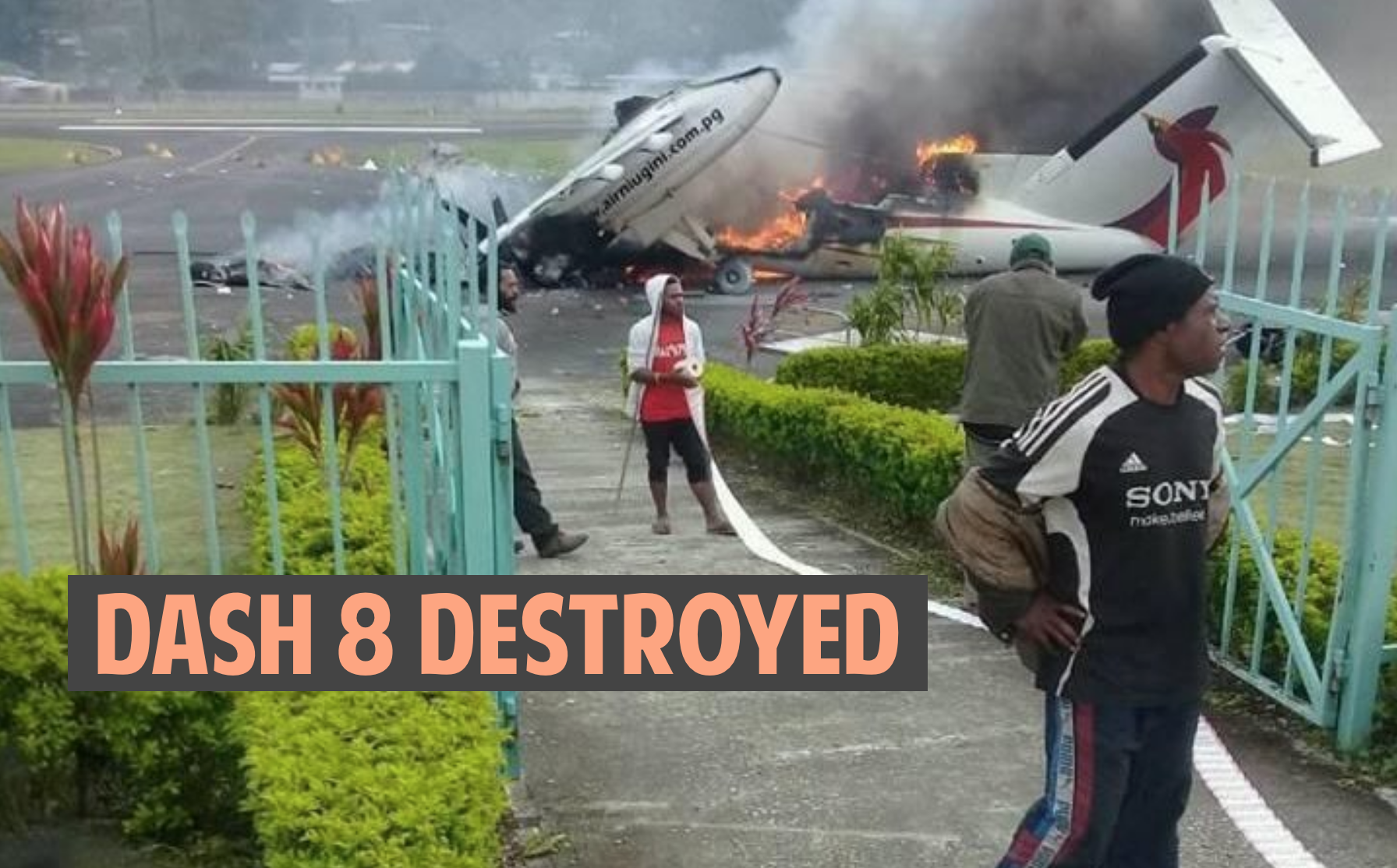
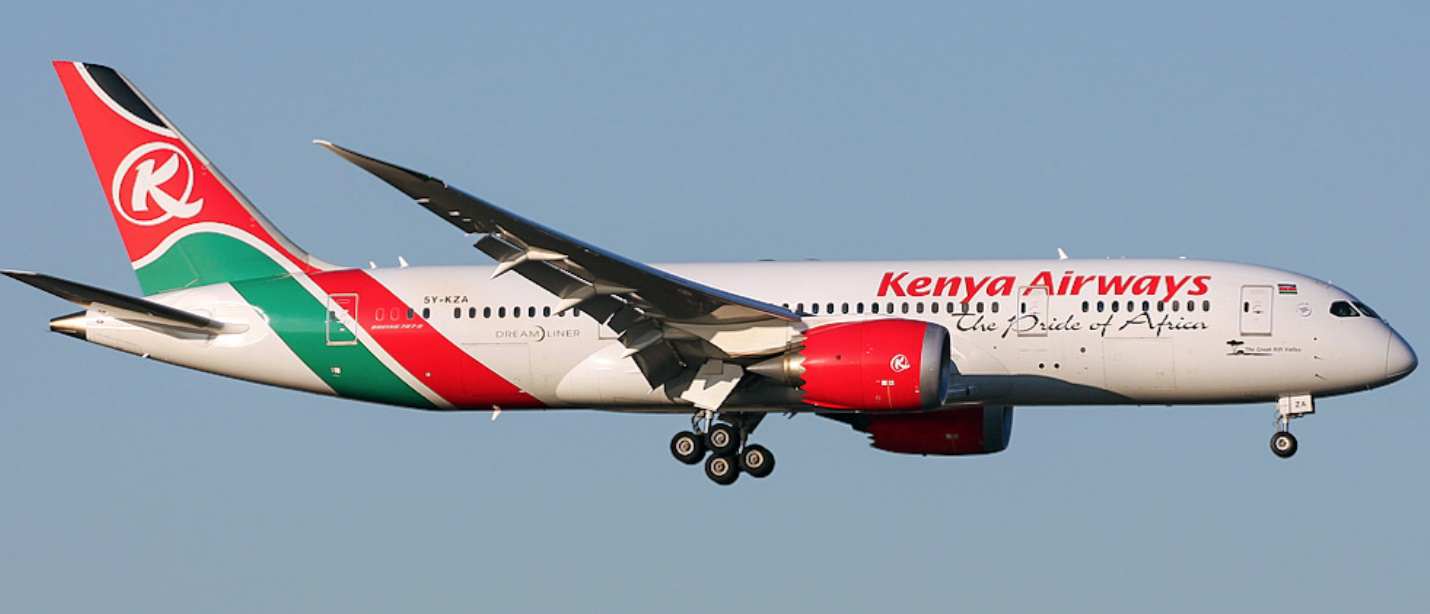
Some pictures have been doing the rounds on social media showing huge potholes on some the taxiways and part of the runway at HKNW/Wilson — Nairobi’s second airport — and a DHC-8 Dash 8 aircraft which got stuck in the mud, trying to avoid them.

According to the Kenya Airports Authority (KAA) website, Wilson Airport is “one of the busiest airports in terms of aircraft movement in East and Central Africa. However, so far the KAA have not issued any warnings on either their website or by Notam regarding the poor state of the taxiways and runway.


Japan scrambles record number of jets as tensions rise with China

In Short: Japan scrambled a record number of fighter jets in the past year. The number rose to an all-time high of 1,168 in the year to March 2017, easily beating the previous record of 944 set at the height of the cold war in 1984. Chinese aircraft approaching Japanese airspace prompted 851 of the incidents, an increase of 280 over the previous year.

According to official figures released on Thursday, Japan’s Air Self Defense Force is scrambling fighter jets in record numbers as Chinese military activity escalates. Interceptions of Chinese planes rose by half in the year to March 31, in response to increases in the communist country’s activity in and around the East China Sea.

Japan worries that China is probing its air defences as part of a push to extend its military influence in the East China Sea and western Pacific, where Japan controls an island chain stretching 1,400 km (870 miles) south towards Taiwan. The figures highlight China’s growing assertion of military power in East Asia as it expands and modernises its armed forces in line with rapid economic growth.

For the first time, Chinese jets recently began flying through the Tsushima Strait into the Sea of Japan, and through the Miyako Strait into the Pacific Ocean.

But it’s not only China that Japan is worried about. Last week, Japanese Prime Minister Shinzo Abe warned North Korea may be capable of firing a missile loaded with sarin nerve gas towards Japan. “There is a possibility that North Korea already has a capability to deliver missiles with sarin as warheads,” he told a parliamentary national security committee.

And then there’s Russia. Scrambles by Japanese aircraft were high throughout the 1980s in response to flights by Soviet aircraft during the cold war. They fell back to 100-200 incidents a year during the 1990s and 2000s, but began to pick up again a decade ago as both China and Russia grew more assertive.

Mr Abe has been trying to negotiate with Russian president Vladimir Putin over the future of four disputed islands in the Kuril chain to Japan’s north, but has made limited progress, with the jet scrambles showing Moscow’s determination to make its presence felt on its eastern border. There were 301 scrambles to intercept Russian aircraft during the year, 13 more than the previous year, including incidents where Russian jets circumnavigated the Japanese Diaoyu/Senkaku Islands to the south.

Extra Reading:


Hong Kong near-misses on the rise

According to recent figures released by the Civil Aviation Department (CAD) of Hong Kong, 2017 saw an increase in ‘loss of separation’ incidents within it’s airspace.

Twelve times, two aircraft came within 1000 feet and less than 5 nautical miles of each other last year. This is the highest in six years.

Local law makers are now calling for a new ATC system to be implemented. A local pilot operating regularly through VHHH/Hong Kong International Airport (HKIA) commented to FSB recently that the Air Traffic Services have been in “constant decline” over the past seven to ten years.

CAD insisted that alerts were issued “in a timely manner as per system design”. It said “losses of separation” were due to a number of factors such as adverse weather, operating procedures and human factors and they did occasionally occur due to the old air traffic system and other systems around the world. “CAD would investigate every individual incident according to established procedures and make necessary improvement,” the department added.

Hong Kong airspace is congested at the best of times. With four major airports within 150 kilometres and many overflights to and from mainland China, the 2016 introduction of a new Air Traffic System known as “Autotrac3” was set to assist in solving some of the complexity whilst increasing safety. The transition to the new system was challenging with various system issues.

The TMA is also complicated by significant terrain and regular adverse weather. Recent statistics show that air traffic is up over 3.5% already in 2018 with 36,000 movements occurring monthly (6.4 million passengers).

The continued massive year-on-year growth has seen the start of work to construct a third runway, expected to be operational in 2023-24 to facilitate the expected 100 million passengers using HKIA by that time.

This will no doubt just put further strain on an already complicated airspace situation.

The new third runway at HKIA- coming 2023-24.

Have you operated through the Hong Kong area lately? Can you provide an update?

Extra Reading:


US updates its Syria airspace warning

Following the US, UK and French airstrikes on Syria on April 14, the US FAA say there is now a risk posed to civil aviation within 200 nautical miles of the country due to increased military activity, GPS and comms interference, and the potential for more long range surface-to-air missiles in the area.

In the updated US FAA conflict zone Notam and Background Information for Syria, US civil aviation continues to be prohibited from operating within Syrian airspace, but has also now been instructed to “exercise caution” when operating within 200 nautical miles of Syria’s OSTT/Damascus FIR.

As they say in the Background Information doc, here’s why this updated guidance has been published:

“Heightened military activity associated with the Syrian conflict has the potential to spill over into the adjacent airspace managed by neighboring states and eastern portions of the Mediterranean Sea. Military operations may result in the risk of GPS interference, communications jamming, and errant long-range SAMs straying into adjacent airspace within 200 nautical miles of the Damascus Flight Information Region (OSTT FIR). These activities may inadvertently pose hazards to U.S. civil aviation transiting the region. This concern stems from the Syrian military response to previous airstrikes on 10 February 2018, which included Syrian forces launching long-range SAMs. Some of the Syrian SAMs flew into adjacent airspace and landed in Lebanon and Jordan, according to media reporting. GPS interference and communications jamming in the region may also occur associated with the military activity. Some U.S. air carriers have reported GPS interference in portions of the eastern Mediterranean Sea in the period following the 10 February airstrikes, and the interference may have originated from the Damascus Flight Information Region (OSTT FIR) as a defensive response.”

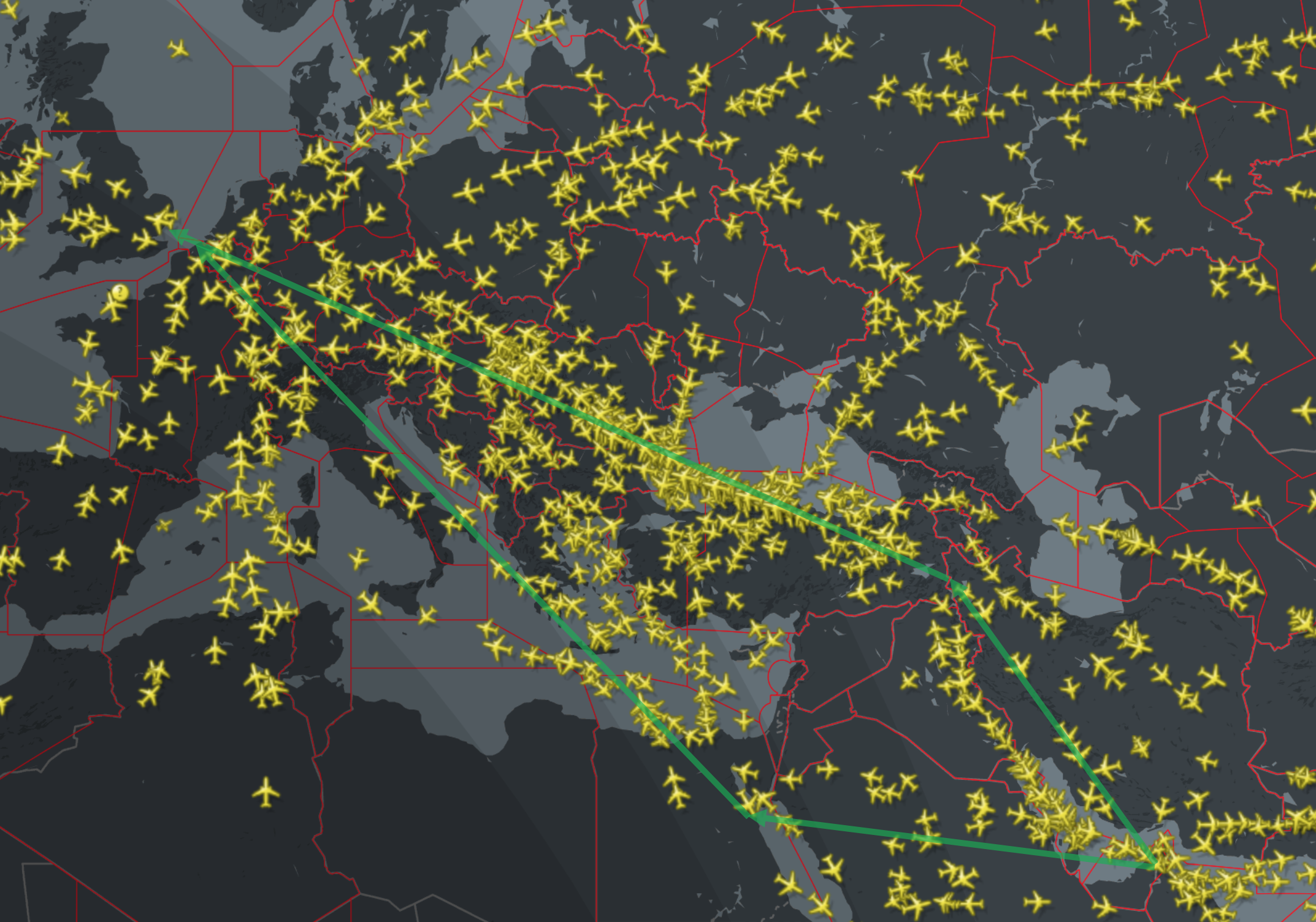
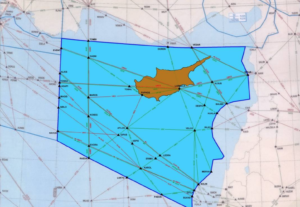
The US FAA haven’t provided a map to show where boundary would lie for 200 nautical miles from the border of Syrian airspace, but we think it would look something like this:

The 200 nautical mile zone would include the entire airspace of Lebanon, Jordan and Israel; half of Turkey and Iraq; and a portion of airspace over the LCCC/Nicosia FIR that covers the whole island of Cyprus!

The area may seem vast, but the possibility of further US, UK and French strikes against Syrian targets does still exist, as well as the Syrian military using surface-to-air missiles in response to any attacks.

During the airstrikes on April 14, the Syrian military reportedly used Russian-made missile systems to attempt to counter the strikes – these included missiles which have the capability to engage aircraft at altitudes well above FL900 and at ranges of around 190 miles.

While there is likely no intention to target civil aircraft, with all the missile defence activity going on in Syria and the spillover into neighbouring countries there still remains a risk of misidentification – and that’s what the 200 nautical mile warning seeks to address.

Amidst continued heavy military air presence in the region, almost all airlines are now avoiding Syrian airspace entirely. Lebanon’s Beirut based MEA has now also re-routed all of their flights to avoid Syrian Airspace (was using it post recent attacks). Only local operators Fly Damas, Charm Wing Airlines, Syrian Air and Iran’s Mahan Air continue to use the airspace.


Here’s what the Pentagon had to say about the airstrikes on April 14:

  • 105 missiles were launched in the strikes against Syria. They included 30 Tomahawk missiles fired from the USS Monterey and seven from the USS Laboon in the Red Sea. Another 23 Tomahawk missiles were launched from the USS Higgins in the North Arabian Gulf.
  • A submarine, USS John Warner, fired six Tomahawk missiles from the eastern Mediterranean and a French frigate in the same area fired another three missiles.
  • At least one US Navy warship operating in the Red Sea participated in airstrikes, as well as US B-1 bombers.
  • The air assault involved two US B-1 Lancer bombers, which fired 19 joint air to surface standoff missiles. The British flew a combination of Tornado and Typhoon jets, firing eight Storm Shadow missiles, while French Rafale and Mirage fighter jets launched nine SCALP missiles.
  • Four Royal Air Force Tornado GR4’s were used in the strikes, launching Storm Shadow missiles at a “former missile base — some 15 miles west of Homs,” according to the UK Ministry of Defense.
  • Syria fired 40 surface to air missiles ‘at nothing’ after allied air strikes destroyed three Assad chemical sites.
  • The United States remains “locked and loaded” to launch further attacks.
  • United States and Allies maintain positive posture of force in the region, especially in the air.

105 missiles launched from multiple locations in the region.
Over 40 Syrian surface to air missiles fired “at nothing”.

Further Reading:

A0454/18 – INFORMATION TO AIRSPACE USERS

THE DEPARTMENT OF CIVIL AVIATION OF THE REPUBLIC OF CYPRUS IS CONTINUOUSLY MONITORING THE GEOPOLITICAL DEVELOPMENTS IN THE REGION AND WILL NOTIFY THE AVIATION COMMUNITY IF AND WHEN ANY RELEVANT AN RELIABLE INFORMATION IS AVAILABLE THE DEPARTMENT OF CIVIL AVIATION IS TAKING ALL APPROPRIATE ACTION TO SAFEGUARD THE SAFETY OF FLIGHTS. 12 APR 15:25 2018 UNTIL 12 JUL 15:00 2018 ESTIMATED. CREATED: 12 APR 15:26 2018

If you have anything to share that we’ve missed, please tell us by email bulletin@fsbureau.org


ICAO Raises Weight Threshold for Hardened Cockpit Door Requirement

In Short: Following a three-year effort from industry groups and aircraft manufacturers, the International Civil Aviation Organization (ICAO) will raise the weight threshold for requiring hardened cockpit doors for aircraft with 19 or fewer passenger seats from 45.5 metric tons (100,310 pounds) maximum certificated takeoff weight to 54.5 metric tons (120,152 pounds).

This decision will enable the full type certification and worldwide use of current and future extended-range business aircraft such as the Bombardier Global 7000 and Gulfstream G650ER.

The International Civil Aviation Organization (ICAO) has changed its weight rules regarding strengthened cockpit doors on business jets. Toughened doors are required for aircraft operating charter flights.

Previous rules stated that hardened doors were needed for business jets with 19 seats or fewer, with a maximum take-off weight of 100,310lbs (45.5T). The new rules increase the maximum take-off weight to 120,152lbs (54.5T).

“This change maintains the security level intended by the original hardened cockpit door requirement, but recognizes the important distinction between airline service and business aircraft operations,” said Sarah Wolf, CAM, NBAA senior manager of security and facilitation.

The International Business Aviation Council (IBAC), in concert with the International Coordinating Council of Aerospace Industries Associations and aircraft manufacturers, proposed the changes to Annex 6 Part 1 – International Commercial Air Transport.

“The effort took much planning and working through the full standard-making process at ICAO and shows ICAO recognition of greater operational capabilities and industry evolution,” said IBAC Director General Kurt Edwards.

The new standard will become effective Jul 16, 2018, and applicable to member states in Nov 2018.


11APR: EASA missile warning for European airspace, Qatar airspace update, Italy ground handling strikes

Weekly International Ops Bulletin published by FSB for OPSGROUP covering critical changes to Airports, Airspace, ATC, Weather, Safety, Threats, Procedures, Visas. Subscribe to the short free version here, or join thousands of your Pilot/Dispatcher/ATC/CAA/Flight Ops colleagues in OPSGROUP for the full weekly bulletin, airspace warnings, Ops guides, tools, maps, group discussion, Ask-us-Anything, and a ton more! Curious? See what you get. Rated 5 stars by 125 reviews.

LIZZ/Italy More strikes planned by ground staff at airports across the country on Apr 13. The airports expected to be worst affected are: LIML/Milan-Linate, LIMC/Milan-Malpensa, LIRP/Pisa, and LIRQ/Florence.

NFZZ/Fiji & Tonga Tropical Cyclone Keni is weakening as it moves away southwards from Fiji and Tonga, after bringing heavy rain and destructive winds to the islands from Apr 9-11. All airports are open an operational.

LROP/Bucharest The runways are in a state of disrepair, local reports of multiple blown tires in recent weeks due to potholes. B747-200/300/400 aircraft are effectively prohibited until Jul 4, as urgent maintenance work is now planned on both runways.

SPJC/Lima Due to the upcoming Summit of the Americas in Lima, no overnight parking allowed on the General Ramp between Apr 10-17. Overnight parking in a hangar or in the military zone is possible, contact: cco@atsaperu.com

SVZZ/Venezuela The Venezuelan Government has lifted the ban on flights to/from the islands of Aruba, Bonaire and Curacao. However, a new diplomatic spat has started with Panama, with Venezuela banning Copa Airlines, and Panama banning several Venezuelan airlines in retaliation. So far, no restrictions announced for GA/BA flights between the two countries.

YBCG/Gold Coast Whilst the Commonwealth Games are going on, there’s an ADIZ 90NM around the airport that will remain in place until Apr 15, and authorities are asking operators not to plan YBCG as an alternate. Full details here.

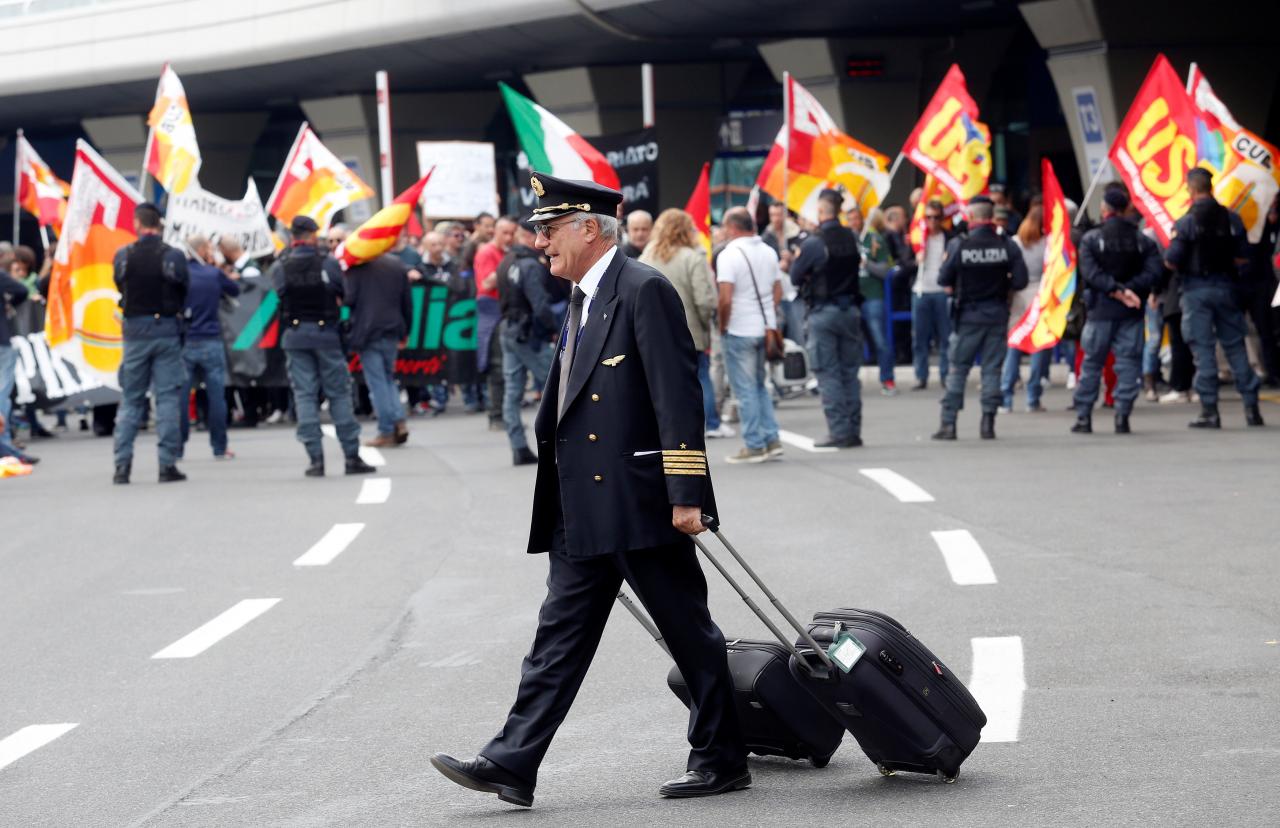
LFZZ/France More Air France strikes planned on Apr 10-11, 17-18 and 23-24. So far with these strikes the impact each day seems to be fairly similar – around 30% of all Air France flights get cancelled, with the Paris airports particularly affected.

NZZZ/New Zealand New Zealand will be implementing PBN procedures across its airspace from Nov 2018. Full details here.

EZZZ/Europe Military exercise ‘Frisian Flag’ will be taking place from Apr 9-20, mainly over Dutch/German airspace just off the north coast of Germany. Low impact expected overall, as exercise areas have been capped to FL240.

SCZZ/Chile The LATAM Airlines cabin crew strike will go ahead, from Apr 10-13, affecting all domestic flights and international connections in Chile.

OLZZ/Lebanon Possible new airspace safety risk in the OLBA/Beirut FIR, after the Syrian and Russian governments claimed that on Apr 9, Israeli fighter jets launched airstrikes on a Syrian military base from over Lebanese airspace. Israel has not yet responded to the claim.

KSBA/Santa Barbara The airport will be closed nightly from 5z-13z between Apr 9-13 for runway work.

RPZZ/Philippines The Philippine island of Boracay will be completely closed to tourists for six months, starting on Apr 26, following concerns of environmental damage. The government will use this time to clean up the island. All domestic carriers have already cut flights to Boracay’s nearest airport, RPVE/Caticlan.

ENBR/Bergen From May 22 to Jun 15, the airport will be closed to all traffic, including emergency diverts, each night from 2215-0400z Sun-Fri.

OAZZ/Afghanistan All flights need to file flight plans in advance to OAKXZQZX, OAKBZQZX, and OAKKZQZX for any flight in the OAKX/Kabul FIR.

EDDH/Hamburg PPR required for all flights with ICAO Aerodrome code C-F, except commercial flights. Call +49 40 5075 1110 or email at vvd@ham.airport.de. Will be in effect until Jul 4.

ZLLL/Lanzhou Airport to close daily from 1750-2230z, from Apr 11 to Jul 10.

VTZZ/Thailand Public holiday across Thailand from Apr 13-15, for the annual Songkran celebrations. The CAA will remain open throughout for issuing permits, but all Thai airports will be busy – apply for parking asap.

FAZZ/South Africa From 9-13 Apr, if you have any problems with slots, the phone numbers to contact will be different than normal. Call the Central Airspace Management Unit +27102072787 or +27822541955.

KCNY/Moab After being closed for three months of construction work, the airport is on schedule to re-open on May 1. The terminal is being upgraded, and the runway is being strengthened and widened from 75ft to 100ft.

DNAS/Asaba The airport will be completely closed for repair, from Apr 9 to May 15.

Weekly International Ops Bulletin published by FSB for OPSGROUP covering critical changes to Airports, Airspace, ATC, Weather, Safety, Threats, Procedures, Visas. Subscribe to the short free version here, or join thousands of your Pilot/Dispatcher/ATC/CAA/Flight Ops colleagues in OPSGROUP for the full weekly bulletin, airspace warnings, Ops guides, tools, maps, group discussion, Ask-us-Anything, and a ton more! Curious? See what you get. Rated 5 stars by 125 reviews.


European air traffic warned over Syria strikes

EASA are warning of possible air strikes into Syria being launched from locations within the LCCC/Nicosia FIR over the next 72 hours (Apr 11-14).

Eurocontrol have published a ‘Rapid Alert Notification’ on their website, with a statement from EASA that reads:

“Due to the possible launch of air strikes into Syria with air-to-ground and / or cruise missiles within the next 72 hours, and the possibility of intermittent disruption of radio navigation equipment, due consideration needs to be taken when planning flight operations in the Eastern Mediterranean / Nicosia FIR area.”

Very few commercial flights operate over Syria, and authorities in the US, UK, France and Germany have all previously issued warnings for Syrian airspace.

But many airlines regularly transit the LCCC/Nicosia FIR: there are frequent holiday flights to the main Cypriot airports of LCLK/Larnaca and LCPH/Paphos; overflight traffic from Europe to the likes of OLBA/Beirut, OJAI/Amman and LLBG/Tel Aviv; as well as traffic from Istanbul heading south to the Gulf and beyond.

Last year, two US warships in the eastern Mediterranean fired missiles at an air base in Syria after a chemical weapons attack by the Assad regime killed more than 80 people.

This week, following another suspected chemical attack by the Syrian government against civilians in a rebel-held town in Syria, the US President Donald Trump warned there would be a “forceful” response. On Apr 11, he took to Twitter to warn Russia to prepare for strike on Syria:

For the airstrikes on Syria last year, the US gave Russia advance warning of the attack, and Russian forces opted not to attempt to shoot down the missiles using its air defence systems stationed in the region.

However, this time round things could be very different. This week, Russia’s ambassador to Lebanon reminded the US that the head of the Russian military has said his forces in Syria would not only shoot down any missiles that threatened them but would target the source of the weapons as well.

The only US warship currently in the Mediterranean and capable of a possible strike is the USS Donald Cook, which left port in Larnaca and started to patrol in vicinity of Syria on Apr 9. According to some reports, it has since weighed anchor off Syrian territorial waters, and has been “buzzed” by low-flying Russian military jets.

Another 3 warships of the Sixth Fleet are already in the Atlantic Ocean, and on Apr 11 the entire US Truman Fleet (including an aircraft carrier, 6 destroyers, and nearly 6,500 sailors) departed Norfolk, Virginia, to head to the Mediterranean Sea. However, it may take up to a week for any of these warships to arrive.

Here’s an overview of US and coalition forces’ military options currently thought to be on offer in the eastern Mediterranean:

With the downing of MH17 by a surface-to-air missile over Ukraine in 2014, as well as all the recent unannounced missile tests by North Korea, there has been increased focus by the aviation community on the risks posed by conflict zones. If any missiles are launched from the Eastern Mediterranean in the next few days, be prepared for possible last-minute reroutes, as any Notams that get published may not give much warning.

Further reading:

One of our biggest missions in OPSGROUP is to share risk information and keep operators aware of the current threat picture. Check out Safeairspace for the most up-to-date information on airspace safety around the world.


Qatar airspace update – military jets intercepting civil flights

In short: The situation is volatile and constantly changing, even by the hour. Military interception has been reported so the best advice is to be vigilant with sticking to assigned routes for all operations around the region.

The airspace blockade of Qatar has been ongoing since June 2017 with little end in sight.

But over the past few months, tensions have been escalating;

Here is the latest operational information we have:

A reminder that Qatar does not have its own FIR. It sits entirely within the Bahrain FIR- you will find Qatar airspace NOTAMs under OBBB. The Doha TMA extends SFC to FL245. Above this sits the Bahrain UIR.

Bahrain and Egypt have relaxed some of their initial restrictions. Saudi and UAE have not.

The current state of play as of 6 April 2018.


_________________________________________________________________________

Have you been through the region recently? Can you provide an update?

Extra Reading:

Some fascinating reporting about what this whole blockade is all about.

  • How a ransom for Royal falconers reshaped the Middle East” – New York Times
  • What the falcons up with Qatar?” – NPR Podcast


Maldives – Civil Unrest Update

In short: Civil unrest has calmed and state of emergency lifted on March 22, 2018. No impact at Malé International Airport or outlying islands or resorts. #OpsNormal.

The Maldives, a country known far more as a honeymoon hotspot in the Indian Ocean than as a hub of political crisis, is back to “business as usual,” according to its president, Abdulla Yameen, following the lifting of a 45-day state of emergency on March 22.

Latest Updates:

  • After the Maldivian government declared a state of emergency in February, tourists around the world are canceling their beachfront vacations in droves. The blow to the Maldives’ tourism industry is significant, as it accounts for over 30% of the country’s gross domestic product, reaching $3.5 billion in 2017. Ratings agency Moody’s has said it will lower its 4.5% growth forecast for 2018 if tourists avoid the island nation for a prolonged period.
  • On 22 March 2018, the state of emergency in Maldives was lifted. There could still be further anti-government protests in the capital Malé and a number of other towns. Recent protests have resulted in pepper spray being used by the security forces. You should exercise caution and avoid any protests or rallies. There are no reports that outlying islands, resorts or Malé International Airport have been affected.
  • Some local airlines have suspended flights to China due to the on-going unrest and decline in tourism numbers.

Extra Reading:

Have you been through the Maldives lately and can you update opsgroup members on the latest?


Here’s what happens when Europe’s slot system crashes

On 3rd April 2018, a failure with the central European slot computer plunged the entire ATC system into crisis mode, with multiple knock on effects. Here’s what happened:

1. The system that allocates ATC slots to flights, and therefore manages the flow of traffic across Europe, failed at 1026 UTC. It’s called the ETFMS (Enhanced Tactical Flow Management System), but aka “The Slot Computer”

2. There is a Contingency Plan for this situation. Airports are supposed to use this, which gives a quick table of departure intervals allowed according to the destination. You can view the plan here and see what it looks like for all the main airports: http://www.eurocontrol.int/publications/network-manager-atfcm-procedural-contingency-plan

3. Some airlines reported that Istanbul, amongst others, were initially holding all departures, as local authorities were not well versed in the Contingency Plan and were unclear as to how to handle the situation. Eurocontrol then started calling round the 70 main airports to make sure they knew what they were supposed to do!

4. All flight plans filed before 1026Z were lost. Operators were instructed to re-file all their FPL’s, as well as those for the rest of the day, as Eurocontrol said they would only switch back on the slot computer once they reached a critical mass of filed flight plans in the system.

5. With the Contingency Plan in place, there was around a 10% total capacity reduction across the whole of Europe. Actual delay numbers – usually available on the NOP – were impossible to verify, because of all the missing FPL’s in the system.

6. Normally, Eurocontrol will re-address your FPL to ATC Centres outside the IFPZ. During the slot computer outage, operators had to do this manually, ie. find the FIR’s they would cross, get their AFTN addresses (like HECCZQZX), and send them their FPL.

7. The actual system failure was fixed at around 1400Z, but only went back online at around 1800Z, after it had been thoroughly tested and Eurocontrol were happy there were enough FPL’s back in the system.

In over 20 years of operation, Eurocontrol said “the ETFMS has only had one other outage which occurred in 2001. The system currently manages up to 36,000 flights a day.”


Expect breathalyzer during German Ramp checks

German authorities confirm they have been conducting random breathalyzer tests during ramp checks since as far back as Jan 2017, despite this not being part of the official EU SAFA ramp inspection guidelines.

In Dec 2016, following the accident of the Germanwings Flight 9525, EASA published a proposal to the European Commission to better support pilot mental fitness. One of their recommendations was to introduce random alcohol screening as a part of ramp checks within the EU.

Although that proposal has still not been adopted yet, local authorities in Germany say they can still perform these tests on the basis of German national law alone.

Have you had a recent ramp check anywhere with any surprise items not part of the standard checklist? Comment below…

Further reading


New rules for charter flights to Greece

On Mar 23, the Greek CAA introduced a new rule requiring charter flights on non EU-registered aircraft with up to 19 seats to apply for an annual TCO license before operating to Greece.

This is in addition to having to obtain the standard landing permit, as well as the TCO approval from EASA.

So far, the CAA haven’t officially published an English version of the new rule anywhere, although they say that it will be updated in the AIP at some point. But as handling in Greece is mandatory, they decided to distribute the information to all handling agents & aviation service providers in Greece for them to notify their customers directly.

Click here for the translated version of that document, with all the info you need to know about how to apply.

It looks like you can’t apply for this new TCO license through the CAA directly; you can only do so through your “legal representative in Greece” – which can be your handling agent, allowing at least 5 working days to obtain the license if all submitted paperwork is correct.


Fixing Notams – we’re on it. Help us.

Update: November 1st, 2019: The Notam Team is up and running – we’re fixing Notams.
Follow our progress at fixingnotams.org.


OK. We’re done writing articles about it, and making goat jokes – we’ve moved the “Fixing Notams” job to the top of our list..

OpsGroup is all about information – getting the essential risks and changes that flight ops personnel need to know about into their hands without delay. Our group agrees – plenty of colourful comments on Notams from members.

Now we want your ideas and opinions on the fix.

Here’s our ask:

1. Rate the current system – and then click the things you would like to see.

2. If you’re in charge of a group of people – whether you are the Chief Pilot at Lufthansa, the Tower Chief in Shannon, or manage an Ops team of two – Get this out to your people and ensure everyone has their say.

Forward this to your team of ATCO’s, Pilots, Dispatchers:

We especially want to hear from pilots, controllers, and dispatchers, and if you read on, you’ll see why.

Do it like this:

  • Send them the survey link: https://fsb1.typeform.com/to/irZiFM
  • OR, click here for a magic pre-written email
  • OR, send them a link to flightservicebureau.org/notams
  • OR, share this facebook post:

The survey direct link is: https://fsb1.typeform.com/to/irZiFM


The Solution

If you took the survey, you saw this:

That part is pretty easy – presenting the Output of the system is a straightforward enough task.

The Input part – that’s where the real work is.

First, we are working on an Artificial Intelligence answer to finding Critical Notams in the current legacy system. This will allow us to present the data flow in order of what matters, and leave those cranes, birds, and grass cutters right at the bottom.

Second,

If you read my article on MH17 – a darker truth, you’ll understand why it’s important to open up the system to allow a trusted group to shape the information flow.

That begins with Pilots, Air Traffic Controllers, and Dispatchers. I have the great fortune to be all three, and it’s very clear to me that just like Trip Advisor – and our own “Airport Spy” in OpsGroup – this idea will work. We’ve already seen in OpsGroup how much we trust the information from other users in our group.

It’s key to the future trust of the Notam system. Which we should rename, but that’s another days work.

If you got this far, thank you for being part of the solution! You can always write me a note at mark@fsbureau.org

Thanks!
Mark.


Aerolineas aircraft grounded due to hail damage

The Argentinian airline Aerolineas has suspended domestic ticket sales until Mar 25. They say multiple aircraft were recently damaged by hail in SABE/Buenos Aires during a storm on Mar 14, which means they now need to reprogram their schedule until the aircraft get fixed.

The aircraft that sustained the damage were 15 Boeing 737’s in the airline’s domestic and regional fleet. Strangely, perhaps, no other airlines have reported similar damage to their aircraft from the storm.

Aerolineas say they are now assessing the aircraft damage with help from Boeing, with the hope that they will have most of the aircraft back in operation before the Easter travel weekend.


Cape Town – No Fuel!

FACT/Cape Town is facing a fuel restriction, no fuel available as of now (20 MAR 2018). The reason for the restriction is not known, but we have reached out to several suppliers who have all confirmed the same information.

We’re checking up to find the reasoning, as well as an estimated date of availability.

If you have any additional information, you can reach out at team@flightservice.org


Kurdistan airports to re-open

The Iraqi Prime Minister has lifted the government ban on international flights to the Kurdish airports ORER/Erbil and ORSU/Sulaymaniyah.

The central government will take full control of the airports, and will start allowing international flights to resume in the coming days. No international flights have operated from these airports since the end September 2017. Their closure was seen as a punitive measure taken by the Iraqi central government following the September 25th independence referendum in the Kurdistan Region.

The authorities have now withdrawn the Notams that were previously in place for both of these airports advising that they were closed to international flights. Both Iran and Turkey currently still have Notams in place prohibiting flights to these airports from using their airspace – but we expect these to be updated soon to reflect the lifting of the ban.

A0661/18 NOTAMR A6765/17
Q) LTXX/QAFXX/IV/NBO/E /000/999/3901N03524E465
A) LTAA LTBB B) 1802010551 C) 1803312359 EST
E) ALL TFC FROM/TO ORSU AND ORER AERODROMES (ALSO AS ALTERNATE
AERODROME) ARE NOT AUTHORIZED TO USE TURKISH AIRSPACE UNTIL FURTHER
NOTICE EXC EMERGENCY, AMBULANCE AND HUMANITARIAN AID FLIGHTS.
A0223/18 NOTAMR A3746/17
Q) OIIX/QAFXX/E/000/999/
A) OIIX B) 1801160610 C) 1804160600 EST
E) ALL TRAFFIC FM OR TO ORSU AND ORER ARE NOT AUTHORIZED TO USE
TEHRAN FIR.

Further reading:


Sao Paulo’s second airport to regain international status… for nine days

For the first time in over twenty years, the city’s second airport, SBSP/Congonhas, will be open to international flights, from 9-18th March 2018.

This is happening as the World Economic Forum on Latin America 2018 will be taking place in Sao Paulo from Mar 13-15, and as space is limited at the main airport, SBGR/Sao Paulo International, the authorities think they’ll need extra space for attendees’ aircraft. So at SBSP/Congonhas, only BA/GA will be accepted, and nothing larger than 737BBJ / A319ACJ.

This will also serve as a trial period to check if the airport could regain its international status on a permanent basis. Scheduled international flights stopped operating from Cogonhas back in 1985, and the airport finally lost its international status in 2008.

The airport’s runways were resurfaced last resurfaced back in 2007, but were not extended because of the rapid growth of Sao Paulo, which has now completely surrounded the airport. The longest runway is 1940 meters, and the airport is open from 07-23 local time, seven days a week.


Price hike at Greek airports

On 1st April 2018, Fraport will be increasing the rates for landing and parking fees at the 14 international airports it manages in Greece: Aktion, Chania, Corfu, Kavala, Kefalonia, Kos, Lesbos, Mykonos, Rhodes, Samos, Santorini, Skiathos, Thessaloniki and Zakynthos.

Parking charges used to be simple here: at every airport, it was free for the first five hours, and then EUR 1.08 per ton (MTOW) for every 24 hours after that. That same price applied regardless of aircraft size.

Now things are set to become a little more complicated, but effectively, parking will now be at least twice as expensive as it used to be, with even higher costs being introduced for longer stays during the summer months:


Landing fees are going up too. Aircraft below 10 tonnes have always had to pay a flat fee, and from 1st April, these are set to double. For larger aircraft, Fraport set the rate per ton (MTOW), and with the exception of LGKV/Kevala and LGSA/Chania, these are being increased across the board:

Operating to these Greek airports has become increasingly challenging since their privatisation in April 2017. Fraport initially struggled to deal with providing parking to non-scheduled and business aviation, and new slot procedures were introduced to try to better manage the volume of requests being made.

Ryanair have already complained about the price hike, as well as a new EUR 90 fee that will be charged to send a fire engine every time a plane refuels whilst passengers are being boarded – something which they say does not happen anywhere else in the world except Greece.

With the new rates set to come into force on 1st April 2018, many operators may prefer to take their business elsewhere. As the President of Corfu CAA Association, Dimitris Roussos, says – “[the price increase] is exorbitant and almost prohibitive. A lot of people will choose other airports such as Ioannina which have lower charges and where they can refuel and spend 1-2 days instead of coming to ‘expensive’ Corfu. It is quite probable that we will see the Corfu Air Club move to Ioannina as well as a significant decrease in the number of small private aircraft visiting Corfu in the summer.”

Full details of the changes to the landing and parking fees at all 14 airports can be found on Fraport’s dedicated page.


Kenya airspace threat downgraded

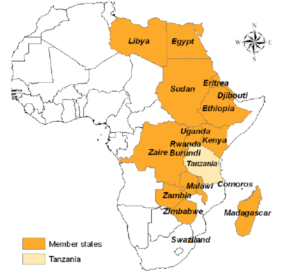
The FAA has revised its warning for Kenyan airspace – the area to ‘exercise caution’ is now limited only to that airspace east of 40 degrees East longitude below FL260 (i.e. the border region with Somalia, and 12nm off the east coast of Kenya). Prior to this, their warning applied to all airspace in Kenya below FL260.

Published on 26 Feb 2018, the warning maintains the same wording to clarify the type of weapons and phases of flight that the FAA is concerned about, specifically:

  • fire from small arms,
  • indirect fire weapons (such as mortars and rockets), and
  • anti-aircraft weapons such as MANPADS.

The scenarios considered highest risk include :

  • landings and takeoffs,
  • low altitudes, and
  • aircraft on the ground.

The updated guidance is intended for US operators and FAA License holders, but in reality is used by most International Operators including EU and Asian carriers, since only four countries currently provide useful information on airspace security and conflict zones.

The Notam uses FL260 as the minimum safe level, though we would suggest, as usual, that a higher level closer to FL300 is more sensible.

You can read the NOTAM in full on our Kenya page on SafeAirspace.net, a collaborative and information sharing tool used by airlines, business jet operators, state agencies, military, and private members of OPSGROUP.


More direct routings across Europe

Sectors of airspace over southern Germany are ahead of schedule with plans to bring in Free Route Airspace (FRA). With effect from 1st March 2018, FRA will be implemented in the EDUU/Karlsruhe UAC, EDWW/Bremen ACC , and EDMM/Munchen ACC above FL245.

By the end of 2019, most European airspace is expected to have implemented Free Route Airspace, with all airspace having this type of operations by 2021/2022.

We like the idea of Free Route Airspace – direct routing is the way of the future. We also like cool maps. Thankfully, good old Eurocontrol have provided us with some great ones, showing where Free Route Airspace currently exists, and where it will be implemented in the future:

For everything you could possibly want to know about FRA in Europe, check out Eurocontrol’s page on it here: http://www.eurocontrol.int/articles/free-route-airspace