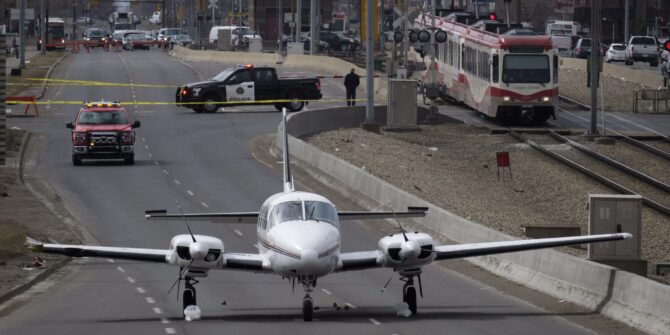
Wrong Runway, Wrong Airport, Wrong Country

Even with today’s levels of planning, monitoring and onboard safety systems, aircraft are still managing to land at the wrong airports, crew are still mistaking one runway for another, and even (occasionally) heading to the wrong country entirely.

Here is a look how and why these rather embarrassing, and potentially dangerous mistakes happen, and how to avoid them.

Wrong Runway.

Landing on the wrong runway is a hazardous event which poses a major traffic collision risk. It also has potentially big performance implications and by that we mean the chance of a runway excursion.

EASA Safety Information Bulletin 2018-06 looked at reports filed by European operators between 2007 and 2017 and found 82 occurrences of aircraft landing on the wrong runway. An average of 8 a year might not seem high, but the consequences of an aircraft landing on the wrong runway could be catastrophic so even one is really one to many.

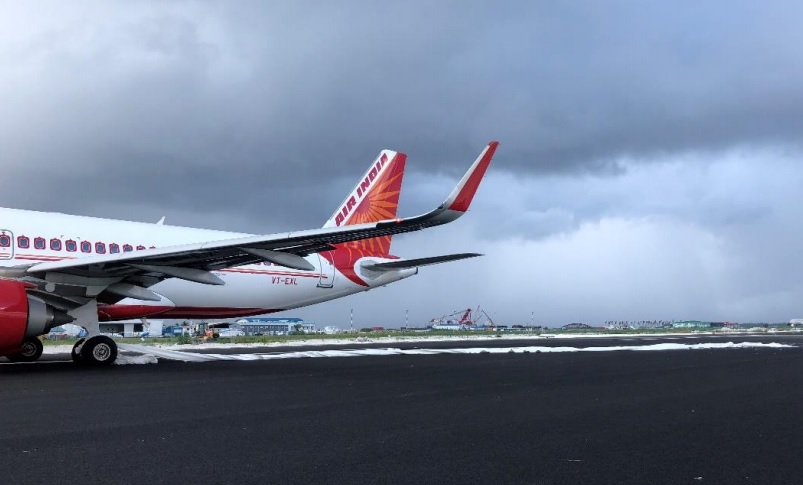
An Air India A320 landed on a runway still under construction at VRMM/Male in 2019

*Thankfully* the majority of incidences occur in visual flight conditions and are a result of visual illusions or misidentification during visual approaches and side step manoeuvres. So, instances of crew just aiming at the wrong runway.

While ‘being visual’ might mean a traffic collision risk is lower, the risk of performance issues and runway excursions remains high.

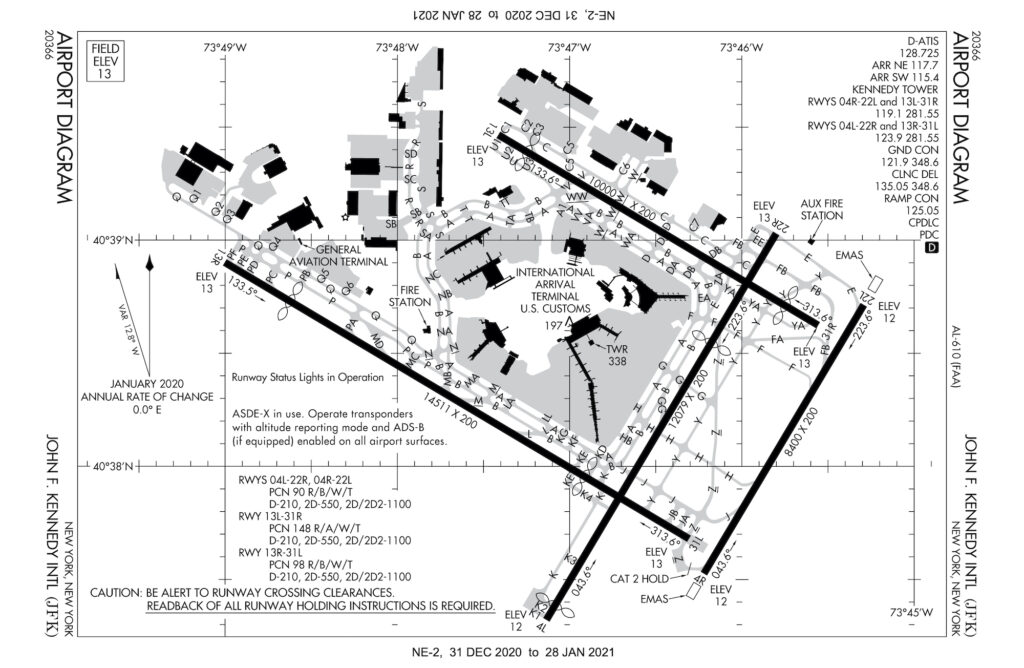
There are numerous airports worldwide which present a risk due to their runway orientation, approaches and prevailing conditions. KJFK/New York’s Carnasie approach has seen several an aircraft incorrectly establish inbound for runway 13R instead of 13L following the inbound turn, particularly when there are crosswinds which affect the “picture” (the runway doesn’t appear in the window where you expect it to).

There are also instances of mistaken clearances. Like the one that took place in July 2020.

United Airlines flight UA57 was on finals for runway 09L at LFPG/Paris Charles de Gaulle when ATC incorrectly cleared them to land runway 09R. The crew, used to sidestep procedures in the USA, failed to query the clearance which was unusual for Paris and instead commenced a low level turn to runway 09R. An EasyJet aircraft already lining up on 09R for departure reported the conflict on the radio and the United Airlines flight initiated a go-around from 260 feet AGL. 

While an initial investigation into this has raised probable causes primarily resulting from the ATC mental slip, a sidestep at that altitude should be a visual manoeuvre. The crew of the United Airlines should have spotted the aircraft already on a runway which they were turning towards at 300 feet. The FAA have released a new SAFO related to this.

So being visual does not always reduce the traffic collision risk after all.

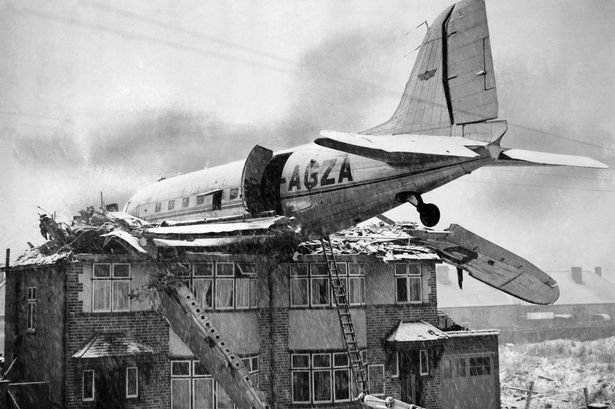
That would be a roof not a runway

Then there are the more concerning ‘not aiming for a runway at all’ events.

The KSFO/San Francisco Air Canada incident in 2017 is a serious example of visual cues going wrong. The Air Canada A320 was cleared to land runway 28R. However, they had missed a Notam advising that runway 28L was closed and, expecting to see an open runway to their left, mistook 28R for 28L and aligned themselves with an active taxiway.

The aircraft missed traffic on the taxiway by between 10-20 feet during their go-around.

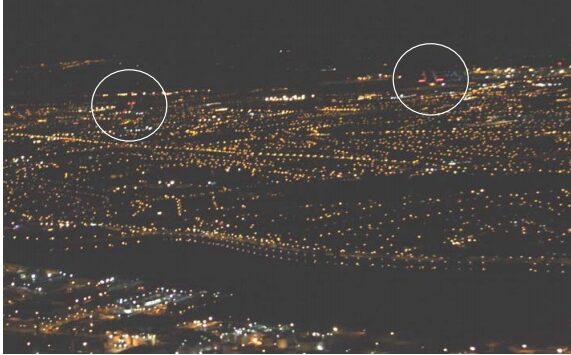
In 2007, an MD-83 routing from Lisbon to Dublin was carrying out an approach at night to Dublin runway 34. There was a prevailing wind of 260/12 which orientated the aircraft heading to 336° in order to maintain the inbound track of 342°. The crew mistook a 16 storey lit building for the runway and aimed for it, carrying out a missed approach from 1700 feet (around 200 feet above the building).

5.5nm to runway 34, with the hotel on the left

TNCM/Princess Juliana airport in Sint Maarten is known for a large hotel to the left of runway which, in hazy or rainy conditions, can be mistaken for the runway due to it being more conspicuous than the runway.

Then there was the KLM crew who managed to mistake taxiway B for a runway on takeoff from EHAM/Schiphol…

So how to avoid making this mistake?

The recurring factor throughout all of these is visual illusions and incorrectly interpreted visual clues. Not looking at stuff, or not looking at stuff right. 

Of course, it is easy to say that from the comfort of a chair, on the ground.

Sat in the pilot seat, barrelling towards said ground at several hundred feet per minute with everything else going on around you as well… less easy. But there are some fairly common sense methods of identifying threats and errors before they become a problem.

The FAA released SAFO 17010 following the KSFO incident. It provides some ‘best practices’ for accomplishing an approach and landing on the correct airport surface:

  • Any visual approach, or visual segment of an approach, should be well briefed and monitored.
  • Known risks (such as hotels that somehow look more like the runway than the runway) should be talked about. If there is a chance of visual illusions, talk about them and talk about what you expect to see.
  • Think about the wind and where you will actually need to be looking in order to see the runway. It might not be straight ahead.
  • Fly a stabilised approach.
  • Monitor things like height, heading, to make sure they make sense. And back it all up with Navaids and other information if that is available.

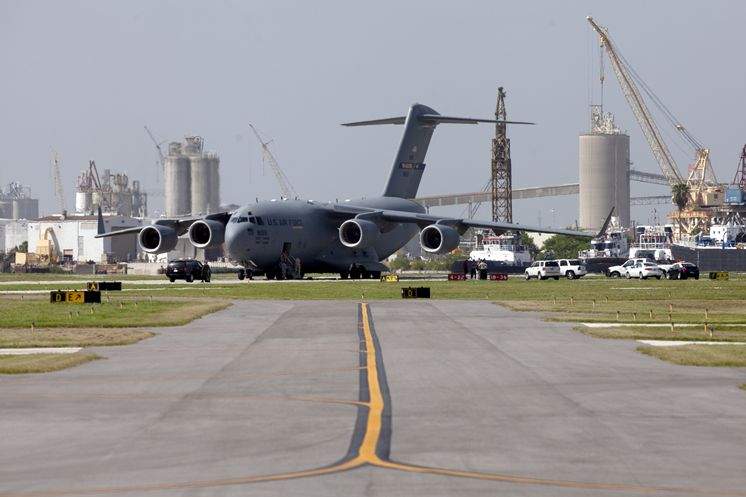
A C-17 Globemaster “accidentally” landed at KTPF/Peter O. Knight in 2012

Wrong Airport.

Landing at the wrong airport also happens!

One analysis found at least 150 flights by US carriers landed (or almost landed) in the wrong airport between the 1990s and 2014. Not including totally valid diversions of course.

The most common reason for wrong airport landings is down to pilot error once again – both visual and procedural.

In 2017, a Delta flight 2845 landed at the wrong Minneapolis airport. They were due to touchdown in KRAP/Rapid City, but mistook nearly Ellsworth air force base for their intended airport. Both have the similar runway orientations (although that’s really the only similarity – Rapid City has two runways which possibly should have been a giveaway).

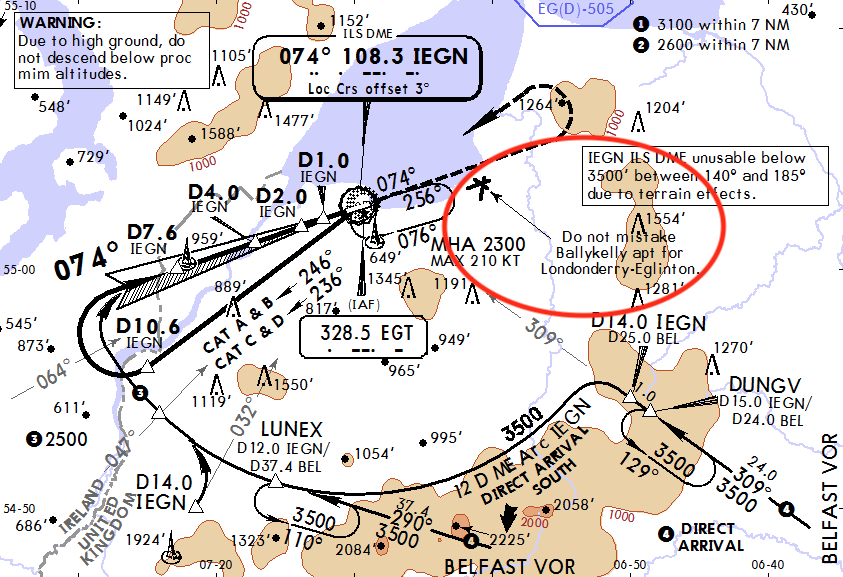
In 2006, a Ryanair flight aiming for EGAE/Londonderry-Eglinton ended up landing at a military base in Ballykelly 5 miles away, again just due to a misidentification of the airport.

Ethiopian airlines suffered two near embarrassments when two of their airplanes both tried to land at the wrong airport in Zambia. Actually, one of them did. Destined for Ndola, both mistook the new (and unopened) Copperbelt for their destination airport.

The fix remains the same:

  • Brief what you expect to see.
  • Brief how you expect to get there.
  • Check and monitor that other clues – navaids, waypoints, airport layout – make sense!
  • A lot of airport charts also have warnings on them when there is another airport nearby which has been known to trick pilots in the past. Look out for these.
  • Many aircraft have systems which monitor their position in relation to what you told it (in the box) you were going to fly it. If your airplane is beeping, blaring or swearing at you then it is trying to tell you something – don’t ignore it!

Close enough to get confusing on a visual approach

Are these just embarrassing stories?

Unfortunately, there is a much more serious side. The wrong airport might be a commercial, logistical problem, but the real big risk comes down to that runway performance again.

Of the 150 or so near/actual landings at wrong airports which took place in the US since the 1990s, there were 35 actual landings and 23 of these occurred at airports where the runways were shorter than those at the intended destination.

In 2014, Southwest flight 4013 aiming for KBBG/Branson airport accidentally touched down at KPLK/Clark Downtown airport instead. Branson’s runway is 7140’. Clark’s is 3738’.

A Boeing Dreamlifter made a similar error when routing to McConnell Air Base but instead touched down at Jabara airport, on a runway only 6,101 feet long.

The critical safety issue here is the performance – the fact it hasn’t been checked and that it might not therefore be, well, ok.

And if it is happily ok, then you might still be looking at a bit of an issue getting the airplane back out again. Much like our Dreamlifter friends found out.

Rather hard to hide given its size (Credit: Brett Deering)

Wrong Country.

Finally, wrong countries. A much rarer occurrence but possibly the most embarrassing should it happen.

A British Airways flight (in all fairness it was actually a German aviation business operating on behalf of BA) managed to fly to EGPH/Edinburgh instead of EDDL/Düsseldorf after a paper work mix up had the crew sent totally the wrong flight plan.

However, since the flight was planned and fuelled for Edinburgh this only really impacted the rather put-out passengers. 

A potentially more serious incident happened in 2015 when an Air Asia crew had to divert back to Melbourne, Australia, after the pilot incorrectly input the route from Sydney to South Africa instead of WMKK/Kuala Lumpur.

Given the fairly different direction you have to wonder how far they got before they, or ATC, spotted something was up?

Next time: How to avoid picking up the wrong plane

Fancy a bit more reading?

NASA have a handy analysis on visual traps that is worth a read.

Check out the FAA’s project on ‘runway surface events’ here – including some info on the ASDE-X project which uses surface radar to detect when an aircraft might be lining up on a taxiway for departure.


Al-Shabab: A Threat Beyond Somalia

Al-Shabab poses a significant threat to aviation in Somalia, but the threat extends beyond the nation’s borders. This briefing will take a closer look at the background and nature of the threat, and will provide a brief overview of Somalia’s aviation infrastructure to help enable operators and pilots to carry out a full risk assessment.

The root of it.

Somalia sits on the Horn of Africa, bordered by Ethiopia to the west, Djibouti to the Northwest, Kenya to the southwest and the India Ocean to the east. The capital is Mogadishu and the primary international airport is HCMM/Aden Adde International.

It is an extremely volatile region of the world. It is also a pretty important airspace because it is one of the primary routes for aircraft routing from the Middle East and Asia into Africa.

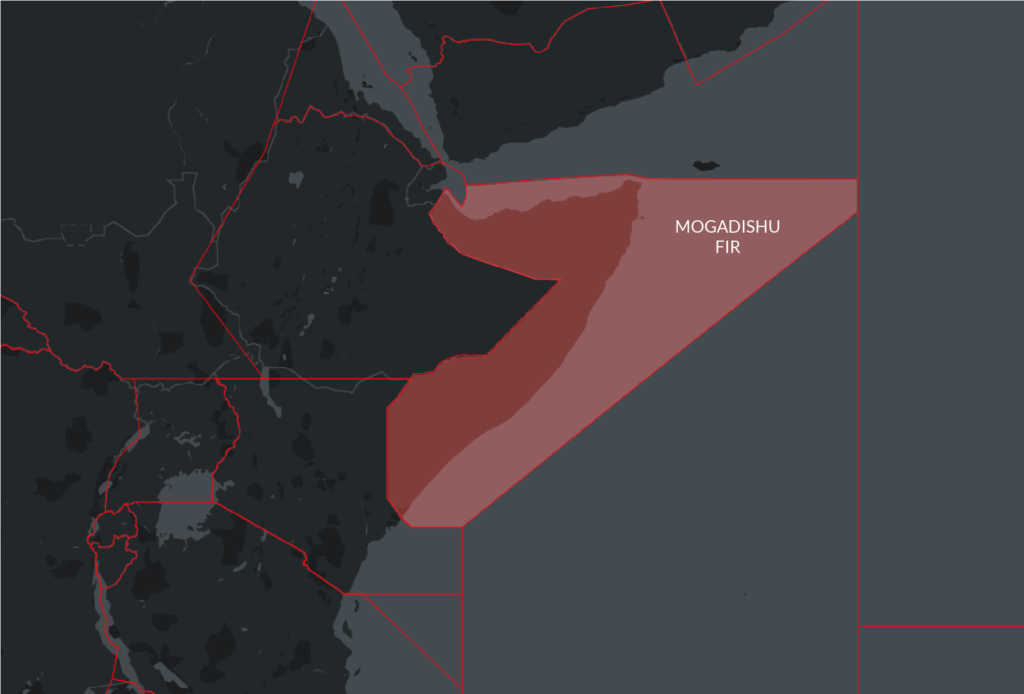
Somalia and the Mogadishu FIR

Al-Shabab

Al-Shabab are an insurgent group seeking to establish an Islamic State in Somalia. They are active across Somalia, as well as Kenya and Yemen.

In 2006, Ethiopia supported the transitioning Somalian government to push Al-Shabab out of Mogadishu. In recent years, an African Union-led military campaign has been in force against them. The group retreated from Mogadishu, but still frequently target HCMM/Aden Adde airport, and the capital city, using small arms fire and vehicle-borne IEDs.

They also potentially have access to anti-aircraft capable weapons.

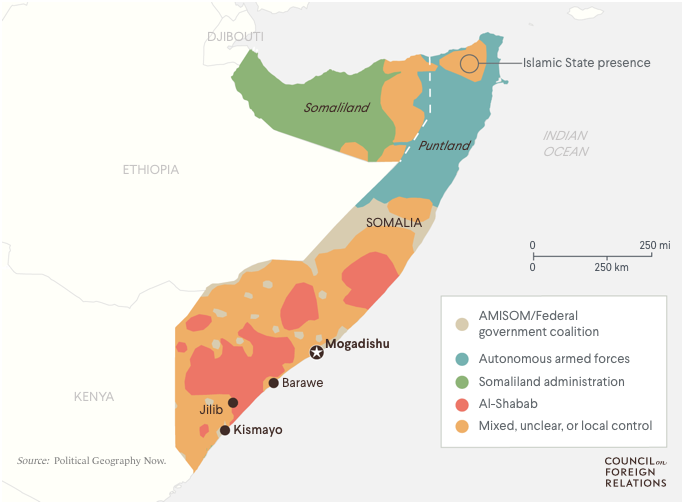
Showing the primary area of control by Al-Shabab in Somalia (Credit: Council of Foreign Relations)

Which is why there are some big warnings for the region.

In our SafeAirspace risk assessment, Somalia is a Risk Level Two – Danger Exists. The reason for the Level Two rating comes down to the fact the risk is predominantly limited to certain levels. The threat to aircraft is generally low level, with high altitude overflights less at risk.

Most authorities have therefore issued AICs which advise against flights below FL260 across the HCSM/Mogadishu FIR, or operations into Somalian airports. Certain airways such as UR401 SIHIL – AXINA only route over the oceanic airspace and so are exempt from the “Don’t Fly” warnings.

The USA have KICZ Notam A0005/21 in place warning against flights below FL260, along the region bordering Somalia (40°E).

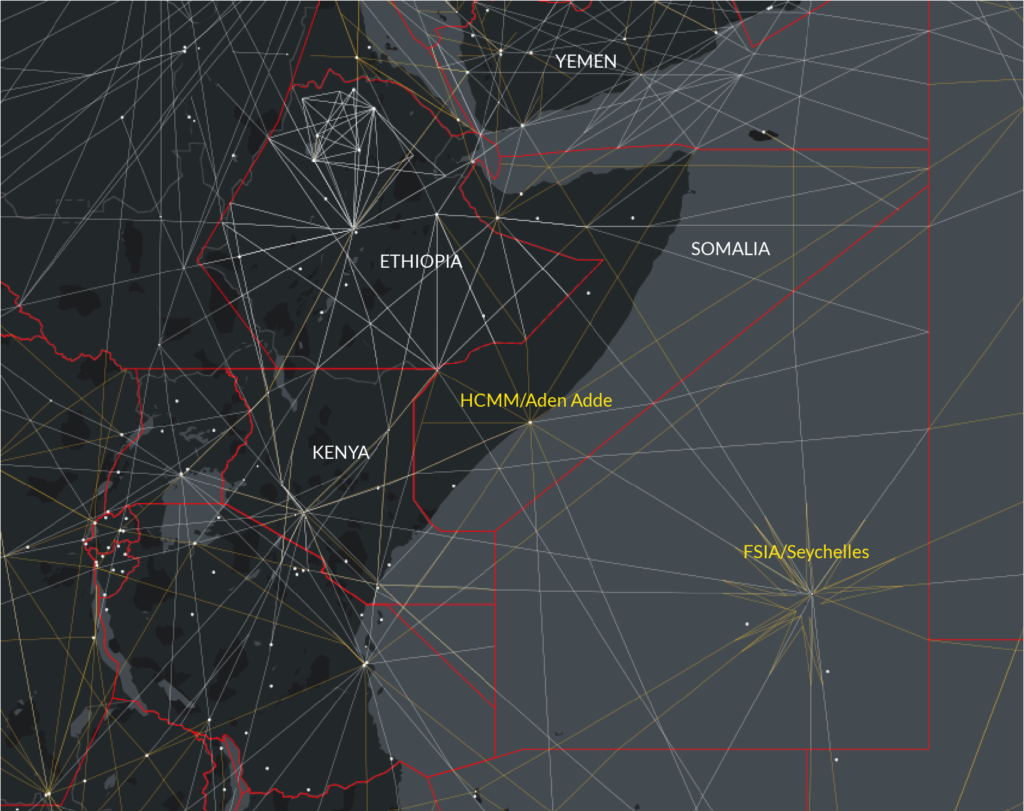
The region and the airways providing a major into Africa

The threat within Somalia.

The main threat comes directly from Al-Shabab who may have access to anti-aircraft weaponry. They pose a threat to low level aircraft and to security and safety on the ground as they frequently target Aden Adde airport with mortar attacks.

There is an additional threat from the Ethiopian military forces – the possibility of misidentification of civilian aircraft by them.

In 2020, a Kenyan cargo plane was inadvertently shot down following a misidentification. The cargo aircraft was routing from HCMM/Mogadishu to HCMB/Baidoa.

The threat beyond Somalia.

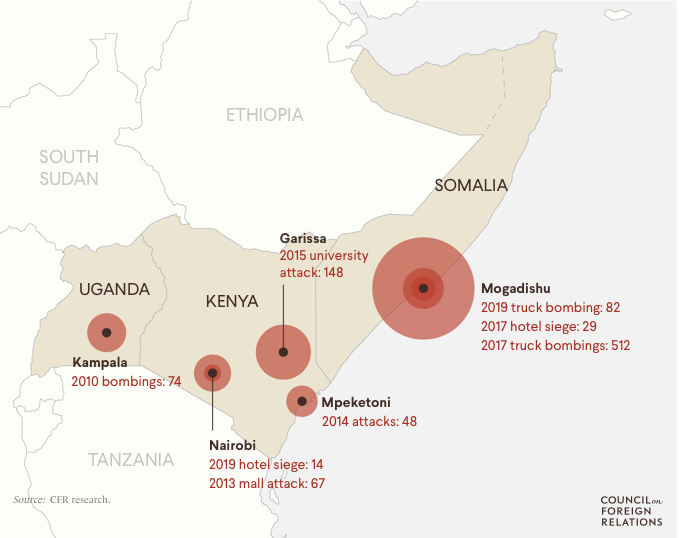
Al-Shabab have also targeted neighbouring countries. While the infrastructure and security in these countries is stronger than Somalia, which reduces the hazards and disruptions to airborne aircraft, it still presents a high security risk on the ground.

The group have attempted to attack aviation infrastructure and facilities, and have attempted to use aviation to launch other attacks on countries.

In early 2020, a complex attack was carried out against a Kenyan military base which houses US troops. Similar targets in Djibouti were also identified.

In 2016 , an Airbus 321 was targeted with a bomb on board which exploded shortly after takeoff, earlier than intended. The aircraft was able to land safely at Mogadishu.

Some arrests of Al-Shabab operatives were made in December 2020. A Kenyan man and member of the group was planning a “9-11 style attack”, and had enrolled in a flight school in the Philippines, intending to obtain a pilots licence with the purpose of gaining access to a flight and using this as a means to carry out the plan.

In 2019, a major attack on a hotel in Nairobi, Kenyan took place. Operators should be aware of the ground threats, particularly the security issues for their crew if they are staying in major hotels in regions Al-Shabab have targeted previously.

Kenya had its airspace threat level downgraded in 2018. There remains a ground based risk to security.

Sites such as International SOS provide good, up to date information on ground security threats.

Known Al-Shabab attacks (Credit: Council of Foreign Relations)

Additional risks to aircraft operating through the region.

HCMM/Aden Adde is the only major airport in Somalia. Aircraft routing down the east coast of Africa are limited in their emergency and diversion options. HDAM/Djibouti to the north, HKMO/Mombasa to the south or FSIA/Seychelles to the east are the only relatively close ones.

In the event of a time critical emergency, if crew use HCMM, security and safety on the ground must be considered. In the event of a diversion, with limited options, careful and regular checks of the weather (due to common storm build ups during summer months) will be critical to ensure the aircraft is not committed (fuel wise) to an airport which then becomes unsuitable.

A closer look at Somalia.

The Airport:

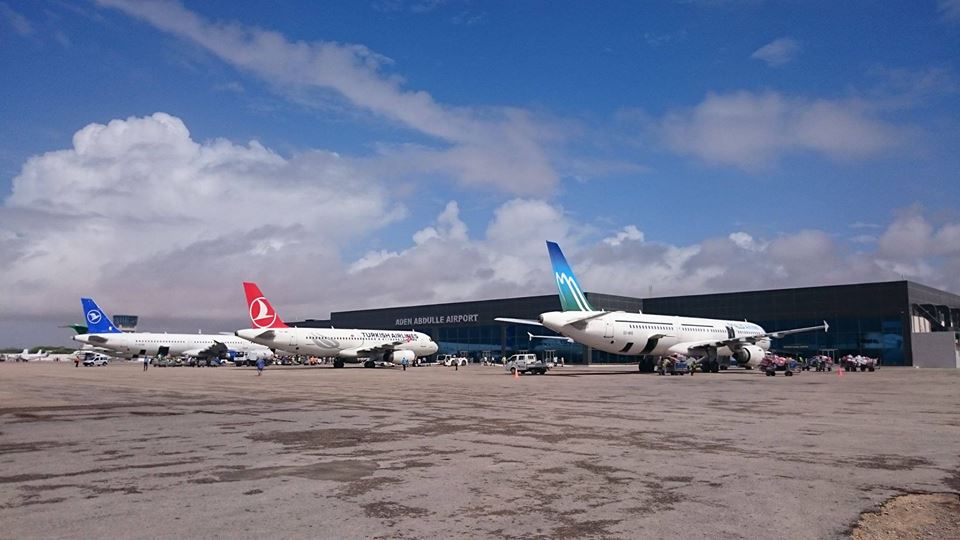
Aden Adde International airport is the primary airport for Somalia. It has a single runway 05/23, which is 10,446 feet (3184 meters). The only published approaches are RNAV (GNSS) or RNAV (RNP) for runway 05.

There is minimal apron space and parking, and only a single taxiway midway down the runway meaning backtrack and 180 degree turns are required.

There is a ‘Do Not Descent below FL100’ sector north and northwest of the airport, and the RNAV approaches descends and routes aircraft over the sea to avoid aircraft flying over the land low level, where risk of attacks would be significantly increased.

Despite the potential risks, several international airlines do operate into Aden Adde.

A photo taken in 2015 suggests the airport conditions are below standard (Credit: Axmadyare)

Routings and Airspace:

Because of the position of Yemen, which is a ‘no fly’ country, and Eritrea and Ethiopia where the Tigray region is also a ‘no fly’ area, aircraft are limited in the connecting routes to and from Africa. Routing via Egypt and through Sudan and South Sudan is longer, and has other challenges and airspace risks associated with it.

Routing along the east coast oceanic section of Mogadishu airspace is significantly shorter.

All of the Mogadishu FIR is Class G airspace, with only an FIS.

Communications:

The infrastructure in Somalia is limited. The minimum radio and navigation equipment requirements for overflights are:

  • HF Radio
  • VHF radio
  • GPS received (ATS routes)
  • TCAS

There is a H24 flight information service and alerting service in the Mogadishu FIR, callsign “Mogadishu Information”.

The primary VHF frequency is 132.500, with primary HF 11300/5517

Mogadishu also has a (relatively responsive) SATCOM number you can call – 466601 (Inmarsat) or +252 185 7392/7393

Aircraft need to check in at least 10 minutes prior to the ETA for the FIR entry point.

Routing through the airspace, aircraft are required to maintain a listening watch on the IFBP frequency 126.9. If aircraft experience an HF failure, they should attempt to contact Mogadishu FIC via SATCOM, or request relays via other aircraft.

Summary

Al-Shabab present a risk both directly to flight operations, and to operations and ground security in neighbouring countries:

  • Flight operations below FL260 are at risk
  • Since 2020, the group has issued new warnings suggesting they are increasing their anti-aircraft weapon capabilities, with intentions to target US aircraft specifically
  • Crew and aircraft security on the ground is a risk
  • Crew should be aware of security and safety in neighbouring countries, particularly at tourist spots and in major hotels which may be targeted
  • Infrastructure and security in neighbouring countries may be at risk
  • Regional stability is threatened by ongoing conflict

Aviation & Humanitarian support.

Somalia has its own CAA. The need for better infrastructure and equipment because of the importance of overflights through the Mogadishu FIR has led to other State’s funding and supporting the CAA.

The UN work with Kenya to organise humanitarian air services and missions into Somalia. More information can be found on that here.


How much radiation are we getting zapped with as crew?

How much radiation are we getting zapped with as crew, and what sort of levels should we be concerned about?

The Airport Security Scanner

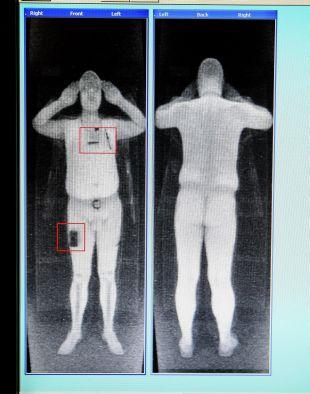
Most pilots have probably experienced rather overzealous security scanners in an airport. You know the ones – when you go through, it beeps. You remove the watch you forgot to take off. It beeps again. You take your jacket, shoes, tie off. It still beeps. Now you’re wondering if you’ll need to strip down like this South African Airways pilot did…

More concerning than any radiation levels

Anyway, it is frustrating, but it is not really a big deal radiation-wise. One dose of the airport scanner is 100,000 times lower than the average annual dose we get from natural background radiation and medical sources. It actually delivers around 0.1 microsieverts per scan which is 100th what a standard chest x-ray delivers.

For comparison, every banana you eat contains around half a gram of potassium-40 (an ionising radiation source) which means eating it is the equivalent of 1000th of a chest X-ray in terms of the radiation dosage. The granite counter top you prepared your lunch on is also dosing you. While if you live in the UK you are getting about 2.7 millisieverts of radiation annually just by being there because it is one giant granite counter top under your feet.

Bananas are a great source of (radioactive) energy

So, no, we shouldn’t be worried about radiation from airport scanners. But given that every minute on an airplane is equivalent to one airport scan, should we be worried about that?

Flight Risk

When you fly you are exposed to low levels of radiation – from some of the onboard equipment, to the fact you are way nearer space and all the cosmic and UV rays swilling about up there. 

UV radiation is what we protect ourselves against by not destroying our friend, the Ozone Layer, and with all the SPF suncream we slather upon ourselves. The ozone layer sits around 10-15 miles above the ground (so our airplanes stay below it), and it blocks out a good whack of UV-B, all of UV-C and some UV-A.

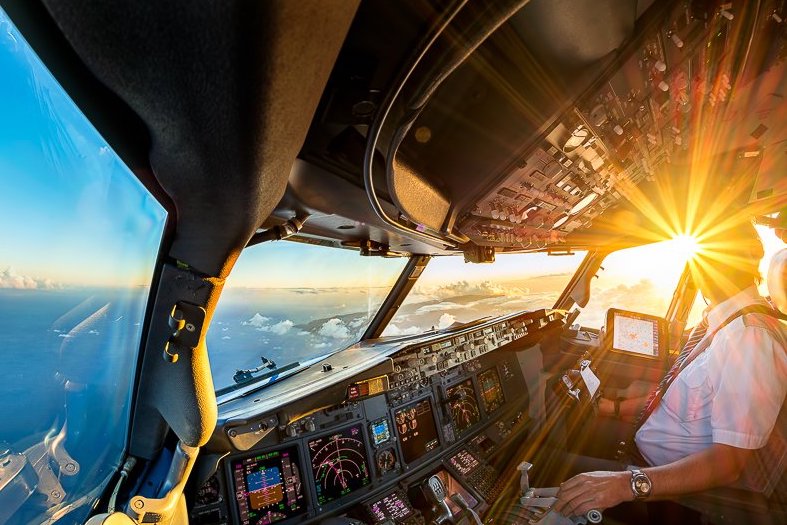
Now, that *some is the reason why we should be slathering more sunblock on ourselves when we fly, because the ozone layer and our windscreens help, but not enough. A study showed that the amount of UV radiation the pilot seat (and you in it, presumably) gets smacked with when flying for under an hour at 30,000 feet is equivalent to a 20 minute tanning bed session.

Studies also show the rates of skin cancer in pilots and cabin crew are significantly higher than the general population. So, you need to be careful. Plus it makes you wrinkle more.

  • Wear sunblock (decent UV-A and UV-B ones)
  • Get decent sunglasses with UV protection lenses because your eyeballs are damaged by it too! Polarized sunglasses help reduce glare, but don’t necessarily provide more UV protection (and they mess with the screens).
  • Check them moles (if you’re a moley sort of person) – it isn’t just areas exposed to direct sunlight which can be at risk.

In fact, going back to the sunglasses point, IFALPA have a very handy handout on the ‘Ocular Hazards of UV Exposure’. It is basically ‘scary stuff, bad stuff, scary stuff’ and then a “get sunglasses that have a UV absorption up to 400nm/ 100% absorption’.

There is no evidence of people sunburning in airplanes

Cosmic Vibes

Cosmic radiation is high-energy charged particles – x-rays and gamma rays which come from stars, like our very own sun. It differs to UV radiation in that it is higher energy and ionising.

We don’t like ionising radiation because it causes damage to our squidgy little insides.

The closer to space we get, the more cosmic radiation we are exposed to, and the higher the latitude the more we get as well, which means those high altitude, Polar flights are the ones to really monitor.

The Northern Lights displays we see, despite their “radioactive” green colour actually do not emit any radiation that reaches us. Although, if you were up there, in it, it probably wouldn’t be great for you.

What are the numbers looking like?

The International Commission on Radiological Protection (ICRP) basically classify aircrew as ‘Radiation Workers’ and recommend a maximum of 20mSv a year averaged over 5 years. So a maximum of 100 mSv in 5 years. 

The average person in the US receives up to 3mSv, with a recommended dose of 1mSv per year. Anything between 3 and 20mSv is considered moderate.

So, how much are we getting?

Well, heading from the east to the west coast of the USA you probably get about 0.035mSv. Not a tremendous amount if you’re a passenger, but what about if you are doing flights several times a week?

2 sectors a day, 3 times a week, plus or minus a few for holidays, and you could be heading towards something in the region of 10mSv which is higher than normal but still in the moderate (and acceptable) range.

If you are flying from Athens to New York – a flight likely to take you along a relatively northerly route and at a flight level of 41,000ft or higher, then the 9 to 10 hours airborne are going to dose you up another 0.063mSv – 0.63mSv per 100 block hours.

A study carried out in 1998 suggested the average crew member flies around 673 block hours, getting an average cosmic ray dose of 2.27mSv, while the annual cosmic ray dose for a long haul Captain was calculated at around 2.19mSv.

Ok, that was back in 1998, but as far as we know the levels of cosmic rays haven’t increased. Our block time might be a few hundred higher, but still well within limits on the radiation dose front.

Sunglasses always necessary

How can you monitor it?

Airlines and operators should monitor this for you, but if you want to keep an eye on it you can via various apps out there in the mobile phone world. 

CRAYFIS is an app developed by scientists to help monitor the amount received via the pixels in your smartphone screen.

Apps like  TrackYourDose have options to plug in a route and uses average flight paths to help you monitor your dose on specific flights and days.

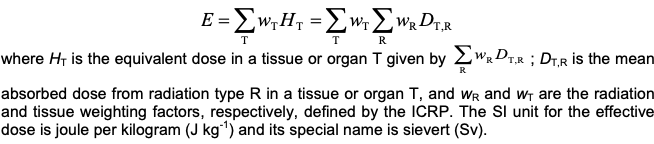
Or you can work it all out yourself using this handy little formula.

Maybe just use the app

So, should we be worried?

The figures suggest no.

A study of 10,211 pilots carried out in 2003 also supported this, with skin cancer showing slightly higher incidences.

So unless you are flying an excessive number of long haul Polar Flights, the overall the radiation dosage received by air crew is higher than the average ground dweller, but remains within acceptable limits.

That space weather is likely to have more of an impact on your HF than it is you.

Want to read some more (official) stuff?

The CDC offer some good guidance.

As do the FAA in this useful booklet for air crew.


Pax Problems: Do you know who you have down the back?

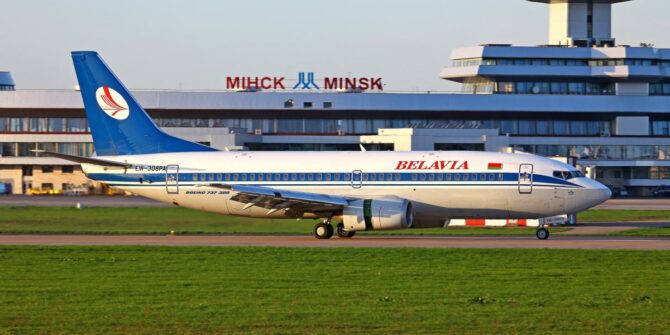
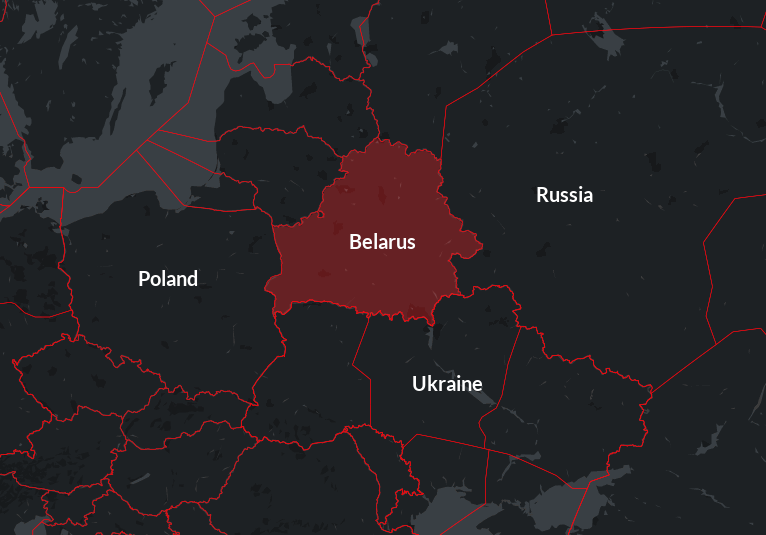
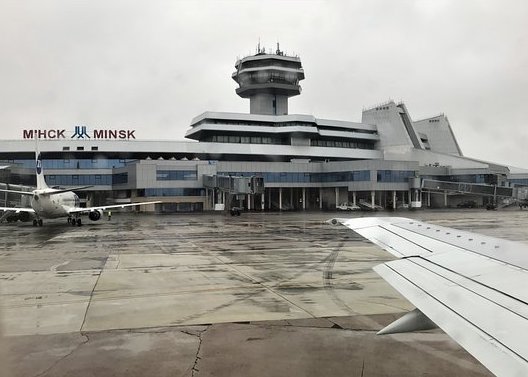
How often do you think about who you have down the back? The recent Belarus incident might be prompting you to think a little more about who you have onboard and whether there are any political or operational considerations their presence might lead to.

So, here are some things to think about – from the political considerations of country politics, to what to do if the troublemaking is taking place onboard.

The Politics.

It would nice to stay above this, but unfortunately even at 40,000 feet we seem unable to escape the (often messy) world of politics, which means some consideration of who you have onboard, where your aircraft is registered, and where you are heading to and from, should form part of your overall risk assessment.

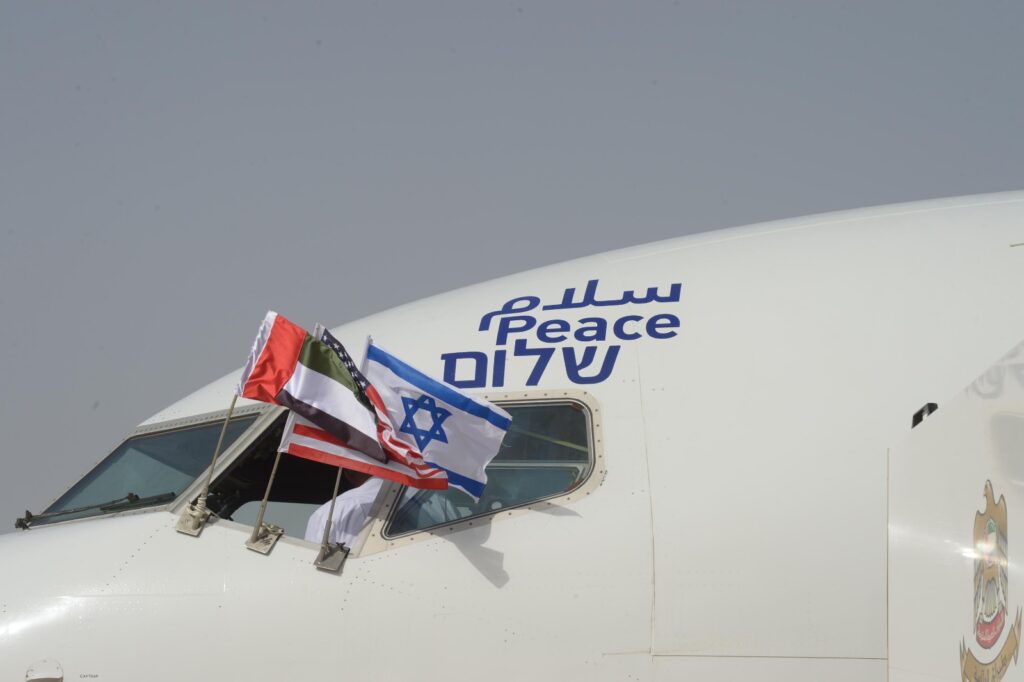
Israel is a fairly obvious example. They have a long history of strained relationships with neighbouring countries. It was only in 2020 that several of their closest neighbours renewed ties with Israel and allowed operations and overflights to re-start. 

This has not happened with all their neighbours though. If you are routing to or from Lebanon then LLBG/Tel Aviv is unlikely to accept you in a diversion. Likewise, if you divert to OLBA/Beirut with Israeli passengers onboard, this could pose some serious issues for them. Checking Country Rules and Restrictions for notes on Israeli flights (originating from or routing to) will bring up a fair few places that you need to be aware of – such as Pakistan – who still will not accept overflights or diversions to aircraft coming from, going to, or registered in Israel.

Israel itself is allowing aircraft in, but read the small print on this because in order to land in Israel you must be departing from one of their approved airports, and your crew and passengers must be nationals of countries that have diplomatic relations with Israel.

A major improvement in relationships between Saudi Arabia and Israel

India/Pakistan have an ongoing feud that has led to huge fence being erected along much of their border. The countries allow over flights from each other, but if you are operating into one, a diversion to the other may cause some consternation. OPLA/Lahore in particular is one to look out for because of its proximity to the Indian border.

If you divert into India with a technical issue that sees you grounded, and you are carrying Pakistani passengers there may be issues with them overnighting in the country.

The border fence is an impressive ‘monument’ to conflict

It isn’t always political though.

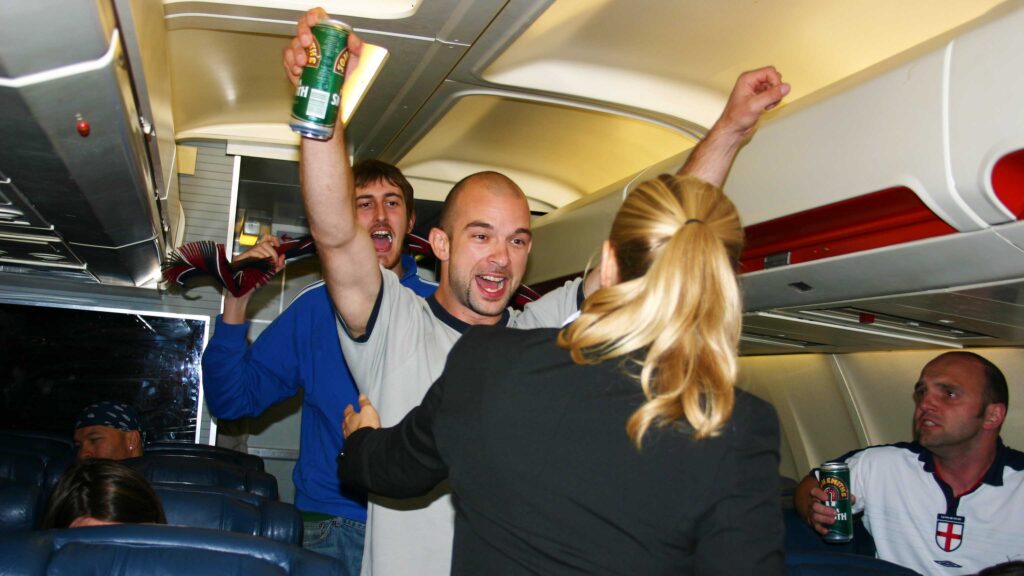
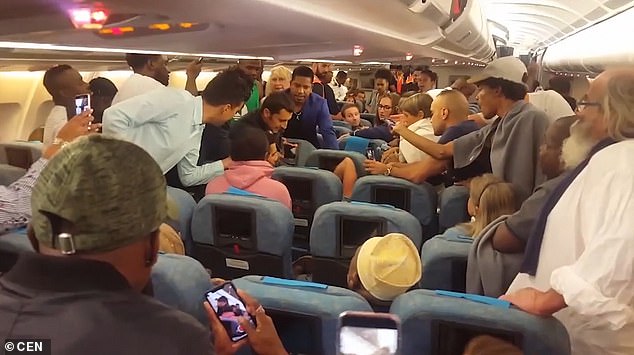
Sometimes the folk causing problems are the troublemakers onboard.

If you can spot them before takeoff then all the better. Cabin Crew are your last line of defense for ensuring anyone under the influence of alcohol (or just being generally offensive) is offloaded before they have a chance to cause issues. Remember, the law is on your side here – most countries specify that it is a criminal offense to be drunk onboard an aircraft.

The FAA have just made it a whole lot easier to handle disruptive passengers. In January 2021 they announced a zero tolerance policy for bad behavior, and they have a hefty 57 different civil penalty actions available to them. So far for 2021, they have received around 3,100 reports of unruliness and these have led to open investigations for 465 incidents – a sizable increase on the 146 seen in 2019.

What counts as disruptive?

Anything that is disrupting the flight, causing a nuisance to other passengers, or impacting the safety onboard really.

  • Being intoxicated with drugs or alcohol
  • Refusing security checks
  • Disobeying instructions
  • Threatening, abusive or insulting words

ICAO put out a list of the top reasons for unruliness and unsurprisingly, alcohol topped it, with compliance with regulations (smoking, seatbelt signs etc) not far behind. In the top 16 there were also pet/emotional support animal related reasons, along with seat reclining disputes.

What actions do you have available onboard?

A PA from the Captain telling all the other passengers that “The Annoying Person in Seat 45B  is going to delay everyones’ holidays unless they sit down!” might do the trick for passengers who are just a bit of a nuisance (although your company might frown on this). But for those passengers that are posing an actual danger, the Tokyo Convention is your go-to convention here.

First written in 1963, it focuses on security and lays out what the rules and rights are.

The convention gives any passenger the right to take “reasonable preventative measures” to maintain their own safety (without having to ask permission first), but also makes it pretty clear that only the Captain has the right to order a passenger be restrained, and this requires some thought because it does need to be justified – a “high burden of proof” will be needed.

And justified means it really is the only remaining option available to prevent the person from endangering the safety of themself, passengers, crew or the aircraft. What you deem “endangering safety” is up to you but bear in mind there will be a bunch of witnesses on board.

Following on from Tokyo came the 1970 Hague hijacking definition and then the 1971 Montreal convention that deals with sabotage, and the criminalization of anything being brought onboard to jeopardize safety. In 1974 they revisited the good old Chicago convention and aviation security standards were developed. History lesson over, but it is worth having a vague understanding on what these contain in case you ever need to call on one.

Cellphones mean a lot of witnesses…

Aside from these there always remains the option to divert.

In 2015, a flight from Las Vegas to Germany was forced to divert after a passenger became unruly over a cat. The woman had managed to board with the cat in her purse, rather than an official carrier, leading crew to storing the offending feline in a bathroom. This upset the lady and she threatened to “bring the aircraft” down if her pet was not released from its prison. Purr-ison if you like.

Diversions due unruly passengers are alarming not uncommon because while a passenger can be restrained, the implications of doing so for a substantially long flight need to be considered, as does the ongoing stress for other passengers onboard.

The UK CAA suggest that a diversion typically costs from around £10,000 – £80,000 depending on aircraft size.

Back on the ground

OK, so you’ve called the cops. Before they get there you might want to do a PA ensuring the other passengers know to remain in their seats and not get in the way of the police or that bad passenger might just slip out with the rest of the herd. But when they are arrested, who actually has the right to prosecute?

The Tokyo Convention give explicit jurisdiction rights to the airline’s country of registration when it comes to court. However, there are some doors left open there for other countries to seek extradition as well. These were brought in following a case in 1949 where a passenger sunk their teeth into the ear of the pilot. Alas, the US had no laws at that time which could apply to crimes committed while flying over an ocean, so the biter went free.

In 2014, the Montreal Protocol was also issued. This extends automatic jurisdiction over the crime to the destination. Important because it stops criminals sneaking off free because they were clever enough to commit the crime while heading into a country that the airplane was not registered in.

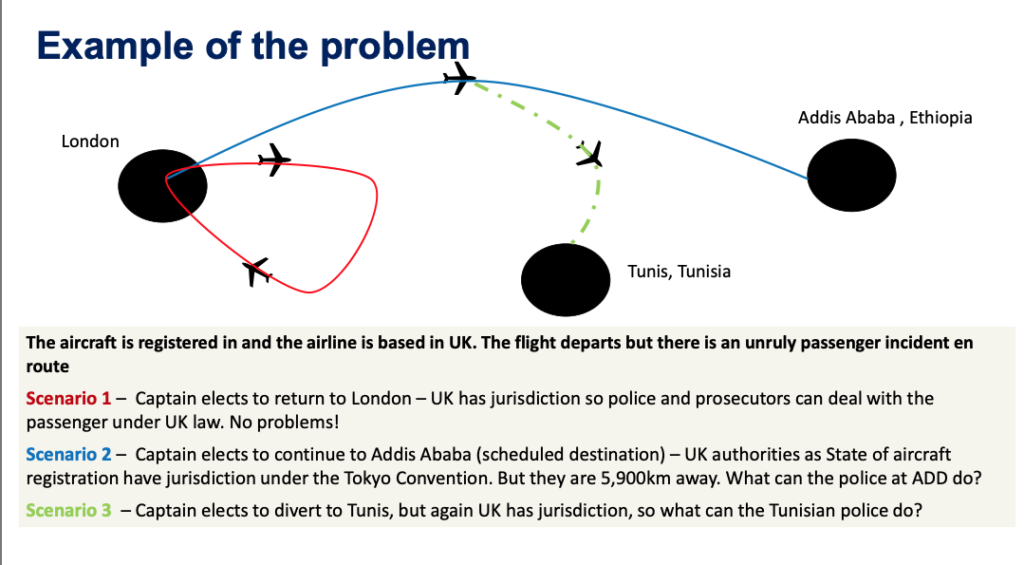
This rather ugly slide by ICAO gives an ‘Example of the problem’.

This was made in 2016 so no excuses for the lack of decent Powerpoint skills

So, for now, the crime is punishable by the country of registration, but the Montreal Protocol sort of extends the right of police in destination country to basically help in arresting the passenger.

In-ads/ Prisoners

An inadmissible passengers is not a prisoner.

Generally, it is some poor person who forgot to get a visa in their passport and have been turned away at destination. Usually it is on the carrier that brought them in (and didn’t check them at the departure airport properly) to take them home again, and as the Captain, you can expect to be handed the documents and passport for the in-ad at departure. However, you cannot detain an in-ad onboard when you land back wherever you are going. So alert the authorities and make sure they are there to meet the passenger. If not, you pretty much have to let them go.

Prisoners will always be escorted. For any “unusual” passenger, it is best to board them first and disembark them last. They must not seated at an emergency exit and preferably should be near the back of the aircraft and away from the aisle.

Emotional Support Animals

The rules for these recently changed and no more bizarre creatures have to be accepted. The UK do not allow any animals that are not service animals with full documentation. The US is the same, and only classify dogs as bone-afide service animals.

Cool sweater. But still not allowed onboard.

So, have a think about who is down the back.

Having an awareness of the nationalities of your passengers and considerations as to the countries you are overflying and their political relationships with other countries can be useful.

Knowing what the Tokyo Convention does and does not allow you to do with unruly passengers is also a good one to read up on. Your power as Captain only really extends to when the doors open.

If want to read more on unruly passengers then IATA put out some handy info here.

If it’s the Tokyo Convention then ICAO have it published here (although it makes for some dull legal reading).

And if you’d like to read about the emotional support pet rulings (for the US) then here you are.

IFALPA have a very useful paper on carrying in-ad, deportee and other non-revenue passengers.

Article photo courtesy @surachetsh.


Simthing to Think About

What are you practicing with your crew in the sim nowadays? An engine failure on take-off? A few technical malfunctions? An assessment of their competencies and then send them on their way for another year?

Well, we thought we might suggest a slightly different sim scenario for you to think about…

What else should you be throwing at your crew?

There have been a bunch of recommendations out from the authorities suggesting crew swot up on their Unreliable Speed procedures because the number of these occurring have increased a lot recently. Something to do with aircraft coming out of long term storage with bugs nesting in their probes…

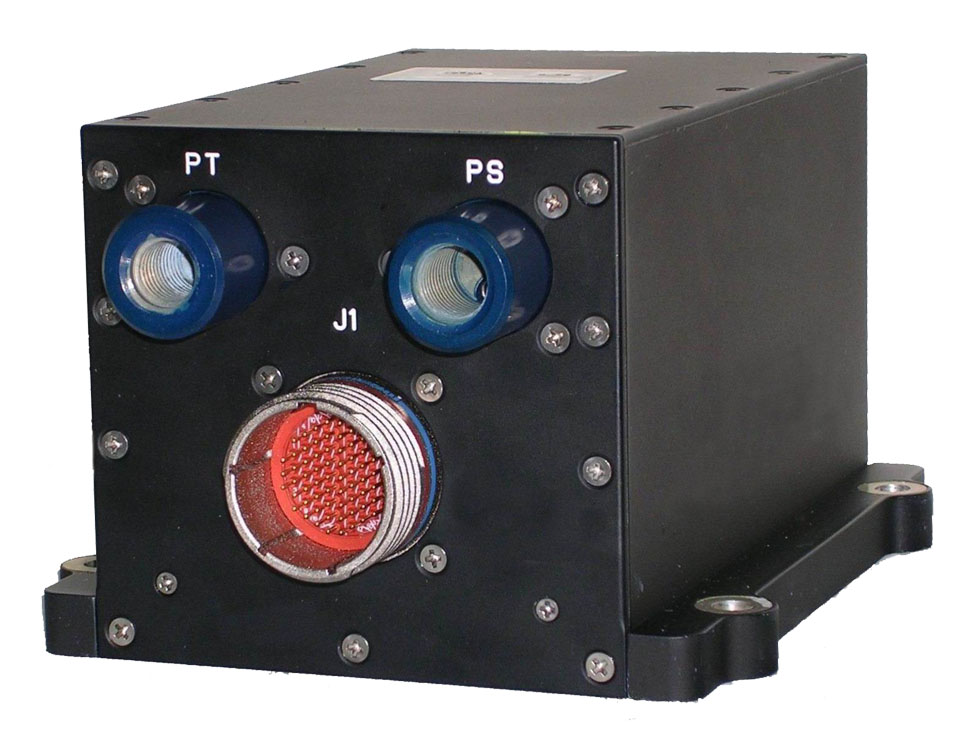
However, an ‘Oracle of the NAT’ recently pointed out to us that many crew have not been doing anywhere near as many NAT routings, which means their NAT procedures probably need as much attention as their airplane’s pitot ports do.

What are we talking?

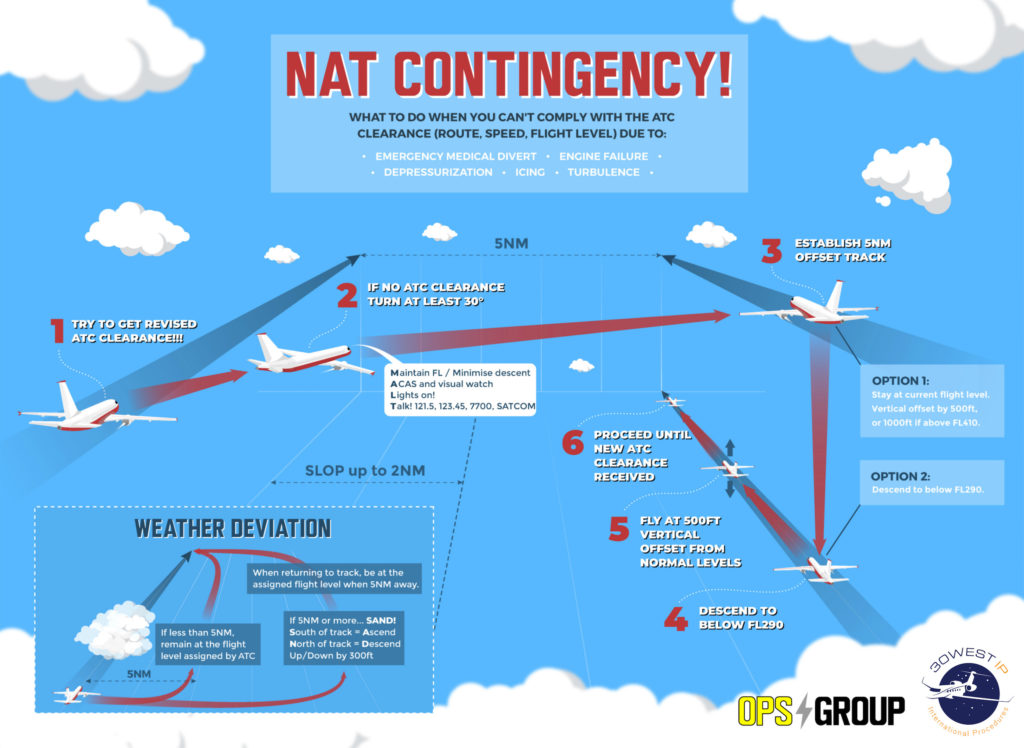
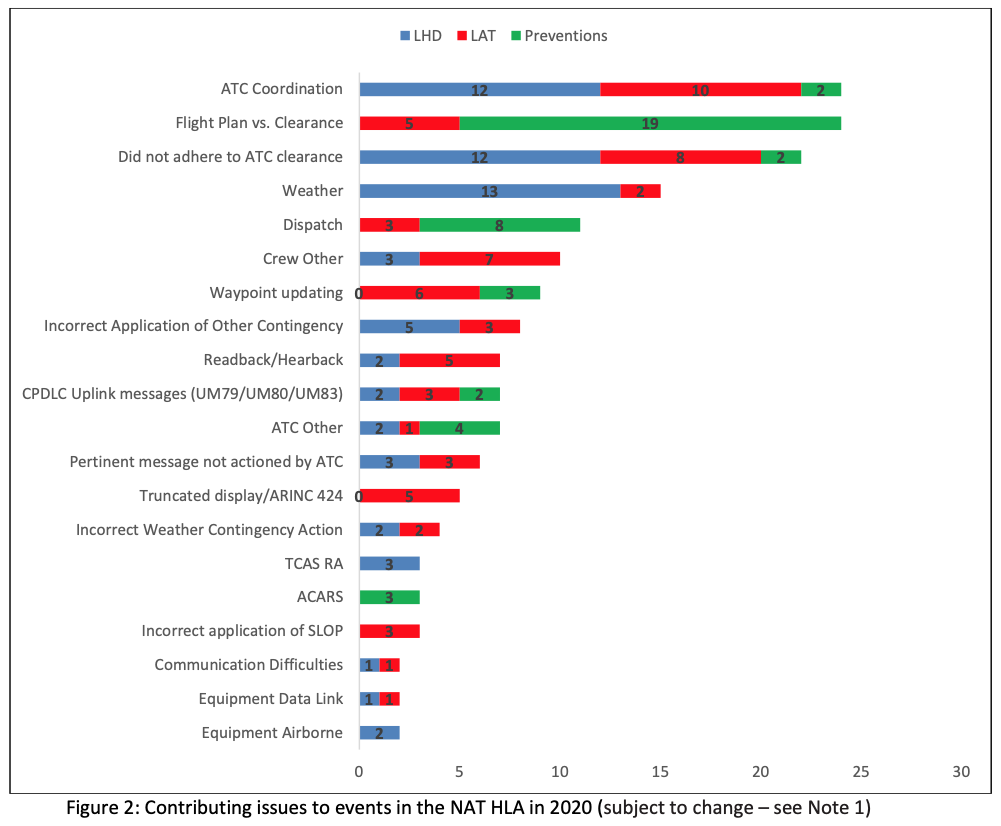
Incorrectly flown contingency procedures (not to do with weather) were one of the top reasons for lateral deviation events in the NAT in 2020. Now it was admittedly only 6% but that is still one of the Top Ten mess ups, and a mess up easily prevented with practice.

There were also a few incorrectly flown weather deviations. These procedures are not hard to do, but they do need thinking about once in while (preferably before you’re actually up there needing to know them) which is why the sim suggestion was presumably made. 

Left, right, up, down. Quick, whaddya do? (Credit: Ramon Stalenhoef)

Now, you could just email everyone a reminder of how to do it. A bit of text and a diagram. But a handier way to recap (and in a way that properly puts the info into their heads) would be to really put crew up there, throw some “fun” failures at them, and let them practice “for real” in the sim.

So, what’s the recommendation?

Well, we ain’t no trainers, but between us we have seen a few sims ourselves in our time. So here is what we suggest you might want to throw into a sim session if you think your crew could do with a refresher…

FFS for Full Flight Sim. Not for what all pilots think when they see ‘SIM Check’ on the roster.

The Opsgroup Ops on the NAT Sim Scenario Storyline Suggestion.

Let’s set the scene. It is the middle of the night, the flight is somewhere over the North Atlantic, dark, lonely and quiet, when…

KABOOM! Rapid decompression.

This throws in a nice bit of startle factor (which is also something pilots need practice in dealing with.)

Now those contingencies will be put to the test – how much to turn, how much to offset, what else do they need to do and say?

There is also that good old Situational Awareness thing to look at as well.

Do they, for example, identify where other traffic is, think about the NAT tracks and their proximity to the next parallel one, and think about whether they were SLOPing already or not?

Let’s get really mean.

A big thing to consider with NAT flights is just how remote and far from land you often are. So Big Picture proactive planning is a good habit to get into.

This means setting up for emergency diversions before you find yourself suddenly having to do one. An awareness of where the closest and most suitable spot for a landing is in advance might really save the day. Or at least a few panicked minutes of trying to work it out.

This is important anywhere, but particularly so when flying in the NAT because something like a rapid decompression is going to have you zooming down to FL95.

Fuel can become a big problemo quickly, but so can separation to other traffic if you start diving down and crossing tracks.

The fun seat.

Where we would do it.

We would be mean trainers. The ones that people always call sick for. Power-crazed with the fun of coming up with mean scenarios to inflict on our poor pilots!

We would definitely make sure it was remote, with a massive headwind making the “nearest” in distance the furthest in time. We would probably throw in some bad weather at one to see if the crew fly themselves into a corner, and maybe an HF blackout or ATC Zero just to make those radio procedures a bit more fun.

Then we would sit back and enjoy watching it unfold while rubbing our hands together gleefully.

You might be nicer than us though.

If you are then you could always share the following with your crew before the sim session:

Skills Fade.

The real point of this is that recent surveys of pilots returning to work (after prolonged periods) have shown that it isn’t the hand flying that gets rusty (well, it does, but comes back pretty fast).

It is the Procedures and the Workload Management which really suffer.

Unusual or unused (or not regularly used) contingencies and SOPs will need refreshing. The NAT is a prime spot where additional threats and challenges make it all the more important to not be rusty when you route through.

So sims to get your pilots’ flying skills up to scratch are critical. Practicing those engine-out procedures, crosswind landing techniques and general “How do I make actually it move?” hand-flying sessions will definitely help with confidence levels.

But opportunities to (re) consolidate those procedures, particularly those ones in challenging airspace like the NAT which are likely to be required on a standard flight could make a very big difference to safety in a practical way.


Genghis Khan’s Second Rising

There is a new airport in Ulaanbatar so we thought we would tell you a bit about it. But then we thought “How many people operate to Ulaanbaatar?” so we figured we’d throw in some information about Mongolia and a history lesson on Genghis Khan too because it’s all quite interesting.

So, Ulaanbaatar is in Mongolia.

Yep, it is the capital in fact. Mongolia itself is a country landlocked between China and Russia. 

Mongolia has some tough terrain which means roads and railways aren’t so big there, but aviation has also remained relatively underdeveloped as well. The country only boasted 46 airports (this was back in 2010 so there might be a couple more now). Of these, only 14 were actually paved and the original Ulaanbaatar airport was the only one with a runway over 3047m long.

So aviation in Mongolia is mainly domestic, small traffic moving necessities and cargo from remote regions. Mongolia does have its own Aviation Authority (MCAA) which also oversees the air traffic services in the country.

Do they need another airport?

ZMUB/Buyant-Ukhaa International Airport is the original one, built in 1957, and it sits just 18km away from the capital city. It sees around 18,000 traffic movements a year and about 5,500 tonnes of cargo. That’s just under 1.6 million passengers a year. Beijing sees just over 100 million for comparison.

It isn’t a huge industry, Mongolia is relatively quiet in terms of tourism, and the Mongolian diasporas around the world are fairly limited too. The majority of flights come in from Russia and China, with some South Korean, Hong Kong and Turkish operators also routing there.

Buyant-Ukhaa has one main runway 14/32 which is 10,170 feet (3,100m) and sits at an elevation of 4,634 feet. There is an ILS CAT I approach to runway 14, and no approach to runway 32 at all actually. I suppose you could do a visual.

The new terminal will be able to handle double the capacity

The New Airport.

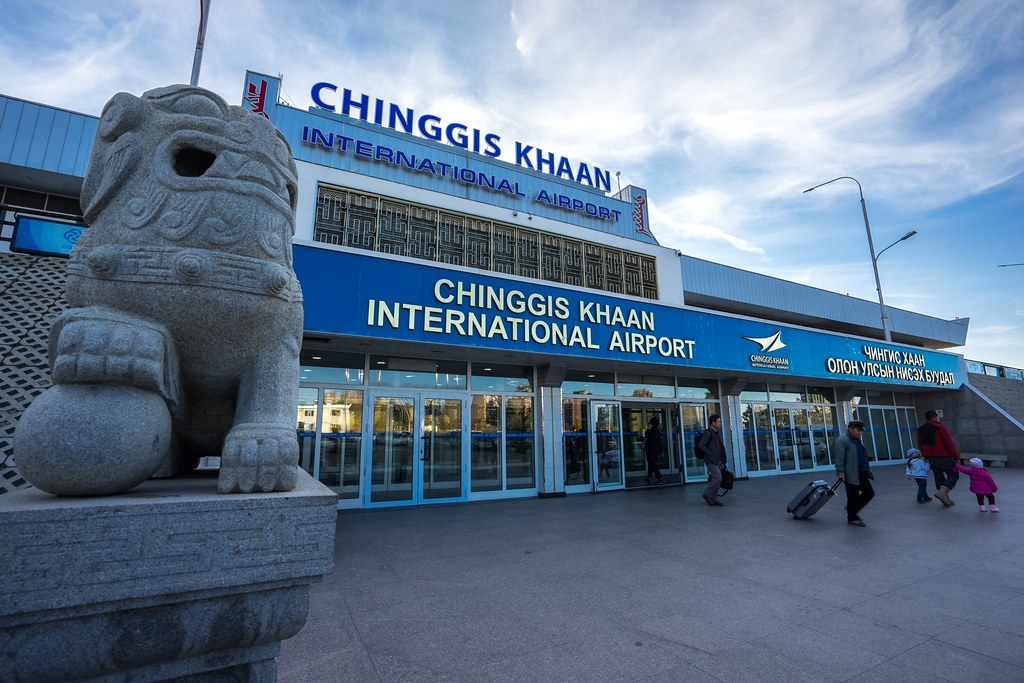
The new Ulaanbatar airport ZMCK/New Ulaanbaatar is officially called Chinggis Khan International (named after Ghengis Khan*).

*Quick aside: yes, Ghengis Khan was a bit of a mean one. They reckon around 16 million men carry his DNA (that’s 1 in 200!). But aside from his prodigious wife taking, he was also an amazing military strategist who helped unite much of Asia (and not by using religion). In fact, he banned torture, outlawed slavery, and established a universal law across his empire. He also developed what is considered one of the earliest universal writing systems and brought the early version of a postal system to Europe.

1 in 200 men are distantly related to old Genghis

So Mongolia feel he is worth celebrating with his name on their new airport.

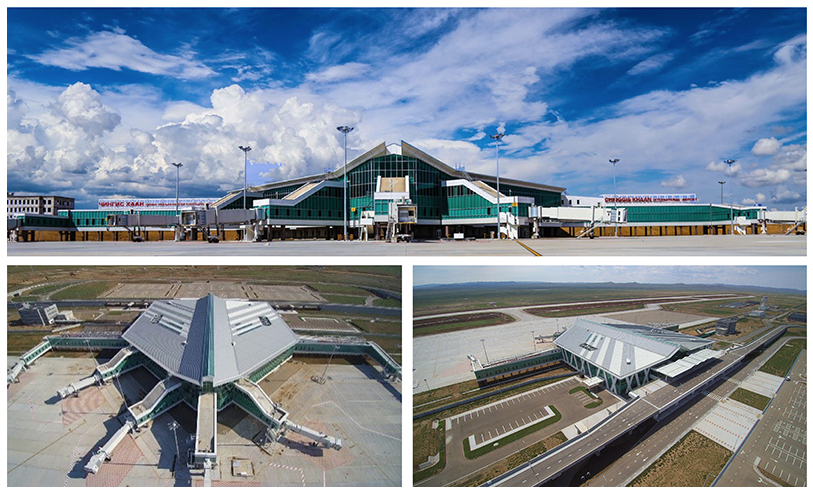
Anyway, this has been built in collaboration between the Mongolian and Japanese government, and it looks good. The airport is 50km south of the main city, so less accessible, but will enable a much greater capacity.

It provides RFF Category 9, operates H24 and has an 11,811 ft (3600m) runway with both ILS CAT I and RNAV capability. A second runway is expected to be added to further improve capability, particularly in poor weather.

As with Ulaanbaatar the old, it also sits at a rather high elevation of 4,485 ft and has some challenging terrain around it with a highest MSA of 9,900 ft.

The new airport facilities

A bit more info.

Airport Admin are available on +976 71 287 300

The airport also has its own website – https://en.ulaanbaatar-airport.mn

You need permits to operate to Mongolia. The Mongolian CAA are pretty good to deal with. Call +976 1282101 / +976 71282016 or try their email fpd@mcaa.gov.mn

It is easier to use an agent for landing permits and we recommendAlpha One Mongolia on +976 9595 0212 or via email ops@alpha-one.mn

But why fly to Mongolia?

Well, it is a pretty safe place to go and has some interesting stuff to see and do. There are a lot of Buddhist monastery ruins if you like your cultural history. There are some awesome national parks with hot springs if you like your nature.

They are also big into their bars – the drink of choice (for Genghis Khan) was fermented milk if you fancy trying it.

So, there you have it. Lots of reasons to visit Mongolia, the top one being they have a shiny new airport for you to fly into.


Red Sky at Night, Aviator’s Fright

Summer in the Northern Hemisphere means a few additional challenges for aviation, particularly in the USA – Hurricanes (which we wrote about here) and Wildfires.

You probably read ‘Hurricanes’ and think yeah, I get that, but fires?

Wildfires do pose a fairly major risk to aviation though, so we thought we’d take a quick look at what those risks might be and what the forecast is for the 2021 Wildfire season.

Too hot to handle.

Wildfires are prevalent across the US during the hotter summer months, typically running from May through October.

Looking back to previous years, California saw 13 fires in 2019, but over 30 major ones in both 2018 and 2017. The 2018 fires led to over 1.8 million acres of land being burned. 2020 saw the first ‘rain free’ February (in San Francisco) since 1864 and the drier months, and warmer spring resulted in some of the worst wildfires in California’s history. 

The outlook for 2021 is not much better. 

There have been extended dry periods with over 90% of the West now in drought conditions. There have also been record high temperatures in the Pacific Northwest, Northern Rockies and northern Great Basin with warmer than normal conditions forecast for the summer. Add to that an increase in lightening activity and you are left with a recipe for significant wildfire risk.

In fact, the figures so far for 2021 are already at a ten year high.

Where can you monitor the fires?

There are multiple sites which track and monitor wildfires. This is a particularly good one and will link to specific info on the major fires.

Map of fires as of July 5 2020

But the risk to aviation is often not from the fires themselves. The big hazards comes from:

  • Smoke
  • Increased traffic levels, diversions and ATC capacity
  • Changes to localized weather conditions.

Out of the frying pan and into the fire.

Major airports generally have good protection from wildfires, and are a distance away from areas which will readily burn. However, smaller and more remote airports may not and damage to infrastructure, or disruptions to ground transport has a knock on effect. Fires also lead to power outages which impact services at the airports.

The major hazard comes from smoke though, and this can cause significant disruptions through reduced visibility.

Orange smoke haze at KSFO

Smoke has been known to reduce visibility to around 200m. In 2005 all four major airports in Honduras closed because of limited visibility from wildfires. In 2010, the visibility at KBOI/Boise Municipal Airport reduced from 10 miles down to 1 3/4 miles in just 9 minutes after a shift in wind direction carried smoke from nearby wildfires into the airport vicinity.

KSFO/San Francisco has also experienced delays and cancellations due to smoke from nearby Butte Country wildfires.

While Sonoma Country airports faced multiple closures in 2019.

Then there is the reduced Air Quality.

The health hazard this poses to ground workers means airports may find themselves understaffed and reduced resources lead to reduced services, which lead to more disruptions for aircraft and operations.

The smoke hazard isn’t just at ground level.

In 2013, a NASA satellite captured images of smoke from Canadian and Colorado wildfires which extended over the North Atlantic, and in 2020 an aircraft diverted into CYYT/St John’s after smelling fumes in the flight deck which were attributed to wildfires (again in Colorado).

Jetstreams carried smoke from wildfires past Newfoundland

What’s cooking.

Disruptions at airports lead to increased traffic levels requiring ATC support for diversions.

Smaller, regional airports have less capability for dealing with the impact of nearby wildfires, and when small regional airports in areas like Oakland, San Jose, Silicon Valley which have a high density of private jet traffic close, this can mean a lot of diversions happening very suddenly, and where they go can becomes an issue.

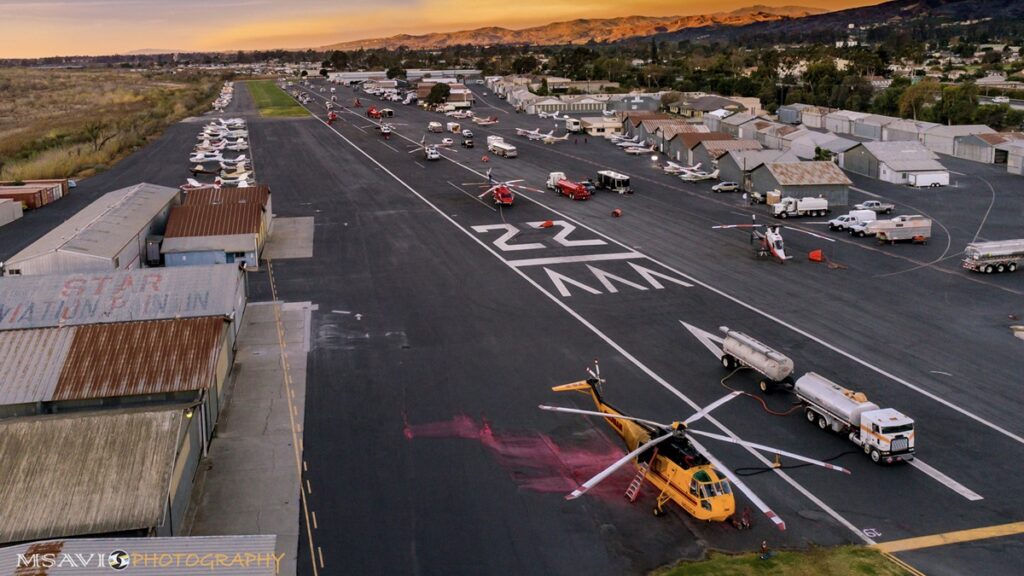
In addition to diverting aircraft, there is the firefighting aircraft to factor in as well. They might operate low-level, but they are not small and they need to operate from somewhere and this is added pressure for ATC.

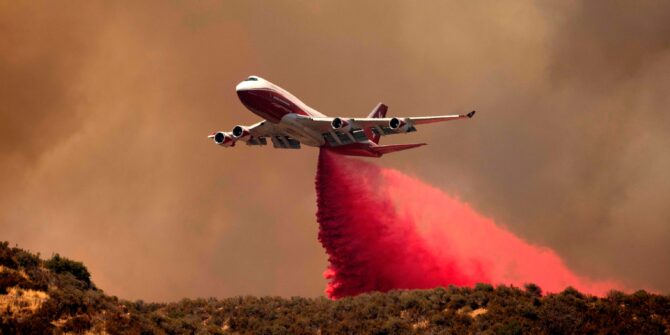
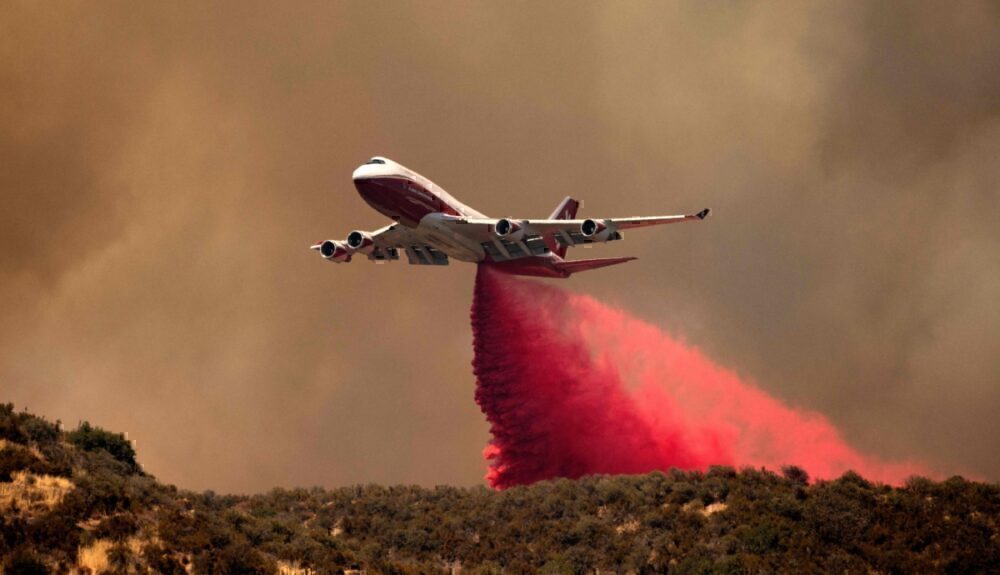
MD-10s and BAE 146s are commonly used. The world’s largest is a B747 Supertanker which can carry up to 19,600 US gallons of fire retardant or water.

TFR zones are set up for major fire zone areas to allow for safe movement of the firefighting aircraft. You can check these here.

Where there are fires, the risks of incidents increases and between 2000 and 2013 there were 298 wildfire firefighter fatalities in the US. 26% of these were caused by ‘aviation associated’ activities which occurred across 41 separate events involving 42 firefighting aircraft. Three of these were midair collisions.

B747 Supertanker (Photo by Josh Edelson)

Pyromania.

Wildfires can impact the weather environment as well.

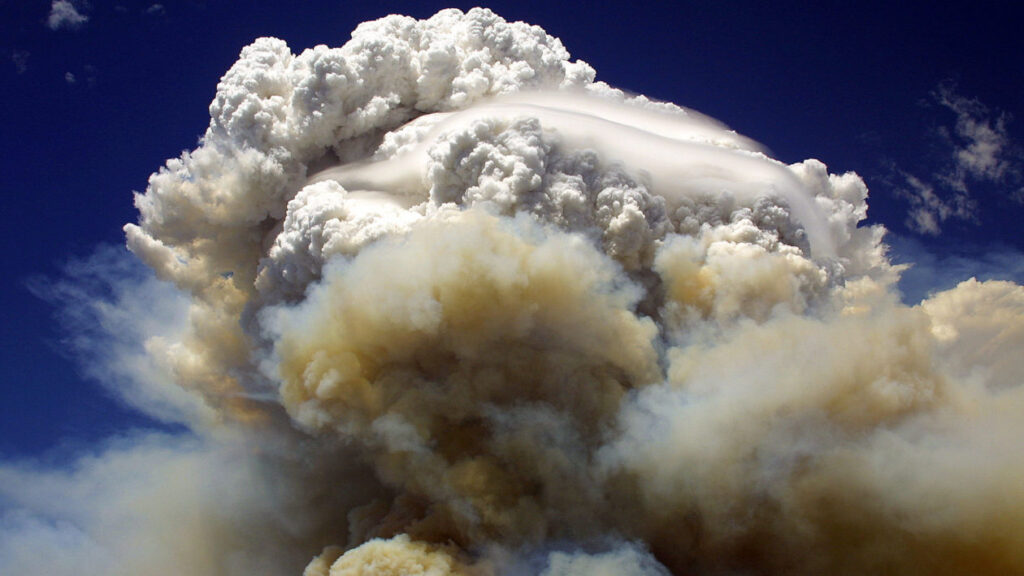
When large enough, Pyrocumulus cloud (also called Flammegenitus clouds) filled with rising ash and aerosols can build. These aerosols often carry a charge that increases the likelihood of lightning and with that an increased chance of fires spreading rapidly.

The “Station Fire’ of 2009, which burned more than 160,000 acres just outside of Los Angeles, also produced a convective column estimated to reach around 23,000 ft. Other majors fires have produced ones reaching as high as 40,000 ft.

These huge clouds are similar to cumulonimbus, only without rain. But they still contain significant up and downdrafts and can result in localized wind shear from gust fronts. The change in ground temperatures can result in significant thermals and large temperature gradients can result in significant localized vertical and horizontal winds.

Willow Fire near Payson, Arizona in July 2004. (Photo by Eric Neitzel)

There are ways to help.

Check those TFRs and check the wildfire maps. If you are operating into an area showing significant activity, consider how much busier ATC might be, and remember to check the capacity at your airport destination.

Report fires when you see them. Early notification of developing fires means the authorities can deal with them quicker, before they grow out of control.

Consider other ways to help. If you have an aircraft available, consider using it to help with evacuation flights. Airlines pulled together in 2016 following some major fires in Canada, and helped evacuate more than 80,000 residents. They also helped them bring their pets out safely. Be warned – you will have a tear in your eye after reading this one so open at your own risk!

Santa Paula Airport, 2020

The Forecast

There is a full seasonal outlook published here. But for a quicker summary of the 2021 Wildfire Forecast:

  • Alaska has ‘normal’ fire potential through summer and into the fall.
  • The Northwest is expected to experience significant and above average fire potential into September.
  • Northern California and Hawaii also have above normal significant fire potential expected.
  • Southern California will be at high risk through September (although this is ‘normal’ for the region).
  • The Northern Rockies region is expected to be above normal through August and September.
  • The Great Basin is expected to see increasing fire potential through August and possibly into September
  • The Southwest is expected to remain normal.
  • The Eastern Area is expected to be normal.
  • The Southern Area is expected to be below normal.

Wildfires pose a significant risk to aviation operations. They also pose a huge risk to those living there, the infrastructure and the economy. The Fire Fighter pilots are an extraordinary bunch of aviators and we wish them the best for this year.

There is a very interesting podcast available here if anyone wants to hear more about what their ‘Day at Work’ involves.


Flying outside the Procedures

Aviation is full of procedures. We fly by them, sometimes we kind of live by them. But other times there are situations where we need to disregard them. So when is it ok to throw the rule book out the window? 

In an airplane, never.

In the literal sense anyway, given the risk of opening a window mid-flight and getting sucked out. But what about in the less literal sense?

Procedures are not there to stop us just doing whatever we want. They are there to keep us safe, to make sure everyone is operating to the same standards and to provide pilots with a guideline of what they should do in *most situations.

Why the asterix? 

I will come back to that. But for now, that reasoning makes sense. If every airplane did what it wanted, flew how and where it wanted, the sky would be a messy mass of chaos. So, we have procedures and we have them so we know what to do, when to do it and how to do it.

More importantly, everyone else knows as well. Which brings us back to the “most situations” comment. 

We cannot expect there to be a procedure in place for every possible event. They are there to offer guidelines and standards, but they are not designed to cover everything.

And they are definitely not supposed to remove the need to think.

So what should we think?

Well, thinking about situations where we might be without a procedure, or where there is a procedure but it no longer leads to a safe outcome is a good place to start.

Let’s take a look at ICAO Doc 007 – the “bible” for the North Atlantic. It is quite clear on a lot of things – for example, what the contingency procedures are if you experience some sort of emergency while flying in the NAT.

We are talking some busy airspace out there, with a lot of aircraft flying on specific tracks, and so the last thing you want is aircraft barreling across them setting off TCAS warnings as they zoom off on a diversion.

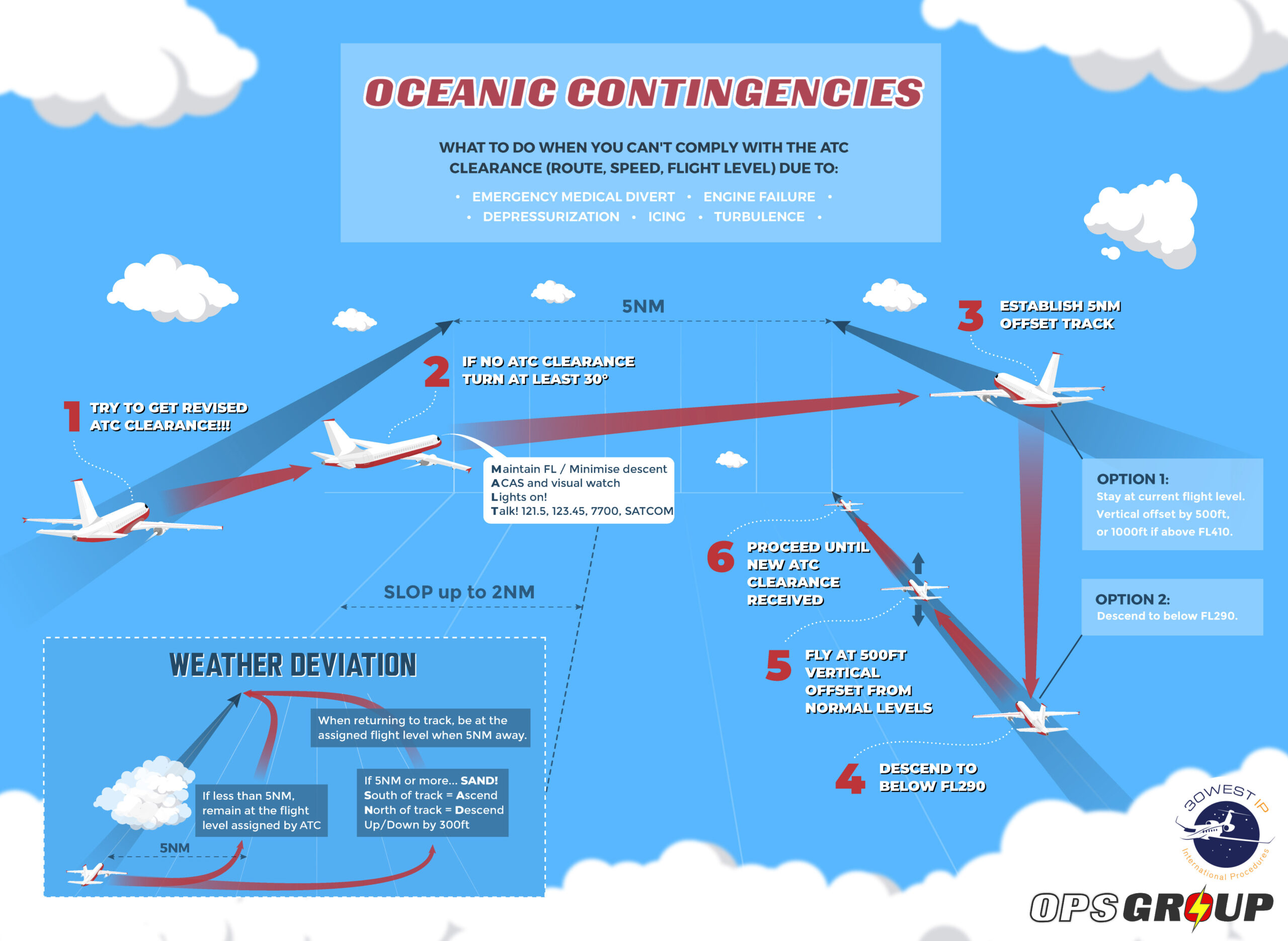
So NAT Doc 007 lays out some procedures to follow. Things like turning 30 degrees off track and offsetting 5nm. And one that says – 

“When below FL290, establish and maintain 500’ vertical offset when able and proceed as required”.

Ok, great, it is pretty clear. Get yourself down to below FL290, establish on your offset, and now go where you need to go.

But…

What if our emergency is a decompression, and we are right out in the middle of the NAT where routing at 10,000ft the whole way to an airport might turn into a fuel problem?

Do we still need to get to FL95 before starting a diversion?

There might not be a black and white, right or wrong answer, but this is the point – there are situations where there isn’t necessarily a procedure telling us what to do, or when to follow another procedure.

So this is something we should probably be thinking about a bit more. The “What If?” things that could happen.

So, what is the rule for breaking procedures?

Is there sort of a checklist for when we can, can’t, ought to or must? Why isn’t there a rule for every time you are allowed to break a rule? 

Well, the reason is no-one can think through every situation, and more importantly they shouldn’t try to! 

The day pilots can only do something if a procedure tells them to is the day you might as well replace them with a computer. We need to retain the skill of weighing up risk and reward, consequence of actions, because there are so many situations out there which are not going to be black and white. 

NAT Doc 007 document actually states quite clearly several times –

The pilot shall take action as necessary to ensure the safety of the aircraft…”

And this goes for any procedure, any rule, anytime you are flying. 

Just because the book says “No, don’t do that!” never means you cannot do it if it is what you need to do to maintain safety.

The tragic Swissair Flight 111 accident is often raised in CRM discussions as an example of when following procedures to the book might not lead to a safe outcome.

But…

Not following procedures because you think there is a quicker, better, easier way to do something is probably not the best idea either.

A Qantas pilot experienced “incapacitating” symptoms after a technical malfunction where they decided to cary out their own troubleshooting, rather than following the checklist.

So, having a good reason to not follow a procedure is important because you are going to have to justify why you broke the rule. If you need to break it for safety then break it, but the key seems to be having a valid, justifiable and safety related reason.

That is airmanship, and that is why the Commander has final authority. It is also a cornerstone of our pilot licence that we “agree” to accept the ultimate responsibility for the safety of the flight.

It doesn’t mean the Captain can do whatever they like…

Why are we even having this discussion?

Possibly because we sometimes forget why we have procedures in the first place.

Unfortunately none of us are immune to this. I can remember several times in my career when procedure-following took over from common sense. The time when we shut down an engine with 10 meters of taxi left, ran out of steam, and had to be towed the last 9… But hey, we still ticked the one engine out taxi box.

So, all of us stepping back and considering why the procedures are there, and then what we might do when we find ourselves potentially having to operate outside of them, is important.

Which brings us back to the debate about FL95 over the NAT. 

Different folk might answer this question differently. It is going to depend on the day, on you and on the situation, and there probably isn’t a definitive answer to be given.

What is clear is that at some point in our flying career we will all probably find ourselves in a situation where there is no procedure, no clear cut answer, no simple solution, and this is where our experience, airmanship and judgement will really be put to the test.

When we end up in that situation we should’t be asking “What is the risk of me getting into trouble if I do?” but rather “What is the risk to my safety if I don’t?” because all the procedures we fall back on were not put there to be blindly followed, and were not written into stone to keep you out of trouble – they are there to be thoughtfully followed when they keep your aircraft out of trouble. 


We Need To Talk: Some Comms Hot-Spots to Look Out For

Communications in aviation are meant to be standard. Everyone speaking the same language, in the same way. Alas, alack, and unglücklicherweise, we all know this ain’t always the case. Some areas have their own ways of doing things, others just seem to be difficult on purpose. 

So here is a rundown of some of the places you might want to listen out for on your international adventures.

Er-can’t hear you

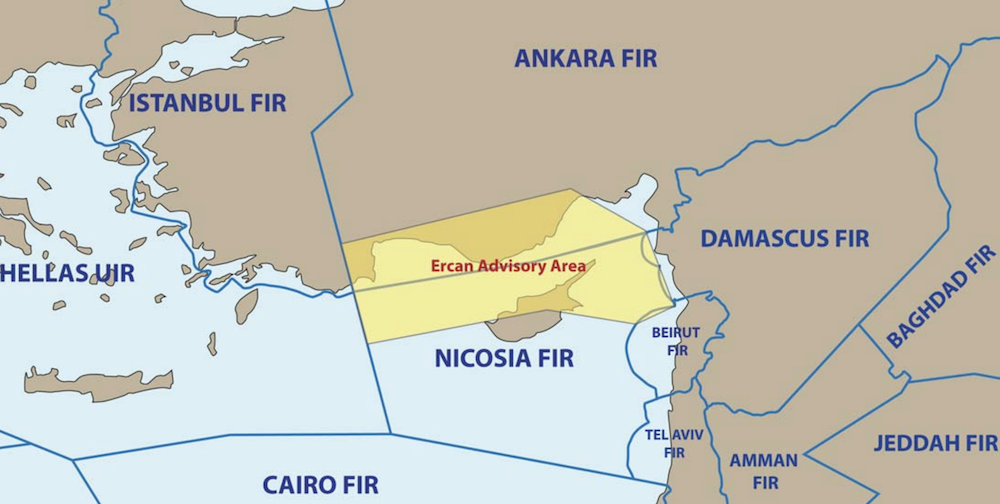
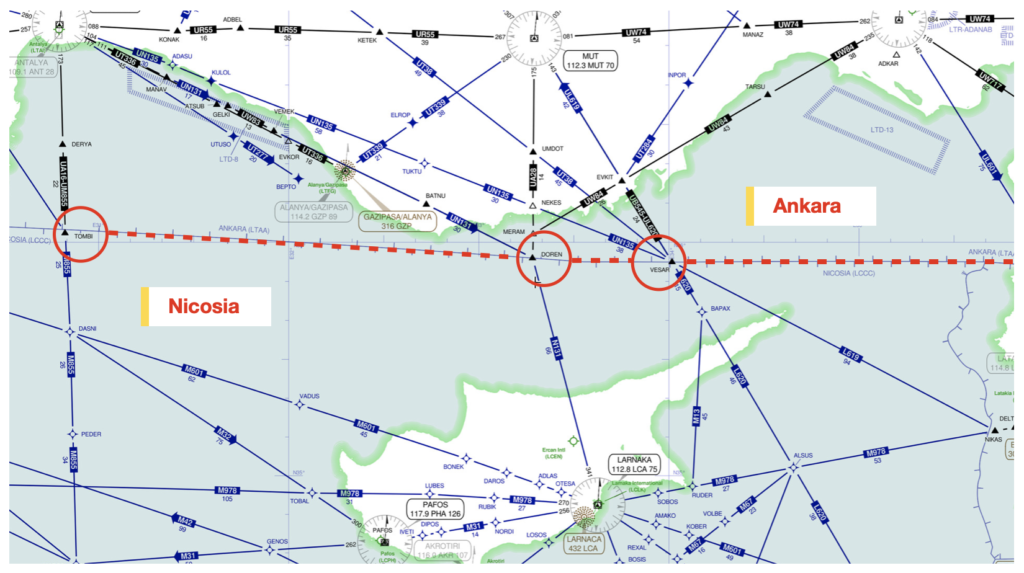
If you are routing between the Ankara FIR and Nicosia FIR then you are going to need to look out for Ercan Control.

Ercan want to control an area over Northern Cyprus, but ICAO don’t recognise their authority. So you’ll probably have to call each centre separately as they don’t like to talk to each other directly.

Ercan is that yellow bit (it isn’t yellow in real life)

To make matters worse, you need to coordinate with Ankara and Nicosia ten minutes before reaching their respective FIR boundaries, which often means relaying via Ercan because Ankara can’t hear you.

The waypoints to look out for are TOMBI (125.5) or DOREN or VESAR (126.3). Call the next FIR 10 minutes before you reach these.

Where the handover happens… or sometimes doesn’t

Southbound is the messiest – make sure you keep following the instructions from Ankara, (or relayed by Ercan 126.7/ 126.9) until you reach these points. Once you do, there is a chance they will tell you you are now under Ercan control, which you should politely acknowledge and then ignore.

At this point, talk to Nicosia, do what they instruct, and once that’s all sorted, then call Ercan as a courtesy to let them know what you’re doing.

In Brief:

  • North of TOMBI/DOREN/VESAR = Ankara controls you.
  • South of TOMBI/DOREN/VESAR = Nicosia controls you.

You might have to relay info to Ankara via Ercan, and you might have to tell Ercan what you’re doing in Nicosia airspace, but remember – Ercan don’t have control!

Asia old politics

This is just a plain old case of political rivals. Pakistan and India don’t like talking to each other, which often means they won’t hand over to each other between their airspace. So be sure to have the frequency ready – and a call to let the previous know that you’re changing over at boundary is a good idea.

Pakistan Air Defence need to hear from you at least 15 minutes before you enter their airspace, and often ask for your ADC number.

There are different frequencies depending on where you’re entering, but the main ones are Karachi 128.350 and Lahore 124.100.

A run in with Iran

Tehran are another strict “call us first” airspace, and they take it pretty seriously if you don’t get in touch.

The Air Defence want a 10 minutes heads-up. If you are departing out of a UAE airport, this probably means calling as soon as you pass 10,000ft.

ADIZ can be found on 127.900 and they’re going to want to hear:

  • Who you are
  • Where you are going 
  • When you’ll be reaching them 
  • What altitude you reckon you’ll be at when you do 
  • Your squawk code

After relaying all this info to them you will probably get a cursory “call xxx”, and that’s that.

IFBPolite

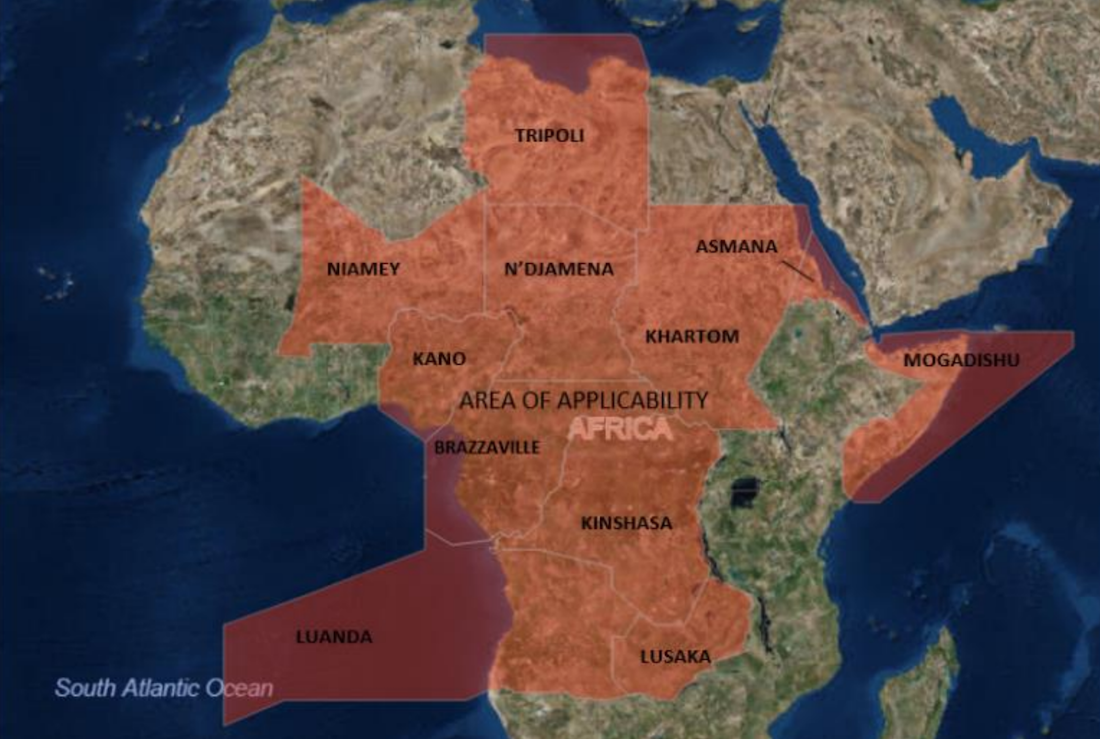
Over some parts of Africa, there are more giraffes than there is radar coverage. Big swathes of Africa have little control, so you are going to need to do some in-flight broadcasting here.

The areas where you need to be IFB-ing

It might sound like a chore, but numerous heavy and super jets route through here, and not hitting their wake is probably one the best reasons to work out where they are and when. (And if you’re one of the big ‘uns, then thinking of the little ones is a nice thing to do as well!)

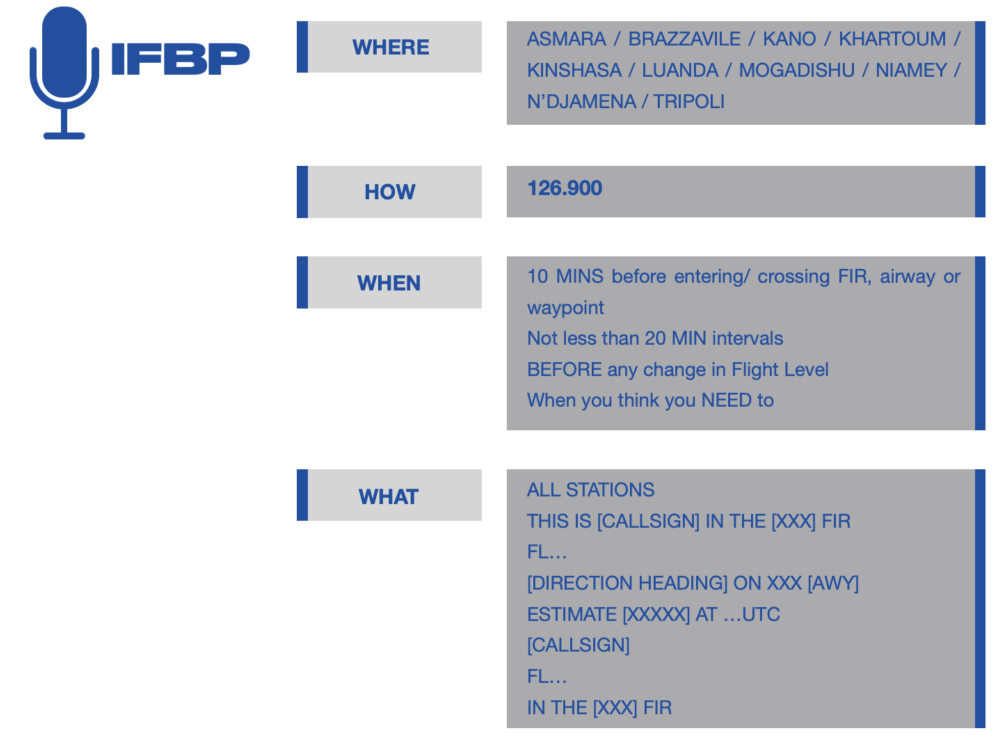
Generally, one IFBP seems to wake everyone else up and triggers a bunch of others, and then you can get a good idea of where everyone is routing.

More info can be found in IATA’s IFBP document, but here is a little IFBP script in case you need it:

A handy print-it-out-and-take-it-with-you thing

Mumbai, Mumbai HF etiquette

The HF radio over Mumbai airspace is the bane of many a pilot’s long-haul life. It often seems to defy all logic of night versus day frequencies, and is usually a trial and error situation to try and work out which one is working.

We found 10018 / 8879 / 5658 tend to have the best reception.

You will know when you do find the golden frequency, because you will hear the ear-aching scratchy hissing, overlaid with a dozen airplanes all calling at once and not listening out for each other.

So try to avoid talking over another aircraft, but be ready with your finger on the mic trigger for when a tiny pause occurs and you get your call in. The radio is rarely good at the best of times so headsets are recommended. 

Mumbai also have CPDLC. The logon is VABF. But they only use it for specific routes. If you cannot get a hold of them, give their SATCOM a go on 441901 or 441920.

The lingo Down Under

Australia are like teenagers – happy to text, but rarely do they actually want to talk to you. Nearly all of the Upper Preferred Routes in Australian airspace use CPDLC.  Which is actually great. But only if you’ve got it, and only if you get it right (you do need RNP10 and ADS-C/CPDLC to route along these).

You can logon to YMMM/Melbourne or YBBB/Brisbane (15-45 minutes before) and when you enter, they like to receive a position report. From then on its very straightforward.

A593: The Akara Corridor

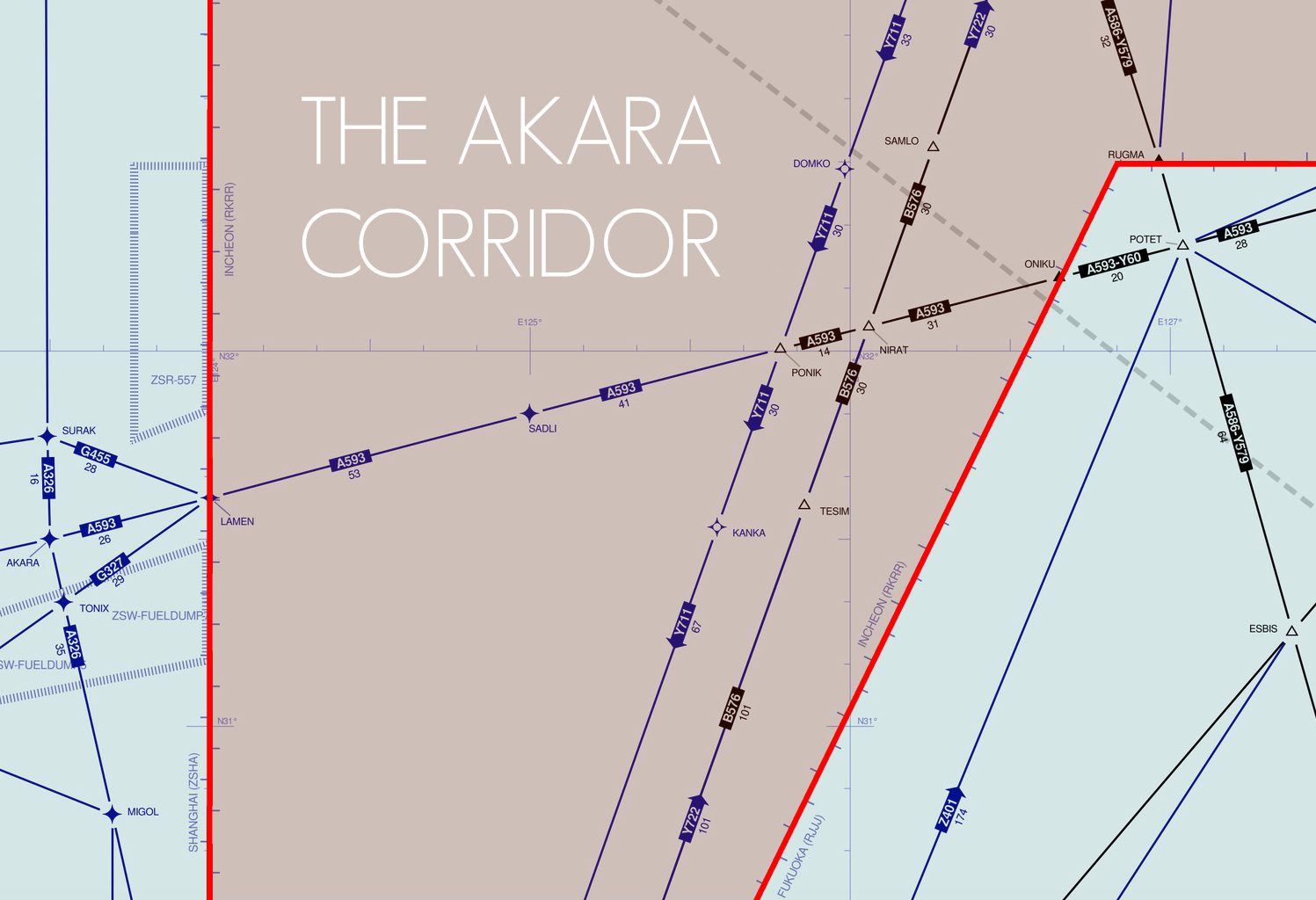
There’s a bit of airspace off the coast from ZSPD/Shanghai known as the ‘Akara Corridor’, where different ATC centres are responsible for the control of aircraft at various different crossing points. South Korea (RKRR/Incheon) controls north-south flights here, while Japan (RJJJ/Fukuoka) controls east-west flights.

The Akarridor…

This area has always been unusual in that more than one center has had responsibility for controlling aircraft at different waypoints.

But on 11 Jan, 2021, ATC authorities in Japan, China and South Korea agreed to implement a proposal from ICAO regarding ATC management in this area – so from 25 March, 2021, South Korea will control all flights in this area.

Wild comms in Idlewild (JFK)

No briefing on ‘The Comms Hot-Spots to Look Out For’ would be complete without a mention of KJFK/New York controllers.

Granted, this is a busy airport, in busy airspace, but operating into JFK is not for the faint-hearted. Controllers speak fast, only say what they need to say once, and get very mean very fast if you mess up. 

Expect multiple runway changes for landing, and on departure keep an eye on the ATIS because they won’t always tell you if your departure runway changes, you’ll just find out on the taxi.

There are quite specific when’s and where’s to call on the ground as well – once clear of the runway, check in with ground, but also apron to find out your gate and entry to the apron, because ground will probably want to know this, and sometimes the two don’t seem to talk to each other.

JFKrazy taxiways

Lost Comms

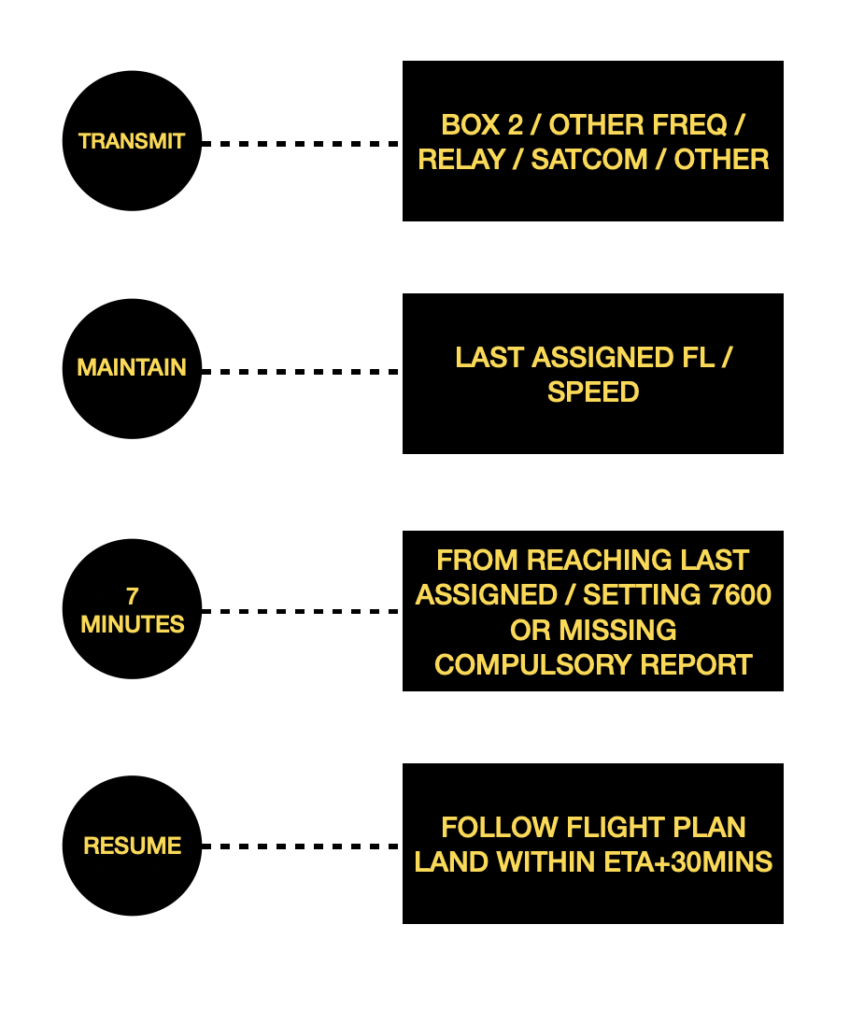
ICAO Doc 4444 contains the standard lost comms procedure. Some countries have their own versions too.

If you’re in IMC:

  • Maintain last assigned speed and level (or minimum flight altitude if higher) for 20 minutes after the point you failed to report at.
  • Then follow your flight plan.

If you’re in IMC and in an area with ATS surveillance:

  • Maintain your last assigned clearance (minimum flight altitude if higher) for 7 minutes. The 7 minutes runs from when you first reach the last assigned altitude (because you lost your comms in the climb), from when you set 7600 (because you realised you’d lost comms while cruising), or from when you were unable to report at a compulsory point (you tried and it didn’t work because your comms aren’t working…)
  • Then follow your flight plan.


Safety on the NAT: B+ with room for improvement

The eighth Annual Safety Report for the North Atlantic Region is out, and it looks good. A solid B+ for pilots and ATC alike.

But there is still room for performance improvement, so here are the highlights from the report to focus on.

Did anyone fly in 2020?

The number of flight hours in the NAT HLA through 2020 was 892,137 which was unsurprisingly a decrease on the 2019 hours (2,063,908 in case you’re wondering).

The peak week was July 15-21 when it saw 5,621 flights crossing, compared to 13,733 for the peak week of 2019.

If you want to check and compare all the stats to 2019 then here is our post on that.

What have they been monitoring?

Safety Performance in the NAT HLA is monitored and measured in 12 areas. The targets for 6 of these were achieved in 2019, while 2020 achieved an impressive 8.

The biggest improvements seem to be:

  • Less Large Height Deviations where Datalink was not in use
  • A reduction in the amount of time aircraft with datalink spent at the wrong flight level
  • A reduction in the number of GNE events involving aircraft with datalink

How likely are you to fly into someone else?

Much of the safety focus in the NAT really boils down to this – it is an area of reduced separation and high density traffic. So, they also worked out the risk of collision and in 2020 it reduced by 74%, which is probably down to less aircraft but also to less mess-ups. 

SLOP is one of the main factors in reducing this number. And it doesn’t just reduce the risk of collision, it reduces your risk of running into wake turbulence as well. So keep up that slopping, up to 2nm right (and 0.1nm increments).

Who’s to blame for the times it did go wrong?

Ok, ok, the purpose of the report is not to point fingers, but to understand where improvements can be made.

The Top 10 factors in errors haven’t really changed – ATC coordination errors are top, closely followed by “crew other” (which pretty much means crew not doing what they’re told, messing up etc) and then interestingly application of contingency (other than weather).

So here is a quick recap on those Contingency Procedures to follow

Follow it!

Some facts and figures

Since 2019, 70% of core NAT traffic has been using ADS-B.

There have been no accidents in the NAT since at least 2017. 2020 also saw no losses of lateral separation for the first time since 2017.

They did see 47 LHDs, 57 Lateral Deviations (15 were GNEs, the other 13 were caught and corrected by ATC), 26 coordination events, 1 longitudinal loss of separation and 30 events they prevented where someone was basically just flying the wrong flight profile.

18% of events were down to ATC coordination between different ATC sectors.

18% also came down to fight plan versus clearance issues.

11% were weather related. 

Issues with dispatch contributed another 8% and everything else was down to, well, lots of other things.

How can we improve?

Follow the Golden Rules of operating in the NAT HLA:

  • Have the Right Equipment: If you ain’t sure then check out our Circle of Entry.
  • Have a Clearance: If you can’t get it on CPDLC then have those HF or VHF frequencies ready for a voice clearance, and make sure you read it back and confirm it correctly.
  • Check your Route: This means flying what you’ve actually been told to fly which means checking what is in the airplane box matches what is in the clearance. It probably should say ‘flight profile’ because it means route, altitude and speed.
  • Know your Contingencies: We added the picture above to help. Read more about this here.

And don’t forget to SLOP.

Keep up to date on NAT info

Photo @Algkalv from Wikimedia Commons


Please be Wary of Malicious Phish

There is a new threat to flight ops security, and it might not come from where you think it would.

The Hack Attack

We talked about the threats of airplanes and control towers being hacked before. But now we want to talk about cybersecurity.

Anyone who works for a big company has probably had to do their cybersecurity training at some point. If you haven’t, here is an example. Answers at the bottom of the page.

The answer is 3. And no, it isn’t my actual password.

The trouble is, the scams we have been seeing are getting more and more, well, smart.

The Nigerian Prince

The good old Nigerian Prince who wants to give you One Hundred Million Gazillion Dollars scam. As old as the internet itself.

How does it work? (And yes, these do still work. Apparently they rake in over $700,000 a year from unwitting victims).

In a Kola nutshell, you receive an email from someone overseas (and there are different iterations of this now but it is always along the same lines) – a royal prince is wanting to give you money, or a disgustingly rich recluse of a distant uncle has passed away and mentioned you in their will.

Whichever they use, the trick is the same – they supposedly have money for you, and all you need to do is provide your bank account details and they will transfer it all over, for a small fee.

Only here is the catch (sorry to break it to you) – There is no Prince, there is no money, and now they have your bank details and maybe even a payment you have sent them.

This doesn’t affect Flight Ops though?

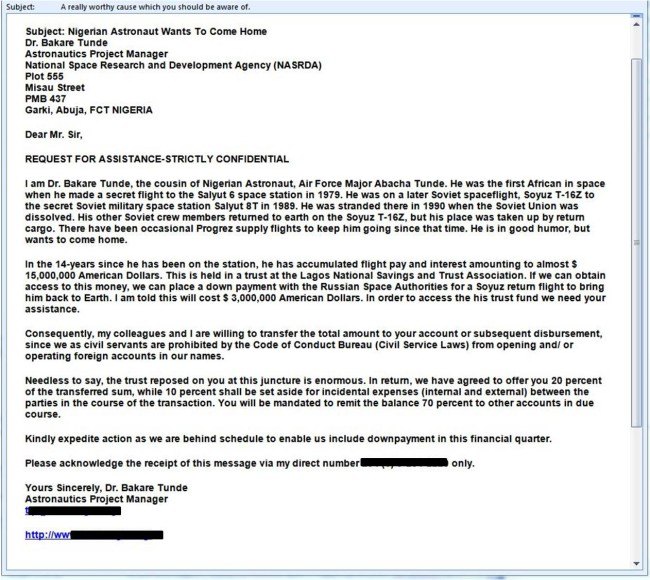
No, it doesn’t. Not really. Unless you count the Nigerian Astronaut stuck in space one.

They are reposing a lot of trust on you…

There is also the recent one which the NBAA warned about involving Imposter CBP Agents who call private residences and businesses and attempt to gain banking information.

And then there are the fake websites offering free tickets or special deals, and steal “passenger” information which they freely provide. [https://deltaairlines-flights.com] is not a legit website. Don’t buy tickets from there.

The ones that we want to bring up though are Phishing scams and Malware emails.

So, what do you need to be on the look out for, and how do these even impact Flight Ops and Security?

Be Wary of Malicious Phish

This is when an email is sent which looks legit. You open it, maybe it tells you there is an iTunes bill you need to pay. You wonder what you bought on iTunes, you can’t remember, so you open the attachment and BAM! 

Malware is sophisticated nowadays. It doesn’t always just shut your computer down, or flash up a retro laughing skull icon. It might destroy data, it might steal data. It might install ransomware on your systems.

Great. And now the TRex has got out.

Hackers recently took hold of an oil pipeline in the USA.

The Colonial Pipeline supplies half of the east coast’s fuel supply. Hackers managed to shut it off, probably via an email. The impact was no fuel supply from Houston to New Jersey and this affected all the airports along that route. It also led to increased fuel prices and ongoing impacts even after the fuel supply was re-established.

Cyber attacks are as common as physical ones

Phishing is a similar scam.

An email, or a phone call from a “trusted source” appears in your inbox and somehow cons you into into giving login data, passwords, user info. Once access has been “granted” the hacker can do a lot of damage. From stealing confidential information, to taking control of systems.

I.T. Operator SITA which serves major Star Alliance airlines such as Lufthansa and Singapore suffered a data breach in Q1 2021 with hackers gaining access to ticketing and baggage control systems which led to the information of thousands of passengers being stolen.

In 2020, major European regional airline EasyJet admitted an attack may have compromised data of around 9 million passengers. Several thousands had their credit and debit card details accessed.

What are we seeing at OPSGROUP?

We are seeing scammers getting more cunning, scams which are more targeted and ones which are worryingly specific.

First up, the Nav Fees scam. This one has been around for a while – we reported on it here. They send you an email, pretending to be from Eurocontrol or IATA or some government agency, with a new bank account to send your Nav Fees to. Pretty standard stuff. Fortunately, most of these emails are poorly written, and easy enough to identify as bogus – but that’s only if you are on your guard.

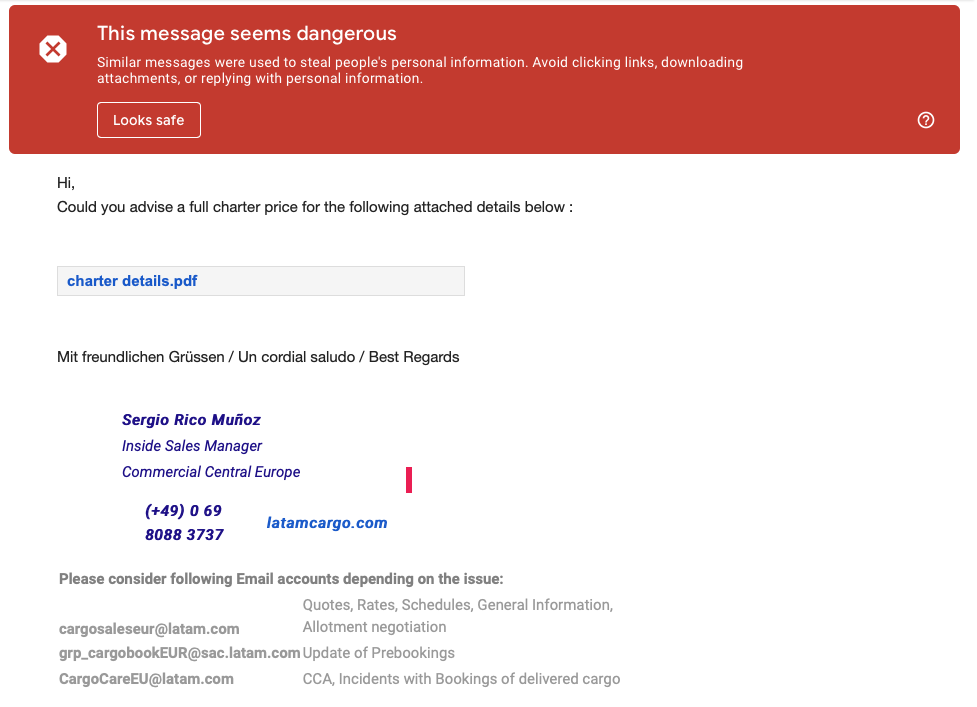
Then there’s the charter quote email scam. These have believable company names. Some of the names are even “real” people, so the email looks legitimate, and all it does is ask for a quote. So you open the email attachment and now they have you.

Thankfully, OPSGROUP is not in the charter quote business (and our email system is fairly good at spotting these now), but for some of you reading this, who do see real emails for quotes, this might pose a problem.

The Charter Quote scam

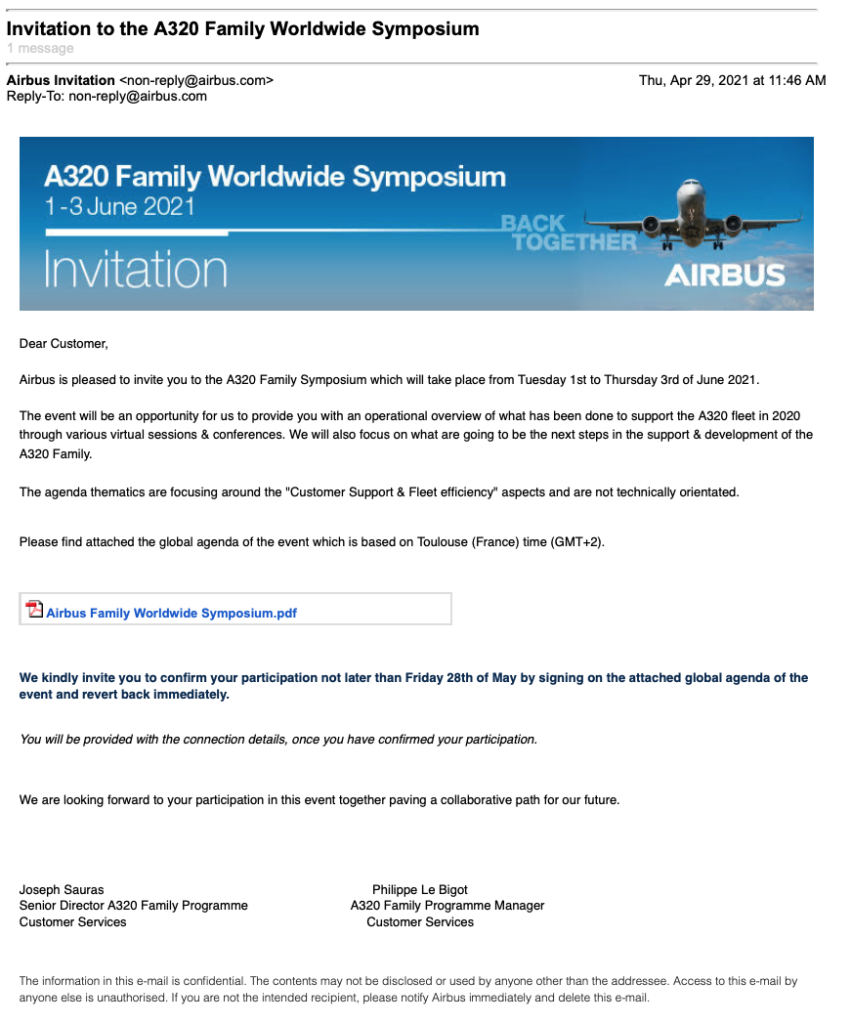
The more concerning ones come from very specific, and very genuine aviation linked companies such as ‘Airbus’.

These are worrying because they are so specific, so targeted, that it is often hard to spot the real from the scam.

Microsoft put a warning out earlier in 2021 saying they are tracking this ‘dynamic’ campaign which is targeting the aerospace and travel sectors with spear-phishing emails. When the PDF in the email is opened it delivers RevengeRAT or AsyncRAT to your computer.

RATs it seems are the new worms. A Trojan is installed and user credentials, webcam info, statistics about the system are pilfered and pillaged.

The Airbus Symposium Scam is a known one

Your OPSGROUP Cybersecurity Assessment

  1. If you receive an email from an unknown sender, or for something you haven’t signed up to – should you open the attachment?
    • Yes
    • No
  2. You receive an email or a call asking for details that involve passport info, bank details or anything else sensitive – should you share it?
    • Yes
    • No
  3. There is a Nigerian Prince/Princess who really wants to marry you and send you several million dollars – should you trust them?
    • Yes
    • No

If you answered “Yes” to any of these questions, go back to the start of this article and read it again.


What’s the deal with China crew visas?

The process for obtaining a crew visa for China can be very confusing. We definitely recommend using an agent to assist with this, and with the permits for your aircraft. G3Visas are a good one – they really know their stuff. But if you are determined to go it alone then here is what we know.
What’s the deal?

Crew need a C-type visa. This are usually valid for 7 days.

Simple so far.

However, crew can actually enter China on different visas at certain locations, if pre-arranged. And if you rock up with the wrong sort, you are probably going to get a fine or be asked to go home again.

In fact, for crew entering as a passenger on a commercial flight (heading in to ferry out an aircraft for example) you cannot enter on the Crew C-Type visa. This means you are going to need a business or a tourist via.

In 2013, they added in a new immigration policy for transit passengers. If you are from one of the 45 countries on their approved list, and you transit in via ZSPD/Shanghai Pudong, ZSSS/Hongqiao or ZBBB/Beijing to a third country, then there is a 72 hours without a visa regulation. The US is included on this list and we are mentioning it because of the above point about crew entering (as a tourist) to ferry an aircraft out.

You can also obtain multi-entry visas depending on your operations, but you are going to need a schedule showing the multi-operation and some sort of official company letterhead proof of why you want multiple entries. We definitely recommend having an agent assist with this because the paperwork can be daunting.

What are the Visa types (that you need to know about)?

  • C – The standard crew visa
  • L – Tourist visa generally valid for single, double or multiple entry. US and Canadian citizens may be eligible for a 10 year L-Visa
  • M – Business visa useful for folk visiting regularly or work reasons (and who aren’t employed by a Chinese company)
  • Z – Work visa (if employed by a Chinese company)
  • G – Transit visa. It is basically the same price as an L visa so probably better to just go for that one if you need one

Good old entry stamps. Your passport validity (and space in it) is also important

The Bilateral Agreement

China and the US have a bilateral visa agreement and it can be a little tenuous.

Back in December 2020, the US put in new rules to try and “curtail” travel by member of the Chinese Communist Party and their immediate family members. It limited them to one travel visa a month. Prior to this a 10 year visa could be obtained. 

All very political.

This didn’t impact crew visas. However, we have heard recently that:

“Due to unilateral change of the visa application arrangements by the US side, a large number of crew visa applicants from Chinese airlines are unable to obtain US visas through the previous channel. In response, we are compelled to take necessary reciprocal countermeasures for crew visa applications from the US side.”

We have not been able to verify this, but it comes from G3 Visas who are a bit of an authority on Chinese visa getting. So get in touch with the agent you are using to help you organize your visas, and leave a little more time in case of delays. So far, there has been no further update on what the deal is at the moment.

Are there other options?

Some operators who are ferrying aircraft out report that they have flown in via Seoul or somewhere else close and not part of China (so not Taiwan or Hong Kong), and then simply hopped from one aircraft to the other and flown it out again. This circumvents the requirement for the visa since you are not really entering the country…

We are not recommending or advising against it. We will say that a fair few operators have reportedly done this, and it has worked fine. But you might want to think about what will happen if you have to divert and go into a Chinese airport because then you are going to visa-less and this could get messy.

Customs and Immigration

Don’t have any mistakes on your Gen Dec. It will cause BIG delays.

Also, be aware that certain nationalities are going to be asked a few more questions. This includes crew. 

Turkey

For reasons unknown, if you have been to Turkey and have a visa or entry stamp in your passport, then you are going to have to explain yourself. Actually, it might have something to do with the Turkic Uyghurs in Xinjiang / the Uyghurs diaspora living in Turkey…

Uyghurs

If a crew member is from the Xinjiang region, expect them to be taken aside for additional checks. Nothing to be alarmed about, but good to know in advance that it will happen.

Tensions between China and the predominantly Muslim Uyghurs community are high

Chinese Citizens working outside of China

They can be a little “funny” with Chinese citizens who work for a foreign airline. Again, it tends to lead to additional immigration “chats” so be prepared for a brief delay.

What about permits?

Getting a permit is notoriously intimidating. They require use of AFTN/SITA, have specific routings and are only valid for exact timings given. If you want to land then you need a sponsor letter written in Mandarin by the receiving party…

Basically, use an agent. The authorities are not always the most patient or helpful. You’ll be paying around $75 for a one way overfly, $100 for a round trip landing and some extra depending on handling.

Mainland Ground Express are a helpful bunch and you can get hold of them on +86 20 8111 7474 or via email at operations@groundexpress.aero

Useful links for more info

  • The US government travel resources site has some handy info on general visa and travel stuff.
  • G3visa is a really handy agent for helping obtain any type of visa.
  • Universal Weather maintain some pretty up-to-date info on the situation as well.
  • The OPSGROUP member Forum and Slack channels. Yeah, we’re going to throw this one out to our members and say ask on there because the rules and procedures seem to change a lot and often the best info comes from someone who has just been there.

And finally…

If you have been to China recently, experienced issues (or good things) with the visa or permit getting process, or have any tips for other operators then please let us know! Your up to date experience would be very handy to pass on to everyone!


Any Single Pilots Out There?

The big talking point of the moment – Airbus and Cathay Pacific’s project to have only one pilot in the cockpit during cruise.

So let’s take a look at what this might mean for safety, operations and pilots worldwide.

The headlines are misleading

Cathay and Airbus have not designed a new A350 which no longer needs pilots operating it. There is no mega computer AI robot involved which is stealing our job.

The plan is to simply allow one pilot to go and rest during “quiet cruise” phases, while another pilot remains in the cockpit vigilantly monitoring (and probably with toothpicks propping their eyes open). This will allow them to potentially reduce the number of crew required on long haul flights, and while it means a change to procedures it is not really, as many are reporting, a leap towards pilotless flight decks.

Maybe just a small step

So, what are the considerations here that people are talking about?

Cathay Pacific are in talks with Airbus on this project

GermanWings

The GermanWings accident resulted in a rule that there must be two persons in the cockpit at anytime. So if a pilot needed a bathroom break, a cabin crew member was required to come in. This was fairly contentious at the time because, as many pointed out, what is a cabin crew member going to do if a “situation” arises?

This rule was eventually revoked, in part because EASA and other authorities brought in new regulations relating to pilot psychometric testing. However, with only one pilot in the flight deck, this does raise various safety concerns – from events similar to the GermanWings accident, to the question of pilot incapacitation or even, what do they do if they need the loo?

What about the AF447 accident?

AF447 was, in part, attributed to the experience levels of the two crew in the flight deck – both First Officers while the Captain was out sleeping.

Using cruise relief pilots is not a new thing though, and in order to operate with a single pilot, that pilot will presumably need to meet a minimum experience level. Additionally, the Captain will maintain the decision as to when they leave the flight deck in their First Officer’s hands.

Big storms on the horizon? Maybe stay in for a bit longer.

The lonesome pilot can also recall their colleague to the flight deck should a situation require it. So the question really comes down to whether a situation is likely to arise where, by having only a single pilot the result is more critical or catastrophic than if two had been present and therein lies the problem – because years of aviation safety studies have shown time again that there is a reason we operate with two crew.

Safety in numbers

Modern aircraft, and the A350 in particular, have many levels of safety and redundancy to support the crew. They can automatically fly TCAS maneuvers. They can carry out an emergency descent at the push of a button. In addition, Airbus are working to demonstrate that their aircraft and systems are robust enough to basically not really fail. They are also designing them to be able to autonomously handle any situation without pilot input for 15 minutes.

This will be a big deal. It will mean, should something fail, and the single pilot be incapacitated, that there is time for the second pilot to wake up and make it to the flight deck to solve the situation. However, recent aviation accidents involving malfunctioning systems (designed to minimize pilot workload), and ongoing concerns about automation complacency highlight the potential downside of such advancements.

Can ETOPS can teach us something?

The A350 was certified for 370 minutes ETOPS. That’s a long time. It is over 6 hours. 6 hours on one engine potentially. So what leads to this?

ETOPS is given to the operator, not the aircraft, and it is based on the operator’s ability to demonstrate necessary airworthiness, maintenance and ops requirements. It is really a statistical thing. If an operator hasn’t had an engine issue in a really long time then they are probably going to be able to get a better ETOPS approval.

So what does this have to do with only one pilot in the flight deck?

Well, it boils down to the same thing – statistics and procedures:

  • How often does something go wrong in the cruise (which requires two pilots to handle it)?
  • What procedures will be in place for ensuring safety and redundancy levels are maintained?

The answer to Question 1 might be “hardly ever”, but aviation safety improvements are built on the fairly simply idea that if there is a risk, find a way to mitigate it. 

Even if that risk is minute, if it can be removed it should be. This is why astronauts have their appendix out before heading into space. This is why we have redundant systems onboard, or each pilot eats a different meal. Statistics might suggest an event occurring which a single pilot cannot deal with and which then results in a fatal accident or hull loss is tinier than a hair on a fleas back…

But if a risk exists that can be mitigates simply by retaining two pilots in the cockpit, then two pilots should remain.

A Disco onboard

They gave the A380 a bar and showers, now the plan is to have Discos…

DISCO actually stands for Disruptive Cockpit (I am not sure that sounds any better). This is the Airbus project looking at enhanced cockpit design to enable single-pilot operations on new aircraft.

The DISCO concept is looking to place core technologies into the flight deck in a ‘multi modal’ way. Things like pilot monitoring systems which track eye movement, voice recognition for commands, improved ground collision avoidance systems, new navigation sensors.

And of course pilot health monitoring systems.

An integral safety aspect of this concept lies in the monitoring of the sole pilot, and the availability of a system to detect if they become incapacitated, and to alert the remaining crew member.

Not an entirely new concept

It is only happening in 2025

The plan is to implement this in 2025. That is 3 and a bit years of procedure writing, regulation making, testing and trialling before it is put into action, and there are a fair few obstacles that stand between now and that day :

  • Regulators will be looking at their procedures with a fine tooth comb
  • The pilot will probably need monitoring, particularly to ensure incapacitation does not occur (or if it does, the other pilot can quick-foot it back)
  • There will need to be pilot training in place
  • Airbus need to hit that 15 minutes of safe autonomy.
    • And these systems will also need to deal with situations where ‘Black and White’ failures do not occur. When you consider the multiple, varied and often “illogical” failures which can arise from a lightning strike, a bomb onboard, or multiple computer failures this does not look as simple as Airbus might say
  • The approvals for this do not just sit with the Hong Kong authorities. Any state that the airline might overfly with only one pilot in the driving seat is going to have to be convinced as well
  • Passengers will need convincing…

And they still need to answer the question of the toilet. We all want a little more information on how that ‘specially designed unisex toilet’ to be used ‘in coordination with ATC’ will work.

A new flight deck concept?

If this happens, they won’t need pilots anymore

This is a contentious one to raise right now. Say ‘single pilot’ or ‘autonomous systems’ and a lot of pilots break out in a sweat, seeing themselves replaced by AI computers. But aviation has always been very innovative and those in it have always had to adapt to new technologies. Take a glance back to the 1980s and flight engineers were still a relatively common site in flight.

Ignoring the rather decimating impact of Covid though, aviation was growing, and it was growing fast.

Chances are it will again.

There are around 200,000 active pilots and forecasts suggested upwards of 500,000 would have to be trained over the next two decades to meet forecast growth demands. Even if every (long haul) flight deck sees the number of crew in it halved, it is still probably safe to say none of the current or new generation of pilots will be out of work anytime soon.

But we still are not convinced

There are unresolved questions here. The main one being “Why?”

You see, there is already this rather marvelous thing in an airplane – it can watch the pilot, it can monitor aircraft systems, and it can take over no matter what the failure or the complexity of that failure might be…

It is called “the other pilot”.

There is a good reason why aircraft are multi-crew machines. So why are Airbus and Cathay Pacific investing millions into developing systems which can do this?

It isn’t for safety…

This is being driven, not by manufacturers looking to increase safety, but by an operator looking to reduce costs. And for many, that appears an unwise and arguably unethical reason. Even if the statistical impact on safety is a 0.0001% decrease, that is still an unacceptable decrease when it is made for business reasons. There are also a great many places within an airline or operation where costs can be cut, and when cuts are made these should never occur at the price of safety, even if that price does seem negligible.

The main photo is of a pair of VietJet co-pilots who got married – because we think that’s nice, but also because we liked the play on ‘single pilot’ in the flight deck idea. Congrats to them both for their lovely day!


Saudi Ops for Hajj 2021

Hajj is the annual pilgrimage to Mecca, which means a change in traffic density and also some flight restrictions into Saudi Arabia.

The Hajj period this year is July 17-22

However, with current quarantine measures (1 week in a hotel if you haven’t been jabbed), the increase in inbound traffic might start a little sooner.

Where in Saudi?

OEJN/Jeddah and OERK/Riyadh airports are the two main entry points to Saudi Arabia for those attending Hajj. In fact, to fly in here during Hajj period your passengers may well need special Hajj visitor visas, or will likely experience some pretty long delays in customs.

Use these airports as alternates with caution during this period because traffic is going to be much higher even this season (2021) when visitor numbers are restricted. You might also experience delays if a VIP is landing as they tend to add in security measures (which can include holding other aircraft if there are enough “V”s before the “IP”)

Where else?

OEMA/Madinah can also see more traffic since those holding Visit or Seasonal Work visas are often transferred via here instead.

OETF/Taif Regional airport is also apparently open for Hajj flights if you are moving people domestically.

If you are planning on operating a Hajj charter

You are going to need to get a request in with the GACA (General Authority of Civil Aviation) Administrative Liaison Center. There are quite strict quotas because they want a 50/50 split with Saudi air carriers so an early request is a good plan.

We suggest doing it through an authorized agent like fbo@spa.sa – these folk are nice and responsive.

Operations requests have to be sent to GACA through official channels. Hajj flight schedules should sent via e-mail to: hajflights@gaca.gov.sa

You can find a bunch of useful info on how to apply for that here. Actually, if you are thinking of operating a Hajj flight then definitely read this since there are a lot of things you need to be aware of. It is the official GACA produced ‘Hajj Instructions Governing the Carriage of Pilgrims by Air’.

Airspace Warnings

There are a fair few in place for the south-western region of the Jeddah FIR. The general view is to avoid that part of the Jeddah FIR, and avoid Yemen, and anywhere near the Yemeni border.

It is also worth reading up on the ESCAT procedures Saudi Arabia have because an escalation in attacks is possible during Hajj season, particularly with a focus on Riyadh and Dammam airports due to the higher numbers of traffic. Basically, if they activate, you will have to follow exactly what ATC tell you and will probably be required to land at the nearest suitable aerodrome, or leave Saudi Airspace right away.

Any other alerts I should know about?

We have a few alerts out at the moment for Saudi Arabia including one about hotel room shortages. Anyone who is unjabbed needs to quarantine for at least a week so these have been filling up fast.

Crew are exempt from quarantine but do still need a PCR test less than 72 hours old.

Hajj Routes

Usually, ASECNA put out an AIP SUP for Hajj routes through Africa, because the number of Muslims routing from Africa to Saudi Arabia means changes to the traffic flows and standard routings are required so ATC can deal with it all.

Normally, traffic is very much north-south predominant, with Europe-Africa flights being the main flow. When Hajj operations start up, a good amount of traffic starts operating east-west (ie. Africa-Saudi Arabia and vice versa), and this is something to be aware of when cruising along at FL330 with spotty HF comms.

However, we haven’t seen one published yet this year, possibly because numbers are so restricted. So keep on a look out, and listen out if routing through Africa just in case.

The FIRs which see higher traffic during Hajj

Where can I find more info?

You can find it right here with this handy list:

Finally, if you are flying any Muslim passengers and they ask which direction Mecca is in, then there is a waypoint MECCA which you can use to find the bearing.


The June OPSGROUP Open Mic

We are changing up our Opschats

Why? Well partly because we are tired of our own voices, but mainly because we want to hear from you!

Don’t panic

We are not going to ask people to sing, tell jokes, or entertain everyone. We are going to ask folk to bring their own ideas, questions and (aviation) topics of conversation because we think our chats should be a chance to talk about the subjects you want to talk about.

If you don’t fly regularly to the Tigray region then a 10 minute update on what is happening there might not be want you want to hear.

Maybe you are more interested in the latest change to the North Atlantic? Or maybe you have had issues finding parking at LDSP/Split and want to ask anyone if they know of an alternative?

Perhaps you are about to fly to a new airport and want some intel? Or maybe you are actually routing through Tigray soon and you do want that update…

So, what are the pressing aviation industry issues for you?

We want to hear them because OPSGROUP is about that – it is about trying to tackle those things that are making aviation less safe, less friendly, less human.It is about connecting the community and sharing the info and expertise, the experience and the ideas.

And we find that sometimes, when we stop talking and listen, that is when the best ideas are discovered.

It’s a good new look

So we invite you to our Open Mic

An OPSGROUP chat where we won’t be giving the info, or leading the conversation, but we will be asking you to offer up some comments.

We also thinking hearing what other information can we share and what else would you want to find from OPSGROUP would be interesting.

And if you don’t have answers for those then just come along for the hello, bring a beer if you like, and see if anything pops into your head.

When: June 21 at 1300 UTC (9am New York, 2pm London, 5pm Dubai, 9pm Singapore).

How to attend: Reserve your spot here! Members only. We won’t be recording these sessions, so it’s very much a “be there or be square” kinda situation 😊

What would you like to discuss? What could OPSGROUP do to help you? What’s the barrier to your next flight? Let’s talk about it, and see who else is struggling with the same thing (you’re never alone!)

See you there!

Opschat replay

If you missed last week’s Opschat – members can now watch the replay via the dashboard.
We talked about:
  • Some of the latest ops alerts: Greenland diversion fees, Suriname ATC strike, the Mali military coup, DRC volcanic ash, Russia permit tomfoolery, and the really big news about Europe starting to open up to travel again.
  • We also covered the strikes coming up in Greece, UK, Paris, Portugal, and Italy.
  • We discussed the recent Albania ATC farmout, and the Belarus situation (politics or risk?)
  • We touched on recent Safeairspace hotspots Israel and Saudi/Yemen.
  • Some new things we’re working on: Airport LowdownsRelief Air Wing, and Open Mic chats.


Wake Turbulence: See You On The Flip(ped over) Side

We last wrote about this back in 2017, after the en-route wake of an A380 flipped a Challenger 604 upside down over the Arabian Sea. But as the skies start to grow busier again it’s worth having a think about how to avoid wake turbulence or deal with it when you come across it.

If you are going to run into wake turbulence, there is a good chance it will happen near the ground. Not the ideal place to suddenly find yourself banking sharply without warning.

The levels of traffic operating in close proximity (and in configurations specifically designed to produce lots of lift which is what basically leads to wake) can make the approach, departure, takeoff or landing a gauntlet of swirling vortices of doom. Added to that, aircraft are generally operating at low speed with lower controllability margins.

A study in Australia looked at the vortices of an A380 and in 35 knot winds, at 2,400ft, it took 72 seconds for the vortices to cover 1300m. They move, and they take a while to dissipate. This study took place after a Saab 340B temporarily lost control, dropping 300-400ft in altitude and rolling 52 degrees left and 21 degrees right. 

An ILS calibration aircraft crashed in OMDB/Dubai after breaching minimum separation distances from commercial traffic. Hitting wake is not fun and can lead to catastrophic consequences.

Thankfully, wake turbulence is taken seriously. In fact, in 2016, wake turbulence categories were rethought.

They used to just be based off MTOWs:

  • Super (the A380 held this spot)
  • Heavy (anything with a MTOW more than or equal to 136 tons) 
  • Medium (7 tons to 136 tons)
  • Light (anything under 7 tons)

Nowadays, the categories are a little more complex and consider both weight and wingspan, because wing design is a big contributor to what sort of vortices roll off the tips. Now we have 7 categories: G-A. Ultimately, the important thing to remember is the distance you need from each depending on what you are in.

Here’s one we made earlier

Get woke about wake.

So, we have our 7 categories, and we have our distance based separation (which ICAO allows to go as low as 2.5NM).

Something to remember – these have been designed to allow maximum runway capacity and operational efficiency. You won’t be ATC’s favorite pilot if you ask for more separation (you might even lose your spot in the sequence) but safety is ultimately up to you.

If you need more space, say something.

There are a few other things you can do to help avoid wake in the airport area:

  • Consider requesting a SLOP on arrival – yes, this is possible. Except where they have super strict NABT routes.
  • Consider asking for an extended holding pattern, or opposite direction hold – just check where that might fly you (if you’re close to the border with another airspace you might run into another sort of trouble).
  • Try and remain above the flightpath of the preceding aircraft, and avoid long level sections by flying a CDA.
  • Watch those speed margins – if you think you might meet some wake, think about taking some flap a little earlier so you have more margin.
  • If you are a ‘heavy’ or a ‘super’ then ATC might not want you to fly a CDA, especially in high density airspace. JFK are one such spot.
  • Look at what the wind is doing – if it’s light or variable then those vortexes are going to sit there, waiting for you to fly into them…

Is there any technology to help?

There is indeed. In fact, there are several interesting projects and technologies being tested to help with wake.

Vortex modelling is playing a major part in the EU’s Single European Sky ATM Research and has led to some rather clever folk in Germany discovering that if you build a “plate line” (basically a wall of large wooden boards) this effectively cancels out most of the wake. This is being tested at EDDF/Frankfurt and EDDM/Munich airport using smoke and lasers.

Not so clear air turbulence

Turbulence can really CAT-ch you out.

Going back to the 2017 Airbus 380 vs Challenger 604 battle – the Challenger came off a lot worse.

The big takeaway from this: the risk of wake in cruise is a pretty big one as well. So what can you do about it?

  • SLOP – It is one of the things it was designed for.

But use a bit of common sense here – if the wind is from the left (and slopping to the left is not available), then flying to the right of track just means when you get to abeam where the aircraft in front was, their wake has probably been blown right of track as well. Maybe ask them to SLOP!

Don’t play Chicken, be a chicken and SLOP

Of course, severe turbulence isn’t only caused by wake. Weather, mountains, atmospheric stuff are all to blame as well.

There are technologies out there to help with this as well. Lidar is just such a thing. The Japanese Aerospace Exploration Agency and Boeing have discovered that if you stick one of these onto the side of an airplane then it can detect aerosols on the air. These are tiny particles, such smaller than water droplets so a conventional radar won’t detect them. The Lidar system does though, and can provide up to around 70 seconds warning (about 10 miles).

This might not always be enough to avoid, but it’s enough to switch the seatbelt sign on and warn everyone down the back.

So, sometimes there are warning signs, but sometimes there aren’t. We aren’t going to bore you with a science lesson on Clear Air Turbulence or how to check your shear rates. What we do think is worth talking about is what ICAO, EASA, the FAA et al. have say about what to do when you have inadvertently come across something that has really upset your airplane.

UPRT

Upset Prevention and Recovery Training. This is a big (and very good) thing. Since the AF447 accident it has become mandatory for crew to be trained in UPRT.

But what actually is it?

Well, it is one answer which is hoping to solve the issue of LOC-I incidents amongst other things. Loss of Control in flight is the biggest cause of fatal accidents over the last two decades (on commercial jet aircraft), having led to 33% of fatal accidents.

It is designed to solve the “startle” factor by giving a clear, defined method of what to do if you don’t really know what is going on. Basically, when you experience an “unusual attitude” (with the airplane, not with a strange co-pilot).

Not what you want be seeing

An unusual attitude is anything outside your aircraft’s normal limits. For a large transport category aircraft we are probably talking nose up more than 25 degrees of pitch, or down more than 10, a bank angle greater than 45 degrees or any flight within these parameters but with airspeeds “inappropriate for the conditions”.

What has changed here from the old-school stall recovery type training?

Well, the big change is what we are really learning during the training. Upsets are not “some aerodynamic phenomenon lurking in the atmosphere to grab pilots following well structured procedures” – they happen when things have gone very, very wrong and procedures have flown out the window.

So, UPRT is about training to deal with the startle and the confusion – giving a method to right the airplane when that startle and confusion is likely preventing you from doing so. It is also about learning how to recognize a potential threat that might lead to an upset, and it is about better monitoring to prevent the startle.

Tell me how to do it.

Probably more for a trained instructor, but the general gist is this:

  • Push
  • Roll
  • Power
  • Stabilise

(Sometimes Roll and Power might want to go in the opposite order.)

Pushing does not mean ramming the stick forward. It means unloading the wings. And once they are unloaded you want to stop the push, but that doesn’t mean yanking the nose back up into a negative-G maneuver. You are going to have to trade some height for speed (and safety) here. When the aircraft is back under control, that means gently returning it to the horizon.

Roll is similar – it is all about giving the wings the best chance of performing, and that means getting them level and not barrel-rolling around the sky. But… if your nose is mega high, and you have power on, then pushing forward is going to be tough to do. So adding some roll can also help us out here, getting the nose to drop, and giving us control of, well, the controls.

UPRT is about monitoring, recognizing and handling.

Fancy some further reading?


I Feel The Need For Reliable Speed

Speed is a big thing when it comes to flying. Lift is, after all, equal to half of something multiplied by something else and, oh yeah, velocity squared…

Now, with so many airplanes being hauled out of storage complete with bugs, beetles and other nasties nesting in places they should not be nesting in, there has been what EASA described as “an alarming trend” in the number of aircraft experiencing unreliable airspeed indications.

So we thought we would take a more practical look at what unreliable airspeed might really mean for you.

What are we talking about?

Airbus reported that in the period from January 2020 to March 2021, they had 55 events of unreliable airspeed. But 55 in a 14 month period (considering how many Airbus are out there flying) doesn’t sound that many.

So why is everyone so worried about it?

Well, we wrote a bunch of stuff about it here. We also talked about startle factor because that really is one of the big danger elements of the unreliable speed problemo. You see, if you get unreliable airspeed, there is a good chance you will do so at a horribly critical moment in flight. Like takeoff when you are near the ground, don’t have much speed, and have even less time to deal with it.

So, we are talking about you (the pilot) or it (the aircraft) not knowing what airspeed is reliable, and everything getting fairly confusing, very quickly.

Stop high-fiving and fly the airplane you fools.

What happens when it happens?

Airplane systems are clever. They use teamwork. They don’t just rely on one sensor or one probe, instead, they have independent probes talking to independent systems, and then these talk to each other and on a good day everything matches. On a bad day they might not.

But air data computers don’t argue, they get logical. If two are receiving the same information then chances are number three is wrong and then majority rules and the other systems effectively vote it out. Of course, they tell the pilot when this happens so you can judge for yourself, and maybe try to work out why there is a discrepancy.

Is it me, or does this ADC look slightly startled?

The situation gets more complex when the computers cannot determine which is reliable and which is not. When we talk about ‘Unreliable Airspeed’ this is the situation we are really referring to because now you are going to have to troubleshoot, pretty quickly, in order to work out what to trust. More critically, you are going to have to decide pretty fast whether or not your airplane is in a safe condition.

So your first action needs to be that ‘Aviate’ bit of those Golden “ANC” rules.

Don’t forget the first line…

The memory items for ‘Unreliable Airspeed’ are going to vary between types, but the general gist is probably the same: decide if the airplane is safe and if it isn’t, make it safe before you do anything else.

Airbus, for example, say “if safe conduct of flight impacted”.

So what they mean is don’t go hurling on thrust and yanking the airplane nose about unless you actually need to (but if you need to, then do!)

If you are in cruise – straight and level, with a sensible pitch attitude and thrust setting – and your autopilot disconnects because it ain’t sure about the speed, then do you actually need to do anything? Other than making sure you have control, probably not. The speed hasn’t suddenly become unsafe just because you cannot say exactly what it is.

The same goes for a nice, stable approach. If you’re configured, heading down the ILS, and your autopilot disconnects, but the airplane is still on the ILS, descending at a normal ROD with a normal thrust and pitch setting, why not continue (or at least see if it is safer too before you throw it into a go-around)?

Destabilizing it is potentially just going to give your a whole load more work, and the airplane a whole load more trouble.

Probably not going to be reliable…

But don’t forget the first line…

There are also instances when you do not have time to think about whether it really is or isn’t reliable.

V1 is determined during your performance calculations. This is the speed by which you need to have made the decision to stop, if you are going to. But it is not “just” the speed that matters. What your performance calculations are actually thinking about is how long (and by how long, really how far) it will take you to accelerate to that speed, and then how much runway you will need to decelerate back down from that speed if you reject.

So we sort of need to think about V1 in terms of the point on the runway we will pass when we reach that speed. If our airspeed indications are unreliable, then we cannot really say if we are at the point, before it or past it, and if we don’t know that and don’t know our actual energy then…

Can we stop?

Common sense and airmanship will probably tell you when rejecting versus taking TOGA and setting a pitch attitude is the best option.

Why does it happen?

Aircraft coming out of storage with stuff stuck in their probes seems to be the most common reason. Of Airbus’ 55, 44 of them were due to things “obstructing” the probes. One fix is to put covers on to stop stuff getting in. Unfortunately, this also led to a few situations where covers were left on stopping the air from getting in and resulting in, well, unreliable airspeed.

Icing if you fly into adverse weather is also a common cause. This can be incipient and hard to spot. Combined with high altitude handling differences, half asleep pilots, and a few other factors and you have a scenario starting to sound similar to the one Air France 447 encountered.

Damage to probes (hail stones, birds and things flying into them at high speed are probably to blame here) and Volcanic Ash are less common but equally possible reasons.

Not something you want nesting in your probe (or anywhere else)

What can we do about it?

Well, EASA, ICAO and other wise folk say to try and avoid it happening in the first place with some decent maintenance checks if pulling your aircraft out of storage. They also recommend good procedures and good monitoring as a good way to not get caught unawares.

The general advice is:

  • Know your pitch and power settings. Old school, back to basics flying, but having an idea about these will a) help you notice when something just doesn’t look right and b) might just save the situation.
  • Don’t ignore your stall warning. This works off Angle of Attack, not airspeed. Think of it like your wife/partner – it is probably yelling at you for a (very valid) reason.
  • Follow your aircraft memory items and checklist. This means getting the airplane into a safe flying condition and then troubleshooting.
  • Make life easy for yourself. Talk to ATC – ask for a block altitude. If you are heading in to land, ask for a long descending final so you can take your time configuring. Remember there are other resources onboard as well – GPS gives approximate altitude and speeds.


The Mexican Downgrade: What’s the impact to ops?

Mexico have recently found themselves downgraded by the FAA under their IASA program.

So, what does this mean for Mexico, and what does everyone else need to know about this?

First up, what is the IASA program?

It might sound confusingly like a combination of EASA and IATA, but ‘IASA’ is actually the International Aviation Safety Assessment Program run by the FAA, and used to determine the safety standards in foreign countries.

It was set up in 1992 to monitor air carriers operating in and out of the US – not to monitor the operators specifically, but to check the authority in the country is up to scratch with ensuring their operators are up to scratch. If not, the US don’t want to let them into their airspace.

What do they look at?

They are focusing on the country (not the operators in the country), to see how well they adhere to international aviation safety standards and recommended practices, as suggested by ICAO in Doc 9734.

There are 8 elements that the FAA/ICAO reckon a decent aviation safety oversight authority should be doing well:

  • Legislation
  • Operating Regulations
  • The State civil aviation system and safety oversight functions
  • Technical personnel qualifications and training
  • Technical guidance, tools and provision of safety critical information
  • Licensing, certification, authorization and approval obligations
  • Surveillance obligations
  • Resolution of safety concerns

I feel like they combined a few there, and its actually more than 8. But there’s the list.

The Big 8

How do they do the assessment?

If you visit the IASA site, on the FAA main site, then you’ll find each of those areas has its own checklist. These are thorough, lengthy things. The Operating Regulations alone is 19 pages with a whole bunch of points to check off per page. Oddly, all that checking leads to only two possible outcomes.

A country either meets the standard or it doesn’t. There is Category 1, or there is Category 2, no in-between.

  • Category 1, Does Comply with ICAO Standards
  • Category 2, Does Not Comply with ICAO Standards

Basically, if one or more deficiencies are identified, it’s a Category 2 ranking, and Santa won’t be bringing you a present that year.

A lot they are looking at

What does it mean to be on the naughty list?

Well, if you already have air carriers flying to the US then you can continue but they are going to monitor them pretty closely. If you don’t already have air carriers operating in and want to, then you’re going to have to improve before they give you permission.

But why should we all care?

After all, the oversight is to do with their air carriers and nothing more? Surely it just means their aircraft might be a risk coming into US airspace, or their pilots might not follow procedures properly?

Well, actually no. The problem is these air carriers share airspace with you. If their pilots are not licensed or trained correctly (think Pakistan’s recent problem) then this can degrade the safety for all aircraft operating in their vicinity.

If a state is failing to ensure minimum safety standards in areas such as the promulgation of safety critical information (notams), technical personnel qualifications (the maintenance folk who might be fixing your aircraft, or the CAA inspectors checking compliance) then this is something any international operators might want to be aware of as well because there are potential knock-on safety impacts for those heading into the country in question.

So does it tell me if another country is safe to fly to?

No. The FAA is not saying every country ranked 1 is safe, no issue, no problem.

It also isn’t telling you a country is unsafe to operate to if they don’t meet compliance standards. Remember, it is purely looking at the regulatory and safety oversight and asking if they ensure minimum ICAO standards. There are countries out there that pose significant threats (just not because of any deficiencies in the authority’s oversight).

It might also mean that the FAA have not ranked that country, because no-one from that country is flying or planning on flying to the US.

Remember, these rankings are looking at how a state ensures its air carriers are safe and compliant. It does not consider whether services or infrastructure within the state itself are safe or compliant.

The DRC isn’t on the list. It’s not the safest place in the world…

How should operators and pilots use this list?

For operators and pilots, if a country is ranked Category 2, it means you might want to be doing your own risk assessment before heading in. No-one is saying that country isn’t going to be safe, but they are saying there are deficiencies with the authority, and since that authority looks after a lot, it is worth asking whether there might be other deficiencies as well.

You should be looking at the following:

  • What are the standards of the handling agents and maintenance services you are going to require there?
  • How reliable are Notams, and are they providing the information required?
  • What level of service and safety will ATC provide?
  • Will procedures and regulations be correctly adhered to there, and if not, what will this mean operationally for your flight safety?

You can get this info from sites like Safeairspace, Airport Spy, and through talking with colleagues who have operated into there before.

Who is on the Category 2 list?

So the big news this week is that Mexico were downgraded. Again, actually.

Along with Mexico the FAA also have the following countries ranked at Category 2:

  • Bangladesh
  • Curacao
  • Ghana
  • Malaysia
  • Eastern Caribbean States
  • Pakistan
  • Thailand
  • Venezuela

It changes though.

In 2014, the FAA downgraded India, citing inadequate oversight by local regulators, and in 2001 South Korea found themselves downgraded due to unskilled technical staff, pilot screening problems, issues with flight operations rules and a lack of objectivity in air crash investigations.

Both made it back on again relatively quickly.

Let’s take a closer look at Mexico…

The FAA have not yet given the reasons for their downgrade. However, Mexico was downgraded previously – back in 2010 – due to shortcomings in technical expertise, trained personnel, record-keeping and inspection procedures.

Actually, Mexico has a pretty decent infrastructure in terms of airports, although these do pose some operational challenges of their own (things like high terrain, high elevation). The CAA was actually “revamped” back in 2019. We put out this post about ramp checks.

Mexico’s political problems seem to be at the root of most issues here for the aviation industry. A project to build a new airport was recently cancelled (Texcoco airport was partially constructed already.) Now the government are instead looking to improve MMTO/Toluca and build new runways at an Air Force base near Mexico City. Plans are also under way for a third terminal at Mexico City Juarez, but given it is already congested and operating over its designed capacity, this might not be any solution.

Combined with Covid Pandemic problems, the latest downgrade will mean a big financial impact for various Mexican airlines now unable to access the major Mexico-USA market, and the knock on effect from this might be further felt in the aviation industry there as a whole.

The Big Taco-way?

If you are operating into an FAA IASA Category 2 ranked country, doing your own risk assessment on the standards and compliance you can expect to experience there might be worthwhile.


Close Encounters Of The Third Kind

Back in April, the Pentagon confirmed that some leaked photos and videos of UFOs were, indeed, legitimate. Of course, ‘UFO’ just means “unidentified flying object” – it doesn’t necessarily mean extra-terrestrial. In fact, these days the US government generally use the term ‘UAP’ (unidentified aerial phenomena) which makes us think of old, retired aliens…

Reports of UFO’s/UAP’s, or whatever you prefer to call them are relatively common though, and over the years there have been numerous sightings directly from airline pilots.

So, do we need to be wary of alien spaceships in our airspace? What sort of risks do the other possible explanations actually mean for aircraft safety?

What is out there?

First up, let’s take a look at what sightings have been reported in the past, including the recently acknowledged ones.

The Metallic Blimp

The videos the Pentagon recently acknowledged were actually taken back in 2004 and 2015, and they show objects moving at mega speed. In one, a pilot is heard exclaiming “Look at that thing, dude! It’s rotating!”

But is that a UFO, or is there a more reasonable explanation?

The most obvious answer would be that it is a military aircraft of some sort, but given the videos were made by military pilots who were not aware of other military traffic operating in the area, and considering the Pentagon confirmed the videos’ authenticity, but not what they were showing, the mystery continues…

Screenshot from the Pentagon confirmed video

The New Mexico Sighting

In February 2021, a radio transmission from an America Airlines crew was picked up by a random blogger who happened to be listening in on a radio scanner. He apparently just ‘stumbled across’ the transmission.

The aircraft was routing over New Mexico at 37,000ft when they reported seeing an object zooming over them. On querying it with ATC, they were informed that the controllers could see no object on their radarscopes.

The Bright White Light Flight

In 2018, a British Airways crew called in after seeing a ‘very bright light that disappeared at very high speed’. The sighting was backed up by a Virgin Airlines pilot who said they also witnessed multiple ‘exceedingly bright’ objects.

New Age Reporting

The US Government is certainly taking sightings more seriously, and in 2019 announced they would bring in a new ‘data driven’ approach to reporting and recording them.

You can visit the official US NUFORC site here. NUFORC stands for the National UFO Reporting Center, and they have a database of all reports. In fact, the number of reports is quite impressive, as are some of the things written in them.

A snapshot of just a few of the repots in the database. From 1 day.

Here are the Other Theories (and the real risks)

The other possible explanations for many of these sightings actually have some important risk considerations to think about if you come across them in your airplane.

First up, meteor showers and falling space debris. These are pretty common and appear bright and fast-moving for more than a few seconds, particularly if they are entering the atmosphere at a certain angle and are big enough to withstand being immediately incinerated.

The American Meteor Society has a ‘Fire Ball Log’ which you can check to confirm whether your ‘UFO sighting’ was spotted by someone else and logged as meteor.

You can also keep an eye on the calendar for the reoccurring meteor showers which light up the skies each year.

The real risk here is fairly minimal. Aside from being a distraction, these are not going to hit an aircraft. Space debris is potentially another matter, and something we talked about here if you want to read up on it. The recent “return” of a Chinese Satellite gave some cause for concern just because of its size, and unguessable re-entry point.

Just a plain old meteor

The second theory (well, theories) are more earth-based. Atmospheric balloons and Chinese lanterns have been mistaken for UFO’s in the past – and these are often released without regard for how close they might get to aircraft. In 2018, an airplane narrowly missed a lantern while cruising at 20,000ft and despite being relatively thin these can still cause damage if ingested into engines.

In 1970, Aeroflot 1661 crashed shortly after take-off after colliding with a weather balloon. However, Radiosonde balloons are generally Notamed given their size and proximity to airports when released, so you should be aware of these in advance.

Tiny alien ships

Rocket Launches. And other launches for that matter. An experimental rocket test in Norway caused concern after atmospheric conditions produced a bizarre illusion in the skies. It was in fact a missile test from Russia which went wrong, resulting in a spectacular (and presumably quite expensive) cloud.

Unusual illusion and rocket test gone wrong

Rocket launches mean prohibited airspace, so when they are going up they shouldn’t be an issue to aircraft. The FAA are reporting rocket launch site on charts nowadays, and you can find launch dates published on their Temporary Flight Restrictions page.

Clouds. Yep, weird clouds have confused people into thinking a spaceship is loitering nearby. Lenticular clouds often form over mountains when moist air is pushed up over them. The time to watch out is when you see lines of these sitting beyond the mountain crests because they can mean some pretty serious mountain waves are out there – and this means turbulence.

Cape Town is a popular holiday spot for UFOs

Other planets, even the Moon, have been mistaken for other flying objects by pilots.

A crew once took evasive action because they mistook Venus for another aircraft. In all fairness, they didn’t think it was a UFO so much as a C130 known to be in their near vicinity. This incident boiled down to a loss of SA, and a lot of fatigue.

Then there are drones, UAVs, UASs. The FAA have a website dedicated to reports on sightings of these, and it is important to report them because they are a genuine threat to aircraft when they encroach on airspace they should not encroach upon.

So, do we need to keep an eye on the sky?

Regardless of whether you think something is terrestrial or extra, if there is an unidentified object in your airspace – report it. It might be a real and immediate hazard to other aircraft, and recognizing what you see out there for what it really is will also help avoid the real threats.

A preliminary US intelligence analysis of unidentified aerial phenomena has concluded that such incidents are at least a threat to flight safety and potentially present a broader hazard. Particularly because they are often physical, and are one more thing inside already cluttered airspace.

Of course, UFOs might really be aliens coming to say hello. Some of the mysteries are still, after all, unsolved…


GPS U/S in the US

We have written a fair amount on worldwide GPS Jamming issues. Here is what we said about it in ‘GPS Jamming: All the Wrong Signals’. But there is another GPS problem though which is a little closer to home (if your ‘aviation’ home is in the US anyway).

What’s the deal?

Let’s take a step back to 2017, when the NBAA and a bunch of other stakeholders took part in the 2017 RTCA tactical operation committee. That’s the Radio Technical Commission for Aeronautics and they are great – they try and help find compromises amongst the competing interests on critical aviation modernization issues.

One of these very issues is with GPS.

The FAA’s NextGen modernization program is using more and more GPS ‘stuff’. Stuff that is critical for commercial flight operations safety and efficiency. The US Department of Defense on the other hand is sort of doing the opposite – they are running GPS Jamming tests which are critical for National Security and the big problem with this is that the jamming tests often interfere with the GPS signals civil aircraft are using.

What was the 2017 outcome?

After they talked about it in 2017, the compromise was that the DoD will notify the FAA at least 120 hours before any planned tests. This should give the FAA time or put out Notams to warn crew and operators.

The May 2021 testing schedule

Problem solved?

Unfortunately not. The 120 hours notification is given, but the information which filters down to the pilots and operators who need to know about it often not sufficient. One of the difficulties is that the Notams have to provide information on different outage locations and this means loooooooong Notams filled with lots of Lat and Longs and times and dates. And this means critical information can sometimes get buried inside and makes it difficult or confusing for the crew to find it, extrapolate it (or even be aware of it in the first place).

What’s the plan now?

Well, the NBAA have reported on this, and say that the FAA are taking their concerns onboard. They plan to revisit the idea of producing visual representations of the outage areas. These will be much easier to digest than lines of lat and longs, and would hopefully enable crew to use them in conjunction with planning apps in the future.

There has also been a reminder issued to crew asking them to report outages and issues. If you find yourself in a jammy area, let ATC know. Tell them what you have lost so that they can warn other aircraft in the immediate area. The reminder has been sent to ATC as well because in the past, when aircraft have made these reports, the information has not always been shared out to other operators in the near vicinity.

What do you need to look out for?

What an outage means, practically, is interference to the GPS signals which your navigation system is using. The result can be a degradation in accuracy, or a full loss of the system (GPS primary).

If you are enroute, let ATC know your capability has been degraded so you can get the support you need to continue navigating safely.

Some aircraft are particularly sensitive to disruption in the GPS signals, and it can lead to you losing that system until it is reset on the ground. This means RNAV/RNP approaches might not be flyable anymore. Having an awareness of what this means for your aircraft is important. Think about your plan B for approaches in case you do loose GPS navigation capability.

Notams are out there and it might be frustrating picking out the areas which could impact you, but knowing about the outage spots in advance will help.

A display of WAAS services

Where can you look for info?

The 5G Update

We thought we’d throw in a little update in on this as well.

Last year we saw increasing concerns about possible interference from 5G networks because they operate on the same slice of radio spectrum usually reserved for Radio Altimeter signals (the 3.7-3.98 GHz band).

The big concern here is that interference could result in degradation of accuracy from spurious emissions, or outright failures in the radio altimeters. Not sure how much of a risk that means? Well, Turkish Airlines TK1951 crashed in EHAM/Amsterdam Schiphol in 2009 and one of the primary factors was attributed to a malfunctioning radio altimeter which sent an erroneous -8ft reading to the autothrottle system, commanding it to idle.

The NBAA are fronting a campaign here as well. Twenty organizations have joined forces to send the FAA a letter raising their concerns over this, in response to a report issued on March 3 that they don’t feel addresses the threat with enough analysis.

You can read the letter here.

Military aircraft and UAVs are also at risk here. Their radio altimeters use the same C-band frequencies, but they tend to fly a lot nearer the ground a lot more often. A very good summary of the issue can be found here.


Dangerous Goods: The Bad Ones

IATA recently ‘urged action’ over rogue lithium-battery shippers. Folk are apparently sneaking them onboard without proper notification or packaging, and this could turn into one big, hot mess for airlines.

So, here is a closer look at Lithium Ion batteries, what they are, what they can do, and how to better deal with them onboard.

What are they?

In big terms they are things that power a lot of our airplanes. In smaller terms, they are the batteries in our phones and portable electronics.

And in super simple terms (and with some creative licence thrown in) they are a cell that contains an electrolyte liquid. Lithium Ions get all charged up, and when they are feeling particularly positive, they dive into the electrolyte and swim through it. The movement of them gets the electrons all excited too, and they go zooming along from the current collector, through the device (your phone, laptop, airplane) which sucks out their charge, and then they get collected up by the negative current collector. 

They are different to regular Lithium (without the ion) batteries because they are rechargeable. They also have no memory effect (they don’t get lazy when repeatedly recharged) and they have good energy-to-weight ratios.

A diagram because my explanation was not good

What is the risk?

They sometimes go into thermal runaway, usually when charging, but also if you bash them about (think iPhone stuck under business class seat, getting repeatedly run over by the chair mechanism as the passenger tries to pull it out again).

Thermal runaway, as the name suggests, involves them getting really hot – so hot it reaches the melting point of the metallic lithium and causes a pretty horrid reaction when it just keeps getting hotter and hotter until flame, fire, explosion…

You might think a small phone would not be much of a hazard but there are a lot of very flammable things in your airplane cabin. And there are a lot of things with lithium ion batteries in them that people bring onboard.

Then there are airplane batteries themselves. Boeing had an issue early on with their 787 Lithium Ion batteries leading to an All Nippon Airways 787 having a pretty serious incident with one before the problem was resolved.

The biggest risk though comes from those in the cargo bay. Particularly the ones that you don’t know are there, should not be there, and which you cannot monitor. A UPS 747 crashed in Dubai after LI batteries in the cargo hold caught fire. The report suggested the heat and smoke from the fire disabled the crew oxygen system and entirely obscured their view within 3 minutes of the initial warning.

Big flames. Not good.

What can we do about them?

Most airlines will have a procedure written into their manuals, but it is worth a quick recap because there are some important bits to note.

  • If it has flames, use Halon. If you are using halon (in the cockpit) make sure at least one of you puts a smoke hood on – the stuff is very bad for you.
  • If there are no flames and it is just smoking hot, then cool it down by pouring water or a non-alcoholic liquid on it. If it is a laptop or something fixed in the cockpit then have a little think before you go slugging water on it though, because there are other electrics around which might not like it that much.
  • Don’t try to pick it up (without gloves on). Don’t cover it with ice thinking this will help cool it better, because it actually just insulates it more making it hotter. Don’t put it in fire resistant bags for the same reason.
  • Once it is safe to move, use fire gloves and put it in a receptacle – things like waste bins are good. Fill with water and store it somewhere safe where you can keep monitoring it.

Getting your crew to be vigilant for phones under seats (and passengers not moving said seat until phone is retrieved) is a good plan too.

The Cargo Concern

Lithium Ion batteries in the cargo hold are a different matter. If you have Dangerous Goods approval then you will have manuals and info on this. If you don’t have DG approval then any mention of Lithium Ion batteries on a NOTOC should be concerning you.

Lithium Ion batteries are a Class 9 Dangerous Good. The ones to look out for are the UN3480 and UN3090 numbers:

  • UN 3090, Lithium metal batteries (shipped by themselves). These are are not rechargeable and are designed to be chucked out after their initial use. They are actually Lithium Metal batteries. These are prohibited for carriage on passenger aircraft.
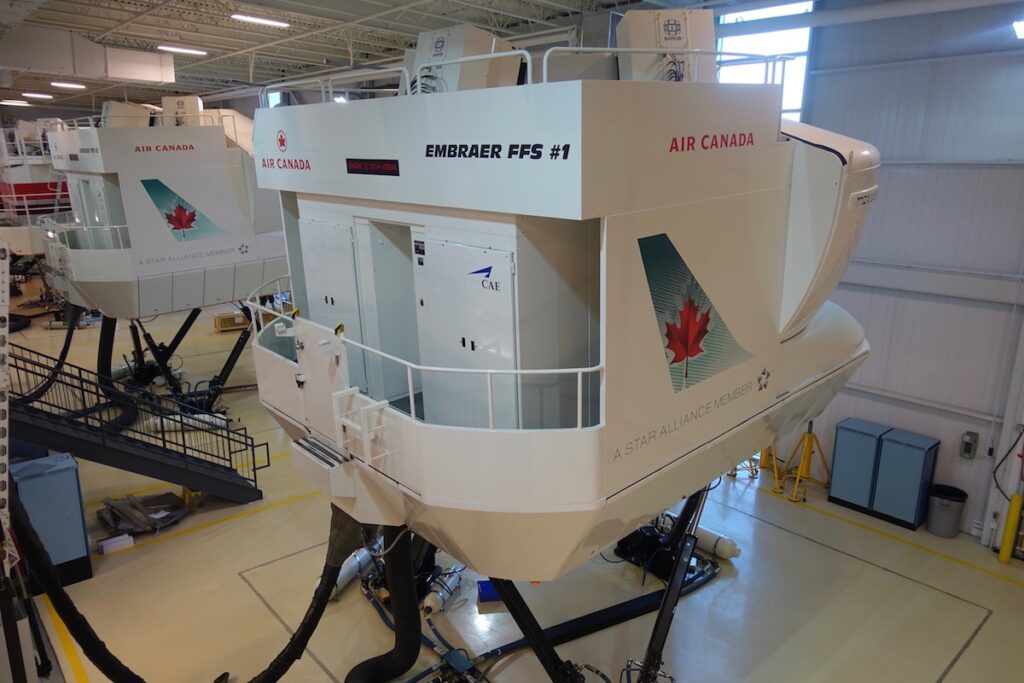
  • UN 3480, Lithium ion batteries (shipped by themselves). These are the rechargeable ones found in your phones and things.
  • UN 3091, Lithium metal batteries contained in equipment or packed with equipment
  • UN 3481, Lithium ion batteries contained in equipment or packed with equipment

Lithium Ion batters are allowed to be carried on cargo aircraft so long as they have been handled properly. The proper handling, packing, labelling and loading (what they need to be separated from) is all covered by IATA in their massive DG Manual. You can get that here, and find some handy online while you’re at it.

Again, if your operator doesn’t have DG Approval then this is just for info. If you’re wondering whether they do have approval then they don’t – crew have to undergo a yearly Dangerous Goods refresher course and you would remember this (because it is generally quite boring).

The DG Labels you’ll want to see on any Lithium Ion filled boxes

So, the simplest thing is to not carry them…

That would be great, but unfortunately it is not that simple. Lithium Ion batteries are in everything nowadays. They come in all shapes and sizes. So the first step is ensuring your passengers know what they are in, and are aware that they shouldn’t be putting these in their checked baggage.

Here is a handy info brochure to give to passengers.

This is a general ‘heads up’ list of some of the things an LI battery might be lurking within:

  • First up, those luggage bags which have them installed in them – if the battery can’t be removed and is more than 0.3g or 2.7Wh it probably shouldn’t be carried. If the battery is under those limits, or if it is removable then it can come onboard but only in the cabin, not in checked baggage.
  • Any lithium ion battery that is under 2g or 100Wh can generally be brought into the cabin. There is often a limit here (20 per person) but this varies with different operators.
  • Mobility aids – electric wheelchairs – often cause problems because folk don’t always know what their battery details are, and it is the airport staff who have to deal with this. The battery on these has to be in an enclosed container to prevent short circuits, and it must be attached as per the manufacturer instructions, or removed if it can be. If it is removed then it must not exceed 300 Wh or 160Wh if there are two of them on the device.
  • Hidden batteries – A lot of devices contain batteries. eBikes. Drones. Things that passengers don’t always think about.

The Captain probably needs to know about the location of these, so if you see stuff being loaded on and haven’t been informed about it, ask.

Finally, rogue shippers. Because of the restrictions, people are sneaking them onboard hidden in incorrect packaging, and without declaring them. They key to stopping this is going to lie with the airlines, operators and ground staff who need to be vigilant. The crew cannot do much more than mitigate the situation if some are onboard, and do cause issues.

Here is the full note from the US Department of Transport and IATA

What to do if you have an incident

If you have a Dangerous Goods Incident, you need to report it, and usually quite quickly. The FAA info page is here to help.

Lithium Ion battery fires are extremely hot and burn incredibly fast. If you think you have LI onboard that might be compromised, get that airplane on the ground as quickly as possible, and get your passengers off.

They burn fast and hot

Want to read some more?


Going Viral: The non-Covid nasties to watch out for

With Covid running rampant across the globe, other risky diseases have been forgotten somewhat, but there are a fair few out there which can pose a threat to crew on layovers.

So here’s a quick round up on the regions where you might need to cover up, dose up, or just be extra cautious during your international flight operations, split into sections based on the active travel health alerts that the CDC and other health authorities have out at the moment.

Red Warning Level 3: Avoid all non-essential travel

Guinea – Ebola

They had a serious outbreak earlier in 2021. Actually, cases have reduced significantly and the US has just removed their travel restriction which required travelers coming from Guinea to enter the US via 6 main airports only. Caution is still very much advised though if traveling in the country.

Venezuela – Infrastructure

Not a specific disease caution here, just a warning that their healthcare infrastructure is breaking down and if you are taken ill here you may not be able to access treatment. One to think about if you ever have crew on a layover here.

Amber Warning Level 2: Extra caution

Fiji – Leptospirosis

This really prevalent in Fiji at the moment, particularly rural areas. It is caused by a bacteria spread around by animal pee, and can get into water and soil and live there for months. The main guidance is to avoid swimming or wading in water that could have had infected animals in it. Wear protective clothing and footwear and cover any cuts and scratches with waterproof bandages.

Because people often poke dead rats

Haiti – Rabies

Haiti currently has a big problem with rabid dogs. The bigger issue is that there is an extremely limited supply of treatment drugs in Haiti, so the recommendation is to get vaccinated before you head there.

Avoid dogs, and cats for that matter – even the cute baby ones. You can catch it if you are bitten, scratched or even licked, and treatment is only effective if administered early. Once symptoms present themselves it is often fatal. Plus, getting bitten by anything is never pleasant.

Polio – Africa and Asia

Everyone should be vaccinated against this. If you are not, get vaccinated (or don’t travel) because this is continues to be very prevalent in African countries and there is always a risk.

Nigeria – Yellow Fever

Consider getting vaccinated if you head here regularly, and try to prevent mosquito bites (also, because they carry loads of horrid stuff).

International flight crew generally are required to have had Yellow Fever Vaccinations – if you have not then take care because some countries will not allow crew (anyone) to enter who does not have a vaccination booklet if they have traveled to a Yellow Fever region recently.

What else to watch out for

Malaria

This fellow is to blame for a lot of the stuff out there

Malaria is a parasite carried around by mosquitos. There are actually four types of it, and it is in a lot of places!

The big risk here is it can take a while for symptoms to show. They reckon you’re most likely to have symptoms between 10 days and 4 weeks from being infected, but it could take as long as a year. The little beasties also like to loiter around in your liver, popping out at random times when you’re run down, and so can cause recurring illness for as long as 4 years after infection.

Where?

According to the CDC it is found in warmer regions, which doesn’t narrow it down an awful lot – basically anywhere hot and humid where there are places for mosquitoes to breed and grow. Just after rainy season is likely to be the worst, and rural areas will be more risky.

We have borrowed the CDC map because it is easier than trying to list everywhere to watch out.

Mozzies generally don’t like cold or high altitude spots

How to prevent it

If you are going to a Malaria riddled area then you can take preventative medicine, but watch out! Not many are approved for operating pilots because they can have some nasty side effects. Malarone is the most commonly approved (and generally has the least side effects) but we ain’t no doctor so check with an AME from your licensing state before taking.

The other option is to slather yourself in deet and wear long clothing to prevent the little nippers from getting at you in the first place.

The Symptoms

  • Fever, sweats ad chills
  • Muscle ache
  • Nausea and sickness

So, basically generic symptoms of about a thousand other possible diseases.

If you have been to a malaria area and are thinking “I got chills, they’re multiplying”, don’t write them off as a random cold – tell a doctor so you can get tested because it can get very serious!

Dengue Fever

Another one to blame on the pesky mosquito, Dengue is common in over 100 countries, and over 400 million people catch it every year, 100 million getting sick and 22,000 dying. Dengue Fever is Malaria’s bigger, badder brother, and there is no specific treatment.

Like Malaria, there are also different strains of the virus meaning you can get different sorts, multiply times.

Where?

Outbreaks are coming across the Americas (including North America, although the mosquitoes aren’t there, people just head in already infected), Africa, the Middle East and Asia, and the Pacific Islands. It is most prevalent in tropical and sub-tropical areas.

There is currently a growing outbreak in Reunion.

Brazil has the highest rate of Dengue fever in the world.

How to prevent it

Best plan, don’t get bitten. Insect repellent is smelly, sticky stuff but it works. Here’s what the CDC recommends:

  • DEET
  • Picaridin (known as KBR 3023 and icaridin outside the US)
  • IR3535
  • Oil of lemon eucalyptus (OLE)
  • Para-menthane-diol (PMD)
  • 2-undecanone

There is a vaccine but it is only given to people who have been infected before and have a risk of getting severe Dengue, and for kids between 9-16 who live in a Dengue area.

The Symptoms

The early, mild ones tend to get confused with other diseases so again, ff you’ve been somewhere with Dengue, don’t assume it is something else. Go get tested.

Initial symptoms usually appear within 4 to 10 days:

  • Nausea and sickness
  • Rash
  • Aches and pains, especially behind the eyes and in bone joints and muscles

These last around a week, unless you develop serious Dengue fever, which 1 in 20 do:

  • Belly pain
  • Vomiting (a lot)
  • Bleeding from nose and gums
  • Lethargy

Another handy map courtesy of the CDC

Zika

This one made the news a few years ago as it can cause serious birth defects. The symptoms for most tend to be fairly mild though.

It is also transmitted by our old friend the mosquito and there is no particular treatment so your preventative tricks are the best – don’t get bitten!

Chikengunya

Transmitted by mosquitoes, this has very similar symptoms to Dengue Fever and Malaria, and is found in all the same spots.

There is no treatment for it and no vaccine to prevent it, so preventing bites is really important.

There are currently serious outbreaks in Brazil, and in Asia (Vietnam, Philippines)

Ebola

This is a nasty one, often deadly, and causes lasting damage. They don’t really know where it comes from but it possibly started with monkeys and apes and was passed onto us human folk.

It is spread through direct contact with all the gory stuff that comes out of sick people.

Where?

Guinea had a major outbreak in 2021, but cases have fallen again. The US previously restricted travelers from here, and from the DRC, only allowing entry through 6 specific airports.

In 2020, the DRC (formerly Zaire) had a major outbreak.

It is most common in African countries, particularly the central African countries, and along the north west coast.

Different Ebola virus strain outbreaks

How to prevent it

It is spread through bodily fluids so avoiding contact with these is important. You also should avoid contact with animals that live in Ebola regions. Bats, primates, forest antelope all carry stains of the virus. So don’t eat them.

There is a vaccine but it is only used in areas where an outbreak is occurring. There is medicine for treating it, and the do help survival rates. You also need medication to support blood pressure, to manage the fever etc, so this really is a serious disease which you do not want to catch

The symptoms

These can appear between 2 and 21 days of infection, usually around the 8 day mark. The main symptoms are:

  • Fever
  • Severe aches and pains
  • Sore throat
  • Loss of appetite
  • Gastrointestinal symptoms
  • Unexplained hemorrhaging, bleeding and bruising

Yellow Fever

This is pretty rare nowadays, but still on to watch out for across Africa and South America. It gets its name from the fact it generally causes jaundice.

Insect repellant works well. It is transmitted by the mosquito (again)

There is also a vaccine. It has been used for 80 years and it pretty well tested, safe and effective, with 1 dose providing life long protection. In fact, many countries require travelers to have had the vaccine if they are entering from a country (or have visited one) where there are high incidences of Yellow Fever.

Meningitis

This is serious – it makes your brain and spinal cord membranes swell up which sounds horrid and painful. It can be bacterial, viral, parisitic, fungal, amebic… so there are a bunch of different sorts all with varying degrees of nastiness.

Good news though, there is treatment for most, and vaccines. You have likely had some already, it is another one that flight crew are often vaccinated for because this can be caught from all over the place. Bacterial in particular can be in food.

General travel recommendations

The CDC has good guidance for flight crew which you can read here.

Many international airlines require their crew to have the following vaccinations, and they are often recommended in general for any traveller:

Cholera – Africa, Asia, Central America and the Caribbean

Diphtheria – Africa, south Asia, former Soviet Union. This protects you against Diptheria, polio and tetanus

Hepatitis A – Africa, Asia, Middle East, Central and South America. This is common in places with poor sanitation and hygiene and can be picked up a lot of ways.

Hepatitis B – Africa, Asia, Middle East, Central and South America. This is spread by bodily contact generally.

Japanese Encephalitus – Common in rural areas of Asia with a tropical climate, after the rain season. It is also found in western Pacific island and near Pakistan, China and Australia. Actually, it is rarely found in Japan because they did a mass immunization program years ago. There is a tick borne version too. Also with a vaccine available.

Typhoid  – the Indian sub continent, south and south east Asia, South and Central America, Middle East


Belarus: A closer look at their aviation industry

Belarus is in the spotlight at the moment for their recent, controversial decision to force a foreign civilian aircraft to land under false pretences and for political reasons.

We thought we would take a look at their aviation industry, what you might experience if operating into the region, and a brief review of what it will mean if other countries ban use of their airspace.

Who is ‘Belarus’

The Republic of Belarus is a landlocked country in Eastern Europe. They border Russia, Ukraine, Poland, Lithuania and Lativia. The capital is Minsk. Before gaining their independence in 1991, the country was known as Belorussia, or ‘White Russia’, and was a small Slavic Republic included in the Soviet Union (along with Russia and the Ukraine.)

The are considered a developing country and rank pretty high on the Human Development Index. They are a member the UN and have a decent bilateral agreement with the EU, but are not a member of it.

An important route connecting Russia to the rest of Europe.

Tell us about their airports.

The main international airport is UMMS/Minsk:

  • 13R/31L    11,946ft/3641m    ILS CAT I
  • 13L/31R    12,139ft/3700m    ILS CAT III / CAT I

It is a decent airport with good facilities and no major threats for operating in.

Aside from UMMS, you also have the following airports with customs facilities (although none of them have a runway longer than 9000ft)

  • UMBB/Brest (not to be confused with Brest, France) with an 8596ft/2620m runway 11/29
  • UMGG/Gomel also known as Homiel/Gomel/Pokalubichi with an 8428ft/2569m runway 10/28
  • UMMG/Grodna with a 8399fr/2560m runway (limited taxi and apron space) 17/35
  • UMOO/Mogilev offering a 8419ft/2566m runway 13/31 (there is one taxiway off the runway so 180° turns and backtracks required here, and very limited facilities)
  • UMII/Vitebsk why 8550fr/2606m runway 05/23 (also very limited)
  • UMIO/Orsha opened in November 2020, offering a new cargo hub for the country. Runway 05/23 is a decent 9846ft/3001m with a CAT II ILS

Those aprons could do with some work

Tell us about their airspace.

The airspace is what most operators are really interested in. Belarus is a fairly decent sized country which is the main airspace between Russia and Poland, and Western Europe (unless aircraft want to route further north through Lithuania and Latvia).

Above FL275 in the UMMV FIR is Free Route Airspace meaning you can plan directs between Entry and Exit points (AIP ENR 4.1)

Several authorities are currently banning their operators from routing through Belarus Airspace. This means significant detours to the north for aircraft routing to Russia.

The Ukraine borders Belarus and Russia has multiple airspace warnings and restrictions preventing many operators from overflying their airspace, so Belarus is a fairly important trade route for aircraft routing from Western Europe to Russia.

Using Minsk as a connection to Russia can have some customs issues though. Reports suggest Russia considers flights between the two as domestic (leading to cabotage issues with Russian customs), and so most operators seem to opt for EYVI/Vilnius or EVRA/Riga instead.

Tell us about their infrastructure.

Belarus’ infrastructure is a relatively aging ex-Soviet one. However, they have focused on improving their aviation infrastructure over the last decade or so. The major airports all offer at least a CAT I ILS landing system, and their en-route navigation facilities meet ICAO standards.

In 2020, the Belarussian government announced they would offer Minsk as a Fifth Freedom hub, allowing foreign operators to layover in Minsk, and fly onto other long-haul destinations.

The Aviation Market in Belarus was (pre-Covid) outpacing the growth of the wider Eastern and Central European market, with short haul carriers such as Wizz looking to increase flights to the country.

Minsk 1 (UMMM) closed in 2015

Tell us who to talk to if we want to fly there.

You need overflight and landing permits if you are a private or commercial operator. Easiest way is to fill out Form 2 and send it by AFTN direct to the authorities. They need 3 days notice if you’re heading to an international airport, and 5 if you want to fly to a domestic one.

The email for the Belarus CAA is ops@ban.by
AFTN: UMMDYAYX +375 17 222 5517

If you want to get in touch direct with someone at UMMS/Minsk airport then their admin number is +375 17 279 1436 or you can try one of the main handling agent, Belavia at +375 17 220 2555.

The Belarus AIP is available online http://www.ban.by/AIP/Belarus210715/html/index.html

Anything else to tell us?

Notam O0401/21 is in force from Apr 30 to July 31 closing runway 13R/31L at UMMS

For updated information on current airspace advisories and restrictions, check out our article on the current events surrounding Belarus.


The Gateway to the Skies

If you have not heard of the IFP Information Gateway then here is a little summary for you. It is the Instrument Flight Procedures Information Gateway which is, according to the FAA who run it, your centralized instrument flight procedure data portal.

It’s a handy site because it provides you with a single-source, one-stop-shop, first place to visit if you need info on any of the following:

  • Charts
  • The IFP Procedures plan
  • IFP Coordination (forms and things)
  • IFP Documents
  • IFP Request form – this is where you can submit a request or query on an IFP. SO if you fly somewhere and think an IFP needs creating, amending or cancelling, you can do it here!

And this isn’t just for US pilots – it is pretty handy for anyone flying into the US who flies IFR procedures.

The Optimisation Project

This is a major project that the FAA are undertaking. They are reviewing their entire inventory of equipment and procedures as part of a plan to modernize the National Airspace infrastructure – to improve airspace and airport efficiency and safety.

The NAS covers an area of something like 30 million square miles, so it is a big project.

What is the plan?

The introduction of PBN (performance based navigation) is a big part of the modernization. If you fly into the US then you need to know about this, because it is going to mean changes to routes and procedures, airspace and equipment required.

Charts are being updated to remove unnecessary clutter. In 2020 they cancelled 1,000 procedures and took out things like circling minima on charts that no longer needed it. You need to know about this because it will impact chart validity, and things like minimus are airports you might use.

As for the inventory check – they are reviewing all the procedures at airports and deciding which to keep, which to cease, and which just plain old need updating. This will start with the decommissioning of any ancient VORs and NDBs which no longer support the operations network. You need to know about this because there will be ongoing changes to the approaches available at airport.

Who knows how to follow that yellow arrow?

Give us some more details on the inventory checks

The FAA are going to review all procedures.

Why?

Well, because having looked over some data they reckon at least 20% of current IFPs have pretty limited benefits to the NAS. If procedures are not being used then retiring them means lower admin, maintenance and training costs. It also means more efficient and effective airspace management, which means improved safety and access.

Take KSEA/Seattle for example. They have an RNAV RNP approach and a GPS approach for runway 16L. The RNAV RNP was only flown 17 out of a whopping 191,448 IFR arrivals.

It has higher minimum and an identical flight path to the GPS approach so there is really no reason for this approach to exist.

KPAE/Paine Field is another one worth looking at. It has a VOR-A approach which was only flown 95 times out of 10,348 IFR arrivals. It is under-utilized, costs a bunch to maintain and there are plenty other options. So it is a good one to chop.

What about KSBA/Santa Barbara airport and their VOR or GPS approach runway 25? This was also significantly under-utilized, being flown just 1,732 out of 17,174 arrivals. However, it is the most commonly used approach for GA traffic, and is the only one available when the wind is favoring that runway. Not such a good one to delete.

The IFP plan won’t just review data and statistics, it also engages with the folk using the IFPs to make sure changes are benefiting those it needs to benefit. Santa Barbara won’t lose the procedure just yet, although they might get itself a nice new space-based one out of this at some point.

Comments and feedback

If you fly into airports and have comments or feedback on IFPs then get in touch, either by filing in the form, or emailing at 9-AMC-Aerochart@faa.gov. This project is a long, ongoing one, but one that will benefit any operator who flies in or out of the US, and there are opportunities there to provide input.

Check out the info


Helping you fly when it’s Hot & High

Here’s a look at some of the hottest and highest airports out there, and the challenges you might want to think about if operating into them.

Airplanes like to play it cool

What is it about hot and high airports that our airplanes don’t like? The obvious one is the air density – engines like their air cold for better performance, and wings like air nice and thick for better lift.

What can you do to keep them happy? 

  • Think about how you start the engines – If it is hot out, the air is thin, and you start throwing things like tailwinds into the mix, then it is going to be a recipe for some grumpy engines
  • Consider towing – move to a different start point for better air flow
  • Check that ground power unit – You might want to ask the engineer to see if two might be better (they can over heat too!)
  • Check that take-off performance – and check it early. If it is limited you’re going to have to throw some passengers or cargo off, or put less fuel on to keep the weight down
  • Watch you altitude constraints – If you are particularly heavy your climb performance is going to suck and where the airport is high, there is often other high stuff to think about too
  • Once you’re in the air – if you are struggling to meet restrictions then keep the speed back, make sure you’re using all the thrust available to you and if that still don’t work – let ATC know!

People like to play it cool

People get grumpy when they are stuck in a jam-packed, sweaty tube. And I am not just talking about your passengers. Think about the poor F/O too.

If you’ve sent them out into the sweltering heat to do the walk around then it might be kind to have an APU running and some cool air blowing for their return. It will help with the rest of the flight too – you probably don’t want to be sat next to someone who is sweaty up a stinky storm for the next however many hours.

Jokes aside, it can be a safety thing too. A performance study by NASA showed operators in temperatures of 80°F (27°C) made approximately 5 errors an hour, 29 errors over 3 hours. At 90°F (32°C) this increased to 60 in 1 hour and 138 in 3 hours. So 1 mistake a minute. If you consider how many critical tasks a pilot carries out in that hour on the ground prior to departure that’s concerning.

When your environment heats up above 95°F usual cooling methods like radiation and convection stop working. Your body’s only option is to pump blood to the skin to release heat and get you to perspire. Up to 48% of your blood is pumped to the surface level, which means useful things like your brain which are less close to the surface are getting nearly 50% less than normal.

There are a few sorts of “hot” pilot we don’t ever want to see

Brakes break

High OATs means hotter brakes, and longer cooling times. But it is the high elevation that really causes issues here because your groundspeed is going to be much greater for the same IAS. The result is much more work for your brakes which have to slow down that big hunk of metal.

If you are lucky enough to have brake fans then switch them on as soon as possible. If you don’t, then keep an eye on those temperatures, especially during the taxi out.

How long it will take your brakes to cool down is dependent on your type of brakes, type of aircraft, how hot it is outside, how hot the brakes actually got. Aircraft will have their own max temperature for takeoff limit which is important because retracting your gear with hot brakes is an increased fire hazard, and aborting the take-off with already hot brakes is an even bigger hazard.

A (very) general rule of thumb is something like 2 degrees every minute (at 15°C OAT) will give you a (very) rough estimate.

You’re not going far with hot brakes and burst tires

Energy Management

Make sure you have some coffee and a snack. Oh, sorry, the airplane energy. Also worth thinking about because it is going to be harder to slow down and cranking out the old speed brake will have less affect with thinner air because, well, something to do with drag.

This can all get really critical really fast on the approach. A higher groundspeed also means a higher rate of descent, again making slowing down tough. Plan that configuration and manage the energy early.

At very high elevation airports (especially if they have terrain around) you might be trying to reduce your speed above your flap limiting altitude so keep an eye on your minimum clean speed and your flap operating limits.

FLARE!!

A higher ROD, reduced lift, turbulence from thermals can all mess with your flare. We aren’t here to tell you how to fly, so will leave it at a “have a think about it before you get there” top tip. Especially if your FO is taking the sector and hasn’t landed in these conditions before.

One more tip…

Celsius to Fahrenheit Formula: (°C x 1.8) + 32 = °F

Fahrenheit to Celsius Formula: (°F – 32) / 1.8 = °C

Which airports are highest on the list?

Topping the list is ZUDC/Daocheng Yading Airport which sits at a whopping 14,472ft. ZUBD/Qamdo Bamda airport holds the number two spot at 14,216ft closely followed by ZUKD/Kangding airport at 14,042ft. 

These airports are so high that the hot bit is less of a factor, but the altitude is a major one – 14,000ft is a limitation on some aircraft.
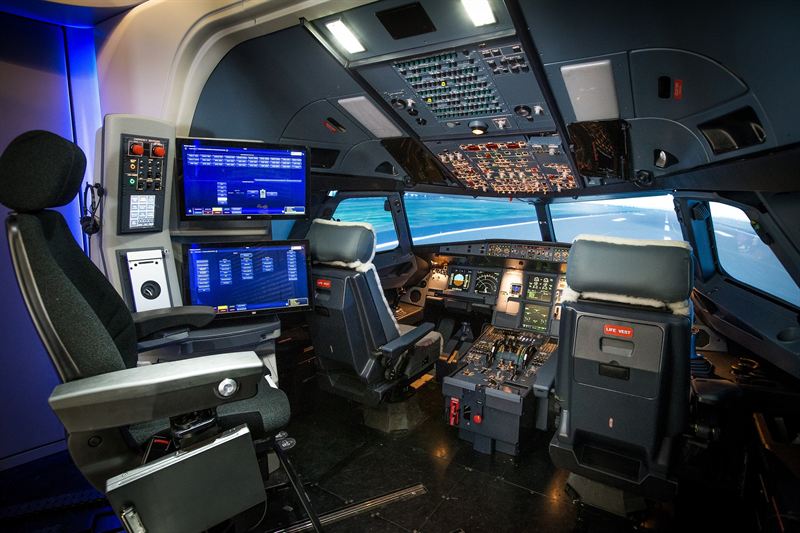
Airports at these altitudes will have special procedures for take-off and landing and you are unlikely to be operating into them without prior training. So, which should we pay attention to?

Daocheng Yading Airport

The Hot and the High

FAOR/Johannesburg airport sits at an elevation of 5558ft. Predominantly NW winds on the ground often lead to a tailwind for the approach to runway 03L/R which makes the energy management more challenging.The runways are 14,505ft and 11,171ft (so you have enough).
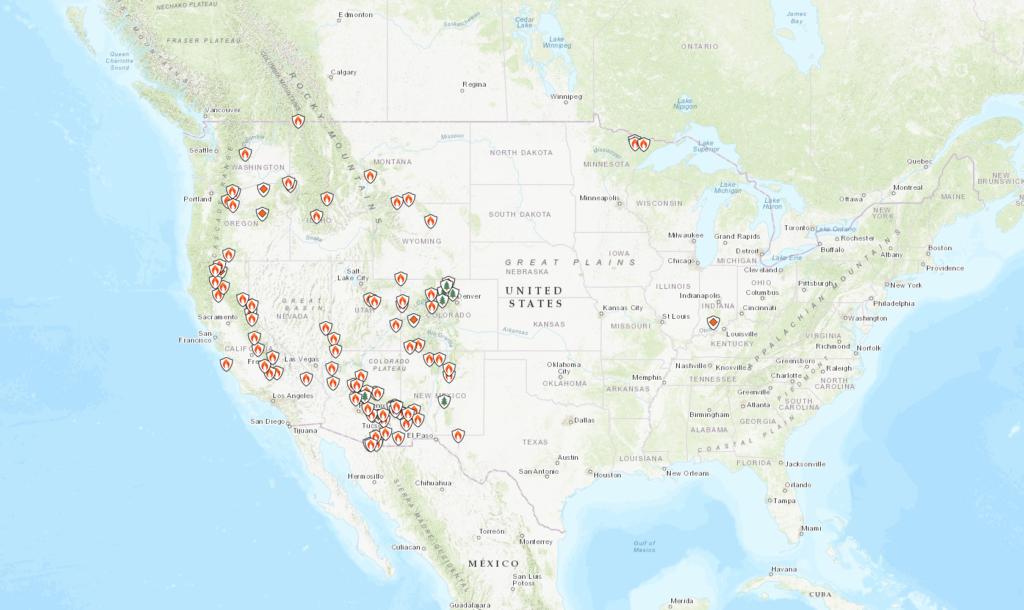
Johannesburg can heat up to the high twenties (80°F) in the summer.

HAAB/Addis Ababa Bole airport has an elevation of 7625ft and also some very high MSAs in the near vicinity. There are high altitude constraints for the departure due to close in terrain, and they need to be monitored (particularly if you are heavy and it is hot out). A challenging RNAV approach makes flight path and energy management more challenging.

The radar at Addis is fairly intermittent so you are going to have watch that terrain avoidance and energy management yourself.

MMMX/Mexico City This spot has an elevation of 7297ft, and MSAs of 19,400ft, 14,800ft and 12,100ft. The terrain surrounding the airport means some interesting arrivals and departures and the need for some accurate tracking. The tight arrival also means some low platform altitudes. The ILS for the 05 runways are slightly steeper (3.1°) adding to your energy management concerns. We’ve also heard that ATC sometimes keep you fast until 5000′, which can make slowing down last minute more tricky.
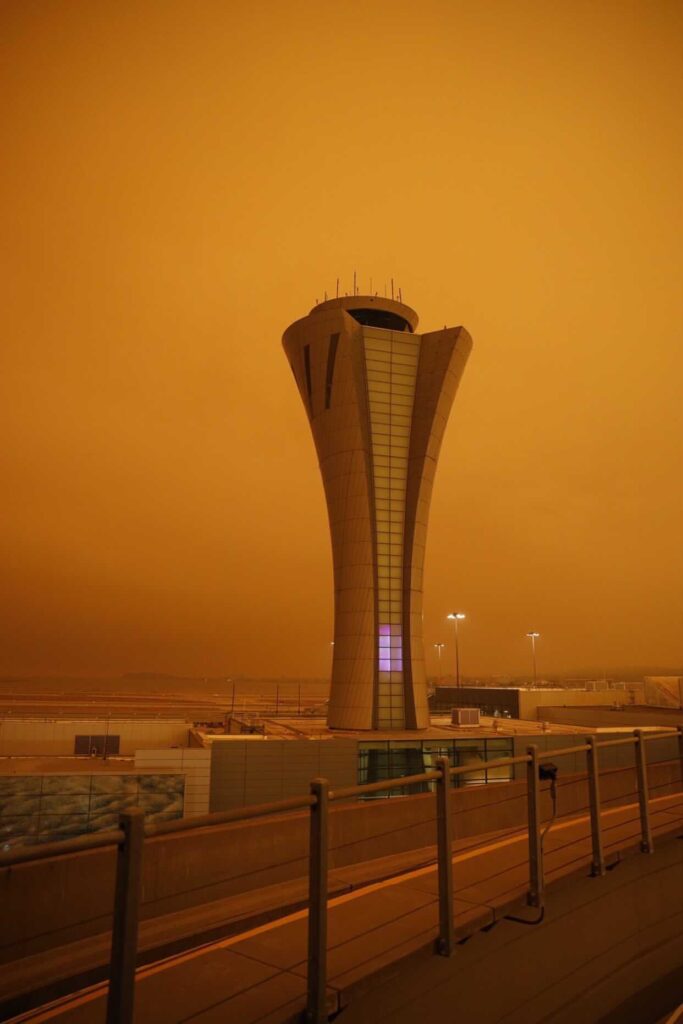
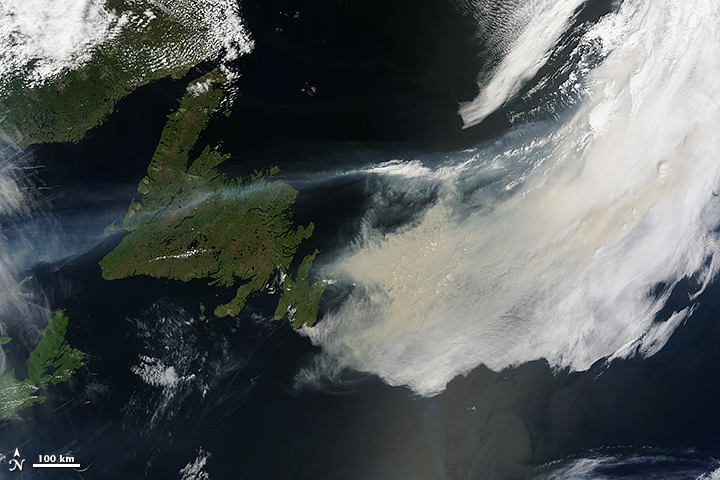
OAKB/Afghanistan I know what you’re thinking – there are probably bigger threats at this airport than the elevation, but despite the security risks here, it is a fairly frequented airport. Kabul tips the big three boxes – it has an elevation of 5877ft, an MSA of 17,500ft and it can get toasty warm in the summer months. The ILS for runway 29 starts from 14,000ft and the need to keep aircraft high due terrain can mean you suddenly find yourself diving down, while trying to slow down, with not many track miles to go.

You will probably want to keep you speed back on the departure to meet the minimum climb rate of 450ft per 1nm.

OAKB/Kabul approach starts from 14,000ft (Credit: Jeppesen)

The just plain high

SLLP/La Paz Ok, we will add this one because its a fairly major international airport. The Bolivian airport has a 13,124ft runway which lies at an elevation of 13,314ft making this an Overall Top Ten winner. The surrounding terrain (it sits in the Andes Mountains) means MSAs up in the flight levels – FL220, FL230 and a paltry 18,000ft.

Your TAS here is going to be around 25% higher than your IAS. The high elevation means it is generally cooler, but the density is still going to be low leading to lower performance.

The just plain hot

Basically anywhere in the Middle East in the middle of summer is going to tick this box. 

OMDB/Dubai has been known to hit temperatures of 50°C. Hot means bumpy – you can expect some crazy thermals on the approach and an easy tendency to mess up the flare and float when that thermal catches you at 30 feet. Some airports (Dubai being one of them) temperature correct the ILS to account for the extra heat, so if you are doing height checks be aware of the discrepancy because of temperature.
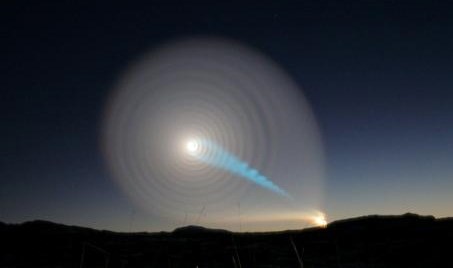

OEJN/Jeddah is another spot known for getting very hot. It is also a very large airport with looooong taxis so keep a good eye on those brake temperatures for departure.

Where else?

Let us know any airports you think deserve to be on this list! Leave a comment or send us an email.

OPSGROUP members can check out AirportSpy – we have started to add Airport Lowdowns in here which cover the big threats (like hot and high!)