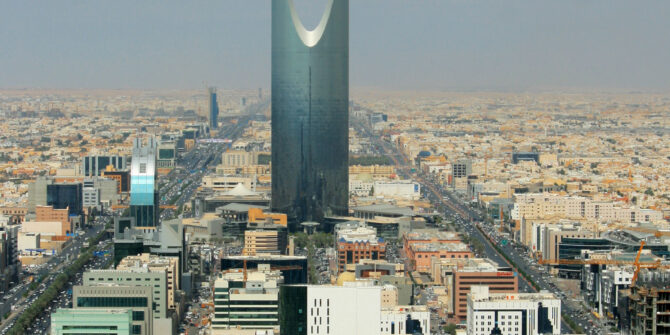
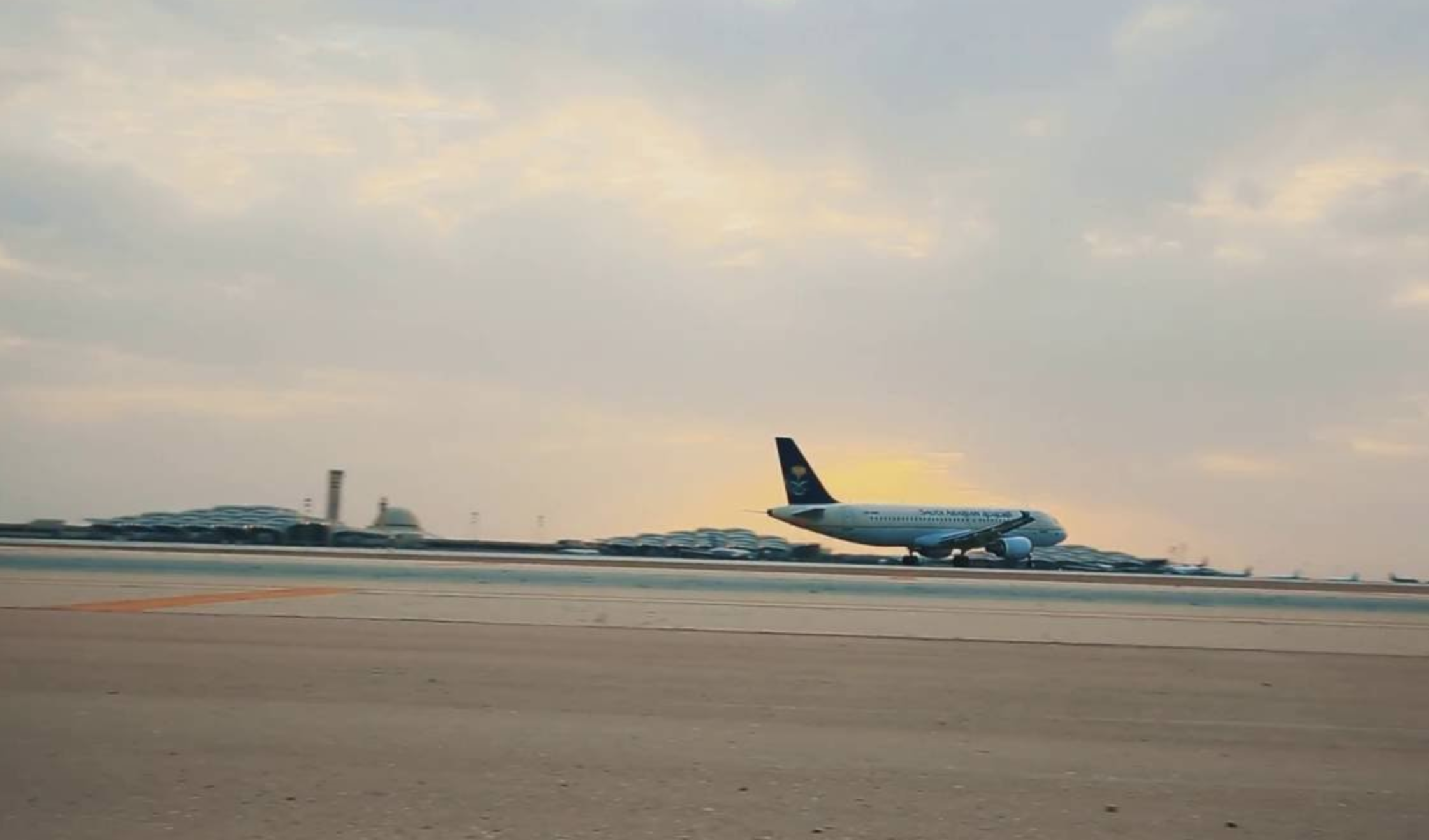
Saudi Arabia Lifts Cabotage Ban

Key Points
  • Starting May 1, Saudi Arabia has removed its cabotage limits, which means foreign charter flights can now operate domestic sectors within the country – repositioning without passengers and quick drop-offs are no longer the only option.
  • To gain approval, operators need to complete three steps: register with MISA, apply to GACA with a business plan, and comply with GACAR Part 129 requirements including safety and sustainability documentation.
Here’s what you need to do:

Step 1: Register with MISA

Before anything else, you need to register with MISA (Saudi Arabia’s Ministry of Investment). They handle investment licensing, which is the starting point for getting your charter approval. If you hit any snags here, you can reach them at logistics@misa.gov.sa.

Step 2: Apply to GACA

Next, you’ll submit an official letter to the President of the General Authority of Civil Aviation (GACA) at generalaviation@gaca.gov.sa. This letter should:

  • Request approval for domestic charter operations
  • Include your business plan (GACA has provided a template)
  • Optionally include any extra economic details you want to share

Step 3: Meet the regulatory requirements

You’ll need to comply with GACAR Part 129 – basically, Saudi’s rules for foreign air carriers. Part of this includes submitting a Safety and Environmental Sustainability Sector form.

What does this change mean?

For international operators, it’s a big deal. You can now:

  • Pick up and drop off passengers on domestic segments
  • Reposition flights domestically without worrying about cabotage violations
  • Offer more flexible services to clients operating inside Saudi Arabia

This change is part of Saudi’s big push to grow its general aviation sector into a $2 billion industry by 2030, creating thousands of jobs and expanding the private aviation market. GACA says they’ve already received plenty of interest from international and regional operators, so expect some competition.

Where to get help

If you need help or have questions, GACA and MISA have both provided contact points:

MISA: logistics@misa.gov.sa

GACA: generalaviation@gaca.gov.sa


Saudi Arabia Overflights – Free Route Gotcha

Key Points
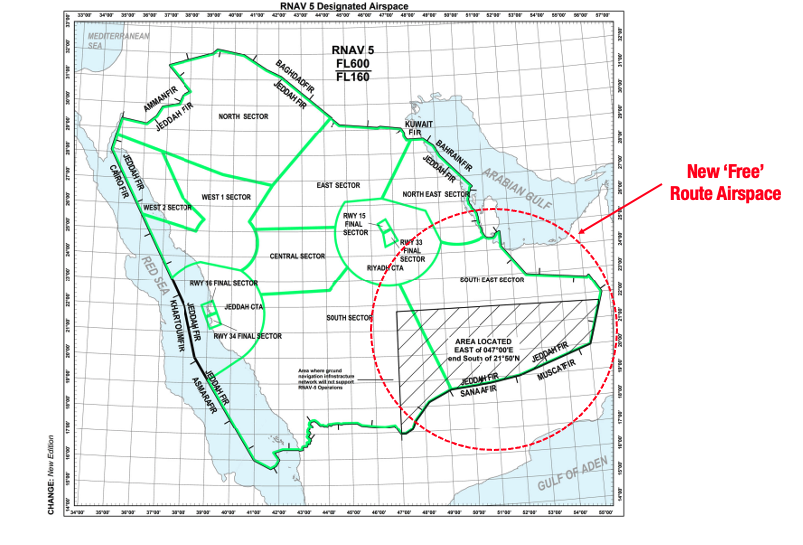
  • The Southeastern section of the OEJD/Jeddah FIR is now Free Route Airspace.
  • It’s not straightforward. New procedures have been published in the Saudi AIP.
  • If your flight plan does not comply, you are likely to be instructed to descend below FL300.

Background

We’ve received a new report from an OPSGROUP member after a recent run-in with ATC in the OEJD/Jeddah FIR.

The problem stemmed from a small (and confusing) change that became effective on April 18.

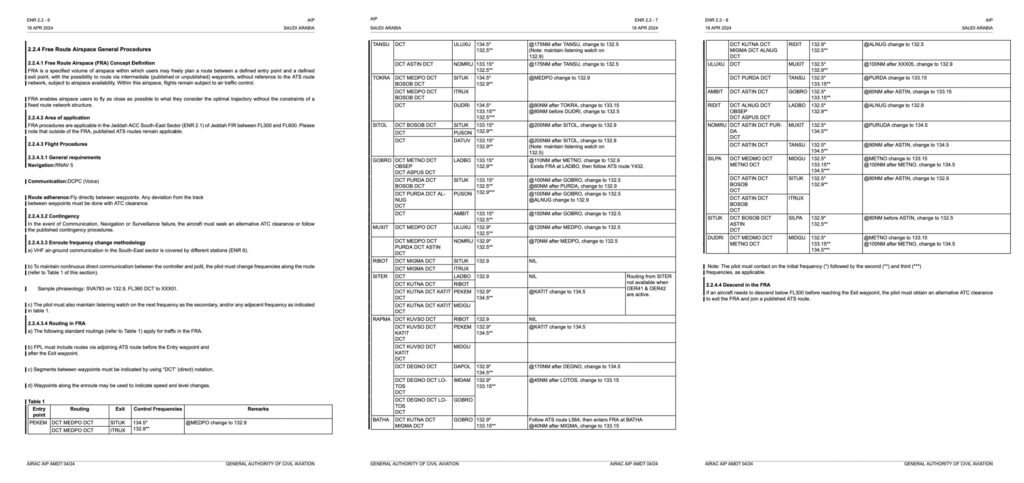
Essentially, ATC were upset that their filed route did not comply with newly published Free Route Airspace (FRA) procedures buried deep within the bowels of the Saudi AIP.

The fallout of non-compliance is the ATC equivalent to the ‘naughty corner’ with aircraft directed to descend below FL300 for the duration of their crossing of the affected airspace.

In this case, the member was able to negotiate to remain at their preferred level but not before a fair amount of head scratching as to why they got in trouble in the first place.

As large amounts of traffic are now transiting Saudi Arabia to avoid Iran further north, it is especially relevant right now.

New Free Route Airspace

On April 18, a large chunk of Southeastern Saudi Arabia (known as the SE Sector) became Free Route Airspace (FRA).

Typically, FRA means that pilots can freely plan any route they like between defined entry and exit points without reference to the ATS route network. This saves both money and time – simple.

However, this is where things get hazy.

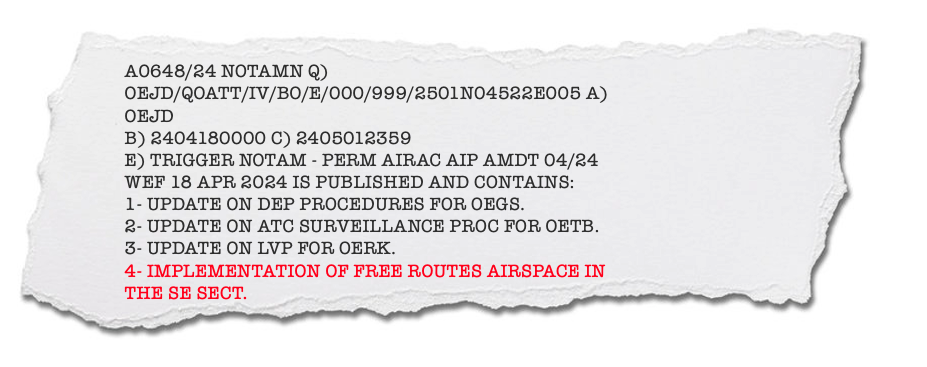
The change was notified in this easily overlooked FIR Notam:

This directs you to the Saudi AIP. This is great if you have a spare half an hour to prove who you are, download a special app and access it. To save you the trouble, the relevant bit is ENR 2.2.4 which you can find here.

Here’s the kicker – it’s Free Route Airspace, but not really. You still need to plan and file via the standard routes found via the link above.

In other words – ‘fly whatever route you like, as long as it is one of these ones.’

Turns out if you don’t, they will want you out of the ‘FRA’ which means a descent below FL300 (or a climb above FL600 if you’re piloting the Space Shuttle).

Keep listening out.

There are also some really specific comms requirements you need to follow along each route as the sector is controlled by several VHF frequencies. It seems you cannot rely on ATC to tell you when to switch.

“Normal” routes.

Don’t forget the Free Route Airspace only applies to the SE Sector of the Jeddah FIR. Everywhere else in Saudi airspace, you’ll need to follow “normal” ATS routes as per usual.

But even these “normal” routes are a pain. Saudi Arabia (like many other countries in the region) has preferred routes depending on where you’re flying from/to – so you’ll need to make sure you file on one of these. For some reason Jeppesen recently stopped publishing them, so now you have to get them from (yes, you guessed it) the Saudi AIP! SUP 8/24 talks about it. You basically download this Route Availability Doc and work out a route from there.

Other Free Route Airspace in the region.

Qatar and the UAE are the only other countries in the Middle East that have implemented FRA, and unlike Saudi Arabia, both seem fairly straightforward.

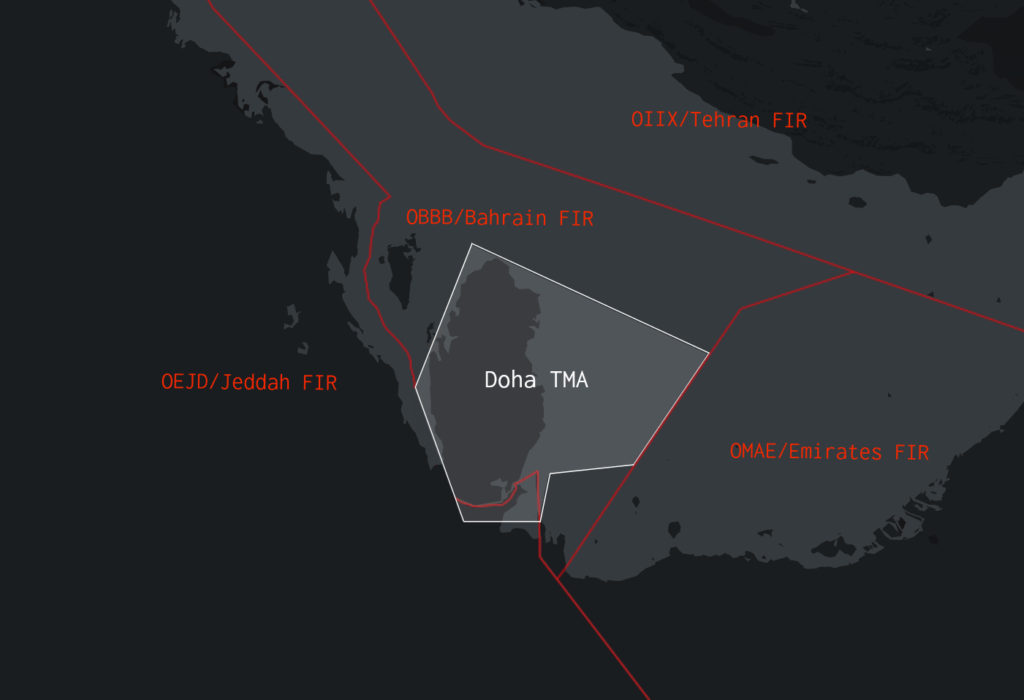
Qatar – has implemented a corridor of FRA straight through the middle of the OTDF/Doha FIR, available from FL275-460. The Qatar AIP does not currently list any restrictions on its use.

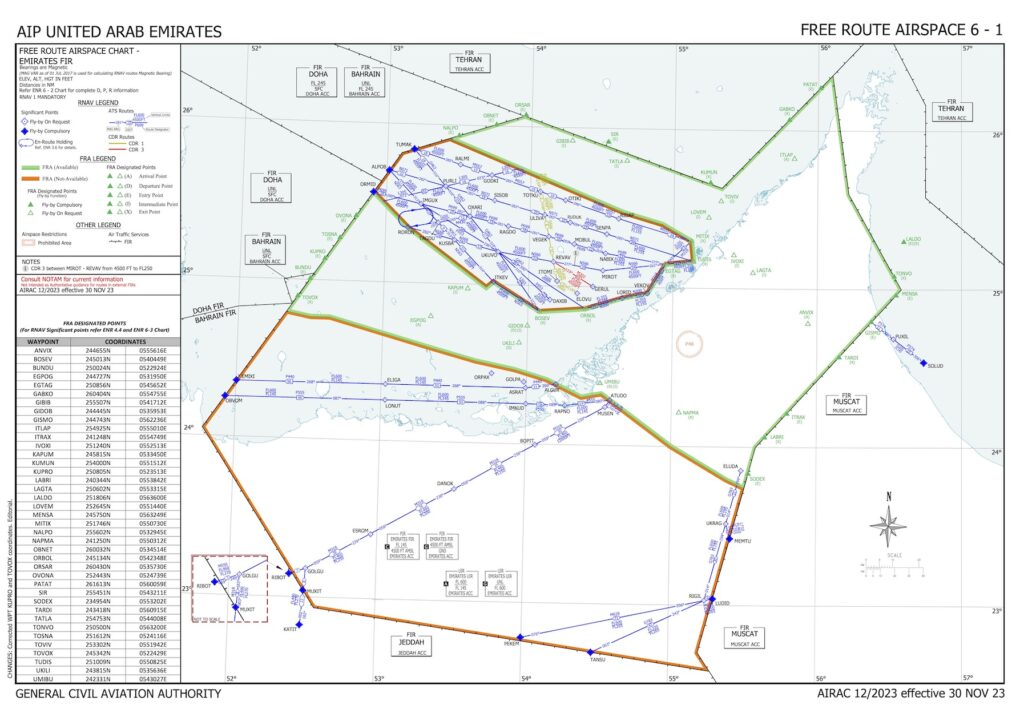
The UAE – has implemented FRA in parts of the OMAE/Emirates FIR from FL355-600 – basically the parts around all the airports, and the airspace connecting with the OOMM/Muscat and OIIX/Tehran FIRs. Like Qatar, the UAE AIP does not currently list any restrictions on its use.

Please report back.

Thank you to the member who got in touch.

These changes can be hard to spot. Especially when you pay an operational penalty for procedures like this one that are poorly written, hard to find, or obscure.

We need your help to spread the word whenever you come across something different – in Saudi Arabia or elsewhere. Thousands of other like-minded pilots will thank you later.

If you have something you’d like to share, you can reach us on team@ops.group. We’d love to hear from you.


Saudi-Yemen Airspace Update

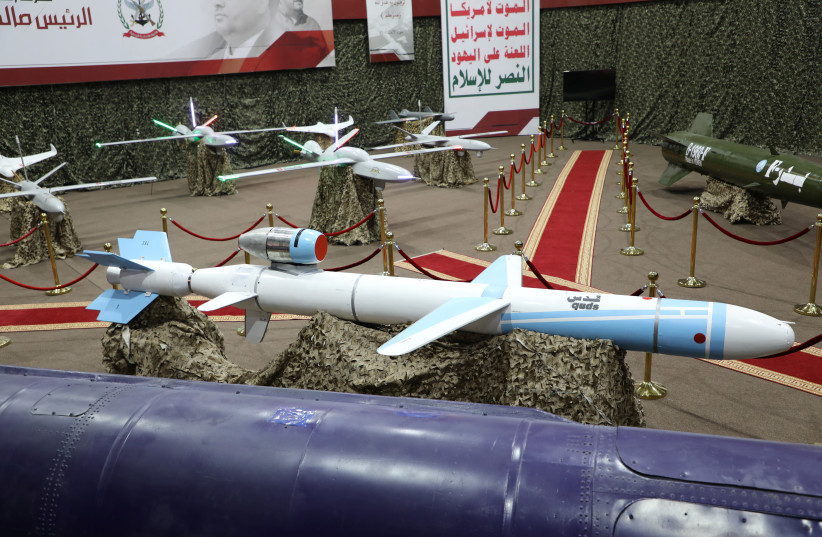
There’s an improving airspace risk picture in Saudi Arabia since a ceasefire was agreed in April – which has now been extended to Aug 2. All groups have agreed to halt the conflict inside and outside Yemeni borders. The first month of the ceasefire saw no reported drone strikes in Saudi Arabia.

However, long-standing airspace warnings remain in place. If the conflict resumes, Houthi drone and missile attacks on targets in Saudi Arabia pose a potential threat to ops at Saudi airports, and for overflights of the OEJD/Jeddah FIR. The most significant risk is in the south of the country along the border with Yemen, but OERK/Riyadh and OEJN/Jeddah airports have also been targeted in the past.

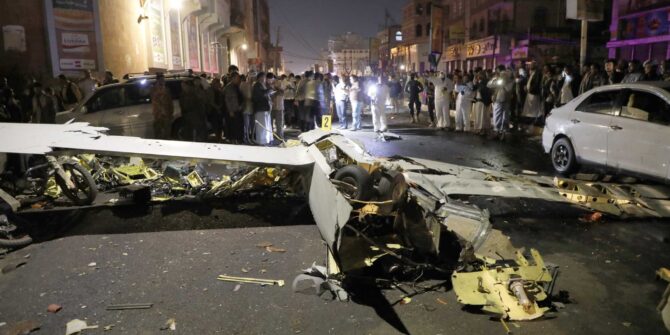
Back in March 2021, OEJN/Jeddah Airport closed temporarily following multiple attempted drone attacks. Saudi media reported dozens of drones were intercepted in their airspace, and the US Embassy also issued a statementOERK/Riyadh Airport was targeted in June 2020 and again in October.

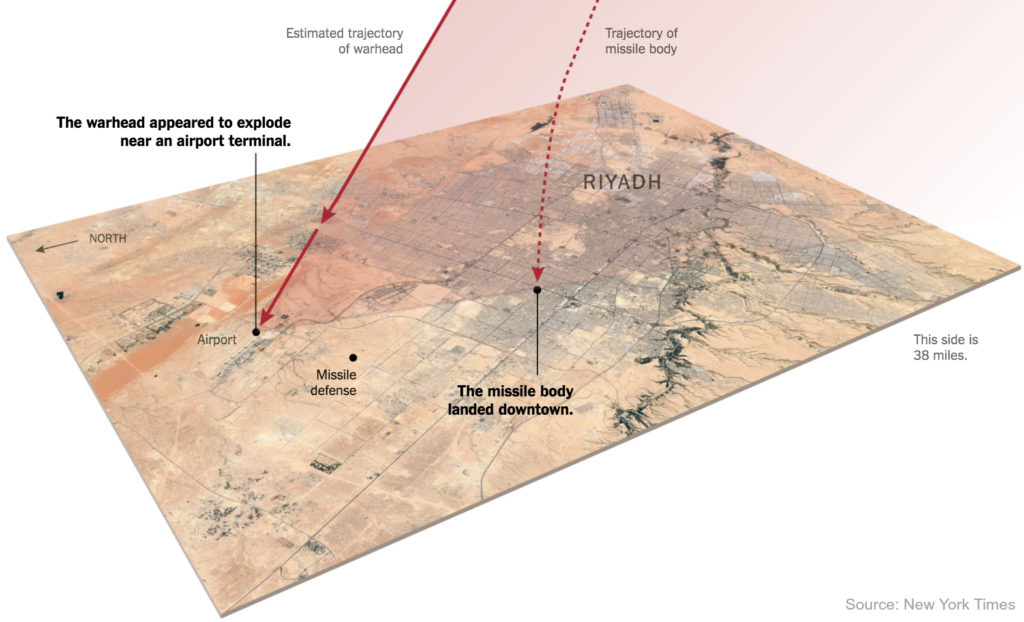
Much of the information comes from state media and cannot always be independently verified. In 2017, a New York Times investigation suggested that at least one of the most high-profile attacks from that year may not have been “shot-down” or intercepted by Saudi defense systems at all.


Saudi Arabia Airspace Risk

With the ceasefire now in place, we’re waiting to see if any of the countries who have issued airspace warnings for Saudi Arabia will amend their guidance.

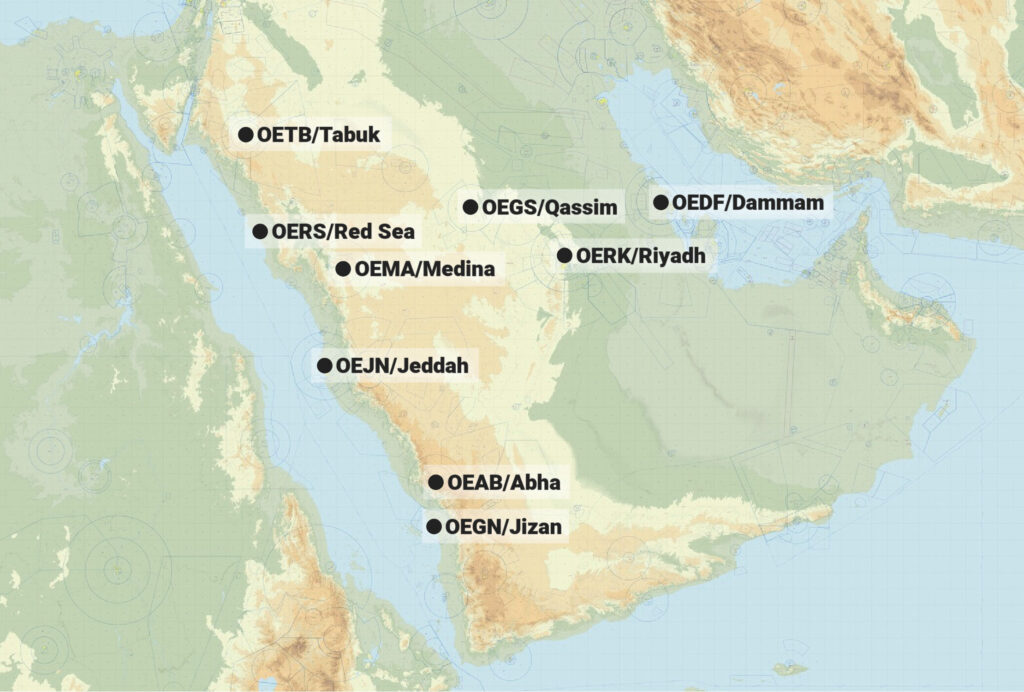
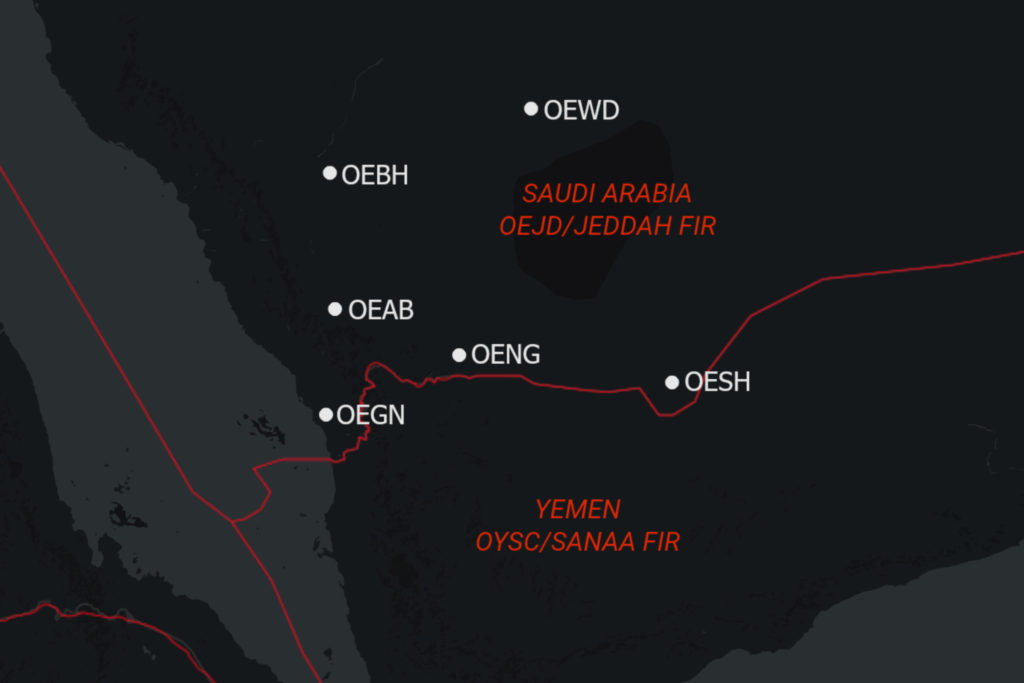
Germany and Canada warn of a risk to landing anywhere in the country, but particularly along the border with Yemen in the southwest part of the OEJD/Jeddah FIR. France has issued similar advice, with the specific warning not to operate to OEAB/Abha, OEGN/Jazan, OENG/Nejran, OESH/Sharurah, OEWD/Wadi Al Dawasir and OEBH/Bisha airports:

A note on Yemen

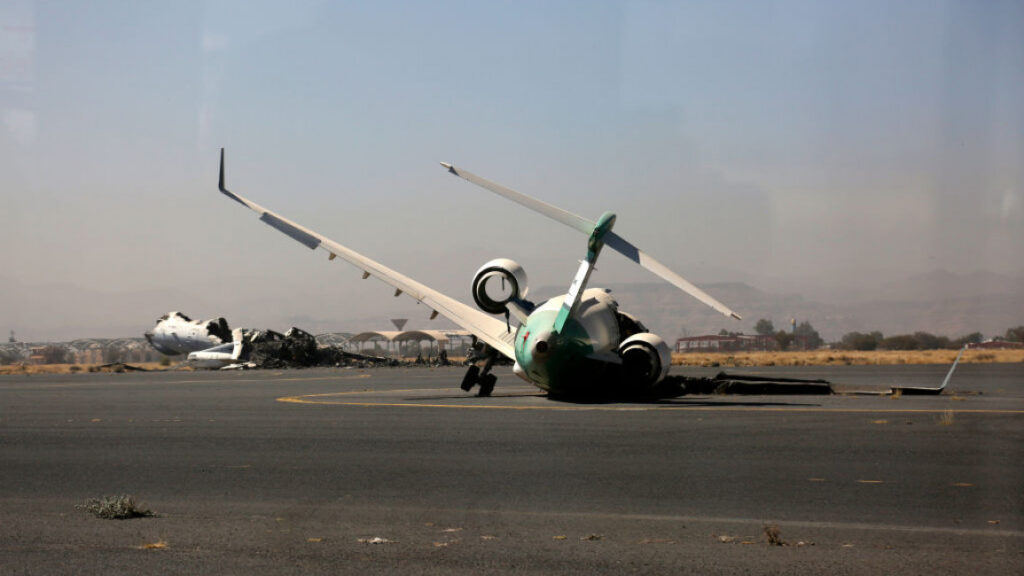
The first month of the ceasefire saw notably reduced hostilities in Yemen, and commercial flights resumed at OYSN/Sanaa Airport for the first in six years.

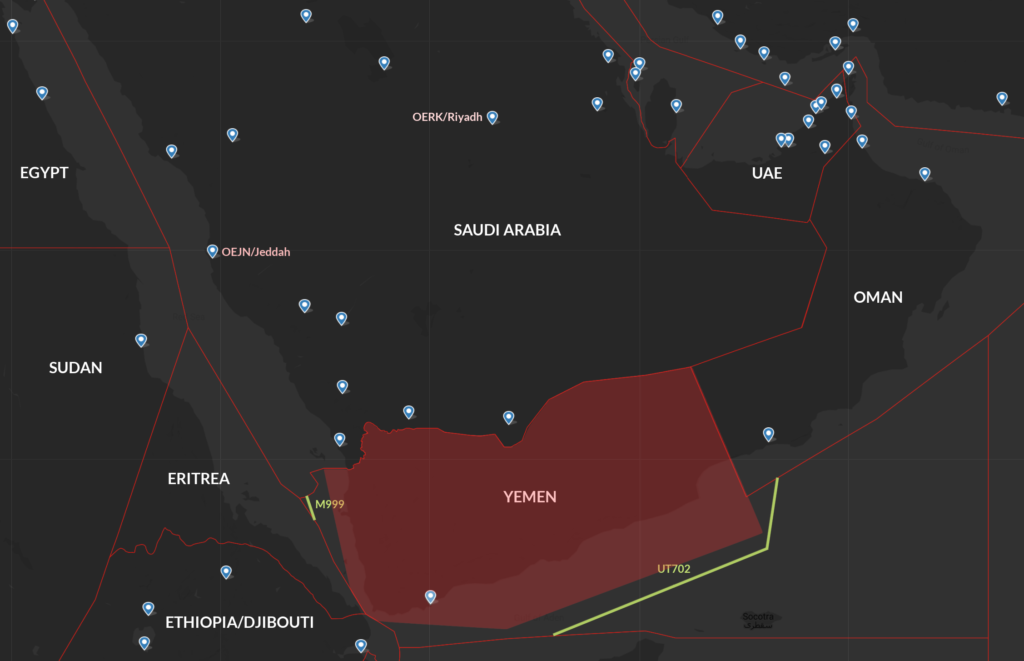
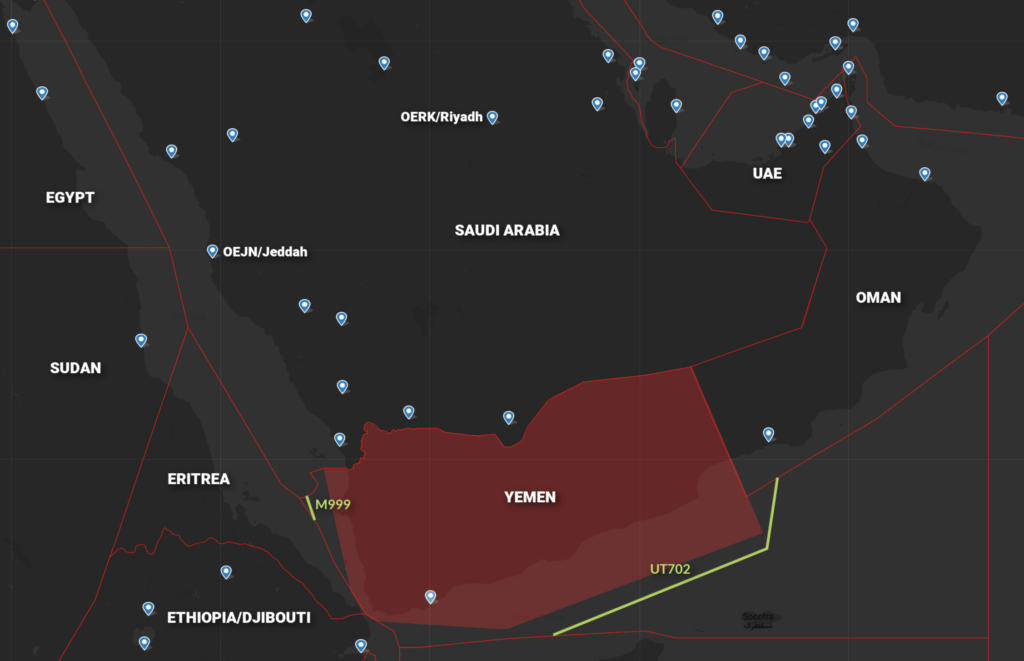
However, Yemen remains an active conflict zone, and the vast majority of Yemeni airspace (OYSC/Sanaa FIR) should be avoided. Several countries have prohibited flights here due to the ongoing conflict on the ground. The oceanic portion of the OYSC/Sanaa FIR is excluded from most warnings, by nature of being offshore. The guidance issued by the US FAA currently looks like this:

Essentially, US operators are banned from flying north of a line KAPET-NODMA-ORBAT-PAKER-PARIM-RIBOK. The US FAA specifically mentions UT702 and M999 as being ok to use.

Watch out for ESCAT

You might know this as SCATANA. ESCAT is the new name, but the process is the same – if you’re overflying the OEJD/Jeddah FIR and hear “ESCAT RULES ARE NOW ACTIVE” (or something to that effect) you need to be aware that these apply to you!

You will likely be given a change of route directly out of the airspace, or will be directed to land at the nearest suitable aerodrome. The purpose is to clear the affected airspace of all civilian aircraft at which point they close down all nav aids and airports until the threat has been dealt with.

ESCAT procedures are published in GEN 1.6 of Saudi Arabia’s AIP. If you don’t have a login, you can see the relevant section here. There are some special routes that you have to fly in the southern part of the OEJN/Jeddah FIR, as advised by Notam, and you can find these in AIP SUP 02/21.

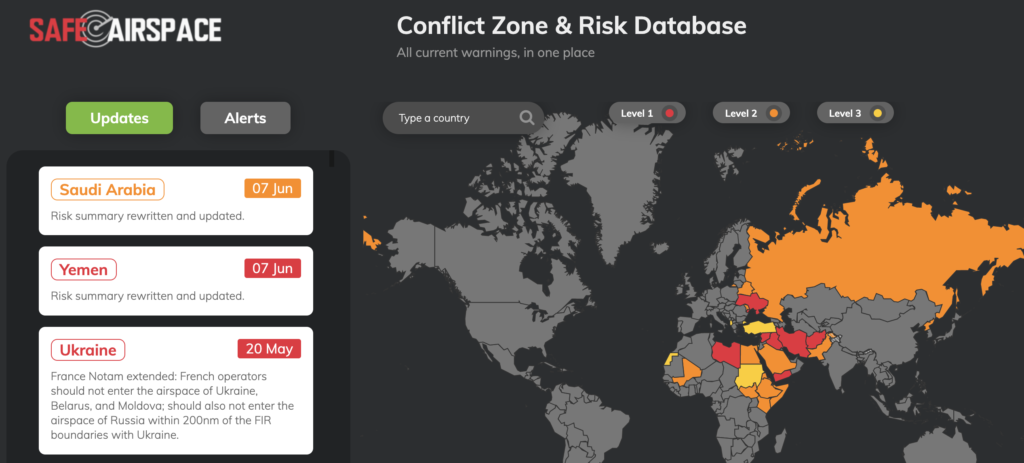
SafeAirspace.net continues to provide up-to-date information for both Saudi and Yemen airspace.


Middle by Middle East

A lot of people lump ‘The Middle East’ together into one singular region of “Middle Eastyness”, but actually each country is very different, particularly during Ramadan. Each has diverse cultures and rich histories, very different political interests, and of course their own unique operational and environmental challenges that pilots should know a bit about before heading in.

So, here is your ‘In the Middle of the Middle’ guide to the ‘Middle East’ (or at least the parts of it you’re likely to need to know about.)

Starting with the ‘Need to Know’

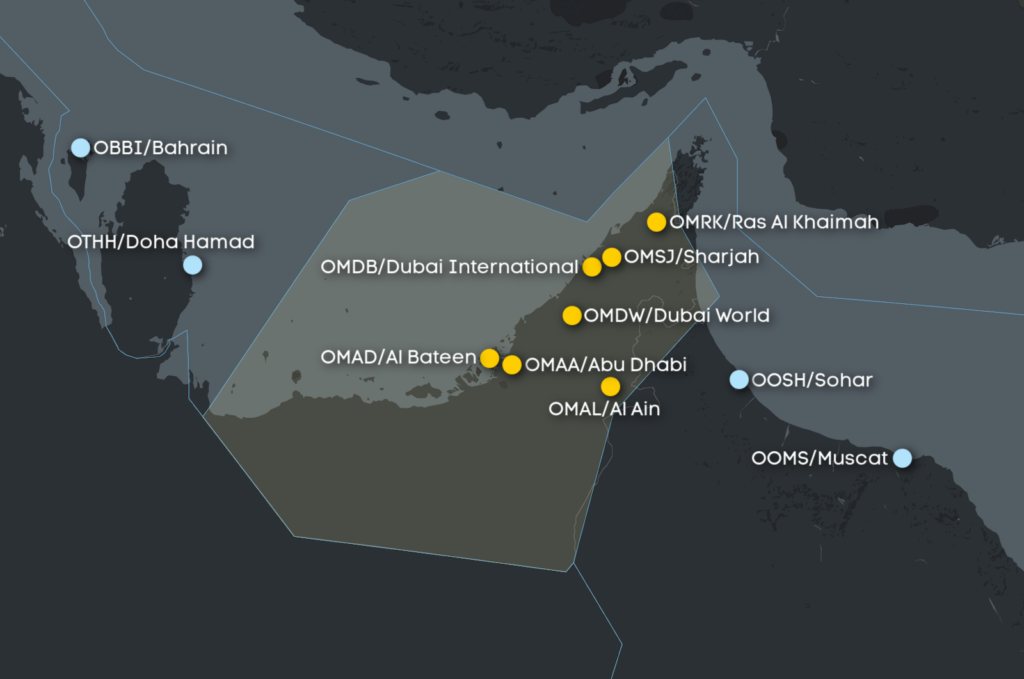
The UAE

The UAE only became the UAE fairly recently. Before that it was seven separate emirates and a big port in Jebel Ali which the Brits took an interest in. When they got their independence from Britain, the emirates joined up, led by Abu Dhabi. Dubai is the most westernized of the all emirates, and each pretty much has its own international airport.

  • OMAA/Abu Dhabi International is the capital airport for the UAE. They generally prefer not to be used as an alternate for Dubai bound flights since they are vert busy.
  • OMDB/Dubai International is the main Dubai airpot, and the busiest airport by passenger numbers in the world. You have two parallel runways 12/30 left and right with CAT III approaches.
  • OMSJ/Sharjah International is the next door neighbour to OMDB/Dubai (around 20km north and you fly past it on some Dubai arrivals). Runway 12/30 is 13,320 ft long with an ILS either end. Watch out if OMDB is getting foggy though because OMSJ won’t be far behind given it is also close to the sea, and it will fill up fast with diversions if it isn’t.
  • OMDW/Dubai World is the slightly smaller international Dubai airport just next door. Mainly used for cargo flights, it offers a good alternate to OMDB. There is limited parking and fuel trucks though so if you divert here on a day a lot are diverting then expect long delays. Runway 12/30 has CAT 3 ILS both ends and is 14,764 ft long
  • OMRK/Ras Al Khaimah is a decent airport to consider as an alternate with an ILS on 34, an RNAV on 16 and 12,336 ft of tarmac between the two ends. Watch out for terrain here though.
  • OMAL/Al Ain has a 13,140 ft runway with ILS/RNAV approaches. Another UAE option for an alternate.
  • OMAD/Al Bateen is a small but quite busy executive airport near OMAA/Abu Dhabi, which just caters for private jet ops. This airport will be completely closing from May 11 to July 20.

We put together a little regional brief on this with some handy contacts for you.

Saudi Arabia

Saudi Arabia is the largest country in the Middle East.

They are a major world economy, the third biggest producer of oil (behind the USA and Russia) and the largest exporter. It is also at the heart of the Islamic religion and you need to bear their customs and laws in mind if heading in there. Women are expected to dress modestly and cover their heads, and alcohol, swearing, gambling etc is forbidden. This will be much more strictly enforced during Ramadan.

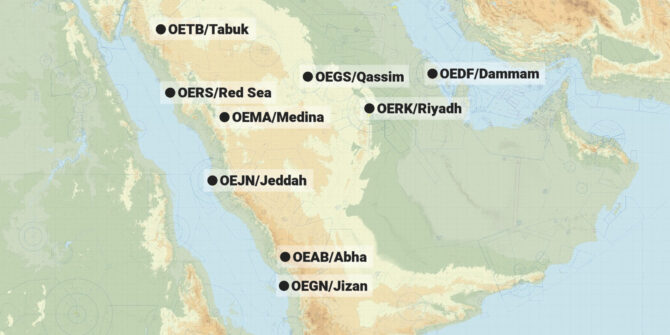
  • OEJN/Jeddah – long taxis possible. Keep an eye on those brake temperatures. This airport can accommodate the most number of aircraft in the world so… it’s big! There are no less than three runway 16/34s here. The longest is 13,123 ft and all of them have an ILS approach. Jeddah has recently been targeted by drone attacks and the southern Jeddah FIR (close to Yemen border) should be avoided).
  • OERK/Riyadh – high elevation airport with steeper than normal GS on some approaches. You have two runways to chose from, although they tend to stick to one for takeoff and one for landing. 15R/33L is the longer of the two, offering 13,797 ft (a whole 2 ft more than 15L/33R)
  • OEDF/Damman – Often keep you high or use track shortening. 34L/16 R and 34R/16L are both 13,123 ft long with an ILS approach.

Because of the ongoing conflicts with neighbors, Saudi have a procedure called ESCAT (used to be called SCATANA) which is basically an emergency procedure when the airspace is under threat. If they announce it, be prepared to follow whatever instructions given – probably either to leave the airspace, or to land where they tell you.

  • Consider what your alternative routing options or alternates will be in advance. ESCAT has been activated more frequently of late, and this may mean long holding at the boundary of their airspace.
  • Egypt is available to the west, but Israel may not accept you if you haven’t advised them in advance. The process for landing and overflying Israel is still quite lengthy and dependant on where you come from, are registered, who you carry etc.
  • Jordan is available, but Syria is a no go country, and landing in Iraq is less advisable.
  • Yemen to the south is a no fly area.

Full info on ESCAT is found in their AIP. We wrote a bit about the Yemen conflict threat here.

Oman

Oman is a funny shaped country with a bit above the UAE and most of it below, bordering Yemen. They generally aren’t too political and get on with everyone.

  • OOMS/Muscat is the main airport. 08L/26R is currently the only operational runway. It offers an ILS either end and 13,123 ft. Muscat is a decent fuel and tech stop if routing from the Far East.

Iran

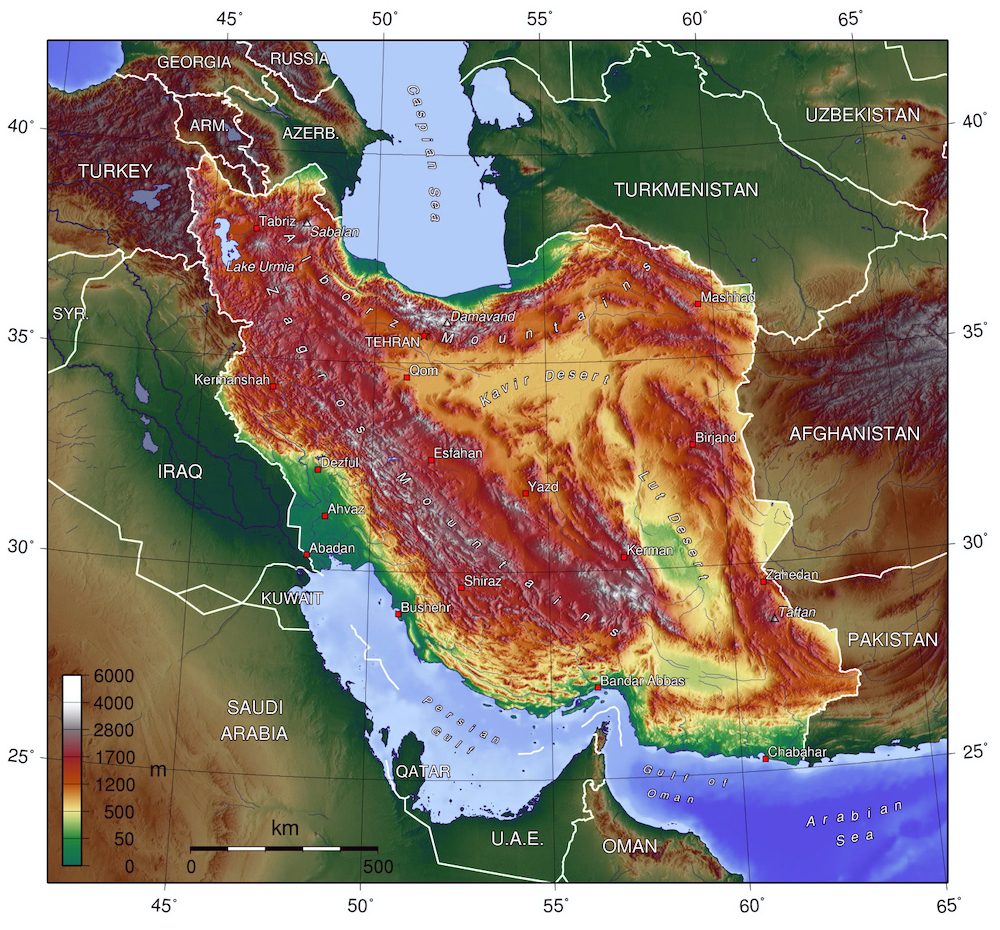
US operators are not allowed to overfly Iran, and there are overflight warnings associated with the country. If you do overfly and need to divert in the country, be aware that if you are coming from other countries, or have some nationalities onboard, this might cause some problems for you on the ground.

If you operate in with female crew, expect them to be asked to cover their heads leaving the airplane at some airports. There are also potential issues with lack of female security staff and crew have reported female pilots being asked to let their male co-pilot carry out walk-arounds to avoid difficulties with male security staff escorting a female.

The main airport OIIE/Tehran is a pretty decent one to go into though, although it is in the middle of some high terrain.

  • OIMM/Mashad – Another high altitude, high terrain airport with two decent length parallel runways (longest being 12,861 ft). Only 31R has an ILS approach (VOR DME on the rest) and you can likely expect a procedural to the ILS. Watch out on the GA because there is a large Holy Shrine which you are not allowed to fly over below 6000′
  • OISS/Shiraz – Right in the middle of a load of terrain. Not easy approaches to fly. The longest runway here is 14,200 ft and only 29L has an ILS. The GA on this is another one to watch – a lot of turns to keep you away from high ground.
  • OITT/Tabriz – Ok, all airport in Iran have high terrain around them. Tabriz is no exception. A little easier since it is only on three sides. Like the others, it has two decent length runways, but limited taxiways. There is an ILS approach onto 30 L and R but if you want to land onto either runway 12 you will need to circle…
  • Most smaller airports are not always well maintained. A quick Notam search shows up no less than 16 holes in poor runway 30 at OIIP/Payam Interational, and OIII/Tehran International (the other one), OIBB/Bushehr, OIHH/Hamadan, OINZ, OITL, OIMS… also come up

Jet Business Solutions, based in the UAE, can assist with support and handling in Iran – ops@jbs.aero

Qatar

  • OTHH/Doha Hamad is the main airport here. Doha is one of the most modern airports in the world and fantastic for passengers. The longest runway is a whopping 15,912 ft and there is a CATIII approach onto all four. The airport and ground operations here tend to be very efficient.

It is nice to operate into because it is built out on its own little bit of land. The city is quite futuristic looking and its a nice view on approach. There is high terrain close by so watch out for GPWS warnings if you mess up your tracking or speeds. The buildings also lead to wind shear and turbulence on approach.

While fairly westernised like Dubai, Qatari customs and laws can be stricter and should be carefully observed during Ramadan.

Kuwait

  • OKBK/Kuwait – pretty restricted airspace close into the airport so be careful if deviating. Get those calls for weather in early. This is another big airport with long but efficient taxis. Kuwait is more prone to big sand storms than some of the other areas. The longest runway is 11,483 ft and there is a CATII approach onto all four. Watch out if you’re operating on the 15s though – the taxi can be long and brake temperatures can heat up fast.

Bahrain

  • OBBI/Bahrain – This airport gets a lot of thermal activity in the summer to watch out for turbulence on short finals. The runways 30L and R have been known to confuse folk in the past as well. 30R is the long one in case you’re not sure (13,305 ft vs 8,301 ft so the difference should be quite obvious).

Iraq

  • US operators are permitted to overfly the ORBB/Baghdad FIR above FL320, but landing there would be unadvisable due to conflict, security and safety concerns.
  • ORER/Erbil, ORBI/Baghdad, ORMM/Basra, ORNI/Al Najaf international airports are all fairly well equipped.

Safeairspace

Conflict is common across the region. Currently several countries are no fly areas, with cautions applied to others. Visit Safeairspace for full information on the current status.

  • Syria is a no fly country
  • Yemen is a no fly country
  • The southern Jeddah FIR (Saudi Arabia) and OEJN/Jeddah airport have cautions due attacks from Yemen
  • Iraq can be overflown, but with certain restrictions
  • Iran is off limits to US operators
  • Israel has political tensions with neighbouring countries. Overflying and landing is possible but requires pre-planning
  • Lebanon has some risk due to proximity to other conflict nations.

Why fly to the Middle East?

It is very central and provides a connection between the west and the Far East and Asia. The main airports offer good tech and fuel stop options.

It is also an interesting region. There is great golf in Dubai, World Heritage sites in Saudi and Iran. And then of course there are the Finance and Oil Industries so corporate companies might find themselves flying business folk over. So, if you are ever operating in make the most of the layover, there are some cool sites to see and interesting things to see and do.

And ending with some ‘Good to Know’.

Some history of the region if you want to read some more. And a little mention is necessary because conflicts and Safeairspace aside, actually the political goings-on of the region are fairly important to our airplane goings-on.

For example, until the end of 2020 Israel was out of bounds. You could not fly across it if you were routing from a big old bunch of places. It was BIG news at the end of 2020 when the likes of Saudi Arabia and the UAE rebuilt their relationship with Israel and agreed to flights between the nations. Neighbors followed suit, and Jordan now also allow flights passing over Israel to utilize their airspace. Being able to fly across Israel significantly shorterns the flight time for aircraft routing from the Middle East and Europe.

A second big political/ aviation newsworthy event was the ending of the Qatar blockade by Saudi, the UAE, Egypt and Bahrain. Obviously, this primarily helped Doha bound flights, but for all operators in the region it means easier airspace and radio work, and the opportunity to once again use OTHH/Doha as an alternate. 

The politics of Iran and Iraq mean if you are routing through one airspace, you probably should not divert into the other. Iran is the bigger worry here because they have an ADIZ and need you to check in prior to entering their airspace. One of the main southbound routes through Iraq (UM688) brings you close to the Tehran FIR border, and if you meet a big thunderstorm along the way and deviate in the wrong direction, you might just find yourself accidentally edging over the border. The same goes for routing along the M677 in Kuwait. If you are heading to Dubai, the VUTEB hold sits close to the border and again, weather can push you close to the FIR boundary.

The tensions with Iran and much of the rest of the Middle East are constantly simmering. One big no-no on your routings here is to refer to the Arabian Gulf as the Persian Gulf. At least to the wrong controller.


Saudi Ops for Hajj 2021

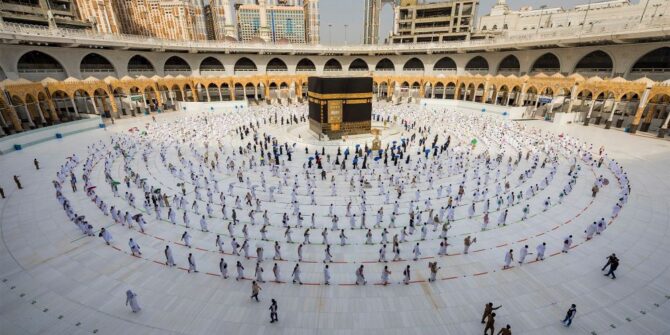
Hajj is the annual pilgrimage to Mecca, which means a change in traffic density and also some flight restrictions into Saudi Arabia.

The Hajj period this year is July 17-22

However, with current quarantine measures (1 week in a hotel if you haven’t been jabbed), the increase in inbound traffic might start a little sooner.

Where in Saudi?

OEJN/Jeddah and OERK/Riyadh airports are the two main entry points to Saudi Arabia for those attending Hajj. In fact, to fly in here during Hajj period your passengers may well need special Hajj visitor visas, or will likely experience some pretty long delays in customs.

Use these airports as alternates with caution during this period because traffic is going to be much higher even this season (2021) when visitor numbers are restricted. You might also experience delays if a VIP is landing as they tend to add in security measures (which can include holding other aircraft if there are enough “V”s before the “IP”)

Where else?

OEMA/Madinah can also see more traffic since those holding Visit or Seasonal Work visas are often transferred via here instead.

OETF/Taif Regional airport is also apparently open for Hajj flights if you are moving people domestically.

If you are planning on operating a Hajj charter

You are going to need to get a request in with the GACA (General Authority of Civil Aviation) Administrative Liaison Center. There are quite strict quotas because they want a 50/50 split with Saudi air carriers so an early request is a good plan.

We suggest doing it through an authorized agent like fbo@spa.sa – these folk are nice and responsive.

Operations requests have to be sent to GACA through official channels. Hajj flight schedules should sent via e-mail to: hajflights@gaca.gov.sa

You can find a bunch of useful info on how to apply for that here. Actually, if you are thinking of operating a Hajj flight then definitely read this since there are a lot of things you need to be aware of. It is the official GACA produced ‘Hajj Instructions Governing the Carriage of Pilgrims by Air’.

Airspace Warnings

There are a fair few in place for the south-western region of the Jeddah FIR. The general view is to avoid that part of the Jeddah FIR, and avoid Yemen, and anywhere near the Yemeni border.

It is also worth reading up on the ESCAT procedures Saudi Arabia have because an escalation in attacks is possible during Hajj season, particularly with a focus on Riyadh and Dammam airports due to the higher numbers of traffic. Basically, if they activate, you will have to follow exactly what ATC tell you and will probably be required to land at the nearest suitable aerodrome, or leave Saudi Airspace right away.

Any other alerts I should know about?

We have a few alerts out at the moment for Saudi Arabia including one about hotel room shortages. Anyone who is unjabbed needs to quarantine for at least a week so these have been filling up fast.

Crew are exempt from quarantine but do still need a PCR test less than 72 hours old.

Hajj Routes

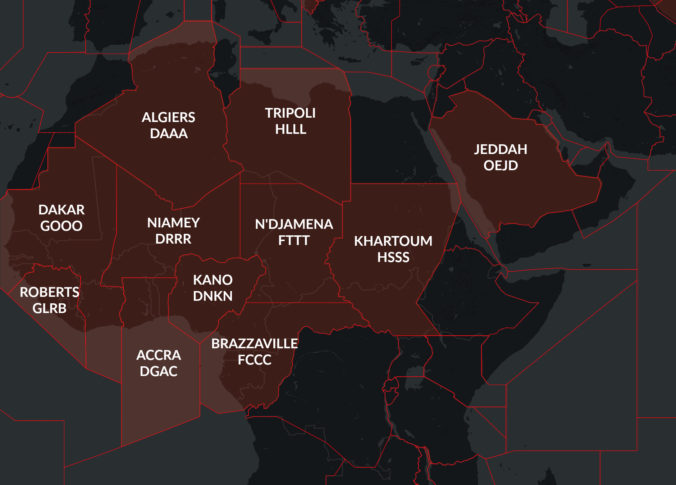
Usually, ASECNA put out an AIP SUP for Hajj routes through Africa, because the number of Muslims routing from Africa to Saudi Arabia means changes to the traffic flows and standard routings are required so ATC can deal with it all.

Normally, traffic is very much north-south predominant, with Europe-Africa flights being the main flow. When Hajj operations start up, a good amount of traffic starts operating east-west (ie. Africa-Saudi Arabia and vice versa), and this is something to be aware of when cruising along at FL330 with spotty HF comms.

However, we haven’t seen one published yet this year, possibly because numbers are so restricted. So keep on a look out, and listen out if routing through Africa just in case.

Where can I find more info?

You can find it right here with this handy list:

Finally, if you are flying any Muslim passengers and they ask which direction Mecca is in, then there is a waypoint MECCA which you can use to find the bearing.


Rumbles Over Riyadh: A New Threat?

You might have seen the headlines a week or so ago. On January 23, Saudi Arabia’s capital Riyadh was attacked by a ‘hostile air target’ – likely an explosive ‘kamikaze’ drone. Saudi air defences destroyed it, causing a loud explosion over the city and flight disruptions at OERK/Riyadh.

Then a few days later it happened again. Another big bang in the skies of Riyadh and more flight disruptions. Plenty of people caught it on camera. But the silence from official channels was deafening.

So what? Isn’t there is always stuff in the news about drones over there?

Yes. They’re sporadically sent over the border from Yemen by the Houthi – the folk who overthrew the Yemeni government back in 2014. Southern regions are usually the worst hit and occasionally Jeddah and Riyadh are targeted just to remind Saudi Arabia that they can.

But here’s the kicker: this time it probably wasn’t them.

How Do You Know?

Firstly, the Houthi have adamantly denied they were to blame. They’ve actually gone out of their way to distance themselves from the attack. So why should we believe them? Because of the status quo – they want to make headlines. Their attacks on Saudi Arabia are a demonstration of their firepower and willingness to target anywhere in the country. They’re even known to claim responsibility for attacks that weren’t theirs.

Secondly, someone else has already put their hand up for the attack – a group of militants in Iraq called the Alwiya Waad al Haq. The Who? The ‘Brigades of the Righteous Promise’. It’s a fancy name but the takeaway is this: someone new is apparently taking shots at Saudi Arabia from Iraq.

Here’s why

Saudi Arabia and Iran don’t get along. The reasons are long and complicated and you can read more about them here. But in a nutshell, religious differences and a desire for regional dominance are the cause of the ongoing conflict. The attacks on Riyadh are a worry because they may reflect a changing way that Iran asserts its dominance throughout the Persian Gulf – by proxy.

Proxy conflicts are a thing. It means when someone is doing the hands-on fighting for somebody else. Remember those Brigades of the Righteous Promise people? It is alleged that Iran may have put have put them up to it, and supplied the firepower to do it.

There’s no shortage of independent militia in Iraq. They’re difficult to trace and new ones emerge seemingly from nowhere – so much so that they’re sometimes known as ‘shadow militia.’ In reality, they are usually a cover for larger and much more well-known groups. In this case, possibly the Hezbollah – one of Iran’s largest proxies.  By hiding behind different names they can cause confusion, unpredictability and can divert blame away from the prime suspects.

It is possible that Iran may now start using these proxies more often for attacks on its regional adversaries.

So why is this an aviation issue?

We get twitchy when anyone is firing things into the sky. This way of fighting is unpredictable and the weapons being used are getting more sophisticated and can cover large distances.

Case in point. Back to the Brigade guys – since their alleged attack on Riyadh they have since threatened to attack the Burj Khalifa in Dubai, and also Abu Dhabi airport. Whether or not their threats can be taken seriously remains to be seen – but if the attack on Riyadh is anything to go by, they might have the weapons and intent to do it.

For aircraft, there are a few threats to be aware of:

  • Misidentification by sophisticated air defence systems.
  • Being caught in the cross fire.
  • Simply being in the wrong place at the wrong time. Airports are often a prime target.

What can we do about it?

Continue to monitor Safeairspace.net for airspace warnings – it is our database of airspace risk and we update it all the time. Head over there and take a look – there are multiple warnings for the Persian Gulf region including four ‘no fly’ countries: Syria, Iraq, Iran and Yemen.

Understand ESCAT rules. Or you might know them as SCATANA. Either way they are a protocol for getting you out of dangerous airspace and fast. ATC may divert you clear of an FIR or ask you to land. They’re in use in Southern Saudi Arabia – but can be applied at short notice to any airspace where the risk is high. ESCAT procedures are published in GEN 1.6 of Saudi Arabia’s AIP. If you don’t have a login, you can see the relevant section here.

Lastly, carry out your own risk assessment and know what’s going on down there. Just because airspace is open doesn’t mean that it’s safe.


SafeAirspace: 2021 Update

2020 was a heck of a ride. But therein lies the risk – what else might you have missed amongst all the Covid-related noise? Sadly, conflicts and their risks to civil aviation have not taken a break during the pandemic.

As it’s a new year, we thought a summary of Airspace Risk was called for. Here’s what’s making headlines at the moment:

Saudi Arabia & Yemen

Houthi rebels in Yemen are regularly firing explosive drones and rockets across the border into Saudi Arabia, and these usually target airports in the south such as OEAH/Abha and OEGN/Jizan. Their latest attack was on OYAA/Aden airport in late December which resulted in mass casualties.

Saudi Arabia continues to retaliate with airstrikes. The latest was in the capital Sanaa just weeks ago, where multiple munitions landed near the airport.

The risk to aviation is that overflying aircraft may get caught in the crossfire or might be misidentified by Saudi air defences. Active terrorist groups in Yemen may also use anti-aircraft weaponry to target foreign interests.

The FAA prohibit all US operators from entering most of the OYSC/Sanaa FIR at any level. Only two airways are allowed, and they are well off the coast – UT702 and M999.

There are no restrictions on Saudi Arabia but use caution in the southern regions. France and Germany have issued their own warnings.

SafeAirspace Yemen page – click here.
SafeAirspace Saudi Arabia page – click here.

Iraq

Rocket attacks on military interests at airports have become a common occurrence. They are generally fired by local militia without warning. ORBI/Baghdad is frequently targeted, along with other airports including ORER/Erbil. There is a clear risk to aircraft at low levels.

US relations were further strained through 2020 with multiple attacks on the US embassy in Baghdad. The tensions escalated to a point where the US considering closing it.

Foreign aircraft continue to be at risk from armed militia who have access to portable anti-aircraft weaponry, while misidentification by the air defence systems of multiple foreign forces in the country is also possible.

The FAA has extended its ban on US operators entering the Baghdad FIR at any level. Even though the SFAR says you can enter above FL320, the long-running Notam KICZ A0036/30 says otherwise.

SafeAirspace Iraq page – click here.

Syria

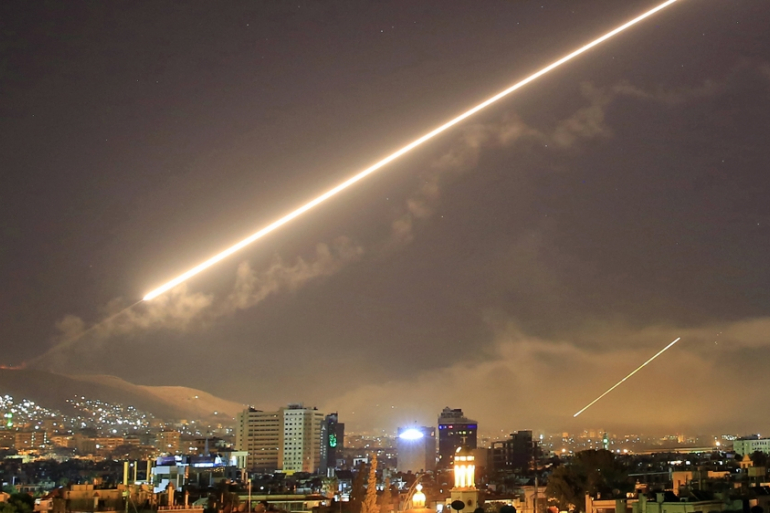
There have been several recent Israeli airstrikes on targets throughout Syria. In late December there are reports that Israeli fighters transited Lebanese airspace at low level causing alarm in Beirut before attacking targets in Western Syria. Just weeks ago, several sites around Damascus were targeted by Israeli missiles.

The primary risk is that aircraft may be misidentified by Syrian air defence systems which are regularly activated. Civil operators may get caught in the crossfire as missiles may erroneously lock on to the wrong aircraft.

The FAA are taking no chances – the ban on US operators entering the OSTT/Damascus FIR at any level has been extended a full three years to 2023.

SafeAirspace Syria page – click here.

South Sudan

Just this week ICAO issued a concerning warning about the risk to aircraft operating below FL245 in the HSSX/Khartoum FIR over South Sudan, or flying in and out of HSSJ/Juba. They are ‘gravely’ concerned about ATC disruptions, a lack of contingencies, inadequate training of controllers, limited info about equipment outages and a lack of co-ordination with other ATS units.

SafeAirspace South Sudan page – click here.

Emerging Conflict Zones

2020 saw three new conflict zones emerge, here is what is happening with them now.

Ethiopia

A civil conflict erupted in October last year in the Tigray region of Northern Ethiopia. The government went to war with the TPLF – a regional force seeking independence.

The region’s airports were closed and TPLF showed an intent to internationalise the conflict by attacking aviation interests. They fired rockets into Eritrea targeting HHAS/Asmara, and also attacked multiple airports to the South of the Tigray region.

Two airways were closed (T124, and M308) with no explanation of the risk.  Other airways remained open but uncomfortably close to the fight – especially UG300, UN321 and UL432. No airspace warnings were issued despite the dangers.

What’s the latest?

In late November Ethiopian forces captured the region’s capital Mekelle and regained control. Remaining TPLF forces have retreated leaving behind a humanitarian disaster and a vow to continue the fight. Since then, the airway closures have been removed and things have gone quiet, but an airspace risk remains – armed militia continue to be active in Northern regions and may be looking to make a statement. Be wary of operating in the area.

Western Sahara

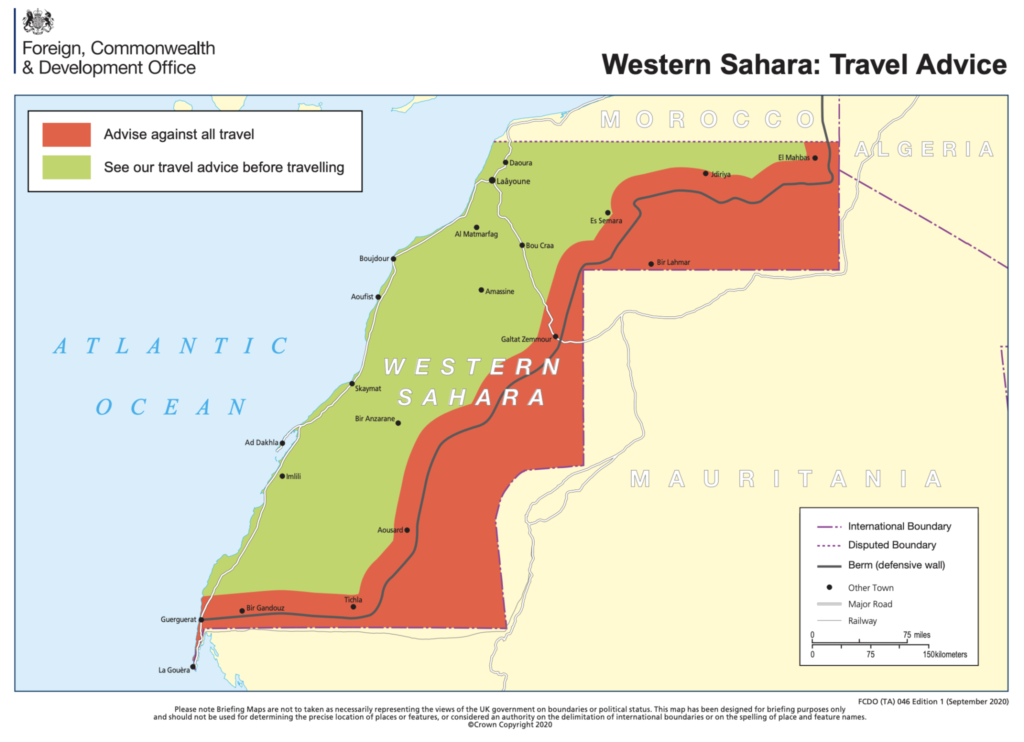
Late last year the region’s independence movement (the Polisario) declared war on Morocco for breaching a ceasefire agreement. The FAA published a warning that the Polisario might have access to anti-aircraft weaponry left over from previous conflicts.

What’s the latest?

It is still an active conflict zone.  The fight has reached the international stage after the US declared their support for Morocco. The Polisario have indicated they are willing to at least talk, but so far have not put down their weapons. So, it is a wait-and-see type deal.

The risk to overflying aircraft remains. The GCCC/Canarias FIR keep extending a Notam advising operators to not fly below FL200 on the following airways: UY601, UN728 and UT975.  However, the reason is still missing: because of the risk of anti-aircraft fire. The GOOO/Dakar FIR haven’t issued any warnings despite the threat. Take care if operating in the area.

Armenia-Azerbaijan

In September last year, an ethnic conflict erupted over a disputed territory in Western Azerbaijan – Nagorno-Karabakh. The fight was between Azerbaijan and Armenia.

As a major air corridor for en-route traffic, there were significant flight disruptions. Azerbaijan swiftly closed all but one west/eastbound airway and routed traffic via Georgia. Armenia asked aircraft to take extra fuel and expect re-routes. The conflict was short but intense, with heavy artillery fire from both sides. The conflict eventually spread beyond the contested regions with longer range weapons. The entire border region posed a risk for civil aircraft.

What’s the latest?

For once the news is good. In November a ceasefire agreement was signed with the help of Russia. Armenia effectively lost and withdrew from the region and the conflict was officially over. Armenia removed its airspace warning, while Azerbaijan re-opened the affected airways and a large section of airspace near the border.

With the conflict now over, and no new reports of significant fighting since the peace agreement in November, direct crossing traffic between the two countries is now technically possible again.  However, most East-West flights are currently still electing to go further north instead, connecting between Azerbaijan and Georgia’s airspace, avoiding Armenia.

What about Safeairspace.net?

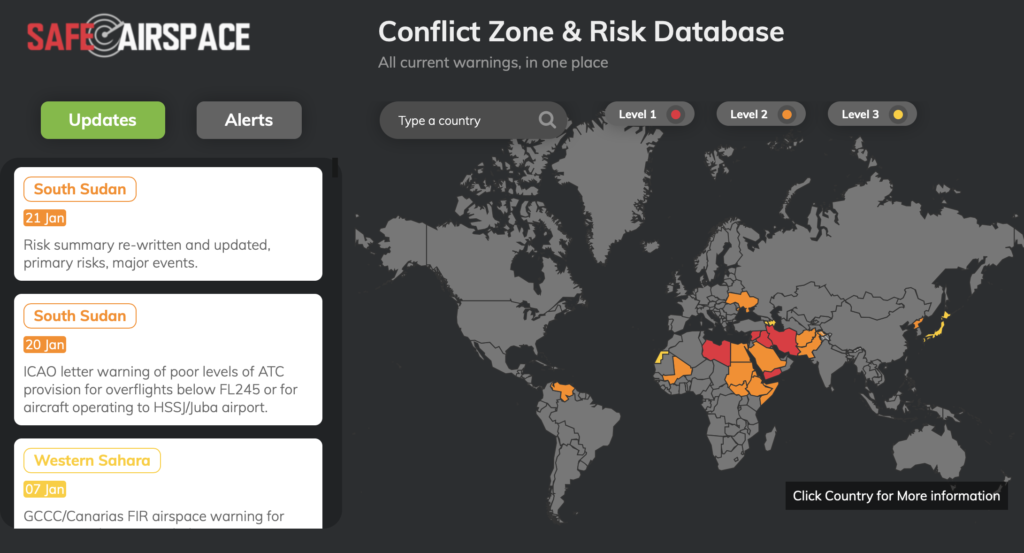
Our conflict zone and risk database is updated constantly. We assess risk with official sources and build a simple picture for you of those need-to know-places.

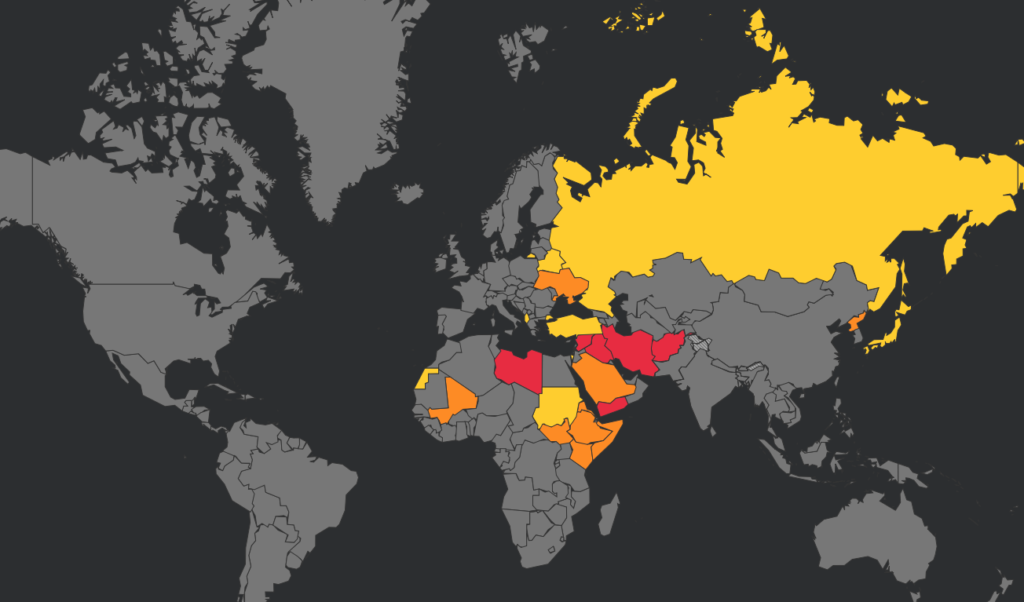
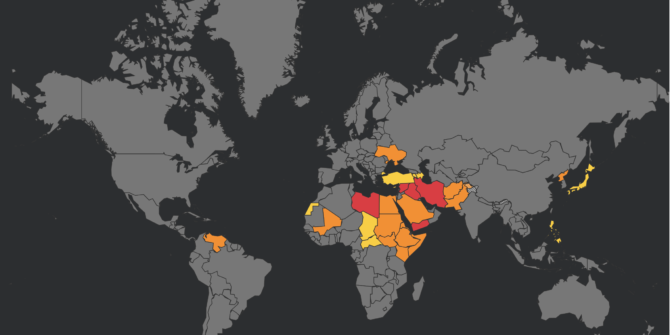
There are currently 5 regions which are assessed as a Level 1 Risk – No Fly. These are: Iraq, Iran, Yemen, Libya, and Syria.

Head over to SafeAirspace.net and take a look. With a single click you can download a risk briefing of the entire world in just a few pages of nice simple English.

The mission of SafeAirspace is this: to provide a single, independent, and eternally free resource for all airspace risk warnings, so that airlines and aircraft operators can easily see the current risk picture for unfamiliar airspace. If you know of a risk not listed on the site, or you have anything else to add, please get in touch with us at news@ops.group


Qatar airspace update – military jets intercepting civil flights

In short: The situation is volatile and constantly changing, even by the hour. Military interception has been reported so the best advice is to be vigilant with sticking to assigned routes for all operations around the region.

The airspace blockade of Qatar has been ongoing since June 2017 with little end in sight.

But over the past few months, tensions have been escalating;

Here is the latest operational information we have:

A reminder that Qatar does not have its own FIR. It sits entirely within the Bahrain FIR- you will find Qatar airspace NOTAMs under OBBB. The Doha TMA extends SFC to FL245. Above this sits the Bahrain UIR.

Bahrain and Egypt have relaxed some of their initial restrictions. Saudi and UAE have not.

The current state of play as of 6 April 2018.


_________________________________________________________________________

Have you been through the region recently? Can you provide an update?

Extra Reading:

Some fascinating reporting about what this whole blockade is all about.

  • How a ransom for Royal falconers reshaped the Middle East” – New York Times
  • What the falcons up with Qatar?” – NPR Podcast


Missile attack on OERK/Riyadh was “warning shot”, other airports now targets

Update: Yemen-based Houthi forces fired another missile into Saudi Arabia on Dec 19. Saudi Arabia claim they intercepted it south of the capital Riyadh, with no damage or casualties reported, though a loud explosion was heard throughout the capital. The Houthi forces claim they were targeting a palace in southern Riyadh. This follows the previous Houthi missile attack on OERK/Riyadh Airport on Nov 4th, when they said: “the missile that targeted King Khalid airport was a warning shot and we warn all companies to prevent landing of their planes in the UAE and Saudi Arabia airports”. A Yemeni Army spokesman has said that the November 4 missile attack on OERK was a “warning shot”.

That missile was launched from rebel territory in Yemen, specifically targeting OERK/Riyadh King Khalid airport. Although most mainstream media carried the “missile was intercepted” story, we’re not sure that this is the case – even if it was, parts of it did fall on airport property and there was a visible explosion.

The spokesman said “the missile that targeted King Khalid airport was a warning shot and we warn all companies to prevent landing of their planes in the UAE and Saudi Arabia airports”.

Given that the Yemeni rebels have demonstrated their capability of reaching their target, there is some credibility to the threat.

Operators should consider this in operations to OE** and OM** airports.

At present, there is no indication of increased threat to overflight of Saudi or UAE airspace.

On Monday, the Saudi Arabia coalition closed all air, sea and land borders with Yemen after the missile strike on Riyadh on Nov 4, effectively closing all airports in Yemen. Yemenia airlines said that the coalition, which controls Yemen’s airspace, had declined it permission to fly out of Aden and Seiyun, the only two remaining functioning airports. OYSN/Sanaa has been closed since August 2016.

Also, all UN humanitarian flights to Yemen, one of the few international operators, have been cancelled after flights were no longer given clearance from the Saudi-led coalition to land in the country.

SCATANA remains active in the southwestern portion of the Jeddah FIR, no new Notams have been issued in relation to the last few days.

For further:

  • Monitor Saudi Arabia page on SafeAirspace
  • Monitor OPSGROUP member updates
  • Talk to us at team@fsbureau.org


Qatar – What We Know

There have been many reports of countries cutting diplomatic ties with Qatar.  We’ll leave the speculation to the media, we want to break down what it means for operators and aircraft owners.  Just the facts.

Saudi Arabia, Egypt, Bahrain, UAE, Libya, Yemen, Maldives, and Mauritius have all cut diplomatic ties with Qatar.

As of now, only Saudi Arabia, Bahrain, Egypt, and UAE have placed flight restrictions on flights to/from Qatar. No known restrictions (beyond those known for Libya and Yemen anyhow) for the remaining countries mentioned in reports.

The new regulations are quite clear. You cannot overfly or land at any airport in Saudi Arabia, Bahrain, Egypt, or UAE with a Qatari registered aircraft. If you have a non-Qatari registered aircraft, and need to operate to/from Qatar and use the mentioned countries airspace you’ll need special approvals from the authorities below:

Saudi Arabia GACA:
+966115253336
special@gaca.gov.sa

Egypt ECAA:
+202 22678535
+202 24175605
AFTN: HECAYAYX

UAE GCAA:
+971 50 642 4911
avsec-di@gcaa.gov.ae


No special exemptions have been mentioned by Bahrain, but they’ve given the following routing for those effected by the restrictions:

UT430 OUTBOUND VIA RAGAS
UR659 INBOUND VIA MIDSI

Due to the situation, Iran has published special routing schemes for transitioning their airspace, as they’ll get quite busy:

Qatar to Ankara:
FL150-FL190, RAGAS-UT430-LAGSA-UL223-TESVA/ALRAM

Qatar to Muscat and Karachi FIR:
FL150-FL19, expect climb after KIS
RAGAS-M561-ASVIB (To Karachi)
RAGAS-M561-KHM-BUBAS (To Muscat)

Ankara to Qatar:
Between FL240 to FL300, ALRAM-UT36-MIDSI

Muscat to Karachi to Qatar:
Between FL240 to FL260, N312/A453-MIDSI

Also, if flying from Ankara to UAE (except OMAA), use the below routing:
BONAM-L319-RADID-M317-KUPTO-G666-ORSAR

The situation is fluid, and we will update this post as we continue to collect news.


International Bulletin: Winter is Coming, Updated Canada Requirements

Winter is coming 09NOV With the clocks changing, it’s a reminder that we’re not far away from the snowstorms, deicing delays, cancelled flights, airport shutdowns, and those big invoices for de-icing fluid. Our new author Frank Young has an article.

Updated Canada requirements 09NOV From tomorrow, November 10, an eTA is now mandatory for flights to Canada (for most people), and there’s an update to flying to Canada with a previous conviction. Read the article.


BIKF/Keflavik Long a destination for flight certification testing (because it’s cold and windy), will not accept test flights until February next year, thanks to runway renovation work.

ZZZZ/Worldwide Last week we ran a story about the new ICAO SID/STAR phraseolgies. In short, some countries are implementing, and others aren’t. We’re going to make a list of who’s doing what, so that you as an operator or pilot will have some idea. Can you help us? What is your country doing? Tell us at bulletin@fsbureau.org.

LTBA/Istanbul At about 0100 local time on 6 November, two people on a motorcycle opened fire outside Istanbul Ataturk International Airport, prompting a temporary closure. Reports indicate that authorities apprehended both suspects and did not find additional weapons or explosives on their persons. Officials briefly placed the airport on lockdown but reopened the facility at about 0130. The incident reportedly did not affect flights, and the gunfire harmed no civilians or police officers.

CZZZ/NAT Region The FAA has recently determined that time estimates provided by pilots in oceanic CTAs are less accurate than expected, particularly when adverse weather causes pilots to deviate from the planned course. These inaccurate estimates can compromise the separation of aircraft. Have a read.

YMML/Melbourne Be aware of recent hoax ATC calls. Someone with a handheld radio has been making “go-around” transmissions on the Tower frequency, and at least one aircraft has responded. Airservices says there have been 15 such transmissions in the last few weeks.

CZZZ/Canada The NBAA has issued useful updated info for flying to Canada with previous convictions – Canada is known for refusing entry based on DUI charges. Today, November 9, is also the last day that you can enter Canada without an eTA.

PWAK/Wake Island – an ETOPS alternate – is closed on 11NOV for Veterans Day. They do say they will attend with 30 mins notice, so maybe two ETOPS circles are required for that day. Check other US ETOPS alternates on this date also.

UCZZ/Kyrgyzstan Since 4 November, if you’re staying for longer than 5 days, you must register with the local authorities.

PKMJ/Majuro is downgraded to Cat 6 until November 23, which may affect some operators using this as an ETOPS alt.

EGNX/East Midlands airport has some weekend closures for the next six weeks.

VIZZ/India announced on 8 November that 500 and 1,000 rupee banknotes will cease to be legal tender as of 0000 local on 9 November 2016.

EVLA/Liepaja (one of Latvia’s three international airports) is now closed to all operations. They say they will be open again in Spring 2017. Fingers crossed.

LAZZ/Albania has been experiencing heavy rains, high winds and flooding throughout the country, causing road blockages, school closures, and disruptions in ferry services. The army has been mobilized for rescue and relief operations.

LFLL/Lyon If you’ve been using LFLL as an alternate at weekends, you’ll have to cut that out from December 10th, they don’t want weekend diversions of non-sched flights.

EGKK/Gatwick has advised of a new series of rail strikes that will run through to January next year.

MHTG/Central America FIR reminds operators that a CENAMER notification by AFTN is required for all flights planning to enter the airspace.

MTZZ/Haiti The US has published updated advice for Haiti: U.S. citizens are advised not to travel to the southern peninsula of Haiti, commonly referred to as the “southern claw.” The U.S. Embassy has currently banned unofficial travel to the southern peninsula and allows official travel only after consultation with its security office. There is widespread devastation throughout the southern claw with the most affected areas on the western tip of the peninsula. Travelers can expect difficult travel conditions with roads made impassable by landslides, damaged roads, and bridge failures. There is also widespread damage to buildings and infrastructure, including gas stations and cell towers, loss of electricity, and shortages of food and potable water. U.S. citizens who choose to travel to the southern claw in spite of these risks should carry sufficient water, food, fuel, and medicine to last longer than their anticipated stay. The security environment around the southern claw is fluid and uncertain.

LFOB/Paris Beauvais is closed overnight from 2200 to 0600Z, for 14-25 November inclusive, due to stuff.

HAZZ/Ethiopia On November 8, the Command Post – the body tasked with implementing Ethiopia’s state of emergency – lifted the restriction imposed on foreign diplomats, which restricted them from traveling more than 25 mi/40 km outside of Addis Ababa. The Command Post also lifted and revised several other state of emergency provisions; however, the changes are minor and are not likely to affect the current situation. The curfew and communication restrictions remain in place

NFTF/Tonga Fua’amoto (the main airport) has new operating hours – these are, in UTC: 1600 SUN TO 0530 MON, 1025 MON TO 0800 TUE, 1600 TUE TO 0530 WED, 1000 WED TO 0800 THU,0900 THU TO 1200 THU, 1600 THU TO 0530 FRI, 1600 FRI TO 0800 SAT. They’ll accept div traffic outside these hours, call +676 22 608 – but prefer no surprises on Sundays.

OMAA/Abu Dhabi will see heavy traffic for the Grand Prix on November 27, avoid if possible.

SBZZ/Brazil The office that processes Foreign Civil overlight and landing permits has updated hours of operation: Mon-Fri 1230Z-2230Z.

SBCT/Curitiba airport would like 4 hour PPR notice for non-scheduled flights, and request that you call them on 55-41-3381-1478 to arrange that.

SPJC/Lima, Peru has an upcoming APEC meeting 14-21 November, with a decent increase in traffic expected, and a few restrictions. They’ve also warned pilots to pay attention to radios and transponder codes to avoid them sending up the jets – good advice.

TVSV/ET Joshua Airport is closed due to flooding.

VECC/Kolkata Radio has a new HF frequency: 8861, with hours 1330Z-0130Z. Use this if 6556 or 10066 isn’t working for you.

CZQX/Gander is going to auto-send you a “Confirm Assigned Route” message from 01DEC, on entry into their OCA – if you are FANS 1/A equipped. If you’re not sure how to feel about that, read our previous article.

LCCC/Nicosia There’s a good deal of mil activity – UN, and Russian – in the Cyprus region at the moment. Read the LCCC and surrounding FIR Notams carefully. Oh, and if you’re not up to date on your Greek-Turkish FIR dispute, add LGGG and LTBB to that. As 2016 draws to a close, enough regional history has been published for an entire novel. This weeks Notam series covers the 1923 Lausanne Peace Treaty.

NZZC/New Zealand published a change to SID procedures today, and our brain hurts. We’re not sure if this is related to the 10NOV ICAO SID/STAR changes, or .. something else. If you’ve got it deciphered, let us know. THE STANDARD INSTRUMENT DEPARTURE (SID) SPECIFIES IN BOTH DIAGRAMMATIC AND NARRATIVE FORM ANY OF THE FOLLOWING: THE DIRECTION OF TURN, HEADINGS, TRACK, DISTANCES, SIGNIFICANT POINTS AND ALTITUDE REQUIREMENTS. WHERE TRACKING TO OR FROM A NAVIGATION AID IS NOT POSSIBLE, DESIRED TRACKS ARE SHOWN AND DUE ALLOWANCE FOR WIND IS TO BE MADE. AIRCRAFT ARE TO CONTINUE CLIMBING THROUGHOUT THE SID UNLESS IN COMPLIANCE WITH PUBLISHED ATC MAINTAINS, DEPARTURE MINIMUM SAFE ALTITUDE (MSA) OR AS OTHERWISE INSTRUCTED. WHERE CONTINUOUS CLIMB TO THE END OF THE SID IS NOT REQUIRED A DEPARTURE MSA MAY BE DEPICTED ON THE RELEVANT CHART. THE DEPARTURE MSA REPRESENTS THE LOWEST ALTITUDE FOR OBSTACLE CLEARANCE ALONG THE ENTIRE DEPARTURE ROUTE (INCLUDING TRANSITIONS). IT REMAINS THE PILOT’S RESPONSIBILITY TO MEET SUBSEQUENT ENROUTE MSA/MINIMUM FLIGHT ALTITUDE (MFA)/MRA/MEA REQUIREMENTS APPLICABLE AFTER SID TERMINATION. DEPARTURE MINIMUM SAFE ALTITUDES DO NOT ENSURE CONTROLLED AIRSPACE CONTAINMENT.

OEZZ/Saudi Arabia has issued an extension of the policy that requires all aircraft with a destination in Yemen to first land in OEBH/Bisha – through to 08FEB next year. The only exceptions are the UN, Red Cross, and MSF.

VHHK/Hong Kong is going to move to a new ACC and ATC Tower towards the end of this month. There will be delays. The actual date hasn’t yet been notified, we’ll let you know when we hear.

View the full International Bulletin 09NOV2016

International Bulletin: Sharm El Sheikh reopens, New ICAO Phraseologies 10NOV

Sharm El Sheikh reopens 03NOV  HESH/Sharm El Sheikh, Egypt has reopened to international traffic, with a number of airlines starting services again on 01NOV. However, there are conflicting views on security at the airport, depending on your state of registry. Read article.

New ICAO Phraseologies 03NOV From 10NOV, new international aviation phraseology for SIDs and STARs is effective, but there’s a problem. Read article.


OEJN/Jeddah, Saudi Arabia On 27OCT, Saudi Arabia intercepted and destroyed a ballistic missile launched from Houthi-controlled territory in Yemen. The Houthis confirmed the launch via the Saba news agency, saying that the missile was targeting Jeddah International Airport (OEJN), not the holy city of Mecca, as some other news reports had claimed.

EHEH/Eindhoven has new procedures for PPR effective 30OCT – if you’re flying there, get PPR direct from the airport. You can read all the info on their new GA page. Oh, and there’s now a fee. €300 for PPR for a 21 ton aircraft, for example.

LFMN/Nice Runway 04R/22L will be closed during November.

WARR/Juanda Airport is closed due to works in progress except for helicopter medical evacuations from until 15NOV

UTZZ/Tajikistan Disagreement between Russia and Tajikistan may lead to operational restrictions between the two countries. Air traffic between Moscow and Dushanbe may be suspended from 08NOV.

FAZZ/South Africa Reports this week suggest that foreign nationals entering South Africa through any port of entry should expect delays up to four hours due to a new enhanced security measure that requires the capture of fingerprints and a photograph. OR Tambo in Jo’burg seems to be the worst offender.

BGKK/Kulusuk has updated opening hours: 1100-1900Z Tuesday to Saturday. They ask for 3 hours minimum notice PPR.

PLCH/Christmas Island Fuel is in short supply, notified as being only available for Scheduled service and emergency flights. PLCH is often used on Pacific crossings as an alternate, so any diversion would be considered an ‘emergency’, but check before actually planning a tech stop.

LEZZ/Spain Previously notified fuel strike now appears to be one provider only, so it looks like impact minimal.

DGAA/Accra ATC is having a few VHF issues, primarily on 126.7 – if you can’t reach them, call HF 8903 instead.

EDDT/Berlin Tegel will be busy 14-18 NOV due to state visits, they won’t accept GA/Private traffic during this time, but you can check specifics with them at vvd-txl@berlin-airport.de

HLLS/Sabha, Libya The airport has been closed for over 2 years due to fighting in the area. A new Notam has been issued which officially extends the closure period to 26DEC, as talks continue between the authorities and local groups to find a way to re-open the airport.

LYBE/Belgrade Jet A1 not available through the airport fuel service provider until the end of the month. Make sure you get a confirmed fuel release through a third-party fuel provider before operating here.

LTZZ/Turkey On 29 October, the US Department of State ordered the departure of family members of employees posted to the US Consulate General in Istanbul due to security information indicating extremist groups continued aggressive efforts to attack US citizens in Istanbul. US Operators should consider ops into airports in Turkey carefully.

OMDB/Dubai Traffic was stopped for approx 1.5 hours on 29OCT due to a drone. The Airport closed from 1930-2050 LT, and some flights were diverted. OMSJ/Sharjah was also briefly closed due to the same drone. Unauthorized drones have halted airport operations in Dubai twice in recent months.

GMZZ/Morocco is busy from 4-20NOV, GA and non-sched traffic will see restrictions. Check their Notam A0896 from 01NOV. If you’re part of the event, put RMK/COP22 in your FPL. No long stays will be allowed.

WSSL/Singapore Seletar We’ve received crew reports of challenges with visual approaches into Seletar (there are no instrument approaches). There are unlighted obstacles on the approach to Runway 21. After dark, approaches are only possible to Runway 03. More importantly, noise rules will soon demand a challenging base turn, greater than 5 degrees, to a half-mile 3.5 degree final, to a 1% down slope runway. We welcome further comments (bulletin@fsbureau.org).

LGZZ/Greece There will be a ferry strike between the Greek mainland and all Islands on 24NOV. No services will operate that day.

FTZZ/Chad Reports of nationwide public service strike including Airport operations at N’Djamena. The unions stated that the strike will persist until the government pays overdue wage arrears.

View Full International Bulletin 03NOV2016


International Bulletin: Hong Kong pain in the ass, Haiti relief operations

Hong Kong is a pain in the ass – it’s official 20OCT Authorities in Hong Kong confirmed yesterday that the airport is a giant pain, especially for non-scheduled operators. Lining up slots, parking, permits and handling is extremely difficult. End result: a mountain of frustration. Read the article.

Haiti relief operations – and Airbus Flight 101 20OCT After Hurricane Matthew last week, MTPP/Port-au-Prince (Toussaint Louverture) became a central focus in relief efforts for Haiti. OpsGroup member Airbus operated an amazing relief flight from Lyon. Read the article.


VTZZ/Thailand is in a period of mourning following the death of His Majesty, King Bhumibol on 13 October. This is a time of deep sorrow for Thai people – refrain from any behaviour that may be interpreted as festive, disrespectful or disorderly. Abide by local laws and respect Thai customs. There may be some disruption of commercial and public services during the mourning period, especially during the first 30 days (until 13 November). Tourist attractions are open with the exception of Wat Pra Kaew (Temple of the Emerald Buddha) and the Grand Palace in Bangkok. Expect traffic disruptions and heightened security around these areas as people pay their respects to the late King.

EBBR/Brussels All non-scheduled flights destined to EBBR are allowed only after special permission by Airport Authority before start of flight. Contact +32 2 7536900 or inspect@brusselsairport.be.

DTZZ/Tunisia extended the state of emergency on 18OCT, set to expire, by three months. The state of emergency went into effect following a series of terrorist attacks in 2015 and has been extended multiple times.

ORBB/Baghdad FIR Traffic entering from Baghdad FIR (ORBB) to Ankara FIR (LTAA) shall file their FPL as follows: NINVA-OTKEP-SRT at FL320 and above. NOTAM A4572/16 refers.

Solomon Islands There has been a confirmed outbreak of dengue fever in the capital city, Honiara; you should follow the advice of the local authorities and take steps to avoid being bitten by mosquitoes; you should take out comprehensive travel and medical insurance before travelling to the Solomon Islands

TXKF/Bermuda Due to maintenance, the Bermuda Radar system will be out of service on Friday. Recommended reroute to avoid airspace. New York Center overflight procedures will be in effect. Routes have been developed to provide limited non-radar service within the airspace. All departures from Bermuda will be held down at FL310.

OJAI/Amman, Jordan Runway 26L/08R will be closed for urgent pavement maintenance on these days in November:  01,08,15,22,29: from 0930-1330Z. The airport will not be available for either normal operations or emergency diverts during the closure period.

OEZZ/Saudi Arabia From 8 to 10 October there were several missile attacks reported near the Saudi / Yemeni border and the southern Red Sea.

ZZZZ/Worldwide Regulatory and voluntary bans on Samsung Galaxy Note7 smartphones is spreading as airlines and airport authorities around the world are announcing bans or restricted usage on the device, which has been withdrawn by Samsung after some devices caught fire. Ban notices are being issued primarily through airline online check-in pages, as well as via public announcements in airport terminals and onboard aircraft. The US Department of Transportation (DOT) was first to issue a total ban on taking the device on board, as a passenger or as air cargo, when it gave an emergency order Oct. 15 with FAA.The devices are being banned because of fire concerns, and the fallout following an incident involving a smoking smartphone on board a Southwest Airlines aircraft in Louisville, Kentucky on Oct. 5.

YZZZ/Australia will not be implementing the changes in the ICAO PANS-ATM (Doc 4444), as they say they haven’t had enough time to work on the safety case – ie. figuring out if these changes are dangerous in any way. In short, they won’t be saying “Climb via SID” or “Climb via STAR”, which are the new phraseologies.

TTZP/Piarco wins the award for most confusing AIC of the week, namely AIC03/16 issued on 13OCT. Titled “RVSM Implementation”, it appears that Trinidad is finally implementing RVSM in their airspace. But wait, they did that in 2005. So what’s new in this AIC? It’s a mystery. Take a look and see if you can spot it.

KLAX/Los Angeles 3 out of the 4 runways at KLAX have now been renovated. Runway 6R/24L reopened on 16OCT after renovations. Improvements to the fourth and final runway, 07L/25R, will begin OCT22 and continue until June 2017. This last runway will be partially closed until January, and then closed completely to allow for more extensive work to be done

FSIA/Seychelles Runway will be closed on Thursday 20 and 27 Oct between 1815-0245z and Friday 21 and 28 Oct between 1900-0215z. Can be opened in cases of emergency.

UHPP/Petropavlovsk Eruption in progress at Klyuchevskoy volcano (N5603E16038) near UHPP. Ash cloud reported at 0720z on 17 Oct from ground level up to FL300.

VVZZ/Vietnam Typhoon Sarika is forecast to bring hazardous sea and weather conditions to parts of northern Vietnam from around 19 October 2016; heavy rainfall could lead to flooding and landslides

KLAS/Las Vegas Because of the next presidential debate that will be held in Las Vegas on October 19, 2016, intermittent road closures will affect access to McCarran International Airport (LAS) between 4 pm and 10 pm on that date. The recommended route to the airport from the east side of the valley is westbound Flamingo Road to southbound Paradise Road. The recommended route to the airport from the west side of the valley is eastbound Tropicana Avenue to southbound Paradise Road.

OIIX/Tehran FIR The minimum safe level on R462 between DENDA and METBI has been raised to FL140.

KSFO/San Francisco has a new ATC Tower operational since Sunday last, located between Terminals 1 and 2. Per the local report, it “offers controllers a 650-square-foot work area with unobstructed 235-degree views of the airport’s runways and taxiways”. Hopefully there’s not much going on in the other 125 degrees.

OSZZ/Syria Russia’s only aircraft carrier, Admiral Kuznetsov, is nearing the end of a work-up period outside the port of Murmansk before heading for the eastern Mediterranean, reportedly to begin air operations against targets in Syria.

EGPK/Prestwick will be closed from midnight to 0400Z on 21OCT, due to a planned ATC power outage. ATC reachable during outage at +447917 424603.

RPZZ/Philippines Typhoon Sarika recently passed through the island of Luzon as a category 4 storm. Transportation routes, power and telecommunications systems could be affected in some areas. Other services that may be affected in these areas include emergency and medical care, as well as water and food supplies. If travelling to affected areas, exercise caution, monitor local news and weather reports, and follow the advice of local authorities.

View full International Bulletin 20OCT2016 


Midweek Briefing 06JUL: Hong Kong capacity problems, Iceland: The fun continues

Hong Kong capacity problems 06JUL During this year, the Hong Kong CAA has issued a couple of warnings to operators to stick carefully to their allocated slots, but it’s not making much of a difference to operations there. Read the article.

Iceland: The fun continues 06JUL Last week there were some really positive indications that the ATC strike in Iceland was coming to an end, but it’s now worse than ever, with Westbound, Eastbound, and landing traffic all affected. Read the article.


HECC/Cairo FIR A restriction exists for traffic to and from the Amman FIR, so if overflying Jordan and then Egypt, or vice versa, you can only use the waypoint METSA.

OMAE/Emirates FIR has some updated peak times. Departures need a slot between 0630-0730Z and 1700-0000Z. Arrivals will be spaced 5 mins apart during these times also, as will aircraft entering the OMAE FIR from nearby airports like Muscat, Isa, and Baghdad.

EIDW/Dublin Runway 10/28 is closed overnight until 09JUL.

OERK/Riyadh, Saudi Arabia will be hosting the ‘Global Ministerial Aviation Summit’ 29AUG-31AUG. 55 different ministers from various countries are expected to be in attendance. Be aware of potential restrictions leading up to and after the event.

CYFB/Iqaluit Another NAT alternate favourite, CYFB has some runway closures throughout July.

EGCC/Manchester is doing some work on 05L/23R overnight until 08JUL and has advised operators to carry some extra gas due possibility of holding.

LOWW/Vienna has published a helpful list of rush hour periods – worth avoiding these times as holding is common at VIE. The times are: 0530-0750, 0920-1030, 1140-1240, 1340-1500, 1615-1800, and 1840-1940Z.

BIZZ/Iceland Despite optimistic reports of a resolution to the ATC dispute in Iceland last week, the situation remains unresolved. Last night BIRD Oceanic was closed to most Eastbound traffic once again, as was BIKF. A new addition to restrictions is a closure to many Westbound flights on Wednesday 06JUL – “DUE TO STAFF SHORTAGE IN REYKJAVIK OACC WESTBOUND TFC PLANNING TO ENTER BIRD FROM ENSV VIA GUNPA,VALDI, IPTON, INGAL, ISVIG AND EGPX VIA LIRKI, GONUT, OLKER, MATIK AND RATSU AND THEN PROCEEDING INTO EGGX OR CZQX SHALL REMAIN SOUTH OF BIRD CTA” Read the article.

EDYY/Maastricht ATC have requested crews operating through the Maastricht UIR to log on to CPDLC EDYY, if you have datalink. While voice remains the primary comms method, you might get an uplink message if the frequency is busy – it’s not a test, you should confirm – most of these uplinks are likely to be frequency changes.

EPZZ/Poland has advised operators to check carefully whether permission is required in advance of operations at airports other than EPWW/Warsaw. Many countries including Poland have reinstated Border Controls within the Schengen zone. Best advice is to treat each country as having full Border Controls for the moment (so think Passport, GenDec, etc.)

SPIM/Lima FIR (Note that the airport is now SPJC, distinct from the FIR code) is shutting down airway UG427 after 21JUL.

SUEO/Montevideo ACC (Uruguay) has some comms issues in it’s airspace, and has advised of some extreme spacing between aircraft irrespective of FL – 40nm. For now, this ends today (06JUL) but may happen again.

WSZZ/Singapore Qualifying citizens of Singapore are now eligible to apply for US Global Entry membership – and benefit from expedited entry to the United States at designated airports. Similarly, qualified U.S. citizens are eligible for enrolment in Singapore’s enhanced-Immigration Automated Clearance System (eIACS).

ZMUB/Ulaanbaatar, Mongolia is downgraded to RFF Cat 7 until 10JUL. Also, from 12-16JUL, you can’t file this as an alternate which may limit your options somewhat.

LFPG/Paris due to maintenance on the ILS for Runway 08L/26R from 18JUL to 02OCT. The only approaches that will be available will be RNAV based procedures (LNAV/VNAV, LPV, LNAV) and VOR/DME.

GQNN/Nouakchott, Mauritania has moved to a new international airport this June. Located approximately 10nm north of the city, it has an annual passenger capacity of 2 million. Infrastructure from the capital’s old airport was transported to the new one.

SECU/Cuenca Following the landing incident on 28APR of an E190, all inbound flights will be reportedly be held if the runway is wet – until end of August.

LFMH/St Etiennee Fuel outage on 07JUL, 0800-1100 UTC.

Canada/Mexico From 01DEC2016, Mexican nationals will be able to travel to Canada without a visa for business and tourism for up to 90 days.

Turkey/Russia Russia has lifted the travel restrictions on tourists between the two countries. The ban was put in place following the downing of a Russian military aircraft last year.

Bangladesh Germany, Australia and the U.K. have banned direct cargo flights from Bangladesh due to security concerns.

Israel/China The Israeli parliament has ratified a multiple-entry visa agreement with China, under which Chinese business visitors and tourists can enter Israel multiple times with the same ten-year visa and vice versa.

EZZZ/Europe the European Union updated Air Safety list (aka the Airline Blacklist) on 17JUN, and lifted a ban on Zambian air carriers.

Uganda Introduction of ‘e-visa’ system. You must show a valid yellow fever vaccination certificate on arrival.

ZJSA/Sanya FIR, China has an ADS-B trial up and running on L642 and M771. Radar is still the primary separation tool, but ATC ask that you check your Flight ID matches your FPL.

View the full International Bulletin 06JUL2016


Midweek Briefing 22JUN: Iceland ATC strike – end in sight, Israel FPL changes

Iceland ATC strike – end in sight 22JUN Operators on both sides of the Atlantic have been frustrated over the last 6 weeks with continual sporadic ATC Industrial action. And end may be in sight, but in the meantime keep a close eye on BIRK, BIKF and BIRD Notams. Read the article.

FPL changes: Israel 22JUN Current Flight Planning procedures for flights across Europe from Israel will change in light of a new agreement signed between Israel and Eurocontrol. Read the article.


LFZZ/France ATC Strike Number 9 gets underway today until 24JUN at 0400Z, usual disruption and restrictions apply. Avoid France where possible. NOTAM F1171/16 refers.

EGGX/Shanwick is having an 80’s party on the 28th of June at 1600Z. For engineering work, all the new technology is being taken offline for three hours, so no CPDLC, ADS-C or OCL. Instead we have Voice Reports, HF, Manual Clearance Requests (123.95 or 127.65), and so on; just like the good old days. When you hit 30W log on to Gander manually.

UMZZ/Belarus The Minsk FIR has updated its table of cruising levels and altitudes below Transition; view the AIC.

Gambia The UK FCO issued updated travel advice for The Gambia : “Demonstrations took place in April and May 2016 in Banjul. Demonstrations could occur at any time in any part of the country prior to presidential elections planned for 01DEC. You should be vigilant, avoid all demonstrations”

LPZZ/Portugal is joining the International ATC Strike Club and will begin with industrial action, for two hours daily on: June 30th, and July 8th,15th, 22nd and 29th.

KCXO/Houston Regional will be opening a new customs facility mid July. KCXO serves the Metro-Houston area and is 46 miles outside of town. The new CBP facility adds more choice to international operators over the already saturated Houston area airports.

KZZZ/United States The U.S. Navy has scrubbed the planned military GPS interference testing across the U.S. Southwest that was supposed to happen this month.

LWSS/Skopje is implementing Free Route Airspace in the Skopje ACC above FL245, effective 23JUN. FRA is available H24 with DCT limit unlimited. The ATS network above FL245 is withdrawn. Additional info is available in the Republic of Macedonia AIP AMD 58/16. New RAD measures can be found in the increment file and will become part of Annex 4 on AIRAC 1608.

LWZZ/Macedonia Late on 20JUN, tens of thousands of anti-government protesters gathered in central Skopje, Macedonia’s capital, to conduct another demonstration. The protesters gathered outside the Special Prosecution building before then marching to the Ministry of Justice building, where they broke some of its windows and threw red paint at its exterior.

EZZZ/Scandinavia Another Free Route Airspace update is happening in the two Functional Airspace Blocks NEFAB and DK/SE FAB. NEFRA Phase 1 will be implemented as of AIRAC 1607 on 23JUN, to implement H24 cross border Free Route Airspace between DK-SE FAB and NEFAB, except Norway, above FL285. ATS routes will be kept. Norway plans to implement cross-border Free Route Airspace spring 2017.

CYZZ/Canada has introduced “No Drone Zones” around airports that includes fines for offenders caught operating drones in the restricted areas. They are also drafting new legislation to strengthen rules regarding drone operations.

LEMD/Madrid may have industrial action on 28JUN, the Apron controllers are making noises about a strike. Not confirmed.

WAZZ/Indonesia FIR Ujung Pandang FIR has a couple of radar outages from 19-27JUN. Reroutes or delays are not likely, but strong potential for lower than optimum Flight Levels.

HECC/Cairo FIR If for some reason you are operating flights to or from Libya, then A: You’re probably not reading this bulletin carefully enough, and B: Be aware that you are required to obtain PPR from  Egypt via AFTN to HECAYNYX, at least 48 hours before the flight, in order to overfly Cairo FIR.

EGAA/Belfast ILS 25 out of service along with other ongoing runway and taxiway closures until 11AUG16. Please check EGAA NOTAM’s for specific closures.

EGLF/Farnborough Temporary restricted airspace will be in effect for the annual Farnborough Airshow 16-17JUL. AIC M 033/2016.

France The French authorities have extended the document checks at their borders, these measures will apply to all airports in France and also to Basel airport. Especially during the period of the European Football Championships, passengers travelling to/ from French airports are asked to ensure they have a valid identity document (passport or identity card) with them whilst travelling. A drivers license is not an acceptable document.

VTBB/Bangkok FIR Monsoon season runs July-September. Big potential for holding and airport closures in the region, taking extra fuel is recommended.

OEZZ/Saudi Arabia FIR is introducing new Navigation Charges on 01JUL. All the maths is here.

LSZA/Lugano will close 10-19OCT due to heavy maintenance work on the main runway. No traffic will be able to operate. The airport operator has said 20OCT should be the reopening day but risk that this may be extended.

WMZZ/Malaysia Following a directive by the Malaysian Immigration Department, all foreign nationals travelling on all domestic flights will be required to produce passports upon passing through Immigration control, effective immediately.

Azerbaijan An online e-visa issuing system, called ASAN Visa, will be established that should streamline the visa application process. Eligible foreign nationals will be able to obtain supporting documents, submit their visa applications and receive an e-visa within three days of submission through the portal. The list of eligible nationals is expected to be available soon on the Foreign Ministry website.

EGPK/Prestwick has ongoing overnight closures due to ATC staffing problems, keep an eye on NOTAMs.

EIDW/Dublin will closed for 15 minutes at 1500Z on 23JUN due to a VIP departure.

NWWW/New Caledonia The South Pacific is not exempt from ATC strikes either; overnight closure of the NWWW airspace means no enroute traffic accepted in the FIR tonight – and sporadically ongoing. Note that the Fire Service also has reduced RFF category at specific times. Check Notams.

SKED/Bogota FIR NOTAM of the month award: Colombia Notam A1947 issued on 17JUN. Be aware of the potential for your Cabin Crew to request a change to the SID from ATC, unbeknownst to you. In full: “CHANGES TO STANDAR (sic) INSTRUMENT DEPARTURE (SID) COULD BE DONE BY RADIOTELEPHONY BETWEEN CABIN CREW AND THE CORRESPONDING ATS DEPARTMENT WHILE COMMUNICATION INTERCHANGE, IN ACCORDANCE WITH AERODROME OPERATIONS REF. AIP ENR 1.10”.

We actually have no idea what they mean. Let us know, and keep an eye out for those sneaky flight attendants.

LEPA/Palma has a bunch of outages, and runway and taxiway closures at present that will create restrictions and delays. Take a close look at your arrival and dep times before operating.

Suriname Immunisation checks for Yellow Fever are being carried out throughout June at all border check points, ports and international airports in Suriname; make sure you have a valid yellow fever certificate if required.

RJZZ/Japan On 22JUN heavy rains caused building damage and fatalities in southwestern Japan. At least six people died, as a result of the rain and mudslides across the island of Kyushu. Emergency personnel evacuated several hundred people due to the threat of further mudslides.

Uzbekistan has increased security due to a major summit, from 23-34JUN which may result in changes to flight departures and lengthy check in and security clearance at airports across the county.

View the full International Bulletin 22JUN2016


Midweek Briefing 01JUN: EASA Updates ‘Suspect Aircraft’ Guidelines, 8th French ATC Strike

EASA Updates ‘Suspect Aircraft’ Guidelines 01JUN EASA has published new guidelines for inspectors to assess which aircraft should be prioritised for SAFA ramp checks in Europe and SAFA compliant states. Read the article.

8th French ATC strike this weekend 01JUN Notification has been given by French ATC Unions of a Three Day Strike this coming weekend from Friday-Monday, starting at 0400Z Friday 03JUN. Read the article.


ZZZZ/China The new 144 hour visa-free rule is extended to Nanjing Lukou Airport of Jiangsu, Hangzhou Xiaoshan Airport of Zhejiang, and all air, sea and railway ports of Shanghai, including Pudong Airport, Hongqiao Airport, Shanghai Port International Cruise Terminal, Wusong Passenger Transport Center and all railway stations in Shanghai.

CYMM/Fort McMurray is scheduled to reopen 10JUN to regular commercial operations. The airport has been closed to normal traffic due to a significant forest fire.

MMAA/Acapulco after an outage lasting several years the ILS for RWY 10/28 is operational again.

KSEA/Seattle has runway 16C/34C closed until 27JUN for repairs. ATC initiatives possible through the construction.

EINN/Shannon and EICK/Cork will be testing a new “Remote Tower” system from 06JUN until September, where at quieter times the controller in Dublin will provide the ATC service to flights at Shannon and Cork. The IAA says airspace users will not notice the change. We think you might.

LFLL/Lyon will be re-numbering their runway to 17/35 from 18/36 in September.

VOTP/Tirupati will begin International operations beginning the end of June with flights to the U.S. The airport had recently upgraded their customs systems and other procedures.

LZZZ/Mediterranean Despite some reports, NATO operations in Libya appear unlikely. There are several new airspace NOTAMs, but is anyone still flying to Libya?

LFZZ/France due to ongoing protests at french oil refineries and fuel shortages the French CAA has advised to tanker in as much fuel as possible to help mitigate any issues. Please check with local handlers for any specific fuel constraints.

SPZZ/Ecuador Volcano Sangay is producing ash that extends up to 20,000 feet. Movement is towards the west at 10 knots. Please check with the Washington VAAC for the latest advisories.

LLBG/Tel Aviv, Israel On 26-27MAY strike action in the form of a work go-slow took place.The slowdown has primarily affected outgoing flights by increasing the time between takeoffs, but it has been reported that if the slowdown continues it will begin to affect incoming flights.

NVZZ/Vanuatu 27MAY a 5.0 magnitude earthquake struck west of Vanuatu. The quake was centered approximately 60 mi/95 km northwest of Port Vila and was measured at a depth of about 6 mi/10 km. No tsunami warning has been issued.

DAZZ/Algeria At 0054 local time (2354 UTC) on 28MAY, a magnitude 5.2 earthquake struck approximately 35 mi/55 km southeast of Algiers, the capital of Algeria. The epicenter of the earthquake registered a depth of approximately 7 mi/ 12 km. Following the quake, there were no reports of injuries or damage.

FNZZ/Angola A yellow fever outbreak has caused 301 deaths so far this year. The number of suspected cases is 2,536. The outbreak began in Luanda and has since spread to areas throughout the country, particularly along the coast and in the central regions, despite a large-scale vaccination program.

VDPP/Cambodia Political tensions are high in Cambodia following contested national elections in 2013. Arrest warrants have been issued for the leaders of the opposition CNRP party and the situation is unpredictable. On 30 May police blocked roads in southern Phnom Penh to prevent opposition CNRP supporters from carrying out a planned protest march. Further disruption is possible if the remaining leader is arrested. The opposition party has announced it will hold mass, non-violent, demonstrations and a number of unions have said they will strike in support.

LFZZ/France Despite recent strikes, the French government has stated it will not back down from labor reforms despite street protests and refinery blockades. The CGT Union has threatened to disrupt the upcoming Euro 2016 soccer tournament if the government does not back down; however, after meeting with representatives of the oil industry, government officials stated that the situation at fuel depots is improving.

Ramadan starts on 06JUN, for one month. If you are operating to any Islamic countries, expect the usual slowdown in work, longer processing times for permits, and closures.

OEZZ/Saudi FIR Saudi Arabia has intercepted a ballistic missile that was fired from Yemen, after which Saudi aircraft bombarded the missile’s platform. A Saudi official stated that the country may reconsider the kingdom’s truce with Yemen, as a result of the strike. The missile launch was the second strike in May.

RCZZ/Taiwan On 31MAY, a 6.1 magnitude earthquake struck approximately 70 mi/115 km northeast of Taipei. The quake was measured at a depth of about 150 mi/240 km. There were no reports of damage, and no tsunami warning was issued.

UKZZ/Ukraine On 29MAY, attacks by pro-Russian rebels in eastern Ukraine, violating the ceasefire signed in February 2015, killed five Ukrainian military officers and wounded four others. The latest attacks follow a 24 May report released by Ukrainian authorities, stating seven soldiers were killed on that day, making it the deadliest day for Ukrainian forces since August last year.

KZZZ/USA The State Dept has issued a warning to arriving travellers this summer to make sure that they have all necessary documents to enter the United States – there have been multiple changes to the rules this year (see Active Bulletins below for more on this).

View the full International Bulletin 01JUN2016


US, Canada may lose EU visa rights, More Free Route Airspace for Northern Europe

US and Canada may lose EU visa rights 13APR The European Commission published warning on 12APR that visa-free travel by US and Canadian citizens to Europe is at risk, due to the lack of a full reciprocal arrangement for EU citizens. Read the full article.

More Free Route Airspace for Northern Europe 13APR Sweden, Finland, Denmark, Estonia and Latvia will be increasing free route airspace from 23JUN16. This allows operators to utilize User Preferred Routes above FL285. Details of the implementation can be found through the AIC A3/2016 from Sweden.


RKSS/Gimpo is set to open South Korea’s first purpose-built FBO next month. It includes a passenger terminal with customs and a large hangar that can accommodate up to eight large jets. The FBO is a partnership between Korea Airport Crop and Avjet Asia.

EBBR/Brussels Controversial ATC Strike occurred without notice yesterday 12APR, restricting traffic at EBBR and in Belgian Airspace. Eurocontrol advises 4 of 6 sectors operational Wednesday 13APR, at this stage no significant further effect likely.

KZZZ/USA New security measures in the U.S. are being enacted in response to the Brussels Airport Bombings. The Senate voted to increase the vetting of airport workers, expand the number of TSA viper teams that sweep through airports unannounced to stop and search suspicious people, and double the number of TSA’s bomb-sniffing dogs. Also, local law enforcement may also conduct random checks of cars and taxis heading towards the airport.

KZZZ/USA the FAA has provided its NextGEN update for 2016. It highlights all the completed items along with the expected achievements for the year. You can find all the info through the NextGEN website.
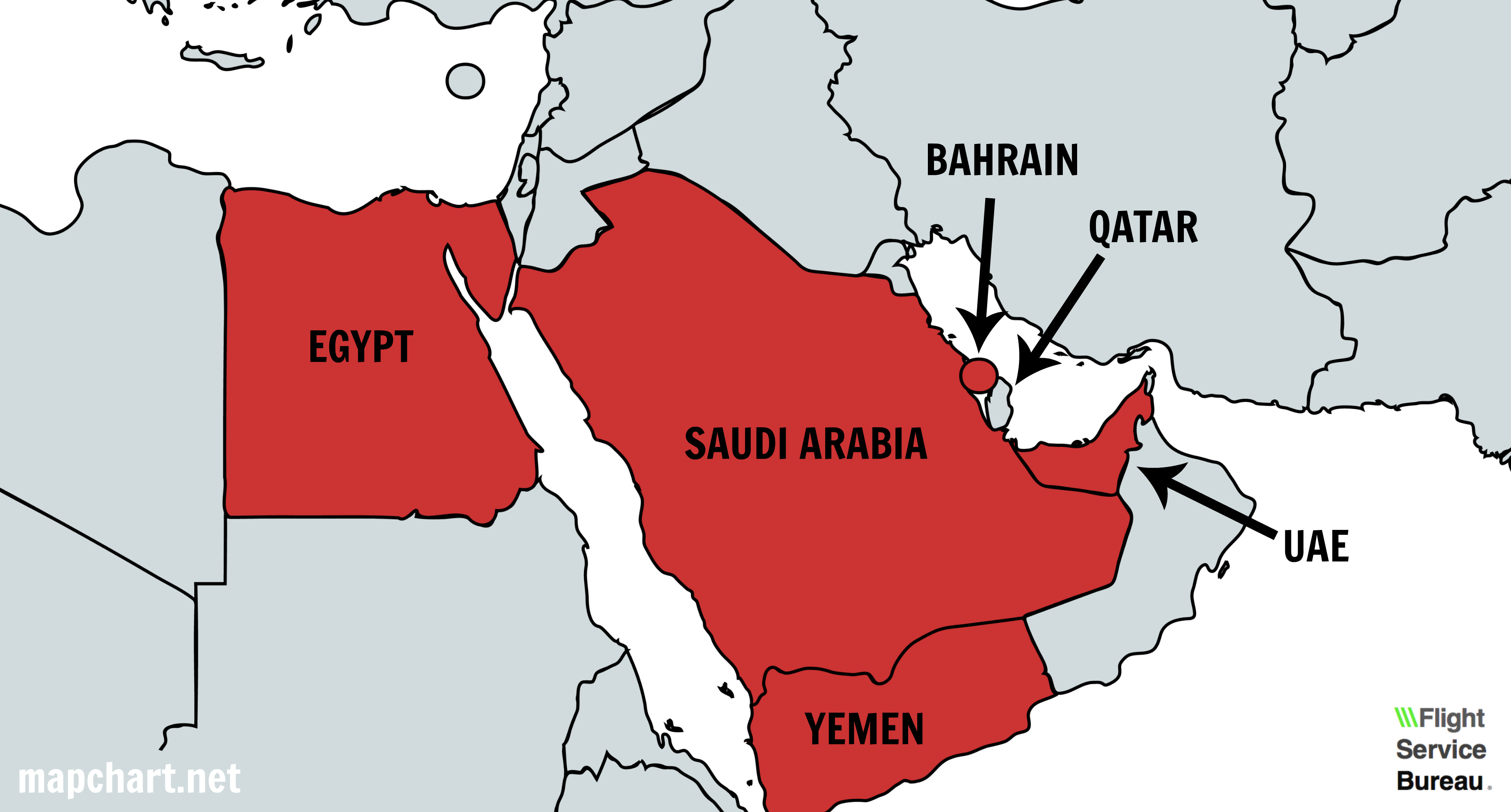
EZZZ/Europe as of 05APR Eurocontrol as been publishing Target Time information together with Calculated Take-off time (CTOT) in the Slot Allocation and Slot Revisions Messages (SAM and SRM). The purpose of the initiative is to provide flight crew with operational awareness of their flight’s planned time at the congestion point in the air, rather than solely providing the corresponding delayed departure time (CTOT) to implement ATFM measures.

EGZZ/United Kingdom A large scale military exercise named ‘Joint Warrior 16-1’ has been taking place since 09APR16 and will last until 22APR06. EGPX and EGTT FIR/UIRs are affected. However, low to medium impact on airline operations is expected.

LFZZ/France beginning 03MAY16 France will be implementing CPDLC services within LFFF, LFEE, LFRR, LFMM and LFBB FIR’s. The full details of the IOC can be found in AIC 10/16.

EGGX/Shanwick OCA implemented a trail of 5 minute separation minimum between aircraft which are following the same track, irrespective of whether they are East or Westbound. Full details can be found through AIC Y 022/2016.

LOWW/Vienna every weekend until 24MAY16 LOWW will be operating under single runway ops beginning 2100 on the Friday until 1600 on the Sunday. The closures are weather dependent and the closure will be recalled if the forecast calls for the use of runway 11/29. In any single runway scenario use at Vienna delays are a guarantee.

OEZZ/Saudi Arabia The U.S. State department updated a travel warning to Saudi Arabia on 11APR16. It outlines the risk to travellers due to an increased risk with the threat of terrorism.

SKZZ/Colombia The U.S. State department has updated the travel warning to Colombia. They have actually improved the travel warning as the security in the country has improved significantly in recent years. Foreigners should still exercise caution though.

LTCC/Diyarbakir is now able to handle international flights due to a new terminal building that has opened.

OLBA/Beirut two airport employees were detained on suspicion of terrorist activity involvement on 08APR16. Traces of explosives and a handgun were found on the two individuals.

DIAP/Cote D’Ivoire has reduced the passenger departure tax by 50% and have also removed the solidarity contribution tax levied on airline tickets.

GABS/Mali began renovations last month (MAR16) to increase the airports capacity to handle 1.5 million passengers which is up from the 800,000 annual passenger traffic. The project is expected to be completed by the end of the year.

View the full International Bulletin for 13APR2016