Regulatory deadlines on the horizon

Regulatory compliance – nothing quite warms the heart like reading those two words, side by side. This year has seen quite a few changes in this department already (thank you, NAT HLA!), but here is a list of some other regulatory deadlines on the horizon…

Dec 31, 2019 – Operations in North Atlantic

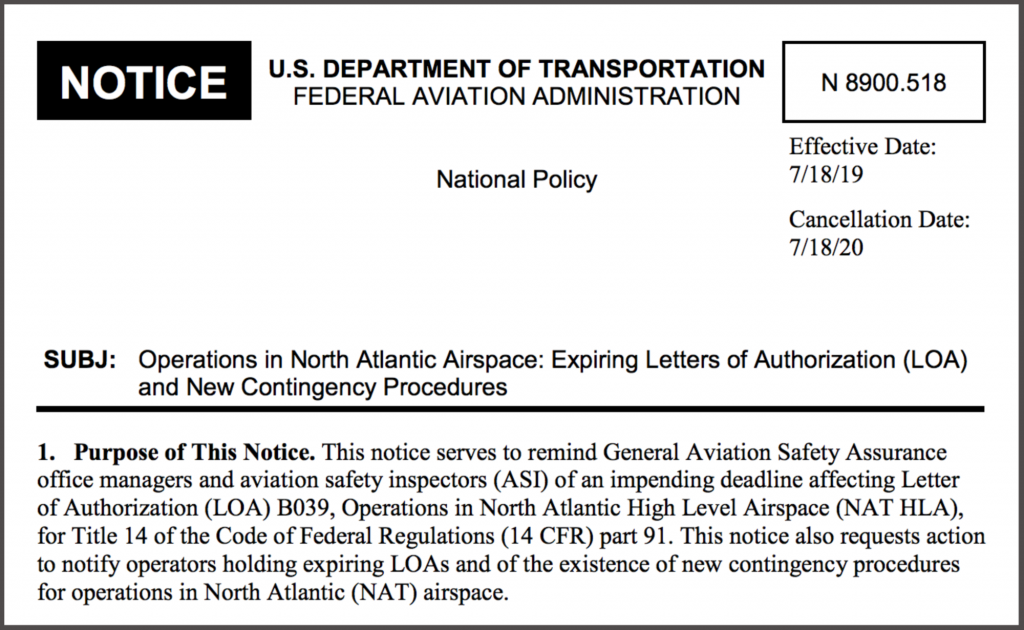
  • U.S. operators must have the revised LOA BO39: “Operations in North Atlantic High Level Airspace (NAT HLA)”. Operators holding the old MNPS LOA BO39 will not be permitted to fly in the NAT HLA beyond this date. Requirements include: RNP10, crew training and new contingency procedures incorporated in company operating handbooks. Read our article here.

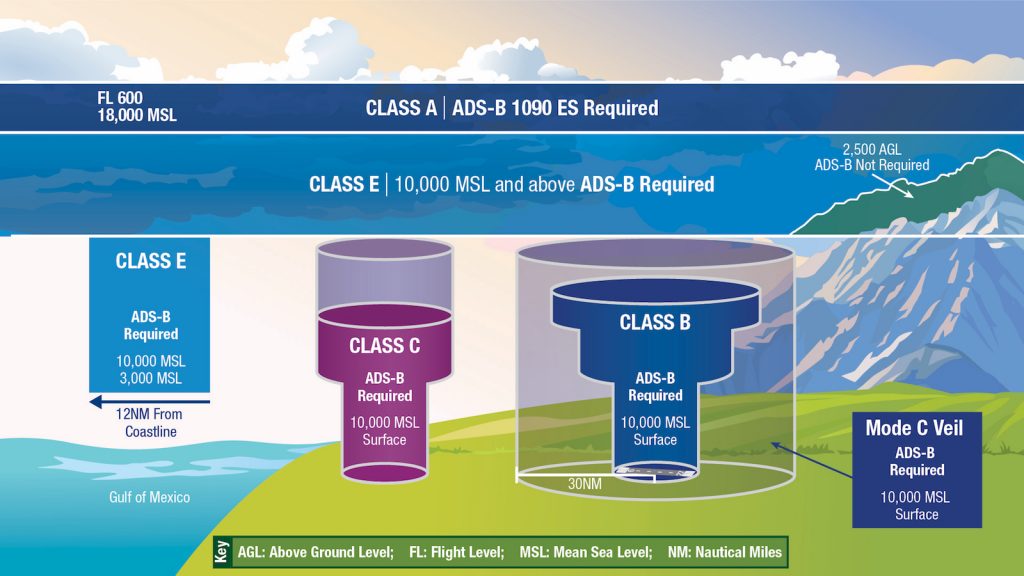
Jan 1, 2020 – US ADS-B Out Mandate

  • ADS-B Out will be required where Mode C is required AND:
  • Class A, B and C airspace, Class E at or above 10,000’ MSL (but not below 2,500’ AGL).
  • Within 30nm of Class B (Mode C veil).
  • Above the ceiling and within lateral boundaries of Class B and C up to 10,000’.
  • Class E over Gulf of Mexico, at and above 3000’ MSL within 12 nm of US coast.

Jan 30, 2020 – Expansion of Datalink Mandate in the North Atlantic

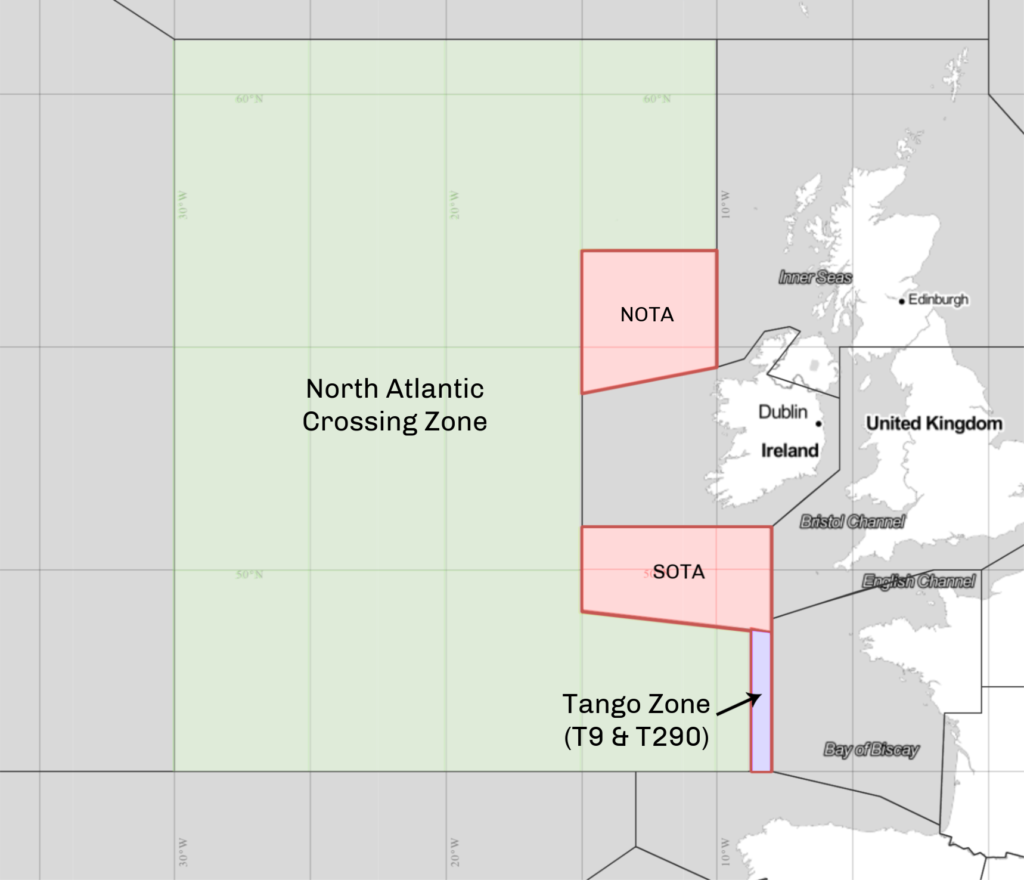
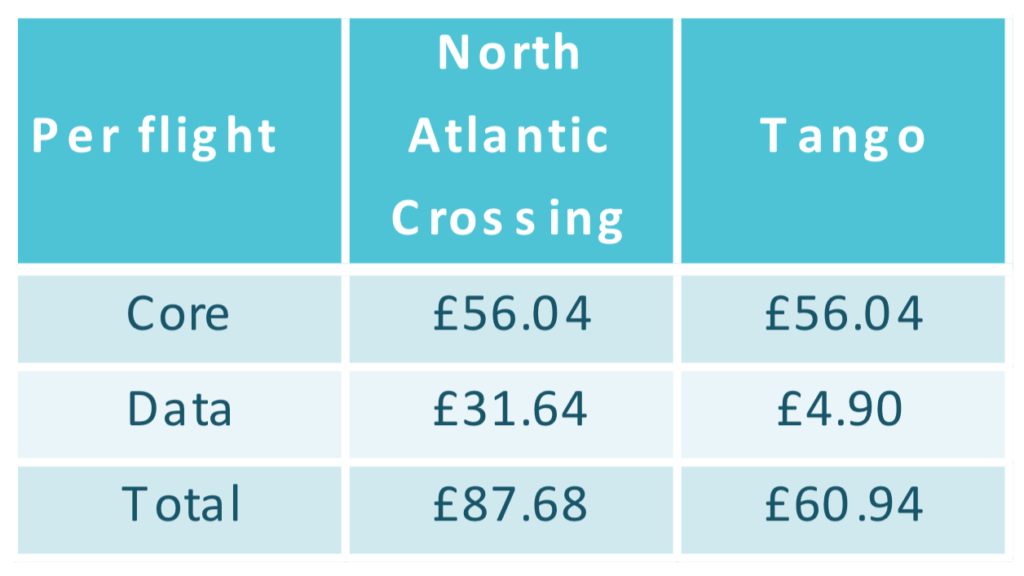
  • Phase 2C of North Atlantic Datalink Mandate. FANS 1/A CPDLC and ADS-C will be required between FL290-FL410 throughout the entire NAT region (previously FL350-390). Read our article here.

Feb 5, 2020 – European Datalink Mandate

  • Initially legacy aircraft flying above FL290 in European airspace were to be equipped with CPDLC capability by Feb 2015. But due to equipage requirements and technical issues the mandate was delayed to Feb 2020, AND, even better, most GA/BA aircraft will be exempt from this. Read our article here.

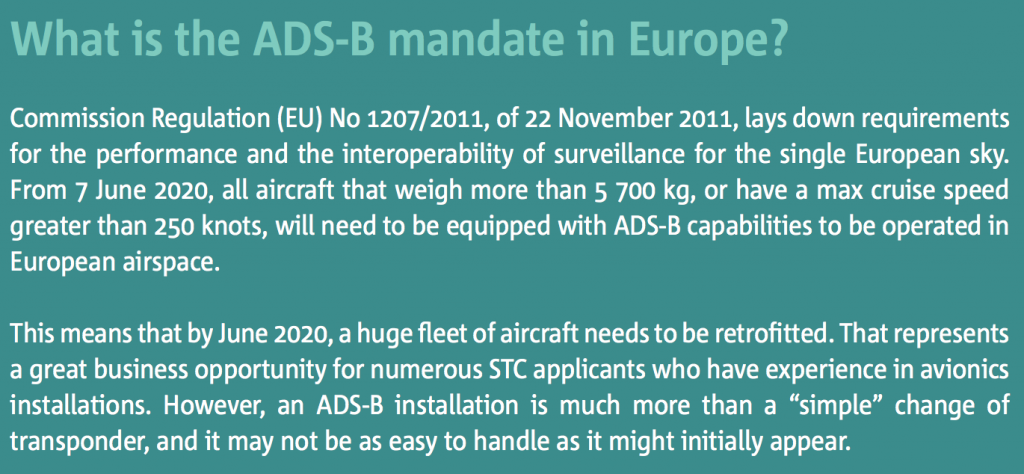
June 7, 2020 – European ADS-B Out Mandate

  • Aircraft flying IFR in Europe with max certified takeoff weight of more than 5700kg (12,566lbs) OR max cruising TAS of more than 250kts must be equipped with ADS-B. GPS sensor with at least WAAS accuracy coupled to a 1090 Extended Squitter transponder required.


DELAYED:

Canada: ADS-B Out Mandate

  • This was planned to be implemented in Class A airspace from Feb 2021, and Class B airspace from Jan 2022. But Nav Canada has now postponed this mandate. They still plan on using ADS-B for surveillance, and this will be used on a priority basis for suitably equipped aircraft starting in 2021, but they say – “non ADS-B Out equipped aircraft will be accommodated within the airspace until a performance requirements mandate can be implemented.”

ALSO ON THE HORIZON:

August 14, 2020 – EU: SAFA Ramp Checks & Pilot Mental Health

  • EASA regulations requiring alcohol testing during ramp checks will take effect across all SAFA participating countries (although some countries have already started doing this: Austria, Belgium, Czech Republic, France, Germany, Greece, Iceland, Ireland, Italy, Netherlands, Portugal, Spain, Switzerland, UK, and Singapore). Tests may also be carried out by local police at any time.
  • All pilots working for European airlines will have access to mental health support programs.
  • European airlines will perform a psychological assessment of their pilots before the start of employment.

Any other biggies that we missed? Let us know!


Why, How and Where should you SLOP?

In Short: Strategic Lateral Offset Procedures (SLOP) costs nothing and increases flight safety. If the airspace permits it, you should be “randomly” offsetting, especially across the North Atlantic. Left is for losers – don’t SLOP left of track.

Update: August 2019 – you can now “MicroSLOP” in the NAT. Check out the changes.

We had a discussion in OpsGroup recently about SLOP (Strategic Lateral Offset Procedures) and it elicited some interesting responses, as well as some confusion.

So – Why, How and Where should you SLOP?

Why?

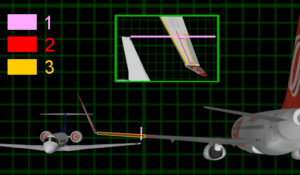
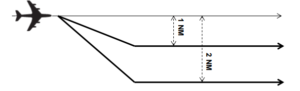
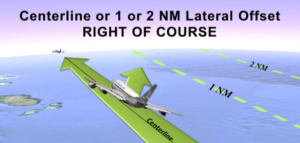
GPS technology allows modern jets to fly very accurately, too accurately it turns out sometimes! Aircraft can now essentially fly EXACTLY over an airway/track laterally (think less than 0.05NM), separated only by 1000FT vertically. A risk mitigation strategy was proposed over non-radar airspace to allow pilots to fly 1-2 nautical miles laterally offset from their track, randomly, to increase flight safety in case of any vertical separation breakdown.

How did we get here?

Navigation paradox

What we just described is known as the navigation paradox. The research shows that “increases in navigational precision” actually increases the collision risk – huh?

Here are some interesting stats to consider:

  • In a simulation, aircraft cruising at random altitudes have five times fewer collisions.
  • During a 2000 study, it was shown that hemispherical cruising altitude rules resulted in six times more mid-air collisions than random cruising altitude non compliance.
  • If more randomness was applied to the hemispherical cruising level model, the navigational paradox risk could have been largely reduced and up to 30 midair collisions avoided (up to 2006). Including the tragic GOL 2006 accident.

So we get it; the rules of the air, sometimes inject risk to flight safety due to their lack of randomness.

A way to reduce risk and inject randomness?

It was 2004 when SLOP was adopted in the most congested non-radar airspace in the world, namely the North Atlantic.

Although the Navigation Paradox is the reason SLOP was introduced and continues to be implemented, there are some nice risk mitigation side-effects too: wake turbulence reduction (at times), contingency buffers if you experience severe turbulence and can’t maintain altitude (“level busts”), etc.

SLOP therefore reduces the risk between traffic which is not operating in accordance with the correct air traffic control clearance or where an error has been made in the issue of an air traffic control clearance.

Still, there is a large number (>40%) of aircraft not adopting these procedures even though they are now mandatory on the NAT.

If >40% of pilots are using SLOP 0 (meaning no offset at all), what does that matter? That means half the flights are operating over the same lateral paths and all it takes is one minor vertical deviation for there to be a significant loss of separation.

The daily NAT track message always reminds pilots to employ SLOP procedures:

FOR STRATEGIC LATERAL OFFSET AND CONTINGENCY PROCEDURES FOR OPS IN 
NAT FLOW REFER TO NAT PROGRAMME COORDINATION WEBSITE WWW.PARIS.ICAO.INT.
SLOP SHOULD BE STANDARD PROCEDURE, NOT JUST FOR AVOIDING WX/TURB.

How should you SLOP?

Consider some best practice advice:

  • LEFT IS FOR LOSERSnever offset LEFT. On bi-directional routes a LEFT offset will INCREASE collision risk rather than decrease it. There are areas in the NAT Region where bi-directional traffic flows are routinely used. And there are times when opposite direction traffic may be encountered in any part of the Region. Once upon a time (between introduction of RVSM and pre-SLOP, it was ok to go LEFT, not anymore!)The only exception would be in certain airspace where ATC request you to SLOP LEFT (e.g. China).
  • The system works best when every 2 out of 3 crossings you fly, you apply an offset. Shanwick says this generally means at least 1 out of 3 aircraft are slopping.
  • You don’t need to ask ATC for approval; you can SLOP from the NAT entry point to the NAT exit point.
  • Only offset if your FMC has the function to do so – do not do it manually.
  • Good airmanship applies here. What’s happening around you? Who is above, below and near you on the same track. Co-ordinate on 123.45 if needed.
  • 2nm RIGHT is the maximum approved SLOP.
  • Flip a coin to decide like some do! Captain is PF? 1R going west; First Officer 2R going east etc. Studies show that on the NAT, 40% do 1R and only 20% go 2R. Don’t be afraid to go the full 2R!
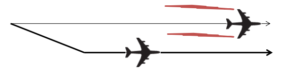
  • If you are overtaking someone, the ICAO guidance in NAT DOC 007 is to apply SLOP so as to create the “least amount of wake turbulence for the aircraft being overtaken”.

Where though?

Our friend Eddie at Code 7700 gave a great comprehensive list so here it is verbatim.

  • Africa, almost all remote locations employ SLOP. Check the Jeppesen Airways Manual / Air Traffic Control / State Rules and Procedures – Africa) to be sure. Rule of thumb: if you are in radar contact, you probably should not SLOP.
    • One notable exception where they don’t want you to SLOP is in the HKNA/Nairobi FIR. The AIP states: “SLOP is not applicable in the Nairobi FIR due to efficient surveillance and communication systems.” (We do remind you however that recently in the Nairobi FIR, a 767 and 737, both at FL370 came a little too close for comfort).
  • Australia is another special case. You may only offset in the OCA, and, if you’re still on radar, then you need to tell ATC, both when starting the offset, or changing it. Within domestic CTA airspace, you must fly centerline. (According to Australian guidance in Jeppesen Pages).
  • China, on routes A1, L642, M771, and N892 (according to China guidance in Jeppesen Pages). In some areas they employ their unique SLOP offsets, but do allow the standard 1 nm and 2 nm offsets.
  • New York, Oakland and Anchorage Oceanic FIRs (according to U.S. FAA guidance).
  • Oceanic airspace in the San Juan FIR (according to U.S. FAA guidance).
  • North Atlantic Track Region: SLOP is mandatory (according to the North Atlantic Operations and Airspace Manual).
  • The Pacific (including the NOPAC, Central East Pacific (CEP) and Pacific Organized Track System (PACOTS) (according to U.S. FAA guidance).
  • South Pacific airspaces (according to U.S. FAA guidance).
FAQ:
  • Should I SLOP crossing the Atlantic even if I’m on a random route or above the published NAT FL’s?

Yes! You should especially do it then. There is a higher chance of opposite direction traffic. That extra mile or two (randomly selected of course) could be a life saver!

  • What about micro-slop?

That is lateral offsets between 0 and 1 nm (0.1 etc). ICAO mentions “LOP provisions as specified in ICAO PANS-ATM Doc.4444 were amended 13 November 2014 to include the use of “micro-offsets” of 0.1 Nms for those aircraft with this FMS capability. Appropriate guidance for the use of this amended procedure in the North Atlantic is under study and hence pending.”

And now, since August 2019, this is beginning to be approved for operations on the NAT. Read the update!


We might have missed something or maybe we didn’t cover your specific question?

Drop us a line and will do our best to answer.

Bottom line, SLOP costs nothing but increases flight safety.


July 2019 North Atlantic Update

There are four new things to tell you about the North Atlantic, following the flurry of new and updated NAT Bulletins that ICAO issued last week. Get ready for some acronyms! Here’s a summary:

1. OWAFS

Operations Without an Assigned Fixed Speed
ICAO NAT Bulletin 2019_001

We wrote about this before. This Bulletin just formalises the practice that has already been in place since April 2019 in the Shanwick, Santa Maria, and New York Oceanic FIRs (not WATRS).

Here’s how it works: You’ll get a normal oceanic clearance, with a fixed Mach Number, like you always did. But then somewhere after the Oceanic Entry Point, you may get a CPDLC message saying RESUME NORMAL SPEED. You should reply with WILCO. What that means is: Fly ECON, or a Cost Index with Variable Mach. You can fly within 0.01 up or down of your cleared Mach, but if it varies by 0.02 or more you must advise ATC.


2. ASEPS

Advanced Surveillance Enhanced Procedural Separation
ICAO NAT Bulletin 2019_002

ASEPS was another trial that started in April 2019 – this time in the Shanwick, Gander and Santa Maria FIRs.

So far it has only been for longitudinal separation, which can be brought down to as close as 14NM for compliant aircraft (RVSM/HLA approval, ADS-B, and fully PBCS compliant – which means meeting the specifications of RNP4, RCP240 and RSP180).

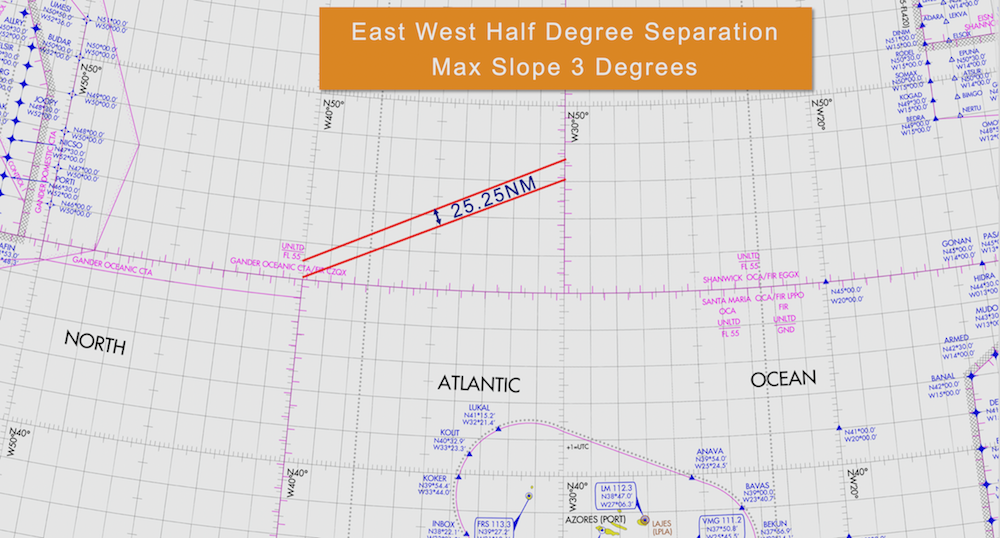
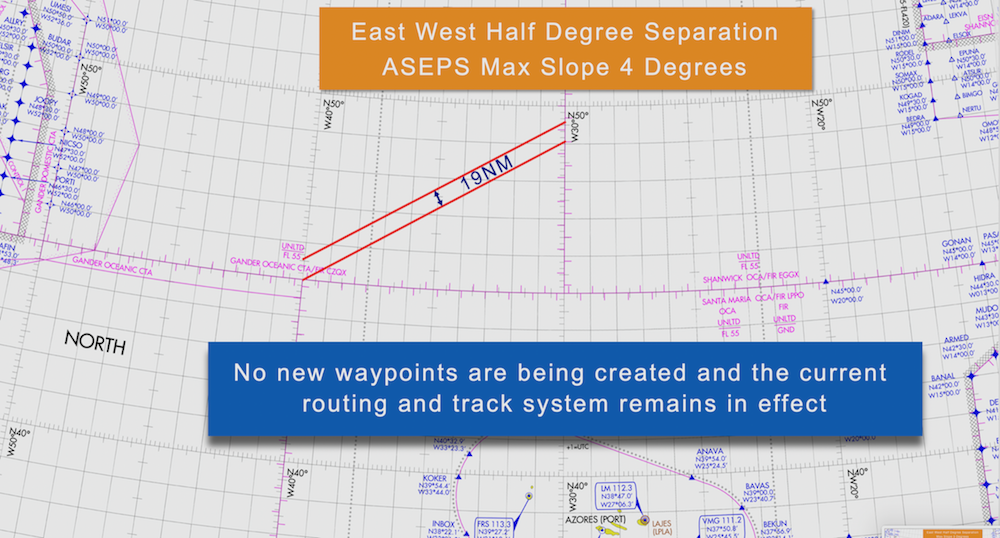
But in the new Bulletin, from October 2019 they plan to reduce lateral separation for compliant aircraft as well – down to 19NM from the previous limit of 25NM.

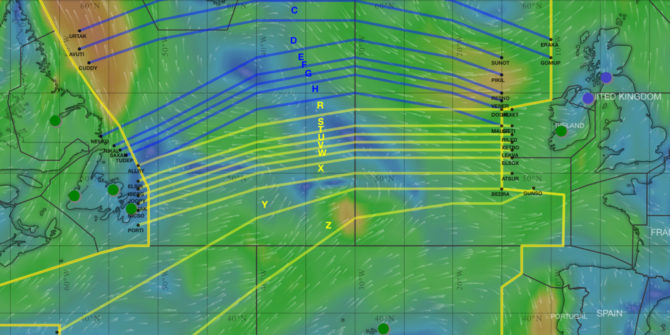
There are no plans to change the design of the NAT Tracks, which will continue to be spaced 25NM apart. The initial benefit of the 19NM lateral separation will basically just be that steeper route angles will now be available for pairs of aircraft flying parallel routes outside of the NAT Track system – the current “gentle sloping turn” limitation is 3 degrees latitude between 10 degrees of longitude, but on 10th October 2019 that will change to a limitation of 4 degrees latitude between 10 degrees of longitude. The result of this will be a lateral separation of 19NM on the steeper turning routes.

Images courtesy of 30WestIP


3. Data Link Performance Improvement Options

ICAO NAT Bulletin 2019_003

Nothing to worry about, this is just a list of common datalink errors and what to do about them.

Two key take-aways:

  1. Update your aircraft avionics software as soon as updates are available.
  2. Answer your messages within 60 seconds or send a Standby message (recent data indicates Business Aviation operators are very bad at this).


4. NAT DLM – The North Atlantic Data Link Mandate

ICAO NAT Bulletin 2017_001_Revision 04

This one is just a slight revision to the plans for the datalink mandate. Datalink is currently required between FL350-390 in the NAT region, and from 30th Jan 2020 this mandate will be extended to between FL290-410.

So with this revised Bulletin, the change is that they have decided they will cap it at FL410 – whereas previously there were no plans for any upper limit at all. This will basically match the NAT HLA and RVSM vertical limits and makes sense. This will allow non-compliant aircraft to continue to operate at FL430 and above – mostly GA/BA operators.


Further reading:

Special thanks to Mitch Launius at 30WestIP.com for help with this post. For assistance with international procedures training for business aviation crews worldwide, check out the website.


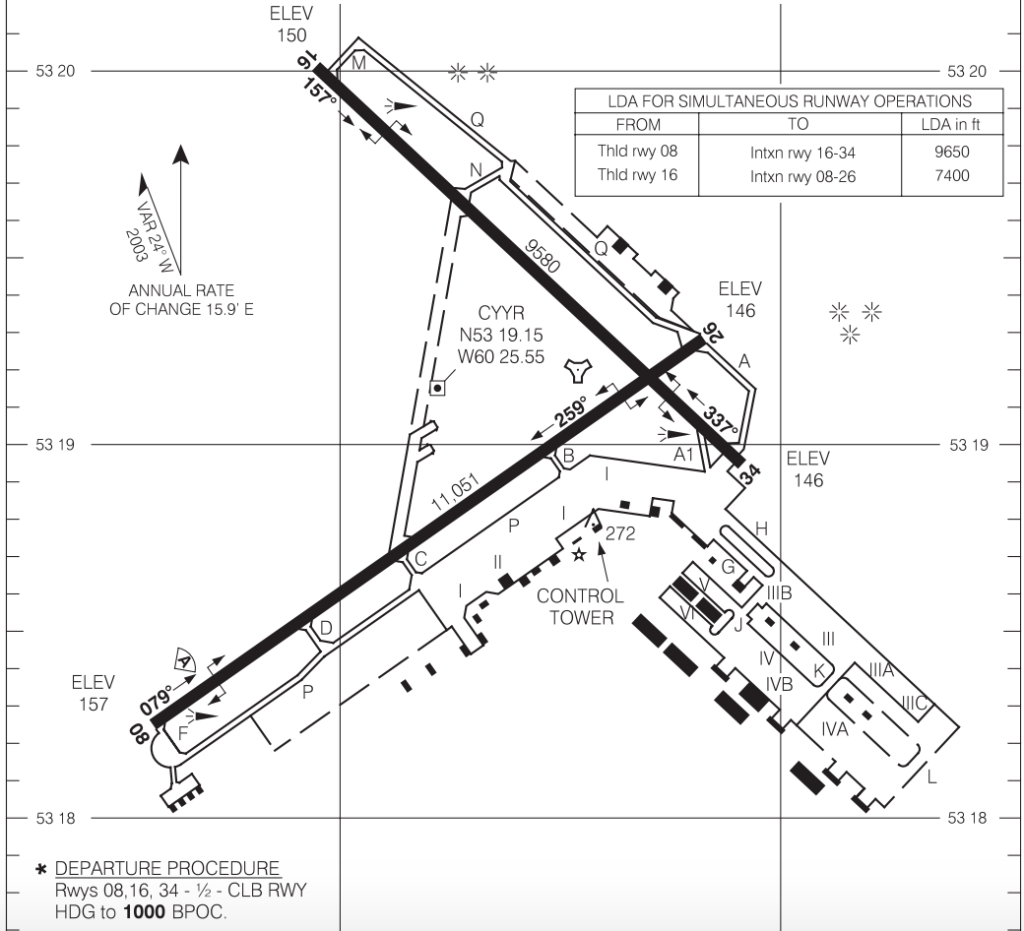
Goose Bay: “Our runway is broken”

Larger jets will not be allowed to land on three out of four runways at Goose Bay for the next three months, as they’ve found cracks after the winter thaw. 

The airport has settled on a final version of their “Our runway is broken” Notam, and it looks like this:

05/037 – CYYR RWY 08, 26 AND 34 NOT AVBL FOR ACFT WITH TIRE PRESSURE OF 1.0MPA (145 PSI) OR GREATER AND ACFT WITH ACN/PCN OF 40 OR GREATER, EXC MEDEVAC AND AVBL AS EXTENDED RANGE TWIN-ENGINE OPS (ETOPS) ALTERNATE. 
21 MAY 14:01 2019 UNTIL 17 AUG 23:59 2019. CREATED: 21 MAY 14:06 2019

So not the most pilot-friendly piece of information! Unless you happen to know your tire pressure off-hand, best head for RWY 16, which is the only one that remains fully open and operational to all aircraft (the only reason RWY 34 is restricted is because aircraft using that runway touch-down on the intersection with RWY 08/26 – which is where some of the cracking damage has been found).

The Notam does state that the other three runways at CYYR can still be used an ETOPS alternate, meaning that you’re allowed to divert there in an emergency regardless of size, weight, tire pressure, or ACN. However, with the deteriorating runway conditions they’re also warning of possible aircraft damage due to loose sealant and asphalt:

05/038 (190206) – CYYR RWY 08/26 SFC IS DETERIORATING AND CRACKING AND MAY PRODUCE FOREIGN OBJECT DEBRIS (LOOSE SEALANT AND ASPHALT) ACFT DAMAGE MAY OCCUR. 23 MAY 18:20 2019 UNTIL 23 AUG 23:59 2019. CREATED: 23 MAY 18:24 2019

ACN vs PCN

The mention of “ACN/PCN” in Goose Bay’s Notam made us close our eyes and try to imagine a world where Notams just made immediate sense.

Knowing your tire pressure is one thing, but trying to work out your ACN number is a much more tricky business, as it has to factor in the aircraft’s maximum centre of gravity, maximum ramp weight, wheel spacing, tire pressure, and other factors. Your AFM should have a bunch of pages which tell you this (or you can have a quick look here instead).

Once you know your ACN number (or rather, ‘numbers’ – as there are different ACN numbers for each aircraft depending on the strength of the runway you’ll be landing on), you can then check it against the runway PCN number – the number issued for each runway which tells you what kind of surface it is, how strong it is, and what level of stress it is able to withstand.

Ultimately, if your aircraft’s ACN is equal to or less than the runway’s PCN, you’re good to go.

In the AIP, Goose Bay’s runway PCN is 076FBXU. The important bits here: 

  • the PCN number here is 76
  • the F means that the runway is ‘Flexible’ (i.e. made of asphalt rather than concrete)
  • the B means it is of ‘Medium’ strength
  • the X means it has maximum tire pressure of 1.75 MPa. 

So, under normal circumstances, CYYR has a runway PCN of 76, meaning most aircraft would be able to operate here:

AircraftTire Pressure (MPa)Pavement grades
HighMedLowVery low
ABCD
A330-3001.42626879107
B737-8001.4744465156
B787-8001.57606681106
Bombardier BD-700, Global Express, XRS1.1526283132
Bombardier Challenger CL 600, 601, 6041.2112131516
Dassault Falcon1.369101112
Embraer 190, 1951.128303335
Gulfstream II1.0417182022
Gulfstream V1.3726283031
Learjet 24F (Bombardier)0.793344
Learjet 60 (Bombardier)1.486778

But with all the runway cracking that’s been going on, Goose Bay’s PCN number is no longer accurate. It’s probably safer to assume the B is more like a D right now – runway strength ‘Very low’. And the new CYYR Notam suggests the new PCN number is 40 (as aircraft with an ACN number higher than that are not allowed to go there).

Other NAT alternates?

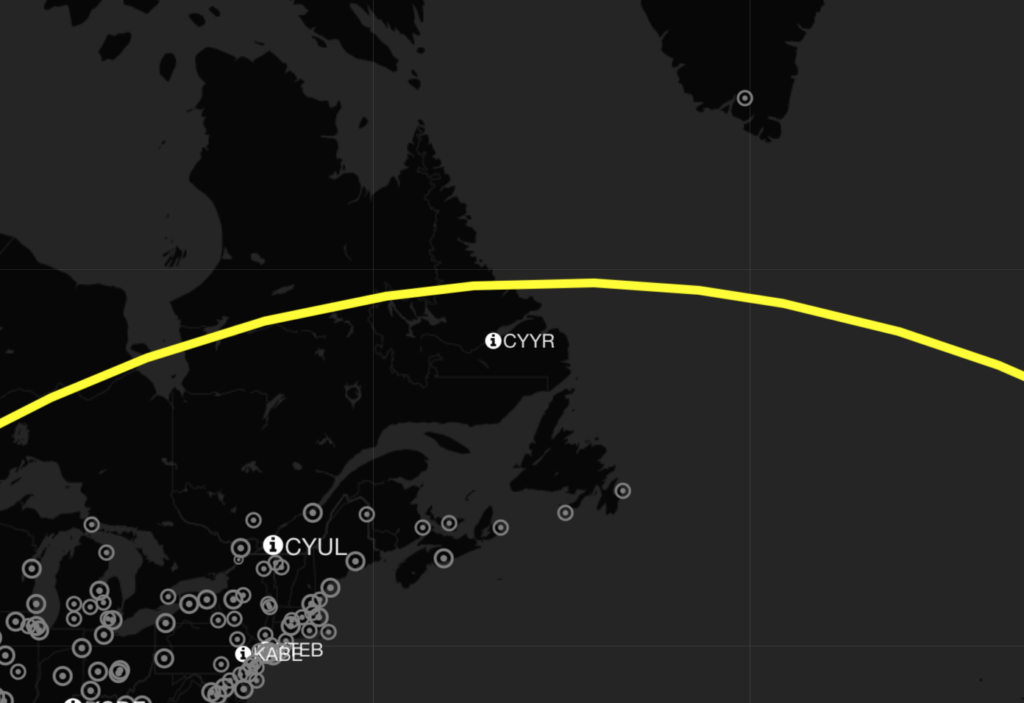
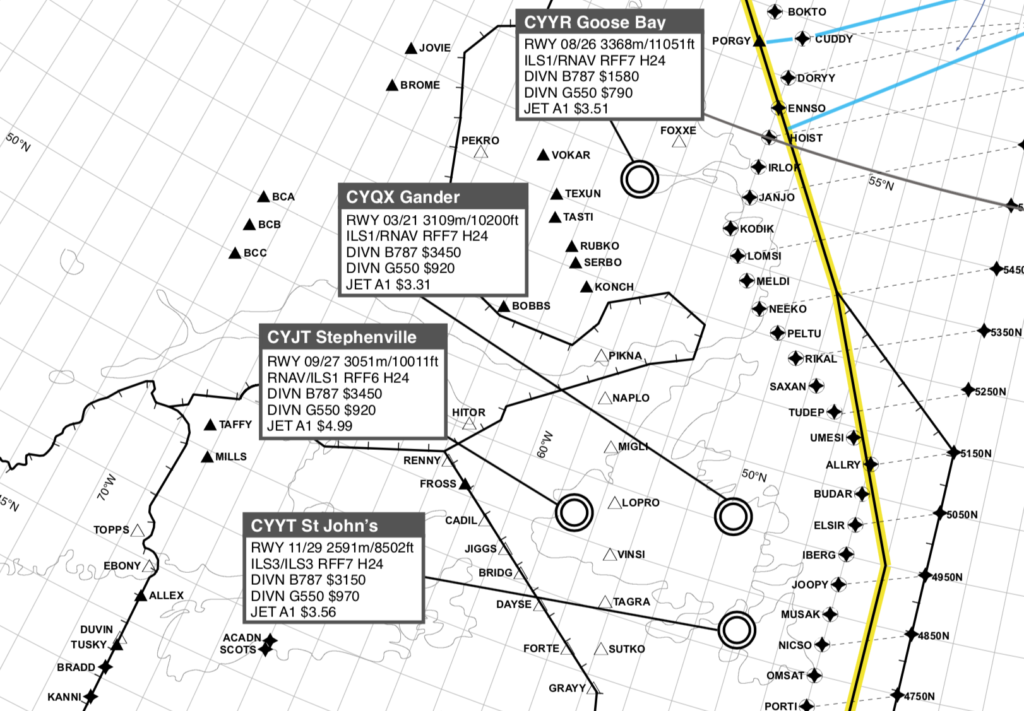
A quick check on GoCrow shows us there’s really nothing available to the north of CYYR:

But there are some decent options to the south:

This isn’t the first time Goose Bay has had problems with its runways. In Nov 2017, the airport was closed due to ‘sticky’ runways – during snow removal crack sealant was found on vehicles after they were used on the runways.

Further reading:

  • United Airlines has downgraded Goose Bay Airport’s suitability for diversions, after one of its flights with 250 passengers on board diverted there on 19th Jan 2019, and was then forced to spend 16 hours on the ground as there were not enough customs staff available to process everyone on board to enter Canada. Customs opening hours at the airport are 8am to midnight daily.


Fly it like you stole it – free speed on the NAT

This is a new one, and it’s a good one for pilots! Being introduced slowly is a new flexibility – flying without a fixed Mach speed. In simple terms, you get to decide how fast you fly.

Like all new things on the NAT, we have an acronym. This one is OWAFS. Operations Without an Assigned Fixed Speed. But you’ll also see it as referred to as “Variable Mach”, and “Resume Normal Speed”.

When does this start?

It already has! It’s starting out as a trial (everything on the NAT starts out as a trial), and some members are already reporting getting “RESUME NORMAL SPEED” messages from Shanwick. The official start date is April 8, 2019. Three OACC’s are doing this – Shanwick, Santa Maria, and New York Oceanic (not WATRS).

For no good reason, here’s a picture of the Shanwick Oceanic control room in 1989. Much has changed since!

How does it work?

You’ll get a normal oceanic clearance, with a fixed Mach Number, like you always did. Somewhere after the Oceanic Entry Point, if you are selected for the trial, you’ll get a CPDLC message saying RESUME NORMAL SPEED. You should reply with WILCO. What that means is: Fly ECON, or a Cost Index with Variable Mach.

So, once I get that, no restrictions on speed?

Correct! But, ATC will expect you to fly ECON/Cost Index, and normally, that should be pretty close to your cleared Mach (within 0.01 up or down). If you’re doing something different, tell them. If the resulting speed differs from your Oceanic Clearance Mach by 0.02, or more, you must tell ATC.

Rules for Shanwick (Don’t ask for it)

• Flight must be data link connected to EGGX
• Flight must be eastbound and operating solely in Shanwick Oceanic airspace and exiting into UK/Ireland/Continental European airspace
• Flight cannot exit into Santa Maria
• RESUME NORMAL SPEED will be offered on a “manual” tactical basis
Do not request RESUME NORMAL SPEED

Rules for New York and Santa Maria (You can ask)

• Flight must be data link connected to LPPO or KZWY
• Flights must be wholly within Santa Maria and New York East Oceanic airspace and not enter Gander or Shanwick airspace
• Flights can enter New York East Oceanic airspace or Santa Maria airspace from Gander airspace or Shanwick airspace and receive RESUME NORMAL SPEED uplink message
• New York West (WATRS airspace) is excluded
• RESUME NORMAL SPEED can be requested if not offered

Background and History

(Thanks, Jeff Miller @IATA, for this and the condensed info above!)

Both Airbus and Boeing advocate cost index (ECON) as the most efficient way to fly. Operators use cost index (ECON) globally, except for the North Atlantic (NAT) where flights are assigned a fixed Mach by ATC and flight crews are required to fly the assigned Mach. Depending on the distance from the departure airport to the oceanic entry, most operators flight plan the aircraft with cost index to the oceanic entry point and again after oceanic exit. Flight crews use the desired fixed Mach number from the computer flight plan that is generated by the cost index, as the requested Mach number for the crossing. It is possible the flight crew may request a Mach greater than or less than the flight plan Mach to improve scheduled arrival time. IATA led the ICAO NAT, Operations Without an Assigned Fixed Speed (OWAFS) project team to enable the use of a variable Mach in the NAT. The North Atlantic Systems Planning Group (NAT SPG) is expected to fully endorse OWAFS late June 2019 for an official implementation in late 2019 for all NAT OCAs. Full automation for all Air Navigation Service Providers (ANSPs) is expected by Q1 2020.

So I can use this for turbulence speed changes?

Yep, but remember, if you’re slowing down or speeding up significantly (0.02 or more), tell ATC your new speed.

Anything else?

That’s it for now. Remember, it’s a trial – later in the year full implementation is expected. Don’t ask for it if you aren’t offered, unless you’re in New York or Santa Maria airspace. Tell ATC if you’re changing by 0.02 or more from the Oceanic Clearance.

And most importantly, keep us posted on your experiences with this!


Greenbacks and Greenland – $3000 to file as an alternate

Trans-atlantic operators who have been putting RALT/BGBW or RALT/BGSF on their flight plans have been receiving hefty invoices post-flight.

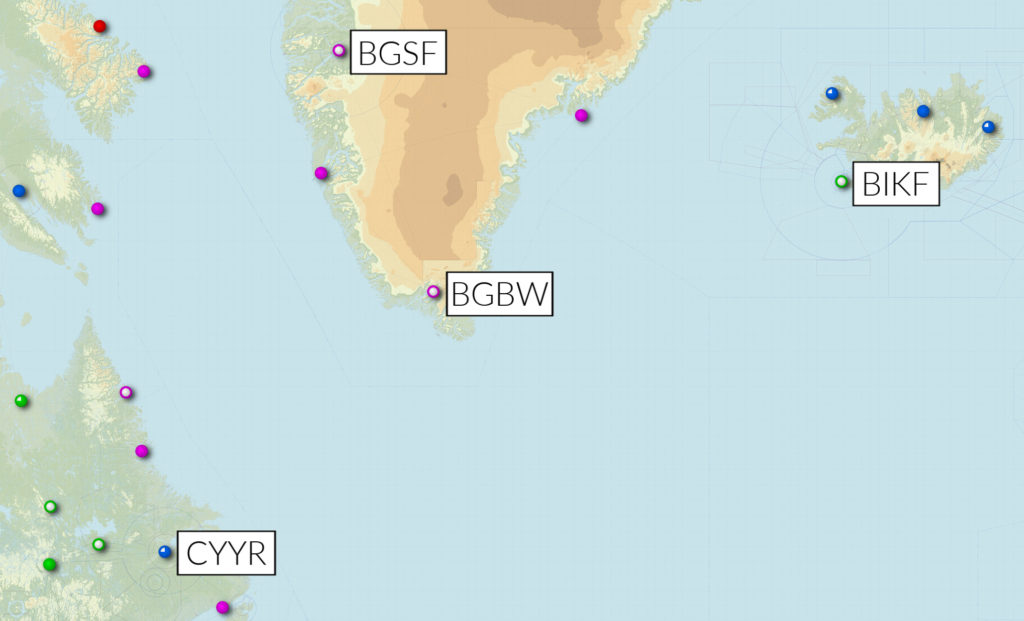
Both BGBW/Narsarsuaq and BGSF/Kangerlussuaq are popular airports to use in flight planning as an emergency divert and for ETOPS, as they are perfectly positioned right in the middle of the big empty chunk of nothing that exists between the east coast of Canada and Iceland.

Both airports are open Mon-Sat 11-20z (8am-5pm local time), and completely closed on Sundays and on public holidays (watch out for these sneaky ones!).

So if you file a flight plan with either as alternates from Mon-Sat 11-20z, you won’t get charged.

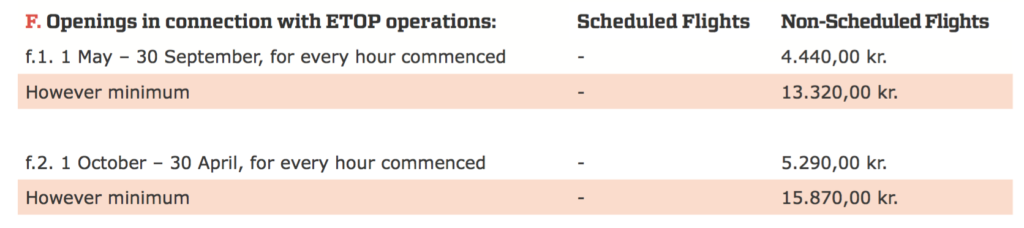
But outside these hours, you will get charged. It gets slightly complicated here: the charges in the box below apply when they stay open for you to use as an ETOPS alternate at any time that they are closed (which is between 20-11z), but there’s an extra 10% charge on top of that for any time they are closed and fast asleep in bed, (which is between 00-08z). Got it?

Important to note: these get charged even if you don’t actually divert to BGBW/BGSF. 15,870 Danish Krone equates to $2585 USD!

If you want them to stay open for you to use as an ETOPS alternate, you need to put RALT/BGBW or RALT/BGSF in your flight plan – they’ll see it, and will stay open for at the times you need. But bear in mind that if they’re closed already at the time you file your flight plan, they won’t see it! So they prefer you to do it properly and arrange everything in advance by email: get in touch with them at PPR@mit.gl

If you get an invoice from a company called Global Aviation Data A/S, unfortunately it’s not a scam email – they are the guys who work with Greenland Airports to collect the monies owed when operators request these airports to stay open for them.

The really interesting thing is this – if more than one operator asks BGBW/BGSF to stay open for them at the same time, the costs are not shared between these operators – they both have to pay the standard fees! That’s great news for the Government of Greenland, who will be getting paid multiple times by different operators for BGBW/BGSF to stay open at the same time!


2019 North Atlantic changes

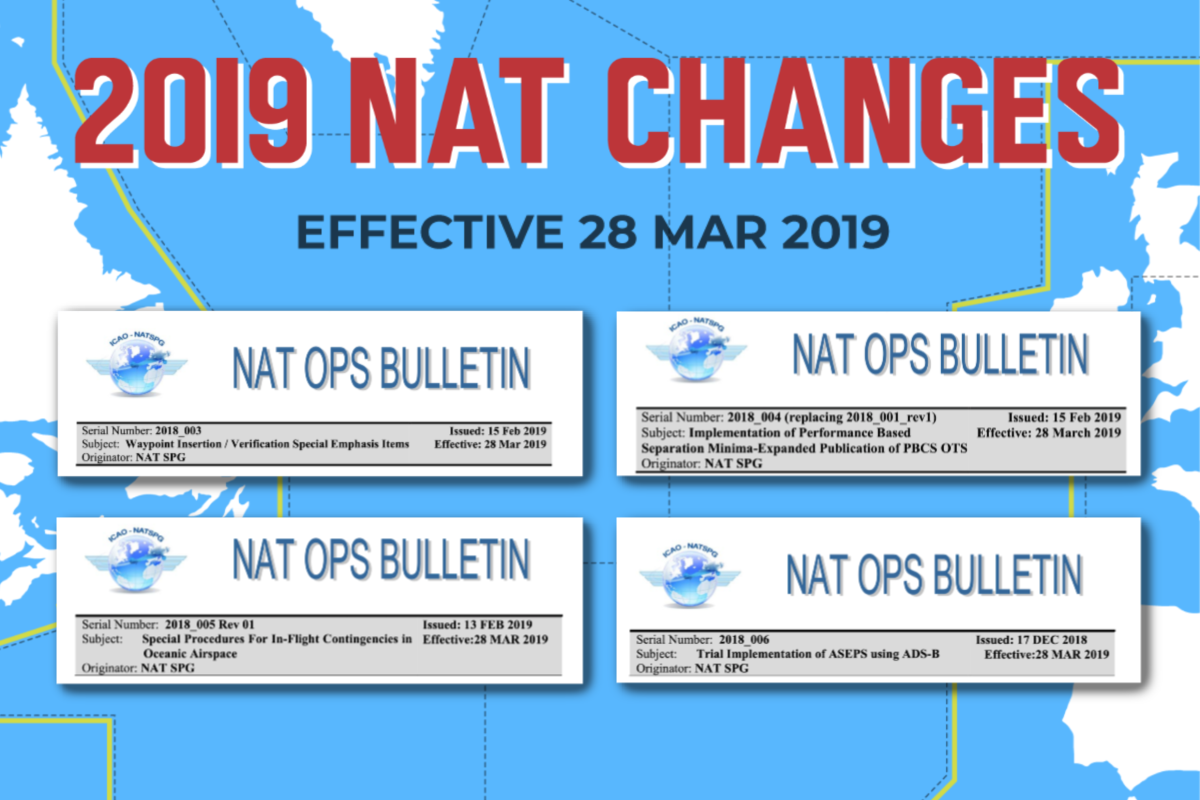
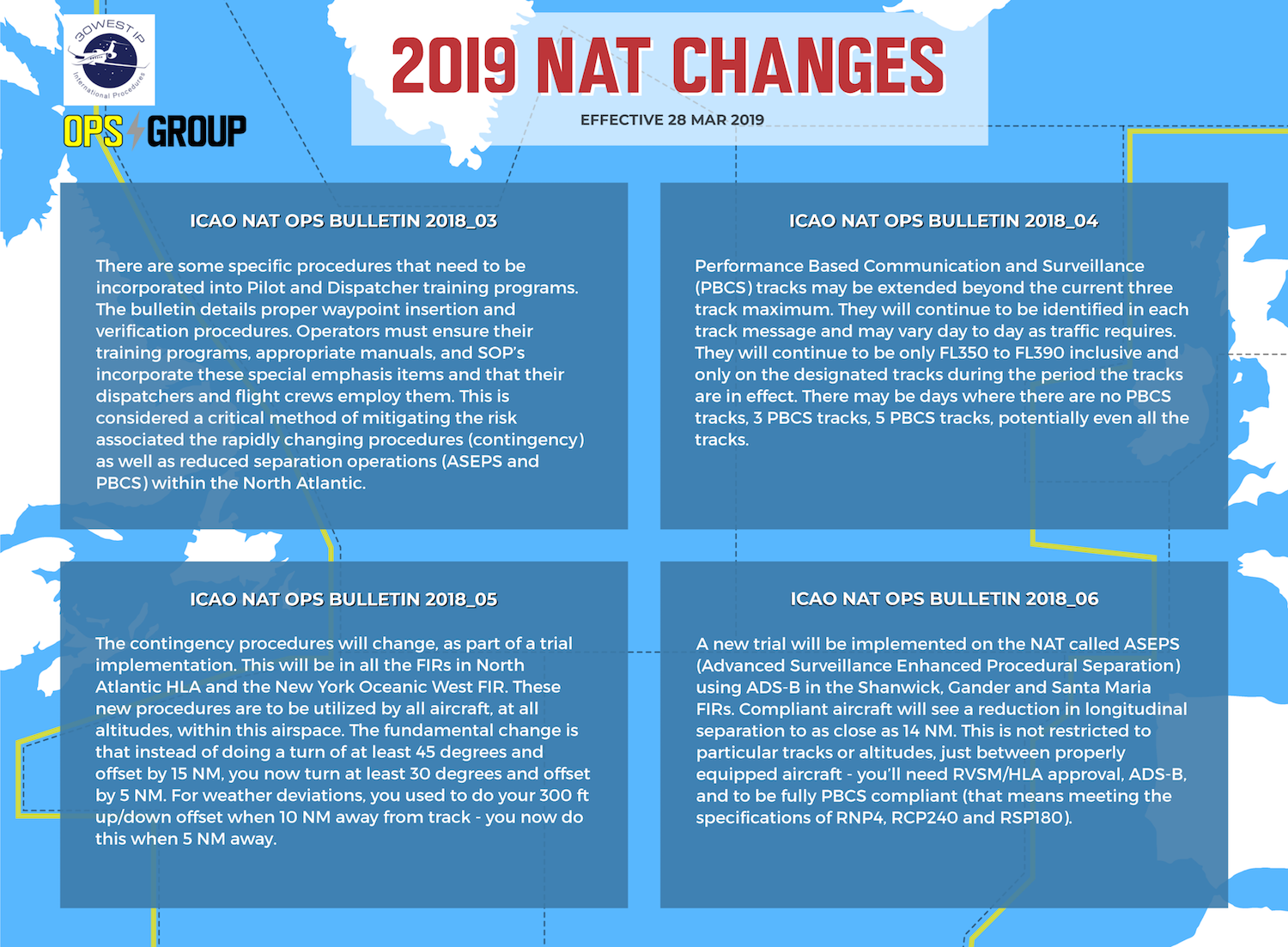
There are four ICAO NAT Ops Bulletins due to go into effect on March 28th, 2019. The PBCS tracks will be expanded, real-time Space-Based ADS-B surveillance and reduced separation standards will be introduced, and the regional contingency and weather deviation procedures will be changed.

You can click on each one, and read them in full:

We have had a good look at each of them. Here’s the lowdown:

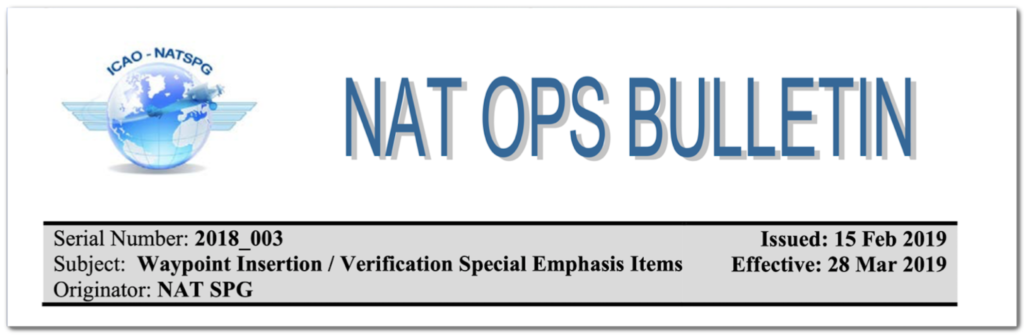
ICAO NAT Ops Bulletin 2018_03: Waypoint Insertion / Verification Special Emphasis Items
Lowdown: There are some specific procedures that need to be incorporated into Pilot and Dispatcher training programs. The bulletin details proper waypoint insertion and verification procedures. Operators must ensure their training programs, appropriate manuals, and SOP’s incorporate these special emphasis items and that their dispatchers and flight crews employ them. This is considered a critical method of mitigating the risk associated the rapidly changing procedures (contingency) as well as reduced separation operations (ASEPS and PBCS) within the North Atlantic.

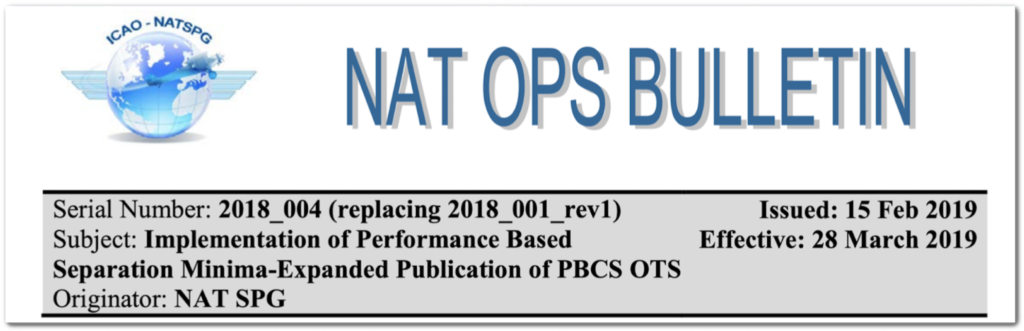
ICAO NAT Ops Bulletin 2018_04: Implementation of Performance Based Separation Minima-Expanded Publication of PBCS OTS
Lowdown: Performance Based Communication and Surveillance (PBCS) tracks may be extended beyond the current three track maximum. They will continue to be identified in each track message and may vary day to day as traffic requires. They will continue to be only FL350 to FL390 inclusive and only on the designated tracks during the period the tracks are in effect. There may be days where there are no PBCS tracks, 3 PBCS tracks, 5 PBCS tracks, potentially even all the tracks.

ICAO NAT Ops Bulletin 2018_05: Special Procedures For In-Flight Contingencies in Oceanic Airspace
Lowdown: The contingency procedures will change, as part of a trial implementation. This will be in all the FIRs in the NAT Region and the New York Oceanic West FIR. These new procedures are to be utilized by all aircraft, at all altitudes, within this airspace. The fundamental change is that instead of doing a turn of at least 45 degrees and offset by 15 NM, you now turn at least 30 degrees and offset by 5 NM. For weather deviations, you used to do your 300 ft up/down offset when 10 NM away from track – you now do this when 5 NM away. For more info on this, read our article.

ICAO NAT Ops Bulletin 2018_06: Trial Implementation of ASEPS using ADS-B
Lowdown: A new trial will be implemented on the NAT called ASEPS (Advanced Surveillance Enhanced Procedural Separation) using ADS-B in the Shanwick, Gander and Santa Maria FIRs. Compliant aircraft will see a reduction in longitudinal separation to as close as 14 NM. This is not restricted to particular tracks or altitudes, just between properly equipped aircraft – you’ll need RVSM/HLA approval, ADS-B, and to be fully PBCS compliant (that means meeting the specifications of RNP4, RCP240 and RSP180).

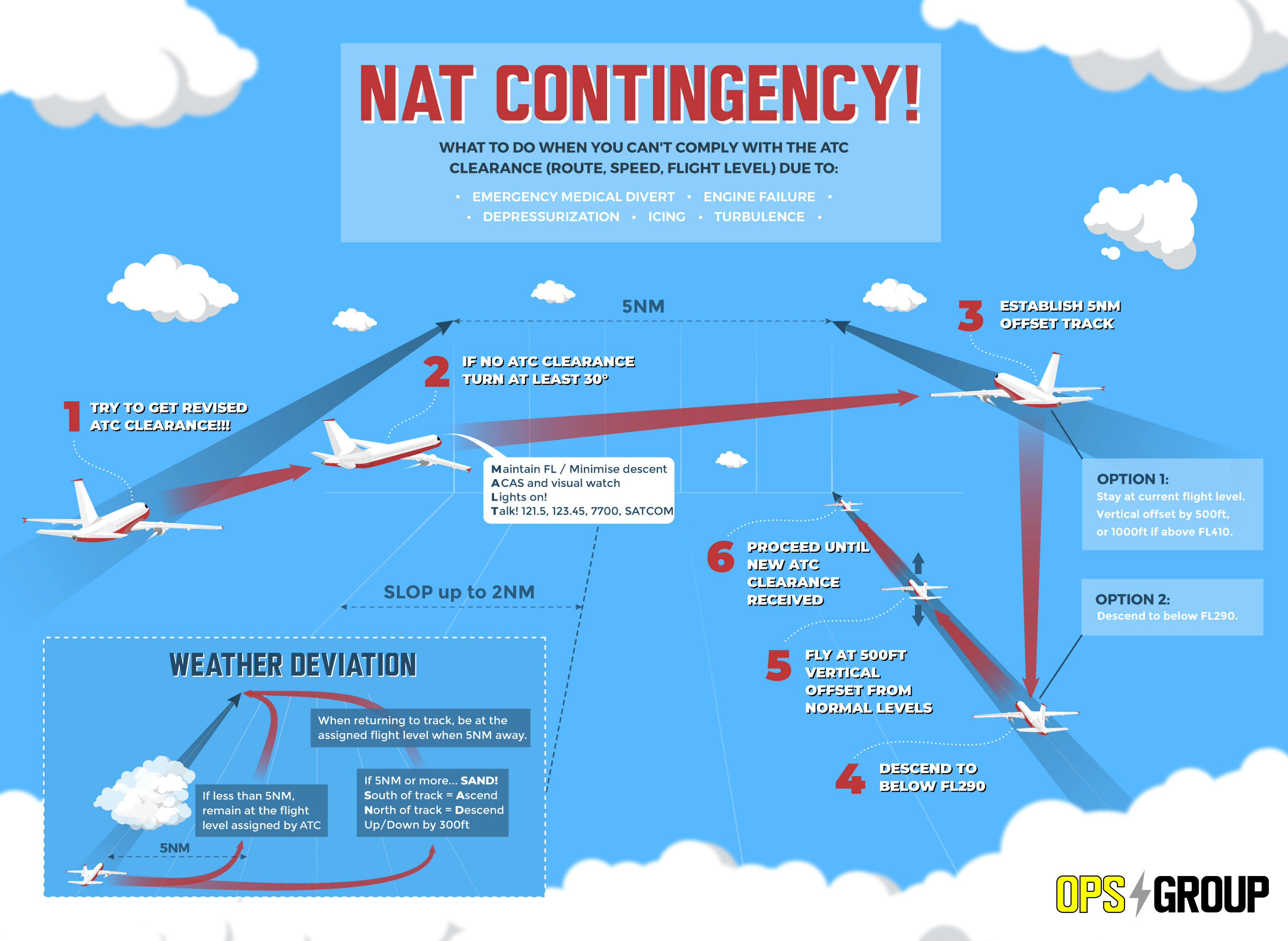
So there you have it. We made a couple of handy graphics for all this. Print them out and sellotape them to your cockpit. (If you actually do this, please send us a photo!)

click on the image to open larger version

For a bit more of an in-depth look at the contingency and weather deviation procedures as shown in the image above, read our article.

And if you’re still hungry for more NAT info, we highly recommend you check out the replay of the webinar hosted by Mitch from 30WestIP, titled: ‘A North Atlantic Game Changer, 4 NAT OPS Bulletins all go into effect in one day’. This really breaks down each of the four new Bulletins which take effect from 28th March 2019 – essential viewing if you operate over the North Atlantic! View it here.

Further reading:

  • On 1st Nov 2018 we had a call with 140 OPSGROUP members about upcoming changes on the NAT in 2019, and how we can effect change. OPSGROUP members can find the PDF notes of this in your Dashboard.
  • A big thing driving the ASEPS trial is the rollout of Space-based ADS-B, which is scheduled to complete its deployment by 30 Dec 2018, giving us worldwide, pole-to-pole surveillance of aircraft. For more on that, and how it will affect operations on the NAT specifically, read the article by Mitch Launius here.
  • Use our quick guide to figure out where you are welcome on the NAT, depending on what equipment and training you have.


New NAT Contingency Procedures for 2019

Starting 28th March 2019, there will be some changes to the contingency and weather deviation procedures on the NAT. ICAO has published a new NAT Ops Bulletin with all the details.

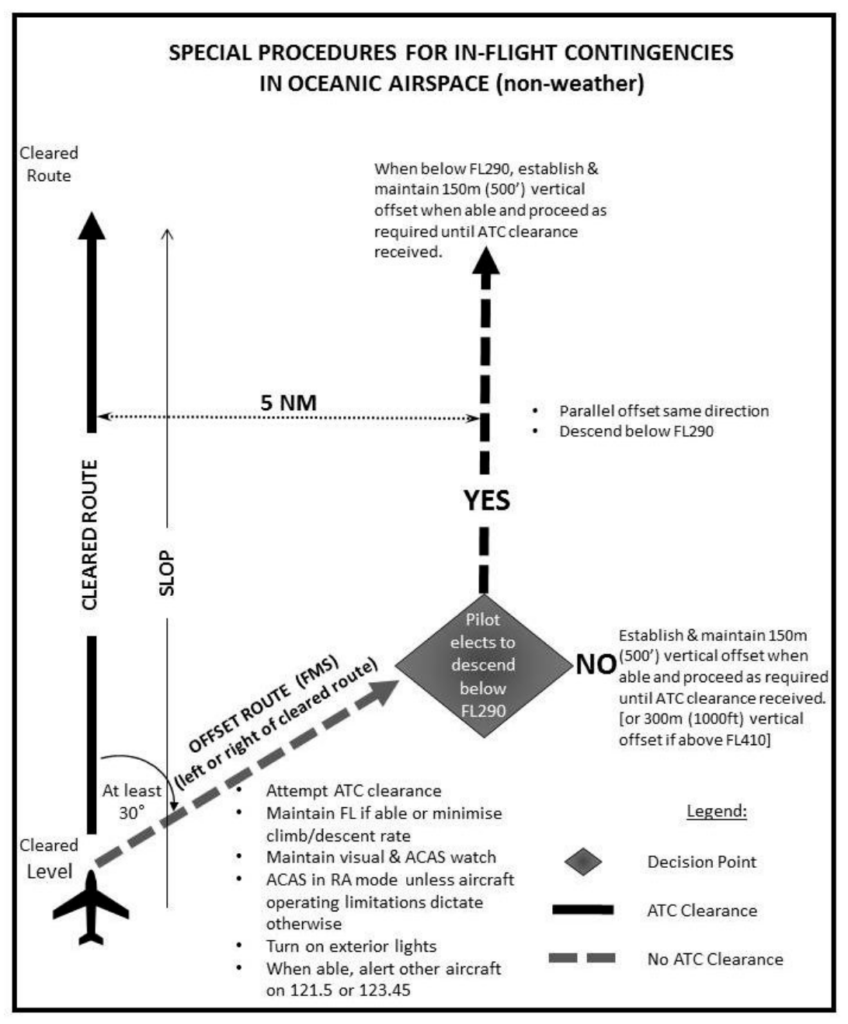
Before, there was a lot of confusion around the wording of these two procedures – but ICAO has now made this much clearer, and they have even included a little graphic to help us understand how it will work.

Thing is, it’s still a little clunky. So we decided to make our own version!

Click on the image to open larger version.

What’s new?

The simple answer is this: contingency offsets that previously were 15 NM with actions at 10 NM are basically now all 5 NM offsets with a turn of at least 30 degrees (not 45 degrees).

Rarely do we see ICAO oceanic contingency procedures undergo a formal revision. The last time a major revision occurred was in 2006 when ICAO standardized a 15 NM offset executed with a turn of at least 45 degrees. Prior to that, the North Atlantic and the Pacific had used different offset distances and a 90 degree turn.

Where and when?

A trial implementation is scheduled to begin in the NAT Region and New York Oceanic West starting 28th March 2019. ICAO is expected to formally publish the Standard in an update to PANS-ATM (ICAO Doc 4444) on 5 November 2020.

Why?

To support reduced separation being implemented in conjunction with Advanced Surveillance Enhanced Separation (ASEPS), Space Based ADS-B surveillance. The details for the ASEP trial can be found in NAT OPS Bulletin 2018-006 Trial Implementation of ASEPS using ADS-B.

Old version vs New version – full wording

Here’s the old version, as per the latest version of the NAT Doc 007, paragraph 13.3. (Note – this will be valid UNTIL 27 March 2019):

The aircraft should leave its assigned route or track by initially turning at least 45° to the right or left whenever this is feasible.

An aircraft that is able to maintain its assigned flight level, after deviating 10 NM from its original cleared track centreline and therefore laterally clear of any potentially conflicting traffic above or below following the same track, should:
a) climb or descend 1000 ft if above FL410
b) climb or descend 500 ft when below FL410
c) climb 1000 ft or descend 500 ft if at FL410

An aircraft that is unable to maintain its assigned flight level (e.g due to power loss, pressurization problems, freezing fuel, etc.) should, whenever possible, initially minimise its rate of descent when leaving its original track centreline and then when expected to be clear of any possible traffic following the same track at lower levels and while subsequently maintaining a same direction 15 NM offset track, descend to an operationally feasible flight level, which differs from those normally used by 500 ft if below (or by 1000 ft if above FL410).

Before commencing any diversion across the flow of adjacent traffic or before initiating any turn-back (180°), aircraft should, while subsequently maintaining a same direction 15 NM offset track, expedite climb above or descent below the vast majority of NAT traffic (i.e. to a level above FL410 or below FL290), and then maintain a flight level which differs from those normally used: by 1000 ft if above FL410, or by 500 ft if below FL410. However, if the flight crew is unable or unwilling to carry out a major climb or descent, then any diversion or turn-back manoeuvre should be carried out at a level 500 ft different from those in use within the NAT HLA, until a new ATC clearance is obtained.

And here’s the new version, as per the NAT OPS Bulletin 2018-005 Special Procedures for In-flight Contingencies in Oceanic Airspace (Note – this will be valid FROM 28 March 2019):

If prior clearance cannot be obtained, the following contingency procedures should be employed until a revised clearance is received:

Leave the cleared route or track by initially turning at least 30 degrees to the right or to the left, in order to intercept and maintain a parallel, direction track or route offset 9.3 km (5.0 NM).

Once established on a parallel, same direction track or route offset by 9.3 km (5.0 NM), either:
a) descend below FL 290, and establish a 150 m (500 ft) vertical offset from those flight levels normally used, and proceed as required by the operational situation or if an ATC clearance has been obtained, proceed in accordance with the clearance; or
b) establish a 150 m (500 ft) vertical offset (or 300 m (1000 ft) vertical offset if above FL 410) from those flight levels normally used, and proceed as required by the operational situation, or if an ATC clearance has been obtained, proceed in accordance with the clearance.

Note. — Descent below FL 290 is considered particularly applicable to operations where there is a predominant traffic flow (e.g. east-west) or parallel track system where the aircraft’s diversion path will likely cross adjacent tracks or routes. A descent below FL 290 can decrease the likelihood of: conflict with other aircraft, ACAS RA events and delays in obtaining a revised ATC clearance.

So to reiterate, the important change is that contingency offsets that previously were 15 NM with actions at 10 NM are basically now all 5 NM offsets with a turn of at least 30 degrees (not 45 degrees).

Weather deviations

If you have to deviate from your assigned track due to anything weather-related, there’s a whole different procedure to follow. Again, the NAT Ops Bulletin has all the details for this, but the bottom line seems to be:

For deviations of less than 5 NM, remain at the flight level assigned by ATC.

For deviations of 5 NM or more, when you are at the 5 NM point initiate a change as follows:

If flying EAST, descend left by 300ft, or climb right by 300ft.

If flying WEST, climb left by 300ft, or descend right by 300ft.

In other words – SAND! (South of track = Ascend, North of track = Descend; Up/Down by 300ft)

But remember, going right is probably better – it gets you out of the way of all the SLOP offset traffic that might be coming at you from the opposite direction!

Turnback procedure

In both the NAT Ops Bulletin and the new NAT Doc 007 which will take effect from 28 Mar 2019, ICAO has left out any specific reference to how to divert across the flow of traffic or turn-back procedure, and instead simplified it to just “proceed as required by the operational situation”. Turning back would assume you either employ the 5NM offset as per the new contingency procedure, or else get a new revised clearance.

Bottom line

If you operate in the NAT HLA, we recommend you read and review the NAT Ops Bulletin in its entirety. It’s relatively short but, beginning 28 March 2019, the procedures are expected to be implemented. You might want to prepare changes for your Ops Manuals and checklists too.

Make sure you stay tuned to OPSGROUP for changes that may occur as we approach 28 March 2019!

Further reading:

  • On Nov 1st we had a call with 140 OPSGROUP members about upcoming changes on the NAT in 2019, and how we can effect change. OPSGROUP members can find the PDF notes of this in your Dashboard.
  • A big thing driving the ASEPS trial is the rollout of Space-based ADS-B, which is scheduled to complete its deployment by 30 Dec 2018, giving us worldwide, pole-to-pole surveillance of aircraft. For more on that, and how it will affect operations on the NAT specifically, read the article by Mitch Launius here.
  • Use our quick guide to figure out where you are welcome on the NAT, depending on what equipment and training you have.


First look at NAT changes for 2019

Starting 28th March 2019, a new trial will be implemented on the NAT called ASEPS (Advanced Surveillance Enhanced Procedural Separation) using ADS-B in the Shanwick, Gander and Santa Maria FIRs.

Compliant aircraft will see a reduction in longitudinal separation to as close as 14 NM. This is not restricted to particular tracks or altitudes, just between properly equipped aircraft – you’ll need RVSM/HLA approval, ADS-B, and to be fully PBCS compliant (that means meeting the specifications of RNP4, RCP240 and RSP180). Read this ICAO Bulletin for all the details.

When the ASEPS trial starts, there will also be some changes to the contingency and weather deviation procedures. Before, there was a lot of confusion around the wording of these two procedures – this has now been made much clearer, and they have even included a nice little graphic to help us understand what to do. Read this ICAO Bulletin for all the details.

ICAO have published all these changes in their updated NAT 007 Doc valid for 28th March 2019.

Further reading:

  • On Nov 1st we had a call with 140 Opsgroup members about upcoming changes on the NAT in 2019, and how we can effect change. Opsgroup members can find the PDF notes of this in your Dashboard.
  • A big thing driving the ASEPS trial is the rollout of Space-based ADS-B, which is scheduled to complete its deployment by 30 Dec 2018, giving us worldwide, pole-to-pole surveillance of aircraft. For more on that, and how it will affect operations on the NAT specifically, read the article by Mitch Launius here.
  • Use our quick guide to figure out where you are welcome on the NAT, depending on what equipment and training you have.
  • All the big changes on the NAT in 2018 are covered on our page here.


The Impact of Space-Based ADS-B on International Operations

I can distinctly remember the build up to and roll out of GPS navigations systems. Like so many of us, I was excited to see this new technology integrated into my cockpit. The idea that I would have the capability to accurately determine my position anywhere in the world was exciting!

It’s hard to overstate the significance of GPS navigation on the international operation of aircraft, particularly when operating in oceanic airspace. Today we are about to reach a similar milestone that could be even more significant – the introduction of a Space-Based Automatic Dependent Surveillance Broadcast (SB ADS-B) monitoring system.

When SB ADS-B completes its deployment (scheduled 30 December 2018), we will achieve worldwide, pole-to-pole surveillance of aircraft. This goes beyond a pilot knowing his or her own location. This opens up the ability for ATC to locate any ADS-B equipped aircraft anywhere in the world. With the US and EU ADS-B requirements approaching in 2020, aircraft that operate internationally will almost certainly be ADS-B equipped.

A brief history of Space-Based ADS-B

SB ADS-B technology has been placed into service by a commercial company, Aireon, and not a governmental entity, which has enabled it to be brought to operational status in a much shorter timeline than most other government implementations.

Although Aireon was initially established in 2012 to provide civilian surveillance services, the disappearance of Malaysia Flight 370 changed the industry. The inability to locate the aircraft forced industry regulators to consider how improved aircraft tracking might have helped to resolve the location of the aircraft in distress and prevent a future disaster. In response to this concern, ICAO created a standard for aircraft tracking designated as the Global Aeronautical Distress Safety System (GADSS). Aireon responded by creating a low-cost tracking solution based on aircraft ADS-B equipage utilizing the SB ADS-B network to meet that tracking requirement faster and cheaper than many of the alternatives.

This implementation takes advantage of the same ADS-B 1090ES systems already installed in most aircraft, not requiring any additional investment or modification from operators who currently comply with ICAO ADS-B approved 1090ES systems. Compare this to the evolving and evasive FANS 1/A+ requirements that have placed many operators in the position of having to upgrade aircraft (at great expense) only to find they are not PBCS and/or U.S. domestic compliant. Quite a contrast.

What are the benefits?

The primary advantage of the introduction of surveillance into oceanic operations will be a reduction in separation. Initially, this will be applied to in-trail spacing (longitudinal separation) and potentially reduce that separation to as close as 14 Nautical Miles (NM). The current longitudinal standard for data link approved aircraft is 5 minutes or approximately 50NM. The introduction would significantly increase the capacity of the most fuel-efficient routes and altitudes. The trial implementation is not expected to be restricted to specified tracks or altitudes, just between properly equipped aircraft.

Another key advantage of SB ADS-B is that the system is based on an active constellation of 66 low earth orbit satellites with geo-synchronous orbits that provide worldwide coverage. The system will also have 9 backup satellites available in orbit as well. The information on worldwide aircraft location will be in the system, it’s just a matter of having it sent to ATC control panels that are properly equipped to display the information. The SB ADS-B system operates independently from the ADS-B ground stations and can provide a direct data feed to air navigation service providers (ANSPs).

The primary targets for Aireon SB ADS-B services are ANSPs such as the FAA, EASA, Africa’s ASECNA, South Africa, New Zealand, Singapore, etc. This brings tremendous value to areas like Africa and Southeast Asia where ANSP’s face unique challenges involving infrastructure. Placing a network of ground-based ADS-B receivers in remote areas can expose them to vandalism or theft. As an example, a recently installed ILS system in Benin, Nigeria was stolen!

What does my aircraft need to be compliant?

In order for SB ADS-B separation reduction to be applied, aircraft will be required to be ADS-B and fully PBCS compliant. The controlling agency will determine eligibility based on the flight plan filing codes for ADS-B and PBCS. Let’s recall that the PBCS requires FANS 1/A+ approval with RCP240, RSP180, and RNP 4 capabilities. Just add ADS-B, NAT HLA, and RVSM equipage and approval and you’re ready! That is a lot of approvals, plus let’s not forget, TCAS Version 7.1 and Enhanced Mode S Transponder equipage is required as well.

Where will it be implemented?

Initial trial use of SB ADS-B for surveillance and separation will begin in Canada’s Edmonton Flight Information Region (FIR) in the first quarter of 2019. This will be followed by a planned trial launch in the North Atlantic (NAT) on 29 March 2019. The NAT oceanic surveillance trial program will be employed in both in Gander and Shanwick’s oceanic FIRs. Santa Maria will also introduce ADS-B separation standards, but that program will initially be limited to ground-based ADS-B operations.

We anticipate a mid-December 2018 release of a North Atlantic Ops Bulletin detailing the trial implementation which will be referred to as “Advanced Surveillance-Enhanced Procedural Separation” (ASEPS). This is to be followed by ICAO publishing the associated standards for ASEPS in a 5 November 2019 update to Procedures for Air Navigation Services – Air Traffic Management (PANS-ATM) Document 4444. This would move the ASEPS program beyond trial use and allow implementation of ASEPS based operations worldwide.

The final specifics involved in the trial program will be detailed in Canadian and United Kingdom Aeronautical Information Publications (AIPs), most likely involving a release of Aeronautical Information Circulars (AICs) to formally initiate the trial programs.

The NAT HLA does not anticipate requiring ADS-B for airspace entry but simply employing it as available. The impending U.S. and EU ADS-B requirements in 2020 will help ensure common equipage.

The introduction of ASEPS reduced separation standards in oceanic and remote regions will also impact contingency procedures for operators in the NAT HLA. To address this concern ICAO has created new contingency procedures for oceanic and remote operations which will also be identified in the November 2019 update to Procedures for Air Navigation Services – Air Traffic Management (PANS-ATM) Document 4444.

We expect the mid-December release of an additional North Atlantic Ops Bulletin detailing the trial implementation of these new contingency procedures in the NAT HLA airspace to be implemented with ASEPS. These new contingency procedures will initially only be used in the NAT HLA but, after the ICAO approval in November 2019, they may be implemented in other oceanic regions as well.

It would be important to note that the ASEPS target date for implementation, 29 March 2019, is also the target date for the expansion of the PBCS tracks in the North Atlantic Organized Track System. Add in the change in contingency procedures and that is a lot of moving parts, all happening at the same time, in the most congested oceanic airspace in the world.

One thing we don’t anticipate changing on March 2019 is strategic lateral offset procedures (SLOP). Changes may follow down the road but it’s not on the calendar now.

Let’s all get ready for a busy spring in the North Atlantic!

Mitch Launius is an International Procedures Instructor Pilot with 30West IP and can be contacted through his website: www.30westip.com


Your top three PBCS questions answered

PBCS has been an ongoing PITA for some time now. We wrote about it back in March. Here are the top three questions we’ve had on it since then – and now we finally have some answers!

Question 1: What happens if I still haven’t received my updated A056 LOA?

After the PBCS tracks were introduced in March 2018, the FAA published a Notice requiring all N-reg operators to update their A056 LOA authorization – regardless of whether or not they intended to fly these PBCS tracks. For private (Part 91) operators, the deadline to submit the application was 30th September 2018.

There was a barrage of applications, and the FAA still seem to have a bit of a backlog, as even now some operators have still not received their updated approvals.

The FAA’s unofficial policy is that as long as you have applied for a revised LOA, you can continue to use your old authorization after September 30th, while you wait for the new one to be issued.

Bottom line: This means you are allowed to keep flying in the North Atlantic, just not on the PBCS tracks.

Question 2: What about that problem with aircraft with Honeywell systems installed?

Back in March, a latency timer issue with certain Honeywell FMS systems meant that there were bunch of aircraft which weren’t able to get the PBCS approval.

In June, Honeywell issued a service bulletin fix for the issue, available at varying times for different aircraft. Since then, the FAA has been issuing the updated A056 LOA approvals to those aircraft with the Honeywell systems that reflect the new capabilities but the still don’t meet the PBCS requirement of RCP240 due to the latency timer issue.

Bottom line: Now those affected aircraft are able to receive the updated A056 LOA approvals, just with a PBCS restriction – meaning they can continue to operate in the North Atlantic, just not on the PBCS tracks.

Question 3: What the heck is PBCS anyway?

PBCS stands for ‘performance-based communication and surveillance’.

PBCS involves globally coordinated and accepted standards for Required Communication Performance (RCP) and Required Surveillance Performance (RSP), with the goal being to allow the application of reduced lateral and longitudinal separation to aircraft which meet the criteria.

To be PBCS compliant, you basically need CPDLC capable of RCP240 and ADS-C capable of RSP180; this effectively means having a 4 minute comms loop, and 3 minute position reporting.

PBCS has been implemented in various different chunks of airspace around the world, but most notably in the North Atlantic, where the three core daily NAT Tracks are assigned as PBCS tracks between FL350-390. To fly those, you will need to be PBCS compliant (read above) but also have RNP4 (the rest of the NAT only requires RNP10).

Feeling queasy? That’s okay, reading about PBCS makes us feel that way too. If you’re still hungry for more though, check out our recent article on all things PBCS!

More questions? Get in touch!


PBCS – What, Where and How

In Short: The performance-based communication and surveillance (PBCS) framework allows for higher safety standards and more efficient airspace use. If your aircraft already has the equipment and you cross the Atlantic or Pacific Oceans often, it’s worth looking into getting your regulatory approval.

PB… what? It’s a good question. We have so many acronyms in aviation, it’s easy to forget what this one stands for and what it really means. So, let’s try and get to the bottom of it.

What is PBCS?

Official answer:

The ICAO performance-based communication and surveillance (PBCS) framework ensures that emerging technologies for communication and surveillance fully support ATM operations and are implemented and operated safely.

In plain speak:

With the technology already available on many aircraft and in the Air Traffic Control facility, aircraft can now fly closer than ever before, especially over non-radar oceanic airspace.

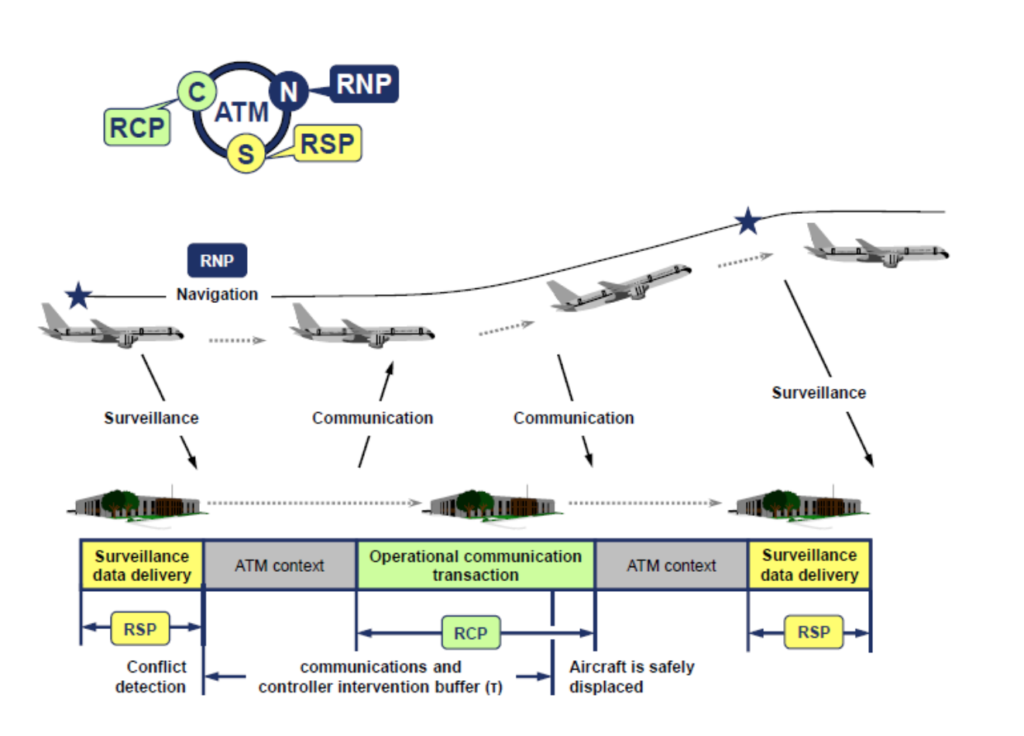
There are two key buzz words, so let’s define them. They are interlinked with RNP – Required Navigation Performance.

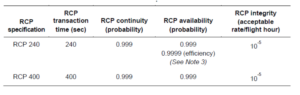
  • RSP – Required Surveillance Officially known as “surveillance data delivery”, often stipulated in the Airplane Flight Manual. Basically, how often does the aircraft send its position to ATC/ground station. There are two specifications, RSP180 and RSP400. The numbers indicate the maximum number of seconds (180 or 400) for the transaction to occur.
  • RCP – Required Communication ICAO has two specifications, RCP240 and RCP400. Again, the numbers indicate the maximum number of seconds (240 or 400), or “transaction time” taken for the controller to issue an instruction to the crew and for them to receive a response. This could be via CPDLC, HFDL, VDL or SATCOM.

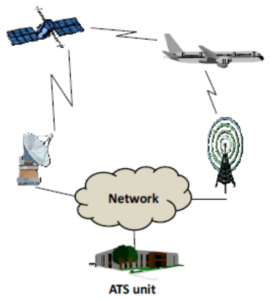
So, we have a loop here, C-N-S. Communication, Navigation and Surveillance. An aircraft sends surveillance information to ATC about where it is; the aircraft stays within confines of RNP navigation requirements and ATC communicates with the aircraft within the required transaction times.  Pretty easy!

But why do we need PBCS?

The take away? If all given aircraft in a certain airspace have a lower RSP value and a lower RCP value, we can start putting these aircraft closer together.

Essentially – performance-based separation minima. This allows aircraft to be separated safely according to technological capability rather than “one-size-fits-all” prescriptive distances.

What are the differences from PBN?

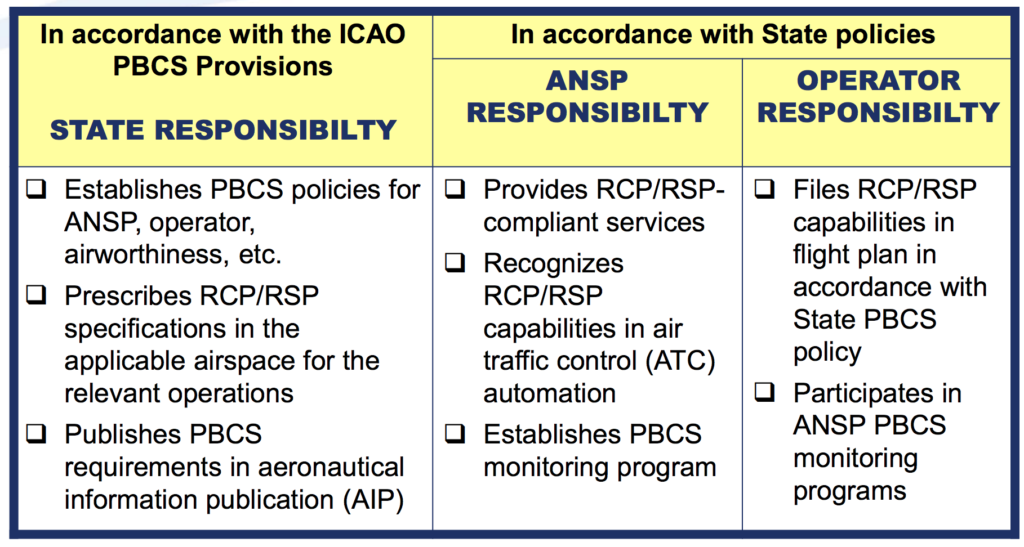
They are similar but there are notable differences. In a simple sense, the PBN (RNP/RNAV) only requires that the operator obtains approval because it focuses on how the equipment works. PBCS (RSP/RCP) however requires the involvement and approval of the air traffic service provider because it’s a two-way communication and surveillance effort. There are dependencies and complexity with the equipment standards on both ends.

In this graphic you can see a high-level summary of who is responsible for what:

Where is it in place?

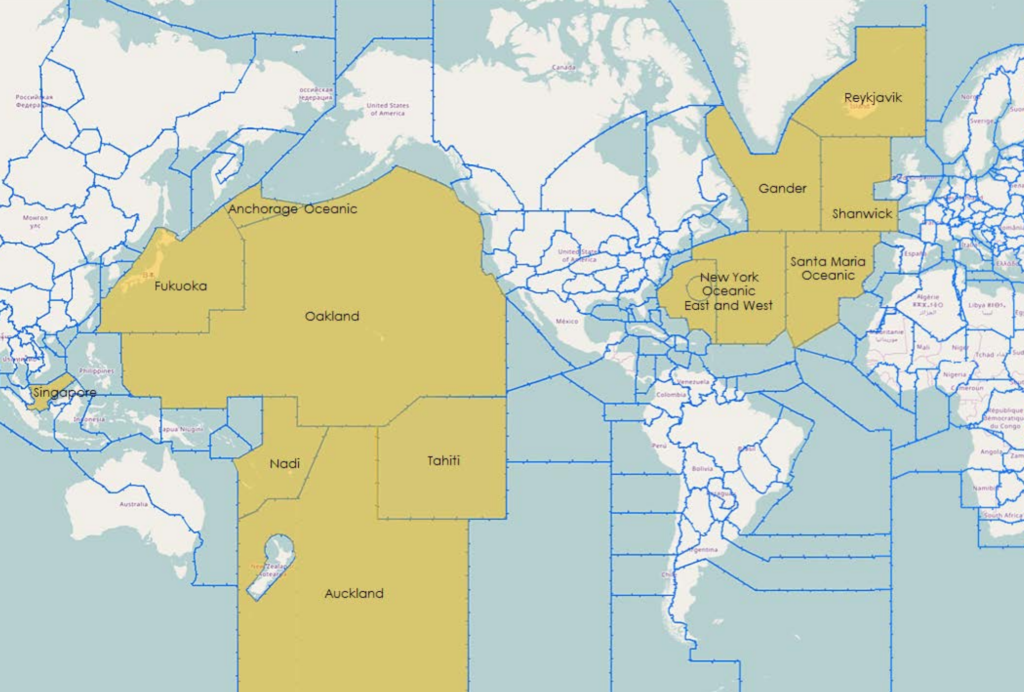
Currently PBCS is in effect in one form or another in the following FIR’s

  • NZZC/Auckland Oceanic
  • NFFF/Nadi
  • KZAK/Oakland Oceanic
  • PAZN/Anchorage Oceanic
  • WSJC/Singapore
  • VCCF/Sri Lanka
  • NTTT/Tahiti
  • RJJJ/ Fukuoka
  • KZNY/New York Oceanic
  • CZQX/Gander
  • EGGX/Shanwick
  • BIRD/ Reykjavik
  • LPPO/Santa Maria Oceanic

The Air Traffic Service providers of China, Brazil and Indonesia have also shown interest to introduce PBCS in the future.

Specifically, PBCS is being used between FL350 and 390 on certain “half” NAT tracks as we have written about before.

What do I need to do?

Requirements vary from state-to-state on the exact procedure for obtaining approval. It’s important to note that not all aircraft are automatically PBCS ready (refer to your aircraft manufacturer and your airplane flight manual).

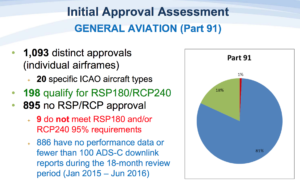
The FAA has outlined its approval process here and has a handy powerpoint document here.

An important element is to prove that you have signed the “PBCS Global Charter” which can be found at the FANS Central Reporting Agency (CRA) website.

When a PBCS authorization is obtained an operator is required to file both P2 (indicating RCP240) in item 10 and SUR/RSP180 in item 18 of the flight plan, in addition to the J codes for CPDLC and D1 or G1 for ADS-C in item 10.

The correct filing of these two codes will indicate to any ATM ground systems applying performance-based separation minima that the aircraft is eligible for these minima and that the crew have received the relevant training in order to safely operate using the reduced separations.

Will you notice that PBCS standards are being applied to your flight?

Ok this is the funny part of this story. The short answer, probably not.

While it may be easier for RCP240/RSP180 approved aircraft to obtain optimal flight profiles, especially during high traffic periods, and particularly for NAT flights using the OTS, the application of these standards is generally tactical in nature for ATC. An aircraft may not have performance-based separation applied at all on an individual flight, or possibly may never have had it applied to any of its flights. Even if a you have RCP240/RSP180 approvals, if the aircraft nearby does not also have the approvals, the separation standards cannot be applied!

What if I don’t have RCP240 and RSP180 approval?

If you do not have RCP240/RSP180 approvals you will always have the larger separations, e.g. 10-min, applied, and not be eligible for the lower standards in cases where it may be beneficial.

The only airspace that has implemented tracks that will require PBCS to file is in the NAT OTS. There are still non-PBCS tracks in the OTS for which PBCS approvals are not required.

All other airspace in which performance-based separation minima are currently applied will allow aircraft with and without RCP240 and RSP180 approvals to enter and use the airspace in a mixed-mode operation.

Will I be penalized if I don’t have it?

Probably not in the short term. In the future as more and more airspace corridors become PBCS only, then it is possible you may be subject to reroutes, delays or the requirement to fly outside of certain flight levels.

So, our conclusion?

PBCS is a great step forward in maximizing efficiency in a busier airspace environment thanks to the advent of better technology. If you fly the NATs often and have an aircraft capable of PBCS certification standards, then yes – do it! The approval process is not overly burdensome, and many modern transatlantic jets already meet most of the technical requirements.

Ultimately, reduced separation standards mean more great air-to-air views. So, pack your camera!

You were in a 4G inverted dive with a Mig 28? -Yes, ma’am. -At what range? -Um, about two meters. -Eh, lieutenant, what were you doing there? -Communicating. Keeping up foreign relations.

Did we miss something, or does something need more explaining? Let us know!

Extra Reading:


New CPDLC procedure on the NAT

There’ll soon be a new CPDLC procedure on the NAT, designed to prevent pilots from acting on any old CPDLC messages that might have been delayed in the network.

ICAO have published a new Bulletin for all the NAT Air Navigation Service Providers (ANSP’s) to use as a basis for implementing this new procedure. They recommend that all aircraft should receive a message immediately after they enter each control area telling them to “SET MAX UPLINK DELAY VALUE” to a certain number of seconds. The idea is that this will prompt the pilot to enter the specified latency value into the aircraft avionics, so that it will ignore/reject any old CPDLC messages.

So far, only Iceland’s BIRD/Reykjavik FIR have implemented this procedure, effective May 24. All other sectors of NAT airspace (Gander, Shanwick, Bodo, Santa Maria, New York Oceanic) are busy writing their own AIC’s and will implement later in the year. 

So when entering the BIRD/Reykjavik FIR, expect to receive a CPDLC message from ATC instructing you to “SET MAX UPLINK DELAY VALUE TO 300 SECONDS”. A copy of their AIC with more guidance can be found here.

The latency monitor function varies from one aircraft type to another: some just automatically reject old CPDLC messages, some will display a warning to the pilot that the message has been delayed, some have deficient equipment, and some do not have the message latency monitor function implemented at all.

Because of this, ICAO note that “it is impossible for ATC to tailor the uplink of the message… to different aircraft types. It has therefore been decided among the NAT Air Navigation Service Providers (ANSPs) to uplink this message to all CPDLC connected aircraft immediately after they enter each control area. An aircraft may therefore receive this message multiple times during a flight.”

So here’s the lowdown on what you need to do:

1. Work out in advance what kind of message latency monitor function your aircraft has, and what it is designed to do when it receives the CPDLC message “SET MAX UPLINK TIMER VALUE TO XXX SECONDS”.

2. When you receive this message, respond with the voice message “ACCEPT” or “ROGER”. If your aircraft has a functioning message latency monitor, punch in the specified number of seconds. If you don’t have functioning equipment, respond with the free text message “TIMER NOT AVAILABLE”.

3. If anything goes wrong, revert to voice comms.

Back in November 2017, we reported on an equipment issue with Iridium satcom that prompted a ban by a number of Oceanic ATC agencies. Some aircraft were receiving massively delayed clearances sent by ATC via CPDLC – and one took the instruction and climbed 1000 feet, even though the message was meant for the flight the aircraft operated previously.

Although the bans were dropped after Iridium fixed the problem at ground level (by ensuring the system no longer queued CPDLC uplinks for more than five minutes), this new CPDLC procedure on the NAT should ensure this kind of situation doesn’t happen again. It’s officially being brought in as one of the safety requirements for the roll-out of reduced lateral and longitudinal separation minima across the NAT, which is predicated on Performance Based Communication and Surveillance (PBCS) specifications – that means having CPDLC capable of RCP240 (4 minute comms loop), and ADS-C capable of RSP180 (3 minute position reporting).

Further reading:
ICAO NAT Bulletin 2018_002: CPDLC Uplink Message Latency Monitor
Iceland’s AIC on the new CPDLC procedure for the BIRD/Reykjavik FIR
– The latest PBCS rumours and facts
The latest NAT changes, including EGGX/Shanwick, CZQX/Gander, BIRD/Iceland, ENOB/Bodo, LPPO/Santa Maria, and KZWY/New York Oceanic East.
IRIDIUM satcom fault fixed


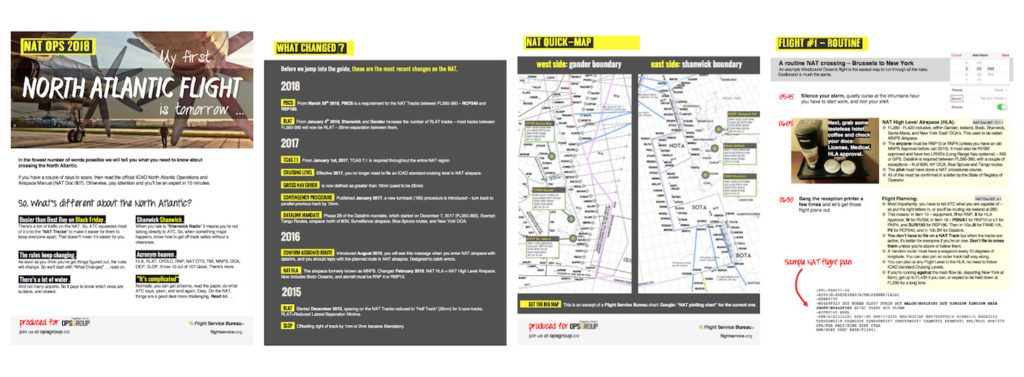
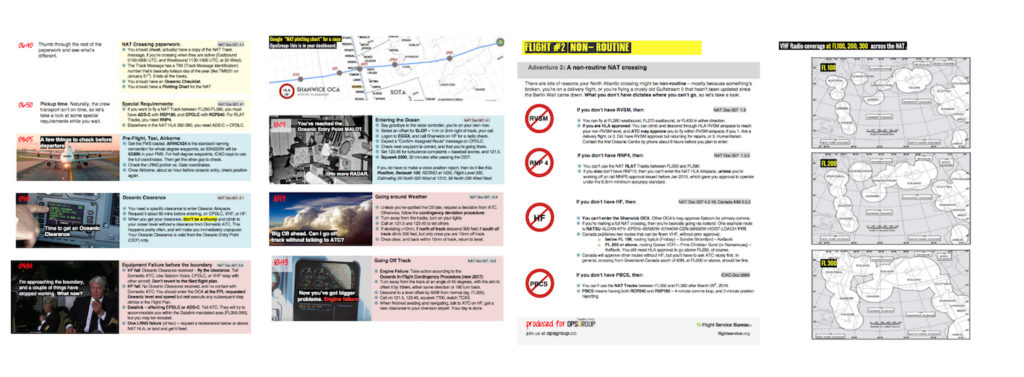
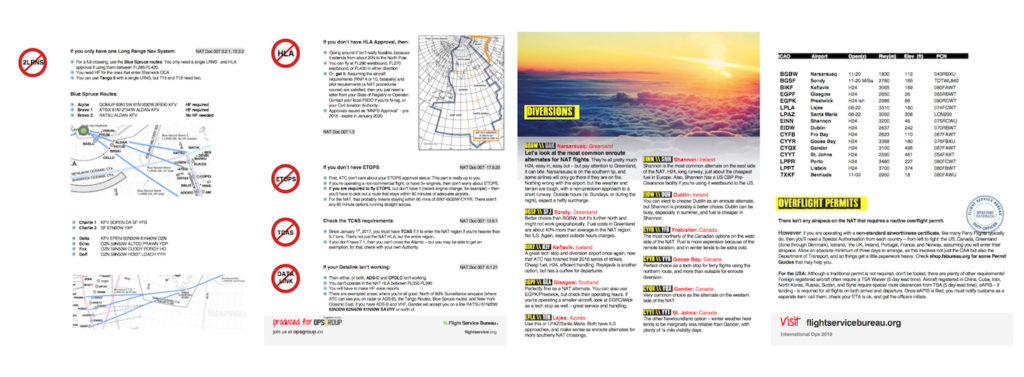
My first North Atlantic Flight is tomorrow – NAT Ops Guide (Updated 2018)

For the latest changes and updates on the North Atlantic, including our most recent Guides and Charts, use our NAT reference page at flightservicebureau.org/NAT.

Of all the hundreds of questions we see in OPSGROUP, one region stands out as the most asked about – the NAT/North Atlantic. So, we made one of our legendary guides, to get everything into one PDF.  It’s called “My first North Atlantic Flight is tomorrow” – and now we’ve updated it for 2018!

Contents:

  • 1. What’s different about the NAT?
  • 2. Changes in 2018, 2017, 2016, 2015
  • 3. NAT Quick Map – Gander boundary, Shanwick boundary
  • 4. Routine Flight Example #1 – Brussels to JFK (up at 5.45am)

  • 5. Non Routine-Flights: No RVSM, No RNP4, No HF, 1 LRNS, No HLA, No ETOPS, No TCAS, No Datalink – what you can do and where you can go
  • 6. Diversion Airports guide: Narsarsuaq, Sondy, Kef, Glasgow, Dublin, Shannon, Lajes, Fro Bay, Goose Bay, Gander, St. Johns
  • 7. Airport data
  • 8. Overflight permits – routine and special

  • 9. Special NAT procedures: Mach number technique, SLOP, Comms, Oceanic Transition Areas, A successful exit, Screwing it up, Departing from Close Airports
  • 10. North Atlantic ATC contacts for Shanwick, Gander, Iceland, Bodo, Santa Maria, New York – ATC Phone, Radio Station Phone, AFTN, Satcom, CPDLC Logon codes; and adjoining Domestic ATC units – US, Canada, Europe.
  • 11. NAT FPL Codes
  • 12. NAT Flight Levels
  • 13. Flight Plan Filing Addresses by FIR
  • 14. Links, Questions, Guidance

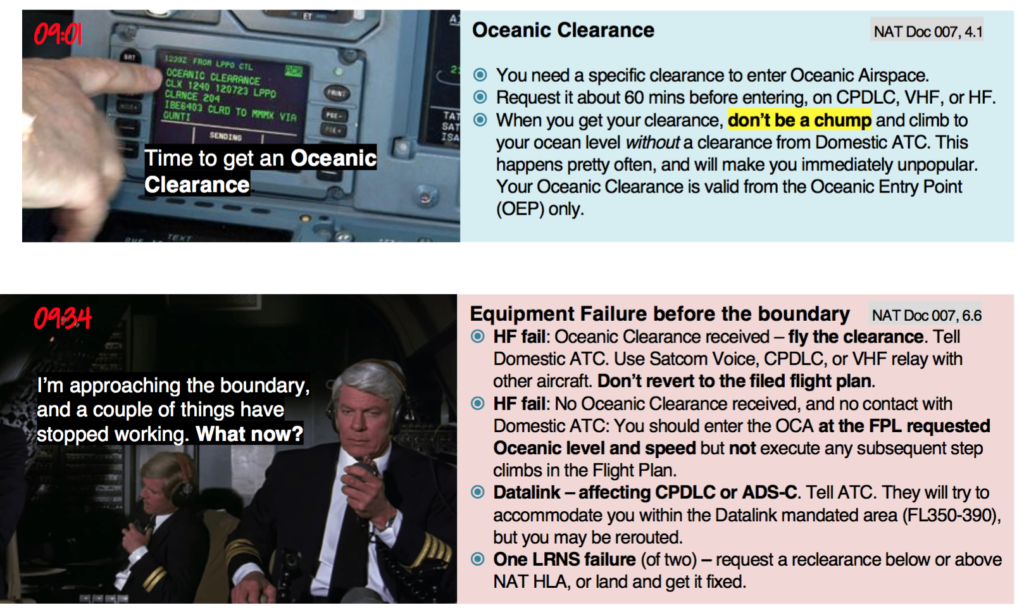
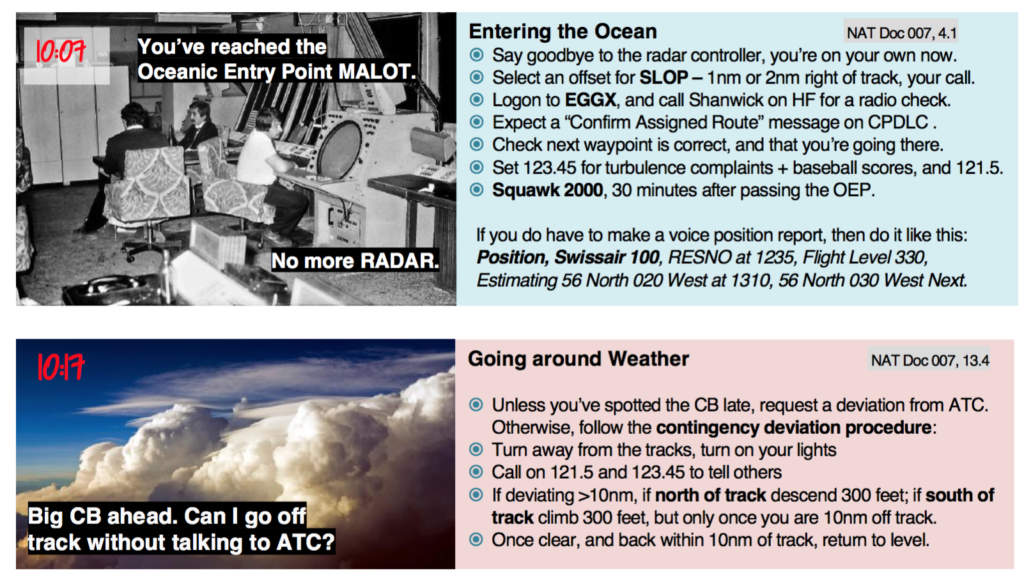
Excerpt from the Routine Flight #1:


Buy a copy ($20)   Get it free – join OPSGROUP

To get your copy – there are three options:

  1. OPSGROUP Members, login to the Dashboard and find it under “Publications > Guides”. All FSB content like this is included in your membership, or
  2. Join OPSGROUP with an individual, team, or department/airline plan, and get it free on joining (along with a whole bunch of other stuff), or
  3. Purchase a copy in the Flight Service Store!


2018 Edition: New NAT Doc 007 2018 – North Atlantic Airspace and Operations Manual

For the latest changes and updates on the North Atlantic, including our most recent Guides and Charts, use our NAT reference page at flightservicebureau.org/NAT.

2018 version – NAT Doc 007

The 2018 version of NAT Doc 007, North Atlantic Airspace and Operations Manual, was published in January 2018 by ICAO/NAT SPG.

Download the original document here (PDF, 5mB), and see also:


2018
 is off to a flying start again with NAT changes – these are the latest important changes. These are also published in the latest edition of NAT Doc 007, January 2018.

  • PBCS From March 29th 2018, PBCS is a requirement for the NAT Tracks between FL350-390 – RCP240 and RSP180. Read more about PBCS in our article.
  • RLAT  From January 4th 2018, Shanwick and Gander increase the number of RLAT tracks – most tracks between FL350-390 will now be RLAT – 25nm separation between them.

And there will be more! Keep an eye on the FSB NAT Changes page, we’ll keep it updated.


Feb 2nd, 2018: FSB updated the full NAT Crossing Guide “My first North Atlantic Flight is tomorrow“.

– What’s different about the NAT, changes in 2018, 2017, 2016, 2015, NAT Quick Map
– Routine Flight Example #1 – Brussels to JFK (up at 5.45am)
– Non Routine-Flights: No RVSM, No RNP4, No HF, 1 LRNS, No HLA, No ETOPS, No TCAS, No Datalink – what you can do and where you can go
Take a look.


PBCS: New rule on the NAT from March 29, 2018 – RCP240 and RSP180

Update March 16th, 2018: PBCS is turning into a PITA. After OPSGROUP input, we have an update on the latest status including rumours of delays, A056 LOA’s, and Aircraft that have failed to comply with PBCS.

For the latest changes and updates on the North Atlantic, including our most recent Guides and Charts, use our NAT reference page at flightservicebureau.org/NAT.

ICAO is introducing another acronym in the North Atlantic Region. This time, it’s PBCS (Performance Based Communication and Surveillance), and from March 29th 2018 you will need to be compliant if you want to fly on the half-tracks between FL350-390.

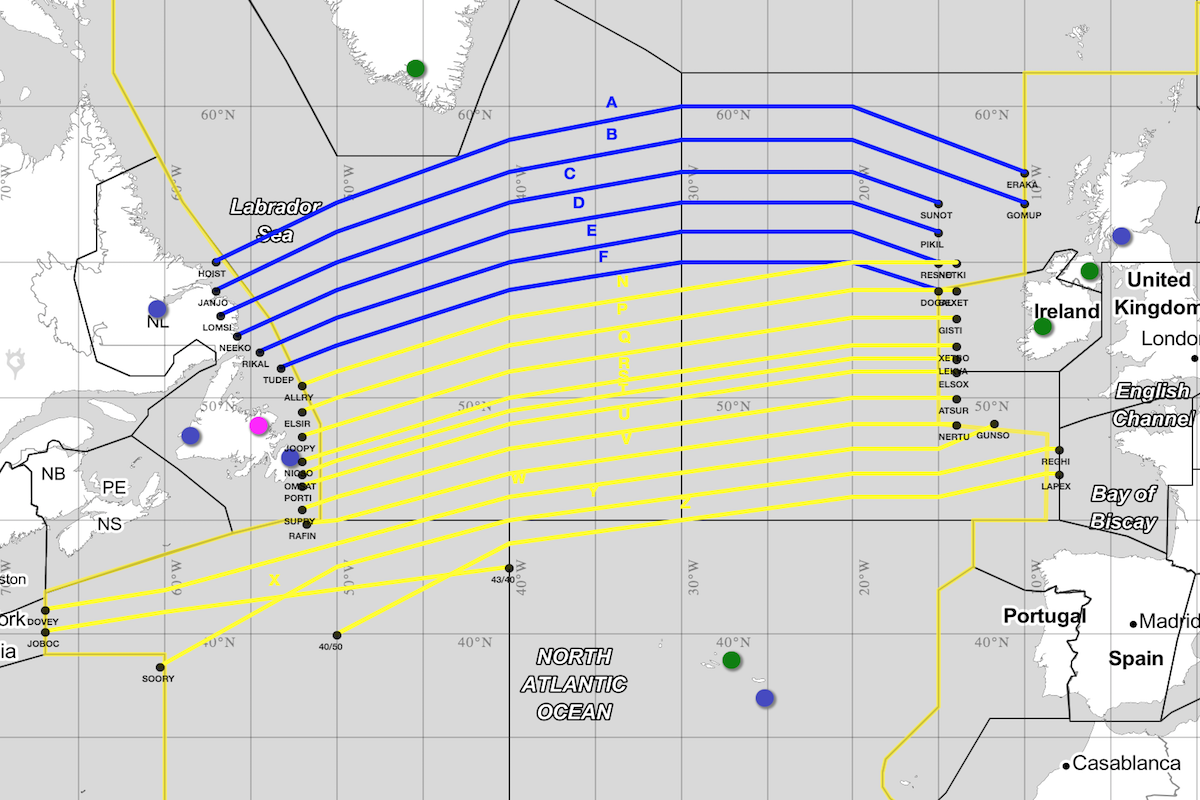
Initially, there will only be a maximum of three daily tracks where you will need to be PBCS-compliant between FL350-390. These will likely be the same tracks as we currently see being assigned as ‘half-tracks’ each day.

This requirement will eventually be extended to all the NAT tracks between FL350-390, but we understand that will only happen when the filing of PBCS designators on flight plans reaches the 90% mark, or 28th March 2019 – whichever comes first. Either way, the ‘transition period’ for this PBCS implementation is set to last six months, so the roll-out of the requirement to all the tracks won’t happen until Oct 2018 at the earliest!

But from March 29th 2018, Shanwick and Gander will basically just continue the concept used in the RLatSM trial – whereby daily tracks spaced at less than 60nm from an adjacent track will be specified as a ‘PBCS Track’ and will be notified in the Track Message Remark-3.

So what is PBCS?

PBCS is the thing that will replace two trials in the NAT which are both coming to an end on March 29th:

  • RLATReduced Lateral Separation Minimum: where a reduced lateral separation of 25 nm has been implemented on the tracks between FL350-390 (so now there are extra “half tracks” each day, spaced by one-half degree of latitude)
  • RLong – Reduced Longitudinal Separation Minimum: in the Shanwick Oceanic Control Area (OCA), longitudinal separation has been reduced to 5 minutes between aircraft following the same track.

When these trials end, PBCS standards will be introduced to continue to allow the application of both reduced lateral and longitudinal separation for aircraft that meet the Required Communication Performance (RCP) and Required Surveillance Performance (RSP) specifications.

How do I comply with PBCS standards?

To operate on the PBCS tracks between FL350-390, you will need to be RNP4 compliant, with CPDLC capable of RCP240, and ADS-C capable of RSP180.

But watch out! Some aircraft do have ADS-C and CPDLC but have never demonstrated RCP or RSP, and have no statement of compliance (e.g. most Honeywell Primus aircraft and several early Boeing aircraft). These aircraft may struggle to get approval to operate in PBCS airspace. Which brings us neatly on to…

Do I need PBCS approval from my state of registry?

PBCS approval will differ depending on which country operators are from.

For UK operators, check the requirements here.

US operators will need to update their LOA for Data Link Communications (A056). The FAA have published a new guide, which tells operators exactly what they need to do to get this authorisation, namely:

  1. Submit an AFM Statement of Compliance for PBCS, showing exactly what data link communication systems you aircraft has, along with the selected performance
  2. Since July 2016, various oceanic FIRs have been collecting data on whether certain aircraft meet RSP and RCP criteria. You need to make sure your aircraft isn’t already listed as having failed to meet these criteria, by checking here: https://www.faa.gov/air_traffic/separation_standards/pbcs_monitoring/

What new codes do I need to put down on my flight plan?

  • FANS 1/A CPDLC equipped aircraft planning to operate in the NAT HLA shall insert the appropriate designator (J2, J3, J4, J5 and/or J7) in Item 10a of the flight plan.
  • FANS 1/A CPDLC RCP 240 compliant aircraft intending to operate in the NAT HLA shall insert the designator P2 in Item 10a of the flight plan.
  • FANS 1/A ADS-C compliant aircraft planning to operate in the NAT HLA shall insert the designator D1 in Item 10b of the flight plan.
  • FANS 1/A ADS-C RSP 180 compliant aircraft planning to operate in the NAT HLA shall insert SUR/RSP180 in Item 18 of the flight plan.
  • RNP 4 compliant aircraft planning to operate in the NAT HLA shall insert PBN/L1 in Item 18 of the flight plan.

If I’m not eligible for PBCS, where can I go? 

ATC may allow you to do either of the following, depending on how stressed/busy they are (i.e. decided on a ‘tactical basis’):

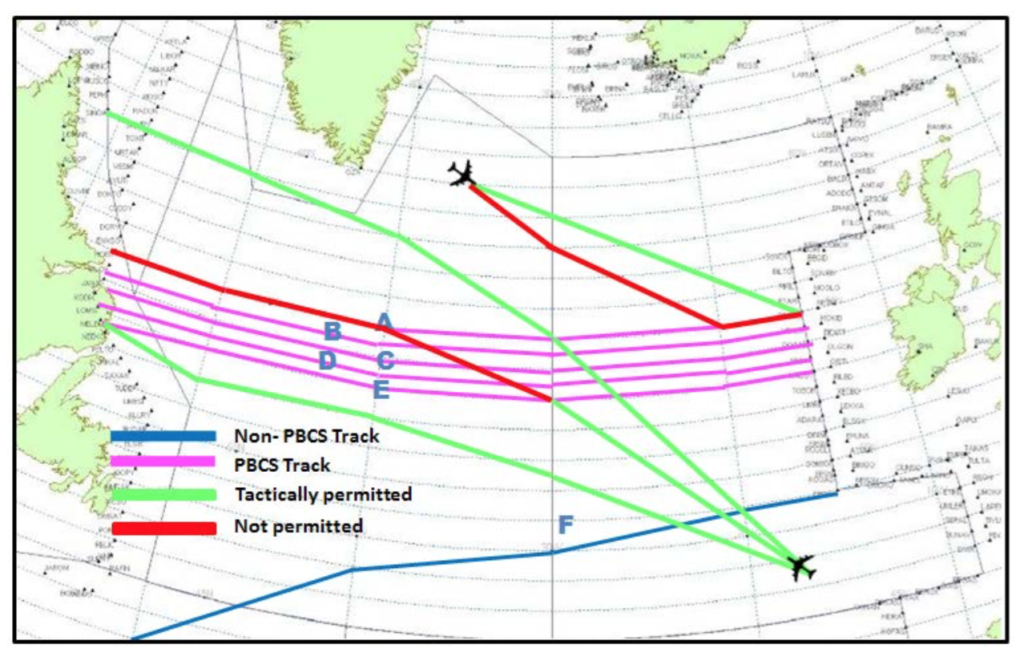
  • You can infringe on the daily PBCS tracks between FL350 – FL390 at only one point (including Oceanic Entry/Exit Point) i.e. cross but not join an NAT PBCS track
  • You can climb or descend through levels FL350 – FL390 on a PBCS track provided the climb or descent is continuous.

In their NAT OPS Bulletin 2018_001, ICAO have published a handy little picture to demonstrate this:


Further information:

  • For a great FAQ on all things PBCS, check out the latest FAA document here.
  • For more info on the PBCS implementation, check out the full UK AIC here.
  • To figure out where you are welcome on the NAT, depending on what equipment and training you have, check out our quick reference guide here.
  • Special thanks go to Mitch Launius at 30westip.com for help with this post. For assistance with international procedures training for business aviation crews worldwide, and to watch an excellent webinar about all things PBCS-related, check out the 30westip.


More NAT half-tracks are coming

Update Jan 23: The current phase of the trial for RLatSM Tracks will come to an end on March 29, when PBCS standards will be introduced for the NAT tracks. More info on that here.

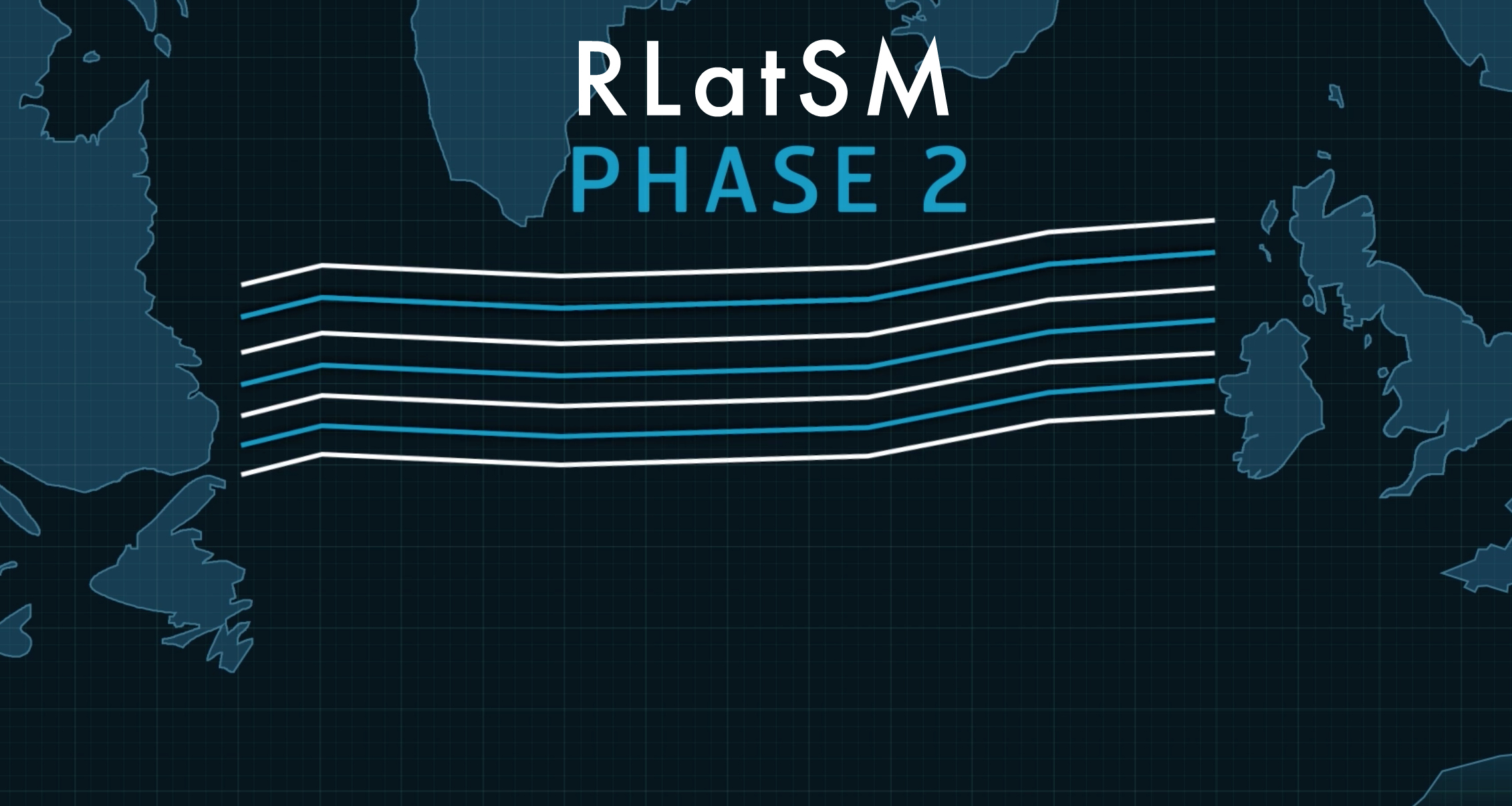
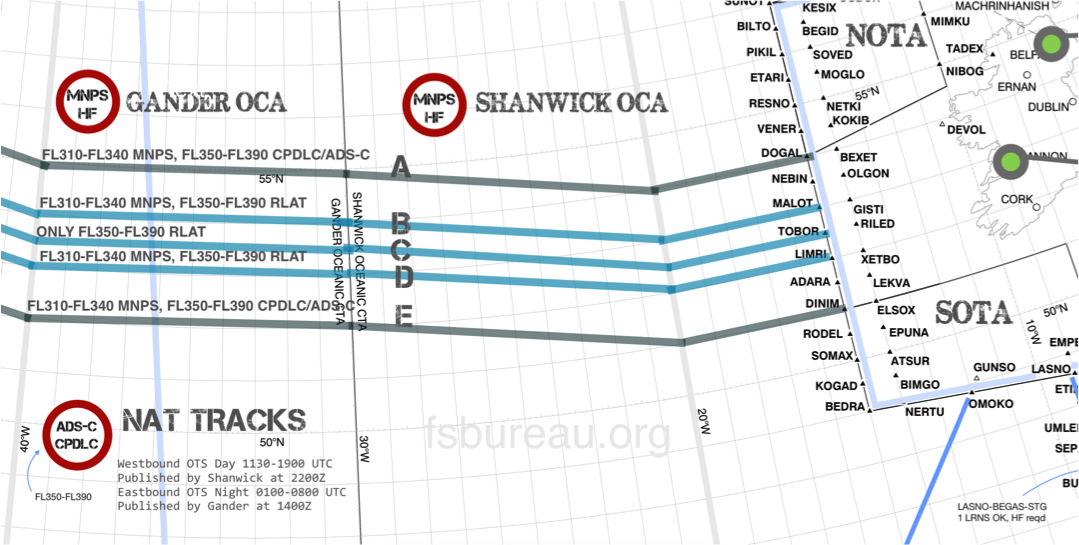
Since Dec 2015, there have been three daily NAT tracks spaced by one-half degree between FL350-390. These are officially called ‘RLatSM Tracks’ (Reduced lateral separation minima), but we all just prefer to call them ‘Half-Tracks’.

Separating flights by one-half degree of latitude rather than the standard one degree means that aircraft can be separated laterally by 25nm, which helps improve the efficiency of North Atlantic operations.

In Jan 2018 the Half-Tracks will be expanded from the three that now run each day, first by one additional track and then (maybe) to all NAT Tracks between FL350-390 inclusive. Jan 4 is the earliest day that this might happen, but because they will be decided tactically, it will most likely be the first busy day after Jan 4.

If you want to operate on the RLatSM tracks, you’re going to need CPDLC, ADS-C, and RNP4; along with the other standard pre-requisites for operating in the NAT HLA between FL350-390: an HLA approval, TCAS 7.1, RVSM approval, two LRNS, and a working HF radio. To figure out where you are welcome on the NAT, depending on what equipment and training you have, check out our quick and dirty guide here.

One thing to be cautious of when using the half-degree tracks – most aircraft FMC’s truncate lat/long waypoints to a maximum of 7 characters, so it will often show up as the same waypoint whether you’re operating along whole or half degree waypoints. So when operating on the half-tracks, just remember to double-check the full 13-character representations of the lat/long waypoints when you enter them into the FMC.

For more details about the new RLatSM procedures, have a read of the UK AIC 087/2017 here.


CYYR/Goose Bay closed – sticky runways

CYYR/Goose Bay was closed by the Canadian Department of National Defence on Nov 8, following the discovery of a problem with their runways. During snow removal operations over the past few days, crack sealant was found on vehicles after they were used on the runways. Specialists are en-route to Goose Bay to assess the situation.

Runway 08/26 has been completely closed, and Runway 16/34 has closed to all except Medevac flights, with a shortened Landing Distance Available of 7600 feet.

The Airport has said that emergency flights will be considered on a “case by case basis”. However, for now, carrying CYYR as an ETOPS alternate does not make sense.


NAT Airspace Closures

Update 18th Oct: No more events are planned at this time. However, we will keep this page updated with the latest news as we get it.


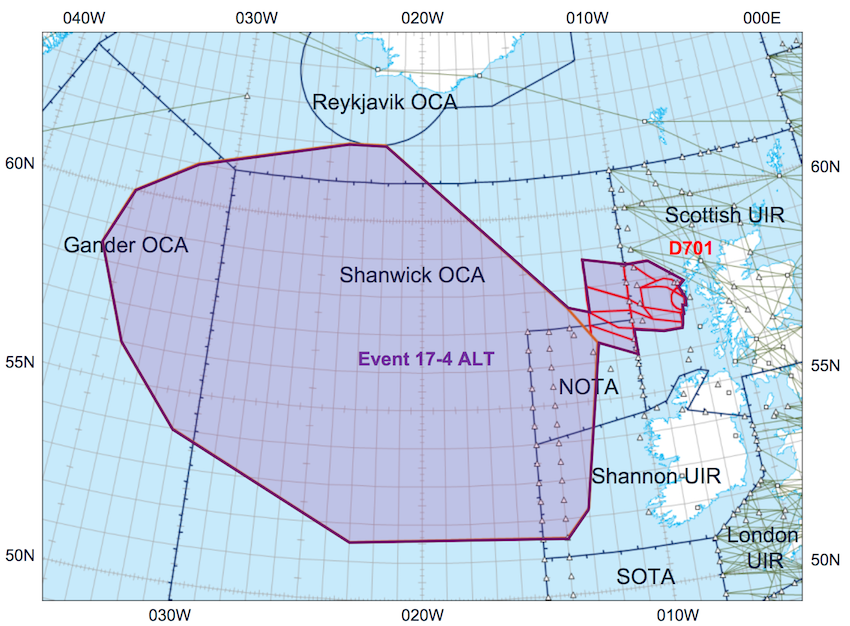
Sections of NAT airspace are set to close on various different dates in October. This is all due to U.S. and NATO joint military exercise that’s going on, called Formidable Shield, which will mean huge chucks of airspace will be closed to civil ops for many hours.

The basics for each event are the same:

  • Airspace closed, SFC-UNL.
  • Aircraft capable of flying in MNPS airspace will have to keep at least 30nm away from the area, other aircraft will need to keep 60nm away.


Event 1 Happened on 25th Sep. 


Event 2 Happened on 7th Oct.


Event 4Happened on 15th Oct. (Yes, Event 4 happened before Event 3 – just to confuse us!)


Event 3 Happened on 17th Oct.


International Bulletin: Winter is Coming, Updated Canada Requirements

Winter is coming 09NOV With the clocks changing, it’s a reminder that we’re not far away from the snowstorms, deicing delays, cancelled flights, airport shutdowns, and those big invoices for de-icing fluid. Our new author Frank Young has an article.

Updated Canada requirements 09NOV From tomorrow, November 10, an eTA is now mandatory for flights to Canada (for most people), and there’s an update to flying to Canada with a previous conviction. Read the article.


BIKF/Keflavik Long a destination for flight certification testing (because it’s cold and windy), will not accept test flights until February next year, thanks to runway renovation work.

ZZZZ/Worldwide Last week we ran a story about the new ICAO SID/STAR phraseolgies. In short, some countries are implementing, and others aren’t. We’re going to make a list of who’s doing what, so that you as an operator or pilot will have some idea. Can you help us? What is your country doing? Tell us at bulletin@fsbureau.org.

LTBA/Istanbul At about 0100 local time on 6 November, two people on a motorcycle opened fire outside Istanbul Ataturk International Airport, prompting a temporary closure. Reports indicate that authorities apprehended both suspects and did not find additional weapons or explosives on their persons. Officials briefly placed the airport on lockdown but reopened the facility at about 0130. The incident reportedly did not affect flights, and the gunfire harmed no civilians or police officers.

CZZZ/NAT Region The FAA has recently determined that time estimates provided by pilots in oceanic CTAs are less accurate than expected, particularly when adverse weather causes pilots to deviate from the planned course. These inaccurate estimates can compromise the separation of aircraft. Have a read.

YMML/Melbourne Be aware of recent hoax ATC calls. Someone with a handheld radio has been making “go-around” transmissions on the Tower frequency, and at least one aircraft has responded. Airservices says there have been 15 such transmissions in the last few weeks.

CZZZ/Canada The NBAA has issued useful updated info for flying to Canada with previous convictions – Canada is known for refusing entry based on DUI charges. Today, November 9, is also the last day that you can enter Canada without an eTA.

PWAK/Wake Island – an ETOPS alternate – is closed on 11NOV for Veterans Day. They do say they will attend with 30 mins notice, so maybe two ETOPS circles are required for that day. Check other US ETOPS alternates on this date also.

UCZZ/Kyrgyzstan Since 4 November, if you’re staying for longer than 5 days, you must register with the local authorities.

PKMJ/Majuro is downgraded to Cat 6 until November 23, which may affect some operators using this as an ETOPS alt.

EGNX/East Midlands airport has some weekend closures for the next six weeks.

VIZZ/India announced on 8 November that 500 and 1,000 rupee banknotes will cease to be legal tender as of 0000 local on 9 November 2016.

EVLA/Liepaja (one of Latvia’s three international airports) is now closed to all operations. They say they will be open again in Spring 2017. Fingers crossed.

LAZZ/Albania has been experiencing heavy rains, high winds and flooding throughout the country, causing road blockages, school closures, and disruptions in ferry services. The army has been mobilized for rescue and relief operations.

LFLL/Lyon If you’ve been using LFLL as an alternate at weekends, you’ll have to cut that out from December 10th, they don’t want weekend diversions of non-sched flights.

EGKK/Gatwick has advised of a new series of rail strikes that will run through to January next year.

MHTG/Central America FIR reminds operators that a CENAMER notification by AFTN is required for all flights planning to enter the airspace.

MTZZ/Haiti The US has published updated advice for Haiti: U.S. citizens are advised not to travel to the southern peninsula of Haiti, commonly referred to as the “southern claw.” The U.S. Embassy has currently banned unofficial travel to the southern peninsula and allows official travel only after consultation with its security office. There is widespread devastation throughout the southern claw with the most affected areas on the western tip of the peninsula. Travelers can expect difficult travel conditions with roads made impassable by landslides, damaged roads, and bridge failures. There is also widespread damage to buildings and infrastructure, including gas stations and cell towers, loss of electricity, and shortages of food and potable water. U.S. citizens who choose to travel to the southern claw in spite of these risks should carry sufficient water, food, fuel, and medicine to last longer than their anticipated stay. The security environment around the southern claw is fluid and uncertain.

LFOB/Paris Beauvais is closed overnight from 2200 to 0600Z, for 14-25 November inclusive, due to stuff.

HAZZ/Ethiopia On November 8, the Command Post – the body tasked with implementing Ethiopia’s state of emergency – lifted the restriction imposed on foreign diplomats, which restricted them from traveling more than 25 mi/40 km outside of Addis Ababa. The Command Post also lifted and revised several other state of emergency provisions; however, the changes are minor and are not likely to affect the current situation. The curfew and communication restrictions remain in place

NFTF/Tonga Fua’amoto (the main airport) has new operating hours – these are, in UTC: 1600 SUN TO 0530 MON, 1025 MON TO 0800 TUE, 1600 TUE TO 0530 WED, 1000 WED TO 0800 THU,0900 THU TO 1200 THU, 1600 THU TO 0530 FRI, 1600 FRI TO 0800 SAT. They’ll accept div traffic outside these hours, call +676 22 608 – but prefer no surprises on Sundays.

OMAA/Abu Dhabi will see heavy traffic for the Grand Prix on November 27, avoid if possible.

SBZZ/Brazil The office that processes Foreign Civil overlight and landing permits has updated hours of operation: Mon-Fri 1230Z-2230Z.

SBCT/Curitiba airport would like 4 hour PPR notice for non-scheduled flights, and request that you call them on 55-41-3381-1478 to arrange that.

SPJC/Lima, Peru has an upcoming APEC meeting 14-21 November, with a decent increase in traffic expected, and a few restrictions. They’ve also warned pilots to pay attention to radios and transponder codes to avoid them sending up the jets – good advice.

TVSV/ET Joshua Airport is closed due to flooding.

VECC/Kolkata Radio has a new HF frequency: 8861, with hours 1330Z-0130Z. Use this if 6556 or 10066 isn’t working for you.

CZQX/Gander is going to auto-send you a “Confirm Assigned Route” message from 01DEC, on entry into their OCA – if you are FANS 1/A equipped. If you’re not sure how to feel about that, read our previous article.

LCCC/Nicosia There’s a good deal of mil activity – UN, and Russian – in the Cyprus region at the moment. Read the LCCC and surrounding FIR Notams carefully. Oh, and if you’re not up to date on your Greek-Turkish FIR dispute, add LGGG and LTBB to that. As 2016 draws to a close, enough regional history has been published for an entire novel. This weeks Notam series covers the 1923 Lausanne Peace Treaty.

NZZC/New Zealand published a change to SID procedures today, and our brain hurts. We’re not sure if this is related to the 10NOV ICAO SID/STAR changes, or .. something else. If you’ve got it deciphered, let us know. THE STANDARD INSTRUMENT DEPARTURE (SID) SPECIFIES IN BOTH DIAGRAMMATIC AND NARRATIVE FORM ANY OF THE FOLLOWING: THE DIRECTION OF TURN, HEADINGS, TRACK, DISTANCES, SIGNIFICANT POINTS AND ALTITUDE REQUIREMENTS. WHERE TRACKING TO OR FROM A NAVIGATION AID IS NOT POSSIBLE, DESIRED TRACKS ARE SHOWN AND DUE ALLOWANCE FOR WIND IS TO BE MADE. AIRCRAFT ARE TO CONTINUE CLIMBING THROUGHOUT THE SID UNLESS IN COMPLIANCE WITH PUBLISHED ATC MAINTAINS, DEPARTURE MINIMUM SAFE ALTITUDE (MSA) OR AS OTHERWISE INSTRUCTED. WHERE CONTINUOUS CLIMB TO THE END OF THE SID IS NOT REQUIRED A DEPARTURE MSA MAY BE DEPICTED ON THE RELEVANT CHART. THE DEPARTURE MSA REPRESENTS THE LOWEST ALTITUDE FOR OBSTACLE CLEARANCE ALONG THE ENTIRE DEPARTURE ROUTE (INCLUDING TRANSITIONS). IT REMAINS THE PILOT’S RESPONSIBILITY TO MEET SUBSEQUENT ENROUTE MSA/MINIMUM FLIGHT ALTITUDE (MFA)/MRA/MEA REQUIREMENTS APPLICABLE AFTER SID TERMINATION. DEPARTURE MINIMUM SAFE ALTITUDES DO NOT ENSURE CONTROLLED AIRSPACE CONTAINMENT.

OEZZ/Saudi Arabia has issued an extension of the policy that requires all aircraft with a destination in Yemen to first land in OEBH/Bisha – through to 08FEB next year. The only exceptions are the UN, Red Cross, and MSF.

VHHK/Hong Kong is going to move to a new ACC and ATC Tower towards the end of this month. There will be delays. The actual date hasn’t yet been notified, we’ll let you know when we hear.

View the full International Bulletin 09NOV2016
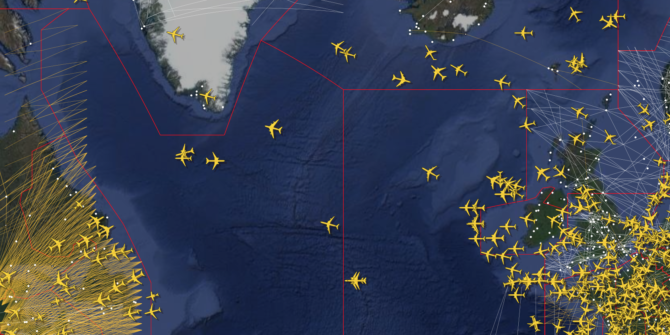


NAT changes slow down

Last week, we updated OpsGroup members with the changes on the NAT in the last 12 months with a special briefing. There have been many – MNPS being renamed HLA, new requirement for RNP4/10, new waypoints, airspace changes, the addition of Bodo to MNPS/HLA, and the introduction of RLAT – Reduced lateral separation: that is, half-track spacing for the first time.

The initial Phase of RLAT was introduced in December last year. Since then, there has been the option for suitably equipped aircraft (ADS, CPDLC and RNP4) to use one of the three new daily RLAT tracks, where aircraft are operating 30nm apart instead of 60nm.

The NAT plan at large called for Phase 2 to  follow this coming November, where the NAT Tracks would be ‘squashed together’ and all tracks would be RLAT above FL350, leaving only a couple of available tracks – spaced at 60nm, for everyone else.

However, we have been advised this week by the NAT working groups that this implementation in November will not go ahead as planned. There are some issues that Gander, Shanwick, and Iceland have to work through before their systems are ready to handle the next stage – meaning that the implementation of “RLAT only” is pushed out until, most likely, sometime next year.

So, for now, RLAT will stay on a maximum of three tracks – thereby slowing down the rate of change on the NAT, which probably comes as good news to operators. We’ll keep you posted.


natt


NAT Changes in the last 12 months

A constantly evolving airspace: It’s been busy on the NAT! And not just traffic wise – there have been a record number of procedural and regulatory changes in the last 12 months. Here they are, in order of significance:

nat-changes


  • OPSGROUP membership is required to access this briefing
  • Join today and receive full Welcome Pack
  • Contact subs@opsgroup.co for any membership questions or read more at opsgroup.co


Cheapest Jet fuel on the Atlantic? $1.15 a gallon

The cost of a gallon of Jet A1 has been rather unstable lately. Over the last couple of years, we’ve produced several versions of our  North Atlantic Plotting Chart, and as we’ve done so, the price of Jet A1 has dropped each time across the Atlantic seaboard.

So, where is cheapest? Answer: Keflavik. $1.15 for a gallon of Jet A1 at the best available commercial airline rate. Now, that was six weeks back or so, when we did the research for the chart, and prices have been rising since (tracking the Oil price pretty well).

BIKF

Next best on the list is Shannon, Ireland – $1.37 USD/USG, thanks to the Shannon Free Zone, which strips out most of the taxes that the EU levies as standard.

Next question, then: most expensive? Narsarsuaq, at $5.65 for a gallon. Why so much more? Primary reason: getting the fuel to BGBW is an awful lot harder than getting it to BIKF. The rest is down to the difference in government tax policy.

Fuel price is of course not the only tech stop or diversion consideration on the North Atlantic, but given that security, safety, and service quality is pretty much equal across the entire NAT region, it’s an important factor – along with the cost of handling.

If you look at the snapshot above, you can see that your G550 will cost around $1685 including Airport Fees; taking a B787 to KEF will run around $4300 all in.

The North Atlantic Plotting Chart has all this information for all the common North Atlantic ETOPS/Diversion Fields – namely: CYYT/St Johns, CYQX/Gander, CYJT/Stephenville, CYYR/Goose Bay, CYFB/Iqaluit, BGSF/Sondrestrom, BGBW/Narsarauq, BIKF/Keflavik, EGPF/Glasgow Intl, EGAA/Belfast, EINN/Shannon, and LPLA/Lajes.
Download NAT Plotting Chart


Midweek Briefing: Mexico Volcano Eruption, Atlantic MNPS is over… Introducing HLA

Mexico Volcano Eruption 29JAN Popocatepetl Volcano, which is 55 kilometres southeast of Mexico City, had its last major eruption in 2000; it erupted on Tuesday this week affecting flight operations at MMPB/Puebla, and with the risk of further eruptions affecting operations in Mexico City itself.

Atlantic MNPS is over… introducing HLA 29JAN Effective next week, 04FEB, there are another round of changes on the North Atlantic – HLA/High Level Airspace is the replacement for MNPS, and the airspace is extended with Bodø joining Shanwick, Gander, Reykjavik, New York, and Santa Maria. Read our International Ops Notice 01/2016.


North Atlantic Effective 04FEB MNPS Airspace is replaced by HLA/High Level Airspace on the North Atlantic – extended with Bodø joining Shanwick, Gander, Reykjavik, New York, and Santa Maria. RNP4 or RNP10 now required. Read our International Ops Notice 01/2016 
or our blog post: Did you know MNPS is over?

TTxx/Trinidad and Tobago The annual Carnival in Port of Spain will take place on February 8 and 9, 2016. Travel and tourism activities are expected to continue for up to two weeks after the celebration and will be busiest during weekends. February 10, 2016 (Ash Wednesday) is expected to be the busiest day of the year at the Port of Spain airport. February 8 to 9, 2016 is also expected to be a congested time for departures.

KSFO/Super Bowl 50 The FAA will not be imposing a slot-based special traffic management program for the game on 08FEB, but ramp reservations, made through specific FBOs, will be required for all arrivals and departures from 04-08FEB. The rule will apply to all airports in the region, including San Francisco International, Oakland International, Hayward Executive, Norman Y. Mineta San Jose International, Livermore Municipal, Buchanan Field, Napa County, Charles M. Schulz-Sonoma County, Monterey Regional, Watsonville Municipal and Salinas Municipal. NBAA has set up a Super Bowl 50 information page that includes links to the FAA arrival/departure routes.

Uxxx/Tajikistan The U.K.’s Foreign and Commonwealth Office (FCO) issued updated travel advice for Tajikistan that reads as follows: “In early September 2015, armed clashes involving security forces resulted in a number of deaths close to Dushanbe International Airport and in the Romit Valley not far from Dushanbe. While tensions have eased, security remains heightened. You should continue to take extra care, monitor the local media and check this advice regularly.”

KFZZ/Falcon Field, Arizona In January and February, Runways 4R/22L and 4L/22R at Falcon Field Airport (FFZ) in Mesa, AZ will be closed non-concurrently for the taxiway ALPHA realignment construction project. These are hard closures with no potential for runway recall. Runway 4L/22R had closed Jan. 12, at 6 a.m. (1300Z) and will remain closed until Saturday, Jan. 30, 2016. Runway 4R/22L is expected to close Monday, Feb. 1, at 6 a.m. (1300Z) and remain closed until Sunday, Feb. 15.

Kxxx/United States A few weeks ago we reported on new FAA FDC NOTAMs that eliminate the need to obtain a TSA Waiver for domestic flights in the US. on 17JAN The FAA has corrected an error in these (in simple terms, they forgot to include some previously issued exceptions), and so there are 3 brand new NOTAMS effective – these are 6/4255, 6/4256 and 6/4260. Got some time?Read the original NOTAMs in full.

Mxxx/Mexico The U.S. Department of State warns U.S. citizens about the risk of traveling to certain places in Mexico due to threats to safety and security posed by organized criminal groups in the country. U.S. citizens have been the victims of violent crimes, such as homicide, kidnapping, carjacking, and robbery by organized criminal groups in various Mexican states. This Travel Warning replaces the Travel Warning for Mexico, issued May 5, 2015

EISN/Shannon FIR Due to a number of flights deviating from clearances prior to exiting Shanwick OCA, flight crews are reminded that Eastbound route clearances issued by Shannon Control for aircraft exiting Oceanic Airspace apply from AGORI, SUNOT, BILTO, PIKIL, ETARI, RESNO, VENER, DOGAL, NEBIN, MALOT, TOBOR, LIMRI, ADARA, DINIM, RODEL, SOMAX, KOGAD, BEDRA, OMOKO, TAMEL AND LASNO. Flights shall not turn before these points.

Uxxx/Russia The Russian Institute of Volcanology has issued a code orange alert after Russia’s Zhupanovsky volcano began erupting earlier this week, sending clouds of ash and gas to 27,000 ft. A code orange advises pilots to avoid flying near the ash cloud, reportedly moving over the North Pacific Ocean driven by prevailing easterly winds.

UIII/Irkutsk has issued NOTAM A0134/16 closing RWY 12/30 weekly on Tuesdays from 1210-1450Z beginning Feb 02 and ending March 22. UIII is not available as an alternate during those times.

UHSS/Yuzhno is closed daily between 0330-0500Z due to preventative maintenance. No end date has been issued.

RPHI/Manila FIR has begun Phase 1-b of an ADS/CPDLC trail. The specific details of the plan can be found here.

Wxxx/Indonesia  As of 19JAN, Mount Egon has been erupting on Flores Island, which is located east of Bali Island. Egon emitted large amounts of ash and noxious gas. As of yet, the eruption has not caused any flight delays or cancellations; however, previous volcanic eruptions in the lesser Sunda Islands have caused extended delays in Denpasar and Mataram.

Zxxx/China Talks with the Zhuhai municipal government, Chinese government, Zhuhai Airport Authority and the Civil Aviation Authority China (CAAC) resulted in temporary International China Inspection and Quarantine (CIQ) services at Zhuhai Airport for non-scheduled business aviation movements. Following the approval late last month, China’s National Port Administration Office opened a temporary customs port on January 1. The approval is renewable on a six-month basis. During the “approval period” from January 1 to June 30, crewmembers of foreign business aviation flights can enter and exit China via the temporary business aviation port at Zhuhai Airport.
View the full International Bulletin 27JAN2016


Did you know MNPS is over? Meet HLA, the new North Atlantic Airspace.

From Feb 4th, 2016, MNPS (Minimum Navigation Performance Specifications) Airspace is being dumped as a term (no loss, really), and replaced by the much more user friendly NAT High Level Airspace or NAT HLA. MNPS first came into being in 1977, and this change is significant in that the requirements for approval to enter the new NAT HLA are updated – you must now have RNP4, or RNP10. Also, the rest of the Atlantic welcomes Bodø Oceanic to the fray – it joins Shanwick, Gander, Reykjavik, New York, and Santa Maria to make up the new NAT HLA, which keep the original vertical profile of FL285-FL420.

In short, that’s all you need to know. You should read our International Ops Notice 01/16 for the full story.


New NAT HLA High Level Airspace Map

New NAT HLA High Level Airspace Map