Here’s what pilots and controllers REALLY think about Notams

Update: November 1st, 2019: The Notam Team is up and running – we’re fixing Notams. Follow our progress at fixingnotams.org.


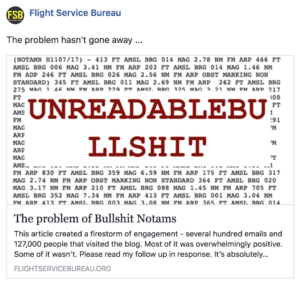
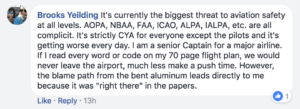
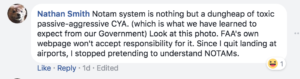
We think Notams suck. No other way to say it. After a few articles we wrote (BS Notams, The Notam Goat Show, and more worryingly, the MH17 Notam problem), we got some feedback in the comments section. And thought we should share, because they really show the problem. So, here they are.

Caution, some strong language!

We’re working on a solution, so you can help and add your thoughts as a comment below. Also, send us the really bad ones and enter the 2018 Notam Goat Show contest.


Personally I think taxiway and apron closure NOTAMs are too readable, I think they should be distributed in RADIAL/DME format, or perhaps raw Lat-Lon. Additionally, time should be specified in seconds since the founding of the FAA.

TAXIWAY CLOSED BETWEEN ORL180/08.5DME ORL181/08.6DME ORL181/08.65DME ORL180/08.65DME FROM 1829088020S to 1829190200S

What could be more clear than that?


I wonder if a buried Notam ever did contribute to bent metal, injury, or death? I agree that the volume of nuisance notams is a real task to read through wether it be a long or short turn. However, nothing will be done till there is blood. That’s how the FAA works. Till then, its on us to be like aviation lawyers before every flight regardless of schedule.


Maybe we can get them in binary?

You have to go to binary first, then convert to Morse.

01010100 01000001 01011000 01001001 01010111 01000001 01011001 00100000 01000011 01001100 01001111 01010011 01000101 01000100 00100000 01000010

—– .—- —– .—- —– .—- —– —– —– .—- —– —– —– —– —– .—- —– .—- —– .—- .—- —– —– —– —– .—- —– —– .—- —– —– .—- —– .—- —– .—- —– .—- .—- .—- —–

For good measure they should be put through an Enigma machine, too. And the output formatted to wingdings


Yes. The NOTAM system is fucked. We have Notams about those solar arrays near Vegas in every flight plan. Yes, I see them. I want to know if the damn runway is closed. Why the weird coding? Is it to make pilots feel multi-lingual?


It’s funny, they seem to have every little f*ing detail about towers that are under 400 agl 20 miles either side of my route with one light bulb missing but I can’t get a god damn reliable source for f*ing TFRs. Even the piece of shit FAA website for TFRs is not a “complete and accurate source” but some guy in a FSS station is?????? Such complete and utter bullshit.


The reason nobody reads NOTAMs is because they are mostly garbage.
Why do I care that a crane that is 200 feet AGL ten miles from any airport is unlit? We can’t fly below 500AGL anyway.
Why do I have to decipher code that can easily be written as: From 20170608 1900Z to 20170610 0000Z CYYZ Taxiway L Closed
The system is broken and nobody cares to fix it.


I f*in’ love doing a flight from Newark to DC and getting notams about the North Atlantic Tracks. Motherf***r, if I end up on the tracks during that leg in a 145, the Notams are the least of my damn problems.


The biggest frustration for me is the NOTAMs don’t match reality. KAUS often NOTAMs a runway closed for several hours a couple days each week. Yet we get there and it’s open.
Or an airport will NOTAM an ILS out of service for the day. Show up at the airport and they’re using that ILS.
My home airport is KDAL. One of the PAPIs was out for three days before they NOTAM’d it out of service. Delta landing in front of me asked about it. Tower said they showed it on and asked me. I said, “Uh… It’s been out for several days. I thought y’all knew?”
Finally, my favorite: Surprise runway closures for routine runway inspections. NOTAM? Nah. BTW there’s a 150′ tower 15 miles away with a light out and there’s birds around the airport. Awesome.


I can honestly say that if it isn’t a runway closure or terminal closure then I don’t really care. The amount of closed taxiways at every airport is absurd. Not to mention many of them are closed year round with no intention of opening them again, just a permanent NOTAM.


Can only agree. It has been raised at the RAPACs, but no progress to date.


If I’m 5nm from the ARP at 150′ AGL, then I have more things to worry about than a crane without a red light…

Ass-covering gone mad. Really… a tree

OBST TREE 58FT AMSL
PSN 386M FM THR RWY 25 AND 183M LEFT OF RWY 25 CL
BRG 047 MAG 0.91NM FM ARP
FROM 01 310536 TO 03 300500 EST


My personal favourite is the “trigger notam” cross-referencing to yet another unfindable / unreadable pile of nonsense.
Just tell us what matters to an “Airman”; today and leave the grand plan, 12 month projection crap out of NOTAMS.


All of this so true, I imagine a world of technology and wonder (ozrunways/avplan/anything but airservices/casa))where we can quickly read a Notam and weather briefing without having to nut it out and do a slow-ass flight plan every time. 2017 and we still cant embrace all the tech.


I totally agree. The last thing any crew is going to be able to do when checking NOTAMs before departure is to magic up a way to access cross-referenced documents in various other publications. Especially when the departure point is not anywhere near base ops, or even any other operations centre.


B.S. NOTAMS….100% concur. Our whole world of aviation is being swamped by similar legal ass-covering paperwork. How can ANY pilot be expected to remember all the additional codicils that do NOTHING to improve safety of flight, but rather give an army of lawyers and providers more chances to fleece an already cash-strapped industry?…..Rant over!


Congratulations, its our industry, the users should be heard.
Start with a blank sheet of paper, what do we want to know in a “NOTAM” and how best to communicate it in a cockpit / in a flight briefing package. If the current format was frozen in 1924, the next system needs to be good for a couple of years.


This information ceased to be “NOTAMs” long ago. Today they are “NOTOLs”, Notice To Litigants. Thanks for making an effort to change this ancient system.


How many pilots out there actually read ever Head Office Notams or even daily Notams in meticulous detail? Few (if any). You sign on an hour before departure, there is simply not enough time to divulge all the ass covering crap that’s generated daily. Airline companies only want one thing, OTP; how a pilot goes about that they couldn’t care less as long as you don’t break any rules! NOTAMS = “None Other Than Aircraft Missing Slots”


You can bet your life, the one you needed to see at 3 in the morning was the one you missed! Any wonder…


Well said. Have you ever read “MEN AND EQUIPMENT NEAR THE RUNWAY: LANDING WITH CAUTION”?
So, If you don’t tell me that, I will land recklessly..


You are a mind reader.
You captured the issue perfectly and the historical context was excellent. While airspace and aircraft have all continued to develop our most basic system of communicating the status of an airport/airspace has not. I could take that further and say communication with ATC is still by AFTN for the most part.So now put yourself in the position of dispatcher/FOO working a series of long haul ETOPS Flight. You might have 20 or more departure /Take off alternate station notams, a whole galaxy of FIR/UIR Notams, not to mention all of the ETOP alternates and if you re-dispatch/re-analysis, you will get to do it inflight once again. Now do that 15-20 times depending on workload. Can you say human data saturation?
This article certainly illustrates the infrastructure issues we face, but it doesn’t come close explaining some of the processes and procedures we have had to put in place to ensure:
1. That we actually get NOTAMS.
2. That we get airport conditions as some countries don’t put them out as Series-S ICAO NOTAM versus Series-A (Yes, theses are the countries that haven’t fully adopted ICAO standards which were adopted in 1944 and ratified in 1947 by the Chicago convention).
Question: What is the current year?


I absolutely agree. My personal bugbear is those lists of co-ordinates …. do they think anyone actually plots them on a map? They might as well not be published at all.


What is clear is the professional approach to the information received: too many inputs, disorderly given, contextually irrelevant, redundant and unusable. A kind of “cry wolf” syndrome, making the pilot complacent about such a bullshit. The very day someone of us is caught in a legal battle for a system-induced mistake leading to a incident, overlooking the NOTAMs will not appear as an excuse. How to make these information valuable?


Yes… and why oh why are we still using the coded TAF language. We don’t have bandwidth issues anymore. We take plain English, code it, then decode it back to plain English. Surely a TAF written in plain English is not too hard a transition.


We train the pilots of tomorrow, they are inundated with everything the industry throws at them and the unintelligible Nonsense contained in some NOTAMS are just another accident waiting to happen. With all the technology at our disposal today, the filtering systems, electronics messages systems, integration tools and smart people to think about it, there is a solution out there. I suppose we just need to make enough noise in the right places to make a change. Oh well best we get started. hmmm, perhaps a NOTAM about change is needed.


And don’t forget about TFR’s that pop up. The one time I didn’t look at TFRs I got trapped having to divert from Chicago to an outlying airport even though we were part135 and even though we got an IFR clearance and the tower gave us takeoff permission. And center control for an hour just kept passing us on.


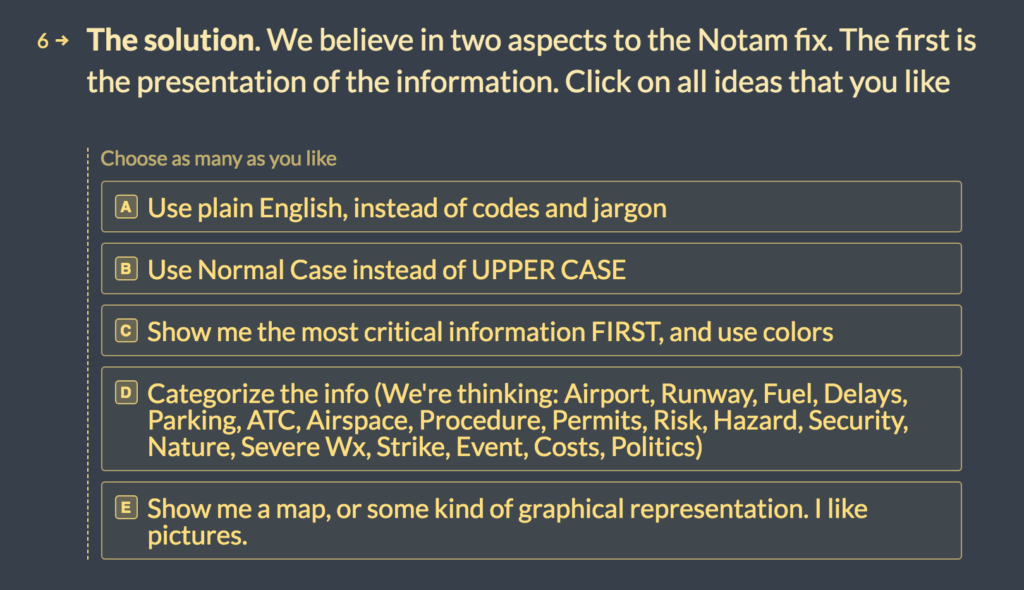
How about a change in the format of NOTAMS too, so we don’t have to wade through the whole lot in order to parse the relevant information. NOTAMS are removed when thy are no longer valid, so why cling to chronological order as an indexing system. How about putting them in order of critical relevance: Firstly, changes to airfield opening hours and services (fire, fuel etc). Secondly, changes to runway lengths/closures/etc. Thirdly, changes to approaches available. All the rest can be thrown into the mix at the end of the NOTAM.


Excellent analysis. My personal favorite is the NOTAM sort order which tells me that the REIL lights don’t work, the glideslope is out, the runway markings are non-standard, the localizer is out… ending with: runway closed. Tell me that first, all the other BS becomes irrelevant.


About two days before I saw this post, I’d sent a long email to my company telling them of the NOTAMs we don’t need to see. Then I saw this. Brilliant! I’ve just sent the link to this piece to the company to reinforce that opinion. I’m hoping our briefing pack will be several pages thinner the next time I go to dispatch.


I have come up with a name for this problem: “NOTAM Spam”. It’s a serious one, alright — ASRS Callback #426 brought it up in the context of the US NAS, and I’m sure it’s only worse for international operations. It sounds like ICAO needs to put out a recommendation or SARP about NOTAM spam control…


95% of Notam’s we read are not applicable, or nothing can be done about them. Oh great, I’ll pull out my chart and plot the 25 co-ordinates to see if this airspace will affect my flight -_- that’s one Notam example from plenty of the same type, in the same Notam briefing. Now add the other irrelevant Notam types as mentioned by others in the comments.


Thanks for the article. I shared it with my fellow dispatchers at AAL. We read pages and pages of BS notams on a daily basis and wondered if anyone else had similar feelings about the whole process.

 

Post your thoughts below! 


France Conditional Routes

Having fun in France airspace on peak days? France has just published their list of Conditional Routes (CTRs). You’ll be able to use these on busy Fridays and certain holidays:

Fridays:
FRI 20 APR, 27 APR ;
FRI 04 MAY, 11 MAY, 18 MAY, 25 MAY
FRI 01 JUN, 08 JUN, 15 JUN, 22 JUN, 29 JUN
FRI 06 JUL, 13 JUL, 20 JUL, 27 JUL
FRI 03 AUG, 10 AUG, 17 AUG, 24 AUG, 31 AUG
FRI 07 SEP, 14 SEP, 21 SEP, 28 SEP
FRI 05 OCT, 12 OCT, 19 OCT, 26 OCT.

CTRs:
From 1000-1500UTC, the following will have priorty for General Aviation Traffic:

UL722 (ANNET-KORUL above FL275)
UP620 (CAMBO-KORUL above FL275)
UN862 (UVUDO-OSMOB above FL 285)
UT21 (TOU-DIVKO above FL335)
UZ38 (MTL-PPG)
UZ539 (BOLSA-SIJAN)

Holidays:
TUE 01 MAY
TUE 08 MAY
THU 10 MAY
MON 21 MAY
WED 15 AUG.

CTRs:
From 0700-1700UTC:

UM164 POGOL-LUPEN

You can read the full AIP SUP 025/18 here.


Happy Valentines Day!

We took the day here at FSB to make you all some sweet Valentines Day cards. We think we did pretty well, and we know you all love aviation puns.

Print them out, fold them out, and you’re done planning your Valentines Day!

I’m Plane Crazy About You!
Our Love will never stall…
You’re the Prist to my Jet-A
It’s Plane to see, you’ve got me in a tailspin

If you’d like all four, you can get them here.


Happy Valentines Day!


PBCS is coming to Singapore

It’s not only the North Atlantic that will be seeing PBCS being implemented on March 29th – on that same date, the weird acronym is coming to Singapore too!

However, the requirements for Singapore airspace are slightly different to that for crossing the NAT.

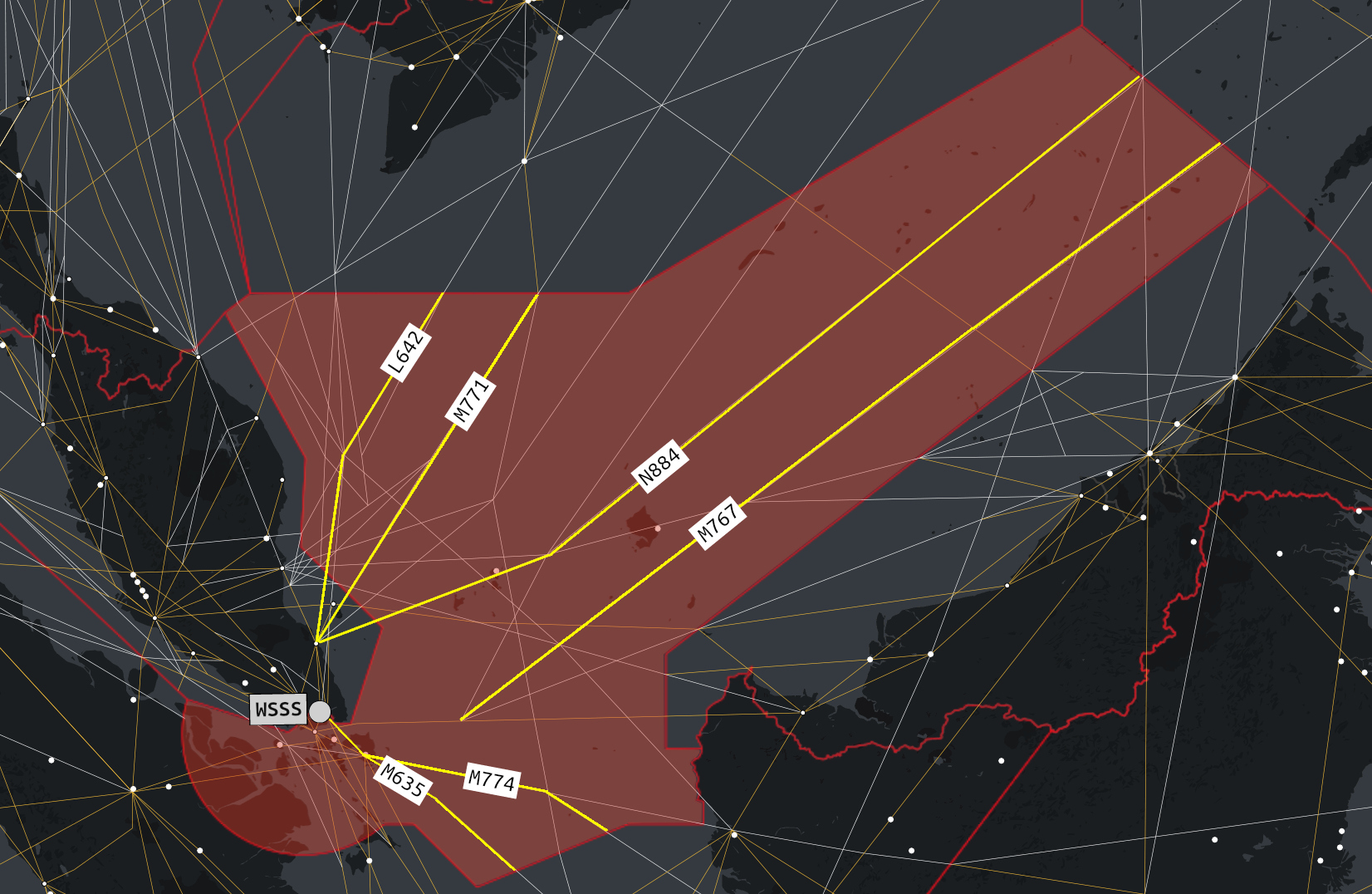
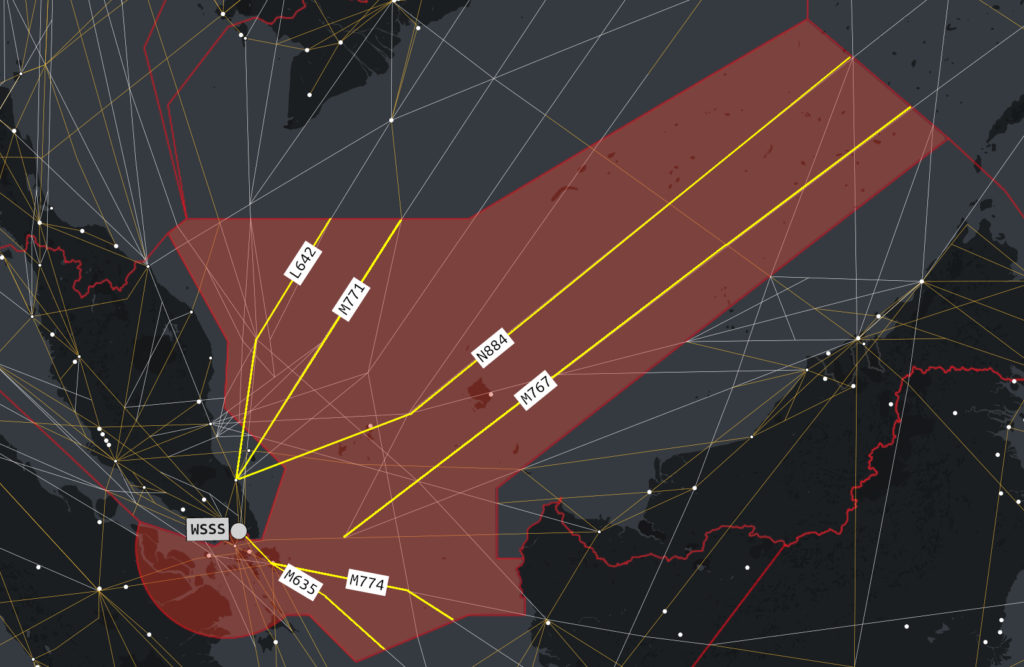
The short of it – compliant aircraft will be allowed a reduced separation of 50NM (or 10 minutes in trail) on certain airways: L642, M635, M767, M771, M774 and N884. For everyone else, it’ll be 80NM (or 20 minutes in trail). For Singapore, ‘compliant aircraft’ basically means anything with RNP10, CPDLC and ADS-C capable of the RCP240 / RSP180 performance requirement.

You’ll still need to obtain some kind of operator approval from your State of Registry. As we mentioned in our article on PBCS on the NAT – the best way to do that will probably be to submit an AFM Statement of Compliance for PBCS, showing exactly what data link communication systems you aircraft has, along with the selected performance.

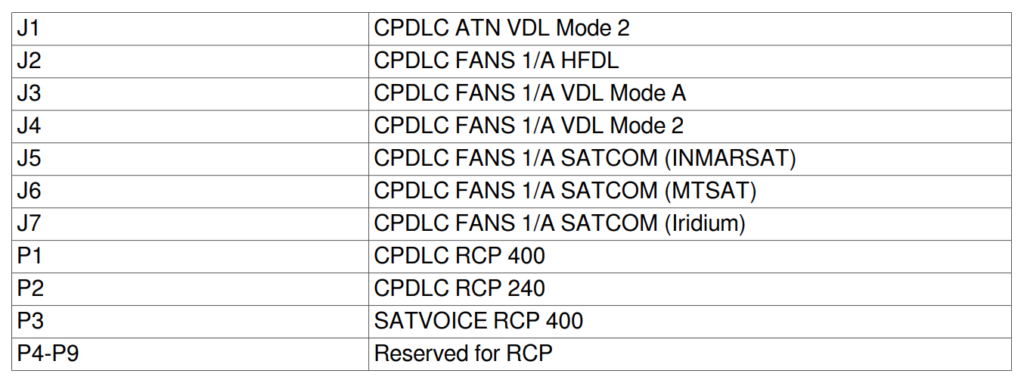
For Singapore, if you want to operate on those airways at the reduced separation, here’s what you’ll need to remember to include in your ATC FPL:

In 10a:

In 10b:

In Item 18:
Make sure you include SUR/RSP180 to show you’re capable of the RSP180 performance requirement.

For more info, check out the full AIC published by Singapore here.


2018 Edition: New NAT Doc 007 2018 – North Atlantic Airspace and Operations Manual

For the latest changes and updates on the North Atlantic, including our most recent Guides and Charts, use our NAT reference page at flightservicebureau.org/NAT.

2018 version – NAT Doc 007

The 2018 version of NAT Doc 007, North Atlantic Airspace and Operations Manual, was published in January 2018 by ICAO/NAT SPG.

Download the original document here (PDF, 5mB), and see also:


2018
 is off to a flying start again with NAT changes – these are the latest important changes. These are also published in the latest edition of NAT Doc 007, January 2018.

  • PBCS From March 29th 2018, PBCS is a requirement for the NAT Tracks between FL350-390 – RCP240 and RSP180. Read more about PBCS in our article.
  • RLAT  From January 4th 2018, Shanwick and Gander increase the number of RLAT tracks – most tracks between FL350-390 will now be RLAT – 25nm separation between them.

And there will be more! Keep an eye on the FSB NAT Changes page, we’ll keep it updated.


Feb 2nd, 2018: FSB updated the full NAT Crossing Guide “My first North Atlantic Flight is tomorrow“.

– What’s different about the NAT, changes in 2018, 2017, 2016, 2015, NAT Quick Map
– Routine Flight Example #1 – Brussels to JFK (up at 5.45am)
– Non Routine-Flights: No RVSM, No RNP4, No HF, 1 LRNS, No HLA, No ETOPS, No TCAS, No Datalink – what you can do and where you can go
Take a look.


PBCS: New rule on the NAT from March 29, 2018 – RCP240 and RSP180

Update March 16th, 2018: PBCS is turning into a PITA. After OPSGROUP input, we have an update on the latest status including rumours of delays, A056 LOA’s, and Aircraft that have failed to comply with PBCS.

For the latest changes and updates on the North Atlantic, including our most recent Guides and Charts, use our NAT reference page at flightservicebureau.org/NAT.

ICAO is introducing another acronym in the North Atlantic Region. This time, it’s PBCS (Performance Based Communication and Surveillance), and from March 29th 2018 you will need to be compliant if you want to fly on the half-tracks between FL350-390.

Initially, there will only be a maximum of three daily tracks where you will need to be PBCS-compliant between FL350-390. These will likely be the same tracks as we currently see being assigned as ‘half-tracks’ each day.

This requirement will eventually be extended to all the NAT tracks between FL350-390, but we understand that will only happen when the filing of PBCS designators on flight plans reaches the 90% mark, or 28th March 2019 – whichever comes first. Either way, the ‘transition period’ for this PBCS implementation is set to last six months, so the roll-out of the requirement to all the tracks won’t happen until Oct 2018 at the earliest!

But from March 29th 2018, Shanwick and Gander will basically just continue the concept used in the RLatSM trial – whereby daily tracks spaced at less than 60nm from an adjacent track will be specified as a ‘PBCS Track’ and will be notified in the Track Message Remark-3.

So what is PBCS?

PBCS is the thing that will replace two trials in the NAT which are both coming to an end on March 29th:

  • RLATReduced Lateral Separation Minimum: where a reduced lateral separation of 25 nm has been implemented on the tracks between FL350-390 (so now there are extra “half tracks” each day, spaced by one-half degree of latitude)
  • RLong – Reduced Longitudinal Separation Minimum: in the Shanwick Oceanic Control Area (OCA), longitudinal separation has been reduced to 5 minutes between aircraft following the same track.

When these trials end, PBCS standards will be introduced to continue to allow the application of both reduced lateral and longitudinal separation for aircraft that meet the Required Communication Performance (RCP) and Required Surveillance Performance (RSP) specifications.

How do I comply with PBCS standards?

To operate on the PBCS tracks between FL350-390, you will need to be RNP4 compliant, with CPDLC capable of RCP240, and ADS-C capable of RSP180.

But watch out! Some aircraft do have ADS-C and CPDLC but have never demonstrated RCP or RSP, and have no statement of compliance (e.g. most Honeywell Primus aircraft and several early Boeing aircraft). These aircraft may struggle to get approval to operate in PBCS airspace. Which brings us neatly on to…

Do I need PBCS approval from my state of registry?

PBCS approval will differ depending on which country operators are from.

For UK operators, check the requirements here.

US operators will need to update their LOA for Data Link Communications (A056). The FAA have published a new guide, which tells operators exactly what they need to do to get this authorisation, namely:

  1. Submit an AFM Statement of Compliance for PBCS, showing exactly what data link communication systems you aircraft has, along with the selected performance
  2. Since July 2016, various oceanic FIRs have been collecting data on whether certain aircraft meet RSP and RCP criteria. You need to make sure your aircraft isn’t already listed as having failed to meet these criteria, by checking here: https://www.faa.gov/air_traffic/separation_standards/pbcs_monitoring/

What new codes do I need to put down on my flight plan?

  • FANS 1/A CPDLC equipped aircraft planning to operate in the NAT HLA shall insert the appropriate designator (J2, J3, J4, J5 and/or J7) in Item 10a of the flight plan.
  • FANS 1/A CPDLC RCP 240 compliant aircraft intending to operate in the NAT HLA shall insert the designator P2 in Item 10a of the flight plan.
  • FANS 1/A ADS-C compliant aircraft planning to operate in the NAT HLA shall insert the designator D1 in Item 10b of the flight plan.
  • FANS 1/A ADS-C RSP 180 compliant aircraft planning to operate in the NAT HLA shall insert SUR/RSP180 in Item 18 of the flight plan.
  • RNP 4 compliant aircraft planning to operate in the NAT HLA shall insert PBN/L1 in Item 18 of the flight plan.

If I’m not eligible for PBCS, where can I go? 

ATC may allow you to do either of the following, depending on how stressed/busy they are (i.e. decided on a ‘tactical basis’):

  • You can infringe on the daily PBCS tracks between FL350 – FL390 at only one point (including Oceanic Entry/Exit Point) i.e. cross but not join an NAT PBCS track
  • You can climb or descend through levels FL350 – FL390 on a PBCS track provided the climb or descent is continuous.

In their NAT OPS Bulletin 2018_001, ICAO have published a handy little picture to demonstrate this:


Further information:

  • For a great FAQ on all things PBCS, check out the latest FAA document here.
  • For more info on the PBCS implementation, check out the full UK AIC here.
  • To figure out where you are welcome on the NAT, depending on what equipment and training you have, check out our quick reference guide here.
  • Special thanks go to Mitch Launius at 30westip.com for help with this post. For assistance with international procedures training for business aviation crews worldwide, and to watch an excellent webinar about all things PBCS-related, check out the 30westip.


A319, A330 hit by gunfire at Tripoli

Heavy clashes broke out in the Libyan capital Tripoli on Jan 15, leaving at least twenty people dead and forcing HLLM/Mitiga airport to close for five days, re-opening again on Jan 20.

Gunfire at the airport damaged multiple aircraft, including a few A319s and at least one A330.

Here are some photos of some of the damage:


Both airports in Tripoli are focal points for fighting. Given their strategic value, they periodically serve as headquarters for various local militias.

HLLT/Tripoli has been more or less completely closed since mid-2014, when at least 90% of the airport’s facilities were destroyed in fighting between local militias. Since then, international flights to and from Tripoli have been using HLLM/Mitiga instead. Technically, HLLT/Tripoli is now only available for VIP, emergency and ambulance flights; but in reality, it should be avoided at all costs.

HLLM/Mitiga is the old military airfield, which is now being used for civilian traffic, since the closure of HLLT/Tripoli. However, the airport has been plagued by violence over the past few years, and has been forced to close a number of times.

Back in July 2017, we reported on the intense fighting that took place at Mitiga airport where 5 people were killed and 32 injured, and then on 19 Oct 2017, a Libyan Airlines A330 at the airport was hit by gunfire during an exchange of fire between local militia in the district directly south of the airport.

A number of countries already have blanket warnings in place against operating to Libya, and they all say pretty much the same thing: avoid the entire country – don’t land at any airport, don’t even overfly.

So we suggest you ignore whatever gets pumped out on the HLLL FIR Notams about airports being “AVAILABLE H24 FOR INTERNATIONAL FLIGHTS AND EN-ROUTE DIVERSIONS”. (You can read that nonsense in full by clicking here.)

Libya remains categorised as a Level One country (Do Not Fly) at safeairspace.net


Western countries lift bans on Iraq airspace

Back in December 2017, the U.S. FAA issued KICZ A0025/17 which lifted the full ban on the Baghdad FIR, and allowed U.S. operators to overfly the country above FL260.

Now the three other big countries that regularly publish airspace safety information—France, Germany and the UK—have followed suit with new advice of their own.

France recommends that overflights should only be on airways UM860 and UM688, and should be at or above FL320.

The UK says that overflights should only be on airways UL602 to ALPET, UM860 and UM688, and should be above FL250.

Germany just say that overflights should be at FL260 or above.

Back in November 2017, several international airlines (Emirates, Turkish) resumed Iraq overflights after their national authorities removed restrictions. With the announcement that Iraqi forces had defeated ISIS and that the country had been fully returned to government control, the airspace risk in Iraq has reduced.

Iraq has published a few of its own Notams with various different areas of closed airspace at lower levels due to ongoing military operations. The only one that affects the higher flight levels is in the north-west, along the border with Syria, where a no-fly area has been introduced from SFC-FL460.

However, airways UM860 and UM688 (the two main routes through the Baghdad FIR) to the east of this zone are unaffected, and now effectively open above FL260.

This means that operators will have shorter routes through the Middle East available once again. Emirates is already reported to be routing around 150 flights a day via Iraq, rather than having to take longer routes via Saudi Arabia or Iran – so expect this bit of airspace to start to get busy again soon.


Europe now requires 8.33 VHF radios (almost) everywhere

Effective January 1st, 2018, the official line is that you need an 8.33 VHF Radio to operate anywhere in Europe. If you’re heading to Europe without one, expect problems.

Until now, it’s really only been a requirement above FL195 – 8.33 has been around at the higher levels since 2007. However, Europe is keen to get everyone on the same page and make sure new frequencies can be used by all aircraft at the lower levels also.

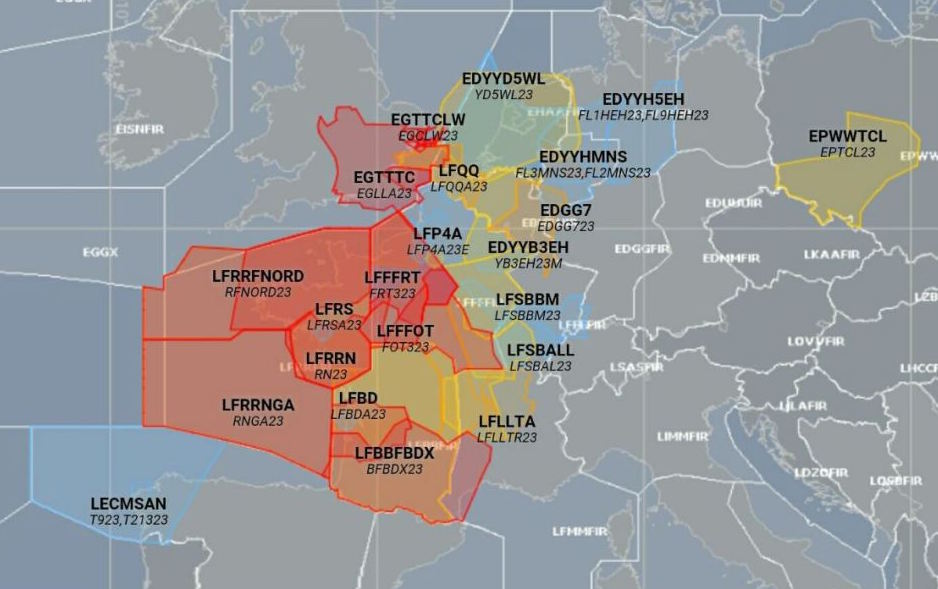
However, not everywhere is actually requiring 8.33 just yet.  Eurocontrol have built a handy tool that shows each the requirements for each airspace sector. Click on the image below to check it out.

Can I get an exemption? If you’re operating a ferry, delivery, or some other flight where you don’t have 8.33, then you should be able to get an exemption to operate without 8.33 – but it will vary state to state. Write to the Ministry of Transport for the particular state.

Eurocontrol have published all the details on this as follows:

Above FL195, in the IFPZ, not equipped aircraft may be exempted from the carriage of the 8.33 kHz radios (refer to the national AIP of the state concerned to see if the flight is eligible) in which case the letter Y shall not be inserted in Item 10a (Equipment), but the letter Z shall be inserted in Item 10a as well as COM/EXM833 in the Item 18 (Other Information) of the filed flight plan.

Below FL195, in the airspace of the EU member states (plus Switzerland and Norway) some airspaces may be exempted from the carriage of the 8.33 kHz radios (refer to the national AIP of the state concerned) in which case the airspace is not inserted in the area where the mandatory carriage check takes place. Such exemption will permit a non-equipped aircraft to fly but only if the flight trajectory remains exclusively in airspaces where 8.33 kHz is not mandatory.

Below FL195, in the airspaces of the EU member states (plus Switzerland and Norway), state aircraft non-UHF and non-833 are exempted. The letters Y and U shall not be inserted in Item 10 (Equipment), but STS/STATE shall be inserted in the Item 18 (Other Information) of the filed flight plan.

In the IFPZ, State aircraft that are not equipped with 8.33 kHz capable radios but are equipped with UHF shall be permitted to fly in 8.33 kHz airspace where UHF coverage is provided or special procedures are implemented (see the national AIP of the State concerned). To indicate such, the letters U and Z shall be inserted in Item 10a (Equipment) and ‘COM/EXM833’ shall be inserted in Item 18 (Other Information) of the filed flight plan.


Confused? Here’s a quick crib-sheet of what to do:

When you file a flight plan in Europe, it goes through the automated IFPS system, which is now quite clever at checking for 8.33 kHz radio compliance.

The IFPS system will crosscheck between the concerned airspaces crossed by the flight plan and the radio communication equipment indicated in Item 10: (Equipment) and Item 18 (Other information) provided in the submitted message.

Here’s what will happen, depending on what you put in your flight plan:

  • If Item 10 (Equipment) of the submitted message contains Y, then that flight is considered to be compliant.
  • If Item 10 (Equipment), of the submitted message does not contain Y, but contains Z and U and the exemption indicator COM/EXM833 is present in Item 18 (Other Information), and the flight is a STATE flight, then that flight shall be considered compliant.
  • If Item 10 (Equipment) of the submitted message does not contain Y but contains the exemption indicator COM/EXM833 and the flight is not penetrating the 833_UHF_VHF region and is entirely within the 833_EUR_IFPS, then that flight shall be considered compliant.
  • If Item 10 (Equipment) of the submitted message does not contain Y, neither U and Item 18 (Other Information) contains STS/STATE and the flight is exclusively in the airspace of the EU member states (plus Switzerland and Norway) below FL195 then that flight shall be considered compliant.

In all the other cases, the flight shall be considered not compliant and shall fail automatic processing!


More NAT half-tracks are coming

Update Jan 23: The current phase of the trial for RLatSM Tracks will come to an end on March 29, when PBCS standards will be introduced for the NAT tracks. More info on that here.

Since Dec 2015, there have been three daily NAT tracks spaced by one-half degree between FL350-390. These are officially called ‘RLatSM Tracks’ (Reduced lateral separation minima), but we all just prefer to call them ‘Half-Tracks’.

Separating flights by one-half degree of latitude rather than the standard one degree means that aircraft can be separated laterally by 25nm, which helps improve the efficiency of North Atlantic operations.

In Jan 2018 the Half-Tracks will be expanded from the three that now run each day, first by one additional track and then (maybe) to all NAT Tracks between FL350-390 inclusive. Jan 4 is the earliest day that this might happen, but because they will be decided tactically, it will most likely be the first busy day after Jan 4.

If you want to operate on the RLatSM tracks, you’re going to need CPDLC, ADS-C, and RNP4; along with the other standard pre-requisites for operating in the NAT HLA between FL350-390: an HLA approval, TCAS 7.1, RVSM approval, two LRNS, and a working HF radio. To figure out where you are welcome on the NAT, depending on what equipment and training you have, check out our quick and dirty guide here.

One thing to be cautious of when using the half-degree tracks – most aircraft FMC’s truncate lat/long waypoints to a maximum of 7 characters, so it will often show up as the same waypoint whether you’re operating along whole or half degree waypoints. So when operating on the half-tracks, just remember to double-check the full 13-character representations of the lat/long waypoints when you enter them into the FMC.

For more details about the new RLatSM procedures, have a read of the UK AIC 087/2017 here.


Missile attack on OERK/Riyadh was “warning shot”, other airports now targets

Update: Yemen-based Houthi forces fired another missile into Saudi Arabia on Dec 19. Saudi Arabia claim they intercepted it south of the capital Riyadh, with no damage or casualties reported, though a loud explosion was heard throughout the capital. The Houthi forces claim they were targeting a palace in southern Riyadh. This follows the previous Houthi missile attack on OERK/Riyadh Airport on Nov 4th, when they said: “the missile that targeted King Khalid airport was a warning shot and we warn all companies to prevent landing of their planes in the UAE and Saudi Arabia airports”. A Yemeni Army spokesman has said that the November 4 missile attack on OERK was a “warning shot”.

That missile was launched from rebel territory in Yemen, specifically targeting OERK/Riyadh King Khalid airport. Although most mainstream media carried the “missile was intercepted” story, we’re not sure that this is the case – even if it was, parts of it did fall on airport property and there was a visible explosion.

The spokesman said “the missile that targeted King Khalid airport was a warning shot and we warn all companies to prevent landing of their planes in the UAE and Saudi Arabia airports”.

Given that the Yemeni rebels have demonstrated their capability of reaching their target, there is some credibility to the threat.

Operators should consider this in operations to OE** and OM** airports.

At present, there is no indication of increased threat to overflight of Saudi or UAE airspace.

On Monday, the Saudi Arabia coalition closed all air, sea and land borders with Yemen after the missile strike on Riyadh on Nov 4, effectively closing all airports in Yemen. Yemenia airlines said that the coalition, which controls Yemen’s airspace, had declined it permission to fly out of Aden and Seiyun, the only two remaining functioning airports. OYSN/Sanaa has been closed since August 2016.

Also, all UN humanitarian flights to Yemen, one of the few international operators, have been cancelled after flights were no longer given clearance from the Saudi-led coalition to land in the country.

SCATANA remains active in the southwestern portion of the Jeddah FIR, no new Notams have been issued in relation to the last few days.

For further:

  • Monitor Saudi Arabia page on SafeAirspace
  • Monitor OPSGROUP member updates
  • Talk to us at team@fsbureau.org


Afghan/Pakistan border waypoint name changes

Afghanistan has changed a bunch of waypoint names on its border with Pakistan today. If you’re flying that way, you’ll need to know these for when you submit your Pakistan permit – they only approve permits for specific entry/exit points.

For more details, check out the full AIP AIRAC AMDT here.

Overflight advice for Afghanistan averages out at a minimum FL250, though as with other mountainous countries we think FL320 is a better starting point. For Pakistan, the consensus among foreign authorities is to cross the OPLR/Lahore and OPKR/Karachi FIR’s at higher flight levels. For full details check out safeairspace.net

If you want to know exactly how to get your landing or overflight permits, check out our Permit Book, which tells you how to get a permit for each and every country in the world!


Cathay crew witness missile re-entry from North Korea

Crew onboard a Cathay Pacific flight witnessed the re-entry of North Korea’s latest missile near their position late last week. The CX893 service from San Francisco to Hong Kong on Nov 29 was over Japan at the time when North Korea launched its missile.

The crew reported: “Be advised, we witnessed the DPRK missile blow up and fall apart near our current location.”

Here’s Cathay Pacific’s full statement:

“On 29 November, the flight crew of CX893 reported a sighting of what is suspected to be the re-entry of the recent DPRK test missile. Though the flight was far from the event location, the crew advised Japan ATC according to procedures. Operation remained normal and was not affected. We have been in contact with relevant authorities and industry bodies as well as with other carriers. At the moment, no one is changing any routes or operating parameters. We remain alert and review the situation as it evolves."

North Korea’s missiles are larger, and can fly further, than the other missiles we’ve previously seen. Over the past year, most of these missiles land in the Sea of Japan, well inside the Fukuoka Flight Information Region (Japanese airspace). But as we see with this latest test, there is clearly a danger of some of these missiles not re-entering the atmosphere intact – meaning that a debris field of missile fragments passes through the airspace, not just one complete missile. If you haven’t done so already, make sure you read this: our article on why North Korean missiles are now a real threat to Civil Aviation.

This latest test is also significant because of its unprecedented altitude – 4500km (2800 miles). Experts seem to agree that if it had been fired on a standard trajectory, the missile would have been capable of traveling around 13000km (8100 miles), meaning it could have struck anywhere in the mainland US.

If you’re operating in the region, we recommend avoiding the ZKKP/Pyongyang FIR entirely and avoiding the affected areas over the Sea of Japan. For more info, check out Safeairspace.


Bali – Airport Status

Volcanic eruptions from Bali’s Mount Agung earlier last week forced the closure of WADD/Denpasar and WADL/Lombok airports, as volcanic ash spread across both islands.

Here’s the current situation at the airports on Dec 4:

  • WADD/Bali: Re-opened on Nov 29. (Although the airport will be closed for runway repair from 18-23z daily [except Saturdays] until Dec 31).
  • WADL/Lombok: Re-opened on Nov 30. 
  • WARR/Juanda: Open and operating. So far has not been affected at all by the volcanic ash. (Although the airport will be closed for runway repair from 16-22z daily until Jan 06).

Although Mount Agung has now stopped emitting ash, another large eruption is still likely. The local monitoring agency are registering powerful and continuous tremors, and authorities have ordered locals and journalists within 10km of the volcano to evacuate. Further intermittent airport closures are possible, depending on wind direction.

We will keep this page updated with the latest news as we get it.


Strike cancelled at Tel Aviv Airport

Update 1800z Nov 30: A strike by airport workers at LLBG/Tel Aviv which was originally planned for this weekend has now been cancelled.

The Airports Authority says the strike was canceled after the government intervened and were able to reach a deal with the workers’ union to delay any strike action this weekend.

We’ll keep this page updated with any more news as we get it.


FAA warns about fuel contamination

The FAA Safety Team have issued a mysterious new Notam today, about a possible fuel contamination problem at airports in the central U.S.

Update: The FAA has sent a follow up, seems things weren’t as widespread as they made it sound:

SPECIAL..NOTICE..

THE FAA CONTINUES TO INVESTIGATE A FUEL CONTAMINATION PROBLEM. SUBSTANTIAL EVIDENCE INDICATES THE CONTAMINATION HAS BEEN ISOLATED TO GENERAL AVIATION AND MILITARY AIRCRAFT AT EPPLEY AIRFIELD, OMAHA, NE (KOMA) DURING THE TIME PERIOD NOVEMBER 18-20, 2017. FAA RECOMMENDS THAT ALL AIRCRAFT OPERATORS CHECK NOTAMS FREQUENTLY FOR POSSIBLE CHANGES TO THIS ONGOING SITUATION.

FOR FURTHER INFORMATION CONTACT FLIGHT STANDARDS AIR TRANSPORTATION DIVISION AT 202-267-8166.

Here’s what they have to say:

FDC 7/4900 (A1362/17) - FL..SPECIAL NOTICE..THE FAA IS CURRENTLY INVESTIGATING 
A FUEL CONTAMINATION PROBLEM THAT HAS RECENTLY APPEARED IN JET FUEL WI THE CENTRAL U.S. THE EXACT SOURCE AND THE GEOGRAPHICAL SCOPE OF THE CONTAMINATION IS UNKNOWN. THERE HAVE BEEN REPORTS OF BLOCKAGES IN FUEL FILTERS, FUEL NOZZLES, AND FUEL TANKS. THIS HAS RESULTED IN SEVERAL ENGINE FLAMEOUTS AND OTHER ERRATIC ENGINE OPS. ALL OPERATORS ARE ADZ TO CLOSELY FOLLOW FUEL SAMPLING PROC AND REPORT ANY DISCOVERY OF CONTAMINATION OR ERRATIC ENGINE OPS TO THEIR FLIGHT STANDARDS DISTRICT OFFICE OR NEAREST FAA FACILITY. 30 NOV 00:20 2017 UNTIL 30 DEC 00:20 2017. CREATED: 30 NOV 00:48 2017

We haven’t seen or heard any reports about this issue recently. The FAA Safety Team say that this is currently still under investigation, and can’t provide any additional information just yet. We’ve also reached out to a few of the major suppliers, who are saying pretty much the same thing – no more info yet, beyond the Notam.

Several sources are telling us the NOTAM is related to a fuel issue at KOMA, limited to a single truck at a single FBO:

F0013/17 NOTAMN Q) ZMP/QFUXX/IV/NBO/A/000/999/4118N09553W005 A) KOMA B) 1711211550 C) 1712212359 E) [DEFENSE LOGISTICS AGENCY ENERGY ADVISORY] CONTRACT FUEL NOT AVAILABLE TRUMAN ARNOLD COMPANIES DBA TAC AIR IS HEREBY NOTIFIED TO CEASE REFUELING ON ALL U.S. AIRCRAFT UNDER INTO-PLANE CONTRACT SPE600-16-D-0066 AT LOCATION KOMA – EPPLEY AIRFIELD AIRPORT, NEBRASKA. DUE TO SAFETY OF FLIGHT ISSUES REPORTED ON TWO AIR FORCE AIRCRAFT REFUELED AT THEIR FACILITY 18 NOV 2017 THAT RESULTED IN EMERGENCY LANDINGS. REFUELING OF U.S. GOVERNMENT AIRCRAFT IS IMMEDIATELY SUSPENDED AND SHALL REMAIN SO UNTIL THE DLA ENERGY CONTRACTING OFFICER NOTIFIES YOU OTHERWISE IN WRITING.


If you’ve experienced any fuel contamination issues recently, we’d love to hear about it! Email us at team@flightservice.org


French Guiana ATC strikes continue

There seems to be no end in sight for the French Guiana ATC strikes. Here’s the current situation:

SOOO FIR: the entire airspace will be uncontrolled from 00-11z until further notice (extended beyond 01Dec).
That means there will be no ATC staff on duty during these times. Basically, during the closure, there’s a contingency plan in place: so if you want to cross this bit of airspace, there are now very specific routes and levels you have to fly at. Check these carefully prior to ops, and make sure you’re at the right flight level before crossing the FIR boundary. Once you’re inside the FIR, don’t change your speed or level.

To read the contingency plan in full, with all the published routes and what to do, click here.

TTZP/Piarco ATC (who control the FIR to the north) have said that everything has been running smoothly so far with this contingency plan, and they haven’t had any problems with directing overflying traffic from TTZP to SOOO.

SOCA/Cayenne Airport: the airport will be limited between 0100-1100Z until further notice.  This means you can’t file as an alternate, and if you’re arriving or departing during these times, you’ll need to call ATC for PPR at +594 35 92 72, or +594 39 93 02. 

We’ll keep this page updated with the latest news as we get it.


International airlines resume Iraq overflights, airspace reopens today

Emirates will be the first international airline to resume overflights of Iraq, with the first flights through the Baghdad FIR expected today, Monday Nov 27. According to FSB sources, effective 0001Z this morning the GCAA will authorize UAE based airlines to use this airspace, after several years of restrictions. Emirates anticipates that about 150 flights a day will now route via Iraq, rather than having to take longer routes via Saudi Arabia or Iran.

This is the first in several steps we expect will lead to almost full resumption of overflights over Iraq, meaning operators will have shorter routes through the Middle East available once again.

The next step will be for the FAA to authorise US carriers to overfly Iraq – most likely at FL260 or above. That approval was initially slated for the end of October, but was held back after events on the ground posed a security concern for UM860 and UM688 – the two main routes through the Baghdad FIR to Europe and vv.

The FAA were about to hit ‘publish’ on a Notam  which would have enabled US airlines to start overflying Iraq again. The text of this Notam included:

  • An amendment to the existing Iraq restriction
  • An authorisation for US airlines and operators to overfly Iraq at or above FL260

But then, a military operation by Iraqi forces to take control of Kirkuk from the Kurds the same day, created concern as to overflight safety. Kirkuk sits pretty much underneath the UM860 airway on the map above.

For now, only UAE carriers have been given the green light for Iraq. Other operators and authorities are likely to follow suit soon.

See also:


Overflight risk – Radioactive Russian airspace

Media reporting in the last 24 hours has raised concerns amongst operators about a possible Nuclear accident in Russia, leading to a radioactive cloud in the region of Chelyabinsk, in the Ural mountains. USCC/Chelyabinsk is about 100nm south east of USSS/Ekaterinburg Airport.

Russia has denied that any such accident occurred, but cannot account for the increased levels of radioactivity in the region, which were 1000 times higher than normal. Through the Russian met service, they have confirmed the high radiation levels.

However, assessing a report last week from the French Nuclear watchdog, ISRN, we believe there should not be any risk to operators, especially for overflights. The facts are as follows:

  • The high levels of radiation were first detected at the end of September in Europe
  • Since the beginning of October, levels have decreased in Europe
  • ISRN says they are not concerned about risks to health, even at the higher levels
  • However, no recent data is presented from Russia

Further reading:


Zimbabwe Coup – Airport update

FVZZ/Zimbabwe (Don’t fly here) There’s a coup happening, watch live on CNN.

FVZA/Harare is operating, but the usual coup-style stuff is going on – lots of soldiers at the airport, checkpoints on the way in, and journalists being denied entry on arriving flights.

The city has tanks on the streets. President under house arrest.

FVZA was renamed last week from Harare International Airport to Robert Mugabe International, this might be swiftly reversed.

Both UK and US embassies are advising people to shelter in place until the situation becomes clear.


New rules for flying from the U.S. to Cuba

Update 5 June 2019: All US private flights to Cuba are banned, under a new BIS rule. No Part 91 operations are allowed any longer.

Update 9 Nov 2017: Effective today, the US has new rules for travel to Cuba as an individual. These restrictions will limit the ability of US citizens to undertake most personal travel to Cuba unless part of a licensed group. The new measures will also bar US citizens and companies from engaging in business activities with over 180 Cuban enterprises the US government has concluded are linked to the Cuban government in some way (check the full list here). The new policy will not affect travellers with existing bookings, such as a flight or hotel reservations. Upon their return, all US citizens will be required to maintain proof of all activities in Cuba, and must ascertain that no U.S. laws were violated during their trip. OFAC and CBP will enforce the new regulations, much talk of hefty fines.


If you’re traveling to Cuba from anywhere other than U.S. territory, it should be a doddle. Get a landing permit, arrange your ground handling, file your flight plan, and off you go.

If you’re trying to get to Cuba from the U.S. though, it’s a different story…

A tale of two Presidents…
In December 2014, President Obama announced plans to improve relations between the U.S. and Cuba, and in the July of the following year a lot of restrictions were lifted for N-registered aircraft operators wanting to do private and charter flights to Cuba.

However, the U.S. authorities (the Treasury Department, in this case) didn’t want to break with tradition and make the process completely straight-forward and misery-free, so their Office of Foreign Asset Control (OFAC) introduced a rule which means that only 12 categories of travel are permitted between the US and Cuba. This was then further complicated by legislation introduced by President Trump in June 2017! Here are the permitted categories of travel:

(1) family visits
(2) official business of the U.S. government, foreign governments, and certain intergovernmental organisations
(3) journalistic activity
(4) professional research and professional meetings
(5) educational activities or so-called “people-to-people” travel – it’s not possible to claim this category if you make your own travel arrangements; this is only possible for officially sanctioned group travel.
(6) religious activities
(7) public performances, clinics, workshops, athletic and other competitions, and exhibitions
(8) support for the Cuban people
(9) humanitarian projects
(10) activities of private foundations or research or educational institutes
(11) exportation, importation, or transmission of information or information materials
(12) certain export transactions that may be considered for authorisation under existing regulations and guidelines.

As you might have spotted, you cannot simply travel from the U.S. to Cuba for the purpose of general tourism! You have to match one of these 12 categories.

Applying for a licence to travel
Here’s the thing: you don’t actually have to do this.

Once you decide which category applies to you, you do not need to apply for any kind of licence to travel from OFAC – you will simply qualify under their rules for the so-called ‘General Licence’.

However, each one of these 12 categories for permitted travel is highly controlled and has specific requirements that must be met for the exemption to apply. If you want help in trying to work out which one of these categories might apply to you, read the FAQ section of the official guidance – it’s actually pretty good: https://www.treasury.gov/resource-center/sanctions/Programs/Documents/cuba_faqs_new.pdf

Once you’ve done that, you might want to read the extra little FAQ they put together, following the changes made by President Trump in June 2017 (basically this just says that no more individual travel for educational or “people-to-people” will be allowed – only group travel will be allowed in this category): https://www.treasury.gov/resource-center/sanctions/Programs/Documents/cuba_faqs_20170725.pdf

I don’t match any of those 12 categories – what do I do?
If you do not match any of the categories, things get tricky. In this case you would need to apply to OFAC for a ‘Specific Licence’ – although this process can take up to 3 months. You can do this online at the US Treasury Dept page: https://www.treasury.gov/resource-center/sanctions/Pages/licensing.aspx

Should I book a trip myself, or book through a tour agent?
If you really are going to Cuba to visit relatives, or for some kind of religious pilgrimage, you could probably get away with making your own travel arrangements.

If not though, the easiest way to make sure you qualify will probably be to just engage the services of a U.S. based company to help make your travel arrangements – they’ll book you on to some kind of tour and get you to a sign a “travel affidavit” to confirm that you really are going to Cuba for the reason you say you are!

If you decide to make your own arrangements, you’ll still need to make sure you carry one of these documents. You don’t need to submit it anywhere in advance, but you do need to keep it handy just in case anyone from CBP asks to see it. To get a sample of this form, click here.

Bear in mind that if you book through a tour company, you will be traveling under a specific, government-approved itinerary. That means that when you get to Cuba, officially, you can’t just go wandering off by yourself. Your tour company won’t be able to book you into Cuban hotels, rent cars or take buses at all, since the Cuban government owns them. You’ll most likely be booked into a bed-and-breakfast, or a homestay, and you will only be able to take part in pre-approved, pre-arranged activities.

All this talk of OFAC and categories and travel affidavits is hurting my brain. Isn’t there an easier way?
Technically, yes there is.

If you want to avoid all this bureaucratic misery, you could always fly to Cuba by way of Mexico or Canada. There are no restrictions from those countries regarding travel to Cuba, so U.S. citizens can fly straight in. Remember, Cuba doesn’t restrict U.S. citizens from entering – just get a visa in advance, and that’s all you need.

However, bear in mind that when you return back to the U.S. – if you get caught out trying to hide your trip to Cuba from U.S. Customs officers, you could face serious punishment.

Cuba landing permit
You’ll need one, regardless of where you’re flying from, or what country your aircraft is registered in. The official notice required by the Cuban authorities to process a permit request is 3 working days. No docs are required to obtain an overflight permit, but for a landing permit, the following is required: CoR, CoA, CoI, crew and pax information, reason for flight and receiving party in Cuba for landing approval. Which brings us neatly on to…

Receiving party
Cuba will only give you a landing permit if you provide the name and contact details of a local receiving party or ‘business sponsor’. If you’re trying to do it yourself and do not yet have a local receiving party arranged in Cuba, you should contact your ground handler to check if they can act in this role for you.

Landing fees
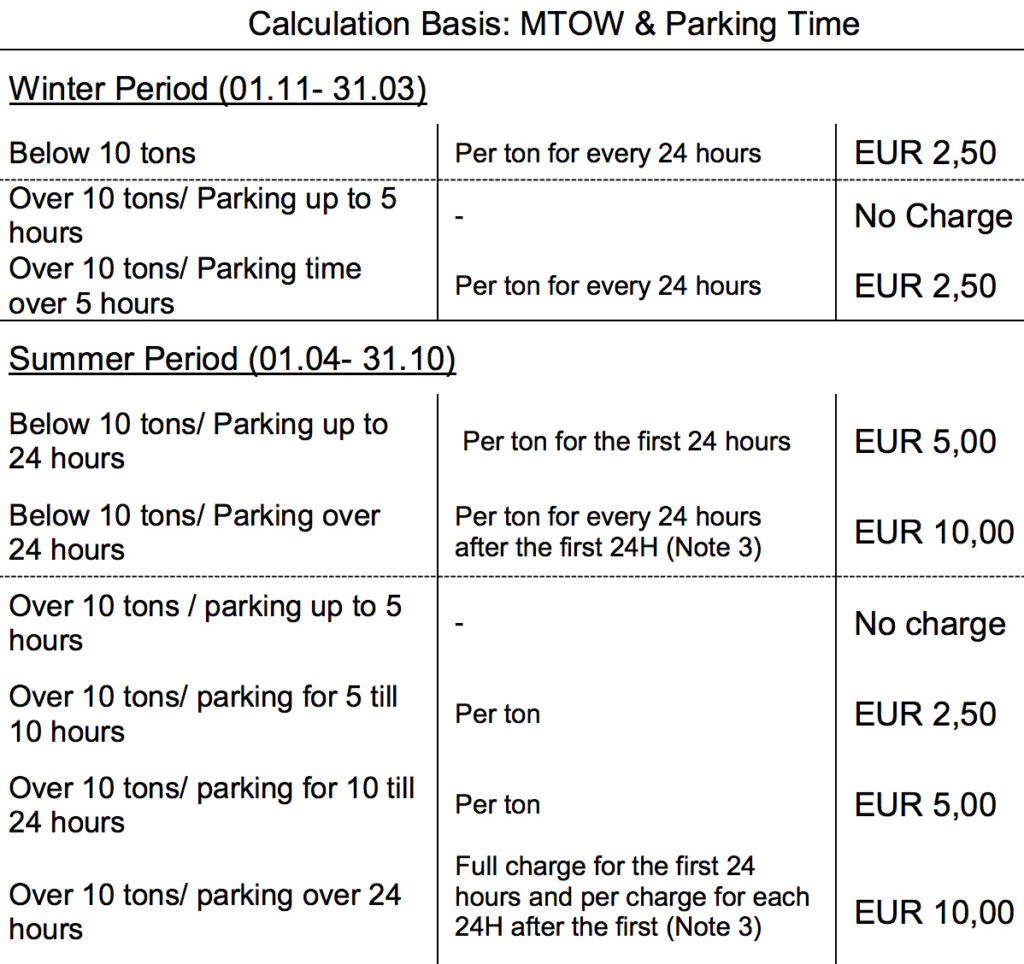
There’s actually a very simple way to work these out:

Handling
The Cuban CAA require all operators to obtain handling confirmation from a company based in Cuba. If you don’t have a copy of an ‘Airworthiness Review Certificate’ for your aircraft (N-registered aircraft, for instance), you have to show a copy of aircraft maintenance log book entries showing the recent work performed on the aircraft and confirming that the aircraft was returned to service in an airworthy condition. Also, any jet over 10,000 LBS MTOW must provide a noise certificate via their handling company.

Visas
If you’re flying to Cuba from the U.S. you’re going to need to get proper business visas (remember, you’re not a tourist!). Although it is possible to obtain these on arrival in Cuba, reports suggest that it takes ages to process, so it’s probably best to get these in advance.

Insurance
Make sure that your aircraft insurance does not specifically exclude travel to Cuba – many do!

Foreign passengers
If you’re flying between the U.S. and Cuba with foreign nationals onboard – they are subject to the exact same rules as U.S. nationals in terms of meeting OFAC licensing requirements. The only exception is for Cuban citizens present in the United States in a non-immigrant status – they can travel to Cuba without having to tick any of those 12 OFAC boxes.

Time on the ground in Cuba
U.S.-registered aircraft are allowed remain in Cuba for up to seven consecutive nights. If you want to go for longer then you will need to get an export licence – that gets complicated.

US Airports of Entry for your return flight
Recent policy changes mean that aircraft can now depart to Cuba from any customs designated airport in the U.S. (this applies to both U.S. and foreign-registered aircraft). However, when you return to the US, as you will be entering the from the south, you will need to land at the first designated airport of entry that is nearest to the point of crossing the U.S. border or coastline; if you want to land elsewhere you will need to get a Border Overflight Exemption.

Here is the list of southern airports of entry, from US Code of Federal Regulations 19 122.24

More information: There are a ton of reports on Cuba in Airport Spy, which is where all of us in OpsGroup tell each other about the airports we’ve been to – good ATC, bad handlers, rip-off fees… think of it as the TripAdvisor of airports. Also, if you want to know exactly how to get your Cuba landing permit, check out our Permit Book – this tells you how to get a permit for each and every country in the world!


ENSB: No more direct flights, emergency diverts still OK

This is now officially a domestic airport – international arrivals are no longer permitted.

We asked the Norwegian CAA the million-dollar question: can ENSB still be used as an ETOPS or emergency enroute alternate?

Their response: “ENSB now being a domestic airport, it shall not be used as an alternate airport in normal flight planning, but in case of emergency, medical – or flight safety related, the airport may be used.”

In other words, if you are planning a Polar flight and want to use ENSB as an ETOPS or emergency enroute alternate, you can. 

We also spoke with the ATC tower at the airport: they confirmed that you can still use ENSB as an emergency divert, and they have someone there on duty H24. The normal RFF category is 8.

So why has the airport been downgraded from international to domestic?

It seems it has something to do with the authorities desire to limit the amount of charter fights operating directly to Svalbard. Now, if you want to go there you will first have to go to one of Norway’s international airports to clear customs, and then continue on to Svalbard as a domestic flight. The Norwegian CAA say direct international charter flights may still be allowed “in the interests of tourism”, but it seems this will be the exception rather than the rule.

Interestingly, you can still fly to ENSB direct from Russia, as they have a separate agreement from 1974 regarding the use of  the airport – which is unaffected by this new rule.

Even more interesting is that when you get to Svalbard, if you decide to leave the main town of Longyearbyen, it is a legal requirement to carry a gun, and to know how to use it – they’re not joking about those polar bears.


Iraq ATC strike – update

At 0800 local this morning, Iraqi controllers returned to work. For the last few days, Iraqi ATC had been on strike for better pay, effectively closing the Baghdad FIR and intermittently Baghdad and Basra airports. An 80nm in trail requirement has been removed. Military controllers, pictured above, who had been running ORBI/Baghdad Airport have completed their duties.

Local ATC controllers tell us that the strike is over – they are running what they call ‘ops normal’ for two weeks, before they will/may strike again as negotiations continue. Inside word is that a number of local controllers have been fired, and Serco were providing most of the staff to cover the centre. Baghdad FIR Control Centre and Iraqi Airports are running normally – for now.

We are still expecting the FAA to remove the restriction for US operators using the Baghdad FIR, this is a separate issue. No further news on that just yet.


Iridium Fault Fixed

Last week we reported on an equipment issue with Iridium satcom that prompted a ban by a number of Oceanic ATC agencies. Some aircraft were receiving massively delayed clearances sent by ATC via CPDLC – and one took the instruction and climbed 1000 feet, even though the message was meant for the flight the aircraft operated previously.

Here were the areas which had previously published Notams restricting the use of Iridium: Brazil Atlantico (SBAO), Auckland (NZZO), Chile (SCIZ), Japan (RJJJ), Anchorage (PAZA), Oakland (KZAK), New York (KZNY and KZWY).

However, all FIR’s have now removed their notams which banned the use of Iridium for CPDLC and ADS-C. This has happened after tests were performed last week using Iridium SATCOM which confirmed that Iridium no longer queues CPDLC uplinks for more than five minutes.

Article header photo by @Zelgomat


RWSL: Red Means STOP!

As you may know, the FAA is working on Runway Status Lights (RWSL). It’s a new system that’s live at 20 airports in the US. Basically, you get a nice set of red lights (embedded in the ramp) that tell you whether it’s safe or not to proceed. These lights are installed (or placed or located) at the entrance of the runway and at the start of takeoff. If any of these lights are red, you don’t go. Simple as that.

These lights are fully automated and completely independent of ATC, which means they do not have a clue if the lights are red or not. This is intentional. If you get clearance from ATC, and you see red lights, the red lights take precedence over the controller. The FAA has issued SAFO17011, stating:

There have been several instances at RWSL airports where flightcrews have ignored the illuminated red in-pavement RWSL lights when issued a clearance by Air Traffic Control (ATC). Illuminated RWSLs mean aircraft/vehicles stop or remain stopped and contact ATC for further direction, relaying to ATC that the RWSLs are illuminated.

This system will be expanding throughout the United States, and you can read more about the system here: FAA Runway Status Lights.