Santiago, Chile – Temporary Runway Changes

New NOTAMS (pretty poorly written ones – but hey that’s another topic) have been issued for SCEL/Santiago in Chile, outlining some runway configuration changes between 31 October and 20 December, 2018.
Operational Changes

  • RWY 17L/35R will be closed for heavy maintenance between 1200z-2259z (0900L-2000L) daily except during low visibility operations.  (NOTAM A3273/18)
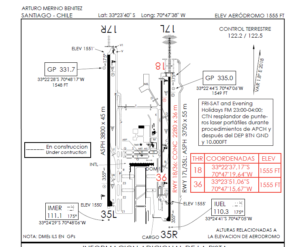
  • New RWY 18/36 established on current Taxiway Alpha and will be used in place of 17L/35R for aircraft up to A321 size. It’s dimensions are 2280M x 36M. See updated ground chart here. (NOTAM A3262/18)
  • New RWY 18 GNSS approach established. See this chart. (NOTAM A3263/18)
  • The STARs currently used for 17L will be applicable for RWY 18. (NOTAM A3265/18)

Opsgroup members have also advised us that;

  • Due to standard late night noise restrictions, departures will be required to use 17L (not 17R).
  • Pay careful attention to the substantially different missed approach procedure for GNSS RWY 18 procedure. This has been designed differently to allow a “tighter” traffic sequence and permit simultaneous operations on 17R. This is not normally possible due to the conflicting departure and missed approach paths.

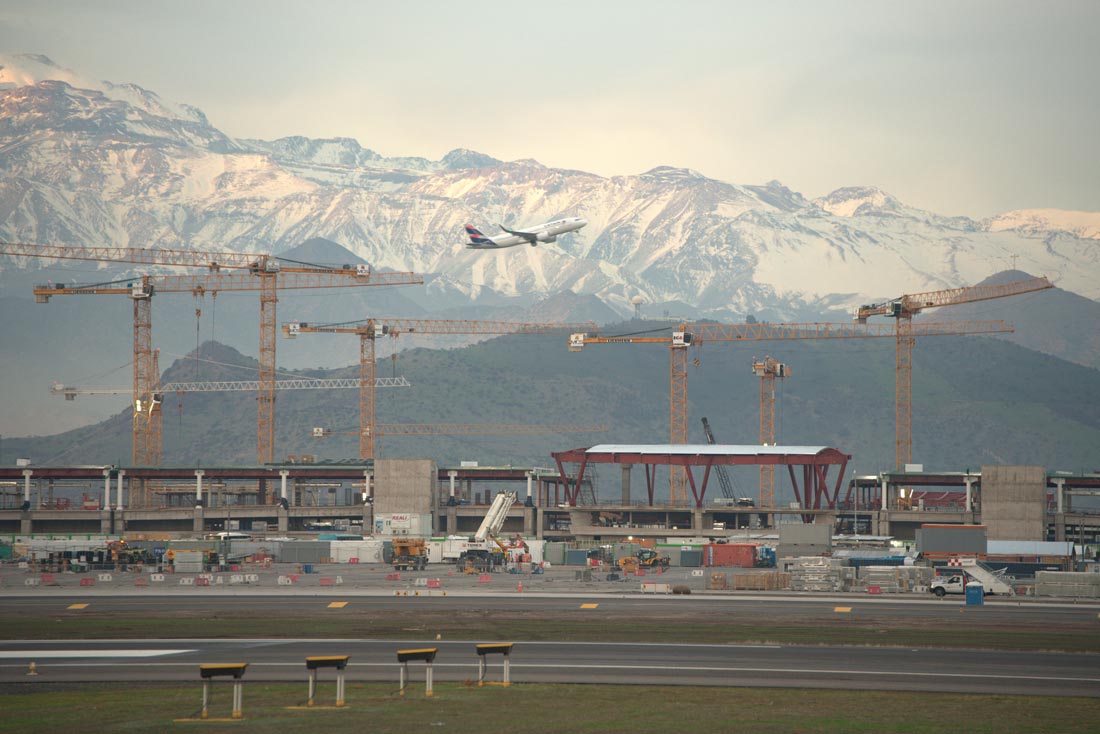
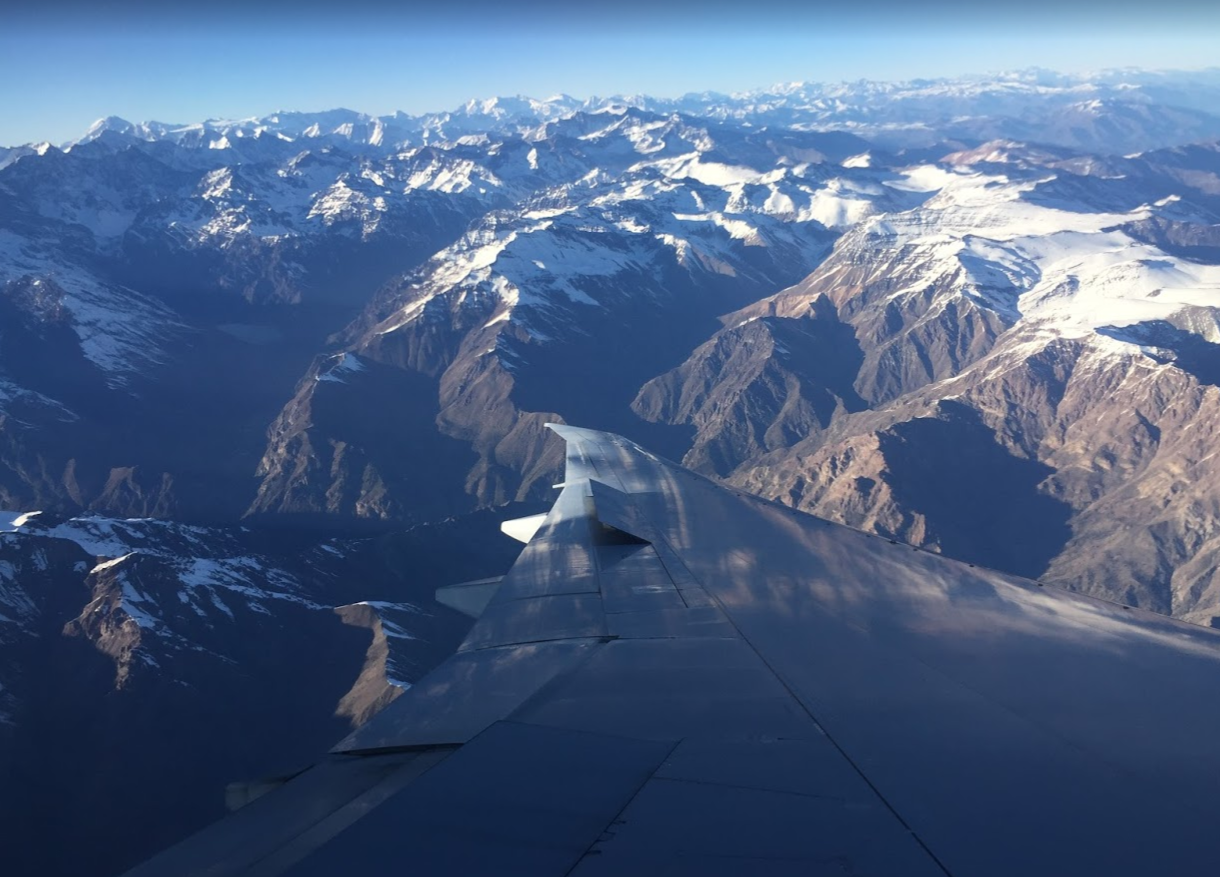
If you do get to head to Chile, grab the window seat and grab a camera! I took these last year!

It really is such a great approach!


Check your checklist! Lessons from fatal King Air accident in Melbourne

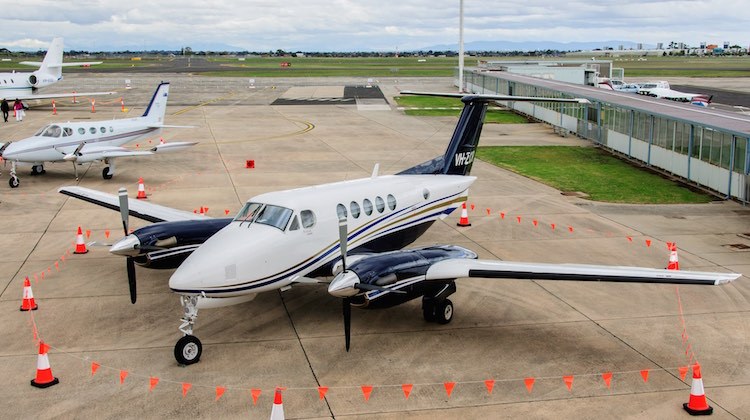
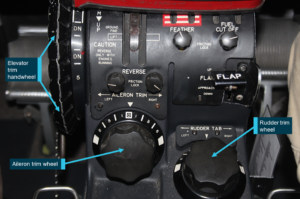
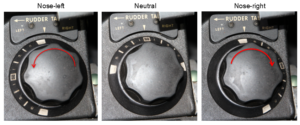
The pilot at the controls of a Beechcraft B200 Super King Air that crashed shortly after take off had the aircrafts rudder trim in the full left position for take off, the Australian Transport Safety Bureau (ATSB) has found.
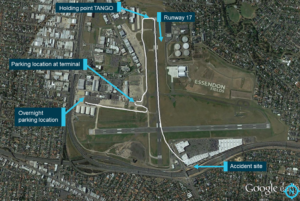
The ATSB final report said the aircraft’s track began diverging to the left of the runway centre line before rotation and the divergence increased as the flight progressed.

It then entered a shallow climb followed by a “substantial left sideslip with minimal roll” before beginning to descend. At this point the pilot issued a mayday call seven times in rapid succession.

Approximately 10 seconds after the aircraft became airborne, and two seconds after the transmission was completed, the aircraft collided with the roof of a building.
What Happened?

The investigation found that the pilot did not detect that the aircraft’s rudder trim was in the full nose-left position prior to takeoff.

“Prior to takeoff, there were several opportunities in the pre-flight inspection and before takeoff checklists for the pilot to set and confirm the position of the rudder trim,” the ATSB final report said.

A King Air flight simulator was used to recreate the event as part of the ATSB investigation.

The pilot who performed the flight simulator test commented that:

The yaw on take-off was manageable but at the limit of any normal control input. Should have rejected the take-off. After take-off the aircraft was manageable but challenging up to about 140 knots at which time because of aerodynamic flow around the rudder it became uncontrollable. Your leg will give out and then you will lose control. It would take an exceptional human to fly the aircraft for any length of time in this condition. The exercise was repeated 3 times with the same result each time. Bear in mind I had knowledge of the event before performing the take-offs.

The pilot also stated that it could be possible for a pilot to misinterpret the yaw as being caused by an engine power loss rather than from a mis-set rudder trim.

Safety message

Cockpit checklists are an essential tool for overcoming limitations with pilot memory, and ensuring that action items are completed in sequence and without omission. The improper or non-use of checklists has been cited as a factor in some aircraft accidents. Research has shown that this may occur for varying reasons and that experienced pilots are not immune to checklist errors.

This accident highlights the critical importance of appropriately actioning and completing checklists.

Checklist discipline

In previous correspondence between the accident pilot and the ATSB when discussing checklists, the pilot stated that:

“You don’t get complacent as a pilot but you get into a routine. The same as your pre-take-off checks, you get a routine and you don’t need to use a checklist because you are doing it every day, you are flying it every day… I take-off with one stage of flap because it gets me of the ground quicker. And I never change my routine…”

Wait what!??? It is stating the obvious but it’s a timely reminder that checklists are an essential defense against pilot errors. 

Sadly, it could have been a life-saver in this instance.

The ATSB video to supplement the report.


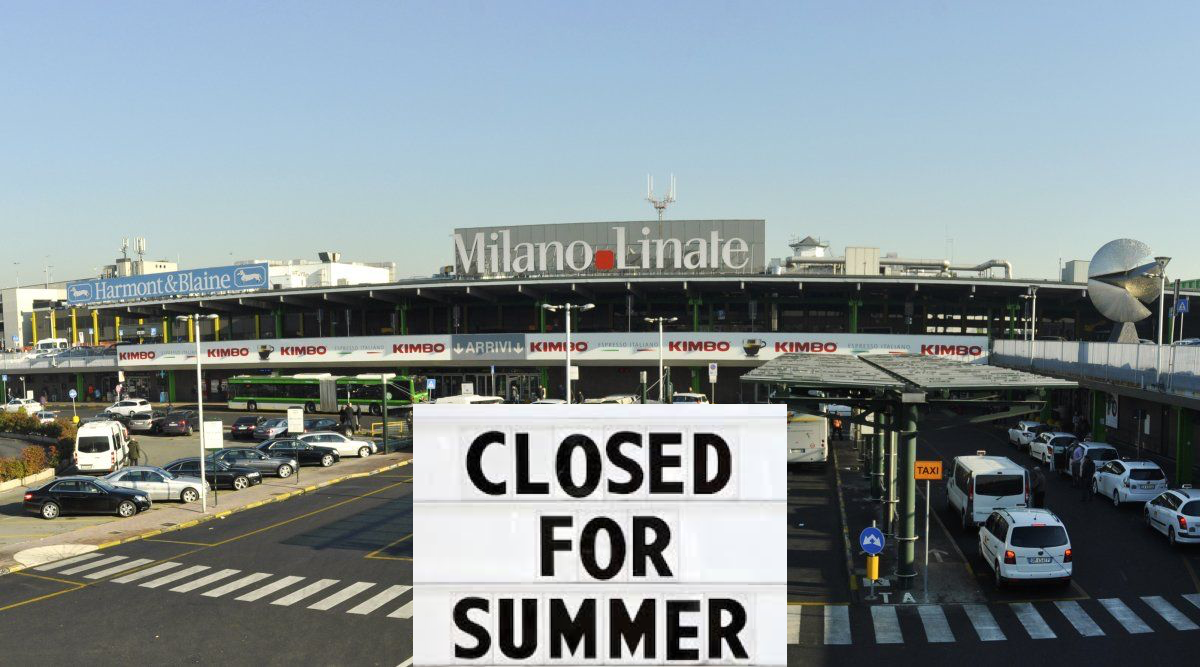
Milan Linate closed next summer

With planned runway and terminal constructions, LIML/Milan Linate will be closing from July 27, 2019 until October 27, 2019.  Work has already begun with Assoclearance (slot coordination) to work out summer schedules.
Today, September 20, a coordination meeting will take place to clarify the slot allocation process for S19. Following this, a September 25th meeting at Linate will be held to discuss the operational impact of the closure.

Milan Linate handled over nine million passengers in 2017, so a large portion of this traffic will now have to operate through LIMC/Milan Malpensa, which already stands as the second busiest airport in Italy, handling over 22 million passengers in 2017.

We’ll have more information after both the slot and operations meetings this coming week.

Do you know more? Feel free to comment or drop us a line!


Hurricane Florence: Latest Airport closures and Operational impact

Latest update: 1900z, Sept 17th.

Most airports have reopened, with the exception of KILM and KOAJ (see below).

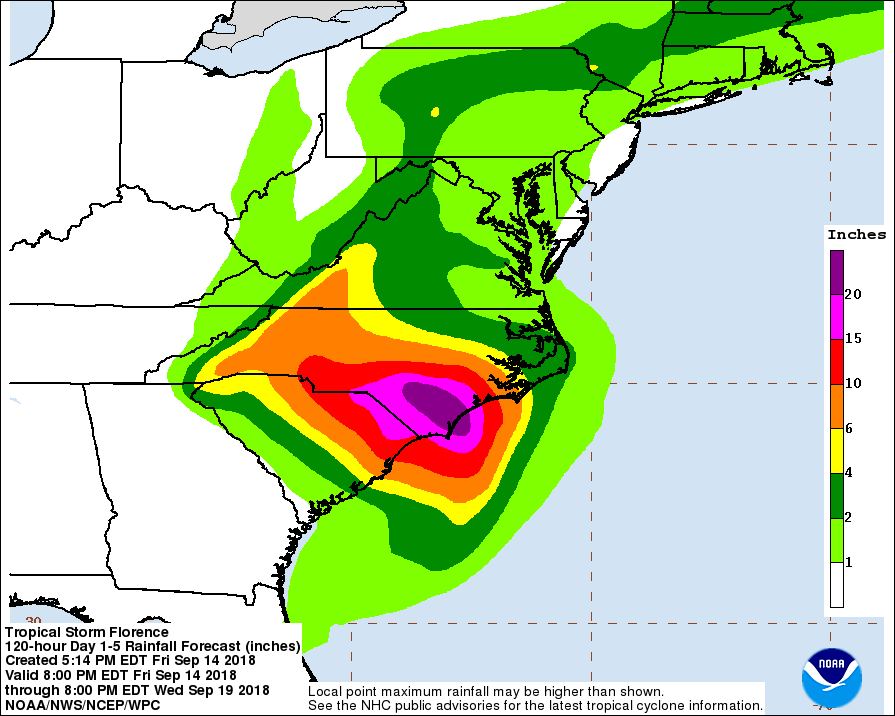
The National Weather Service have warned – “Florence is forecast to bring a large area of rainfall of 20-40 inches to parts of NC/SC. We cannot overstate the threat of catastrophic flooding this storm will bring!”

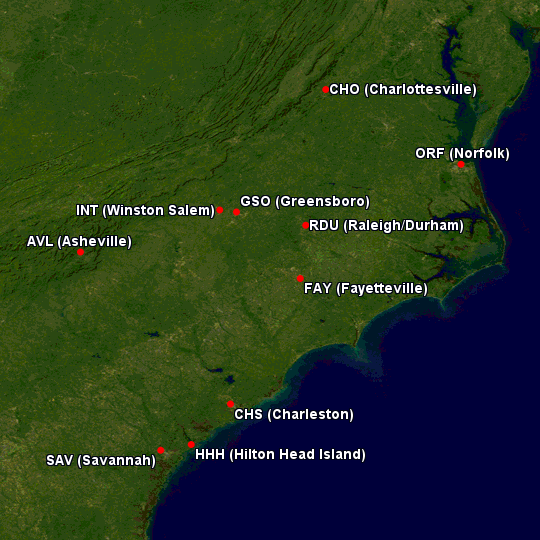
Severe disruption is expected across the entire region spanning from KSAV/Savannah in the south up to KRIC/Richmond in the north, with multiple airport closures planned.

As of 1900z on Sep 17th, the situation is as follows:

  • ASHEVILLE, NORTH CAROLINA (KAVL) @flyavlnow
    Airport is open and operational.
  • CHARLESTON, SOUTH CAROLINA (KCHS) @iflyCHS
    Airport is open and operational.
  • CHARLOTTESVILLE, VIRGINIA (KCHO) @CHOAirport
    Airport is open and operational.
  • WILMINGTON, NORTH CAROLINA (KILM) @ILMAirport
    The airport is open, but it’s not recommended to operate, no power, no ILS, no tower. One runway is open for rotor aircraft.
  • FAYETTEVILLE, NORTH CAROLINA (KFAY) @flyFAYairport
    Airport is open and operational.
  • MYRTLE BEACH, SOUTH CAROLINA (KMYR) @FlyMyrtleBeach
    Airport is open and operational, some equipment outages, keep an eye on Notams.
  • GREENSBORO, NORTH CAROLINA (KGSO) @flyfromPTI
    Airport is open and operational.
  • HILTON HEAD, SOUTH CAROLINA (KHXD)  @hiltonheadSC
    Airport is open and operational.
  • NORFOLK, VIRGINIA (KORF) @NorfolkAirport
    Airport is open and operational.
  • RALEIGH-DURHAM, NORTH CAROLINA (KRDU) @RDUairport
    Airport is open and operational.
  • SAVANNAH, GEORGIA (KSAV) @fly_SAV
    Airport is open and operational.
  • WINSTON-SALEM, NORTH CAROLINA (KINT)
    Airport is open and operational.
  • LYNCHBURG, VIRGINIA (KLYH) @lynchburggov
    Airport is open and operational.
  • RICHMOND, VIRGINIA (KRIC) @flack4RIC
    Airport is open and operational.
  • CHARLOTTE, NORTH CAROLINA (KCLT) @cltairport
    Airport is open and operational.
  • NEW BERN, SOUTH CAROLINA (KFLO)
    Airport is open and operational.
  • FLORENCE, NORTH CAROLINA (KEWN)
    Airport is open and operational.
  • PITT-GREENVILLE, NORTH CAROLINA (KPGV)
    Airport is open and operational.
  • JACKSONVILLE, NORTH CAROLINA (KOAJ)
    The airport is closed – scheduled to reopen Sept 18, accepting military and rescue flights.
  • ROCKY MOUNT, NORTH CAROLINA (KRWI)
    Airport is open and operational.

Do you know more and can add to this list? Let us know!


Extra Reading:

  • Google Crisis Map
  • You can view the latest projections and forecast maps with the NOAA here.
  • You can view the latest information from the FAA here. The latest flight delay information is here


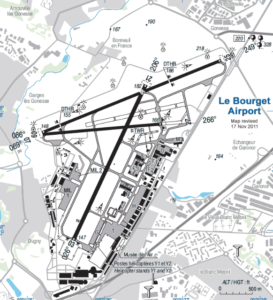
Paris Le Bourget – New Requirement to list parking in Flight Plan

In the recent France AIP August update a new requirement was added for all aircraft inbound to LFPB/Paris Le Bourget to list their parking position and handler on Field 18 of their flight plan.

Mentioned twice in the local traffic regulations (the translation is a little iffy but you get the idea):

Mandatory assistance by approved based companies. The name of the assistant society must be stated in field 18 of the FPL as a remark (RMK).

and

It is required to the crews to indicate in field 18 of the flight plan, the traffic area of destination and the name of the handling provider.

We understand that this came about due to “much confusion” of the parking stand locations after aircraft land.
Remark 18 should include

  1. Handler Name
  2. Your parking stand location (e.g. HANDLER ABC T1 APRON FOXTROT 2)
    • For heavy aircraft (A330/A340/A350/B747/B787/B767/C130) apron Golf, Sierra or Foxtrot 3 will suffice. Your local handler should give you confirmation ahead of your expected flight.
  3. Your handlers phone number.

So it should look something like this:

(FPL-FGTRY-IG

-C525/L-SDFGRWY/S

-LFMD0610

-N0360F340 OKTET UM733 GIPNO UT26 LOGNI UN854 DJL

-LFPB0120 LFPN

-PBN/A1B2D2S1 DOF/180903 IFP/MODESASP ORGN/KBLIHAEX RMK/HANDLER ABC TERMINAL 1 APRON FOXTROT 2 TEL : +3312345678)

Do you know more? Feel free to comment or drop us a line!

Also- here is a video of a Beech Bonanza flying under the Eiffel Tower 


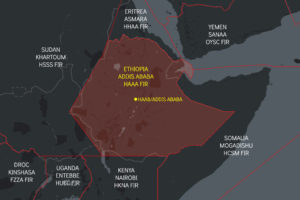
ATC Strike over, but nine Ethiopian Air Traffic Controllers remain in jail

5th September, update:

As of this morning, most controllers have returned to work. Some concessions made by ECAA. Addis ACC and TWR are again staffed with qualified controllers, so the safety situation, for now, is restored. However, 9 remain in jail. Returning controllers were forced to sign an ‘admission’ of illegal strike action in return for amnesty. IATA In Flight Broadcast Procedure requirement for Addis FIR remains in place, meaning you must broadcast on 126.9 as in other areas of concern in Africa. Further as we get it.


4th September:

Last week we were one of the first to expose the attempted ATC Strike cover up by the Ethiopian Civil Aviation Authority.

As a reminder, untrained and uncertified foreign controllers, retired and local non-operational ATC personnel are being used to control air traffic over Ethiopia. 

It is a catastrophic misjudgement, creating a safety risk in the Addis FIR and at Ethiopian Airports for pilots and passengers alike.

Here are some more updates since our last article:
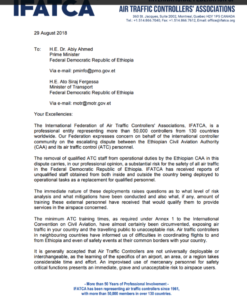
  • On August 29, The International Federation of Air Traffic Controllers Association (IFATCA) penned a letter to the Prime Minister of Ethiopia. You can read it here.
  • The neighbouring controllers in Kenya warned that flights in and out of Addis Ababa are not safe. You can view their letter here – specifically they warned that the ‘possibility of air misses’ is real.
  • The ECAA over the weekend rejected concerns regarding the safety of Ethiopian airspace, specifically calling the claims from Kenya as “outright lies.”  The ECAA has said that ATC are operating “in accordance with ICAO Annex 1 provisions.” They did not deny however that foreign and retired ATC are being used.
  • The ECAA also outlined that the national carrier, Ethiopian Airlines, has “awarded” veteran Air Traffic Controllers,  who are performing their national obligation.
  • However on Monday, the local state affiliated broadcaster, Fana BC, reported that the Federal Police Commission had detained nine individuals on suspicion of attempting to disrupt international flights and coordinating a strike that began last week. This has been quickly condemned on social media, as many locals called on the government to resolve the issues raised by the ATCs rather than resorting to intimidation.

The ECAA claims that “some” of the striking controllers have returned to work.

Major airlines and uninformed passengers continue to fly into and over Ethiopia and this continues to be a major safety risk.

Do you have more to add this story?  Please, let us know!


Beijing Airport Restrictions until September 6

Beijing is hosting the Forum on China-Africa Cooperation (FOCAC) on September 3 and 4, 2018.

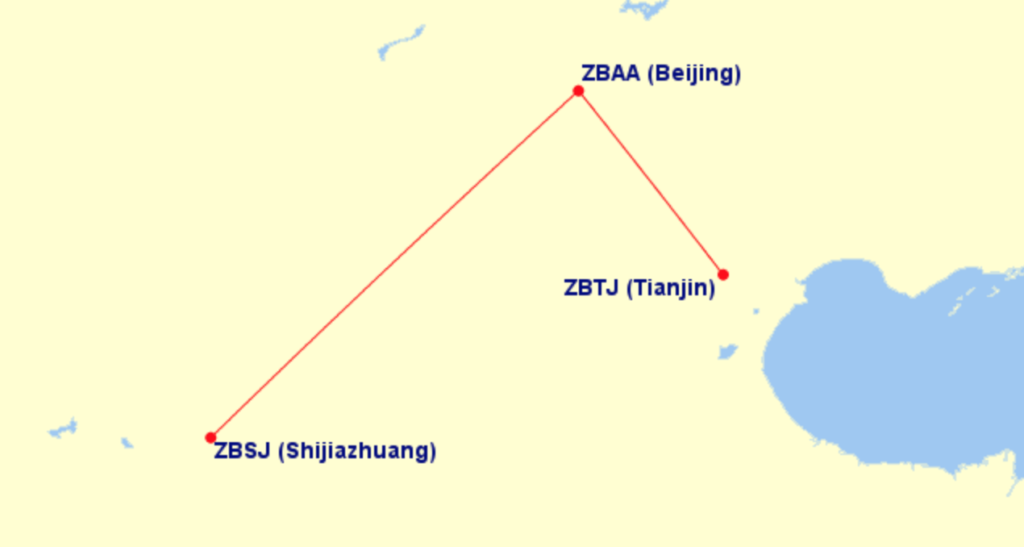
As a result ZBAA/Beijing Capital airport will not allow any GA/Corporate Jet operations from Thursday, August 30 until Thursday, September 6 unless you are attending the forum itself. If you are, you will require a a sponsor letter from the organizing committee to obtain landing permission.

Further restrictions:

  • There will be no take-off for all flights between 0700-0855L, strictly landing only.
  • A maximum of two movements are allowed per hour for all flights between 0600-2355L.
  • Governmental flights require an authorization letter from the respective Embassy to arrange handling services.
  • Flights with diplomatic clearance can still operate to ZBAA even if they are not attending the forum.
  • ZBAA cannot be used as an alternate (except in an emergency) until 6 September (Refer NOTAM E1870/18).

Operators are advised to consider ZBSJ/Shijiazhuang Zhengding airport (139nm away) and ZBTJ/Tianjin Binhai airport (67nm away) as alternative destinations during this time period.

Do you know more? Let us know!


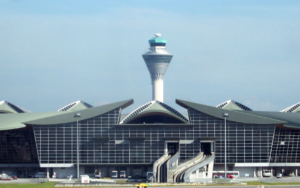
Malaysia’s KLIA airport shutdown is excessive

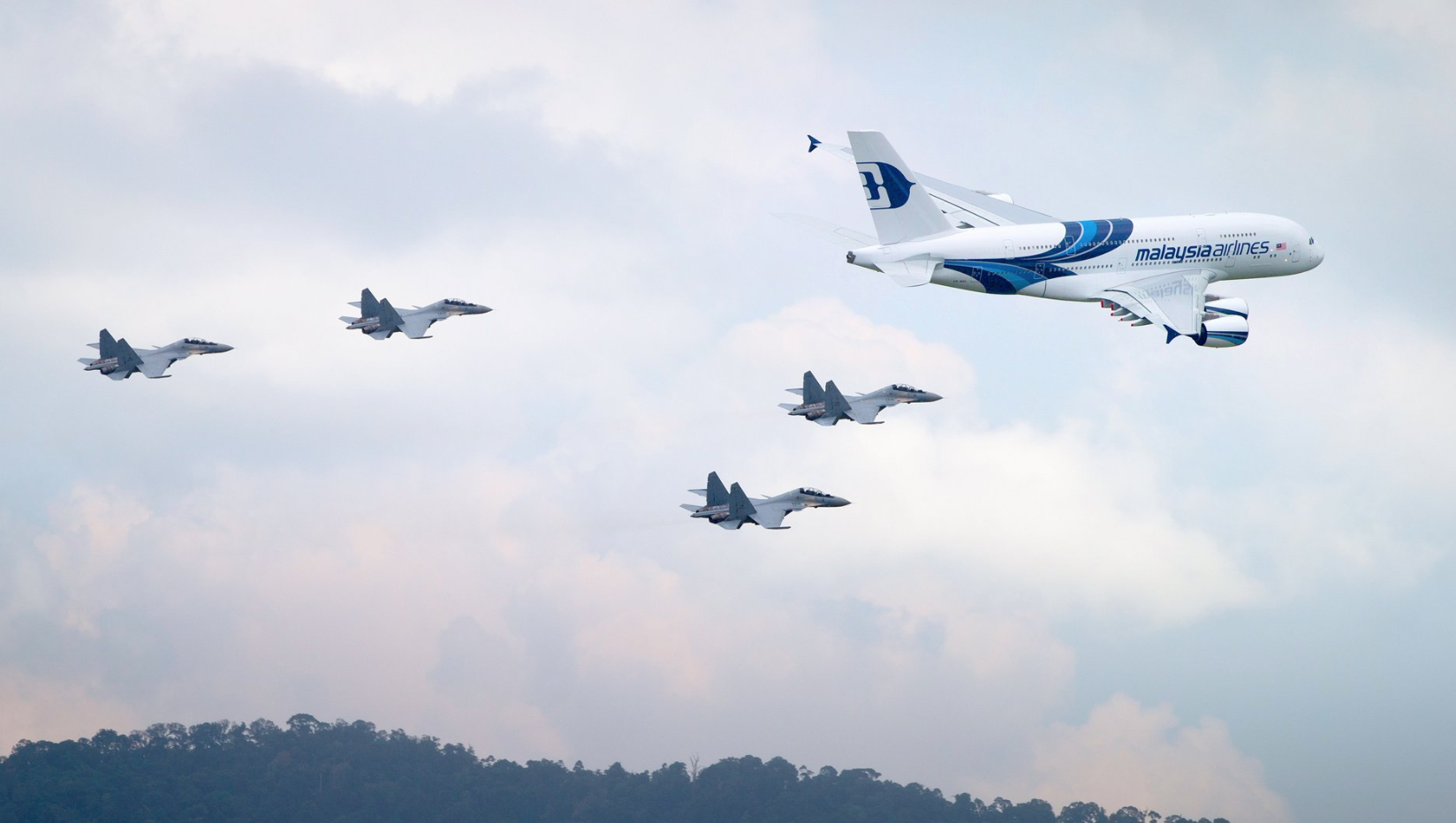
In Short: Operations at WMKK/Kuala Lumpur International Airport have been suspended from 0900L-1030L every day this week (27-31 August). This is to make way for the Royal Malaysian Air Force (RMAF) to conduct rehearsals for an aerial flypast that will be part of Malaysia’s National Day parade.

As we outlined in our daily brief, WMKK/Kuala Lumpur International Airport (KLIA) is being shutdown this week for 90 minutes everyday, between 9am and 10:30am to allow fly-over “rehearsals” for the National Day parade.

We think this is excessive.

The shutdown of a major international gateway airport (the 23rd busiest airport in the world) for 7 and half hours in one week will impact over 498 flight operations and thousands of passengers.

The NOTAM says it all.

A2434/18 - ALL ARR AND DEP SUSPENDED DUE TO NATIONAL DAY 2018 REHEASALS AND 
ACTUAL FLYING DISPLAYS. 0100-0230, 27 AUG 01:00 2018 UNTIL
31 AUG 02:30 2018. CREATED: 13 AUG 07:13 2018

The central planning committee of the National Day event said:

“The air space closure is necessary to ensure the smoothness of the 2018 National day flypast practice sessions, but more importantly, the safety of aircraft flying in and out of KLIA.”

We are all about safety here. But to shutdown such a big chunk of airspace and totally suspended flying operations at 9am at such a big airport for a whole week seems particularly extreme.  This is not a small isolated airport, this is a large 3 runway complex with A380’s coming and going.
This isn’t the first time such a move has happened here. In September 2016, the airport was closed for several hours a day to conduct an “aerial survey”.

This time, we understand, there was limited to no industry consultation with the onus being on the airlines and operators to notify affected customers.

Malaysia’s Transport Minister simple asked that “I hope all airlines will notify their passengers about this and reschedule their flights.” 

He finished by saying “this was inevitable as we are celebrating our Independence Day”.

We say no– shutting down a major airport for nearly 7 hours to practise some flying displays is not “inevitable“.

What do you think? Do you know more, please let us know!


If you need to get into KL during these times, WMSA/SULTAN ABDUL AZIZ SHAH INTL is a good alternative.

Extra Reading:


Updated holding fuel advice for Australia

Australian traffic holding is a funny one; you can fly 16 hours directly from a place far far away, and then just before landing you get told to hold for 20 minutes – even though you have been in Australian airspace for sometimes 7 hours plus, they wait until the last few minutes to slow you down. ?
A recent AIP update and AIC Supp (H25/18) has updated the Airborne Holding Requirements for the four major Australian airports:

YBBN/Brisbane and YMML/Melbourne now are all in line with YSSY/Sydney

  • Daily, 2000Z-1300Z (0600L-2300L) = 20 Minutes 

YPPH/Perth Monday to Friday ONLY

  • 0100Z-0500Z (0900L-1300L) = 10 Minutes
  • 0500Z-0900Z (1300L-1700L) = 5 Minutes
  • 0900Z-1300Z (1700L-2100L) = 10 Minutes

There has been a slight change in the AIP requirements also. Instead of publishing “holding fuel advisories” – it’s now called airborne traffic delays”. So they aren’t really advising you on what fuel to carry anymore. In fact they go as far as saying that:

“All traffic delay estimates are an indication only. Actual holding may differ from the estimate, and operators should use their own judgement on fuel carriage decisions. More detailed historical holding data is available from the NCC on request.”

But… if you arrive at a destination without sufficient holding fuel for “actual traffic holding” then… “you will not be accorded a priority approach unless you declare an “emergency”.

So keep an eye on the NOTAMs for updated daily requirements. Even as recently as this week, 30 minutes holding was being required in YSSY/Sydney due to ATC shortages.

Insider tip: If you see the winds in Sydney from the west gusting more than 25 knots, you will see a NOTAM for traffic holding that increases the 20 minutes to 50 minutes or more due to single runway ops. You can expect to see similar NOTAMs when any low visibility operation kicks in at the other airports.


A few other quick updates for operations around Australia that you might have missed.
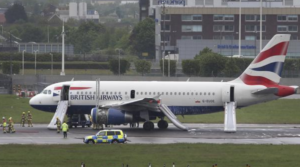
  • YPPH/Perth now has a Category III Instrument Landing System. Perth is a very isolated airport, especially for long-haul widebody operations, with the nearest diversion alternates being over 600-1000nm away.
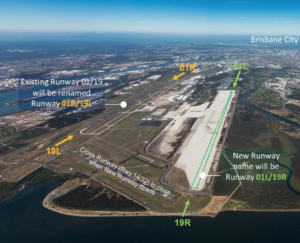
  • YBBN/Brisbane‘s main runway, 01/19, will be changing designation to include a LEFT and RIGHT in early November in preparation for the certification of the parallel runway in 2020.

Have we missed anything? Then let us know!


The diversion dilemma over London

A few months back an Air Canada A330 suffered a hydraulic failure as it started it’s Atlantic crossing from France to Canada. The crew decided to turn back and wanted to divert to EGLL/London Heathrow – this was denied.

Since then, other reports have been received of other aircraft requesting similar non-emergency diversions over the UK and them being denied. We understand the “non-acceptance of diverts” policy is in place for EGGW/Luton, EGSS/Stansted and even as far away as EGHH/Bournemouth. It is important to note however that if you declare an emergency (PAN/MAYDAY) – then all bets are off and you can divert wherever you like.

This week we saw EGGW/Luton go as far as publishing a NOTAM to that effect.

A2663/18 – DIVERTS SHALL ONLY BE ACCEPTED FOR ACFT THAT HAVE DECLARED AN  EMERGENCY.

So what’s going on?

We understand it’s a mix of things.

  1. With the heavy summer traffic situation all across London (which is being compounded by the various curfew and overnight flight limitations) it seems that the major airports don’t want an aircraft landing and disabling their runway.
  2. We have heard specific concerns stating that there is nowhere to park overflow aircraft. One aircraft might be manageable but multiple during peak disruption maybe not so easy.
  3. Some Opsgroup members have reported that the main driver of this policy at EGGW/Luton and EGSS/Stansted may be down to ‘their fear of adverse publicity on social media’ regarding aircraft sitting there waiting to go somewhere else and passengers tweeting away the problems with the airport and its facilities.
  4. Luton also put forward the argument that they do not want to interrupt the home-based operators by allowing other operators in. However, at the same time they are automatically denying home-based operators a diversion unless you declare an emergency.
  5. Border Control has also bought into the argument, especially at EGSS/Stansted, saying their manning levels can’t cope with an influx of extra passengers at short notice.

There are a whole host of other factors at play which make diversions in the London area a headache, particularly at night time. Opsgroup member Diego Magrini from Jet Concierge Club sums it up nicely:

“Minor airports close early in the evening, for example EGSC/Cambridge, EGTK/Oxford, EGLF/Farnborough, EGWU/Northolt. These would all be very good alternatives, but become unavailable pretty early. Let’s be honest: no business jet want to divert to EGLL/Heathrow or EGKK/Gatwick (costs, slots, friendliness, etc), and most cannot go to EGLC/London City due to training and approval. This is of course on top of Heathrow and Gatwick not accepting diversions most of the time, or not having slots available. Some airports outside London, although open and accepting traffic, do not have an FBO presence during the night, and this cannot be arranged at short notice for a diversion. Combining all of this in the very short timeframe of a diversion can be very tricky!”


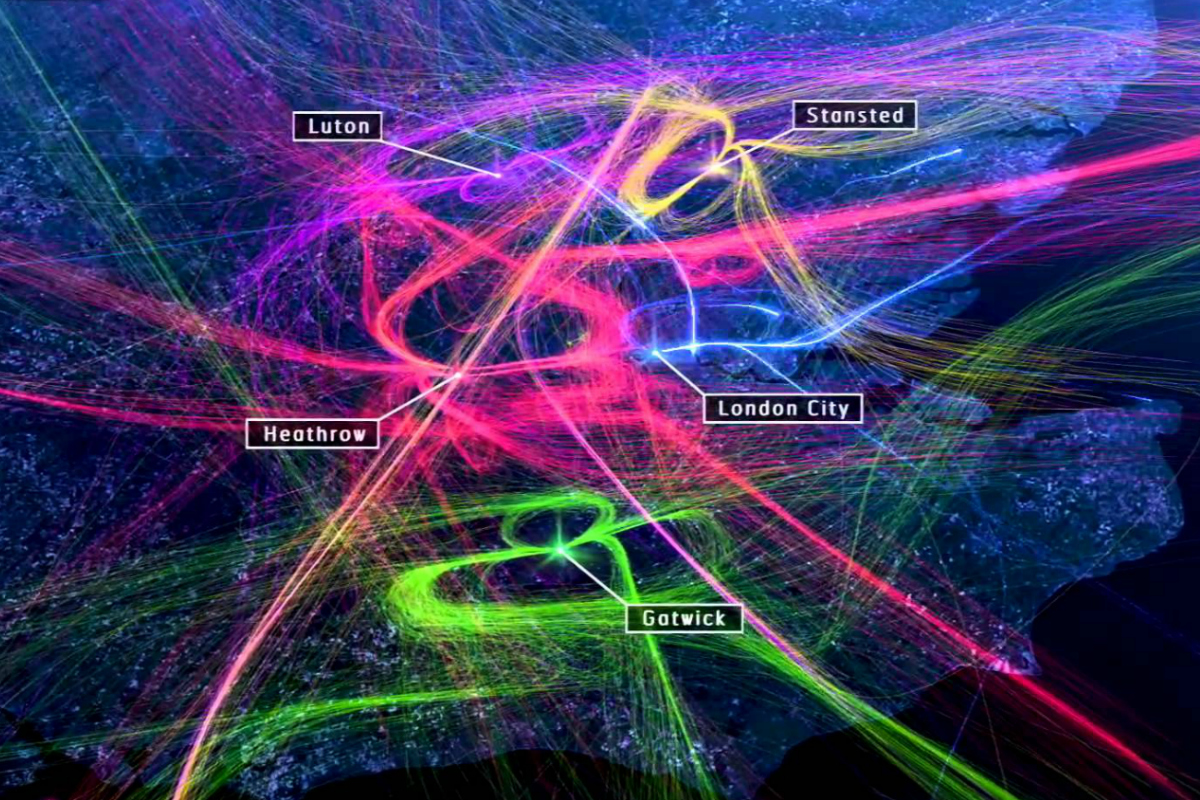
There is a cool video that shows just how busy London does get on any given day….

If you have any further knowledge or recent experience to share, please let us know!

Extra Reading


Hurricane in the fast Lane for Hawaii

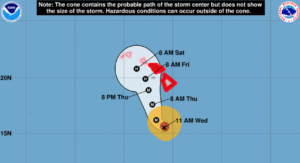
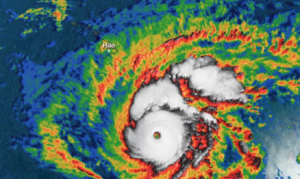
Overnight, the brewing tropical cyclone in the Pacific was upgraded to a Category 4 hurricane, and is anticipated to be a Category 5 when it reaches Hawaii.

Hurricane “Lane” is only the sixth recorded Category 5 hurricane in this part of the Pacific Ocean, and the National Weather Service is predicting that this storm is only going to intensify. This is also the nearest to Hawaii that a storm of this size has occurred, so the state has issued numerous emergency proclamations to better prepare for the potential life-threatening flash floods and storm surges that accompany a storm of this size.

This storm, if it proceeds as forecast, will impact operations into all Hawaiian airports, including PHNL/Honolulu  and PHOG/Kahului. Beyond the daily flight traffic to these two airports, they also act as major ETOPS/EDTO alternates for flights across the Central and Southern Pacific. So expect an impact in routing.

Also, post storm, there may be infrastructure damage that may limit operations for a period of time.

You can find the latest from the NOAA here.

We will update you with the latest flight operations developments as they happen.


Attention Shanghai: Typhoon inbound, jets must move out

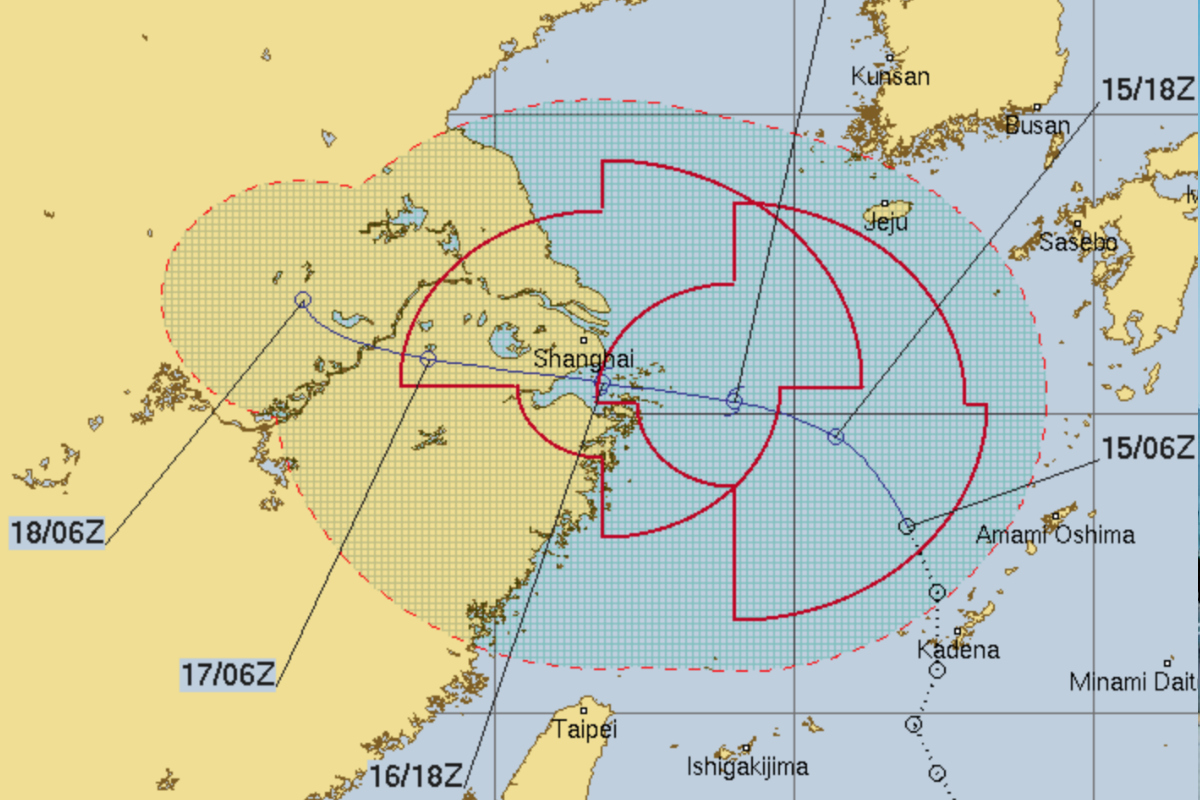
Typhoon Rumbia is expected to make landfall just south of Shanghai early on Aug 17, with gusting winds of up to 55kts.

Just as before with Typhoons Ampil and Jongdari which hit Shanghai earlier this month, both Shanghai airports ZSPD/Pudong and ZSSS/Hongqiao now have restrictions in place for GA/BA flights. They are advising the following:

  1. All GA/BA aircraft currently parked at the airports must either go in the hangar or leave before 1000 local time on Aug 16.
  2. All landing and parking requests of GA/BA aircraft are unlikely to be accepted until 1200 local time on Aug 18, by which time the storm is expected to have passed.
  3. Operators should report outbound schedules of GA/BA aircraft currently parked at the airports as soon as possible.

Best to get in touch with your handler if you haven’t already.

And if you are in the region and have more information to share, let us know!

Extra Information and latest warning texts and graphics:


More overnight slots for Hong Kong

Without stating the obvious, Hong Kong is a busy airport and it’s a difficult one to get slots and parking at, if you are a GA/BA operator.

Ok- it’s true, we went as far as calling operations to Hong Kong a PITA in the past.

Well, the latest intel is that the Airport Authority (AAHK) and the Hong Kong Schedule Coordination Office (HKSCO) have decided to trial an increase in slot availability from 4 to 6 total slots each night.

This is the info we have:

Notice on night slot availability (trial from 8 August 2018 until 8 October 2018)

  1. The number of slots available for GA/BA operations between 0000 to 0500 local time (16-21 UTC) will increase from 4 slots daily to 6 slots daily.
  2. The application procedure for these 6 slots will be the same as that for the 4 daily slots currently available.
  3. The above are provided on a trial and temporary basis and are subject to continuous review jointly by AAHK and HKSCO. The procedures will be effective from 0000 UTC on 8 August 2018 until 2359 UTC on 7 October 2018.

Also important to note, as pointed out to us by our friends at the Asian Business Aviation Association (AsBAA) – these 6 slots will be made available to all aircraft types, not just the ones currently exempted from the noise abatement regulations. This means that BBJ’s/ACJ’s/Lineage 1000/Globals/G650ER etc can now operate in and out of Hong Kong at night-time, subject to slot availability.

Some days I miss the old Kai Tak airport. My Dad reminded me that the 20th anniversary of its closure just went by last month. I feel old.

If you do too, watch a Kai Tak video to cheer you up 🙂

Extra Reading:


Runway? Who needs one when you have a taxiway!

It’s happened again.

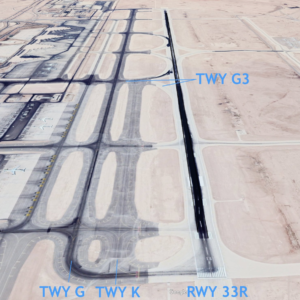
Around midnight on a perfectly clear night last week in Riyadh, a Jet Airways 737 tried to take off on a taxiway. The crew mistaking a new taxiway for a runway!

The crew, with thousands of hours experience, took off on a surface that didn’t have runway markings or runway lights. Thankfully no one was seriously hurt.  It’s too early to exactly say why this happened, but it’s clear that some sort of “expectation bias” was a factor. Expecting to make the first left turn onto the runway. One has to ask – was ATC monitoring the take off?

After the tragic Singapore 747 accident in Taipei, technology was developed to audibly notify crew if they were about to depart “ON TAXIWAY”. This is known as the Runway Awareness and Advisory System (RAAS).

Sadly the Riyadh incident is not isolated. There have been a plethora of near misses in the past few years (more details in Extra Reading below).

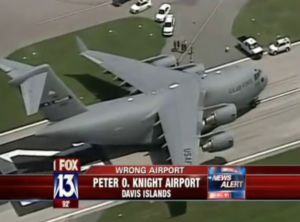
There have also been more than a few “incidents” of aircraft from C17’s to 747s landing at the wrong airports! The most notable near miss recently was that of an Air Canada A320 nearly landing on a taxiway full of aircraft at KSFO/San Francisco. But it’s happened to Delta and Alaskan Air recently too.
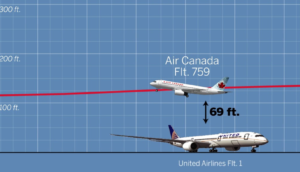
It is an even bigger issue at a General Aviation level (and not just because Harrison Ford did it!). The FAA safety team recently noted;

The FAA Air Traffic Organization (ATO) has advised of an increase in, “Wrong Surface Landing Incidents” in the National Airspace System (NAS).

Incidents include:

  • Landing on a runway other than the one specified in the ATC clearance (frequently after the pilot provides a correct read back)
  • Landing on a Taxiway
  • Lining up with the wrong runway or with a taxiway during approach
  • Landing at the wrong airport

The FAA published some shocking statistics:

  • 557wrong surface landing/approach events” between 2016-2018. That’s one every other day!
  • 89% occurred during daylight hours
  • 91% occurred with a visibility of 3 statue miles or greater


So what to do?

There are numerous ‘best operating practices’ pilots can use to help avoid such incidents.

  • Be prepared! Preflight planning should include familiarization with destination and alternate airports to include airport location, runway layout, NOTAMs, weather conditions (to include anticipated landing runway)
  • Reduce cockpit distractions during approach and landing phase of flight.
  • Use visual cues such as verifying right versus left runways; runway magnetic orientation; known landmarks versus the location of the airport or runway
  • Be on the lookout for “Expectation Bias” If approaching a familiar airport, ATC might clear you for a different approach or landing runway.  Be careful not to fall back on your past experiences.  Verify!
  • Always include the assigned landing runway and your call sign in the read back to a landing clearance
  • Utilize navigation equipment such as Localizer/GPS (if available) to verify proper runway alignment

It’s worth spending a few minutes watching this.

Extra Reading


Great Australian Bight – RNAV/RNP only airways

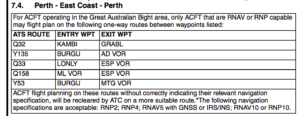
Australian AIP flight plan requirements (GEN – FPR – 18 – section 7.4) have been updated to remind operators to file the right navigation specifications on their ATC flight plan or risk a re-route for flights over the Great Australian Bight (in the YMMM/Melbourne FIR).
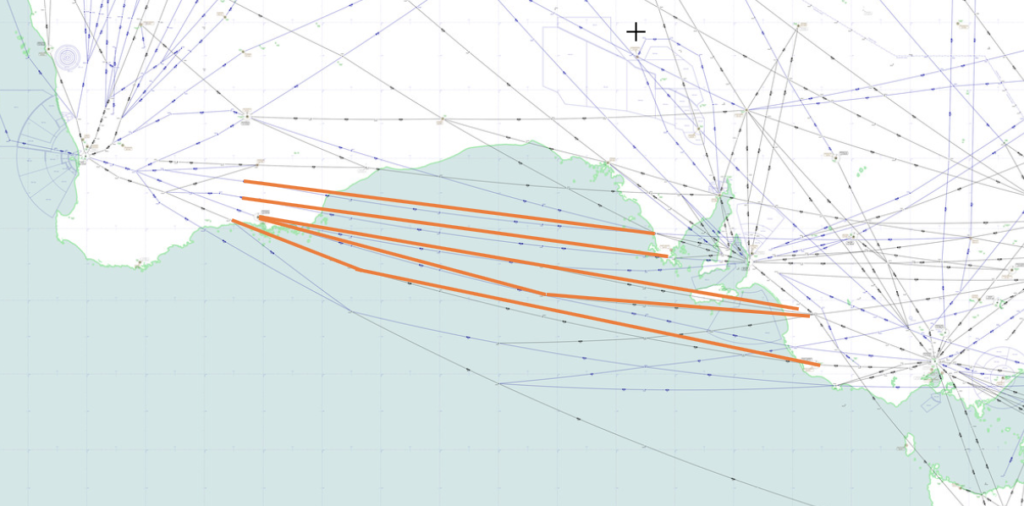
Specifically, for flights operating on the following airways: Q32, Y135, Q33, Q158, Y53.

Aircraft flight planning on these routes should meet the following navigation specifications.

  • RNP2; RNP4; RNAV5 with GNSS or IRS/INS RNAV10 or RNP10.

Aircraft flight planning on these routes without correctly indicating their relevant navigation specification will be re-cleared by ATC on a “more suitable route”.

One to check next time you’re flying through the area, especially for a flight to/from YPPH/Perth.

Further reading:


European ATC delays are up 133%

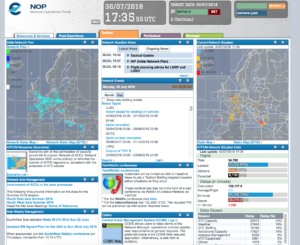
In Short: European ATC delays are on the increase, caused by staffing and capacity shortages. Monitor the Network Operations Portal and be flexible in your routing options if bad weather or capacity constraints are expected.

It’s been a great few days on a sun-soaked Mediterranean island. Your passengers are onboard, you are about to close the door, and then you get told your Calculated Take Off Time (CTOT) is an hour from now! Sound familiar? You’re not alone! ?
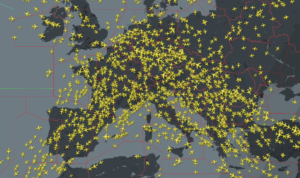
European air travel this summer is surging and about to hit maximum intensity. Problem is, the ATC system doesn’t seem to be coping, and the misery of long flight delays keeps getting worse.

Delays are up

IATA has recently reported the following:

“Data from Eurocontrol shows that in the first half of 2018, Air Traffic Management (ATM) delays more than doubled to 47,000 minutes per day, 133% more than in the same period last year. Most of these delays are caused by staffing and capacity shortages as well as other causes such as weather delays and disruptive events such as strikes. The average delay for flights delayed by air traffic control limitations reached 20 minutes in July, with the longest delay reaching 337 minutes.”
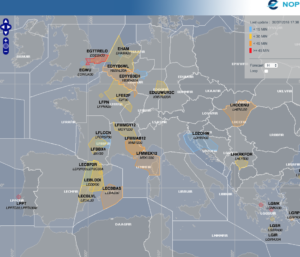
As an operator, you may be used to seeing alerts like these daily:

EDYY (Maastricht)

Several sectors regulated due to Airspace Management and ATC Staffing/Capacity.

Moderate to high delays.

LFMM (Marseille)

Several sectors regulated due to ATC Capacity/Staffing.

Moderate to high delays.

So is it a story of too many planes and not enough airspace (capacity) or just not enough controllers (staffing)?

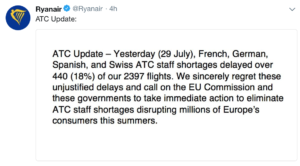
Local airlines are not impressed. Ryanair took to twitter this week calling the delays “unjustified”.

In a unusually aggressive statement IATA commented that “key ANSPs in Europe have not made needed investments in their businesses, preferring instead to make super-normal profits.”


Some of the things we recommend to keep on top of expected delays

  • Review the Network Operations Portal regularly – This will assist in making operational planning decisions based on the current delays and capacity restrictions. Also keep an eye on the NOC tactical briefing for the following day which may also assist.
  • Avoid the early morning rush of departures if you can (0900z).
  • Be flexible in your routing options if bad weather or capacity constraints are expected.
  • Discuss with the local FBO for latest on-ground situation to better plan arrival and departure.
  • Monitor Opsgroup – members are always posting the latest information on recent airport and overflight experiences. Not yet a member? Go here!
  • Subscribe to our Daily Brief to get all the latest info on ATC strikes, Airport  closures, and everything else causing delays.

Got any tips or tricks on how to avoid or minimise most of these delays? Is there certain bit of airspace, airports or a time of day you’ve found that works best? Let us know!

Extra Reading:


The risks posed to civil aircraft by surface-to-air missiles

In Short: Worldwide the SAM threat is deemed to be “low” by ICAO with the caveat that this can change quickly when flying over or near conflict zones. The best risk mitigation is centred around which airspace you are operating over and what information you have access to. As we have explained before: There is no safe altitude from a large SAM.

What are surface-to-air missiles, and who has them?
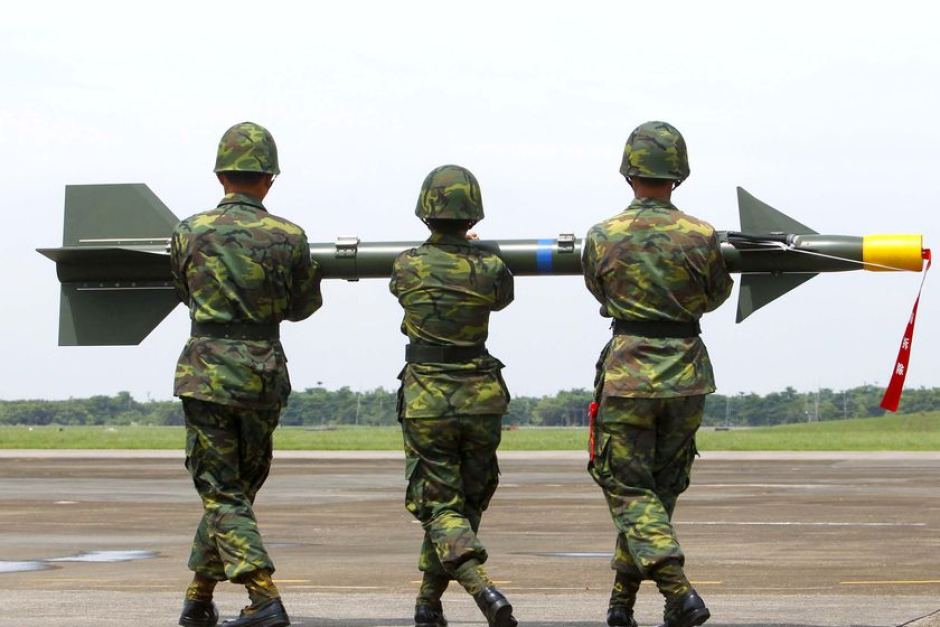
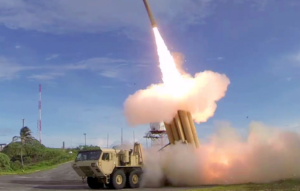
Surface-to-air missiles (SAMs) are large, complex units, with the capability of reaching aircraft at cruising levels well above 25,000 ft, and they are designed to be operated by trained military personnel.

They are distinct from Man Portable Air Defence Systems (MANPADS), which are the smaller, shoulder-launched systems, the most dangerous of which being the FIM-92 Stinger which has an operational ceiling of 26,000 ft.

SAM systems vary but they are all designed to track and destroy military targets in flight. Due to the size and predictable flight paths, civil aircraft represent easy and highly vulnerable targets.

Many SAMs are mobile and can be moved quickly between locations. Many are located on warships. It is estimated that more than 70 States around the world have acquired SAMs as part of their military capability. A small number of non-State actors (i.e. militant groups) have also reportedly acquired SAMs, but as they require a radar system as part of the mechanism, they may not have the technical capability to use them. To date, SAMs have never been used by terrorists.

What has happened in the past?

There have been three documented occurrences where aircraft destruction has occurred due to SAM attacks.

The risk of intentional attack

To date, no documented case of intentional SAM attack on a civilian aircraft has been identified. In the case of MH17 and Iran Air, both occurred during periods of military conflict or high tension, whilst Siberia flight 1812 was shot down during a military training exercise.

ICAO say that “with regard to the States and non-State actors that currently do have access to SAMs, there is no reason to believe that the intent currently exists to target civil aviation deliberately.” And with regards to terrorist groups (as opposed to militarized forces), they say that “even where intent may exist there is currently no evidence of capability (in terms of hardware and trained personnel).”

Overall, the current risk to aviation from intentional SAM attack is therefore currently assessed to be low, the key caveat being to avoid overflying airspace over territory where terrorist groups tend to operate – normally areas of conflict where there is a breakdown of State control.

The risk of unintentional attack

Past events show us that the higher risk to civil aviation is from unintended and unintentional attacks when flying over or near conflict zones – missiles fired at military aircraft which miss their target, missiles fired at civil aircraft which have been misidentified as military aircraft, and missiles fired by State defence systems intended to shoot down other missiles.

Areas where there are armed conflicts going on clearly present an increased risk of an unintentional attack. But when assessing the risk of overflying a particular conflict zone, here are some more specific questions to consider:

Are there increased levels of military aircraft flying around in the region?

This could be anything from fighter jets being operated in a combat role, or for hostile reconnaissance; remotely piloted aircraft; or military aircraft used to transport troops or equipment. If military aircraft are one of the most likely targets for intentional attacks, then the chances of civil aircraft being mistakenly targeted increases in those areas where there are lots of military aircraft zipping around.

Are there likely to be a bunch of poorly trained or inexperienced personnel operating SAMs in the region?

This may be difficult to evaluate, but the risk is likely to be highest where SAMs may have been acquired by non-State actors. The risk is also likely to be higher in places where there is less of a robust command and control procedure for launching missiles, thus increasing the risk of misidentification of civil aircraft.

Is the territory below the airspace fully controlled by the State?

If not, and there are some areas controlled by militant or terrorist groups, the information on the presence and type of weaponry in such areas, as well as the information on who controls them, may not be readily available. In such regions, the information promulgated by the State about the risks to airspace safety may therefore not be 100% reliable.

Does the route pass over or near anywhere of particular importance in the context of the conflict?

These could be areas or locations that may be of strategic importance or sensitivity in the conflict, such as key infrastructure or military sites, which might be considered potential targets for air attack and would therefore be more likely to be guarded by SAMs.


Ultimately, risk mitigation is centred around which airspace you are operating over and what information you have access to. But as has been reported in the past, history has shown us that badly-written information published by the State often does little to highlight the real dangers posed by overflying conflict zones.

There is some evidence to suggest that more States are starting to provide better guidance and information to assist operators in making appropriate routing decisions, but we think this still has some way to go.
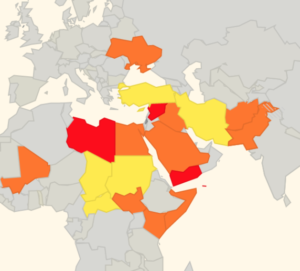
That is why we have been running our safe airspace map to provide guidance to assist operators in determining whether to avoid specific airspaces around the world.


Extra Reading:


Dubai to London – which way is best?

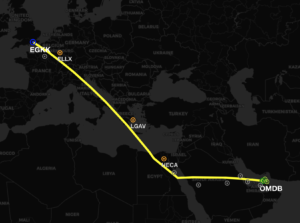
In Short: Two main options, via Saudi and Egypt (safer, cheaper but longer) or via Iran and Turkey (shorter, busier and geo-politically more unstable). It’s a complicated planning climate at present. Review regularly based on latest risk factors.   

There are more business aviation operators flying between the Middle East and Europe than ever before. So we took the time to look over the route options between the two regions. For our example we will be using a flight from Dubai to London, but similar operational considerations are valid for the plethora of route combinations through this whole region.
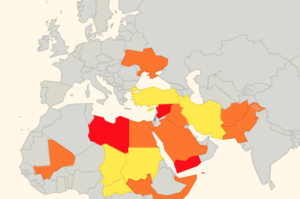
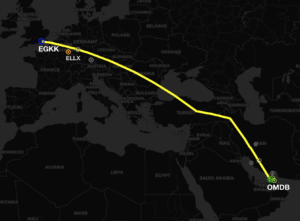
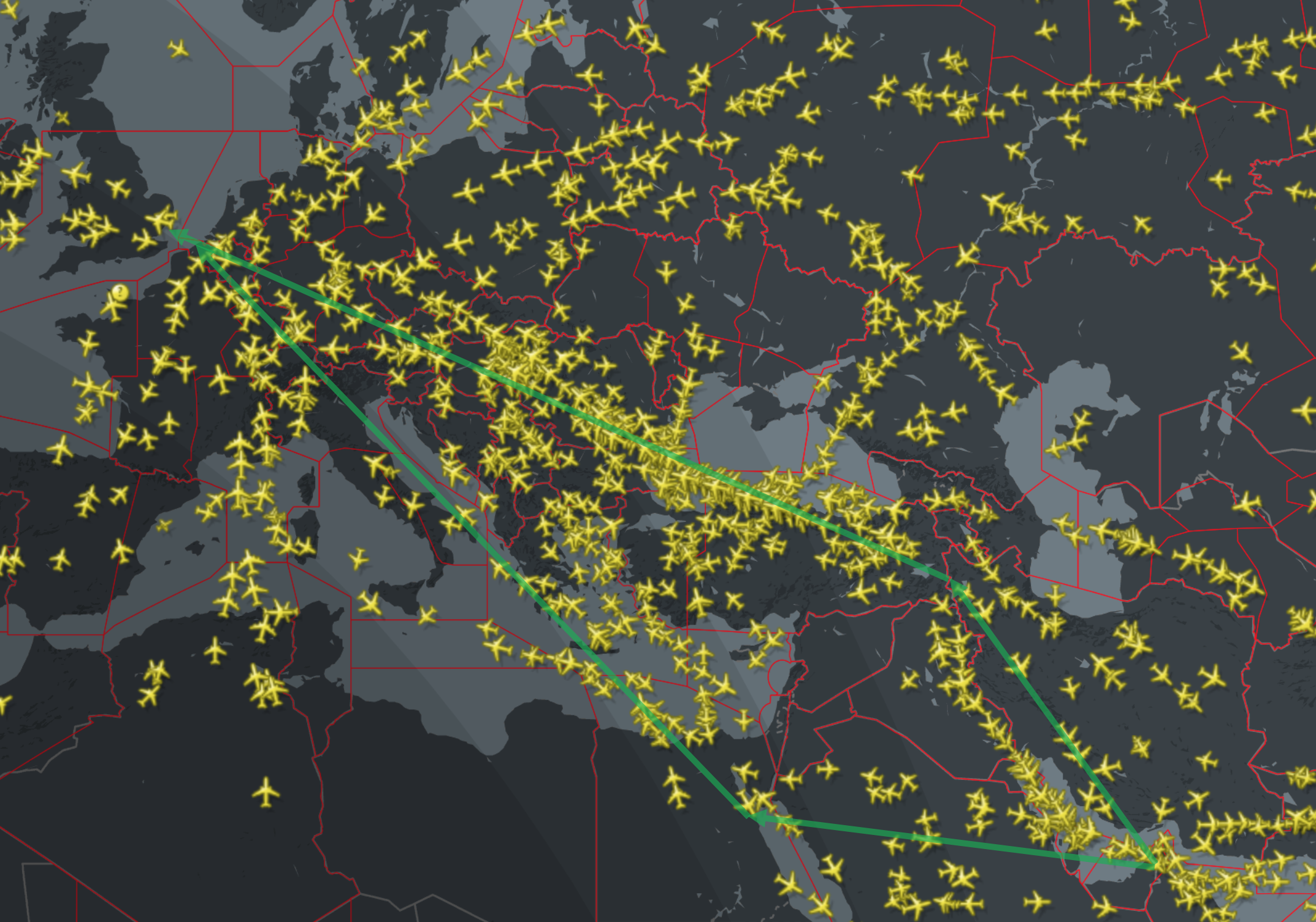
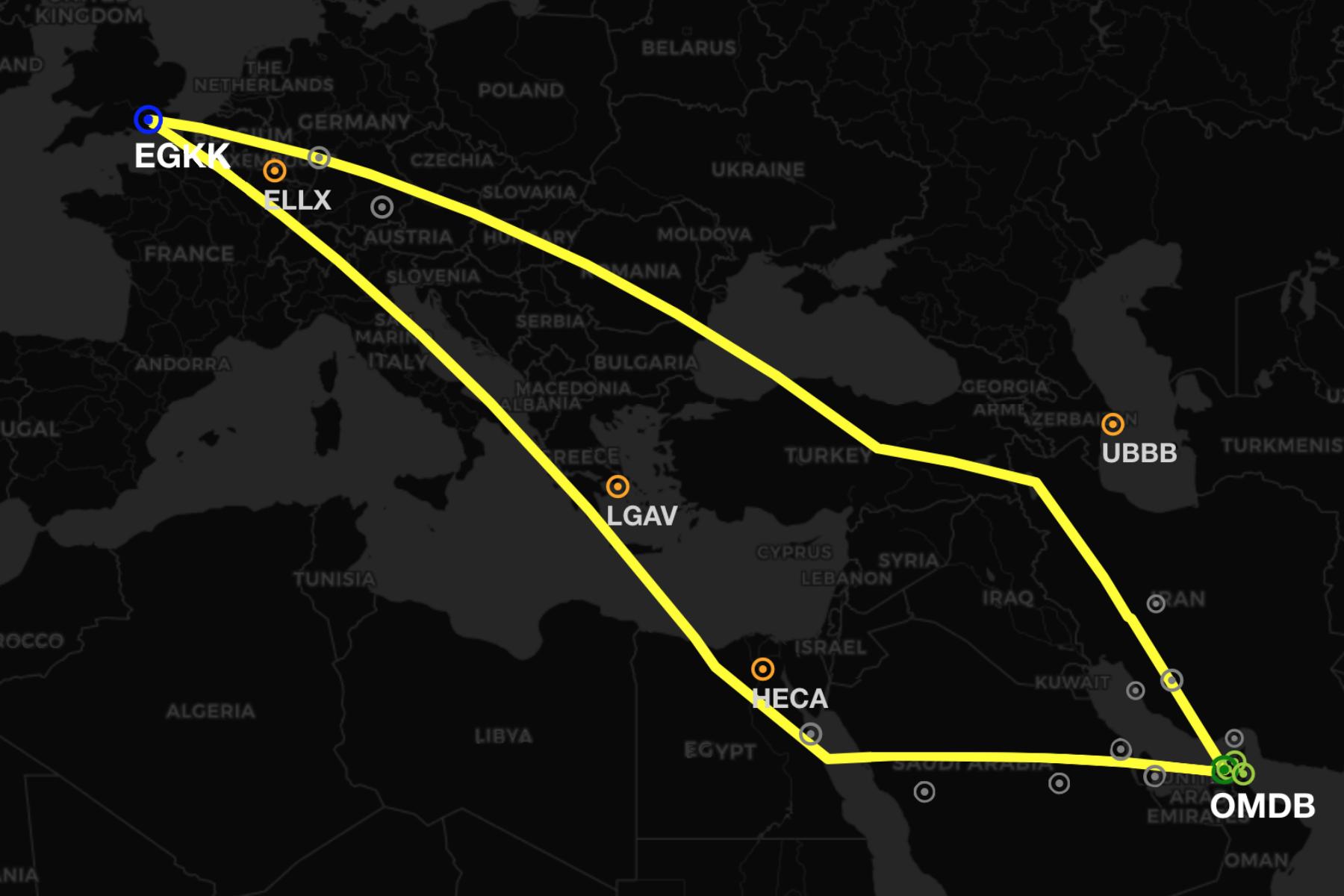
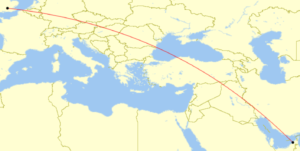
Firstly, we are sure you are a frequent visitor to our safe airspace website. Updated all the time with the latest notes and risk recommendations based on the latest intel. So, first things first, we want to avoid Syria, Libya and the Sinai Peninsula. As you can see however, this is a complicated geo-political region for flight planning. The direct great circle route would take us through Syria and would be around 3125nm. But that isn’t going to work. So, what else we got?

We will look at the two ways to head over the region. One is via Iran, Turkey and onwards to Europe. The other over Saudi Arabia and Egypt towards Europe.

Option 1: Iran/Turkey

Safety: Both Iran and Turkey are FSB Risk Level: Three – Caution. Iran is involved in the ongoing conflict with Syria and several Russian missiles crossed the Tehran FIR and several busy international routes. There are also increased tensions between the USA and Iran at present – if you had to divert in an N-reg aircraft, Iran would not be the friendliest of places to do so. Turkey borders with Syria and we have received multiple reports of GPS interference in the area.

Distance: an extra 100nm.

Time: About 15 minutes longer than great circle route.

Ease and Cost: Iran has higher overflight costs and for US based operators a reminder of the sanctions for dealing directly with Iran, or agencies in Iran. You’ll want to use an approved agent if you’re from the US (i.e.–not an Iranian company). Iran doesn’t work on Fridays, so be aware there. Turkish overflight costs are reasonable and remember that Turkish authorities require the use of an agent to apply for permits.

Traffic: The biggest issue with this route is that everyone is using it! It’s congested with a lot of airline traffic. It’s a major corridor for Asia-Europe flights also. So, getting the levels you want, and off route deviations are more complicated. Things get busy, as you can see!

Option 2: Saudi/Egypt

Safety: In terms of airspace warnings and risk, this route is slightly better. We have rated Saudi and Egypt airspace as FSB Risk Level: Two – Assessed Risk. Beyond the Sinai Peninsula and the Saudi/Yemen border, generally there is less of a chance of airspace security risks at present.
Distance: An extra 300nm from the great circle.

Time: Around 45 minutes longer.

Ease and Cost: Saudi and Egyptian airspace are generally a cheaper option ($1,000USD+). In Egypt, by law you have to get your permit through an Egyptian agent, but it’s a straight forward process. In Saudi, again, using an agent is best; they normally have three-day lead time – so keep that in mind. Also remember that the CAA only work Sun-Wed during office hours.

Traffic: For most of the day, much less of a traffic bottle neck.


Bottom line

Of the two options, routing via Saudi/Egypt is cheaper, and safer (as long as you steer clear of Egypt’s Sinai Peninsular and Saudi’s border with Yemen), but it’s going to take slightly longer.

What about Iraq?

We don’t think it’s a good idea. There’s a lot of information out there saying certain airways are ok but only at higher levels. But if you needed to get down fast, or even make an unexpected landing, Iraq isn’t the place you would want to go at present. Treat with caution.

Which one is your favourite choice? Let us know!

Further reading:


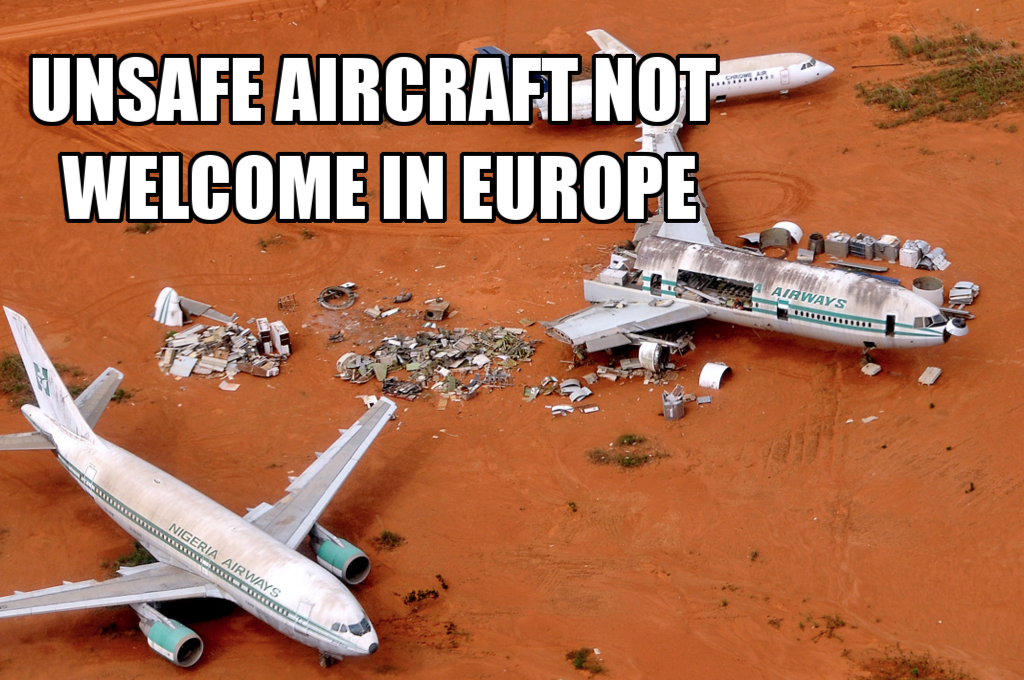
Unsafe aircraft not welcome in Europe

Eurocontrol and the European Aviation Safety Agency (EASA) have brought live an automated system which alerts air traffic controllers when unsafe aircraft enter European airspace.

How does it work?

Network Management Director at Eurocontrol Joe Sultana, explained that “We have added another parameter to our system, and this is now checking if an aircraft coming from outside of Europe is coming from a state where the regulatory environment is accepted by the European Aviation Safety Agency”.

So in short: The system will now take an automatic look at the Third Country Operator Authorisation and alert ATC if there is a flight being operated from a aircraft on the banned list.

The regulation that a plane coming from a non EU country must have a Third Country Operator Authorisation has been in place since 2014, but controllers have had no way to implement it across the 30,000 flights it receives into Europe each day, until this new component was entered into their systems.
As a reminder, Eurocontrol receives the flight plans of all aircraft entering into European air space, while the EASA holds the Third Country Operator Authorisations information which confirms that planes are from countries with recognised safe regulatory practices.


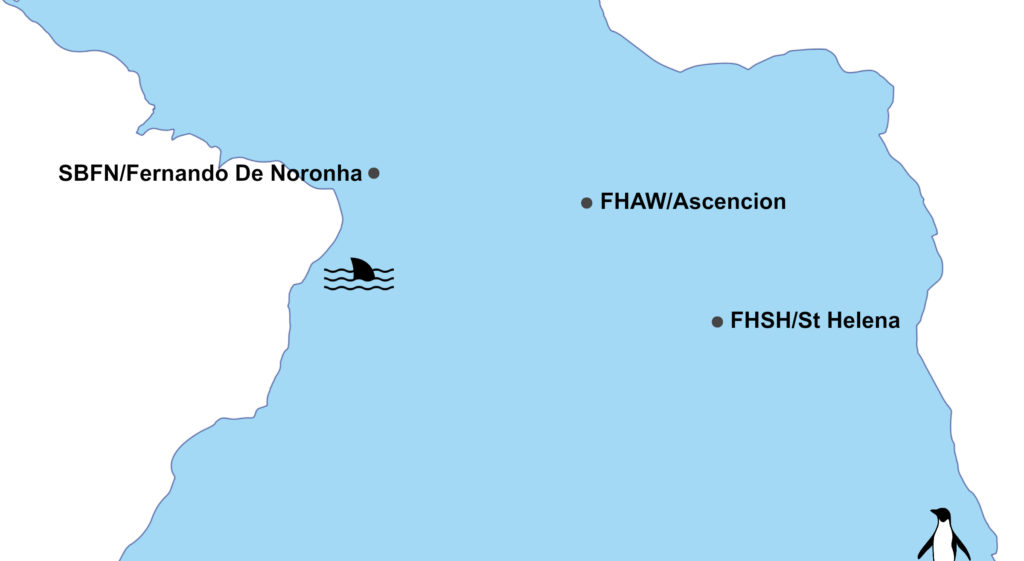
Islands of the South Atlantic – enroute ETOPS and diversion options

Operating a flight across the South Atlantic is complicated by very limited en-route diversion options.

There are only really three airports worth considering between Brazil and Africa, south of the equator. All have their own complexities.

Your three best bets:

Operational Considerations:

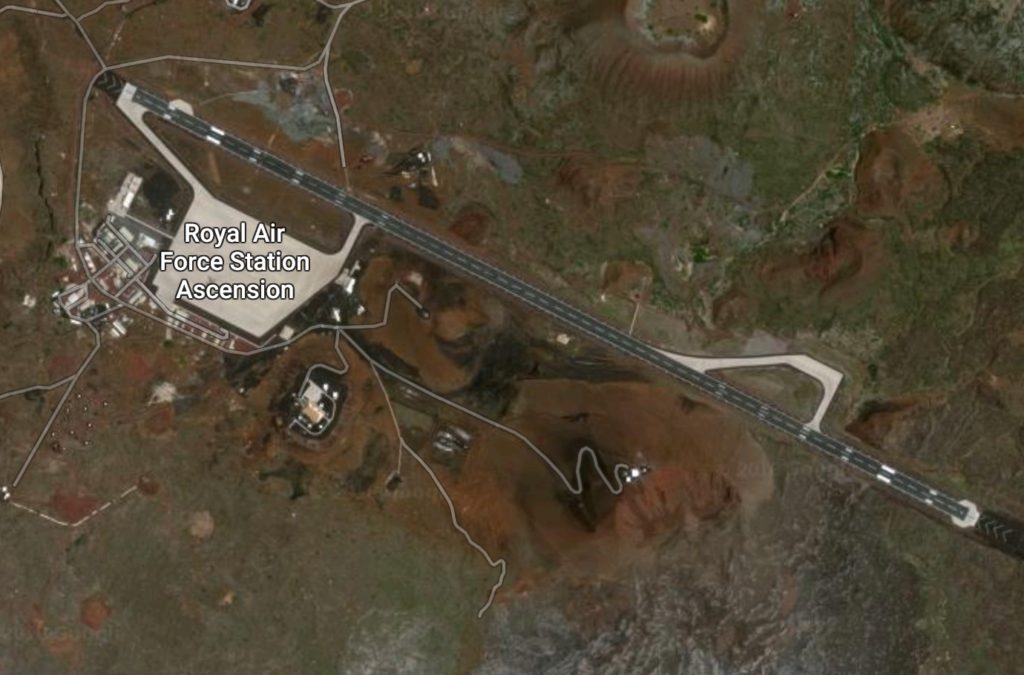
FHAW/RAF Ascension Island

Wideawake Airfield (FHAW) is a military facility operated jointly by the USAF and the RAF. Under the terms of the joint agreement, only state aircraft are authorized to land at Ascension. A monthly RAF flight arrives from the UK and weekly USAF C17 movement occurs.
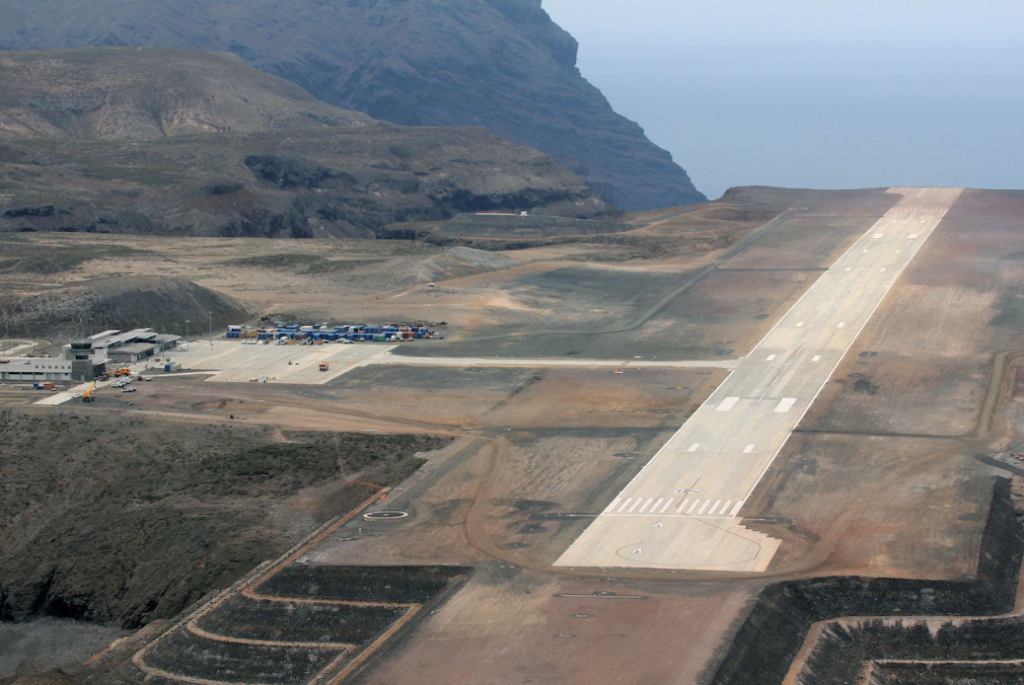
We have also been advised by local authorities that “the runway is beyond its life cycle and we have imposed aircraft maximum weight limitations on its use to extend its operation”.

Because of these restrictions, passenger links to/from UK were stopped.

To file as an ETOPS/EDTO alternate or not?

The official line is here.

“The US Air Force has agreed its airfields may be identified as ETOPS emergency landing sites for flight planning purposes. This is consistent with the policy that an aircraft can land at any US Air Force airfield if the pilot determines there is an inflight emergency that would make continued flight unsafe. However, we also understand there are published criteria for ETOPS airfields and our policy concerning emergency use is not agreement or certification that Air Force airfields meet those criteria.

Ascension Island is a remote location with resources (accommodations, medical, hangars, crash/fire/rescue, etc) limited to levels essential for support of assigned personnel and the military mission. The airfield is available “as is” for emergency use only as indicated above. Whilst FHAW may be declared as an alternate for ETOPS flight planning purposes, it cannot be used as a weather alternate, except for flights departing from or destined for St Helena.”

However! After we enquired with local authorities, we received the following response:

“As this is a USAF military only field, it is not allowable to nominate as an ETOPS alternate. There are no lodging facilities here on the island, and there is only very limited medical capability.

We will always accept an emergency divert and have done so in the recent past. Nomination as an alternate drives a set of requirements that we do not meet – hotel, medical, 24 hour operations, etc. Since we cannot meet those requirements, nomination is not allowed. If an aircraft were to experience and emergency and need to land, we would make do with what we have.”

As we have reported in the past, it can be costly to nominate enroute alternates sometimes.
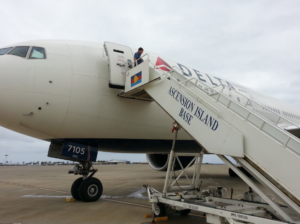
Famously, a Delta 777 diverted to Ascension back in 2013 after experiencing engine troubles.

Either way- it’s another ‘interesting’ approach.


FHSH/St Helena

This is a new airport.

It’s windy! It is subject to “severe” windshear and the runway is on top of a mountain and it’s short! There is only limited flights to/from Namibia with an E190 and a monthly flight connects onwards to RAF Ascension.

Even the first commercial flight there need to ‘go-around’ due to the wind.

It was closed shortly after it opened due to these safety concerns, but it’s back up and running now.


SBFN/Fernando De Noronha

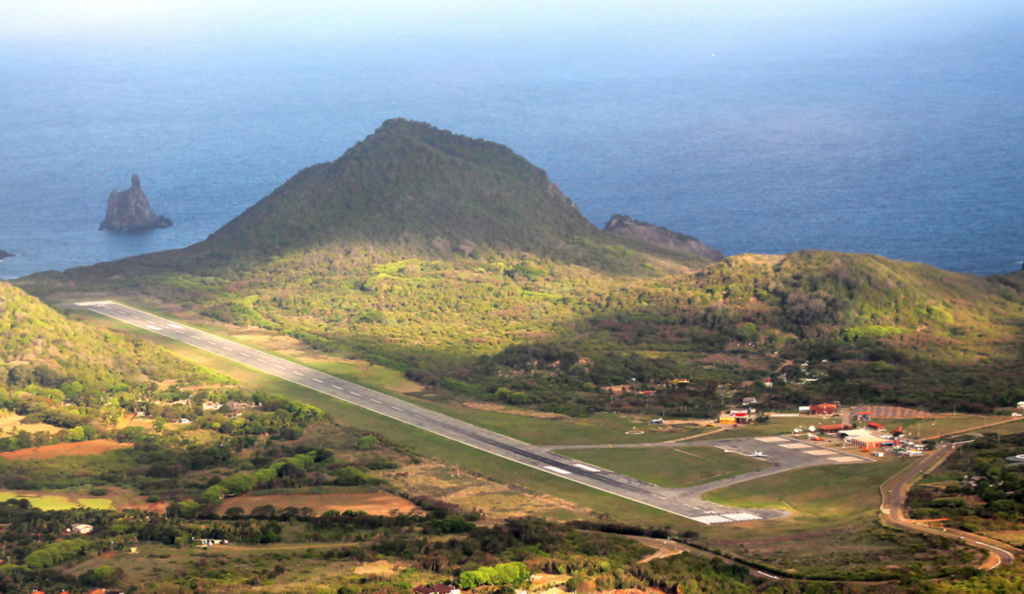
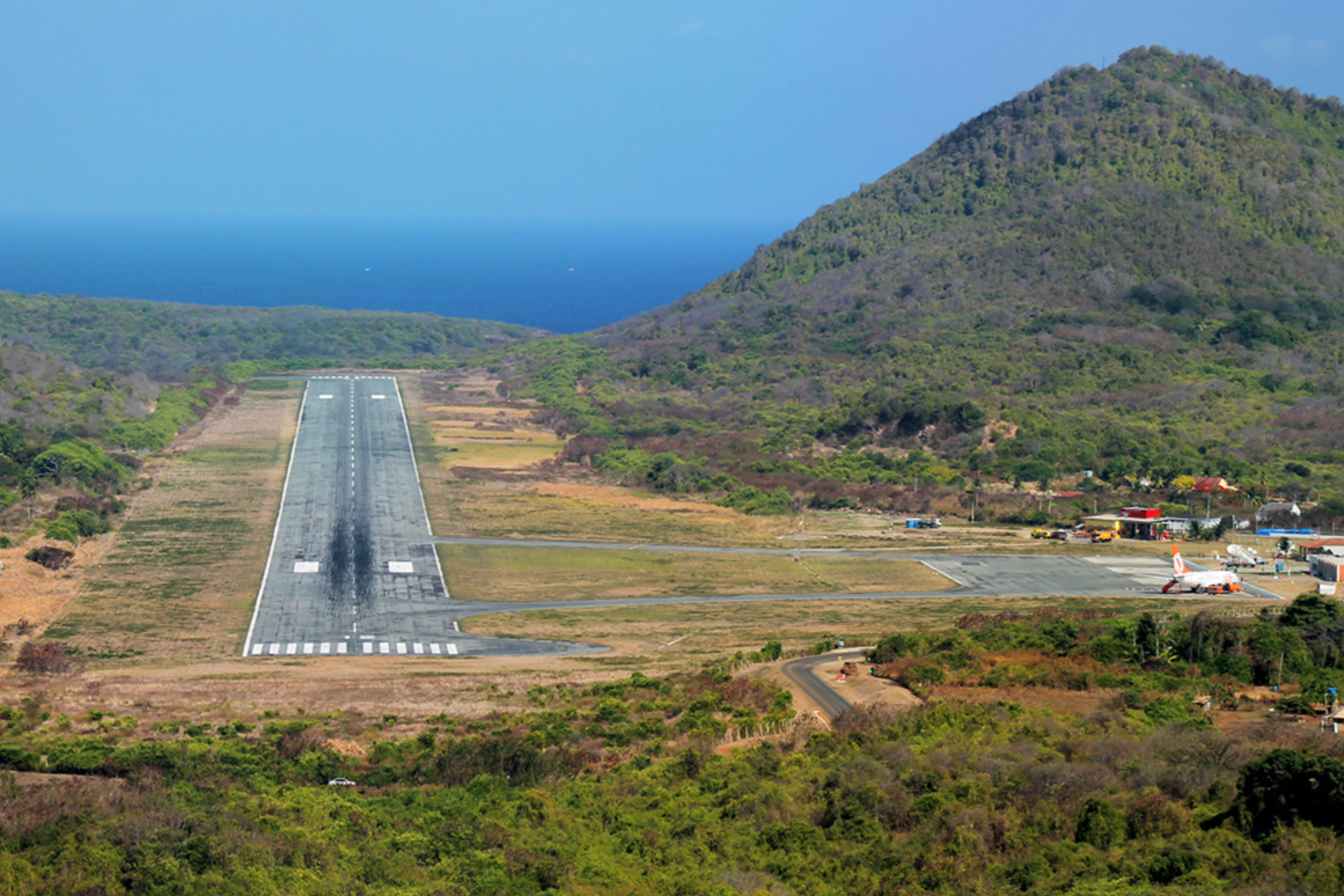
Small island airport. Very scenic on approach and great beaches! Limited ground handling and parking options. Close to the ITCZ – susceptible to unstable weather at times. Regular commercial flights from the island and popular tourist destination with appropriate passenger facilities. Fire fighting only CAT 5. PPR – expect to pay for parking by the hour. Not an airport of entry and no fuel available to non-Brazilian military aircraft. Handling all done by island island administration and special permit landing permit required. Also important to note that the runway will be closed for maintenance between 2001 and 1131 UTC, between May 24th until Dec 31st, 2018 and that all runway lights are unavailable also.

Extra Reading:


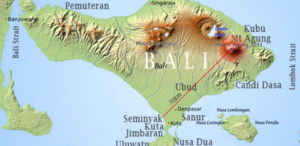
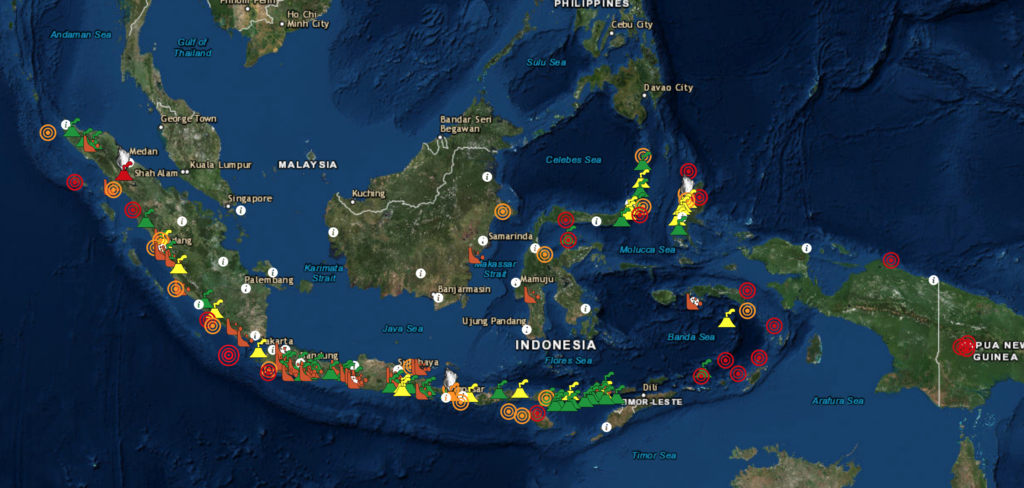
Ongoing Bali volcanic threat – update

Update June 29, 2018:

Following the volcanic eruption on Jun 28 at Bali’s Mount Agung, the airport has been closed all morning today, Jun 29, and only just reopened at 1430 local time (0630z). Over 500 flights have already been cancelled as a result. Big delays expected all day and into the weekend. Further closures due to volcanic ash are still possible.

Per latest report from Darwin VAAC, there is a volcanic ash cloud observed up to FL160 in the area, but they predict winds will carry the ash southwest toward Java, Indonesia’s most densely populated island.


In Short: Continued vigilance required for operations to Bali; The alert level for Mt Agung eruption remains at 3 (on a scale of 1-4). Last ash plume on 26 March rose to at least an altitude of 11,650 ft.

When Mount Agung erupted in November 2017, airlines faced travel chaos as flights were cancelled due to the lingering ash cloud. Since then, visitor arrivals have dropped by more than 70 percent. Facing $1bn in lost tourist revenue, the Indonesian government is trying to lure tourists back to the holiday island.

The 3,000metre high volcano sits roughly 70 kilometres away from the tropical paradise’s main airport and popular tourist areas.

In a Volcano Observatory Notice for Aviation (VONA), Volcanological Survey of Indonesia (PVMBG) reported that at 1009 on 26 March an event at Agung generated an ash plume that rose at least to an altitude of 3.6 km (11,650 ft) a.s.l. and drifted NW. The Alert Level remained at 3 (on a scale of 1-4) and the exclusion zone continued at a 4-km radius.

Best up-to-date information:

The current one to watch:

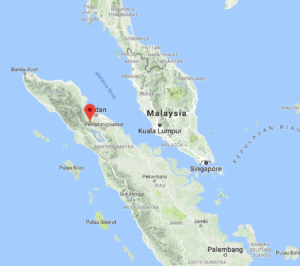
Mount Sinabung – located in Medan, Indonesia is also very active at the moment (last spewing ash on Friday April 6) and may disrupt air operations to Malaysia and Singapore.

Current Aviation Color Code: RED, Eruption with volcanic ash cloud at 09:07 UTC (16:07 local). Eruption and ash emission is continuing. Ash-cloud moving to west – south. Best estimate of ash-cloud top is around 23872 FT (7460 M) above sea level, may be higher than what can be observed clearly. Source of height data: ground observer.”

We will keep an eye on this one.

Mount Sinabung roared back to life in 2010 for the first time in 400 years. After another period of inactivity it erupted once more in 2013, and has remained highly active since.

If you have travelled through the region lately and can provide members with more of an update, please get in touch. 


What do you Sphinx about this new airport?

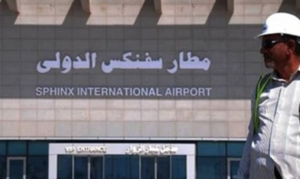
We love new airports … and we have a cool one tell you about in Giza, Egypt – known as Sphinx International Airport (SPX, HESX)!

It looks like it’s undergoing a “soft” opening of sorts. Word from handlers we have spoken to on the ground confirm it’s open for business (for the most part).

Here is the info we have so far:

  • ICAO code: HESX
  • IATA code: SPX
  • PCN: 87
  • Runway dimensions: 3650M x 60M
  • The airport is open from Sunrise to Sunset. No night lighting installed as yet.
  • There is no CIQ yet. But it’s coming soon – so it’s not an airport of entry presently.
  • Airport features a general and business aviation terminal, with its own dedicated CIQ unit. The VIP terminal and Royal Lounge are open. A complete fleet of GSE is in place.
  • Jet A1 Fuel is available via Misr Petroleum Company tankers. No Hydrant System yet.
  • Airport features 8 parking stands currently.
  • Most likely the airport will be slot coordinated preserving control on capacity until the new terminals launch.
  • Night stop parking is accepted with a requirement to re-position aircraft to parking bays after passengers disembark.

Some extra info from the local agent:

“The airport has already launched, but not in it’s full capacity as the contracted constructor is still finishing up the exteriors. In addition the check-in software has not been installed, meaning commercial schedule flights haven’t started yet. However the airport is accepting business and general aviation flights during opening hours and with pre-notification of 48 hours.”

Parking spots are well equipped and overnight parking is possible. The airport is only seeing a handful of movements at present and is not busy.
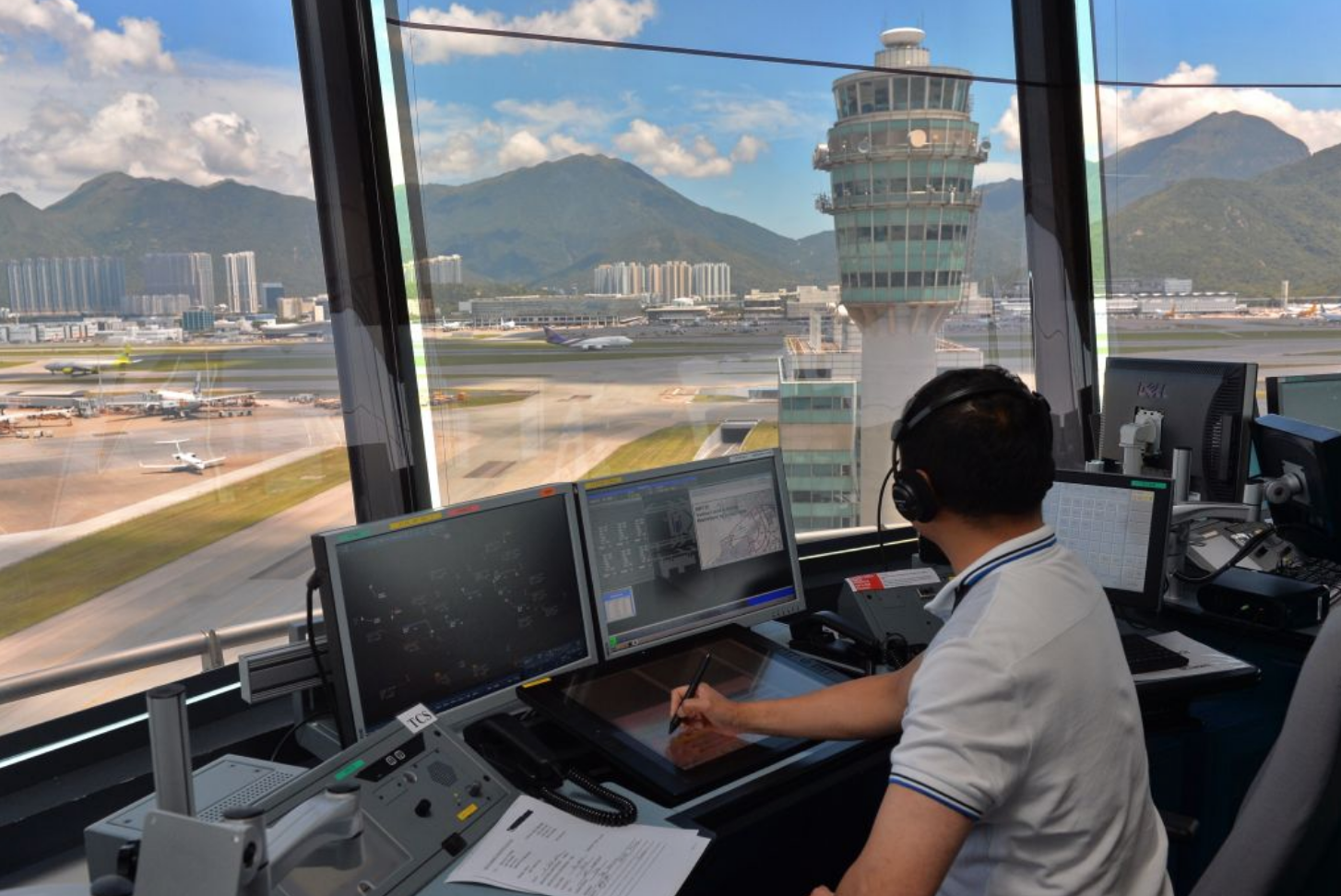
The airport is best suited for those wishing to visit Cairo West or Giza City with the expected launch of commercial flights on 30 June.

Have you landed there yet? Let us know if you have any updates.

p.s. Fun fact- The Great Sphinx of Giza when translated from Arabic to English means: The Terrifying One; literally: Father of Dread. So……Safe landings 😉

Extra Reading:

  • AD 2.HESX-v2 – AIP Information on HESX – Sphinx International Airport.


Updated communication procedures for Hong Kong FIR

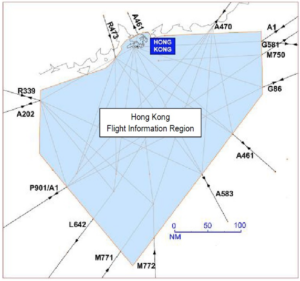
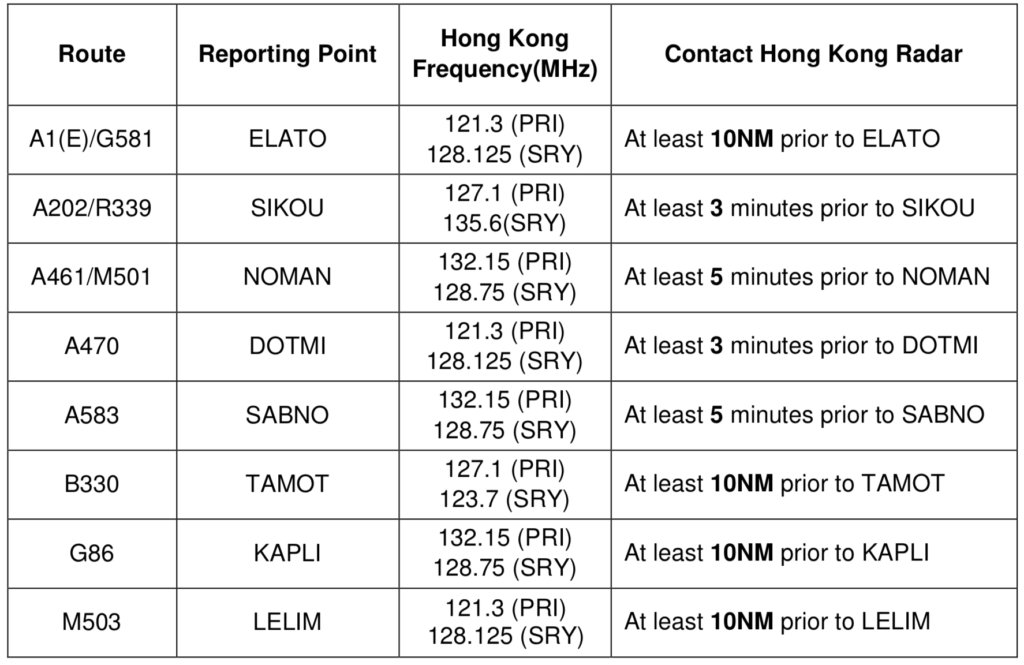
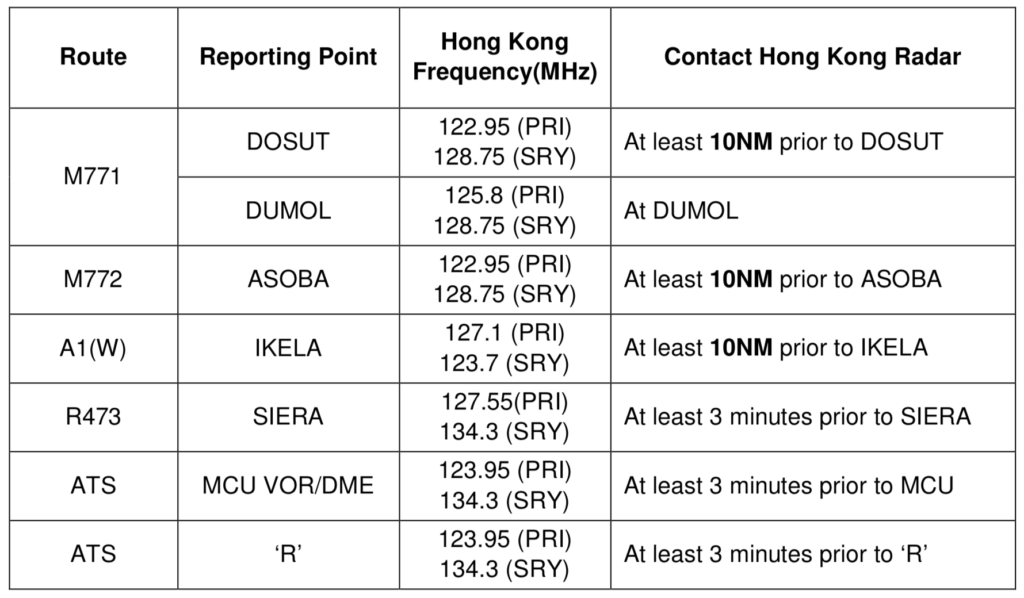
AIP SUP A09/18 details new communication procedures for air traffic entering the VHHK/Hong Kong FIR.

The key points:

  • Aircraft shall comply with the following communication requirements to obtain an air traffic control (ATC) clearance:

  • Pilot shall report the aircraft callsign, position (with reference to reporting point), level (including passing and cleared levels if not maintaining the cleared level), transponder code, and other pertinent information (e.g. speed assigned by last ATC, tracking if it differs from the flight plan route) in the initial call before entering Hong Kong FIR.

Also a small change: the requirement for pilots to report the estimate time exiting Hong Kong FIR on first contact with Hong Kong Radar as stipulated in AIP Hong Kong ENR 1.1 paragraph 2.2.4 will no longer be applicable and is hereby cancelled.


Why are you still getting the Ruudy6 wrong? Stop at 1500!

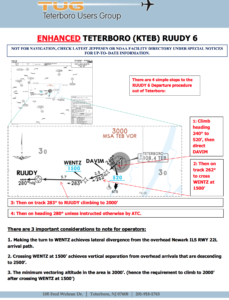
If you’re departing Teterboro any time soon, make sure you stop at 1500 feet – and have a good look at the rest of the RUUDY 6 departure. That’s the message from NY ATC, and the Teterboro Users Group.

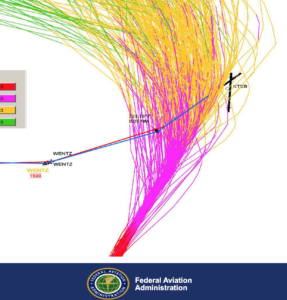
The FAA has reported over 112 pilot deviations on the KTEB/Teterboro RUUDY 6  SID.

The Teterboro Users Group has asked us to remind all pilots that strict compliance is required, especially vertically.

“The most common error being a climb straight to 2000’ without honouring the requirement to cross WENTZ at 1500” – Capt. David Belastock, President, TUG

This week the FAA issued the following notice which explain the issue and the serious consequences of non-compliance, namely the reduced vertical separation with KEWR/Newark arrivals:

Teterboro Airport SID Deviations

Notice Number: NOTC7799

The Ruudy Six departure continues to incur both lateral, but in particular, vertical pilot deviations. Due to the proximity of Newark and other area airports it is imperative to follow the RNAV(RNP1) departure procedure to Performance Based Navigation (PBN) standards. Do not drift left off course to avoid noise monitors. Do not climb above 1500 until passing Wentz intersection. There is only 1000 feet of separation with overhead traffic at Wentz. When issued the clearance to “climb via the SID” all altitude restrictions must be complied with as depicted on the chart.

Attached are excerpts from the Aeronautical Information Manual and the Controllers handbook explaining the Climb Via procedure. An expanded explanation is in chapter 4 and 5 of the AIM.

Further information can be found on the Teterboro Users Group website http://teterborousersgroup.org and in KTEB Notice to Airmen (Letters to Airmen section)

There has been an extensive education campaign underway for a long period including guidance material, pilot meetings, educational podcasts and even a FlightSafety International eLearning course. Despite these efforts, pilot deviations continue to occur.

A great guide has been created by Captain Belastock and its very useful for any crews operating out of KTEB.

Know of any other procedures with unusually high non-compliance?

Let us know!


Don’t forget to file MACH number in NY Oceanic Airspace

KZWY/New York Oceanic FIR last month published a NOTAM requiring Flight Plans to be submitted with MACH crusing number, rather than TAS in Field 15A for the flight plan. So far, most operators are not doing this. But you should!

This includes flight departing TXKF/Bermuda.

A0178/18 – ALL ACFT ENTERING THE NEW YORK OCEANIC FIR (KZWY), INCLUDING THOSE DEPARTING BERMUDA (TXKF) , MUST FILE A MACH NUMBER INSTEAD OF A SPEED OF KNOTS IN THE EXPECTED CRUISE SPEED FIELD (FIELD 15A) OF THEIR FPL. 03 MAY 17:08 2018 UNTIL 31 MAR 23:59 2019. CREATED: 03 MAY 17:09 2018

Reports are that compliance so far has been low.

So why do it?

NY ARTCC tell us:

This minor adjustment enables the ATC computer system to effectively probe flight plans and proactively offer more favorable routes and/or reroutes.

Help ATC out! Thank you.