Big Changes Coming at East Hampton Airport

You may have heard the news. Long story short, KHTO/East Hampton airport is being de-activated as a public use airport, and then re-opened as private use only. The US FAA have given the plans a green light. A raft of new rules will come into effect on May 19 that will heavily affect how commercial operators can use the airport.

Here’s a rundown of what we know.

Wait, where?

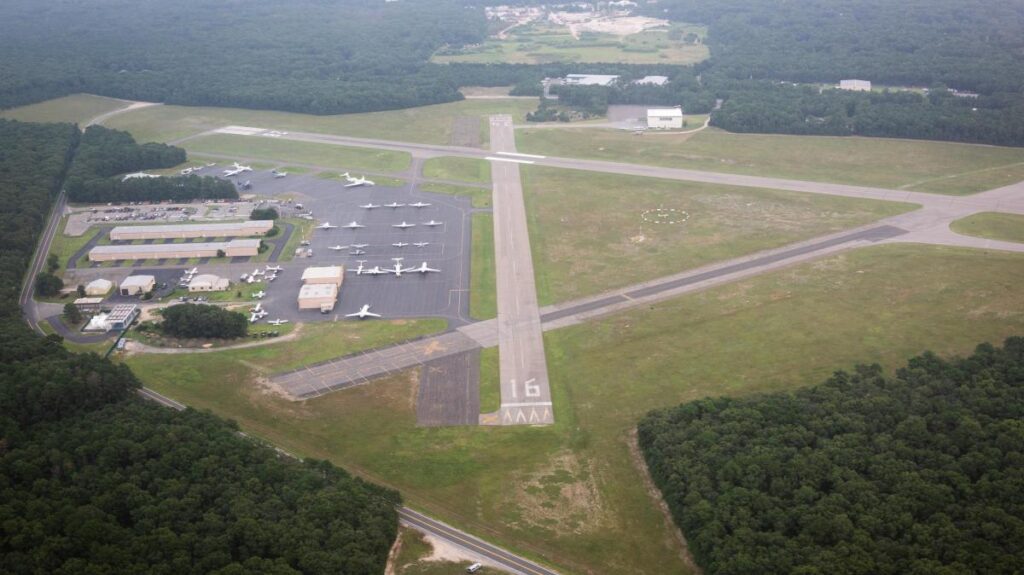
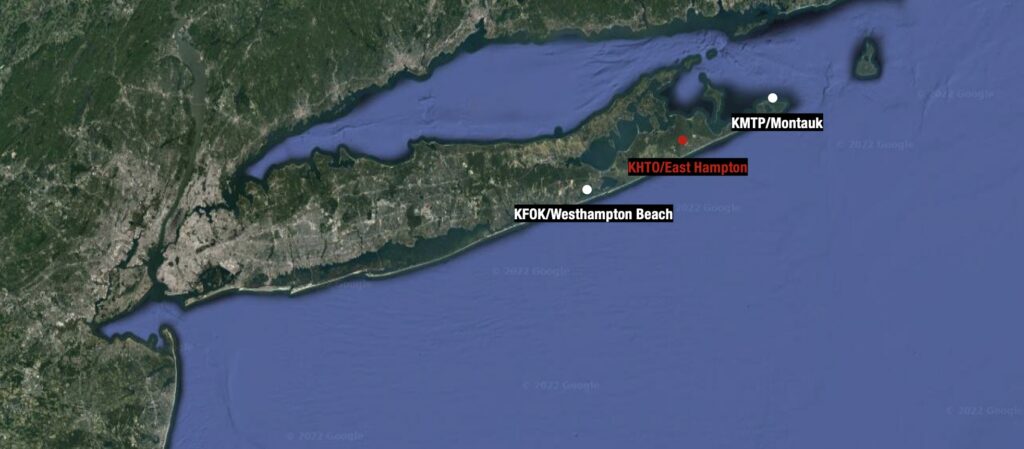
KHTO is found 90nm-ish northeast of the Big Apple, towards the end of Long Island. The airport itself is well equipped, with two runways, jet fuel and an FBO.

The most common commercial traffic connects passengers with New York City.

KHTO/East Hampton Airport

It will close, and then re-open.

In January, East Hampton itself voted unanimously to convert the airport to private use only.

It’s going to close on May 17 for two days, and then re-open on May 19 subject to local control under the FAA’s ‘prior permission framework.’ Or in other words, there will be new (very) restrictive rules for commercial operators who want to fly there. Its ICAO identifier will change to KJPX on reopening.

Why though?

Simply put – noise. There have been years of complaints from residents, and even calls to close the airport completely.

So special flight procedures are being introduced to turn the volume down on ops there. Disclaimer alert: these are still subject to change until the official re-opening date.

How will the new rules work?

Prior Permission – All individual tail numbers will need specific approval from the airport authority first. Any commercial operator will also be restricted to only one return flight each day.

Noise Curfew – The airport will have new operating hours: 08:00 – 20:00 LT (Mon – Thurs), and 09:00 – 19:00LT (Fri – Sun). Outside of these times there will be no exceptions. They’re not mucking around either – any rule breakers will be banned from using the airport.

Noise Abatement – This will be introduced on all runways for both departures and arrivals, and at all times.

Weight Restriction – Aircraft with a MTOW of over 50,000lbs (22,679kg) won’t be allowed. Which rules out most Gulfstream and Global series aircraft.

New Instrument Approaches – Special IFR ‘M’ procedures will be put in place that operators will need specific permission to use. An FAA-approved third party is busy designing these, and they are expected to be published in time for the reopening on May 19. They won’t be publicly available via normal FAA databases though – you’ll need to ask first, but the good news it won’t cost anything. Applications need to be submitted the relevant FAA Flight Standards District Office.

The existing RNAV-Z approaches will be replaced for both Runway 10 and 28, but with fairly few changes other than minor design adjustments. Just don’t try and use the old ones.

What about blast off? – There will be no changes, existing rules will stay in place along with visibility and ceiling minima.

Where else can I go?

KFOK/Westhampton Beach is a good option at only 20nm away. Instrument approaches available, and the longest runway is 9000′ (2,743m).

For handling we recommend you contact Sheltair Aviation. You can reach them via fokcsr1@sheltairaviation.com.

Another options is KMTP/Montauk (but be aware of these gotchas: there’s no weather reporting, and no jet fuel available).

Two alternatives for East Hampton.

I still have questions, who can I call?

The East Hampton Airport manager, Jim Brundige on Brundige@EHamptonny.gov, or via +1 631 537 1130 ext. 5.

Please keep the team updated.

If you operate into KHTO under the new rules, we’d love to hear from you. There’s a couple of ways to get in touch – either by filing a spy report via Airport Spy, or by contacting the team directly on team@ops.group.


Testing Times At Teterboro: Closures and Challenges

Aside from being the oldest operating airport in the New York City area, KTEB/Teterboro is far from quiet.

In the good ol’ pre-Covid days of 2019 it saw over 124,000 aircraft movements – that’s 340 every single day. And even last year in the height of the pandemic, it was well on the way back to those levels.

It is also unique for a few reasons. The first is that it is weight limited – if your ride is heavier than 100,000 pounds (45,000kg-ish), then you can’t land there without a waiver. Which means there is no airline traffic, making it exclusively the realm of GA and business aviation operators.

It is also nestled among some of the busiest airspace in the world. The field itself is only 6nm from downtown Manhattan. Which means traffic in and out of there has to compete with the seemingly constant flows of nearby big hitters KLGA/LaGuardia, KJFK/New York, and especially KEWR/Newark.

This tricky combination creates unique operational challenges for controllers and pilots alike. And now things are going to get even more complicated. Here’s why…

A runway is off to rehab.

Or perhaps more accurately, Runway 06/24 is being rehabilitated. Which is a fancy way of saying it needs to be repaired.

 Unfortunately, this is also time consuming. So, a bunch of runway closures have been scheduled at KTEB running all the way into next year at night and on weekends.

During these closures Runway 01/19 will be in use for arrivals and departures which can be hugely disruptive to operations – especially in two scenarios:

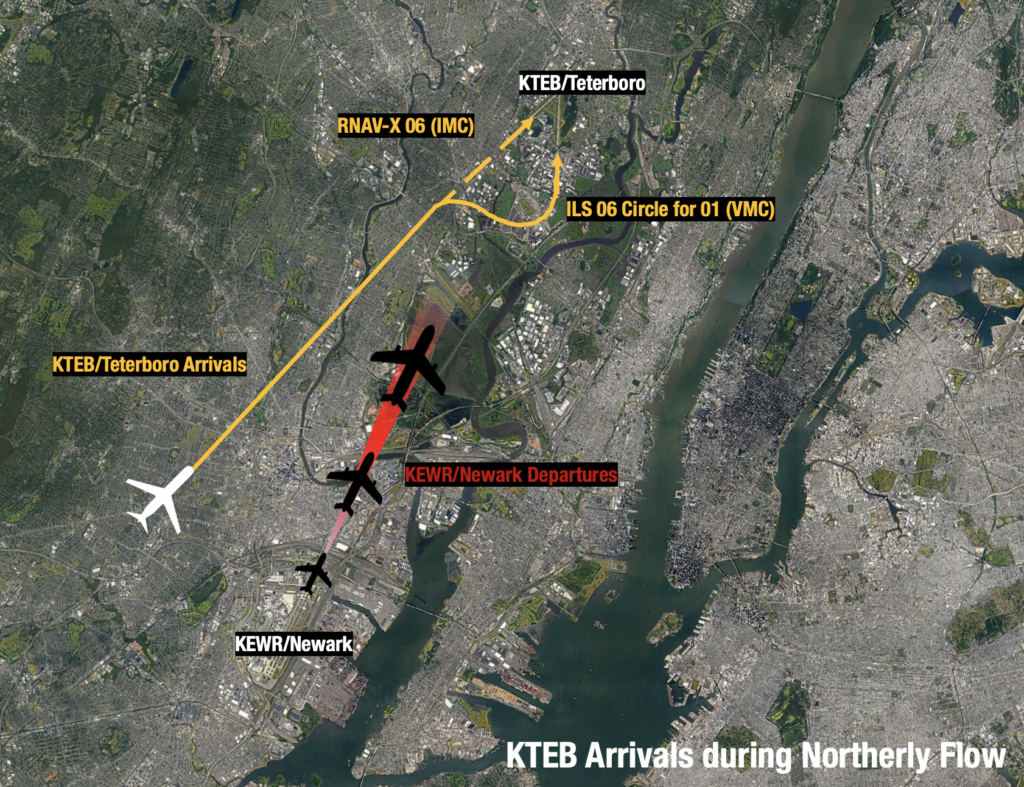
Runway 01 Arrivals (Northerly Flow)

When Runway 06 is closed, arriving traffic can expect one of two approaches.

If the weather is good.

 You can expect the ILS approach runway 06, circle to land 01 to keep you clear of Newark. But beware, it can be a challenging approach for a few reasons. Code 7700 has published a fantastic briefing that is almost a compulsory read if you’re unfamiliar with ops there.

Some other common sense prevails too – make sure the approach is carefully briefed beforehand. It’s tight, and easy to get unstable so crew co-ordination is going to be important to keep the old SA up.

If the weather is not so good.

You can expect an RNAV-X approach onto Runway 06 – runway closures are weather dependent. The Port Authority of New York and New Jersey have confirmed they will open it back up.

When are we going to see an instrument approach for Runway 01?

 Good question, the problem is that Newark gets in the way again. The Teterboro User’s Group are hard at work with the FAA to come up with one, but the process is by nature slow. Within months is the goal, but not quite soon enough to help during these works.

Runway 19 Departures (Southerly Flow)

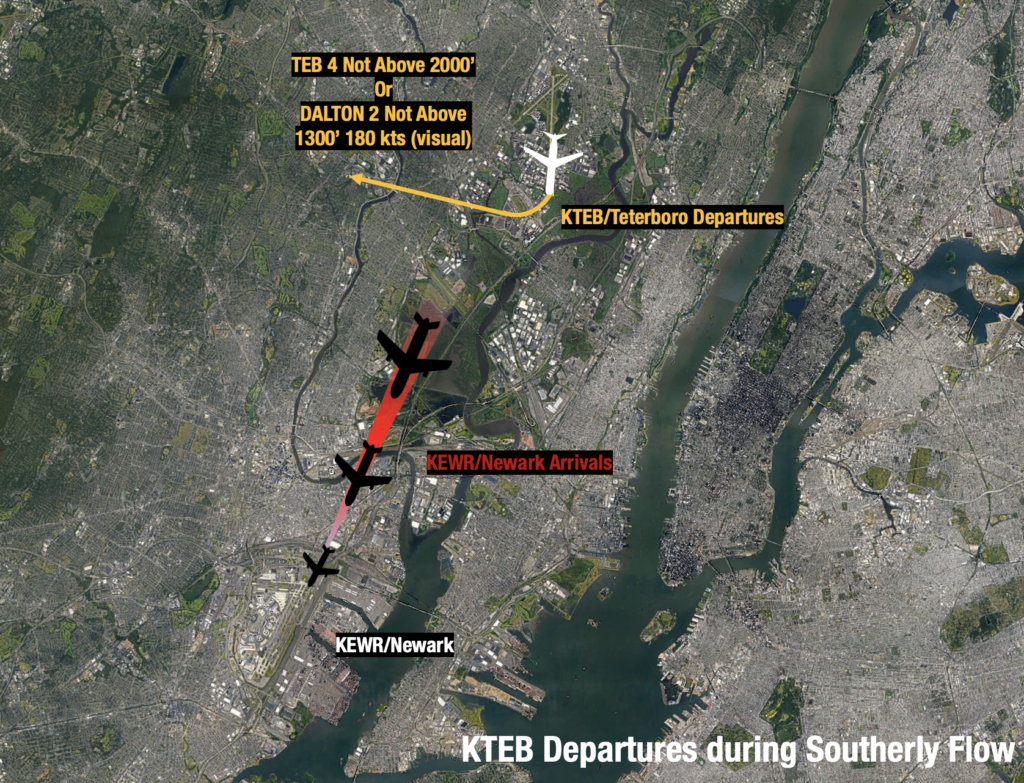
This is when you can expect big delays, as Runway 19 points straight at Newark.

Expect the Teterboro 4 Departure by default. But a head’s up – for every single aircraft that launches out of Teterboro on this SID, NY TRACON needs to find a 10nm gap in arrivals at Newark. And that means a lot of waiting. There may be a better option…

Consider the Dalton.

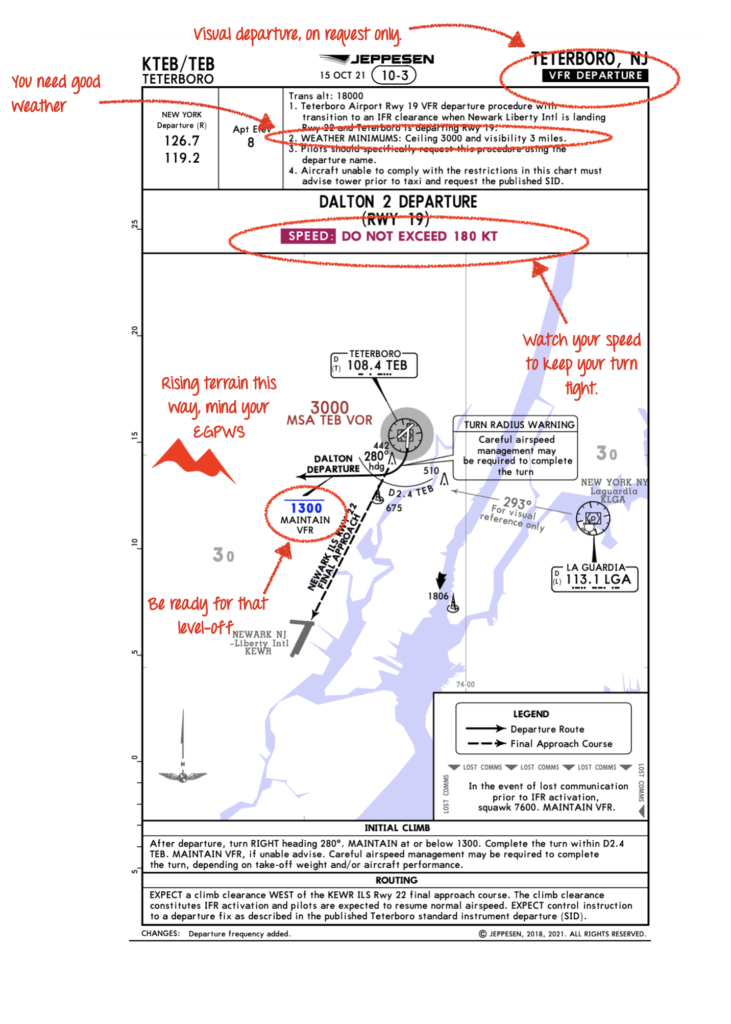
The what? The Dalton Two Departure. It’s unique because it allows aircraft to depart Teterboro visually, before transitioning to your IFR flight plan – and it’s by pilot request only when the weather is better than 3000 – 3.

The Teterboro User’s Group worked with the FAA to get this one off the ground (no pun intended). It is essentially a right-hand turn after departure onto a westerly heading, at or below 1300 feet. You’ll need to keep your speed back too.

The spacing required is effectively halved. Don’t be put off by the phrase expect indefinite delays either. It’s ATC’s way of telling you they don’t know how long it’ll be. But local operators confirm delays are never worse than the standard TEB 4, and more often than not, better.

But before you light the fires, there are a couple of gotchas. It’s going to get busy – the low level-off happens quickly in high performance jets, especially at light weights. So be ready for it. Also, the westerly heading points you (visually) towards rising terrain and there have been reports of EGPWS warnings as a result.

Teterboro isn’t the only option.
If you don’t have the appetite for all of this and are looking for more straight forward options, here are a couple to consider:

KHPN/White Plains It’s 25nm from Manhattan – about a 40-minute drive in normal traffic. It has two runways, the longest being 6549’ (1996m) long.

KMMU/Morristown About the same distance away with a slightly longer 50-minute drive. It also has two runways with the lengthiest option of 5,998’ (1,828m).

Local operators in New York have told us that even though the drive is a little longer, the overall travel time is often less when you avoid delays in and out of KTEB.

Look out for full airport closures too.

There are also eight complete airport closures scheduled for KTEB coming up, some lasting up to 38 hours: 

July 1 – August 31: Six closures are planned on weekends, from Friday 10pm until Sunday 12pm (local time).

October 1 – November 3: Two closures are planned from Sunday 12:01am – 12pm (local time).

 The exact dates will be confirmed by Notam.

Need more support?

Reach out to the friendly folk at TUG (the Teterboro User’s Group). They’re experts on ops at KTEB, they post weekly construction bulletins on their website and are more than happy to help operators out with advice. Also a special thank you to David Belastock – the President of TUG. This write up would not have been possible without his experience and generous support of OPSGROUP.

We made an Airport Lowdown for KTEB a while back, which you can see here. We had help (since we’ve never flown in there), but if you spot anything to add or change then let us know.

Or you can talk to the OPSGROUP team directly on team@ops.group. We’d love to hear from you.


OPSCHAT Summary 05 April

Hi members,

It was another busy OPSCHAT call this week.

You can watch the full replay on your Member’s Dashboard.

Here’s a quick summary of what we talked about.

  • Europe – EASA have updated their fuel regs – we dug into what has actually changed. France has begun rolling out new ATC systems, starting with the LFFE/Reims FIR which could lead to big delays. The EASA Environmental Portal deadline has been and gone – if you’re operating a jet into Europe under Part 91 or 135, you probably need to know about it – we briefly covered what operators need to do. Our recent article may also help. A strange new Notam has been issued about unannounced military ops up to FL300 between Italy and Greece, so we talked about what we’ve heard. Potentially disruptive strikes across Europe were cancelled last minute. But don’t get too relieved, more will probably come.
  • USA – Several major airport closures are on the horizon including KJAC/Jackson Hole and KADS/Addison – we took a brief look at the details. We also discussed disruptions at KTEB/Teterboro due to upcoming work on Runway 06/24 with the help of local experts – they gave us some great information to help keep you out of trouble if you’re unfamiliar with ops there (with special thanks to David Belastock over at the Teterboro User’s Group). We looked at spiralling fuel costs and shortages, especially on the East Coast, as well as global shortages. If you experience rapidly rising costs or supply problems, let us know! The US Masters in Augusta GA is happening from April 7 – 10, we talked about special FAA procedures that have been published for nearby airports.
  • The Middle East – There have been more drone and missile attacks in the OEJD/Jeddah FIR, Saudi Arabia. The latest caused flight disruptions at OEJN/Jeddah airport. We chatted again about the practical risk for overflights along with those taking off and landing. Safeairspace.net also has a full briefing available.
  • Asia  – A question was asked about airspace incursions in Taiwan’s Air Defence Identification Zone (ADIZ). We looked at what’s been happening recently, and what operators need to do to stay out of trouble. We’ve also previously made a handy article on this issue.

As always, the team is here to help with any operational support, info or questions. You can reach us on news@ops.group, or via the slack channels #flightops and #questions.

To watch the replay of the OPSCHAT in full: head over to the dashboard. We hold a new one every week on Tuesdays at 2000z, click here to register and join us live.


Jackson Hole Closing

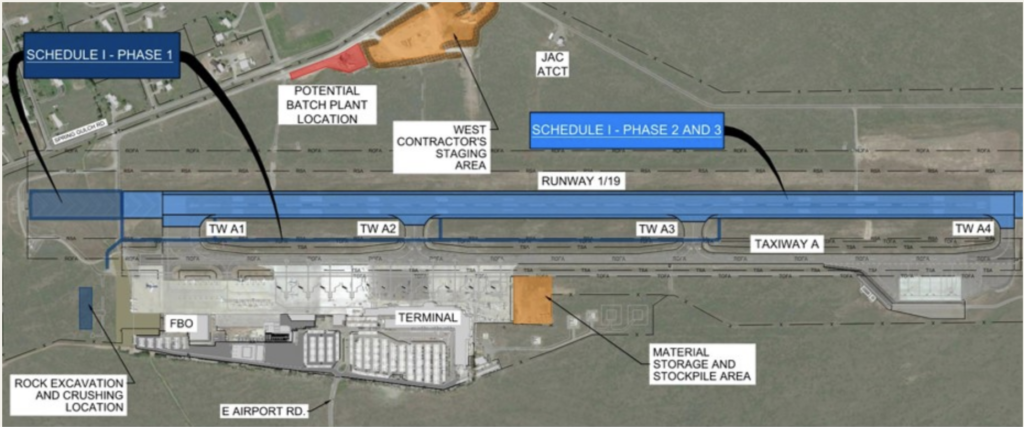
KJAC/Jackson Hole will be closed to all traffic from April 11-June 28. Keep an eye out for the new KJAC Notam which has yet to be published.

What’s happening?

The runway is being replaced. Work has been happening in phases, and the first happened last year with minimal impacts. But now it’s time to get the really heavy machinery out  – the entire runway will be dug out, and the sub-base replaced.

If you’re wondering what sub-base is, it’s the granular layer that the hard stuff sits on top of. Of course, once it’s in place, the runway will also be fully re-paved. Unfortunately for traffic this means all operations will be stopped for 78 days.

Once the airport reopens, work will continue to groove the runway and apply markings, but this will happen with closures at night. The entire project will be wrapped up by August.

For more information you can view the official project website.

Is the runway being lengthened though?

Not this time. The existing runway has been in place for nearly half century, and having been re-surfaced several times it is just in need of a full replacement. There will still be 6,300′ (1920 m) of runway available when the project is finished.

Where else can I go?

There are several alternative airports that could be considered during the works. We asked OPSGROUP members what their preferred alternate is, and their answer was KDIJ/Driggs, Idaho.

It’s only 23nm away. The facilities are reportedly great, with a nice big apron that can easily fit your ride. Here is some information on the field:

Runway 04/22 7,300’/ 2,225m.

Instrument approaches: All RNAV. There is a discrete approach for 04, and an Alpha approach which will set you up for circling. Just make sure the weather is appropriate.

FBO: Teton Aviation Center. You can reach them on +1 208 354 3100, or via info@tetonaviation.com. Also it’s going to get busy – reservations are essential. Teton has put out some guidance to pilots here.

Gotchas: As you’d expect, lots of terrain and high elevation – 6231′. It’s also uncontrolled, but there is a UNICOM available on the CTAF frequency, 122.7.

Bonus: Harrison Ford may, or may not, keep a DHC-2 Beaver here. Just word on the street.

I’d prefer a side of ATC with that thanks.

The nearest controlled airport is KIDA/Idaho Falls. It’s 63 nm away, and doesn’t require any reservation of PPR (unless things start to get really crowded). It would still pay to let your FBO know you’re coming.

Runway 03/21 9002′ (2743m)

Instrument approaches: ILS available (21).

FBO: Aero Mark +1 208 524 1202 or info@aeromark.com

I’m on international ops, and need customs.

KJAC/Jackson Hole itself is not a port of entry. But if you’re looking for one with CBP nearby, the closest option is KBTM/Butte, 160nm away across the state line in Montana.

Runway 15/33 The longest option at 9000’/2743m.

Instrument approaches: ILS available (15).

FBO: Butte Aviation Inc, +1 406 494 6694 or trevor@butteaviation.com.

We welcome other suggestions!

Please get in touch with us at team@ops.group with any other recommendations, we love to hear from you!


Rebels Resurgent: Increasing Airspace Risk in DRC?

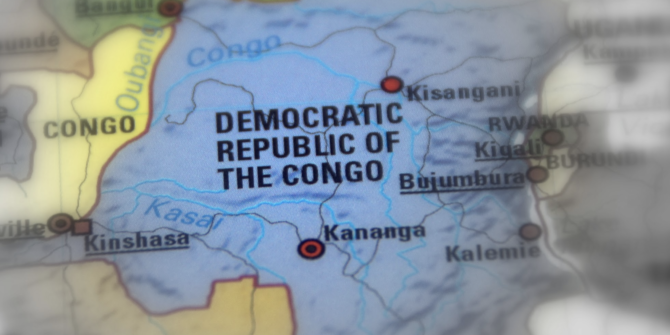
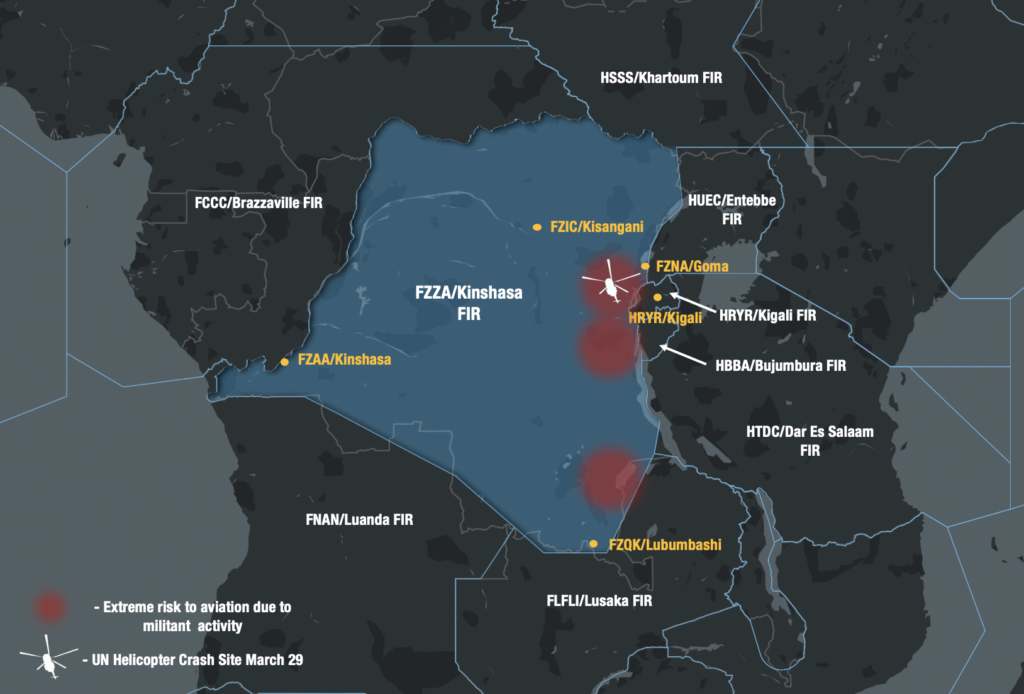
On March 29, a large UN transport helicopter crashed in Eastern Democratic Republic of the Congo while operating a surveillance flight.

The DRC Government has accused (but not proven) a recently resurgent militant group of shooting down the aircraft, after renewed fighting against the government military in recent days.

The country itself has a chequered history of non-state actors actively targeting aviation assets including aircraft and airports, and there may be more to come.

This spells danger for civil aviation, and with an absence of official airspace warnings for the FZZA/Kinshasa FIR, the risks may be on the rise.

Here’s a rundown on the current situation, and what you need to know to stay safe.

What’s been going on there?

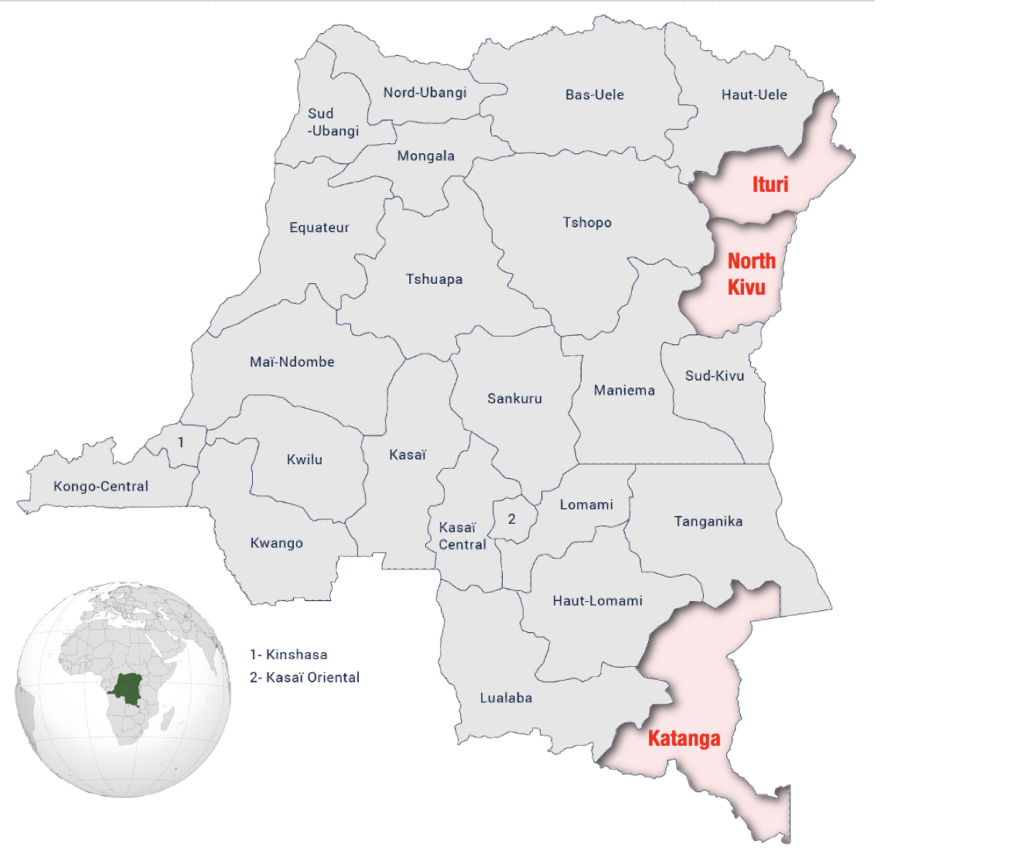
A militant group known as M23, or March 23 Movement, has recently become active again in Eastern DRC, in a province called North Kivu. It sits close to the borders of Uganda and Rwanda.

The group were previously engaged in a conflict with the government who expelled them across the border in 2013. Then just days ago, M23 unexpectedly became active again by attacking military positions in North Kivu – which is where the UN helicopter crashed. This was amidst heavy fighting.

There is potential for the skirmish to develop into a larger and longer running war. And that means risk for aviation.

A history of attacks on aviation.

If the UN helicopter was indeed shot down by M23, it wouldn’t be the first time. They, along with other militant groups, have a known history of attacking government owned aviation assets:

  • 1998: a civilian 727 was shot down by a shoulder fired surface-to-air missile after it took off from FZOA/Kindu airport.
  • 2013: Militia attacked FZAA/Kinshasa airport.
  • 2016: FZUA/Kananga airport was attacked by armed rebels on three separate occasions.
  • 2017: An air force helicopter was shot down by anti-aircraft artillery in North Kivu, which was later claimed by M23.

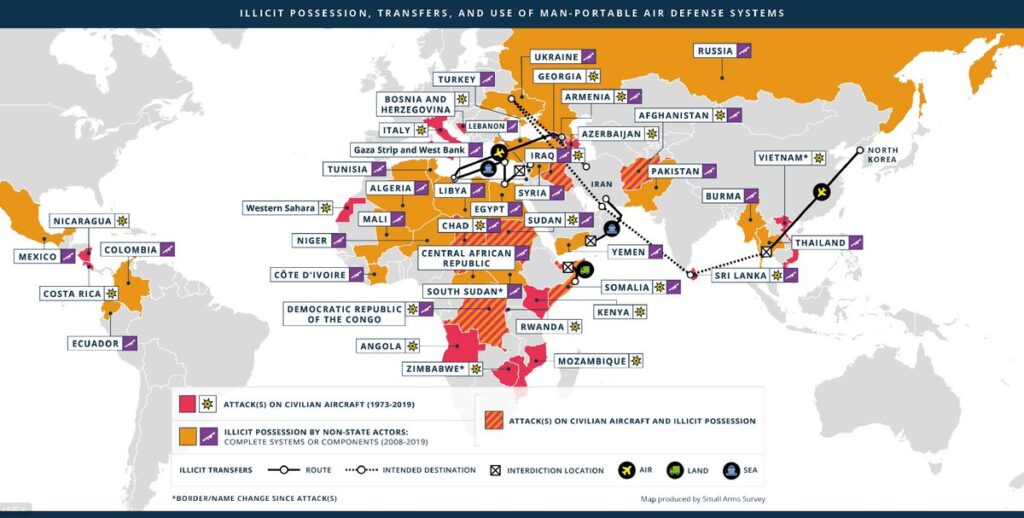
And there are fears that since the ceasefire in 2013, M23 have been retraining and rearming themselves with weapons that could target low flying aircraft. This includes Man Portable Air Defence Systems (MANPADS) and anti-aircraft artillery which are distributed among militant groups throughout many countries of Africa – including the DRC.

What’s the actual risk?

Militant groups such as M23 tend to specifically target government and military interests. There has been no indication of desire to endanger civil aviation. But the renewed intent to attack Government owned assets also increases the chance that civil aircraft may be misidentified, or mis-targeted.

Aircraft are most at risk at low level and low speeds which means they are most vulnerable when taking off, landing or on the ground. The Eastern Provinces of Ituri, North Kivu and Katanga are particularly dangerous.

There is little risk to overflying aircraft at higher flight levels. The issue for overflights becomes the need to divert. The Democratic Republic of The Congo is a huge country, which covers almost a million square miles of Central Africa – that’s more than Alaska and Texas combined. If you’re overflying it, you’ll need somewhere to land if something goes wrong. This is when militant activity becomes more of a danger.

Diversion Planning

Security risks in Eastern DRC are very high, and special care needs to be taken right now about options for diversions.  Landings at airports in the above three regions are dangerous and should be avoided . For overflights in this region, alternates across the border are safer options – especially HRYR/Kigali in Rwanda.

In Eastern DRC, FZNA/Goma is considered to be a reliable option, along with FZQA/Lubumbashi in the south and FZIC/Kisangani to the north. Further west the best option remains FZAA/Kinshasa. It’s important to remember though that no parts of the country are fully immune to militant activity and risks may be present at varying levels throughout the country.

This means if you’re planning on operating there, it’s important to carry out a risk and security assessment using trusted sources which may include local contacts, and security services offered by companies like Medaire.

Contingencies need to be in place for ensuring crew, passenger and aircraft security in the event of both planned and unplanned landings.

We’ll keep you updated.

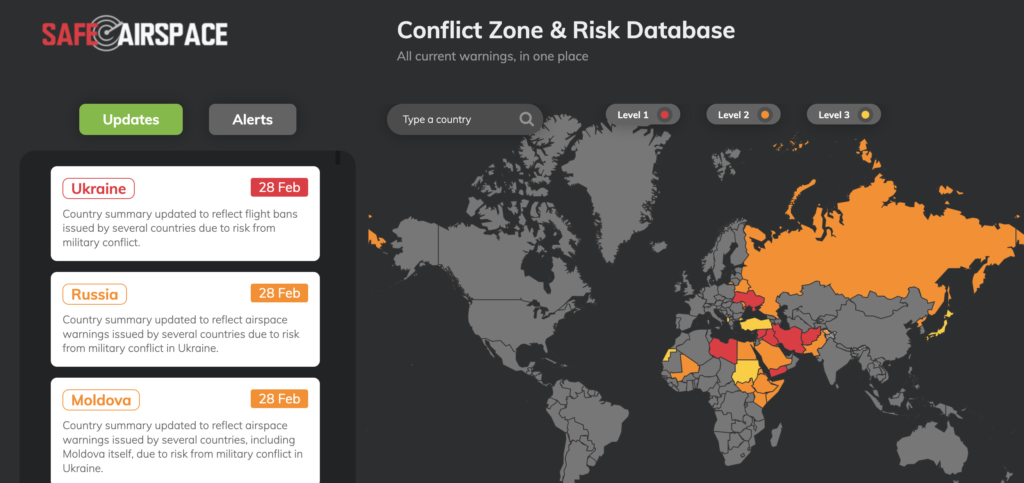
The ongoing situation in Eastern DRC is unpredictable. You can stay up-to-date with any changes or new risk alerts via SafeAirspace.net as they happen – it is our free Conflict Zone and Risk Database that we keep updated around the clock.


OPSCHAT Summary 29 MAR

Hi members,

It was another very busy OPSCHAT call this week.

You can catch the full replay on your Member’s Dashboard.

Here’s a quick summary of what we talked about.

  • Europe – With the closure of Ukrainian airspace not going away in a hurry, there are concerns about airspace congestion as traffic is squeezed into Western Europe. To make matters worse, ongoing ATC strikes along with system upgrades in France, and potential industrial action in Poland may be brewing the perfect storm for major traffic jams.
  • Russia – Ongoing sanctions against Russia are causing ongoing headaches for aviation. The rules are different in every country, and so operators need to be familiar with the jurisdictions they’re flying over. In more news, the Russian CAA website is currently down due to a cyber-attack – check out our latest article.
  • Dubai – Double trouble. There are two disruptions happening at the same time in May. At OMDB/Dubai one runway is being closed from May 9 – June 11, while over at OMAD/Al Bateen, the airport will be closed from May 11 – July 20. We discuss the potential impacts to traffic, along with suitable alternates during this time.
  • Saudi Arabia – Recent Houthi drone and missile attacks have caused flight disruptions at OEJN/Jeddah airport. They seem to be travelling further, and becoming more accurate. Reports of aircraft being held near the Egyptian border during these attacks, but not new Notams have been issued. We talked about ESCAT procedures, where to find them, and what alternates to use. See Safe Airspace for more info.
  • South-East Asia – Several major border openings have been announced in recent weeks including Singapore, Malaysia, Indonesia and Thailand. We take a brief look at what has been changing.
  • USA – The FBI has released a new warning of cyber-attacks maliciously targeting SATCOM networks. With the help of members on the call, we assess what this actually means for operators.
  • Colombia – We talk about two recent non-fatal attacks on airline pilots resisting robberies in the cities of Bogota and Cali. A major carrier has released security information to its crew. The basic advice is don’t put up a fight, leave valuables in the hotel, and only carry small amounts of cash.
  • Airport Spy – We’ve had a lot of new reports in the last few weeks. Don’t forget to check it out, you can access it here. Feel free to submit your own Spy Reports, any and all feedback is welcome.

As always, the team is here to help with any operational support, info or questions. You can reach us on news@ops.group, or via the slack channels #flightops and #questions.

To watch the replay of the OPS CHAT in full: head over to the dashboard. We hold a new OPSCHAT every week on Tuesdays at 2000z, click here to register and join us live.


Spillover Effect: New Airspace Risks in Europe

As the war in Ukraine continues, the risk to aircraft in European airspace may be changing.

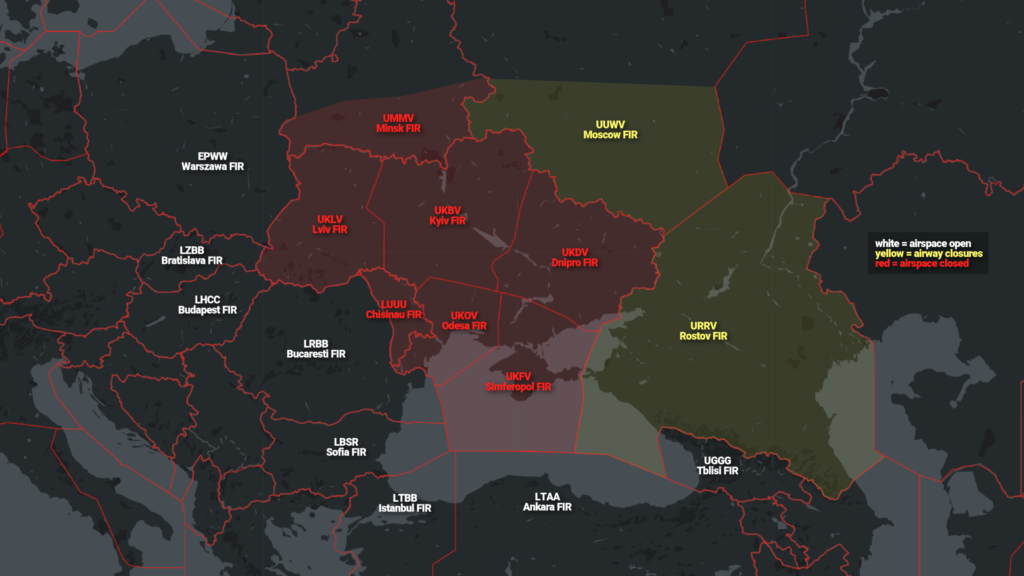
There have been several incidents in recent weeks that highlight that the spillover effects of the conflict have begun putting aircraft at risk in nearby FIRs. Or in other words – busy, open airspace with no airspace warnings in effect.

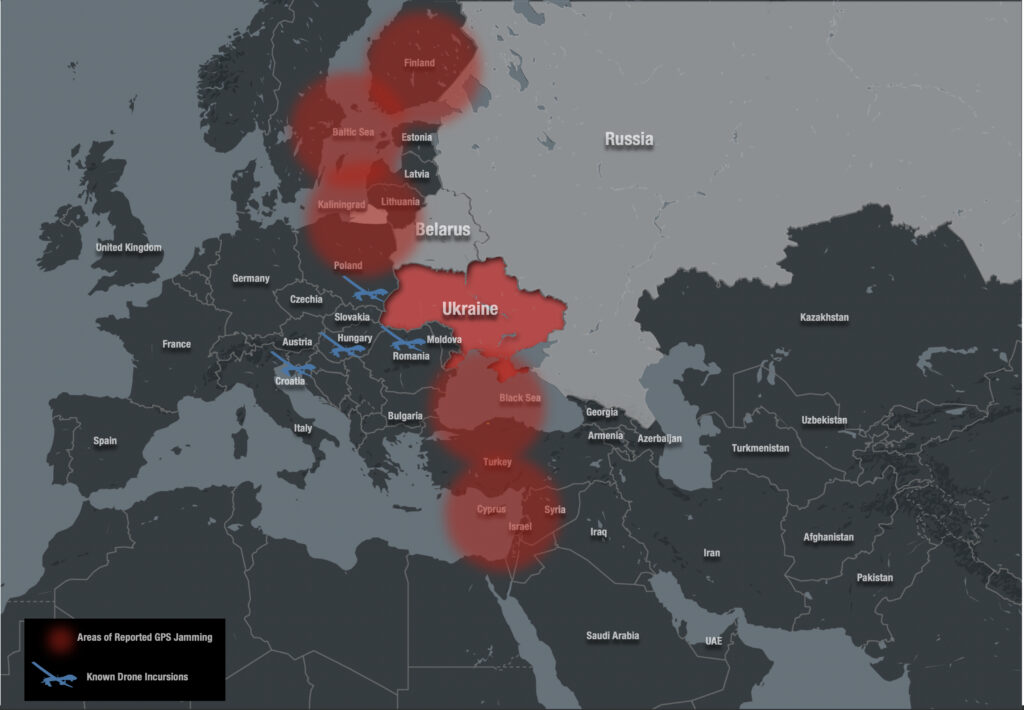
These include undetected military drone incursions in NATO member airspace and extensive GPS interference for aircraft operating across different regions of Europe.

And it is a new and emerging issue. So concerned are IFALPA and EASA, that they both published new bulletins last week to both operators and ANSPs regarding these risks.

Here’s a break-down of what you need to know.

Drone Incursions

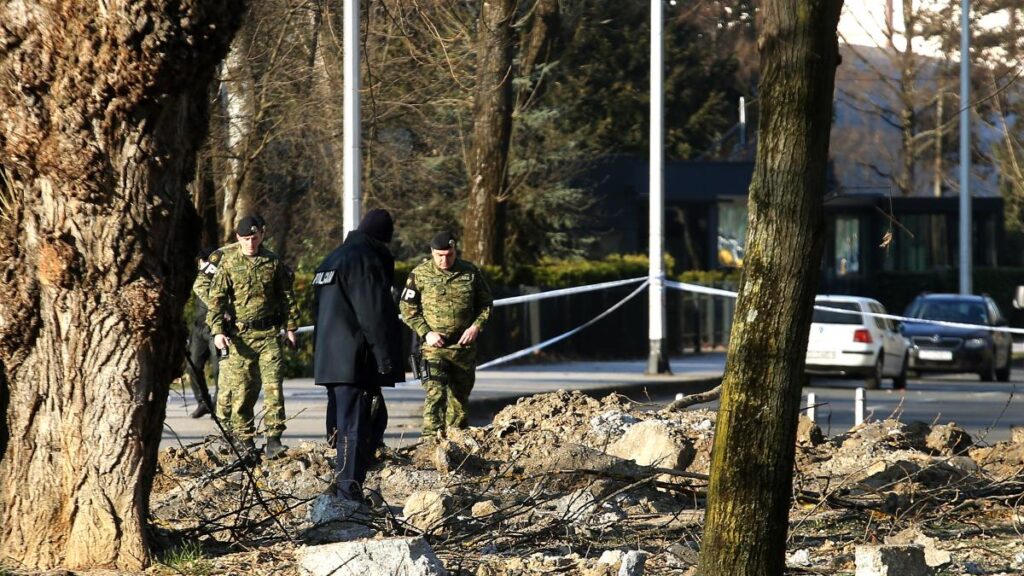
On March 12, a large weaponised military drone malfunctioned and left the Ukrainian conflict zone. It flew undetected through the airspace of Romania and Hungary, before entering Croatia and crash landing on the outskirts of the capital, Zagreb.

This was followed by an incident on March 14, where widespread reports emerged that a surveillance drone had briefly entered Polish airspace before being shot down by Ukrainian military as it re-entered their own.

Around the same time, yet more news surfaced that a Russian surveillance drone had been discovered crashed in a village of Northern Romania – the exact date of the incursion isn’t known.

IFALPA responded by issuing a Safety Bulletin on March 16. They report that these incursions are highly likely to re-occur as fighting continues. This may pose a threat to aircraft both on the ground or in the air. The risk comes from the drones themselves, as well as from air defence activities that attempt to destroy them.

This is all in addition to the political impact of Russian aircraft entering NATO member airspace without clearance. While there has been no indication that these incursions were intentional, it does increase military surveillance of the skies over these countries, including the remote risk that a civilian aircraft may be misidentified and targeted in error.

GPS Interference

Since February EASA has identified four regions near Ukraine where GPS interference has significantly increased. This includes instances of jamming and spoofing – if you’re unfamiliar with the latter, it means to deliberately introduce errors into the signal so that GPS receivers become inaccurate or erroneous.

The four hotspot regions are:

  • Kaliningrad, the Baltic Sea, and neighbouring states.
  • Eastern Finland
  • The Black Sea (a portion of which is currently part of a major air corridor between the Middle East and Europe).
  • The Eastern Mediterranean near Cyprus, Turkey, Lebanon, Syria, and Israel.

Reports have come from various phases of flights and had led to re-routing and even diversions.
For operating aircraft, the effects can be significant. A complete loss of GPS is immediately noticeable and leads to issues navigating, or carrying out ops that require RNP.

More worrying is spoofing, which can be far more insidious. Erroneous GPS signals can lead to false triggering of hard GPWS warnings, inaccurately displayed information, loss of ADS-B, faults with wind shear and terrain warnings, failure of aircraft systems that rely on GNSS for reference and even airspace busts. All nasty stuff.

On March 17, EASA published a Safety Information Bulletin on the issue. It includes a list of things that both operators and ANSPs can do to help mitigate the risks during this time. Absolutely worth a read if you’re flying in European airspace right now.

Proximity to the Fight

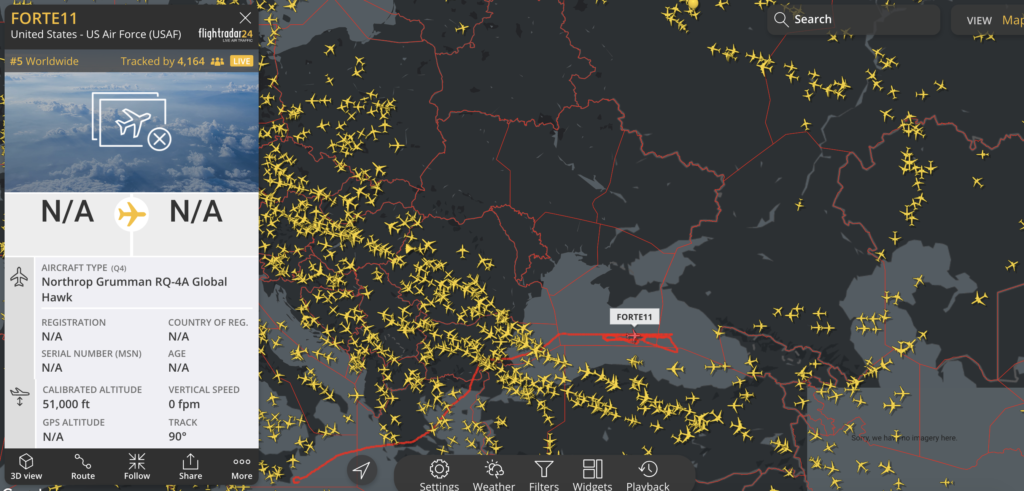
These events indicate that risk is present near the conflict zone, not just within it. And with flight tracking indicating aircraft frequenting open airways near the Ukraine border, but clear of closed airspace, perhaps we need to be collectively paying a bit more attention.

Case-in-point. On March 13, Russia carried out an air strike near the city of Lviv, in Western Ukraine where at least thirty missiles were fired towards various targets. This occurred just 15 miles (25km) from the Polish border, along with open airways that run adjacent to the border (particularly T344 and Z367).

There are currently no active airspace warnings in Poland.

Stay Updated

Both IFALPA and EASA have agreed that operators need to carry out their own risk assessments when operating in the region at the moment. That starts with verified, accurate and timely information. Make sure you keep checking safeairspace.net – our conflict zone and risk database.

And please report back to us any new info you come across (be it airspace risk related, or simply sharing your experience of a recent flight) and we can help redistribute that info back out to the group so that all are aware.

You can email us at news@ops.group, or file a report of a recent trip on our Airport Spy page here: ops.group/blog/spyreport


OPSCHAT Summary 15 MAR

Hello members,

We had another busy OPSCHAT call this week.

You can catch the full reply on your Member’s Dashboard.

Here’s a rundown of what we talked about.

  • Russia – The FAA has issued a new Notam which clarifies the ban on aircraft operated for Russian interests in US airspace. We also discussed that leased aircraft are being held in Russia, re-registered and operated domestically despite the termination of lease agreements. This raises concerns about future business, along with safety.
  • Iraq – An Iranian missile attack occurred in Northern Iraq on March 13, likely targeting US interests there. This may escalate tensions in the region. We discuss whether overflights are actually safe (especially for US operators), along with emergency considerations if you plan to enter the ORBB/Baghdad FIR.
  • GPS Interference – We took a brief look at military interference testing in the US this month in California, South Carolina and Alaska. There may be no signal within 400nm of each test site for extended periods. The impact for dispatch may be low, but pilots need to continue reporting any cases of jamming or signal loss to ATC and the FAA. If there’s an emergency, they can stop it.
  • Unusual happenings in Europe – Widespread reports this week that a large military drone malfunctioned and flew undetected through the airspace of Hungary and Romania, before crashing in Croatia. It likely came from the conflict zone in Ukraine. We discussed the risk to civil aviation in neighbouring countries as a result of the conflict, and where there are no airspace warnings. We also touched upon the ongoing issue of GPS jamming in Turkey.
  • Danger Club – It’s back! We’re running a special session for the Teterboro Users Group’s meeting at 10am EST on March 16, and all are welcome to join – visit teterborousersgroup.org for details. OPSGROUP specific sessions will resume on March 24, with all new scenarios.

As always, the team is here to help with any operational support, info or questions. You can reach us on team@ops.group, or via the slack channels #flightops and #questions.

To watch the replay of the OPS CHAT in full, head over to the dashboard.


Signal Jam: US GPS Interference Testing This Month

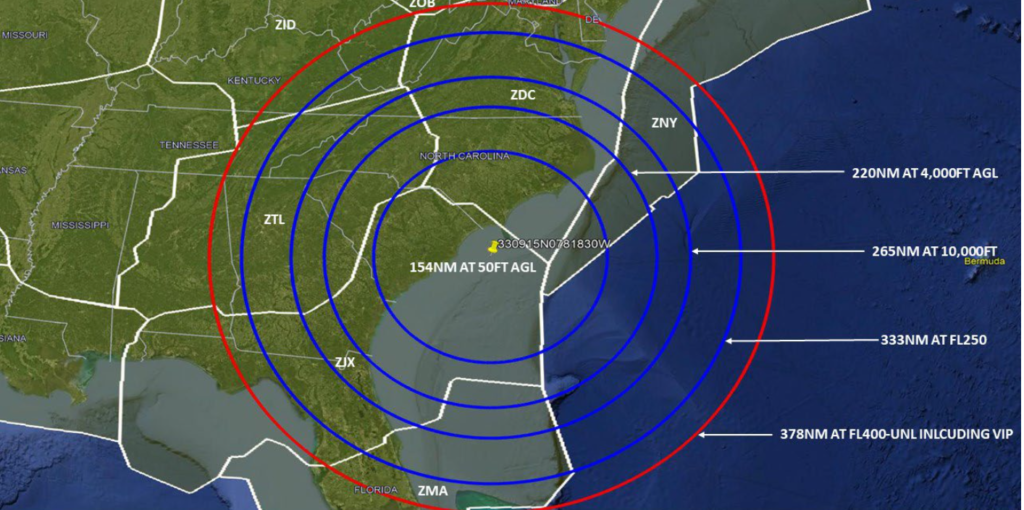
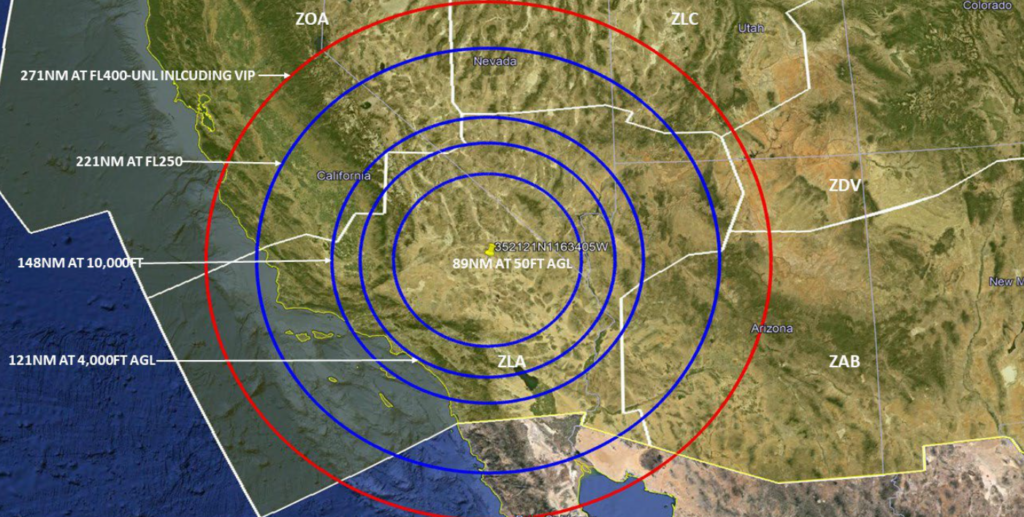
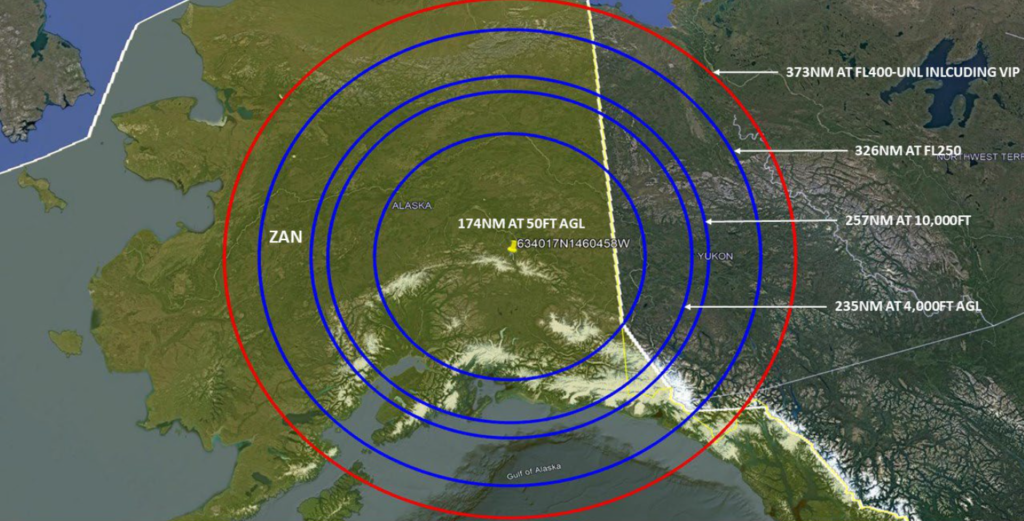
For the remainder of March, the US military are carrying out GPS interference testing in three locations around the US for extended periods of time. During these periods, aircraft within 350nm of the tests may lose GPS signal completely – including WAAS and ADS-B.

Here’s a quick summary of what’s happening, and when.

Wait. It ain’t broken – why do they have to interfere with it in the first place?

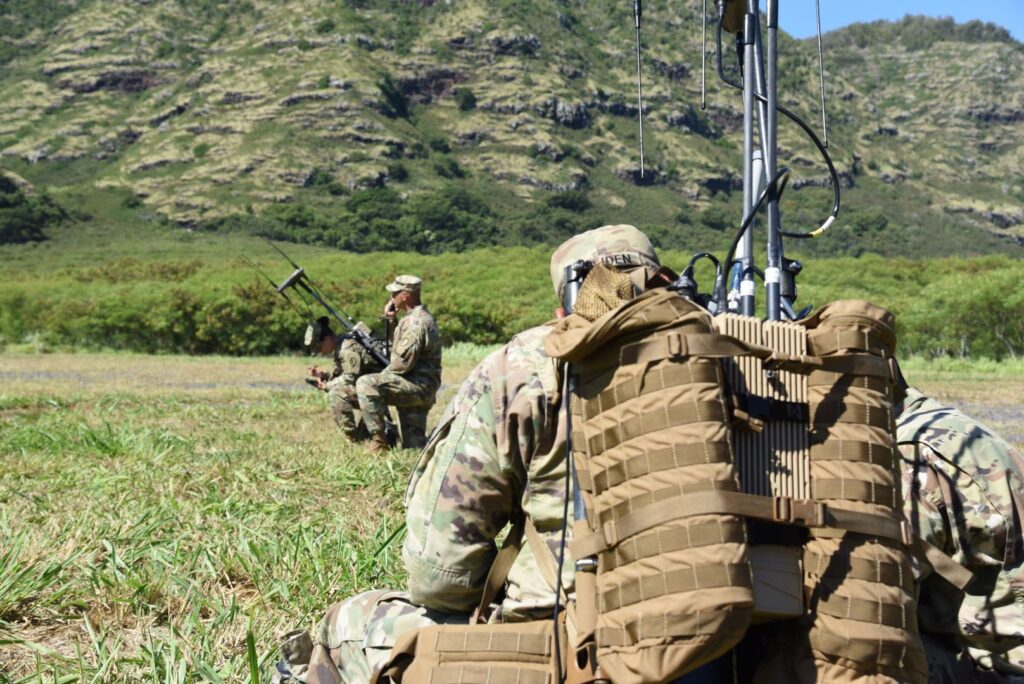
Simply put, because the military need to be prepared if GPS signals are lost due to enemy jamming. That way it allows service personnel to train in an environment where it is not available.

In the event of a large-scale conflict, it is likely that the constellation of GPS satellites may be targeted or interfered with to erode the other’s side’s ability to navigate, deploy weapons accurately or even operate surveillance drones or other unmanned vehicles.

We’ve written about GPS jamming before – take a look at our article if you’d like to know a little more.

Unfortunately, aviation is forced to make way for these exercises. Despite being heavily dependent on GPS, the exercises simply have to happen. And in fact, they are happening more often than ever before. They are four times as frequent as they were just ten years ago.

Back to what’s happening this month.

There are three tests to be aware of (the range of outages increases with flight level).

Southeastern US

A Carrier Strike Group will be carrying out tests off the coast of South Carolina. Three days are affected:

15 March 1900z – 2130z

17 March 1200z – 1630z

28 March 1200z – 1630z

……..(Local time GMT-4)

Here is a map of the affected area:

South Carolina Courtesy: FAA

More testing is happening over at Fort Irwin, California. The test days are much more frequent than the other side of the country:

16 March 0700z – 1259z

18 March 0700z – 1259z

19 March 0700z – 1259z  1830z – 2200z

20 March 1830z – 2200z

21 March 0700z – 1259z  1830z – 2200z

22 March 1830z – 2200z

……..(Local time GMT-7)

Here’s a map of the affected area:

California Courtesy: FAA

Testing will also be carried out up North at Ft. Greely in South-eastern Alaska across multiple days:

15 March 0001z – 0300z  0900z – 1200z

16 March 0001z – 0600z  1700z – 2000z

17 March 1800z – 2300z

18 March 2200z – 2359z

19 March 1800z – 2300z

20 March 2200z – 2359z

21 March 1800z – 2300z

22 March 1000z – 1700z

23 March 2200z – 2359z

24 March 1800z – 2300z

25 March 2200z – 2359z

……..(Local time GMT-8)

Here’s a map of the affected area:

Don’t forget to report any outages.

It is important that any GPS interference is reported to the FAA – even though the interference is deliberate. There’s a proper process to follow for that which you can find in the Aeronautical Information Manual (AIM).

The relevant bits are paragraphs 1-1-13 and 5-3-3. Here’s a link to that document.

But in a nutshell, aircraft should notify ATC, use a different source of navigation and if necessary, request an amended clearance. It would also be a good time to grab a pen and write down as many details as you can as they’ll want a whole bunch of information in your report to the FAA. This will need to be submitted when you’re back on good ol’ terra firma. Click the link to see just how much information they’re after.

Why should we bother reporting?

Because GPS jamming tests are an ongoing issue for civil aviation and it is important to keep tabs on just how much of a problem it is. They are having a growing impact on the US NAS which is becoming more and more dependent on GPS always being fully operational. Work is ongoing to safely accommodate these tests alongside aviation and the more info the industry has, the better.


Impact of Russia Sanctions on Corporate Aviation

As the conflict in Ukraine continues, the world has been responding with sanctions against Russia. This includes the US, Canada, the UK and EU.

The problem is that these sanctions are having far-reaching impacts on aviation – especially for charter operators who may not even be aware that they are breaking the rules. And it’s important to stay on the right side of the law, as the penalties can be severe – even if the lines are blurry.

Here is a rundown of what we know for US operators, and things to be aware of.

First up, what actually is a sanction?

Simply put, commercial and financial penalties that are applied by one or more countries against another state or group.

They are a tool that falls short of military force for punishing or deterring some form of action. In this case – Russia’s ongoing military offensive in Ukraine. Sanctions mean that our ways of doing business, or interacting financially, are restricted by law – including the payment for, and delivery of, services for those restricted by the sanction. This is where things start to become complicated for aviation. Perhaps more than you may realise.

So, what can’t we do?

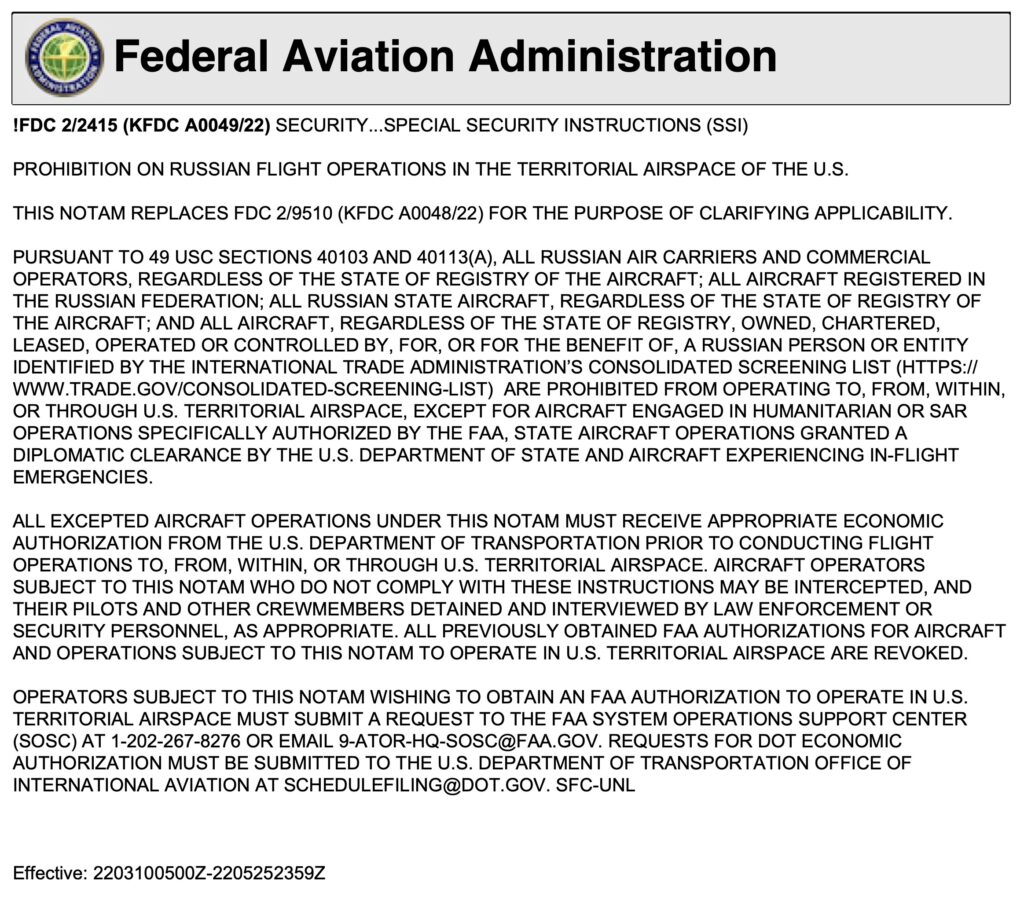
US operators can find that information in KFDC Notam 2/2415 below:

So, regardless of where an aircraft is registered – if it is owned, chartered, leased, operated or controlled by or for the benefit of a Russian person or entity on a specific list (www.trade.gov/consolidated-screening-list), it can cannot be operated in US airspace. This includes overflights. Exemptions are available but only with special diplomatic approval.

The issue is that the italicised words above are open to interpretation which can lead commercial operators, especially charter providers up the garden path. And as the Notam eludes to, rule breakers can be detained or even face prison time. It may be tempting to try and sneak under the radar but be careful. The US Government has established a task force known as ‘KleptoCapture’  to actively enforce the sanctions. They have the ability to arrest, prosecute and even seize the assets of anyone breaking the rules.

Let’s take a closer look at what you need to be careful of.

Who owns the bird?

Fractional ownership of private jets can be complicated. There can be numerous owners of a single tail number. It may have a N-Reg, but that doesn’t mean part of that tail isn’t owned by Russian interests. Even if it’s only a small part. Which means just flying it will put you on the wrong side of the law. The reality right now is that ownership share may need to be re-allocated.

Things can become more complicated  too – it may not be an individual that owns a share, but a company. And what if that company is, or has since been purchased, by those with interests in Russia? This can also be buried deep in the legalities of business.

I need a ride – the charter conundrum.

As they stand, current sanctions do allow you to carry Russian passengers. But, they can’t be the ones who have specifically chartered your aircraft. Or in other words, Russian nationals and companies can’t be the ones to thumb the ride – but they can take a seat if someone else is picking up the tab.

There is also the issue of dual citizenship, or dual passports. Where does the duty of care for operators lie, and how would they know? It is a question to which we are still looking for answers.

Buying new airplanes.

Purchasing an aircraft is also currently problematic – particularly if it is currently owned by Russian interests. That is also no-bueno. If you’re in the market for a new ride, make sure you understand exactly who you are buying it from – in terms of legal and beneficial owners, along with the broker you are using and how you plan on financing and insuring your purchase.

Stuck on the ground.

The effect of sanctions and airspace restrictions means that moving expensive aviation assets out of Russia right now is a risk. Put it this way – there are currently somewhere in the vicinity of five hundred leased jets effectively grounded there. That’s literally billions of dollars’ worth of aviation assets waiting to be recovered, with no obvious solution in sight.

And even if you get airborne, are you allowed to be operating in their airspace? Russia has been reciprocating western airspace bans with bans of their own – check out the UUUU Notams for the lengthy list of those.

Then there is the issue of what happens if your airplane breaks. You will struggle to secure the supply of parts, services and other support for aviation assets in Russia as you would effectively be in breach of sanctions. Be aware that even if you can operate an aircraft into Russia right now, you may find yourself stuck when it is time to leave again.

Fuel.

Sanctions are also having an impact on operating costs around the world. Restrictions on the importation of Russian oil has seen oil prices, and the cost of jet fuel, sky rocket in recent weeks. It has increased by thirty percent in the last week alone, and has effectively doubled compared to this time last year. That’s rampant inflation.

Add to that that the majority of the world’s traffic are having to bypass over six million square miles of airspace to and from Western Europe and you can quickly begin to get your head around the combined costs of these issues to our industry.

And in Russia there is also an emerging problem of availability. Earlier this week we reported to OPSGROUP members that at least one major carrier had cancelled flights to Moscow due to being unable to uplift fuel. It is important to gauge availability ahead of time.

Getting an exemption.

So you have a pressing reason to break the rules of the sanctions? You may still be able to fly, but it’s vital you get diplomatic approval first – even if only operating domestically in US airspace. There are two things you’ll need. First is an economic approval from the US Department of Transport Office via schedulefiling@dot.gov. You’ll also need to submit a request to the FAA System Operations Support Centre (SOSC). You can reach them on 1-202-267-8276 or via the email 9-ator-hq-sosc@faa.gov.

Permission is most likely to be granted to flights engaged in humanitarian, SAR or other essential work.

Where else to look for help.

If in doubt, it is better to seek clarification on the rules before you fly. This may mean seeking legal advice. The OPSGROUP team may also be able to help – you can reach us on team@ops.group and we’ll do our best to give you a hand.


OPSCHAT Summary 08 MAR

Hello members,

We had another busy OPSCHAT call this week!

The full replay is available in your Member’s Dashboard.

Here is an outline of what we discussed.

  • Russian sanctions – Western operators may be breaking the rules without realising it. They apply to aircraft owned, registered, benefitting or controlled by Russian interests. The rules remain open to interpretation – especially the terms ‘benefit’ and ‘controlled.’ We discussed this in detail, along with examples of operators who have found themselves on the wrong side of the rules.
  • Jet fuel shortage at Russian airports – Reports that major operators have been cancelling flights to Moscow due to being unable to uplift fuel.
  • Leased aircraft – There may be difficulty moving aircraft on lease by foreign lessors out of Russia.
  • EU-LISA – From Sep 2022, carriers bringing passengers to most countries in Europe will need to be registered with the EU’s new Entry/Exit System (EES) for passenger screening. We chatted about who or what ‘Lisa’ actually is, what an ‘air carrier’ actually means and what the requirements will be for both commercial and private flights. We’ve also written a new article with everything that we know about it.
  • OPSGROUP Danger Club  – It’s back, starting with a presentation for the Teterboro User’s Group (TUG) on March 16. Chris and Bec will be presenting the first one for the year. All are welcome to register and watch – visit teterborousersgroup.org for details. OPSGROUP specific sessions will resume on March 24, with all new scenarios.
  • ETOPS for Part 91 Ops – It’s not required by the US FAA regs, but are operators still applying limits on their ETPs for diversions? How about MELs that restrict aircraft from operating on ‘extended range’ routes? We took a brief look at this conundrum, along with EASA differences in Europe.
  • One engine, de-pressurised. The question was asked, how do you know how long crew oxygen will last for? For remote diversions and no passengers on board (e.g. ferry flights), it is possible you may not want to immediately descend to FL100. We briefly discuss.
  • OPSGROUP assistance – Offer from Team to assist where possible with any operational support, information, questions – as well as #flightops or #questions in the OPSGROUP Slack channels.

To watch the replay of the OPS CHAT in full, head over to the Dashboard.


Dodging Airspace: The Bendy Road to Western Europe

Update Mar 4, 2100z:

Some local agents are now saying that they are not able to provide Russian landing and overflight permits to US registered aircraft and operators. We’ve had similar reports from some locally based OPSGROUP members. Russian authorities still haven’t published a UUUU Notam for this yet, but for most operators planning trips in the region ensure you avoid Russian airspace entirely for the time being.


Original story from Mar 2:

In just a short week the skies over Europe have dramatically changed.

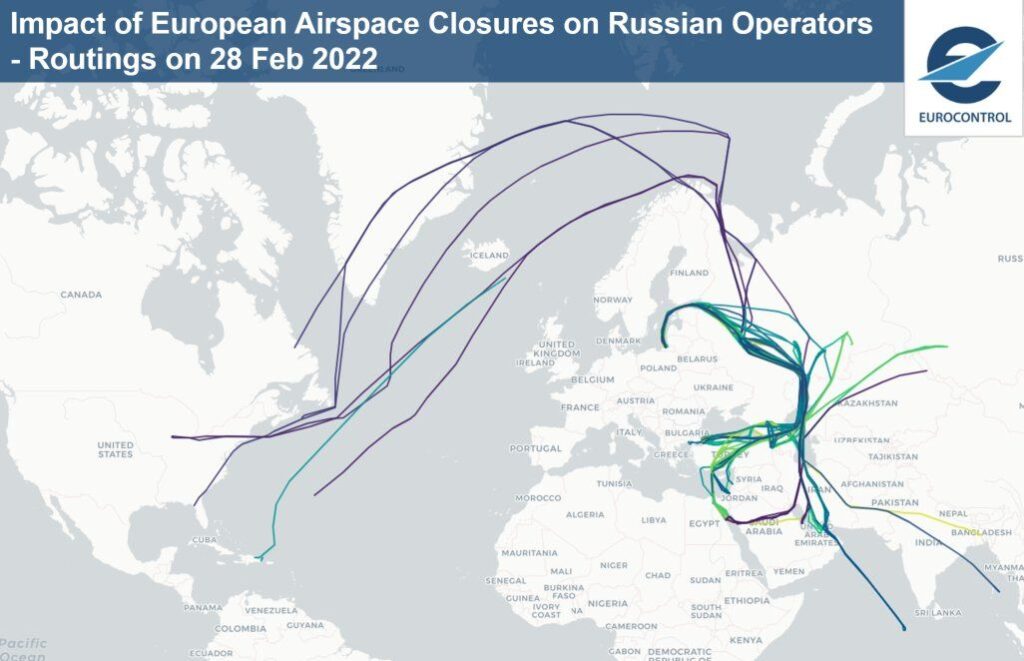
In response to the conflict in Ukraine, the EU, the US, Canada, along with several other countries have now introduced blanket bans on Russian aircraft and operators from their airspace. Russia has responded by banning many of these countries’ aircraft and operators from Russian airspacewe’re still waiting for Russia to ban those from the US, but we expect it to be issued soon.

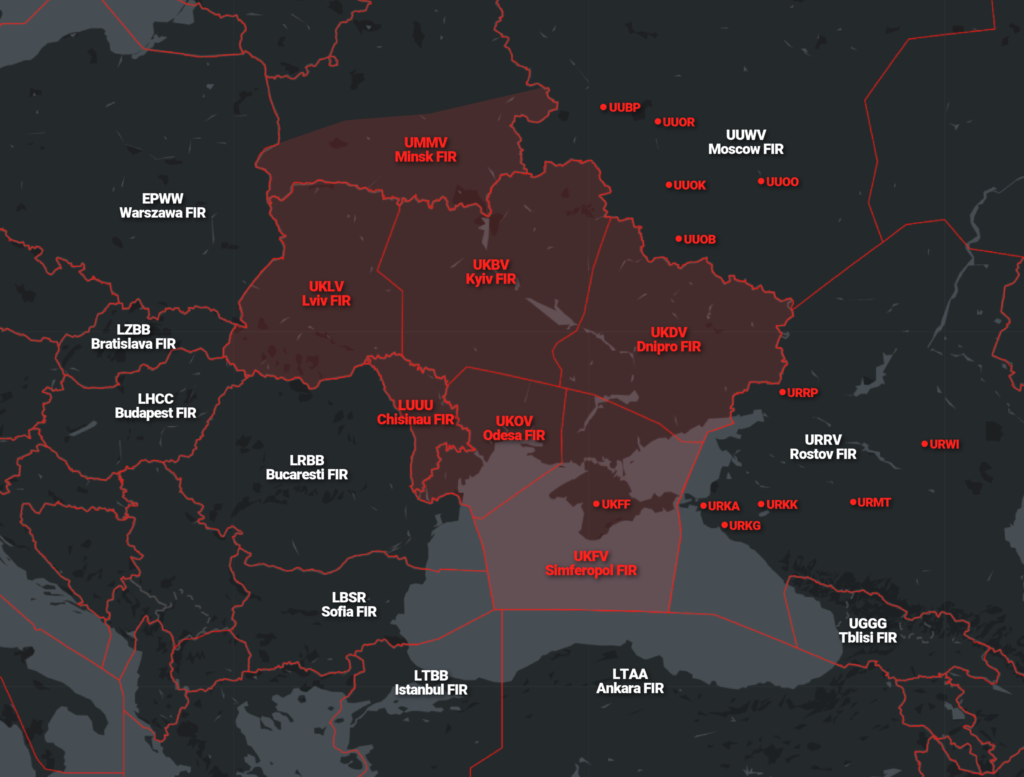
In addition to the complete closure of Ukrainian, Moldovan and portions of Russian and Belarusian airspace, options to overfly Europe have become increasingly complicated – especially for aircraft transiting between Western Europe and the Middle East, Asia and Australasia.

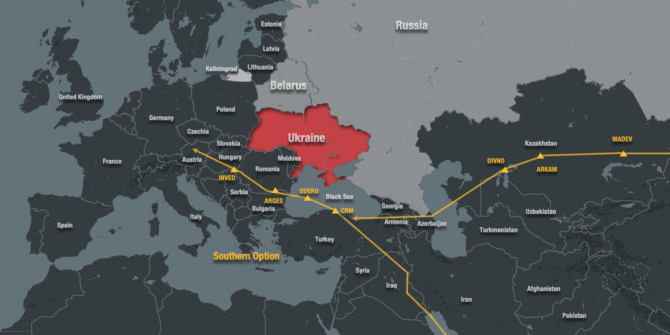
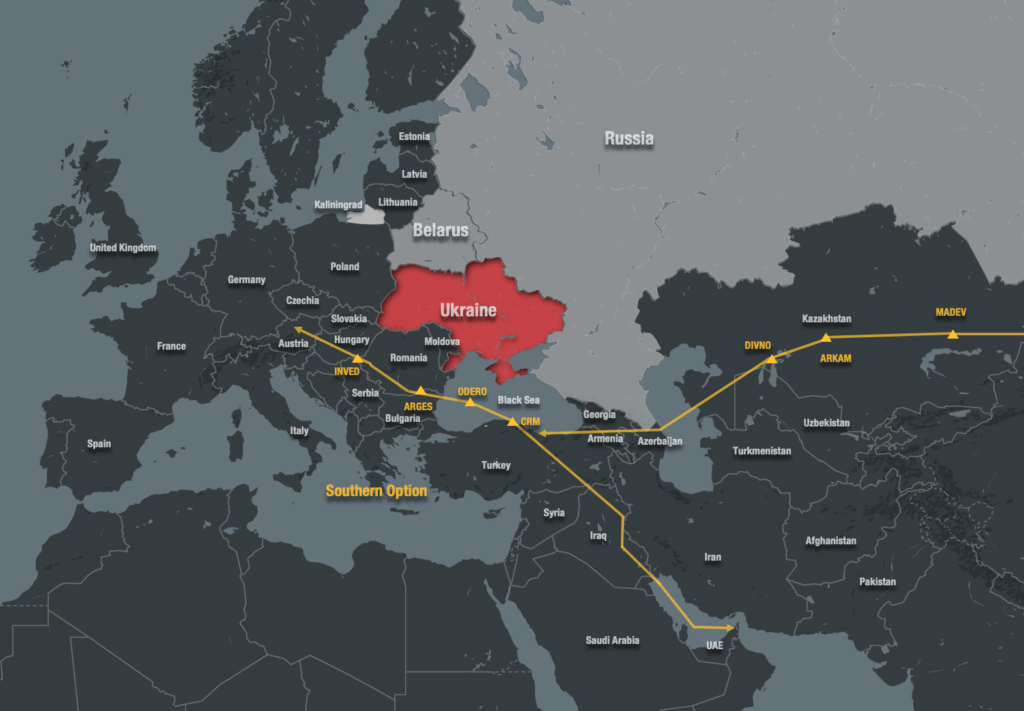
Major carriers now appear to be following two major air corridors – one that extends from the Persian Gulf to Romania, the other from China to the Black Sea. Here’s what that looks like:

The routes take aircraft in close proximity to several danger spots, and so here is a guide to what you need to know…

The Middle East

The southerly route begins over the Persian Gulf through both the OBBB/Bahrain and OKAC/Kuwait FIRs which are considered safe.

It is, however, a narrow corridor that takes aircraft close to Iranian airspace to the east that should be avoided entirely. Following the shoot down of a Boeing 737 there in January 2020, several countries have active airspace warnings in place for the OIIX/Tehran FIR – including the FAA’s outright ban on US operators. The risk there is from the use of advanced anti-aircraft weaponry at levels.

See the official airspace warnings for Iran here.

Beyond the Persian Gulf, this route continues through Iraqi airspace. Iraq itself remains an active conflict zone so the airways and levels used should be considered carefully.

But is it safe? The general consensus is on eastern airways UL602, UM860 and UM688 at or above FL320, yes. Elsewhere, no. Although the US FAA recently re-allowed Iraqi overflights throughout the ORBB/Baghdad FIR, it is not advisable. Canada, the UK and France also recommend against flights at lower levels where aircraft are at risk of being intentionally targeted by terrorist groups.

See the official airspace warnings for Iraq here.

To the West lies Syria – the OSTT/Damascus FIR should be considered extremely dangerous. There is a high risk to aircraft here at all levels due to active fighting, and the potential to be misidentified by Syrian air defence systems. Give it a wide berth.

See the official airspace warnings for Syria here.

Europe

The flight path then threads North through Turkish airspace where there are some risks to be aware of, despite being considered safe.

The first is mistaken identity – there are militia active in the country who infrequently target Turkish military aircraft with anti-aircraft weaponry at lower levels. The second is due to GPS jamming. There are reports of widespread signal interference in the LTAA/Ankara FIR especially on the border between the ORBB/Baghdad and OIIX/Tehran FIRs.

More on the risks in Turkish airspace, here.

Further north the route being flown heads over the Black Sea before a westerly turn towards Romania. The further north you route, the higher the risk. Most operators appear to be heading no further than the waypoint ODERO.

Beyond that you will approach the active conflict zone in Ukraine. While all Ukrainian airspace is closed, there is likely ongoing military activity in the Black Sea – including naval and air force operations with little regard for civilian traffic. The consensus of OPSGROUP members is to avoid the area as much as possible.

The route then continues through Romania and Hungary. There are no airspace warnings for these countries which are considered safe and reliable. It is worth remembering though that they share a border with Ukraine. If flight planning further north be careful of your proximity to it – risks may be present on either side of the border.

The more northerly route – China and the ‘Stans.’

Aircraft crossing Europe from the Far East, such as Japan and China, may also follow routes through China’s airspace. Airways in mountainous regions such as the Himalayas require extra planning – especially with regards to escape routes in event of engine failure or depressurisation.

As such, OPSGROUP members report that Chinese authorities have been reluctant to allow foreign operators to use routes such as L888 (also known as the ‘Silk Road’) without meeting special requirements – you can read more about this here, and if you’re heading this way make sure you download our Himalayan Routing Guide here.

Flights over Afghanistan should be avoided. The OAKX/Kabul FIR is still uncontrolled following the Taliban’s offensive late last year. There are also serious threats to aircraft at low level from anti-aircraft fire, in addition to serious security issues for crew on the ground. You can find more info on these risks here.

There are also active airspace warnings for Pakistan, although it is generally considered safe for overflights. Care should be taken in the disputed northeastern part of the country (the Kashmir region). The general consensus is that higher is better in the OPLR/Lahore and OPKR/Karachi FIRs. For more on these warnings, click here.

Assessing the Risk

With such dramatic changes to the risk picture of Europe’s airspace it can be challenging to wrap your head around just how much risk is acceptable, and how much is not. It is also important to remember that you shouldn’t enter airspace unless you are able and willing to land there.

There’s a few ways that OPSGROUP can help. The first is with safeairspace.net, our Conflict Zone & Risk Database which we update with official state warnings and our own analysis around the clock. We’ve also written an article about how to assess risk which you can read here.

Help and support from others in OPSGROUP

Every Tuesday at 2000z we hop online to talk about these things in our regular OPS CHAT. You can read about these here.

This week our members discussed the situation in Ukraine and its impact on international flight ops.

Here’s the link to the replay of yesterday’s OPS CHAT, plus a text summary of all the main topics discussed: Russian operator ban, Russia reroutes, areas of concern in Polish airspace, aircraft getting stuck in Russia, and how OPSGROUP might be able to help with operational support and information.

Or reach out to the team with your question – we’re always around at team@ops.group, and we’d love to hear from you.


Go For Launch: Lift Off in California

On February 25, Space X is planning to launch its Falcon 9 rocket from Vandenberg Space Force Base – 100nm (ish) north of Los Angeles.

It will carry no less than fifty satellites (yes fifty) into Earth’s lower orbit. As a result, three aircraft hazard areas will be established which may affect oceanic traffic in the Eastern Pacific, along with some of the Pacific Organised Track System (PACOTS). Here’s a brief rundown of the potential impact.

Primary and Back Up Launch Days

Lift-off is planned for Feb 25. However, the period of Feb 26 – Mar 1 is also designated as a back-up.

While the launch itself will be short-lived, the window for each attempt is quite long – almost five hours. The exact timings vary each day, but will extend from early morning until early afternoon (Pacific Standard Time).

Here’s a rundown of the airspace to look out for.

Los Angeles FIR

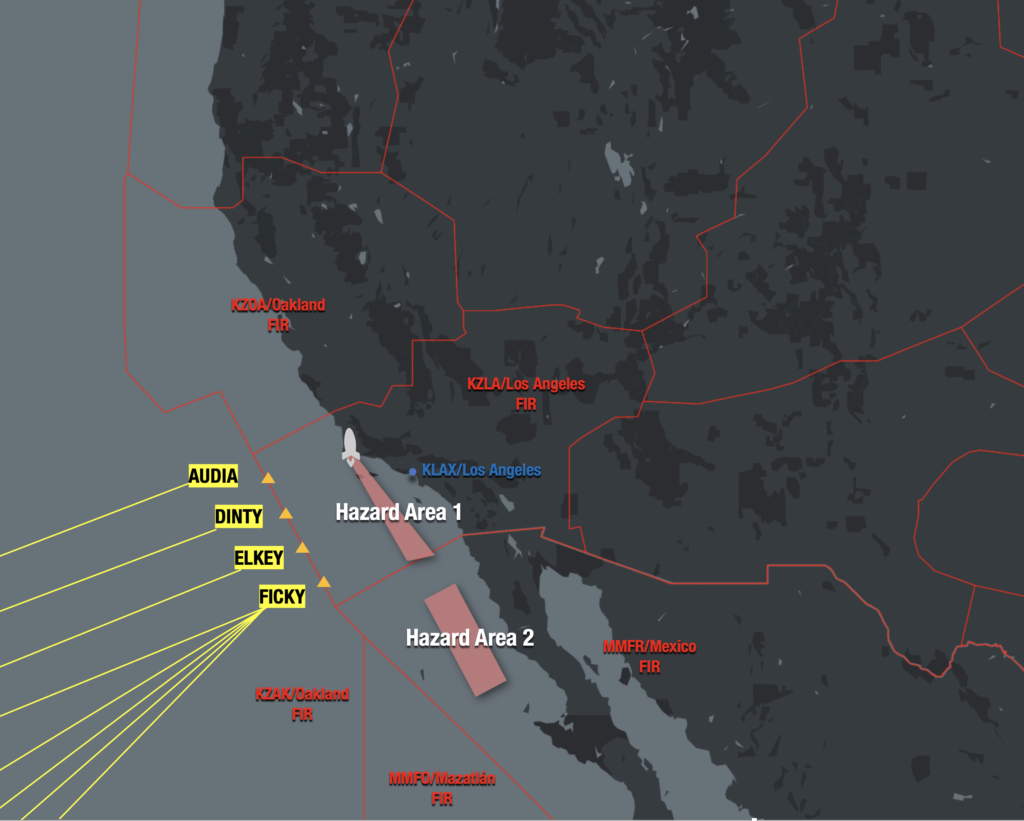
A small hazard area will exist from the launch site to approximately 125nm south, off the Californian coastline. Aircraft transiting via oceanic transitions FICKY, ELKEY, DINTY and AUDIA may all be impacted. This includes several airways linking Hawaii to the US mainland.

The Mexico FIR

A second hazard area will exist further south, off the Baja California Peninsula and is unlikely to cause any significant impact.

Here’s a picture of both:

South of the Equator

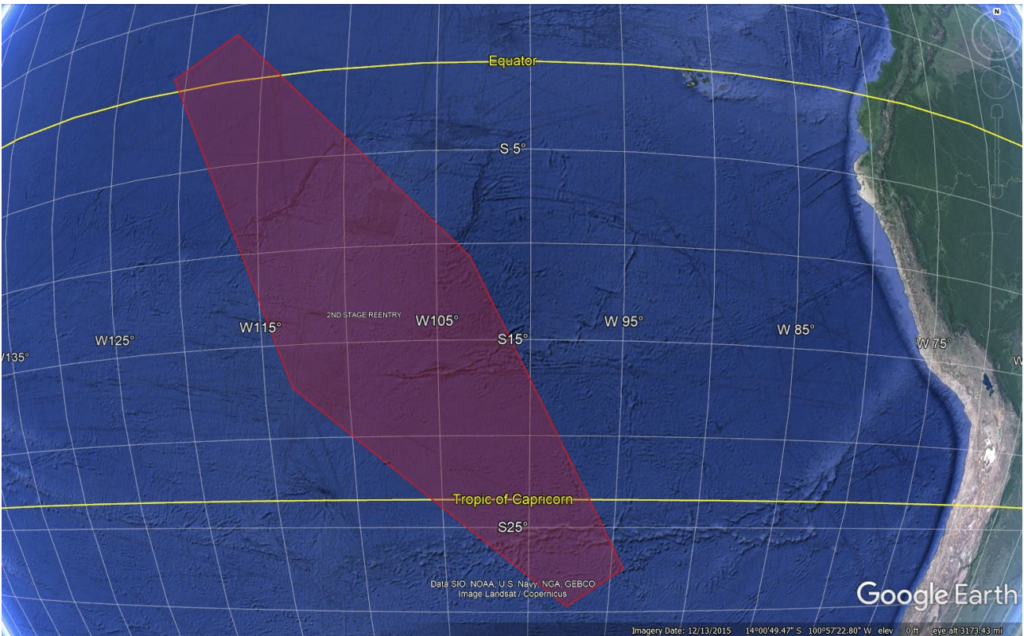
A large and remote section of airspace in the South-Eastern Pacific will be affected – 1300nm off the coast of South America. It occupies both part of the NO FIR zone (XX01) and the SCIZ/Isla de Pascua FIR. This is because the second stage (or piece) of the rocket will splash down in this area.

The Impact

Essentially, delays. But the good news is that they’re expected to be only minor. ATC may reroute aircraft to protect the hazard areas, or apply mile-in-trail restrictions. In all cases they don’t expect to hold aircraft up by more than a few minutes.

However, be on the lookout for unusual or unexpected changes to your clearance – if you’re wondering why, the launch is likely the reason.

Commercial Aviation vs Space Flight

The impact of commercial space operations on the world’s airspace is becoming a problematic issue. And in one way or another both the aviation and space industries will need to find better, or more efficient ways to share. This launch shows we’re not there just yet. If you’d like to read more about this particular conundrum – check out our recent article here.


Ops Down Under: Borders Opening Up

Throughout the pandemic, Australia and New Zealand have both had some of the strictest entry rules for foreigners in the world. They have remained firmly in place since the doors first slammed shut early in 2020, and haven’t budged since.

Until now…there is finally light at the end of the tunnel. There have been two big announcements this week from both countries that they intend to open up in the coming months.

If you’re planning to head down under, here’s a rundown of how the current entry rules work, and what is set to change in the first half of 2022.

Australia

What’s been announced…

Australia is reopening its borders to vaccinated travellers on Feb 21, after almost two years of restrictions. Passengers will need to have a visa, a pre-arrival PCR test, and must also complete an Australia Travel Declaration (ATD) at least 72 hours before departure. Unvaccinated passengers will still need a valid travel exemption to enter.

Travellers to Australia will also need to comply with requirements in the state or territory of their arrival, which may include quarantine and post-arrival testing requirements. Quarantine requirements in Australia are determined by State and Territory governments.

How things work right now

To enter Australia, all foreigners must currently apply for an exemption first. There is a long list of what qualifies but in almost all cases leisure travel is a no-go. The only exception to this rule is for citizens of New Zealand, Singapore, Japan, and South Korea.

To apply for an exemption, passengers have to use this online portal. It takes a least seven working days to process each one, sometimes longer, so it’s important they apply early.

Testing and Quarantine

Pre-departure, all pax need to get a negative PCR or rapid antigen test that is less than 72 hours old.

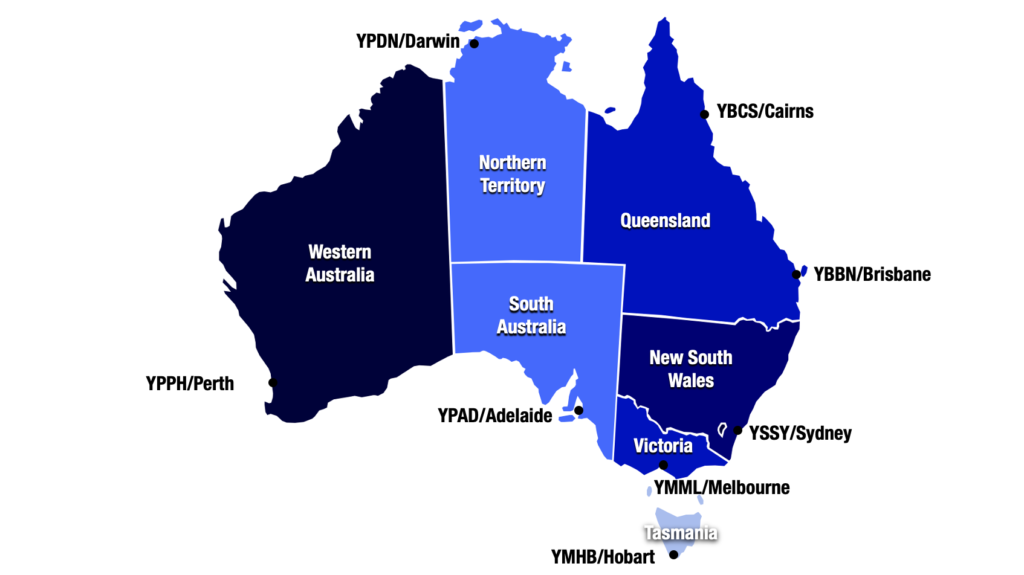
After landing is where things can get a little tricky. Australia is made up of individual states and territories. Each one has their own subtle differences when it comes to pax testing and quarantine rules. So, what needs to be done next depends on where you’re landing, and whether your passengers are vaccinated or not.

Rule hack: With the exception of Western Australia (YPPH/Perth), vaccinated passengers only need to self-isolate until they receive the results of a Covid test on arrival. Unvaccinated passengers have to apply for, and stay in managed hotel quarantine for 14 days. Passengers arriving in Perth still need to enter approved quarantine even if vaccinated for at least eight days, with a full two weeks required for unvaccinated pax.

For the official state rules of where you’re headed, check out the attached links at the end of the article.

What about crew?

All crew are exempt from pre travel testing.

On arrival you will be health screened and given a Covid test. Fully vaccinated crew will only need to self-isolate until the result (approx. 24 hours) and then will be free to enjoy the layover.

Unfortunately unvaccinated crew will need to stay in their hotel until the flight out.

GA/BA Flight Approvals

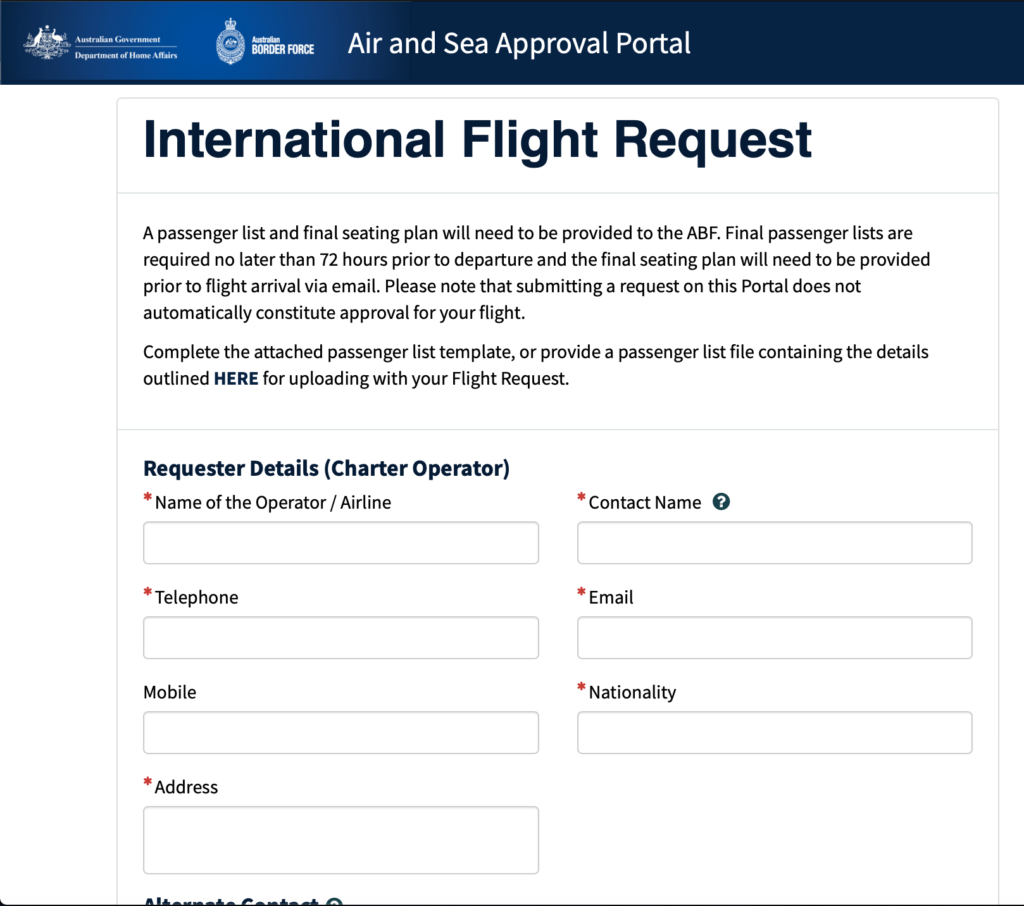
If you’re operating a charter flight, you’ll need to apply for a bunch of approvals first (at least 72 hours in advance). You can find detailed information on that process here.

New Zealand

What’s been announced…

On Feb 3, the NZ Government announced they would be getting rid of managed quarantine for fully vaccinated travellers altogether. This will apply to citizens returning from Australia from the end of February, and from all other countries from the end of March. Unvaccinated travellers will still need to quarantine. It is unclear yet whether international crew will be allowed to enter the community under the same rules.

It was also announced that borders would be progressively re-opened to foreigners throughout the year. This will start for study and business visa holder from April, before all travellers (including tourists) will be allowed in by October.

How things work right now

The rules for foreigners are even tighter than Australia’s. Aside from exemptions for permanent residents and relatives, foreigners can only enter the country if they hold a ‘critical purpose’ visa. The application for this can take up to two weeks.

Testing and Quarantine

Anyone travelling to New Zealand needs to get a PCR test that is less than 48 hours old at time of departure.

All passengers must then spend ten days in managed quarantine when they arrive. Reserving a spot is extremely difficult – you basically need to enter a lottery to reserve one via the MIQ website and then keep your fingers crossed.

What about crew?

Crew must be fully vaccinated to enter, and provide the results of a PCR test taken within seven days of their flight down. They’ll then need to isolate in an approved hotel until their flight out. You can find the full details here.

GA/BA Flight Approvals

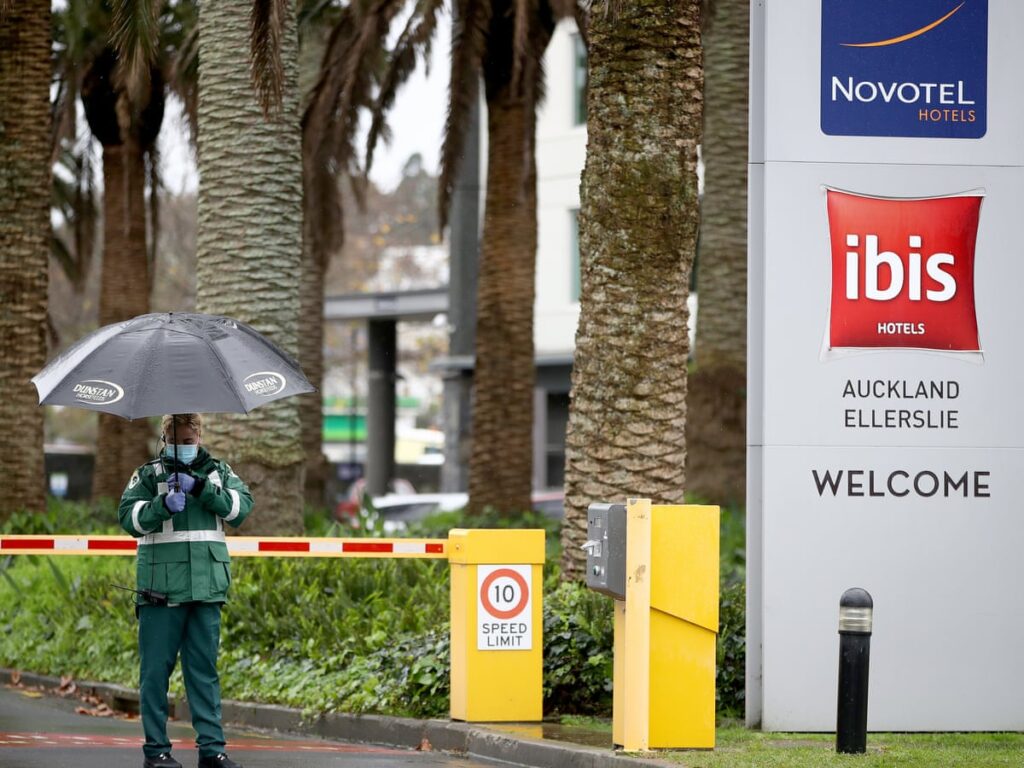
You’ll need to contact the Ministry of Transport. You can find more info on that process here.

Links to Official Rules

Australia

New Zealand

See the official government website here.


Ops Planning for the 2022 Singapore Airshow

The Singapore Airshow is back, and taking place from Feb 15-18 at WSSS/Changi airport.

As one of the largest aviation events in Asia, things are going to get busy.

If you’re flying in, here is a rundown of everything you’ll need to know before you get there.

Airport Closures

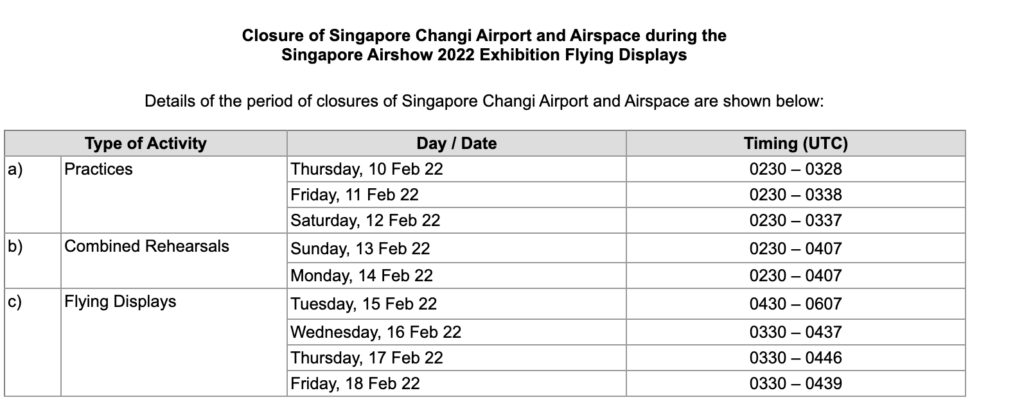
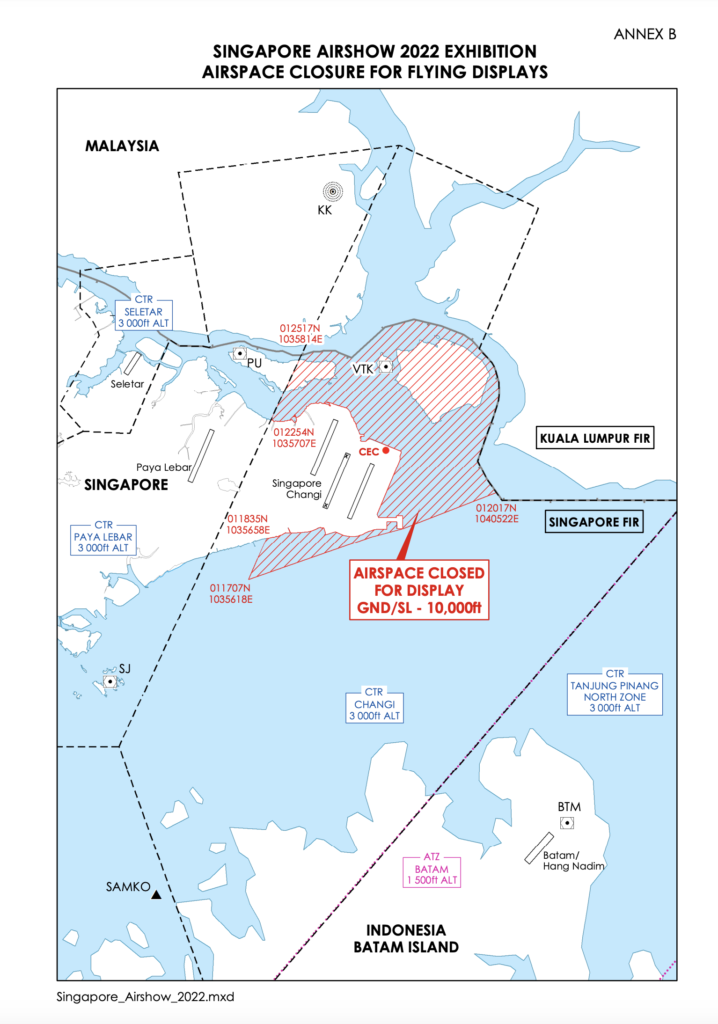
From Feb 10-18 Changi will close to all arrivals and departures for over an hour in the middle of each day. This is to allow for practice displays and then the main event.

The closures all commence late in the morning and vary slightly each time. You can find the exact timings below – Singapore’s time zone is UTC + 8.

The restricted airspace covers a large portion of Changi’s CTR and will apply from surface to 10,000 feet.

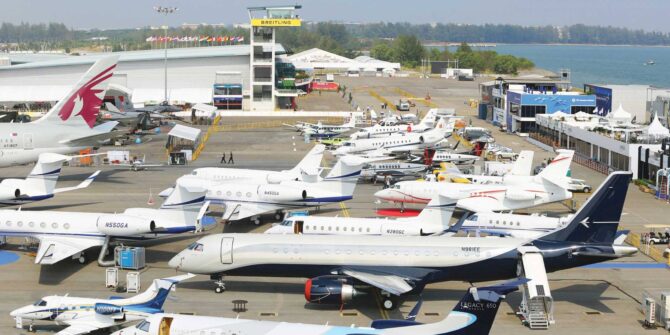
Here’s a picture:

Nearby WSSL/Seletar will not be affected by the closures.

Rush Hour

Avoid planning to take-off or land on either side of the closure windows. There will likely be a back log of traffic and extensive delays. Arriving aircraft are advised to plan for at least an extra twenty minutes of holding fuel.

If you’re arriving from a major airport in the Asian region, also be aware of Singapore’s ground delay program which may be activated. Here’s the relevant page from Singapore’s AIP, but if you are departing an affected airport for Changi, you may need to stick to a calculated take off time (CTOT). The allowance is -5/+10 min. Outside of this window you’ll need to ask for a new CTOT.

Once airborne, if you get held up by more than 15 minutes make sure you let them know. Their AFTN address is WSJCZQZX.

Permits

Both private and commercial operators need a landing permit for Singapore. Commercial ones reportedly take a number of working days to process so apply early. You can speak to the CAA directly on +65 65 42 1122 or caas_atlas_admin@caas.gov.sg. If you’d prefer the help of a local agent, we’d suggest SG World Aviation Services. You can reach them on +65 85 774830 or ops@sgworld.net.

Weather

Singapore is found just one degree north of the equator, and so convective thunderstorms are common all year round, and can be quite severe. The worst times are in the afternoon and evenings. Expect to use additional fuel for deviations or holding.

Covid Entry Rules

The rules for foreigners to enter Singapore are tight. But there are ways they can enter with no quarantine. The most common is via the ‘Vaccinated Travel Lane,’ which most travellers are eligible for. There’s a bunch of boxes to tick here, so we recently put together this article that should help.

Crew have two choices. You can enter under the standard rules which don’t require a vaccination or Covid test. But you’ll be stuck isolating in the hotel until departure. If you want to get out (and enjoy the show) you can also apply for the VTL above if you follow the same requirements as your passengers.

Seletar

If you’re planning on flying into nearby WSSL/Seletar, the biggest issue is likely to be parking. If you haven’t already, make sure you get in touch with your agent to make sure you reserve a spot as the airport can quickly fill up.

The airport itself can be operationally challenging – there are no instrument approaches, and it is in close proximity to military airspace. Click here for a full briefing on what to expect.

The Official Word

You can find the official Singapore AIP Supp (026/2022) for the event here.


Last Line of Defence? Anti-missile Tech on Civilian Aircraft

According to an FAA document that’s hot off the press, back in 2019 a major US cargo carrier asked the FAA for the nod to install surface-to-air missile defence systems on some of its narrow body jet aircraft.

The FAA was left scratching its head – there were no rules in place to allow them to respond with a yay, or even a nay. It is almost un-chartered territory for commercial aviation. So much so that they’re asking the public for feedback.

But with surface-to-air weaponry a growing threat to aviation in conflict zones around the world, why is flying higher or avoiding them our only line of defence, when these counter-measures could be installed as our last? After all, they work for the military. Why not for us?

The answer may not be so simple. So let’s take a closer look.

What do we mean by counter-measures?

Simply put, technology designed to deter surface-to-air missiles. How they achieve this depends on how the missile is guided. While there are different ways, the two biggest threats to civil aircraft are from missiles that use radar or heat.

Radar

Radar guided missiles tend to be more advanced. Which is why airspace warnings found around the world refer to ‘advanced’ anti-aircraft weaponry – they can fly further and higher. They need fancy equipment on the ground, and trained operators to deploy or use them. MH17 was shot down by a radar guided ‘Buk’ missile in 2014 at FL330.

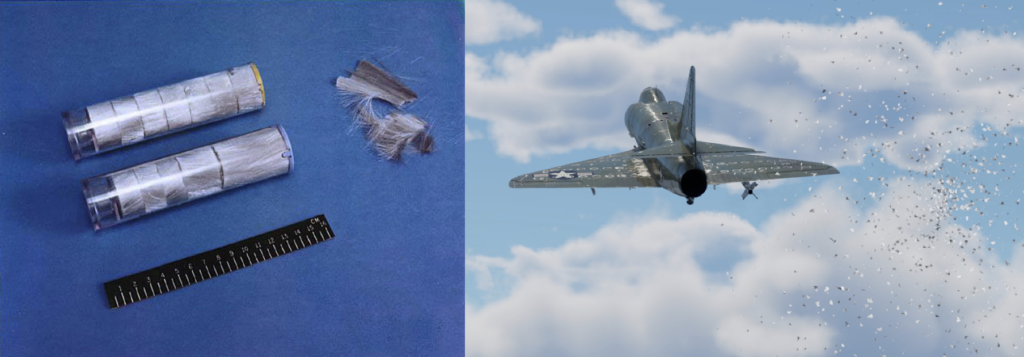
The military’s answer to this is Chaff. Or in other words, a cloud of small thin pieces of metal, metallized glass or plastic to bamboozle the radar with a cluster of targets. The Chaff is then generally lit up or ‘illuminated’ by a signal from the target aircraft so that the radar can’t distinguish between the two.

Heat

 This is the biggest danger. Why? Because the majority of MANPADS use it. MANPADS stands for ‘man portable air defence system’. As the name implies, they’re light, self-guided and can be fired by a single person with little or no training.

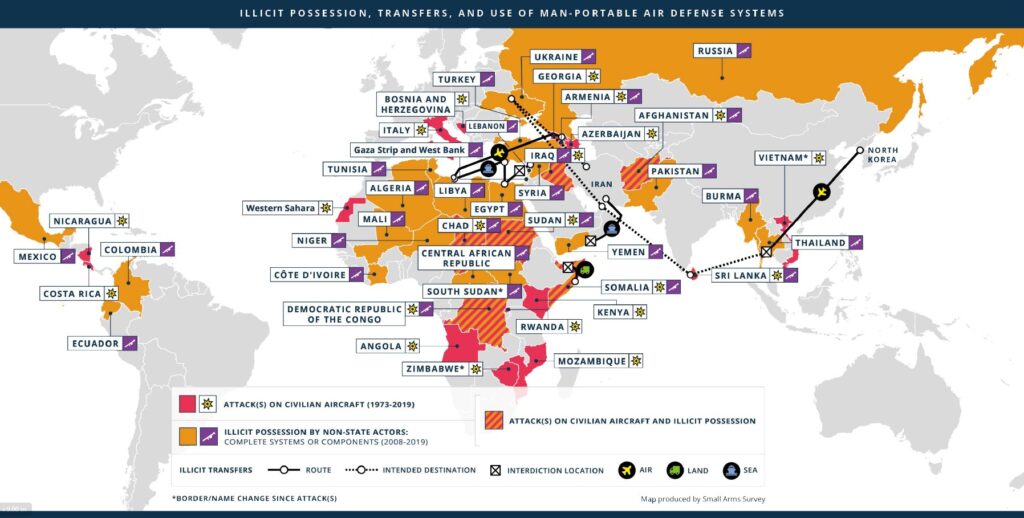
What’s worse is that they’re scattered around the globe in the hands of non-state actors such as terrorist groups and can remain useable in storage for over twenty years. Which is why they’re so hard to control. In fact, over a million of them have been produced and now exist in over one hundred countries the world over. Since 73’ there have been sixty-five MANPAD attacks on civilian aircraft.

MANPADS generally can’t reach aircraft above FL250, and are short range – typically around 25nm. Which is why aircraft landing and departing are most at risk.

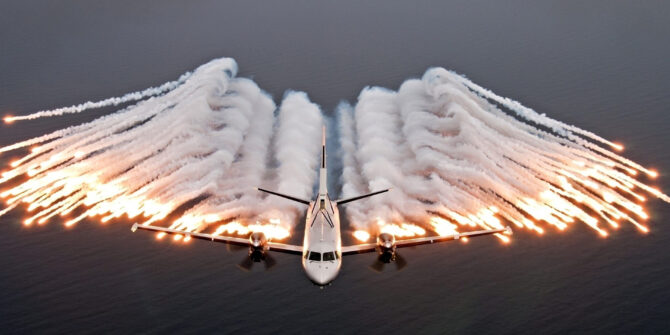
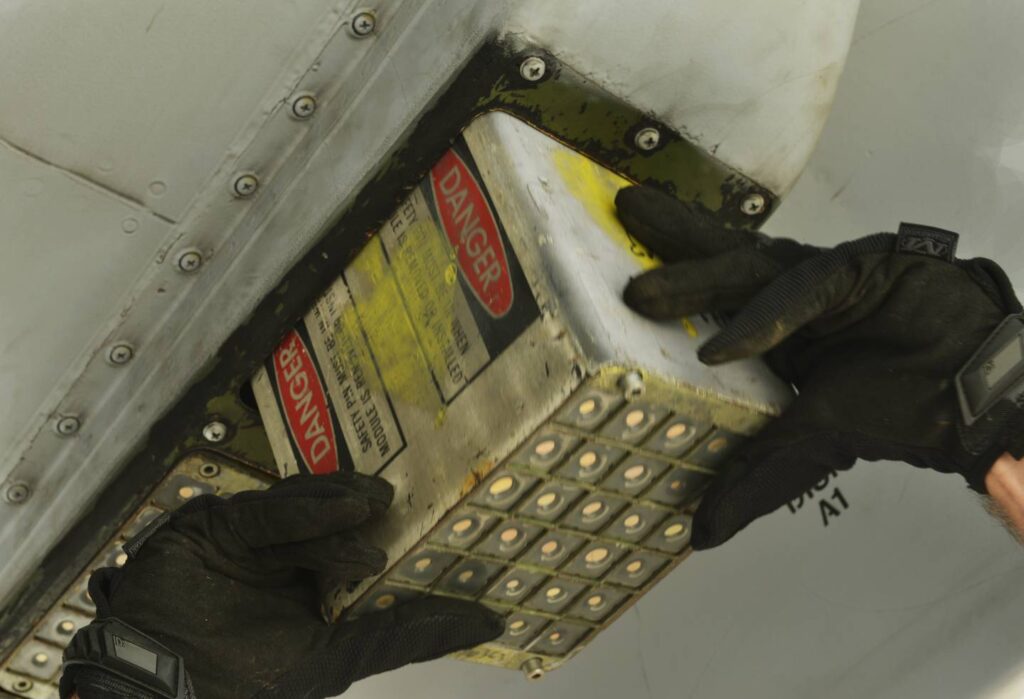
MANPAD missiles lock on to the heat an aircraft’s engines produce. Which is why they’re deterred with heat decoys. Military aircraft deploy flares – pyrotechnic devices that light up like fireworks. They burn magnesium which is far hotter than an engine’s exhaust.

Another method is the use of infrared. This is what our friends at the cargo airline are hoping to use. There are no fireworks with this device. Instead, it can detect an inbound missile and direct an infrared beam towards it to confuse its heat seeking abilities.

Sounds great, sign me up.

The problem for civil aviation is that it is not the military.

For starters there’s the cost – which sadly is astronomical. That old chestnut. For instance, an infrared system like the one above would cost over a million USD to install – per airplane. This doesn’t include the extra cost of more weight and more drag.

Then there are the fireworks – chaff and flares. The military have specialists to install, service and store the equipment and the infrastructure to do it safely. And they are acutely aware of things that explode. Maintaining an industry-wide team of professionals who have the right training might be a step too far.

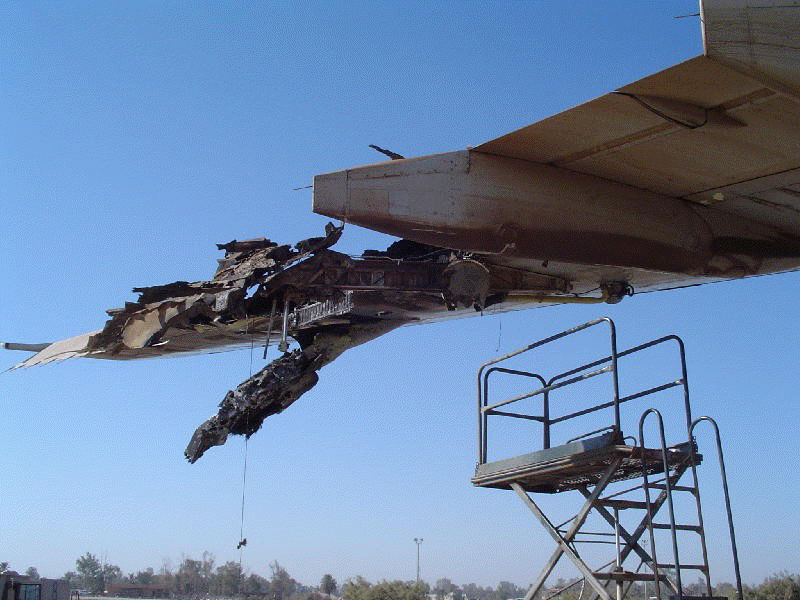
But here’s what the FAA are most concerned about. What happens if these systems deploy at the wrong time or accidentally? Especially over built-up areas, on the ground at airports or onboard an aircraft itself. Magnesium, for example, burns at four thousand degrees fahrenheit and can’t be extinguished with water or halon. It’s dangerous stuff.

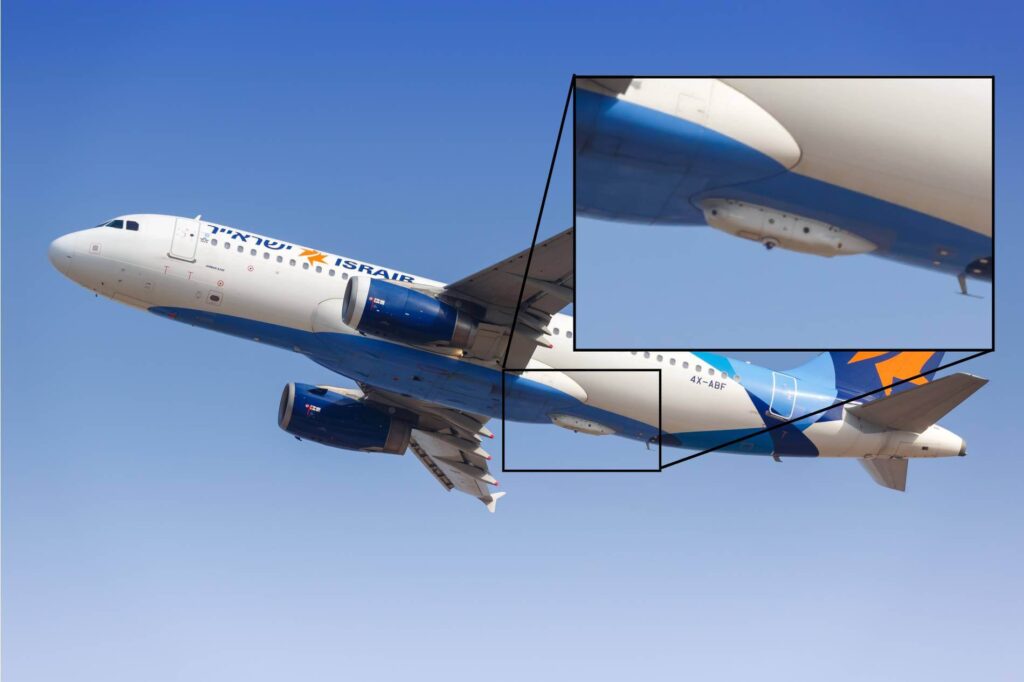
Israel’s carrier El Al has previously installed missile counter-measures on their aircraft which were banned from operating at some European airports.

All of these factors add up to risk and cost. And when measured against the actual risk of an aircraft being actively attacked by a surface-to-air missile, it may simply be cheaper to rely on existing measures. In other words, avoidance.

Finding the right fit.

This doesn’t mean all hope is lost. There is likely some type of future for military style counter-measures in civilian aircraft – for the right operation. Operators with small numbers of aircraft who regularly fly in high-risk airspace could immediately benefit from current tech, such as infrared systems without necessarily bankrupting themselves.

Or we can wait for the tech to become cheaper and more accessible. As is often the case, technology can develop from a military application into a civilian one. We just might not be ready for a straight swap just yet.

Back to the FAA.

It sounds like they think there is a future in it too. And work is underway to come up with a plan to approve applications for infra-red anti-missile systems on civil aircraft. This will include special safety conditions to mitigate some of the threats along with standard markings, training and other info to keep people interacting with these systems safe.

Want to contribute? You can read the FAA’s proposal here, and submit your comments. Just make sure you do it before March 4.


US 5G Roll Out: Launch Day, More Delays, New Notams and FAA Buffers

**Update, Jan 19 – New**

While most of the 5G network has been switched on, several 5G providers have delayed rolling out services at stations close to the major airports. It isn’t clear how the long the delay is for.

Over the weekend, the US FAA said it had cleared 45 percent of the US commercial aircraft fleet for operation in low-visibility conditions at 48 of the 88 airports directly affected by 5G C-band interference. This latest delay is most likely to allow the FAA to continue confirming the safety consequences at the major airports, after pressure from US and foreign carriers.

**Update, Jan 19**

The big day has arrived for the new 5G networks. They are set to be switched on.

New FAA Notams with operating restrictions at a large number of airports across the US become effective. Make sure you check them for any airport you may be operating at (including alternates) – especially if you are expecting low visibility operations. You may not be able to carry out Cat II/III approaches. You can search for the new Notams here, using the keyword ‘5G.’

Several industry heavy weights have asked the US Government directly to further restrict 5G networks near major airports and the outcome is still pending. Both Verizon and AT&T has reportedly already agreed to limit services near some – more details will follow as they come to hand.

Major international carriers have also begun cancelling or restricting flights to the US until more is known about the safety implications of the new networks.

**Update, Jan 14**

At least 100 airports have Notams banning or restricting operations such as Autolands, HUD usage, or any other manoeuvre reliant on radio altimeters, unless the aircraft is equipped with another means of compliance (with altitude monitoring).

The Autoland ‘ban’ is of significant concern due to its potential impact on safety and efficiency during low visibility and poor weather conditions. This could limit alternate options and result in significant delays and fuel situations if airports are unable to accommodate traffic during these conditions.

Several major airports are impacted including KORD/Chicago, KFDW/Dallas Fort Worth, KIAH/Houston, KJFK/New York, KSEA/Seattle, KBOS/Boston and KLAX/Los Angeles.

The Situation

The US FAA has published a list of fifty major US airports which will have 5G buffers in place to ensure safe operations.

Here’s an update on the latest and what this all means.

Flicking the ‘ON’ Switch

Verizon and AT&T will activate major new 5G networks in the US on January 19. This follows a two-week delay as the industry scrambles to assess just how much of a safety risk this might be to civil aviation.

The Concern

These new 5G services will operate in a frequency band that is uncomfortably close to what radio altimeters use. This could lead to erroneous signals and mess with safety-critical systems – especially auto land and TAWS.

For more details information on these issues, including how you can mitigate them, see our recent article.

How will these ‘buffer zones’ work?

Both Verizon and AT&T have made an agreement with the FAA to turn off transmitters in close proximity to select major airports for a further six months. During this time the FAA will be able to better assess the potential for interference.

These buffer zones will apply within the last twenty seconds of flying time in all directions from the airport.

How did the FAA choose the list?

A number of factors were taken into account. These included traffic volume, how many low visibility days there are each year, and how close the airports were to the new antennas.

Other major airports were not included for various reasons such as those in areas where the networks aren’t being rolled out, ones that are far enough away from the antennas, or  fields with no CAT II/III facilities.

Important US Resources

In recent months the FAA has published a number of important documents for pilots dealing with this looming 5G issue:

….for a detailed breakdown of these, click here.

The US isn’t alone.

There have also been some developments north of the border in Canada, where 5G networks are being progressively rolled out.

On Dec 23, Transport Canada published its own Safety Alert (CASA 2021-08) with some important recommendations for pilots. This was the big one – avoid flying RNP AR approaches that are not protected by buffer zones in IMC conditions, unless you have another way to identify terrain (such as weather radar). This is because the TAWS may not be reliable.

What next?

Industry efforts to understand the safety impact to aviation from these networks are ongoing. That means working directly with airlines and manufacturers, and it will take time. Temporary buffer zones help, but long-term solutions are needed.

But there’s 5G in other countries. Why is this such a big issue in the US?

A few reasons. Signal strengths will be much higher in the US than in other countries’ networks around the world.

Other design features and protections in place for aviation overseas have not been mandated on network providers. These include measures such as tilting antennas down, introducing permanent buffer zones, rules on how close antennas can be to airports and reduced power levels.

Stay Updated

There are two places to stay updated as this all develops. The first is the FAA’s official 5G website found here. The NBAA have also published a handy resource you can access by clicking here.


Noisy New Rule for EU Ops: The EASA Environmental Portal

There’s a new rule coming. And it’s about noise.

Both foreign and local operators of certain aircraft carrying out Part 91 and 135 operations to airports in the EU will need to register for EASA’s new Environmental Portal by the end of March 2022 (extended from Dec 31, 2021). They will need to upload important noise data about their specific aircraft.

Here’s a brief guide on what you need to know.

Who does this impact?

All foreign and local Part 91 and 135 operators using airports within the EU, with an aircraft that fits the following categories:

MTOW of 34,000kg (75,000 pounds) or more.

 OR

An aircraft with 19 passenger seats or more. Excluding crew seats. For this category, it’s important to note that EASA looks at the number of passenger seats as per the aircraft type’s certified ability, and not the number of seats actually installed on your particular aircraft – i.e. if you’ve only got 18 pax seats installed, but your aircraft is able to carry more, you’ll need to register for the Environmental Portal.

Yep, that’s us. What exactly do we need to do?

Submit this form via email to environmentalportal@easa.europa.eu.

There are two options for the information you’ll then need to provide:

Either:

 A stand-alone noise certificate issued by a state of registry. It will need to include your aircraft’s reg, its configuration and noise levels.

Or

 Get that scanner warmed up. Pages from your aircraft’s flight manual which provide the following:

  • Registration
  • Serial number
  • Engine variant
  • Both MCTOW and MLW
  • Airworthiness certificate
  • Noise level data (stage/noise levels)

Isn’t this the same thing as the Third Country Operators Portal (TCO)?

Sadly, nope. The info is similar, but this is a separate requirement. The EU has nominated EASA to be the responsible authority tasked with collecting this info in a separate database.

A head’s up for ‘N’-Reg aircraft.

As the FAA doesn’t currently issue stand-alone certificates, that only leaves the second option. Make sure you also carry this information onboard in case you win yourself a ramp check.

What’s this all about?

The shortest answer is noise. The slightly longer one is this:

As traffic levels continue to grow at EU airports, noise is becoming more of a problem. The challenge is how to accommodate this growth in harmony with densely populated areas around airports – especially at night.

If sweeping noise restrictions were simply decided on a case-by-case basis, they could interfere with commercial competition or make the whole aviation network less efficient by under-utilising precious capacity.

Instead, ICAO suggests what they call a ‘balanced approach’ to noise. Or in other words, using a coherent and consistent method to measure noise across the board. From there they can use the actual data from aircraft operating in the EU to introduce consistent and fair operating restrictions throughout the EU.

The database is a big part of this. It’s about allowing aviation to grow in a sustainable way. Or in other words, without riling up the neighbours.

Who can actually view the data?

It’s not publicly available. Only the following groups will be able to access it:

  • Competent authorities (such as CAAs)
  • Air Navigation Service Providers (ANSPs)
  • Airport Operators
  • Aircraft Operators

They all have to apply for access first too.

Other things to look at (if you’re really keen)

ICAO Resolution A33/7 – a rundown on the idea of a ‘balanced approach’ to noise abatement.

EU Reg No. 598/2014 – skip to article 7. The actual EU regulation.

Speaking of noise – any guesses for the loudest commercial aircraft still in service?

The mighty 727 at 90 decibels. In comparison, when Concorde was flying it would hit 120 decibels – as loud as a clap of thunder.


Tonga: Major Eruption in the South Pacific

On January 15, there was a major volcanic eruption in Tonga – an island nation in the South Pacific.

It was perhaps the most explosively violent eruption of the 21st century to date. Since then, the volcano has continued to produce ash as high as FL630 and has potential to continue to cause major flight disruptions throughout the region.

Here’s what you need to know.

Where is it?

The Hunga-Tonga-Hunga-Ha’apai volcano, or just Hunga Volcano for short, is found approximately 30nm north of Tonga’s capital, Nuku’alofa. You won’t find it on maps because it is hidden underwater. It is nestled squarely within the Tonga Trench, and is part of the Pacific’s infamous Ring of Fire – where eruptions and earthquakes come with the territory.

Because it is submerged, the risk to airports in the region is actually two-fold – from ash, and from tsunamis caused by seismic activity under the sea.

What has been happening?

The Hunga Volcano has been stirring for a while. In December there were small eruptions which produced ash and disrupted flights at Tonga’s main airport, NFTF/Fua’amotu. Then on January 15, there was a much more violent eruption.

Hunga produced a large ash plume, 150 nm wide and extending up to FL630 well west of Tonga.  The remnant of this cloud is currently over New Caledonia. The current VAAC forecast is good, with ash emission expected to stop.

NFTF/Fua’amotu is currently closed due to ash on the ground, and is expected to re-open at 0630 local on Jan 21 (1730z on Jan 20) but this may well be extended.  Airports nearby – especially in Fiji, New Caledonia and Vanuatu have so far escaped major disruptions.

Over the weekend, widespread Tsunami warnings caused by Hunga were issued for coastlines as far away as South America, the US and Japan. These have since been lifted, however Tonga itself was badly impacted by waves. It remains in a state of emergency and is still cut off from the world as internet and phone services are reportedly down. Reports of damage are still coming through.

The majority of major airports in the South Pacific Islands are at or near sea-level which leaves them especially vulnerable to this threat. They are also very remote. If Hunga erupts again, widespread closures could happen with little notice.

Outlook

While things have started to subside since the eruption, it’s not clear whether this was a one-off, or if we are in the middle of an ‘eruptive sequence.’ In other words, there may be more to come.

Stay Updated

VAAC Wellington handles volcanic alerts for the South Pacific region. You can view new advisories as they are issued, here.


US West Coast flights halted: North Korean missile threat, or coincidence?

The US FAA has released a brief statement confirming that on Jan 10, a ground stop was put in place at major airports on the West Coast due to “precautionary measures.”

Around the same time, North Korea carried out a missile test – the second in a week. The missile landed well off the coast of the Korean Peninsula, in the Sea of Japan.

It is now being widely speculated that the two events were likely related, however no authority has confirmed this as fact.

Here’s what happened.

At approx. 14:30 PST (2230z) on January 10, a ground stop was ordered by the FAA at airports throughout the Western United States. There are also reports of airborne aircraft being directed to land.

The disruption was short lived (about twenty minutes), before operations went back to normal.

The speculation about why the ground stop came into effect arose for three reasons;

  • Information on why a ground stop is in place is usually provided
  • The air traffic control measure is generally used to slow or stops the flow of aircraft to a particular airport, due to weather or an operational hazard. This one impacted all west coast airports, and airborne aircraft
  • An unannounced test launch of a missile took place in North Korea, landing approximately 400nm off the coast around the same time.

Hypersonic missiles

North Korea state outlet KCNA has claimed these latest two tests were hypersonic missiles. Of course, North Korean is known for its own propaganda…

But hypersonic missiles are dangerous, for two main reasons:

  • Unlike ballistic missiles, which have a fairly predictable trajectory, hypersonic missiles can fly much closer to the earth’s surface and are more difficult to intercept.
  • Hypersonic missiles can travel up to five times the speed of sound, meaning they can hit a target in a much shorter flight time.

Only a handful of countries are reported to be working on the development of hypersonic missiles: the US, Russia, India, and China, and North Korea.

What could explain it.

The launch in North Korea was not announced beforehand, and it is possible that it was detected as a threat leading to the activation of protocols that include notifying the FAA.

Although this looks likely, it’s important to remember that nothing official has been announced to confirm this yet.  The North American Aerospace Defense Command (NORAD) have since advised that it did not issue an official warning.

It did however detect the launch, which was assessed not to be a danger to the mainland US. It is also standard procedure for the FAA to be in constant contact with them and so the FAA may have been compelled to act as a precaution.

The North Korean Missile Threat.

There have been several test launches carried out from North Korea in the past six months. These are typically intended to be a display of capability, rather than an intent to use them.

For aviation the threat is primarily based in the oceanic portions of the ZKKP/Pyongyang FIR, and UHHH/Khabarovsk FIRs west of Japan. As the launches have repeatedly been carried out with no advance warning, aircraft are exposed to risk from falling debris from missile tests. You can find more information on this in a previous article which you can read here.

Outlook for 2022

Most experts seem to agree that North Korea faces some big challenges on the home front this year, including its economy and a worsening humanitarian crisis. Its missile program has continued and there has been no recent reassurance that it intends to work on bettering its relationship with the US, or South Korea, nor any intent to provide advance warning of test launches.

These events might not be related, but the speculation itself demonstrates an ongoing concern regarding North Korean actions. The events of January 10 also show how a large impact on US airspace with little or no warning can, and does occasionally occur, and is a reminder to all operators to have policies and preparations in place for dealing with such events.

Do you have more intel, or were you flying as it happened?

We’d love to hear from you. You can reach us at team@ops.group.


Airspace Risk: Conflicts to watch in 2022

Conflict zone risk assessments aren’t easy. Airspace dangers are heavily dependent on what is happening on the ground, which can improve or deteriorate quickly and with little warning. For an aircraft to be at risk, there must be someone present who has both the ability and intent to either deliberately target an airplane, or endanger one indirectly.

But in order to prove that these two things are present in any given airspace, regulators and operators have to rely on intelligence and inherently limited information to make educated decisions about what is safe, and what is not.

The best defence? Know what is happening down there. Or in other words, an idea of the geo-politics playing out thousands of feet beneath you. Often the warning signs are there, even before Notams have had a chance to catch up. The best defence is always situational awareness.

Here is a summary of some the conflicts making headlines that are worth keeping a close eye on in 2022 which may have an impact on the safety of overflights.

Ukraine

Tensions are high near the eastern border with Russia right now. In the latter half of 2021, the Russian military began to mobilise equipment and troops on their side of the border. This has continued to cause international concern that a major offensive may be possible in 2022.

There is advanced anti-aircraft weaponry present on both sides of the border which could present risks to civil aviation at all levels if things escalate. There are also separatist groups active in the region, and it is possible they have access to the same weapons. MH17 was shot down in this region in similar circumstances in 2014.

Overflights near the border – especially in the western part of the URRV/Rostov FIR near the UKDV/Dnipro FIR boundary should keep monitoring the situation closely.

Click here for a full briefing.

Israel/Palestine

Events in April-May 2021 lead to a sudden escalation involving hundreds of Hamas rockets being fired at Tel Aviv and Israeli air strikes in Gaza. Civilian traffic was heavily impacted, while LLBG/Tel Aviv airport was forced to close on several occasions.

Recent events have hinted that things may be no better in 2022. On Jan 1, several rockets were fired at Tel Aviv, followed by airstrikes in Gaza. Surface-to-air missiles were launched at military helicopters during the strikes.

Aircraft in the LLLL/Tel Aviv FIR may continue to be at risk from these types of events with little notice this year.

Click here for a full briefing.

Taiwan

Mainland China continues to show political interest in Taiwan. While an armed conflict is still unlikely, it is not impossible. And the consequences of one would be a big deal with other major world players likely to become involved.

Last year a record number of Chinese military aircraft carried out exercises near Taiwanese airspace, while in October a wave of aircraft entered Taiwan’s air defence identification zone (ADIZ). This caused authorities to issue warnings by radio and mobilise their air defence systems.

In 2022, the primary risk to aircraft in the region continues to be risk of being misidentified by the Taiwanese military. It is important to follow the correct procedures when entering Taiwan’s ADIZ airspace.

Click here for a full briefing.

Iran

Tensions between Israel and Iran are at an all time high. Various sources are speculating that airstrikes on nuclear targets in Iran could rapidly escalate the situation. If this were to happen, the overflight risk in the OIIX/Tehran FIR would increase dramatically. Anti-aircraft weapons are present there that can reach all levels. Iran has previously shown willingness to use them during heightened tensions and in close proximity to heavily flown international air routes. In January 2020, a Ukrainian 737 passenger jet was shot down over Tehran by the military after being mistaken for a missile.

Click here for a full briefing.

Militant activity in Africa

Militant groups throughout several African countries with links to terrorist organisations such as Al Qaeda or Al Shabaab have been mobilising in recent years. Often engaged in fighting with weakened states, these militia may have a desire to make international statements, and are known to actively target civilians which could include overflying aircraft.

Hotspots to look out for: In the west, Nigeria, Mali and Burkina Faso. In Central Africa, Niger, Chad and the Democratic Republic of Congo. And to the east, take particular care when operating over the Horn of Africa – especially Somalia and Sudan. New groups are also emerging in Mozambique, and Uganda.

These groups typically have access to man portable air defence systems (MANPADS), rockets and other similar weapons that pose a primary threat to aircraft at lower levels (below FL250). Although this should be considered carefully on a case-by-case basis.

Other mentions

In Libya, an election has been delayed indefinitely and armed groups are mobilising throughout country, which could see the civil war escalate in 2022.

The conflict in the Tigray region of Northern Ethiopia remains unpredictable. Despite signs of improvement in Dec 2021, the conflict in the north has intensified again with military operations in western and southern Tigray. The Amhara region north of Addis Ababa is also under curfew. The 6 month state of emergency remains in place. Several states continue to warn aircraft throughout the HAAA/Addis FIR to maintain minimum flight levels due to anti-aircraft weaponry.

The situation in Afghanistan also remains volatile for 2022. The country is firmly under Taliban control, and the OAKX/Kabul FIR without ATC. A humanitarian crisis is developing there and it’s hard to predict what the international response (if any) will be, and how the Taliban might respond. Watch this space.

Stay updated

Safeairspace.net is our conflict zone and risk database. Our team updates it constantly with risk, security and hazard alerts from around the world. Click below for a full PDF briefing on hotspots around the world, or add your email to our risk briefing that goes out every second Monday.


Yemen: Airstrike on Sanaa Airport

On December 20, an airstrike was carried out on Yemen’s major airport, OYSN/Sanaa by Saudi-led coalition forces.

It follows months of persistent drone attacks launched by Houthi Rebels on targets in Southern Saudi Arabia – the latest being on December 19.

At the time of writing, it isn’t clear how badly the airport was damaged. However, no reports have emerged yet of any significant disruptions to civil traffic.

But does this attack represent an increase in risk to civil aviation inside the OYSC/Sanaa FIR? Let’s take a closer look.

The situation.

Yemen is an active conflict zone and has been since 2014. Houthi rebels in Yemen are at war both at home and with Saudi Arabia – who lead a coalition of countries from North Africa and West Asia. If you’d like to read a little more about the background of the conflict, a good starting point would be here.

The war itself is in stalemate and so while the attack on OYSN was unexpected, it is not the first time it has happened.

In fact, the airport was also attacked and badly damaged in similar coalition airstrikes back in 2017 and 2018.

So why now?

The Houthi’s primary means of attacking Saudi Arabia continues to be through the use of weaponised drones. The attacks have been happening on an almost daily basis recently and are a persistent threat to Saudi Arabia.

The weapons they are using are becoming increasingly sophisticated and are supplied to the Houthi from other political interests in the region.

Despite having sophisticated air defence systems, the challenge for Saudi Arabia is to work out how to stop these attacks.

Drone launches from Sana’a Airport

The Houthi have control over a large section of Western Yemen which includes the capital, Sanaa (and its airport). Recent intelligence has shown that the Houthi are using sites at the airport to store and launch these drones. It is these sites that were targeted in the December 20 airstrike.

Changes to Risk

In terms of overflights of the OYSC/Sanaa FIR, the December 20 airstrike hasn’t changed anything – Yemeni airspace was, and still is, extremely dangerous. Several states (including the US) ban operators from entering it due to the risk of anti-aircraft fire from militant groups at all levels. The only exceptions are airways well off the coast – primarily UT702 and M999.

But when it comes to operations in and out of OYSN airport itself, these events may indicate a renewed threat. Of particular concern is that the Houthi seem to have been carrying out cross-border military offensives in very close proximity to civil aviation.

The risk of this is two-fold:

  • The airport may continue to be targeted by coalition airstrikes which can occur without warning and with little regard for civilian traffic.
  • The Houthi may have a renewed intent on protecting the airport using anti-aircraft weaponry which puts civil aircraft at risk from being misidentified or mis-targeted while operating over or near the airport.

What type of air defence systems do the Houthi have?

In recent years there has been credible evidence that the Houthi have been supplied with advanced anti-aircraft weaponry by proxy, along with aircraft tracking systems that could pose a threat to aircraft at all levels.

There have also been several unverified claims made by the Houthi during the conflict that they successfully shot down numerous military aircraft – although these are sometimes known to be false.

Either way, the December 20 airstrike may serve to encourage their intent to protect their airspace.

Want to know more?

Safeairspace.net is our conflict zone and risk database. Head over there for a full briefing on the OYSC/Sana’a FIR, along with a summary of major state warnings for Yemeni airspace.

You can also add your email to our Airspace Risk Update that is issued once a fortnight – only what you need to know, and zero spam. Click here for that.


Updated US Entry Rules

The US has tightened its entry protocols in response to the new Omicron Covid strain – effective Dec 6. It affects anyone over two years old. Here’s a brief summary of the changes.

A shorter window

All inbound passengers to the US (including citizens) must now get a Covid test within just one day of their flight’s departure – previously this was three days. This applies to everyone, regardless of whether they are vaccinated. The only exemption is for those who can prove they have recovered from Covid within the previous ninety days.

What type of tests are accepted?

Compared to some countries, the US rules are pretty flexible, with most types of Covid test accepted:

  • PCR – the gold standard everywhere. Brace yourself for a stick up the nose and a longer wait for the results.
  • RT-LAMP tests
  • TMA tests
  • NEAR tests
  • HAD tests

Ever wonder why the US entry rules are based on days, not hours?

It is to provide more flexibility for passengers – things get can pretty specific when you’re counting minutes.

Do pax need to quarantine on arrival?

This one has come up quite often. It’s never been mandated – the CDC recommends that international arrivals self-isolate for 7 days if you’re not vaccinated with additional testing. If you don’t want to be tested this is extended to ten days.

Mask up

Yep, at all times on an airplane. This mandate has just been extended until March 18, 2022. So, it’s not going anywhere in a hurry. Be careful too, hefty fines apply.

New travel bans

The Omicron Covid variant was first detected in South Africa, with cases observed in several other southern African countries which is why the majority of the world jumped to implementing travel restrictions from this area. These countries include South Africa, Botswana, Eswatini, Lesotho, Malawi, Mozambique, Namibia and Zimbabwe.

The US is no exception – non-US citizens who have been in one of these places in the last 14 days cannot enter.

Crew rules

There have been no indications that the new rules will affect crew. For these, you can read the CDC guidelines here. Essentially, if you’re operating or positioning then you should be good. To dispel any confusion, it might be helpful to carry a letter from your employer along with a declaration of your exemption – the folk at NBAA prepared a form earlier this year which may be useful to get the message across.

Remember though that the exemption rules don’t apply to deadheading crew or those travelling for training, such as recurrent sims. You’ll need to meet the same requirements as pax.

Looking for official guidance? The CDC is where you need to start.

You can access that here.


What’s the deal with GLS approaches?

A new and reliable technology is being steadily introduced across the world that stands poised to eventually replace the humble ILS all together.

In fact it has already been rolled-out to well over one hundred major airports. It’s called GBAS, or Ground Based Augmentation System if you want to get fancy. And it enables pilots to fly GLS approaches – a different type of precision approach that can get you all the way down to CAT I minima.

From a pilot’s perspective, flying a GLS approach is pretty much identical to flying an ILS approach which is why hardly any extra training is required. But what is the actual difference? And why are GLS approaches arguably much better?

Let’s take a closer look.

What’s wrong with the good ol’ ILS?

Believe it or not, it has been with us since the 1930s, and it hasn’t changed much since then. Put simply, technology is beginning to move on.

A conventional ILS uses a complicated array of antennas for each runway to broadcast two frequency lobes for both the localiser and the glide slope. Where the two meet in the middle is exactly where we want to be. Simples.

But the problem is that these antennas must be located close to the runway. Which means vehicles or other aircraft can easily interfere with the signal causing the ILS to fluctuate, and our fully coupled airplanes to suddenly or erratically deviate off-course.

These are known as critical areas and are usually only protected from interference during low visibility operations.

There are some other disadvantages too. The glideslope of an ILS cannot be easily adjusted which means when there is a displaced threshold, it cannot be used. The upkeep of all the equipment can also be expensive and time-consuming requiring multiple flight tests and calibrations.

So, in recent years, the industry began to look for something better and they found it – the GLS.

How does it work?

This ain’t no radio shack, so let’s keep things simple.

GLS stands for GBAS Landing System and uses equipment on the ground to augment or ‘enhance’ the accuracy of conventional GPS signals within 23nm of an airport, allowing aircraft to fly a precision approach. It is incredibly precise.

A GBAS landing system uses much less equipment than a conventional ILS – and there only needs to be one set up for all runways.

Essentially it consists of three things – a bunch of GPS antennas on the ground, a sophisticated computer and a VHF data antenna. That’s it. They don’t even need to be near a runway.

Here’s where things start to get a little tech-y. The GPS antennas receive signals from GPS satellites and measure how long they took to arrive. This is converted into a distance. The computer already knows the exact location of the antennas and exactly where the satellites are, and so it compares the calculated distance with the actual distance and voila, it can figure out the position error in the signal.

It takes an average of these errors across all antennas and sends a correction by VHF up to any GBAS capable aircraft which are tuned in. And hey presto, uber accuracy! In other words, the computer is constantly calculating errors in the GPS signal and fires off correction data twice a second to anyone up there who is in range and listening.

This extremely accurate signal can be used to fly precision approaches. In the flight deck they are flown in the exact same way as an ILS. The only real difference is that the pilots are tuning a five-digit channel number, rather than a frequency. And they don’t need to worry about interference.

Just how accurate is GLS?

Very. It comfortably meets ICAO’s requirements for CAT I approaches i.e., 16m (52’)  laterally, and 4m (13’) vertically. But the majority of the time, the position error is less than a meter.

Advantages

Okay so the tech is fancy. But what are the actual hard advantages to a conventional ILS?

  • The major one we’ve touched on already is interference. ILS signals are prone to it while GLS signals are rock-solid stable.
  • There is much less equipment. One GBAS set up costs about as much as a single ILS but can cater for up to 46 different approaches to different runway ends or multiple approaches onto a single runway.
  • The approaches can be curved to avoid terrain or noise sensitive areas.
  • The vertical profile can be easily adjusted. So GLS approached can continue to be used even with a displaced threshold.
  • Flight checking of a GBAS system is simple and maintenance very easy. This saves dosh for airport operators.

Any disadvantages?

Yep – not everyone has the right gear on board to be able to shoot a GLS approach. You’ll need GBAS capable avionics incorporated into a Multi-Mode Receiver for the magic to happen. While this is quickly becoming standard on airliners, this may not be the case in older aircraft.

As one GBAS system can hold up to 46 different GLS approaches it is important that pilots ensure they cross check that they have the correct procedure tuned. They can do that by cross checking the approach ID on the plate.

CAT IIIC is coming…

Work is ongoing to produce a GBAS system so accurate that it will allow landings in zero visibility. Quite a lot still needs to happen to get to the technology to this level including improved integrity monitoring and robustness. But it will be on the scene in the not-too distant future. Watch this space.

What the WAAS?

If there is one thing aviation can’t get enough of, it’s acronyms. It can make you cross-eyed. So here are a couple of clarifications while we’re at it.

GBAS used to be called LAAS in the US – which stands for Local-area Augmentation System. GBAS is the new term, so don’t worry too much about LAAS.

WAAS is different – it stands for Wide Area Augmentation System. It’s beyond the scope of this article but works using satellites to enhance the accuracy of GPS signals over a much wider area – like the entire US NAS. Look out for an article on this tech soon.

Other handy things…

  • The US FAA’s write-up on how GBAS works can be found here.
  • Click here for some more info from the folk at Skybrary.


US FAA allows Iraqi overflights

On October 22, the US FAA cancelled a long standing Notam that barred US operators from entering the ORBB/Baghdad FIR at all levels (KICZ A0036/21).

The standard SFAR for Iraq now applies, which allows overflights at or above FL320. But does that mean it’s safe?

Iraq remains an active conflict zone which exposes aviation to high levels of risk. So, let’s take a look at the dangers of operating in the Baghdad FIR and why those risks should continue to be carefully considered at all levels before you decide to overfly.

Hang on, why was there both a SFAR and a Notam in the first place?

The political and security environment in Iraq is unpredictable. Local and foreign military continue to fight against an armed insurgency there. Things can change quickly.

To allow the FAA more flexibility with the rules, they published the Notam (now cancelled) with extra restrictions over and above the SFAR.

The idea was that they could continually assess the threat to US aircraft in Iraqi airspace, and easily reduce restrictions again to allow some operations to continue through this air corridor. This is where we are now.

But the overflight risk remains.

The primary risk to overflying aircraft hasn’t changed. Terrorist groups are still very much active in Iraq and may intentionally target civil aircraft with anti-aircraft weaponry. They are known to have conventional man portable air defence systems (MANPADS) – the ones you can move around and launch from your shoulder. These were previously assessed to reach aircraft as high as FL260, but the danger zone was later increased by the FAA to FL320.

Why?

Because these groups are being funded and armed by other political interests in the Middle East with increasingly sophisticated weapons.

Case in point. On October 21, news broke that militia in Iraq may have access to a new type high tech anti-aircraft missile. Intelligence suggests that it is ‘loitering’, or in other words that it hangs around for a while before selecting a target. While such a weapon hasn’t been used yet in Iraq, the evidence that it is there is credible.

The same militia also have a long track record of targeting US military interests at airports such as ORBI/Baghdad with rockets. We have reported on such attacks more than a dozen times already this year alone.

Don’t forget about the military – at all levels.

Iraq is an active conflict zone, so foreign and local military have their own air defences too.

The US military have systems that can reach higher than anyone can realistically fly, while the Iraqi military have surface-to-air missiles that can target aircraft as high as FL490.

In the last 12 months, there has been an increase in the use of weaponised drones by militant groups. Which means that if these air defence systems are used to target them, it may increase the risk that civil aircraft are misidentified or mis-targeted – or in other words, being in the wrong place at the wrong time.

Other recent events.

The ability is clear, but what about the intent?

It’s important to remember that airspace risk can change quickly, based on what is happening on the ground. (Not just in Iraq, but everywhere.)

And in Iraq, there are two things to be aware of in recent times…

  • The first is that Iraq is still politically unstable. There was a big election on Oct 10 which has since been disputed. Militant groups found themselves on the wrong side of the result, which may imply an increasing desire to make some kind of statement.
  • The second is that the US Government has committed to withdraw US troops from Iraq by the end of 2021. As that time draws closer, political tensions are likely to rise. If anything, recent events in Afghanistan may serve as a warning of things to come.

I still want to overfly. Are some areas safer than others?

Based on active airspace warnings alone, authorities in France and the UK agree that eastern airways UL602 (between TAMSI and ALPET), UM860 and UM688 are generally acceptable – but as always, it is up to operators to carry out their own risk assessments. The US FAA regs don’t define any specific region and consider the risk present below FL320 throughout the entire Baghdad FIR.

Want a full briefing?

Just click here. Safeairspace.net is our conflict zone and risk database run by OPSGROUP. We continually assess the risk to operators the world over. It presents that information in a way that will always be simple, clear, and free. You can also add your email to our new fortnightly airspace risk briefing that contains only what you need to know, delivered every second Monday.