


Key Points
- The last two weeks has seen a significant increase in Russian military activity near NATO borders, including several confirmed airspace violations involving both drones and aircraft.
- This has been reported in Poland, Romania and Estonia. While these kinds of airspace incidents are not new, the recent spike in frequency and intensity is cause for concern.
- NATO has responded in the region by scrambling jets, enhancing surveillance, and deploying additional defensive resources along its eastern borders.
- These events may have increased risks for civil aviation, including collision hazards, potential for escalation, activation of air defence systems and GPS interference.
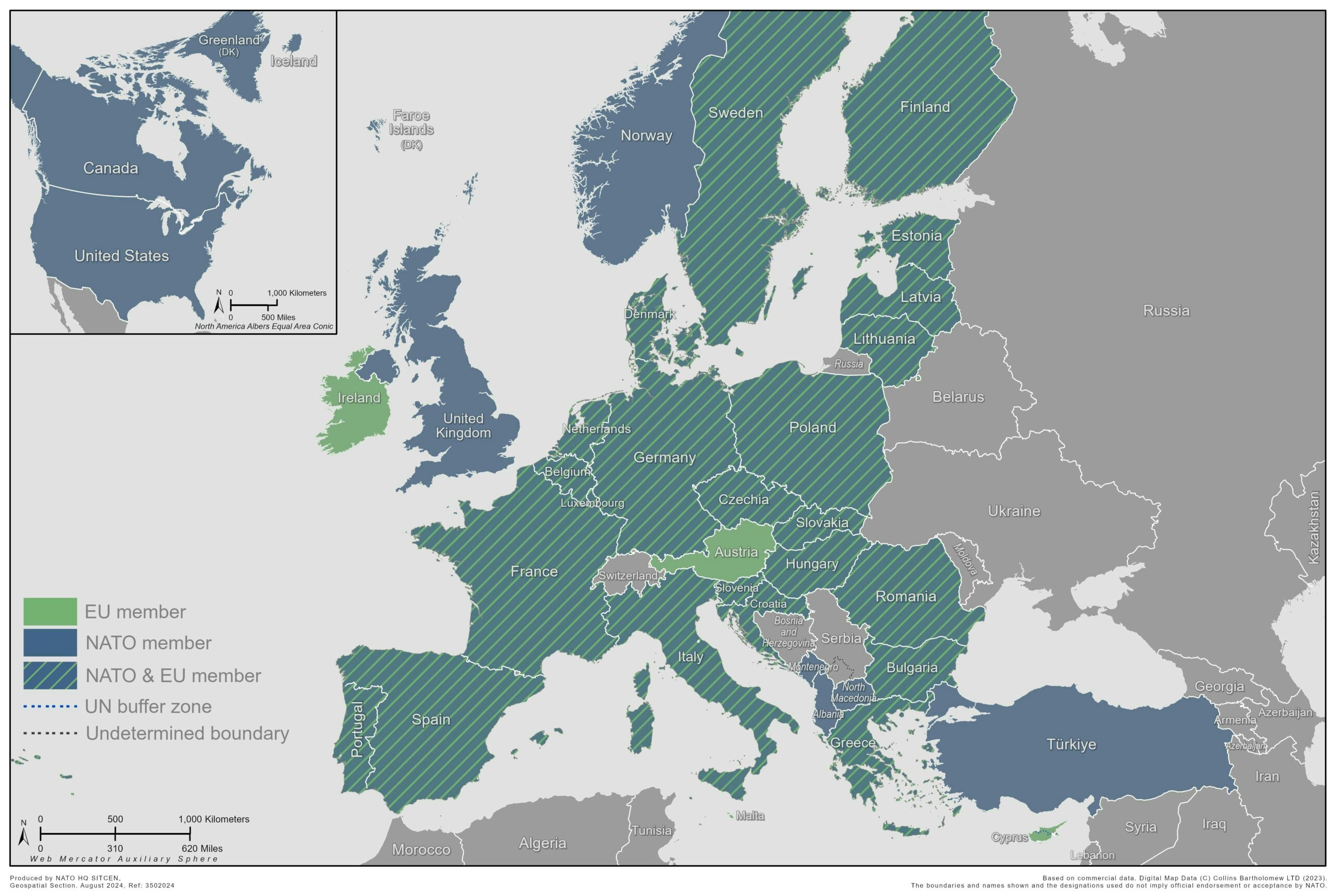
Airspace violations have been reported by NATO members close to the border with Russia, Ukraine and Belarus.
Major Incidents
September 9-10: Poland (EPWW/Warsaw FIR)
During a Russian missile and drone attack on Ukraine, multiple Russian drones violated Polish airspace.
They were detected across eastern, central and northern Poland with some reportedly entering via Belarus.
Polish and NATO fighters were scrambled, and several drones were shot down.
Poland described the event as a major provocation. It invoked Article 4 of the NATO treaty – a move that triggers emergency consultations with other member states.
This was an important political response. While Article 4 does not commit NATO to collective defence, it does require formal discussions when a member state feels its security is under direct threat.
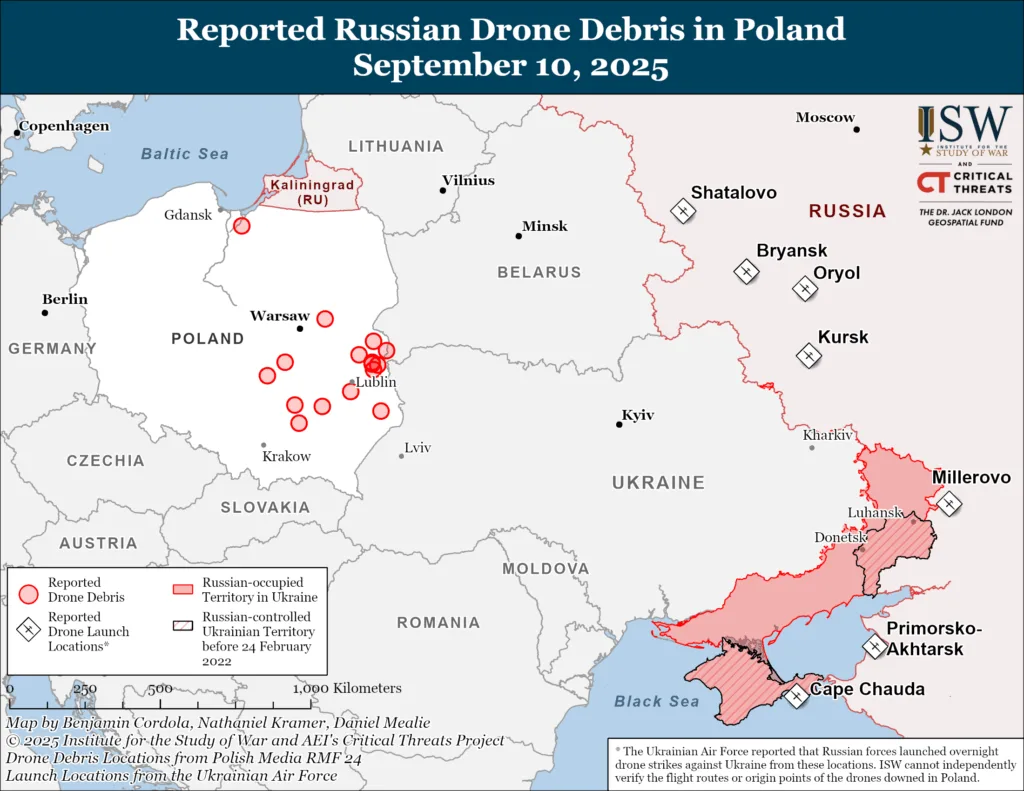
Image courtesy of the Insititute For The Study of War and Critical Threats.
September 13: Romania (LRBB/Bucharest FIR)
A single Russian drone breached Romanian airspace near the Danube River during strikes on nearby Ukrainian targets.
It reportedly loitered for around 50 minutes before exiting back towards Ukraine.
Romanian and NATO fighters responded, but no weapons were fired due to concerns about collateral damage in populated areas below.
September 19: Estonia (EETT/Tallinn FIR)
Three Russian MiG-31s allegedly entered Estonian airspace for about 12 minutes without authorization near Vaindloo Island in the Gulf of Finland, close to the boundary with Russian-controlled airspace.
The jets flew without flight plans, transponders or ATC contact for approx 12 minutes. NATO jets were dispatched to intercept them, before the Russian jets exited the area.
Estonia invoked Article 4 following the incursion.
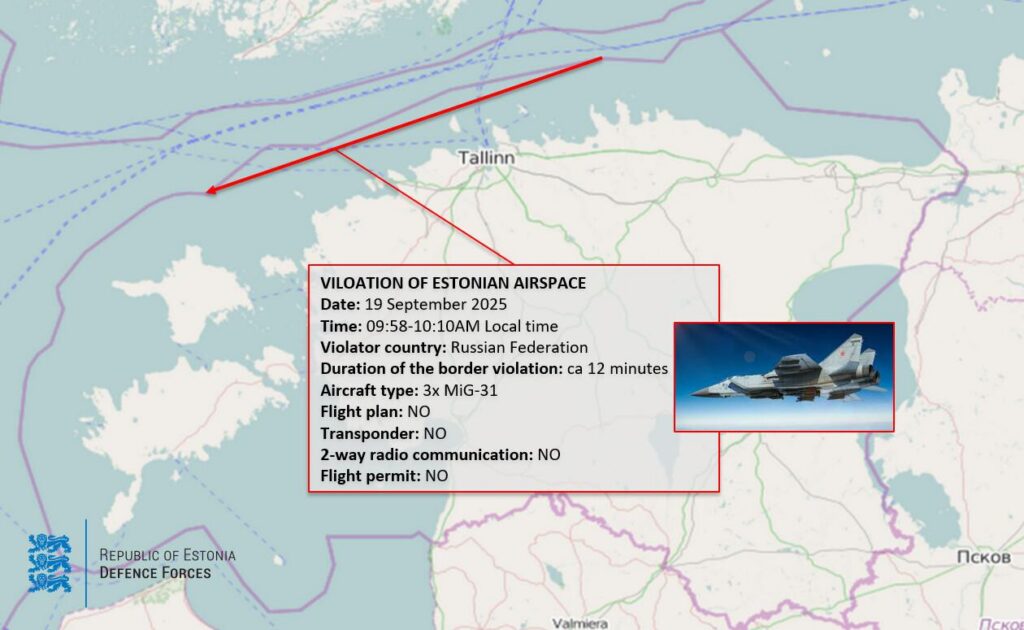
Image Courtesy of the Republic of Estonia Defence Forces
NATO Response – Operation Eastern Sentry
On Sep 12, NATO launched Operation Eastern Sentry to bolster its posture along the eastern flank.
This mission involves ongoing fighter patrols, improved radar surveillance, and reinforced air defence systems along NATO’s eastern border.
The specifics of this deployment aren’t available, but the operation’s purpose is to detect and respond rapidly to any further violations.
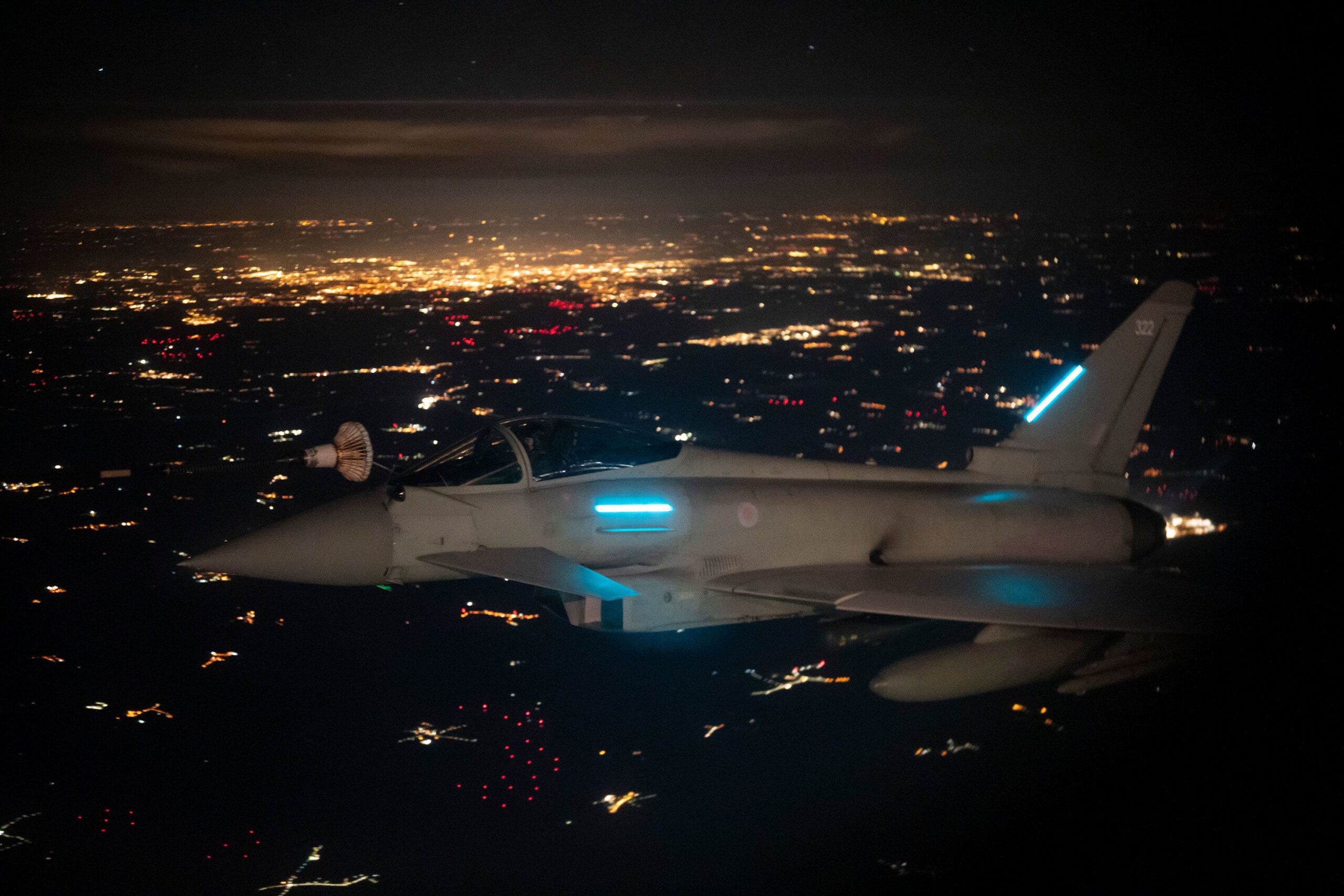
NATO’s Operation Eastern Sentry has been underway since Sep 12.
Why Russia might be doing this
Analysts suggest there may be several possible motives:
- Testing NATO’s response – violations can be used to gather intel on detection and reaction times, radar coverage and interception procedures.
- Posturing – signalling strength and willingness to challenge NATO in a show of force.
- Distraction – Diverting NATO resources away from other interests (such as the conflict in Ukraine).
- Deniability – Maintaining ambiguity by blaming navigation errors, or claiming operations only occurred in neutral airspace.
What’s the bigger picture?
Tensions have risen along NATO’s eastern boundaries in recent weeks, raising safety and operational concerns for civil aviation. Even if an outright conflict is still unlikely, these violations complicate de-escalation and increase the frequency of spill-over risks.
Flight operations in this region need to monitor the situation closely for changes – history has shown that just because airspace is open, doesn’t mean it is safe.
Key risks for operators
Collision hazards – Military aircraft operating without transponders in high-density airspace can create serious risks for civil flights – especially in Baltic states and Poland where major routes between Western Europe and Scandinavia exist.
Airspace disruption – When interceptions occur, ATC may need to rapidly clear surrounding airspace causing re-routes and unexpected fuel burn to enroute aircraft.
Sudden Escalation – A full confrontation between NATO and Russia is unlikely in the near term. However, recent lessons in the Middle East have shown us that sudden closures of FIRs can be a realistic consequence of a deteriorating political situation. This can occur in hours, not days.
GPS Interference – Russian-origin jamming is frequently reported in the region, often traced to areas like Kaliningrad and St Petersburg. The team at SKAI Data Services kindly provided us with the following data map of recent jamming and spoofing recorded in the area -a special thanks to their team.
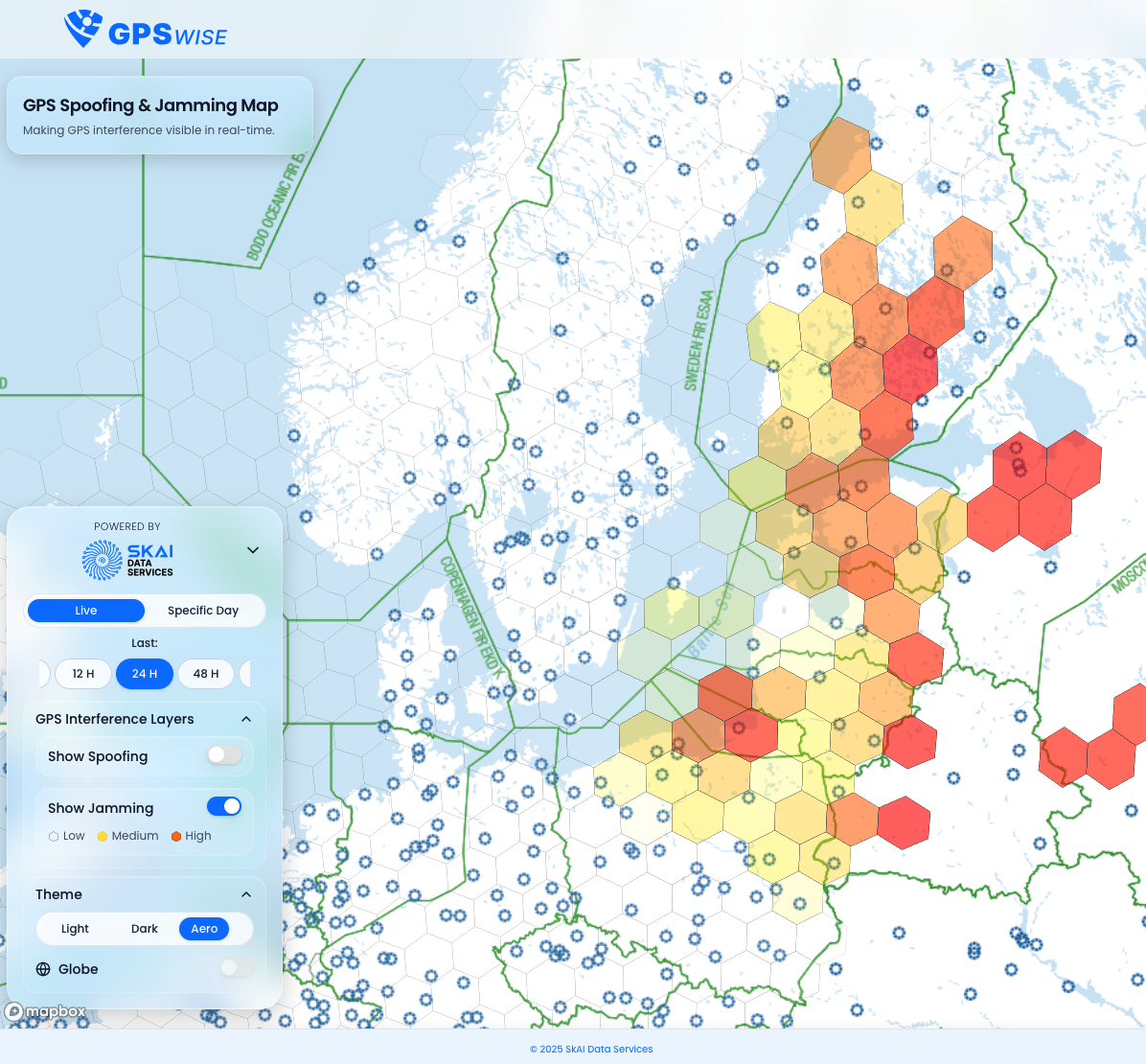
Courtesy of SKAI Data Services.
Stay Informed
We continually monitor global airspace for changes to risk and security at safeairspace.net. There, you can find up-to-date state-issued warnings for areas bordering Russian and Ukrainian FIRs. You can also reach the team directly via blog@ops.group.

More on the topic:
- More: Russia: Aircraft Shot Down, New EASA Airspace Warning
- More: Operation Orion: French Airspace Closures
- More: Ukraine-Russia Spillover Risks: Nov 2022
- More: Is the Fuel Pool Drying Up?
- More: Russian CAA website taken offline
More reading:
- Latest: NAT Pack 2026: All the North Atlantic goodies
- Latest: New 2026 NAT Oceanic Checklist
- Latest: The Bahamas wants your cash
- Safe Airspace: Risk Database
- Weekly Ops Bulletin: Subscribe
- Membership plans: Why join OPSGROUP?






 Get the famous weekly