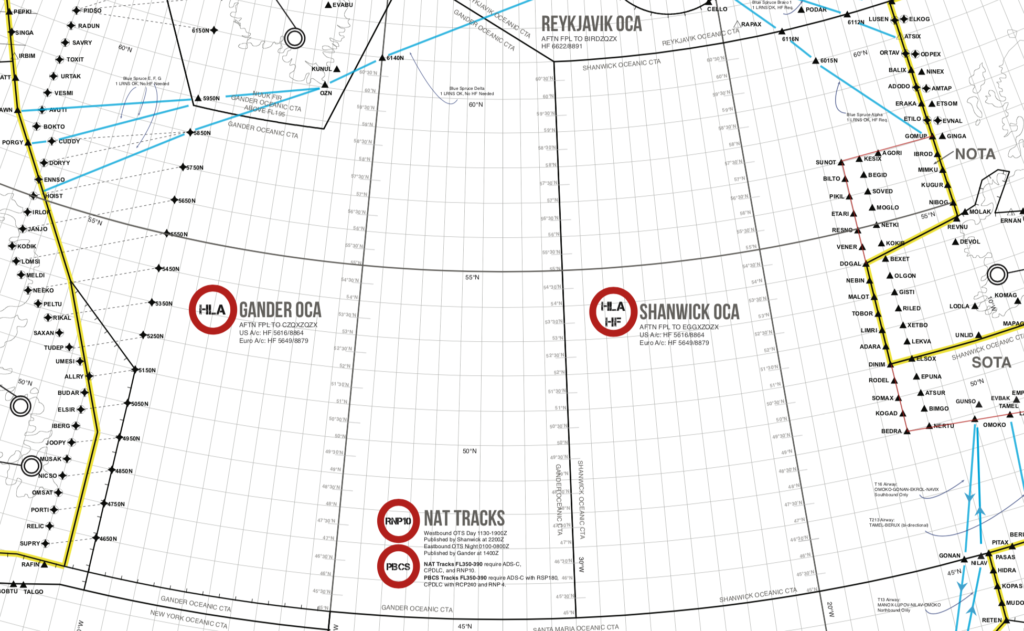
The North Atlantic Datalink Mandate – 2024 update

A period of temporary relief of the North Atlantic Datalink Mandate (NAT DLM) rules ended in Feb 2021. So since then, aircraft need to be CPDLC and ADS-C equipped to operate between FL290-410 throughout the NAT region.

Exceptions – areas where you DON’T need datalink

– Everything north of 80°North.

– New York Oceanic East FIR.

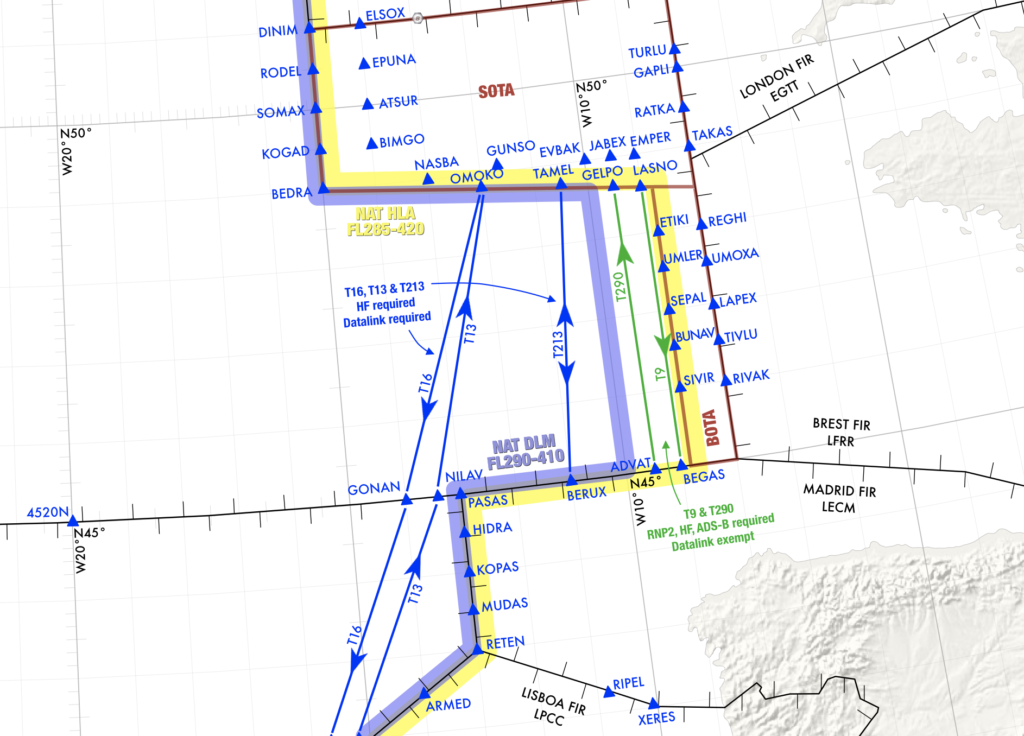
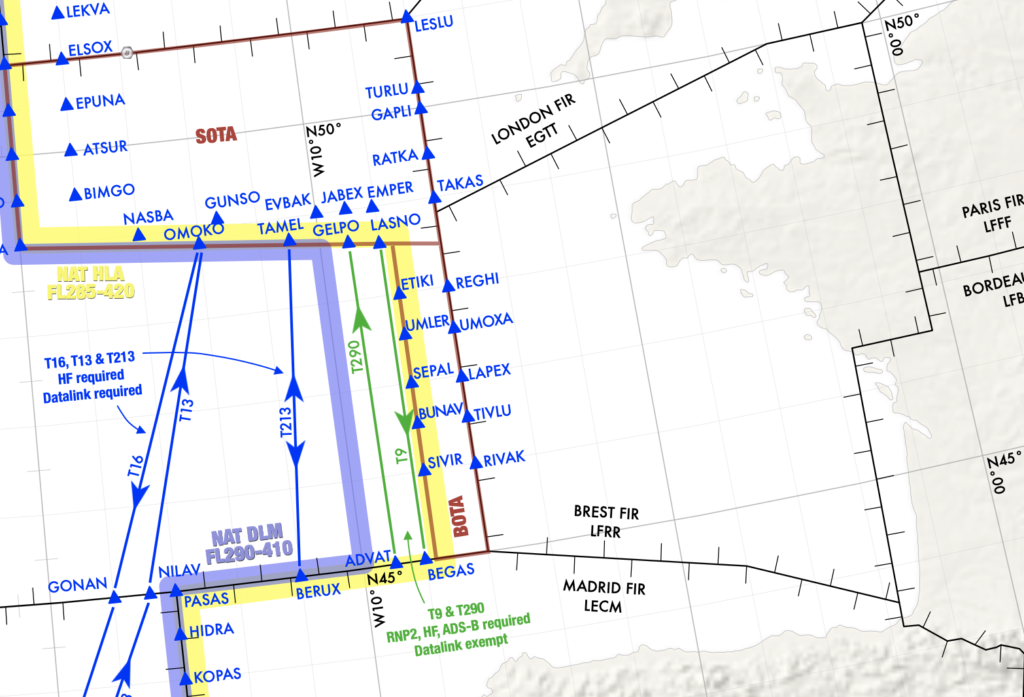
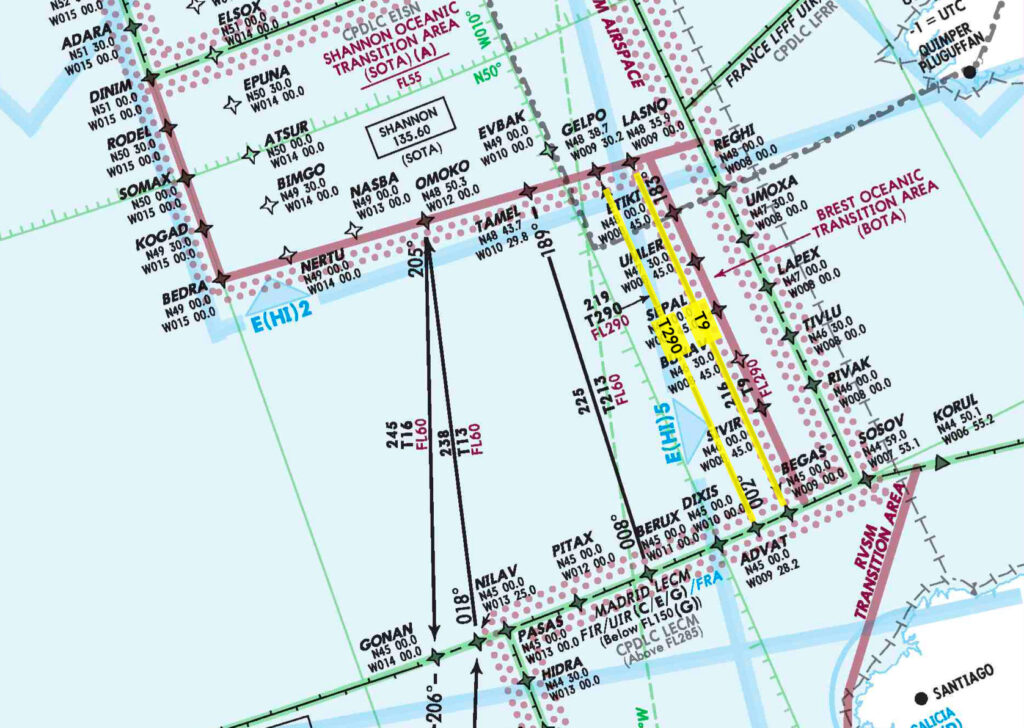
Tango Routes T9 and T290. The other Tango routes (T213, T13, T16) all require datalink.

– GOTA airspace. We discovered this in Aug 2022, after some lengthy discussions with the authorities.

– ATS Surveillance airspace, where surveillance service is provided by means of radar and/or ADS-B, coupled with VHF. This includes the Azores, Bodo, and Iceland-Greenland corridor.

Tell me more about this “ATS Surveillance airspace”

This is a tricksy one.

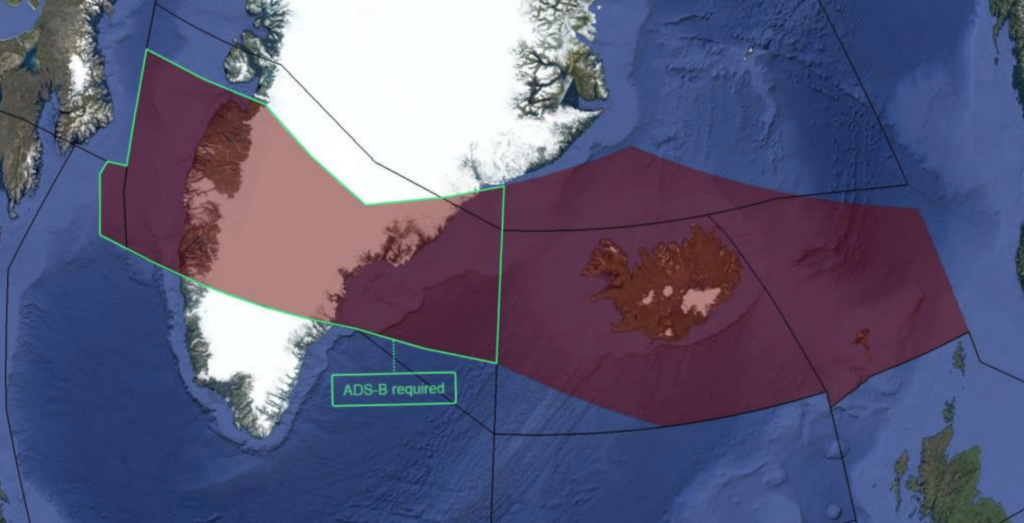
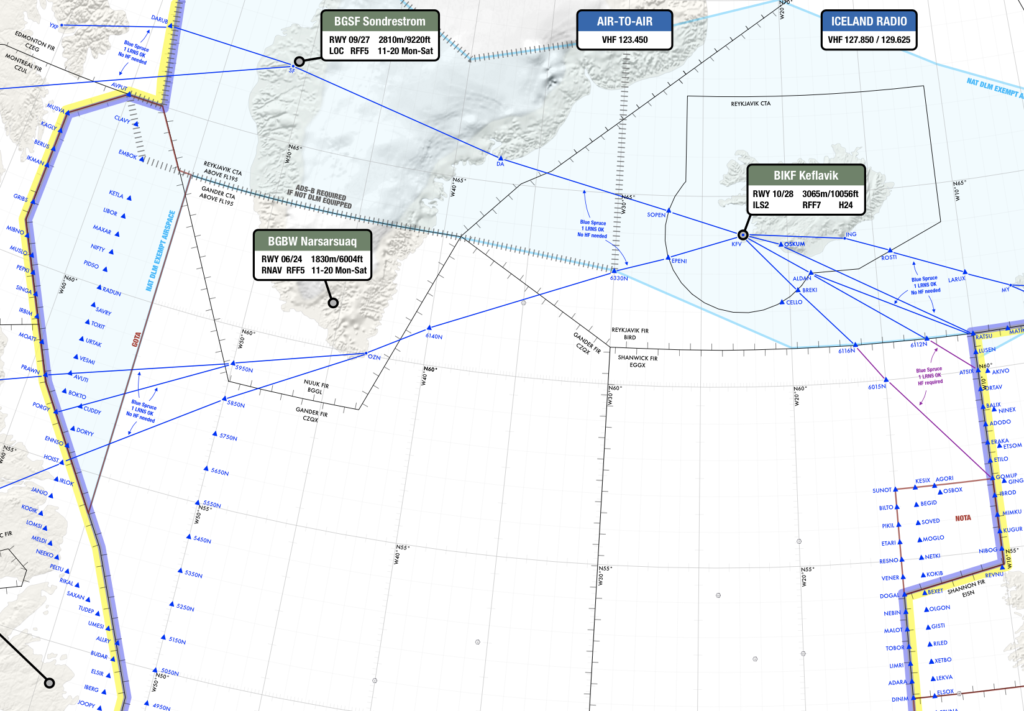
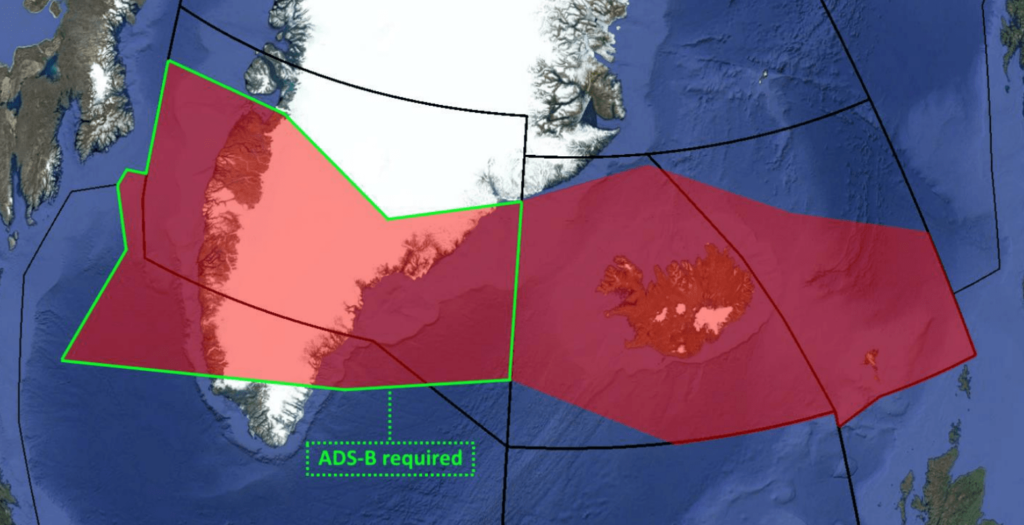
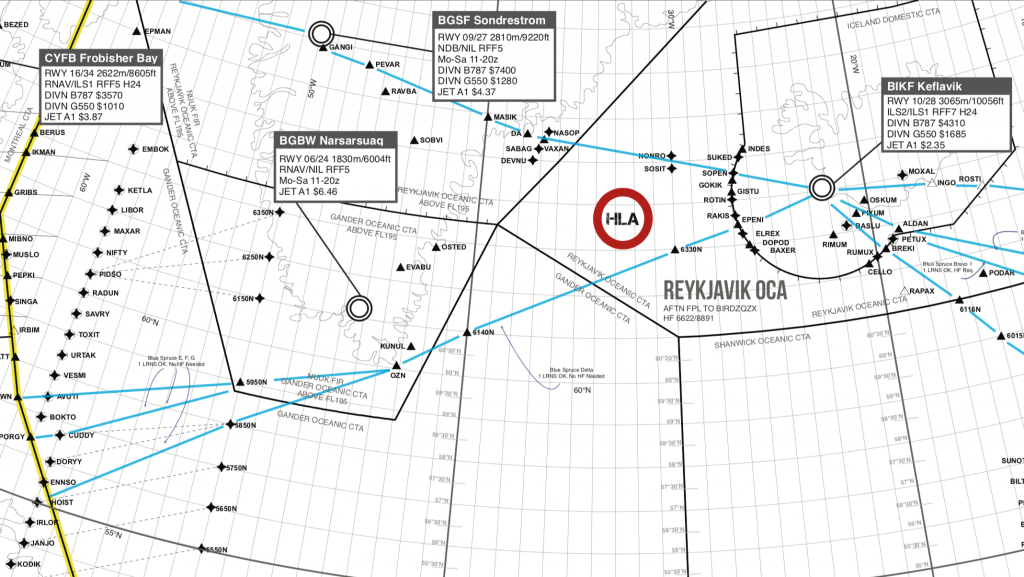
NAT Doc 007 sets out the exempted ATS Surveillance airspace over Greenland and Iceland where you can still fly if you don’t have datalink (though if you don’t have it, you must have ADS-B!)

This area is bounded by the following:

Northern boundary: 65N000W – 67N010W – 69N020W – 68N030W – 67N040W – 69N050W – 69N060W – BOPUT.
Southern boundary: GUNPA (61N000W) – 61N007W – 6040N010W – RATSU (61N010W) – 61N020W – 63N030W – 6330N040W – 6330N050W – EMBOK.

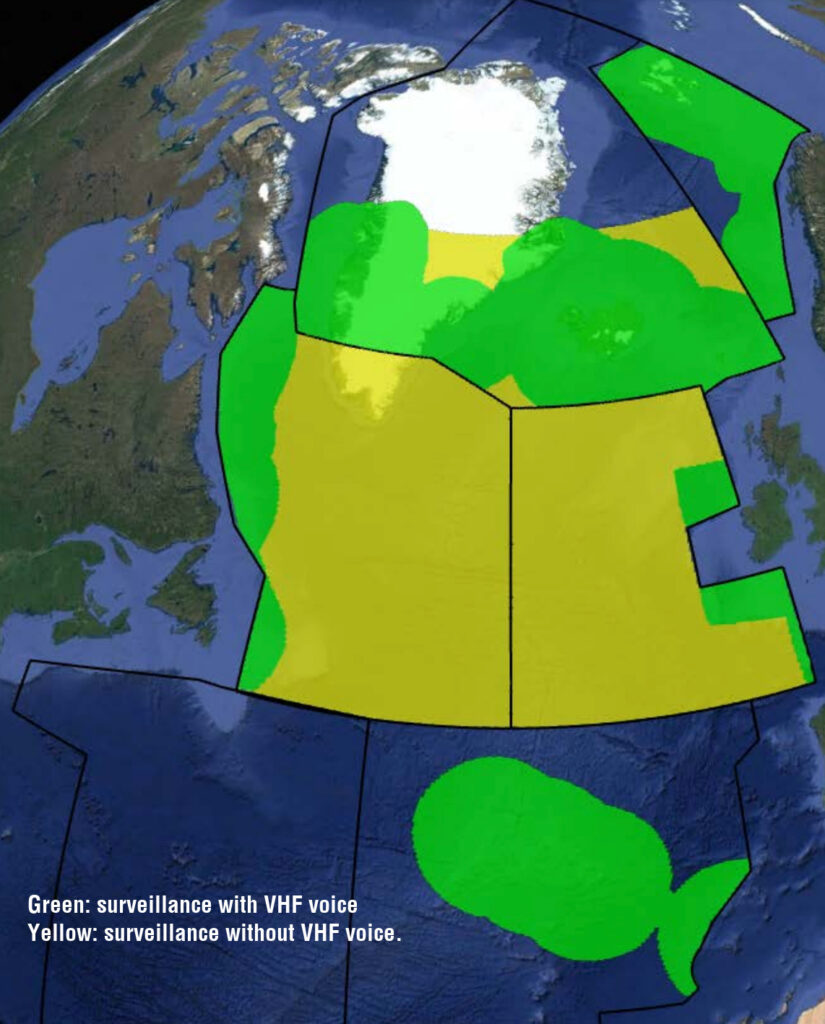
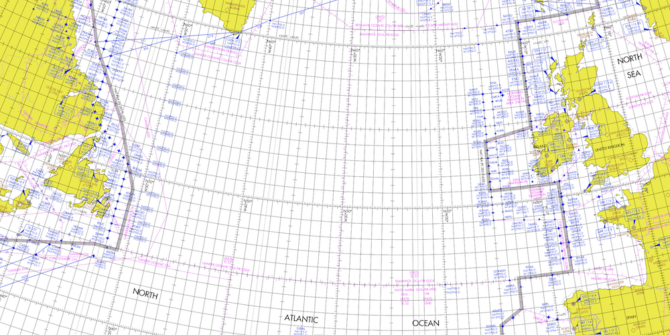
Here’s how that looks:

The southerly Blue Spruce routes

These go over Greenland linking Canada with Iceland via waypoint OZN, and are not fully contained in the exempted airspace. So if you’re flying these southerly Blue Spruce routes you will have to meet the NAT DLM requirements or fly outside of the vertical parameters of DLM airspace (i.e. below FL290 or above FL410). In other words: you need CPDLC and ADS-C to fly on the southerly Blue Spruce routes between FL290-410.

The northerly Blue Spruce routes

These are the ones going overhead BGSF/Sondrestrom airport. These do fall within the exempted area of airspaceso datalink is not mandatory if you’re flying here.

Only the northerly Blue Spruce routes are fully exempt from the NAT DLM.

Aircraft without datalink can request to climb/descend through datalink mandated airspace, but will only be considered on a “tactical basis” by ATC (i.e. you have to ask them on the day, and they’ll let you know, depending on how busy it is).

Flights that file STS/FFR, HOSP, HUM, MEDEVAC, SAR, or STATE in Field 18 of the FPL, are permitted to flight plan and fly through datalink mandated airspace, but may not get their requested flight levels.

For more details about the datalink mandate, check out the NAT Doc 007 in full here.

So, to recap…

  • Datalink Airspace: Remember, NAT DLM airspace only applies from FL290-410. Below or above that, you don’t need datalink in the North Atlantic.
  • If you have full datalink (CPDLC and ADS-C): You can go where you like. But watch out here – “full datalink” means you have Inmarsat or Iridium. HF datalink alone (ACARS) does not meet the satcom part of the NAT DLM requirement. So if you want to fly in NAT DLM airspace (FL290-410 in the NAT region) “J2” in field 10a of your FPL isn’t enough – you need “J5” for Inmarsat or “J7” for Iridium.
  • For GOTA airspace: You need a transponder, automatic pressure-altitude reporting equipment and VHF. If you have ADS-B, that’s helpful for ATC.
  • For the Blue Spruce Routes: You need datalink for the southerly ones, but not the northerly ones. (If you’re flying on these then you’re probably doing so below FL290 anyway, in which case you’re below NAT DLM airspace and don’t need datalink).

NAT FAQ: No Datalink, Where can we go?

If you don’t have datalink, this is how to make a crossing.

Save


NAT Conundrums Volume IV: Contingency Procedures


Santa Maria HF – Unauthorised Transmissions

An OPSGROUP member recently reported they experienced extended interference on Santa Maria Radio (HF frequency 11309). They were unable to use it for nearly ten minutes due to a continuous broadcast in a foreign language.

This was reported directly to Nav Portugal, and the member was kind enough to share their response with the group. Here is what they had to say.

Unknown Broadcasts

The Radio Supervisor did report significant voice interference on the same day for a period of nearly twenty minutes. It didn’t coincide with the time the member’s aircraft was inside the Santa Maria FIR, but they were quick to point out this may mean it hadn’t been reported yet.

In other words, this is likely not an isolated issue.

Nav Portugal advised that in the past twenty-four months, they’ve observed increasing levels of interference on the HF frequencies assigned by Santa Maria. These are often caused by voice transmissions, but have also included radar signals – essentially ‘pinging.’

These have been confirmed to originate from Eastern Europe, and the Middle East.

There is no evidence the broadcasts are malicious

While they seem to emanate from regions of high political tension, there are no indications the broadcasts are an attempt to impede the communication of air traffic.

They are simply an inconvenience. Nevertheless, they are occurring in one of the largest FIRs on the planet serving hundreds of flights per day, a number of NAT tracks, and traffic in and out of the Azores.

So, it is important to know what to do if you encounter this on your next crossing.

I don’t care, I have CPDLC

It’s true that CPDLC services are available to all FANS 1/A equipped aircraft in the Santa Maria FIR (logon LPPO).

But look out for this chestnut, from Santa Maria themselves…

…attention is called to flight crew that the use of data link services do not exempt the requirement of establishing voice communications with Santa Maria Radio at or before the FIR Boundary, whether on HF or VHF, even if a CPDLC connection is established

So HF interference begins to matter for everyone, when outside of VHF coverage.

Try the other line

Your next option is the ol’ sat phone.

Santa Maria’s contact information is listed in NAT Doc 003, but to save you some time, their Inmarsat short code is 426305, and the direct dial for the supervisor is +351 296 820 401.

There are also alternative HF frequencies listed in the attached document. As a general rule, lower frequencies work better at night, and higher during the day.

If ionospheric propagation floats your boat, we’re not here to judge. You can read more about it here.

Phone a Friend

If you’re not satvoice equipped, and you can’t reach Santa Maria Radio directly – what then?

In the first instance, attempt to raise a nearby aircraft on 121.5 or 123.45 who can relay your position report for you.

Or you can try and contact adjacent ATC oceanic sectors – namely Shanwick, Gander, New York Oceanic or Piarco. Nearby radar units may also be able to assist too – Lisboa, Canarias, Sal or Madrid Controls.

Failing that, you’re into the lost comms procedure. You can find that here.

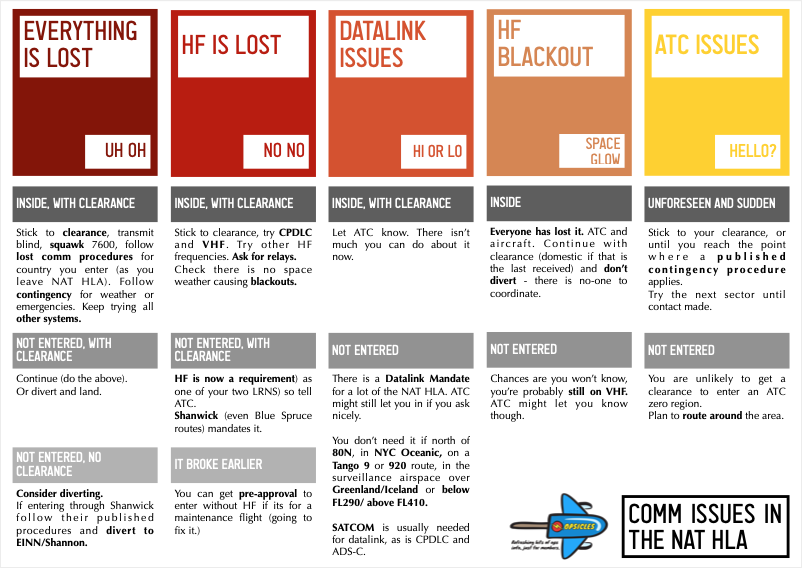
Here’s a quick sheet the team previously put together…

OPSGROUP members: click to download PDF.

Keep Reporting

If you encounter HF frequency interference, it is important that you report it. The more detail the better – including the UTC time, position, altitude, duration and any other identifying details. It’s likely you’re not the only one who will encounter the problem.

We’d also love to hear from you too – you can reach us on team@ops.group


“Resume Normal Speed” on the NAT

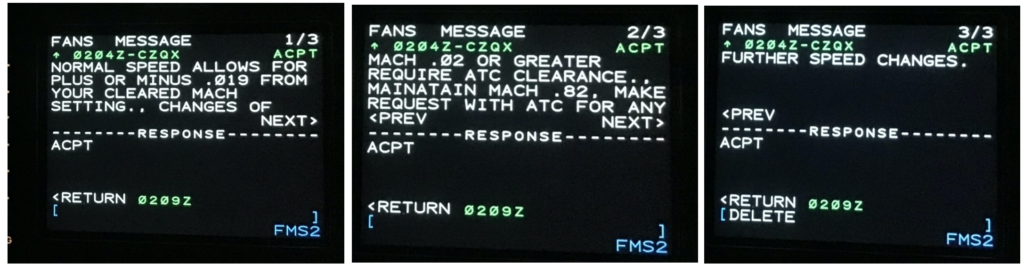
An OPSGROUP member recently reported some confusion with ATC during their eastbound crossing of the NAT, related to the CDPLC-issued instruction: RESUME NORMAL SPEED.

After increasing their cruise speed by M0.02, they advised ATC as per ICAO procedures and received the following message from a controller who appeared to believe that they had just busted their clearance

No paperwork was filed, but the crew involved were left scratching their heads as to what exactly they’d done wrong.

In the absence of any obvious explanation, we reached out to Gander directly who quickly replied. The answer was nothing – in this case, it was the controller who misinterpreted the rule.

Turns out the RESUME NORMAL SPEED instruction implies some pretty specific things. Here is exactly what you need to know next time you get this message on your NAT crossing.

Operations Without a Fixed Speed

OWAFS been happening over the NAT since 2019. O-WTF, you might be saying. But it stands for Operations Without An Assigned Fixed Speed.

It works like this. You get a normal oceanic clearance, with a fixed mach number, like you always did. But then somewhere after the Oceanic Entry Point, you may get a CPDLC message saying RESUME NORMAL SPEED.

Just reply with WILCO. Happy days.

But what this actually means is this – fly ECON, or a cost index with variable mach. You can fly within 0.01 up or down of your cleared Mach number without saying a word. But if it varies by 0.02 or more, you must advise ATC.

The big thing to note here is advise. No clearance is needed, you just need to tell them what you’re doing.

If you’re looking for a reference, ICAO DOC 007 section 5.1.12 is where you’ll find it.

As long as ATC are in the know, the gas pedal is now yours for the pressing.

Keep Reporting

If a clearance has you scratching your head, please let us know. Chances are if you’re confused, a lot of us will be too.

As this event illustrates, this can also help ATC who are human – just like us pilots. Misunderstanding between pilots and controllers, especially with respect to oceanic re-clearances, is one of the leading causes of procedural errors on the NAT.

You can reach us on team@ops.group, or if you’re an OPSGROUP member, via the Crew Room.


North Atlantic Volcanic Threat

Key Points
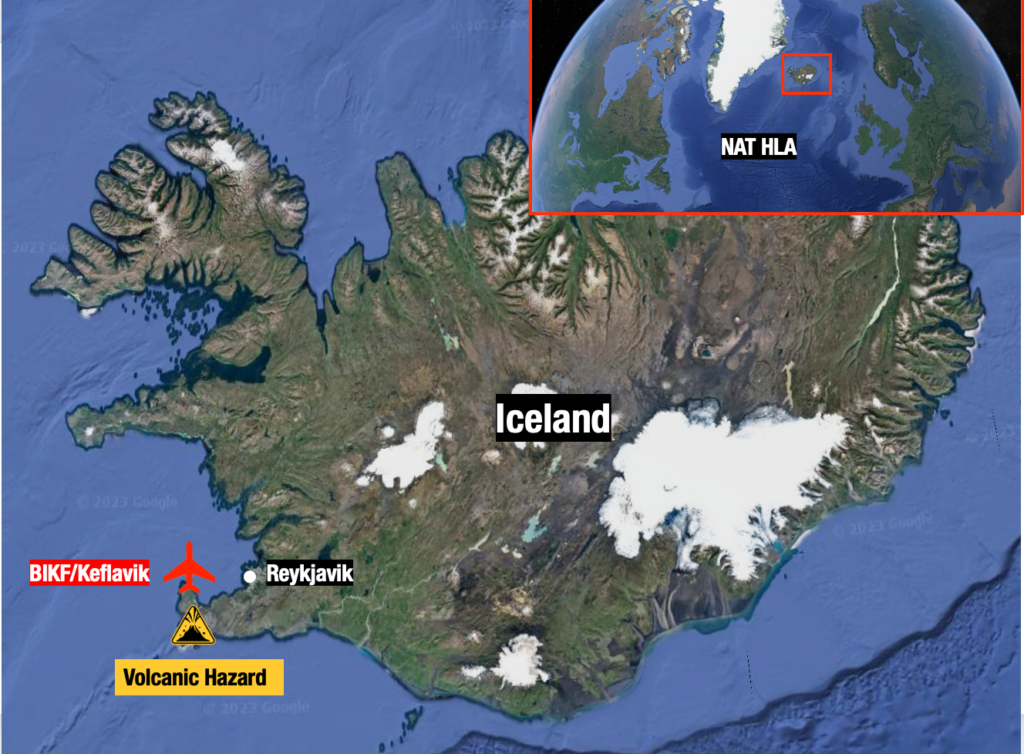
  • One of Iceland’s volcanoes (10nm southwest of BIKF/Keflavik) is showing signs it’s about to erupt.
  • If it does, NAT crossing traffic is likely to be affected at short notice.
  • ICAO have a Contingency Plan ready to go if it does erupt (PDF below).
  • Pilots and Operators: There is a list of things to watch out for if you do fly through volcanic ash, and a recommended procedure to follow.

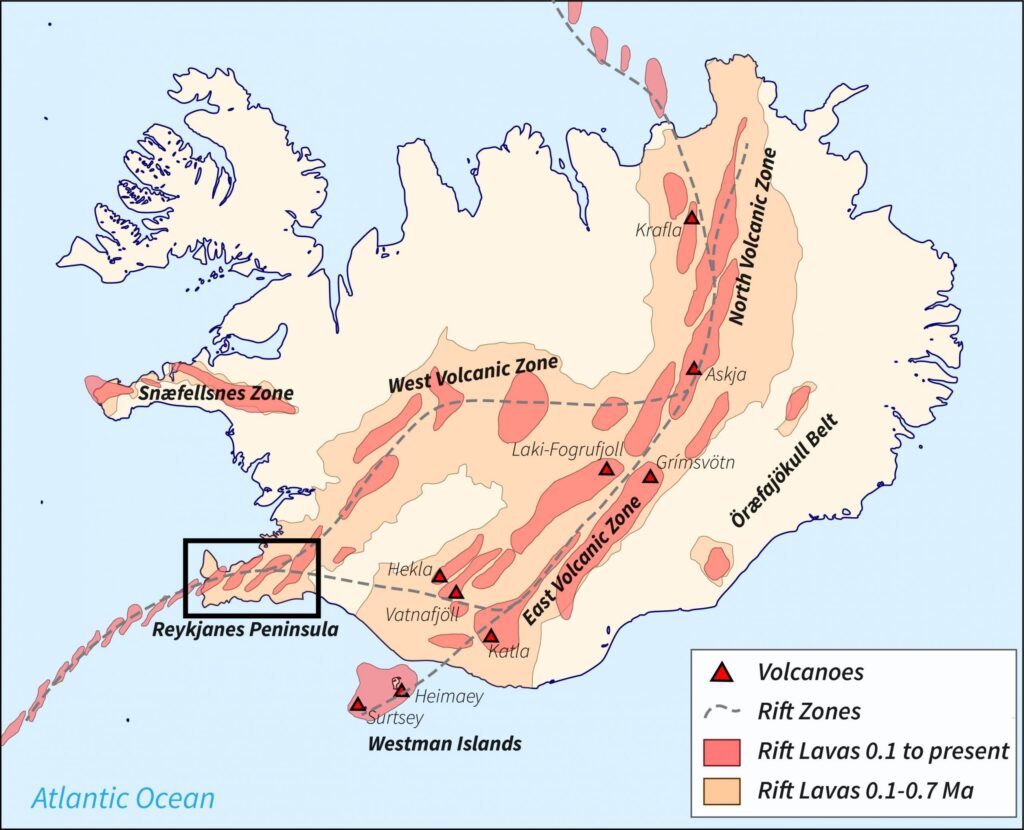
Iceland is on high alert for an imminent eruption at one of the volcanoes on the Reykjanes Peninsula – a stone’s throw southwest of Keflavik. If it does erupt, it has potential to seriously impact North Atlantic traffic.

The last time this happened in 2010, the (try pronouncing this one) Eyjafjallajökull volcano closed almost every country’s airspace in Western Europe in the weeks that followed. Nearly 100,000 commercial flights were grounded.

One of the few flights not to be impacted by the volcanic ash in 2010.

Where are we talking about?

What happens if it erupts?

So far, it’s just a warning. But it’s credible enough for Iceland to declare a state of emergency. Recent earthquakes in the area are an ominous sign. If it does erupt, there are several possible scenarios that could affect air traffic.

  • BIKF/Keflavik may close. Unlike previous eruptions, this one is just 10nm away from the airport and a little further from the Icelandic capital, Reykjavik. Aside from being a major airport in its own right, BIKF is a commonly used ETOPS/EDTO alternate for traffic crossing the NAT.
  • Part of the NAT HLA may become unusable depending on the spread of ash. More southerly routes than usual may become a requirement which means extended flight times and more fuel.
  • Major airspace closures could occur for an extended period of time.  The European mainland may once again be in the firing line, thanks to the mid-latitude westerlies.

Yeah but what ACTUALLY happens?

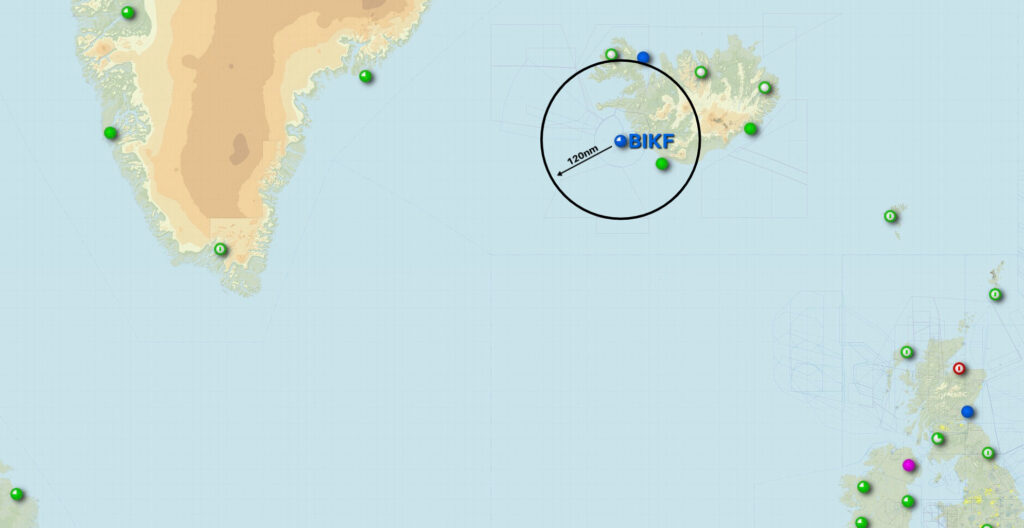
If the volcano warning goes to code RED (it’s currently code ORANGE), that basically means an eruption has started. In this case, the airspace within a 120nm radius will close, until they confirm there’s no ash cloud. They currently think there is a 15km long line where magma is flowing and moving towards the surface – an eruption could happen anywhere close to that line.

120nm of closed airspace around BIKF/Keflavik airport (remember, the volcano is just up the road) would look something like this:

There’s also a thing called the Volcanic Ash Contingency Plan that ICAO put together. This doc is the one you want to read – there are a few more scattered around online, but they’re all older versions of this one.

Where was ICAO when the Westfold fell?

This doc sprang from the misery caused by the eruption in 2010, and aims to set out what actually happens if a big volcano erupts.

Essentially, it goes like this:

  1. Volcano erupts. There’s ash all over the place.
  2. Volcanic ash people issue a volcanic ash warning.
  3. Notam people issue a Notam.
  4. Pilots/Operators read the Notam and don’t fly into the ash. ATC help them.

All volcano walking tours are cancelled.

What should I do if I fly through ash?

Don’t fly through ash.

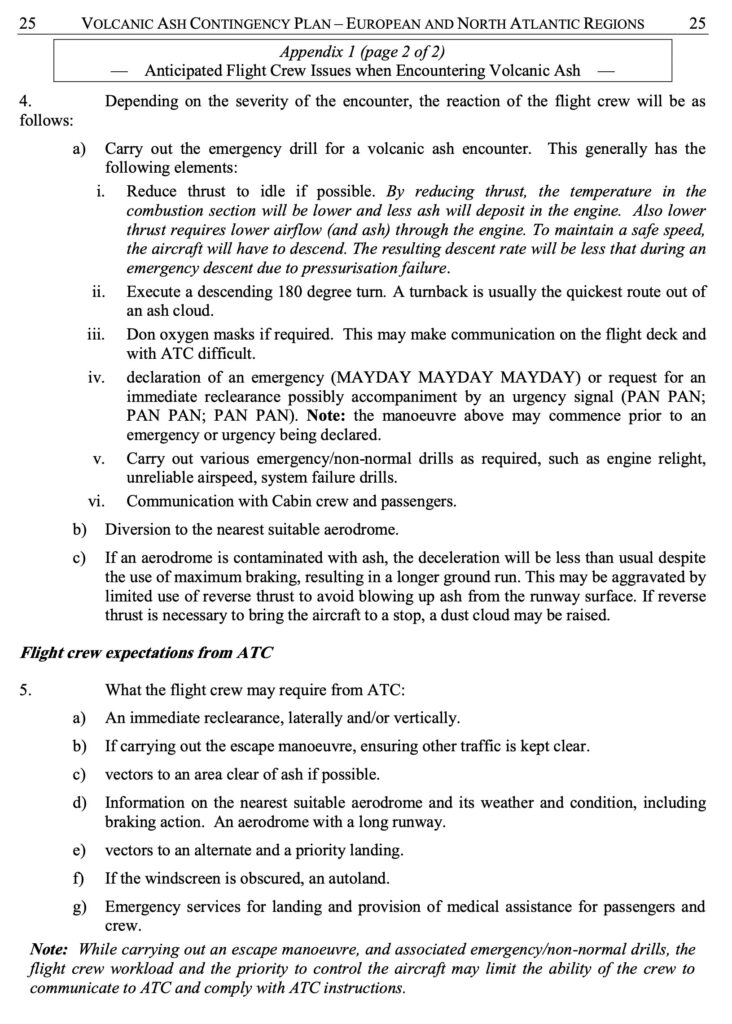
But if you do, then do this:

  1. Reduce thrust.
  2. Do a 180 degree turnback.
  3. Put masks on.
  4. Declare MAYDAY.
  5. Panic a bit as you do whatever emergency tasks you need to do.
  6. Divert somewhere pronto.

Or as it says in more official language in the Contingency Plan:

If I do fly through ash, how scary will it be?

Very scary. Don’t do it. Here’s a list of nightmarish things that will probably happen if you do:

  1. Smoke, fumes or dust may appear in the cockpit. Get those masks on.
  2. Engine malfunctions, stalls, over-temperature, thrust loss, engine failure.
  3. Reduced visibility due to the abrasive effects of ash on windshields and landing lights.
  4. Pitot tubes may become blocked, so airspeed indications may become unreliable.

Advice: disconnect the autopilot, set engine thrust to an appropriate value and maintain the aircraft’s pitch attitude manually. This will keep the aircraft at a safe speed, but will probably result in difficulty to maintain the assigned altitude. Increased separation is required (above and below).

Another thing that might happen – SPIDERS.

Advisories and Warnings

The London Volcanic Ash Advisory Center (VAAC) is responsible for issuing any ash advisories for this region. You can access those here.

Senior staff meeting at the London Volcanic Ash Advisory Center.

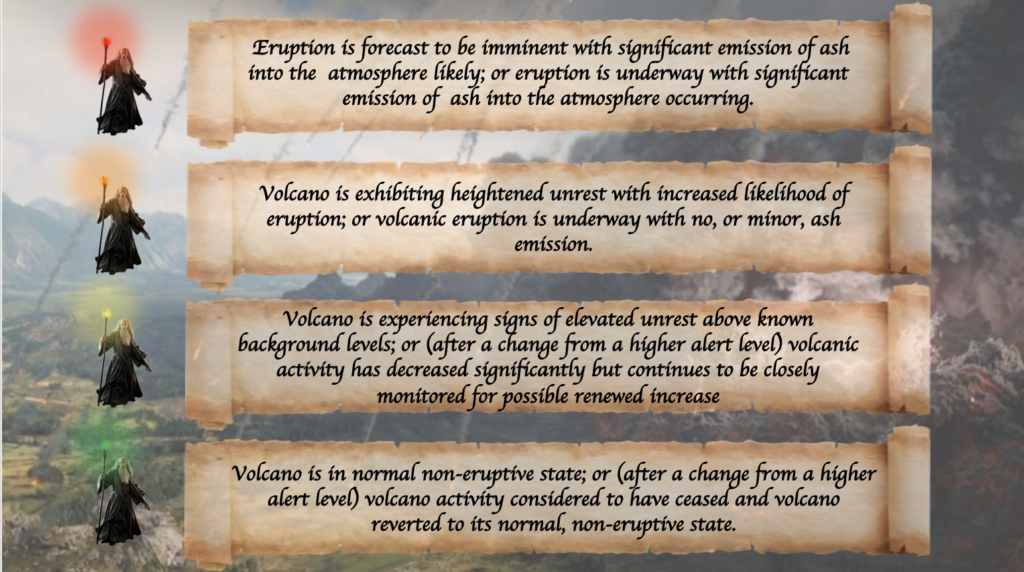
The current alert level is Orange. Verbatim, this means that the volcano is ‘exhibiting heightened unrest with increased likelihood of eruption; or that an eruption is underway with minor ash emission…’ Or in other words, it may be about to erupt.

If you’re not familiar with the volcanic alert scale, here’s how it works:

All traffic crossing the NAT or operating over Western Europe right now should be keeping a close eye on this one.

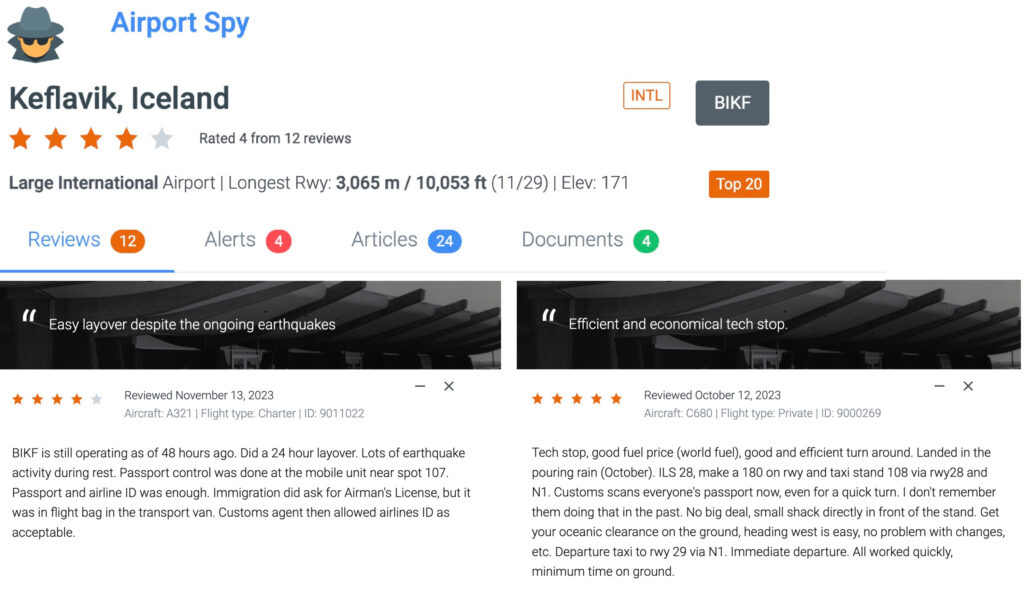
What’s the latest at BIKF/Keflavik Airport?

We’ve had a couple of reports from members who have been through there recently. If you’ve got anything to add, please file a report at Airport Spy! For info from the airport, you can contact the local handlers at jetcenter@icelandair.is or ops@southair.is.

Click image for full reports at Airport Spy homepage.


North Atlantic Update: WAT Happened To WATRS?

Key Points
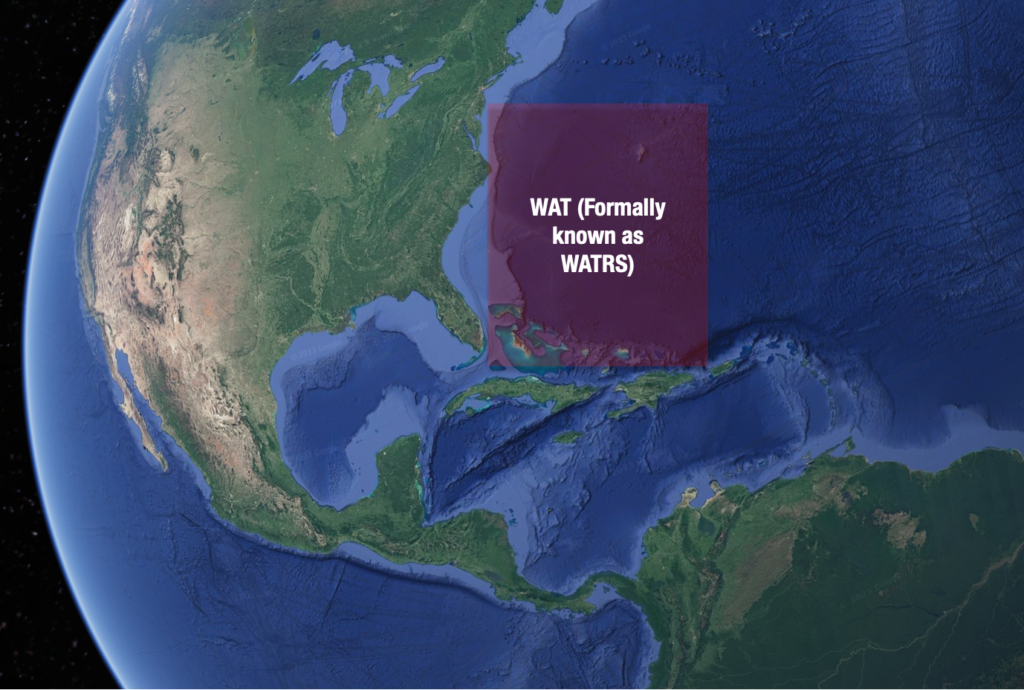
  • The US FAA has officially renamed WATRS airspace in the West Atlantic, to simply WAT.
  • Part 91K, 121, 125 and 135 operators will all be affected by the change. Existing B050 authorizations will be re-issued within 24 months.

If you’re not familiar with WATRS, it is a large chunk of airspace off the US East Coast comprised of fixed routes that provide huge volumes of oceanic traffic to and from the NAT HLA with lateral separation. From 7 Sep 2023, it’s been renamed WAT.

What was wrong with the old name?

The FAA dig into this in their recent notice. Essentially back in 2020, New York ATC asked users to stop using the term ‘WATRS airspace’ because it was causing some confusion.

Apparently, some users were associating it simply with the New York West Oceanic CTA. When, in reality it also spans the San Juan CTA and the Atlantic portion of the Miami Oceanic CTA too.

It is purely an issue of semantics. Now we need to call it WAT instead so that it better aligns with ICAO regions.

Has the physical boundary changed?

Nope. It is a name change only, and the existing set up remains the same.

Then why do we need to know?

If you traverse the NAT a lot, no doubt you are quite familiar with the term WATRS. But you are unlikely to hear it anymore.

It will be progressively replaced with the unfamiliar term WAT in charts, reference material and approvals. And so, a little background helps.

A number of important FAA documents will need to be updated. The most significant is LOA B050 which will be re-issued to all operators over the next 24 months.

LOA B045 (Extended Overwater Operations Using a Single Long-Range Communication System) will also be revised when some extra paper-pushing gets done behind the scenes.

Your company’s internal manuals and guidance will also need to be changed to avoid ‘reverse training’ the older, obsolete name.

WAT about other NAT changes?

While we have you, there’s been another small change to NAT ops to report.

On September 18, ICAO revised the ‘Oceanic Errors’ NAT Ops Bulletin – the doc which has all the advice for operators on how to avoid the most common mistakes when flying the North Atlantic.

These include: Gross Nav Errors, Large Height Deviations, and Longitudinal Separation busts. There’s also some advice on Flight Planning, SLOP, and some CPDLC things to watch out for.

You can download it here.

Looks like there are no significant changes in terms of content for this updated version when compared with the old one – they’ve just tidied it up a bit.

But if you operate over the North Atlantic it’s still worth a read, as there’s lots of top tips on how to avoid the most common “gotchas”!

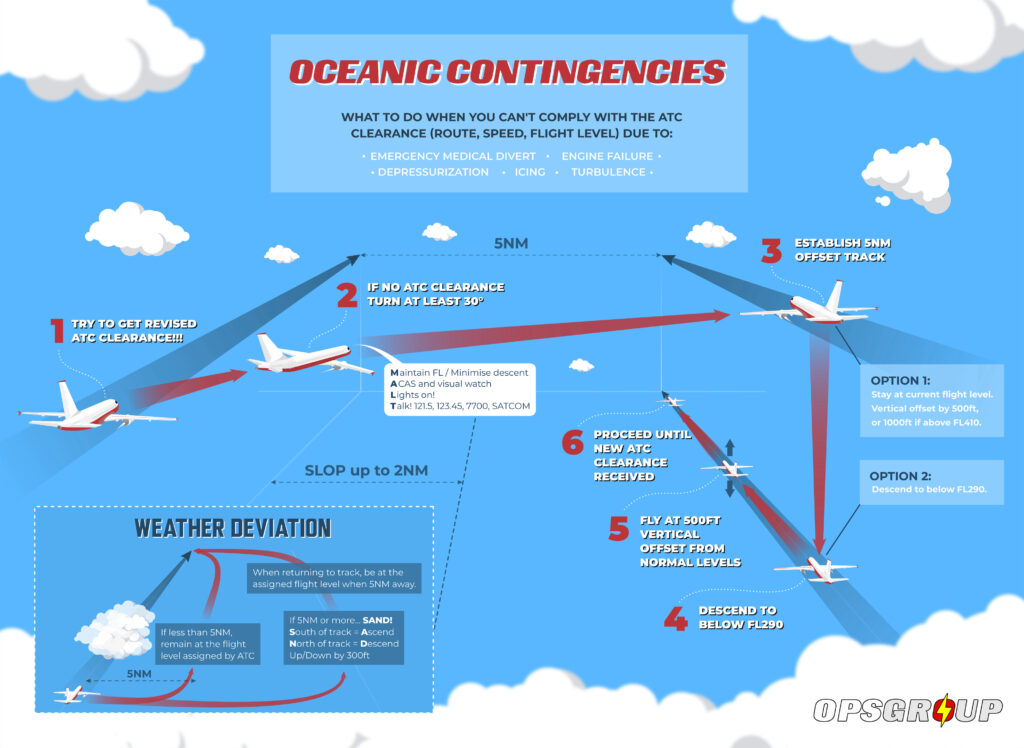
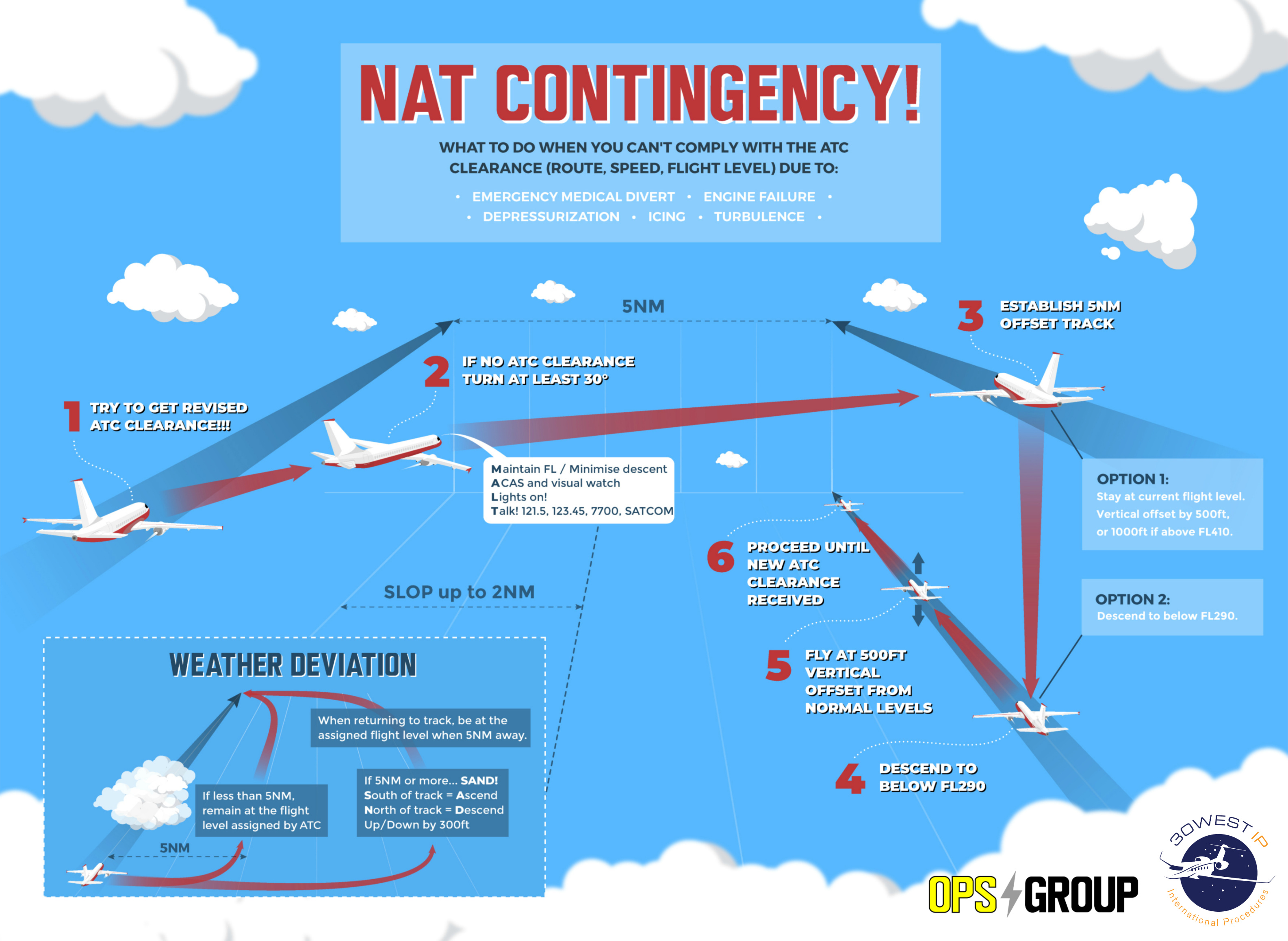
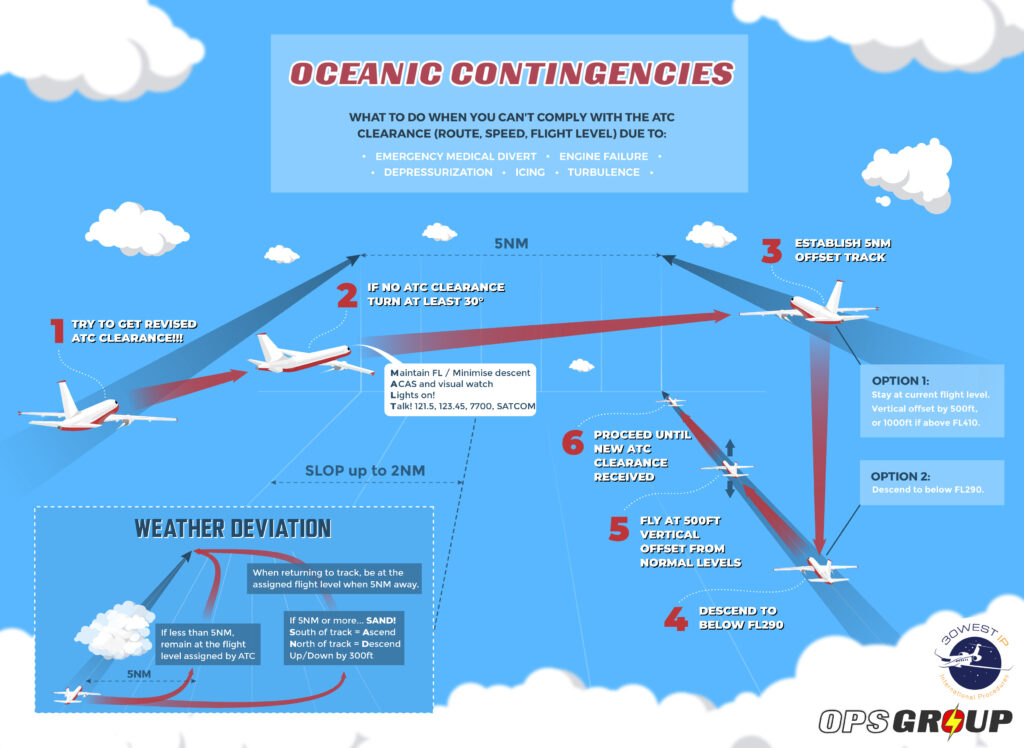
Contingency and Weather Deviation Procedures were updated back in 19’, and rolled out to all oceanic airspace worldwide in November 2020. We produced this chart at the time:

Do You Have a NAT Conundrum?

Ah, NAT conundrums! We love them so much, we’ve published three entire Volumes already!

Volume I covered the following three conundrums:

1. To SLOP, or not to SLOP?
2. What’s the difference between the NAT Region and the NAT HLA?
3. Can I fly across the North Atlantic without Datalink?

Volume II covered these additional three:

4. Do you need to plot on Blue Spruce Routes?
5. Do we still fly Weather Contingency Procedures on Blue Spruce routes?
6. When can we disregard an ATC clearance and follow the contingency procedure instead?

Volume III was solely dedicated to:

7. GOTA airspace datalink and ADS-B requirements.

We’re always on the lookout for more conundrums, so please get in touch with the team on team@ops.group with any NAT related questions or queries. We’ll do our best to answer them, or put you in touch with someone who can.


NAT Changes Coming Soon!

It’s been quiet for a while on the North Atlantic, but that’s set to change soon, with the release of a new version of the NAT Doc 007.

Wait, what new version of the NAT Doc 007??

It’s just a draft for now, due for release in March 2024. 

It was published following the meeting of the North Atlantic Systems Planning Group (NAT SPG) back in June – the folks who meet each year to work out what needs changing in this document, amongst other things. So this draft contains the changes they discussed at that meeting.

To read the draft NAT Docclick here.

Click to download PDF.

If you want to read the entire report from that meeting, click here (lots of other stuff in there, but the draft NAT Doc starts on page 58!).

What is changing?

Right, the important bit!

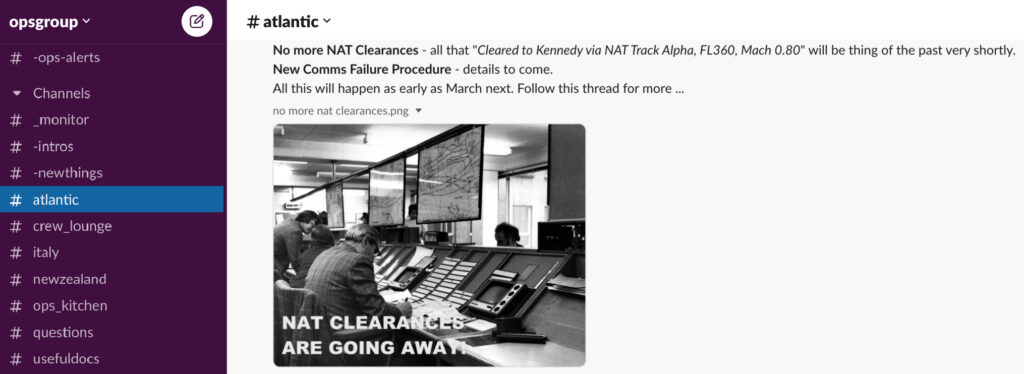
First up, there will be no more Oceanic Clearances – a big change to anyone used to saying “Cleared to Kennedy via Track Alpha, FL360, Mach 0.80“. The new NAT Doc 007 will also have a new Comms Failure procedure… completely rewritten.

These are the biggest changes to NAT procedures in years, and we’re looking for some volunteers to help go through the new NAT Doc – for this, and more, join the new #atlantic channel on Slack – open to all members.

This is one of a bunch of new channels we’re working on at the moment, so keep an eye out for more “LOCAL” channels coming … we already have #newzealand#singapore#italy. These local channels are a new idea – somewhere for people based there to connect, and to help/welcome visiting crews. Opsgroup members can get involved here!

Where can I find the current NAT Doc?

Head over here. This is our article from Jan 2023 – the last time the NAT Doc was updated. It contains the downloadable PDF of the current NAT Doc, as well as a chapter-by-chapter summary of everything that was updated at the time.

And for a timeline of all the big changes on the North Atlantic stretching back to the dawn of time (actually, 2015, but basically the same thing), click here.


Header image from ATC History.


Portugal’s new Punishment Tax (NAT Tech Stops beware!)

Effective July 1st, Portugal has introduced a new tax directed at business aviation. If you are operating an aircraft with 19 seats or less, you’ll have to pay the hefty new tax – a G650 operating Lisbon-Newark will get a bill for around €2,000 (US$2,200).

It’s billed as a “Carbon Tax” – ostensibly to mirror the same regulation that has applied since 2021 to airline passengers. However, an airline operating the same route with 250 passengers will only pay €500, despite having a fuel burn three times higher.

As such, it’s better labeled as a Punishment Tax for business aviation.


Tech stops in the Azores are included

If you are planning a tech stop in the Azores (LPLA/Lajes or LPAZ/Santa Maria, for example) – think again. The Azores is “Portuguese Territory” and so covered by the new tax, and the exemption for “technical reasons” doesn’t mean tech stops. So, if you divert in with a fire warning, no tax. If LPAZ or LPLA is your destination, however, you can add about $2,000 USD to your invoice.

You might want to find another NAT tech-stop.


How to calculate your bill

The official regulation is here (Artigo 184.º) – in Portuguese. The basics are:

  1. From July 2023, a carbon tax is introduced for “consumers of air travel on aircraft with a maximum capacity of up to 19 seats” ,
  2. The amount to pay is calculated as: € (TC x CP x L x (D + 1)). TC is the Carbon Tax (€2), CP is a Coefficient of Pollution (10x), L is the number of seats and D is the distance flown in kilometres divided by 1000.
  3. The fee applies to each commercial and non-commercial flight departing from airports in Portuguese territory.
  4. Exemptions: “Fully electric aircraft”, PSO flights, State, Instruction, Medical emergency, SAR, and departures following landings for technical, meteorological or similar contingency reasons.


Examples: G650 Lisbon-Newark, G7500 Azores-Cairo

The formula can be more easily written as:
€20 x Seats x Distance

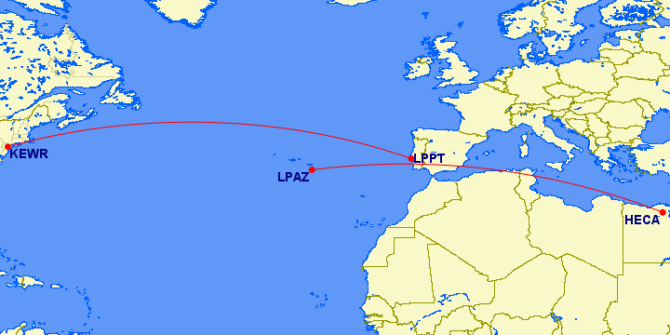
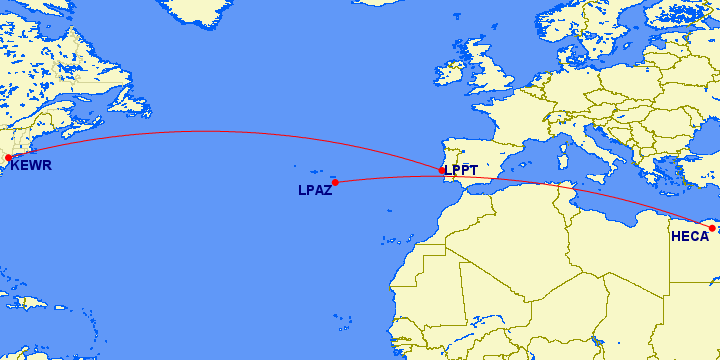
  • A Gulfstream 650 with 14 seats operating LPPT/Lisbon – KEWR/New York Newark: The distance is 5,447km. The charge is thus €20 x 14 x (5.4+1) will get a bill for 1,792 Euro ($2,000 USD).
  • A Global 7500 with 19 seats calling in to LPAZ/Santa Maria for gas on the way to Cairo: the LPAZ-HECA distance is 5,223 km. The charge here is €20 x 19 x (5.2+1) = 2,356 Euro ($2,600 USD)
  • For comparison, an Airbus 330-200 operating LPPT/Lisbon – KEWR/New York Newark will pay 500 Euro ($550 USD). The charge is simply based on €2 per passenger (250 on board). An A330 will burn about 90,000 lbs of fuel, compared to about 30,000 lbs for a G650. This means that the G650 is being charged about 12 times more in total.


Why is this happening?

Because of the “war” on private jets declared by Greenpeace and other groups. Their aim: tax business jets out of existance.

Although the new tax only came into effect a few days ago, it was signed into law in April 2023. The first few months of this year saw media across Europe pay attention to a Greenpeace “report” on business aviation, claiming massive increases in business jet use using super-flawed data (their baseline was 2020, which wasn’t that busy for some reason). The EBAA countered with some actual facts, but it wasn’t enough to stop the disinformation spread.

In Portugal, the PAN (People, Animals, Nature) political party convinced the government to sign this tax into law as a budget amendment.


So who has to pay, and who doesn’t?

Since this has just come into effect, expect further clarifications and changes, but so far:

👿 Pay the punishment tax:

  • Any flight leaving Portgual using an aircraft with 19 seats or less (aka all business jets)
  • Irrelevant if commerical or private ops – all must pay

🦄 Exempt from the punishment tax:

  • Fully electric aircraft (If you see one flying, let us know)
  • PSO flights (A European thing where governments give you money to operate unpopular routes, so they would be charging themselves)
  • State flights (The government exempting themselves again)
  • Flights wholly operated by reticulated, northern, or southern giraffes (we threw that in, but it makes as much sense as the others)
  • Medevac, training, SAR flights, and diversions for unforeseen events


More on the tax

There’s plenty of uncertainty around the new rules for now, but we’ll update this article as we find out more.

Do you know more about this? Help us out with any new information! Email news@ops.group or post below in the comments – Obrigado!


SSR Code Change in the NAT!

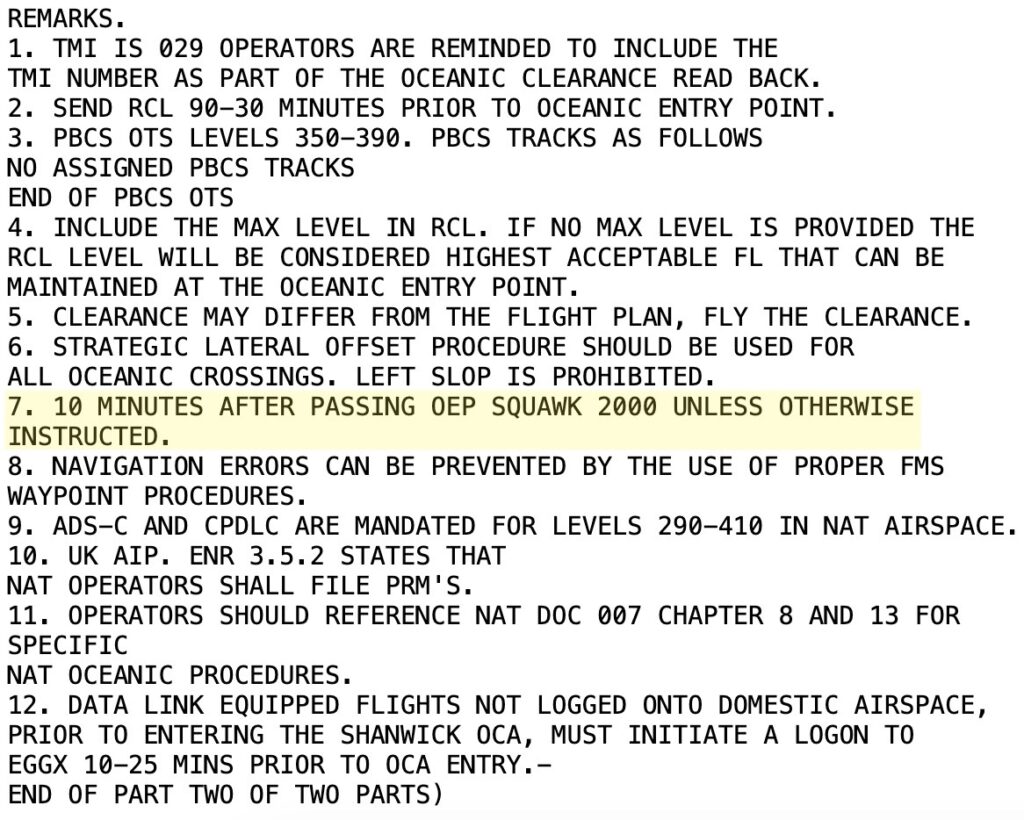
The NAT Region is changing the “last assigned code” SSR transponder procedures. Since the dawn of time, everywhere on the NAT, this domestic code had to be retained for 30 minutes after entering NAT airspace. But now the UK has changed it to 10 minutes for the entire EGGX/Shanwick FIR, and we expect all the other NAT FIRs will soon be updating their rules to say the same. This new 10-minute rule will then become the standard across the NAT Region, and will be published in the next version of the NAT Doc 007 due out in October 2023.


For several decades, unless directed otherwise by ATC, pilots flying in the MNPS airspace, now known as the NAT, were required to maintain the transponder in Mode A/C with continuous Code 2000 operation, except for the last assigned code, which had to be retained for a period of 30 minutes after entering the NAT airspace or leaving a radar surveillance service area.

The rationale for changing from the last assigned code to Code 2000 after 30 minutes was based on the recognition of the original domestic code by subsequent national radar services upon exit from the oceanic airspace.

NAT Plotting & Planning Chart. Click for PDF.

It was crucial to make this change before exiting, in line with the terms of ICAO Doc 4444: “Except for aircraft in a state of emergency, or during communication failure or unlawful interference situations, and unless otherwise agreed by regional air navigation agreement or between a transferring and an accepting ATC unit, the transferring unit shall assign Code A2000 to a controlled flight prior to transfer of communications.”

Thus, due to the limited time spent in the NAT HLA, when flying on Tango 9, Tango 290, or Tango 213, the change from the last assigned domestic code to Code 2000 should occur within a maximum of 10 minutes after passing BEGAS, ADVAT, or BERUX when Northbound, and LASNO, GELPO, or TAMEL when Southbound

The Tango Routes

For the same reason, aircraft with a routing sequence Reykjavik-Shanwick-Scottish (BIRD-EGGX-EGPX) shall change the last assigned code to Mode A 2000 on transfer from Reykjavik and no later than 10 minutes after entering Shanwick airspace.

It should also be noted that Reykjavik ACC provides radar control service in the southeastern part of its area, and therefore, transponder codes issued by Reykjavik ACC must be retained throughout the Reykjavik OCA until advised otherwise by ATC.

Furthermore, although outside the NAT HLA, it is also necessary to retain the last assigned code in New York West ATS airspace. Similarly, aircraft transiting Bermuda RADAR airspace should remain on the last assigned code until clear of that airspace, then squawk 2000.

In all other cases, Code 2000 would be displayed 30 minutes after entry into the NAT airspace.

So what has changed?

In its AIRAC 2023-06-15 edition, the UK AIP ended the 30-minute code retention rule in order to standardize a change to Code 2000 after 10 minutes of entering the NAT airspace.

The UK AIP now states:
“Unless otherwise directed by ATC, aircraft equipped with SSR transponders in the NAT region shall operate transponders continuously on Mode A Code 2000 regardless of the direction of flight, except that the last assigned code shall normally be retained for a maximum period of 10 minutes after entry into NAT airspace.”

This change eliminates the exceptions for Tango routes.

Why didn’t I hear about this?

The change was buried deep within the UK AIP without any publicity or modification of specific NAT documents – notably the famed NAT Doc 007.

The North Atlantic Document 007 is regularly updated through the ongoing efforts of the North Atlantic Special Planning Group (NAT SPG). While it does not establish regulations (which fall under the Regional Supplementary Procedures DOC 7030 and FIR-specific AIPs), it is widely regarded as the primary resource for operational guidance in the North Atlantic. So it was surprising to learn that it had not been updated following the recent change in the Shanwick FIR, despite the ongoing work of the NAT SPG.

Sometimes even big changes can be tricky to find…

One could have expected that a change to a long-established practice (even if understandable for the purpose of standardizing a rule and eliminating exceptions) would have been anticipated and coordinated to avoid introducing a new exception distinguishing one FIR from the others.

But after verifying with NAT specialists at Shanwick, it appears that they have been talking about it with all the other FIRs – and everyone has agreed to change the rule to 10 minutes. This change will be published in the next version of the NAT Doc 007 (expected Oct 2023), and all other FIRs will be updating their AIPs in due course. It’s apparently part of a push to harmonize NAT Region procedures where possible.

The delayed implementation of Oceanic Clearance Removal (OCR) resulted in a delay in the publication of the NAT Doc 007, as it required significant changes to support OCR. While the 10-minute change has been universally accepted by all Air Navigation Service Providers (ANSPs), the lag between documentation and ANSPs is solely due to the delayed updates of Doc 007 being published.

So tell me again, what has changed?

  • In the entire NAT airspace under Shanwick’s jurisdiction, unless instructed otherwise by ATC, the last assigned transponder code must be retained for 10 minutes, followed by displaying Code 2000.
  • When arriving eastbound from BIRD/Reykjavik to EGGX/Shanwick enroute to EGPX/Scottish, Code 2000 should be displayed upon transfer from Reykjavik to Shanwick and no later than 10 minutes after entering Shanwick airspace.
  • In the other NAT FIRs (CZQX/Gander, KZWY/New York, LPPO/Santa Maria, BIRD/Reykjavik, ENOB/Bodo), the 30-minute rule still applies… until it changes!


Is TCAS always required on the North Atlantic?

Oh, TCAS, you sly little gadget! The Traffic Collision Avoidance System is the knight in shining armour for preventing mid-air collisions. You would think that TCAS would be an absolute must-have in the NAT airspace, where the skies are busier than a beehive. But wait for it… surprise, surprise, the answer is a RESOUNDING (but actually slightly complicated) NO!

How can this be? 

Although most aircraft are still required to have TCAS onboard, a little something called MEL dispensation comes to the rescue.

Minimum Equipment List (MEL) is like that cool aunt who lets you get away with stuff. It allows us to operate with TCAS inoperative, within certain limits. For some aircraft, it’s a two-day pass, while others enjoy ten whole days of TCAS-less adventures (as long as they’re departing from a place where fixing it isn’t possible).

But what about ATC? Don’t they require us to have functioning TCAS?

We reached out to Shanwick ATC for a comment, and they had something surprising to say:

  • Shanwick supervisor guidelines state that there are no operational reasons for ATC to refuse a request to operate in Shanwick without functioning TCAS.
  • There are some caveats: level or route restrictions may be imposed to avoid densely populated airspace, however this is unlikely within Shanwick airspace. ATC here would not automatically exclude the flight from the NAT Tracks. Operators should file and request their optimal routing and ATC will endeavour to approve as requested.
  • Where TCAS fails during flight: Shanwick ATC will coordinate with the next unit but advise that the operator should be coordinating with other ANSPs, particularly those without a NAT boundary (for example any Eastbound flight that suffers TCAS failure in Gander FIR – Gander would coordinate with Shanwick and Shanwick would coordinate with Shannon).

A discussion with Gander ATC on the other side of the pond resulted in much the same information:

  • There is no rule prohibiting an aircraft operating under TCAS MEL relief from operating anywhere in the NAT HLA or on the NAT Tracks.

It all boils down to airspace design and risk mitigation. When intelligent folks design these controlled airspace areas, they put the responsibility of traffic separation on ATC. So, whether we have TCAS or not, it keeps their game plan the same. Our fancy onboard collision avoidance measures, whether TCAS or a creative SLOP manoeuvre, are like sprinkles on the icing of the airspace cake.

A word of caution

MEL isn’t there to make us feel invincible. It’s not a license to fly with broken stuff just because we can. It’s more like a get-out-of-jail-free card to prevent us from being stranded without a paddle. 

And also, before making grand plans for TCAS-free adventures, remember that our departure and destination airports may have something to say about it. The busier places like London or New York might only be keen on welcoming an aircraft with TCAS.

So, what are our options? We might need to make a detour to a quieter second or third-tier airport, which might not be as glamorous as our passengers desire. We’ll have to calculate the impact on remaining time and fuel and consider getting our aircraft to a maintenance base before the MEL expires.

Gimme the bite-sized version

  • En-route ATC centres don’t have any operational reasons to refuse entry into the NAT. If it breaks before the flight, you must let all of them know. If it breaks in flight, they will help you.
  • You may not get your planned level or track – you will need more fuel as a contingency.
  • Be mindful that the MEL doesn’t intend us to fly with broken equipment simply because we can… it’s a tool for us to get aircraft to equipped maintenance centres
  • Your departure or destination airports may not accept you without TCAS. Consider where you would go and how that would impact the remaining time of deferred defects.


Formidable Shield 2023: NAT Airspace Closures

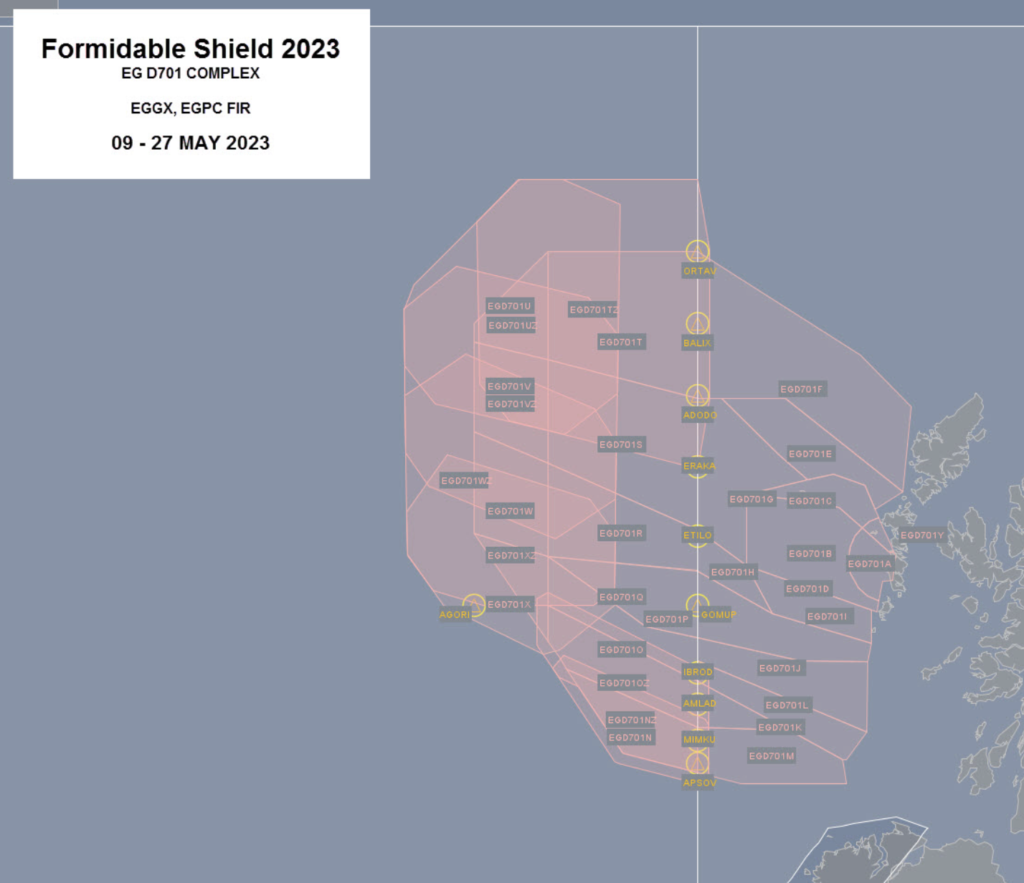
Formidable Shield is happening again this year, from May 9-27, which will mean parts of North Atlantic airspace will be closed to all flights for several hours at a time.

Back in 2021, the airspace closures were pretty big, stretching halfway across the EGGX/Shanwick FIR. Things aren’t so bad this year though – it looks like the closures will just be limited to an area off the west coast of Scotland.

Deep in the bowels of the Eurocontrol website they have published this doc which tells you all about the different closures in the various little chunks of airspace.

So for planning NAT flights, watch out for the whole area from ORTAV in the north to APSOV in the south. And for any questions on Formidable Shield, you can contact the UK Airspace Management Cell at SWK-MAMC-ManagedAirspace@mod.gov.uk.


NAT Conundrums Volume III: To GOTA and beyond!

Ah, NAT conundrums! We love them so much, we’re into our third Volume already!

Volume I covered the following three conundrums:

1. To SLOP, or not to SLOP?
2. What’s the difference between the NAT Region and the NAT HLA?
3. Can I fly across the North Atlantic without Datalink?

Volume II covered these additional three:

4. Do you need to plot on Blue Spruce Routes?
5. Do we still fly Weather Contingency Procedures on Blue Spruce routes?
6. When can we disregard an ATC clearance and follow the contingency procedure instead?

And this post, Volume III, looks at GOTA airspace. It’s such a juicy topic, it gets an entire Volume all of its own.

So here goes…

Where is GOTA airspace?

This section of airspace is found off the coast of North-eastern Canada, FL290 to FL600 inclusive.

Here it is, outlined in red:
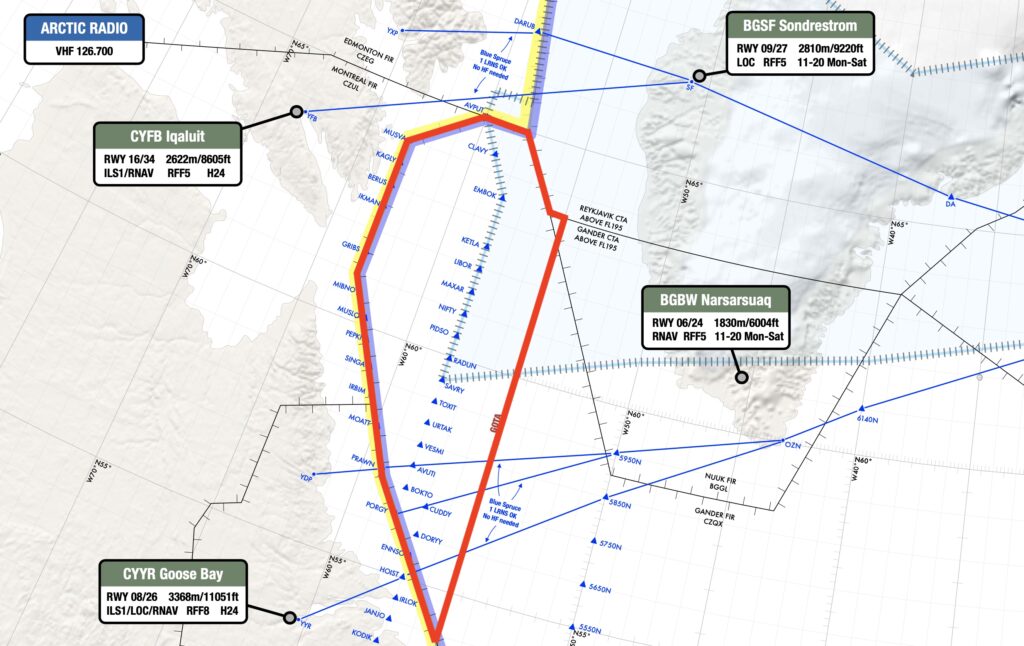
Red = GOTA.

Why are we talking about it?

Because lots of aircraft transit this area when flying across the North Atlantic. Also because the requirements here were very tricky for us to track down on “paper” (i.e. the Canada AIP, NAT Doc 007, etc), and were only really made clear after speaking with a real human being at Transport Canada. We like human beings!

So here’s what we discovered…

You don’t need datalink in GOTA airspace

No, you don’t. We thought you did, but we were wrong.

When we sat down to update our North Atlantic Plotting chart last year, we wanted to draw nice clear lines on the map to show where datalink was required. But we were bamboozled by GOTA.

The ICAO NAT Doc 007 says that you don’t need datalink in:

“Airspace where an ATS surveillance service is provided by means of radar, 
multilateration and/or ADS-B, coupled with VHF voice communications as depicted 
in State Aeronautical Information Publications (AIP), provided the aircraft is 
suitably equipped (transponder/ADSB extended squitter transmitter).”

It then says to check in State AIPs to see if any of their airspace fulfils this criteria.

So that’s what we did. But checking in Canada’s AIP brought up this for GOTA:
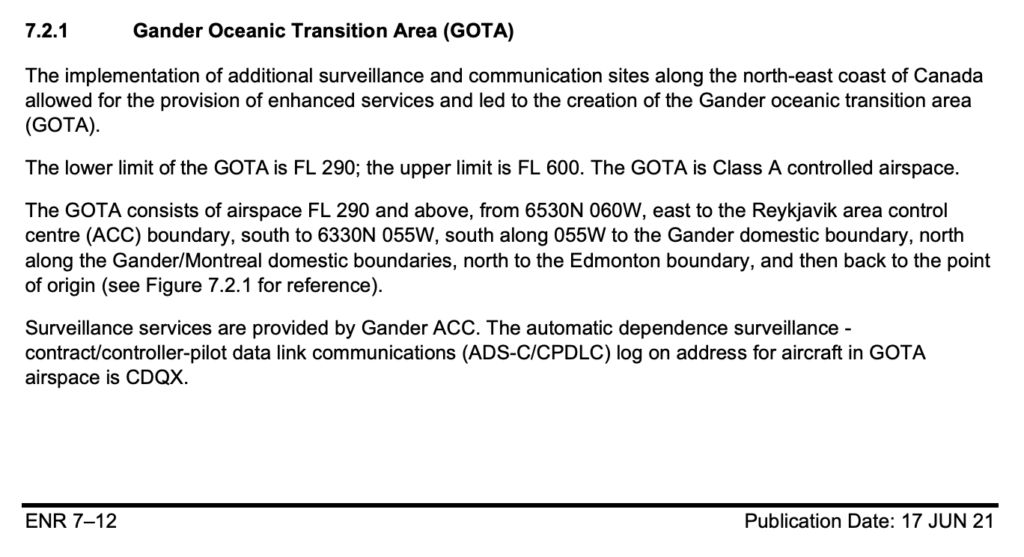
And this for Data Link Mandate (DLM) Airspace:
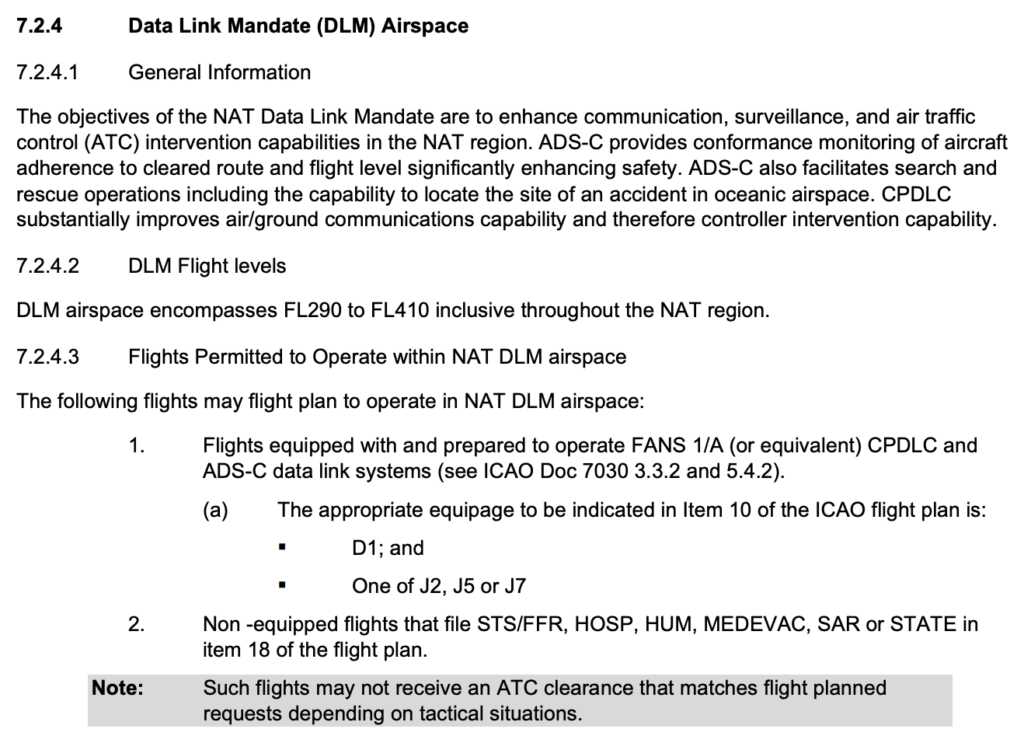
So none of that really answered our question of whether or not you need datalink in GOTA airspace. The trail went cold…


via GIPHY

Our chat with Transport Canada in 2021:

Deep in the doldrums of lockdown, we sent Transport Canada (TC) some emails asking them the question directly. Here’s a massively paraphrased transcript of that email exchange:

Us: We have been trying to determine if the GOTA requires datalink? It appears to meet the definition of ATS Surveillance Airspace but we can’t identify anywhere in the Canadian AIP which specifically states this.

TC: The GOTA is in fact DLM airspace.

Us:  Really? So operators without datalink must cap their flight below FL290 through the GOTA airspace until they reach that datalink exempt airspace over Greenland, at which point they can climb to the higher levels?

TC: Yes. Well… flights equipped with ADS-B may operate at DLM levels within the GOTA.

Us:  Oh. Now we’re confused. Oh well, it’s Christmas now. Chat next year!

TC: Merry Christmas.

Our chat with Transport Canada in 2022:

Us: We have been trying to determine if the GOTA requires datalink? It appears to meet the definition of ATS Surveillance Airspace but we can’t identify anywhere in the Canadian AIP which specifically states this.

TC: Didn’t you ask this exact same question last year?

Us: Yep. But then… you know… Christmas…

TC: Ah yeah. Ok. As long as you are HLA Certified (MNPS & RVSM) and you have ADS-B, transponder and VHF you wouldn’t require all the DLM equipage. GOTA is technically Gander Oceanic airspace (NAT HLA airspace), but as they have Ground based Radar sources, space-based ADS-B and VHF coverage in the area it has been delegated to Gander Domestic. Due to this, the airspace is considered Class A surveillance airspace and follows the similar regulations as you would in other Canadian domestic Class A airspace.

Us: What about that ADS-B requirement?

TC: Well, technically ADS-B isn’t required as it is considered class A surveillance airspace. So lack of ADS-B wouldn’t prevent you from entering the GOTA area. That said, ADS-B equipage is preferred by many of the controllers. This is because the ground based radar isn’t always guaranteed to the outer limits of the GOTA airspace. This makes identification and separation easier for the domestic controllers when the aircraft have ADS-B.

Us: So tell us again, what do you need in GOTA airspace?

TC: Required equipment for GOTA airspace is transponder, automatic pressure-altitude reporting equipment and VHF. As soon as you leave that airspace you would need other equipment depending on what airspace you enter.

“As soon as you leave that airspace…”

Yes indeed, a good point, worthy of further investigation! Because no-one just zips around solely in GOTA airspace, do they?

So here’s a look at the airspace adjacent to GOTA, and what you need where…

Datalink Exempt airspace over Greenland, Iceland, and a bit of Gander Oceanic

There’s an interesting picture in the NAT Doc 007 doc that looks like this:
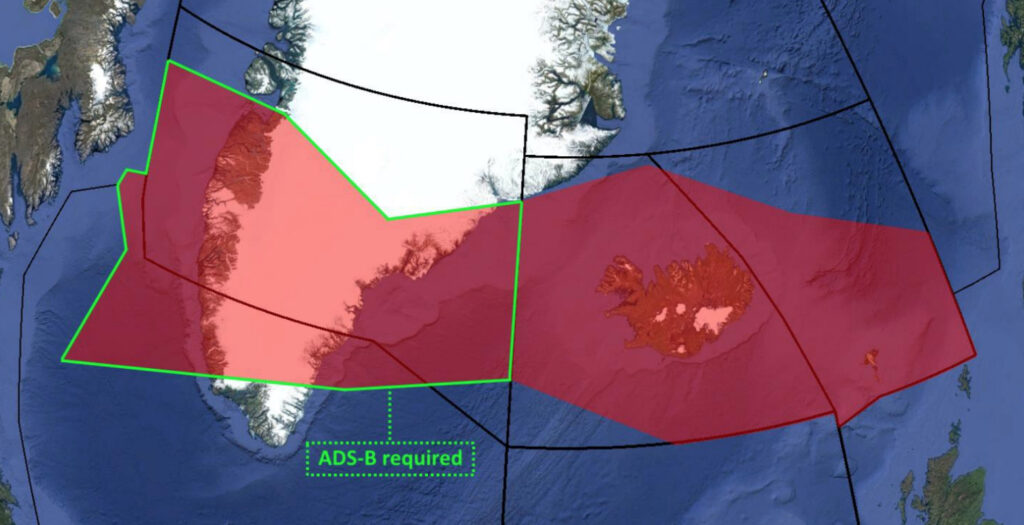
This the datalink exempt ATS Surveillance airspace over Greenland, Iceland, and a bit of Gander Oceanic where you can still fly if you don’t have datalink.

This area is bounded by the following:

Northern boundary: 65N000W – 67N010W – 69N020W – 68N030W – 67N040W – 69N050W – 69N060W – BOPUT.
Southern boundary: GUNPA – 61N007W – 6040N010W – RATSU – 61N020W – 63N030W – 62N040W – 61N050W – SAVRY

So, putting that on our nice NAT Plotting Chart, it looks like this (outlined in green):
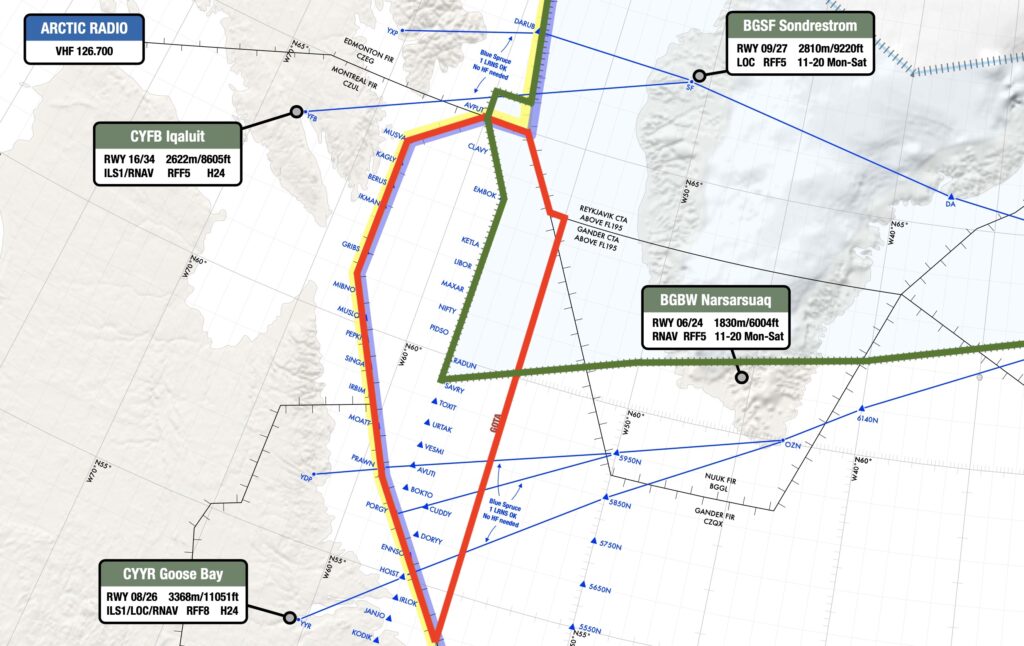
Red = GOTA. Green = Datalink exempt airspace.

Us: What are the requirements for this airspace?

TC: HLA Certification (MNPS & RVSM), ADS-B & VHF.

Us: Nice.

HLA airspace

So now we’re talking about the bit to the south of the datalink exempt airspace, outlined here in fruity pink:
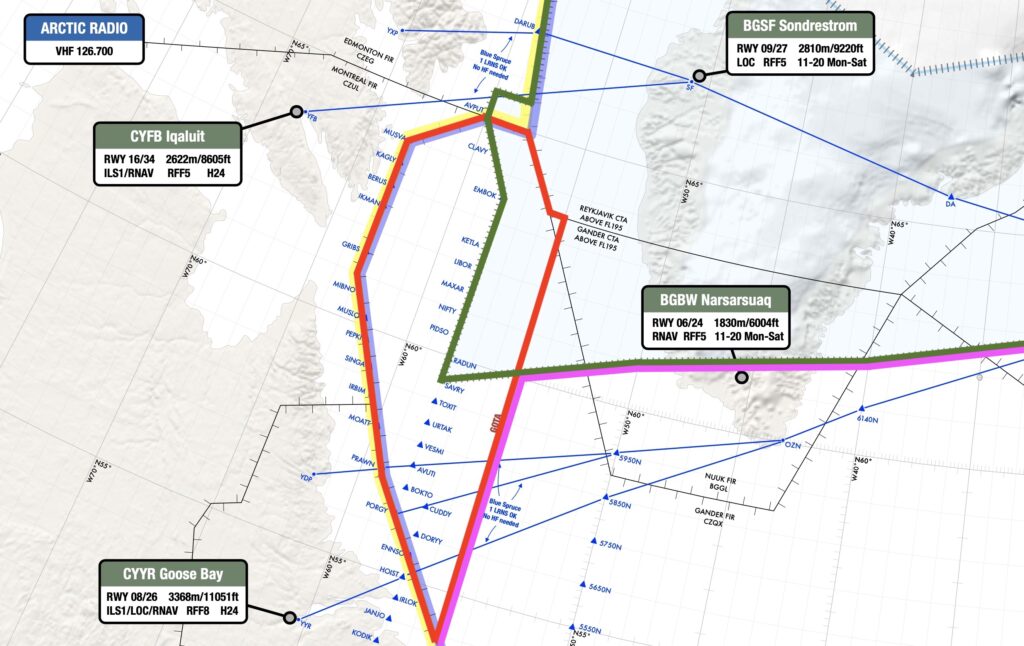
Red = GOTA. Green = Datalink exempt airspace. Fruity Pink = NAT HLA.

Us: What are the requirements for this airspace?

TC: HLA Certification and full DLM certification, FANS 1/a (ADS-C(D1) & CPDLC(J2, J5 or J7)). Depending on the route of flight and the tracks that day there may be other requirements as well (ie. PBCS Certification for PBCS tracks).

The Blue Spruce Routes

So here’s what we said in a previous post on these…

The Southerly ones: These go over Greenland linking Canada with Iceland via waypoint OZN, and are not fully contained in the exempted airspace. So if you’re flying these southerly Blue Spruce routes you will have to meet the NAT DLM requirements or fly outside of the vertical parameters of DLM airspace (i.e. below FL290 or above FL410). In other words: you need datalink to fly on the southerly Blue Spruce routes between FL290-410.

The Northerly ones: These are the ones going overhead BGSF/Sondrestrom airport. These do fall within the exempted area of airspace – so datalink is not mandatory if you’re flying here.
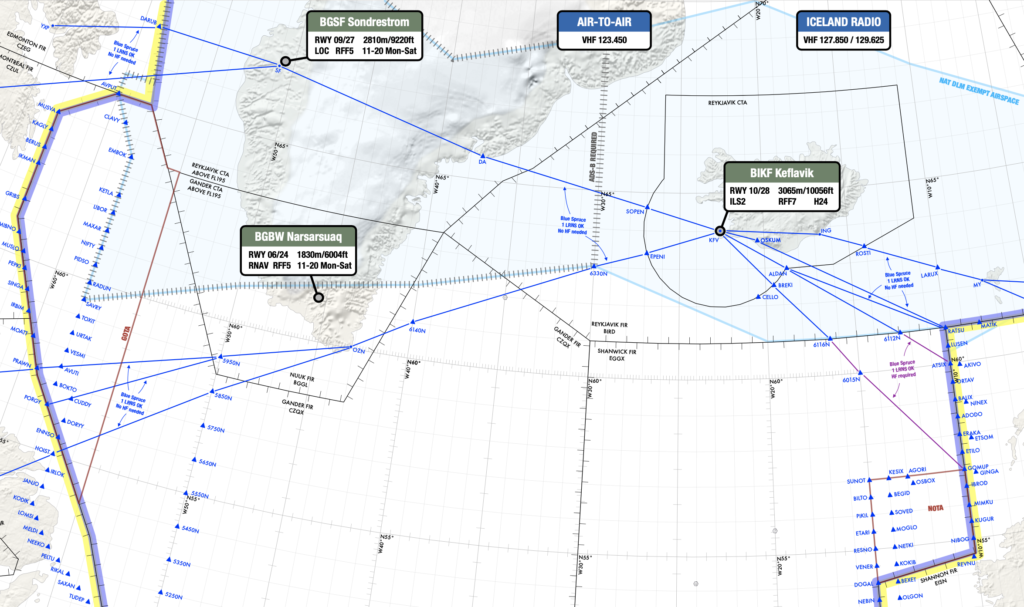
Only the northerly Blue Spruce routes are datalink exempt.

Us: All that stuff we told people in our previous post… did we get that right?

TC: Yeah, pretty much. The primary purpose of Blue Spruce routes is for aircraft with only one long range navigation system. This would normally exclude them from the exemption area anyway, as they are usually kept below HLA airspace (FL280 or below) as they would normally need state HLA approval to fly a blue spruce route with one long range navigation system at FL290 and above.

Gander’s datalink exempt airspace won’t be datalink exempt for much longer!

You: Hold on… which bit of airspace are we talking about now??

Us: This bit, outlined in black. It’s the bit of airspace in the datalink exempt area which is controlled by Gander Oceanic.
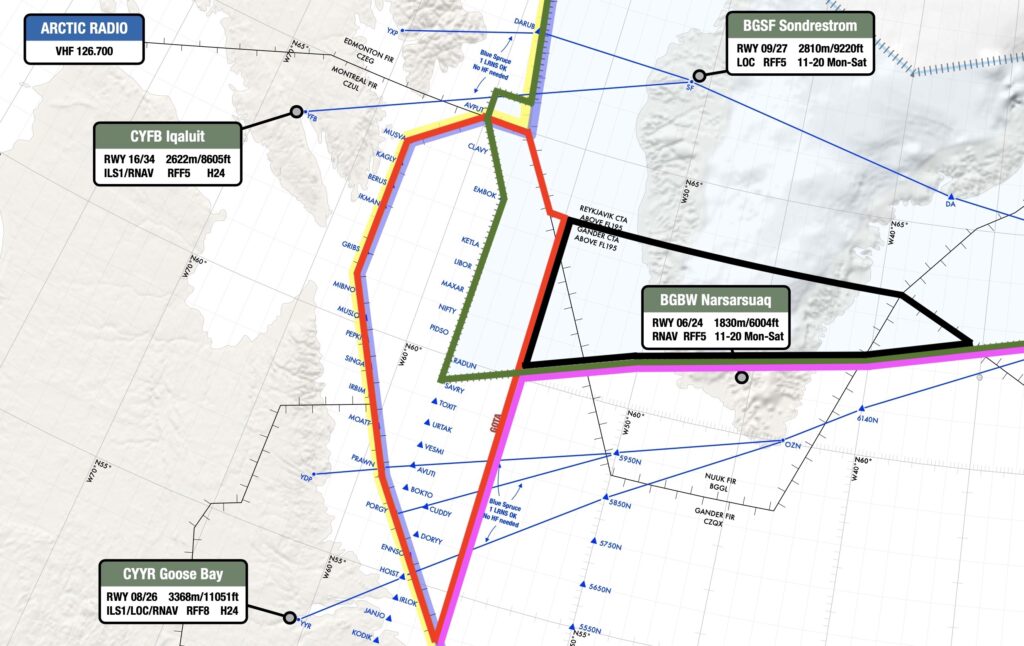
Red = GOTA. Green = Datalink exempt airspace. Fruity Pink = NAT HLA. Black = Gander Oceanic airspace that won’t be datalink exempt for much longer.

So, this is where the plot thickens!

Us: Can you tell us why the plot has thickened, exactly?

TC: Yes, we can. Do you guys actually know anything, or do just come to us for all your answers?

Us: We only know how to massively paraphrase email exchanges.

TC: Okay. So here’s the deal. As we are decommissioning the VHF and ground based ADS-B sites in southern Greenland we will no longer have the datalink exempt area in the northern portion of Gander oceanic HLA airspace. At that point, all Gander oceanic airspace will become DLM airspace. Although GOTA will stay datalink exempt.

Us: Decommissioning VHF and ground based thingies, you say?

TC: That’s right. Nav Canada put out a circular last year and updated it again this year advising that the ADS-B and VHF sites in that area will be decommissioned. The current circular is AIC 15/22. The tricky part is, it discusses just the ADS-B and VHF sites, but many people don’t make the connection from that to the exemption area. When the VHF sites are decommissioned we won’t have the equipment to qualify for DLM exemption in that area. Nav Canada is keeping one frequency until December 29, 2022 to enable users to continue to use the area for this year, but that final one will be decommissioned at that time. The 127.9 frequency will continue to be used by Gander IFSS for the Blue Spruce Routes. When it gets closer to that date, there should be an ICAO NAT Ops Bulletin out and NAT Doc 007 will be amended. So just to clarify, barring any major unexpected changes, that airspace will become strictly DLM airspace on December 29, 2022. At that point it will follow the same regulations as the rest of the NAT DLM airspace.

Us: Bonza.

So, to recap…

  • Datalink Airspace: Remember, NAT DLM airspace only applies from FL290-410. Below or above that, you don’t need datalink in the North Atlantic.
  • If you have full datalink (CPDLC and ADS-C): You can go where you like, and you didn’t really need to read this post.
  • For GOTA airspace: You need a transponder, automatic pressure-altitude reporting equipment and VHF. If you have ADS-B, that’s helpful for ATC.
  • For the Blue Spruce Routes: You need datalink for the southerly ones, but not the northerly ones. (If you’re flying on these then you’re probably doing so below FL290 anyway, in which case you’re below NAT DLM airspace and don’t need datalink).
  • For the datalink exempt airspace over Greenland, Iceland, and a bit of Gander Oceanic: You don’t need datalink, but from 29 Dec 2022 you will do in the bit controlled by Gander.

Questions

Just send us an email at news@ops.group and we’ll try to find out the answer.



No SELCAL On The NAT?

ICAO are hurriedly upgrading the SELCAL system to allow for new codes. There’s only a finite number of them available, and double ups are becoming are a problem. The potential for more than one aircraft to receive the same call in the same airspace is cause for concern.

ICAO have been onto it for some time, and on November 3 there is a soft deadline for Air Navigation Service Providers (ANSPs) to upgrade their ground equipment to communicate with the new codes.

But there is a problem on the NAT. Most of the ANSPs won’t be ready in time. Which means if an aircraft has one of the new codes, for up to six months they will not have SELCAL when crossing the pond.

Here’s a quick rundown of why, and what the impact will be.

SELCAL 101

If you are one of the few who already know what ’32-tone’ SELCAL is, top marks and feel free to skip this part.

If you don’t, fear not. This ain’t no radio shack, but a little bit of tech stuff will help here. All you need to know is the alphabet and how to count to ten. Chances are if you’re flying a plane, you already have that covered. Let me explain.

Unless you actually like the soothing sounds of static for hours on end, or distorted mumblings from halfway across the globe, chances are you have heard of Selective Calling (SELCAL). It does the listening, so we don’t have to.

In a nutshell it is a signaling system that lets us know via HF or VHF when ATC is trying to get a hold of us, so we don’t need to listen out all the time.

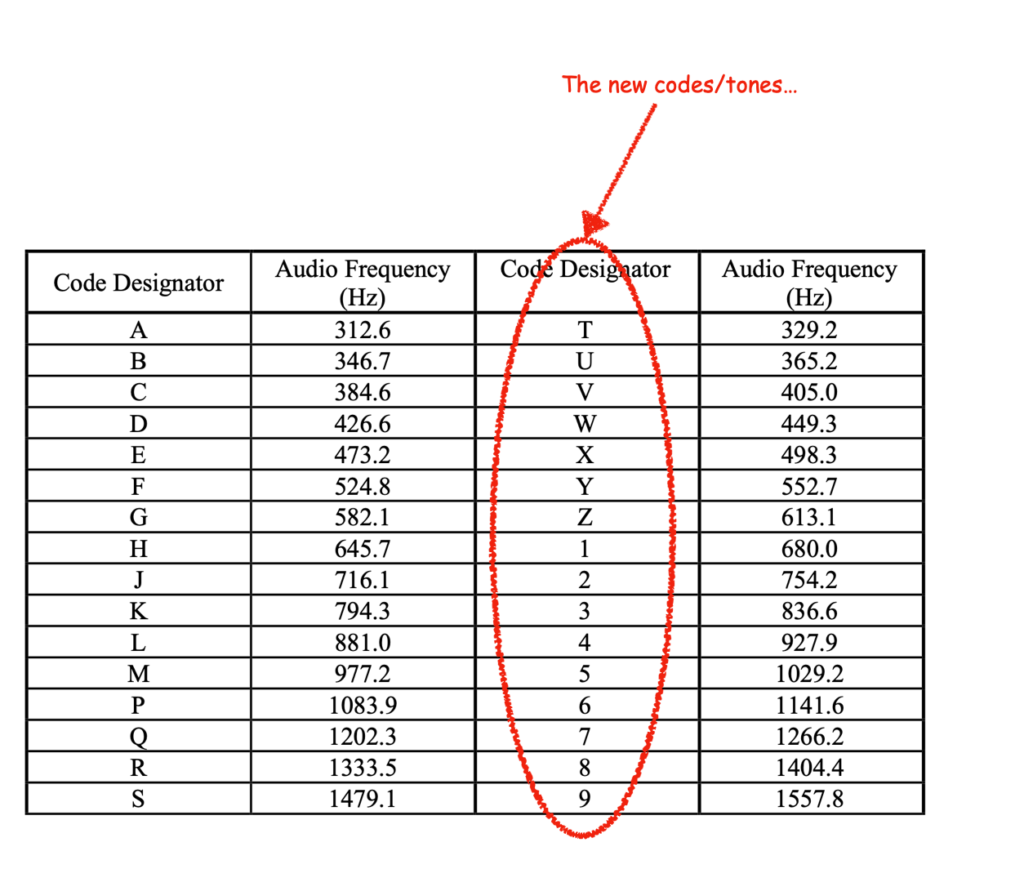
Here’s how it works. On the ground a SELCAL encoder transmits four audio tones at a time. Each tone is assigned a letter. When the four tones correspond to your aircraft’s four-letter code, a decoder in your avionics hears it and triggers a SELCAL with a noise and flashing light. That’s your cue to call ATC back. Simple.

Enter the problem. Until now, only 16 letters (and therefore tones) have been available. That means there are just shy of 11,000 codes for aircraft to use. And so far, 37,000 have been allocated. Which means double ups. And the problem isn’t going away.

There is an increasing risk that multiple aircraft in the same airspace may receive the same SELCAL, and that could spell danger. ICAO knows that, and so they’re adding 16 new tones (comprised of letters and numbers). That will bring the total to 32. And voila, ‘32-tone’ SELCAL.

This will create almost a quarter of a million unique code options and will cut the problem off at the knees.

But there’s a problem on the NAT…

On the ground, ANSPs need to upgrade their SELCAL encoders to include the new tones. ICAO has set them a target of November 3 to get it done.

However, three of the five ANSPs covering the NAT region (Gander, Shanwick and Santa Maria) have already indicated they won’t be ready until at least Spring next year. In the interim, they won’t be able to issue SELCALs to aircraft featuring the new codes (ones that contain T-Z or 1-9).

It’s not clear yet how many operators this will affect, so Nav Canada has reached out looking for more info.

They want to hear from you if:

  • You are planning on equipping your aircraft with the capability to use the new codes.
  • You have already applied for one.

You can email that info to kelly.mcilwaine@navcanada.ca, and cc in ocarrollk@iata.org. They want hear from you before August 31.

What will the procedure be without it?

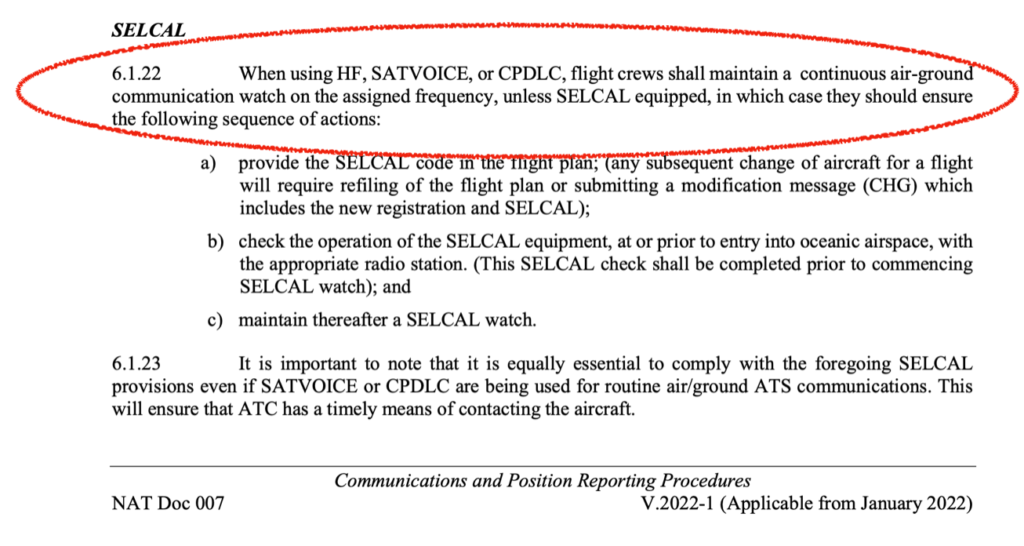
NAT Doc 007 (6.1.22) seems to have the answer, and it’s not great. As a general rule, any aircraft that can’t be reached by SELCAL must maintain a listening watch on the assigned frequency – and unfortunately that means hours of annoying static (even if your CPDLC is working just fine). Hardly ideal.

Nav Canada has confirmed to us that this will indeed will be the case. An AIC will soon be published, which is due out in September.

Need more info?

You can read more on ICAO’s SELCAL upgrade project here.

Or feel free to reach out to us directly on news@ops.group and we’ll do our best to help find the answers you’re looking for.


ACARS Oceanic Clearances on the NAT

There is a revised NAT OPS Bulletin that was issued June 14. Bulletin 2020_001 is all about ACARS Data Link Oceanic Clearances.

It puts all the procedures for CZQX/Gander, BIRD/Reykjavik, ENOB/Bodø, EGGX/Shanwick and LPPO/Santa Maria into one spot, instead of having them spread between all the different individual ANSP NAT OPS Bulletins.

When we compared the old version of the Bulletin with this new one there aren’t really any big differences at all. Essentially none, in fact. But since we recently confused ourselves a lot over all things ACARS related, here is a refresher summary of what it says…

Have a read of the intro first

Point 2.2 of the introduction says this:

“The ACARS Data link oceanic clearance service is provided by means of VHF and satellite to ACARS equipped aircraft via communications service providers ARINC and SITA. It should not be confused with FANS 1/A CPDLC.”

(I totally confused these earlier, despite having used both.)

“Operators intending to participate in the ACARS data link process are required to contact their communications service provider and indicate they would like to receive the service.”

So that means the likes of ARINC and SITA.

The Procedures (in short)

1. Put the ACARS logon in, along with your flight number and the OCA facility.

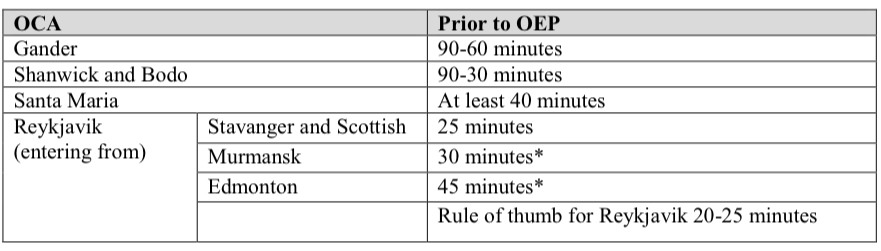
2. Make sure you request your clearance at the right time (not too early, not too late). Here is the current table of timings:

Not too soon, not too late, or rule of thumb…

(This is the only change we spotted from the old one – Gander used to say 90-30 minutes, now it says 90-60 minutes.)

3. Make sure your RCL has all the right stuff in it:

  • The OEP (this means Oceanic Entry Point, not to be confused with OAPs which mean old person)
  • Your ETA for the OEP
  • The requested flight level
  • The highest acceptable flight level you could reach by the OEP. This goes in the free text section by putting MAX F123

4. If you don’t get some sort of “RCL Received” message within 5 minutes of sending it then you’re going to have to use voice instead.

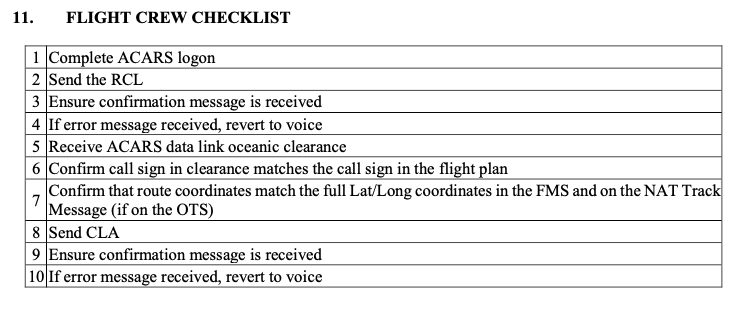
5. Once you get your clearance, check it well. That means checking the LATs and LONGs in your FMC. If the clearance doesn’t match your flight plan, then both pilots should independently confirm the coordinates and points. If you don’t like your clearance then negotiate by voice, otherwise send your CLA (clearance acknowledgement). If you don’t have that function, do it with your mouth.

Some peculiarities with each of the OCAs

Gander

  • If you’re departing somewhere less than 45 minutes from your Gander OEP, then get your clearance 10 minutes before you depart.
  • Sometimes you might get an ACARS oceanic clearance before you’ve even sent the RCL.
  • If you fly an aircraft that is not able to send an RCL, then you can set yourself up for Gander’s special service but need to do it in advance:
    • Get in touch with your comms service provider and NavCanada
    • Put AGCS in item 18 of your flight plan
    • Expect to receive your clearance automatically once you logon

Shanwick

  • You must not enter Shanwick without a clearance.
  • If you’re flying between and Irish and a Scottish airport, its not very far, so might want to get your clearance before departure.
  • You get 2 chances with Shanwick. If at first you don’t succeed (you don’t get the RCL received confirmation) then try again.
  • If you’ve left it too late and are within 15 minutes of your OEP, you ain’t going to get your clearance via ACARS.

Reykjavik

  • They don’t give clearances via ACARS if you’re departing from an airport in Iceland, Greenland or the Faroe Islands. Get it from whoever you’re talking to on the ground before you go.

Santa Maria

  • You don’t need an RCL if you’re departing from the Azores, you’ll get it through the (VHF) radio or possibly get a CPDLC route confirmation before you head out into the great blue yonder.

Other helpful stuff in the bulletin

Inmarsat datalink probably won’t work above N82°. Iridium and HF datalink should.
The flight level in the clearance is not a clearance to climb. ATC need to clear you, and need to make sure you reach it before the OEP. But… if you lose comms then this is the cleared oceanic flight level.
Contacts:

Gander: Robert Fleming robert.fleming@navcanada.ca
Reykjavik: Bjarni K. Stefansson bjarni.stefansson@isavia.is
Bodo: Kenneth Berg Kenneth.volden.berg@avinor.no
Shanwick: Iain Brown iain.brown@nats.co.uk
Santa Maria: Jose Cabral jose.cabral@nav.pt


There’s a blob of airspace causing issues in the NAT

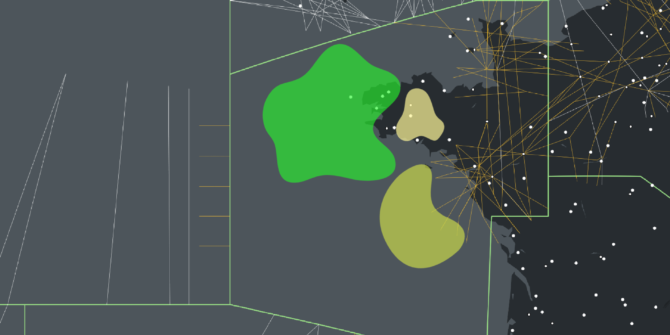
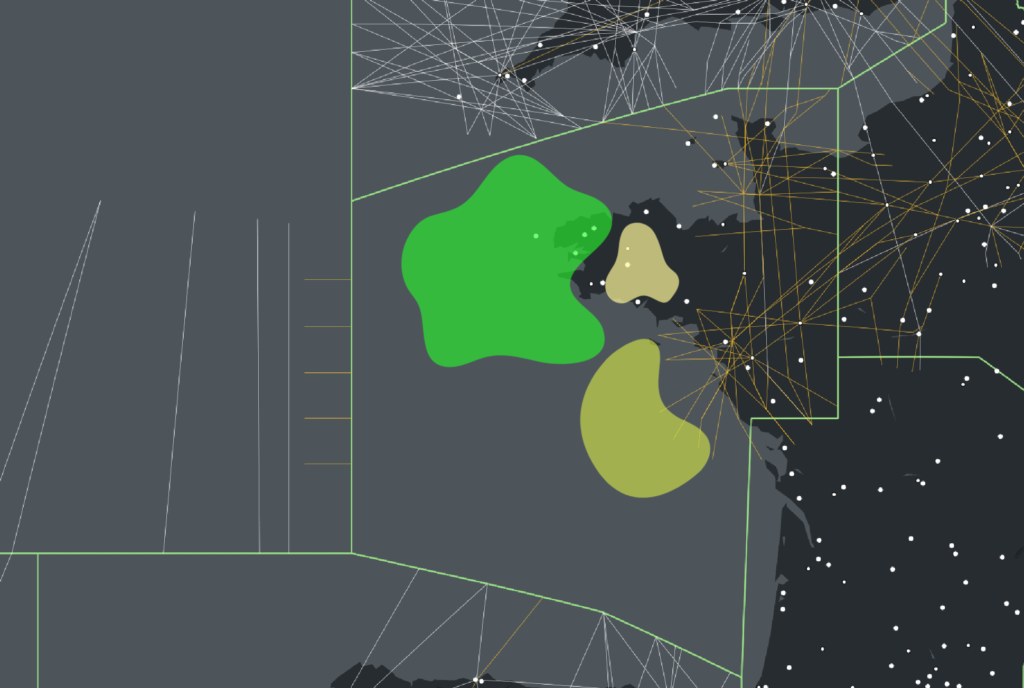
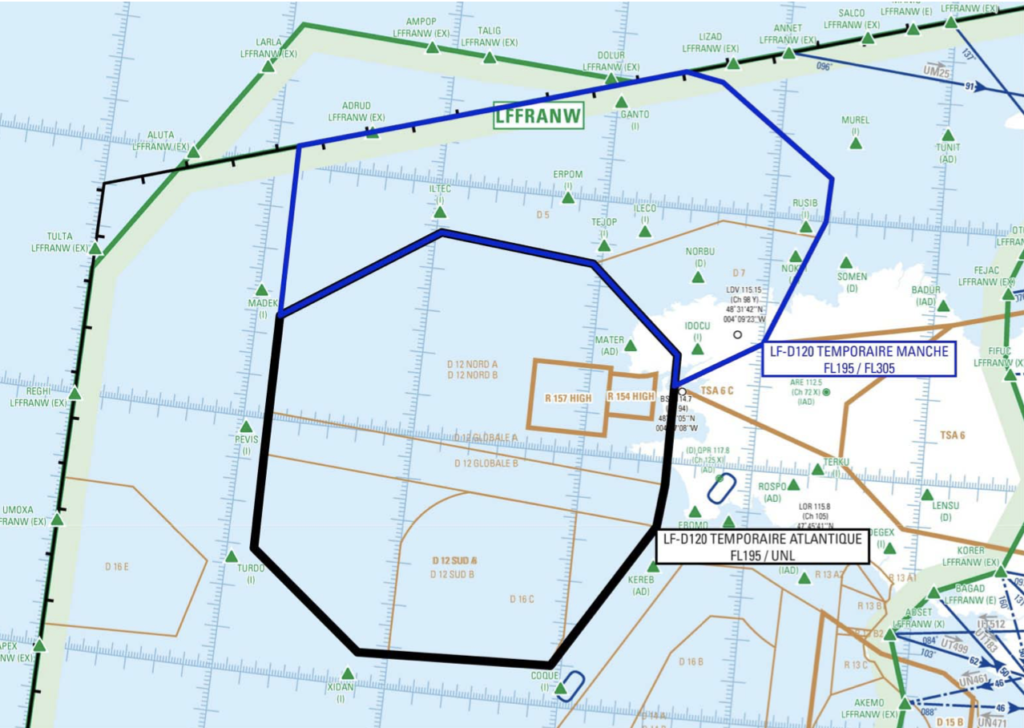
Why is there a huge blob of restricted airspace (and several smaller blobs too) right over the spot where folk like to leave the NAT HLA?

Thanks, France. Their big chunk of military airspace bordering the NAT, that they regularly activate, definitely does cause a lot of planning issues, so we figured we would take a look at it…

What (where) is the problem?

The problem is in the LFFF/Brest FIR, which as you can see below borders the NAT HLA BOTA bit. In fact, every exit/entry from the NAT into French airspace is via the Brest FIR/UIR border, so as you can imagine, a whopping great military danger zone just the other side of it is going to be a little in the way.

Where is Brest?

Which is exactly what the problem is.

That big danger zone means when folk submit their flight plans which have them routing over the Atlantic and into France another neighbouring places, they are getting rejected.

Sometimes, an alternative routing option is offered, but the NAT exits are way up on EGTT/London airspace which means significantly longer routings, which nobody wants.

There is also a bit of an issue with the automated Eurocontrol flight planning system. It doesn’t always immediately reject your flight plan – sometimes it waits until midnight so you get a nice message in the morning, not too long before your flight which you now have to replan…

A very accurate representation of the military ‘blobs’

So the military are to blame?

That might not be entirely fair, but it is down to some active military zones that most of these route plans seem to not be successful.

The main one we’ve seen causing trouble is in AIP SUP 045/22, which is valid from 24 March 2022 to 22 March 2023. Activation of the area is possible H24, and they activate it a lot.

The Zone of NoGo (slightly more accurately shown)

You can find all the temporary activated areas and timings here on the French AIP SUP page.

We also saw one from June 15-23. “Ocean HIT 2022′ uses the same sort of area and irritatingly coincides with a different exercise (HYDRA) on June 20. This means poor old EGGX/Shanwick is going to be dealing with most of the crossing traffic that day and there is likely to be a medium impact for flights.

What can you do about it?

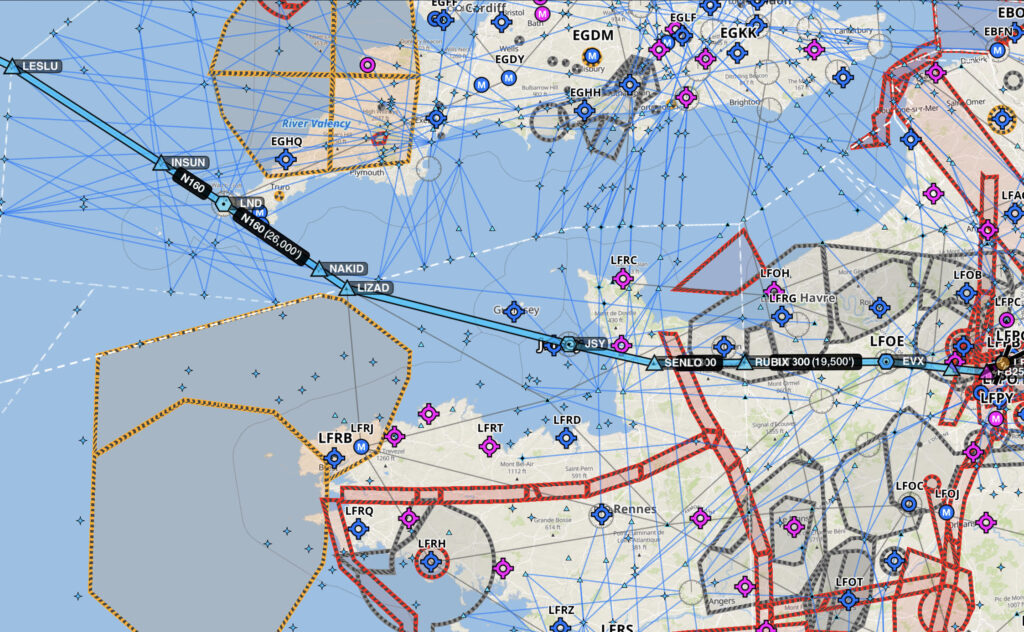
Not a huge amount really. If the areas are active you aren’t going to be able to operate through them. We asked around, and folk said they’ve been doing a lot of LIZAD and NAKID routings. Some folk have reported simply planning higher levels and that’s apparently worked.

You can attempt to get inflight re-routings. You can also try these chaps who provide the actual time slots of activation to give you a better picture:

CCMAR ATLANTIQUE Phone : +33(0)2 98 31 82 69 / +33(0)2 98 84 49 57 (backup).

One routing option we found that isn’t toooo bad

Anything else to know about?

The French and German Navy have been using some airspace in EGGX/Shanwick which occasionally gets in the way of some of the Tango routes.

All of the upcoming military exercises in Europe are notified through the Eurocontrol Network Operations Portal.

The spot to look at


NAT Conundrums: Volume II

Questions about the North Atlantic pop up a lot, and every time we think we’ve got all the answers, someone else manages to come up with a question we can’t (immediately) answer.

We wrote NAT Conundrums: Volume I last year, which you can read here. That post covered the following three conundrums:

  1. To SLOP, or not to SLOP?
  2. What’s the difference between the NAT Region and the NAT HLA?
  3. Can I fly across the North Atlantic without Datalink?

So today we thought we’d take a look at three more questions we’ve seen recently including an interesting ‘what to do if…?’ scenario.

4. Do you need to plot on Blue Spruce Routes?

Plotting is less drawing your position on a big paper map and more confirming there are no errors with your navigation, which means you can do this on paper, or via some sort of electronic system.

The reason we want to check for errors is because the North Atlantic is a big place, without radar, (although ADS-B is helping with this a lot now), and we are very reliant on our GPS navigation systems. Some routes use just lat/long points meaning there is an added chance of input error by the pilot. So we check where we are and make sure it is where we should be. 

But the Blue Spruce Routes are defined routes so there’s no risk? Well, no, there still is, because you’re still flying over big chunks of ocean without much backup. So checking for errors is still a very good idea.

5. Do we still fly Weather Contingency Procedures on Blue Spruce routes?

The Weather Contingency Procedures are more oceanic contingency procedures than NAT HLA specific one.

In fact, since Nov 2020, there has been one standard set of Contingency and Weather Deviation Procedures for all oceanic airspace worldwide – and there are no special exemptions for the Blue Spruce routes.

So they are a good thing to do if you encounter a weather situation and cannot get a re-clearance from ATC.

Which leads us to the big question…

6. When can we disregard an ATC clearance and follow the contingency procedure instead?

Let’s set the scene.

You’re flying in the NAT and there is a big old storm up ahead which you need to deviate around. Obviously, whatever happens, you can’t fly into it.

So what do you do?

Well, NAT Doc 007 provides you with some guidance: Apply the weather avoidance contingency procedures.

They are fairly straightforward. If the deviation you need will be less than 5nm then stay at your level, if its more than 5nm, then you’ll need to climb or descend 300’ depending on which way you’re avoiding. You can use ‘SAND’ for that – turning south? Ascend. Turning north? Descend.

Which way to turn depends on whether there are busy tracks to the left or right of you, and how much you’ll need to deviate by based on storm position (and wind). Use your TCAS and some airmanship on this.

Right, scene set. So, do you just launch straight into the contingencies?

No. It comes down to whether or not you can get a clearance from ATC.

You can keep this fairly simple as well:

  1. You can’t get a clearance because there just ain’t time. In this case, it is probably best to declare a PAN and go straight into the avoidance contingency procedure. Don’t delay waiting for ATC clearance if its not safe. Aviate and avoid the weather, talk to ATC as you do it.
  2. What if you can’t get a clearance because you just can’t get hold of ATC? Another easy one – follow the contingency procedure, but keep transmitting what you’re doing so other traffic know.
  3. What if ATC can’t give you a clearance? This might happen if it is particularly busy out, perhaps other aircraft are already avoiding, and so they can’t guarantee separation. In this case, they should inform you of the issue and ask you what your intentions are. Which will probably be following that contingency procedure, because you obviously aren’t going to fly into the storm.

Which brings up to situation number 4. The less simple one.

  1. What to do if ATC give you a clearance that isn’t acceptable to you? First up, if you have time to request a re-clearance then do this, advising why their first one doesn’t work for you. If you don’t have time, then a PAN call with your intentions (contingency procedure) is going to be the way to go. 

But remember – you need a good reason to disregard an ATC clearance like an immediate threat to safety. You can’t just do it because they told you to go right and it means a bigger detour than left, or because you just don’t fancy a temporary level change.

This is where the conundrum comes in – because folk have different views on what is an acceptable reason for disregarding a clearance.

  • Obvious and immediate threat to safety? Do whatever you need to do to stay safe
  • Might have a future fuel concern because of a larger deviation, or a level change? Well, it’s not immediate and the traffic conflict you get yourself into by disregarding may be the bigger priority here…

Contingencies – for when going through isn’t an option.

We asked around.

The general consensus was that fuel is unlikely to constitute enough of an ‘immediate threat’ to be an acceptable reason. Things like ETOPS fuel are for dispatch planning so is not particularly relevant in flight. However, if you’ve already burned through your contingency, and are already running some calculations because the fuel is looking tight, then a ‘Pan’ call and doing what you need to do might be acceptable.

What does Doc 007 actually say?

It says the pilot should either follow the clearance or state their intentions.

There is a level of ambiguity here because there is always that need for the Commander to be able to decide another course of action is safer. A good way of thinking about it is that a crew never have to follow the letter of the law – it isn’t there just to be the law, it is there to try and keep us safe – so doing what is most safe, with the same intent for safety in mind, is always acceptable.

What do other rules and regulations say?

The US FARs have this as fairly general rules:

’91.123 Compliance with ATC clearances and instructions.

(a) When an ATC clearance has been obtained, no pilot in command may deviate from that clearance unless an amended clearance is obtained, an emergency exists, or the deviation is in response to a traffic alert and collision avoidance system resolution advisory;

(Something about changing from IFR to VFR, and then -)

(b) Except in an emergency, no person may operate an aircraft contrary to an ATC instruction in an area in which air traffic control is exercised.’

What did a helpful person in the North Atlantic ICAO office say?

Well, much the same. The contingencies are there to account for situations where ATC is unable to provide a clearance, or where the clearance they can provide doesn’t solve the flight’s problem. In these cases, the pilots should advise ATC their intentions and do what they need to do to stay safe.

Again, no clear line drawn as to where ‘staying safe’ might necessarily fall, particularly when it is a concern over fuel.

They did say they would never issue a weather deviation clearance requiring a climb without a ‘negotiation’ first.

So, the answer is…

Well, we don’t have it. At least not a clear cut, black and white one.

The general view seems to be that it needs to be a judgement call. If you have a genuine safety reason that makes you question whether you should be following an ATC clearance, then declare a PAN, state your intentions, and do what you must.

Just be comfortable that your decision does still maintain that same intent for safety. Definitely going to result in a low fuel situation? Or just don’t fancy being stuck at a lower level? There is a line, but where you set it might come down to that flight, on that day, in those specific circumstances.


No more NAT tracks at FL330 and below

Big news from the NAT. From March 1, 2022, FL330 and below will no longer be part of the NAT Organised Track Structure (OTS).

What does this mean?

It means operators will have the flexibility to file random routes at FL330 and below when flying between Europe and North America.

Particularly for operators unable to file routes across OTS tracks with active flight levels, this means much greater flexibility in choosing their own trajectory.

Why is this helpful?

NATS quoted a study which suggested every extra minute over the ocean equates to about £51, or $70. It might not be the most radical change, but it is a step towards further improving the efficiency for operators, and ultimately to reducing fuel burn.

Why now?

It comes down to the introduction of ADS-B. This allows controllers to receive updates every 7-8 seconds instead of every 840 seconds (14 minutes).

What about the rest of the tracks?

This change forms part of NATS 2030 NAT vision, and more improvements can be expected. Unfortunately, it isn’t a direct result of their NAT tracks NIL experiment and abolishment of all the OTS isn’t on the cards anytime soon.

However, studies from the ‘OTS Nil’ trial are being reviewed and there are plans to simulate further OTS Nil on busier traffic days to see if viable, useful, doable…

What do you need?

If you want to fly at FL330 or below (down to FL285) then remember you are still in the NAT HLA, just not on the OTS, so the same HF, long range nav and comms requirements apply, as do datalink mandates.

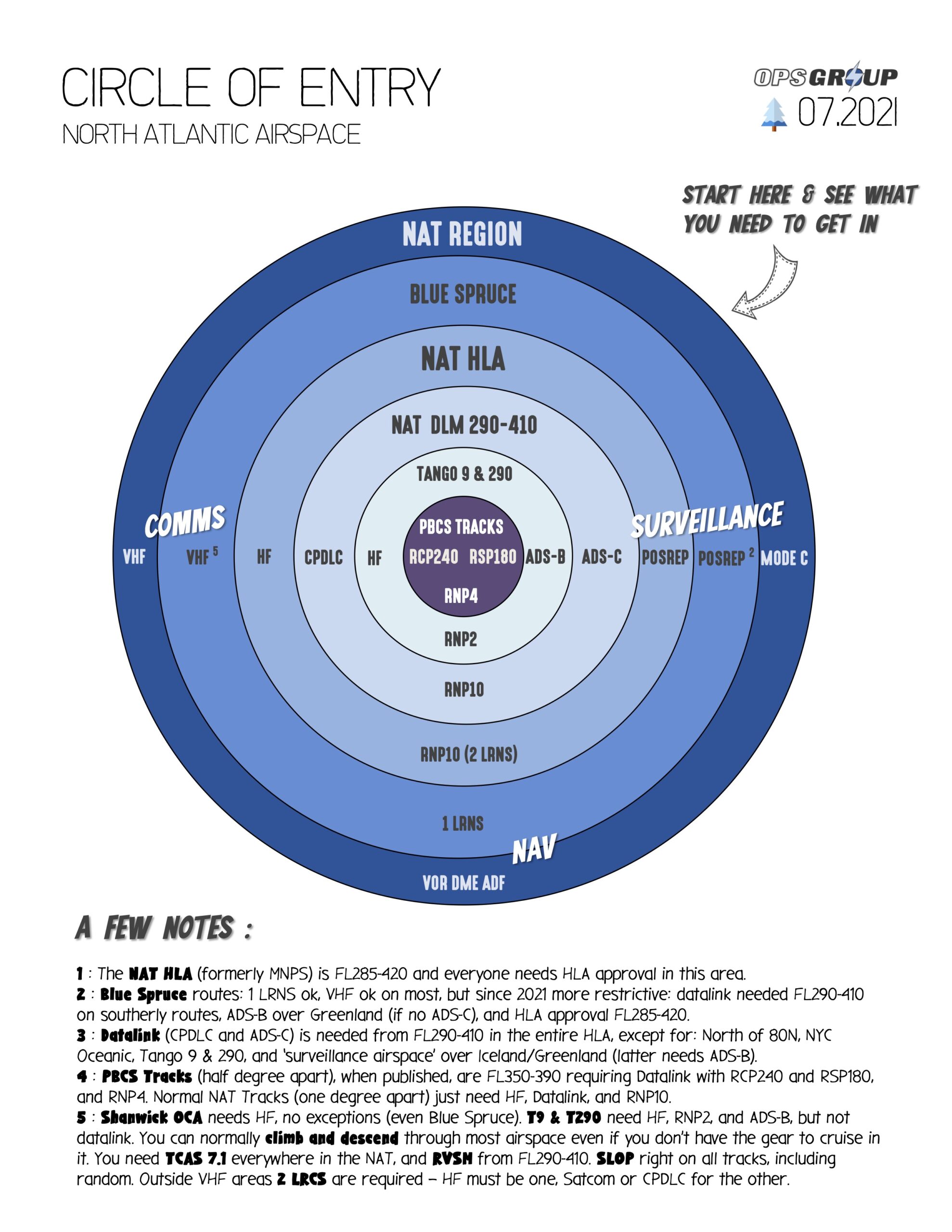
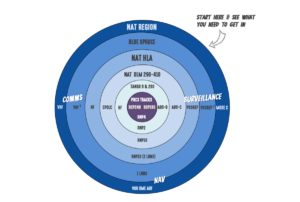
This is our NAT Airspace Circle of Entry 2021 – easily check what you need for Nav, Comms and ATC Surveillance depending on which bit of the NAT you will be flying through.

Anything else?

Unfortunately no, that’s the news for now. Any questions on this feel free to direct them to us at team@ops.group

If you want to read the “official” NATS notice then you can do so here. We don’t yet have a reference for the official NAT Docs.


July 2021 North Atlantic Changes

Just when you thought it was safe to go back in the water…

Yep. Barely five months since the last version of the NAT Doc 007 was published, we now have a new one.

First things first – links…

To see just the new changes, click here.

To see the new NAT Doc 007 in its entirety, click here.

To see the old NAT Doc 007, and painstakingly cross-check all the changes compared to the new version (i.e. what we did so we could write this post), click here.

Here’s the lowdown of what’s changed…

The Datalink Mandate

No changes to the rules here. The old NAT Ops Bulletin 2017_001 which contained all the info about the Datalink Mandate has been discontinued, and the essential info incorporated into the NAT Doc 007.

Key points:

  • Aircraft without datalink can request to climb/descend through datalink mandated airspace, but will only be considered on a tactical basis by ATC.
  • Flights without datalink that file STS/FFR, HOSP, HUM, MEDEVAC SAR, or STATE in Field 18 of the FPL, may be permitted to flight plan and fly through datalink mandated airspace, but may not get their requested flight levels.
  • For datalink failure before departure, you should re-file your FPL to stay clear of NAT DLM airspace. If it fails after departure or whilst in NAT DLM airspace, ATC may let you continue based on “tactical considerations” (i.e. how much other traffic is around).

Which brings us neatly on to…

ATS Surveillance Airspace

This one has had us scratching our heads for a while now…

So, there is an updated chart showing the areas of ATS Surveillance Airspace in the NAT:

Blob-fest

We have to say, we really don’t like this chart very much. The green blobs are misleading. Here’s what we mean…

Essentially, the NAT Doc 007 says that these are the datalink-exempt bits within the NAT Region:

1. Everything north of 80°North.
2. New York Oceanic East FIR.
3. Tango Routes T9 and T290.
4. ATS Surveillance Airspace, where surveillance service is provided by means of radar and/or ADS-B, coupled with VHF.

So these green blobs give a rough idea of where ATS surveillance service is provided by radar and/or ADS-B within VHF range. But rough ideas don’t win prizes, and neither do they explicitly tell you what the rules are. Where is this mythical ATS Surveillance airspace in reality? Give me some hard coordinates!

Thing is, they actually do, right there in the NAT Doc 007, they just don’t say it very clearly.

Here’s the answer (we had to get in contact with Gander and Reykjavik ATC to confirm this): ATS Surveillance Airspace is the area over Greenland and Iceland shown in this picture below. This is where you’re allowed to fly above FL290 if you don’t have datalink.

There is no special datalink exemption for the Blue Spruce routes. That’s another key point here.

The southerly Blue Spruce routes are not fully contained in the exempted airspace. So if you’re flying these routes you will have to meet the NAT DLM requirements or fly below FL290 or above FL410.

The northerly Blue Spruce routes are different (i.e the ones going overhead BGSF/Sondrestrom airport). These do fall within the exempted area of airspace – so datalink is not mandatory if you’re flying here.

Confused? We don’t blame you. Here’s something that might alleviate some misery though – our NAT Airspace Circle of Entry. OPSGROUP members can download the full hi-res PDF version here. The Circle shows you what equipment you need – like CPDLC, ADS-C, HF – for each different type of airspace in the North Atlantic. With the datalink requirement effective Feb 2021, and the introduction of new requirements for the Tango Routes on the eastern side of the Shanwick OCA (T9 & T290), there are some important changes.

This NAT Airspace Circle of Entry will also appear on the new NAT Plotting/Planning chart that we are finalizing at the moment, and we’ll send you that when it’s ready.

Our in-house bakers perfecting the recipe for a new version of our NAT Plotting & Planning chart, coming soon…

“SET MAX UPLINK DELAY VALUE TO 300 SECONDS”

This thing started back in 2018 – a new procedure designed to prevent pilots from acting on any old CPDLC messages that might have been delayed in the network.

So, we have CPDLC where ATC can basically ‘text’ you some sort of message. Usually a clearance to do something. There is a risk though that the message is latent meaning ‘existing but not yet developed or manifest; hidden or concealed’. Basically lost for a longish time in the digital void and it means there is a risk pilots might get a message to do something way after they were supposed to do it, and it is no longer valid (or safe to) anymore.

The old NAT Ops Bulletin 2018_002 about CPDLC Uplink Message Latency Monitor Function has been discontinued, and the essential info is now incorporated into the NAT Doc 007. But there is some new info to be aware of.

The key change here is that all the NAT ANSPs have agreed on 300 seconds as the period of time all aircraft should set their uplink timers to (any message that takes longer than that to reach you will be deemed ‘latent’). Also, they will be sending this to all CPDLC connected aircraft immediately after they enter each control area – so you might receive the message a bunch of times (a bit annoying) but the procedure is the same regardless of whether you’ve “done it already” or not.

This procedure is covered in section 8.50.20 of the new NAT Doc 007, and it works like this:

  • When you receive the message to set your max uplink delay to 300 seconds, acknowledge it with a Roger [ACCEPT].
  • If you don’t have a message latency monitoring function available then you still have to acknowledge the message but say ‘TIMER NOT AVAILABLE’.
  • Now, if you do have the function available then change the max uplink delay to 300 seconds and you’re done.

If the system gives you an indication that a message has been delayed over 300 seconds then don’t follow what it says but get in touch with ATC (by voice) and let them know so they can confirm whether they still want you to do carry out whatever the clearance told you to do. They will also close the message out of the system.

Bottom line: don’t act on a delayed uplink message until you’ve checked with ATC.

Weather Deviation Procedures

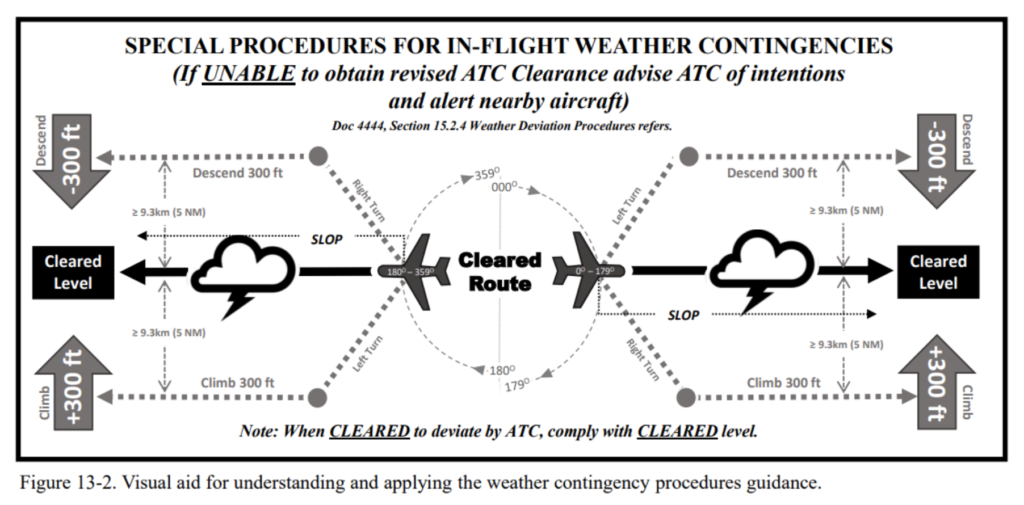
No new rules here, they’ve just made a nice little graphic to help understand the Procedures.

Funky! If you prefer a slightly simpler version, check out this one we made earlier:

Click to download hi-res version.

Almost finished now. That’s the big stuff done…

Climbs in Gander and Shanwick airspace

Gander and Shanwick have decided that they will advise crew in their OCA when a higher flight level becomes available. Basically, they have a function in their ATM system which lets them interrogate the flight’s vertical profile to determine when a higher level is available. They will then check there is no separation issue and if not, will offer the new level.

What did it used to say?

It used to say that clearances tend to specify a single flight level, but that sometimes there might be ‘scope’ for higher climb. It had some stuff about how, if you got a re-clearance you should climb without delay. It also said that if you aren’t CPDLC equipped you should tell ATC as soon as you’ve left your old level and when you reach the new level.

Actually it still says that in the new document but now it has a new bit about how Shanwick and Gander will be a bit more proactive about letting you know when the levels become available.

PBCS operations

The only changes in this section are wording changes. Separation minima is no longer “as low as” – it is now “as small as”“How small can you go” doesn’t have quite the same ring to it…


And that’s it!! That’s all the changes!! At least, we think so. If you have spotted any biggies not listed here, send us an email at: news@ops.group

And if all this is not enough for you, and you want a comprehensive timeline of all the old significant changes on the North Atlantic stretching back to the dawn of time (actually, just to 2015), then click here.


Feb 2021 North Atlantic Changes

2021 is off to a flying start again with NAT changes aplenty!

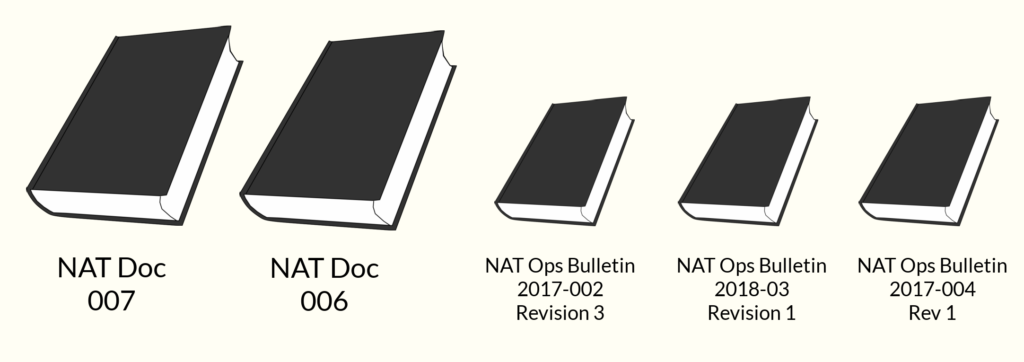
We’ve got a new edition of the NAT Doc 007 (the big one with pretty much everything you need to know in it), Nat Doc 006 (the one which tells you what happens when things go wrong – also pretty big), and three updated NAT Ops Bulletins (the small-to-medium-sized ones which give more info about specific topics).

Words-words-numbers-numbers…

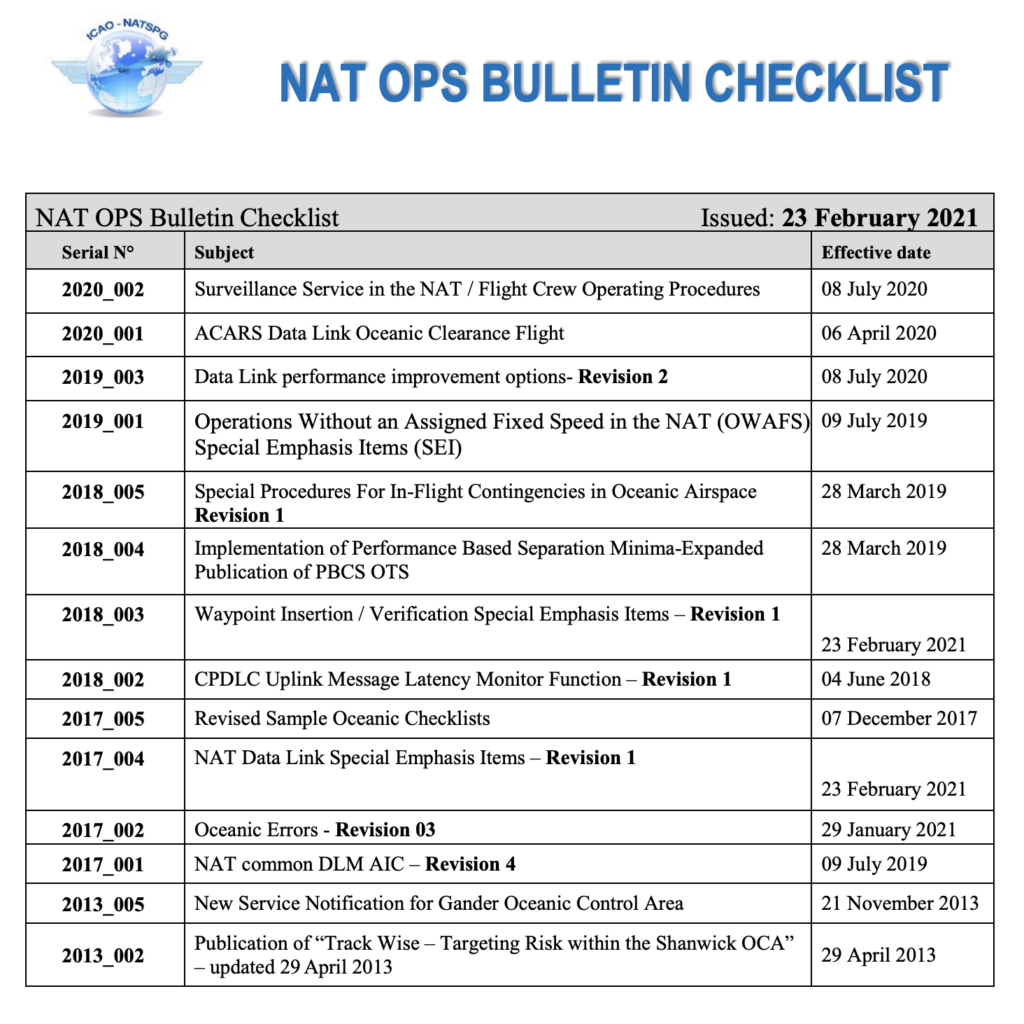
This image shows the docs which have changed – lots of meaningless letters and numbers in there. Fear not, we’ll go through each one and explain what it is, and what has changed

NAT Doc 007


NAT Doc 007 is the Bible of the North Atlantic. It’s full of NAT goodness – all the specifics about how to operate your aircraft safely through the complex airspace of the region is here. And they’ve just published a new edition – effective Feb 2021.

As aviation documents go, it’s written in pretty digestible language. There’s just a lot in it. But the latest release is slightly more user-friendly than previous updates, as ICAO have now included a little summary document which explains all the changes.

You can download a pdf of the new NAT Doc 007 here.

And you can get the little explainer doc here.

We’ve been looking at this latest edition for 12 hours or so now, and we think the changes are minor. We use that word with trepidation. The most significant changes seem to be as follows:

  1. No more NOROTS – these were a system of domestic westbound tracks published daily by Nav Canada for aircraft transiting between Europe and the Northwestern US. These have been disbanded.
  2. Mach Number Technique – they want any aircraft capable of maintaining a mach number to flight plan their requested number (not just turbojets).
  3. The southerly Blue Spruce route which used to start/end at “HO” now does so at “PORGY” instead. HO/Hopedale NDB has been removed from service.
  4. Some clarification on Comms requirements. Basically two long-range comms systems are needed throughout the NAT if outside of VHF coverage. One must be HF. The other may be CPDLC/Sat Voice but Inmarsat systems do not count when you’re really really far north (north of 80N).

Here is latest VHF coverage chart they refer too in Doc 007 (although it says it needs updating):

Relief from the HF requirement is available for flights going for repairs, ferry flights, and special cases. This requires permission from each and every Oceanic Area Control Centre you’re passing through (i.e. Gander, Shanwick, etc). Include your approval in Item 18 of your flight plan.

NAT Doc 006


Also known as the Air Traffic Management Operational Contingency Plan – North Atlantic Region.

Also known as the ATMOCP-NAR.

The dreaded ATMOCP-NAR, spotted on an aircraft wing somewhere over Greenland.

Not really. There’s no such thing as an ATMOCP-NAR.

NAT Doc 006 is about a different kind of monster – it tells the tale of what happens on the North Atlantic when ATC goes down for any reason. It’s the official go-to manual to check the Contingency Plan they put in place during these so-called “ATC Zero” events.

You can download a pdf of the new NAT Doc 006 here.

And you can get the little explainer doc here.

Summary of what’s changed:

  • They have updated the section talking about contingency plans for the Gander Oceanic FIR. There is basically some updated contact info, updated contingency routes in the event of Gander Evacuations, and some wording changes clarifying the procedures to be used in event of a comms disruption or full loss of ground-air comms capability.
  • The plan only applies to Gander Oceanic FIR, and has removed the ADS-B designated airspace over Greenland because Gander no longer provide ground based ADS-B separation.

For a breakdown of each of the big changes in this NAT Doc 006, in chronological order (i.e. following the order they appear in the NAT Doc 006 guidance doc!), check out our separate article here.


So NAT Doc 007 and 006 are the “big ones” that have changed.

But remember, there are some changes to three NAT Ops Bulletins too!

Here’s the lowdown:

1. The “How Not To Make Oceanic Errors” NAT Ops Bulletin


Real name: “ICAO NAT Ops Bulletin 2017-002 Revision 3. Subject: OESB – Oceanic Errors”.

Download it here.

This is the one which has all the advice for operators on how to avoid the common mistakes when flying the North Atlantic. These include: Gross Nav Errors, Large Height Deviations, and Longitudinal Separation busts. There’s also some advice on Flight Planning, SLOP, and some CPDLC things to watch out for.

The changes in this latest version:

  • It now has up-to-date guidance on Contingency and Weather Deviation Procedures, to reflect the new procedures that were introduced on the NAT in March 2019 and then extended to all oceanic airspace worldwide in Nov 2020.

Click here for our article which has more info on all this.

2. The “How To Punch In Waypoints Correctly” NAT Ops Bulletin


Real name: “ICAO NAT Ops Bulletin 2018-03 Revision 1. Subject: Waypoint Insertion / Verification Special Emphasis Items”.

Download it here.

There are some specific procedures to know when it comes to proper waypoint insertion and verification. This is considered a critical method of mitigating the risk associated the rapidly changing procedures (contingency) as well as reduced separation operations (ASEPS and PBCS) within the North Atlantic.

The changes in this latest version:

  • Oceanic Clearances containing a re-route issued by voice/OCL may include half-degree waypoints. Operators should ensure that their flight crew procedures and associated training are sufficiently robust to mitigate against navigational error due to waypoint insertion errors.
  • Flight Crews are reminded they have the option to respond “UNABLE” to an oceanic re-route and negotiate with ATC accordingly.

3. The “How To Use Datalink Properly” NAT Ops Bulletin


Real name: “ICAO NAT Ops Bulletin 2017_004_Revision 1. Subject: NAT Data Link Special Emphasis Items”.

Download it here.

This Bulletin basically gives a tonne of guidance to operators on how to follow the correct datalink procedures in the North Atlantic.

The changes in this latest version:

  • It now includes a new section on the use of CPDLC route clearance uplinks:


So as far as the ICAO NAT Ops Bulletins go, the full list of current Bulletins is as follows:

You can download each Bulletin from the ICAO page here.


And that’s it!! That’s all the changes!! At least, we think so. If you have spotted any biggies not listed here, send us an email at: news@ops.group

And if all this is not enough for you, and you want a comprehensive timeline of all the old significant changes on the North Atlantic stretching back to the dawn of time (2015, actually), then click here.


The 511 on the Nov 5th ICAO changes

A whole bunch of procedural stuff will be changing from 5 Nov 2020, with the release of a new amendment to ICAO’s Procedures for Air Navigation Services document. There will be changes to Oceanic Contingency and Weather Deviation Procedures, Wake Turbulence Separation, SLOP Procedures, and how the FAA defines Gross Navigation Errors.

What is the PANS-ATM (ICAO Doc 4444)?

Procedures for Navigation Services – Air Traffic Management. In other words, the ‘go to’ manual for aircrews who operate internationally. It explains in detail the standard procedures you can expect to be applied by air traffic services around the world, and what they expect in return.

Here is a summary of the most important changes coming on 5 Nov 2020. Thanks to Guy Gribble at International Flight Resources for this update.

Oceanic Contingency Procedures

Basically, what you should do if you need deviate from your flight path without a clearance. Weather avoidance, turbulence, depressurisation, engine failure – you get the picture. Published procedures are changing: there will be one standard set of Contingency and Weather Deviation Procedures for all oceanic airspace worldwide.

If you’ve been flying in the North Atlantic Region over the past year and a half, you’ll be familiar with how it works – the new procedures were introduced there back in March 2019, and now they’re being rolled out everywhere.

The main change here is that Contingency offsets which previously were 15 NM are basically now all 5 NM offsets with a turn of at least 30 degrees (not 45 degrees).

For more on this, check out our article.

Wake Turbulence

Flight Plan Category
There will be a new wake turbulence category for flight plans:

No longer will ‘Heavy’ rule the skies. ‘Super’ is about to be added, which will cover the largest aircraft including the A380-800, and Antonov 225. You will even get to say it after your callsign on initial contact with ATC.

ICAO Doc 8643 will shortly include all aircraft which qualify for the category.

You’ll need to tell them your category in Flight Plan Item #9 too. For Super, the letter ‘J’ is what you’ll need to include.

Here’s the new line up:

J – SUPER (Check Doc 8643 to see if you qualify)
H – HEAVY (Max take-off weight greater than 136,000kg/300,000Lbs)
M – MEDIUM (Max take-off weight greater than 7,000kg/15,500Lbs)
L – LIGHT (Max take-off weight less than or equal to 7,000kg/15,500Lbs)

Wake Turbulence Separation Categories
Countries may choose to use the ICAO wake turbulence codes above to determine how much room to give you from preceding traffic, or they can elect to use a grouping.

Currently, ICAO groupings are based simply on weight and there’s only three of them. The problem with that approach is that sometimes the separation provided is excessive which slows down the flow of traffic and creates unnecessary delays.

The US and Europe were on to it when several years ago the FAA and Eurocontrol joined forces to look at the wake characteristics of aircraft in more detail. They came up with a better system – it was a process known as Aircraft Wake Turbulence Re-Categorization or simply, RECAT.

Turns out that when you take into account factors such as approach speeds, wing characteristics and handling abilities of various aircraft it is possible to safely reduce separation.

As a result, six new categories were created. You can read about those in FAA SAFO #12007 and EU-RECAT 1.5 if you would like to know more.

The point is, ICAO is now adopting those categories.

So why does it matter?
Because the separation applied when following smaller aircraft may be reduced to as low as 2.5nm on approach. Closer than you may be accustomed to.

Out with the old, in with the new. Here’s what you can expect to see in November:

Old:
HEAVY (H) – aircraft of 136,000kg or more
MEDIUM (M) – aircraft less than 136,000kg but more than 7,000kg
LIGHT (L) – aircraft of 7,000kg or less

New:
GROUP A – ≥136,000kg and a wingspan ≤80m but >74.68m
GROUP B – ≥136,000kg and a wingspan ≤74.68m but >53.34m
GROUP C – ≥136,000kg and a wingspan ≤53.34 m but >38.1m
GROUP D – <136,000kg but >18,600kg and a wingspan >32m
GROUP E – <136,000kg but >18,600kg and a wingspan ≤32m but >27.43m
GROUP F – <136,000kg but >18,600kg and a wingspan ≤27.43m
GROUP G – <18,600 kg or less (no wingspan criterion)

Separation standards will soon be published accordingly.

Strategic Lateral Offset Procedures (SLOP)

Wait, what?
As a result of extremely high levels of accuracy in modern navigation systems, if an error in height occurs there is a much higher chance of collision. It is also greatly increases the chance of an encounter with wake turbulence.

In some airspace, when the lateral separation applied or the distance between adjacent parallel routes is greater than 6nm, aircraft can deviate up to 2nm right of track without a clearance. This is what is known as SLOP.

The way in which it is applied is changing
Where the lateral separation minima or spacing between route centerlines is 15NM or more; offsets to the right of the centerline will allowed up to 2nm.

When the lateral separation minima or space between route centrelines is less than 15nm (but more than 6nm), you will be able offset up to 0.5nm right of track.

So, it is important you are familiar with what kind of lateral separation is being applied in the airspace you are operating.

The FAA will change their definition of GNE’s

On 5 Nov 2020, the US FAA will change their definition of Gross Navigation Errors to mean anything more than 10nm (down from 25nm), to align with ICAO’s 10nm definition that currently exists on the NAT HLA. So after this date, the FAA will require you report all lateral errors, 10nm or greater worldwide.

More on this from Guy Gribble at International Flight Resources:

“Keep in mind that ATC does not always advise a crew that it files a report; therefore, the FAA inspector will try and contact the crew as soon as possible so the crew will remember details of the event. ATC keeps voice and communications records for between 30-45 days. New York Radio and San Francisco Radio keep voice communications for 30 days. The FAA directs that oceanic error investigations should be complete within 45 days of the incident.”


July 2020 North Atlantic Ops Update

July 2020: There’s a bunch of new things to tell you about the North Atlantic this month! Here’s a summary:
– Two new ICAO NAT Ops Bulletins
– An updated NAT Doc 007 from ICAO (aka the North Atlantic “Ops Bible”)
– A guide for pilots from the FAA about what to do if ATC suddenly has to suspend services
– Some juicy Notams from all the NAT FIRs extending the relaxation of the North Atlantic datalink mandate rules until the end of September.

ICAO NAT Ops Bulletins

Two new ICAO NAT Ops Bulletins have been published this week, but it looks like there’s no need to panic.

First up, there’s 2019_003 Rev 2: Data Link Performance Improvement Options, which is just an updated list of common datalink errors and what to do about them.

Second, there’s a new Bulletin called 2020_002: Surveillance Service in the NAT Region / Flight Crew Operating Procedures. This is a strange one. The message seems to be this: back in the old days, you used to get a call from ATC saying “radar service is terminated” or “surveillance service is terminated” when heading out into the NAT, or when crossing from one oceanic control centre to the next. But nowadays, with improved SSR equipment and ADS-B more widely implemented, you might not get this message anymore.

ICAO NAT Doc 007 (2020, Version 2)

ICAO has published an updated version of the NAT Doc 007, applicable from July 2020. There are only some minor changes from the previous version, concerning the Tango Routes:

  • There’s now a specific note saying that state approval is required to operate on these.
  • There’s also a change to the transponder procedures when using T9 or T290: normally you change transponder code to 2000 30mins after NAT entry, but because of the limited time spent in the NAT HLA when flying on T9 and T290 you should instead make this change 10mins after joining either of those routes.

T9 is southbound only, even levels between FL300-400. T290 is northbound only, odd levels from FL290-410. For more info on the Tango Routes, check out our article here.

What to do during “ATC Zero” events

You’re halfway across the Atlantic when ATC declares that they are suspending all services. TIBA procedures are now in effect. Would you know what to do next? As Covid infections impact ATC facilities, short notice closures are currently a constant risk.

The FAA has published a safety alert for international flight crew with contingency procedures in the event of loss of ATC services in Oceanic airspace. It’s a good one to have in your flight bag. Dispatchers and flight crew are reminded to be thoroughly familiar with AIP specific procedures and traffic management contingency plans for the regions they are operating in. You can read the FAA’s alert here.

They have also published another one for ATC Zero events in Terminal airspace, which you can read here. There have been multiple ‘ATC Zero’ events at major air traffic control centres due to Covid prevention and the subsequent cleaning required. The alert contains important information regarding instrument approach selection, TCAS use, alternate minima, aerodrome lighting and other CTAF procedures at unattended airports. There are also important considerations applicable to Part 121 operations discussed.

NAT Datalink Mandate

EGGX/Shanwick, BIRD/Reykjavik, CZQX/Gander, KZWY/New York Oceanic West and LPPO/Santa Maria have all published Notams extending the relaxation of the North Atlantic datalink mandate rules until the end of September. This is due to the fact that there’s still significantly less traffic because of all the Covid restrictions. Non-datalink mandate compliant aircraft may therefore continue to flight plan and operate across the North Atlantic between FL290-410 until Sept 30. For more info on the NAT Datalink Mandate, check out our article here.

In addition, ICAO are saying that due to the decrease in traffic, there is a significantly higher chance of flights being cleared as requested, and are encouraging operators to file and request their optimal profiles at all stages of the flight. Read ICAO’s guidance here.


For a brief history of the most significant North Atlantic-related ops changes, check out our dedicated article here.


2020 Edition: New NAT Doc 007 – North Atlantic Airspace and Operations Manual

July 2020

ICAO have published a new NAT Doc 007 too. Download it here!

The only changes in this edition are to do with the rules and guidance relating to the Datalink Mandate.

Despite the expanded mandate, there are still some places where you won’t need datalink:

  • Everything north of 80° North
  • New York Oceanic East FIR
  • ATS Surveillance airspace These are areas where surveillance is provided either by: Radar, VHF, or ADS-B – which is basically the airspace over Iceland, the southern half of Greenland, and a big fish shape of airspace over the Azores (see image below)
  • Tango Routes T9 and new route T290 that was also introduced today (the other Tango routes T213, T13, and T16, will all require datalink).


To figure out where you are welcome on the NAT, depending on what equipment and training you have, check out our NAT guides and charts here.


Covid impact on North Atlantic diversion airports

Planning diversion alternates is always fun – particularly when flying across vast tracts of open ocean like the North Atlantic. Check a few Notams, google some airport pics to work out just how scary the runway is, stick a couple of en-route alternates into your flight plan, and away you go…

The reality is it’s a bit more complicated than that. For use as a diversion alternate, an aircraft operator must ensure that the airport concerned meets basic criteria to be classified as ‘adequate’. In other words, just a runway is not enough – if only it were that simple!

Here are the kinds of things we’re interested in:

  • Sufficient weather forecasting.
  • ATC (or Flight Information Service) hours of operation.
  • Runway availability.
  • Instrument approach availability.
  • Runway Lighting.
  • Runway slope guidance (PAPI, VASI, Glideslope or similar).
  • RFF (Rescue Fire) operational status.
  • Status of facilities: refuelling, handling, parking bays etc.

During the course of the Covid-19 pandemic, a number of airports have used the lull in traffic to undertake work that can affect their operational status. As a result, these changes may create additional operational issues for pilots and flight planners seeking diversion alternates that meet their requirements.

Also, due to the general chaos of Covid-19, many airports have limited staff which has an effect on how your aircraft, passengers and crew will be handled on the ground if you do need to divert.

Here’s a summary of changes to operational status of airports commonly used as diversion alternates for aircraft crossing the North Atlantic. (Unless stated otherwise, airports listed below are open H24 for emergency diverts).

The Biggies

BGSF Kangerkussuaq Airport, Greenland – Airport is open 1000-1900z Monday to Saturday. Closed on Sundays. If you want them to stay open for you outside their opening times, you have to request it in advance – watch out for hefty fees if doing this, which get charged even if you don’t end up actually diverting there. Same applies if you just casually list BGSF as an en-route alternate on your flight plan if operating out of hours. More info on that here.

However, until at least June 10 the airport is classified as ‘non-instrumental.’ Effectively you can only use it during daylight hours in good conditions (NOTAM A0283/20 refers).

BGBW Narsarsuaq, Greenland – Similar deal to BGSF – airport is only open 1000-1900z Monday to Saturday, and closed on Sundays. And again, extra fees which get charged if filing BGBW as an en-route alternate on flight plans. RFF category 5, but grab a coffee because it requires 3 hour’s notice (NOTAM A0098/20 refers). Officially, the current rules for Greenland are that crew and pax will not be allowed to disembark, not even for diverts. Unofficially, the local handler says that if a divert was to happen, they’d “find a solution”.

LPLA Lajez, Azores – Several restrictions apply due to Covid. Essentially you can go there if you really need somewhere to land but expect chaos once you do. The airport is currently closed to international arrivals unless it’s an emergency. And even then you cannot disembark without permission and strict quarantine measures apply (NOTAM A1487/20 refers). Unscheduled arrivals of emergency aircraft can expect ‘extensive handling delays’ (NOTAM A1485/20 refers). All passengers and crew must wear face masks, and once you and your passengers leave the aircraft you will be quarantined in the local air force base (room service is unlikely).

LPAZ Santa Maria, Azores. If you have to divert there, no crew or pax are allowed to disembark. For medical emergencies, they actually recommend you go to LPLA instead!

EINN Shannon, Ireland – Aerodrome is currently only operational from 0500-2100z due to the impact of Covid (NOTAM A1062/20 refers). The airport has confirmed they are not available outside of these hours for emergency diverts – so if you’re operating overnight, the nearest available H24 airports are EGAA/Belfast and EIDW/Dublin.

And watch out for these potential ‘gotchas’

CYYR Goose Bay, Canada – Until June 29, runway 16/34 is closed. In strong northerly or southerly conditions, cross wind limitations may be reached – so keep an eye on your ETOPs alternate minima (NOTAM E3107/20 refers).

CYQX Gander, Canada – In case of divert, crew/pax all need to fill out a Government Declaration COVID form to stay overnight, and need to have proper PPR (Masks, Gloves and Sanitary Cleaner). RFF category 5 which requires at least 30 minutes notice.

BIKF Keflavik, Iceland – RFF category 8 from 0500-1900z, RFF category 7 from 1900-0500z (NOTAM A0123/20 refers).

EGAA Belfast, Ireland – Until June 13, RFF category 6 overnight between 1800-0600z (NOTAM A1968/20 refers). And until June 11, this is reduced to just RFF cat 4 between the daytime hours of 0600-1800z (NOTAM A1993/20 refers).

EGPF Glasgow, Scotland. Until June 16, available RFF category is 6 for the majority of the day due to staffing issues caused by Covid (NOTAM A1983/20 refers).


In other NAT-related news, the datalink mandate rules have been relaxed until the end of June, due to the fact that there’s now significantly less traffic because of all the COVID restrictionsNon-datalink mandate compliant aircraft may therefore flight plan and operate between FL290-410 until June 30. ICAO are saying that due to the decrease in traffic, there is a significantly higher chance of flights being cleared as requested, and are encouraging operators to file and request their optimal profiles at all stages of the flight. More info on the NAT Datalink Mandate can be found here.


Oceanic Plotting: Classic Navigation meets New Age Tech

Flying over large expanses of ocean, one might assume the cockpit would be a quiet, boring space with little more to do than to speculate about company rumors or constantly graze on the galley snacks you long ago promised yourself you’d stop eating. But the reality is that to ensure a safe and compliant oceanic crossing, the tasks involved can be intensive and the cockpit can be a busy place!

Plotting and monitoring your route over the ocean – or any remote area for that matter – is one of those vital tasks necessary to ensure safe navigation. And with some familiarization with up-and-coming technology and hands-on training, plotting can serve as both a confirmation of aircraft navigational abilities and a last ditch resort if such capabilities fail.

Why We Plot

Legally speaking, the crew of any turbojet that flies a route that exceeds 725 nm from “the service volume of an ICAO approved ground based navaid must perform plotting procedures as a way to generate a ‘reliable fix‘ of its position once per hour (the distance decreases to 450 nm if flying a turboprop),” explains Guy Gribble, General Manager of International Flight Resources.

With the breadth and reliability of most modern aircraft long range navigational systems (LRNS) and flight management systems (FMS), it may seem archaic to manually plot an oceanic course. But studies have shown that plotting greatly reduces the chances of flying off course and causing a gross navigational error. FMS’s are NOT infallible and the pilots operating them even more so!

Plotting not only assists in ensuring you are flying your cleared AND verified route, it serves as a system of checks and balances when reviewing your (and your co-pilot’s) inputs into the FMS. In the event of a partial or complete loss of navigational abilities, the plotting chart also works as an emergency form of dead reckoning. And lastly, combined with the Master Document, the plotting chart is the trip’s legal record of compliant (or lack thereof) oceanic navigation if a state authority were to review or investigate the trip for any reason.

Requirements

The first requirement begins with the plotting chart itself. The chart must be oriented North, be based on WGS-84 (World Geodetic Standard of 1984) and mean sea level, and of a valid date. It must also be to a scale that can clearly depict the flight route and other oceanic tracks. Other than that, manufacturers are free to customize charts to whatever preferences they desire.

As far as chart validity dates go, many charts do not have expiration dates; rather that dates published are based upon the measurement of variation. “You may have to go to the manufacturer’s website to see if a new chart is available,” Gribble says. “If you download it on an iPad, they are updated automatically.”
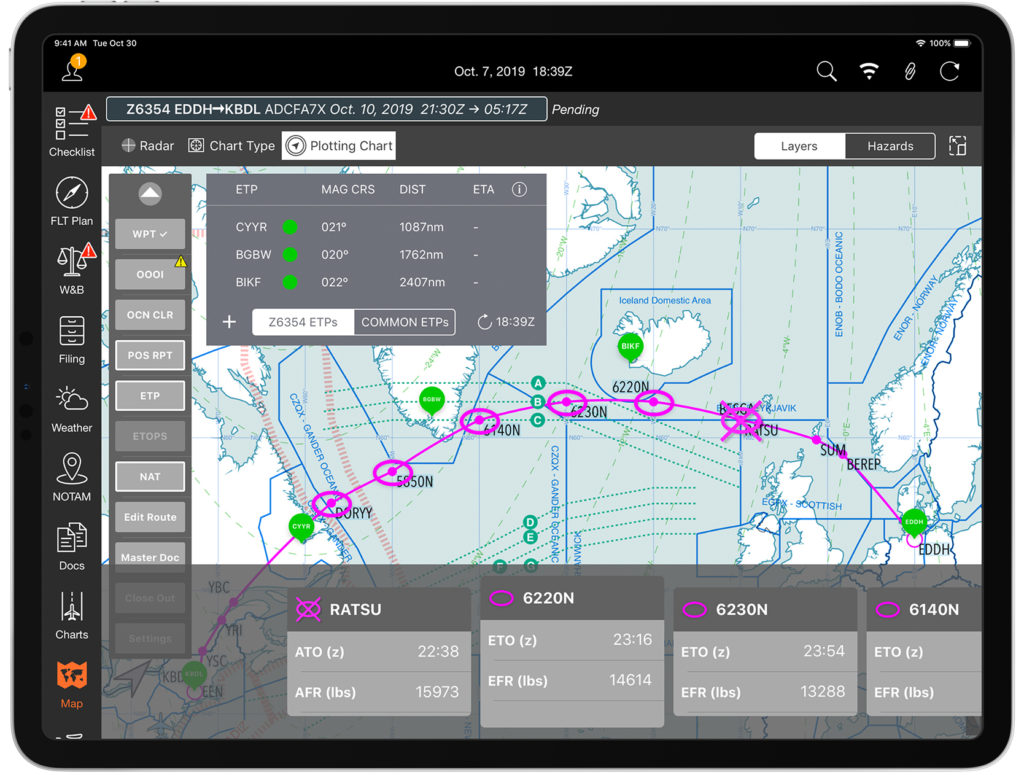
The information crews must include on the chart starts with the aircraft’s CLEARED route (reroutes are very common, and many GNE’s have occurred by crews flying the filed flight plan, not the cleared flight plan). The route’s waypoints – coast out, coast in, and lat/long positions – must be clearly marked on the chart using standard symbology. The chart should also include graphic depictions of ETP’s (Equal Time Points). ETP’s are calculated locations where an aircraft would turn around, divert or continue on its route in case of an abnormal or emergency situation. Flight planning services normally provide these points with your flight plan and are usually based on an engine failure, a depressurization event or a medical emergency. If one of these emergencies were to occur, the crew may have to perform a contingency manoeuvre and must try to avoid adjacent and underlying oceanic tracks should a diversion or descent be required. Thus, neighboring oceanic tracks published daily should be included on the chart for situational awareness. Additionally, it’s a good idea to mark decent alternate airports on the chart.

Monitoring your oceanic route is accomplished through a 10 Minute After Waypoint Check. 10 minutes (or roughly 2 degrees of longitude) after crossing each oceanic waypoint, the crew must verify their current position by 1) plotting the current lat/long on the depicted route, 2) computing both magnetic course and distance to the next waypoint and 3) comparing this information to that of the FMS. There are three methods permitted to do this:

  1. The Plotting or Paper Method
  2. The Navigational Display Method
  3. A customized and approved method

The “plotting or paper method” is for aircraft with any navigational configuration. It requires the crew to record the time and plot their present lat/long  on the paper chart by using the coordinates from the “non steering” LRNS and take immediate action if the plotted point doesn’t align with the cleared route. The “steering” LRNS – the one coupled and following the autopilot – is then used to verify that the next waypoint is consistent with the cleared route and the autopilot is steering to that waypoint.

The “navigational display method” is for aircraft equipped with an operable FMS. The crew must confirm that the aircraft symbol is on the route programmed in the FMS and set to the smallest scale and checked for any cross track deviation. The crew must take corrective action to address such deviations. And, as with the previous method, the steering LRNS is used to confirm it is headed to the next waypoint on the cleared route. “With the navigational display method, an easy way to record your fix is to have your digitally generated map zoomed in to at least 5nm. Then have your autopilot coupled FMC display the time, lat/long and RNP – the 4 pieces of info you need. Then just take a picture of that with an iPad or iPhone, and that will serve as your recorded plot,” explains Gribble.

And for the “customized and approved method… if you have created one that has been authorized, we’d love it if you shared! FedEx is one such carrier that has created its own procedures for confirming a reliable fix.

Regardless of the method, it should be spelled out entirely in the company’s operating manuals. Comparing navigation system positioning isn’t the only form of cross-checking. If a reroute is given, good crew resource management is absolutely required when copying, entering and cross-checking the new route.

Along with plotting the position, crews must calculate the magnetic course (remember your private pilot days: true course  +/- east/west variation = magnetic course) and measure distance to the next waypoint, both of which are necessary if navigational capabilities of the aircraft are compromised and dead reckoning is required. If you don’t remember how to do these, don’t worry, Code7700 has published a helpful guide on how to do it manually and electronically. There are also several apps and Excel based tools available out there, and many plotting charts have examples to walk you through it.

Ops Spec B036 authorizes navigation over oceanic and remote areas for aircraft having multiple long range navigation systems (B054 if only using a single LRNS) and B037 or 39 dictates whether over the Atlantic or Pacific oceans. “The important thing about B036 is that the operator must spell out in that authorization whether plotting will be accomplished by paper or an electronic method,” explains Gribble. “Part 135 operators must also demonstrate that they have initial and recurrent training programs along with the procedures spelled out. And for the few Part 125 operators, they are required to have a Letter of Deviation Authority.”

Gribble warns, “Operators spend all this time and effort getting LOA’s, Op Specs, and updating manuals and procedures. Then crews never read them again. Keep studying those documents! There are so many restrictions in your LOA’s. Maybe you’re not approved to fly Blue Spruce routes. Unfortunately crews forget what the documents detail, and resort to just flying the way other pilots have been operating. There’s a loss of knowledge.”

He also stresses, “Absolutely use the ICAO (NAT OPS Bulletin 2017-005) or FAA (AC 91-70B Appendix D) issued oceanic checklists! They are excellent resources and cover everything from preflight through arrival at the destination.”

Paper VS The Future

Just over a year ago at an international operators conference there was a presentation for electronic plotting. The presenter spent an hour demonstrating how to perform an oceanic crossing without paper. Although impressive, at that time there was no single app that could perform all the required plotting tasks, and the shear number of additional apps that had to be opened and closed on the iPad to substitute for whatever the main app lacked was astounding. At that point, paper was still king. But in just a little over a year, technology does what it usually does – improved exponentially. And it now looks like there are some apps that can handle all the oceanic plotting tasks, and they’re only getting better.

Mitch Launius, from 30West IP, sees the opportunity for increased safety as these electronic apps continue to improve. “Having another form of redundancy in the cockpit will make things safer in the cockpit. This technology is very new. You could say we’re only at Version .5 – barely out of Beta – but these programs will evolve quickly. This is just the tip of the iceberg. It’s going to happen.”

30West IP has produced several YouTube webcasts, a few which focused on the operational capabilities of some of these apps. “The FAA fully understands the opportunity electronic devices and some of these apps offer for oceanic navigation and they are embracing it – just slowly – as they want to ensure safety of changing procedures.” He points out the requirements for permitting Electronic Flight Bags into cockpit. “If you’re Part 135, you will need the POI’s authorization to receive Ops Spec A061, which would show that an operator demonstrates a change to its procedures.” AC 91-78 Use of Class 1 or Class 2 Electronic Flight Bag is also good resource to check.

However, if an operator is Part 91, there is no authorization required. “Regardless of what you hear, there is no Letter of Authorization required if you are a private operator,” explains Launius. “An inspector would like to see three things, advisory in nature only, however. They want to see that the company’s operating manuals address the addition of EFB and oceanic navigation, that the crew is trained, and that there is a document management procedure in place for recording the crossing.” AC 120-76 Guidelines for the Certification, Airworthiness and Operational Approval of Electronic Flight Bags should be used for guidance.

If transitioning a flight department from paper to electronic plotting might seem intimidating and difficult, Launius disagrees. “It might be much easier than you think. You must update your manuals with a few paragraphs to acknowledge the use of EFB and change in procedures. Then have all the pilots meet and train on the EFB’s. And if you’re a part of an SMS, you’ll just need to show a change in management policy. So perhaps have the pilots meet back up in 6 months and discuss what works and what doesn’t and restructure the procedures as needed.”

“If your department is flying to Europe 2 or 3 times a month, using electronic plotting is going to be very useful,” says Guy Gribble. “But if you’re only flying 2 or 3 times a year, I still believe the ease and affordability of paper is preferable, for now. Some of the newest models of Gulfstream, Globals and Falconjets actually will have the ability of their FMC’s to pull data of its location and wirelessly transmit it to an iPad. Now that’s truly electronic plotting.”

Code7700 has published an impressive article comparing some of the leading electronic plotting apps. Arinc, Jepp FD, Foreflight, plotNG and Garmin are just a few that offer these apps, along with some other flight planning services. Some of the benefits of going paperless is the ability to download both the flight plan and daily oceanic tracks, ETP’s can be updated as can ETA’s, and, through typing or using a stylus, the Master Document can also be downloaded and filled out as the flight proceeds without the all the chicken scratch normally seen on paper plots.

If operators perform many crossings per year, crews will become accustomed to using the apps as well as some of the creative techniques that may be required to compensate for some of the more complicated tasks. Course calculating and distance measuring still seem to be rather cumbersome tasks on most of the apps but operators have come up with some inventive and manageable ways to overcome this. Of course the cost is much greater than the affordable bundles of paper charts, but some of the flight planning companies may provide the app for free if using their services. Ultimately, it will come down to the operator’s needs and the frequency of oceanic crossings.


Thanks to Roger Harr at www.n138cr.ch for the header photo of this article!


Additional ATS Surveillance Charges in Shanwick

As ATS services are now mandated through most of the North Atlantic Oceanic airspace, NATS has introduced increased and additional charges for ATS surveillance. These charges are to recover the costs of ADS-B usage in the Shanwick Oceanic ATC coverage area.

There are 2 different charging zones:

  1. North Atlantic Crossing Zone: comprises the Shanwick FIR/OCA. Any traffic that touches its boundaries or operates to/from or through it are to be charged a NAC zone fee UNLESS it is operating solely within separate airspace jurisdictions (i.e. BOTA, NOTA, SOTA, etc.) or operating within the newly designated “Tango Zone” area, which is the second charging zone.
  2. Tango Zone: a smaller, defined area of airspace within the Southeast corner of the oceanic airspace surrounding ATS routes T9 and T290 (does not include the more westerly Tango Routes T16, T13, and T213 – these fall within the North Atlantic Crossing Zone!)

There are 2 different charges:

  1. Core” charge: one standard charge that remains the same in each zone.
  2. Data” charge: covers ATS surveillance data usage and changes within each zone reflecting the differing costs of satellite data.

If operating through BOTH the Tango and NAC areas, flights will only be charged the NAC area fee.

Charges will NOT vary by time, weight or distance flown.

You can check out the full briefing to airlines issued by NATS here.


Read about the changes coming up for the Tango Routes on Jan 30, 2020 – the same date that the expanded NAT Datalink Mandate goes into effect.