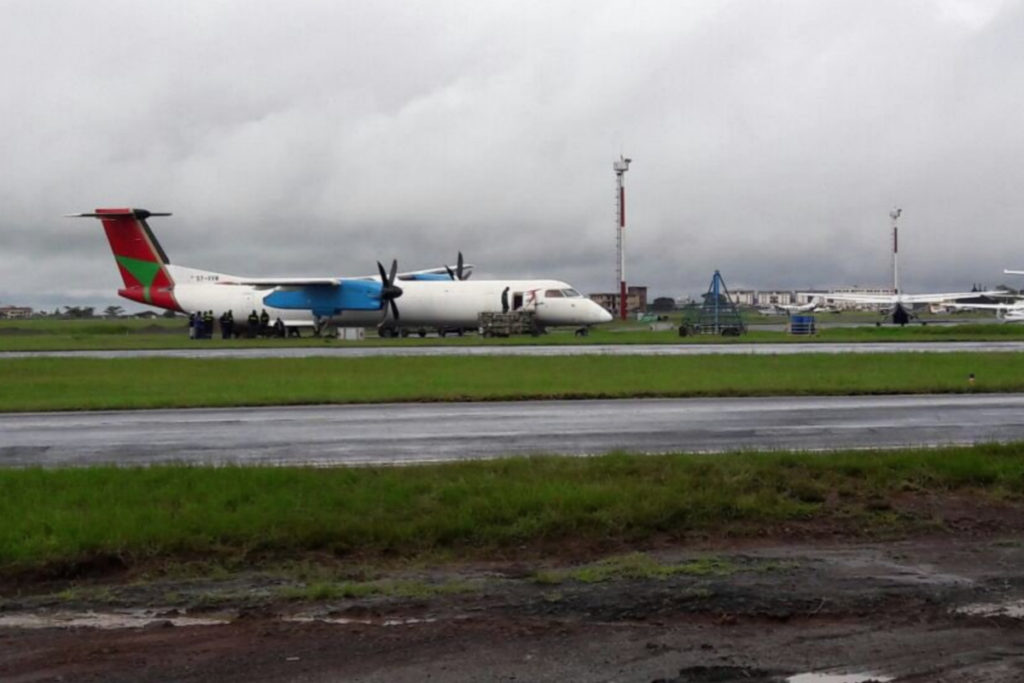
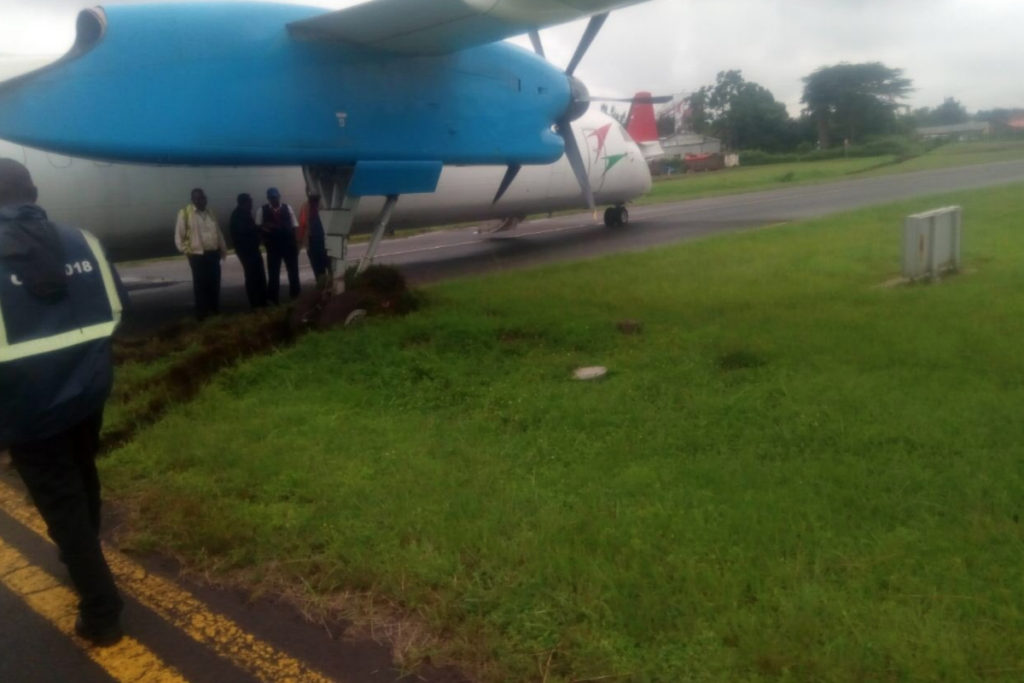
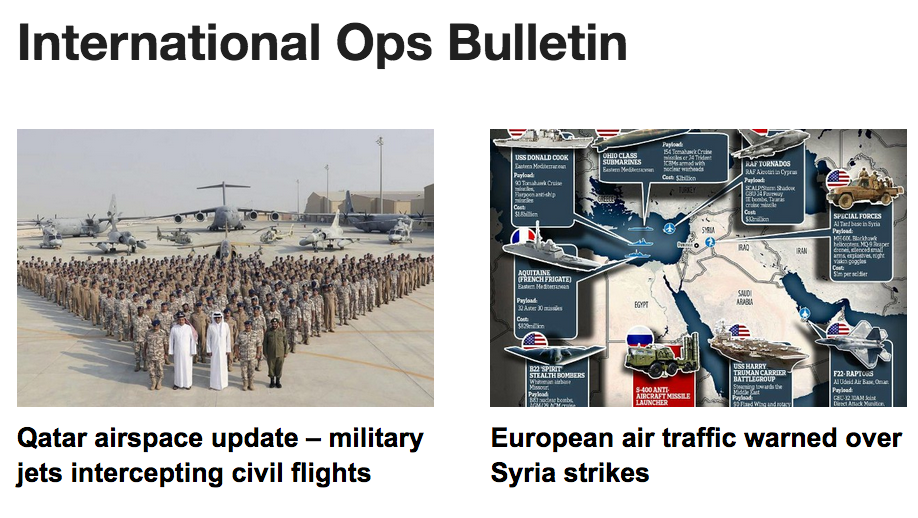
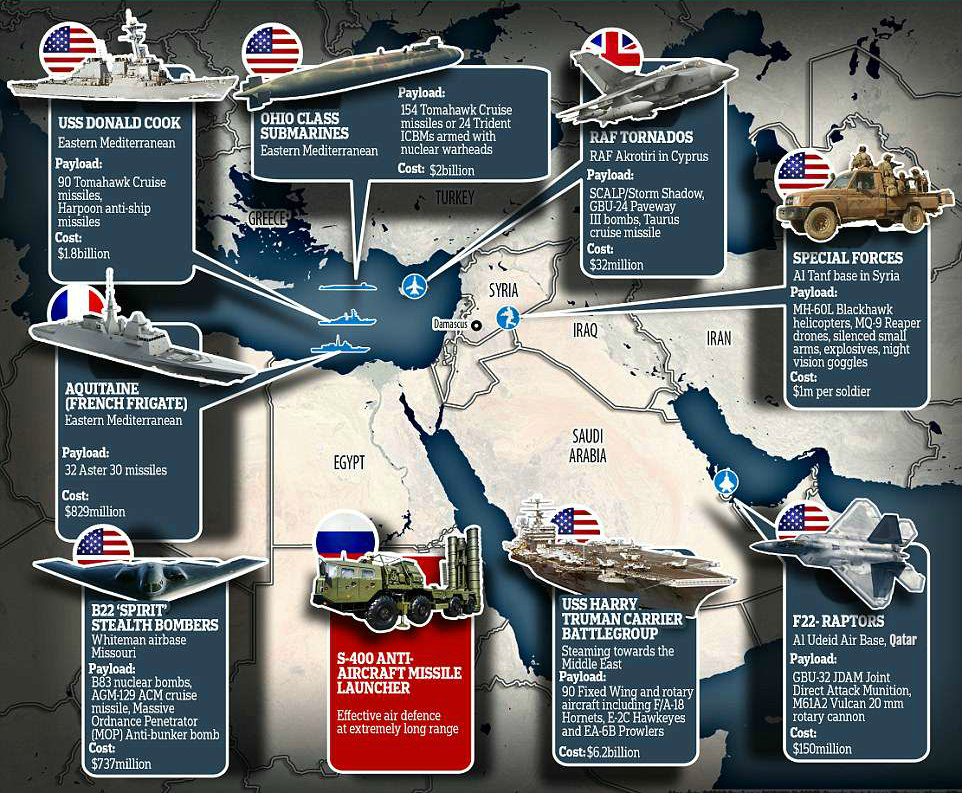
Qatar airspace update – military jets intercepting civil flights

In short: The situation is volatile and constantly changing, even by the hour. Military interception has been reported so the best advice is to be vigilant with sticking to assigned routes for all operations around the region.

The airspace blockade of Qatar has been ongoing since June 2017 with little end in sight.

But over the past few months, tensions have been escalating;

Here is the latest operational information we have:

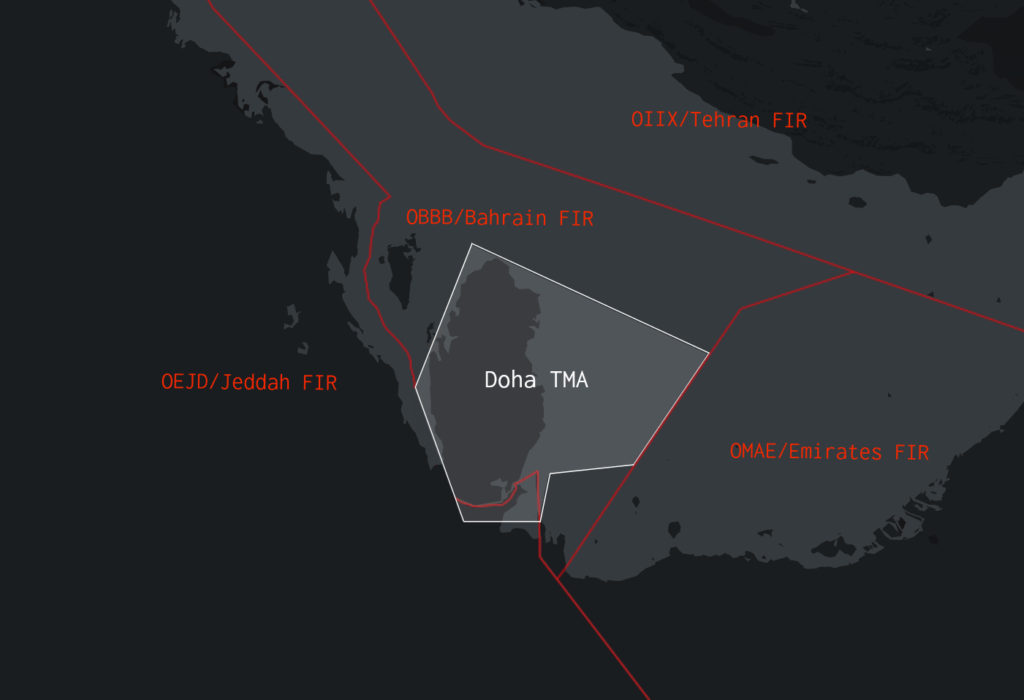
A reminder that Qatar does not have its own FIR. It sits entirely within the Bahrain FIR- you will find Qatar airspace NOTAMs under OBBB. The Doha TMA extends SFC to FL245. Above this sits the Bahrain UIR.

Bahrain and Egypt have relaxed some of their initial restrictions. Saudi and UAE have not.

The current state of play as of 6 April 2018.

Country Non-QATAR registered QATAR registered
Egypt (HECC) No NOTAM’d restrictions. No NOTAM’d restrictions.

(NOTAM A0032/18)
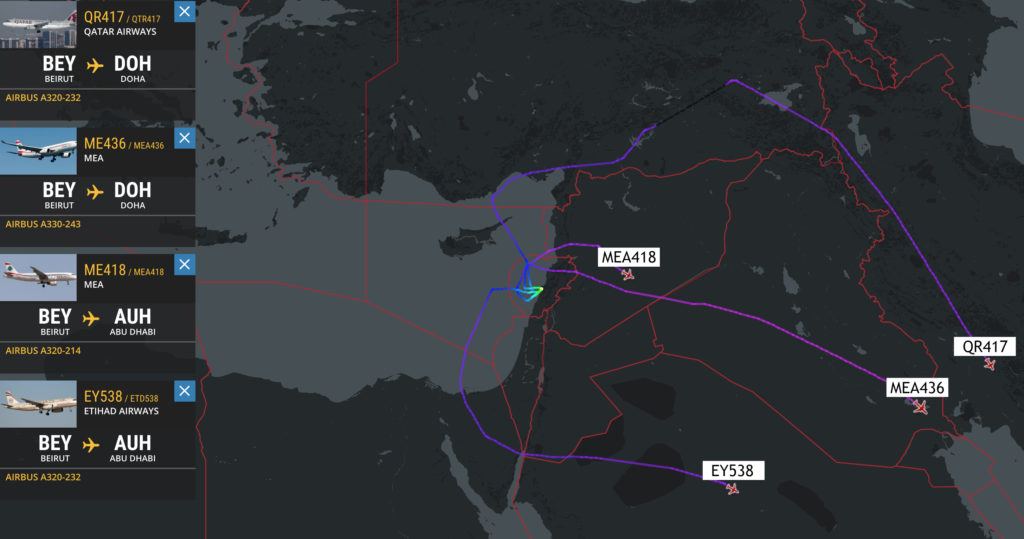
Temporary RNAV5 ATS Route T565 established between RASDA-GESAD-RAMKU, FL300-310 for Qatar registered aircraft flights between Beirut and North African Airports.

Bahrain (OBBB) (NOTAM A0204/17)
No flights allowed between Kingdom of Bahrain and State of Qatar and vice-versa.

Multiple restrictions for STATE (and Military) aircraft transiting Bahrain airspace to avoid overflying Qatar. Some operations approved over Qatar but prior approval required. See NOTAMs.

(NOTAM A0219/17)
Operators not registered in Kingdom of Bahrain intending to operate non-scheduled flights or charter flights including private flights, cargo and passenger from or to the State of Qatar via Bahrain airspace shall obtain approval from the Bahrain CAA by providing a copy of detailed manifest of the flight including passenger names at least 24 hours prior to departure to:

Email: schedule@mtt.gov.bh
Ph: +97317329035 or +97317329096

(NOTAM A204/17)
No flights allowed between Kingdom of Bahrain and State of Qatar.

(NOTAM A0219/17) All flights registered in the State of Qatar are not authorized to overfly Bahrain airspace.

*except*

(NOTAM A0220/17)
All routes within Bahrain FIR are available for Flights affected by NOTAM A0219/17, except airways that fall within the Bahrain airspace (over the island of Bahrain).

Saudi Arabia (OEJD) (NOTAM A0596/17)
All NON-Saudi or NON-Qatari registered aircraft intending to use Saudi Airspace to/from Qatar Airports shall coordinate with General authority of Civil Aviation within one-week to obtain permission.

Email: special@gaca.gov.sa
Ph: +966115253336

It appears this does not apply if you are simply overflying Qatar.

(NOTAM A0592+593/17)
All overflights and landing authorizations revoked UFN.
UAE (OMAE) (NOTAM A0848/17) Operators not registered in UAE intending to operate non-scheduled flights or charter including private flights, cargo and passenger from or to the state of Qatar via UAE airspace shall obtain approval from the GCAA aviation security affairs by providing a detailed manifest of the flight including passengers names at least 24 hours prior to departure to:

Email: avsec-di@gcaa.gov.ae
Ph: +971 50 642 4911

This seems to include overflights over UAE bound to Qatar.

Not authorized to overfly UAE airspace, depart or land at UAE aerodromes.

There is however a temporary RNAV1 ATS Route T665 from DAPER DCT KUSBA DCT RORON DCT OVONA (FL220-400) open to Qatari registered aircraft for flights inbound to Qatar. (NOTAM A0459/18)

Kuwait (OKAC) No NOTAM’d restrictions No NOTAM’d restrictions
Iran (OIIX) No restrictions.

(NOTAM A0636/18)
There is however an AIP SUP that includes a comprehensive “standard and mandatory traffic orientation scheme” for flights operating into Bahrain FIR bound for Qatar airports.

AIP SUP 03/18

No restrictions however several additional routes have been made available to facilitate movement from Muscat FIR to Qatar. See OOMM & OIIX NOTAMs.
Expect level constraints.

Traffic Orientation Scheme as per AIP SUP 03/18 applies.

Yemen (OYSC) No NOTAM’d restrictions.

See safe airspace map – there is ongoing conflict in the region. FSB Risk Level One – DO NOT FLY. We strongly recommend avoiding this airspace entirely.

Saudi NOTAM A0604/17 purports to be a NOTAM “On behalf of Republic of Yemen/Aden.”
“All aircraft registered in the State of Qatar not authorized to overfly Republic of Yemen airspace.
Although it appears Qatar aircraft are not strictly adhering to this. No such NOTAM issued by OYSC FIR.

See safe airspace map – there is ongoing conflict in the region. FSB Risk Level One – DO NOT FLY. We strongly recommend avoiding this airspace entirely.


_________________________________________________________________________

Have you been through the region recently? Can you provide an update?

Extra Reading:

Some fascinating reporting about what this whole blockade is all about.

  • How a ransom for Royal falconers reshaped the Middle East” – New York Times
  • What the falcons up with Qatar?” – NPR Podcast


Maldives – Civil Unrest Update

In short: Civil unrest has calmed and state of emergency lifted on March 22, 2018. No impact at Malé International Airport or outlying islands or resorts. #OpsNormal.

The Maldives, a country known far more as a honeymoon hotspot in the Indian Ocean than as a hub of political crisis, is back to “business as usual,” according to its president, Abdulla Yameen, following the lifting of a 45-day state of emergency on March 22.

Latest Updates:

  • After the Maldivian government declared a state of emergency in February, tourists around the world are canceling their beachfront vacations in droves. The blow to the Maldives’ tourism industry is significant, as it accounts for over 30% of the country’s gross domestic product, reaching $3.5 billion in 2017. Ratings agency Moody’s has said it will lower its 4.5% growth forecast for 2018 if tourists avoid the island nation for a prolonged period.
  • On 22 March 2018, the state of emergency in Maldives was lifted. There could still be further anti-government protests in the capital Malé and a number of other towns. Recent protests have resulted in pepper spray being used by the security forces. You should exercise caution and avoid any protests or rallies. There are no reports that outlying islands, resorts or Malé International Airport have been affected.
  • Some local airlines have suspended flights to China due to the on-going unrest and decline in tourism numbers.

Extra Reading:

Have you been through the Maldives lately and can you update opsgroup members on the latest?


05APR: Breathalyzer tests at German ramp checks, Himalayan routings, Europe fixes its big slot computer

Weekly International Ops Bulletin published by FSB for OPSGROUP covering critical changes to Airports, Airspace, ATC, Weather, Safety, Threats, Procedures, Visas. Subscribe to the short free version here, or join thousands of your Pilot/Dispatcher/ATC/CAA/Flight Ops colleagues in OPSGROUP for the full weekly bulletin, airspace warnings, Ops guides, tools, maps, group discussion, Ask-us-Anything, and a ton more! Curious? See what you get. Rated 5 stars by 125 reviews.
EZZZ/Europe Normal operation has resumed after a day of disruption on Apr 3, due to a fault with the system that allocates ATC slots to flights, and therefore manages the flow of traffic across Europe. The system is now back online and working properly again.

LFZZ/France The ATC strike in the LFMM/Marseille ACC is still currently planned to go ahead – from 04z on Apr 7 to 04z on April 9. As usual, it won’t be known until the day how many controllers go on strike, but expect disruption.

LIZZ/Italy More strikes planned by ground staff at airports across the country on Apr 13. The airports expected to be worst affected are: LIMC/Milan-Linate, LIML/Pisa, and LIRQ/Florence.

UMKK/Kaliningrad Russian military exercises planned over parts of the Baltic Sea from Apr 3-7, with airspace warnings issued for 6-18z each day, SFC-FL590. Main area affected will be the UMKK/Kaliningrad FIR, where half the airways will be closed. Small bits of airspace in neighbouring FIR’s will also be affected, and Notams have been issued by EVRR/Riga, EPWW/Warsaw and ESAA/Sweden FIR’s to show where the danger areas are.

KSDM/San Diego CBP have reached an agreement with the city, so no longer plan to close Customs at the airport. GA operators can therefore continue to use SDM as a port of entry.

KIMT/Ford The airport will be completely closed for runway repairs, from Apr 30 to May 14.

EGPH/Edinburgh Due to ongoing construction work to expand the terminal, no GA overnight parking allowed until Jul 3. The Signature FBO has three stands available for quick turnarounds during the day, but landing slots will be limited if those stands are occupied.

WSSS/Singapore From Apr 23, 2018, departure clearance via datalink will become possible on certain airways: A457, B466, B469, M751, B470. Full details here.

VCBI/Colombo The strike by airport employees has been called off late on Apr 3, avoiding an indefinite strike.

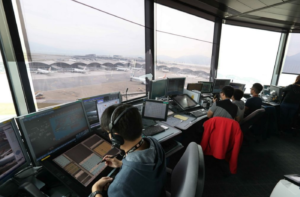
VHZZ/Hong Kong In 2017, airspace safety incidents in Hong Kong airspace rose to a six-year high, following the introduction of a controversial new air traffic management system in late 2016. In 2017, there were 17 ‘loss of separation’ incidents – up from 10 in 2016 when the old system was still in use.

TTZZ/Trinidad and Tobago CPDLC outage has been extended until the end of June. All voice comms must be made via New York Radio. Aircraft are requested to log on to TTZP for ADS-C position reporting. Also, include the AFTN address KNYCZZZX when filing your flight plans.

EGZZ/UK London Terminal ATC will be switching from paper strips to manual strips (called EXCDS) from Apr 4. 20% reduction in traffic for the first 10 days, then 10% for the next 10. Some delays expected. More info at: https://www.nats.aero/excds/

YZZZ/Australia Tropical Storm Iris is siting off Queensland, forecasters uncertain as to tracking but warnings issued for Whitsunday Islands area. Max winds 40G55kts at 1800Z on Apr 5.

NFZZ/Fiji Heavy flooding on Apr 1, after Tropical Cyclone Josie passed by to the southeast of the island. The northern towns of Nadi and Ba are worst affected, where the floods killed four people. Many roads remain closed, although water levels have receded. Both NFFN/Nadi and NFNA/Nausori remain open and operational.

LFZZ/France More Air France strikes planned on Apr 7, 10 and 11. Impact likely to be similar to the ones held in March, which saw around 30% of Air France flights cancelled, with the Paris airports particularly affected.

HEZZ/Egypt The FAA has extended its airspace warning for the Sinai Peninsula by another year, due to continuing concern for flight safety. The updated Notam says US carriers should avoid overflying the Sinai Peninsula below FL260, and if planning to do so must provide 3 days notice to the FAA. More at: http://safeairspace.net/information/egypt/

VABB/Mumbai Expect disruption on Apr 9 & 10, when the airport will be closed each day from 0530-1130z (1100-1700 local time) for scheduled runway maintenance ahead of the monsoon season, which spans from May to September.

ESZZ/Sweden Sweden introduced a new passenger tax on Apr 1, for commercial flights departing Swedish airports on aircraft with more than 10 seats. For flights to European countries, the tax rate will be 60 SEK per passenger ($7.50), and for pretty much all other destinations it will be 250 SEK per passenger ($31.50). Foreign airlines and charter operators flying to Sweden must now apply for a Swedish company registration number, and register for aviation tax as soon as possible.

HLMS/Misurata On Apr 1, the airport briefly suspended operations and redirected flights to HLLM/Mitiga, when an armed group entered the airport, demanding the release of two members of a local militia.

OTZZ/Qatar The UAE has filed another formal complaint with ICAO, claiming that on Mar 26, Qatari fighter jets once again flew dangerously close to an Emirates scheduled passenger aircraft over Bahrain. Qatar deny the claim, calling it an attempt to cover-up previous violations by UAE military aircraft of Qatari airspace.

LDZA/Zagreb The airport’s only runway will be closed to all traffic, including emergency diverts, each night from Apr 4 to May 31. The closure times will be 2035-0435z, except on Mon & Fri when it will be 2200-0435z.

LDRI/Rijeka The airport will move to H24 ops starting Apr 4, to compensate for the nightly closure of LDZA/Zagreb.

EGFF/Cardiff The airport is closed nightly Apr 5-7 from 2200-0500z, but you can get PPR either side of that closure, between 2200-2320z and 0400-0500z.

Weekly International Ops Bulletin published by FSB for OPSGROUP covering critical changes to Airports, Airspace, ATC, Weather, Safety, Threats, Procedures, Visas. Subscribe to the short free version here, or join thousands of your Pilot/Dispatcher/ATC/CAA/Flight Ops colleagues in OPSGROUP for the full weekly bulletin, airspace warnings, Ops guides, tools, maps, group discussion, Ask-us-Anything, and a ton more! Curious? See what you get. Rated 5 stars by 125 reviews.

Here’s what happens when Europe’s slot system crashes

On 3rd April 2018, a failure with the central European slot computer plunged the entire ATC system into crisis mode, with multiple knock on effects. Here’s what happened:

1. The system that allocates ATC slots to flights, and therefore manages the flow of traffic across Europe, failed at 1026 UTC. It’s called the ETFMS (Enhanced Tactical Flow Management System), but aka “The Slot Computer”

2. There is a Contingency Plan for this situation. Airports are supposed to use this, which gives a quick table of departure intervals allowed according to the destination. You can view the plan here and see what it looks like for all the main airports: http://www.eurocontrol.int/publications/network-manager-atfcm-procedural-contingency-plan

3. Some airlines reported that Istanbul, amongst others, were initially holding all departures, as local authorities were not well versed in the Contingency Plan and were unclear as to how to handle the situation. Eurocontrol then started calling round the 70 main airports to make sure they knew what they were supposed to do!

4. All flight plans filed before 1026Z were lost. Operators were instructed to re-file all their FPL’s, as well as those for the rest of the day, as Eurocontrol said they would only switch back on the slot computer once they reached a critical mass of filed flight plans in the system.

5. With the Contingency Plan in place, there was around a 10% total capacity reduction across the whole of Europe. Actual delay numbers – usually available on the NOP – were impossible to verify, because of all the missing FPL’s in the system.

6. Normally, Eurocontrol will re-address your FPL to ATC Centres outside the IFPZ. During the slot computer outage, operators had to do this manually, ie. find the FIR’s they would cross, get their AFTN addresses (like HECCZQZX), and send them their FPL.

7. The actual system failure was fixed at around 1400Z, but only went back online at around 1800Z, after it had been thoroughly tested and Eurocontrol were happy there were enough FPL’s back in the system.

In over 20 years of operation, Eurocontrol said “the ETFMS has only had one other outage which occurred in 2001. The system currently manages up to 36,000 flights a day.”


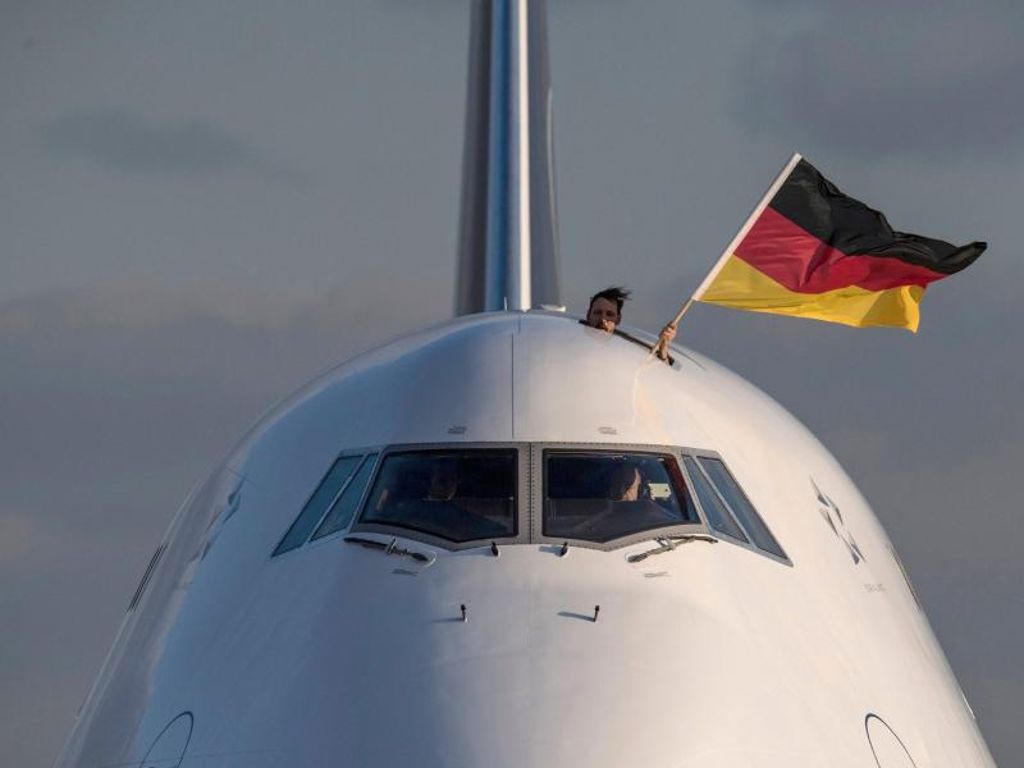
Expect breathalyzer during German Ramp checks

German authorities confirm they have been conducting random breathalyzer tests during ramp checks since as far back as Jan 2017, despite this not being part of the official EU SAFA ramp inspection guidelines.

In Dec 2016, following the accident of the Germanwings Flight 9525, EASA published a proposal to the European Commission to better support pilot mental fitness. One of their recommendations was to introduce random alcohol screening as a part of ramp checks within the EU.

Although that proposal has still not been adopted yet, local authorities in Germany say they can still perform these tests on the basis of German national law alone.

Have you had a recent ramp check anywhere with any surprise items not part of the standard checklist? Comment below…

Further reading


Singapore Changi (WSSS) Departure Clearance by Datalink

Starting April 23rd, 2018, Changi Airport (WSSS) will begin giving departure clearance (DCL) via datalink, on certain routes. The idea is to clear up voice communications when DCL can be used. Full details listed in CAAS AIP SUP 013/2018.

To use this, you’ll need ACARS, and be compliant with EUROCAE ED85-A. You’ll login to the ground system at WSSS.

The departures are as below:

– Destinations in Peninsular Malaysia via ATS Routes A457 and B466
– Destinations in Thailand via ATS Routes B466 and B469 / M751
– Destinations in Indonesia via ATS Route A457, R469 and B470
– Destinations in Australia and New Zealand via ATS Route B470
– Flights with allocated Calculated Take-Off Time (CTOT) under Bay of Bengal Cooperative Air Traffic Flow Management (BOBCAT)

A few other notes:

-The DCL message will not include requested crusing levels and final cruising levels. Your planned flight level in 15b will be used, and ATC will give cruise FL when airborne. Sounds like they won’t entertain any requests for a different FL while on the ground.

-No revisions allowed over datalink, all changes must be made by voice comms.

-Make your request with RCD message (see format in attached AIC) no more than 20 minutes before TOBT. If you’ve got a CTOT under BOBCAT, you’l need to put that in the message. If you’re routing via ANITO B470, list your FL at ANITO crossing.

If your DCL is rejected, you’ll get a “revert to voice procedures” message. A few auto-rejects:
-Flight routes not applicable.
-RCD message doesn’t comply with ED-85A or inaccurate data.
-Invalid TOBT
-When required due to flow restrictions.

Operating out of WSSS soon?  CAAS AIP SUP 013/2018 is worth a read.


01APR: New Oceanic Control Area started ops last night, Greek Charter rules

Weekly International Ops Bulletin published by FSB for OPSGROUP covering critical changes to Airports, Airspace, ATC, Weather, Safety, Threats, Procedures, Visas. Subscribe to the short free version here, or join thousands of your Pilot/Dispatcher/ATC/CAA/Flight Ops colleagues in OPSGROUP for the full weekly bulletin, airspace warnings, Ops guides, tools, maps, group discussion, Ask-us-Anything, and a ton more! Curious? See what you get. Rated 5 stars by 125 reviews.

TNCM/Saint Martin The airport’s commercial terminal was heavily damaged by Hurricane Irma in Sept, and once the airport reopened to commercial flights in Oct, all arriving aircraft were having to be processed through the FBOs instead. But now temporary arrivals and departures facilities have finally been opened for commercial flights, so the FBO’s will return to exclusively supporting private aviation again.

NPCX/Clipperton Oceanic OPSGROUP finally has its own airspace. We’re delighted to make public, after 18 months of negotiation with the local Department of Civil Aviation (DCA), that control of the Clipperton FIR has been assigned to FSB. Operations commenced last night at 2359Z. Read our article, or the official Press Release on the DCA website.

FMCZ/Mayotte Civil unrest and an indefinite general strike continues in Mayotte, with protests and roadblocks on major roads including those around the airport, as well as the capital, Mamoudzou.

SCZZ/Chile ADS-C and CPDLC are now available for FANS-1/A capable aircraft across all of Chile’s oceanic FIR’s (SCIZ/Isla de Pascua, SCFZ/Antofagasta, SCEZ/Santiago, SCTZ/Puerto Montt, and SCCZ/Punta Arenas), except on airways UL302, L302, UL780, and L780. There’s a single CPDLC logon code for all these areas: SCEZ.

LFZZ/France Another ATC strike has been announced, this time just for the LFMM/Marseille ACC, from 04z on Apr 7 to 04z on April 9. If the strike goes ahead, overflight traffic should route around the LFMM sector during this period.

LEZZ/Spain CPDLC is now available above FL285 across Spanish airspace for CPDLC ATN VDL Mode 2 equipped aircraft. The logon code for the Madrid FIR is LECM, and for the Barcelona FIR is LECB.

TTZZ/Piarco CPDLC is out of service until the end of March. All voice comms must be made via New York Radio. Aircraft are requested to log on to TTZP for ADS-C position reporting. Also, include the AFTN address KNYCZZZX when filing your flight plans.

VEPT/Patna From Mar 25 onwards, the airport will now be open 24/7.

OEZZ/Saudi Arabia The Saudi government have confirmed that on Mar 25, seven ballistic missiles were fired toward Saudi Arabia from within Yemen. The rebels said they were targeting OERK/Riyadh Airport and other sites in the capital. All seven missiles were intercepted and destroyed, although one person died and two more were injured by falling fragments of one missile over a residential neighbourhood in Riyadh.

DNZZ/Nigeria Workers’ unions in the aviation industry have threatened to shut the airspace and ground all flight activities in protest against the Federal Government’s refusal to pay pension money owed to Nigeria Airways ex-workers. This “indefinite industrial action” is due to start on Apr 2, unless an agreement is reached.

OPRN/Islamabad Ongoing fuel supply issues. There’s a Notam out that says all aircraft must currently tanker in sufficient fuel for their outbound flight.

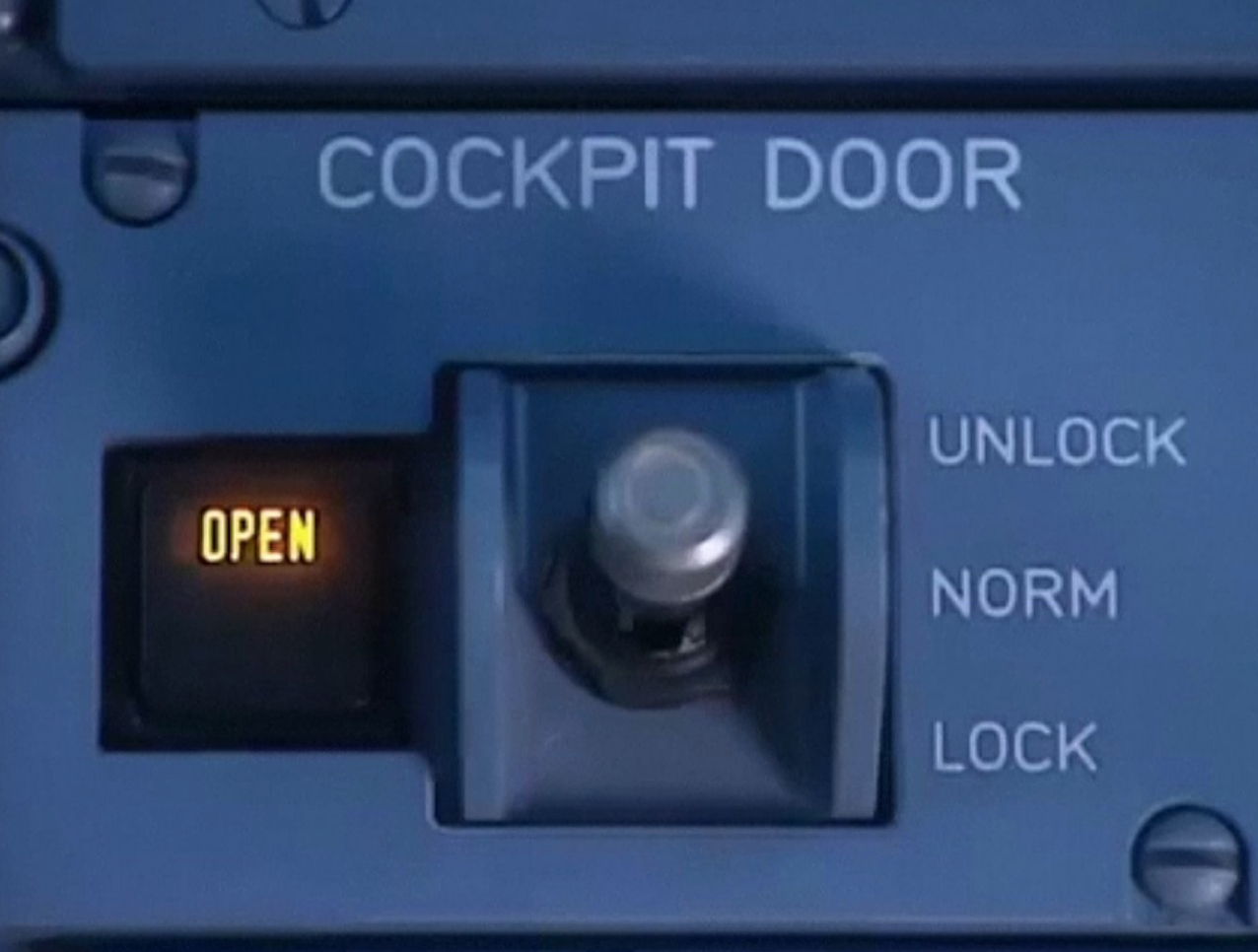
ZZZZ/Worldwide ICAO will raise the weight threshold requirement for hardened cockpit doors for aircraft with 19 or fewer seats from 100,310 pounds (45.5 metric tons) MTOW to 120,152 pounds (54.5 metric tons). This means that current and future ultra-long-range business jets, including the G650ER and Global 7000 will no longer need to meet this requirement. The new standard will become effective Jul 16, 2018, and applicable to member states in Nov 2018.

DTZZ/Tunisia The strike by ATC Technicians originally planned for Mar 23-25 has now been rescheduled for Apr 6-8. They postponed it to facilitate further talks between participating unions and employers over a range of grievances. If the strike goes ahead, it is not yet clear whether specific airports will be affected.

ORZZ/Iraq Turkey have only partially followed the lead of the Iraqi government’s decision to re-open the Kurdish airports ORER/Erbil and ORSU/Sulaymaniyah to international flights. Turkey will now start allowing flights to ORER/Erbil to use its airspace, but not flights to ORSU/Sulaymaniyah – citing their ongoing concerns about terrorism in Sulaymaniyah.

OEZZ/Saudi Arabia On Mar 22, Air India made history by becoming the first commercial flight to be allowed to use Saudi airspace, on a route between VIDP/Delhi and LLBG/Tel Aviv. However, Israeli flag carrier El Al has not been given similar permission, and must still take a more circuitous path to avoid Saudi Arabia, adding hours to the flight time.

KZZZ/USA With the roll-out of PBCS coming on Mar 29, the FAA requires N-reg operators to update their A056 LOA authorization, but they are delaying the renewal deadline to Sep 30 for private (Part 91) operators only. Notice N 8900.445 has now been updated, and is available here: http://fsims.faa.gov/wdocs/notices/n8900_455.pdf

VICG/Chandigarh Following a similar closure in Feb, the airport will be completely closed for more runway extension work from May 12-31.

KORD/Chicago RWY 15/33, one of the airport’s longest runways since O’Hare opened, will close permanently on Mar 29. After that, most traffic requiring extra-long runways will then be shifted to east-west runways 10L/28R and 10C/28C. Some of the pavement lane of runway 15/33 will survive as a taxiway (“Sierra-Sierra”).

EKZZ/Denmark A strike threat from the meteorological service and ATC could end up paralysing air traffic in Denmark, if an agreement is not reached before Apr 4. If this were to happen, internal flights in Greenland would also be suspended – as airspace here is also run by the same authority.

HUEN/Entebbe Uganda’s Civil Aviation Authority has announced that it has launched an investigation into extortion activities by airport staff following a reported incident on Mar 18, where ground handling staff are alleged to have prevented a passenger from boarding a flight to China because he had a one-way ticket and lacked proper documentation, unless the passenger paid a fine of 200 U.S. dollars.

VRZZ/Maldives A state of emergency that had been in place for 45 days amidst political unrest was lifted on Mar 22. There are still some travel advisories in place for the capital Male and Addu City (Addu atoll), but disruption is not expected anywhere else – even throughout the duration of the state of emergency there were no reports that any of the outlying islands, resorts or VRMM/Malé International Airport were affected.

Weekly International Ops Bulletin published by FSB for OPSGROUP covering critical changes to Airports, Airspace, ATC, Weather, Safety, Threats, Procedures, Visas. Subscribe to the short free version here, or join thousands of your Pilot/Dispatcher/ATC/CAA/Flight Ops colleagues in OPSGROUP for the full weekly bulletin, airspace warnings, Ops guides, tools, maps, group discussion, Ask-us-Anything, and a ton more! Curious? See what you get. Rated 5 stars by 125 reviews.


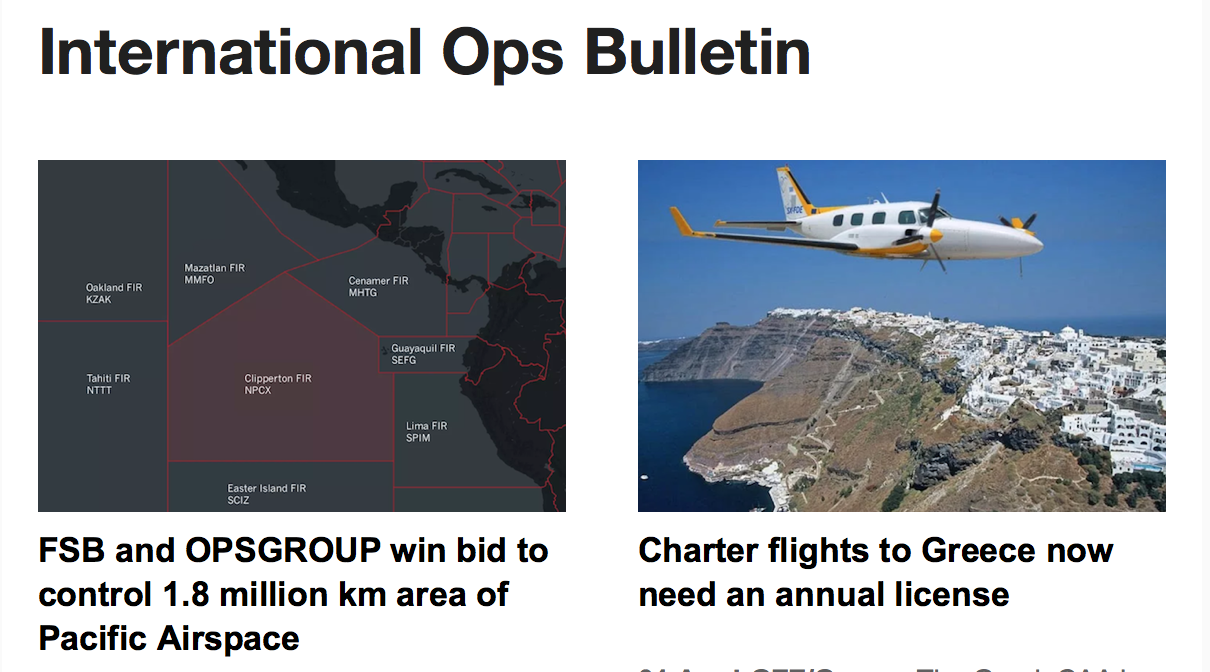
OPSGROUP wins bid to control 1.8 million km area of Pacific Airspace

1st April 2018: Clipperton Oceanic starts operations today, and is the world’s newest piece of airspace!

This one is different though – the users are in charge.

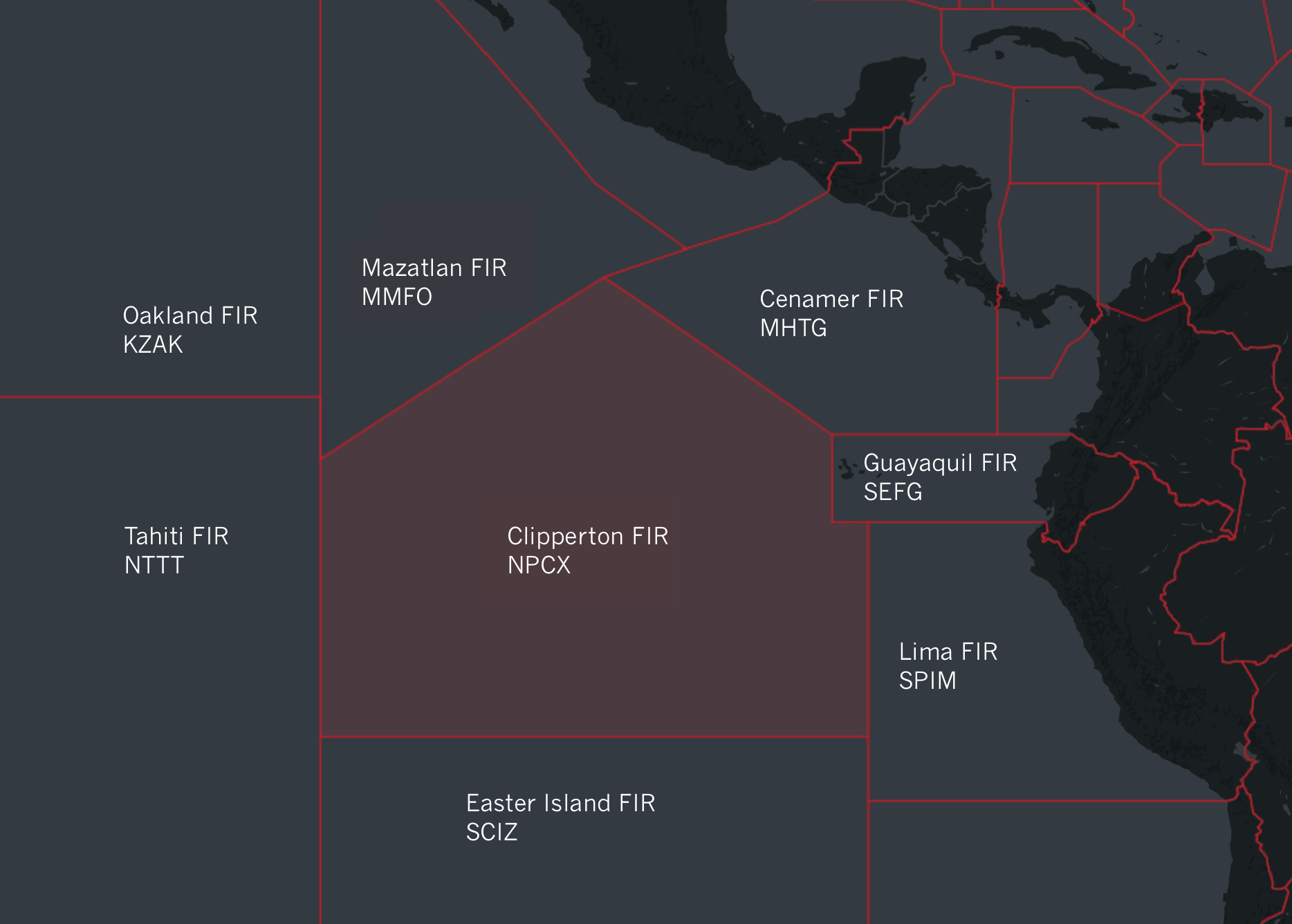
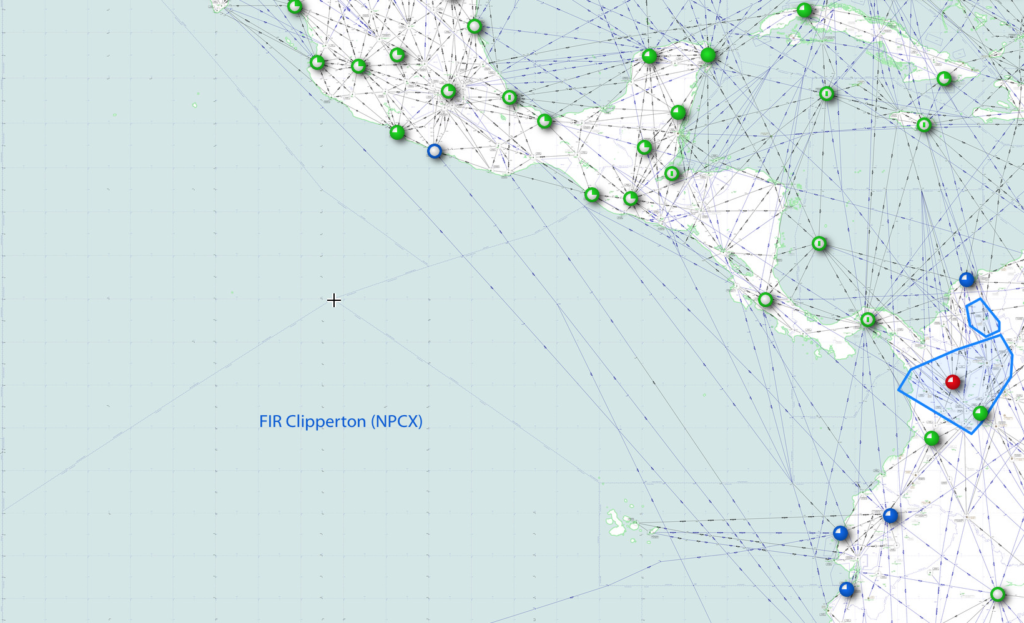
OPSGROUP take official control today of the Clipperton Flight Information Region (FIR) in the South Pacific, a 1.8 million square kilometre chunk of airspace west of the Galapagos Islands and north of Tahiti. The FIR has been unused since 1958, when the Clipperton Oceanic centre and radio service closed.

Announcing the news in an official Press ReleaseFrancois Renard, PM of the Clipperton Government said: “We are a little island but we are proud of our history in Pacific aviation. The years from 1937-1958, when Clipperton Oceanic was a name known to all passing aircraft, are looked back on fondly here. Now, we look forward – to a resumption of traffic on these once busy routes, and we are confident that OPSGROUP is the key to making this happen”.

For the first time, regulations are set by the users. There is no requirement for PBCS, RNP, ADS-B, ADS-C, GNS, GNSS, HLA, MNPS, RLAT, RLON, SLOP, or any of the other exponentially increasing acronyms that operators struggle to keep up with. No LOA’s, no slots, no delays. And no ramp checks. There are no Notams. Although it is large, it’s a simple piece of airspace, and that allows for a simple approach.

Juergen Meyer, a Lufthansa A350 Captain, and a long standing OpsGroup member said: “We’ve seen enough. Ercan (the Cyprus based Turkish ATC centre) doesn’t officially exist, yet you have to call them every time. French Guyana seems to have abandoned their ATC centre. Several African countries have outsourced their entire Permit Department, meaning you have to pay extortionate amounts just to secure a routine overflight. Greece and Turkey continue to hijack the Notam system for a diplomatic war. CASA Australia, like many others, continues to publish absolutely unreadable Notams, endangering safety. Nobody dares to enter the Simferopol FIR. The French ATC service is on strike more often than they are not. Libya lies about the security risks at their airports. Egypt and Kenya refuse to publish safety information because it would harm their tourism.”

Jack Peterson, an Auckland based operator of 2 G550’s, said: “If all these agencies can exist with a poor service, then why not try something different? Clipperton puts the users in charge, and we get to decide whether any of these rules or procedures actually serve us. Now that we have our own airspace, we can make it safe and user-friendly rather than user-hostile. And the South Pacific is the perfect place to start.”

OPSGROUP has also banned Ramp Checks within the region, a practice where pilots are taken hostage by the local Civil Aviation Authority during routine flights, and held accountable for the mistakes of their company, not being released from the ordeal until they submit with a signature.

The Clipperton FIR has a chequered history.

The island is named after a Pirate (John Clipperton). First activated in 1937, Clipperton Oceanic Radio provided a Flight Information and Weather service to trans-Pacific flights for 21 years, until it lost funding from a French-British-American government coalition in 1958.

In 1967, the Soviet Union attempted to takeover the airspace, offering to build several Surveillance Radars on the island. That was seen by the United Nations as a cover story, with their interest being more likely centred on having additional monitoring territory proximate to the US.

Since then, the Flight Information Region has remained dormant, appearing in most Flight Planning systems as “XX04”. Until the agreement with FSB, no service of any kind was provided.

The move has been seen by some observers as similar to the delegation of control of Kosovo airspace to Hungary in 2013, under a 5-year agreement that will likely be extended. Reinhard Kettu, newly appointed Oceanic Director, FSB, commented: “It’s not really the same thing. The Kosovo thing was just a delegation of Air Traffic Control, and at that, just for civil aircraft. Here, in Clipperton, FSB is taking full control of the aviation system. That will allow us to introduce an across-the-board user-first system.

On the Notam issue, OPSGROUP founder Mark Zee commented: “We’ve made things really simple here. Critical Notams, for the most part, tell us of a binary Yes/No for availability. Runway closed, ILS unavailable, Frequency u/s. It’s basically an On/Off switch, and the existing system handles that pretty well. When it comes to everything else, they fail, badly. So much rubbish about unlit towers, cranes, birds, and the rest. That makes up the noise. So, we’ve banned them in this new airspace, while we work on a better system. We will notify operators through the DCA of any withdrawn essential service or facility, for example if our HF is broken. Nothing else.”

Operationally, there are two new airways, UN351 and UN477, with 8 associated waypoints. HF is provided on the South Pacific MWARA Network, on the same frequencies as Auckland, Brisbane, Nadi, and Tahiti – 5643 and 8867 will be the primary ones.

Flight plans should be addressed to NPCXZQZX and NPCXZOZX. Although only HF is required to enter the airspace, CPDLC is provided and the AFN logon is NPCX. To begin, only a Flight Information Service is provided; no alerting, SAR, or Air Traffic Control service is part of the agreement. The rest is detailed in Clipperton AIC 03/18.

FSB and the Clipperton Government have also partnered with Thales and the KPA Military Construction Unit in a US$27 million agreement to build an entirely new Oceanic Control Centre on the Island, to be completed by 2021. “Until then, we will rely on HF and position reporting, but from 2021 we will be able to use space-based ADS-B”, said Mr. Kettu.

Clipperton Oceanic welcomes all. If you’re passing, say hello on HF. And if you’re planning to enter the airspace, make sure to read AIC03/18.

Media contacts:

Further Reading:


New rules for charter flights to Greece

On Mar 23, the Greek CAA introduced a new rule requiring charter flights on non EU-registered aircraft with up to 19 seats to apply for an annual TCO license before operating to Greece.

This is in addition to having to obtain the standard landing permit, as well as the TCO approval from EASA.

So far, the CAA haven’t officially published an English version of the new rule anywhere, although they say that it will be updated in the AIP at some point. But as handling in Greece is mandatory, they decided to distribute the information to all handling agents & aviation service providers in Greece for them to notify their customers directly.

Click here for the translated version of that document, with all the info you need to know about how to apply.

It looks like you can’t apply for this new TCO license through the CAA directly; you can only do so through your “legal representative in Greece” – which can be your handling agent, allowing at least 5 working days to obtain the license if all submitted paperwork is correct.


23MAR: Unsafe Airspace updates, Fixing Notams NOW, new Greek rules

Weekly International Ops Bulletin published by FSB for OPSGROUP covering critical changes to Airports, Airspace, ATC, Weather, Safety, Threats, Procedures, Visas. Subscribe to the short free version here, or join thousands of your Pilot/Dispatcher/ATC/CAA/Flight Ops colleagues in OPSGROUP for the full weekly bulletin, airspace warnings, Ops guides, tools, maps, group discussion, Ask-us-Anything, and a ton more! Curious? See what you get. Rated 5 stars by 125 reviews.

LGZZ/Greece A new rule is set to be introduced on Apr 1 for charter flights to Greece on non EU-registered aircraft with up to 19 seats. In addition to having to obtain the standard landing permit, as well as the TCO approval from EASA, you will now need to apply for an annual “Operating License” from the Greek CAA too.

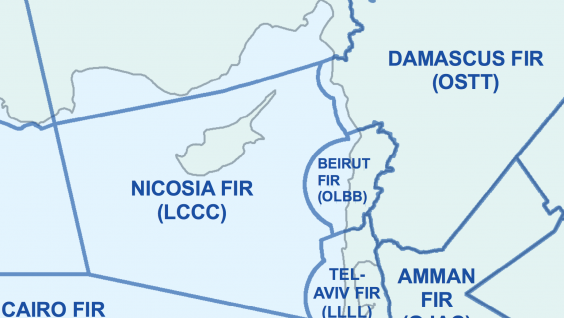
LCZZ/Cyprus Many recent reports of GPS and ADS-B outages in the airspace around the boundary between the LCCC/Nicosia and LLLL/Tel Aviv FIRs, in some cases lasting up to 30 minutes. Some aircraft only reported signal anomalies once ATC advised them they were off track. If you’re headed this way – be aware.

ORZZ/Iraq The Iraqi Prime Minister has lifted the government ban on international flights to the Kurdish airports ORER/Erbil and ORSU/Sulaymaniyah. The central government will take full control of the airports and start allowing international flights to resume in the coming days. Both Iran and Turkey still have Notams in place prohibiting flights to these airports from using their airspace – we expect these to be updated soon to reflect the lifting of the ban.

YZZZ/Australia Cyclone Marcus hit Darwin on Mar 17 with winds of over 130kmh, causing widespread damage and temporarily forcing YPDN/Darwin Airport to close. The cyclone has since moved out into the ocean off the coast of Western Australia, increasing in strength, with winds of up to 230kmh. It’s forecast to slowly move southwards, potentially affecting Perth around Mar 26.

OOMS/Muscat The airport’s new terminal opened on Mar 20, and all traffic must now go there instead of the old terminal which is now closed – although at some point it will be redeveloped to be used by low-cost carriers.

KZZZ/USA As advised by FDC NOTAM 6/7196, from Mar 29 onwards, pilots operating in the Washington DC Flight Restricted Zone (DC FRZ) must now file flight plans through the FAA’s Washington Center Flight Data Unit (FDU), instead of filing a flight plan with the Washington Hub Automated Flight Service Station (Leidos AFSS), by calling 703-771-3476. This new requirement applies to flights to/from all airports in the FRZ, including KDCA/Washington.

OMZZ/UAE Long delays expected at all major UAE airports on the weekend of Mar 24-25, due to spring break holidays.

VOCL/Calicut The airport is about to start their big runway resurfacing project, which will close the runway each day between 0630-1430z from Mar 25 to Jun 15.

SAZZ/Argentina The Argentinian airline Aerolineas has suspended ticket sales to all of their destinations until Mar 25. They say multiple aircraft were recently damaged by hail in SABE/Buenos Aires, during a storm, which means they now need to reprogram their schedule until the aircraft get fixed.

KGYY/Gary The airport’s long runway (RWY 12/30) will be completely closed for repair from Apr 20 to May 21. The short runway (RWY 02/20) will remain open throughout, but it’s only 3600ft long. Gary supplements Chicago’s major airports, KORD/O’Hare and KMDW/Midway – so expect those two airports to be busier than usual during this period.

ZSZZ/China There are four airways over the Himalayas (L888, Y1, Y2, Y3) which the Chinese authorities will only let you use if you have ADS, CPDLC and satellite voice communication, and operators need to verify their equipment with them at least 60 days in advance! So they recommend that only regular scheduled flights apply to use these airways.

FACT/Cape Town It’s not showing up on the Notams yet, but all fuel suppliers at the airport are reporting that there’s currently no Jet A1 available until further notice.

VCRI/Mattala At what has been dubbed “the world’s emptiest international airport” and a failed vanity project by Sri Lanka’s ex-president, there have been recent reports of herds of elephants, buffaloes and deer regularly invading the airfield from a nearby wildlife reserve.

FAOR/Johannesburg GA/BA crew and pax not wanting to have to go through the main terminal to clear customs and immigration can now do this instead at the airport’s dedicated GA/BA FBO – Firebird Aviation.

TAPH/Barbuda The airport re-opened to commercial flights on Mar 18, having been closed since Sep 2017 following extensive damage sustained during Hurricane Irma.

EGGW/Luton A new noise curfew is being introduced, so from Jun 1 to Sep 30, arrivals/departures will be prohibited between 22-06z each night. Also between these dates, non-emergency diversions will be completely prohibited for the entire period, day and night.

GUZZ/Guinea More protests are planned in Conakry, including: a ‘dead city’ protest on Mar 20, and a rally along the Fidel Castro Highway on Mar 22. Following disputed elections held on Feb 4, there have many sporadic demonstrations across the country, with reports of violent clashes, including some fatalities, in the northern suburbs of Conakry.

MKZZ/Jamaica Yet another ‘state of emergency’ has been declared in Jamaica, this time around the Spanish Town area. It’s set to last until Apr 4. A major security operation is now underway, in response to recent violence including shooting incidents. Travellers are being told to avoid the area.

RPZZ/Philippines Expect disruption to travel and business activity from Mar 25 to Apr 1 during a week of public holiday known as ‘Holy Week’. Make sure all hotels and local travel is booked in advance, and expect most government offices, banks and private companies to remain closed or to operate reduced hours.

ZSAM/Xiamen The airport will be closed from 1830-2130z every Sunday and Thursday from Mar 18 to Jun 7.

PGUM/Guam The FAA is initiating a TFR from Mar 18 – Mar 25, and one border runs parallel with the runways at PGUM. The TFR extends up to FL200, just north of the airport.

HAAB/Addis Ababa A fuel shortage is expected beginning Mar 19, due to protests by the delivery truck drivers.

Weekly International Ops Bulletin published by FSB for OPSGROUP covering critical changes to Airports, Airspace, ATC, Weather, Safety, Threats, Procedures, Visas. Subscribe to the short free version here, or join thousands of your Pilot/Dispatcher/ATC/CAA/Flight Ops colleagues in OPSGROUP for the full weekly bulletin, airspace warnings, Ops guides, tools, maps, group discussion, Ask-us-Anything, and a ton more! Curious? See what you get. Rated 5 stars by 125 reviews.


Fixing Notams – we’re on it. Help us.

Update: November 1st, 2019: The Notam Team is up and running – we’re fixing Notams.
Follow our progress at fixingnotams.org.


OK. We’re done writing articles about it, and making goat jokes – we’ve moved the “Fixing Notams” job to the top of our list..

OpsGroup is all about information – getting the essential risks and changes that flight ops personnel need to know about into their hands without delay. Our group agrees – plenty of colourful comments on Notams from members.

Now we want your ideas and opinions on the fix.

Here’s our ask:

1. Rate the current system – and then click the things you would like to see.

2. If you’re in charge of a group of people – whether you are the Chief Pilot at Lufthansa, the Tower Chief in Shannon, or manage an Ops team of two – Get this out to your people and ensure everyone has their say.

Forward this to your team of ATCO’s, Pilots, Dispatchers:

We especially want to hear from pilots, controllers, and dispatchers, and if you read on, you’ll see why.

Do it like this:

  • Send them the survey link: https://fsb1.typeform.com/to/irZiFM
  • OR, click here for a magic pre-written email
  • OR, send them a link to flightservicebureau.org/notams
  • OR, share this facebook post:

The survey direct link is: https://fsb1.typeform.com/to/irZiFM


The Solution

If you took the survey, you saw this:

That part is pretty easy – presenting the Output of the system is a straightforward enough task.

The Input part – that’s where the real work is.

First, we are working on an Artificial Intelligence answer to finding Critical Notams in the current legacy system. This will allow us to present the data flow in order of what matters, and leave those cranes, birds, and grass cutters right at the bottom.

Second,

If you read my article on MH17 – a darker truth, you’ll understand why it’s important to open up the system to allow a trusted group to shape the information flow.

That begins with Pilots, Air Traffic Controllers, and Dispatchers. I have the great fortune to be all three, and it’s very clear to me that just like Trip Advisor – and our own “Airport Spy” in OpsGroup – this idea will work. We’ve already seen in OpsGroup how much we trust the information from other users in our group.

It’s key to the future trust of the Notam system. Which we should rename, but that’s another days work.

If you got this far, thank you for being part of the solution! You can always write me a note at mark@fsbureau.org

Thanks!
Mark.


Aerolineas aircraft grounded due to hail damage

The Argentinian airline Aerolineas has suspended domestic ticket sales until Mar 25. They say multiple aircraft were recently damaged by hail in SABE/Buenos Aires during a storm on Mar 14, which means they now need to reprogram their schedule until the aircraft get fixed.

The aircraft that sustained the damage were 15 Boeing 737’s in the airline’s domestic and regional fleet. Strangely, perhaps, no other airlines have reported similar damage to their aircraft from the storm.

Aerolineas say they are now assessing the aircraft damage with help from Boeing, with the hope that they will have most of the aircraft back in operation before the Easter travel weekend.


Cape Town – No Fuel!

FACT/Cape Town is facing a fuel restriction, no fuel available as of now (20 MAR 2018). The reason for the restriction is not known, but we have reached out to several suppliers who have all confirmed the same information.

We’re checking up to find the reasoning, as well as an estimated date of availability.

If you have any additional information, you can reach out at team@flightservice.org


New Unsafe Airspace Summary and Map

March 20, 2018: One of our biggest missions in OPSGROUP is to share risk information and keep operators aware of the current threat picture. The latest Unsafe Airspace Summary is now published, and available to members here as a PDF download (Unsafe Airspace Summary 20MAR2018, edition LIMA).

The main changes since the last summary are below. For a current risk map, refer to the Airspace Risk map in your member Dashboard.

The situation in Afghanistan remains similar. On March 13, Germany added wording to maintain FL330 or higher,  still recommending against landings at Afghan airports.

Germany also issued updated NOTAMs for Mali, Iraq, and South Sudan. All warnings remain as previous, unchanged from the prior NOTAMs.


16MAR: PBCS PITA, French ATC Strike, Venezuela outbounds banned

Weekly International Ops Bulletin published by FSB for OPSGROUP covering critical changes to Airports, Airspace, ATC, Weather, Safety, Threats, Procedures, Visas. Subscribe to the short free version here, or join thousands of your Pilot/Dispatcher/ATC/CAA/Flight Ops colleagues in OPSGROUP for the full weekly bulletin, airspace warnings, Ops guides, tools, maps, group discussion, Ask-us-Anything, and a ton more! Curious? See what you get. Rated 5 stars by 125 reviews.
LFZZ/France Some ATC unions are expected to join the French National Strike that has been declared for Mar 22. We’re still waiting for more details, but it looks like the strike could well start from 18z on Mar 21 and last through until 05z on Mar 23.

VNKT/Kathmandu The airport re-opened on Mar 13, following the tragic crash of the US-Bangla aircraft on Mar 12. The airport has confirmed that all runways, taxiways and navaids are operational, there are no new restrictions, and the airport operating hours remain the same: 0015z to 1845z daily.

WADD/Bali The airport will be closed all day on Mar 17, for Bali’s day of silence to mark the Hindu New Year. From 6am on Mar 17 until 6am on Mar 18, Bali literally comes to a standstill with almost complete silence throughout the island. Mobile internet gets turned off, and all work and entertainment is forbidden. Non-Hindu residents and tourists must abide by the restrictions too, and no one is allowed onto the beaches or streets.

VHHH/Hong Kong The runway resurfacing project continues. Every night between 1730-2345z, one of the airport’s two runways will be closed, meaning it is even harder than usual to get a slot during these times. The work is scheduled to continue until the end of April 2019.

EPWA/Warsaw A new night curfew is in place: no ops allowed from 2130-0330z between now and Apr 26, except for emergency diverts. After that, the curfew times change to 2130-0330z for the summer time period.

FMCZ/Mayotte Weeks of street protests and roadblocks on major roads including those around the airport, as well as the capital, Mamoudzou. The French government are now in negotiations with local groups, to try to bring an end to weeks of disruption across the island linked to an anti-crime and anti-immigration protest movement.

EIDW/Dublin Night-time runway maintenance work continues. The long runway (RWY 10/28) is available again overnight but with a displaced threshold, meaning a shortened landing distance of 2142 metres.

TLPC/Castries The authorities will now start allowing certain private flights above ICAO Classification Code 2 to operate to the airport – the new limit is Code 3C, with wingspan not greater than 28.5 meters. Daylight ops only, no overnight parking allowed, and you’ll have to sign a form absolving the airport of any responsibility in case anything goes wrong.

FACT/Cape Town Ongoing drought and low dam storage levels. The airport has published a Notam requiring all flights to tanker in water – don’t expect to be able to uplift any at the airport for the foreseeable future. Water rationing in the city of Cape Town has been in place since Feb 1 – without rainfall, the date the city estimates its taps will run dry, which has been dubbed “Day Zero,” has been set as April 16.

RJZZ/Japan Another eruption on Mar 10 at the Shinmoedake volcano in southern Japan. On Mar 14, an ash cloud was still being reported in the area up to FL150. Earlier on Mar 6, two eruptions forced RJFK/Kagoshima Airport to close all day.

VCZZ/Sri Lanka Much improved security situation following communal unrest at the beginning of March. Although the nationwide state of emergency is officially still in place until Mar 16, night-time curfews have now been lifted, and social media access has been restored after a three-day blackout.

LHBP/Budapest One of the airport’s two runways (RWY 13L/31R) will be closed until June 30 for extensive resurfacing works. There may be some delays, as this will result in reduced capacity during single runway ops.

OEZZ/Saudi Arabia Saudi Arabia has given Air India permission to use its airspace on flights between VIDP/Delhi and LLBG/Tel Aviv. This could mark the end of the 70-year airspace ban that Saudi Arabia has had in place against flights to/from Israel.

CZZZ/Canada A reminder that CANPASS is only available for private aircraft carrying no more than 15 people (including the crew). Any more than that and you’ll need to call in advance to arrange for customs clearance on arrival. More info here: https://www.cbsa-asfc.gc.ca/prog/canpass/

Weekly International Ops Bulletin published by FSB for OPSGROUP covering critical changes to Airports, Airspace, ATC, Weather, Safety, Threats, Procedures, Visas. Subscribe to the short free version here, or join thousands of your Pilot/Dispatcher/ATC/CAA/Flight Ops colleagues in OPSGROUP for the full weekly bulletin, airspace warnings, Ops guides, tools, maps, group discussion, Ask-us-Anything, and a ton more! Curious? See what you get. Rated 5 stars by 125 reviews.


PBCS PITA – here’s the latest Rumours and Facts

Well, we’ve been up all night on this one. PBCS is a bit of a minefield right now. But, very cool to get so much OPSGROUP input on this – about 100 replies. We have straightened out the Rumours vs Facts below, and this is our best shot at the present picture of PBCS.

Don’t take any of it as total fact, but we have redacted the best picture from the various experts in the group (and there are some great people – we should say a big THANK YOU!).

Got corrections? Comments below …

Oh for the days of HF and a dodgy INS accurate to about 6 miles. Anyhow ….

Results after OPSGROUP input – updated March 16th, 2018

These aircraft have Honeywell FMS’s that have the Latency Problem:

  1. All NZ-2010 Equipped Aircraft – NZ-2010 (NZ6.1)
  2. Bombardier Global Express/XRS/Global 5000 – IC-810 (NZ6.1)
  3. Dassault F900C/EX (Primus 2000) – IC-810 (NZ6.1)
  4. Dassault F900DX/EX/LX (EASy II) – EPIC (NZ7.1.2)
  5. Dassault F2000DX/EX/LX/S (EASy II) – EPIC (NZ7.1.2)
  6. Dassault F7X (EASy II) – EPIC (NZ7.1.2)
  7. Dornier 328-100 Turboprop – NZ (NZ6.2)
  8. Gulfstream GV – IC-810 (NZ6.1)
  9. Gulfstream G450 – EPIC (NZ7.1.2)
  10. Gulfstream G550 – EPIC (NZ7.1.2)


Latest Links:

United States – for N-reg aircraft


Canada 

Europe

NAT Region
Happy PBCS’ing!


Kurdistan airports to re-open

The Iraqi Prime Minister has lifted the government ban on international flights to the Kurdish airports ORER/Erbil and ORSU/Sulaymaniyah.

The central government will take full control of the airports, and will start allowing international flights to resume in the coming days. No international flights have operated from these airports since the end September 2017. Their closure was seen as a punitive measure taken by the Iraqi central government following the September 25th independence referendum in the Kurdistan Region.

The authorities have now withdrawn the Notams that were previously in place for both of these airports advising that they were closed to international flights. Both Iran and Turkey currently still have Notams in place prohibiting flights to these airports from using their airspace – but we expect these to be updated soon to reflect the lifting of the ban.

A0661/18 NOTAMR A6765/17
Q) LTXX/QAFXX/IV/NBO/E /000/999/3901N03524E465
A) LTAA LTBB B) 1802010551 C) 1803312359 EST
E) ALL TFC FROM/TO ORSU AND ORER AERODROMES (ALSO AS ALTERNATE
AERODROME) ARE NOT AUTHORIZED TO USE TURKISH AIRSPACE UNTIL FURTHER
NOTICE EXC EMERGENCY, AMBULANCE AND HUMANITARIAN AID FLIGHTS.
A0223/18 NOTAMR A3746/17
Q) OIIX/QAFXX/E/000/999/
A) OIIX B) 1801160610 C) 1804160600 EST
E) ALL TRAFFIC FM OR TO ORSU AND ORER ARE NOT AUTHORIZED TO USE
TEHRAN FIR.

Further reading:


09MAR: Greek airport prices double, new international airport Sao Paolo

Weekly International Ops Bulletin published by FSB for OPSGROUP covering critical changes to Airports, Airspace, ATC, Weather, Safety, Threats, Procedures, Visas. Subscribe to the short free version here, or join thousands of your Pilot/Dispatcher/ATC/CAA/Flight Ops colleagues in OPSGROUP for the full weekly bulletin, airspace warnings, Ops guides, tools, maps, group discussion, Ask-us-Anything, and a ton more! Curious? See what you get. Rated 5 stars by 125 reviews.

LGZZ/Greece Landing and parking fee hikes are coming on Apr 1, at all those airports in Greece that are operated by Fraport: Aktion, Chania, Corfu, Kavala, Kefalonia, Kos, Lesbos, Mykonos, Rhodes, Samos, Santorini, Skiathos, Thessaloniki and Zakynthos. Parking at all airports will now be at least twice as expensive as it used to be.

SBSP/Sao Paulo The World Economic Forum on Latin America 2018 will be taking place in Sao Paulo from Mar 13-15. For the first time since 1985, the city’s second airport SBSP/Congonhas will be open to international flights, from Mar 9-18. Only BA/GA will be accepted, nothing larger than 737BBJ / A319ACJ. This will be a trial period to check if the airport could regain its international status on a permanent basis.

VTZZ/Thailand Tropical storms are forecast across central Thailand, including in Bangkok, from Mar 8-10. Authorities have warned locals to prepare for possible flooding, as most dams and rivers in the area are already near capacity.

KZZZ/USA Travel disruption expected to continue across the Northastern states in the next few days, following the passage of Storm Quinn, which buried many areas with heavy snow. More than 2000 flights were cancelled at Northeastern airports because of the storm.

NFTF/Fua’amotu Reconstruction efforts continue, following damage caused by Cyclone Gita in Feb. The night-time curfew in central Nuku’alofa has been extended to Mar 12. The airport is open and operating, but travel to Togo is currently not advised due to damage to hotels and infrastructure across the rest of the island.

NZZZ/New Zealand Cyclone Hola is forecast to arrive sometime between Mar 11-13. The cyclone is currently building as a category 2 storm as it moves away from Vanuatu. It’s expected to intensify on Mar 8 as it moves southwest towards New Caledonia, with most forecasters saying it will then track towards the north island of New Zealand.

LGTS/Thessaloniki The hugely disruptive repair work that had been going on since early Dec 2017 has now been completed. Both runways are back in service, and the makeshift runway they were calling 10L/28R has now been re-assigned back as Taxiway F. Easyjet will re-commence their scheduled flights there from Mar 25 onwards.

LFZZ/France Potential strike by some Air France staff on Mar 23. If it goes ahead, it’s likely to be similar to the one held on Feb 22 which resulted in the carrier canceling a quarter of its flights.

VCZZ/Sri Lanka On Mar 6, the government announced a nationwide state of emergency in response to recent incidents of inter-communal violence in certain regions to the east of the capital, Colombo. There are restrictions on phone and internet access, and all the main social media platforms have been blocked. Soldiers have been deployed across the island for an initial 10-day period in a bid to prevent the unrest from spreading.

LGZZ/Greece We’ve heard reports that the Greek CAA are planning to introduce some new rules for non EU-registered aircraft with up to 19 seats intending to do charter flights to Greece. In order to pick-up or drop-off passengers, these operators will now need to apply for an annual licence from the CAA. This is quite separate from the existing requirement to get a Third Country Operator (TCO) approval from EASA. Expect an AIP update soon with more details on this.

RJZZ/Japan A volcano in southern Japan erupted on Mar 6, shooting smoke and ash up to 7,500 feet into the sky. All flights at the nearby RJFK/Kagoshima airport were grounded, though operations have since resumed. On Mar 7, an ash cloud was still being reported in the area up to FL150.

KSDM/San Diego CBP are threatening to close the Customs office at the airport from May 1, after failing to reach an agreement with the City of San Diego about a requested upgrade to the CBP facilities and equipment at the airport. If the closure goes ahead, GA will no longer be able to operate internationally to/from KSDM.

LXGB/Gibraltar On Mar 3, severe weather and a subsequent rockfall damaged some airport equipment – both the primary and secondary radar are currently out of service.

TTCP/Tobago The airport will be closed for runway repair each night between 02-10z until May 5.

MUZZ/Cuba The U.S. have claimed that some of its embassy staff in Havana have been targeted by so-called ‘health attacks’, and believe that U.S. citizens may also be at risk. They now specifically mention Hotel Nacional and Hotel Capri as hotels to avoid.

SOCA/Cayenne Due to ongoing staff shortages, the airport is unavailable from 01-11z every night now until further notice.

VIDP/Delhi Sporadic runway closures until the end of March will mean that at most times overnight, there will only be one runway available. Expect delays.

ZSPD/Shanghai The airport now has Cat-III ILS installed on RWY34L, which will enable pilots with the necessary qualification to land even when visibility is less than 175 meters / landing height less than 15 meters.

KZZZ/USA With the ADS-B deadline coming up in Jan 2020, U.S. operators can get their ADS-B equipment validated by the FAA for free – just do a flight of at least 10 minutes in ADS-B airspace above FL050, and the system will check the accuracy of the data your aircraft is transmitting, and will send you an automated report by email. Sign up here: https://adsbperformance.faa.gov/PAPRRequest.aspx

Weekly International Ops Bulletin published by FSB for OPSGROUP covering critical changes to Airports, Airspace, ATC, Weather, Safety, Threats, Procedures, Visas. Subscribe to the short free version here, or join thousands of your Pilot/Dispatcher/ATC/CAA/Flight Ops colleagues in OPSGROUP for the full weekly bulletin, airspace warnings, Ops guides, tools, maps, group discussion, Ask-us-Anything, and a ton more! Curious? See what you get. Rated 5 stars by 125 reviews.


Sao Paulo’s second airport to regain international status… for nine days

For the first time in over twenty years, the city’s second airport, SBSP/Congonhas, will be open to international flights, from 9-18th March 2018.

This is happening as the World Economic Forum on Latin America 2018 will be taking place in Sao Paulo from Mar 13-15, and as space is limited at the main airport, SBGR/Sao Paulo International, the authorities think they’ll need extra space for attendees’ aircraft. So at SBSP/Congonhas, only BA/GA will be accepted, and nothing larger than 737BBJ / A319ACJ.

This will also serve as a trial period to check if the airport could regain its international status on a permanent basis. Scheduled international flights stopped operating from Cogonhas back in 1985, and the airport finally lost its international status in 2008.

The airport’s runways were resurfaced last resurfaced back in 2007, but were not extended because of the rapid growth of Sao Paulo, which has now completely surrounded the airport. The longest runway is 1940 meters, and the airport is open from 07-23 local time, seven days a week.


Price hike at Greek airports

On 1st April 2018, Fraport will be increasing the rates for landing and parking fees at the 14 international airports it manages in Greece: Aktion, Chania, Corfu, Kavala, Kefalonia, Kos, Lesbos, Mykonos, Rhodes, Samos, Santorini, Skiathos, Thessaloniki and Zakynthos.

Parking charges used to be simple here: at every airport, it was free for the first five hours, and then EUR 1.08 per ton (MTOW) for every 24 hours after that. That same price applied regardless of aircraft size.

Now things are set to become a little more complicated, but effectively, parking will now be at least twice as expensive as it used to be, with even higher costs being introduced for longer stays during the summer months:


Landing fees are going up too. Aircraft below 10 tonnes have always had to pay a flat fee, and from 1st April, these are set to double. For larger aircraft, Fraport set the rate per ton (MTOW), and with the exception of LGKV/Kevala and LGSA/Chania, these are being increased across the board:

Operating to these Greek airports has become increasingly challenging since their privatisation in April 2017. Fraport initially struggled to deal with providing parking to non-scheduled and business aviation, and new slot procedures were introduced to try to better manage the volume of requests being made.

Ryanair have already complained about the price hike, as well as a new EUR 90 fee that will be charged to send a fire engine every time a plane refuels whilst passengers are being boarded – something which they say does not happen anywhere else in the world except Greece.

With the new rates set to come into force on 1st April 2018, many operators may prefer to take their business elsewhere. As the President of Corfu CAA Association, Dimitris Roussos, says – “[the price increase] is exorbitant and almost prohibitive. A lot of people will choose other airports such as Ioannina which have lower charges and where they can refuel and spend 1-2 days instead of coming to ‘expensive’ Corfu. It is quite probable that we will see the Corfu Air Club move to Ioannina as well as a significant decrease in the number of small private aircraft visiting Corfu in the summer.”

Full details of the changes to the landing and parking fees at all 14 airports can be found on Fraport’s dedicated page.


My first North Atlantic Flight is tomorrow – NAT Ops Guide (Updated 2018)

For the latest changes and updates on the North Atlantic, including our most recent Guides and Charts, use our NAT reference page at flightservicebureau.org/NAT.

Of all the hundreds of questions we see in OPSGROUP, one region stands out as the most asked about – the NAT/North Atlantic. So, we made one of our legendary guides, to get everything into one PDF.  It’s called “My first North Atlantic Flight is tomorrow” – and now we’ve updated it for 2018!

Contents:

  • 1. What’s different about the NAT?
  • 2. Changes in 2018, 2017, 2016, 2015
  • 3. NAT Quick Map – Gander boundary, Shanwick boundary
  • 4. Routine Flight Example #1 – Brussels to JFK (up at 5.45am)

  • 5. Non Routine-Flights: No RVSM, No RNP4, No HF, 1 LRNS, No HLA, No ETOPS, No TCAS, No Datalink – what you can do and where you can go
  • 6. Diversion Airports guide: Narsarsuaq, Sondy, Kef, Glasgow, Dublin, Shannon, Lajes, Fro Bay, Goose Bay, Gander, St. Johns
  • 7. Airport data
  • 8. Overflight permits – routine and special

  • 9. Special NAT procedures: Mach number technique, SLOP, Comms, Oceanic Transition Areas, A successful exit, Screwing it up, Departing from Close Airports
  • 10. North Atlantic ATC contacts for Shanwick, Gander, Iceland, Bodo, Santa Maria, New York – ATC Phone, Radio Station Phone, AFTN, Satcom, CPDLC Logon codes; and adjoining Domestic ATC units – US, Canada, Europe.
  • 11. NAT FPL Codes
  • 12. NAT Flight Levels
  • 13. Flight Plan Filing Addresses by FIR
  • 14. Links, Questions, Guidance

Excerpt from the Routine Flight #1:


Buy a copy ($20)   Get it free – join OPSGROUP

To get your copy – there are three options:

  1. OPSGROUP Members, login to the Dashboard and find it under “Publications > Guides”. All FSB content like this is included in your membership, or
  2. Join OPSGROUP with an individual, team, or department/airline plan, and get it free on joining (along with a whole bunch of other stuff), or
  3. Purchase a copy in the Flight Service Store!


01MAR: Kenya airspace risk, Curacao rejecting overflights

Weekly International Ops Bulletin published by FSB for OPSGROUP covering critical changes to Airports, Airspace, ATC, Weather, Safety, Threats, Procedures, Visas. Subscribe to the short free version here, or join thousands of your Pilot/Dispatcher/ATC/CAA/Flight Ops colleagues in OPSGROUP for the full weekly bulletin, airspace warnings, Ops guides, tools, maps, group discussion, Ask-us-Anything, and a ton more! Curious? See what you get. Rated 5 stars by 125 reviews.

ORZZ/Iraq The Iraqi central government have extended the ban on international flights to the Kurdish airports ORER/Erbil and ORSU/Sulaymaniyah to the end of May 2018. They say the ban will only be lifted when the Kurdistan Regional Government fully hand control of the administration of the airports back to the federal government.

EZZZ/Europe Expect travel disruption across Europe until at least Mar 2, due to a plume of cold air blowing east from Russia. France, Ireland, Italy and the UK have been particularly affected. The Siberian weather system has brought sub-zero temperatures and heavy snow and ice – impacting air, rail and road transport.

GAZZ/Mali The U.S. have extended their Mali airspace warning to the end of Feb 2019 – avoid flying over or into Mali below FL260. If you plan to do so, notify the FAA 3 days in advance.

VTSG/Krabi Expect delays until the end of March, as they’ll be working to repair some cracks and holes on the runway caused by recent flooding. Don’t expect to be given permission to park for more than a few hours, as priority is being given to scheduled flights.

LPAZ/Santa Maria There will be no airport METAR/TAF provided between 01-07z each night until the end of March, due to staff shortage at the Santa Maria CMA MET service.

HAZZ/Ethiopia There is still an issue with traffic entering the HAAA FIR at waypoints MANDA (on the boundary between Eritrea and Djibouti) and PARIM (on the boundary between Yemen and Djibouti). Addis ATC controls Djibouti’s airspace here, and they say they do not recognise airway W180, and that UA451 is closed within Ethiopian airspace. So don’t use those routes, as ATC won’t accept any traffic due to safety concerns.

EHZZ/Netherlands A reminder that all CPDLC-equipped aircraft which enter Maastricht Upper Area Control Centre (MUAC) airspace must log on to EDYY as a secondary means of communication. That means anywhere above FL245 in the EBBU/Brussels UIR, EDVV/Hanover UIR, or EHAA/Amsterdam FIR. Aside from it being mandatory, if you’re equipped and logged-on, you’ll probably get a slightly better service in terms of requested levels/directs. If you want to chat with them about this, you can email muac.datalink@eurocontrol.int

VRMM/Malé The airport will continue to be closed overnight from 19-01z until Sep 30, for runway renovation that has been taking place since 2016.

LTFJ/Istanbul The airport will continue to be closed for repair overnight until the end of Oct. Slightly different times depending on the day of the week – more or less 2200-0330z. The other airport in Istanbul is LTBA – that remains open overnight, but expect it to be busy.

LFPG/Paris Charles de Gaulle The Runway Status Light System, with Take-off Hold Lights (THL) and Runway Entrance Lights (REL), is now operational. Pilots should remain clear of the runway when a REL on a runway access is illuminated red, and they should not take-off when a THL in front of them is illuminated red.

VIZZ/India Since India has introduced e-visas, they have stopped issuing visas on arrival. Crew must apply for the ‘e-Business Visa’, and passengers must apply for the ‘e-Tourist Visa’, on the government website: https://indianvisaonline.gov.in/

VOGO/Goa Very busy until mid-May, when the winter season ends. Until then, there’s no overnight parking available for BA/GA flights. Drop-and-go’s are ok, but you need to get approval from the airport at least 48hrs in advance. Additionally, the airport is closed to all civil aviation from 03-07z & 10-11z Mon-Fri.

AYZZ/Papua New Guinea A 7.6 magnitude earthquake hit central Papua New Guinea on Feb 25. The extent of the damage is not yet clear, but regional AYXM/Komo Airport is now closed as half of the airfield has been destroyed. The earthquake did not affect the capital, Port Moresby, where the country’s main international airport (AYPY) is open and operating as normal.

UTAV/Turkmenabat A new international airport has opened at Turkmenabat city, with a 3800 meter long runway. Foreign aircraft need special permission to operate there though, and it can’t be used as an alternate.

HEAX/Alexandria Until at least the end of May 2018, no more international flights are allowed – the airport is for domestic and Egyptian military use only.

DNAK/Akure Cows on the runway is now almost a daily occurrence! The airport has no perimeter fence, so wandering herdsmen and their cattle have had unhindered access to the airport, and the authorities have so far been reluctant to tackle this problem as they are eager to avoid conflict with the herdsmen!

ZYHB/Harbin Overnight parking not available for GA/BA aircraft until May 23, due to stand shortage.

EIDW/Dublin The longer runway (10/28) will continue to be closed each night from 21-05z on an ad-hoc basis until April. During these times, the shorter runway (16/34) will be open, but they’ll use 16 for both take-offs and landings – the LDA will be 1692m, and temporary runway end lights will be installed.

LEIB/Ibiza If you have to park on the commercial apron, there’s a max limit of 3hrs for GA/BA aircraft between Mar 5-24.

WIZZ/Indonesia Poor visibility expected over the next few weeks across the Sumatra and Kalimantan (the main two big islands in Indonesia) due to seasonal haze caused by land and forest fires. In recent years, this has led to flight cancellations at airports across the region.

LIBD/Bari The airport will be completely closed from Feb 28 until Mar 9 for runway maintenance. During the closure, the majority of flights serving Bari will be redirected to LIBR/Brindisi Airport, around 80 miles (130km) to the south-east.

NFTF/Tonga Cyclone Gita caused serious damage to Tonga, it’s been recommended that travel there is avoided. There’s an ongoing curfew from 20-08 local time in the central business district of the capital Nuku’alofa, which has been extended until Mar 5. In addition, a nationwide state of emergency is in place until 12 March to aid ongoing relief and reconstruction efforts.

EDZZ/Germany Sectors of airspace over southern Germany are ahead of schedule with plans to bring in Free Route Airspace (FRA). With effect from 1st March 2018, FRA will be implemented in the EDUU/Karlsruhe UAC, EDWW/Bremen ACC, and EDMM/Munchen ACC above FL245.

OEZZ/Saudi Arabia New rules coming in for foreign-registered aircraft based in the country. You’ll now need to register under a commercial Aircraft Operators Certificate if you want to do charter flights, or an Operator Certificate for private flights. Aircraft which do not join an AOC or OC by 1st March 2018 will not have their Saudi annual landing permits renewed, and will effectively be grounded.

HLLS/Sabha The airport has been closed since 2014 due to fighting in the area. A new Notam has been issued which officially extends the closure period to May 15, as talks continue between the authorities and local groups to find a way to re-open the airport.

WARR/Juanda The airport will be closed for everything except medevac helicopter ops, every night from 16-22z until Apr 3.

LFMH/St Etienne The de-icing equipment at the airport is out of service, so no deicing available until Mar 11.

Weekly International Ops Bulletin published by FSB for OPSGROUP covering critical changes to Airports, Airspace, ATC, Weather, Safety, Threats, Procedures, Visas. Subscribe to the short free version here, or join thousands of your Pilot/Dispatcher/ATC/CAA/Flight Ops colleagues in OPSGROUP for the full weekly bulletin, airspace warnings, Ops guides, tools, maps, group discussion, Ask-us-Anything, and a ton more! Curious? See what you get. Rated 5 stars by 125 reviews.


Kenya airspace threat downgraded

The FAA has revised its warning for Kenyan airspace – the area to ‘exercise caution’ is now limited only to that airspace east of 40 degrees East longitude below FL260 (i.e. the border region with Somalia, and 12nm off the east coast of Kenya). Prior to this, their warning applied to all airspace in Kenya below FL260.

Published on 26 Feb 2018, the warning maintains the same wording to clarify the type of weapons and phases of flight that the FAA is concerned about, specifically:

  • fire from small arms,
  • indirect fire weapons (such as mortars and rockets), and
  • anti-aircraft weapons such as MANPADS.

The scenarios considered highest risk include :

  • landings and takeoffs,
  • low altitudes, and
  • aircraft on the ground.

The updated guidance is intended for US operators and FAA License holders, but in reality is used by most International Operators including EU and Asian carriers, since only four countries currently provide useful information on airspace security and conflict zones.

The Notam uses FL260 as the minimum safe level, though we would suggest, as usual, that a higher level closer to FL300 is more sensible.

You can read the NOTAM in full on our Kenya page on SafeAirspace.net, a collaborative and information sharing tool used by airlines, business jet operators, state agencies, military, and private members of OPSGROUP.


More direct routings across Europe

Sectors of airspace over southern Germany are ahead of schedule with plans to bring in Free Route Airspace (FRA). With effect from 1st March 2018, FRA will be implemented in the EDUU/Karlsruhe UAC, EDWW/Bremen ACC , and EDMM/Munchen ACC above FL245.

By the end of 2019, most European airspace is expected to have implemented Free Route Airspace, with all airspace having this type of operations by 2021/2022.

We like the idea of Free Route Airspace – direct routing is the way of the future. We also like cool maps. Thankfully, good old Eurocontrol have provided us with some great ones, showing where Free Route Airspace currently exists, and where it will be implemented in the future:

For everything you could possibly want to know about FRA in Europe, check out Eurocontrol’s page on it here: http://www.eurocontrol.int/articles/free-route-airspace


No entry to Curacao FIR unless you prepay

In Jan 2018, Curacao began denying non-IATA members permission to overfly the TNCF/Curacao FIR if they have not prepaid for navigation fees. Here’s the AIC that carries the announcement.

Essentially, that means you, if you’re not an airline.

Several OPSGROUP members have since reported being denied airspace entry. Given that a lot of north-south traffic tends to use the TNCF FIR for overflights, this is important information for ad-hoc flights.

If you’re not an IATA member, you’ll want to head to https://dc-ansp.org/ get a login, and make your prepayments based on your planned route. If you don’t create an account, or don’t prepay, they’ll likely reject your flight through the FIR.

If you’d like a breakdown of the charges, you can find those in the Dutch Caribbean eAIP, Gen 4.2