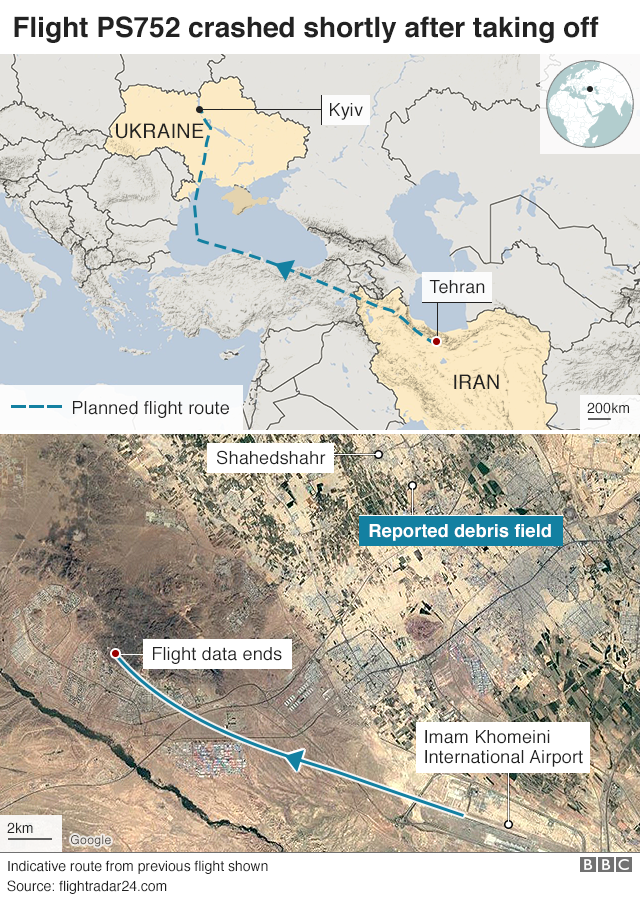
UIA flight 752: Iran military shot down plane after chain of errors

Iran has released its first official report into the shoot-down of UIA flight 752 in Tehran on Jan 9. They blame a misaligned missile battery, miscommunication between troops and their commanders, and a decision to fire without authorization as the major factors which led to the shoot-down of the plane by Iran’s Revolutionary Guard.

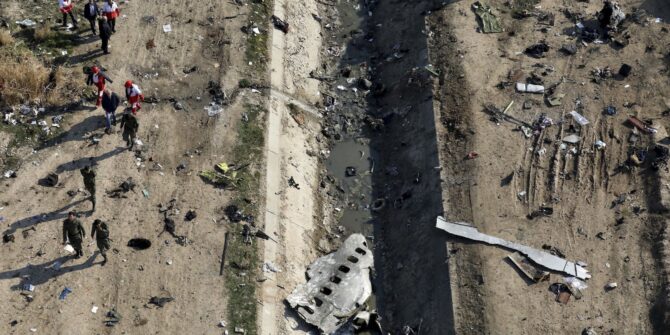
All 176 people on board were killed when the plane was hit by two missiles shortly after take-off in Tehran.

Iran initially denied responsibility for the incident, only admitting fault days later after Western nations presented extensive evidence that Iran had shot down the plane.

Iran’s air defences had been on high alert at the time. Just hours prior to the shoot-down, the US FAA issued “Emergency Order” Notams banning all US operators from overflying the airspace of Iraq and Iran. This was in response to an Iranian missile strike on US military bases in Iraq, which had just occurred the same night.

A full version of the report has not been made publicly available, but excerpts have been published by state news agency Fars. It places the blame entirely on those manning the missile system, and details a series of key moments where the shoot-down could have been avoided, the main two being:

  • The surface-to-air missile system had recently been relocated and was not properly calibrated. As a result, it misidentified the civilian plane as a hostile object.
  • Those manning the system could not communicate with their command centre, and fired on the plane without receiving official approval.

“If each had not arisen, the aircraft would not have been targeted,” the report said.

It also notes that the flight had done nothing unusual prior to the missile launch, with its transponder and other data being broadcast. It claims that the troops manning the missile system tried to contact the Coordination Centre with details of a potential target but they did not manage to get through, and that firing on the aircraft under these circumstances was against approved protocol:

“The system operator began analysing the observable information and categorised the detected target as a threat… At 02:44:41, without receiving any response from the Coordination Centre, the air defence unit operator fired a missile at the threatening target he had detected… Under the applicable procedures, if the defence system operator cannot establish communication with the Coordination Centre and does not receive the fire command, they are not authorised to fire.”
After repeated delays, Iran has said it will release the aircraft’s black box to officials in France on July 20, where Ukrainian and French experts are expected to examine it.

Airspace warnings

In the days and weeks following the shoot-down, several other countries followed the US in issuing airspace warnings of their own for Iran, including: the UK, Ukraine, Canada, Germany, and France. The US and Ukraine are the only countries to have issued outright flight bans on Iranian airspace, but all the others advise against landing or overflying the country at the lower flight levels. Check SafeAirspace.net for a full summary.

Traffic flows

It’s worth considering that most airlines other than Middle Eastern carriers are still avoiding Iran. For traffic that normally operates through the Tehran FIR, a predominant alternative for east-west flights into the Dubai area is a southerly routing via Saudi Arabia and Egypt. There are warnings for both of these airspaces as well. Northerly reroutes for Europe-Asia flights are predominantly using a Turkey-Armenia-Azerbaijan-Turkmenistan routing. If entering Afghanistan airspace, note the current warnings there too.

Unfamiliar routes

For many operators wanting to avoid Iran, you may be using routes that are unfamiliar. Take the time to ensure you have the full package of charts, are aware of the risks in each FIR, are aware of the potential for GPS outages en-route (especially in the Turkish, Tel Aviv, Amman, and Jeddah FIRs), and have considered drift down over mountainous areas on the northerly routes.

Advice

Every air operation different. We know OPSGROUP has a huge variety of members – some conducting routine airline flights, some business aviation, charter flights, private ops, military, government flights. Therefore, offering blanket advice is difficult. You must undertake you own risk assessment, but paying close attention to the international warnings as well as what other carriers are doing is a good place to start.

On SafeAirspace.net, we continue to list Iran as Level One: Do Not Fly. The same goes for Iraq. Outside those two countries, just consider carefully what connections to the current situation there may be. Nowhere in the Middle East is without some level of risk.


2020 Edition: New NAT Doc 007 – North Atlantic Airspace and Operations Manual

July 2020

ICAO have published a new NAT Doc 007 too. Download it here!

The only changes in this edition are to do with the rules and guidance relating to the Datalink Mandate.

Despite the expanded mandate, there are still some places where you won’t need datalink:

  • Everything north of 80° North
  • New York Oceanic East FIR
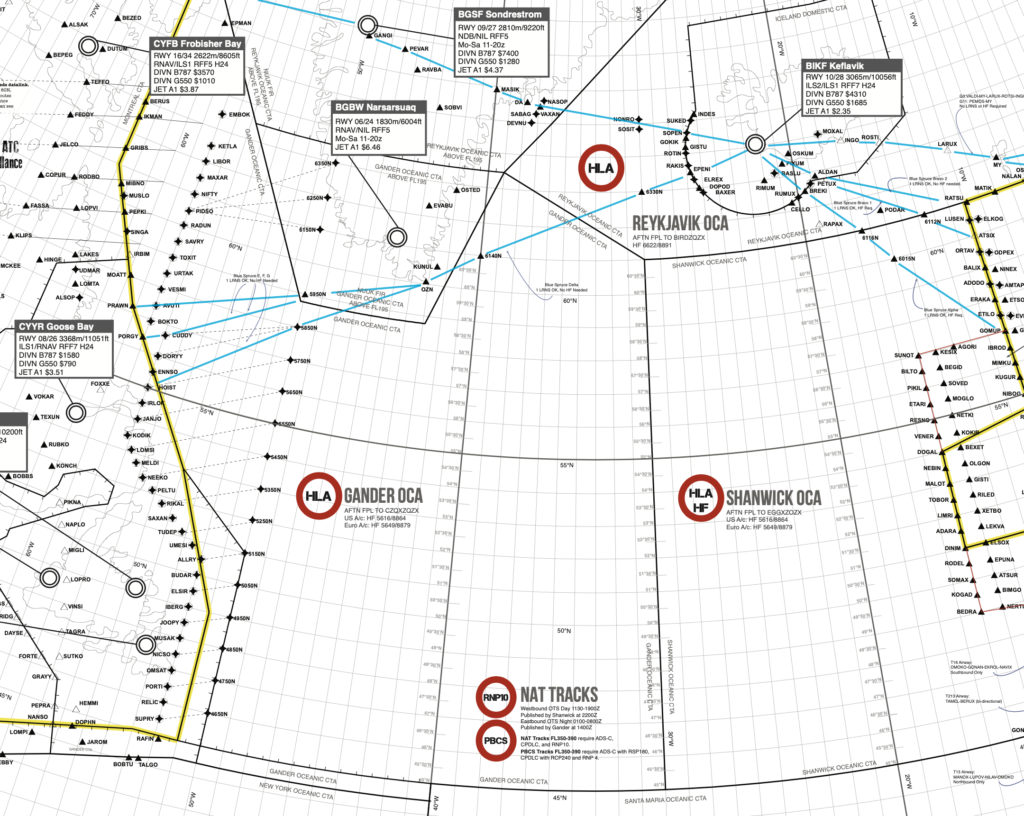
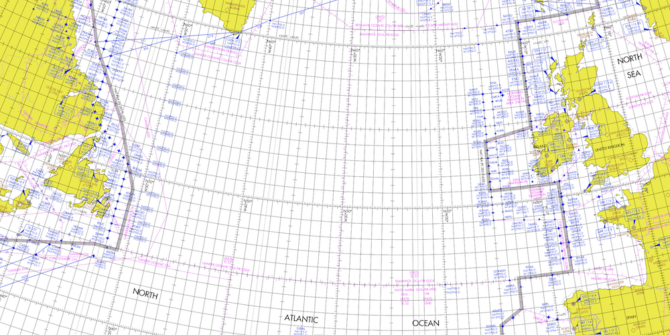
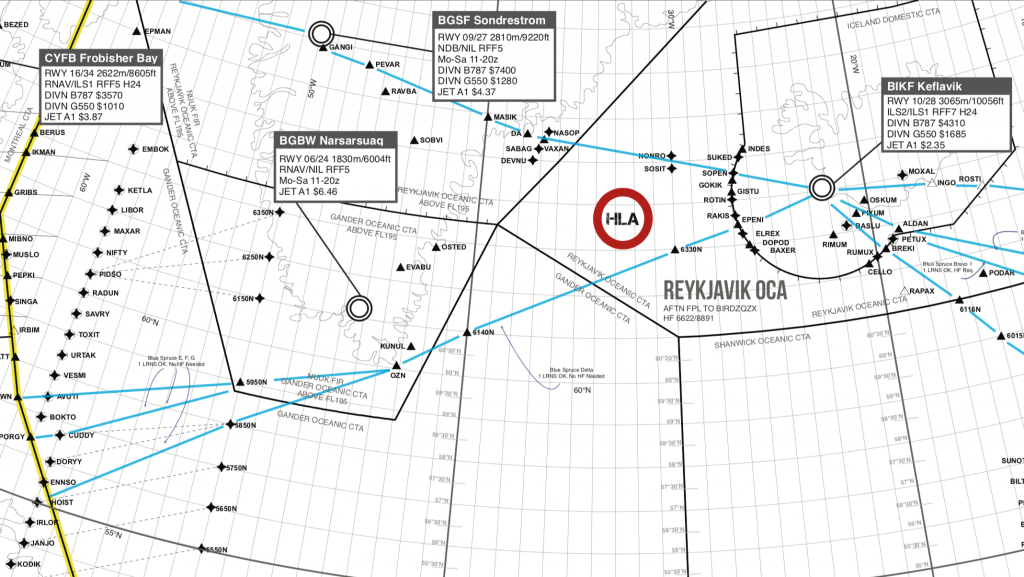
  • ATS Surveillance airspace These are areas where surveillance is provided either by: Radar, VHF, or ADS-B – which is basically the airspace over Iceland, the southern half of Greenland, and a big fish shape of airspace over the Azores (see image below)
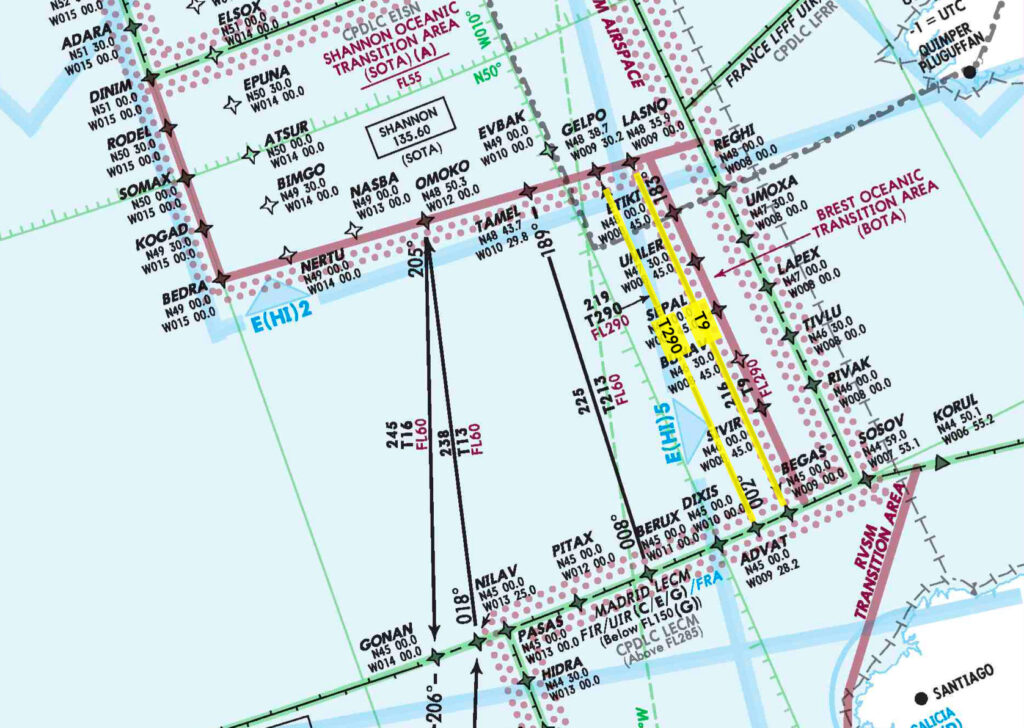
  • Tango Routes T9 and new route T290 that was also introduced today (the other Tango routes T213, T13, and T16, will all require datalink).


To figure out where you are welcome on the NAT, depending on what equipment and training you have, check out our NAT guides and charts here.


FAA extensions to pilot regulatory relief

The FAA has agreed to extend the regulatory relief packages for both Part 91 and Part 135 operators beyond the original end date of June 30. Here’s the lowdown:

Part 135

  • Back in March, the FAA announced a 3-month extension to the grace period for recurrent training requirements for Part 135 operators. They’re now saying that operators who have training due in July will have until the end of October to get this done. Read the FAA letter here.
  • In addition, the FAA has provided two additional months of flexibility on the protective breathing equipment requirements, extending that exemption until the end of July.
  • Note that you still have to tell the FAA if you’re planning on using these exemptions.

Part 91

  • Pilot medical certificates which expired in March do not have any extra time beyond June 30; but for those expiring between April 30 and Sept 30, these will all get three months extensions to their validity.
  • Validity of flight reviews, instrument currency, and knowledge tests have also been extended to September.
  • Read the updated SFAR in full here.

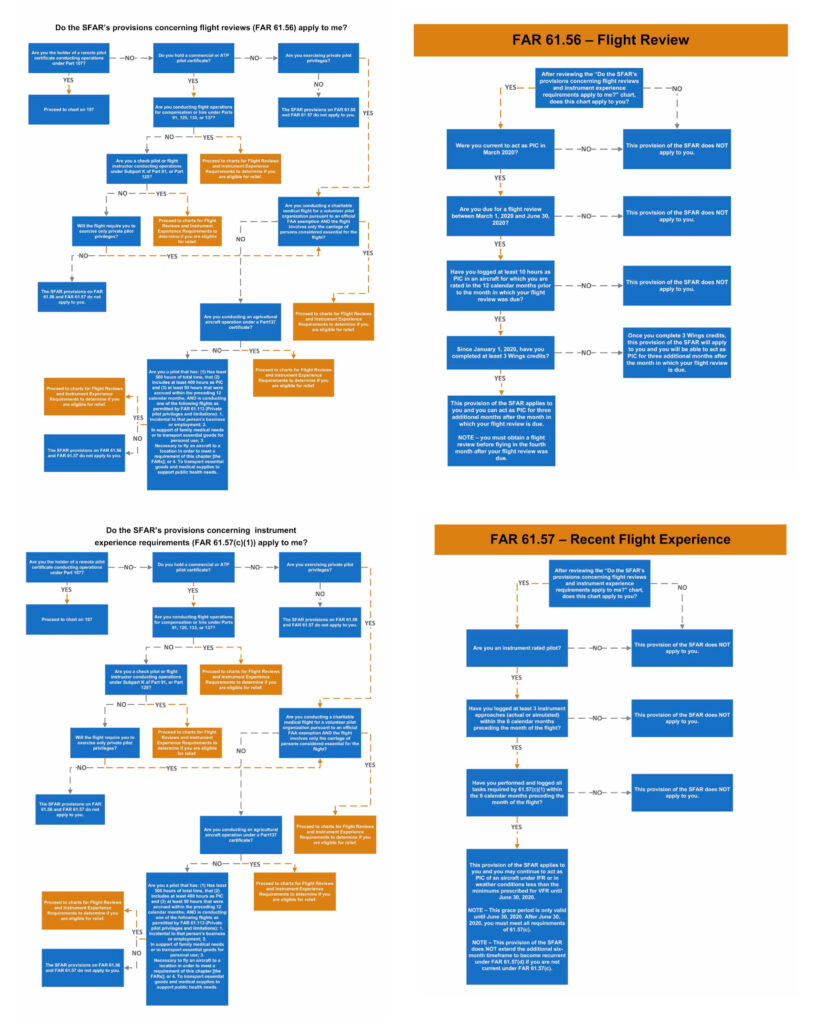
For US pilots keen to know if the SFAR on Part 91 regulatory relief applies to your individual situation, check out these easy-to-follow flowcharts to help you work it out! (No need to squint – just click on the image and get whisked away to a magical place where these flowcharts will all make perfect sense 😊)


“Operation: Paperwork Misery” – new US rules on pilot data reporting are coming soon

The FAA has launched “Operation: Paperwork Misery” – a Notice of Proposed Rulemaking which will require operators to submit a whole bunch of additional pilot data to the agency via a new Pilot Records Database.

Here’s the plan, according to the FAA:

The FAA is proposing to require the use of an electronic Pilot Records Database (PRD) and implement statutory requirements. The PRD would be used to facilitate the sharing of pilot records among air carriers and other operators in an electronic data system managed by the FAA. Air carriers, specific operators holding out to the public, entities conducting public aircraft operations, air tour operators, fractional ownerships, and corporate flight departments would be required to enter relevant data on individuals employed as pilots into the PRD, and this would be available electronically to those entities. In addition, this proposal identifies all air carriers, fractional ownerships, and some other operators or entities that would be required to access the PRD and evaluate the available data for each pilot candidate prior to making a hiring decision.

Here’s a translation of how that may work in real life, from the NBAA:

The FAA’s PRD proposal would subject many business aviation operators to a substantial pilot-data reporting burden not previously applied to non-commercial operations. This proposed rule also amounts to a complete overhaul in the way commercial operators access information about a pilot before hiring and the way certificate holders will provide FAA historical and future records. It expands the types of operations required to give the FAA records documenting an individual’s compliance with FAA or employer required training, checking, testing, currency, proficiency, or other events related to pilot performance, including check pilot comments. Due to the extensive nature of the reporting requirements, the proposed rule has the potential to impose significant new burdens on Part 91 operators of all sizes.

“This is really regulatory overreach at its worst,” said Doug Carr, NBAA’s vice president for regulatory and international affairs. “We have a situation where our community will see no safety benefits as a result of compliance with this program, and the creation of a definition solely for the purpose of satisfying paperwork is not in the best interest of our community.”

Although the FAA’s new rule was issued on March 30, they have so far resisted calls from the industry to extend the comment period beyond June 29 – meaning many operators now don’t have enough time to trawl through the 200-page NPRM document to work out just how brutal the onerous new requirements are going to be, nor get much of a chance to provide any objections to the plan.

“It is exasperating that the FAA has given industry just 90 days to unpack a complicated plan amassed over nine years, and released as the aviation community fights for its survival during COVID-19,” said Koester. “It would not seem unreasonable to allow another 30 days for discussion, so we are pursuing other means to encourage the FAA to provide for this minimal, reasonable accommodation.

The NBAA are now encouraging affected operators to review the NPRM and submit comments providing as much detail as possible about the impact of these proposed changes to their operations. To do that, click here:


Alternatively, you can submit your comments via the tool NBAA has launched to assist with this. Click here for that.

For more info on the specific impact of this proposed NPRM, here is what the NBAA have compiled, which we’re sharing here with their permission:

Concerns for all operators

Check pilot comments
The NPRM would require operators to include check pilot comments from training events in the pilot record database. As unflattering comments may cost pilots future job opportunities, this may leave check pilots or their employers open to liability and diminish the opportunity to improve safety by focusing additional training on check pilot comments.

Overly burdensome and inconsistent reporting requirements
Both the draft advisory circular and the NPRM contain language requiring operators to report a pilot’s aeronautical experience, flight time, and flight maneuvers performed to maintain privileges of their certificate. These burdensome reporting requirements could reasonably result in a need for certificate holders to log every flight hour, instrument approach, and landing in the pilot record database.

Language within the NPRM also contains many contradictory statements leaving operators unclear on the intent of the proposal and the actions required by the rule. Most notably, 111.220(b)(3) states no person may report records documenting aeronautical experience, yet 111.220(a)(2) requires air carriers to report records related to currency and proficiency.

Concerns for Part 91 operators

Definition of Corporate Flight Department
For the first time, this NPRM would codify a definition of a “corporate flight department”. The definition crafted solely for compliance with record keeping requirements does nothing to enhance other elements of our industry and excludes a substantial portion of business aviation that considers itself part of the community.

New recordkeeping and reporting requirements
This NPRM results from Public Law 111-216 (Airline Safety and Federal Aviation Administration Extension Act of 2010), which indicates operators must report training and employment records already maintained by operators. The proposed rule would require Part 91 operators to undertake new record keeping and reporting burdens. Some operators already use sophisticated software systems for managing and tracking pilot training, checking, testing, currency, and proficiency. However, many operators use simple tracking systems that will require manually reporting these records to the FAA.

Concerns for Part 125 and Part 135 operators

The FAA will charge operators a $110 fee any time they pull records for a pilot candidate.

Part 125
The NPRM requires Part 125 operators to report historical records dating back to August 1, 2010. Operators will be required to upload employment, training, checking, testing, currency, proficiency, and disciplinary records for every pilot under their employment over the last ten years. Operators will be able to upload records in XML or manually.

Part 135
The NPRM requires Part 135 and 121 operators to report historical records dating back to August 1, 2005. Operators will be required to upload employment, training, checking, testing, currency, proficiency, and disciplinary records for every pilot under their employment over the last 15 years. Operators will be able to upload records in XML or manually.

NBAA’s Perspectives

While the NPRM contains some potential efficiency improvements for the Part 125 and Part 135 communities, we believe that a substantial number of these proposals would burden the part 91 community far beyond the intent of Congress. For certificated operators currently required to comply with the Pilot Records Improvement Act (PRIA), the NPRM may streamline record reporting and requesting processes, expedite response times, and allow for more informed hiring decisions.

The NPRM would also require reporting more information than under PRIA by more segments of the aviation community, including corporate flight departments and 91.147 air tour operators. The proposal would require these constituencies to report not just training and checking events, but also any event that leads to proficiency or maintains currency, such as day or night landings, flight hours, and instrument approaches. This process will be burdensome and provide little information that enhances hiring decision making abilities.

NBAA encourages affected members to review the NPRM and submit comments to the public docket providing as much detail as possible about the impact of these proposed changes to their operations.

Read the NPRM on the regulations.gov website.

Download the NPRM (PDF)

Comments should be submitted no later than 11:59 p.m. EDT on June 29, 2020.

Submit comments


The impact of Covid restrictions on Medevac ops

Under normal circumstances (pre-Covid) the magic word “MEDEVAC” was more or less a guarantee to get any overflight or landing permit in time. Now, with restrictions in place worldwide, that has changed dramatically.

Here are a couple of cases reported by OPSGROUP member Markus Salomon, Deputy Manager Ground Ops at Quick Air Jet Charter GmbH – an air ambulance provider based in Cologne, Germany – of how the Covid restrictions have impacted some of their flights recently.

Case 1: UK to India

We received a quote request to bring an Indian patient from the UK back to his home country. He was terminal ill and wanted to die at home with his family. Due to previous experience we warned the client that it would be unlikely that the destination country would allow this flight to go ahead, due to the total lockdown in India at the time. The patient insisted that we apply for the permit anyway – he desperately wanted to get home and claimed to have useful diplomatic contacts.

So we applied for the permit. Almost immediately our permit agent advised us that it would be unlikely to get the permit and even more unlikely to get permission for a night stop at the destination. After a lot of checking it turned out that we would get permission for a night stop in Sri Lanka (another hour of flight time beyond the destination).

One day before the planned departure we had received all the permits – except for India. Our agent assured us that the CAA had already given their approval; they only had to wait for the approval by the Ministry of Foreign Affairs. According to them this should only be a matter of some more hours.

On the day of planned departure the landing permit for India was still missing. Departure was planned for early afternoon, so we asked our agent to put some pressure on the responsible authorities, so we might still receive this permit. Long story short – 2 hours after the planned departure time we decided to abort the mission. After a long and intense discussion we decided not to make a second attempt.

The patient not only insisted on making a second attempt, he more or less begged for it. So we re-started the whole process with a view to make a departure 3 days later (under normal circumstances we get most permits within 24 hours or less).

The second attempt ended just like the first one – we aborted some time after planned departure. Then, again after a long debate, we decided that this was definitely going to be our last attempt. We assumed that the authorities were playing the game of “not wanting to approve, but at the same time not wanting to deny the request”.

Again, the patient insisted on making a third attempt, which we scheduled for another two days later. This time, the landing permit for the destination country came on the day of planned departure, early in the morning. We decided to take a risk and depart, even though the permit for the night stop in Sri Lanka was still pending. After pushing our agent several times, we finally received this permit during the third sector! We managed to bring the patient home as planned and also arrived at our night stop destination without any complications.

But then, the positioning flight back home included a fuel stop at VABB/Mumbai, a place which we normally avoid at all cost, as it is terribly overloaded. After having checked Flightradar24 and discovering that they also only had 10% of the normal movements, we took the risk – and failed. Due to reduced staff, all services could only be activated once the aircraft was actually on-block. The fuel stop, which we had planned with our usual 45 minutes, took almost 1.5hrs 🙁

In the end, we finally managed to get home just minutes before the crew duty time ended.

Case 2: South Africa to Germany

We received a booking to pick up a patient from South Africa – which was under full lockdown at that time.

According to our agent, no night stops were allowed at all and the permit had to be requested via diplomatic channels. So we contacted the German embassy. Only minutes after our request, the military attaché replied, confirming that no night stops where allowed at all. They had already applied for several other ambulance operators – and were rejected each time.

Almost at the same time, the second agent we had contacted replied to us that they had good diplomatic contacts in the country and had already managed to get a couple of permits for night-stops for other operators. So we sent them our request.

Two days later – on a Saturday – our agent advised us that the authorities had told them they would issue the permit as soon as they received the verbal note from the German embassy.

Now try to get hold of an embassy on a weekend! We tried the emergency number from their website, which asked to send a text message to this mobile number to request assistance – no reply. We tried the mobile of the military attaché – no reply. We tried to find another contact via the German ministry of foreign affairs – they only had the emergency number which we already tried. We called MOFA again and they suggested trying the embassy’s Corona hotline – we succeeded. The duty officer was very nice and helpful and only half an hour later the military attaché sent instructions on what he needed from us. You could tell from the style of his writing that he was not so amused (no greeting, no bye, just one-liner). But that did not matter very much, once we received a copy of the verbal note only one hour after first contact.

Departure was scheduled for Sunday morning, just at change of shift in Ops. As the South Africa landing permit still was not available some minutes before departure, we decided to abort the mission. We advised the crew to go home, and then we advised our agent about the situation – they then called just minutes after our email and urged us to wait a few more minutes before aborting. He said that the destination was his home country and he knows the situation there very well and even for ministry staff the working conditions are difficult at best. While we still were talking, one of his colleagues shouted something at him and he said that they had just received the landing permit!

We managed to hold back the crew just seconds before they entered their cars. We departed with about half an hour delay, but the crew managed to make that good again during the mission – which finally was a success.

After return to base, the crew reported that the situation en-route and at the destination was really spooky. Two of the three fuel-stop airports and the destination had been opened only for us and closed just minutes after departure. At the destination they were escorted to the hotel by police. During their half hour drive on a three-lane motorway they passed not more than three cars. Police checks took place at every entry and exit to/from the motorway. The hotel staff were not allowed to leave the hotel – they had to live in the hotel for the entire lockdown period.

Conclusion

These were the cases which were impacted most by the restrictions, but almost every flight – except for the typical two- or three-leg operation within Europe – is either different from normal, or even not possible at all.

Some countries do not allow night stops even for flight crews (or they do allow them for flight crews but consider the medical crew as passengers – and for those, night stops are prohibited in any case).

Many countries are now demanding diplomatic clearance – whereas before you could simply send the handling request, file the flight plan and go…


Report by: Markus Salomon, Deputy Manager Ground Ops at Quick Air Jet Charter GmbH.


Covid impact on North Atlantic diversion airports

Planning diversion alternates is always fun – particularly when flying across vast tracts of open ocean like the North Atlantic. Check a few Notams, google some airport pics to work out just how scary the runway is, stick a couple of en-route alternates into your flight plan, and away you go…

The reality is it’s a bit more complicated than that. For use as a diversion alternate, an aircraft operator must ensure that the airport concerned meets basic criteria to be classified as ‘adequate’. In other words, just a runway is not enough – if only it were that simple!

Here are the kinds of things we’re interested in:

  • Sufficient weather forecasting.
  • ATC (or Flight Information Service) hours of operation.
  • Runway availability.
  • Instrument approach availability.
  • Runway Lighting.
  • Runway slope guidance (PAPI, VASI, Glideslope or similar).
  • RFF (Rescue Fire) operational status.
  • Status of facilities: refuelling, handling, parking bays etc.

During the course of the Covid-19 pandemic, a number of airports have used the lull in traffic to undertake work that can affect their operational status. As a result, these changes may create additional operational issues for pilots and flight planners seeking diversion alternates that meet their requirements.

Also, due to the general chaos of Covid-19, many airports have limited staff which has an effect on how your aircraft, passengers and crew will be handled on the ground if you do need to divert.

Here’s a summary of changes to operational status of airports commonly used as diversion alternates for aircraft crossing the North Atlantic. (Unless stated otherwise, airports listed below are open H24 for emergency diverts).

The Biggies

BGSF Kangerkussuaq Airport, Greenland – Airport is open 1000-1900z Monday to Saturday. Closed on Sundays. If you want them to stay open for you outside their opening times, you have to request it in advance – watch out for hefty fees if doing this, which get charged even if you don’t end up actually diverting there. Same applies if you just casually list BGSF as an en-route alternate on your flight plan if operating out of hours. More info on that here.

However, until at least June 10 the airport is classified as ‘non-instrumental.’ Effectively you can only use it during daylight hours in good conditions (NOTAM A0283/20 refers).

BGBW Narsarsuaq, Greenland – Similar deal to BGSF – airport is only open 1000-1900z Monday to Saturday, and closed on Sundays. And again, extra fees which get charged if filing BGBW as an en-route alternate on flight plans. RFF category 5, but grab a coffee because it requires 3 hour’s notice (NOTAM A0098/20 refers). Officially, the current rules for Greenland are that crew and pax will not be allowed to disembark, not even for diverts. Unofficially, the local handler says that if a divert was to happen, they’d “find a solution”.

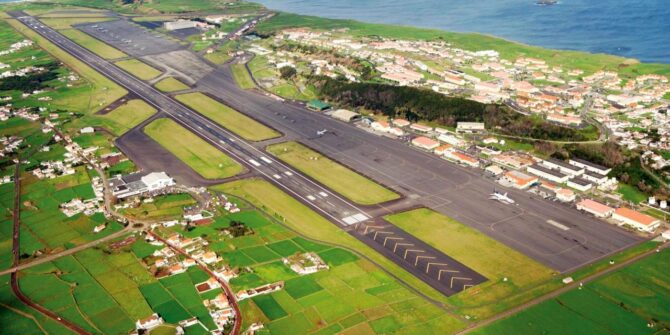
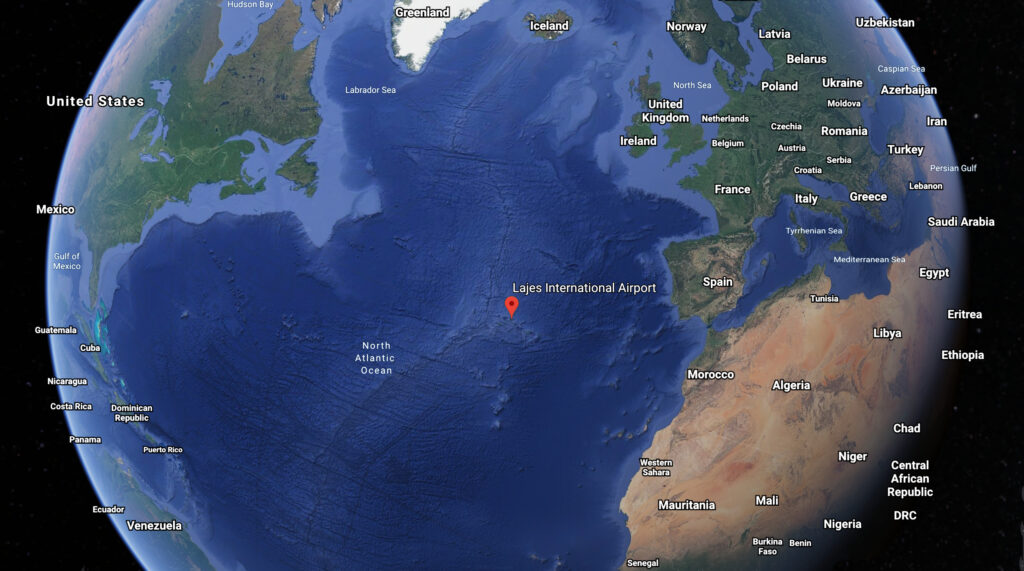
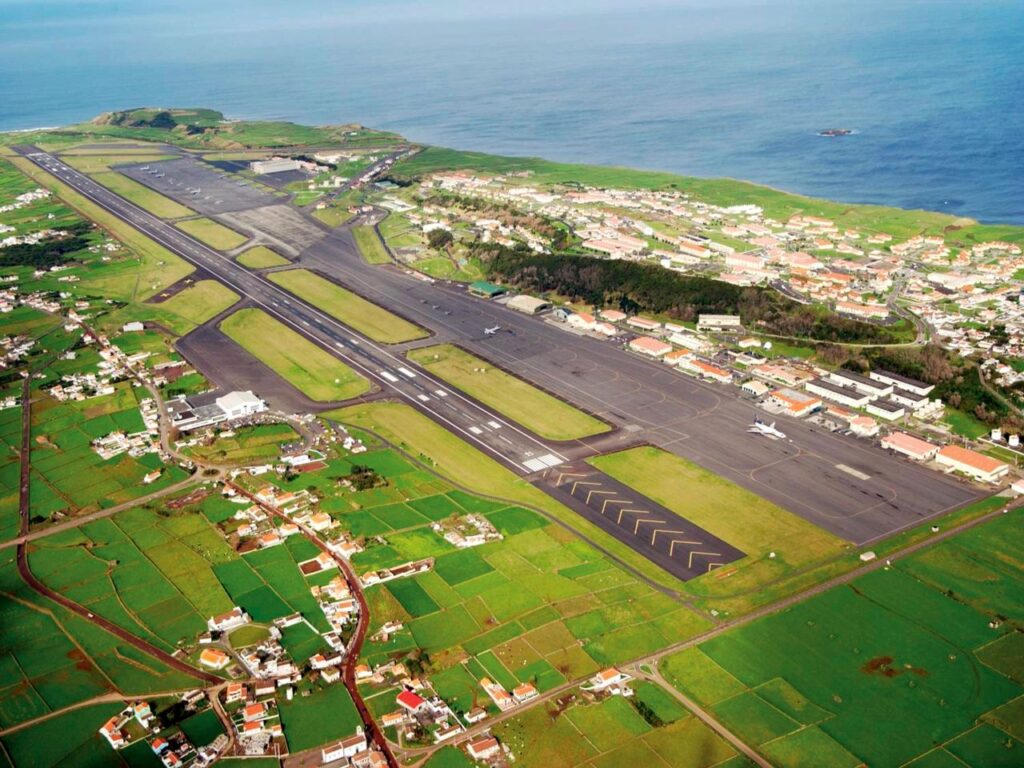
LPLA Lajez, Azores – Several restrictions apply due to Covid. Essentially you can go there if you really need somewhere to land but expect chaos once you do. The airport is currently closed to international arrivals unless it’s an emergency. And even then you cannot disembark without permission and strict quarantine measures apply (NOTAM A1487/20 refers). Unscheduled arrivals of emergency aircraft can expect ‘extensive handling delays’ (NOTAM A1485/20 refers). All passengers and crew must wear face masks, and once you and your passengers leave the aircraft you will be quarantined in the local air force base (room service is unlikely).

LPAZ Santa Maria, Azores. If you have to divert there, no crew or pax are allowed to disembark. For medical emergencies, they actually recommend you go to LPLA instead!

EINN Shannon, Ireland – Aerodrome is currently only operational from 0500-2100z due to the impact of Covid (NOTAM A1062/20 refers). The airport has confirmed they are not available outside of these hours for emergency diverts – so if you’re operating overnight, the nearest available H24 airports are EGAA/Belfast and EIDW/Dublin.

And watch out for these potential ‘gotchas’

CYYR Goose Bay, Canada – Until June 29, runway 16/34 is closed. In strong northerly or southerly conditions, cross wind limitations may be reached – so keep an eye on your ETOPs alternate minima (NOTAM E3107/20 refers).

CYQX Gander, Canada – In case of divert, crew/pax all need to fill out a Government Declaration COVID form to stay overnight, and need to have proper PPR (Masks, Gloves and Sanitary Cleaner). RFF category 5 which requires at least 30 minutes notice.

BIKF Keflavik, Iceland – RFF category 8 from 0500-1900z, RFF category 7 from 1900-0500z (NOTAM A0123/20 refers).

EGAA Belfast, Ireland – Until June 13, RFF category 6 overnight between 1800-0600z (NOTAM A1968/20 refers). And until June 11, this is reduced to just RFF cat 4 between the daytime hours of 0600-1800z (NOTAM A1993/20 refers).

EGPF Glasgow, Scotland. Until June 16, available RFF category is 6 for the majority of the day due to staffing issues caused by Covid (NOTAM A1983/20 refers).


In other NAT-related news, the datalink mandate rules have been relaxed until the end of June, due to the fact that there’s now significantly less traffic because of all the COVID restrictionsNon-datalink mandate compliant aircraft may therefore flight plan and operate between FL290-410 until June 30. ICAO are saying that due to the decrease in traffic, there is a significantly higher chance of flights being cleared as requested, and are encouraging operators to file and request their optimal profiles at all stages of the flight. More info on the NAT Datalink Mandate can be found here.


Pilot Relief: FAA Covid rules in simple english

Let’s start here:

Notwithstanding the 6 calendar month period specified in paragraph 2 of SFAR No. 100-2 of this chapter, a person may exercise the relief specified in paragraph 1 of SFAR No. 100-2 of this chapter for a duration of 9 calendar months after returning to the United States, provided the person is eligible in accordance with paragraph 2 of SFAR No. 100-2 of this chapter, complies with the documentation requirements specified in paragraph 3 of SFAR No. 100-2 of this chapter; and … 

Ugh. Ok, how about this:

Notwithstanding the period specified in § 61.55(c), a person who is required to complete the second-in-command familiarization and currency requirements under § 61.55(b)(1) and (2) between March 1, 2020 and June 30, 2020 for purposes of maintaining second-in-command privileges may complete the requirements of § 61.55(b)(1) and (2) in the month before or three months after the month in which they are required, provided the pilot meets the requirements of paragraph 2.(b)(1)(ii) of this SFAR. A pilot who meets the requirements of § 61.55(b)(1) and (2) within the period prescribed by this paragraph 2.(b)(1)(i) will be considered

If you find all of this perfectly readable, then continue your adventures here with the official document, and you’re done.

For the rest of us humans, the FAA relief rules, although welcome, are classic federal robot-speak.

On 5th May 2020, the FAA issued a Special Federal Aviation Regulation which provides regulatory relief to Part 91 operators who have been unable to comply with certain training and testing requirements due to the coronavirus outbreak. Essentially, they extended the validity of medical certificates, flight reviews, knowledge tests, and recency of experience requirements – in most cases until June 30.

The FAA had already issued a series of extensions for certain Part 135 training requirements back in March – essentially adding a grace period for recurrent training by an additional two months to May 31. More on that here.

But for pilots keen to know if the SFAR on Part 91 regulatory relief applies to their individual situation, thankfully AOPA has created easy-to-follow flowcharts to help you determine if the provisions in the SFAR apply to you …

Let’s try again, in plain English …


Has your medical certificate, flight review, or instrument currency expired? If so, read this to determine whether you can fly.
Thanks to Dan Namowitz, Associate Web Editor at AOPA!

The FAA’s 94-page special federal aviation regulation on flying during the coronavirus pandemic is complicated, and pilots need to read it carefully to determine what does and does not apply to their individual situations.

The flowcharts and decision guide below are offered to help you avoid getting crosswise with the rules—or safety—and to steer you clear of bad advice you might get by word of mouth or from other informal sources. Some of the provisions, especially those related to flight reviews and instrument proficiency, apply only to those who plan to fly five types of specific operations for which the FAA has determined relief is appropriate under the SFAR. However, medical certificate extensions have a different set of qualifications that depend on dates, not the type of flight operation. Confusing, isn’t it.

Your first step is to figure out whether the SFAR’s provisions concerning flight review or instrument currency apply to your case. If they do, proceed to page two of the flow chart and follow the “yes” column. If you end up in the “no” column, it means the SFAR doesn’t apply to you and you must comply with the same flight-review and instrument currency rules that you have followed before.

Has your flight review expired, and does the SFAR’s provisions apply to your case?

The first question to ask yourself is, “Were you current to act as pilot in command in March 2020?” If the answer is yes, the next step is to check your flight review expiration date. If the expiration date falls between March 2020 and June 2020, next determine whether you have flown 10 hours as PIC in an aircraft for which you are rated in the 12 calendar months prior to the month when your flight review was due. (Again, a “no” answer means you would continue with your usual flight review schedule.)

If the answer is yes, here’s your next question: Have you completed at least three credits under the FAA’s Wings Pilot Proficiency Program?

Don’t despair if the answer is no. In this case, you can still acquire the credits, which would put you back in the “yes” group. In that case, the SFAR allows you to act as PIC for three additional months after the month in which your flight review is due.

Reminder: This regulatory relief “applies only to persons conducting specific operations for which the FAA has determined relief is appropriate” in the SFAR. (Before flying in that fourth month after the month when your flight review was due, you must have a new flight review.) So, a private pilot with a flight review that expires in April who meets the qualifying criteria can use this SFAR to fly one of the five permitted types of flight operations, but not for other types of flight operations not listed in the SFAR.

Has your instrument currency expired?

Instrument pilots who plan to exercise their privileges to conduct “specific operations for which the FAA has determined relief is appropriate” under the SFAR must also verify their recency of experience. Again, the steps can be tracked on the flow chart, and if at any time you find yourself in the “no” column, it means you must get an instrument proficiency check as would usually be the case at this point in your recency-of-experience cycle.

However, if you are among instrument pilots who have logged at least three instrument approaches (actual or simulated) within the six calendar months preceding the month of the (planned) flight, read on: Next you would check whether you have performed and logged all tasks required by FAR 61.57(c)(1) within the nine calendar months preceding the month of the flight.

No? Thank you for playing.

Yes? Then the SFAR applies and you may continue to act as PIC of an aircraft under IFR or in weather conditions less than the minimums prescribed for VFR until June 30, 2020—for those five types of operations outlined in the SFAR. After June 30, you must meet all requirements of FAR 61.57(c). Note that this “grace period,” as the FAA calls it, does not extend the additional six-month timeframe to regain your currency.

Has your first, second, or third class medical certificate expired?

If you have navigated one or more of the scenarios posed above, this one will be a cinch.

If your first, second, or third class medical expired or expires between March 31 and May 31, its validity is extended to June 30—no matter what type of flying you do.

If your medical’s expiration date as issued is outside the March 31 to May 31 date range, your usual renewal timetable applies and no action is needed.

BasicMed? It will be 2021 before the first pilots to have begun flying under BasicMed will need to see their issuing doctor again, so the SFAR does not address BasicMed. BasicMed pilots who need to complete the online course that is required every 24 months can do so on AOPA’s website.

Now that you have followed these steps and have kept yourself on the good side of the SFAR, two tasks remain: One is to contact your insurance representative and get written confirmation that your coverage remains in force if you fly under the SFAR.

For those pilots who live in states or municipalities that have stay-at-home orders in effect for health reasons, the final step is to check the status of those orders so you don’t get a ticket for being on the road for the wrong reason as you drive to the airport.

Thanks to AOPA for sharing this article, which first appeared on their website here.


Eurowings flight to nowhere highlights Notam problems

Confused about whether you’re allowed to fly to Italy at the moment? You’re not the only one!

A Eurowings (Lufthansa’s European low-cost subsidiary) flight from EDDL/Dusseldorf to LIEO/Olbia ended up diverting back to Germany this week, after discovering the airport was actually closed to commercial traffic.

Yes, there was a Notam, and yes, it looks like they missed it – though that’s maybe not surprising given the Notams being pumped out on the national LIBB/LIMM/LIRR codes at the moment saying how pretty much all airports across the country have now reopened – including LIEO!

So let’s play a game of ‘spot the difference’. Here’s the National one, published on May 19:

A3028/20 (Issued for LIBB LIMM LIRR) COVID-19:
ALL FLIGHTS ARRIVING/DEPARTING TO/FM ITALY MUST COMPLY WITH THE REQUIREMENTS OF THE DECREE OF THE PRESIDENT OF THE MINISTERIAL COUNCIL OF 17 MAY 2020 ON FOLLOWING AIRPORTS: LIPY, LIBD, LIME, LIPE, LIEE, LICC, LIRQ, LIMJ, LICA, LICD, LIMC, LIRN, LIEO, LICJ, LICG, LIBP, LIRP, LIRA, LIRF, LIMF AND LIPZ, COMMERCIAL FLIGHTS, COMMERCIAL FLIGHTS ON DEMAND (AEROTAXI) AND GENERAL AVIATION FLIGHTS ARE ALLOWED.
GENERAL AVIATION ACTIVITY AND COMMERCIAL AVIATION ACTIVITY ON DEMAND (AEROTAXI) WITH AIRCRAFT HAVING MAXIMUM APPROVED CABIN CONFIGURATION EQUAL OR LESS THAN 19 SEATS, CARGO FLIGHTS AND POSTAL SERVICE ARE ALLOWED ON ALL REMAINING AIRPORTS.
GENERAL AVIATION ACTIVITY, COMMERCIAL AVIATION ACTIVITY ON DEMAND (AEROTAXI)WITH AIRCRAFT HAVING MAXIMUM APPROVED CABIN CONFIGURATION EQUAL OR LESS THAN 19 SEATS ARE ALLOWED ON AIRFIELDS/HELISURFACES/HYDROSURFACES MANAGED/AUTHORIZED/OCCASIONALS, WITHIN THE LIMITS OF APPLICABLE AUTHORIZATIONS IN COMPLANCE WITH THE PROVISIONS OF THE DECREE OF THE PRESIDENT OF THE COUNCIL OF MINISTERS OF 17 MAY 2020
RMK: GENERAL AVIATION ACTIVITY AND A COMMERCIAL AVIATION FLIGHT ON DEMAND ON LIRF IS NOT PERMITTED.
19 MAY 11:16 2020 UNTIL 02 JUN 22:00 2020 ESTIMATED.
CREATED: 19 MAY 11:27 2020

And here’s the one for LIEO/Olbia, published two days later on May 21:

B2520/20 – COVID-19.
AERODROME CLOSED TO COMMERCIAL AVIATION TRAFFIC IN COMPLIANCE WITH REGIONE SARDEGNA DECREE 23 OF 17TH MAY 2020.
RMK: GENERAL AVIATION ACTIVITY AND COMMERCIAL AVIATION ACTIVITY ON DEMAND (AEROTAXI) WITH AIRCRAFT HAVING MAXIMUM CABIN CONFIGURATION EQUAL OR LESS THAN 19 SEATS ARE APPROVED IN COMPLIANCE WITH MINISTRY OF INFRASTRUCTURE AND TRANSPORTATION DECREE 207/2020 AND REGIONE SARDEGNA DECREE 23 OF 17TH MAY 2020.
REF AIP AD 2 LIEO 1-1. 21 MAY 15:14 2020 UNTIL 02 JUN 22:00 2020 ESTIMATED.
CREATED: 21 MAY 15:14 2020

The national one says the airport is open, the local one says the airport is closed – a classic case of Notamisery

A number of news reports on this incident have been quick to criticise the operator — and also the crew — for this oversight. We’re not sure we really feel like jumping on that particular bandwagon. We could talk at length about The Notam Problem (indeed, we have done so, here, here, here, and here, and also here).

The Notam problem is clear: we have an antiquated, cumbersome, ineffective, frustrating, dangerous system. Pilots are missing the essential few pieces of information, unable to hear the call of criticality in a cacophony of irrelevant noise. And it obviously doesn’t help when one Italian sends you a Notam saying an airport is open, and another Italian sends you one saying it’s closed.

These are also “unusual times” – we keep hearing those words in the news, but it’s true. Two months in to the Covid-19 pandemic, it feels like “ops : normal” is still a long way off for most of us – whatever job we do in aviation, wherever we fly. People are tired. The changes are constant. A spokesperson for Eurowings summed this up pretty well in a statement released after this incident at Olbia: Against the background of the current corona crisis, the situation at numerous airports in Europe is very dynamic, which is manifested in the large amount of information provided on operating hours or airport closures that are often changed at short notice as well as daily changes in entry regulations in the various countries.” 

As this incident shows, wherever you’re headed, whatever you read in a Notam, it’s always worth double-checking exactly what’s allowed at the airport you’re flying to. Don’t be afraid to give them a call. If you need to find some local airport contacts, the Flock website is one of the best free contact databases we’ve seen so far (and no, they don’t pay us to say that!)

In related news – Italy has said it will start allowing unrestricted travel to and from European countries, with no quarantine requirement, from June 3. No official word yet on when restrictions will be lifted on flights to and from countries outside of Europe – but the external borders of the EU remain closed to non-essential travel until June 15 at the earliest. More on that here.


We got some checklists for you …

This is an extract from the OPSGROUP Covid-19 Supermanual, version 0.9 – May 11, 2020


Trip planning Checklists for Covid-19

At the back of the group Covid-19 Supermanual we have 5 pages of checklists, which you can download here.

  • Airport
  • Enroute
  • Permits
  • Regulatory and Documents
  • Aircraft Supplies 


What else is in the manual?

We’ve divided the manual into four areas around phases of flight: Before, During, After … and a Checklists section.

Before we go flying

About Covid, Precautions, Off duty crew and staff
Going to work, Health Check, Illness at work, Dispatchers
Flight Crew – Fit to fly, License, medical and recency, keeping aircraft and crew current
Wellbeing and Mental Health: How to find calm, Be Kind
Planning a flight, Crew pairings and planning
Aircraft cleaning and preparation, Risks: Hand Sanitizers, Dangerous Good regulations
Catering and Food preparation, Operations to an FBO or Executive Terminal, Passengers
Arriving at work, Briefings

During our flight

In-flight considerations
Aircraft Setup, Boarding, Temperature Checks, Baggage, Seating
Wearing of PPE (Personal Protective Equipment)
Additional Aircraft Equipment
In flight Crew procedures: Pilots, Flight Attendants, In-flight Service
Illness in Flight – Crew actions, Dispatch actions, Cleaning procedure

After – back home (or downroute)

Disembarking
Tech Stops and Turnarounds, Interim Cleaning, Walkaround
Arrival at Destination, Waste Disposal, Cleaning at outstation
Overnights/Layovers, Hotel guidance, Crew PPE kits
Crew Illness away from Home base
AOG/Unplanned overnight
Arrival at Home base,
Aircraft Cleaning, Cockpit cleaning
Crew exposure, Contact tracing

Checklists

Checklist: Trip planning in Covid-19
Checklist: Aircraft supplies
Passenger Health Screening form example

For more about the Covid-19 Supermanual contents, and to download a copy, use this link.


Hand sanitizers on board: Fire risks

This is an extract from the OPSGROUP Covid-19 Supermanual, version 0.9 – May 11, 2020


Hand Sanitizers – fire risk

In a documented case in May 2020, an individual suffered first and second degree burns when they made contact with a metal surface and a static discharge ignited the still wet hand sanitizer. Hand sanitizer gels contain large concentrations of alcohol. Once the hand sanitizer is applied, individuals must make sure the gel has suitable time to dry. Alcohol vapors can ignite if exposed to an ignition source, such as light switches or cigarette lighters. Crews should be made aware of this risk, especially in the aircraft operating environment. Original source here.

Dangerous Goods exemption requirements

Alcohol-based hand sanitizers are classified as dangerous goods and are not specifically permitted by the IATA Dangerous Goods Regulations and ICAO Technical Instructions for the Safe Transport of Dangerous goods by Air (DGR 2.5, ICAO Technical Instructions Part 1;2.2) .

Operators that wish to add alcohol-based hand sanitizer to the items carried in galleys or installed in lavatories will need to request authorization from their civil aviation authority (State of the Operator) in accordance with the provision that is set out in Part 1;2.2.1 a) of the ICAO Technical Instructions.

IATA recommends that the request for authorization addresses the following:

– The classification and UN number of the hand sanitizer. For example, UN 1987, Alcohols, n.o.s. (ethyl alcohol mixture), UN 1170, Ethanol solution. However, the safety data sheet from the manufacturer of the hand sanitizer should be checked for the classification;

– The quantity of hand sanitizer in each container and the number of containers to be carried on the aircraft;
– What steps will be taken to ensure that the hand sanitizer is kept away from sources of heat or ignition;

– Provision of information to crew members on the carriage of the hand sanitizer. For example, that crew members will be advised on the procedures through a bulletin or other appropriate method.

Crews can take hand sanitizers as carry on, each bottle max 0.5L, under the IATA Dangerous Goods regulations, total for toiletries is 2L.


What else is in the manual?

We’ve divided the manual into four areas around phases of flight: Before, During, After … and a Checklists section.

Before we go flying

About Covid, Precautions, Off duty crew and staff
Going to work, Health Check, Illness at work, Dispatchers
Flight Crew – Fit to fly, License, medical and recency, keeping aircraft and crew current
Wellbeing and Mental Health: How to find calm, Be Kind
Planning a flight, Crew pairings and planning
Aircraft cleaning and preparation, Risks: Hand Sanitizers, Dangerous Good regulations
Catering and Food preparation, Operations to an FBO or Executive Terminal, Passengers
Arriving at work, Briefings

During our flight

In-flight considerations
Aircraft Setup, Boarding, Temperature Checks, Baggage, Seating
Wearing of PPE (Personal Protective Equipment)
Additional Aircraft Equipment
In flight Crew procedures: Pilots, Flight Attendants, In-flight Service
Illness in Flight – Crew actions, Dispatch actions, Cleaning procedure

After – back home (or downroute)

Disembarking
Tech Stops and Turnarounds, Interim Cleaning, Walkaround
Arrival at Destination, Waste Disposal, Cleaning at outstation
Overnights/Layovers, Hotel guidance, Crew PPE kits
Crew Illness away from Home base
AOG/Unplanned overnight
Arrival at Home base,
Aircraft Cleaning, Cockpit cleaning
Crew exposure, Contact tracing

Checklists

Checklist: Trip planning in Covid-19
Checklist: Aircraft supplies
Passenger Health Screening form example

For more about the Covid-19 Supermanual contents, and to download a copy, use this link.


Italy to reopen borders for EU passengers in early June

Italy has said it will start allowing unrestricted travel to and from European countries, with no quarantine requirement, from June 3. No official word yet on when restrictions will be lifted on flights to and from countries outside of Europe – but the external borders of the EU remain closed to non-essential travel until June 15 at the earliest.

So until June 3, only certain people are allowed in – Italian citizens and residents, flight crew too, and citizens/residents of other European countries needing to pass through Italy to go home. Here’s the Notam:

After June 3, people will be allowed to travel freely from and to the following States:

  • EU Member States: Austria, Belgium, Bulgaria, Cyprus, Croatia, Denmark, Estonia, Finland, France, Germany, Greece, Hungary, Ireland, Latvia, Lithuania, Luxembourg, Malta, Netherlands, Poland, Portugal, Romania, Slovakia, Slovenia, Spain, Sweden and the Czech Republic;
  • Schengen countries: Iceland, Liechtenstein, Norway, Switzerland;
  • United Kingdom and Northern Ireland;
  • Other weird places: Andorra, Monaco, San Marino, Vatican City.

Check out the Italian Government’s official webpage for more details on this, plus what is actually a pretty decent breakdown of the general rules on travel to Italy.

Ultimately, all permitted inbound travellers headed to Italy before June 3 must sign a form confirming their travel is essential. Flight crew must self-isolate at the hotel, although they can leave for their outbound flight at any time. After June 3, all this goes away.

Meanwhile, across the border in France

https://www.facebook.com/weareopsgroup/photos/a.1050965864916787/3416584591688224


Covid SuperManual for Flight Operations

Hi members,

The OPSGROUP Covid-19 SuperManual is ready! Before we get into it, a BIG thank you to everyone that took part in this huge effort. The team here received 100 or so individual Operations Manuals and Flight Ops Bulletins, and that’s what this ‘Super Manual’ is: a collation of all of the group knowledge and procedures around Covid.

This is OPSGROUP at its best – you guys coming together to share your piece of the puzzle, and then we put them all together and get the full picture out to the whole group. So, well done everyone!


What’s in the “Covid Super Manual” ?


We’ve divided the manual into four areas around phases of flight: Before, During, After … and a Checklists section.

Before we go flying

About Covid, Precautions, Off duty crew and staff
Going to work, Health Check, Illness at work, Dispatchers
Flight Crew – Fit to fly, License, medical and recency, keeping aircraft and crew current
Wellbeing and Mental Health: How to find calm, Be Kind
Planning a flight, Crew pairings and planning
Aircraft cleaning and preparation, Risks: Hand Sanitizers, Dangerous Good regulations
Catering and Food preparation, Operations to an FBO or Executive Terminal, Passengers
Arriving at work, Briefings

During our flight

In-flight considerations
Aircraft Setup, Boarding, Temperature Checks, Baggage, Seating
Wearing of PPE (Personal Protective Equipment)
Additional Aircraft Equipment
In flight Crew procedures: Pilots, Flight Attendants, In-flight Service
Illness in Flight – Crew actions, Dispatch actions, Cleaning procedure

After – back home (or downroute)

Disembarking
Tech Stops and Turnarounds, Interim Cleaning, Walkaround
Arrival at Destination, Waste Disposal, Cleaning at outstation
Overnights/Layovers, Hotel guidance, Crew PPE kits
Crew Illness away from Home base
AOG/Unplanned overnight
Arrival at Home base,
Aircraft Cleaning, Cockpit cleaning
Crew exposure, Contact tracing

Checklists

Checklist: Trip planning in Covid-19
Checklist: Aircraft supplies
Passenger Health Screening form example


Some things to highlight
: these were the most discussed areas in the SuperManual work group:

  • Cockpit PPE, to wear or not to wear. Although there is no specific guidance (yet) from authorities, the vast majority of operators are opting for the rule “No PPE to be worn on the Flight Deck” – considering the risks and impact on ATC comms, intra-crew comms, quick donning of oxygen masks, and the unknown potential impact of wearing masks and gloves. We have therefore opted for this play-it-safe approach – the safety of the flight comes before any potential (and seemingly unlikely) benefit from wearing masks while flying.
  • Dangerous Goods regulations. Operators need to check the rules as they apply to your own operation, but for most, carrying hand sanitizers on board in galleys and cabins requires approval from your Aviation Authority.
  • Aircraft Cleaning. Before you rush to wipe everything down, check the section on cleaning for some materials that should not be used as they will degrade the paintwork and cause damage to aircraft parts.
  • Illness in Flight. We saw this in almost every manual, with some wildly differing versions. So, in the SuperManual, there are 2 full pages on how to handle this, have a read.


How to use the SuperManual

  • Use it as a “Oh, I hadn’t thought of that” – read through and see what might apply to your operation
  • Remember that OPSGROUP is a mix of operators: some airline, some corporate, charter, private ops, military, and others. Not everything will apply to your operation. So, when you copy and paste into your own manual, apply common sense
  • Use the sources in the left column to double check the latest situation and guidance from authorities. Things are changing fast, and this might be out of date soon. Also, it might just be plain wrong. Don’t believe everything you read!

Example page with source notes:

Take part in the next round

  • This is version 0.9. We might not get to a v1.0 for a while, until more of the manual is backed up by official guidance, but this is everything we’ve seen and know in the group right now.
  • If you want the next version sent to you directly, send us what you have. As with all the 100 or so manuals we’ve already received, none of the original manual is shared or identified, everything is anonymous, and once we’ve had a look we’ll delete the manual. Top secret stuff, we know!

Download the Covid SuperManual:

  • Get it in your Dashboard: right here
  • Or, check your email – all members received a copy on publication.


Wednesday, May 13th @ 4pm Eastern, 8pm UTC

A special OpsChat around Flight Operations and Covid-19, to coincide with the release of the OPSGROUP Covid-19 SuperManual. More on that here.

A recording of the OpsChat will be available in the Dashboard shortly.


Questions?

Let us know – team@ops.group. We’d love to hear feedback on the manual, what might make it better, additions, corrections, improvements … and if you have a manual to share for the next version, please do send it to us.

Cheers,
The OPSGROUP Team.


Cargo plane in Somalia was shot down

Update: Ethiopia has confirmed that this was a shoot-down event. The Ethopian Army misidentified the aircraft – or at least its intentions. 

Somalia is investigating how an Embraer EMB-120 aircraft crashed while on approach to Bardale airstrip in Somalia, killing all six people on board. Local officials say the cause of the crash is not yet clear but there has been speculation it might have been shot down.

The Kenyan private cargo plane, operated by African Express, was operating a humanitarian mission with coronavirus medical supplies when it crashed on Monday afternoon in southern Somalia, about 300km northwest of Somalia’s capital Mogadishu.

Bardale airstrip is a base for the Ethiopian military under the multinational African Union mission, which is combating the al-Shabab terrorist group in the region.

The Kenyan Civil Aviation Authority on Tuesday said the plane crashed on approach to Bardale “under circumstances we are yet to confirm.” However, the Associated Press are quoting local state officials who have told them that a projectile fired from the ground hit the plane as it approached the airstrip.

If that is the case, and the aircraft was in fact shot down, it’s not yet clear whether this was an intentional attack carried out by al-Shabab militants, or an accidental shoot-down by Ethiopian forces stationed in the region.

The plane had left HCMM/Mogadishu, and stopped in HCMB/Baidoa before going on toward Bardale airstrip. Kenyan authorities said they were in contact with the Somali CAA – who called the crash “a terrible accident” and said the government was investigating.

Multiple countries have long-standing airspace safety warnings in place for Somalia. The advice from all sources is similar – do not operate below a minimum of FL260 in the airspace of Somalia due to a high risk to overflying aircraft from anti aviation weaponry. The FAA completely prohibit US operators from flying below FL260, as per the guidance in the Special Federal Aviation Regulation issued in Dec 2019, which reads as follows:

“The FAA continues to assess the situation in the territory and airspace of Somalia at altitudes below FL260 as being hazardous for U.S. civil aviation operations due to the poor security environment and fragile governance structure in Somalia, as well as the threat posed by al-Shabaab, an al-Qa’ida-aligned extremist group, and other extremists/militants.

Al-Shabaab has demonstrated an intent and capabilities to target civil aviation operations in the territory and airspace of Somalia through a variety of means, including the use of an insider to smuggle a concealed IED onto a civil aircraft, use of anti-aircraft-capable weapons, and direct and indirect attacks on Somali airports.

Al-Shabaab has frequently targeted Aden Adde International Airport (HCMM) with attacks using indirect fire, small arms fire and vehicle-borne IEDs. Al-Shabaab has conducted multiple mortar attacks targeting the African Union Mission in Somalia (AMISOM) at Aden Adde International Airport (HCMM), and has done so as recently as January 1, 2019. Al-Shabaab frequently conducts vehicle-borne IED attacks targeting Western interests and public venues in Mogadishu, including detonating vehicle-borne IEDs near malls (February 2019), hotels (November 2018) and near a security check point close to Aden Adde International Airport (HCMM) (June 2019).

In addition, al-Shabaab is assessed to have access to anti-aircraft-capable weapons presenting a risk to U.S. civil aviation operations at altitudes below FL260.”

Our recommendation is to avoid the airspace of Somalia entirely. The situation on the ground is highly unstable and there is an inherent risk to civilians and aircraft. The central government has little control of the major cities and ports with ongoing attacks from extremist militants targeting civilians. For more information, check Somalia’s dedicated page on SafeAirspace.net


European ADS-B Mandate Postponed

There was supposed to be a European ADS-B mandate coming in June 2020, but the deadlines are being pushed back.

Here’s the nutshell version of the amended requirements:

  • Any aircraft with a CofA from between 1995-2020 (i.e. pretty much everyone) won’t have to be fitted with ADS-B until 7th June 2023, but they will need to have a “retrofit program” established before 7th Dec 2020 (more on that below).
  • EXEMPT: Aircraft with a CofA before 1995; aircraft ceasing operations within the EU airspace prior to Oct 2025; aircraft doing maintenance or export/delivery flights.
  • One requirement that’s staying – all aircraft need to be equipped with Mode S ELS before 7th Dec 2020.

All of this has been published on the SESAR ADS-B webpage as one nice, neat little image:

On 29th April 2020, the EU approved and published these measures as Regulation 1207/2011 – the full text is available here.

And for guidance on exactly what your retrofit program should look like, check out the guidance here, as well as the FAQs here.


Many US Bizav Airport Towers To See Hours Cut

The FAA has published a list of 93 airports which will be getting their tower operating hours cut due to the reduction in traffic caused by the coronavirus pandemic.

Here’s the list of airports, with the new planned tower operating times:

The NBAA say these extended night closures will start to be implemented next week, beginning May 4.

In announcing its plans, the FAA said the following – “These facilities have seen a significant reduction in flights, especially during the evening and nighttime hours, since the pandemic began. Adjusting the operating hours will further protect our employees and reduce the possibility of temporary tower closures from COVID-19 exposures by ensuring enough controllers are available to staff the facilities during peak hours. It also will enable us to allocate difficult-to-source supplies where they are most needed.”

When the towers at these airports are closed overnight, the radar facility with oversight controls the airspace – the FAA plans to begin adjusting the operating hours of some of these facilities later this month. More info is available on the FAA page here.


Cargo Fail: How not to convert your pax aircraft

A good number of airlines are working through the process of quickly converting passenger aircraft to cargo (and a few are making a mess of it).

Here’s a simple guide to help you in the process.

Cargo Conversion Guide

Um, that’s basically it. Avoid picture three, and you’re fine.

A few more details …

It’s not hugely complex, and there is some good official guidance on it. Based on the EASA rules (document below in the footnotes), here’s a good summary from one of our member operators:

Setting up the cargo

* The mass of the cargo shall not exceed the structural loading limits of the floor
* Aisles & exits MUST remain clear to allow for emergency action
* Loads on seats must not exceed 77kg
* Underseat stowage is only permitted if the cargo is FULLY under the seat. The weight for underseat cargo shall not exceed 9kg
* All cargo packaging must be able to handle the Delta Pressure
* The vertical CG of the cargo must be equal or lower than the
during all flight phases
passenger CG provided by the seat supplier
* Cargo carried in overhead bins must not exceed the weight stated
* Dangerous Goods MUST be carried in the hold ONLY.

During the flight

* There must be ONE empty row in-between crew in the passenger compartment and cargo
* The only persons permitted on board the aircraft are employees of the company acting in their role. Any other persons would be classed as passengers and the flight would not be operated in accordance with the exemptions
* On board crew MUST occupy Cabin Crew seats. Crew cannot share a row with cargo
* Any fire/smoke in the passenger compartment must be easily
– investigated by the crew on board and must be able to be
– extinguished by the onboard equipment.
– All smoke/fire detection equipment shall be maintained in accordance with EASA regulations

Loadsheet and monitoring

* Load Sheet to ACCURATELY reflect the position of cargo onboard
* PIC must be informed of cargo contents by NOTAC – to be including in briefing pack
* The CG of the aircraft must be operated within those for passenger flights
* Cargo to be checked during flight phase. At the minimum:
– Before Takeoff
– Before Landing
– During Cruise Phase
* At any other time on the direction of the PIC
– Avoiding making PA’s to the cargo. Unlikely to be interested.

OK, we added that last point, but other than that, it’s a good list. Now for the official stuff.

EASA Guidelines for Boxes on Seats

The approval, in Europe at least, stems from Article 71(1), so you can find those rules in full here: EASA Cargo in Pax Compartment . EASA updated this recently to allow operators to stick boxes on seats, but if you’re planning a bigger conversion, then you’ll need the info below.

EASA wider advice

(from this page)

In the context of the emergency situation created by the COVID-19 pandemic, EASA has committed to treating projects supporting the collective effort to transport medical supplies and other important goods as efficiently as possible. The following message is intended specifically for Design Organisations and Operators, and offers updated information on airworthiness and certification aspects.

We have developed further guidance on the design change classifications, certification aspects as well as use of Exemptions in accordance with Art. 71.1 of the Basic Regulation 2018/1139 for limited time periods.

In order to enable an early availability of a transport solution in the frame of the current COVID-19 situation, EASA supports the use of the provisioning of Article 71.1, also for on-going projects, through additional support to National Competent Authorities and operators as required.

For a permanent use, a design change approval is required.

Transport of medical supplies under a design change approval

Approved Design Organizations may reclassify such modification as “Minor Change” and approve these under their DOA-privileges, allowing for the use of cabin seats when related to the transportation of medical supplies (e.g. masks, gloves, clothing, etc.) provided they are not classified as dangerous goods. This has to be indicated in the approval documents and AFM Supplement.

Since this kind of installation is a change in the scope of operation of the aeroplane, and in the absence of dedicated operational requirements covering this kind of operation, the installation and the procedures for operation have to be addressed taking into account the specific configuration of each aeroplane model affected.

Transport of other cargo under a design change approval

For transport of cargo other than medical supplies as well as in case removal of seats are necessary to allow fixation of cargo onto the aircraft structure for cargo operation, a Major Change or STC application is required and will be processed by EASA with priority.

While preparing your documentation, please consider the following information:

  • For the installation of Cargo Seat Bags the CM-CS-003
  • The published Special Condition, can be used as appropriate guidance, also in the frame of Minor Changes.
  • Already approved STC
  • Guidelines published by the aircraft manufacturers Airbus (ref.: FOT-999-0028-20-00) and Boeing (ref.: MOM-MOM-20-0239) have been issued.

Aside from the advice issued by EASA, the FAA have also published a SAFO, and IATA have chipped in with some guidance of their own too.

In the US the FAA writes the aviation regulations in 14 CFR, but the Pipeline and Hazardous Materials Safety Administration (PHMSA) writes the Hazardous Materials Regulations (HMR) in 49 CFR Parts 171-180. The FAA’s SAFO contains a nod to the hazardous materials/dangerous goods regulations, but PHMSA has published some information and relief documents that might be useful such as notices and issuance of guidance and Special Permits providing limited relief to some regulation.

For the hazardous materials regulations you should go to 49 CFR Part 175.

Both FAA and PHMSA have dedicated pages which should be checked often for the most current information. Those pages can be found here:
https://www.faa.gov/coronavirus/
https://www.phmsa.dot.gov/news/assistance-public-during-covid-19

Time to swap hats

Now that you’ve got your airplane converted, you need to get yourself across to the dark side as well.

Cargo pilot conversion tips:

–  You’ll need a baseball cap, preferably old with grease stains.

– You can make even longer than normal PA’s, the boxes will probably pay more attention than the passengers used to. Just skip the ‘Please remain in your seats …’ part on the taxi in, these are the most well behaved guests you’ve ever had.

Get better stories. That one about the time you had to feather two props on an Electra out of Ostend with eight pallets of porcelain toilets. Cheat and get some good ones here.

– You can now wear your uniform for a week without changing it. Spill some coffee on it on Day 1.

– No need to deviate left or right, just plough through those CB’s. And forget the turbulence reports, the boxes can take it and so can you.

– You’ll need a new type rating: the coffee maker. Don’t worry, you’ve got 8 hours to Shanghai to figure out how to make it work.

– Good news, you qualify for membership of the Freight Dogs forum on PPRuNe.

And finally … a Cargo Pilot Ground course in 3 mins. Learn from the old masters:


A330 shot at during Covid relief flight

An Air France A330-200 was shot at after landing in FCPP/Pointe Noire, on the evening of April 11th. The aircraft was operating a Covid repatriation flight, picking up passengers in Congo-Brazzaville, and planned to depart back to Paris via Bangui.

Two shots were fired during the incident, with one bullet puncturing the fuselage.

Initial reports made the incident seem quite disturbing, with differing versions of the story appearing in news media.

But, it turns out to have been a little less dramatic. It seems an altercation between a security guard and his boss led to him trying to fire his gun in the air, and hitting the aircraft was unintended.


Iran and Iraq airspace restrictions

Please note: This article refers to the airspace warnings for Iran and Iraq following the shootdown of UIA flight 752 in Tehran in Jan 2020. We are keeping the article here for reference purposes only. For updated airspace warnings, check safeairspace.net


Following the events of Jan 8, when an Iranian missile strike on US military bases in Iraq was quickly followed by the shooting down of Ukraine Int Airlines flight 752 in Tehran by the Iranian Armed Forces, multiple western countries issued warnings to avoid the airspace of Iraq and Iran completely.

But in the weeks that followed, some of these countries issued updated advice, allowing overflights to resume at the higher flight levels.

Here’s a summary of what the main countries/agencies who regularly publish airspace warnings have said with regards to Iraq and Iran:

The US
As of Mar 12, the US prohibit all flights in the airspace of Iraq and Iran, but allow flights in the Persian Gulf and Gulf of Oman. Here are the details for each:

On Feb 27, the US loosened its restrictions on Iraq, issuing an updated Notam and Background Notice document which advised that US operators were now permitted to overfly Iraq at FL320 or above. They said there has been a de-escalation in military activity and diminishing political tensions in the region, but there was still a risk at the lower flight levels from armed militias who are likely responsible for multiple recent attacks on US armed forces in Iraq, as well as rocket attacks targeting the US Embassy and ORBI/Baghdad International Airport.

Then on Mar 12, the US issued an emergency order that once again banned US operators from overflying Iraq with immediate effect. This came after US warplanes hit militia weapons storage facilities in southern Iraq in a strike designed to destroy rockets like those fired at US troops earlier this week.

The US downgraded its airspace warning for the overwater airspace in the Persian Gulf and Gulf of Oman on Feb 17 – the new guidance now just advises caution in this region, and recommends to avoid the airways nearest to the OIIX/Tehran FIR whenever possible, to reduce the risk of miscalculation or misidentification by air defence systems. The crucial change with this new warning is that overflights in this region are now permitted. So for US operators wanting to transit the OKAC/Kuwait, OBBB/Bahrain, OMAE/Emirates and OOMM/Muscat FIRs – you can now do so.

The US ban on the airspace of Iran is still in place – US operators are prohibited from entering the OIIX/Tehran FIR.

Germany
Germany just advises caution for both Iraq and Iran overflights – at no point since the events of Jan 8 have they issued outright bans on the airspace of these two countries.

France
France initially issued a Notam on Jan 9 advising operators to avoid the airspace of Iraq and Iran. Then on Feb 14, they changed their advice for Iran, saying that the only chunk of airspace which should be avoided is the western half of the country (everywhere west of 54 Degrees East longitude); they recommended that overflights of the eastern half should be at or above FL320. This guidance was then incorporated into AIC 14/20. The French Notam for Iraq lapsed on Feb 12, and was not renewed – therefore the French advice for Iraq has reverted back to that contained in AIC 14/20 which says that overflights should be at or above FL320, and only on certain airways.

The UK
The UK published Notams on Jan 9 prohibiting operators from entering the airspace of both Iraq and Iran. Then on Jan 17, they issued a new Notam for Iran, and cancelled the one for Iraq, advising operators to revert back to the guidance contained in the AIP ENR 1.1 (1.4.5). Bottom line, the UK advice for both countries is now this: do not overfly below 25,000ft AGL.

EASA
EASA published a notice on Jan 11 specifically warning operators against overflying Iraq and Iran. They said this should be taken as a precautionary measure, following the events of Jan 8. EASA don’t normally issue blanket warnings/recommendations like this. Then on Jan 29, they withdrew that advice, and reaffirmed the position previously stated in their Conflict Zone Information Bulletins (CZIB) – Iraq overflights should be avoided except on two specific airways (UM688 and UM860), and Iran overflights should be avoided below FL250.

Further discussion

  • The #FlightOps channel on Slack is open for Iran/Iraq discussion
  • Email team@ops.group with any intel or analysis you can share


Oceanic Plotting: Classic Navigation meets New Age Tech

Flying over large expanses of ocean, one might assume the cockpit would be a quiet, boring space with little more to do than to speculate about company rumors or constantly graze on the galley snacks you long ago promised yourself you’d stop eating. But the reality is that to ensure a safe and compliant oceanic crossing, the tasks involved can be intensive and the cockpit can be a busy place!

Plotting and monitoring your route over the ocean – or any remote area for that matter – is one of those vital tasks necessary to ensure safe navigation. And with some familiarization with up-and-coming technology and hands-on training, plotting can serve as both a confirmation of aircraft navigational abilities and a last ditch resort if such capabilities fail.

Why We Plot

Legally speaking, the crew of any turbojet that flies a route that exceeds 725 nm from “the service volume of an ICAO approved ground based navaid must perform plotting procedures as a way to generate a ‘reliable fix‘ of its position once per hour (the distance decreases to 450 nm if flying a turboprop),” explains Guy Gribble, General Manager of International Flight Resources.

With the breadth and reliability of most modern aircraft long range navigational systems (LRNS) and flight management systems (FMS), it may seem archaic to manually plot an oceanic course. But studies have shown that plotting greatly reduces the chances of flying off course and causing a gross navigational error. FMS’s are NOT infallible and the pilots operating them even more so!

Plotting not only assists in ensuring you are flying your cleared AND verified route, it serves as a system of checks and balances when reviewing your (and your co-pilot’s) inputs into the FMS. In the event of a partial or complete loss of navigational abilities, the plotting chart also works as an emergency form of dead reckoning. And lastly, combined with the Master Document, the plotting chart is the trip’s legal record of compliant (or lack thereof) oceanic navigation if a state authority were to review or investigate the trip for any reason.

Requirements

The first requirement begins with the plotting chart itself. The chart must be oriented North, be based on WGS-84 (World Geodetic Standard of 1984) and mean sea level, and of a valid date. It must also be to a scale that can clearly depict the flight route and other oceanic tracks. Other than that, manufacturers are free to customize charts to whatever preferences they desire.

As far as chart validity dates go, many charts do not have expiration dates; rather that dates published are based upon the measurement of variation. “You may have to go to the manufacturer’s website to see if a new chart is available,” Gribble says. “If you download it on an iPad, they are updated automatically.”

The information crews must include on the chart starts with the aircraft’s CLEARED route (reroutes are very common, and many GNE’s have occurred by crews flying the filed flight plan, not the cleared flight plan). The route’s waypoints – coast out, coast in, and lat/long positions – must be clearly marked on the chart using standard symbology. The chart should also include graphic depictions of ETP’s (Equal Time Points). ETP’s are calculated locations where an aircraft would turn around, divert or continue on its route in case of an abnormal or emergency situation. Flight planning services normally provide these points with your flight plan and are usually based on an engine failure, a depressurization event or a medical emergency. If one of these emergencies were to occur, the crew may have to perform a contingency manoeuvre and must try to avoid adjacent and underlying oceanic tracks should a diversion or descent be required. Thus, neighboring oceanic tracks published daily should be included on the chart for situational awareness. Additionally, it’s a good idea to mark decent alternate airports on the chart.

Monitoring your oceanic route is accomplished through a 10 Minute After Waypoint Check. 10 minutes (or roughly 2 degrees of longitude) after crossing each oceanic waypoint, the crew must verify their current position by 1) plotting the current lat/long on the depicted route, 2) computing both magnetic course and distance to the next waypoint and 3) comparing this information to that of the FMS. There are three methods permitted to do this:

  1. The Plotting or Paper Method
  2. The Navigational Display Method
  3. A customized and approved method

The “plotting or paper method” is for aircraft with any navigational configuration. It requires the crew to record the time and plot their present lat/long  on the paper chart by using the coordinates from the “non steering” LRNS and take immediate action if the plotted point doesn’t align with the cleared route. The “steering” LRNS – the one coupled and following the autopilot – is then used to verify that the next waypoint is consistent with the cleared route and the autopilot is steering to that waypoint.

The “navigational display method” is for aircraft equipped with an operable FMS. The crew must confirm that the aircraft symbol is on the route programmed in the FMS and set to the smallest scale and checked for any cross track deviation. The crew must take corrective action to address such deviations. And, as with the previous method, the steering LRNS is used to confirm it is headed to the next waypoint on the cleared route. “With the navigational display method, an easy way to record your fix is to have your digitally generated map zoomed in to at least 5nm. Then have your autopilot coupled FMC display the time, lat/long and RNP – the 4 pieces of info you need. Then just take a picture of that with an iPad or iPhone, and that will serve as your recorded plot,” explains Gribble.

And for the “customized and approved method… if you have created one that has been authorized, we’d love it if you shared! FedEx is one such carrier that has created its own procedures for confirming a reliable fix.

Regardless of the method, it should be spelled out entirely in the company’s operating manuals. Comparing navigation system positioning isn’t the only form of cross-checking. If a reroute is given, good crew resource management is absolutely required when copying, entering and cross-checking the new route.

Along with plotting the position, crews must calculate the magnetic course (remember your private pilot days: true course  +/- east/west variation = magnetic course) and measure distance to the next waypoint, both of which are necessary if navigational capabilities of the aircraft are compromised and dead reckoning is required. If you don’t remember how to do these, don’t worry, Code7700 has published a helpful guide on how to do it manually and electronically. There are also several apps and Excel based tools available out there, and many plotting charts have examples to walk you through it.

Ops Spec B036 authorizes navigation over oceanic and remote areas for aircraft having multiple long range navigation systems (B054 if only using a single LRNS) and B037 or 39 dictates whether over the Atlantic or Pacific oceans. “The important thing about B036 is that the operator must spell out in that authorization whether plotting will be accomplished by paper or an electronic method,” explains Gribble. “Part 135 operators must also demonstrate that they have initial and recurrent training programs along with the procedures spelled out. And for the few Part 125 operators, they are required to have a Letter of Deviation Authority.”

Gribble warns, “Operators spend all this time and effort getting LOA’s, Op Specs, and updating manuals and procedures. Then crews never read them again. Keep studying those documents! There are so many restrictions in your LOA’s. Maybe you’re not approved to fly Blue Spruce routes. Unfortunately crews forget what the documents detail, and resort to just flying the way other pilots have been operating. There’s a loss of knowledge.”

He also stresses, “Absolutely use the ICAO (NAT OPS Bulletin 2017-005) or FAA (AC 91-70B Appendix D) issued oceanic checklists! They are excellent resources and cover everything from preflight through arrival at the destination.”

Paper VS The Future

Just over a year ago at an international operators conference there was a presentation for electronic plotting. The presenter spent an hour demonstrating how to perform an oceanic crossing without paper. Although impressive, at that time there was no single app that could perform all the required plotting tasks, and the shear number of additional apps that had to be opened and closed on the iPad to substitute for whatever the main app lacked was astounding. At that point, paper was still king. But in just a little over a year, technology does what it usually does – improved exponentially. And it now looks like there are some apps that can handle all the oceanic plotting tasks, and they’re only getting better.

Mitch Launius, from 30West IP, sees the opportunity for increased safety as these electronic apps continue to improve. “Having another form of redundancy in the cockpit will make things safer in the cockpit. This technology is very new. You could say we’re only at Version .5 – barely out of Beta – but these programs will evolve quickly. This is just the tip of the iceberg. It’s going to happen.”

30West IP has produced several YouTube webcasts, a few which focused on the operational capabilities of some of these apps. “The FAA fully understands the opportunity electronic devices and some of these apps offer for oceanic navigation and they are embracing it – just slowly – as they want to ensure safety of changing procedures.” He points out the requirements for permitting Electronic Flight Bags into cockpit. “If you’re Part 135, you will need the POI’s authorization to receive Ops Spec A061, which would show that an operator demonstrates a change to its procedures.” AC 91-78 Use of Class 1 or Class 2 Electronic Flight Bag is also good resource to check.

However, if an operator is Part 91, there is no authorization required. “Regardless of what you hear, there is no Letter of Authorization required if you are a private operator,” explains Launius. “An inspector would like to see three things, advisory in nature only, however. They want to see that the company’s operating manuals address the addition of EFB and oceanic navigation, that the crew is trained, and that there is a document management procedure in place for recording the crossing.” AC 120-76 Guidelines for the Certification, Airworthiness and Operational Approval of Electronic Flight Bags should be used for guidance.

If transitioning a flight department from paper to electronic plotting might seem intimidating and difficult, Launius disagrees. “It might be much easier than you think. You must update your manuals with a few paragraphs to acknowledge the use of EFB and change in procedures. Then have all the pilots meet and train on the EFB’s. And if you’re a part of an SMS, you’ll just need to show a change in management policy. So perhaps have the pilots meet back up in 6 months and discuss what works and what doesn’t and restructure the procedures as needed.”

“If your department is flying to Europe 2 or 3 times a month, using electronic plotting is going to be very useful,” says Guy Gribble. “But if you’re only flying 2 or 3 times a year, I still believe the ease and affordability of paper is preferable, for now. Some of the newest models of Gulfstream, Globals and Falconjets actually will have the ability of their FMC’s to pull data of its location and wirelessly transmit it to an iPad. Now that’s truly electronic plotting.”

Code7700 has published an impressive article comparing some of the leading electronic plotting apps. Arinc, Jepp FD, Foreflight, plotNG and Garmin are just a few that offer these apps, along with some other flight planning services. Some of the benefits of going paperless is the ability to download both the flight plan and daily oceanic tracks, ETP’s can be updated as can ETA’s, and, through typing or using a stylus, the Master Document can also be downloaded and filled out as the flight proceeds without the all the chicken scratch normally seen on paper plots.

If operators perform many crossings per year, crews will become accustomed to using the apps as well as some of the creative techniques that may be required to compensate for some of the more complicated tasks. Course calculating and distance measuring still seem to be rather cumbersome tasks on most of the apps but operators have come up with some inventive and manageable ways to overcome this. Of course the cost is much greater than the affordable bundles of paper charts, but some of the flight planning companies may provide the app for free if using their services. Ultimately, it will come down to the operator’s needs and the frequency of oceanic crossings.


Thanks to Roger Harr at www.n138cr.ch for the header photo of this article!


FAA eases Gulf airspace restriction

The FAA has downgraded its airspace warning for the overwater airspace in the Persian Gulf and Gulf of Oman.

They previously said that US operators should avoid this airspace except when flying to/from the main airports in Bahrain, Kuwait and Qatar, UAE and Saudi Arabia.

The new guidance now just advises caution in this region, and recommends to avoid the airways nearest to the OIIX/Tehran FIR whenever possible, to reduce the risk of miscalculation or misidentification by air defence systems (remember, the US ban on Iran overflights is still in place).

The crucial change with this new warning is that overflights in this region are now permitted. So for US operators wanting to transit the OKAC/Kuwait, OBBB/Bahrain, OMAE/Emirates and OOMM/Muscat FIRs – you can now do so.

This new Notam represents a further loosening of the total airspace ban on the Persian Gulf and Gulf of Oman initially applied by the FAA shortly after the Iranian missile strike on US military bases in Iraq on Jan 8, which was quickly followed by the shooting down of Ukraine Int Airlines flight 752 in Tehran by the Iranian Armed Forces, having mistaken the aircraft radar return for an inbound missile.

The FAA cited Iranian military de-escalation as the reason for the change. “The FAA assesses there is sufficiently reduced risk of Iranian military miscalculation or misidentification that could affect U.S. civil aviation operations in the overwater airspace above the Persian Gulf and the Gulf of Oman,” the agency said in their Background Information statement, issued on 18th Feb 2020.

Here’s the Background Information statement in full:

Iran has de-escalated its military posture in the Persian Gulf and the Gulf of Oman as of early February 2020. Given this de-escalation, the FAA assesses there is sufficiently reduced risk of Iranian military miscalculation or misidentification that could affect U.S. civil aviation operations in the overwater airspace above the Persian Gulf and the Gulf of Oman in the Kuwait Flight Information Region (FIR) (OKAC), Jeddah FIR (OEJD), Bahrain FIR (OBBB), Emirates FIR (OMAE), and Muscat FIR (OOMM) to permit U.S. civil flight operations to resume.

While the risk to U.S. civil aviation operations in the above-named area has decreased, military posturing and political tensions in the region remain elevated, and there remains some inadvertent risk to U.S. civil aviation operations due to the potential for miscalculation or misidentification. As a result, on 14 Feb 2020, the FAA issued Notice to Airmen (NOTAM) KICZ A0014/20 (reissued on 17 Feb as A0016/20) permitting U.S. civil flight operations to resume in the above-named area while advising operators to exercise caution and to avoid operating on air routes nearest to the Tehran FIR (OIIX) boundary whenever possible. The situation in the region remains fluid and could quickly escalate if circumstances change.

The 8 January 2020 accidental shoot down of Ukraine International Airlines Flight 752 shortly after takeoff from Tehran’s Imam Khomeini International Airport (OIIE)tragically highlights the airspace deconfliction concerns, which pose an inadvertent risk to civil aviation from air defense engagements during periods of heightened tensions and associated military activity. Following the accidental shoot down, the region has seen a lowering of tensions, despite Iran’s continued air defense coverage along its southern coast. In June 2019, there were two incidents of surface-to-air missile fire from the southern coast of Iran targeting U.S. unmanned aircraft systems operating in the Gulf of Oman.

Iran possesses a wide variety of anti-aircraft-capable weapons, including surface-to-air missile systems (SAMs), man-portable air defense systems (MANPADS) and fighter aircraft capable of conducting aircraft interception operations. Some of the anti-aircraft-capable weapons have ranges that encompass key international air routes over the Persian Gulf and the Gulf of Oman. Although Iran likely has no intention to target civil aircraft, the presence of multiple long-range, advanced anti-aircraft-capable weapons in a tense environment poses a risk of miscalculation or misidentification, especially during periods of heightened political tension and military activity.

There is also the potential for Iran to use Global Positioning System (GPS) jammers and other communications jamming capabilities, which may inadvertently affect their command and control capabilities and potentially pose a risk to U.S. civil aviation operating in the above-named area.

The FAA will continue to monitor the risk environment for U.S. civil aviation operating in the region and make adjustments, as appropriate, to safeguard U.S. civil aviation.

Here’s the new Notam in full:

A0016/20 (Issued for KICZ)
SECURITY..UNITED STATES OF AMERICA ADVISORY FOR OVERWATER AIRSPACE ABOVE THE PERSIAN GULF AND THE GULF OF OMAN.

THOSE PERSONS DESCRIBED IN PARAGRAPH A BELOW SHOULD EXERCISE CAUTION WHEN OPERATING IN OVERWATER AIRSPACE ABOVE THE PERSIAN GULF AND THE GULF OF OMAN IN THE KUWAIT FLIGHT INFORMATION REGION (FIR) (OKAC), JEDDAH FIR (OEJD) , BAHRAIN FIR (OBBB), EMIRATES FIR (OMAE), AND MUSCAT FIR (OOMM) DUE TO CONTINUED ELEVATED MILITARY POSTURING AND POLITICAL TENSIONS IN THE REGION.

NOTAM KICZ A0002/20, WHICH PROHIBITS U.S. CIVIL AVIATION OPERATIONS IN THE TEHRAN FIR (OIIX), REMAINS IN EFFECT UNTIL FURTHER NOTICE.

A. APPLICABILITY. THIS NOTAM APPLIES TO: ALL U.S. AIR CARRIERS AND COMMERCIAL OPERATORS; ALL PERSONS EXERCISING THE PRIVILEGES OF AN AIRMAN CERTIFICATE ISSUED BY THE FAA, EXCEPT SUCH PERSONS OPERATING U.S. REGISTERED AIRCRAFT FOR A FOREIGN AIR CARRIER; AND ALL OPERATORS OF AIRCRAFT REGISTERED IN THE UNITED STATES, EXCEPT WHERE THE OPERATOR OF SUCH AIRCRAFT IS A FOREIGN AIR CARRIER.

B. PLANNING. THOSE PERSONS DESCRIBED IN PARAGRAPH A PLANNING TO OPERATE IN THE ABOVE-NAMED AREA MUST REVIEW CURRENT SECURITY/THREAT INFORMATION AND NOTAMS AND COMPLY WITH ALL APPLICABLE FAA REGULATIONS, OPERATIONS SPECIFICATIONS, MANAGEMENT SPECIFICATIONS, AND LETTERS OF AUTHORIZATION, INCLUDING UPDATING B450.

C. OPERATIONS. AVOID AIR ROUTES NEAREST TO THE TEHRAN FIR (OIIX) BOUNDARY, WHENEVER POSSIBLE, TO REDUCE THE RISK OF MISCALCULATION OR MISIDENTIFICATION BY AIR DEFENSE SYSTEMS. ADDITIONALLY, AIRCRAFT OPERATING IN THE ABOVE-NAMED AREA MAY ENCOUNTER INADVERTENT GPS INTERFERENCE AND OTHER COMMUNICATIONS JAMMING, WHICH COULD OCCUR WITH LITTLE OR NO WARNING.

THOSE PERSONS DESCRIBED IN PARAGRAPH A MUST REPORT SAFETY AND/OR SECURITY INCIDENTS TO THE FAA AT +1 202-267-3333. ADDITIONAL INFORMATION IS PROVIDED AT: HTTPS://WWW.FAA.GOV/AIR_TRAFFIC/PUBLICATIONS/US_RESTRICTIONS/.

SFC – UNL, 17 FEB 19:54 2020 UNTIL PERM. CREATED: 17 FEB 20:00 2020


For more on these, and for a full list of current warnings about Iran and Iraq from other states, see SafeAirspace.net


France switches to ‘ATC by Notam’ only

In a move that industry analysts have declared ‘revolutionary’, France has flipped the table on the provision of Air Traffic Control services.

With a new guide published on the topic, instead of issuing Strike Notams, France will now ‘activate ATC service’ by Notam only, on specific dates.

When ATC is available in French airspace, and when airports are running normally, France will issue an A-series Notam with the specific wording ‘Warning: Full ATC service available‘. Officials have been tight-lipped on when the first day of routine French service can be expected in 2020.

Speaking after the decision made in Paris earlier this month, a DGAC spokeswoman told us “We’re unhappy that France is only responsible for about 30% of the delays in European airspace over the last 15 years. Although commendable, we can only be truly proud of a number in excess of 50%, to ensure we retain the #1 spot for years to come.”

Adjoining ATC Centers have applauded the move, saying that the new system will bring an end to the endless Eurocontrol NOP warnings about French strikes. “It’s a much more sensible system”, said a Eurocontrol Network Manager staffer in Brussels. “With this new method, we only have to occasionally highlight a Notam that is issued when French airspace is operating normally. We anticipate this being a rare occurrence, so the workload for us is much lower and more manageable.”

Airlines too have welcomed the new plan. “We really enjoy the banana routes“, said a pilot at Easyjet. “Too often these days we get long, straight, direct clearances from these boring, efficient controllers in Shannon, London, Maastricht, and Madrid. That means you’re just following a magenta line several hundred miles into the distance, and it’s so dull. With the French closures, we get to see parts of Europe we normally don’t. Extreme Flight Planning is fun. And there’s much more time to relax in the cockpit.”

Shanwick, too, are enjoying the extra traffic on the Tango Routes between Ireland, the UK, and Spain. A controller in the Oceanic Center at Prestwick told us, “It’s not like the North Atlantic is busy these days. Year on year we’ve seen declining traffic, there’s so few aircraft crossing east to west, so this additional boost from the French shutdowns is really a positive for Shanwick. The Tango routes are keeping us nice and busy, and the controllers here are thrilled.”

Speaking during a fuel stop in South Sudan, a Ryanair First Officer highlighted the positives of the French reroutes. “I mean, this is Africa, it’s wonderful! Who would have thought that a Stansted – Zurich flight could be such an adventure. Everyone here in Juba has been so welcoming.”

Algerian and Tunisian tourism agencies have also added to the support for the new French move, seeing an increase in travel to their countries, after passengers have experienced the beauty of their coastlines from FL350 during the reroutes around France.

Others however, are more cautious.

Representatives from Greece and Turkey are concerned about the additional strain on the Notam system, with the upcoming annual Notam Battle scheduled for late February. “Historically, we have reserved the right to use the Notam system for our border disputes. It’s essential that these can continue, and we would urge the French authorities to keep the text of these new Notams to a minimum, and keep the AFTN lines clear so we can use them.”

With so few days of routine French ATC service, we think Greece and Turkey don’t need to worry.

TL;DR: All joking aside, we’re getting another French ATC strike on Thursday 20th Feb – this will be the tenth French ATC strike since they started having them pretty much every week at the start of Dec 2019. You probably know the drill by now, but if not, check out this post on how to survive a French ATC strike!


Passenger plane almost shot down over Syria

In the early hours of Feb 6, a commercial flight en-route to Damascus was forced to divert to Russia-controlled Khmeimim air base after coming under fire from Syrian air defences.

The Cham Wings A320, with 172 people on board, was flying from ORNI/Najaf to OSDI/Damascus when the incident took place. According to The New York Times, Syrian air defences directed anti-aircraft gun and missile fire against the Airbus, but failed to hit the aircraft.

Russia’s Ministry of Defense has since blamed Israel for the near-miss – at the time the incident occurred, the Syrian air defence systems had engaged four Israeli F-16s, and Russia claims that these fighter jets were using civilian aircraft as “cover” while conducting air strikes.

Russia has accused the Israeli military of putting commercial flights like this at risk in the past, by timing their airstrikes on Syria too close to flights arriving at Beirut and Damascus airports. In the past few months there have been a number of air strikes by Israel against military targets in Syria, including OSDI/Damascus airport, with the Syrian government firing its own missiles over Syrian airspace and along the Lebanese border to repel the attacks.

This latest incident comes just a month after a Ukraine International Airlines passenger plane was shot down shortly after take-off from Tehran, killing all 176 people on board. Iran later said its forces had shot it down unintentionally, having mistaken the aircraft radar return for an inbound missile to Tehran.

In the days following, many countries issued warnings to avoid the airspace of Iran and Iraq, and most airlines other than Middle Eastern carriers have now stopped overflying these countries entirely.

The same is true of Syria – there are multiple airspace warnings in place, including a total flight ban by the US and German authorities. Some countries add the additional warning to exercise caution when operating anywhere within 200 nautical miles of the country – advice that came into sharp focus in September 2018, when Syrian forces shot down a Russian IL-20M transport category aircraft over international waters 20nm off the coast, mistaking it for an Israeli fighter.

That event significantly changed the risk picture for civil aircraft operating in the vicinity of Syria. We wrote about it here, and the advice still stands – there is a clear risk to civil aircraft operating over Syria, as well as in the overwater airspace east of Cyprus. The risk picture is two-fold: misidentifcation of your aircraft as a military one, and an errant missile launched at another aircraft that locks onto you instead.

Further reading:

SafeairspaceManaged by OpsGroup, this is our public repository and first point of warning for Airspace Risk for airlines, pilots, dispatchers, and aircraft operators.

Why are we still flying airline passengers over war zones?OpsGroup article from Sept 2018, following the shoot-down of the Russian IL-20M off the coast of Syria, with a new note to members on the airspace risk in the Eastern Mediterranean.


Most GA/BA aircraft now exempt from Europe’s 2020 Datalink Mandate

Europe’s datalink mandate takes effect today – 5th Feb 2020!

The original plan was that datalink would be required for all aircraft operating in Europe above FL285 from this date, but then the EU announced that this would not be required for several categories of aircraft, the main two being:

  • Aircraft with a certificate of airworthiness first issued before 1 Jan 2018 and fitted prior to this date with FANS 1/A.
  • Aircraft with 19 seats or less and a MTOW of 45359 kg (100000 lbs) or less, with a first individual certificate of airworthiness issued before 5 Feb 2020.

In other words – most GA/BA aircraft! (You can read the rule here – latest version in 2023).

Added to that, in early Decemebr 2019 the EU Commission approved plans to pass an additional resolution that makes a bunch of other aircraft exempt too:

Aircraft permanently exempt:

  • Aircraft in Annex I
  • Aircraft in Annex II with a CofA issued before 5 Feb 2020

Aircraft which have up to 5 Feb 2022 to do the avionics retrofit:

On Feb 3, EASA issued a Bulletin which says that operators who are exempt from the mandate should include the letter “Z” in Field 10 and the indicator “DAT/CPDLCX” in Field 18 of their flight plan. If you don’t, ATC won’t know you’re exempt, and you may struggle to fly above FL285!

Bottom line, for operators who are exempt from the mandate, these flights should not be restricted to the lower flight levels below FL285. Logged-on traffic might just get better directs and faster climbs, that’s all.

It should be noted that the Datalink Mandate is not the same thing as the Logon List. The Logon List is the thing you need to get registered on if you want to get CPDLC when flying in Maastricht, France, Switzerland and Portugal. And it only applies to ATN CPDLC aircraft. If you’ve only got FANS1/A, Maastricht will let you log on, but France, Switzerland and Portugal will not.


The Backstory…

This mandate was actually supposed to come into force back in Feb 2015, but got delayed to Feb 2020 due to technical issues with the system, particularly disconnections, known as ‘provider aborts’ – which is where an aircraft loses datalink connection with the ground for more than six minutes.

The high amount of these provider aborts has led some sectors (Maastricht UAC, France, Switzerland, and Portugal) to implement the Logon List (formerly known as the “White List”), which effectively means that CPDLC is only provided to those aircraft with avionics that are known to suffer a lower provider abort rate. The Logon List only applies to ATN B1 equipped aircraft, not those with FANS1/A – Maastricht are planning to introduce a similar list for FANS1/A aircraft at some point in the future, to ensure that only aircraft that have the latency timer feature will be able to log on.

In their original postponement of the mandate back in 2015, the EU said the following:

“This excessive rate of random provider aborts causes a degradation in the network performance potentially presenting aviation safety risks by increasing the pilots and controllers’ workload and creating confusion leading to a loss of situational awareness.”

Their goal was to get the number of provider aborts down to 1 per 100 flight hours. By mid-2018, the number had dropped to a rate of 4.4 per 100 flight hours, and data from this year has that figure down to 3.9 per 100.

Added to that, they wanted to get at least 75% of flights across the network filing with datalink. Current data suggests this is still lingering at around the 40% mark. So if the datalink mandate had been implemented as planned in Feb 2020 without these new exemptions, that would have meant that approximately 60% of the traffic would have been restricted to below FL290!

As the EU make clear in their new ruling, that is ultimately why the new raft of exemptions has now been brought in, ahead of the Feb 2020 mandate:

“Acknowledging the ongoing data link implementation issues and corrective actions taken and recognising the objective that at least 75 % of the flights should be equipped with data link capability, the criteria for exemptions should be amended. Those criteria should remain effective, without placing an undue economic burden on specific operator categories which contribute significantly less to the overall number of flights. Such categories should include operators of aircraft with Future Air Navigation Systems (FANS) 1/A systems installed, operators of older aircraft, and of aircraft designed to carry 19 passengers or less.”

Ultimately, when the datalink mandate comes in on 5 Feb 2020, it now looks like most GA/BA aircraft will be exempt from this, meaning that those without CPDLC will be able to continue to operate above FL285.


Thanks to the European Business Aviation Association for their help with this article!

Article header photo by @Zelgomat


Business aviation prepares for the Miami Super Bowl

Everyone loves a huge sporting event like the Super Bowl – it usually even includes a fly-over! But, if you’re operating in or around Miami next weekend, the last thing you want is a flag on the play…

Super Bowl LIV is happening in Miami on Sunday, 2 February 2020, and will attract a lot of attention – some in the form of intensified aircraft operations in the vicinity of the venue. As a designated National Security Special Event, a variety of restrictions and special procedures are in place between 25 January – 04 February 2020, most significantly a TFR centred on the stadium on gameday.

Whether you are arriving, transiting, or departing the area, here are five key things to keep in mind:

1. Information can (and likely will) change

Check NOTAMs frequently, call your Flight Service Station, monitor ATIS – make sure you are operating to the most current information. Your first stop, however, should be the FAA Super Bowl Flight Advisory and the FAA Super Bowl Website.

2. Expect delays, and plan accordingly

Intensified aircraft and security operations mean that reroutes are extremely likely, as are ground and airborne delays due to potential Traffic Management Initiatives. Increase your contingency fuel, manage expectations, and build extra time into your schedule wherever you can. Preferential IFR Arrival and Departure routings are also in place for jet and turboprop aircraft, while VFR traffic may experience lengthy delays and holding.

3. Don’t lose sight of the wider picture

The main event may be in Miami, but there will be impacts further afield. In particular, watch out for POTUS/VP TFRs (KPBI/Palm Beach International will likely be impacted) and other restrictions/impacts as military, law enforcement, and medical services position throughout the event. Efforts are also being made to reduce demand on the airspace through actively discouraging training, sightseeing, and other non-essential flight activities.

4. Book ahead to avoid disappointment

FBO space is limited, and pre-booking of slots will be required for most South Florida airports between 29 January and 4 February. Signature Flight Support have a Super Bowl page with further information. Equally so, if you are relying on rental cars, hotels, or other local infrastructure – book them now!

5. Ensure your documents are in order

File your flight plan between 22 and 6 hours ahead of departure, and ensure you have your pilot’s license, company ID (if applicable), applicable aircraft documentation, and access to copies of all reservations/confirmations. Increased security operations may involve ramp checks, security searches, or routing through a gateway airport for TSA screening.


With careful planning and collaboration (and some amount of patience!) from all involved, Super Bowl LIV is shaping up to be a memorable experience. Fly smart, fly safe, and if you have information that could help the community, pass it along!


Canadian Operators need Special Authorization to keep flying in the NAT

Transport Canada has said that all old NAT MNPS authorizations are no longer valid for flights operating across the North Atlantic as of 31st Jan 2020 in NAT HLA airspace between FL290-410. In its place, a new special authorization called NAT HLA MNPS will have to be added to the operator’s PORD or AOC in order to fly in this airspace, which includes the NAT Tracks and Blue Spruce Routes. Airspace above FL410 or below FL290 is not affected by this.

Transport Canada did issue a Civil Aviation Safety Alert (CASA) about this back on 10th Jan 2020, but later admitted it was too vague and difficult to understand – therefore they will reissue the CASA. But in the meantime, the requirement to get this new special authorization still stands. Here’s how it works:

How do you apply for this new SA?

It appears to be fairly simple. The operator emails TC applying for the NAT HLA MNPS special authorization. TC will reply by email including a compliance guide to verify equipment and training requirements.

If you wish to operate in the Organized Track System, there are 4 Special Authorizations that Canadian operators must hold:

  1. NAT HLA MNPS;
  2. RVSM;
  3. RNP 4 or RNP 10; and
  4. PBCS (ADS-C with proof of contract)

What if you don’t have PBCS? Where can you operate?

If you hold the first 3 SAs listed above and the ADS-B SA you may operate on the Blue Spruce Routes only. That’s ADS-B for Broadcast.

So to summarize…

Scenario one is that you already possess RVSM, RNP 4 & 10, and PBCS (ADS-C with proof of contract). Your process is to to e-mail TC for the application for the NAT HLA MNPS special authorization. A compliance guide will be sent out to verify equipment and training requirements. Once it has been returned and reviewed, a new PORD or AOC will be issued which will contain the new NAT HLA MNPS special authorization.

Scenario two is you do not possess PBCS with ADS-C, but you are either ADS-B capable or already hold a special authorization for ADS-B. In this case the process will be to apply for the NAT HLA MNPS vis email and a similar compliance guide will be sent out to verify equipment and training requirements. The difference is that your special authorization will be restricted to the Blue Spruce Routes only. You can request the ADS-B special authorization in the email if you don’t have it already. Simply note that in your e-mail request.

Further reading

CBAA new forum information, with login credentials: https://www.cbaa-acaa.ca

CASA links can found here: https://www.tc.gc.ca/en/services/aviation/reference-centre/safety-alerts.html

Original CASA 2019-10 Issue 01 that will be replaced: https://www.tc.gc.ca/en/services/aviation/documents/CASA-2019-10.pdf


Thanks to the Canadian Business Aviation Association who helped provide the information in this post.