Incredible people making aviation a force for good, and how you can help

What does your overnight look like when you are downroute? After you’ve checked in to the hotel, and maybe had a quick nap, what’s on your list of things to pass the time? Maybe you’ll swap your pilot uniform for a tourist t-shirt, head into the city, and explore a little. Perhaps you’ll have arranged a coffee with an old friend or colleague. Or, maybe just hang out at the crew hotel and relax.

Not Kimberly Perkins.  There’s something more rewarding to be done.

Through her non-profit organization Aviation for Humanity, Kimberly will be heading to the local school, shelter, or orphanage, to meet the children and present them with backpacks and school supplies. She’s not alone. Having started the mission in 2016, they’ve already helped hundreds of people in places like Ethiopia, Tanzania, Mongolia, Nigeria, and Puerto Rico – and closer to home, in Hawaii – where kids in need in Kona received supplies over several visits.

If you’re like me, aviation has given you a lot – not just a career, but a lifetime of wonder, beauty, excitement, and joy. Aviation is special – that’s why we’re in it. And it’s no secret that we’re going through a tough time right now in the eyes of the public. So, when I see aviation giving back – doing something for the world – it’s important to highlight and bring attention to that. We need more of this.

This is why I want to celebrate and share the work that Kimberly, and the many volunteers, are doing. So, how does it work? Pretty simple:

1. You contact Aviation for Humanity, and tell them where you’re going
2. They will locate an underfunded school or orphanage for you to visit, and arrange for the supplies.
3. You go, and share the story of the journey back with Aviation for Humanity.

Imagine using your trip abroad to make a difference in the world – just one short visit, and you can give an entire school or orphanage much needed supplies.

Running a non-profit isn’t easy, and there’s another way you can help right now. Kimberly needs a volunteer Executive Director –  to manage coordination with volunteers, logistics for shelter visits, managing social media, fundraising, writing articles, and other things that move the mission forward. Is that you? Maybe you’ve recently retired and are looking for a way to contribute back to aviation? Maybe you’ve got extra time on your hands, or you know someone that this might be suited to? 2-6 hours a week will get you started.

I love seeing the work that OPSGROUP members are doing individually. As I was ‘wow-ing’ my way through the work that Kimberly does, I found another group member featured on an Aviation for Humanity trip – namely Cheryl Pitzer. Cheryl was on our Member Chat a few weeks ago (#7, see it here in the dashboard).

Cheryl, pictured right, flies the MD-10 “Flying Eye Hospital” for Orbis International – an amazing airplane that is part of the Orbis mission of bringing people together to fight avoidable blindness. On that call, Cheryl told us about the work Orbis does, the challenges of operating the airplane internationally, and the reward of using aviation as an agent for good in the world. This is another incredible cause that you too can get involved in.

Kimberly and Cheryl are true aviation pioneers, not just for the non-profit causes that they work so hard on, but also as pioneering women in aviation. It’s no secret that this beloved industry of ours has a massive imbalance of diversity. The numbers and statistics identify the issue  – averaging out the small amounts of data that are actually published on the subject, show that the global percentage is around 5% – that’s both the number of female pilots, and the number of women in top management positions at airlines.

Changing those numbers – attracting more women to aviation – is just part of the issue. What is life like if you are one of the 5%? From an interview that I read in another publication, Kimberly said “As I moved through my flying career, I was never lucky enough to encounter a female manager mentor. As I looked up that corporate ladder, it was a sea of men. Such an environment can be lonely, unwelcoming and intimidating“.

For me, right now, that is something that we can all do something about. What is the environment like at your airline or operation? Could you see how it could be lonely, unwelcoming and intimidating? How can you change that?

Just like the work that’s being done for the non-profits, you can do something to make a difference. That difference grows, it’s exponential. It starts with the realisation that you have the power to make things better for other people, especially if you are in a leadership position. A good place to start is by realising that if you do have the power to make things better, but you don’t, then you’re simply part of the problem.

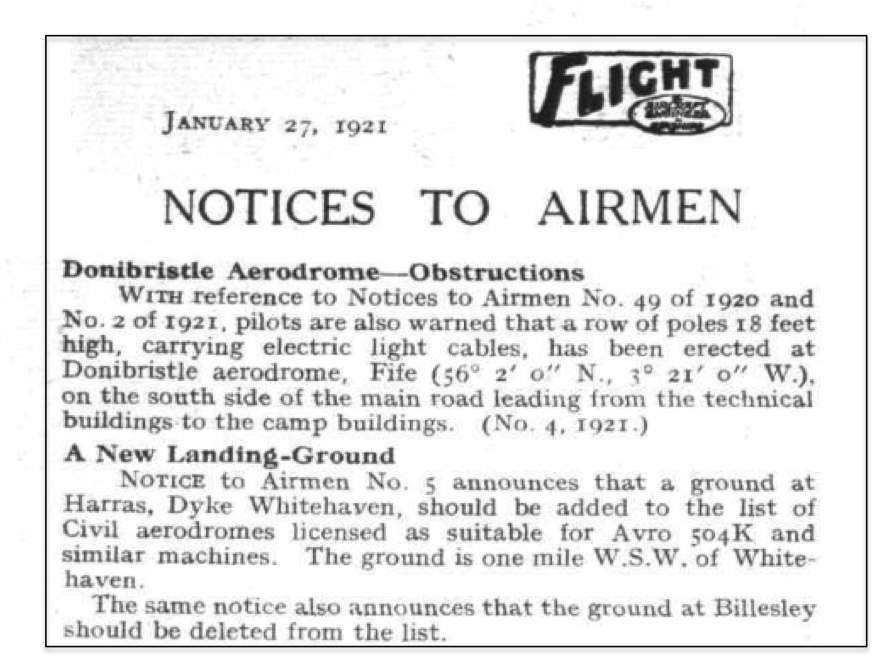
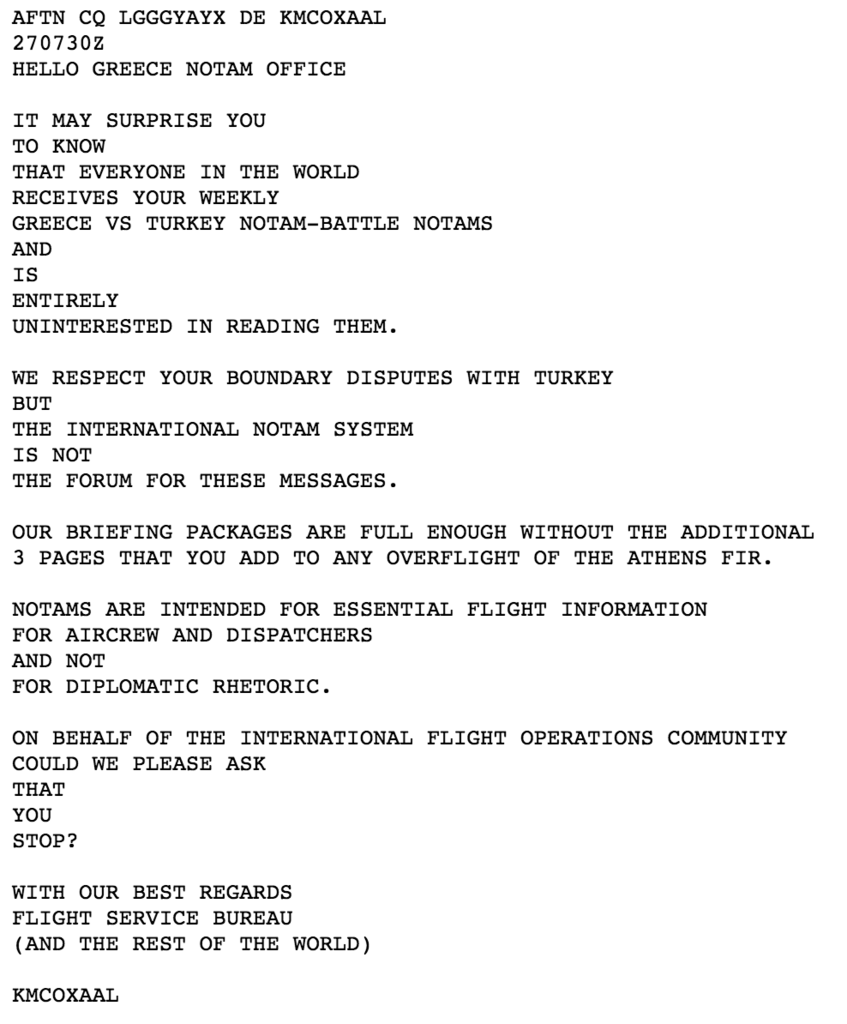
I certainly see some of the inherent aviation gender biases here in OPSGROUP. It’s usually not intentional, nor anything usually deep rooted in opinion – it’s just been built into the system over the last 80 years of how commercial aviation used to work.  Sometimes we have group calls that end with someone saying “Thank you Gentlemen”.  The very term NOTAM is indicative of the problem – Notice to (air) Men.  I like to imagine what it would be like to turn up to work every day and read a flight briefing that is headed “Notice to Women“. I certainly would feel excluded.

You might think that this is subtle, tiny, not important. But the things that create environments that are lonely, unwelcoming and intimidating are usually subtle and unintentional. Only by putting ourselves in the position of others, can we see the full impact.

It’s a process of education that starts with the willingness to see things a little differently, and then making a decision to do something that changes things for the better. Just like Kimberly and Cheryl have done.


US issues Emergency Order – No Fly Zone for Civil Aircraft – Iran
The FAA has issued an Emergency Order to US Civil Aircraft, prohibiting all American aircraft operators from entering the Tehran Flight Information Region (OIIX) FIR in the area above the Persian Gulf and Gulf of Oman.

Notam A0019/19 was issued at 0148 UTC, June 21st.

The Notam specifically prohibits any airline or aircraft operator from flying within Iranian airspace in the region that the US drone was shot down in on June 20th.
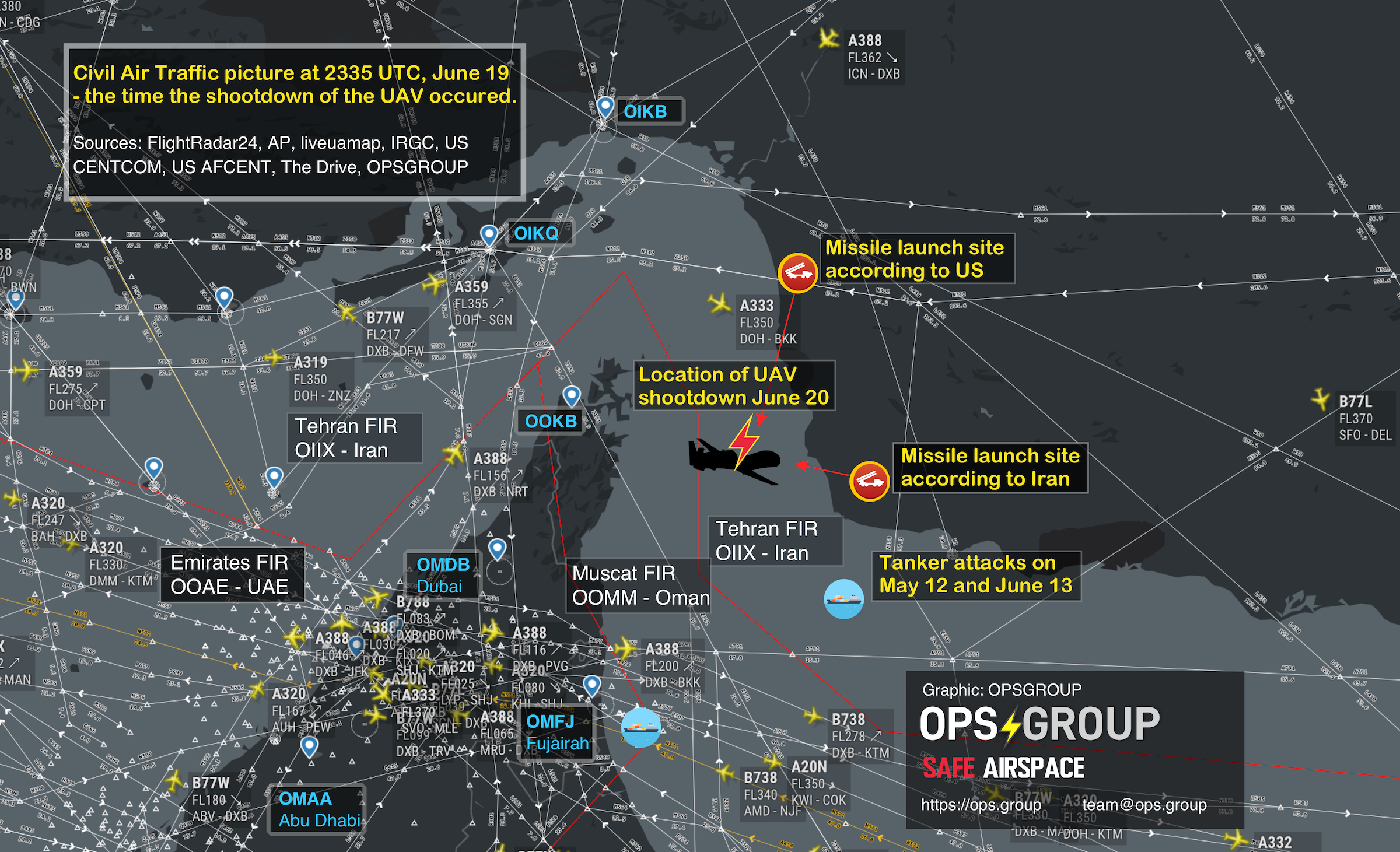
Some airlines had already reported suspending operations in Iranian airspace. This Notam ensures that US operators cannot operate in the area. Although the official applicability is to US aircraft only, since MH17 all countries rely on advice from the US, the UK, France and Germany to highlight airspace risk.

The full Notam follows (bolded parts by OPSGROUP):
A0019/19 NOTAMN Q) KICZ/QRDLP/IV/NBO/AE/000/999/
A) KICZ PART 1 OF 2
B) 1906210148
C) PERM
E) SECURITY..UNITED STATES OF AMERICA PROHIBITION AGAINST CERTAIN FLIGHTS IN THE OVERWATER AREA OF THE TEHRAN FLIGHT INFORMATION REGION (FIR) (OIIX) ABOVE THE PERSIAN GULF AND GULF OF OMAN ONLY.


ALL FLIGHT OPERATIONS IN THE OVERWATER AREA OF THE TEHRAN FLIGHT INFORMATION REGION (FIR) (OIIX) ABOVE THE PERSIAN GULF AND GULF OF OMAN ONLY ARE PROHIBITED UNTIL FURTHER NOTICE DUE TO HEIGHTENED MILITARY ACTIVITIES AND INCREASED POLITICAL TENSIONS IN THE REGION, WHICH PRESENT AN INADVERTENT RISK TO U.S. CIVIL AVIATION OPERATIONS AND POTENTIAL FOR MISCALCULATION OR MIS-IDENTIFICATION.THE RISK TO U.S. CIVIL AVIATION IS DEMONSTRATED BY THE IRANIAN SURFACE-TO-AIR MISSILE SHOOT DOWN OF A U.S. UNMANNED AIRCRAFT SYSTEM ON 19 JUNE 2019 WHILE IT WAS OPERATING IN THE VICINITY OF CIVIL AIR ROUTES ABOVE THE GULF OF OMAN.


A. APPLICABILITY. THIS NOTAM APPLIES TO: ALL U.S. AIR CARRIERS AND COMMERCIAL OPERATORS; ALL PERSONS EXERCISING THE PRIVILEGES OF AN AIRMAN CERTIFICATE ISSUED BY THE FAA, EXCEPT SUCH PERSONS OPERATING U.S.-REGISTERED AIRCRAFT FOR A FOREIGN AIR CARRIER; AND ALL OPERATORS OF AIRCRAFT REGISTERED IN THE UNITED STATES, EXCEPT WHERE THE OPERATOR OF SUCH AIRCRAFT IS A FOREIGN AIR CARRIER.


B. PERMITTED OPERATIONS. THIS NOTAM DOES NOT PROHIBIT PERSONS DESCRIBED IN PARAGRAPH A (APPLICABILITY) FROM CONDUCTING FLIGHT OPERATIONS IN THE ABOVE NAMED AREA WHEN SUCH OPERATIONS ARE AUTHORIZED EITHER BY ANOTHER AGENCY OF THE UNITED STATES GOVERNMENT WITH THE APPROVAL OF THE FAA OR BY A DEVIATION, EXEMPTION, OR OTHER AUTHORIZATION ISSUED BY THE FAA ADMINISTRATOR. OPERATORS MUST CALL THE FAA WASHINGTON OPERATIONS CENTER AT 202-267-3333 TO INITIATE COORDINATION FOR FAA AUTHORIZATION TO CONDUCT OPERATIONS.


C. EMERGENCY SITUATIONS. IN AN EMERGENCY THAT REQUIRES IMMEDIATE DECISION AND ACTION FOR THE SAFETY OF THE FLIGHT, THE PILOT IN COMMAND OF AN AIRCRAFT MAY DEVIATE FROM THIS NOTAM TO THE EXTENT REQUIRED BY THAT EMERGENCY.
THIS NOTAM IS AN EMERGENCY ORDER ISSUED UNDER 49 USC 40113(A) AND 46105(C). ADDITIONAL INFORMATION IS PROVIDED AT: HTTPS://WWW.FAA.GOV/AIR_TRAFFIC/PUBLICATIONS/US_RESTRICTIONS/

Earlier today, we published an article summarizing the risk to Aircraft Operators in the Gulf region – “The Threat of a Civil Aircraft Shootdown in Southern Iran is Real


In addition to the Notam, the FAA Threat Analysis Division have also published background information on the current situation (download that PDF here )


In that document, the FAA says: “Although the exact location of the attack is not yet available, there were numerous civil aviation aircraft operating in the area at the time of the intercept. According to flight tracking applications, the nearest civil aircraft was operating within approximately 45nm of the Global Hawk when it was targeted by the Iranian SAM. FAA remains concerned about the escalation of tension and military activity within close proximity to high volume civil air routes and the Iran’s willingness to use long-range SAMs in international airspace with little to no warning. As a result, there is concern about the potential for misidentification or miscalculation which could result in the inadvertent targeting of civil aviation.”

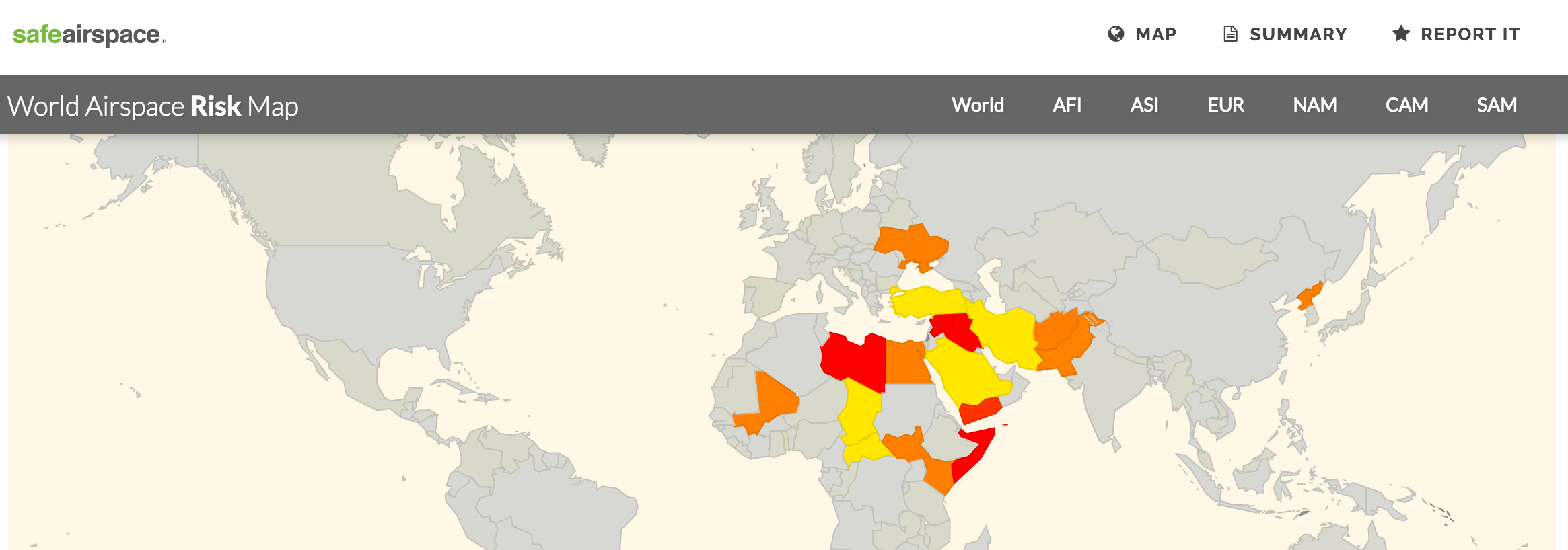
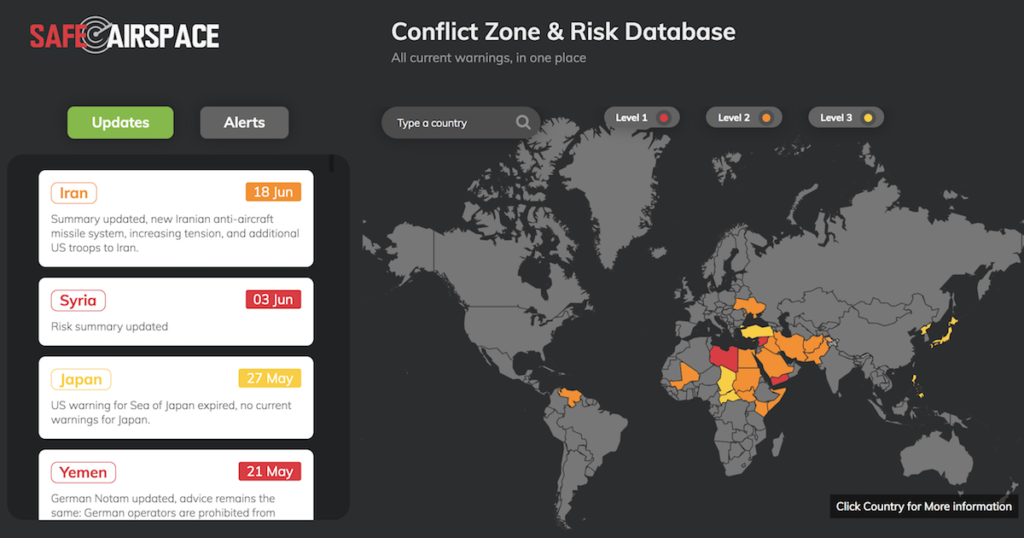
The Iran risk is being monitored at Safe Airspace – the Conflict Zone & Risk Database. The Iran country page also has more information on further overflight considerations in other parts of the Tehran FIR.


The Threat Of A Civil Aircraft Shootdown In Iran Is Real

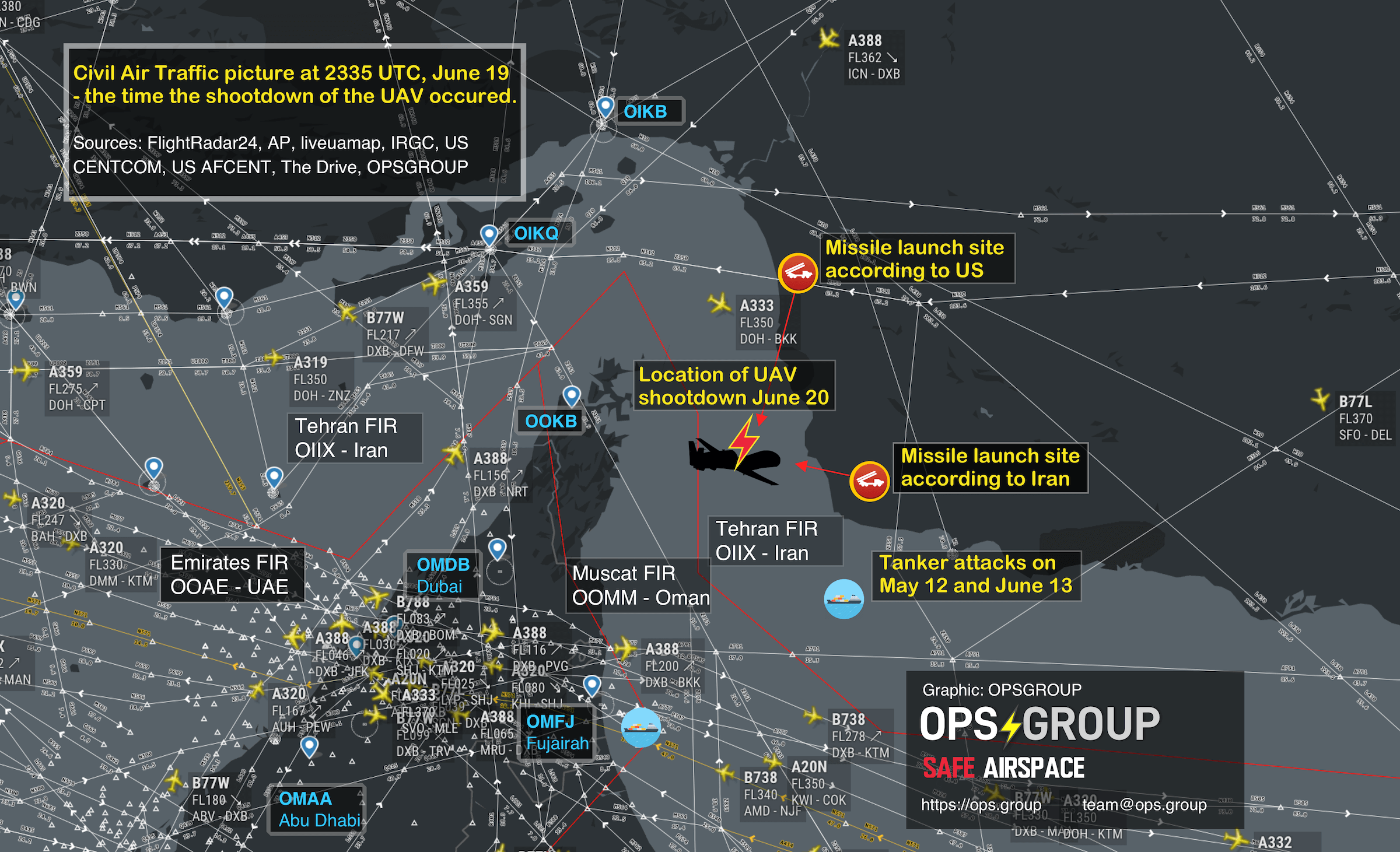
As we know by now, at 23:35Z last night (June 19, UTC), Iran shot down a US UAV on a high-altitude recon mission in the Straits of Hormuz. This was no small incident. The UAV was a $200 million aircraft, weighing 32,000 lbs, with the same wingspan as a 737.

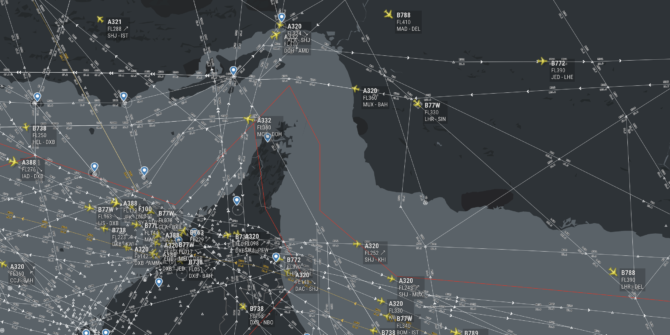
Although Iran and the US have slightly different versions of the position of the shooting down in the media, the approximate area is very clear, and marked on the map below, which shows the airspace picture at 2335Z, the time of the shootdown.

A high-res version of this map is available here.

For civil operators, the Straits of Hormuz have always been an area of high military activity, so it’s tempting to mark this as ‘more of the same’.  However, over the last few weeks tension between the US and Iran has heightened, and the launching of a surface to air missile by Iran represents an escalation in the current situation that crosses a threshold –  warranting a very close inspection by airlines and aircraft operators overflying, or using airports like Dubai, Abu Dhabi, Ras Al Khaimah, Muscat, and Fujairah.

As we approach five years since MH17, we should remember the build up to that shootdown took several months, and there are the warning signs here that we must pay close attention to. In the lead up to MH17, 16 military aircraft were shot down before MH17 became the 17th. Look closely at the map. Civil aircraft were very close to the site of this incident.

This morning, we sent this out to our members in OPSGROUP:

OIZZ/Iran Earlier today, a large US military drone was shot down by Iran over the Strait of Hormuz. The US say it was over international waters, Iran say it was within their FIR. Either way, it means that SAM missiles are now being fired in the area, and that represents an escalation in risk. It appears a 787 was very close to the missile site this morning. Avoiding the Strait of Hormuz area is recommended – misidentification of aircraft is possible. If you are coming close to Iran’s FIR, it’s essential that you monitor 121.5, as Iran uses this to contact potentially infringing aircraft. Local advice from OPSGROUP members says ‘Even if the operator/pilots think they will come close or penetrate Irans Airspace they should contact Iran Air Defense on 127.8 or 135.1’. If the Iranians have an unidentified aircraft on their radar and not in contact with them they will transmit on guard with the unidentified aircraft coordinates, altitude, squawk (if there is one), direction of travel and then ask this aircraft to identify themselves as they are approaching Iranian ADIZ. Monitor safeairspace.net/iran for the latest. 

Last September, when Syria shot down a Russian transport aircraft, we published an article on that risk, and noted “50 miles away from where the Russian aircraft plunged into the sea on Monday night is the international airway UL620, busy with all the big name airline traffic heading for Beirut and Tel Aviv. If Syria can mistakenly shoot down a Russian ally aircraft, they can also take out your A320 as you cruise past.” That same risk of misidentification exists here in the Straits of Hormuz.

Apart from the misidentification risk, is the risk of a problem with the missile itself. The missile used by Syria in September was a Russian S-200 SAM, which was the same missile type that brought down Siberian Airlines Flight 1812 in 2001. The missile can lock on to the wrong target, and this risk is higher over water. The missile system used by Iran last night was a domestically-built Raad Anti-Aircraft system, similar to the Russian Buk that was used against MH17. Any error in that system could cause it to find another target nearby – another reason not to be anywhere near this part of the Straits of Hormuz.

Bear in mind that as an aircraft operator you won’t be getting any guidance from the Civil Aviation Authorities in the region. As we saw with Syria, even when an aircraft had been shot down on their FIR boundary, the only Notams from Cyprus were about firework displays at the local hotels. It won’t be any different here. You need to be the one to decide to avoid the area.

A further risk, if you needed one, is retaliation by the US. It seems probable that the US will at least try to find an Iranian target to make an example of. If you recall the Iran Air 665 tragedy, back in July 1988, which occurred in the same area, the US mistakenly shot down that aircraft thinking it was an Iranian F-14.

Bottom line: we should not be flying passenger aircraft anywhere near warzones. That’s the lesson from MH17, and that’s the lesson we need to keep applying when risks like this appear on our horizon.

The Iran risk is being monitored at Safe Airspace – the Conflict Zone & Risk Database. The Iran country page also has more information on further overflight considerations in other parts of the Tehran FIR.
Further reading:


Sources for this article:


FOCM: Flight Operations Coffee Morning

OPSGROUP is hosting the first FOCM in New York City on June12th, and we’d love you to come along.

FOCM – Flight Operations Coffee Morning – is an OPSGROUP event where you can meet other pilots, dispatchers, controllers, and Ops specialists, hang out, have a coffee, and talk flight ops.

Dave and Mark from OPSGROUP, will host a quick Q&A about International Flight Ops, and our work as a group. We’ll talk NAT Tracks, Ramp Checks, Flight planning, Airspace Risk, Notams, the latest challenges – and what we can do to make things better.

And you get to meet and connect with other people working in Flight Ops in New York, New Jersey, and beyond. We’ll have A380 Captains and Gulfstream FO’s, Corporate dispatchers, New York ATC, and a bunch of other good people.

OPSGROUP is a collective of 5000 pilots, dispatchers, controllers, and ops specialists that work together to share information and resources, making flight ops simpler and safer. We’re hosting this because we love connecting people. It’s totally free.

Event details

When: Tuesday June 12th, 2019
Where: Lower East Side, NYC – address on RSVP
Cost: None!
RSVP here: https://focm.splashthat.com/

PDF Flyer – Print it out!

Total ban on US private flights to Cuba

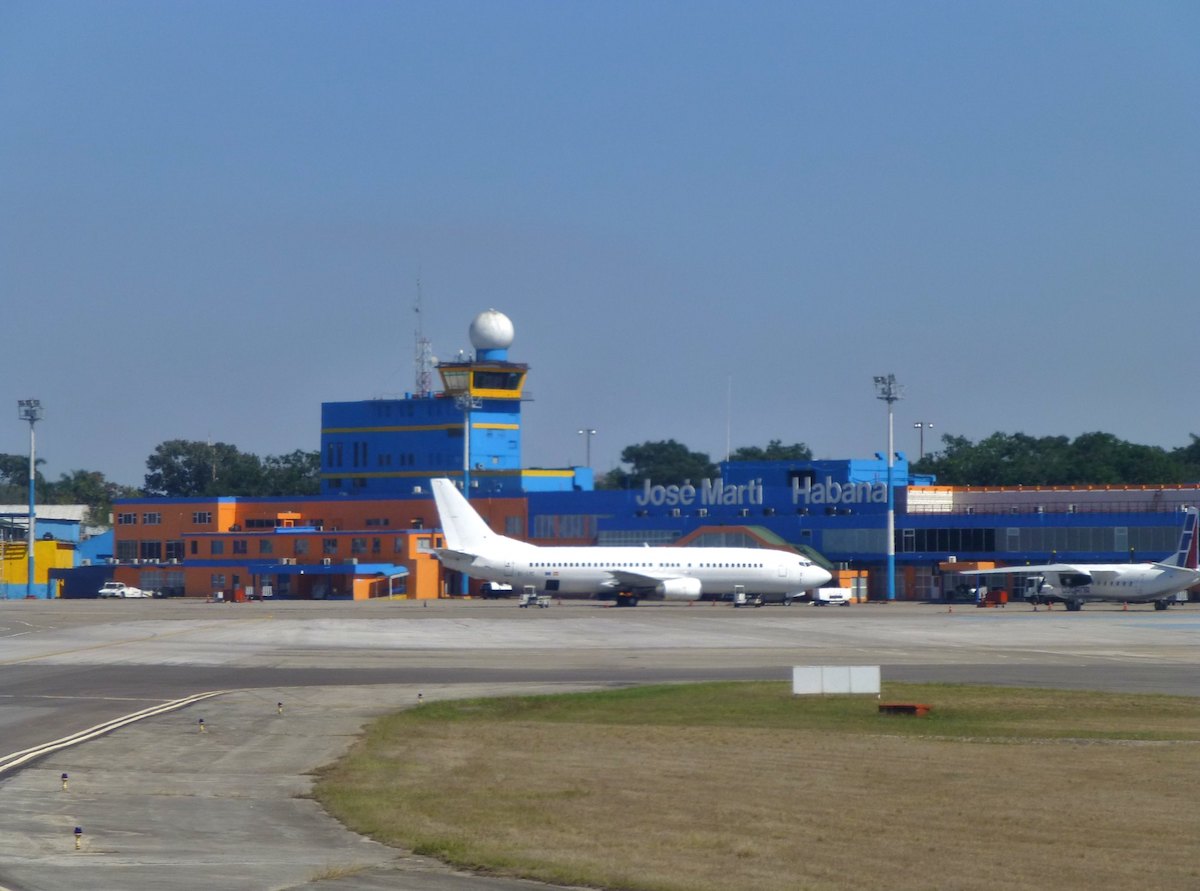
Effective today, June 5th, no US private aircraft will be allowed to travel to Cuba. The rule comes from the BIS – the US Bureau of Industry and Security, part of a further clampdown on Cuba policy by the US government.

We spent the day here in OPSGROUP clarifying the new rules and what it means for US operators.

What happened? BIS issued a new rule today, June 5 called “Restricting the Temporary Sojourn of Aircraft and Vessels to Cuba”. [official copy here] [Guidance here]. 

This is tough to read and understand. Nothing new about that. So, we asked OPSGROUP, discussed it with a whole bunch of members, got some legal interpretation, and got some great help from the NBAA.

Here’s the plain English wrap up:

  • US Part 91 private flights: Effective June 5, you cannot operate an N-reg aircraft privately to Cuba for any reason. This includes Corporate. It doesn’t matter if your passengers meet the “category requirements (see later)”, it’s a no go. 
  • Part 135 Air Ambulance: You can go, and you don’t need a license. From the rules: “Air ambulances operating under 14 CFR part 135, may depart from the United States under its own power for any destination”. “Air ambulances will remain eligible for the license exception when destined to Cuba”.
  • Part 135 Charter: This was unclear because of the wording of the new rules. But you can go. We asked BIS specifically about this, and the wording of the new paragraph is meant to be read as a series of options that allow you to go to Cuba – 135 is covered under the “AOC holder” bit.
  • Part 129: You can go. Part 129 is foreign operators. An example would be Air Canada doing a charter from JFK-HAV. That’s allowed.
  • Part 121: No changes. Airlines can operate.

BIS vs OFAC

The first gatekeeper of Cuba rules is BIS. If they don’t prohibit your operation, eg. Part 91 – then you proceed to the second gatekeeper – OFAC, and look into whether you need a license, and what category your passengers are travelling under.

Categories of allowed travel

There were 12 categories – or “reasons” to be allowed to go to Cuba. There are now 11. The one removed was known as “People to people”. These are set by OFAC.

What does Cuba say?

Thanks to one of our members who called the Cuba CAA this morning, and got this:
In our country there is no regulation in this regard. They can fly over
and land registrations of any nationality without any distinction
provided they meet the requirements requested and that you know
all right
.”

As we would expect, none of the restrictions come from the Cuba side. So everyone continues to be welcome in Havana, it’s just the US government that is restricting matters for US operators.

A super simple FAQ

Can I fly my private C172 to Cuba?
No. 

Can I fly my owner to Cuba in a G550, if he passes the ‘category test’?
No. He can go, but has to go on a commercial service.

Can I operate a Corporate Jet to Havana, for business reasons?
No. Regardless of the reason the principles might want to go to Cuba, you cannot operate any aircraft under Part 91.

But I see in the rules that you can apply for an exemption from BIS?
Yeah, you can, but they will say no. “License applications for the temporary sojourn to Cuba of those vessels and aircraft are subject to a general policy of denial.”

Can I operate a charter flight to Cuba?
Yes. BIS rules don’t prohibit this. But you then need to look into the OFAC rules.

Can I go to Mexico first, and then to Cuba?
No. In their lengthy FAQ, “A license from the Bureau of Industry and Security (BIS) is required to fly private or corporate aircraft to Cuba, even if the aircraft stops in another country first.”. And y’all ain’t gettin’ no license.

I am a Canadian operator. Can I operate to Cuba?
Yep. This is all about US operators being restricted. You can fly direct to Havana like you always did, and under the Part 129 bit in the new rule, you can also operate from the US to Cuba. 

So, we think we have this all correct as the final version. If we don’t hear any objections, we’ll add this to the OPSGROUP databank, and make a blog post. From here, we will post this in the new Forum, and the discussion can continue there!

THANKS EVERYONE!

Great team effort today to get this into an understandable-by-humans format. Well done!


Fly it like you stole it – free speed on the NAT

This is a new one, and it’s a good one for pilots! Being introduced slowly is a new flexibility – flying without a fixed Mach speed. In simple terms, you get to decide how fast you fly.

Like all new things on the NAT, we have an acronym. This one is OWAFS. Operations Without an Assigned Fixed Speed. But you’ll also see it as referred to as “Variable Mach”, and “Resume Normal Speed”.

When does this start?

It already has! It’s starting out as a trial (everything on the NAT starts out as a trial), and some members are already reporting getting “RESUME NORMAL SPEED” messages from Shanwick. The official start date is April 8, 2019. Three OACC’s are doing this – Shanwick, Santa Maria, and New York Oceanic (not WATRS).

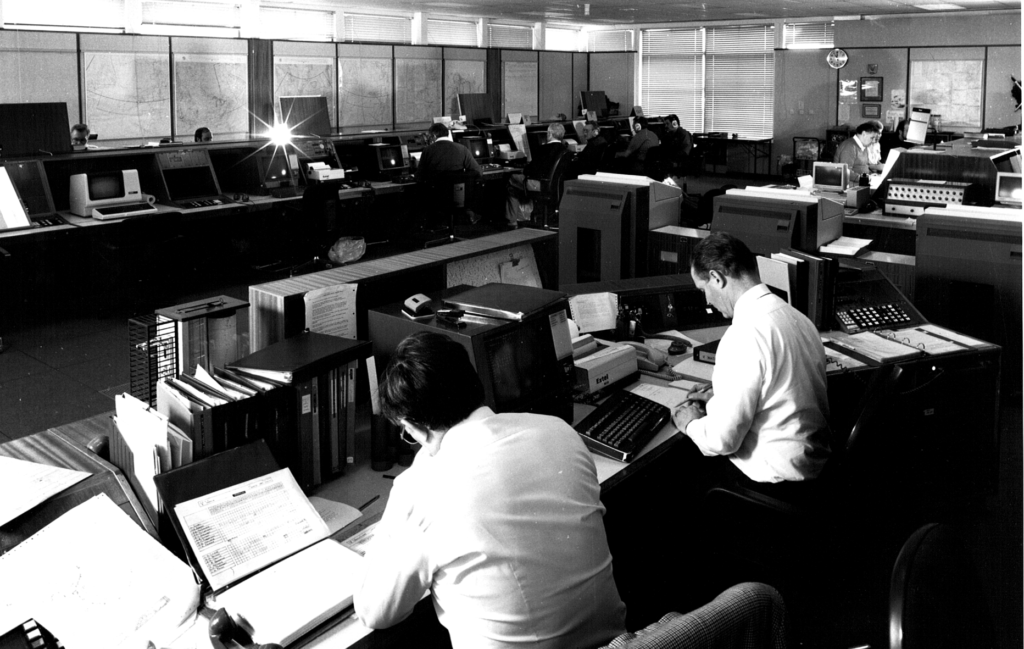
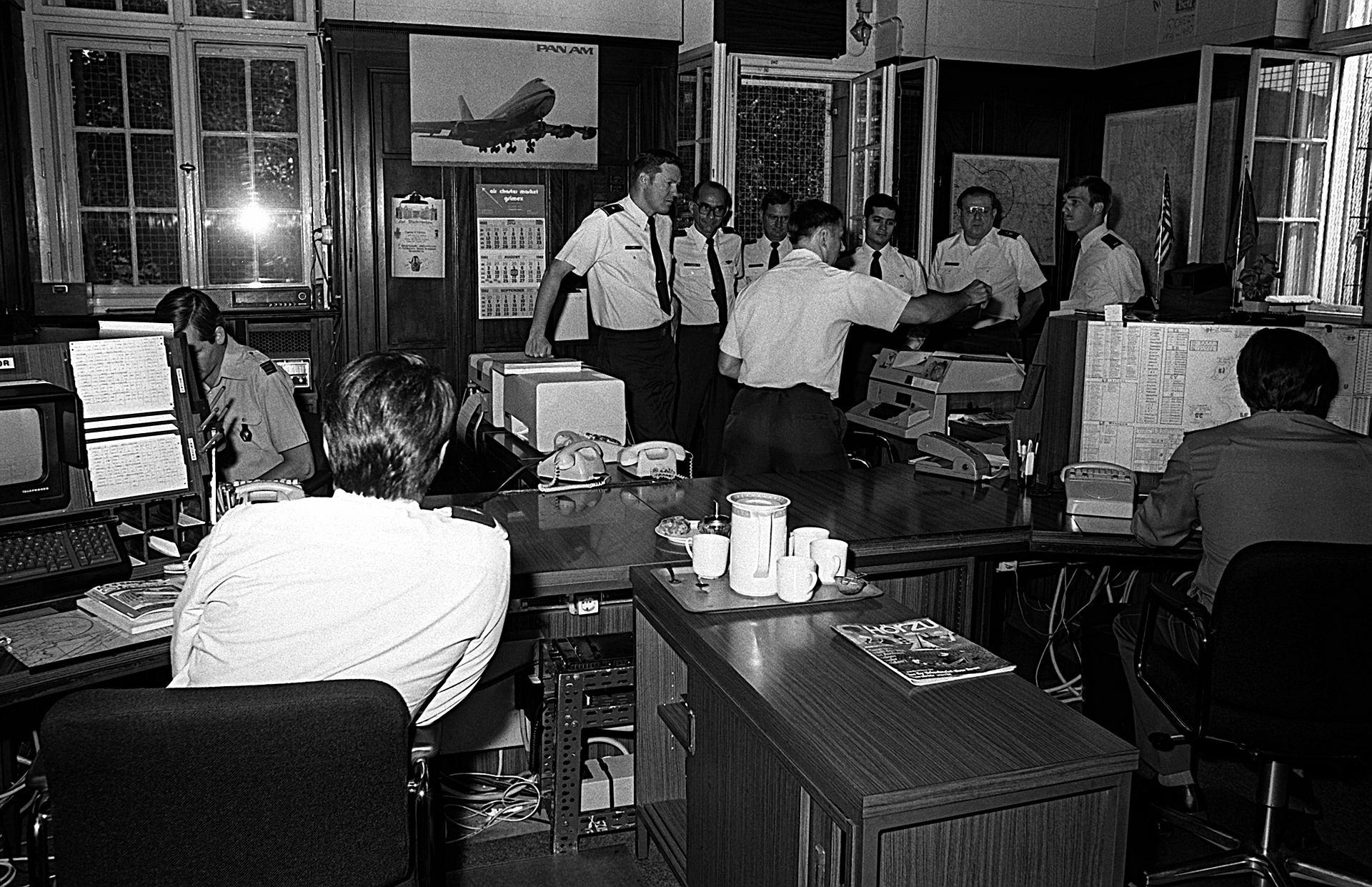
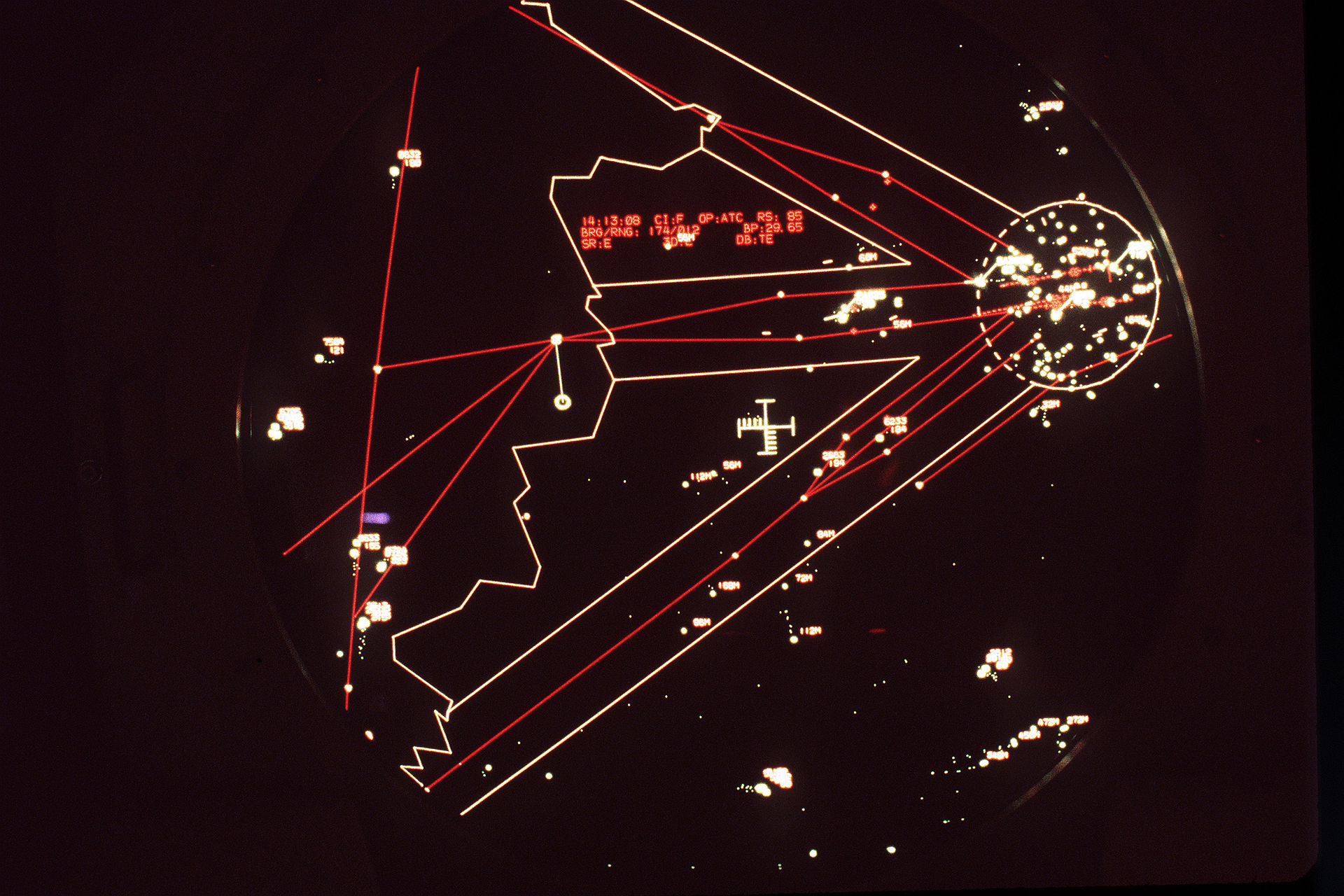
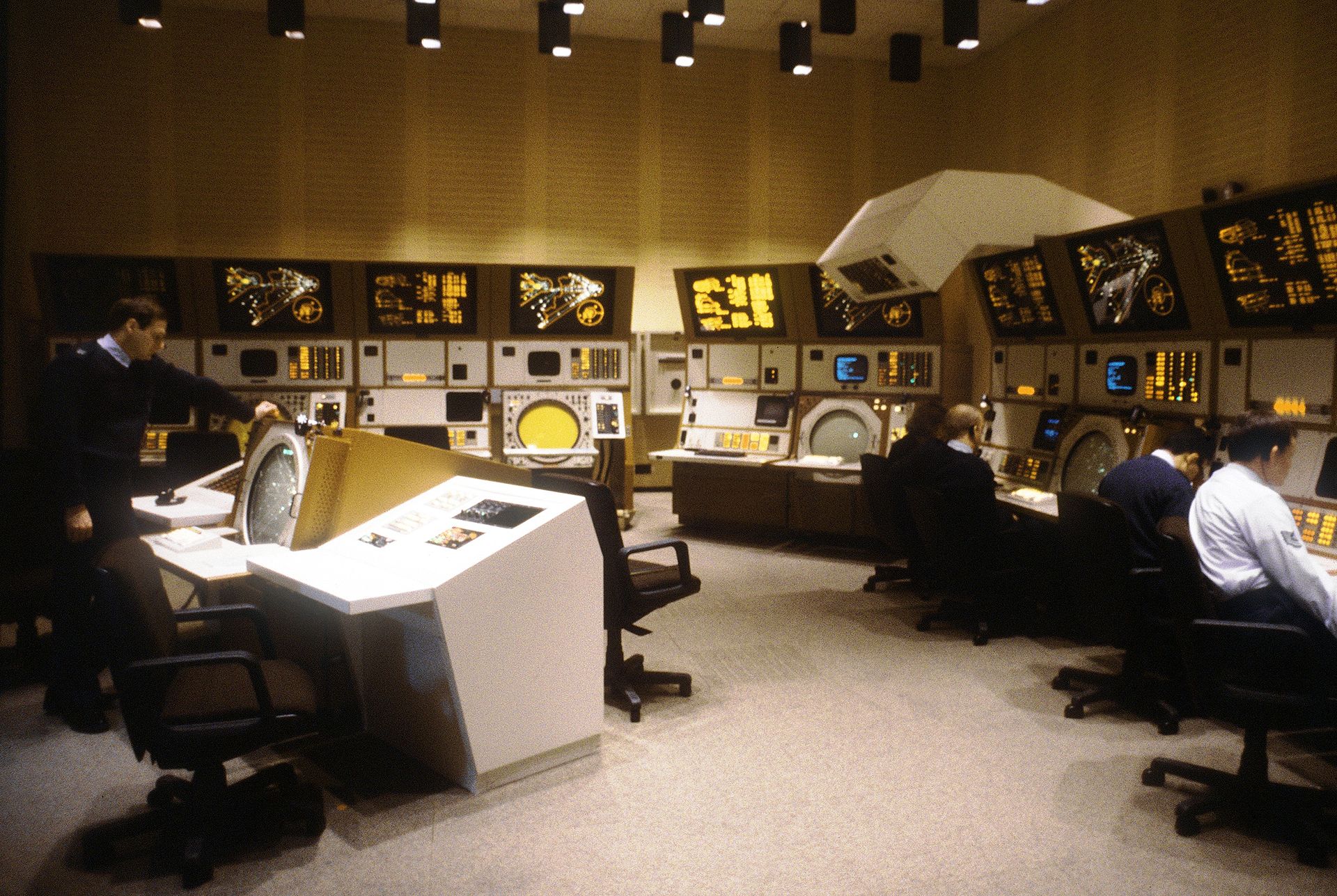
For no good reason, here’s a picture of the Shanwick Oceanic control room in 1989. Much has changed since!

How does it work?

You’ll get a normal oceanic clearance, with a fixed Mach Number, like you always did. Somewhere after the Oceanic Entry Point, if you are selected for the trial, you’ll get a CPDLC message saying RESUME NORMAL SPEED. You should reply with WILCO. What that means is: Fly ECON, or a Cost Index with Variable Mach.

So, once I get that, no restrictions on speed?

Correct! But, ATC will expect you to fly ECON/Cost Index, and normally, that should be pretty close to your cleared Mach (within 0.01 up or down). If you’re doing something different, tell them. If the resulting speed differs from your Oceanic Clearance Mach by 0.02, or more, you must tell ATC.

Rules for Shanwick (Don’t ask for it)

• Flight must be data link connected to EGGX
• Flight must be eastbound and operating solely in Shanwick Oceanic airspace and exiting into UK/Ireland/Continental European airspace
• Flight cannot exit into Santa Maria
• RESUME NORMAL SPEED will be offered on a “manual” tactical basis
Do not request RESUME NORMAL SPEED

Rules for New York and Santa Maria (You can ask)

• Flight must be data link connected to LPPO or KZWY
• Flights must be wholly within Santa Maria and New York East Oceanic airspace and not enter Gander or Shanwick airspace
• Flights can enter New York East Oceanic airspace or Santa Maria airspace from Gander airspace or Shanwick airspace and receive RESUME NORMAL SPEED uplink message
• New York West (WATRS airspace) is excluded
• RESUME NORMAL SPEED can be requested if not offered

Background and History

(Thanks, Jeff Miller @IATA, for this and the condensed info above!)

Both Airbus and Boeing advocate cost index (ECON) as the most efficient way to fly. Operators use cost index (ECON) globally, except for the North Atlantic (NAT) where flights are assigned a fixed Mach by ATC and flight crews are required to fly the assigned Mach. Depending on the distance from the departure airport to the oceanic entry, most operators flight plan the aircraft with cost index to the oceanic entry point and again after oceanic exit. Flight crews use the desired fixed Mach number from the computer flight plan that is generated by the cost index, as the requested Mach number for the crossing. It is possible the flight crew may request a Mach greater than or less than the flight plan Mach to improve scheduled arrival time. IATA led the ICAO NAT, Operations Without an Assigned Fixed Speed (OWAFS) project team to enable the use of a variable Mach in the NAT. The North Atlantic Systems Planning Group (NAT SPG) is expected to fully endorse OWAFS late June 2019 for an official implementation in late 2019 for all NAT OCAs. Full automation for all Air Navigation Service Providers (ANSPs) is expected by Q1 2020.

So I can use this for turbulence speed changes?

Yep, but remember, if you’re slowing down or speeding up significantly (0.02 or more), tell ATC your new speed.

Anything else?

That’s it for now. Remember, it’s a trial – later in the year full implementation is expected. Don’t ask for it if you aren’t offered, unless you’re in New York or Santa Maria airspace. Tell ATC if you’re changing by 0.02 or more from the Oceanic Clearance.

And most importantly, keep us posted on your experiences with this!


“THIS NOTAM IS AN EMERGENCY ORDER” – FAA on Venezuela

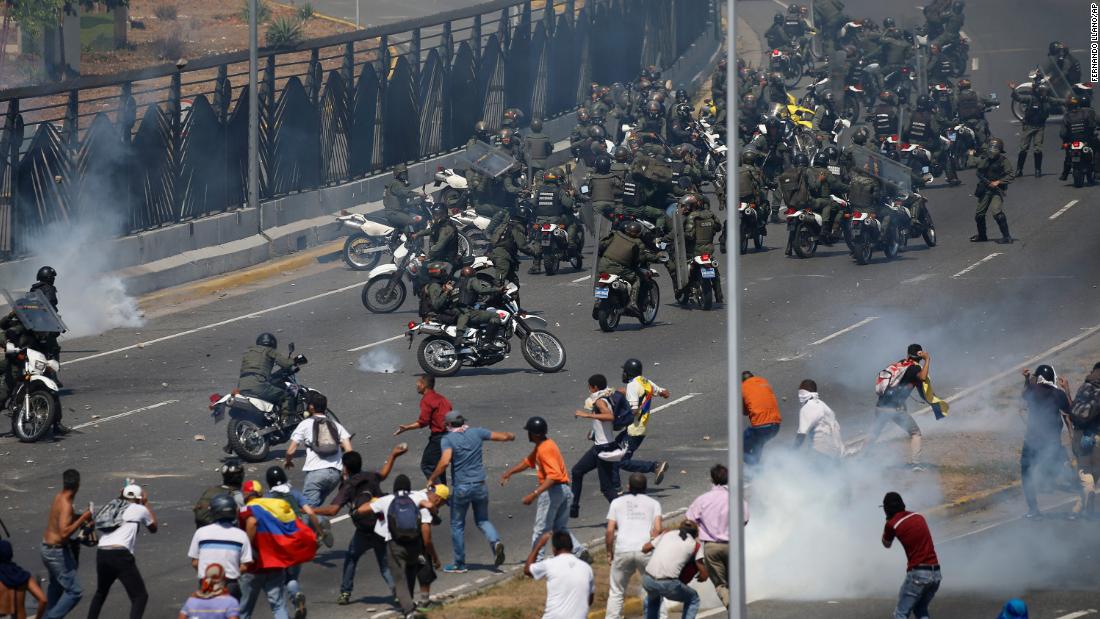
At 8.30pm tonight, the FAA issued a new “Do Not Fly” instruction to US operators, barring all operations into or over Venezuela, unless operating at or above FL260, and giving a window of 48 hours to leave the country.

The order comes on a day of an information battle waged between Maduro and Guaidó, and although the coup status is uncertain, one thing is clear: taking your aircraft to Venezuela is not a good idea.

The new Notam, KICZ A0013/19, has as postscript: “THIS NOTAM IS AN EMERGENCY ORDER ISSUED UNDER 49 USC 40113(A) AND 46105(C).” It gives US operators 48 hours to leave Venezuela.

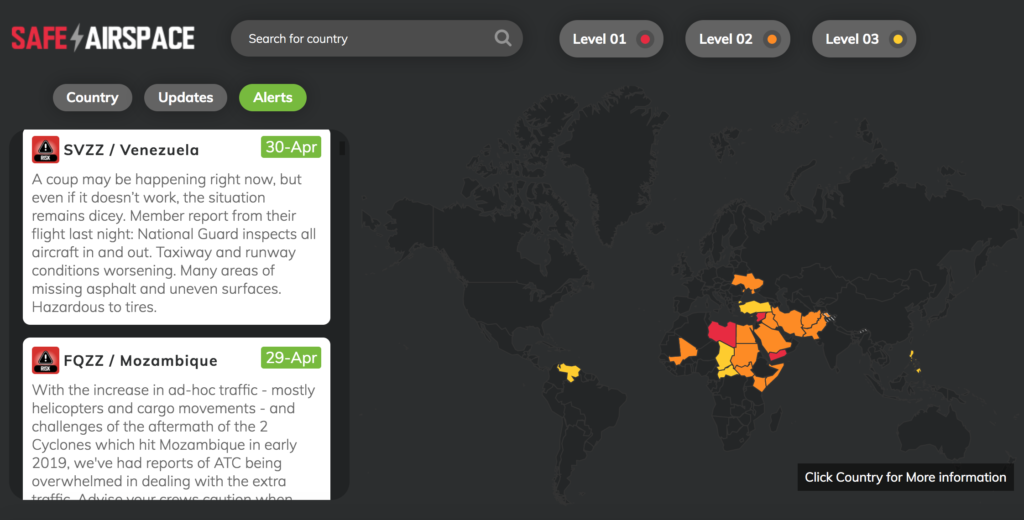
Over the past year, the situation in Venezuela has steadily declined, and in OPSGROUP we have issued multiple alerts and warnings, most recently today, on the back of several member reports:

The Venezuelan authorities had also published a Notam on 30 APR banning all GA/BA flights from operating to/from airports in the country, but this has since been cancelled.

The new FAA Notam leads with:

“ALL FLIGHT OPERATIONS IN THE TERRITORY AND AIRSPACE OF VENEZUELA AT ALTITUDES BELOW FL 260 BY THE PERSONS DESCRIBED IN PARAGRAPH A BELOW ARE PROHIBITED UNTIL FURTHER ADVISED DUE TO INCREASING POLITICAL INSTABILITY AND TENSIONS IN VENEZUELA AND THE ASSOCIATED INADVERTENT RISK TO FLIGHT OPERATIONS.”

and is issued as a Permanent Notam with no expiration date.

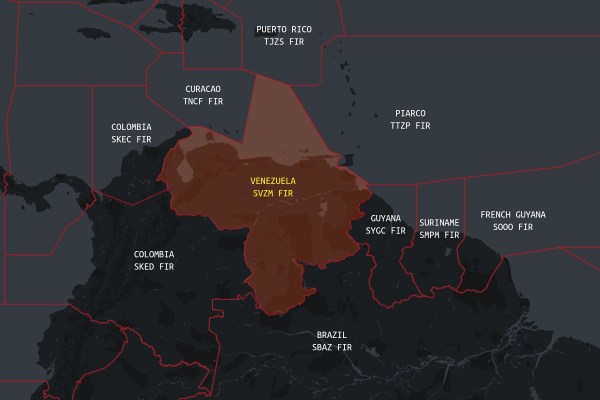
Rerouting options for overflights choosing to avoid, would be either west via Colombia, or east via Guyana and Piarco.

The full FAA Notam text is below. SafeAirspace.net is now updated with the new information.

FAA Notam KICZ A0013/19 issued May 1st, 2019, 0025Z.:

KICZ A0013/19 – SECURITY..UNITED STATES OF AMERICA PROHIBITION FOR
VENEZUELA

ALL FLIGHT OPERATIONS IN THE TERRITORY AND AIRSPACE OF VENEZUELA AT ALTITUDES BELOW FL
260 BY THE PERSONS DESCRIBED IN PARAGRAPH A BELOW ARE PROHIBITED UNTIL FURTHER ADVISED
DUE TO INCREASING POLITICAL INSTABILITY AND TENSIONS IN VENEZUELA AND THE ASSOCIATED
INADVERTENT RISK TO FLIGHT OPERATIONS.

A. APPLICABILITY. THIS NOTAM APPLIES TO: ALL U.S. AIR CARRIERS AND COMMERCIAL OPERATORS;
ALL PERSONS EXERCISING THE PRIVILEGES OF AN AIRMAN CERTIFICATE ISSUED BY THE FAA, EXCEPT
SUCH PERSONS OPERATING U.S.‐REGISTERED AIRCRAFT FOR A FOREIGN AIR CARRIER; AND ALL
OPERATORS OF AIRCRAFT REGISTERED IN THE UNITED STATES, EXCEPT WHERE THE OPERATOR OF
SUCH AIRCRAFT IS A FOREIGN AIR CARRIER.

B. PERMITTED OPERATIONS. THIS NOTAM DOES NOT PROHIBIT PERSONS DESCRIBED IN PARAGRAPH
A (APPLICABILITY) FROM CONDUCTING FLIGHT OPERATIONS IN THE ABOVE-NAMED AREA WHEN
SUCH OPERATIONS ARE AUTHORIZED EITHER BY ANOTHER AGENCY OF THE UNITED STATES
GOVERNMENT WITH THE APPROVAL OF THE FAA OR BY A DEVIATION, EXEMPTION, OR OTHER
AUTHORIZATION ISSUED BY THE FAA ADMINISTRATOR. OPERATORS MUST CALL THE FAA
WASHINGTON OPERATIONS CENTER AT 202-267-3333 TO INITIATE COORDINATION FOR FAA
AUTHORIZATION TO CONDUCT OPERATIONS.

C. ALLOWANCES. PERSONS DESCRIBED IN PARAGRAPH A ABOVE WHO ARE IN THE TERRITORY AND
AIRSPACE OF VENEZUELA AT THE TIME THIS NOTAM IS ISSUED MAY DEPART THE TERRITORY AND
AIRSPACE OF VENEZUELA BY THE MOST EXPEDITIOUS POSSIBLE ROUTE WITHIN 48 HOURS FROM THE
TIME THIS NOTAM IS ISSUED, IF THE PILOT IN COMMAND DETERMINES THAT THE OPERATION CAN
BE CONDUCTED SAFELY.

D. EMERGENCY SITUATIONS. IN AN EMERGENCY THAT REQUIRES IMMEDIATE DECISION AND ACTION
FOR THE SAFETY OF THE FLIGHT, THE PILOT IN COMMAND OF AN AIRCRAFT MAY DEVIATE FROM THIS
NOTAM TO THE EXTENT REQUIRED BY THAT EMERGENCY.

THIS NOTAM IS AN EMERGENCY ORDER ISSUED UNDER 49 USC 40113(A) AND 46105(C).
SFC – FL259; 01 MAY 00:25 2019 UNTIL PERM. CREATED: 01 MAY 00:28 2019


How OpsGroup works – for questions

I love how the hive-mind works. We have 5000 members, and so it shouldn’t be surprising, but it’s still awesome to see it in action.

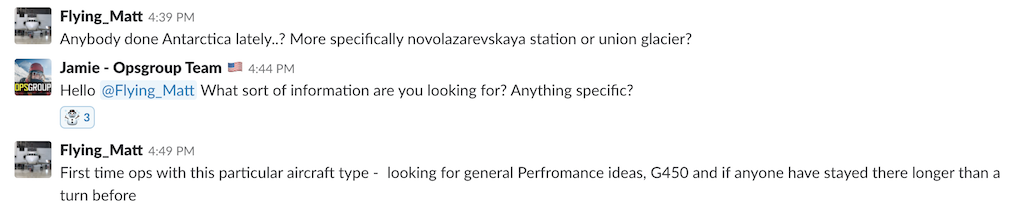
Yesterday, in slack, a member asked:

Now, I’ve never heard of Novolazarevskaya Station, but that’s not important. There are another 4,999 of us, and chances are that someone in the group has.

So, we blasted it out on the ATIS this morning:

The ATIS goes out to all group members in the OpsGroup Daily Brief.

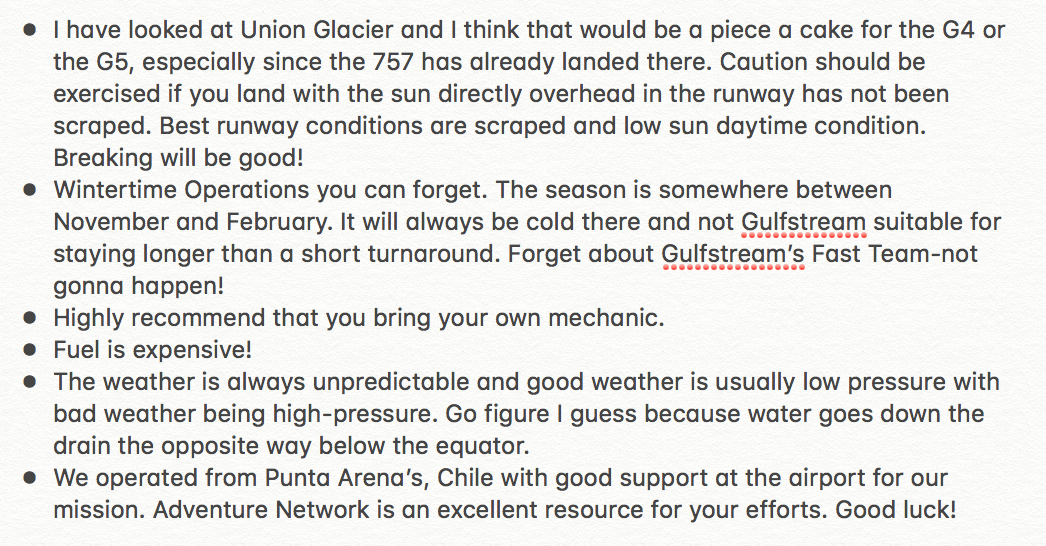
And of course, someone got right to it, answering the question:

This is how OpsGroup works! Simple, and extremely effective. When one person knows, we all know.

Bonus: The first OpsGroup team member to see the question was @Jamie – Opsgroup Team, who has been on the ice on five separate missions for the US Antarctic program, and has spent a combined total of three years down there.


Why are we still flying airline passengers over war zones?

Here’s the level of inconsistency we’ve reached in international air transport: we take each passenger, scrutinize their booking, check the no-fly-list, watch them on CCTV, pull them apart at TSA, remove anything sharper than a pen, question them, x-ray the bags, run Explosive Trace Detection tests, screen the hold baggage, background check every member of the crew, and then, once they’ve all boarded, fly this ultra-secure airplane straight into a war zone.

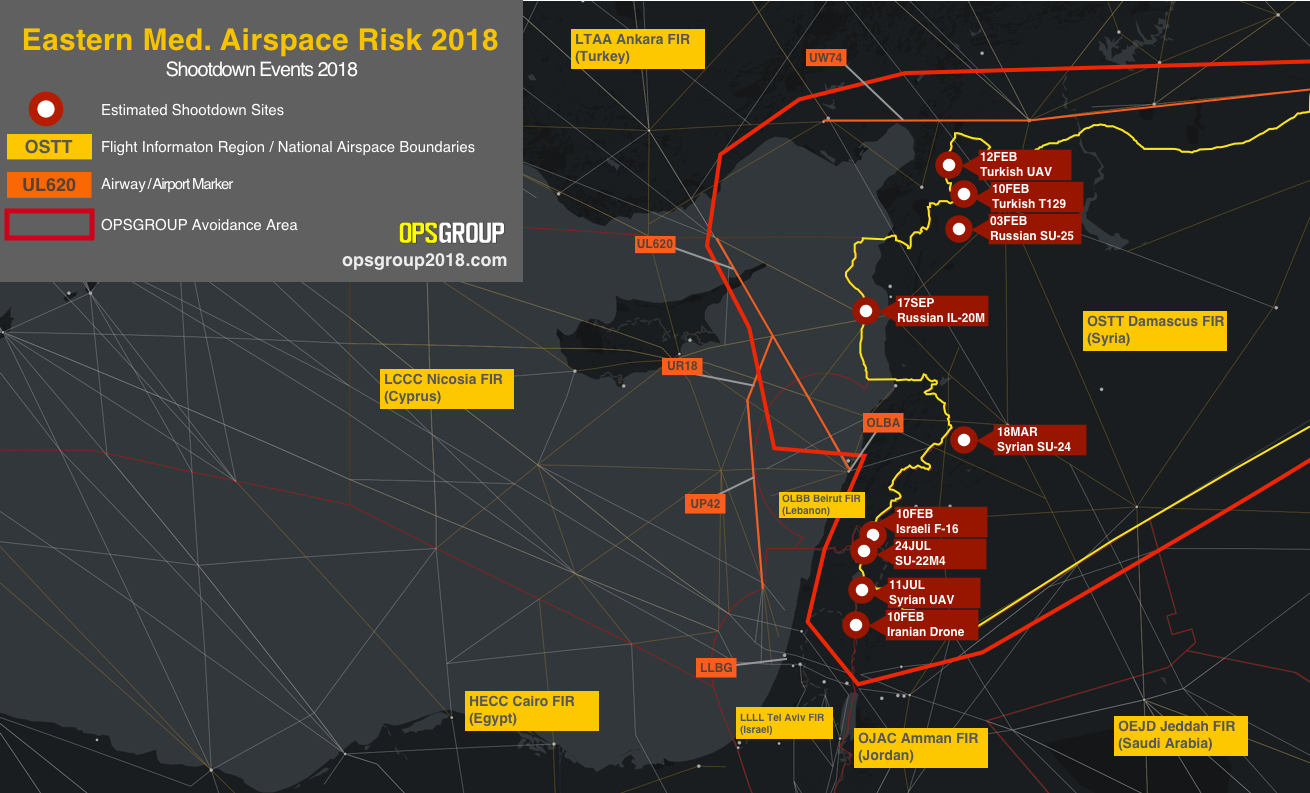
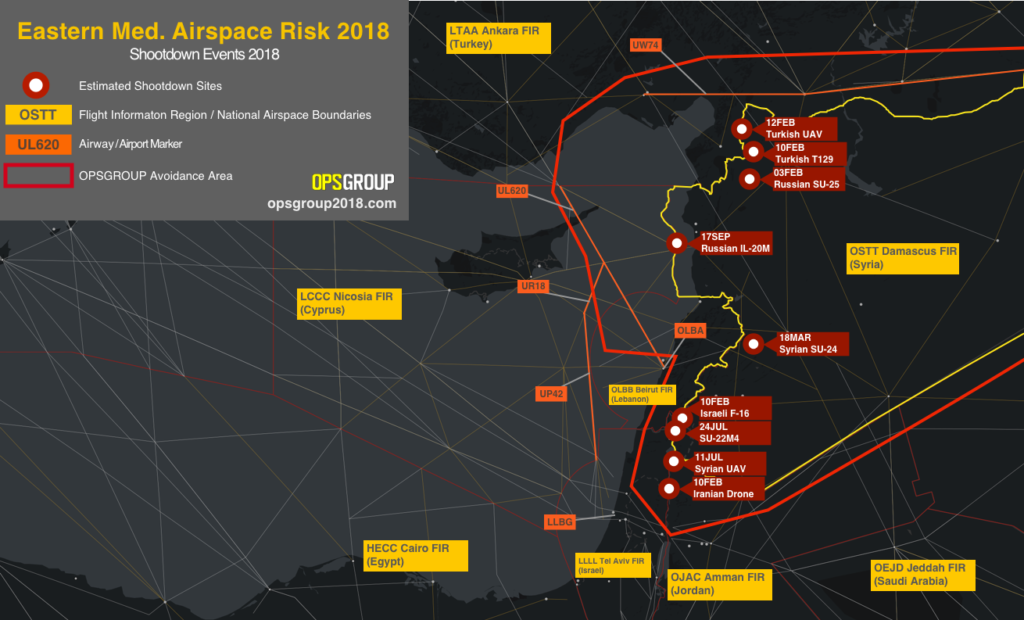
Welcome to the Eastern Mediterranean. It’s an active conflict zone. The Russian naval build up there this month is the largest since Moscow’s intervention in Syria began in 2015. Over Syria, 9 aircraft have been shot down this year.

The most recent was on Monday night this week, when Syria came under attack from Israel fighter jets, and started firing indiscriminately at anything off the coast that looked like a threat. They wanted to shoot something down, and they did — except it was a friend, not foe. They took out a Russian Ilyushin IL-20M transport category airplane. Even on the worst radar, that doesn’t look anything like an Israeli F-16.

50 miles away from where the Russian aircraft plunged into the sea on Monday night is the international airway UL620, busy with all the big name airline traffic heading for Beirut and Tel Aviv. If Syria can mistakenly shoot down a Russian ally aircraft, they can also take out your A320 as you cruise past.

And yet, most airlines continue to operate. Are we really so comfortable with operating in conflict zones again?

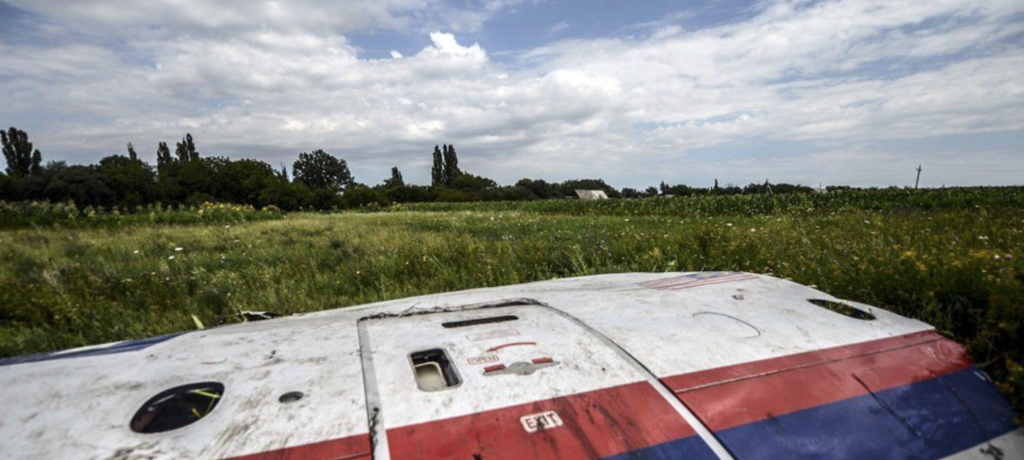
The lessons of MH17 seem to be fading fast. It’s a little over four years since 298 people lost their lives over Ukraine one summer afternoon, thanks to an errant missile fired during a civil war at an aircraft that they thought was a military threat. “Why were they over a war zone”, everyone cried afterwards.

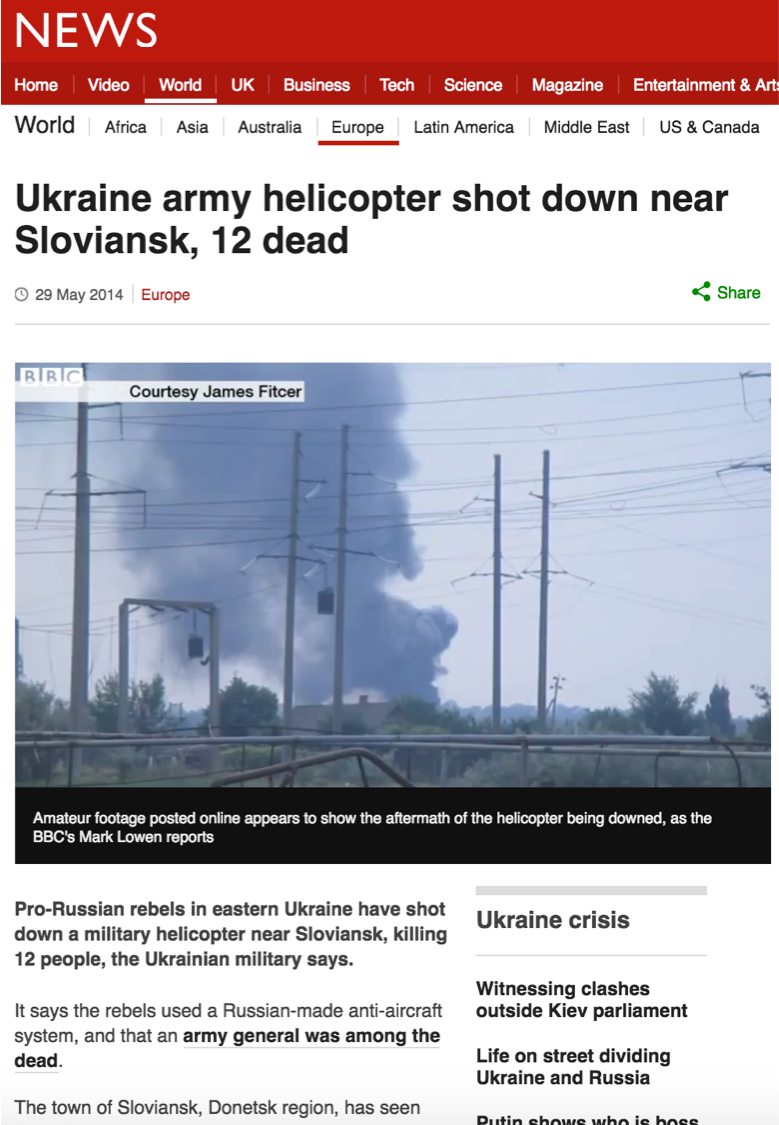
Well, we all were. Me too. I was a pilot for Austrian Airlines at the time. I recall one morning in Vienna, some months before MH17. Boarding the last of the passengers, my BBC news app flashed up a story about a helicopter being shot down in eastern Ukraine .

As we were headed east, with my colleague in the cockpit, we quickly plotted the position on our enroute chart, and noted that it was really close to our route. Maybe 30 miles north. “We might see something interesting!”, we said, and pushed back. We didn’t, nor did we think much more about it.

Do you see the thought process though? Before MH17, we didn’t consider the risks to our aircraft from war zones. Especially being so high. Helicopters might be getting shot down, but we’re at 35,000 feet. No problem.

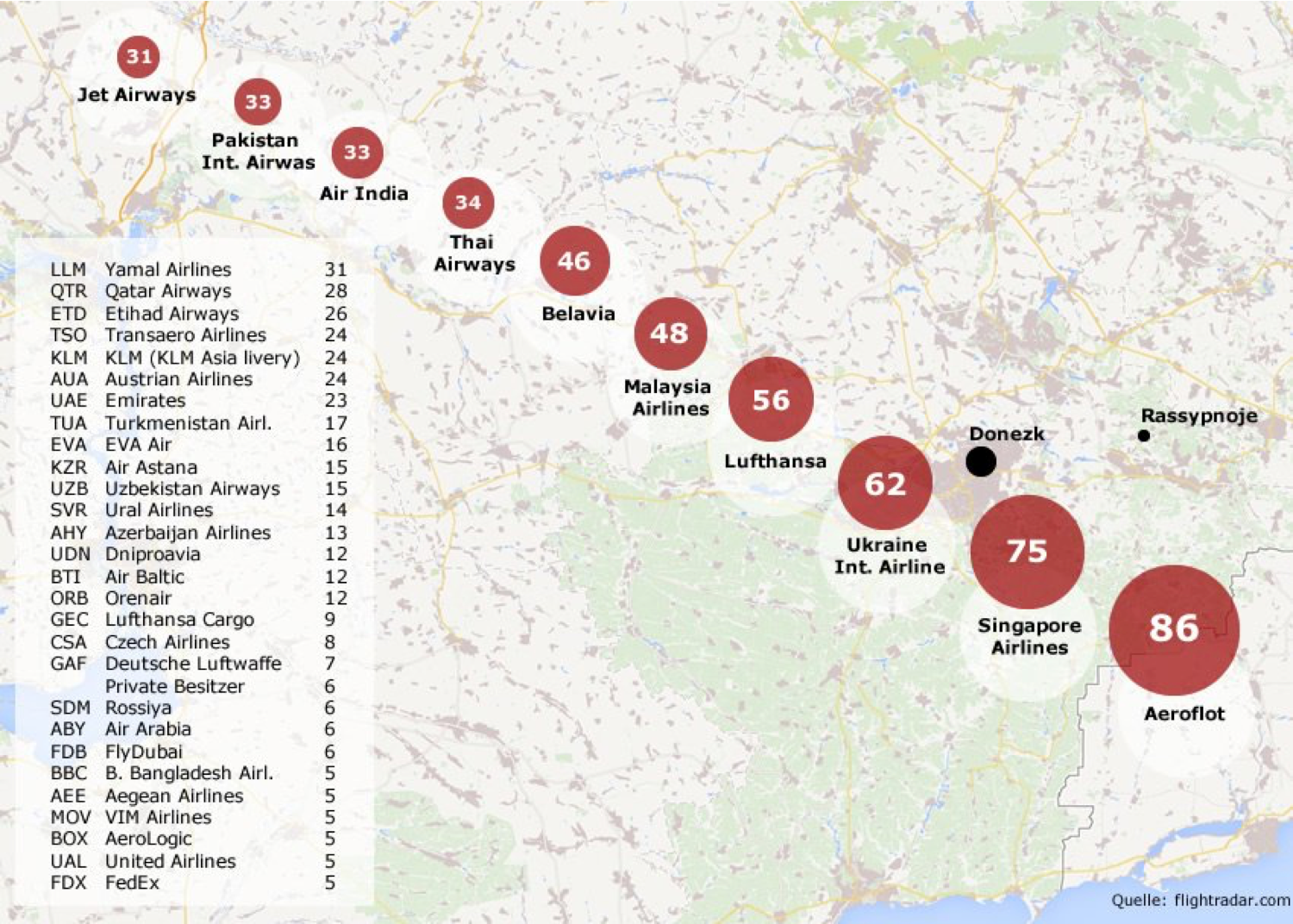
This is why all of these airlines — mine, at the time, included — operated on the route.


Image: Der Spiegel

And then it happened, and none of us could quite believe it.

But we learned. “Conflict Zone” became a buzzword. We had task forces and committees, whitepapers and promises, and — myself included — talked at length about how this happened, why, and how to avoid it in the future.

And yet, here we are flying unsuspecting passengers along the Syrian border. If you’re unsuspecting enough, and buy a SkyTeam codeshare ticket — you’ll actually overfly Syria on the Honey Badger airline of the region, Middle East Airlines.

Here we are flying passengers in the Eastern Mediterranean war zone. Why is this happening?

My guess: because we don’t think anything bad is going to happen, because the airspace boundary lines on the charts make that little bit of sea near Cyprus feel different from that little bit of sea near Syria, but mainly because there is no clear guidance from Aviation Authorities.

Let’s start with Cyprus. The Nicosia FIR has a big chunk of unsafe airspace. The Russian aircraft on Monday was shot down on the Nicosia FIR boundary. What do the Notams say? Take a look. There are 97 of them. Mostly about fireworks at local hotels. Critical stuff indeed. Then there are 20 or 30 about “Russian naval exercises”. A clue, perhaps, but where is the black and white “An Aircraft was Shot Down on our Border on Monday?” . Or, since we are still using teletype to communicate Notams to crews, “AN AIRCRAFT WAS SHOT DOWN ON OUR BORDER ON MONDAY”. Wait, we have to abbreviate that, and use codes, for some reason. “ACFT SHOT DOWN ON FIR BDY 17SEP”. That’s better.

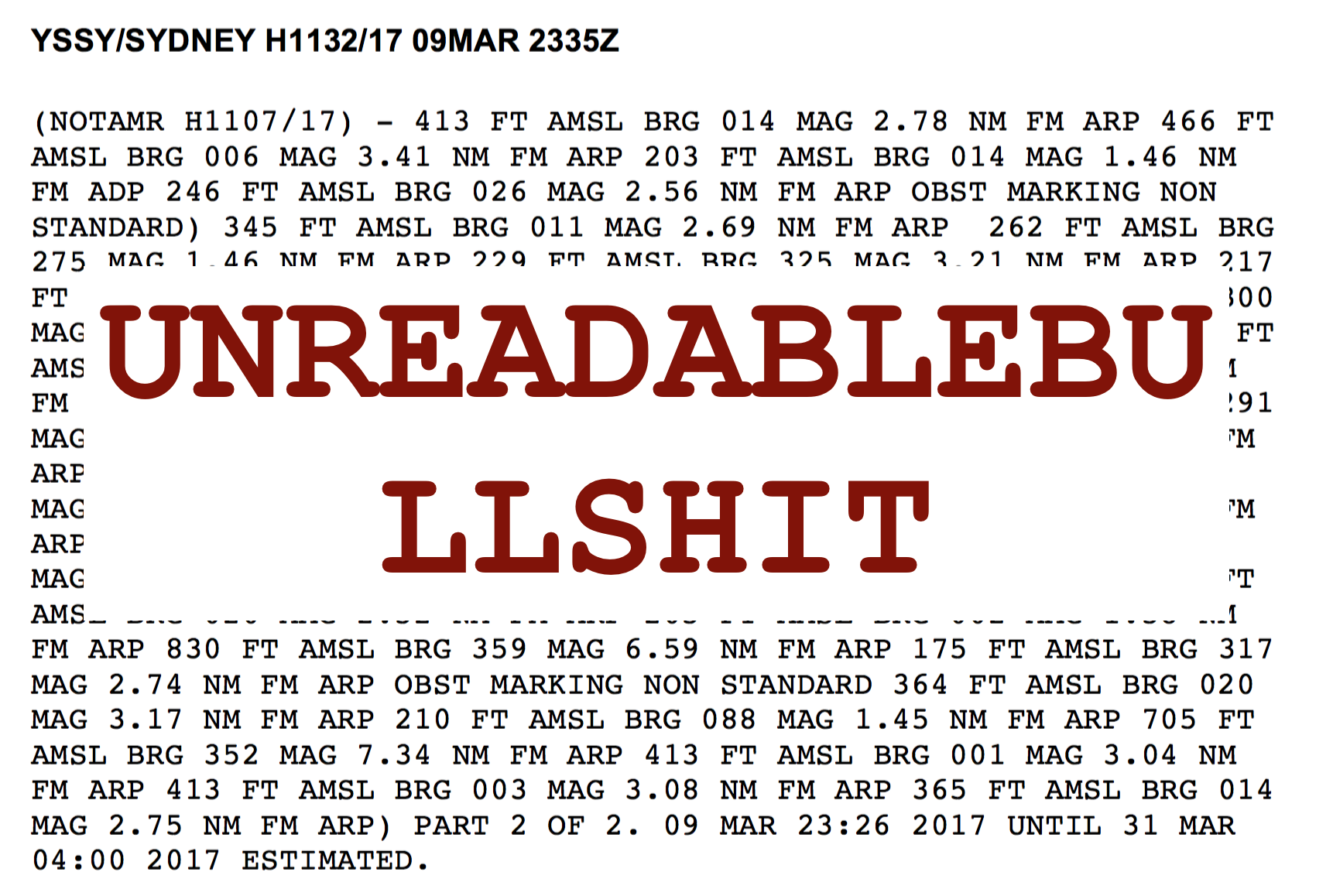
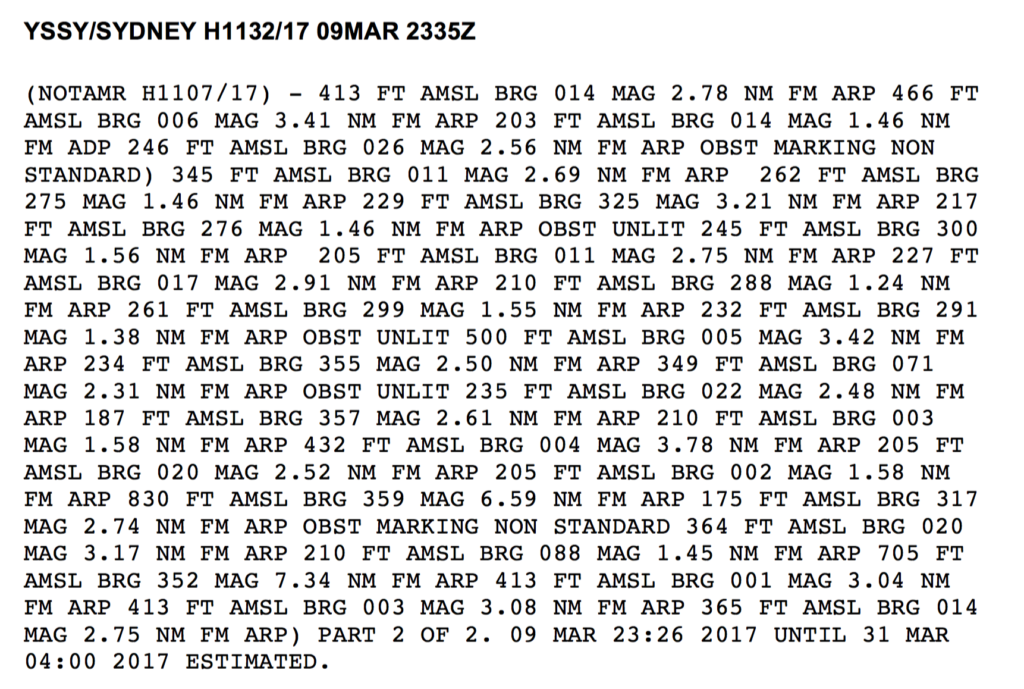
What about Turkey? Anything on the Eastern Mediterranean risk? Let’s have a look. Nope, just 132 Bullshit Notams, and something about an AWACS aircraft. See you back here in 30 minutes when you’ve read them all.

Remember, I’m being a pilot, an airline, a dispatcher, trying to find information on the Risk in the Eastern Mediterranean. And this is how hard it is.

EASA (European Aviation Safety Agency), how are you doing? Let’s start here, at the “Information on Conflict Zones”. Paragraph 2 tells us that ICAO have a Central Repository on Conflict Zones, launched in 2015.

No, they don’t. That died — quite a long time ago. This is where it used to live. So, there is no ICAO Central Repository on Conflict Zones. There is a new ICAO document with guidance on managing Conflict Zone risk (and it’s a bloody good one, too) — but where is the picture of current risk?

Let’s plough on through the EASA site. Aha! Seems we have a Conflict Zone alerting system, and Conflict Zone bulletins. Here they all are: https://ad.easa.europa.eu/czib-docs/page-1

The last one on Syria was issued on April 17th. But it seems to be just a list of Notams issued by other states. And these are out of date. The German Notam has expired, the French AIC has been replaced.

And there’s no guidance. No Map. No routes to avoid. Nothing about Cyprus, or Beirut. No mention of the Russian shootdown. No mention of the 9 aircraft shot down this year.

How am I supposed to know, as an operator, or pilot, what the risks are and where to avoid. We’re getting closer to the point here. You’re not supposed to rely on the Aviation Authority. That is their message. You must conduct your own risk assessment. You must research and find out about the risks yourself.

You are on your own.

If you’re a big airline, that’s probably fine. You’ll make your own decisions about where to fly, anyhow. But what about everybody else?

While OpsGroup works hard to get information out to our members — and we spend a lot of time researching risk — I would greatly prefer that we didn’t have to.

Aviation Authorities must issue better guidance for the aircraft entering their areas.

Let me remind you. Airlines are operating 50 miles from a position where an airplane was shot down at night, by a missile type that’s already taken out a passenger airliner by mistake, fired by a beleaguered Syrian defence post, at a friendly aircraft that they did not take time to identify.

And the guidance to operators from Authorities: NIL.


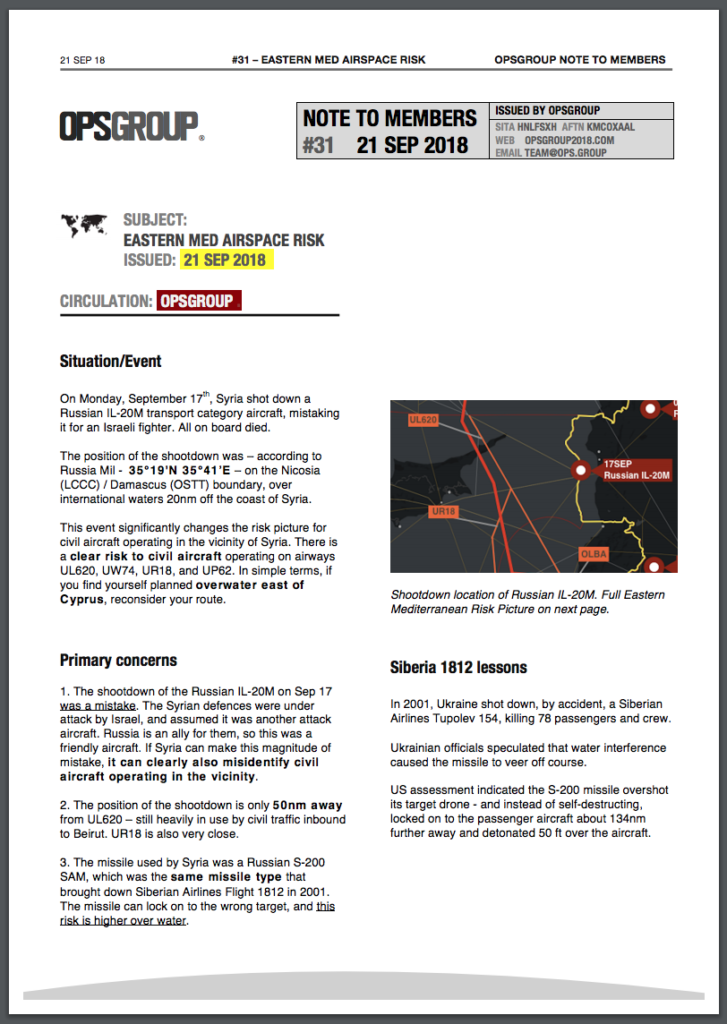
Opsgroup has now published Note 31: Airspace Risk in the Eastern Mediterranean. There is a clear risk to civil aircraft operating on airways UL620, UW74, UR18, and UP62. In simple terms, if you find yourself planned overwater east of Cyprus, reconsider your route.

Further reading:


Ethiopia risking flight safety to cover up ATC strike

  • Ethiopian ATC on strike, no Notams, government hush up
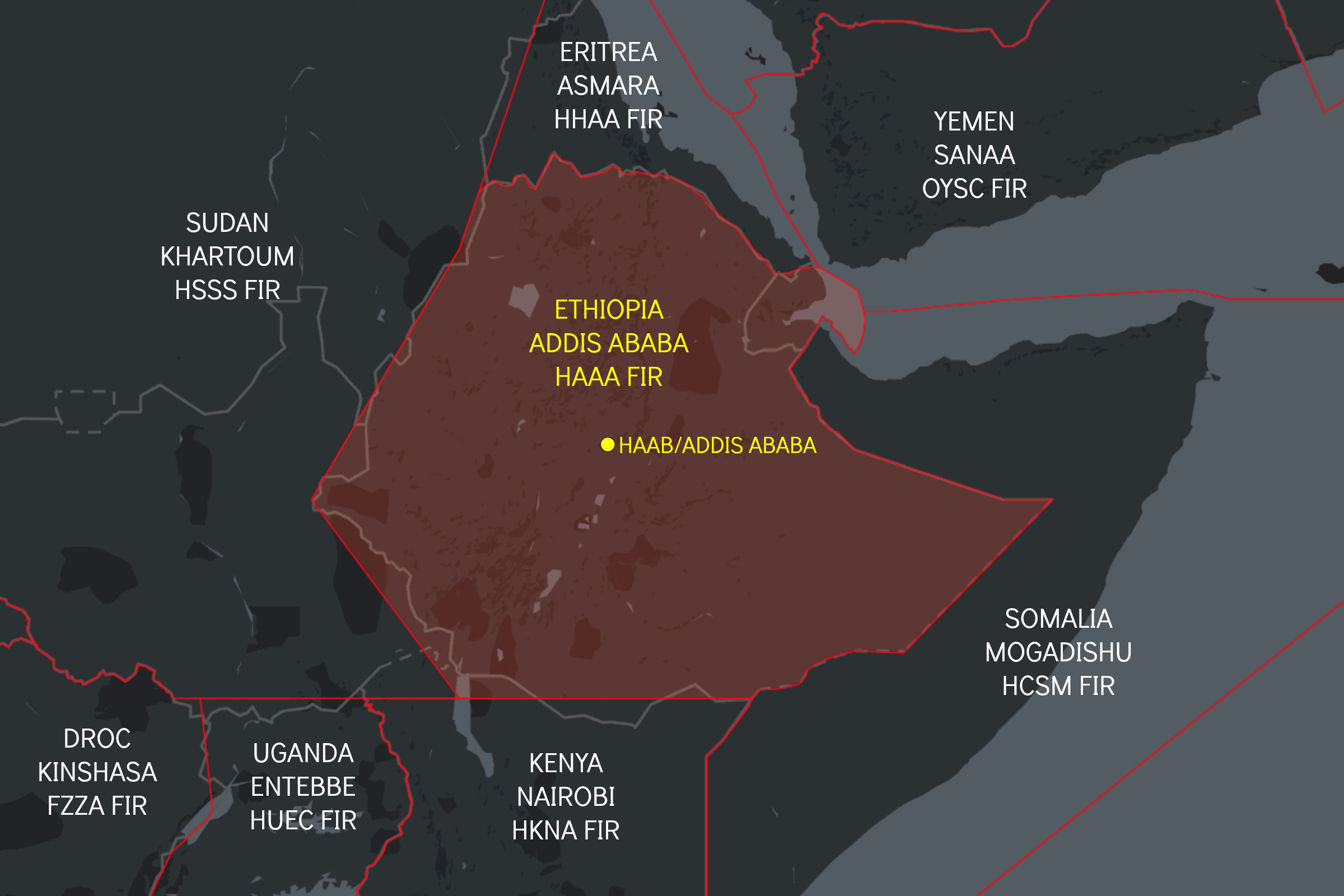
  • OPSGROUP alert for the  Addis Ababa FIR
  • Airspace risk – unrated controllers, some foreign and unfamiliar


Air Traffic Controllers are on strike in Ethiopia
, and Ethiopia would prefer that you don’t know this. We, as OpsGroup, would prefer that you do.

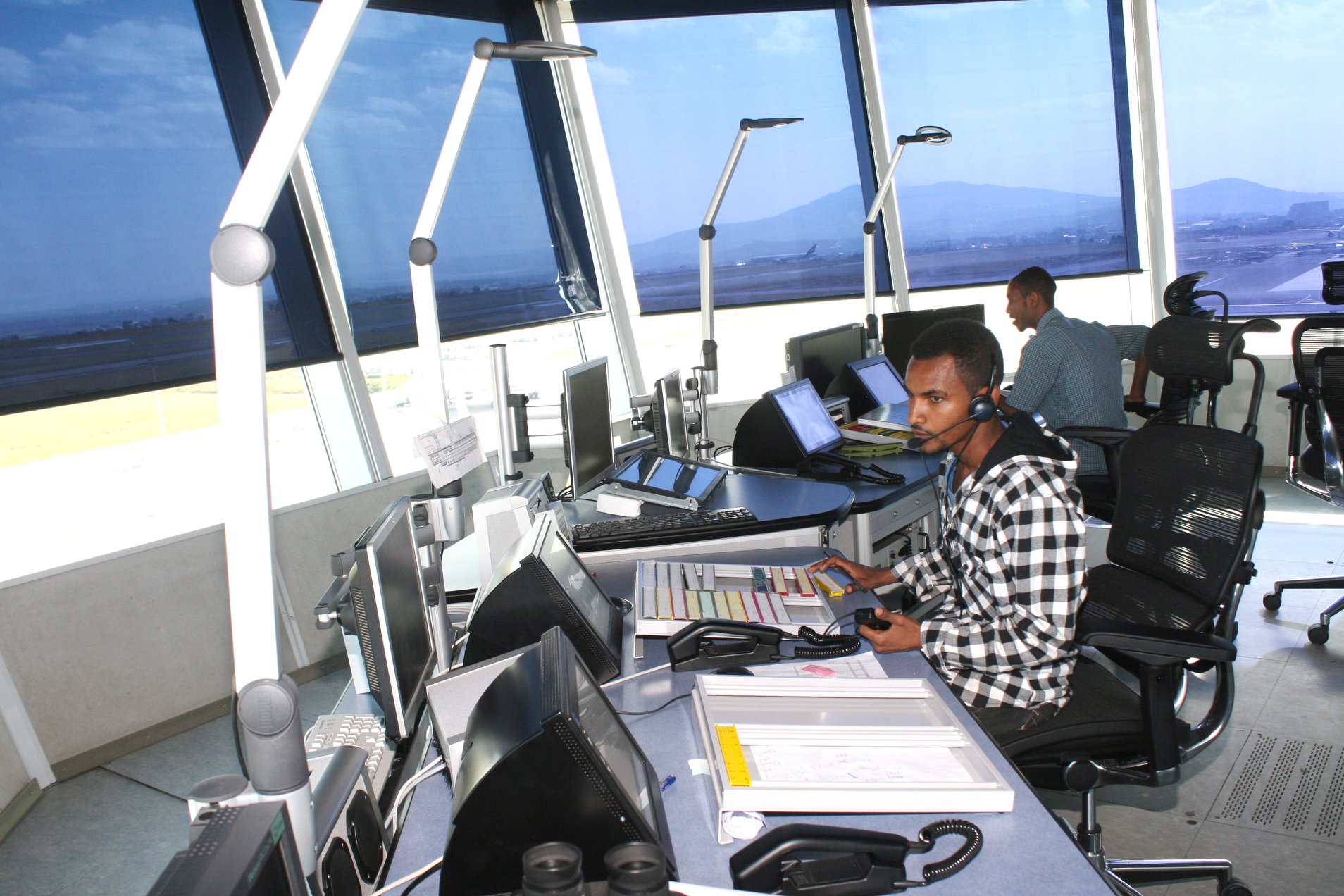
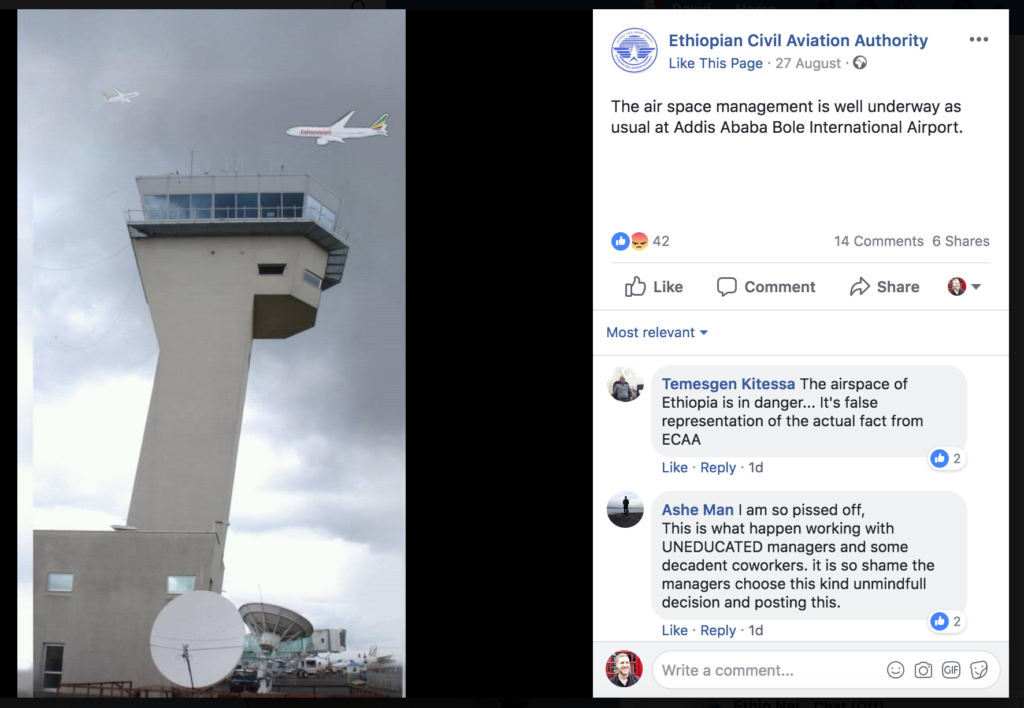
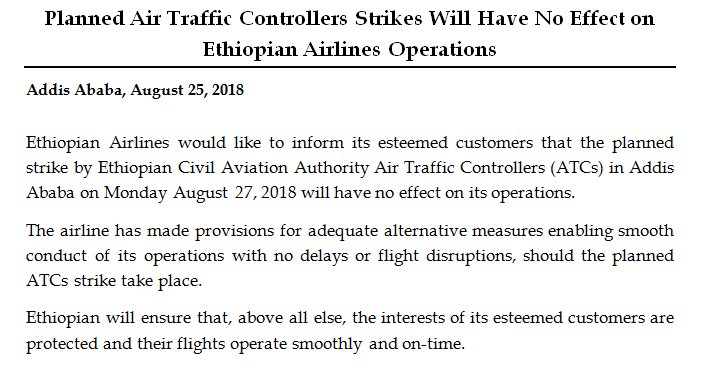
Ethiopia would also prefer that it has no impact on the flight operations of its national carrier, Ethiopian Airlines. Therefore, they have drafted in foreign controllers to replace the strikers, issued no Notams, hushed any publicity, and proactively declared ‘operations normal’ (complete with bizarre, hand drawn airplanes).

European airlines – and frustrated passengers – will watch with great interest, thanks to their own ATC strike woes: regular stoppages by French, Italian, and Greek controllers have this summer, once again, been the source of massive cancellations, reroutes, and delays. Has Ethiopia found the golden elixir, the magic solution to a long-running problem? Is this how to handle a strike by your nations’ Air Traffic Controllers?

It absolutely is not. It is a catastrophic misjudgement, creating a safety risk in the Addis FIR and at Ethiopian Airports for pilots and passengers alike. Ethiopian airspace, this week, is most definitely not ‘operations normal’ – it is unpredictable and unsafe, staffed by unrated, inexperienced controllers, many from abroad – evidenced already by alarming reports of close calls from adjacent Area Control Centers – read on.

The facts are this: faced with an upcoming strike by ATC, Ethiopian Airlines – now Africa’s largest airline –  formed what in the boardroom might have seemed a workable plan: Recruit a bunch of controllers from other countries, fly them in to Addis, and have them do the work of the striking staff.

The first batch of foreign controllers came from the Democratic Republic of the Congo, a small group described by the local controllers, unsurprisingly, as mercenaries. When the strike started at 7am this past Monday morning, they were ready to go. Not content with stopping there, the requests from ECAA – the Ethiopian Civil Aviation Authority – for more external controllers went out thick and fast, like an Ambien fuelled shopping spree on Amazon. 30 requested from Sudan, 24 from Kenya. More from Zimbabwe, Malawi. Finding those requests rejected, and resistance from other ATC agencies, the biggest request yet: 120 controllers from ASECNA.

The plan, commercially, is understandable. The wish to keep their airplanes flying is not endemic to Ethiopian Airlines. British Airways, Ryanair and Easyjet, have all made very public their frustrations with ATC strikes. An association, A4E, was formed to fight the problem at European level.

But here’s why the Ethiopian solution doesn’t work.

And as a former Air Traffic Controller, and Airline Pilot, I can tell you why.

Air Traffic Control is complex. That’s not a secret. On average, it takes a controller three months to gain a ‘rating’, or qualification, for a specific piece of airspace; that’s how long it takes to become comfortable with the 4D picture in front of you to provide a flawless ATC service. More complex airspace could take six months.

You have to learn each corner of your bit of sky. Learn the rules of the sector, learn the agreements you have with other centres about how you will receive and present traffic at the boundary. But the most important thing you learn is how the traffic flows.

ATC is not an aerial traffic battle whose landscape changes each day. It is not a web of complex contrails that, seen from the ground, appear to merge and diverge at random. The traffic flow is a largely predictable set of events, where the same airlines are operating on the same routes – providing a basis for us, as controllers, to learn the patterns of the flow, and to learn a trick for every trajectory.

This is key. It’s been 15 years since I worked the North Atlantic flow in Shannon, but I remember the callsigns, the flows, and how to handle them, like an indelible challenge and response game in my mind.

Shamrock 37J, airborne Shannon” : “direct to Strumble, climb him to 270”.
“Belfast departure for Tenerife” : “stop him low, get him under the NAT traffic”.
“Two converging at LIFFY” : “Drop the Speedbird, he’s for Manchester”.

Humans learn patterns. This is how ATC works. We fill a bucket full of “stuff we’ve seen before”, leaving us free to concentrate on the few things we haven’t. This is the flow. If you watch 737’s fly up the Hudson on a hot summer morning, this is the La Guardia flow. Not an inch left or right. Heading into Amsterdam? “Direct to Pampus, down to FL70”.  One after another.

This is why we need three months to learn the airspace. For the flow. And this is why, when I found myself in New Zealand, learning to operate as an Air Traffic Controller far away from Shannon, I was floundering, like one of those dreams where you running but standing still. I am a controller, but I can’t control. I don’t know the airspace, and I don’t know the flow. Slowly, over the months, geography takes shape, traffic patterns show themselves, situations become seen. I start to get a sense of distance and time on my scope – or scopes, because New Zealand is long and thin I have to reorientate my thinking north-south, rather than east-west, as in Shannon. Out of the mist of training, I am a controller again, but it takes time. A lot of time.

Ultimately, I can reach the point where I can do my job – the real job of an Air Traffic Controller – to be familiar enough with the airspace and traffic that I have “the picture”. The full situational awareness, with most climbs, descents, speeds, and vectors being routine and familiar, means I can spot the something that’s off, wrong, going to develop into a conflict, and do so intuitively, like a sixth sense. Air Traffic Control is an art, it’s a dance. You don’t do it by complex calculations in your head, you don’t need a computer. It’s the visual in front of you – radar or tower – coming to life in your brain, you feel it, and the solution becomes instinctive.

And this is why you can’t bus in a set of replacement controllers, shuffle them down the corridor into the radar room, and up the stairs to the tower, and expect a safe, efficient, and orderly flow of traffic.

Controllers know the power of the strike. In most countries, it is used rarely, and fairly. They understand the impact on airlines and passengers. There are many other forms of industrial action a controller can take – like a training ban, an overtime ban – before reaching the point of actually stopping work.

Commerce will always find a way to continue. Safety is different, and delicate. It must be nurtured and protected. When the two collide head on – the commerce of keeping an airline flying, vs. the safety of an established, effective Air Traffic Control system – safety must take precedence. Here, safety means accepting the strike, as is – and working with the controllers, quickly, to find a solution. Let them be heard.


We’ll keep this page updated with the latest situation on the Ethiopian ATC strike. Reports that we have received so far are as follows:

  • Controllers in adjacent ACC’s are reporting lack of adherence to Letters of Agreement – seeing aircraft with 4 minutes instead of 10 minutes separation.
  • RA reported by Kenya ATC between two airlines on Wednesday.
  • Kenya and Sudan reported loss of separation and poor coordination and transfer of traffic at their FIR boundaries with Ethiopia.
  • Retired and Management controllers, who appear to have never rated or validated in position, are also being used, though unqualified for Addis.

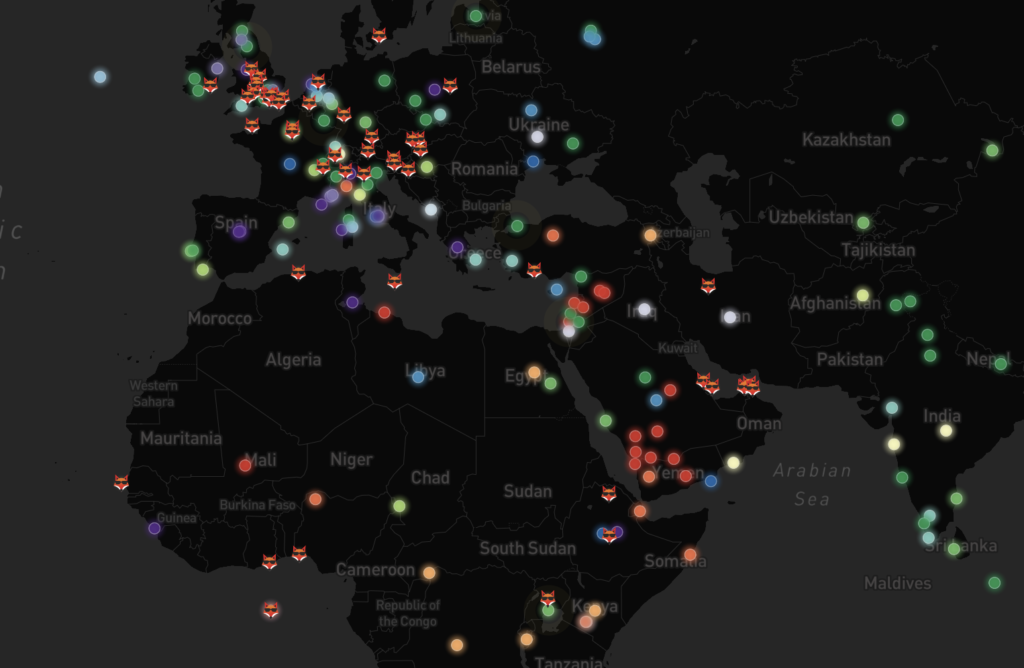
We were first alerted to this issue by a Fox. Many of you know that we are Fixing Notams. The lack of Notams in this situation, is an exceptionally clear example of point 1 in the “Why” of the Notam Problem. Sometimes, we can’t trust the state to tell the truth. And this is a clear example.

Thankfully, our network of Foxes – undercover ATCO’s, pilots, and dispatchers –  is growing, and reporting on things just like this, so that we can tell you what’s really going on. Keep reporting.

Further reading

  • Tell us anything additional we should know – news@ops.group
  • Monitor #ops-alerts in your member Dashboard, and Slack.
  • Contact the author: Mark Zee.


Fixing Notams – we’re on it. Help us.

Update: November 1st, 2019: The Notam Team is up and running – we’re fixing Notams.
Follow our progress at fixingnotams.org.


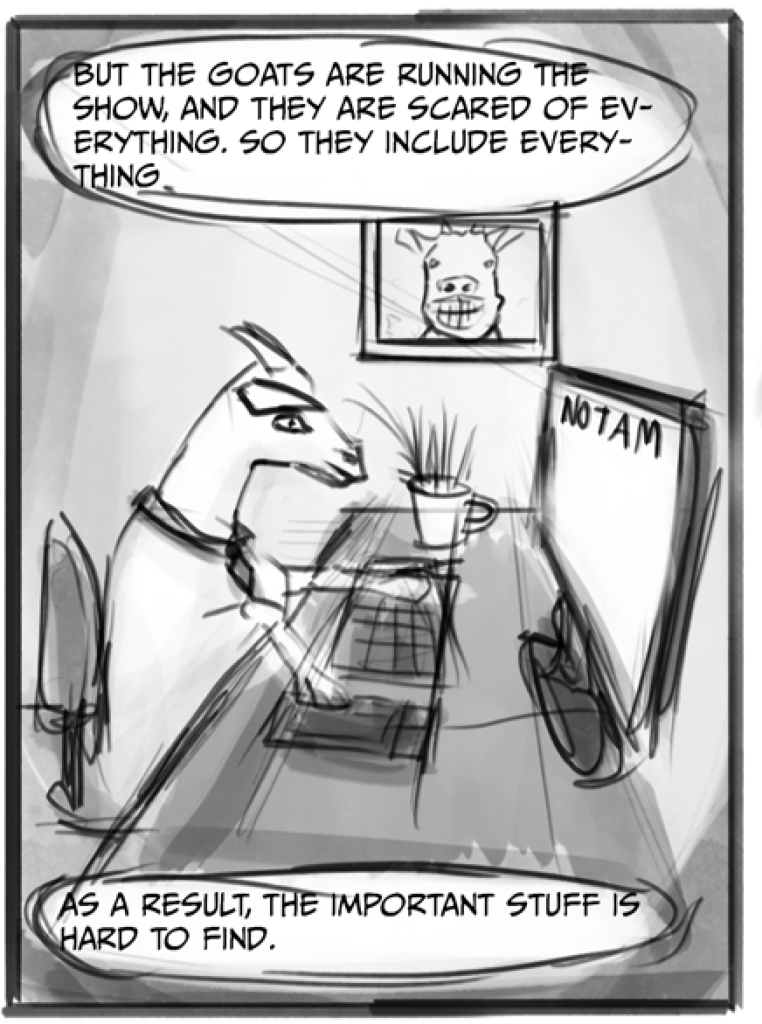
OK. We’re done writing articles about it, and making goat jokes – we’ve moved the “Fixing Notams” job to the top of our list..

OpsGroup is all about information – getting the essential risks and changes that flight ops personnel need to know about into their hands without delay. Our group agrees – plenty of colourful comments on Notams from members.

Now we want your ideas and opinions on the fix.

Here’s our ask:

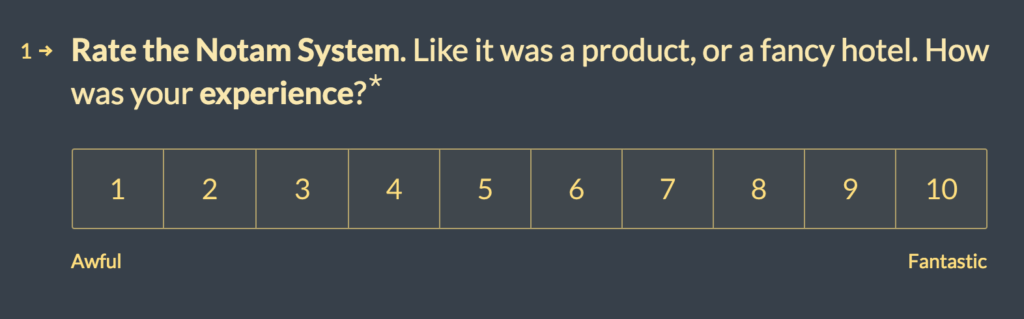
1. Rate the current system – and then click the things you would like to see.

2. If you’re in charge of a group of people – whether you are the Chief Pilot at Lufthansa, the Tower Chief in Shannon, or manage an Ops team of two – Get this out to your people and ensure everyone has their say.

Forward this to your team of ATCO’s, Pilots, Dispatchers:

We especially want to hear from pilots, controllers, and dispatchers, and if you read on, you’ll see why.

Do it like this:

  • Send them the survey link: https://fsb1.typeform.com/to/irZiFM
  • OR, click here for a magic pre-written email
  • OR, send them a link to flightservicebureau.org/notams
  • OR, share this facebook post:

The survey direct link is: https://fsb1.typeform.com/to/irZiFM


The Solution

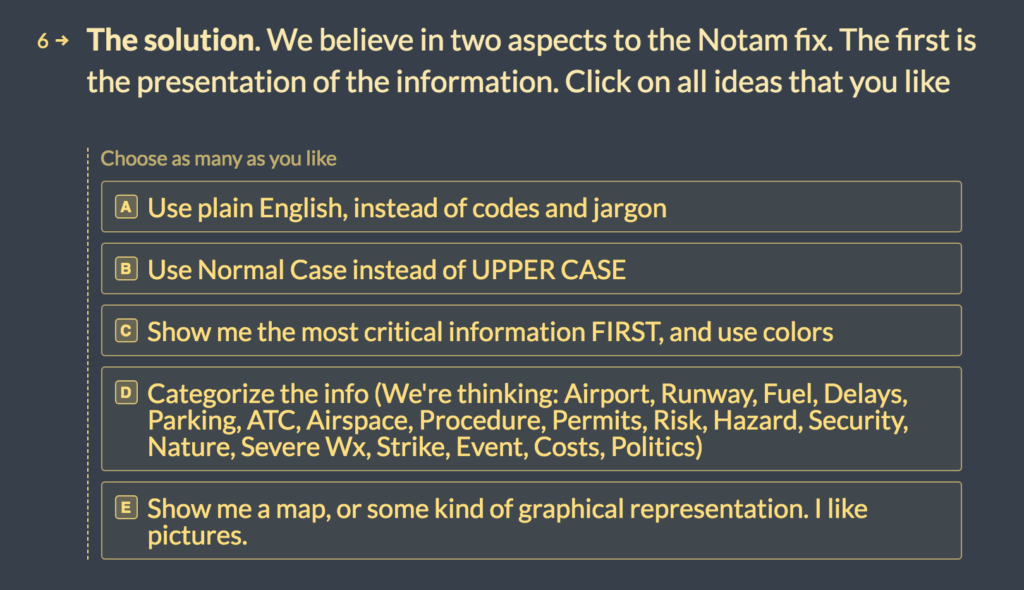
If you took the survey, you saw this:

That part is pretty easy – presenting the Output of the system is a straightforward enough task.

The Input part – that’s where the real work is.

First, we are working on an Artificial Intelligence answer to finding Critical Notams in the current legacy system. This will allow us to present the data flow in order of what matters, and leave those cranes, birds, and grass cutters right at the bottom.

Second,

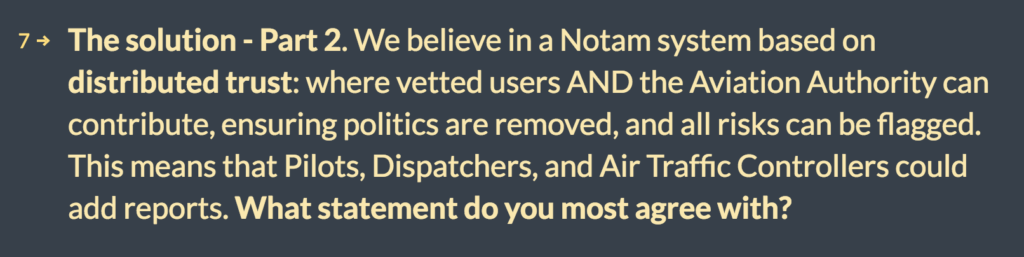
If you read my article on MH17 – a darker truth, you’ll understand why it’s important to open up the system to allow a trusted group to shape the information flow.

That begins with Pilots, Air Traffic Controllers, and Dispatchers. I have the great fortune to be all three, and it’s very clear to me that just like Trip Advisor – and our own “Airport Spy” in OpsGroup – this idea will work. We’ve already seen in OpsGroup how much we trust the information from other users in our group.

It’s key to the future trust of the Notam system. Which we should rename, but that’s another days work.

If you got this far, thank you for being part of the solution! You can always write me a note at mark@fsbureau.org

Thanks!
Mark.


Here’s what pilots and controllers REALLY think about Notams

Update: November 1st, 2019: The Notam Team is up and running – we’re fixing Notams. Follow our progress at fixingnotams.org.


We think Notams suck. No other way to say it. After a few articles we wrote (BS Notams, The Notam Goat Show, and more worryingly, the MH17 Notam problem), we got some feedback in the comments section. And thought we should share, because they really show the problem. So, here they are.

Caution, some strong language!

We’re working on a solution, so you can help and add your thoughts as a comment below. Also, send us the really bad ones and enter the 2018 Notam Goat Show contest.


Personally I think taxiway and apron closure NOTAMs are too readable, I think they should be distributed in RADIAL/DME format, or perhaps raw Lat-Lon. Additionally, time should be specified in seconds since the founding of the FAA.

TAXIWAY CLOSED BETWEEN ORL180/08.5DME ORL181/08.6DME ORL181/08.65DME ORL180/08.65DME FROM 1829088020S to 1829190200S

What could be more clear than that?


I wonder if a buried Notam ever did contribute to bent metal, injury, or death? I agree that the volume of nuisance notams is a real task to read through wether it be a long or short turn. However, nothing will be done till there is blood. That’s how the FAA works. Till then, its on us to be like aviation lawyers before every flight regardless of schedule.


Maybe we can get them in binary?

You have to go to binary first, then convert to Morse.

01010100 01000001 01011000 01001001 01010111 01000001 01011001 00100000 01000011 01001100 01001111 01010011 01000101 01000100 00100000 01000010

—– .—- —– .—- —– .—- —– —– —– .—- —– —– —– —– —– .—- —– .—- —– .—- .—- —– —– —– —– .—- —– —– .—- —– —– .—- —– .—- —– .—- —– .—- .—- .—- —–

For good measure they should be put through an Enigma machine, too. And the output formatted to wingdings


Yes. The NOTAM system is fucked. We have Notams about those solar arrays near Vegas in every flight plan. Yes, I see them. I want to know if the damn runway is closed. Why the weird coding? Is it to make pilots feel multi-lingual?


It’s funny, they seem to have every little f*ing detail about towers that are under 400 agl 20 miles either side of my route with one light bulb missing but I can’t get a god damn reliable source for f*ing TFRs. Even the piece of shit FAA website for TFRs is not a “complete and accurate source” but some guy in a FSS station is?????? Such complete and utter bullshit.


The reason nobody reads NOTAMs is because they are mostly garbage.
Why do I care that a crane that is 200 feet AGL ten miles from any airport is unlit? We can’t fly below 500AGL anyway.
Why do I have to decipher code that can easily be written as: From 20170608 1900Z to 20170610 0000Z CYYZ Taxiway L Closed
The system is broken and nobody cares to fix it.


I f*in’ love doing a flight from Newark to DC and getting notams about the North Atlantic Tracks. Motherf***r, if I end up on the tracks during that leg in a 145, the Notams are the least of my damn problems.


The biggest frustration for me is the NOTAMs don’t match reality. KAUS often NOTAMs a runway closed for several hours a couple days each week. Yet we get there and it’s open.
Or an airport will NOTAM an ILS out of service for the day. Show up at the airport and they’re using that ILS.
My home airport is KDAL. One of the PAPIs was out for three days before they NOTAM’d it out of service. Delta landing in front of me asked about it. Tower said they showed it on and asked me. I said, “Uh… It’s been out for several days. I thought y’all knew?”
Finally, my favorite: Surprise runway closures for routine runway inspections. NOTAM? Nah. BTW there’s a 150′ tower 15 miles away with a light out and there’s birds around the airport. Awesome.


I can honestly say that if it isn’t a runway closure or terminal closure then I don’t really care. The amount of closed taxiways at every airport is absurd. Not to mention many of them are closed year round with no intention of opening them again, just a permanent NOTAM.


Can only agree. It has been raised at the RAPACs, but no progress to date.


If I’m 5nm from the ARP at 150′ AGL, then I have more things to worry about than a crane without a red light…

Ass-covering gone mad. Really… a tree

OBST TREE 58FT AMSL
PSN 386M FM THR RWY 25 AND 183M LEFT OF RWY 25 CL
BRG 047 MAG 0.91NM FM ARP
FROM 01 310536 TO 03 300500 EST


My personal favourite is the “trigger notam” cross-referencing to yet another unfindable / unreadable pile of nonsense.
Just tell us what matters to an “Airman”; today and leave the grand plan, 12 month projection crap out of NOTAMS.


All of this so true, I imagine a world of technology and wonder (ozrunways/avplan/anything but airservices/casa))where we can quickly read a Notam and weather briefing without having to nut it out and do a slow-ass flight plan every time. 2017 and we still cant embrace all the tech.


I totally agree. The last thing any crew is going to be able to do when checking NOTAMs before departure is to magic up a way to access cross-referenced documents in various other publications. Especially when the departure point is not anywhere near base ops, or even any other operations centre.


B.S. NOTAMS….100% concur. Our whole world of aviation is being swamped by similar legal ass-covering paperwork. How can ANY pilot be expected to remember all the additional codicils that do NOTHING to improve safety of flight, but rather give an army of lawyers and providers more chances to fleece an already cash-strapped industry?…..Rant over!


Congratulations, its our industry, the users should be heard.
Start with a blank sheet of paper, what do we want to know in a “NOTAM” and how best to communicate it in a cockpit / in a flight briefing package. If the current format was frozen in 1924, the next system needs to be good for a couple of years.


This information ceased to be “NOTAMs” long ago. Today they are “NOTOLs”, Notice To Litigants. Thanks for making an effort to change this ancient system.


How many pilots out there actually read ever Head Office Notams or even daily Notams in meticulous detail? Few (if any). You sign on an hour before departure, there is simply not enough time to divulge all the ass covering crap that’s generated daily. Airline companies only want one thing, OTP; how a pilot goes about that they couldn’t care less as long as you don’t break any rules! NOTAMS = “None Other Than Aircraft Missing Slots”


You can bet your life, the one you needed to see at 3 in the morning was the one you missed! Any wonder…


Well said. Have you ever read “MEN AND EQUIPMENT NEAR THE RUNWAY: LANDING WITH CAUTION”?
So, If you don’t tell me that, I will land recklessly..


You are a mind reader.
You captured the issue perfectly and the historical context was excellent. While airspace and aircraft have all continued to develop our most basic system of communicating the status of an airport/airspace has not. I could take that further and say communication with ATC is still by AFTN for the most part.So now put yourself in the position of dispatcher/FOO working a series of long haul ETOPS Flight. You might have 20 or more departure /Take off alternate station notams, a whole galaxy of FIR/UIR Notams, not to mention all of the ETOP alternates and if you re-dispatch/re-analysis, you will get to do it inflight once again. Now do that 15-20 times depending on workload. Can you say human data saturation?
This article certainly illustrates the infrastructure issues we face, but it doesn’t come close explaining some of the processes and procedures we have had to put in place to ensure:
1. That we actually get NOTAMS.
2. That we get airport conditions as some countries don’t put them out as Series-S ICAO NOTAM versus Series-A (Yes, theses are the countries that haven’t fully adopted ICAO standards which were adopted in 1944 and ratified in 1947 by the Chicago convention).
Question: What is the current year?


I absolutely agree. My personal bugbear is those lists of co-ordinates …. do they think anyone actually plots them on a map? They might as well not be published at all.


What is clear is the professional approach to the information received: too many inputs, disorderly given, contextually irrelevant, redundant and unusable. A kind of “cry wolf” syndrome, making the pilot complacent about such a bullshit. The very day someone of us is caught in a legal battle for a system-induced mistake leading to a incident, overlooking the NOTAMs will not appear as an excuse. How to make these information valuable?


Yes… and why oh why are we still using the coded TAF language. We don’t have bandwidth issues anymore. We take plain English, code it, then decode it back to plain English. Surely a TAF written in plain English is not too hard a transition.


We train the pilots of tomorrow, they are inundated with everything the industry throws at them and the unintelligible Nonsense contained in some NOTAMS are just another accident waiting to happen. With all the technology at our disposal today, the filtering systems, electronics messages systems, integration tools and smart people to think about it, there is a solution out there. I suppose we just need to make enough noise in the right places to make a change. Oh well best we get started. hmmm, perhaps a NOTAM about change is needed.


And don’t forget about TFR’s that pop up. The one time I didn’t look at TFRs I got trapped having to divert from Chicago to an outlying airport even though we were part135 and even though we got an IFR clearance and the tower gave us takeoff permission. And center control for an hour just kept passing us on.


How about a change in the format of NOTAMS too, so we don’t have to wade through the whole lot in order to parse the relevant information. NOTAMS are removed when thy are no longer valid, so why cling to chronological order as an indexing system. How about putting them in order of critical relevance: Firstly, changes to airfield opening hours and services (fire, fuel etc). Secondly, changes to runway lengths/closures/etc. Thirdly, changes to approaches available. All the rest can be thrown into the mix at the end of the NOTAM.


Excellent analysis. My personal favorite is the NOTAM sort order which tells me that the REIL lights don’t work, the glideslope is out, the runway markings are non-standard, the localizer is out… ending with: runway closed. Tell me that first, all the other BS becomes irrelevant.


About two days before I saw this post, I’d sent a long email to my company telling them of the NOTAMs we don’t need to see. Then I saw this. Brilliant! I’ve just sent the link to this piece to the company to reinforce that opinion. I’m hoping our briefing pack will be several pages thinner the next time I go to dispatch.


I have come up with a name for this problem: “NOTAM Spam”. It’s a serious one, alright — ASRS Callback #426 brought it up in the context of the US NAS, and I’m sure it’s only worse for international operations. It sounds like ICAO needs to put out a recommendation or SARP about NOTAM spam control…


95% of Notam’s we read are not applicable, or nothing can be done about them. Oh great, I’ll pull out my chart and plot the 25 co-ordinates to see if this airspace will affect my flight -_- that’s one Notam example from plenty of the same type, in the same Notam briefing. Now add the other irrelevant Notam types as mentioned by others in the comments.


Thanks for the article. I shared it with my fellow dispatchers at AAL. We read pages and pages of BS notams on a daily basis and wondered if anyone else had similar feelings about the whole process.


Post your thoughts below! 


OpsGroup – the power of the group

The power of the group

In the last 30 years, there has been a massive change in how the world works: thank you, internet. We are witnessing a shift from the power of a central source – like government, and large corporations – to the power of the individual. Each of us is now connected to the entirety of human knowledge through a small, handheld device, and can connect with others to effect powerful and positive change.

OPSGROUP is founded on this premise.  International Flight Operations is an inherently tricky area, full of gotcha’s and unforeseen changes for even the most diligent airline or aircraft operator. One operator versus a myriad of often unreadable government-sourced regulations and information – Notams, AIC’s, FAR’s – is a battle with guaranteed casualties.

But by connecting with other people, just like you, with the same problems and challenges, you can solve and share solutions.

When we started this group last year, we had a small handful of pilots, dispatchers, and managers that figured coming together in this way was a winner. As of November 2017, we’re now heading for 4,000 OPSGROUP members, with a great variety in operations roles: Airline and Corporate pilots, Military operators, Federal agencies, Flight Dispatchers and Schedulers, ATC, and Civil Aviation Authorities – all working together.

It’s still early days, and we have a way to go. But with some basic core principles – plain language (we call a spade a spade), operator and passenger safety ahead of lawyer-speak, cooperation instead of competition  – and a huge appetite for development, there is much to gain.

So what’s good in the group? Read on …

1. Information

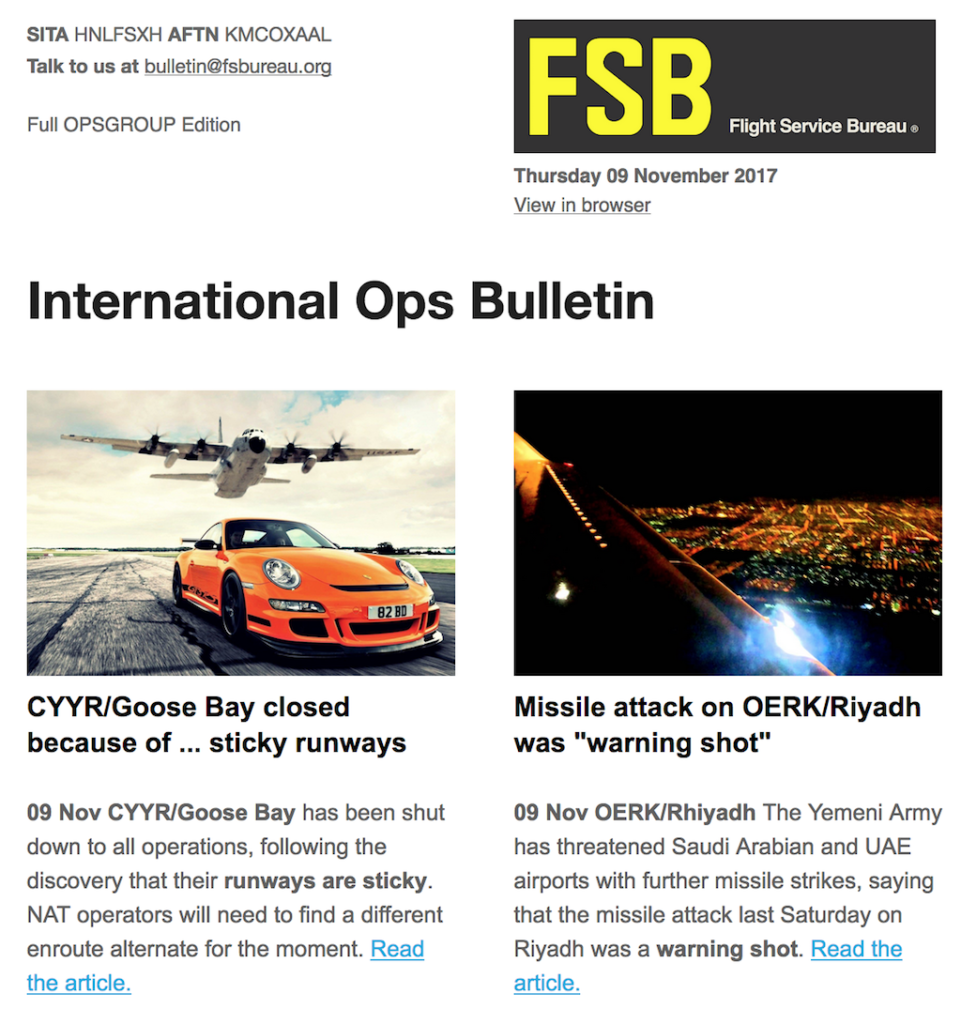
First on the plate for almost every operator is staying current. Rules and regulations are changing with increased voracity. Did I miss something? Yep, almost definitely. Each week we produce the International Operations Bulletin. We try to cover all the big changes in the last 7 days. If we miss something, we’ve found that someone in the group is pretty quick to tell us, and it appears in the next one.


2. Fun (including Goats)

We promise to keep it entertaining“. Without your attention, we’ve got nothing. Not only that, but we get as bored as you do with the standard aviation legal-language speak that permeates even the most important documents. Which is why sometimes we’ll run a Goat Show. Sometimes it’s just great to be “unprofessional“.

3. Members

Like we said, approaching 4,000. All working together with the same goal: making International Flight Operations better. Click on the links to read what they say.

Airlines like United, Fedex, and Etihad
Small Part 91 Flight Departments like CAT3, Fayair, Pula
Big 135 Charter Operators like Jet Aviation, TAG and Netjets
Companies like Visa, IBM, and AT&T
Manufacturers like Boeing, Airbus, and Lockheed
International Pilots like Matt Harty, Bill Stephenson, and Timothy Whalen
Organisations like IFALPA, the NBAA, and CAA Singapore


4. Airspace Risk

MH17 was a tragedy that must not be repeated. A small handful of operators were privy to information on the risk, and the Notam writers of Ukraine that were aware of previous shoot-downs released the information in a language almost designed to confuse. Through our safeairspace.net project, we can now share risk information within OPSGROUP and make sure that every single member has access to a current picture of airspace risk.


5. Airport Spy

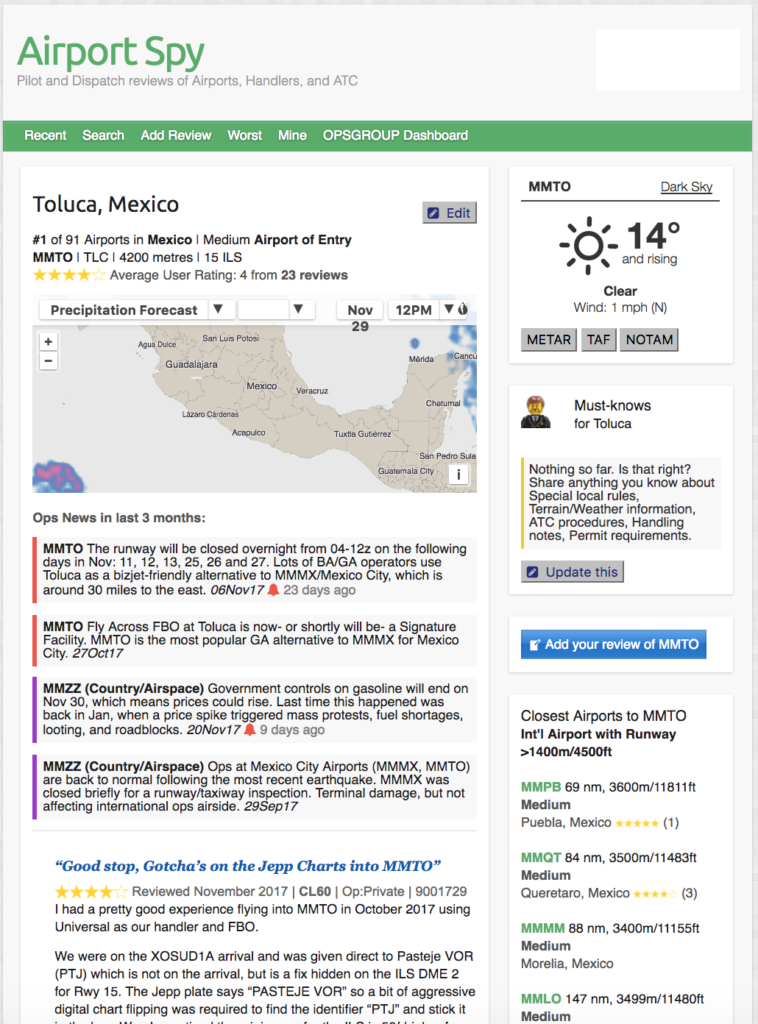
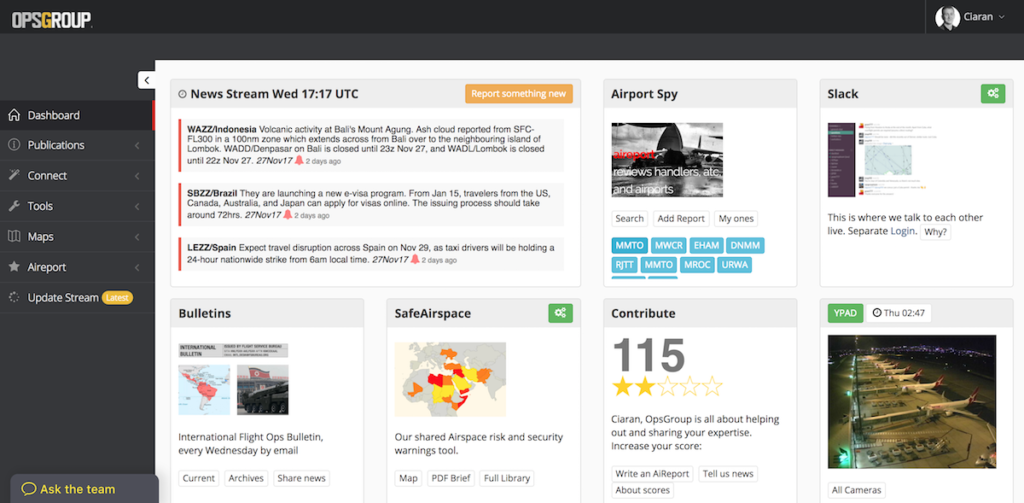
One of our group members came to us with a great idea last year – why don’t we share our knowledge of operations at airports around the world. So we made a TripAdvisor style section in the member Dashboard, and allowed members to add their own reports on Airports, ATC, and Handlers. We now have 3000 or so reports.


6. Member Dashboard

We don’t need to explain this one too much. Everything the group has, in one place.


7. Slack

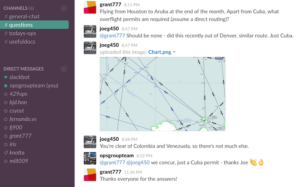
Slack is cool. It’s a chat app, but it’s more than that. Internally, we don’t use email anymore, we use slack. There are different channels like #crewroom, #todays-ops, #usefuldocs, and #questions. When there are special events, like #FranceATCStrike or #NewYorkSnow we open a special group for that. About 1200 members use this regularly, and it’s the perfect way to connect with other crews, ATC, or the Feds.


8. George

George is a bot. He’ll fetch information for you on airports, get weather, the NAT Tracks, and a few other things. We’re working on making him a little smarter.


9. Ask Us Anything

Getting an answer to your question is what keeps us awake at night. There’s not much we can’t help with, but usually someone else in the group beats us to it. If not though, the FSB International Desk team will research that ops question that is threatening to make your life hell.


10. The future

The best part of OPSGROUP is that we’re really just getting started. The future of the group is unwritten, but placing the planning power in your hands as an operator rather than 3rd parties, and having the security of knowing that the group has your back, is a great way to start. There is much to build and develop, and we’d love you to be involved!


11. Joining

You can choose an Individual, Team, or Flight Department membership. All the information on that is on the OpsGroup website. We limit joining windows to certain months of the year, so that we can be all hands on deck with building new things for the group once membership is closed. If we’re not accepting new members at the moment, you can waitlist for the next opening.


Further


Here’s why North Korean missiles are now a real threat to Civil Aviation

  • July 2017: First launches of ICBM’s from North Korea
  • Western portion of Japanese airspace is a new risk area
  • New OPSGROUP guidance to Members, Note 30: Japanese Missile risk

The North Korean game has changed. Even if aircraft operators stopped flying through the Pyongyang FIR last year, nobody really thought there was much of a tangible risk. The chances of a missile actually hitting an aircraft seemed slim, and any discussion on the subject didn’t last long.

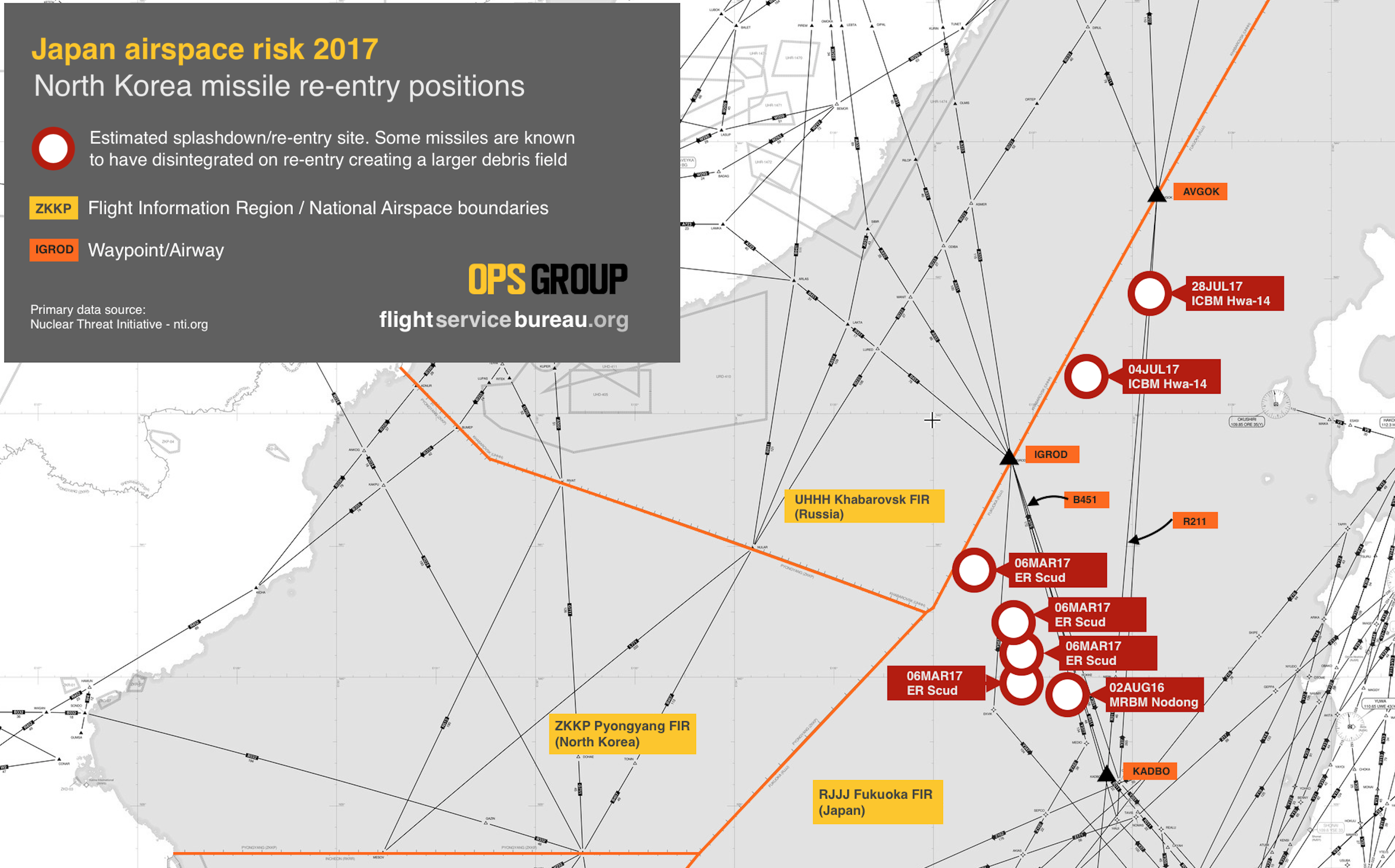
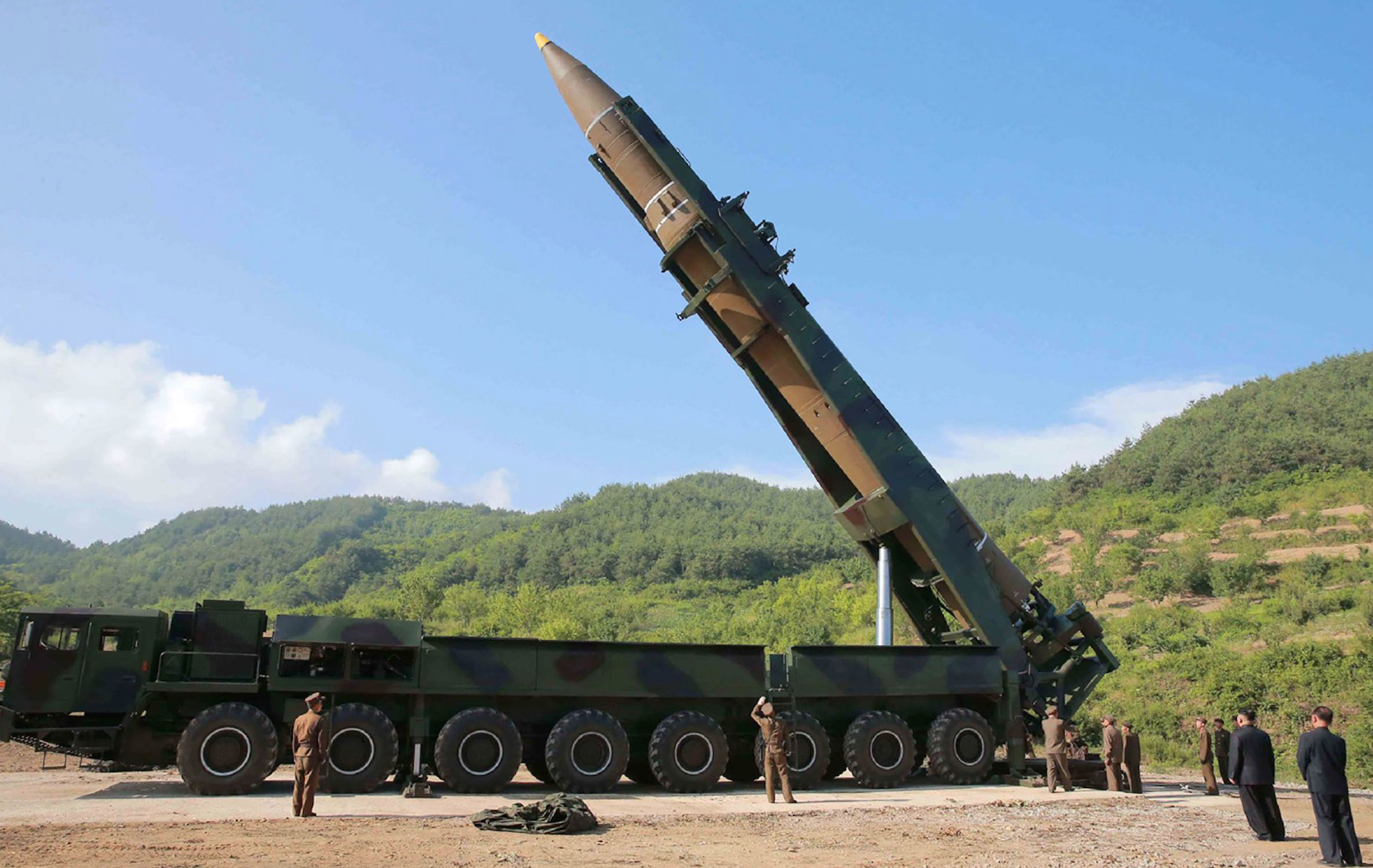
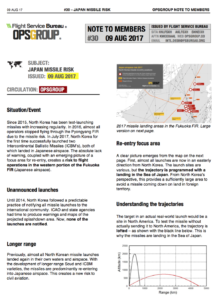
Things look different now. In July, the DPRK tested two Hwasong-14 Intercontinental missiles (the July 4th one is above), the first ICBM’s successfully launched from North Korea. ICBM’s are larger, and fly further, than the other missiles we’ve previously seen. Both of these landed in the Sea of Japan, well inside the Fukuoka Flight Information Region (Japanese airspace), and significantly, at least one did not re-enter the atmosphere intact – meaning that a debris field of missile fragments passed through the airspace, not just one complete missile.

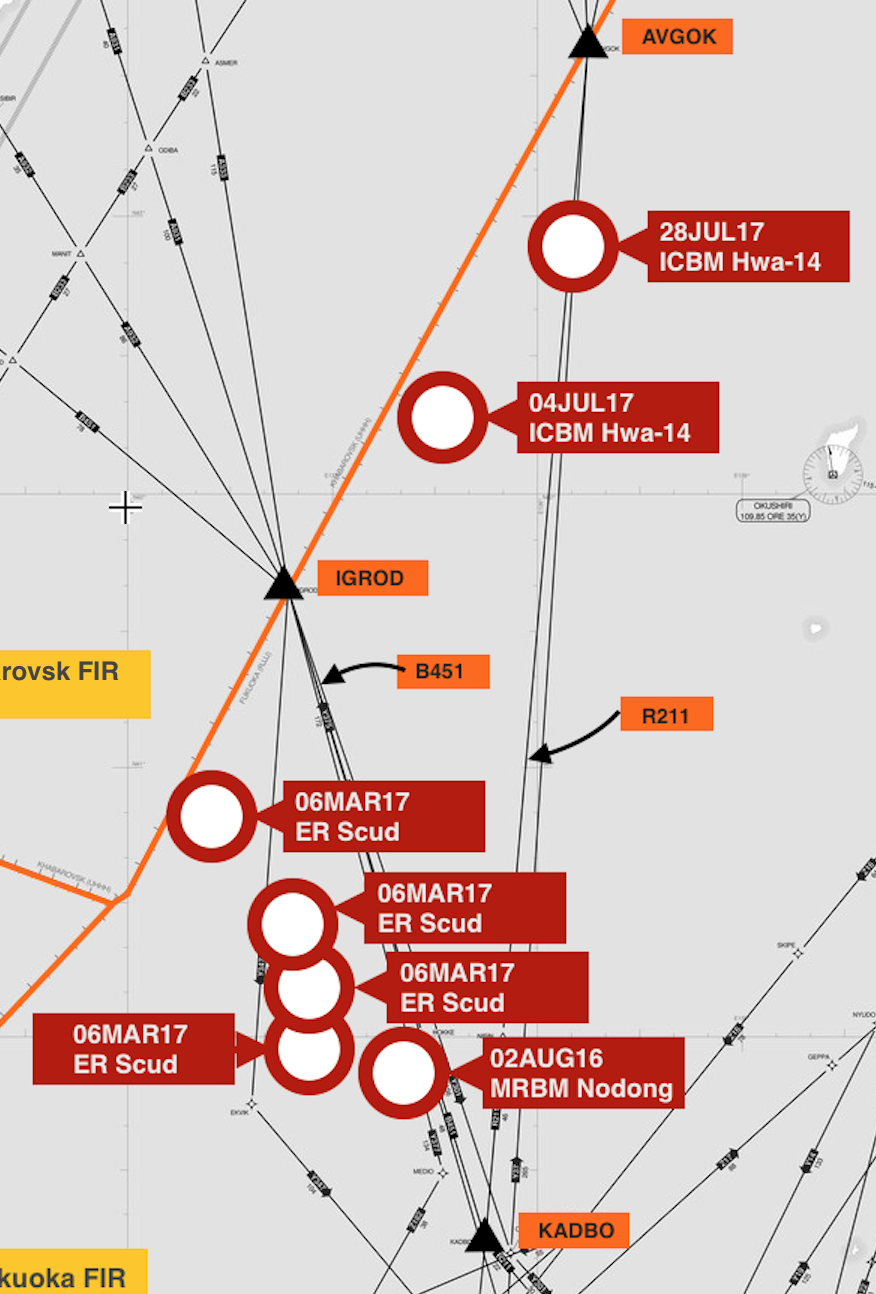
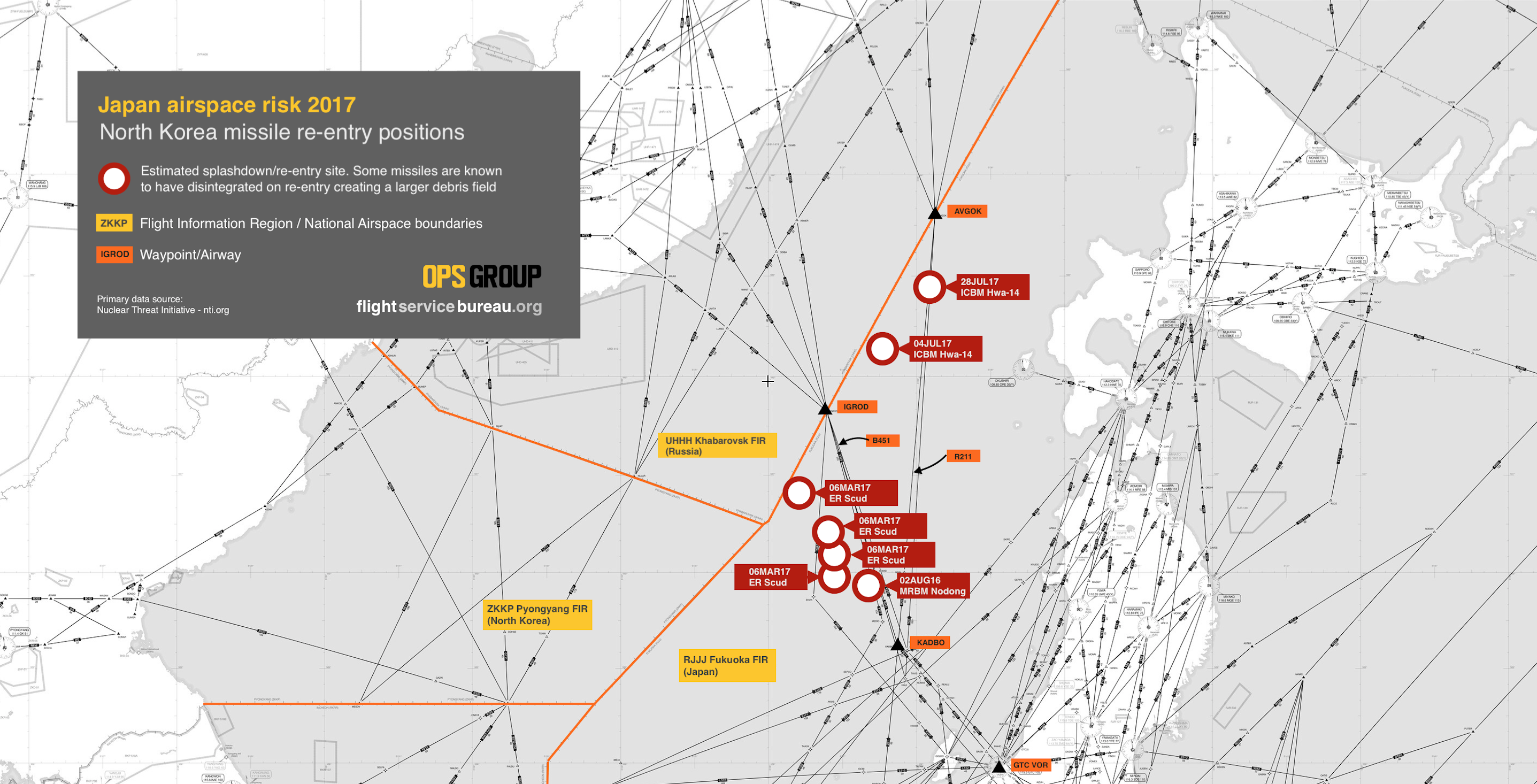
We drew a map, with our best estimates of the landing positions of all launches in the last year that ended in Japanese airspace. The results are quite clear:


View large image

Zooming in even further, we can see each of the estimated landing sites. It is important to note that the landing positions vary in the degree of accuracy with which it is possible to estimate them. The highest accuracy is for the 28JUL17 landing of the Hwasong-14 ICBM, thanks to tracking by the Japanese Defence Force and US STRATCOM, as well as visual confirmation from land in Japan. The remaining positions are less precise, but in an overall view, the area affected is quite well defined – south of AVGOK and north of KADBO. In 2017, there have been 6 distinct missile landings in this area. The primary airways affected are B451 and R211, as shown on the chart.


View large image

So, in a very specific portion of Japanese airspace, there have been regular splashdowns of North Korean missiles. As highlighted by the Air France 293 coverage, this area is crossed by several airways in regular use, predominantly by Japan-Europe flights using the Russia route.

Determining Risk

The critical question for any aircraft operator is whether there is a clear risk from these missiles returning to earth through the airspace in which we operate. Take these considerations into account:

The regularity and range of the launches are increasing. In 2015, there were 15 launches in total, of short-range ballistic and sub-launched missiles. In 2016, there were 24 launches, almost all being medium-range. In 2017, there have been 18 so far, with the first long-range missiles.

– In 2016, international aviation solved the problem by avoiding the Pyongyang FIR. This is no longer sufficient. The landing sites of these missiles have moved east, and there is a higher likelihood of a splashdown through Japanese airspace than into North Korea.

– Almost all launches are now in an easterly direction from North Korea. The launch sites are various, but the trajectory is programmed with a landing in the Sea of Japan. From North Korea’s perspective, this provides a sufficiently large area to avoid a missile coming down on land in foreign territory.

– The most recent ICBM failed on re-entry, breaking up into many fragmented pieces, creating a debris field. At about 1515Z on the 28th July, there was a large area around the R211 airway that would have presented a real risk to any aircraft there. Thankfully, there were none – although the  Air France B777 had passed through some minutes before.

– Until 2014, North Korea followed a predictable practice of notifying all missile launches to the international community. ICAO and state agencies had time to produce warnings and maps of the projected splashdown area. Now, none of the launches are notified.

– Not all launches are detected by surrounding countries or US STRATCOM. The missile flies for about 35 minutes before re-entry. Even with an immediate detection, it’s unlikely that the information would reach the Japanese radar controller in time to provide any alert to enroute traffic. Further, even with the knowledge of a launch, traffic already in the area has no avoiding option, given the large area that the missile may fall in.

Can a falling missile hit an aircraft?

What are the chances? Following the AFR293 report on July 28, the media has favoured the “billions to one” answer.

We don’t think it’s quite as low.

First of all, that “one” is actually “six” – the number of North Korean missiles landing in the AVGOK/KADBO area in 2017. Considering that at least one of them, and maybe more, broke up on re-entry, that six becomes a much higher number.

Any fragment of reasonable size hitting a tailplane, wing, or engine as the aircraft is in cruise at 450 knots creates a significant risk of loss of control of the aircraft. How many fragments were there across the six launches? Maybe as high as a hundred pieces, maybe even more.

The chances of a missile, or part of it, striking the aircraft are not as low as it may initially appear. Given that all these re-entries are occurring in quite a focused area, prudence dictates considering avoiding the airspace.

What did we learn from MH17?

Whenever we discuss missiles and overflying civil aircraft in the same paragraph,  the valuable lessons from MH17 must be remembered. In the weeks and months leading up to the shooting down of the 777 over Ukraine, there were multiple clues to the threat before the event happened.

Of greatest relevance was that State Authorities did not make clear the risk, and that even though five or six airlines decided to avoid Ukrainian airspace, most other operators did not become aware of the real risk level until after the event.

Our mission at Flight Service Bureau is to make sure all aircraft operators, crews, and dispatchers have the data they need to make a fully informed decision on whether to continue flying western Japan routes, or to avoid them.

Guidance for Aircraft Operators

Download OPSGROUP Note to Members #30: Japan Missile risk (public version here)

Review the map above to see the risk area as determined by the landing sites in 2017.

Consider rerouting to remain over the Japanese landmass or east of it. It is unlikely that North Korea would risk or target a landing of any test launch onto actual Japanese land.

Check routings carefully for arrivals/departures to Europe from Japan, especially if planning airways R211 or B451. Consider the previous missile landing sites in your planning.

– Monitor nti.org for the most recent launches, as well safeairspace.net.

OPSGROUP members will be updated with any significant additions or updates to this Note through member mail and/or weekly newsletter.

References

– Nuclear Threat Initiative – nti.org

– Opsgroup Note to members #30 – Public version

OPSGROUP – Membership available here.

– Weekly International Ops Bulletin published by OPSGROUP covering critical changes to Airports, Airspace, ATC, Weather, Safety, Threats, Procedures, Visas. Subscribe to the short free version here, or join thousands of Pilot/Dispatcher/ATC/CAA/Flight Ops colleagues in OPSGROUP for the full weekly bulletin, airspace warnings, Ops guides, tools, maps, group discussion, Ask-us-Anything, and a ton more.

– Larger area map of Japan airspace risk 2017

– Contact news@ops.group with any comments or questions.


ATC Nightmare in the Hills

This article was originally published on medium.com

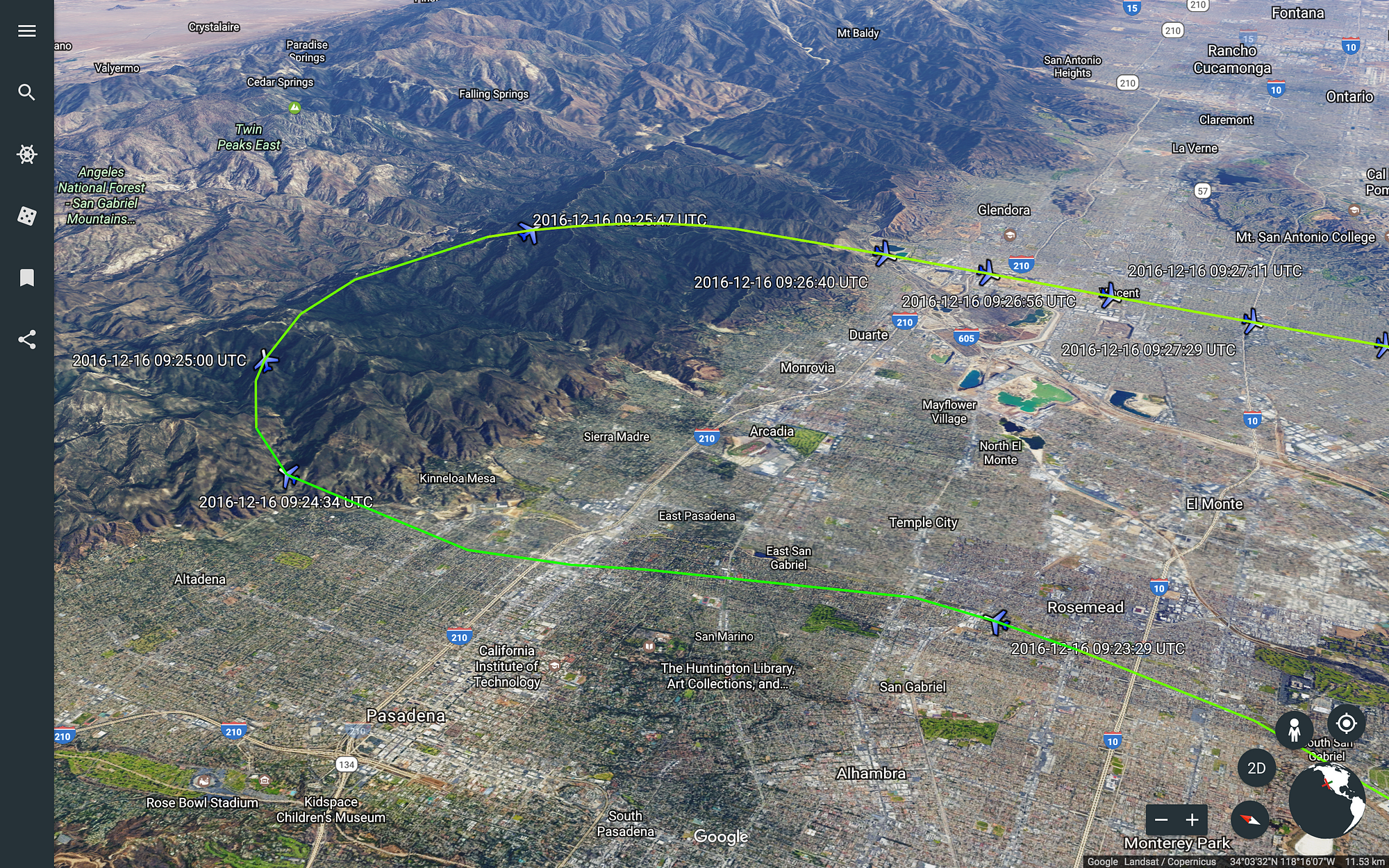
In any one of the plausible alternative endings to this event, a departing Boeing 777 impacts the San Gabriel mountains at about 5000 feet, just east of Los Angeles, at 1.25am.

Exactly how this didn’t happen is almost unexplainable. With 353 people on board, this was 22 seconds away from being the worst air disaster in the US.

For a solid 3 minutes in the early morning, the Boeing was being guided not by the pilots, not by the Air Traffic Controller, but by the precipitous balance between good fortune and tragic fate.

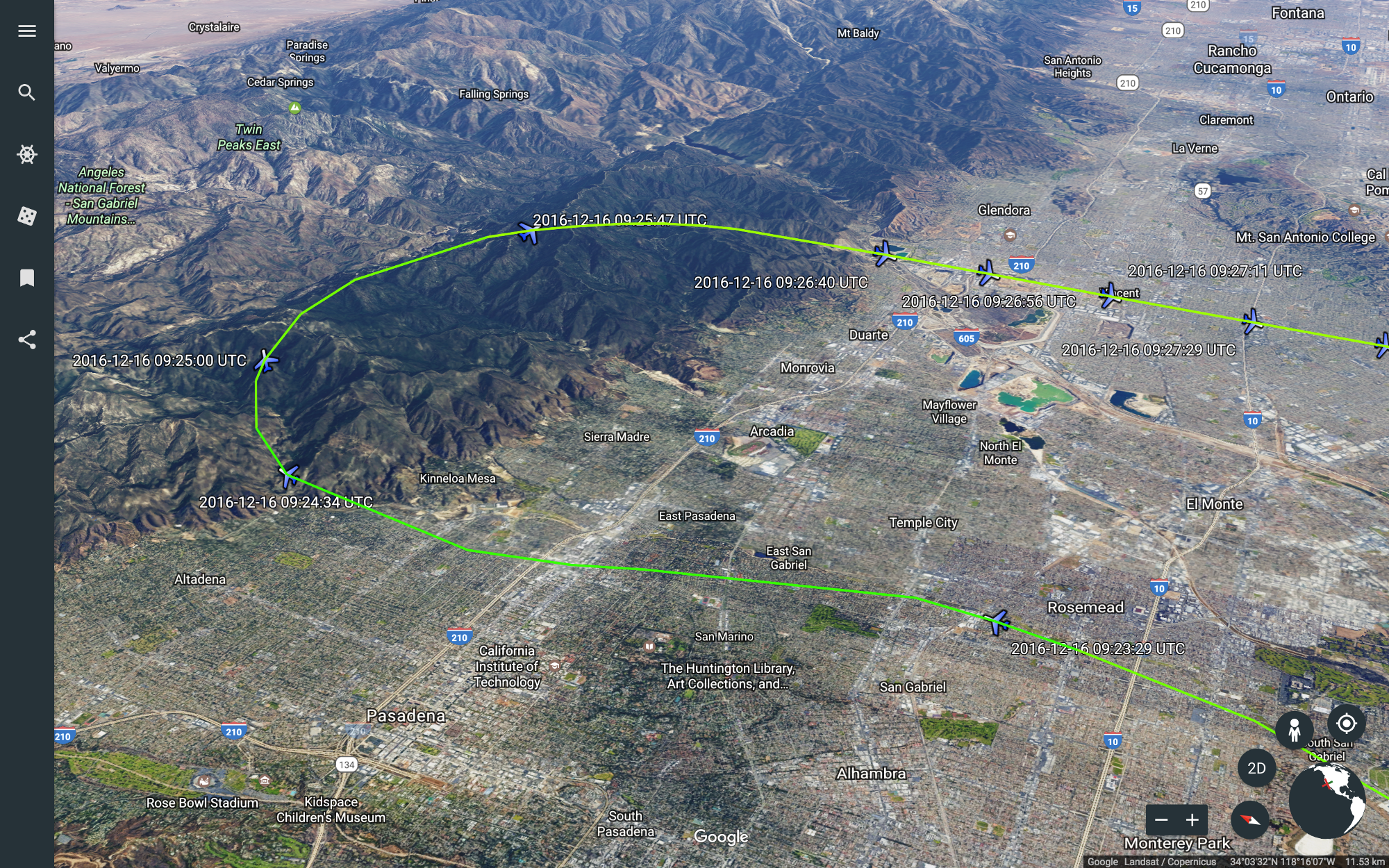
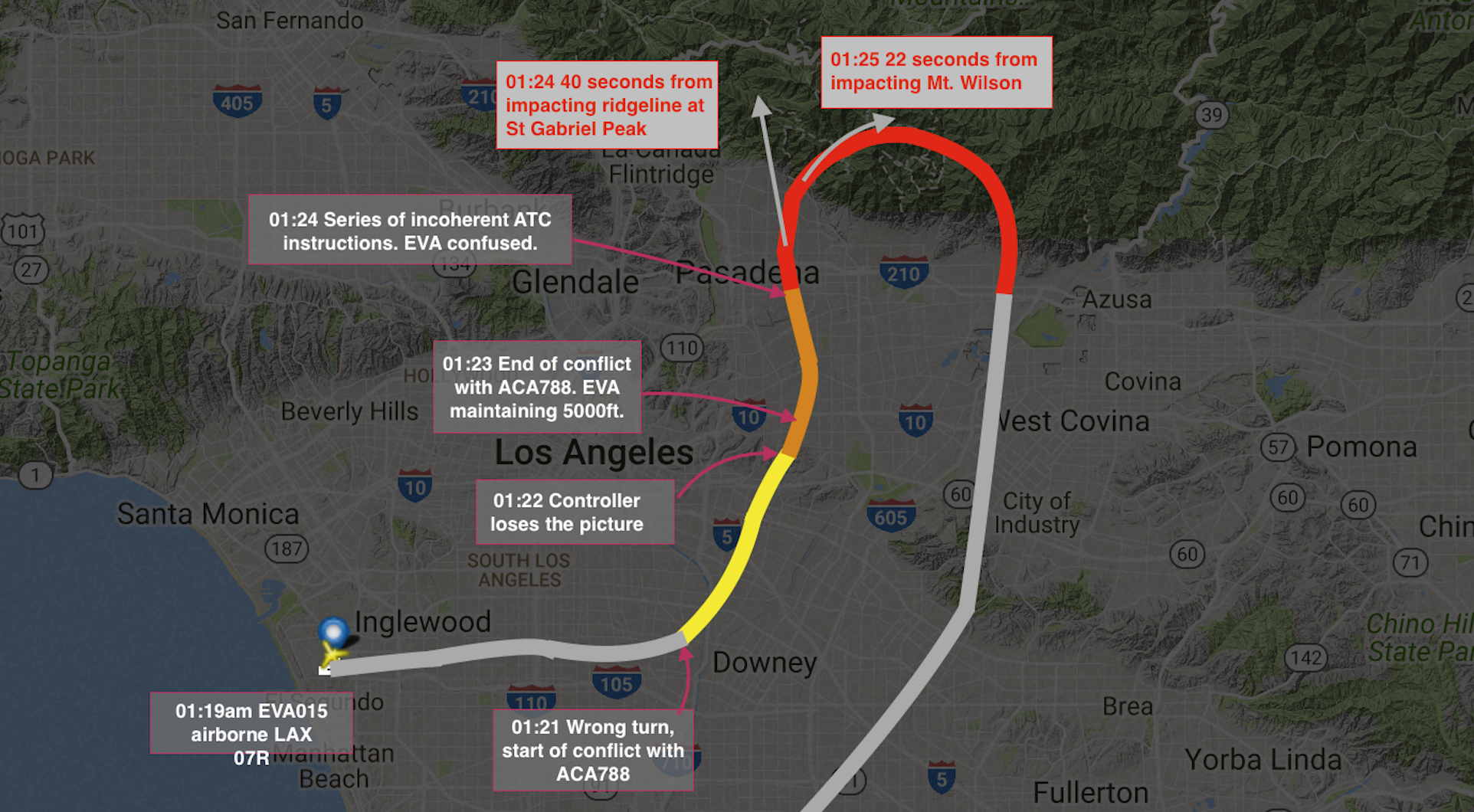
At 1.24 am, level at 5,000 feet, the flight is 40 seconds from impacting a ridge-line west of St Gabriel Peak. A minute later, a wide turn to the right points the aircraft instead at Mt Wilson — now 22 seconds away and above the aircraft. Only a slow climb, the result of fumbled instructions and a gradual realisation by the crew of the danger, released the flight from a certain and conclusive end in the dark hills.

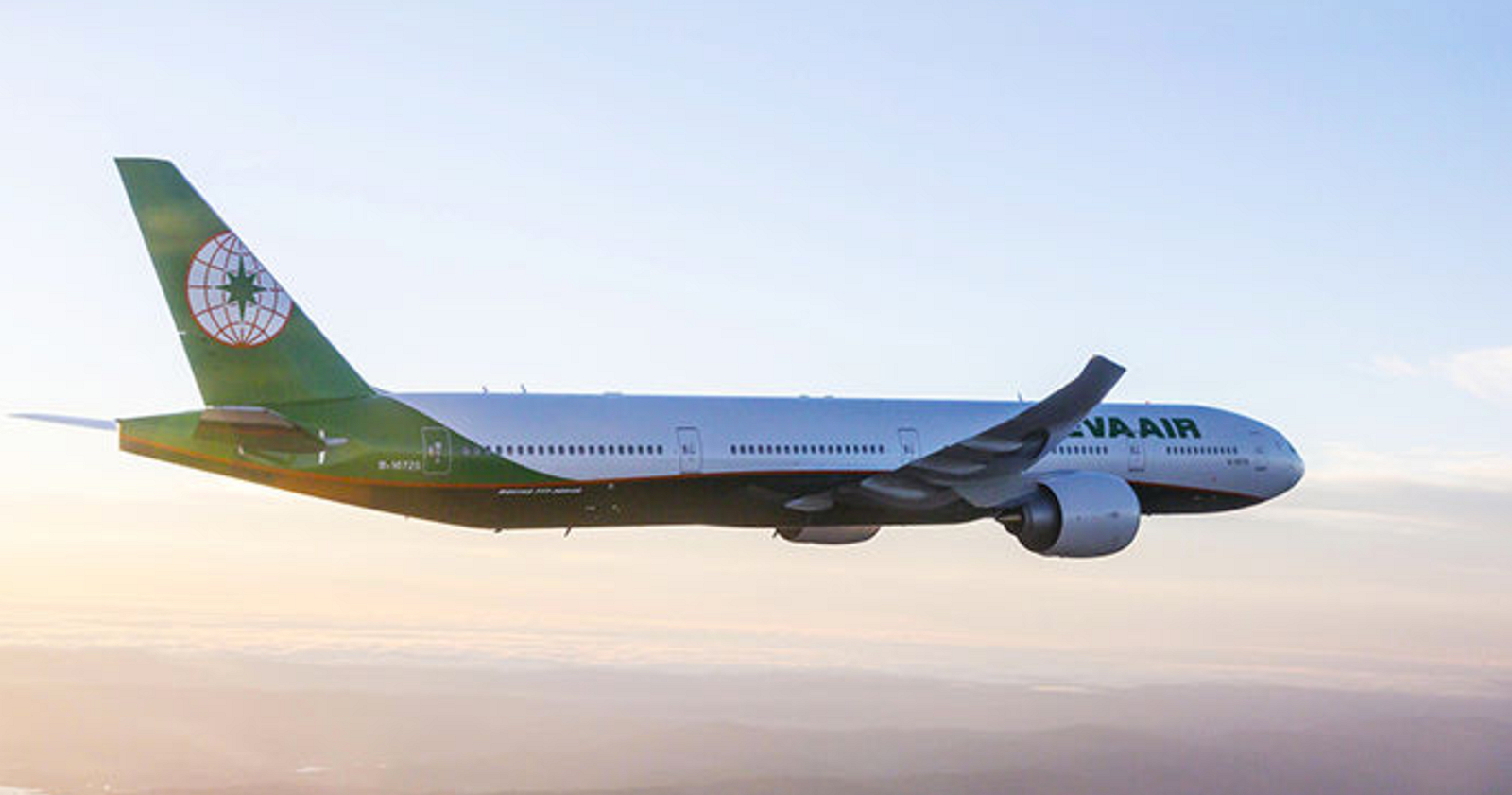
So exactly what happened? On December 16th last year, at 1.19am, EVA 015, a Boeing 777–300ER with 353 occupants, got airborne from Runway 7R at Los Angeles. 2 minutes after departure, the aircraft starts to make a turn in a direction opposite to that expected by the controller. That left turn immediately sets up a conflict and potential loss of separation with Air Canada 788.

With that conflict resolved, more by the natural tendency of airplanes to diverge than by any positive control instruction, the overall scene becomes bleaker. Rattled by the unanticipated loss of separation, the controllers’ picture is lost; fumbled left-right-left instructions confuse the Boeing crew, and very soon, nobody is actually flying the airplane.

Time are in UTC(GMT) — showing the aircraft track for the three minutes starting at 1.23 am local time. 

______

The ATC recording and track replay is YouTube nirvana for the congregation of armchair experts (the writer included). “Terrible controlling” is the common cry. “The pilots were at fault” say the counter-parties.

There is no doubt that this is Air Traffic Control at its darkest. But in any incident where we smugly allocate blame to one individual, we are blind to a bigger story. There is always a systemic failure to look at. In this case, there are several.

Loss of Separation vs. Real collision risk

For an Air Traffic Controller, there is a subconscious difference between the fear of losing separation (the legal minimum distance), and the fear of an aircraft collision. The purpose of ATC is to prevent collisions, but the mindset of an Air Traffic Controller is focused on preventing loss of separation. This is an important distinction.

A loss of separation is a traumatic experience for any ATCO. It results in immediate suspension of the right to work, remedial training, a loss of confidence, and a few sleepless nights. Even if the required separation is 5 miles, and a controller allows aircraft to pass with 4.9, it’s game over.

And so, in any conflict on the radar scope that looks like it might become a loss of separation, the controller (being a human being) will encounter physiological symptoms — shock being the first, activating the autonomic nervous system — increasing heart and breathing rate, and releasing adrenaline. These are helpful for both of the Fight or Flight options, but not for thinking clearly. The psychological impact of the loss of separation blurs the importance of preventing a collision.

Training wins

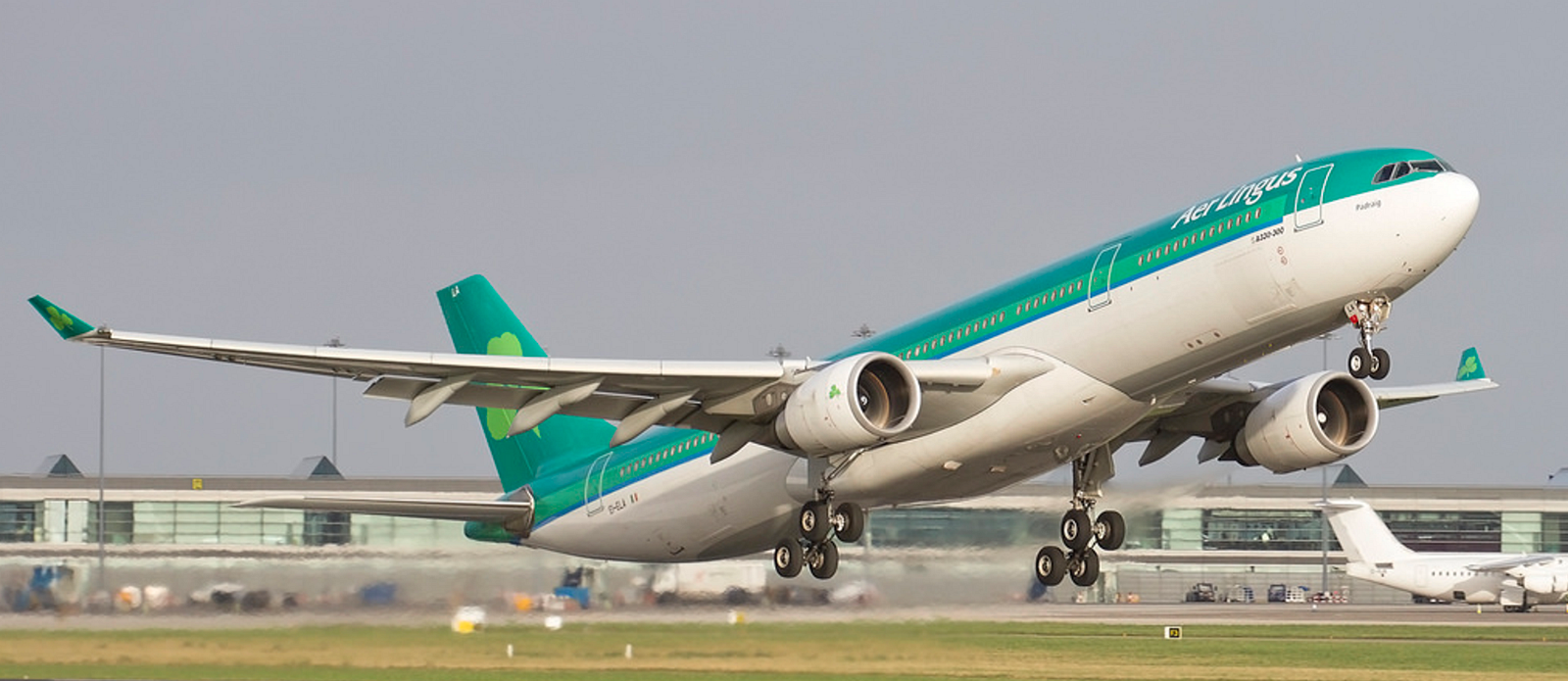
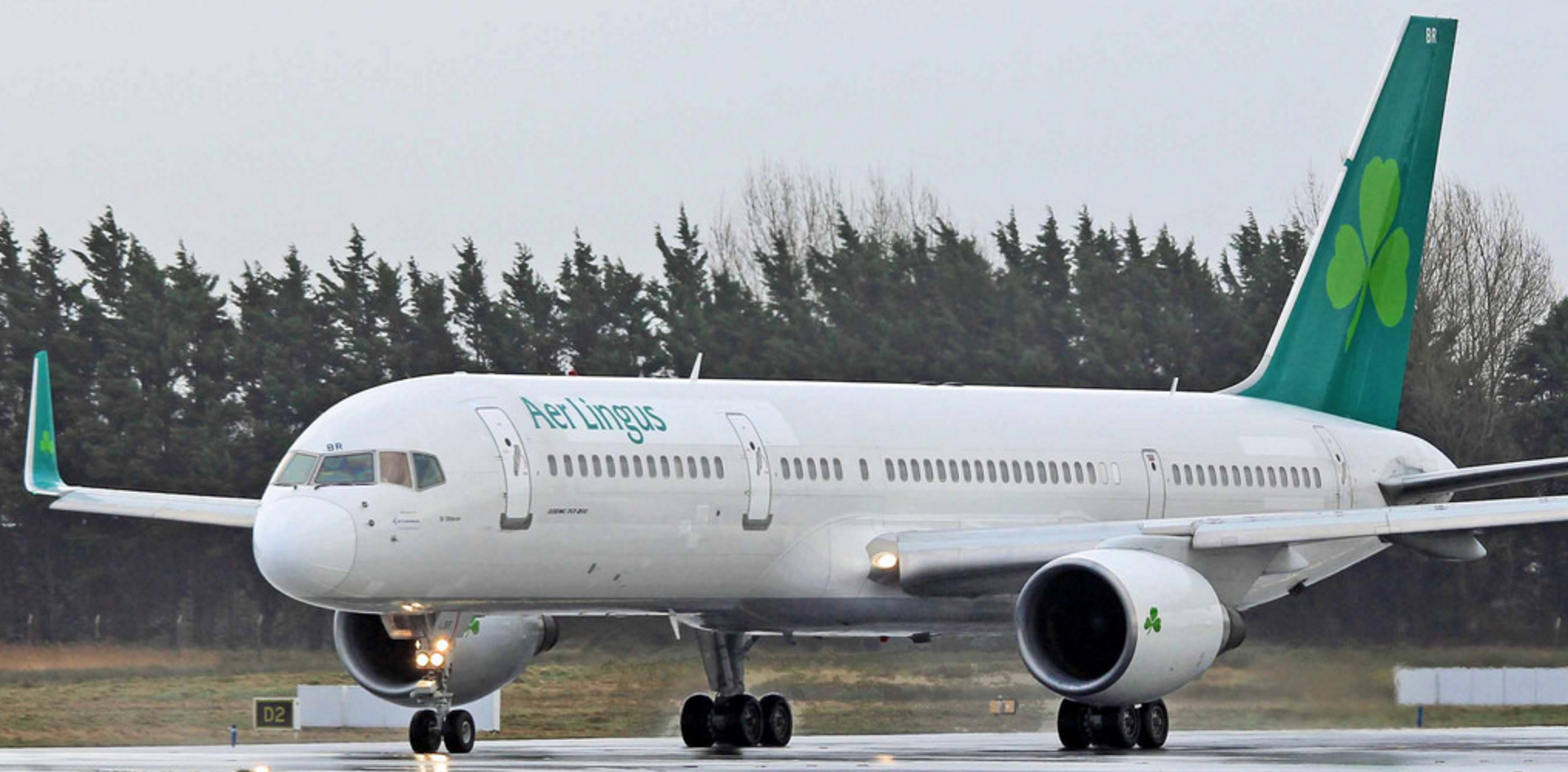
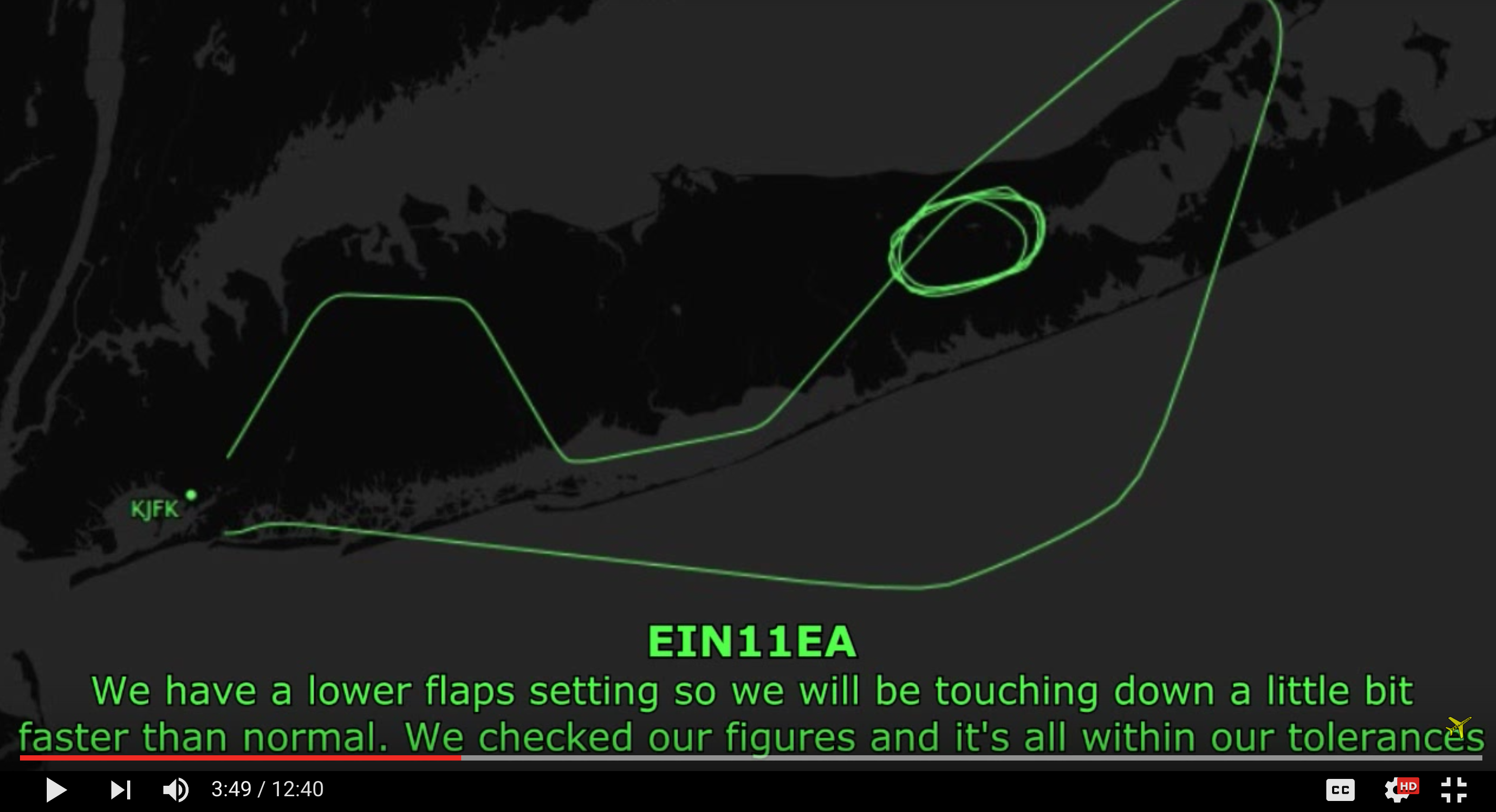
I’ve worked as both pilot and controller. Faced with pressure, we revert to the level of our training. This is why pilots visit the flight simulator every couple of months. We’ve trained to the point that an engine exploding as we rotate the aircraft off the runway is no longer a shock that renders us useless. If this were to happen in reality, we still feel the adrenaline and shock — but we can plunge straight into the “Engine Failure subroutine”. We have training to revert to. Listen to Aer Lingus Flight 120 experiencing this. You can hear the training, and you can also hear the adrenaline. Training wins.

For Air Traffic Controllers, faced with an unexpected situation, we also revert to training —but we don’t train for our emergencies in the same way that pilots do. The training, in fact, isn’t there to revert to.

As a controller, I’ve held Tower, Approach, and Enroute ratings in different countries. ATC training in how to separate airplanes is excellent. Training in how to recover from the unexpected is not.

Ultimately, it’s the same deal. Both Pilots and Controllers spend 99.99% of their time operating in the routine. It’s not uncommon for a pilot to spend his entire career without encountering an engine shutdown. Similarly, many controllers retire without ever having lost separation.

But it would be unthinkable for an airline to have crews that don’t know what to do in an emergency. Why then, is it acceptable to not offer controllers the same degree of contingency training?

Emergencies and ATC

When we talk about ATC Emergency training, what we are really used to looking at is what to say and do when a pilot has an emergency. Mayday, Pan-Pan, Emergency descent, Hijack.

But what about when ATC has their own emergency. When you’ve missed a conflict, have a deep loss of separation, lost the picture — when you’ve completely screwed up. Somewhere in the manual, there’s probably a few lines about using standard phraseology, exercise best judgement, provide traffic information, don’t interfere with an RA.

As humans, this doesn’t help us. There is no patter to fall into. We need trigger phrases to kick off trained behaviour when the shock of the event wants to take us elsewhere. In the cockpit that I flew in, whatever happened, the trigger phrase was “Take action”. From here, whatever the situation, we knew where to go. Identify the problem, run the checklist, push buttons, talk to ATC.

In the Aer Lingus example above: Mayday, Shamrock 12G, Engine Failure, Climbing straight ahead, Standby.

Alert — Identification — Situation — Intentions — Request.

Clear as a bell.

On the EVA tape, it is clear that the controller has no such place to go to. It’s the equivalent of trying to exit an underwater shipwreck with no guide rope. You need something to hold onto as you find your way back to the surface.

She never did. After the shock of the loss of separation, she was now faced with a 777 heading into the 6500ft San Gabriel hills level at 5000 feet. She did not move on from preventing a loss of separation to preventing a collision with terrain. Even when apparently finally realising the aircraft was heading for high ground, there was little in the way of an urgent climb or turn instruction, and nothing that mentioned to the crew that they were in immediate danger.

Losing the picture

_

If we consider ourselves to blame for the situation, it will cloud our judgement, obscuring the true picture. If we allow that to develop further, we can lose the picture entirely. There is nothing in our training that gives us a clear path out of the loss of separation. No mnemonics, no patter, no phraseology.

This is the lesson to be learned from this event. ATC agencies should make available to their controllers the same degree of emergency and “unusual situation” training that airlines offer to pilots. And somewhere in there has to be an ingrained, trained-by-rote-reminder that when you lose separation, you immediately pick up the fallen cards and move on to preventing a collision, whether that is with another aircraft or terrain.

In the EVA 015 incident, we can be thankful that the sheer mercy of fate allowed all on board to thread their way through and out the other side of the San Gabriel mountains. If ATC training were more cognisant of the human factors aspect of the shock of losing separation, we may not have to rely on the mercy of fate next time.


Airbus 380 flips CL604 – full report is now published

  • Interim report finally released by the German BFU
  • Flight Service Bureau version of events confirmed
  • New pictures released by the investigators

Back in March, FSB covered a major wake turbulence upset experienced by a Challenger 604 after passing an A380.  After our initial story was published, it was covered in various versions in The Times of London, Flying magazine, AIN Business Aviation News,  Deutsche Welle, and NBC. The picture on the Flight Service Bureau facebook page was viewed 1.1 million times.

From the interim report, these facts are confirmed:

  • The incident was caused by the wake from an Airbus A380 at FL350
  • The Challenger 604 passed directly underneath the A380 at FL340
  • The wake encounter occurred 48 seconds after the cross – when the two aircraft were 15nm part
  • The Challenger initially rolled 42 degrees to the right, then 31 degrees left, and experienced G-Loads of 1.6g positive followed 1 second later by -3.2 g.
  • It lost altitude from FL340 to FL253 over a 2 minute period – loss of 8700 ft.

In an interview, the crew said:

The airplane shook briefly, then rolled heavily to the left and the autopilot disengaged. [We] actuated the aileron to the right in order to stop the rolling motion. But the airplane had continued to roll to the left thereby completing several rotations. Subsequently both Inertial Reference Systems (IRS), the Flight Management System (FMS), and the attitude indication failed”

“… since the sky was blue and the ocean’s surface almost the same colour [I] was able to recognise the aircraft’s flight attitude with the help of the clouds

The BFU published the FDR excerpt above, and a full interior picture of the cabin, post event.


Flight Service Bureau has issued guidance to OpsGroup members, in Note to Members #24 (March 19th, 2017), which can be downloaded publicly here. The highlights are:

  • As Aircrew, use SLOP whenever you can.
  • As Controllers, be mindful of smaller aircraft passing underneath A380’s.
  • Avoid flying the centreline if you can. SLOP 0 is not an offset. Choose 1nm or 2nm.
  • Note the new SLOP rules from ICAO in the 16th edition of Doc 4444.
  • Expect guidance from EASA and the FAA to follow

With very recent updates to both NAT Doc 007 and ICAO Doc 4444, the rules for SLOP are a little different than before.


References:


This is what an Airbus 380 looks like when it’s coming to get you

  • New guidance issued to OpsGroup by Flight Service Bureau
  • New warnings to be issued by Air Traffic Controllers – EASA SIB to follow
  • Updated 2017 SLOP offset procedures


With the A380 vs Challenger 604 incident,
there is now growing concern amongst aircrews about the effects of the A380’s wake turbulence.

In this incident, reported by the Aviation Herald, a Challenger 604 at FL340 operating from Male-Abu Dhabi passed an A380 opposite direction at FL350, one thousand feet above, about 630nm southeast of Muscat, Oman, over the Arabian Sea. A short time later (1-2 minutes) the aircraft encountered wake turbulence sending the aircraft into an uncontrolled roll, turning the aircraft around at least 3 times (possibly even 5 times), both engines flamed out, the aircraft lost about 10,000 feet until the crew was able to recover the aircraft, restart the engines and divert to Muscat. The aircraft received damage beyond repair due to the G-forces, and was written off.

This is a recovery that is in the same category as the ‘Miracle on the Hudson’, and the DHL A-300 recovery in Baghdad. Envision the alternate scenario, which was far more likely: Challenger 604 business jet missing in remote part of the Indian Ocean. Last contact with was a HF radio check with Mumbai. No recent satellite logons. Position uncertain. Search and Rescue attempt called off after 15 days. Nothing found. Probable cause: flew into CB.

Thanks to the remarkable job by the crew, we don’t have to guess. We know what happened. And now, there are questions.

We’ve seen this story before

Back in 1992/3, two back-to-back fatal crashes (a Citation, and a Westwind) were attributed to the unusual wake turbulence pattern of the Boeing 757. In fact, at the time, NOAA said it was the most intense wake they had ever seen. In December 1993, the FAA told controllers to increase the separation, and warn aircraft following a 757 of its presence.

This was 10 years after entry into service of the 757, which had its first revenue flight in 1983.

Sound familiar? The A380 had its first revenue flight in 2007. We are 10 years down the track, and it’s very tempting to apply the logic that because this degree of incident hasn’t happened before, it’s a one-off. An outlier. That the crew reacted erroneously to a small wake upset at the limit of their flight envelope. This is both unlikely, and, given the potential threat to other crews, a dangerous perspective.

The last review of A380 wake turbulence was done in 2006, primarily by Airbus. As a result, a new category was required – “Super“, in addition to the existing Light, Medium, and Heavy, for use by controllers when applying the minimum separation on approach and departure. However, no additional considerations were applied for enroute wake turbulence.

Most pointedly, the review concluded that the A380 did not need any wake turbulence separation itself, because of its size. The A380 is the only aircraft in the world to have this “out”. It’s a beast. Even an Antonov 124 or Boeing 747 needs 4nm from the traffic ahead.

New guidance

Given the incident, the similarity to the B757 story, and that quiet pointers towards a bigger risk, Flight Service Bureau has issued guidance to OpsGroup members, in Note to Members #24 (March 19th, 2017), which can be downloaded publicly here. The highlights are:

  • As Aircrew, use SLOP whenever you can.
  • As Controllers, be mindful of smaller aircraft passing underneath A380’s.
  • Avoid flying the centreline if you can. SLOP 0 is not an offset. Choose 1nm or 2nm.
  • Note the new SLOP rules from ICAO in the 16th edition of Doc 4444.
  • Expect guidance from EASA and the FAA to follow

With very recent updates to both NAT Doc 007 and ICAO Doc 4444, the rules for SLOP are a little different than before.

Download the OPSGROUP Note to Members #24 – Enroute Wake Turbulence.


A personal note about NOTAMs

I learned a lot this week.

On Wednesday, I published an article in our International Flight Ops Bulletin. Our normal readership is 40,000, and that usually results in 4,000 or so immediate looks at our blog website.

By Friday, a quarter of a million people had visited flightservicebureau.org.

My inbox overflowed. I’m still replying one by one, with a couple hundred still to go.

The reason? I called a spade a spade, and used a profanity to describe what has become of the International NOTAM System. My own frustration forged the narrative. For many, I tapped into a channel of visceral agreement. For some, however, the word bullshit is not acceptable.

For me, this is not a question of whether or not it was the right word to use. This is not a question of free speech or the First Amendment. It’s not a question of ‘being polite’, or remembering our ‘professional audience’.

It is a question of not holding back. Not having a public and private persona. Not bowing to the stifling rules of Corporate Comms. Not assessing how this might impact ‘the business’. And not being afraid to get it wrong.

We have a voice here at Flight Service Bureau, and we’re going to use it. And sometimes, we might get it wrong. Sometimes, we might cross lines that make people uncomfortable.

In fact, we do that every week. We routinely receive government requests, demands in fact – from Aviation Authorities, from Foreign Affairs Ministries, Company Lawyers – to remove information from our bulletin, to say less, to not call their airspace ‘unsafe‘, not report on incidents at their airports, not voice airlines and pilots frustrations, lest others turn away their business.

And by very definition, sometimes we have to get it wrong. If we craft and control every bit of information, every warning, and every article, editing the life out of the story and the truth, then we’re failing. We’re not being brave enough. Maybe we could have said it differently, but that’s not the point.

This week, when I got 400 emails in an amazing show of support, it made me realise that we are doing this for a large community that love what we do, and that makes me very proud to serve you. Going above 2,000 members in OPSGROUP is major milestone.

We have a clear mission: keep the International Ops community – Pilots, Dispatchers, Controllers, Airlines, Organisations – informed and safe, in an ever-increasing web of bureaucracy, complexity and litigation.

We’ll fight the fight for you, and we’ll tell it how it is.

Mark.


The problem of Bullshit Notams

Update: November 1st, 2019: The Notam Team is up and running – we’re fixing Notams. Follow our progress at fixingnotams.org.


This article created a firestorm of engagement – several hundred emails and 127,000 people that visited the blog. Most of it was overwhelmingly positive. Some of it wasn’t. Please read my follow up in response.


It’s absolutely ridiculous
.

We communicate the most critical flight information, using a system invented in 1920, with a format unchanged since 1924, burying essential information that will lose a pilot their job, an airline their aircraft, and passengers their lives, in a mountain of unreadable, irrelevant bullshit.

Yes CASA Australia, that’s you. Yes, Greek CAA, that’s you. And you’re not alone.

In an unintended twist of irony, the agencies seeking to cover their legal ass are party to creating the most criminal of systems – an unending flow of aeronautical sewage rendering the critical few pieces of information unfindable.

This is more than just hugely frustrating for each pilot, dispatcher, and controller that has to parse through it all; it’s downright dangerous.

If you’re a pilot, you’ll either have already experienced this, or you’re going to – you stuff something up, and then be told: “but there was a Notam out about that”. Sure enough, there it is in black and white (and in big capital letters). Do you think that “but there were 100 pages of them” is going to be a valid defence?


Well, it should be. The same agency conducting your post-incident interview is busy on the other end stuffing the system full of the garbage that prevented you from seeing it in the first place.

There are three parts to the problem: the system, the format, and the content. The system is actually quite amazing. The AFTN network connects every country in the world, and Notam information once added is immediately available to every user. Coupled with the internet, delivery is immediate.

The format is, at best, forgivable. It’s pretty awful. It’s a trip back in time to when Notams were introduced. You might think that was the 1960’s, or the 50’s. In fact, it’s 1924, when 5-bit ITA2 was introduced. The world shifted to ASCII in 1963, bringing the Upper and Lower case format that every QWERTY keyboard uses today, but we didn’t follow – nope, we’ll stick with our 1924 format, thank you.

Read that again. 1924. Back then, upper case code-infested aeronautical messages would have seemed impressive and almost reassuring in their aloofness. But there weren’t in excess of 1 million Notams per year, a milestone we passed in 2013. The 1 million milestone is remarkable in itself, but here’s something else amazing: in 2006, there were only 500,000. So in seven years, Notams doubled. Why? Are there twice as many airports in the world? No. Twice as many changes and updates? Possibly. But far more likely: the operating agencies became twice as scared about leaving things out.

And so onto the culprit: the content. The core definition of a Notam is ESSENTIAL flight information. Essential, for anyone tasked with entering information into the Notam System, is defined as “absolutely necessary; extremely important”. Here’s a game you can play at home. Take your 100 page printout of Notams, and circle that ones that you think can be defined as essential. See how many fit that bill.

So why is all this garbage in the system? Because the questions that the creators of Notams ask are flawed. The conversation goes like this:

– “Should we stick this into a Notam?”
– “Yeah, we’d better, just in case”.

How many are actually asking, “Is this essential information that aircrew need to know about ?”. Almost none. Many ‘solutions’ to the Notam deluge involve better filtering, Q codes, and smart regex’s. This overlooks the core problem. It’s not what comes out that needs to be fixed, it’s what goes in.

Even in 1921, we had much the same problem. Obstacle, 18 feet high, several miles from the runway.

Nobody cares. Unless you’ve parked the Eiffel Tower on the threshold, leave this stuff for the AIP. And nobody cares about kites either. Nor about goat-grazing times. We don’t care if your bird scarer is U/S. We don’t care if there’s a cherry-picker fixing a bulb somewhere. We don’t care when you’re cutting your grass.

Nor do we care about closed taxiways. The only way I can get onto a taxiway is with an ATC clearance, and ATC will not clear me onto a closed taxiway.

We care if the airport is going to be closed when we get there. If we’re going to have to divert because the runway is shut. If someone might shoot at us. If there are new rules. We care about the critical items, but we won’t see them as things stand.

And so, about here is where a normal editorial piece might end with “we hope that the authorities improve the system”, and sign off.


But not here.

We’re in the business of doing things here at FSB, not just talking about them.

Last year we wrote a few pieces about the Greece vs Turkey Notam battle. This month we did a group look at Briefing Packages, and it was astonishing to see how many pages of this diplomatic drivel still appeared in all our members’ Briefings. All in all, on average 3 full pages of every briefing for a flight overflying Greece or Turkey contained this stuff.

So, we sent Greece a polite AFTN message on behalf of all of us.


That’s just one piece of a thousand-piece puzzle, and it would be nice to think that one piece at a time we could fix the sytem. Let’s get real. It’s a monster, and it’s out of control.

We don’t think that we can fix the Notam system.

But, we can think about a different solution. And that’s exactly what we’re doing right now in OpsGroup. With almost 2000 members, we can make a difference. Watch this space. Or, if you want to help take action, send your thoughts to goatams@ops.group.


What altitude is ‘safe enough’ to overfly a Conflict Zone?

Most conflict zone guidance from Aviation Authorities is based on the risk posed by MANPADS – Man Portable Air Defence Systems, or more descriptively – Shoulder Launched Surface to Air Missiles (SAMS).

Large-Unit SAM attacks on aircraft are uncommon – MH17, removed from the sky by a Russian-made Buk missile, was the first aircraft to be shot down by a large SAM unit since a Siberia Airlines Tupolev in 2001. These large units – requiring a radar system as part of the mechanism – have never been used by terrorists. Almost all incidences involving large-unit SAMs have involved misidentification. There is no safe altitude from a large SAM.

MANPADS, on the other hand, represent a greater threat to aircraft in 2017. These shoulder-launched systems are very portable, and far more likely to fall into the wrong hands. Common ranges are in the 10,000 – 15,000 ft range. The most dangerous is the FIM-92 Stinger, which has an operational ceiling of 26,000 ft (and there is concern that these have reached anti-government rebels in Syria)

The internationally promulgated standard safe altitude for overflight has now become about 25,000 ft AGL. Most CAA/State guidance is issued based on this number. There are two important points for aircraft operators to note:

    • That is 25,000 feet Above Ground Level. A missile could easily be launched from a mountain, or higher ground, so if you take 25,000 feet as your safety margin, make sure to add the terrain elevation beneath. In South Sudan, for example – Juba is at 2,000 feet – most of the country is at about this height. So 27,000 feet should be the minimum safe level, and you can work with FL270.
    • This is based on the assumption that we’re not worried about Stingers. Especially in the Middle East, a higher safe altitude might be better. FL300 seems like a good place to start.


References:


Airbus Flight 101 – Relief to Haiti

After Hurricane Matthew last week, MTPP/Port-au-Prince (Toussaint Louverture) became a central focus in relief efforts for Haiti. One of our OPSGROUP members, Airbus Industrie – took an A330 that’s normally used for testing, and flew it with supplies from France to Haiti.

Thanks Pedro @Airbus for this flight and trip report – and thank you for your contribution to the relief effort as well. All the crew members on board were volunteers.  We’re very proud to have you as a member of our group.

departure

Report from Pedro Dias, Airbus Industrie:

RELIEF FLIGHT TO HAITI – FLIGHT AIB101 – AIRBUS A332

A request from NGO has raised to carry to Haiti 25 tons of medical equipment, first aid supplies, portable water station as well as a team of 40 people (28 military Rescuers, 4 doctors and nurse, 8 NGO staff). Airbus, thru the “Airbus Foundation”, responded positively and offers to help providing our A332. This aircraft is a test aircraft, partially equipped with pax seats and offer the full capacity of its cargo. On Monday 10th October we were ready to go!

First stop in LYS where all the NGO equipment was stored, after a short night Cargo and passengers were on board ready for a 9h30 flight.

AIB101 T/O @ 05H45UTC

Nice flight with some turbulence approaching the Caribbean Area… This long flight gave us the opportunity to talk with our fellow passengers and understand their motivation to go to such devastated places. Very interesting dialogue, which made all of us understand that we are lucky to be where we live.

haiti1

After overflying a small part of the Island we’ve been cleared to land. On the ground a B747 was already there, offloading equipment sent by French government.

Handling was efficient but slow, as could be expected, and the airport was a bit messy due to Matthew but also to the heavy work on the airport, have to be careful of all trucks and excavators crossing taxiways and parking with no radio contact!!!

tail

We had to wait for customs to clear our cargo, finally everything went smooth and after less than 2 hours on the ground we were ready to leave. Fuel was not available, things have changed since I guess, we planned a fuel stop at PTP (Pointe-à-Pitre, Guadeloupe) before flying back to Toulouse.

ramp

2h Flight to PTP, then 2h on the ground and after a 08h00 flight it was 0550Z on Wednesday when we landed at Toulouse after 24h around the clock for this tiring but really rewarding flight.

All crew and Airbus team were volunteers to help on this flight, we know that what we bring is a drop in the ocean but we expect it will help people there, and we hope many more flights will follow soon”

Thank you Airbus and Pedro for this report!


Pan Am, 727’s, and 1977 …

This afternoon I took a boat across the river to the Jersey side  and looked back at New York City; amongst the skyscrapers in Midtown one stood out – the MetLife building. It seemed familiar – and I wondered why. I realised it was once the PanAm building: in a different era, this was the headquarters of Pan American World Airways.

pan-am-3

Most interestingly, there was once a helicopter service, operated by PanAm in 1977, that connected downtown Manhattan with JFK, if you had a First or ‘Clipper Class’ ticket on a PanAm flight. The helicopter transfer, from the helipad on the roof of the PanAm building, took about 7 minutes – compare this to the 1 hour and 7 minutes it takes to get out to JFK these days – if you’re lucky.

1984-ad-pan-am-one-free

Today, a couple of blocks west of the former PanAm building sits a lonely Concorde beside the Hudson, another nod to a time when aviation seems to have offered more convenience and speed than it does today.

intrepidtws11

So, the question is whether this is nothing more than nostalgia, or whether things were indeed, in some way, better back then. Everyone will have their own answer to that – we’ve lost  Tristars with elevators, DC-8’s with their chrome and diesel and smoke and crackle, 727’s and Bac 1-11’s with their rear airstairs – and what have we gained? The newest arrivals – the C Series, the A350, the 787 – are sleek, fuel efficient, and open up new routes that weren’t possible before – but are pretty unspectacular.

No doubt though, the generation that got to fly and operate these aircraft looked back on the days of Flying Boats and DC-3 with equal fondness. I wonder whether the aircraft coming off the production lines today will evoke the same thoughts.

In International Flight Operations, though, it must be said that things are much improved. Compared to the era that spans the 70’s to the 90s, we’ve now got vastly improved flight planning systems, more direct routes, much better navigation systems, and we’ve largely moved from SITA, phone calls and fax machines to email when it comes to organising those flights. For the Dispatcher and Planner, there is no doubt that life is far easier. Even ten years ago, trying to arrange handling anywhere outside the US and Europe would take days to set up – now, the same trip can be arranged in 30 minutes.

We do have some new challenges. Airspace safety – and the risk to our aircraft overflying unstable regions, is of more concern now than at any time in history. Since MH17 two years ago,  there have been many new areas to avoid. But how to know where, and why? Through The Airline Cooperative and OPSGROUP, we’ve worked as groups of Dispatchers, Controllers, and Pilots to share information so that when one person becomes aware of new information, everyone gets to hear about it. Our shared map shows the current status at safeairspace.net.

safeairspace-net

As a group, we’ve also been creating some new tools that help us – Aireport is our shared review site, where we can let each other know about good and bad experiences with Handlers, Airports, and ATC – whether it’s service, procedures, changes, or avoiding a fuel stop that’s going to cost you a fortune.

aireport-co

Maybe the biggest problem with all this new access to information is the overload one – the internet is the equivalent of a Shannon to Singapore NOTAM briefing. 80 pages of crap with a couple of important things stuck in the middle. Sometimes those important things are good to know, sometimes it’s critical information.

So how do you find those couple of critical things on the internet? You won’t have any trouble finding Aviation sites, but if you are managing an International Flight Operation of any sort – whether you’re the pilot, the dispatcher, the controller, the regulator, the ramp agent – whoever: how do you find out what’s new that will affect your flight.

That’s the question that bothers us at FSB every day of the week. We literally work on this every single day – and every day it becomes a little easier. Every Wednesday, we squeeze and condense the things that we’ve discovered this week into our weekly International Ops Bulletin – removing as much as possible until you’re left with only the critical stuff. The biggest source, and greatest help – is our amazing group of people in OPSGROUP.

Anyhow, I digress. Back to PanAm …


What is OPS GROUP, exactly?

From the archives … an article from 2016

Yes, it’s the most common question we get. What is OPS GROUP ? Well, we’re not exactly sure yet. The question mark may well be part of the name, because to us it represents both a lack of constraints and limitless possibility. A beginners mind.

The energy within the group has astounded us. The OPS GROUP team has answered over 200 questions from members, but that engagement is not what surprised us. When we put questions back to the group ( in the form of curated Members Questions), the willingness to help, share and assist others is what did.

So, what we’re seeing is that amazing things happen when you connect similar, but different, people. In the Industry, we have great groups for Airlines (IATA, and our own Airline Cooperative), Business Aviation (NBAA), ATC (CANSO), Private Aviation ( AOPA). But they all combine like with like.

Like the best relationships,  matching with a little bit different is far more interesting.

OPS GROUP – sticking with the big letters – brings everyone together in INTL FLT OPS. We all share the same airspace and go to the same airports. We all struggle to stay up to date, find most Notams confusing, hate having to organise permits, and wonder what will be next to change on the North Atlantic. Ask us to go somewhere new, and watch the stress levels rise.

What happens when

And so we have a weird and wonderful group. The all-alone Corporate dispatcher, the overworked B777 F/O, the midnight supervisor at Eurocontrol, the grumpy Airline Dispatcher (yes Eric, that’s you), the permanently-airborne G4 driver, the Airbus ops team, and of course the Boeing guys and girls, the Irish ATC supervisor, the German Airline COO, the Russian CAA guy, the Australian meteorologist, and many hundreds more. Fast approaching 1000 members, in fact – and therefore becoming more useful for everyone. Literally hundreds of experts within the group.

When we started, we thought that OPS GROUP would just be a collection of people that wanted updates on International Ops from our Flight Service Bureau. We still run our now famous bulletin every Wednesday, and our Lowdowns, Ops Notices, Alerts, and Special Briefings – but the group is becoming huge amounts more than just receivers of information.

Personally, I think the key value of the group is it allows each one of us to feel more connected to International Flight Ops. Realising that there are hundreds of others in the same position that appreciate both your question and the group answer.

So, if I could try to best summarise OPS GROUP right now – it’s a secure environment where you’ll be ahead of the relentless changes in International Flight Ops, you’ll directly receive all FSB summaries of the big changes, can get answers from the team or the entire group for that troublesome ops question. You also get to feel really good when you share new information with the others, and answer the question that you’re an expert on.

But really, we’re still not quite sure what OPS GROUP is. Maybe when we pass 2000 members it will become clearer. Let’s see.

More about OPS GROUP:


Berlin’s Air Corridors – still alive?

It’s a generation ago, and the airway chart landscape is unrecognisable today. For 40 years however, there were only three tiny corridors that allowed a flight into East Germany. In terms of International Procedures, this was one that you really didn’t want to get wrong.

Looking back, it’s fascinating to see the restrictions that were placed on international operators flying into Germany. The warnings are printed in bold. Aircraft will be fired upon. And that threat from the Soviet Union was real – most of us recall the shooting down of Korean 007 in the Sea of Japan in 1983 – and, lesser known, another Korean flight – Korean 902 – over Murmansk in 1978.

Assuming you kept to centreline, the Soviet authorities limited overflight to FL95, and if there was an aircraft in front of you, even a turboprop, you slowed down to follow; no overtaking was allowed.

In practice, therefore, the centre corridor was the most used, because it was the shortest and limited the time restricted to FL95. Traffic was controlled by the Berlin Air Route Traffic Control Centre (BARTCC), and monitored by these guys at the Berlin Air Safety Centre – who issued the overflight permits required.

Berlin_Air_Safety_Center_DF-SN-83-08062

A request for an overflight permit for East Germany resulted in one of three outcomes:

  • Permission Granted, Safety of Flight Guaranteed
  • Permission Granted, Safety of Flight Not Guaranteed
  • Permission Denied

Radar coverage from the Berlin ATC Centre is shown below. In 1952, an Air France flight from Frankfurt to Berlin, operated by a DC-4 came under sustained attack from two Soviet MiG 15 fighters while passing through one of the corridors. The attack damaged the aircraft severely, and the PIC made an emergency landing at Tempelhof with two engines shut down. The Soviet military authorities claimed the Air France plane was outside the air corridor at the time of attack.

Bild-LuftkorridoreBerlin1989

Berlin_Air_Route_Traffic_Control_Center,_1987.JPEG


This chart from our own archives shows the Airways structure in 1970.

Chart
And so to today. Long forgotten restrictions of the past, right? Well, not really. We only have to look a little further north-east, about 500km – and we find the Kaliningrad FIR – in some respects an ongoing relic from the Cold War.

Kaliningrad FIR Map


It sits neatly into the Eurocontrol Upper Airspace Map, but in practice, it doesn’t fit into the European ATC picture quite so comfortably. If you squint closely at the skyvector chart for the area, you’ll see that the airways in the Kaliningrad FIR are black – and everywhere else is blue.

Kaliningrad Routes

This is because, first of all, prior permission is required from Russia to overfly the FIR, as Kaliningrad – until 1945 part of Germany –  is an “Oblast” of the Russian Federation. This permission must be obtained from Moscow at least 72 hours prior to flight using Form N, and on approval, is valid for 48 hours.

Looking more closely, you’ll see that there aren’t a lot of useful routes – and they don’t line up with the rest of the system. Few airlines, and even fewer private flights, operate through this airspace. Your most likely route north-south will take you to BOKSU – squeezed in between Kaliningrad and Belarus – not as restrictive, but still requiring prior permission.


Similarities between Kaliningrad and Berlin end there, but there are enough to be of interest to the international operator.


A lesson in emergency handling, from Aer Lingus

In September last year, an Aer Lingus Boeing 757 (operated by Air Contractors), suffered a loss of the Left Hydraulic system on departure from JFK. The left hydraulic system is the main one, meaning that Flaps, normal gear extension, and Nosewheel steering all become unavailable. The failure is therefore serious, albeit one that would be a favourite for simulator practice.

There are some really interesting lessons to learn from this incident, not least of which is how we now get access to the information that emanates from it. No longer do we need the offical report; it’s all out there on Live ATC and YouTube.  It’s 12 minutes 40′ of highly worthwhile viewing, whatever your thoughts on how public this all is.

EIN emer


And so to the incident. Foremost, this is a lesson in professionalism and communication, from an outstanding crew. Listen carefully, and observe how:

  • A clear report is made as to the situation and what’s needed immediately.
  • Potential for a spillage of fluid on the runway – not their problem, right now – but passed on as the first consideration for others.
  • Early message to JFK, via Boston Centre, that ILS22L is the best runway for them, that they cannot vacate, and that the gear doors may look unusual.
  • Communication is clear, precise, and authoritative – making sure everyone has all the information they need.
  • Taking full command of the situation on the ground, during the fire incident. “Say again, and make sure nobody speaks apart from you“. Communications involving rescue vehicles on ATC frequencies are notoriously confusing and unclear, this crew handled the confusion with authority.

Some International Differences that can be seen here:

  • Pounds and Kilos – this 757’s indications are in Kilos; ATC don’t know the conversion either, and another US aircraft on the frequency steps in to help out. Since the Gimli Glider, this has always been an issue.
  • Mayday and Emergency – read more below, but the US likes the phrase “Declaring an emergency”


Some other interesting factors
:

  • A really awful callsign. Bad enough for a normal crossing and 6 hour flight; brutal in an emergency. The flight was EI110 – so the callsign should be Shamrock-one-one-zero (one-ten works fine). Problem: lots of other airlines have this number too, so to avoid callsign confusion, someone in an office somewhere decided to change it to Shamrock-One-One-Echo-Alpha.
  • Callsign confusion is in fact the result. Try saying it a few times in a row. The controller variously calls them “Shamrock 11E”, “Speedbird 11EA”, “Shamrock 11A”. The callsign alone made things difficult for ATC and the crew.
  • ATC did a pretty good job of keep comms to a minimum. In most incidents, ATC create stress and workload for the crew by asking non-essential questions the moment that an emergency is declared – which is the same time as the crew have a bunch of checklist work to do. When you get a Mayday or Emergency call on your frequency, hang tough with the questions for a minute or two, unless you need answers for immediate traffic separation.
  • ATC will always ask Souls on Board and Fuel on Board. Why? To know how many people to account for on the rescue, and how much Jet fuel is going to fuel a fire if there is one after landing. Get the souls on board accurate (not a bad idea to have this written at the top of the flight plan), but a rough estimate of fuel will do. If you’re using a decimal, you’re doing it wrong.


Emergency/Mayday/Pan:

  • In the US, normal practice is that you either declare an emergency, or you don’t – unlike many other countries where a choice between Mayday (serious) and Pan-Pan (cautionary) exists.
  • US ATC Handbook: “If the words “Mayday” or “Pan-Pan” are not used and you are in doubt that a situation constitutes an emergency or potential emergency, handle it as though it were an emergency. “
  • Sidenote: Many think that only the flight crew can declare an emergency. In fact, Flight Crew, Dispatch, Company Representatives, and ATC can all declare an emergency. An emergency can be declared without notifying the flight crew.
  • In this case, the crew were comfortable in their communication with ATC – and able to “not declare” but at the same time request emergency equipment on standby. As it turned out, this emergency equipment was critical because there was a small fire after landing. If you are uncertain whether ATC understands the nature of your situation – declare an emergency. You can always cancel it later on.
  • Fuel Reserves Approaching Minimum: Internationally, ’Fuel Emergency’ or ‘fuel priority’ are not recognised terms. Flight crews short of fuel must declare a PAN or MAYDAY to be sure of being given the appropriate priority.
  • In 2005, ATPAC recommended changing FAAO 7110.65 (the regs for controllers) to include “emergency” as a term that could be used in lieu of “mayday” and “pan-pan.” They then withdrew the recommendation because they decided that creating more differences from ICAO standards was a bad thing.

It’s easy to forget that in a real emergency, no matter how strong your training, you have to deal with stress and adrenaline that doesn’t appear in the simulator.

A hydraulic loss is considered ‘routine’ in the books, but many accidents in the past have come from compounding errors – those holes in the swiss cheese line up pretty easily once the first one is as big as a hydraulic leak.

The cool, clear, and decisive communications from this crew indicate that they have the Big Picture firmly under control. It’s a lesson for all of us.


757_Hydraulics_1