



Japan is a great place to pilot a BizJet. It has super efficient ATC, spotlessly choreographed ground handling, and some of the best customer service you’ll find anywhere. But it also comes with a maze of rules, slot systems, strict curfews, and a cultural operating style that does not reward improvisation.
If you have not been to Tokyo recently, or ever, here is the short version. It is brilliant. It is also very easy to get yourself boxed in by paperwork, curfews, and slot rules if you do not understand how the system works.
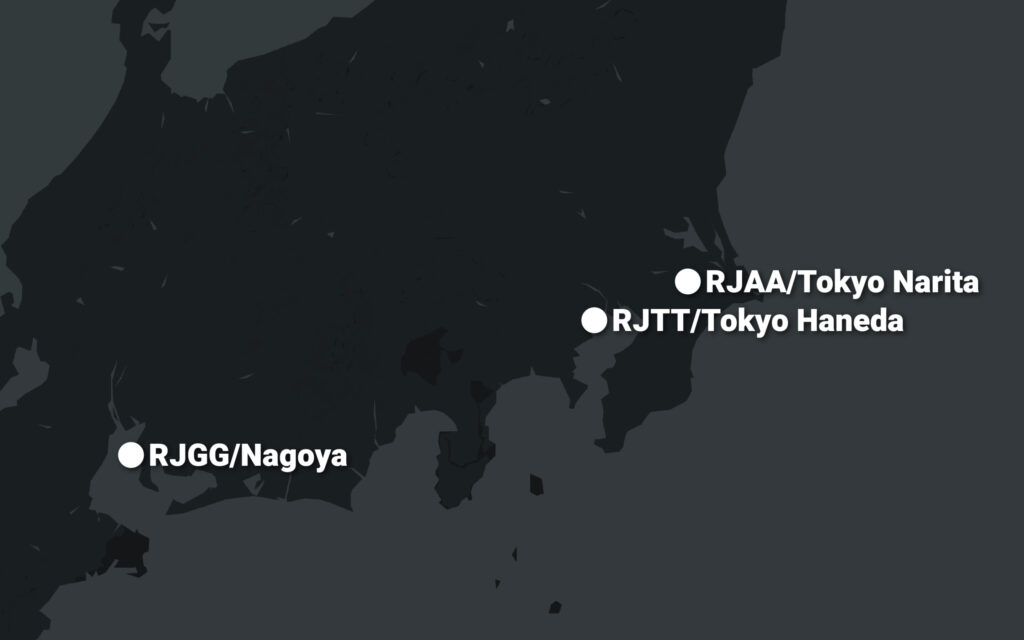
This guide focuses on what actually matters for BizAv crews operating into Tokyo and nearby alternates – RJTT/Haneda, RJAA/Narita, and RJGG/Nagoya.
What Makes Japan “Different”
Three concepts matter above everything else:
- Japan is a PAPERWORK country – everything begins and ends with approvals: Airport slots, runway slots, parking slots, customs/CIQ slots… your trip will succeed or fail based on how early and how accurately your handler books these. This is why it is hugely important to work with one who you can trust and have a good relationship with.
- They expect you to follow EXACTLY what you filed: Japan does not like late changes, creative ground routing, early arrivals, or “we’ll see how it works out on the day.” If you change anything (ETA, ETD, passenger count) then you can expect to have to get a new approval. You can expect to loose your departure slot if you are not ready on time, and if you are ready early, most likely you will be waiting on the ramp for your allowed departure time.
- ATC is world-class, but extremely procedural: Local slang is not a thing in Japan. Phraseology is pure ICAO. But be ready for long STARs, strict speed control and a lot of traffic. Controllers accents can be strong, but what they say, and what they expect pilots to say comes right out of the ICAO rulebook.
RJTT/Tokyo Haneda: The BizAv Trophy Airport (with a very bad slot hangover for Winter 2025/26)
Haneda is the airport everyone wants, it’s close to the city, has plenty of runways, and easy for pax transfers. But it’s also the hardest airport in Japan for BizAv access. And right now, it is worse than ever.
The Big New Gotchas at Haneda
- Slots are at crisis level: Since early 2025, the slots available for BizAv operators have been seen to be drying up, and unfortunately it has only become worse since the Winter 2025/26 schedule began. Day time slots (0800-2300LT) are nearly never available which leaves just some overnight slots open for BizAv operators to pick up. However what you can do with a good handler is secure slots for RJAA/Narita and ask them to keep an eye out every half day for a slot which may have opened up due to a cancellation. I recently had a slot open up in RJTT/Haneda, 30 minutes prior to engine start for our flight into RJAA/Narita, this is how to the wire it can be.
- Parking remains another challenge: Even if you secure a slot, securing apron/parking is increasingly difficult for BizAv. Remember that you need three slots for operating at RJTT/Haneda. Parking slot, landing slot and a departure slot.
- Slot allocation process is rigid: Your handler will take care of this, but the trifecta is a tough one to manage. Your pax need to understand that there must be flexibility in both their arrival and departure time.
- Competition from the airlines: Haneda prioritises scheduled airline traffic above BizAv. As traffic has recovered since the end of Covid, BizAv has been squeezed out.
- Parking limitations: There is a hard rule of 4 nights parking, non negotiable. If you need to park for a 5th night or more, than it is time to reposition to RJAA/Narita or RJGG/Nagoya.
Operational Notes
- Long RNAV STARs: The RNAV STARs into RJTT are long and usually flown in full due to noise over the city. Do not plan on shortcuts, although you may occasionally get a vector or track shorten late.
- Strict arrival speeds: ATC will assign speeds on arrival and expects full compliance. You will normally be told “resume normal speed” before the approach – that is your cue to slow down, not speed up.
- Long taxis after landing: Taxi distance depends heavily on the runway in use. Most BizAv parking is on the GA ramp in the N-Area, which can mean a long roll.
- Turnaround parking exception: If you are doing a quick turn, ATC will often park you on P11 near Terminal 3, which saves time and crew walking.
- Tokyo Bay fog risk: Sea fog and low cloud are common, especially on winter mornings. Conditions can change quickly.
- Runway use driven by noise: If weather allows, arrivals favour 34L and 34R. If not, expect 22 or 23 via the LDA approaches. When those are not usable, the airport switches to 16L and 16R. This is all about noise mitigation for the city below.
- Arrival runway logic: South and westbound arrivals usually get 34L or 22. North and eastbound arrivals usually get 34R or 23.
- Departure runway logic: North and eastbound departures normally use 34R. South and westbound departures use 05. When the 16s are active, 16L is north or eastbound and 16R is south or westbound.
- No approaches to 04 or 05: Runways 04 and 05 have no published approaches, so do not expect to land on them.
- Wind and turbulence warning:When there are strong winds forecast, you can expect a lot of mechanical turbulence and sheer, bug up the speed and stabilise early would be my recommendation. Also watch out for the 1000’ winds, they can often be 50knots or greater and this leads to a very sporty final approach.
Noise Restrictions, Curfews and Operational Hours
- Noise-driven runway assignment: Haneda uses strict noise abatement and time-based runway patterns. You will be assigned a runway and there is no negotiation. BizAv is typically sent to 34L or 22.
- Performance-based refusal only: If you genuinely cannot accept the assigned runway, use the phrase “unable due performance”. ATC may accommodate you, but this is not a free pass. The JCAB has been known to meet aircraft on arrival for a ramp check to verify the performance limitation.
- 24-hour BizAv passenger gate: The business aviation gate at Terminal 3 operates 24 hours, but it is for pax only.
- Crew screening: All crew clear via the standard crew channel in Terminal 3 alongside airline crew. This can be slow and congested. I would allow at least 45 min from arrival at the terminal to having the APU up and running, an hour would be more comfortable.
- No APU restrictions: RJTT/Haneda does not enforce any APU restrictions on arrival or departure. This is handy since in the winter it gets very cold (with some snow) and in the summer it is very hot!
Fuel & Handling & Parking
- Handling: is excellent, extremely polite, and English is solid. But crew must follow the handler’s instructions exactly they’ll tell you when to tow, taxi, reposition.
- Late changes: Given the slot/parking squeeze, late changes on the day may trigger re-filings with the authority. It is often impossible to shift an arrival or departure time. You have a slot buffer of 30 minutes, be careful not to exceed this, you will be required to report the reason for this to the JCAB.
- Fuel: Fuel is available in Tankers on the N apron, it is up to 5000USG, so if you need more than that, let them know in advance. For large fuel orders, you can ask for a bay on the P11 apron, they will assign this 1 hour prior to your ETD. But the good thing for this apron is that Fuel is via the underground network so there is not need for a tanker, and it is close to the Passenger BAT.
- Parking: There are a handful of Power in/out bays (951-954 & 151-155) but the rest are push back (961 – 969) so keep your pins handy. There are some extra bays which could be used, for mid sized aircraft spot 984 & 985 can be opened up.
Crew Logistics
- Hotels: Haneda is around 15-30 mins to most of the big hotel chains, this is the reason it is so popular for the owners of a Bizjet. Some good options are the AC Hotel Ginza, Tokyo Westin, Prince Sakura Autograph hotel or the Sheraton Miyako. Be prepared to pay though, hotel rates are high, unlike the cost of Jet A1, which is cheap in Japan. especially compared to the US.
- CIQ: Crew are usually processed as a regular passenger, so they are given a passport sticker, this is good it allows you to roam anywhere in Japan. Watch out if you get given an Orange Shore Pass as this only allows you to roam within 100km of the airport on entry. You will get yourself into trouble if you try and jump on the Shinkansen.
RJAA/Tokyo Narita: The BizAv Workhorse Airport
Narita is the airport that quietly saves every BizAv trip to Japan. The biggest downside is the distance from down town Tokyo. However it could really depend on where the boss’s meetings are, since Tokyo is northeast of Haneda. Generally you should allow 60-90 minutes via limo to CBD Tokyo.
Why BizAv Operators End Up at Narita
- Parking availability: Far better than Haneda for overnight and multi-day stays. The airport allows up to a months parking and there are some hanger slots available which can be good for the winter time since Tokyo does get below 0c and snows.
- Slots are still required, but far more achievable: There are 2 runways at RJAA/Narita, but since the majority of domestic flights run from RJTT/Haneda, the airport is not as busy. You generally will get your arrival and departure time of choice. But be wary of the 2300-0600LT curfew.
- Customs/Immigration is smoother for BizAv: The dedicated BAT processes both passengers AND crew so this saves you at least 30 minutes compared to RJTT.
Operational Notes
- Expect long taxi times: Narita is spread out and there is a farmer who lives nearby the threshold of Runway 34R, he refuses to sell his land, so the airport built around him, give them a wave when you are on Kilo or Lima 😁
- Arrival and departure runways: You will always land on 34R/16L, and departures are mostly 34L/16R. The only way to get assigned the “long” runway for landing is if it is required due to aircraft performance, and the key here is REQUIRED. If this is the case a simple “Require 34L due landing performance” will suffice and approach will do the rest. But remember the JCAB has been known to ramp check aircraft to take a look at the performance requirements.
- Seasonal winds can be strong: In the winter, NW winds across the runway 34s are a known challenge. You can expect 50knots or more at 1000’ and it gets very bumpy, so bug up the speed and buckle up.
- Take a look at the arrival and departure chart: You will notice that when 16L/R are in use, they will keep you high until abeam the airport and then descend you late downwind and base, this is to keep you clear (to the north) of the departing traffic. Remember that you will always be north of the airport, there is no circuit to the south since that interferes with RJTT.
Noise Restrictions, Curfews and Operational Hours
- Narita has a hard 2300L-0559L curfew: No exceptions. Well, ok, there is a one hour buffer which the airport can enact if there has been heavy snowfall and they are dealing with deicing. But that’s the only time it happens, and no matter how much you ask, they won’t change this.
- If your schedule pushes late arrival or early departure, plan accordingly: Let the pax know the hard limit, many flights have been grounded over night because of this. It is an airborne time, not off blocks time.
Crew Logistics
- Hotels: Lots of hotels nearby, not many western brands (Marriott / Hyatt) but the local hotels are clean and do the job. The airport is a big travellers hub, so the hotels in Narita tend to cater for airline layovers. For longer stays head downtown to Tokyo and you will find a lot of options, although be prepared to spend big.
- CIQ: Just like RJTT/Haneda, crew are usually processed as a regular passenger. The shore pass issue is the same.
RJGG/Nagoya: The Best-Kept Secret
Nagoya is the dark horse of Japanese BizAv ops. If you need Japan but don’t need Tokyo itself, RJGG is often a dream. Located 150nm south of Tokyo, Nagoya is a smaller city with an airport that punches well about its weight. Your passengers probably won’t choose this place to be dropped off, but when parking becomes an issue further north, then Nagoya is your saviour.
Nagoya is my choice of tech stop when heading westbound from the SA. Many people overlook it, but it’s one of the most efficient stopovers for some fuel before you continue.
What Makes Nagoya Great
- Parking: nearly always available as are some hangers if you need them
- Slots: easier to secure.
- Customs: fast and polite.
- Ops more predictable: way less congestion than Tokyo. And you can get super quick turnarounds with power in / power out bays and hydrant refuelling.
Nagoya is a great option for quick tech stops on long-range Pacific or Europe legs, or simply as the pressure valve when Tokyo is full – an easy place to park, lay over cheaply, and wait things out while the passengers are in the city.
Operational Notes
- Winter winds: the bay can produce mechanical turbulence and gusts. So you can except some strong crosswinds
- Approaches: these are straightforward with no major “hidden” quirks (compared to Tokyo). You will get a nice easy STAR and there is little to no track shortening to cause you foul.
- More flexible: less stressful from an ops planning standpoint. There is hardly any traffic so very little delays, and you can plan for very quick turn arounds.
Permits, Paperwork, & the “Japan Style” of Operations
Permits – Landing & Overflight
Foreign BizAv flights generally need a landing permit. Lead time for part 135 is at least 3 days but be wary of national holidays. For Part 91 Ops there is no lead time and the permits can be applied for up to the day prior to your operation.
Overflight permits are only required if you are using an aircraft which has special airworthiness permits.
The earlier you submit, the better. And remember that any revision of timing will need to have an updated permit – this can be the tricky part.
Passenger Lists & Crew Data
Japan expects accurate final pax/crew counts ahead of time. There is no passenger e-APIS, a GD to the handler will suffice. Last-minute changes (especially add-ons) can trigger re-submissions and delays.
Domestic Cabotage
If you are a Part 135, then it is impossible. Domestic cabotage is prohibited unless it’s an empty repositioning leg. Passengers cannot join for domestic legs only. As a Part 91 flight, there are no cabotage restrictions.
Handlers
The handler is your trip’s linchpin. They deal with all the bureaucracy (airport authority, customs/quarantine, parking, ramp). If your handler says “this is the only slot/stand we’ve got”, you have to believe it!
Like most places there are many handlers to chose from. I have personally always use Aeroworks (fltops@aeroworks.jp), another very reliable one is Universal Japan (japan@universalaviation.aero).
ATC, Airspace & Flight Planning Quirks
STARs/SIDs
The RNAV/STARs are long and structured. Don’t assume direct routing once inside Japanese airspace. There is Datalink Airport ATIS and the STARs always link up nicely to the runway in use. Pay attention to the ILS since they have both Y and Z iterations.
Speed Control
The JCAB have a 250kts at 10’000’ and below. Even if you get a “cancel speed restriction” this speed limit remains, only the STAR or SID restriction are cancelled. You will be given speeds to fly. On arrival this is monitored closely so do pay attention to the instructions.
Holding
Tokyo is congested and you could well find yourself in a hold during the STAR. The holds are standard ICAO PAN holds, with a slight twist. The speeds are based on the old PANS OPS doc.
| Altitude (feet) | Speed (knots) |
| 0-6000 | 210 |
| 6001-14000 | 220 |
| 14001-20000 | 240 |
| 20001-34000 | 240 |
| 34000 & Above | 240 |
Comms & Datalink
Japan now is using Datalink for En-Route control, you can log in via RJJJ.
VHF radio coverage is excellent but remember to keep it standard ICAO phraseology to make everyones life easier
ATIS for most airports can be downloaded via Datalink.
Weather – Don’t Underestimate It
Winter (especially Winter 2025/26)
Expect stronger cold air intrusion earlier than usual in the 2025/26 winter. This is thanks to a La Niña-like system. It will bring an early-season arrival of cold air and increased risk of localised heavy snow on the Sea of Japan side, so RJAA and RJTT will be affected.
Snow does fall in Tokyo although it is not that common. However both RJAA and RJTT do have deicing with Type 1 & 4 fluids available. Expect delays when these procedures are in use. Both airports have Cat III LVO approaches.
Summer
Expect typhoons and thunderstorms! Typhoons will have you relocating the jets and a thunderstorm weather band will give you massive delays. Northern Japan gets very very warm, particularly in late July – September.
Shoulder Seasons
Fog, low ceilings, early morning dew/frost. Strong winds bring turbulence and gusty approaches – bug you speed as needed.
Crew Experience & Cultural Nuances
Precision Matters
Japan expects precision: paperwork, timing, process. This means it is a great experience to operate here, because what you expect is what you get. But make sure you read up about the operation, and check out the airport briefing pages (10-).
Time is precise, if they say your slot is 0900, then you should aim for 0900 at the threshold. But one thing to check with your handler is the slot tolerance, it is generally +/- 30 minutes. It’s worth briefing your passengers that the slot isn’t optional – so a late arrival by them could result in a cancelled flight plan.
Don’t Improvise on the Ramp
Ask your handler for instructions. Turn directions and start up procedures are strictly enforced. Unauthorised stepping into restricted zones, opening panels, crew wanderings are flagged and can slow you down. And you should always wear a safety vest.
Fuel spills are a big deal in Japan. If one occurs the refuel operator will call the airport authorities and you can expect a visit from the JCAB and fire truck. You will have to clean up on the spot (prior to you moving) and there are many pages of reports to fill in.
Cultural Nuances
You may need to use Google Translate or similar – but the locals are very friendly and will help however they can
Don’t tip, it is considered to be rude and so it should be avoided. In the bigger cities, the locals are becoming more tip aware and so if you are in a big city and feel like you would like to tip, then you could.
Keep your voice down, don’t use your phone on the train and make sure you queue up properly (there is always a queue!). Public drinking is legal, however don’t make a nuisance out of yourself!
Final Thoughts
Japan is predictable, structured, and extremely polite – as long as you play by the rules. Tokyo works well if you plan early, lock the slots, and stay disciplined, especially at Haneda during Winter 2025/26. When Tokyo fills up, Nagoya usually saves the day without any drama.
Your handler is everything here. Trust them, follow the plan, and things run smoothly. Try to wing it, and Japan will very calmly, very politely, say no.
More on the topic:
- More: Haneda Says: Three Strikes and You’re Out
- More: Japan Boosts ATC Procedures and Lessons from Haneda
- More: Japan Reopens: Crew & Passenger Entry Rules Explained
- More: Japanese Prime Minster Funeral: Tokyo Restrictions
- More: Declassified: New Crew Rules in Japan
More reading:
- Latest: Seletar 2026: New Corridors, New Procedures
- Latest: Middle East Airspace – Current Operational Picture
- Latest: The Lajes Lowdown: Atlantic Stopover and ETOPS Alternate
- Safe Airspace: Risk Database
- Weekly Ops Bulletin: Subscribe
- Membership plans: Why join OPSGROUP?



 Get the famous weekly




Excellent coment Capt. Shima.
Regards
Thank you for the nice summary. I think it is well written for visiting pilots.
However please allow me to mention one thing. I am a Japanese national Tokyo based G6500 driver. I believe I do understand Japanese culture as I was born and raised in Tokyo.
I have no idea who started this, but many articles say “tipping in Japan is considered rude.” This is NOT true at all. In fact, we do have tipping culture in certain occasions. It is just not common to tip someone the same manner as people do in the U.S.
And under usual situations, people are not expected to be tipped.
If you leave some cash on a restaurant table, the server may think you accidentally forgot the money and he/she may chase you down the street to return the money. When you pay by credit card in Japan, there is no line to indicate tip amount. Obviously, tipping is not a common practice in Japan and it will never be.
However, if you feel genuinely feel the person (or the group of people) deserves something extra for their outstanding efforts or extraordinary services, you can tip. They may seem surprised, but your gesture of expressing appreciation will never be considered as insult or rude. Your thoughtfulness will be very much appreciated.
By all means I am NOT saying you should tip in Japan. I am simply wanting to let people know that tipping is not considered “insult” in Japan.
Bribing is considered rude in Japan. And I’m sure you can figure out why.
Discussion of how much to give, what to give (if not in form of cash), when to give, and how to give, will probably open up a can of worms.
Again, thanks for your summary, enjoyed reading. Feel free to reach out to me if you want some local insights.