US Ops Update: Privacy, IDs & Safety

Key Points
  • FAA Enhances Aircraft Privacy: The FAA now allows private aircraft owners to request the removal of personal details from public FAA websites, enhancing privacy.
  • US Address Required Abroad: FAA certificate holders abroad must nominate a physical US address by April 2 (for new applicants) or July 7 (for existing holders) to retain their privileges, with professional services available for those without a US address.
  • REAL ID Deadline Looms: From May 7, all adult passengers on US commercial flights (including Part 135 charters) must present a REAL ID-compliant ID or other accepted identification, with private Part 91 flights exempt.
  • Notam System Fails Again: The US Notam system suffered another outage on March 22, raising concerns about its reliability.
  • FAA Tightens KDCA Helicopter Rules: After the Jan 29 mid-air collision, the FAA has closed a KDCA helicopter route, restricted non-essential ops, mandated ADS-B Out, and launched a broader safety review.
  • KDCA Drone Tests Trigger Alerts: On March 1, military counter-drone testing near KDCA triggered erroneous TCAS alerts, raising concerns over improper testing and its impact on civil aviation.

In Cognito

On March 28, the FAA began accepting requests from private aircraft owners to withhold personal details (such as name and address) from public access across all FAA websites.

It’s good news for business aviation, as it potentially makes it more difficult for members of the public to track the movement of privately owned aircraft for nefarious purposes.

Aircraft owners can now submit their request via the Civil Aviation Registry (CARES) here.

Address for Service

Attention all FAA License holders abroad – this one’s for you!

The FAA has written a new rule that will require certificate holders abroad to nominate a physical US address for service. We’ve written about it in detail here, but there are essentially two looming deadlines to be aware of:

April 2 for new applications, and July 7 for anyone who already holds FAA certificates, ratings or authorizations. You’ll need to submit this via the USAS website that is about to go live.

Whatever you do – don’t ignore this. If you don’t nominate a US based address by the applicable date, you won’t be able to exercise the privileges of your document. i.e. say sayonara to your license until you submit the right info.

If you don’t have an address to nominate in the US, don’t despair. You can use a professional service like FAA Mail Agent. These guys can take care of all it for less than 50 bucks a year. Use the code ‘Opsgroup’ and get a discount.

Passenger ID Requirements

From May 7, all adult passengers (18+) using commercial air transport within the US (including Part 135 charters) must show an ID that complies with the new Real ID Act.

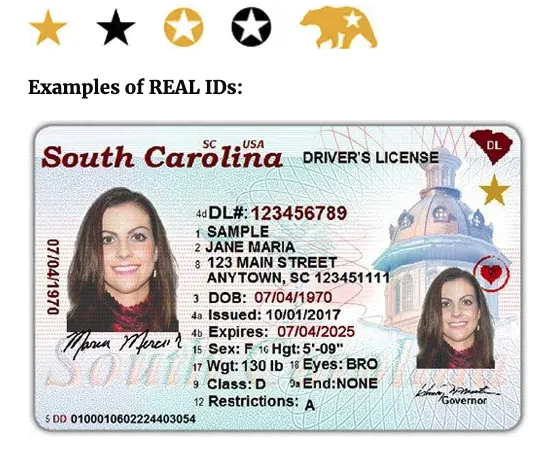
The big change is that anyone who wants to use a state-issued ID or drivers licence to meet this requirement must make sure that it is REAL ID compliant –  look for one of the following symbols:

There is also a list of other IDs (such as US and Foreign Passports) that continue to be acceptable.

Operators need to take note because if they allow a passenger to board an aircraft without the appropriate ID they are effectively breaching TSA requirements and become liable for hefty penalties

Important note – private flights operated under Part 91 are exempt.

The Notam system went kaput (again).

The US Notam system was down (again) for several hours on March 22 due to a hardware failure. It was the second time since early February.

The cause of the latest outage was a hardware failure.

Once again we collectively flinched – a system crash in January 2023 lead to the first US ground stop since 2001, disrupting over 10,000 flights.

Questions are being asked about the reliability of the system, and its lack of redundancy.

The FAA previously announced plans to discontinue the legacy US Notam system by mid-2025, with further changes slated for the next five years.

There appears now renewed public and political concern for a faster resolution.

Mixed Traffic and The Potomac Tragedy

The FAA has responded to several recommendations made by the NTSB in its preliminary report from the mid-air collision over the Potomac River on January 29.

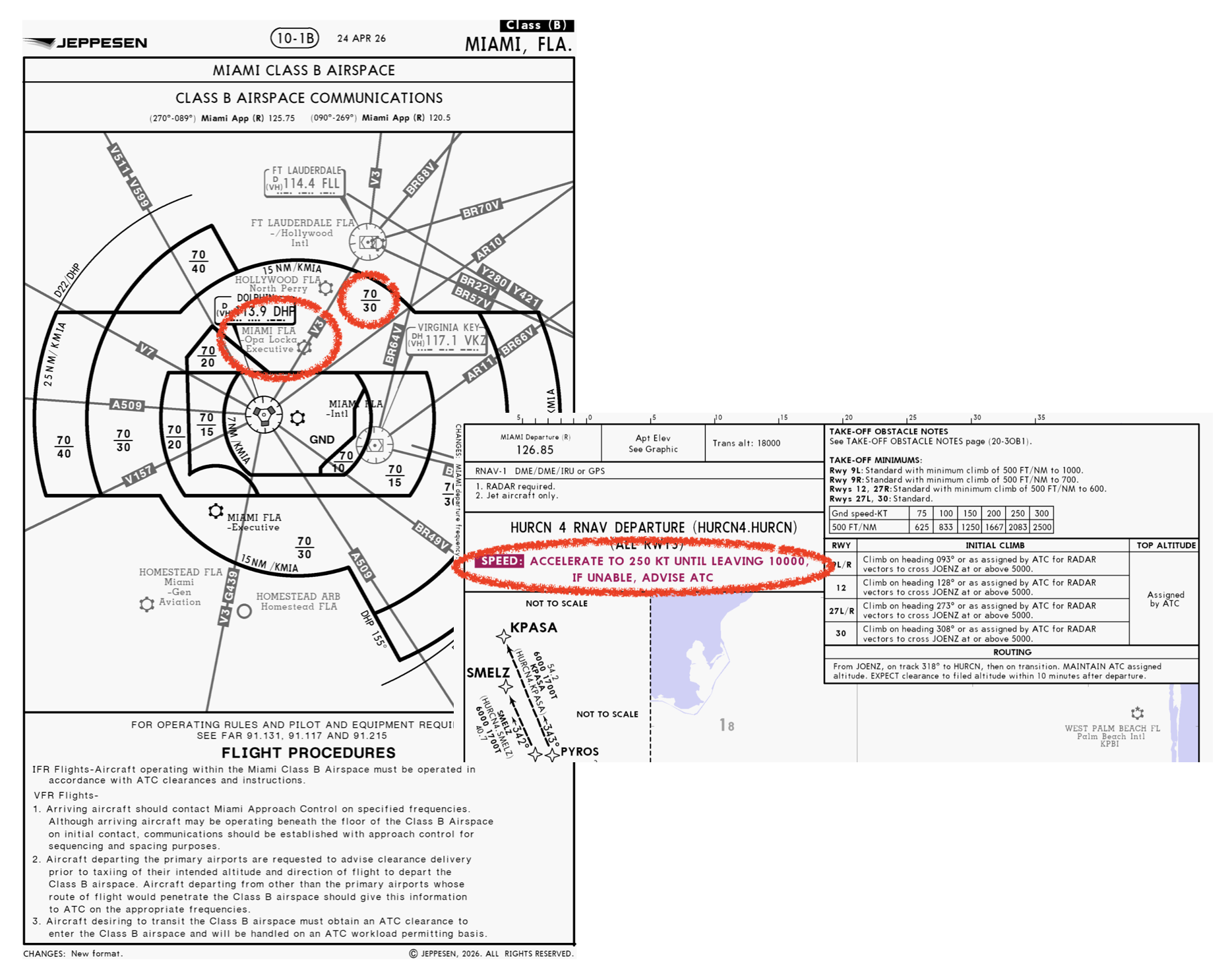
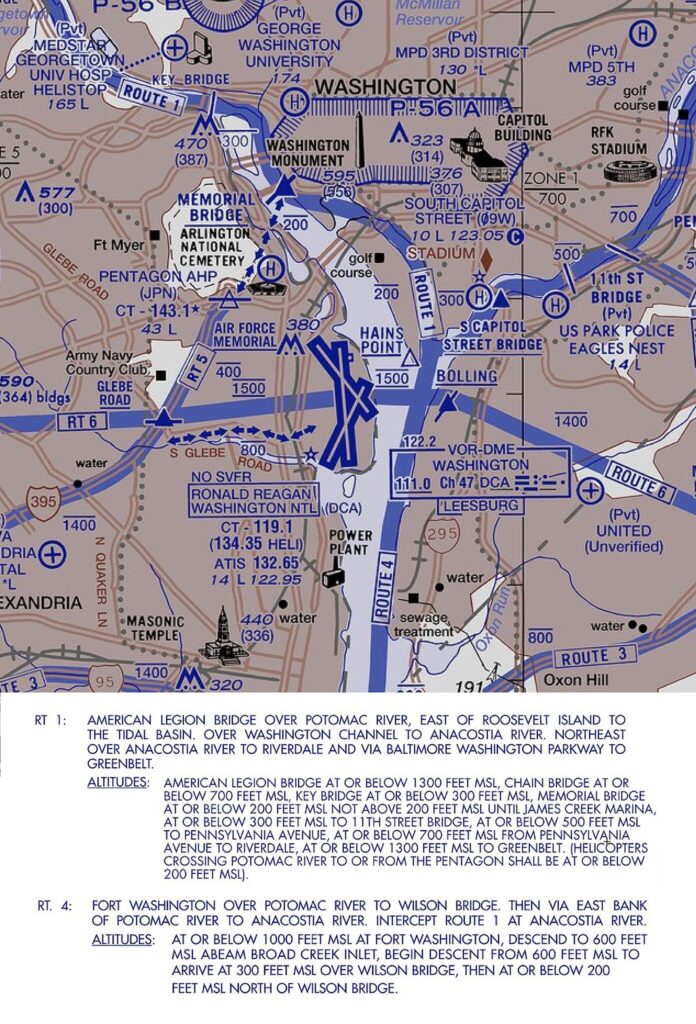
The immediate changes will be felt at KDCA/Washington itself. The FAA has permanently closed the low level helicopter route involved in the accident. Non-essential helicopter ops will also be banned, with increased ATC separation applied to those on ‘urgent missions.’

ADS-B out is now mandated for all helicopters, with only very limited exemptions for presidential missions.

Further afield, the FAA is also looking closely into ops at airports in other major cities with high volumes of mixed traffic (including NY, Boston, Chicago, Dallas, Houston and LA) with corrective actions looming for any risks identified.

The FAA has announced it will permanently shutter the low level helicopter Route 4.

TCAS wasn’t spoofed in Washington.

On March 1, several aircraft on approach to KDCA/Washington responded to erroneous TCAS alerts, including RAs. While recent research has indicated malicious interference of TCAS is a credible security concern, a Senate hearing last week revealed this was not the case.

The culprit was counter-drone testing by the military nearby which was operating on a similar spectrum to TCAS – a separate concern previously raised by the FAA.

Nevertheless, there are concerns that these tests were conducted improperly and caused unnecessary alarm to civil aircraft nearby. At the very least it was an unfortunate coincidence given recent events at the airport.

Other things you might have missed.

  •  TFR Busts –  The FAA has reported several instances of civil aircraft busting TFRs in recent weeks. The hot spot appears to be Palm Beach, FL where the President has a residence at Mar-a-Lago nearby. A reminder that special procedures apply, including TSA Gateway screening when active for anyone headed in or out of KPBI/Palm Beach. More on that in our recent article, here.
  • Laser Strikes – New guidance was published by the FAA on March 26. Turns out the number of laser strikes on aircraft continue to be dangerously high. There’s an online tool to see where the worst spots are here. Remember to report em!
  • Drones – DJI, the main recreational drone producer in the US, has removed its built-in geo-fencing feature that physically protects airports from incursions. Instead, an FAA database will simply warn the user when close to a no-fly zone. The issue is that this can now be maliciously ignored. DJI has said that its geo-fencing is about education, not enforcement. We’re not convinced – continue to report any illegal sightings to the FAA.

Anything we missed?

Let us know via news@ops.group, and we’ll add it to this article. As always the team is also available to help answer any questions, or put you in touch with the person who can.


US: New Rules For Outbound Private Flights

Key Points
  • US CBP have made some changes to APIS procedures for private flights departing from the US.
  • You now need a new APIS for any pax changes, or ETD change of more than 60mins.
  • CBP will also reportedly be increasing spot checks and in-person clearances.

Departing the US

CBP are tightening up the rules private flights departing the US. In a nutshell, the new rule is this:

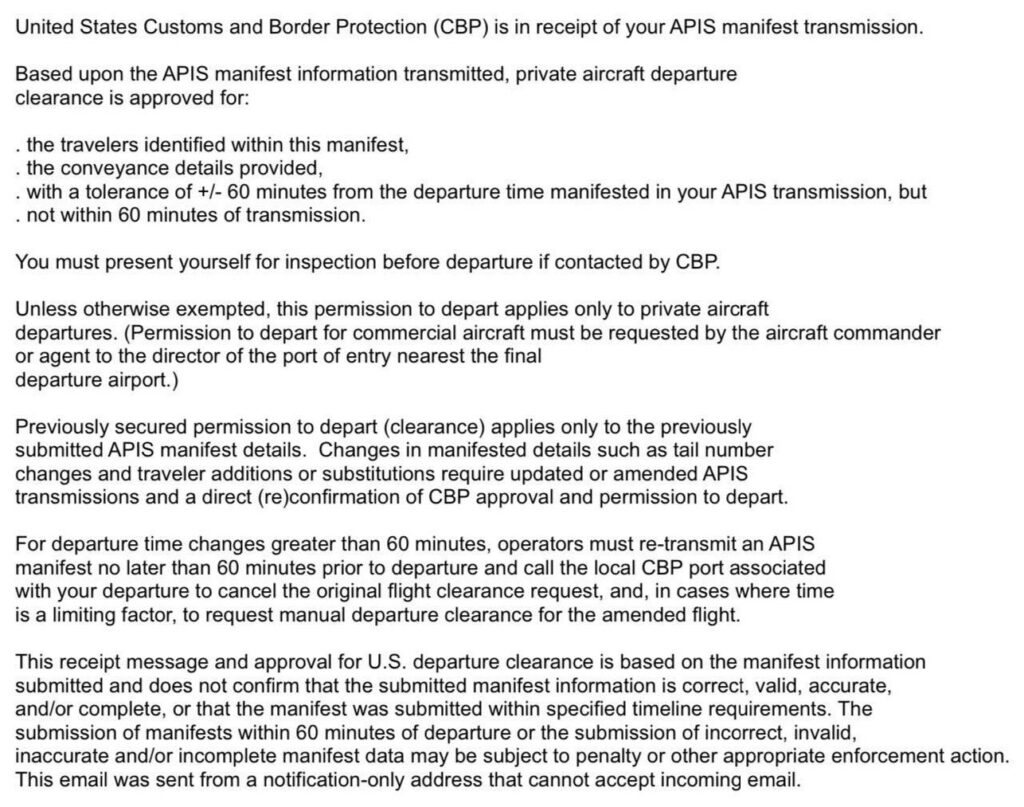
If you have any pax changes, tail number change, or departure time changes of more than 60 minutes, you now have to file a new APIS – and this needs to be done no later than 60 minutes prior to departure.

These changes are reflected in the new text operators receive when they file their APIS:

So if you do have to file a new APIS, it must be filed at least 60 mins prior to departure. The new procedure says that if you’re pushed for time you can request “manual departure clearance.” This basically means a phone call to CBP at your departure airport to request permission to depart – and it’s always a good idea to get the name, initials or badge number of the officer you speak to, just in case the early departure is questioned.

Unsolved SOLVED Mysteries!

Thanks to our friends at the NBAA IOC we now have answers to some of the big questions operators had regarding these changes.

1. Just before departure, another pax gets added to the flight. What do we do?
File a new APIS with all the pax info. Remember, your ETD needs to be at least 60mins from the time you file the new APIS, as per the new rules. If you want to leave early, you need to call CBP and ask for manual departure clearance. 

2. What if you’re departing overnight or early in the morning when the CBP office is closed, and you have no one to call for manual clearance?
If you can’t call CBP because the office is closed, you just have to wait 60mins to depart. There’s no out-of-hours fall-back option here. So watch out when planning departures when CBP will be closed! And let your pax know in advance that any last-minute changes are going to cause delays!

3. If one of our pax shows up with a different passport than the one we filed on APIS, must we submit a new one?
Yes. And then, same as above, you have to wait 60mins to depart, or else try calling for manual clearance.

4. If we file with 5 pax but only 4 show up, do we have to file a new APIS?
At the moment, the simple answer is no. This may change in the future though.

5. If our flight cancels altogether, must we call CBP to tell them so?
Yes. If you can’t do this because they are closed, call them in the morning.

6. Can anyone make calls to CBP? (to ask for manual clearance, etc)
Yes. PIC, SIC, handler, or trip support provider are all fine.

7. What if we push back on time but get an ATC delay or something, and have to sit around on the taxiway waiting to depart. If it looks like our departure will fall outside of the 60 minute window, must we file a new APIS and then potentially have to wait another hour?
Ooh, trickiest of trickies! This is a slightly grey area. CBP define your “departure” as being the time you are wheels-up. After you push-back, if you get delayed before you actually depart – there’s no clear cut answer to when you have to depart by. You just have to be able to show that whatever you do is “reasonable and responsible”. CBP will only pursue penalty action if you fail to do this. If you do end up departing after the 60 mins due to delays, make a proactive call to CBP afterwards to explain why. Give them the answer before they ask the question! 

Spot checks!

CBP will be increasing random departure inspections on aircraft departing from the US. The name of the game is simple: always update departure times with CBP!

If they arrive and you’ve departed already, you could be subject to penalty action. 

Many of the recent penalty actions are falling into the following categories

Thanks to Rick Gardner of CST Flight Services for providing this info:

  • Not obtaining Permission To Land. When returning to the US, once you have filed APIS and received the receipt email from DHS, you need to contact CBP at the port of entry and obtain permission to land. This is spelled out in the text of the receipt email from CBP. I always urge pilots to carefully read the receipt email to make sure the airports, dates and numbers of crew and passengers match what you think you transmitted. Yes, pilots are being penalized for failing to do this.
  • Missing Manifest. Some pilots are just failing to file APIS. CBP becomes aware through a variety of different methods so this is not a matter to take lightly.
  • Missing people. The people who were submitted on the manifest are missing and people not on the manifest are on board.
  • Arriving or departing outside the +/- 60-minute tolerance as specified on Airport Fact Sheets or on the Departure receipt email from DHS. In the past pilots did not pay a lot of attention to complying with the times they submitted on departure manifests. CBP has their own ways of detecting non-compliance including the fact that they do randomly conduct departure inspections. If you depart from the US outside of that tolerance, you can be subject to penalty action.

What should you do if you become subject to penalty action?

  • Don’t ignore it. If you get a notification from CBP that a penalty action has been initiated, address it quickly, it’s not going to go away. Penalties can be initiated via a number of different channels within CBP, but the notification will come from CBP General Aviation Headquarters.
  • Own up. By notifying you of a pending penalty action, CBP wants to give you the opportunity to give your side of the story. Explain what you did and why you did it. If you made a mistake, identify what caused the mistake to occur. As PIC you are solely responsible and CBP will not look favorably on attempts to shirk that responsibility by blaming others or by omitting facts. Be honest, tell them what happened, how it happened and why it happened.
  • Corrective action! If you did something wrong, tell CBP what you are doing to ensure that this mistake does not happen again. Outline an action plan on how you are changing your procedures to ensure that you achieve compliance going forward.

Doing this does not guarantee that CBP will withhold the penalty action, CBP handles penalty actions on a case-by-case basis. However, a very significant percentage of penalty actions are resolved during the initial interaction with CBP headquarters. CBP’s expectation of pilots is that we demonstrate that we are trying to act reasonably and responsibly. CBP is looking for compliance, not finding blame.

Professional pilots have a lot on the line because if we receive a penalty, not only can there be a sizeable fine but we also lose our Border Overflight Exemption privileges for any operator we are flying with. In addition, we can lose our Global Entry as well.  If sharing this knowledge from our industry collaboration and ongoing operations keeps just one pilot from getting into trouble, then it is worth it.

More info

For more info on on private flights to the US, check this article.


Private Flights to the US

Update Sep 29:
  • There are some changes to APIS procedures for private flights departing from the US.
  • If you change any pax details or the ETD by more than 60mins, you now have to cancel the old APIS and file a new one – and the new one needs to be filed at least 60mins before departure.
  • Also, CBP will reportedly be increasing spot checks and in-person clearances.
Article from March 2023:

This article is from Rick Gardner of CST Flight Services. We asked if he could talk to us about Private flights to the US – not the standard stuff, but some of the real tips and gotchas that international pilots might want to know about.

Private flights to the US… you probably know the basics already: maybe get a TSA Waiver, file your APIS, contact CBP to get your Permission to Land, and if you’re coming from the south make sure you land at one of the Designated Airports (or else get a Border Overflight Exemption).

But after many years of working with US Customs and Border Protection (CBP) to collaborate on General Aviation issues – here’s a bit of a deeper dive into some of the most common topics and gotchas that private aircraft operators to the US should be aware of…

Arriving from the South

CBP differentiates between aircraft arriving from places “south” of the US versus other countries. Basically, every country in the Western Hemisphere, with the exception of Canada and Bermuda, is considered “south”!

When arriving from one of these countries “south” of the US we must make our first landing at a CBP “Designated” airport closest to our point of border or coastline crossing – unless we have obtained a Border Overflight Exemption (BOE). (More on BOEs in a moment.)

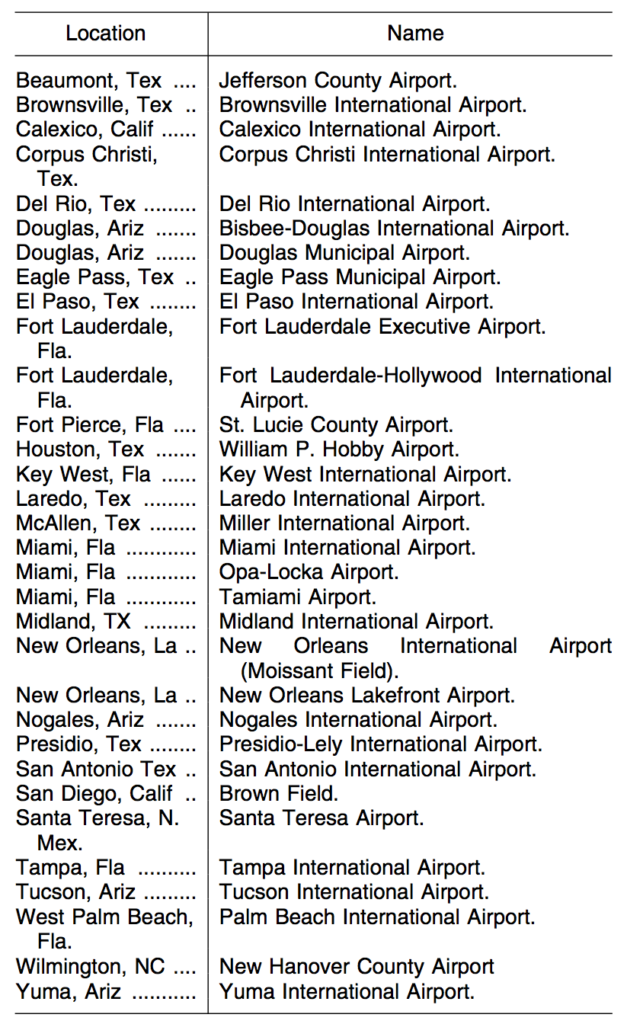
There is a specific list of 32 “Designated” southern airports of entry in the regulations (actually, there are only 31, because KNEW/New Orleans Lakefront is not longer a Designated airport), and that not all CBP airports in Florida or along the Gulf of Mexico coastline nor the US-Mexico border are “Designated” airports. Again, we must make our first landing at the Designated Airport closest to where we cross the US-Mexico border or the US coastline.

However, there are a few exceptions:

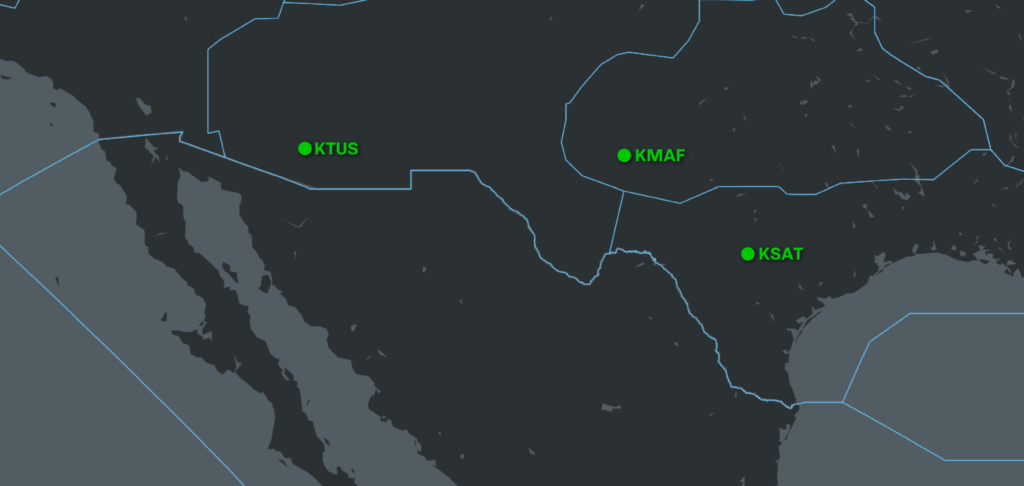
KTUS/Tucson, KSAT/San Antonio, KMAF/Midland
While these airports are Designated Airports, you cannot get to them without overflying another Designated airport. Nonetheless, if you are granted Permission to Land, you may use these airports as your closest airport to the border.
KMTH/Marathon
While not on the list of Designated Airports, KMTH/Marathon is a CBP port and can be used in lieu of a Designated Airport. Be sure to contact CBP at the airport to obtain Permission to Land. (More on Permission to Land in a moment.)

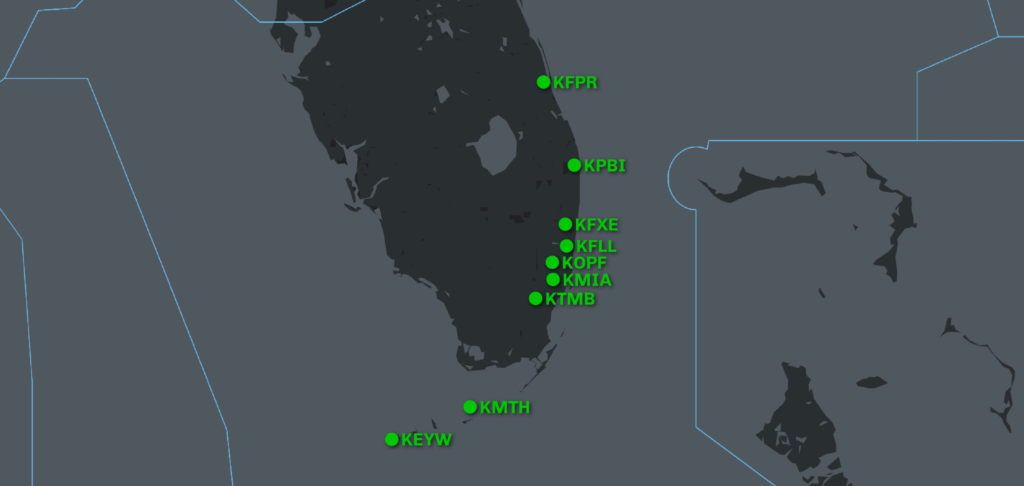
Miami Field Office Airports
So we’re talking about 8 airports here: KEYW/Key West, KTMB/Miami Executive, KMIA/Miami International, KOPF/Opa Locka, KFXE/Fort Lauderdale Executive, KFLL/Fort Lauderdale International, KPBI/Palm Beach, KFPR/Fort Pierce.

The CBP Miami Field Office (MFO) has established that “Flights which are required to land at a nearest designated airport to the border or coastline crossing point may proceed directly to any of the eight designated airports… without an overflight exemption, even if the airport of intended landing is not the one closest to the US coastline crossing point.”

So, if you were returning to the US from Cancun, Mexico, you could overfly Key West and continue up the east Florida coastline all the way to Fort Pierce and you would be in compliance. What you cannot do when returning from The Bahamas is to overfly any of these MFO airports and land in KTPA/Tampa even though Tampa is one of the 32 Designated airports!
Border Overflight Exemptions (BOE)

One way to avoid having to deal with Designated Airports is to obtain a BOE from CBP.

How it works
One of the great things that CBP Headquarters has accomplished is to get rid of the old Forms 442 and 442A and to centralize the BOE approval process. In addition, they have eliminated the previous requirements of having to list all aircraft, foreign ports, crew and passengers that would be authorized under the BOE. Today, all you have to do is identify the operator to whom the BOE will be issued and any aircraft, crew, passengers and foreign ports are all systematically vetted through APIS when the manifest is transmitted.

Per CBP regulations, BOE’s can take up to 30 days to process, so don’t waste time. For more information regarding the application process, contact GAsupport@cbp.dhs.gov.

Gotchas
A BOE holder has to ensure that the Operator specified in the APIS manifest MUST be the Operator to whom the BOE was issued. In addition, to legally use a BOE, the flight must be under IFR, fly above 12,500 feet and not make any intermediate stops.

A BOE is obtained by demonstrating a history of compliance. If you are subject to an enforcement action, the pilot can lose their BOE privileges for 6 months and repeated violations can result in the Operator losing their BOE privilege also.

Advanced Passenger Information System (APIS)

Since Nov 2008, operators of private flights have been required to file a DEPARTURE APIS manifest using the Electronic Advanced Passenger Information System (eAPIS) portal when departing the US for a foreign country, and an ARRIVAL APIS manifest when returning to the US from a foreign country.
How it works
DEPARTURE and ARRIVAL APIS manifests must be filed and authorization from the Department of Homeland Security (DHS) must be received no later than 1 hour prior to departure from the US or foreign country. This DHS authorization comes in the form of a receipt email which contains a summary of the date, time, departure and arrival airports.

As there is no limitation on how early an APIS manifest may be submitted, I recommend that you submit it as soon as possible once your itinerary and crew/passenger information is established.  CBP always advises, “Transmitting for next week is fine if your plans have firmed up but next Christmas is too far away.”  Leaving things to the last minute just invites Murphy’s law.

You should never be asked to provide Personally Identifiable Information (PII) such as DOB, passport number, SSN, etc. via FAX or email. If you do get such a request, ask for the supervisor, contact CBP headquarters or contact us at +1 786 206 6147.

Gotchas
Double check that the information in the DHS receipt email is accurate! Failing to get the receipt email from DHS means you have not received authorization to depart so you definitely should not depart. Sometimes failing to receive a DHS receipt email may be due to issues with the CBP systems or typos in your email address. Check your SPAM folder to make sure that the email was not sent there. If you share the eAPIS account you are using with someone else, check to see if they changed the email address and ask them to forward the authorization to you. One last resort is to contact CBP at the port and ask if they can determine if the authorization was issued, write down the officer’s name or initials (they might only be willing to give you their badge number) in the event that there is ever a question about whether you received authorization.

The rules also require that if you add/remove/substitute crew and/or passengers or if you make a change to the travel calendar date in either a DEPARTURE or ARRIVAL manifest then you must resubmit a new manifest to CBP. Any authorizations related to the originally submitted manifest are no longer valid and you must wait for a new authorization from DHS. Changes to departure time, arrival time or arrival location may be made by phone.

Another gotcha is failing to make sure that the passenger names on the filed APIS exactly match the names on the passports. 

Arriving in the US

In addition to submitting an ARRIVAL APIS manifest and getting the receipt email from DHS, the regulations specifically require us to also contact CBP at the arrival airport and obtain Permission to Land (sometimes referred to as, “Landing Rights”).

Recent changes to how it works!
Historically, different CBP ports have implemented varied procedures for requesting and granting Permission to Land, however that is now becoming more standardized through the efforts of CBP headquarters.

One significant change is that CBP will no longer grant Permission to Land unless you have successfully submitted your APIS ARRIVAL manifest first. When you are granted Permission to Land by CBP at the arrival port, you should receive an email from CBP (in addition to the one sent by DHS) confirming that Permission to Land has been granted and any specific instructions that CBP may have. If you are denied Permission to Land, you will also receive an email from the port confirming that Permission to Land was denied.

Failing to receive the email confirming Permission to Land is an indication that either the port has not yet adopted the new procedure or that Permission to Land was not properly issued by the CBP officer who responded to your request and a follow up request would be advisable. Be prepared to prove who gave you permission to land – the receipt email from DHS alone does not grant you Permission to Land.

Check those attachments!
The email granting Permission to Land will have several attachments. The first attachment is called “CBP Private Aircraft Arrival Information” which contains an overview of what the operator of a private aircraft is expected to do in order to comply with CBP regulations.

In addition, you may also find attached a “General Aviation Airport Fact Sheet” which contains detailed information on what you need to know about the CBP requirements for the specific airport you are landing at. Not only do these two documents clarify what is expected of you, they serve as proof to a CBP officer that you have followed procedures correctly.

Lastly, there is a third document called “Tip of the month” which is a review of important topics that pilots should be aware of and this document is updated monthly. Of the 392 airports where CBP is present, approximately 250 have published Airport Fact Sheets.

Changes to your schedule
The Permission to Land email messages grant permission based on what you have transmitted in APIS and also include port-specific time tolerances; a +/- time allowance based on port operations. If you need to ARRIVE in the US at a time significantly different from that submitted in your ARRIVAL manifest, you need to contact CBP to re-secure Permission to Land for your new arrival time. Many aircraft land at Designated Airports and CBP must ensure that they have the space and manpower to receive and process inbound aircraft.

When you arrive
When arriving in the US, CBP procedures may vary slightly, depending on where you land.

CBP at many airports expect you to keep the door closed until authorized to open it by the CBP Officer. At KTEB/Teterboro, for example, if you deplane before authorized you will be subject to a hefty fine. CBP officers at some airports may not come out to meet the aircraft and may wait inside the building until the crew/PAX come inside. Other airports may have signs with instructions – follow them.

In all cases, especially where health and safety concerns present or exist, CBP always emphasizes to exercise reasonable and responsible judgement. If your aircraft Auxiliary Power Unit (APU) exhaust is 8 feet or higher above the ground, you do not have to power it down. However, CBP can require you to shut down the APU, though, in cases of enforcement actions.

Departing the US

You do not need to depart the US from an airport where CBP is present – you can depart from any airport in the US.

How it works
In your APIS DEPARTURE manifest you should enter the airport code of the nearest CBP airport to the departure site and then in the “Actual Departure Location Description” field, describe the actual place from which the aircraft will depart. This is an optional field which should be used only when the location of actual departure differs from the airport listed in the “CBP Airport” field. The “City” field should be the actual city from which the aircraft is departing.

When you submit an APIS DEPARTURE manifest to CBP and you receive DHS authorization to depart, the authorization is based on the information that you have submitted, including the departure time.

Spot checks!
On occasion, CBP conducts random departure inspections on aircraft departing from the US (it has happened to me) and officers will be dispatched to your departure airport location. If they arrive and you have departed before the time you specified or if you are nowhere to be found and then depart after the time specified, you could be subject to enforcement action. Always update departure times with CBP!

Canceling or postponing a flight

You are required to advise CBP if you are going to cancel your flight or postpone it to another date (which will require that you file a new manifest). This is important because CBP plans their workload and staffing based on manifests that they can see in the system.

How it works
Under CBP’s updated procedures, when you cancel an APIS manifest, you will also receive an email confirming that your APIS manifest has been canceled. If you transmitted multiple APIS manifests for the same date, the CBP port may cancel the unnecessary manifests which can trigger an email saying that the “APIS was cancelled”. Remember that each submitted APIS manifest has a unique eAPIS number as does the DHS receipt email and CBP cancellation email so you can match them. If you are ever in doubt, you should contact the port to confirm.

Transporting currency

Another important point is that you must always report if you are taking into, or out of, a country more than $10,000 USD. It is not illegal to transport more than that amount, but failing to report it is illegal.

The nitty gritty
When you transport, attempt to transport, or cause to be transported (including by mail or other means) currency or other “monetary instruments” in an aggregate amount exceeding $10,000 or its foreign equivalent) at one time from the US to any foreign country, or into the US from any foreign country, you must file a report with US Customs and Border Protection.  This report is called the Report of International Transportation of Currency or Monetary Instruments, FinCEN Form 105.  This form can be obtained at all U.S. ports of entry and departure or on the Web at FinCEN Form 105 (Rev. 7-2003).

Alternatively, the report can be filed electronically, an eCMIR, at this website.  Travelers will be able to enter information into an eCMIR up to three days prior to travel, creating a provisional document on the CBP.gov website. Foreign countries will also have their own documents and procedures. Failing to report can result in seizure of the monetary instruments, fines, or worse.

CBP officer says it’s OK

One topic that comes up repeatedly is that a CBP officer “Buddy” says its OK to land without a BOE or approves some other deviation from the rules.

Don’t do it!
CBP headquarters has made it very clear that no CBP officer has the authority to override US law. Doing so could get both you and the officer into trouble. Don’t succumb to the temptation of listening to what you want to hear versus what you need to know! Enforcement actions can cost you money, ruin your reputation with CBP and cause you to lose BOE privileges.

Visa Waiver / ESTA

Part of the joy of having a private aircraft is to share the experience with family and friends…

Visa Waiver gotcha
If any of those are citizens of Visa Waiver countries and they do not have a US Visa, then they cannot fly into the US on a private aircraft unless you are a signatory carrier or under some very isolated and specific circumstances. Contact CBP before you attempt to do so to avoid unpleasant surprises. If there is any chance that you may transport citizens from Visa Waiver countries, submit your request to become a signatory carrier now, while there is time.

PIC Responsibility

Yep, you know this already. As PIC you are ultimately responsible for compliance with all the regs. In the case of CBP, the PIC is responsible for ensuring that valid passports are brought aboard the aircraft that match the APIS manifest information submitted to CBP and that authorizations to depart are properly received.

Getting it wrong
If you ever do face an enforcement action, best to just be honest. CBP is not out to get us, what they want is compliance and have repeatedly demonstrated a willingness to work with General Aviation to achieve it. Work with them and they will work with you. This is not a guarantee that CBP will not take enforcement action, those determinations are made on a case-by-case basis and much depends on the nature and circumstances of the violation as well as the way you handle it. Violations are usually the result of either an oversight or wilful intent – you don’t want to give CBP the reason to believe that you are part of the latter if that isn’t the case!

Illegal Charters

Unless you have a burning desire to find out more about both the US and foreign legal systems, do not misrepresent yourself as a private aircraft flight when in fact you are operating as a commercial aircraft operator!

Understanding the Regs
CBP defines a “commercial aircraft” as “any aircraft transporting passengers and/or cargo for some payment or other consideration, including money or services rendered” as per 19 CFR 122.1 (d). Note that CBP’s definition of private and commercial are different from those used by the FAA.

Some US pilots believe that US regs apply to them when flying internationally, but 14 CFR 91.703 (a) (2) clearly states that they must abide by the laws of the foreign countries where they operate. Many of these countries also have much more basic definitions of commercial and non-commercial operations.

Bottom line – don’t try to walk a fine line with Part 91 definitions as this could land you in hot water with the CBP as well as with the civil aviation authorities of foreign countries.

Puerto Rico and US Virgin Islands

Time for some bulletpoints, all nicely colour-coded…

  • Flights between the continental US and Puerto Rico are considered domestic flights as long as the flight is conducted under IFR, the flight is above 12,500 feet and there are no intermediate stops.
  • Flights from Puerto Rico to the US require a US Department of Agriculture (USDA) inspection in Puerto Rico prior to departure.
  • Flights from the US and Puerto Rico to the US Virgin Islands are considered domestic flights BUT flights from the US Virgin Islands to the US and Puerto Rico are treated as international flights.
  • When departing the US Virgin Islands to the US, always go through the pre-clearance process with CBP in the US Virgin Islands before departing. APIS must be transmitted as an ARRIVAL into the US.

Other Gotchas!

Check those pesky passports again
The PIC should verify that the doc that were used for the submission of the APIS manifest are on board the aircraft. This can maybe be a bit awkward, but it is the PIC’s reputation with CBP and a possible enforcement action and loss of BOE privileges that are at stake. Some of the more common issues that arise are:

  • Missing passport, the passenger forgot to bring it
  • Bringing a different passport form the one use in the APIS manifest, passenger has 2 passports
  • Bringing spouse’s or child’s passport by mistake
  • Bringing a passport card instead of a passport, passport cards are not valid for use on an aircraft

Remember, an APIS manifest needs to contain verified and accurate information, the PIC must validate that what they have submitted is correct. CBP has told us repeatedly that transmitting bad data is always grounds for enforcement action.

Guns
Another common gotcha is trying to reenter the US with firearms after a hunting trip. You should present firearms to CBP along with CBP Form 4457 before leaving the US.

 Diamonds are a girl’s CBP officer’s best friend 
Same as above! Any high value item such as camera/video equipment, jewelery, etc need to be declared to CBP before leaving the US.


Q&A

1. General Aviation Airport Fact Sheets. These sound interesting! Are these fact sheets located anywhere on the CBP website? Or elsewhere on the internet?
CST Flight Services has all the CBP Fact Sheets. If you email us we can send you the latest for the airport you need: customersvc@cstflightservices.com. We plan to have a self-serve web page up and running shortly, where you can access the files 24/7.

2. Can operators start the BOE process before 45 days? Just to ensure they have this before it expires and they have to stop somewhere that’s inconvenient?
You can try but it will almost certainly be rejected. CBP does not want any renewal requests that are more than 30-45 days out with 45 days being the upper limt.

3. When arriving in the US, do all your FPL alternates also need to be airports with CBP on site? What would happen if you had to divert somewhere else?
Safety of flight always comes first, however you can expect some tough questions like “why didn’t you select a planned alternate where CBP is present?”
If the diversion is a true emergency (smoke in the cockpit, engine failure, medical emergency), I think CBP would work with you. An emergency due poor flight planning such pushing the aircraft’s range or something similar may not go so well.
In the 20 years of working with CBP headquarters the mantra has been “reasonable and responsible.” If you can demonstrate that your actions were reasonable and responsible then you should be OK, if you cannot, then it probably will not be OK!

4. The same question, but for a flight arriving from the south, without a BOE. Can they only list Designated Airports as their FPL alternates?
Same answer as above. The reality is that with the exception of KILM/Wilmington, the Designated Airprots are along the US-Mexico border, Gulf of Mexico shoreline and South Florida. There are a plethora of possible alternates that are Designated Airports, so you may have a hard time explaining why you didn’t choose one of those.

Anything we missed?

If you have questions about any of the above, or if you think there’s something we missed, let us know!


About the author:
Rick Gardner of CST Flight Services, a company which provides a wide range of international trip support services for both owner-pilots and professional pilots. Rick is also the representative for the Aircraft Owners and Pilots Association (AOPA) in Mexico, Central America, The Bahamas and the Caribbean as well as a Bahamas Flying Ambassador, member of The Bahamas Civil Aviation Council and has participated on aviation committees of other foreign countries.
www.cstflightservices.com / customersvc@cstflightservices.com / +1 786 206 6147

Are you someone with knowledge to share?
Know something worth knowing about something? Want to write about it? Let OPSGROUP know! Maybe we can work together and write an article on it.


CPDLC Gotcha: Clearance Busts

Key Points
  • The FAA has published a new Safety Alert for CPDLC and partial route re-clearances.
  • Make sure you load your full SID manually into the FMS after you receive a partial reroute message (UM79).
  • Also, don’t mistake these partial reroute messages as being cleared to fly directly to the waypoint (a direct clearance would be a UM74 message).

Lessons from Teterboro

In 2022, the FAA recorded 20 aircraft deviations at KTEB/Teterboro Airport due to issues with CPDLC and partial reroute messages.

These incidents resulted from failure to reload SIDs after receiving a partial reroute UM79 message (where you are cleared to a particular waypoint via other waypoints en-route), requiring swift coordination with ATC to avoid traffic.

But the issue isn’t limited just to Teterboro – it could happen at any US airport, to any aircraft type receiving a clearance in this way.

Another thing to watch out for

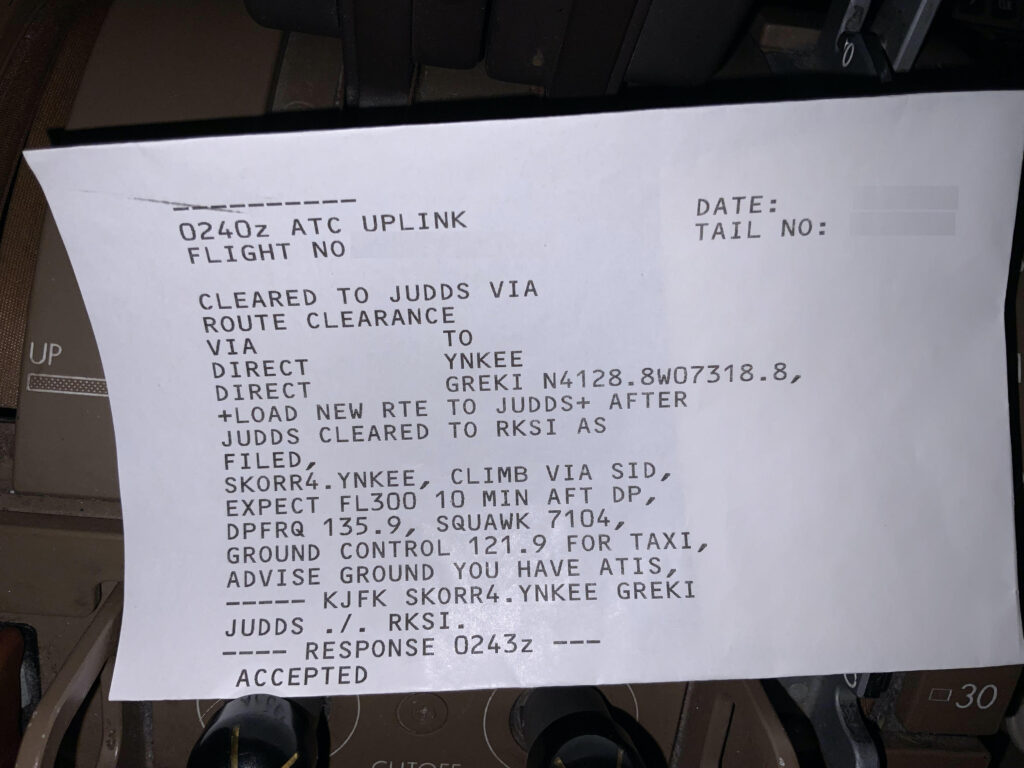
Due to limitations in the formatting of CPDLC DCLs, they can be easy to misread or misunderstand. Take the following for example, courtesy of an OPSGROUP member.

A change to a clearance was received by a B777 at KJFK/New York during taxi and under considerable pressure to get underway or out of the way:

Unfortunately, in this instance the crew mis-interpreted their clearance as direct to the waypoint YNKEE. This was further compounded by the issue above – when the new route was loaded, their SID was dropped from the flight plan.
When they got airborne, ATC immediately began asking why they weren’t following the assigned SID – the result was a clearance bust. To their surprise, further down the clearance was indeed an assigned SID – the SKORR4. It was an understandable and easy miss.

The question remained though: what then is the intention of the top part of this clearance if not to clear the aircraft direct to YNKEE? We put this to the group, and received some useful feedback.

It maybe comes down to a machine readability issue. The section above the plus signs is required because of the way the clearance is written, and is related to the same issues as above. It will not contain a SID when you insert it.

In fact, some newer CPDLC systems don’t even show that section to the crew – only the information below the plus signs which contains the assigned SID. The full version is a confusing, and seemingly contradictory set up.

What about PDCs?

It’s probably worth a mention that these issues don’t affect PDC clearances. PDCs are different and are sent by a service provider via VHF datalink. No log on is needed, and only one can be issued for a flight number at specific airport over a 24 hour period. They also have to be read back via voice. PDC’s cannot be used to notify pilots of a change to the filed route. So it’s smooth sailing in that regard.

Further reading.

You can read the FAA’s new Safety Alert for CPDLC and partial route re-clearances here.

The FAA also has a handy guide on how to use CPDLC in US airspace. It covers the basics, along with departure clearances (DCLs), en route ops, speed/time restrictions, emergency use and free text.


US Grounds All Flights After NOTAM System Failure

Update 12Jan 1100z:

The Misery Map of flight delays in the US isn’t looking too bad today, following yesterday’s Notam system meltdown that resulted in a nationwide ground stop and the cancellation of more than 10,000 flights according to FlightAware. The FAA has said the Notam system “continues to remain operational and stable” today. For ops to/within the US today, keep an eye on the latest FAA Advisories here.


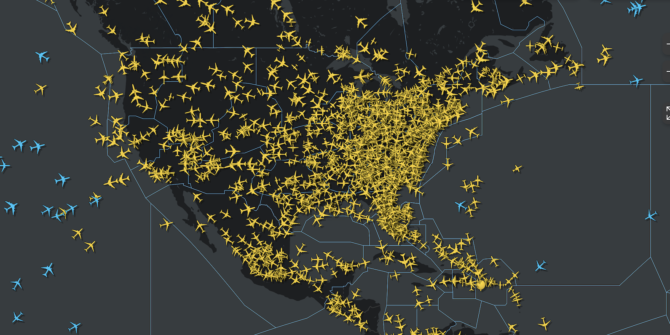
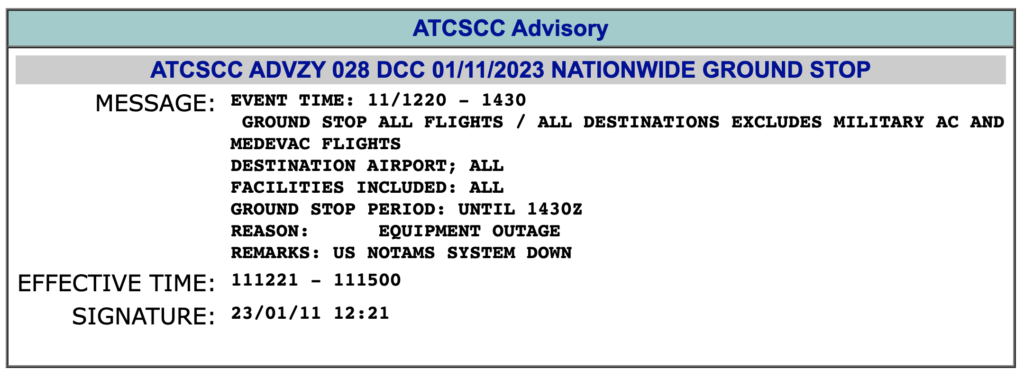
The US grounded all flights on the morning of Jan 11, due to a glitch with the Notam system.

Here’s the ATCSCC advisory giving the order:

The Notam system failed at 2028 UTC on Jan 10, after which time no new Notams or amendments were processed.

The FAA lifted the ground stop shortly before 9am EST on Jan 11, saying that “normal air traffic operations are resuming gradually”. Later that night, they announced that the outage was likely due to a software issue.


Springer’s Final Thought

We all hate Notams.

Let’s qualify that. A significant number of pilots and dispatchers have told us that they are concerned about Notams, and would like to see an improved system.

The FAA has said last week’s meltdown was due to a damaged database file. Our focus has never really been on the software on the back-end of the Notam system, but on the impact of Notams on pilots and operators.

We’ve been campaigning for changes to the current Notam system for a long time – not because the system might crash, but because of the daily impact to pilots who are forced to use an archaic briefing system from the 1920’s that causes critical flight information to be missed.

If you’ve read the news today about this mysterious “Notam system” causing widespread travel misery, and you want to learn more about this ongoing issue, you can start your adventure here.


New US Rule for China Arrivals

There’s mixed news from China.

On the one hand, it is finally about to get rid of quarantine on arrival. On the other, Covid is surging badly. Which means that nations around the world are beginning to introduce new rules for people who have been there – including the US.

News from the US is that from Jan 5, all passengers will need to provide a negative Covid test, or proof of recovery, to board a flight to the US.

Here’s everything you need to know.

What’s going on in China?

Its zero-covid strategy is being abandoned amidst sky-rocketing case numbers. So much so that it is estimated that up to forty percent of its 1.4 billion have had it.

It’s not panic stations yet though, as the same path has been well-trodden by other countries in the past twelve months. But there is international concern over the accuracy of the statistics being reported, and more importantly the tests that identify new or potentially dangerous strains of the virus that might emerge.

Which is why we’re seeing new rules again for passengers who have been there.

Ironically there has also just been a big announcement that anyone headed to China no longer has to quarantine from Jan 8. Which means demand for travel back to the US for those who return is about to soar.

Enough of that. What’s the impact?

From 00:01z on January 5, anyone allowing a passenger to board a flight from China to the US will need to see proof of a negative Covid test taken within two days of departure, or certified proof of recovery that is less than 90 days old.

The rule will apply to all flights from mainland China, Hong Kong and Macau including GA/BA flights.

It will apply to all passengers, including US citizens, regardless of vaccination status.

You can check the official announcement of all this from the US here.

What type of tests will be accepted?

Viral tests that have been approved by the CDC.

Self-tests (including rapid antigen) are allowed, but must include at least a tele-health service to oversee the test, and certify the results along with the traveller’s identity.

I’ve just had Covid. Do I need to test?

A certified proof of recovery is also acceptable, provided it meets two requirements – it has to be more than ten days old, but no more than 90.

I’ve only transited through China, do I still need to test?

No, provided passengers have stayed airside, they do not need to meet the new requirement.

What about crew?

Good news, you will be exempt. But you’ll need to be either operating, or positioning on the aircraft. It’s recommended you travel with a letter (paper or electronic) from your employer certifying you meet the requirements of the exemption. Another option for deadheading crew is that they are included on the gendec.

If you’re commuting, travelling for training (such as sims) or flying for other business reasons, bad luck. You will need to meet the same requirements as passengers.

Another gotcha.

The rule is also extended to passengers who have been in China, Hong Kong or Macau in the past ten days, and are arriving on flights from RKSI/Seoul, CYYZ/Toronto or CYVR/Vancouver.

What is the rest of the world doing?

It is likely we’ll see similar testing rules introduced globally, at least in the short term.

Several countries have already announced similar restrictions to the US: Canada, UK, France, Italy, Spain, Australia, India, Japan, Malaysia, Taiwan, South Korea, Morocco.

The good news is that there doesn’t appear to be any suggestion of quarantine or entry bans being added back to the mix. Just typical uncertainty of a pandemic-weary world. But we’ll continue to report on major changes that might affect you operationally as we see them.

If you’re headed to China, we recommend calling ahead.

Especially for crew.

China has had some of the most confusing and inconsistent entry rules since the start of the pandemic. They seem to vary from port-to-port. With the promise that crew no longer need to quarantine on a widespread scale, we’d love to hear from you if you’re headed there – especially if you encounter something you weren’t expecting.


What we know about the US CPDLC trial

There is a CPDLC trial running in the US, but it isn’t open for everyone…

General CPDLC stuff

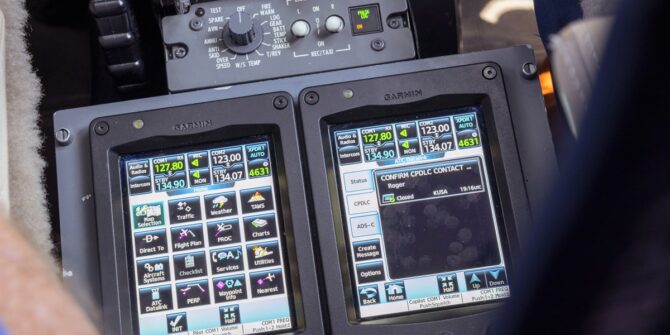
CPDLC is basically a sort of ‘text messaging’ system that lets ATC contact you, and you contact them.

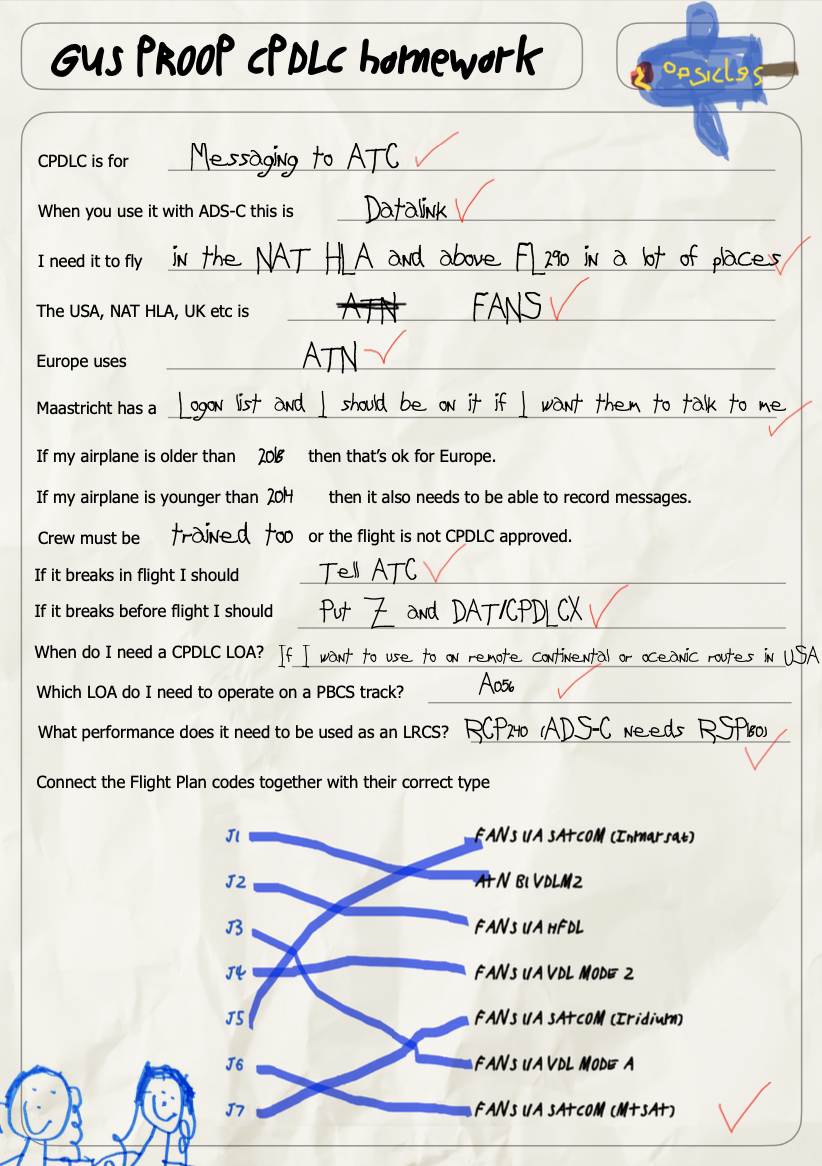
Combine it with ADS-C and you’ve got Datalink, which is mandated in a bunch of places like the NAT HLA, Europe and the UK above FL290 etc.

Some other useful info:

  • Europe have a logon list. If you want an answer then register.
  • Europe use ATN, everywhere else uses FANS. If you only have FANS then you can still call yourself ‘CPDLC in Europe’ if your original certificate of registration is pre 2018.
  • Just to be clear, the US requires FANS 1/A.
  • If your airplane is younger than 2014 then the system also needs a message recording function.
  • PBCS tracks need a performance standard of RCP240 (ADS-C is RSP180).
  • AO56 is the LOA to get (or maybe A003).

We actually made A little Opsicle on CPDLC just the other day. It is quite a silly one, but here it is if you want a look:

CPDLC in the US

The US has CPDLC in a bunch of places. It isn’t really mandatory yet though. At least not the domestic en-route CPDLC. This is the bit they are running a trial for, and they’re doing it with L3Harris.

The trial is actually, specifically, for the business and general aviation community. The likes of Boeing and Airbus (or rather their avionics configurations) have already been approved.

So, here is the FAA info on it. Or rather, this is the notice talking about who can participate in the trial. They released this because a bunch of folk were participating, but their avionics version or configuration wasn’t good enough and it was messing up the results.

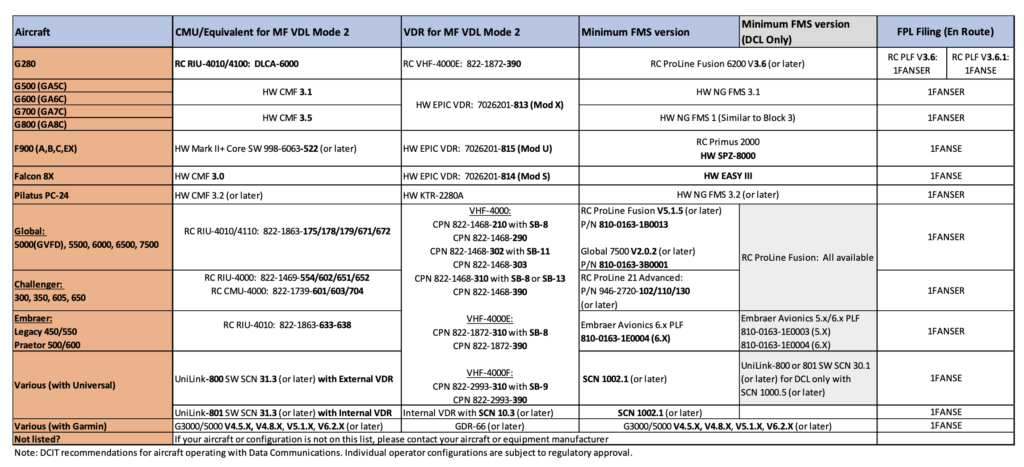
So how do you know if you’ve got what it takes?

All the systems are listed on the L3Harris site. If your aircraft type is missing from the Trial List (shown below), this means that operational acceptability hasn’t been determined yet for that specific aircraft type. If that’s you, you can fill in the form and email it to them at DCIT@L3Harris.com and they will check to see whether you have the spec to participate in the trial.

If your aircraft type (system) is not on it, then don’t file as capable of en-route CPDLC and don’t try and ‘participate’.

For those of you who are on it…

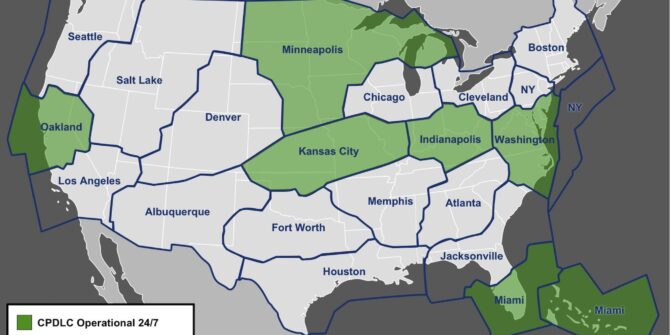
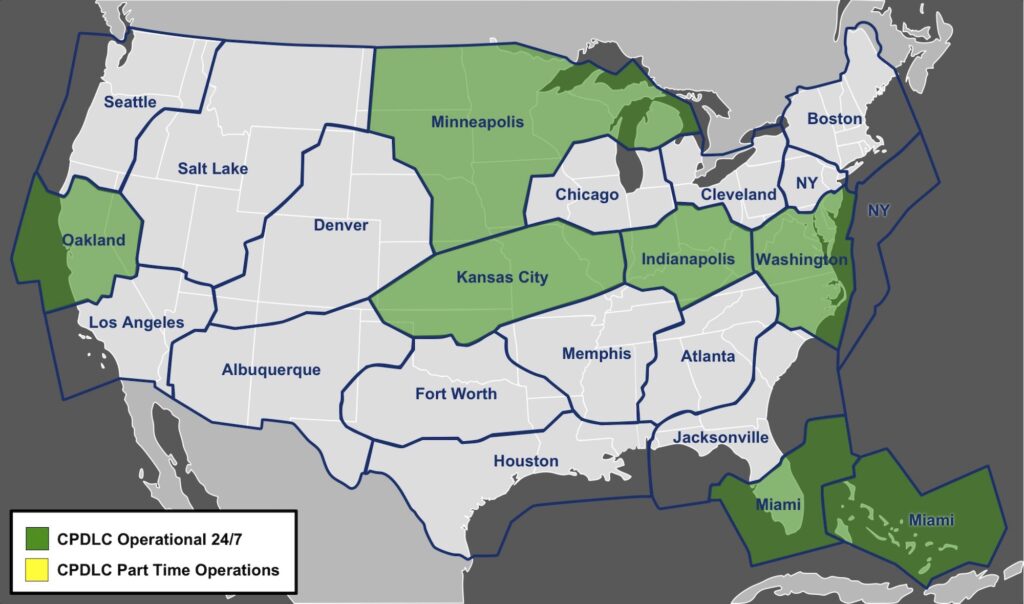
Here is a map of current active CPDLC sites:

ZID/Indianapolis, ZKC/Kansas City, ZMP/Minneapolis, ZDC/Washington, ZOA/Oakland, and ZMA/Miami en-route control facilities are all up and running 24/7 now.

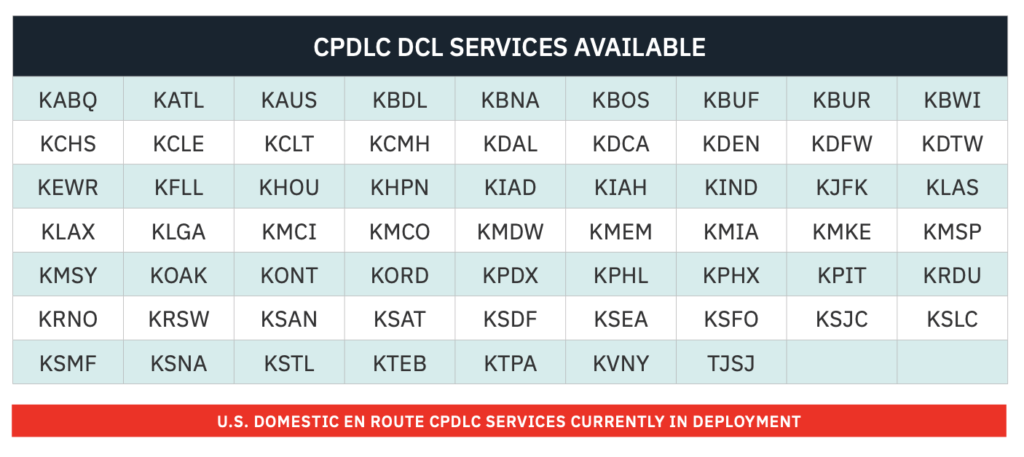
We’ve so far only found a table showing 61 airports where CPDLC DCL services are currently available:

But we know this is a bit out of date. We’ve counted 65 airports currently operational including these:

  • KJAX/Jacksonville
  • KPBI/Palm Beach
  • KCVG/Cincinnati/Northern Kentucky
  • KADW/Joint Base Andrews

Some stuff on using it

OK, so if you take-off from an airport that has CPDLC DCL and which is in an en-route CPDLC area then KUSA (because they’re who you’ll basically be logged onto on the ground) is going to stay active and there is nothing else to do once airborne.

If you take-off logged onto KUSA and only get into the en-route CPDLC bit later then again, KUSA stays on and there’s nothing more for you to do.

If you take-off logged onto KUSA and then are leaving all CPDLC airspace, it will auto log off when it needs to.

For all other scenarios, you probably need to manually log on when you reach the place where CPDLC is available.

KUSA is available on the ground in the lower 48 states, San Juan and Puerto Rico.

This info is all available here.

L3Harris are very active in all this and get in touch if they spot any irregularities with aircraft involved in the trial (nice to know they’re out there, watching).

Handing over the ‘info baton’

So far, all this has been snatched from a bunch of very handy guides that L3Harris publish, so here are the links to those for further info:

And if you are an operator in the US with questions about this, then speak to these folk – DCIT@L3Harris.com


US: 5G Rollout Near Airports Delayed Until 2023

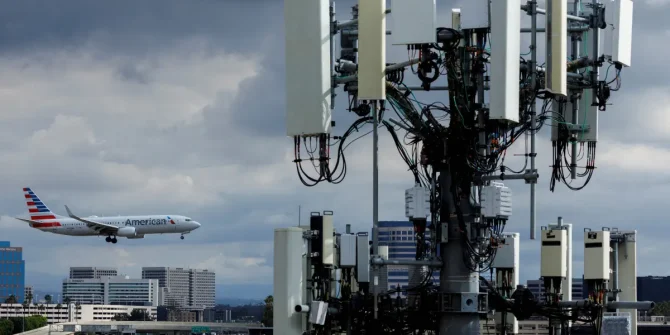
Six months have passed since the FAA hurriedly reached an agreement with Telecoms AT&T and Verizon to delay switching on powerful new 5G antennas near major airports.

That agreement was set to expire on July 5. And the original concerns haven’t gone away – 5G can still interfere with radio altimeters, and the industry is still scrambling for a fix.  If safety buffer zones were to stop buffering at larger airports, where low visibility landings are more common, the impact would have become even worse.

However, on Friday the FAA released its first update since February – and the news is good…

A new agreement

AT&T and Verizon have agreed to extend the delay until July 2023 to allow the FAA and operators more time to get their ducks in a row.

There is compromise happening on both sides of the deal. While the FAA hasn’t gone into the specifics, they have said there is now a phased rollout plan to make sure that both sides are kept happy.

The FAA will begin work to identify which airports are safe enough for the Telecoms to start enhancing their services there right away, without turning everything on.

On the flip side, there will be more time for operators of aircraft fitted with radio altimeters vulnerable to interference to replace them, or install special filters. Regional aircraft are particularly affected by this.

Considering that the first customers are only just now receiving these filters from the radio altimeter manufacturers, the original goalposts were always fairly ambitious.

A new FAA deadline for operators to complete work on their fleets is set for the end of the year, and this time it looks to be firm. The Telecoms are expecting to be let loose at the end of the new deal.

In the meantime

The status quo – existing restrictions will remain in place. Back in January over a thousand Notams (1,478 to be precise) were issued when 5G hit the proverbial fan. Many of them restrict the use of Autoland, HUD to Touchdown, and Synthetic Vision Systems at specific airports. The FAA has also published a guide that explains the different types of Notams and what those limitations mean for operators at various airports.

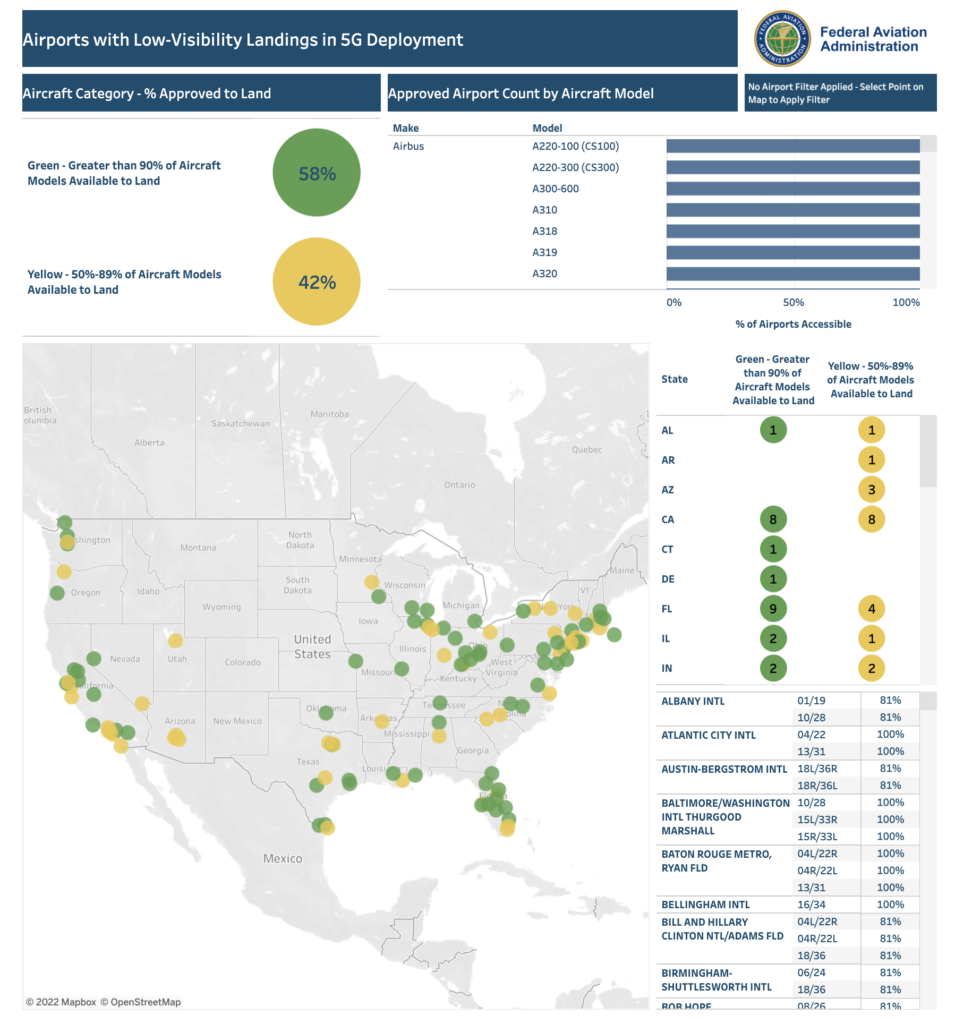
The FAA has also since provided a number of exemptions for more common passenger jets to continue with low visibility landings. You can view those through the FAA’s handy map here.

Unfortunately, the support for business jets has not been as forthcoming. If your aircraft doesn’t have an exemption, you’ll have to stick to the Notams, which means paying extra special attention to the weather and alternate planning when it’s looking murky out there.

Buffers will also remain in place at several major airports to make sure that low visibility landings can continue without causing major headaches for operators. You can view that list here.

Other things to look at

If you’d like to know more about the problem with 5G networks and aviation in more detail, we wrote a blog article earlier this year that would be a great place to start.

There’s also the FAA’s official 5G website, where updates like the one above are published.

Get in touch

If you have other questions, we’d be happy to help. You can reach us on news@ops.group.


US 5G Roll Out: Launch Day, More Delays, New Notams and FAA Buffers

**Update, Jan 19 – New**

While most of the 5G network has been switched on, several 5G providers have delayed rolling out services at stations close to the major airports. It isn’t clear how the long the delay is for.

Over the weekend, the US FAA said it had cleared 45 percent of the US commercial aircraft fleet for operation in low-visibility conditions at 48 of the 88 airports directly affected by 5G C-band interference. This latest delay is most likely to allow the FAA to continue confirming the safety consequences at the major airports, after pressure from US and foreign carriers.

**Update, Jan 19**

The big day has arrived for the new 5G networks. They are set to be switched on.

New FAA Notams with operating restrictions at a large number of airports across the US become effective. Make sure you check them for any airport you may be operating at (including alternates) – especially if you are expecting low visibility operations. You may not be able to carry out Cat II/III approaches. You can search for the new Notams here, using the keyword ‘5G.’

Several industry heavy weights have asked the US Government directly to further restrict 5G networks near major airports and the outcome is still pending. Both Verizon and AT&T has reportedly already agreed to limit services near some – more details will follow as they come to hand.

Major international carriers have also begun cancelling or restricting flights to the US until more is known about the safety implications of the new networks.

**Update, Jan 14**

At least 100 airports have Notams banning or restricting operations such as Autolands, HUD usage, or any other manoeuvre reliant on radio altimeters, unless the aircraft is equipped with another means of compliance (with altitude monitoring).

The Autoland ‘ban’ is of significant concern due to its potential impact on safety and efficiency during low visibility and poor weather conditions. This could limit alternate options and result in significant delays and fuel situations if airports are unable to accommodate traffic during these conditions.

Several major airports are impacted including KORD/Chicago, KFDW/Dallas Fort Worth, KIAH/Houston, KJFK/New York, KSEA/Seattle, KBOS/Boston and KLAX/Los Angeles.

The Situation

The US FAA has published a list of fifty major US airports which will have 5G buffers in place to ensure safe operations.

Here’s an update on the latest and what this all means.

Flicking the ‘ON’ Switch

Verizon and AT&T will activate major new 5G networks in the US on January 19. This follows a two-week delay as the industry scrambles to assess just how much of a safety risk this might be to civil aviation.

The Concern

These new 5G services will operate in a frequency band that is uncomfortably close to what radio altimeters use. This could lead to erroneous signals and mess with safety-critical systems – especially auto land and TAWS.

For more details information on these issues, including how you can mitigate them, see our recent article.

How will these ‘buffer zones’ work?

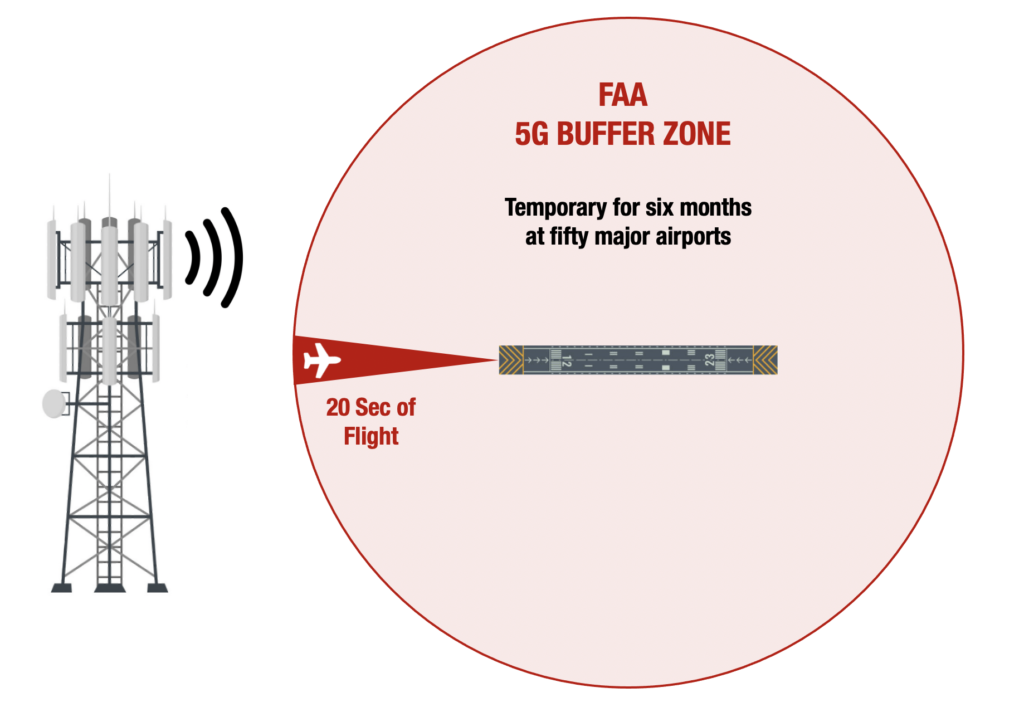
Both Verizon and AT&T have made an agreement with the FAA to turn off transmitters in close proximity to select major airports for a further six months. During this time the FAA will be able to better assess the potential for interference.

These buffer zones will apply within the last twenty seconds of flying time in all directions from the airport.

How did the FAA choose the list?

A number of factors were taken into account. These included traffic volume, how many low visibility days there are each year, and how close the airports were to the new antennas.

Other major airports were not included for various reasons such as those in areas where the networks aren’t being rolled out, ones that are far enough away from the antennas, or  fields with no CAT II/III facilities.

Important US Resources

In recent months the FAA has published a number of important documents for pilots dealing with this looming 5G issue:

….for a detailed breakdown of these, click here.

The US isn’t alone.

There have also been some developments north of the border in Canada, where 5G networks are being progressively rolled out.

On Dec 23, Transport Canada published its own Safety Alert (CASA 2021-08) with some important recommendations for pilots. This was the big one – avoid flying RNP AR approaches that are not protected by buffer zones in IMC conditions, unless you have another way to identify terrain (such as weather radar). This is because the TAWS may not be reliable.

What next?

Industry efforts to understand the safety impact to aviation from these networks are ongoing. That means working directly with airlines and manufacturers, and it will take time. Temporary buffer zones help, but long-term solutions are needed.

But there’s 5G in other countries. Why is this such a big issue in the US?

A few reasons. Signal strengths will be much higher in the US than in other countries’ networks around the world.

Other design features and protections in place for aviation overseas have not been mandated on network providers. These include measures such as tilting antennas down, introducing permanent buffer zones, rules on how close antennas can be to airports and reduced power levels.

Stay Updated

There are two places to stay updated as this all develops. The first is the FAA’s official 5G website found here. The NBAA have also published a handy resource you can access by clicking here.


Updated US Entry Rules

The US has tightened its entry protocols in response to the new Omicron Covid strain – effective Dec 6. It affects anyone over two years old. Here’s a brief summary of the changes.

A shorter window

All inbound passengers to the US (including citizens) must now get a Covid test within just one day of their flight’s departure – previously this was three days. This applies to everyone, regardless of whether they are vaccinated. The only exemption is for those who can prove they have recovered from Covid within the previous ninety days.

What type of tests are accepted?

Compared to some countries, the US rules are pretty flexible, with most types of Covid test accepted:

  • PCR – the gold standard everywhere. Brace yourself for a stick up the nose and a longer wait for the results.
  • RT-LAMP tests
  • TMA tests
  • NEAR tests
  • HAD tests

Ever wonder why the US entry rules are based on days, not hours?

It is to provide more flexibility for passengers – things get can pretty specific when you’re counting minutes.

Do pax need to quarantine on arrival?

This one has come up quite often. It’s never been mandated – the CDC recommends that international arrivals self-isolate for 7 days if you’re not vaccinated with additional testing. If you don’t want to be tested this is extended to ten days.

Mask up

Yep, at all times on an airplane. This mandate has just been extended until March 18, 2022. So, it’s not going anywhere in a hurry. Be careful too, hefty fines apply.

New travel bans

The Omicron Covid variant was first detected in South Africa, with cases observed in several other southern African countries which is why the majority of the world jumped to implementing travel restrictions from this area. These countries include South Africa, Botswana, Eswatini, Lesotho, Malawi, Mozambique, Namibia and Zimbabwe.

The US is no exception – non-US citizens who have been in one of these places in the last 14 days cannot enter.

Crew rules

There have been no indications that the new rules will affect crew. For these, you can read the CDC guidelines here. Essentially, if you’re operating or positioning then you should be good. To dispel any confusion, it might be helpful to carry a letter from your employer along with a declaration of your exemption – the folk at NBAA prepared a form earlier this year which may be useful to get the message across.

Remember though that the exemption rules don’t apply to deadheading crew or those travelling for training, such as recurrent sims. You’ll need to meet the same requirements as pax.

Looking for official guidance? The CDC is where you need to start.

You can access that here.


US to lift travel ban for vaccinated travellers

From Nov 8, the US will lift its Covid travel restrictions to allow fully vaccinated passengers to enter from those countries currently on the banned list:

  • The UK
  • Ireland
  • The 26 Schengen countries in Europe without border controls (Austria, Belgium, Czech Republic, Denmark, Estonia, Finland, France, Germany, Greece, Hungary, Iceland, Italy, Latvia, Liechtenstein, Lithuania, Luxembourg, Malta, Netherlands, Norway, Poland, Portugal, Slovakia, Slovenia, Spain, Sweden, and Switzerland).
  • China
  • Iran
  • Brazil
  • South Africa
  • India

The rules right now

The travel ban has been in force since March 2020, when the pandemic first began gathering pace. Under the current policy, only certain people can travel into the US if they have been in a banned country within the previous 14 days:

  • US citizens and their immediate families.
  • Green card holders.
  • Flight crew if traveling to the US on C, D or C1/D visas.
  • Those with national interest exemptions (NIE). (Amongst other things, these also allow foreign crew to enter to pick up aircraft and do delivery/maintenance flights etc despite their travel history.)

For more details on the current restrictions and exemptions, check the US CDC webpage here.

The rules from Nov 8

There are no guidelines yet on the new requirements due to take effect in November – these are expected to be announced in the coming days. The few crumbs of info we know so far:

  • Before departure – Travellers to the US will need to show proof of vaccination in addition to a negative Covid test taken within three days of the flight. There will be some exemptions to the vaccine policy, including for children not yet eligible to be vaccinated.
  • On arrival – Travellers will not need to quarantine upon arrival in the US, but airlines will be asked to collect their contact info for contact tracing purposes.
  • Which vaccines will be accepted? All FDA and WHO approved vaccines will be accepted.
  • Any changes for US travellers? – Yes. US travellers will also be subject to stricter requirements and will need to take a Covid test a day before they leave the US, and another one when they return.

We will update this page as new info is announced.


The US rules for carrying Covid in the air

Since January this year, any passenger boarding an international flight bound for the US must have a Covid test within 3 days of their departure.

Great when it’s negative. Not so much if its positive – what happens then?  How do you carry them back to the US? And what about their close contacts? Are they good to go?

Let’s take a closer look…

The US law says you cannot knowingly carry someone with known or suspected Covid-19 to or within the US on regular passenger flights. You can’t even board them.

Instead, as a general rule they won’t be able to travel until they meet CDC quarantine or isolation guidelines (typically staying put for ten days and more testing), in addition to whatever local laws apply. A great reason to have travel insurance.

But what if they have to travel?

There are important reasons why a Covid-positive passenger might have to fly. The most common one is that they are being medically evacuated or transferred to better medical facilities. It may also be part of the passenger’s insurance policy.

Either way, it falls upon charter or medevac operators to make it happen because the rules say that this is the only way. The airlines just can’t be used.

If you’re chartered to carry Covid positive passengers – or those suspected of having it – you need to be familiar with the CDC’s procedure for transport by air. Spoiler alert: you need permission, so whatever you do don’t show up unannounced.

You can read that procedure here in all its glory. But here’s a quick rundown of how it works.

It starts with the phone.

If you’re operating an international flight, the first step is to contact the relevant US Embassy. There may be local laws or restrictions that prevent a Covid positive patient from being allowed out of quarantine early.

Then, over in the US, there are three important agencies that you’ll need approval from:

  • The FAA – yep, make sure they’re cool with it.
  • Customs and Border Protection – they will work with you to decide on the best port-of-entry.
  • The CDC – This involves contacting the relevant quarantine station for where you’re headed – and you’ll need to give them at least 24 hours’ notice before you take-off. There’s a bunch of info they’ll need – click here for that list.

You’ll also need to think about the logistics of your flight including transport, permission from other CAAs and airport authorities – including where you may need to divert to.

Pre-travel.

Prior to the big day it goes without saying that your unwell passenger(s) should stay in isolation. They’ll need a medical exam beforehand to make sure they are well enough for the level of care you can provide them in the air.

You’ll also need to work with airport authorities for a plan. If you have to enter a terminal, your passengers will need to be separated from the public.

Choose your ride.

When it comes to transporting unwell passengers, not all airplanes are created equally.

The CDC has guidelines for this too. They were developed back when MERS was thing. Remember MERS? It was like Covid’s lesser known cousin that appeared a few years back but was way less memorable at the party.

In a nutshell they need to be large enough to be able to separate passengers and crew into different parts of the airplane. Ventilation is also important – ideally, cockpit air should have positive pressure relative to the main cabin and not be mixed.

Don’t forget to think about range. Every stop you make will become a logistical challenge to manage. If you can make it in one go, you should.

On-board.

First things first, keep that air flowin’. At all times. Even on the ground during long delays, you need to keep ventilating the airplane.

Passengers and crew must wear masks – don’t worry you can remove them to sip on your coffee. You can get away with basic ones, but the CDC recommends the fancier N95 masks or better.

Here’s the kicker – crew need to remain separated from passengers unless there is an emergency or to provide single-serve meals. You can put up placards or barriers but they need to be obvious and not stop anyone from reaching emergency exits or seeing cabin signs.

If you can, seat passengers at the rear of the aircraft and keep cabin crew at the front – at least six feet away. The reasons for six feet will become clear in a sec. Pax should have their own bathrooms.

After landing.

 The airplane will need to be thoroughly cleaned. As in squeaky clean. There are rules for what types of products need to be used – you can read about that here.

As for crew, as long as you’ve followed the rules, you don’t need to be tested or quarantine. But make sure you self-monitor for symptoms for 14 days afterwards, just in case.

The ‘close contact’ conundrum.

This is where things start to get tricky…

Being a ‘close contact’ of a known Covid case for all intents and purposes means you have been exposed.

But what counts as ‘close’? Brace yourself, because the CDC have that base covered – it means anyone who has been within six feet of a confirmed case for a cumulative total of 15 minutes over 24 hours.  Cumulative being important here – so for example, three 5 minute exposures counts as ‘close’. It doesn’t need to be all in one hit.

So, what happens when a known close contact still tests negative?

 There’s effectively three scenarios here:

  • The close contact is fully vaccinated and has no symptoms: Okay, they can still travel.
  • The close contact is fully vaccinated but has symptoms:  No bueno, it’s off to quarantine.
  • The close contact hasn’t been vaccinated:  No bueno, it’s off to quarantine.

Cool, so can Covid positive passengers be transported with their close contacts?

No. But you can transport multiple positive pax together, you just can’t mix positive ones with those who have tested negative.

Still have questions? We don’t blame you. Here are some handy places to start.

The CDC website, you can visit it here.

The US FAA, their Covid specific stuff is found here.

If you’re trying to reach Customs and Border Protection, you can reach em’ here.


Covid restrictions by US state

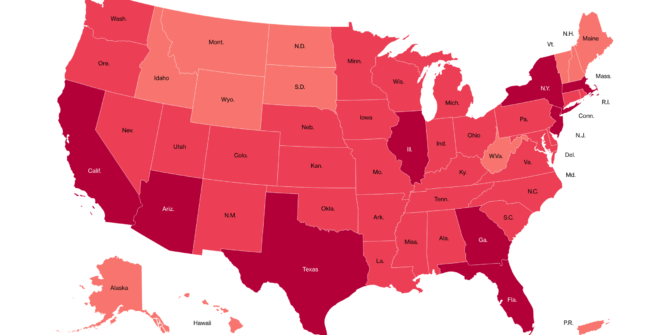
With the United States seeing new hotspots for Covid-19 cropping up, varying forms of restrictions have been implemented by the individual states. Restrictions imposed at the state level are below, and also include links that may be helpful. States in red text have stronger regulations than the standard ‘mask and social distancing’ and are worth a closer look. All information is accurate to the best of our knowledge as of 28 July 2020. 

However, here are a few things to keep in mind regardless of where you plan to fly:

  • Always check all NOTAMs and relevant publications before flying
  • Consider fuel levels and alternates in light of unexpected ATC closures/restrictions
  • Follow CDC and state/local government guidance – this may include masks, gloves, Covid-19 testing, and cleaning/disinfection regimes
  • Check with your handler or airport representative to verify that city or county government regulations do not differ from the state regulations, and to confirm availability of services at the airport
  • Aviation is considered an essential business by the U.S. Federal Government, but some states may not have explicitly named it as such in their regulations. 

However, keep in mind that U.S. federal regulations still restricts international travel into the U.S. for those who are not citizens or permanent residents. There’s a long list of countries where passengers are not allowed to have travelled to within the past 14 days if they want to enter the US. This includes the European Schengen area, the UK and Ireland, mainland China, Iran, and Brazil. Passengers who have been in one of these countries in the past 14 days but who are exempt from the restriction to enter the US (i.e. they are US residents or family members), are only able to land at one of 15 airports: ATL, BOS, ORD, DFW, DTW, HNL, LAX, MIA, JFK, EWR, SFO, SEA, IAD, FLL and IAH. More information can be found on the Centres for Disease Control website

Alabama:

  • All individuals are required to wear a mask when within six feet of a person from another household.
  • Social distancing of six feet is also required between members of different households. 
  • https://covid19.alabama.gov/

Alaska:

  • All travellers from outside Alaska must fill out a declaration form, and present results of a negative Covid-19 PCR test from within the last 72 hours. If your test results are from the previous five days, you must be tested again on arrival.
  • In either case, those remaining in Alaska must also take another PCR test 7-14 days after arrival.
  • There is no mandate to wear a mask or social distance, but it is strongly encouraged. 
  • Alaska has a large number of remote settlements that may not have a robust healthcare system, and as a result may have instated stronger regulations – check local resources.
  • https://covid19.alaska.gov/

Arizona:

  • There is no statewide mandate to wear a mask or social distance, but it is strongly encouraged. 
  • Phoenix (Maricopa County), Mesa, Tucson, Flagstaff, Tempe, and a host of other cities have enforced masks/face covering requirements – check local resources. 
  • http://azhealth.gov/COVID19

Arkansas:

  • There is a statewide mandate requiring masks/face coverings to be worn in indoor public areas, and in outdoor areas where social distancing cannot be guaranteed.  
  • https://govstatus.egov.com/ar-covid-19

California:

  • There is a statewide mask/face covering mandate in place, and social distancing is encouraged.
  • https://covid19.ca.gov/

Colorado:

Connecticut:

  • Visitors to Connecticut from certain high risk states are required to quarantine for 14 days upon arrival and fill out this form. The states are: Alaska, Alabama, Arizona, Arkansas, California, Delaware, Florida, Georgia, Idaho, Indiana, Iowa, Kansas, Louisiana, Maryland, Mississippi, Missouri, Montana, Nebraska, Nevada, New Mexico, North Carolina, North Dakota, Ohio, Oklahoma, South Carolina, Tennessee, Texas, Utah, Virginia, Washington and Wisconsin.
  • Face coverings are required in all public areas where social distancing cannot be maintained.
  • https://portal.ct.gov/Coronavirus

Delaware:

District of Columbia (Washington, D.C.): 

  • Masks are required in public areas and social distancing is encouraged.
  • Those who have participated in non-essential travel to/from high risk states must quarantine for 14 days upon arrival. The states are: Arkansas, Arizona, Alabama, California, Delaware, Florida, Georgia, Idaho, Iowa, Kansas, Louisiana, Mississippi, Missouri, Montana, Nebraska, Nevada, New Mexico, North Carolina, North Dakota, Ohio, Oklahoma, South Carolina, Tennessee, Texas, Utah, Washington, Wisconsin.
  • https://coronavirus.dc.gov/

Florida:

  • There is no statewide mask/face covering requirement, but many individual cities and counties have one in place this site lists them.
  • Visitors from the Tri-State area (New York, New Jersey, Connecticut) must isolate for 14 days upon arrival. 
  • Florida is emerging as a hotspot, and many local authorities are rolling back plans to open businesses as a result – check with local contacts for the most up to date information.
  • https://floridahealthcovid19.gov/

Georgia:

Hawaii:

  • All interstate travellers must quarantine for 14 days on arrival in Hawaii, although this may be avoided from September 1 through the presentation of a negative PCR test from the preceding 72 hours. 
  • Inter-island travellers must fill out this form.
  • There is a statewide mask/face covering mandate in place, and social distancing is encouraged.
  • https://hawaiicovid19.com/

Idaho:

  • Ada County, which includes Boise, is encouraging a 14 day quarantine for those entering the area. Other counties are further along in their reopening plans and do not request a quarantine. 
  • Some counties are requiring the usage of masks/face coverings and others only encourage them. Social distancing is still encouraged. 
  • https://coronavirus.idaho.gov/

Illinois:

  • There is a statewide mask/face covering mandate in place, and social distancing is encouraged.
  • Travelers from the following states should quarantine upon arrival in Chicago: Alabama, Arkansas, Arizona, California, Florida, Georgia, Idaho, Iowa, Kansas, Louisiana, Mississippi, North Carolina, Nevada, Oklahoma, South Carolina, Tennessee, Texas, and Utah. Effective Friday, July 31, travelers from Missouri, Wisconsin, Nebraska, and North Dakota will also be directed to quarantine.
  • https://coronavirus.illinois.gov/

Indiana:

Iowa:

Kansas:

  • There is a statewide face covering mandate in place, and social distancing is encouraged.
  • Those who have travelled to/from Florida will be required to quarantine for 14 days upon arrival in Kansas. The same applies to anyone arriving from China, Iran, the European Schengen area, the United Kingdom, the Republic of Ireland and Brazil, and anyone returning from a cruise ship. 
  • https://covid.ks.gov/

Kentucky:

  • There is a statewide face covering mandate in place, and social distancing is encouraged. 
  • Individuals who have travelled to/from Alabama, Arizona, Florida, Georgia, Idaho, Mississippi, Nevada, South Carolina, Texas, and Puerto Rico are advised to quarantine for 14 days upon arrival in Kentucky. 
  • https://govstatus.egov.com/kycovid19

Louisiana:

  • There is a statewide face covering mandate in place, and social distancing is encouraged. Local areas have the ability to opt out of the mask mandate if they meet certain criteria.
  • http://ldh.la.gov/Coronavirus/

Maine:

  • There is a statewide mask/face covering mandate in place, and social distancing is encouraged.
  • Only those residents of Vermont, New Hampshire, Connecticut, New York and New Jersey can enter the state without restriction. All others must have a negative test result or must quarantine for 14 days – and must sign a Certificate of Compliance which is necessary to check-in to lodging in Maine. 
  • Maine residents who visit one of the five exempted states may return without restriction, but visits to any other states are still subject to testing and/or quarantine upon return. 
  • https://www.maine.gov/covid19/

Maryland:

Massachusetts:

  • There is a statewide mask/face covering mandate in place, and social distancing is encouraged.
  • All those entering the state must complete the Massachusetts Travel Form and quarantine, unless coming from a low-risk state or able to present a negative test result from the preceding 72 hours. Low-risk states are Connecticut, New York, New Hampshire, New Jersey, Hawaii, Maine, Rhode Island, Vermont. 
  • https://www.mass.gov/info-details/covid-19-updates-and-information

Michigan:

  • There is a statewide mask/face covering mandate in place, and social distancing is encouraged. Businesses may deny entry to those not wearing face coverings. 
  • https://www.michigan.gov/coronavirus/

Minnesota:

Mississippi:

Missouri:

Montana:

  • There is a statewide mask/face covering mandate in place for counties with more than four active cases – 25 counties currently meet the criteria. Social distancing is encouraged.
  • The state also includes multiple areas of tribal land governed by local councils – check local resources to see what rules may apply. 
  • https://www.visitmt.com/montana-aware

Nebraska:

Nevada:

New Hampshire:

  • There is no statewide mask/face covering mandate, but the use of them is encouraged along with social distancing. 
  • Those travelling into the state from outside the New England area are encouraged to quarantine for 14 days. 
  • https://www.nh.gov/covid19/

New Jersey:

  • There is a statewide mask/face covering mandate in place, and social distancing is encouraged.
  • Travellers from high-risk states are asked to voluntarily quarantine for 14 days, and provide contact information. States include Alaska, Alabama, Arizona, Arkansas, California, Delaware, Florida, Georgia, Idaho, Indiana, Iowa, Kansas, Louisiana, Maryland, Mississippi, Missouri, Montana, Nebraska, Nevada, New Mexico, North Carolina, North Dakota, Ohio, Oklahoma, South Carolina, Tennessee, Texas, Utah, Virginia, Washington and Wisconsin. 
  • https://covid19.nj.gov/

New Mexico:

  • There is a statewide mask/face covering mandate in place, and social distancing is encouraged.
  • All out of state travellers are required to quarantine for 14 days upon arrival.
  • https://cv.nmhealth.org/

New York:

  • There is a statewide mask/face covering mandate in place, and social distancing is encouraged.
  • Those who have spent more than 24 hours in a high-risk state must quarantine for 14 days upon arrival. The states include Alaska, Alabama, Arizona, Arkansas, California, Delaware, Florida, Georgia, Idaho, Indiana, Iowa, Kansas, Louisiana, Maryland, Mississippi, Missouri, Montana, Nebraska, Nevada, New Mexico, North Carolina, North Dakota, Ohio, Oklahoma, South Carolina, Tennessee, Texas, Utah, Virginia, Washington and Wisconsin.
  • Those arriving at New York area airports will be required to fill in a Health Department traveller form. 
  • https://coronavirus.health.ny.gov/home

North Carolina:

North Dakota:

Ohio:

  • There is a statewide mask/face covering mandate in place, and social distancing is encouraged.
  • Travellers from high-risk states are asked to voluntarily quarantine for 14 days. States include Alabama, Arizona, Florida, Georgia, Idaho, Mississippi, Nevada, South Carolina and Texas.
  • https://coronavirus.ohio.gov/

Oklahoma:

  • There is no statewide mask/face covering requirement, but many individual cities and counties have one in place, including Oklahoma City. 
  • https://coronavirus.health.ok.gov/

Oregon:

Pennsylvania:

  • There is a statewide mask/face covering mandate in place, and social distancing is encouraged.
  • Travellers from high-risk states are asked to voluntarily quarantine for 14 days. States include Alabama, Arizona, Arkansas, California, Florida, Georgia, Idaho, Iowa, Kansas, Louisiana, Mississippi, Nevada, North Carolina, Oklahoma, South Carolina, Tennessee, Texas and Utah.
  • https://www.health.pa.gov/topics/disease/coronavirus/Pages/Coronavirus.aspx

Rhode Island:

  • There is a statewide mask/face covering mandate in place, and social distancing is encouraged.
  • Travellers from high-risk states are asked to voluntarily quarantine for 14 days, although this can be avoided with a negative test result from the preceding 72 hours. States include Alabama, Arizona, Arkansas, California, Colorado, Florida, Georgia, Idaho, Indiana, Iowa, Kansas, Kentucky, Louisiana, Maryland, Minnesota, Mississippi, Missouri, Nebraska, Nevada, North Carolina, North Dakota, Ohio, Oklahoma, Oregon, Pennsylvania, South Carolina, South Dakota, Tennessee, Texas, Utah, Virginia, Washington, Wisconsin and Wyoming. Visitors from Puerto Rico must also quarantine.
  • https://health.ri.gov/diseases/ncov2019/testindex.php

South Carolina:

South Dakota:

  • There is no statewide mask/face covering requirement, and social distancing is encouraged. 
  • The state also includes multiple areas of tribal land governed by local councils – check local resources to see what rules may apply. 
  • https://covid.sd.gov/

Tennessee:

Texas:

  • There is a statewide mask/face covering mandate in place for counties with more than twenty active cases. Social distancing is encouraged. 
  • https://www.texas.gov/covid19/

Utah:

  • There is no statewide mask/face covering requirement, but many individual cities and counties have one in place, including Salt Lake City.
  • https://coronavirus.utah.gov/

Vermont:

  • There will be a statewide mask/face covering mandate in place effective August 1, and social distancing is encouraged.
  • Most arrivals to the state have to quarantine for 14 days, unless coming from a list of approved states/counties. Unlike other states, you may quarantine elsewhere before entering Vermont, provided you travel in a private vehicle and only make essential stops while wearing a mask. Quarantine may be shortened to seven days with a negative test result. 
  • https://www.healthvermont.gov/response/coronavirus-covid-19

Virginia:

Washington:

West Virginia:

Wisconsin:

  • There is no statewide mask/face covering requirement, but many individual cities and counties have one in place, including Milwaukee.
  • Wisconsin residents have been asked not to travel to summer or holiday homes, and local restrictions may apply.
  • https://www.dhs.wisconsin.gov/covid-19/travel.htm

Wyoming:

  • There is no statewide mask/face covering requirement, but many individual cities and counties have one in place.
  • https://covid19.wyo.gov/

For more information on some of the wider restrictions in place at US state level beyond the realm of aviation, Kayak.com keeps a pretty neat little page updated here.


Many US Bizav Airport Towers To See Hours Cut

The FAA has published a list of 93 airports which will be getting their tower operating hours cut due to the reduction in traffic caused by the coronavirus pandemic.

Here’s the list of airports, with the new planned tower operating times:

The NBAA say these extended night closures will start to be implemented next week, beginning May 4.

In announcing its plans, the FAA said the following – “These facilities have seen a significant reduction in flights, especially during the evening and nighttime hours, since the pandemic began. Adjusting the operating hours will further protect our employees and reduce the possibility of temporary tower closures from COVID-19 exposures by ensuring enough controllers are available to staff the facilities during peak hours. It also will enable us to allocate difficult-to-source supplies where they are most needed.”

When the towers at these airports are closed overnight, the radar facility with oversight controls the airspace – the FAA plans to begin adjusting the operating hours of some of these facilities later this month. More info is available on the FAA page here.


US issues Emergency Order – No Fly Zone for Civil Aircraft – Iran

The FAA has issued an Emergency Order to US Civil Aircraft, prohibiting all American aircraft operators from entering the Tehran Flight Information Region (OIIX) FIR in the area above the Persian Gulf and Gulf of Oman.

Notam A0019/19 was issued at 0148 UTC, June 21st.

The Notam specifically prohibits any airline or aircraft operator from flying within Iranian airspace in the region that the US drone was shot down in on June 20th.

Some airlines had already reported suspending operations in Iranian airspace. This Notam ensures that US operators cannot operate in the area. Although the official applicability is to US aircraft only, since MH17 all countries rely on advice from the US, the UK, France and Germany to highlight airspace risk.

The full Notam follows (bolded parts by OPSGROUP):
A0019/19 NOTAMN Q) KICZ/QRDLP/IV/NBO/AE/000/999/
A) KICZ PART 1 OF 2
B) 1906210148
C) PERM
E) SECURITY..UNITED STATES OF AMERICA PROHIBITION AGAINST CERTAIN FLIGHTS IN THE OVERWATER AREA OF THE TEHRAN FLIGHT INFORMATION REGION (FIR) (OIIX) ABOVE THE PERSIAN GULF AND GULF OF OMAN ONLY.


ALL FLIGHT OPERATIONS IN THE OVERWATER AREA OF THE TEHRAN FLIGHT INFORMATION REGION (FIR) (OIIX) ABOVE THE PERSIAN GULF AND GULF OF OMAN ONLY ARE PROHIBITED UNTIL FURTHER NOTICE DUE TO HEIGHTENED MILITARY ACTIVITIES AND INCREASED POLITICAL TENSIONS IN THE REGION, WHICH PRESENT AN INADVERTENT RISK TO U.S. CIVIL AVIATION OPERATIONS AND POTENTIAL FOR MISCALCULATION OR MIS-IDENTIFICATION.THE RISK TO U.S. CIVIL AVIATION IS DEMONSTRATED BY THE IRANIAN SURFACE-TO-AIR MISSILE SHOOT DOWN OF A U.S. UNMANNED AIRCRAFT SYSTEM ON 19 JUNE 2019 WHILE IT WAS OPERATING IN THE VICINITY OF CIVIL AIR ROUTES ABOVE THE GULF OF OMAN.


A. APPLICABILITY. THIS NOTAM APPLIES TO: ALL U.S. AIR CARRIERS AND COMMERCIAL OPERATORS; ALL PERSONS EXERCISING THE PRIVILEGES OF AN AIRMAN CERTIFICATE ISSUED BY THE FAA, EXCEPT SUCH PERSONS OPERATING U.S.-REGISTERED AIRCRAFT FOR A FOREIGN AIR CARRIER; AND ALL OPERATORS OF AIRCRAFT REGISTERED IN THE UNITED STATES, EXCEPT WHERE THE OPERATOR OF SUCH AIRCRAFT IS A FOREIGN AIR CARRIER.


B. PERMITTED OPERATIONS. THIS NOTAM DOES NOT PROHIBIT PERSONS DESCRIBED IN PARAGRAPH A (APPLICABILITY) FROM CONDUCTING FLIGHT OPERATIONS IN THE ABOVE NAMED AREA WHEN SUCH OPERATIONS ARE AUTHORIZED EITHER BY ANOTHER AGENCY OF THE UNITED STATES GOVERNMENT WITH THE APPROVAL OF THE FAA OR BY A DEVIATION, EXEMPTION, OR OTHER AUTHORIZATION ISSUED BY THE FAA ADMINISTRATOR. OPERATORS MUST CALL THE FAA WASHINGTON OPERATIONS CENTER AT 202-267-3333 TO INITIATE COORDINATION FOR FAA AUTHORIZATION TO CONDUCT OPERATIONS.


C. EMERGENCY SITUATIONS. IN AN EMERGENCY THAT REQUIRES IMMEDIATE DECISION AND ACTION FOR THE SAFETY OF THE FLIGHT, THE PILOT IN COMMAND OF AN AIRCRAFT MAY DEVIATE FROM THIS NOTAM TO THE EXTENT REQUIRED BY THAT EMERGENCY.
THIS NOTAM IS AN EMERGENCY ORDER ISSUED UNDER 49 USC 40113(A) AND 46105(C). ADDITIONAL INFORMATION IS PROVIDED AT: HTTPS://WWW.FAA.GOV/AIR_TRAFFIC/PUBLICATIONS/US_RESTRICTIONS/

Earlier today, we published an article summarizing the risk to Aircraft Operators in the Gulf region – “The Threat of a Civil Aircraft Shootdown in Southern Iran is Real


In addition to the Notam, the FAA Threat Analysis Division have also published background information on the current situation (download that PDF here )


In that document, the FAA says: “Although the exact location of the attack is not yet available, there were numerous civil aviation aircraft operating in the area at the time of the intercept. According to flight tracking applications, the nearest civil aircraft was operating within approximately 45nm of the Global Hawk when it was targeted by the Iranian SAM. FAA remains concerned about the escalation of tension and military activity within close proximity to high volume civil air routes and the Iran’s willingness to use long-range SAMs in international airspace with little to no warning. As a result, there is concern about the potential for misidentification or miscalculation which could result in the inadvertent targeting of civil aviation.”

The Iran risk is being monitored at Safe Airspace – the Conflict Zone & Risk Database. The Iran country page also has more information on further overflight considerations in other parts of the Tehran FIR.


Process simplified for US Border Overflight Exemptions

Recent changes mean that Border Overflight Exemptions are now more straight-forward in two key ways:

  1. Everything has been centralized! Before, operators had to apply for their BOE’s from CBP offices at individual airports – some would approve requests, and others wouldn’t, and there seemed to be a bit of a lack of consistency in some cases. CBP has now streamlined the process, and will be issuing all new BOE authorizations from their headquarters instead.
  2. Authorizations have been simplified! Before, some BOE authorizations contained the aircraft operator, approved aircraft, and approved crew; and some others contained only the aircraft operator and approved crew. Now, all new authorizations will only contain the aircraft operator. What this means is that for operators who get this new approval, they will now be able to fly any of their authorized aircraft with any authorized crew when conducting an Overflight arrival.

Important to note: CBP will issue new BOE’s to operators as requested, but until that happens, operators must comply with the terms and conditions of the authorizations they already hold.

CBP have told AOPA the following – “Because this change in procedure is occurring on a case-by-case, operator-by-operator basis, CBP officers are having to process operators who have been authorized under three sets of terms and conditions. Until the transition is complete, please be patient with our officers.”

So, bottom line – if you’ve got any BOE required flights coming up soon and you want to benefit from the new format, better submit a request for an updated BOE authorization as soon as possible! Send CBP an email at GAsupport@cbp.dhs.gov

What is a Border Overflight Exemption, and when do I need one?

When flying to the US from the south, you need to land at the first designated airport of entry that is nearest to the point of crossing the U.S. border or coastline (see the chart below for the list of these airports). If you want to land elsewhere, you need to get a Border Overflight Exemption.

In this case, ‘the south’ means everywhere from south of 30 degrees in the eastern U.S. and south of 33 degrees in the western U.S. This covers all flights from the Caribbean, Mexico, Central and South America, and some parts of French Polynesia.

Here is the list of designated southern airports of entry:

Further reading:


Turkey suspends US Visas

Effective immediately Turkey has suspended all Visa services to US citizens. This includes both physical Visa and E-Visa.

  • Any visa granted before 08OCT will stand until expiry of validity date.
  • Any visa granted after 08OCT will be revoked.
  • No new visa will be granted from now.

However, most operating crew will not be impacted. When listed on Gendec as Operating crew and you have a valid crew ID, you may stay up to 72hrs without visa.

We will update any changes here as and when known.


Immediate US Visa ban on 7 countries – Aircrew also

KZZZ/USA Now in force, is an immediate ban on US visas (and therefore US travel) for citizens from 7 countries: Iraq, Iran, Syria, Yemen, Sudan, Somalia and Libya. This is distinct from the Visa Waiver Program ban in effect since January 2016. The ban is posted for 90 days, but may last longer.

Admission will be refused to visitors with a passport issued by the following 7 countries: Iran, Iraq, Libya, Somalia, Sudan, Syria, and Yemen, and holding a valid immigrant or non-immigrant visa for the US.

This travel ban does not apply to:
– Lawful Permanent Residents (Green Card holders) of the USA who also hold a passport issued by one of the aforementioned countries
– Dual Nationals, holding and traveling with a valid passport issued by USA as well as a passport issued by one of the aforementioned countries
– Dual Nationals holding and traveling with a valid passport issued by a third country as well as a passport issued by one of the aforementioned countries
– Passengers with diplomatic visas, North Atlantic Treaty Organization visas, C-2 visas for travel to the United Nations and G-1 ,G-2 ,G-3 ,and G-4 visas

Aircrew
This affects aircrew as well, whether travelling on a C1/D visa, or whether on duty or off duty.

That’s the situation as we understand it, we’ll keep this page updated.


US Entry requirements updated

The US has updated entry processing through ESTA (the online visa system for countries using the Visa Waiver Program).

The system now reflects the designation of Somalia, Libya and Yemen as countries of concern, a change made under the Visa Waiver Program Improvement and Terrorist Travel Prevention Act of 2015.

In addition to the country-specific travel restrictions, a request for ESTA applicants’ Global Entry Program Numbers was also added.

The Visa Waiver Program allows foreign nationals from designated countries to enter the United States for business or tourism for up to 90 days without the need to obtain a B-1/B-2 visitor visa from a U.S. consulate. VWP travellers must register and obtain approval to travel from the ESTA and carry an e-passport.


US and Canada may lose EU visa right

The European Commission published warning on 12APR that visa-free travel by US and Canadian citizens to Europe is at risk, due to the lack of a full reciprocal arrangement for EU citizens.

The core of the issue is this: Although US and Canadian passport holders can travel to Europe for stays of up to 90 days without requiring a visa, citizens of some EU countries are not eligible for the same privilege in return. Specifically, citizens of Bulgaria, Croatia, Cyprus, Poland and Romania require a visa for the US, and citizens of Bulgaria and Romania require one for Canada.

The deadline for US and Canada to include those citizens in their own visa-waiver programs expired yesterday, on 12APR2016. Consequently, the EU is obliged, under their own policy document, to take steps to remove the visa-free travel privilege for US and Canadian Citizens.

The United Kingdom and Ireland do not take part in the development of the common visa policy and would not be bound by a visa waiver suspension.

No change has yet occurred, and any decision to limit travel would have a lead time (most likely 90 days). For further background see the full EU press release.


Midweek Briefing: High Seas Airspace, Canada New Entry Rules

High Seas Airspace – near misses 16MAR The Baltic Sea (Scandinavia) is seeing an alarming rise in traffic proximity events, and ICAO has issued guidance to operators with background and information. Military flights operating under ‘due regard’ are, well – not. Read the full article about High Seas airspace.

Canada New Entry Rules – relaxed 16MAR The new Canada Entry Rules – requiring most visitors to have an eTA before departing – came into force yesterday; with a caveat. In short: you should have one, but it’s OK if you don’t – at least until September 2016. Read the full article.


Cxxx/Canada The new Canada Entry Rules – requiring most visitors to have an eTA before departing – came into force on 15MAR; with a caveat. In short: you should have one, but it’s OK if you don’t – at least until September 2016. Read the full article.

Cxxx/Canada Effective 30MAR, Canadian rules will no longer require an approach completely independent of GNSS at the planned destination. However, where a GNSS approach is planned at both the destination and the alternate, the aerodromes will need to be separated by a minimum of 100 NM. Refer AIC5/16.

Baltic Sea Based on several concrete examples of missing flight plans, the Russian Federation, Finland and Estonia agreed to define 7 new waypoints for State aircraft operations over the High Seas that could be used, to replace the current string of LAT/LONG coordinates, to facilitate all future FPLs between St. Petersburg FIR and Kaliningrad FIR. The ICAO Secretariat assigned the following 5LNCs: PISIS-PIDINPISIM-PIRUX-PINIX-PIVAX-PIPOM. All involved States (Russian Federation, Estonia, Finland and Latvia) agreed to implement/publish these waypoints (all over the High Seas), for the 30 MAR 2016 AIRAC date. Read the High Seas Airspace article.

North Atlantic CPDLC and ADS-C services will be out of service in Gander, Shanwick, Shannon and Reykjavik FIRS on 21MAR for periods lasting no longer than a few hours due to Inmarsat satellite replacement work. Please check the FIR NOTAM’s that pertain to your operation that day.

Kxxx/United States Due to a missile launch from within Miami Airspace the FAA has issued NOTAM A0366/16 to advise of the potential impact to operations with KZMA, KZWY and TJSJ FIRs from March 16 to March 17th. Please check the NOTAM for full details on all the possible routing constraints.

LTXX/Turkey NATO has begun surveillance within the Turkish FIR as part of assurance measures for Turkey. The first duty period was 12-15MAR.

Time Changes Clocks go forward/back depending on whether you’ve just had a long winter or a long summer. The US changed on 13MAR, most of Europe is on 27MAR, Australia and NZ on 03APR. TimeandDate.com has a very useful list.

KTEB/Teterboro A new Charted Quiet Visual Runway 19 visual approach will be published on 31MAR. Starting 04APR, the FAA will test the procedure for 180 days to gauge pilot compliance and environmental impact to determine if the procedure will become permanent.

YMML/Melbourne will host the Formula 1 Grand Prix 17-20MAR, with additional traffic to both YMML and YMEN/Essendon during these dates.

KATL/Atlanta Officials in Atlanta are laying the groundwork for an expansion of the world’s busiest airport. Work will begin soon on a $6 billion expansion and renovation project at Hartsfield-Jackson Atlanta International Airport. Workers will update the domestic passenger terminal and concourses, and add a sixth runway and a hotel. Work begins on concourse renovations later this year.

Lxxx/Austria has issued AIC 4/16 outlining the near future use of more direct Free Route Airspace.

Oxxx/Iran The U.S. State Dept issued a Travel Warning to reiterate and highlight the risk of arrest and detention of U.S. citizens, particularly dual national Iranian-Americans, in Iran, and to note that FAA has advised U.S. civil aviation to exercise caution when flying into, out of, within, or over the airspace over Iran.

NVVV/Port Vila Runway 11/29 will be closed from 16MAR at 1300Z until 17MAR at 1930Z for maintenance. This essentially closes the airport during the time period.

Yxxx/Australia A reminder that Easter travel could be severly disrupted with Border Force and Immigrationstaff at international airports across Australia planning to take strike action on the eve of Good Friday.

UIBB/Bratsk Don’t go. No fuel. Until 31MAR.

View the full International Bulletin 16MAR2016


Midweek Briefing: Australia Airport Workers Strike, ICAO Toughens Aircraft Tracking

Australia Airport Workers Strike 09MAR The Community and Public Sector Union (CSPU) announced the possibility of a strike during the week of 21 March, as well as three weeks of rolling airport strikes by Border Force and Immigration Department staff at international airports across the country. Airport staff members are expected to begin a work stoppage on 24 March, to coincide with the Easter holiday weekend, and will walk off the job at airports, freight terminals and other related sites. The work stoppages will be held to protest wage freezes and work conditions. Further details are likely to emerge closer to the strike.

ICAO Toughens Aircraft Tracking while in distress 02MAR The ICAO has announced new requirements for the real-time tracking of civilian aircraft in distress, following the disappearance of Malaysia Airlines flight MH370 two years ago. The ICAO’s governing council approved proposals for planes to carry tracking devices that can transmit their location at least once a minute in cases of distress. Aircraft operators will have to ensure their flight recorder data is recoverable, while the duration of cockpit voice recordings is being extended to 25 hours, ICAO said in a news release. These changes will take effect between now and 2021.


United States Visa Waiver Program Passport Requirements Take Effect April 1. Visa Waiver Program (VWP) travelers must present an e-Passport containing a biometric chip in order to enter the United States visa-free after March 31, 2016.  VWP travelers who do not hold an e-Passport should apply for a new passport as soon as possible to ensure that they can continue to use the program without interruption. The e-Passport requirement applies only to VWP travelers; it does not affect holders of U.S. visas.

Canada Electronic Travel Authorization Deadline Relaxed It has been announced that visa-exempt nationals who plan to enter or exit and re-enter Canada by air will be able to board their flight without an Electronic Travel Authorization (eTA) from March 15, 2016 until fall 2016.

India has extended its e-Tourist Visa program to applicants from 37 additional countries. Also, the visa-on-arrival program for certain Japanese nationals who are unable to apply for a regular or electronic visa has been relaxed to allow multiple visits per calendar year. Lastly, the deadline for Person of Indian Origin card holders to apply for the Overseas Citizen of India card in lieu of Person of Indian Origin card has been extended until June 30, 2016.

Ecuador The Ecuador’s Geophysical Institute reported that the Tungurahua volcano has experienced a series of eruptions. Pyroclastic flows and fallen ash have collected near the crater. During past eruptions, the volcano’s clouds of ash have disrupted flights to major airports in the region.

KZWY/New York Oceanic has issued NOTAM A0105/16 advising restrictions to routings in the WATRS PLUS area due to the (QVR) Oceana Radar being U/S on March 9th and March 10th between the hours of 14-22Z. The restrictions are issued as follows:

Northbound: L453 will be closed.

Southbound: M201 will be clsd btn int atugi and hanri.

Only aircraft equipped with operational ADS-260B out may use the following routes:

Southbound: L453 between LEXAD and ONGOT

North-eastbound: M201 between HANRI and ATUGI

All ADS-260B out aircraft must file an icao flight plan.
UIBB/Bratsk issued a NOTAM restricting the arrivals to only scheduled services due a fuel shortage until March 31st.

PKMJ/Majuro (Marshall Islands) Monthly tanker replenishment is planned for Mar 21-25. During this time, fuel will not be available.

VTSP/Phuket,Thailand has issued a NOTAM advising that the parking of private aircraft is prohibited overnight until April 25th.

Nigeria has experienced a country wide fuel shortage. Please check with your handler ahead of time to ensure fuel is available. Tankering is highly recommended until further notice.

LCCC FIR/Nicosia FIR Late notification of a military exercise in LCCC ACC starting on 09/03/2016 0300 UTC until 11/03/2016 1000 UTC. Exercise areas and route closures announced by following NOTAMs:

A0191/16 through A0196/16, A0208/16 and A0209/16 for area specifications. A0215/16 through A0220/16 for the route closures.

Please see the following graphic outlining the area:

Military Exercise Cyprus

View the full International Bulletin 09MAR2016


Midweek Briefing: Residual Disinsection for Italy, New Moscow Airport

Italy  now requiring Residual Disinsection 17FEB In light of the spreading global coverage of Zika Virus cases, countries are rapidly changing rules related to Quarantine and Health. Italy is now requiring residual aircraft disinsection for every aircraft coming from any area, not only Zika affected ones.

Moscow Ramenskoye opens to civil traffic 17FEB UUBW/Moscow Ramenskoye, which previously served as a military airfield, is scheduled to open to civil traffic as an International Airport on 16MAR, becoming the fourth Moscow Airport. Read more … 


UUBW/Moscow Ramenskoye, which previously served as a military airfield, is scheduled to open to civilians as an International Airport on 15MAR2016. The airport will be Moscow’s fourth largest and is expected to serve approximately 1.9 million passengers per year. Russian Railways is planning on constructing a direct rail link between the facility and Moscow. Read the full article.

Worldwide As the mosquito-borne Zika virus spreads worldwide, some health and aviation authorities have begun targeting business aircraft to be treated with insecticide – similar to requirements that have been in place for commercial aircraft arriving from certain points of origin. The most prominent to date is Italy, which has reported several recent cases of the Zika virus affecting people who returned from trips to South America and the Caribbean. A “Certificate of Residual Disinsection” is now required for all aircraft operating in Italy, following recommended WHO and International Civil Aviation Organization Annex 9 procedures. Italy had originally limited the certificate requirement to aircraft arriving from Zika-affected countries, but “within 36 hours that changed” to all countries. Authorities in Costa Rica are requiring that aircraft arriving from affected countries be sprayed on arrival – with crew, passengers and luggage aboard – with an insecticide provided by the local agriculture department.
UADD/Taraz, Kazakhstan has been upgraded to RFF/Rescue Fire CAT9, and with regular international flights starting in June, should have customs available. Maybe become a useful Central Asian en-route alternate.

UKLV/Lviv FIR, Ukraine A new Notam (A0193/16) is issued to extend the ban in Ukrainian Airspace of any aircraft operator registered in the Russian Federation until 09MAY.

NWWW/Noumea has multiple runway (and therefore airport) closures until 25FEB, check Notams carefully if operating.

NZAA/Auckland Work is currently in progress on the threshold of RWY 23L with the threshold inset 2,270m.  The information is contained within AIP updates and not via NOTAM. Operators should note there is are no ILS approaches available at Auckland until 30MAR. While weather is usually very good during February and March operators can expect delays in poor wx.

NZQN/Queenstown is closed from 1800 each day until 31MAR for runway widening works.

AYPY/Port Moresby Telecoms outage continues. To contact ATC Centre
use (675) 325 8704 instead of published numbers. Multiple VHF freqs out of service, use HF 5565 as alternate.

RPHI/Manila has a radar outage on 18-19FEB meaning procedural control will affect the Luzon island area within the FIR, 10/15 minute enroute separation as standard.

Somalia A local terrorist organisation claimed responsibility for the bombing of a Daallo Airlines passenger aircraft on 02FEB shortly after it took off from Mogadishu’s Aden Adde International Airport (HCMM/MGO). The bombing forced the Airbus A321-111 to make an emergency landing at Mogadishu’s airport.

South Africa Refurbishment will affect Johannesburg’s OR Tambo International Airport (FAOR/JNB) beginning 13FEB when security and immigration will move from Terminal A to the Central Terminal. Slow processing expected until end March.

US and Cuba advance Air Service agreement US officials will travel to Havana to officially sign the agreement that will make the two countries a step closer for its first commercial flights. Once the  US-Cuba air travel pact that was agreed upon on 16DEC2015 will be finalized, airlines will have about two weeks to submit applications for US-Cuba routes with the US Department of Transport and get approval from Cuban authorities to obtain space at Cuban airports. Industry experts expect that the first Cuba-bound flights will be in the air sometime in 2016.

View the full International Bulletin 17FEB2016


Midweek Briefing: Mexico Volcano Eruption, Atlantic MNPS is over… Introducing HLA

Mexico Volcano Eruption 29JAN Popocatepetl Volcano, which is 55 kilometres southeast of Mexico City, had its last major eruption in 2000; it erupted on Tuesday this week affecting flight operations at MMPB/Puebla, and with the risk of further eruptions affecting operations in Mexico City itself.

Atlantic MNPS is over… introducing HLA 29JAN Effective next week, 04FEB, there are another round of changes on the North Atlantic – HLA/High Level Airspace is the replacement for MNPS, and the airspace is extended with Bodø joining Shanwick, Gander, Reykjavik, New York, and Santa Maria. Read our International Ops Notice 01/2016.


North Atlantic Effective 04FEB MNPS Airspace is replaced by HLA/High Level Airspace on the North Atlantic – extended with Bodø joining Shanwick, Gander, Reykjavik, New York, and Santa Maria. RNP4 or RNP10 now required. Read our International Ops Notice 01/2016 
or our blog post: Did you know MNPS is over?

TTxx/Trinidad and Tobago The annual Carnival in Port of Spain will take place on February 8 and 9, 2016. Travel and tourism activities are expected to continue for up to two weeks after the celebration and will be busiest during weekends. February 10, 2016 (Ash Wednesday) is expected to be the busiest day of the year at the Port of Spain airport. February 8 to 9, 2016 is also expected to be a congested time for departures.

KSFO/Super Bowl 50 The FAA will not be imposing a slot-based special traffic management program for the game on 08FEB, but ramp reservations, made through specific FBOs, will be required for all arrivals and departures from 04-08FEB. The rule will apply to all airports in the region, including San Francisco International, Oakland International, Hayward Executive, Norman Y. Mineta San Jose International, Livermore Municipal, Buchanan Field, Napa County, Charles M. Schulz-Sonoma County, Monterey Regional, Watsonville Municipal and Salinas Municipal. NBAA has set up a Super Bowl 50 information page that includes links to the FAA arrival/departure routes.

Uxxx/Tajikistan The U.K.’s Foreign and Commonwealth Office (FCO) issued updated travel advice for Tajikistan that reads as follows: “In early September 2015, armed clashes involving security forces resulted in a number of deaths close to Dushanbe International Airport and in the Romit Valley not far from Dushanbe. While tensions have eased, security remains heightened. You should continue to take extra care, monitor the local media and check this advice regularly.”

KFZZ/Falcon Field, Arizona In January and February, Runways 4R/22L and 4L/22R at Falcon Field Airport (FFZ) in Mesa, AZ will be closed non-concurrently for the taxiway ALPHA realignment construction project. These are hard closures with no potential for runway recall. Runway 4L/22R had closed Jan. 12, at 6 a.m. (1300Z) and will remain closed until Saturday, Jan. 30, 2016. Runway 4R/22L is expected to close Monday, Feb. 1, at 6 a.m. (1300Z) and remain closed until Sunday, Feb. 15.
Kxxx/United States A few weeks ago we reported on new FAA FDC NOTAMs that eliminate the need to obtain a TSA Waiver for domestic flights in the US. on 17JAN The FAA has corrected an error in these (in simple terms, they forgot to include some previously issued exceptions), and so there are 3 brand new NOTAMS effective – these are 6/4255, 6/4256 and 6/4260. Got some time?Read the original NOTAMs in full.

Mxxx/Mexico The U.S. Department of State warns U.S. citizens about the risk of traveling to certain places in Mexico due to threats to safety and security posed by organized criminal groups in the country. U.S. citizens have been the victims of violent crimes, such as homicide, kidnapping, carjacking, and robbery by organized criminal groups in various Mexican states. This Travel Warning replaces the Travel Warning for Mexico, issued May 5, 2015

EISN/Shannon FIR Due to a number of flights deviating from clearances prior to exiting Shanwick OCA, flight crews are reminded that Eastbound route clearances issued by Shannon Control for aircraft exiting Oceanic Airspace apply from AGORI, SUNOT, BILTO, PIKIL, ETARI, RESNO, VENER, DOGAL, NEBIN, MALOT, TOBOR, LIMRI, ADARA, DINIM, RODEL, SOMAX, KOGAD, BEDRA, OMOKO, TAMEL AND LASNO. Flights shall not turn before these points.

Uxxx/Russia The Russian Institute of Volcanology has issued a code orange alert after Russia’s Zhupanovsky volcano began erupting earlier this week, sending clouds of ash and gas to 27,000 ft. A code orange advises pilots to avoid flying near the ash cloud, reportedly moving over the North Pacific Ocean driven by prevailing easterly winds.

UIII/Irkutsk has issued NOTAM A0134/16 closing RWY 12/30 weekly on Tuesdays from 1210-1450Z beginning Feb 02 and ending March 22. UIII is not available as an alternate during those times.

UHSS/Yuzhno is closed daily between 0330-0500Z due to preventative maintenance. No end date has been issued.

RPHI/Manila FIR has begun Phase 1-b of an ADS/CPDLC trail. The specific details of the plan can be found here.

Wxxx/Indonesia  As of 19JAN, Mount Egon has been erupting on Flores Island, which is located east of Bali Island. Egon emitted large amounts of ash and noxious gas. As of yet, the eruption has not caused any flight delays or cancellations; however, previous volcanic eruptions in the lesser Sunda Islands have caused extended delays in Denpasar and Mataram.

Zxxx/China Talks with the Zhuhai municipal government, Chinese government, Zhuhai Airport Authority and the Civil Aviation Authority China (CAAC) resulted in temporary International China Inspection and Quarantine (CIQ) services at Zhuhai Airport for non-scheduled business aviation movements. Following the approval late last month, China’s National Port Administration Office opened a temporary customs port on January 1. The approval is renewable on a six-month basis. During the “approval period” from January 1 to June 30, crewmembers of foreign business aviation flights can enter and exit China via the temporary business aviation port at Zhuhai Airport.
View the full International Bulletin 27JAN2016


Monday Briefing: Your Attention Please, US Airport Disruptions

Your Attention Please 18JAN As we reach 25,000 readers, your help is requested. We want to make sure we’re delivering the best bulletin to you, so if you have a few moments, please answer 3 questionsYou’ll receive a gift token for use in the Flight Service store.

US Airport Disruptions 18JAN Airport workers plan disruptions in nine U.S. cities on MLK Day (Monday). Watch out for industrial action in Boston, New York City, Newark, Philadelphia, Miami, Chicago, Portland, and Seattle.


FJDG/Diego Garcia is closed from 15JAN to 19JAN.

WSSS/Singapore 2016 Airshow takes place 16-21FEB at Changi. Planning for parking, accommodation and when required permits should be arranged as early as possible.

LTBA/Istanbul is expecting a significant snow event on Monday. Commercial carriers have already preemptively canceled flights until the storm passes. Please check latest weather advisories and plan accordingly.

Kxxx/United States Airport workers plan disruptions in nine U.S. cities on MLK Day (Jan 18th). Watch out for industrial in Boston; New York City; Newark, N.J.; Philadelphia;  Miami; Chicago; Portland, Oregan; and Seattle.

LSZH/Zurich Delays this week due to World Economic Forum in Davos.

KMCO/Orlando A two-phase runway construction project at is scheduled to begin 12JAN and continue into April 2016. Runway 17R/35L will be closed during phase one, and Runway 18L/36R will close during phase two.

TBPB/Bardados is closed nightly from 0400-1000Z UTC due to work on the ATS building from Jan 13th to Jan 28th. Airspace is also downgraded to Class G to FL245 on the 13th, 14th, 20th, 21st, 27th and 28th. Please see NOTAM A0030/16 for full details.

URSS/Sochi reports of low fuel availability, check with Airport for latest, tankering recommended regardless.

NZxx/New Zealand The Aviation Security Officers Union advised on 14JAN of a possible strike. The union identified no date for the possible strike. Airport officials stated that if security officers strike, the air transportation will come to a standstill nationwide.

VIDP/New Delhi Airspace closed to commercial flights for more than an hour every day beginning next week in view of the Republic Day celebrations. 1035-1215 local, on 19-24JAN, and 26JAN.

West Africa The World Health Organization announced last week that the Ebola epidemic in West Africa is officially over. For the first time since the outbreak began in December 2013, all three of the hardest-hit West African nations — Liberia, Guinea and Sierra Leone — have had zero reported cases of Ebola for 42 days in a row, a period equal to two full incubation cycles of the virus.

VHHH/Hong Kong According to reports on 13JAN, thieves targeted a South African national aboard South African Airways flight 286 from Johannesburg to Hong Kong on 21 December. The victim stated that a fellow passenger alerted him that other passengers had taken his baggage while he was sleeping and rummaged through it in the aircraft lavatory. When the victim subsequently inspected his baggage, he found that the lock had been broken and foreign currency worth approximately $1200, as well as items of jewelry, were missing. Hong Kong police officers searched several suspects when the aircraft landed, but the stolen items were not found. This type of crime is reportedly a significant problem on international flights bound for Asian destinations, particularly Hong Kong. According to statistics released by Hong Kong authorities in August 2015, a total of 45 in-flight robberies had been reported up to that point in 2015; 48 cases occurred in 2014. Cash, jewelry and smartphones are especially targeted.

Lxxx/Turkey Foreign nationals filing certain visa applications at a consular post must now upload their application documents online through the Turkish electronic visa application system prior to appearing at a consular post. Applicants must still submit their visa application forms and supporting documents in person at a Turkish consular post. This system does not impact electronic visas for those nationals eligible for E-visas, but does impact business visitors who must acquire a consular visa.

Int Ops Bulletin As we reach 25,000 readers, your help is requested. We want to make sure we’re delivering the best bulletin to you, so if you have a few moments, please answer 3 questions. You’ll receive a gift token for use in the Flight Service store.

View the full International Bulletin 18JAN2016