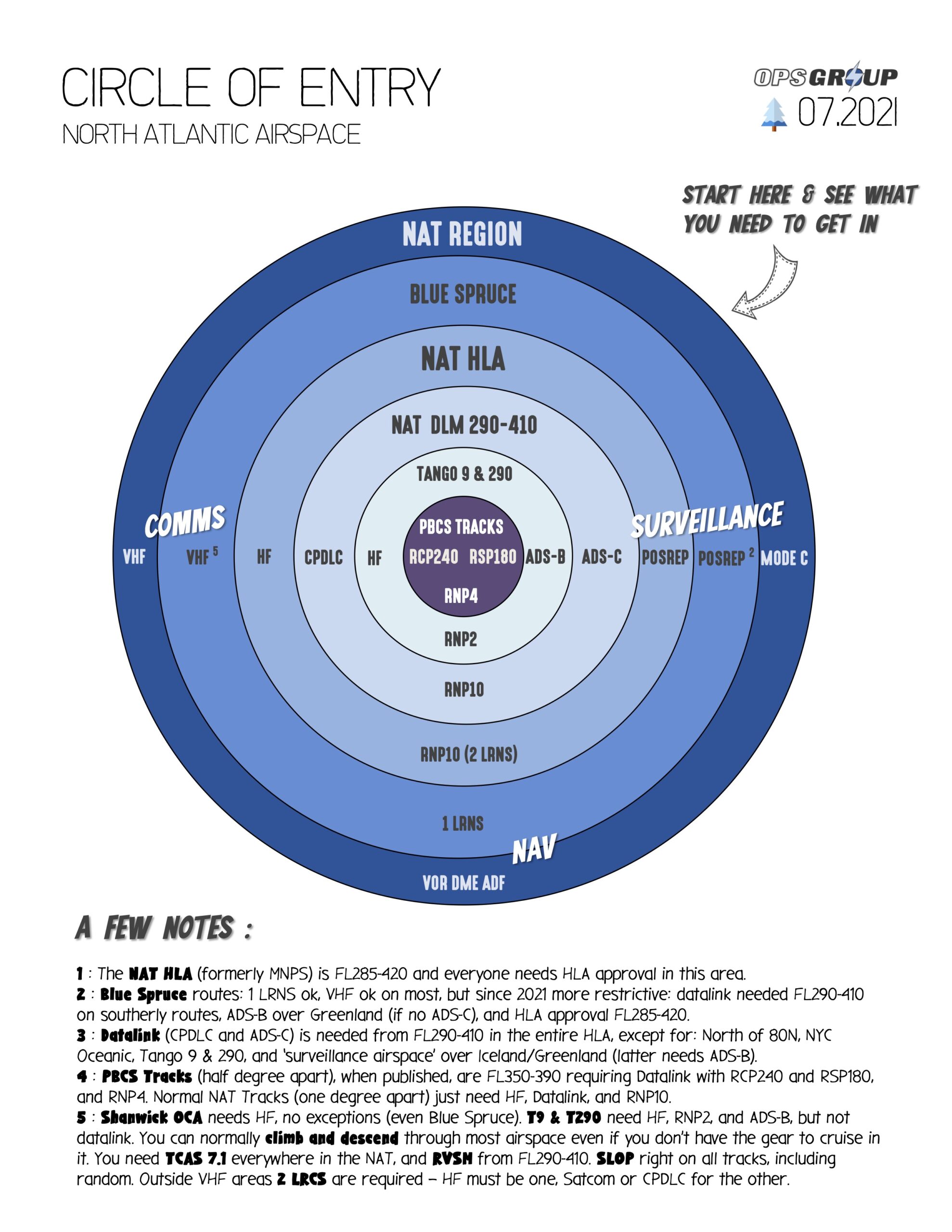
The Short Story
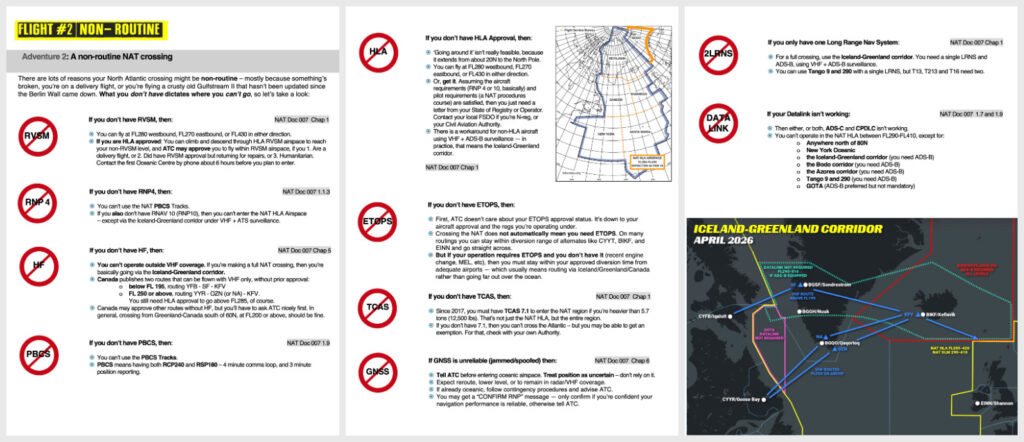
The Blue Spruce Routes are gone — but if you don’t have all the equipment, there are still ways to get across the Atlantic. What you can do depends on what’s on board:
Fully equipped? (2 LRNS, CPDLC RCP240, ADS-C RSP180, HF, LOAs)
➤ You can go anywhere in the NAT HLA.
No datalink?
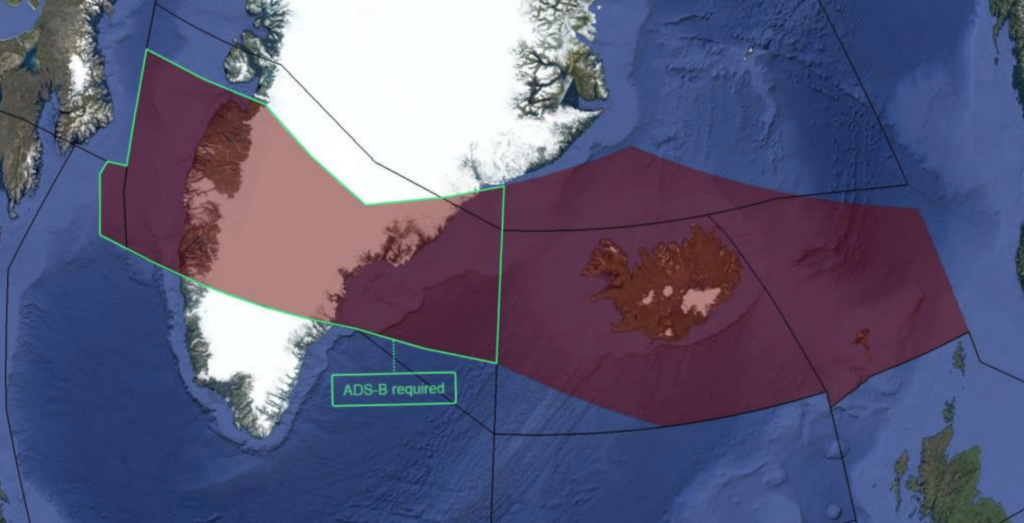
➤ Avoid FL290–410 unless you’re in the DLM Exemption Area (e.g. Iceland–Greenland Corridor) and have ADS-B.
No HF radios?
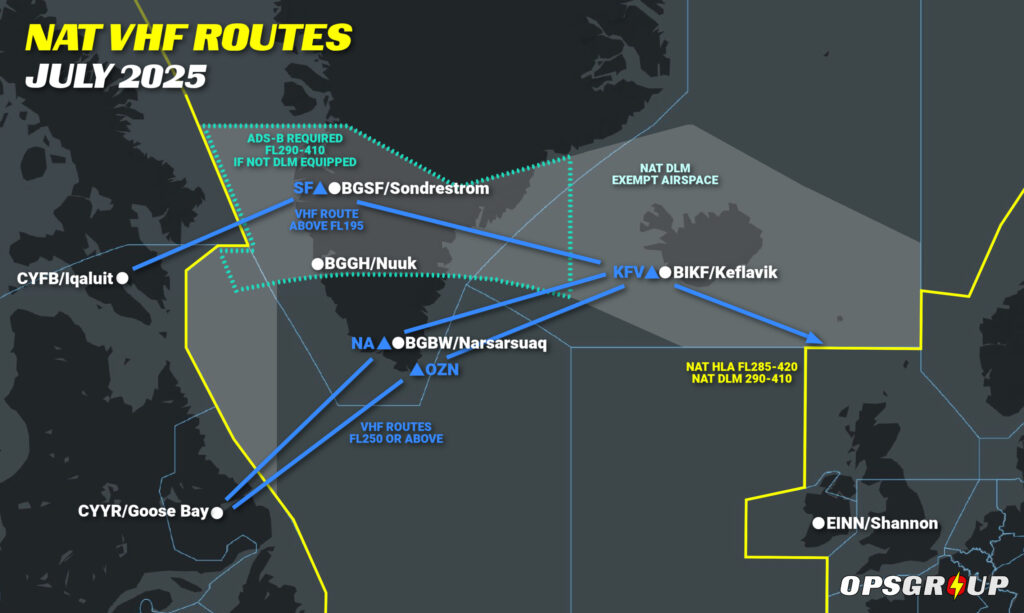
➤ You can only cross via specific VHF-only routes:
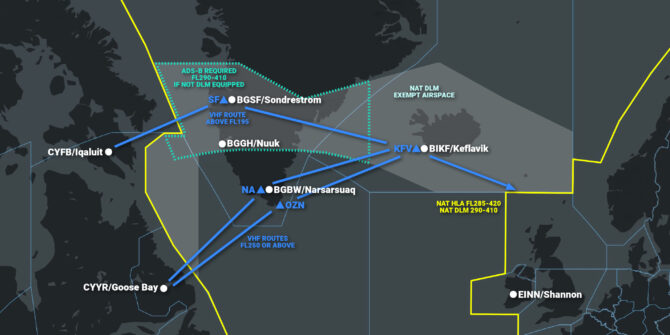
– Above FL195: YFB–SF–KFV
– FL250 and above: YYR–OZN–KFV
Only one LRNS?
➤ Stay below FL285 to avoid HLA nav and datalink rules – but unless you’re on a Gander-approved VHF route (e.g. via OZN or SF), you’ll still need two long-range comms systems.
➤ Want to climb into HLA airspace? You’ll need VHF coverage, ATS surveillance, State approval, and a compliant routing like the Iceland-Greenland corridor.
The Longer Story
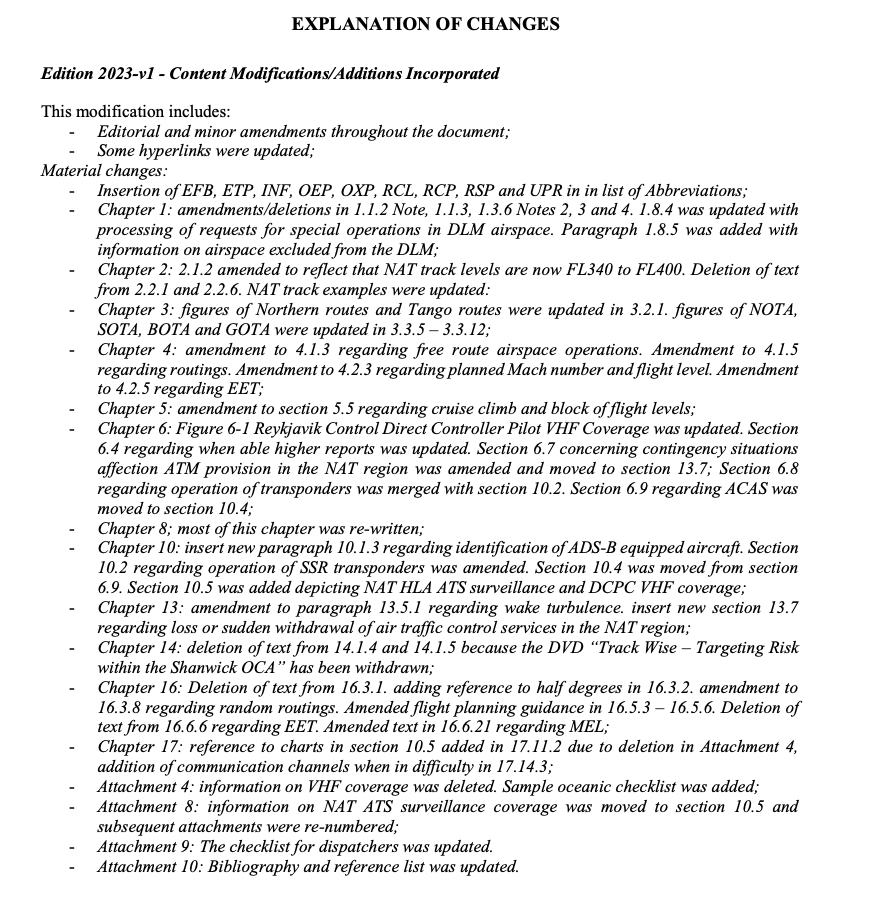
As of March 20, 2025, the Blue Spruce Routes have been officially removed from the North Atlantic. These routes—once the lifeline for aircraft with limited navigation or communication capability—are now a thing of the past. The change is part of the latest update to NAT Doc 007, which you can read more about here.
Technically established in 1976, the Blue Spruce Routes allowed aircraft with only one Long Range Navigation System (LRNS) to transit the NAT High Level Airspace (HLA) under special routing and coverage provisions. Over time, however, the need for them faded. The reasons:
- Almost no aircraft that have the mandated CPDLC equipment have only one LRNS. Or put another way, if you have CPDLC, you have dual LRNSs unless broken. With the addition of CPDLC requirement, relief for a single LRNS became outdated.
- Ground-based nav aids along the routes have largely disappeared.
- Datalink Mandated Airspace now covers most of NAT HLA.
- The Iceland–Greenland Corridor, with reliable VHF and ATS surveillance, provides a more flexible and better-supported fallback option.
While the Blue Spruce name may still pop up informally (especially among ferry operators), it no longer refers to any officially recognized ICAO routes. But crucially, some of the old routings remain usable—just under new conditions.
For example, Canada now allows aircraft operating with only VHF to cross via specific routes:
- Above FL195 via YFB–SF–KFV (this one currently says “below” FL195 in the Canada AIP, but that’s been confirmed as a typo, and will be getting updated shortly!)
- FL250 or above via YYR–OZN (or NA)–KFV
These are the only routes where VHF coverage is considered sufficient for oceanic ops without HF radios. Everywhere else, HF is still required outside VHF range.
So while the Blue Spruce Routes are gone in name and publication, practical exemptions remain—especially for aircraft with partial equipage. What’s changed is how you plan and justify the crossing.
Let’s walk through what you can still do today, based on what your aircraft has (or doesn’t).
Standard Ops
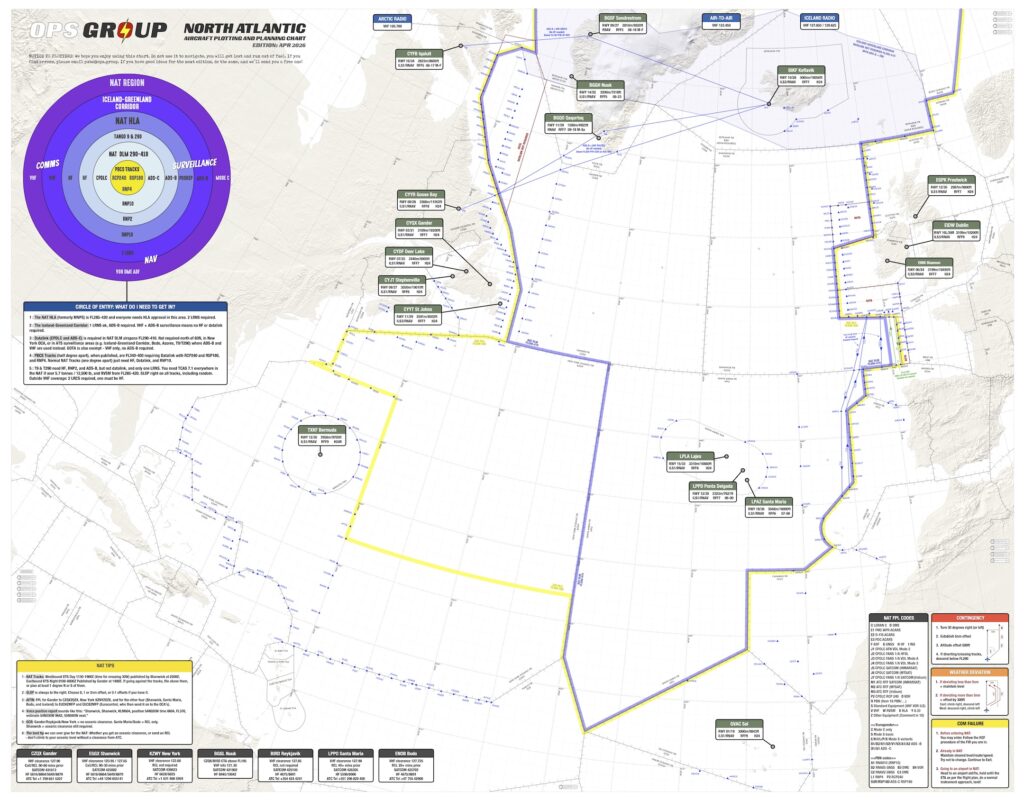
Most traffic crossing the North Atlantic Airspace (NAT) occurs from FL290-410 through the North Atlantic High Level Airspace (NAT HLA). Over the years, advances in navigation, communication, and surveillance equipment have led to additional requirements for operators so ATC can safely reduce aircraft spacing and pack more aircraft through the airspace.
For unrestricted access to the NAT HLA, operators need:
- 2 Long Range Navigation Systems (LRNSs)
- Outside VHF areas 2 LRCS are required – either 2x HF, or HF & Satcom/or CPDLC, for the other.
- FANS 1/A equipment for the NAT Datalink Mandated airspace
- Super-duper datalink for the coveted PBCS Tracks (i.e. CPDLC capable of RCP240 + ADS-C capable of RSP180)
And for US operators, that equipment list is a prerequisite for several required LOAs:
- A056 CPDLC Enroute, and Oceanic and Remote (PBCS)
- B036 Oceanic and Remote Continental Navigation Using Multiple Long-Range Navigation Systems (M-LRNS), Aka. RNP 4 (and RNP 10)
- B039 NAT HLA
- B046 RVSM
- D195 MEL (not technically required for a crossing, but might as well throw this one in)
The above is the ideal setup. But what if I fly old stuff, or new stuff, or broken stuff, or little stuff?
Old Stuff
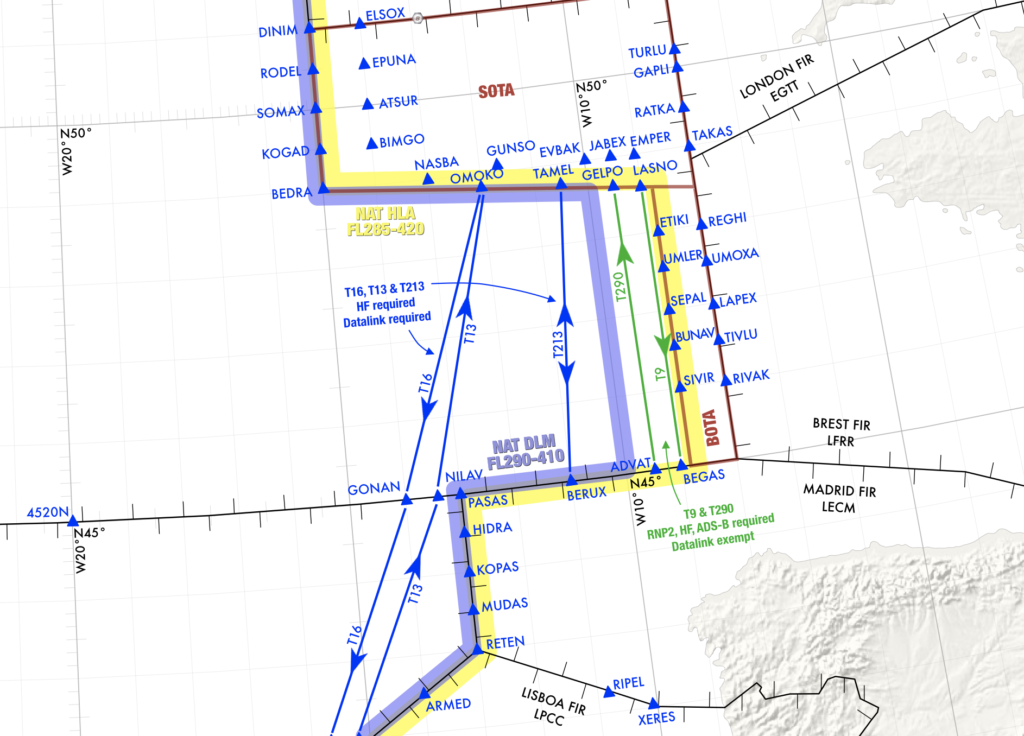
To the formerly early adopters without the benefit of factory standard state-of-the-art equipment: let’s say your aircraft has LRNSs that are only capable of RNP 10, or your FANS equipment is RCP400 and RSP400. All else being equal, the only limitation would be no PBCS tracks. And no T9/T290 either. All other tracks or random routes through the HLA are approved.
Is your equipment so old it doesn’t even have the above equipment? Consider yourself the same as broken, and keep reading…
New Stuff
You just closed on a shiny, new, well-equipped jet and have to ferry it across the pond, but you have no LOAs. In this case, you are altitude and route are limited. No RVSM or NAT HLA LOAs means the airspace from FL290-410 is off limits for you. If traffic permits, ATC may let you climb through the HLA above FL410, but you might want to plan fuel and route at FL280. Route-wise, without B036, you’re flying the Iceland-Greenland Corridor.
If you only have some of the above-listed LOAs, also consider yourself broken.
Now, it gets a little more nuanced…
Broken Stuff
You’ve been spoofed, but only one GPS came back? When down to one LRNS (or you don’t have B036), fly the Iceland-Greenland Corridor. With only one LRNS, you could fly through the NAT HLA along the corridor with approval if you stay within surveillance and VHF coverage and have the equipment to fly the assigned route. Otherwise, fly above or below the NAT HLA.
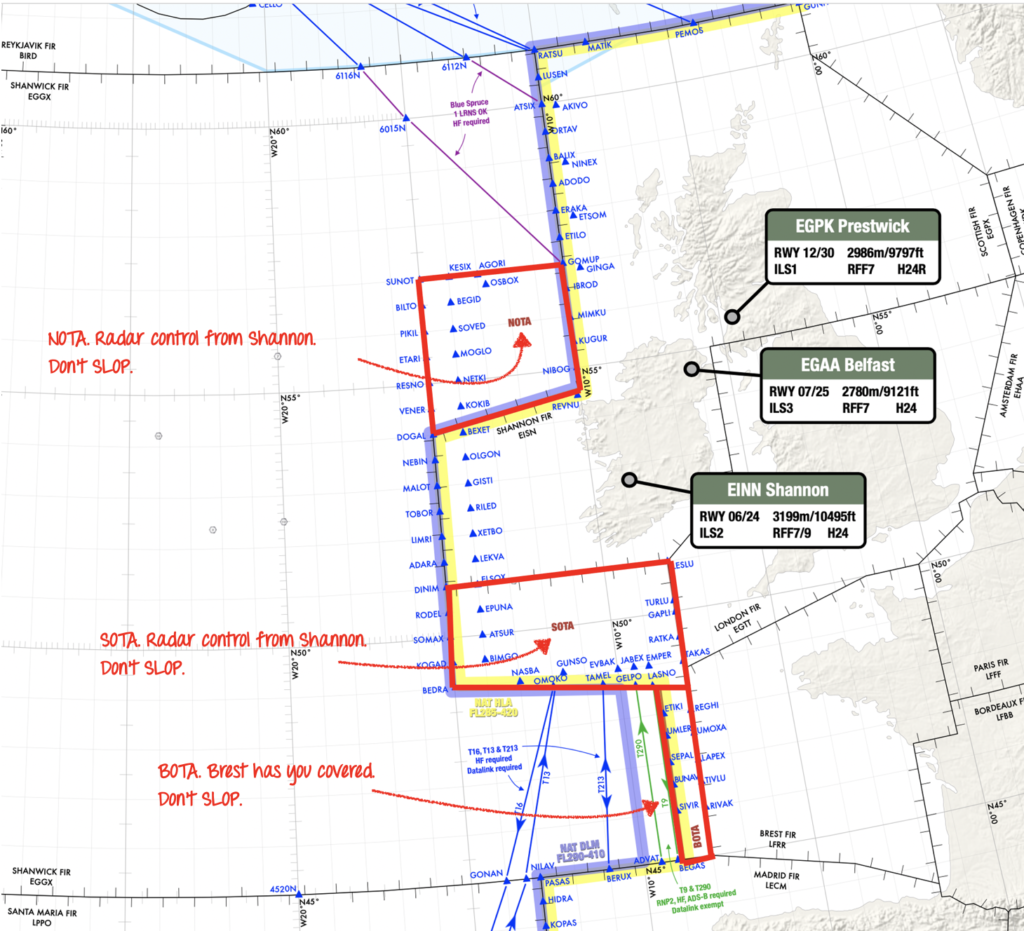
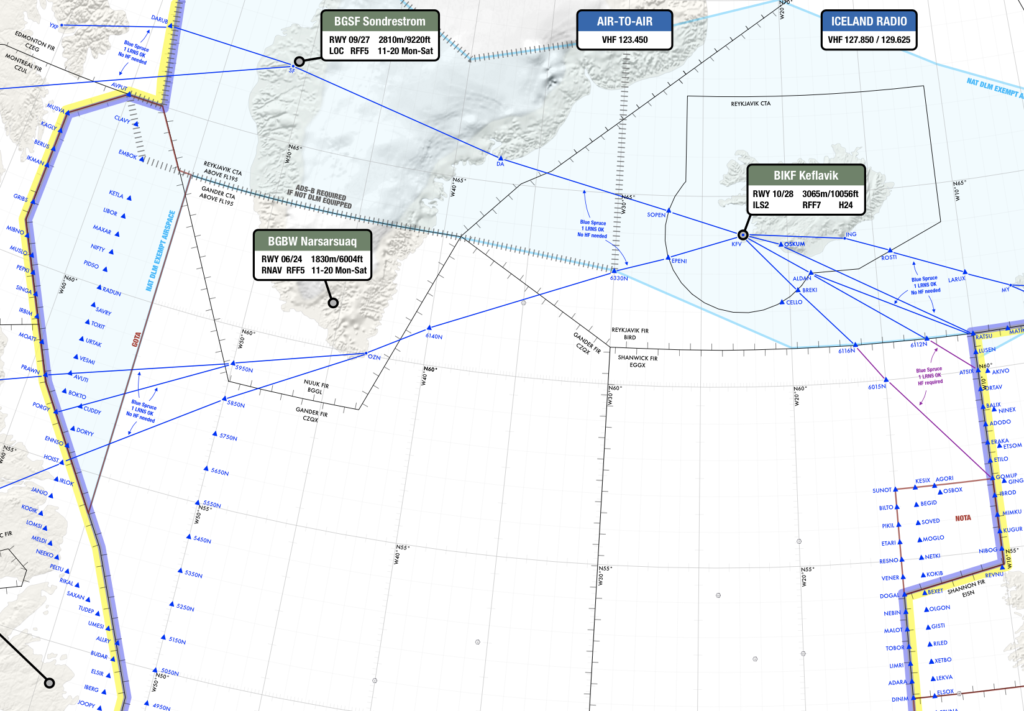
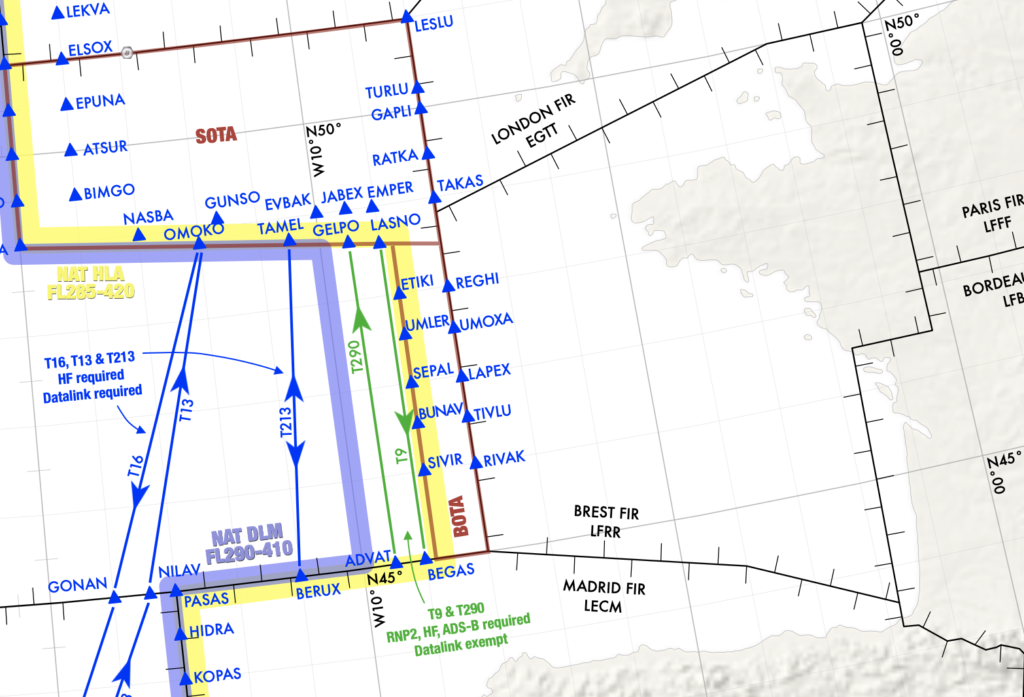
You’re down to one HF or lost both? You can still cross via the Iceland–Greenland Corridor or the old southern Blue Spruce routing via OZN – but only between FL250-280, where VHF coverage is sufficient and you’re still below DLM airspace. Just make sure to stay clear of Shanwick OCA, which still requires HF.
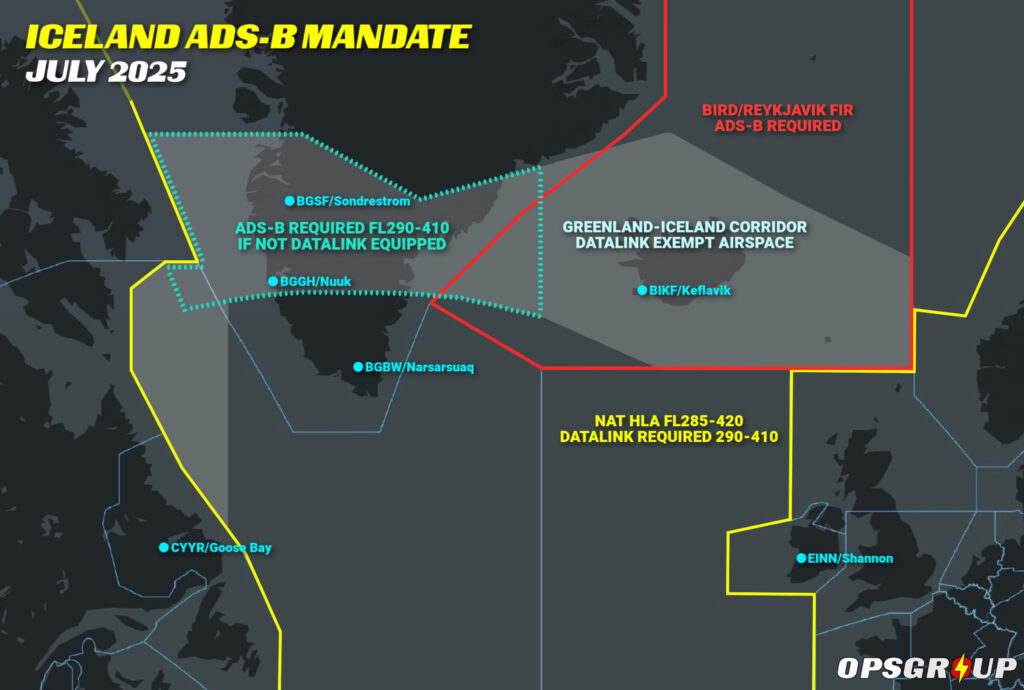
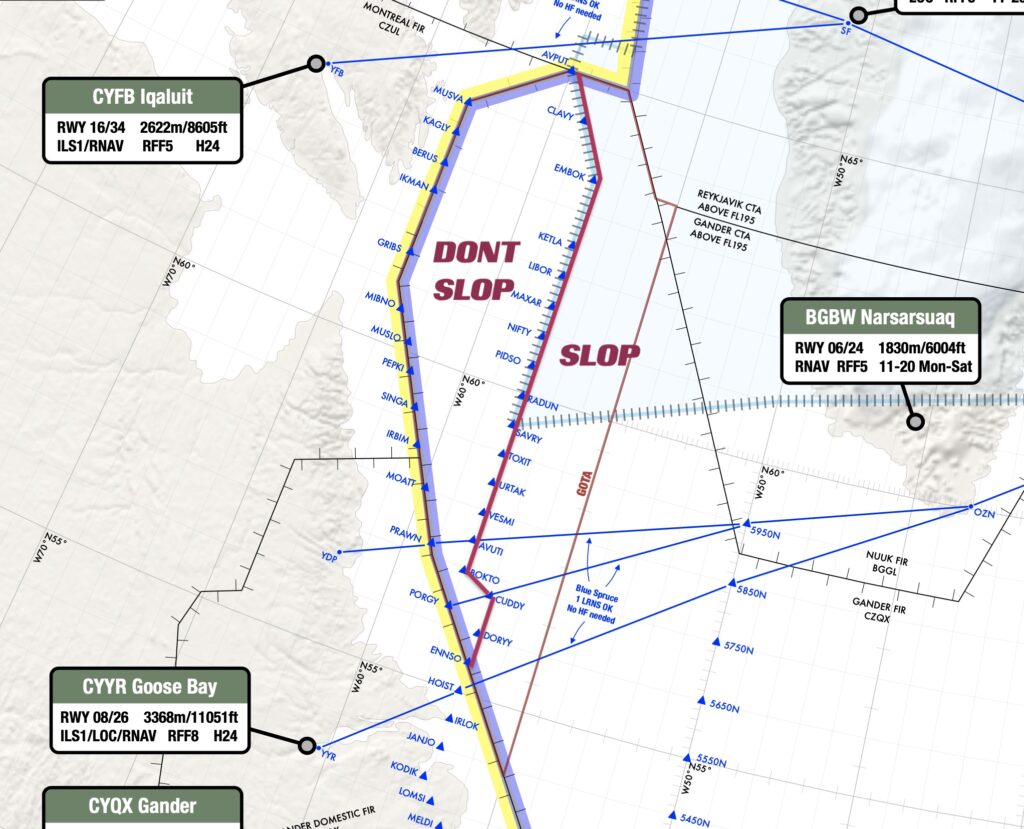
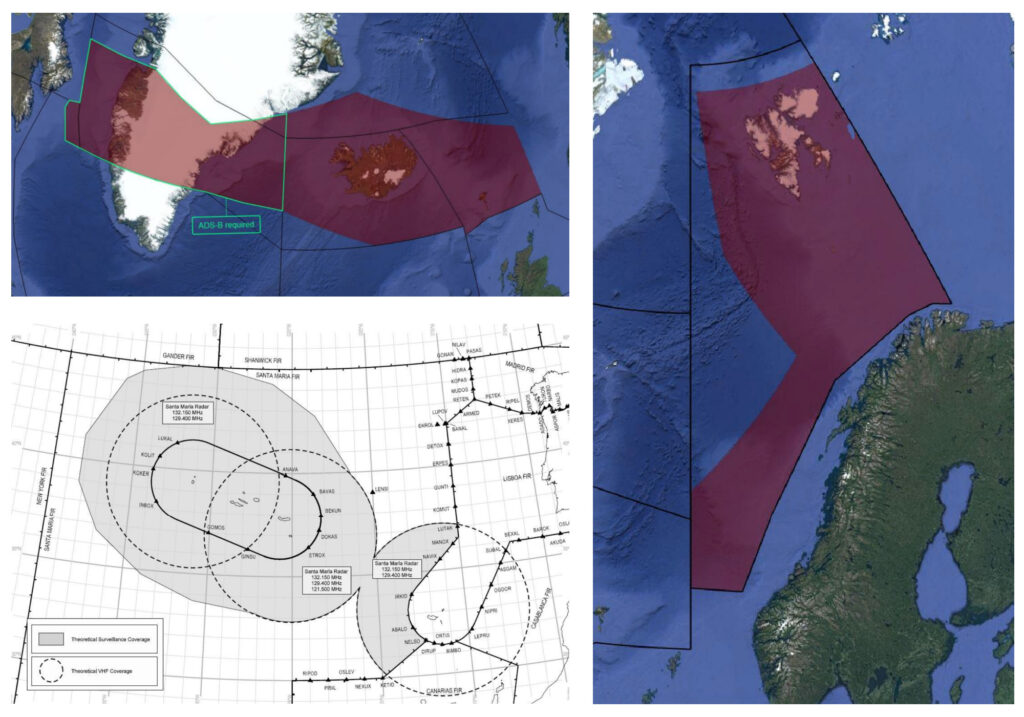
HFs are back, but your Datalink konks out (CPDLC or ADS-C), or you don’t have A056. There are two options: stay within the Data Link Mandate (DLM) exemption area (the corridor) and fly any altitude. The DLM exemption area exists because you don’t need CPDLC in that area if you have ADS-B. Radio reception is pretty good throughout there! The second option is to fly above or below the NAT HLA.
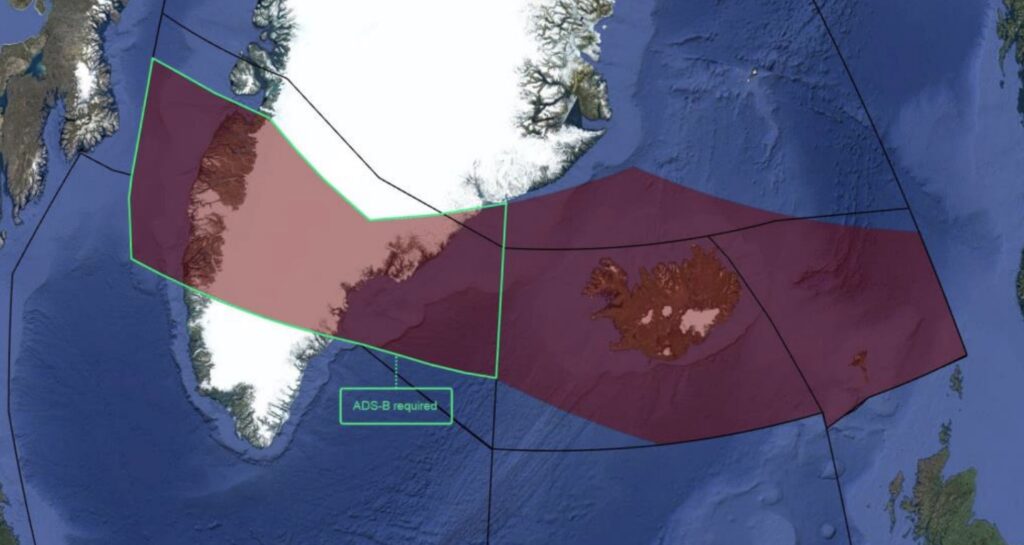
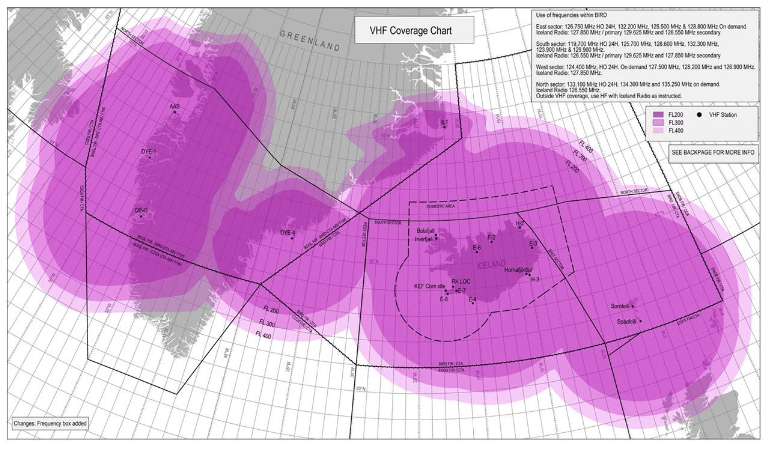
DLM Exemption Area (ie. Iceland-Greenland Corridor)
Little Stuff
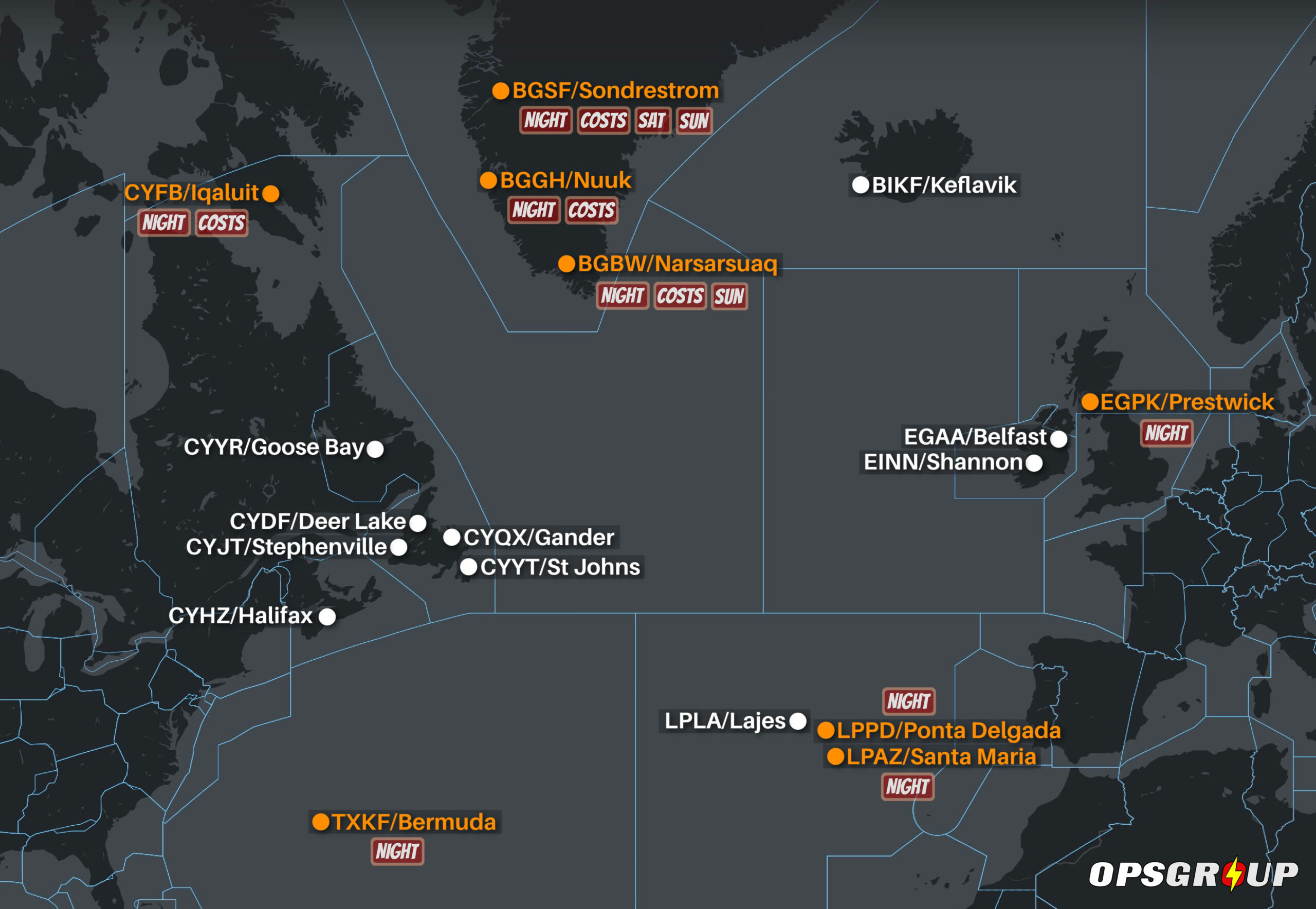
And if you get a wild hair to cross the Atlantic in an aircraft with only one LRNS, no HF radios, no Datalink, no LOAs, without the range to fly non-stop (like me), you still have options. You’ll need to stick to the Iceland–Greenland Corridor, or the specific VHF-approved routes via OZN or SF.
What’s a Blue Spruce?
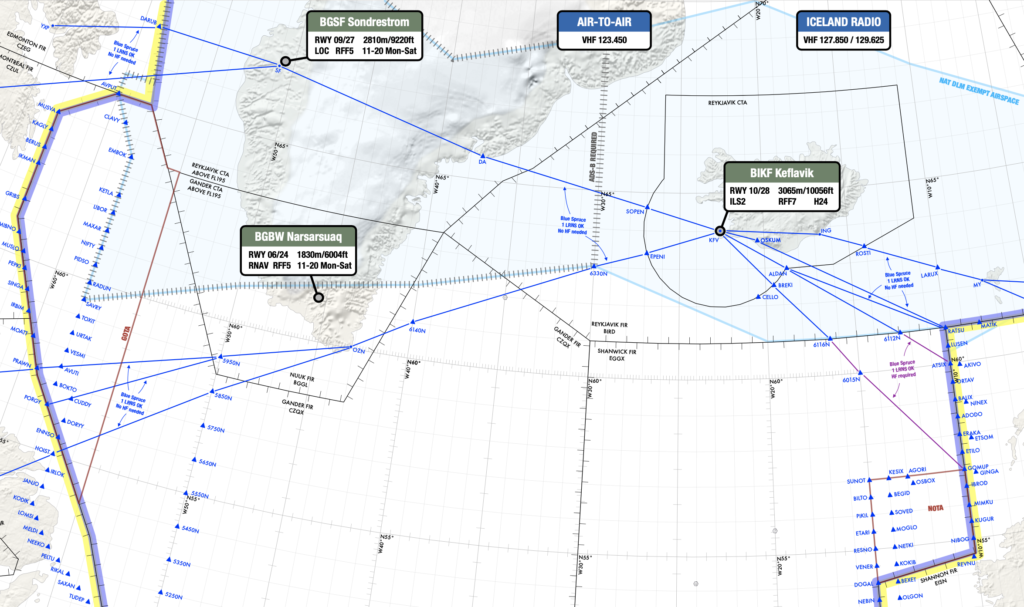
It’s a Christmas tree native to the Rocky Mountains that you won’t see across the Atlantic on any of your stops. However, the Blue Spruce Routes are routes in and around the Atlantic connecting Canada, Greenland, Iceland, and the UK.
Why were they called the Blue Spruce Routes? Back when military aircraft had wooden propellers (sometimes made of spruce), they painted the tips blue. These aircraft had to make the trans-Atlantic journey along the now-known Blue Spruce Routes.
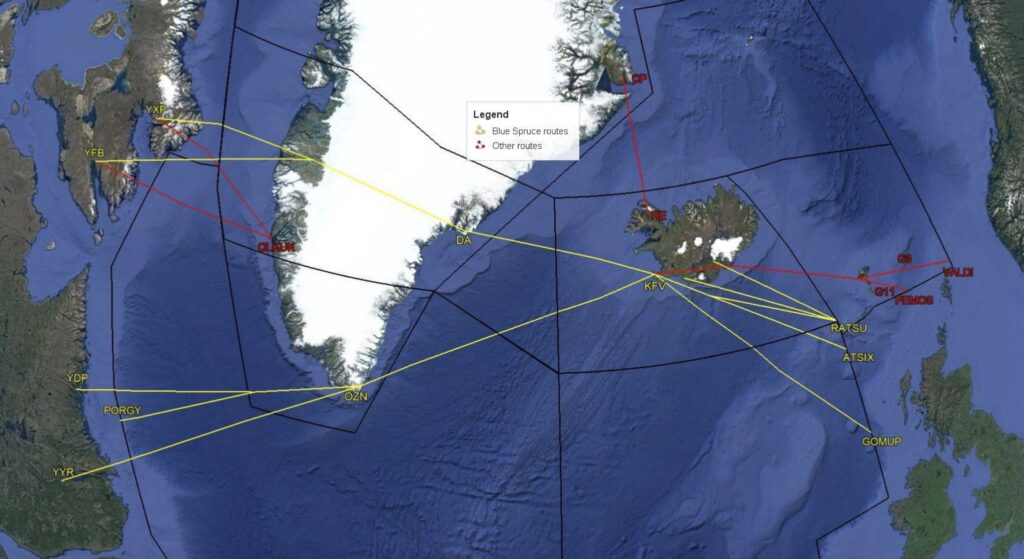
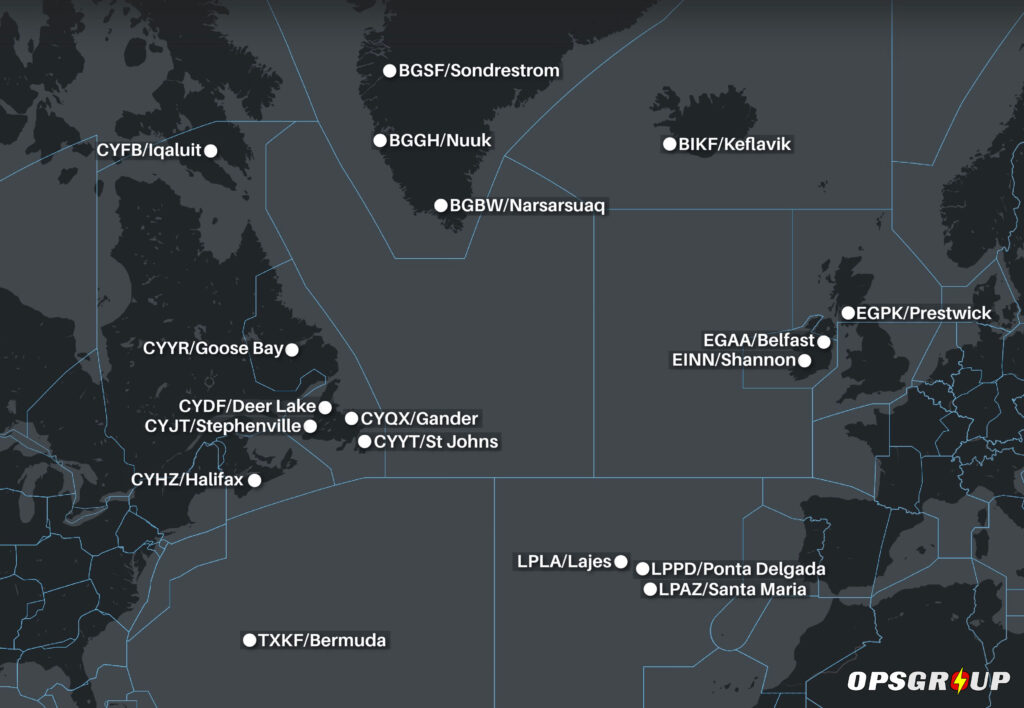
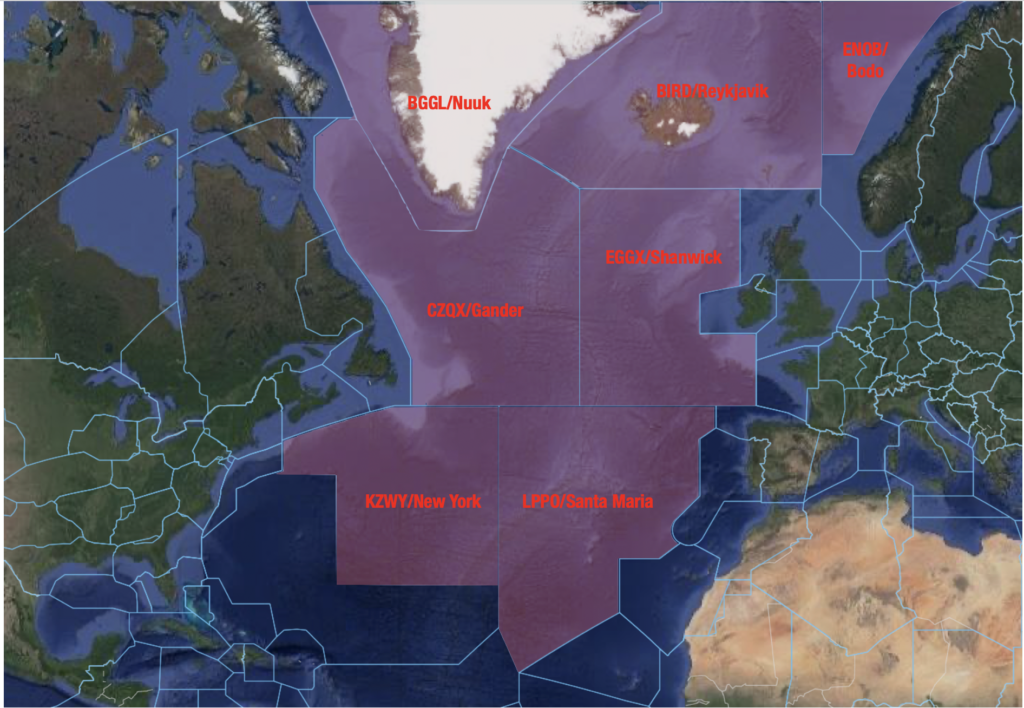
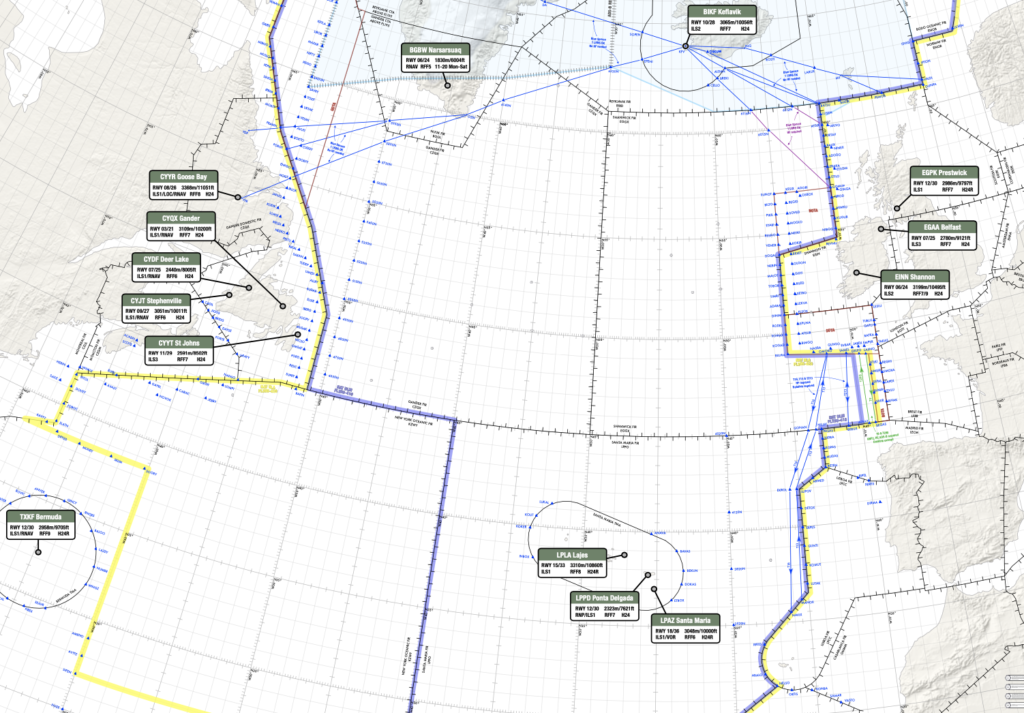
Nostalgia Map.
Gray Areas
The Iceland-Greenland Corridor provides exemptions from equipment and operational requirements because land-based radio transmitters along the route provide decent coverage, and route legs are short enough to complete a crossing without necessitating equipment redundancy.
Now, there are exemptions from the rules, and then there are gray areas. Despite all the relief these routes provide, one regulation remains: you must maintain two-way radio communication with ATC.
So far, much of the discussion is how high you can go, but what about how low?
VHF communications have improved significantly in the Atlantic in the last ten years. Both the northern and southern routes have VHF reception at appropriate altitudes. The longest stretch of water is between Canada and Greenland. On the southern route over this stretch of water, I have experienced adequate communication at FL250 and up. The northern route is good down to FL200. Iceland is fantastic – it’s almost like you’re in domestic airspace.
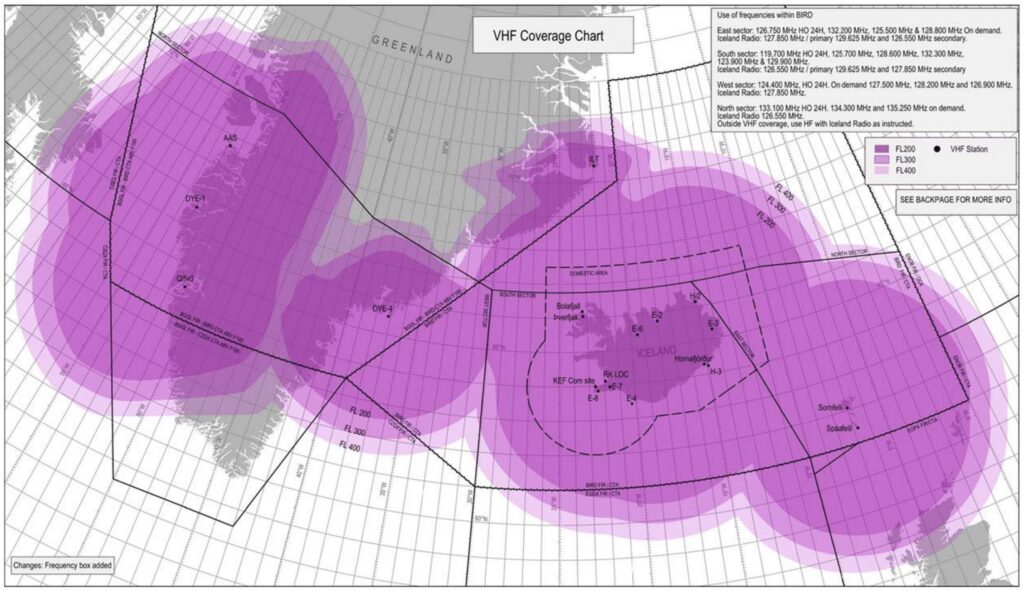
The gray area is when you plan to operate below these altitudes and are counting on using another aircraft to relay position reports. By the letter, this is a no-no. The up-and-up solutions would be to rent a portable HF unit or containerize and ship the aircraft to Europe, both of which can be about $20k.
You can see the incentive to count on relays.
Are ferry pilots bending the rules? Let us descend, inception-style, one further layer down the list of the exceptions: ATC can waive the HF requirement for ferry, delivery, and special event flights. Ferry pilots have all the fun. 😊
What About Aircraft with Only One LRNS?
Back in the day, the Blue Spruce Routes were the go-to option for aircraft with only one Long Range Navigation System (LRNS) crossing the Atlantic. Now that those routes are gone, what are your options?
If you’re staying below the NAT HLA (below FL285), you’re in the clear:
- You don’t need two LRNSs to operate below FL285.
- You’re also free from NAT HLA requirements like RNP 10 and Datalink etc.
- Just make sure your one LRNS (typically GPS-based) is suitable for the route you’re flying.
- You still need two long-range communication systems (HF + HF or HF + Satcom), unless you’re on one of the VHF-only routes approved by Gander that we talked about above (ie. via OZN or SF)
If you want to enter the NAT HLA (FL285–420), it gets more tricky:
You’ll need to qualify under the NAT Doc 007 1.4.1 exception, which says aircraft can operate in the NAT HLA with fewer than the standard requirements only if:
- You stay within ATS surveillance,
- You remain within VHF communication coverage,
- Your navigation system is suitable for the planned route,
- And you have specific State approval to operate with reduced navigation capability.
In practical terms, this means you might be able to fly the Iceland–Greenland Corridor at HLA altitudes, but only if your authority signs off – and probably not straight across via the likes of OZN.
Summing up
You can operate with one LRNS, no HF radios, no CPDLC, and no LOAs using the Iceland–Greenland Corridor or the designated VHF routes published by Canada.
Outside of these specific altitudes and routings, aircraft operating in the NAT Region must normally carry two long-range communication systems, one of which must be HF, when operating beyond VHF coverage – unless a specific exemption has been granted by the State of the Operator or Registry (eg. for ferry or delivery flights).
If you want to learn more, check out myaircraftmanagement.com for a 101-level walkthrough of a Blue Spruce operation.
Happy Crossings! ✈️ 🌊 🧑✈️

































 What do you need?