New RISK WARNING: Somalia ATC Conflict
Update Nov 2025: Somalia-Somaliland Airspace and Permit Dispute 

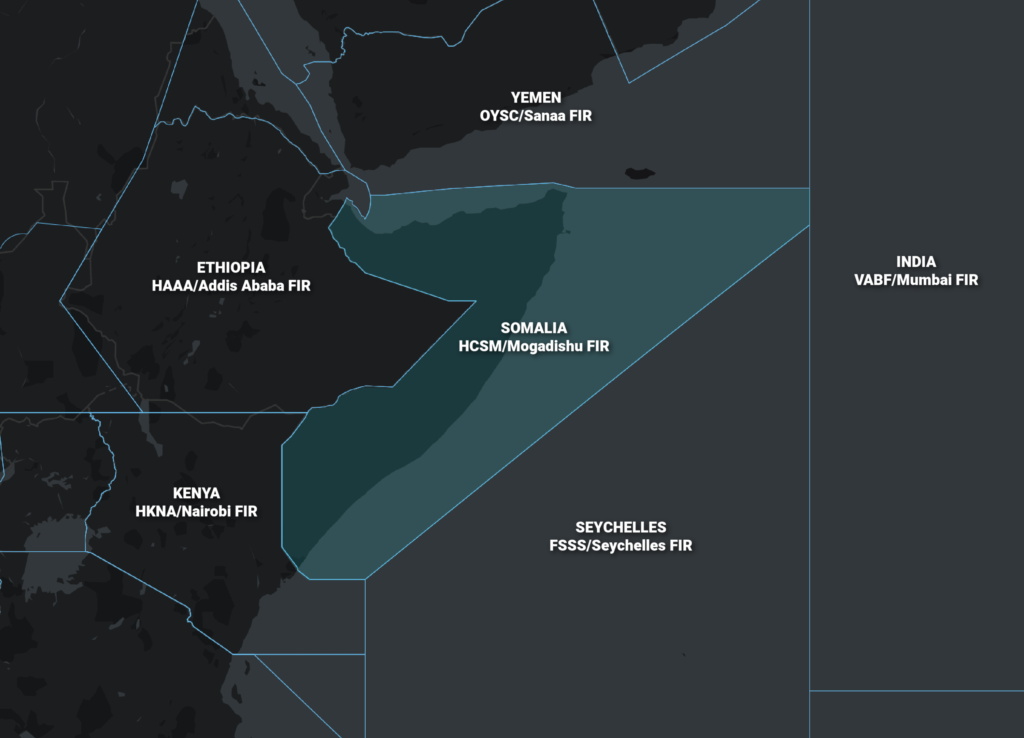
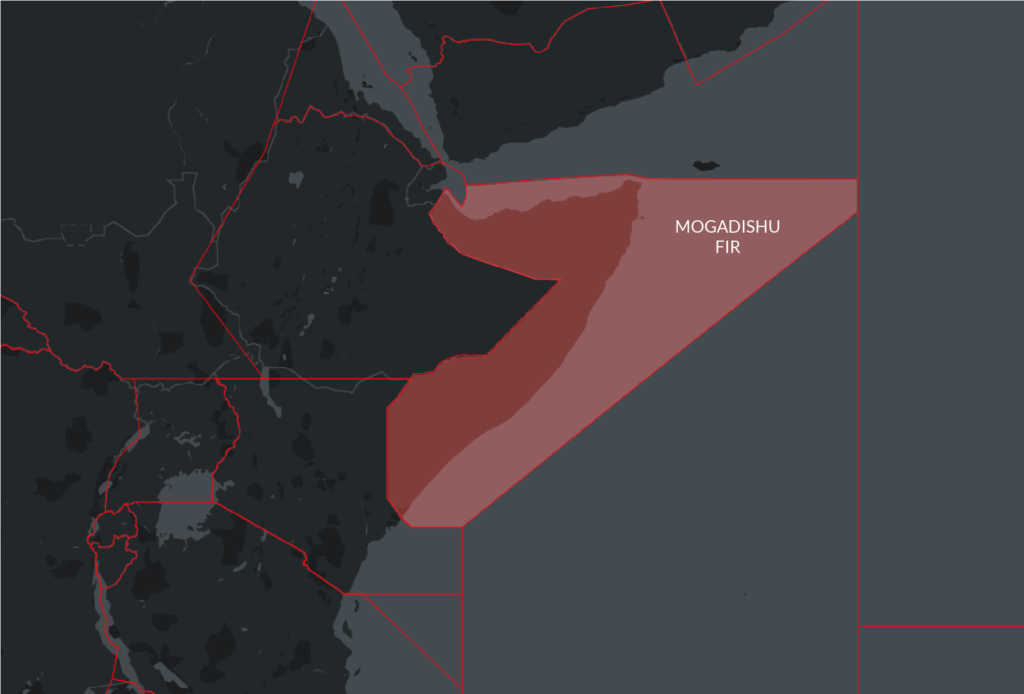
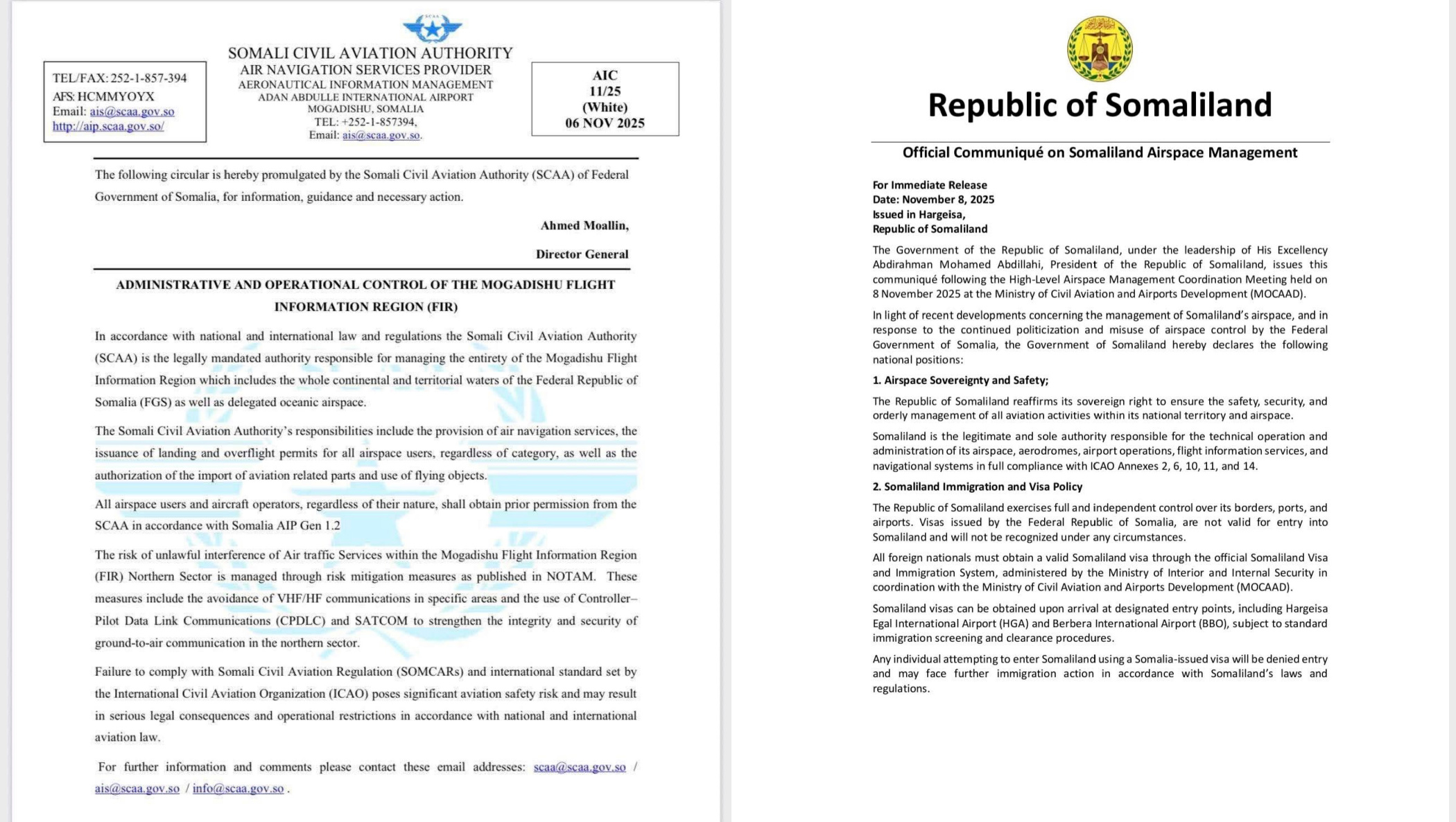
Be aware of an ongoing authority dispute in the north of the HCSM/Mogadishu FIR. Both Somalia and the self-declared state of Somaliland have issued conflicting instructions for overflights. From Nov 10, Somaliland says all flights require PPR from its own CAA, while Somalia has reaffirmed through an AIC that it controls the entire FIR and operators should follow its AIP.

Expect mixed messages on permit requirements near northern Somalia and the Hargeisa region. The Somali CAA remains the only internationally recognised authority for all Class A airspace above FL245 – be cautious of conflicting or unauthorised clearances.

For background on this long-running dispute and its impact on ATC safety, see safeairspace.net.
Ongoing since Feb 2024: ATC Conflict in Somalia

Key information for Flight Crew

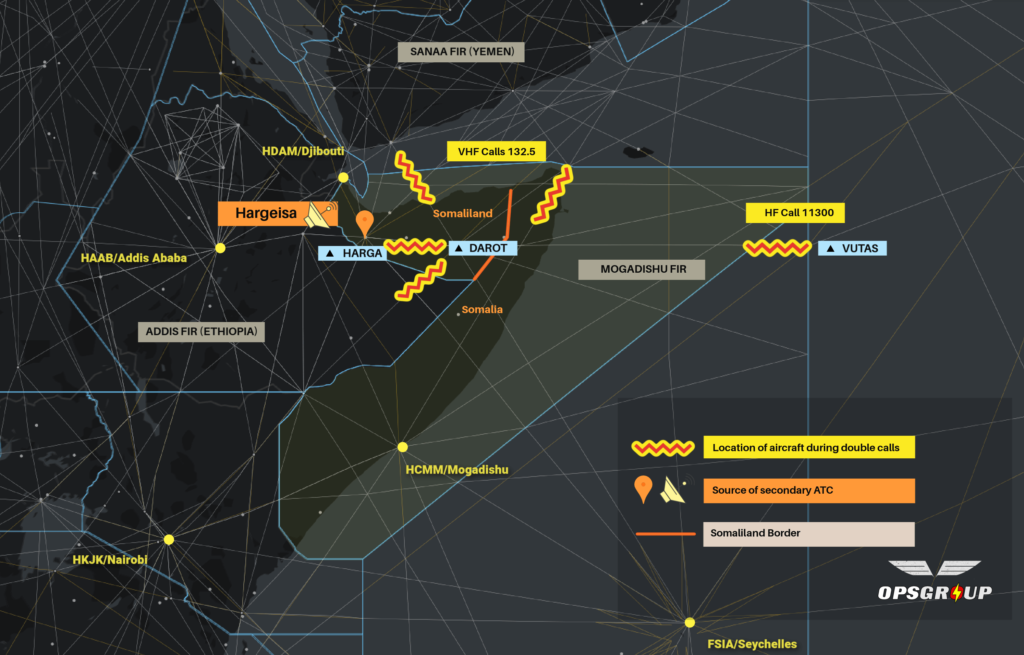
Over the weekend, OPSGROUP has received at least 10 reports of aircraft within the Mogadishu FIR being contacted by a ‘fake controller’ on the same frequency, issuing conflicting instructions.

Crews have been issued climb and descent clearances that are not from the sector controller. Incidents have been reported mostly in the northern part of Mogadishu airspace.

The situation emanates from a political dispute between Somaliland and Somalia, two different countries, though the former does not have international recognition. Both countries now claim authority over the Mogadishu FIR.  
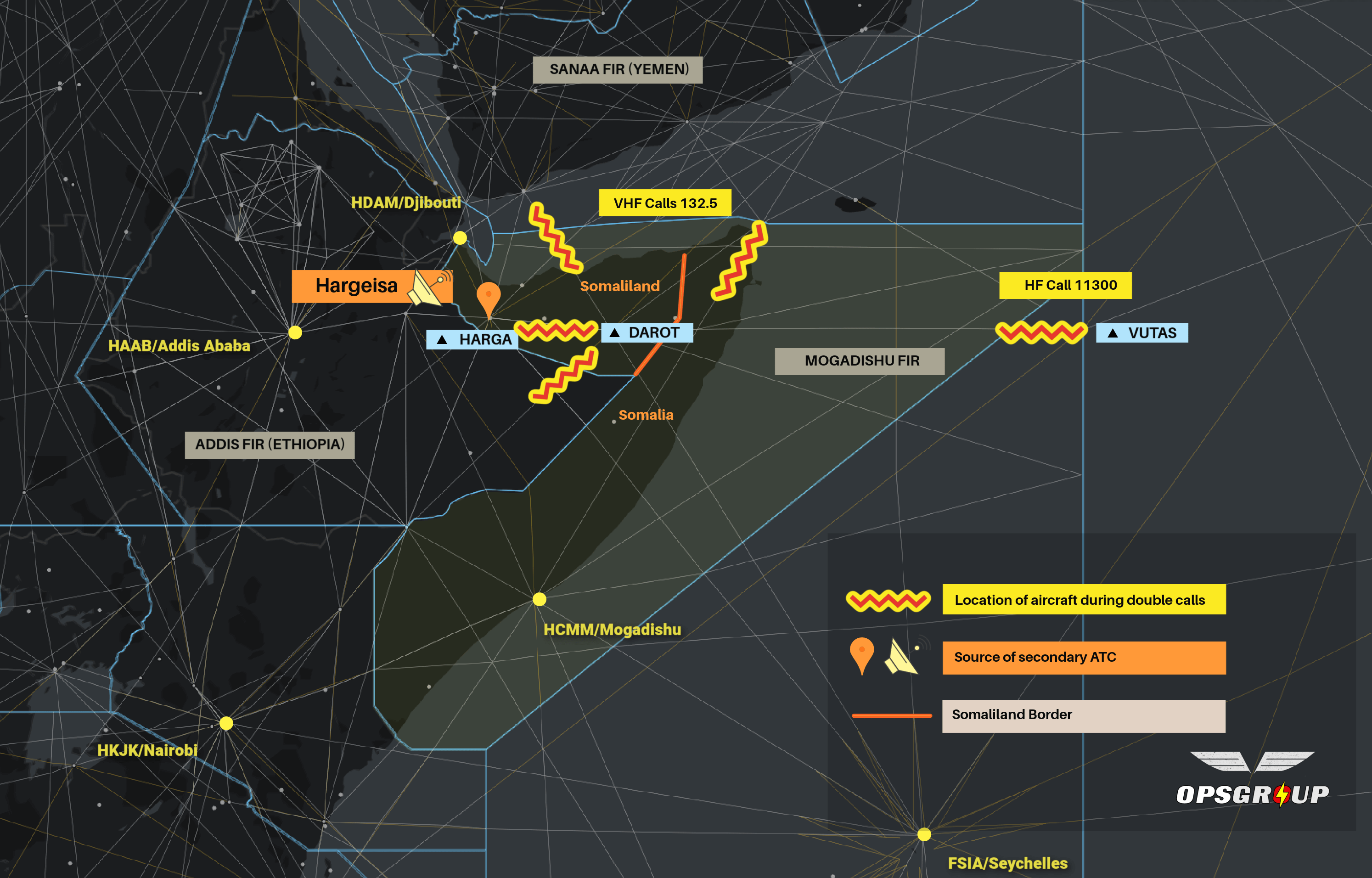
Quick Summary – ATC Conflict in Somalia

  • This affects aircraft transiting the Mogadishu FIR
  • Enroute aircraft are being addressed by competing ATC units on the same frequency.
  • Numerous aircraft have received climb/descent instructions from unauthorized ATC units.
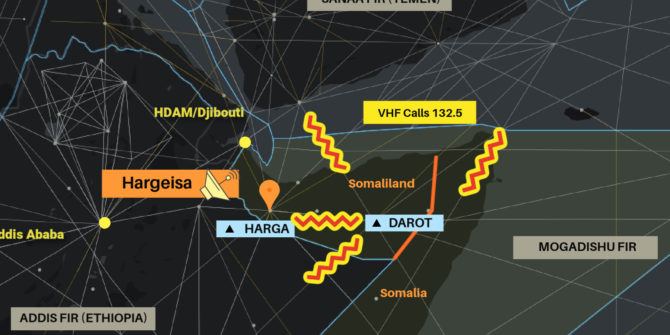
  • Location: Primarily within radio range of Hargeisa (VHF 132.5), also via HF (11300)

OPSGROUP Members

In your Dashboard you’ll find the full Risk Warning, including Crew Reports, Maps, Analysis, and Guidance. If you can’t access, just email the team and we’ll send you a copy.
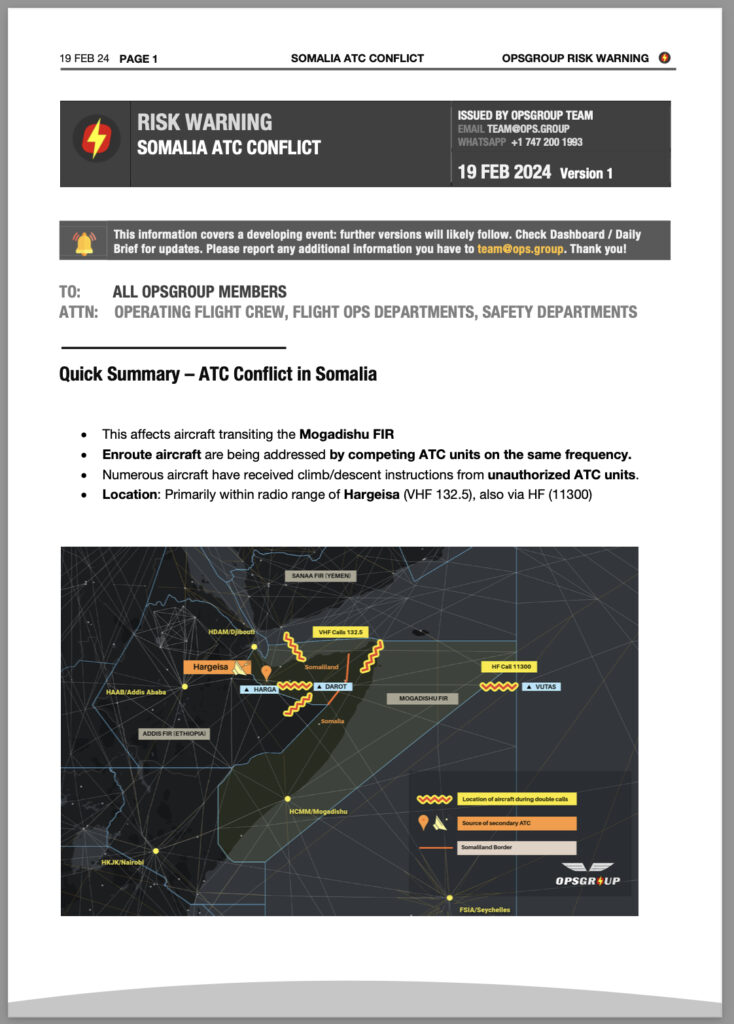
Download the Risk Warning (PDF, 9 pages, 2Mb) 

Analysis

(Excerpt from the Risk Warning in your dashboard)

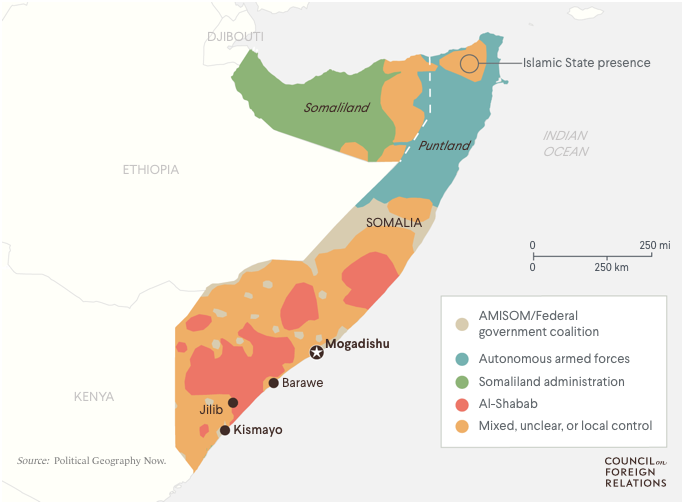
The background to the situation is an escalating political dispute between Somaliland and Somalia. Somaliland has been an independent country since 1991, but without international recognition. Somaliland has to date maintained control over its airports, but Somalia controls the upper airspace from Mogadishu.
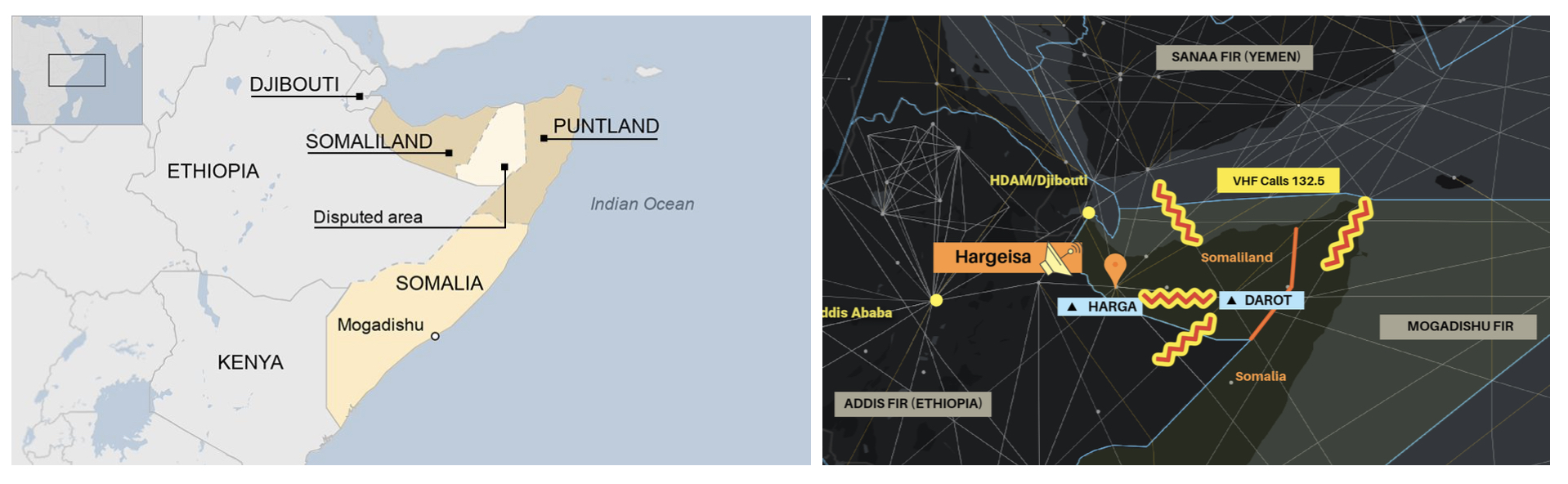
In January 2024, Ethiopia signed an agreement with Somaliland, essentially exchanging port rights on the Red Sea for recognition of their country. This was met with condemnation by Somalia. Somalia, in response, began restricting movements into Somaliland by way of denying airspace entry to the Mogadishu FIR in some instances. This has led to Somaliland declaring its right to exercise control over their airspace.

The net result is an airspace dispute between the two territories. Both Somalia and Somaliland now claim the right to control traffic. This is why crews have been contacted by other “controllers” on 132.5 (VHF) and 11300 (HF). Although it is likely that these other “controllers” are genuine Air Traffic Controllers, they are operating outside their area of jurisdiction as things stand.

Currently, the authority over the entire Mogadishu FIR is Mogadishu Control. They remain the sole authority to control, coordinate, and provide ATS services in the Upper FIR. The secondary transmissions are coming from Hargeisa in Somaliland. Although the motive for these transmissions can be understood, they present clear danger to enroute traffic. The transmissions appear to attempt to mimic Mogadishu rather than present as “Hargeisa Control”, “Somaliland Control”, or any clear differentiator from Mogadishu.

It would also appear from the reports that we have received, that the control instructions are not being issued to de-conflict traffic, but rather to create confusion. This may be an effort to draw attention to the airspace issue, but could have tragic consequences. For flight crews, we follow with some guidance to mitigate the situation.

The situation is volatile and may escalate. On Sunday, February 18, an AIS Officer from Somaliland, working in Mogadishu, was found dead at his home. His death appears related to this situation.

Avoidance of Mogadishu airspace would provide ultimate safety, and if the situation continues, would be wise.

[Excerpt, see full Risk Warning for crew reports received, maps, guidance] 

TCAS Saves the Day in Somalia

Last week we told you about a new risk emerging over Somalia, where several enroute aircraft reported being contacted by unauthorized ATC units. These “fake” controllers have been issuing climb/descent instructions that conflict with the official ones issued by Mogadishu Control.

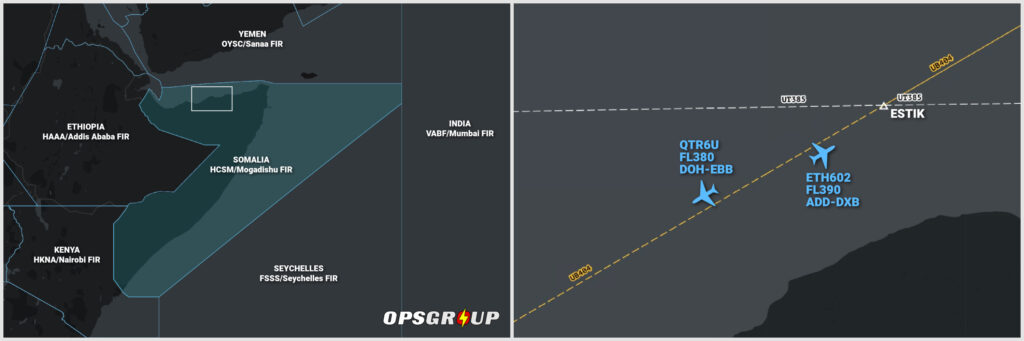
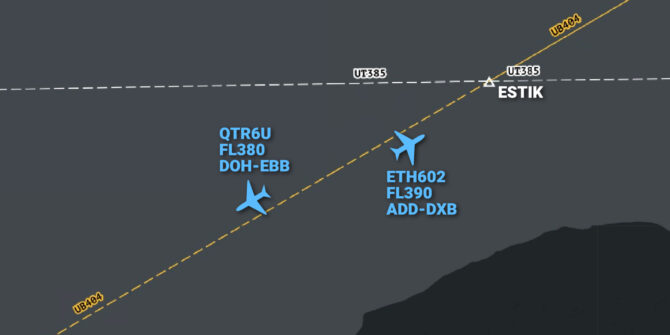
This week, the very same thing happened to crews of a Qatar Airways 787 and an Ethiopian Airlines A350 headed towards each other off Somalia’s northern coastline.

The 787 was instructed to climb from FL380 to FL400 whilst the A350 was cruising at FL390 in the opposite direction on the same UB404 airway – near position ESTIK. A TCAS alert was triggered, and the 787 descended back to FL380 to resolve the conflict.

From some reports it looks like the two aircraft were separated by as little as 2.5 nm when the incident happened, though the situation was helped by the fact that both aircraft were laterally offset from the airway (yay for SLOP!).

Who should I be talking to?

The two competing ATC centres here are Hargeisa (Somaliland) and Mogadishu (Somalia).

For aircraft transiting the HCSM/Mogadishu FIR, it’s Mogadishu ATC that you should be talking to – not Hargeisa.

Mogadishu Control holds authority over the entire Mogadishu FIR, responsible for coordinating and providing ATS services in the Upper FIR. Hargeisa in Somaliland issues secondary transmissions, posing a potential threat to enroute traffic.

Notably, these transmissions from Hargeisa seem to mimic Mogadishu rather than clearly identifying as “Hargeisa Control” or “Somaliland Control.” Reports suggest that control instructions from Hargeisa aim to create confusion rather than ensure traffic de-confliction, possibly as a strategy to draw political attention to their recent dispute with Somalia.

Advice to operators

Check our previous post for a full Risk Warning, including Crew Reports, Maps, Analysis, and Guidance. And if you can’t access, just email the team and we’ll send you a copy.

The main advice is this:

1. If possible, avoid the Mogadishu FIR.
2. If entering the airspace, expect secondary ATC transmissions from Hargeisa.
3. Limit any contact with Mogadishu to CPDLC only. Only controllers in Mogadishu have access to CPDLC.
4. Do not accept any level changes without ensuring they are genuinely from Mogadishu Control.
5. Avoid requesting any level changes while within the Mogadishu FIR.
6. Listen out on 126.9 (IFBP) and follow the IFBP procedure.
7. Note that related NOTAMs issued by Somalia may not present the full picture, or be updated regularly.

Download the Risk Warning (PDF, 9 pages, 2Mb)


Mogadishu Wishes You a Class A New Year

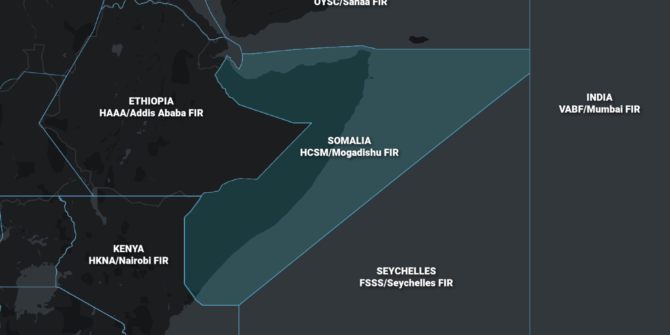
The Mogadishu FIR is that chunk of Somalian airspace which you have probably flown through if you regularly route from the Middle East to southern Africa.

Since 2022 they have been trialling the return of controlled airspace, and we have an update on that for you.

First up though, why are we interested in this FIR?

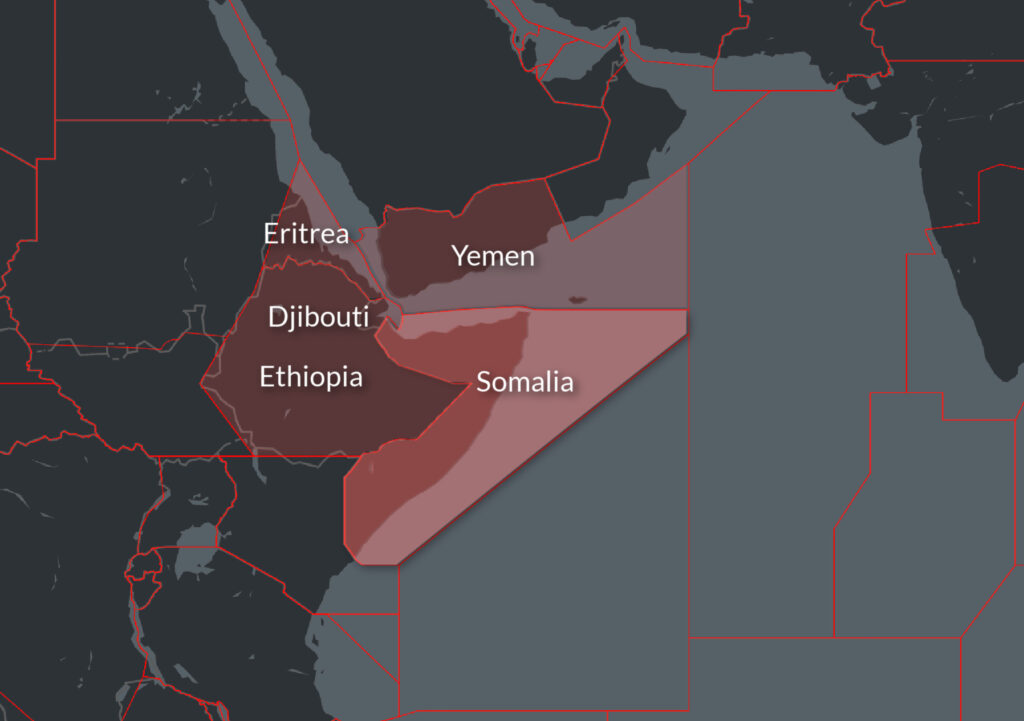
Somalia and its direct neighbours are all fairly high risk regions in terms of airspace safety. Yemen is a no fly zone, Eritrea and Djibouti are both fairly unstable, Somalia has issues with Al-Shabab, and the Tigray region in Ethiopia has an ongoing conflict to contend with.

So if we want to head from the Middle East into Africa or from Asia to Africa, we have to make a fairly large detour around these spots, or risk overflying areas considered unsafe and which also have limited diversion options due to safety and security concerns on the ground.

Having part of the Mogadishu FIR available doesn’t help fix the safety and security on the ground (or lack of diversion options) issue, but there are airways which keep you over the oceanic region here, which means the overflight safety risk is reduced, which means we don’t have to detour as far.

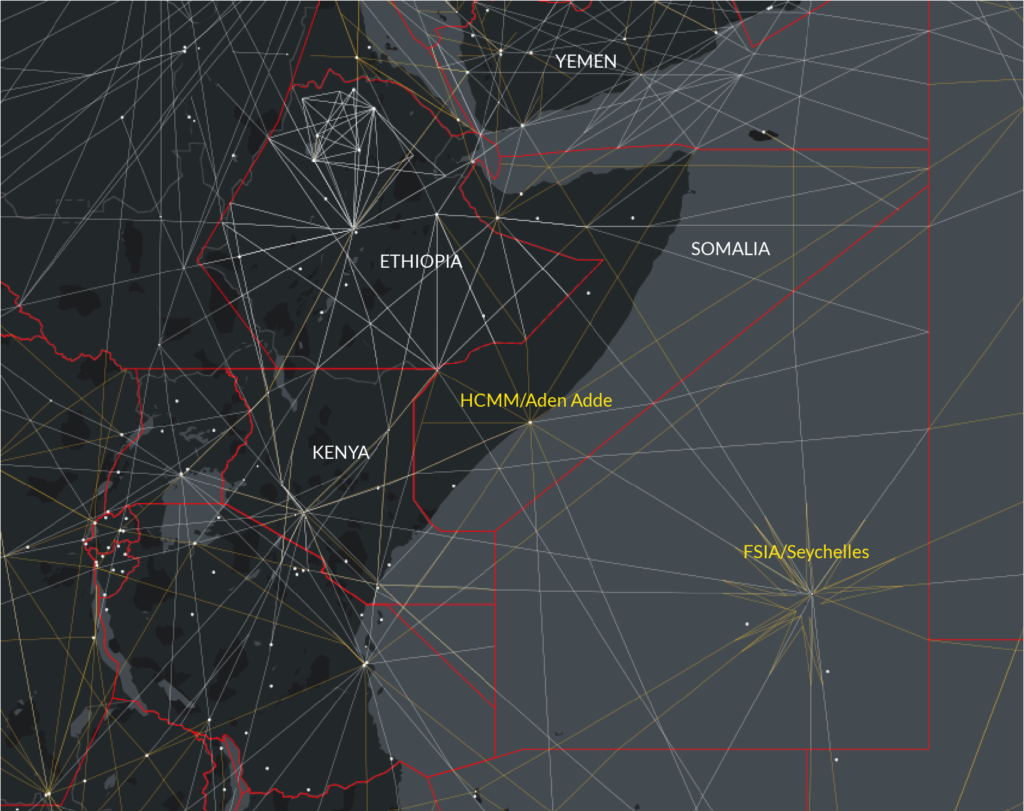
So the HCSM/Mogadishu FIR offers a direct connection from the Mumbai FIR, and from Omani (Muscat) airspace into Africa.

But it has issues of its own?

That it does.

The situation on the ground in Somalia is highly unstable. The central government has little control of the major cities and ports, with ongoing attacks from extremist militants targeting civilians who continue to show an intent to target aviation interests. The primary risk is to overflying aircraft at the lower flight levels, which may be targeted by anti-aircraft-capable weapons.

What warnings should I know about?

  • The US prohibits flights across Somalia’s airspace below FL260 (except for flights transiting the overwater portion of the airspace going to/from HDAM/Djibouti airport across the border in Ethiopia).
  • Several other countries have issued airspace warnings advising against operating below FL260 (Note UR401 SIHIL-AXINA is excluded from this by one authority).

There is also a secondary risk related to a lack of ATC service for overflights of the HCSM/Mogadishu FIR. The airspace was Class G uncontrolled airspace for sometime, requiring IFBP and HF comms (and a fair amount of looking out) for crew.

However, from 11 May 2022 they started trialling Class A airspace again, from FL245 each day from 0300-1800z.

Tell us more about this airspace then!

We wrote about the trials here.

From November 2022, they extended the Class A operating hours to H24.

From 26 Jan 2023 it will become full operational, fixed, permanent, sorted and set via AIP SUP 01/23 (no, we aren’t sure where you can access that directly!).

HCSM/Mogadishu FIR Notam A0012/23 is the one with the info. It looks like this:

A0012/23 - TRIGGER NOTAM AIRAC AIP SUP 01/23 WEF 00:01 UTC 26 JAN 2023. 
OPERATIONAL IMPLEMENTATION OF CLASS ''A'' AIRSPACE WITHIN THE MOGADISHU 
FLIGHT INFORMATION REGION AT AND ABOVE FL245. 26 JAN 00:01 2023 UNTIL 
08 FEB 23:59 2023. CREATED: 19 JAN 07:45 2023

It is worth noting they are still training ATC. This takes place from 0300-1800z, so go easy on the trainees if you’re flying during those times.

The “upgrading” of the airspace is down to the Somalia Airspace Special Coordination Team (SASCT), comprising of the Somali CAA, IATA, ICAO, adjacent FIRs, and core RCG (Regional Coordination Group) airline team members. Thanks folks! They are going to monitor the progress and performance over the next 6 months so send in your feedback to IATA_AME@IATA.ORG

Tell us some comms stuff.

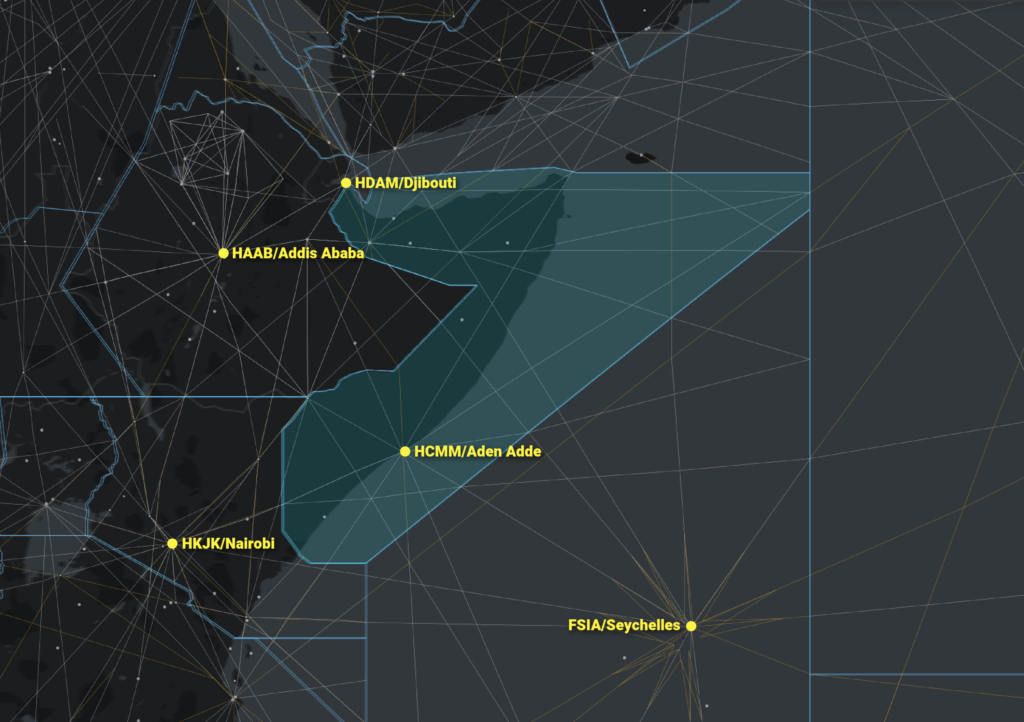
You have VHF 132.5 within 240nm of MOGDU. In case you can’t find it, that’s a point over HCMM/Aden Adde airport.

There are a whole bunch of HF frequencies as well:

  • Day 11300/8879/13288
  • Night 5517/11300/3467

They have CPDLC for FANS1 equipped folk. Logon: HCSM.

And they have a whole load of SATCOM numbers you can try if you get really stuck:

  • +252 61 335 0046
  • +252 62 3350047
  • +252 1857390
  • +252 1857391
  • +252 1857392
  • +252 1857393

What else do I need to know?

That is about it. There are contingency procedures, and fairly standard equipment and all that which you can read about in full in here.

We also say check your weather, check your fuel, check your alternates because there are not many options nearby if routing this way. You can find more information on airspace safety here.


Somalia joins the A Team

Full ATC service is returning to Somalia! The HCSM/Mogadishu FIR is currently Class G uncontrolled, which means a lot of fairly annoying IFBP calls to make. This is about to change though…

(Well, not the IFBP thing sadly, they recommend you continue these even during the trial period).

From May 11 to September 21 they will be running a trial which will see the airspace from FL245 up become Class A controlled airspace.

The trial will only be between 0300-1800z (so during the day), but will cover the entire FIR including oceanic areas.

Notam A0051/22 (A0028/22) advises on this, whilst AIP SUP 02/22 has all the info (we’re still waiting for a copy!)

Who to talk to in Class A?

The following frequencies are your best bet:

  • VHF 132.5 MHz if within 240NM of position MOGDU.
  • HF (Mogadishu Control)
    Day Primary 11300Khz
    Day Secondary 8879Khz or 13288Khz
    Night Primary 5517Khz
    Nigh Secondary 11300Khz or 3467Khz
  • CPDLC for those FANS1 equipped, logon address HCSM

If you lose comms, then the procedures are pretty standard. These are available in the Somalia SUP 05/2018. Or you have the full contingency plans to follow in SUP 03/22.

SATCOM

Mogadishu have also re-confirmed their dedicated SATCOM numbers. Here they are:

  • +252 6133 50047
  • +252 6233 50047
  • +252 1857 390
  • +252 1857 391
  • +252 1857 392
  • +252 1857 393

What’s the difference between Class A and Class G?

In a nutshell, Class A doesn’t have VFR traffic in it, and you do need ATC clearances. Traffic will be provided with 10mins lateral/longitudinal separation and 2000′ vertical separation at and above FL410, 1000′ at and below FL400

Class G is uncontrolled which means it is all procedural, deconfliction services and traffic advisory services only.

What’s (less) new in Mogadishu.

  • Somalia still isn’t the safest region to fly through. Major authorities prohibit flights below (generally) FL260, and recommend sticking to the oceanic routings rather than overflying the land. All the up to date airspace warnings are available on Safeairspace.
  • IFALPA also published a bulletin back in 2018 talking about procedures in the Mogadishu FIR.
  • We shared a bunch of stuff on the general security threats and risks in Somalia here. Currently airports in Somalia are basically off limits though due big safety concerns.

Al-Shabab: A Threat Beyond Somalia

Al-Shabab poses a significant threat to aviation in Somalia, but the threat extends beyond the nation’s borders. This briefing will take a closer look at the background and nature of the threat, and will provide a brief overview of Somalia’s aviation infrastructure to help enable operators and pilots to carry out a full risk assessment.

The root of it.

Somalia sits on the Horn of Africa, bordered by Ethiopia to the west, Djibouti to the Northwest, Kenya to the southwest and the India Ocean to the east. The capital is Mogadishu and the primary international airport is HCMM/Aden Adde International.

It is an extremely volatile region of the world. It is also a pretty important airspace because it is one of the primary routes for aircraft routing from the Middle East and Asia into Africa.

Al-Shabab

Al-Shabab are an insurgent group seeking to establish an Islamic State in Somalia. They are active across Somalia, as well as Kenya and Yemen.

In 2006, Ethiopia supported the transitioning Somalian government to push Al-Shabab out of Mogadishu. In recent years, an African Union-led military campaign has been in force against them. The group retreated from Mogadishu, but still frequently target HCMM/Aden Adde airport, and the capital city, using small arms fire and vehicle-borne IEDs.

They also potentially have access to anti-aircraft capable weapons.

Which is why there are some big warnings for the region.

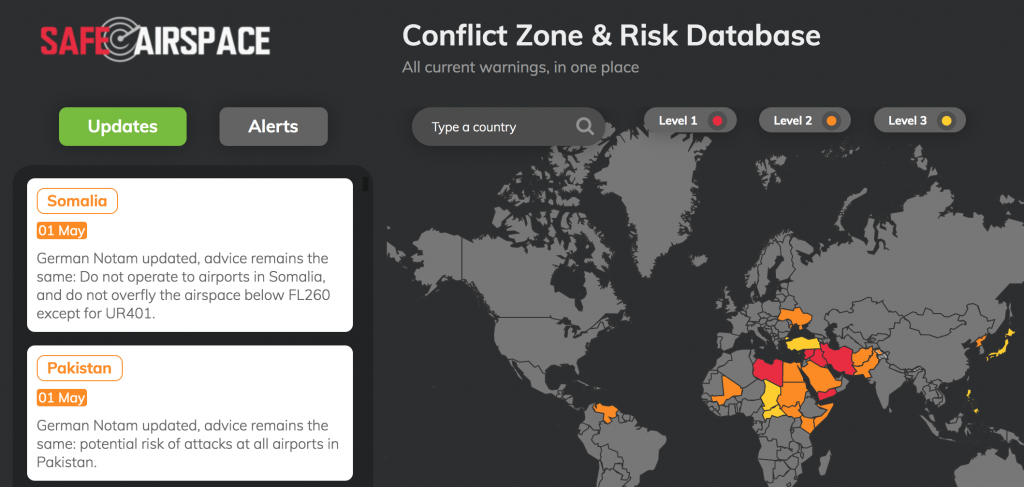
In our SafeAirspace risk assessment, Somalia is a Risk Level Two – Danger Exists. The reason for the Level Two rating comes down to the fact the risk is predominantly limited to certain levels. The threat to aircraft is generally low level, with high altitude overflights less at risk.

Most authorities have therefore issued AICs which advise against flights below FL260 across the HCSM/Mogadishu FIR, or operations into Somalian airports. Certain airways such as UR401 SIHIL – AXINA only route over the oceanic airspace and so are exempt from the “Don’t Fly” warnings.

The USA have KICZ Notam A0005/21 in place warning against flights below FL260, along the region bordering Somalia (40°E).

The threat within Somalia.

The main threat comes directly from Al-Shabab who may have access to anti-aircraft weaponry. They pose a threat to low level aircraft and to security and safety on the ground as they frequently target Aden Adde airport with mortar attacks.

There is an additional threat from the Ethiopian military forces – the possibility of misidentification of civilian aircraft by them.

In 2020, a Kenyan cargo plane was inadvertently shot down following a misidentification. The cargo aircraft was routing from HCMM/Mogadishu to HCMB/Baidoa.

The threat beyond Somalia.

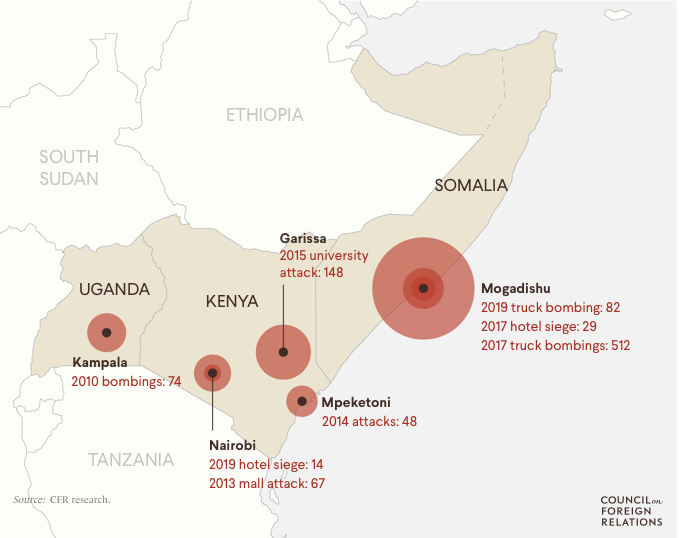
Al-Shabab have also targeted neighbouring countries. While the infrastructure and security in these countries is stronger than Somalia, which reduces the hazards and disruptions to airborne aircraft, it still presents a high security risk on the ground.

The group have attempted to attack aviation infrastructure and facilities, and have attempted to use aviation to launch other attacks on countries.

In early 2020, a complex attack was carried out against a Kenyan military base which houses US troops. Similar targets in Djibouti were also identified.

In 2016 , an Airbus 321 was targeted with a bomb on board which exploded shortly after takeoff, earlier than intended. The aircraft was able to land safely at Mogadishu.

Some arrests of Al-Shabab operatives were made in December 2020. A Kenyan man and member of the group was planning a “9-11 style attack”, and had enrolled in a flight school in the Philippines, intending to obtain a pilots licence with the purpose of gaining access to a flight and using this as a means to carry out the plan.

In 2019, a major attack on a hotel in Nairobi, Kenyan took place. Operators should be aware of the ground threats, particularly the security issues for their crew if they are staying in major hotels in regions Al-Shabab have targeted previously.

Kenya had its airspace threat level downgraded in 2018. There remains a ground based risk to security.

Sites such as International SOS provide good, up to date information on ground security threats.

Additional risks to aircraft operating through the region.

HCMM/Aden Adde is the only major airport in Somalia. Aircraft routing down the east coast of Africa are limited in their emergency and diversion options. HDAM/Djibouti to the north, HKMO/Mombasa to the south or FSIA/Seychelles to the east are the only relatively close ones.

In the event of a time critical emergency, if crew use HCMM, security and safety on the ground must be considered. In the event of a diversion, with limited options, careful and regular checks of the weather (due to common storm build ups during summer months) will be critical to ensure the aircraft is not committed (fuel wise) to an airport which then becomes unsuitable.

A closer look at Somalia.

The Airport:

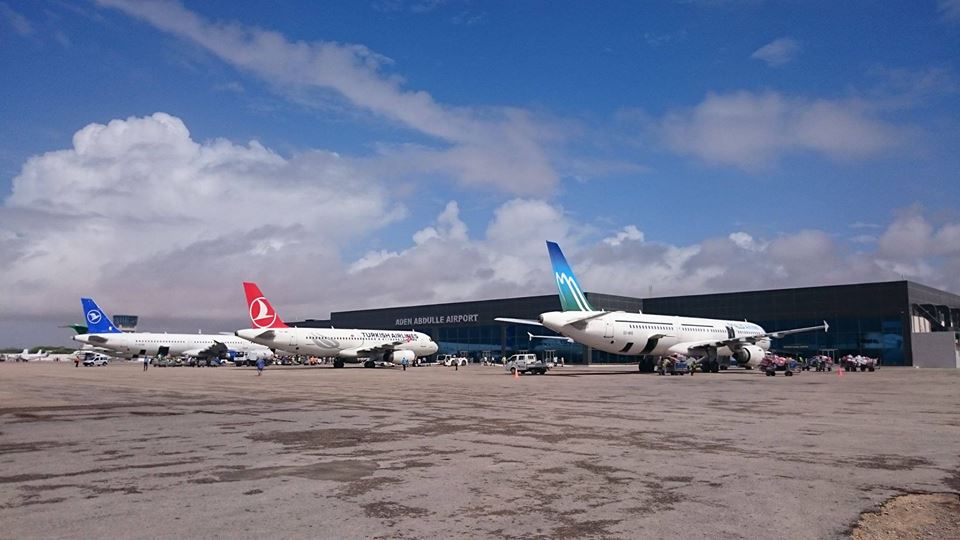
Aden Adde International airport is the primary airport for Somalia. It has a single runway 05/23, which is 10,446 feet (3184 meters). The only published approaches are RNAV (GNSS) or RNAV (RNP) for runway 05.

There is minimal apron space and parking, and only a single taxiway midway down the runway meaning backtrack and 180 degree turns are required.

There is a ‘Do Not Descent below FL100’ sector north and northwest of the airport, and the RNAV approaches descends and routes aircraft over the sea to avoid aircraft flying over the land low level, where risk of attacks would be significantly increased.

Despite the potential risks, several international airlines do operate into Aden Adde.

Routings and Airspace:

Because of the position of Yemen, which is a ‘no fly’ country, and Eritrea and Ethiopia where the Tigray region is also a ‘no fly’ area, aircraft are limited in the connecting routes to and from Africa. Routing via Egypt and through Sudan and South Sudan is longer, and has other challenges and airspace risks associated with it.

Routing along the east coast oceanic section of Mogadishu airspace is significantly shorter.

All of the Mogadishu FIR is Class G airspace, with only an FIS.

Communications:

The infrastructure in Somalia is limited. The minimum radio and navigation equipment requirements for overflights are:

  • HF Radio
  • VHF radio
  • GPS received (ATS routes)
  • TCAS

There is a H24 flight information service and alerting service in the Mogadishu FIR, callsign “Mogadishu Information”.

The primary VHF frequency is 132.500, with primary HF 11300/5517

Mogadishu also has a (relatively responsive) SATCOM number you can call – 466601 (Inmarsat) or +252 185 7392/7393

Aircraft need to check in at least 10 minutes prior to the ETA for the FIR entry point.

Routing through the airspace, aircraft are required to maintain a listening watch on the IFBP frequency 126.9. If aircraft experience an HF failure, they should attempt to contact Mogadishu FIC via SATCOM, or request relays via other aircraft.

Summary

Al-Shabab present a risk both directly to flight operations, and to operations and ground security in neighbouring countries:

  • Flight operations below FL260 are at risk
  • Since 2020, the group has issued new warnings suggesting they are increasing their anti-aircraft weapon capabilities, with intentions to target US aircraft specifically
  • Crew and aircraft security on the ground is a risk
  • Crew should be aware of security and safety in neighbouring countries, particularly at tourist spots and in major hotels which may be targeted
  • Infrastructure and security in neighbouring countries may be at risk
  • Regional stability is threatened by ongoing conflict

Aviation & Humanitarian support.

Somalia has its own CAA. The need for better infrastructure and equipment because of the importance of overflights through the Mogadishu FIR has led to other State’s funding and supporting the CAA.

The UN work with Kenya to organise humanitarian air services and missions into Somalia. More information can be found on that here.


Cargo plane in Somalia was shot down

Update: Ethiopia has confirmed that this was a shoot-down event. The Ethopian Army misidentified the aircraft – or at least its intentions. 

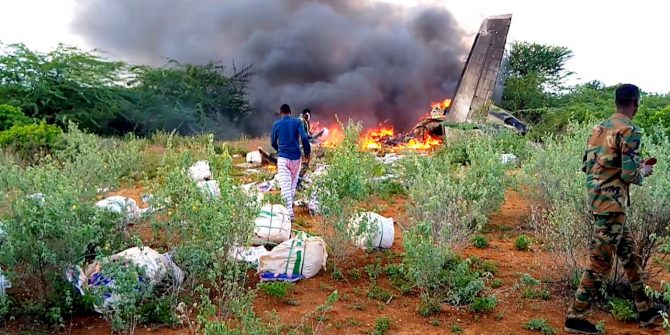
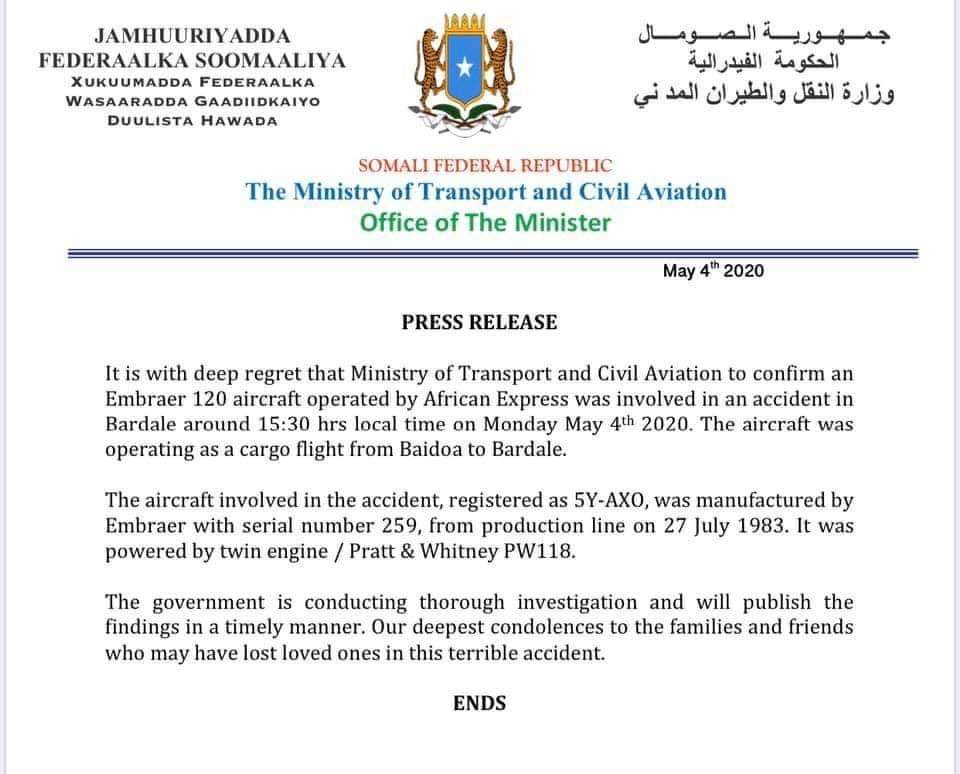
Somalia is investigating how an Embraer EMB-120 aircraft crashed while on approach to Bardale airstrip in Somalia, killing all six people on board. Local officials say the cause of the crash is not yet clear but there has been speculation it might have been shot down.

The Kenyan private cargo plane, operated by African Express, was operating a humanitarian mission with coronavirus medical supplies when it crashed on Monday afternoon in southern Somalia, about 300km northwest of Somalia’s capital Mogadishu.

Bardale airstrip is a base for the Ethiopian military under the multinational African Union mission, which is combating the al-Shabab terrorist group in the region.

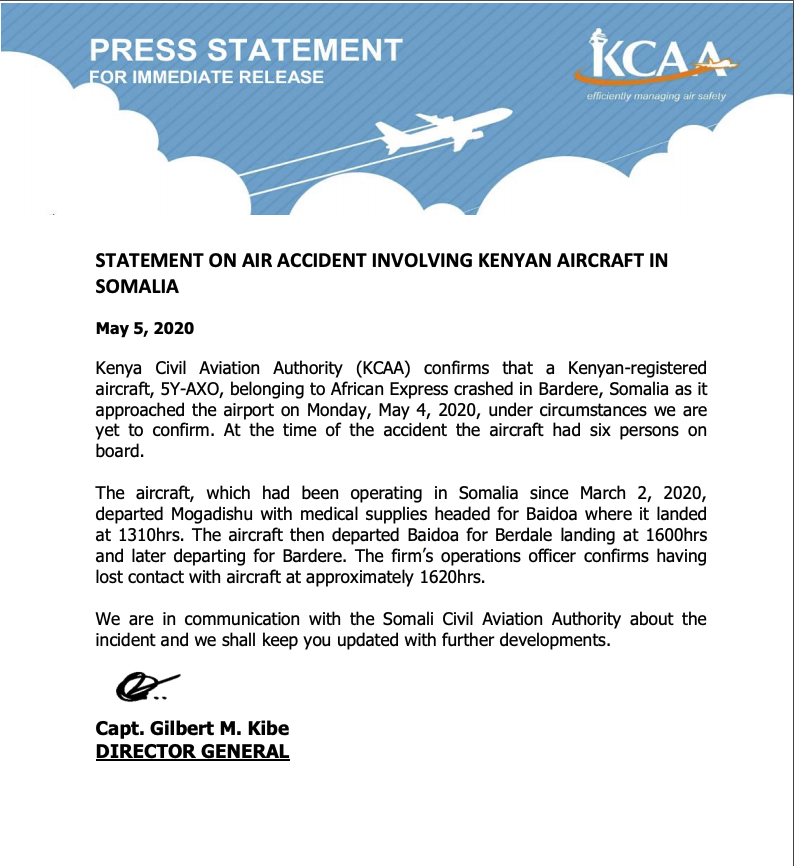
The Kenyan Civil Aviation Authority on Tuesday said the plane crashed on approach to Bardale “under circumstances we are yet to confirm.” However, the Associated Press are quoting local state officials who have told them that a projectile fired from the ground hit the plane as it approached the airstrip.

If that is the case, and the aircraft was in fact shot down, it’s not yet clear whether this was an intentional attack carried out by al-Shabab militants, or an accidental shoot-down by Ethiopian forces stationed in the region.

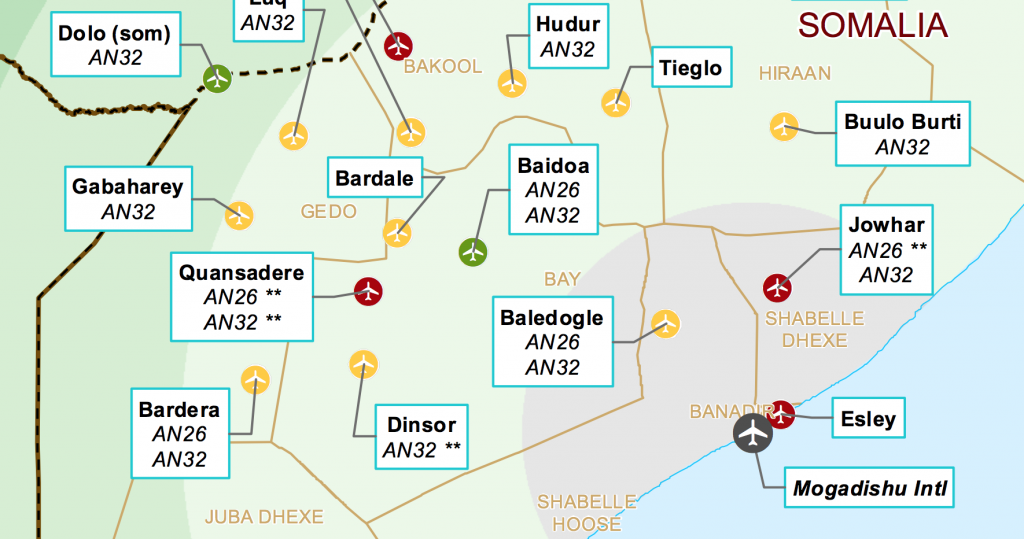
The plane had left HCMM/Mogadishu, and stopped in HCMB/Baidoa before going on toward Bardale airstrip. Kenyan authorities said they were in contact with the Somali CAA – who called the crash “a terrible accident” and said the government was investigating.

Multiple countries have long-standing airspace safety warnings in place for Somalia. The advice from all sources is similar – do not operate below a minimum of FL260 in the airspace of Somalia due to a high risk to overflying aircraft from anti aviation weaponry. The FAA completely prohibit US operators from flying below FL260, as per the guidance in the Special Federal Aviation Regulation issued in Dec 2019, which reads as follows:

“The FAA continues to assess the situation in the territory and airspace of Somalia at altitudes below FL260 as being hazardous for U.S. civil aviation operations due to the poor security environment and fragile governance structure in Somalia, as well as the threat posed by al-Shabaab, an al-Qa’ida-aligned extremist group, and other extremists/militants.

Al-Shabaab has demonstrated an intent and capabilities to target civil aviation operations in the territory and airspace of Somalia through a variety of means, including the use of an insider to smuggle a concealed IED onto a civil aircraft, use of anti-aircraft-capable weapons, and direct and indirect attacks on Somali airports.

Al-Shabaab has frequently targeted Aden Adde International Airport (HCMM) with attacks using indirect fire, small arms fire and vehicle-borne IEDs. Al-Shabaab has conducted multiple mortar attacks targeting the African Union Mission in Somalia (AMISOM) at Aden Adde International Airport (HCMM), and has done so as recently as January 1, 2019. Al-Shabaab frequently conducts vehicle-borne IED attacks targeting Western interests and public venues in Mogadishu, including detonating vehicle-borne IEDs near malls (February 2019), hotels (November 2018) and near a security check point close to Aden Adde International Airport (HCMM) (June 2019).

In addition, al-Shabaab is assessed to have access to anti-aircraft-capable weapons presenting a risk to U.S. civil aviation operations at altitudes below FL260.”

Our recommendation is to avoid the airspace of Somalia entirely. The situation on the ground is highly unstable and there is an inherent risk to civilians and aircraft. The central government has little control of the major cities and ports with ongoing attacks from extremist militants targeting civilians. For more information, check Somalia’s dedicated page on SafeAirspace.net


Midweek Briefing: Where is Zika, Elevated North Korea Risk

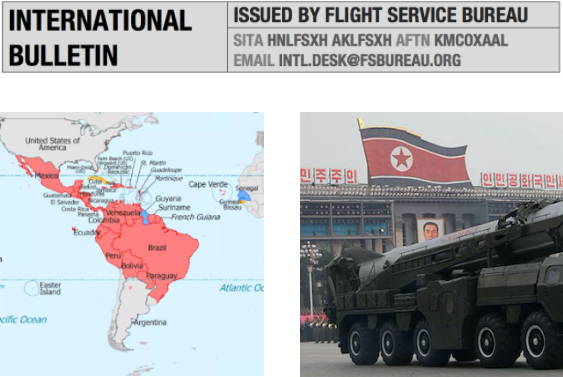
Where is Zika? 24AUG With the again-increasing levels of Zika infection worldwide, this updated map will be useful to operators. Check Zika Map.

North Korean Risk Elevated 24AUG We’ve published an updated Unsafe Airspace Summary today, which elevates North Korea to Level 2 in our warning list. In 2016, there have been increased instances of medium-range ballistic missile (MRBM) launches without prior warning. Read the article


DIAP/Ivory Coast issued a Notam last Friday advising of ‘serious risks to safety’ when operating through the Tripoli FIR. Not many operators are entering this airspace, but it’s unusual for a non-adjoining country to issue advice like this, so we’ll mention it.

SPZO/Cuzco, Peru is busy at the moment; non-scheduled and GA flights cannot park overnight, and there are Traffic Management procedures inbound. Don’t forget if operating to Cuzco that special crew training is required.

WADD/Bali Authorities have stepped up security measures at all the entry points on the island, following recent reports of an alleged plot to carry out attacks.

HKNW/Nairobi WIlson is operating normally again after a Police helicopter crashed on take off on Monday, near the control tower.

LLZZ/Israel Israeli aircraft attacked mortar positions in southwestern Syria near the border with the Golan Heights on 22AUG. The airstrikes were apparently in response to mortar fire from the Syrian side of the border.

RJAA/Tokyo Narita is open again after the passage of Typhoon Mindulle. The control tower at Narita was evacuated due to strong winds, the first time this has happened since the 9.0 earthquake in March 2011.

WIZZ/Indonesia has warned its neighbours that haze from forest fires is beginning to cross the Malacca Strait. In 2015 the smog affected Malaysia, Singapore, and Thailand, causing disruptions throughout the region, closing airports and delaying flights.

EDDT/Berlin Tegel Aircraft larger than ICAO Code D, and parking longer than 3 hours, approval of Traffic Management is required. Contact verkehrsplanung-txl@berlin-airport.de, in place until 30Sep.

VEZZ/India Couple of new ICAO codes here, VASD is Shirdi Airport, and VEPY is Pakyong Airport. AFTN connections not yet set up.

LBPD/Plovdiv Reports of lasers directed at departing aircraft. Notify ATC with any details if experienced.

FOZZ/Gabon If you’re arriving into Libreville International Airport you can submit an online visa application at least 72 hours before the date of travel and collect your visa on arrival

BGTL/Thule Updated hours for Radar service – 1100-1900Z Mon-Fri only.

NTAA/Tahiti has a bunch of night-time closures until 03SEP; this is an isolated aerodrome so check carefully in advance of ops.

NWWW/Noumea has ongoing staff shortages in ATC, and therefore interruptions in opening hours for the airport. Check before operating.

VDZZ/Cambodia has introduced a new tourism and business multiple-entry visa, which will allow foreigners to stay in the country for up to three years. The visa will become available on 1 September. The current visa grants visitors a 14-to-31-day stay.

LCLK/Larnaca New ATC Controllers being trained (under supervision)—be nice to them!

FMMM/Antananarivo has a new disinsection procedure for flights arriving from Mauritius; also, all flights from Mauritius must operate to FMMM first before other airports in Madagascar.

HCSM/Mogadishu Due to HF Difficulties, all aircraft in Mogadishu FIR with Satcom are requested to contact Mogadishu FIC on Satcom.  Inmarsat 46601, phones +251-20-762274 or +254-20-2365679.

View the full International Bulletin 24AUG2016