New APIS system coming to Hong Kong
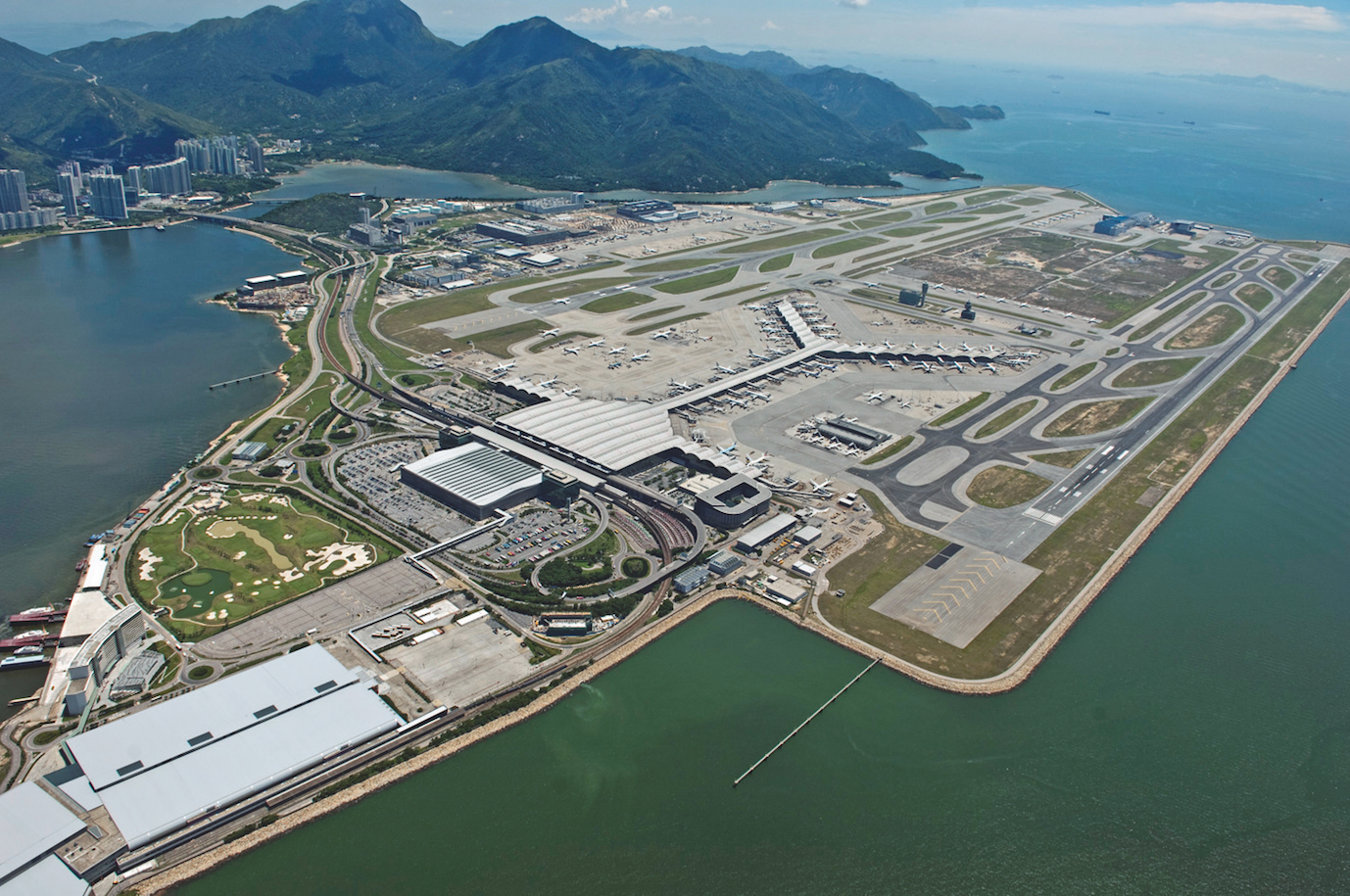
  • Hong Kong has implemented a new APIS system. BizAv flights need to do this from 29 April 2025 onwards (although non-compliance will not be enforced until Sep 2025). APIS info will be required for all crew and pax (including transit) for all flights – both private and commercial.
  • The local FBO (HKBAC) will not do this for you. The operator must complete APIS themselves, or get a third party trip support provider to do it for them.
  • The process for actually submitting APIS sounds a bit messy. Full guidance below ⬇️

So, first things first, there’s this letter that says BizAv flights need to do APIS from 29 April 2025 onwards, with full compliance mandatory from 1 Sep 2025.

In terms of how to go about doing it, there is now a website up and running where you can register an account to file APIS online:
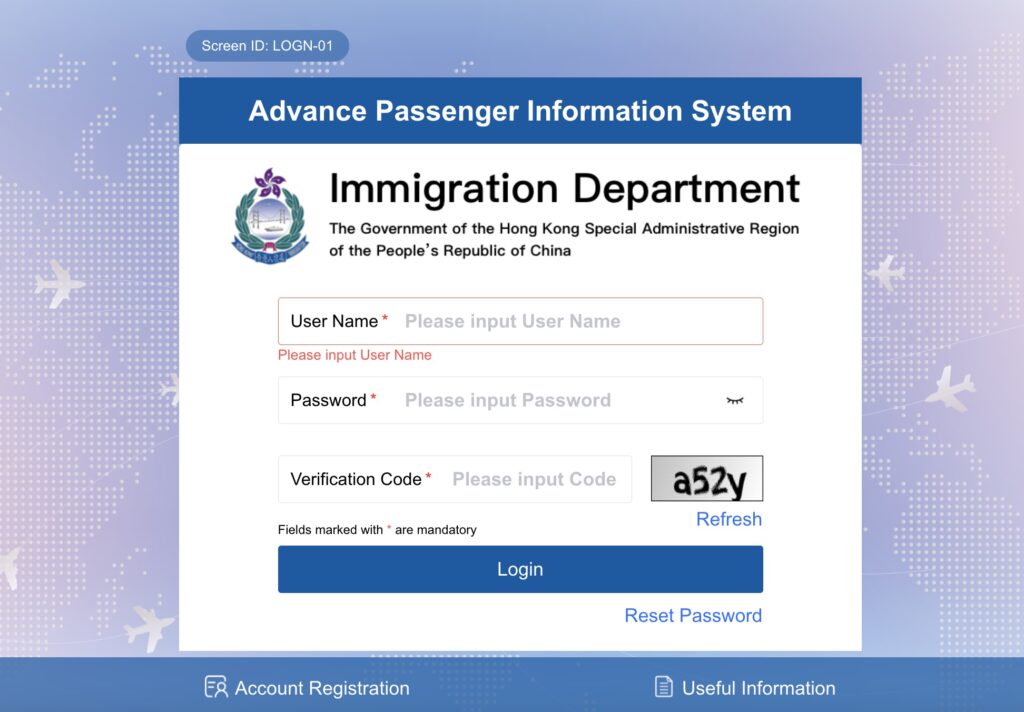
Click on ‘Useful Information’ and you can then download the ‘Submission Guide’ which tells you what to do, but the main things to know are as follows: 

1. “No Board” = No entry, even for crew
If the APIS system returns a “No Board” message for any traveller, including crew members, they are not permitted to board the flight! You then have to contact the Command Centre if you think that decision is wrong for any reason. Phone: +852 2121 0008. Email: apisoperation@immd.gov.hk

2. Different submission deadlines for pax and crew
This is a weird one. Passenger API data must be submitted no later than 40 minutes before departure, but crew data must be submitted at least 60 minutes before departure. No idea why, but it’s in the rules! Best thing to do is just submit both crew and pax data at least 1hr prior, and forget about the whole ’40 mins for pax’ thing (and certainly don’t tell them about it!)

3. Crew data must be submitted twice
This is ever weirder still! Operators are required to submit crew API data twice for every inbound flight. The first submission must occur before departure, and the second (the Flight Close-out Message) must be submitted after the flight has departed. Even if there are no changes to the crew, the second submission is mandatory and must reflect the actual crew on board.

4. Transit crew and pax must be included
API data must be submitted for all travellers on board the aircraft, including those in transit who are not disembarking in Hong Kong. 

5. The local FBO can’t do it for you
This one doesn’t actually appear in the guidance, but was reported to us by the local FBO (HKBAC). They said they cannot file APIS for operators – they can help you to set up the account on the APIS website, but you will have to file yourself! (or get your third party trip support provider to do it for you)

6. Eventually there will be fines for getting it wrong
As seems to be standard with all things like this, they say they’ll fine you if you get it wrong. Failure to submit required data, submission of inaccurate or misleading information – stuff like that. Although they do also say that they won’t start fining anyone in the ‘transitional period’ which ends on 1 Sep 2025.

Ops to Hong Kong

This has long been a tricky old game for GA/BA flights – even before this latest thing with the new APIS requirements. 

To operate to VHHH/Hong Kong, you need all of the following to be confirmed in advance (and we recommend applying in this order): landing permit, parking, ground handling, slots… and now APIS too.

All of these need to be applied for individually. Here’s how to do it…

Landing Permit

This can be done whenever, but should probably be done first.

Apply here: www.cad.gov.hk/english/efiling_home.html

Contact: Civil Aviation Department (CAD)
Email: asd@cad.gov.hk, gcmtse@cad.gov.hk
Phone: +852 2910-6648, -6629

Parking

Parking is confirmed on a first-come-first-served basis, and can be applied for up to 30 days in advance. Ultimately, the earlier you apply the better. However, parking requests for 5 days or more can sometimes be rejected, and overnight parking is often denied during busy periods. If this happens, unfortunately the best strategy is still to just keep making new applications until you get accepted! Once your parking is approved, you’ll receive a confirmation, and this must be given to your ground handler.

Apply here: https://extranet.hongkongairport.com/baps/

Contact: Hong Kong Airport Authority (HKAA)
Email: bjetslot@hkairport.com

Ground Handling

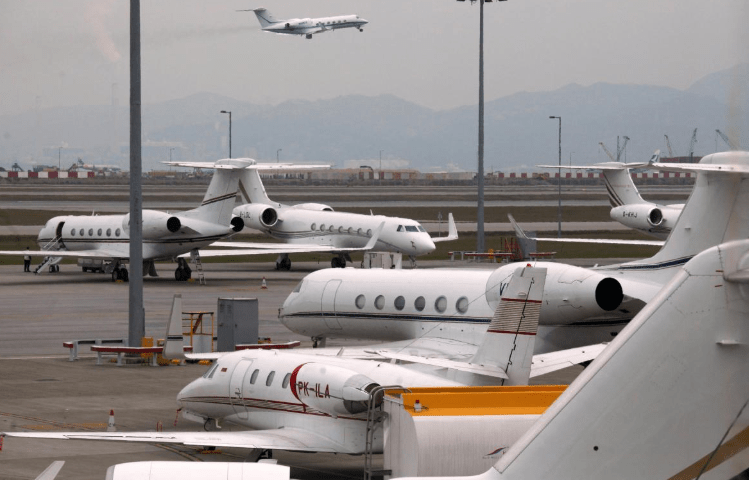
There are plenty of agents and handlers at VHHH, but only one dedicated FBO for BA/GA flights – HKBAC. Send them an email to confirm your ground handling in advance.

Contact: Hong Kong Business Aviation Centre (HKBAC) https://www.hkbac.com
Email: hkbac@hkbac.com
Phone: +852 2949 9000

Slots

Applications will only be considered 14 days prior to flight (unless you’re applying for a last-minute cancelled or unused slot). Authorities monitor the slot system for intentional misuse – which could lead to operators being banned from using the system altogether. Other violations include any cancellations of outbound flights less than 72 hours before departure, and delays on the day by more than 2 hours – although any off-slot operations outside a tolerance of +/-20 minutes can still flag up for potential slot misuse.

Apply here: http://www.hkgslot.gov.hk/Online_Coordination.html

Contact: Hong Kong Schedule Coordination Office (HKSCO)
Email: hkgslot@cad.gov.hk
Phone: +852 2910 6898

Our Pilot Report – here’s what we did…

If you’re headed to VHHH/Hong Kong for the first time (or the first time in a long time) and want to know what to expect, here’s an OPSGROUP Team report from a recent flight:

Hong Kong is a busy commercial hub in Asia. However, they manage BizAv aircraft there. There are a few gotchas to keep an eye out for when arriving and departing.

Handling:

  • All your operations will centre around the HKBAC (Business Aviation Centre). They are helpful, and I’d suggest you contact them for help arranging your parking and slots.
  • It can get busy, so the earlier you contact them, the better your chances will be.
  • It is an expensive place to fly into. However, Hong Kong is expensive in general.

Arrival:

  • If you are coming to Hong Kong, note that the airport is beside a large mountain, so you get significant mechanical turbulence and wind shear.
  • All arrivals are RNAV; vectors are not expected for many shortcuts beyond TD for Runway 25R. There is a lot of terrain.
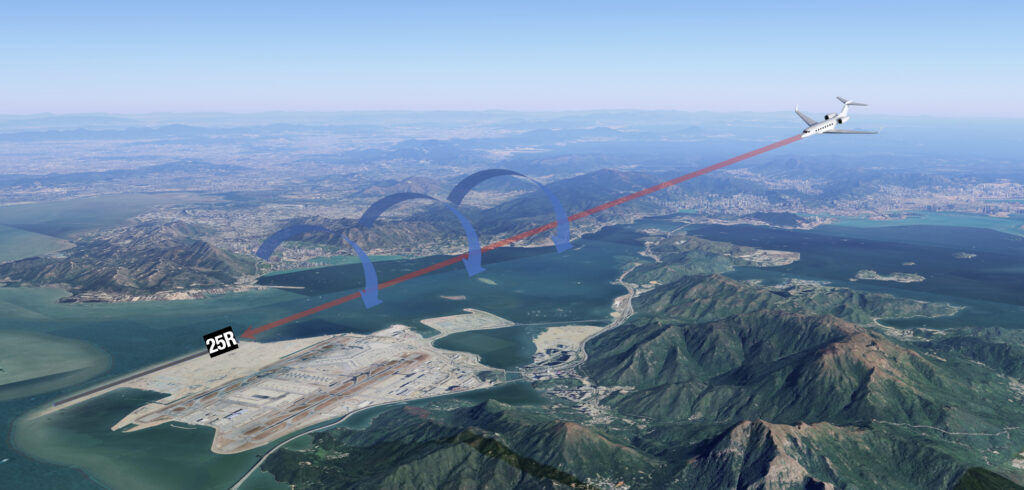
  • I suggest you take the RNAV 25R over the ILS. The ILS is very complicated as it is a two-part RNAV transition. It is also very high-load, and you must NOT select approach mode (i.e., switch to LOC/GS) before you hit TOPAN. Honestly, stick to the RNAV Z unless the cloud base is really an issue (which it rarely is).
  • Even with calm winds on the ground, expect the approach to be quite bumpy.
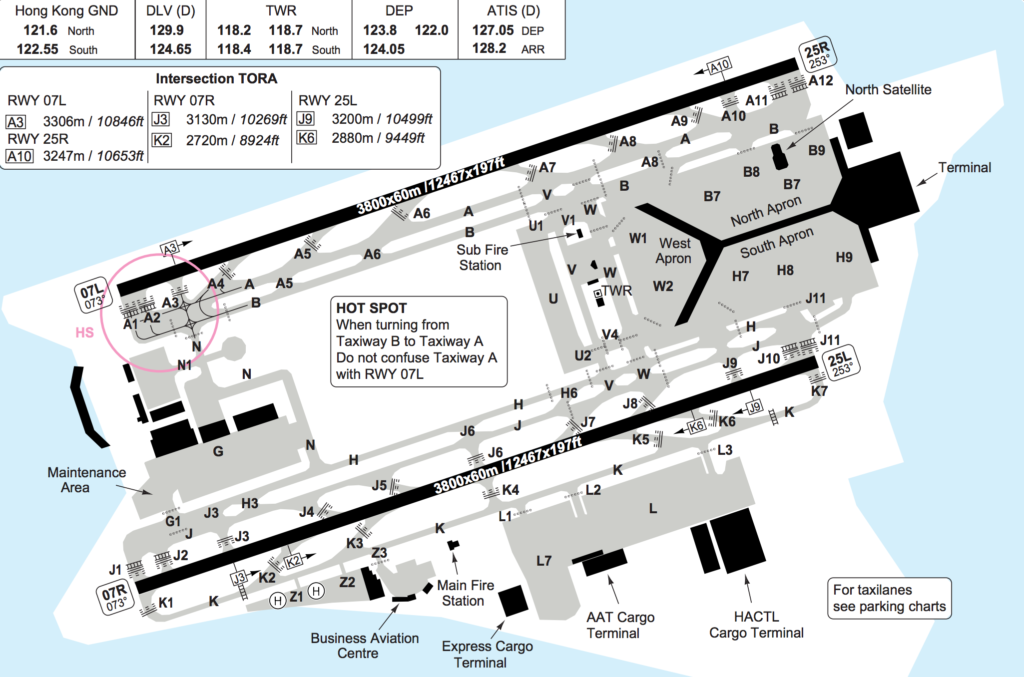
  • Generally, ATC won’t assign you the close runway for landing, so expect a long taxi. You can expect to cross 07R/25L at K6 before making a right turn onto K and then into the BAC.
  • Once you open the door, they will offload the pax and cargo (customs screens everything, so take note), and they will often reposition you quite quickly to a staging bay while you clean up.
  • If you have a short lay over the Sheraton at Tung Chung is nice, otherwise it is a good 45-minute uber ride into Town.

Departure:

  • The ramp is small, so expect to be at a remote staging area while you get the aircraft prepped. You can run the APU, etc., without issue, and then somewhere ETD-30, you can expect them to tug the plane into your departure position. These guys know what they are doing, but give them a heads-up if you wish your passengers would be late.
  • PDC is available, as is Digital ATIS. Don’t forget you need a start clearance (this isn’t the USA).
  • You can expect to depart from the closeby runway (07R/25L) unless it is closed for some reason (there is a nightly alternating closure for maintenance). So there is a short taxi; just be mindful that if you are slow with cabin prep, etc., you will be blocking the cargo aircraft that also taxi from the same side of the airport. ATC is friendly and competent but expects us to be efficient also.
  • Departure clearance will be on your SID to 5000. Be mindful of flying noise abatement procedures; they expect you to accelerate to SID speed restrictions knots as soon as practicable. It is all on the charts; remember, we operate amongst a sea of heavies.
  • One thing to note is that HK Departures only wants you to make the first call reporting your altitude passing and non-climb. There is no need to report your SID.
  • Expect to level off at 9000′ until you are about 20-30nm from the airport; this is due to the arrival traffic above. 

If you have been to VHHH/Hong Kong (or anywhere else) and have a story to share – please do! Reports like these are super useful for everyone in the group. File an Airport Spy report anonymously here.

Seven things about Hong Kong

The Hong Kong Sevens is a major rugby tournament, and one which hasn’t taken place for three years. So this one is probably going to be quite popular.

Here are seven things for you to know about if you’re planning on heading to Hong Kong during this event.

1. Tournament Info

The tournament takes place November 4-6.

You can find all the info on it here, but from a flying perspective the main thing to know is that teams from 16 countries will be taking part and that means a lot of extra BizAv airplanes heading to Hong Kong around these dates.

2. Hong Kong Covid Info

Hong Kong have been one of the stricter (and slower) countries in terms of easing up on Covid entry stuff, but at the start of October 2022 they made it a lot easier for crew and passengers to head in.

The main thing was the dropping of mandatory hotel quarantine for fully vaccinated crew.

Essentially, crew can choose between entering without isolating if they take multiple PCR & RAT tests during their stay in Hong Kong, or not entering under closed loop arrangements to self-isolate at the Airport Hotel (Skycity Marriott Hotel) until their next departure.

They also have to complete their online health declaration and get a QR code before they board the flight into Hong Hong. You can find that here.

We received a report from someone who operated there recently, and they said they were not able to test on arrival as crew, but were offered the option to declare themselves a passenger and pay for a $2000HK test in the terminal. Otherwise, they were not allowed out.

3. Permits and Slots.

You need to talk to HKCAD to get prior clearance if you’re a private, non-revenue flight. They take about 3 days so hurry up if you haven’t already sorted this.

We actually wrote a whole load on the process here, but in general they need what you’d expect them to need:

  • What you are flying
  • Where it is registered
  • Who the operator is
  • Which ground handling agent you are using
  • Dates and times
  • Insurance stuff
  • Proof you meet all their AIP specifications.

Slots are mandatory as well. Thankfully the airport operates 24/7 but they do have restrictions between 10pm and 7am local so don’t assume you can avoid the crowds by heading in in the middle of the night.

There is a whole load of info in here which the Airport and Authority posted about slots in 2021. The main bits are probably this:

  • Generally you need 14 days to set up a new account and get slots booked (or your handling agent can do this for you through their account)
  • It isn’t just the runway slot you need. You need a parking ‘slot’ and ground handling arranged
  • The online slot system is here
  • Talk to the folk at Hong Kong Business Aviation Centre – hkbac@hkbac.com – for help with your slots.

4. Parking

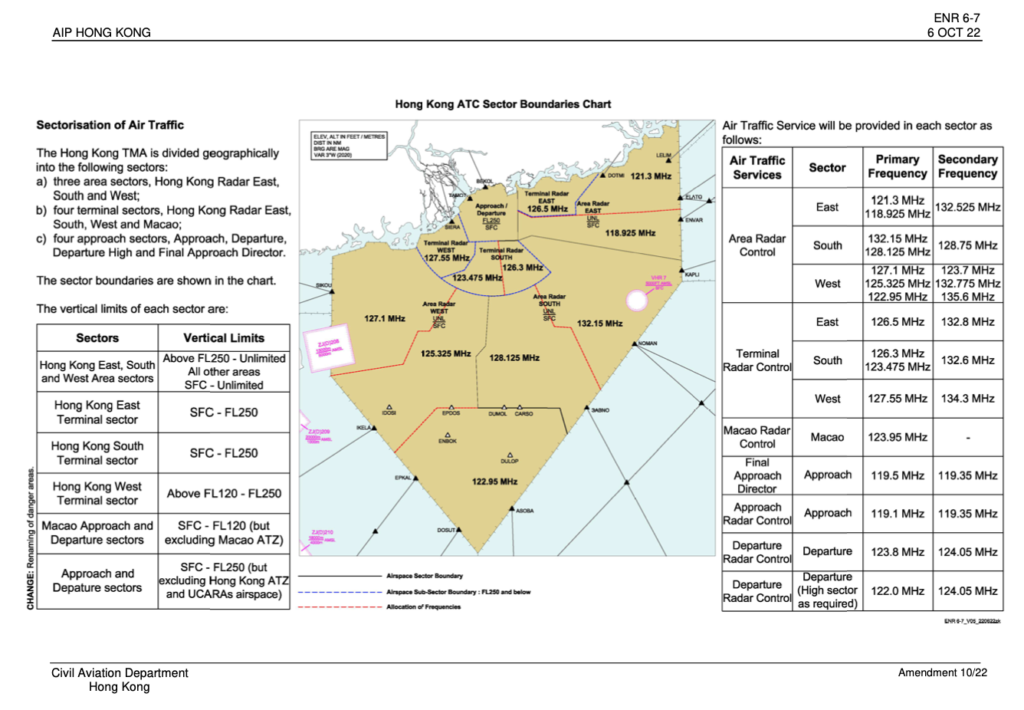
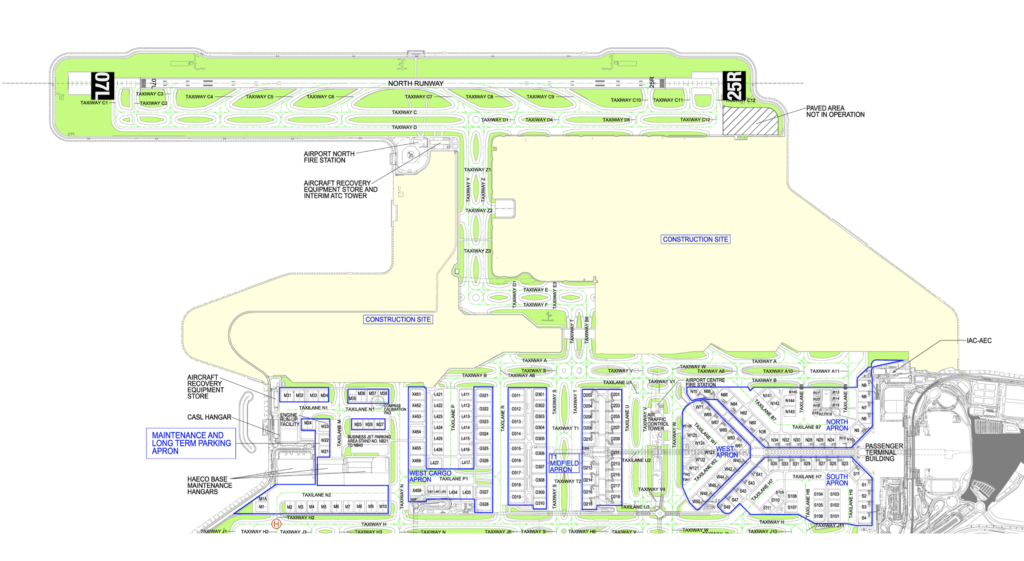
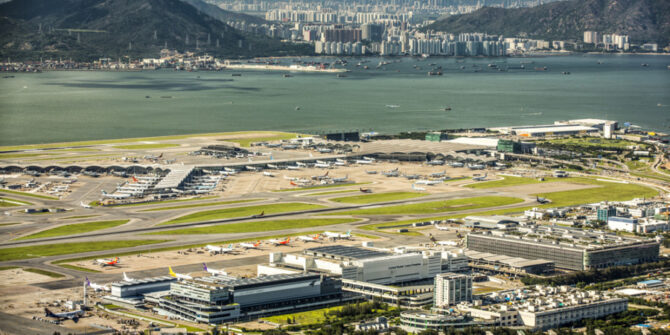
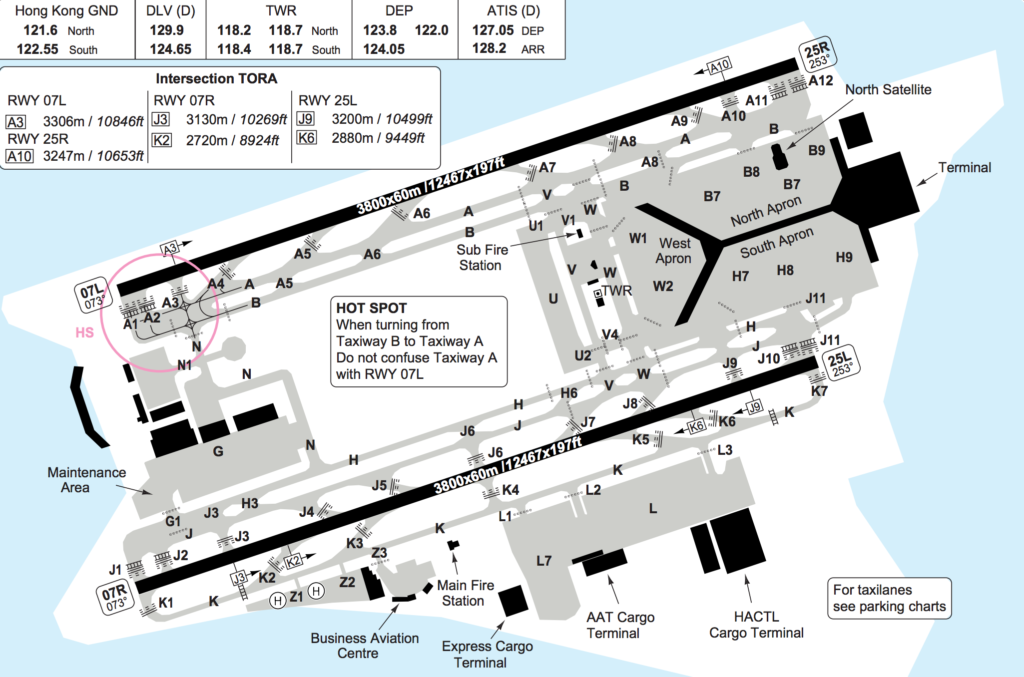
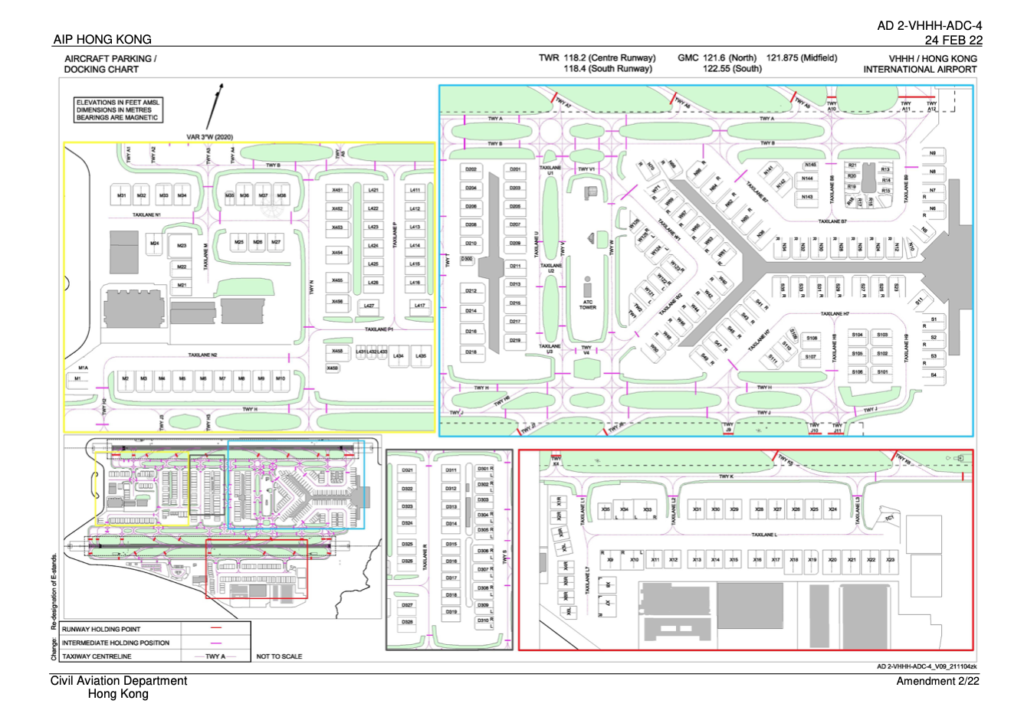
Parking at Hong Kong isn’t too big an issue because its a big airport. Here is an unhelpful picture out of their AIP:

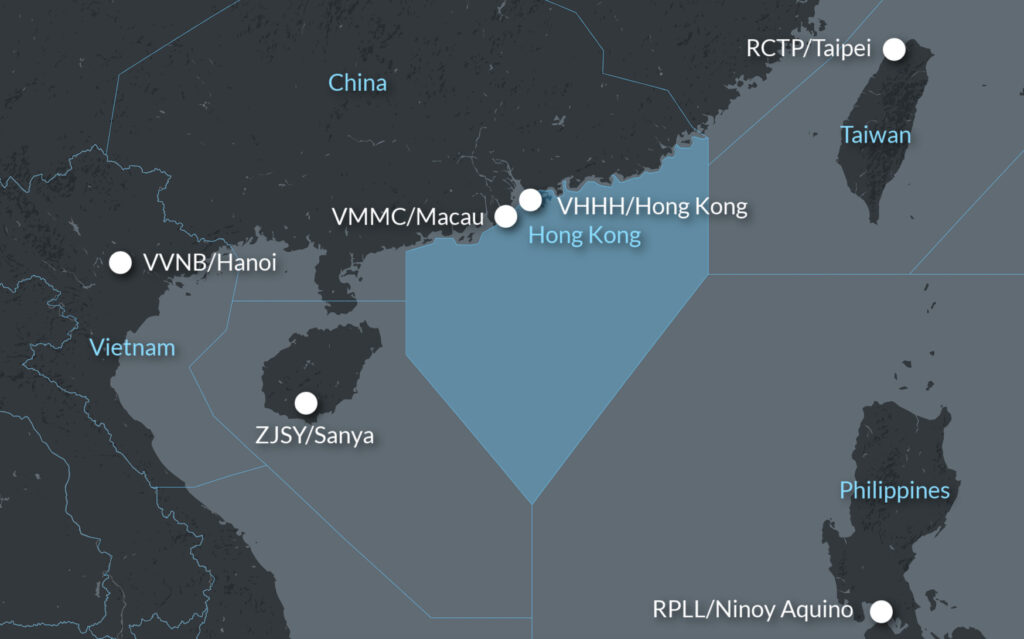
If you do find you can’t get a space there though, then there are some alternate options which you could use to swing by Hong Kong from:

  • VMMC/Macau Right next door, 11,024’/3360m runway, smaller and more limited parking options though
  • RCTP/Taipei A little bit further away, a 12,467’/3800m and a 12,008’/3660m runway, and a big airport with a load of parking
  • VVNB/Hanoi About the same distance as Taiwan, a 10,499’/3200m and a 12,467’/3800m runway to pick from and plenty of parking.

What we don’t recommend is China Mainland because…

5. China Mainland stuff

They get a bit funny about it. Not half as funny a they do with Taiwan-China Mainland operations, but it can still be a real hassle with visas for your crew and maintenance for your aircraft, and all that.

And a little thing called Covid which will probably still have you in boiler suits, escorted to and from locked hotel rooms.

6. Operational Stuff at Hong Kong

Here is the online AIS which is a good spot to start if you’ve not been to Hong Kong before.

It is a well managed airport, but there are a few things to know about.

  • They just got a new runway Well, earlier in 2022, but they did and you might not have used it yet so here is a post about it.
  • Issues with the ILS An ongoing thing which has earned its own special AIC. It basically says watch out for false capture because terrain means it doesn’t totally conform to standard ICAO ILS specs
  • Terrain is annoying there It gets in the way of things like the go-around and one engine out stuff. You might want to check the gradients because they are quite high
  • You need ADS-B or you’ll be stuck down at rubbish levels

If you’re an Opsgroup member, then give VHHH a search on Airport Spy because there are a lot of reviews, documents and other useful things there on Hong Kong, including an Airport Lowdown.

7. What else…

I said 7 because of the Rugby Sevens thing, but I can’t think of another one.

Oh, ok, weather – ’tis the season of typhoons so keep a look out for them. This is a good page to do it on.

Don’t just worry about the weather at Hong Kong, check it for your alternates as well because the whole region can get some pretty nasty weather when these storms start brewing.


Hong Kong: New Runway Opening

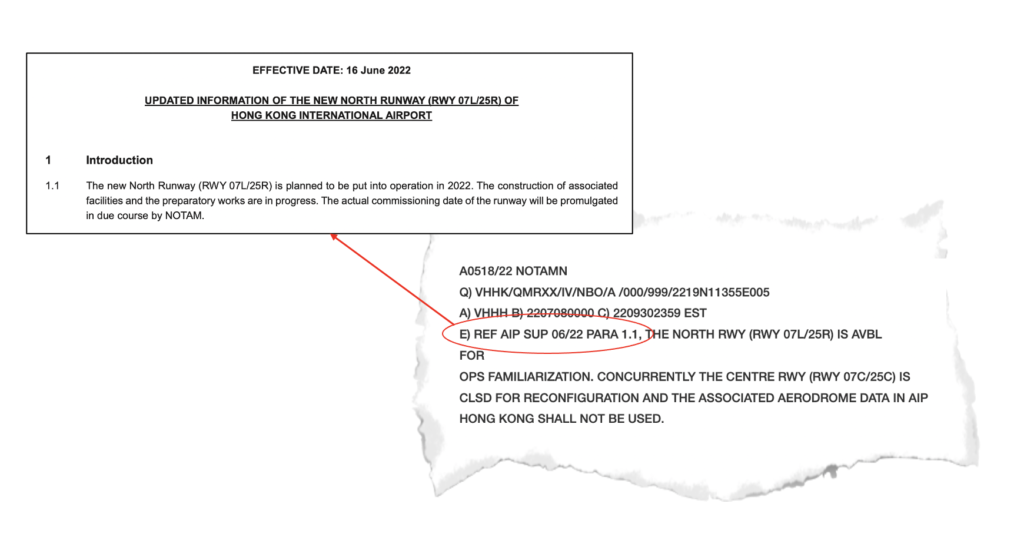
In Honkers, things are about to change. The airport’s shiny new northerly runway (07L/25R) will become operational on July 8 – earlier than expected. Although there will still be some restrictions on its use.

AIP SUP 6/22 (an 111-page ‘über-sup’) which literally swallowed a bunch of other smaller sups, was published back in April with everything you might want to know about the new runway.

Now that you stand a pretty good chance of actually using it, let us help you out by hand-picking some of the more vital ‘need-to-know’ info to keep you out of trouble.

The basics.

The recently constructed 07L/25R is  12,467′ (3,800m long) and 197′ (60m) wide.

There are ILS/LOC approaches at both ends. There are also RNP (AR) approaches, but as their names suggest, you’ll need prior approval to shoot those.

Runway 07L is also equipped with CAT II goodies (25R is CAT I only). A big head’s up though – you need to get permission from HK authorities to conduct low viz ops at VHHH before you get there. There’s a form to fill out, and of course you’ll also need to provide evidence of your state-issued approval (OpSpec C060 for US operators).

As you would expect, along with the runway will be a bunch of new taxiways too. The layout is quite straight forward:

The new ‘normal’ configuration.

The new runway (07L/25R) will normally be used for arrivals, while the southerly runway (07R/25L) will be used for departures. When winds are light or easterly, expect to land on 07L for noise abatement which is preferred.

Squashed in the middle is 07C/25C. It will be closed from July 7 until further notice, but recalled if another runway becomes blocked.

Keep an eye out for routine closures for maintenance, which may reduce the airport to single runway ops at quieter times. The weekly schedule for those closures has been published in this (much more bite-sized) SUP.

Watch those ‘fly-overs.’

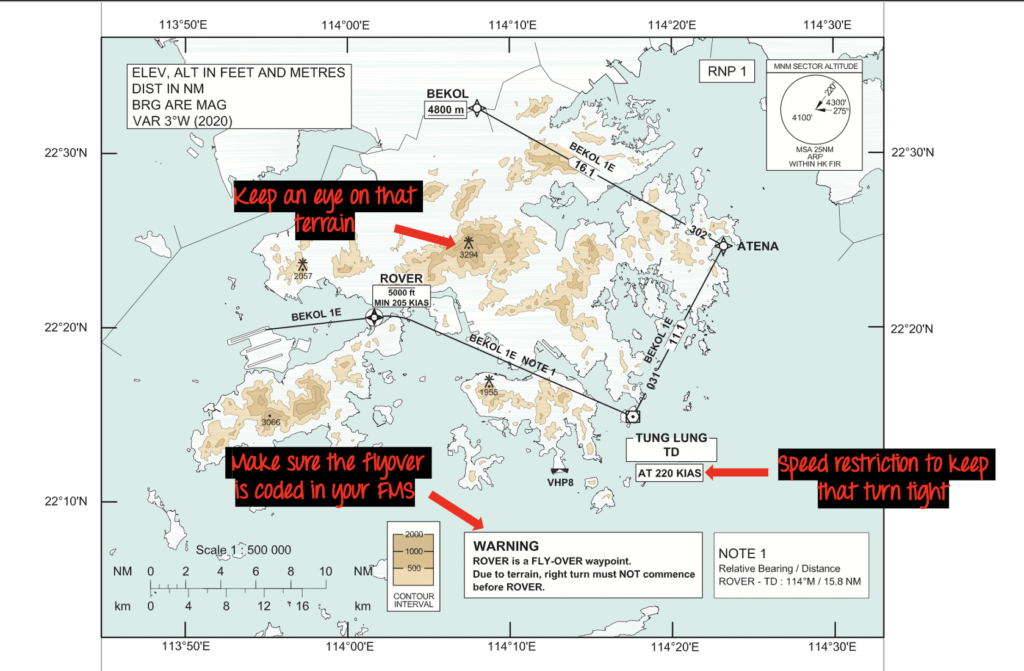
There are new RNAV SIDs and STARs for 07L/25R. Tracking is straight forward, but the major thing to look out for are fly-over waypoints. They can be lost a little in the noise of a chart, but if there is a circle around a waypoint, turn-anticipation is a no-no. Make sure the fly-over is correctly coded in your FMS. There are also speed restrictions to keep your turn radius down. The reason for these is to keep traffic well clear of high terrain just a stone’s throw away – spot heights within a mile or two of the airport reach as high as 2000.’

Wind shear.

High terrain north of the airport means that in some conditions, wind shear is a real problem.

The new runway is the closest of all of them to those hills, which means it may be the most susceptible.

Be on alert when the wind is from the Northwest through to the Northeast above 20kts, it’s going to be sporty – especially if landing on 25R. Carry fuel for a comfortable missed approach, and possible diversion.

Bad signals and false captures.

ILS interference has long been reported at VHHH due to the effects of the terrain around it. It can lead to nasty stuff like false captures and excessive descent rates. Boeing aircraft are especially susceptible (although don’t ask us why). It is often recommended that the LOC is captured first, before arming the glide slope. This has been reported on both existing runways, and so it stands to reason the new one (07L/25R) will be no different. Keep an eye on the chart notes for this one. If it happens to you, its really important to report it – there’s a form available here.

IFALPA warning…

IFALPA has issued a safety bulletin for the new runway (07L/25R). Due to terrain, the ILS is broken into two parts – an RNAV transition, and the approach itself which are found on two different charts. The bulletin has useful recommendations to stay on the correct profile, and to avoid nuisance GPWS warnings – essentially slow down and configure early. It’s also important not to arm the glideslope before the point TOPUN, due to the risk of false captures.

We need your help!

As the new runway configuration gets up and running, we’d love to hear any feedback from operators heading in there. You can reach us on news@ops.group. Or if you’d prefer, you can submit a report to Airport Spy.


Hong Kong: King of the Airports

What is happening at Hong Kong airport?

They are working on something…

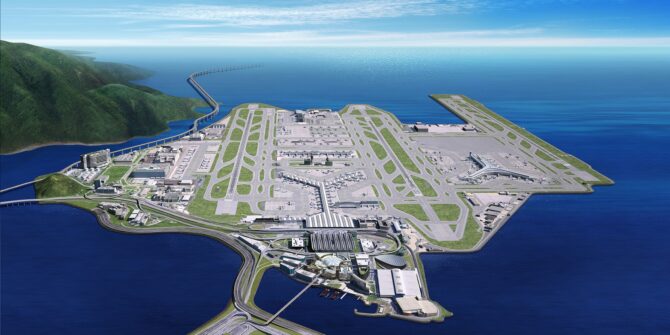
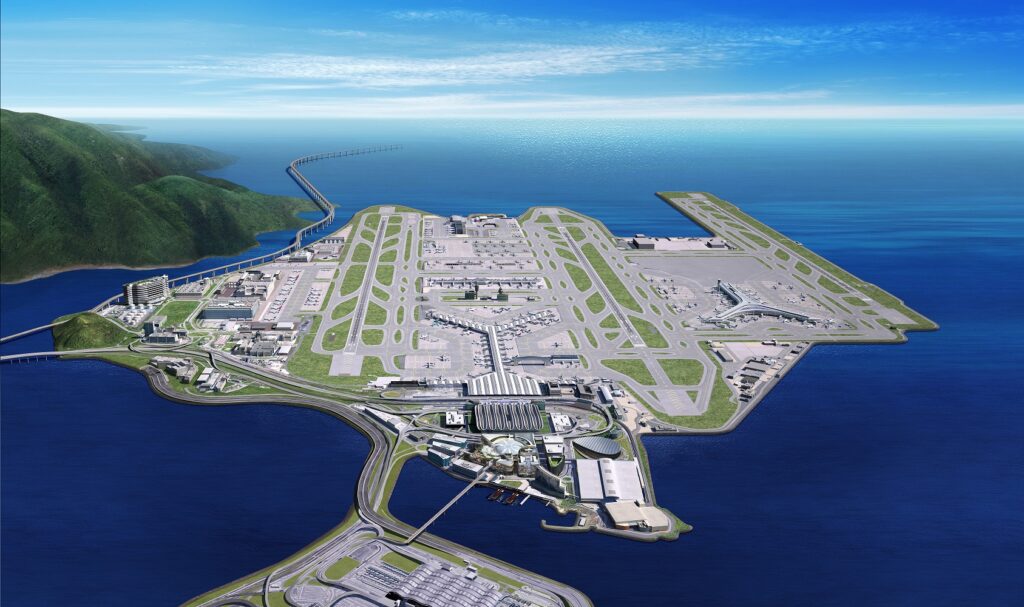
They are indeed. Hong Kong is adding a new runway and they’ve just finished building it! Six years in the making and due to open 2022, the new runway is set to transform Hong Kong from a city airport to an airport city.

What’s it got now?

Hong Kong currently has two runways 07L/25R and 07R/25L, both offering 12,467’ (3800m) and a bunch of CAT II/III approach options.

The new one will be no less decent – planned to be the same length, and 60m wide.

Why do they need it?

Hong Kong is a major hub and currently sees around 419,795 traffic movements a year, which amounted to 71.5million passengers and 4.8millions tonnes of cargo moving through it (back in 2019).

Here is the bit you are probably more interested in – it can handle just under 70 flights an hour at peak time and has 119 passengers stands, 55 cargo, 26 maintenance and 12 temporary stands.

The airport expansion will enable them to handle an additional 30 million passengers and will add 57 new parking spots.

We mentioned the slot and parking issue a few years ago. It is deceptively green at the moment, but this is probably more to do with a certain pandemic than any real improvement.

The current runways also do not run 24/7 though, there are regular maintenance closures. AIP SUP 08/21 updated on October 13 2021 has the info.

  • 07L/25R closes 3 nights a week, and 07R/25L closing for 4, between 1601-2315 UTC
  • 07L/25R also closes daily between 0116-1025 UTC.

So more runway and more parking will mean a big improvement on your chances of ad-hoc ops in.

(OK, we’ll slot in a quick slot summary)

This was issued in June 2021: The Hong Kong slot getting guide.

In brief, you probably want to do this:

It it a confusing a frustrating process so if it is your first time you might want to get some help from an agent. Hong Kong Business Aviation Centre (HKBAC) are based at Hong Kong (and you’ll be talking to them for your ground handling anyway.

Email: hkbac@hkbac.com

Phone: +852 2949 9000

Back to the expansion plan: What stage is it at now?

The runway work is complete. This will be designated the North runway, while the current north (07L/25R) will become “Centre”. The re-designation will happen at 0000 UTC on December 2 so don’t get confused!

The full ‘three runway system’ is only due for completion in 2024 as the new terminal is yet to be constructed.

What about arrivals and things?

The new charts are likely to only be introduced from 2022, however, the current set up bring aircraft into common points which link to approaches for either runway, so chances are they will just add the 07L/25R (new) to these as well.

The plan is to equip all three runways for takeoffs and landings, but primarily use the northerly for landings, the central for take-offs and the southerly for both.

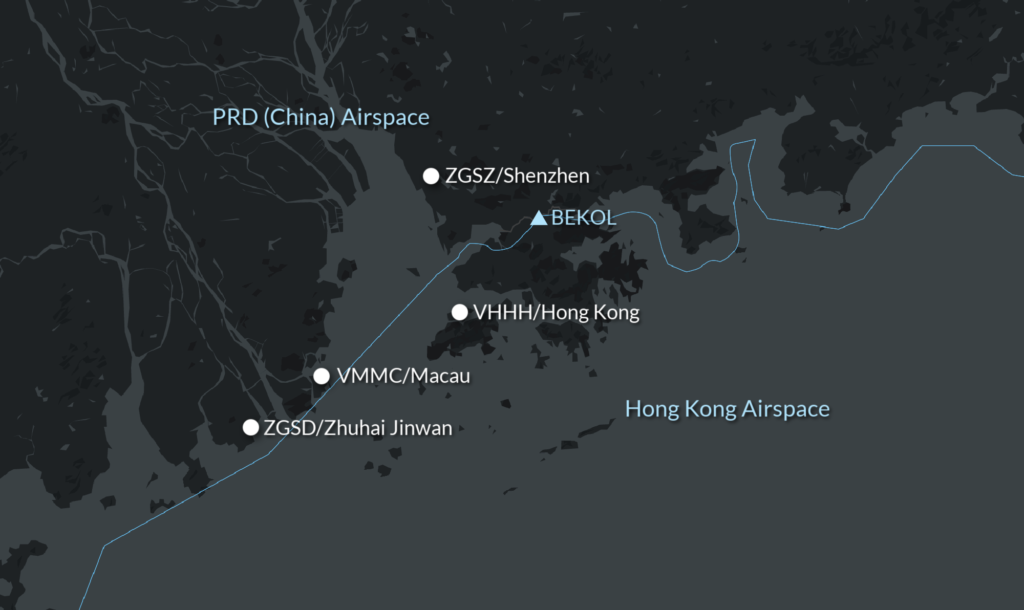
The Hong Kong CAA is also working with the Chinese and Macao CAA to re-develop and improve efficiency in the Greater Bay Area airspace. This airspace refers to the areas utilised by Macao, Guangdong and Hong Kong airports which is high density.

VHHH/Hong Kong’s traffic is restricted by the so called “air wall” between Hong Kong airspace and Pearl River Delta region airspace, and this will also be improved for better traffic efficiency.

The point of control handover is BEKOL, and traffic must reach set altitudes by this point.

Improvements to the airspace are not un-neededseparation issues have cropped up a few times in the past. So watch this space for changes to routings and handover procedures through to 2024.

Want some more to read?

A full rundown of the expansion plan is written up pretty decently here.

Or read about it on the official HKIA Three Runway System website here

The main page for all things slot is here.


Hong Kong revised entry rules for flight crew

Hong Kong has published extensive guidance on its entry rules via its dedicated Covid website, but in a bizarre twist, it’s actually the Notams which make it clearer to quickly work out exactly what’s allowed here:

A1199/20 – IN VIEW OF THE LATEST SITUATION OF COVID-19, THE HONG KONG SPECIAL ADMINISTRATIVE REGION GOVERNMENT IS IMPLEMENTING THE FOLLOWING MEASURES:
1. ALL NON-HONG KONG RESIDENTS COMING FROM OVERSEAS COUNTRIES AND REGIONS BY PLANE WILL BE DENIED ENTRY TO HONG KONG.
2. NON-HONG KONG RESIDENTS COMING FROM THE MAINLAND, MACAO AND TAIWAN WILL BE DENIED ENTRY TO HONG KONG IF THEY HAVE BEEN TO ANY OVERSEAS COUNTRIES AND REGIONS IN THE PAST 14 DAYS.
3. ALL TRAVELLERS COMING FROM MACAO AND TAIWAN, INCLUDING HONG KONG AND NON-HONG KONG RESIDENTS, WILL BE SUBJECT TO A 14-DAY COMPULSORY QUARANTINE, WHICH IS THE SAME AS THE ARRANGEMENTS FOR PEOPLE ENTERING HONG KONG FROM THE MAINLAND.
4. HONG KONG RESIDENTS ARRIVING IN HONG KONG WHO HAVE BEEN TO ANY OVERSEAS COUNTRIES AND REGIONS IN THE PAST 14 DAYS WILL BE SUBJECT TO A 14-DAY COMPULSORY QUARANTINE.
5. AIR CREWS ARE EXEMPTED SUBJECT TO CONDITIONS. DETAILS CAN BE FOUND IN HTTPS://WWW.CORONAVIRUS.GOV.HK/ENG/INBOUND-TRAVEL.HTML
29 SEP 07:39 2020 UNTIL 29 DEC 15:59 2020 ESTIMATED. CREATED: 29 SEP 07:39 2020

Ok, still not actually that clear. Big block of text, all upper case, an assault on the eyes…

So, to make that even clearer, between now and Dec 29:

  • Non-residents may only enter if coming from China, Macao or Taiwan, but not if they have travelled to any other country within the past 14 days.
  • All inbound pax, including Hong Kong residents, are subject to a 14-day quarantine.
  • There are special rules for flight crew

Rules for Flight Crew

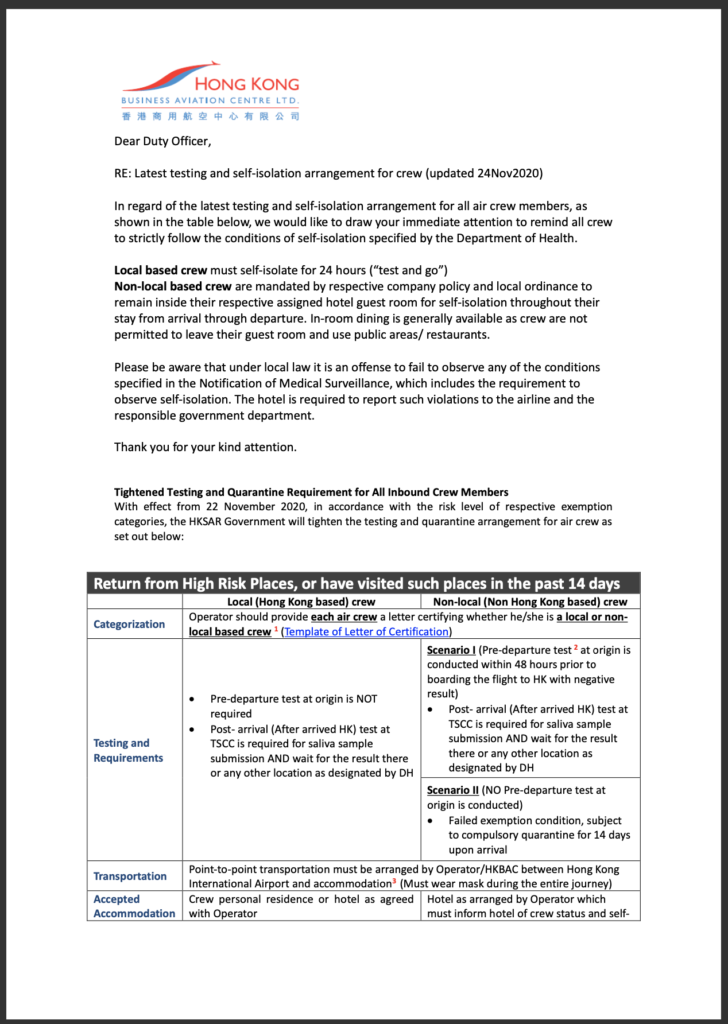
On Nov 24, Health authorities in Hong Kong published a document with the revised entry rules for flight crew. There are basically slightly different rules depending on whether crew have been in “very high risk places” in the past 14 days. Either way, all crew should have a negative PCR Covid test taken within 48 hours of operating, along with a letter from their airline/company that certifies an accredited laboratory was used. On arrival, all crew get tested again and must isolate until departure.

Rules for Positioning Crew

You have to go through all the same health checks, but there’s a way to get around the 14-day quarantine on arrival. You need to prepare a letter in advance (see below). As positioning crew, you’re required to self-isolate at a hotel for medical surveillance whilst you’re waiting for your outbound flight. You’ll have to wear a mask and get your temperature checked daily for reporting to the authorities. If you have a residence in HK, you should be allowed to go there instead.

To apply for the exemption from the 14-day quarantine for positioning crew, you have to send a letter to HKBAC, who will charge you HKD500 (around $65 USD). Here’s how it works, and the info you need to include:

  1. Flight Operator issues the letter with company letter head describing travel purpose and duty of the concerned crew
  2. The Operator sends email to HKBAC to get verification endorsement on the letter. After verification, a scanned copy of the letter would be sent to the Operator by email.
  3. The Operator provides that letter with verification by HKBAC to its concerned crew.
  4. The concerned crew brings along the letter when travelling as passengers on commercial flight
  5. Upon landing in Hong Kong, the crew approaches Crew Channel to obtain exemption from the Duty Immigration Officer before going through Immigration as passenger

Remarks:

  1. HKBAC’s checking is only for the identity verification based on the information provided by the Operator. HKBAC does not hold any liability on the exemption approval process.
  2. Administration fee at HKD500 per endorsement would be applied and will be charged to the Operator which requests for the crew exemption letter. 
  3. Validity of the letter for crew exemption will be 7 days from the commercial flight date.
  4. Although air crew can be exempted from the compulsory quarantine, the Department of Health (DH) will arrange Medical Surveillance for persons under the exempted categories of persons during their stay in Hong Kong. Exempted persons are subject to the temperature check and health declaration procedures carried out by DH. 
  5. In order to avoid your crew members being denied check in or boarding the commercial flights, please contact the commercial airlines that the crew would be travelling in in advance to ensure they are aware of the exemption.
  6. Please be advised there is no guarantee that HK Health accepts the air crew letter for inbound positioning crew.

Hong Kong has always been a tricky place to fly to, unless you’re an airline with landing rights secured for the next two decades. As the world’s third busiest airport, with only two runways, it goes without saying that congestion is a big issue here!

Things have gotten slightly easier this year due to the downturn in traffic caused by the Covid pandemic, with airport authorities now allowing airlines to keep their slots even if they don’t use them. So, good news for them, but also good news for GA/BA operators, as the overall reduction in traffic means that a lot more slots are available right now – daytime ones too! So if need to go to Hong Kong and can navigate the entry rules, slots and parking should not be a problem.

Have you flown to Hong Kong recently? How did it go? Send us an email and let us know, or even better – file a report on Airport Spy and it will automatically go out to everyone in the group!


Ops to Hong Kong are getting easier

Following months of disruption in Hong Kong due to anti-government protests and then the coronavirus outbreak, the airport has decided to relax its “use-it-or-lose-it” rule for slots until the end of October 2020. This means airlines are allowed to keep their slots even if they don’t use them.

The decision follows calls for a relaxation of the policy to prevent carriers from flying empty planes between destinations to maintain the rights.

“Given the latest development of Covid-19, and in line with the recommendation made by IATA, it has been decided that alleviation of slot usage requirement at Hong Kong International Airport will be effective for the whole of the Summer 2020 Season,” a Civil Aviation Department spokeswoman said.

This means the airlines (particularly Cathay Pacific!) will now be able to announce cuts to their schedules through to October this year. So, good news for them, but also good news for GA/BA operators, as the overall reduction in traffic will mean that a lot more slots will now become available.

Since Oct 2018, Hong Kong Airport has been providing six slots to GA/BA each night between 1600-2059z, which you can apply for up to 14 days in advance online using the OCS system. You can also use the system to request any unused or cancelled daytime slots up to 2 days in advance. Getting your own access to this system can be a pain – but your trip support provider or local handler should have access, and can obtain airport slots for you. 

So it appears that ops to Hong Kong are getting easier for GA/BA – although it’s still challenging. 

To go here, you need all of the following to be confirmed in advance: landing permit, parking, ground handling, and slots. All of these need to be applied for individually. We recommend applying in this order. Here’s how to do it…

Landing Permit

This can be done whenever, but should probably be done first.

Apply here: www.cad.gov.hk/english/efiling_home.html

Contact: Civil Aviation Department (CAD)
Email: asd@cad.gov.hk, gcmtse@cad.gov.hk
Phone: +852 2910-6648, -6629

Parking

Parking is confirmed on a first-come-first-served basis, and can be applied for up to 30 days in advance. Ultimately, the earlier you apply the better. However, parking requests for 5 days or more can sometimes be rejected, and overnight parking is often denied during busy periods. If this happens, unfortunately the best strategy is still to just keep making new applications until you get accepted! Once your parking is approved, you’ll receive a confirmation, and this must be given to your ground handler.

Apply here: https://extranet.hongkongairport.com/baps/

Contact: Hong Kong Airport Authority (HKAA)
Email: bjetslot@hkairport.com

Ground Handling

There are plenty of agents and handlers at VHHH, but only one dedicated FBO for BA/GA flights – HKBAC. Send them an email to confirm your ground handling in advance.

Contact: Hong Kong Business Aviation Centre (HKBAC) https://www.hkbac.com
Email: hkbac@hkbac.com
Phone: +852 2949 9000

Slots

Applications will only be considered 14 days prior to flight (unless you’re applying for a last-minute cancelled or unused slot). Authorities monitor the slot system for intentional misuse – which could lead to operators being banned from using the system altogether. Other violations include any cancellations of outbound flights less than 72 hours before departure, and delays on the day by more than 2 hours – although any off-slot operations outside a tolerance of +/-20 minutes can still flag up for potential slot misuse.

Apply here: http://www.hkgslot.gov.hk/Online_Coordination.html

Contact: Hong Kong Schedule Coordination Office (HKSCO)
Email: hkgslot@cad.gov.hk
Phone: +852 2910 6898

Other things worth knowing:

  • Feb 2020: Revised ILS approach procedures for RWY 07L and RWY 07R based on PBN transition to connect the existing PBN STARs to ILS final for RWY 07L and RWY 07R without reliance on ground-based navigation aids guidance.
  • Jan 2020: A reminder that ramp checks can be carried out at any time, with no warning. Here’s what they check for.
  • Feb 2019: Hong Kong ATC started reducing separation from 3.5 NM to 3.0 NM – that means more chance of wake turbulence. In summary, the new advice is this: do NOT slow to less than 125kts on final approach speed to ensure that following traffic does not have to execute a go-around; and when landing on RWY 07L, make sure you get off the runway at taxiway A7 within 50 seconds.
  • Dec 2018: Hong Kong published an AIC saying that GA/BA aircraft are taking too long vacating the runway after landing. They want pilots to “consider minimizing braking to reduce the deceleration rate on the landing roll so as to be able to vacate runway expeditiously via the first available RET.”
  • Oct 2018: Following lobbying by AsBAA, the trial to increase the number of night-time slots available to GA/BA was extended until the end of March 2019, with 6 slots available instead of 4 as before.
  • Sep 2018: Chinese authorities launched the Bullet Train rail link between Guangzhou and Hong Kong. Travel time between the two cities is now approximately only 40 minutes (previously crews needed to take a ferry, or else face a long car journey!)
  • Jun 2018: Airport issued Notam A1792/18 prohibiting reduced or single engine taxi out – all engines must be started before commencement of taxi for takeoff.
  • Jun 2018: Hong Kong issued AIC 13/18 to remind operators to stick closely to ILS procedures for Runway 07/25.
  • Apr 2016: You now need RNP1 to operate to Hong Kong. 

Have you been through Hong Kong recently? We’d love to hear how it went! Drop us an email, or Opsgroup members can file a quick report on Airport Spy.


Extra overnight slots for Hong Kong extended until 2019

We reported a few months back that the Airport Authority (AAHK) and the Hong Kong Schedule Coordination Office (HKSCO) have decided to trial an increase in slot availability from 4 to 6 total slots each night. It looks like the trial is being extended until March 2019.

The published details:

Notice on night slot availability (trial from 8 August 2018 until 31 March 2019)

  1. The number of slots available for GA/BA operations between 0000 to 0500 local time (16-21 UTC) will increase from 4 slots daily to 6 slots daily.
  2. The application procedure for these 6 slots will be the same as that for the 4 daily slots currently available.
  3. The above are provided on a trial and temporary basis and are subject to continuous review jointly by AAHK and HKSCO.
  4. Also important to note, as pointed out to us by our friends at the Asian Business Aviation Association (AsBAA) – these 6 slots will be made available to all aircraft types, not just the ones currently exempted from the noise abatement regulations. This means that BBJ’s/ACJ’s/Lineage 1000/Globals/G650ER etc can now operate in and out of Hong Kong at night-time, subject to slot availability.

More overnight slots for Hong Kong

Without stating the obvious, Hong Kong is a busy airport and it’s a difficult one to get slots and parking at, if you are a GA/BA operator.

Ok- it’s true, we went as far as calling operations to Hong Kong a PITA in the past.

Well, the latest intel is that the Airport Authority (AAHK) and the Hong Kong Schedule Coordination Office (HKSCO) have decided to trial an increase in slot availability from 4 to 6 total slots each night.

This is the info we have:

Notice on night slot availability (trial from 8 August 2018 until 8 October 2018)

  1. The number of slots available for GA/BA operations between 0000 to 0500 local time (16-21 UTC) will increase from 4 slots daily to 6 slots daily.
  2. The application procedure for these 6 slots will be the same as that for the 4 daily slots currently available.
  3. The above are provided on a trial and temporary basis and are subject to continuous review jointly by AAHK and HKSCO. The procedures will be effective from 0000 UTC on 8 August 2018 until 2359 UTC on 7 October 2018.

Also important to note, as pointed out to us by our friends at the Asian Business Aviation Association (AsBAA) – these 6 slots will be made available to all aircraft types, not just the ones currently exempted from the noise abatement regulations. This means that BBJ’s/ACJ’s/Lineage 1000/Globals/G650ER etc can now operate in and out of Hong Kong at night-time, subject to slot availability.

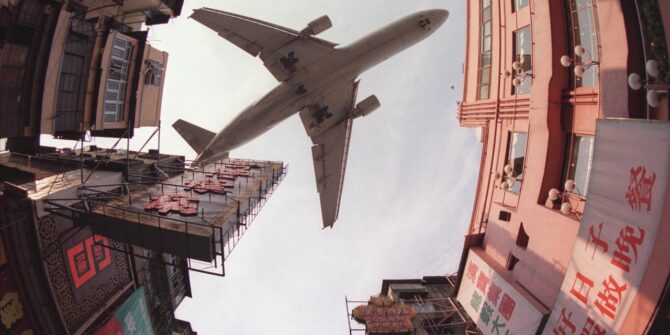
Some days I miss the old Kai Tak airport. My Dad reminded me that the 20th anniversary of its closure just went by last month. I feel old.

If you do too, watch a Kai Tak video to cheer you up 🙂

Extra Reading:


Updated communication procedures for Hong Kong FIR

AIP SUP A09/18 details new communication procedures for air traffic entering the VHHK/Hong Kong FIR.

The key points:

  • Aircraft shall comply with the following communication requirements to obtain an air traffic control (ATC) clearance:
  • Pilot shall report the aircraft callsign, position (with reference to reporting point), level (including passing and cleared levels if not maintaining the cleared level), transponder code, and other pertinent information (e.g. speed assigned by last ATC, tracking if it differs from the flight plan route) in the initial call before entering Hong Kong FIR.

Also a small change: the requirement for pilots to report the estimate time exiting Hong Kong FIR on first contact with Hong Kong Radar as stipulated in AIP Hong Kong ENR 1.1 paragraph 2.2.4 will no longer be applicable and is hereby cancelled.


Hong Kong near-misses on the rise

According to recent figures released by the Civil Aviation Department (CAD) of Hong Kong, 2017 saw an increase in ‘loss of separation’ incidents within it’s airspace.

Twelve times, two aircraft came within 1000 feet and less than 5 nautical miles of each other last year. This is the highest in six years.

Local law makers are now calling for a new ATC system to be implemented. A local pilot operating regularly through VHHH/Hong Kong International Airport (HKIA) commented to FSB recently that the Air Traffic Services have been in “constant decline” over the past seven to ten years.

CAD insisted that alerts were issued “in a timely manner as per system design”. It said “losses of separation” were due to a number of factors such as adverse weather, operating procedures and human factors and they did occasionally occur due to the old air traffic system and other systems around the world. “CAD would investigate every individual incident according to established procedures and make necessary improvement,” the department added.

Hong Kong airspace is congested at the best of times. With four major airports within 150 kilometres and many overflights to and from mainland China, the 2016 introduction of a new Air Traffic System known as “Autotrac3” was set to assist in solving some of the complexity whilst increasing safety. The transition to the new system was challenging with various system issues.

The TMA is also complicated by significant terrain and regular adverse weather. Recent statistics show that air traffic is up over 3.5% already in 2018 with 36,000 movements occurring monthly (6.4 million passengers).
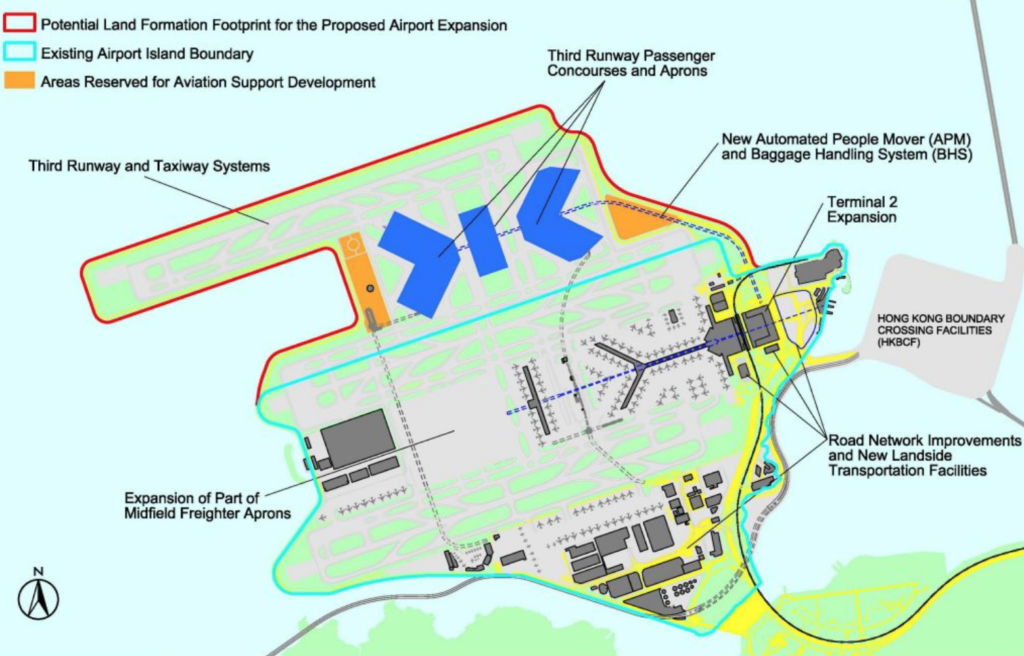
The continued massive year-on-year growth has seen the start of work to construct a third runway, expected to be operational in 2023-24 to facilitate the expected 100 million passengers using HKIA by that time.

This will no doubt just put further strain on an already complicated airspace situation.

The new third runway at HKIA- coming 2023-24.

Have you operated through the Hong Kong area lately? Can you provide an update?

Extra Reading:


New disinsection procedure for Hong Kong (VHHH/HKG)

From April 25th, 2017, Hong Kong will require disinsection for all aircraft inbound from Zika affected areas (i.e. last port being a WHO Category 1 or Category 2 area). The current list of Zika affected areas can be found in WHO’s latest Zika virus situation report:

Per the new regulations, there are three groups:

  • Airlines/Aircraft operators adopting residual disinsection – this group of airlines/aircraft operators should repeat residual disinsection before the expiry dates marked at the last residual disinsection certificates and provide PHO with the new disinsection certificates upon request.
  • Airlines/Aircraft operators adopting non-residual disinsection – Upon request, this group of airlines/aircraft operators should provide PHO with the details of non-residual disinsection in the Health Part of the Aircraft General Declaration and empty or partly used insecticide cans within 24 hours of arrival of each aircraft. These items should be submitted to PHO (Room 5T577, Level 5, Arrival Hall, Terminal 1, Hong Kong International Airport) at 2:30 pm to 3:30 pm daily. For private jets, their crew/operators should submit the Health Part of the Aircraft General Declaration and the photos of empty or partly used insecticide cans to PHO by email to sphi_ap@dh.gov.hk. PHO will take follow-up actions if an airline/aircraft operator fails to comply with the above requirement.
  • Airlines/Aircraft operators adopting no disinsection – For airlines/aircraft operators not adopting regular disinsection, they will be reminded of the disinsection requirement before their aircraft arrive. The Airport Authority will allocate an outside berth for the aircraft.

Residual Disinsection

The internal surface of the aircraft, excluding food preparation areas are sprayed with residual disinsection at intervals not exceeding eight weeks (WHO, 1995)2. Pesticides used and methods of application should be recommended by the WHO. Pesticides used should be registered according to the Pesticide Ordinance (Cap. 133).

The residual disinsection remains efficacious for eight weeks and causes minimal inconvenience to passengers and prevents the crew or passengers from exposure to aerosol sprays.

Non-Residual (Spraying)

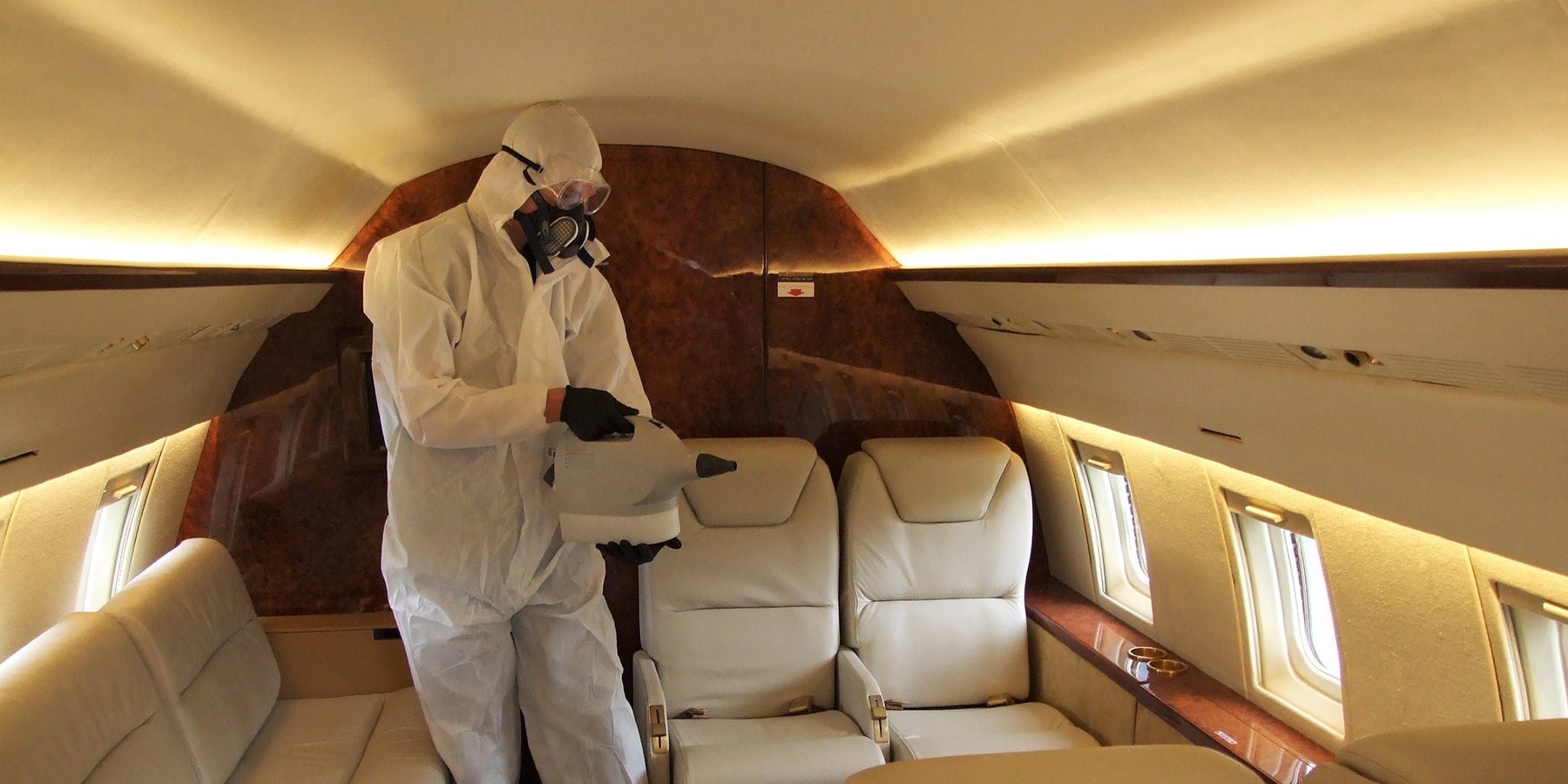
Blocks away The Blocks away disinsection is recommended by the WHO and takes place after passengers have boarded, the doors have been closed and prior to take-off. The cabin is treated by crew members walking through the cabins discharging aerosols.

Pre-flight and Top of Descent The pre-flight spraying involves the aircraft cabin and hold being sprayed with an aerosol containing a residual insecticide while the aircraft is on the ground but before passengers embark. Pre-flight is spraying usually followed by a non-residual top of descent spraying. The combined treatment lasts for the duration of single flight sector.

On-arrival On-arrival treatment of cabin and hold of incoming flights to Hong Kong should be carried out when no spraying has been conducted prior to departure for Hong Kong or during the flight. On-arrival treatment is carried out after landing with passengers on board by the crew under supervision of PHO.

Insecticides

For aircraft disinsection, WHO currently recommends permethrin (2%) for residual disinsection (WHO, 2005) and d-phenothrin (2%) for space spraying. The specification of the insecticides are attached in Annex I.

References


International Bulletin: Winter is Coming, Updated Canada Requirements

Winter is coming 09NOV With the clocks changing, it’s a reminder that we’re not far away from the snowstorms, deicing delays, cancelled flights, airport shutdowns, and those big invoices for de-icing fluid. Our new author Frank Young has an article.

Updated Canada requirements 09NOV From tomorrow, November 10, an eTA is now mandatory for flights to Canada (for most people), and there’s an update to flying to Canada with a previous conviction. Read the article.


BIKF/Keflavik Long a destination for flight certification testing (because it’s cold and windy), will not accept test flights until February next year, thanks to runway renovation work.

ZZZZ/Worldwide Last week we ran a story about the new ICAO SID/STAR phraseolgies. In short, some countries are implementing, and others aren’t. We’re going to make a list of who’s doing what, so that you as an operator or pilot will have some idea. Can you help us? What is your country doing? Tell us at bulletin@fsbureau.org.

LTBA/Istanbul At about 0100 local time on 6 November, two people on a motorcycle opened fire outside Istanbul Ataturk International Airport, prompting a temporary closure. Reports indicate that authorities apprehended both suspects and did not find additional weapons or explosives on their persons. Officials briefly placed the airport on lockdown but reopened the facility at about 0130. The incident reportedly did not affect flights, and the gunfire harmed no civilians or police officers.

CZZZ/NAT Region The FAA has recently determined that time estimates provided by pilots in oceanic CTAs are less accurate than expected, particularly when adverse weather causes pilots to deviate from the planned course. These inaccurate estimates can compromise the separation of aircraft. Have a read.

YMML/Melbourne Be aware of recent hoax ATC calls. Someone with a handheld radio has been making “go-around” transmissions on the Tower frequency, and at least one aircraft has responded. Airservices says there have been 15 such transmissions in the last few weeks.

CZZZ/Canada The NBAA has issued useful updated info for flying to Canada with previous convictions – Canada is known for refusing entry based on DUI charges. Today, November 9, is also the last day that you can enter Canada without an eTA.

PWAK/Wake Island – an ETOPS alternate – is closed on 11NOV for Veterans Day. They do say they will attend with 30 mins notice, so maybe two ETOPS circles are required for that day. Check other US ETOPS alternates on this date also.

UCZZ/Kyrgyzstan Since 4 November, if you’re staying for longer than 5 days, you must register with the local authorities.

PKMJ/Majuro is downgraded to Cat 6 until November 23, which may affect some operators using this as an ETOPS alt.

EGNX/East Midlands airport has some weekend closures for the next six weeks.

VIZZ/India announced on 8 November that 500 and 1,000 rupee banknotes will cease to be legal tender as of 0000 local on 9 November 2016.

EVLA/Liepaja (one of Latvia’s three international airports) is now closed to all operations. They say they will be open again in Spring 2017. Fingers crossed.

LAZZ/Albania has been experiencing heavy rains, high winds and flooding throughout the country, causing road blockages, school closures, and disruptions in ferry services. The army has been mobilized for rescue and relief operations.

LFLL/Lyon If you’ve been using LFLL as an alternate at weekends, you’ll have to cut that out from December 10th, they don’t want weekend diversions of non-sched flights.

EGKK/Gatwick has advised of a new series of rail strikes that will run through to January next year.

MHTG/Central America FIR reminds operators that a CENAMER notification by AFTN is required for all flights planning to enter the airspace.

MTZZ/Haiti The US has published updated advice for Haiti: U.S. citizens are advised not to travel to the southern peninsula of Haiti, commonly referred to as the “southern claw.” The U.S. Embassy has currently banned unofficial travel to the southern peninsula and allows official travel only after consultation with its security office. There is widespread devastation throughout the southern claw with the most affected areas on the western tip of the peninsula. Travelers can expect difficult travel conditions with roads made impassable by landslides, damaged roads, and bridge failures. There is also widespread damage to buildings and infrastructure, including gas stations and cell towers, loss of electricity, and shortages of food and potable water. U.S. citizens who choose to travel to the southern claw in spite of these risks should carry sufficient water, food, fuel, and medicine to last longer than their anticipated stay. The security environment around the southern claw is fluid and uncertain.

LFOB/Paris Beauvais is closed overnight from 2200 to 0600Z, for 14-25 November inclusive, due to stuff.

HAZZ/Ethiopia On November 8, the Command Post – the body tasked with implementing Ethiopia’s state of emergency – lifted the restriction imposed on foreign diplomats, which restricted them from traveling more than 25 mi/40 km outside of Addis Ababa. The Command Post also lifted and revised several other state of emergency provisions; however, the changes are minor and are not likely to affect the current situation. The curfew and communication restrictions remain in place

NFTF/Tonga Fua’amoto (the main airport) has new operating hours – these are, in UTC: 1600 SUN TO 0530 MON, 1025 MON TO 0800 TUE, 1600 TUE TO 0530 WED, 1000 WED TO 0800 THU,0900 THU TO 1200 THU, 1600 THU TO 0530 FRI, 1600 FRI TO 0800 SAT. They’ll accept div traffic outside these hours, call +676 22 608 – but prefer no surprises on Sundays.

OMAA/Abu Dhabi will see heavy traffic for the Grand Prix on November 27, avoid if possible.

SBZZ/Brazil The office that processes Foreign Civil overlight and landing permits has updated hours of operation: Mon-Fri 1230Z-2230Z.

SBCT/Curitiba airport would like 4 hour PPR notice for non-scheduled flights, and request that you call them on 55-41-3381-1478 to arrange that.

SPJC/Lima, Peru has an upcoming APEC meeting 14-21 November, with a decent increase in traffic expected, and a few restrictions. They’ve also warned pilots to pay attention to radios and transponder codes to avoid them sending up the jets – good advice.

TVSV/ET Joshua Airport is closed due to flooding.

VECC/Kolkata Radio has a new HF frequency: 8861, with hours 1330Z-0130Z. Use this if 6556 or 10066 isn’t working for you.

CZQX/Gander is going to auto-send you a “Confirm Assigned Route” message from 01DEC, on entry into their OCA – if you are FANS 1/A equipped. If you’re not sure how to feel about that, read our previous article.

LCCC/Nicosia There’s a good deal of mil activity – UN, and Russian – in the Cyprus region at the moment. Read the LCCC and surrounding FIR Notams carefully. Oh, and if you’re not up to date on your Greek-Turkish FIR dispute, add LGGG and LTBB to that. As 2016 draws to a close, enough regional history has been published for an entire novel. This weeks Notam series covers the 1923 Lausanne Peace Treaty.

NZZC/New Zealand published a change to SID procedures today, and our brain hurts. We’re not sure if this is related to the 10NOV ICAO SID/STAR changes, or .. something else. If you’ve got it deciphered, let us know. THE STANDARD INSTRUMENT DEPARTURE (SID) SPECIFIES IN BOTH DIAGRAMMATIC AND NARRATIVE FORM ANY OF THE FOLLOWING: THE DIRECTION OF TURN, HEADINGS, TRACK, DISTANCES, SIGNIFICANT POINTS AND ALTITUDE REQUIREMENTS. WHERE TRACKING TO OR FROM A NAVIGATION AID IS NOT POSSIBLE, DESIRED TRACKS ARE SHOWN AND DUE ALLOWANCE FOR WIND IS TO BE MADE. AIRCRAFT ARE TO CONTINUE CLIMBING THROUGHOUT THE SID UNLESS IN COMPLIANCE WITH PUBLISHED ATC MAINTAINS, DEPARTURE MINIMUM SAFE ALTITUDE (MSA) OR AS OTHERWISE INSTRUCTED. WHERE CONTINUOUS CLIMB TO THE END OF THE SID IS NOT REQUIRED A DEPARTURE MSA MAY BE DEPICTED ON THE RELEVANT CHART. THE DEPARTURE MSA REPRESENTS THE LOWEST ALTITUDE FOR OBSTACLE CLEARANCE ALONG THE ENTIRE DEPARTURE ROUTE (INCLUDING TRANSITIONS). IT REMAINS THE PILOT’S RESPONSIBILITY TO MEET SUBSEQUENT ENROUTE MSA/MINIMUM FLIGHT ALTITUDE (MFA)/MRA/MEA REQUIREMENTS APPLICABLE AFTER SID TERMINATION. DEPARTURE MINIMUM SAFE ALTITUDES DO NOT ENSURE CONTROLLED AIRSPACE CONTAINMENT.

OEZZ/Saudi Arabia has issued an extension of the policy that requires all aircraft with a destination in Yemen to first land in OEBH/Bisha – through to 08FEB next year. The only exceptions are the UN, Red Cross, and MSF.

VHHK/Hong Kong is going to move to a new ACC and ATC Tower towards the end of this month. There will be delays. The actual date hasn’t yet been notified, we’ll let you know when we hear.

View the full International Bulletin 09NOV2016


Hong Kong is a pain in the ass – it’s official

After a few members complained, we put  the question out to OpsGroup:  is operating a non-scheduled flight to Hong Kong really that difficult?

The response was a resounding “Yes”. 

Why then? Operators talk of having to cancel planned flights, that it’s impossible to get a decent schedule, and even with a poor one, that lining up slots, parking, permits and handling is extremely difficult. End result: a mountain of frustration.

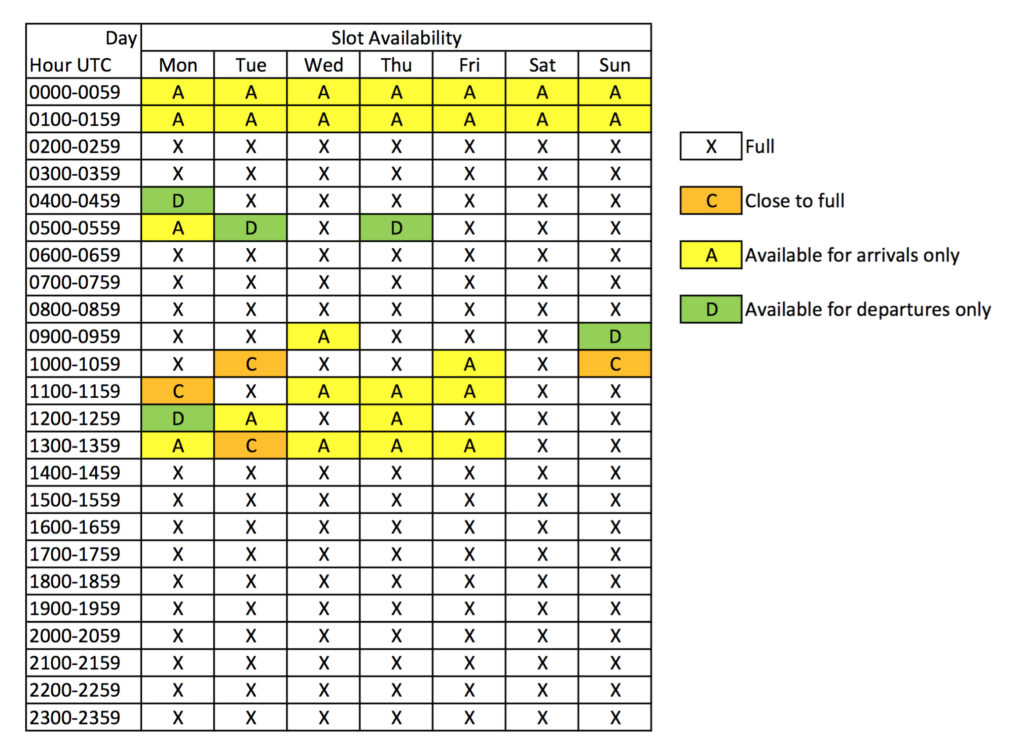
Trying to get slots at Hong Kong International Airport has always been tricky. Now the world’s third busiest airport with over 1000 flights per day departing from its two runways, severe congestion means that only a handful of daily slots have been available to private, corporate and non-scheduled operators.

Here’s a look at a typical daily slot availability chart at Hong Kong International Airport:

typical-daily-hk-slot-availability

Back in March 2016, the airport authority made it mandatory for all BA/GA operators to start using the Online Coordination System (OCS) to reserve their slots, rather than by email as they had done previously. But for many, this system has proven to be frustrating, as a lack of enforcement has meant that slot hoarding and mismanagement by some operators has largely gone unpunished.

But in a recent attempt to crack down on such behaviour and to prevent slots going unused, the airport authority has tightened restrictions for operators flying into or out of Hong Kong. You now need all 4 of the following to be confirmed in advance: landing permit, parking, ground handling, and slots.

New changes mean that slots can be booked up to 14 days in advance (instead of 7 days as before), and authorities will monitor the slot system for intentional misuse – which could lead to operators being banned from using the system altogether. Other violations include any cancellations of outbound flights less than 72 hours before departure, and delays on the day by more than 2 hours – although any off-slot operations outside a tolerance of +/-20 minutes can still flag up for potential slot misuse.


hk-apt-chart

As for parking – again, severe congestion means this is problematic. Parking is confirmed on a first-come-first-served basis, and can be applied for up to 30 days in advance – ultimately, the earlier you apply the better. However, parking requests for 5 days or more will likely be rejected, and overnight parking is often denied during busy periods. If this happens, unfortunately the best strategy is still to just keep making new applications until you get accepted!

Over 100 business jets use HKIA as their home base, but fewer than 70 parking spaces are available at any given time, and the GA ramp itself only has space for 20 aircraft. If full, the authorities will rarely grant parking on the commercial side, and often they will just deny the parking request altogether. Once your parking is approved, you’ll receive a confirmation, and this must be given to your ground handler.

It should be noted that the requests for the landing permit, parking, ground handling and slots are all separate from each other, and need to be applied for individually. We would recommend the following, in order:


1. Apply for LANDING PERMIT

Can be done whenever, but should probably be done first.

www.cad.gov.hk/english/efiling_home.html

Civil Aviation Department (CAD)

Email: asd@cad.gov.hk, gcmtse@cad.gov.hk

Phone: +852 2910-6648, -6629


2. Apply for PARKING

Can be done up to 14 days in advance of flight, the earlier you do this the better!

https://extranet.hongkongairport.com/baps/

Hong Kong Airport Authority (HKAA)

Email: bjetslot@hkairport.com


3. Apply for GROUND HANDLING

There are plenty of agents and handlers at VHHH, but only one dedicated FBO for BA/GA flights:

http://www.hkbac.com/en

Hong Kong Business Aviation Centre (HKBAC)

Email: hkbac@hkbac.com

Phone: +852 2949 9000


4. Apply for SLOTS

Will only be considered 14 days prior to flight.

http://www.hkgslot.gov.hk/Online_Coordination.html

Hong Kong Schedule Coordination Office (HKSCO)

Email: hkgslot@cad.gov.hk

Phone: +852 2910 6898


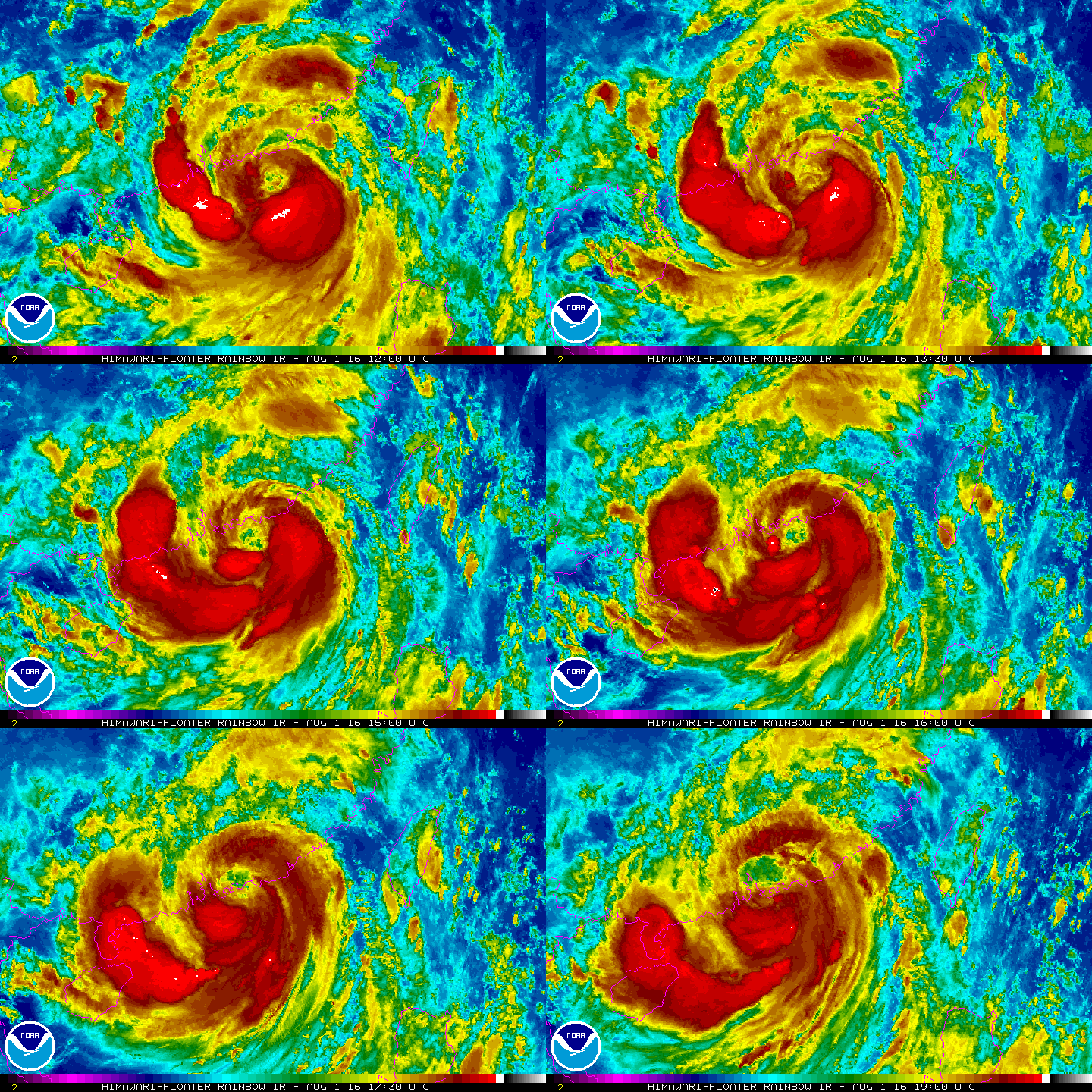
Typhoon Nida – or is it the End of the World?

Typhoon Nida is enroute to Hong Kong, and will make landfall early on Tuesday morning. Now, we know that The Weather Channel and other mass media outlets enjoy exaggerating the picture somewhat, but the below NOAA graphic seems disproportionate as well.

With forecast average winds of around 40 knots (that’s a wet Wednesday in Ireland), and maximum maybe 70 knots – the impending doom depicted in the graphic below seems overstated. Has NOAA fallen victim to sensationalism? We wonder.

rb-animated


Midweek Briefing 29JUN: Santa Maria Oceanic Strike, US Entry Requirements

Santa Maria Strike: Four Routes 29JUN Santa Maria Oceanic has published four special routes for use during the upcoming “July Friday Strike Series” ATC Industrial Action. Read the article and then Summer of Strikes.

New US Entry Requirements 29JUN The US has updated entry processing through ESTA (the online visa system for countries using the Visa Waiver Program). Read the article.


LTBA/Istanbul has reopened to traffic after a terrorist attack on 28JUN. 40 people were killed in a series of explosions and gunfire at the International terminal on Tuesday evening.

UMZZ/Belarus will undergo a re-evaluation of its currency and banks will be closed to the public between 30JUN and 01JUL, if operating to Minsk you should ensure you have sufficient cash available for those days.

EGZZ/UK Much has been written about Britain’s departure from Europe this week (and we’re talking Brexit, not football), but if you’re having trouble figuring out how this will affect you as an operator, that might be because it won’t. Read the article.

LGZZ/Greek Islands Now that summer is here in Europe, the annual capacity challenge at Greek Islands is most acute on weekends, expect healthy slot delays if operating to LGIR (Iraklion) LGKP (Karpathos) LGMK (Mikonos) LGZA (Zakinthos) LGSR (Santorini) LGSK (Skiathos) or LGSA (Chania).

VHHH/Hong Kong The CAD issued a reminder to operators this week that the airport is under strain, and slots issued must be strictly adhered to. It would seem that the Slot Adherence procedure issued earlier in the year isn’t really working. Any local operators have feedback? Let us know.

EFRO/Rovaniemi has no Jet A1 available from until July.

LPPS/Porto Santo is also out of Jet A1 until 01JUL.

DAAA/Algeria New fax/phone number for the ACC (Area Control) in Algiers: +213 (0)21 67 49 27until 23JUL.

AYZZ/Papua New Guinea Reports of civil unrest, student demonstrations across Papua New Guinea started in May 2016 and are ongoing. There have been violent clashes between students, other groups and the police in Port Moresby, Lae and the Highlands.

PWAK/Wake Island has advised its High Loader is out of action until later in the year, so for large aircraft like B767 upwards, no offload capability exists for cargo.

EGZZ/Scotland (Will we need a new ICAO code soon?) Glasgow ATC – at both EGPK and EGPF – has sporadic closures overnight at present due to staffing issues. Keep an eye on Notams.

WAAF/Ujung Pandang has some radar outages affecting high-level overflights, optimum levels may not be available.

LPPO/Santa Maria Oceanic has published four special routes for use during the upcoming “July Friday Strike Series” ATC Industrial Action. The Strike Time Period is : 0700-0900Z, during which time only these four routes will be accepted. -ROUTE A- 45N020W 40N030W 37N040W -ROUTE B- DETOX 39N020W 36N030W 34N040W -ROUTE C- LUTAK 36N020W 33N030W 29N040W -ROUTE D- ULTEM 27N040W

LIZZ/Italy We have been notified of possible ATC industrial action on 23JUL which was previously scheduled on 05JUL. Details and participation of relevant ACCs are as follows: National strike (ACCs and airports) 0800-1600 UTC. Local strike at LIRA – Ciampino 0800-1600 UTC.

VCBI/Colombo, Sri Lanka There was industrial action yesterday, 28JUN, by Immigration Officials, which may continue. Flight delays possible.

LEZZ/Spain There was a strike threatened by Apron Controllers at LEMD/Madrid but that was cancelled on Monday.

LPZZ/Portugal The seven unions of NAV Portugal sent a pre-notice for an industrial action for ATC and non-ATC personnel, during two hours daily on: 30JUN and 8/15/22/29JUL.

KATL/Atlanta Upgrades on the airport have officially started, which will include a new runway, concourse and hotel.

View the full International Bulletin 29JUN2016


Monday Briefing: Your Attention Please, US Airport Disruptions

Your Attention Please 18JAN As we reach 25,000 readers, your help is requested. We want to make sure we’re delivering the best bulletin to you, so if you have a few moments, please answer 3 questionsYou’ll receive a gift token for use in the Flight Service store.

US Airport Disruptions 18JAN Airport workers plan disruptions in nine U.S. cities on MLK Day (Monday). Watch out for industrial action in Boston, New York City, Newark, Philadelphia, Miami, Chicago, Portland, and Seattle.


FJDG/Diego Garcia is closed from 15JAN to 19JAN.

WSSS/Singapore 2016 Airshow takes place 16-21FEB at Changi. Planning for parking, accommodation and when required permits should be arranged as early as possible.

LTBA/Istanbul is expecting a significant snow event on Monday. Commercial carriers have already preemptively canceled flights until the storm passes. Please check latest weather advisories and plan accordingly.

Kxxx/United States Airport workers plan disruptions in nine U.S. cities on MLK Day (Jan 18th). Watch out for industrial in Boston; New York City; Newark, N.J.; Philadelphia;  Miami; Chicago; Portland, Oregan; and Seattle.

LSZH/Zurich Delays this week due to World Economic Forum in Davos.

KMCO/Orlando A two-phase runway construction project at is scheduled to begin 12JAN and continue into April 2016. Runway 17R/35L will be closed during phase one, and Runway 18L/36R will close during phase two.

TBPB/Bardados is closed nightly from 0400-1000Z UTC due to work on the ATS building from Jan 13th to Jan 28th. Airspace is also downgraded to Class G to FL245 on the 13th, 14th, 20th, 21st, 27th and 28th. Please see NOTAM A0030/16 for full details.

URSS/Sochi reports of low fuel availability, check with Airport for latest, tankering recommended regardless.

NZxx/New Zealand The Aviation Security Officers Union advised on 14JAN of a possible strike. The union identified no date for the possible strike. Airport officials stated that if security officers strike, the air transportation will come to a standstill nationwide.

VIDP/New Delhi Airspace closed to commercial flights for more than an hour every day beginning next week in view of the Republic Day celebrations. 1035-1215 local, on 19-24JAN, and 26JAN.

West Africa The World Health Organization announced last week that the Ebola epidemic in West Africa is officially over. For the first time since the outbreak began in December 2013, all three of the hardest-hit West African nations — Liberia, Guinea and Sierra Leone — have had zero reported cases of Ebola for 42 days in a row, a period equal to two full incubation cycles of the virus.

VHHH/Hong Kong According to reports on 13JAN, thieves targeted a South African national aboard South African Airways flight 286 from Johannesburg to Hong Kong on 21 December. The victim stated that a fellow passenger alerted him that other passengers had taken his baggage while he was sleeping and rummaged through it in the aircraft lavatory. When the victim subsequently inspected his baggage, he found that the lock had been broken and foreign currency worth approximately $1200, as well as items of jewelry, were missing. Hong Kong police officers searched several suspects when the aircraft landed, but the stolen items were not found. This type of crime is reportedly a significant problem on international flights bound for Asian destinations, particularly Hong Kong. According to statistics released by Hong Kong authorities in August 2015, a total of 45 in-flight robberies had been reported up to that point in 2015; 48 cases occurred in 2014. Cash, jewelry and smartphones are especially targeted.

Lxxx/Turkey Foreign nationals filing certain visa applications at a consular post must now upload their application documents online through the Turkish electronic visa application system prior to appearing at a consular post. Applicants must still submit their visa application forms and supporting documents in person at a Turkish consular post. This system does not impact electronic visas for those nationals eligible for E-visas, but does impact business visitors who must acquire a consular visa.

Int Ops Bulletin As we reach 25,000 readers, your help is requested. We want to make sure we’re delivering the best bulletin to you, so if you have a few moments, please answer 3 questions. You’ll receive a gift token for use in the Flight Service store.

View the full International Bulletin 18JAN2016


Monday Briefing: Cyclone Ula strengthens towards Fiji, TSA Waiver program changes

Cyclone Ula maintains strength towards Fiji The first tropical cyclone for 2016 is lashing Fiji’s outlying islands, after causing destruction in parts of Tonga. Category three Cyclone Ula is bringing 150-kilometre-an-hour winds, strong gusts and heavy rain to the Lau group, in Fiji’s eastern division. Fiji Met Service has the latest information.

TSA Waiver program changes 04JAN The requirement for foreign operators to obtain a TSA Waiver for domestic flights within the US has been dropped, but only for aircraft under 45 tons. See new Notams FDC 5/6289, 5/5782, and 5/5806.


OAKB/Kabul. Afghanistan At approximately 1100 local time (0630 UTC) on 04JAN an explosion was reported near Hamid Karzai International Airport (OAKB/KBL). According to police sources, the blast occurred when a suicide bomber in a vehicle detonated explosives at a police checkpoint near the airport. With the exception of the assailant, the bombing did not result in injuries or fatalities, and there was no indication that airport operations were affected.

South Pacific / Tropical Storm Ula located approximately 230 nm south-southeast of Suva, Fiji. The current intensity is assessed at 85 knots based on Dvorak intensity estimates ranging from 77-102 knots. The system is expected to slow significantly under a weak steering influence, before shifting northwest as the ridge to the south begins to build.

UIBB/Bratsk A common Polar ETOPS alternate has issued a notice that non-scheduled aircraft must have prior permission due to fuel supply issues.

UIII/Irkutsk A common Polar ETOPS alternate. The main and only runway 12/30 is closed due to repair from 05JAN until 26JAN. Please see NOTAM A5600/15 for further details.

UUDD/Moscow Arrival of An-124 and B747 aircraft only by prior coordination with the Airport Company until March.

VHHK/Hong Kong International Airport opened a new $10 billion concourse this week. The Midfield Concourse’s 19 gates and 20 aircraft parking stands will allow the airport to handle an additional 10 million passengers per year and will serve approximately 20% of passenger flights once it begins operating at full capacity in March, Hong Kong International said. The five-story, 1.1 million-square-foot concourse sits between the airport’s two existing runways and connects to Terminal 1 via an automatic people mover.

NFFF/Nadi FIR Until Jan 21/2016. Operators of RNAV equipped aircraft intending to operate within the NADI FIR shall plan using random routes only if the aircraft are equipped with RNP10 or better and must have HF. Non-RNP aircraft will be permitted to operate but will be required to flight plan vis published fixes air routes. Please see NOTAM A1521/15.

HSSS/Khartoum, Sudan has no Jet A1 available for Ad-hoc operations between 27DEC and 05JAN. Carry return fuel or choose another tech stop.


View the full International Operations Bulletin 04Jan2016


Monday Briefing: North Atlantic OTS Changes, Indonesia Volcano Eruption

North Atlantic OTS Changes this week 09NOV This Wednesday (12NOV) sees the implementation of the new NAT Track OTS, marking the first change to the lateral structure since the tracks were introduced in 1965. New requirements include RNP4, and 24 new Oceanic Entry Points come into effect. See below for further.

Indonesia Volcano Eruption 09NOV Operations into WADD/ Denpasar, Bali continue to be disrupted due to ongoing eruption of Mt. Rinjani on Lombok Island. Also affected are nearby WARB/Blimbingsari and WADL/Lombok.


EINN/Shannon FIR CPDLC service is withdrawn on the evening prior to implementation of the new NAT Track system, voice service only from 1715Z onwards on 11NOV.

LGGG/Athens FIR Strike of Greek Radio Operators (thereby including AFTN messaging, and AFIS) announced this morning for 12NOV. Overflights will not be affected. Full details here.

HESH/Sharm el-Sheikh remains open but subject to multiple advice notices from international Authorities. Many airlines have cancelled operations into the airport after increasing suspicions that a bomb was loaded here onto the A320 which crashed into the Sinai Desert.

HLLL/Tripoli FIR Libya has issued updated advice regarding airport availability – HLLQ, HLTQ and HLZW are only available for international arrivals, daylight hours only. PPR and Permit is required prior operations.

SCFZ/Antofagasta ACC, Chile. Crews on Airways UL780 and UL302 are requested to inform ATC of any speed changes greater than .02 Mach; if unable on VHF, use HF 10024. The procedure is to ensure separation between succeeding aircraft operating on CI speeds.

SBXX/Brazil The Brazilian Grand Prix takes place 13-15NOV making Sao Paulo operations at SBSP/Congonhas, SBGR/Guarulhos, and SBKP/Campinas busier than usual.

RPLL/Manila, Philippines APEC 2015 Summit being held 17-20NOV. Check restrictions, many commercial flights have been suspended during this period. Parking at a premium. Consider quieter alternates such as RPLC/Clark.

YXXX/Australia Australian Border Force strike commencing midnight 09NOV across Australian airports. As a result, departure and arrival processing at Australian airports may take longer then usual.

WADD/Denpasar, Indonesia Operations here continue to be disrupted due to ongoing eruption of Mt. Rinjani. Also affected are nearby WARB/Blimbingsari and WADL/Lombok. For updates monitor http://www.bom.gov.au/products/Volc_ash_recent.shtml

LIXX/Italy Possible ATC strike on 14NOV 1200-1600Z announced.

KXXX/US Airport Runway closures: BWI-RWY 10/28 CLOSED SEA-RWY 16C/34C CLOSED LAS-RWY 7L/25R CLOSED

KLAS/Las Vegas NBAA 2015 will take place 17-19NOV limiting airport capacity.

HECC/Cairo FIR, Egypt Point PASOS (LCCC FIR) is again available in both directions for flight planning. Please be aware flights departing OLBA via LCCC must file via VELOX-PASOS. Also see HECC NOTAM 1A277/15 and 1A278/15 for flight planning guidance.

VHHH/Hong Kong Arrival and Departure delays up to 30 minutes can be expected due to a flight check and maintenance on RWY 07L/25R on 09NOV 0530-0100 and 10NOV 2300-0100.

Caribbean Tropical Weather Advisory Shower and thunderstorm activity is showing signs of organization in association with a low pressure system located just north of the Turks and Caicos and the southeastern Bahamas. A tropical depression or a tropical storm is likely to form on Monday while the low moves west-northwestward to northwestward near or over the central and northwestern Bahamas. For further details see National Hurricane Center

KLAX/Los Angeles Due to military operations of the coast of LAX there is a risk of arrival delays and reroutes during the overnight periods until Nov 12th.

MWCR/Grand Cayman may be forced to shorten the runway at Owen Roberts International Airport (MCWR/GCM). The runway, which was extended to accommodate long-haul flights, may have to be shortened in order to accommodate a 400 ft/124 m safety area. An extension of the runway cannot be further extended, and the airport authority is examining all options.

CYYQ/Churchill has amended opening hours 1200-2200Z M-F.

PKWA/Bucholz has revised ATC hours from 01NOV, 0800-1230 and 1330-1600LT.

NWWW/Tontouta has a main runway closure 09-12NOV at various times, some daytime. Check NOTAM 1543/15.

EGPF/Glasgow is closed overnight 22NOV-11DEC for runway and taxiway repairs.

DRRR/Niamey Ouagadougou ACC is now operational H24 again; the previously implemented contingency plan for traffic operating outside ATC service hours is withdrawn.

View the full International Operations Bulletin for 09NOV2015.


Monday Briefing: North Atlantic Changes, Caspian Sea Missiles

19OCT2015 Flight operations in the NAT region will see significant changes in around three weeks time, including new ‘half-degree’ NAT tracks, new Entry Points in Gander and Shanwick OCA’s, and several procedural changes. A Special Bulletin with plotting chart, summarising the changes, will be issued by Flight Service Bureau next week.

19OCT2015 Last week 26 cruise missiles were launched across International air routes in Azerbaijan, Iraq, and Iran, with reports suggesting 4 did not travel as intended. The risk to aircraft operators is summarised in our International Ops Notice 10/15, see below for details.


RPHI/Manilla FIR, Philippines Typhoon Koppu has maintained its strength as it continues to move northward with slightly increasing forward speed along the shores of Ilocos Sur, Luzon. Current location (1200Z Monday) is to the west of RPLI/Laoag Airport. It is forecast to weaken to a Tropical Storm within 24 hours. No reports of airports affected so far.

OMDW/Dubai World hosts Dubai Airshow 08-12NOV. Landing Permit required for all flights, 3 days processing, standard documents and requirements. Slot required for OMDW, window +/- 5mins. Show details at www.dubaiairshow.aero

OPRN/Islamabad, Pakistan closed 1300-1800 daily due runway works 18-28OCT.

SEXX/Ecuador A new DGAC resolution now effective permits non-scheduled aircraft to land without a Landing Permit as long as the aircraft is operating under private ops, will not stay longer than 72 hours in Ecuador, and visits only one location in Ecuador. The official document is here (in Spanish).

VHHH/Hong Kong with effect 25OCT (IATA Winter 2015) will amend slot issuing procedures to give priority to operators with higher capacity aircraft, and where same types conflict for the same slot time, lower noise levels.

LIXX/Italy ATC Strike confirmed for 24OCT (Saturday) 0800-1600, service will be provided to Overflights and Intercontinental flights only.

LTXX/Turkey Traffic operating through the south eastern part of Turkish airspace to/from Tehran and Baghdad FIRs should check Notams for restrictions. Several restrictions up to FL310 due to military operations.

EGXX/Shanwick Large scale Military Exercise ‘At Sea Demonstration’ ASD15 affecting OEP’s ERAKA and GOMUP starts on 19OCT.

LFxx/France Datalink implemented from 22OCT LFRR/Brest and LFBB/Bordeaux ACC from 0900L. Initial phase, no ACL (Clearance via CPDLC), and aircraft must be on Eurocontrol whitelist. Ref France AIC A22/15.

VNXX/Nepal continues to experience shortages of fuel due to a halt in shipments coming from India. Available fuel for domestic airlines is rapidly decreasing, and authorities worry that domestic flights will soon be unavailable. The Nepalese government has requested that international airlines carry return fuel or refuel at airports en route, as Tribhuvan International Airport (VNKT/KTM) has no available fuel.

View the full International Ops Bulletin for 19OCT2015.