TIBA in Australia: What’s Going On?
Key Points
  • TIBA still seems to be an issue in Australia – shortage of ATC resulting in big bits of restricted Class G airspace, often at short notice.
  • We wrote about this last year, including guidance on what to do (see updated post below), but now IFALPA have published a Safety Bulletin saying the problem is still ongoing.
  • Amid accusations of understaffing, Australian ATC has announced they intend to strike. This process will take a few weeks to action, and so we’ll likely see disruptions from May. This may include full 24hr work stoppages and will be notified in advance via the YMMM/Melbourne and YBBB/Brisbane FIR Notams.

Since early in 2023, we’ve seen large sections of restricted TIBA airspace (traffic information broadcasts by aircraft) established by Notam up Australia’s East Coast in both the YMMM/Melbourne and YBBB/Brisbane FIRs.

In fact, there were 340 instances of uncontrolled airspace between June 2022 and April 2023 alone. And it’s still happening.

The cause here appears to be a fundamental shortage of air traffic controllers.

Where has this been happening?

In the South, look out for TIBA airspace east of YSCB/Canberra airport, Australia’s capital city found inland from Sydney.

Further north there has been a greater effect as large portions of coastal airspace near YBCG/Gold Coast and YBTL/Townsville airports have been impacted. This is an extremely busy air corridor – 80% of Australia’s population live on the East Coast.

At the top end of Australia, YPDN/Darwin airport has also been affected which can result in re-routes for international traffic headed up into South-East Asia and beyond.

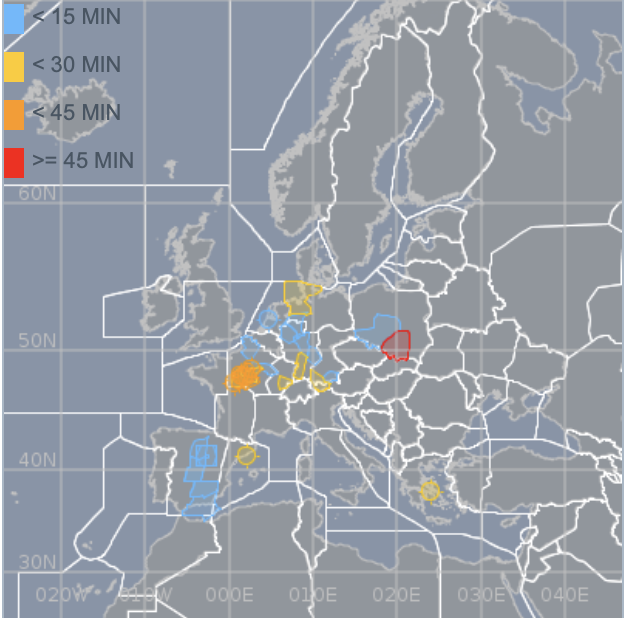
Here’s what those hotspots look like on a map:
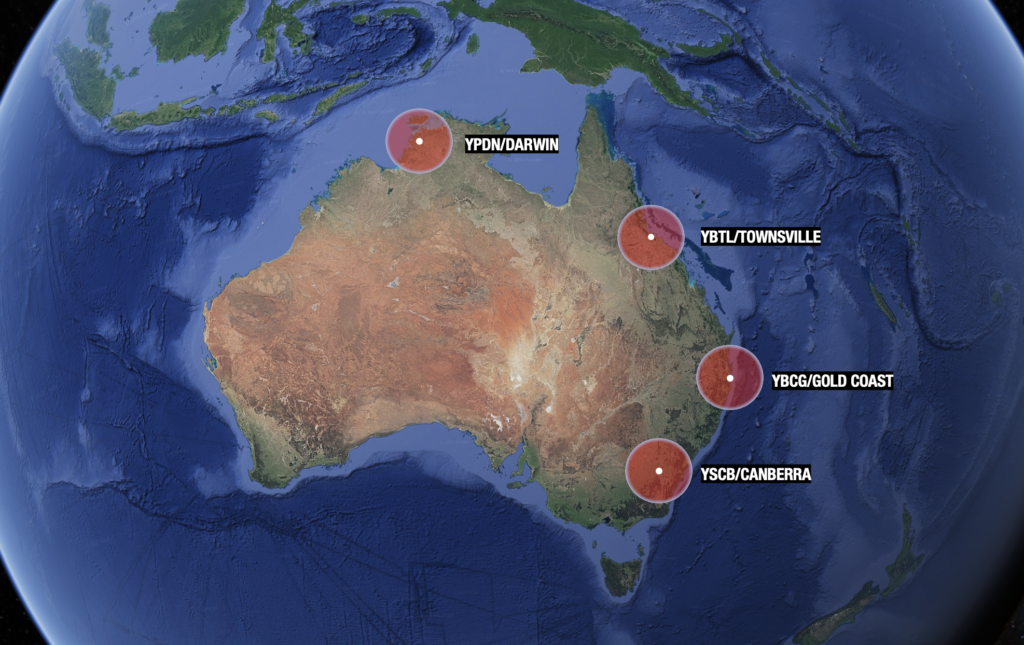
TIBA airspace has been reported in or near these hotspots.

It’s not all the time.

TIBA airspace is being activated by Notam, typically for hours at a time. A look at today’s batch indicated all is ops-normal. However, a local airline captain has advised OPSGROUP that it is currently a frequent occurrence.

Broadcast, or avoid?

The vast majority of airline traffic appear to be avoiding the TIBA airspace. This typically involves less direct routes at the expense of delays and fuel. Helpfully, for major city pairings the NOTAMs contain suggested routes that will keep you clear. But expect SIDs or STARs you may be less familiar with.

In fact, major carriers have policies in place that prevent them from using TIBA airspace anyway – unless they happen to be in it when it is activated.

That’s not to say there won’t be other traffic taking advantage of the more advantageous routes though. The East Coast is characterised by a huge variety of traffic including charter, skydiving, medevac and survey all of which may have valid reasons for using TIBA.

It can still be used safely, but with the procedures below (a heads up: dual comms are a requirement).

How on earth do I ‘do TIBA’?

First things first. Whatever you do, don’t enter without permission. Australia’s TIBA airspace is typically restricted – in the sense you will need PPR to use it. The relevant Notams are quite helpful, and provide all the information on how to get it. Here’s an example.

Your approval will typically involve a phone call beforehand, and a chat to a flight information service in adjacent airspace for traffic information.

Once you’re in, you are totally responsible for terrain and collision avoidance. Turn that radio up and make sure you’re both alert and monitoring both the TIBA frequency and the relevant ATS one – now is not the time for controlled rest. Whoever is on the radios is going to be busy.

The Australian AIP then takes over. You can find the procedures in full here (time saver: flick to ENR 1.1-91). We’ve also put together a summary of those in this handy little briefing card which may be useful to keep in your flight bag:
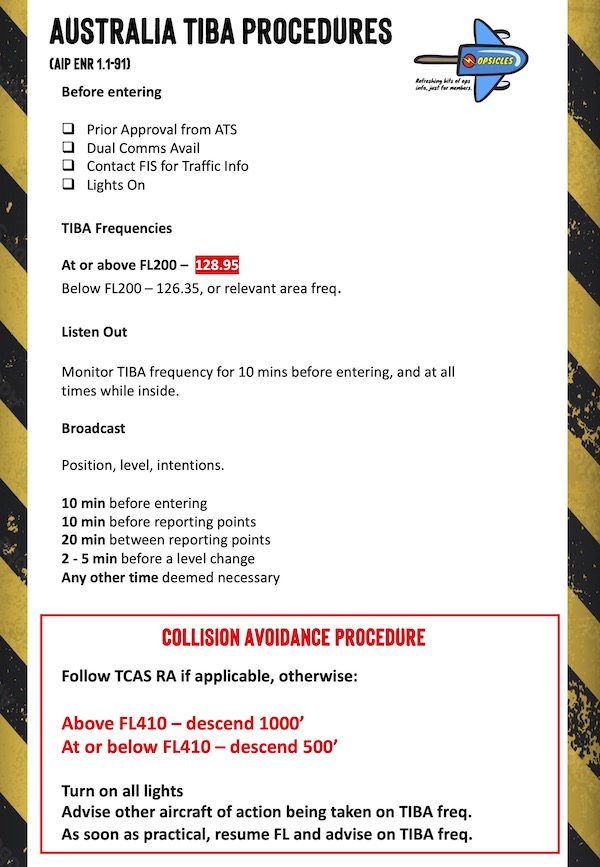
OPSGROUP members: click to download hi-res PDF.

Other questions?

You can also get in touch with CASA via this link, or alternatively Airservices Australia here with questions. Both have been very helpful in answering our pesky conundrums in the past.
Poland ATC dispute resolved

Update – April 29:

Poland’s air navigation agency PANSA issued a statement late on Apr 28 confirming that the dispute with controllers has been resolved (at least for now), averting mass flight cancellations that had been expected from May 1.

“The management of the Polish Air Navigation Services Agency and the representatives of the Air Traffic Controllers Trade Union have signed an agreement which will ensure the continuity of air traffic service in Poland and passengers will carry out their trips as planned. The agreement is valid until July 10 this year. During this time, the parties will conduct dialogue in order to work out the final shape of the cooperation.” – PANSA.

The majority of air traffic controllers were threatening to quit by May 1 after a long dispute over salary and working conditions. The new agreement basically means that controllers will keep working until at least July 10, giving them more time to hash out a deal with PANSA.

Update – April 26:

Disruption to flights could start on May 1 – the day after the end of the notice period for controllers who chose to quit rather than accept the new deal they say threatens safety. If they don’t reach a new agreement preventing the walkout, here’s the likely impact to flight ops from May 1: 

  • Around 300 flights crossing Polish airspace will need to be controlled by other sectors. It isn’t clear yet how this will be handled, but the Polish CAA issued an announcement saying “flights over Poland should proceed without sudden disruption”. In other words, don’t expect to get a sudden massive detour. Despite the staff shortages, for the time being the Polish CAA and Eurocontrol are still not planning to launch the ‘massive cancellation procedure’ for flights transiting Polish airspace (see below for more details on that).
  • EPWA/Warsaw Chopin and EPMO/Warsaw Modlin will both operate restricted hours – 0930-1700 local time only, due to controller shortages. So don’t expect to use them outside these hours, and expect to see some Notams advising against their availability for alternates.

Original Story – April 21:

The Current State of Polish Airspace

Poland has some 600+ air traffic controllers, around 216 of which work the ‘Warsaw Approach Area’ which is some very busy airspace around EPWA/Warsaw International and the region above it.

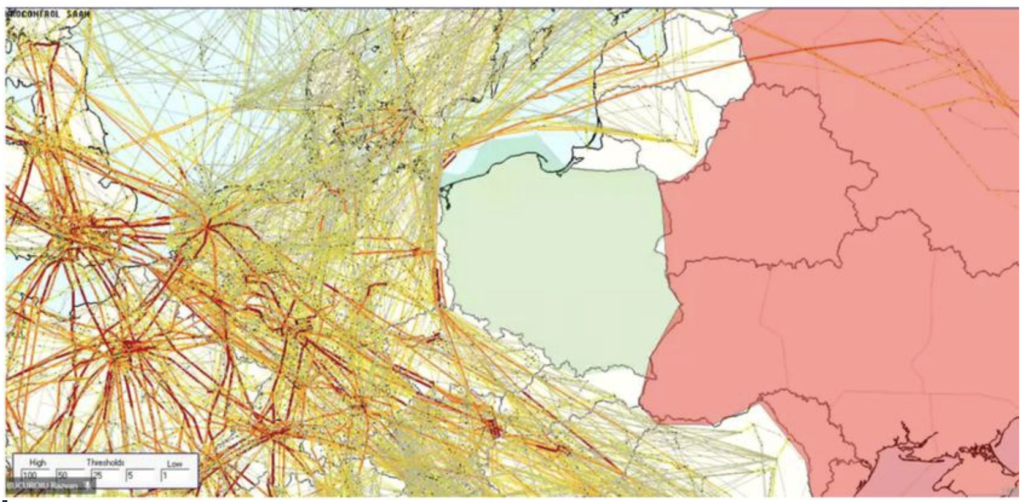
If you’ve routed across Europe, to and from Russia in particular, then chances are you’ve used Polish high level airspace because it provides a major routing region due to the (historic) cautions and prohibitions in Ukrainian airspace.

With the current conflict between Russia and Ukraine, the already busy airspace is now even busier with NATO and military aircraft utilising it due the proximity to Ukraine, and with flights utilising Polish high level airspace with the closure of many surrounding airspaces.

Eurocontrol Concerns

Eurocontrol have a “live” map showing the current network situation for the region, and southern and south east Poland regularly show as having high delays. The main reasons for these are ATC staffing (causing 26% of the delays) and ATC capacity (causing 15% of the delays).

With a concern that 84% of ATC in the Warsaw control area might not be available come May 1st – a 30% reduction in total ATC staff numbers – Eurocontrol has published a plan which sees the cancellation of all connections to and from Poland.

The Potential Impact

Currently around 1,850 flights a day are forecast for the summer season. During peak hours, this requires 8 ATC sectors to be running, while during quiet night hours only 1 is required. If only 1 of the 8 sectors is staffed, at peak times this will mean nearly 1000 flights will require redirection through neighbouring airspace. With only 4 sectors open, 500 flights a day will have to re-route.

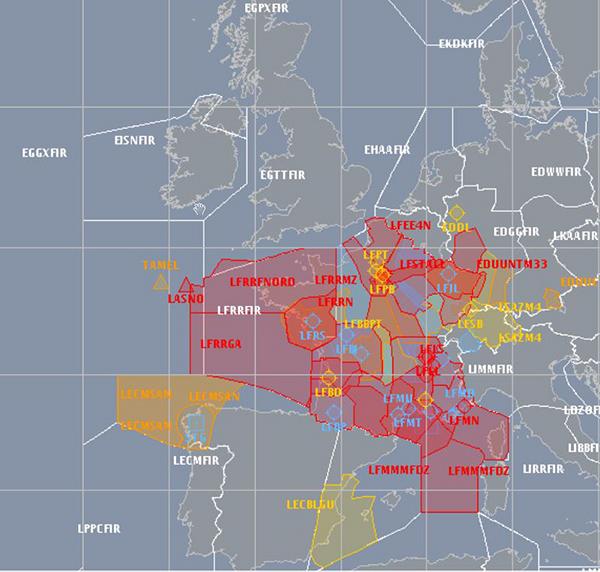
The Warsaw FIR covers the airspace across Poland as well as part of the Baltic Sea. If flights are redirected, it may mean significant extra pressure on the ATC centres in Karlsruhe, Prague, Malmö, Bratislava and Vilnius.

The main Polish airports may also experience staffing problems, leading to capacity issues, particularly at EPWA/Warsaw International. This may lead to flight cancellations at the airport, as well as an impact on availability as en-route alternates.

What are the Unions saying?

Well, you can watch the video here yourself. This is of course representing the ATC side of the conflict. What does stand out though is the potential impact on safety if mass layoffs do occur. 

https://youtu.be/csughfkySrc

When similar staffing shortages happened in 2020, there was an increase in incidents from 7 to 173.

The union also published this press release warning Polish ATC soon to be unmanned.

What is happening now?

A major conference is taking place to try and resolve the issues. This includes ‘Emergency Plan PA 8B’ – a “plan in the event of a threat to operational continuity”.

A full breakdown of current discussions was published by a Polish news site (which you can read if you have a translator on your computer, we use Chrome).

Have we seen this before?

Albanian ATC went on strike back in 2021, and it resulted in the “farming out” of controllers. We wrote about it here because the practice is a big safety concern.

“Why? Because safe Air Traffic Control is predicated on deeply-learned local familiarity with the airspace, the terrain, the boundaries, and above all, how the traffic flows.”

PANSA have acknowledged that it is not possible to simply bring other controllers in because of the risks involved in using non-regional trained ATC. However, military control of airspace might be required.

What do we think?

Talks are underway and hopefully the situation is resolved before May 1st.

Eurocontrol provide the most up to date information on airspace availability and should be monitored closely over the next few days.


Out of Options, Out of Time: Why Aren’t We Declaring Emergencies?

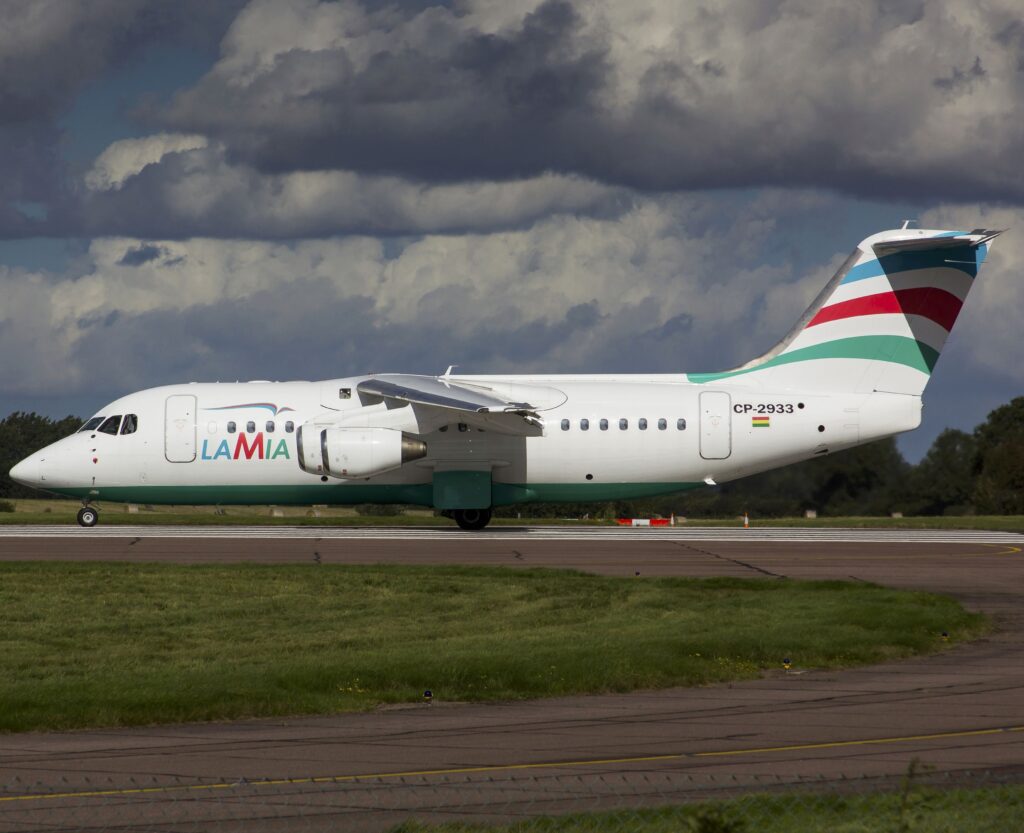
In 2016, an RJ85 operating a charter flight ran out of fuel in a holding pattern while waiting for another aircraft to land. The crew knew they were critically low on fuel but seemed reluctant or unwilling to tell ATC they were in trouble and get back on the ground.

This tragic accident highlights a dangerous mindset that continues to expose pilots to risk the world over: reluctance to declare an emergency.

Accident reports reveal that the RJ85 crew were certainly not an isolated case either. So, what’s going wrong up there? Why are we asking for help far too late or not at all?

The real world may offer up some answers.

For starters, what is an emergency?

Have a go at defining one in your own words. As I discovered, it’s not actually as black and white as it seems.

The US FAA tells us they come in two flavours:

Distress. These are things that need you to act on immediately. Engine failures, a fire on-board, structural failures. In other words, you have to do something about it now. Crew are good at declaring emergencies in these cases because it is an easy decision.

Urgency. The smoking gun here. These are emergencies that often develop through a set of deteriorating circumstances which become increasingly critical as time and options run out. You may not have an emergency to begin with, but through failure to act earlier it has developed into one.

It seems that in these cases crew are waiting until they have few or no options left before declaring an emergency, far too late.

So why not just declare earlier?

There are a few factors at play here, and the first is this – fear of the fall out. Or in other words, ‘what will happen once we’re back on the ground?’

It’s not hard to imagine mountains of paperwork awaiting your arrival, but this often isn’t the case. In most cases it is very limited and sometimes non-existent. Generally, aviation authorities just want to know if you have broken the law in dealing with the emergency, which the regs say you’re allowed to do.

Of course, operators will have their own reporting practices, but crew should never face disciplinary action for declaring an emergency – it is a safe response to an unsafe condition.

Enter Just Culture – if you haven’t heard of it, it’s worth googling and it’s part of a revolution in making the industry safer by enabling crew to act and report without fear of the repercussions.

It’s no secret that pilots tend to be mission orientated. In other words, we want to complete our flight as planned. We hang our professional hats on being able to navigate operational challenges on a daily basis and find ways to make it all work with our safety margins intact at the other end. You know the ones – weather, delays, MELs. They all make for long days and grey hairs, but we make it work.

The problem is that in this belief and dedication to ‘make it work’ that we can begin to fixate on completing the task, rather than taking notice of early warning signs that those safety margins are being steadily eroded while we still have options.

This is when declaring an emergency early really makes a difference. Here’s why…

‘The Emergency Mindset.’

By telling ATC you have an emergency you are sending yourself a powerful psychological message. You’re essentially flicking a switch in your brain from ‘complete the mission’ to the realisation and acceptance that there is a threat to your survival. Your training is essentially triggered.

Your new mission now becomes to do what you need to do to get back on the ground safely and as quickly as possible. You essentially put yourself onto a new script. This is the emergency mindset, and it is a powerful call-to-action.

But it’s not just our headspace that matters here. It’s also important to weigh up what you gain from ATC by declaring an emergency, against the perceived pitfalls of doing so.

By declaring an emergency to ATC, you are activating a huge resource and will have their undivided attention. While they’ll continue to control other aircraft around you, their priority will be your safety. They may even give you your own discrete frequency or controller. It is then up to the pilot-in-command to advise what help they need and their intentions. It is basically your call, and they’ll facilitate it – even if it means breaking the rules.

They’re also a wealth of knowledge. At a time where you’re likely busy managing the aircraft they can tell you what you need to know and quickly. They can help you find suitable airports for landing and begin co-ordinating with those control facilities.

While they’re giving you priority handling, they’ll also be facilitating a chain of events behind the scenes including organising rescue services both on and off the airport (all without you even having to ask).

According to FAR 91.3 pilots can deviate from the rules to the extent required by the emergency. Which means you can kiss goodbye to speed restrictions, clearance limits and other workload increasing airspace procedures.

There’s a lot you can do once you’ve declared one. On a side note, you don’t have to have physically declared an emergency for this to apply, but it certainly helps. Especially if you need an immediate change of course, speed or level.

When to declare?

The intent of declaring an emergency is to mobilise all the resources available to you while you still have options. Which means the earlier you do it, the better. Waiting until you have none left before you advise ATC is already too late.

In the simplest of sense, if you feel apprehensive for you or your passengers’ safety for any reason, you are likely already experiencing some type of emergency. The safest course of action is always to make the decision, and inform ATC sooner rather than later.


ATC VS PILOTS: The Battle for the Skies

The great battle of the skies! Pilots trying to fly wherever and however they like, free like birds, while mean old air traffic controllers tell them off and put a stop to the fun having…

OK, not quite. Our ATC colleagues are a vital part of the safety infrastructure and it is only with their support and services that operations remain safe and efficient. Which is why we should be asking how their pandemic situation is going as well. So, this is a look into the concerns, challenges and events that ATC are dealing with because of Covid, and some feedback on how pilots and ATC can work together to fix ‘em.

So, if you are all sitting comfortably…

What’s been going on inside the towers?

  • Challenge #1 Low workload, low arousal levels

ATC have seen reductions in traffic to as low as 20% pre-covid levels, but workload is not linear to traffic reduction, it is exponentially lower. So this is a challenge for ATC who thrive on dynamic, high workload environments. In one area of the UK, 7 sectors previously controlled by 7 individual controllers is now handled by just one to ensure the workload (and arousal levels) are at a level which can maintain skills and concentration.

  • Challenge #2 Technical & Procedural changes

The risk of Covid has meant bit changes in how procedures are carried out, in an attempt to avoid ATC Zero events due rampantly spreading sickness. But this means ‘situational awareness’ handovers traditionally carried out face-to-face are now not leading to potential communication risk and lack of effectiveness. Safety management procedures have had to adapt, fast.

  • Challenge #3 Different events requiring different mitigations

New events, previously not even thought of events are happening, and like our pilot CRM, ATC use TRM (team resource management) to debrief and learn from them. But unlike pre-Covid days they don’t have oodles of time to disseminate information across the operational audience – the learning and sharing has to happen fast to avoid repeats. So they are dealing with new situations, quickly.

What events have been happening?

  • Event Type #1 Altitude busts

Level deviations aren’t a new thing but apparently numbers have increased in some regions. The UK and parts of Europe have variable transition altitudes and these can be low, which means your level-off on departure could be a fairly low flight level. Add to this some low atmospheric pressures and it can get messy. For example, if you take off with 983hPa set and forget to change to standard, you’ll find yourself 900 feet higher than you should be.

  • Event Type #2 CPDLC

Frequencies across Europe were at saturation level pre-Covid which is why CPDLC was getting popular. It is a great thing, we like it, and controllers are still encouraging the use of it now ready for when those traffic levels pick up and the frequencies get busy again. But they are also reporting a few issues with it.

First up, pilots are reverting to voice when CPDLC doesn’t give them the direct or the level they want. If you get a “negative” on CPDLC then it is going to be the same controller giving you the same “negative’ over the radio, only a little more irritatedly since they’ve already told you once.

Secondly, directs are causing issues (for once, not a pilot’s fault). When you receive a clearance by voice it usually goes something like “Route alpha then bravo”. When you receive it by CPDLC it might be formatted “Route Bravo via Alpha”… and when you receive this on certain systems the message might be truncated leaving the pilots thinking “we are cleared direct Bravo”. So check your CPDLC message carefully if in doubt, then double check.

  • Event Type #3 Airspace Incursions

Empty airspace means more directs are possible, but it also means some GA pilots cutting corners into airspace where big planes are playing. ATC do their best to kick them out again before they get in your way, but keep a good watch out on your TCAS for errant traffic.

Unstable Approaches

This one gets a section of its own.

Let’s step back a few miles from the 300 knots, 6000 feet at 12 miles though, and ask how we got ourselves into that position in the first place? Was it the moment ATC offered us a shortcut? Was it at 15nm when, honestly, it was looking a little tight but they would have said something?

Feedback from ATC is that they are there to help, and they want to offer the most efficient approaches they can, cutting down our track miles wherever possible… and lower traffic levels mean this is much more possible at the moment. Problem is, back in pre-Covid days when traffic levels were higher and most approaches were kept “standard”, ATC knew what to look for. If an aircraft looked a bit high, a bit fast, compared to “normal”, they could give us a cheeky “do you need a few more miles?” prompt.

Fast forward to post-Covid times though and ATC have much less idea of what is “normal”. It might be ok for you, and your aircraft type, to do 300 knots at 12nm, but ATC do not necessarily know. So we cannot depend on ATC to say something when it doesn’t look right – the pilots need to do this. If you are too high, too fast, too close, speak up, you will get those track miles, but don’t rely on ATC to recognize it is all going a bit wrong.

The big point?

The big point is this – we are in it together. ATC and pilots, directly tackling the operational challenges that this pandemic has brought.

So next time you are out flying, have some of these points in mind when working with ATC. Talk to them, work with them, and above all support them because they are what are keeping us safe in the skies.


There’s no “I” in team. But there might be an “AI”…

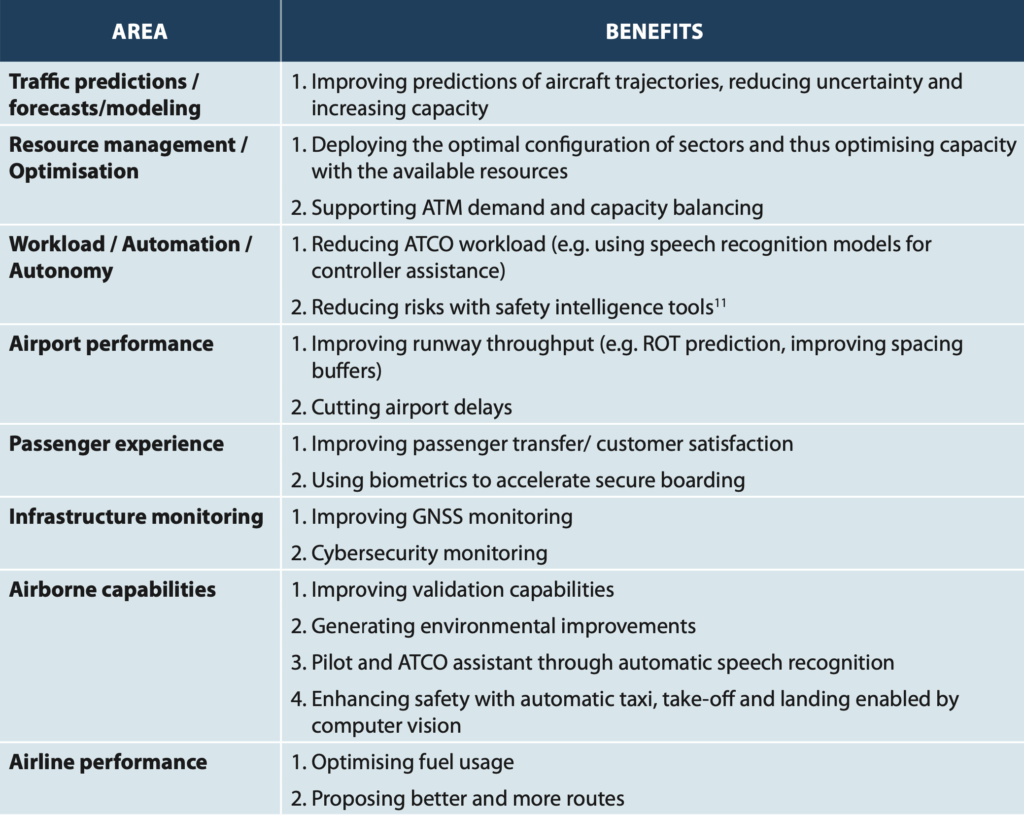
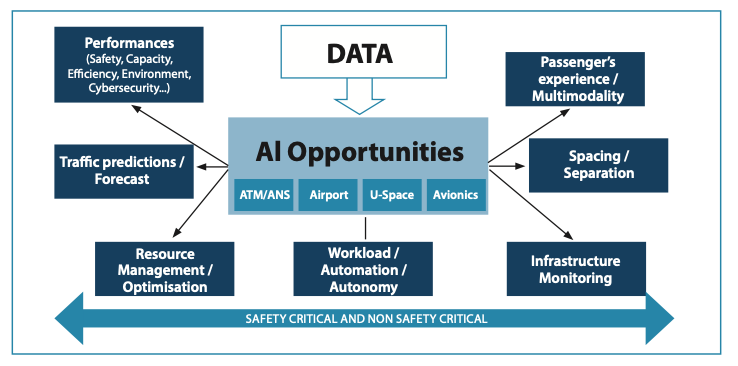
Back in March 2020, Eurocontrol released something called ‘The FLY AI Report – Demystifying and Accelerating AI in Aviation/ATM’. 

Now, the minute most aviation folk hear ‘Artificial Intelligence’ they generally start imagining either a Matrix type world ruled by super computers, or they are a pilot and get angry at the thought of the most ‘know-it-all’ co-pilot possible sat next to them. 

But AI has actually been used in aviation for a while now, and its integration into the aviation operations environment might be rather disappointingly un sci-fi, but it is very NOT disappointingly impressive when you start to see the clever ways it is improving the safety and efficiency in our industry.

The First Law of Robotics

First, let’s establish what is actually meant by the term ‘AI’.

It is not so much Replicant as it is Roomba – ‘Artificial Intelligence’ is used to categorize systems that have the ability to independently gather information, assess it, and (here comes the AI bit) make a decision based on it.

So your Roomba with its camera sensors and ability to make the decision to turn around rather than smash into the wall in front of it means it is categorized as an AI. A basic AI, but still, an AI.

AI is categorized into 6 levels, starting with your Level 0 – Low Automation stuff which just supports a human operator by gathering info and analyzing it. Beef up its brain a little though, and it becomes a Level 1 – Decision Support which not only gathers and analyses, but can also select certain actions in relation to some basic tasks or functions. Like, don’t run into walls.

As the levels increase, so does the ability of the systems to analyse greater data inputs, and the independence of the system to “decide” and act without any human operator involvement at all. Highly complex system are even able to determine what might happen based on data patterns, and so pre-empt actions, making decisions based not on the direct data, but on forecasts and possible things that could happen.

We aren’t talking vacuuming though, we are talking flying…

Actually, for all you pilots out there, we aren’t really talking flying. Not yet. Some airplane manufacturers are toying with automated takeoffs and that sort of thing, but no AI is currently capable of the level of autonomy which would enable it to totally replace Captain McFleshy. What we are talking is systems that support other areas of aviation operations in parallel to human operators – by providing data acquisition, analysis, action selection and implementation.

That all suddenly sounds quite boring, but the functions of AI in aviation are anything but.

The Cat-AI-logue

Most of the AI currently implemented in aviation is the “detect and avoid” type – systems that focus on precision navigation, or image detection. Sort of giant Roombas for the aviation world. Here are just a few of the current technologies that might be helping your flight without you even knowing it.

Traffic Prediction

Eurocontrol in Maastricht already use what they call a “learning machine” which can predict 4D trajectories – in other words aircraft position, altitude, speed and time. Being able to predict traffic flows means they can optimize the use of ATCOs and put the people brains where they are most needed.

The clever AI algorithms have a “what if?” function which lets them “tentatively probe” (Eurocontrol’s choice of phrase, not mine) the impact of certain airspace restrictions, or regulations, on traffic flow. It can monitor workload, spot probable bunching points, and also predict traffic one or two hours in advance to work out how the handover between different control sectors might affect the flow.

Maintenance Costs and Fuel Optimization

An AI system produced by Honeywell is being used to save airlines up to $200,000 per aircraft per year in fuel costs, and up to $40,000 per aircraft per year in maintenance costs. The system has data gathered from years and years of flight statistics, across a whole bunch of airlines, and it has swilled all this data about in its big brain and can now take specific flight plans and review where fuel has been wasted before.

The system can not only determine better routes, but can help make strategic decisions on things like flight path routings, the best direct path to landing to take, engine out taxi etc. While the pilot brain is thinking “If I turn an engine off now, will I have to use loadsa thrust on the other one to get it up that hill and around the corner? Maybe I should just keep ’em both running…” the AI brain is going “click, whirrr, yeah, turn the engine off now and you’re good!”

GNSS Monitoring

GNSS is great – it lets us operate the approach, landing, departure, ground stuff in low vis conditions. But there is a big issue with it –  propagation delay caused by the ionosphere. The current models for gathering data on this are pretty limited, but a new AI system can monitor and gather so much more data, and assess it so much more quickly because it has the ability to ‘learn’ – it is not just looking at data and spitting out figures. It is constantly updating its analysis.

Image recognition to detect runway vacation

Yep, there is an AI system that is used in conjunction with digital, remote, tower operations. It can speedily determine if the runway is clear, and calculate whether there is time for the next aircraft to land or not – it can do this a lot more efficiently than person eyeballs and brain, meaning airports can be a lot more efficient, and flight delays reduced, without reducing safety.

100 million actual flight hours of experience

A system developed by Thales – PureFlyt – has the ability to draw on aircraft and outside world data like weather information. It works inside the FMS and can predict aircraft trajectory, and can offer optimized flight paths to decrease fuel consumption and improve passenger comfort, as well as maintaining safe separation from other aircraft.

AI technologies have simulated 2 billion test cases. So this system basically will have the brain of a Captain who has flown 100 million flight hours (and all the knowledge that would go with that experience).

What are the risks?

Well, automation and AI taking over and forcing humans into pots of jelly where they sap our energy seems unlikely. But there is the risk of oversight, or rather lack thereof. An AI, no matter how “intelligent”, is a system which people have programmed and inputted data into. Poor data in = poor data out.

So the quality and reliability of systems must always be closely monitored. And there’s a thin line between it supplementing operations versus it becoming the single system that people rely on and no longer control. The trick will lie in the training, and in how people interact with the systems – ensuring they understand them, and that strong contingency procedures remain in place.

AI offers new safety and security indicators that can support the early detection and predictions of new risks. It can improve performance by assisting people areas like data gathering and analysis where an AI brain is far quicker than the human brain. But the purpose is not to remove the human operator from the process, but to combine the best of computational methods and human intelligence to create a collaborative service provision.

The full FLY AI report from Eurocontrol is available here.


2019: Safety Net on the NAT

2019 seems so long a go. A golden age for aviation with airplanes swooshing happily through the skies, and none so happy as those crossing the NAT.

Or were they?

Well, now we can check because the NAT Systems Planning Group 2019 Annual Safety Report has just been released. 2019 might seem a fair old while ago, but the report speaks of a time before Covid when aviation was at normal levels and so offers good guidance on what’s up in the NAT world normally.

What is monitored?

If you were thinking the only things you’re monitored on are your competencies and KSAs in sim assessments, then think again. You are being watched all the time, and especially so in the NAT where 12 Safety Key Performance Indicators are watched like a hawk watches a juicy mouse in long grass.

Targets for reducing the number of errors in these areas are set using three year rolling data.

So, how did we all do?

Well, in 2019, six of the targets were met and there were notable improvements in these three areas:

  • Percentage of long duration height deviations
  • Rate of long duration height deviations where datalink was not in use
  • Number of minutes spent at wrong fight level for aircraft not using datalink

So, pilots have got better at reading their altimeters and not flying at the wrong altitude.

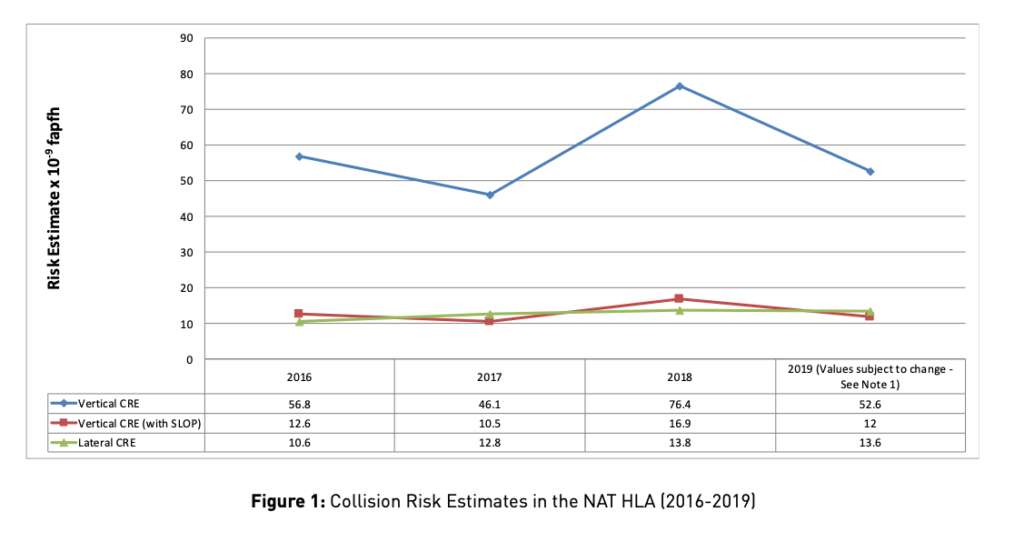
The risk of vertical collision estimate saw an impressive 30% improvement, and they reckon with the use of SLOP this can be reduced another 77% making it… 30/100*77{equation stuff}#100[somethingbysomethingoversomethingelse]… a lot less likely we will fly into each other. Good job all.

What is going less well?

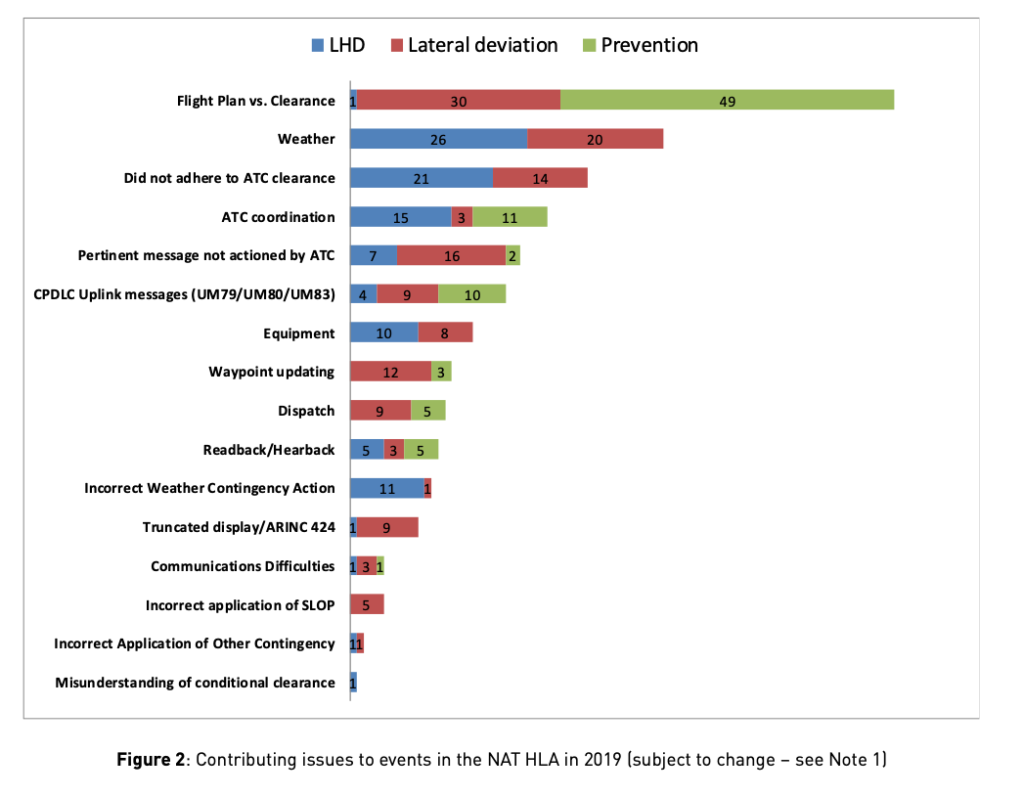
Lateral collision risk estimates reduced, but there were still 80 reported lateral deviations. So we’re flying at the right altitude, but sometimes in the wrong place.

Flight plan versus what ATC actually cleared pilots to do are the top of the list, making up 30% of  the total. 49 of those were prevented by ATC. Not adhering to ATC clearances increased from 10% in 2018, to 13% in 2019, and weather was another biggie making up 17% of all lateral deviations.

ATC coordination errors were also in the top 5 (11%) so don’t congratulate them too much. ATC were also provided with conformance monitoring tools which highlighted cleared versus selected level differences, and route assignment monitoring tools to help them intervene and prevent deviations. With these in place, the performance in the second half of 2019 did improve a lot.

Ok, congratulate them a lot, they’ve made it much safer for us up there.

Overall, what’s the verdict?

No gold star because there were still 266 events reviewed in 2019 by the SPG. These included:

  • 83 large height deviations
  • 118 (actual) lateral deviations including
    • 42 GNEs
    • 44 ATC interventions where ATC prevented pilots making GNEs
  • 73 prevented events where ATCOs stopped aircraft flying an uncoordinated flight profiles or entering the wrong airspace sort of things.

It isn’t always pilots going wrong though. Some of these were down to equipment issues, some down to ATC not responding quick enough. Here is the full breakdown – 

What else is going on up there?

Well, in 2019, when a normal number of aircraft were still flying, they were able to properly monitor the communication and surveillance side of things too, and a whopping 70% of core NAT traffic were using ADS-B. 83% of aircraft were making use of CPDLC over HF radio as well, and the use of these is a big factor in improving the safety and efficiency up there.

The report says this leads to a ‘greater focus on strategic rather than tactical techniques’ which sounds like ‘we are now planning aircraft not to fly near each other’ rather then ‘when aircraft get too close we move them out of each other’s way’.

As a reminder, you have until February 25 to get yourself Datalinkable – the NAT Datalink mandate comes in then.

What next?

2020 data might be a little skewed given a lot less traffic flew, (and many of those who did probably did so after a big gap of not flying), but the overall trend is big improvements. ADS-B is an excellent thing, ATC have a bunch of tools to help them make us safer, and pilot errors are reducing.

There is also a NAT2030 vision plan which is aiming for:

  • more flexibility through ‘dynamic airborne rerouting”
  • improved contingency procedures
  • better comms and surveillance and new technologies
  • a focus on improving the environmental impact
  • and maybe even some new visitors to the region in the shape of unmanned aircraft supersonic aircraft and even balloons

Until then, get out your own balloons and have a little celebration because safety is improving on the NAT. Now put them away. There is still work to be done.

The full report can be checked out here


ALL WE HEAR IS: RADIO BA DA, RADIO BODØ, RADIO BA DA

Wave at the ATC tower, and you might find there is no-one in to wave back. But that does not mean air traffic controllers are not watching us anymore, they just might be doing it from somewhere a little more remote.

The rise of the remote controller

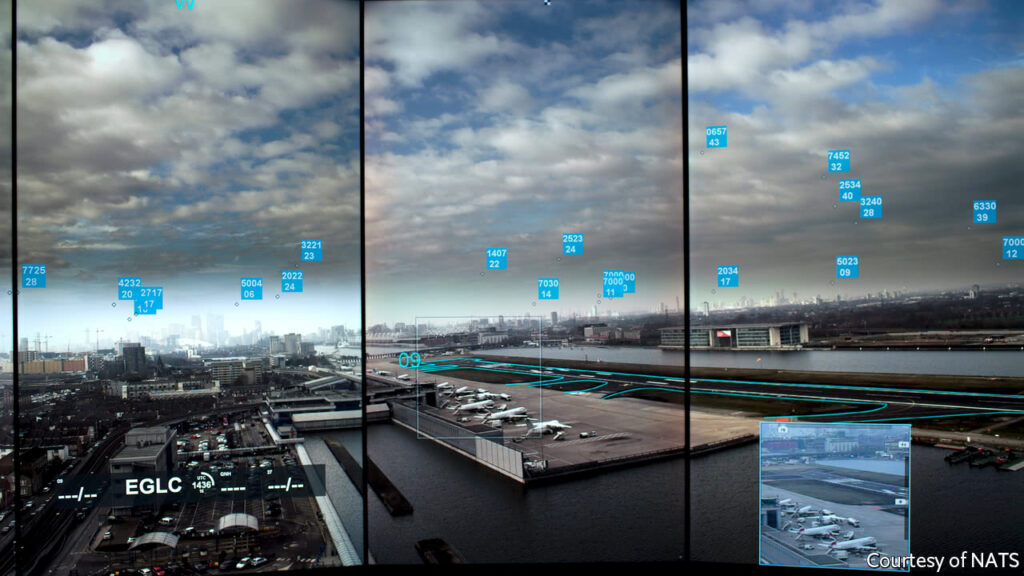
In 2021, LEMH/Menorca airport will no longer have air traffic controllers in their tower. Instead, they will have a network of 360 degree panoramic and pan-tilt zoom cameras which will feed high resolution images to a single, mighty control tower in Bodø, Norway.

Kongsberg (possibly a reference to King Kong who liked climbing up towers, but more likely just named after the town in Norway where it was founded), is working with various airports on a program called Ninox. The plan is to eventually have advanced Remote Tower Systems across 15 different airports.

The plan is to eventually have advanced Remote Tower Systems across 15 different airports. Two systems are already fully operational, and the overall result of the project will be an ATC service that brings “new capabilities to air traffic operations, enabling safe operation at reduced costs.”

They had me at “new capabilities”.

Is there anybody up there?

Rather than having controllers at the airport, able to look out the window, this system feeds images to a remote control tower. The cameras are incredibly high resolution and can zoom in on the smallest details, detecting movements from birds and drones. They also can have infra-red settings making it possible to see in the dark.

The tools provide greater contingency as well as vision enhancement, and there are options for automated object detection, virtual safety nets, and augmented reality features to be installed.

The real big advantage is that multiple towers can be managed with one all powerful air traffic controller so even the smallest airports providing only AFIS will potentially be able to sign up and have a “controller” over-seeing their traffic – increasing their services without a mega increase in costs.

What if the big ‘what if’ happens

A big “what if?” for this system is “what if the feed fails?” 

This isn’t a problem though – each tower is connected to the Remote Towers Centre via networks with huge amounts of redundancy. If one network fails, another can be used to connect again. It also means if one controller gets stuck in traffic, another controller can control from a different spot on the network.

Rapunzel, Rapunzel, let down your air… craft

So far only Norwegian airports have been set up on the Bodø master network. Røst airport has been operating under remote tower conditions since October 2019, with 3 more coming online through October and November of this year.

But actually…

The concept is already used across Europe, and there are multiple projects around the world.

EDDR/Saarbrücken Airport in Germany has had a remote tower since 2018. With 15,000 flight movements a year it is one of the largest airports to have its operations controlled remotely.

They have projects worldwide including Brazil and New Zealand, and both civilian and military. EGJJ/Jersey Airport in the UK has implemented a contingency system, Iceland is testing the technology for severe weather conditions and LOWW/Vienna is already using their vision enhancement system.

EHAM/Amsterdam Schiphol Airport has also been involved in trials, in conjunction with the Single European Sky ATM Research (SESAR) project and Air Traffic Control the Netherlands (LVNL). The trials tested how controllers would use the cameras, as well as the screens for radar, weather and flight planing which were integrated into their stations, and the results were pretty good.

And then there is AIMEE

AIMEE is an AI developed by the company Searidge, and NATS and NAV Canada are pretty excited about it.

It receives inputs from different sensors, sources and scenarios, and uses an algorithm that learns patterns and so can predict problems, and offer solutions quicker than a human brain can. 

AIMEE is being trialled at EGLL/London Heathrow to see if it can improve capacity by as much as 20%. The system will use ground level cameras to monitor aircraft positions in rubbish weather, and will be able to see when aircraft have exited runways much quicker than people eyeballs through fog can.

AIMEE is also being installed at airports like KORD/Chicago O’Hare and CYYC/Calgary where its AI eyeballs will monitor de-icing bays and provide a spacial marshalling system. In KFLL/Fort Lauderdale the system is used on gates for remote apron management.

So the future is remote

People-less control towers are not a thing of the future, they are happening now. Anytime you fly across London, you are probably being controlled by controllers in Swanwick.

For pilots, there is no change in procedures – they will still talk to personnel on the radio, but the actual people looking after you are squirrelled away in their remote tower in Norway.

Are we going to have a Matrix type AI computers taking over situation?

No, don’t worry, it won’t.

All this technology is there to supplement real people brains because it can process stuff faster. But it is unable to make the decisions human ATC currently make, so we are more likely to get pilot-less airplanes before we see entirely people-less control towers.


PBCS – What, Where and How

In Short: The performance-based communication and surveillance (PBCS) framework allows for higher safety standards and more efficient airspace use. If your aircraft already has the equipment and you cross the Atlantic or Pacific Oceans often, it’s worth looking into getting your regulatory approval.

PB… what? It’s a good question. We have so many acronyms in aviation, it’s easy to forget what this one stands for and what it really means. So, let’s try and get to the bottom of it.

What is PBCS?

Official answer:

The ICAO performance-based communication and surveillance (PBCS) framework ensures that emerging technologies for communication and surveillance fully support ATM operations and are implemented and operated safely.

In plain speak:

With the technology already available on many aircraft and in the Air Traffic Control facility, aircraft can now fly closer than ever before, especially over non-radar oceanic airspace.

There are two key buzz words, so let’s define them. They are interlinked with RNP – Required Navigation Performance.
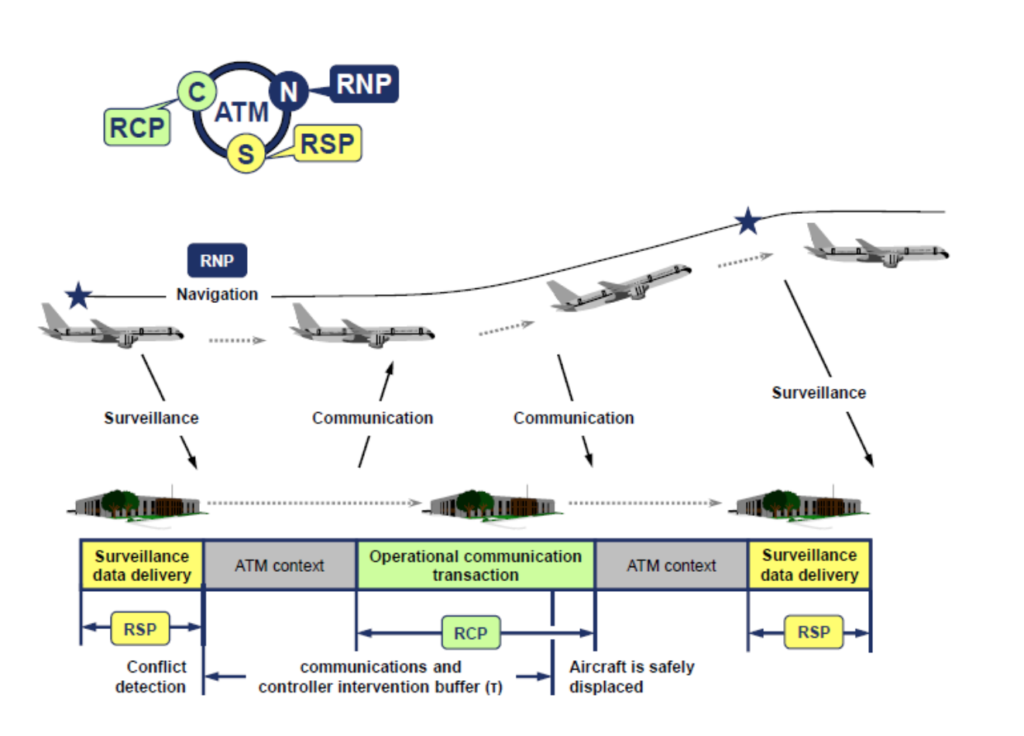
  • RSP – Required Surveillance Officially known as “surveillance data delivery”, often stipulated in the Airplane Flight Manual. Basically, how often does the aircraft send its position to ATC/ground station. There are two specifications, RSP180 and RSP400. The numbers indicate the maximum number of seconds (180 or 400) for the transaction to occur.
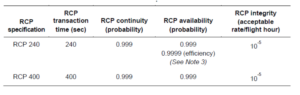
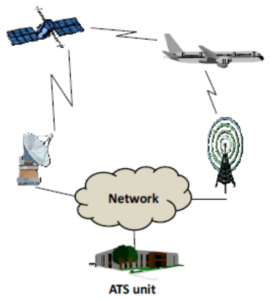
  • RCP – Required Communication ICAO has two specifications, RCP240 and RCP400. Again, the numbers indicate the maximum number of seconds (240 or 400), or “transaction time” taken for the controller to issue an instruction to the crew and for them to receive a response. This could be via CPDLC, HFDL, VDL or SATCOM.

So, we have a loop here, C-N-S. Communication, Navigation and Surveillance. An aircraft sends surveillance information to ATC about where it is; the aircraft stays within confines of RNP navigation requirements and ATC communicates with the aircraft within the required transaction times.  Pretty easy!

But why do we need PBCS?

The take away? If all given aircraft in a certain airspace have a lower RSP value and a lower RCP value, we can start putting these aircraft closer together.

Essentially – performance-based separation minima. This allows aircraft to be separated safely according to technological capability rather than “one-size-fits-all” prescriptive distances.

What are the differences from PBN?

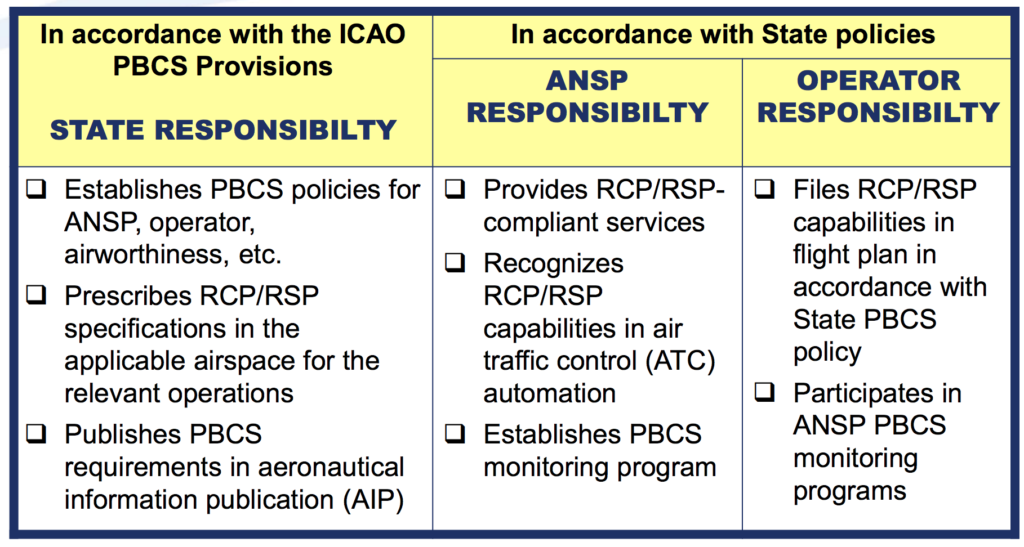
They are similar but there are notable differences. In a simple sense, the PBN (RNP/RNAV) only requires that the operator obtains approval because it focuses on how the equipment works. PBCS (RSP/RCP) however requires the involvement and approval of the air traffic service provider because it’s a two-way communication and surveillance effort. There are dependencies and complexity with the equipment standards on both ends.

In this graphic you can see a high-level summary of who is responsible for what:

Where is it in place?

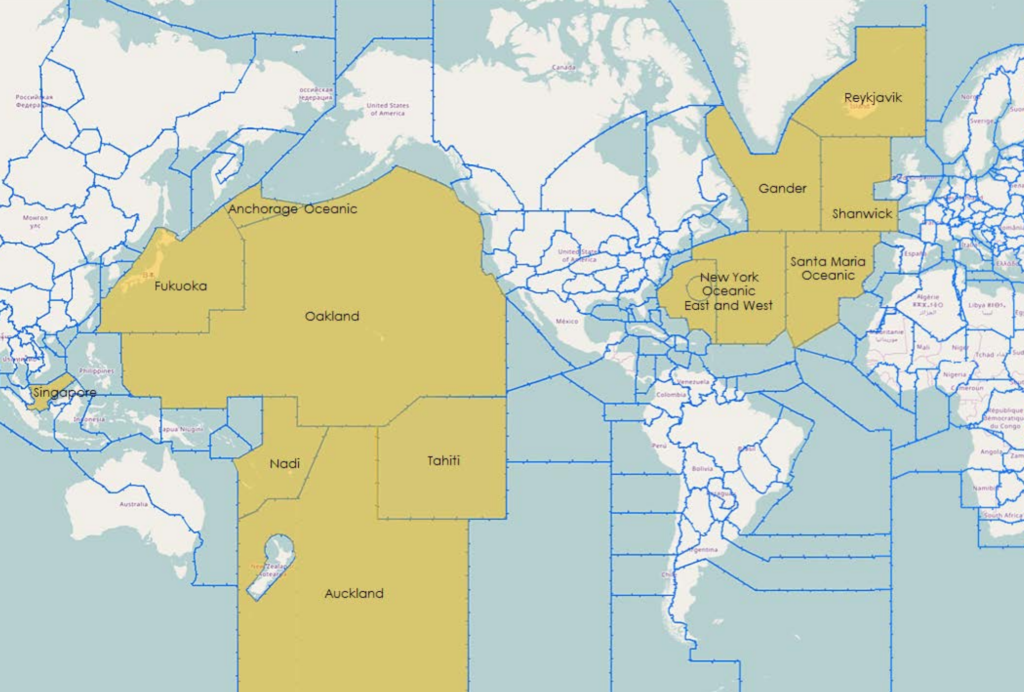
Currently PBCS is in effect in one form or another in the following FIR’s

  • NZZC/Auckland Oceanic
  • NFFF/Nadi
  • KZAK/Oakland Oceanic
  • PAZN/Anchorage Oceanic
  • WSJC/Singapore
  • VCCF/Sri Lanka
  • NTTT/Tahiti
  • RJJJ/ Fukuoka
  • KZNY/New York Oceanic
  • CZQX/Gander
  • EGGX/Shanwick
  • BIRD/ Reykjavik
  • LPPO/Santa Maria Oceanic

The Air Traffic Service providers of China, Brazil and Indonesia have also shown interest to introduce PBCS in the future.

Specifically, PBCS is being used between FL350 and 390 on certain “half” NAT tracks as we have written about before.

What do I need to do?

Requirements vary from state-to-state on the exact procedure for obtaining approval. It’s important to note that not all aircraft are automatically PBCS ready (refer to your aircraft manufacturer and your airplane flight manual).
The FAA has outlined its approval process here and has a handy powerpoint document here.

An important element is to prove that you have signed the “PBCS Global Charter” which can be found at the FANS Central Reporting Agency (CRA) website.

When a PBCS authorization is obtained an operator is required to file both P2 (indicating RCP240) in item 10 and SUR/RSP180 in item 18 of the flight plan, in addition to the J codes for CPDLC and D1 or G1 for ADS-C in item 10.

The correct filing of these two codes will indicate to any ATM ground systems applying performance-based separation minima that the aircraft is eligible for these minima and that the crew have received the relevant training in order to safely operate using the reduced separations.

Will you notice that PBCS standards are being applied to your flight?

Ok this is the funny part of this story. The short answer, probably not.
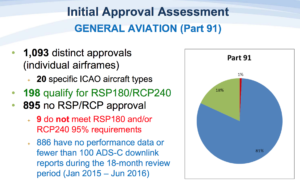
While it may be easier for RCP240/RSP180 approved aircraft to obtain optimal flight profiles, especially during high traffic periods, and particularly for NAT flights using the OTS, the application of these standards is generally tactical in nature for ATC. An aircraft may not have performance-based separation applied at all on an individual flight, or possibly may never have had it applied to any of its flights. Even if a you have RCP240/RSP180 approvals, if the aircraft nearby does not also have the approvals, the separation standards cannot be applied!

What if I don’t have RCP240 and RSP180 approval?

If you do not have RCP240/RSP180 approvals you will always have the larger separations, e.g. 10-min, applied, and not be eligible for the lower standards in cases where it may be beneficial.


The only airspace that has implemented tracks that will require PBCS to file is in the NAT OTS. There are still non-PBCS tracks in the OTS for which PBCS approvals are not required.

All other airspace in which performance-based separation minima are currently applied will allow aircraft with and without RCP240 and RSP180 approvals to enter and use the airspace in a mixed-mode operation.

Will I be penalized if I don’t have it?

Probably not in the short term. In the future as more and more airspace corridors become PBCS only, then it is possible you may be subject to reroutes, delays or the requirement to fly outside of certain flight levels.

So, our conclusion?

PBCS is a great step forward in maximizing efficiency in a busier airspace environment thanks to the advent of better technology. If you fly the NATs often and have an aircraft capable of PBCS certification standards, then yes – do it! The approval process is not overly burdensome, and many modern transatlantic jets already meet most of the technical requirements.

Ultimately, reduced separation standards mean more great air-to-air views. So, pack your camera!

Did we miss something, or does something need more explaining? Let us know!

Extra Reading:


ATC Strike over, but nine Ethiopian Air Traffic Controllers remain in jail

5th September, update:

As of this morning, most controllers have returned to work. Some concessions made by ECAA. Addis ACC and TWR are again staffed with qualified controllers, so the safety situation, for now, is restored. However, 9 remain in jail. Returning controllers were forced to sign an ‘admission’ of illegal strike action in return for amnesty. IATA In Flight Broadcast Procedure requirement for Addis FIR remains in place, meaning you must broadcast on 126.9 as in other areas of concern in Africa. Further as we get it.


4th September:

Last week we were one of the first to expose the attempted ATC Strike cover up by the Ethiopian Civil Aviation Authority.

As a reminder, untrained and uncertified foreign controllers, retired and local non-operational ATC personnel are being used to control air traffic over Ethiopia. 

It is a catastrophic misjudgement, creating a safety risk in the Addis FIR and at Ethiopian Airports for pilots and passengers alike.

Here are some more updates since our last article:
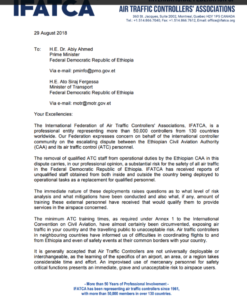
  • On August 29, The International Federation of Air Traffic Controllers Association (IFATCA) penned a letter to the Prime Minister of Ethiopia. You can read it here.
  • The neighbouring controllers in Kenya warned that flights in and out of Addis Ababa are not safe. You can view their letter here – specifically they warned that the ‘possibility of air misses’ is real.
  • The ECAA over the weekend rejected concerns regarding the safety of Ethiopian airspace, specifically calling the claims from Kenya as “outright lies.”  The ECAA has said that ATC are operating “in accordance with ICAO Annex 1 provisions.” They did not deny however that foreign and retired ATC are being used.
  • The ECAA also outlined that the national carrier, Ethiopian Airlines, has “awarded” veteran Air Traffic Controllers,  who are performing their national obligation.

  • However on Monday, the local state affiliated broadcaster, Fana BC, reported that the Federal Police Commission had detained nine individuals on suspicion of attempting to disrupt international flights and coordinating a strike that began last week. This has been quickly condemned on social media, as many locals called on the government to resolve the issues raised by the ATCs rather than resorting to intimidation.

The ECAA claims that “some” of the striking controllers have returned to work.

Major airlines and uninformed passengers continue to fly into and over Ethiopia and this continues to be a major safety risk.

Do you have more to add this story?  Please, let us know!


Unsafe aircraft not welcome in Europe

Eurocontrol and the European Aviation Safety Agency (EASA) have brought live an automated system which alerts air traffic controllers when unsafe aircraft enter European airspace.

How does it work?

Network Management Director at Eurocontrol Joe Sultana, explained that “We have added another parameter to our system, and this is now checking if an aircraft coming from outside of Europe is coming from a state where the regulatory environment is accepted by the European Aviation Safety Agency”.

So in short: The system will now take an automatic look at the Third Country Operator Authorisation and alert ATC if there is a flight being operated from a aircraft on the banned list.

The regulation that a plane coming from a non EU country must have a Third Country Operator Authorisation has been in place since 2014, but controllers have had no way to implement it across the 30,000 flights it receives into Europe each day, until this new component was entered into their systems.

As a reminder, Eurocontrol receives the flight plans of all aircraft entering into European air space, while the EASA holds the Third Country Operator Authorisations information which confirms that planes are from countries with recognised safe regulatory practices.


Why are you still getting the Ruudy6 wrong? Stop at 1500!

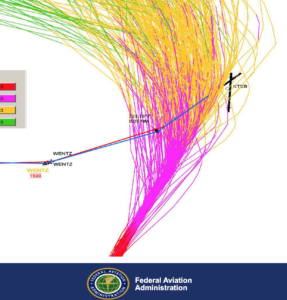
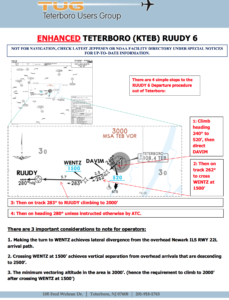
If you’re departing Teterboro any time soon, make sure you stop at 1500 feet – and have a good look at the rest of the RUUDY 6 departure. That’s the message from NY ATC, and the Teterboro Users Group.

The FAA has reported over 112 pilot deviations on the KTEB/Teterboro RUUDY 6  SID.

The Teterboro Users Group has asked us to remind all pilots that strict compliance is required, especially vertically.

“The most common error being a climb straight to 2000’ without honouring the requirement to cross WENTZ at 1500” – Capt. David Belastock, President, TUG

This week the FAA issued the following notice which explain the issue and the serious consequences of non-compliance, namely the reduced vertical separation with KEWR/Newark arrivals:

Teterboro Airport SID Deviations

Notice Number: NOTC7799

The Ruudy Six departure continues to incur both lateral, but in particular, vertical pilot deviations. Due to the proximity of Newark and other area airports it is imperative to follow the RNAV(RNP1) departure procedure to Performance Based Navigation (PBN) standards. Do not drift left off course to avoid noise monitors. Do not climb above 1500 until passing Wentz intersection. There is only 1000 feet of separation with overhead traffic at Wentz. When issued the clearance to “climb via the SID” all altitude restrictions must be complied with as depicted on the chart.

Attached are excerpts from the Aeronautical Information Manual and the Controllers handbook explaining the Climb Via procedure. An expanded explanation is in chapter 4 and 5 of the AIM.

Further information can be found on the Teterboro Users Group website http://teterborousersgroup.org and in KTEB Notice to Airmen (Letters to Airmen section)

There has been an extensive education campaign underway for a long period including guidance material, pilot meetings, educational podcasts and even a FlightSafety International eLearning course. Despite these efforts, pilot deviations continue to occur.

A great guide has been created by Captain Belastock and its very useful for any crews operating out of KTEB.

Know of any other procedures with unusually high non-compliance?

Let us know!


Don’t forget to file MACH number in NY Oceanic Airspace

KZWY/New York Oceanic FIR last month published a NOTAM requiring Flight Plans to be submitted with MACH crusing number, rather than TAS in Field 15A for the flight plan. So far, most operators are not doing this. But you should!

This includes flight departing TXKF/Bermuda.

A0178/18 – ALL ACFT ENTERING THE NEW YORK OCEANIC FIR (KZWY), INCLUDING THOSE DEPARTING BERMUDA (TXKF) , MUST FILE A MACH NUMBER INSTEAD OF A SPEED OF KNOTS IN THE EXPECTED CRUISE SPEED FIELD (FIELD 15A) OF THEIR FPL. 03 MAY 17:08 2018 UNTIL 31 MAR 23:59 2019. CREATED: 03 MAY 17:09 2018

Reports are that compliance so far has been low.

So why do it?

NY ARTCC tell us:

This minor adjustment enables the ATC computer system to effectively probe flight plans and proactively offer more favorable routes and/or reroutes.

Help ATC out! Thank you.


Last minute ATC grab in Congress

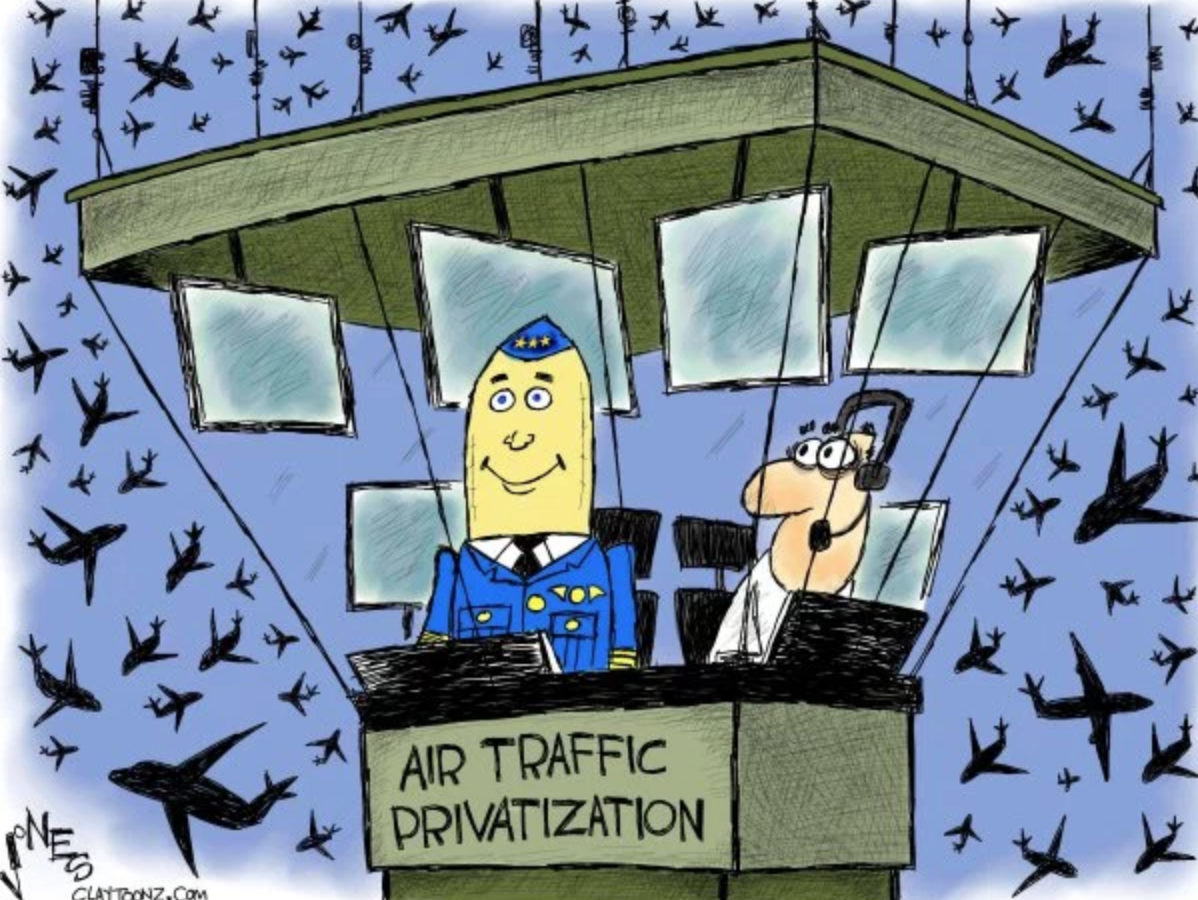
On Friday Apr 27, the US House of Representatives approved a long-delayed bill to authorize funding for the FAA, after GA advocates had mobilized earlier in the week to fight-off a last-minute attempt to privatize US ATC.

Late on Tuesday Apr 24, Republican Bill Shuster, chairman of the House Transportation and Infrastructure Committee, introduced a “managers amendment” to the proposed five-year FAA funding bill.

His amendment called for two things:
1. Remove the US ATC system from the FAA and instead make it part of the Transportation Department.
2. Allow it to be run by a 13-member advisory board made up mainly by airlines.

“Both of these provisions were drafted in the dark of night, without any opportunity for public debate,” said NBAA.

After last minute lobbying by GA advocates, the two contentious items in the bill were removed.

While Shuster agreed to remove the measures, he reiterated that he “strongly believe[s] Congress must pass real air traffic control reform” and that he sees that happening “somewhere down the line.”

“We are pleased to see this legislation pass the House,” said NBAA President and CEO Ed Bolen. “While the bill is not perfect, a long-term reauthorization is critical to advancing our shared priorities. Equally important, this bipartisan bill will modernize, not privatize air traffic control. We are grateful that members of Congress heard their constituents’ concerns about ATC privatization, and reflected those concerns in bringing this legislation to final passage.”


Here’s what happens when Europe’s slot system crashes

On 3rd April 2018, a failure with the central European slot computer plunged the entire ATC system into crisis mode, with multiple knock on effects. Here’s what happened:

1. The system that allocates ATC slots to flights, and therefore manages the flow of traffic across Europe, failed at 1026 UTC. It’s called the ETFMS (Enhanced Tactical Flow Management System), but aka “The Slot Computer”

2. There is a Contingency Plan for this situation. Airports are supposed to use this, which gives a quick table of departure intervals allowed according to the destination. You can view the plan here and see what it looks like for all the main airports: http://www.eurocontrol.int/publications/network-manager-atfcm-procedural-contingency-plan

3. Some airlines reported that Istanbul, amongst others, were initially holding all departures, as local authorities were not well versed in the Contingency Plan and were unclear as to how to handle the situation. Eurocontrol then started calling round the 70 main airports to make sure they knew what they were supposed to do!

4. All flight plans filed before 1026Z were lost. Operators were instructed to re-file all their FPL’s, as well as those for the rest of the day, as Eurocontrol said they would only switch back on the slot computer once they reached a critical mass of filed flight plans in the system.

5. With the Contingency Plan in place, there was around a 10% total capacity reduction across the whole of Europe. Actual delay numbers – usually available on the NOP – were impossible to verify, because of all the missing FPL’s in the system.

6. Normally, Eurocontrol will re-address your FPL to ATC Centres outside the IFPZ. During the slot computer outage, operators had to do this manually, ie. find the FIR’s they would cross, get their AFTN addresses (like HECCZQZX), and send them their FPL.

7. The actual system failure was fixed at around 1400Z, but only went back online at around 1800Z, after it had been thoroughly tested and Eurocontrol were happy there were enough FPL’s back in the system.

In over 20 years of operation, Eurocontrol said “the ETFMS has only had one other outage which occurred in 2001. The system currently manages up to 36,000 flights a day.”


More NAT half-tracks are coming

Update Jan 23: The current phase of the trial for RLatSM Tracks will come to an end on March 29, when PBCS standards will be introduced for the NAT tracks. More info on that here.

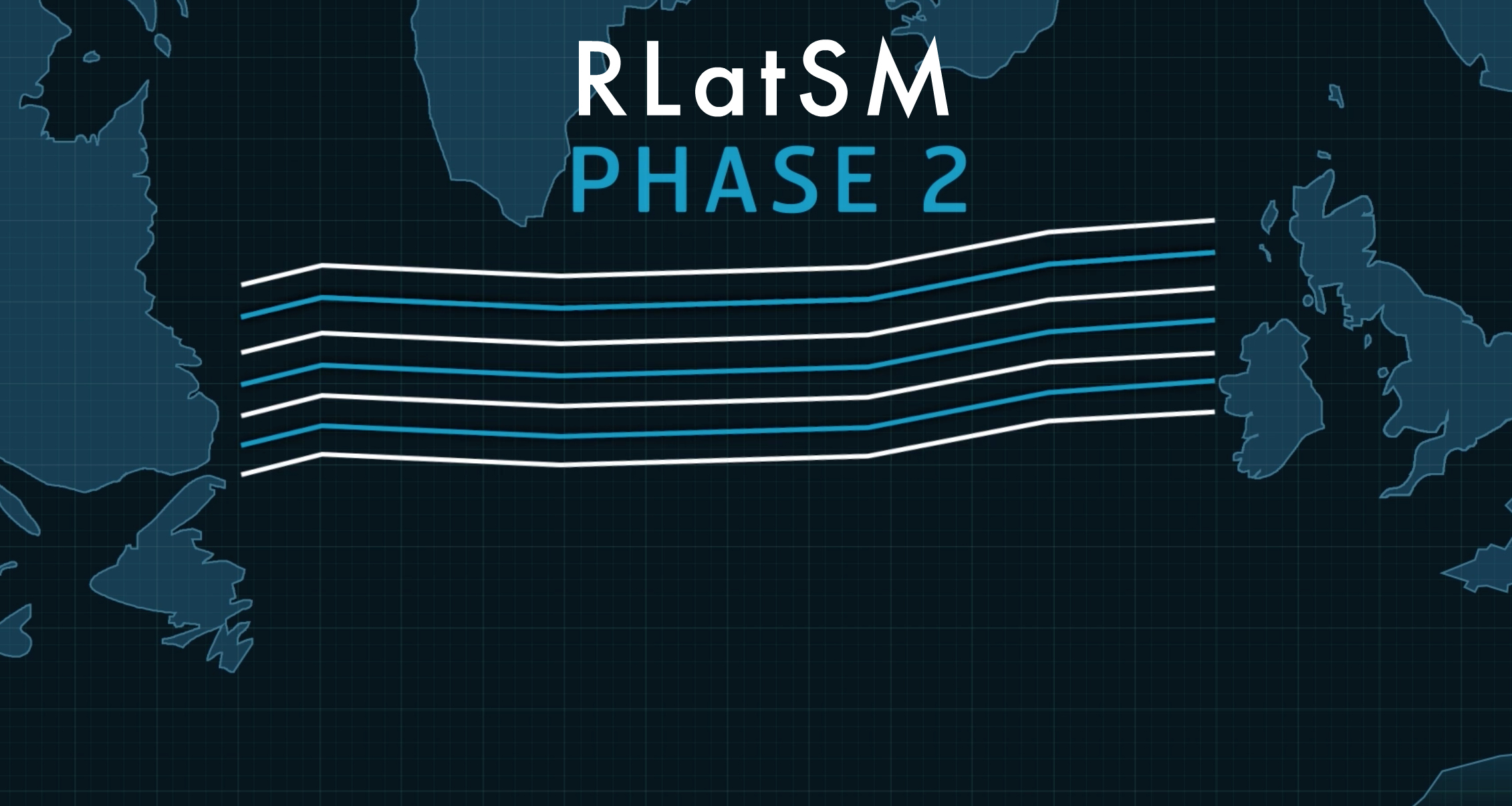
Since Dec 2015, there have been three daily NAT tracks spaced by one-half degree between FL350-390. These are officially called ‘RLatSM Tracks’ (Reduced lateral separation minima), but we all just prefer to call them ‘Half-Tracks’.

Separating flights by one-half degree of latitude rather than the standard one degree means that aircraft can be separated laterally by 25nm, which helps improve the efficiency of North Atlantic operations.

In Jan 2018 the Half-Tracks will be expanded from the three that now run each day, first by one additional track and then (maybe) to all NAT Tracks between FL350-390 inclusive. Jan 4 is the earliest day that this might happen, but because they will be decided tactically, it will most likely be the first busy day after Jan 4.

If you want to operate on the RLatSM tracks, you’re going to need CPDLC, ADS-C, and RNP4; along with the other standard pre-requisites for operating in the NAT HLA between FL350-390: an HLA approval, TCAS 7.1, RVSM approval, two LRNS, and a working HF radio. To figure out where you are welcome on the NAT, depending on what equipment and training you have, check out our quick and dirty guide here.

One thing to be cautious of when using the half-degree tracks – most aircraft FMC’s truncate lat/long waypoints to a maximum of 7 characters, so it will often show up as the same waypoint whether you’re operating along whole or half degree waypoints. So when operating on the half-tracks, just remember to double-check the full 13-character representations of the lat/long waypoints when you enter them into the FMC.

For more details about the new RLatSM procedures, have a read of the UK AIC 087/2017 here.


Iridium Fault Fixed

Last week we reported on an equipment issue with Iridium satcom that prompted a ban by a number of Oceanic ATC agencies. Some aircraft were receiving massively delayed clearances sent by ATC via CPDLC – and one took the instruction and climbed 1000 feet, even though the message was meant for the flight the aircraft operated previously.

Here were the areas which had previously published Notams restricting the use of Iridium: Brazil Atlantico (SBAO), Auckland (NZZO), Chile (SCIZ), Japan (RJJJ), Anchorage (PAZA), Oakland (KZAK), New York (KZNY and KZWY).

However, all FIR’s have now removed their notams which banned the use of Iridium for CPDLC and ADS-C. This has happened after tests were performed last week using Iridium SATCOM which confirmed that Iridium no longer queues CPDLC uplinks for more than five minutes.

Article header photo by @Zelgomat


CPDLC Departure Clearance for US Airspace – 22Oct

Earlier this month we reported about the transition of the United States ATC system to a National Single Data Authority (NSDA). https://ops.group/blog/cpdlc-for-us-airspace-the-implementation-process/

The initial phase of this process is scheduled to start this weekend on 22Oct at 0330Z with a single CPDLC logon ID for domestic US airspace (KUSA) and ATC issuing departure clearances using CPDLC.

You can read more details about Controller-Pilot Data Link Communication–Departure Clearance (CPDLC-DCL), general procedures for logging on/notifying, loading the flight plan, receiving the CPDLC-DCL, responding to the CPDLC-DCL message, and disconnecting/logging off  here:

NAS Data Communications Guide


Oceanic ATC’s tell us their position on Iridium Satcom

Last week we reported on an equipment issue with Iridium satcom that prompted a ban by a number of Oceanic ATC agencies. Some aircraft were receiving massively delayed clearances sent by ATC via CPDLC – and one took the instruction and climbed 1000 feet, even though the message was meant for the flight the aircraft operated previously.

Today, we checked-in again with all the oceanic ATC centres, to see what their current policy is on the issue.

EGGX/Shanwick told FSB that they are aware of the issue, reviewed it, but have decided not to ban the use of Iridium for either CPDLC or ADS-C just yet. LPPO/Santa Maria have the same position. So, in this airspace, you can use Iridium, for now.

CZQX/Gander said they did a safety analysis of it, and decided not to ban it. They have all kinds of conformance alerts in place to prevent any problems from happening – so if aircraft deviate they get notified immediately.

BIRD/Reykjavik aren’t that concerned about the issue – they use HF most of the time anyway.

Chile (SCIZ)
Japan (RJJJ)
Anchorage (PAZA)
Oakland (KZAK)
New York (KZNY and KZWY)
All these centres have published Notams instructing crews not to use Iridium for CPDLC or ADS-C. Until the fault is fixed, in those regions you’ll have to either use HF for ATC comms, or use another SAT provider.

Auckland (NZZO) and Brazil (Atlantico SBAO) have applied the ban to CPDLC alone. Use ADS-C if you like.


From Iridium themselves, they told FSB: “We’ve updated their queue management system. Every minute, there is a queue check. If there is any message that is older than 4 minutes, it marks as timed out, and will not be delivered. This update was done at ground level, so it does not require any software updates by the user. We’re still waiting on feedback from FAA workgroup on the fix and if it’s sufficient to allow use of Iridium for CPDLC and ADS-C.”

That’s it for now! We’ll keep you posted, or, even better – tell us below in the comment section if you hear news.


French ATC strike updates

Several ATC unions have called for a national strike, affecting French airports and airspace from Monday evening at 1700UTC (Oct 9) through Wednesday at 0400UTC (Oct 11).

All FIRs are experiencing high delays.

Impact expected to the FIR’s per current  (10OCT) information are as follows:


LFRR/Brest Experiencing high delays

LFFF/Paris All sectors experiencing delays with highest delays in the west. Situation is starting to show signs of improvement.

LFEE/Reims All sectors experiencing delays with highest delays in the East and North

LFBB/Bordeaux Some high delays and with no ease forseen

LFMM/Marseille High delays all around. Regulations will be in place until a least 2359UTC

The following routes are available:
Tango 9 Global and Tango 213 Global, UM30 and UZ180 are fully available.
T9 is still dealing with alot of delays.

Airports:

LFPG/Paris DeGaulle and LFPO/Paris Orly are experiencing delays and there is a 30% capacity reduction in both airports plus at the following airports:

LFOB/Beauvais, LFLL/Lyon, LFML/Marseille, LFMN/Nice, LFBO/Toulouse and LFRS/Nantes
LFSB/Basel – unconfirmed as of yet but may be used as an alternate
LFPB /Paris-Le Bourget will not be affected.


Expect high impact. Ops over or to France are best avoided today.

We will continue to post any further information here as soon as received.


CPDLC for US Airspace: The Implementation Process.

Update 03Oct: The FAA has released AC_90-117, which is their updated overview of Data Link Communications.

  • The United States ATC system transition to a National Single Data Authority (NSDA) is here.
  • The changeover will take place on 22Oct at 0330Z
  • A single CPDLC logon ID (KUSA) will be provided for domestic US airspace.
  • The initial phase is set up to issue departure clearances only
  • En-route CPDLC communications within US airspace will be implemented at a later time.
  • More details about the transition process are found here NSDA – Data Comm Program
  • We’ll post further information as it becomes available


Australia ADS-B requirements: 2017 onwards

Last year Australia switched off most of its navaids, meaning that RNP became a requirement.

This year, they’re asking all aircraft flying in Australian airspace to be ADS-B equipped after February 2nd, 2017. ADS-B means that controllers can use your uplinked GPS position, instead of mammoth SSR Radar Units all over the country.

There are two exemptions:

  • Small Australian-registered GA aircraft
  • Foreign-registered aircraft with the restriction that you must fly below FL290 in continental airspace, and stick “RMK/NIL ADSB AUTH” into Field 18 of the Flight Plan.

You don’t need to apply for special authorisation, just show up.

References:


Robbed by the CAA – and other horror stories

Three of the most recent headlines are:

Tempting to joke that this sound like Miami, or Nice – but these are reviews of FZAA/Kinshasa, in the DRC – rated at 2.5, one of the lowest Airports on Aireport.

One report reads: “Don’t go here unless you like to be robbed by the CAA. I was told I was in big trouble for not having an MEL on a private airplane. 500 USD would [apparently] solve everything

Continuing: “ATC is terrible, they wanted us to hold right over the airport in the middle of the T’storm we wanted to wait for to pass. I ended up telling him we would hold 15 miles out on the 090 radial. He wasn’t very happy about being over-ruled, but it worked”

And:  “People mill around the airplane looking for fuel drips to collect in their cans. Some guy told me he was a fueling assistant and wanted cash for his kind assistance. The handler is pretty much worthless, he just wants to collect the cash = $2700 USD for a fuel stop in a Falcon 900.”

There are some other horror stories in the database. SVMI/Caracas, Venezuela (“Handler demanded $9000 in Cash“);  VECC/Calcutta (“Immigration was a nightmare“); HEAX/Alexandria (“Handler tried the shakedown“)


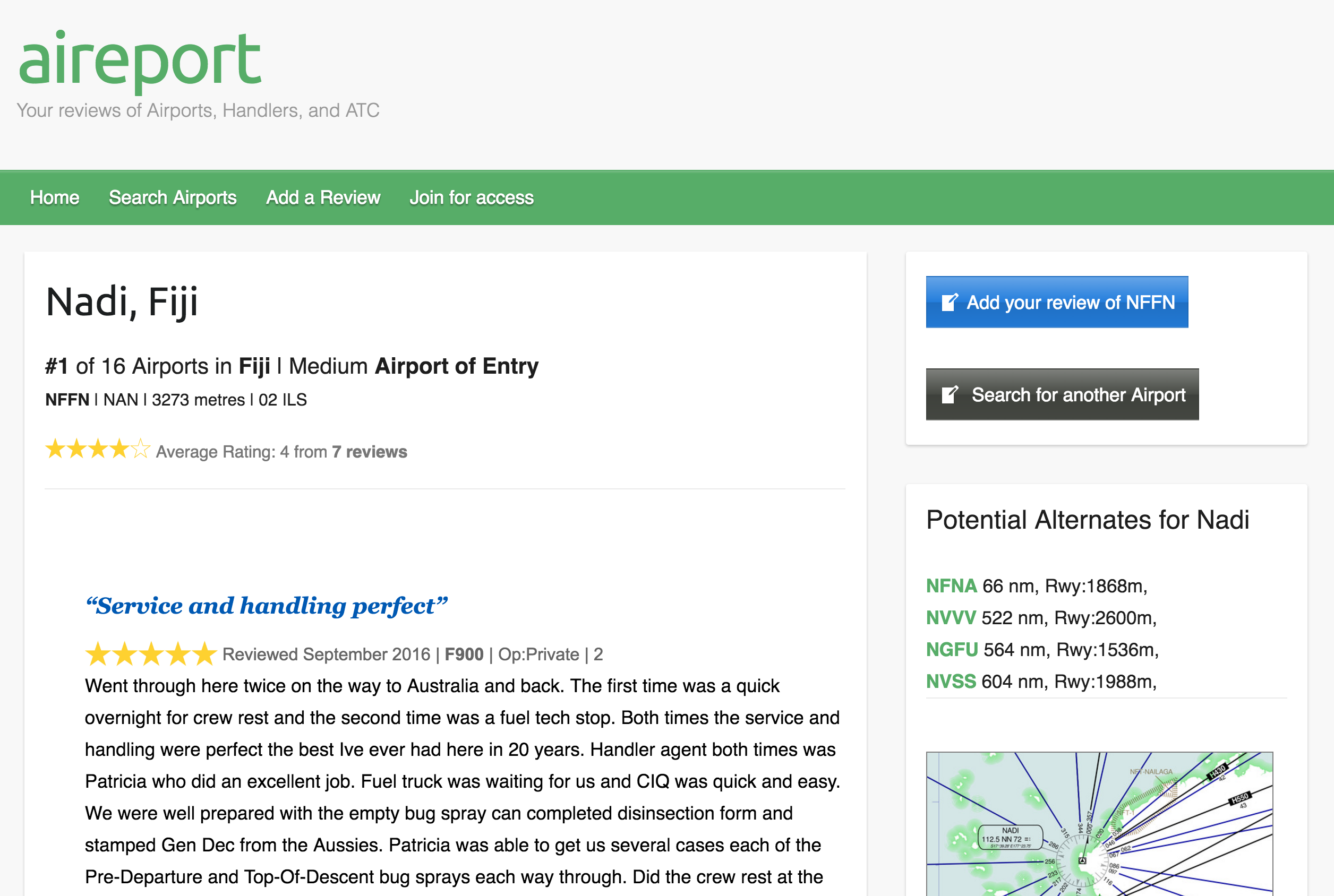
There are also plenty of good reports – EGSS/London Stansted is “As easy as it gets in Europe“, EINN/Shannon, Ireland is “Absolutely outstanding“, and NFFN/Nadi, Fiji is given “Quick Turn, Inexpensive Fuel, and Perfect

NZAA/Auckland, New Zealand stands out as getting consistently good reviews: “Very knowledgeable and helpful staff”, “Air Centre One is superb”, “Flawless from Gordy” … the crew at Air Centre One is clearly keeping their customers very happy. Nice work guys.

corporate-jet-services

For all the ones in between – read for yourself: Aireport.co/reviews.

aireport-co


France ATC Strike #11

We’ve been notified of an ATC strike planned for France on 14 and 15 September – that is, Wednesday and Thursday this coming week. This follows the normal pattern, where ATC and Area Control Centres and Airports will see union members striking, thereby preventing most flights from arriving and overflying in France during this period.

This is shorter notice than usual for a French ATC Strike, and no confirmation is likely until Monday, but we’d put the likelihood of this going ahead at around 50% at present.


High Seas Airspace – What is it?

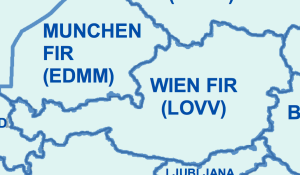
Austria might have the worlds most perfect little piece of airspace. Wien (Vienna) FIR matches the countries’ political boundaries perfectly. There is no ocean, no disputed boundaries, and no delegation of ATC.

Wien FIR

For most others, it’s not as straightforward. For some, it’s beyond complex.

So how do countries determine what their airspace looks like? Airspace overhead the actual landmass belongs without question to the country, so that’s easy.

Then, from the shoreline out to 12nm are the Territorial Waters, as agreed by the UN Convention on the Law of the Sea in 1982 – giving us “Territorial Waters Airspace”.

The next chunk is the 12nm-200nm area – the Exclusive Economic Zone. In aviation, this sometimes has an effect on whether prior permission in the form of an Overflight Permit is required – Peru and Ecuador have in the past claimed this requirement. Beyond this, International Waters exist.

In aviation, the term of reference has become High Seas Airspace, and is taken to refer to anything outside the 12nm buffer where no country has sovereign jurisdiction over airspace. By international agreement, chunks of airspace are assigned to individual countries to provide an ATC service, because we prefer to have ATC watching us and providing separation, in comparison to trying to do it ourselves using 126.9 and TCAS.

As has been recently the case over the Black Sea, that agreement isn’t always unanimous, and ICAO sometimes has to tread a difficult political line in assigning their preferred responsibility – last month Ukraine opened up routes in “High Seas Airspace” that Russia also wanted to have a crack at managing.

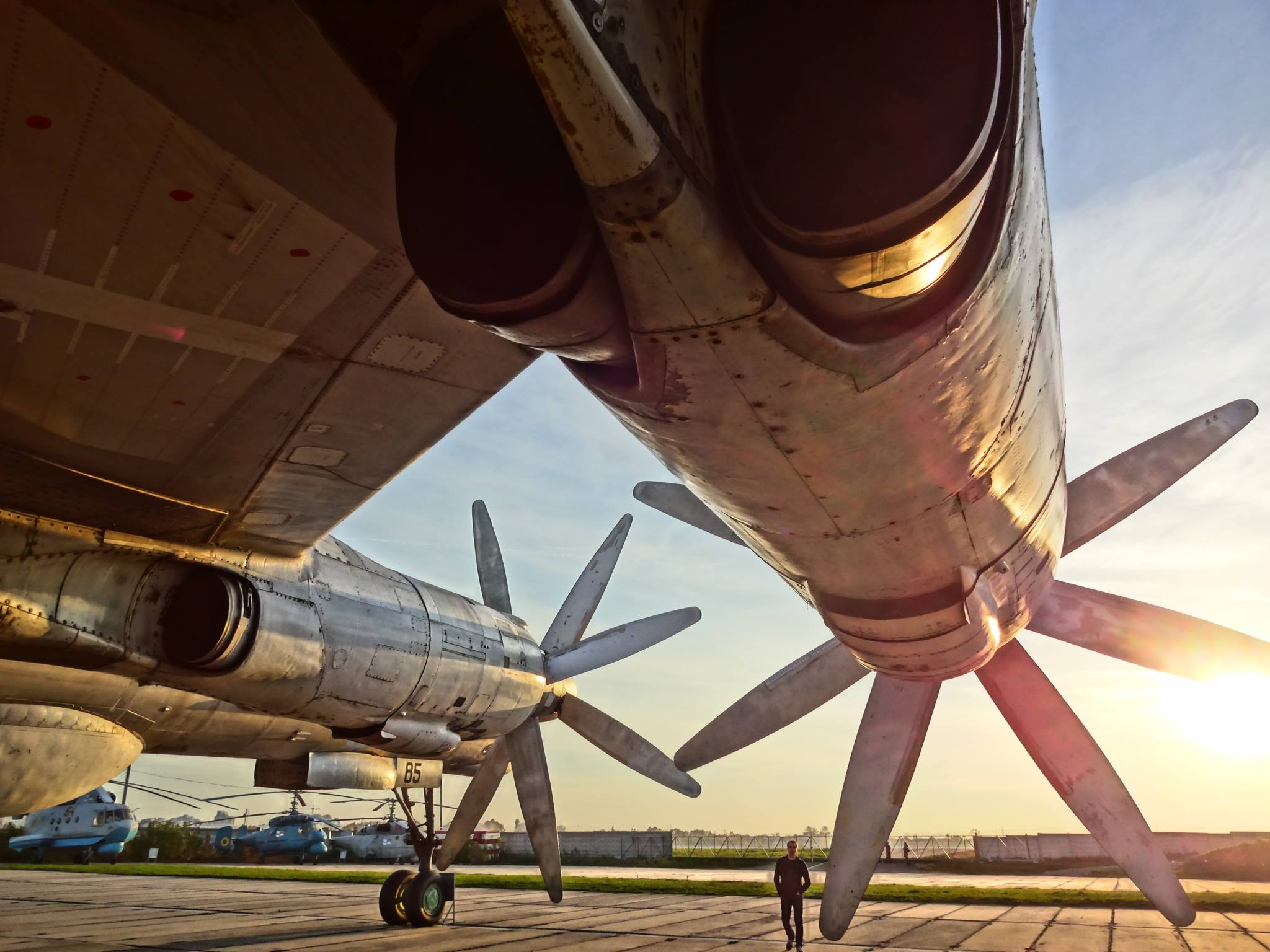
The Baltic Sea has long been a generator of news stories of close encounters with the Bear (Tu-95), this is because of the multitude of small chunks of High Seas Airspace that allow flights out of Russia towards the UK and Europe. ICAO is concerned at the rising incidences of conflict between civil traffic (that’s us) and military flights over the Baltic.

These military flights operate under Due Regard – but often don’t file flight plans and ATC know nothing about them until they are pretty close to you. You’re unlikely to see them on TCAS either. So, that regard is not so high.

We’ll continue the next time with a look at “No FIR Airspace” – those chunks of High Seas airspace where nobody is in control, mysteriously marked “XXX” on our charts.