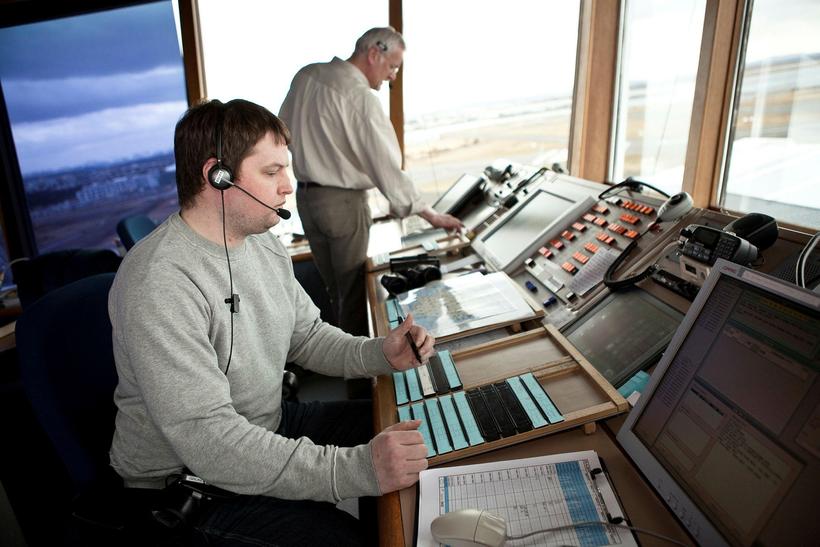
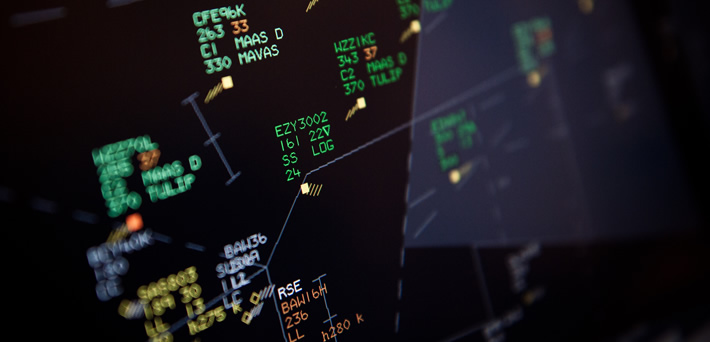
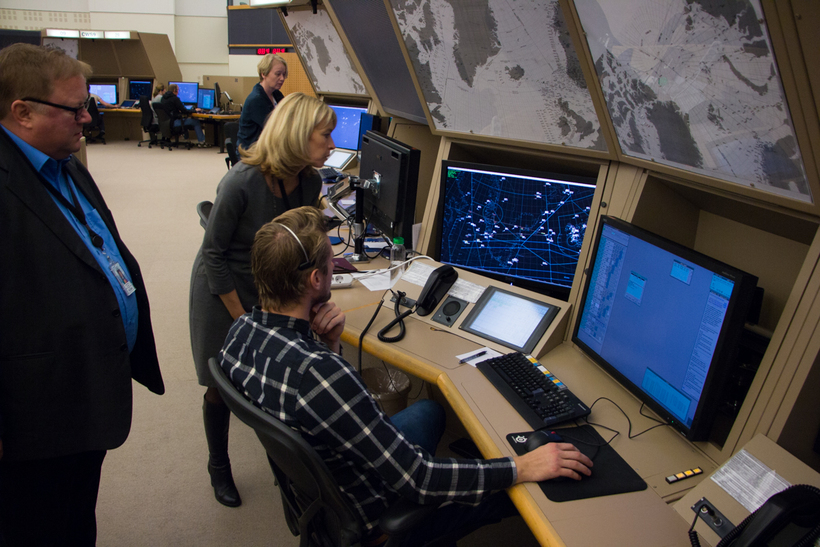
French ATC Strike: Sep 18

Update 17 Sep 2025
  • France’s main ATC union SNCTA has called off its Sep 18 strike, but other unions are still striking.
  • The strike will run 0400z Sep 18 to 0600z Sep 19 (per LFFF Notam F1302/25).
  • Morning will be worst affected, especially LFMM/Marseille ACC east sectors, with delays expected to improve later in the day. LFFF/Paris ACC will see some regulations, but no major network-wide disruption expected there.
  • LFSB/Basel will have very limited capacity. LFBL/Limoges will be closed all day. LFBE/Bergerac and LFTW/Nimes may partially close depending on staffing levels.
  • Eurocontrol has disabled certain route restrictions and opened additional routings to help manage traffic flow, including via Italy for LFMN/Nice departures and arrivals, and special routings over DTTC/Tunis and DAAA/Algeria FIRs. Check Eurocontrol’s Mitigation Plan for more info.
  • The next planned French ATC strike is Oct 7-10, expected to cause major disruption.

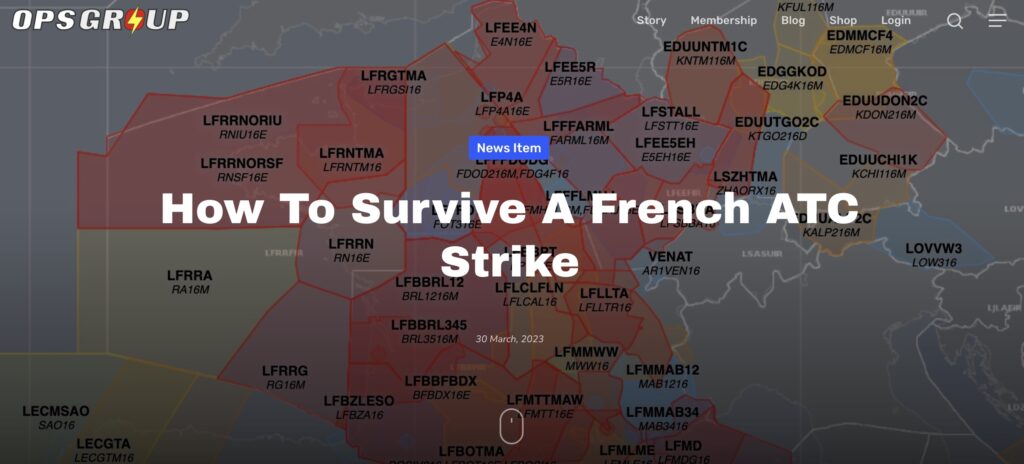
How to survive a French ATC strike
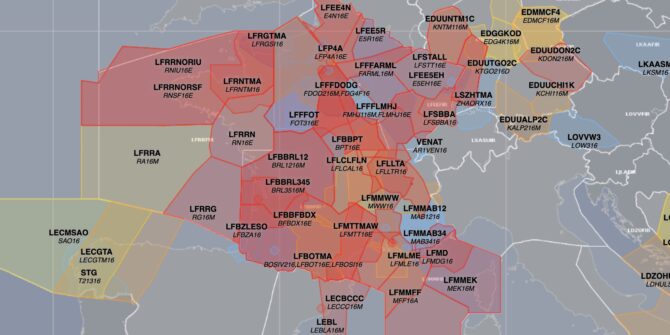
Each French ATC strike is different, but there are some things that are pretty much the same every time. Here is what you need to know, in order to survive!

What happens?

There’s a normal pattern to French ATC strikes – controllers who are unhappy about a range of issues (mainly salaries and labour reforms) announce they plan to go on strike, Eurocontrol puts a plan in place to mitigate the disruption as best as possible, and airlines start cancelling flights – sometimes voluntarily, other times under the instruction to reduce their schedules.

So let’s break that down a bit…

How do strikes get announced?

Often on the Notams, to start with. And the Notams that get published prior to these strikes are often fairly similar, and tend to be a bit vague. That’s because they never know exactly how many staff will go on strike until the day itself, when they look around the control room and count the number of empty seats.

Then what happens?

Eurocontrol tell us about the Notams – in the “Network Headline News” section at the top of the NOP website.
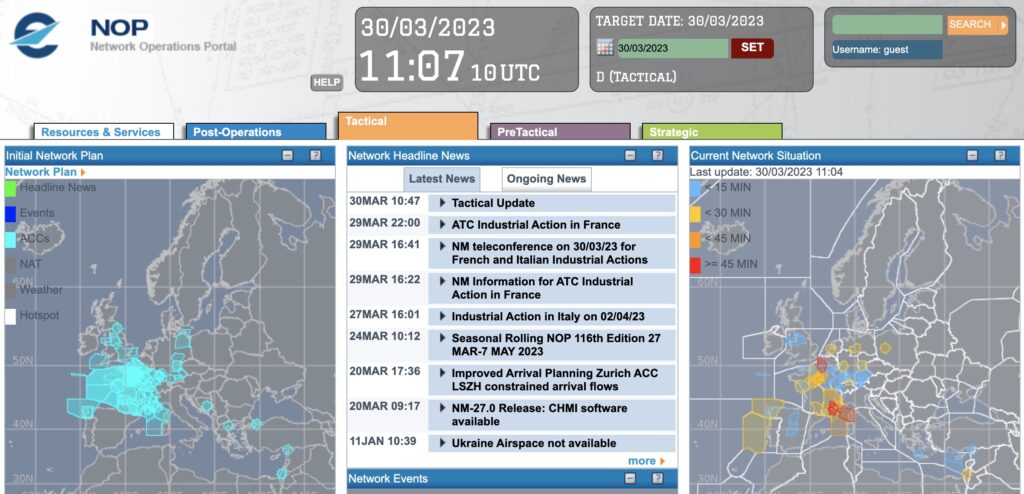
strike fest

Then they start figuring out what they think the impact will be. They normally host a teleconference or two, where a bunch of their ATC personnel jump on a call with airlines and other interested parties to discuss what they think will happen.

Then they publish a “Mitigation Plan”. This tells you:

  • Their best guess of how bad the strike is going to be
  • What to expect for flights to France
  • How best to avoid French airspace.

The big day arrives… it’s strike time!

Smaller airports – These tend to have the harshest restrictions applied, often with periods where no ATS services are provided at all.

Bigger airports – During the really big strikes, the larger airports can get hit pretty hard too, and when Notams start getting published saying “MINIMUM SERVICE”, that’s when you know that things are getting serious – as that basically means that only 50% of FPLs are being accepted (the absolute minimum allowed under French law, regardless of whether or not a strike is taking place).

Impact – The airlines will often be told to cut their schedules at the big airports. For the rest of us, expect delays if flying to airports in France as well as for French overflights – because unlike most other countries in Europe, when French ATC goes on strike, there’s no special exemption for overflights!

French ATC strikes may also impact French overseas territories – so keen an eye on the Notams at the likes of NTAA/Tahiti, SOCA/Cayenne, TFFF/Martinique, TFFR/Pointe a Pitre, FMEE/La Réunion, and FMCZ/Mayotte airports as well as those in France.
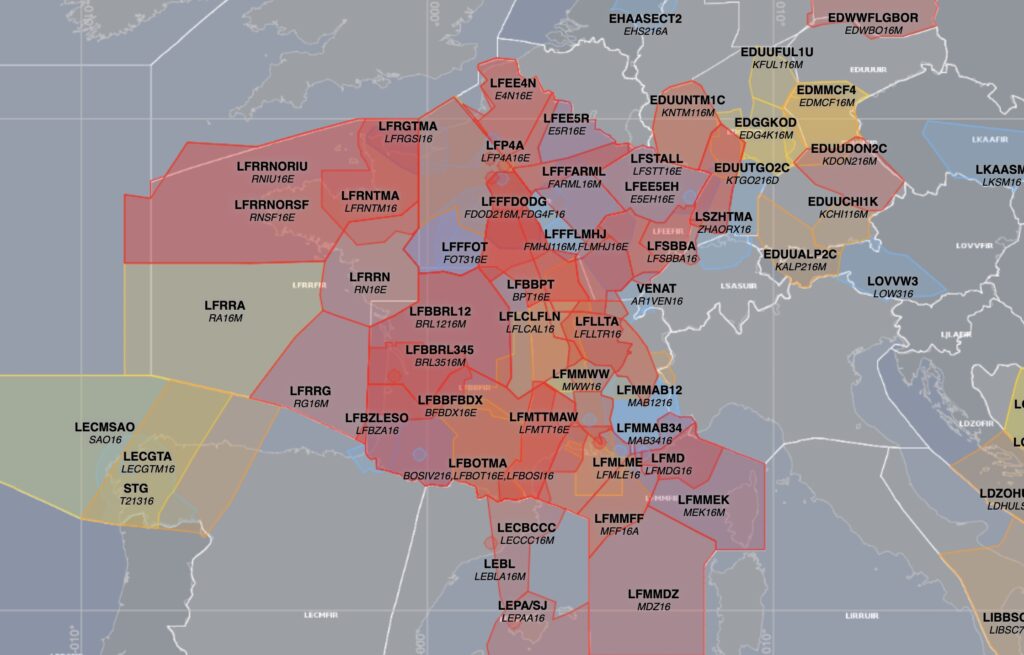
Where to look for live updates?

For real-time updates of any airspace issues once the strike has started, keep an eye on the “Tactical Update” section of the NOP, as well as this French ATC webpage: https://cdm.dsna.fr/

For smaller airports, best check the Notams directly, as they might get forgotten about in the deluge of information that gets published and endlessly updated for the other larger airports.

Routing around French airspace

The Mitigation Plan should be your first port of call here. Make sure you’re checking the latest version. It will tell you what to do!

Here’s what it normally says, every time:

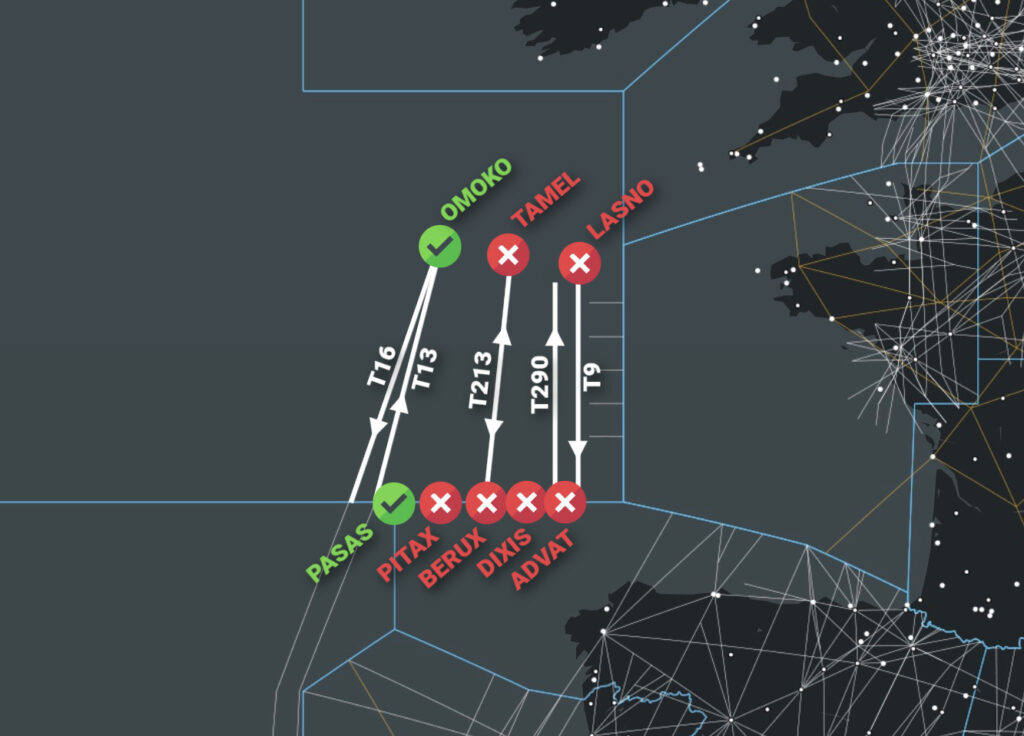
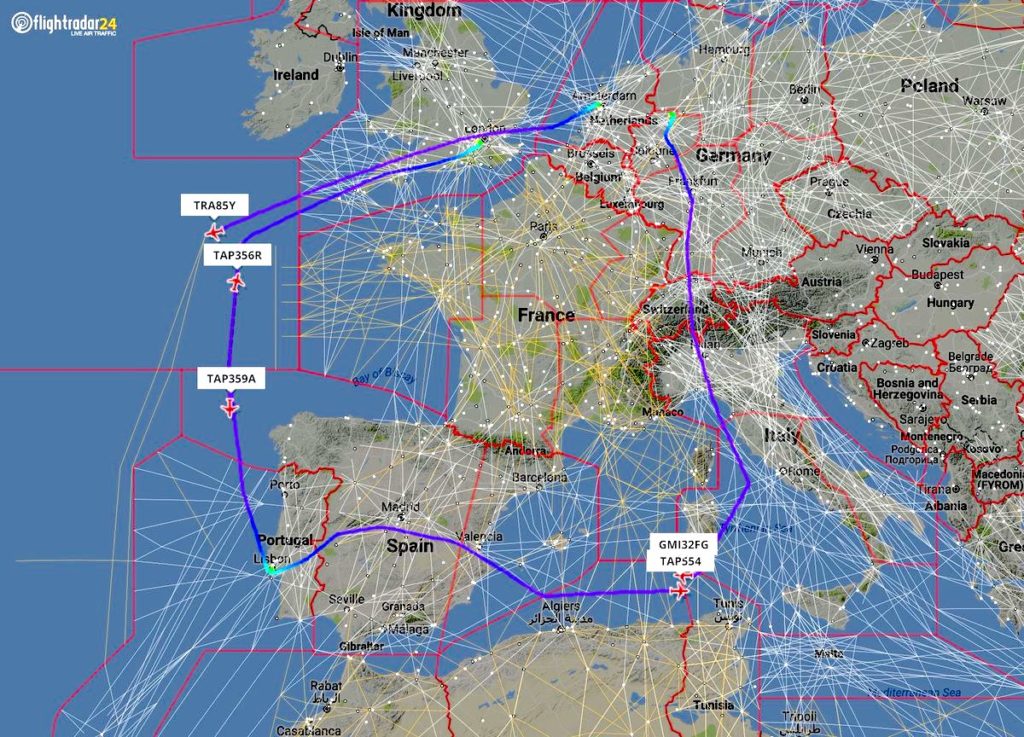
  • Tango Routes are subject to higher than normal demand when strikes are on. Flights intending to route to/from Canaries, Madeira and mainland Portuguese and Spanish destinations via the Shanwick Oceanic Control Area (OCA) are usually requested to flight plan via published routes T9, T213 or T16. During the strike period, ATC normally won’t let you cross from one Tango Route to another.
  • Tunisia allow overflights without the need for an overflight permit.
  • Algeria allow scheduled commercial flights to overfly its airspace without a permit, but all other flights must have one.
  • For routes through Tunisia/Algeria, check the Mitigation Plan for the permitted routings. And make sure to add the right AFTN codes on flight plans! That means as well as filing your FPL to the normal Eurocontrol addresses, you must also include those for Algeria (DAAAZQZX) and Tunisia (DTTCZQZX and DTTCZRZX) – and make sure these are included for any subsequent DLA messages as well.
  • Shanwick always publish something on the NOP telling us what entry points to use for NAT crossings. For westbound NAT crossings heading over the central Atlantic (rather than the NAT Tracks up north), they normally want us to file via OMOKO (or west of) or PASAS in order to best avoid all the extra traffic on the Tango routes. If you’re entering the Shanwick OCA, you must have HF radio. And for oceanic clearance during the strike, you need to make sure you request your oceanic clearance 40 minutes before entry to the ocean.
The Curious Case of the Bonus French ATC Strike

Update 29 Jun 1130z: The bonus French ATC strike is underway. Remember, this only affects secondary and GA airports – not the big hubs or overflights. Eurocontrol report that worst affected airports today, with high delays, are as follows: LFOB/Beauvais, LFPB/Paris Le Bourget, LFPM/Paris Villaroche, LFOP/Rouen, and LFST/Strasbourg. And poor old LFRB/Brest is essentially closed until tonight. The strike ends June 30 at 04z.


There’s an ATC strike planned in France from the evening of June 28 to the early morning of June 30.

But this is a strange one, because major airports and enroute ACCs are not on strike – so overflights will not be affected.

It’s only secondary and general aviation airports that are striking – around 60 airports in total.

Notable ones that are popular bizav stops include:

  • LFLB/Paris Le Bourget
  • LFLB/Chambery
  • LFOB/Beauvais
  • LFLY/Lyon Bron
  • LFLP/Annecy
  • LFKJ/Ajaccio
  • LFKB/Bastia

You can check LFFF Notam F1038 for a full list of airports affected.

LFOB/Beauvais north of Paris is cutting flights by 50 percent, but there are no similar restrictions at any other airports so far…

What happened to the mass ATC strike in France?

This upcoming strike isn’t the same thing as the endless French ATC strike that’s been happening these past few months. That one affected major airports and the enroute ACCs (i.e. overflights), along with various different French overseas territories.

That mass strike was part of nationwide strike action and protests over pension reforms which have been trundling on since mid-Jan. The last day of mass ATC strike action was on June 6. Unions met on June 13 to discuss what they might do next, but they haven’t made any announcement on the outcome of those talks yet.

If and when they do schedule further action, ATC will probably get involved again and we’ll see more of the mass ATC strikes like before. If that happens, you’ll need to read this for guidance on what to do.

Other strikes in Europe to watch out for

Spain:

ATC strikes are set to continue at sixteen airports through to the end of July. These may lead to delays and other disruption, to coincide with the busy summer season, but the impact of these strikes has only been minor so far. The airports impacted are: LECO, LEAL, LECH, GCHI, GCFV, LEIB, LEJR, GCRR, GCLA, LEDA, LEMI, LELL, LEZL, LEVC, LEVX, LECU.

Italy:

There’s a nationwide 24hr ATC strike planned on July 15 (postponed from June 4). There’s no Notam for this yet, and so details are slim, but we know that overflights won’t be impacted, and there will likely be two time windows when flights to airports in Italy will be guaranteed: 7-10 and 18-21 local time. A few days beforehand, expect to see a Notam get published with more info.

Sweden:

Security staff are planning to strike at several major airports – on July 3 at ESGG/Gothenburg-Landvetter and ESSB/Stockholm Bromma, and on July 5-6 at ESSA/Stockholm Arlanda. There are various other dates potentially planned beyond these initial ones, but they’re hoping to negotiate a deal to avert more strikes.

LSGG/Geneva:

There might be a ground staff strike on June 29. Unless an agreement is reached, workers plan to strike from 12pm that day. If it goes ahead, the union has said that all flights would be grounded – possibly a bit of an ambitious claim, but there would still likely be significant disruption.

EGLL/Heathrow:

Finally, some good news! The upcoming strikes by security staff have been called off! More than 2,000 staff were due to strike for 31 days this summer, affecting Terminals 3 and 5. But they’ve accepted a pay deal now, so the strike has been cancelled.


Africa ATC Strike

Update 01NOV

The threat of further ATC strikes in West Africa and Madagascar hasn’t completely gone away. The air traffic controllers union USYCAA have published an update claiming that ASECNA (the ATC agency) haven’t been sticking to the terms of an agreement reached on Oct 17 – they have been forcibly returning controllers to their countries of origin, cutting salaries, and freezing leave. There’s another meeting planned for Nov 7, so we should know more then.

You can read the original announcement (in French) here, or this translated copy.


Update 19OCT

USYCAA has cancelled any further strike action, following a meeting with ASECNA on Oct 17.

It looks like ASECNA have agreed to some demands (suspend pay cuts, provide indemnity insurance, set up a committee to talk with the union) but some still need to be resolved – mainly to restore all sanctioned controllers to their positions.

You can read the original announcement (in French) here, or this translated copy.


Update 11OCT

USYCAA has accused ASECNA of intimidating behaviour towards controllers ahead of a planned meeting on Oct 17 for negotiations to avert any further strike action. They cite “freezing without explanation of annual leave, verbal invectives, the unwritten suspensions of several air traffic controllers” among their claims.

You can read the original announcement (in French) here, or this translated copy.


Update 27SEP

USYCAA has suspended all strike action to allow for further negotiation with ASECNA planned for Oct 17.

You can read the original announcement (in French) here, or this translated copy.

ASECNA have also released a statement, which essentially claims there were no safety incidents during the strike, but doesn’t really say much more. You can read it from the source here (in French) or this translated copy.


Update 24SEP

As of 1200Z today, the ASECNA ATC strike action itself has ended. Per the controllers union, ops normal now. Arrested controllers have been freed, suspended controllers reinstated. However, caution should still be taken by crews as their grievances remains unresolved – both sides are now entering further negotiations for 10 days.

With so many FIR’s, ACC’s, and Terminal areas involved, the strike action has caused chaos in parts of African airspace. The heavy handed response by ASECNA, which included arresting striking controllers, has created a very sour atmosphere for ATC. This creates potential for lapses in judgement and safety concerns, even with the strike action over.

The major concern yesterday was the replacement of licensed controllers with military and other non-qualified staff, without any Notam or notification. Coordination between different units was unreliable, and many ATC centres were confused as to what the situation was.

For now, ops normal to some degree again – but all crews should still take great care until things settle down.

You can read the original announcement (in French) here, or this translated copy.


Update 23SEP

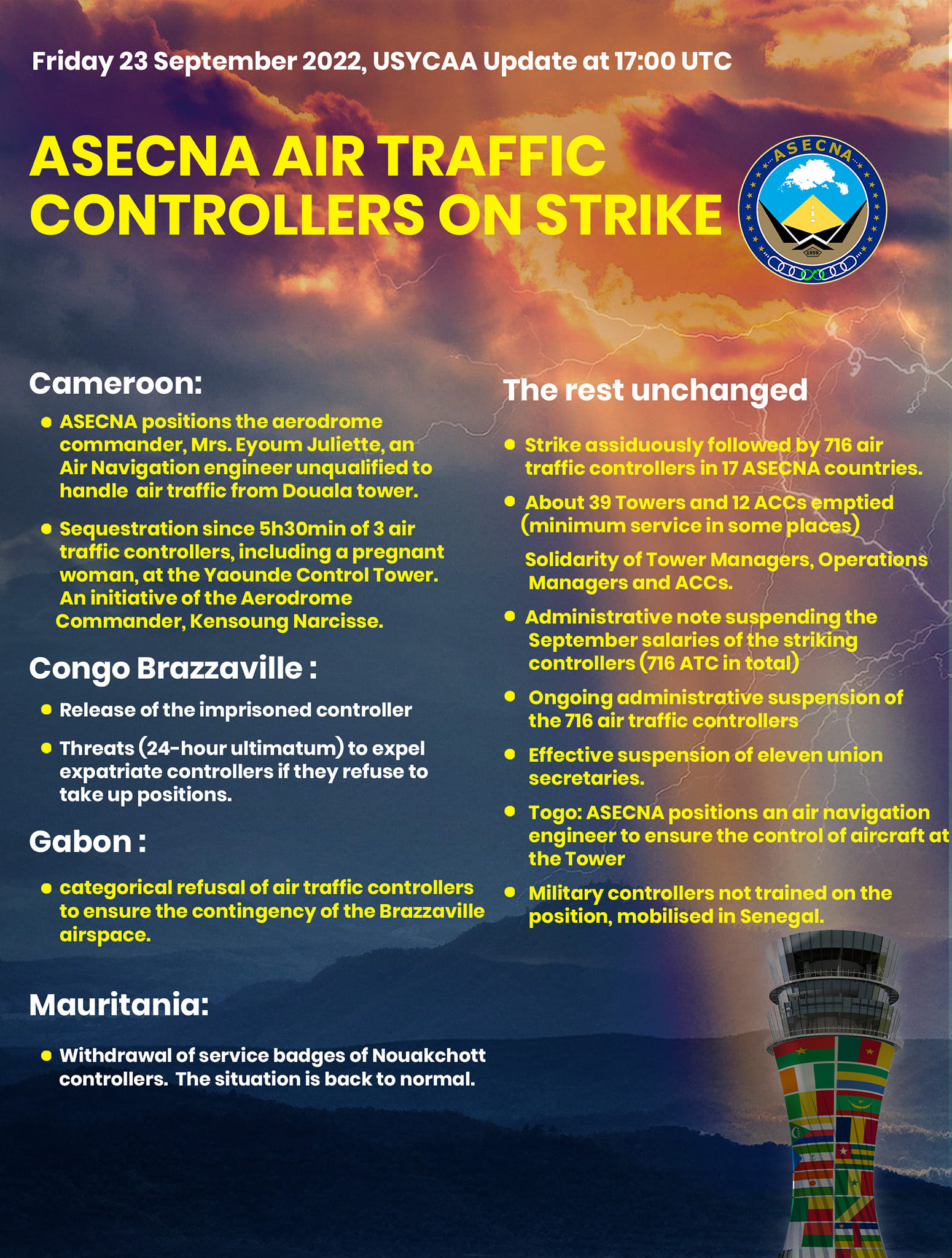
A very dangerous situation is developing today in the African ATC strike. Crews and operators should be aware that in a number of FIRs/ACCs/Towers, the normal controllers have been replaced earlier today with unqualified and unrated people. In simple terms, the voice on the radio is NOT an Air Traffic Controller.

From local sources we understand that GOOO/Dakar Oceanic and domestic, DXXX/Lomé, and FKKD/Douala all have unlicensed staff that have taken over the faciltiies. In FCBB/Brazzaville and FMCX/FMCH/Comoros, controllers have been arrested. In Niger and Madagascar, controllers have been suspended.

The situation is chaotic in many places and still developing. As of now, OPSGROUP recommends avoiding ALL ASECNA airspace unless you have certainty that the ATC service is licensed and safe, and until the situation is more clear.

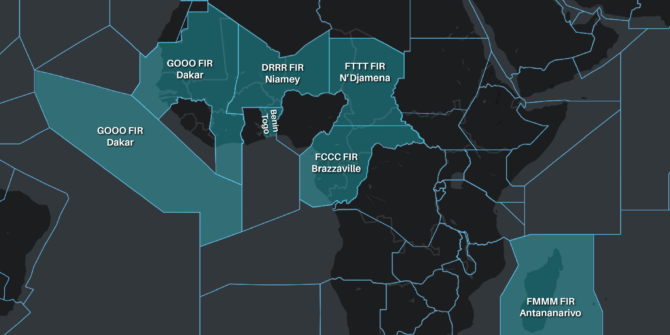
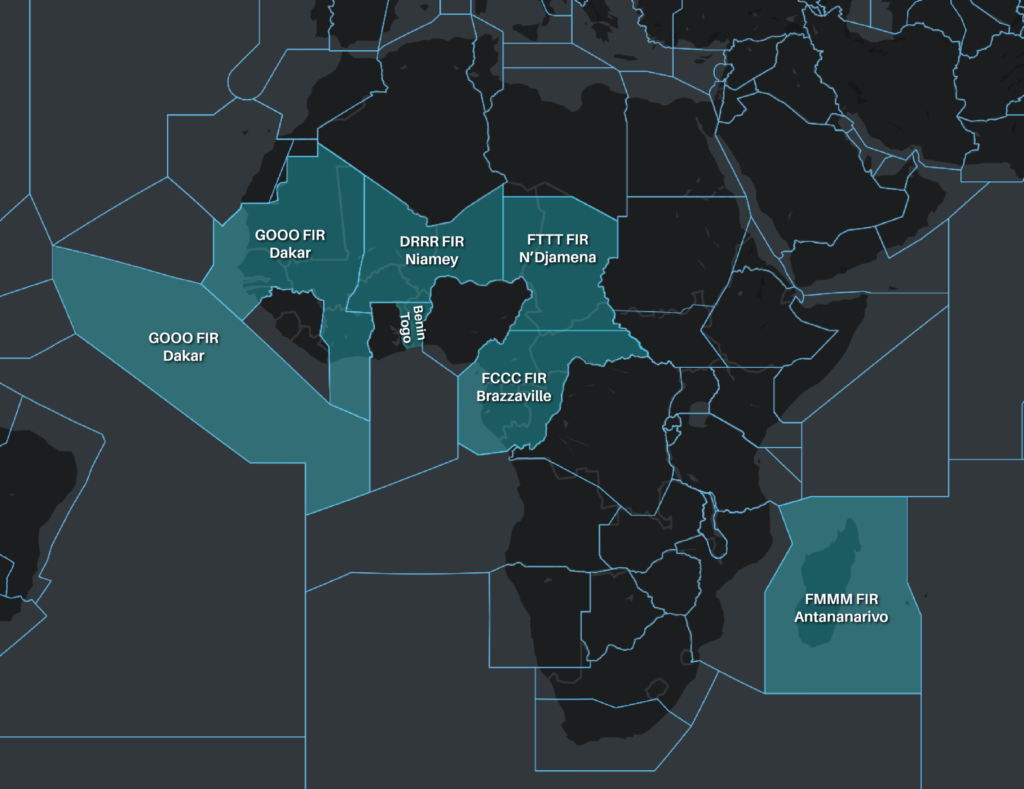
If you do have to operate through these FIR’s, be careful and cautious. ASECNA controls these areas: FMMM/Antananarivo, FCCC/Brazzaville, GOOO/Dakar Oceanic and Terrestrial, DRRR/Niamey, FTTT/N’Djamena, and the airspace of Togo and Benin.

We will update this further as we get more information. We also ask members to share any information they may have – email team@ops.group or WhatsApp the OPSGROUP Team at +1 747 200 1993

IFALPA have just published a bulletin about the situation.

And an update from USYCAA, the ASECNA Controllers union:


Update 22SEP

Note: These updates relate to the situation when the strike was routine – before reports of unlicensed controllers started to emerge. Please use the info as background only.

  • The ATC strike in West Africa and Madagascar is now underway, and is scheduled to continue until 0800z on Sep 25.
  • The strike is taking place across several African countries covered by ASECNA: the FIRs of FMMM/Antananarivo, FCCC/Brazzaville, GOOO/Dakar Oceanic and Terrestrial, DRRR/Niamey and FTTT/N’Djamena; and the airspace of Togo and Benin.
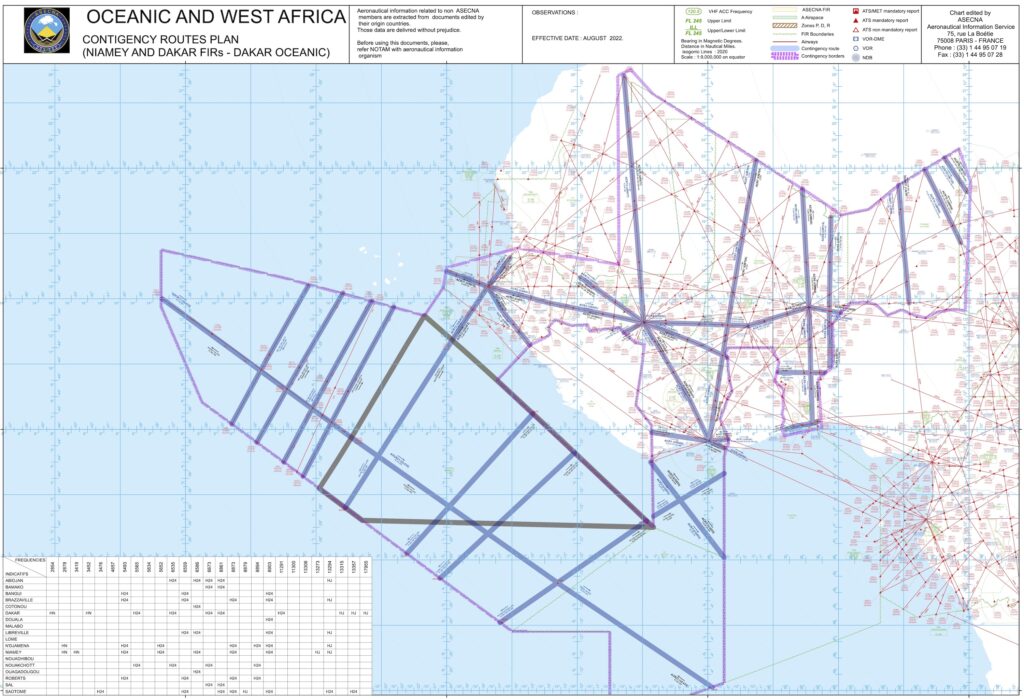
  • For flights in these regions, the Contingency Plans now apply. Check here for those.
  • The strike is also affecting flights in neighbouring airspace of GCCC/Canarias and DAAA/Algiers – Eurocontrol have published some rules and restrictions on flight planning there until the strike is over (see below).

GCCC/Canarias:

  • Traffic crossing GCCC and exiting to the south into Cabo Verde will be restricted with low rates to FL340 and 380 on UN741 as well as FL300, 340, 360 and 380 on UN873 (except traffic arriving to GV).
  • UN857 will be closed southbound from LZR to GUNET (except traffic arriving to GV).
  • Traffic crossing GCCC and arriving to GV must file via EDUMO or IPERA.
  • Traffic departing GC via LPPOOCA to GV can not fly via GOBEG, INSAD, IXILU, KUXOV, LAPTU.

DAAA/Algiers:

  • Flight plans exiting DAAA airspace southbound not flying the contingency available routes will be invalidated with EU restrictions (i.e. For flights from Europe transiting through Algeria and into GOOO or DRRR airspace where the strike is happening, you have to make sure you flight plan to join where one of the contingency routes starts, otherwise Eurocontrol will reject your flight plan).

Where the ATC strike is happening:

ATC will ensure a minimum service is provided for flights involving:

  • heads of state and government
  • military
  • carrying out medical evacuations
  • of a purely humanitarian nature
  • participating in search and rescue operations.

The Contingency Plans

ASECNA publish Contingency Plans, with a focus on maintaining overflights for international operations in cases of no, or limited, ATC services. You can find all the Contingency Plans here.

The Contingency plans effectively transfer control to neighbouring ATC controllers. An ‘ASECNA wide’ strike will therefore disrupt the level of effectiveness of these contingency plans.

There does tend to be a prioritisation, or at least measures to help ensure overflights can continue to a certain extent. Parts of African airspace already operate or have provisions for IFBP.

Other issues for ASECNA states

The ASECNA states have faced a fair few disruptions over the past few years.

ECOWAS states closed their land and air borders to Mali following a military coup.

Chad (FTTJ/Ndjamena FIR) had some issues back in 2021 during a period of escalating conflict and military control. Initially airspace and airports were closed, before contingency procedures came into force.

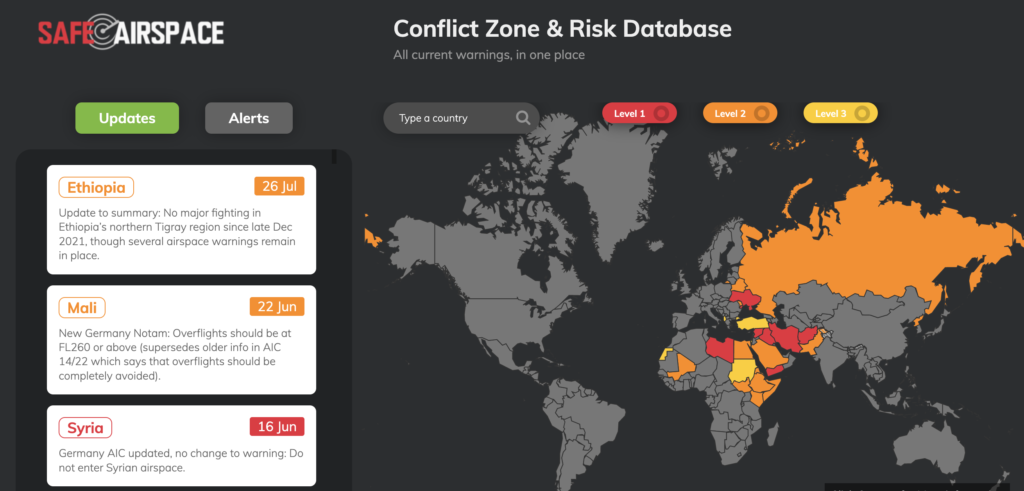
The African region is volatile, with security concerns on the ground in many countries, and some overflight cautions and warnings. Libya is a ‘No Fly’ country. There are warnings in place for Sudan, South Sudan, Eritrea, (northern) Ethiopia, Somalia, Kenya (bordering other countries), Western Sahara and Mali.

The limited diversion options across certain parts of the region due to safety and security concerns present planning issues for flights routing over northern and central Africa in particular. You can find more information on this by visiting Safeairspace.


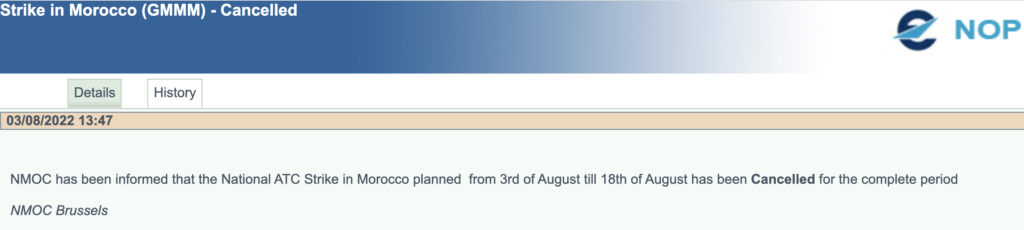
Morocco ATC Strike Cancelled!

Update 1500z Aug 3: And bam! Just like that, the ATC strike in Morocco is cancelled! There’s no more info yet, but normal ops now expected for the whole period Aug 3-18. So say Eurocontrol on the NOP site.

—————–

Story from Aug 2:

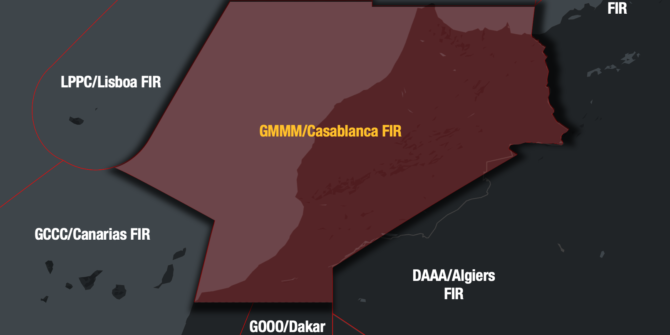
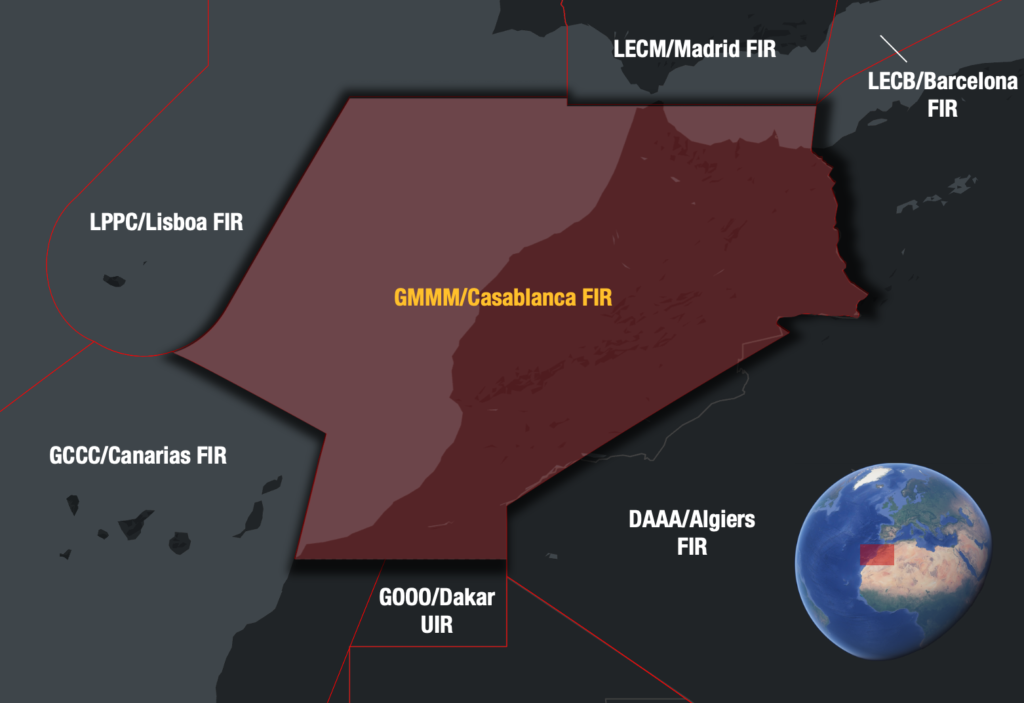
News broke last week that Moroccan ATC are threatening to strike for a full two weeks from August 3 – 18, and it will affect the entire GMMM/Casablanca FIR. Similar strikes elsewhere typically last just hours or at worst a day or two.

While it will not be a complete walk-out, the airspace may be heavily restricted – a busy air corridor linking Western Europe to Sub-Saharan Africa and South America. On average Moroccan airspace services over a thousand flights a day, and ATC want to put the brakes on hard.

It’s all found in this letter written by the union responsible. Here’s our breakdown of what it says, along with some nice pictures.

Let Me In!

If you want to come in, you had better get in line. If the strike goes ahead, only one aircraft per hour will be allowed through each entry point to the GMMM/Casablanca FIR.

Trickle effect at airports.

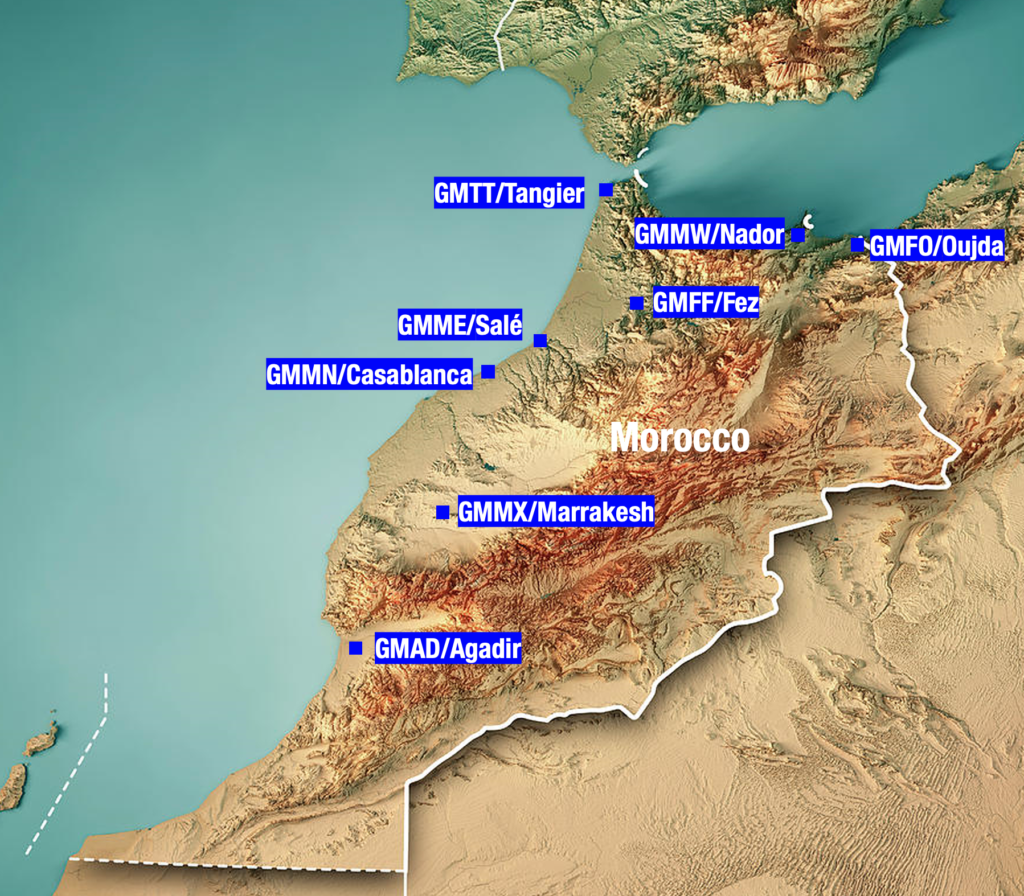
All major airports in Morocco will be affected by heavy restrictions on aircraft movements. In each case, only two aircraft will be allowed depart each hour.

Who’s not affected?

There will be limited exemptions, but they won’t apply to most operations. Aircraft engaged in state, RFF, medevac or humanitarian ops will be exempt. And if you experience an emergency, of course you’ll be allowed in asap.

You will also be able to get special handling permission by including ‘STS/AFTMX’ in Item 18 of your flight plan to get around the restrictions. This will be by prior approval only though. To ask for it, you’ll need to contact the CAA directly. You can reach them at civilair@menara.ma or on +212 537 67 94 07.

Watch out for Western Sahara

If you’re hoping to avoid the hold-ups in the GMMM/Casablanca FIR, you may be tempted to route further south over the Western Saharan region.

Something to be aware of first – there are still active airspace warnings in place for this disputed territory. Despite being quiet in the news lately,  there is a long running conflict happening there. Anti-aircraft weaponry has previously been identified as a possible threat to low flying aircraft below FL200. The risk to overflights in the upper flight levels is very low, but take extra care if planning for diversions or emergencies.

You can read a full briefing on the situation here. We’ve also written this article which may also help.

Right now it’s just a “potential” strike.

The nature of industrial action is that it can be hard to predict until it actually happens. On August 1, Eurocontrol advised the strike was imminent but also noted that the GMMM Notams were conspicuously quiet. We also reached out directly to the Moroccan CAA, but so far *crickets*.

Other ATC strikes in Africa

It must be the season! Also be aware that on August 25 another major strike is planned affecting five FIRs in Western Africa, along with another over Madagascar in the east. You can read more about that one here.


No overnight ATC in Suriname airspace

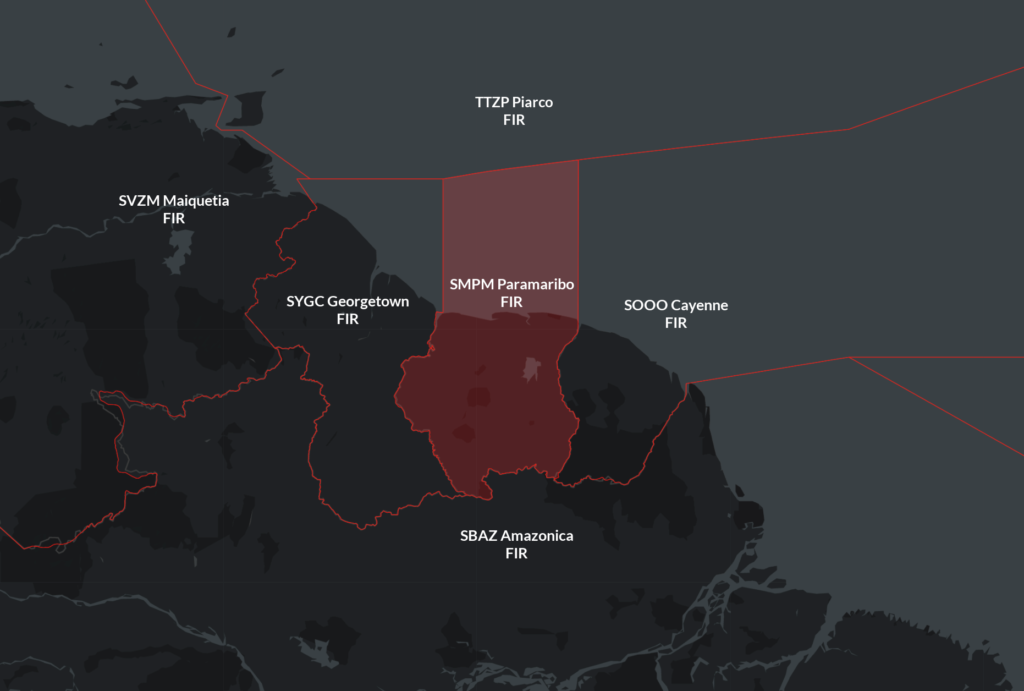
Watch out if planning to overfly the SMPM/Paramaribo FIR this week – there’s an ATC strike happening each night between 0100-1100z, finishing at 1100z on June 4.

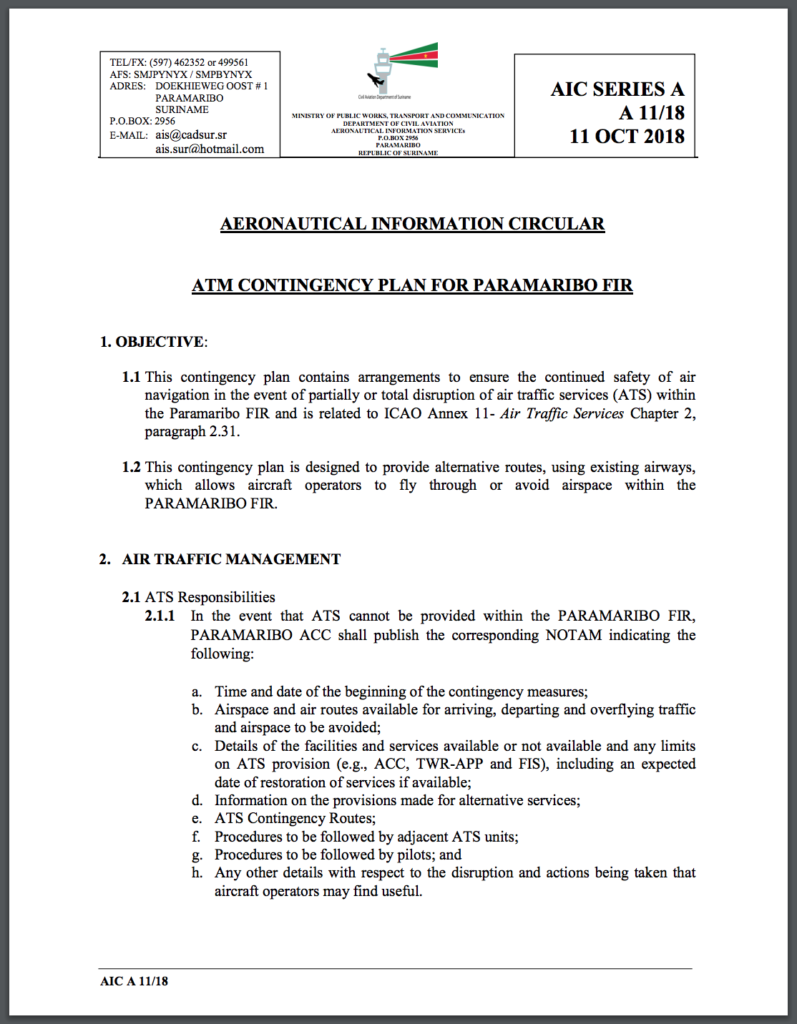
Each night, the airspace will effectively be uncontrolled with Contingency Procedures in place:

  • Neighboring ACCs will be controlling the airspace
  • Only certain routes are available
  • No speed/level changes are allowed.
  • Only medevac and emergency flights will receive any air traffic services.

Here’s the Notam:

SMPM PARAMARIBO (ACC)
A0063/21 - DUE TO INDUSTRIAL STRIKE NO ATC SERVICE AVBL
ATM CONTINGENCY PLAN FOR PARAMARIBO FIR ACT
ONLY MED AND EMERG FLT WILL REC ATS.
DAILY 0100-1100, 29 MAY 01:00 2021 UNTIL 04 JUN 11:00 2021. 
CREATED: 27 MAY 23:01 2021

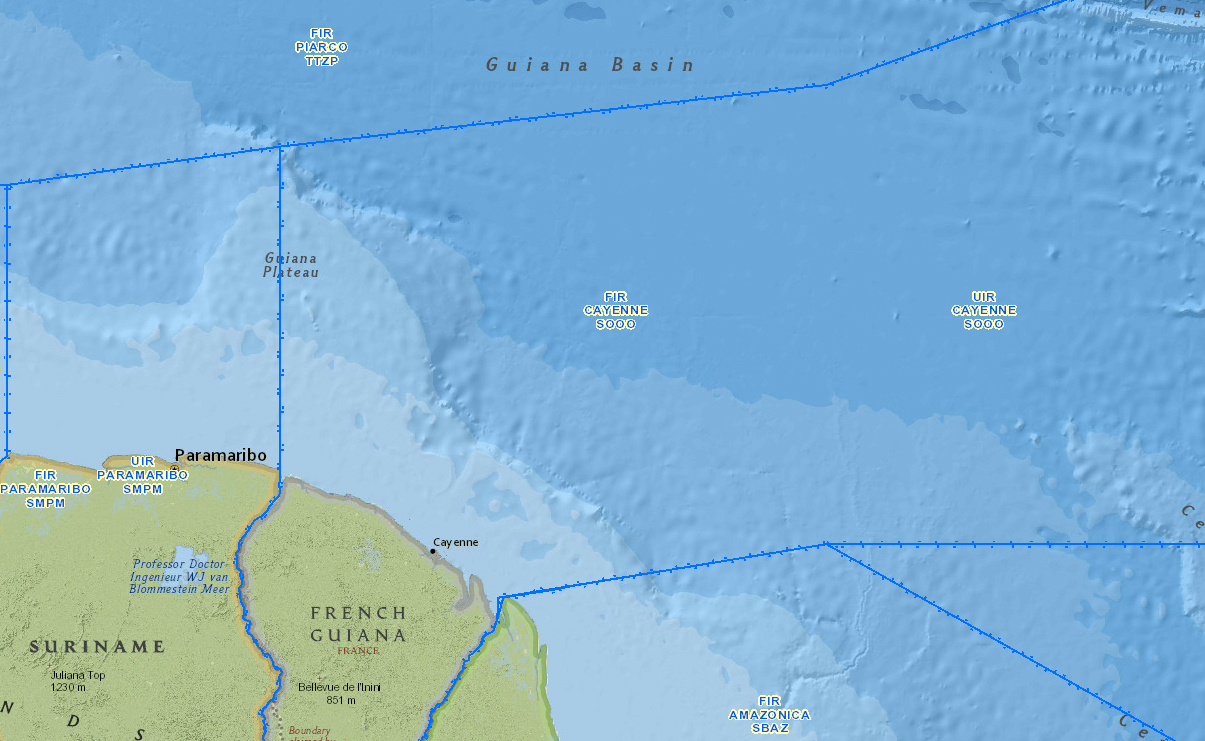
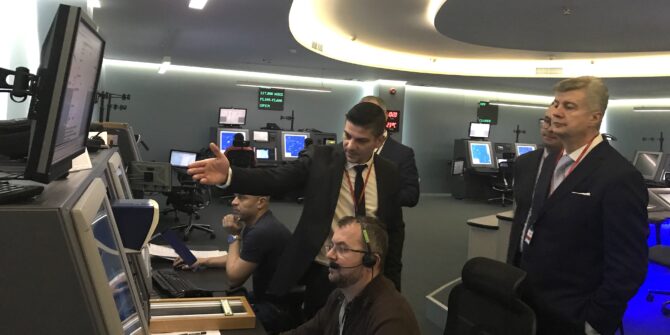
Here’s where we’re talking about:

Procedures for the neighbouring ACCs:
a. Transmit Flight Plan messages to Paramaribo ACC through AMHS.
b. Authorize entrance into Paramaribo FIR, in agreement with the longitudinal separation established in this Contingency Plan.
c. Do not authorize any Flight Level or speed (Mach number, if applicable) change in the 10 minutes prior to the aircraft entrance into Paramaribo FIR.
d. Instruct pilots to keep the last assigned Flight Level and Mach number while over-flying Paramaribo FIR.
e. Instruct pilots to contact the adjacent ACC as soon as possible and at least 10 minutes before the estimated times over exit point of Paramaribo FIR.

Pilot and operator procedures:

a. Pilots shall include in the last position report to the competent adjacent ACC the estimated times over entry and exit points of the PARAMARIBO FIR.
b. Aircraft are to operate as close as possible to the centreline of the assigned contingency route.
c. contact the competent ACC as soon as possible and at least 15 minutes before the estimated times over exit point of PARAMARIBO FIR.
d. Keep navigation and anti-collision lights continually on while PARAMARIBO FIR is being overflown.
e. Maintain the flight level and the Mach number assigned by the competent adjacent ACC while operating within PARMARIBO FIR, unless for emergency or flight safety reasons.
f. Pilots need to continuously guard the VHF emergency frequency 121.5 MHz and should operate their transponder at all times during flight.
g. Transponders should be set on a discrete code assigned by the adjacent stations of PARAMARIBO ACC or select code 2000.
h. whenever emergencies and/or flight safety reasons make it impossible to maintain the flight level assigned for the transit through the PARAMARIBO FIR;

  • The pilot shall immediately inform all other aircraft of the emergency, eventually level change, using blind transmissions on emergency frequency 121.500 MHz and on pilots’ air to air frequency 123.450 MHz.
  • Broadcast every position and intention on emergency frequency 121.500 MHz and on pilots’ air to air frequency 123.450 MHz.

To check which routes are available, check out the Contingency Plan in full here:

If you need to contact the authorities in Paramaribo, here are their details:

Paramaribo ACC
E-mail: pengelacc@gmail.com and radha_atwaroe@hotmail.com
TEL: 00597-325203 or 00597-8555025

International NOTAM office
E-mail: ais.sur@hotmail.com and ais@cadsur.sr
TEL: 00597-462352 or 00597-499561


ATC Farm-out must be prohibited

If you’re overflying the Tirana FIR tonight, the Air Traffic Controller in whose hands the safety of your flight rests will be one of these three: a Turkish controller, who has just been drafted in and who has never seen the airspace before; or an Albanian controller who has been forced to work under huge duress, while colleagues remain in prison.

And if you think there will be a NOTAM to tell you about any of this, you’re mistaken. Albania does not want you to know.

There are a plethora of troubling issues in the ongoing Albanian ATC dispute. Arresting workers for organizing industrial action is draconian and aggressive, and an approach discarded by nations that have moved beyond totalitarian regimes of the past. But the issue that presents the greatest risk to aircraft operations is the farm-out of ATC service: a practice whereby the ATC authority recruits foreign, untrained controllers in an attempt to break a strike.

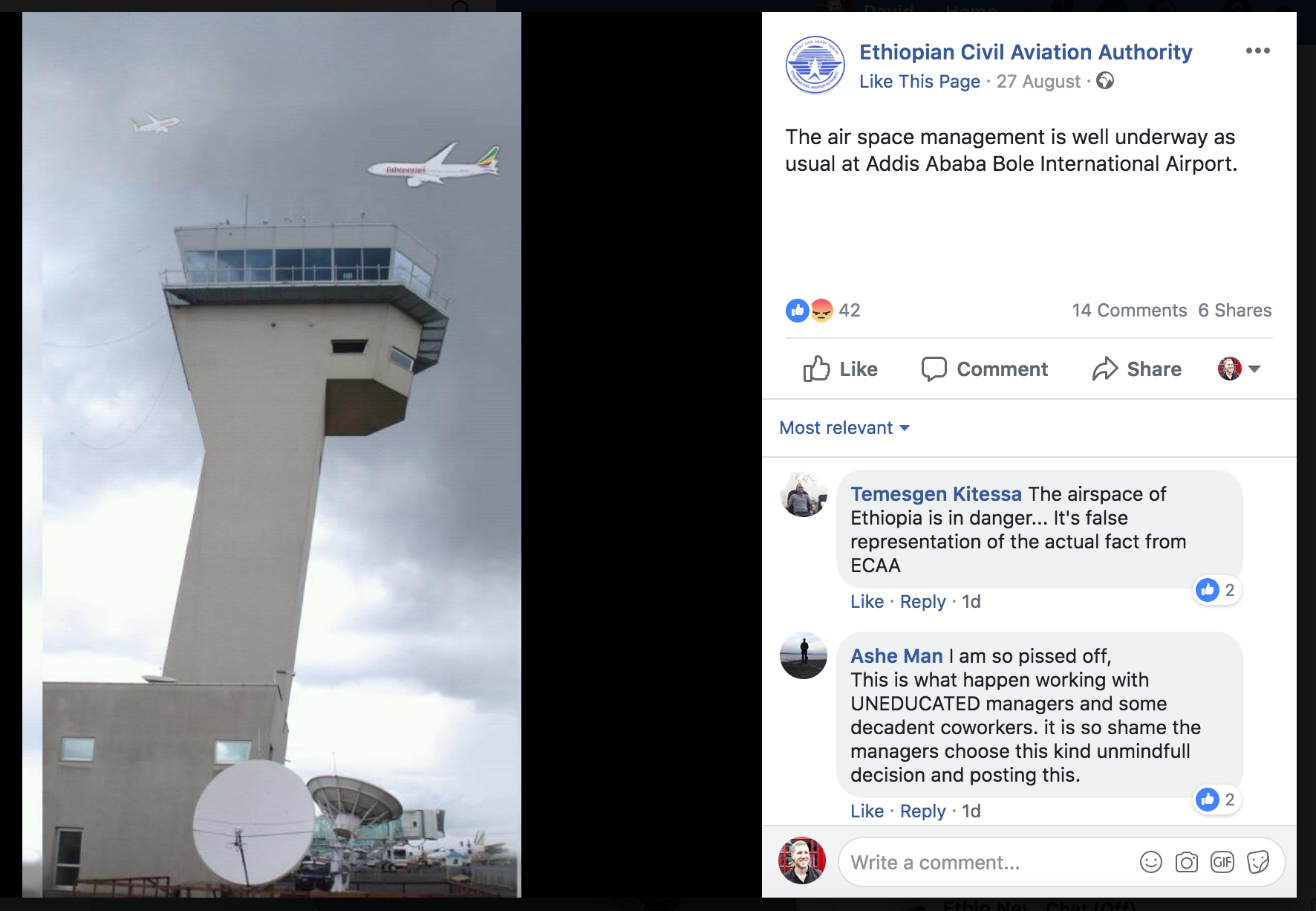
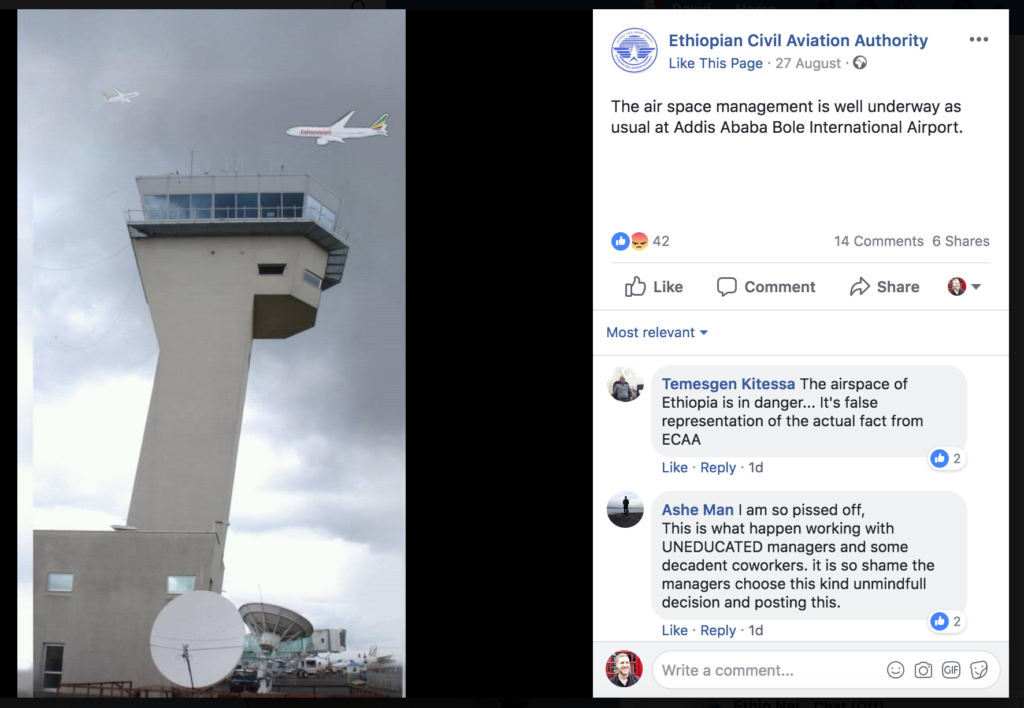
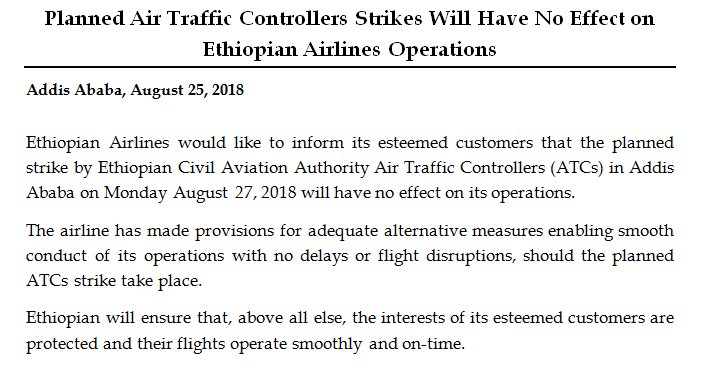
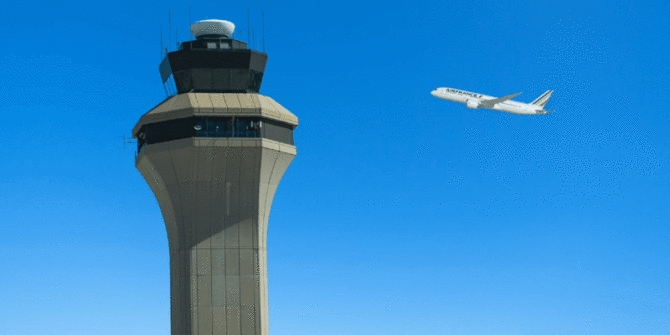
The same scenario occurred in the Ethiopian ATC strike of 2018. The Ethiopia CAA recruited stop-gap controllers from Kenya, Sudan, Zimbabwe, Malawi, and other countries, and at the same time, launched a PR campaign declaring that “everything is operating normally”, including this bizarre attempt at Photoshopping a duo of Ethiopian Airlines aircraft onto an image of Addis Tower.

In the Ethiopian case, the cover-up belied the fact that the Air Traffic Control service was in tatters – many ATCO’s were in prison, many were fired, and the idea that a busload of controllers from Sudan could somewhow safely replace the local controllers was tantamount to attempted manslaughter on the part of the Civil Aviation Authority. Safety was well down the pecking order of motivating factors – commerce, politics, and thinly-veiled vengeance came first.

In Tirana, tonight, the situation is almost identical. Three Albanian controllers are in prison, and those at work in the Tirana ACC are there only because they have been forced onto position by their government. Albcontrol has clearly signalled its intent to draft in Turkish controllers to replace the unhappy domestic ones.

This tactic carries a profound danger that at first glance may not be obvious. If we cross to the other side of the microphone, and look at pilots, we could argue that a 737-rated pilot could fly from Adelaide to Melbourne as easily as they could fly from Dublin to London, and apart from some company procedures and airport familiarisations, that would be largely true. If a group of airline pilots go on strike, management could therefore replace them with a group of other airline pilots with the same type rating – who would earn the monniker of Strikebreaker (or worse). A deeply unpopular move, which happens from time to time, but not one that carries the same risk as attempting to do this with controllers.

Why? Because safe Air Traffic Control is predicated on deeply-learned local familiarity with the airspace, the terrain, the boundaries, and above all, how the traffic flows. This is why it takes six months, on average, for a controller trained in one country to re-qualify in another. For a newly-qualifying controller, that time line is closer to two years.

OK, where are the mountains again?” is not a question you’d want to know was being asked on the floor of an Approach Control unit. But that is precisely the level of vague airspace acquaintance that a drafted-in controller, even one with thirty years experience in another unit, would have. It is simply not possible to provide a safe ATC service with a weeks training. Even more importantly, the normal time required is based on the training relationship between student and trainer being supportive and co-operative. With the resentment that a Strike breaking controller would face, that cooperation would be entirely absent: the atmosphere will be hostile.

And so, it is a fundamental breach of trust for a sovereign nation to provide ATC service to foreign aircraft under the guise of “operations normal”, when such a catastrophically misguided attempt has been made to solve the dispute.

The relationship between the ATC provider (the state), and the customer (the foreign aircraft), is an extremely unusual one. There is no written contract, no KPI’s, no audit of quality. There is nothing other than a sacrosanct, inherent commitment to safely separate aircraft, crew, and passengers flying over the state. International convention, not corporate agreement, dictates this foundational principle.

And so, international convention must make it clear to countries and ATC authorities alike, that the practice of farming out ATC to untrained, unfamiliar controllers from other countries as a strike-breaking tactic is absolutely unacceptable. Countries must find ways of solving domestic disputes without subjecting uninvolved, unaware pilots and passengers to high-risk scenarios such as this.

Organizations and agencies like CANSO, ICAO, and in this case, EASA, must ensure that this flawed and covertly dangerous pseudo-solution is placed firmly back under the rock it crawled out from.


Nationwide French ATC strike on Jan 9

This week’s nationwide French ATC strike looks to be going ahead as planned. It will run from 1800z on Weds Jan 8, until 0530z on Friday Jan 10; but the worst of the delays will happen during the day on Thurs Jan 9.

At LFBO/Toulouse, airlines have been requested to reduce their scheduled flights by a third from 0500-2300z on Thurs Jan 9; but that’s the only airport which has issued this kind of restriction so far.

Eurocontrol’s Mitigation Plan can be found here.

We expect this strike will be much the same as the five French ATC strikes we had in December – big delays at the major airports and for overflights, busy Tango Routes with traffic avoiding French airspace in the west, and Algeria/Tunisia will most likely let you fly through their airspace without special permission if you want to avoid French airspace in the south.

For the latter, just make sure to add the right AFTN codes on flight plans! That means – as well as filing your FPL to the normal Eurocontrol addresses, you must also include those for Algeria (DAAAZQZX and DTTCZQZX) and Tunisia (DTTCZQZX and DTTCZRZX) – and make sure these are included for any subsequent DLA messages as well.

For real-time updates of any airspace issues once the strike has started, keep an eye on this handy French ATC webpage: http://dsnado.canalblog.com/

And check out our article for everything else you need to know about how to survive French ATC strikes!


Three-day French ATC strike this week

French ATC strike alert! And this one’s going to be a MONSTER!! Notams have now been published confirming this week’s strike will last for three whole days, from 1800z on Wednesday Dec 4 until 0500z on Sunday Dec 8. 

It’s part of a nationwide strike which will also impact ground handling services at airports nationwide. Initially called by public transport unions opposed to the government’s pension reforms, various other unions have since pledged to join the strike, including public sector workers, teachers, postal workers, hospital staff, firefighters and lorry drivers. Many unions have warned that strikes might run until Christmas, but for now, air traffic controllers have only planned strike action for three days this week.

In the Eurocontrol teleconference on Monday Dec 3, managers said they expect en-route regulations will be applied across all sectors – which means big delays pretty much everywhere. If you can avoid France during this period, do so.

The situation at the airports is slightly more complex. The worst staff shortages are expected to happen at the ACC level, rather than at the local airport level. However, there are some airports which are expected to have some issues:

LFPG/Paris Charles De Gaulle: On the morning of Thursday 5th Dec, there will be an airport firefighter strike between 07-12 local time (06-11z). As a result, only one runway will be available for this period, so significant delays are expected all morning, particularly if weather conditions aren’t so great.

LFBO/Toulouse & LFBD/Bordeaux: High delays expected all three days

LFBP/Pau, LFBT/Tarbes, LFBZ/Biarritz, LFMD/Cannes, LFOP/Rouen, LFQQ/Lille: Smaller airports mean possible closures, particularly at night. For these and other smaller airports, ATS services may not be provided at all at certain times – and you’ll probably need to check the airport’s own Notams for any signs of that.

Additionally, the government has stepped in and decided to request the airlines to reduce their schedules by 20% between 05-23z on December 5th at these airports: LFOB/Beauvais, LFPG/Paris Charles De Gaulle, LFLL/Lyon, LFML/Marseille, LFBO/Toulouse, LFBD/Bordeaux. The Notam confirming that can be found here.

As usual with these French strikes, Algeria and Tunisia have both said their airspace can be used by flights trying to route around French airspace, without having to obtain overflight permits. But operators need to make sure they add their AFTN codes on flight plans! That means don’t just file your FPL to the normal Eurocontrol addresses, but include those for Algeria (DAAAZQZX and DTTCZQZX) and Tunisia (DTTCZQZX and DTTCZRZX) – and make sure these are included for any subsequent DLA messages as well.

For real-time updates of any airspace issues once the strike has started, keep an eye on this handy French ATC webpage: http://dsnado.canalblog.com/

And check out our article for everything else you need to know about how to survive French ATC strikes!


Italy ATC strike on Oct 25

Notams have now been published advising of the planned nationwide ATC strike on Friday Oct 25.

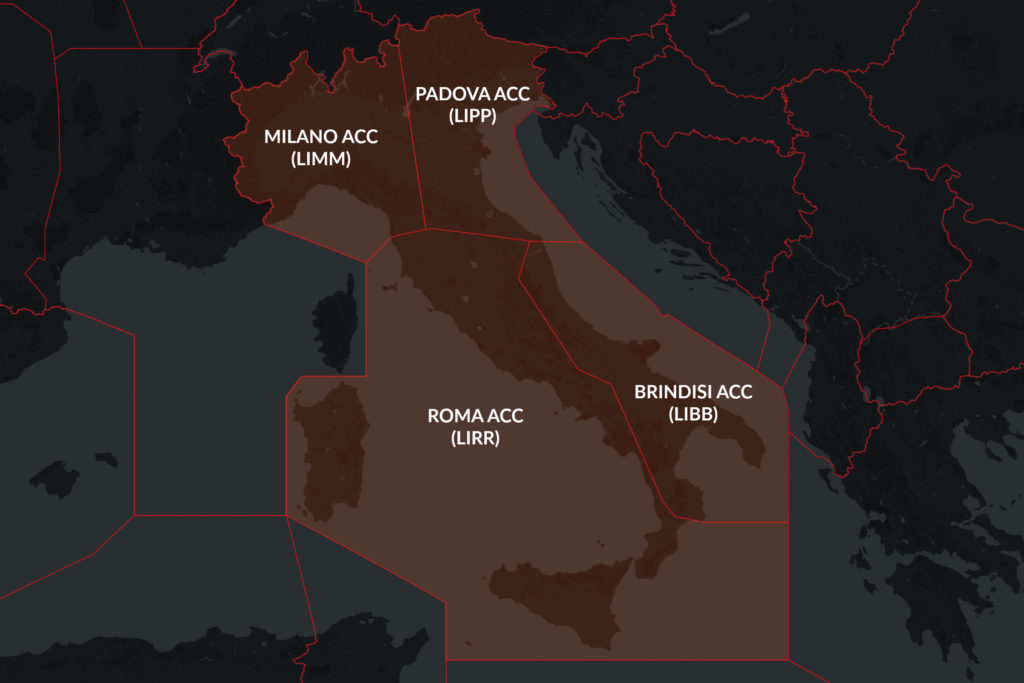
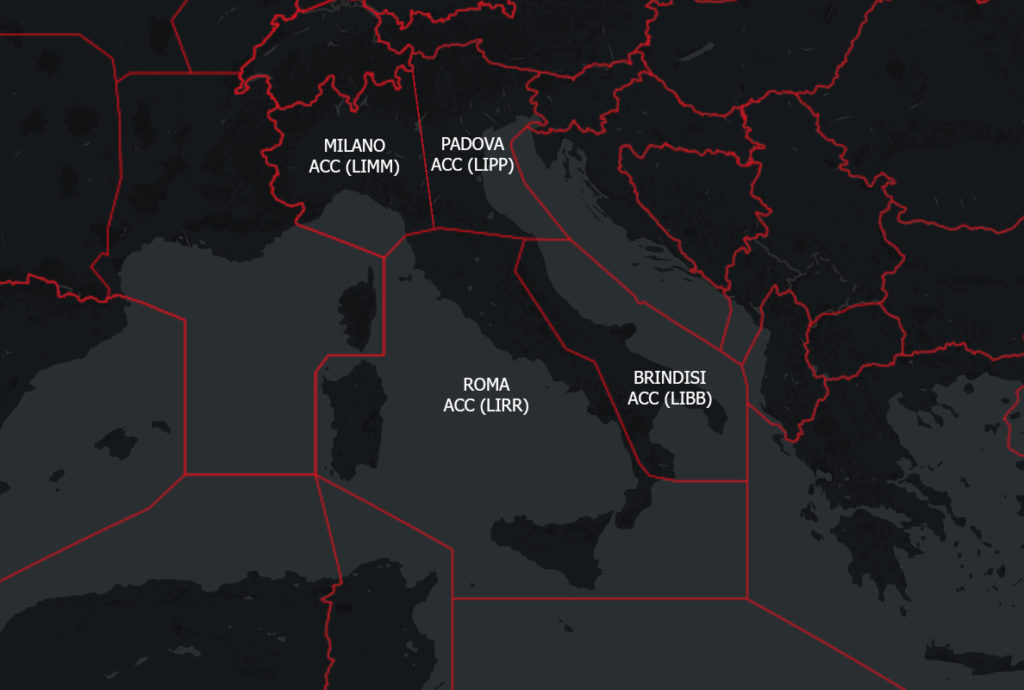
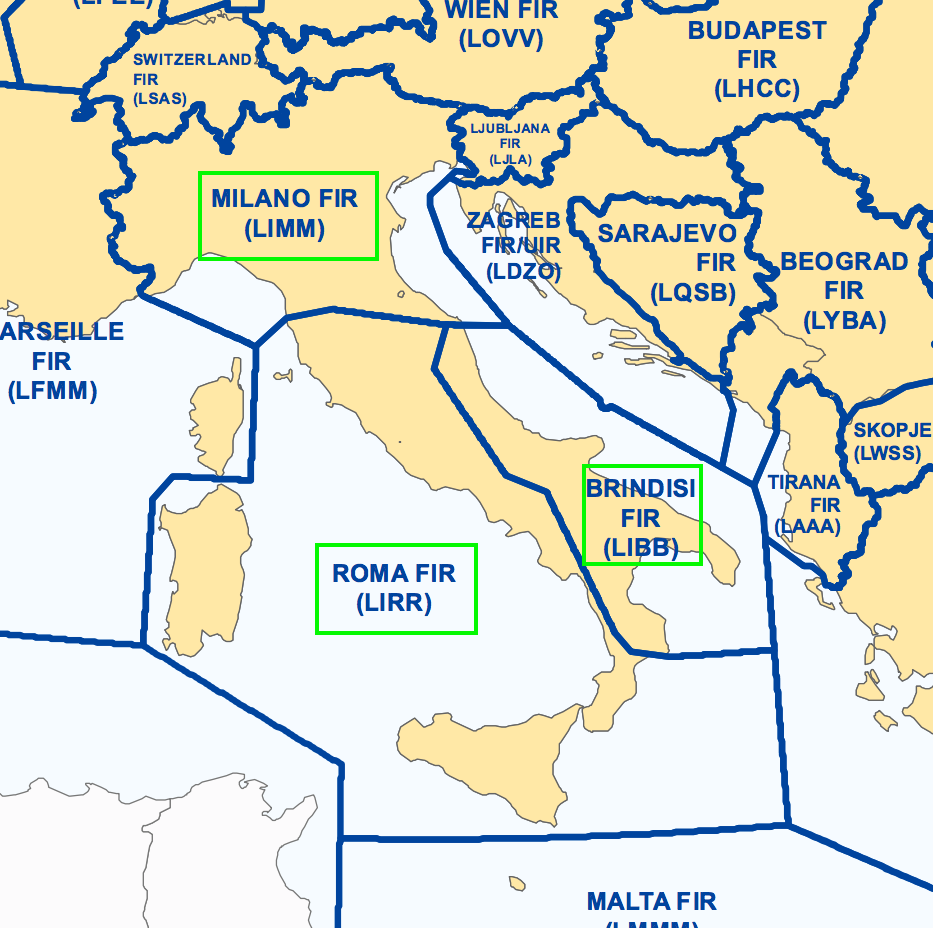
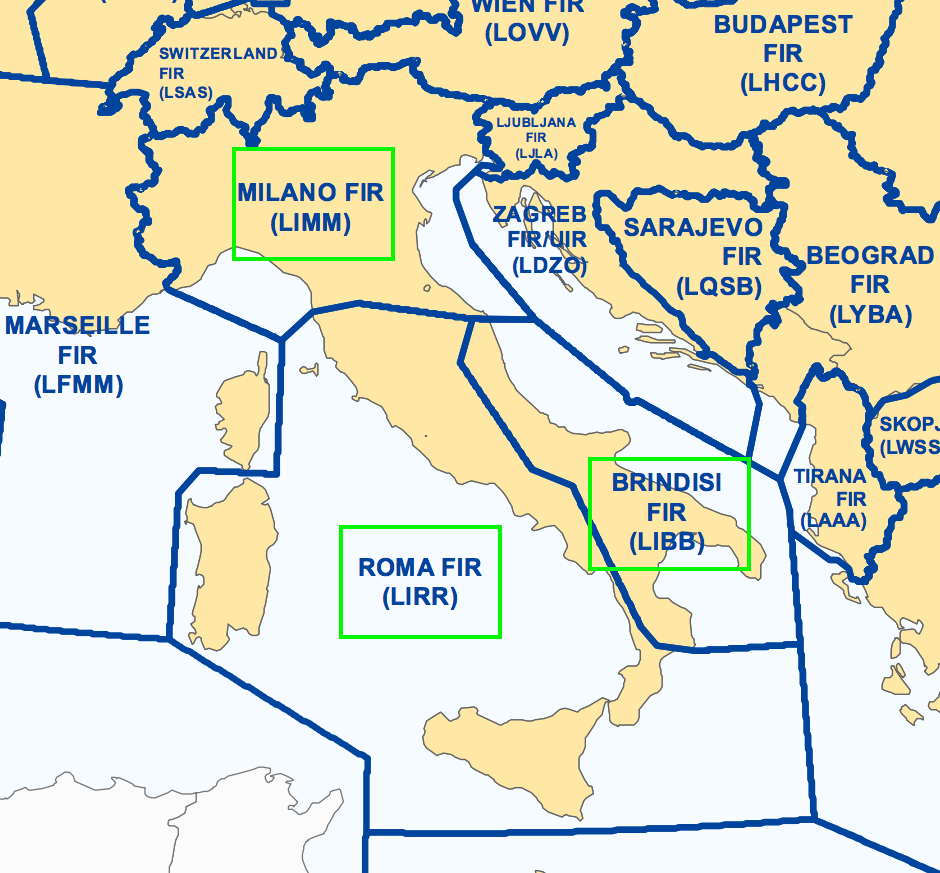
The strike will happen between 13-17 local time (11-15z), although it looks like the LIBB/Brindisi sector in the south-east of the country will run from 12-16 local time.

When these 4-hour strikes go ahead, overflights and “incoming intercontinental flights” (i.e. those from outside Europe) are normally not significantly affected, but there are often big delays for flights to/from Italian airports.

LIRZ/Perugia airport has also announced a local ATC strike between 1300-1700 local time the same day. There may be more local airport-level ATC strikes announced in the coming days, so watch out for those too, as these are the airports which are always worst affected by delays.

You can see the full Notam for the nationwide strike here. For updates, keep an eye on the Eurocontrol NOP page on the day of the strike. Eurocontrol will be hosting a teleconference with more info on what to expect, on Thursday 24th Oct at 1200z; you can dial in on +44 2071 928000, and punch in the conference ID number 1581056.

Further reading:

  • All the latest official information about Italy ATC strikes can be found here. Just make sure you have your Google Translate tool enabled on your browser!

Fiji ATC operations return to normal

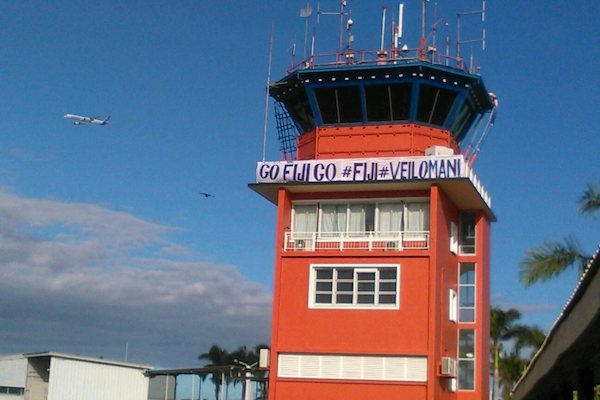
Update Apr 2: ATC operations have returned to normal across Fiji, following last week’s strike by air traffic controllers. On Fri Mar 29, an Arbitration Court ordered they return to work, although some workers remain suspended. Over the weekend, there were Notams in place for NFFN/Nadi and NFNA/Nausori which warned of no ATC services overnight, but these have since been cancelled.

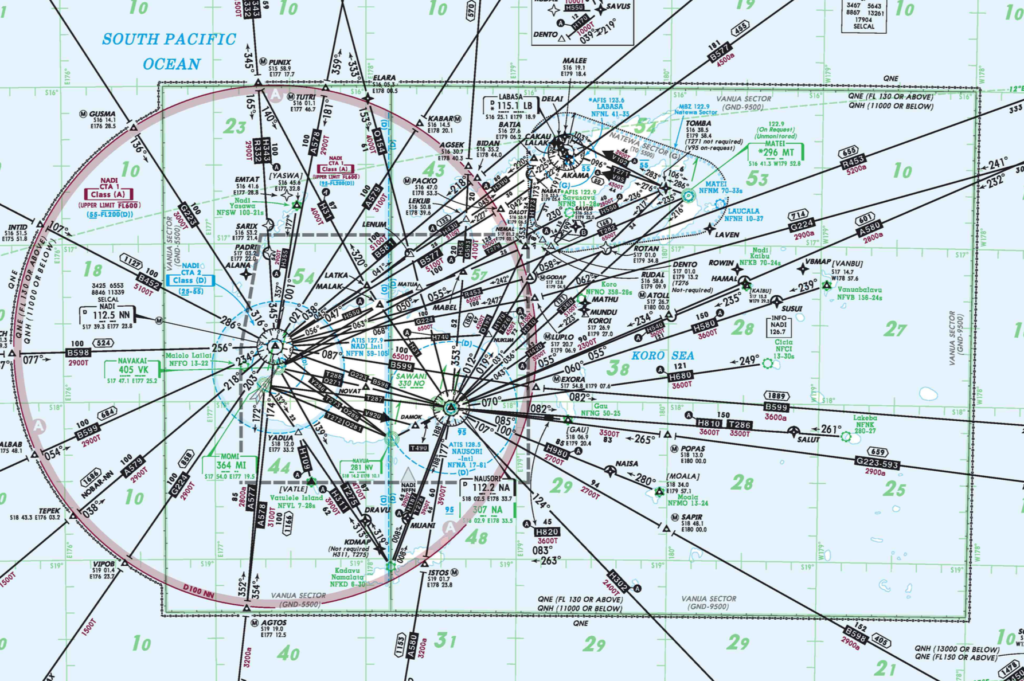
During the ATC workers strike, the response by the authorities was to publish Notams advising that the airspace around the country’s two main airports, NFFN/Nadi and NFNA/Nausori, was “Class G” airspace, with “TIBA” procedures in effect.

Both of these are bad news – they basically mean that the airspace is uncontrolled, and pilots have to separate themselves from each other during arrival and departure phases.

TIBA stands for ‘Traffic Information Broadcasts by Aircraft’. ICAO Annex 11 states that TIBAs “should be made only when necessary and only as a temporary measure”.

TIBA procedures are normally only ever implemented in areas where there are light general aviation movements, in uncontrolled airspace, or during large scale emergencies or natural disasters; it’s very unusual to see them being implemented around big international airports such as Nadi and Nausori.

With less ATC staff available to work due to the strike, it seems the authorities implemented these measures as a way of reducing normal workloads for the controllers who were not on strike and remained on shift.

Further reading


OPSGROUP featured on Al Jazeera

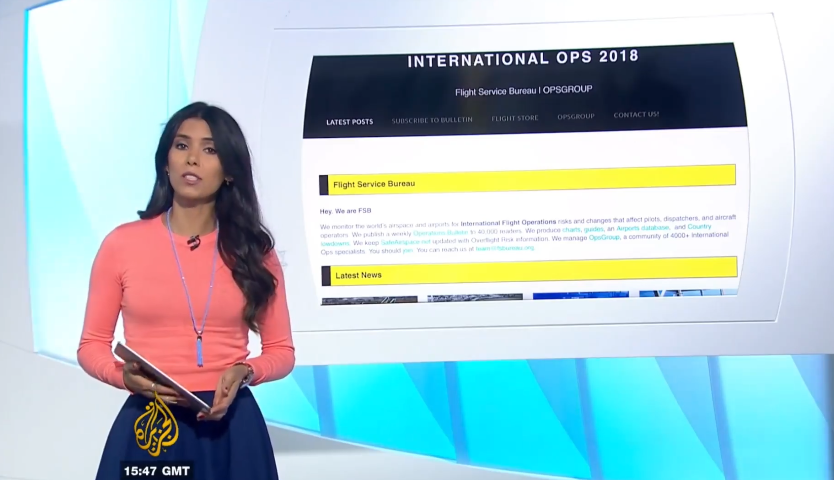
As a group of 4000 pilots, dispatchers, and controllers, we stand for safety ahead of commerce. Al Jazeera interviewed our founder, Mark Zee, about the current risk in Ethiopian airspace created by the ATC strike, and why we care so much about getting the truth out to our members.

https://www.facebook.com/flightservicebureau/videos/244638736242463/?t=1


ATC Strike over, but nine Ethiopian Air Traffic Controllers remain in jail

5th September, update:

As of this morning, most controllers have returned to work. Some concessions made by ECAA. Addis ACC and TWR are again staffed with qualified controllers, so the safety situation, for now, is restored. However, 9 remain in jail. Returning controllers were forced to sign an ‘admission’ of illegal strike action in return for amnesty. IATA In Flight Broadcast Procedure requirement for Addis FIR remains in place, meaning you must broadcast on 126.9 as in other areas of concern in Africa. Further as we get it.


4th September:

Last week we were one of the first to expose the attempted ATC Strike cover up by the Ethiopian Civil Aviation Authority.

As a reminder, untrained and uncertified foreign controllers, retired and local non-operational ATC personnel are being used to control air traffic over Ethiopia. 

It is a catastrophic misjudgement, creating a safety risk in the Addis FIR and at Ethiopian Airports for pilots and passengers alike.

Here are some more updates since our last article:
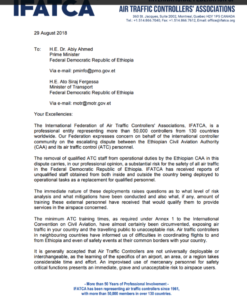
  • On August 29, The International Federation of Air Traffic Controllers Association (IFATCA) penned a letter to the Prime Minister of Ethiopia. You can read it here.
  • The neighbouring controllers in Kenya warned that flights in and out of Addis Ababa are not safe. You can view their letter here – specifically they warned that the ‘possibility of air misses’ is real.
  • The ECAA over the weekend rejected concerns regarding the safety of Ethiopian airspace, specifically calling the claims from Kenya as “outright lies.”  The ECAA has said that ATC are operating “in accordance with ICAO Annex 1 provisions.” They did not deny however that foreign and retired ATC are being used.
  • The ECAA also outlined that the national carrier, Ethiopian Airlines, has “awarded” veteran Air Traffic Controllers,  who are performing their national obligation.
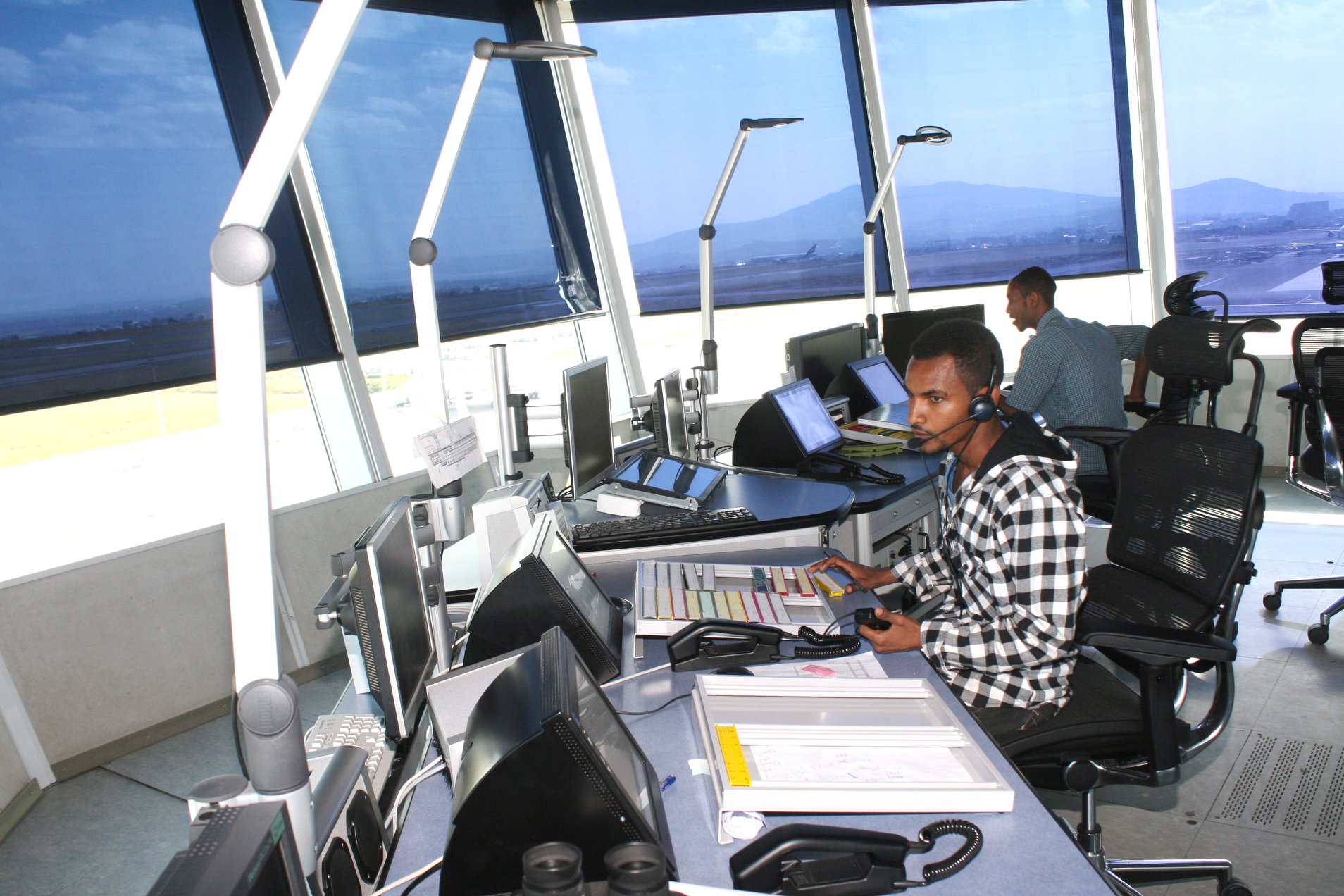
  • However on Monday, the local state affiliated broadcaster, Fana BC, reported that the Federal Police Commission had detained nine individuals on suspicion of attempting to disrupt international flights and coordinating a strike that began last week. This has been quickly condemned on social media, as many locals called on the government to resolve the issues raised by the ATCs rather than resorting to intimidation.

The ECAA claims that “some” of the striking controllers have returned to work.

Major airlines and uninformed passengers continue to fly into and over Ethiopia and this continues to be a major safety risk.

Do you have more to add this story?  Please, let us know!


Ethiopia risking flight safety to cover up ATC strike

  • Ethiopian ATC on strike, no Notams, government hush up
  • OPSGROUP alert for the  Addis Ababa FIR
  • Airspace risk – unrated controllers, some foreign and unfamiliar


Air Traffic Controllers are on strike in Ethiopia
, and Ethiopia would prefer that you don’t know this. We, as OpsGroup, would prefer that you do.

Ethiopia would also prefer that it has no impact on the flight operations of its national carrier, Ethiopian Airlines. Therefore, they have drafted in foreign controllers to replace the strikers, issued no Notams, hushed any publicity, and proactively declared ‘operations normal’ (complete with bizarre, hand drawn airplanes).

European airlines – and frustrated passengers – will watch with great interest, thanks to their own ATC strike woes: regular stoppages by French, Italian, and Greek controllers have this summer, once again, been the source of massive cancellations, reroutes, and delays. Has Ethiopia found the golden elixir, the magic solution to a long-running problem? Is this how to handle a strike by your nations’ Air Traffic Controllers?

It absolutely is not. It is a catastrophic misjudgement, creating a safety risk in the Addis FIR and at Ethiopian Airports for pilots and passengers alike. Ethiopian airspace, this week, is most definitely not ‘operations normal’ – it is unpredictable and unsafe, staffed by unrated, inexperienced controllers, many from abroad – evidenced already by alarming reports of close calls from adjacent Area Control Centers – read on.

The facts are this: faced with an upcoming strike by ATC, Ethiopian Airlines – now Africa’s largest airline –  formed what in the boardroom might have seemed a workable plan: Recruit a bunch of controllers from other countries, fly them in to Addis, and have them do the work of the striking staff.

The first batch of foreign controllers came from the Democratic Republic of the Congo, a small group described by the local controllers, unsurprisingly, as mercenaries. When the strike started at 7am this past Monday morning, they were ready to go. Not content with stopping there, the requests from ECAA – the Ethiopian Civil Aviation Authority – for more external controllers went out thick and fast, like an Ambien fuelled shopping spree on Amazon. 30 requested from Sudan, 24 from Kenya. More from Zimbabwe, Malawi. Finding those requests rejected, and resistance from other ATC agencies, the biggest request yet: 120 controllers from ASECNA.

The plan, commercially, is understandable. The wish to keep their airplanes flying is not endemic to Ethiopian Airlines. British Airways, Ryanair and Easyjet, have all made very public their frustrations with ATC strikes. An association, A4E, was formed to fight the problem at European level.

But here’s why the Ethiopian solution doesn’t work.

And as a former Air Traffic Controller, and Airline Pilot, I can tell you why.

Air Traffic Control is complex. That’s not a secret. On average, it takes a controller three months to gain a ‘rating’, or qualification, for a specific piece of airspace; that’s how long it takes to become comfortable with the 4D picture in front of you to provide a flawless ATC service. More complex airspace could take six months.

You have to learn each corner of your bit of sky. Learn the rules of the sector, learn the agreements you have with other centres about how you will receive and present traffic at the boundary. But the most important thing you learn is how the traffic flows.

ATC is not an aerial traffic battle whose landscape changes each day. It is not a web of complex contrails that, seen from the ground, appear to merge and diverge at random. The traffic flow is a largely predictable set of events, where the same airlines are operating on the same routes – providing a basis for us, as controllers, to learn the patterns of the flow, and to learn a trick for every trajectory.

This is key. It’s been 15 years since I worked the North Atlantic flow in Shannon, but I remember the callsigns, the flows, and how to handle them, like an indelible challenge and response game in my mind.

Shamrock 37J, airborne Shannon” : “direct to Strumble, climb him to 270”.
“Belfast departure for Tenerife” : “stop him low, get him under the NAT traffic”.
“Two converging at LIFFY” : “Drop the Speedbird, he’s for Manchester”.

Humans learn patterns. This is how ATC works. We fill a bucket full of “stuff we’ve seen before”, leaving us free to concentrate on the few things we haven’t. This is the flow. If you watch 737’s fly up the Hudson on a hot summer morning, this is the La Guardia flow. Not an inch left or right. Heading into Amsterdam? “Direct to Pampus, down to FL70”.  One after another.

This is why we need three months to learn the airspace. For the flow. And this is why, when I found myself in New Zealand, learning to operate as an Air Traffic Controller far away from Shannon, I was floundering, like one of those dreams where you running but standing still. I am a controller, but I can’t control. I don’t know the airspace, and I don’t know the flow. Slowly, over the months, geography takes shape, traffic patterns show themselves, situations become seen. I start to get a sense of distance and time on my scope – or scopes, because New Zealand is long and thin I have to reorientate my thinking north-south, rather than east-west, as in Shannon. Out of the mist of training, I am a controller again, but it takes time. A lot of time.

Ultimately, I can reach the point where I can do my job – the real job of an Air Traffic Controller – to be familiar enough with the airspace and traffic that I have “the picture”. The full situational awareness, with most climbs, descents, speeds, and vectors being routine and familiar, means I can spot the something that’s off, wrong, going to develop into a conflict, and do so intuitively, like a sixth sense. Air Traffic Control is an art, it’s a dance. You don’t do it by complex calculations in your head, you don’t need a computer. It’s the visual in front of you – radar or tower – coming to life in your brain, you feel it, and the solution becomes instinctive.

And this is why you can’t bus in a set of replacement controllers, shuffle them down the corridor into the radar room, and up the stairs to the tower, and expect a safe, efficient, and orderly flow of traffic.

Controllers know the power of the strike. In most countries, it is used rarely, and fairly. They understand the impact on airlines and passengers. There are many other forms of industrial action a controller can take – like a training ban, an overtime ban – before reaching the point of actually stopping work.

Commerce will always find a way to continue. Safety is different, and delicate. It must be nurtured and protected. When the two collide head on – the commerce of keeping an airline flying, vs. the safety of an established, effective Air Traffic Control system – safety must take precedence. Here, safety means accepting the strike, as is – and working with the controllers, quickly, to find a solution. Let them be heard.


We’ll keep this page updated with the latest situation on the Ethiopian ATC strike. Reports that we have received so far are as follows:

  • Controllers in adjacent ACC’s are reporting lack of adherence to Letters of Agreement – seeing aircraft with 4 minutes instead of 10 minutes separation.
  • RA reported by Kenya ATC between two airlines on Wednesday.
  • Kenya and Sudan reported loss of separation and poor coordination and transfer of traffic at their FIR boundaries with Ethiopia.
  • Retired and Management controllers, who appear to have never rated or validated in position, are also being used, though unqualified for Addis.

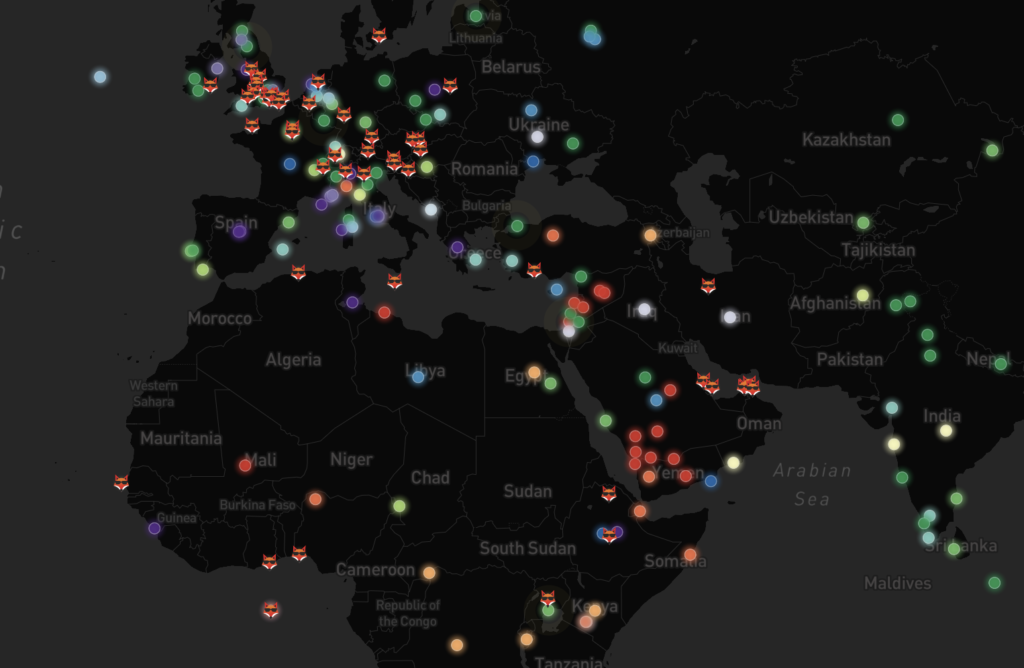
We were first alerted to this issue by a Fox. Many of you know that we are Fixing Notams. The lack of Notams in this situation, is an exceptionally clear example of point 1 in the “Why” of the Notam Problem. Sometimes, we can’t trust the state to tell the truth. And this is a clear example.

Thankfully, our network of Foxes – undercover ATCO’s, pilots, and dispatchers –  is growing, and reporting on things just like this, so that we can tell you what’s really going on. Keep reporting.

Further reading

  • Tell us anything additional we should know – news@ops.group
  • Monitor #ops-alerts in your member Dashboard, and Slack.
  • Contact the author: Mark Zee.


Italy ATC strike CANCELLED

Update 17 July: The 24hr ATC strike planned for July 21 has now been CANCELLED.

Controllers at all the ACC sectors were planning to take part, and additional strikes were planned at the local level at at the following airports: LIRA/Rome Ciampino, LIRF/Rome Fiumicino, LIEE/Cagliari, LICC/Catania, LICA/Lamezia, LICJ/Palermo, LIBP/Pescara, LIPZ/Venice

But now the strike has been cancelled. Normal ops now expected at all ACC’s and airports across the country.

Further reading:

  • All the latest official information about Italy ATC strikes can be found here. Just make sure you have your Google Translate tool enabled on your browser!

French ATC strike 22 May – this one’s looking bad

Impact from todays ATC French strike is looking worse than usual.

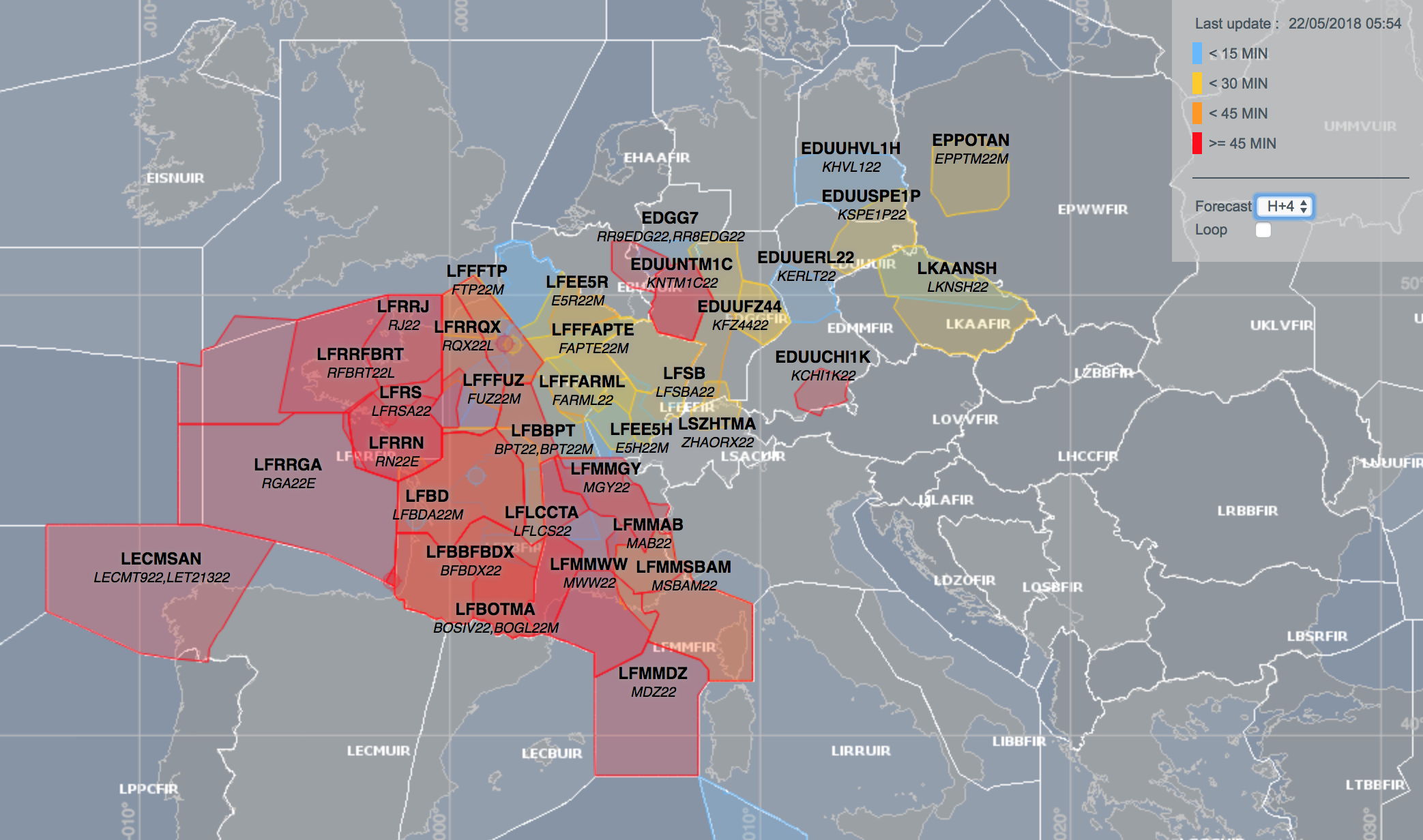
As things stand at 0600Z, there are a total of 400,000 delay minutes attributed to ATC Industrial Action in the ATC system for Europe,  an average of 20 minutes for every flight in Europe. That average is calculated for all 22,000 aircraft that will operate today in Europe, so assuming at most 2000 flights would operate through French airspace, it works out at around 220 minutes delay for every aircraft. And yep, finishing off the maths, that’s about 4 hours.

Those figures are pretty fluid because the good people at NM (CFMU) work really hard to reroute flights around the worst of it, but it’s safe to say, if you are operating in, over, near, or thinking about France today, you will have a pretty decent delay.

See below for the best places to get updates on todays strike.

Further reading:


Italy ATC Strike announced for May 8th

All airports in Italy and all ACC’s are planning a strike for Tuesday May 8th, from 08-16Z. Overflights, and intercontinental flights (eg US arrivals) are exempt. Expect disruption on the ground at all airports all day.

On strike from 11-15z:
-The ACC’s: LIBB/Brindisi, LIMM/Milano and LIPP/Padova.
-The airports: LIMC/Milan-Malpensa, LIEE/Cagliari, LICC/Catania, LIRA/Rome-Ciampino, LIBR/Brindisi, LICA/Lamezia Terme, LIMF/Turin and LICJ/Palermo.

On strike from 08-16z:
-LIRR/Roma ACC.
-The airports: LIRF/Rome-Fiumicino, LIRP/Pisa and LIRQ/Florence.

You can see the full Notam here. For updates, keep an eye on the Eurocontrol NOP page on the day of the strike.

Additional strikes are taking place by ground handlers at LIRP/Pisa, LIMC/Milano Malpsena, LIML/Milano Linate, LIRQ/Florence and LIPY/Ancona – so expect particularly big delays at those airports.


French Guiana ATC strikes continue

There seems to be no end in sight for the French Guiana ATC strikes. Here’s the current situation:

SOOO FIR: the entire airspace will be uncontrolled from 00-11z until further notice (extended beyond 01Dec).
That means there will be no ATC staff on duty during these times. Basically, during the closure, there’s a contingency plan in place: so if you want to cross this bit of airspace, there are now very specific routes and levels you have to fly at. Check these carefully prior to ops, and make sure you’re at the right flight level before crossing the FIR boundary. Once you’re inside the FIR, don’t change your speed or level.

To read the contingency plan in full, with all the published routes and what to do, click here.

TTZP/Piarco ATC (who control the FIR to the north) have said that everything has been running smoothly so far with this contingency plan, and they haven’t had any problems with directing overflying traffic from TTZP to SOOO.

SOCA/Cayenne Airport: the airport will be limited between 0100-1100Z until further notice.  This means you can’t file as an alternate, and if you’re arriving or departing during these times, you’ll need to call ATC for PPR at +594 35 92 72, or +594 39 93 02. 

We’ll keep this page updated with the latest news as we get it.


Iraq ATC strike – update

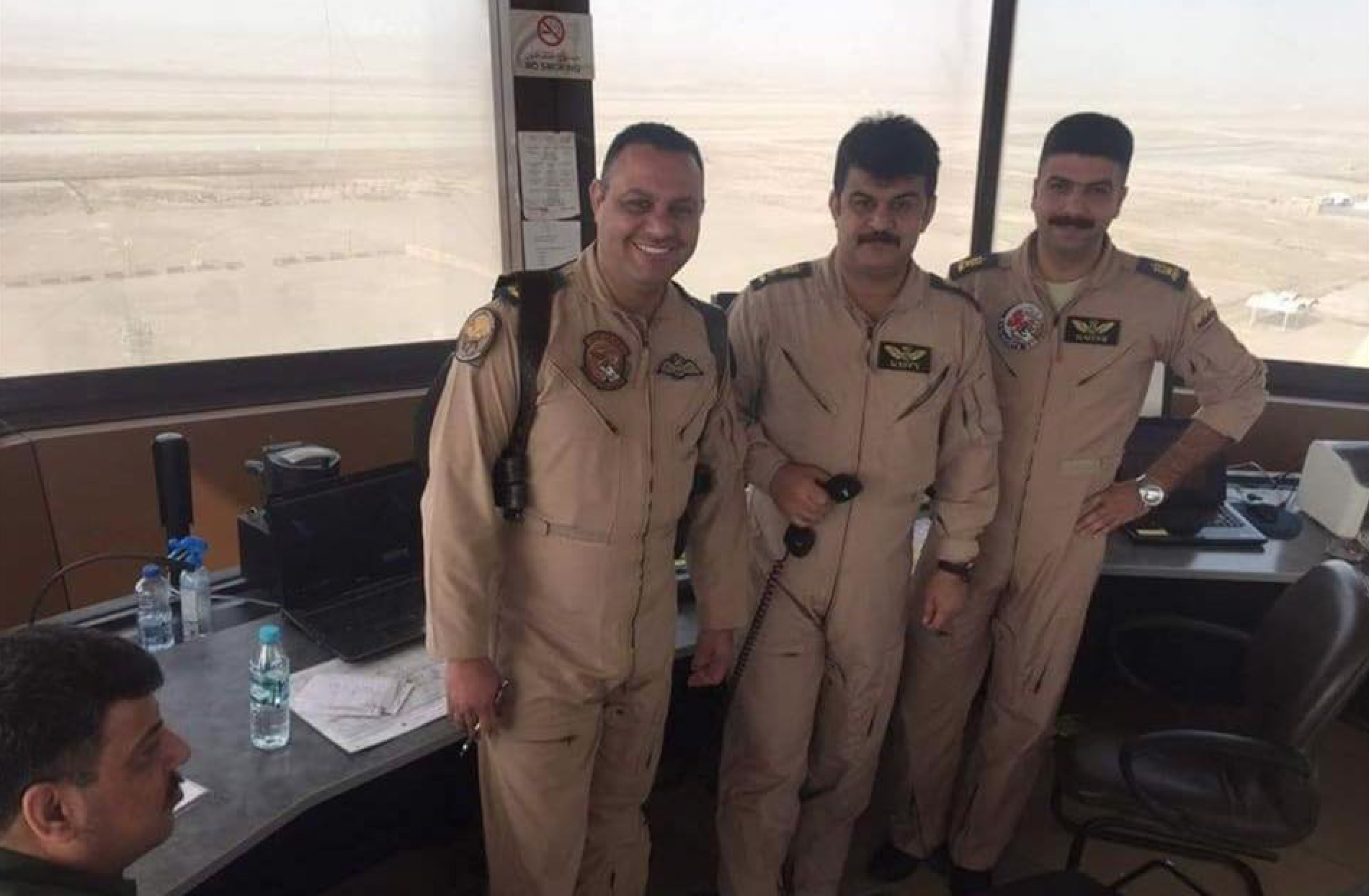
At 0800 local this morning, Iraqi controllers returned to work. For the last few days, Iraqi ATC had been on strike for better pay, effectively closing the Baghdad FIR and intermittently Baghdad and Basra airports. An 80nm in trail requirement has been removed. Military controllers, pictured above, who had been running ORBI/Baghdad Airport have completed their duties.

Local ATC controllers tell us that the strike is over – they are running what they call ‘ops normal’ for two weeks, before they will/may strike again as negotiations continue. Inside word is that a number of local controllers have been fired, and Serco were providing most of the staff to cover the centre. Baghdad FIR Control Centre and Iraqi Airports are running normally – for now.

We are still expecting the FAA to remove the restriction for US operators using the Baghdad FIR, this is a separate issue. No further news on that just yet.


National Italian ATC Strike (cancelled)

Update: 1800Z / 24October

Good news–the strike scheduled for October 27th has been cancelled, no disruptions in ATC services to be expected.  All FIRs have issued NOTAMs accordingly.

Italy ATC Unions have announced a strike on October 27th, which is a Friday (big surprise there). As of now, the strike is expected to take place from 1100-1500UTC.

Negotiations are ongoing, and we have our contacts in Italy keeping us updated to any developments and impact to operations.

ENAV has confirmed the strike could affect:

Milano, Roma, and Brindisi ACCs, ATS and MET at a large chunk of Italian airports, the flight planning data office, ground communications, weather forecasting units…it’s a large strike.


Read up on the full NOTAM below, and we’ll get the updates here when they’re posted.


DUE TO STRIKE OF PART OF OPERATIONAL PERSONNEL FOLLOWING AIR NAVIGATION SERVICES MAY BE AFFECTED:
1) LIBB, LIMM, LIPP AND LIRR ACC/FIC
2) ATS AND MET OBS PROVIDED BY ENAV, AT:
LIBD LIBF LIBG LIBP LIBR
LIEE LIEO LIMA LIMC LIME
LIPH LIPK LIPO LIPQ LIPR
LIRI LIRN LIRQ LIRU LIRZ
3) ATS/AIS/MET AND COM PROVIDED BY
- NOTAM OFFICE (NOF-AFTN LIIAYNYX)
- ATS REPORTING OFFICES WITH CENTRAL BRIEFING OFFICE CAPABILITY 
(ARO-CBO ROMA-AFTN LIRFZPZX AND ARO-CBO MILANO-AFTN LIMLZPZX) NOTAM IN FORCE
- INTERNATIONAL COMMUNICATION CENTRE (ICC-AFTN LIIDYFYX)
- CENTRALIZED AUTOMATED FLIGHT PLANNING DATA OFFICE (AODO-AFTN LIIRZEZX)
- GROUND GROUND COMMUNICATION MONITORING UNIT (CME)
4) METEOROLOGICAL FORECASTING UNITS (UPM ROMA-AFTN LIJRYMYX AND UPM MILANO-AFTN LIJLYMYX).
REMARKS:
A) ACCORDING TO ITALIAN LAW 146/90 AND 83/2000 THE PROVISION OF ATS WILL BE GRANTED TO:
- STATE/HEAD/FFR/MEDEVAC/HOSP/HUM/SAR/ATFMX AND EMERGENCY FLIGHT
- OVERFLYING FLT AND STATE AIRCRAFT
- INCOMING INTERCONTINENTAL FLT
- FLT TO/FM ITALIAN ISLANDS AND DEP INTERCONTINENTAL AS IDENTIFIED BY CIVIL AVIATION AUTHORITY
- ALL OTHER FLT SPECIFICALLY AUTHORIZED BY CIVIL AVIATION AUTHORITY 
B) DURING STRIKE ATS/AIS/MET MAY BE PROVIDED TO ADDITIONAL FLT ACCORDING TO RELEVANT 
FLOW CONTROL MEASURES FOR LIBB LIMM LIPP LIRR ACC ISSUED IN DUE TIME BY EUROCONTROL DNM (DIRECTORATE NETWORK MANAGER)
C) AVAILABILITY OF AIR NAVIGATION SERVICES PROVIDED BY ATS/AIS /MET/COM 
UNITS WILL BE ANNOUNCED BY SPECIFIC NOTAM

French ATC strike updates

Several ATC unions have called for a national strike, affecting French airports and airspace from Monday evening at 1700UTC (Oct 9) through Wednesday at 0400UTC (Oct 11).

All FIRs are experiencing high delays.

Impact expected to the FIR’s per current  (10OCT) information are as follows:


LFRR/Brest Experiencing high delays

LFFF/Paris All sectors experiencing delays with highest delays in the west. Situation is starting to show signs of improvement.

LFEE/Reims All sectors experiencing delays with highest delays in the East and North

LFBB/Bordeaux Some high delays and with no ease forseen

LFMM/Marseille High delays all around. Regulations will be in place until a least 2359UTC

The following routes are available:
Tango 9 Global and Tango 213 Global, UM30 and UZ180 are fully available.
T9 is still dealing with alot of delays.

Airports:

LFPG/Paris DeGaulle and LFPO/Paris Orly are experiencing delays and there is a 30% capacity reduction in both airports plus at the following airports:

LFOB/Beauvais, LFLL/Lyon, LFML/Marseille, LFMN/Nice, LFBO/Toulouse and LFRS/Nantes
LFSB/Basel – unconfirmed as of yet but may be used as an alternate
LFPB /Paris-Le Bourget will not be affected.


Expect high impact. Ops over or to France are best avoided today.

We will continue to post any further information here as soon as received.


Week-long ATC Strike announced: France

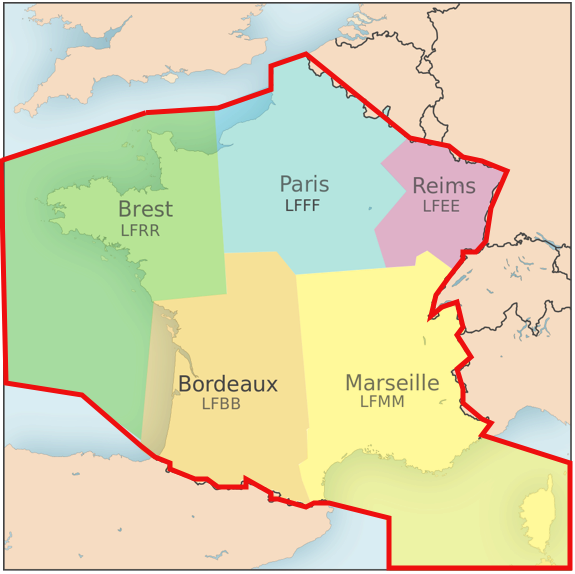
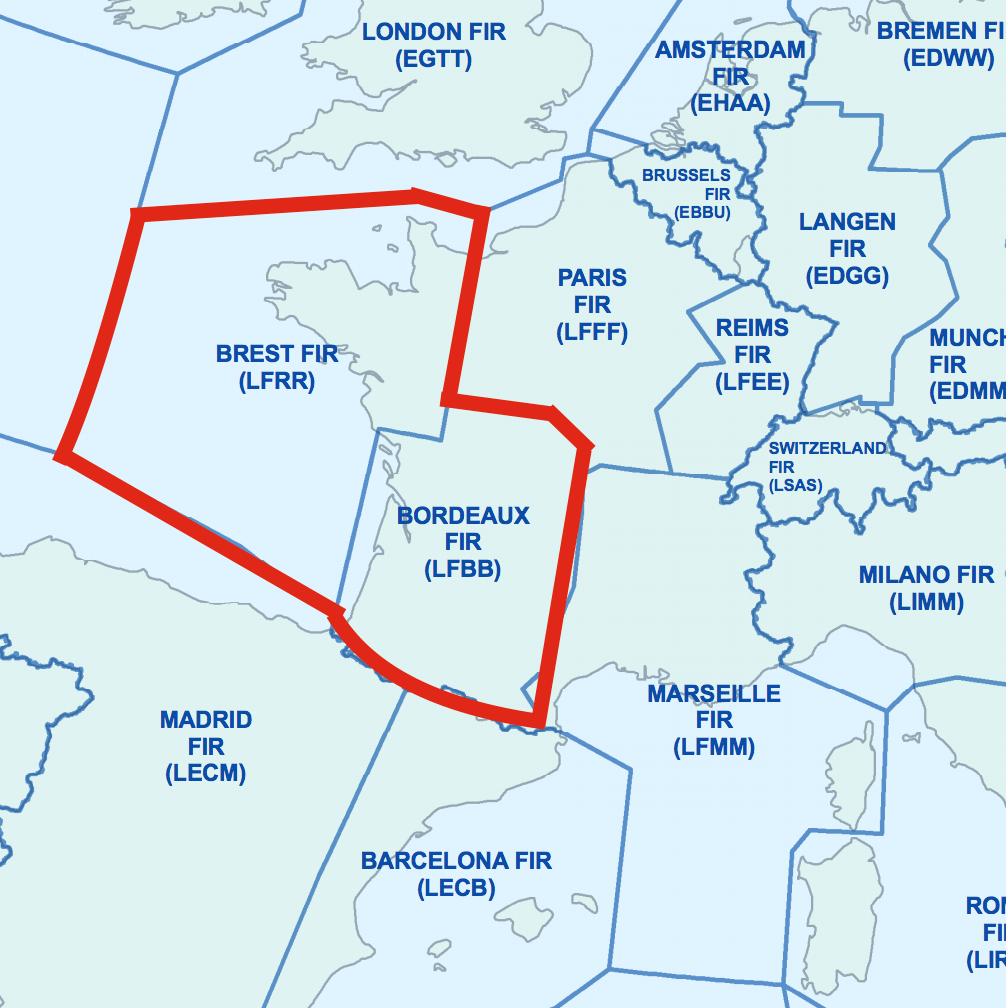
This is different to last years Summer of Strikes – where we had 12  French ATC strikes, but almost all were for 48 periods. This new strike is posted for a Monday-Friday, starting at 6am on Monday 6th March and running through to Friday evening, taking out the LFRR/Brest and LFBB/Bordeaux FIR’s.

Brest and Bordeaux FIR’s cover the west of France, meaning this will squeeze the offloaded traffic into Paris, Reims, and Marseilles FIR’s. As usual, our advice is to avoid overflying France if possible. We look forward to the day we can announce French Strikes are over (like the joy that Iceland brought us) but for now … no end in sight.

So, if you want some different options for getting around the Bordeaux FIR:

  • For north-south flights The Tango Routes – via Shanwick
  • For east-west flights try to file further north, into Belgian/Eurocontrol/German airspace, or come south into Barcelona/Marseilles
  • Read the Eurocontrol NOP for any relief routes accepted by other ACC’s
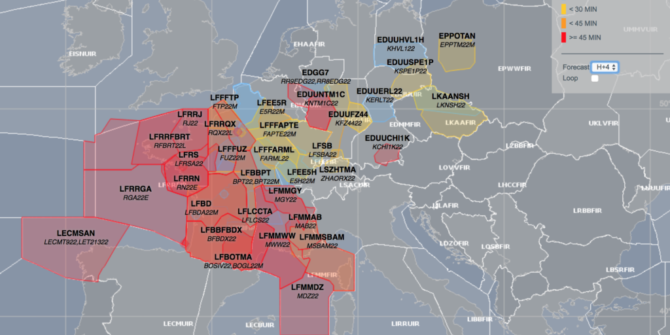
  • And, here’s a map :

Reroutes via Tunisia, Algeria

Tunisia and Algeria regularly open up their airspace to reroutes during French ATC action – and will likely do so again for this strike.

  • Tunisia (DTTC FIR): Overflight permit is required (AFTN direct DTTVYAYX)
  • Algeria (DAAA FIR): Overflight permit not required during this strike but copy FPL to DAAAZQZX and DTTCZQZX

Reroutes via Shanwick Airspace

Read our earlier post on this: https://ops.group/blog/the-three-sisters-shanwicks-tango-routes/

A teleconference will be held by DSNA (in French) on Wed 1st March at 1400 UTC.

Login details:
Call: +33 1 48 50 50 80
Pin Code: 34835821#

Keep an eye on the Eurocontrol NOP for updated info.


Iceland ATC Strike Over

We say the words with trepidation, because it’s been promised a few times over the last few months but then closures continued – but what we can tell you is that:

  • There was an agreement on July 18,  that appears to be holding
  • There have been no closures of BIKF, BIRK, or BIRD in the last week or so.

With that in mind we think it’s safe to say that the strike is over, and it should be Ops normal through Iceland from now on.


Iceland ATC strike bigger than ever

We had some really positive hints at a resolution of the Iceland ATC strike last week, but it’s not over yet – by any measure. Today sees another long list of airspace and airport closures. Oceanic Eastbound, Westbound and landing traffic all affected.

BIKF/KEFLAVIK A0454/16 06JUL 1007Z

(NOTAMR A0453/16) – DUE TO STAFF SHORTAGE BIKF TWR SERVICE LIMITED
TO SCHEDULED COMMERCIAL AND INTERNATIONAL
FLIGHTS, AMBULANCE AND EMERGENCY  FLIGHTS.
NO TOUCH AND GOES OR LOW APPROACHES FOR VFR
TRAINING FLIGHTS, ONLY DEPARTURE AND ARRIVAL.
TWR BIKF SERVICE LIMITED TO AMBULANCE AND
EMERGENCY FLIGHTS ONLY DURING THE FOLLOWING
HOURS: 09:00-09:30, 11:30-12:00 AND 14:00-14:30. 06 JUL 10:05 2016 UNTIL 06JUL 21:00 2016.

BIRD/REYKJAVIK OACC A0452/16 05JUL 2146Z

(NOTAMR A0451/16) – DUE TO STAFF SHORTAGE IN REYKJAVIK OACC WESTBOUND
TFC PLANNING TO ENTER BIRD FROM ENSV VIA GUNPA,
VALDI, IPTON, INGAL, ISVIG AND EGPX VIA LIRKI, GONUT,
OLKER, MATIK AND RATSU AND THEN PROCEEDING INTO EGGX
OR CZQX SHALL REMAIN SOUTH OF BIRD CTA. 06 JUL 11:00 2016 UNTIL 06 JUL 20:00 2016.

BIRD/REYKJAVIK A0450/16 05JUL 1518Z

– DUE TO STAFF SHORTAGE IN REYKJAVIK CENTRE,
OPERATORS SHALL FILE TO COMPLY WITH THE FOLLOWING:
1. EASTBOUND TFC WILL NOT BE ACCEPTED FROM CZQX AND
EGGX EXCEPT  TRAFFIC WITH DESTINATION IN ICELAND,
SCANDINAVIA, BALTIC STATES AND RUSSIA.
2. EASTBOUND TRAFFIC FROM AERODROMES EAST OF 105W
WITH  DESTINATIONS IN THE MIDDLE EAST SHALL REMAIN CLEAR OF
BIRD CTA.
OPERATORS ARE URGED TO KEEP REQUESTS FOR LEVEL AND
SPEED AMENDMENTS WITHIN BIRD CTA TO A MINIMUM.
FOR FURTHER INFORMATION CALL REYKJAVIK SHIFT
MANAGER +354 424 4141. 06 JUL 02:00 2016 UNTIL 06 JUL 08:00 2016.

BIRD/REYKJAVIK A0452/16 05JUL 2146Z

(NOTAMR A0451/16) – DUE TO STAFF SHORTAGE IN REYKJAVIK OACC WESTBOUND
TFC PLANNING TO ENTER BIRD FROM ENSV VIA GUNPA,
VALDI, IPTON, INGAL, ISVIG AND EGPX VIA LIRKI, GONUT,
OLKER, MATIK AND RATSU AND THEN PROCEEDING INTO EGGX
OR CZQX SHALL REMAIN SOUTH OF BIRD CTA. 06 JUL 11:00 2016 UNTIL 06 JUL 20:00 2016.


Summer of ATC Strikes: This weeks update

European Air Traffic Controllers are striking in a fight against changes emanating from labour reform and the Single European Sky initiative. Curiously, Greece – normally a big fan of ATC strikes during the summer – has remained off the radar.

Here’s the latest, and it’s a growing list:

France
– Ongoing ATC Strikes – the latest ended on 06JUL at 0400Z. Nothing else on the horizon – for now.
– French overseas territories are also included in these strikes – so Tahiti, New Caledonia, Martinique, Guadeloupe have all joined in the action when it takes place.

Italy
– Strike announced for 23JUL, affecting Area Control Centre’s and Airports in Italy. Normally Italian strikes permit overflying traffic without restriction.

Iceland
– Ongoing sporadic strike action affecting BIKF, BIRK airports, and BIRD Oceanic FIR. Occasional entire closures of the airspace except for Emergency and scheduled flights. Eastbound Traffic from the US/Canada to Europe not accepted during these closures unless destination is in Scandinavia, the Baltics, or Russia.
– Since first week of July, westbound traffic is also not accepted in BIRD during strike periods. Check BIRD Notams.

Portugal
– Strikes announced for every Friday in July were cancelled last week

We’ll keep this page updated as we get updates.


Iceland ATC strike – a solution

The strike goes on … but there may be a solution by Friday this week. Icelandic MPs passed a bill forcing a resolution to the ongoing pay dispute with air traffic controllers. The new law states that the air traffic controllers’ union and the airport operator Isavia have until Friday to reach an agreement – failing this, the matter be sent to a court of arbitration for a final resolution.

In the interim, sporadic airport closures at BIKF/Keflavik and BIRK/Reykjavik continue, as do general airspace restrictions in the BIRD FIR. If you can avoid a stop in Iceland, it would seem sensible to do so until the conflict is resolved.