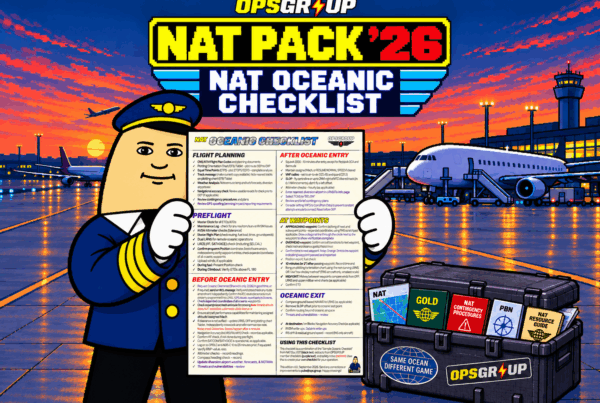




The latest edition (2026) of the NAT Guide (“My First North Atlantic Flight is Tomorrow”) has now been published. This 21-page guide is for pilots and dispatchers, to help you understand the basics of North Atlantic flying.
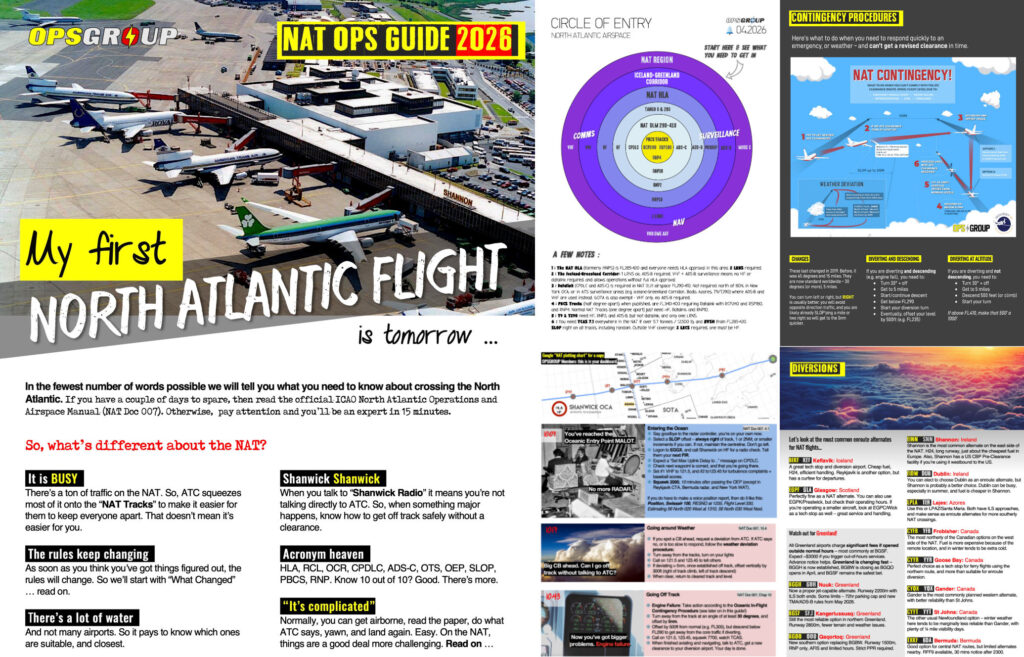
Contents:
- What’s different about the NAT?
- What’s changed? Recent updates (2026 → 2016), including datalink, tracks, comms, and procedures.
- (Updated 2026) Circle of Entry: what you actually need to enter different parts of NAT airspace (now reflects current surveillance and corridor logic).
- NAT Quick Map: Gander and Shanwick boundaries, plus updated routing overview.
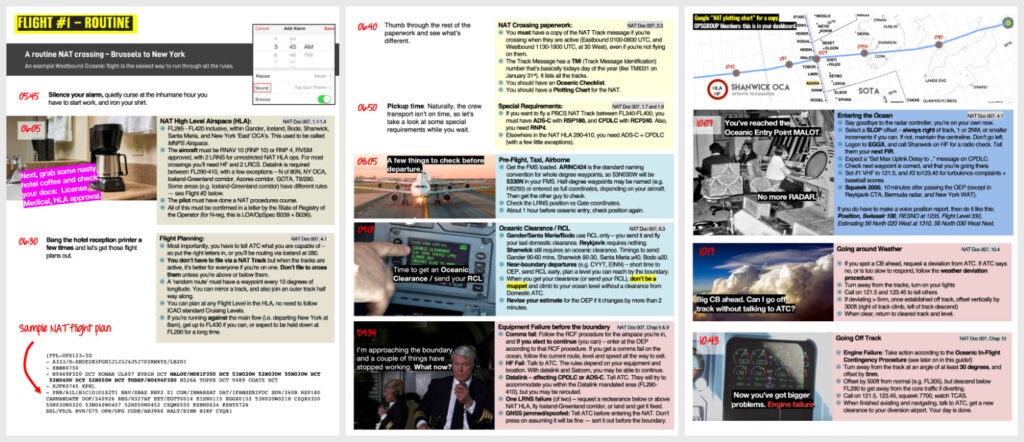
- Routine Flight Example: Brussels to JFK (step-by-step): HLA requirements, flight planning, paperwork, RCL vs clearance, oceanic entry, weather deviations, contingencies.
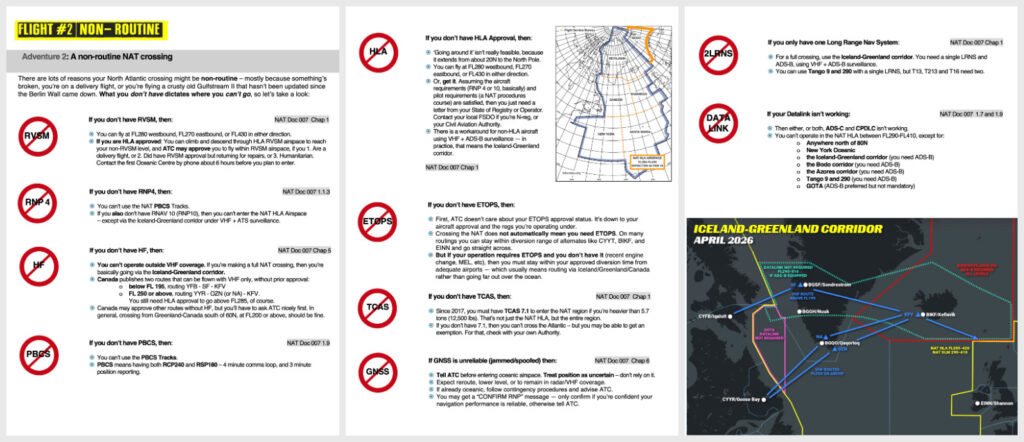
- Non-Routine Flights: what you can do without: PBCS, RVSM, RNP4 / RNAV 10, HF, 1 LRNS, HLA approval, ETOPS, TCAS, datalink – including the Iceland-Greenland corridor workaround.
- VHF Coverage Maps – FL100 / 200 / 300 across the NAT
- Diversion Airports Guide: practical notes on key alternates from Keflavik and Shannon to Goose Bay and Bermuda.
- Airport Data: updated list including Keflavik, Shannon, Gander, Goose Bay, plus revised Greenland options (BGGH, BGQO, etc).
- Special NAT Procedures: Mach number technique, SLOP, comms, transition areas, exits, and common mistakes.
- North Atlantic ATC Contacts: Shanwick, Gander, Iceland, Bodo, Santa Maria, New York, plus adjacent domestic units.
- NAT FPL Codes and Flight Levels: what to file and how.
- Contingency Procedures: weather deviations and in-flight emergencies.
- Oceanic Clearance vs RCL: who does what now, including timing windows and differences between FIRs.
- Common Gotchas: real-world mistakes and lessons from OPSGROUP members.
- GNSS Interference / Spoofing: what to expect and what to do.
- Links, Questions, Guidance
There are two options to download a copy of the NAT Guide 2026:
OPSGROUP Members
You can get it in your Member Dashboard, under Briefings and Guides.
Not a member?
- Option 1: Buy a copy in the store ($25)
- Option 2: Apply to join OPSGROUP, and get it for free!
With an OPSGROUP membership, all publications like this from the group are free of charge and all available through the Member Dashboard. Join with an individual, team, or airline/dept membership, and connect with over 8000 other pilot, dispatch, ATC, and operations members.
What’s changed?
Now for a quick look at what’s changed since last year. We’ve updated the guide to match how the NAT is actually operating today, and cleaned up a few areas that have changed or still catch people out!
OCR vs RCL – what’s actually happening now
We’ve updated the oceanic clearance section to reflect how things actually work now. Gander, Bodo and Santa Maria use RCL, Shanwick still issues clearances the old way, and Reykjavik and New York don’t require one at all. We’ve also added the actual RCL timing windows, so it’s clearer when to send requests.
Blue Spruce gone, Iceland-Greenland corridor explained properly
The old Blue Spruce routes are gone! So we’ve replaced these with a clearer explanation of the Iceland-Greenland corridor instead. It reflects how these routes actually work today – using VHF and ADS-B surveillance instead of HF or datalink.
GNSS interference now a common concern
GNSS jamming and spoofing now get a bit more attention, with practical guidance on what to do if you’ve already had issues before entering the NAT. We’ve also added info on the “CONFIRM RNP” message, which more crews are now seeing.
Datalink and surveillance logic cleaned up
The datalink section has been simplified to make it easier to understand where it’s required, where it isn’t, and how surveillance-based operations (like the corridor or GOTA) fit in.
Greenland alternates brought up to date
The alternates section now reflects the latest changes in Greenland. BGBW is no longer in use, BGGH is now a jet-capable option, and BGQO has been added as a new southern alternate. It’s a more current picture of what’s available on the ground.
General tidy-up
- Removed a bunch of older wording that didn’t quite match how things are done now.
- Added a clearer explanation of NAT Tracks and how they’re actually used.
- Navigation specs have been standardized to RNAV 10 (RNP 10), in line with ICAO PBN terminology, just to keep everything consistent.
- Updated waypoint naming, including half-degree fixes.
- Tidied up the airport data and Greenland alternates.
- Added a few extra real-world notes (like squawk exceptions and small ops details).
- Other bits and pieces that we’ve forgotten about.
We hope you find the guide useful! 👨🏻✈️✈️👨✈️ᯓ ✈︎
If you want the full background on the recent NAT changes behind all this, it’s worth checking these too:
- March 2026 changes here.
- The full NAT timeline of all changes going back to the dawn of time.

More on the topic:
- More: New 2026 NAT Oceanic Checklist
- More: 2026 Updated FAA Oceanic Guides
- More: Gander’s Bringing Back CPDLC Oceanic Reroutes
- More: 2026 North Atlantic Plotting & Planning Chart
- More: Timeline of North Atlantic Changes
More reading:
- Latest: New 2026 NAT Oceanic Checklist
- Latest: The Bahamas wants your cash
- Latest: Can I open the aircraft door on arrival in the US?
- Safe Airspace: Risk Database
- Weekly Ops Bulletin: Subscribe
- Membership plans: Why join OPSGROUP?





 Get the famous weekly