Computer Says No: Why FAA RVSM Approvals Matter in Europe

An OPSGROUP member recently received the following message after their N-Reg flight plan was rejected by Eurocontrol:

Or in other words ‘computer says no – it seems you’re not RVSM approved…’

The issue stemmed from something called NAARMO – the North American Approvals Registry and Monitoring Organisation.

This is the agency responsible for monitoring the safe and proper use of RVSM throughout North American airspace including the US, Canada and Mexico. They maintain a list of every US-registered commercial and turbine GA aircraft approved to operate in RVSM airspace.

It may come as a surprise, but this same list is used across the pond by Eurocontrol (and its monitoring agency).

OPSGROUP has been advised that every three months, Eurocontrol carry out a flight plan audit using the FAA NAARMO list to identify non-approved aircraft operating in RVSM airspace.

If a registration is flagged, after further consultation, it may be added to a list of aircraft which will have their flight plans rejected. This was the case above.

Herein lies the problem: if your aircraft’s RVSM-status is recorded incorrectly on the US NAARMO list, you may find your flight plans getting bounced over in Europe.

If this happens to you, here’s how to fix it.

Contact NAARMO directly.

Yep, even though it’s a problem in European airspace the solution rests with NAARMO back in the US.

You’ll need to figure out why your aircraft doesn’t appear on the FAA’s database, and get that corrected first, before Eurocontrol can remove your aircraft from their naughty list. Once you get it corrected on the NAARMO database, they are apparently pretty good at sending Eurocontrol a specific notification so they can remove it from their list too (the day they receive the update, or the next working day).

You may not have been intentionally naughty either. There are some quite innocent reasons why this may be case – usually missing information related to airworthiness or other overlooked details.

To get in touch with NAARMO directly, use this form and email it to naarmo@faa.gov.


(No More) Danger in Denver

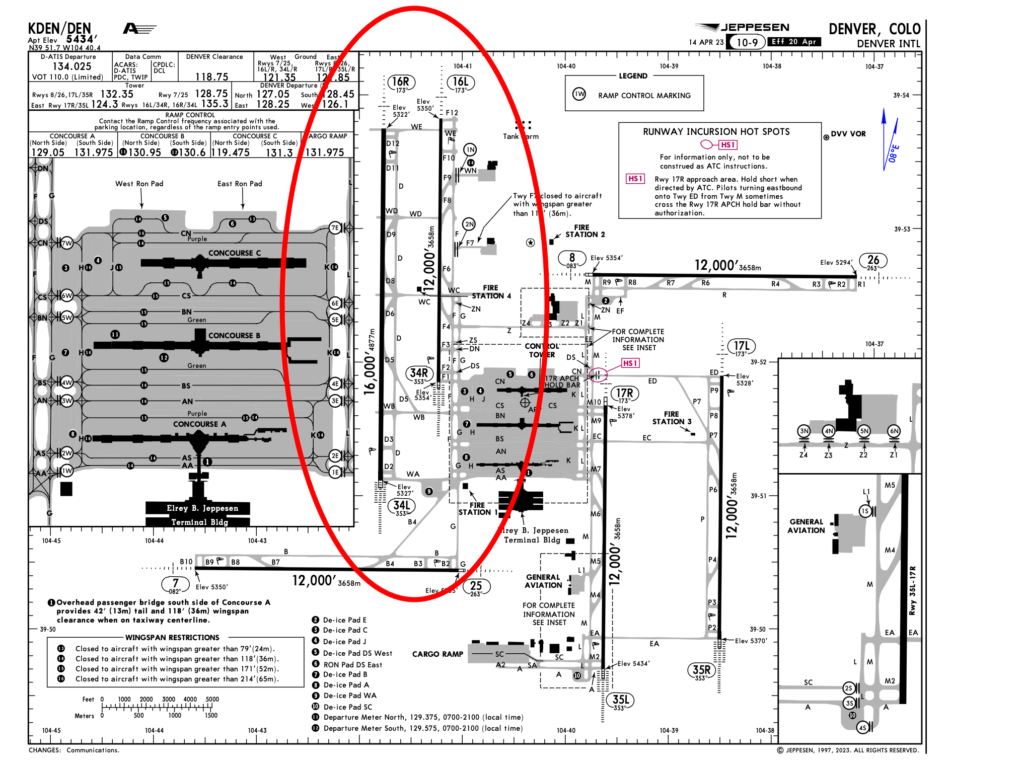
Back in 2022, the FAA issued a Safety Alert (SAFO) for KDEN/Denver, after a high number of TCAS RA events were recorded between aircraft landing on the parallel runways (16L/16R).

This was compounded by a number of factors:

  • High elevation
  • Reduced separation
  • Controller workload
  • Possible complacency caused by regular nuisance TAs.

It was a moody brew leading to the FAA becoming concerned about potential for a midair collision. If you’re like to know more, here’s an article we wrote at the time.

The trouble runways.

The good news is that last month, new approaches were introduced to alleviate the risk. Here’s an update on what has changed.

Offset Approaches

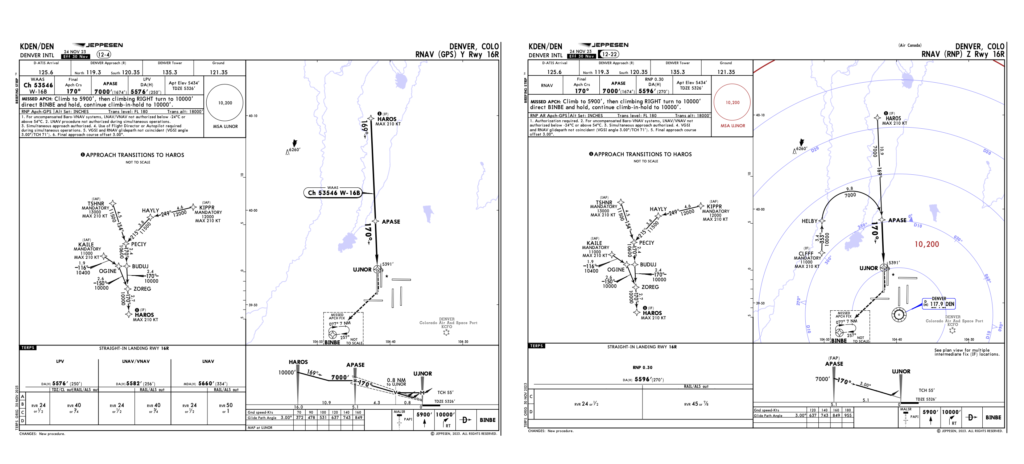
On November 30, Runway 16R received two new approaches (offset by 3 degrees) – the RNAV (Y) and RNP (Z).

The two new offset approaches to Runway 16R

It was previously determined that 3-degrees would be enough to mitigate nuisance TCAS activations and allow operators to continue using full TA/RA mode throughout their approach and landing.

Along with these offset approaches, the FAA has published new procedures for their use found in this Information Note for Operators.

The procedures will be in use anytime Runways 16L and R are operating simultaneously, and visual approaches are in use on at least one of the runways.

New Procedures

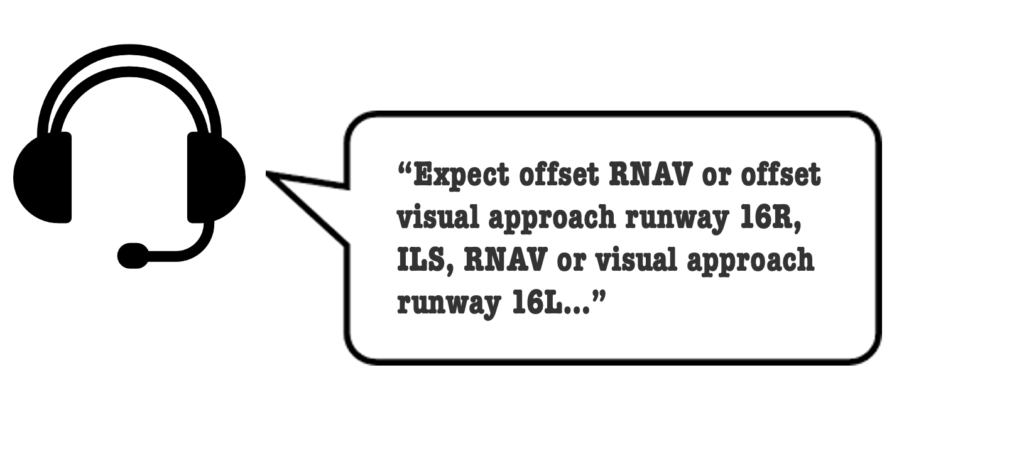
Listen out for the following phrase on the ATIS:


If you’re landing on 16R, there are effectively now two scenarios:

Instrument Approach – Follow the RNAV (Y) or RNP (Z) charted procedure. Easy.

or

Visual Approach – Here’s where things get a little more complicated. Even though the FAA regs say that an aircraft on a visual approach does not need to follow a specific track or vertical profile, in the case of KDEN, the FAA strongly suggests you do.

Aside from assuring you stay inside Class B airspace, it will also mitigate nuisance TCAS RA’s that can lead to unstable approaches, go-arounds and level busts.

In their Info Note the FAA goes even further and says don’t fly a straight-in approach to 16R (including via the existing ILS) unless specifically cleared to do so.

So when can we line up with the runway?

Whether you are on an instrument approach, or a visual, the FAA says don’t break off the offset until you can see the runway and have crossed the FAF.

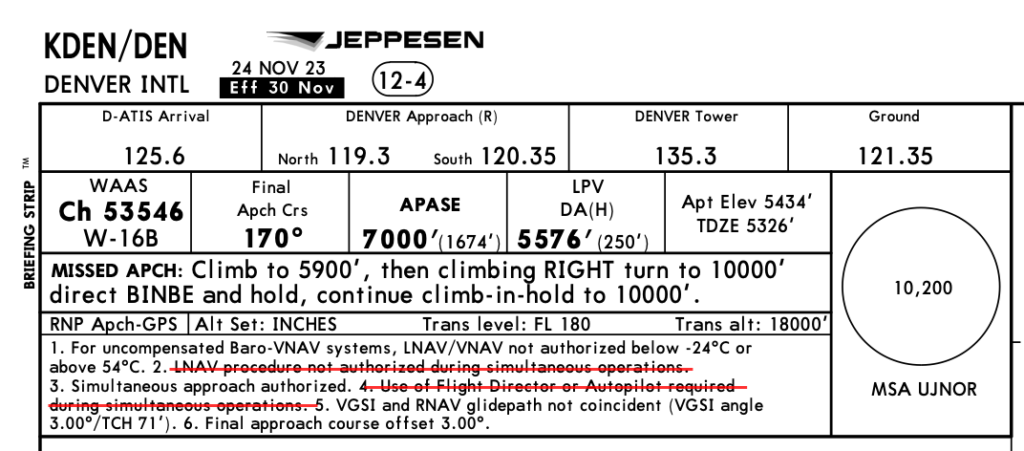
Look out for these chart notes…

Because the above procedure will only be used when conditions permit a visual approach on at least one of the two parallel runways, technically the whole deal doesn’t fall within the realm of ‘simultaneous IFR operations.’

So, you can disregard the following two chart notes:

…although the last one is still recommended by the FAA.

Still have questions?

You can get in touch with the folk at the Flight Technologies and Procedures Division at 9-AWA-AVS-AFS-400-Flight-Technologies-Procedures@faa.gov (yes, that’s the real address) or on the phone via (202) 267- 8790.

Or talk to us! team@ops.group. We’d love to hear from you.


“Resume Normal Speed” on the NAT

An OPSGROUP member recently reported some confusion with ATC during their eastbound crossing of the NAT, related to the CDPLC-issued instruction: RESUME NORMAL SPEED.

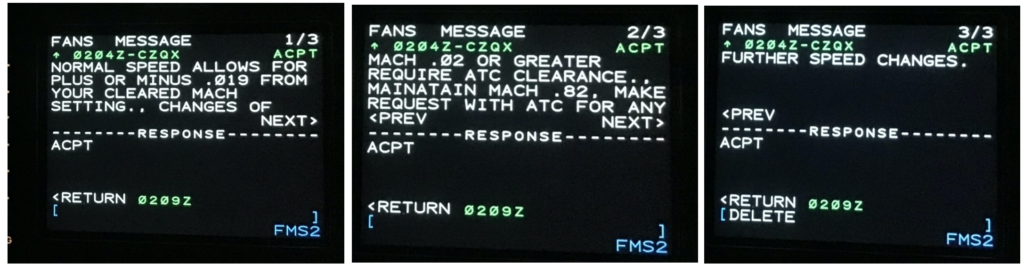
After increasing their cruise speed by M0.02, they advised ATC as per ICAO procedures and received the following message from a controller who appeared to believe that they had just busted their clearance

No paperwork was filed, but the crew involved were left scratching their heads as to what exactly they’d done wrong.

In the absence of any obvious explanation, we reached out to Gander directly who quickly replied. The answer was nothing – in this case, it was the controller who misinterpreted the rule.

Turns out the RESUME NORMAL SPEED instruction implies some pretty specific things. Here is exactly what you need to know next time you get this message on your NAT crossing.

Operations Without a Fixed Speed

OWAFS been happening over the NAT since 2019. O-WTF, you might be saying. But it stands for Operations Without An Assigned Fixed Speed.

It works like this. You get a normal oceanic clearance, with a fixed mach number, like you always did. But then somewhere after the Oceanic Entry Point, you may get a CPDLC message saying RESUME NORMAL SPEED.

Just reply with WILCO. Happy days.

But what this actually means is this – fly ECON, or a cost index with variable mach. You can fly within 0.01 up or down of your cleared Mach number without saying a word. But if it varies by 0.02 or more, you must advise ATC.

The big thing to note here is advise. No clearance is needed, you just need to tell them what you’re doing.

If you’re looking for a reference, ICAO DOC 007 section 5.1.12 is where you’ll find it.

As long as ATC are in the know, the gas pedal is now yours for the pressing.

Keep Reporting

If a clearance has you scratching your head, please let us know. Chances are if you’re confused, a lot of us will be too.

As this event illustrates, this can also help ATC who are human – just like us pilots. Misunderstanding between pilots and controllers, especially with respect to oceanic re-clearances, is one of the leading causes of procedural errors on the NAT.

You can reach us on team@ops.group, or if you’re an OPSGROUP member, via the Crew Room.


North Atlantic Volcanic Threat

Key Points
  • One of Iceland’s volcanoes (10nm southwest of BIKF/Keflavik) is showing signs it’s about to erupt.
  • If it does, NAT crossing traffic is likely to be affected at short notice.
  • ICAO have a Contingency Plan ready to go if it does erupt (PDF below).
  • Pilots and Operators: There is a list of things to watch out for if you do fly through volcanic ash, and a recommended procedure to follow.

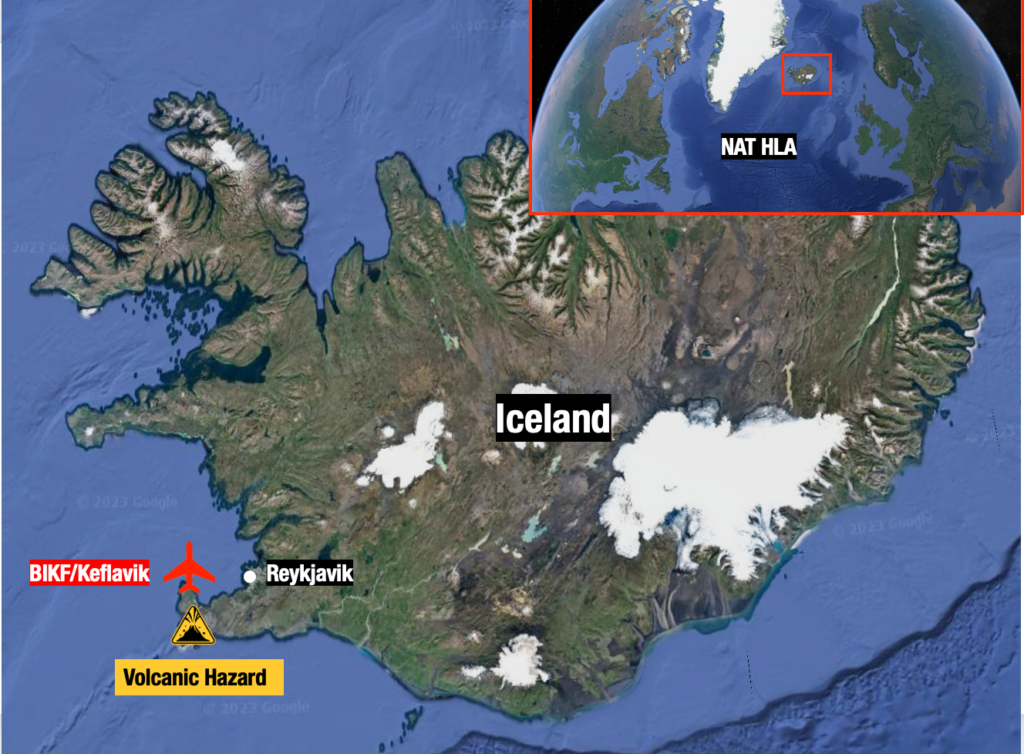
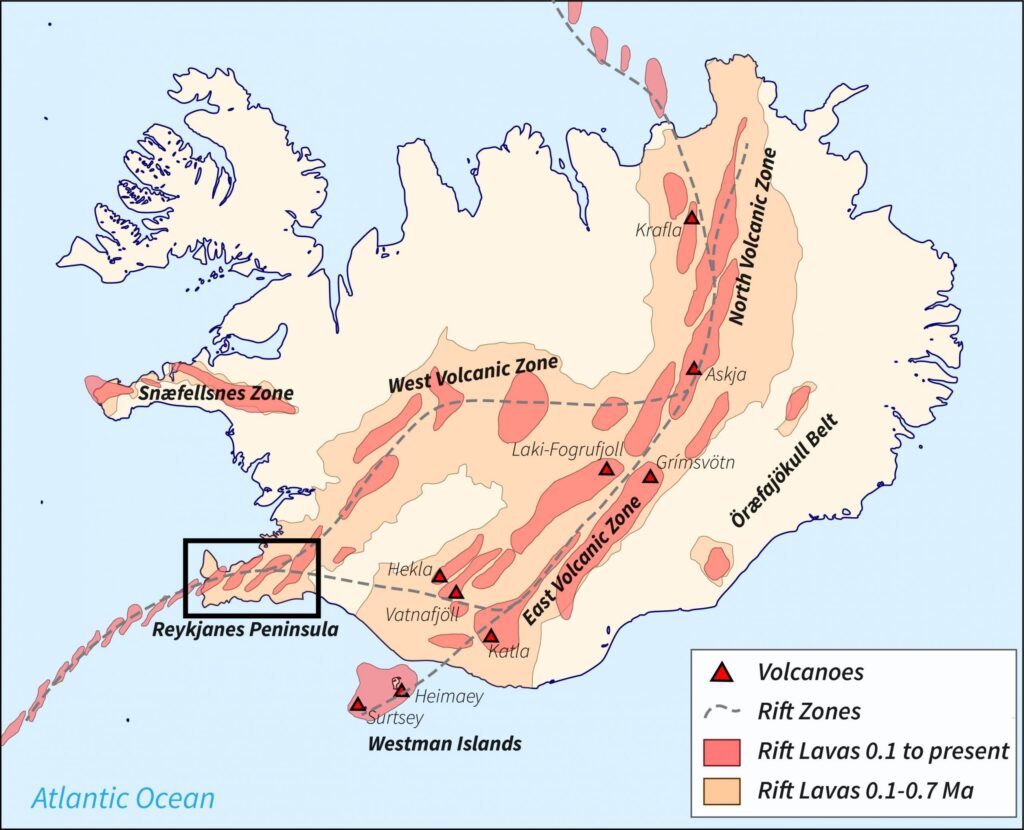
Iceland is on high alert for an imminent eruption at one of the volcanoes on the Reykjanes Peninsula – a stone’s throw southwest of Keflavik. If it does erupt, it has potential to seriously impact North Atlantic traffic.

The last time this happened in 2010, the (try pronouncing this one) Eyjafjallajökull volcano closed almost every country’s airspace in Western Europe in the weeks that followed. Nearly 100,000 commercial flights were grounded.

One of the few flights not to be impacted by the volcanic ash in 2010.

Where are we talking about?

What happens if it erupts?

So far, it’s just a warning. But it’s credible enough for Iceland to declare a state of emergency. Recent earthquakes in the area are an ominous sign. If it does erupt, there are several possible scenarios that could affect air traffic.

  • BIKF/Keflavik may close. Unlike previous eruptions, this one is just 10nm away from the airport and a little further from the Icelandic capital, Reykjavik. Aside from being a major airport in its own right, BIKF is a commonly used ETOPS/EDTO alternate for traffic crossing the NAT.
  • Part of the NAT HLA may become unusable depending on the spread of ash. More southerly routes than usual may become a requirement which means extended flight times and more fuel.
  • Major airspace closures could occur for an extended period of time.  The European mainland may once again be in the firing line, thanks to the mid-latitude westerlies.

Yeah but what ACTUALLY happens?

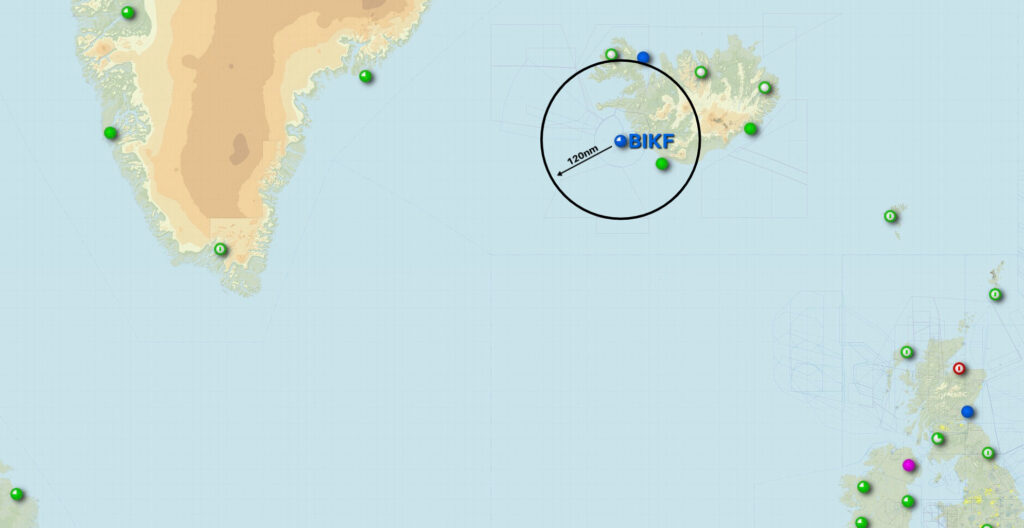
If the volcano warning goes to code RED (it’s currently code ORANGE), that basically means an eruption has started. In this case, the airspace within a 120nm radius will close, until they confirm there’s no ash cloud. They currently think there is a 15km long line where magma is flowing and moving towards the surface – an eruption could happen anywhere close to that line.

120nm of closed airspace around BIKF/Keflavik airport (remember, the volcano is just up the road) would look something like this:

There’s also a thing called the Volcanic Ash Contingency Plan that ICAO put together. This doc is the one you want to read – there are a few more scattered around online, but they’re all older versions of this one.

Where was ICAO when the Westfold fell?

This doc sprang from the misery caused by the eruption in 2010, and aims to set out what actually happens if a big volcano erupts.

Essentially, it goes like this:

  1. Volcano erupts. There’s ash all over the place.
  2. Volcanic ash people issue a volcanic ash warning.
  3. Notam people issue a Notam.
  4. Pilots/Operators read the Notam and don’t fly into the ash. ATC help them.

All volcano walking tours are cancelled.

What should I do if I fly through ash?

Don’t fly through ash.

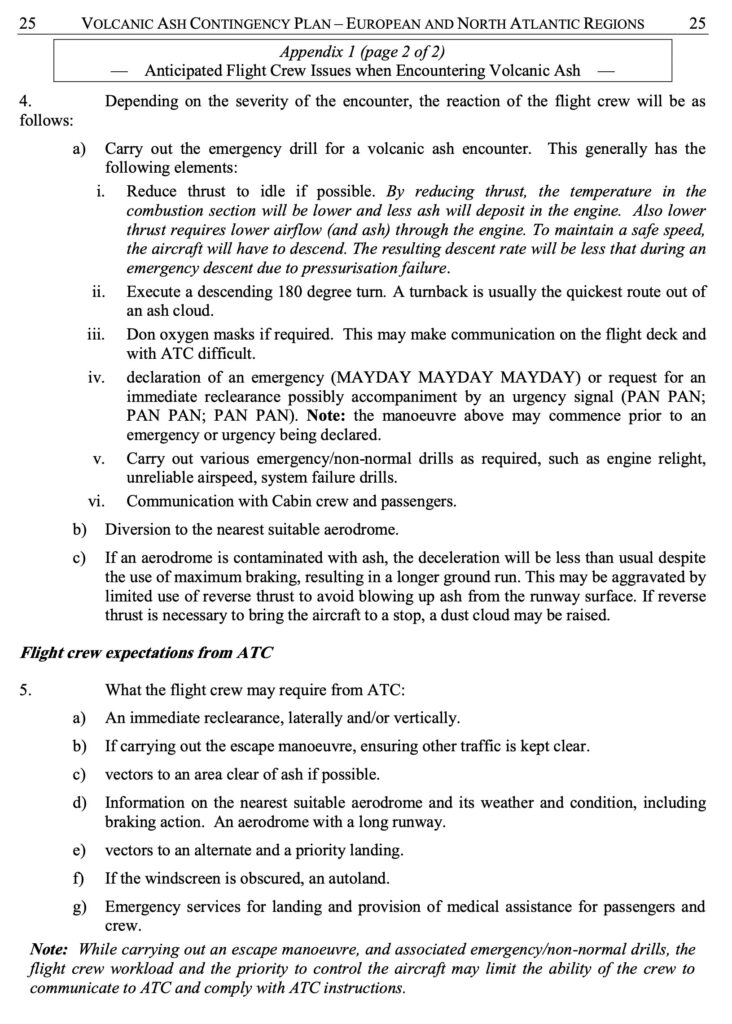
But if you do, then do this:

  1. Reduce thrust.
  2. Do a 180 degree turnback.
  3. Put masks on.
  4. Declare MAYDAY.
  5. Panic a bit as you do whatever emergency tasks you need to do.
  6. Divert somewhere pronto.

Or as it says in more official language in the Contingency Plan:

If I do fly through ash, how scary will it be?

Very scary. Don’t do it. Here’s a list of nightmarish things that will probably happen if you do:

  1. Smoke, fumes or dust may appear in the cockpit. Get those masks on.
  2. Engine malfunctions, stalls, over-temperature, thrust loss, engine failure.
  3. Reduced visibility due to the abrasive effects of ash on windshields and landing lights.
  4. Pitot tubes may become blocked, so airspeed indications may become unreliable.

Advice: disconnect the autopilot, set engine thrust to an appropriate value and maintain the aircraft’s pitch attitude manually. This will keep the aircraft at a safe speed, but will probably result in difficulty to maintain the assigned altitude. Increased separation is required (above and below).

Another thing that might happen – SPIDERS.

Advisories and Warnings

The London Volcanic Ash Advisory Center (VAAC) is responsible for issuing any ash advisories for this region. You can access those here.

Senior staff meeting at the London Volcanic Ash Advisory Center.

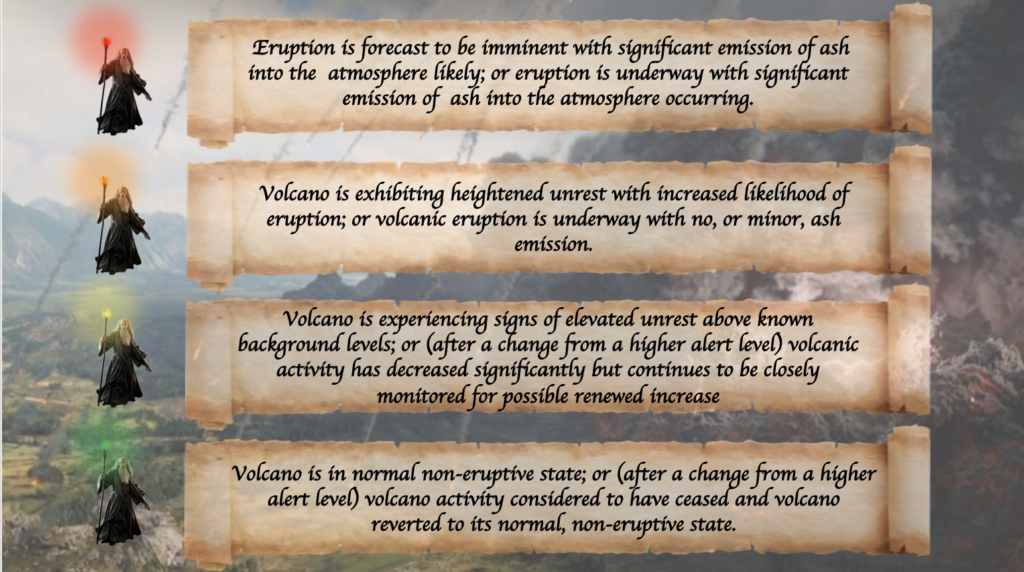
The current alert level is Orange. Verbatim, this means that the volcano is ‘exhibiting heightened unrest with increased likelihood of eruption; or that an eruption is underway with minor ash emission…’ Or in other words, it may be about to erupt.

If you’re not familiar with the volcanic alert scale, here’s how it works:

All traffic crossing the NAT or operating over Western Europe right now should be keeping a close eye on this one.

What’s the latest at BIKF/Keflavik Airport?

We’ve had a couple of reports from members who have been through there recently. If you’ve got anything to add, please file a report at Airport Spy! For info from the airport, you can contact the local handlers at jetcenter@icelandair.is or ops@southair.is.

Click image for full reports at Airport Spy homepage.


New Airspace Warning: The Red Sea

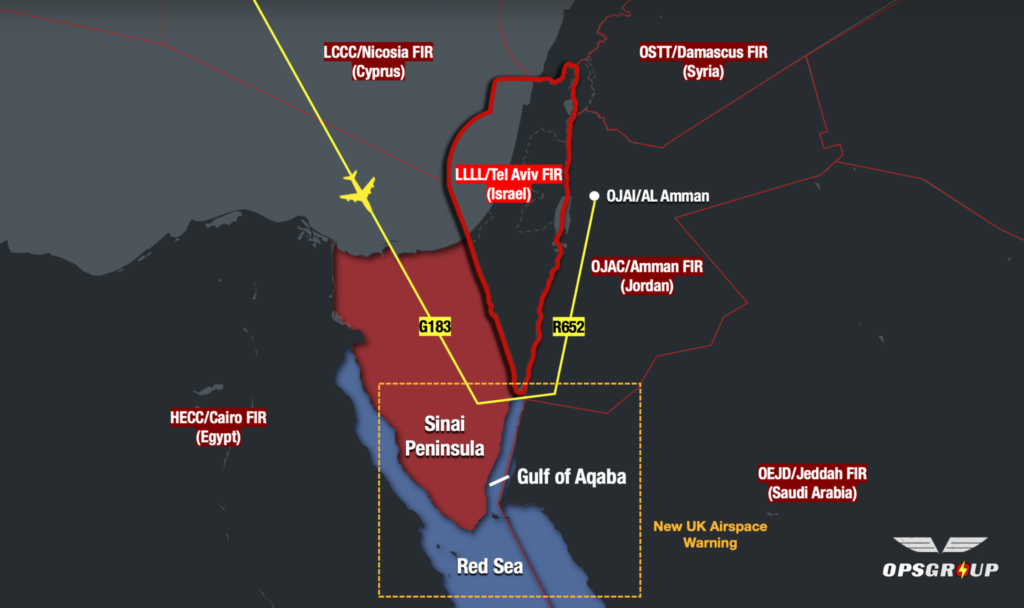
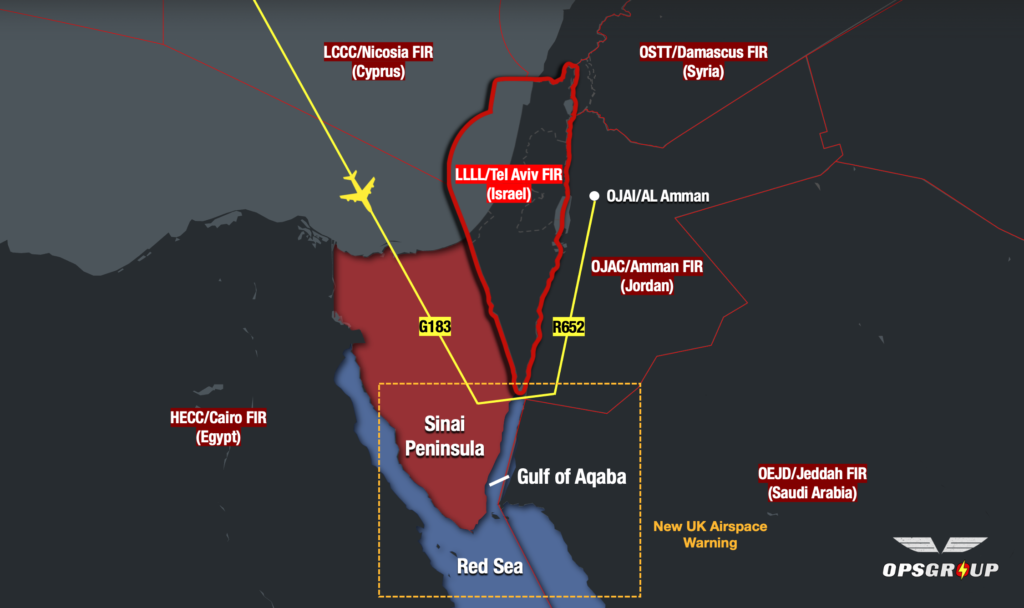
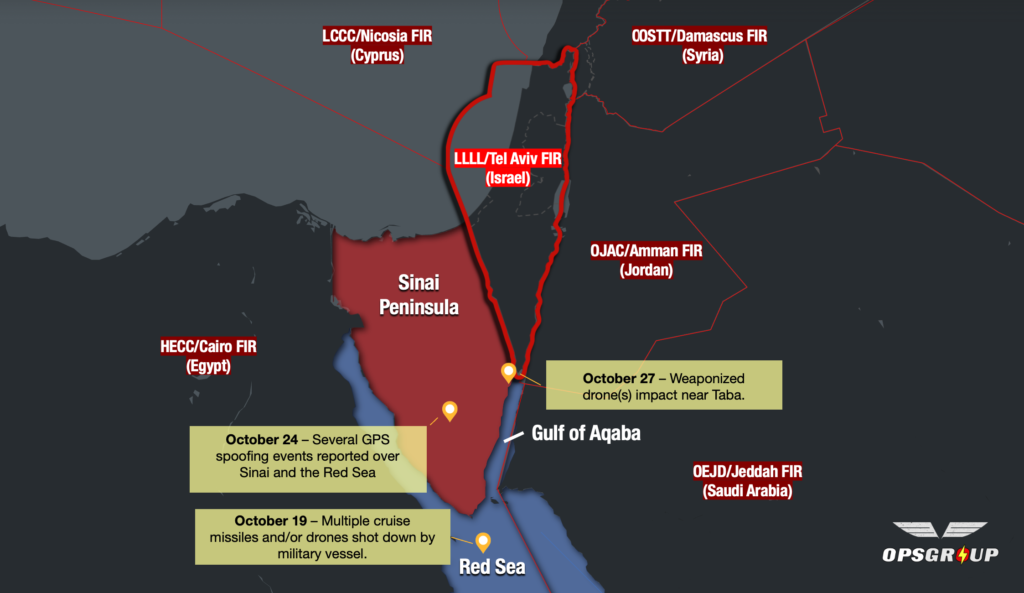
With the Israel-Gaza conflict ongoing, a lot of traffic is re-routing well clear of the LLLL/Tel Aviv FIR via parts of the Sinai Peninsula, the Red Sea and into Saudi Arabia via the Gulf of Aqaba. Especially those flights bound for Amman, Jordan.

The problem is that spill-over risks from the conflict are now extending beyond the boundaries of Israeli airspace and into this busy corridor. We’ve reported a number of these instances in the past few weeks.

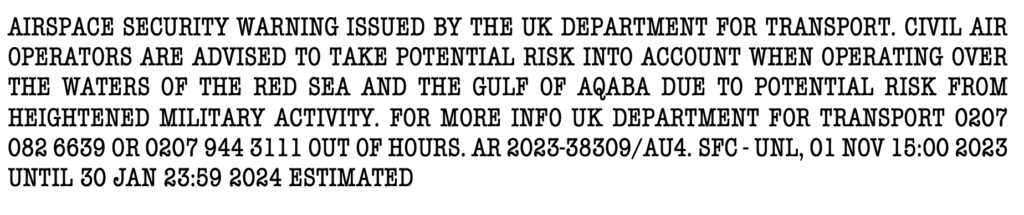
On Nov 1, the UK CAA published a new airspace warning via Notam:

Airspace warnings aren’t new for the Sinai Peninsula – but are for the Red Sea and Gulf of Aqaba. So, what has made the UK issue this one now?

The UK’s new airspace warning lies within or close to busy routes being flown by major carriers.

Recent Events

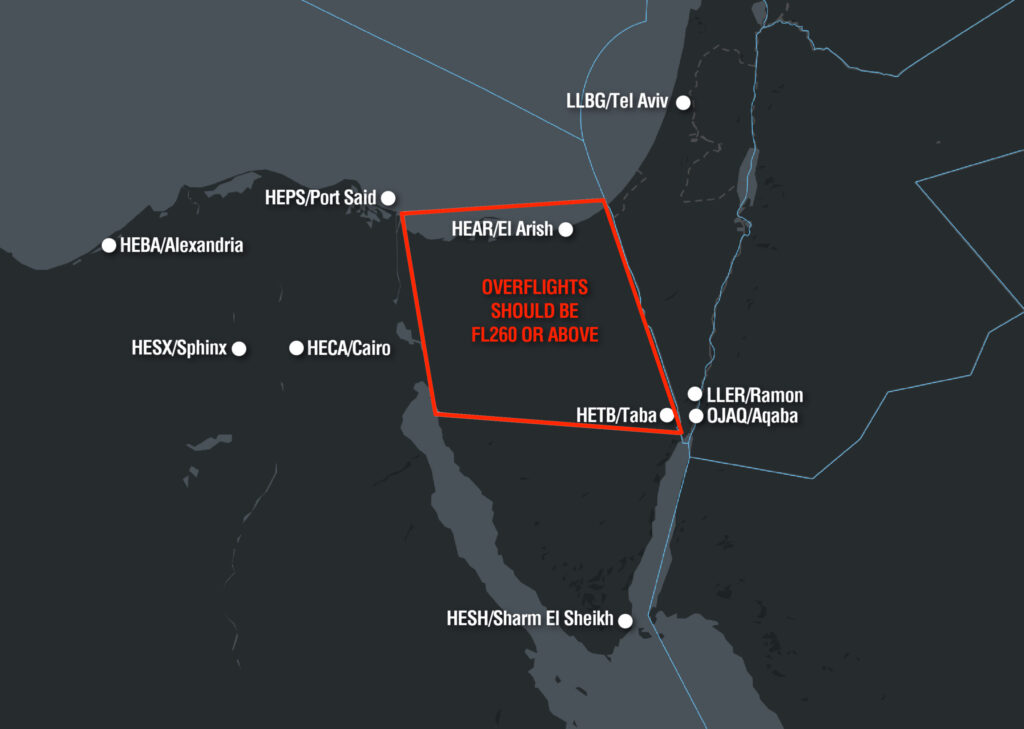
  • Oct 27 – a weaponised drone struck a town near Egypt’s border with Israel near Taba. This was likely launched by Yemen’s Houthi group from Yemen, or the Red Sea itself.
  • Oct 24 – Several OPSGROUP members reported GPS spoofing events resulting in the aircraft showing its position over Tel Aviv, Israel. Several hotspots were identified, including over the Sinai Peninsula and Red Sea. You can read more about those here.
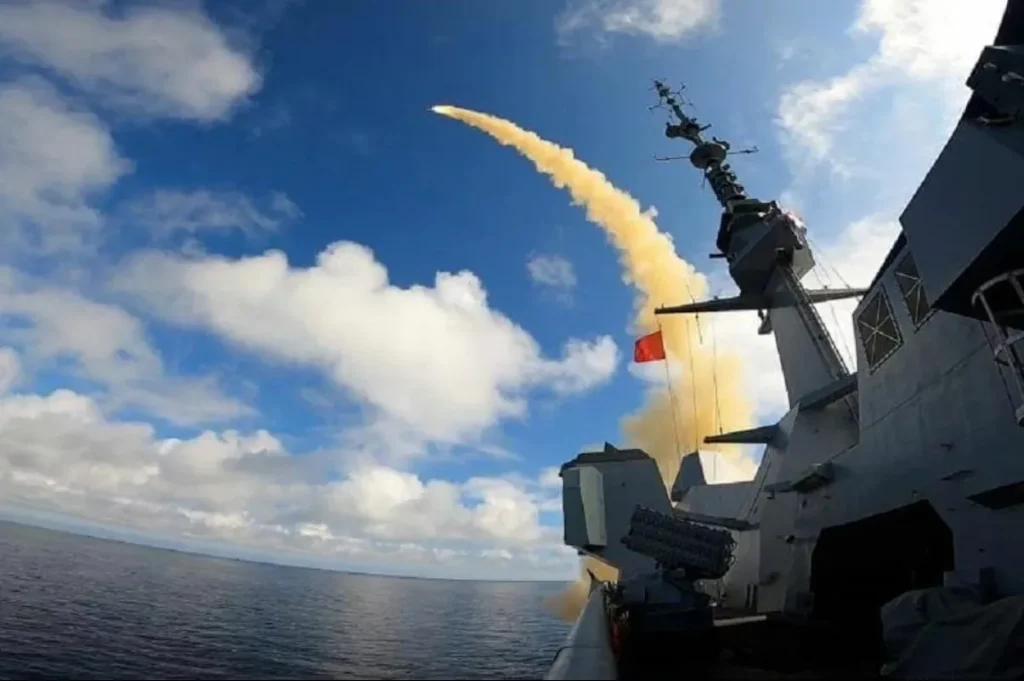
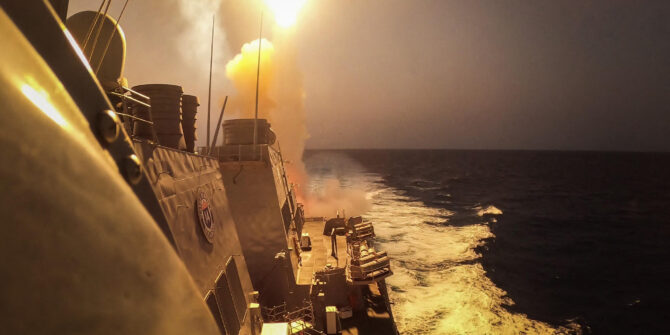
  • Oct 19 – At least one cruise missile or drone was shot down by a US Naval vessel over the Red Sea, reportedly launched from militants in Yemen and targeting Israel.

While militant activity on the Sinai Peninsula and adjacent regions is a known threat, the conflict in Israel has changed the risk picture. These groups have suddenly become more active and their attacks more sporadic. This may not be evident in existing airspace warnings issued by Germany and the US FAA – the latter having been around for years.

Is it safe enough to overfly?

There is no definitive answer to this question – as the UK Notam above alludes to, potential risks need to be taken into account and the appetite for those will vary from operator-to-operator.

Here’s what we do know though:

It is better to fly higher. All existing warnings for the Sinai Peninsula (and now adjacent regions including the Red Sea) advise operators to stay above FL250/260. This is likely due to the risk of militant groups with access to anti-aircraft weaponry such as man portable air defence systems (MANPADS).

The chance of misidentification by the military is low, but not zero. Military vessels active in the Red Sea are equipped with sophisticated and long-range air defence systems capable of reaching all levels. It is extremely unlikely that a civil aircraft would be misidentified – but history has shown that accidents can happen.
Know what to do if you are spoofed. As opposed to GPS jamming, spoofing is insidious and potentially confusing. Your aircraft may not even alert you that something has gone wrong. We have a Briefing, Guide and Map on GPS spoofing which you can access here. In the worst cases, the impact has been severe: complete loss of on-board nav requiring ATC vectors, IRS failure, and unnoticed off-track navigation towards danger areas and hostile airspace.

Think about diversions. If you need to land in a hurry (especially in Sinai), you are exposing yourself to increased risk of anti-aircraft fire, small arms fire and mortar attacks by groups with a known intent to attack civilian interests, possibly motivated by current events.

Alternative Routes?

Flight tracking shows major airlines are still overflying Southern Sinai and the Red Sea. The only option to avoid the region completely involves a long diversion south.

Unfortunately for those bound for Jordan and perhaps Kuwait, this means extended flight times. If you do decide to overfly the Sinai and Red Sea region, know that just because airways are open (and well used) doesn’t mean they are completely safe.

Updates

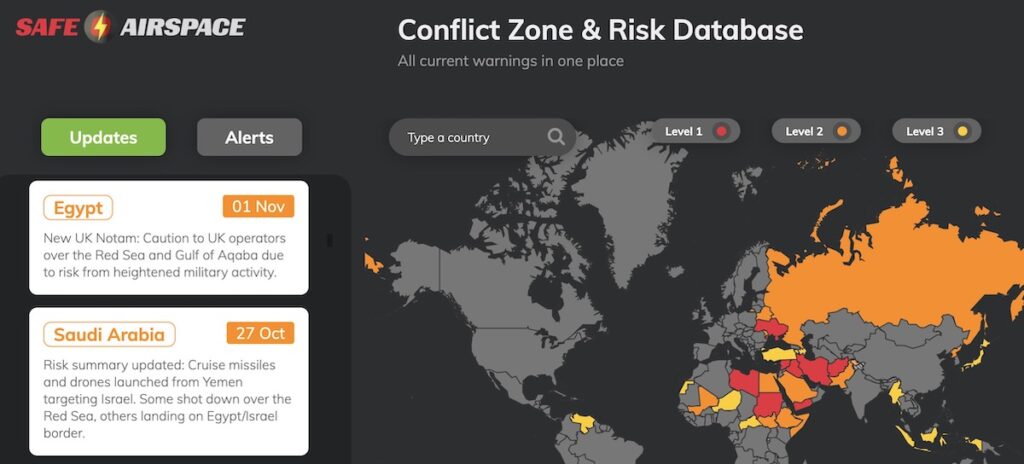
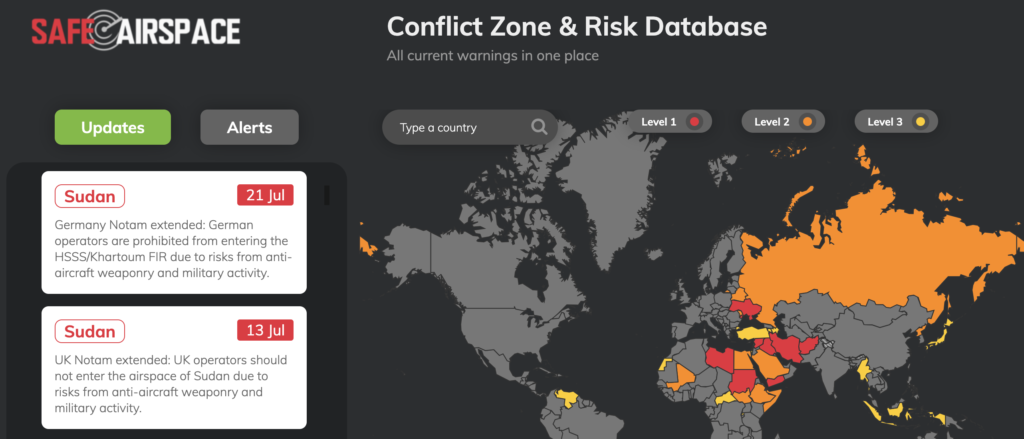
For more info and updates, check Safeairspace.net – our Conflict Zone & Risk Database.


Bizav Clampdown at Amsterdam

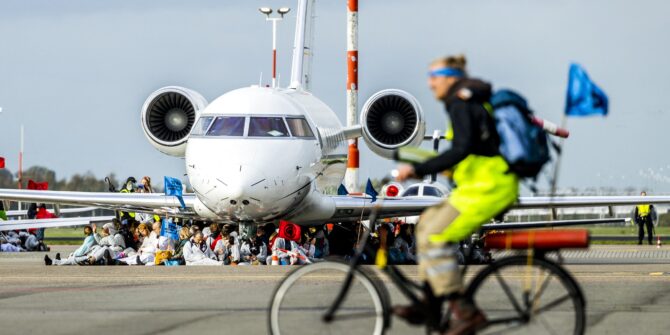
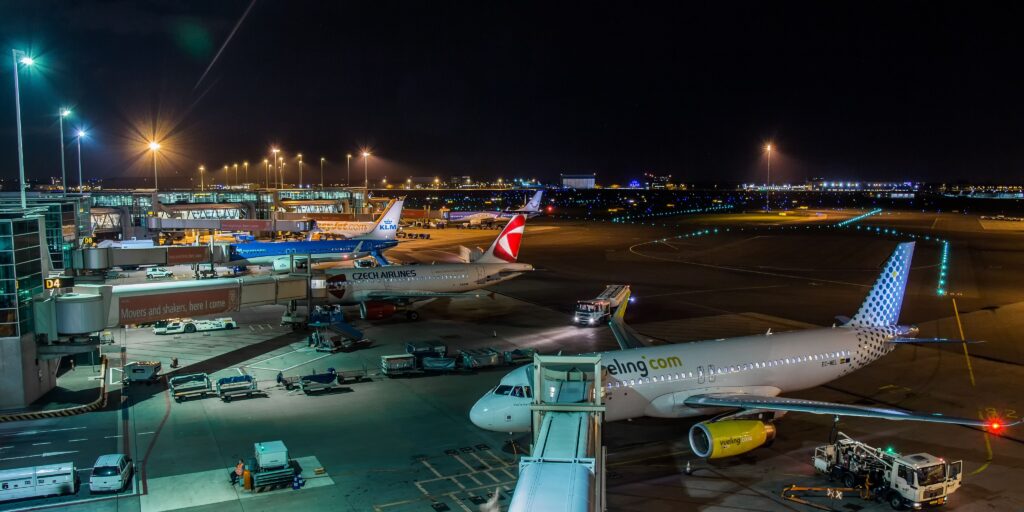
From March 2024, the number of slots available for GA/BA at EHAM/Amsterdam Schiphol will almost halve. And apparently, it’s just the tip of the iceberg – the ultimate goal is for them to be banned altogether.

Just like with Portugal’s new Bizav Punishment Tax, the small jets are getting the big heat – often unfairly.

Go Away, GA…

The news came out in the airport’s latest capacity declaration – the maximum number of ‘small business aviation’ flights will be capped at 12,000 next year (down from 17,000).

It’s all part of a master plan that Schiphol announced back in April to make the airport ‘quieter, cleaner and better.’

The biggest news is that a complete ban on business aviation is planned from 2025. And until then, GA/BA will increasingly feel the squeeze.

So, what happens after the ban?

With no more slots available to business jets, operators will need to look elsewhere. Here are the current closest alternatives with customs:

  • EHRD/Rotterdam (24nm) – For handling, contact: Jet Aviation FBO, rtmfbo@jetaviation.com
  • EHEH/Eindhoven (56nm) – For handling, contact: Viggo Eindhoven, info@viggo.eu
  • EHGG/Groningen (82nm) – For handling, contact:  Ground Ace, info@groundace.eu

Across the border, don’t forget about EBBR/Brussels either.

Look out for other restrictions too

1. Night curfew: The same plan includes banning all aircraft movements between midnight and 6am (5am for departures). This will severely restrict available slots for late evenings and early mornings.

A night curfew is coming to Schiphol soon too.

2. No new runway: The airport has decided that the existing six runways should just about cover it. Plans have officially been scrapped for lucky number seven – a twin sister for Kaagbaan (yes, the runways have names!)

3. Noisy rides: From this coming Summer, Schiphol has announced that eighty-seven aircraft types will no longer be welcome. The good news is most of them are old.

A large number of older, noisier aircraft will be banned from Schiphol next year.

4. Airport fees: The quieter and cleaner your ride, the cheaper the airport fees will be moving forward. Operators using louder and more polluting aircraft will pay up to five times as much.

I want to go to Schiphol anyway

The doors haven’t quite closed on business aviation just yet. But with the new capacity restrictions, slots are going to be hard to come by – so get in early.

The latest guidance of how it all works, along with fees and charges can be found in Schiphol’s latest charges and conditions doc.


US Federal Govt Shutdown Risk – Why it Matters to Aviation

It’s been a big week for US politics. On September 30, a Federal Government shutdown was narrowly avoided by a last-minute funding stopgap that has delayed the problem until November 17.

The situation was front page news across several aviation websites – but you might still be wondering, why?

As is often the case, politics and aviation don’t mix. Until they do. And then we’re forced to take notice – this one of those times. There was widespread concern for what a shutdown might mean for the US aviation sector, and some of those problems could cause a real hangover.

With the problem delayed, but not gone, we may find ourselves in the exact same position again come November. Here’s a look at what is giving the issues wings (pun only slightly intended).

How can the Federal government just ‘shut down?’

A shutdown happens when Congress doesn’t approve funding for the Federal Government by the time the new fiscal year kicks off on October 1.

The crisis can temporarily be averted by a short-term funding bill which is what has just happened. But it only buys more time.

If a shut-down goes ahead, various government operations grind to a screeching halt. The world won’t end (essential services continue) but federal agencies (including the FAA) are left scrambling without funding. They need to rely on contingency procedures including furloughing staff or relying on them to work for a period of time with no pay.

Congress now have until November 17 reach a funding agreement.

Staffing

The impact on of a shut-down would primarily impact two large groups of aviation professionals – TSA staff and Air Traffic Controllers. Then of course, there’s the FAA itself…

TSA

TSA workers are federal employees, and work for the Department of Homeland Security. There’s 47,000 of them and they’re responsible for screening passengers and baggage at 450 of the nation’s airports along with other essential functions such as air marshals.

During a shutdown, they won’t get paid. There is fear of what the impact will be on the US NAS, if they (understandably) don’t want to work.

The TSA itself has allayed some fears with a recent statement. Essentially a commitment that their staff will continue working. While admirable, they are human – one shutdown once lasted well over a month . If similar occurred, how long we can rely on this promise isn’t known as the strain grows.

TSA workers would face working for a period of time without pay if a shutdown occurs.

ATC

The majority of 14,000 controllers in the US work for the FAA, and so are also federal employees.

The impact of an extended period without pay could be significant – not to mention contributing greatly to a system known to be heavily burdened by staff shortages already.

Planes aren’t about to start flying into each other. But a major consequence of a shutdown is that the FAA would send home 1,000 controllers currently in training.

And we need them. Right now, the US is about 3000 controllers short of the mark. And the goal of recruiting an extra 1800 in the next year and half could become extremely optimistic. This shortage has been well publicized, and a shutdown would like exacerbate the problem.

A shutdown threatens to postpone the training of more than a thousand controllers that are sorely needed.

Don’t forget about the FAA, either.

It never rains, but it pours.

The FAA has been dealing with a double whammy. Asides from the uncertainty of a Federal Government hiatus, it’s five-year funding bill has also expired.

A temporary re-authorization has scared the wolf away from the door, but it cannot operate properly without cashflow. And various disputes over pilot retirement age and minimum experience requirements has tapped the brakes on the entire process.

It’s a very complex agency and a suspension of its functions will take a long time to recover from for all of us.

Lessons Learnt

Federal Government Shutdowns have happened before – the most recent was in 2018 and lasted for 35 days.

There were several impacts on aviation that the NBAA usefully summarized in their article here. It likely serves as a preview of what we can expect again should a funding agreement not be reached in the new deadline in November.


North Atlantic Update: WAT Happened To WATRS?

Key Points
  • The US FAA has officially renamed WATRS airspace in the West Atlantic, to simply WAT.
  • Part 91K, 121, 125 and 135 operators will all be affected by the change. Existing B050 authorizations will be re-issued within 24 months.

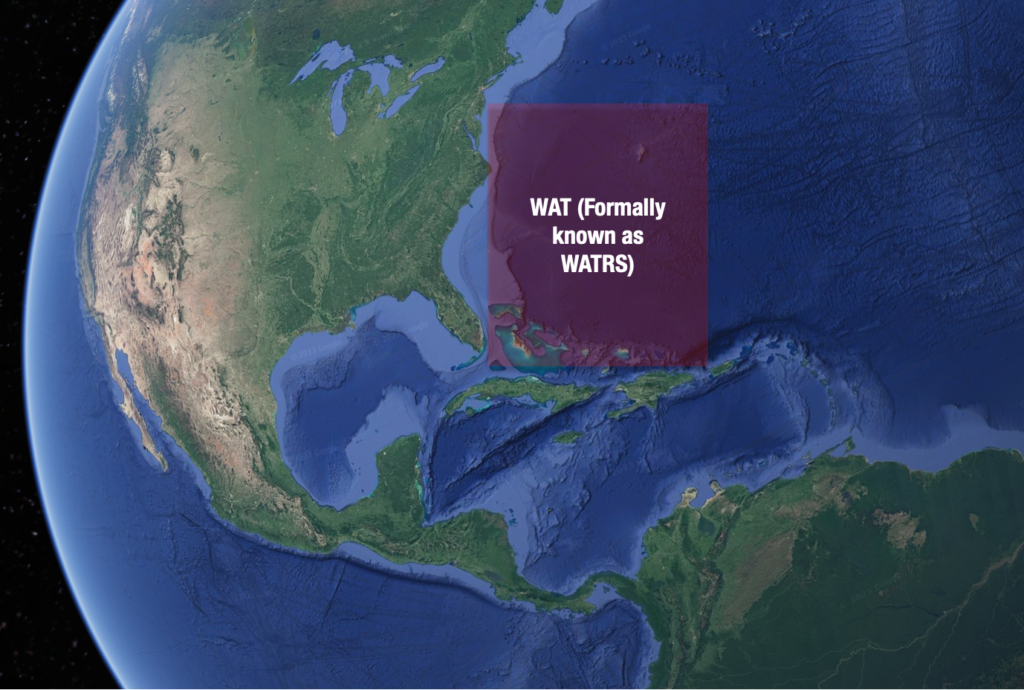
If you’re not familiar with WATRS, it is a large chunk of airspace off the US East Coast comprised of fixed routes that provide huge volumes of oceanic traffic to and from the NAT HLA with lateral separation. From 7 Sep 2023, it’s been renamed WAT.

What was wrong with the old name?

The FAA dig into this in their recent notice. Essentially back in 2020, New York ATC asked users to stop using the term ‘WATRS airspace’ because it was causing some confusion.

Apparently, some users were associating it simply with the New York West Oceanic CTA. When, in reality it also spans the San Juan CTA and the Atlantic portion of the Miami Oceanic CTA too.

It is purely an issue of semantics. Now we need to call it WAT instead so that it better aligns with ICAO regions.

Has the physical boundary changed?

Nope. It is a name change only, and the existing set up remains the same.

Then why do we need to know?

If you traverse the NAT a lot, no doubt you are quite familiar with the term WATRS. But you are unlikely to hear it anymore.

It will be progressively replaced with the unfamiliar term WAT in charts, reference material and approvals. And so, a little background helps.

A number of important FAA documents will need to be updated. The most significant is LOA B050 which will be re-issued to all operators over the next 24 months.

LOA B045 (Extended Overwater Operations Using a Single Long-Range Communication System) will also be revised when some extra paper-pushing gets done behind the scenes.

Your company’s internal manuals and guidance will also need to be changed to avoid ‘reverse training’ the older, obsolete name.

WAT about other NAT changes?

While we have you, there’s been another small change to NAT ops to report.

On September 18, ICAO revised the ‘Oceanic Errors’ NAT Ops Bulletin – the doc which has all the advice for operators on how to avoid the most common mistakes when flying the North Atlantic.

These include: Gross Nav Errors, Large Height Deviations, and Longitudinal Separation busts. There’s also some advice on Flight Planning, SLOP, and some CPDLC things to watch out for.

You can download it here.

Looks like there are no significant changes in terms of content for this updated version when compared with the old one – they’ve just tidied it up a bit.

But if you operate over the North Atlantic it’s still worth a read, as there’s lots of top tips on how to avoid the most common “gotchas”!

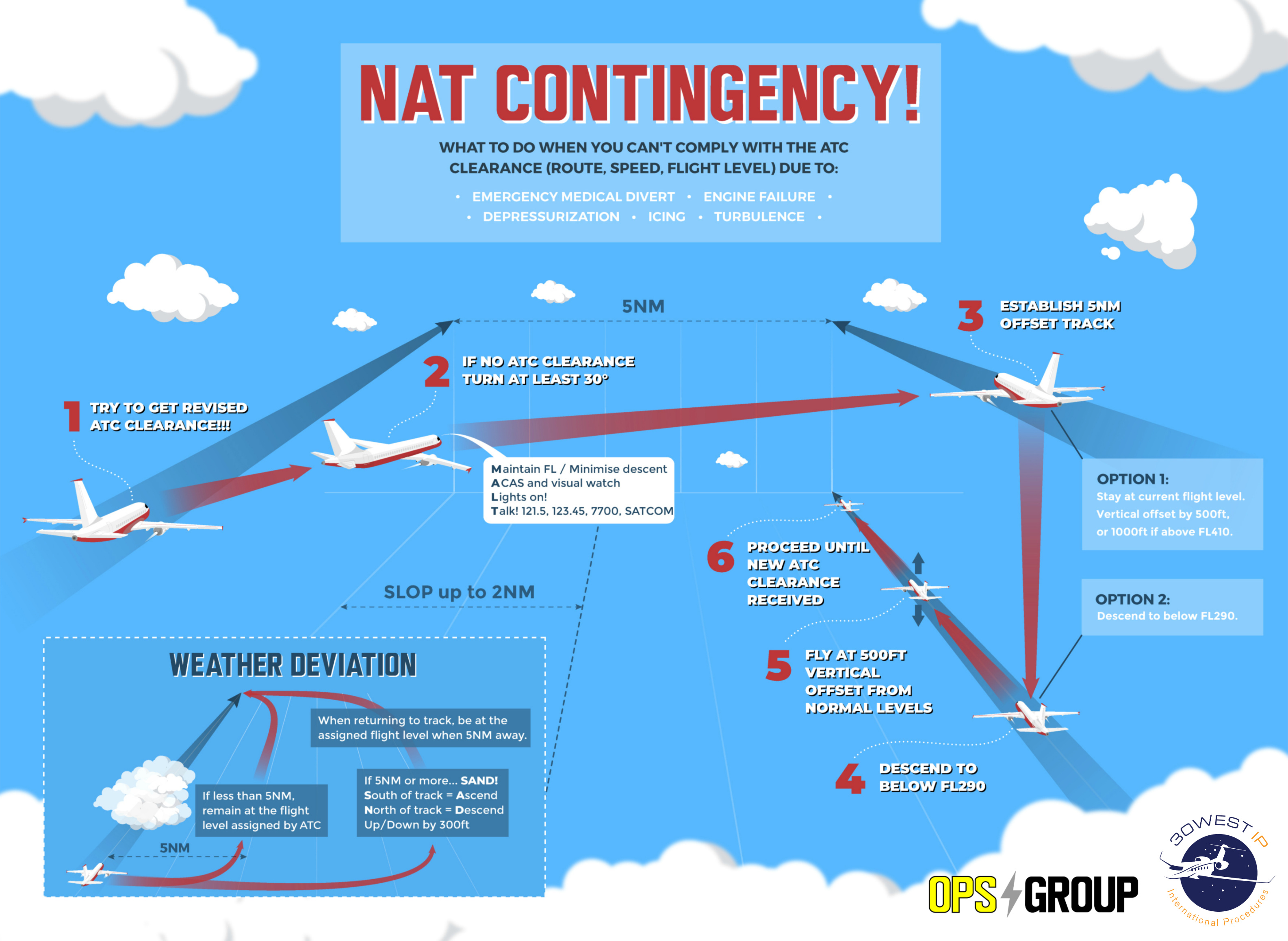
Contingency and Weather Deviation Procedures were updated back in 19’, and rolled out to all oceanic airspace worldwide in November 2020. We produced this chart at the time:

Do You Have a NAT Conundrum?

Ah, NAT conundrums! We love them so much, we’ve published three entire Volumes already!
Volume I covered the following three conundrums:

1. To SLOP, or not to SLOP?
2. What’s the difference between the NAT Region and the NAT HLA?
3. Can I fly across the North Atlantic without Datalink?

Volume II covered these additional three:

4. Do you need to plot on Blue Spruce Routes?
5. Do we still fly Weather Contingency Procedures on Blue Spruce routes?
6. When can we disregard an ATC clearance and follow the contingency procedure instead?

Volume III was solely dedicated to:

7. GOTA airspace datalink and ADS-B requirements.

We’re always on the lookout for more conundrums, so please get in touch with the team on team@ops.group with any NAT related questions or queries. We’ll do our best to answer them, or put you in touch with someone who can.


CPDLC Gotcha: Clearance Busts

Key Points
  • The FAA has published a new Safety Alert for CPDLC and partial route re-clearances.
  • Make sure you load your full SID manually into the FMS after you receive a partial reroute message (UM79).
  • Also, don’t mistake these partial reroute messages as being cleared to fly directly to the waypoint (a direct clearance would be a UM74 message).

Lessons from Teterboro

In 2022, the FAA recorded 20 aircraft deviations at KTEB/Teterboro Airport due to issues with CPDLC and partial reroute messages.

These incidents resulted from failure to reload SIDs after receiving a partial reroute UM79 message (where you are cleared to a particular waypoint via other waypoints en-route), requiring swift coordination with ATC to avoid traffic.

But the issue isn’t limited just to Teterboro – it could happen at any US airport, to any aircraft type receiving a clearance in this way.

Another thing to watch out for

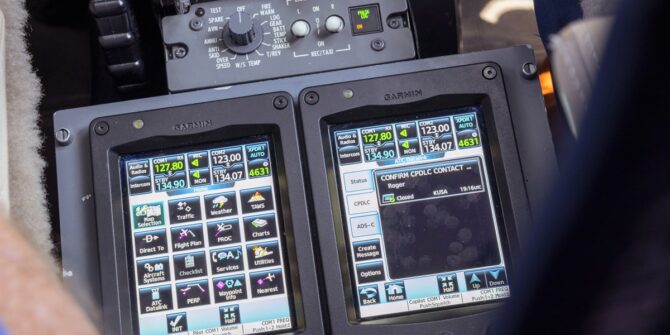
Due to limitations in the formatting of CPDLC DCLs, they can be easy to misread or misunderstand. Take the following for example, courtesy of an OPSGROUP member.

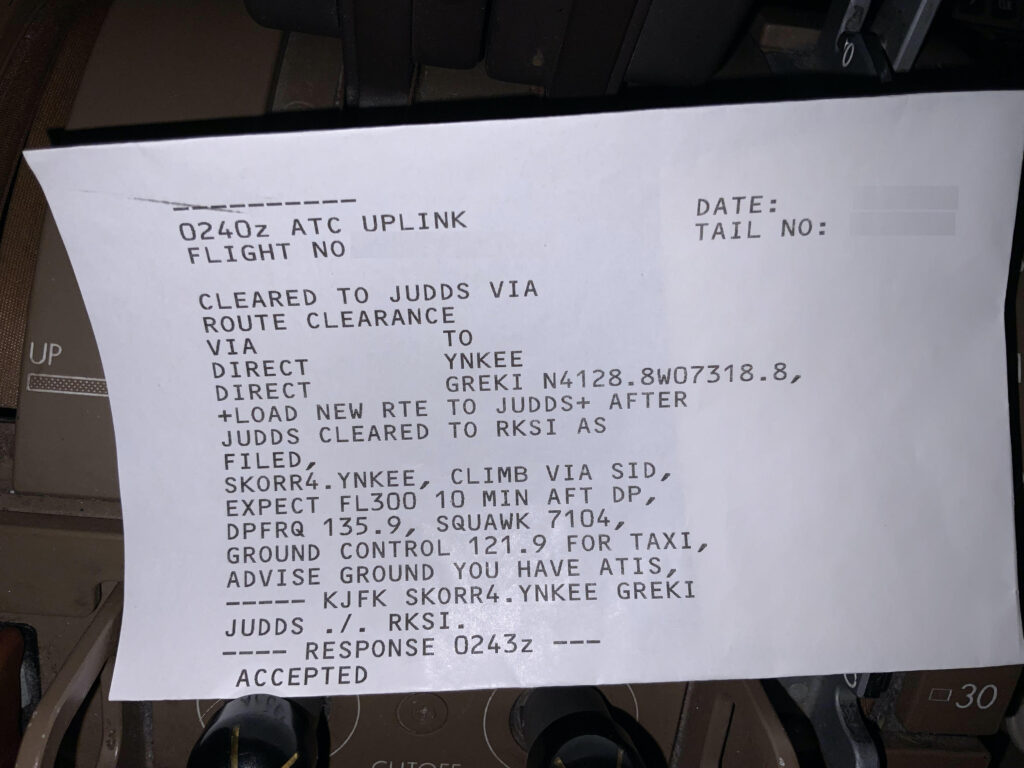
A change to a clearance was received by a B777 at KJFK/New York during taxi and under considerable pressure to get underway or out of the way:

Unfortunately, in this instance the crew mis-interpreted their clearance as direct to the waypoint YNKEE. This was further compounded by the issue above – when the new route was loaded, their SID was dropped from the flight plan.

When they got airborne, ATC immediately began asking why they weren’t following the assigned SID – the result was a clearance bust. To their surprise, further down the clearance was indeed an assigned SID – the SKORR4. It was an understandable and easy miss.

The question remained though: what then is the intention of the top part of this clearance if not to clear the aircraft direct to YNKEE? We put this to the group, and received some useful feedback.

It maybe comes down to a machine readability issue. The section above the plus signs is required because of the way the clearance is written, and is related to the same issues as above. It will not contain a SID when you insert it.

In fact, some newer CPDLC systems don’t even show that section to the crew – only the information below the plus signs which contains the assigned SID. The full version is a confusing, and seemingly contradictory set up.

What about PDCs?

It’s probably worth a mention that these issues don’t affect PDC clearances. PDCs are different and are sent by a service provider via VHF datalink. No log on is needed, and only one can be issued for a flight number at specific airport over a 24 hour period. They also have to be read back via voice. PDC’s cannot be used to notify pilots of a change to the filed route. So it’s smooth sailing in that regard.

Further reading.

You can read the FAA’s new Safety Alert for CPDLC and partial route re-clearances here.

The FAA also has a handy guide on how to use CPDLC in US airspace. It covers the basics, along with departure clearances (DCLs), en route ops, speed/time restrictions, emergency use and free text.


Eastern Pacific: Navigating NO FIR Airspace

Key Points
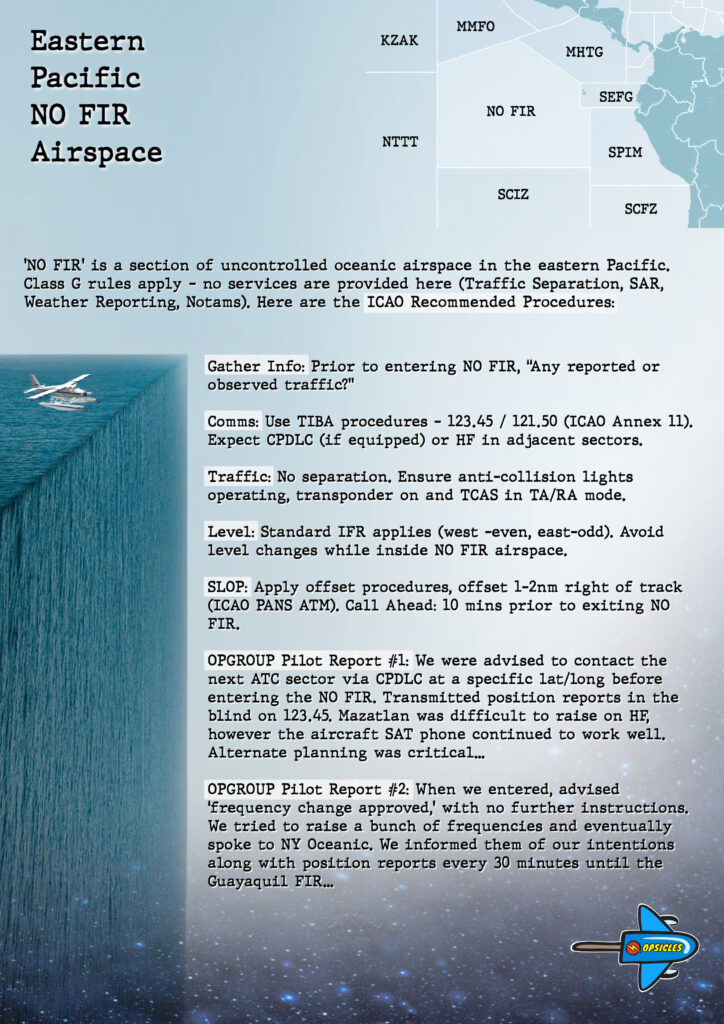
  • ‘NO FIR’ is a section of uncontrolled oceanic airspace in the eastern Pacific.
  • Class G rules apply – no services are provided here (Traffic Separation, SAR, Weather Reporting, Notams).
  • There are some ICAO Recommended Procedures: Contact ATC, use TIBA Procedures, turn on all lights, keep squawking, SLOP, and fly standard levels.
  • Download the OPSICLE below for a summary of the procedures.

OPSGROUP Members: Click to download PDF.

‘NO FIR’ at the edge of the world

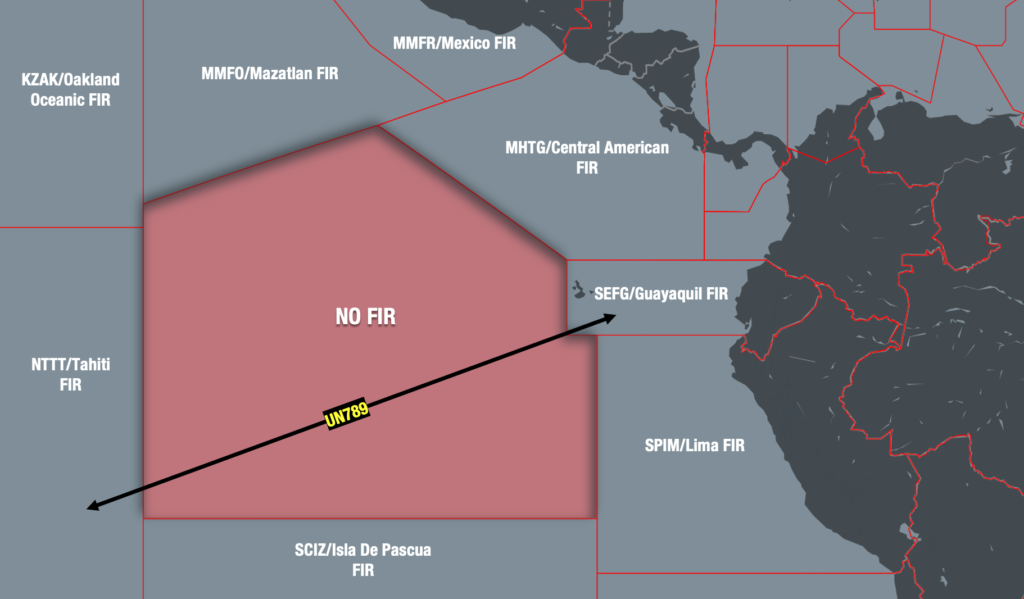
Well off the coast of Peru in the Eastern Pacific sits a large chunk of oceanic airspace known simply as ‘NO FIR.’ As the name suggests – it is completely unassigned. No ATC agency is responsible for it.

You may not have heard of it, because in almost all cases operators simply avoid it. There are just no procedures out there. And when attempting to find some, more questions are raised than answered.

The problem is that avoidance is beginning to cost time and money. With the establishment of ultra-long-haul routes, and aircraft capable of flying them, fuel is becoming increasingly critical. Especially when you consider that in some case ETOPS certification has now reached a whopping 370 minutes – that’s six hours.

And so OPSGROUP is often asked – how exactly can we operate directly across it? We didn’t know either, so we reached out to ICAO for some answers.

Where can I find the procedures?

This may come as a surprise, but there are none. Because no state is responsible for the NO FIR airspace (yet), there is no AIP to reference.

Until ICAO can successfully delegate this laborious task to adjacent countries, the standard ‘rules of the road’ apply – and none of them are specific to this particular piece of the high seas.

There is some provisional guidance out there, but it is just that – provisional. It is based on a 2019 project to subdivide the NO FIR airspace into pieces managed by Peru, Ecuador, Tahiti and the COCESNA states. This has yet to happen, and was stalled by Covid. ICAO advise the project has been revised but will take more time to implement. Until then, no one is home.

Best practice

So, how do we cross the NO FIR airspace without procedures? We need to rely on best practices instead. Here is what ICAO suggested to OPSGROUP, and it begins with a caution:

No one is responsible for it. It is important to understand the impact of this. There will be no traffic separation, SAR services, weather forecasting or even Notams. You will also need to make sure your insurer is happy for you to traverse this kind of airspace.

There’s a lot of ocean out there – careful contingency planning is needed to mitigate the risks of crossing NO FIR airspace.

Having made the decision to enter however, ICAO recommends the following:

  • Use the information available to you. Before you enter the NO FIR airspace, ask controlling ATC the following question (keeping in mind that English may not be their first language)…
    “Is there any known, or observed traffic?”
    It is possible they’re aware of preceding traffic ahead, or are expecting some to exit. Even partial info, is better than none at all.
  • Use TIBA procedures. Yes, they’re technically for ‘contingencies,’ but the principle remains the same – hear and be heard. You can find those procedures in ICAO Annex 11. What frequency? There isn’t one published for the NO FIR airspace and so ICAO suggests using chat (123.45) or guard (121.5).
  • Be Seen. Turn on all anti-collision and navigation lights, just in case.
  • Keep Squawking. Use your transponder and TCAS TA/RA function at all times.
  • SLOP. Follow Strategic Lateral Offset Procedures to further separate you from oncoming traffic. In other words, intentionally deviate up to 2nm right of your airway. You can find those procedures in ICAO PANS ATM, or ICAO Circular 354.
  • Fly Standard Levels. Stick to even levels heading west, and odd levels heading east. Also avoid changing levels inside the uncontrolled airspace unless it is dangerous not to do so.
  • Call Ahead. At least ten minutes before exiting the NO FIR airspace, call ahead and give the next ATC sector a head’s up you’re coming.

What not to do

Rely on adjacent agencies to take care of you anyway.

The most common misconception out there seems to be that the KZAK/Oakland Oceanic FIR will provide some emergency assistance via CPDLC.

When we reached out to them directly they advised this may be the case for some aircraft transiting the adjacent MMFO/Mazatlan FIR, but this is not the case for the NO FIR airspace – as far as they are concerned, there is no log-on available or any other services available.

Operator reports

So that’s what written on the back of the packet, but what about intel from pilots who have recently flown through it? OPSGROUP reached out to members, and received these reports on what to expect:

OPSGROUP Member: …we were advised to contact the next ATC sector via CPDLC at a specific lat/long before entering the NO FIR. We transmitted position reports in the blind on 123.45. Mazatlan was very difficult to raise on HF, however the aircraft SAT phone continued to work well. Alternate planning was critical. We flew through in day visual conditions, and so weather was easy to see and avoid…

OPSGROUP Member: …when we entered, we were simply told ‘frequency change approved,’ with no further instructions. We tried to raise a bunch of frequencies and eventually got in touch with NY Oceanic (randomly). We just informed them of our intentions along with position reports every 30 minutes until we entered the Guayaquil FIR. I’ve never been able to find further instructions on how to operate in this airspace…

There is no magic bullet

The Pacific’s NO FIR airspace is useable but with careful consideration. The challenges of crossing it can be mitigated, but only with solid contingencies in place.

ICAO’s guidance above is a solid starting point, however it is up to individual operators to decide whether the commercial reward outweighs the potential risks.


Shanghai: ZSSS closed to non-sched traffic

Key Points
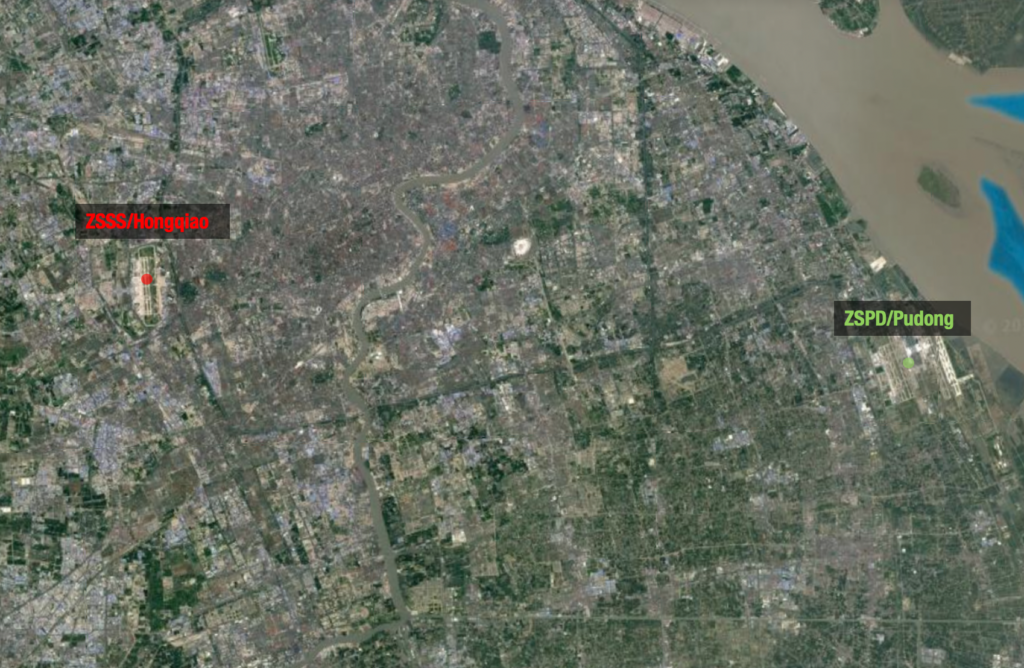
  • You won’t find it in the Notams, but ZSSS/Hongqiao (one of Shanghai’s two international airports) will not accept non-scheduled international flights for the next four to six months.
  • This includes both private and commercial operators, and is due to FBO renovations.
  • Operators looking to clear customs will need to use ZSPD/Pudong instead.

FBO Works at Honqiao

On August 1, official notification was published that the Hongqiao FBO would be closed for major renovation – including the customs channel. You can read that here (in Mandarin).

All non-scheduled international flights now need to use the other Shanghai airport, ZSPD/Pudong.

No dates are provided for when things at ZSSS will get back to normal. We reached out and have been advised that it could be up to six months before non-scheduled international flights will be welcome again. You can contact them directly on fbo@fboshanghai.com for updates on that.

Pudong will become Shanghai’s only option for international GA/BA flights for the next 4 – 6 months.

What about domestic flights?

The news is a little better. They can still land at ZSSS. Asides from the FBO being shut, there is little impact. Instead, a VIP room is being used as a replacement facility. Obviously, there will be no customs available.

Local agents advise there is no change to existing procedures or parking.

ZSPD/Pudong

For international non-scheduled flights then, ZSPD/Pudong will be the only Shanghai option for the next few months.

This maybe especially unusual for operators who commonly arrive over the city from the west.

A browse of the Airport Spy reports submitted by OPSGROUP members are mostly positive. We’d welcome some new ones though, and so if you have been there lately, we’d love to hear from you. You can submit yours here.

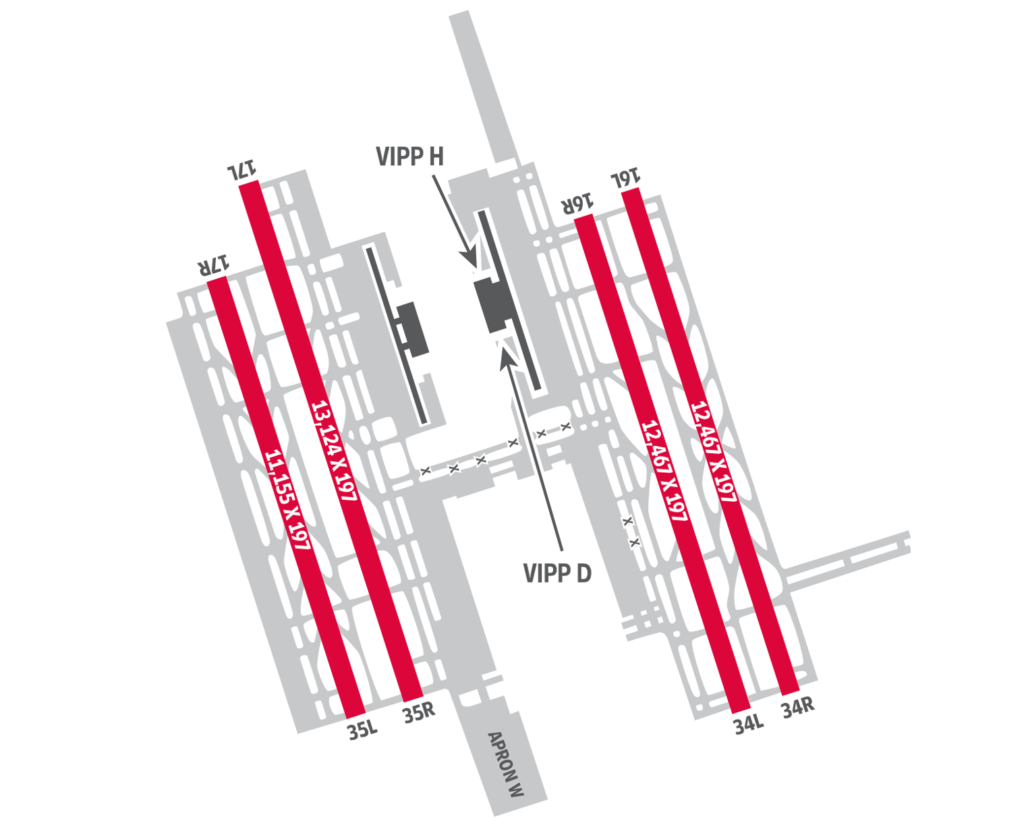
International arrivals at ZSPD can expect to be processed via VIPP-H on the chart below. Crew will need to clear customs through the regular customs channel, aka the passenger terminal.

VIDP/Pudong – Expect to use VIPP H for international ops.

A big heads-up – Universal advise a general parking restriction of max 48 hours still applies without a special extension. Which means for longer stays, you may be looking at a re-position to ZSSS and back.

You can reach Universal for handling and other enquiries on chinaoperations@universalaviation.aero

We’ll keep you updated.

If international non-scheduled flights resume at ZSSS earlier than expected, we’ll let you know. Also keep an eye out for new (and potentially better) procedures and facilities when the FBO re-opens its doors.


Military Coup: Sudan Airspace Closed

Update

This article has been updated to reflect the current status as of Aug 14, 2023.

Key Points
  • Following a military coup in April 2023, Sudan airspace remains closed to all civilian flights.
  • In South Sudan, air navigation services remain suspended above FL245.
  • HSSK/Khartoum airport is closed, but no Notams are being issued.
  • There is a Contingency Plan available with published routes for ops in and out of HSPN/Port Sudan airport.
  • For overflights, there are some north-south routes available via Egypt and Saudi, and some east-west contingency routes available over South Sudan.
  • If routing via nearby airspace, be aware of other active warnings in close proximity.

The Coup

News first emerged on April 15. Sudan’s paramilitary group ‘Rapid Support Forces’ (RSF) became engaged in active fighting with the state military in Khartoum in an apparent coup attempt. While the details were scarce, they reportedly seized control of several important assets, including HSSK/Khartoum Airport.

This has been brewing for some time. There has been a power struggle between the two rival military forces since an overthrow of the government back in 2019.  A failure for the existing government to successfully transition Sudan to a freely elected one has fanned the flames. Along with this is strong public demand for the RSF to be merged with the regular armed forces. This now looks pretty unlikely.

Closed Airspace

On April 15, the HECC/Cairo FIR advised Eurocontrol that Sudanese airspace had closed, and that local authorities were unable to issue any Notams to that effect.

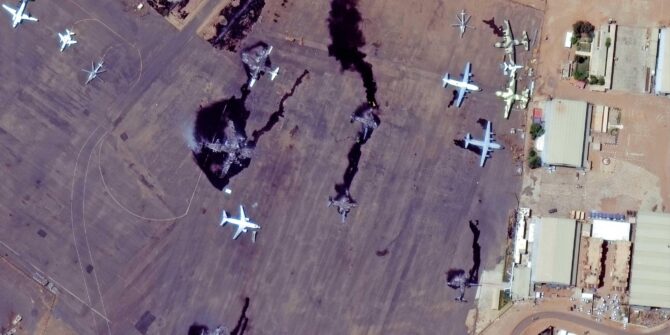
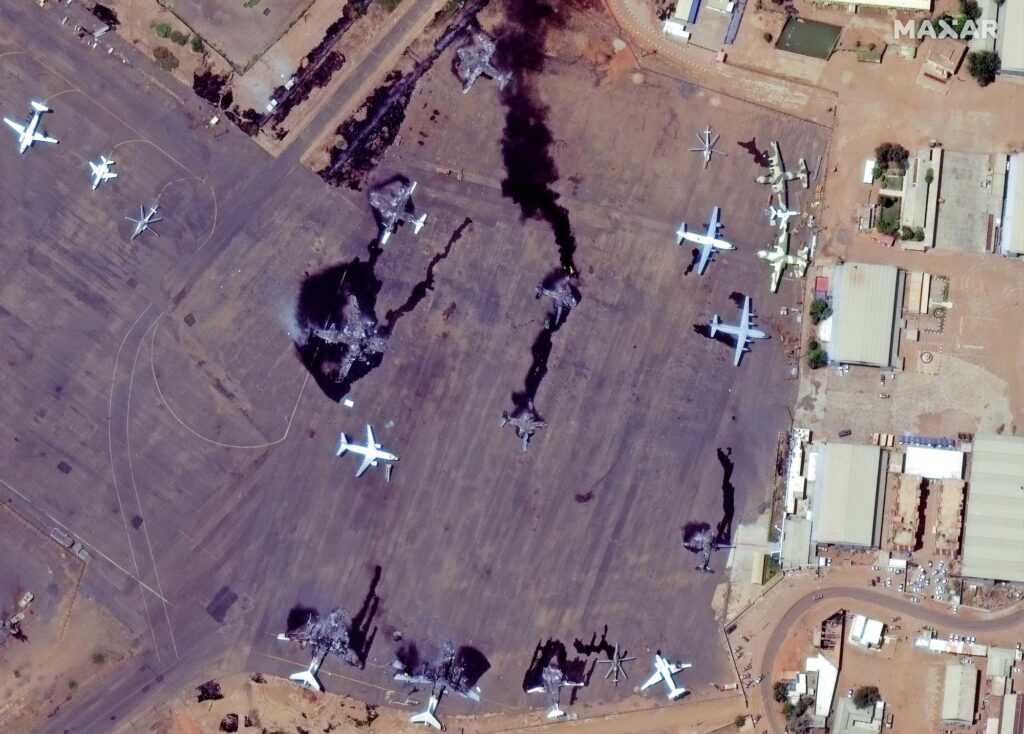
At the same time, videos began to emerge of large passenger jets on fire on the tarmac at HSSK/Khartoum Airport. This included reports that an A330 was shot at multiple times while preparing to depart. The pax and crew evacuated, and were transported to safety at a local embassy.

Satellite imagery taken on April 17 over HSSK/Khartoum airport shows damage from the fighting. (Image credit: Maxar Technologies)

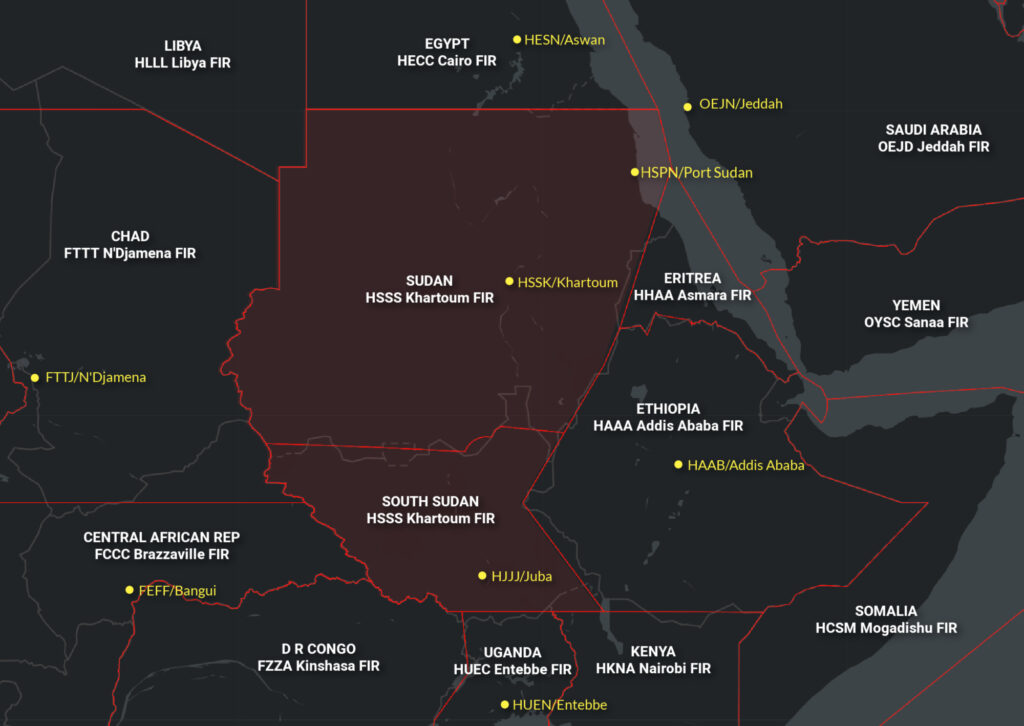
As of June 2023, the HSSS/Khartoum FIR is now publishing Notams again, and they have said once again that the airspace over Sudan is closed to all flights except for humanitarian and evacuation flights. And in South Sudan, air navigation services remain suspended above FL245.

Air navigation services have been suspended in Sudan’s airspace, including above FL245 in South Sudan.

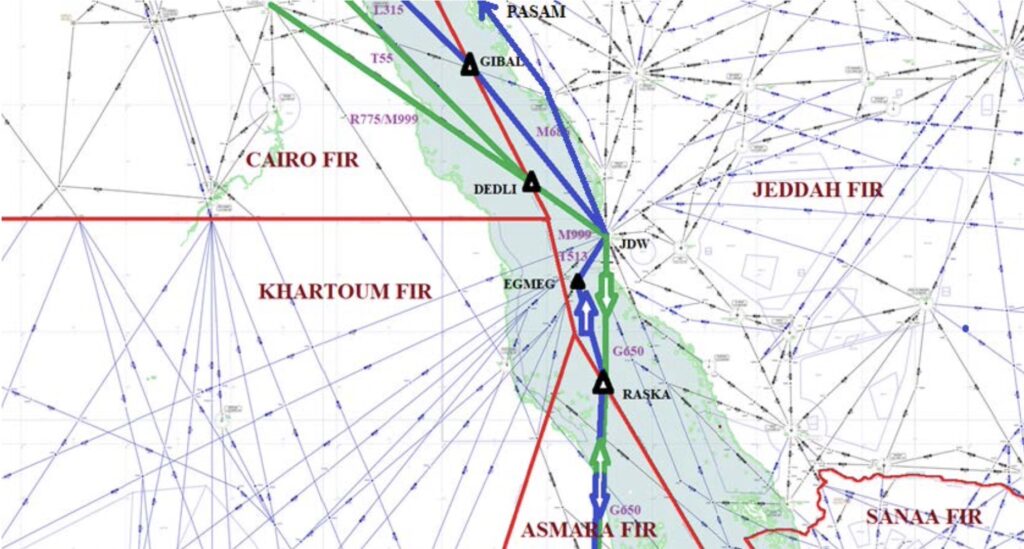
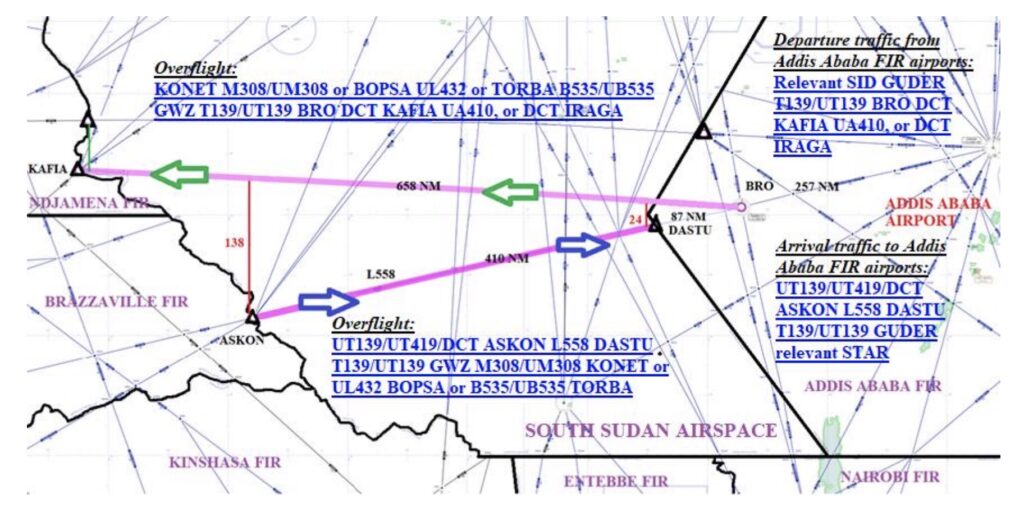
For overflights, there are some north-south routes available via Egypt and Saudi, and some east-west contingency routes available over South Sudan. Check the HSSS Notams and the Contingency Plan for details.

North-South routes via Egypt and Saudi.

East-West Contingency Routes available in South Sudan above FL245.

Adjacent Airspace Warnings

The HSSS/Khartoum is a big piece of airspace. The scramble now will be how to avoid it. Unfortunately, several adjacent countries have their own airspace warnings in place and so it is important to take these into careful consideration. Here’s a summary:

South Sudan

You may be tempted to fly below FL245 through South Sudanese airspace to ensure air traffic control services. However these have been the focus of recent scrutiny. The primary risk there is poor levels of ATC provision, especially for aircraft operating in and out of HSSJ/Juba. Back in 2021, ICAO issued a letter warning of disruptions, a lack of qualified controllers, communication issues and coordination issues with adjacent airspace. There have also been reports of navaids being withdrawn from service and other changes without proper notification to crew. We’ve received no further reports of these problems since.

Chad

There are no active airspace warnings for the FTTT/N’Djamena FIR, although several states (including the US) advise against travel here. The main issue seems to be the risk of crime, kidnapping and terrorism. The general advice is to avoid landing here. We haven’t heard of any issues for overflying aircraft, but keep safety during diversions in mind.

Ethiopia

Special attention needs to be paid to the Northern Tigray Region, near the border with Eritrea. A long running conflict there has recently come under ceasefire, but there may still be some resistance to this amongst militant groups with access to portable air defence systems. These can pose a risk to low level aircraft (below FL250).

Several states including Germany, the UK, France and Canada still have airspace warnings in place. Although they are due for review, they should still be considered active in the meantime. The US warning has previously been lifted. You can view all active advisories here.

Egypt

To the north of Sudan lies the HECC/Cairo FIR. There is still a reported threat of terrorism in Egypt, particularly in the Sinai Peninsular. Only the UK and Germany still have active airspace warnings here – both countries essentially advise against overflights below FL260 in the northern part of the Sinai region. The US had a similar warning in place until it was rescinded in March 2022.

Central African Republic

The news isn’t great here. The security situation on the ground in the Central African Republic is fairly dire. There have been numerous attacks on civilians and peacekeeping troops in recent years. FEFF/Bangui airport is operating under UN control, and is subject to regular power outages. The US and UK advise against all travel to the entire country due to violent crime, civil unrest, and the presence of armed groups who control large areas of the country. There are no official airspace warnings in place for the CAR, but the general advice is to avoid landings here completely.

What will happen next?

It is a developing situation and Sudan should be avoided until things stabilise. We’ll continue to publish updates as they become available, both to OPSGROUP members, and also via Safeairspace.net – our conflict zone risk database.


Contaminated Jet Fuel In Nigeria

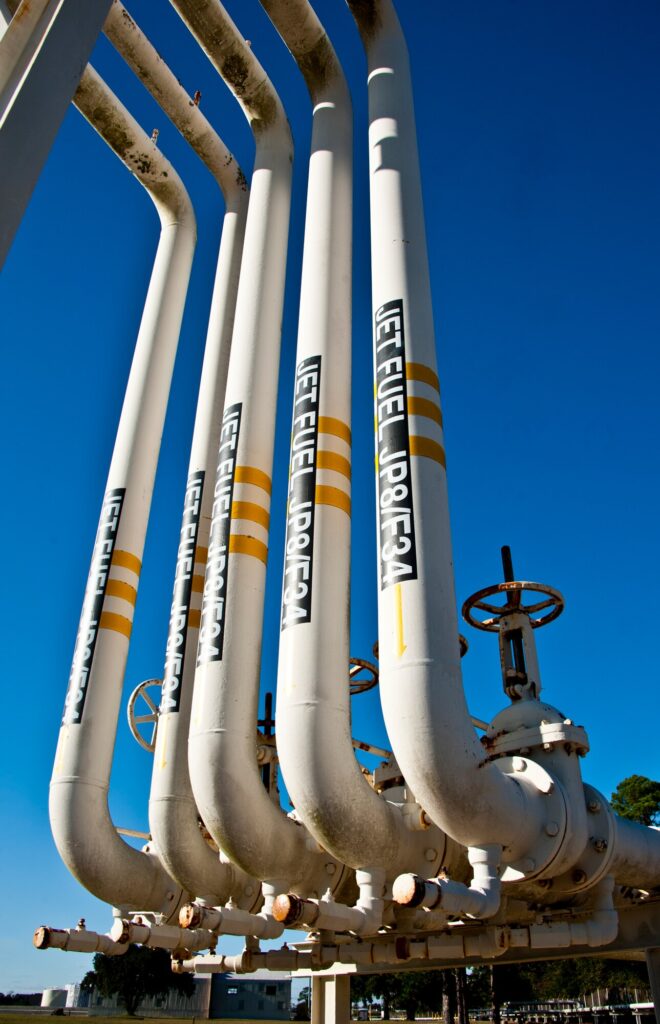
Last week, a fleet of jet aircraft were grounded in Nigeria after significant volumes of water were found in their fuel tanks. One became airborne and suffered malfunctions in flight.

The Nigerian Civil Aviation Authority (NCAA) confirmed the issue was not confined to that one airline, describing the situation as ‘dire.’ Anyone uplifting fuel there right now should be seriously concerned.

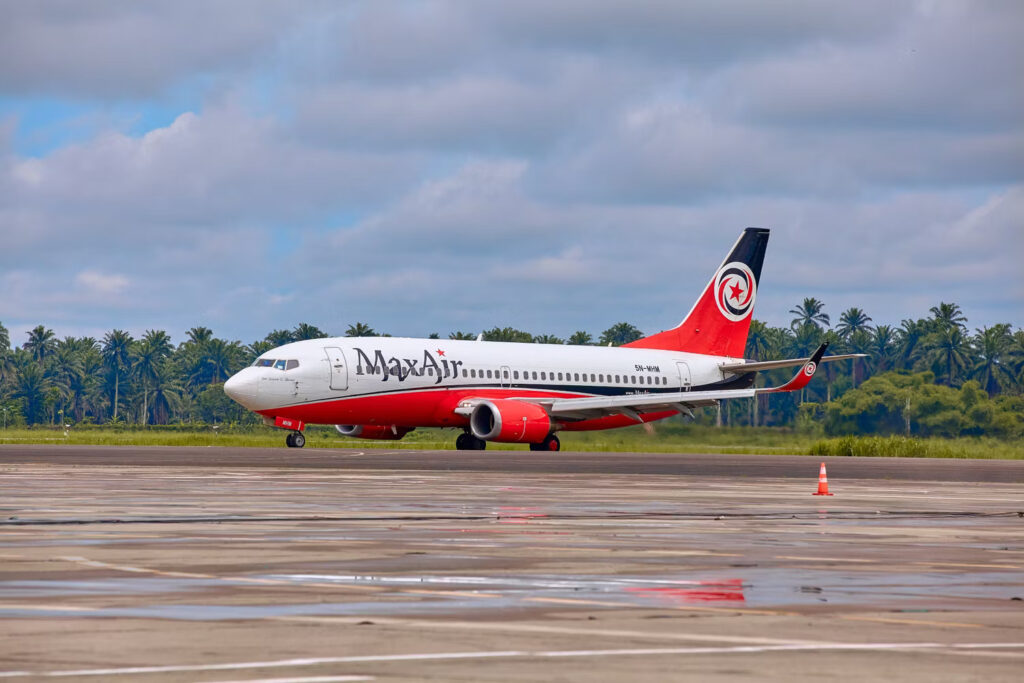
Max Air identified Octavus Petroleum as the source of the contaminated fuel which led to the grounding of its 737 fleet.

The NCAA has issued an urgent All Operators Letter to refuelers and operators to follow the proper procedures – but with sixty days to comply. That’s over two months of potentially contaminated fuel still being used at airports in Lagos, Abuja, and Kano – without mandatory procedures in place to check it.

What do pilots have to do?

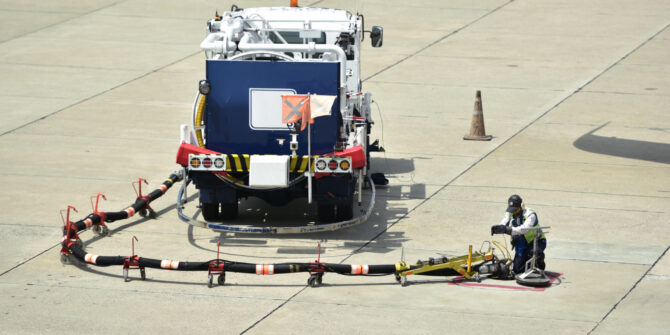
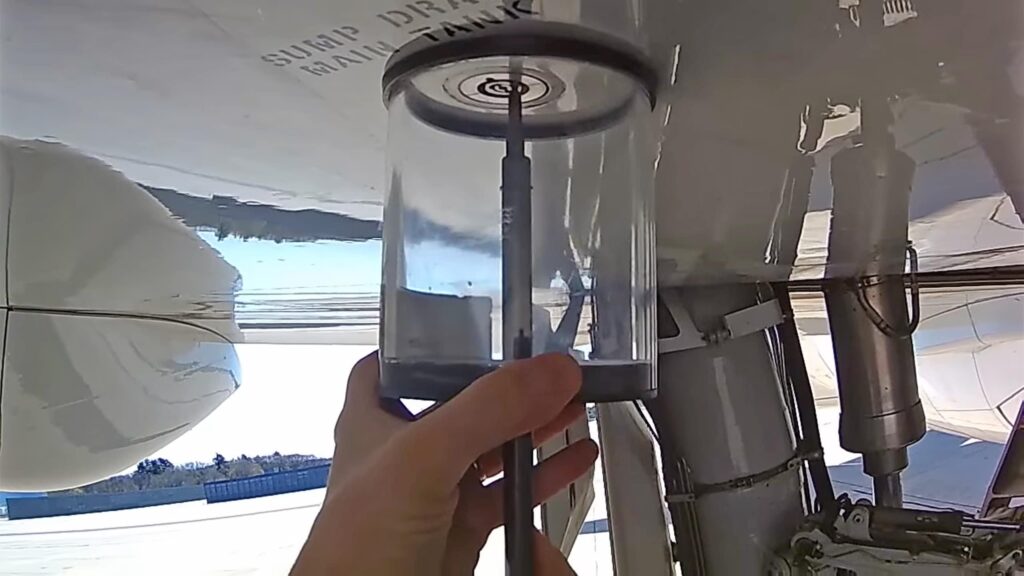
The NCAA note requires a thorough inspection of refuelling equipment, and testing of the fuel it carries or pumps. More notably, there will also be a mandatory requirement to take samples from fuel tanks before and after refuelling too. This will apply to anyone operating an aircraft in Nigeria.

It is becoming mandatory to test fuel samples both before and after refuelling.

The advice is sound though – be hyper vigilant of anything going into your tanks there at the moment. Of course, perhaps the best mitigator right now is not to refuel at all, and to tanker instead. 

Where is the water coming from?

Problems with infrastructure and how it is stored is likely to blame. Aside from particulates and fuel-loving microbes, there are multiple opportunities for water to accumulate. This can include water that gathers in low spots within pipelines, rain-water contamination, changes in temperature during storage or while being pumped and even the moisture content of air when tanks are unsealed to add or remove fuel.

There are plenty of opportunities for water to contaminate jet fuel in storage and transfer, especially if proper procedures aren’t followed.

A Little Vs A Lot

If you suspect contamination while airborne you should land immediately.

The impact depends on how much water is actually in your tanks. In small amounts, it can rust and corrode important components of your fuel system including fuel nozzles that can eventually fail. Water can also wear out fuel pumps that rely on fuel to stay slippery and cool.

You may also notice unusual engine operating temperatures, surging, and technical faults with your aircraft’s fuel system.

In larger quantities the issues become critical. Icing can restrict or stop the flow of fuel to your engines leading to flame outs (remember water freezes at just 0 degrees C, while pure Jet A1 can remain liquid in temps as low as -47 degrees C).

Icing can clog filters and prevent fuel from reaching your engines.

Also, water doesn’t burn, so if it reaches your combustion chambers in any significant quantities you can say sayonara to your engines producing thrust – in other words you could have a multiple engine failure on your hands.

Make Sure You Report

If you do detect fuel contamination in Nigeria, it must be reported to the NCAA. Their contact details are found in the above letter.

And make sure you let us know too so we can help spread the word, and keep everyone safe. You can reach us on team@ops.group or by submitting an Airport Spy report.


Mexico City Airport Safety Alert

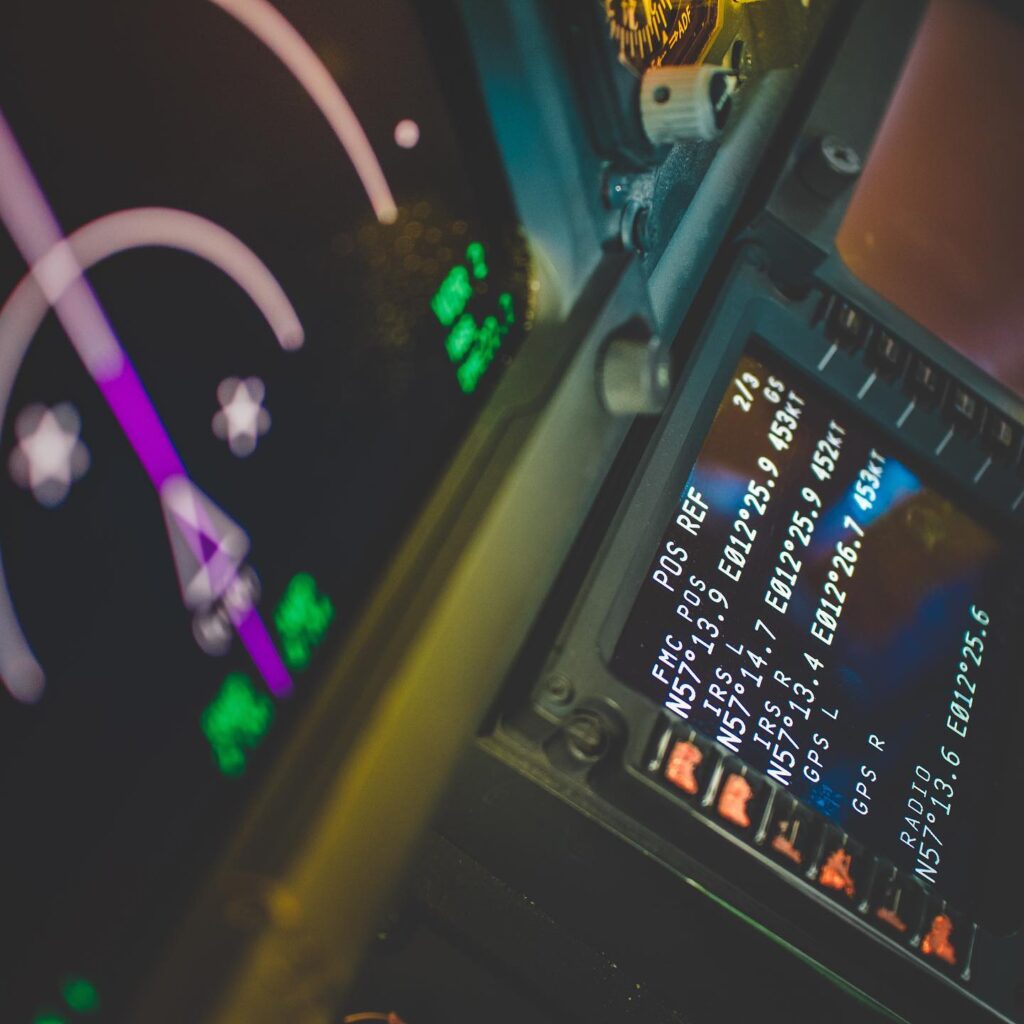
There have been several recent reports of loss of GNSS signal in the terminal area at MMMX/Mexico City Airport. This can lead to navigational errors, and a raft of related system failures all of which have potential to ruin your day.

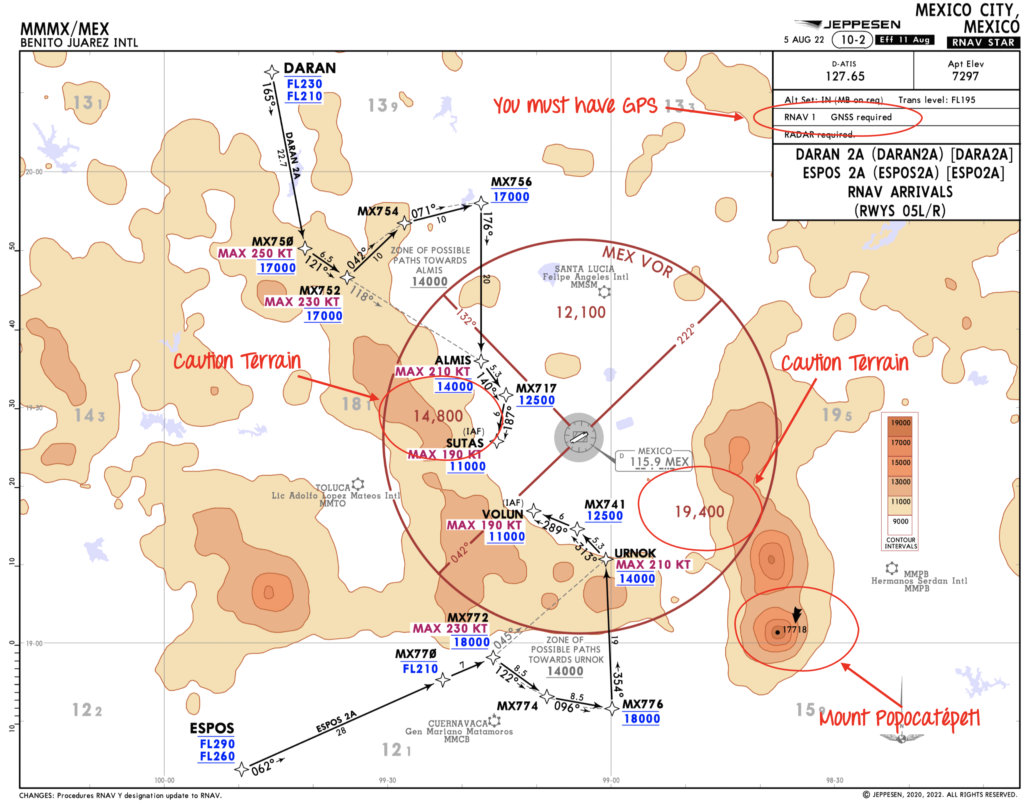
GNSS interference is hardly new. The issue with MMMX is that the vast majority of procedures became RNAV based back in 2021. Add to that high altitude operations with a healthy dose of terrain and you begin to get the picture.

IFALPA have just published a new safety bulletin for MMMX/Mexico City Airport, which you can read here. But strangely, at the time of writing there has been radio silence on the issue from both Navigation Services for Mexican Airspace (SENEAM), and the Mexican Federal Civil Aviation Agency (AFAC).

Let’s dig a little deeper.

The Specifics

The first problem relates to the terminal area itself. All SIDs and STARs are RNAV 1. This means that to ensure terrain protection your aircraft must not exceed a track error of 1nm.

One look at the Jepps and you can see why. 25nm MSA towers as high as 19,400′ to the east of the field, and 14,800′ to the west. Mount PopocatEpetl – an 18,000’ volcano is just 35nm away from the field. It’s easy to see why GNSS interference could become a major safety issue.

Mexico City Airport is surrounded by high terrain.

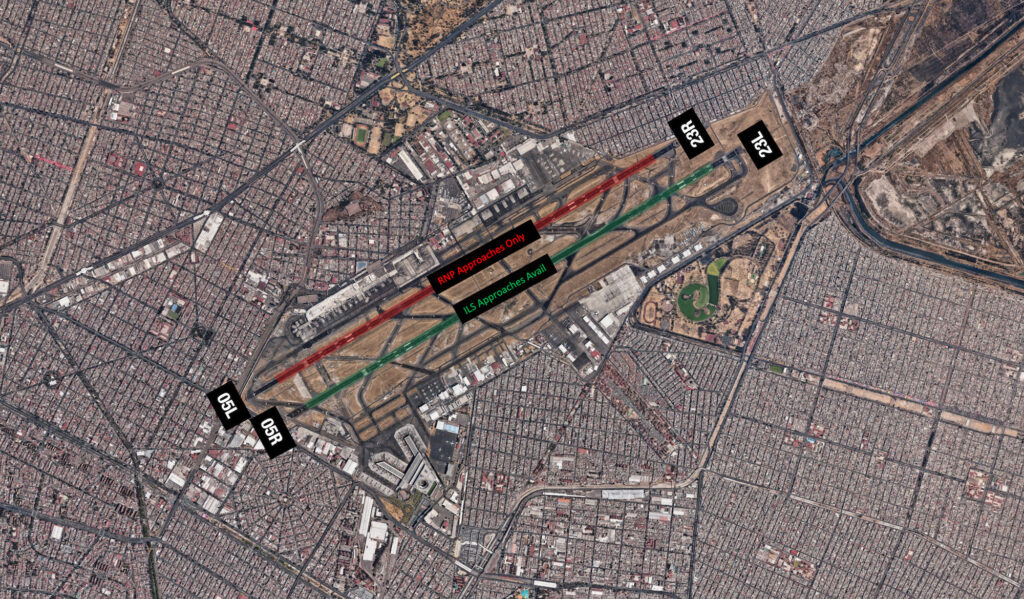
The second problem relates to the approaches. Only one of the two runways has ILS approaches available (05R/23L). The other runway relies entirely on RNP approaches – where the eye of the needle narrows to just 0.3nm in the final approach segment.

What could go wrong?

Aside from the obvious, a loss of GNSS can affect other safety critical systems too. IATA has also written about this, and it turns out losing the signal can open up a whole can of worms.

At the simpler end of the scale, a crew may receive a message that their navigational ability has been downgraded. And at worse, they may lose GNSS navigation completely including functions as simple as direct-to.

Depending on your aircraft type, you may find your aircraft reverting entirely to ground based and inertial navigation. Your nav display may tell you lies too, including nasty things like map shift.

EGPWS can also be affected – the system that has your back around terrain when you can’t simply look out the window. Its predictive functions can be disabled, or spurious warnings triggered. Additionally the position reporting function of ADS-B can become corrupt, which is bound to upset ATC.

If your aircraft has them, runway alerting systems can also stop working properly. Things like runway overrun protection may simply now be redundant.

There’s more to it than meets the eye.

Be alert for signs that your GNSS signal has been lost.

So, I’ve lost signal at Mexico City. What should I do?

Put extra attention towards monitoring the performance of GNSS during operations at MMMX, because it really matters. A sterile cockpit is also important here as distractions can help mask some of the more insidious symptoms of an interrupted signal.

If GNSS signal is lost, be prepared to fly alternative procedures.

What are those you say?

There are no SIDs or STARs which use ground-based aids anymore at MMMX.

There are two options, radar vectors or the MEX VOR. The former is likely the easiest. Otherwise, it is back to raw data – the likely outcome being a descent in a hold or a procedure turn. Either way, you’ll need to let ATC know.

Without GNSS, you are effectively down to one runway (unless of course you are flying the visual). 23R/05L has no ground-based approach option – it is all RNP.

That leaves 23L/05R where the news is better. There is an ILS at each end, and even a VOR approach on 23L in a real pinch.

If you need an instrument approach, and you don’t have GNSS, you are runway limited.

Whichever option you choose, if you are in cloud you need to be sure of your terrain clearance reference something that’s not RNAV specific – whether it be the controller, or the MSA sectors on your chart.

Do you have info to share?

If you’ve been to Mexico City (or anywhere else, for that matter) and can share some info on how the trip went, please file an Airport Spy report!

OPSGROUP members can see all the Airport Spy reports filed for airports around the world on the members Dashboard here.


Venezuela: FAA Restriction Lifted

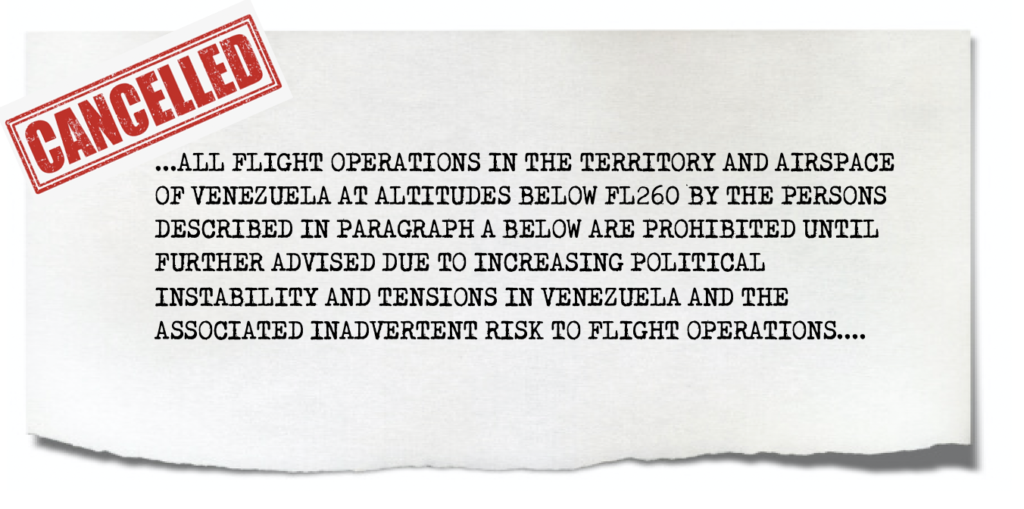
The US FAA has cancelled a long standing Notam which prevented US operators from overflying Venezuelan airspace below FL260.

KICZ Notam A0013/19 expired in June, and hasn’t been renewed. This effectively means that there are no longer any restrictions on the enroute use of the SVZM/Maiquetia FIR.

In fact, there are no active airspace warnings issued by any other states either. Here’s a closer look at the airspace, why there was a restriction in the first place and what you should know now if you want to use it.
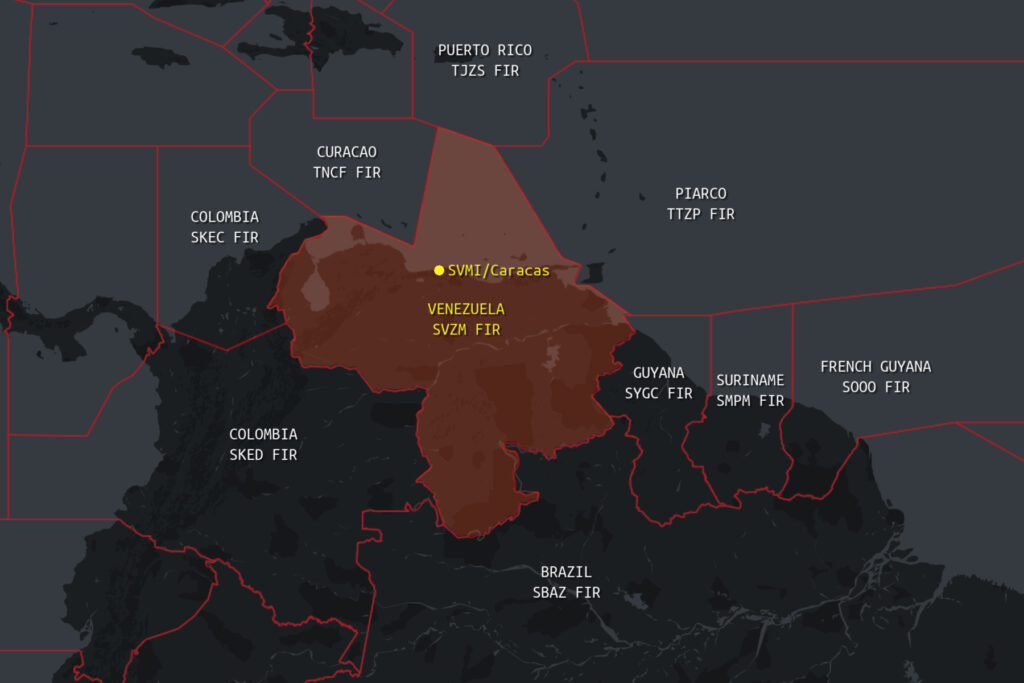

The Maiquetia FIR

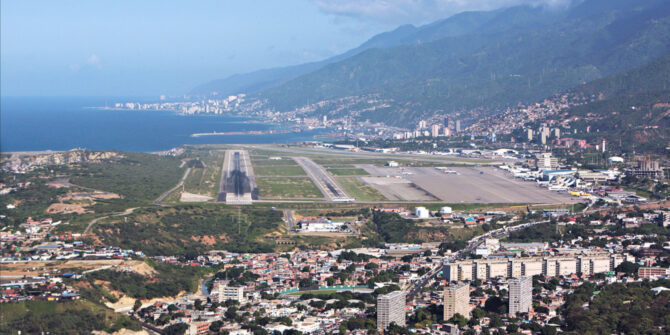
Venezuela controls its own skies – the SVZM/Maiquetia FIR. It’s a large chunk of Class C airspace that sits squarely on top of South America.

From a geographical perspective it provides a handy gateway between the US, Caribbean and destinations further south down the continent – especially Brazil.

It is also home to the country’s largest airport, SVMI/Caracas. Here’s what that all looks like on a map:

If you’d like to know more about Venezuela’s airspace, here is a link to the online AIP.

Why was there a US restriction in the first place?

Back in 2019, the US FAA issued the above Notam which banned US operators from overflying Venezuelan airspace below FL260, citing political instability.

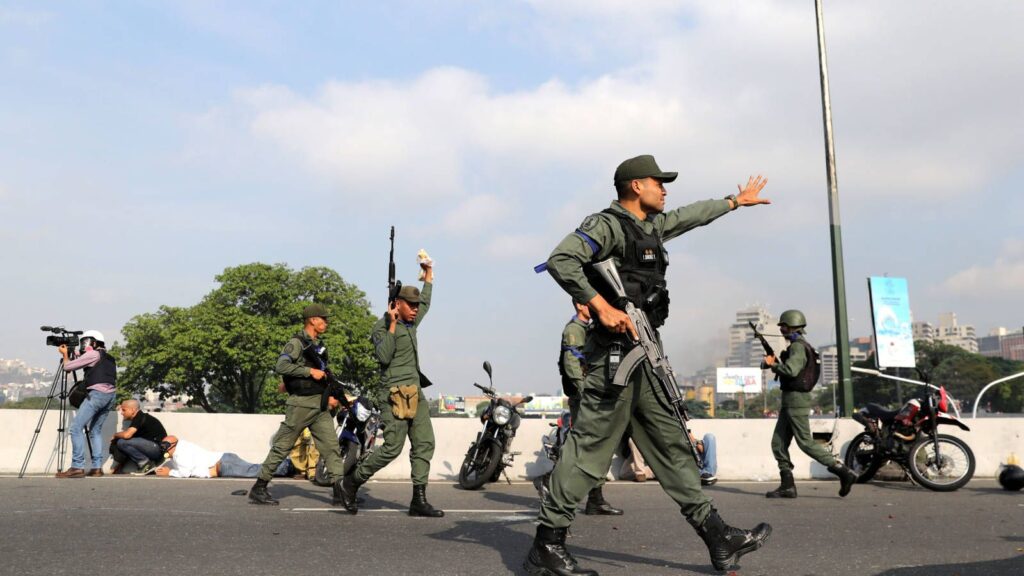
The (extremely) short story was that after years of steady decline, a political power struggle led to an attempted uprising. Widespread civil unrest followed while people suffered from economic collapse, inflation and shortages of food and medicine. This has continued to the current day. Here is what we had to say at the time.

The FAA had multiple concerns for the traffic above.

There were two major worries. The first was that the military may fracture and begin fighting against each other. Additionally, there was the known presence of mercenaries who had been employed to augment the military and police force.

It was known that the Venezuelan armed forces had large stockpiles of advanced man portable air defence systems (MANPADS) capable of targeting aircraft as high as FL250.

While there was no obvious intent to target civil aircraft, the FAA were worried that extremely high tensions may lead to inadvertent firing which could endanger them indirectly. They were also concerned that some of the MANPADS may find their way into the hands of non-state actors who were less predictable, and had less training.

There were FAA concerns about military rivalries and an abundance of surface-to-air weapons.

As such US operators were banned at lower levels out of an abundance of caution while the situation evolved.

If you’d like to know more, here is a copy of the Background Information note the FAA published at the time.

So, have things improved?

It would be a logical assumption given that the flight restriction has been lifted, but the short answer is that we don’t know. And the FAA hasn’t (yet) provided any explanation as to why the Notam has been cancelled.

The situation in Venezuela is at a standstill. It remains in the middle of an unprecedented social and humanitarian collapse. Although there’s news lately of high-level talks to try and improve the situation, right now, it’s just that – talk.

It’s possible that the immediate threat of active fighting and the intentions behind the issue of the original Notam have subsided sufficiently that the risk to civil aircraft from anti-aircraft fire is now considered extremely remote. Although this is purely speculation.

The safest course of action until we know more would be to remain above FL260 – although this is no longer mandated.

Beware the diversion

If you do overfly Venezuelan airspace, the most important consideration is crew and passenger safety in the event of a diversion. The security situation on the ground in Venezuela isn’t great – in fact it is among the twenty most dangerous countries in the world, while Caracas itself has previously been ranked as the most dangerous city of all.

The US Department of State maintains a ‘Do Not Travel’ warning (its highest alert) for Venezuela citing risk of kidnapping, crime, civil unrest, terrorism and unlawful imprisonment. All to be avoided. If you’re looking for the latest information, the US Embassy website is a good place to check – keep an eye out for any new security alerts.

Does this mean I can now fly between Venezuela and the US?

At this stage, no. The FAA restriction was purely to protect traffic transiting Venezuelan airspace below FL260. Another (more political) restriction remains in place, issued by the Department of Transport. It’s a heavy read, but basically the commercial transport of passengers or cargo between airports in Venezuela and the US remains banned.

We’re unsure at this stage whether there is an intention to drop this rule too, and have reached out to both the FAA and the DOT for more feedback. We’ll keep this article updated as more info comes to hand.


EASA: New Ops Risks in Europe

In 2020, the industry fell off a cliff as the world went into hiding. Things in 2021 weren’t much better. Then finally last year the wheels started to turn properly again – albeit while still pushing against outdated travel restrictions, quarantine and covid testing.

It is really only this year that the brakes have well and truly been released and the industry has been allowed to return to a full gallop. So with peak summer season coming up, EASA has issued a new Safety Information Bulletin on the emerging new safety risks in Europe.

Here’s a look at some of the main ones…

The Speed of the Recovery

Business is booming, the world is travelling again, and operators are making up for lost time – cash flow has never been more welcome.

But herein lies the problem. The sheer speed at which things have started up again is a threat. The primary issue EASA identifies is that the industry just isn’t keeping up with the pace of change. We’re not managing things as well as we should. And they smell risk – with a delayed fuse…

Shortages of People and Things

There is currently a lack of qualified operational staff across the board. This isn’t just limited to pilots either – cabin crew, engineers and air traffic controllers to name a few are all in hot demand. And for the ones already employed and working, fatigue is becoming a major concern.

For new ones, lack of experience is likely to emerge more often in incident and accident reports. EASA are worried about the lack of time and resources to train them all at the pace the industry is demanding of them. The problem with this is that the safety impact may not be immediately obvious but could emerge later.

Is there a risk that new pilots aren’t receiving enough training in the skills that the industry knows they must have and need?

But it isn’t just people. It is the tools they use – there is a significant shortage of aircraft and the parts needed to fix them. Supply chain problems are leading to cancelled flights and maintenance delays. Carriers are increasingly turning to old and retired aircraft in storage to fill the void as order lists for new ones fill up.

Cyber Attacks

A busy and overloaded system is a vulnerable one, and this leaves aviation at risk from those who want to harm it. There have been several instances of this reported in the past months. EASA are concerned that the busy peak season may put aviation in the firing line for digital criminals who are capable of wreaking havoc on Europe’s skies.

Lack of Capacity

All of those aircraft need room in the sky and the airways system will be pushed to capacity. That means delays and difficulty securing slots, further exacerbating two major safety elephants in the room – commercial pressure, and fatigue.

Disruptive Passengers

It’s not just operational staff who feel the heat. Passengers dealing with delays, strikes or other inconveniences to their travel plans may act up.

In fact, it is a becoming a major problem worldwide. Just weeks ago IATA put out a new report showing that the number of cases of unruly pax had almost doubled year-on-year after the pandemic.

Disruptive passengers are becoming more and more of an issue.

It’s Not Just Europe

EASA may have concerns for Europe, but the lessons in their bulletin apply broadly as the industry accelerates away from the nastiness of the past few years. In our enthusiasm to see better times, we need to be aware of the threats that we may be steadily introducing. And this simple document is a good place to start.

Inside it has important suggestions for what a bunch of stakeholders (including operators!) can do to start mitigating these threats now, to avoid the fallout later.


Hurricane Season Approaching: What’s in store for 2023?

Summer is coming in the Northern Hemisphere and so is the next Atlantic hurricane season, which runs from June to November.

But for the first time in eight years, experts in the US are saying it’s not going to be too bad this year – or rather, they are predicting a “near-average” hurricane season…

Everything will be fine.

The 2022 season saw 14 named storms, eight hurricanes and two major hurricanes – which is actually pretty near average.

The worst of these was Hurricane Ian, which hit Florida at the end of September as a Category 4 major hurricane, tracking right across Florida before making a second landfall in South Carolina.

The two surprising things about the 2022 season were the lack of any storm in August (a time when Atlantic storm activity normally starts to increase), and the formation of three hurricanes in November (Lisa, Martin and Nicole) – right at the end of the hurricane season.

Here’s an animation of last year’s season’s highlights, thanks to the NOAA:

What does 2023 have in store?

CSU Tropical Weather & Climate Research have released their prediction for this season. Here’s the lowdown:

  • Good news: “El Niño is virtually assured in the next couple of months” – meaning that increased winds from the Pacific will blast across into the Caribbean and Atlantic and help tear apart hurricanes as they try to form.
  • Bad news: Warm waters in the tropical Atlantic are at “record levels in the eastern part of the basin” – meaning that ideal hurricane conditions are in place which will counteract some of the El Niño effect.

So although they say to expect a “near average” season, they really don’t know yet which way it will go. Or to put in proper met speak: “Given the conflicting signals between a potentially robust El Niño and a much warmer-than normal tropical and subtropical Atlantic, the team stresses that there is more uncertainty than normal with this outlook.”

Southwest hurricane season

This isn’t specifically a “northern hemisphere” thing because it affects countries both sides of the equator. Similar to the Atlantic season, it generally runs from June through September.

India, Pakistan, Sri Lanka, Myanmar, Bhutan, Bangladesh, Nepal, Cambodia, Laos, Thailand, the Philippines, and Vietnam are generally the most affected, although some of the nastier storms can track pretty far south.

Tropical systems bringing nasty weather, heavy rain and often strong winds are also associated with the season. You’ll find these forming in spots like the Arabian Sea, Bay of Bengal, and northern Indian Ocean.

The main impacts?

  • Airport operations can often become the biggest nightmare for a pilot. Weather conditions will often shift as the storm moves through, so there may be windows where the wind is aligned with the runway, but don’t let the lack of crosswind fool you, as the turbulence and wind shear caused by the high winds will still present a considerable problem for your approach.
  • Airports near the storm will often become full due to diversion traffic – so be on the lookout for Notams which often prevent their use as a planned alternative. Some regional airports might close to arrival traffic when they are filling up, so having fuel for an alternate some distance from the storm is handy.
  • Be on the lookout for Notams affecting entire airways. In addition, there are often LSWDs (Large Scale Weather Deviations), and FIRs will modify route availability to assist their aircraft management.
  • Carry extra fuel. This is especially true for those ultra long range flights. Weather at the time of your departure may be forecast OK. However, 12 hours is a lifetime for these storms, and the airport, which you thought would be OK, could be the storm’s firing line. Fuel will give you options.
  • Be mindful of aircraft limitations and aware that ATC may not pass on info if they’re busy. Ask the approach controller how many aircraft have made successful landings in the past 30 min, just to help create a picture of how things are on the ground.
  • After storms pass, the local region can be isolated due to flooding and damage. Power and water are often cut off, and essential services may be limited. For airports, manpower and fuel could be an issue, so FBOs/handlers may not be able to assist with your arrival for days after the storm has passed.

Understanding the forecasts

During hurricane season, some terms get thrown around that aren’t always that clear.

Especially:

  • The difference between a storm and a hurricane.
  • What categories actually mean.
  • The actual effect of these categories on the ground.

Hurricanes are measured on a 5-point scale. The bigger the number, the more destructive it will be. Here’s a handy little graphic, courtesy of the National Hurricane Center:

https://ops.group/blog/wp-content/uploads/2021/04/SSHWS_animaton.mp4


Getting good intel

Keep an eye on the FAA OIS website and NOAA website.  When new storms form, daily telcons are activated that anyone can dial into. They provide up-to-the-minute operational updates on airports and airspace.

Prepare to help!

After a disaster, we know that knowledge is critical. Getting good information to relief workers literally saves lives – which is why OPSGROUP established Relief Air Wing. It is a team of OPSGROUP volunteers who come together in the aftermath of these storms to help share information to relief agencies so that help can get through to where it is needed the most.

Our community contains thousands of skilled pilots, air traffic controllers, dispatchers and other professionals and together we can make a real difference. Head on over to the Relief Air Wing website for more info on our mission and how you can help.


Asia Airspace Risk: Why North Korea’s Lastest Launch Matters…

**Update: June 2, 07:35z **

South Korea, the Philippines and Japan have all issued new airspace warnings by Notam due to the risk caused by falling debris. Japan’s in particular is worth noting as it also suggests an ‘anti-ballistic missile’ may be launched from several potential locations within the RJJJ/Fukuoka FIR to shoot down the craft if it enters Japanese airspace during launch.

The Notams to be aware of are:

South Korea: 
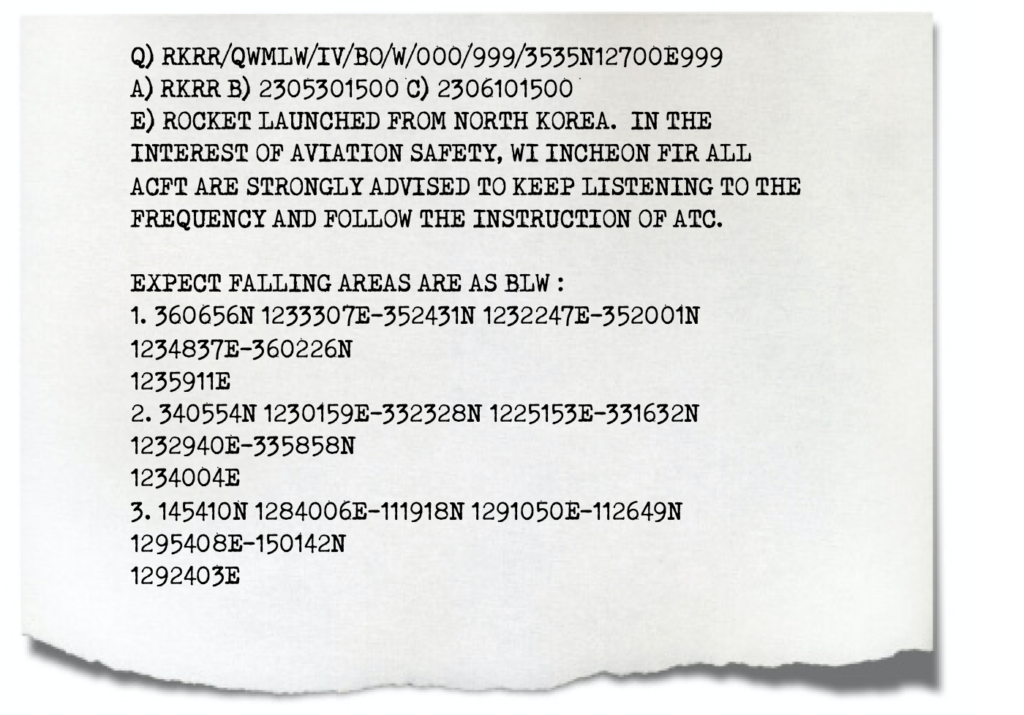
RKRR Z0298/23 - ROCKET LAUNCH WILL TAKE PLACE FROM NORTH KOREA. 
IN THE INTEREST OF AVIATION SAFETY, WI INCHEON FIR ALL ACFT ARE
STRONGLY ADVISED TO KEEP LISTENING TO THE FREQUENCY AND FOLLOW 
THE INSTRUCTION OF ATC.
EXPECT FALLING AREAS ARE AS BLW :
1. 360656N 1233307E-352431N 1232247E-352001N 1234837E-360226N 1235911E
2. 340554N 1230159E-332328N 1225153E-331632N 1232940E-335858N 1234004E
3. 145410N 1284006E-111918N 1291050E-112649N 1295408E-150142N 1292403E. 
31 MAY 08:38 2023 UNTIL 10 JUN 15:00 2023. CREATED: 31 MAY 08:38 2023
Japan: 
RJJJ P2445/23 - ALL ACFT INTENDING TO FLY WI FUKUOKA FIR ARE ADVISED TO PAY
SPECIAL ATTENTION TO THE FOLLOWING INFORMATION.
A ROCKET IS EXPECTED TO BE LAUNCHED FROM NORTH KOREA AND THE
ANTIBALLISTIC MISSILES MAY BE LAUNCHED FOR THE DESTRUCTION OF THE
ROCKET.

1.ROCKET LAUNCHED FROM NORTH KOREA
(1)LAUNCH SITE: NORTH KOREA
(2)FALLING AREAS COORDINATES:
FIRST STAGE
360656N1233307E 352431N1232247E 352001N1234837E 360226N1235911E
SECOND STAGE
340554N1230159E 332328N1225153E 331632N1232940E 335858N1234004E
THIRD STAGE
145410N1284006E 111918N1291050E 112649N1295408E 150142N1292403E

2.IN ACCORDANCE WITH ARTICLE 82-3 OF JAPAN SELF DEFENSE FORCE LAW,
THE ANTIBALLISTIC MISSILES ARE DEPLOYED AT POSITIONS BLW,
(1)NAHA-SHI : 261219N1273929E
(2)MIYAKOJIMA : 244602N1251930E
(3)ISHIGAKIJIMA : 241953N1240828E
(4)YONAGUNIJIMA : 245838N1225716E. SFC - UNL
30 MAY 15:00 2023 UNTIL 10 JUN 15:00 2023. CREATED: 30 MAY 13:57 2023
Philippines: 
RPHI B1867/23 - SPECIAL OPS (SATELLITE LAUNCH ACT) WILL TAKE PLACE WI:
145410N 1284006E -
111918N 1291050E -
112649N 1295408E -
150142N 1292403E -
145410N 1284006E. 
SFC - UNL, 30 MAY 15:00 2023 UNTIL 10 JUN 15:00 2023. CREATED: 30 MAY 02:31 2023

**********

It has been a busy week for the aspiring North Korean space program.

In an unusual turn of events, on May 29 they actually provided prior notice of an impending launch of a (suspected) surveillance satellite into orbit. Then on May 30 it actually lifted off, although unsuccessfully. Alarms were briefly triggered in South Korea and Japan. No sooner had the dust settled than Pyongyang announced their intention to try again – sometime before June 11.

Similar attempts in the past have turned out to be yet more thinly veiled missile tests. Nevertheless, the global community is taking these warnings seriously, and word is being spread by Notam.

Unlike conventional missile tests which we have frequently reported, an attempt to put something into orbit not only uses UN-sanctioned technology, but creates far broader hazard areas for civil aviation – well beyond the ZKKP/Pyongyang FIR where traditional missile tests lie. Which is why we’re collectively sitting up a little straighter.

Not all of the beans are being spilt though. Only some of them. Which is why this week’s launch window was notably broad – extending for a full ten days. Subsequent launches are likely to be same.

The risk for aircraft was from falling debris from rocket staging, or even a complete failure of the craft.

The Notam…

On May 29, South Korea (the RKRR/Incheon FIR) published the following Notam (which has since been cancelled):

There were three major hazard areas – portions of the Yellow Sea, East China Sea and the Philippine Sea.
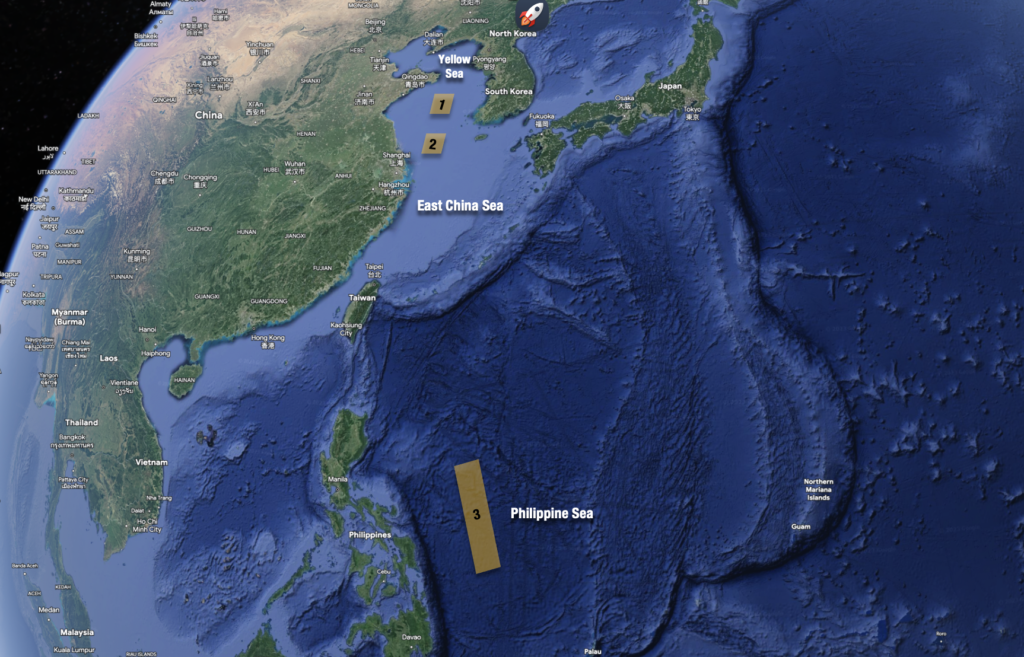
Don’t think in capitalised type-written coordinates? Neither do we. Here’s what that looked like on a map:

The official advice was avoid them completely, if practical. Otherwise, to listen out to ATC for potential updates.
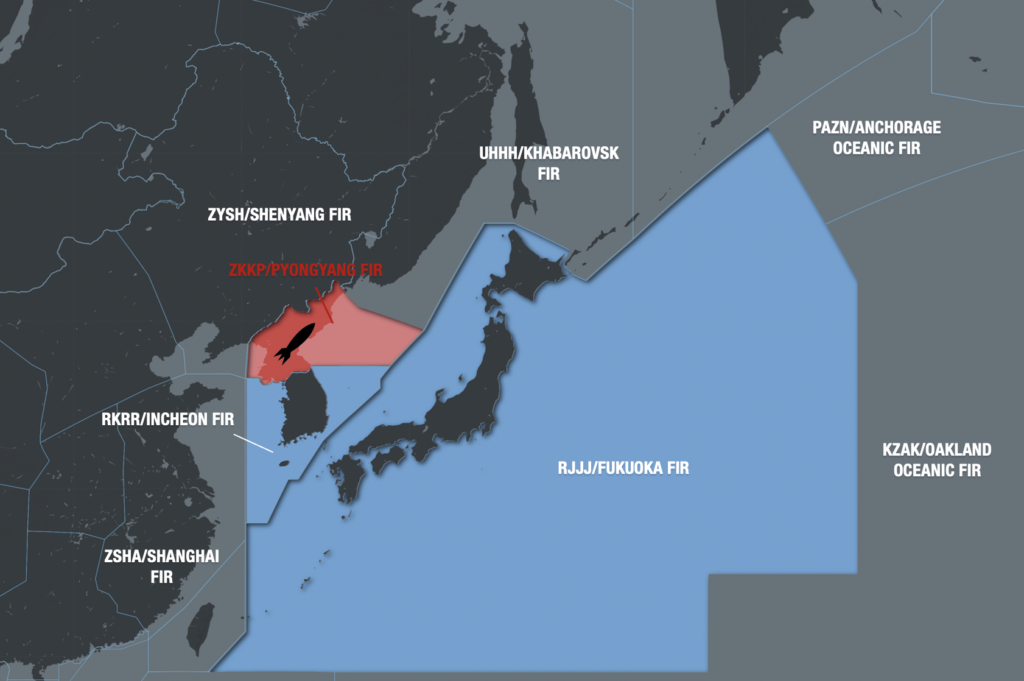
The Plot Thickens…

Given the current state of affairs, any launch is politically sensitive and risks far greater political fallout. Japan has been especially vocal in denouncing them saying that they ‘threaten the peace and safety of Japan, the region and international community…’ They have vowed to shoot down any satellite or debris if it enters Japanese territory – important note: there are currently no airspace warnings for air defence activity anywhere in the RJJJ/Fukuoka FIR. With the best intentions, history has shown this type of activity can inadvertently put civilian aircraft at risk.

It’s no wonder too – there is a well publicised record of North Korean missile launches coming uncomfortably close to Japanese territory, often landing well into  the Sea of Japan.

Political Posturing

It’s unclear whether these are genuine attempts to put a craft into orbit, or more simply a political statement to flex North Korea’s ballistic missile capabilities. If subsequent launches were successful it would be North Korea’s first foray into space ops. However, it comes at a time when there have been large scale live-firing military exercises near the North Korean border by South Korea – part of a seemingly constant cycle of diplomatic muscle flexing that seems to characterise to the region – and as such we may need to take things with a grain of salt.

From an airspace perspective though, these launches should be treated as real hazards. At the very least because it is better to be safe than sorry.

We’ll continue to report on any changes as they emerge. Many of these risks are well publicised, and safeairspace.net is a great place to start for that info.


Movie Stars and Racing Cars: Special Flight Ops in Southern France

The sun’s back out in Southern France, and so are the high rollers, race car drivers and movie stars.

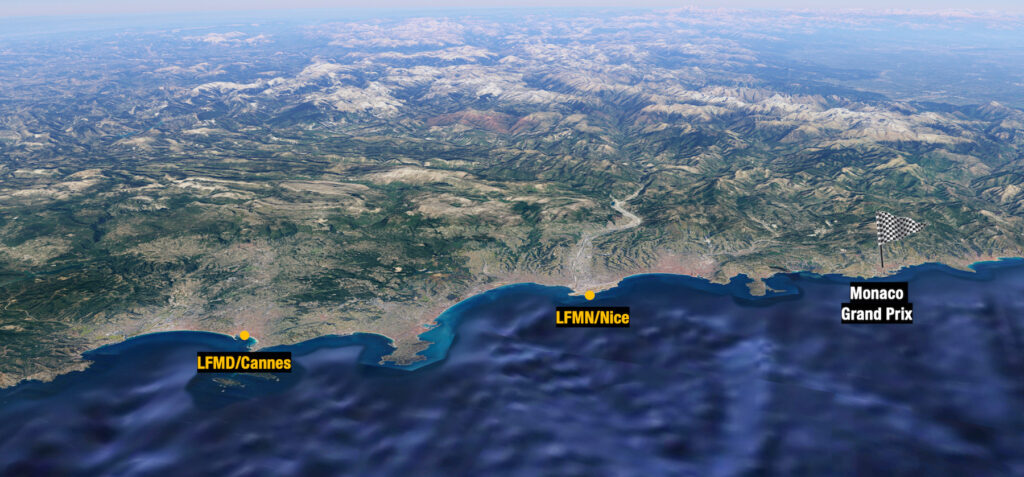
That’s right – it’s that time of year again, with two major events stacked back-to-back – the Cannes Film Festival (May 16 – 27) and Monaco Grand Prix. It’s the jewel of the F1 calendar (May 25-28).

This means an influx of business jet traffic to two major airports – LFMD/Cannes and LFMN/Nice, where some of the world’s wealthiest will come out to play.

It’s not all caviar and roulette though – you’ll still need to be able to land there first. Three AIP SUPs have been published to help that happen. Here’s what you need to know about them.

LFMD/Cannes

AIP SUP 30/23 has the deets here.

The airport itself isn’t normally co-ordinated, but you’ll need a slot to go there between May 16 – 29. That info is found on this website. The apron is going to be chock-a-block too – a word of warning, you won’t be allocated a slot unless you have confirmed parking too.

If you like to manage things yourself on the ground, you’re out of luck. Handling services will be mandatory during this period, and it seems there’s only port-of-call:

AEROPORT CANNES MANDELIEU / SKY VALET
https://cy.myhandlingsoftware.com
E-mail: operations-acm@cote-azur.aeroport.fr
Phone : +33 (0) 4 93 90 41 10

You may not get your requested slot, so a little flexibility may help here. When you get an authorisation number, this will need to go into Item 18 of your flight plan. Without it, EUROCONTROL will likely refuse it.

Don’t be tempted to fly the hop between Cannes and Nice either, in either direction. These flights will be banned between May 26 – 29.

LFMN/Nice

AIP SUP 27/23 is the one to check out here.

Nice is co-ordinated year-round, so there’s less of a surprise. As above, you’ll need to co-ordinate a slot to arrive or depart.

Once again, hiring ground handling services will be mandatory. This time there is a little more choice though. According to the AIP SUP, roll the dice and pick between:

AVIAPARTNER EXECUTIVE
https://www.aviapartnerexecutive.com/nice
E-mail: nce.executive@aviapartner.aero
Phone: + 33 (0) 4 93 21 37 37

DC AVIATION G-OPS
https://www.dca-gops.com/
E-mail : nice.ops@dca-gops.com
Phone: +33 4 93 21 58 12

Monaco

Monaco itself doesn’t have an airport. In fact, it is the second smallest country in the world and is found on France’s Côte d’Azur – its south-eastern coast. Inside Monaco is the district of Monte Carlo, where the F1 race is taking place. Most fans and participants will enter via Nice.

If you’re looking for crew accommodation there, book early. Things fill up, and it becomes astronomically expensive – if it isn’t already.

Restricted Airspace

Info on this is published in yet another SUP – this one: AIP SUP 076/23.

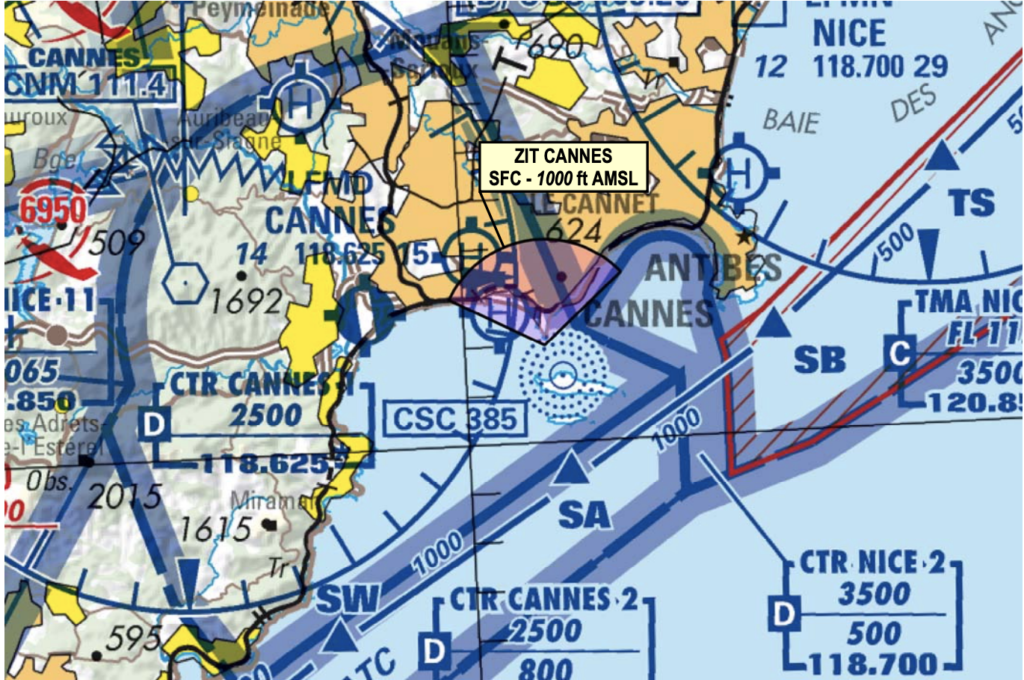
From May 16 – 28, unless you are special traffic you will not be able to overfly the city of Cannes at low level.

Flights over the city of Cannes are restricted throughout the film festival.

Keep an eye out for intensive helicopter traffic. For IFR traffic departing on a SID, it is important to follow published climb gradients and altitude requirements. If you don’t think you’ll make it – let ATC know with your start request. You may get hit with a delay, but it’s better than the alternative..

We’re expecting another AIP SUP to be published closer to the F1 Grand Prix which may be more restrictive, and so we’ll keep this article updated.


Finished: The FAA Northeast Corridor Improvements

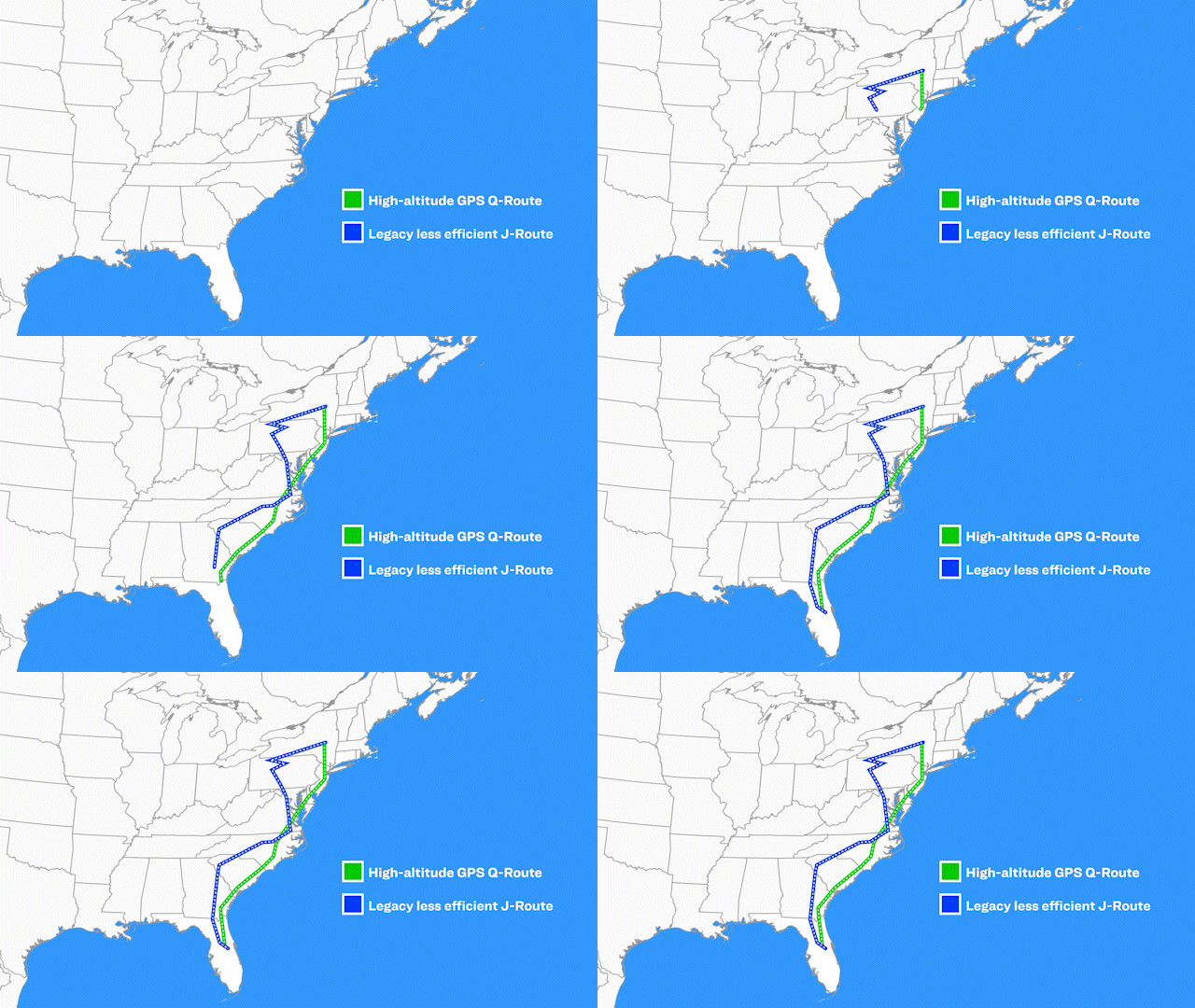
It’s finally done. On April 20, the last phase of the FAA’s Northeast Corridor Atlantic Coast Routes Project crossed the finish line, officially ending (well almost) the biggest change to the US NAS in decades.

And April was perhaps the largest update yet – here’s a summary of exactly what went down.

Wait, the what?

If you haven’t heard of it, our previous article may be a good place to start. But in a nutshell, over the past few years the FAA has been introducing new and amended Q and Y-routes to replace the high-altitude route structure running north and south along the US East Coast.

….Asking for a friend, what are J, Q and Y routes again?

J-routes (or jet routes) are high altitude airways (FL180 – 450) that rely on VOR or VORTAC fixes back on ol’ terra firma. Q and Y-routes are based off RNAV (GPS) navigation.


It’s not that the existing airways were broken, but they were showing their age. The project has been part of a larger transition away from ground based NAVAIDs and towards PBN-centric US skies – i.e. satellite based navigation, the good stuff.

The legacy J-Routes are far less efficient than satellite based ones. Courtesy: FAA

Rome wasn’t built in a day – and neither was this project it seems. In fact, changes first appeared back in October 2019 – then the world caught the flu. Since then the roll-out has been delayed several times with staggered changes spanning the past three years.

If you’d like to see a complete list of those 160+ changes, the FAA has produced this handy slide. For the ones that came into effect on April 20, read on…

The April 20 Update

The final seven J-routes on the chopping block were axed (J37, J55, J79, J121, J174, J191, and J209), along with a number of their associated fixes. In their place twenty Q-routes were either introduced or amended.

To make sure all these new routes were set up and ready to use, most were published last year. However there were a stack of ‘not authorised’ Notams in the system that have now been removed – essentially raising the barrier for traffic to actually use them.

A bunch of ‘not authorized’ Notams have now been cancelled.

On the East Coast, STARs at three major airports were amended to remove ground-based transitions. At KPHL/Philadelphia, look out for new ones on the JIIMS 4 and PAATS 4 arrivals. At KEWR/Newark, the PHLBO 4 has been updated along with the JAIKE 4 over at KTEB/Teterboro. The good folk over at the Teterboro User’s Group have published some additional information on the latter.

The Goal Posts

Let’s address an elephant in the room. There’s a small chance someone will call us on the ‘finish line’ statement – fair game. There are some small changes still to come on June 15 – one more Q-route is being updated (Q101). There will also be a new STAR at KCLT/Charlotte along with some deletions. But the big changes are now done and dusted.

There’s Been A Little Trouble

Since the changes on April 20, news from the Boston ARTCC has been that foreign operators inbound from the NAT have not always been filing the new preferred IFR routes. This is causing a bit of headache at the boundary for pilots and controllers while traffic is ‘re-jigged.’ To see the preferred ones, click here.

The worst is likely over already, but the FAA has also advised airborne delays are possible while the system gets used to the changes. ATC may apply traffic management procedures to help keep the flow orderly. Consider a little more contingency fuel while things settle down.

Still have questions?

There are couple of FAA contacts provided in the official briefing:

Reggie Davis FAA Management Co-Lead reginald.e.davis@faa.gov
Joey Tinsley NATCA Co-Lead joseph.b.tinsley@faa.gov


Detained Abroad: Pilots Behind Bars

I recall one flight to an undisclosed location in South East Asia when I noticed the other pilot was carrying his passport in his front pocket. On asking why he was keeping it there and not his flight bag, the response was quite confronting – ‘in case something goes wrong, and we need to get out of here in a hurry…

This got me thinking – every time we step foot in a foreign country, we are taking a risk – albeit a controlled one.

If we find ourselves on the wrong side of the law (guilty or otherwise), we are at the mercy of whatever legal system presides over us. This applies regardless of our nationality, the number of bars we have or even our preconceived notion of what constitutes a fair and reasonable legal process.

And pilots are maybe at higher risk – simply because of the sheer amount of time we spend abroad compared to the travelling public. You may not think it will happen to you, but even trivial offences can land us in hot water. If that happened, would you know what to do?

Guilty Until Proven Innocent

Perhaps the most likely way you may find yourself in trouble is in the aftermath of an accident or incident. Unfortunately, history has shown that in some cases the pilots become the default suspects regardless of who or what was at fault.

Take Nov 18 last year for instance, at Peru’s largest international airport, SPJC/Lima. An A320 collided with a fire truck during its take-off roll on an active runway. At the time, CCTV footage showed that for some reason a truck had entered the runway. Everything else was just speculation. Despite that, the crew of the A320 was immediately detained without charge.

The flight crew of this A320 was immediately arrested and detained.

This highlights a disturbing precedent – compulsion for authorities to act. Holding pilots responsible sometimes seems to be a knee-jerk reaction to allay the concerns of the public and an invasive media scramble that systems and processes had no part to play. Human error is the easiest explanation – after all, the pilots were there.

This is the risk that we are all taking, whether we are aware of it or not. We can very easily become scape goats. And with highly punitive investigations in some parts of the world, it’s no wonder we’re carrying our passports in our front pockets.

Wrong Place, Wrong Time

It isn’t just incidents and accidents though. Like the public, we can get also get caught up in the middle.

Around the same time last year, narcotics were found stashed in a maintenance bay of a Canadian CRJ shortly to depart the Dominican Republic. The drugs were discovered and dutifully reported by the crew to the authorities. Shortly afterwards, they were all detained – for months. There was no evidence linking any of them to the discovery, nor any charges laid.

The entire crew of this Canadian CRJ were detained without charge for months after drugs were discovered in a maintenance bay.

We can also find ourselves in trouble for exercising liberties that may be commonplace at home, but are still punishable abroad. Drugs and alcohol are obvious culprits, but this can also extend to our behaviour, preferences or even our freedom of speech in foreign countries. Then there are issues related to immigration. You and your crew can be held if there are issues with your paperwork, including visas and gendecs.

So what can we do?

On April 6, IFALPA published some guidance on what pilot associations, and individual crew should do if arrested in a foreign country. Here is a quick 2-minute summary:

Pilot Associations:

  • Contact the local pilot association in the country where a pilot has been detained, and ask for help to get him or her released and out of the country asap. Failing that, look for legal assistance there or get in touch with the relevant embassy. Also contact the IFALPA emergency number +44 1202 653 110.
  • Get in touch with the pilot’s employer and work along side them. You’ll also need to advise the pilot’s family – the big ticket advice here is to stop them talking to the media. If there is a lot of heat, you may need to help re-locate them.
  • Likewise, unless you have media specialists on your team, don’t issue any statements.
  • If practical, consider sending a rep to the pilot to assist. At the very least this would lift morale, along with providing a myriad of additional support.

Pilots:

  • It may feel counter-intuitive but comply with the orders of police or authorities. Resisting arrest isn’t going to help. Make it clear you are willing to fully cooperate – but don’t make any statements until you have spoken to a lawyer.
  • If you must say something, use the suggested safety phrase on the card below.
  • Get onto your pilot association’s hotline without delay. If you can’t reach them, contact the IFALPA emergency number above. The sooner you get in touch, the sooner you’ll get help.
  • Less is more – don’t volunteer or offer information, and never speculate on what has just happened. And for the love of Pete – don’t sign anything. Not unless it is written in a language you fully understand, and you have taken legal advice.

Quick Reference Card

IFALPA also recommend that associations produce a card or booklet with actions to follow if a pilot becomes incarcerated. Using IFALPA’s advice, we’ve put one together – it may be a good one for the flight bag. Click the image below for a downloadable PDF.

Click to download PDF.


Battleships: Updated Risks on the South China Sea

Increasing military activity in the disputed South China Sea has been making headlines for civil aviation again recently.

We’ve seen reports of unauthorised clearances being issued over VHF, along with instances of GPS jamming. Here’s what we know, why it’s happening, and what pilots can do about it.

What’s your vector, Victor?

On March 2, IFALPA put out a new safety bulletin  – at the same time, several major carriers began to publish their own internal memos too.

There have been recent cases of civilian aircraft being contacted by Chinese military vessels on 121.5 or 123.45 and given vectors to avoid airspace above them. This has been happening not only in the South China Sea, but also the Philippine Sea and far eastern areas of the Indian Ocean.

In the eyes of aviation law, this is a big no-no. Unauthorised ATC transmissions are not only illegal, but highly dangerous because they can reduce your separation with other aircraft or lead to airspace busts. In this case the military vessels involved have no jurisdiction (or business) to be controlling aircraft in open airspace over international waters.

Military vessels have reportedly been broadcasting unlawful clearances to civilian aircraft on 121.15 and 123.45.

All the wrong signals

Then on March 20, reports emerged of another issue. Aircraft operating off Australia’s Northwestern coast have been encountering GPS jamming, purportedly from Chinese naval vessels in the area. This is unusual for the region.

The same problem has also been recurring over in the Western Pacific, and of course in the South China Sea itself.

Unfortunately, as we have seen in other parts of the world such as the Eastern Med, GPS signals are commonly interfered with in areas of high political tension as it makes it harder for the opposition to locate and gather whatever intelligence they are looking for.

It appears this region is no different.

Quit staring at me

So why is this happening?

We’ve written about the South China Sea dispute in detail in the past, and so this article may be a good place to start. But here is the thirty second version.

It may come as no surprise that the South China Sea is heavily disputed. Several states have staked some sort of claim on the region.

Disputed regions in the South China Sea. Map courtesy of AFP.

Attracting the most noise (and perhaps the most powerful claimant) China, has been steadily increasing its military presence in recent years including the construction of man-made islands, air bases and military warships.

All this activity attracts international attention, and the US military along with other countries have been keeping a close eye on what is going on – predominantly through aerial surveillance.

Herein lies the problem.

China maintains that under international law, foreign militaries cannot conduct intelligence gathering activities like surveillance inside its exclusive economic zone (or EEZ for short).

On the other hand, the US argues that under the UN Convention of the Law of the Sea (think of it as a legal rulebook for all marine and maritime activities), that freedom of movement through EEZs should be universal. And that essentially means that countries should not be required to provide notification of their military doings.

It’s worth pausing here – an EEZ is not the same thing as a country’s territorial waters. In the same document, the UN explains it is just a sovereign right to what is beneath the surface. The important part is this: the surface itself is still international water.

The result is lots of people looking, and some that don’t want to be seen which is why we are seeing interceptions, signal jamming and now unlawful clearances becoming more of a problem.

GPS Jamming is common elsewhere, but unusual in the Eastern Indian Ocean.

What can we do about it?

Essentially – protect yourself as best you can. These risks don’t look like they’ll go away anytime soonn, despite their disregard for civilian air traffic.

In their safety bulletin, IFALPA explains that IATA and ANSPs all recommend ignoring any unauthorised contact on the radio. Essentially, give them the silent treatment and continue on your cleared route. It is also important to let controlling ATC know immediately, and also to file a report.

Likewise, if you encounter GPS jamming it is also essential to let people know. You can read a little more about this issue here.

Let’s not normalise the risk

A recent high-profile interception in the region was described by a military official as just ‘another Friday afternoon on the South China Sea.’

These issues are no secret. But for civil aviation it is important we keep an eye on these trends and developments as our safety may depend upon it. The more present a risk is, the more comfortable we tend to become with it. We can’t allow that to happen.

OPSGROUP will continue to keep you updated with changes, along with our free conflict zone and risk database safeairspace.net.


Major US Rocket Launch Incoming

**Update: April 12, 02:00z**

The launch has been delayed. It will now take place on April 17, with back up days on April 18 – 23. The new launch window will be from 12:00 – 15:05z each day.

——-

On April 10, SpaceX is planning on test launching a prototype re-useable superheavy rocketStarship – from a launch facility in Southern Texas. The impact on the US NAS will be larger than most rocket launches due a reasonably high chance of failure of the ten million pound behemoth. Elon Musk himself has only given the launch a 50/50 shot of actually working. But he is ‘guaranteeing excitement’ either way.

The FAA are taking no chances, and on launch day several large hazard areas will be established for both liftoff, and subsequent reentry. This will impact coastal traffic over the Gulf of Mexico near the Texan coast, along with traffic in and out of Hawaii.

Let’s take a closer look.

Even Elon has only given the launch a fifty percent chance of working…

Launch

Liftoff will take place from a facility in Boca Chica, on the coast of Southern Texas.

The official launch date is April 10, with April 11 and 12 standing by as back ups. The action will take place between 12:00z and 16:00z (07:00 – 11:00am LT) each day.

In addition to a TFR extending 12nm off the coast from the launch site itself, for the ascent there will be two large hazard areas established well out into the Gulf of Mexico protected by Altitude Reservations.

Several airways off the coast will be impacted – primarily for those running north and south between the mainland US and Southern Mexico. Major ones include L207, L208, A766, A770, L214, and L333 impacting boundary waypoints IPSEV, DUTNA, KEHLI, IRDOV and PISAD between the KZHU/Houston Oceanic and MMFR/Mexico FIRs.

The good news for east/westbound traffic is that the hazard areas are fairly narrow, which means for the most part those published tracks will avoid the worst of the disruptions.

Additional congestion will be felt on alternative routes  – especially for aircraft transiting to and from Florida’s airspace via waypoint CANOA, and inland of the Texan Coast.

Reentry

Because this is simply a test flight, the rocket will reenter again on the same day as the launch, this time affecting Hawaii.

The reentry window is set for 13:10 – 17:45z (03:10 – 07:45 LT), with a hazard area established in a line from just north of the island group, extending well west into the Pacific.

Three airways connecting to the mainland US will be affected – A331, R463, R464 with transitions via waypoints ZIGIE, APACK and BITTA. There is also a Guam-bound airway to the west that will be impacted – A450 via the transition BRIUN.

Mission Accomplished

Once the mission is complete, the airspace will be returned to the US NAS and we’ll be back to ops normal. Likewise if the mission is scrubbed, the airspace will be opened up again and the launch rolled over to back up days.

If you’re tired of space related disruptions, we feel you. In fact it is a growing issue now that we’re having to share the skies with competing interests. We wrote an article on that very issue, which you may find an interesting read.

For more on this upcoming launch, see the official FAA briefing here.


New FAA Airspace Warning: Mali

On Feb 23, the US FAA re-issued its warning for overflights of Mali, with one essential difference:

It is now dangerous to overly Mali’s airspace at all levels, not just below FL260.

Here is what the new KICZ Notam says:

So what’s changed there, and why is the FAA so concerned?

The Stage

Mali is a large land locked country in Central Western Africa and borders several states including Niger, Algeria, Mauritania, Guinea and Burkina Faso.

Several major high altitude airways run through the country facilitating traffic both north and south, and east and west. They are major thoroughfares through the heart of Africa, which is why this new warning is significant.

Mali’s borders (blue) do not match the FIR regions for the airspace (red).

In the past three years Mali has suffered from continuous political instability after two armed coups – the first in 2020, and then again in 2021. This has been compounded by delays in holding an election.

It was dropped from ECOWAS (Economic Community Of West African States) as a result, and has faced several international sanctions. 

It has a long history of insurgent militant activity who oppose the government, along with the intervention of foreign military to try and restore peace and stability.

Despite best efforts, insurgent militia have continued to spread and strengthen in Mali allowing well funded groups such as Al Qaeda to increase their presence there. Military operations and terrorist attacks have become more frequent.

Of special concern is the fragmented tri-border region that divides Mali, Burkina Faso and Niger. It is a hotspot for fighting that targets both the existing government, along with the foreign military presence.

What has changed?

Hot on the heels of the new KICZ Notam, the FAA has published a new information note which raises major red flags to anyone considering overflights.

Historically the concern to aviation in Mali has been from militant use of MANPADs (man portable air defence system) to target low and slow flying aircraft up to FL250.

However as the transitional government continues to fight against insurgent militia, their emphasis has moved from the support of foreign peacekeeping forces to the use of private military. One in particular is of major concern – the Wagner Group.

In Spring last year, this Russian backed paramilitary group has deployed over one thousand troops in Mali near Bamako, along with an advanced radar guided air defence system capable of targeting aircraft as high as FL490. A similar system was used to shoot down MH17 in 2014.

This radar guided system is now present in Mali, which can target aircraft as high as FL490.

While there may be no specific intent to target civilian traffic, the FAA suggests the Wagner Group have a sordid history of unprofessional and heavy handed air defence activity. This was previously evident in Libya, where US operators have been completely banned for some time.

What we’re now seeing in Mali is that civilian aircraft may be at far greater risk of advanced anti-aircraft fire through mistaken identity or mis-targeting, which can likely reach higher than you can fly.

The risk is now two-fold.

The existing risks are still present – militant groups continue to be active with MANPADS. They are likely to target foreign and local military forces which are often located close to international airports including GABS/Bamako.

MANPADS are a known risk in Mali, and typically endanger aircraft flying low and slow. Landing and take-off are especially vulnerable times.

At higher levels, aircraft are now at risk from radar guided air defence systems that may be used with little verification that their target is correct.

It is a dangerous brew.

Why the FAA has only cautioned US operators, rather than ban them as is the case in Syria, Libya and Iran among others where similar weapons are also present is a question we don’t have an answer for yet.

We are actively seeking more information.

I still want to overfly. Can I?

Yes you can, but it’s dangerous at all levels. Once again, the new Notam is a precaution, not a ban. The new KICZ Notam allows room for you to do so, provided you:

  • Take into account all current security and airspace warnings and perform your own risk assessment.
  • Comply with and update your OPSPEC/LOA B450 approval to operate in internationally sensitive ares.
  • Where possible, provide the FAA with at least 72 hours notice via FAA-WATCH@FAA.GOV
  • Report any safety or security issues ASAP to the FAA on +1 202-267-3333.

Where to from here?

We will report on any new FAA information on the situation in Mali as it becomes available, along with any other security or risk alerts. These will be published on OPSGROUP, along with safeairspace.net – our free risk and conflict zone database.


Cow Farts and Aviation

Did you know that cow farts are one of the major contributors to global warming?

Go ahead – google it. Just know that your search history will take some explaining later.

In fact they account for eighteen percent of the problem. They’re flatulent creatures, and their trouser coughs contain methane gas which is almost one hundred times more powerful at trapping heat than good ol’ carbon dioxide. In fact their flatulence is so strong, it can cause acid rain. Umbrella anyone?

Why are you reading this on an aviation website? Fair question.

Because regardless of where you stand on the cause of global warming, we know for a fact that the earth is heating up. And aviation is poised to be one of the victims.

Regardless of the cause, the figures don’t lie…things are heating up.

Let me explain.

Bumpy Road

As the earth warms, jet streams will become stronger – along with wind shear. As we hitch a ride on those long routes eastbound, clear air turbulence is set to become much more frequent, and much more dangerous.

They’ve done studies, you know – and those jet streams are already fifteen percent more sheary than they were back in the 70s. And things are accelerating.

Jet stream related wind shear is already 15% stronger than the 70s…

The bottom line is this: scientists believe there is going to be two to three times as much severe turbulence in the next few decade thanks to cow farts (and of course all other contributing factors).

How severe is severe?

We’re not talking light chop.

There are two levels of turbulence we’re most concerned with. The first is severe – essentially large and abrupt changes in altitude or attitude. Your aircraft may even be out of control momentarily.

Beyond that turbulence can also be extreme. It doesn’t make for pleasant reading, but the official definition is when the aircraft is violently tossed about and almost impossible to control. You may even take damage.

Both are nasty.

The increase in reports of severe and extreme turbulence are cause for concern.


What does this mean for ops?

Perhaps the most at risk are flight attendants. The NTSB reckons they are twenty-four more times more vulnerable to injury from CAT than their passengers. They account for eighty percent of all turbulence related injuries. This make sense as they are often on their feet, pushing carts that can weigh upwards of 300lbs.

Here’s another startling statistic – between 2009 and 2018, in almost thirty percent of turbulence related incidents, there was no warning.

CAT is the enemy you cannot see, because it mostly happens in clear air. It isn’t associated with storms or clouds, and weather radars need moisture to work. Our eyes are useless too.

Granted, planes aren’t about to start falling from the sky. But we can expect the amount of time spent in turbulent conditions on an average flight across the Atlantic to exceed thirty minutes in the years to come. Darn cows.

Great, what can we do about it?

Actually three things. Protect your crew, predict where it will happen, and care about sustainability. Let’s dig a little deeper.

Crew

The absolute best way to protect everyone on board during CAT is to have them seated with their belts on. The head of a major flight attendant union is calling for changes. It is becoming increasingly dangerous for them to still be on their feet, while passengers are strapped in.

The NTSB agrees and is recommending more stringent rules when those seatbelt signs turn on – especially for crew. The notion is a seat for everyone – including infants and young children who may be sitting on an adult’s lap and riding gratis.

While it may feel reassuring that all pax are safely seated, don’t underestimate how at risk cabin crew are if they are still up and working.

Unions and the NTSB are calling for stricter rules when the seat belt signs are on in flight.

Spotting the stuff.

Predicting CAT isn’t an exact science, and this ain’t no met class. But in a nutshell it is caused due to the difference of speed at high altitude (usually well above FL150) when flying near the boundary of two air masses.

Jet streams are typically strongest in colder months, and weaker in warmer ones.

Two things to look out for: dramatic changes in temperature, and dramatic changes to wind speed and direction.

Both are tell tale signs of CAT.

Along with that information in your flight plan, shear rates, sig wx charts and pilot reports (pireps) are also valuable sources of information.

Likewise, if you find some let ATC (and the traffic around you) know.

There are also turbulence information sharing platforms available to crew which provide real time updates on where the rough air is.

Sustainability

There is a lot of noise at the moment about sustainability, alternative fuels and ‘net carbon zero.’ It can all get a little dry.

But it is the operational impact of global warming that is really going to matter to us on a day to day basis, which is why we need to care. More than numbers.

Asides from clear air turbulence, as the jets grow stronger, westbound flights will take longer, burn more fuel and cost more. Not to mention more time away from being poolside at the Holiday Inn.

Then there’s the sea level. It is rising as the polar ice cubes melt. One study suggested by 2100, one hundred airports around the world will be below sea level, and close to half a thousand will be at serious risk of flooding and storm surges unless things change  – affecting up to twenty percent of all routes. That’s a lot of water.

Where to from here?

Don’t be mis-steakin, that air will keep on moo-vin.

The cows aren’t about to stop farting, so we need to mitigate. This may mean spending more time and attention on the risk that clear air turbulence poses while we flirt with the time saving benefits of the world’s jet streams on a daily basis.

We can also support the overall industry push to operate cleaner in the long run. A great no-nonsense source to keep track of these industry trends are IATA updates – you can view those here.