Free Route Airspace Around The World

The amount of Free Route Airspace (FRA) you have available to you on your worldwide flights is growing. Here is a look at some of the new regions opening up, some that have been there for a while and some of the ones which probably never will be…

A quick overview if what it is.

Free Route Airspace is where you are allowed to fly direct rather than point to point.

“Free route airspace (FRA) is a specified airspace within which users may freely plan a route between a defined entry point and a defined exit point, with the possibility to route via intermediate (published or unpublished) significant points, without reference to the ATS route network, subject to airspace availability.”

Now, there are usually some limits to this:

  • Your direct segment can only be 200nm long otherwise you’re going to have to file an intermediate point
  • You’ll also need an intermediate point anytime there is a level change or change in flight rules
  • You can take DCTs that cross FIR boundaries, but will need to coordinate in advance for this.

Then there are the aircraft requirements (otherwise you’ll be sticking to the published routes). These are general and not all FRA airspace will have the same requirements:

  • Mode S transponder
  • ADS-C
  • CPDLC (not everywhere, but most)

The New One: Africa.

(Well, parts of it).

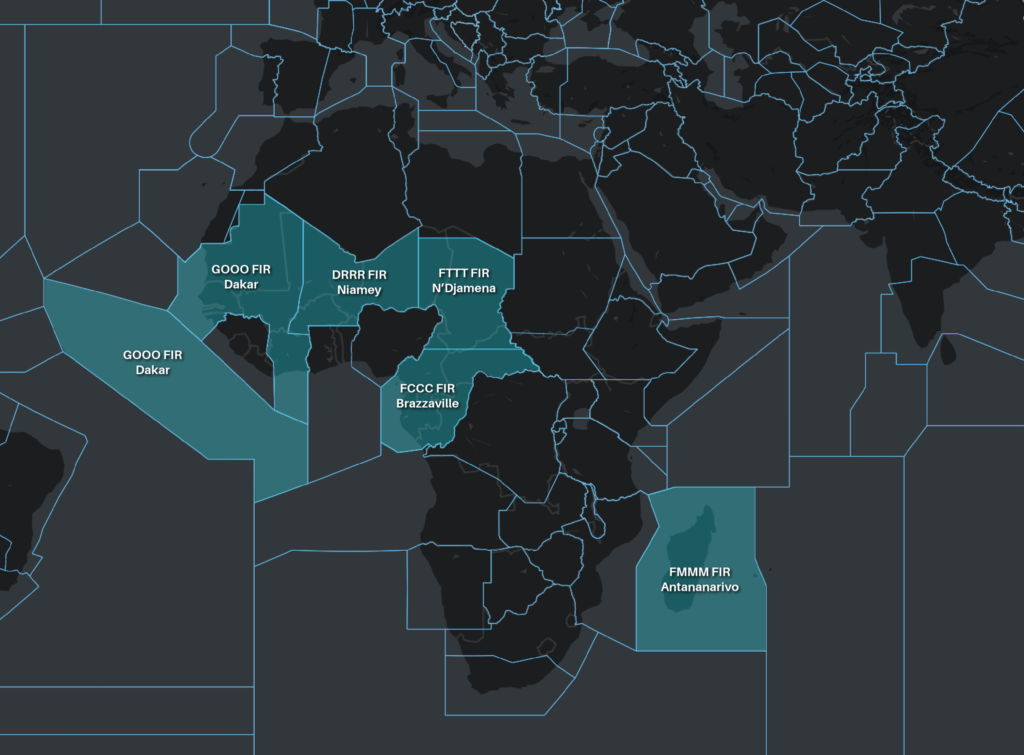
This actually came in during Covid because ASECNA (the air traffic folk for the region) wanted to help with fuel savings and efficiency for all the struggling airlines. Nice of them. Even nicer is they have now extended it until at least October 2022.

If you are flying through the FMMM/Antanarivo, FCCC/Brazzaville, DRRR/Niamey, FTTT/N’Djamena, GOOO/Dakar oceanic or terrestrial FIRs above FL290 then you can basically take directs.

Of course, there are some limits – free routing through restricted airspace will generally not be possible when that airspace is active, and bits of the normal airspace might occasionally not be available either. So you will have to keep an eye out for notams on these.

All the info on Africa’s FRA is published in AIC 27-22 which you can find right here.

The FRA regions of Africa

The United Kingdom

We wrote a big old post on this back in December 2021 because it was the “biggest airspace change ever implemented in the United Kingdom” (their words not ours).

The major-ness of this is that it covers areas in the North Atlantic, Scotland, England and Northern Ireland. There is even a portion in the London UIR which is now FRA.

This FRA is H24 and from FL255-FL660

Europe

We should have started with Europe because they’ve been trailblazing FRA since 2008, when they became the first in the world to implement it. They have a whole implementation plan which you can read up on here.

Once the whole airspace is implemented they reckon it will amount to 1 billion nautical miles saved.

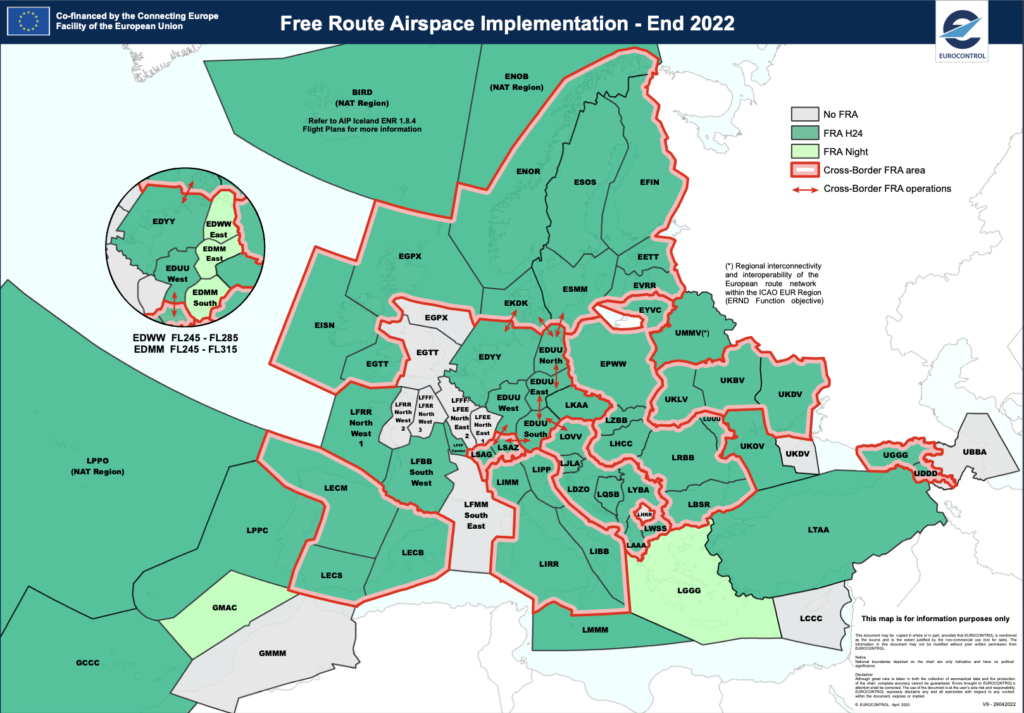
As of the end of 2022, this is what will be available:

By the end of 2022

The Cross-Border FRA is the key stuff because it means you can file those 200nm segments across border. Currently, Belgium, Luxembourg, the Netherlands, Germany, Denmark and Sweden all have cross-border FRA operations. These are increasing through to 2030 (when the whole region should be FRA and cross-border).

2022 is the year it’s (nearly) all happening.

The European Commission has a deadline of 2022 for implementing FRA Europe-wide above FL305.

The legal stuff for the implementation is all in here if you want a read.

They also have a jumbo document with all the planning requirements if you need it.

Maastricht. (Yes, we know this is part of Europe).

Maastricht of course have free route airspace. The Maastricht Upper Control Area (MUAC) has had it from FL245-FL660 since a long time. Here’s their page on it.

Some fairly standard stuff applies:

  • You can’t file within 2.5nm of the lateral boundary
  • Directs do need to connect to SIDs, STARs (if required) 
  • There are published enter and exit point for the MUAC region

They have something new too though.

Now, this isn’t FRA stuff, but is “making routing through airspace more efficient” stuff so we figured a good thing to add in here too.

The big change is the “dualisation” of the N125 route. What is this? Well, its a busy route that used to be bi-directional and have aircraft climbing and descending which was a mess. So now it is two parallel routes.

Here is a picture of it:

N125 dualisation in pink.

Might not look like much, but it impacts a bunch of German airports, some in the Netherlands and also some overflights so if you fly through this area often, it’s worth knowing about.

One last thing in Maastricht…

Maastricht also publishes their own AIRAC brief which basically coincides with the new AIRAC cycle. This doesn’t supersede the AIP, but provides some handy “complementary” information to help with flight planning.

NOPAC FRA

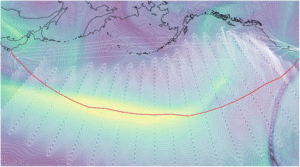
A study was published on this earlier in 2022 and the results showed, unsurprisingly, that there is much better efficiency for flights able to utilise free routing – especially because winds can be utilised better. This isn’t quite the same as Free Route Airspace, its more “free to plan your route for minimum time or fuel burn”.

They saw around 243kg saved on eastbound flights and 469kg on westbounders.

However, they also saw a potential increase in loss of separation events, so a balance in separation and efficiency comes up. To be honest, we aren’t sure what the situation is with this. It seemed to be a trial to see if viable, but no news on whether it will go any further.

Minimum-time route from Tokyo to Los Angeles.

The North Atlantic

The next step for the NAT is more likely to be Nil Tracks than full free route airspace. And there is no sign of nil tracks becoming a permanent thing anytime soon.

Mongolia

They are implementing FRA but it is dependant on China (where entry points are dictated by city to city pairs) and Russia (which is currently not talking to many of their neighbours on aviation related topics).

Russia

Russia has some FRA, but is looking to add more entry and exit points. See above for progress on this though.

The US

The FAA are implementing some High Altitude Redesign plans which you can read all about this Circular.

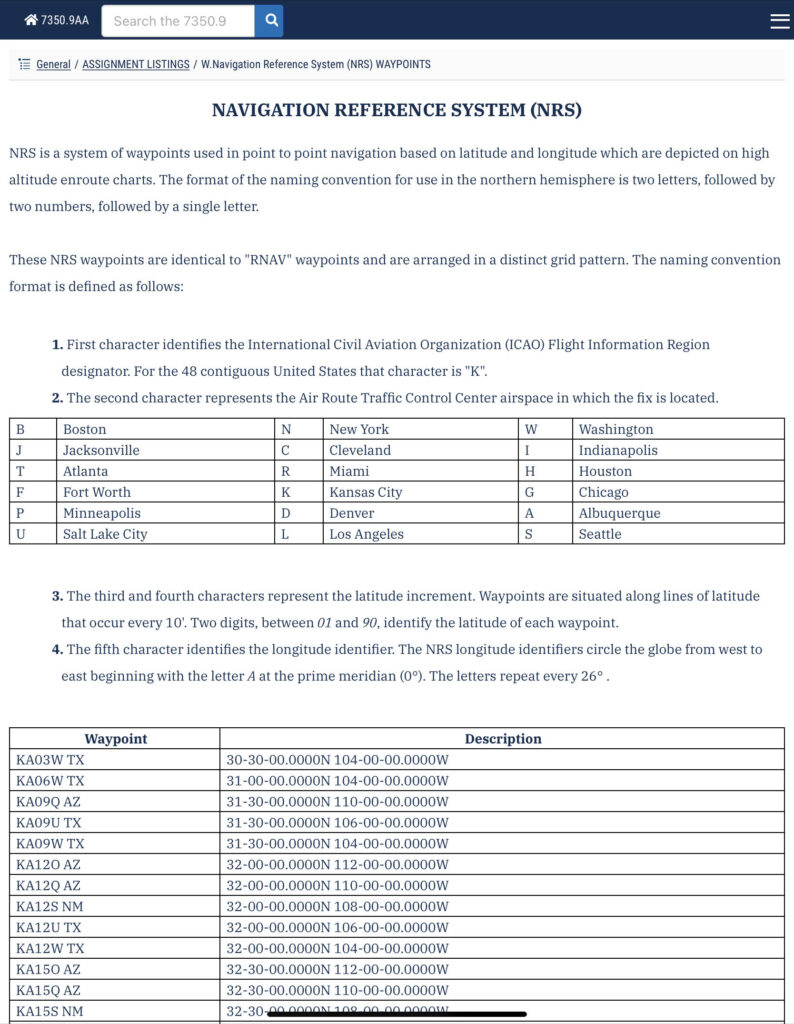
They don’t call it Free Route Airspace, but if you’ve flown in the US you might have noticed you do tend to get a lot of directs. If you want to plan for these a little more ‘officially’ then you need to look out for the (little-known by some) waypoints all around the US known as ‘NRS (National Route System)’ waypoints.

Here is some info on the NRSes. NRS’? NRS’s?

Coming to an airspace near you…

Free Route Airspace is predominantly a ‘Europe Thing’, and a very good one, but a work in progress. If you work in the planning side of things, keep an eye out for changes to European airspace as more FRAs and cross-border routes become available.


New York ATC is grumpy for a reason

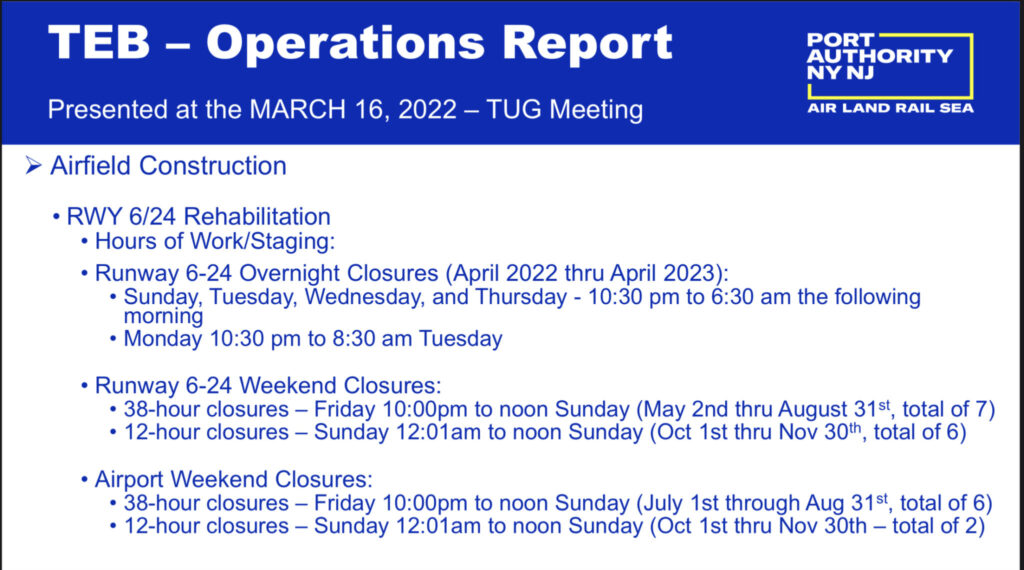
This started off as (and still really is) a very specific post just aimed at folk who operate into KTEB/Teterboro – because the runway 06/24 rehab project has begun!

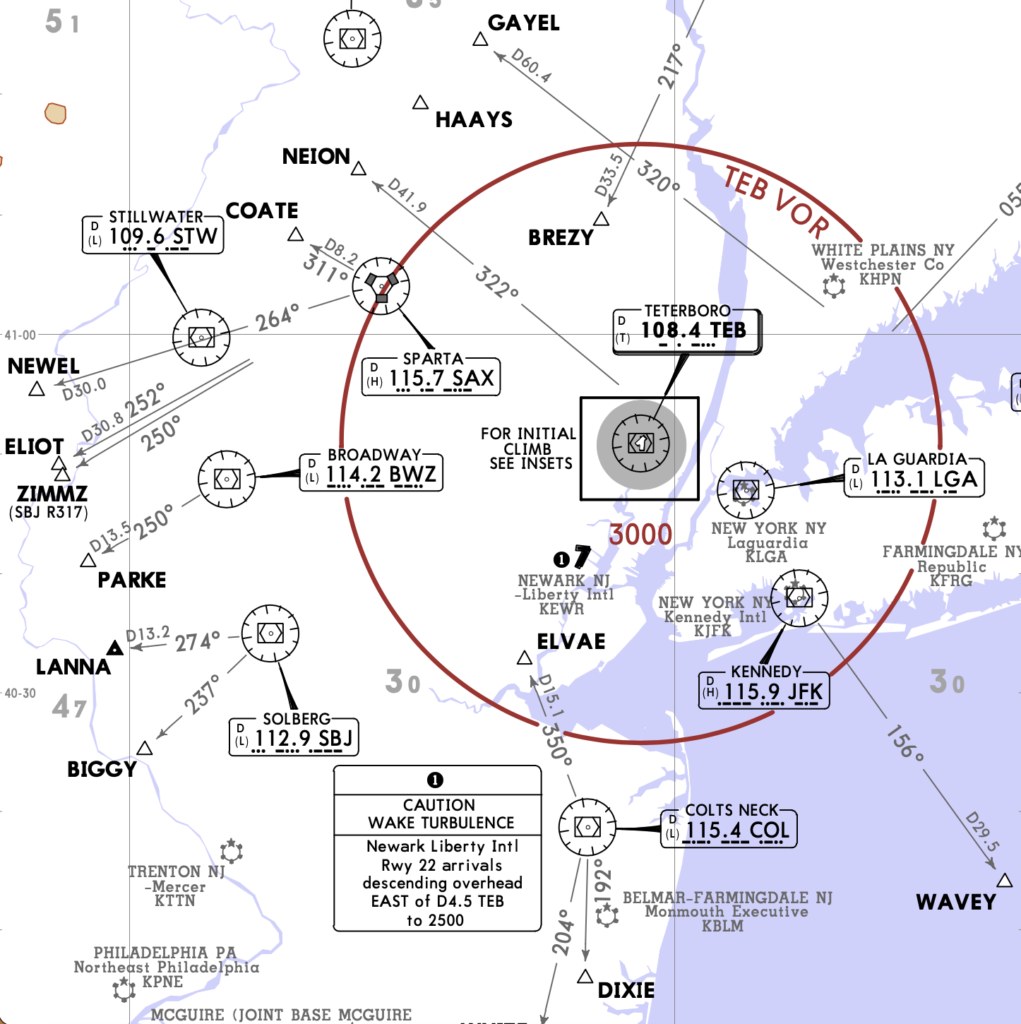
So we copied all the information from the Teterboro User’s Group site and threw it into here. But then we realised the ‘problem’ with KTEB is that it’s very, very close to a lot of other bigger airports…

So if you operate into KEWR/Newark, KLGA/La Guardia or KJFK/New York Kennedy then we reckon it’s worth a read too. Because you might not realise what is going on underneath you and having an idea of the lay of the land (so to speak) is useful for that old SA we all harp on about…

So Teterboro is back in rehab?

They have a whole 11 months of works (to April 2023) planned for runway 06/24. Mostly it means closures, and these are pretty much all planned over night and on weekends.

Overnight closure timings:

  • Sunday, Tuesday, Wednesday, Thursday 22:30 – 06:30
  • Monday 22:30 – 08:30

Weekend Runway closure times and dates:

  • Friday 22:00 – Sunday 12:00 (until August 31)
  • Sunday 12:01 – Sunday 23:59 (until November 30)

Weekend Airport closure times and dates:

  • Friday 22:00 – Sunday 12:00 (July 1 until August 31)
  • Sunday 12:01 – Sunday 23:59 (October 1 to November 30)

But it is more than just the closures that you need to think about if you operate in here.

Arrival Stuff

Northerly Flow:

Depending on wind and weather, and what’s happening at KEWR/Newark you can usually expect an ILS 6 with a Circle to Rwy 1 or the RNAV (GPS) X Rwy 6

They are trying to bring in lateral and vertical guidance for Rwy 1. Watch this space. The circle to Rwy 1 is a nasty little thing so check out their guidance on it.

Departure Stuff

Southerly Flow

If its a southerly flow you can expect the Teterboro 4 SID which means delays.

Why?

Because they try to keep a 10nm gap between KEWR/Newark 22L arrivals and KTEB 19 departures. Which is why there is also the Dalton 2 visual departure (which only needs a 5nm gap).

Expect an infinite delay…

Well, that sounds bad. It doesn’t actually necessarily mean a lengthy delay though, particularly if you can accept the Dalton 2. The Dalton 2 keeps you down at 1,300’ and 180 knots in VFR until clear of all the KEWR traffic then you can expect a transition to an IFR clearance.

There is a meeting!

Yep, there is, on June 15 at 10:00 am EST. Organised through the Teterboro Users Group (TUG) which we strongly recommend you getting yourself in on if you do operate here and aren’t already in on it.

What else is going on down there though?

Well, like we mentioned, you’ve got several major international airports to consider as well, and some smaller executive airports and a military base. We counted and found more than 10 just in the immediate proximity to Teterboro.

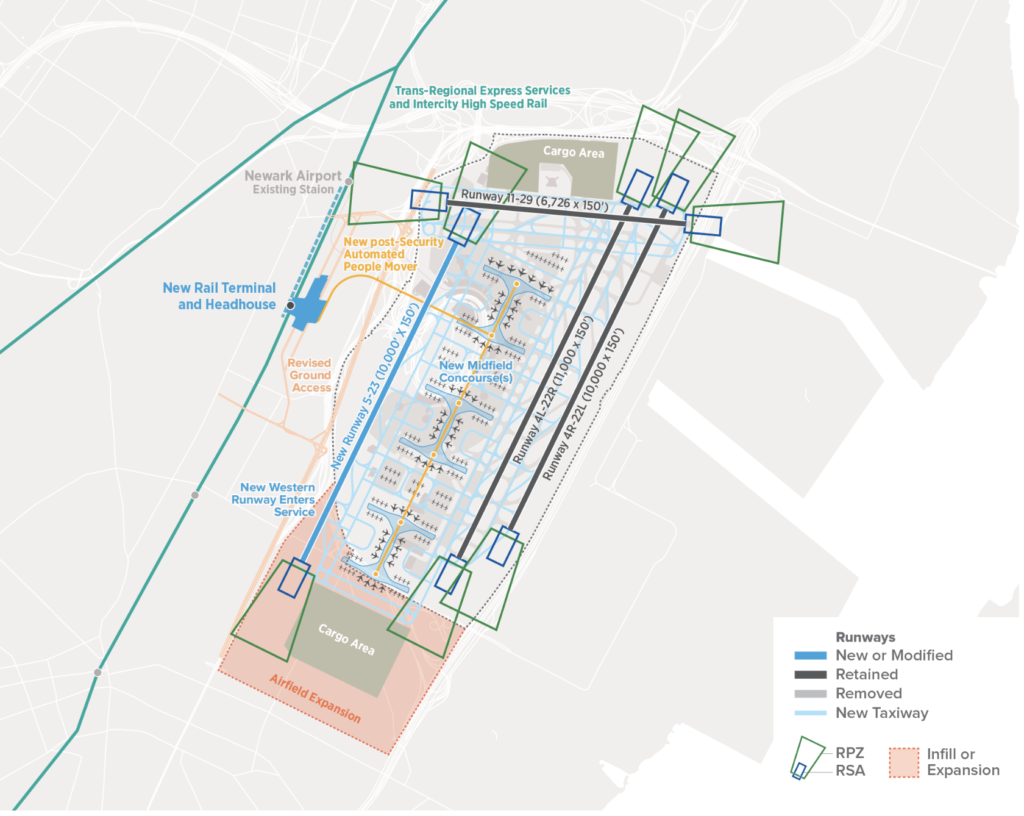
KJFK, KEWR and KLGA have the dubious titles of ranking first, third, and fourth for worst delays in the nation. They are looking at ways to improve this, but most of them involve building more runways which won’t necessarily help poor old KTEB stuck underneath the every growing traffic flow.

Then there is the weather.

The east coast of the US gets hit with some pretty heavy storms. In April, a single day of bad weather saw over 4500 flights into the east coast delayed and the knock on effect across the busy airspace is considerable.


OPSCHAT Summary June 7

Hi Members,

We had another busy OPSCHAT call this week with Chris in the hosting seat, along with returning Quiz Master Dave and Rebecca.

You can watch the full replay on your Member’s Dashboard.

Here’s a roundup of what we talked about:

The Big Stuff

  • Bahamas – The Click2Clear (fast track customs clearance) roll out for everyone is no more… indefinitely. Because it was confusing. We’re waiting for clarification on the rules and a new roll out date.
  • Antigua – TMA overflights are being denied (all the bits below FL245). ‘Cross border’ permits are needed. Look out for the Notam on it.
  • America – A big political summit is happening, four TFRs across LA basin affecting access to airports here especially KBUR/Burbank and KVNY/Van Nuys ,so look out for the special procedures.
  • Europe (in general) – World Fuel Service releases. Something is going on with them. Possibly a fuel shortage or a staff shortage? We ain’t sure. But there are a few airports impacted and we think it extends beyond WFS. LFPB/Le Bourget, LIML/Milan Linate… not accepting various cards including WFS, but other airports across France and Italy have reported problems.
  • Italy – Strike season. ATC strike June 8 for Milan ATC and then a general airport worker strike on June 16.
  • North Korea – eight unannounced launches in one go! Keep an eye on things, and don’t overfly. safeairspace.net is where we report the changes.

Unsolved mysteries

Canada FTL Regulations in Italy – Yes, you might get ramped checked. Yes, they might check your duty hours. But the general consensus seems to be that if it is state approved, and in accordance with your company’s ops manuals, then you’re probably A-OK. They’re generally just checking everything is order, not digging deep into the specifics.

A question about the chunk of restricted airspace over the Atlantic and why – maybe because of military exercises? We’re looking into it.

OPSQUIZ

Dave was back to host this week’s OPSQUIZ. Congrats to this week’s winner, PHIL! A prize will wings its way to you. Here’s a sample question for this week: What are the new standard symbols on US airport charts to show hotspots?

As always, we’re here to help with any operational support, info or questions. You can reach us on news@ops.group, or via the slack channels #flightops and #questions.

To watch the replay of the OPSCHAT in full: head over to the dashboard. We hold a new one every week on Tuesdays at 2000z, click here to register and join us live. See you next week!


Sri Lanka Asks All Flights To Carry Extra Fuel

Sri Lanka, and Colombo’s VCBI/Bandaranaike airport is a fairly key spot for aircraft requiring alternates for the likes of the Maldives, and an en-route and fuel stop option for aircraft routing to the Far East.

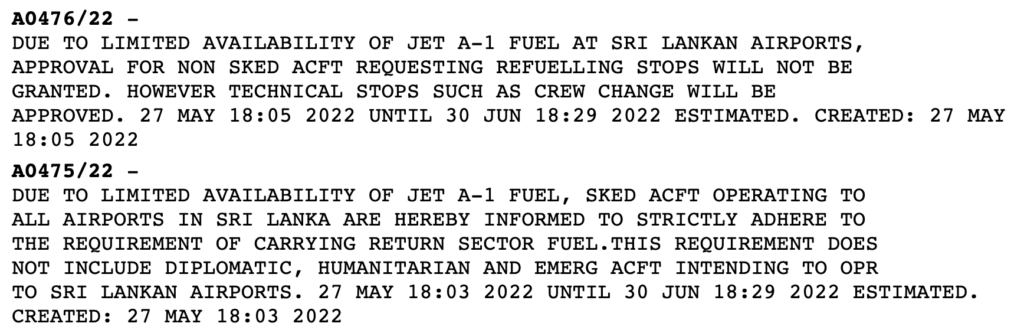
But there is growing political and economic instability, and this has already led to one European carrier cancelling flights to Sri Lanka, and to a Notam advising fuel availability issues.

Here is an overview of the current situation and the possible implications for international aviation.

What’s been happening?

Sri Lanka is undergoing its worst economic crisis since gaining independence in 1948 and also just got a new Prime Minister.

Tourism was a major part of the country’s economy. On top of this, the country is unable to meet the rising global gas and oil prices. There is a shortage of cash and so a shortage of basic necessities in the country, and this has led to a lot of unrest.

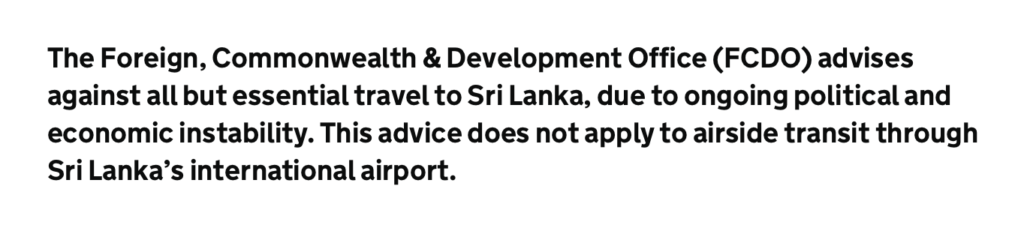
Most major authorities advise against all but essential travel to Sri Lanka because of increasingly violent protests and riots. These have been building since March 2022, with many through May focused in Colombo.

The Government impose local restrictions and curfews at short notice and although the state of emergency has been lifted, there is still a heightened military presence.

There is a general fuel shortage across the country which means long queues at gas stations, and long waits for transport. If you plan on having crew layover this might be something to think about.

There were also several big protests through April and May that saw roads to Colombo’s VCBI/Bandaranaike and VCCC/Ratmalana airports blocked, in an attempt to stop parliamentarians accessing the main airport.

There have been an increasing number of power cuts, and with that, loss of internet services, across parts of the country. Contact with agents and permit requests might be disrupted because of this.

The Aviation Situation

One European carrier has cancelled operations into Sri Lanka because of security concerns. This is just because of security concerns though, not direct safety concerns.

There is however also a fuel shortage. Sri Lanka has issued notams under the VCCF code saying that all flights to airports in the country should tanker fuel inbound. Local agents report that some fuel may be available on a case-by-case basis, but don’t count on it.

Emirates is reportedly now tankering fuel from Dubai, and Singapore Airlines is carrying extra fuel on its flights to the country. SriLankan Airlines has even made fuel stops in India to refuel some of its flights, with more stops planned here in the coming days.

Fuel Stop Options

VCBI/Bandaranaike is a very handy airport for fuel stops, and as an en-route alternate, and alternate the Maldives. The monsoon season is starting soon, and the availability of this airport for possible fuel (tech) stops means it might be time to look at the other options in the area.

So what have you got?

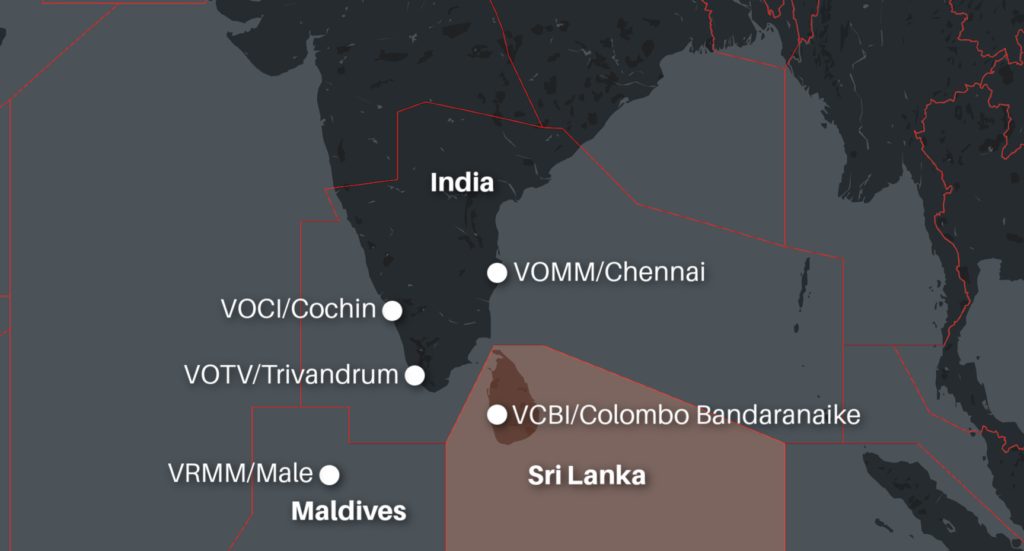
The southern region India is as prone to bad weather during the monsoon season as anywhere else, but you do have VOMM/Chennai on the east coast, VOTV/Trivandrum in the southwest and VOCI/Cochin on the west coast. VABB/Mumbai lies further to the northwest.

VOTV/Trivandrum seems to be the big favourite for fuel stopping. You can get in touch with the airport directly on tm-d-tvm@aai.aero. VVIP Handlers are one of the main executive handling agents. Talk to them on +91 80106 86868 / ops@vvipflight.com or try Hindustan Petroleum Corp direct on mktghqo@hpcl.in (they’re the main fuel supplier at the airport).

VRMM/Male is your main airport in the Maldives.

What is the level of concern right now?

The current risk is primarily with fuel availability and security. However, tensions are high within the country and the level of economic and political unrest does need to be watched.


South China Sea Dispute: Impact To Ops

The South China Sea dispute (don’t be fooled by the sea’s name) is between a bunch of the states in the region including, of course, China. It isn’t so much over who owns it, but how much each bordering state owns.

The reason they all want as much as they can get? Well, it’s an important bit of sea for the movement of maritime trade, and for general military control.

Who has been doing what?

There has been a lot of ‘Cabbage tactics’, ‘Salami Slicing’ and sneaky island building going on by several of the nations for quite some time.

Wondering what ‘salami slicing’ and ‘cabbage tactics’ are? They are when you do small things that all add up to bigger implications, and when you start ‘wrapping’ your military around stuff.

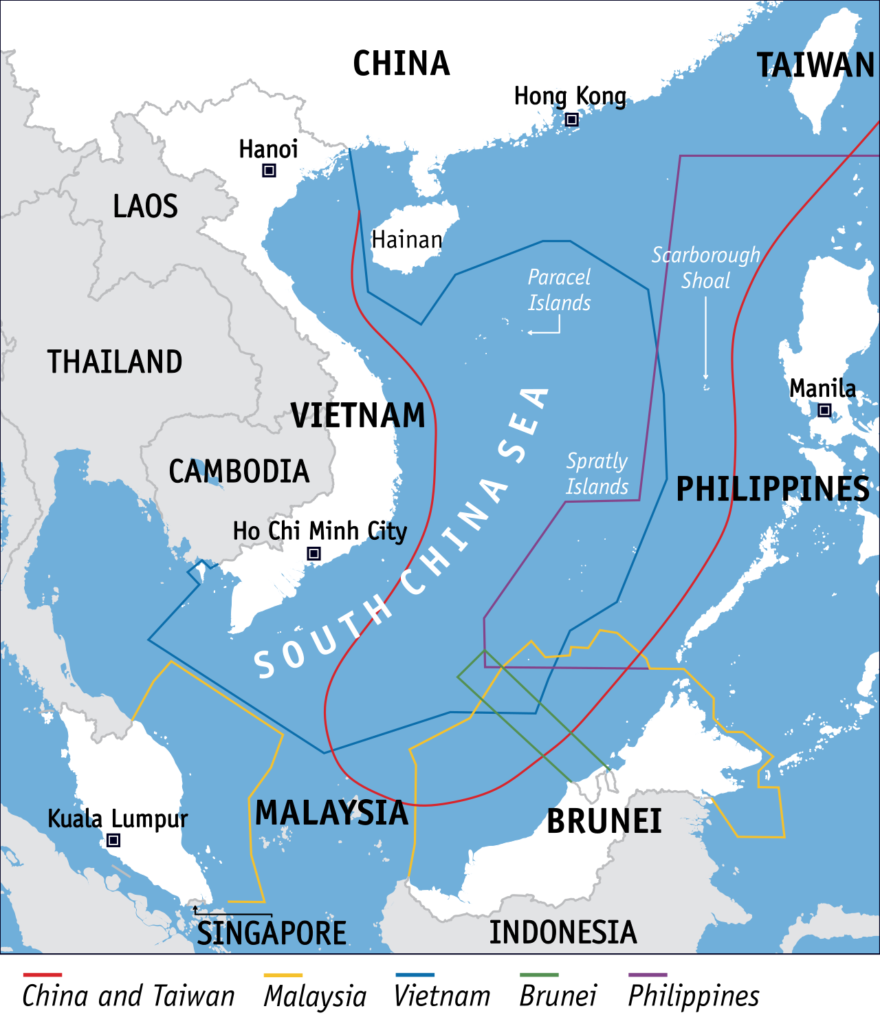
Here’s what each country’s territorial claims in the region looks like:

Why are we more concerned now?

The dispute has been going on for a long time and has rarely had much impact on aviation. However, China have recently been upping the game, carrying out large numbers of military drills across the region. We wrote about some of these a while back.

The majority of these are maritime only and the primary impact for flights ops is really just an increase in offshore helicopter traffic. Occasionally the exclusion zones have impacted aviation traffic as well because the upper limits are not always clear, and they often lie close to coastal airports.

There are drills planned through the start of June.

China are militarising islands.

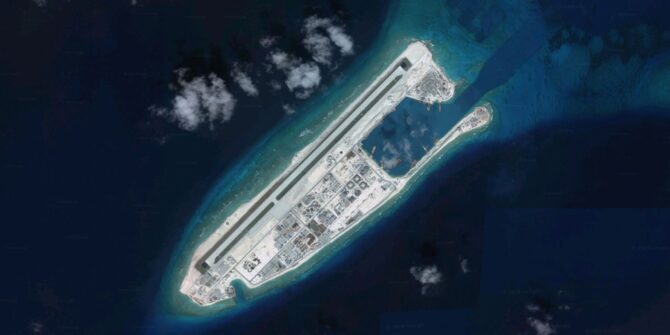
China are rumoured to have ‘fully militarised’ several islands in the South China Sea. These are purpose built islands (part of that sneaky island building strategy) designed to increase the Chinese military presence, and so control, in the region.

The militarisation is a potentially a cause for concern because the equipment on these includes anti-aircraft missile systems, laser and jamming equipment, and fighter jets.

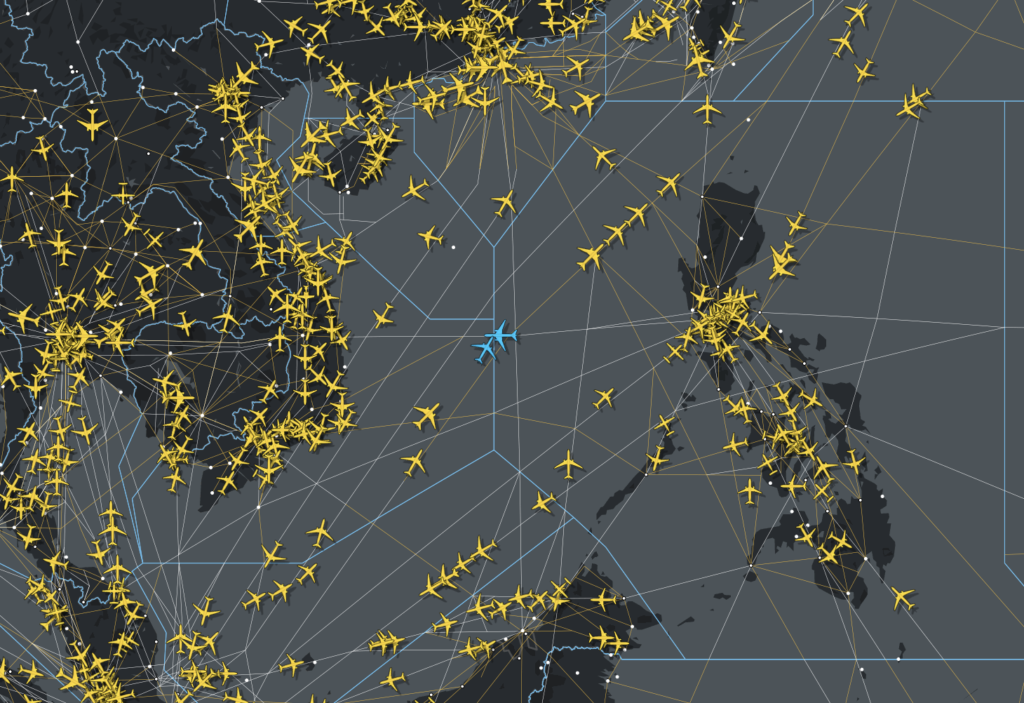
The region is a relatively busy overflight area, with numerous airways as well as the traffic routing in and out of the surrounding countries.

Previous incidents.

In 2015, an Australian RAAF aircraft was carrying out “freedom of navigation” exercises over the China Sea in international airspace, but China responded with threats against them via state owned media sites, ‘strongly advising’ Australia that such flights were not welcome.

In 2015, a BBC News crew flew over some of China’s militarised islands in a US military aircraft and the order on the radio was less than friendly.

Was a missile launched?

A video has been circulating this week, reportedly showing a missile fired into a region with commercial air traffic. The video claims to have been filmed from within an aircraft told by ATC to immediately turn 90 degrees to move out of the missile’s path.

It is unverified and the airline reportedly involved have denied it occurred.

Drills were announced from May 22-27, but these referred to maritime exclusion zones only, and made no mention of possible missile launches or airspace hazards. There were no notams issued on the day for any launches and the lack of any additional information suggests it may be a fake video.

Is there a risk here?

There is a heightened military presence, an ongoing dispute and tensions are increased however there is no verified indication that the risk to commercial operations is increased at this time.

If operating in the region, maintain a listening watch on 121.5 at all times and ensure you are aware of contingency procedures in case of an emergency.


What we’re seein’ in the Caribbean

A bunch of Caribbean countries are changing things up to ‘harmonise’ themselves with ICAO SARPS. That’s Standards and Recommended Practices.

Here’s what we know.

You need TCAS 7.1

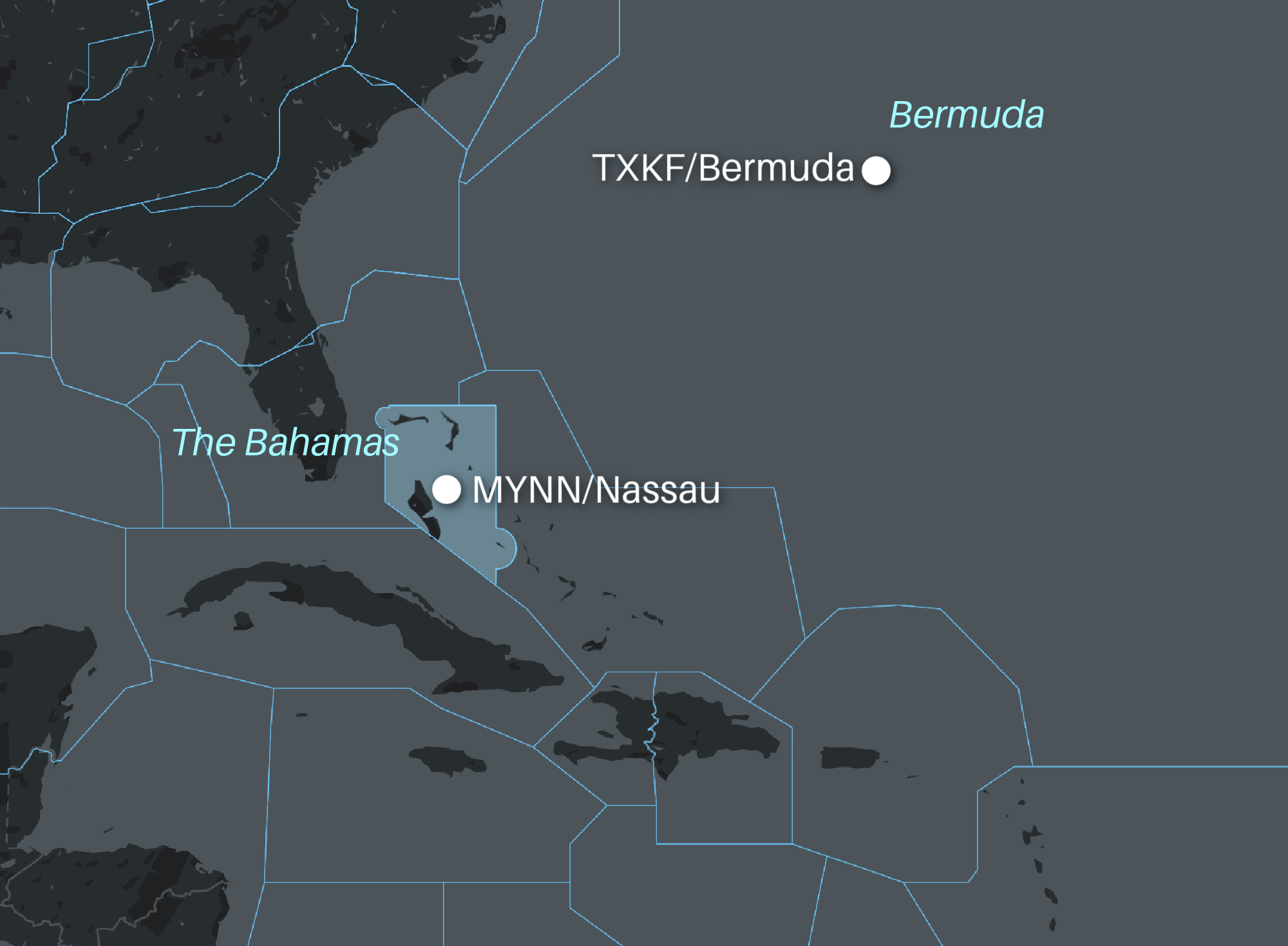
This is a Bermudian requirement. Bermuda is of course actually part of Great Britain, sort of (they are a British overseas territory), so by doing what ICAO say, they are fitting with the UK CAA regulations which makes it all a bit simpler.

So, if you want to visit Bermuda in a turbine-engined airplane under FAR 121, 135 or 91K rules which weighs more than 5700kg (12,500 lb) or is authorised to carry more than 19 passengers then you’ll need ACAS II (that’s TCAS II Version 7.1)

If you fly a turbine-engined airplane involved in FAR 91 or non-commercial operations, then the specifications to know are certified take-off mass more than 33,000 lbs (15,000kg) or passengers more than 30, with your airworthiness certificate first issued after January 1st 2007.

When will you need it?

April 1st 2023.

Where’s the official notice?

It is right here – OPSN 03-22 and it says exactly what we said but on official Bermudian BCAA headed paper.

You can also get in touch via email with them directly if you have any questions: foreignoperatorpermit@bcaa.bm

You said several countries?

We did. The Bahamas also have some changes coming in. Actually, they came in in 2021, but with Covid you might not have noticed them so here’s a refresher.

They brought our their Civil Aviation Act of 2021, published in their ‘Extraordinary Official Gazette The Bahamas’.

What it says is that foreign commercial operators will need a Bahamian Air Transport License to fly there. To get this you need to be safe, secure and meet some financial obligations. These are listed in Section 15.

Section 16, Subsection 2 Part 1 clarifies a little point about foreign operators – it doesn’t apply to folk overflying or even landing if you don’t have passengers, cargo or mail that gets off in the Bahamas.

There are also a lot of pages on what will happen if you don’t abide by the rules etc etc so it is worth a read if you haven’t been into the Bahamas since February 16th 2021.

Is that it?

Yes, for now, but more things will hopefully come in at some point.

All this started to come about in 2018 during a big meeting between CARICOM (all the Caribbean member states) and ICAO where they talked about it. You can read the 2018 ICAO press release here if you want to.


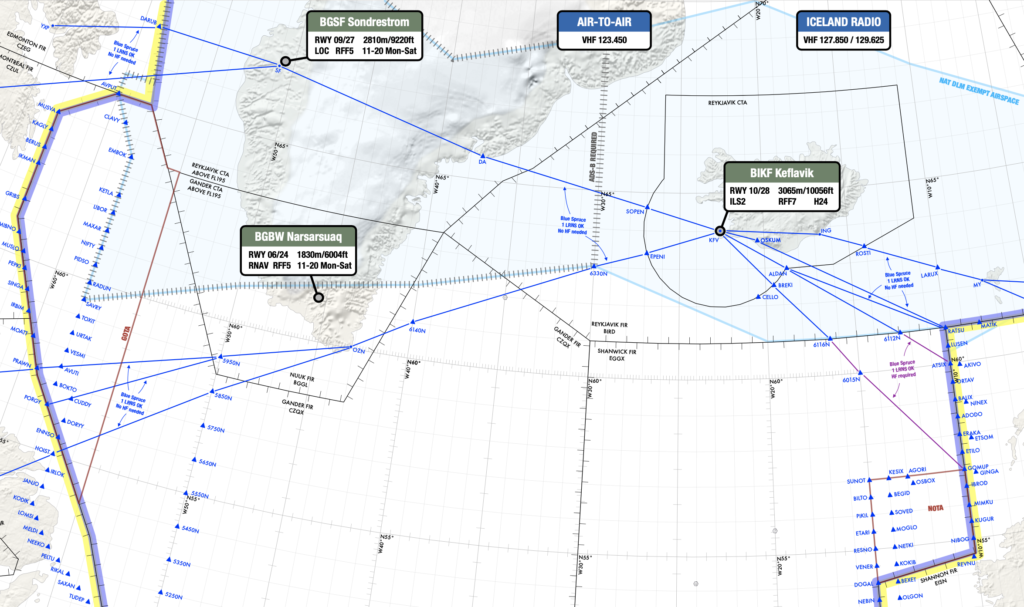
NAT Conundrums: Volume II

Questions about the North Atlantic pop up a lot, and every time we think we’ve got all the answers, someone else manages to come up with a question we can’t (immediately) answer.

We wrote NAT Conundrums: Volume I last year, which you can read here. That post covered the following three conundrums:

  1. To SLOP, or not to SLOP?
  2. What’s the difference between the NAT Region and the NAT HLA?
  3. Can I fly across the North Atlantic without Datalink?

So today we thought we’d take a look at three more questions we’ve seen recently including an interesting ‘what to do if…?’ scenario.

4. Do you need to plot on Blue Spruce Routes?

Plotting is less drawing your position on a big paper map and more confirming there are no errors with your navigation, which means you can do this on paper, or via some sort of electronic system.

The reason we want to check for errors is because the North Atlantic is a big place, without radar, (although ADS-B is helping with this a lot now), and we are very reliant on our GPS navigation systems. Some routes use just lat/long points meaning there is an added chance of input error by the pilot. So we check where we are and make sure it is where we should be. 

But the Blue Spruce Routes are defined routes so there’s no risk? Well, no, there still is, because you’re still flying over big chunks of ocean without much backup. So checking for errors is still a very good idea.

5. Do we still fly Weather Contingency Procedures on Blue Spruce routes?

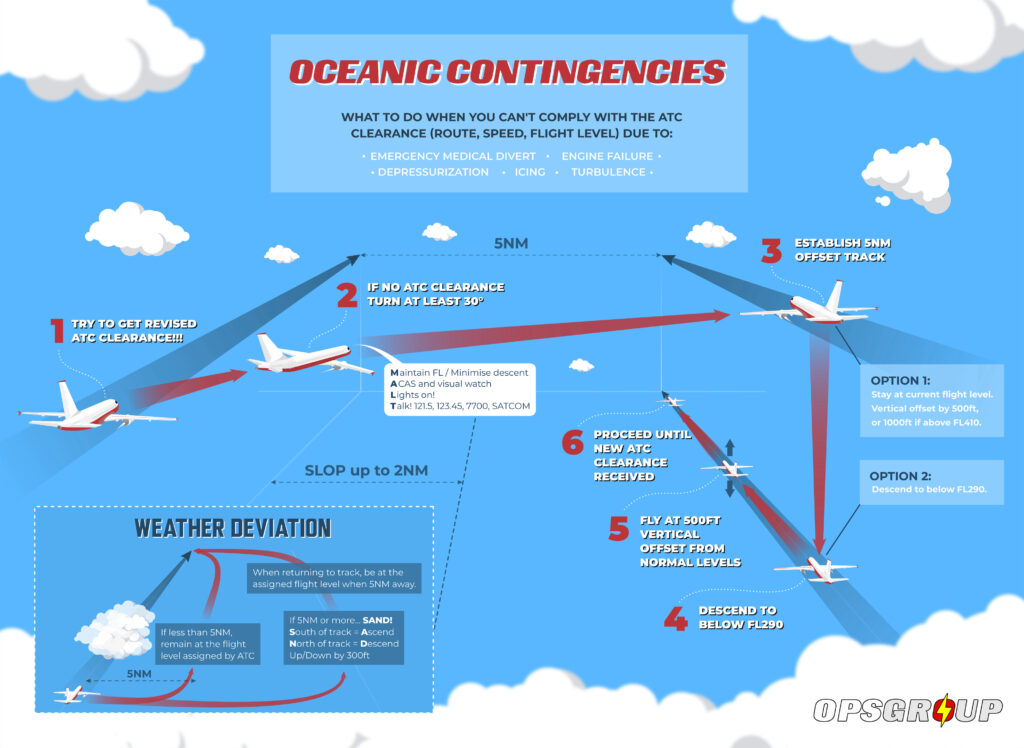
The Weather Contingency Procedures are more oceanic contingency procedures than NAT HLA specific one.

In fact, since Nov 2020, there has been one standard set of Contingency and Weather Deviation Procedures for all oceanic airspace worldwide – and there are no special exemptions for the Blue Spruce routes.

So they are a good thing to do if you encounter a weather situation and cannot get a re-clearance from ATC.

Which leads us to the big question…

6. When can we disregard an ATC clearance and follow the contingency procedure instead?

Let’s set the scene.

You’re flying in the NAT and there is a big old storm up ahead which you need to deviate around. Obviously, whatever happens, you can’t fly into it.

So what do you do?

Well, NAT Doc 007 provides you with some guidance: Apply the weather avoidance contingency procedures.

They are fairly straightforward. If the deviation you need will be less than 5nm then stay at your level, if its more than 5nm, then you’ll need to climb or descend 300’ depending on which way you’re avoiding. You can use ‘SAND’ for that – turning south? Ascend. Turning north? Descend.

Which way to turn depends on whether there are busy tracks to the left or right of you, and how much you’ll need to deviate by based on storm position (and wind). Use your TCAS and some airmanship on this.

Right, scene set. So, do you just launch straight into the contingencies?

No. It comes down to whether or not you can get a clearance from ATC.


You can keep this fairly simple as well:

  1. You can’t get a clearance because there just ain’t time. In this case, it is probably best to declare a PAN and go straight into the avoidance contingency procedure. Don’t delay waiting for ATC clearance if its not safe. Aviate and avoid the weather, talk to ATC as you do it.
  2. What if you can’t get a clearance because you just can’t get hold of ATC? Another easy one – follow the contingency procedure, but keep transmitting what you’re doing so other traffic know.
  3. What if ATC can’t give you a clearance? This might happen if it is particularly busy out, perhaps other aircraft are already avoiding, and so they can’t guarantee separation. In this case, they should inform you of the issue and ask you what your intentions are. Which will probably be following that contingency procedure, because you obviously aren’t going to fly into the storm.

Which brings up to situation number 4. The less simple one.

  1. What to do if ATC give you a clearance that isn’t acceptable to you? First up, if you have time to request a re-clearance then do this, advising why their first one doesn’t work for you. If you don’t have time, then a PAN call with your intentions (contingency procedure) is going to be the way to go. 

But remember – you need a good reason to disregard an ATC clearance like an immediate threat to safety. You can’t just do it because they told you to go right and it means a bigger detour than left, or because you just don’t fancy a temporary level change.

This is where the conundrum comes in – because folk have different views on what is an acceptable reason for disregarding a clearance.

  • Obvious and immediate threat to safety? Do whatever you need to do to stay safe
  • Might have a future fuel concern because of a larger deviation, or a level change? Well, it’s not immediate and the traffic conflict you get yourself into by disregarding may be the bigger priority here…

We asked around.

The general consensus was that fuel is unlikely to constitute enough of an ‘immediate threat’ to be an acceptable reason. Things like ETOPS fuel are for dispatch planning so is not particularly relevant in flight. However, if you’ve already burned through your contingency, and are already running some calculations because the fuel is looking tight, then a ‘Pan’ call and doing what you need to do might be acceptable.

What does Doc 007 actually say?

It says the pilot should either follow the clearance or state their intentions.

There is a level of ambiguity here because there is always that need for the Commander to be able to decide another course of action is safer. A good way of thinking about it is that a crew never have to follow the letter of the law – it isn’t there just to be the law, it is there to try and keep us safe – so doing what is most safe, with the same intent for safety in mind, is always acceptable.

What do other rules and regulations say?

The US FARs have this as fairly general rules:

’91.123 Compliance with ATC clearances and instructions.

(a) When an ATC clearance has been obtained, no pilot in command may deviate from that clearance unless an amended clearance is obtained, an emergency exists, or the deviation is in response to a traffic alert and collision avoidance system resolution advisory;

(Something about changing from IFR to VFR, and then -)

(b) Except in an emergency, no person may operate an aircraft contrary to an ATC instruction in an area in which air traffic control is exercised.’

What did a helpful person in the North Atlantic ICAO office say?

Well, much the same. The contingencies are there to account for situations where ATC is unable to provide a clearance, or where the clearance they can provide doesn’t solve the flight’s problem. In these cases, the pilots should advise ATC their intentions and do what they need to do to stay safe.

Again, no clear line drawn as to where ‘staying safe’ might necessarily fall, particularly when it is a concern over fuel.

They did say they would never issue a weather deviation clearance requiring a climb without a ‘negotiation’ first.

So, the answer is…

Well, we don’t have it. At least not a clear cut, black and white one.

The general view seems to be that it needs to be a judgement call. If you have a genuine safety reason that makes you question whether you should be following an ATC clearance, then declare a PAN, state your intentions, and do what you must.

Just be comfortable that your decision does still maintain that same intent for safety. Definitely going to result in a low fuel situation? Or just don’t fancy being stuck at a lower level? There is a line, but where you set it might come down to that flight, on that day, in those specific circumstances.


Get in the know about the Farnborough Airshow

Around since 1948, the Farnborough International Airshow is one of the biggest on the airshow calendar, but like the rest of the world, it was cancelled through Covid.

Now, in 2022, it is back! So here is what you need to know about where it is and how it might impact your operations.

What’s the date for the diary?

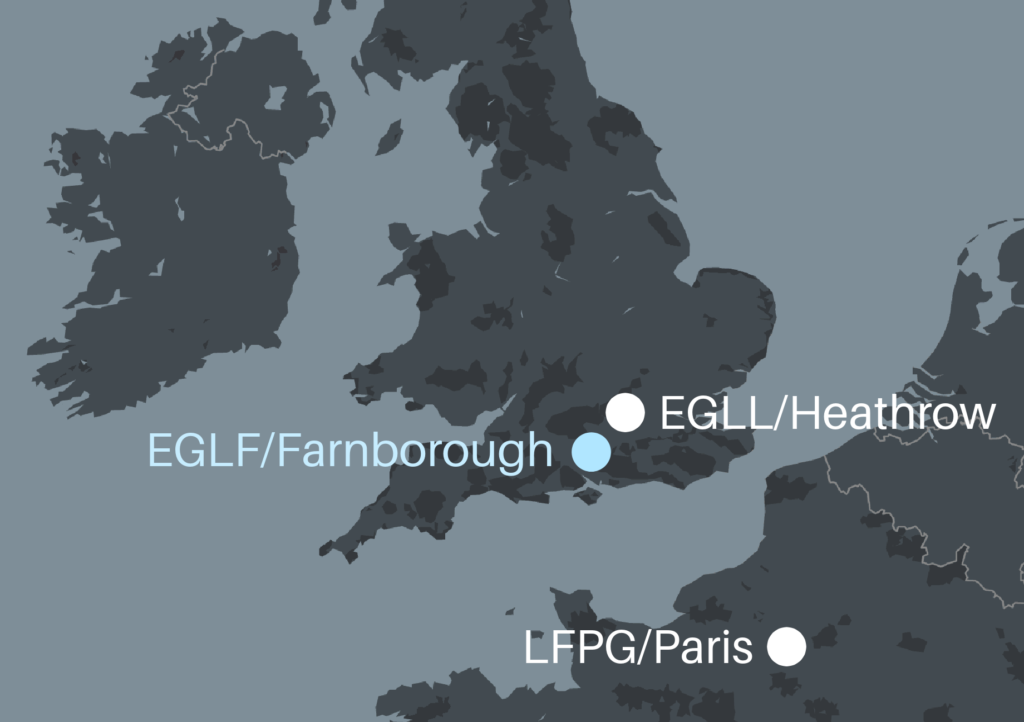
The show ‘takes off’ on the 18th July and runs to the 22nd July at EGLF/Farnborough in the south of the UK.

Farnborough Airport is actually one of the leading business airports in Europe and is only about 20 miles from EGLL/Heathrow airport.

You can read about the airshow here  on the official Airshow website.

What’s the deal while the show is on?

The airport is going to be pretty much off limits during the Airshow, unless you and your airplane are part of it.

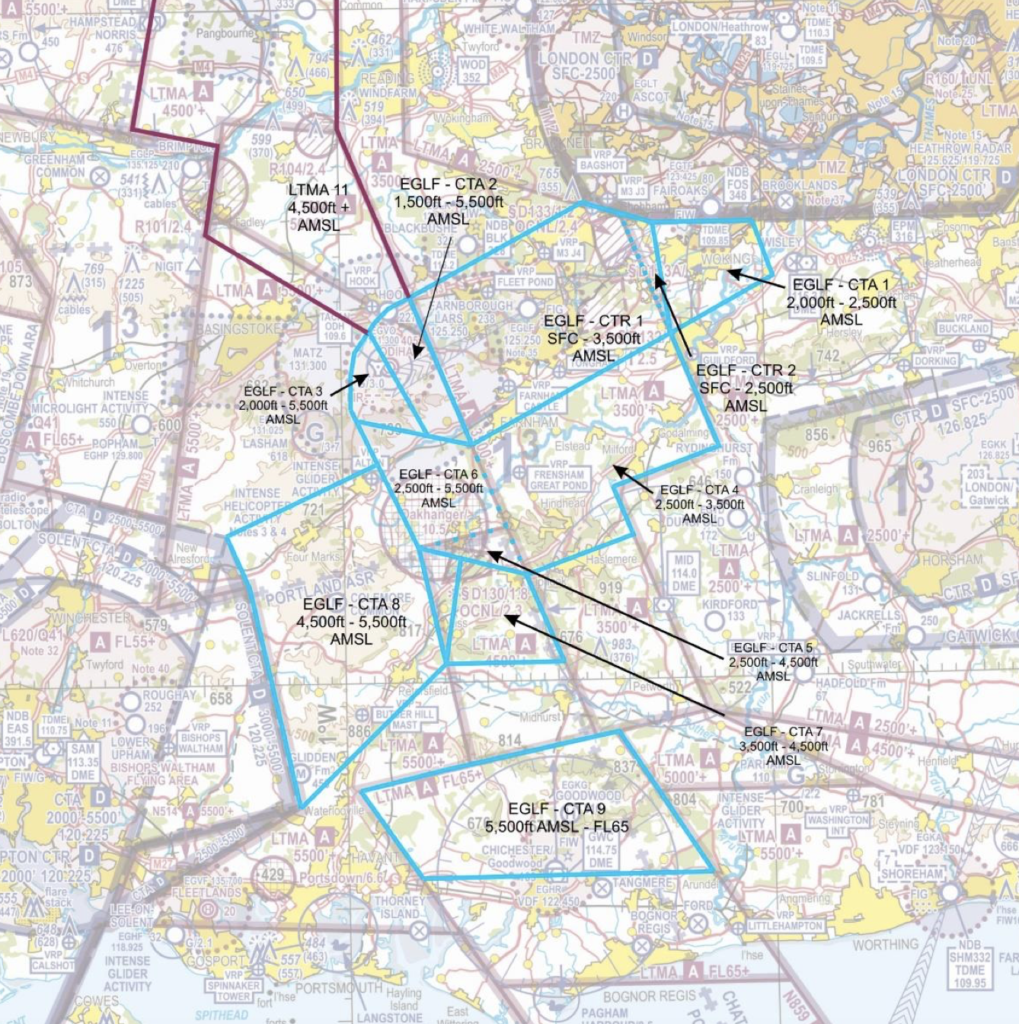
You can also expect some airspace restrictions around it, for all those aerial displays. Most of the airspace restrictions are generally only up to lower levels like 5500’. These will be published in Notams nearer the time.

They often set up temporary holding pattern areas for airshow aircraft as well. If you are operating in the area it is worth being aware of where these are – publishing in AIC update nearer the event.

Here is some info on this – display times (when you won’t be able to book to operate on), delay times (or hen they’re most likely) and a notice about the ILS (it will be turned off on the 9th to the 25th so you’ll be doing visual approaches during those dates).

Got any contacts for us?

For all FBO needs, you can talk directly with the friendly folk at Farnborough airport –

TAG Farnborough can also offer some aviation services –

GAMA Aviation can too –

Tell us more about the airport

Farnborough runway 06/24 is an 8005’ (2440m) x 46m strip with CAT I ILS approach capability. They have RFF6 and no slot restrictions.

While it is an international airport with customs, there is no US pre-clearance here.

The airspace is a bit of a challenge – Farnborough sits below some very congested Class A airspace, and there are danger and restricted areas near the airport and noise sensitive areas to know about.

There are also several smaller airports in the area with GA and glider activity.

There is loads of info to be found in here about all things Farnborough Airport if you want the official AIP info on it (we say official, but it might be out of date, so this is just for info).

Farnborough airspace changes

Might be a good spot to drop this in, because there have been some airspace changes around Farnborough since 2020, so if you’ve not flown in recently (due Covid) you’ll need to get up to speed on these before you do.

Farnborough used to operate in uncontrolled airspace, which meant a lot of uncontrolled aircraft zooming about, which made it hard to have consistent flight paths into the airport.

This has now changed – Farnborough is now in Class D airspace, and has RNAV procedures (requiring RNAV 1 and 5).

The AIC is available here for a little read.

Any other big shows?

Usually considered the biggest, the Paris Airshow is another one to look out for. This is only taking place in 2023 though, from 19-25 June. In fact, it alternates years with Farnborough.


Park It! A look at some of Europe’s busiest summer airports

Europe in the summer is a lovely thing. Sunshine, beaches, ice cream… and then the downside – parking restrictions!

Let’s talk about some of those known airports that always have parking problems – where they are, what your options are and anything else which we can think of that might help.

Why so tight?

We mean parking spots for private and corporate biz jets, not the swim trunks of French beaches.

Anyway, the problem is a simple one – everyone wants to go where it is nice, which means a lot of traffic converging on places which have minimal parking. Add on some summer sporting events and a few summits are it gets even tighter.

So here is a list of (some of) the places to think about in advance.

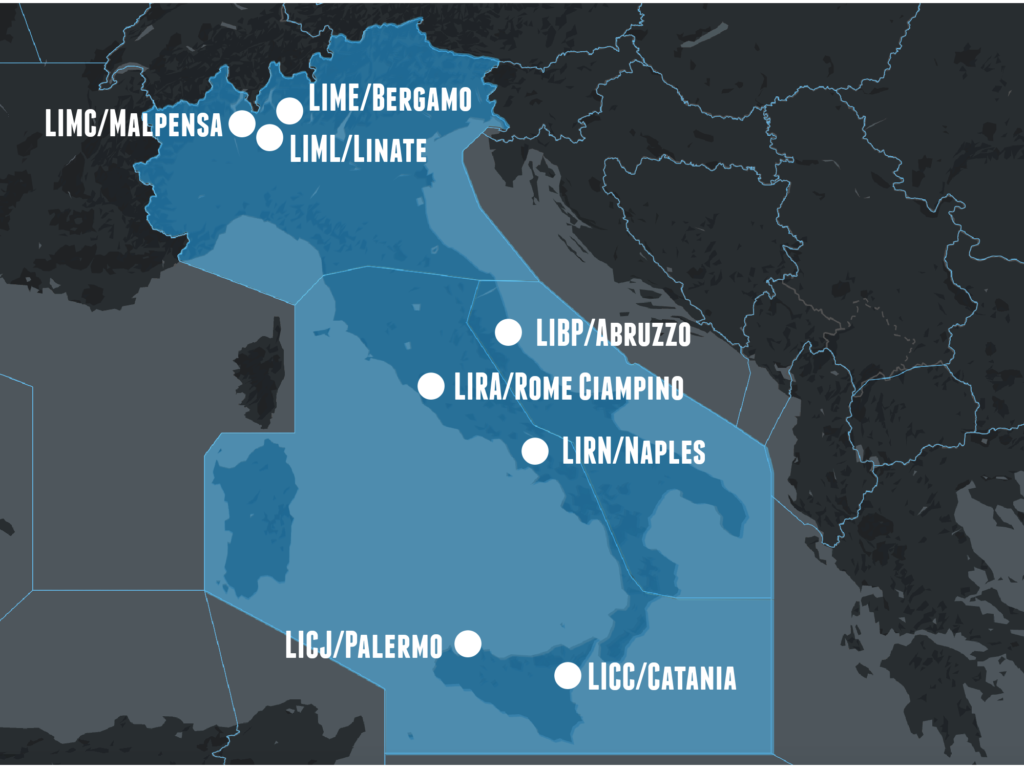
ITALY

Italy is a hugely popular tourist destination and during peak season many of its smaller airports fill up as fast as an elephant at a breakfast buffet.

In addition, some of the southern airports have been used in the past for overflow parking for the equally busy Greek airports.

Peak season is generally July through September.

You also have the Italian Grand Prix September 9-11 to contend with. This is held at the Monza circuit (south of Lake Como) so your Milan airports, particularly LIMC/Malpensa, are going to see extra traffic around this time.

Italy have quite specific charter permit rules. For non-EU registered aircraft which are applying for the first time, or which haven’t operated in during the last two seasons, then you’re going to want to submit well in advance. It can take 20-45 days for approvals to be issued.

Naples

LIRN/Naples generally only allow turnarounds during their peak weeks – overnight parking is hard to come by.

Their traffic is predominantly international scheduled aircraft (64%), domestic scheduled (32%) and then  charter and general aviation/transits making up the last few percent. The totals have risen from just over 6000 total in 2015 to just under 11,000 (10,860) in 2019.

So this airport has seen a major increase in traffic, without a major increase in capacity ability. With Covid “ending” and everywhere opening up, 2022 might prove as busy.

Milan

Milan is generally considered a good spot for General Aviation.

LIML/Linate is Milan’s “city” airport with easiest connections into the city, while LIMC/Malpensa is the bigger but further away one (although closer to the lakes).

LIML/Linate has a dedicated GA terminal and ramp and can accept all types of aircraft, but you will need to pre-arrange parking on the local apron. During peak peak (during the Italian F1) remote areas might be utilised, and charters may be restricted to 36 hours on the ground (actually, this is across all of Italy). Hangar space is harder to come by.

Bergamo

LIME/Bergamo is also only about 40 minutes drive from the Monza track so a good one to consider if you’re heading over for the F1.

Other Airports

LICC/Catania and LIRA/Rome Ciampino also might be an issue. Check for parking availability as early as possible.

Members have suggested looking into LIBP/Abruzzo and LICJ/Palermo as reposition and parking options in previous years.

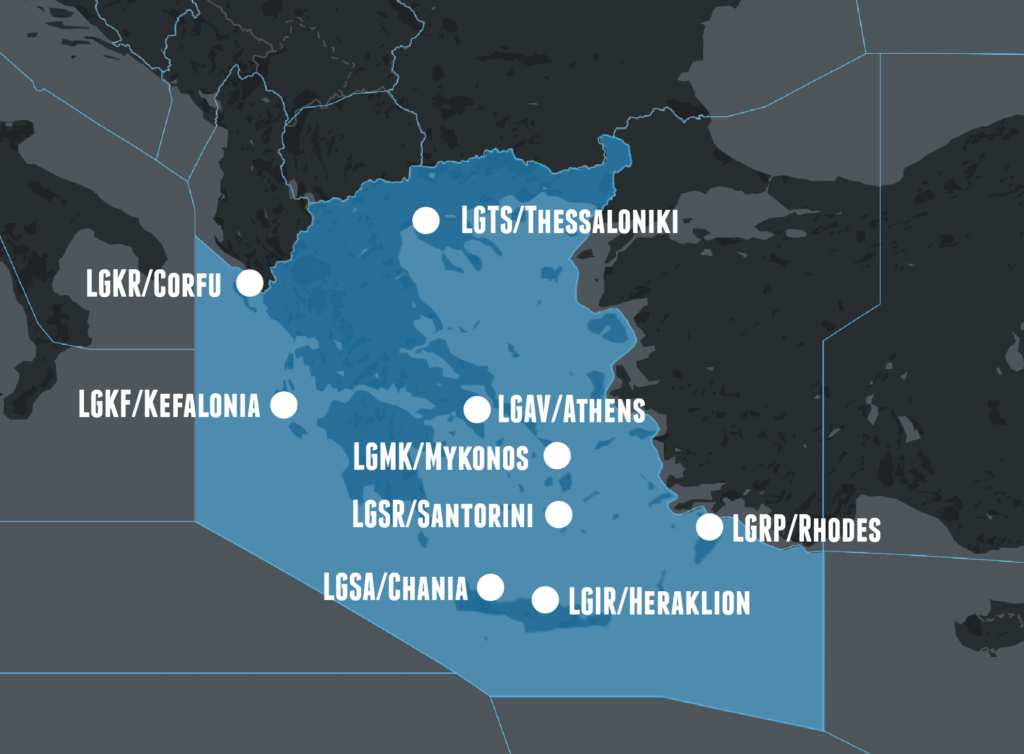
GREECE

Anywhere and everywhere in Greece seems to have parking problemos. 

Slot coordination for Greece is handled through the Hellenic Slot Coordination Authority and, we don’t want to say it, but the first half of the name should tell you what slot getting in peak season can be like here…

Here are their guidelines.

There are 17 coordinated (IATA level 3) airports which you need to get a slot for prior to operating in, and you can organise this with the coordinator at slot@hsca.gr between 0800-1600LT Mon-Fri. 

The earliest you can request a slot is 14 days in advance. Oh, but before you do that, you need to organise a PPR with the airport operator.

The most popular destinations (from previous years) seem to be:

  • LGSR/Santorini
  • LGMK/Mykonos
  • LGKR/Corfu
  • LGRP/Rhodes
  • LGSA/Chania
  • LGIR/Heraklion
  • LGKF/Kefalonia
  • LGTS/Thessaloniki

During peak times most of these will have a 60 minute on the ground restriction (sometimes less!) meaning you can drop and go, but not stay and park. LGRS/Santotini, LGMK/Mykonos and LGZA/Zakynthos have had this in place for the past few years so you can count on it at them.

Mykonos

Your only airport here is LGMK/Mykonos and it is small and it has very limited parking space (3 spaces available). It is also popular which means you are going to have to
a) get a slot to land and
b) probably coordinate parking somewhere else.

The slots are fought over by GA and scheduled ops, and guess who gets priority…

The GA slot requirements came in July 2015. So, you’re going to want to request a slot as early as you can (which is 14 days before because they restrict that for GA).

During peak times you will only get an hour on the ground – this is between June and September (but they have been known to extend it if the sunny weather sticks around).

So, what are the options? Well, fly somewhere else and then organise a helicopter or boat transfer. Or drop your pax off, refuel fast and then go drop the airplane somewhere else until it is needed again.

So, where can you go?

LGAV/Athens is sort of the biggest so, unsurprisingly, is one of the best option for somewhere to go park. However, Athens gets busy too. They have started to issue Notams for the peak season requiring a PPR if you wish to remain there more than 2 hours.

Your next best options are going to be Croatia or Montenegro which are not the same country (in case you hadn’t noticed). So early planning is a good plan.

SPAIN/IBIZA

Ibiza in the summer is a very busy spot.

LEIB/Ibiza is often reported as having parking issues in the summer season, while at LEBL/Barcelona you may find slot restrictions in place.

As an alternate try LEVC/Valencia.

TURKEY

Members reported cancelling trips to smaller airports like LTFE/Bodrum due to lack of overnight parking. The major airports should be able to accommodate but costs will be much higher.

Local FBOs advised there is a 3 hours max applied during busy periods. Watch out though, they may recommend flying to nearby Greek island airports to overnight instead, but you’re going to find them just as busy.

WHERE ELSE?

All the above are based off reports from members from previous years, so if we have missed one let us know!

If you have any secret spots which are good for parking please do share (although you might want to keep it a secret if it’s a really good one or everyone will be trying to use it). You can send us an email at news@ops.group.


Trains, Planes and Fuel-mobiles

What do railways and airplane fuel shortages have in common? Well, at FAOR/Johannesburg Airport, it turns out quite a lot.

Chapter 1. Trains.

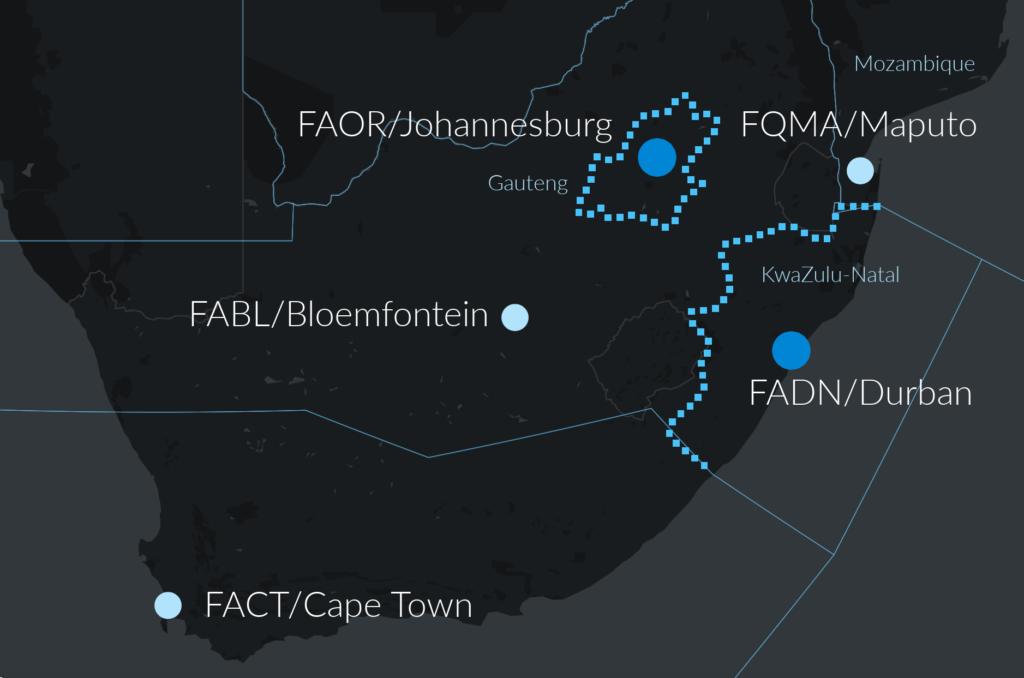
The railway lines which run through KwaZulu-Natal (the province on the east coast where FADN/Durban International airport is) were badly damaged in flooding earlier in 2022. Unfortunately, these train lines are how jet fuel is generally moved from the Port of Durban refinery to Gauteng (the province where FAOR/OR Tambo international airport is).

The train lines are only expected to be repaired to 50% capacity by June 2022, and 100% capacity by October 2022. Unless further flooding occurs.

Which means FAOR/Johannesburg isn’t getting the 16 million or so litres of fuel a week which it normally needs.

Chapter 2. Planes

We should say the 16 million or so litres of fuel a week which the airplanes need.

Currently (as of mid-May), the airport’s stock sits at around 3-5 days worth.

Domestic and regional airlines will be less badly impacted by this because they can tanker more easily, or visit one of the other South African airports and uplift their fuel there. 

Unfortunately, Durban (where the fuel is) lies on the southern eastern coast and for most international flights, this would require a fairly substantial diversion (fuel burn) to go simply to pick up more fuel.

Chapter 3. Fuel-mobiles.

It just rhymed…

Actually, the plan isn’t to drive more fuel there in tankers, but to pipe it. A shipment of 20 million litres is on its way, while another 1.5 millions litres is being arranged directly with airlines that have been hit by the ‘force majeures’ of their normal fuel providers.

Epilogue. Where else is an option?

The fuel situation will be ongoing until October, although should ease up as plans are put in place. In the meantime, international operators do have options for fuel stops.

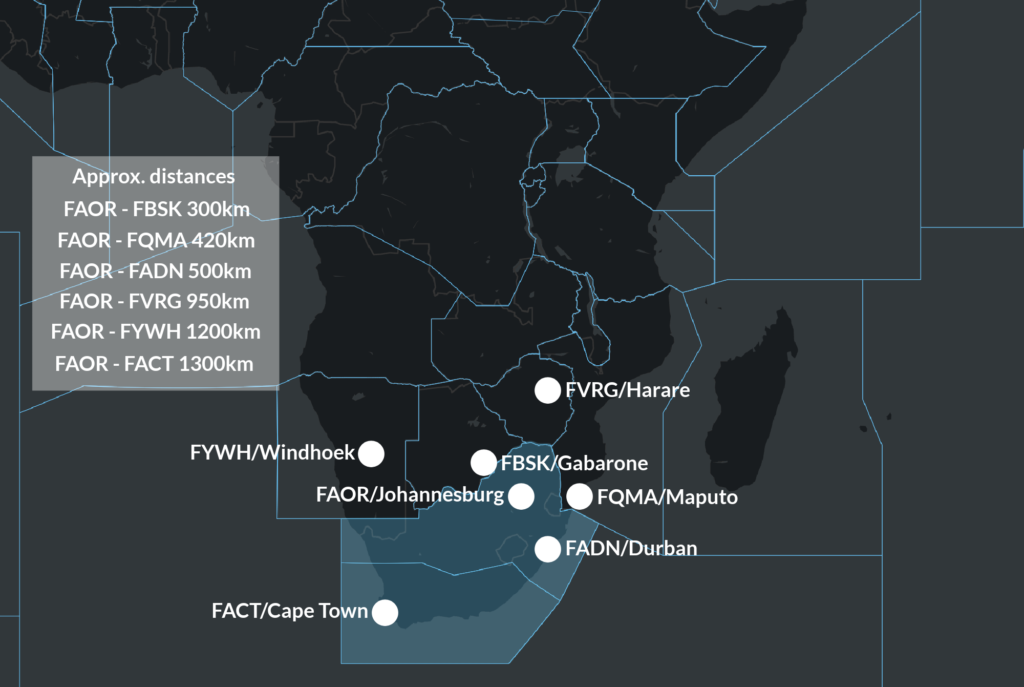
  • AEG +1 305-913-5253 / dispatch@aegfuels.com is a worldwide fuel supplier, worth contacting for up to date info on the fuel situation and availability at most airports.

FBSK/Gabarone, Botswana

FVRG/Harare, Zimbabwe – receives fuel supply from Mozambique (Beira). Rumour has it there is a growing shortage here though, so check in advance.

FQMA/Maputo, Mozambique

FYWH/Windhoek, Namibia

And ones to avoid?

GOBD/Dakar and GOOY/Dakar (old one) Senegal – these are no go. They have a severe shortage and international flights have been cancelled.

Anywhere in Nigeria – There is a pretty serious fuel shortage going on here right now.

We wrote a post on the fuel shortages worldwide here which you can have a read of if you need.


The Big SATVOICE Question

SATVOICE. Satellite voice communications. The most expensive phone call you can make (probably). But also an incredibly useful bit of kit to have onboard because it lets you talk to folk much further away than VHF and HF generally do.

But just because you have it doesn’t mean you can count in it, at least not as one of your official LRCS (that means longe range communication system in case you didn’t know).

So, there is a great system which lets you talk over long ranges, but isn’t always approved as a long range communication system?

Before we get to the ‘why not?’…

A quick recap on what SATVOICE is.

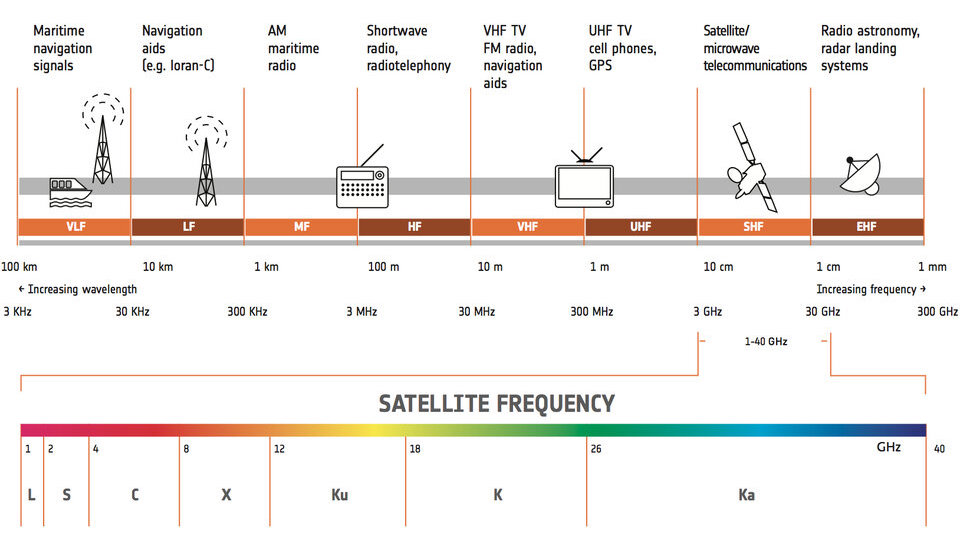
It is exactly what the name suggests – a system that allows voice communications, via satellites. So your voice message zooms up, bounces off the satellite and zooms back down to wherever you’re aiming it. And because it heads up and then down, it can go further.

OK, it might be a little more scientific than that, but that’s a basic description.

There are some things it doesn’t do though.

It doesn’t replace VHF or HF as a primary means of communication. One of the reasons being not every ATC has the facilities to receive or call you via it.

It doesn’t always work at high latitudes because not all satellite providers have coverage up there. Iridium satellites are ok – they are in low earth orbits rather than geostationary ones so they don’t get that SATCOM shadow you might have heard mentioned.

It doesn’t always avoid the impacts space weather – the stuff that affects HF, particularly at high latitudes, can also disrupt your satellite comms.

You probably know all this already.

If you don’t then you can read some more about it here.

Now, let’s get down to the real question…

Can you count your SATVOICE system as a LRCS?

OK, well firstly where do you actually need LRCS?

In short, anytime you’ll be flying for extended periods over watery regions or remote regions where VHF stations probably aren’t possible (so anytime you’ll be outside the ‘line of sight’ of ATC). Like the NAT HLA for example.

In these regions you generally require two LRCS, and one of these must be HF. Where you only require one, this must be HF.

The FAA published this which covers some info on comms requirements in oceanic airspace.

They also published this – AC 91-70B – which is the full guidance on Oceanic and Remote Continental Airspace Operations, and this has a whole section on SATVOICE that is pretty handy.

So if one LRCS is HF, what does the other need to be?

Because of frequency congestions and solar conditions that often make HF annoying to use in oceanic and remote spots, other systems can be approved as an LRCS. It doesn’t only have to be HF.

CPDLC is on option that is considered suitable. The FANS 1/A+ with its RCP 240 system satisfies the requirements.

And (finally) what about my SATVOICE system?

Well… just because you have SATVOICE doesn’t mean it meets the criteria…

This hasn’t answered the question at all!

No, we know. We’re trying…

Basically, it has to meet a whole bunch of criteria in order to be IAW 20-150B certified, and this certification should be reflected in your MMEL/MEL.

In case you don’t know what that is, the info is all covered in this FAA advisory. 

AC 20-150B

There is a whole looong list of requirements. We won’t list ’em all here, but some of the top ones are:

  • Whatever you say on SATVOICE has to be recordable on the CVR
  • You have to have considered whether it will work if you’re in a “load shed” situation (ie will it still be available in some hideous emergency power lever situation?)
  • It has to be able to tell the pilots things like if its broken, if someone is trying to call on it, etc
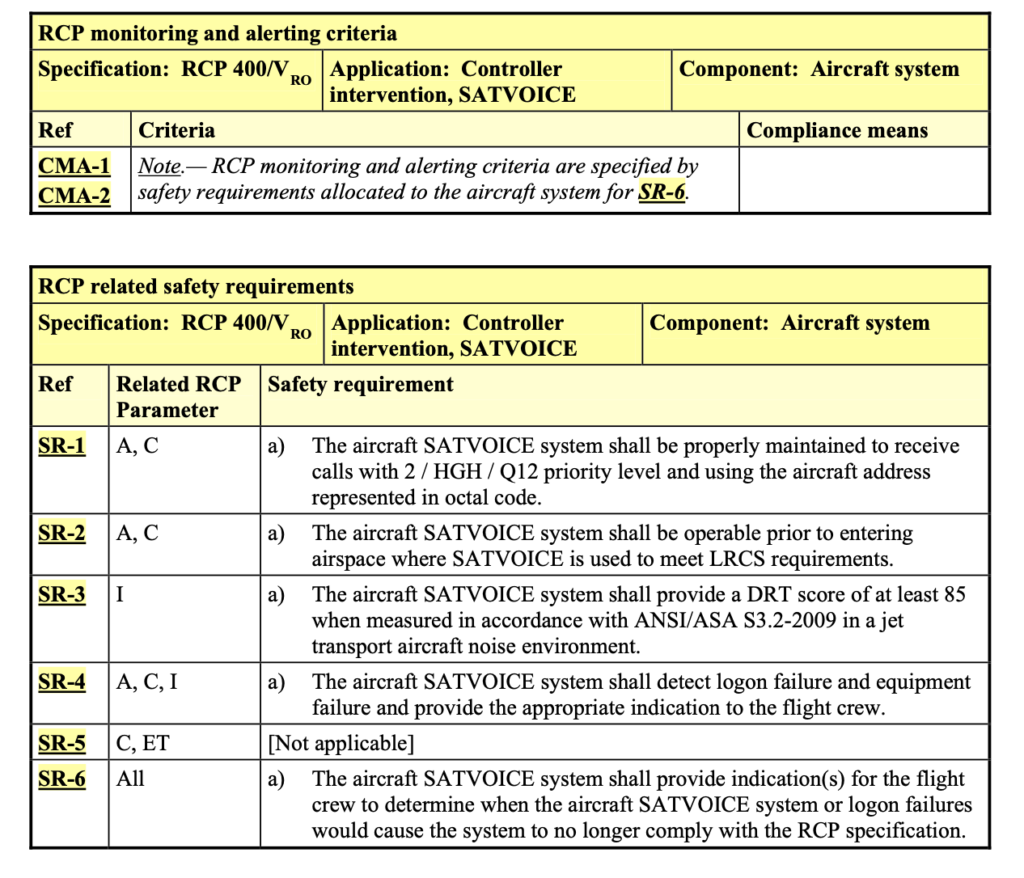
  • It has to meet certain RCP criteria (RCP400)
  • Oh yeah, and it has to have priority, preemption and precedence abilities (PPP).

Say what?

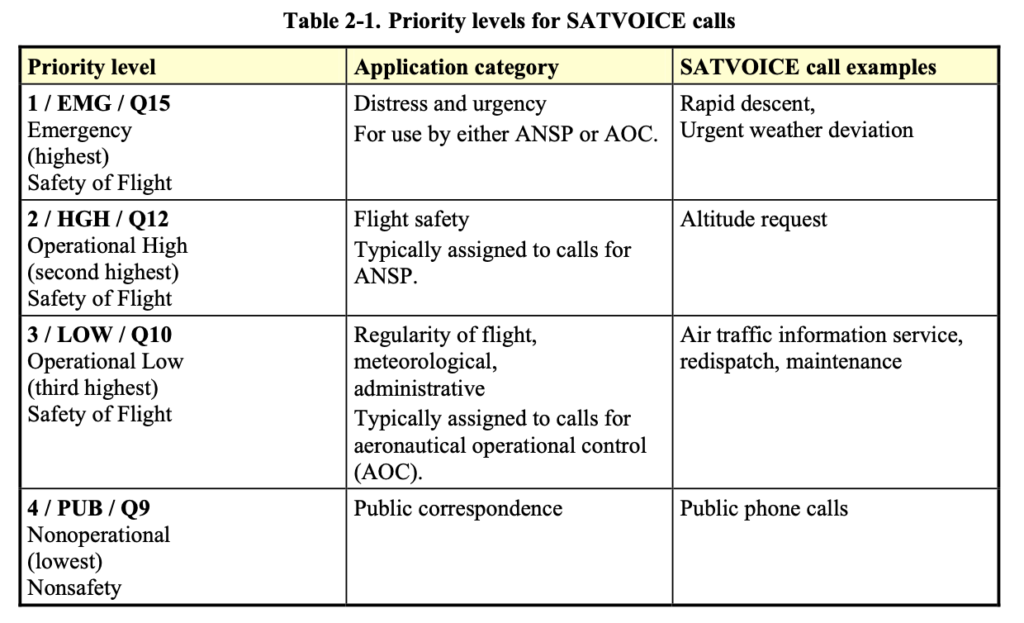
PPP. Priority, preemption and precedence. Preemption is defined by the FAA as the “immediate and automatic seizure of resources allocated to a lower priority call”.

It might be easier to look at this table, but in short calls have to be routed through the CMY and filtered according to this –

Tell me which ones are?

Well, that is a very big question and really not something we can answer. Yep, we made you read all that and still don’t actually have an answer for you.

What we do know, because other people told us, it that:

  • Typical AirCell installations do not meet the criteria
  • Latitude SkyNode S200-12 ATC Safety Voice Systems generally do
  • The Aspire 300 SATCOM system also generally does
  • And there are possibly a whole bunch others but the surest way to find out is to talk to the manufacturers and ask them directly.

Anything else?

Well, we definitely don’t want to get your hopes up, but a little birdie told us that a change might be coming to the “one of the LRCS systems must be HF” requirement. This is in part due to the reliability and practicality of SATVOICE systems.

When this will happen we ain’t sure, but listen out.


Somalia joins the A Team

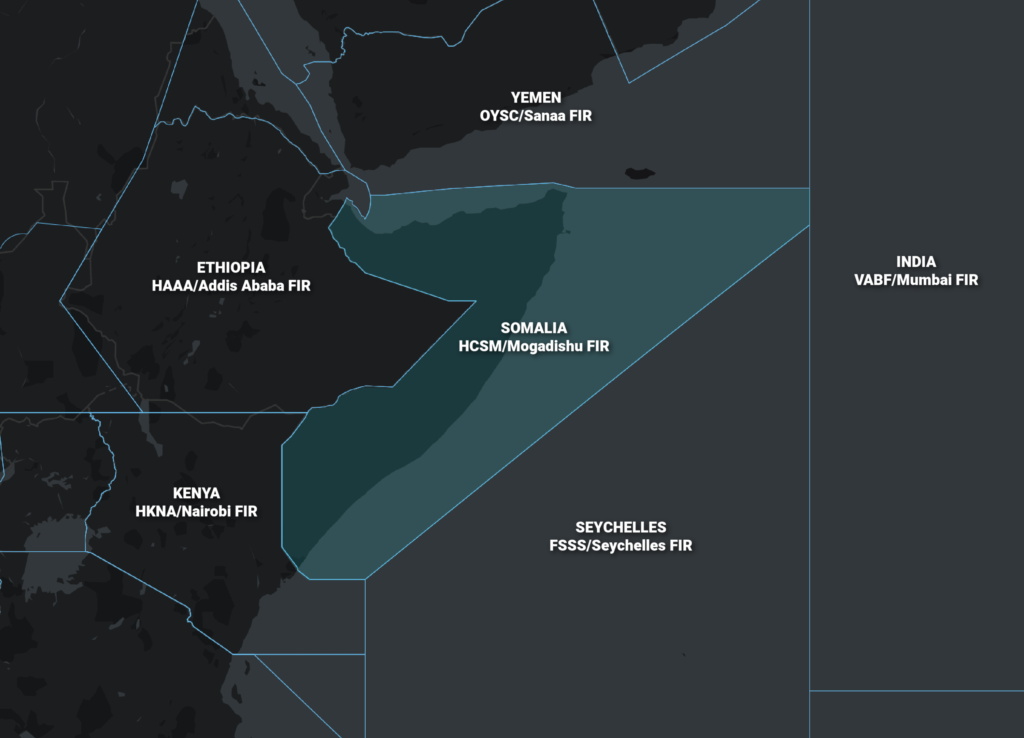
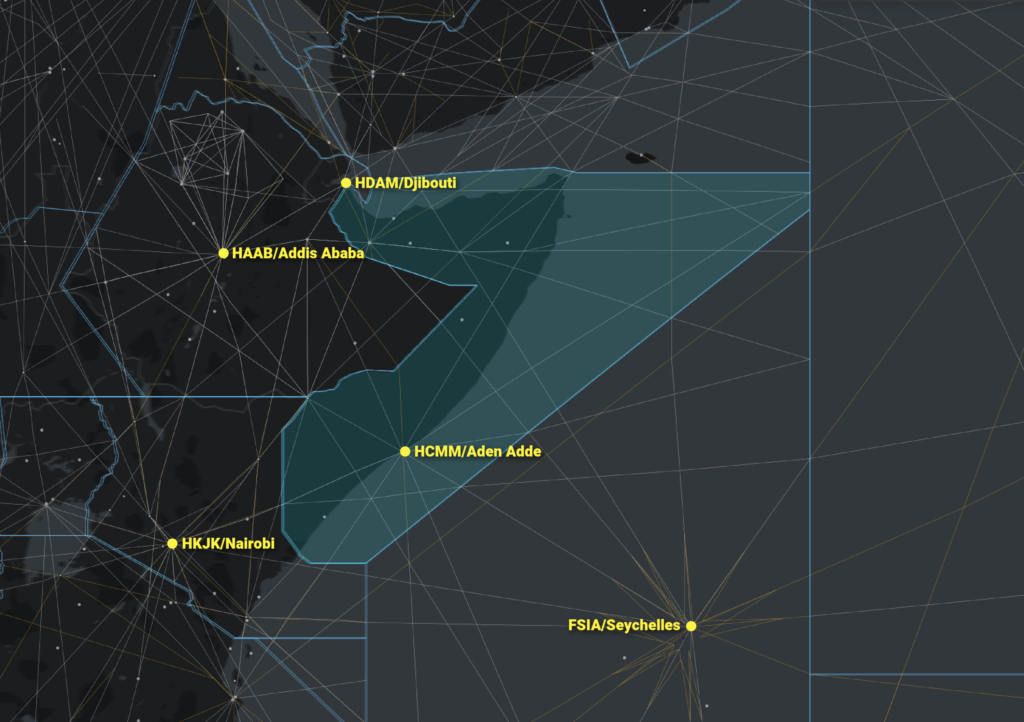
Full ATC service is returning to Somalia! The HCSM/Mogadishu FIR is currently Class G uncontrolled, which means a lot of fairly annoying IFBP calls to make. This is about to change though…

(Well, not the IFBP thing sadly, they recommend you continue these even during the trial period).

From May 11 to September 21 they will be running a trial which will see the airspace from FL245 up become Class A controlled airspace.

The trial will only be between 0300-1800z (so during the day), but will cover the entire FIR including oceanic areas.

Notam A0051/22 (A0028/22) advises on this, whilst AIP SUP 02/22 has all the info (we’re still waiting for a copy!)

Who to talk to in Class A?

The following frequencies are your best bet:

  • VHF 132.5 MHz if within 240NM of position MOGDU.
  • HF (Mogadishu Control)
    Day Primary 11300Khz
    Day Secondary 8879Khz or 13288Khz
    Night Primary 5517Khz
    Nigh Secondary 11300Khz or 3467Khz
  • CPDLC for those FANS1 equipped, logon address HCSM

If you lose comms, then the procedures are pretty standard. These are available in the Somalia SUP 05/2018. Or you have the full contingency plans to follow in SUP 03/22.

SATCOM

Mogadishu have also re-confirmed their dedicated SATCOM numbers. Here they are:

  • +252 6133 50047
  • +252 6233 50047
  • +252 1857 390
  • +252 1857 391
  • +252 1857 392
  • +252 1857 393

What’s the difference between Class A and Class G?

In a nutshell, Class A doesn’t have VFR traffic in it, and you do need ATC clearances. Traffic will be provided with 10mins lateral/longitudinal separation and 2000′ vertical separation at and above FL410, 1000′ at and below FL400

Class G is uncontrolled which means it is all procedural, deconfliction services and traffic advisory services only.

What’s (less) new in Mogadishu.

  • Somalia still isn’t the safest region to fly through. Major authorities prohibit flights below (generally) FL260, and recommend sticking to the oceanic routings rather than overflying the land. All the up to date airspace warnings are available on Safeairspace.
  • IFALPA also published a bulletin back in 2018 talking about procedures in the Mogadishu FIR.
  • We shared a bunch of stuff on the general security threats and risks in Somalia here. Currently airports in Somalia are basically off limits though due big safety concerns.


Mexico City: Safety concerns

What is going on around Mexico City (or should we say ‘Mess-ico City) at the moment? Aircraft near misses, security and safety concerns, ATC errors…

IFALPA has issued a new safety bulletin for MMMX/Mexico City airport, highlighting several concerns.

  • Aircraft have been landing with low fuel due to unexpected holding
  • Diversions (due excessive holding) have increased
  • There have been reports of EGPWS warnings
  • And reports of confusion over STAR clearances

IATA report there have been at least 17 incidents of EGPWS warnings in the past year, and have written to the Mexican Airspace Navigation Services expressing concern –

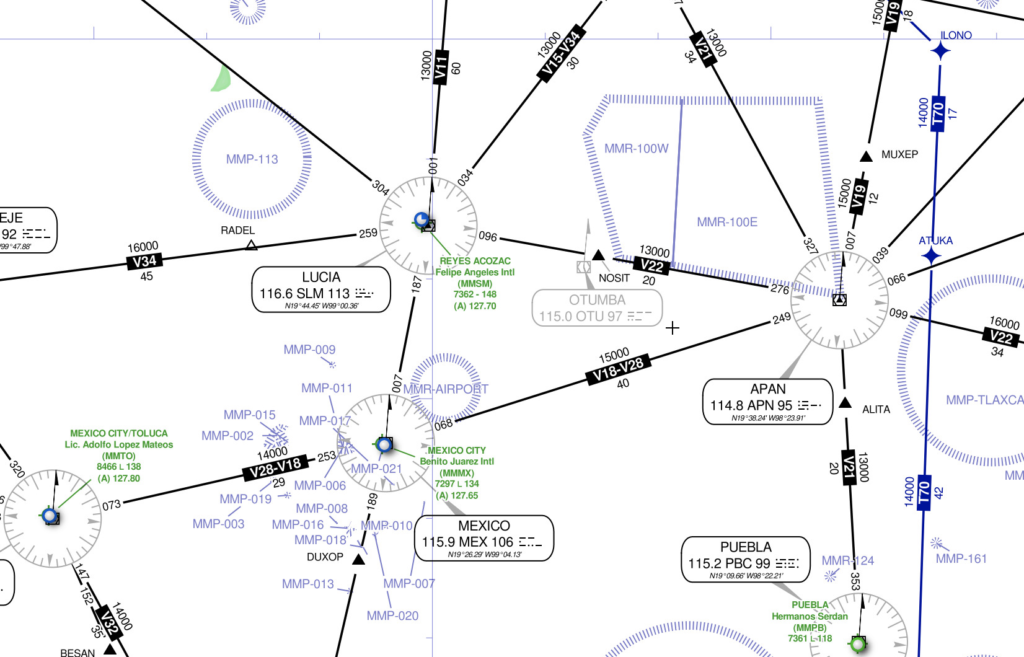
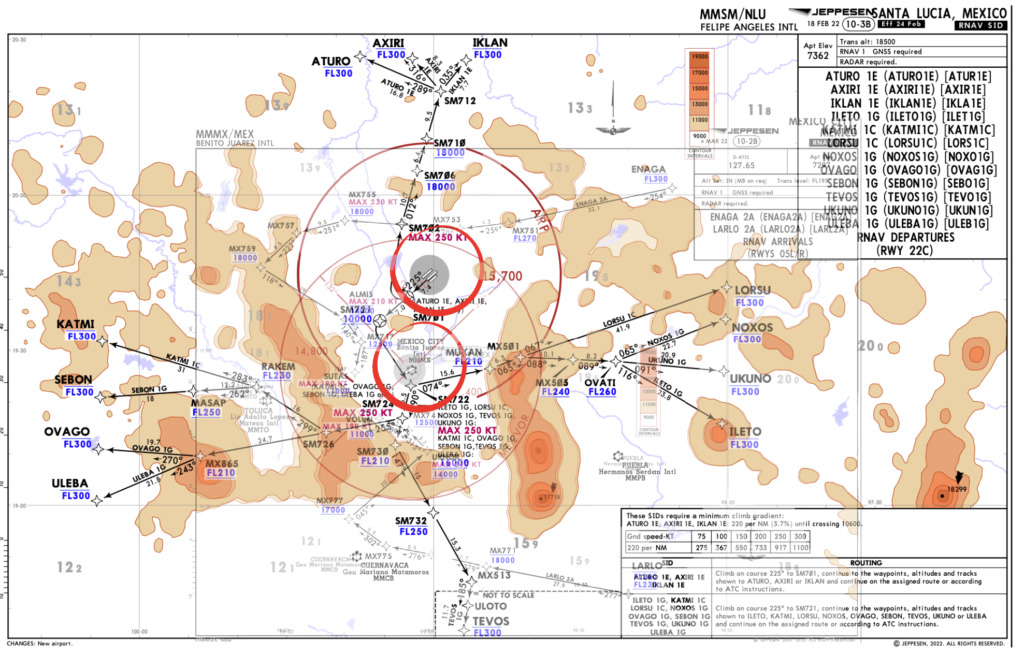
The situation seems to be compounded by the recent opening of nearby MMSM/Felipe Ángeles which is causing control challenges for ATC (more on that below).

The near-miss incident at MMMX/Mexico City

On May 7, two Volaris aircraft had a near-miss, potentially due to controller error, when an aircraft was cleared to land runway 05L while another had been cleared to depart 05L. The last minute go-around was prompted by crew in another aircraft:


What’s being done about it?

The Mexican Government have launched an investigation, but have already commented that the incident was most likely caused by an ATC mistake, noting Mexico has a shortage of about 250 controllers, which means they work longer hours.

They have also said that the airport will reduce capacity by 25% over the next 12 months while the situation is sorted. This is reportedly due to start in August 2022, with flights transferring to Mexico City’s new MMSM/Felipe Ángeles airport as well as MMTO/Toluca airport.

The MMSM problem

MMSM/Felipe Ángeles (formally known as Santa Lucia) opened in March 2022. The government decided to upgrade an existing airbase following the scrapping of the Texcoco airport project.

MMSM boasts three runways, all with CAT I ILS approach facilities, and two 4,500m (14,764′) in length. The airport sits at an elevation of 7362′, and has an MSA of 15,700′ making it a relatively challenging spot (although MMMX/Mexico City is arguably more challenging).

The proximity to MMMX

Both airports serve Mexico City and are only about 40km apart meaning ATC have suddenly found themselves dealing with much more complex airspace, and still have that pesky terrain threat to contend with as well.

According to air traffic controllers cited in local press, the number of aborted landings has doubled at MMMX/Mexico City airport this year due to the redesign of airspace to allow MMMX and MMSM airports to operate simultaneously. Insufficient training and lower than standard phraseology are not helping the situation. You can read more on this here.

Reports on MMSM

Sometimes folk write in with reports on airports. Someone did this about MMSM, and it wasn’t great.

We have paraphrased below –

“The airport is still not fully constructed from the sounds of it, having been opened speedily by the government. The airport is not ready to support international operations and to reach it from Mexico City involves a pretty bad 2 hour drive through so rough neighbourhoods. Be safe – don’t use this airport.”

Safety and security

Mexico does have some safety and security issues, and these do impact operations, particularly into MMMX/Mexico City international.

The airport comes out one of the highest for:

  • Security incidences at the airport – from illegal cargo being loaded to passenger documents not adding up
  • “Follow-home crime” (ie getting followed back to your hotel and then robbed)

Both airports lie near (or in) neighbourhoods with high crime rates, so crew security if on a layover should be taken seriously.

Mexico, overall

The FAA downgraded Mexico’s safety rating back in June 2021. Here’s our post on it if you want a read.

This downgrade doesn’t mean the FAA thinks the country isn’t safe to operate into. It is generally aimed more at the safety of the airlines registered there. But it is often based off the level of oversight, quality assurance and maintenance in the country.

Which means when you see a downgrade, you should have a little more caution because the infrastructure, training for the likes of ATC etc, or general regulatory oversight might not be up to scratch and this could have some safety impact for you.

What to do with all this info?

Well, avoiding going would be extreme, but being extra cautious when you do – especially with regards to looking out for other traffic, and paying special attention to your terrain clearance – might not be a bad call.

You might want to carry extra fuel as well to deal with those holding issues as well.

Please send us your reports.

We can only share on the info we receive from folk heading there so if you do, we would love a report from you (and will keep it anonymous if you want) – news@ops.group


OPSCHAT Summary May 10

Hi Members,

We had another busy OPSCHAT call this week!

You can watch the full replay on your Member’s Dashboard.

Here’s a roundup of what we talked about:

The Big News.

  • Mexico – Trouble reported at MMMX/Mexico City. New IFALPA Safety Bulletin: unexpected holding and low fuel events, EGPWS and aircraft proximity events. The new airport MMSM/Santa Lucia is causing extra challenges for ATC. Be aware of clearances using non-standard phraseologies, and pay extra attention to your terrain clearance.
  • Africa – ASECNA airspace (the folk responsible for 6 major FIRs in Western and Central Africa) have ‘Free Route’ airspace available until at least October 2022. All info included in AICs. In other news ADS-B will be operational from May 19th (but it’s not mandatory yet – that’s coming next year).
  • Somalia – ATC services are back in Somalia. They’re returning to Class A above FL245 across the entire HCSM/Mogadishu FIR, including the oceanic portion (starting from May 11) 3am-6pm LT. VHF, HF, CPDLC and SATCOM. Outside of these hours, it reverts back to Class G again.
  • Europe – Spill over risks from the Ukraine/Russia conflict. EASA has published a report identifying no less than twenty risks (highlighted by operators and other authorities). Some interesting (unconsidered) ones as well, so it’s worth a read.

Unsolved Mysteries.

LRCS – Is my SATCOM approved in the NAT HLA? Here is the FAA info on it. Watch this space for a post tomorrow.

Radar vectors – who is legally responsible for terrain clearance?

The OPSQUIZ.

Mark’s back to host, and we have a second time champion this week! Congratulations! Here is a sample question from this week: Who publishes the eastbound NAT Tracks? Join us next time as we have great prizes on offer, all hand picked by the team!

As always, we’re here to help with any operational support, info or questions. You can reach us on news@ops.group, or via the slack channels #flightops and #questions.

To watch the replay of the OPSCHAT in full: head over to the dashboard. We hold a new one every week on Tuesdays at 2000z, click here to register and join us live. See you next week!


May’s Military Exercises in Europe

There are a bunch of military exercises scheduled in Europe for May. Normally we would just pop out a few little alerts on them, but there are enough big ones that we thought a post combining them might also be handy.

Or you can go look on the Eurocontrol Operations Portal.

The Operations Portal hurts my eyes. Just tell me now.

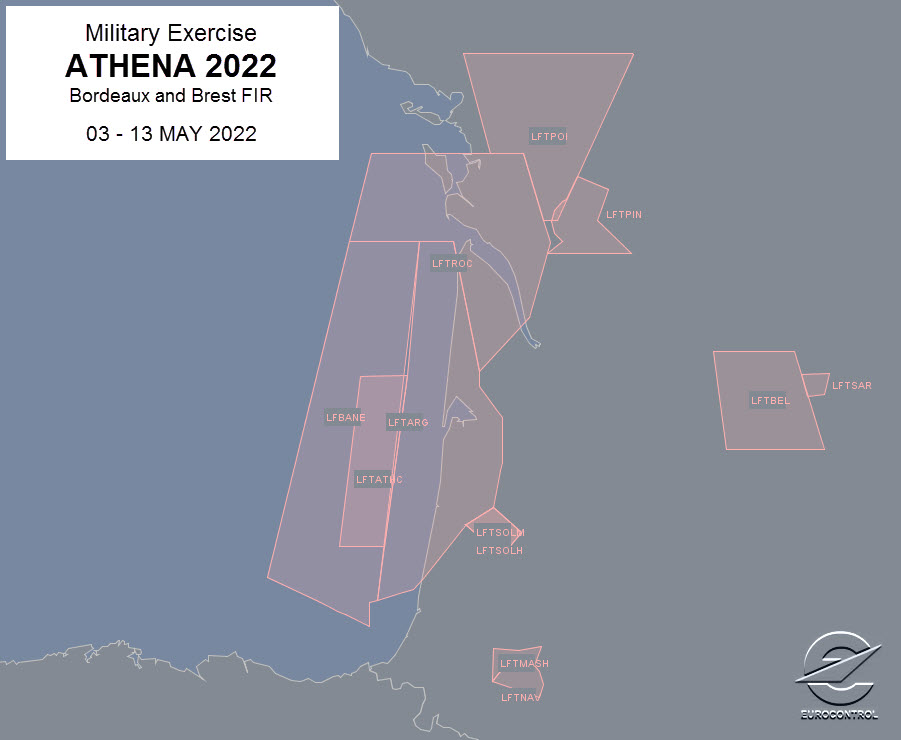
Athena 2022

First up, starting with the biggest, is ‘Athena 2022’. You know its a big one because it is named after the Goddess of War…

This takes place in France between May 3rd and 13th, with the main exercises on the 10th and 11th.

It involves a lot of aircraft at all levels, and live firing which means some prohibited airspace in the affected FIRs – namely LFFF/Paris, LFRR/Brest and LFBB/Bordeaux. That said, the live firing is all scheduled to take place at night so the operational impact is only low to medium.

Read all about it here in the French AIP SUP 083/22.

Mare Aperto

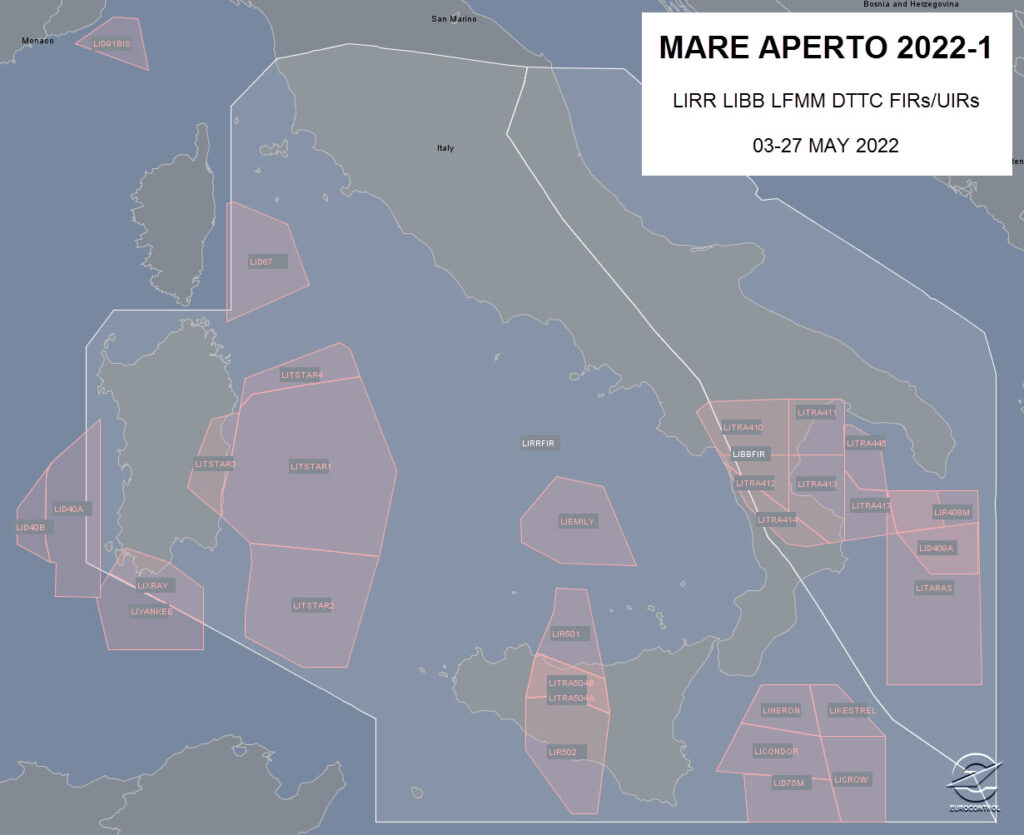
Another big military exercise, ‘Mare Aperto’ takes place in Italy from May 3-27. The LIRR/Roma, LIBB/Brindisi and DTTC/Tunis FIRs are the main ones to be impacted.

It is described as a ‘multinational large scale exercise, involving naval and air assets’ and is expected to have a low to medium operational impact.

Again, there are some forbidden areas which will be activated at different times to keep an eye out on normals or read all about it here in Italian AIP SUP S3/22.

Swift Response 22

Less big, this takes place in Lithuania from May 3rd to 16th and is only expected to have a low impact.

Lithunia’s AIP SUP 004/2022 tells you all about it.

Ilmataktiika

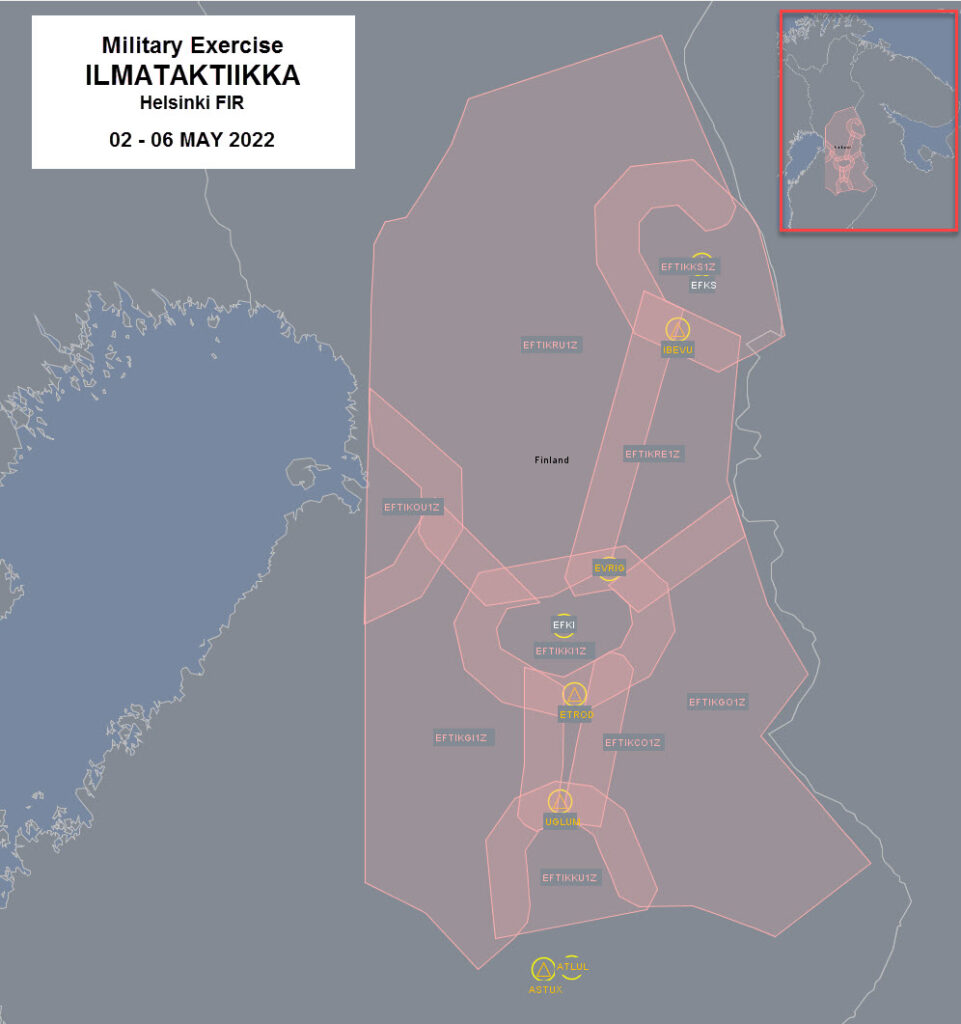
Last but actually not least is ‘Ilmataktiika’ which I thought might mean something exciting, but actually just translates as ‘Air Tactics’ (quite obvious in hindsight).

This takes place in Finland daily between May 2-6. There are the usual danger zones, but they also have some big buffer zones in this one so it impacts quite a large chunk of the EFIN/Helsinki FIR.

AIP SUP 04/2022 from Finland has the full info.

They published some flight planning ideas for this one, which are useful if you’re going to be below FL110:

DEP EFKI: ETROD T95 UGLUM DCT ASTUX …
ARR EFKI: … ATLUL DCT UGLUM T95 ETROD
DEP EFKS: IBEVU DCT EVRIG DCT ETROD T95 UGLUM DCT ASTUX …
ARR EFKS: … ATLUL DCT UGLUM T95 ETROD DCT EVRIG DCT IBEVU


Please CAN you PASS the info?

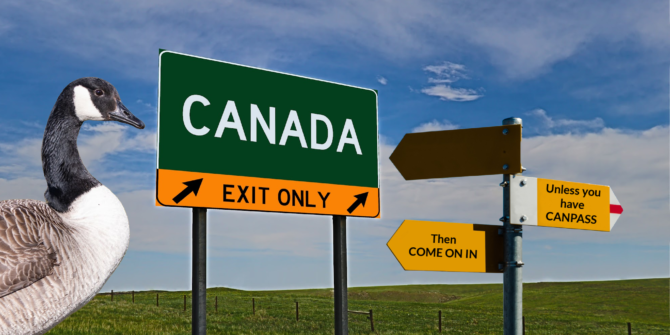
What is CANPASS? Who can use it? How do you use it? Where do you use it?

Normally we write these things because the original ‘things’ with all the info are rubbish and unreadable. The CANPASS site is surprisingly good, but we’ll tell you it in a slightly different way and with some pictures.

So, what is it?

CANPASS is a Private Aircraft program designed to make clearing the Canadian border on Canada-US flights easier.

It is made for private aircraft (that means non-revenue) with no more than 15 people onboard. That includes the crew. 

The idea is it provides expedited clearances, at more airports, for anyone deemed low-risk and who is pre-screened. This makes life easier hopefully for everyone – customs folk and private aircraft flying between the US and Canada.

Which airports are signed up to it?

A fair few now. You can see the full list here.

You can turn up to Airports of Entry and any of the CANPASS approved airports at anytime basically.

Tell me more!

If you’re a CANPASS member you can land at any airport of entry in Canada, anytime it is open (even if the local customs and border folk aren’t in).

One big point – everyone onboard must be a CANPASS member or there are some other procedures you’ll need to follow.

So how do I join this elite sounding membership?

You have to be a citizen or permanent resident of Canada or the US, and have lived in one or the other for at least the last 3 years. There are some other criteria as well like not being a criminal, not having been caught trying to sneak in through immigration illegally ever.

You need to fill out an E672 form. You can find that form and a bunch more info on how to apply here.

How does it work?

Long story short, you call 1-888-CANPASS (1-888-226-7277) at least 2 hours before, and not more than 48 hours before to let them know when you’ll be arriving in Canada. 

The pilots need to do this – you’re responsible for yourself, the rest of the crew, and everyone onboard. You have to provide a whole bunch on info like what you have onboard, when you’re arriving, the people info, etc. Someone has set up a handy PDFable form here that you can use.

The pilot also should call up on landing before you open your doors in case they want you to wait and have an agent meet you. 

What if I’m not a member?

Well, then you need to enter the old fashioned way, and at a time when the local CIQ is open and available.

There is a slightly different program for Corporate aircraft. 

Remember we said on the private aircraft everyone needs to be a member? Well, if you’re a corporate aircraft (corporate but still private, so no charter operators) then you can get approval for up to four non-CANPASS registered travellers to be onboard.

This is still for private (non revenue) flights.

Any other things that might be handy to know?

We saw a question on non-scheduled international licences the other day. So here is the info on that.

First up, this isn’t anything to do with CANPASS. A non-scheduled international license means you can operate a public air charter service between your country and Canada (not around Canada though. Land and leave again. No internal airport hopping).

If you want this, and you aren’t Canadian, then you have to have all the documents you’d expect in your home country (where you’re registered) and then go read the Application Guide here, which also have all the legal mumbo jumbo you need to know, and apply.

It takes about 7 days to get your licence. This is applicable to revenue flights. CANPASS is for private non-revenue flights.

We’ve not done it ourselves…

So if you’ve seen anything odd, experienced anything unusual, or just have something to share on it please do at news@ops.group


Poland ATC dispute resolved

Update – April 29:

Poland’s air navigation agency PANSA issued a statement late on Apr 28 confirming that the dispute with controllers has been resolved (at least for now), averting mass flight cancellations that had been expected from May 1.

“The management of the Polish Air Navigation Services Agency and the representatives of the Air Traffic Controllers Trade Union have signed an agreement which will ensure the continuity of air traffic service in Poland and passengers will carry out their trips as planned. The agreement is valid until July 10 this year. During this time, the parties will conduct dialogue in order to work out the final shape of the cooperation.” – PANSA.

The majority of air traffic controllers were threatening to quit by May 1 after a long dispute over salary and working conditions. The new agreement basically means that controllers will keep working until at least July 10, giving them more time to hash out a deal with PANSA.

Update – April 26:

Disruption to flights could start on May 1 – the day after the end of the notice period for controllers who chose to quit rather than accept the new deal they say threatens safety. If they don’t reach a new agreement preventing the walkout, here’s the likely impact to flight ops from May 1: 

  • Around 300 flights crossing Polish airspace will need to be controlled by other sectors. It isn’t clear yet how this will be handled, but the Polish CAA issued an announcement saying “flights over Poland should proceed without sudden disruption”. In other words, don’t expect to get a sudden massive detour. Despite the staff shortages, for the time being the Polish CAA and Eurocontrol are still not planning to launch the ‘massive cancellation procedure’ for flights transiting Polish airspace (see below for more details on that).
  • EPWA/Warsaw Chopin and EPMO/Warsaw Modlin will both operate restricted hours – 0930-1700 local time only, due to controller shortages. So don’t expect to use them outside these hours, and expect to see some Notams advising against their availability for alternates.

Original Story – April 21:

The Current State of Polish Airspace

Poland has some 600+ air traffic controllers, around 216 of which work the ‘Warsaw Approach Area’ which is some very busy airspace around EPWA/Warsaw International and the region above it.

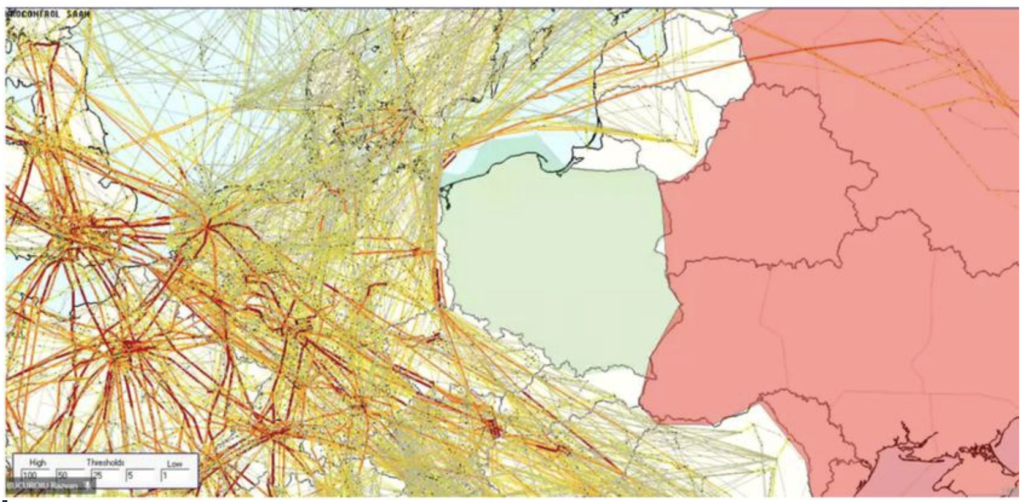
If you’ve routed across Europe, to and from Russia in particular, then chances are you’ve used Polish high level airspace because it provides a major routing region due to the (historic) cautions and prohibitions in Ukrainian airspace.

With the current conflict between Russia and Ukraine, the already busy airspace is now even busier with NATO and military aircraft utilising it due the proximity to Ukraine, and with flights utilising Polish high level airspace with the closure of many surrounding airspaces.

Eurocontrol Concerns

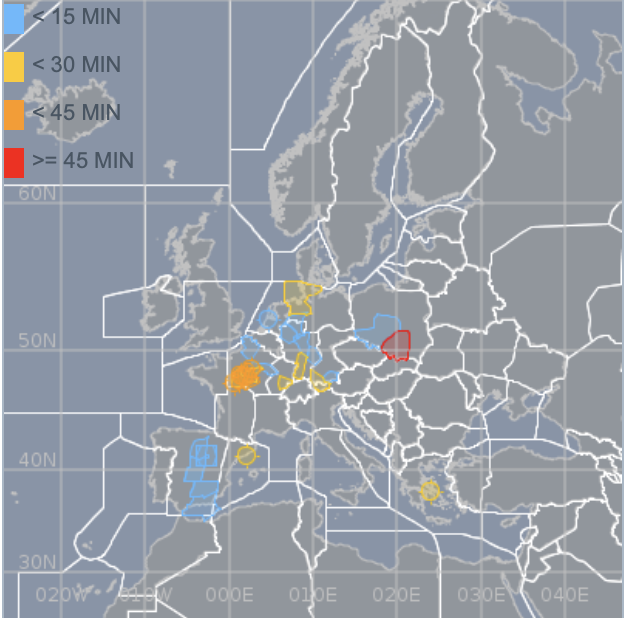
Eurocontrol have a “live” map showing the current network situation for the region, and southern and south east Poland regularly show as having high delays. The main reasons for these are ATC staffing (causing 26% of the delays) and ATC capacity (causing 15% of the delays).

With a concern that 84% of ATC in the Warsaw control area might not be available come May 1st – a 30% reduction in total ATC staff numbers – Eurocontrol has published a plan which sees the cancellation of all connections to and from Poland.

The Potential Impact

Currently around 1,850 flights a day are forecast for the summer season. During peak hours, this requires 8 ATC sectors to be running, while during quiet night hours only 1 is required. If only 1 of the 8 sectors is staffed, at peak times this will mean nearly 1000 flights will require redirection through neighbouring airspace. With only 4 sectors open, 500 flights a day will have to re-route.

The Warsaw FIR covers the airspace across Poland as well as part of the Baltic Sea. If flights are redirected, it may mean significant extra pressure on the ATC centres in Karlsruhe, Prague, Malmö, Bratislava and Vilnius.

The main Polish airports may also experience staffing problems, leading to capacity issues, particularly at EPWA/Warsaw International. This may lead to flight cancellations at the airport, as well as an impact on availability as en-route alternates.

What are the Unions saying?

Well, you can watch the video here yourself. This is of course representing the ATC side of the conflict. What does stand out though is the potential impact on safety if mass layoffs do occur. 

https://youtu.be/csughfkySrc

When similar staffing shortages happened in 2020, there was an increase in incidents from 7 to 173.

The union also published this press release warning Polish ATC soon to be unmanned.

What is happening now?

A major conference is taking place to try and resolve the issues. This includes ‘Emergency Plan PA 8B’ – a “plan in the event of a threat to operational continuity”.

A full breakdown of current discussions was published by a Polish news site (which you can read if you have a translator on your computer, we use Chrome).

Have we seen this before?

Albanian ATC went on strike back in 2021, and it resulted in the “farming out” of controllers. We wrote about it here because the practice is a big safety concern.

“Why? Because safe Air Traffic Control is predicated on deeply-learned local familiarity with the airspace, the terrain, the boundaries, and above all, how the traffic flows.”

PANSA have acknowledged that it is not possible to simply bring other controllers in because of the risks involved in using non-regional trained ATC. However, military control of airspace might be required.

What do we think?

Talks are underway and hopefully the situation is resolved before May 1st.

Eurocontrol provide the most up to date information on airspace availability and should be monitored closely over the next few days.


The Hot Topic of Hot Spots

We aren’t talking about a bad rash, or the trendiest new club in town… We’re talking about those spots at airports where you’re most likely to mess up and get in the way of another aircraft.

Why is this a hot topic?

The FAA are standardising their symbology so we thought it would be worth sharing with any folk based in the US who haven’t spotted it yet, and for anyone who flies into the US for that matter, just to make sure no-one misses a Hot Spot warning.

What is a Hot Spot?

It is a location on an ‘airport movement area’ which has a history of incursions, collisions and confusion. Or which has the potential for all the aforementioned mess. Basically, anywhere there is a risk of an aircraft going the wrong way or get in another aircraft’s way.

What do these spots currently look like?

They look like a really confusing bit of taxiway, often near a runway…

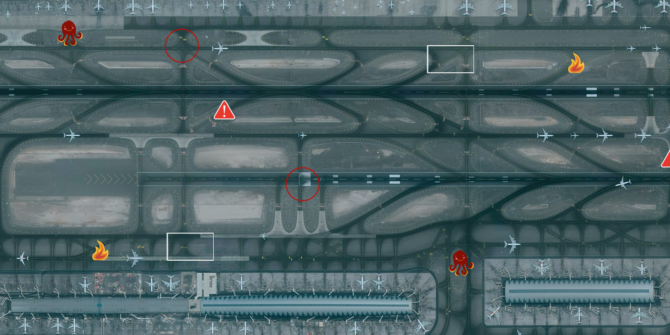
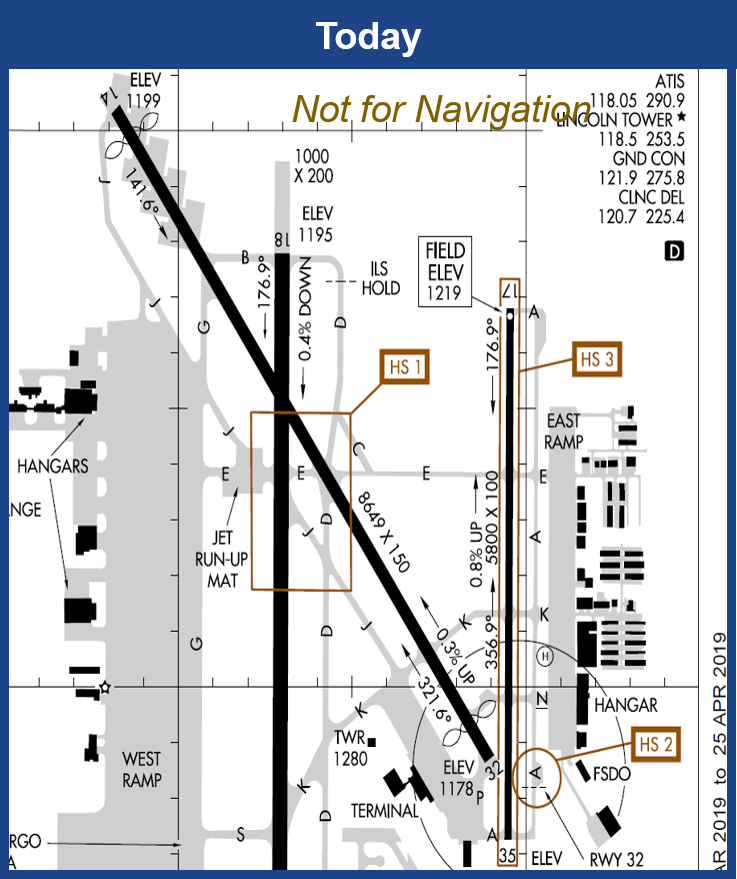
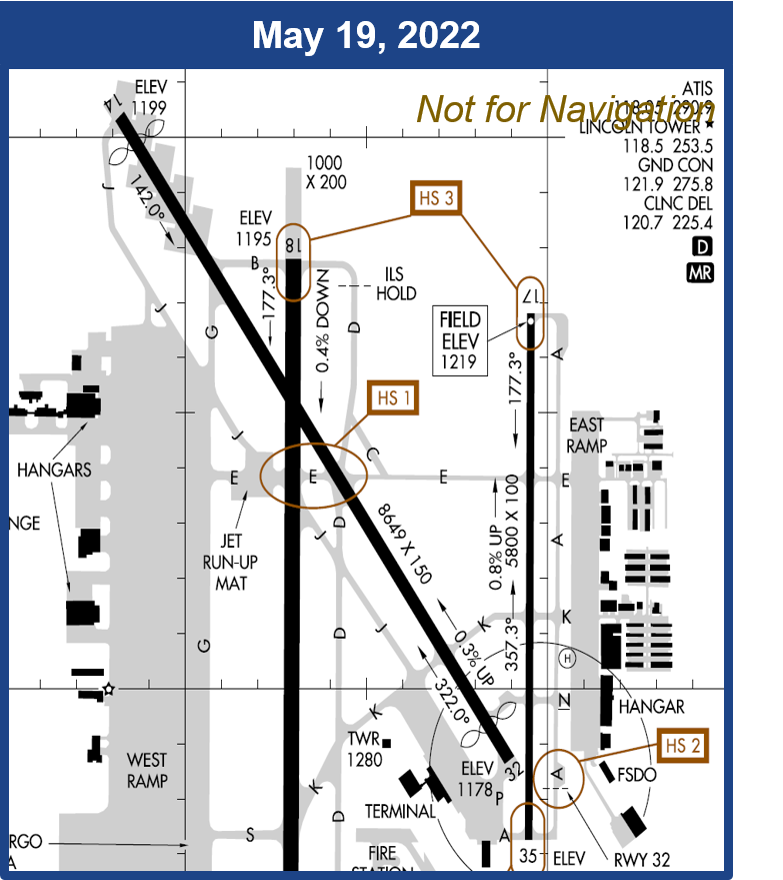
On the charts this might be shown with a circle, a square, an ellipse, a rectangle, an octagon, even an octopus if the chart maker so fancied. There is no standard shape for marking these which means if you aren’t familiar with an airport (or its chart) then you might not notice the spot to watch out for.

What will they look like going forward?

From May 19 2022 they will become only a circle or an ellipse, with the details in a little rectangle linked to it.

Here is a picture of the before and after:

These are in line with the symbology that the likes of LIDO and Jeppesen already use.

But also…

The FAA will be issuing Arrival Alert Notices (AAN) at airports which have a particularly bad history of misalignment risk. 

This is all to do with the runways and the risk of aligning the wrong one (or not one for that matter). The new symbology will show ‘wrong surface’ hotspots in ellipses.

Which airports have this problem?

Here’s a list of the known baddies:

  • KIDA/Idaho Falls
  • KRNO/Reno
  • KRHV/Reid-Hillview
  • KPSP/Palm Springs
  • KTUS/Tucson
  • KHNL/.Honolulu
  • KFCM/Flying Cloud
  • KTKI/Dallas McKinney
  • KPDK/Peach Tree DeKalb
  • KROC/Rochester

Why isn’t KSFO/San Francisco on this list? Who knows. Actually, we do – it is because these occurs most often with GA aircraft, so just because there isn’t an AAN, don’t assume there isn’t still some risk if there are parallel runways, taxiways, or even nearby airports with similar orientation. These are generally noted on the charts in text format anyway.

Read about it direct from the FAA

You can find the link to their page on it here.

There are also links to PDF documents containing lists and details on all the hotspots at the major airports. Like these for the Northeast US states.


Opschat Summary April 26

Hello Members.

It was another busy OPSCHAT call this week, along with our new quiz!

You can watch the full replay on your Member’s Dashboard.

Here’s a roundup of what we talked about:

  • Poland – An ongoing ATC industrial dispute may lead to big controller shortages in the EPWW/Warsaw FIR from May 1. There may be knock on effects for neighbouring airspace. See our article for more.
  • Singapore – There are new crew Covid rules. The main change is that vaccinated crew no longer need a pre-arrival Covid test, and they are no longer limited to the three approved layover hotels – you can chose from any now. But be careful of this gotcha: if one crew member is unvaccinated, the whole crew must follow those rules (which means isolating in an approved hotel).
  • Hong Kong – From May 1, fully vaccinated foreigners will be able to enter for any reason. But the quarantine rules aren’t changing – they will still need to stay in approved hotels for at least seven days. You can check the official page on pax rules here. Local agent HKBAC have told us that there’s currently no official plans for any changes to the crew rules – which are pretty restrictive: crew must be must be vaccinated, take a pre-arrival test, another test on arrival, isolate in their hotel on layover until their outbound flight, and wear a wristband for location tracking.
  • Africa – Fuel shortages at big airports are spreading. They’re now reported at DNMM/Lagos, FAOR/Johannesburg and GOBD/Dakar. More may soon follow.
  • Netherlands – There have been big delays at EHAM/Schiphol thanks to multiple runway closures and an unexpected strike. Things are expected to improve from Apr 27 onwards, but keep an eye on the Eurocontrol NOP website and the Notams for updates.

Unsolved mysterious

Crew quarantine in China. You can enter but will be stuck in quarantine for weeks, or drop your pax and leave. Does anyone have a clever alternative solution?

Russian alternates. Is anyone still using Russian airport for ETOPS alternates? Most folk seem to be saying no. We discuss some other options in more detail, including lesser known PADK/Adak Island and PASY/Shemya. We also talk about Part 91 ops and risk tolerance when ETOPS doesn’t apply.

A new mystery – where do you actually need to call in in advance? Where have you been that doesn’t match the AIP? China, Myanmar, Pakistan, Iran seem to still want you to… basically any of the ADIZ.

Opsquiz!

Congrats to the reigning ruler who now has a two in a row streak and will shortly claim his prize – his own little piece of Scotland. As a taster, here is the toughest question from this week: If you are talking to Shanwick on HF, who are you actually talking to?

As always, the team is here to help with any operational support, info or questions. You can reach us on news@ops.group, or via the slack channels #flightops and #questions.

To watch the replay of the OPSCHAT in full: head over to the dashboard. We hold a new one every week on Tuesdays at 2000z, click here to register and join us live. See you next week!


Nepal’s New International Airport

A second international airport has officially opened in Nepal. Here is the lowdown on it.

Introduce us.

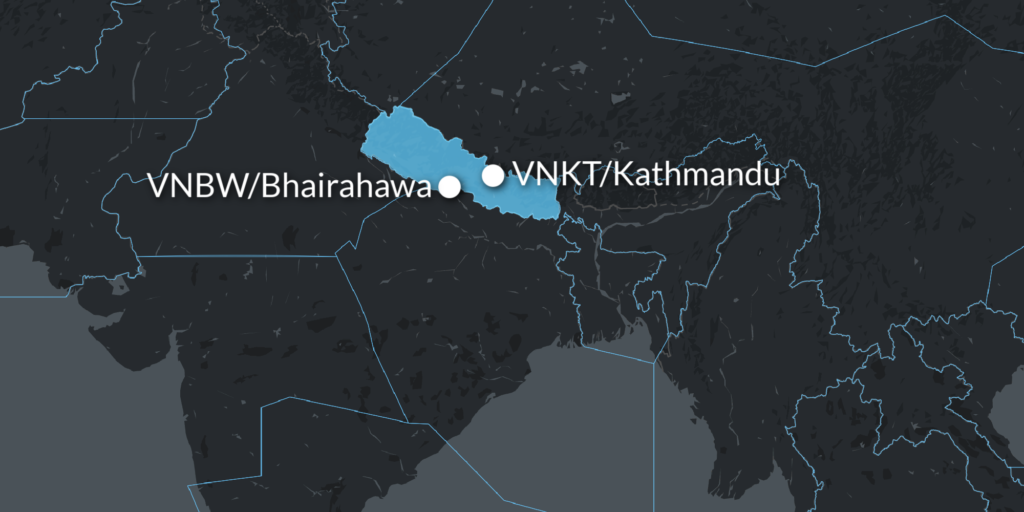
It is called VNBW/Gautam Buddha, and it is located in Bhairahawa, approximately 250km west of VNKT/Tribhuvan International Airport in Kathmandu.

The airport was officially inaugurated on April 22, 2022 but won’t see any international flights until May 16. It isn’t entirely new – an old airport was located here, and the original runway now serves as a taxiway.

What’s the lowdown on it?

The airport has a 9834′ (3000m) runway with a RNP approach to 10 and 28, and a VOR approach to runway 10 as well.

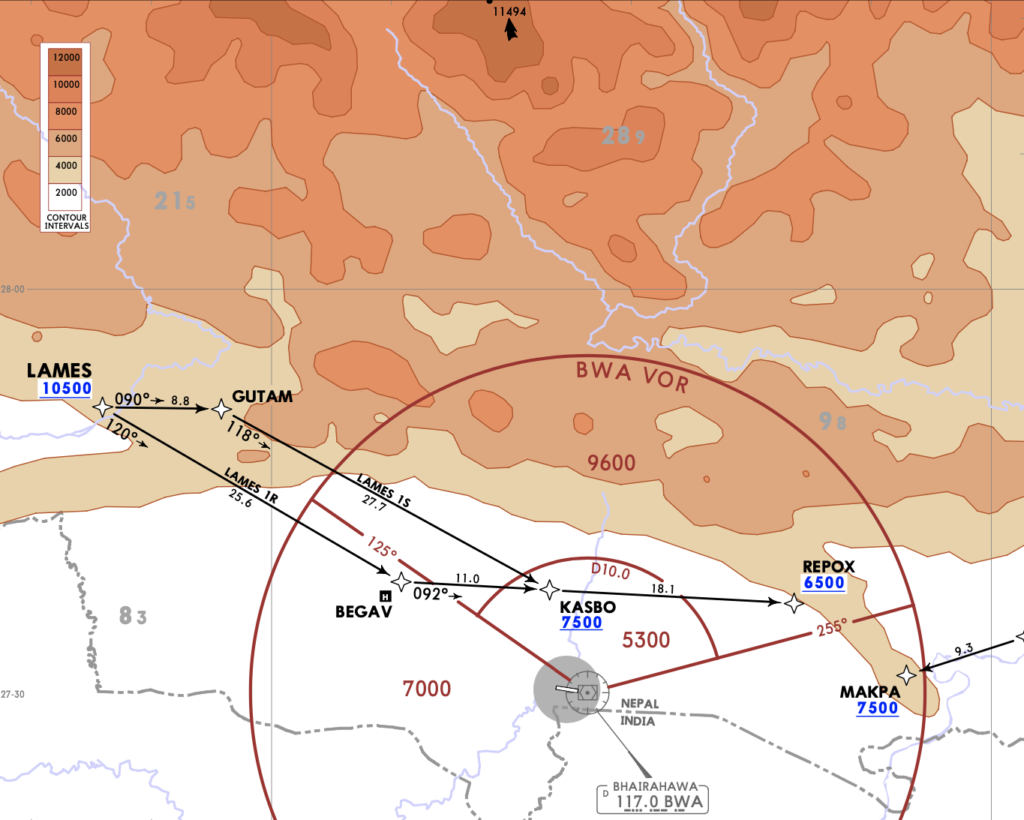
You’re going to want to watch out for the high terrain which lies to the north of the airport. The MSA is 9600′ in the northerly sector, and 7000′ for the rest, all of which makes for some altitude restrictions on the way in and out.

The airport itself is relatively small – just a few stands of the international apron and a few on the domestic apron.

The airport is RFF 5.

It isn’t a 24 hour airport though. The tower is only operational daily 0600-1845 local time (0015-1300z) and the general operational hours are Sunday-Thursday 1000-1700 local, 1000-1600 Wednesday and Friday 1000-1500.

Who can we talk to there?

We have a few contact details for you. Starting with the general airport info:

There is an agent based in Singapore who can offer some support if you want to operate in:

Fuel is expected to be suppled by AEG, and they only have Jet A1.

Want some more info?

The AIP section for the aerodrome can be found here. It’s valid today, but might not be tomorrow so don’t use for operational purposes.

And they are building more…

Pokhara International Airport is expected to open later in 2022, offering connections to neighbouring countries whilst Nijgadh International Airport is expected to open sometime in 2025.


Cornish pasty with a side of Rocket

Cornwall in the UK is getting its very own rocket launch site, which is due to go live sometime in the not to distant future. June in fact.

 Here’s what you might need to know about it when it does.

First up, why Cornwall?

Actually, we don’t really know the answer to that. The UK just wanted to get back into the space game and picked Newquay.

It is going to be used by Virgin – something they laid out in their “Virgin Orbit Statement of Need” which you can read in its entirety here should you wish too.

What’s it look like?

Well, it looks like an orbital rocket strapped under the wing of a Boeing 747-400, which takes off from said site in Cornwall and flies out to a drop point somewhere over the ocean.

You might know of ‘Spaceport Cornwall’ by its other name, which is EGHQ/Newquay airport. The active civilian airport is becoming a “horizontal” launch site. Which basically means the rocket takes-off strapped to a Boeing 747.

The bit we are more interested in.

The bit we are possibly more interested in, international ops impact-wise is the drop site. This is located approximately 135nm west of Spaceport Cornwall (Newquay airport), and is about 73nm x 73nm. The drop site is where the B747, at 35,000′ or so, releases its space bound load. 

In order to keep it all safe and to make sure no-one else is in the way during rocket drop, there will be temporary danger areas established, probably active for around an hour to enable the 747 to drop the rocket safely.

The full danger area is extended depending on various factors on the day to allow for the rocket movement and debris fall. The overall area is expected to be around 310nm x 35nm in size, and the debris falling back down danger area will probably be about 230nm x 86nm.

It’s a lot of random numbers – basically, check Notams as they will advise of the specific areas for each launch.

Does anyone operate around the affected areas?

Yes, sometimes. These areas actually have a bit of an impact on Shanwick OCA and on Shannon, Scottish and Reykjavik FIRs to the north, and Lisboa FIR and Santa Maria OCA to the south. 

When launches are taking place Notams will of course be issued advising of the relevant danger areas, size, altitude and timings.

Right now, we are waiting for AIRAC 2207 to come out in July which will have more info on the launches and airspace changes.


OPSCHAT Summary April 19

Hi Members,

We had another busy OPSCHAT call this week, along with our new quiz!

You can watch the full replay on your Member’s Dashboard.

Here’s what we talked about:

  • USA – Fuel prices are on the up. We talked about why, and what this means for ops. The CDC mask mandate – they extended it, and then stopped it. We try and make sense of things.
  • Europe – There are some big aviation events coming up. Aero 2022 and EBACE. Get your parking spots booked soon!
  • Peru – There was a major ATC strike last week. For now it’s back to ops normal, but keep an eye on contingency procedures – you may need them.
  • Pacific – More Russian rocket firings on April 27. A slightly confusing picture, but basically two possible spots where the debris could fall, the PACOTS aren’t affected.
  • Bermuda – It will be downgrading its RFF until July. Does anyone have info on when this becomes an issue? 

Unsolved Mysteries

The EASA Environmental Portal. Yep. Still a bit of a mystery. Should you hear back when you’ve submitted your info? Share your ordeal registering if it can help others.

MMEL to MEL – Has the UK changed the rule since leaving EASA? If you’re operating somewhere with an MMEL, have your LOA (O95) with all your Ms and Os in order and you should be ok.

New Mysteries

GMMX/Marrakech – has anyone been recently?

Recovery documentation after catching Covid – how can I get back to the US?

OPSQUIZ

Congrats to this week’s winner! We have a whole load of new prizes to choose from (we promise they’re cool!). Tune in next week for the next OPSQUIZ.

As always, the team is here to help with any operational support, info or questions. You can reach us on news@ops.group, or via the slack channels #flightops and #questions.

To watch the replay of the OPSCHAT in full: head over to the dashboard. We hold a new one every week on Tuesdays at 2000z, click here to register and join us live. See you next week!


Alphabet Soup: FAA New Flight Planning Codes

The FAA are changing up some flight planning codes, and they’ve published their plans in a handy little guide entitled ‘Filing for advanced capabilities using the ICAO flight plan (FPL)’.

We thought we’d take a look at what these new things coming into the FAA flight plan filing code world might be. When we say take a look, we mean literally type up the presentation and add some thoughts of your own.

This just applies to FAA flight plans, right?

Yes. No. Maybe…

We think it is a yes because the US is implementing a lot of RNP1 SIDs and STARs (basically stuff that requires advanced Nav capabilities) and for reasons we’ll mention below, they need new codes.

You can expect to see a load of new items which relate to NAV/ and also DAT/, SUR/ and COM/. ICAO has “frozen” Items 10 and 18 for PBN/ unless it is a safety critical thing.

What’s more, in the FAA presentation there is a lot of talk about the STAYY SID into KSNA/Orange County (guessing because it will be the first RNP 1 SID published?). So, from Septemberish to Novemberish, if you’re flying there and are planning on flying this approach then you’ll need to be filing these.

So it’s all about RNP1?

Mostly, yes. RNP 1 SIDs and STARs require Radius to Fix (RF) capability. There is some mention of RNP2, which is used in the UK and Australia. The FAA are working with them to clarify this because there are actually two different RNP2 standards so it is currently a bit ambiguous.

What are these codes?

We are seeing a ‘Z’ which will go into Item 10a and a Z1 which will go into NAV/

What else?

Here is a table. Lots of new letters with a 1 after them (or a 2) confirming your various RNP capabilities.

What do we use at the moment?

Let’s take a quick jump back and talk about ‘Relevant Flight Plan Fields’.

If you’ve ever filed a flight plan, you are probably fairly familiar with Item 10 – Equipment and Capability (with 10a for your Nav, Comms and Approach Aids and 10b for your Surveillence). Then there is Item 18 – Other Information, and this is where you enter your PBN, NAV, DAT, SUR and COM stuff.

So, depending on the type of routing or what-have-you that you plan on doing, you need to add info in item 10 and item 18 to confirm you’re capable of doing it.

Here is a handy table for you. Basically, if the plan is to fly a ’T-Route’ for example, then your airplane needs to be capable of RNAV 2, which means you’ll want to whack a ‘GR’ into Item 10a and a ‘C2’ into Item 18.

GR of course means GNSS and R means PBN approved. C2 means RNAV 2 GNSS specifications.

If any of this is totally new to you…

Maybe take a read of FAA Appendix A. FAA Form 7233-4 ‘International Flight Plan’ which covers all the boxes and their respective what’s and why’s.

PBN/ is limited.

Something else mentioned in the presentation is the limited number of PBN/ entries that you can make on your flight plan. This limit means the automation which “reads” your plan might make some assumptions. For example, if you enter a D1, D2, D4, O1 or O2 code, it is going to assume you are RNAV 2 capable.

There are also certain PBN/descriptions which don’t align with any OpSpec authorisations.

C3, D3, O3 – DME/DME is not adequate for RNAV 2, RNAV 1, RNP 1 and O4– DME/DME/IRU alone is not adequate for RNP 1.

All of which means changes are needed!

A reminder on using NAV/RNV to suppress a PBN segment

The automation (and this is a direct quote from the presentation) ‘bases route eligibility on PBN information but overrides that with the NAV/ information when provided’.

Right now, putting RNV means RNAV, so if you file NAV/RNV the automation won’t think you’re eligible for an RNP routing. In fact, 50% of flight plans which include RNP1 capability are only seen as RNAV 1 eligible. If this has happened to you, stop putting RNV in the NAV/ string.

The main point here is that the majority of users should be using PBN/ only.

There is more.

There is more, but it might be easier to read it in the FAA presentation itself. 

When all the FAA documents are changed and updated to include the new stuff, then this is what to look out for:

  • New NAV/ descriptors are coming in, including info on how to file them
  • Documentation on the new descriptors they’ve come up with will be there
  • Instructions on how to file RNP routes, including ones which require RF capability will be included
  • Instructions on how to use NAV/RNV to exclude PBN routes on a single segment will be removed (but there will be a web page and FAA contact info if you still need help).


Liquid Lunch

Remember the 100ml rule? The one that’s been there since 2006, causing endless hassles at security. Well, its changing!

Why does that matter for air crew?

Good question. Is this really an operational issue to talk about? We are ‘Opsgroup’ not ‘VaguelyInterestingInfogroup’ after all…

Well, the rule is here for crew too and if you’ve ever operated through a UK airport you will know they can take it very seriously indeed. I once had my healthy hummus lunch taken from me because hummus is slightly more liquid than solid.

So, the change will mean:

  • An easier time going through security for Air Crew as well as passengers
  • Possibly some changes on what you can stock up on during layovers (if you don’t check your crew bags)
  • The option to have better coffee than what you might get onboard
  • General security changes

Let’s take a quick look at the security side of things.

Passengers and crew will be able to carry whatever liquids they require, so long as they fit in their hand luggage. Remember though, if you are transiting another airport, their liquid limits will still apply.

There are a few liquidy products worth looking out for as well. The top two we are aware of are peanut butter and Frankfurter sausages in jar available in EDDF/Frankfurt airport duty free.

Why?

Well, the liquid explosive scanning machines work off detecting a range of chemical elements, and also look at density. Fun fact – the molecular makeup of peanut butter is actually very similar to nitroglycerin, while the juicy sausagey water in frankfurter jars is apparently of a density that some scanners struggle with.

Then there are actual banned substances.

Possibly more important to remember – these are, obviously, still banned. There is no change to the dangerous goods restrictions.

Toxic, flammable, infectious, over 70% alcohol, paint etc is all still not allowed.

Shannon Airport

EINN/Shannon is of course a gateway airport for the USA. The US Pre-clearance status means you can undergo all immigrations, customs and agriculture inspections here.

Which is why we thought this was worth mentioning because it will be a nice change for a lot of folk heading through, but those agriculture restrictions remain in place.

All travelers entering the United States are required to declare anything with meats, fruits, vegetables, plants, seeds, soil, animals, as well as plant and animal products – including soup or soup products.

Check out the USA CBP website for more info. There is quite a handy “what can I bring in for my own personal guzzling purposes” list here, published by them.

Where else are the scanners going to be?

Well, the UK is planning to have them installed in all their international airports by December 2022.

TSA in the USA is also planning on having over 1000 of them active for Summer 2022. So watch this space.


Is the Fuel Pool Drying Up?

From Laos to Lima there is a growing fuel shortage and while the shortages (and fuel price hikes) have mainly been impacting road users, the problem is beginning to be felt in aviation as well.

So we figured we’d take a look at the situation.

What’s causing it?

The Ukraine Russia conflict.

Russia is the third largest supplier of oil behind the USA and Saudi Arabia, supplying around 12% of the world’s needs.

The conflict is seeing oil prices zoom up, recently hitting $139 a barrel (a 14 year high). Spot prices in New York Harbour went over $7.30 a gallon which is double what it normally would be this time of year.

But why is the USA short?

Good question.

The USA gets its fuel from lots of places, predominantly domestically and from across the border in Canada and Mexico. What you might not realise though is it also sources almost 10% of its supply from Russia. It’s a big number when you consider 329 million people live in the US. Take into account that Europe is also feeling the pinch of this ‘tightening global energy market’, ‘ it’s no wonder prices are on the charge, and supply running thin.

Back in 2021…

Back in 2021 the USA suffered fuel shortages at a bunch of airports. This was actually due to a bunch of reasons:

  • There weren’t enough truckers to drive it around
  • The pipelines had all been shifted during covid and hadn’t been shifted back again
  • There was a cyber attack on one of the main pipelines disrupting the supply
  • Some supplies were diverted away from leisure airports and to airports where wildfire fighting aircraft needed it
  • Leisure routes were getting busier as Covid restrictions loosened

Fast forward to 2022 and while flying levels are around 95% of the peak 2019 levels, fuel production is still only around 80%. So there is, simply, a shortage.

Let’s talk about the East Coast.

The East Coast has been particularly hard hit for two reasons:

  • One, because the California refineries suffered some technology issues earlier in 2022 and couldn’t make as much,
  • Two, because they receive their supply mostly from Texas and also Europe – and Europe ain’t sending much at the mo.
    • Distallite PADD 1 imports (the stuff a quick google search showed me is used for Kerosene – Jet fuel) is down 60%.

What are we seeing, where?

  • Smaller, regional airports are reporting shortages
  • Leisure routes are being cancelled due rising costs
  • International shortages/rising costs leading to security situations
  • Uncertainty as to ongoing availability
  • And of course, the rising costs globally…

In the USA

We have seen reports for several spots across the USA, and expect to see more particularly for the east coast airports.

  • KEYW/Key West has reported rising costs
  • KAUS/Austin has seen surge in passenger number and operators were asked to tanker where possible for at least the next few weeks.
  • KSDL/Scottsdale had a report from member of fuel shortages. One FBO confirmed their supply was ok, but other FBOs were running low.

If you have visited an airport recently which has fuel supply problems, or where costs are rising significantly, please let us know.

Elsewhere in the world

Nigeria and Russia have both had reports of aviation fuel shortages. The other countries on the list are seeing fuel shortages and rising costs leading to protests and security situations, however whether there is an impact on aviation fuel supplies is currently unknown.

  • Russia started to see fuel shortages around the start of March.

Whilst Russia are a major oil producer, much of their supply may be getting redirected for military operations. One major operator cancelled flights to UUDD/Moscow due being unable to uplift. With the current situation and lack of operators heading in, it is hard to get any clear picture of the situation though.

  • Nigeria have a big, ongoing shortage.

Although initially due to a batch of poor quality fuel, the situation has been growing as the costs of buying in more keep rising. This has been impacting domestic and some Interational airlines for over a month now. We wrote about it here.

  • Laos have a nationwide shortage but reports are not clear as to whether this impact aviation fuel as well.
  • Peru have seen protests and strikes in the transportation sector over rising fuel prices. There are no reports of this impacting aviation yet.
  • Sri Lanka has also been seeing an increase in protests over rising economic issues including fuel shortages. An FBO at VCBI/Colombo-Bandaranaike informed us that jet fuel supplies are good.
  • Pakistan are seeing rising demand, but are struggling to buy in fuel from their suppliers as Europe call in additional supply.
  • DRC has a shortage in ground transport fuel. No impact reported on aviation fuel, but significant security issues due protests.
  • Sierra Leone have a notam advising Jet A1 only available for scheduled flights at GFLL/Freetown until at least April 20.

What to do about it?

  • Keep an eye on notams
  • Confirm availability with agents prior to heading in
  • Consider signing up to services such as AvHopper that can keep updated on fuel costs and availability
  • Tanker where possible to maximise cost efficiency
  • When planning alternates consider fuel availability
  • Think about crew security on the ground if laying over, and crew transport issues
  • Share it if you operate to an airport or region and experience fuel issues.

You can let us know about it on team@ops.group and we will post an alert so others know about it as well.