


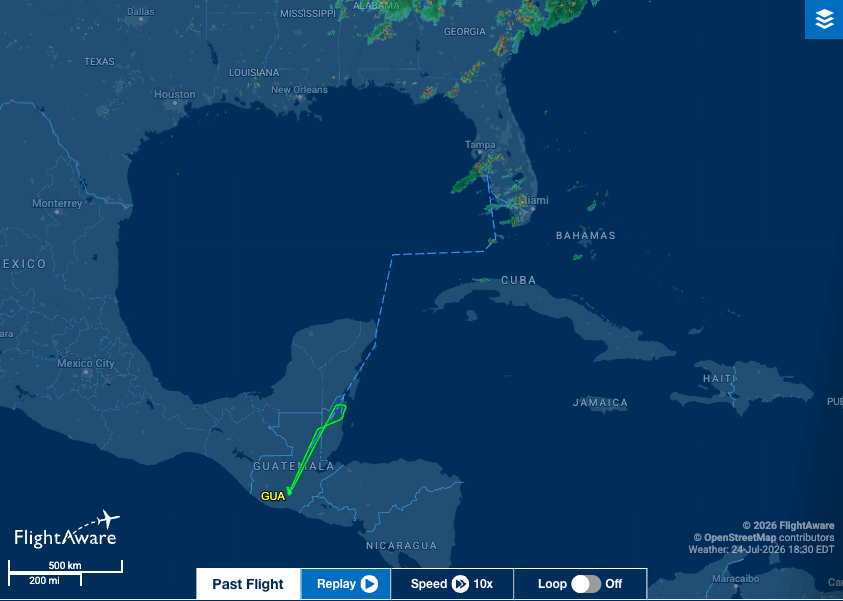
On July 24 one of our members’ aircraft – a medevac jet – departed MGGT/Guatemala City bound for Florida. An hour or so later, while approaching the Belize/Mexico border, ATC turned it around. SpaceX had just launched Starship Flight 13 from Boca Chica, Southern Texas, and the airspace ahead was closed. The aircraft returned to Guatemala, thankfully with no patient on board.
The crew briefed normally, via ForeFlight, before departure. The key problem is that the system they were relying on wasn’t built for what a major SpaceX launch actually does to the airspace.
It’s not just one Notam. It’s a wall.
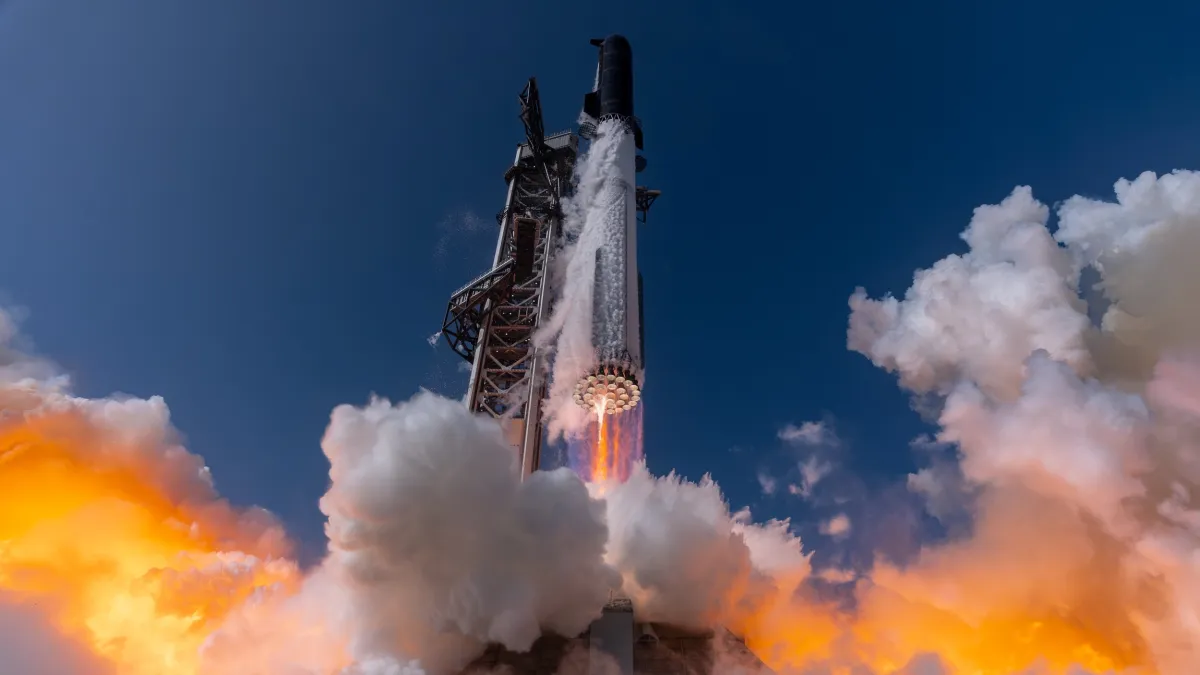
A SpaceX Starship launch is a big deal. They’re a test flight of the biggest, most powerful rocket ever built – the one SpaceX intends to eventually use for missions to the Moon and Mars. Bigger even than Apollo’s Saturn V that took Neil, Buzz and Michael to the lunar Sea of Tranquility back in 69′.
They launch from a site called “Starbase,” on the southern tip of Texas near Boca Chica Beach.
Starship is actually two huge stages stacked together. The massive first stage does the heavy lifting off the pad and either flies itself back to the launch site or has a controlled splashdown in the ocean.
Starship (the second stage) sits on top and continues into space along with whatever payload it’s carrying.
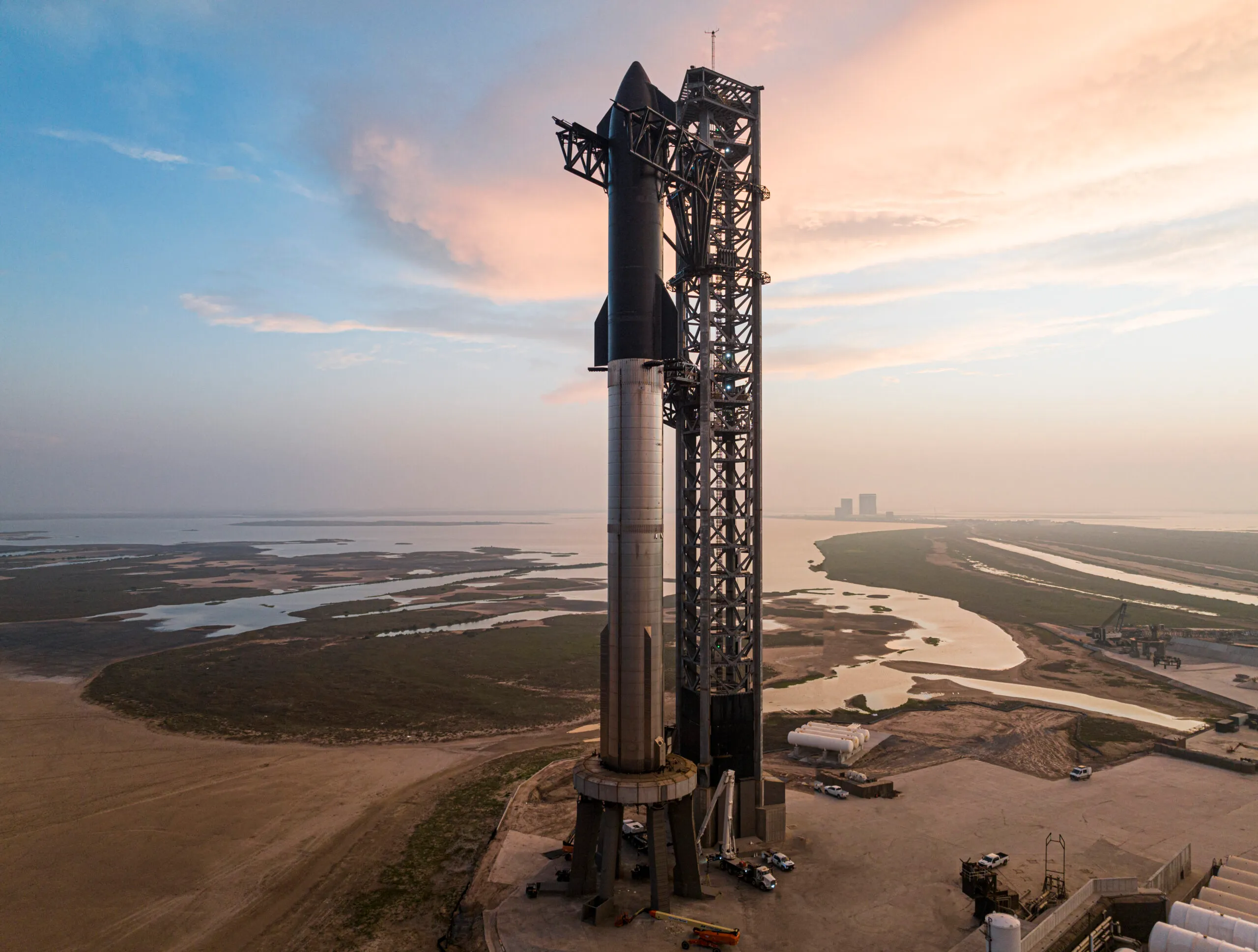
SpaceX Starship
But for aviation, the relevant bit isn’t the spectacle. It’s the debris and hazard footprint – which is huge.
It isn’t just about closing a box of airspace around the pad. It involves a hazard corridor covering the first stage descent, splashdown, debris footprint i.e. the whole shebang.
The corridor crosses several FIRs, and each FIR is responsible for publishing its own Notam for its slice of it. There’s no single Notam that covers it all.
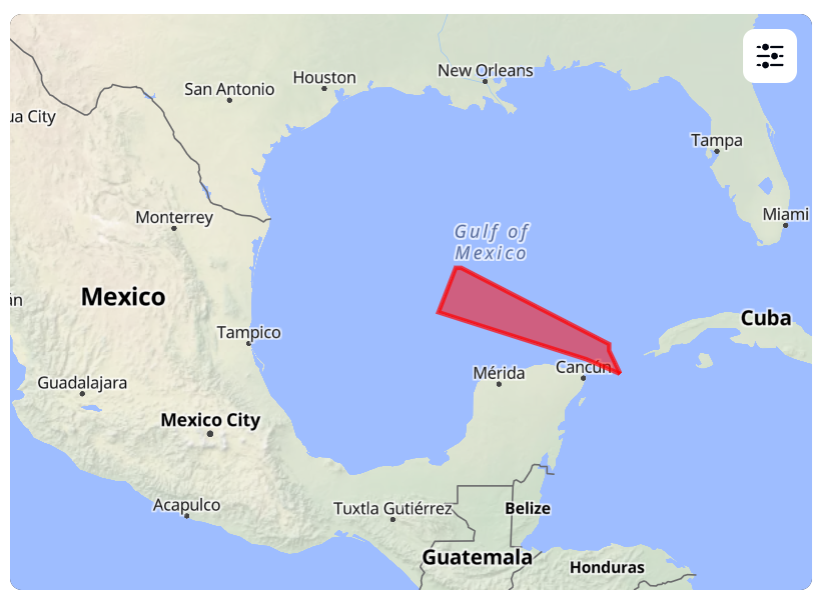
For this launch, Mexico published MMFR Notam B1467/26. This described a polygon of airspace defined by no less than 14 lat/longs referred to as ‘Area B2′:
B1467/26 NOTAMR B1443/26
Q) MMFR/QRDCA/IV/BO/W/000/999/
A) MMFR
B) 2607242245
C) 2607300056
D) DLY 2245-0056
E) DANGEROUS AREA FOR LAUNCH OF ROCKET SPACEX STARSHIP FLT-13,
LATERAL LIMIT AREA FORMED BY THE UNION OF THE FLW POINTS:
AREA B2:
2430N 09103W
2430N 09052W
2420N 09031W
2312N 08804W
2232N 08638W
2212N 08600W
2200N 08600W
2117N 08538W
2144N 08645W
2216N 08832W
2236N 08938W
2303N 09114W
2310N 09137W
2430N 09103W
FIR MEXICO (MMFR)
F) SFC
G) UNL
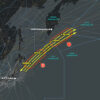
Have time to plot 14 coordinates from a single Notam? We don’t either. Here’s what this would look like if you did:
Cuba published a separate Notam MUFH A2617/26, restricting the use of certain waypoints in the Havana FIR – with a different take (re-routing traffic around specific points, rather than closing a defined chunk of airspace). That’s why it reads so differently to Mexico’s.
A2617/26 NOTAMR A2603/26
Q)MUFH/QXXXX/IV/NBO/E/000/999/2107N07944W999
A)MUFH B)2607232045 C)2607300100
D)2045/0100 DLY
E)SOUTHBOUND TRAFFIC FROM KZMA, KZHU FIRS ENTERING MKJK FIR AND MMFR
FIR, WILL BE ACCEPTED OVER:
- SHARQ, CANOA, MAXIM UP TO 2150Z
- FUNDI, TANIA, URSUS, BORDO, DYNAH, ENAMO UP TO 2135Z
- ERRCA, GHANN, MEDKO, OVALU , BYGON UP TO 2100Z.
WESTBOUND TRAFFIC COMING FROM THE EAST OF MUFH FIR, WILL BE
ACCEPTED OVER:
- URLAM, MODIT, MEDKO ENTERING IN MMFR FIR UP TO 2045Z
NORTHBOUND TRAFFIC FROM MHCC, MKJK FIRS , GRAND CAYMAN APP WILL BE
ACCEPTED UP TO 2235Z.
TRAFFIC OVER GELOG WILL BE ACCEPTED UP TO 2245Z
INCOMING TRAFFIC FROM MMID WILL BE ACCEPTED OVER:
- ALURU L/UL674 UP TO 2145Z
- NUDAL, NUKAN, EMOSA, PEPSO UP TO 2235Z
FOR AN EMERGENCY, AVAILABLE AIRPORTS: MUHA , MUVR, PLEASE READ
NOTAMS A2480/26 NOTAMR A2014/26 , A2481/26 NOTAMR A2015/26 ( JET A1
FUEL NOT AVAILABLE )
-REASONS: SUPER HEAVY STARSHIP LAUNCH 13TH
Individually, each one reads like some kind of weird danger-area Notam. Only if you plot every FIR’s Notams together do you see the the whole thing adds up to an east/west wall blocking traffic spanning from Southern Texas, across the Gulf and Caribbean, all the way down to Barbados and the Lesser Antilles.
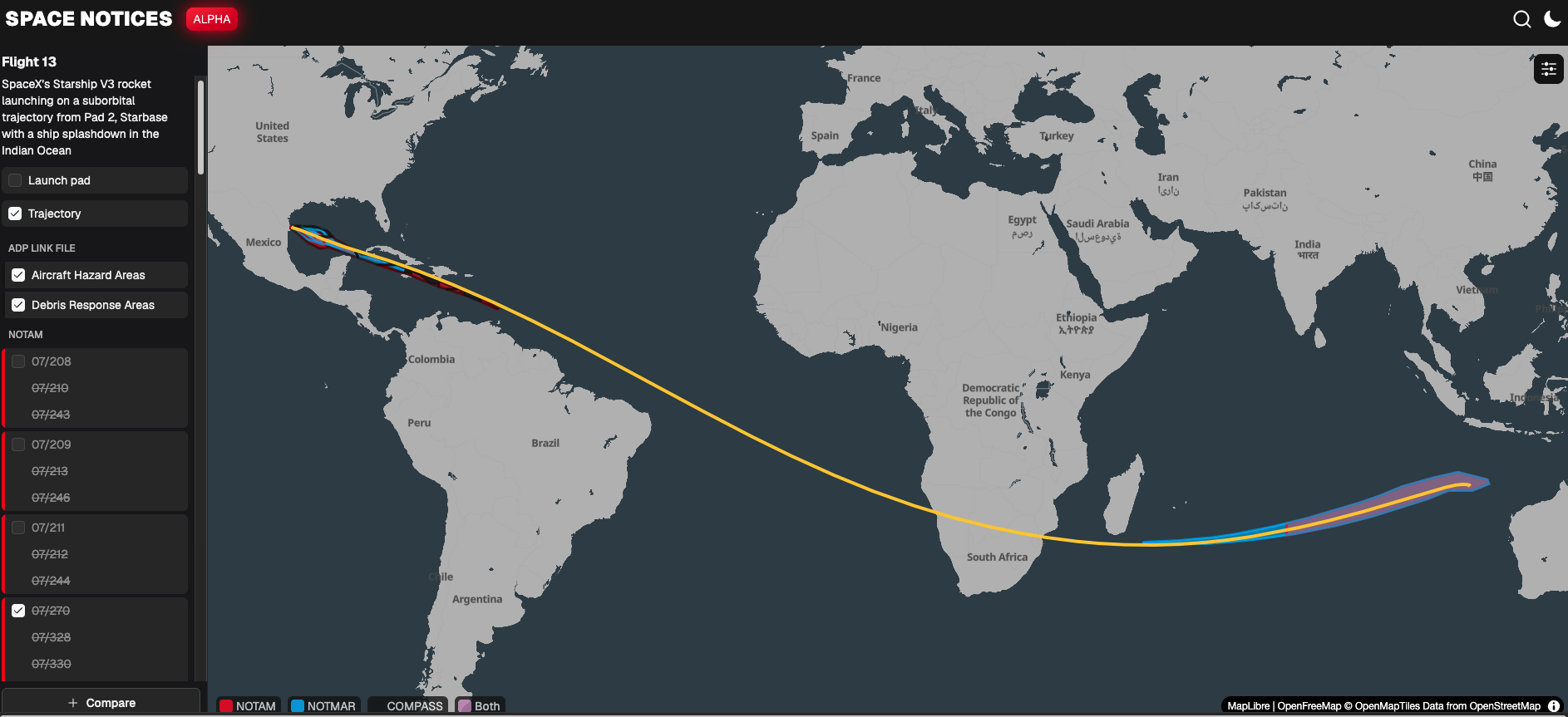
The problem of time
But it wasn’t just the size of the disruption, but also time. The Mexican Notam wasn’t issued until after they’d pulled their ForeFlight briefing. Even Guatemalan ATC didn’t catch it when issuing the IFR clearance.
There’s currently no requirement for space launch Notams to go out any set number of hours in advance. They can and do get filed and re-filed reactively.
Take the US for example. 14 CFR Part 417, Appendix B (which governs licensed launch operators’ hazard-area Notams) only requires the Notam to be effective thirty mins prior to flight. In practice, they’re usually visible 48 – 72hrs prior. But the key point here is that don’t have to be.
 That’s also the nature of space flight. Launches slip constantly – minutes, hours, days. It’s why we talk about launch “windows” and back-up days. Every slip means every affected FIR has to reissue its Notam, trying to stay ahead of a moving target and it get it into the system before the next crew pulls their briefing.
In other words, there’s plenty of wriggle room for something to slip through. This may well be what happened to the crew here, but we can’t say for certain. But it appears the system has gaps a normal briefing might not catch.
Big space ambitions
Two things have crossed our desk recently suggest this problem isn’t going away and may get worse.
First is that FAA is proposing to streamline the approval process for commercial space ops. This will include greater flexibility to waive certain requirements when reviewing commercial space licences and permits. The number of operations each year is expected to double over the next decade. From an ops-perspective, airspace closures will become far more frequent. The FAA has published a handy SAFO on this subject.
Second, from SpaceX itself: In a recent earnings call, Elon Musk has floated the idea of eventually flying Starship daily.
And the flight paths may change too. Right now, only the booster stage is landing back at the Boca Chica Starbase. The upper stage still splashes down in water. However, they will soon attempt to return that stage to the launch site too, in which case hazard and debris areas may begin to affect the airspace over more US states.
So how do we brief them?
The existing Notam system simply isn’t designed to handle huge geographic areas which extend over multiple FIRs. We’re not saying don’t read them, but they can struggle to give you the full picture. What helps is live tracking.
And there are a few good places to find it. SpaceX publishes its own launch schedule which remains the primary source for launch schedules and status. They also share information on temporary flight restrictions associated with the Starbase launch site here.
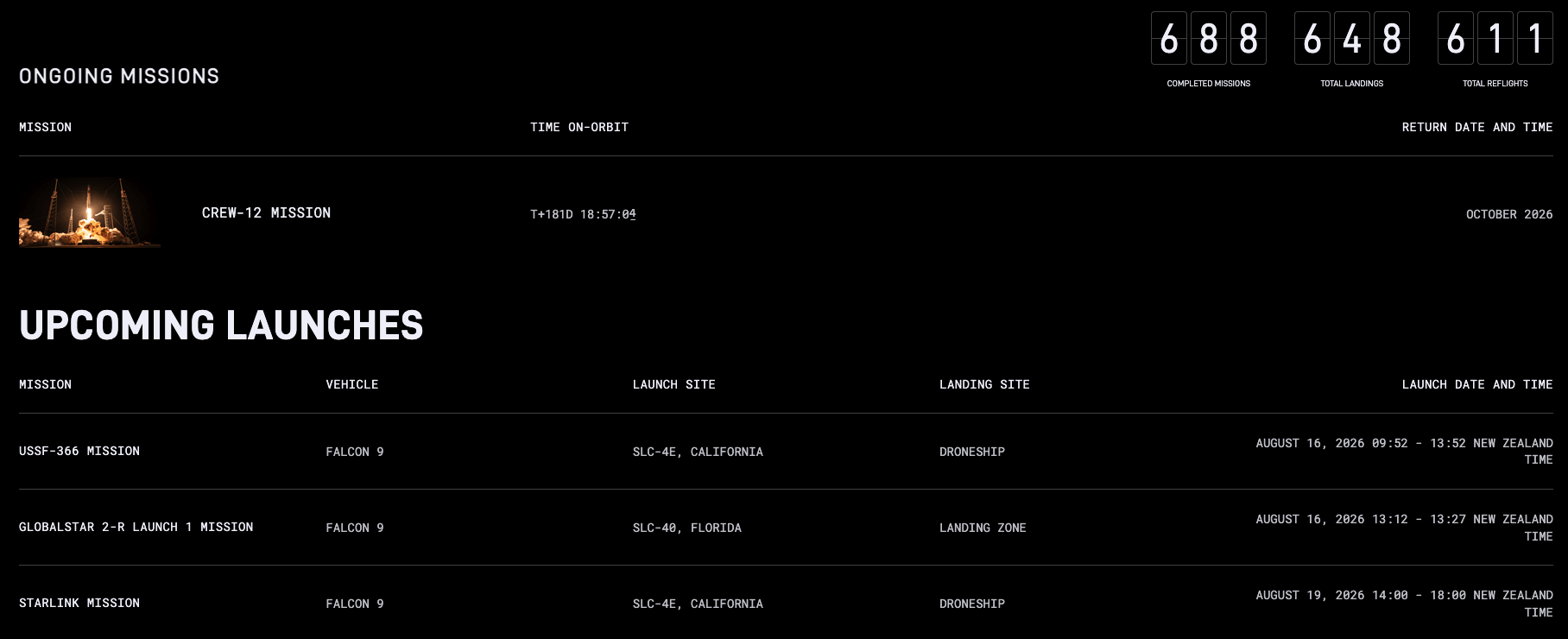
SpaceX publishes a schedule of launches and their status, in this case conveniently converted to Antipodean time, where this author is based.
Beyond SpaceX, the Texas Space Launch Schedule is a useful tool for forward planning around upcoming launch windows. And finally, Space Notices is worth a look too. It’s privately-run but provides a useful ‘big picture’ view that shows full hazard areas across all FIRs involved, not just one.
Cover yourself
Beyond briefing, there are some things you can do to further lessen the impact of SpaceX launches on your flight.
On a known launch day, plan to cross the corridor before the window opens. Don’t be tempted to show up right after a scheduled launch because if it’s delayed (and they often are) you’ll be heading right into the action.
For flights near the Gulf or northwest Caribbean, check the status of a launch right up to departure, not just when you’re flight planning. Lest a mysterious and unexpected Notam suddenly appears that wasn’t in your briefing pack.
It doesn’t end there either. It may be a good idea to have someone on the ground monitoring Space X’s status page who can then relay that information to the crew in the air. Just because you were all clear on departure, doesn’t mean you will be when you arrive.
And finally, don’t assume one FIR’s Notams tell the whole story. If your route takes you anywhere near a Starbase launch corridor, check the Notams for the FIRs adjacent to your track too – not just the one you’re flying through.
Look out in a few weeks time
The next mission, Starship 14, is slated to launch in early September. When a date is announced, we’ll be sure to let you know.
A special thank you to the pilots involved who brainstormed their lessons-learned for the benefit of our group! We salute you!
And one final tidbit. Remember when SpaceX launched a Tesla Roadster into space aboard a Falcon Heavy back in 2018? It’s still out there – last tracked millions of miles from Earth in an orbit around the sun. Starman the mannequin is still in the driver’s seat.


More on the topic:
- More: Major US Rocket Launch Incoming
- More: Belarus: A closer look at their aviation industry
- More: The Gateway to the Skies
- More: ATC Zero in Class A Airspace: Is It Dangerous?
- More: The Central Florida Metroplex
More reading:
- Latest: NAT Pack 2026: All the North Atlantic goodies
- Latest: New 2026 NAT Oceanic Checklist
- Latest: The Bahamas wants your cash
- Safe Airspace: Risk Database
- Weekly Ops Bulletin: Subscribe
- Membership plans: Why join OPSGROUP?






 Get the famous weekly