Dodging Danger: The Three Routes Through the Middle East

Navigating the airspace of the Middle East has become a major headache for international operators.

In recent times, risk to civil aviation in the region has changed at a pace we have never seen before.

Transits are now faced with a common conundrum: it no longer seems to be a simple question of ‘is this route safe?’ but instead, of one’s own appetite for known risks.

There simply is no ‘risk-zero’ route available.

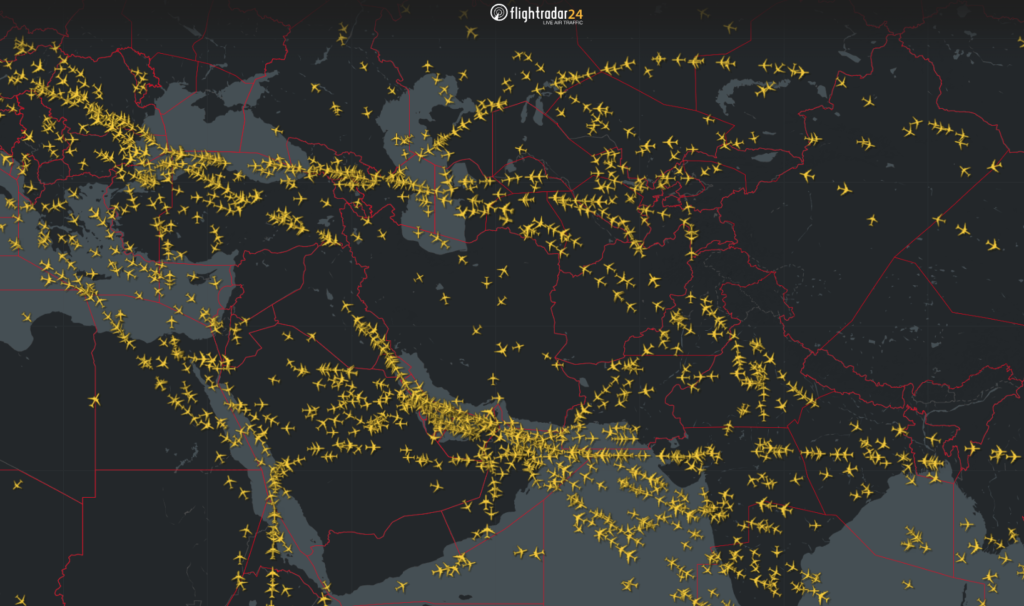
Therefore, a common question that bizav operators are asking OPSGROUP is ‘what are the major airlines doing?’ A snapshot of flight tracking right now shows that Middle Eastern transits are managing risk through the use of three distinct routes:

  • South via Saudi Arabia and Egypt
  • Central via Eastern Iraq and Turkey.
  • North via the Stans and the Caspian Sea.
This article provides a brief risk profile for each of these routes to help operators carry out their own risk assessments when choosing a route to fly.

A Note About Risk

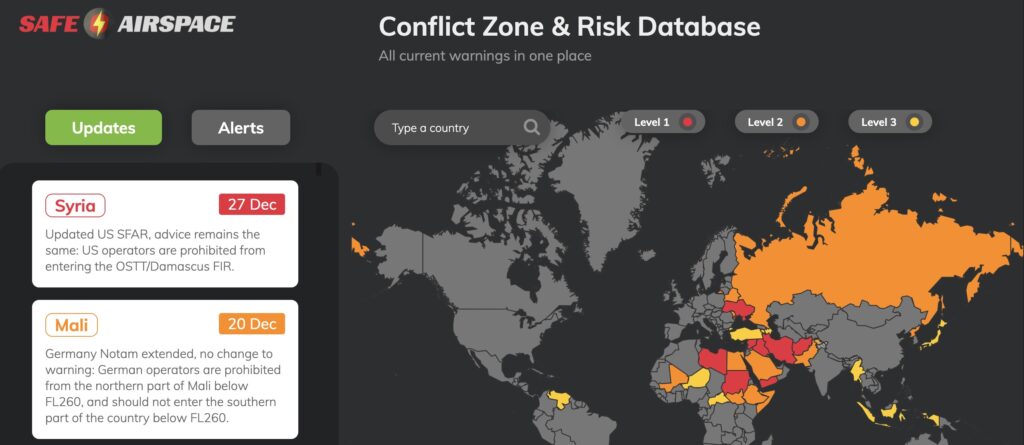
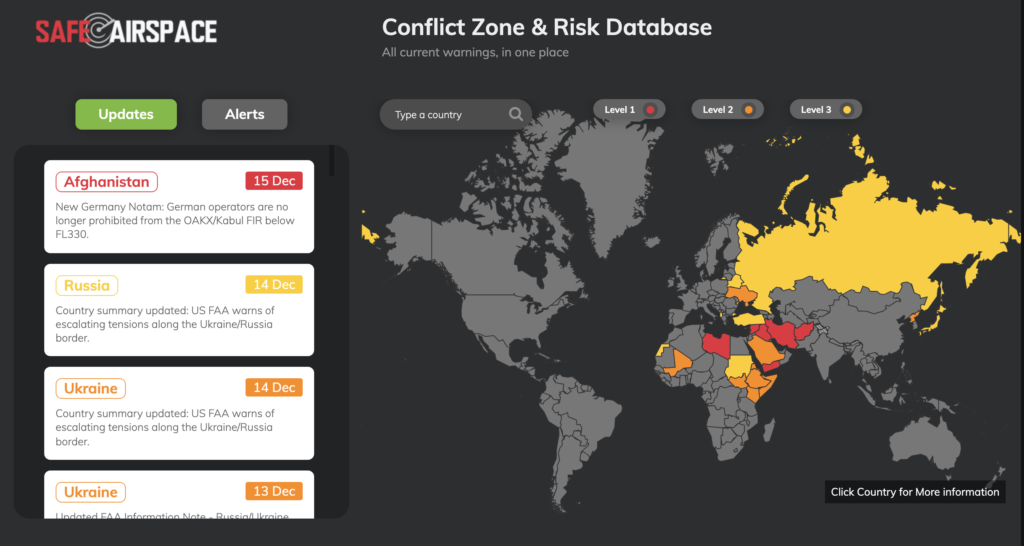
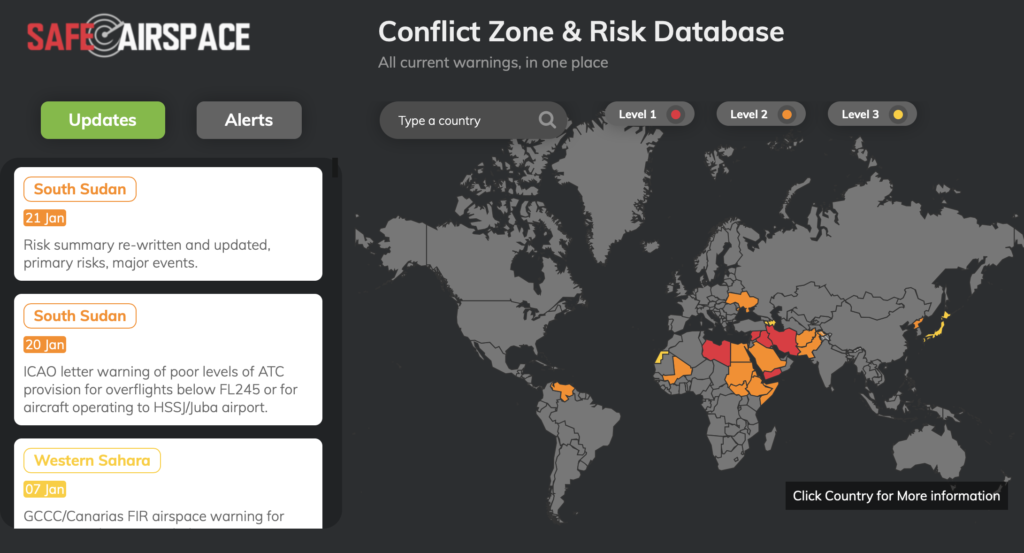
OPSGROUP also runs safeairspace.net – a database of all state-issued airspace warnings, along with risk briefings for each country in plain simple English.

We take into account both official advisories, recent and past events, advice from other specialists and potential for emerging risk when making a risk assessment.

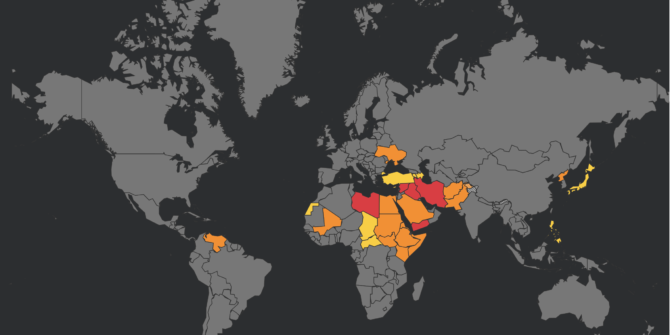
To keep things simple we have three levels:

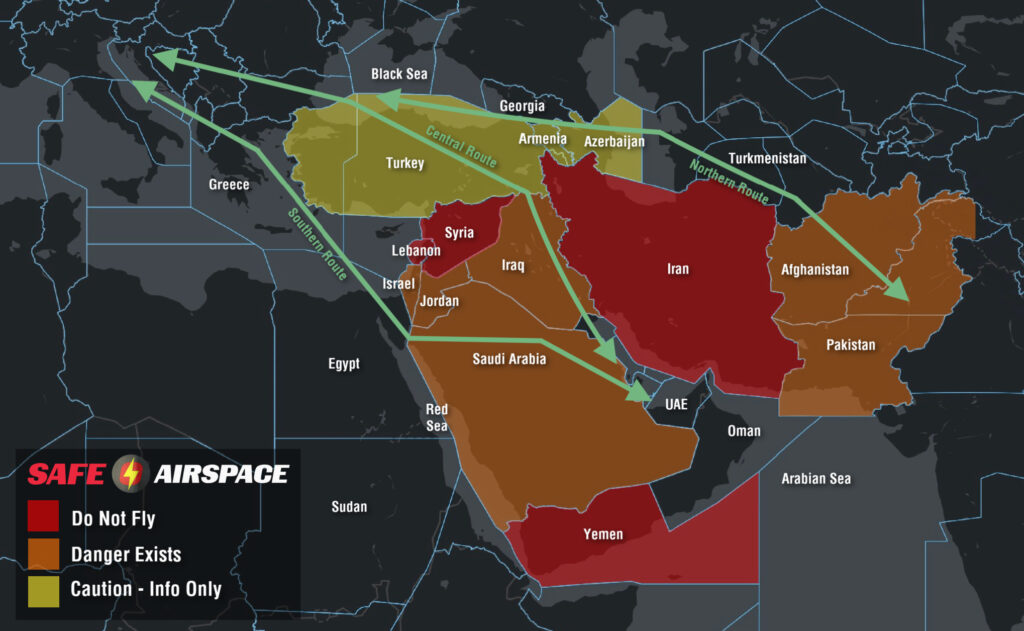
  • Level 1 Do Not Fly (Red)
  • Level 2 Danger Exists (Orange)
  • Level 3 Caution (Yellow).

None of the three routes above enter any country’s airspace we have classified as ‘Do Not Fly.’

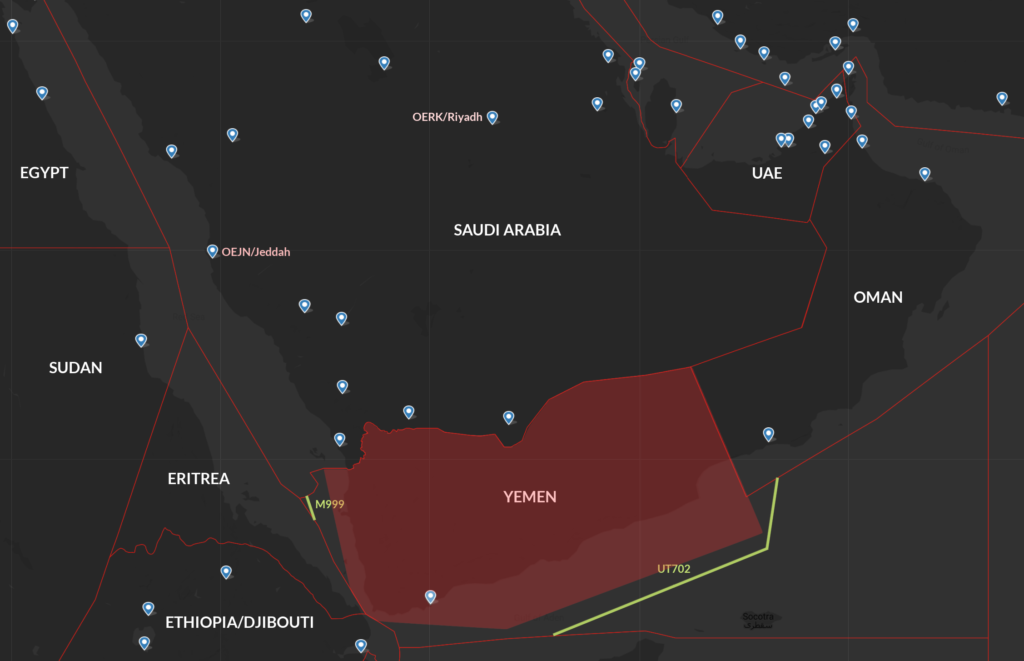
For the rest, you’ll see the map below is color coded according to the same risk profile.
The Southern Route

This route begins with a lengthy crossing of Saudi Arabia, steering clear of Israeli and Lebanese airspace to the north before crossing the Red Sea into Egypt.

It’s considered advantageous because it keeps tracks miles down (compared to the Northern Route) and avoids the potential for a sudden escalation of hostilities between Israel and Iran.

From a contingency perspective, it also provides safer diversion options than a transit of Iraq.

But now for the more-risky stuff.

The Houthi Campaign:

There is currently heightened risks to civil aviation in this area.

Houthi Rebels in Yemen are currently engaged in a long-term campaign to use missiles and drones to target Israel (therefore infringing the Jeddah FIR) along with shipping channels in the Red Sea.

The military response to these activities is the use of air defence systems to destroy them.

The latest incident occurred on Nov 3, where a crew witnessed the interception of a missile at a similar level in open airspace near Jeddah. OPSGROUP members can access a special briefing on this latest event here.
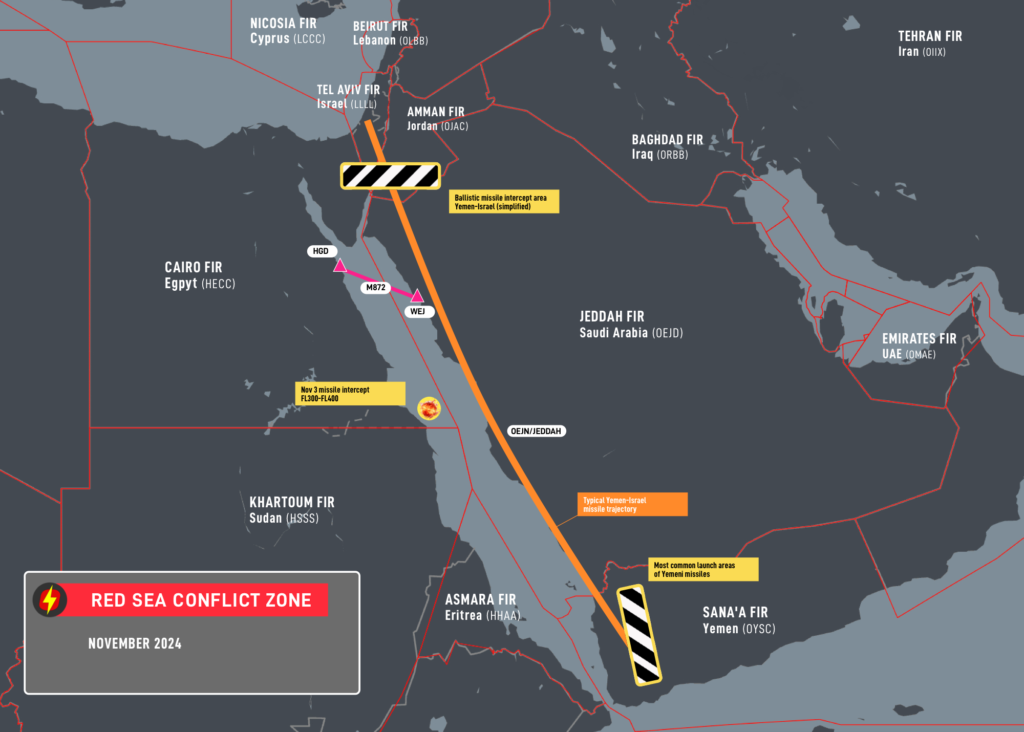
Of particular concern to aircraft at altitude is the use of ballistic missiles which originate from Western Yemen and are destroyed by defensive intercepts while on descent toward their target – which puts the airspace of Northern Saudi Arabia at heightened risk given its proximity to Israel and Gaza.

This essentially creates three risks to overflying aircraft – a direct hit by a missile (extremely unlikely), debris fields from inflight break ups or successful interceptions, and misidentification.

For the latter, many well-known incidents affecting civil aviation have come from mistaken identity. Malaysia 17, Ukraine 752 and Iran Air 652 were all due to misidentification.

Egypt ATC Congestion:

 OPSGROUP has received several recent member reports of severe frequency congestion in the Cairo FIR apparently due to ATC overload.

One crew even reported that during an entire portion between the North Coast of Egypt to the Red Sea (MMA – M872 – SILKA) that they were unable to talk to ATC.
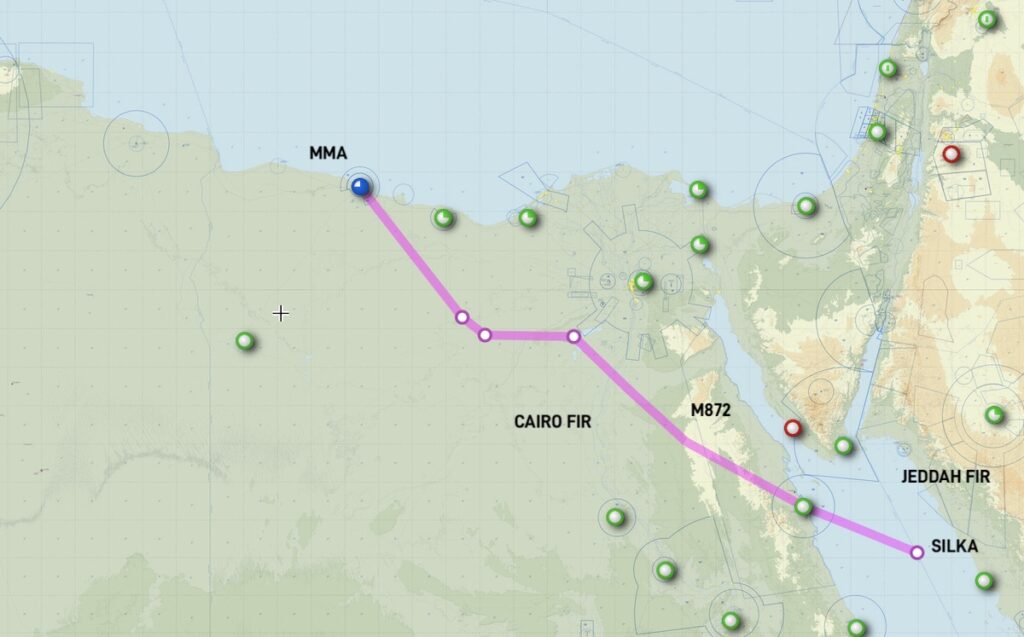
The corridor is much busier than usual which may present latent threats. Good airmanship at this time would be to keep a close eye on TCAS, ensure all anti-collision lights are on and consider the use of a PAN call if a deviation becomes necessary without a clearance.

We have approached both the Egyptian CAA and ANSP for feedback and have yet to receive a response.  If you have experienced this yourself in the HECC/Cairo FIR, please get in touch with us at team@ops.group.

The Central Route

This more conventional route tracks northwards along the Persian Gulf before an extended transit of Eastern Iraq using the UM860 and UM688 airways which run parallel to Iranian airspace before crossing Turkey and a southern portion of the Black Sea.

The overriding question from this route is “is it safe to overfly Iraq?”

In our opinion, yes but with some disclaimers.

UM860/UM688 Airways:

The UM860/UM688 have been considered safe for a long time. And prior to 2021, remained the only option available for US operators to enter the Baghdad FIR at all.

They continue to see heavy traffic by major carriers and can be considered a viable option.

When using them, an important consideration is their proximity to Iranian airspace. Due to the recent escalation in hostilities between Israel and Iran, many states prohibit operators from entering the Tehran FIR due the risk of anti-aircraft fire at all levels.

Extensive GPS interference (including spoofing) can be expected in Northern Iraq and on at least one occasion has led an aircraft to almost inadvertently enter Iranian airspace without a clearance.
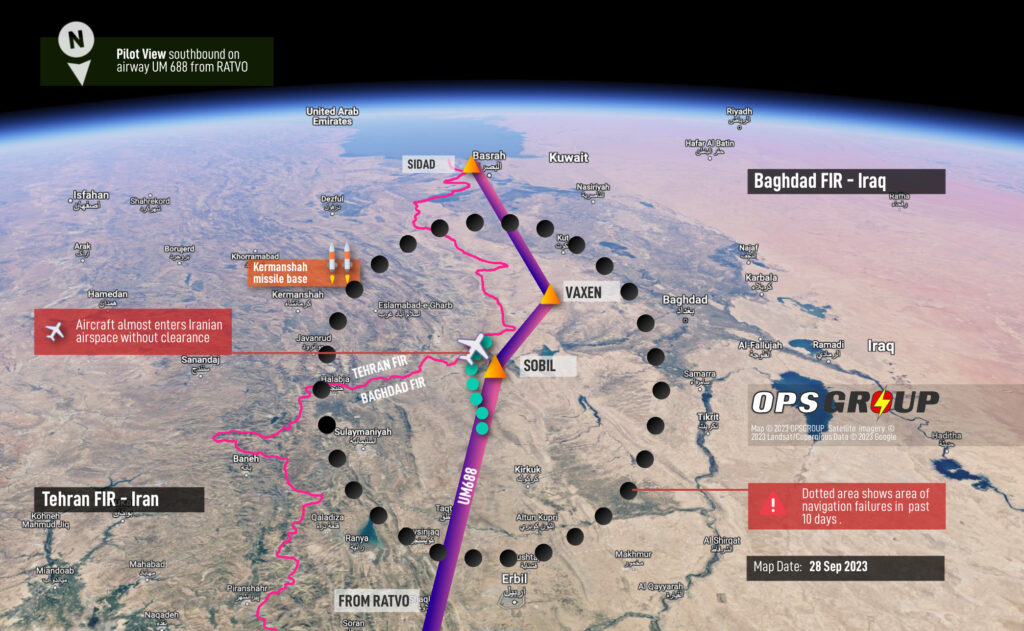
Extra vigilance for the early signs of GPS interference is essential for the safety of this route, along with early notification to air traffic control if it is suspected. Radar vectors remain your best fail safe.

Also beware of the potential for sudden closures of the ORBB/Baghdad FIR should further fighting occur between Israel and Iran. It closed completely during recent Israeli airstrikes and remains geographically sandwiched between the two, along with Jordan and Syria.

Free Routing:

In 2021, the FAA changed the rules. A new SFAR was issued that allowed N-reg overflights anywhere in Iraqi airspace, provided they’re conducted at or above FL320, which has opened-up new options for free routing.

Great for fuel, but arguably not safety. We continue to advise against flights away from the above airways due to well publicized risks of militant and terrorist activity which may target civil aircraft with anti-aircraft weaponry.

They may also be misidentified by air defense systems targeting drones which are frequently used to conduct attacks in Northern Iraq that originate from Turkey and Iran.

Crew and passenger safety is also an important concern should an emergency landing be required.

Turkey (beware of GPS interference):

We maintain a low-risk rating of caution for Turkey. As two of the three routes in this article include a lengthy overflight of the country, it is worth touching upon why any risk rating has been applied at all.

There is minor risk to overflights from misidentification by local militia who infrequently target Turkish military aircraft with anti-aircraft weaponry. This risk is predominantly near the border with Syria and Iraq where a higher level of airborne military traffic and UAS is present.

Far more prevalent is GPS interference – there have been frequent reports of both jamming and spoofing by aircraft well inside Turkish airspace. It appears to be common throughout the LTAA/Ankara FIR, especially anywhere near the border with Iran or Iraq. PIREPs also extend to Turkish airspace over the Black Sea. Reports share very similar symptoms: Un-commanded turns, position errors, and multiple GPWS warnings. The spoofed locations tend to center on Sevastopol on the Crimean Peninsula – a difference of between 120-250nm from the actual aircraft position. OPSGROUP members can access a special briefing on this hazard here.

The Northern Route

This is the route being favored between destinations in Europe and India/South East Asia.

It begins with a transit of Pakistan, before an uncontrolled crossing of Afghanistan and into Turkmenistan. A westerly turn is then made cross the Caspian Sea, Azerbaijan, Armenia and Turkey before rejoining the central route over the Black Sea.

While a fairly conservative option, it is the longest in terms of track miles.

Afghanistan:

For all intents and purposes, airspace safety in the Kabul FIR has not changed since the Taliban re-assumed control of the country in late September 2021.

The entire FIR remains uncontrolled and there is no guarantee of crew or passenger safety if you need to land. In that sense it remains the most important consideration in the selection of this route.

With that said, adjacent FIRs are managing the entry and exit of traffic and separating them with miles-in-trail and level restrictions.

Once inside, fairly robust contingency procedures (including the use of TIBA) appear to be working, with major carriers the likes of Lufthansa and KLM making safe crossings every day.
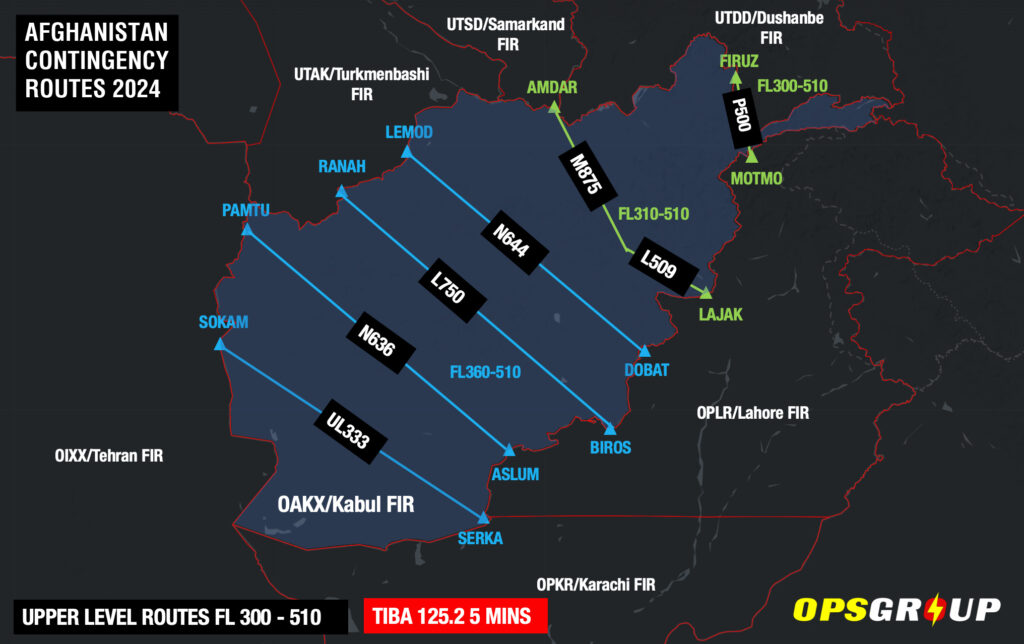
Aside from potential insurance complications of extended flight in uncontrolled airspace, it seems the predominant risk for overflights is what happens if you have an emergency and need to divert.

The overriding consensus (along with common sense) is don’t land in Afghanistan. In our recent article we explained it would be wise to consider it akin to ditching i.e. a last resort. Careful consideration of critical fuel scenarios to clear the Kabul FIR in event of de-pressurization, engine failure or both is essential to moderate this risk.

Azerbaijan and Armenia:

We maintain a level of caution for overflights of these countries given their history of conflict, but for now the risk to overflights remains low.

A ceasefire agreement is in place, and most states have lifted their airspace warnings for the YDDD/Yerevan and UBBA/Baku FIRs.

When sporadic fighting has occurred, it has been confined to border regions. A contingency to keep to mind is the use of northerly waypoints BARAD, DISKA and ADEKI to avoid the area and transit from Azerbaijan through Georgia instead.

Stay Informed

The situation in the Middle East has recently proven that airspace risk can change quickly and without warning.

Overflights need to stay informed and have good contingencies in place to manage unexpected re-routes and airspace closures, along with suitable diversion airports.

OPSGROUP issues Ops Alerts for members on a daily basis, but our risk and security alerts are also available for free on safeairspace.net which our team keeps updated around the clock.

If you have more questions, you can get in touch with us on team@ops.group. We’d love to hear from you.
Haiti Crisis: Airport Attacked, Aircraft Shot

Key Points
  • Worsening gang violence in Haiti. A state of emergency is now in place, and the US Embassy has issued a new warning for its citizens to leave immediately.
  • Aviation has also come under direct threat, with reports of several armed attacks at MTPP/Port-au-Prince in recent days. All flights have been cancelled until further notice and the airport is now effectively closed.
  • There are no official airspace warning for Haiti. However, conditions on the ground have been likened to an active war zone. For flights, normal services are unlikely to be available, and crew security cannot be guaranteed.

Airport Attacks

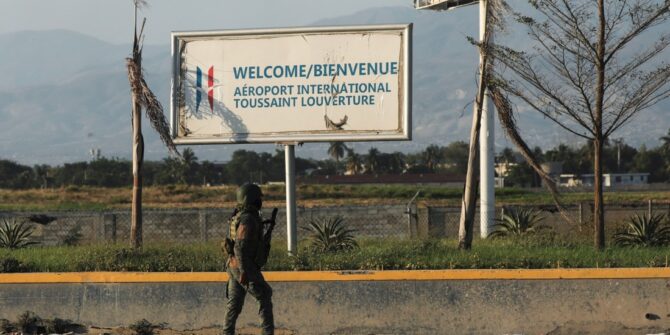
On March 4, several dozen heavily armed gang members attempted to take control of MTPP/Port-au-Prince airport.

They breached the airport perimeter and exchanged machine gun fire with police but ultimately failed. Airport staff were forced into hiding. Soldiers have since been stationed there for protection.

Since then, all flights have been cancelled.

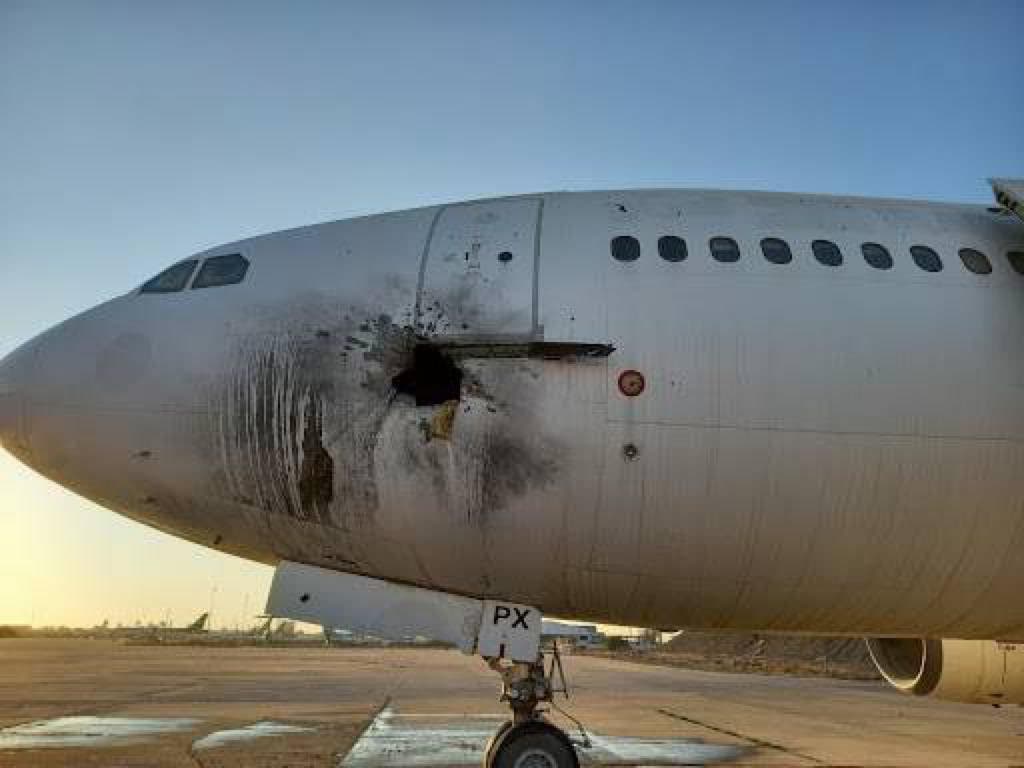
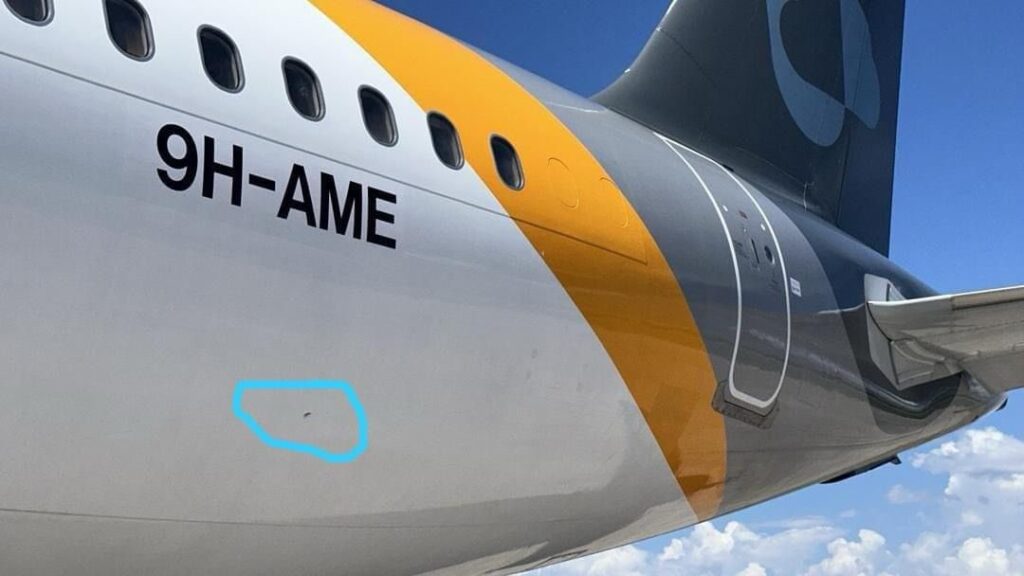
This followed a separate attack last week where an A321 was damaged by a bullet after landing. Sustained gun fire was reported along the access road to the airport during this time.

Don’t look to the MTPP Notams for help – you won’t find anything. However, the media has reported several closures of the airport in recent days in light of these events.

Gangs are fighting fiercely for resources and revenue. This includes control over key transport routes hindering freedom of movement and further empowering the gangs – which is why the airport is being actively targeted. Gangs may also have the additional political motivation to interfere with ops at the airport in an attempt to stop the existing president from being able to re-enter the country.

State of Emergency

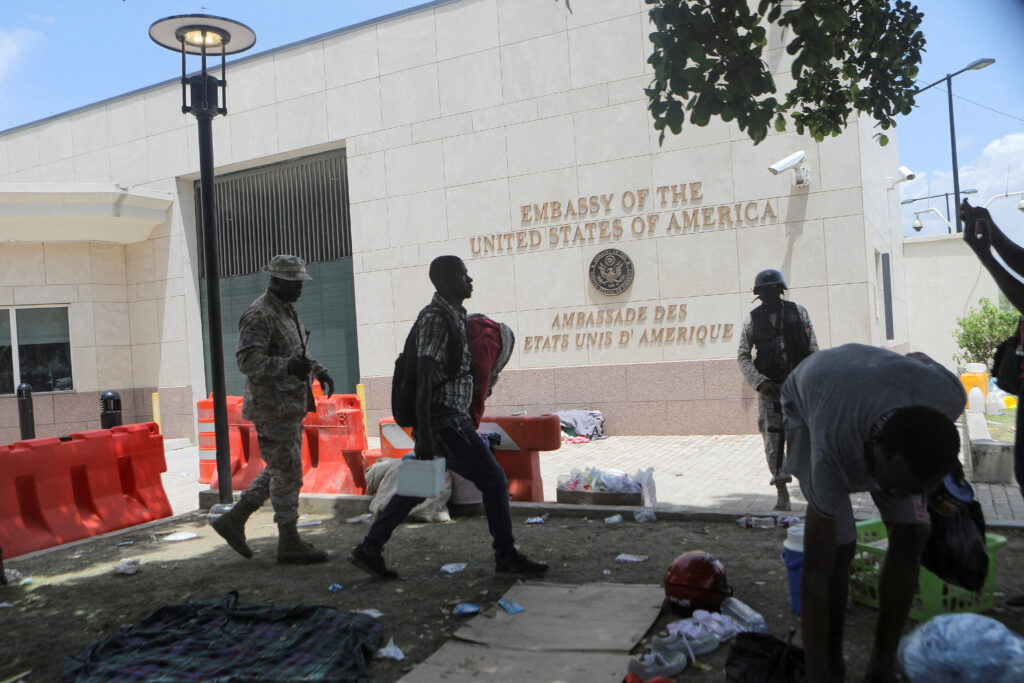
The Haitian Government declared a state of emergency on March 3, which will apply until further notice. On the same day, the US Embassy issued its own warning asking citizens to leave. 

The Embassy itself is periodically closing, and its staff are highly unlikely to be able to help anyone who finds themselves in trouble.

Impact on Overflights

The FAA does not currently have any active airspace warnings in place for Haiti.

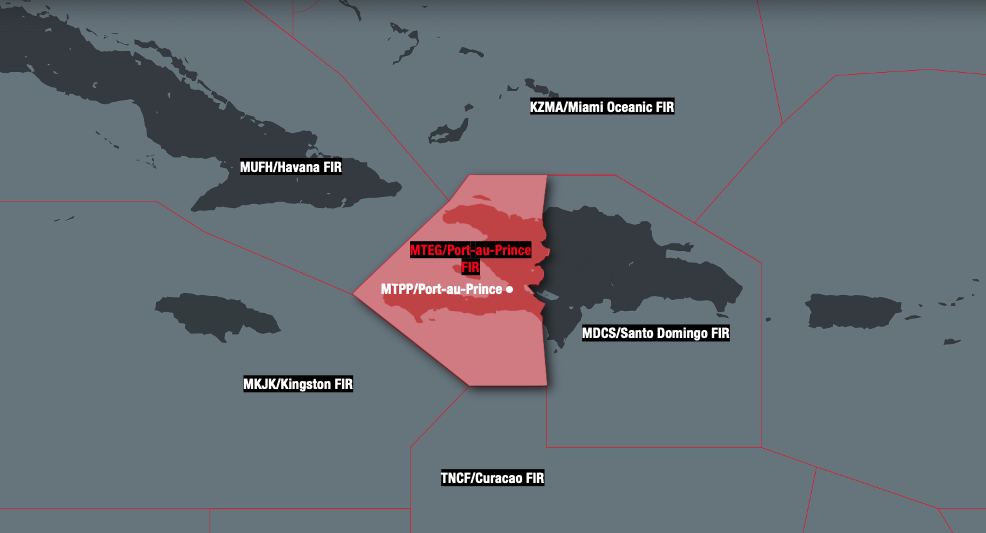
The country operates its own small chunk of airspace – the MTEG/Port-au-Prince FIR. Adjacent sectors include Cuban, Dominican Republic and US airspace. Its Notams are also conspicuously quiet.

No restrictions on overflights have been published, with flight tracking still showing sporadic airline traffic overflying– although the bulk appear to be transiting further east over the Dominican Republic.

The Dominican Republic has banned all passenger and cargo flights to and from airports in Haiti (MDCS Notam A0111/24 refers), but this does not restrict overflights.

The gangs however have shown an active intent to target government infrastructure – its not clear yet what effect this may have on controllers’ ability to perform their duties at short notice.

At the very least, a solid contingency should be in place right now for a short notice reversion to Class G.

Special care also needs to be taken for the possibility of unplanned landings or diversions – especially to Port-au-Prince. Normal services are unlikely to be available, and crew security cannot be guaranteed.

As the situation evolves, keep an eye out for updated information from aviation authorities such as the FAA who may publish background information or additional flight restrictions.

We will report any we see on our conflict zone and risk database, safeairspace.net.

If you have any other information you’d like to share with us, don’t hesitate to get in touch via news@ops.group.


Airspace Risk Update – Important Changes You May Have Missed

While operational news has been quiet for the start of 2024, some important changes to airspace risk have been gracing the OPSGROUP news feed in recent days. Here’s a brief summary of what you may have missed…

Syria

The FAA has extended its ban on US operators entering Syrian airspace (the OSTT/Damascus FIR) by a full five years. The new SFAR expires in 2028.

And with good reason – it is an active conflict zone. There are multiple risks to civil aviation there at all levels, including the very real threat of coming under fire from Syrian air defenses.

In addition to the US flight ban, several other states maintain active airspace warnings for the region. Almost no traffic overflies Syria – give it a wide berth. The updated SFAR 114 provides some updated background info on the airspace. Safeairspace.net also has a useful briefing.

Egypt

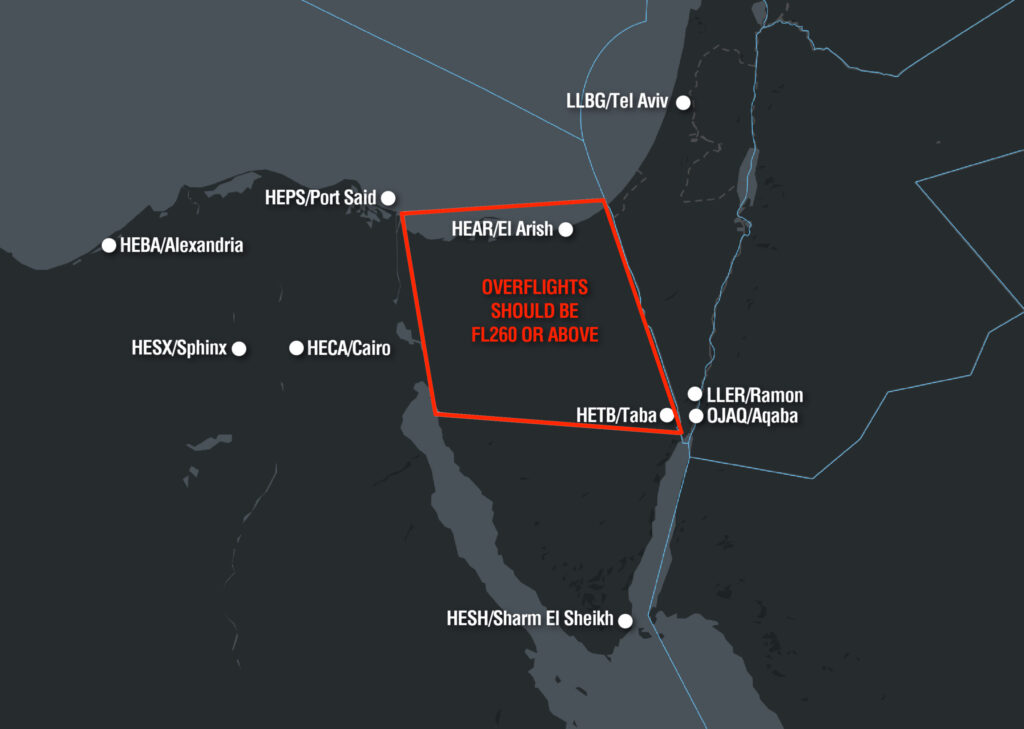
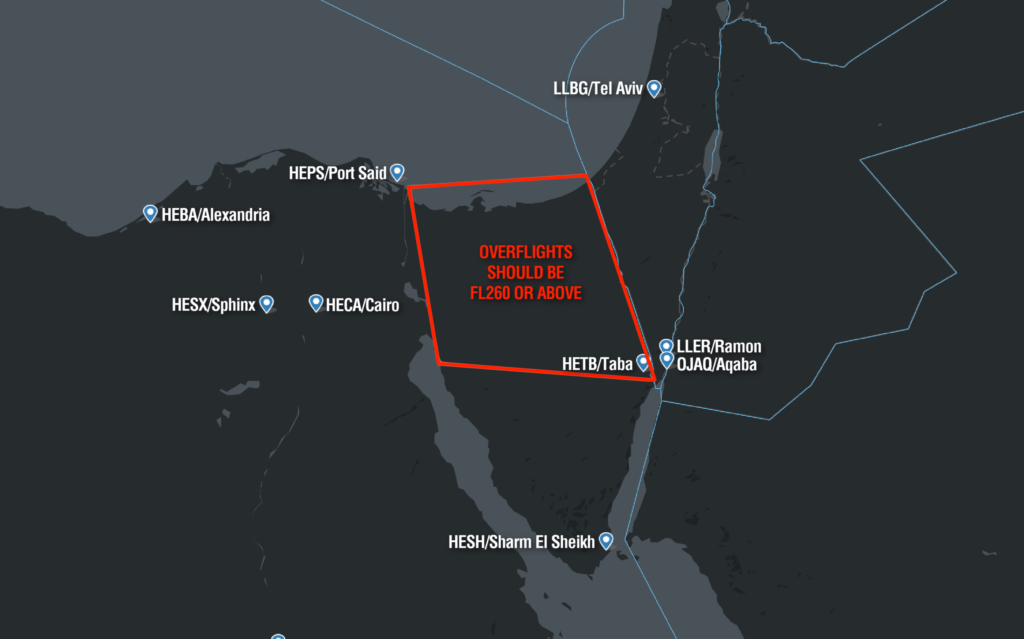
EASA has withdrawn its Conflict Zone Information Bulletin (CZIB) for Egypt – and we’re not really sure why. These CZIBs are largely based on what airspace warnings other countries have issued, and the UK and Germany still have active airspace warnings for Egypt – both countries advise against overflights below FL260 in the northern part of the Sinai region.

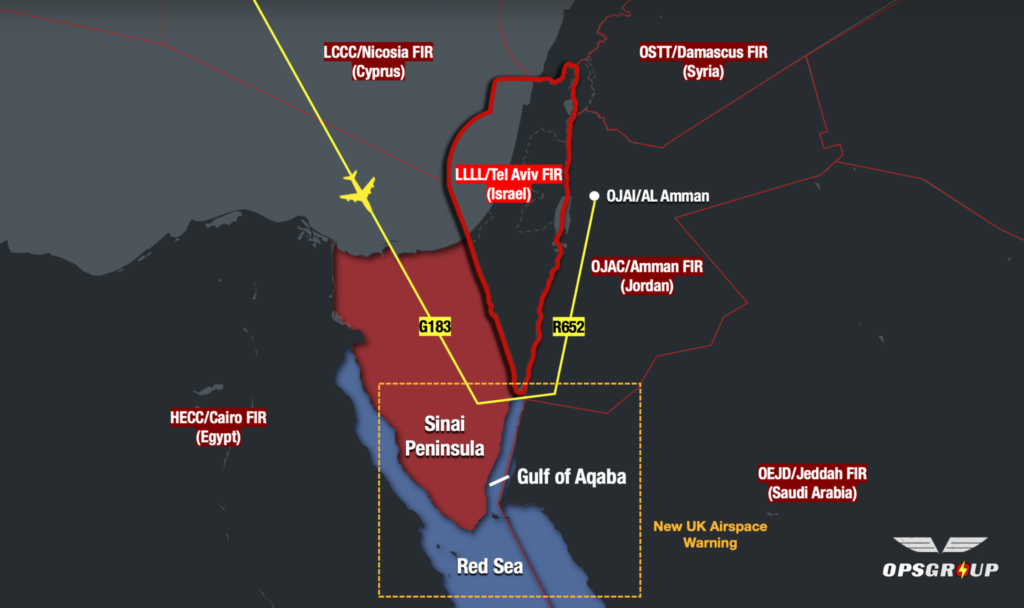
HEAR/Al Arish airport in particular near the Egypt/Gaza border has been identified as a potential terrorist target due to its use in humanitarian efforts. And since November 2023, the UK has been warning of risks to aircraft operating over the Red Sea due to military activity (more on that below).

Bottom line, we’re not seeing a reduction in risk. If anything, the threat to aircraft has likely escalated.

The Red Sea

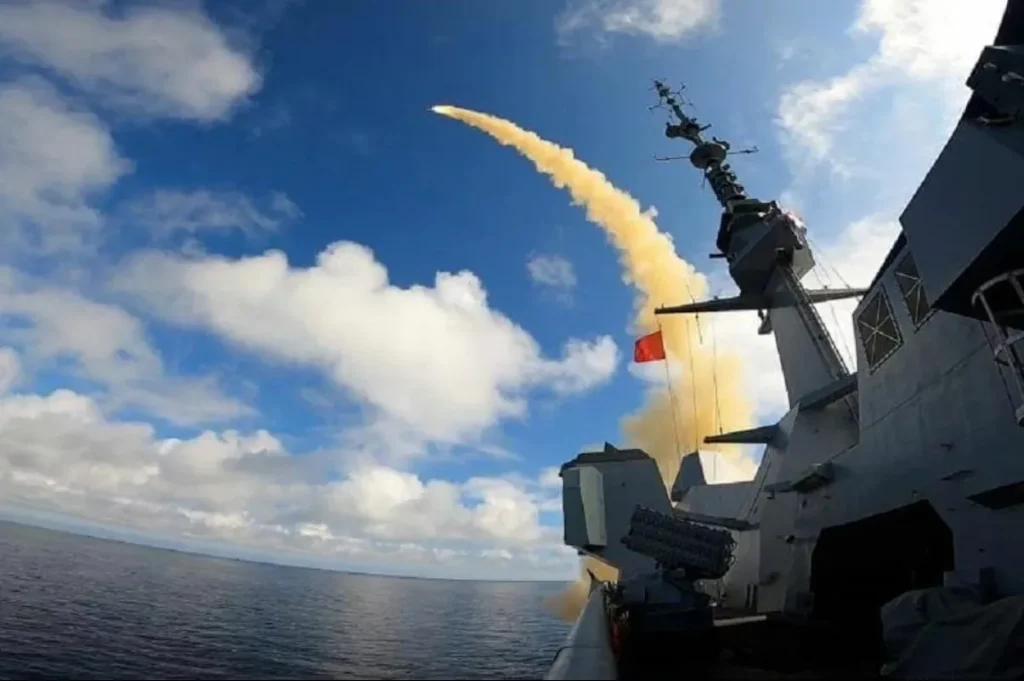
Sporadic drones and missiles continue to be intercepted in the Southern Red Sea by foreign militaries. On January 9, the largest single attack yet happened with over twenty-four shot down by US forces in the area. This represents a significant increase in risk for civil aviation. The culprits are Houthi rebels in Yemen who are typically targeting western vessels, or Israel itself.

Back in November, the UK issued a new airspace warning due to these types of events. The threat is typically low level (below FL160) but the frequency of these occurrences is a major concern. Some OPSGROUP members have already reported flying longer, alternative routes to avoid the area.

The primary risks to overflights are from misidentification or mis-targeting. The military air defence equipment present is advanced, and capable of reaching all levels.

The Middle East

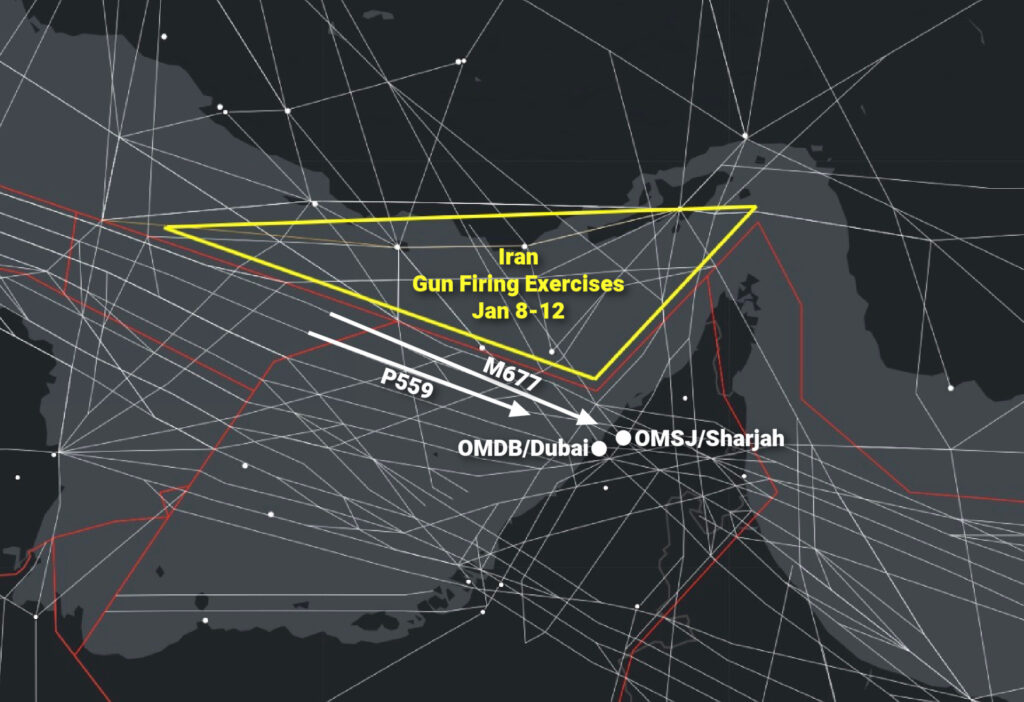
Iran has published a whole bunch of Notams under the OIIX/Tehran FIR code warning of ‘gun firing and military exercises’ between Jan 8-12 in the Strait of Hormuz. This is the sea just north of Dubai.

The areas where this will be happening are very close to overwater airways in the adjoining OMAE/Emirates FIR which get heavily used by flights heading from Europe to Dubai airports.

The US has a longstanding warning to avoid these airways nearest to the OIIX/Tehran FIR whenever possible, to reduce the risk of miscalculation or misidentification by air defence systems – good advice, especially for this period of time.

Taiwan

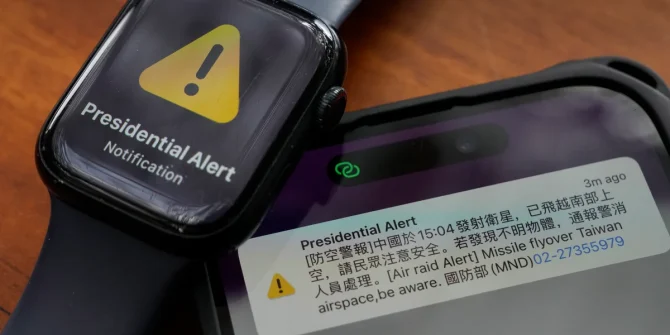
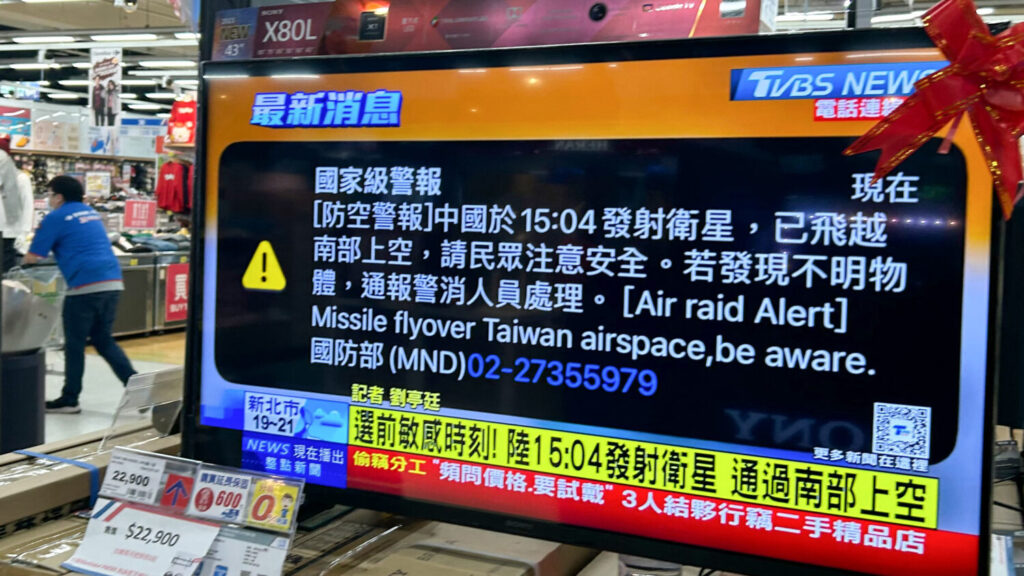
There was some panic on January 9 when a presidential missile warning was issued by authorities for Taiwanese airspace. It was the first time this has happened.

It was later clarified that this was due to the launch of a Chinese satellite (not a missile) and posed a minor debris risk. Taiwan is on the eve of a major presidential election – and tensions with China are high.

There appears to be a renewed level of military posturing from both sides which can increase the risk of mistaken identity – especially in the Taiwanese air defence identification zone (ADIZ) if proper procedures are not followed.

These are known risks but are worth reviewing. Some sources are suggesting an escalation is possible this year, which carries the risk of a new and dangerous conflict. In this case, regional overflights would be heavily affected. We’ll continue to monitor the situation closely.

GPS Spoofing in the Black Sea

We’re continuing to receive frequent pilot reports of significant GPS spoofing events in the busy southwestern corner of the Black Sea.

In some cases, this has carried the threat of an unintentional deviation into Russian or Turkish airspace without a clearance.

Reports have been received from various aircraft types on different airways, and have included a complete loss of all navigation capability, transponder functions or nuisance EGPWS warnings.

So far manufacturers and aviation authorities have been slow to react to this emerging threat. Although some type-specific guidance has been issued, the universal mitigator remains disabling GPS before entering an area of known spoofing.

An important reminder – IRS systems are not immune to GPS interference. By the time you identify spoofing, it may be too late to rely on them alone. We’ve written about this topic extensively – read all about it here.

Updates

We continue to monitor for signs of changing airspace risk. We report these changes on safeairspace.net and via alerts issued to OPSGROUP members.

If you know or hear something, please share it with us. You can reach us at team@ops.group. We’d love to hear from you.

New US Terrorism Warning: What’s the impact to aviation?

On August 2, the US Department of State updated its worldwide terrorism warning for the first time since 2019 – terrorist groups around the world may be actively planning attacks on US interests. This follows news on July 31 that the leader of a major terrorist organisation was killed during a military operation in Afghanistan.

My flight is tomorrow, what does this all mean?

For starters, no new airspace warnings have been issued due to the recent events. But it is equally important that operators (especially N-registered ones) heed the information that is already out there.

This comes from a combination of FAA SFARs, KICZ Notams and Background Information notes.

In the most dangerous airspace, the FAA bans US operators at all levels. In which case, the decision to overfly is an easy one because it has already been made for you. You just can’t do it.
But it’s not always that clear cut. Risk may be present, but not enough of it to justify closing entire pieces of airspace. So the FAA carries out assessments and decides on what precautions operators should take to stay safe.

This is where the lines start to get a little blurry because these assessments take time, and security risks can evolve more quickly than the papers can be signed. In other words, what was safe yesterday may not be safe today.

And so operators may need to re-evaluate their exposure to known risks, based on what is happening right now. With that in mind, here are some hotspots US aircraft are permitted to overfly that we think deserve a second look.

Iraq

Back in October, the FAA lifted its long running Notam barring US operators from entering the ORBB/Baghdad FIR. The SFAR is now in effect, meaning overflights are technically okay provided you stay above FL320. But just because you can, doesn’t mean you should.

Militant groups are active throughout the country and are known to have access to anti-aircraft weaponry. The have also have a proven track record of targeting US interests in the country. Scour through the OPSGROUP archives and you’ll see report after report of rocket, drone and mortar attacks on ORBI/Baghdad along with other regional airports.

Our advice hasn’t changed – avoid overflights at all levels if possible. Although the eastern airways UM860, UM688 and UL602 are frequently used and considered safe options by some major carriers.

See: SFAR 77, Background Info Note.

Mali

The FAA currently advises US operators to use extra caution if overflying Mali below FL260. The main issue is the ever-fragile security situation on the ground. The FAA cites extremist or militant groups that may actively target civil aircraft with various weapons.

And things seem to be getting worse. On July 29, the US Embassy ordered the urgent departure of non-emergency US Government employees due to the risk of terrorism. Which is a warning sign for us that these risks may be escalating.

See: KICZ Notam A0009/22, FAA Background Information.

Somalia

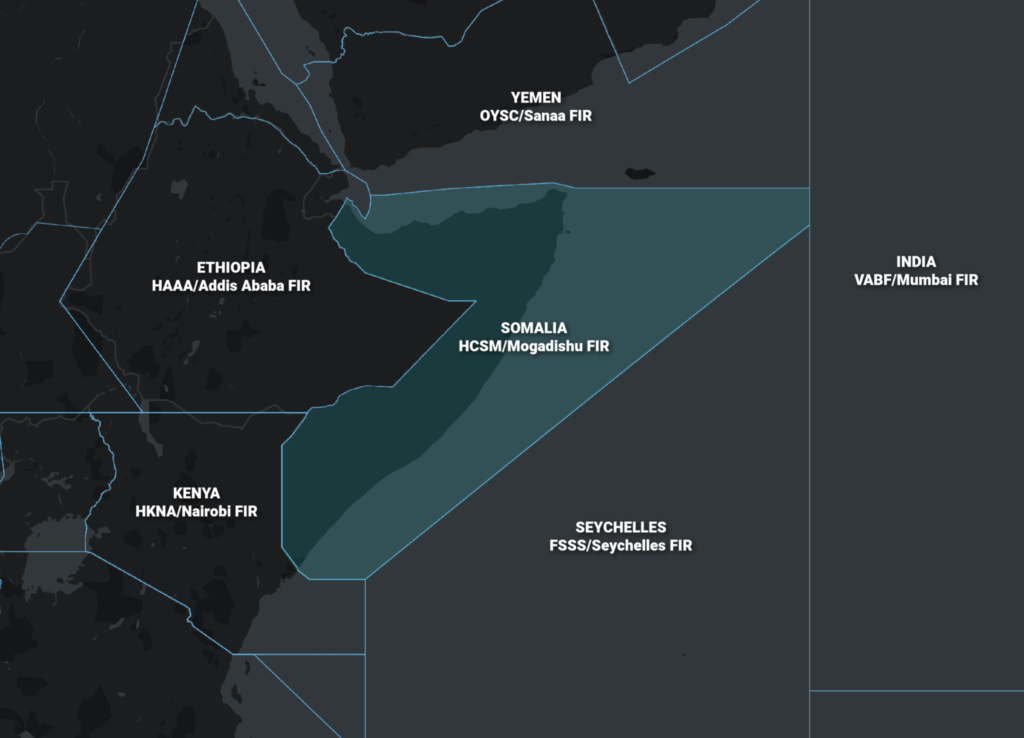
The FAA currently allows US operators to overfly the HCSM/Mogadishu FIR above FL260. It’s important to remember though that the security situation on the ground there is unstable – especially since a controversial election back in April.

Terrorist groups are active in the country, and may have been motivated by recent events. These groups have a proven track record of targeting civilians and aviation interests. In June this year news broke that several local carriers were considering suspending flights over security concerns onboard aircraft and at airports.

There is also currently an active trial of Class A airspace throughout the Mogadishu FIR, which means Somalia may be seeing higher numbers of overflights than normal. The problem is that emergencies and diversions may put aircraft at risk, especially US-registered tail numbers.

See: SFAR 107, KICZ Notam A0028/19.

Egypt

Back in March the FAA lifted its airspace warning for the HECC/Cairo FIR. It previously advised operators to stay above FL260 over the Sinai Peninsula – in the east of the country dividing the Red Sea from the Med.

The issue was the presence of extremist groups who may attempt to target civil aircraft. It’s not clear what improvements led to the warning being lifted, but other countries have kept theirs in place – including the UK and Germany.

Recent events have proven that all is not well. An attack in Western Sanai in May this year was one of the most significant in the past two years – and was a clear indicator that terrorist groups are still active in the region. If they have been motivated by the happenings in Afghanistan, this may put aircraft at renewed risk.

Where else to look.

As things change, airspace warnings get updated. For US operators the starting point is here – it contains everything officially put out by the FAA.

There’s also safeairspace.net – our conflict zone and risk database. The OPSGROUP team keeps this updated as new information comes to hand. You can view a global risk briefing by clicking here.


Rebels Resurgent: Increasing Airspace Risk in DRC?

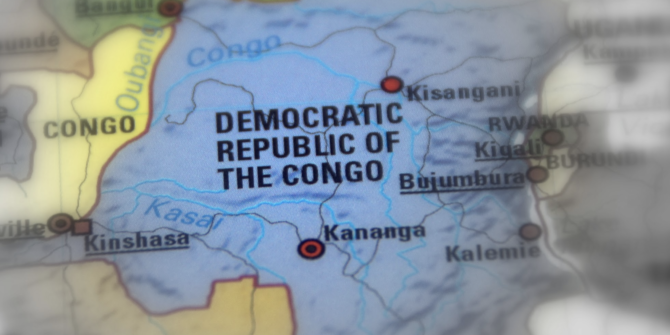
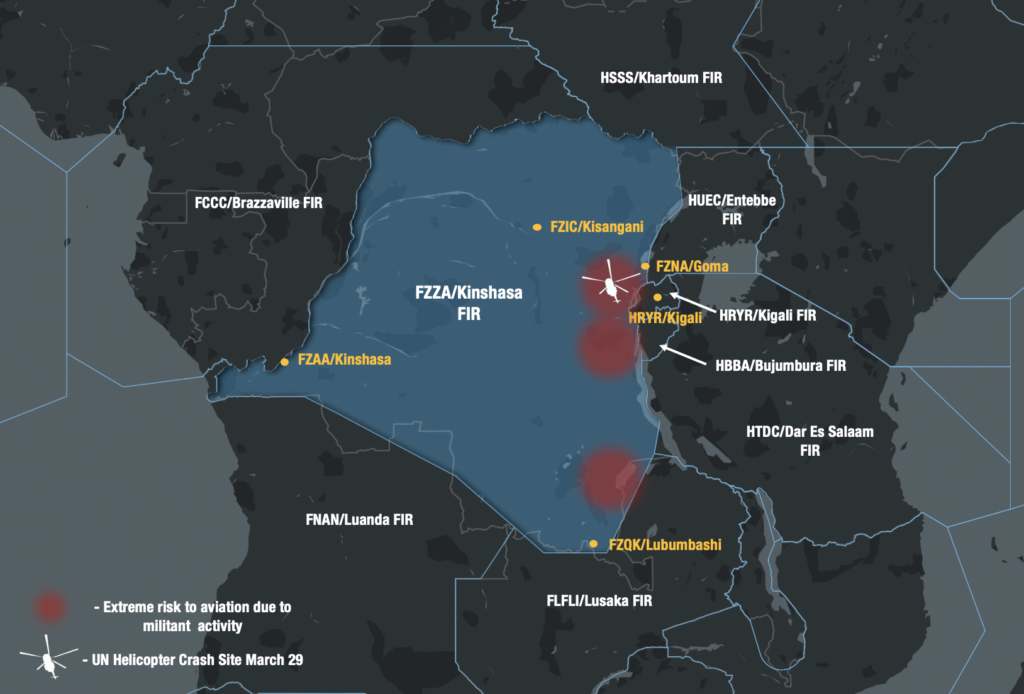
On March 29, a large UN transport helicopter crashed in Eastern Democratic Republic of the Congo while operating a surveillance flight.

The DRC Government has accused (but not proven) a recently resurgent militant group of shooting down the aircraft, after renewed fighting against the government military in recent days.

The country itself has a chequered history of non-state actors actively targeting aviation assets including aircraft and airports, and there may be more to come.

This spells danger for civil aviation, and with an absence of official airspace warnings for the FZZA/Kinshasa FIR, the risks may be on the rise.

Here’s a rundown on the current situation, and what you need to know to stay safe.

What’s been going on there?

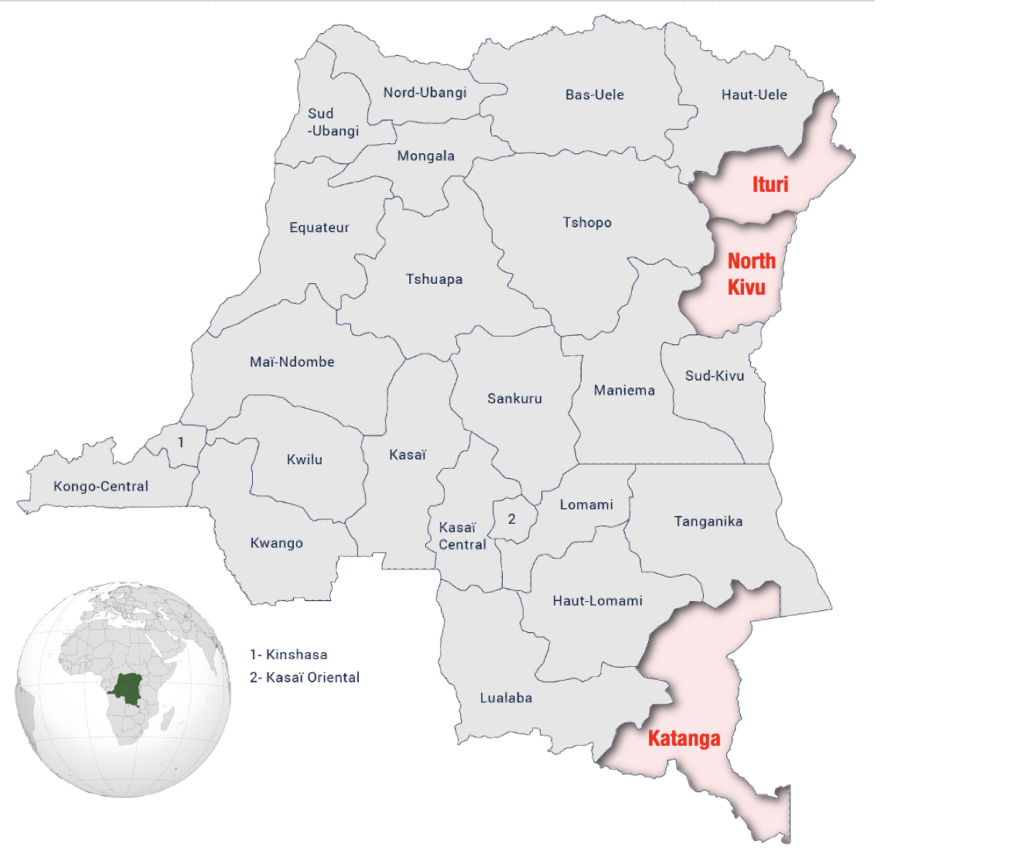
A militant group known as M23, or March 23 Movement, has recently become active again in Eastern DRC, in a province called North Kivu. It sits close to the borders of Uganda and Rwanda.

The group were previously engaged in a conflict with the government who expelled them across the border in 2013. Then just days ago, M23 unexpectedly became active again by attacking military positions in North Kivu – which is where the UN helicopter crashed. This was amidst heavy fighting.

There is potential for the skirmish to develop into a larger and longer running war. And that means risk for aviation.

A history of attacks on aviation.

If the UN helicopter was indeed shot down by M23, it wouldn’t be the first time. They, along with other militant groups, have a known history of attacking government owned aviation assets:

  • 1998: a civilian 727 was shot down by a shoulder fired surface-to-air missile after it took off from FZOA/Kindu airport.
  • 2013: Militia attacked FZAA/Kinshasa airport.
  • 2016: FZUA/Kananga airport was attacked by armed rebels on three separate occasions.
  • 2017: An air force helicopter was shot down by anti-aircraft artillery in North Kivu, which was later claimed by M23.

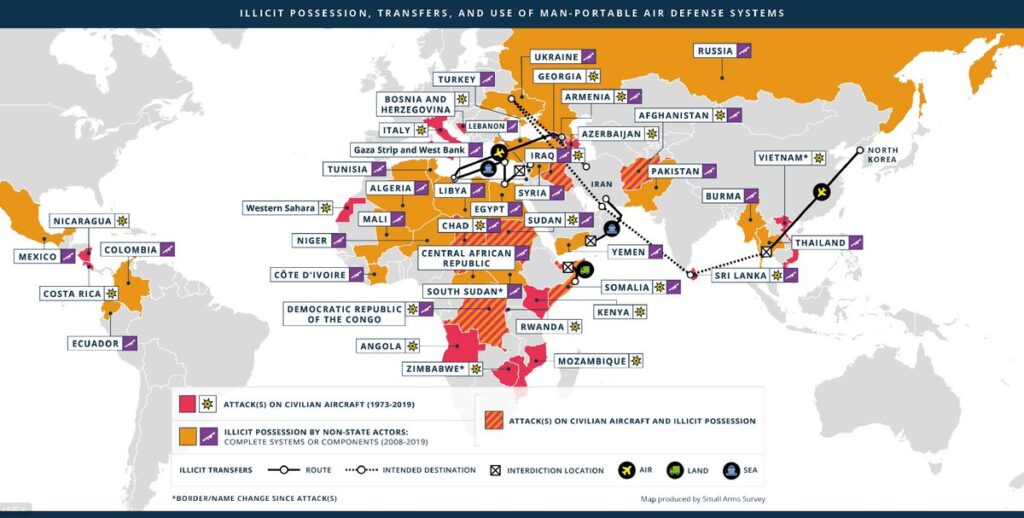
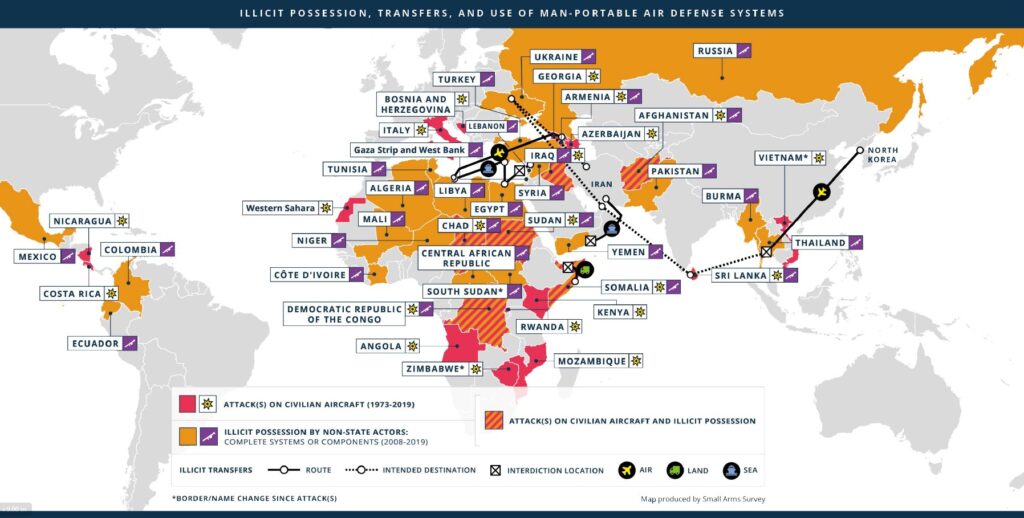
And there are fears that since the ceasefire in 2013, M23 have been retraining and rearming themselves with weapons that could target low flying aircraft. This includes Man Portable Air Defence Systems (MANPADS) and anti-aircraft artillery which are distributed among militant groups throughout many countries of Africa – including the DRC.

What’s the actual risk?

Militant groups such as M23 tend to specifically target government and military interests. There has been no indication of desire to endanger civil aviation. But the renewed intent to attack Government owned assets also increases the chance that civil aircraft may be misidentified, or mis-targeted.

Aircraft are most at risk at low level and low speeds which means they are most vulnerable when taking off, landing or on the ground. The Eastern Provinces of Ituri, North Kivu and Katanga are particularly dangerous.

There is little risk to overflying aircraft at higher flight levels. The issue for overflights becomes the need to divert. The Democratic Republic of The Congo is a huge country, which covers almost a million square miles of Central Africa – that’s more than Alaska and Texas combined. If you’re overflying it, you’ll need somewhere to land if something goes wrong. This is when militant activity becomes more of a danger.

Diversion Planning

Security risks in Eastern DRC are very high, and special care needs to be taken right now about options for diversions.  Landings at airports in the above three regions are dangerous and should be avoided . For overflights in this region, alternates across the border are safer options – especially HRYR/Kigali in Rwanda.

In Eastern DRC, FZNA/Goma is considered to be a reliable option, along with FZQA/Lubumbashi in the south and FZIC/Kisangani to the north. Further west the best option remains FZAA/Kinshasa. It’s important to remember though that no parts of the country are fully immune to militant activity and risks may be present at varying levels throughout the country.

This means if you’re planning on operating there, it’s important to carry out a risk and security assessment using trusted sources which may include local contacts, and security services offered by companies like Medaire.

Contingencies need to be in place for ensuring crew, passenger and aircraft security in the event of both planned and unplanned landings.

We’ll keep you updated.

The ongoing situation in Eastern DRC is unpredictable. You can stay up-to-date with any changes or new risk alerts via SafeAirspace.net as they happen – it is our free Conflict Zone and Risk Database that we keep updated around the clock.


Airspace Risk: Conflicts to watch in 2022

Conflict zone risk assessments aren’t easy. Airspace dangers are heavily dependent on what is happening on the ground, which can improve or deteriorate quickly and with little warning. For an aircraft to be at risk, there must be someone present who has both the ability and intent to either deliberately target an airplane, or endanger one indirectly.

But in order to prove that these two things are present in any given airspace, regulators and operators have to rely on intelligence and inherently limited information to make educated decisions about what is safe, and what is not.

The best defence? Know what is happening down there. Or in other words, an idea of the geo-politics playing out thousands of feet beneath you. Often the warning signs are there, even before Notams have had a chance to catch up. The best defence is always situational awareness.

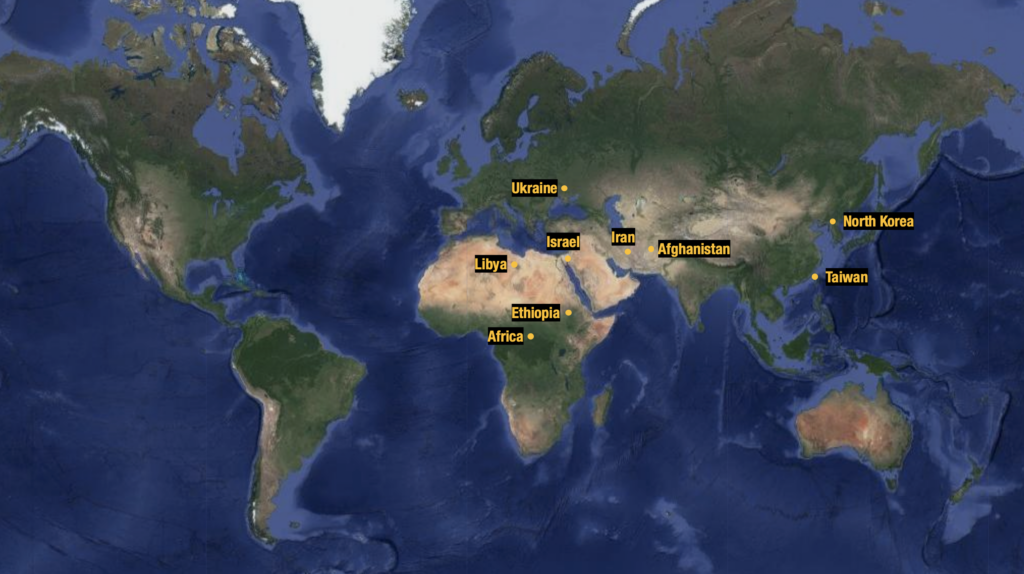
Here is a summary of some the conflicts making headlines that are worth keeping a close eye on in 2022 which may have an impact on the safety of overflights.

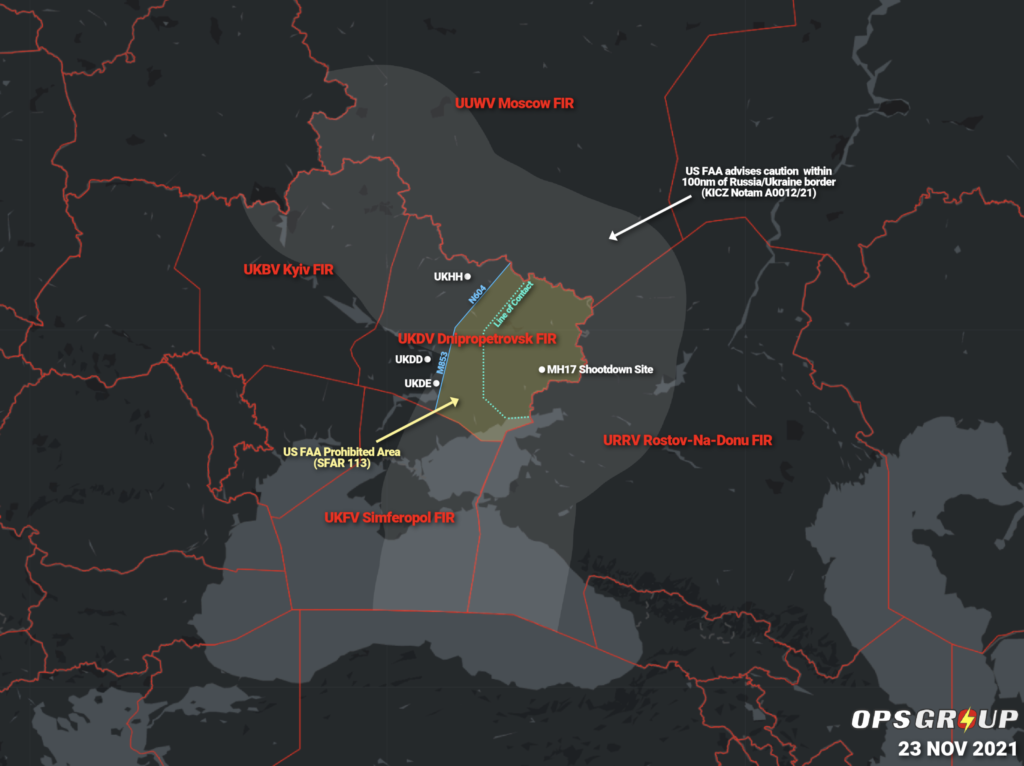
Ukraine

Tensions are high near the eastern border with Russia right now. In the latter half of 2021, the Russian military began to mobilise equipment and troops on their side of the border. This has continued to cause international concern that a major offensive may be possible in 2022.

There is advanced anti-aircraft weaponry present on both sides of the border which could present risks to civil aviation at all levels if things escalate. There are also separatist groups active in the region, and it is possible they have access to the same weapons. MH17 was shot down in this region in similar circumstances in 2014.

Overflights near the border – especially in the western part of the URRV/Rostov FIR near the UKDV/Dnipro FIR boundary should keep monitoring the situation closely.

Click here for a full briefing.

Israel/Palestine

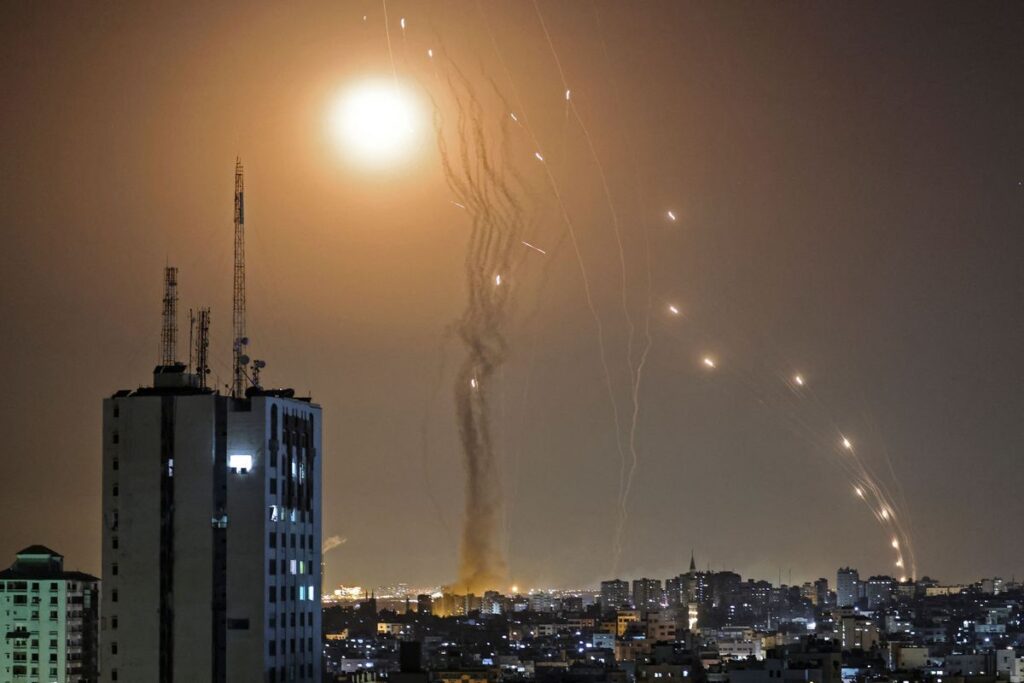
Events in April-May 2021 lead to a sudden escalation involving hundreds of Hamas rockets being fired at Tel Aviv and Israeli air strikes in Gaza. Civilian traffic was heavily impacted, while LLBG/Tel Aviv airport was forced to close on several occasions.

Recent events have hinted that things may be no better in 2022. On Jan 1, several rockets were fired at Tel Aviv, followed by airstrikes in Gaza. Surface-to-air missiles were launched at military helicopters during the strikes.

Aircraft in the LLLL/Tel Aviv FIR may continue to be at risk from these types of events with little notice this year.

Click here for a full briefing.

Taiwan

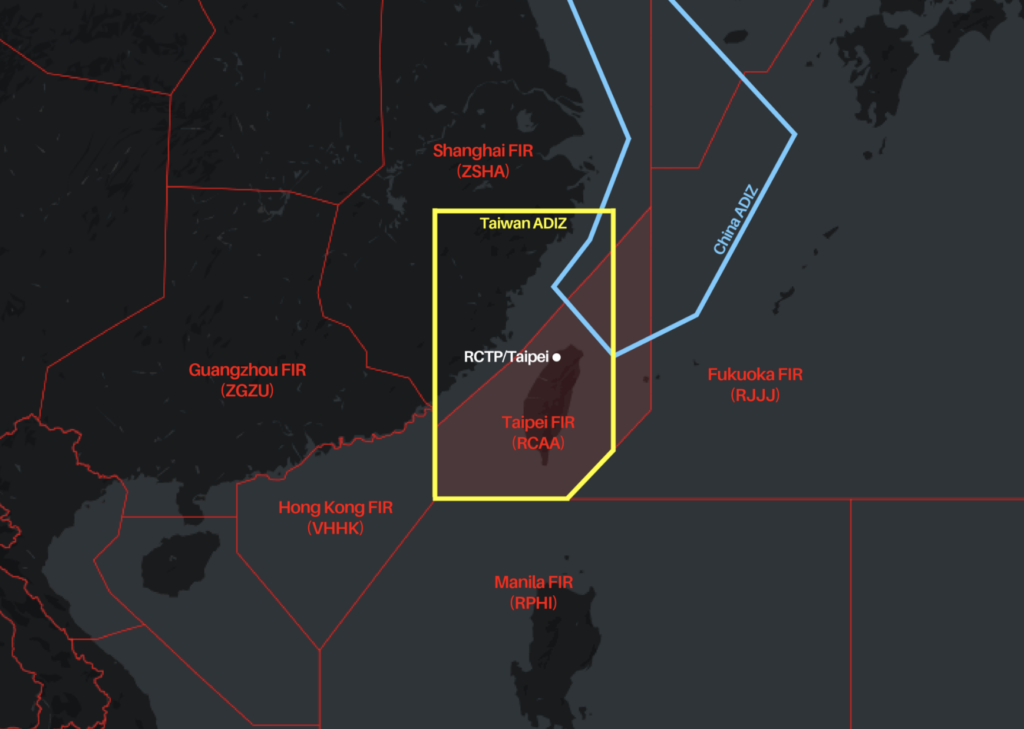
Mainland China continues to show political interest in Taiwan. While an armed conflict is still unlikely, it is not impossible. And the consequences of one would be a big deal with other major world players likely to become involved.

Last year a record number of Chinese military aircraft carried out exercises near Taiwanese airspace, while in October a wave of aircraft entered Taiwan’s air defence identification zone (ADIZ). This caused authorities to issue warnings by radio and mobilise their air defence systems.

In 2022, the primary risk to aircraft in the region continues to be risk of being misidentified by the Taiwanese military. It is important to follow the correct procedures when entering Taiwan’s ADIZ airspace.

Click here for a full briefing.

Iran

Tensions between Israel and Iran are at an all time high. Various sources are speculating that airstrikes on nuclear targets in Iran could rapidly escalate the situation. If this were to happen, the overflight risk in the OIIX/Tehran FIR would increase dramatically. Anti-aircraft weapons are present there that can reach all levels. Iran has previously shown willingness to use them during heightened tensions and in close proximity to heavily flown international air routes. In January 2020, a Ukrainian 737 passenger jet was shot down over Tehran by the military after being mistaken for a missile.
Click here for a full briefing.

Militant activity in Africa

Militant groups throughout several African countries with links to terrorist organisations such as Al Qaeda or Al Shabaab have been mobilising in recent years. Often engaged in fighting with weakened states, these militia may have a desire to make international statements, and are known to actively target civilians which could include overflying aircraft.

Hotspots to look out for: In the west, Nigeria, Mali and Burkina Faso. In Central Africa, Niger, Chad and the Democratic Republic of Congo. And to the east, take particular care when operating over the Horn of Africa – especially Somalia and Sudan. New groups are also emerging in Mozambique, and Uganda.

These groups typically have access to man portable air defence systems (MANPADS), rockets and other similar weapons that pose a primary threat to aircraft at lower levels (below FL250). Although this should be considered carefully on a case-by-case basis.

Other mentions

In Libya, an election has been delayed indefinitely and armed groups are mobilising throughout country, which could see the civil war escalate in 2022.

The conflict in the Tigray region of Northern Ethiopia remains unpredictable. Despite signs of improvement in Dec 2021, the conflict in the north has intensified again with military operations in western and southern Tigray. The Amhara region north of Addis Ababa is also under curfew. The 6 month state of emergency remains in place. Several states continue to warn aircraft throughout the HAAA/Addis FIR to maintain minimum flight levels due to anti-aircraft weaponry.

The situation in Afghanistan also remains volatile for 2022. The country is firmly under Taliban control, and the OAKX/Kabul FIR without ATC. A humanitarian crisis is developing there and it’s hard to predict what the international response (if any) will be, and how the Taliban might respond. Watch this space.

Stay updated

Safeairspace.net is our conflict zone and risk database. Our team updates it constantly with risk, security and hazard alerts from around the world. Click below for a full PDF briefing on hotspots around the world, or add your email to our risk briefing that goes out every second Monday.


Any Single Pilots Out There?

The big talking point of the moment – Airbus and Cathay Pacific’s project to have only one pilot in the cockpit during cruise.

So let’s take a look at what this might mean for safety, operations and pilots worldwide.

The headlines are misleading

Cathay and Airbus have not designed a new A350 which no longer needs pilots operating it. There is no mega computer AI robot involved which is stealing our job.

The plan is to simply allow one pilot to go and rest during “quiet cruise” phases, while another pilot remains in the cockpit vigilantly monitoring (and probably with toothpicks propping their eyes open). This will allow them to potentially reduce the number of crew required on long haul flights, and while it means a change to procedures it is not really, as many are reporting, a leap towards pilotless flight decks.

Maybe just a small step

So, what are the considerations here that people are talking about?

GermanWings

The GermanWings accident resulted in a rule that there must be two persons in the cockpit at anytime. So if a pilot needed a bathroom break, a cabin crew member was required to come in. This was fairly contentious at the time because, as many pointed out, what is a cabin crew member going to do if a “situation” arises?

This rule was eventually revoked, in part because EASA and other authorities brought in new regulations relating to pilot psychometric testing. However, with only one pilot in the flight deck, this does raise various safety concerns – from events similar to the GermanWings accident, to the question of pilot incapacitation or even, what do they do if they need the loo?

What about the AF447 accident?

AF447 was, in part, attributed to the experience levels of the two crew in the flight deck – both First Officers while the Captain was out sleeping.

Using cruise relief pilots is not a new thing though, and in order to operate with a single pilot, that pilot will presumably need to meet a minimum experience level. Additionally, the Captain will maintain the decision as to when they leave the flight deck in their First Officer’s hands.

The lonesome pilot can also recall their colleague to the flight deck should a situation require it. So the question really comes down to whether a situation is likely to arise where, by having only a single pilot the result is more critical or catastrophic than if two had been present and therein lies the problem – because years of aviation safety studies have shown time again that there is a reason we operate with two crew.

Safety in numbers

Modern aircraft, and the A350 in particular, have many levels of safety and redundancy to support the crew. They can automatically fly TCAS maneuvers. They can carry out an emergency descent at the push of a button. In addition, Airbus are working to demonstrate that their aircraft and systems are robust enough to basically not really fail. They are also designing them to be able to autonomously handle any situation without pilot input for 15 minutes.

This will be a big deal. It will mean, should something fail, and the single pilot be incapacitated, that there is time for the second pilot to wake up and make it to the flight deck to solve the situation. However, recent aviation accidents involving malfunctioning systems (designed to minimize pilot workload), and ongoing concerns about automation complacency highlight the potential downside of such advancements.

Can ETOPS can teach us something?

The A350 was certified for 370 minutes ETOPS. That’s a long time. It is over 6 hours. 6 hours on one engine potentially. So what leads to this?

ETOPS is given to the operator, not the aircraft, and it is based on the operator’s ability to demonstrate necessary airworthiness, maintenance and ops requirements. It is really a statistical thing. If an operator hasn’t had an engine issue in a really long time then they are probably going to be able to get a better ETOPS approval.

So what does this have to do with only one pilot in the flight deck?

Well, it boils down to the same thing – statistics and procedures:

  • How often does something go wrong in the cruise (which requires two pilots to handle it)?
  • What procedures will be in place for ensuring safety and redundancy levels are maintained?

The answer to Question 1 might be “hardly ever”, but aviation safety improvements are built on the fairly simply idea that if there is a risk, find a way to mitigate it. 

Even if that risk is minute, if it can be removed it should be. This is why astronauts have their appendix out before heading into space. This is why we have redundant systems onboard, or each pilot eats a different meal. Statistics might suggest an event occurring which a single pilot cannot deal with and which then results in a fatal accident or hull loss is tinier than a hair on a fleas back…

But if a risk exists that can be mitigates simply by retaining two pilots in the cockpit, then two pilots should remain.

A Disco onboard

They gave the A380 a bar and showers, now the plan is to have Discos…

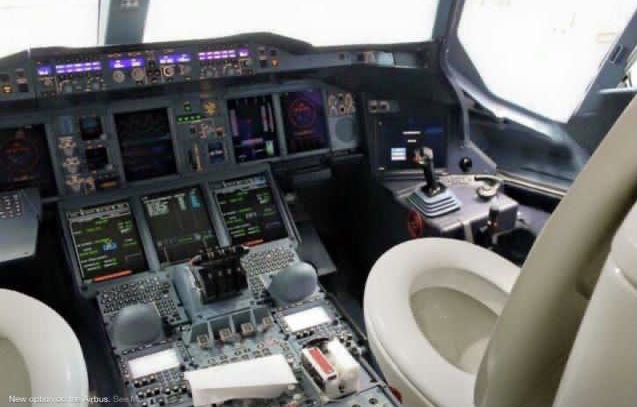
DISCO actually stands for Disruptive Cockpit (I am not sure that sounds any better). This is the Airbus project looking at enhanced cockpit design to enable single-pilot operations on new aircraft.

The DISCO concept is looking to place core technologies into the flight deck in a ‘multi modal’ way. Things like pilot monitoring systems which track eye movement, voice recognition for commands, improved ground collision avoidance systems, new navigation sensors.

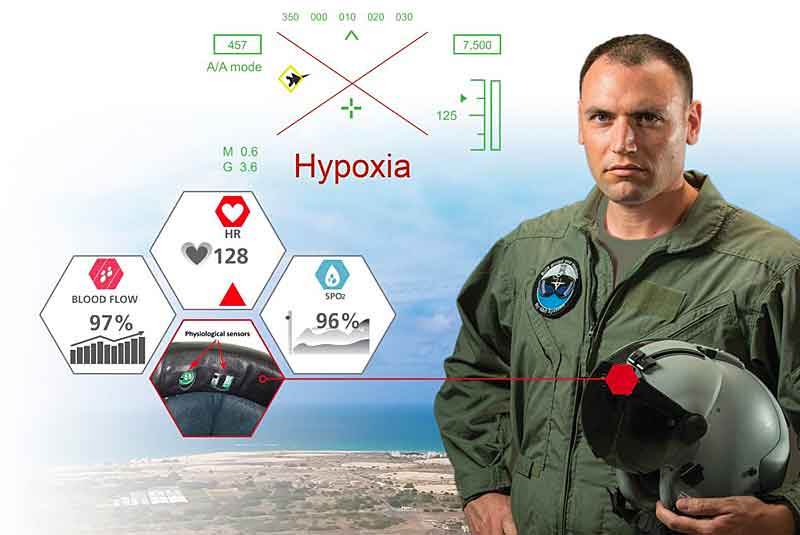
And of course pilot health monitoring systems.

An integral safety aspect of this concept lies in the monitoring of the sole pilot, and the availability of a system to detect if they become incapacitated, and to alert the remaining crew member.

It is only happening in 2025

The plan is to implement this in 2025. That is 3 and a bit years of procedure writing, regulation making, testing and trialling before it is put into action, and there are a fair few obstacles that stand between now and that day :

  • Regulators will be looking at their procedures with a fine tooth comb
  • The pilot will probably need monitoring, particularly to ensure incapacitation does not occur (or if it does, the other pilot can quick-foot it back)
  • There will need to be pilot training in place
  • Airbus need to hit that 15 minutes of safe autonomy.
    • And these systems will also need to deal with situations where ‘Black and White’ failures do not occur. When you consider the multiple, varied and often “illogical” failures which can arise from a lightning strike, a bomb onboard, or multiple computer failures this does not look as simple as Airbus might say
  • The approvals for this do not just sit with the Hong Kong authorities. Any state that the airline might overfly with only one pilot in the driving seat is going to have to be convinced as well
  • Passengers will need convincing…

And they still need to answer the question of the toilet. We all want a little more information on how that ‘specially designed unisex toilet’ to be used ‘in coordination with ATC’ will work.

If this happens, they won’t need pilots anymore

This is a contentious one to raise right now. Say ‘single pilot’ or ‘autonomous systems’ and a lot of pilots break out in a sweat, seeing themselves replaced by AI computers. But aviation has always been very innovative and those in it have always had to adapt to new technologies. Take a glance back to the 1980s and flight engineers were still a relatively common site in flight.

Ignoring the rather decimating impact of Covid though, aviation was growing, and it was growing fast.

Chances are it will again.

There are around 200,000 active pilots and forecasts suggested upwards of 500,000 would have to be trained over the next two decades to meet forecast growth demands. Even if every (long haul) flight deck sees the number of crew in it halved, it is still probably safe to say none of the current or new generation of pilots will be out of work anytime soon.

But we still are not convinced

There are unresolved questions here. The main one being “Why?”

You see, there is already this rather marvelous thing in an airplane – it can watch the pilot, it can monitor aircraft systems, and it can take over no matter what the failure or the complexity of that failure might be…

It is called “the other pilot”.

There is a good reason why aircraft are multi-crew machines. So why are Airbus and Cathay Pacific investing millions into developing systems which can do this?

It isn’t for safety…

This is being driven, not by manufacturers looking to increase safety, but by an operator looking to reduce costs. And for many, that appears an unwise and arguably unethical reason. Even if the statistical impact on safety is a 0.0001% decrease, that is still an unacceptable decrease when it is made for business reasons. There are also a great many places within an airline or operation where costs can be cut, and when cuts are made these should never occur at the price of safety, even if that price does seem negligible.

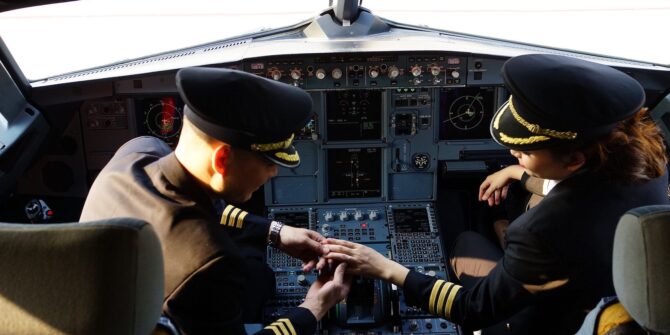
The main photo is of a pair of VietJet co-pilots who got married – because we think that’s nice, but also because we liked the play on ‘single pilot’ in the flight deck idea. Congrats to them both for their lovely day!


Western Sahara Airspace Update

On May 4, the GCCC/Canarias FIR updated their airspace warning for Western Sahara, due to the ongoing conflict there.

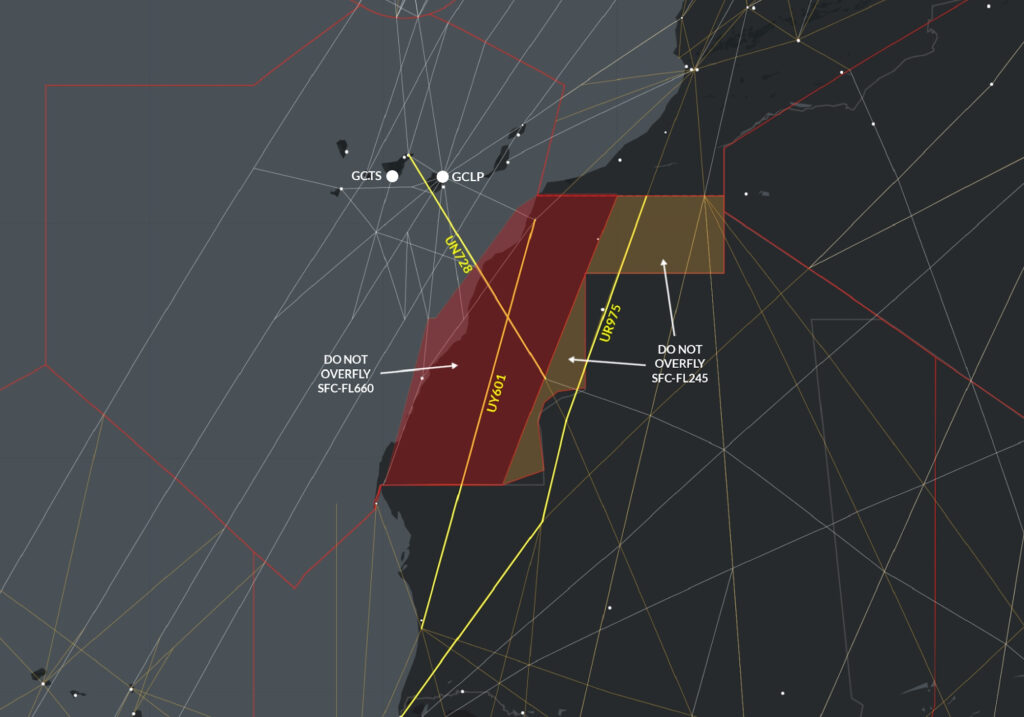
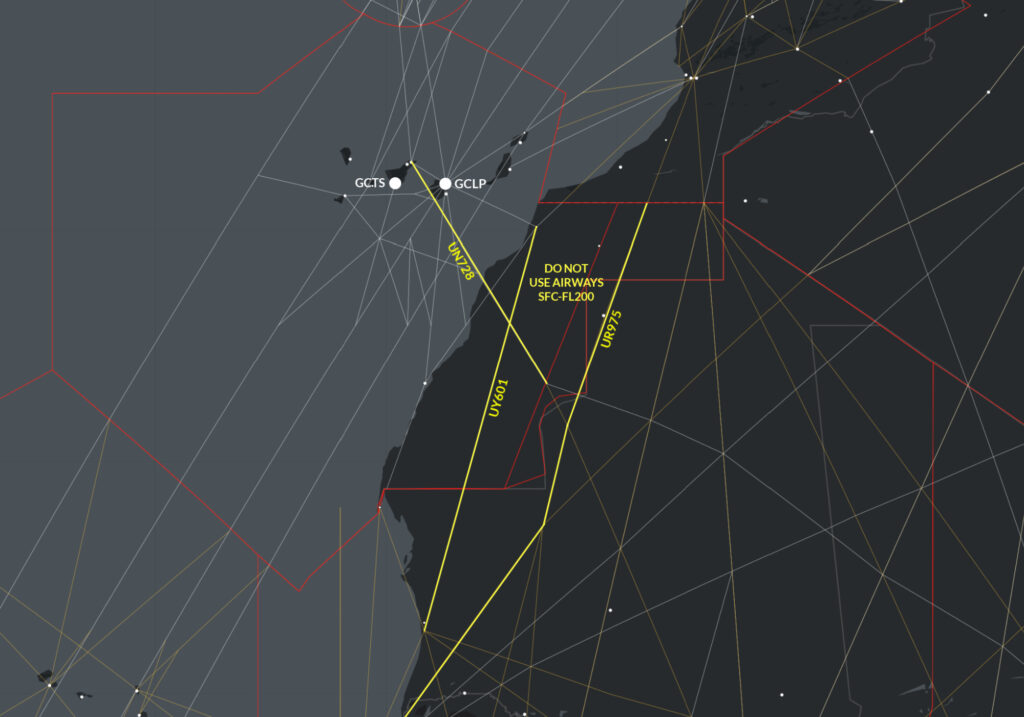
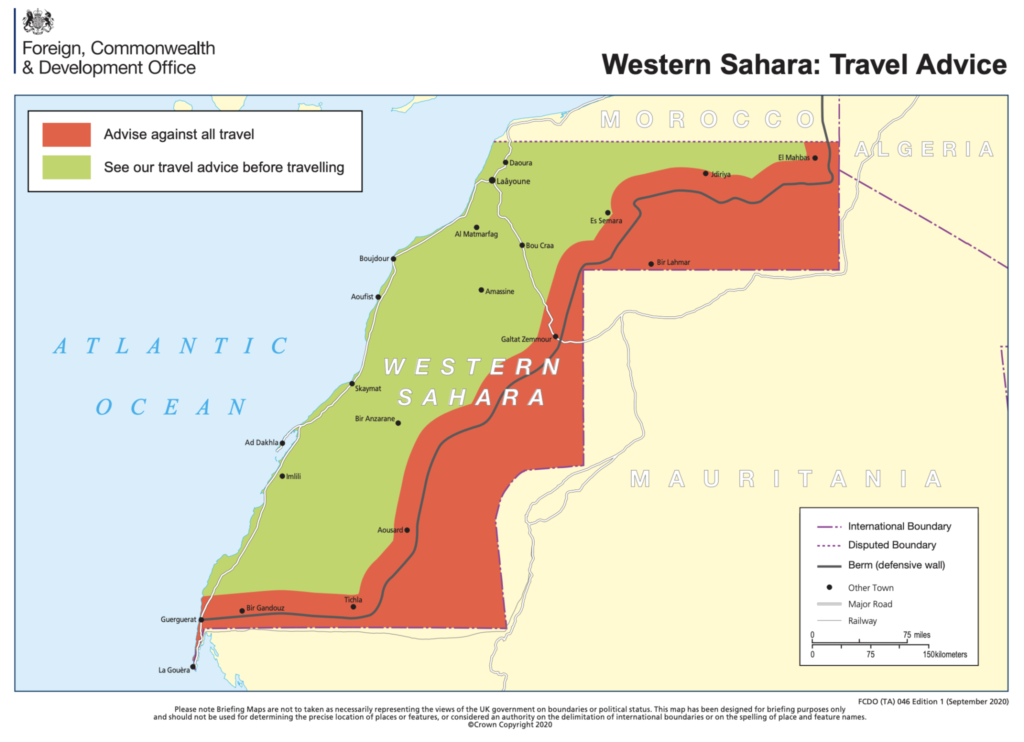
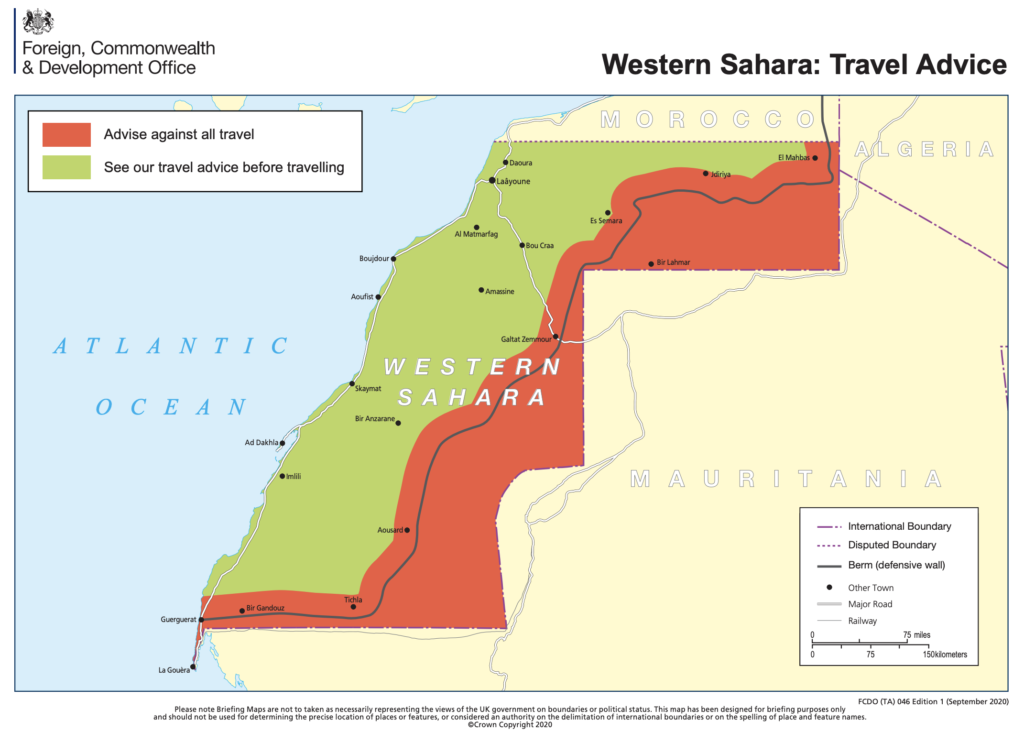
Previously, they said that aircraft overflights should be completely avoided in the eastern part of the country (i.e. airways UY601 and UN728), and should not be below FL245 in the western part. Here’s how that looked:

However, the updated warning issued on May 4 simply advises operators to avoid using the airways over Western Sahara below FL200:

Here’s the Notam:

GCCC B3323/21  - OPERATORS ARE REQUESTED TO EXERCISE PARTICULAR CAUTION 
DURING FLIGHT OPERATIONS IN WESTERN SAHARA AS PART OF FIR CANARIAS. 
IT IS RECOMMENDED TO AVOID OVERFLIGHT AT FLIGHT LEVELS BELOW FL200 
ON THE FOLLOWING ROUTES: UY601, UN728 AND UT975. 
04 MAY 08:53 2021 UNTIL 04 JUN 23:59 2021 ESTIMATED. 
CREATED: 04 MAY 08:54 2021

Still, not much of a warning. What’s really important is exactly what is missing: why.

The answer: Because the airways are over an active conflict zone, with a known threat of anti-aircraft fire.

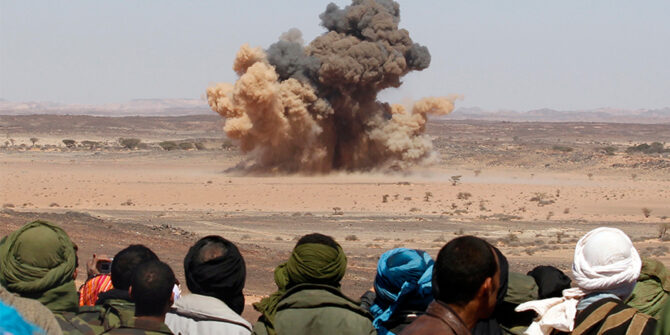
Western Sahara is effectively divided straight down the middle, literally by a wall. Morocco controls one side, while the region’s independence movement (the Polisario) controls the other. In Nov 2020, the Polisario declared war on Morocco.

Why do they want to fight?

The two have never gotten along. The Polisario want independence and were at war with the Moroccan Government for a very long time, until a fragile ceasefire agreement in 1991. Since then there has always been tension.

In early Nov 2020, a Polisario protest blocked a whole bunch of Moroccan truck drivers at the border with Mauritania, shutting down an essential route that connects Morocco to the rest of Sub-Saharan Africa. Morocco weren’t happy, and breached the ceasefire agreement by sending forces into the demilitarized zone to remove them.

The Polisario immediately declared war on Morocco, and clashes began straight away.

Why does it matter?

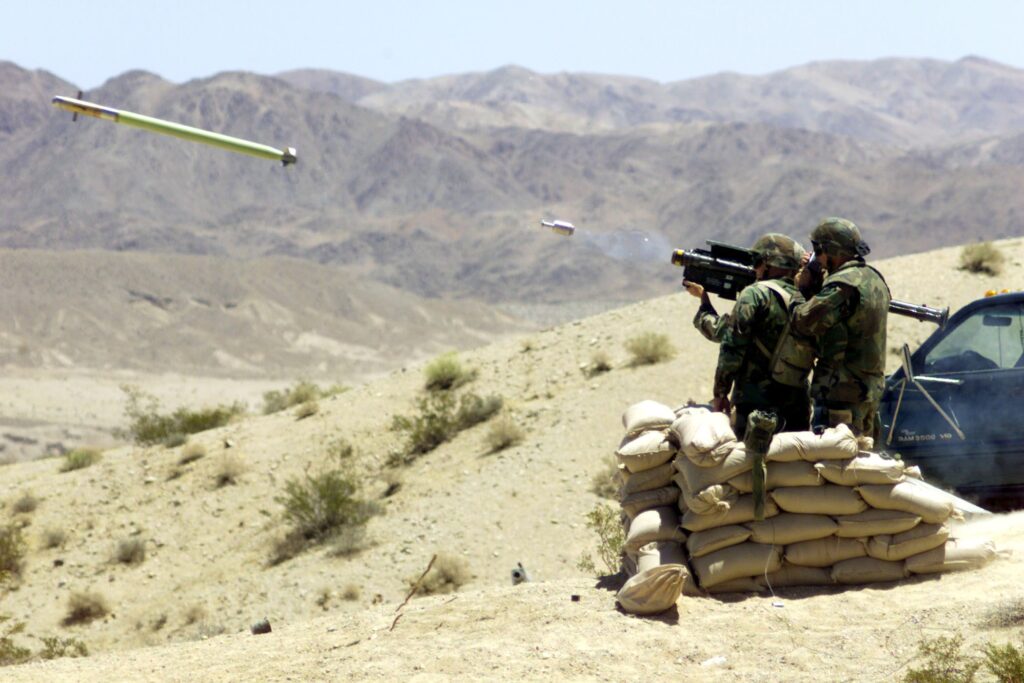
The FAA were onto it when they immediately carried out a risk assessment and published a notice. The big deal is that the Polisario are likely to have access to anti-aircraft weaponry left over from the previous war. This includes man-portable air defence systems (MANPADS) and surface-to-air missiles. The FAA think these weapons pose a risk to aircraft as high as 12,000 feet.

To make matters worse, they are suspicious that Morocco are flying drones over their territory – something that has been denied by Morocco. It wouldn’t be the first time an aircraft has been shot down there either – the Polisario downed two DC-7 airliners with missiles back in 1988.

What about airspace?

The sky over Western Sahara airspace is split between two FIRs –GCCC/Canarias and GOOO/Dakar. If the conflict escalates further, this is likely to complicate things.

So far there has been only one warning from the Canarias side – the NOTAM above. Nothing from Dakar yet.

There are currently three major airways affected. Two of them (UY601 and UT975) run the length of the region in a south westerly direction – likely to be used by aircraft transiting some routes between Europe and South America. The other airway, UN728 is a direct track from the coast to GCTS/Tenerife which may be used by smaller aircraft or those doing tech stops in the Canary Islands.

So if you’re  planning flights to the Canaries, or overflying central Africa, pay close attention to the risks involved. Continue to monitor Safeairspace.net as the situation develops.


ATC Zero in Class A Airspace: Is It Dangerous?

IFALPA has issued a new safety bulletin this week expressing concerns that existing US FAA contingency procedures that allow aircraft to continue using Class A airspace during ‘ATC Zero’ events are inadequate. They argue that the procedures expose aircraft to unacceptable risk and that more needs to be done to ensure their safety.

ATC Zero Events have become more common

Before Covid, ATC Zero events were quite rare. They’d usually only occur if controllers were forced to evacuate a facility. Fire, a force of nature, bomb threat – those sorts of things.

But then Covid came along and as we all know, it is super contagious. Amidst border closures and quarantine and testing rules, a new threat began to emerge in our skies.

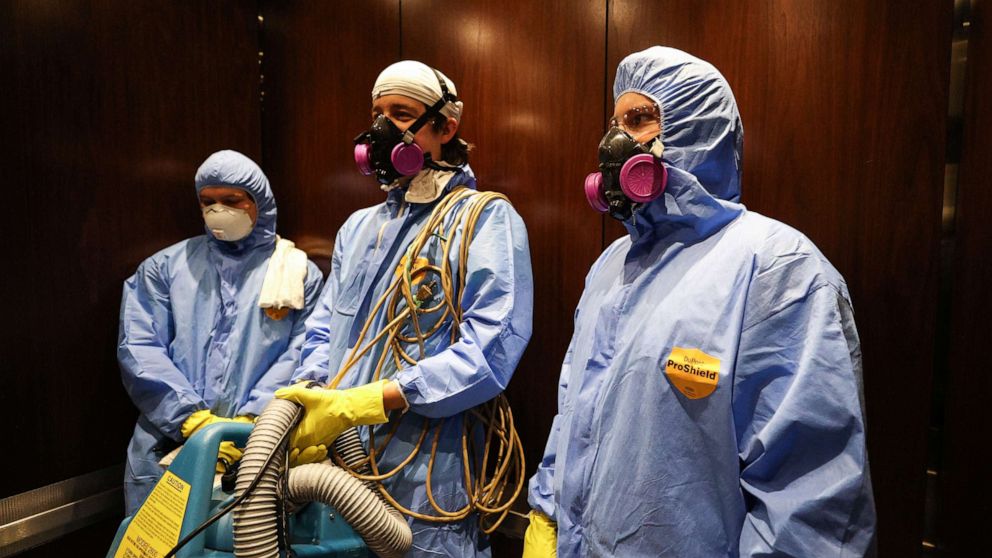
ATC facilities began to be impacted by Covid infections, and short notice closures for cleaning have become a constant risk.

Last year we published an article on how to manage ATC Zero events in Oceanic Airspace after the New York ARTCC shut down affecting traffic crossing the NAT. The US FAA were sufficiently concerned that they published their own SAFO.

However since then the US has continued to be affected by ATC Zero events over land which affect large portions of Class A airspace, often for hours at a time.

What the FAA have to say about it

The FAA are satisfied that it is safe for aircraft to continue using Class A airspace when no ATC services are available, as long as you follow contingency procedures.

What contingency procedures?

Well, they can be broken down into two parts.

  1. When an ATC Zero event is scheduled, a NOTAM will be published. It will restrict traffic to specific routes through the affected airspace which contain compulsory reporting points. If you don’t intend to the fly the prescribed routes, you’re not allowed in.
  2. TIBA – Traffic Information Broadcasts by Aircraft. The FAA expects you to use them. Recent feedback from members who have operated under these conditions indicate that many aircraft either don’t know, or are choosing not to use them while operating in ATC Zero airspace. That in itself is concerning.

So what exactly are the TIBA procedures?

You can find them in ICAO Annex 11, or buried in lengthy NOTAMs if you prefer your procedures capitalised, abbreviated and barely punctuated.

Here’s a quick unofficial rundown:

1. Dial up your TIBA frequency. If you have two VHF comms, leave one on the normal ATS frequency to listen out for a controller.

2. Maintain a listening watch on the TIBA frequency.

3. In most cases you’ll need to remember ’10 minutes’. A radio call is required 10 minutes before entering the affected airspace, or if you have just taken off from an airport within the airspace as soon as you can.

4. Enroute, you’ll need to make routine position reports:

  • 10 minutes before crossing a reporting point
  • 10 minutes before you cross or join an airway.
  • And if your waypoints are really far apart, make a call every 20 minutes.

5. If you’re changing levels you need to make a radio call 2-5 minutes beforehand.

So what do you actually need to say?

The short answer: Who you are, what level you’re at, where you are and where you’re going next.

The slightly longer answer:

- ALL STATIONS
-  Call Sign
- FLIGHT LEVEL
- AIRWAY (or direct to/from)
- POSITION AT TIME
- ESTIMATING (next reporting point or crossing/joining airway) 
  AT TIME AND FLIGHT LEVEL

Don’t forget to listen

It’s important to remember: When you enter Class A airspace during an ATC Zero event, you are responsible for your own separation. You’re on your own. Which means you need to hear and be heard.

What if a conflict is likely?

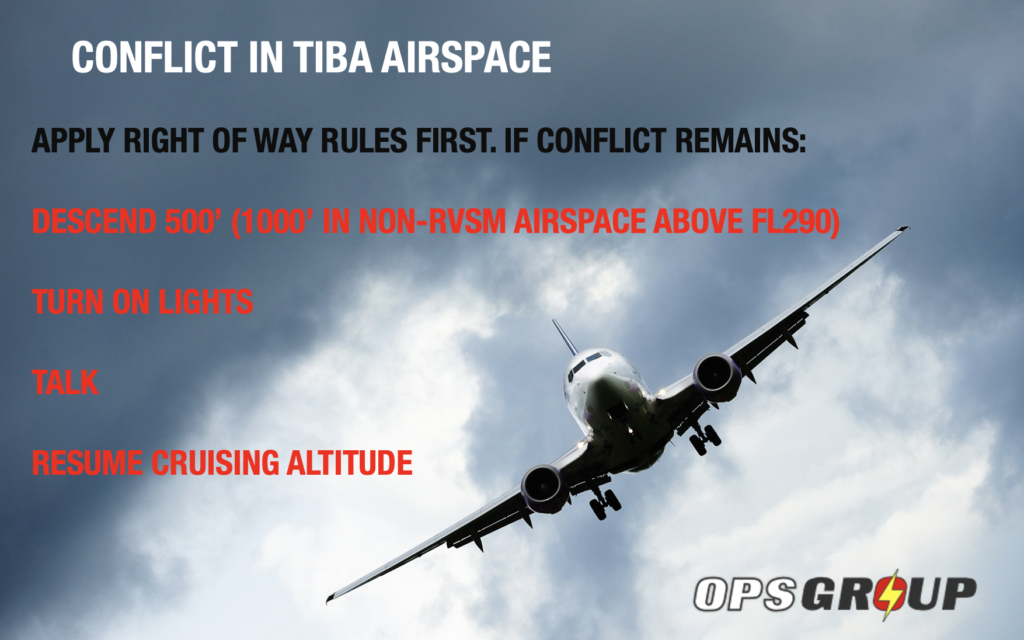
There’s a procedure for that too. If you can’t solve the problem with right of way rules, here’s what you need to do:

So why are IFALPA worried?

For starters, there may be aircraft operating in Class A airspace without TCAS which greatly increases the risk of a collision. Secondly there is a lack of training standards about how to apply the contingency procedures. Lastly given that no one is watching, you may be exposed to other aircraft breaching the regs.

Until things change, they recommend you avoid the affected airspace by flight planning around it. If that’s not practical here are their suggestions:

  • Minimise the risk by taking the shortest possible path through it.
  • Make sure you review the contingency procedures beforehand.
  • Make sure there are no procedures in your in your manuals that will be affected by a lack of ATC.
  • Submit a safety report afterwards.

The threat remains

ATC Zero events are likely to continue in the near term, along with the risks they pose. It is important that pilots take those properly into account before they enter affected airspace.

Love them or hate them, sticking to the contingency procedures like glue is everyone’s biggest risk mitigator until new or better ones eventually come along.


Squawk 7800 for Hacked

An airplane is circling over Seattle. Onboard, the Captain, Reece Roberts, is desperately trying to control it, but cannot – she is locked out from the flight control systems because the main computer has been hacked. It is a race against time for the crew to regain control before they run out of fuel. Dom Dom DOOOOMMMMM!!

This might sound like the plot from a terrible movie (it is), but how possible is this, and are there any mechanisms in place to prevent it?

Hack attack

Back in 2015, a cyber security expert, Chris Roberts, was detained by the FBI after making some claims on social media about hacking into an aircraft computer and briefly assuming control of it. According to Roberts he had hacked into several planes over a four year period, using the in-flight entertainment system as his way in.

On this particular occasion, Roberts claims he managed to overwrite some code and issued a “climb” command to the airplane which then caused one of the engines to increase thrust. His actual statement was that he made the airplane “fly sideways” (which possibly discredits the whole story just a little).

This is not the only claim of aircraft hacking though. In 2016, a Boeing 757’s system were also breached, and this one was slightly more disturbing because it actually, definitely happened. It was also less worrying because the aircraft was on the ground and the whole thing was carried out by the US Department of Homeland Security as an exercise to see how possible a hack attack actually would be.

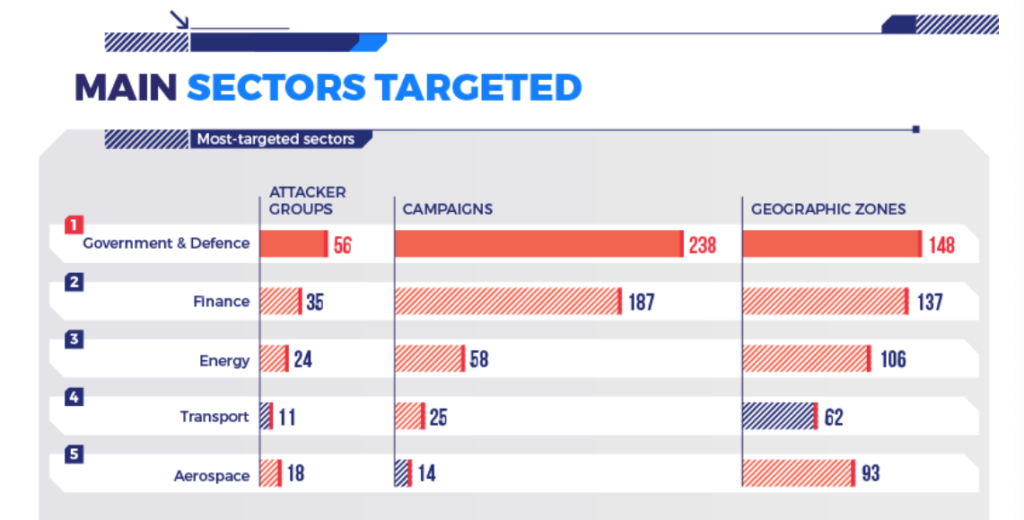
The Aerospace sector is the fifth most targeted sector for cyber-attacks. A high level then, but while some of those attempts are aimed at aircraft flight control computers, and an equally small number at infiltrating airport infrastructure systems, the large majority are of the data gathering nature – attempts to steal sensitive passenger info, credit card data and that sort of thing.

How serious are we talking?

Our aircraft are intelligent. The computer brains that run them are complex beasts made up of multiple data generating sensors, and just as many parts giving out orders to various aircraft systems. Take the FADEC on an engine – this is a self-monitoring, automated system. It controls the engine start, deciding when to open valves up, when to add fuel. It also monitors parameters and can stop a start, run a cooling cycle, and try all this again without pilot intervention. The system also controls inflight restarts.

Rolls-Royce launched an ‘intelligent engine’ concept in 2018 – an engine so connected that it has the basic AI algorithm “intelligence” to assess, analyse and learn from its experiences, as well as those of its “peers” (other engines that all share their data).

All this level of automation is great, but what if it is no longer in control, and is being controlled with the pilot effectively locked out?

Then there is the connectivity

Aircraft are increasingly digitalized and increasingly connected, and these connections might be less secure than we think. One highlighted “weakness” in aircraft onboard systems is the encryption levels within the comms and reporting systems. You might point out that aircraft are fairly visible on Flightradar, but this only gives general whereabouts, and transponder data is no longer shared. Being able to pinpoint exact locations in real time has far greater consequences if the wrong people are able to access this information.

There is growing speculation that Malaysia Airlines Flight 370 may have been electronically hijacked, or at the very least had its position spoofed leading to the initial confusion over its whereabouts, and later the difficulty finding the crash site.

The good news

The good news is there are protections within aircraft systems. First up, there is no way to access a critical system via a non-critical one. Network architecture prevents this and various experts have stated it is impossible to move from, for example, the in-flight communications system to the avionics.

Airbus incorporate a switch in the flight deck – the NSS (Network Server System) gatelink pushbutton is effectively an added ‘disconnect’ which separates all cockpit systems from the ‘open’ world, cutting off any potential link to the aircraft flight management systems should a threat be perceived.

Then there is the risk of “locking” the pilot out – gaining access of a system and sending commands to it is one thing, but pilots have the ability with most systems to disconnect and get back to basics. For a hacker to lock a pilot out – prevent them from disconnecting – this would require a command that is not currently in the system and this level of hacking and re-programming is not, most suggest, all that feasible.

The bad news

There are other ways to disrupt operations.

 GPS jamming is not direct interference, but the impact it has on aircraft systems is a known one – with a jammed GPS, aircraft lose the ability to navigate with accuracy and must rely on dated radio navigation systems. Not such a big issue, but removing the capability for an aircraft to carry out an RNP or RNAV approach means they are reliant on older ILS equipment, or having to fly non-precision approaches.

ILS equipment relies on both ground and aircraft systems, meaning there are much more “parts” which can fail. These systems are also older and require more maintenance on the ground meaning the likelihood of one part malfunctioning is higher, and when it does, the level of safety redundancy for aircraft which have had GPS jamming problems is suddenly really reduced.

The risk of interference to GPS and radio signals also creates a vulnerability in UAV operations.  The controllability of an aircraft might not be in question, but the ability of a hacker to take over and control a UAV – and potentially “control” it into an aircraft – is a growing threat.

A report looking into potential airport weakness identified a large number of “weak spots” where targeted hack attacks might result in disruption. The airside points ranged from spoofed ILS signals to changing airplane signatures on docking system from larger to smaller aircraft, reducing the wingtip clearance margins and safety significantly.

What is being done?

Technologies to prevent UAVs in airports is well underway with systems in place already at many major airports, and the FAA trialling more this year. Solutions to GPS jamming are also a high priority with several conferences and work groups already taking place, identifying both the threat and the root cause of why jamming takes place.

As for the direct cyber security risk to aircraft, this is not a new “idea”. The FAA moved it in the right direction with their Aircraft Systems Information Security Protection (ASISP) initiative in 2015. This initiative asked the questions, and asked manufactures to start thinking up answers, and they are responding. Manufacturers of major avionics, entertainment systems, communication systems, and aircraft are all analyzing the risks, and upping the protections, securities and preventions.

We might not see them in our aircraft, but they are there, and until aircraft become completely secure we still have that last trick up our sleeve – the one where we just turn it off and get back to basics and fly it ourselves.

So ‘Cabin Pressure’ might just be collection of movie cliches surrounding a troubled plane that no-one takes seriously, but the threat of cyber terrorism in aviation is one that everyone else is taking very seriously indeed, and for good reason.


Blinded By The Light: Laser Strikes

The FAA recently reported that even after traffic levels fell off a Covid-induced cliff during 2020, the number of laser strike incidents actually increased year on year. There were nearly 7,000 of them last year in the US alone – that’s almost 20 a day.

It’s a dangerous and common problem which is proving difficult to control. The FAA take it so seriously they regard a laser strike as a bona fide in-flight emergency.

Here’s why

In the majority of cases, laser strikes are intended as pranks or to cause nuisance. They tend to occur during critical phases of flight – approach, landing and take-off in other words, when you are low, slow and busy.

When struck by a laser, there are several things that can happen to the crew:

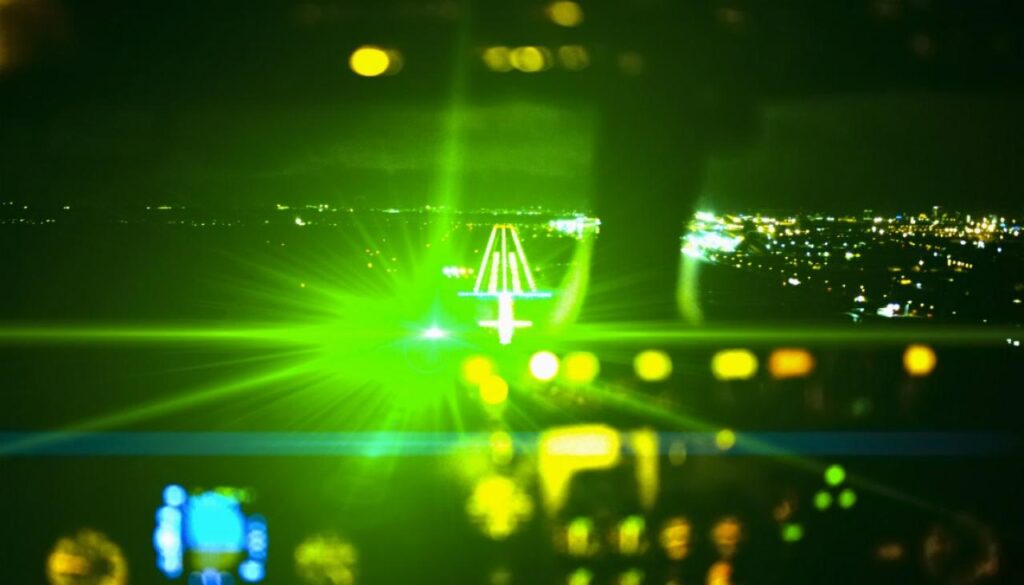
Startle factor and distraction. Right when you don’t need it. You can picture the scenario – it’s the last leg, it’s late and you’re tired. The picture outside is looking good, two reds, two whites, and you’re in the groove… and suddenly a green light appears to the side of the runway that zaps your flight deck. Your scanning breaks down, your attention is divided. Very quickly your approach can become unstable.

Glare. Stronger lasers create a veil of light that obscures your ability to see your instruments. The colour green creates the worst glare.

Flash Blindness. This is potentially the most dangerous outcome of a laser strike. It is a temporary loss of vision after the laser has been turned off. An after image-remains on your retina, possibly for several minutes after exposure that obscures your ability to see. It is the same effect you experience after someone takes a photo of you using a flash.

Permanent Eye Damage. Fear not. Yes, it’s possible, but very unlikely. The laser would have to remain in one spot on your retina stationary for several seconds. While it is unpleasant to stare down the beam of a laser, FAA studies have shown there have been almost no cases of flight crew with permanent eye damage from a laser strike.

So there’s been reports of laser strikes in the area. What do we do next?

There are two camps here. How to avoid laser strikes in the first place (mitigate), and then what to do if you’re hit by one (react).

Mitigate

Here’s where a little background helps. We know that the vast majority of them occur between 7 and 11pm at night, and they’re far more common on Friday and Saturday nights. Public holidays such as New Years and July 4th are especially bad. Be sure to brief it as a risk.

Listen out for the phrase “UNAUTHORISED LASER ILLUMINATION EVENT.” ATC have a set process to follow if they receive a report. It will be followed by where it happened and at what altitude. They’ll broadcast it every five minutes for twenty minutes after the latest report. The same warning will also be put on the ATIS for an hour.

The FAA recommends that if you hear laser reports from ATC or other aircraft within the preceding 20 minutes you should avoid the area by requesting a re-route or alternate approach (if possible).

And keep those lights bright. An eye in a bright environment is less vulnerable to the effects of a laser strike.

React

Right, so you’ve just been blasted by a laser. Here’s what you need to do to limit its impact.

Don’t stare at it. Okay, this one may seem like an obvious one but don’t look at the beam. It will maximise your chances of encountering any of the nasty stuff above. Instead look down at your instruments.

Protect your eyes – you can use your hand, a clipboard, iPad anything really. But try to get something between you and the laser.

Resist the urge to rub your eyes afterwards. A laser strike may irritate them or make them sore. Don’t start rubbing them – you run the risk of scratching or irritating your cornea which is going to be far worse.

Keep flying the plane! Turn on the autopilot and stabilise the aircraft. Make sure you communicate with each other.

Transfer control – if your offsider wasn’t exposed, get them flying and heads down on instruments. Don’t let them start looking out the window or you run the risk of a double exposure.

Consider a Go-Around – self-explanatory really but it may be the safest outcome.

Tell ATC. They need to know to protect other aircraft and help law enforcement find the laser-wielding halfwit and make them pay.

How to report ’em

The FAA want you to do it right away, and it’s easy. While you’re in the aircraft, get on the radio and talk to ATC. They want to know where it happened, your altitude, the colour of the beam, the direction it came from and any other information you think would help law enforcement.

Once you land there is a little paperwork to do. The FAA want you to fill in an online questionnaire. You’ll need to either fax it to (202) 267-5289 or email it to laserreports@faa.gov.

Other things to read

  • FAA Advisory Circular 70-2A – A full rundown of everything the FAA wants you to know about laser strikes.
  • FAA Laser Incident Reports You can view the full database of laser strikes including where they are happening most. The information is completely open to the public.
  • Laser Tag For Newbies: Tips, Tricks, and Strategies. How to shoot people with lasers in a way that doesn’t break the law 😊


Unstable Approaches: Why Aren’t We Going Around?

Late last year, IATA put out a bulletin noting that the number of unstable approaches in 2020 was a lot higher than in previous years.

Look a little further back and you’ll see this has been a trend for some time now.

Fly the line and it’s not hard to see why we are getting unstable – there are a bunch of reasons including weather, other traffic, challenging clearances, complex airspace, fatigue and even currency given the state of the industry, to name only a few.

So what’s the big deal?

IATA also know that in most cases, we’re not going around.

The numbers don’t lie, and they’re scary. Get this – a recent study estimated that 97% of unstable approaches flown in IMC didn’t fly a missed approach. That’s huge.

The leading cause of aviation accidents worldwide are runway excursions. The Flight Safety Foundation looked into all of them over a fourteen-year period and found that 83% of them could have been prevented by a go-around. That’s over half of all accidents recorded. It’s a big deal.

What do we actually mean by ‘unstable’?

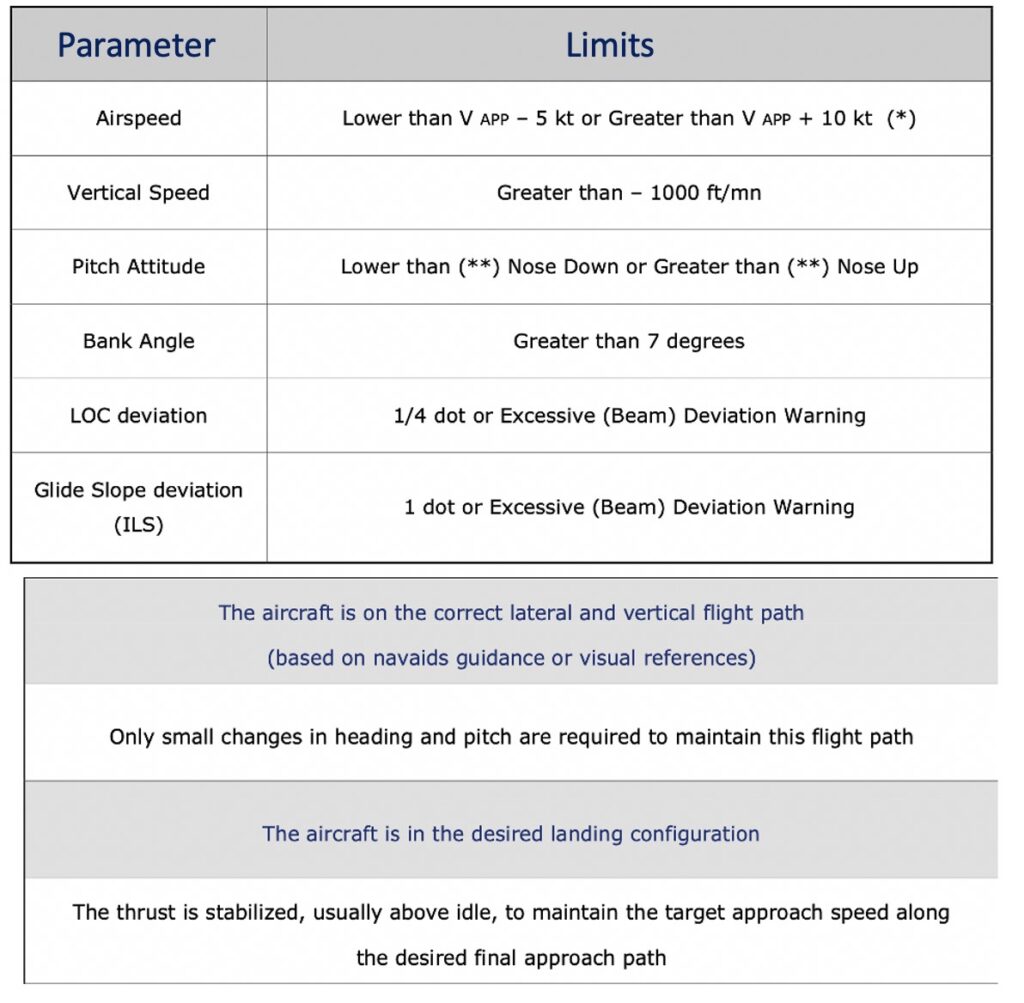
In a nutshell it is any approach that doesn’t meet the stable approach criteria in your SOPs by a certain height – usually 1,000 feet off the deck. And it’s not just the ones that have gone badly wrong either – the criteria are usually pretty tight…

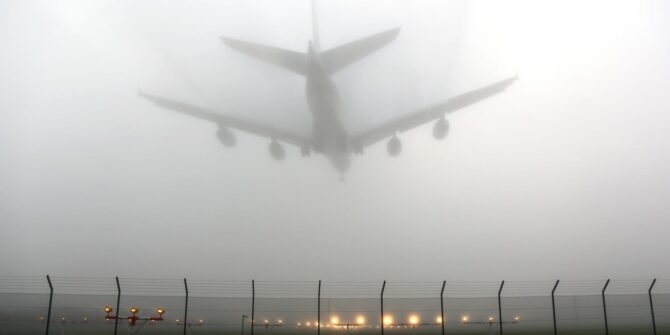
Like the picture, the decision appears to be black and white: If you don’t meet the criteria, you have to go-around.

So why aren’t we doing it?

Good question. There are a bunch of factors but the most important is pilot psychology. Either consciously or sub-consciously we are making a decision to not go-around. Here are some suggestions about what may be happening inside our heads.

1. We’re pilots

Which means we’re mission-orientated. We want to get in and we don’t like conceding defeat. Nor do we enjoy being reminded that we have reached the limit of our ability to fix whatever has gone wrong.

Experience also tells us that if we persist a little longer we can re-stabilise. After all a little speed brake, a little more sink rate you’ll have the thing back on rails long before the runway out the window is too close for comfort.

The problem is we’re fixating on completing the mission.

Studies have shown this behaviour is insidious. It creeps up on you and you begin to normalize the risk. Just like a speeding driver arriving home unscathed, the danger becomes typical. But it gives you far less capacity and room to deal with anything unexpected.

2. Training

A go-around is a normal procedure, but boy do things happen quickly. It’s okay when you know it’s coming. But it’s when you’re off the script that they get especially challenging. Especially after something stressful has already happened.

Studies show that pilots are more reluctant to go-around in scenarios they haven’t practiced. This includes when the aircraft is only partially configured or is very low to ground (such as a bounced landing or botched flare). Complicated airspace and procedures can also be major deterrents to hitting those TOGA switches.

3. What the other guy/gal thinks

Everyone’s personality is different, and we don’t always get along. You might like a good book, while your offsider might prefer a good base jump. When it begins to matter is when it affects safety.

We react differently depending on the dynamic with the other pilot. This can include embarrassment at going around, a lack of support for the decision or disagreement with whether the approach can be safely salvaged. But if you begin to see a go-around as a reflection of your abilities, you are already on a slippery slope. Add an offsider who might judge you for going around and you’re in for a dangerous ride together.

Cockpit gradient is another contentious issue. Too steep and it can turn a multi-crew aircraft into a single pilot one. Age, experience, rank or culture can all contribute. Take this animation of a visual approach on a calm sunny day in San Francisco a few years back. Watch the animation and decide when you would have said something. There were two Captains and a First Officer on the flight deck.

Credit: Airboyd

4. Organisational Pressure

The elephant in the room. No one is pointing fingers but now more than ever operations need to run on the ‘scent of an oily rag.’ Fuel is a big part of that. Crew may be encouraged to carry less of it in the first place which can lead to  fuel anxiety and reluctance to go-around. Or it may be the simple economic cost of using it compared to trying to re-stabilise an approach. It’s no secret that go-arounds use a lot of fuel.

Other factors may come into play too – scheduling, delays, an unwanted diversion or even duty time limits. There are a bunch of external factors which can creep their way into the flight deck and affect our decision making.

So what can we do to improve our Go-Around decision making?

IATA have made some solid suggestions:

1. Make the decision as early as you can. Historically, accidents that follow a decision to go-around usually reflect a late decision. Don’t wander down that garden path. Lion Air Flight 904  serves as another example.

2. Brief the heck out of them. Every time.  Make sure you include what you will be looking for to continue the approach, what may make a go-around more difficult on that particular day and how you will get around those challenges.

3. Encourage acceptance on the flight deck that a go-around is a possibility at any stage. Always prioritise the safest outcome.

4. Follow those SOPs. Operators should always have a mandatory requirement to go-around when stable approach criteria aren’t met. On the flipside, there should never be any punitive reaction to a crew’s decision to go-around. They show good decision making.

5. Fuel policy. Have one which always allows for go-arounds and accept they are a necessary cost of operating an airplane out there.

Up for more reading?

It’s a big issue so there are plenty more places to look. Here are a couple of really good links to get you started.

  • IATA periodically publish a whole bunch of useful stuff about unstable approaches, go-arounds and risk mitigation.
  • Flight Safety’s work on unstable approaches.


Rumbles Over Riyadh: A New Threat?

You might have seen the headlines a week or so ago. On January 23, Saudi Arabia’s capital Riyadh was attacked by a ‘hostile air target’ – likely an explosive ‘kamikaze’ drone. Saudi air defences destroyed it, causing a loud explosion over the city and flight disruptions at OERK/Riyadh.

Then a few days later it happened again. Another big bang in the skies of Riyadh and more flight disruptions. Plenty of people caught it on camera. But the silence from official channels was deafening.

So what? Isn’t there is always stuff in the news about drones over there?

Yes. They’re sporadically sent over the border from Yemen by the Houthi – the folk who overthrew the Yemeni government back in 2014. Southern regions are usually the worst hit and occasionally Jeddah and Riyadh are targeted just to remind Saudi Arabia that they can.

But here’s the kicker: this time it probably wasn’t them.

How Do You Know?

Firstly, the Houthi have adamantly denied they were to blame. They’ve actually gone out of their way to distance themselves from the attack. So why should we believe them? Because of the status quo – they want to make headlines. Their attacks on Saudi Arabia are a demonstration of their firepower and willingness to target anywhere in the country. They’re even known to claim responsibility for attacks that weren’t theirs.

Secondly, someone else has already put their hand up for the attack – a group of militants in Iraq called the Alwiya Waad al Haq. The Who? The ‘Brigades of the Righteous Promise’. It’s a fancy name but the takeaway is this: someone new is apparently taking shots at Saudi Arabia from Iraq.

Here’s why

Saudi Arabia and Iran don’t get along. The reasons are long and complicated and you can read more about them here. But in a nutshell, religious differences and a desire for regional dominance are the cause of the ongoing conflict. The attacks on Riyadh are a worry because they may reflect a changing way that Iran asserts its dominance throughout the Persian Gulf – by proxy.

Proxy conflicts are a thing. It means when someone is doing the hands-on fighting for somebody else. Remember those Brigades of the Righteous Promise people? It is alleged that Iran may have put have put them up to it, and supplied the firepower to do it.

There’s no shortage of independent militia in Iraq. They’re difficult to trace and new ones emerge seemingly from nowhere – so much so that they’re sometimes known as ‘shadow militia.’ In reality, they are usually a cover for larger and much more well-known groups. In this case, possibly the Hezbollah – one of Iran’s largest proxies.  By hiding behind different names they can cause confusion, unpredictability and can divert blame away from the prime suspects.

It is possible that Iran may now start using these proxies more often for attacks on its regional adversaries.

So why is this an aviation issue?

We get twitchy when anyone is firing things into the sky. This way of fighting is unpredictable and the weapons being used are getting more sophisticated and can cover large distances.

Case in point. Back to the Brigade guys – since their alleged attack on Riyadh they have since threatened to attack the Burj Khalifa in Dubai, and also Abu Dhabi airport. Whether or not their threats can be taken seriously remains to be seen – but if the attack on Riyadh is anything to go by, they might have the weapons and intent to do it.

For aircraft, there are a few threats to be aware of:

  • Misidentification by sophisticated air defence systems.
  • Being caught in the cross fire.
  • Simply being in the wrong place at the wrong time. Airports are often a prime target.

What can we do about it?

Continue to monitor Safeairspace.net for airspace warnings – it is our database of airspace risk and we update it all the time. Head over there and take a look – there are multiple warnings for the Persian Gulf region including four ‘no fly’ countries: Syria, Iraq, Iran and Yemen.

Understand ESCAT rules. Or you might know them as SCATANA. Either way they are a protocol for getting you out of dangerous airspace and fast. ATC may divert you clear of an FIR or ask you to land. They’re in use in Southern Saudi Arabia – but can be applied at short notice to any airspace where the risk is high. ESCAT procedures are published in GEN 1.6 of Saudi Arabia’s AIP. If you don’t have a login, you can see the relevant section here.

Lastly, carry out your own risk assessment and know what’s going on down there. Just because airspace is open doesn’t mean that it’s safe.


SafeAirspace: 2021 Update

2020 was a heck of a ride. But therein lies the risk – what else might you have missed amongst all the Covid-related noise? Sadly, conflicts and their risks to civil aviation have not taken a break during the pandemic.

As it’s a new year, we thought a summary of Airspace Risk was called for. Here’s what’s making headlines at the moment:

Saudi Arabia & Yemen

Houthi rebels in Yemen are regularly firing explosive drones and rockets across the border into Saudi Arabia, and these usually target airports in the south such as OEAH/Abha and OEGN/Jizan. Their latest attack was on OYAA/Aden airport in late December which resulted in mass casualties.

Saudi Arabia continues to retaliate with airstrikes. The latest was in the capital Sanaa just weeks ago, where multiple munitions landed near the airport.

The risk to aviation is that overflying aircraft may get caught in the crossfire or might be misidentified by Saudi air defences. Active terrorist groups in Yemen may also use anti-aircraft weaponry to target foreign interests.

The FAA prohibit all US operators from entering most of the OYSC/Sanaa FIR at any level. Only two airways are allowed, and they are well off the coast – UT702 and M999.

There are no restrictions on Saudi Arabia but use caution in the southern regions. France and Germany have issued their own warnings.

SafeAirspace Yemen page – click here.
SafeAirspace Saudi Arabia page – click here.

Iraq

Rocket attacks on military interests at airports have become a common occurrence. They are generally fired by local militia without warning. ORBI/Baghdad is frequently targeted, along with other airports including ORER/Erbil. There is a clear risk to aircraft at low levels.
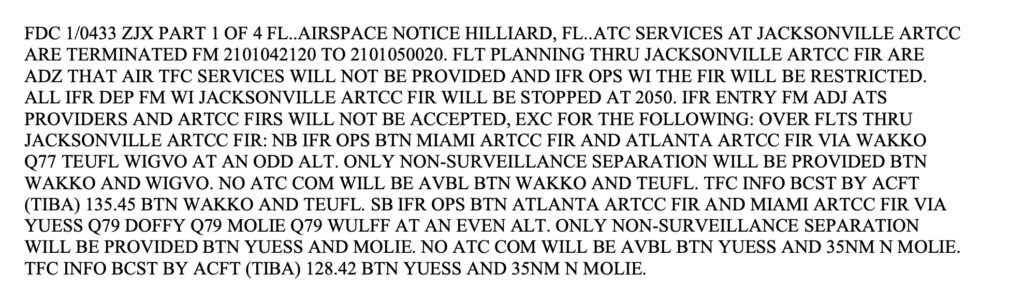
US relations were further strained through 2020 with multiple attacks on the US embassy in Baghdad. The tensions escalated to a point where the US considering closing it.

Foreign aircraft continue to be at risk from armed militia who have access to portable anti-aircraft weaponry, while misidentification by the air defence systems of multiple foreign forces in the country is also possible.

The FAA has extended its ban on US operators entering the Baghdad FIR at any level. Even though the SFAR says you can enter above FL320, the long-running Notam KICZ A0036/30 says otherwise.

SafeAirspace Iraq page – click here.

Syria

There have been several recent Israeli airstrikes on targets throughout Syria. In late December there are reports that Israeli fighters transited Lebanese airspace at low level causing alarm in Beirut before attacking targets in Western Syria. Just weeks ago, several sites around Damascus were targeted by Israeli missiles.
The primary risk is that aircraft may be misidentified by Syrian air defence systems which are regularly activated. Civil operators may get caught in the crossfire as missiles may erroneously lock on to the wrong aircraft.
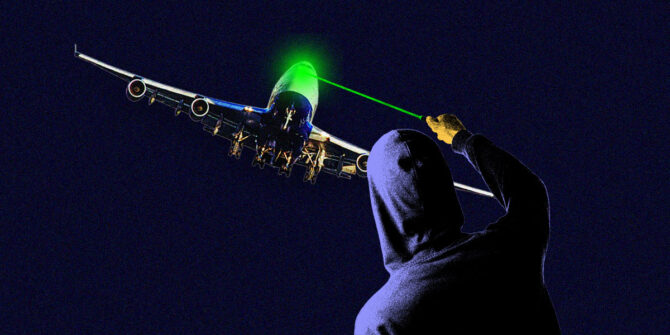
The FAA are taking no chances – the ban on US operators entering the OSTT/Damascus FIR at any level has been extended a full three years to 2023.

SafeAirspace Syria page – click here.

South Sudan

Just this week ICAO issued a concerning warning about the risk to aircraft operating below FL245 in the HSSX/Khartoum FIR over South Sudan, or flying in and out of HSSJ/Juba. They are ‘gravely’ concerned about ATC disruptions, a lack of contingencies, inadequate training of controllers, limited info about equipment outages and a lack of co-ordination with other ATS units.

SafeAirspace South Sudan page – click here.

Emerging Conflict Zones

2020 saw three new conflict zones emerge, here is what is happening with them now.

Ethiopia

A civil conflict erupted in October last year in the Tigray region of Northern Ethiopia. The government went to war with the TPLF – a regional force seeking independence.

The region’s airports were closed and TPLF showed an intent to internationalise the conflict by attacking aviation interests. They fired rockets into Eritrea targeting HHAS/Asmara, and also attacked multiple airports to the South of the Tigray region.

Two airways were closed (T124, and M308) with no explanation of the risk.  Other airways remained open but uncomfortably close to the fight – especially UG300, UN321 and UL432. No airspace warnings were issued despite the dangers.

What’s the latest?

In late November Ethiopian forces captured the region’s capital Mekelle and regained control. Remaining TPLF forces have retreated leaving behind a humanitarian disaster and a vow to continue the fight. Since then, the airway closures have been removed and things have gone quiet, but an airspace risk remains – armed militia continue to be active in Northern regions and may be looking to make a statement. Be wary of operating in the area.

Western Sahara

Late last year the region’s independence movement (the Polisario) declared war on Morocco for breaching a ceasefire agreement. The FAA published a warning that the Polisario might have access to anti-aircraft weaponry left over from previous conflicts.

What’s the latest?

It is still an active conflict zone.  The fight has reached the international stage after the US declared their support for Morocco. The Polisario have indicated they are willing to at least talk, but so far have not put down their weapons. So, it is a wait-and-see type deal.

The risk to overflying aircraft remains. The GCCC/Canarias FIR keep extending a Notam advising operators to not fly below FL200 on the following airways: UY601, UN728 and UT975.  However, the reason is still missing: because of the risk of anti-aircraft fire. The GOOO/Dakar FIR haven’t issued any warnings despite the threat. Take care if operating in the area.

Armenia-Azerbaijan

In September last year, an ethnic conflict erupted over a disputed territory in Western Azerbaijan – Nagorno-Karabakh. The fight was between Azerbaijan and Armenia.

As a major air corridor for en-route traffic, there were significant flight disruptions. Azerbaijan swiftly closed all but one west/eastbound airway and routed traffic via Georgia. Armenia asked aircraft to take extra fuel and expect re-routes. The conflict was short but intense, with heavy artillery fire from both sides. The conflict eventually spread beyond the contested regions with longer range weapons. The entire border region posed a risk for civil aircraft.

What’s the latest?

For once the news is good. In November a ceasefire agreement was signed with the help of Russia. Armenia effectively lost and withdrew from the region and the conflict was officially over. Armenia removed its airspace warning, while Azerbaijan re-opened the affected airways and a large section of airspace near the border.

With the conflict now over, and no new reports of significant fighting since the peace agreement in November, direct crossing traffic between the two countries is now technically possible again.  However, most East-West flights are currently still electing to go further north instead, connecting between Azerbaijan and Georgia’s airspace, avoiding Armenia.

What about Safeairspace.net?

Our conflict zone and risk database is updated constantly. We assess risk with official sources and build a simple picture for you of those need-to know-places.

There are currently 5 regions which are assessed as a Level 1 Risk – No Fly. These are: Iraq, Iran, Yemen, Libya, and Syria.

Head over to SafeAirspace.net and take a look. With a single click you can download a risk briefing of the entire world in just a few pages of nice simple English.

The mission of SafeAirspace is this: to provide a single, independent, and eternally free resource for all airspace risk warnings, so that airlines and aircraft operators can easily see the current risk picture for unfamiliar airspace. If you know of a risk not listed on the site, or you have anything else to add, please get in touch with us at news@ops.group


A330 shot at during Covid relief flight

An Air France A330-200 was shot at after landing in FCPP/Pointe Noire, on the evening of April 11th. The aircraft was operating a Covid repatriation flight, picking up passengers in Congo-Brazzaville, and planned to depart back to Paris via Bangui.

Two shots were fired during the incident, with one bullet puncturing the fuselage.

Initial reports made the incident seem quite disturbing, with differing versions of the story appearing in news media.

But, it turns out to have been a little less dramatic. It seems an altercation between a security guard and his boss led to him trying to fire his gun in the air, and hitting the aircraft was unintended.


Dash 8 set on fire in Papua New Guinea, airport closed indefinitely

AYMN/Mendi has been closed indefinitely after protesters set fire to and destroyed an Air Niugini Dash 8 aircraft, which had just arrived from Port Moresby. The protest was in response to a court ruling confirming the election of the Southern Highlands governor William Powi.

Radio New Zealand reported:

“(Initially) the local police station commander Gideon Kauke had said police were guarding the aircraft to ensure there was no further damage, after its tyres had been flattened.

But he said his team of about ten police couldn’t contain a mob of uncountable numbers, particularly after missiles were thrown, forcing them to retreat; “we were guarding the plane but compared to them we were outnumbered and they came in all directions, all corners. Missiles were thrown, bush knives were thrown.”

Mr Kauke said some of the protestors, who continue to behave menacingly in Mendi as their numbers build up, were carrying guns. He said the protest was in response to a court ruling in Waigani confirming the election of the Southern Highlands governor William Powi.”

The Australian Department of Foreign Affairs is cautioning all to “reconsider your need to travel” to the regions affected by the unrest and to also “exercise a general degree of caution” for the whole of PNG.

The local NOTAM says it all.

A0773/18 – AD CLSD TO ALL ACFT OPS DUE CIVIL UNREST. 14 JUN 05:35 2018 UNTIL 13 JUL 06:00 2018 ESTIMATED. CREATED: 14 JUN 05:52 2018

Additional reporting indicates that the aircraft was shot at on landing, deflating the tyres.

Are you currently in PNG and can fill us in on more? Please comment below, or email us.


New airspace warnings – Turkey, Iran

Today Flight Service Bureau has published ION05/16 – an updated Unsafe Airspace Summary, with new warnings for Turkey, and Iran, and a new map at safeairspace.net. This replaces 04/16 issued in August.

Turkey: 23SEP16 Germany B1289/16 Do not plan flights to LTAJ due potential ground to ground firing in the vicinity of LTAJ/Gaziantep Airport.

Iran: 09SEP16 FAA Notam KICZ 19/16 Exercise caution within Tehran FIR due military activity.

New information in the PDF is marked with a   I   beside it. Please distribute the PDF to anyone you like, we are keen to make sure as many operators as possible are aware of the risks.


opg-safeairspace