Greece Winter Runway Closures
Key Points
  • Several airports in Greece will be affected by winter runway works through to the end of March.
  • These include: LGZA/Zakynthos, LGKF/Kefalonia, LGKR/Corfu, LGMK/Mykonos, LGSR/Santorini, LGRP/Rhodes, LGSK/Skiathos, LGTS/Thessaloniki, LGSA/Chania, LGIR/Heraklion and LGMT/Mytilene.
  • Expect a mix of recurring weekly closures and day to day restrictions, and in many cases reduced runway distances. At some airports, declared distances are down to around 1400m, which will rule out certain aircraft types altogether.
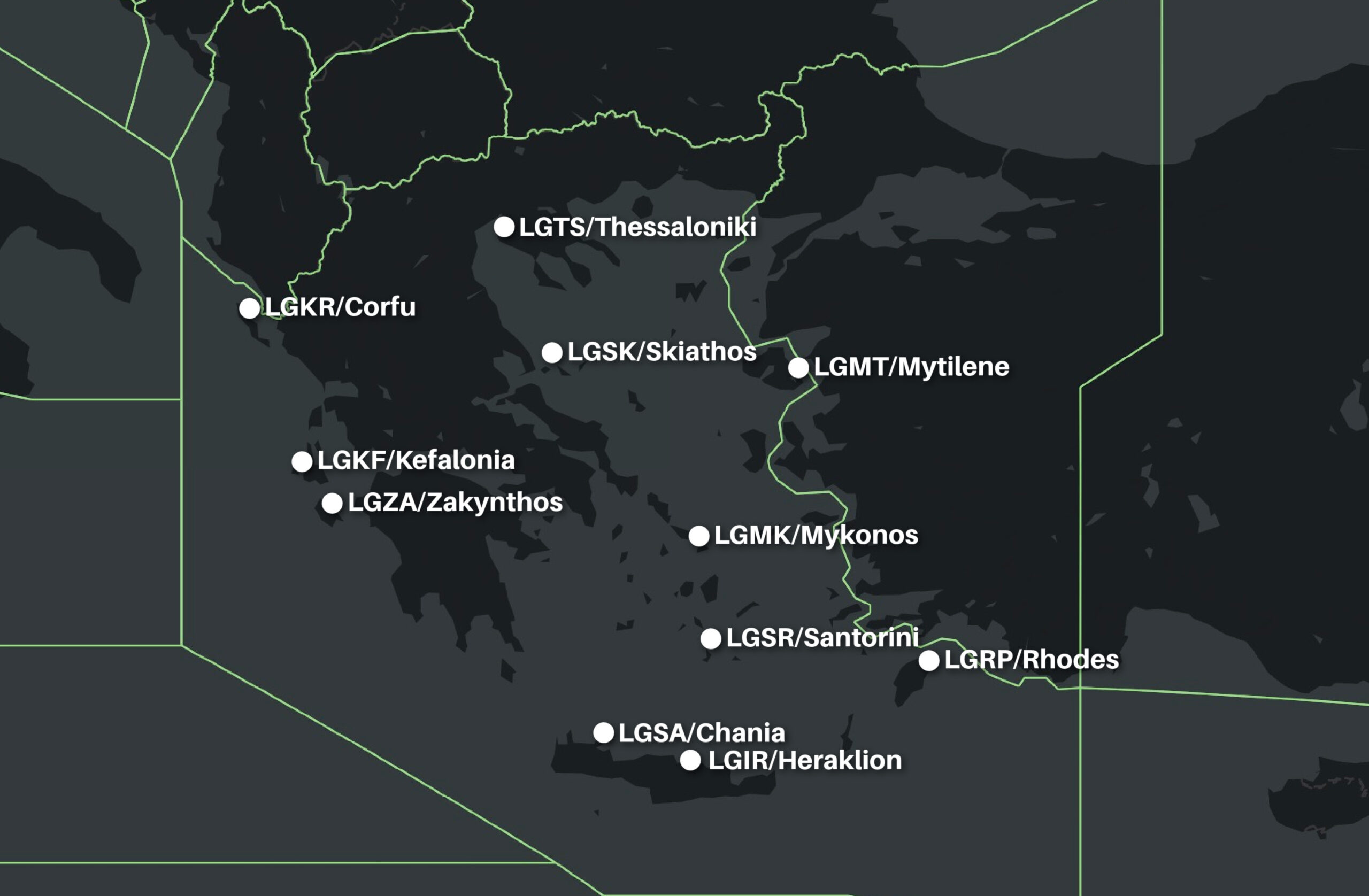
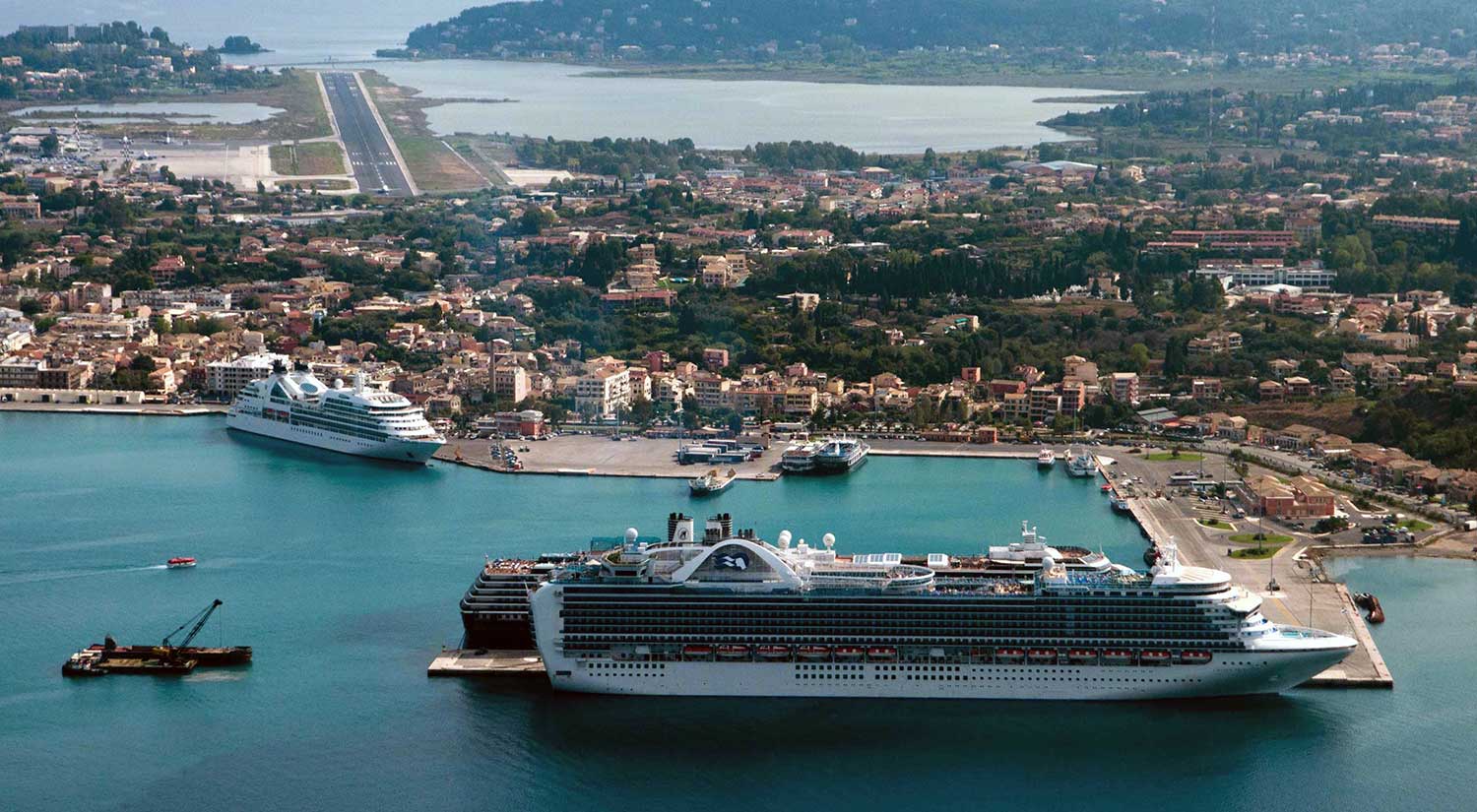
Greek Airports with winter closures.

You can find all the details on the Notams, but here’s a quick rundown of the planned closures and reductions in runway lengths:

LGZA/Zakynthos
Full Runway Closure: RWY 16/34 closed from Feb 2-17.

LGKF/Kefalonia
Full Runway Closure: RWY 14/32 closed at various times on different days until Jan 30. Times vary daily but mostly around midday, up to 4 hrs.

LGKR/Corfu
Full Runway Closure: RWY 16/34 closed from Jan 12-27.

LGMK/Mykonos
Shortened Runway: RWY 16 reduced to 1400m, RWY 34 reduced to 1400m until Mar 25.
Full Runway Closure: RWY 16/34 closed Tuesday through Wednesday nights on a recurring weekly basis until Mar 19.

LGSR/Santorini
Shortened Runway: RWY 15 reduced to 1802m, RWY 33 reduced to 1874m until Feb 25.
Full Runway Closure: RWY 15/33 closed from Jan 12 to Jan 20.

LGMT/Mytilene
Full Runway Closure: RWY 14/32 closed every Tuesday all day until Mar 25.

LGRP/Rhodes
Shortened Runway: RWY 06 reduced to 1900m, RWY 24 reduced to 1900m until Mar 25.
Full Runway Closure: RWY 06/24 closed on a recurring weekly basis, typically from Tuesday evening until late Wednesday evening until Mar 25.

LGSK/Skiathos
Full Runway Closure: RWY 01/19 closed for most of January, with only short morning or afternoon reopening windows on certain days, until Feb 1.

LGTS/Thessaloniki
Full Runway Closure: RWY 16/34 closed from Jan 19 to Mar 6. RWY 10/28 remains in use.

LGSA/Chania
Shortened Runway: RWY 11L/29R reduced to 1900m until Mar 27, with RWY 29R threshold displaced. Straight-in minima are not authorised (circling only). RWY 29R approach lights are out of service.

LGIR/Heraklion
Full Runway Closure: RWY 09/27 closed from Jan 19-26 due to resurfacing works. Operations are on RWY 12/30 for day ops only, limited to Code letter B aircraft (incl. ATR42/72). IFR arrivals are suggested via RNP RWY 27, then visual or circling. If visibility drops below 10 km or ceiling below 2000 ft, arriving aircraft must fly VFR.


Further closures may be announced beyond the end of March – check on Fraport’s homepage for updates.

Have you operated into Greece during the winter recently? How was it on the ground, and did anything catch you by surprise?
If you have tips, experiences, or useful local insight to share, we would love to hear from you. Drop us a note at team@ops.group!

Greece Summer Lowdown: Parking Pain, Slot Stress, and Hidden Fees

Key Points
  • All Greek islands will be extremely busy again this summer. Athens too.
  • Very few slots are made available to BizAv flights, overnight parking is scarce, even quick turn arounds are extremely difficult in some cases.
  • At Level 3 airports, your filed flight plan must match the confirmed slot time within ±15 minutes, otherwise it will be suspended.
  • Watch out for extra fees at LGMK/Mykonos, LGKR/Corfu and LGKO/Kos.
  • Consider drop-and-go’s, with parking at airports on the Greek mainland, Cyprus, or Turkey.

There are loads of island airports in Greece, but there’s a special collection which are managed by a company called Fraport.

“Special” just because operating to these particular airports has become increasingly challenging since their privatisation in 2017. Fraport initially struggled to deal with providing parking to non-scheduled and business aviation, and new slot procedures were introduced to try to better manage the volume of requests being made.

How long can I park my aircraft on the islands?

Not long. There are two places to check how long you can stay on the ground at these airports – and you need to check both.

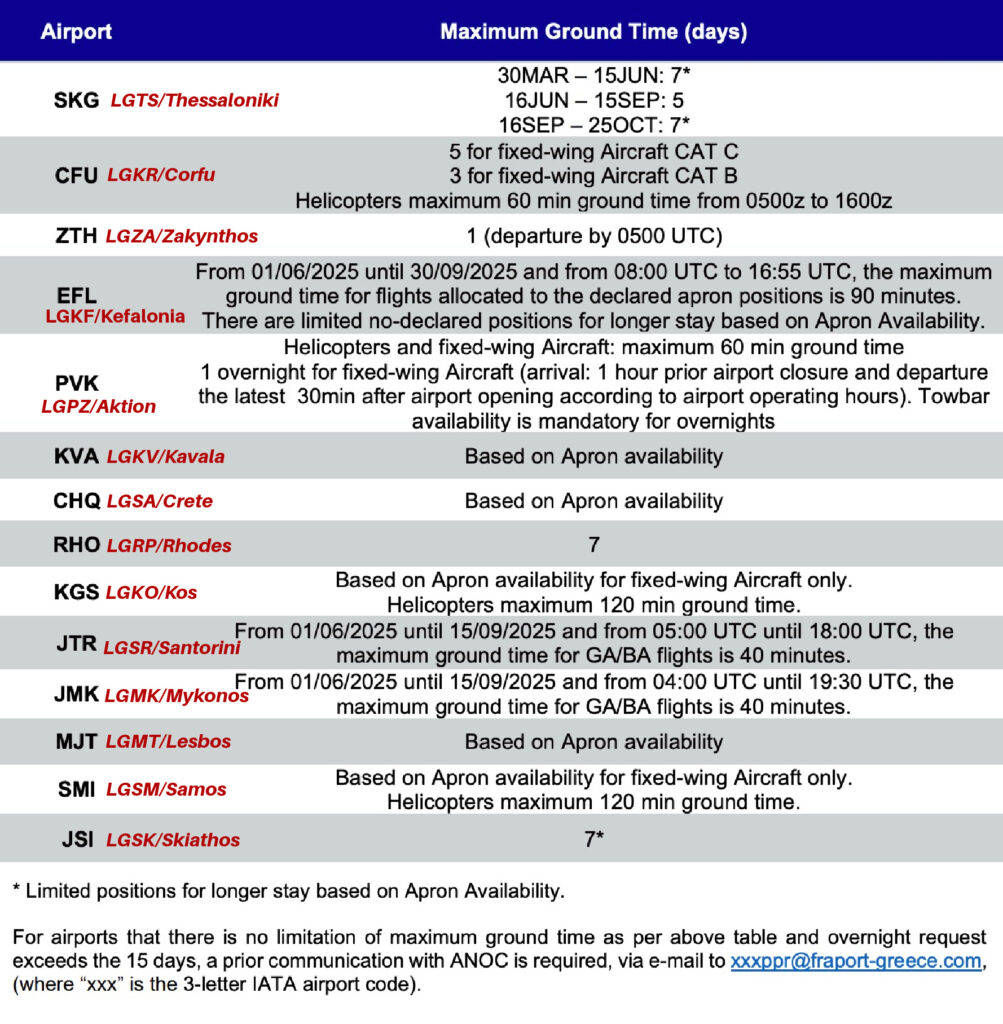
The first is the PPR Handbook Fraport have published which includes this info in handy chart form, plus a bunch of extra info about how to actually go about applying for PPR. The chart below shows the info for the 2025 summer season:

The second place to check is the Notams, and this applies to ALL Greek airports. With peak summer season coming in July/August, expect to see even more restrictive max-time-on-ground Notams get published.

Don’t get caught without a slot in Greece

Greece has brought back the Flight Plan Suspension (FLS) system for summer 2025. It applies to Level 3 coordinated airports – which includes most of the busy island destinations – you can which are Level 3 here.

If your flight plan is more than 15 minutes off your confirmed slot time, it will be automatically suspended.

Make sure you have a confirmed slot from HSCA – your handler will usually take care of this – and that your flight plan matches the slot time.

The slot ID must be included in Field 18 of your flight plan:

  • RMK/LGXXAxxxxxxxxx for arrivals
  • RMK/LGXXDxxxxxxxxx for departures.

Even if you’re flying VFR, a slot is still required if any part of the flight is under IFR.

If you can’t reach HSCA, you can contact Greek ATS at: +30 210 997 2656 (office) or +30 210 997 22654 (24/7)

This change is published in LGGG Notam A1535/25, effective from May 30 – July 9. We’ll see if it gets extended…

Watch out for extra fees!

There are some extra costs at three airports in the summer: LGMK/Mykonos, LGKR/Corfu and LGKO/Kos.

The short story is this: all BizAv flights have to use the dedicated GA Terminal at these airports in the summer months, where you will get charged an extra 2000 Euros per passenger-carrying sector flight (so if a flight has pax inbound and outbound, 4000 Euros will be charged). VAT is charged on top of this to non-EU operators.

It doesn’t matter which handler you use – they all quote the same costs for this.

There’s no mention of these charges in Fraport’s Airport Charges documents published on their site.

A note on LGAV/Athens

Once a haven for weary BizAv operators, Athens used to guarantee a quiet remote stand where you could leave the jet for a few nights after dropping pax on the islands.

But those days are gone!

In March 2025, the airport started managing BizAv parking entirely through slots and PPRs. The free parking period was cut from 12 hours to just 90 minutes. If your ground time is 90 minutes or less, no PPR is needed, and you can request a slot up to 7 days before the flight. For stays longer than 90 minutes, you must first obtain a PPR, but this will only be issued within 24 hours of the flight. Once approved, you can then confirm your slot using the PPR. It seems this rule can only be found in the Slot Authority’s guidance doc – not the AIP or Notams.

Good options for parking?

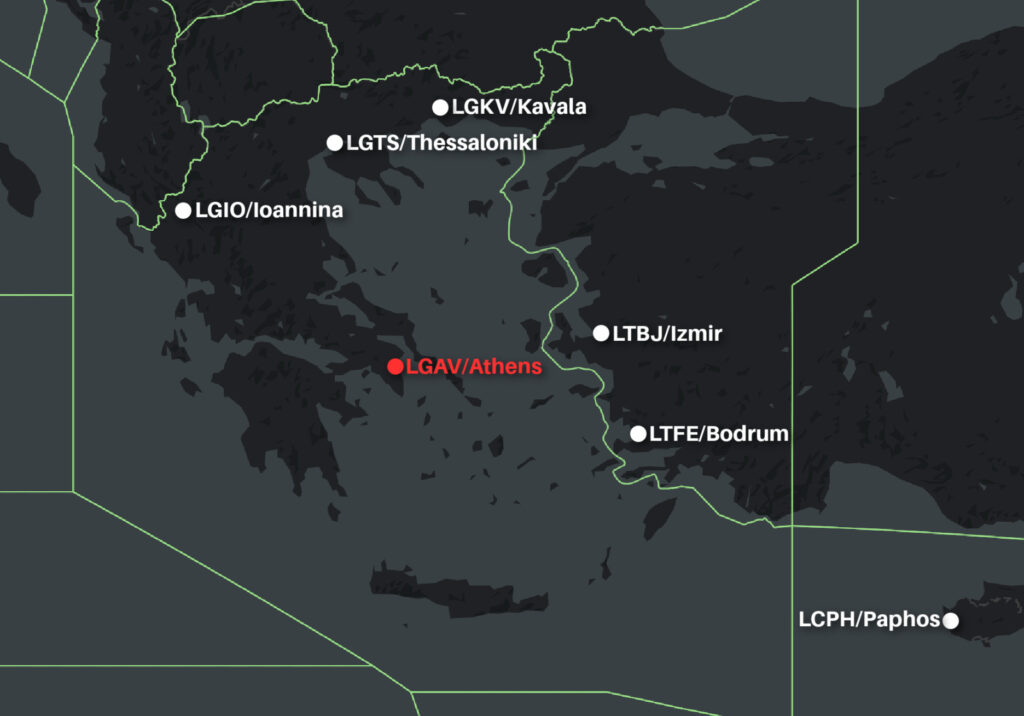
In Greece, we’ve heard reports from OPSGROUP members on these ones: LGTS/Thessaloniki, LGIO/Ioannina, and LGKV/Kavala. In Cyprus, there’s LCPH/Paphos. And then there’s always the option of Turkish coastal airports, the likes of LTBJ/Izmir and LTFE/Bodrum.

Plus a couple more we heard about last year:

LGBL/Volos – A joint use air base 90nm north of Athens. We just relocated our aircraft there on our trip to Athens for around 9 days. Super easy in and out. Stayed at Volos town about 15 miles away. Limited operating days and hours so check notams. They have limited airline service also. Rental cars are available. All in all a great experience for storing our aircraft until the boss was ready to return to the US.

LGIR/Heraklion – We operated into LGIR a few days ago. Everything very easy and Skyserv did a really great job of taking care of our pax and us. Lots of nice hotels in the area around the city, some nice sights if you have some days off. Departure was also very smooth, catering, fuelling, gpu everything worked exactly as it should. The fees were also very moderate. LGIR is also a good candidate for parking if you can’t get it anywhere else.

And a couple of other airports which used to be okay options, but maybe aren’t so great anymore: LGRX/Araxos and LGSM/Samos. As reported by Universal handling: LGRX is very restrictive and not with so much space, I wouldn’t consider it as one of the first options, but desperate times call for desperate measures. LGSM was not so easy to approve last summer, they have also their morning peak a couple of days of the week but it is indeed a solution.

Know of any other good options? Let us know: news@ops.group


Santorini Shaking: State of Emergency In Effect

Key Points

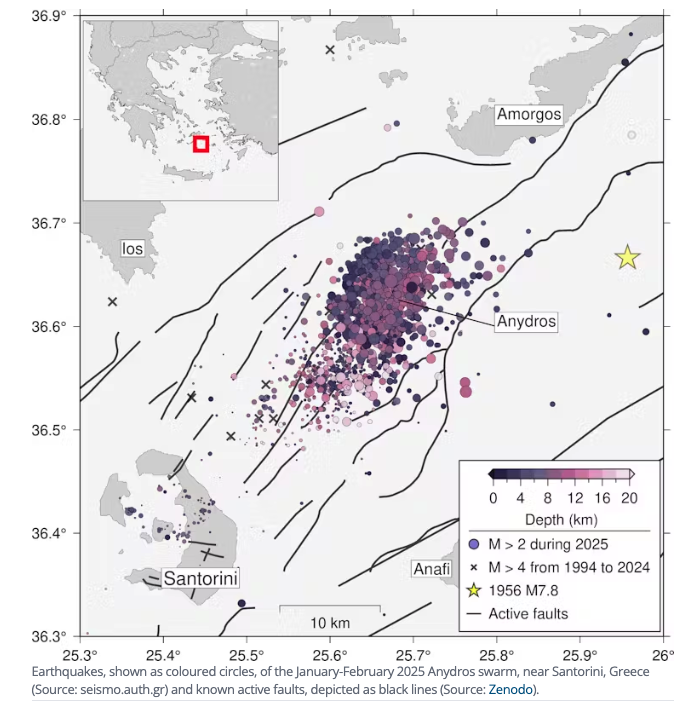
  • Santorini and neighboring islands are currently experiencing what is described as a ‘seismic swarm’ of earthquakes.
  • Nearly thirteen thousand have been recorded in the past twelve days.
  • A state of emergency has been in effect since the largest tremor of 5.1 struck the island on Feb 6. Large numbers of people have evacuated.
  • Experts suggest this may be a precursor a larger event, including a possible volcanic eruption.
  • The US Embassy has issued a new warning advising extreme caution before travelling there.
  • At time of writing, local agents report no damage to the airport.

An Active Earthquake Zone

Greece is one of the most seismically active regions of Europe.

It occupies part of something known as the ‘Hellenic Subduction Zone.’ Not dissimilar to the Pacific’s notorious ‘Ring of Fire,’ here shifting tectonic plates create numerous weaknesses in the earth’s crust.

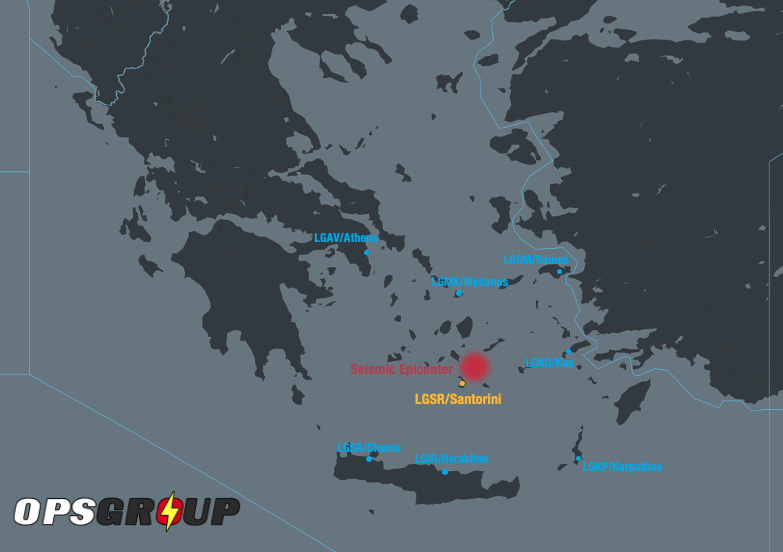
The source of the current trouble is found near Anydros – just 16nm northeast of Santorini. The earthquakes began on Jan 31 and have progressively worsened which may be cause for concern.

State of Emergency

Following the events of Feb 6, a state of emergency was declared and will remain in effect until at least March 3. This includes an instruction to immediately evacuate coastal areas in the event of stronger earthquakes due to a tsunami risk.

On Feb 7 the US Embassy issued a new warning for Santorini and the surrounding islands. They advise extreme caution if travelling there.

Airports

The seismic events are occurring in a relatively constrained area of the Aegean Sea between Santorini itself, and the island of Amorgos.

As such, LGSR/Santorini is the primary airport to be impacted. At time of writing, several local agents have advised the airport is open and operating normally.

However, the situation is inherently unpredictable. If a larger quake occurs, a sudden closure of the airport is possible.

This may be preventative due to the evacuation of staff (including ATC), or more severe in the case of damaged infrastructure including instrument approach equipment, movement areas and the runway itself.

For inbound aircraft a solid contingency plan right now would be to carry healthy alternates such as LGMK/Mykonos, LGIR/Heraklion, LGSA/Chania or even LGAV/Athens.

If you must go to Santorini, we recommend stop and goes only to minimize time on the ground.

Should the airport close, damage assessments can take hours or days to complete. Any aircraft on the ground may be stuck there for an extended period of time. Crew recovery options may also be limited during rescue efforts.

What will happen next?

Experts are undecided. A typical seismic pattern usually consists of larger earthquakes (mainshocks) followed by smaller ones (aftershocks).

The pattern in Santorini is different. Some seismic events don’t consist of one single major event. Instead, a region can experience a wave of smaller quakes over a period of weeks or months. This is phenomenon is known as ‘swarms.’

On the other hand, other scientists believe recent events may be a precursor to something larger – the figure being widely thrown around is a ‘six’, defined on the Richter Scale as a strong quake with potential to damage well-built structures with strong to violent shaking near the epicenter.

We will continue to monitor the situation in Santorini and report any changes to aircraft operations as they become apparent.


Greece-ing the Turkey: The Aegean Dispute

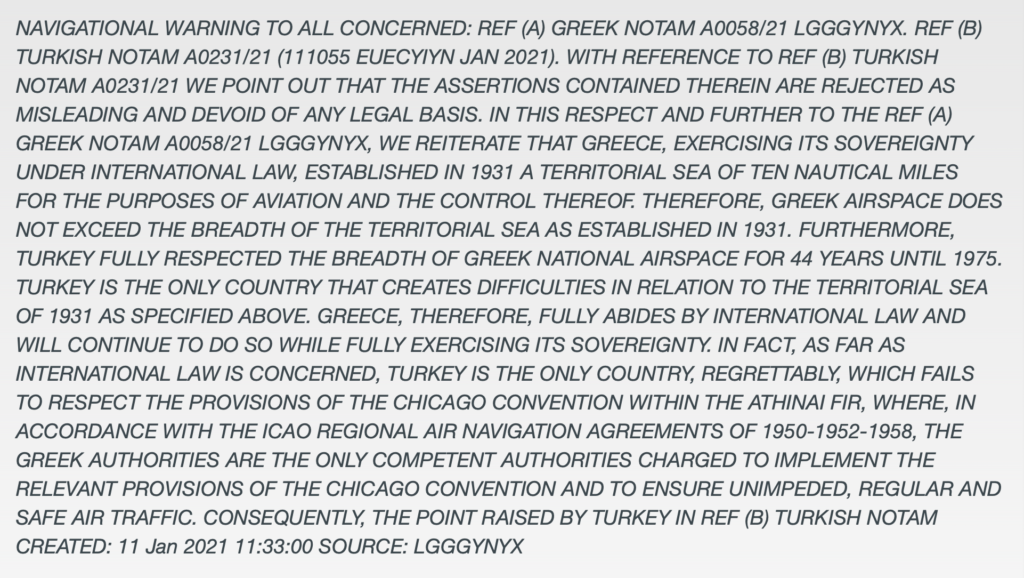
The dispute between Turkey and Greece is one we have mentioned before. Not because it was having a particularly big impact on aviation operations, but because of the vaguely amusing Notam battle they have been waging against each other for the last few years.

But what appears to be a rather silly conflict actually has a more serious side to it, so we thought we would take a little look at what is going on.

What are they arguing over?

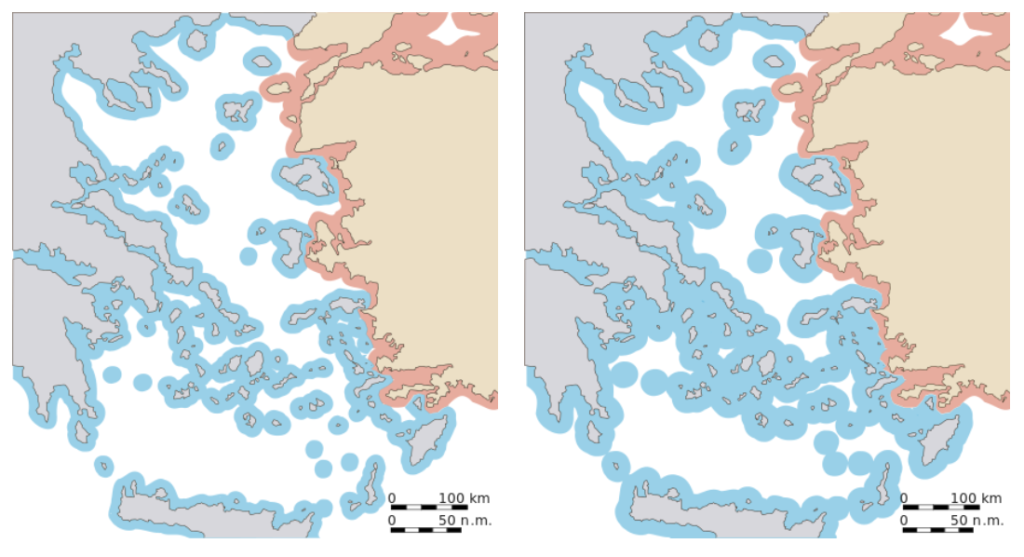
This dispute is about what disputes always seem to be about – who owns some bit of land, or in this case, a Continental Shelf (so a bit of land that is submerged under several miles of Eastern Mediterranean Sea). Turkey want it because it is a treasure chest of energy resources, while Greece want it because, well, they reckon it was always theirs.

The dispute goes a bit “higher” than the continental shelf though. Like those annoying neighbours who keep pushing their fence backwards into your garden, so Greece have decided that their airspace extends not the usual 6nm (based off territorial waters), but 10nm. Turkey refuse to recognise those extra 4nm as Greek. Nor do ICAO who have a 1948 statute saying airspace must coincide with territorial water boundaries. 

So we would say that’s one:nil to Turkey, except for Greece’s point that they actually laid claim to those extra 4nm way back in 1931 before ICAO came along with their statute. Plus, this isn’t the only area Turkey has had disputes over, so maybe Greece have a bit of a point.

But do we care, or can we just let them keep bickering?

Well, the permanent Notam battle can be ignored with a simple filter that removes the likes of these from your Notam package:

However, that is not the only repercussion. Actually, all this makes for some messy airspace controlling because it impacts FIRs and with that, who controls military flight activity. This has led to a bunch of provocations from both sides, with them regularly sending military aircraft into the 4nm disputed bit just to annoy the other side. And this is a problem, because it often escalates with retaliations. In 1996, Turkey claimed one of their aircraft had been shot down by a Greek fighter jet, and in 2014 the number of Turkish incursions into Greek airspace rose to nearly 1,500.

Tensions flared up again in 2020 when Turkey finalised their purchase of Russian S-400 mobile surface-to-air missile system. Now, this wasn’t specifically aimed at Greece, but it did go against NATO and US orders, resulting in big sanctions against Turkey.

Greece spent 2020 developing stronger defensive ties with their neighbouring countries, and at the start of this year, placed an order for 18 French Rafale fighter jets to pad out their Air Force. 

A bit of a jam

Deliberate GPS Jamming is also a major issue in the Eastern Mediterranean and across Turkish airspace, adding to the list of threats commercial aircraft have to consider.

So is this a conflict to watch?

2020 was a tense year between the two nations, and 2021 seems unlikely to see much de-escalation. While direct conflict between the two will likely be prevented by neighbouring countries and the EU and NATO, the dispute is still simmering away.

For commercial flight operations, the impact remains primarily in the Notam world, but attention does need to be paid to any temporary prohibited or restricted airspaces which might pop up because of increased military activity in the region.

Additionally, Turkey is a large country and their airspace provides a major overflight route between Asia, the Middle East and Western Europe. Having an awareness of the political tensions between the two countries is important, particularly if routing to or from Greece, or carrying Greek nationals onboard, since this might compound your problems if you have to divert into a Turkish airport.


Is Athens busy, or does it just hate Business Aviation now?

Summer parking restrictions at Greek airports are now in full swing. In previous years, it was mainly just the island airports that suffered, and airports on the mainland were used to reposition aircraft for longer stays. This year however, parking at LGAV/Athens is becoming a nightmare too.

We’ve had several reports from OPSGROUP members of requests for longer stays at Athens being denied, and also previously approved requests being revoked. If you are headed to Greece, don’t count on using Athens for anything for other than a quick tech stop.

Airport authorities at Athens have now issued a Notam for the whole summer season advising that all GA/BA flights require PPR for stays of longer than two hours:

A1641/18 - DUE TO OPERATIONAL REASONS THE FOLLOWING PROCEDURES ARE IN FORCE:
1.FOR AEROPLANES WITH MTOW MORE THAN 5700 KG, PRIOR PERMISSION IS REQUIRED (PPR).
FOR: GENERAL AVIATION, BUSINESS AVIATION, AIR TAXI FLIGHTS AND ALL TECHNICAL 
STOP FLIGHTS, WITH INTENTION TO STAY ON THE GROUND FOR MORE THAN TWO HOURS 
AND/OR STAY ON GROUND BETWEEN 1800 AND 0600 UTC.
2.LONG STAY OF AIRCRAFT IS NOT PERMITTED.
14 JUN 18:00 2018 UNTIL 20 AUG 06:00.

Local handlers have confirmed that PPR for tech stops of less than two hours almost always get granted. But for parking requests of more than two hours, prepare to be disappointed. In addition, until the end of the summer the airport will no longer accept any positioning flights without pax on board, regardless of how long you’re staying.

For operators wanting to do drop-and-go’s at Athens, always ask your agent which airports they recommend repositioning to for parking, but some options worth checking (as they do not currently have any restrictions in place for maximum parking length) are: LGKO/Kos, LGSM/Samos, LGIO/Ioannina, LGKV/Kavala, LGRX/Araxos.


Price hike at Greek airports

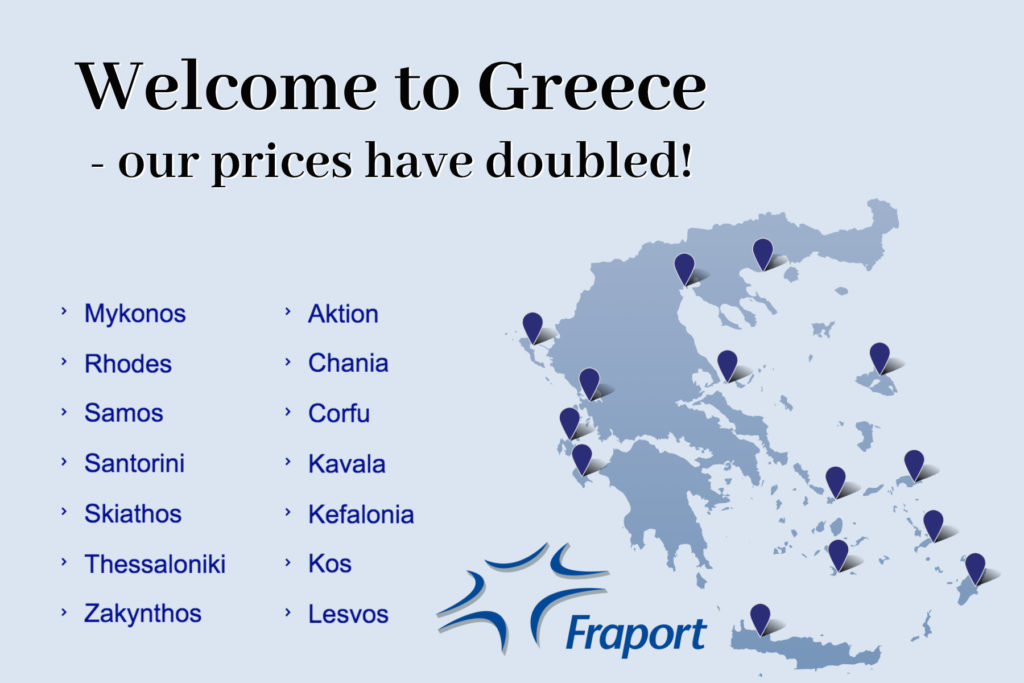
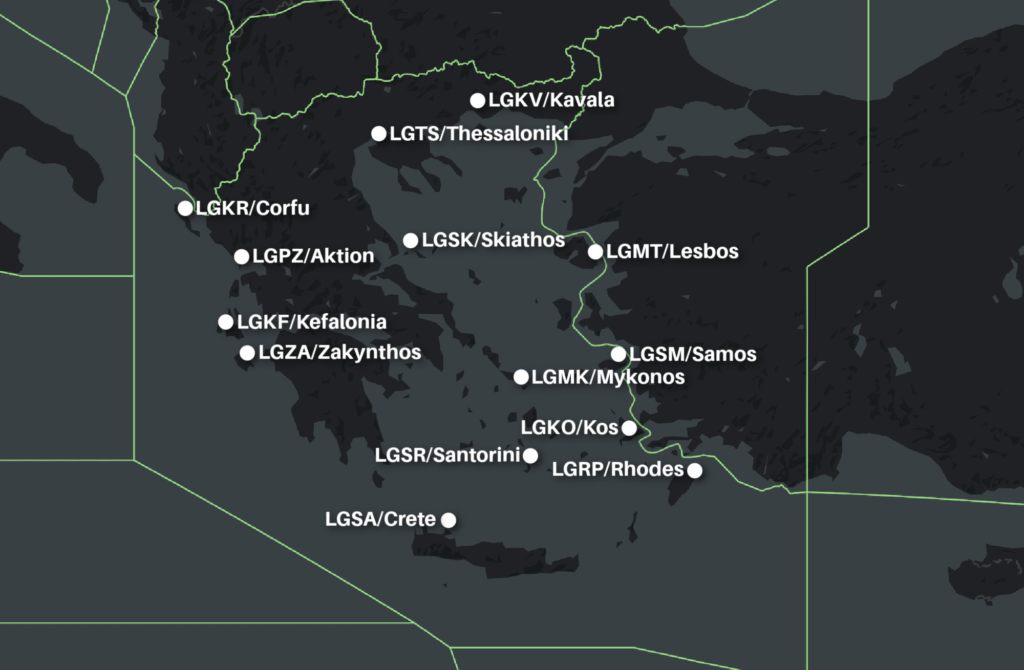
On 1st April 2018, Fraport will be increasing the rates for landing and parking fees at the 14 international airports it manages in Greece: Aktion, Chania, Corfu, Kavala, Kefalonia, Kos, Lesbos, Mykonos, Rhodes, Samos, Santorini, Skiathos, Thessaloniki and Zakynthos.

Parking charges used to be simple here: at every airport, it was free for the first five hours, and then EUR 1.08 per ton (MTOW) for every 24 hours after that. That same price applied regardless of aircraft size.
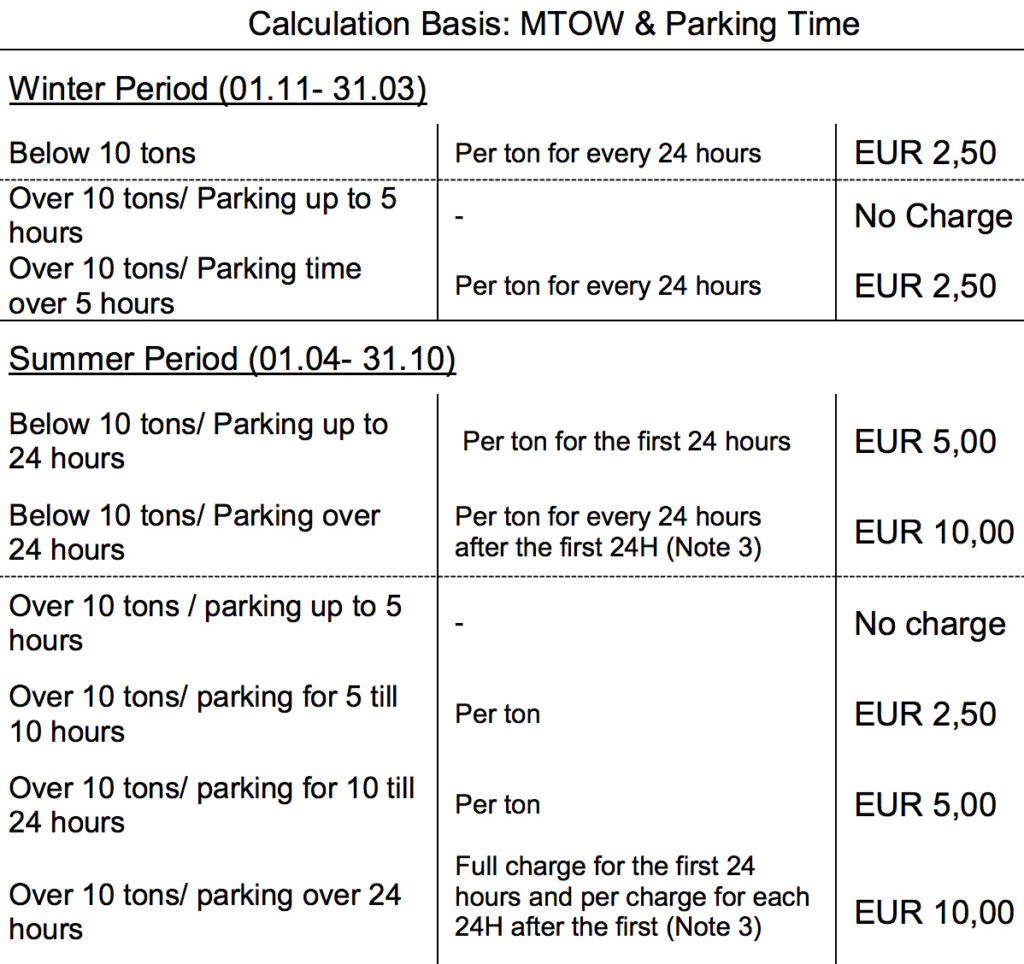

Now things are set to become a little more complicated, but effectively, parking will now be at least twice as expensive as it used to be, with even higher costs being introduced for longer stays during the summer months:


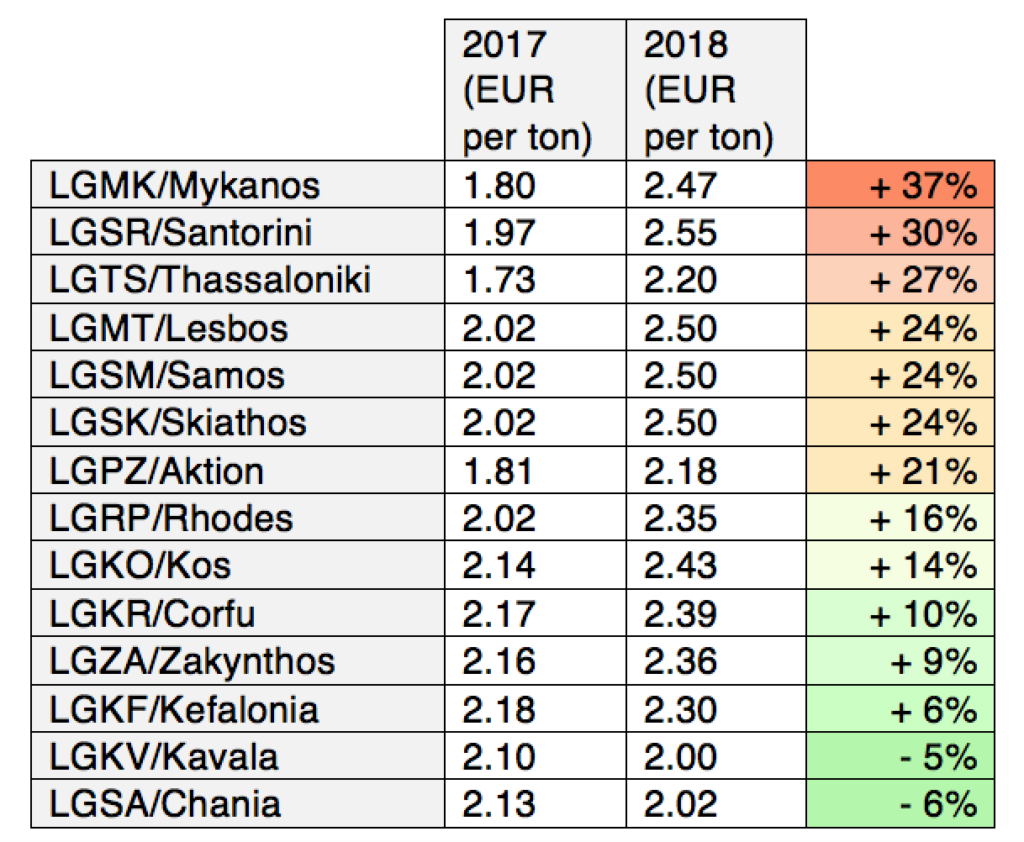
Landing fees are going up too. Aircraft below 10 tonnes have always had to pay a flat fee, and from 1st April, these are set to double. For larger aircraft, Fraport set the rate per ton (MTOW), and with the exception of LGKV/Kevala and LGSA/Chania, these are being increased across the board:

Operating to these Greek airports has become increasingly challenging since their privatisation in April 2017. Fraport initially struggled to deal with providing parking to non-scheduled and business aviation, and new slot procedures were introduced to try to better manage the volume of requests being made.

Ryanair have already complained about the price hike, as well as a new EUR 90 fee that will be charged to send a fire engine every time a plane refuels whilst passengers are being boarded – something which they say does not happen anywhere else in the world except Greece.

With the new rates set to come into force on 1st April 2018, many operators may prefer to take their business elsewhere. As the President of Corfu CAA Association, Dimitris Roussos, says – “[the price increase] is exorbitant and almost prohibitive. A lot of people will choose other airports such as Ioannina which have lower charges and where they can refuel and spend 1-2 days instead of coming to ‘expensive’ Corfu. It is quite probable that we will see the Corfu Air Club move to Ioannina as well as a significant decrease in the number of small private aircraft visiting Corfu in the summer.”

Full details of the changes to the landing and parking fees at all 14 airports can be found on Fraport’s dedicated page.


How to avoid delays into Greece – new procedures

Following on from the privatisation of Greek Airports this summer (see our article from earlier in June – Summer of Pain), there are new procedures for Greek Slots.

With delays super high into some of the smaller islands, especially at weekends, attention to the correct slot procedure is pretty important.

The slot you’ll get from the HSCA is valid +/- 30 mins. If you go outside that, then you’ll get a flight suspension message from Eurocontrol that looks like this.

FLIGHT PLAN SUSPENSION
ACCORDING TO YOUR FLIGHT PLAN
IFPLID 01020304
ARCID N765AC
ARCTYP C56X
EOBD 160201
EOBT 1945
ADEP LOWI
ADES LGMK
ELDT 2050
NO CORRESPONDING AIRPORT SLOT WAS RECOGNISED

To get a new slot, or the initial one, the official process is this:

  1. Go to www.online-coordination.com, check for avail times
  2. Pick a handler, and ask them to apply for it – use www.hsca.gr to find a handler.
  3. Refile the FPL with the Slot ID

If you have any issues, you can call H24 this number in Greece re. slots: +30 210 997 2656. And, we think, this email should also work: slot-hsca@athensairport.gr

References


Greek Summer Ops – Prepare for Pain

The challenges of operating to Greece during the summer look to be far worse than normal this year.

Fraport are not off to a good start with non-scheduled flights and business aviation. On April 11th this year, they took over control of 14 international airports from the state: Aktion, Chania, Corfu, Kavala, Kefalonia, Kos, Lesvos, Mykonos, Rhodes, Samos, Santorini, Skiathos, Thessaloniki and Zakynthos.

Initial reports on the Fraport change from OPSGROUP members are not positive:

  • “During the last few weeks, it has become clear that operations to these airports (including all popular Islands – Kos, Rhodes, Mykonos etc) is a nightmare. Very few slots are made available to non-scheduled ops, overnight parking is scarce, even quick turn arounds are extremely difficult in some cases. As a pilot flying in this area in the last 20 years, I have never seen such difficulty in operating.”
  • “Previously, LGMK/Mykonos was usually the only airport in the last 3 years to have parking problems. The parking Notams were limiting stays to 2-3 hours from June till September. Now, the max parking time there is 1 hour, PPR was introduced last year but we managed to have them “flexible” with the right handler. Now, with Fraport, no flexibility is allowed.”
  • “When we tried to fly to LGKO/Kos this weekend, we are forced to leave the ramp on Saturday at 8am local. Rhodes denied parking for 3 nights, which has never happened before…”

Last year, the capacity challenge at Greek Islands was most acute on weekends, with healthy slot delays if operating to LGIR/Iraklion, LGKP/Karpathos, LGMK/Mikonos, LGZA/Zakinthos, LGSR/Santorini, LGSK/Skiathos, or LGSA/Chania. Coupled with the Fraport changes, be prepared for difficulty in operating to Greece this summer.

The only answer is to plan as far ahead in advance as possible. We’d love to hear your reports from Greece – in Aireport if you are an OpsGroup member, or comment below if you’re not.


International Bulletin: Sharm El Sheikh reopens, New ICAO Phraseologies 10NOV

Sharm El Sheikh reopens 03NOV  HESH/Sharm El Sheikh, Egypt has reopened to international traffic, with a number of airlines starting services again on 01NOV. However, there are conflicting views on security at the airport, depending on your state of registry. Read article.

New ICAO Phraseologies 03NOV From 10NOV, new international aviation phraseology for SIDs and STARs is effective, but there’s a problem. Read article.


OEJN/Jeddah, Saudi Arabia On 27OCT, Saudi Arabia intercepted and destroyed a ballistic missile launched from Houthi-controlled territory in Yemen. The Houthis confirmed the launch via the Saba news agency, saying that the missile was targeting Jeddah International Airport (OEJN), not the holy city of Mecca, as some other news reports had claimed.

EHEH/Eindhoven has new procedures for PPR effective 30OCT – if you’re flying there, get PPR direct from the airport. You can read all the info on their new GA page. Oh, and there’s now a fee. €300 for PPR for a 21 ton aircraft, for example.

LFMN/Nice Runway 04R/22L will be closed during November.

WARR/Juanda Airport is closed due to works in progress except for helicopter medical evacuations from until 15NOV

UTZZ/Tajikistan Disagreement between Russia and Tajikistan may lead to operational restrictions between the two countries. Air traffic between Moscow and Dushanbe may be suspended from 08NOV.

FAZZ/South Africa Reports this week suggest that foreign nationals entering South Africa through any port of entry should expect delays up to four hours due to a new enhanced security measure that requires the capture of fingerprints and a photograph. OR Tambo in Jo’burg seems to be the worst offender.

BGKK/Kulusuk has updated opening hours: 1100-1900Z Tuesday to Saturday. They ask for 3 hours minimum notice PPR.

PLCH/Christmas Island Fuel is in short supply, notified as being only available for Scheduled service and emergency flights. PLCH is often used on Pacific crossings as an alternate, so any diversion would be considered an ‘emergency’, but check before actually planning a tech stop.

LEZZ/Spain Previously notified fuel strike now appears to be one provider only, so it looks like impact minimal.

DGAA/Accra ATC is having a few VHF issues, primarily on 126.7 – if you can’t reach them, call HF 8903 instead.

EDDT/Berlin Tegel will be busy 14-18 NOV due to state visits, they won’t accept GA/Private traffic during this time, but you can check specifics with them at vvd-txl@berlin-airport.de

HLLS/Sabha, Libya The airport has been closed for over 2 years due to fighting in the area. A new Notam has been issued which officially extends the closure period to 26DEC, as talks continue between the authorities and local groups to find a way to re-open the airport.

LYBE/Belgrade Jet A1 not available through the airport fuel service provider until the end of the month. Make sure you get a confirmed fuel release through a third-party fuel provider before operating here.

LTZZ/Turkey On 29 October, the US Department of State ordered the departure of family members of employees posted to the US Consulate General in Istanbul due to security information indicating extremist groups continued aggressive efforts to attack US citizens in Istanbul. US Operators should consider ops into airports in Turkey carefully.

OMDB/Dubai Traffic was stopped for approx 1.5 hours on 29OCT due to a drone. The Airport closed from 1930-2050 LT, and some flights were diverted. OMSJ/Sharjah was also briefly closed due to the same drone. Unauthorized drones have halted airport operations in Dubai twice in recent months.

GMZZ/Morocco is busy from 4-20NOV, GA and non-sched traffic will see restrictions. Check their Notam A0896 from 01NOV. If you’re part of the event, put RMK/COP22 in your FPL. No long stays will be allowed.

WSSL/Singapore Seletar We’ve received crew reports of challenges with visual approaches into Seletar (there are no instrument approaches). There are unlighted obstacles on the approach to Runway 21. After dark, approaches are only possible to Runway 03. More importantly, noise rules will soon demand a challenging base turn, greater than 5 degrees, to a half-mile 3.5 degree final, to a 1% down slope runway. We welcome further comments (bulletin@fsbureau.org).

LGZZ/Greece There will be a ferry strike between the Greek mainland and all Islands on 24NOV. No services will operate that day.

FTZZ/Chad Reports of nationwide public service strike including Airport operations at N’Djamena. The unions stated that the strike will persist until the government pays overdue wage arrears.

View Full International Bulletin 03NOV2016


Midweek Briefing: NAT changes postponed, Matthew Airport Update

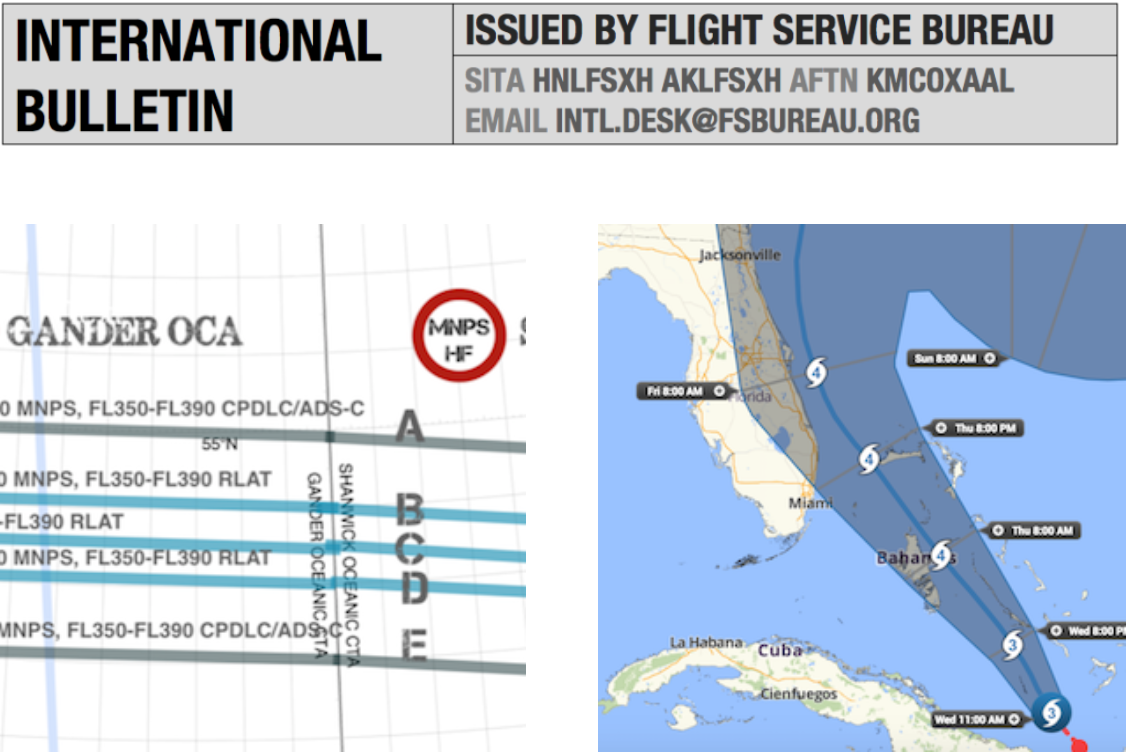
NAT changes postponed 05OCT Phase 2 of Reduced Separation on the North Atlantic NAT Tracks will not go ahead as planned, slowing down the rate of change in the NAT region. Read the article.

Matthew: Airport Update 05OCT The next 24 hours will dictate the impact that Hurricane Matthew will have on Florida, as it leaves Cuba and begins to track north through the Bahamas. Airports Update: for Haiti, MTPP/Port-au-Prince … Read the article.


DGAA/Accra, Ghana has a radar outage until Oct 19th in the southern area.

EGKK/London Gatwick has a Runway Occupancy Trial starting on 08OCT, all medium and large aircraft (A319 upwards) should plan to vacate at FR. Smaller aircraft vacate at E.

ENGM/Oslo has a fueler strike – plan to carry return fuel to avoid issues, until 10OCT at least.

OAZZ/Afghanistan Security reminder from Kabul: serious threats to safety and security exist in the city of Kabul and throughout Afghanistan. The threat of kidnapping is high. The potential also exists for protests to occur in Afghan cities at short notice. Militant groups usually plan attacks against locations and individuals with potential American connections, including: Afghan and U.S. government facilities, foreign embassies, military installations, commercial entities, non-governmental organization offices, restaurants, hotels, airports, and educational centers.Travel to all areas of Afghanistan remains unsafe due to the ongoing risk of kidnapping, hostage taking, military combat operations, landmines, banditry, armed rivalry between political and tribal groups, militant attacks, direct and indirect fire, suicide bombings, and insurgent attacks, including attacks using vehicle-borne or other improvised explosive devices.

MYZZ/Bahamas all Airports closed due to Hurricane Matthew with effect today until 1900Z on 07OCT.

YMHB/Hobart is extending the 12/30 runway, see AIC H30/16 for impact information.

FEFF/Bangui has an overnight airport curfew from 2200-0500Z until the end of the year.

DIAP/Ivory Coast It’s now possible to apply for a visa online; after registering and paying online, you can collect the visa on arrival at Abidjan airport.

LTZZ/Turkey The state of emergency will officially be extended until January 2017. The announcement came after a Cabinet meeting; President Recep Tayyip Erdogan has also supported the extension. The state of emergency was put in place on 20 July following the 15 July attempted coup.

Typhoon Chaba While many eyes are on Hurricane Matthew, on the other side of the world Chaba is tracking north towards Japan after strongly impacting South Korea, however the system is weakening.

BIZZ/Iceland Volcano Katla downgraded to colour code Green, after last weeks concerns of elevated activity.

HAAB/Addis Ababa There are reports of anti-government protests taking place on the outskirts of Addis Ababa on Oct 4th. Unconfirmed reports indicate that protesters are attacking government property in the Akaki, Alem Gena, Burayu, Sebeta, Keta and Ayer Tena areas and that police officers have been deployed to the affected locations. Meanwhile, in the city center, shops have reportedly closed and there have been isolated reports of gunfire. Transportation to and from the affected areas has shut down.

LGZZ/Greece Greek trade unions have announced strike action that is expected to cause disruption to a number of domestic flights between 4 October and 8 October.

FVZZ/Zimbabwe The UNIVISA system has been suspended. If travelling between Zimbabwe and Zambia more than once either way, you should get a double entry visa; due to the ongoing cash liquidity crisis, authorities have announced a series of measures designed to stem the flow of US dollars out of the country; take sufficient cash to cover your needs for the duration of your travel.

View full International Bulletin 05OCT2016


Midweek Briefing 11MAY: Reykjavik Oceanic Closure, Australia to turn off Navaids

Reykjavik Oceanic Closure 11MAY Operators planning eastbound flights across the NAT should be aware of a NOTAM issued earlier by Reykjavik Oceanic/Iceland ATC, that essentially asks traffic to avoid the airspace wherever possible, due to further ATC Industrial Action. Read the article.

Australia to turn off Navaids 11MAY On 26MAY, Australia will switch off around 180 different VOR’s, NDB’s, and other ground-based Navaids. All international operators will be required to have GNSS/GPS as primary navigation. Read the article.


CYMM/Fort McMurray, Canada is closed due to Forest Fires; only emergency and evacuation flights are allowed.

EGPX/Scottish Expect delays from 17MAY when controllers change to a new ATC system. ATC advises a fundamental level of change in the method of operation within Scottish Upper Airspace will result. There is no change to the Oceanic Operation, and Domestic CPDLC will be available at all times from 17MAY.

KATL/Atlanta closed one of its three security checkpoints in the domestic terminal for three weeks and will reopen 25MAY. They have added additional security lines to the other 2 checkpoints in hopes of reducing the impact. Plan for extra time if you are heading through ATL in the next few weeks.

LGZZ/Greece An update on 09MAY was issued for the slot allocation Rules and Guidelines for all Greek Coordinated Airports. The updated document can be found at GABA report.

YZZZ/Australia CASA has issued clarification as to who is responsible for Terrain Clearance when ATC instructs an aircraft to “resume own navigation”. Consistent with ICAO standard, while under radar vectors below the MSA, ATC assumes responsibility for Terrain Clearance. The AIC is worthwhile refresher reading as this applies to most International Ops.

OYRN/Mukalla has reopened after it was recently re-captured by government and Emirati soldiers. It is currently only accepting humanitarian and aid flights.

HKIS/Isiolo is a new airport in Kenya that will be operational in early JUN. The new facility will cater to domestic and international flights and will have annual passenger capacity of 125,000 and a 1400m runway. Isiolo is located near many national reserves, approximately 125 mi/200 km northeast of Nairobi.

BIRD/Reykjavik Oceanic Operators planning eastbound flights across the NAT should be aware of a NOTAM issued earlier by Reykjavik Oceanic/Iceland ATC, that essentially asks traffic to avoid the airspace wherever possible, due to further ATC Industrial Action. Eastbound flights in particular will not be accepted into the airspace unless … Read Full Article.

LIZZ/Italy Another ATC Industrial Action in Eurore has been announced for 14MAY, this time in Italy and affecting only part of operational personnel. Only some air navigation services may be affected. The following NOTAM has been issued.

EGLL/London Heathrow has been identified as the airport most affected in the UK by laser strike incidents with 121 in 2015, followed by EGBB/Birmingham with 94, EGCC/Manchester recording 93 and EGNM/Leeds Bradford with 77.

SKBO/Bogota has introduced a significant enhancement to the current ATC infrastructure by adding Secondary Surveillance Radar or SSR. The Columbian CAA issued AIC A07/16 to cover the upgrade. This will help increase the level of safety for operations in SKBO, especially given the terrain in the vicinity.

WZZZ/Indonesia The Visa-Free Program has expanded to Nationals from a total of 169 countries and are now eligible to enter Indonesia without a visa.  Although the regulation is silent on the allowable activities under this status, the previous version of the law restricted its use to tourism.

LFPG/Paris The first IFR LPV approach was implemented at LFPG for Runway 26L on 03MAY The new approach mirrors Cat I ILS approach minimums, including a 200-foot decision height, and it is supported by the European Geostationary Navigation Overlay Service (EGNOS).

WSZZ/Singapore has introduced a system called ATLAS (Air Transportation License and Administration System), for obtaining the application, renewal and administration of licences and permits for scheduled and non-scheduled air services.

View the full International Bulletin for 11MAY2016