TIBA in Australia: What’s Going On?
Key Points
  • TIBA still seems to be an issue in Australia – shortage of ATC resulting in big bits of restricted Class G airspace, often at short notice.
  • We wrote about this last year, including guidance on what to do (see updated post below), but now IFALPA have published a Safety Bulletin saying the problem is still ongoing.
  • Amid accusations of understaffing, Australian ATC has announced they intend to strike. This process will take a few weeks to action, and so we’ll likely see disruptions from May. This may include full 24hr work stoppages and will be notified in advance via the YMMM/Melbourne and YBBB/Brisbane FIR Notams.

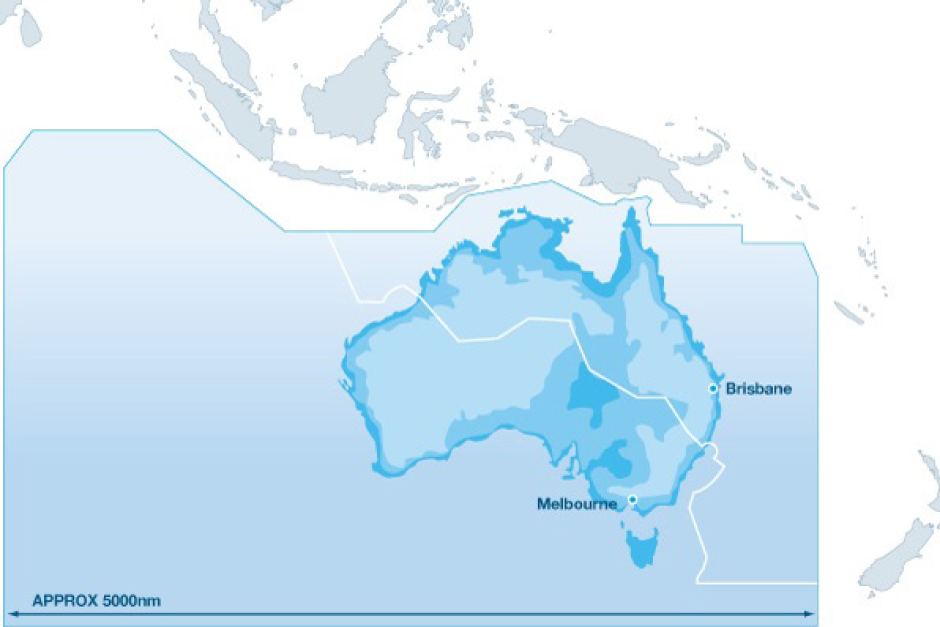
Since early in 2023, we’ve seen large sections of restricted TIBA airspace (traffic information broadcasts by aircraft) established by Notam up Australia’s East Coast in both the YMMM/Melbourne and YBBB/Brisbane FIRs.

In fact, there were 340 instances of uncontrolled airspace between June 2022 and April 2023 alone. And it’s still happening.

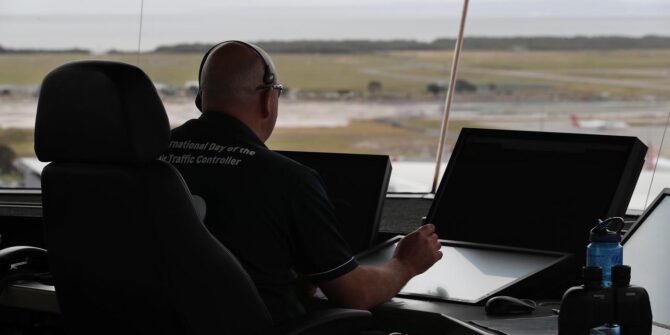
The cause here appears to be a fundamental shortage of air traffic controllers.
Where has this been happening?

In the South, look out for TIBA airspace east of YSCB/Canberra airport, Australia’s capital city found inland from Sydney.

Further north there has been a greater effect as large portions of coastal airspace near YBCG/Gold Coast and YBTL/Townsville airports have been impacted. This is an extremely busy air corridor – 80% of Australia’s population live on the East Coast.

At the top end of Australia, YPDN/Darwin airport has also been affected which can result in re-routes for international traffic headed up into South-East Asia and beyond.

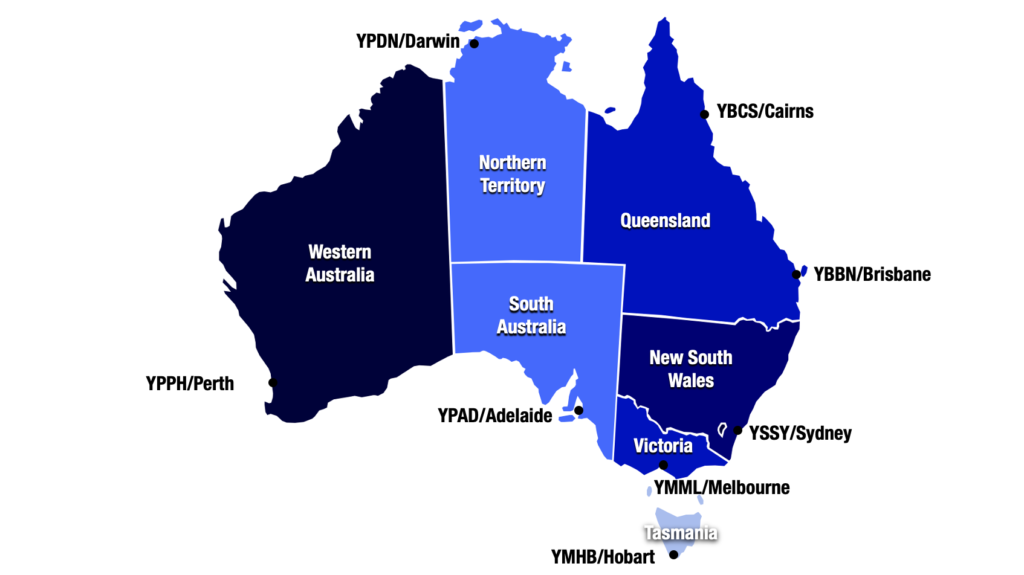
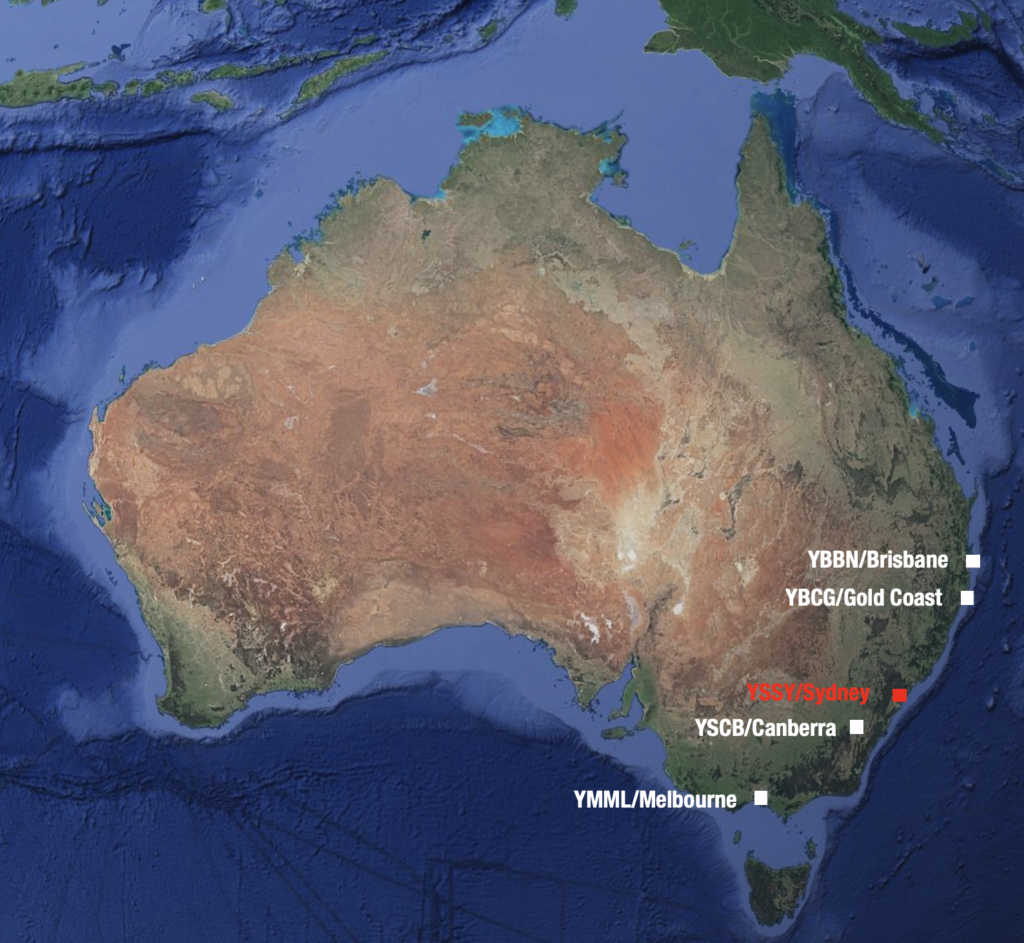
Here’s what those hotspots look like on a map:
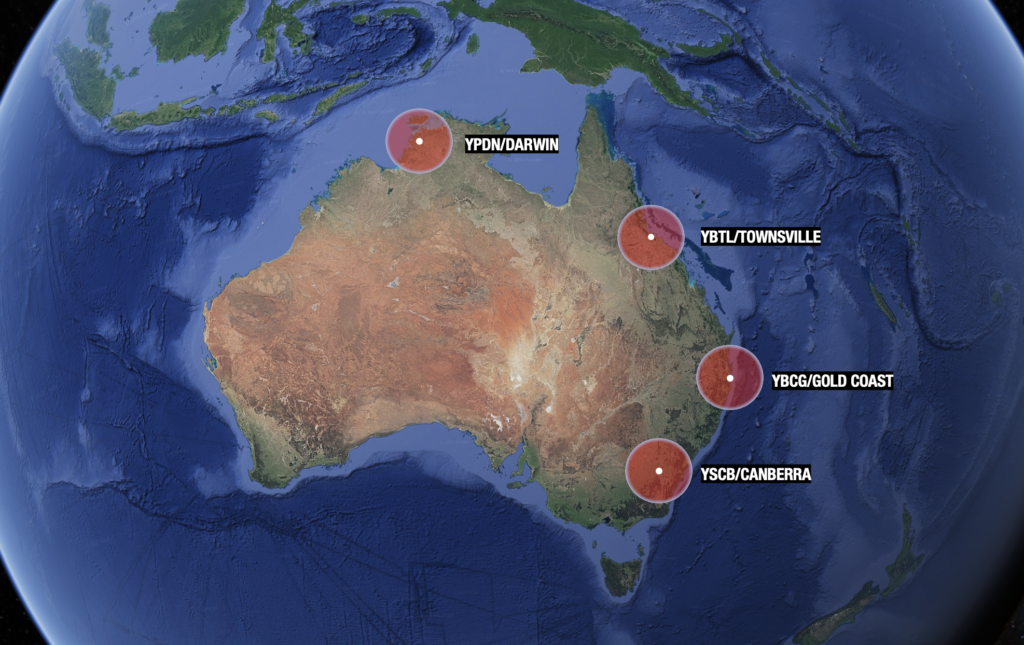
TIBA airspace has been reported in or near these hotspots.

It’s not all the time.

TIBA airspace is being activated by Notam, typically for hours at a time. A look at today’s batch indicated all is ops-normal. However, a local airline captain has advised OPSGROUP that it is currently a frequent occurrence.

Broadcast, or avoid?

The vast majority of airline traffic appear to be avoiding the TIBA airspace. This typically involves less direct routes at the expense of delays and fuel. Helpfully, for major city pairings the NOTAMs contain suggested routes that will keep you clear. But expect SIDs or STARs you may be less familiar with.

In fact, major carriers have policies in place that prevent them from using TIBA airspace anyway – unless they happen to be in it when it is activated.

That’s not to say there won’t be other traffic taking advantage of the more advantageous routes though. The East Coast is characterised by a huge variety of traffic including charter, skydiving, medevac and survey all of which may have valid reasons for using TIBA.

It can still be used safely, but with the procedures below (a heads up: dual comms are a requirement).

How on earth do I ‘do TIBA’?

First things first. Whatever you do, don’t enter without permission. Australia’s TIBA airspace is typically restricted – in the sense you will need PPR to use it. The relevant Notams are quite helpful, and provide all the information on how to get it. Here’s an example.

Your approval will typically involve a phone call beforehand, and a chat to a flight information service in adjacent airspace for traffic information.

Once you’re in, you are totally responsible for terrain and collision avoidance. Turn that radio up and make sure you’re both alert and monitoring both the TIBA frequency and the relevant ATS one – now is not the time for controlled rest. Whoever is on the radios is going to be busy.

The Australian AIP then takes over. You can find the procedures in full here (time saver: flick to ENR 1.1-91). We’ve also put together a summary of those in this handy little briefing card which may be useful to keep in your flight bag:
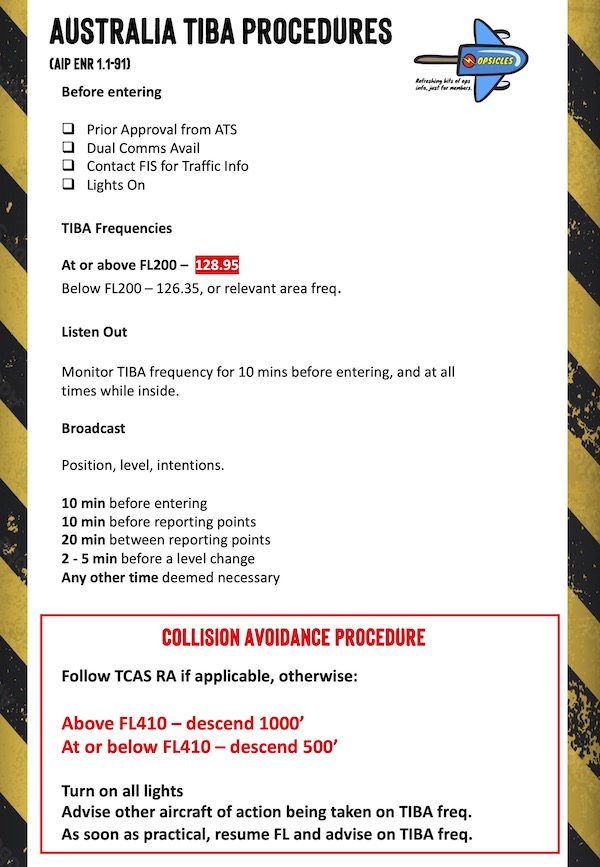
OPSGROUP members: click to download hi-res PDF.

Other questions?

You can also get in touch with CASA via this link, or alternatively Airservices Australia here with questions. Both have been very helpful in answering our pesky conundrums in the past.

Airport Fire Fighter Strike in Australia

Disruption looms at Australian airports on April 15. Rescue fire fighters have announced a four-hour strike from 06:00 – 10:00 local time at twenty-seven airports across the country – including the majors.

It seems the cause extends beyond just pay and conditions with safety concerns over staffing levels the United Fire Fighters Union has described as ‘dire.’

Here’s everything we know, and how to decode the inevitable RFFS Notams soon to grace your pre-flight briefing.

Impact to Ops

The strike will see RFFS categories simultaneously reduce as low as zero (more on these categories below).

While the exact impact of the impending strike isn’t clear yet, previous strikes have given us a good idea of what to expect.

Traffic delays could extend beyond the strike period as airlines scramble to re-schedule cancelled or delayed services, with the added addition of peak school holidays. For inbound traffic this means delays and holding.

The RFFS downgrades themselves will be announced by Notam closer to the time and may also affect the use of Australian airports as ETOPS alternates.

‘Leaked’ Controversy

The plot thickens over the alleged leaking of a safety assessment which supposedly identified major flaws at several Australian airports over a lack of staff, procedures, trucks and other frontline fire-fighting equipment for the type of aircraft using them.

If this is correct, YBBN/Brisbane, YPPH/Perth, YMML/Melbourne, YSCB/Canberra and YSSY/Sydney airports are all operating at high levels of risk in some emergency scenarios – something that Air Services Australia (who is responsible for RFFS staffing) has denied. The Australian Aviation Authority (CASA) has also weighed in on the issue, and sides with Air Services.

The Fire Fighter Union has also claimed that in some cases, flights have been operating at regional airports (such as YMLT/Launceston and YBSU/Sunshine Coast) with less than the minimum required RFFS staff on watch – although we can’t confirm this.

Regardless of who is correct, the two parties are locked in a row that has led to the upcoming strike.

RFFS Categories

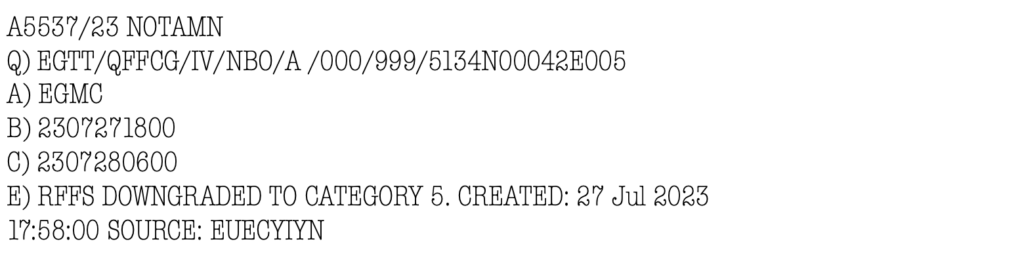
The effect of the strike will become apparent in the next couple of weeks via Notams like this:

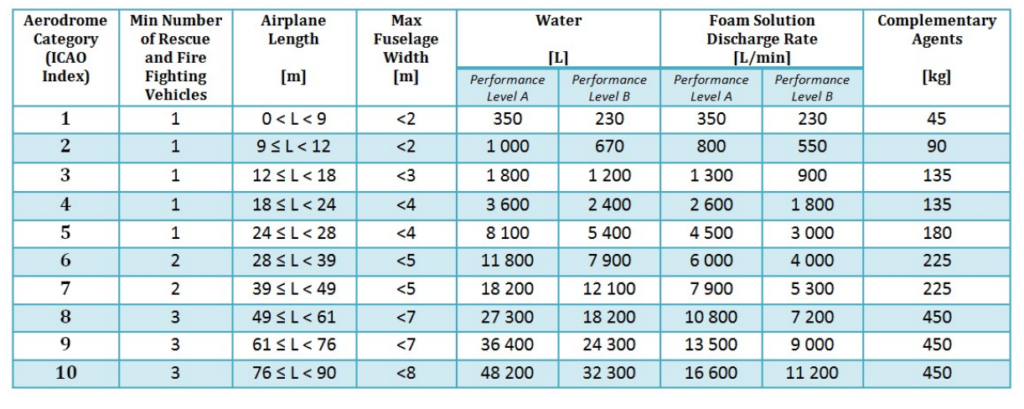
If you’re not familiar with what these categories actually mean, here’s a quick rundown on how they work.

An airport’s RFFS Category refers to the largest aircraft it is intended to receive (think length and fuselage diameter).

This dictates the amount of water, agents, vehicles and response time required to fight fires on planes of these size.

With that in mind, here are the current ICAO RFFS Categories.

Further Strikes Are Likely

Right now, April 15 is the only scheduled RFFS strike. However, if no deal is struck between the Fire Fighters’ Union and Air Services Australia, we are likely to see more.

The good news is that we all also receive advance notice of any that are planned. We’ll continue to report those as they arise.

If you encounter disruptions during the upcoming strike, we’d love to hear from you. You can reach us on news@ops.group.


Ops Down Under: Borders Opening Up

Throughout the pandemic, Australia and New Zealand have both had some of the strictest entry rules for foreigners in the world. They have remained firmly in place since the doors first slammed shut early in 2020, and haven’t budged since.

Until now…there is finally light at the end of the tunnel. There have been two big announcements this week from both countries that they intend to open up in the coming months.

If you’re planning to head down under, here’s a rundown of how the current entry rules work, and what is set to change in the first half of 2022.

Australia

What’s been announced…

Australia is reopening its borders to vaccinated travellers on Feb 21, after almost two years of restrictions. Passengers will need to have a visa, a pre-arrival PCR test, and must also complete an Australia Travel Declaration (ATD) at least 72 hours before departure. Unvaccinated passengers will still need a valid travel exemption to enter.

Travellers to Australia will also need to comply with requirements in the state or territory of their arrival, which may include quarantine and post-arrival testing requirements. Quarantine requirements in Australia are determined by State and Territory governments.

How things work right now

To enter Australia, all foreigners must currently apply for an exemption first. There is a long list of what qualifies but in almost all cases leisure travel is a no-go. The only exception to this rule is for citizens of New Zealand, Singapore, Japan, and South Korea.

To apply for an exemption, passengers have to use this online portal. It takes a least seven working days to process each one, sometimes longer, so it’s important they apply early.

Testing and Quarantine

Pre-departure, all pax need to get a negative PCR or rapid antigen test that is less than 72 hours old.

After landing is where things can get a little tricky. Australia is made up of individual states and territories. Each one has their own subtle differences when it comes to pax testing and quarantine rules. So, what needs to be done next depends on where you’re landing, and whether your passengers are vaccinated or not.

Rule hack: With the exception of Western Australia (YPPH/Perth), vaccinated passengers only need to self-isolate until they receive the results of a Covid test on arrival. Unvaccinated passengers have to apply for, and stay in managed hotel quarantine for 14 days. Passengers arriving in Perth still need to enter approved quarantine even if vaccinated for at least eight days, with a full two weeks required for unvaccinated pax.

For the official state rules of where you’re headed, check out the attached links at the end of the article.

What about crew?

All crew are exempt from pre travel testing.

On arrival you will be health screened and given a Covid test. Fully vaccinated crew will only need to self-isolate until the result (approx. 24 hours) and then will be free to enjoy the layover.

Unfortunately unvaccinated crew will need to stay in their hotel until the flight out.

GA/BA Flight Approvals

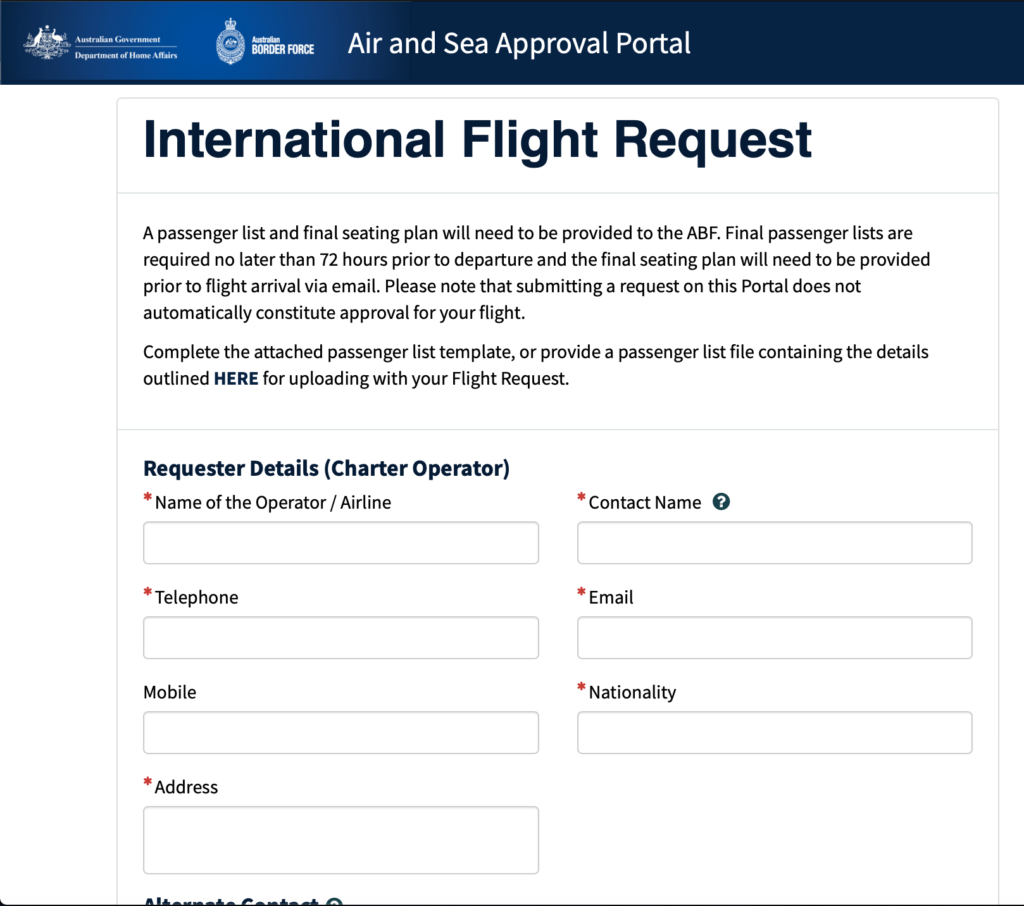
If you’re operating a charter flight, you’ll need to apply for a bunch of approvals first (at least 72 hours in advance). You can find detailed information on that process here.

New Zealand

What’s been announced…

On Feb 3, the NZ Government announced they would be getting rid of managed quarantine for fully vaccinated travellers altogether. This will apply to citizens returning from Australia from the end of February, and from all other countries from the end of March. Unvaccinated travellers will still need to quarantine. It is unclear yet whether international crew will be allowed to enter the community under the same rules.

It was also announced that borders would be progressively re-opened to foreigners throughout the year. This will start for study and business visa holder from April, before all travellers (including tourists) will be allowed in by October.

How things work right now

The rules for foreigners are even tighter than Australia’s. Aside from exemptions for permanent residents and relatives, foreigners can only enter the country if they hold a ‘critical purpose’ visa. The application for this can take up to two weeks.

Testing and Quarantine

Anyone travelling to New Zealand needs to get a PCR test that is less than 48 hours old at time of departure.

All passengers must then spend ten days in managed quarantine when they arrive. Reserving a spot is extremely difficult – you basically need to enter a lottery to reserve one via the MIQ website and then keep your fingers crossed.

What about crew?

Crew must be fully vaccinated to enter, and provide the results of a PCR test taken within seven days of their flight down. They’ll then need to isolate in an approved hotel until their flight out. You can find the full details here.

GA/BA Flight Approvals

You’ll need to contact the Ministry of Transport. You can find more info on that process here.

Links to Official Rules

Australia

New Zealand

See the official government website here.


Major runway works in Sydney

From October 15 until late November, major work is taking place on the threshold of YSSY/Sydney’s world famous Runway 16R – the most used, widest and longest runway at Australia’s busiest airport.

During that time it will not be available for any arrivals (around the clock), and there will be a reduced length for departures.

Here’s a quick rundown of what this means for operations at the airport, and what to expect if you’re visiting the Emerald City in the coming months.

Crunch time

The threshold slab is over half a century old. Pavement failures have been on the rise leading to FOD damage and temporary repairs have become a common occurrence. With things being quieter at the moment, the airport is finally biting the bullet and replacing it completely.

Airport authorities looked at simply displacing the threshold for Runway 16R for arrivals but decided that operationally it wasn’t safe or efficient. So instead, procedures at the airport will temporarily change.

Arrivals

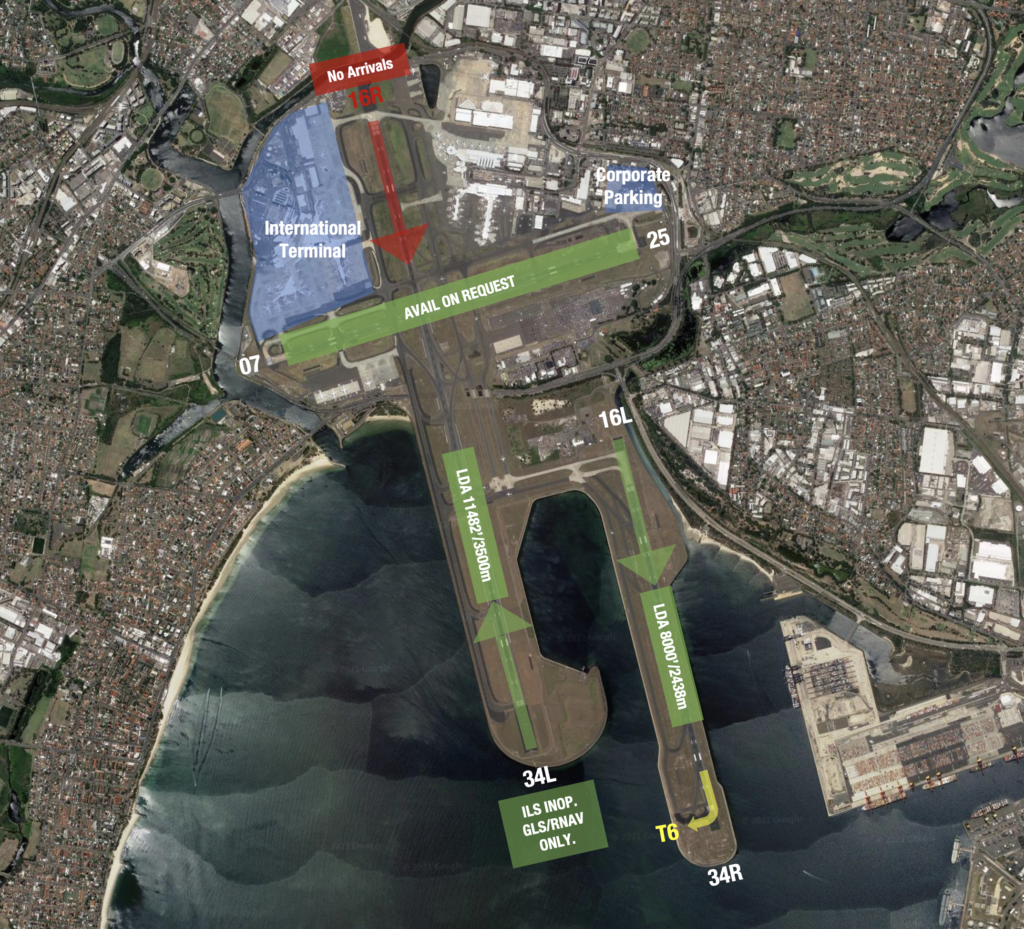
In southerly conditions (which is half the time), all arriving aircraft can expect to land on the shorter Runway 16L. It has 8,000’/2438m of hard stuff, and is narrower at 148’/45m wide. The ILS is CAT 1 only.

First of all, carry extra fuel. With all arrivals being sequenced for one runway, you can expect extensive holding and/or slow-downs during peak times. Just like the freeways, these are early morning and early evening.

Wide body traffic can expect to vacate at T6 – right down the far end. From there it’s a much lengthier (and potentially confusing) taxi to the international side of the airport which may see you cross two active runways. Remember that progressive taxi instructions are always available if you’re unfamiliar with the airport.

Runway 07/25 is also available if you need it operationally, and it is around the same length. You’ll need to request this early from ATC. Remember to use the phrase ‘operationally required’ – it will help ATC to accommodate your request.

In northerly conditions, Runway 34L will still be used for arrivals at reduced length. The LDA will be approx. 11480’/3500m. Expect to see workers and trucks at the far end. Also, a head’s up – the ILS won’t be available during the works. The GLS approach will still be an option, but if you can’t fly one in your ride, you’ll need to do an RNAV approach. They’ll cancel work for the day and switch the ILS back on if things are starting to look murky out there.

Here’s a picture of what this all looks like:

Departures

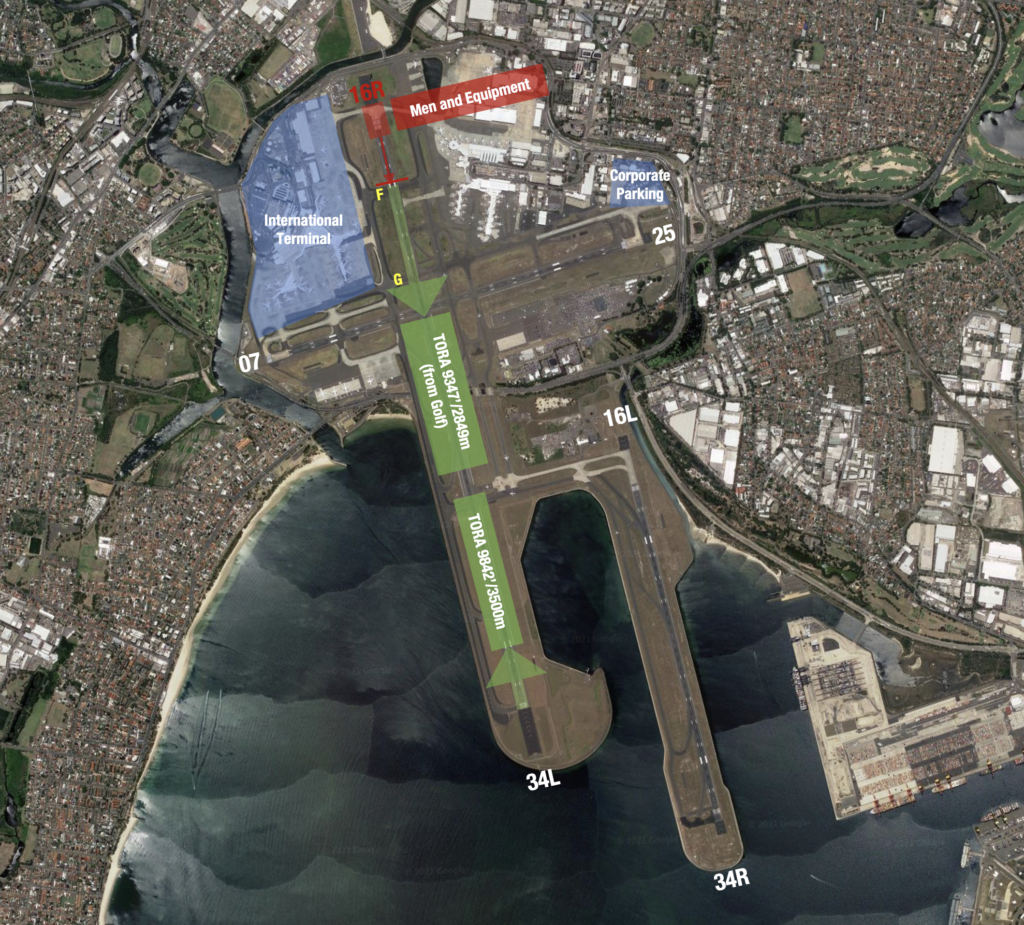
You will still be able to depart from Runway 16R, but you’ll need to roll from between taxiways Foxtrot and Golf.  Small jets and turbo props may be be cleared for take off from Foxtrot, but heavier jets can expect to taxi forward to Golf first due to jet blast. TORA from there is 9347’/2849m.

And here’s what that looks like:

Wet Season

Sydney can experience severe convective thunderstorms late in the year (the warmer months down under). If the winds are southerly, and there are thunderstorms forecast it’s time to think extra hard about fuel planning during this time.

Being part of one the busiest air corridors in the world, and with only a single runway for arrivals the queue may begin to back up in a hurry during storms. Extensive holding times and diversions are not uncommon in these conditions.

There are a few decent options as alternates, but they’re not right next door. The closest is YSCB/Canberra (132nm). A few things to think about though – it can be a challenging place in bad conditions due to the high terrain that surrounds it. Apron space can also become limited if it is receiving lots of diversions.

Most international operators use one of the below:

  • YMML/Melbourne (384nm) to the south.
  • YBCG/Gold Coast (368nm) and YBBN/Brisbane (395nm) to the north.

Looking for the official word?

YSSY Notam H5212/21 is the place to start. IFALPA has also published a Safety Bulletin based on the info available from airport authorities.


The Lowdown on AUSOTS: Australian Flex Tracks

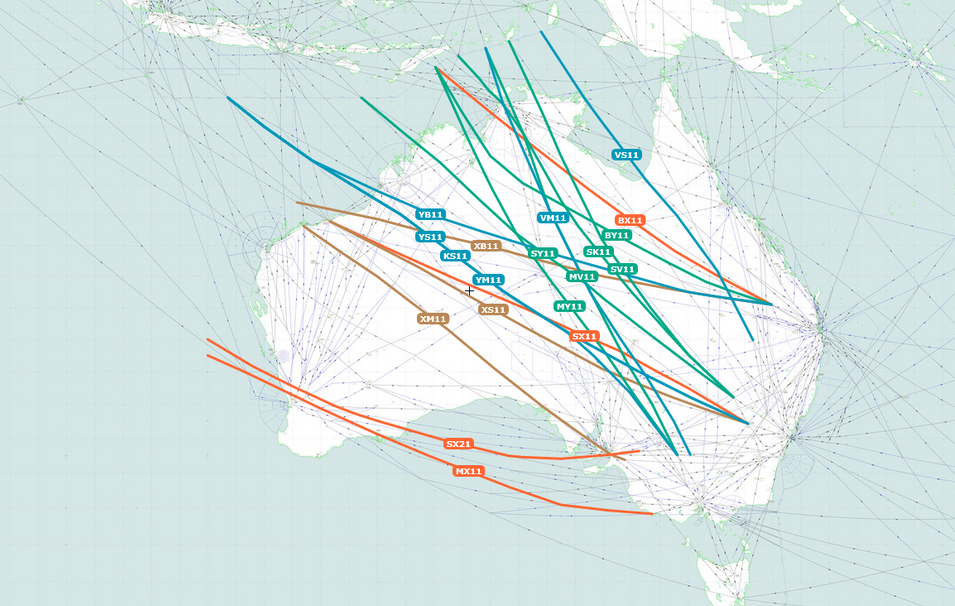
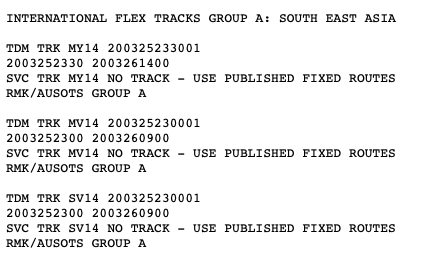
If you haven’t heard of the AUSOTS then it means the Australian Organised Track Structure, and is basically a bunch of Flex Tracks that are produced on a daily basis, aimed at helping aircraft benefit from the best wind conditions.

The inventors define it as – “A non-fixed ATS route calculated on a daily basis to provide the most efficient operational flight conditions between specific city pairs”.

Sounds familiar? That’s because it is basically the NAT OTS but over a different bit of big, not-much-out-there, airspace on the other side of the world.

Where exactly?

The AUSOTS are currently published for routes between Australia and the Middle East, Australia and South East Asia and for domestic routes between Brisbane and Perth. They pretty much cross the entire YBBB and YMMM FIRs and a few other parts too.

Opposite direction tracks are spaced by 50nm in Oceanic and 30nm in domestic, but with the introduction of ADS-B this is reducing. Again, probably all sounds quite familiar.

The User Preferred Routes are available in the YMMM/Melbourne, YBBB/Brisbane, AGGG/Honiara and ANAU/Nauru FIRs.

Your UPRs can be constructed between gates (entries and exits to FIRs), or by published waypoints (so long as time between them is not greater than 80mins), NAVAIDs or Lats/Longs (and you can use ones that are not whole degrees if you want).

You do need a reporting point on an FIR boundary (except for between AGGG-ANAU or YBBB-AGGG FIRs). 

What do I need?

In terms of equipment, your usual stuff giving you RNP10/ RNP4 type capabilities, Datalink (CPDLC), a couple of LRNS and bits to help you navigate accurately – all that sort of thing.

Unsurprisingly, what you put in your flight plan is much the same as well – if you are RNAV10 then write ‘GR’ and ‘I’ (if appropriate) in item 10 and PBN/A1 in item 18. If you are RNP4 then throw in a ‘GR’ and write PBN/L1 in item 18

You also need HF comms and ADS-B to fly on the UPRs.

What if something goes wrong?

If you are on a track and lose your RNP capability then as long as you can still navigate the track you can stay on it. If you can’t, you probably will want to let ATC know fairly quickish so they can put you onto a fixed track.

If you lose all your comms then it is simple as well –  try other methods, squawk 7600, do some broadcasting on 121.5 and 123.45, put your lights on, and maintain your last assigned speed and level for 60mins (following failure to report over compulsory point), then follow your flight plan. Once you leave Oceanic, follow the procedures of the state you’ve gone into.

In general, if you are flying over Australian airspace they are going to want to know if your estimate over a reporting point changes by more than 2 minutes. They are also going to want to know if you are off your track by more than 20nm (small weather deviations).

Also know that Standard ICAO Contingency and Weather Deviation Procedures apply here.

SLOP?

Yep, they like it. Up to 2nm right of track is the way to go, and in 0.1nm increments if your airplane can do that. You don’t need a clearance for it, but remember you cannot use it in addition to offsets for wake, or weather avoidance.

Block Altitudes

Also allowed in this airspace, and given you are probably flying some mega miles through it, it might be a good idea. That way you can climb up when your weight will benefit, or avoid turbulence if there are reports of it without having to talk to ATC…

You mentioned talking?

We did, but to be honest there is not a huge amount of it going on in this area. Most comms are taken care of through CPDLC. They like a position report sent via CPDLC when you get to the boundary of the FIR (all position reporting procedures are in accordance with ICAO Doc 7030).

The Australian controllers really know how to control. They are great at it. But they also have some pretty high standards which means if you make a mistake they are going to get grumpy and report/fine you. It might seem obvious, but if you’re off track for weather avoidance, once clear, don’t assume you can head direct to the next point – they want to see you regain your original track.

What will I find out there?

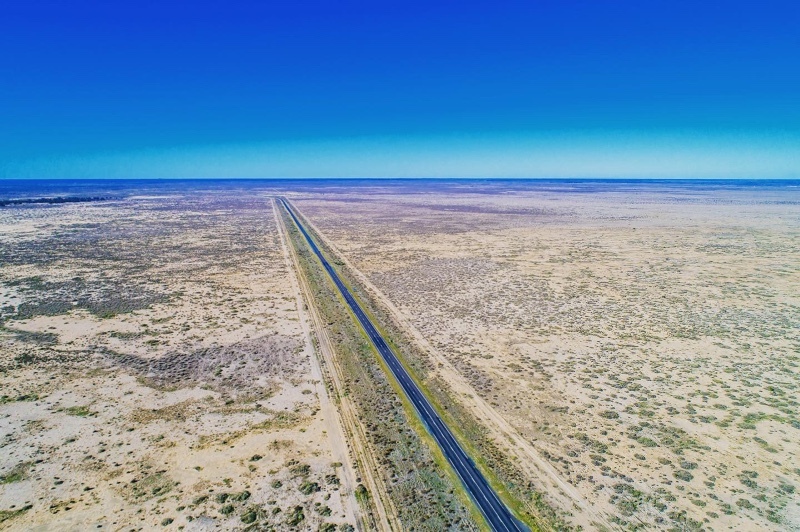
A whole lot of empty space and open sea. 

The distance between Singapore and Brisbane is roughly 6,000km. The distance from Perth to Brisbane is over 3,500km. In between them? A lot of dry, dusty bush, and kangaroos.

The middle of Australia is quite an empty place so if you’re looking for airports to use, we would recommend the ones around the edge of the country. YSSY/Sydney, YMEL/Melbourne, YBBN/Brisbane are the biggies on the eastern side and you’ll find nice long runways, decent approaches and good facilities at each of them. YPPH/Perth is the main south west one, while if you’re heading north-ish then YPDN/Darwin or YBCS/Cairns are probably your best bets.

You do have YBAS/Alice Springs in the middle if you really need it, and its a fairly decently equipped airport with a 7,999 ft/ 2438m runway and an ILS/RNAV approach.

Who can I ask for info on AUSOTS?

Should you need it, then you can email these folk with all your AUSOTS queries – uprs@airservicesaustralia.com

You can also try the Melbourne Center Operations Manager at Melbourne ACC on +61 3 9235 7420 or on AFTN: YMMMZRZS if you have specific questions about the published AUSOTS Flex Tracks.


Good news from Australia – the TSP just got easier

If you’re amongst the many international aircraft operators stung by the lengthy and document-heavy process to obtain an Australian Transport Security Program approval, good news has reached OPSGROUP HQ –  there is a new TSP-Lite version that you can apply for.

The Dept. of Home Affairs has created what they call a “Secretary-Issued TSP … a new simplified way for operators who meet certain criteria to apply for a TSP”. They tell us “This application is much shorter than the standard TSP application”.

Do you qualify for the new TSP-Lite?

Yes, if you can answer YES to all of these questions (the first two are the big ones):

  1. Your flights are private or charter operations and not operated on a fixed schedule or route; and
  2. You do not have temporary or permanent operational facilities in Australia; and
  3. You do not allow passengers or aircraft operator staff to enter the landside security zone (sterile area) of a security controlled airport; and
  4. You do not allow passengers or aircraft operator staff to mix with other passengers of prescribed air services in airside areas; and
  5. You do not transport persons in custody.

The Dept also told us that “Under our legislation there is still the same maximum decision making time for a Secretary-Issued TSP, however in practice, the intent is that we will be able to review and approve these applications much faster.”

Crack open a slab of VB! This is great news. Now, this has just started up, so it remains to be seen how it works in practice.

For more on how to apply for a normal TSP, the new TSP-lite, and to trade intel with other operators, jump into the TSP Victim Support Group in the Members Dashboard, login below.


Australia confirms TSP is a nightmare

Update June 17, 2019: We have launched a TSP Victim Support Group for OPSGROUP members, so we can share experiences, and help each other to get the approval. We feel the pain!


Oops, Freudian slip
: What we meant was, Australia confirms TSP is required. But trust us, it’s a nightmare.  

A TSP is a Transport Security Program, and if you don’t know what that is yet, prepare for some painful bureaucracy. 

Over the last few years, they exempted lots of corporate and private ops. Now they say they’ve changed their mind. Everybody operating a jet needs one – Private, Charter, Commercial, Air Force One – whoever. You have got to do one, no exceptions. 

The official line is that it takes two months to get one. The best we’ve heard from OPSGROUP members is 40 days. 

If you’ve got a trip planned and need TSP approval quicker than that, you can always check with guidancecentre@homeaffairs.gov.au to be sure – they might be able to help you with a shorter timeframe, but there are no guarantees.

The official guidance on how to apply can be found here, and they have at least been good enough to provide a template application form (all 66 pages of it – ouch!!) which can be found here. If at all possible, save yourself some misery and get someone else to apply on your behalf!

Have you applied for a TSP before? What do they want to see, exactly? What does a good TSP look like? Are you willing to share your approved TSP as a guide to help others? If you send us yours, we’ll anonymize it completely, and it will be used internally within the group as a shining example of perfection! 


Check your checklist! Lessons from fatal King Air accident in Melbourne

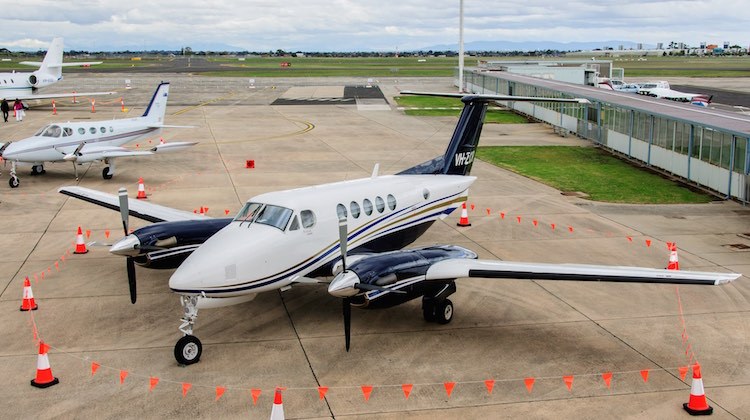
The pilot at the controls of a Beechcraft B200 Super King Air that crashed shortly after take off had the aircrafts rudder trim in the full left position for take off, the Australian Transport Safety Bureau (ATSB) has found.
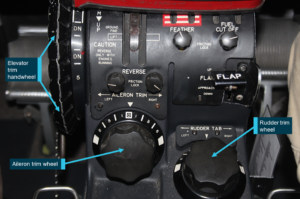
The ATSB final report said the aircraft’s track began diverging to the left of the runway centre line before rotation and the divergence increased as the flight progressed.

It then entered a shallow climb followed by a “substantial left sideslip with minimal roll” before beginning to descend. At this point the pilot issued a mayday call seven times in rapid succession.

Approximately 10 seconds after the aircraft became airborne, and two seconds after the transmission was completed, the aircraft collided with the roof of a building.

What Happened?

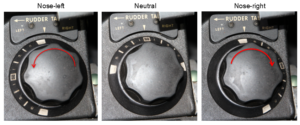
The investigation found that the pilot did not detect that the aircraft’s rudder trim was in the full nose-left position prior to takeoff.

“Prior to takeoff, there were several opportunities in the pre-flight inspection and before takeoff checklists for the pilot to set and confirm the position of the rudder trim,” the ATSB final report said.

A King Air flight simulator was used to recreate the event as part of the ATSB investigation.

The pilot who performed the flight simulator test commented that:

The yaw on take-off was manageable but at the limit of any normal control input. Should have rejected the take-off. After take-off the aircraft was manageable but challenging up to about 140 knots at which time because of aerodynamic flow around the rudder it became uncontrollable. Your leg will give out and then you will lose control. It would take an exceptional human to fly the aircraft for any length of time in this condition. The exercise was repeated 3 times with the same result each time. Bear in mind I had knowledge of the event before performing the take-offs.

The pilot also stated that it could be possible for a pilot to misinterpret the yaw as being caused by an engine power loss rather than from a mis-set rudder trim.

Safety message

Cockpit checklists are an essential tool for overcoming limitations with pilot memory, and ensuring that action items are completed in sequence and without omission. The improper or non-use of checklists has been cited as a factor in some aircraft accidents. Research has shown that this may occur for varying reasons and that experienced pilots are not immune to checklist errors.

This accident highlights the critical importance of appropriately actioning and completing checklists.

Checklist discipline

In previous correspondence between the accident pilot and the ATSB when discussing checklists, the pilot stated that:

“You don’t get complacent as a pilot but you get into a routine. The same as your pre-take-off checks, you get a routine and you don’t need to use a checklist because you are doing it every day, you are flying it every day… I take-off with one stage of flap because it gets me of the ground quicker. And I never change my routine…”

Wait what!??? It is stating the obvious but it’s a timely reminder that checklists are an essential defense against pilot errors. 

Sadly, it could have been a life-saver in this instance.

The ATSB video to supplement the report.


Great Australian Bight – RNAV/RNP only airways

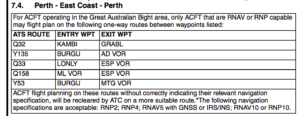
Australian AIP flight plan requirements (GEN – FPR – 18 – section 7.4) have been updated to remind operators to file the right navigation specifications on their ATC flight plan or risk a re-route for flights over the Great Australian Bight (in the YMMM/Melbourne FIR).
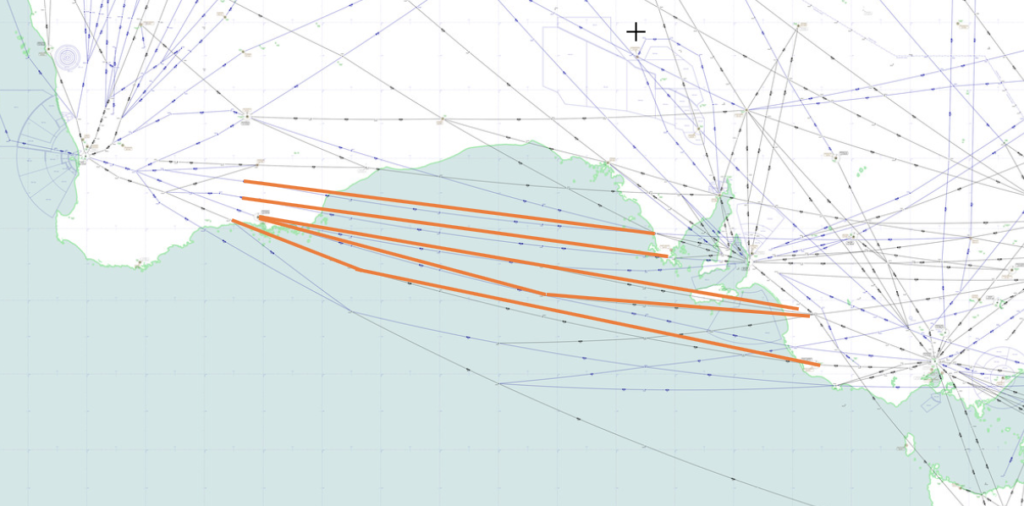
Specifically, for flights operating on the following airways: Q32, Y135, Q33, Q158, Y53.

Aircraft flight planning on these routes should meet the following navigation specifications.

  • RNP2; RNP4; RNAV5 with GNSS or IRS/INS RNAV10 or RNP10.

Aircraft flight planning on these routes without correctly indicating their relevant navigation specification will be re-cleared by ATC on a “more suitable route”.

One to check next time you’re flying through the area, especially for a flight to/from YPPH/Perth.

Further reading:


Australia updates RNP2 rules for foreign operators

The Australian CAA have said they will now allow foreign operators to use RNAV1/2 in lieu of RNP 1/2.

Over the past few years, Australia has been moving away from ground-based navigation to PBN/GNSS as the primary means of navigation across the country.

Australian operators have all had to be RNP1/2 compliant since May 2016, when they rolled-out RNP2 for en-route and RNP1 for terminal operations.

It’s not yet mandatory for foreign operators to be RNP1/2 compliant – but if you want to benefit from these routes and procedures (and can’t get RNP1/RNP2 approvals from your country of registry), you can notify CASA of your intent to use RNAV1/RNAV2 instead – and they will accept those as equivalent to RNP1/RNP2.

To do that, make sure you fulfil all the criteria in their “Acceptable Means of Compliance” (as contained in CASA EX158/17), fill out Form 0667 and send it to CASA by email, along with a copy of your Ops Spec. Their email address is: international_ops@casa.gov.au

The AMC applies to both commercial and private flights. However, as it’s not a mandatory requirement for foreign aircraft, if you’re operating a private flight you might not want to bother with it; if you can’t meet the equivalent of the RNP1/2 nav spec requirements, you can still operate in Australian airspace – all that will happen is that ATC just might not provide you with the absolute best routes and levels. But even that won’t happen any time soon – at the moment there are still no RNP2 routes in Australia yet, although we will start seeing these being introduced between now and 2020.

For more info, check out the full AIC here.

Flight Planning:

  • If you do have RNP2 – put GRZ in Field 10a and NAV/RNP2 in Field 18.
  • If you don’t, then you must operate according to Australia’s “Acceptable Means of Compliance” and put RMK/CASA RNP AMC in Field 18.

Australia ADS-B requirements: 2017 onwards

Last year Australia switched off most of its navaids, meaning that RNP became a requirement.

This year, they’re asking all aircraft flying in Australian airspace to be ADS-B equipped after February 2nd, 2017. ADS-B means that controllers can use your uplinked GPS position, instead of mammoth SSR Radar Units all over the country.

There are two exemptions:

  • Small Australian-registered GA aircraft
  • Foreign-registered aircraft with the restriction that you must fly below FL290 in continental airspace, and stick “RMK/NIL ADSB AUTH” into Field 18 of the Flight Plan.

You don’t need to apply for special authorisation, just show up.

References:


International Bulletin: Hong Kong pain in the ass, Haiti relief operations

Hong Kong is a pain in the ass – it’s official 20OCT Authorities in Hong Kong confirmed yesterday that the airport is a giant pain, especially for non-scheduled operators. Lining up slots, parking, permits and handling is extremely difficult. End result: a mountain of frustration. Read the article.

Haiti relief operations – and Airbus Flight 101 20OCT After Hurricane Matthew last week, MTPP/Port-au-Prince (Toussaint Louverture) became a central focus in relief efforts for Haiti. OpsGroup member Airbus operated an amazing relief flight from Lyon. Read the article.


VTZZ/Thailand is in a period of mourning following the death of His Majesty, King Bhumibol on 13 October. This is a time of deep sorrow for Thai people – refrain from any behaviour that may be interpreted as festive, disrespectful or disorderly. Abide by local laws and respect Thai customs. There may be some disruption of commercial and public services during the mourning period, especially during the first 30 days (until 13 November). Tourist attractions are open with the exception of Wat Pra Kaew (Temple of the Emerald Buddha) and the Grand Palace in Bangkok. Expect traffic disruptions and heightened security around these areas as people pay their respects to the late King.

EBBR/Brussels All non-scheduled flights destined to EBBR are allowed only after special permission by Airport Authority before start of flight. Contact +32 2 7536900 or inspect@brusselsairport.be.

DTZZ/Tunisia extended the state of emergency on 18OCT, set to expire, by three months. The state of emergency went into effect following a series of terrorist attacks in 2015 and has been extended multiple times.

ORBB/Baghdad FIR Traffic entering from Baghdad FIR (ORBB) to Ankara FIR (LTAA) shall file their FPL as follows: NINVA-OTKEP-SRT at FL320 and above. NOTAM A4572/16 refers.

Solomon Islands There has been a confirmed outbreak of dengue fever in the capital city, Honiara; you should follow the advice of the local authorities and take steps to avoid being bitten by mosquitoes; you should take out comprehensive travel and medical insurance before travelling to the Solomon Islands

TXKF/Bermuda Due to maintenance, the Bermuda Radar system will be out of service on Friday. Recommended reroute to avoid airspace. New York Center overflight procedures will be in effect. Routes have been developed to provide limited non-radar service within the airspace. All departures from Bermuda will be held down at FL310.

OJAI/Amman, Jordan Runway 26L/08R will be closed for urgent pavement maintenance on these days in November:  01,08,15,22,29: from 0930-1330Z. The airport will not be available for either normal operations or emergency diverts during the closure period.

OEZZ/Saudi Arabia From 8 to 10 October there were several missile attacks reported near the Saudi / Yemeni border and the southern Red Sea.

ZZZZ/Worldwide Regulatory and voluntary bans on Samsung Galaxy Note7 smartphones is spreading as airlines and airport authorities around the world are announcing bans or restricted usage on the device, which has been withdrawn by Samsung after some devices caught fire. Ban notices are being issued primarily through airline online check-in pages, as well as via public announcements in airport terminals and onboard aircraft. The US Department of Transportation (DOT) was first to issue a total ban on taking the device on board, as a passenger or as air cargo, when it gave an emergency order Oct. 15 with FAA.The devices are being banned because of fire concerns, and the fallout following an incident involving a smoking smartphone on board a Southwest Airlines aircraft in Louisville, Kentucky on Oct. 5.

YZZZ/Australia will not be implementing the changes in the ICAO PANS-ATM (Doc 4444), as they say they haven’t had enough time to work on the safety case – ie. figuring out if these changes are dangerous in any way. In short, they won’t be saying “Climb via SID” or “Climb via STAR”, which are the new phraseologies.

TTZP/Piarco wins the award for most confusing AIC of the week, namely AIC03/16 issued on 13OCT. Titled “RVSM Implementation”, it appears that Trinidad is finally implementing RVSM in their airspace. But wait, they did that in 2005. So what’s new in this AIC? It’s a mystery. Take a look and see if you can spot it.

KLAX/Los Angeles 3 out of the 4 runways at KLAX have now been renovated. Runway 6R/24L reopened on 16OCT after renovations. Improvements to the fourth and final runway, 07L/25R, will begin OCT22 and continue until June 2017. This last runway will be partially closed until January, and then closed completely to allow for more extensive work to be done

FSIA/Seychelles Runway will be closed on Thursday 20 and 27 Oct between 1815-0245z and Friday 21 and 28 Oct between 1900-0215z. Can be opened in cases of emergency.

UHPP/Petropavlovsk Eruption in progress at Klyuchevskoy volcano (N5603E16038) near UHPP. Ash cloud reported at 0720z on 17 Oct from ground level up to FL300.

VVZZ/Vietnam Typhoon Sarika is forecast to bring hazardous sea and weather conditions to parts of northern Vietnam from around 19 October 2016; heavy rainfall could lead to flooding and landslides

KLAS/Las Vegas Because of the next presidential debate that will be held in Las Vegas on October 19, 2016, intermittent road closures will affect access to McCarran International Airport (LAS) between 4 pm and 10 pm on that date. The recommended route to the airport from the east side of the valley is westbound Flamingo Road to southbound Paradise Road. The recommended route to the airport from the west side of the valley is eastbound Tropicana Avenue to southbound Paradise Road.

OIIX/Tehran FIR The minimum safe level on R462 between DENDA and METBI has been raised to FL140.

KSFO/San Francisco has a new ATC Tower operational since Sunday last, located between Terminals 1 and 2. Per the local report, it “offers controllers a 650-square-foot work area with unobstructed 235-degree views of the airport’s runways and taxiways”. Hopefully there’s not much going on in the other 125 degrees.

OSZZ/Syria Russia’s only aircraft carrier, Admiral Kuznetsov, is nearing the end of a work-up period outside the port of Murmansk before heading for the eastern Mediterranean, reportedly to begin air operations against targets in Syria.

EGPK/Prestwick will be closed from midnight to 0400Z on 21OCT, due to a planned ATC power outage. ATC reachable during outage at +447917 424603.

RPZZ/Philippines Typhoon Sarika recently passed through the island of Luzon as a category 4 storm. Transportation routes, power and telecommunications systems could be affected in some areas. Other services that may be affected in these areas include emergency and medical care, as well as water and food supplies. If travelling to affected areas, exercise caution, monitor local news and weather reports, and follow the advice of local authorities.

View full International Bulletin 20OCT2016 


Midweek Briefing 03AUG: TSA/eAPIS increase in US fines, Vanuatu Runway concerns

TSA/eAPIS increase in US fines 03AUG Fines and penalties for getting your CBP Arrival/Departure manifest wrong will increase from 01AUG. That means, screw up the eAPIS and you are looking at a potential fine of $1,312. Read the article.

Vanuatu Runway concerns 03AUG Following interim repairs to the runway in Port Vila (NVVV/VLI) earlier this year, concerns have been raised once again about the condition of the runway, with diversions on Monday. Read the article.


LFPZ/Paris Airports Couple of upgrades in progress, LFPO has 06/24 closed until 29AUG, and LFPG is installing a new ILS until 03OCT; both will cause some delays.

YZZZ/Australia The Australian Border Force have announced a strike for Friday, 12 August. This marks a resumption of Industrial Action in Australia after a 3 month ‘ceasefire’ was agreed. The strike period is 24 hours, precise impact not yet clear, but AQIS/Biosecurity/Quarantine will also take part to some degree.

OMDB/Dubai is reopening with a single runway following a full airport closure early on 03AUG due to 777 crash.

UIII/Irkutstk has no air starter available for large aircraft until the end of August.Irkutsk is a common enroute diversion airport.

ZKZZ/North Korea is back in action with the missile launches again, on 03AUG they fired two ballistic missiles, one of which landed in Japanese waters inside the country’s economic exclusion zone. Another missile reportedly exploded immediately after the launch. The missiles were fired at 2250 UTC on 2 August from a region southwest of the North Korean capital city of Pyongyang.

MZZZ/Caribbean Tropical Storm Earl, multiple weather warnings for Jamaica, Caymans, Belize, Guatemala, Mexico.

VABB/Mumbai continues their Continuous Descent Approach trials in the TMA. Interestingly, part of the procedure calls for pilots to call in on 121.9 after landing and report the total amount of fuel saved (how do you work that out?), and then send a detailed brief by email to cdomumbai@aai.aero. We forecast a relatively empty inbox.

AGGH/Honiara has some surface damage on the International Apron, taxi slowly.

SBZZ/Brazil On 02AUG, the mayor of Rio de Janeiro declared 4 August a new public holiday for the Olympic Games. The extra holiday comes after the mayor has already designated 5, 18 and 22 August as public holidays in Rio de Janeiro, and after the city experienced severe traffic congestion with the implementation of Olympic-designated lanes. On 1 August, the Olympic tracks caused more than 60 mi/100 km of traffic jams, with the worst traffic taking place on the Linha Amarela.

DZZZ/Lome UTA Following changes last year to the airspace over Benin and Togo (the two long thin countries squeezed between Ghana and Nigeria) – there’s still some confusion over who does what. In simple: Low Level (FL240 and below) is controlled by Cotonou Approach. High Level (FL250 and above) is controlled by Lome ACC.

EGGW/London Luton will close overnight weekends in November for some big repair work.

HLLL/Tripoli FIR Airstrikes this week by the USAF

LHPP/Pecs has no Jet A1 at the moment, back on 05AUG.

HEZZ/Egypt On 01AUG, reports announced that a semi-private company would take over responsibility for passenger and luggage screening at Sharm el-Sheikh International Airport (HESH/SSH). The same company, which is a joint public-private entity, will take over security at Terminal 2 of Cairo International Airport (HECA/CAI) beginning in October 2016 when the terminal is scheduled to reopen. The company will later take over screening procedures at Hurghada (HEGN/HRG), Borg el-Arab (HEBA/HBE), Marsa Alam (HEMA/RMF), Aswan (HESN/ASW) and Luxor (HELX/LXR) airports. Egyptian police will continue to be responsible for perimeter security around Egyptian airports, including the terminal and the tarmac.

LOWS/Salzburg starts a multilateration (MLAT) trial on 05SEP. Keep your Mode S on, they ask.

SBBZ/Brazil Olympic Games kick off in a few days, if you are operating to Brazil read through the current NOTAMS carefully, there are a bunch of flow restrictions, special routes, and procedures.

FABL/Bloemfontein is carrying out major works during August. Diversions not accepted. Jet A1 is supplied by bowser during this time, and not hydrant as this is also being worked on.

LTZZ/Turkey – post Coup. As of 01AUG, the situation in Turkey continues to stabilize, as the government continues to step up security measures and conduct operations to detain alleged coup plotters. Turkey remains under a state of emergency, which allows the government to drastically restrict civil liberties, and will likely remain so for the next three months. Raids and security operations are continuing throughout the country. Travellers should note that Turkish authorities have reportedly been conducting ID checks in the busier areas of Istanbul. 

 Demonstrations have continued over the past several days. While the threat of violence remains a concern at demonstrations throughout Turkey, most have been conducted peacefully. Travellers should nevertheless take care to avoid such gatherings as a precaution, because violence can occur with little notice. Additionally, terrorists have targeted major demonstrations in the past.

FLFI/Lusaka ACC have called out some AFTN addressing issues, if you are operating to land in Zamabia, then file to FLKKZAZX and FLHNZAZX respectively. OMMM/Muscat ACC has a radar-less day on 18th August, 0600-1700Z. Turn that TCAS up.

WADL/Lombok, Bali has reopened after a closure on Monday 01AUG due to the eruption of Mt. Rinjani. The last closure was in OCT2015.

View the full International Bulletin 03AUG2016


Australia: GPS requirements relaxed

The implementation day for Australia switching off Navaids remains the same: 26MAY2016, but the GPS requirements are relaxed – a little – especially for foreign private operators.

If you’re Australia based:

  • You’ll have seen this coming and will already be RNP1/2 compliant. CASA has no exceptions.


If you’re a Foreign Operator and have RNP1/2:

  • After 26MAY2016, if you’re RNP1/2 compliant, put it in the Flight Plan (read on), and that’s about it.


If you’re a Foreign Operator and you don’t have RNP1/2:

  • Australia has a Two Year Transition for Foreign Operators after 26MAY
  • An “Acceptable Means of Compliance” is contained in CASA EX06/16
  • Notify CASA in advance using Form “Notification to operate aircraft on RNP 2 routes and/or RNP 1 procedures using GNSS based RNAV 1 & RNAV 2”
  • If you are a non-commercial operator – ie. operating a Private flight, then compliance is not mandatory. According to CASA, through a release to IBAC, “Only commercial operators that can comply with the requirements and want RNP 1 and RNP 2 traffic services are required to apply for an exemption. “


Flight Planning:

  • If you have RNP2 – put GRZ in Field 10a and NAV/RNP2 in Field 18.
  • If you don’t, then you must operate according to Australia’s “Acceptable Means of Compliance” and put RMK/CASA RNP AMC in Field 18.
  • If you don’t, and you’re a private operator, probably worth a RMK/NEG RNP PVT FLT or similar.
  • Keep an eye on the charts – a bunch of new 5 letter waypoints are coming, to replace the VOR’s and NDB’s being switched off.

Reference:


Midweek Briefing 11MAY: Reykjavik Oceanic Closure, Australia to turn off Navaids

Reykjavik Oceanic Closure 11MAY Operators planning eastbound flights across the NAT should be aware of a NOTAM issued earlier by Reykjavik Oceanic/Iceland ATC, that essentially asks traffic to avoid the airspace wherever possible, due to further ATC Industrial Action. Read the article.

Australia to turn off Navaids 11MAY On 26MAY, Australia will switch off around 180 different VOR’s, NDB’s, and other ground-based Navaids. All international operators will be required to have GNSS/GPS as primary navigation. Read the article.


CYMM/Fort McMurray, Canada is closed due to Forest Fires; only emergency and evacuation flights are allowed.

EGPX/Scottish Expect delays from 17MAY when controllers change to a new ATC system. ATC advises a fundamental level of change in the method of operation within Scottish Upper Airspace will result. There is no change to the Oceanic Operation, and Domestic CPDLC will be available at all times from 17MAY.

KATL/Atlanta closed one of its three security checkpoints in the domestic terminal for three weeks and will reopen 25MAY. They have added additional security lines to the other 2 checkpoints in hopes of reducing the impact. Plan for extra time if you are heading through ATL in the next few weeks.

LGZZ/Greece An update on 09MAY was issued for the slot allocation Rules and Guidelines for all Greek Coordinated Airports. The updated document can be found at GABA report.

YZZZ/Australia CASA has issued clarification as to who is responsible for Terrain Clearance when ATC instructs an aircraft to “resume own navigation”. Consistent with ICAO standard, while under radar vectors below the MSA, ATC assumes responsibility for Terrain Clearance. The AIC is worthwhile refresher reading as this applies to most International Ops.

OYRN/Mukalla has reopened after it was recently re-captured by government and Emirati soldiers. It is currently only accepting humanitarian and aid flights.

HKIS/Isiolo is a new airport in Kenya that will be operational in early JUN. The new facility will cater to domestic and international flights and will have annual passenger capacity of 125,000 and a 1400m runway. Isiolo is located near many national reserves, approximately 125 mi/200 km northeast of Nairobi.

BIRD/Reykjavik Oceanic Operators planning eastbound flights across the NAT should be aware of a NOTAM issued earlier by Reykjavik Oceanic/Iceland ATC, that essentially asks traffic to avoid the airspace wherever possible, due to further ATC Industrial Action. Eastbound flights in particular will not be accepted into the airspace unless … Read Full Article.

LIZZ/Italy Another ATC Industrial Action in Eurore has been announced for 14MAY, this time in Italy and affecting only part of operational personnel. Only some air navigation services may be affected. The following NOTAM has been issued.

EGLL/London Heathrow has been identified as the airport most affected in the UK by laser strike incidents with 121 in 2015, followed by EGBB/Birmingham with 94, EGCC/Manchester recording 93 and EGNM/Leeds Bradford with 77.

SKBO/Bogota has introduced a significant enhancement to the current ATC infrastructure by adding Secondary Surveillance Radar or SSR. The Columbian CAA issued AIC A07/16 to cover the upgrade. This will help increase the level of safety for operations in SKBO, especially given the terrain in the vicinity.

WZZZ/Indonesia The Visa-Free Program has expanded to Nationals from a total of 169 countries and are now eligible to enter Indonesia without a visa.  Although the regulation is silent on the allowable activities under this status, the previous version of the law restricted its use to tourism.

LFPG/Paris The first IFR LPV approach was implemented at LFPG for Runway 26L on 03MAY The new approach mirrors Cat I ILS approach minimums, including a 200-foot decision height, and it is supported by the European Geostationary Navigation Overlay Service (EGNOS).

WSZZ/Singapore has introduced a system called ATLAS (Air Transportation License and Administration System), for obtaining the application, renewal and administration of licences and permits for scheduled and non-scheduled air services.

View the full International Bulletin for 11MAY2016


Australia is turning off its Navaids – are you ready?

On the 26th of May, Australia will switch off around 180 different VOR’s, NDB’s, and other ground-based Navaids. Those that escape the cull – about 245 of them – will form the basis of their new “Backup Navigation Network”, or BNN.

For International Operators, in short, Australia wants you to navigate with GNSS as your primary means of navigation. The new standards, from 26MAY, are:

  • Oceanic Routes: RNP4 if able, otherwise RNP10
  • Continental Routes: RNP2
  • SIDs and STARs: RNP1
  • Non Precision approaches: RNP APCH (ie. RNAV(GNSS)

CASA will issue an exemption if you have an existing RNAV1 or RNAV2 approval based on GNSS from your National Authority, but you must have either the above RNP capabilities, or the exemption, to operate in Australian Airspace from 26MAY.

Further reading:


5618564-3x2-940x627


Midweek Briefing 04MAY: New US CBP Airport, Iceland ATC Strike continues

New US CBP Airport 04MAY A new US Customs facility opened in KMTH/Marathon on 20APR, to facilitate increased traffic to Cuba. Read the article.

Iceland ATC Strike continues 04MAY Icelandic controllers are in a pay dispute with Isavia, leading to multiple strike actions at BIKF/Keflavik and BIRK/Reykjavik. Last week BIKF was closed overnight at short notice. Read the article.


EHAM/Amsterdam and other Dutch airports will observe a two minute silence on ATC frequencies today, 04MAY, from 1800-1803Z. ATC will arrange traffic flow so that no aircraft will land or taxi during this period, meaning likely delays, albeit for a short period.

SECU/Cuenca, Ecuador remains closed after an E190 slid off the main runway on 29APR, latest estimate is no reopening before 06MAY.

CZZZ/Canada Visa-exempt foreign nationals can enter and exit Canada by air without an Electronic Travel Authorization until 29SEP2016. After that date, these travelers will need to obtain online authorization to visit.

BIZZ/Iceland Multiple ATC Strike actions for BIRK and BIKF are ongoing, check NOTAMS and with handler for latest. Read article.

TFFR/Guadeloupe has ongoing main runway closures due to WIP, current shown are 04MAY 0200-1015Z, 17MAY 1000Z- 18MAY 1600Z. Only helicopters will be allowed to operate during these periods.

UIBB/Bratsk has a fuel shortage until 31MAY, non-scheduled movements are by PPR only.

NWWW/Tontouta has an ATC staff shortage and requires slots for arrival until 31MAY, Tel +687 352437. Work on 11/29 is also ongoing, check NOTAMS for any current outages, which will close the airport.

EGGX/Shanwick is trialling transferring westbound flights direct to a HF frequency rather than via an initial VHF frequency, using CPDLC. The default frequencies will be HF 5649 H24, 2872 0000-0900 and 1800-2400, and 8879 0900-2100.

PAZA/Anchorage has published new procedures Eff 28APR for User Preferred Routes within the PAZA FIR, refer A0075/16.

SVZZ/Venezuela changed timezones on 01MAY to UTC-4. In addition, all public offices, including public ministries, will only operate on Mondays and Tuesdays until further notice.

TTZP/Piarco FIR is trialing ADS-C and CPDLC with ident TTZP until 31MAY. Flights entering the FIR east of 57W should log on 15 minutes prior to the boundary with TTZP.

UHSS/Yuzhno has advised that B777 aircraft are limited to 310T during the summer period.

UIAA/Chita is only available as alternate for one specific airline (Aurora) between 0930-2100Z. Outside these times ops normal.

WSZZ/Singapore has introduced a fingerprint clearance system to verify the thumbprints of arriving and departing travelers ages six and above at select immigration checkpoints. The system will be progressively implemented starting at the manned immigration counters of sea and land checkpoints, followed by air checkpoints until full implementation is completed in the months ahead. Travelers should be prepared for slightly longer immigration clearance times at manned checkpoints, especially during the initial implementation stage of the project.

YZZZ/Australia Border Force employees have been banned from taking industrial action at airports for three months; the threat of ongoing strike action caused much concern for operations in March.

RJTT/Haneda the airport authority has changed the number of slots available for general aviation aircraft. Effective 25APR, slots for GA during the daytime (0600-2259 local) will be increased to 16 total for arrival and departure (from eight in the past). Note that there are no slots restrictions for night time operations (2300-0559 local).

CYVR/Vancouver will have one of its main runways 08R/26L closed nightly between the hours of 05-13Z 08MAY-02SEPT for construction. During the day (13-05Z) the runway will have the ILS on 08R/26L out of service, along with no approach lighting on runway 26L.

SLZZ/Bolivia Certain medications prescribed for personal use are treated as narcotics in Bolivia, with severe penalties for import or export without a valid prescription from a doctor; make sure you carry a letter from a doctor describing the medical condition and any prescribed drugs and that they are in their original containers and clearly labelled.

EBBR/Brussels has partially reopened the departure hall, which has remained closed since 22MAR. 110 Check-in counters will be open in the airport departure hall along with an additional 36 counters that are housed in temporary buildings. The EBBR airport authority expects this will bring the airport up to 80% of capacity.

EZZZ/Europe Bulgaria, Turkey and Romania will begin a project to interface their ATC systems so they can handle a significant build-up of airspace traffic in the Black Sea area. New routes are expected by mid 2016.

LEZZ/Spain The Spanish F1 Grand Prix is being held from 13MAY-15MAY and will bring heavier than normal traffic to LEBL/Barcelona and LEGE/Girona.

HEZZ/Egypt Individual travellers will in the future require a visa before entering Egypt. The exact date of the implementation of this rule is not yet determined. The visa must be applied for from the Egyptian embassy and the consulate generals before departure.

GVZZ/Cape Verde Aviation officials issued a statement announcing that national airports are open and operational. The statement was released following reports that flight operations had been suspended at the country’s airports.

ORZZ/Iraq Iran canceled all flights to Baghdad following a breach of the International Area by protesters on 30APR. The demonstrations have caused problems for pilgrimage flights to Baghdad, and those flights will operate instead to ORNI/Najaf.

VIDP/Delhi has opened a new ATC tower (which is the country’s tallest at 60 metres). VIDP will also be starting construction on a 4th runway this year and is expected to be completed by 2018 which will increase the airport arrival rate to 105 landings an hour, and will mitigate the common airborne holding.

View the full International Bulletin for 04MAY 2016


Midweek Briefing: High Seas Airspace, Canada New Entry Rules

High Seas Airspace – near misses 16MAR The Baltic Sea (Scandinavia) is seeing an alarming rise in traffic proximity events, and ICAO has issued guidance to operators with background and information. Military flights operating under ‘due regard’ are, well – not. Read the full article about High Seas airspace.

Canada New Entry Rules – relaxed 16MAR The new Canada Entry Rules – requiring most visitors to have an eTA before departing – came into force yesterday; with a caveat. In short: you should have one, but it’s OK if you don’t – at least until September 2016. Read the full article.


Cxxx/Canada The new Canada Entry Rules – requiring most visitors to have an eTA before departing – came into force on 15MAR; with a caveat. In short: you should have one, but it’s OK if you don’t – at least until September 2016. Read the full article.

Cxxx/Canada Effective 30MAR, Canadian rules will no longer require an approach completely independent of GNSS at the planned destination. However, where a GNSS approach is planned at both the destination and the alternate, the aerodromes will need to be separated by a minimum of 100 NM. Refer AIC5/16.

Baltic Sea Based on several concrete examples of missing flight plans, the Russian Federation, Finland and Estonia agreed to define 7 new waypoints for State aircraft operations over the High Seas that could be used, to replace the current string of LAT/LONG coordinates, to facilitate all future FPLs between St. Petersburg FIR and Kaliningrad FIR. The ICAO Secretariat assigned the following 5LNCs: PISIS-PIDINPISIM-PIRUX-PINIX-PIVAX-PIPOM. All involved States (Russian Federation, Estonia, Finland and Latvia) agreed to implement/publish these waypoints (all over the High Seas), for the 30 MAR 2016 AIRAC date. Read the High Seas Airspace article.

North Atlantic CPDLC and ADS-C services will be out of service in Gander, Shanwick, Shannon and Reykjavik FIRS on 21MAR for periods lasting no longer than a few hours due to Inmarsat satellite replacement work. Please check the FIR NOTAM’s that pertain to your operation that day.

Kxxx/United States Due to a missile launch from within Miami Airspace the FAA has issued NOTAM A0366/16 to advise of the potential impact to operations with KZMA, KZWY and TJSJ FIRs from March 16 to March 17th. Please check the NOTAM for full details on all the possible routing constraints.

LTXX/Turkey NATO has begun surveillance within the Turkish FIR as part of assurance measures for Turkey. The first duty period was 12-15MAR.

Time Changes Clocks go forward/back depending on whether you’ve just had a long winter or a long summer. The US changed on 13MAR, most of Europe is on 27MAR, Australia and NZ on 03APR. TimeandDate.com has a very useful list.

KTEB/Teterboro A new Charted Quiet Visual Runway 19 visual approach will be published on 31MAR. Starting 04APR, the FAA will test the procedure for 180 days to gauge pilot compliance and environmental impact to determine if the procedure will become permanent.

YMML/Melbourne will host the Formula 1 Grand Prix 17-20MAR, with additional traffic to both YMML and YMEN/Essendon during these dates.

KATL/Atlanta Officials in Atlanta are laying the groundwork for an expansion of the world’s busiest airport. Work will begin soon on a $6 billion expansion and renovation project at Hartsfield-Jackson Atlanta International Airport. Workers will update the domestic passenger terminal and concourses, and add a sixth runway and a hotel. Work begins on concourse renovations later this year.

Lxxx/Austria has issued AIC 4/16 outlining the near future use of more direct Free Route Airspace.

Oxxx/Iran The U.S. State Dept issued a Travel Warning to reiterate and highlight the risk of arrest and detention of U.S. citizens, particularly dual national Iranian-Americans, in Iran, and to note that FAA has advised U.S. civil aviation to exercise caution when flying into, out of, within, or over the airspace over Iran.

NVVV/Port Vila Runway 11/29 will be closed from 16MAR at 1300Z until 17MAR at 1930Z for maintenance. This essentially closes the airport during the time period.

Yxxx/Australia A reminder that Easter travel could be severly disrupted with Border Force and Immigrationstaff at international airports across Australia planning to take strike action on the eve of Good Friday.

UIBB/Bratsk Don’t go. No fuel. Until 31MAR.

View the full International Bulletin 16MAR2016


Midweek Briefing: Australia Airport Workers Strike, ICAO Toughens Aircraft Tracking

Australia Airport Workers Strike 09MAR The Community and Public Sector Union (CSPU) announced the possibility of a strike during the week of 21 March, as well as three weeks of rolling airport strikes by Border Force and Immigration Department staff at international airports across the country. Airport staff members are expected to begin a work stoppage on 24 March, to coincide with the Easter holiday weekend, and will walk off the job at airports, freight terminals and other related sites. The work stoppages will be held to protest wage freezes and work conditions. Further details are likely to emerge closer to the strike.

ICAO Toughens Aircraft Tracking while in distress 02MAR The ICAO has announced new requirements for the real-time tracking of civilian aircraft in distress, following the disappearance of Malaysia Airlines flight MH370 two years ago. The ICAO’s governing council approved proposals for planes to carry tracking devices that can transmit their location at least once a minute in cases of distress. Aircraft operators will have to ensure their flight recorder data is recoverable, while the duration of cockpit voice recordings is being extended to 25 hours, ICAO said in a news release. These changes will take effect between now and 2021.


United States Visa Waiver Program Passport Requirements Take Effect April 1. Visa Waiver Program (VWP) travelers must present an e-Passport containing a biometric chip in order to enter the United States visa-free after March 31, 2016.  VWP travelers who do not hold an e-Passport should apply for a new passport as soon as possible to ensure that they can continue to use the program without interruption. The e-Passport requirement applies only to VWP travelers; it does not affect holders of U.S. visas.

Canada Electronic Travel Authorization Deadline Relaxed It has been announced that visa-exempt nationals who plan to enter or exit and re-enter Canada by air will be able to board their flight without an Electronic Travel Authorization (eTA) from March 15, 2016 until fall 2016.

India has extended its e-Tourist Visa program to applicants from 37 additional countries. Also, the visa-on-arrival program for certain Japanese nationals who are unable to apply for a regular or electronic visa has been relaxed to allow multiple visits per calendar year. Lastly, the deadline for Person of Indian Origin card holders to apply for the Overseas Citizen of India card in lieu of Person of Indian Origin card has been extended until June 30, 2016.

Ecuador The Ecuador’s Geophysical Institute reported that the Tungurahua volcano has experienced a series of eruptions. Pyroclastic flows and fallen ash have collected near the crater. During past eruptions, the volcano’s clouds of ash have disrupted flights to major airports in the region.

KZWY/New York Oceanic has issued NOTAM A0105/16 advising restrictions to routings in the WATRS PLUS area due to the (QVR) Oceana Radar being U/S on March 9th and March 10th between the hours of 14-22Z. The restrictions are issued as follows:

Northbound: L453 will be closed.

Southbound: M201 will be clsd btn int atugi and hanri.

Only aircraft equipped with operational ADS-260B out may use the following routes:

Southbound: L453 between LEXAD and ONGOT

North-eastbound: M201 between HANRI and ATUGI

All ADS-260B out aircraft must file an icao flight plan.

UIBB/Bratsk issued a NOTAM restricting the arrivals to only scheduled services due a fuel shortage until March 31st.

PKMJ/Majuro (Marshall Islands) Monthly tanker replenishment is planned for Mar 21-25. During this time, fuel will not be available.

VTSP/Phuket,Thailand has issued a NOTAM advising that the parking of private aircraft is prohibited overnight until April 25th.

Nigeria has experienced a country wide fuel shortage. Please check with your handler ahead of time to ensure fuel is available. Tankering is highly recommended until further notice.

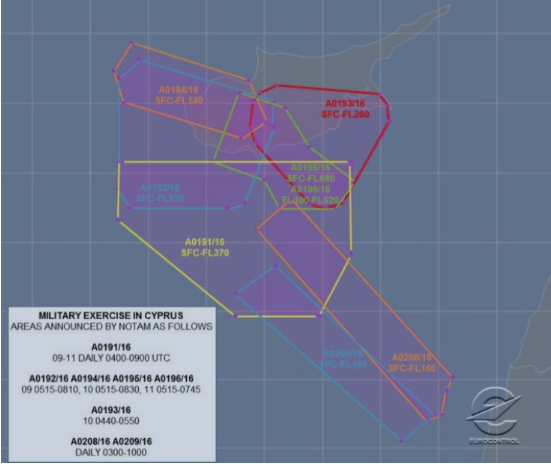
LCCC FIR/Nicosia FIR Late notification of a military exercise in LCCC ACC starting on 09/03/2016 0300 UTC until 11/03/2016 1000 UTC. Exercise areas and route closures announced by following NOTAMs:

A0191/16 through A0196/16, A0208/16 and A0209/16 for area specifications. A0215/16 through A0220/16 for the route closures.

Please see the following graphic outlining the area:

Military Exercise Cyprus

View the full International Bulletin 09MAR2016


Monday Briefing: New Overflight Map, Typhoon Melor affecting the Philippines

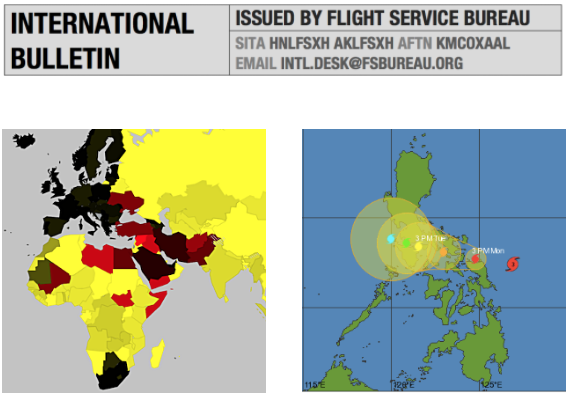
New Overflight Map 14DEC The Airline Cooperative and Flight Service Bureau have finalised the initial version of an online Overflight Permit and Security Map, showing current airspace and security warnings worldwide, together with county by country information on permit requirements. The map is available ot all AO’s at fsbureau.org/map. Read more below.

Typhoon Melor affecting the Philippines 14DEC the center of Typhoon Melor is forecast to move into the central Philippines (near southeastern Luzon) Monday evening local time as the equivalent of a Category 4 hurricane. The current forecast path indicates the Typhoon moving inland towards Legazpi City, Sorsogon City and Gubat are some of the locations. For more details visit the Joint Typhoon Warning Center (JTWC).


EGGX/Shanwick/CZQX/Gander The technical issues affecting the implementation of the RLAT/Reduced Lateral Separation tracks have reportedly been finally resolved and the first publication of the “Half Tracks” is now scheduled for today, 14DEC2015.

LFRR/Brest FIR Most sectors regulated day and night due to new software (ERATO) implementation. High delays. The worst delays are in the following sectors: LFRMZSI, LFRJ, LFRN, LFRVKWS. German departures to USA are advised to consider routing North of Brest airspace via NIK (or North of).

OAKN/Kandahar A Taliban attack took place at the airport on 08DEC, with close to 50 fatalities. The attack was a major security breach, as heavily armed militants were able to enter a fortified area supposed to have been made secure by the Afghan National Security Forces (ANSF).

The ICAO Council adopted a new tracking standard for certain international flights that requires crews to report their aircraft’s positions at least every 15 minutes. It will become effective in March 2016 and applicable 08NOV2018. The new requirement also will be formalized as Amendment 39 to Annex 6—Operation of Aircraft, Part I. Only aircraft with a maximum takeoff weight of more than 59,000 pounds and a passenger seating capacity of more than 19 are affected by the rule. Also, the requirement applies to over oceanic and other remote areas, and where air traffic service is obtaining position information greater than 15-minute intervals.

Central/South America On 10DEC2015, the U.S. Centers for Disease Control and Prevention (CDC) issued a Level 1 Travel Warning for Mexico, El Salvador, Guatemala, Panama, Brazil, Columbia, Paraguay, Suriname and Venezuela, advising travelers to protect themselves against the Zika Virus. Zika is a viral disease transmitted by the Aedes aegypti mosquito, which also carries the dengue and chikungunya viruses.

KSAN/MMTJ San Diego/Tijuana A new pedestrian bridge spanning the U.S.- Mexico border now connects KSAN/San Diego and MMTJ Tijuana. The airport terminal, called Cross Border Xpress, opened last Wednesday and will improve travel for fliers going from Tijuana to the United States.

Kxxx/United States The U.S. House of Representatives voted in support of a measure to tighten control on the Visa Waiver Program, which allows travelers of certain nationalities to enter the U.S. without a visa. Under the new measure, the U.S. will now require visas for anyone who has traveled to Iraq or Syria in the past five years. The measure requires that all countries participating in the visa waiver program share intelligence with the U.S. regarding possible extremists.

FVFA/Victoria Falls Intl A new international passenger terminal opened at Victoria Falls International Airport (FVFA/VFA) on 02DEC.

Zxxx/China Chinese officials lifted a red alert they had put in place on 7 December after heavy smog greatly reduced visibility throughout the city and increased health risks for anyone venturing outdoors. The smog was so heavy it affected operations at nearby airports.  Heavy smog is an annual occurrence in northeast China, and the problem is most severe during the winter months, when the morning fog becomes dense and power plants run at a higher rate to produce electricity for in-home heating. Because of this, you should expect similar alerts to be issued periodically throughout the remainder of the winter.

Yxxx/Australia FIR & Oceanic Changes. REF: AIC H24/14. ADS-B, GNSS and Mode S Transponder Equipment Mandates. Aircraft must be equipped with the mandatory avionics by certain dates. First Implementation date is 04FEB2016.

Cxxx/Canada Nav Canada has issued AIC 30/15 which addresses a proposal for amendment to the International Civil Aviation Organization (ICAO) Global Operational Data Link Document (GOLD) to optimize high frequency (HF) radiotelephony use in the North Atlantic (NAT) Region. The change eliminates NAT Region specific RT phraseology that has been made redundant with the availability of flight data to radio operators.

HCMM/Mogadishu Aden Adden, Somalia On the evening of 13DEC2015, African Union (AU) peacekeepers thwarted a suspected al-Shabaab attack on the Airport. The assailants, who were on speedboats, reportedly attempted to stage a seaborne attack on the facility. Heavy gunfire was reported throughout the encounter. Aden Adde International Airport has not been operational during nighttime hours since 1991. Currently, the airport and its compound host foreign embassies and delegates.

VOMM/Chennai Airport has resumed full operations after recovering from major flooding last week.


View the full International Operations Bulletin for 14DEC2015


Monday Briefing: Confusion over Crimea, Kosovo Upper Airspace reopens

Confusion over Crimea: Special Report Apr 3 : Simferopol ACC re-opened 03APR creating confusion as to who should be providing ATC service in the Crimea region. We have published a Special 6 page International Ops Notice (03/2014) “2014 Airspace and Regulatory Changes in Crimea”.

Kosovo Upper Airspace re-opens Apr 3 : After 15 years, the last remaining chunk of European airspace closed to overflying traffic in the Balkans has reopened. The KFOR sector over Kosovo became available on 03APR, with route savings immediately apparent to operators.

Kxxx/USA Operators should be aware of the new FAA ATC phraseologies effective 03APR. The FAA will implement “climb via” phraseology and procedures for departure operations consistent with existing “descend via” phraseology and procedures. “Climb via” and “descend via” are abbreviated ATC clearances that require compliance with the procedure’s lateral path, associated speed restrictions, and altitude restrictions published on the SID or STAR. Some good information at http://www.nbaa.org/ops/cns/pbn/climb-via/

LLOV/Ovda, Israel will be closed to all flights 01MAY-07MAY

DGAA/Accra, Ghana Until 23JUN, The main runway (03/21) is open daily from 0500-2300Z only; no traffic accepted outside these hours.

LFMN/Nice Change in parking procedure; if approval is granted for parking, but operator changes to another, larger aircraft, then the previous approval will be cancelled. Co-ordinate all aircraft changes with Airport Ops.

YPXM/Christmas Island has reopened after the recent Cyclone in the Indian Ocean.

OSDI/Damascus FIR – For those still overflying, Syria has closed airway L513 from BURSA to LEBOR UFN.

HSSM /Malakal, South Sudan is only accessible with permission from the government security services. This is very difficult to obtain and makes the airport effectively shut.

HSWW /Wau, South Sudan is open without any specific additional permission being required.

MGGT/Guatemala City ChevronTexaco, for any fueling on the east and military ramps from 0900-1600 LT, requires a minimum of 24 hours’ notice.

HLLS/Sebha, Libya remains closed until 07APR.

CAA Closures. Myanamar has an extended closure due to public holidays from 12-21APR. The Chinese CAA are celebrating National Tomb-Sweeping Day on 07APR.

UK Charter Permits. Significant changes to the approval process for Landing Permits for the UK will take effect on 06 APR. CAA will take over the responsibility for issuing approvals from the Department for Transport (DFT). Also, previously, a cabotage objection could be raised by a group of UK Charter Operators – this is removed. A fee is likely to be charged by the CAA for permits from this point forward.

Turkey. Effective 10APR2014 Visa on Arrival is no longer available at Turkish Airports. Visitors must apply online through https://www.evisa.gov.tr/en/ for an e-Visa.

Australia. A reminder to all operators who are not ADS-B equipped, of the restrictions when operating into Australian Airspace effective from 15DEC13. If you not ADS-B equipped you must file with CASA, a Form 208 exemption application 14 days in advance of proposed operations into Australian Airspace. Then operations will be confined to the SSR radar coverage area extending from 200 nm north of Cairns down the East coast to 200 nm west of Adelaide. This is commonly referred to as the J curve. If you intend operating into the Brisbane or Melbourne FIRs from the west and north west of Australia, and are not ADB-B equipped you will be required to operate at FL290 or below.


Monday Briefing: ATC Strikes, Australia ADS-B requirements

Wednesday and Thursday – ATC Strikes Jan 28: Full details of ATC strike action across Europe are now clear and the impact is widespread. Countries affected are France, Italy, Greece, Austria, Slovakia, Czech, Hungary, Malta, Cyprus and Portugal. Both 29JAN and 30JAN have a variety of airspace closures and restrictions; read details below.

Australia ADS-B requirements Jan 28 : All operators who are not ADS-B equipped, have restrictions when operating into Australian Airspace effective since 15DEC13. Operations will be confined to the SSR radar coverage area extending from 200 nm north of Cairns down the East coast to 200 nm west of Adelaide. Non compliant operators must fly at FL290 or below. See Permits and Regulatory news below for further information.

URSS/Sochi has a new Volmet in action from 23JAN on HF 12870 and 13310, with reports for Sochi, Rostov, Krasnodar, Anapa, M Vody and Stavropol.

AGGH/Honiara, Solomon Islands Airport is closed until further notice due B737 landing accident. No injuries but aircraft clearing will take some time. As of last report, airport personnel were in the process of clearing the aircraft and the 13 tons of cargo it was carrying off the runway into a nearby hangar, at which point operations at the airport will resume.

Kxxx/Washington Area A temporary flight restriction (TFR), outlined in FDC Notam 4/2985, will be in place on 28JAN 2000-2300 local for aircraft flying into or out of the Washington, D.C. area. Issued as part of security measures for U.S. President Barack Obama’s State of the Union address, defines the affected area as the boundaries of the current D.C. flight restricted Zone (FRZ) and will prohibit general aviation operations at Washington Reagan National Airport (DCA), Washington Executive/Hyde Field (W32), Potomac Airfield (VKX) and College Park Airport (CGS).

Europe ATC Strikes: ATC and Transport Unions Multiple Strike Action for 29JAN and 30JAN. On 29JAN Portugal 0700-0900Z and 1400-1600Z; No arrivals/departures and restricted overflights. Malta 0500-1700Z. Italy 1200-1600Z, Bulgaria 0500-1500Z, Cyprus 1300-1700Z. 30JAN France – entire day from 1800Z day before to 0500Z day after, Czech Rep 0600-1800Z, Austria, Slovakia and Hungary 0800-1000Z. Enroute ACC’s affected are generally operating during these periods with strictly limited traffic levels managed by slots. Greece 0700-100Z and Italy 1400-1415Z. Inbound Intercontinental flights will be accepted into Italy regardless of strike action. Germany cancelled all action, and Spain is not participating. For a full briefing and more up to date info refer to Eurocontrol NOP.

HEMM/Mersa Matruh, Egypt will close for 5 months from 10FEB for runway reconstruction.

HTxx/Tanzania ICAO codes – update to last weeks news, thanks to Doug at Emirates for this info. HTDA will in fact remain valid for Dar Es Salaam. Zanzibar has changed as planned to HTAK.

OIBK/Kish Island, Iran has fuel restrictions in place due to shortage until 10FEB. Maximum 800USG per aircraft allowed.

NFFF/Tontouta New Caledonia reporting ATC strike action from 27JAN-31JAN. Not clear if this is related to European action.

HRYR/Kigali, Rwanda is closed 0000-0500Z until 02FEB due runway maintenance.

MROC/San Jose Runway will be closed from 0900-1000 on 06FEB.

EPWW/Warsaw ACC Significant restrictions in place for the next few months due to new system. Overall Enroute capacity down to 25%.

UTAx/Turkmenistan ACC New requirement to contact Turkmenistan ATC minimum 150km (75nm) from the FIR boundary for all flights entering Ashgabat, Turkmenbashi, Turkmenabat ACC Airspace.

HKNA/Nairobi ACC Upgrading Area Control VHF service, with many frequencies out of service including 121.3, 125.3 and 118.5 – operators advised to use HF instead until 30JAN.

Hong Kong CAA closed 31JAN-03FEB for New Year Celebrations, request permits early, also for period after closure. Chinese regulatory offices will be closed from 31JAN until 06FEB.

Russia New requirements for API and PNR data for Airlines operating both scheduled and non-scheduled flights in effect 01DEC. API data should be transmitted 15 mins prior departure to SITA MOWRU8X. NOTAM A2345/13 and AIC 04/13.