Hong Kong capacity problems

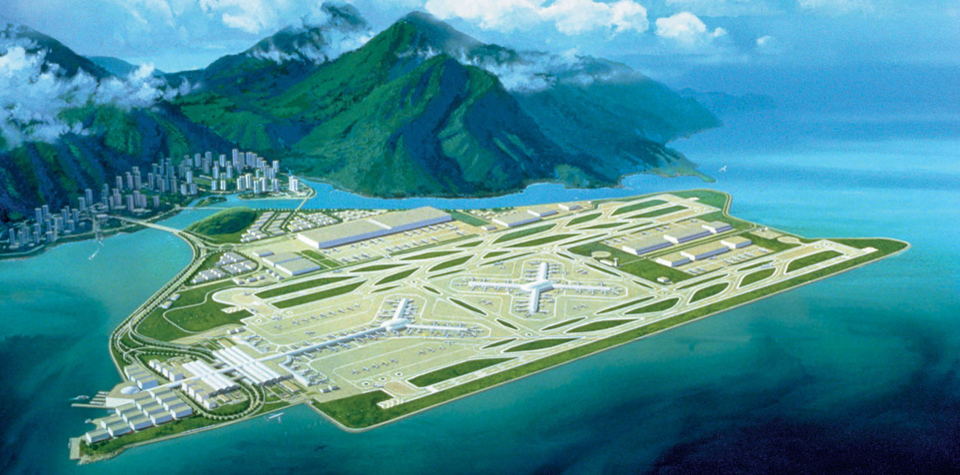
During this year, the Hong Kong CAA has issued a couple of warnings to operators to stick carefully to their allocated slots, but it’s not making much of a difference to operations there. We have this report from a reader, who says:

  • The slot allocation is troublesome. If you’re lucky, you will obtain a slot within a day or so, but it is unlikely to be for the time that you want.
  • Weekends are busier times and slot requests are often denied, making operations difficult.
  • The parking allocation in front of the BAC ramp changed as well, making it more limiting – they established a 3m separation rule.
  • Outlying positions allow for Pax services, but you still require push back and there are only 2 spots from where you can depart.
  • HKBAC is obtaining their own approval now for towing.

If you have any experiences to share, let us know.


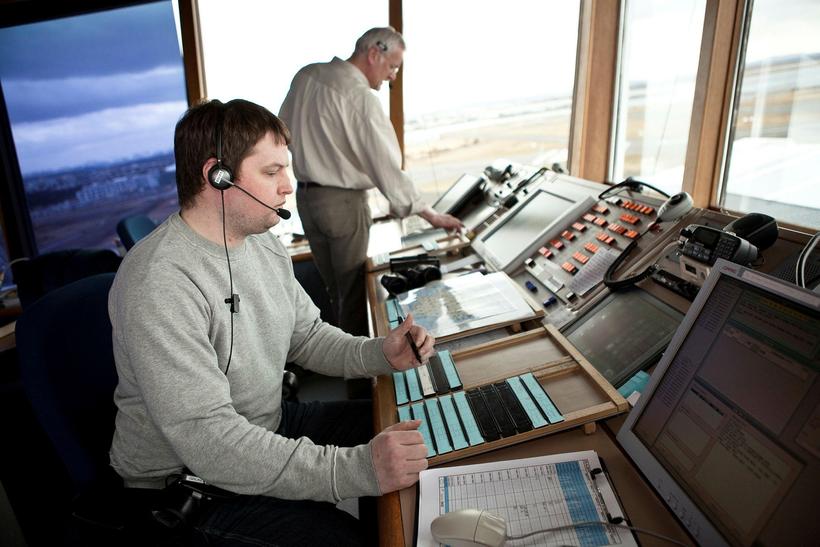
Iceland ATC strike bigger than ever

We had some really positive hints at a resolution of the Iceland ATC strike last week, but it’s not over yet – by any measure. Today sees another long list of airspace and airport closures. Oceanic Eastbound, Westbound and landing traffic all affected.

BIKF/KEFLAVIK A0454/16 06JUL 1007Z

(NOTAMR A0453/16) – DUE TO STAFF SHORTAGE BIKF TWR SERVICE LIMITED
TO SCHEDULED COMMERCIAL AND INTERNATIONAL
FLIGHTS, AMBULANCE AND EMERGENCY  FLIGHTS.
NO TOUCH AND GOES OR LOW APPROACHES FOR VFR
TRAINING FLIGHTS, ONLY DEPARTURE AND ARRIVAL.
TWR BIKF SERVICE LIMITED TO AMBULANCE AND
EMERGENCY FLIGHTS ONLY DURING THE FOLLOWING
HOURS: 09:00-09:30, 11:30-12:00 AND 14:00-14:30. 06 JUL 10:05 2016 UNTIL 06JUL 21:00 2016.

BIRD/REYKJAVIK OACC A0452/16 05JUL 2146Z

(NOTAMR A0451/16) – DUE TO STAFF SHORTAGE IN REYKJAVIK OACC WESTBOUND
TFC PLANNING TO ENTER BIRD FROM ENSV VIA GUNPA,
VALDI, IPTON, INGAL, ISVIG AND EGPX VIA LIRKI, GONUT,
OLKER, MATIK AND RATSU AND THEN PROCEEDING INTO EGGX
OR CZQX SHALL REMAIN SOUTH OF BIRD CTA. 06 JUL 11:00 2016 UNTIL 06 JUL 20:00 2016.

BIRD/REYKJAVIK A0450/16 05JUL 1518Z

– DUE TO STAFF SHORTAGE IN REYKJAVIK CENTRE,
OPERATORS SHALL FILE TO COMPLY WITH THE FOLLOWING:
1. EASTBOUND TFC WILL NOT BE ACCEPTED FROM CZQX AND
EGGX EXCEPT  TRAFFIC WITH DESTINATION IN ICELAND,
SCANDINAVIA, BALTIC STATES AND RUSSIA.
2. EASTBOUND TRAFFIC FROM AERODROMES EAST OF 105W
WITH  DESTINATIONS IN THE MIDDLE EAST SHALL REMAIN CLEAR OF
BIRD CTA.
OPERATORS ARE URGED TO KEEP REQUESTS FOR LEVEL AND
SPEED AMENDMENTS WITHIN BIRD CTA TO A MINIMUM.
FOR FURTHER INFORMATION CALL REYKJAVIK SHIFT
MANAGER +354 424 4141. 06 JUL 02:00 2016 UNTIL 06 JUL 08:00 2016.

BIRD/REYKJAVIK A0452/16 05JUL 2146Z

(NOTAMR A0451/16) – DUE TO STAFF SHORTAGE IN REYKJAVIK OACC WESTBOUND
TFC PLANNING TO ENTER BIRD FROM ENSV VIA GUNPA,
VALDI, IPTON, INGAL, ISVIG AND EGPX VIA LIRKI, GONUT,
OLKER, MATIK AND RATSU AND THEN PROCEEDING INTO EGGX
OR CZQX SHALL REMAIN SOUTH OF BIRD CTA. 06 JUL 11:00 2016 UNTIL 06 JUL 20:00 2016.


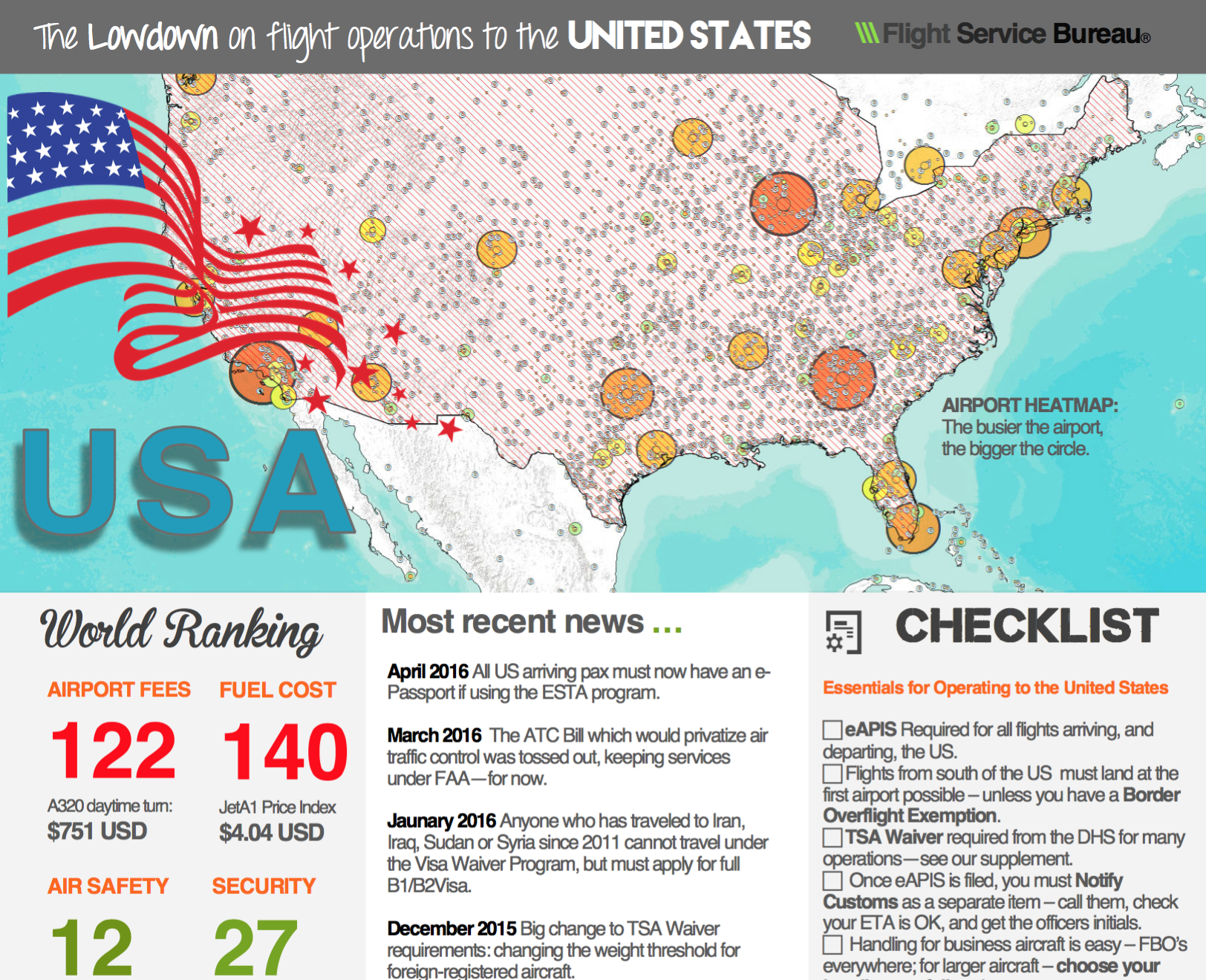
USA – the Lowdown on Flight Ops

We just published our latest Lowdown – this one is for the USA. Heaps of good information on eAPIS, new TSA Waiver rules, Border Overflight Exemption, Customs Notifications, Importation, Special Route Clearances, ESTA, Visas, and Special Flight Authorizations.

You can get these Lowdowns by joining OPSGROUP – you can get a single or team membership. If you’d like the US Lowdown, we’ll gladly send a copy your way, just email us.


Berlin’s Air Corridors – still alive?

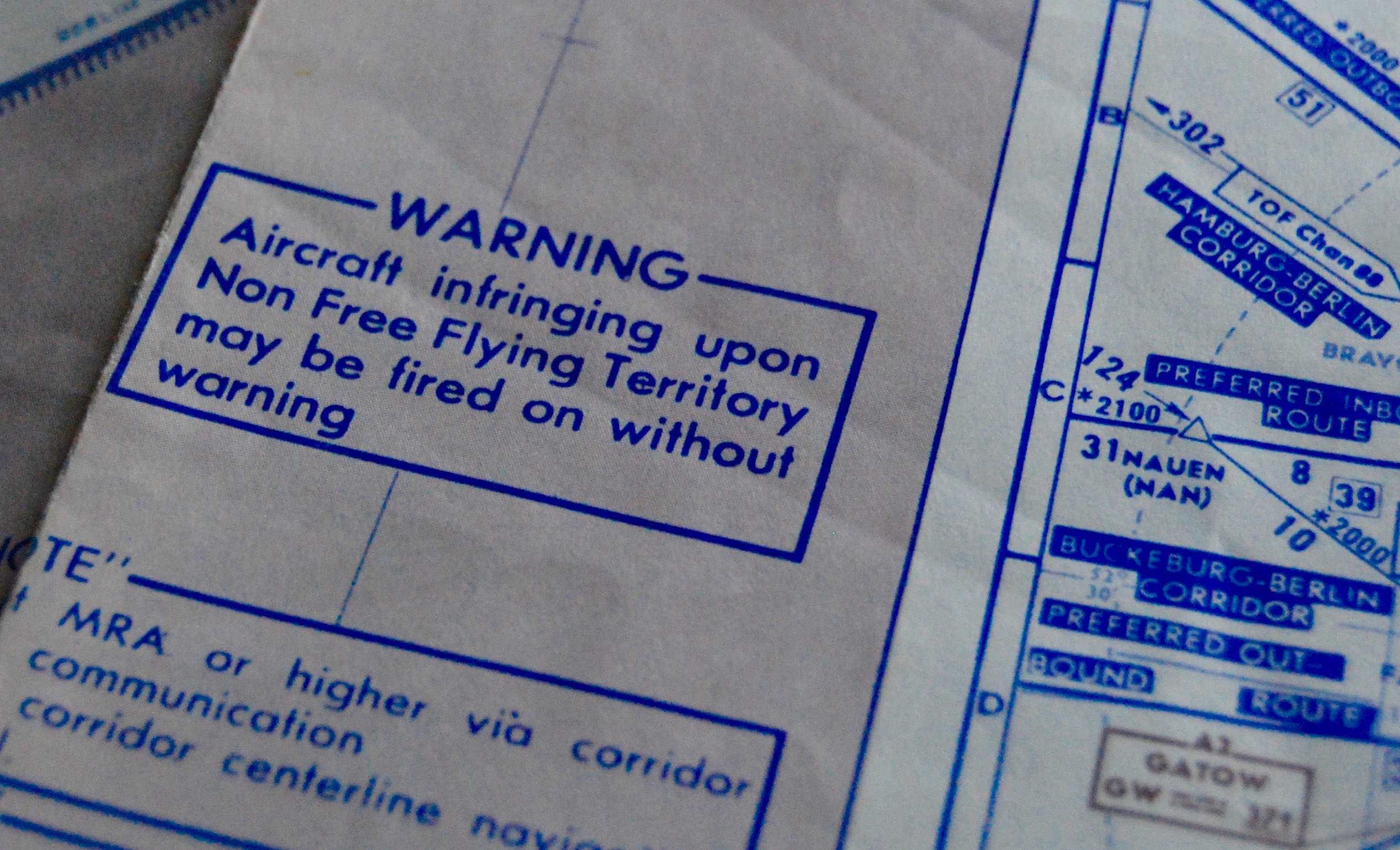
It’s a generation ago, and the airway chart landscape is unrecognisable today. For 40 years however, there were only three tiny corridors that allowed a flight into East Germany. In terms of International Procedures, this was one that you really didn’t want to get wrong.

Looking back, it’s fascinating to see the restrictions that were placed on international operators flying into Germany. The warnings are printed in bold. Aircraft will be fired upon. And that threat from the Soviet Union was real – most of us recall the shooting down of Korean 007 in the Sea of Japan in 1983 – and, lesser known, another Korean flight – Korean 902 – over Murmansk in 1978.

Assuming you kept to centreline, the Soviet authorities limited overflight to FL95, and if there was an aircraft in front of you, even a turboprop, you slowed down to follow; no overtaking was allowed.

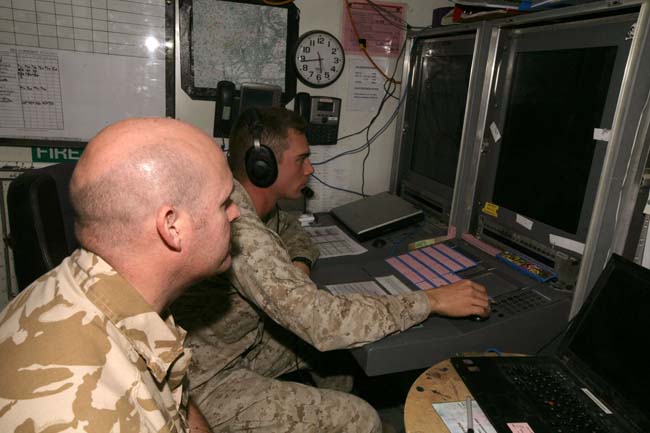
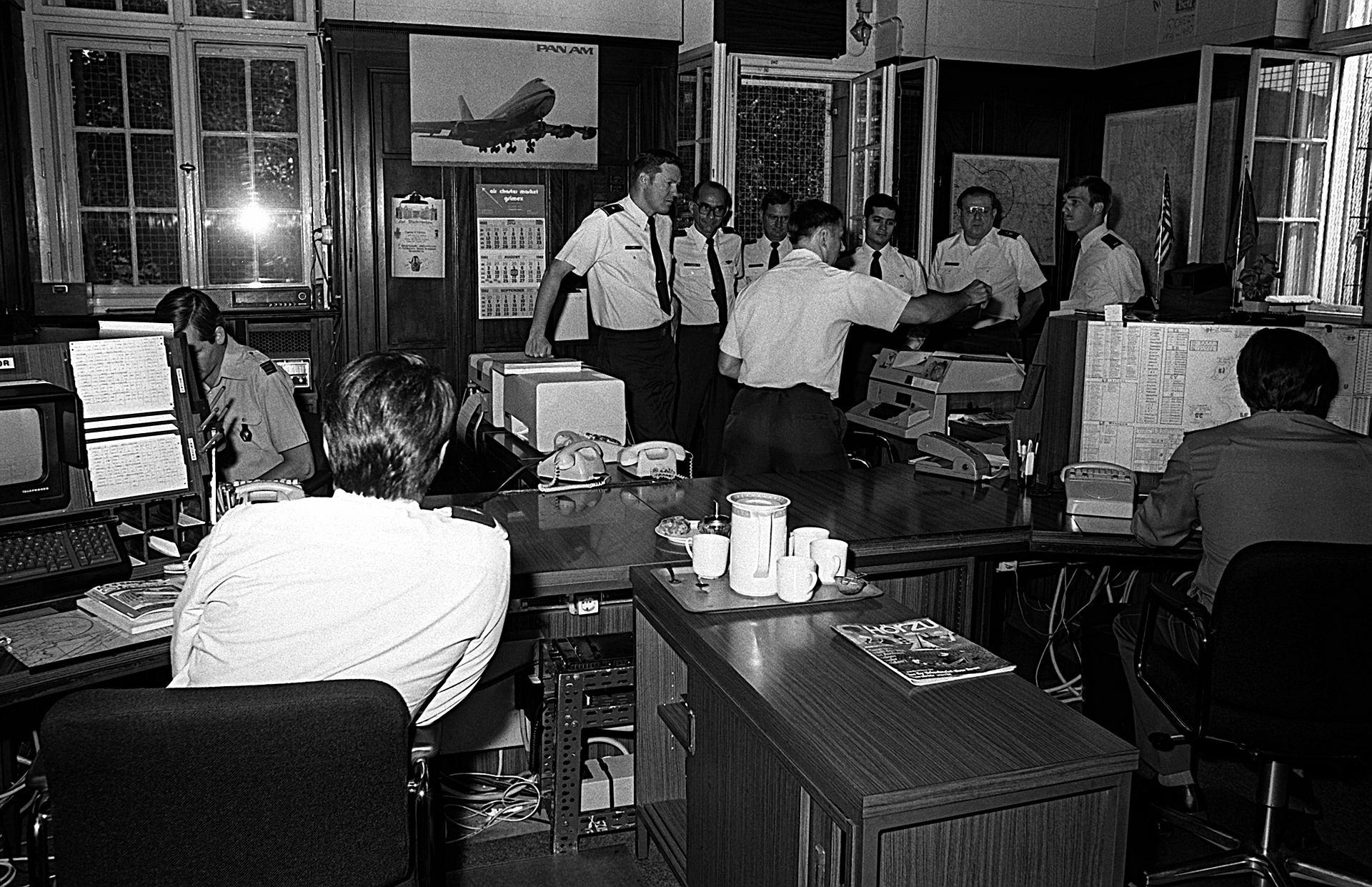
In practice, therefore, the centre corridor was the most used, because it was the shortest and limited the time restricted to FL95. Traffic was controlled by the Berlin Air Route Traffic Control Centre (BARTCC), and monitored by these guys at the Berlin Air Safety Centre – who issued the overflight permits required.

Berlin_Air_Safety_Center_DF-SN-83-08062

A request for an overflight permit for East Germany resulted in one of three outcomes:

  • Permission Granted, Safety of Flight Guaranteed
  • Permission Granted, Safety of Flight Not Guaranteed
  • Permission Denied

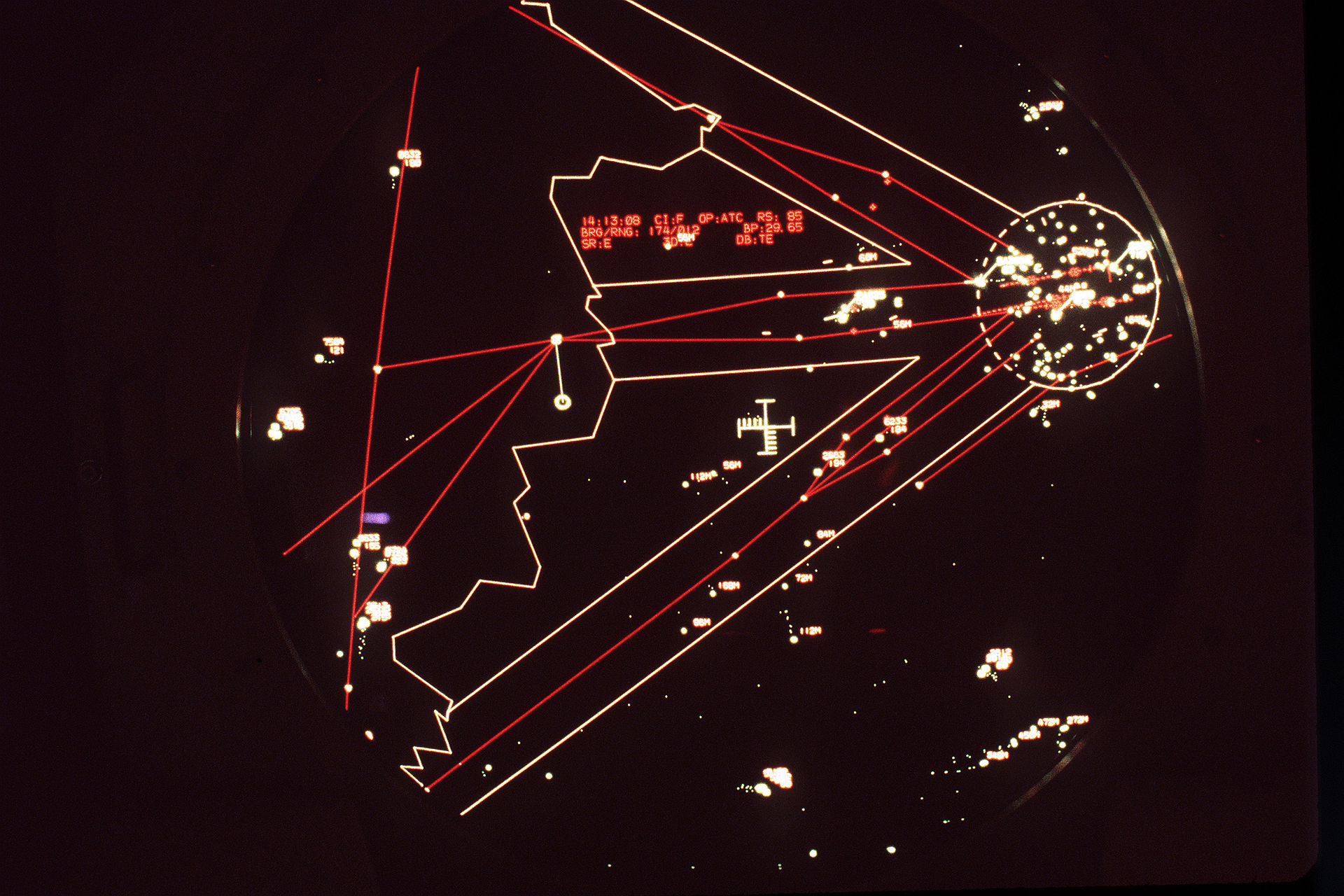
Radar coverage from the Berlin ATC Centre is shown below. In 1952, an Air France flight from Frankfurt to Berlin, operated by a DC-4 came under sustained attack from two Soviet MiG 15 fighters while passing through one of the corridors. The attack damaged the aircraft severely, and the PIC made an emergency landing at Tempelhof with two engines shut down. The Soviet military authorities claimed the Air France plane was outside the air corridor at the time of attack.

Bild-LuftkorridoreBerlin1989

Berlin_Air_Route_Traffic_Control_Center,_1987.JPEG


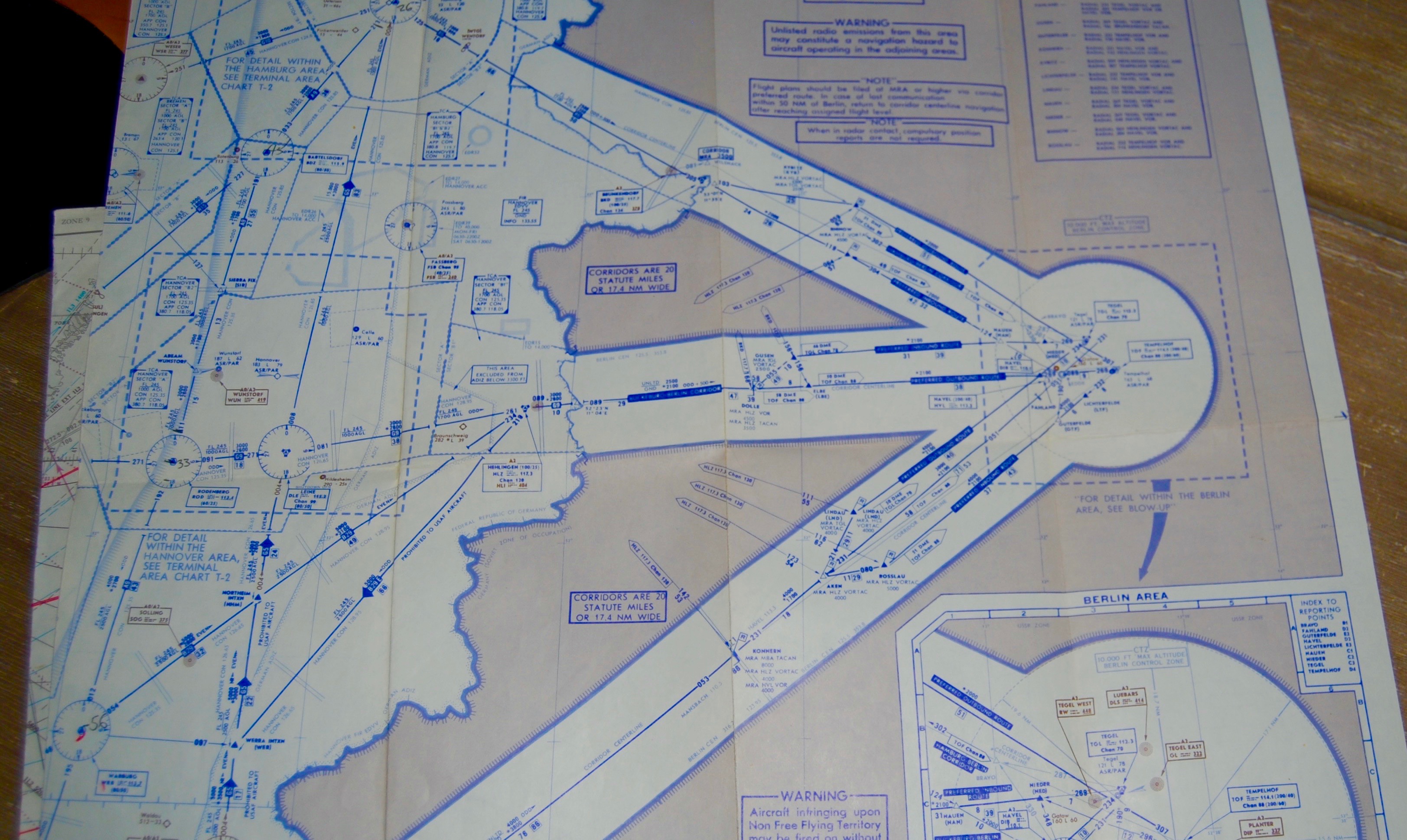
This chart from our own archives shows the Airways structure in 1970.

Chart
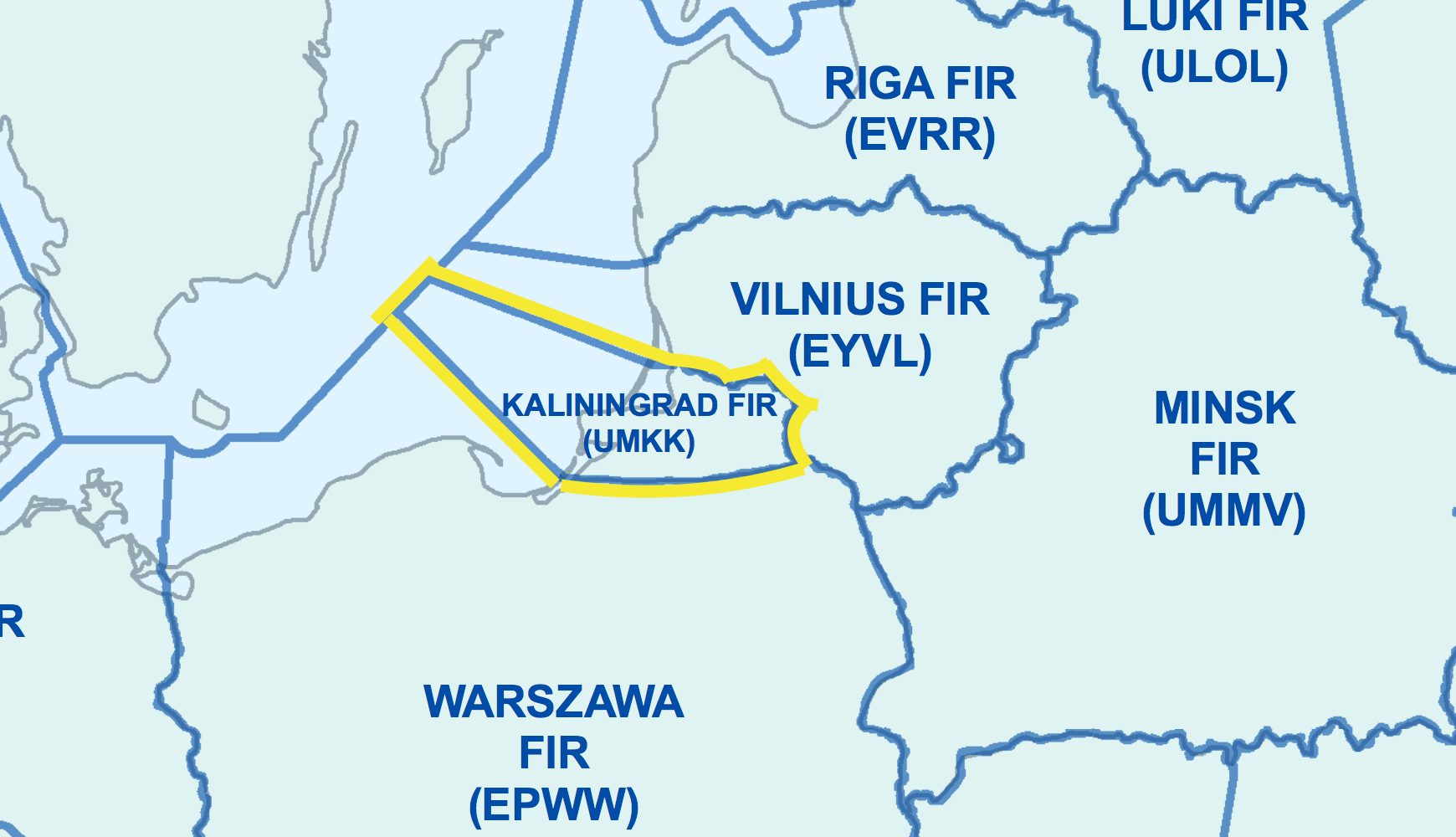
And so to today. Long forgotten restrictions of the past, right? Well, not really. We only have to look a little further north-east, about 500km – and we find the Kaliningrad FIR – in some respects an ongoing relic from the Cold War.

Kaliningrad FIR Map


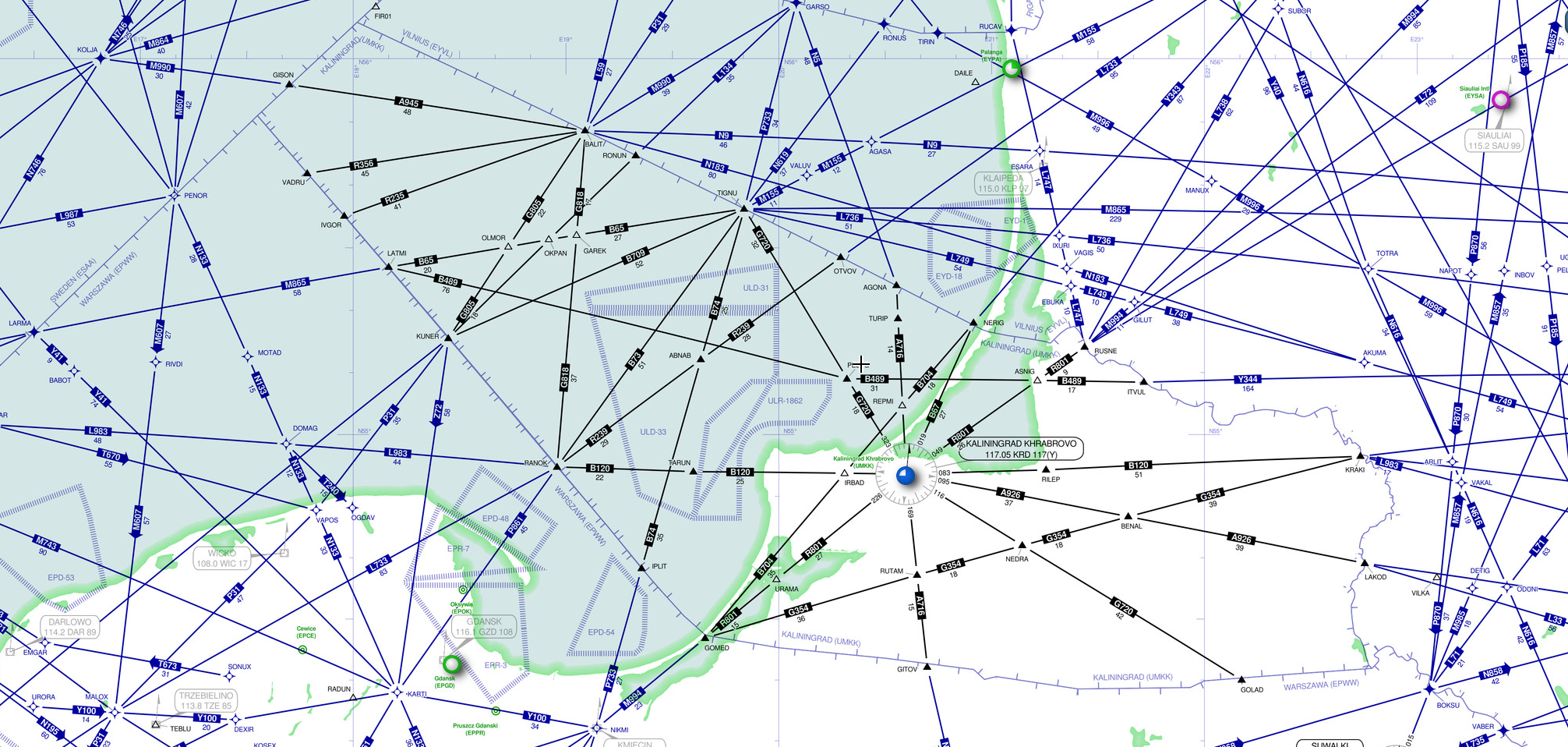
It sits neatly into the Eurocontrol Upper Airspace Map, but in practice, it doesn’t fit into the European ATC picture quite so comfortably. If you squint closely at the skyvector chart for the area, you’ll see that the airways in the Kaliningrad FIR are black – and everywhere else is blue.

Kaliningrad Routes

This is because, first of all, prior permission is required from Russia to overfly the FIR, as Kaliningrad – until 1945 part of Germany –  is an “Oblast” of the Russian Federation. This permission must be obtained from Moscow at least 72 hours prior to flight using Form N, and on approval, is valid for 48 hours.

Looking more closely, you’ll see that there aren’t a lot of useful routes – and they don’t line up with the rest of the system. Few airlines, and even fewer private flights, operate through this airspace. Your most likely route north-south will take you to BOKSU – squeezed in between Kaliningrad and Belarus – not as restrictive, but still requiring prior permission.


Similarities between Kaliningrad and Berlin end there, but there are enough to be of interest to the international operator.


Midweek Briefing 29JUN: Santa Maria Oceanic Strike, US Entry Requirements

Santa Maria Strike: Four Routes 29JUN Santa Maria Oceanic has published four special routes for use during the upcoming “July Friday Strike Series” ATC Industrial Action. Read the article and then Summer of Strikes.

New US Entry Requirements 29JUN The US has updated entry processing through ESTA (the online visa system for countries using the Visa Waiver Program). Read the article.


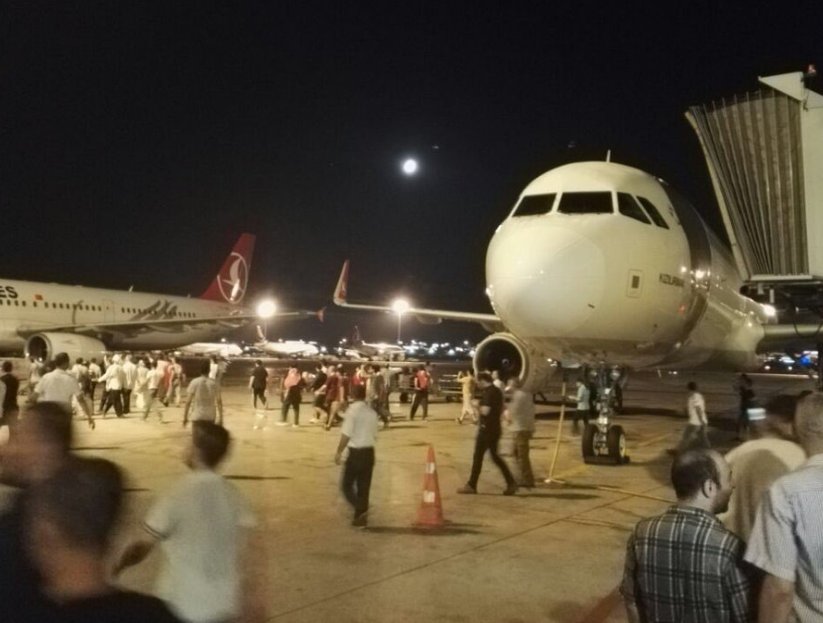
LTBA/Istanbul has reopened to traffic after a terrorist attack on 28JUN. 40 people were killed in a series of explosions and gunfire at the International terminal on Tuesday evening.

UMZZ/Belarus will undergo a re-evaluation of its currency and banks will be closed to the public between 30JUN and 01JUL, if operating to Minsk you should ensure you have sufficient cash available for those days.

EGZZ/UK Much has been written about Britain’s departure from Europe this week (and we’re talking Brexit, not football), but if you’re having trouble figuring out how this will affect you as an operator, that might be because it won’t. Read the article.

LGZZ/Greek Islands Now that summer is here in Europe, the annual capacity challenge at Greek Islands is most acute on weekends, expect healthy slot delays if operating to LGIR (Iraklion) LGKP (Karpathos) LGMK (Mikonos) LGZA (Zakinthos) LGSR (Santorini) LGSK (Skiathos) or LGSA (Chania).

VHHH/Hong Kong The CAD issued a reminder to operators this week that the airport is under strain, and slots issued must be strictly adhered to. It would seem that the Slot Adherence procedure issued earlier in the year isn’t really working. Any local operators have feedback? Let us know.

EFRO/Rovaniemi has no Jet A1 available from until July.

LPPS/Porto Santo is also out of Jet A1 until 01JUL.

DAAA/Algeria New fax/phone number for the ACC (Area Control) in Algiers: +213 (0)21 67 49 27until 23JUL.

AYZZ/Papua New Guinea Reports of civil unrest, student demonstrations across Papua New Guinea started in May 2016 and are ongoing. There have been violent clashes between students, other groups and the police in Port Moresby, Lae and the Highlands.

PWAK/Wake Island has advised its High Loader is out of action until later in the year, so for large aircraft like B767 upwards, no offload capability exists for cargo.

EGZZ/Scotland (Will we need a new ICAO code soon?) Glasgow ATC – at both EGPK and EGPF – has sporadic closures overnight at present due to staffing issues. Keep an eye on Notams.

WAAF/Ujung Pandang has some radar outages affecting high-level overflights, optimum levels may not be available.

LPPO/Santa Maria Oceanic has published four special routes for use during the upcoming “July Friday Strike Series” ATC Industrial Action. The Strike Time Period is : 0700-0900Z, during which time only these four routes will be accepted. -ROUTE A- 45N020W 40N030W 37N040W -ROUTE B- DETOX 39N020W 36N030W 34N040W -ROUTE C- LUTAK 36N020W 33N030W 29N040W -ROUTE D- ULTEM 27N040W

LIZZ/Italy We have been notified of possible ATC industrial action on 23JUL which was previously scheduled on 05JUL. Details and participation of relevant ACCs are as follows: National strike (ACCs and airports) 0800-1600 UTC. Local strike at LIRA – Ciampino 0800-1600 UTC.

VCBI/Colombo, Sri Lanka There was industrial action yesterday, 28JUN, by Immigration Officials, which may continue. Flight delays possible.

LEZZ/Spain There was a strike threatened by Apron Controllers at LEMD/Madrid but that was cancelled on Monday.

LPZZ/Portugal The seven unions of NAV Portugal sent a pre-notice for an industrial action for ATC and non-ATC personnel, during two hours daily on: 30JUN and 8/15/22/29JUL.

KATL/Atlanta Upgrades on the airport have officially started, which will include a new runway, concourse and hotel.

View the full International Bulletin 29JUN2016


US Entry requirements updated

The US has updated entry processing through ESTA (the online visa system for countries using the Visa Waiver Program).

The system now reflects the designation of Somalia, Libya and Yemen as countries of concern, a change made under the Visa Waiver Program Improvement and Terrorist Travel Prevention Act of 2015.

In addition to the country-specific travel restrictions, a request for ESTA applicants’ Global Entry Program Numbers was also added.

The Visa Waiver Program allows foreign nationals from designated countries to enter the United States for business or tourism for up to 90 days without the need to obtain a B-1/B-2 visitor visa from a U.S. consulate. VWP travellers must register and obtain approval to travel from the ESTA and carry an e-passport.


Santa Maria Strike: Four Routes

Update: 1730Z/Weds – we have received notification that Portuguese Industrial action may be being withdrawn. We will update and confirm when certain.

LPPO/Santa Maria Oceanic has published four special routes for use during the upcoming “July Friday Strike Series” ATC Industrial Action.

If you happen to be crossing the LPPO FIR on a Friday morning in July, then expect a hefty reroute if you didn’t file per the plan.

The Strike Time Period is : 0700-0900Z, during which time only these four routes will be accepted.

ROUTE A– 45N020W 40N030W 37N040W

ROUTE B– DETOX 39N020W 36N030W 34N040W

ROUTE C– LUTAK 36N020W 33N030W 29N040W

ROUTE D– ULTEM 27N040W

The cutoff time for these routes is when you enter the LPPO/Santa Maria FIR

Traffic entering prior to 0700Z: unrestricted

Traffic entering the FIR between 0700-0900Z: Must file and fly one of the four Routes above.

Traffic entering the FIR after 0900Z: unrestricted


Summer of ATC Strikes: This weeks update

European Air Traffic Controllers are striking in a fight against changes emanating from labour reform and the Single European Sky initiative. Curiously, Greece – normally a big fan of ATC strikes during the summer – has remained off the radar.

Here’s the latest, and it’s a growing list:

France
– Ongoing ATC Strikes – the latest ended on 06JUL at 0400Z. Nothing else on the horizon – for now.
– French overseas territories are also included in these strikes – so Tahiti, New Caledonia, Martinique, Guadeloupe have all joined in the action when it takes place.

Italy
– Strike announced for 23JUL, affecting Area Control Centre’s and Airports in Italy. Normally Italian strikes permit overflying traffic without restriction.

Iceland
– Ongoing sporadic strike action affecting BIKF, BIRK airports, and BIRD Oceanic FIR. Occasional entire closures of the airspace except for Emergency and scheduled flights. Eastbound Traffic from the US/Canada to Europe not accepted during these closures unless destination is in Scandinavia, the Baltics, or Russia.
– Since first week of July, westbound traffic is also not accepted in BIRD during strike periods. Check BIRD Notams.

Portugal
– Strikes announced for every Friday in July were cancelled last week

We’ll keep this page updated as we get updates.


Midweek Briefing 22JUN: Iceland ATC strike – end in sight, Israel FPL changes

Iceland ATC strike – end in sight 22JUN Operators on both sides of the Atlantic have been frustrated over the last 6 weeks with continual sporadic ATC Industrial action. And end may be in sight, but in the meantime keep a close eye on BIRK, BIKF and BIRD Notams. Read the article.

FPL changes: Israel 22JUN Current Flight Planning procedures for flights across Europe from Israel will change in light of a new agreement signed between Israel and Eurocontrol. Read the article.


LFZZ/France ATC Strike Number 9 gets underway today until 24JUN at 0400Z, usual disruption and restrictions apply. Avoid France where possible. NOTAM F1171/16 refers.

EGGX/Shanwick is having an 80’s party on the 28th of June at 1600Z. For engineering work, all the new technology is being taken offline for three hours, so no CPDLC, ADS-C or OCL. Instead we have Voice Reports, HF, Manual Clearance Requests (123.95 or 127.65), and so on; just like the good old days. When you hit 30W log on to Gander manually.

UMZZ/Belarus The Minsk FIR has updated its table of cruising levels and altitudes below Transition; view the AIC.

Gambia The UK FCO issued updated travel advice for The Gambia : “Demonstrations took place in April and May 2016 in Banjul. Demonstrations could occur at any time in any part of the country prior to presidential elections planned for 01DEC. You should be vigilant, avoid all demonstrations”

LPZZ/Portugal is joining the International ATC Strike Club and will begin with industrial action, for two hours daily on: June 30th, and July 8th,15th, 22nd and 29th.

KCXO/Houston Regional will be opening a new customs facility mid July. KCXO serves the Metro-Houston area and is 46 miles outside of town. The new CBP facility adds more choice to international operators over the already saturated Houston area airports.

KZZZ/United States The U.S. Navy has scrubbed the planned military GPS interference testing across the U.S. Southwest that was supposed to happen this month.

LWSS/Skopje is implementing Free Route Airspace in the Skopje ACC above FL245, effective 23JUN. FRA is available H24 with DCT limit unlimited. The ATS network above FL245 is withdrawn. Additional info is available in the Republic of Macedonia AIP AMD 58/16. New RAD measures can be found in the increment file and will become part of Annex 4 on AIRAC 1608.

LWZZ/Macedonia Late on 20JUN, tens of thousands of anti-government protesters gathered in central Skopje, Macedonia’s capital, to conduct another demonstration. The protesters gathered outside the Special Prosecution building before then marching to the Ministry of Justice building, where they broke some of its windows and threw red paint at its exterior.

EZZZ/Scandinavia Another Free Route Airspace update is happening in the two Functional Airspace Blocks NEFAB and DK/SE FAB. NEFRA Phase 1 will be implemented as of AIRAC 1607 on 23JUN, to implement H24 cross border Free Route Airspace between DK-SE FAB and NEFAB, except Norway, above FL285. ATS routes will be kept. Norway plans to implement cross-border Free Route Airspace spring 2017.

CYZZ/Canada has introduced “No Drone Zones” around airports that includes fines for offenders caught operating drones in the restricted areas. They are also drafting new legislation to strengthen rules regarding drone operations.

LEMD/Madrid may have industrial action on 28JUN, the Apron controllers are making noises about a strike. Not confirmed.

WAZZ/Indonesia FIR Ujung Pandang FIR has a couple of radar outages from 19-27JUN. Reroutes or delays are not likely, but strong potential for lower than optimum Flight Levels.

HECC/Cairo FIR If for some reason you are operating flights to or from Libya, then A: You’re probably not reading this bulletin carefully enough, and B: Be aware that you are required to obtain PPR from  Egypt via AFTN to HECAYNYX, at least 48 hours before the flight, in order to overfly Cairo FIR.

EGAA/Belfast ILS 25 out of service along with other ongoing runway and taxiway closures until 11AUG16. Please check EGAA NOTAM’s for specific closures.

EGLF/Farnborough Temporary restricted airspace will be in effect for the annual Farnborough Airshow 16-17JUL. AIC M 033/2016.

France The French authorities have extended the document checks at their borders, these measures will apply to all airports in France and also to Basel airport. Especially during the period of the European Football Championships, passengers travelling to/ from French airports are asked to ensure they have a valid identity document (passport or identity card) with them whilst travelling. A drivers license is not an acceptable document.

VTBB/Bangkok FIR Monsoon season runs July-September. Big potential for holding and airport closures in the region, taking extra fuel is recommended.

OEZZ/Saudi Arabia FIR is introducing new Navigation Charges on 01JUL. All the maths is here.

LSZA/Lugano will close 10-19OCT due to heavy maintenance work on the main runway. No traffic will be able to operate. The airport operator has said 20OCT should be the reopening day but risk that this may be extended.

WMZZ/Malaysia Following a directive by the Malaysian Immigration Department, all foreign nationals travelling on all domestic flights will be required to produce passports upon passing through Immigration control, effective immediately.

Azerbaijan An online e-visa issuing system, called ASAN Visa, will be established that should streamline the visa application process. Eligible foreign nationals will be able to obtain supporting documents, submit their visa applications and receive an e-visa within three days of submission through the portal. The list of eligible nationals is expected to be available soon on the Foreign Ministry website.

EGPK/Prestwick has ongoing overnight closures due to ATC staffing problems, keep an eye on NOTAMs.

EIDW/Dublin will closed for 15 minutes at 1500Z on 23JUN due to a VIP departure.

NWWW/New Caledonia The South Pacific is not exempt from ATC strikes either; overnight closure of the NWWW airspace means no enroute traffic accepted in the FIR tonight – and sporadically ongoing. Note that the Fire Service also has reduced RFF category at specific times. Check Notams.

SKED/Bogota FIR NOTAM of the month award: Colombia Notam A1947 issued on 17JUN. Be aware of the potential for your Cabin Crew to request a change to the SID from ATC, unbeknownst to you. In full: “CHANGES TO STANDAR (sic) INSTRUMENT DEPARTURE (SID) COULD BE DONE BY RADIOTELEPHONY BETWEEN CABIN CREW AND THE CORRESPONDING ATS DEPARTMENT WHILE COMMUNICATION INTERCHANGE, IN ACCORDANCE WITH AERODROME OPERATIONS REF. AIP ENR 1.10”.

We actually have no idea what they mean. Let us know, and keep an eye out for those sneaky flight attendants.

LEPA/Palma has a bunch of outages, and runway and taxiway closures at present that will create restrictions and delays. Take a close look at your arrival and dep times before operating.

Suriname Immunisation checks for Yellow Fever are being carried out throughout June at all border check points, ports and international airports in Suriname; make sure you have a valid yellow fever certificate if required.

RJZZ/Japan On 22JUN heavy rains caused building damage and fatalities in southwestern Japan. At least six people died, as a result of the rain and mudslides across the island of Kyushu. Emergency personnel evacuated several hundred people due to the threat of further mudslides.

Uzbekistan has increased security due to a major summit, from 23-34JUN which may result in changes to flight departures and lengthy check in and security clearance at airports across the county.

View the full International Bulletin 22JUN2016

Israel moves closer to Eurocontrol

Israel has signed an agreement with Eurocontrol to work more closely together in flight planning.

Air traffic between Israel and Europe has been growing at over 9% a year for the past three years. This growth poses ongoing challenges to international civil aviation and underlines the need to improve ties between regions in order to ensure flight efficiency and safety in airspace and airports that are growing more crowded every year.

Israel is now the second country to sign the “Eurocontrol Comprehensive Agreement”.

What does this mean for operators?

The existing process is complex and multi-step: flights that transit Europe from Israel require filing at least 3 hours in advance to the Tel Aviv Coordination Centre, who then liaise with Eurocontrol to verify that the routing is RAD compliant. Changes are often then made by Eurocontrol and back down the line to the operator.

The implementation date is to be confirmed, but FPL filing out of Israel will now be the same as for any other European country, with immediate ACK from Eurocontrol.

Other benefits of this agreement are improved crisis management, more efficient traffic flows between Israel and Europe, more predictable day to day operations, improved safety and possibly airspace redesign and management.


Iceland ATC strike – a solution

The strike goes on … but there may be a solution by Friday this week. Icelandic MPs passed a bill forcing a resolution to the ongoing pay dispute with air traffic controllers. The new law states that the air traffic controllers’ union and the airport operator Isavia have until Friday to reach an agreement – failing this, the matter be sent to a court of arbitration for a final resolution.

In the interim, sporadic airport closures at BIKF/Keflavik and BIRK/Reykjavik continue, as do general airspace restrictions in the BIRD FIR. If you can avoid a stop in Iceland, it would seem sensible to do so until the conflict is resolved.


A lesson in emergency handling, from Aer Lingus

In September last year, an Aer Lingus Boeing 757 (operated by Air Contractors), suffered a loss of the Left Hydraulic system on departure from JFK. The left hydraulic system is the main one, meaning that Flaps, normal gear extension, and Nosewheel steering all become unavailable. The failure is therefore serious, albeit one that would be a favourite for simulator practice.

There are some really interesting lessons to learn from this incident, not least of which is how we now get access to the information that emanates from it. No longer do we need the offical report; it’s all out there on Live ATC and YouTube.  It’s 12 minutes 40′ of highly worthwhile viewing, whatever your thoughts on how public this all is.

EIN emer


And so to the incident. Foremost, this is a lesson in professionalism and communication, from an outstanding crew. Listen carefully, and observe how:

  • A clear report is made as to the situation and what’s needed immediately.
  • Potential for a spillage of fluid on the runway – not their problem, right now – but passed on as the first consideration for others.
  • Early message to JFK, via Boston Centre, that ILS22L is the best runway for them, that they cannot vacate, and that the gear doors may look unusual.
  • Communication is clear, precise, and authoritative – making sure everyone has all the information they need.
  • Taking full command of the situation on the ground, during the fire incident. “Say again, and make sure nobody speaks apart from you“. Communications involving rescue vehicles on ATC frequencies are notoriously confusing and unclear, this crew handled the confusion with authority.

Some International Differences that can be seen here:

  • Pounds and Kilos – this 757’s indications are in Kilos; ATC don’t know the conversion either, and another US aircraft on the frequency steps in to help out. Since the Gimli Glider, this has always been an issue.
  • Mayday and Emergency – read more below, but the US likes the phrase “Declaring an emergency”


Some other interesting factors
:

  • A really awful callsign. Bad enough for a normal crossing and 6 hour flight; brutal in an emergency. The flight was EI110 – so the callsign should be Shamrock-one-one-zero (one-ten works fine). Problem: lots of other airlines have this number too, so to avoid callsign confusion, someone in an office somewhere decided to change it to Shamrock-One-One-Echo-Alpha.
  • Callsign confusion is in fact the result. Try saying it a few times in a row. The controller variously calls them “Shamrock 11E”, “Speedbird 11EA”, “Shamrock 11A”. The callsign alone made things difficult for ATC and the crew.
  • ATC did a pretty good job of keep comms to a minimum. In most incidents, ATC create stress and workload for the crew by asking non-essential questions the moment that an emergency is declared – which is the same time as the crew have a bunch of checklist work to do. When you get a Mayday or Emergency call on your frequency, hang tough with the questions for a minute or two, unless you need answers for immediate traffic separation.
  • ATC will always ask Souls on Board and Fuel on Board. Why? To know how many people to account for on the rescue, and how much Jet fuel is going to fuel a fire if there is one after landing. Get the souls on board accurate (not a bad idea to have this written at the top of the flight plan), but a rough estimate of fuel will do. If you’re using a decimal, you’re doing it wrong.


Emergency/Mayday/Pan:

  • In the US, normal practice is that you either declare an emergency, or you don’t – unlike many other countries where a choice between Mayday (serious) and Pan-Pan (cautionary) exists.
  • US ATC Handbook: “If the words “Mayday” or “Pan-Pan” are not used and you are in doubt that a situation constitutes an emergency or potential emergency, handle it as though it were an emergency. “
  • Sidenote: Many think that only the flight crew can declare an emergency. In fact, Flight Crew, Dispatch, Company Representatives, and ATC can all declare an emergency. An emergency can be declared without notifying the flight crew.
  • In this case, the crew were comfortable in their communication with ATC – and able to “not declare” but at the same time request emergency equipment on standby. As it turned out, this emergency equipment was critical because there was a small fire after landing. If you are uncertain whether ATC understands the nature of your situation – declare an emergency. You can always cancel it later on.
  • Fuel Reserves Approaching Minimum: Internationally, ’Fuel Emergency’ or ‘fuel priority’ are not recognised terms. Flight crews short of fuel must declare a PAN or MAYDAY to be sure of being given the appropriate priority.
  • In 2005, ATPAC recommended changing FAAO 7110.65 (the regs for controllers) to include “emergency” as a term that could be used in lieu of “mayday” and “pan-pan.” They then withdrew the recommendation because they decided that creating more differences from ICAO standards was a bad thing.

It’s easy to forget that in a real emergency, no matter how strong your training, you have to deal with stress and adrenaline that doesn’t appear in the simulator.

A hydraulic loss is considered ‘routine’ in the books, but many accidents in the past have come from compounding errors – those holes in the swiss cheese line up pretty easily once the first one is as big as a hydraulic leak.

The cool, clear, and decisive communications from this crew indicate that they have the Big Picture firmly under control. It’s a lesson for all of us.


757_Hydraulics_1


St. Helena – no hope for opening?

St. Helena is 4000km east of Rio de Janeiro; the only means of travelling to this remote island in the South Atlantic is through a five day sea voyage from Cape Town, with schedules of only once in every three weeks – making St. Helena one of the most remotely populated places on earth.

There have been many considerations for an airport on St. Helena since 1943, but it was only in 2005 that actual plans were announced. In 2011, the British government agreed to assist in the payment for the new airstrip.

The Airport was scheduled to open on 26 April 2016 but St.Helena Government announced an indefinite delay to the opening due to safety concerns from windshear. An Implementation Flight was conducted by (British Airways) Comair with a Boeing 737-800 aircraft to gather data on turbulence and windshear on the approach to Runway 20 (from the North). The results gathered and the conditions experienced concluded that additional work and preparation are need to ensure safe operations of scheduled passenger flights to and from St. Helena Airport.

So, for now, it seems pretty clear that the project is abandoned, because windshear isn’t something you can fix. It may be that it could open during specific times of the year when predominant wind direction is different, but for now, all that is certain is uncertainty.

Reference Material:


Sudan “will shoot down” aircraft

In May 2016, Sudanese radar detected several unauthorised flights by Aid Agencies using chartered IL76 aircraft. The response from the government, on this occasion the Sudanese Army, was extremely strong.

We are concerned at the language being used in Khartoum and Juba. The most recent statement from the Sudanese Army, on 2nd June 2016, says “This action is considered a serious violation of the aviation regulations and the international laws, so we consider it as a direct affront to the Sudanese sovereignty … [we] will deal decisively with any plane failing to observe the proper procedures and entering the Sudanese airspace without prior permission”.

At the start of this year, the South Sudan government declared: “The South Sudanese government has ordered its army to shoot down any aircraft flying across its airspace without permission, citing the increase of unauthorised incursions into the national airspace”.

It’s tempting to dismiss this as not related to regular airline or non-scheduled flying – including long haul overflights – but we’ve learned lessons in the last few years that the unexpected isn’t as distant a threat as it used to be.


Midweek Briefing 08JUN: Unsafe Airspace, New China ADIZ

Unsafe Airspace – new summary issued 08JUN Today Flight Service Bureau published International Ops Notice 02/16 – “Unsafe Airspace”.

New China ADIZ – South China Sea 08JUN There have been several media reports this week that China is preparing to set up a new ADIZ in the South China Sea. Read the article.


KCLT/Charlotte New SIDS and STARS for aircraft arriving and departing to the Northeast have been added to CLT as of May 31. Also, construction of a new ATC tower has also broken ground, the new tower will be equipped with NextGen systems that include STARS (Standard Terminal Automation Replacement System), ADS-B (Automatic Dependant Surveillance – Broadcast) and AEFS (Advanced Electronic Flight Strip System.

CZZZ/Western Canada has been experiencing fuel shortages due to recent wildfires in the oil patch. Please check with local handlers for any fuel constraints.

KZMA/Miami FIR NASA is planning on launching a Delta IV rocket on 09JUN. Please check KZMA FIR NOTAMS for restrictions.

KZZZ/USA Tropical Storm Colin has passed Florida, Georgia, South Carolina and North Carolina before moving out over the Atlantic.

CYQY/Sydney, Nova Scotia has added 2 fire trucks and increased staffing levels to provide ARFF CAT 6 or 7, time of day pending. CYQY has issued NOTAM 1A3425/16 covering those hours.

LLZZ/Israel has signed an agreement with Eurocontrol and will allow the country and it’s users to benefit from the services that Eurocontrol provides. This is excellent news for filing out of LLBG and transiting to or over Europe as this will help streamline the process significantly and coordination will only have to be with Eurocontrol for any changes.

RCTP/Taipei has resumed operations on June 3 after operations were suspended due to flash flooding. The airport has also lost power numerous times due to the unstable power supply following days of severe flooding. While the power cuts rendered the terminal’s air conditioning system inoperable, the airport experienced only minor delays.

VNKT/Kathmandu has been experiencing problems with the VHF ATC equipment. Aircraft on approach and Area Control freqs may experience increased squelch and at times leaving ATC without comms.

HSZZ/Sudan has warned it will shoot down any aircraft that infiltrates it’s airspace that has not obtained the proper permission and/or following proper procedures. If you need to transit this airspace please make sure you have all the required documentation.

FHSH/St Helena has reportedly delayed the airport opening indefinitely, due to safety concerns – severe turbulence and windshear were commonplace during testing trials by a B737-800.

China Beijing – The Mainland Affairs Council (MAC), which supervises relations across the Taiwan Strait, on Friday issued a yellow travel alert for Beijing after the first H7N9 flu infection case for this year was confirmed in the Chinese capital.

Malaysia Malaysian officials fired several officials on charges connected to a security breach at Kuala Lumpur International Airport (WMKK/KUL). Security officials stated that airport security officials collaborated with human trafficking syndicates to bypass the airport’s passport verification system. The investigation discovered that, since 2010, airport officials purposely disrupted the immigration system at certain times of the day on several occasions. Malaysian officials will publish a report with the full findings.

Angola The World Health Organization (WHO) reported on 27 May 2016 that 301 people have died in Angola’s yellow fever outbreak, which began in December 2015. The number of suspected cases is now 2,536. The outbreak began in Luanda and has since spread to areas throughout the country, particularly along the coast and in the central regions, despite a large-scale vaccination program. Cases linked to the Angolan outbreak have also been reported in the Democratic Republic of Congo (DRC), Kenya and China.

Jamaica is now charging a $35 US departure tax for all air passengers.

Uzbekistan British FCO cautions when travelling with medicines; you can be detained on arrival if you’re in possession of certain medicines, including codeine; you should always carry a doctor’s prescription with you.

France – the Air France pilots’ union announced a work stoppage for 11-14 June, coinciding with the first week of the Euro 2016 soccer championship. The strike has been planned in protest over pay disputes, and the union has stated that it may observe further strikes. Further details are likely to emerge, as the situation is developing.

Yemen On 28MAY, approximately 20 gunmen stormed Aden International Airport (OYAA/ADE). A 90-minute gunfight followed the attack, during which one civilian was killed by a stray bullet. Authorities regained control of the situation and detained the gunmen’s suspected leader.

Nepal A nationwide general strike is planned on Thursday 09JUN2016 across the county. Protest can occur at short notice anywhere. Stay cautious and stay away from these areas.

View the full International Bulletin 08JUN2016


New China ADIZ – South China Sea

There have been several media reports this week that China is preparing to set up a new ADIZ in the South China Sea. So far, nothing concrete is in place, but similar reports in 2013 were swiftly followed by the establishment of an ADIZ in the East China Sea. That ADIZ is still in place.

We published this analysis in 2013:

ANALYSIS The announcement of the new ADIZ has a political background relating to China’s broader assertment of sovereignty over offshore islands. The impact on daily operations for operators flying through the ADIZ is minimal, and the unilateral advice from the Foreign Affairs departments of countries responding to the announcement is to comply with the request for FPL’s to be copied to the AFTN addresses in the NOTAMs. It is important to stress that ADIZ does not represent extensions of a nation’s airspace, and as such a nation doesn’t exercise exclusive claims over the area. A nation enforcing an ADIZ thus does not have the right to force airplanes to change course or to refute access to the ADIZ – unless, under the international convention of national self defense – the airplane, for example, is determined to harbor hostile intent and presents an imminent threat to the nation. When an airplane declines to follow with the protocols set for an ADIZ, and is assessed to not be a threat, the most the nation administering the ADIZ can do typically is to track it – which may include scrambling jets if it so deems.

The same analysis remains current, and would do if the new South China Sea ADIZ goes ahead.

The “2013” ADIZ

For the 2013 ADIZ, these details still apply: For any operator planning a flight through the ADIZ, the advice is to plan a normal flight, as per previous operating rules, and copy the flight pan to the AFTN addresses ZBBBZGZX and ZSACZQZX. This new ADIZ impacts 4 FIRs (RKRR, ZSHA, RCAA, RJJJ). There is no requirement for an overflight permit from China unless operating in Chinese Sovereign Airspace.

This report from the Asia Times in March 2016, again on the East China Sea ADIZ , points out that:

“China may be seeking to advance its position in the East China Sea over the long term after a short spike in tension, leaving a new status quo with the East China Sea ADIZ in place. China would acquire strategic advantage by asserting a maximalist position, then seeming to back down, while preserving some incremental gain — akin to a ‘ratchet’ effect. According to this theory,  China would project a calm image and justify the East China Sea ADIZ as a ‘reasonable’ step to which foreign nations should not object. If there is an accident, crisis, or loss of life, Beijing could then blame Tokyo, Seoul, Taipei, or Washington.”


Unsafe Airspace – a summary

With the events surrounding the shootdown of MAS17, risk assessment of potentially unsafe airspace has given far greater weighting to the situation on the ground. Access to reliable information to determine the ever-changing risk level, is by nature of it’s inherent uncertainty, challenging.

Today we published International Ops Notice 02/16 – “Unsafe Airspace”.

Three levels of airspace risk are used in our assessment.

  • LEVEL 1. Moderate risk – No Fly
  • LEVEL 2. Assessed risk
  • LEVEL 3. Caution

The countries that issue the most relevant updates for unsafe airspace are:  The US (FAA) – through FDC Notams and SFARs, the UK (NATS) – AIP and Notam, Germany (DFS) – Notam, France (DGAC)- AIC. In general, the Civil Aviation Authorities of the countries whose airspace is determined to be unsafe are unlikely to issue reliable guidance.

Five countries are currently included in the LEVEL 1 – Moderate Risk category: Libya, Syria, Iraq, Somalia, and Yemen.

The basis for inclusion is the highly unstable current events on the ground, and in all cases the ground factions having access to RPG’s, Surface-Air missiles. We strongly recommend avoiding this airspace entirely. All countries have multiple warnings, and your country of registry is likely to have issued specific instructions not to penetrate these airspaces.

Download the full notice.

References:

ION0216 Shot


Midweek Briefing 01JUN: EASA Updates ‘Suspect Aircraft’ Guidelines, 8th French ATC Strike

EASA Updates ‘Suspect Aircraft’ Guidelines 01JUN EASA has published new guidelines for inspectors to assess which aircraft should be prioritised for SAFA ramp checks in Europe and SAFA compliant states. Read the article.

8th French ATC strike this weekend 01JUN Notification has been given by French ATC Unions of a Three Day Strike this coming weekend from Friday-Monday, starting at 0400Z Friday 03JUN. Read the article.


ZZZZ/China The new 144 hour visa-free rule is extended to Nanjing Lukou Airport of Jiangsu, Hangzhou Xiaoshan Airport of Zhejiang, and all air, sea and railway ports of Shanghai, including Pudong Airport, Hongqiao Airport, Shanghai Port International Cruise Terminal, Wusong Passenger Transport Center and all railway stations in Shanghai.

CYMM/Fort McMurray is scheduled to reopen 10JUN to regular commercial operations. The airport has been closed to normal traffic due to a significant forest fire.

MMAA/Acapulco after an outage lasting several years the ILS for RWY 10/28 is operational again.

KSEA/Seattle has runway 16C/34C closed until 27JUN for repairs. ATC initiatives possible through the construction.

EINN/Shannon and EICK/Cork will be testing a new “Remote Tower” system from 06JUN until September, where at quieter times the controller in Dublin will provide the ATC service to flights at Shannon and Cork. The IAA says airspace users will not notice the change. We think you might.

LFLL/Lyon will be re-numbering their runway to 17/35 from 18/36 in September.

VOTP/Tirupati will begin International operations beginning the end of June with flights to the U.S. The airport had recently upgraded their customs systems and other procedures.

LZZZ/Mediterranean Despite some reports, NATO operations in Libya appear unlikely. There are several new airspace NOTAMs, but is anyone still flying to Libya?

LFZZ/France due to ongoing protests at french oil refineries and fuel shortages the French CAA has advised to tanker in as much fuel as possible to help mitigate any issues. Please check with local handlers for any specific fuel constraints.

SPZZ/Ecuador Volcano Sangay is producing ash that extends up to 20,000 feet. Movement is towards the west at 10 knots. Please check with the Washington VAAC for the latest advisories.

LLBG/Tel Aviv, Israel On 26-27MAY strike action in the form of a work go-slow took place.The slowdown has primarily affected outgoing flights by increasing the time between takeoffs, but it has been reported that if the slowdown continues it will begin to affect incoming flights.

NVZZ/Vanuatu 27MAY a 5.0 magnitude earthquake struck west of Vanuatu. The quake was centered approximately 60 mi/95 km northwest of Port Vila and was measured at a depth of about 6 mi/10 km. No tsunami warning has been issued.

DAZZ/Algeria At 0054 local time (2354 UTC) on 28MAY, a magnitude 5.2 earthquake struck approximately 35 mi/55 km southeast of Algiers, the capital of Algeria. The epicenter of the earthquake registered a depth of approximately 7 mi/ 12 km. Following the quake, there were no reports of injuries or damage.

FNZZ/Angola A yellow fever outbreak has caused 301 deaths so far this year. The number of suspected cases is 2,536. The outbreak began in Luanda and has since spread to areas throughout the country, particularly along the coast and in the central regions, despite a large-scale vaccination program.

VDPP/Cambodia Political tensions are high in Cambodia following contested national elections in 2013. Arrest warrants have been issued for the leaders of the opposition CNRP party and the situation is unpredictable. On 30 May police blocked roads in southern Phnom Penh to prevent opposition CNRP supporters from carrying out a planned protest march. Further disruption is possible if the remaining leader is arrested. The opposition party has announced it will hold mass, non-violent, demonstrations and a number of unions have said they will strike in support.

LFZZ/France Despite recent strikes, the French government has stated it will not back down from labor reforms despite street protests and refinery blockades. The CGT Union has threatened to disrupt the upcoming Euro 2016 soccer tournament if the government does not back down; however, after meeting with representatives of the oil industry, government officials stated that the situation at fuel depots is improving.

Ramadan starts on 06JUN, for one month. If you are operating to any Islamic countries, expect the usual slowdown in work, longer processing times for permits, and closures.

OEZZ/Saudi FIR Saudi Arabia has intercepted a ballistic missile that was fired from Yemen, after which Saudi aircraft bombarded the missile’s platform. A Saudi official stated that the country may reconsider the kingdom’s truce with Yemen, as a result of the strike. The missile launch was the second strike in May.

RCZZ/Taiwan On 31MAY, a 6.1 magnitude earthquake struck approximately 70 mi/115 km northeast of Taipei. The quake was measured at a depth of about 150 mi/240 km. There were no reports of damage, and no tsunami warning was issued.

UKZZ/Ukraine On 29MAY, attacks by pro-Russian rebels in eastern Ukraine, violating the ceasefire signed in February 2015, killed five Ukrainian military officers and wounded four others. The latest attacks follow a 24 May report released by Ukrainian authorities, stating seven soldiers were killed on that day, making it the deadliest day for Ukrainian forces since August last year.

KZZZ/USA The State Dept has issued a warning to arriving travellers this summer to make sure that they have all necessary documents to enter the United States – there have been multiple changes to the rules this year (see Active Bulletins below for more on this).

View the full International Bulletin 01JUN2016

French ATC strike this weekend – Number 8

Notification has been given by French ATC Unions of a Three Day Strike this coming weekend from Friday-Monday, starting at 0400Z Friday 03JUN. This is Strike number 8 this year, and if it goes ahead, promises to be a disruptive one.

As with all previous strikes, reroutes if you are overflying will be important.

Highlights:

Reroutes via Tunisia, Algeria

Tunisia and Algeria regularly open up their airspace to reroutes during French ATC action – and will likely do so again for this strike.

  • Tunisia (DTTC FIR): Overflight permit is required (AFTN direct DTTVYAYX)
  • Algeria (DAAA FIR): Overflight permit not required during this strike but copy FPL to DAAAZQZX and DTTCZQZX

Reroutes via Shanwick Airspace

Read our earlier post on this: https://ops.group/blog/the-three-sisters-shanwicks-tango-routes/


What is this, 20 questions?

Yes. We’ve got a fresh set of common International Operations questions, together with their answers and references  Test yourself, use as part of your next refresher training, or forward to a colleague.

Thanks to our OpsGroup member Guy Gribble for these; Guy is an international airline pilot and runs a training organization called International Flight Resources – read more at the end of the questions about what he does.

20 Questions – INTERNATIONAL OPERATIONS

1. What is the term ‘IFBP’, and where you might use it?

This is sometime referred to as an “IATA broadcast”. This is a specially formatted position report to enhance situational awareness in remote areas with poor ATC coverage. It is specifically recommended to be used in specific areas of Central Africa:

A) On 126.9.
B) When operating off airways.
C) For flight level changes only.
D) Throughout most of the continent, as a backup to ATC, and as an awareness tool for other aircraft. Broadcasts should be made in the format published on the Jeppesen Africa High/Low Enroute 1 / 2   en-route chart.

In-Flight Broadcast Procedures, IFBP can be found here, and Traffic Inflight Broadcast Area, TIBA can be found in Annex 11, Attachment B.


2.  Is it possible to receive a North Atlantic oceanic crossing clearance via data link if sitting on the ground at an airport close to the oceanic boundary?

Yes. If less than 45mins to the OEP, request datalink (RCL) clearance 10mins prior to engine start-up.
NAT Document #007, Paragraph 5.1NAT Operational Bulletin, #2010-008        


3. When are passengers entering the United States on a Private/Part 91 flight required to have a visa?

US Citizens do not require a visa. Non-US citizens require a visa if they are not a citizen of a country that the US permits a waiver from. The Visa Waiver Program (VWP) is administered by DHS and enables eligible citizens or nationals of designated countries to travel to the United States for tourism or business for stays of 90 days or less without first obtaining a visa. Examples of VWP approved countries are: Australia, Belgium, Chile, Denmark, Japan, Germany and the United Kingdom. Note that the Aircraft Operator must also be approved under the VWP.

http://www.cbp.gov/travel/international-visitors/frequently-asked-questions-about-visa-waiver-program-vwp-and-electronic-system-travel


4. I got a TCAS/ACAS Resolution Advisory on my last trip in the US. Do I have any reporting requirements?

Yes – if there was a substantial risk of collision. In 2010 the NTSB implemented additional reporting requirements. If an RA was received when an aircraft was being operated on an IFR flight plan, and compliance with the advisory is necessary to avert a substantial risk of collision between two or more aircraft – then a report to the NTSB is required.

NTSB 830.5 (10).


5. What defines a Gross Navigation Error (GNE)?

Lateral errors of 25 nautical miles or more from the aircraft’s cleared route. Note: The North Atlantic Systems Planning Group (NAT SPG), in its Conclusion 48/21 of 06/12, reclassified a GNE as a “lateral deviation from a cleared track by 10 Nautical miles (nm) or more.” The FAA is examining this new ICAO NAT Region definition for possible adoption.

FAA Order 8900.1 Volume 7, Chapter 3, Paragraph 7-81


6. Short of calling a service provider how do you determine which countries require an Overflight Permit?

Research the AIP’s from the overflown countries.

Search inside the “General” section, “National Regulations” and find the paragraphs titled “Entry, Transit and Departure…” Jeppesen provides excerpts from these documents in the “Entry Requirements” section.


7. I saw information that Russian ATC now has to speak “English Only” at all of their airports. Is this a fact?

Not quite. All international airports in Russia will pass information in Russian or English. The requirements for knowledge of the spoken English language will have to confirm the fourth level according to the ICAO scale. Six steps is the maximum. 

Russia Federation AIP, Enroute ENR 1.7, Paragraph 6.1.3


8. Is there an HF frequency designated as “Guard” internationally (121.5 equivalent)?

Yes – 2182 and 4125, State the frequency in use, callsign, nature of distress/urgency, intentions of PIC, present position, altitude, heading

Annex 12, Chapter 2, Paragraph 2.6.5 “Note”, AC 91-70a, Chapter 3, Paragraph 3.4c, 3-10


9. Explain why you would expect a time-delay when transmitting position reports and requesting clearances from oceanic communications facilities.

It is important that pilots appreciate that routine air/ground ATS Voice communications in the NAT Region are conducted via aeroradio stations staffed by communicators who have no executive ATC authority. Messages are relayed by the ground station to/from the air traffic controllers in the relevant OAC.

NAT Document #007, Chapter 6, Paragraph 6.1 and AC 91-70A, Paragraph 9-3b, 14-3d


10. I have an aircraft heading to Australia in 2 days; our handler just informed us that we needed to have bug spray can with serial number on board.  Where I can get this?

Disinsection procedure with 2% Permethrin and 2% d-Phenothrin aerosols are used with this process. Top of Descent has not been approved by the FDA/FAA for use or sale in the USA. The claim it is not safe for flight attendants. It comes from Sydney. Most of the Hawaiian FBO’s carry a good supply. Most operators opt for the “Pre-Embarkation and Top-of-Descent”

With approval from the Australian government on operator may conduct “On-Arrival” disnsection procedures. You do not have to empty the bottle. Spray rates are based on the cabin/cargo hold size. For example: A Challenger 605 only requires 15sec spray duration.

Full details can be found at: http://www.daff.gov.au/biosecurity/avm/aircraft/guidelines-operators


11. We all dislike ramp checks, but what kind of stats can be gleaned from the SAFA program in EASA?

The stats below are taken from the latest summary from the EASA folks. SAFA program has been in-place since 1996. A new “force” behind the program is Implementing Regulation, Authority for Air Operations (ARO)-Ramp. This went active 27OCT14 and applies to EU countries (ECAC has also signed on).

  • 2012 had just over 11,000 inspections performed, over twice as many as 2005.
  • Most frequent private operator’s country of registration inspected was USA, Isle-of-Man, Germany
  • Frequency of inspections is almost evenly split between EU and Non-EU countries. Largest number of SAFA locations were France (71), Italy (34), UK (31) and Germany (30)
  • On average, 40 of the 54 possible items were inspected each time with 46% of the findings labeled “Significant”
  • “Significant” findings are reported to the operator and the registered CAA. These will also require “Corrective action” prior to flight Latin American/Carib operators had the most number of findings, USA and African operators were tied for second place
  • Largest percentage of operators inspected, Germany (7.0%), Russian Federation and UK (6.8%), Turkey (4.9%) and USA (4.5%). France was 2.2%


12. When should a revised ETA be passed to ATC?

Position estimate time error of 3minutes or greater. Occurs when an aircraft’s reported actual time of arrival, ATA is 3 minutes or more before/after the estimated time of arrival, ETA.

NAT Doc#007 Paragraphs 5.1.7, 11.7.14. FAA ORDER 7110.82D, AC 91-70A Appendix 2, Page 8


13. Which Oceanic Control Agencies in the NAT Region have the ability to pass the crossing clearance via datalink ?

Via FANS/1A: New York OCA. Via ACARS/AFIS: Gander OCA, Shanwick OCA, Santa Maria OCA, Reykjavik OCA

NAT Document #007, Chapter 5, Paragraph 5.1.4 NAT Operations Bulletins #5,#6,#8 


14. Is specific training required to be conducted in the area of Foreign ATC terminology and verbiage?

No. Recommended reading on this subject:

Annex 10, Volume 2, Chapter 5,  ICAO Document #9432, UK’s CAP 413 and the FAA’s Pilot/Controller Glossary


15. What is the term “SLOP” and the procedure for applying it?

Strategic Lateral Offset Procedure. Aircraft can fly in automatic tracking mode 1 or 2 NM to the right of centerline of the cleared course. Position reports are given as if you are crossing the actual waypoint. When entering and exiting oceanic airspace you must cross the actual waypoint. In 2014 ICAO and the FAA have begun studying SLOP, offsets in tenths of a nautical mile up to a maximum of 0.5 NM.  This is being considered where the lateral separation minima or spacing between route centerline is 6 NM or more and less than 30 NM.

ICAO Doc#4444, Chapter 16, Paragraph 16.5. NAT Doc#007, Paragraph 8.5. NOTAMS Domestic/International Part 3, Section 2, AC 91-70A, Paragraph 3-9 and Appendix 2, Page 8, FAA NAT Reference Guide, Page 5, FAA PAC Reference Guide, Page #6   


16. What navigation problems do I need to know about when operating at an airport such as CYRB/Resolute Bay, or BGTL/Thule Air Base/Pituffik?

Besides the extreme cold temps, ground based navigation facilities are reference to True North instead of Magnetic North. Aircraft FMC and Navigation displays will need to be re-configured to allow for IFR operations. This may be an automatic function or require manual selection. Individual AFM’s will contain the details. This is also correct for the Canadian Northern Domestic Airspace.

Canadian AIM Rules of the Air and Air Traffic Services Section 2.0 Para.  2.2.1 “Canadian Domestic Airspace”


17. If executing published contingency procedures in NAT airspace is it necessary to submit an Assigned Altitude Deviation Report?

Yes. Anytime you deviate from your altitude clearance including TCAS/ACAS, turbulence or contingency events 300ft or more an Altitude Deviation Report Form should be filed.

This form is found in NAT Document #007, Attachment 2   


18. If SELCAL isn’t functioning in Oceanic/Remote airspace, can I continue the flight?

Yes, SELCAL meets the “Continuous listening watch” requirement of 14 CFR 91.511. If SELCAL is inoperative one of the pilots must listen on the appropriate enroute frequency for calls.

Annex 6, Part 2, Paragraphs 2.5.1 and 3.7.1


19. In Europe, what is a “Maintenance Release” and how do I get one for an FAA Part 91 Operation?

Very basically, the European inspectors are looking for an entry in an aircraft maintenance logbook (Technical Log) that reads something like, “Return to Service in Accordance with 14 CFR § 43.9. I certify that the work specified; except as otherwise specified, was carried out in accordance with FAA airworthiness regulations, and in respect to that work the aircraft is considered ready for release to service. Signed XXXXX AP#XXXXXX” The sub clause “except as otherwise specified” is intended for use with two types of deviations:

(1) The case where all required maintenance was not carried out. In this case, list the maintenance not carried out on the 14 CFR § 43.9 Return to Service and/or attachments.

(2) The case where the particular maintenance requirement was only EASA-approved and not FAA-approved. Example: an EASA Airworthiness Directive not approved by the FAA.

 NOTE: In the case of maintenance carried out by a U.S.-based EASA Part-145 approved organization subject to the EASA/FAA agreement, EASA only recognizes the dual release FAA Form 8130-3 for component, engine, or propeller maintenance.

14 CFR 43.9, 43.11 and EASA 145.A.50, Rulemaking Interpretation # 13D51397 “Maintenance release of aircraft not covered by the Basic Regulation” and Annex 6, Part 1, Paragraph 8.8 and 8.4.1


20. I thought that with ADS-C the aircraft was sending position reports to a ground station (once logged on), Why do I have to make HF radio calls?

It depends on the OCA’s monitoring needs. If they state “Voice reports not required” then do not make routine voice reports. HF radios would be used to voice report position, maintain a back up to CPDLC. SELCAL would also have to be checked for functionality.

Global Operational Data Link Document (GOLD), 2nd Edition Chapter 5, Paragraph 5.6.3, NAT Document 007 Paragraph 6.1.22. 


With sincere thanks to International Flight Resources. They are a pilot focused training provider emphasizing International Operations and Human Factors training with on-line and in-person training options. If you’d find a cost estimate, standard rate sheet and course outline useful, visit their website at www.InternationalFlightResources.com or email admin@InternationalFlightResources.com

Did you like these?

– Let us know: questions@opsgroup.co

– If you have a burning question that you’d like answered – let us know at questions@opsgroup.co. We’ll research it and include in the next round.

– If you haven’t already joined OPSGROUP, please do!


Rules revised: SAFA Ramp Checks for ‘Suspect Aircraft’

01JUN: EASA have published new guidelines for inspectors to assess which aircraft should be prioritised for SAFA ramp checks in Europe and SAFA compliant states. ARO.RAMP.100(b) in the Part-ARO contains the updated list of aircraft that will be selected for priority checking:

(a) (when EASA receive) information regarding poor maintenance of, or obvious damage or defects to an aircraft;

(b) reports that an aircraft has performed abnormal manoeuvres that give rise to serious safety concerns in the airspace of a Member State;

(c) a previous ramp inspection that has revealed deficiencies indicating that the aircraft does not comply with the applicable requirements and where the competent authority suspects that these deficiencies have not been corrected;

(d) previous lists, referred to in ARO.RAMP.105, indicating that the operator or the State of the operator has been suspected of non-compliance;

(e) evidence that the State in which an aircraft is registered is not exercising proper safety oversight; or

(f) concerns about the operator of the aircraft that have arisen from occurrence reporting information and non-compliance recorded in a ramp inspection report on any other aircraft used by that operator;

(g) information received from EASA Third-Country Operator (TCO) monitoring activities;

(h) any relevant information collected pursuant to ARO.RAMP.110. (“whistleblowers”)


The revised Part-ARO, issued in May 2016, contains a large number of revisions and operators should take a close look at the changes.

For a general guide to SAFA Ramp Checks, have a look at our other article: Avoiding the Pain of a Ramp Check.

References:


Midweek Briefing 25MAY: Cairo airspace -GPS jamming, Australia: new RNP rules (again)

Cairo airspace – GPS jamming 25MAY Egypt notified operators yesterday that GPS jamming is a concern to HECA/Cairo arrivals and overflights, and warned against conducting RNP/RNAV arrivals or approaches. Read the article.

Australia: new RNP rules (again) 25MAY A last minute relaxation by CASA has exempted Foreign private operators from having to be RNP2 compliant, ahead of many Navaids being switched off on Thursday. Foreign Commercial operators have a two year window to comply. Read the article.


LFZZ/France A French national strike is being called for on 26MAY by the DNSA. French Strike Regulation plan will be applied from 26/0400 UTC to 27/0400 UTC. Monitor NOP.

NTAA/Tahiti may not have fuel available from 25-28MAY due to strike action.

KZMA/Miami FIR A Falcon 9 rocket is set for launch from Cape Canaveral on 26MAY, a 2-hour launch window opens at 2140Z. 27MAY is the back-up day for the launch. Check KZMA/KZJX FIR NOTAM’s for restrictions.

VECF/Kolkata has updated SATCOM and local phone numbers: Kolkata Oceanic is at 441921 or 00870762092876 and Area Control is at 441902 or 00913325119520. The Satcom numbers are routed through the public telephone system.

EBLG/Liege Not available from 1530-2000 due to Staffing issues (which may recur later in the week).

MZZZ/Mexico A new law in Mexico expands the business, tourist and transit visa exemption for up to 180 days to visa nationals with a Canadian, Japanese, Schengen or UK visa, effective immediately, and to visa nationals who are permanent residents of Chile, Colombia or Peru effective July 1. APEC Business Travel Card (ABTC) holders, certain airplane crew members remain eligible for this exemption.

MROC/San Jose On 21MAY Mount Turrialba erupted. The volcano is located approximately 30NM west of MROC. Some flights were cancelled in response to the eruption. Please monitor the Washington VAAC for further advisories.

EZZZ/Europe Eurocontrol has confirmed the date of 01JAN18 for all aircraft to be 8.33 kHz compliant. Currently 8.33 kHz is required only above FL195 but as of 01JAN18 it will be required below FL195 to the surface. Europe has an ongoing shortage of voice communication frequencies.

KZZZ/USA The U.S. Department of Transport has banned e-cigarettes from checked airline baggage over fire risks. This includes both passengers and flight crew.

USHH/Khanty-Mansiysk is closed until 30MAY at 1500Z due to the runway being repaired.

FACA/Cape Town FIR CPDLC/ADS-C is not available until 31MAY.

LLLL/Tel Aviv FIR has updated their security procedures for entering the the LLLL FIR. Please see AIC 2/16.

VGEG/Chittagong Flight operations at Chittagong airport have resumed after suspension due to cyclone Roanu.

OPZZ/Pakistan has issued AIC 03/16 covering NAVAID outages due to scheduled maintenance until June.

NZQN/Queenstown New Zealands most challenging airport is now open for night traffic but only for airlines that meet CAA approval to operate to very specific RNP procedures. The first are Air New Zealand and Jetstar.

View the full International Bulletin 25MAY2016


Australia: GPS requirements relaxed

The implementation day for Australia switching off Navaids remains the same: 26MAY2016, but the GPS requirements are relaxed – a little – especially for foreign private operators.

If you’re Australia based:

  • You’ll have seen this coming and will already be RNP1/2 compliant. CASA has no exceptions.


If you’re a Foreign Operator and have RNP1/2:

  • After 26MAY2016, if you’re RNP1/2 compliant, put it in the Flight Plan (read on), and that’s about it.


If you’re a Foreign Operator and you don’t have RNP1/2:

  • Australia has a Two Year Transition for Foreign Operators after 26MAY
  • An “Acceptable Means of Compliance” is contained in CASA EX06/16
  • Notify CASA in advance using Form “Notification to operate aircraft on RNP 2 routes and/or RNP 1 procedures using GNSS based RNAV 1 & RNAV 2”
  • If you are a non-commercial operator – ie. operating a Private flight, then compliance is not mandatory. According to CASA, through a release to IBAC, “Only commercial operators that can comply with the requirements and want RNP 1 and RNP 2 traffic services are required to apply for an exemption. “


Flight Planning:

  • If you have RNP2 – put GRZ in Field 10a and NAV/RNP2 in Field 18.
  • If you don’t, then you must operate according to Australia’s “Acceptable Means of Compliance” and put RMK/CASA RNP AMC in Field 18.
  • If you don’t, and you’re a private operator, probably worth a RMK/NEG RNP PVT FLT or similar.
  • Keep an eye on the charts – a bunch of new 5 letter waypoints are coming, to replace the VOR’s and NDB’s being switched off.

Reference:


Oceanic Errors

Unfortunately, we don’t fly with three in the cockpit anymore – or even four. The navigators job falls squarely onto the front two seats. Over one weekend in April there was one Gross Navigation Error, and two close calls reported on the North Atlantic.

April 22nd (Friday)
Democratic Republic of the Congo Boeing 727 100 (9QCDC/DRC001) from Santa Maria Island, Azores (LPAZ) to St. John’s NL (CYYT)
At 1235Z, Observed on radar to be over position 4720N 4745W, which was approximately 60 miles north of the cleared route 45N 45W – 47N 50W. The crew reported correctly while in oceanic airspace. The flight was cleared direct to YYT and landed without incident at CYYT. There was no traffic, and no other impact to operations.

April 24th (Sunday)
Neos Airline Boeing 767-300 (INDDL/NOS730) from Ferno, Italy (LIMC) to Havana, Cuba (MUHA)
Cleared via 49N030W 48N040W 45N050W. At 30W, the flight reported 48N040W 44N050W. The aircraft recleared to 45N050W prior to proceeding off course.

Apr 25th (Monday)
Transportes Aereos Portugueses Airbus A330-202 (CSTOO/TAP203) from Lisbon, Portugal (LPPT) to Newark, NJ (KEWR)
Cleared 46N030W 46N040W 45N050W. The aircraft reported proceeding via 46N030W 46N040W 44N050W, as per the original flight plan. The aircraft was recleared via 45N050W prior to proceeding off course.

Did you notice how hard it was to find the error in the above two examples?


Gross Navigation Errors are a really interesting topic, and relevant not just on the North Atlantic but in any Oceanic or Remote airspace where ATC cannot monitor the aircraft tracking.

What defines a GNE? Normally, 25nm: That is, when on “own navigation” the aircraft departs the cleared route by more than 25nm. The NAT Central Monitoring Agency (CMA) now defines a Gross Navigation Error as 10nm instead of 25nm.

Annually, the biggest offenders in order of “market share” are: 1. Corporate/Private, 2. Military/State 3. Civil airlines.

How to Avoid a GNE?
(aka How to avoid a Nastygram from the Authorities):

In general, when operating outside of ATC Radar coverage in any airspace:

  • Crews: Don’t have more than one paper copy of the Flight Plan in the cockpit. Mark the active one “Master Document”. Hide any other copies where you won’t find them.
  • Ops: If you send a new Flight Plan to the crew, tell them what the changes are – especially if you’ve filed a different route in Oceanic or Remote Airspace.
  • Fly the Clearance, not the Filed Plan. This is the biggest gotcha. As soon as you reach the Oceanic Entry Point, or leave radar airspace – refer only to the most recent Clearance from ATC. The filed plan is a request only – sounds obvious, but most GNE’s occur because the crew fly the filed plan although there was a reroute.
  • Be aware of the ‘ARINC424 problem’: In the aircraft FMS, and map display, the current common waypoint format is 5230N for position 52N030W (as prescribed by ARINC 424). To show position 5230N030W – ARINC 424 offers a format N5230. The potential for confusion is clear. ICAO, in NAT Ops Bulletin 3/15, have recommended that operators use the format H5230, if a five-letter FMS format waypoint is required. In addition pilots are recommended to cross check any waypoints that don’t have a ‘name’.
  • Use a plotting chart – it’s mandatory. You don’t have to use ours, but use one.
  • Use an Oceanic/Remote Area Checklist (sample link below).

And specifically on the Atlantic:

  • Read the advice on the Daily Track Message – waypoint cross check, Fly the Clearance (and be sure it is the clearance!)
  • Know the weather deviation procedures: Even with the new “Half Tracks”, there are no changes to the in flight contingency procedures and weather deviation procedures as detailed in PANS ATM Doc444 Para15.2 & 15.2.3.

Here’s some links and resources that we think are really useful:


For regular notices and content like the above, consider joining OPSGROUP.


GPS Jamming at Cairo

Egypt notified airlines yesterday that GPS jamming is a concern to arrivals and overflights, and warned against conducting RNP/RNAV arrivals or approaches.

The jamming was announced on 24MAY, and is centred on Cairo Airport; the source is unknown.

Similar GPS jamming was conducted, at state level in that case, by North Korea last month, from five locations along the border with the South. South Korea, along with other Civil Aviation Authorities, are looking at an eLORAN based alternative as a backup.

Operators planning flights through the Cairo FIR should monitor NOTAMs for latest.