



Many thanks to Giuseppe Cattaneo for his help putting this article together! Know something worth knowing about something? Got a story to share? Let us know! That’s basically how Opsgroup works – you tell us, and we’ll tell everyone in the group! Email us at blog@ops.group.
On 1 Jan 2026, Europe became the first region to switch on FF-ICE.
You probably didn’t notice! You’re still filing flight plans. Your flight planning software probably looks much the same as it did a year ago. Chances are your day-to-day operation hasn’t changed at all.
But behind the scenes, one of the biggest changes to flight planning in decades is already underway.
FF-ICE (which stands for Flight and Flow Information for a Collaborative Environment) is ICAO’s plan for modernising how flight information gets exchanged between operators, flight planning systems, ANSPs and network managers.
The good news? You probably don’t need to do much about it right now…
What is FF-ICE?
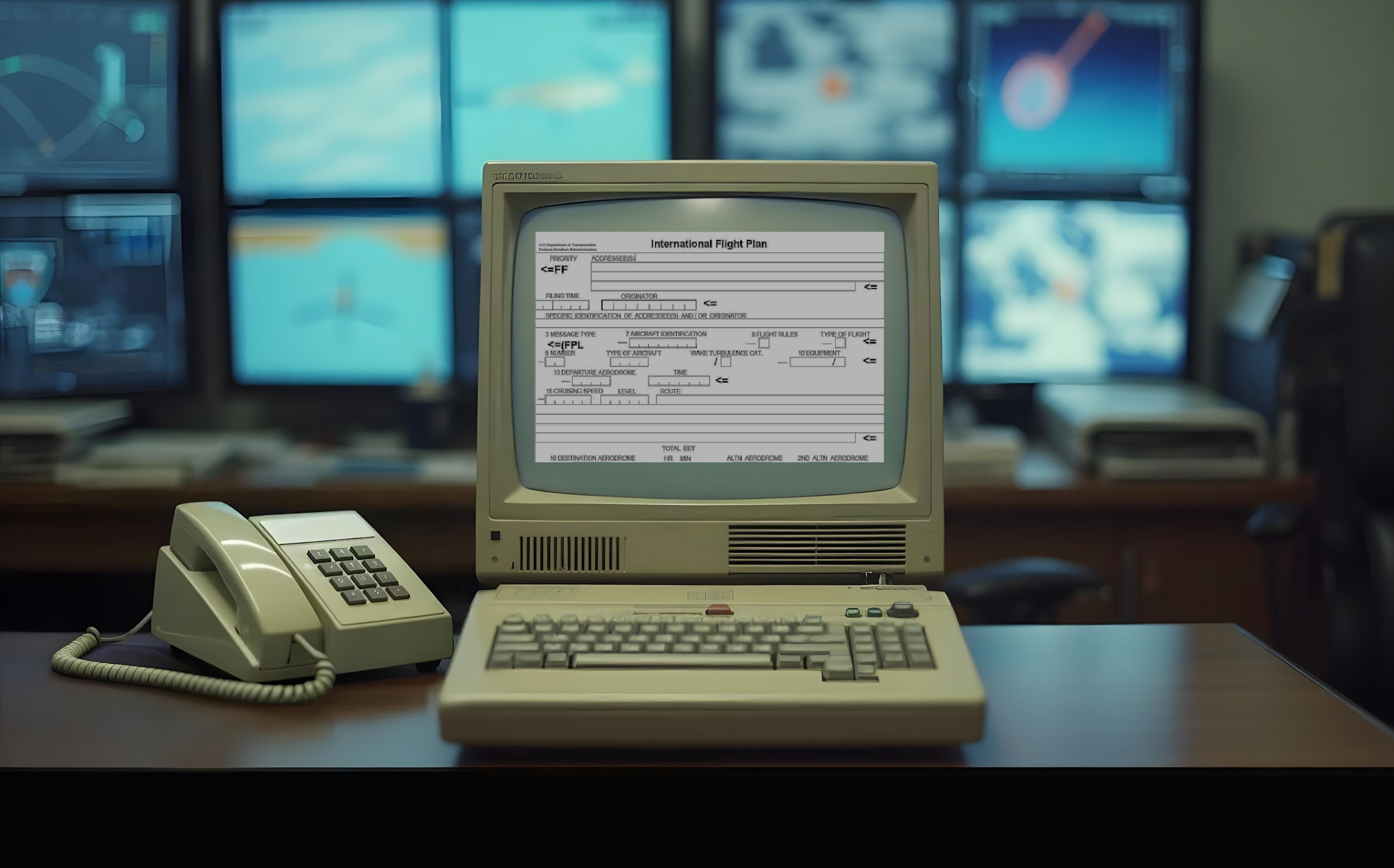
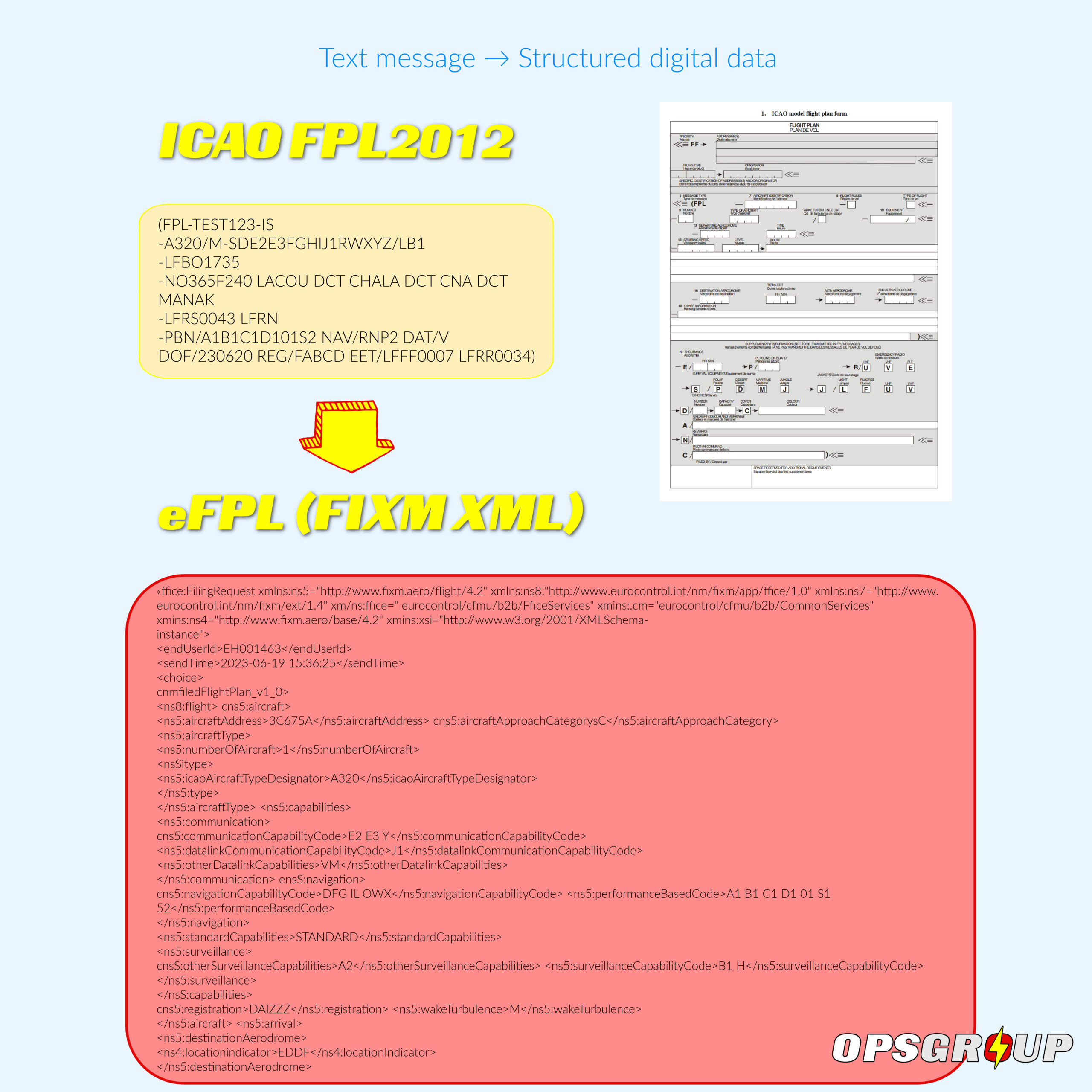
Today’s ICAO flight plan is basically a structured text message. It works fine, but it has limits.
FF-ICE doesn’t replace the flight plan. You’ll still file one, but what changes is how the information behind it gets shared. Instead of passing around a fairly basic flight plan message, FF-ICE allows systems to exchange much more info, including aircraft performance data, trajectory information and flight plan updates linked to a unique flight identifier.
The goal is to give everyone involved in the flight a more accurate picture of what’s planned to happen and make it easier to manage changes along the way.
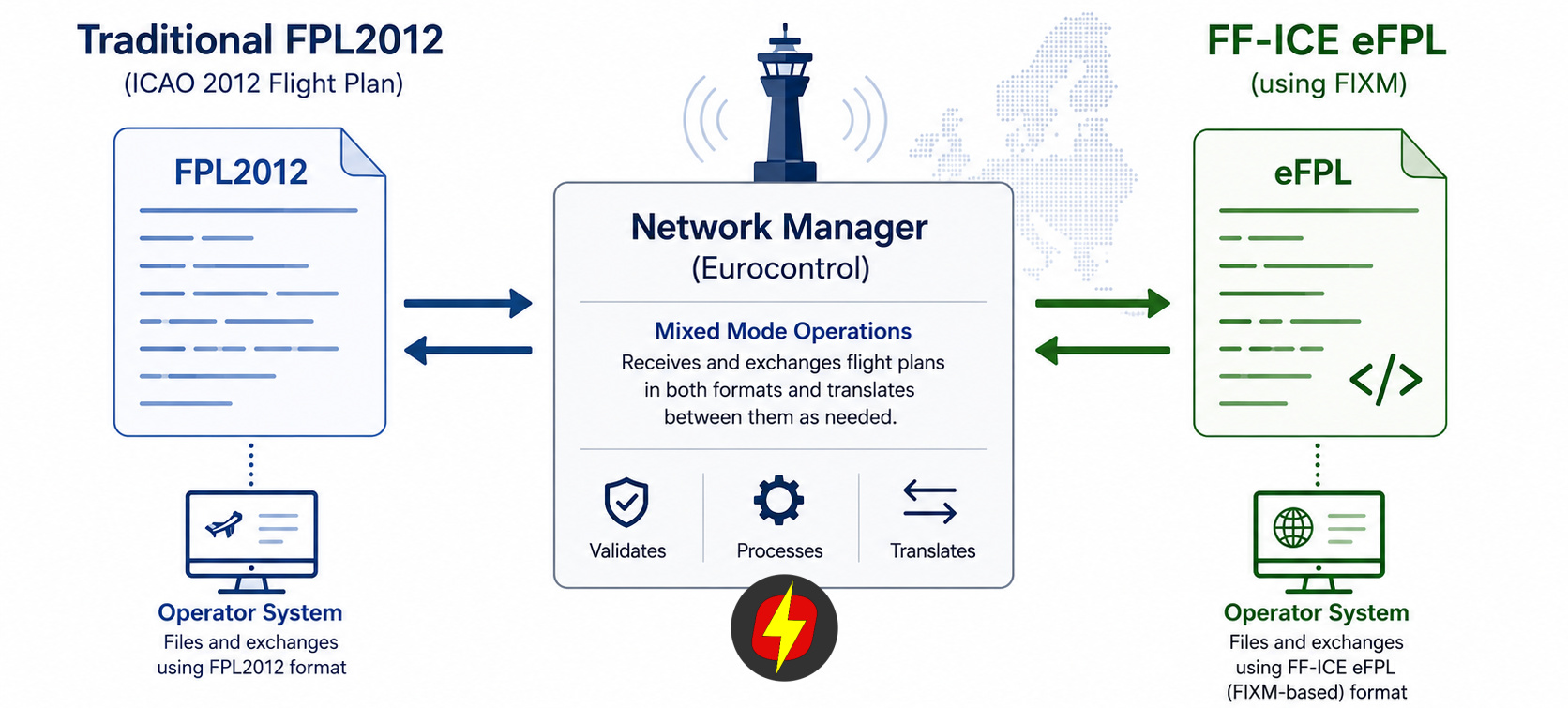
The important bit is that the old and new methods currently exist side by side.
Some systems can already submit an FF-ICE electronic flight plan. Others still use traditional ICAO flight plans. Eurocontrol sits in the middle and translates between the two – and this setup is expected to remain in place for a few years yet.
What changed in Europe?
Europe switched on FF-ICE on 1 Jan 2026.
If you fly IFR in Europe, there’s a good chance FF-ICE is already involved somewhere in the background when you file a flight plan.
Some mixed IFR/VFR flights and certain state aircraft can use a simplified version called a Light eFPL. Pure VFR flights don’t currently need to use it.
What we’ve got today is really just the first step. The current focus is on flight planning before departure. The bigger changes are expected later this decade, when FF-ICE expands into the airborne phase of flight.
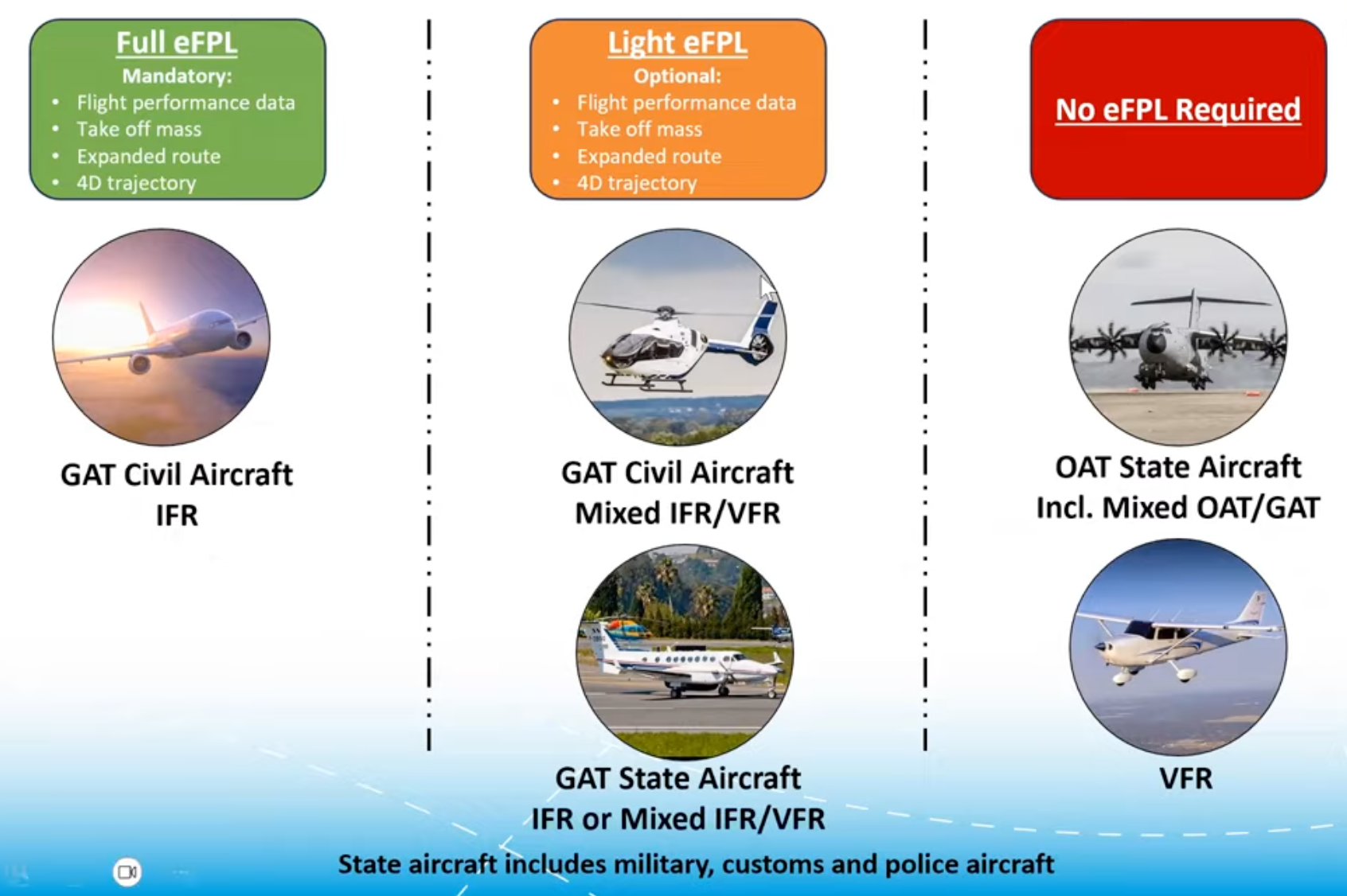
Source: EBAA FF-ICE webinar, SESAR Deployment Manager presentation.
Does this affect BizAv?
Yes, but probably less than you think. FF-ICE mainly applies to IFR operations rather than whether a flight is commercial or private.
If you’re flying BizAv IFR in Europe, you’re generally part of the transition. But for most crews, very little has changed so far.
The operational impact is currently felt much more by dispatchers, flight planning teams and ATM systems than by pilots. We’ve heard a few reports of odd filing behaviour during the transition – some operators have received both ACK and REJ messages even though the flight plan was ultimately accepted.
But apart from some occasional filing weirdness, day-to-day ops seem largely unchanged.
Why haven’t operators noticed?
Because the flight planning providers are doing most of the work. If you use ForeFlight, PPS, ARINC Direct, Honeywell or another major provider, there’s a good chance FF-ICE is already being handled behind the scenes.
In most cases, you still build and file a flight plan exactly as before. Then the software takes care of the FF-ICE side of things.
What might change later?
This is where things get slightly more interesting.
The real goal of FF-ICE isn’t just changing how a flight plan gets filed. It’s about building a more accurate picture of the flight and sharing that info more effectively.
That means flight planning systems may eventually start asking for more detailed information than most operators provide today. Things like more accurate performance data, better weight information, or more precise timing constraints.
So crews won’t suddenly be building XML flight plans. But operators may eventually need to feed better data into the system so it can build a more accurate picture of the flight. And that’s where FF-ICE may start to become more visible.
What about the rest of the world?
Europe is leading the rollout, but FF-ICE was never intended to be just a European project. The FAA and other authorities are developing similar capabilities, although everyone is moving at different speeds.
That means we’ll probably be living in a mixed environment for years, with traditional flight plans and FF-ICE services operating side by side.
For now, the practical takeaway is simple:
- FF-ICE is here.
- Europe switched it on in Jan 2026.
- No one cares (ie. most operators won’t need to do anything differently right now, and the bigger changes are still ahead!)

More on the topic:
More reading:
- Latest: New 2026 NAT Oceanic Checklist
- Latest: The Bahamas wants your cash
- Latest: Can I open the aircraft door on arrival in the US?
- Safe Airspace: Risk Database
- Weekly Ops Bulletin: Subscribe
- Membership plans: Why join OPSGROUP?






 Get the famous weekly









Hi Katerina
Maybe your comment that no one cares is meant as a joke or provocation because it is absolutely not true. All the Flight Planning service providers are working like crazy and the airlines has been strugling since 01jan26.
Eurocontrol are also working very hard and are doing their best to solve all the snags that turned up after 01jan.
luckily most Flight planning providers are now almost done with the upgrade of their systems and the airline can finally file an FF-ICE atc flight plan within EU area.
FAA should be ready in 2028.
So an good article about next step, TBO and the Flight Dispachers role in TBO would be a very exciting information to get out to both pilots, ATC and Flight Dispatchers. 🙂
Hi Kenneth! Thanks! I completely agree that a huge amount of work has gone into the implementation, especially by flight planning providers, airlines, Eurocontrol, and many others behind the scenes.
The title was meant to be a bit tongue-in-cheek and aimed at the average operator or pilot, whose day-to-day workflow often hasn’t changed much yet precisely because so much of that complexity has been absorbed by the systems around them. That was really the point I was trying to make.
And yes, I completely agree that TBO and the dispatcher’s role would make a great follow-up article.
Thanks, Katerina.
I will forward the info to the OCC staff.