Milan Linate closed next summer

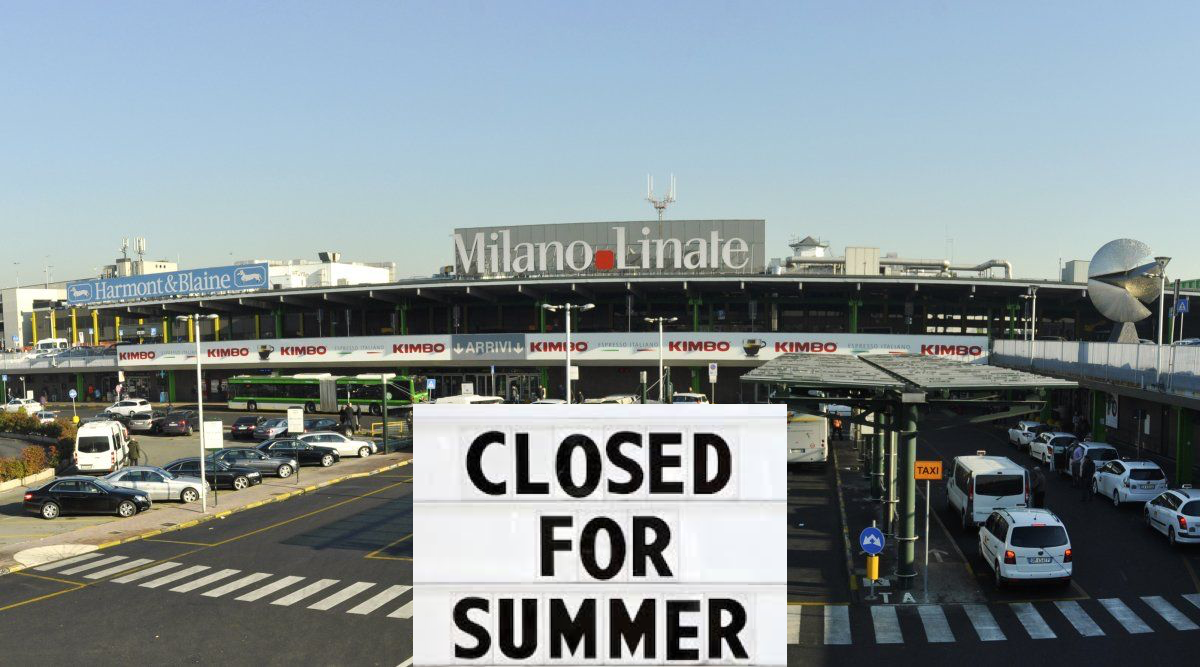
With planned runway and terminal constructions, LIML/Milan Linate will be closing from July 27, 2019 until October 27, 2019.  Work has already begun with Assoclearance (slot coordination) to work out summer schedules.
Today, September 20, a coordination meeting will take place to clarify the slot allocation process for S19. Following this, a September 25th meeting at Linate will be held to discuss the operational impact of the closure.

Milan Linate handled over nine million passengers in 2017, so a large portion of this traffic will now have to operate through LIMC/Milan Malpensa, which already stands as the second busiest airport in Italy, handling over 22 million passengers in 2017.

We’ll have more information after both the slot and operations meetings this coming week.

Do you know more? Feel free to comment or drop us a line!


Hurricane Florence: Latest Airport closures and Operational impact

Latest update: 1900z, Sept 17th.

Most airports have reopened, with the exception of KILM and KOAJ (see below).

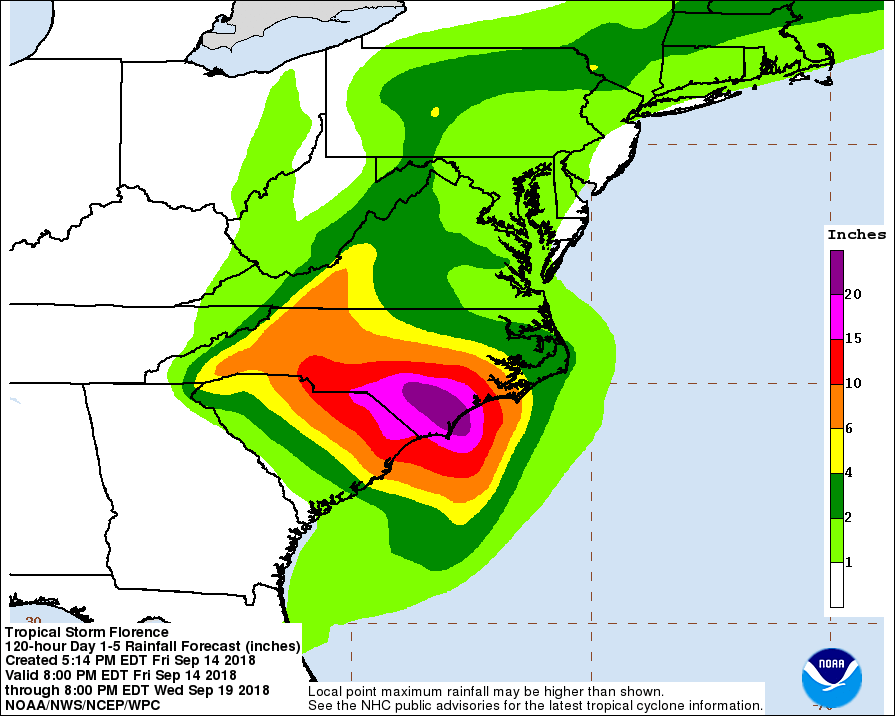
The National Weather Service have warned – “Florence is forecast to bring a large area of rainfall of 20-40 inches to parts of NC/SC. We cannot overstate the threat of catastrophic flooding this storm will bring!”

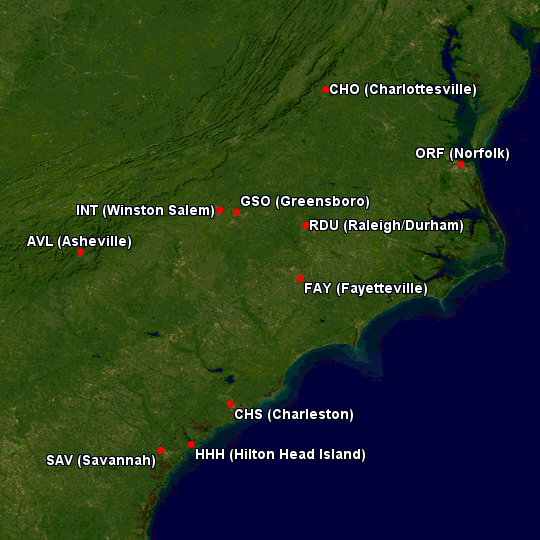
Severe disruption is expected across the entire region spanning from KSAV/Savannah in the south up to KRIC/Richmond in the north, with multiple airport closures planned.

As of 1900z on Sep 17th, the situation is as follows:

  • ASHEVILLE, NORTH CAROLINA (KAVL) @flyavlnow
    Airport is open and operational.
  • CHARLESTON, SOUTH CAROLINA (KCHS) @iflyCHS
    Airport is open and operational.
  • CHARLOTTESVILLE, VIRGINIA (KCHO) @CHOAirport
    Airport is open and operational.
  • WILMINGTON, NORTH CAROLINA (KILM) @ILMAirport
    The airport is open, but it’s not recommended to operate, no power, no ILS, no tower. One runway is open for rotor aircraft.
  • FAYETTEVILLE, NORTH CAROLINA (KFAY) @flyFAYairport
    Airport is open and operational.
  • MYRTLE BEACH, SOUTH CAROLINA (KMYR) @FlyMyrtleBeach
    Airport is open and operational, some equipment outages, keep an eye on Notams.
  • GREENSBORO, NORTH CAROLINA (KGSO) @flyfromPTI
    Airport is open and operational.
  • HILTON HEAD, SOUTH CAROLINA (KHXD)  @hiltonheadSC
    Airport is open and operational.
  • NORFOLK, VIRGINIA (KORF) @NorfolkAirport
    Airport is open and operational.
  • RALEIGH-DURHAM, NORTH CAROLINA (KRDU) @RDUairport
    Airport is open and operational.
  • SAVANNAH, GEORGIA (KSAV) @fly_SAV
    Airport is open and operational.
  • WINSTON-SALEM, NORTH CAROLINA (KINT)
    Airport is open and operational.
  • LYNCHBURG, VIRGINIA (KLYH) @lynchburggov
    Airport is open and operational.
  • RICHMOND, VIRGINIA (KRIC) @flack4RIC
    Airport is open and operational.
  • CHARLOTTE, NORTH CAROLINA (KCLT) @cltairport
    Airport is open and operational.
  • NEW BERN, SOUTH CAROLINA (KFLO)
    Airport is open and operational.
  • FLORENCE, NORTH CAROLINA (KEWN)
    Airport is open and operational.
  • PITT-GREENVILLE, NORTH CAROLINA (KPGV)
    Airport is open and operational.
  • JACKSONVILLE, NORTH CAROLINA (KOAJ)
    The airport is closed – scheduled to reopen Sept 18, accepting military and rescue flights.
  • ROCKY MOUNT, NORTH CAROLINA (KRWI)
    Airport is open and operational.

Do you know more and can add to this list? Let us know!


Extra Reading:

  • Google Crisis Map
  • You can view the latest projections and forecast maps with the NOAA here.
  • You can view the latest information from the FAA here. The latest flight delay information is here


Paris Le Bourget – New Requirement to list parking in Flight Plan

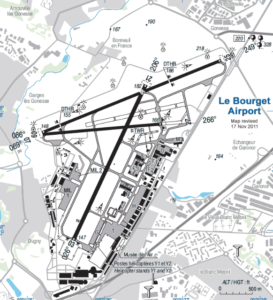
In the recent France AIP August update a new requirement was added for all aircraft inbound to LFPB/Paris Le Bourget to list their parking position and handler on Field 18 of their flight plan.

Mentioned twice in the local traffic regulations (the translation is a little iffy but you get the idea):

Mandatory assistance by approved based companies. The name of the assistant society must be stated in field 18 of the FPL as a remark (RMK).

and

It is required to the crews to indicate in field 18 of the flight plan, the traffic area of destination and the name of the handling provider.

We understand that this came about due to “much confusion” of the parking stand locations after aircraft land.


Remark 18 should include

  1. Handler Name
  2. Your parking stand location (e.g. HANDLER ABC T1 APRON FOXTROT 2)
    • For heavy aircraft (A330/A340/A350/B747/B787/B767/C130) apron Golf, Sierra or Foxtrot 3 will suffice. Your local handler should give you confirmation ahead of your expected flight.
  3. Your handlers phone number.

So it should look something like this:

(FPL-FGTRY-IG

-C525/L-SDFGRWY/S

-LFMD0610

-N0360F340 OKTET UM733 GIPNO UT26 LOGNI UN854 DJL

-LFPB0120 LFPN

-PBN/A1B2D2S1 DOF/180903 IFP/MODESASP ORGN/KBLIHAEX RMK/HANDLER ABC TERMINAL 1 APRON FOXTROT 2 TEL : +3312345678)

Do you know more? Feel free to comment or drop us a line!

Also- here is a video of a Beech Bonanza flying under the Eiffel Tower 


OPSGROUP featured on Al Jazeera

As a group of 4000 pilots, dispatchers, and controllers, we stand for safety ahead of commerce. Al Jazeera interviewed our founder, Mark Zee, about the current risk in Ethiopian airspace created by the ATC strike, and why we care so much about getting the truth out to our members.

https://www.facebook.com/flightservicebureau/videos/244638736242463/?t=1


ATC Strike over, but nine Ethiopian Air Traffic Controllers remain in jail

5th September, update:

As of this morning, most controllers have returned to work. Some concessions made by ECAA. Addis ACC and TWR are again staffed with qualified controllers, so the safety situation, for now, is restored. However, 9 remain in jail. Returning controllers were forced to sign an ‘admission’ of illegal strike action in return for amnesty. IATA In Flight Broadcast Procedure requirement for Addis FIR remains in place, meaning you must broadcast on 126.9 as in other areas of concern in Africa. Further as we get it.


4th September:

Last week we were one of the first to expose the attempted ATC Strike cover up by the Ethiopian Civil Aviation Authority.

As a reminder, untrained and uncertified foreign controllers, retired and local non-operational ATC personnel are being used to control air traffic over Ethiopia. 

It is a catastrophic misjudgement, creating a safety risk in the Addis FIR and at Ethiopian Airports for pilots and passengers alike.

Here are some more updates since our last article:
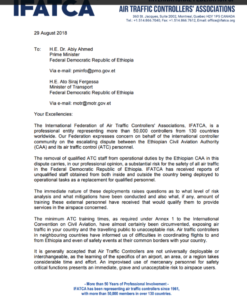
  • On August 29, The International Federation of Air Traffic Controllers Association (IFATCA) penned a letter to the Prime Minister of Ethiopia. You can read it here.
  • The neighbouring controllers in Kenya warned that flights in and out of Addis Ababa are not safe. You can view their letter here – specifically they warned that the ‘possibility of air misses’ is real.
  • The ECAA over the weekend rejected concerns regarding the safety of Ethiopian airspace, specifically calling the claims from Kenya as “outright lies.”  The ECAA has said that ATC are operating “in accordance with ICAO Annex 1 provisions.” They did not deny however that foreign and retired ATC are being used.
  • The ECAA also outlined that the national carrier, Ethiopian Airlines, has “awarded” veteran Air Traffic Controllers,  who are performing their national obligation.

  • However on Monday, the local state affiliated broadcaster, Fana BC, reported that the Federal Police Commission had detained nine individuals on suspicion of attempting to disrupt international flights and coordinating a strike that began last week. This has been quickly condemned on social media, as many locals called on the government to resolve the issues raised by the ATCs rather than resorting to intimidation.

The ECAA claims that “some” of the striking controllers have returned to work.

Major airlines and uninformed passengers continue to fly into and over Ethiopia and this continues to be a major safety risk.

Do you have more to add this story?  Please, let us know!


Updated holding fuel advice for Australia

Australian traffic holding is a funny one; you can fly 16 hours directly from a place far far away, and then just before landing you get told to hold for 20 minutes – even though you have been in Australian airspace for sometimes 7 hours plus, they wait until the last few minutes to slow you down. ?
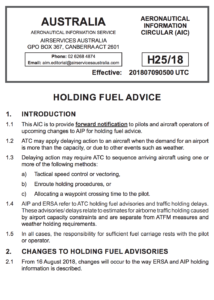
A recent AIP update and AIC Supp (H25/18) has updated the Airborne Holding Requirements for the four major Australian airports:

YBBN/Brisbane and YMML/Melbourne now are all in line with YSSY/Sydney

  • Daily, 2000Z-1300Z (0600L-2300L) = 20 Minutes 

YPPH/Perth Monday to Friday ONLY

  • 0100Z-0500Z (0900L-1300L) = 10 Minutes
  • 0500Z-0900Z (1300L-1700L) = 5 Minutes
  • 0900Z-1300Z (1700L-2100L) = 10 Minutes

There has been a slight change in the AIP requirements also. Instead of publishing “holding fuel advisories” – it’s now called airborne traffic delays”. So they aren’t really advising you on what fuel to carry anymore. In fact they go as far as saying that:

“All traffic delay estimates are an indication only. Actual holding may differ from the estimate, and operators should use their own judgement on fuel carriage decisions. More detailed historical holding data is available from the NCC on request.”

But… if you arrive at a destination without sufficient holding fuel for “actual traffic holding” then… “you will not be accorded a priority approach unless you declare an “emergency”.

So keep an eye on the NOTAMs for updated daily requirements. Even as recently as this week, 30 minutes holding was being required in YSSY/Sydney due to ATC shortages.

Insider tip: If you see the winds in Sydney from the west gusting more than 25 knots, you will see a NOTAM for traffic holding that increases the 20 minutes to 50 minutes or more due to single runway ops. You can expect to see similar NOTAMs when any low visibility operation kicks in at the other airports.


A few other quick updates for operations around Australia that you might have missed.

  • YPPH/Perth now has a Category III Instrument Landing System. Perth is a very isolated airport, especially for long-haul widebody operations, with the nearest diversion alternates being over 600-1000nm away.
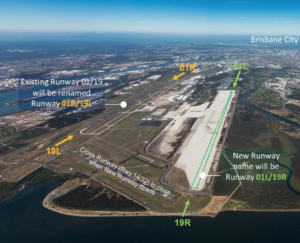
  • YBBN/Brisbane‘s main runway, 01/19, will be changing designation to include a LEFT and RIGHT in early November in preparation for the certification of the parallel runway in 2020.

Have we missed anything? Then let us know!


The diversion dilemma over London

A few months back an Air Canada A330 suffered a hydraulic failure as it started it’s Atlantic crossing from France to Canada. The crew decided to turn back and wanted to divert to EGLL/London Heathrow – this was denied.

Since then, other reports have been received of other aircraft requesting similar non-emergency diversions over the UK and them being denied. We understand the “non-acceptance of diverts” policy is in place for EGGW/Luton, EGSS/Stansted and even as far away as EGHH/Bournemouth. It is important to note however that if you declare an emergency (PAN/MAYDAY) – then all bets are off and you can divert wherever you like.

This week we saw EGGW/Luton go as far as publishing a NOTAM to that effect.

A2663/18 – DIVERTS SHALL ONLY BE ACCEPTED FOR ACFT THAT HAVE DECLARED AN  EMERGENCY.

So what’s going on?

We understand it’s a mix of things.

  1. With the heavy summer traffic situation all across London (which is being compounded by the various curfew and overnight flight limitations) it seems that the major airports don’t want an aircraft landing and disabling their runway.
  2. We have heard specific concerns stating that there is nowhere to park overflow aircraft. One aircraft might be manageable but multiple during peak disruption maybe not so easy.
  3. Some Opsgroup members have reported that the main driver of this policy at EGGW/Luton and EGSS/Stansted may be down to ‘their fear of adverse publicity on social media’ regarding aircraft sitting there waiting to go somewhere else and passengers tweeting away the problems with the airport and its facilities.
  4. Luton also put forward the argument that they do not want to interrupt the home-based operators by allowing other operators in. However, at the same time they are automatically denying home-based operators a diversion unless you declare an emergency.
  5. Border Control has also bought into the argument, especially at EGSS/Stansted, saying their manning levels can’t cope with an influx of extra passengers at short notice.

There are a whole host of other factors at play which make diversions in the London area a headache, particularly at night time. Opsgroup member Diego Magrini from Jet Concierge Club sums it up nicely:

“Minor airports close early in the evening, for example EGSC/Cambridge, EGTK/Oxford, EGLF/Farnborough, EGWU/Northolt. These would all be very good alternatives, but become unavailable pretty early. Let’s be honest: no business jet want to divert to EGLL/Heathrow or EGKK/Gatwick (costs, slots, friendliness, etc), and most cannot go to EGLC/London City due to training and approval. This is of course on top of Heathrow and Gatwick not accepting diversions most of the time, or not having slots available. Some airports outside London, although open and accepting traffic, do not have an FBO presence during the night, and this cannot be arranged at short notice for a diversion. Combining all of this in the very short timeframe of a diversion can be very tricky!”


There is a cool video that shows just how busy London does get on any given day….

If you have any further knowledge or recent experience to share, please let us know!

Extra Reading


Attention Shanghai: Typhoon inbound, jets must move out

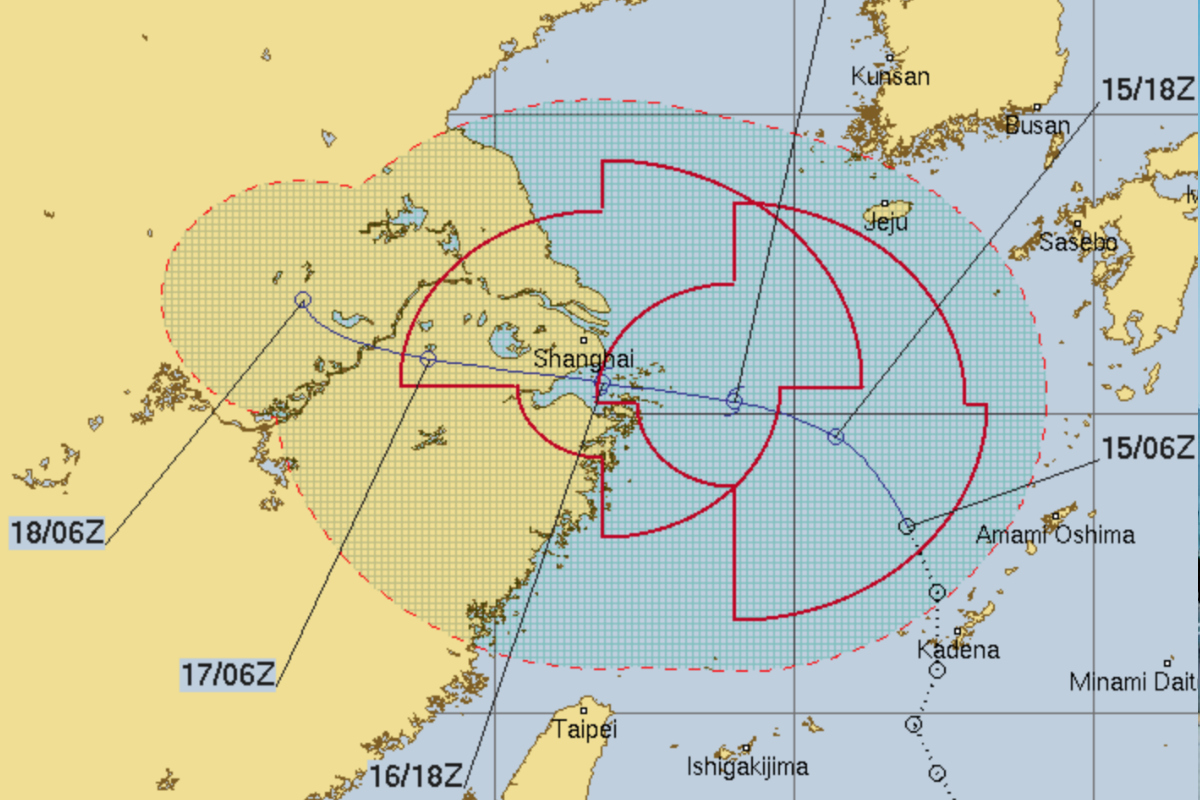
Typhoon Rumbia is expected to make landfall just south of Shanghai early on Aug 17, with gusting winds of up to 55kts.

Just as before with Typhoons Ampil and Jongdari which hit Shanghai earlier this month, both Shanghai airports ZSPD/Pudong and ZSSS/Hongqiao now have restrictions in place for GA/BA flights. They are advising the following:

  1. All GA/BA aircraft currently parked at the airports must either go in the hangar or leave before 1000 local time on Aug 16.
  2. All landing and parking requests of GA/BA aircraft are unlikely to be accepted until 1200 local time on Aug 18, by which time the storm is expected to have passed.
  3. Operators should report outbound schedules of GA/BA aircraft currently parked at the airports as soon as possible.

Best to get in touch with your handler if you haven’t already.

And if you are in the region and have more information to share, let us know!

Extra Information and latest warning texts and graphics:


Runway? Who needs one when you have a taxiway!

It’s happened again.

Around midnight on a perfectly clear night last week in Riyadh, a Jet Airways 737 tried to take off on a taxiway. The crew mistaking a new taxiway for a runway!

The crew, with thousands of hours experience, took off on a surface that didn’t have runway markings or runway lights. Thankfully no one was seriously hurt.  It’s too early to exactly say why this happened, but it’s clear that some sort of “expectation bias” was a factor. Expecting to make the first left turn onto the runway. One has to ask – was ATC monitoring the take off?

After the tragic Singapore 747 accident in Taipei, technology was developed to audibly notify crew if they were about to depart “ON TAXIWAY”. This is known as the Runway Awareness and Advisory System (RAAS).

Sadly the Riyadh incident is not isolated. There have been a plethora of near misses in the past few years (more details in Extra Reading below).

There have also been more than a few “incidents” of aircraft from C17’s to 747s landing at the wrong airports! The most notable near miss recently was that of an Air Canada A320 nearly landing on a taxiway full of aircraft at KSFO/San Francisco. But it’s happened to Delta and Alaskan Air recently too.

It is an even bigger issue at a General Aviation level (and not just because Harrison Ford did it!). The FAA safety team recently noted;

The FAA Air Traffic Organization (ATO) has advised of an increase in, “Wrong Surface Landing Incidents” in the National Airspace System (NAS).

Incidents include:

  • Landing on a runway other than the one specified in the ATC clearance (frequently after the pilot provides a correct read back)
  • Landing on a Taxiway
  • Lining up with the wrong runway or with a taxiway during approach
  • Landing at the wrong airport

The FAA published some shocking statistics:

  • 557wrong surface landing/approach events” between 2016-2018. That’s one every other day!
  • 89% occurred during daylight hours
  • 91% occurred with a visibility of 3 statue miles or greater


So what to do?

There are numerous ‘best operating practices’ pilots can use to help avoid such incidents.

  • Be prepared! Preflight planning should include familiarization with destination and alternate airports to include airport location, runway layout, NOTAMs, weather conditions (to include anticipated landing runway)
  • Reduce cockpit distractions during approach and landing phase of flight.
  • Use visual cues such as verifying right versus left runways; runway magnetic orientation; known landmarks versus the location of the airport or runway
  • Be on the lookout for “Expectation Bias” If approaching a familiar airport, ATC might clear you for a different approach or landing runway.  Be careful not to fall back on your past experiences.  Verify!
  • Always include the assigned landing runway and your call sign in the read back to a landing clearance
  • Utilize navigation equipment such as Localizer/GPS (if available) to verify proper runway alignment

It’s worth spending a few minutes watching this.

Extra Reading


European ATC delays are up 133%

In Short: European ATC delays are on the increase, caused by staffing and capacity shortages. Monitor the Network Operations Portal and be flexible in your routing options if bad weather or capacity constraints are expected.

It’s been a great few days on a sun-soaked Mediterranean island. Your passengers are onboard, you are about to close the door, and then you get told your Calculated Take Off Time (CTOT) is an hour from now! Sound familiar? You’re not alone! ?

European air travel this summer is surging and about to hit maximum intensity. Problem is, the ATC system doesn’t seem to be coping, and the misery of long flight delays keeps getting worse.

Delays are up

IATA has recently reported the following:

“Data from Eurocontrol shows that in the first half of 2018, Air Traffic Management (ATM) delays more than doubled to 47,000 minutes per day, 133% more than in the same period last year. Most of these delays are caused by staffing and capacity shortages as well as other causes such as weather delays and disruptive events such as strikes. The average delay for flights delayed by air traffic control limitations reached 20 minutes in July, with the longest delay reaching 337 minutes.”

As an operator, you may be used to seeing alerts like these daily:

EDYY (Maastricht)

Several sectors regulated due to Airspace Management and ATC Staffing/Capacity.

Moderate to high delays.

LFMM (Marseille)

Several sectors regulated due to ATC Capacity/Staffing.

Moderate to high delays.

So is it a story of too many planes and not enough airspace (capacity) or just not enough controllers (staffing)?

Local airlines are not impressed. Ryanair took to twitter this week calling the delays “unjustified”.

In a unusually aggressive statement IATA commented that “key ANSPs in Europe have not made needed investments in their businesses, preferring instead to make super-normal profits.”


Some of the things we recommend to keep on top of expected delays

  • Review the Network Operations Portal regularly – This will assist in making operational planning decisions based on the current delays and capacity restrictions. Also keep an eye on the NOC tactical briefing for the following day which may also assist.
  • Avoid the early morning rush of departures if you can (0900z).
  • Be flexible in your routing options if bad weather or capacity constraints are expected.
  • Discuss with the local FBO for latest on-ground situation to better plan arrival and departure.
  • Monitor Opsgroup – members are always posting the latest information on recent airport and overflight experiences. Not yet a member? Go here!
  • Subscribe to our Daily Brief to get all the latest info on ATC strikes, Airport  closures, and everything else causing delays.

Got any tips or tricks on how to avoid or minimise most of these delays? Is there certain bit of airspace, airports or a time of day you’ve found that works best? Let us know!

Extra Reading:


Process simplified for US Border Overflight Exemptions

Recent changes mean that Border Overflight Exemptions are now more straight-forward in two key ways:

  1. Everything has been centralized! Before, operators had to apply for their BOE’s from CBP offices at individual airports – some would approve requests, and others wouldn’t, and there seemed to be a bit of a lack of consistency in some cases. CBP has now streamlined the process, and will be issuing all new BOE authorizations from their headquarters instead.
  2. Authorizations have been simplified! Before, some BOE authorizations contained the aircraft operator, approved aircraft, and approved crew; and some others contained only the aircraft operator and approved crew. Now, all new authorizations will only contain the aircraft operator. What this means is that for operators who get this new approval, they will now be able to fly any of their authorized aircraft with any authorized crew when conducting an Overflight arrival.

Important to note: CBP will issue new BOE’s to operators as requested, but until that happens, operators must comply with the terms and conditions of the authorizations they already hold.

CBP have told AOPA the following – “Because this change in procedure is occurring on a case-by-case, operator-by-operator basis, CBP officers are having to process operators who have been authorized under three sets of terms and conditions. Until the transition is complete, please be patient with our officers.”

So, bottom line – if you’ve got any BOE required flights coming up soon and you want to benefit from the new format, better submit a request for an updated BOE authorization as soon as possible! Send CBP an email at GAsupport@cbp.dhs.gov

What is a Border Overflight Exemption, and when do I need one?

When flying to the US from the south, you need to land at the first designated airport of entry that is nearest to the point of crossing the U.S. border or coastline (see the chart below for the list of these airports). If you want to land elsewhere, you need to get a Border Overflight Exemption.

In this case, ‘the south’ means everywhere from south of 30 degrees in the eastern U.S. and south of 33 degrees in the western U.S. This covers all flights from the Caribbean, Mexico, Central and South America, and some parts of French Polynesia.

Here is the list of designated southern airports of entry:

Further reading:


Dubai to London – which way is best?

In Short: Two main options, via Saudi and Egypt (safer, cheaper but longer) or via Iran and Turkey (shorter, busier and geo-politically more unstable). It’s a complicated planning climate at present. Review regularly based on latest risk factors.   

There are more business aviation operators flying between the Middle East and Europe than ever before. So we took the time to look over the route options between the two regions. For our example we will be using a flight from Dubai to London, but similar operational considerations are valid for the plethora of route combinations through this whole region.

Firstly, we are sure you are a frequent visitor to our safe airspace website. Updated all the time with the latest notes and risk recommendations based on the latest intel. So, first things first, we want to avoid Syria, Libya and the Sinai Peninsula. As you can see however, this is a complicated geo-political region for flight planning. The direct great circle route would take us through Syria and would be around 3125nm. But that isn’t going to work. So, what else we got?

We will look at the two ways to head over the region. One is via Iran, Turkey and onwards to Europe. The other over Saudi Arabia and Egypt towards Europe.

Option 1: Iran/Turkey

Safety: Both Iran and Turkey are FSB Risk Level: Three – Caution. Iran is involved in the ongoing conflict with Syria and several Russian missiles crossed the Tehran FIR and several busy international routes. There are also increased tensions between the USA and Iran at present – if you had to divert in an N-reg aircraft, Iran would not be the friendliest of places to do so. Turkey borders with Syria and we have received multiple reports of GPS interference in the area.

Distance: an extra 100nm.

Time: About 15 minutes longer than great circle route.

Ease and Cost: Iran has higher overflight costs and for US based operators a reminder of the sanctions for dealing directly with Iran, or agencies in Iran. You’ll want to use an approved agent if you’re from the US (i.e.–not an Iranian company). Iran doesn’t work on Fridays, so be aware there. Turkish overflight costs are reasonable and remember that Turkish authorities require the use of an agent to apply for permits.

Traffic: The biggest issue with this route is that everyone is using it! It’s congested with a lot of airline traffic. It’s a major corridor for Asia-Europe flights also. So, getting the levels you want, and off route deviations are more complicated. Things get busy, as you can see!

Option 2: Saudi/Egypt

Safety: In terms of airspace warnings and risk, this route is slightly better. We have rated Saudi and Egypt airspace as FSB Risk Level: Two – Assessed Risk. Beyond the Sinai Peninsula and the Saudi/Yemen border, generally there is less of a chance of airspace security risks at present.

Distance: An extra 300nm from the great circle.

Time: Around 45 minutes longer.

Ease and Cost: Saudi and Egyptian airspace are generally a cheaper option ($1,000USD+). In Egypt, by law you have to get your permit through an Egyptian agent, but it’s a straight forward process. In Saudi, again, using an agent is best; they normally have three-day lead time – so keep that in mind. Also remember that the CAA only work Sun-Wed during office hours.

Traffic: For most of the day, much less of a traffic bottle neck.


Bottom line

Of the two options, routing via Saudi/Egypt is cheaper, and safer (as long as you steer clear of Egypt’s Sinai Peninsular and Saudi’s border with Yemen), but it’s going to take slightly longer.

What about Iraq?

We don’t think it’s a good idea. There’s a lot of information out there saying certain airways are ok but only at higher levels. But if you needed to get down fast, or even make an unexpected landing, Iraq isn’t the place you would want to go at present. Treat with caution.

Which one is your favourite choice? Let us know!

Further reading:


Aircraft security search now a requirement departing France

Update July 20th: Looks like this is not only happening in France, but some other EU countries too: we’ve had reports of the same procedure being required at some airports in Italy, Greece, and the Netherlands. If you have any further knowledge or recent experience to share, please let us know!

According to various reports we’ve had from Business Aviation aircrew and handlers, as of July 16, all aircraft departing specific French airports are now required to have completed a security search before departure, and to complete a form to be left with the handler. This applies to all aircraft unless the previous departure point was one of the following:

  • 28 countries of the European Union + Norway / Iceland / Switzerland / Lichtenstein
  • USA
  • Canada
  • Isle of Man
  • Montenegro
  • Faeroe Islands
  • Guernsey and Jersey

This new rule applies to all aircraft, no matter the country of registration or status (private, commercial or charter).

The security search is basically to check that no “prohibited articles” are on board (the usual things – guns, explosives, etc.). It’s common practice amongst airlines, but seems until now not to have been enforced as a rule for business aviation or private operations.

Once completed, this form must then be given to the ground handler, who will store it, in case the French authorities want to see it at some point.

It seems this new procedure is governed by an EU directive that was published in 2015, namely: the European decision (UE) C (2015) 8005 (Appendix 3-A) and the regulation (UE n°2015/1998 (Appendix 3-B32). Who would have thought that a new rule with such a tantalising name as this could go unnoticed until now ?

So it seems that all EU countries should be implementing this new procedure, but so far only certain French airports have done so – the ones we know about so far are:

LFMN/Nice
LFMD/Cannes
LFPB/Paris-le-Bourget

(Quite possibly the reason that it’s only French airports which have implemented the new procedure is that it was something that was cited in a French national audit conducted in Nov 2017!)

Can the handler provide the crew with a “security search” form?
Answer – Probably not. As the security search is done by the crew, it’s down to the operator to provide the form – the only responsibility of the handler is to receive it signed from the Captain and store it, that’s it.

What about flights that have arrived from the United Kingdom ?
Answer – You won’t need to do the search, as the UK is still part of the EU… for now! We will wait and see what their status will be once the “Brexit” happens, but until then, no worries 🙂

If a flight is operating PART 135 Air Ambulance, would they be subject to this search as well ?
Answer – Yes, if they arrived in from somewhere other than those countries mentioned above. The procedure is linked to where the aircraft came from, not to the aircraft reg or its status (be it commercial, private, charter, cargo, air ambulance, quick-turn, night-stop, fuel stop, transit flight, etc).

What kind of info should be in the form?
Answer – This kind of info:
Flight Information: Flight number / Date / Aircraft Number / Airport of Origin / Airport of Destination
Aircraft Interior: Flight Deck / Storage Area in the Galleys / Lavatories / Catering Trolley and Containers / Seat Pockets / Area Under the Seats / Area Between Seats / Area Between Seats and Bulkheads/ Jump Seats / Trash Bins / Overhead compartments / Pax and Crew Storage Compartment.
Between 5 and 10% of the life vest bags are to be checked as well.
Aircraft Exterior: Aircraft Holds / Service Panels / Bays / Wheel Wells / Fuselage / Engines / AOG Spare in Hold
Search Information : The search must be performed by a member of the cockpit crew. The name of the Captain must appear on the form as well as the date and a place for him/her to sign the document.

You probably have a standard form in your OEM for something like this. But if not, then fear not! The good folks at Signature have provided us with a standard template. Click the image below to download!

If you have any further knowledge or recent experience to share, please let us know!

Further reading:


Italy ATC strike CANCELLED

Update 17 July: The 24hr ATC strike planned for July 21 has now been CANCELLED.

Controllers at all the ACC sectors were planning to take part, and additional strikes were planned at the local level at at the following airports: LIRA/Rome Ciampino, LIRF/Rome Fiumicino, LIEE/Cagliari, LICC/Catania, LICA/Lamezia, LICJ/Palermo, LIBP/Pescara, LIPZ/Venice

But now the strike has been cancelled. Normal ops now expected at all ACC’s and airports across the country.

Further reading:

  • All the latest official information about Italy ATC strikes can be found here. Just make sure you have your Google Translate tool enabled on your browser!


Islands of the South Atlantic – enroute ETOPS and diversion options

Operating a flight across the South Atlantic is complicated by very limited en-route diversion options.

There are only really three airports worth considering between Brazil and Africa, south of the equator. All have their own complexities.

Your three best bets:

Operational Considerations:

FHAW/RAF Ascension Island

Wideawake Airfield (FHAW) is a military facility operated jointly by the USAF and the RAF. Under the terms of the joint agreement, only state aircraft are authorized to land at Ascension. A monthly RAF flight arrives from the UK and weekly USAF C17 movement occurs.

We have also been advised by local authorities that “the runway is beyond its life cycle and we have imposed aircraft maximum weight limitations on its use to extend its operation”.

Because of these restrictions, passenger links to/from UK were stopped.

To file as an ETOPS/EDTO alternate or not?

The official line is here.

“The US Air Force has agreed its airfields may be identified as ETOPS emergency landing sites for flight planning purposes. This is consistent with the policy that an aircraft can land at any US Air Force airfield if the pilot determines there is an inflight emergency that would make continued flight unsafe. However, we also understand there are published criteria for ETOPS airfields and our policy concerning emergency use is not agreement or certification that Air Force airfields meet those criteria.

Ascension Island is a remote location with resources (accommodations, medical, hangars, crash/fire/rescue, etc) limited to levels essential for support of assigned personnel and the military mission. The airfield is available “as is” for emergency use only as indicated above. Whilst FHAW may be declared as an alternate for ETOPS flight planning purposes, it cannot be used as a weather alternate, except for flights departing from or destined for St Helena.”

However! After we enquired with local authorities, we received the following response:

“As this is a USAF military only field, it is not allowable to nominate as an ETOPS alternate. There are no lodging facilities here on the island, and there is only very limited medical capability.

We will always accept an emergency divert and have done so in the recent past. Nomination as an alternate drives a set of requirements that we do not meet – hotel, medical, 24 hour operations, etc. Since we cannot meet those requirements, nomination is not allowed. If an aircraft were to experience and emergency and need to land, we would make do with what we have.”

As we have reported in the past, it can be costly to nominate enroute alternates sometimes.

Famously, a Delta 777 diverted to Ascension back in 2013 after experiencing engine troubles.

Either way- it’s another ‘interesting’ approach.


FHSH/St Helena

This is a new airport.

It’s windy! It is subject to “severe” windshear and the runway is on top of a mountain and it’s short! There is only limited flights to/from Namibia with an E190 and a monthly flight connects onwards to RAF Ascension.

Even the first commercial flight there need to ‘go-around’ due to the wind.

It was closed shortly after it opened due to these safety concerns, but it’s back up and running now.


SBFN/Fernando De Noronha

Small island airport. Very scenic on approach and great beaches! Limited ground handling and parking options. Close to the ITCZ – susceptible to unstable weather at times. Regular commercial flights from the island and popular tourist destination with appropriate passenger facilities. Fire fighting only CAT 5. PPR – expect to pay for parking by the hour. Not an airport of entry and no fuel available to non-Brazilian military aircraft. Handling all done by island island administration and special permit landing permit required. Also important to note that the runway will be closed for maintenance between 2001 and 1131 UTC, between May 24th until Dec 31st, 2018 and that all runway lights are unavailable also.

Extra Reading:


Ongoing Bali volcanic threat – update

Update June 29, 2018:

Following the volcanic eruption on Jun 28 at Bali’s Mount Agung, the airport has been closed all morning today, Jun 29, and only just reopened at 1430 local time (0630z). Over 500 flights have already been cancelled as a result. Big delays expected all day and into the weekend. Further closures due to volcanic ash are still possible.

Per latest report from Darwin VAAC, there is a volcanic ash cloud observed up to FL160 in the area, but they predict winds will carry the ash southwest toward Java, Indonesia’s most densely populated island.


In Short: Continued vigilance required for operations to Bali; The alert level for Mt Agung eruption remains at 3 (on a scale of 1-4). Last ash plume on 26 March rose to at least an altitude of 11,650 ft.

When Mount Agung erupted in November 2017, airlines faced travel chaos as flights were cancelled due to the lingering ash cloud. Since then, visitor arrivals have dropped by more than 70 percent. Facing $1bn in lost tourist revenue, the Indonesian government is trying to lure tourists back to the holiday island.

The 3,000metre high volcano sits roughly 70 kilometres away from the tropical paradise’s main airport and popular tourist areas.

In a Volcano Observatory Notice for Aviation (VONA), Volcanological Survey of Indonesia (PVMBG) reported that at 1009 on 26 March an event at Agung generated an ash plume that rose at least to an altitude of 3.6 km (11,650 ft) a.s.l. and drifted NW. The Alert Level remained at 3 (on a scale of 1-4) and the exclusion zone continued at a 4-km radius.

Best up-to-date information:

The current one to watch:

Mount Sinabung – located in Medan, Indonesia is also very active at the moment (last spewing ash on Friday April 6) and may disrupt air operations to Malaysia and Singapore.

Current Aviation Color Code: RED, Eruption with volcanic ash cloud at 09:07 UTC (16:07 local). Eruption and ash emission is continuing. Ash-cloud moving to west – south. Best estimate of ash-cloud top is around 23872 FT (7460 M) above sea level, may be higher than what can be observed clearly. Source of height data: ground observer.”

We will keep an eye on this one.

Mount Sinabung roared back to life in 2010 for the first time in 400 years. After another period of inactivity it erupted once more in 2013, and has remained highly active since.

If you have travelled through the region lately and can provide members with more of an update, please get in touch. 


LFMM/Marseille weekend ATC strike June 30 to July 2 – CANCELLED

Another French ATC strike has been announced for the LFMM/Marseille ACC, spanning the entire weekend June 30 – July 2. The strike will run from 0430z on Saturday 30th June to 0430z on Monday 2nd July.

Key points:

– It’s just the the controllers of the LFMM/Marseille ACC en-route airspace above FL145 who are on strike. Big delays expected for any flights trying to overfly the sector during the strike.

– Just like the previous LFMM/Marseille ACC strikes, they expect a lot of controllers will join this one. We fully expect the warning will be the same as before: “minimum service expected for the whole period” – that means that as little as 50% of FPL’s will get accepted.

– Eurocontrol are currently busy writing their Mitigation Plan, which will include recommended routes for flights to airports within the LFMM/Marseille sector during the strike, but it will be based on the info found here: http://dsnado.canalblog.com/

– Algeria and Tunisia are both expected to open-up their airspace for re-routes.

Each French ATC strike is different, but there are some things that are pretty much the same every time. For everything you need to know in order to survive, read our article!


Is Athens busy, or does it just hate Business Aviation now?

Summer parking restrictions at Greek airports are now in full swing. In previous years, it was mainly just the island airports that suffered, and airports on the mainland were used to reposition aircraft for longer stays. This year however, parking at LGAV/Athens is becoming a nightmare too.

We’ve had several reports from OPSGROUP members of requests for longer stays at Athens being denied, and also previously approved requests being revoked. If you are headed to Greece, don’t count on using Athens for anything for other than a quick tech stop.

Airport authorities at Athens have now issued a Notam for the whole summer season advising that all GA/BA flights require PPR for stays of longer than two hours:

A1641/18 - DUE TO OPERATIONAL REASONS THE FOLLOWING PROCEDURES ARE IN FORCE:
1.FOR AEROPLANES WITH MTOW MORE THAN 5700 KG, PRIOR PERMISSION IS REQUIRED (PPR).
FOR: GENERAL AVIATION, BUSINESS AVIATION, AIR TAXI FLIGHTS AND ALL TECHNICAL 
STOP FLIGHTS, WITH INTENTION TO STAY ON THE GROUND FOR MORE THAN TWO HOURS 
AND/OR STAY ON GROUND BETWEEN 1800 AND 0600 UTC.
2.LONG STAY OF AIRCRAFT IS NOT PERMITTED.
14 JUN 18:00 2018 UNTIL 20 AUG 06:00.

Local handlers have confirmed that PPR for tech stops of less than two hours almost always get granted. But for parking requests of more than two hours, prepare to be disappointed. In addition, until the end of the summer the airport will no longer accept any positioning flights without pax on board, regardless of how long you’re staying.

For operators wanting to do drop-and-go’s at Athens, always ask your agent which airports they recommend repositioning to for parking, but some options worth checking (as they do not currently have any restrictions in place for maximum parking length) are: LGKO/Kos, LGSM/Samos, LGIO/Ioannina, LGKV/Kavala, LGRX/Araxos.


Dash 8 set on fire in Papua New Guinea, airport closed indefinitely

AYMN/Mendi has been closed indefinitely after protesters set fire to and destroyed an Air Niugini Dash 8 aircraft, which had just arrived from Port Moresby. The protest was in response to a court ruling confirming the election of the Southern Highlands governor William Powi.

Radio New Zealand reported:

“(Initially) the local police station commander Gideon Kauke had said police were guarding the aircraft to ensure there was no further damage, after its tyres had been flattened.

But he said his team of about ten police couldn’t contain a mob of uncountable numbers, particularly after missiles were thrown, forcing them to retreat; “we were guarding the plane but compared to them we were outnumbered and they came in all directions, all corners. Missiles were thrown, bush knives were thrown.”

Mr Kauke said some of the protestors, who continue to behave menacingly in Mendi as their numbers build up, were carrying guns. He said the protest was in response to a court ruling in Waigani confirming the election of the Southern Highlands governor William Powi.”

The Australian Department of Foreign Affairs is cautioning all to “reconsider your need to travel” to the regions affected by the unrest and to also “exercise a general degree of caution” for the whole of PNG.

The local NOTAM says it all.

A0773/18 – AD CLSD TO ALL ACFT OPS DUE CIVIL UNREST. 14 JUN 05:35 2018 UNTIL 13 JUL 06:00 2018 ESTIMATED. CREATED: 14 JUN 05:52 2018

Additional reporting indicates that the aircraft was shot at on landing, deflating the tyres.

Are you currently in PNG and can fill us in on more? Please comment below, or email us.


Escape from Teterboro .. FL400 or above

Skip the line up at Teterboro! The FAA has launched an initiative to allow some high-performance business aviation aircraft an escape route during SWAP events to mitigate delays at KTEB and KHPN. The goal is to offer flights that are filed to cruise at FL400 and above an exclusive route that would get them above the airline traffic. This route may add a few extra miles but will minimize ground delays.

As the FAA is required to test the route for ATC automation and familiarity, they are seeking pilots willing to participate in this test as early as this weekend, preferably in the morning, before traffic demand peaks. Aircraft participating in the test would be routed over GREKI and then on to westerly or southwesterly destinations.

If you’re willing to participate in the test this weekend, please at your earliest opportunity contact FAA Deputy Director System Operations, East-North Warren Strickland: warren.strickland@faa.gov

If you’re unable to participate in this weekend’s test, please advise Warren of other dates that may work for you.


Why are you still getting the Ruudy6 wrong? Stop at 1500!

If you’re departing Teterboro any time soon, make sure you stop at 1500 feet – and have a good look at the rest of the RUUDY 6 departure. That’s the message from NY ATC, and the Teterboro Users Group.

The FAA has reported over 112 pilot deviations on the KTEB/Teterboro RUUDY 6  SID.

The Teterboro Users Group has asked us to remind all pilots that strict compliance is required, especially vertically.

“The most common error being a climb straight to 2000’ without honouring the requirement to cross WENTZ at 1500” – Capt. David Belastock, President, TUG

This week the FAA issued the following notice which explain the issue and the serious consequences of non-compliance, namely the reduced vertical separation with KEWR/Newark arrivals:

Teterboro Airport SID Deviations

Notice Number: NOTC7799

The Ruudy Six departure continues to incur both lateral, but in particular, vertical pilot deviations. Due to the proximity of Newark and other area airports it is imperative to follow the RNAV(RNP1) departure procedure to Performance Based Navigation (PBN) standards. Do not drift left off course to avoid noise monitors. Do not climb above 1500 until passing Wentz intersection. There is only 1000 feet of separation with overhead traffic at Wentz. When issued the clearance to “climb via the SID” all altitude restrictions must be complied with as depicted on the chart.

Attached are excerpts from the Aeronautical Information Manual and the Controllers handbook explaining the Climb Via procedure. An expanded explanation is in chapter 4 and 5 of the AIM.

Further information can be found on the Teterboro Users Group website http://teterborousersgroup.org and in KTEB Notice to Airmen (Letters to Airmen section)

There has been an extensive education campaign underway for a long period including guidance material, pilot meetings, educational podcasts and even a FlightSafety International eLearning course. Despite these efforts, pilot deviations continue to occur.

A great guide has been created by Captain Belastock and its very useful for any crews operating out of KTEB.

Know of any other procedures with unusually high non-compliance?

Let us know!


New 19-state Upper FIR planned for Africa

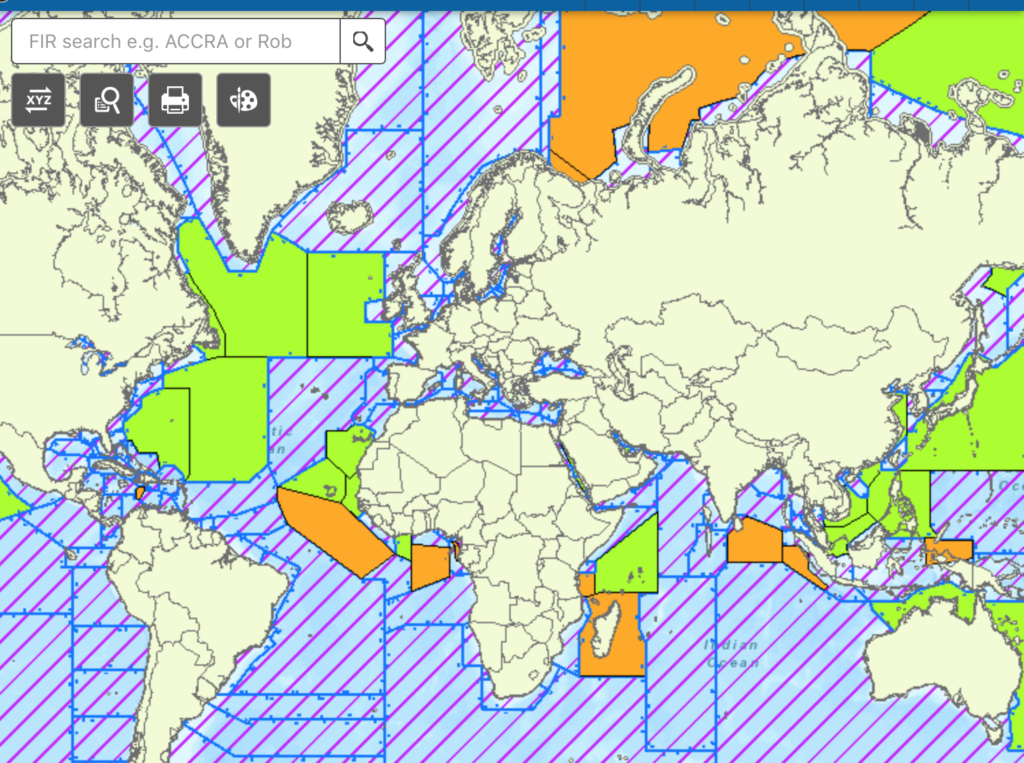
Africa has inched closer to achieving a broad Upper Area FIR  following the move by 19 regional states to adopt an airspace agreement at the end of May.

Ministers of Justice and the Attorney Generals from Common Market for Eastern and Southern Africa (Comesa) adopted the legal instrument on common airspace in Lusaka.

The regional airspace agreement aims at achieving a seamless upper airspace for the region which will lead to enhanced competition in air travel and efficiency.

Zambia Minister of Justice, Hon. Given Lubinda, who opened the May meeting said the COMESA seamless airspace programme will contribute to bringing down high costs.

“The draft legal instruments aimed at the implementation of the COMESA Seamless Airspace programme speak to this.”


Extra Reading:


Just about nowhere to land in London at night this summer

Jet noise! It seems that Londoners are sick of it. Corporate operators watch out; London basin airports of EGGW/Luton, EGSS/Stansted, EGKK/Gatwick, EGLL/Heathrow, EGKB/Biggin Hill, EGWU/Northolt, EGLF/Farnborough and EGTK/Oxford airports are now effectively closed or restricted for overnight flights.

EGGW/Luton is the biggest hit with a curfew this summer: from 1 June to 30 September, arrivals/departures will be prohibited between 23-7 local time each night.

Over at EGSS/Stansted, where local authorities have already reduced the number of night-time slots for GA/BA to just 10 per week, new noise restrictions have also been introduced which mean that aircraft rated above QC1 are unlikely to receive slot approval at all during the night period:

Who’s to blame?

Local airlines, mainly the low-cost ones. Late arrivals have used up much of the cumulative noise footprint at both airports.

So, what’s left?
  • EGMC/Southend (40 miles away) & EGBB/Birmingham (115 miles away) are the only airports with no restrictions (thus far).
  • EGLL/Heathrow & EGGK/Gatwick: Pretty much a no-go zone for business aviation these days
  • EGLC/London City: closed from 1030pm to 0630am
  • EGWU/Northolt: closed from 8pm to 8am on weekdays
  • EGLF/Farnborough: closed from 10pm to 7am on weekdays
  • EGKB/Biggin Hill: closed from 11pm to 6.30am on weekdays, and 10pm to 8am on weekends
Who’s most affected?

Transatlantic crossings that plan to arrive in London late at night (after a morning departure from the US) or late-night London departures. Plan ahead and speak with your FBO so you don’t get stuck in a noisy bind.

Extra Reading:


Guatemala’s Fuego volcano disrupts ops

An eruption at Guatemala’s Fuego volcano on 3rd June resulted in the deaths of 25 people, and forced the temporary closure of MGGT/Guatemala City Airport. After the military cleared ash from the runway, the airport re-opened on 4th June, with the warning of delays due to ongoing runway inspections.

On June 3, Guatemala’s Institute for Vulcanology (INSIVUMEH) published a map showing the volcanic ash distribution (shown on the map as the area in orange, labelled ‘Ceniza’):

Further reading:


New CPDLC procedure on the NAT

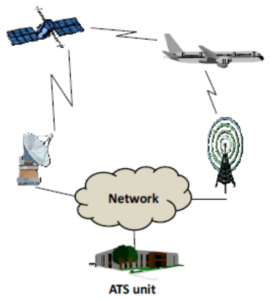
There’ll soon be a new CPDLC procedure on the NAT, designed to prevent pilots from acting on any old CPDLC messages that might have been delayed in the network.

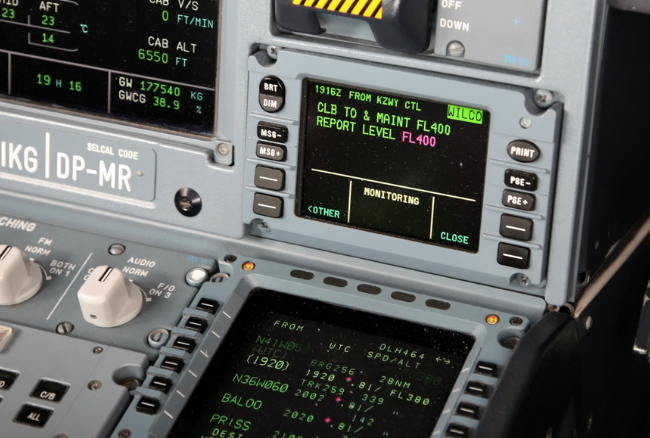
ICAO have published a new Bulletin for all the NAT Air Navigation Service Providers (ANSP’s) to use as a basis for implementing this new procedure. They recommend that all aircraft should receive a message immediately after they enter each control area telling them to “SET MAX UPLINK DELAY VALUE” to a certain number of seconds. The idea is that this will prompt the pilot to enter the specified latency value into the aircraft avionics, so that it will ignore/reject any old CPDLC messages.

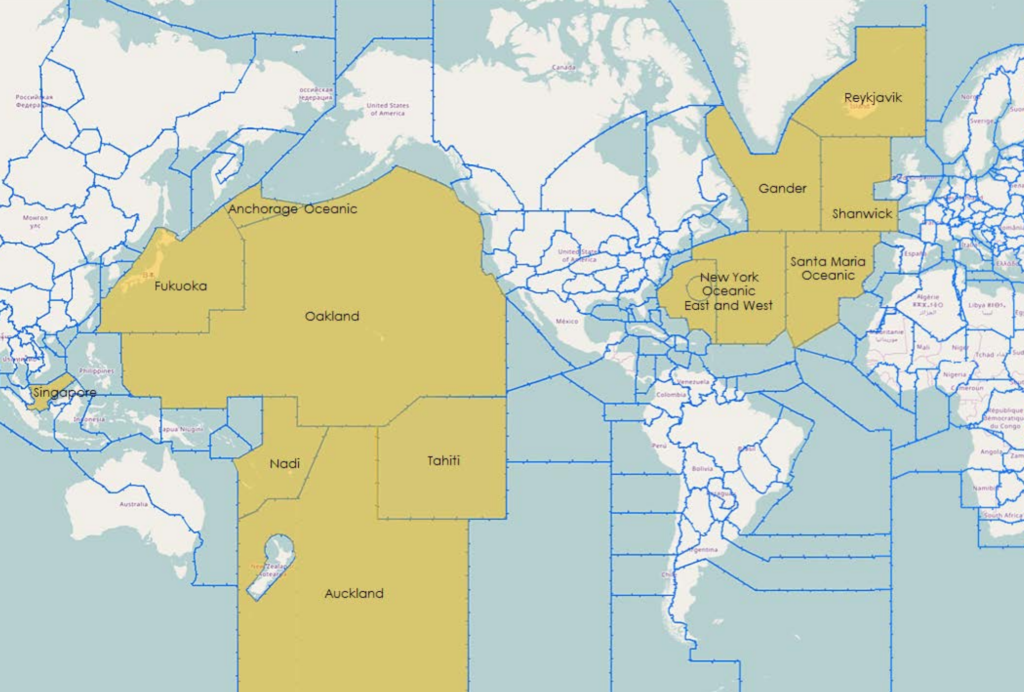
So far, only Iceland’s BIRD/Reykjavik FIR have implemented this procedure, effective May 24. All other sectors of NAT airspace (Gander, Shanwick, Bodo, Santa Maria, New York Oceanic) are busy writing their own AIC’s and will implement later in the year. 

So when entering the BIRD/Reykjavik FIR, expect to receive a CPDLC message from ATC instructing you to “SET MAX UPLINK DELAY VALUE TO 300 SECONDS”. A copy of their AIC with more guidance can be found here.

The latency monitor function varies from one aircraft type to another: some just automatically reject old CPDLC messages, some will display a warning to the pilot that the message has been delayed, some have deficient equipment, and some do not have the message latency monitor function implemented at all.

Because of this, ICAO note that “it is impossible for ATC to tailor the uplink of the message… to different aircraft types. It has therefore been decided among the NAT Air Navigation Service Providers (ANSPs) to uplink this message to all CPDLC connected aircraft immediately after they enter each control area. An aircraft may therefore receive this message multiple times during a flight.”

So here’s the lowdown on what you need to do:

1. Work out in advance what kind of message latency monitor function your aircraft has, and what it is designed to do when it receives the CPDLC message “SET MAX UPLINK TIMER VALUE TO XXX SECONDS”.

2. When you receive this message, respond with the voice message “ACCEPT” or “ROGER”. If your aircraft has a functioning message latency monitor, punch in the specified number of seconds. If you don’t have functioning equipment, respond with the free text message “TIMER NOT AVAILABLE”.

3. If anything goes wrong, revert to voice comms.

Back in November 2017, we reported on an equipment issue with Iridium satcom that prompted a ban by a number of Oceanic ATC agencies. Some aircraft were receiving massively delayed clearances sent by ATC via CPDLC – and one took the instruction and climbed 1000 feet, even though the message was meant for the flight the aircraft operated previously.

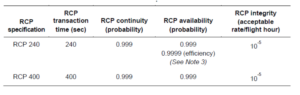
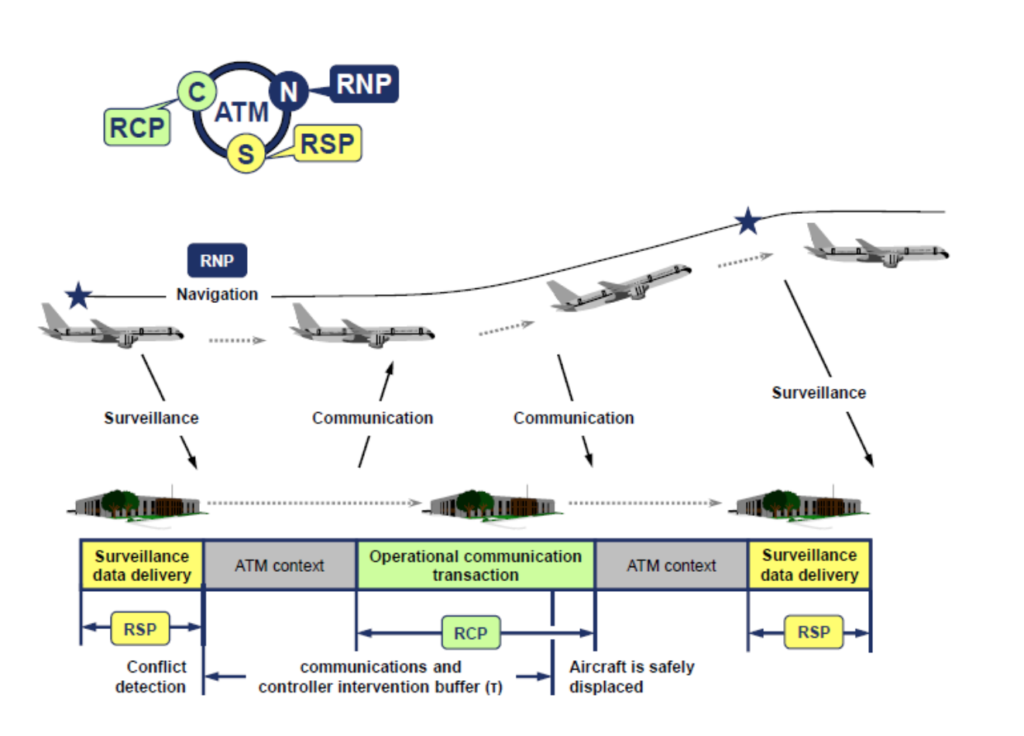
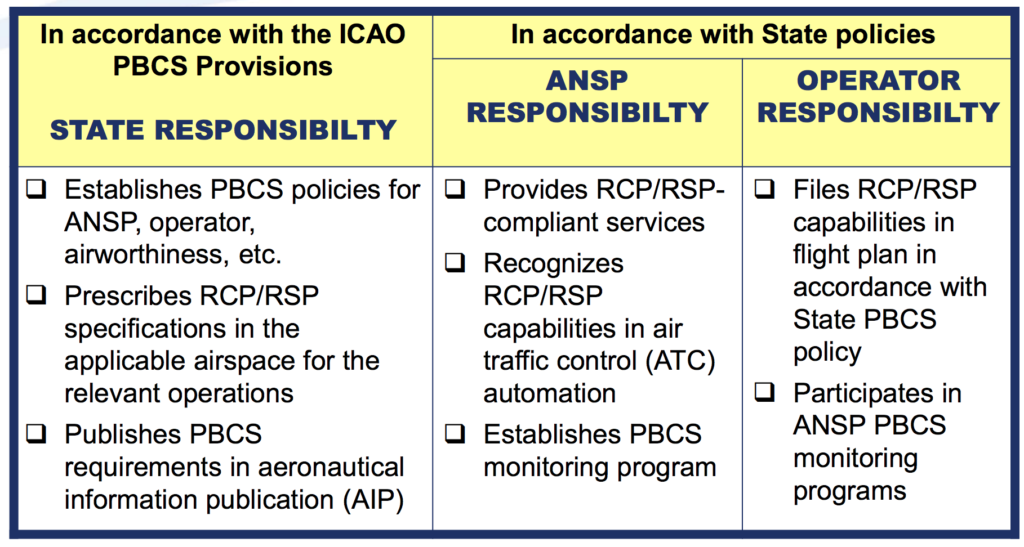
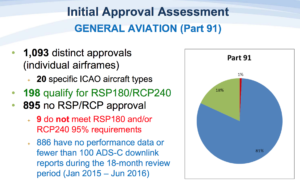
Although the bans were dropped after Iridium fixed the problem at ground level (by ensuring the system no longer queued CPDLC uplinks for more than five minutes), this new CPDLC procedure on the NAT should ensure this kind of situation doesn’t happen again. It’s officially being brought in as one of the safety requirements for the roll-out of reduced lateral and longitudinal separation minima across the NAT, which is predicated on Performance Based Communication and Surveillance (PBCS) specifications – that means having CPDLC capable of RCP240 (4 minute comms loop), and ADS-C capable of RSP180 (3 minute position reporting).

Further reading:
ICAO NAT Bulletin 2018_002: CPDLC Uplink Message Latency Monitor
Iceland’s AIC on the new CPDLC procedure for the BIRD/Reykjavik FIR
– The latest PBCS rumours and facts
The latest NAT changes, including EGGX/Shanwick, CZQX/Gander, BIRD/Iceland, ENOB/Bodo, LPPO/Santa Maria, and KZWY/New York Oceanic East.
IRIDIUM satcom fault fixed