US to mandate vaccines for all foreign arrivals

The US Government has revealed big changes to entry requirements. From November 8, all non-US citizens/residents will need to be fully vaccinated to enter the US – from anywhere. For Americans, the rules around pre-travel testing will be tightened too.

Here’s a quick rundown of how this will all work.

For Foreigners

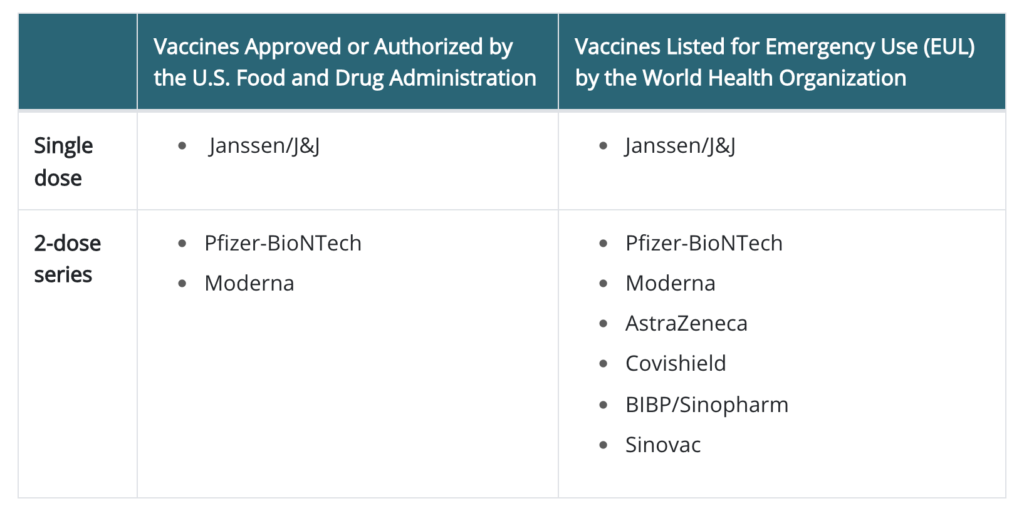
Starting November 8, any foreigner who wants to board a flight to the US will need to prove that they have been fully vaccinated. This means that they will need to have received a full dose of either an FDA or WHO approved vaccine at least a full 14 days prior.

FDA and WHO approved vaccines will be accepted.

Exemptions

Spoiler alert: there are hardly any. A very small list of unvaccinated foreigners will be allowed to enter.

This includes people participating in vaccine trials, those with medical conditions or anyone travelling on non-tourist visas from countries where vaccines aren’t readily available. Exemptions may also be granted for humanitarian or emergency reasons with approval from the US Government in the form of a letter.

Seven days of self-quarantine and additional testing may be required.

Don’t forget the kids.

Anyone under 18 will be exempt from the vaccine mandate. Instead they will need a pre-departure test. If their guardian(s) are fully vaccinated this can be done within three days of departure. If they’re travelling with an unvaccinated adult or alone, this is reduced to just one day.

For US Citizens and Residents

The vaccine mandate will not apply. But the rules around pre-travel testing are being tightened.

From the same date, any US citizen or resident who isn’t fully vaccinated will need to a negative viral test (PCR or Antigen) within just one day of departure. Those who have had the vaccine will still need to get a pre-travel test too. But they will have the existing three days to do so.

What about Crew?

Both foreign and local crew entering the US will be exempt from these new rules. Instead they will need to continue following existing CDC guidelines which you can read here.
Both foreign and US-based crew will be exempt from the new mandate.

Contact Tracing

There will also be a new requirement for air operators to collect contact information from all passengers and provide it to CDC ‘quick smart’ –  just in case they need to get in touch with anyone. More details on this are set to follow.

Travel Ban

November 8 is a big day for US borders for another reason too. For the first time since the start of the pandemic the entry ban on passengers from the UK, Ireland, much of Western Europe, China, Iran, Brazil, South Africa, and India is finally being lifted. You can read more about that announcement in our recent article here.
Handy Links

The official Presidential announcement of the vaccine mandate.

The official CDC Guidance on the new rules, including a useful FAQ section.


Demystifying Singapore’s Entry Rules

Ah, Singapore. The Lion City. Home to chilli mud crab, Clarke Quay, Raffles and some of the most confusing entry rules we have ever seen.

If you’re feeling particularly motivated, they’re all found on the official Safe Travel website. But brace yourself for bewilderment…

Or you could try this summary. It is a super simple break down of how the current entry rules work for passengers and crew alike. So hop aboard the Singapore Flyer and crack open a fresh Tiger Beer. We promise it’ll be a smooth ride.

Lanes, Lanes and more Lanes

All foreigners must apply for entry using an approved ‘travel lane’. Then they’ll get an approval letter before they travel.

For the vast majority of foreigners, the options are limited. There are lanes for those who live in Singapore, have immediate family there, study there or work there.
Surprisingly there is no general lane for business travel. Only ones with special rules for travellers from select Asian countries.

Which means the vast majority of foreigners headed to Singapore right now will only be using one lane – The Vaccinated Travel Lane, and it’s only for countries who have been good. It made headlines this week because the US, Canada, and the UK among others have been added to it.

Travellers from these countries can enter for any reason – as long as they’re vaccinated. So, let’s take a closer look.

The Vaccinated Travel Lane (VTL)

As the name suggests, all passengers must be fully vaccinated at least two weeks before they arrive. Click here for those requirements.

Passengers will need to prove it with either:

All passengers need to apply at least 7 days in advance to use the VTL. Don’t leave it until the last minute!

Here’s what they’ll need:

  • Their pre-approval.
  • A PCR test less than 48 hours prior to departure.
  • A PCR test on arrival (book and pay beforehand).
  • Travel insurance which includes at least $30K cover for Covid.

On arrival they will need to self-isolate in their hotel until the result comes back (about 24 hours). That’s it!

Can private aircraft use the VTL?

Great question – yes! Despite causing some confusion among FBOs there, Singapore’s CAA have clarified this with a new circular. If you’re operating a charter flight there, make sure you follow the rules. This includes getting approval from CAAS – apply at least a week in advance.
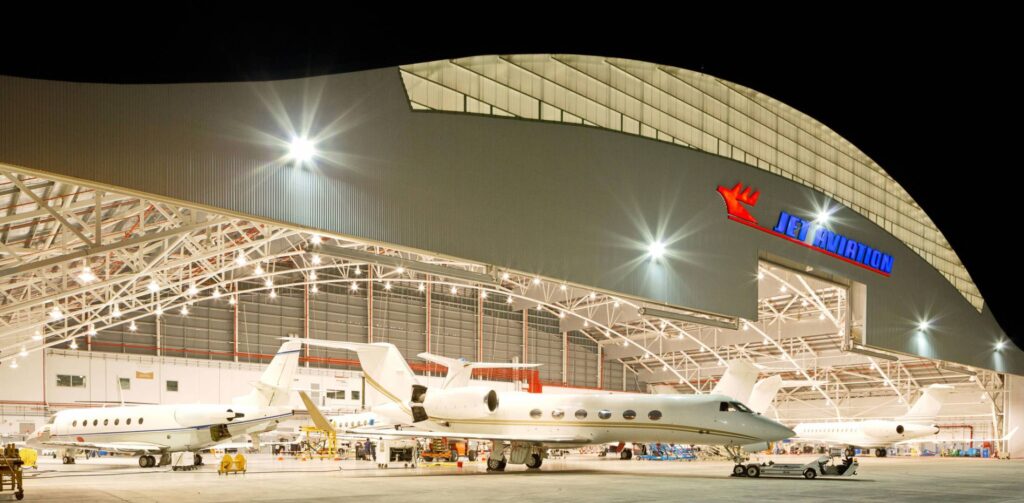
Jet Aviation, the handling agent based at WSSL/Singapore Seletar Airport, provided this FAQ on Oct 18, which includes some good info here:

  1. How do business jet pax apply for VTL?
    a) Foreign passengers must hold a valid VTP (Safe Travel). Take note that the trip must be a direct flight from VTL country to Singapore.
    Click on this link to apply for VTP – https://eservices.ica.gov.sg/STO/VTL
    **Recommended Internet Browser to be used – Google Chrome**
    Once approved, an email by Safe Travel will be sent to passengers via the contact details provided (eg. passenger’s email address).
    Alternatively, operators can “Check VTP status” (as shown above)
    b) Once VTP is approved, another application to CAAS must be submitted at https://go.gov.sg/nsvtl1
    CAAS VTL application for entry should be made at least 7 calendar days before the start of the flight, and approvals will be issued at least 2 calendar days before the indicated start date of the flight.
  2. In case of fuel stops, does the routing below qualify for VTL?
    VTL country > non-VTL country (fuel stop) > Singapore.
    (for example, London (origin) > Dubai (fuel stop) > Singapore. Is this a VTL?)
    No, this route arrangement does not qualify for VTL. Arriving from a VTL country, you must do a tech stop in another VTL country to qualify for VTL.
  3. What happens if there is a diversion of flight?
    VTL will not qualify if a flight is diverted from VTL country, to a non-VTL country, prior to arriving in Singapore.
  4. Can VTL be applied to Part 135 flights?
    Yes. Please ensure FOP and AT permits are in place first before VTP can be applied for the passengers.
  5. Do foreign crew qualify for VTL?
    CAAS strongly recommends crew to apply for entry into Singapore via existing schemes. The different types of entry approval for crew are as follows:
    — CAAS BAGA LAYOVER (for non-scheduled flights)
    — CAAS ANNEX A C33 LAYOVER (for maintenance flights only)
    However, foreign crew does qualify if they apply via https://safetravel.ica.gov.sg/vtl/requirements-and-process.
  6. Maintenance-related aircraft?
    Crew under VTP can perform post-maintenance Local Test Flights in Singapore.
  7. Will Long-Term Pass Holders (eg, EP), need both MOM approval and VTP?
    Yes. LTP Holders must obtain the necessary approvals to enter Singapore (applies to both Commercial Airlines and Non-Scheduled).
  8. Do passengers still need to have MTI and PBP passes?
    Yes. Passengers who have existing MTI and Pre-approved Business Passes approval must also apply for VTP to qualify for VTL. All passengers (if there are more than 01 passenger) must be fully vaccinated.
    We must emphasize that the purpose of VTL is to exempt passengers from serving SHN in Singapore.
  9. Are Guam and Hawaii considered part of the US territory, for VTL?
    Both Hawaii and Guam are considered part of the US continent. As such, tech stops at Guam are allowed for flights carrying VTL passengers.
  10. Are Monaco and Vatican City considered part of France or Italy?
    As for Monaco and Vatican City, these are city-states, and are not part of France or Italy respectively, so travel history for these locations within the last 14 days would disqualify pax from the VTL scheme currently.

Crew Layovers

So, you’ve scored yourself a layover in Singapore eh? Nice work! There are two options for crew:

The “I’d like to isolate in my hotel room” option.

 Then follow the standard procedures found in CAAS Circular 2021/08. Both operating and positioning crew are allowed.

You’ll need CAAS approval – make sure you apply at least two weeks in advance by emailing CAAS_FS_FOS@caas.gov.sg. When you get there, make sure you all have three bits of paper – your approval, a letter from your operator to say you are on layover and your crew passes.

For transport to your hotel you can only use one transport company – Woodlands Transport Service. You must then isolate in one of two hotels – the Crowne Plaza Changi Airport, or the Holiday Inn Orchard City Centre. Both are decent.

This is probably the easiest option if you’re staying for less than 24 hours.

The “I’m sick of isolating, I want to enjoy my layover” option.

We don’t blame you. In which case your only option is the Vaccinated Travel Lane – you’ll need to meet all the same requirements as the passengers including pre-approval, and *24 hours of isolation.

* you have to isolate until you get the SMS with a negative PCR test result. This is likely to arrive within 24 hours, but for scheduled arrivals at Changi airport it is taking 6 hours or less (reportedly as few as 2).

So probably only worth the fuss it if you’re staying for longer.

The Other Lanes

If you’ve made it this far, well done! If you’re only interested in the VTL the show ends here. But if you’re carrying passengers in other lanes, there’s one more thing you should know about – travel categories.

For almost all other lanes, testing and self-quarantine is required. The rules depend on where you have been in the last 14 days (including transit). Singapore divides the world up into four categories – 1 is the lowest risk, and 4 is the highest. The length of quarantine and where you have to do it depends on where you have been. You can find those breakdowns here.

We’re here to help.

Navigating entry rules in these times can be confusing and frustrating. If you still have questions reach out to us on team@ops.group, and we’ll do our best to help you find the answer you’re looking for.

Headed to Seletar?

We wrote an article on ops there recently, check it out here.


Major runway works in Sydney

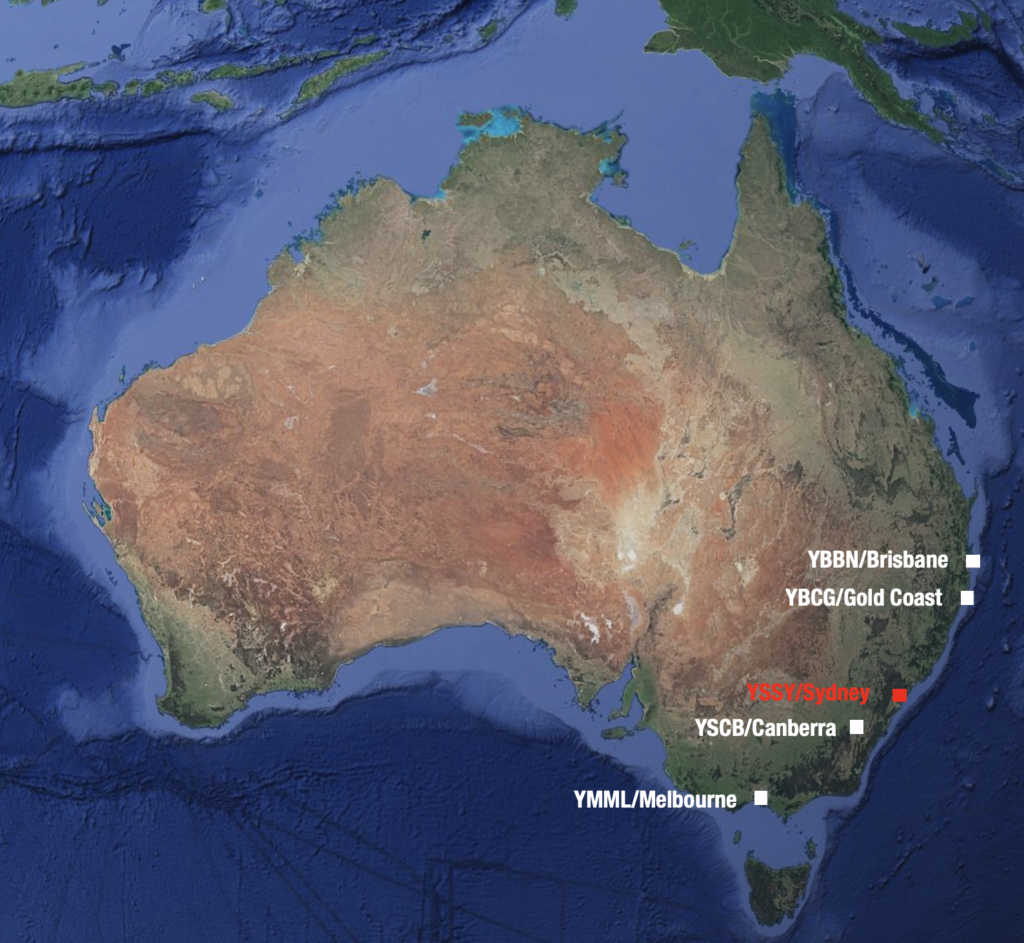
From October 15 until late November, major work is taking place on the threshold of YSSY/Sydney’s world famous Runway 16R – the most used, widest and longest runway at Australia’s busiest airport.

During that time it will not be available for any arrivals (around the clock), and there will be a reduced length for departures.

Here’s a quick rundown of what this means for operations at the airport, and what to expect if you’re visiting the Emerald City in the coming months.

Crunch time

The threshold slab is over half a century old. Pavement failures have been on the rise leading to FOD damage and temporary repairs have become a common occurrence. With things being quieter at the moment, the airport is finally biting the bullet and replacing it completely.

Airport authorities looked at simply displacing the threshold for Runway 16R for arrivals but decided that operationally it wasn’t safe or efficient. So instead, procedures at the airport will temporarily change.

Arrivals

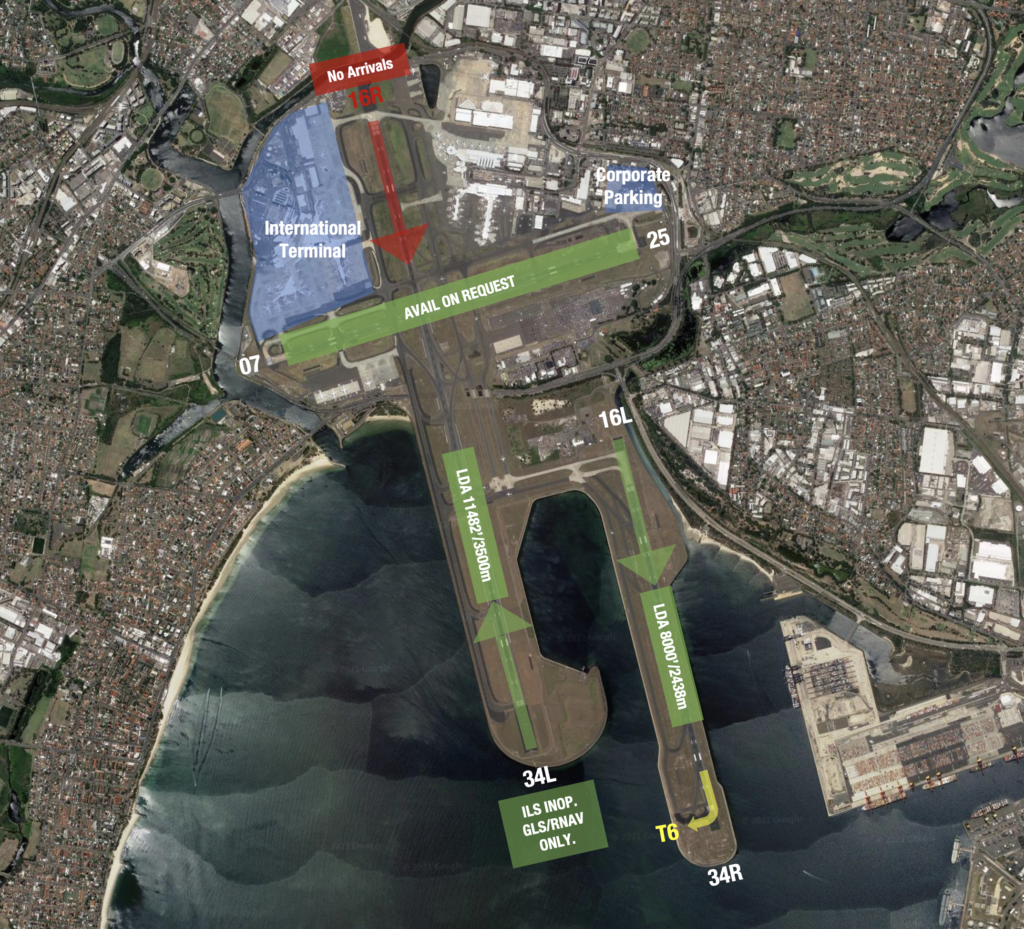
In southerly conditions (which is half the time), all arriving aircraft can expect to land on the shorter Runway 16L. It has 8,000’/2438m of hard stuff, and is narrower at 148’/45m wide. The ILS is CAT 1 only.

First of all, carry extra fuel. With all arrivals being sequenced for one runway, you can expect extensive holding and/or slow-downs during peak times. Just like the freeways, these are early morning and early evening.

Wide body traffic can expect to vacate at T6 – right down the far end. From there it’s a much lengthier (and potentially confusing) taxi to the international side of the airport which may see you cross two active runways. Remember that progressive taxi instructions are always available if you’re unfamiliar with the airport.

Runway 07/25 is also available if you need it operationally, and it is around the same length. You’ll need to request this early from ATC. Remember to use the phrase ‘operationally required’ – it will help ATC to accommodate your request.

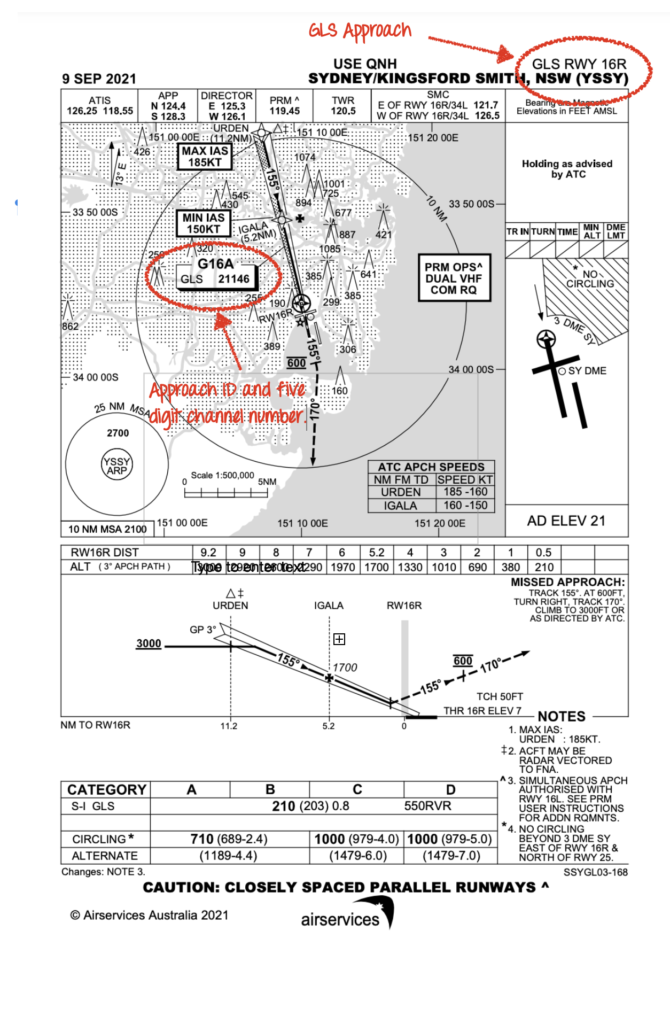
In northerly conditions, Runway 34L will still be used for arrivals at reduced length. The LDA will be approx. 11480’/3500m. Expect to see workers and trucks at the far end. Also, a head’s up – the ILS won’t be available during the works. The GLS approach will still be an option, but if you can’t fly one in your ride, you’ll need to do an RNAV approach. They’ll cancel work for the day and switch the ILS back on if things are starting to look murky out there.

Here’s a picture of what this all looks like:

Departures

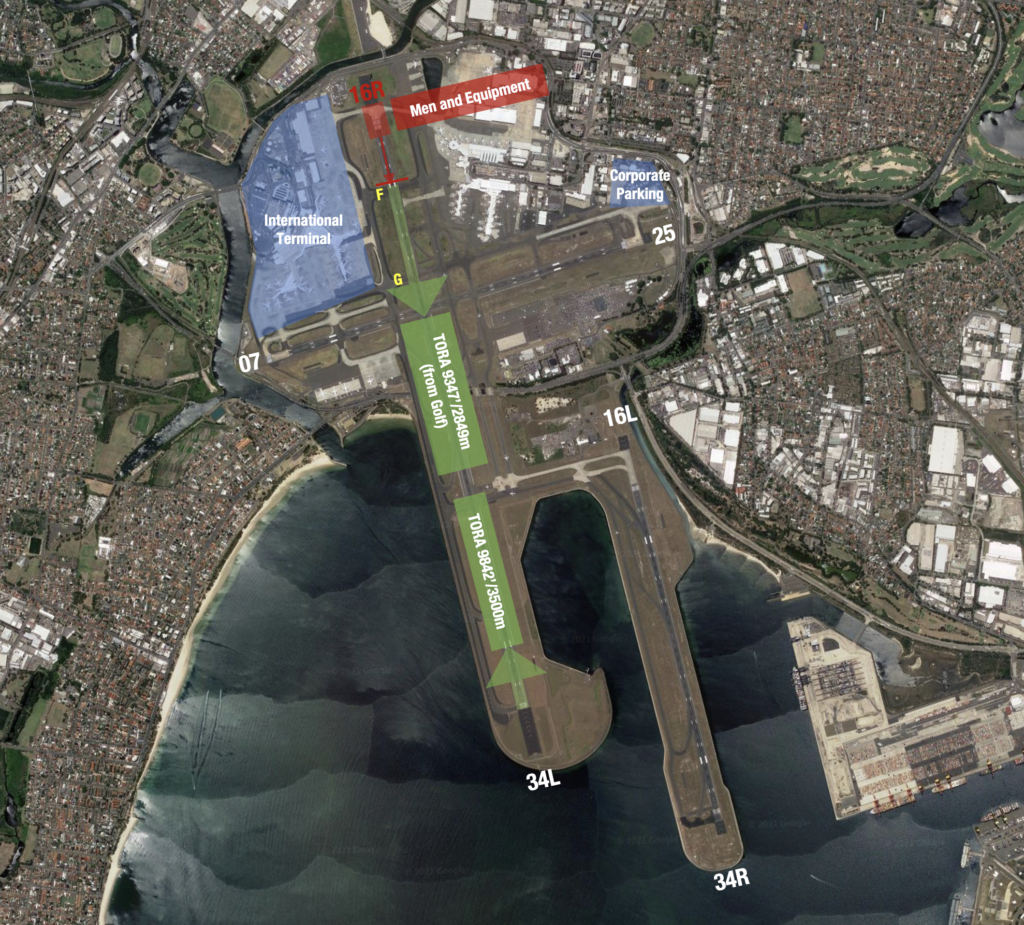
You will still be able to depart from Runway 16R, but you’ll need to roll from between taxiways Foxtrot and Golf.  Small jets and turbo props may be be cleared for take off from Foxtrot, but heavier jets can expect to taxi forward to Golf first due to jet blast. TORA from there is 9347’/2849m.

And here’s what that looks like:

Wet Season

Sydney can experience severe convective thunderstorms late in the year (the warmer months down under). If the winds are southerly, and there are thunderstorms forecast it’s time to think extra hard about fuel planning during this time.

Being part of one the busiest air corridors in the world, and with only a single runway for arrivals the queue may begin to back up in a hurry during storms. Extensive holding times and diversions are not uncommon in these conditions.

There are a few decent options as alternates, but they’re not right next door. The closest is YSCB/Canberra (132nm). A few things to think about though – it can be a challenging place in bad conditions due to the high terrain that surrounds it. Apron space can also become limited if it is receiving lots of diversions.

Most international operators use one of the below:

  • YMML/Melbourne (384nm) to the south.
  • YBCG/Gold Coast (368nm) and YBBN/Brisbane (395nm) to the north.

Looking for the official word?

YSSY Notam H5212/21 is the place to start. IFALPA has also published a Safety Bulletin based on the info available from airport authorities.


BACE in Vegas: Special Airspace Procedures

Caution! This is previous year info – 2023 to come!


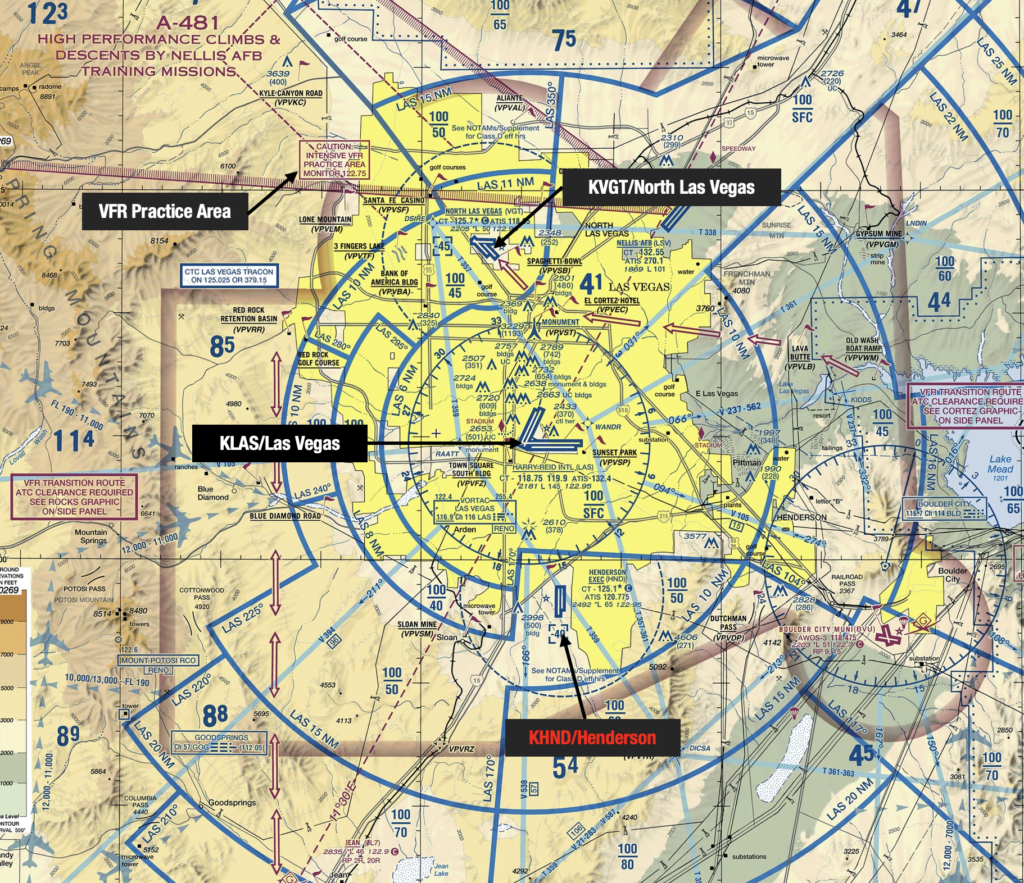
If you’re headed to Las Vegas in October, look out for special airspace procedures at three main airports – KLAS/Las Vegas, KVGT/North Las Vegas and especially KHND/Henderson Executive.

What’s going on?

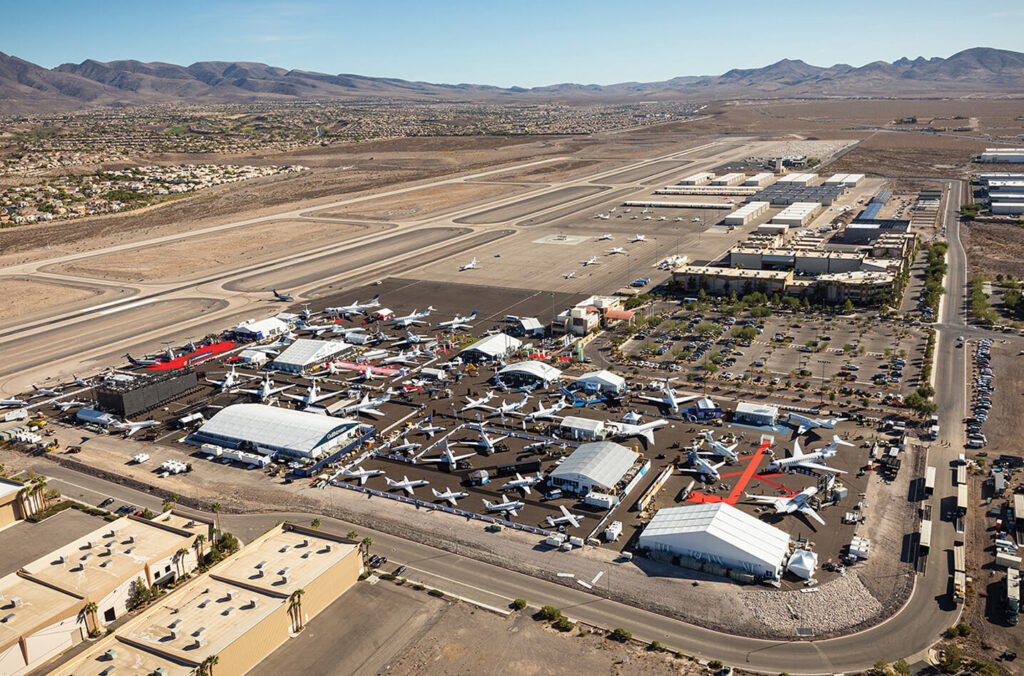
The NBAA Business Aviation Convention & Exhibition (‘BACE’ for those in the know) is happening at KHND/Henderson Executive airport from Oct 12-14, and things are going to get busy.

To keep the traffic flowing, the FAA has published special airspace procedures you’ll need to know about. They will apply from 14z on Oct 8 until 06z on Oct 14.
Here’s how they work.

Watch how you file.

For starters if you’re within 100nm of Las Vegas don’t try to pick up an IFR clearance once airborne.

In fact, they want all flight plans bound for any of the three major airports filed at least 12 hours in advance (but no more than 22). Any requests to change destinations between the airports once wheels up will be denied.

There may also be other methods that ATC use to put the brakes on the flow. This may include the use of ‘expect departure clearance times’ – IFR flights bound for Vegas will need to depart within five minutes of them. And of course, don’t rule out the chance of dreaded ground holds.

To keep track of these delays, the FAA NASS website is the best place to start.

Headed to Henderson?

Here’s what the FAA have to say about it…

From 0900:LT on Oct 9 until 22:00LT on Oct 10 all landings of aircraft not based here will need a PPR. Contact HND Ops on (702) 261 – 4858 to reserve yours (and get in early as they can fill up). Make sure you include your PPR number in the remarks section of your flight plan.

You’ll need to fly one of three RNAV arrivals. From the NW, the GAMES ONE. From the NE, the BOEGY ONE. And anything from the south, the NTNDO ONE.

Once you’ve landed, they want you off quickly. Take the first available exit. Stay on tower until they tell you to change ground.

Then there’s parking. You probably would like to stop your airplane at some stage after landing? Good plan, but you’ll need a reservation for that. Get in touch with the HND FBO on (702) 261 – 4800 or you can do it online here. But don’t show up unannounced – there’s a $1,000 fine, and the house always wins.

What about departures?

Don’t try and jump the queue. They don’t want you to ask for taxi until you have an IFR clearance and are clear to enter a taxiway from the ramp.

Showing off a ride at the show?

If you’re exhibiting, there’s a lengthy set of rules you’ll need to follow. You can access those here.

There are also special procedures for demonstration flights. Issues with airspace make these tricky for ATC who may not be familiar with the profiles of demo flights. Be sure to let Las Vegas TRACON know if you need anything special in advance, and they’ll do their best to help. You can contact them on (752) 600 7011.

Planning to go IFR? You’ll need TRACON’s approval on the same number. Your call sign will be ‘DEMO’ followed by the last three characters of the aircraft reg.

There will only be two routes available:

  • FL230 and below: KHND.OYODA2.BOJAC..BYSEN.NTNDO1.KHND
  • FL240 and above: KHND.SCAMR2.IWANS..BOEGY.BOEGY1.KHND

What about if you want to go VFR?

Yep, that’s okay too. You’ll need to use the practice area to the northwest of KVGT. Listen out on 122.75, and let others know where you are and what you’re doing. Click here for the Las Vegas VFR chart.

Keep an eye on NOTAMs

Other procedures may be published before the event.

If we’ve missed something, we’d love to hear from you. Get in touch with the OPSGROUP team on team@ops.group.


The US rules for carrying Covid in the air

Since January this year, any passenger boarding an international flight bound for the US must have a Covid test within 3 days of their departure.

Great when it’s negative. Not so much if its positive – what happens then?  How do you carry them back to the US? And what about their close contacts? Are they good to go?

Let’s take a closer look…

The US law says you cannot knowingly carry someone with known or suspected Covid-19 to or within the US on regular passenger flights. You can’t even board them.

Instead, as a general rule they won’t be able to travel until they meet CDC quarantine or isolation guidelines (typically staying put for ten days and more testing), in addition to whatever local laws apply. A great reason to have travel insurance.

But what if they have to travel?

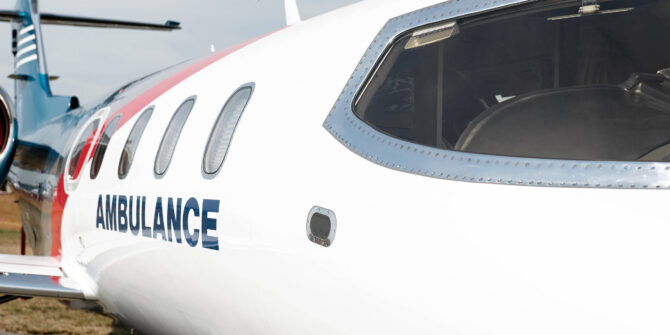
There are important reasons why a Covid-positive passenger might have to fly. The most common one is that they are being medically evacuated or transferred to better medical facilities. It may also be part of the passenger’s insurance policy.

Either way, it falls upon charter or medevac operators to make it happen because the rules say that this is the only way. The airlines just can’t be used.

If you’re chartered to carry Covid positive passengers – or those suspected of having it – you need to be familiar with the CDC’s procedure for transport by air. Spoiler alert: you need permission, so whatever you do don’t show up unannounced.

You can read that procedure here in all its glory. But here’s a quick rundown of how it works.

It starts with the phone.

If you’re operating an international flight, the first step is to contact the relevant US Embassy. There may be local laws or restrictions that prevent a Covid positive patient from being allowed out of quarantine early.

Then, over in the US, there are three important agencies that you’ll need approval from:

  • The FAA – yep, make sure they’re cool with it.
  • Customs and Border Protection – they will work with you to decide on the best port-of-entry.
  • The CDC – This involves contacting the relevant quarantine station for where you’re headed – and you’ll need to give them at least 24 hours’ notice before you take-off. There’s a bunch of info they’ll need – click here for that list.

You’ll also need to think about the logistics of your flight including transport, permission from other CAAs and airport authorities – including where you may need to divert to.

Pre-travel.

Prior to the big day it goes without saying that your unwell passenger(s) should stay in isolation. They’ll need a medical exam beforehand to make sure they are well enough for the level of care you can provide them in the air.

You’ll also need to work with airport authorities for a plan. If you have to enter a terminal, your passengers will need to be separated from the public.

Choose your ride.

When it comes to transporting unwell passengers, not all airplanes are created equally.

The CDC has guidelines for this too. They were developed back when MERS was thing. Remember MERS? It was like Covid’s lesser known cousin that appeared a few years back but was way less memorable at the party.

In a nutshell they need to be large enough to be able to separate passengers and crew into different parts of the airplane. Ventilation is also important – ideally, cockpit air should have positive pressure relative to the main cabin and not be mixed.

Don’t forget to think about range. Every stop you make will become a logistical challenge to manage. If you can make it in one go, you should.

On-board.

First things first, keep that air flowin’. At all times. Even on the ground during long delays, you need to keep ventilating the airplane.

Passengers and crew must wear masks – don’t worry you can remove them to sip on your coffee. You can get away with basic ones, but the CDC recommends the fancier N95 masks or better.

Here’s the kicker – crew need to remain separated from passengers unless there is an emergency or to provide single-serve meals. You can put up placards or barriers but they need to be obvious and not stop anyone from reaching emergency exits or seeing cabin signs.

If you can, seat passengers at the rear of the aircraft and keep cabin crew at the front – at least six feet away. The reasons for six feet will become clear in a sec. Pax should have their own bathrooms.

After landing.

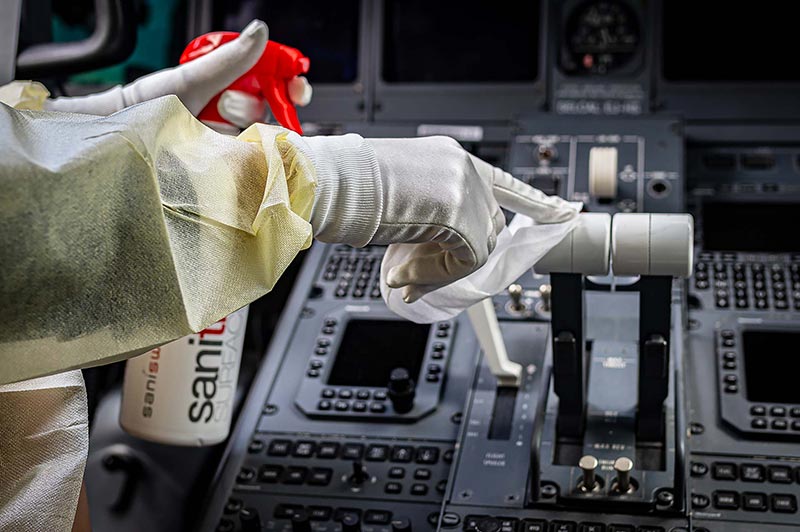
 The airplane will need to be thoroughly cleaned. As in squeaky clean. There are rules for what types of products need to be used – you can read about that here.

As for crew, as long as you’ve followed the rules, you don’t need to be tested or quarantine. But make sure you self-monitor for symptoms for 14 days afterwards, just in case.

The ‘close contact’ conundrum.

This is where things start to get tricky…

Being a ‘close contact’ of a known Covid case for all intents and purposes means you have been exposed.

But what counts as ‘close’? Brace yourself, because the CDC have that base covered – it means anyone who has been within six feet of a confirmed case for a cumulative total of 15 minutes over 24 hours.  Cumulative being important here – so for example, three 5 minute exposures counts as ‘close’. It doesn’t need to be all in one hit.

So, what happens when a known close contact still tests negative?

 There’s effectively three scenarios here:

  • The close contact is fully vaccinated and has no symptoms: Okay, they can still travel.
  • The close contact is fully vaccinated but has symptoms:  No bueno, it’s off to quarantine.
  • The close contact hasn’t been vaccinated:  No bueno, it’s off to quarantine.

Cool, so can Covid positive passengers be transported with their close contacts?

No. But you can transport multiple positive pax together, you just can’t mix positive ones with those who have tested negative.

Still have questions? We don’t blame you. Here are some handy places to start.

The CDC website, you can visit it here.

The US FAA, their Covid specific stuff is found here.

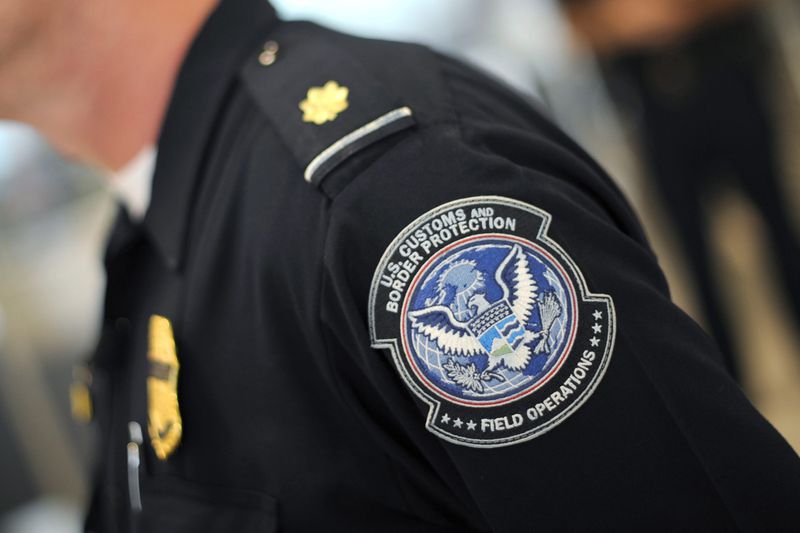
If you’re trying to reach Customs and Border Protection, you can reach em’ here.


Changes at Teterboro: What you might have missed

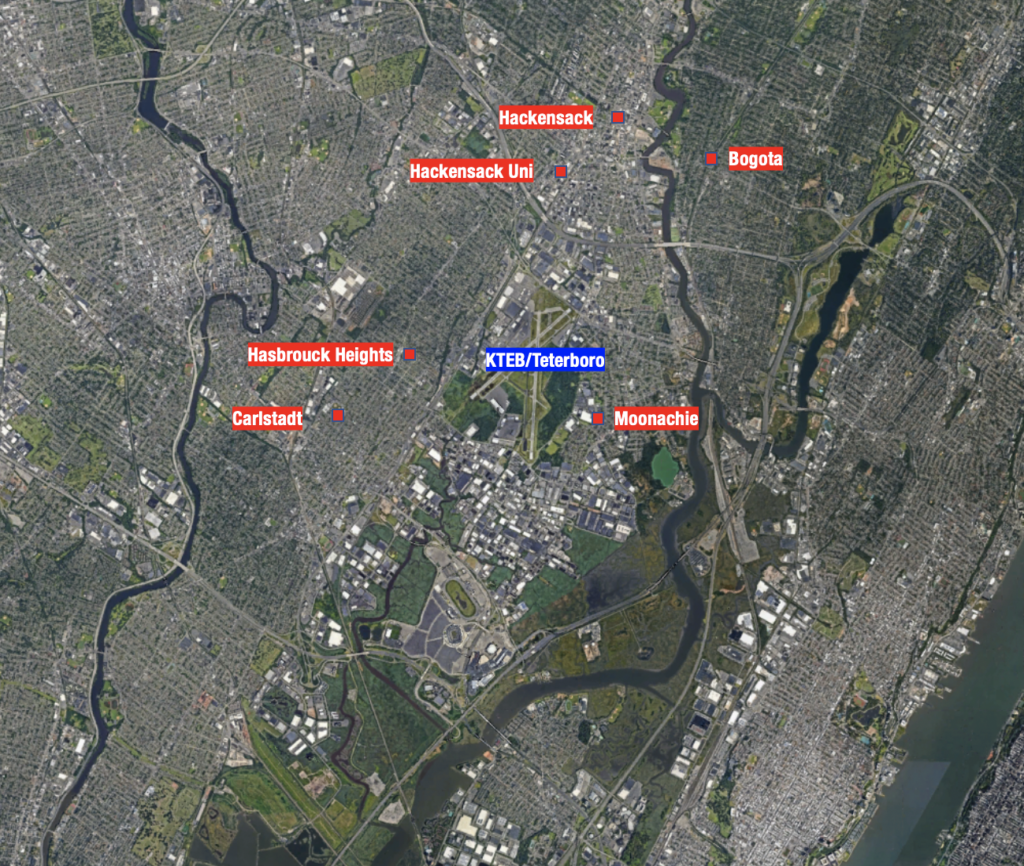
The skies over New York have been quieter over the past year or so, and it’s not hard to guess why. With lower traffic levels, there have been a number of operational changes at nearby KTEB/Teterboro. Here’s a rundown of what you might have missed recently…

Noise is a bigger issue than ever

It may seem ironic, but Covid hasn’t helped. With less airplanes in the skies, nearby residents have become more aware of Teterboro’s noise, and complaints have been on the rise.

If you’re headed to KTEB, be aware that there are extensive noise abatement procedures. There’s a handy summary of these available online, but here are some of the biggest gotchas to get you started.

If your ride is a jet and you’re new to KTEB, you’ll need permission first. There’s a form to fill out for that.

The most noise sensitive time is between 22:00 and 06:00LT, and it’s when you’re the most likely to get yourself into trouble. There’s a ‘voluntarily restraint’ in place after 23:00  – in other words if your flight isn’t essential, it should wait.

Sprinkled through the surrounding suburbs are noise monitoring devices, and there are strict decibel limits. The most restrictive is Runway 24 at night (only 80dB). Bust em’, and you can be served a violation – too many of those and you can say sayonara to operating there. And they take two years to expire.

The least noise sensitive area is to the south of the airport. So if departing on the back of the clock and the weather is playing ball, try to use Runway 19 for departures and Runway 01 for arrivals.

Speaking of noise, the new RNAV X RWY 19

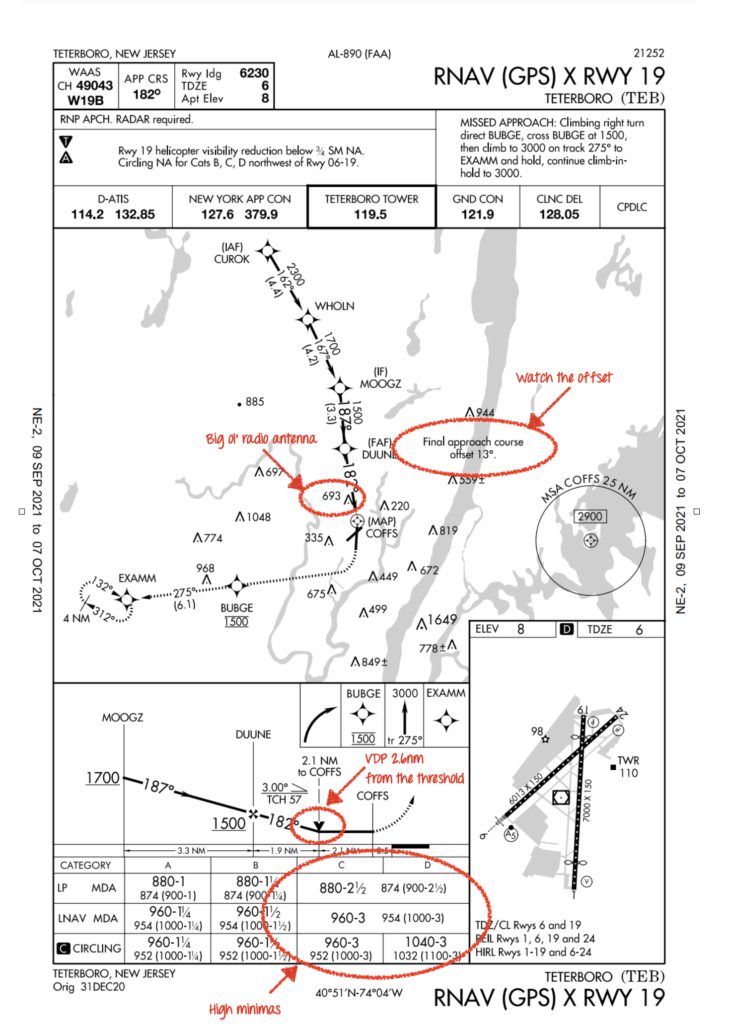
Back in July, an offset RNAV noise sensitive approach was introduced for Runway 19. It’s a quieter alternative to the straight-in ILS. It’s recommended for night ops at KTEB on request (and you may hear it mentioned on the ATIS). But there’s some important stuff you should know before you go ahead and shoot it.

If conditions are less than ‘tropical’, keep in mind the approach is significantly offset (13 degrees) and minimas are high. The visual descent point is almost three miles from the threshold. There’s also a big unfriendly radio antenna at the business end of the approach. At the VDP on the correct 3 degree path, you’ll be uncomfortably close to it – check out this article for just how close.

What’s the moral of the story? In marginal conditions, the approach can quickly become challenging – consider the ILS if in doubt.

Escape Routes

Tired of waiting at the hold? We don’t blame you!

There are new departure routes to help business jet operators get airborne out of KTEB when the weather is bad, or New York’s majors airports are especially busy. New York TRACON is responsible for co-ordinating those with the tower.

A head’s up though – they are designed with the performance of business jets in mind and may require steeper climb profiles than you’re used to.

You need to fly them from start to finish too. Don’t accept the clearance unless you are sure you can meet the requirements, and asking for track shortening after wheels up is a no-no.

Works

Construction and runway maintenance are ongoing. Single runway closures are common and can happen during the day. The good news is that full closures are pretty rare.

Something to look out for – if Runway 06/24 is closed in southerly conditions, extended delays are common at KTEB due to the flow at nearby KEWR/Newark, just 10nm to the South. You might need to carry some extra gas.

The Teterboro Users Group publish weekly Maintenance Bulletins for Runway and Taxiway closures which you can access here. Of course, if you prefer your info capitalised and abbreviated, you’ll find the information in  Notams too.

Covid

We’re all well over it. But there are some procedures to follow, especially if operating an international flight into KTEB.

US Customs and Border Protection are up and running at the airport, but will only accept international arrivals between 07:15 and 23:15 local. Don’t show up after hours. Standard CDC rules apply here including the pre-travel testing requirement for all pax.

For a full break down of these and other health protocols, you can view a full rundown here.

Have we missed something?

We’d love to hear from you! You can reach us at blog.team@ops.group.

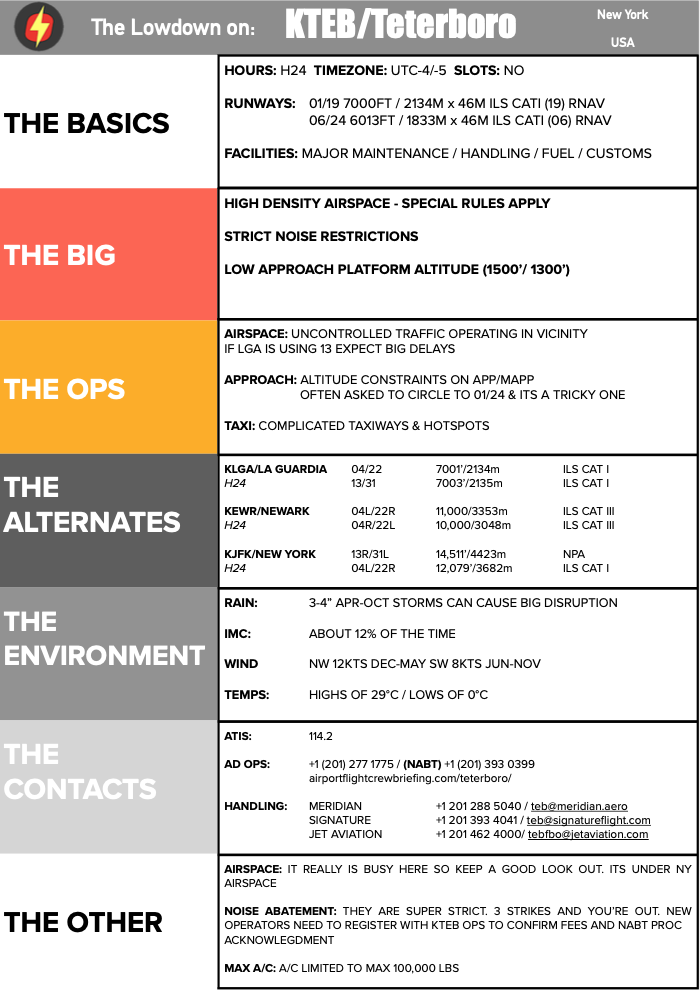
Also check out our recent Airport Lowdown for KTEB/Teterboro – it’s the biggest threats all in one place, built by pilots who have been there.


Surviving Seletar: Singapore’s Second Airport

Update Oct 2025

OPSGROUP members can access an updated version of this guide, effective Oct 2025, on the members Dashboard here.

Original Article from Sep 2021

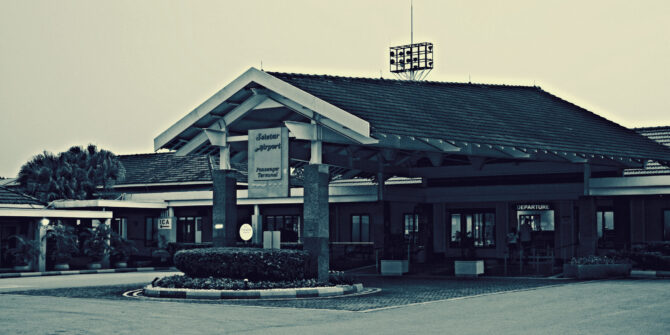
If you’re planning to operate a business jet into Singapore, there’s a good chance you won’t be bound for WSSS/Changi Airport at all. Instead you may be headed for the lesser known WSSL/Seletar – Singapore’s secondary commercial airport, and it can be a lot more challenging.

Here’s a basic rundown of just what to expect to keep you ahead of the game next time you are flying into Seletar.

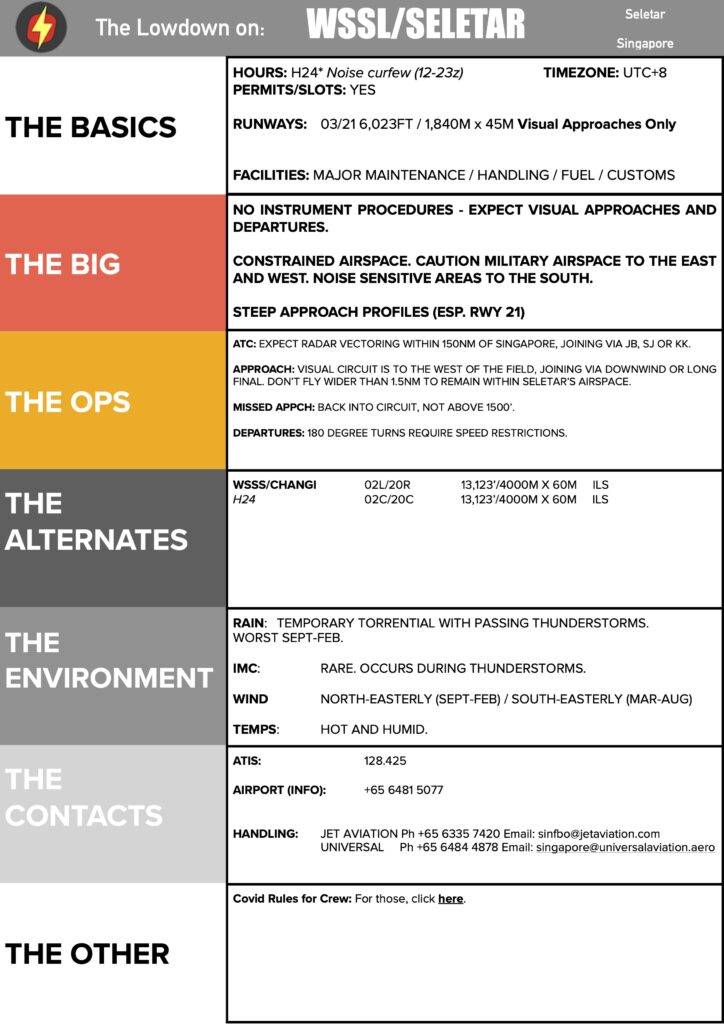
The Basics

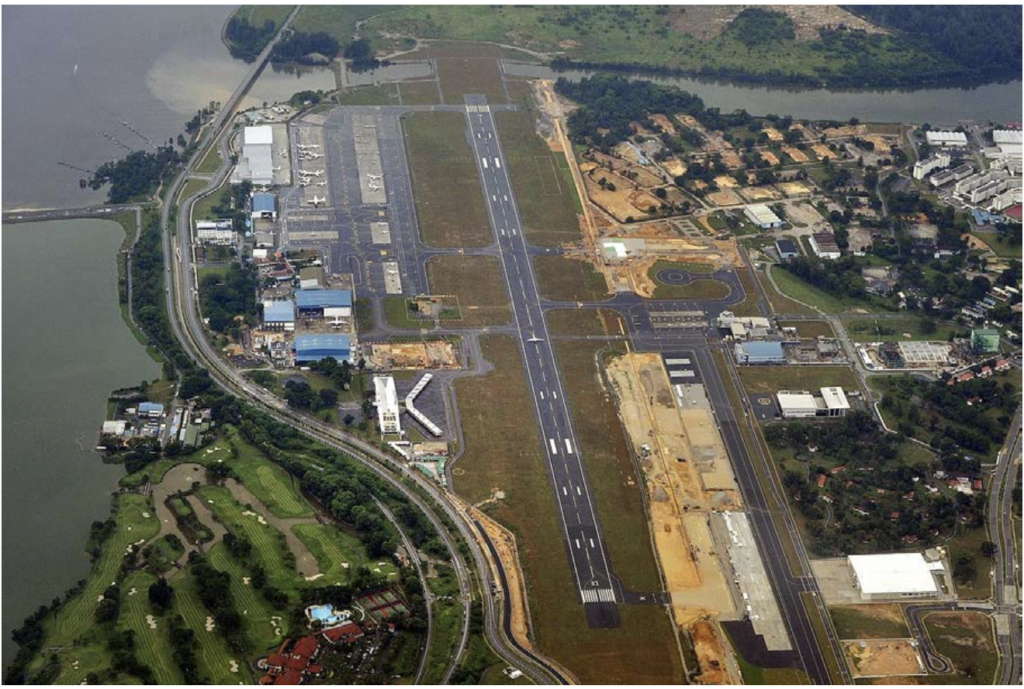
Seletar is a stone’s throw (8nm) northeast of WSSS/Changi. It has a single 6020ft/1840m long runway and serves predominantly turbo prop and corporate jet traffic. It has fuel and good facilities for business ops.

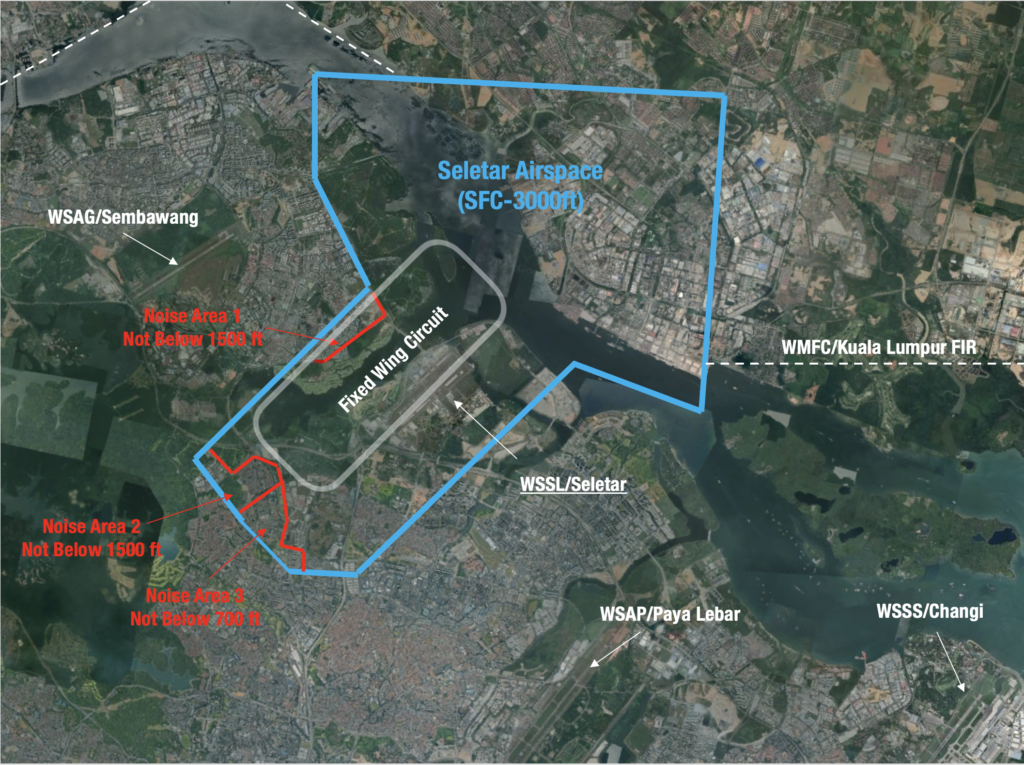
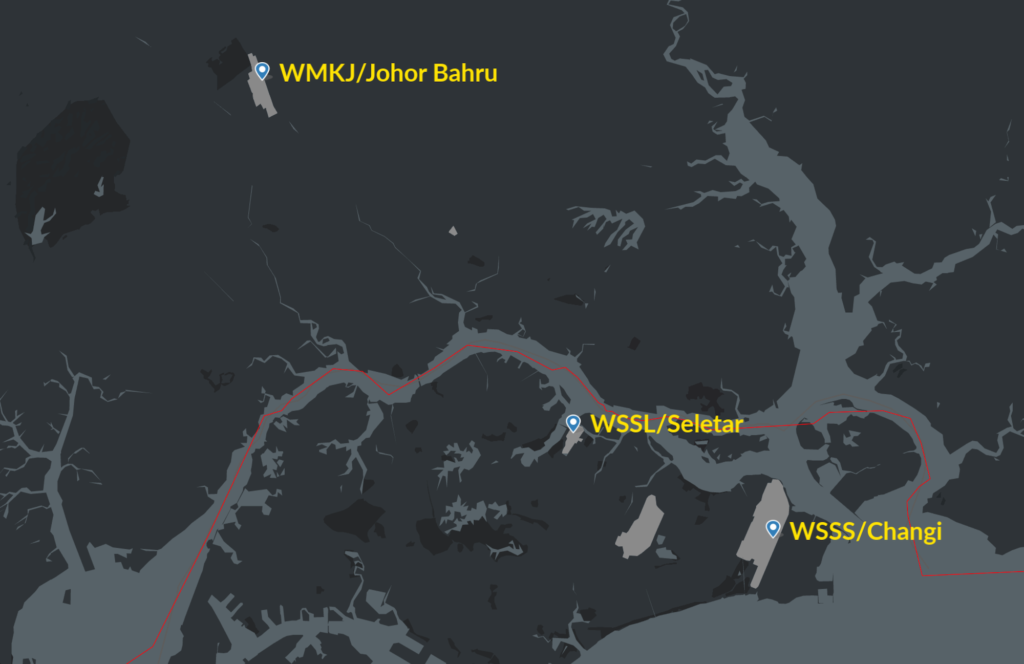
Just getting in there at all can be a pain – the airport is surrounded with prohibited and restricted airspace, noise abatement areas, training areas, military airports; as well as a bunch of buildings, cranes, boats, and other obstacles to the north of the airport on the Malaysian side – just across the Strait of Johor.

And since Malaysia effectively killed the plans for ILS at Seletar back at the start of 2019, there are no available instrument approaches at all, requiring visual approaches to be flown onto both runways.

The Airspace Picture

Operations at Seletar are difficult because of the complicated airspace that surrounds it, and it is the reason why there are no instrument approaches. There just isn’t enough room.

Seletar is literally boxed in by a variety of restricted airspace. To the west lies the Sembawang airbase, and to the east the Payar Lebar airbase. Both are strictly military.

Then just a smidge to the north is the boundary with Malaysian airspace, the WMFC/Kuala Lumpur FIR. South of the airport is highly noise sensitive, with three noise abatement areas where hefty fines await.

Throw these things together and you have the Seletar ‘Fish Bowl’ – a small bubble of airspace where there is precious little room to manoeuvre. Here’s a picture of what this all looks like.

Arrival Procedures

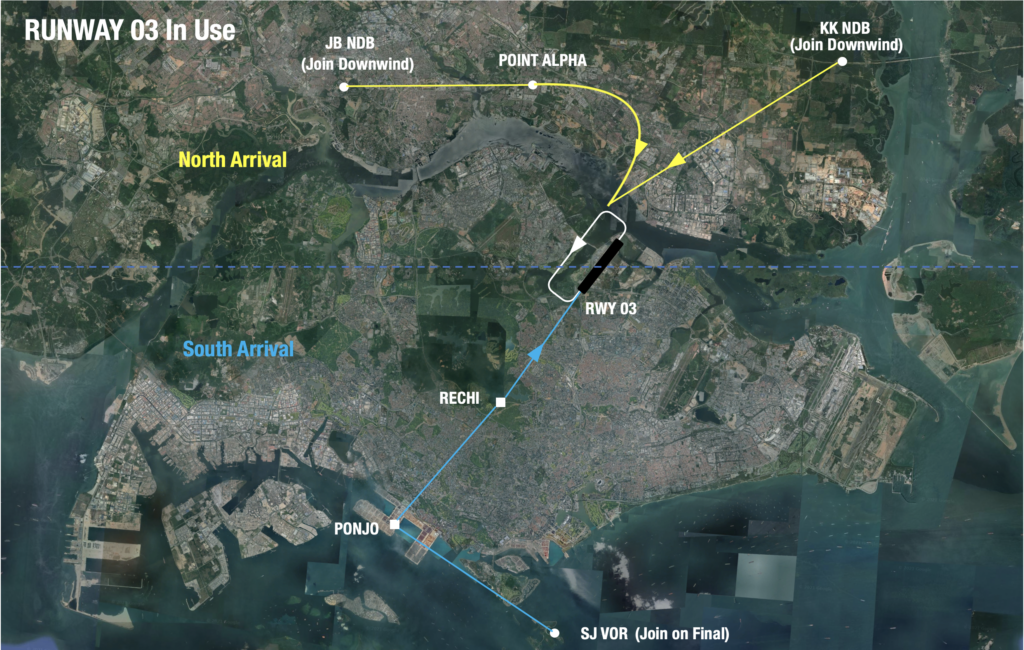
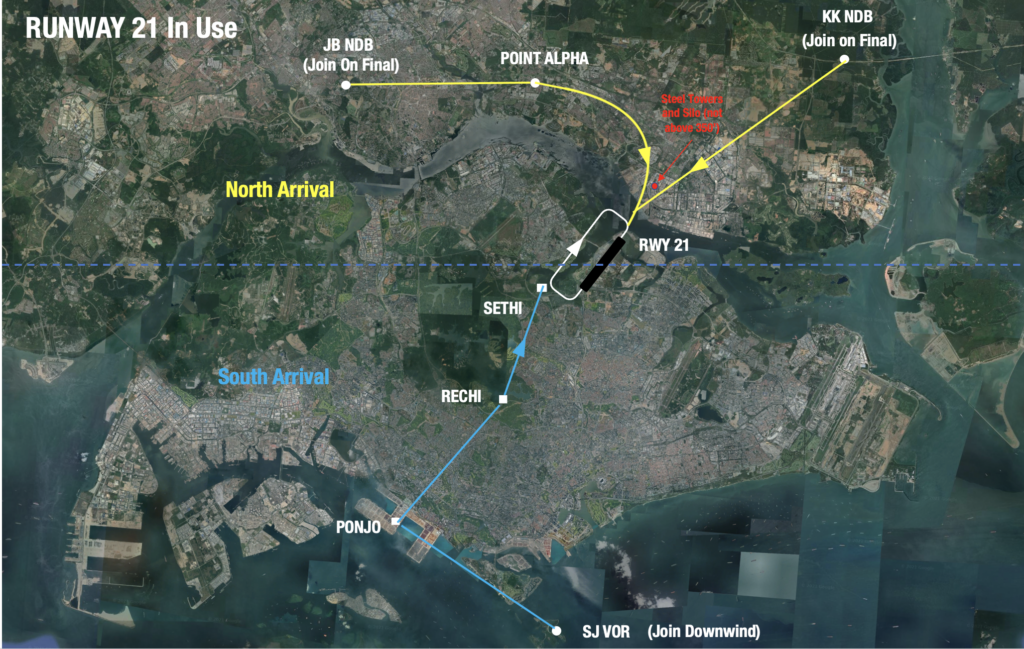
To keep things simple, the end game is to join the circuit and fly a visual approach, without busting any airspace. To help you with this there are a number of visual arrivals that require you to be in VMC conditions. If you can’t get visual, you’ll need to hold or divert to nearby Changi.

There are essentially two arrival procedures – North and South. And all arriving aircraft will join them through one of three feeder points – Jaybee NDB (JB), Sinjon VOR (SJ) or Kong Kong NDB (KK). From there you will either join downwind, straight in or even overhead if you need the extra track miles.

You can view the current plates for those procedures in the Singapore AIP online. But to make it easy, here’s a couple of pictures.

Things to look out for

Day and night closures: The airport is closed every night between 22-07 local time except for medevac and SAR. And then during the daytime, there are several infuriating closures to accommodate training flights. So essentially, GA/BA flights can only operate to Seletar at these times : 0700-0930, 1030-1200, 1300-1500, 1600-1700, 1800-2200 local time.

The circuit is tight. It is always on the western side of the airport and you cannot fly your circuit wider than 1.5nm due to Sembawang’s airspace. Which means the turn onto final is also going to be tight.

The profile is steeper than normal. 3.2 degrees on Runway 03, and 3.5 degrees on Runway 21. Which means you will need higher rates of descent than a standard visual circuit ‘outta the book’.

You need to be visual. If you’re not VMC, you can’t land at Seletar. Thunderstorms are common in Singapore with heavy rain, and they tend to be slow moving. The worst times are afternoons and evenings.

‘Steel Structures and Silos’  – You’ll hear it on the ATIS, and you need to report you have them in sight if arriving on Runway 21. They’re on the Malaysian coastline north of Seletar. Spot them early and you’ll get an earlier approach clearance from ATC which will make your job easier.

Mistaken Identity: Both nearby Sembawang and Paya Lebar airports have similar runway orientations to Seletar and it is easy to line up with the wrong one. Tune up Seletar’s NDB (220) – the needle doesn’t lie!

Missed Approaches. Expect to re-enter the circuit for both runways – which means a prompt turn downwind and not above 1500ft.

Ops on the Ground

You’ll be pleased to know, pretty straight forward. Parking can become limited, and so it always pays to book a spot with your handling agent well in advance.

Departures

Both runways have noise abatement. Just the standard stuff here – NADP 1 or 2. Your call.

There are published visual departure procedures for both runways. Essentially they involve a climb straight ahead to 1000ft, followed by a turn onto a radar heading.

For departures downwind, the challenge is to stay within the ‘Fish Bowl.’ Which means keeping your turn tight, and your speed down. Ironically the noise abatement procedures help here.

Your Layover

Assuming Covid isn’t still ruining the party, Singapore is famous for food. Three words: Chilli Mud Crab. Jumbo Seafood Restaurant in Clarke Quay is the place to go. And if you’re beer inclined, Tiger is the perfect accompanying drop. For the time being, you may need to rely on Uber Eats. Don’t worry though, Jumbo also delivers.

Handling

 There’s a few good options to choose from. Here are some contacts:

Other options?

Technically, bizav operators are still allowed to go to WSSS/Changi, but will normally only be allowed quick turnarounds subject to runway/bay availability, and then you’ll have to go elsewhere for parking.

Another option is WMKJ/Johor Bahru, on the Malaysian side, around 25nm north of Singapore. It’s open from 06-00 local time, with extensions possible with prior notice. It has a separate FBO with its own VIP lounge and hangars with maintenance support, and has no slots or parking restrictions for bizav ops. Check out the brochure!

The only downside in WMKJ is that it can sometimes take a bit of time for immigration when you cross the road border heading south into Singapore – sometimes 2-3 hours during busy travel periods.

Opsgroup members can read reports on all these airports in Airport Spy.

Permits and stuff

If you’re operating as a private flight to either Changi or Seletar, things don’t get too complicated, as permits are not required for private flights. Just make sure you have parking arranged, and file your inbound ATC flight plan 12 hours in advance, being sure to copy in the Singapore ATC AFTN address WSJCZQZX.

If you’re doing a charter flight on the other hand, you’re going to need a landing permit, which means you’re going to have to jump through a few hoops.

For this, you’ll need to get an Operations Permit from Singapore CAA, which is basically a blanket approval to conduct revenue flights to Singapore, valid for up to one year. You’ll then need to get an Air Transport Permit, which is required for every individual charter schedule into Singapore (Changi or Seletar). Save yourself some hassle and get a local handler to help arrange these for you.

Airport Lowdowns

Have you heard of them? We make a bunch, especially if you ask for one! They’re what you need to know from crew who have been there. And they’re on one small, simple piece of paper. You can read more about them here.

We’ve got you covered. Check out Seletar’s here.


Coup in Guinea: Conakry Airport Reopens

A military coup took place in Guinea’s capital, Conakry, on Sep 5. Following hours of heavy gunfire near the presidential palace, the head of the country’s special forces announced that his soldiers had detained the president and seized power.

Initially, the coup leaders announced that the country’s land and air borders were closed, including the country’s international airport – GUCY/Conakry, where all flights were temporarily suspended.

However, on Sep 6, a military spokesman announced that land and air borders have now reopened. Local handling agent Astra Aviation have advised that the airport is open and operating normally again, with all services available, but they advise against overnight stops for the time being.

GUCY/Conakry airport has issued the following Notam:

A0095/21 - AD HOURS OF SERVICE ARE NOW 0400-2100 UTC. 
DAILY: 0400 - 2100 UTC, 07 SEP 04:00 2021 UNTIL 06 OCT 21:00 2021 ESTIMATED. 
CREATED: 07 SEP 14:40

A night curfew is now in place and there have been no signs of unrest in Conakry in response to the military takeover.

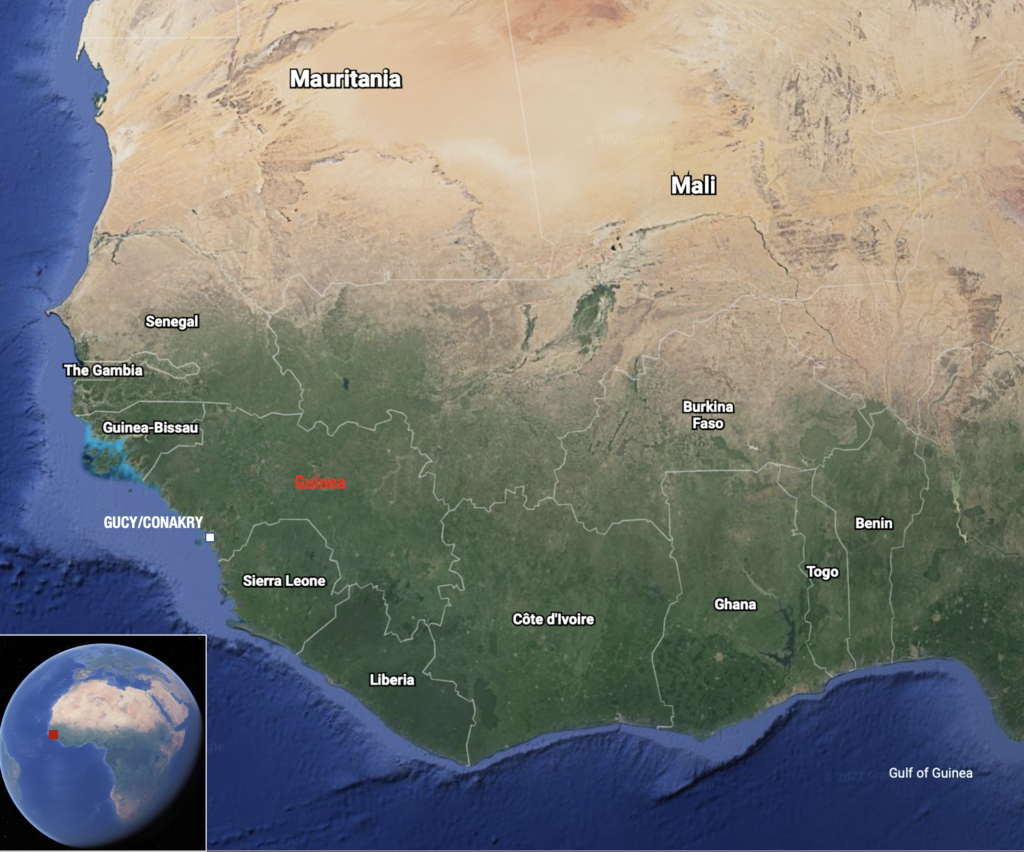
Where is Guinea?

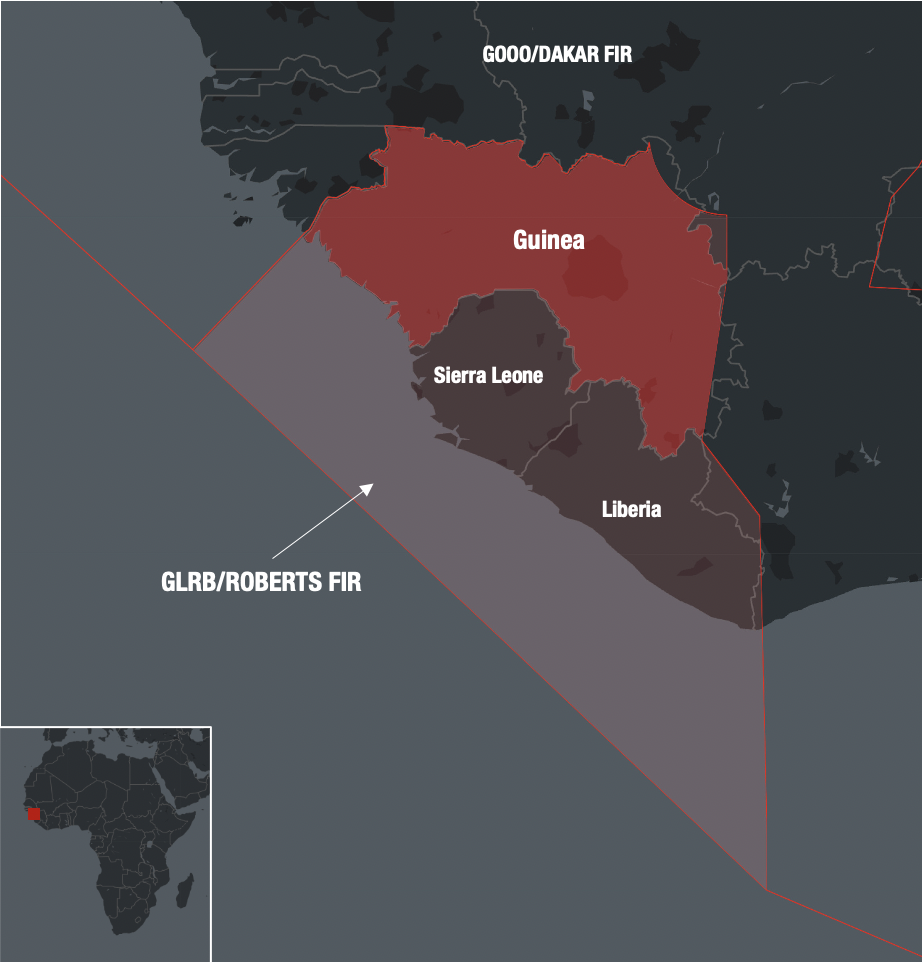
Guinea is a country on the northwest coast of Africa, bordering Guinea-Bissau to the North, and Sierra Leone to the South.

While it has a long history of civil unrest, and crime remains a risk for visiting foreigners, Guinea is generally considered a safer option when compared to its neighbours. Which is why GUCY/Conakry is often used by civil aviation as a reasonable option for tech stops in West Africa.
What about overflights?

Guinea isn’t responsible for managing the overflights in the airspace above it. That job falls to the GLRB/Roberts FIR which collectively manages the upper level airspace of Guinea, Sierra Leone and Liberia together. It has yet to issue any warnings or restrictions for its airspace, but data from Flightradar shows that overflights through the airspace have continued today.

Where to from here?

The situation is evolving, and the ongoing impact to operations there is unpredictable at the moment. We will continue to update this article as more details become available.


Beyond Covid: The Biggest Security Risks We Face Right Now

Aviation has always been a reactive industry – because it needs to be.

Over time, forces beyond our control have continued to influence the way the industry moves forward and the way we operate.

For the past eighteen months, our reactive energies have been focussed primarily on one thing – a global pandemic. But it is important that we continue to react to other changes too – particularly when it comes to security, and the types of threats that we face are evolving.

As the industry begins to recover from Covid and press on into the decade, here are some of the biggest security threats that it will face.

Operating Near Conflict Zones

While the lines between aviation and politics are often blurry, they undeniably intersect. The point is that regardless of which side we choose to take, we continue to operate aircraft over or in close proximity to active conflict zones. Which means risk.

The past eighteen months have shown that conflicts can erupt with very little warning in busy flight corridors and with significant dangers to the aircraft flying above them.

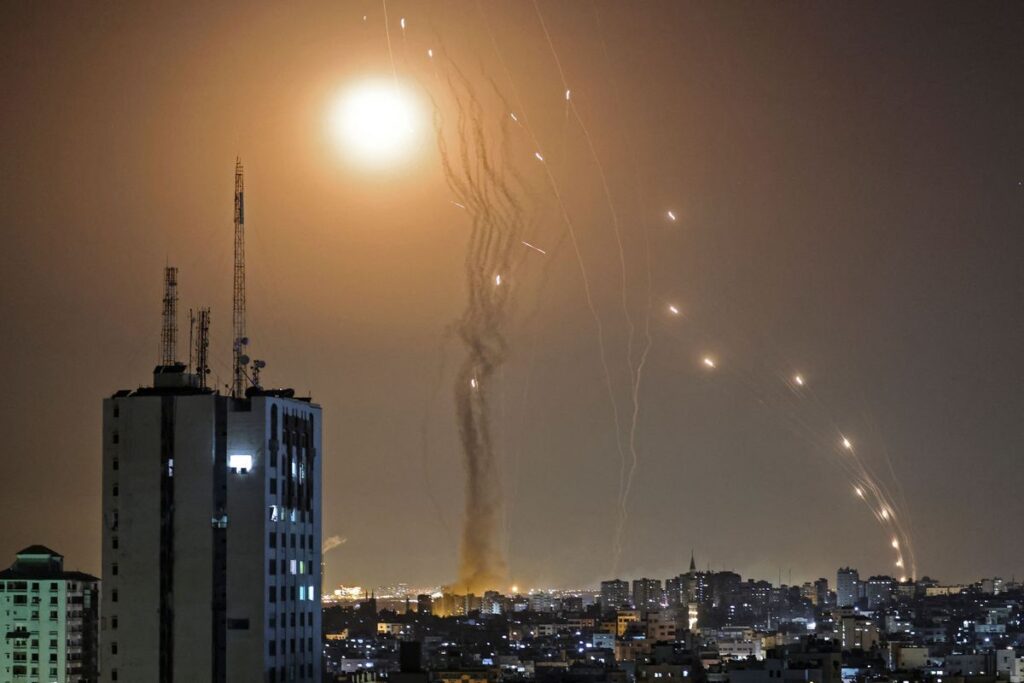
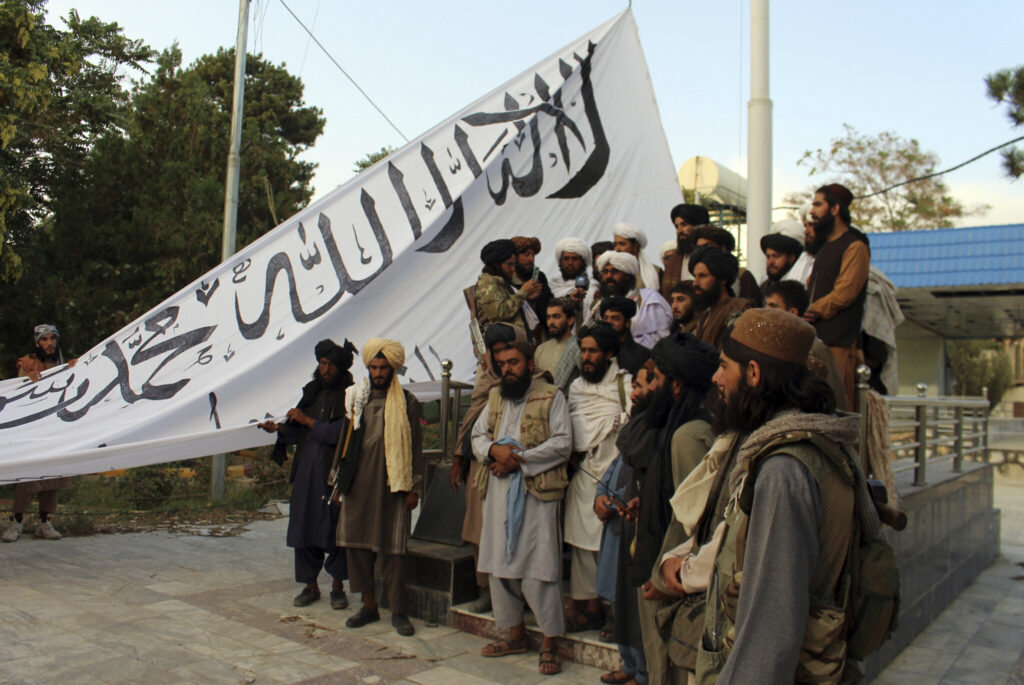
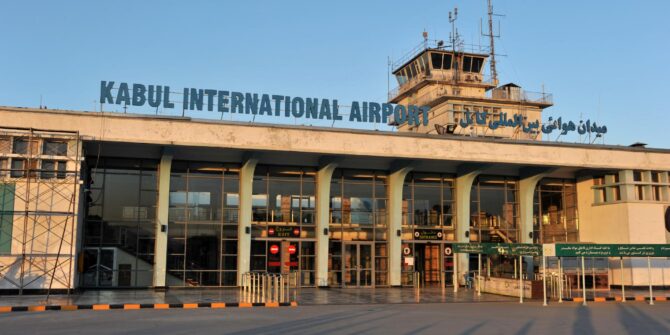
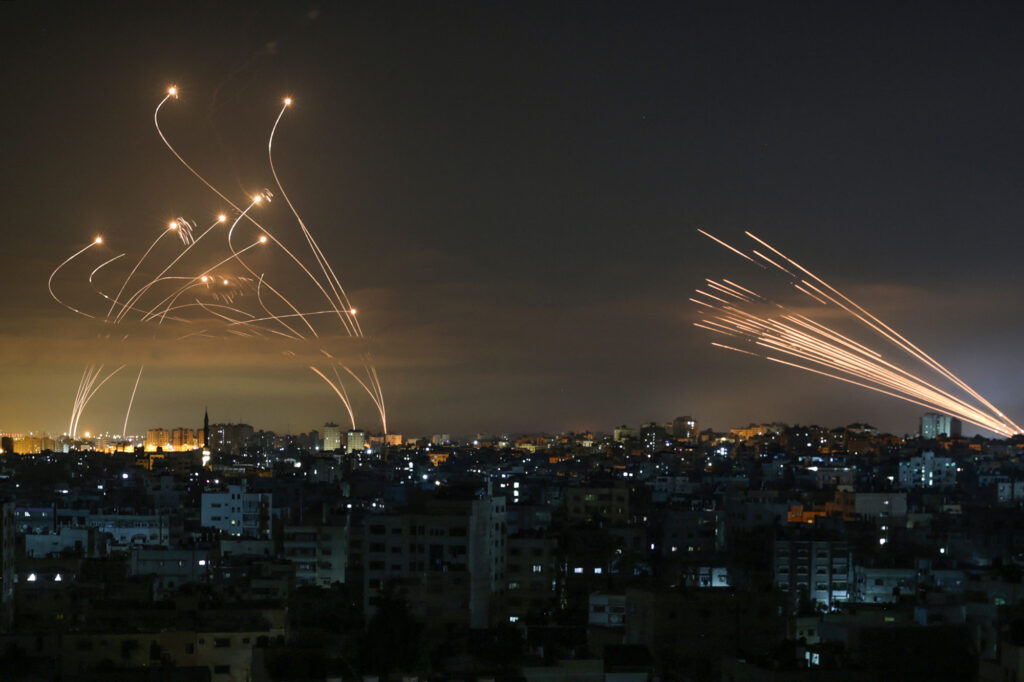
This was the case last year in Azerbaijan, where almost all west/east bound airways were closed by the conflict below. Only months ago, Israel’s Tel Aviv FIR was heavily affected by widespread rocket attacks while just this week, Afghanistan’s Kabul FIR has been left with no ATC services following an overwhelming Taliban offensive.

Things can change quickly and the problem isn’t going away in a hurry.

But perhaps more concerning is that the aviation system relies on the sharing of information to keep us safe up there (and ICAO Annex 17 demands it). But practically speaking, concerns remain over inadequate government intelligence sharing, especially in states involved with conflicts.

Until things change, reliable risk assessments will remain a challenge firmly on the shoulder of operators – and these will rely on timely, unbiased and accurate information. As we have often seen, that can be very hard to get.

Terrorism

Unfortunately, aviation will continue to be a target for terrorism.

While security at airports remains tight, the challenges of breaching it have led terrorist groups to develop new ways of targeting aviation interests. While large-scale attacks the likes of 9/11 seem more far-fetched with today’s protocols, there is a renewed interest by terrorist groups in attacking so-called ‘soft targets’ – primarily aircraft in flight or airports with poor security infrastructure.

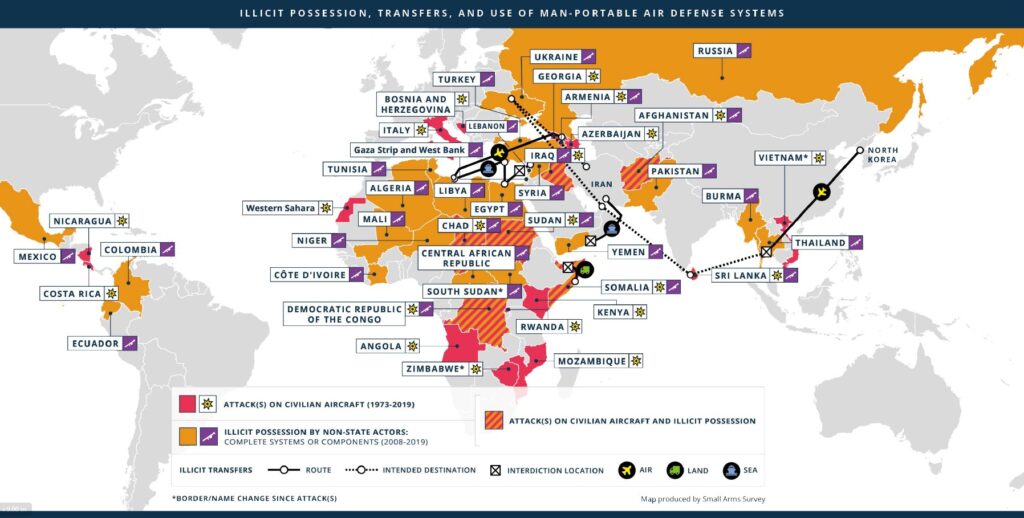
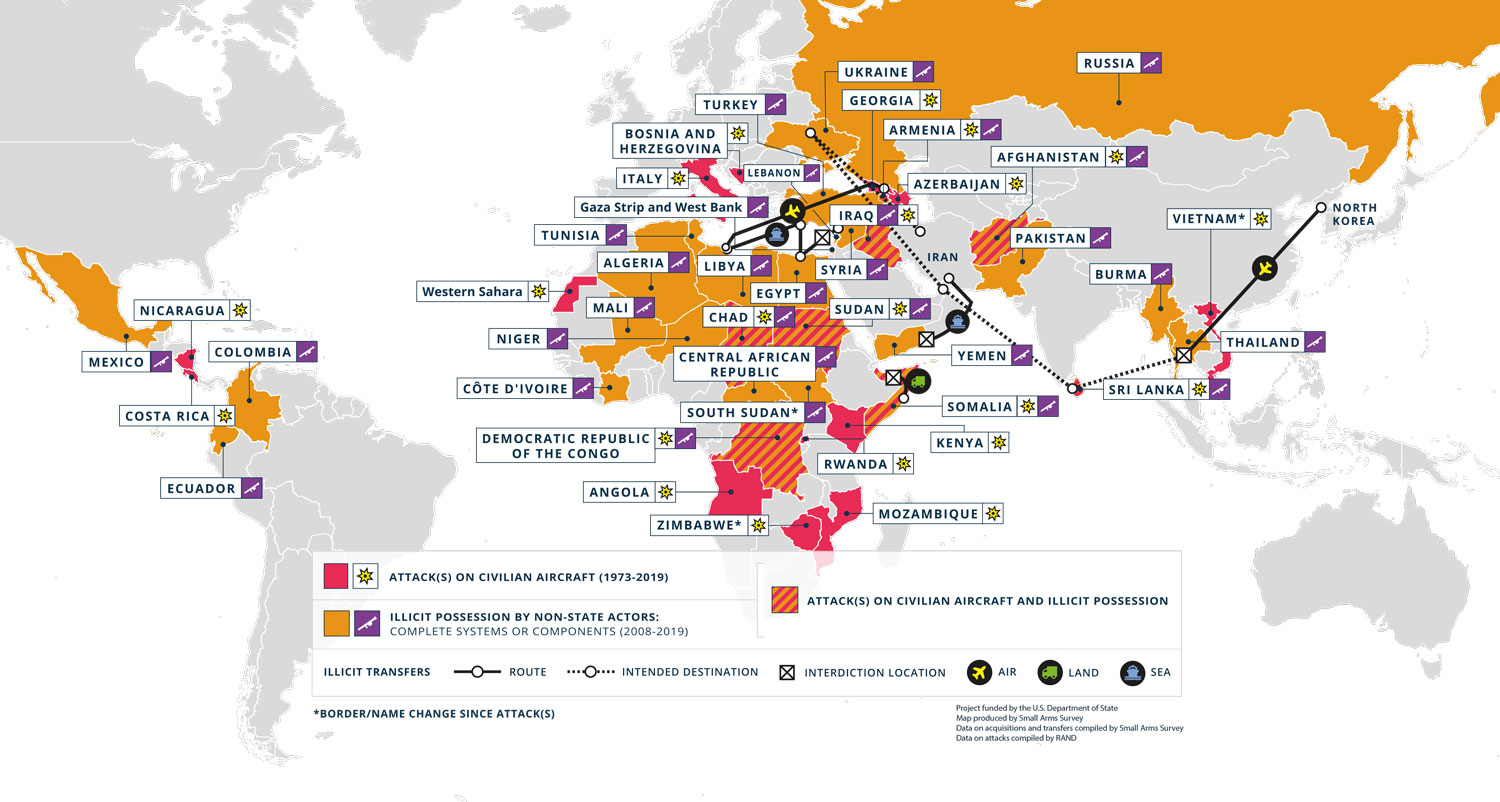
To make matters worse, non-state actors and large terrorist organisations (such as ISIS and Al Shabaab) are encouraging smaller groups or even just lone-wolf individuals to attack by proxy, which makes the threat difficult to prevent. These attacks don’t need obvious leadership, and can be accomplished by low-tech means. Weapons such as rockets, mortars and man portable air defence systems (MANPADS) are of particular concern.

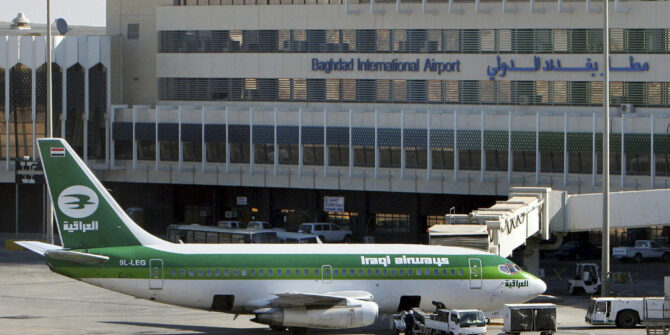
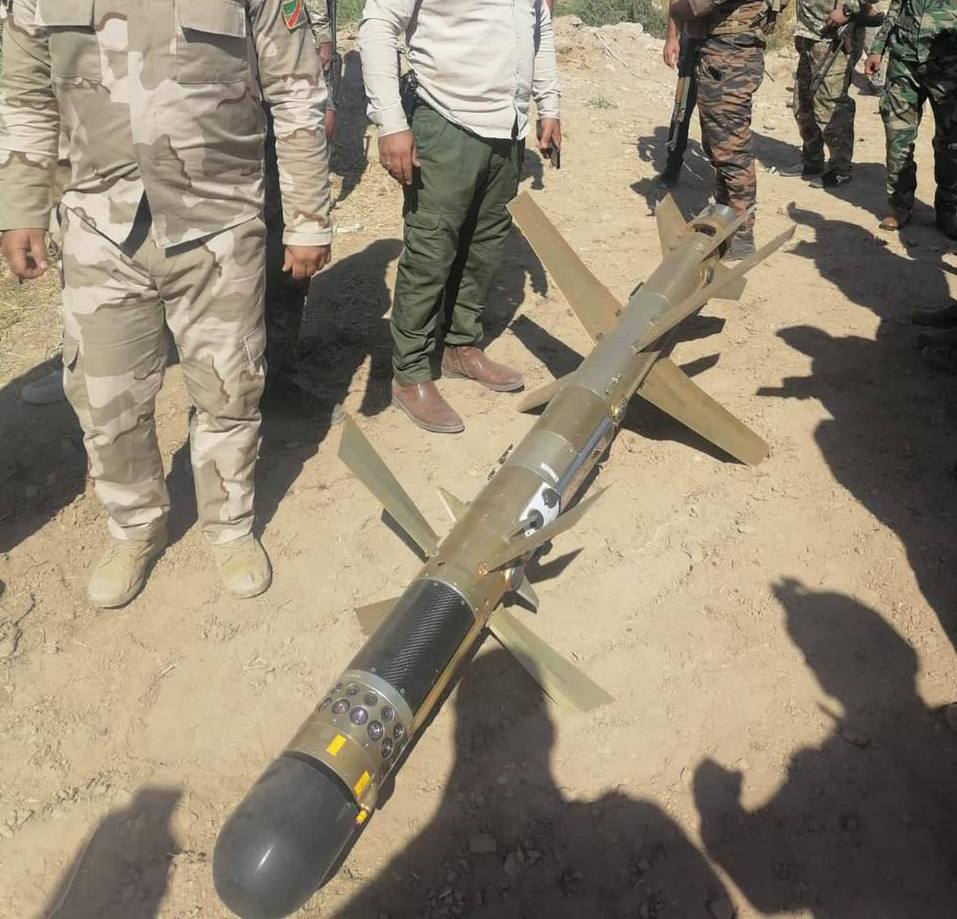
Recent events at ORBI/Baghdad Airport serve as a good example, where multiple rockets were found stashed on nearby rooftops overlooking the airport.

Civil Unrest

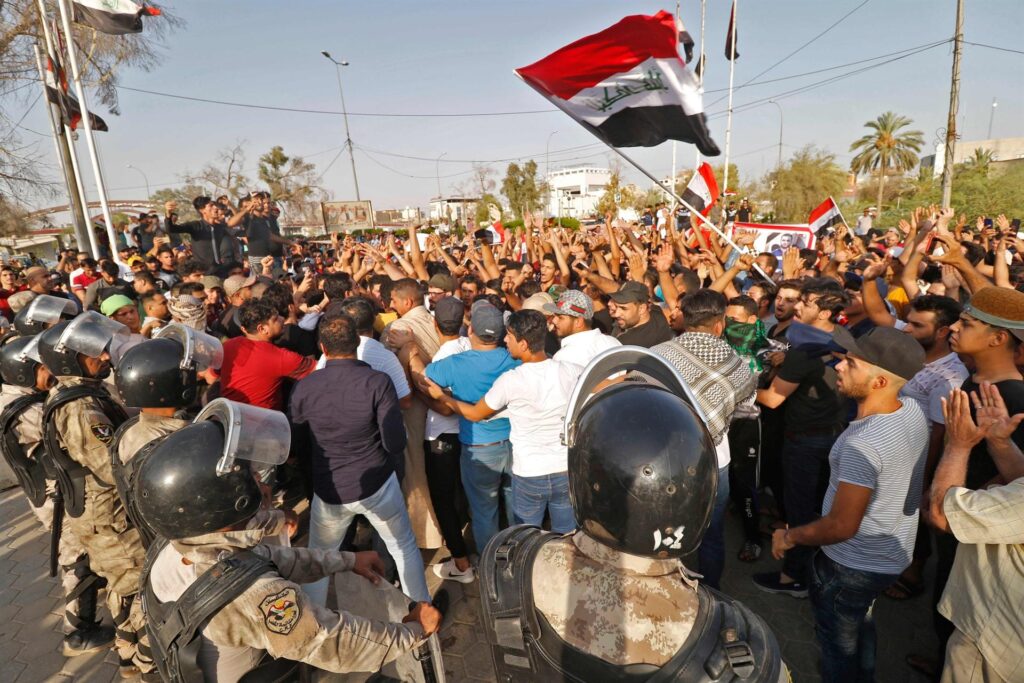
In the past eighteen months, we’ve seen countries around the world suddenly erupt into periods of civil unrest. While beyond the realm of airspace warnings and Notams, the effects on crew safety on the ground can be dramatic.

While strikes and peaceful demonstrations can cause little more than inconvenience on the airport commute, it is when things get violent that the danger emerges.

Two examples spring to mind this year where the security situation on the ground changed rapidly and without warning.

The first is Myanmar where in February a military coup saw nationwide protests. Clashes with military police eventually turned violent with mass civilian casualties in the capital, Yangon. Disruptions continue there to this day.

The second is South Africa last month where a political and legal dispute led to widespread rioting and looting and became the worst violence that South Africa had experienced in many years.

Given the abundance of uncertainty that seems to characterise the modern world, it seems naive to believe that civil unrest is going anywhere in a hurry. Recent events have shown that even away from airports, aviation professionals continue to be at risk.

Cyber Threats

While the aviation industry has developed a strong track record of security practices from physical threats, it has struggled to keep pace with digital ones.

Studies have revealed some alarming numbers. EASA for instance have reported an average of one thousand reported cyber on attacks on airports every single month, while systems at airports in Israel fend off up to three million attempted breaches per day.

Unlike other industries, aviation is particularly vulnerable to cyber-attacks because the consequences can be so catastrophic. Successful attacks could literally cost lives.

Only two things are needed to open the doors to a cyber attack: a vulnerability and a pathway. We’re heavily reliant on countless connected systems that have to operate in real-time and with super-high reliability. Many of them are safety-critical, and they have to be protected.

Have a ponder for a moment about just how far that rabbit hole can go. Here’s a few suggestions just to get you started: Primary radar, secondary radar, EFBs, ADS-B, GNSS, Datalink, ACARs, even Fly-By-Wire. Heavy, heavy hitters in the safety game. This is before we even go down the road of the pilotless aircraft.

As technology continues to improve our efficiency and make our jobs easier, it is also opening gateways for those with malicious intent. Aircraft are becoming smarter and more connected, but arguably also more vulnerable to attack.

The challenge in years to come will be how to protect these critical systems, or at least limit the impact when they are attacked.

Human Trafficking

The unlawful act of transporting people around the world in order to benefit from their labour or exploit them in other ways continues to be a global phenomenon. Particularly when they are suffering from economic hardship.

Recent studies have shown that as many as 700,000 people become the subjects of human trafficking every year, with reports from over 127 countries worldwide. It is aviation that is often the vehicle for this malicious trade. These unfortunate people are often travelling with forged or stolen documents, and may be under duress from the people they are travelling with.

It’s an ongoing problem. ICAO itself is directly involved in efforts to address it through better training and an understanding of where in the world the worst hotspots are. However it is likely to remain a threat to aviation security for many years to come.

Threats to aviation security aren’t new, but our reaction to them needs to be.

Moving forward our response to security in the industry must continue to evolve to meet the threat, regardless of what other industry pressures we find ourselves under. Undeniably, our safety and that of our passengers will depend on it.


New Airspace On The Way In the Middle East: The Doha FIR

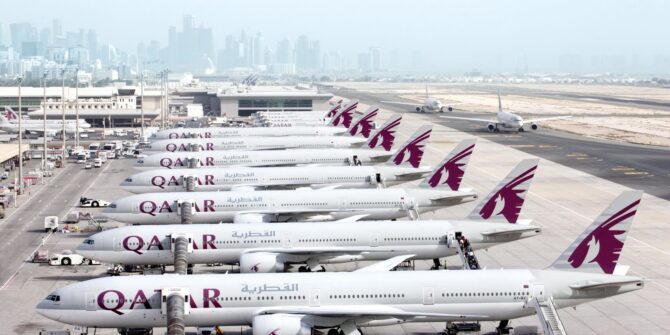
Plans are underway to establish a new flight information region in a busy air corridor over the Middle East.

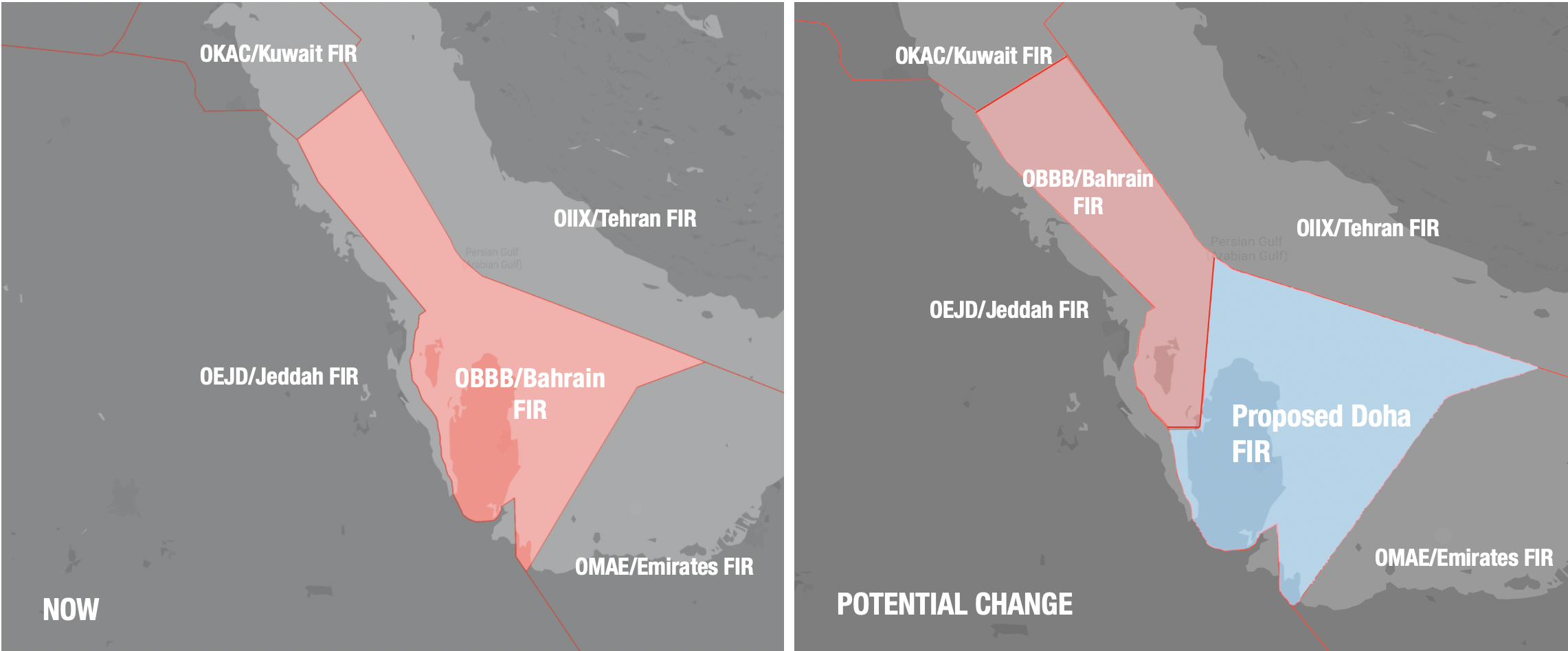
Since 2018, Qatar has been campaigning to control its own airspace by establishing the Doha FIR  – a process that would involve cutting the existing OBBB/Bahrain FIR in half.

For the first time, an improving political environment has led ICAO to give Qatar the go-ahead, as long as it can work directly with Bahrain to sort out all of the technical side of things. When established, over thirty percent of traffic in and out of the UAE will pass through the new airspace and so it is worth taking a closer look.

A little background.

With the exception of terminal airspace at OTHH/Doha, Qatar’s air traffic is controlled by Bahrain in a long standing agreement. Qatar first proposed to assume control over its own airspace three years back – a suggestion that was opposed by several countries including the UAE, Saudi Arabia and Bahrain.

Why?

Primarily because it came at a politically sensitive time.

Just the year before a diplomatic crisis led to Saudi Arabia, the UAE, Bahrain and Egypt (among others) cutting ties with Qatar. From an aviation perspective, a blockade was formed which prevented Qatari registered aircraft from using their airspace and vice versa. From an operational perspective there was likely little regional appetite to release a large chunk of Middle Eastern airspace into a political road block.

Thus criticisms were quickly tabled. The primary feedback was this:

  • Qatar hadn’t provided operational justification for the change.
  • An additional ANSP in this busy piece of airspace would make co-ordination more complicated.
  • Safety may be compromised, while cost would go up for operators.
  • Bahraini air traffic control had done a great job of safe and efficient flow of traffic for decades, why change?
  • Capacity would tank.

Qatar on the other hand argued that the proposal would improve safety while providing some economic award for the industry too.

Then things changed.

Earlier this year while the world continued to revel in the ‘delights’ of a certain pandemic, the political situation for aviation in the Middle East changed for the better. Following a successful GCC summit, the blockade was lifted. Meaning all parties could once again use each other’s airspace. Tensions subsided and it was good news for fuel burns and flight times.

Enter the Chicago Convention.

The what? Spoiler alert: It has nothing to do with the Cubs. It’s basically the landmark agreement among all ICAO member states that establishes the core principles for international ops. It’s a big deal. Buried within its many hallowed pages is this: each state has ‘complete and exclusive sovereignty over the airspace above its territory’. And ICAO have agreed that in this case, the principle applies.

So what is the proposed airspace going to look like?

 Pictures are always better than words. So here are some pictures:

Why do ICAO only agree ‘provisionally’?

Because quite a bit of work needs to happen behind the scenes to make the proposal a reality.

Essentially Qatar has to do two things:

  1. Prove that safe and efficient systems and infrastructure are in place in their airspace to be.
  2. They need to work directly with Bahrain to report back on all of the technical arrangements that will make the proposal real. It is not the easiest task for either side given diplomatic histories but in promising signs for the region, work is under way.

What happens now?

Qatar and Bahrain are due to report back to ICAO later this year, likely November or December. How long after that meeting the changes may be implemented is still up in the air (bad pun not intended).

But keep an eye out for updates on the change which appears to now be well on its way to altering the skies over the Middle East.


Out of Options, Out of Time: Why Aren’t We Declaring Emergencies?

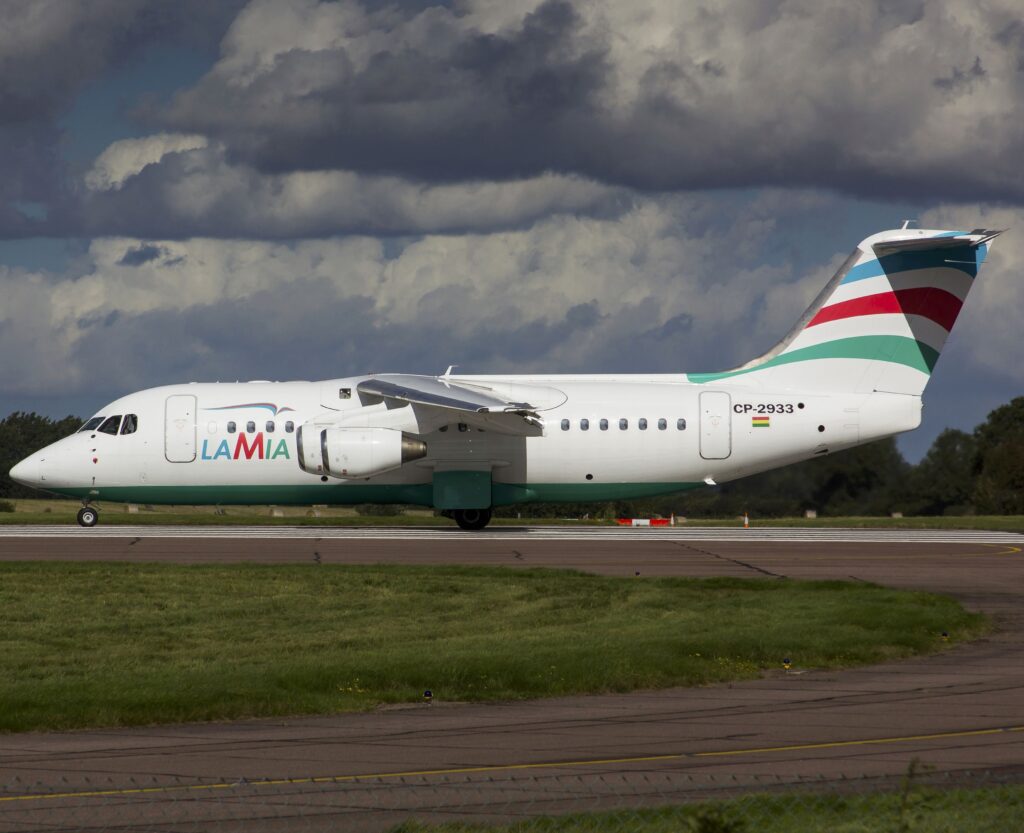
In 2016, an RJ85 operating a charter flight ran out of fuel in a holding pattern while waiting for another aircraft to land. The crew knew they were critically low on fuel but seemed reluctant or unwilling to tell ATC they were in trouble and get back on the ground.

This tragic accident highlights a dangerous mindset that continues to expose pilots to risk the world over: reluctance to declare an emergency.

Accident reports reveal that the RJ85 crew were certainly not an isolated case either. So, what’s going wrong up there? Why are we asking for help far too late or not at all?

The real world may offer up some answers.

For starters, what is an emergency?

Have a go at defining one in your own words. As I discovered, it’s not actually as black and white as it seems.

The US FAA tells us they come in two flavours:

Distress. These are things that need you to act on immediately. Engine failures, a fire on-board, structural failures. In other words, you have to do something about it now. Crew are good at declaring emergencies in these cases because it is an easy decision.

Urgency. The smoking gun here. These are emergencies that often develop through a set of deteriorating circumstances which become increasingly critical as time and options run out. You may not have an emergency to begin with, but through failure to act earlier it has developed into one.

It seems that in these cases crew are waiting until they have few or no options left before declaring an emergency, far too late.

So why not just declare earlier?

There are a few factors at play here, and the first is this – fear of the fall out. Or in other words, ‘what will happen once we’re back on the ground?’

It’s not hard to imagine mountains of paperwork awaiting your arrival, but this often isn’t the case. In most cases it is very limited and sometimes non-existent. Generally, aviation authorities just want to know if you have broken the law in dealing with the emergency, which the regs say you’re allowed to do.

Of course, operators will have their own reporting practices, but crew should never face disciplinary action for declaring an emergency – it is a safe response to an unsafe condition.

Enter Just Culture – if you haven’t heard of it, it’s worth googling and it’s part of a revolution in making the industry safer by enabling crew to act and report without fear of the repercussions.

It’s no secret that pilots tend to be mission orientated. In other words, we want to complete our flight as planned. We hang our professional hats on being able to navigate operational challenges on a daily basis and find ways to make it all work with our safety margins intact at the other end. You know the ones – weather, delays, MELs. They all make for long days and grey hairs, but we make it work.

The problem is that in this belief and dedication to ‘make it work’ that we can begin to fixate on completing the task, rather than taking notice of early warning signs that those safety margins are being steadily eroded while we still have options.

This is when declaring an emergency early really makes a difference. Here’s why…

‘The Emergency Mindset.’

By telling ATC you have an emergency you are sending yourself a powerful psychological message. You’re essentially flicking a switch in your brain from ‘complete the mission’ to the realisation and acceptance that there is a threat to your survival. Your training is essentially triggered.

Your new mission now becomes to do what you need to do to get back on the ground safely and as quickly as possible. You essentially put yourself onto a new script. This is the emergency mindset, and it is a powerful call-to-action.

But it’s not just our headspace that matters here. It’s also important to weigh up what you gain from ATC by declaring an emergency, against the perceived pitfalls of doing so.

By declaring an emergency to ATC, you are activating a huge resource and will have their undivided attention. While they’ll continue to control other aircraft around you, their priority will be your safety. They may even give you your own discrete frequency or controller. It is then up to the pilot-in-command to advise what help they need and their intentions. It is basically your call, and they’ll facilitate it – even if it means breaking the rules.

They’re also a wealth of knowledge. At a time where you’re likely busy managing the aircraft they can tell you what you need to know and quickly. They can help you find suitable airports for landing and begin co-ordinating with those control facilities.

While they’re giving you priority handling, they’ll also be facilitating a chain of events behind the scenes including organising rescue services both on and off the airport (all without you even having to ask).

According to FAR 91.3 pilots can deviate from the rules to the extent required by the emergency. Which means you can kiss goodbye to speed restrictions, clearance limits and other workload increasing airspace procedures.

There’s a lot you can do once you’ve declared one. On a side note, you don’t have to have physically declared an emergency for this to apply, but it certainly helps. Especially if you need an immediate change of course, speed or level.

When to declare?

The intent of declaring an emergency is to mobilise all the resources available to you while you still have options. Which means the earlier you do it, the better. Waiting until you have none left before you advise ATC is already too late.

In the simplest of sense, if you feel apprehensive for you or your passengers’ safety for any reason, you are likely already experiencing some type of emergency. The safest course of action is always to make the decision, and inform ATC sooner rather than later.


Top Tips for Operating in the Heat

Summer has hit the Northern Hemisphere with a vengeance.

In the US, heat alerts have been issued from the Pacific Northwest to the Louisiana Gulf Coast with temps in some areas hitting the triple digits.

Over in Europe, southern and eastern regions are currently sweltering while in the Middle East several countries are currently the hottest places on earth. Kuwait hit 50 degrees Celsius the other day – that’s 122 if you prefer your temps in Fahrenheit.

Chances are if you’re operating in the Northern Hemisphere right now you are running into hot weather ops.

While you may be discovering that those board shorts you bought on layover pre-Covid are now a frightening three sizes too small, the hot weather presents some other unique operational challenges that are worth reviewing.

Flight Planning.

Make sure you check the books. If it’s getting really hot out there, keep an eye on your manuals. Most commercial aircraft have an operating envelope for ambient temperature. When the heat becomes extreme it can actually ground you, as happened to a number of CRJs in Arizona back in 2017.

Watch those MELs – You may be allowed to dispatch but have a think about whether it is appropriate to. Passenger comfort can become a problem here. Look out for anything that affects cabin cooling – bleed faults are a classic. A 30-minute taxi on a hot day running on a single bleed may see you unable to keep the cabin cool.

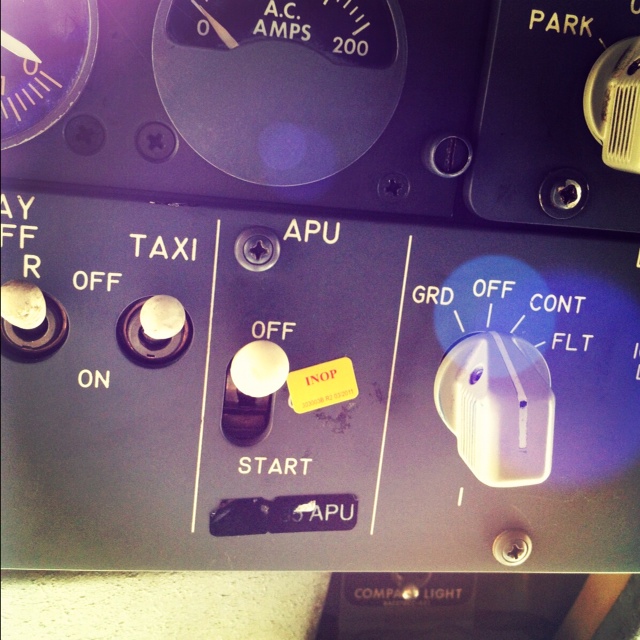
If you have an extended turn-around without ground equipment you may need to factor in a little extra fuel for APU burn to keep the AC flowing.

Pre-flight.

First things first, get that cabin cool. High cabin temperatures are not only uncomfortable but can lead to medicals. The challenge on the ground is to control cabin temps – it is easier to keep them down than bring them down.

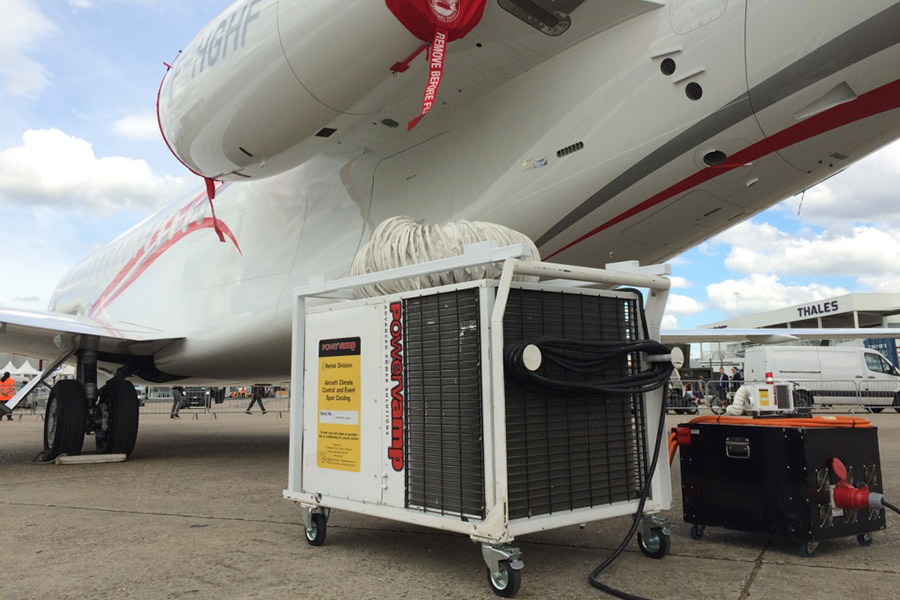
Consider using ground equipment if it’s available and keeping the aircraft’s window shades and door(s) closed. Random fact for the day: adult humans produce about as much heat energy per hour as a 100w light bulb – you may need to delay boarding until things cool off.

It’s not just ground air either. Some manufacturers think ground power helps too, as it takes some load off the APU.

Also, don’t forget to look after the bleed system – they have a tendency to overheat. In some aircraft types it can help to partially extend the slats and flaps to improve cooling while on the ground.

Start Up.

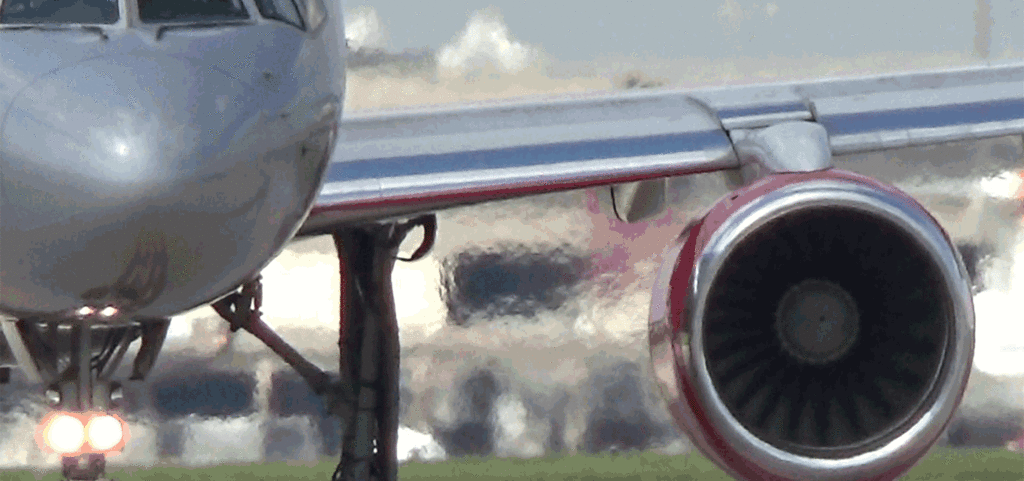
Whether you use ITT, TIT, EGT or some other type of -T you will need to keep your eyes glued on limits, both during start and take-off.

Starting can be particularly problematic if your engines are already warm. Each aircraft type will have a specific procedure to follow to avoid hot-starts but more often than not they will include a dry crank cycle and a manual start.

By manual, we mean no fanciness like FADEC. Which means it’s on you to get rid of the fuel (quickly) before you roast one. Over-temps can happen very quickly. Pay close attention to the rate at which temps are rising. You don’t have to hit the limit to cut the fuel.

On that note – use every advantage you can. If there’s wind you want as much down the core as possible. You may need to tow into a better position for start – avoid tailwinds!

The Taxi Out.

The issue here is brake temps. Large aircraft usually use carbon brakes. They’re designed to absorb energy by converting it to heat. Aircraft have brake temp limits for departure – on a sidenote, any guesses why? It’s due to the flash point of hydraulic fluid – they don’t want you to have superhot brakes in a wheel well near potential leaks.

The point is you have to keep your brakes cool and hot weather makes that difficult. It helps if you’re lucky enough to have brake fans and some airports are equipped with portable ones if you ask engineering nicely.

Otherwise, a little planning ahead helps here. If you expect a long taxi, give yourself a ‘build up’ margin so that you don’t hit your limit the second you get to the holding point, and use them as sparingly as you can.

It’s also worth considering that a longer single application of brakes is better than a bunch of them – let that speed build up before you brake again.

Departure and (lack of) performance.

Chances are you already know that as temperature rises, air becomes less dense. Our engines and wings have to work harder to get the job done and the penalty is performance.

If we really want to know how our aircraft will perform on a given day, we need to think about density altitude – pressure altitude corrected for how hot it is out. And correct we must, because for every degree outside above ISA, an airplane will perform like it is 120 feet higher. In extreme heat this can push up into the thousands.

So, when it gets super warm out there you can expect longer take-off distances and decreased climb rates. You might find yourself unable to lift weights off runways that you usually can either because there isn’t enough of the hard stuff in front of you or because of climb gradients.

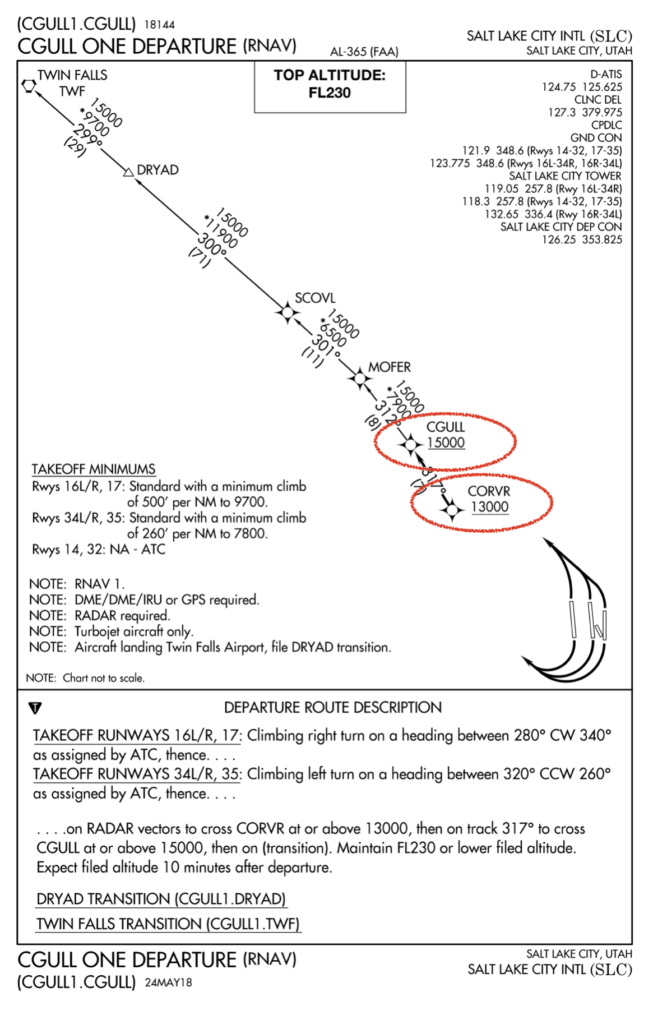
Even if you can lift it all, don’t get caught out by restrictions on your SID down the track (at or aboves). Make sure you check them ahead of time in your FMS with a healthy buffer to avoid getting some egg on your face. Consider asking for a waiver or a different SID.

Dodge that weather

High temps produce convection – or in other words, it makes air rise. In humid climates you’re likely to run into build-ups and thunderstorms, especially in the late afternoon and evening. Visibility can also be severely limited by haze and poor air quality.

The Approach.

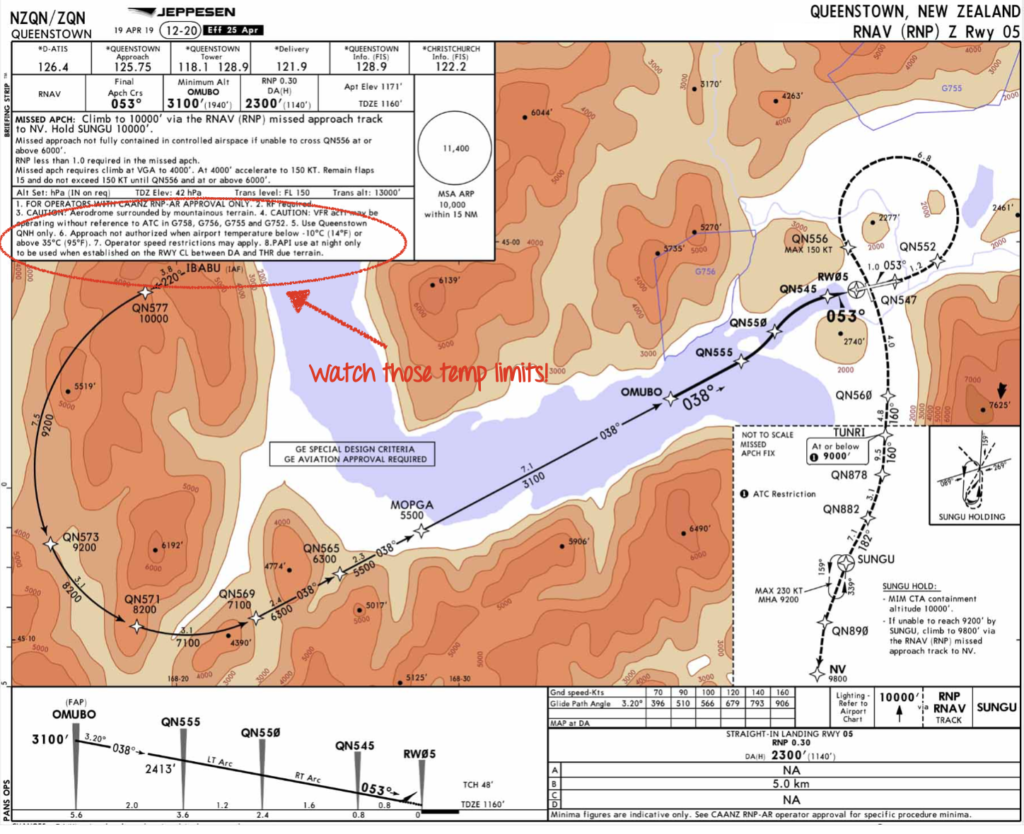
There are a few things to think about. The first is the approach you’re about to fly. Make sure there are no temperature limitations – RNAV approaches publish them for the use of LNAV/VNAV minima while in other cases, such as RNP (AR), the whole procedure may not be usable.

Expect mechanical turbulence near the ground, especially in dry climates. It can do a great job of destabilising an approach right when you have it on rails.

And don’t forget the missed approach either, especially if they require a steep climb gradient. Performance may once again become a problem.

Landing.

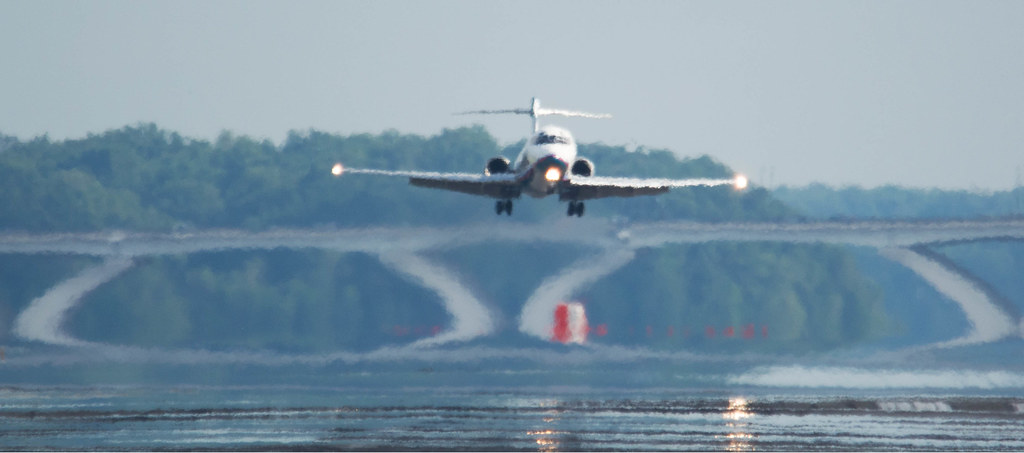
Runways surfaces get hot – expect some thermal lift in the flare.

Once again, look after those brakes! Especially if you’re headed out again. Consider using reverse or exiting the runway further down the track. Any extra heat energy you put into them can turn into extended delays for cooling.

Parking Up.

Get that APU fired up pronto, close the shades and keep things cool.

Carbon brakes cool a lot faster with the park brake released. Once you’re on chocks, think about releasing – just don’t forget the chocked bit.

There’s more hot weather to come.

It’s not surprising to hear that the earth is warming up. 2020 saw the second hottest global temperature on record, and the figures show that that the rate of warming is accelerating.

From an operational perspective we are increasingly likely to encounter periods of ‘extreme heat’ on the line – when temperatures are six degrees Celsius or higher than average temperatures for an extended period of time.

In summer months more and more often we are going to have to deal with operating our aircraft at the high end of what they were designed for, so it’s important to remember how to keep things cool out there… literally.


New FAA Airspace Warning for Afghanistan

The FAA has issued an emergency order for Afghanistan’s airspace which bans all US operators below FL260 throughout the OAKX/Kabul FIR.

KICZ Notam A0020/21 has the details but essentially there are only three exceptions:

  • Flights in and out of OAKB/Kabul are allowed to continue.
  • If a flight has a special approval from either the FAA or the state.
  • If you have an emergency and have to land.

What’s the risk?

Due to increased extremist activity on the ground, civil aircraft are increasingly exposed to a number of threats. Aircraft at low levels and those taking-off and landing are especially vulnerable.

The first is indirect fire caused by militant groups targeting airports with mortars and rockets. OAKB/Kabul was attacked in December last year by ballistic weapons which damaged a parked aircraft.

The second is direct fire from a variety of sources. Militia are known to have access to multiple weapons that can be used to target low level aircraft. These include rocket propelled grenades and man-portable air defence systems (MANPADS) which are capable of reaching aircraft as high as FL250. Even small arms fire has been actively used to target aircraft.

In recent years there have been several reports of anti-aircraft fire incidents from both military and civilian traffic. Tragically in two cases, military aircraft were actually shot down.

So why now? What’s changed?

While the threat from militant activity in Afghanistan isn’t new, the FAA has been closely monitoring the situation there for changes in safety and security. And things are changing…

As US forces begin to withdraw, two groups are now engaged in an escalating conflict there – the Taliban and Afghanistan’s own military, which may lead to a civil war if no agreement can be met. Essentially the Taliban seek to regain power, while the existing government is defending itself.

For aviation this means an increase in exposure to known risks. The situation is volatile, and no one really knows where the conflict is headed. But with increasing extremist activity on the ground and a possible intention to make an international statement, the FAA appears to have decided that a simple caution is no longer enough.

What about above FL260?

US operators can continue to overfly the OAKX/Kabul FIR above FL260 but is recommended you stay on established airways. It’s also important you continue to monitor the situation on the ground which may change with little warning.

What are other countries saying?

Several long running airspace warnings remain in place, and it is likely we will see these changed in the near term as the situation in Afghanistan continues to evolve.

France follows similar rules and requires all operators to remain at or above FL260 throughout the Kabul FIR. Both German and UK operators are advised to consider the risks of operating below FL330 and FL250 respectively.

Stay safe up there.

As US troops withdraw the real question now is whether the Afghan Government (or another international force) can put the brakes on a resurgent Taliban.

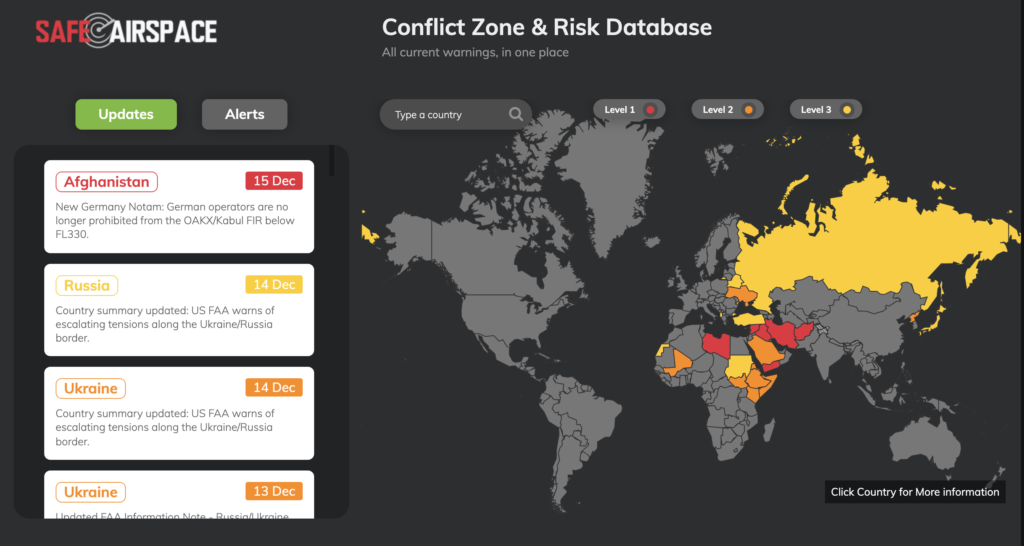
Until that happens, the situation remains unpredictable. You can keep up to date with airspace risk changes as they happen over at SafeAirspace.net – our conflict zone & risk database.

Click here for a full global briefing.


Hitching a Ride: How To Save Fuel with Geese

Industry heavyweight Airbus is currently running an innovative new trial over the North Atlantic that has potential to change the way we fly in oceanic airspace – and ANSPs Eurocontrol, NAT, DNSA and Navcanada are all on board. It’s called wake harnessing, and it was invented by geese. Okay maybe not ‘invented’ – but certainly provided by nature.

Geese, you say?

Geese have already left their mark on aviation history in ways that that we’d probably like to forget. So, it seems only fair that they do something positive for the industry too.

And now it seems that they are (unintentionally, but we’ll still take it). When a flock of Canada Geese infamously downed an airliner over New York back in 2009, they were flying in formation.

They were doing that because they were going somewhere and using each other to make things easier. Geese are known fly 1500 miles in a single day. That’s only possible because they use very little energy doing it.

So why do we care?

One word: biomimicry. Or in more simple terms – copying nature. When we want to figure out how to do something that we don’t know how to do, it’s often worth looking out the window. Nature, it seems, always finds a way.

Enter aviation. When it comes to fuel, it is facing a couple of big problems. The first is that ICAO have set some seriously lofty goals for improving fuel efficiency and carbon emissions. While the other issue is dosh. Jet fuel is expensive and modern aircraft use a lot of it. Reducing fuel burn is big business, especially in an environment where profit margins are tiny.

There are solutions coming. Sustainable aviation fuel and next-gen turbine engine design have been making headlines recently. But behind the scenes Airbus has been turning to nature to help solve the problem using existing technologies we have today and by changing the way we fly – and it’s all thanks to geese.

The Flying-V

Geese fly long distances in formation. Have you ever wondered why?

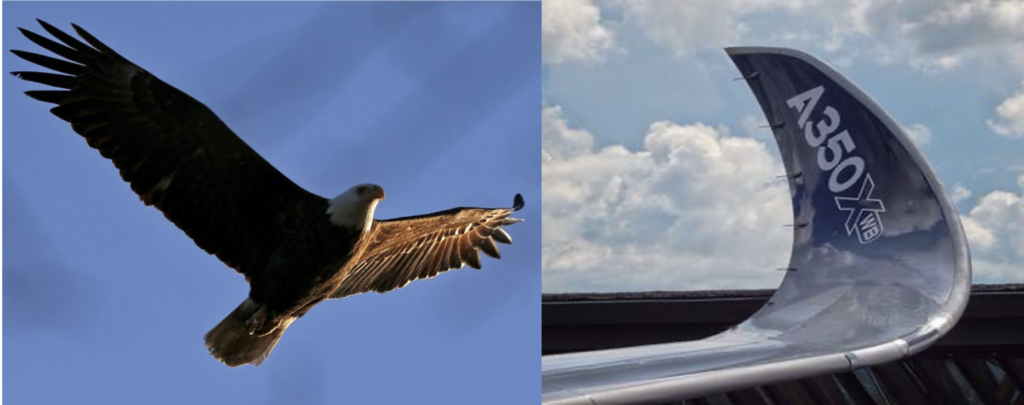
It’s because they are using something called wake energy retrieval. It’s a really fancy term for riding each other’s wave. It’s the result of countless years of evolution and it may have big implications for airplanes.

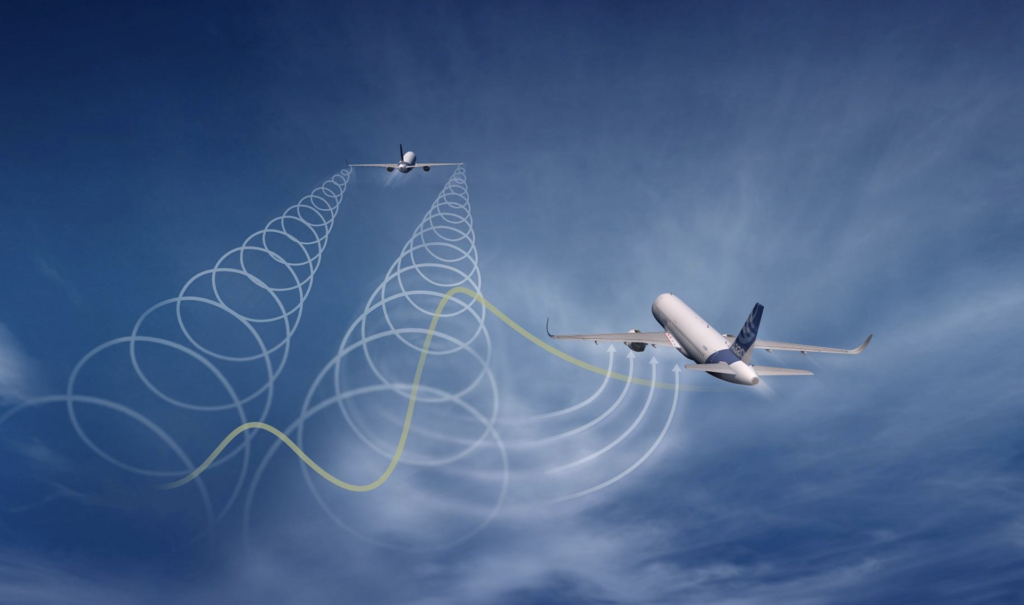
Here’s how it works: When a bird flaps its wings its tips creates vortices. In the same way that our man-made wings do. These vortices create a horizontal swirl of air – an outer upward component and an inner downward one.

The reason why birds fly in a V is because if they position themselves in such a way that their wings stay in upward-moving air from the bird in front, they can effectively fly in an updraft, constantly. Which means they flap less and travel further.

What if airplanes did the same thing (but with less flapping)?

Airbus thinks that’s a good question. Since 2016 they have been copying geese by flying large jets in formation so that the trailing aircraft ‘rides the wake’ of the one in front.

It turns out that if you find just the right spot, not only is it smooth for the passengers, but also very fuel efficient. Get this – Airbus have shown fuel savings of five to ten percent simply due to the effects of this phenomenon, and potential to reduce overall climate impact by twenty-five percent.

They’re heavyweight numbers. That’s because by flying in the upward component of the wake from the aircraft in front, we are essentially getting free lift. Or in other words, ‘harnessing’ energy we’d otherwise lose – which is why the concept is also known as ‘wake harnessing’.

It’s almost as though the trailing aircraft is flying in a gentle descent while level. That means less thrust, less fuel and less emissions.

But here’s the kicker – you have to get close. Like real close. Airbus have found the optimum distance between aircraft is only 1.5nm. That’s a fraction of the spacing applied by ATC. But with existing technologies like TCAS and ADS-C it’s not unreasonable to think that this can be achieved safely.

Airbus have called the project Fello’fly.

And here’s how it works.

ETAs would be used by ATC at feeder waypoints to set aircraft up for their ‘wake energy retrieval pairing’- i.e. formation. The aircraft will still be separated both horizontally and vertically, but close enough for the pairing process to begin.

Responsibility for separation will then be handed to the two aircraft. Using newly developed FMS software, the trailing airplane will slowly close in on the leading one until it is positioned in the optimum spot for wake harnessing. There it will stay until the two aircraft part ways again. The lead aircraft will be responsible for talking to ATC while in formation.

But it’s not all smooth sailing.

 While the idea has some serious potential there are some fairly obvious hurdles that would need to be overcome:

Wasting energy. The idea only works if aircraft don’t waste energy flying at sub-optimal speeds to make it happen. In other words, loitering or playing catch up. Which means it will be difficult to achieve for aircraft departing the same airport.

Instead the answer may lie in new software. For instance, German researchers have developed ‘MultiFly’ – a system that identifies jets that can be paired together based on type, location and how long they will be on the same route.

Different aircraft. Unlike a flock of geese, all aircraft types are different. 1.5nm may be optimal for a pair of A350s, but more testing needs to be done to find the sweet spot for all possible combinations of jets. Both aircraft would also need to have the same optimal cruise speed – otherwise all the gains would be pointless.

Then there is the raft of regulatory changes that would be required to make sure this can all happen safely.

Full Speed Ahead

Despite the obvious challenges that wake harnessing presents, if they can be overcome the potential benefits are obvious. Airbus is pressing ahead with the project and hope to make it reality in oceanic airspace by the middle of the decade.

Considering the growth potential of the industry in a post-Covid world, formation flight may be the next big step in cleaner and more efficient flying.

Who’d have ever thought we get there with the help of geese?


All Stressed Out: Are We Ready to be Back in the Sky?

There have been some welcome headlines in the news lately.

In the US at least, people seem to be taking to the skies again. One US major almost tripled its scheduled flights in June when compared to the lowest points of the Covid pandemic.

When it comes to airplanes in storage and furloughed pilots, as we’ve mentioned before, the industry has inertia. For a bunch of reasons, that big ol’ wheel can’t just start turning the minute we can get bums on seats. And the cracks are already beginning to show (no pun intended).

That same US major also had to cancel nearly one thousand flights recently due to staff shortages. Part of the problem was that a number of its pilots were still dusting off their stripes in post-furlough training.

The point is that renewed desire for travel is likely to (hopefully) one day soon outpace how quickly employers can get their pilots back in the sky. Is it possible that in this eagerness to get us flying again employers may overlook the mental health and wellbeing of their pilots?

Or in other words, even if they are ready for us to return to the flight deck, are we?

Aviation workers were among the hardest hit during the pandemic. And it wasn’t just pilots – cabin crew, air traffic controllers, engineers and other aviation professionals were left facing redundancy, loss of livelihood and financial stress. This was then combined with all of the other sufferings that Covid created in our lives.

It’s no surprise then, that one study found they suffered substantially more during the pandemic than the general population did. Is it then naive to think then that we’re all mentally match-fit to get back in the game?

When you combine that with an immediate need to be employed again along with reluctance to speak out about mental health for fear of loss of medical is it time that employers take a moment to make sure their staff are fit to fly in other ways?

And it’s not just about pilots who lost their jobs either – those who kept theirs faced pay cuts, downgrades and constant anxiety about job security. Then there is the constant testing, fear of catching Covid, and time away from family in isolation. In fact it’s a fairly safe bet that almost all pilots have had a lot on their minds over the past eighteen months.

It’s a stressful business.

And it’s no secret. In fact, another study recently found that airline pilots have the third most stressful job in the US. And that was before Covid…

When it comes to what causes stress, there’s actually a widely accepted measure. Just google Holmes-Rahe – according to it, here are some of the biggest things that stress us out the most (and we’re talking life-changing here): loss of employment, change in financial state and default on debt all feature in the top twenty, and that’s ignoring the more personal problems that those issues have a tendency to create. Covid pandemic anyone?

The point is that by the time we get back to the skies, we’ve already been through a number of factors that cause chronic and prolonged stress. Unlike short term stress, it’s just not that easy to shake off. Even the toughest and most resilient among us will in some way carry that with them into the flight deck.

Here’s the bottom line: All of the hazards that were there before Covid will still be there. But our resilience to deal with them will be reduced. And that means risk.

The problem of stress in the cockpit.

Although a little stress can be beneficial by making us more alert and task-orientated, the human body isn’t designed to cope with chronic stress. For pilots it is well known to negatively affect our cockpit performance and increase our proneness to poor decision making, bad judgement, loss of situational awareness and confusion – all of which can be dangerous up there.

At its most basic level it can make us us feel irritable, fatigued and disengaged which can lead to a break down in monitoring or communication with other crew members.

Although the effects of stress may not be obvious when things are ops normal, they can greatly reduce our capacity to deal with whatever might be thrown at us when something goes wrong. This accident serves as a good example.

If not dealt with, chronic stress can also lead to more serious mental health problems such as anxiety and depression.

So, what needs to be done?

Because of the ongoing pandemic, pilot mental health and wellbeing is arguably more of an issue now than ever before. We need to prioritise wellbeing as part of our recovery plan and it really is a shared responsibility.

Employers need to do provide more support to their staff. Mental health awareness training, access to counselling and peer support programs should become common place. The positive impact of other lifestyle changes on the job such as flexible rostering, better crew pairing options and more time off shouldn’t be overlooked either.

And most importantly the inconvenience and cost of these things should not be prioritised over safety.

From an industry perspective we need to continue to de-stigmatise mental health problems and encourage openness so that pilots with wellbeing issues have the confidence to step forward and acknowledge their problems without fear of loss of job or medical. Regulations need to be improved to allow this.

Pilots themselves have a role to play too, particularly not to underestimate how much underlying stress can affect your performance at the controls and how you interact with your other crew. It’s important to self-diagnose and recognise the signs. There are a bunch of steps you can take both physically and mentally that can help you overcome it.

Getting back to a ‘new’ normal. 

As people take to the skies again and borders begin to reopen it’s important to remember that pilot mental health can have a big effect on safety. And considering what we’ve all been through it’s worth taking a moment to make sure the industry is doing enough to address it.

In that way we have a chance to use Covid as a catalyst for positive change even when the pandemic is one day far behind us.

More places to look.

ICAO Mental Health Working Group . They’ve been active throughout the pandemic and are doing a lot of work on the psychological effects that Covid is having on pilots.

Cleared for Takeoff. A handy and easy to read guide on how you can prepare mentally and physically for return to flying.

Article photo courtesy @vlkvojtech


Intercepted: What You Need To Know

There are several reports that amidst the events surrounding the forced diversion of Ryanair Flight 4978 to Belarus last month, at least one MiG-29 was scrambled to intercept and escort the 737 to Minsk airport.

While military interceptions of civilian airliners are very rare, they can happen and for serious reasons. Which poses an important question – if a jet were to appear off your wing tip tomorrow, would you know what to do?

Each interception is potentially hazardous which is why ICAO publish rules and procedures (Annex 2) that both military and civilian aircraft should be following to minimise the risk. Each state is responsible for its own airspace, but where possible they should be following ICAO’s guidelines. For crew this includes knowing the actions to be taken and the visual signals to be used.

Here’s a break-down of what you need to know.

Why do they happen?

ICAO are very specific – an interception should be avoided and only used as a last resort. ATC must try and establish communications with you first. The primary reason is that they haven’t been able to talk to you.

There are lots of simple reasons why this can happen – usually a wrong frequency or perhaps they’ve forgotten to hand you over. In this instance they will try and contact you on 121.5 (which is one reason we monitor Guard), or via another aircraft. If that fails, ATC have a problem. You’re flying through their airspace and you’re not talking. It is not clear what is happening on board.

Incapacitation is a biggie, the crew may have fallen asleep or perhaps something more serious has happened as Helios 522 tragically reminds us. Or the aircraft may have been hijacked. Either way, they need to get someone up there to check things out.

What will they want us to do?

One of three things, depending on what the problem is. They’ll either want to identify you, communicate with you or re-direct you. The latter may be because you have strayed off-course or busted some kind of restricted airspace. Far less often it is because authorities may believe you are involved with illegal activity (such as drug smuggling) or or you are for some reason hazardous to other aircraft.

The Interception Manoeuvre.

ICAO have a standard procedure for military aircraft to follow to minimise startle factor for you and decrease collision risk. A standard interception will take place in three phases, here’s how it works.

Phase I.

Intercepting aircraft should approach you from astern (behind). They will disable pressure reporting on their transponders – not to hide from you, but to avoid triggering a nuisance RA. They should still be visible on your TCAS but only as a TA. The lead aircraft will take up a position on the left, ahead and slightly above at a distance so as not to cause startle and to be clearly visible to the captain. It is likely there will be an accompanying aircraft which will remain behind you throughout. They will be trying to contact you on guard frequency (121.5) using the callsign ‘INTERCEPTOR’ or ‘INTERCEPT CONTROL.’

Phase II.

The lead aircraft will close slowly with you but not closer than needed to establish communications. All other aircraft will remain well clear of you.

Phase III.

What happens next depends on the situation. If they have finished their interception (they have identified you, re-established your comms with ATC or understand your intentions) they will perform a break away procedure to clear you.

Or they may need to divert or re-route you. In which case they will remain in position and clearly visible at all times.

What you need to do in the flight deck.

Stay calm. You’ll likely be startled. Slow it down and remember the following:

  • Notify ATC (if possible). Make sure you have 121.5 active, the volume turned up and that your headset or speaker is working. Try and establish contact with them. Listen out for the callsigns above.
  • Select Mode A on your transponder and squawk 7700 (unless ATC tell you otherwise). If you have ADS-B or ADS-C onboard, select the appropriate emergency function.
  • Communicate (more on that below).

How do we talk to them?

The primary way they will want to talk to you will be in plain English on 121.5.

If they can’t raise you on that, they will use visual signals which is why they need to get so close to you.

There are ICAO standard signals used across most member states (including the US) that you need to know (or at least know how to find quickly). Here’s how they work:

When they want you to land.

If they can’t talk to you and want you back down on the ground they will direct you to an airport, turn on their landing lights, lower their gear and begin to circle.

If you intend to land you should lower your own gear and land. If the airport is inadequate, you should continue to circle 1000 – 2000ft, raise your gear and flash your landing lights until your escort re-directs you some place else.

What about if their instructions contradict someone else’s?

According to ICAO, if you receive contradictory instructions from other sources you should continue to comply with those from the intercepting aircraft.

Their duty of care.

You have to do as you’re told, but they should be looking after you. ICAO are very clear that nothing can be done during interceptions to unnecessarily put your aircraft or its passengers at undue risk. So, when they are requiring you to land, it is important to know they must take care to ensure your safety.

Firstly, they should not divert you to an airfield which is unsafe for your aircraft type. For civil aircraft this means the runway must be equivalent to at least 2,500m long at sea level, and have a bearing strength that is strong enough. The surrounding terrain must be suitable to allow for a safe approach and missed approach.

They must also take steps to ensure that you have sufficient fuel and if possible the airport they want you to land at is published in the relevant AIP.

Finally, they should give you sufficient time to prepare for the landing, including giving the crew a chance to check landing performance and brief.

Should I be worried about being shot at?

Seeing a fighter on your wing is an intimidating sight. But the use of weapons is very unlikely, especially if you are complying with instructions or are obviously unable to respond. ICAO have asked all contracting states for a commitment that all measures will be taken to refrain from the use of weapons (including to attract attention) as they endanger the lives and safety of everyone on board. However, that’s not to say they can’t be used. So the best defence is always to follow instructions.

Military interception of a civil aircraft is extremely rare.

While the diversion and alleged interception of Ryanair last month raises valid concerns throughout the aviation community it is important to remember that ICAO’s procedures have been designed to minimise risk across a broad range of scenarios. It’s important that we stay aware of them and how to apply them.


Breaking the Barrier: Sonic Boom or Sonic Bust?

Two big pieces of supersonic news have hit headlines in recent weeks.

The good news was that a US major has agreed to purchase fifteen Boom supersonic jets still in development, with the option to purchase many more. All going well, they’ll be gracing the upper flight levels by the end of the decade. Cool stuff right?

But then the bad news was that Aerion Supersonic, widely regarded as being the closest to delivering a viable supersonic business jet, shut down after seventeen years and many millions of dollars spent trying to make the dream a reality.

This emotional roller coaster poses an important conundrum: purchase agreements are one thing but are we really that close to commercial supersonic flight? When you start digging it becomes clear just how much the sound barrier becomes a hurdle for the industry as it stands today.

And it’s not just about shock waves either – even though it’s possible, will it ever be profitable?

The iconic Concorde to this day remains one of only two commercial supersonic jets that was were in service (the Tupolev briefly being the other). In its twenty-seven year career of rattling windows at JFK and Heathrow, its profits were certainly subsonic. It’s possible that in its legacy it leaves an unpleasant truth: is it really worth flying faster than Mach 1?

The aviator inside me hopes so, but the writing may already be on the wall.

We know we can build it, but here are the issues.

Ironically the formula to going supersonic appears quite simple: take a super slippery airframe, make it heat resistant and then liberally apply loads of power. But if only it was that easy.

When things go boom.

Firstly there’s the issue of sonic booms. ICAO’s current policy says that operators have to ensure that no ‘unacceptable situation’ is created for the public by the sonic boom of a commercial aircraft. The FAA have taken it further and said no-bueno to any commercial ops above Mach 1 over the US unless you have very special permission.

Low-boom technology is real, using special shapes to reduce the impact of the big bang on the ground but we’re still a ways-off going zero-boom in the near future. You might be thinking – why not go subsonic over land and wind it up over the ocean? That works for trans-continental flights but not so much for long legs over land. To make matters worse, supersonic airframes don’t fly efficiently at subsonic speeds. It would just not be viable to fly subsonic for hours burning copious amounts of gas.

What’s that noise?

All sonic booms aside, there is still an issue with noise. As speeds become supersonic, jet engines must lose bypass to stay efficient. The huge N1 fans we see on modern subsonic jets would only cause huge amounts of drag at high speeds.

Unfortunately this means they have a tendency to be ear-splittingly loud when they take off and land. Just listen to a video of Concorde – cool, yes. But legal? Not with today’s regs. Here’s what I mean.

Although this is set to change, ICAO hasn’t yet published specific noise guidelines for supersonic aircraft. Instead they say that noise levels for subsonic aircraft can be used as the guideline. The FAA say that commercial supersonic aircraft are banned unless they meet stage 2 noise limits – what are those you say?

They’re about as loud as older aircraft like the 727. For comparison, they used to produce around 90 decibels on the roll. Concorde once recorded 120 – about the same as a clap of thunder.

It’s clear that engine technology needs to be drastically different and new regs will need to be written to let the supersonic birds fly.

What about the trees?

The industry is in the midst of a massive move toward sustainability and the goals are ambitious. ICAO for instance is tasked by the Kyoto Protocol to control aviation’s burn-off that affects global warming. They’re now targeting carbon neutral growth until 2050 despite how quickly things once again begin to expand. There is an industry-wide push toward alternative fuels including hydrogen and Sustainable Aviation Fuel which can be run in conventional turbine engines using waste products that need to be seen to be believed.

The world is worried about global warming, ozone depletion and air quality and super-fast jets just don’t fit this mould. The future wants us to be squeaky-clean. This is a big barrier to supersonic aviation as the industry is unlikely to give the thumbs up to new technologies without knowing whether they are playing their role in keeping emissions down.

But how will she handle?

Then there’s the airframe. We’re going to fly these things which means they need to perform on several levels. First of all they need to have acceptable handling and ride qualities – and delta wings are different. They need to be safe, and the passengers comfortable.

And how will they perform at high altitude? They have to be recoverable from jet upsets. Finally it’s safe to assume that if one of these aircraft makes it to the line (and I hope one does) it will be packed full of technology. But it’s important to remember that advanced technologies need to be approved and reliability becomes a pressing issue. This all takes time.

The Elephant in the Room – The Profit Barrier.

That old chestnut. It gets in the way of all the fun.

The shutdown of Aerion Supersonic raises some serious questions about the viability of these spectacular flying machines. All of these technological challenges are certainly boundaries but money talks. Perhaps the biggest challenge of all is economic.

Concorde first flew in 1976. Since then no one has come to market with a solution that would make them affordable to airlines and corporate operators alike. Companies like Boom, Spike and Exosonic are certainly weighing in on the challenge, but is the model missing the mark?

How do you put a dollar sign on time? Before Aerion left the market it estimated its AS2 jet would cost $120 million off the production line. Market leading subsonic jets like the Phenom 300 or Challenger 350 cost substantially less – not only to own, but to operate.

Supersonic jets will also use more fuel per mile than conventional aircraft, with far reduced range. In an environment where profit margin is based on the scent of an oily rag, what is a few extra hours enroute and how do you actually quantify that when signing on the dotted line?

At what point do time savings account for the extra cost? That is the crux of the issue.

Industry heavy weights Airbus, Lockheed Martin, GE and Boeing were all at one time or another onboard with Aerion. If they couldn’t make it happen, what challenges lie ahead for those who think they can?

The answer may lie in volume (more bums on seats), which is where Boom may get it right where Aerion and other corporate jet concepts did not. Only time and the bottom line will tell.

Supersonic commercial flight will be here one day.

But we have a ways-to-go yet. There is no doubt that some of the smartest brains in the world will solve these challenges but from an industry perspective a lot will have to change in a hurry if supersonic commercial travel is to become a reality within the next decade.


Go / No-Go: Why Are We Rejecting Above V1?

Rejected take-offs aren’t new

Every time we open up those thrust levers and accelerate down a runway there is a risk that something will go wrong and that we will need to stop again. Which is why we brief before every departure.

But they are also pretty rareOne study found that they happen on average once in every two thousand take-offs. For a long-haul pilot that’s about one every twenty-five years, and for short-haul folks once every four years. And of those RTOs, ninety percent happen below 100 kts. So when they happen at speed they are usually accompanied with a healthy serving of startle factor.

Common sense and physics tells us that the faster we go, the more dangerous it becomes to reject, rather than get airborne. Once we hit V1 we go, because there may not be enough of the hard stuff in front of us to stop anymore. The problem is that reports continue to tell us that avoidable accidents are happening because crew are still rejecting take-offs above V1. Which poses an important question: why?

There is no simple answer. But accident and incident reports may hold some clues…

The Real World is Different

The vast majority of high speed RTOs we practice in the sim are related to engine problems. Failures, flame-outs, bird ingestion, compressor stalls. Those sorts of fun things. They are generally easier to identify and illicit a strong and confident decision to reject the take-off.

But here’s the kicker: Most high speed RTO’s are not caused by engine problems.

In fact historically, less than quarter of them are. Which means when something unexpected happens that we haven’t seen before, the Go/No-Go Decision suddenly becomes a lot more difficult.

Here are some of the other leading causes:

  • Wheel/tire failure
  • Config warning
  • Bird strike
  • ATC
  • Noise/vibration
  • Directional control issues
  • Crew coordination
  • Malfunction Indications

A lot can go wrong and the process of detecting, deciding and acting takes time. At high speeds close to V1 this is a problem. Here’s why…

V1 is not a Decision Speed

V1 has been redefined a number of times over the years and has ultimately ended up with the current FAA definition:

‘…..V1 means the maximum speed in the take-off at which the pilot must take the first action (e.g., apply brakes, reduce thrust, deploy speed brakes) to stop the airplane within the accelerate-stop distance. V1 also means the minimum speed in the take-off, following a failure of the critical engine at VEF, at which the pilot can continue the take-off and achieve the required height above the take-off surface within the take-off distance….’

I know what you’re thinking – that’s a lot of words. Which is why it is still casually referred to as ‘take off decision speed.’ It just rolls off the tongue better. But hidden amongst all those words is this key concept – by the time you reach V1, the decision must have already been made and the first action taken.

Here is an easier way to put it: V1 is the end of the go/no-go decision making process, not the beginning. 

It may seem like a technicality, but it’s not. It has been shown that with a balanced field length, if an RTO is initiated just two seconds after V1 an aircraft will exit the end of the runway at between 50 and 70kts. On average it takes pilots between 2-4 seconds to react. In other words, time is critical.

But there’s more to it than that. What does ‘unsafe to fly’ actually mean?

We know that the faster we’re going, the more dangerous it is to stop. Which is why we become ‘go-minded’ at higher speeds (usually above 80 or 100kts). It is in our efforts to embrace this go-mindedness that we have adopted the philosophy that there are four things that could trigger a high speed abort: engine failure, engine fire, windshear or an unsafe condition. Makes sense right? We brief them every sector.

But what constitutes an unsafe condition? Or in other words, what are the signs that an airplane is unable to fly?

Accident reports show that pilots are having difficulty recognising these conditions and that is leading them to stop above V1 when it would be safer to go. They often interpret anomalies (like a tire blow out) as events that threaten the safety of the flight and decide to reject at any speed. The overrun of a Learjet departing KCAE/Columbia Metro in 2008 serves as a tragic example.

In fact one study found that almost half of all high speed rejected take-offs were the wrong decision. That’s a startling statistic.

And to make matters worse, sometimes it is the right decision as the accident of an MD-83 in 2017 certainly proved.

The Decision Isn’t Easy

Go/No Go – if only it was as straight forward as it sounds. From a pilot’s perspective, it is difficult to make the right decision. Given any number of failures, the incredibly short timespan we have to make the decision and the lack of information at hand, it’s no wonder that that not all rejected take-offs go to plan.

But there is still room for improvement if we continue to train for them and brief them using lessons learned from accidents past.

The Joint Industry/FAA Takeoff Safety Training Aid was published in 1993 as a guide to pilots and operators on how reduce the number of RTO related accidents and improve the outcome of go/no-go decisions. We still widely use those same principles today. There were four key takeaways identified from accident reports which might prove as a decent starting point:

  • We must be prepared to make the decision before V1. 
  • We need to be able to differentiate between ‘safe to fly’ and not. 
  • Crew must be ready to act as a well co-ordinated team. 
  • We have to be well practiced and able to fly RTO procedures proficiently.

It may be unrealistic to think that we can get rid of RTO related accidents entirely. But with more training and a focus on what is going wrong out there we can certainly work toward keeping everyone safer on the roll.


Belarus: Politics, Piracy or Airspace Risk?

Several countries and aviation bodies have urged airlines and operators to avoid the airspace of Belarus following the country’s interception of an international flight bound for Lithuania and forced to land in Minsk.

Is there any cause for additional concern? Or was this a one-off event that poses no additional threat to airspace safety?

Here’s what happened:

  • On Saturday, a Polish registered Ryanair 737-800 was operating a commercial flight between Athens and the Lithuanian capital, Vilnius. Toward the end of the flight while overflying the UMMV/Minsk FIR, ATC suddenly instructed the flight to divert to UMMS/Minsk due to a security threat onboard.
  • They were not allowed to exit Belarusian airspace despite being closer to EYVI/Vilnius at the time.
  • There are unconfirmed reports it was escorted to Minsk by a fighter aircraft.
  • Believing the threat to be genuine the crew squawked 7700 and made an emergency landing where all passengers were subjected to additional security screening. One passenger of particular political interest to Belarusian authorities was arrested and detained.
  • No bomb was found and the flight was cleared to depart seven hours later. It continued on to Vilnius (minus the arrested passenger).

Operational impact and airspace risk

The forced landing of this flight was politically motivated, and the crew were misled into believing that there was a credible security threat against the aircraft. Understandably, this is of major concern to civil aviation.

The perspective that OPSGROUP takes on any aviation-related incident or situation, is formed solely through the lens of operational impact to our members; in other words, “what does this mean for the flight we want to operate tomorrow“. If I am a pilot planing to operate a flight through the Minsk FIR tomorrow, am I subject to heightened risk of any kind?

Purely from this standpoint, we view this as a one-off incident, that is not likely to recur. We do not consider there to be additional risk to aircraft flying through the Minsk FIR.

But it’s still a major incident …

That does not mean that we are downplaying the magnitude of this event. The conventions and agreements that protect civil aviation are and should continue to be sacrosanct. Aviation itself here has been hijacked, not just this Ryanair aircraft: a dictator-led state has used the civil aviation system for its own nefarious, political purposes.

And as we have seen from the EU ban on Belarus related flights announced this week, the political response has been swift and strong.

But again, purely from an operational perspective, we must differentiate between political sanctions and genuine airspace risk warnings. The Belarus response is heavily weighted to the former, not the latter.

What aviation authorities are now saying

ICAO has issued brief statements online expressing concern, but are waiting for the circumstances of the incident to be investigated further.

EASA has published a Safety Information Bulletin saying that both EU and Third Country Operators should avoid the UMMV/Minsk FIR. However, EASA says it does not believe the safety concern relating to the incident comprises an “unsafe condition” that would warrant a Safety Directive which would force airlines to comply.

Latvia and Lithuania have banned all flights to/from their airports if overflying the UMMV/Minsk FIR. The UK, France, and Canada have all published Notams advising operators not to overfly the airspace of Belarus, and it seems highly likely that more countries will issue warnings in the coming days.

For an up-to-date list of these warnings and advisories, you can check the SafeAirspace.net page for Belarus here. SafeAirspace is a Conflict Zone & Risk Database, and we maintain this warning system to alert operators to tangible, credible threat information that should impact their flight planning decisions. To repeat – we do not consider there to be additional risk to aircraft flying through the Minsk FIR following this recent incident. However, with SafeAirspace.net we simply want to ensure that operators have a single source for all official risk warnings and advisories issued about individual countries, and it’s for that reason we have listed Belarus on the site.

How unprecedented is this?

It’s not a routine event for a country to force an overflying aircraft to land, but it’s also not as rare as you might think. Usually, a forced landing and/or fighter intercept occurs because of unpaid navigation charges, or the lack of an overflight permit. Each country publishes intercept procedures, so that pilots know how to respond to a military interception.

Indonesia is well known for this, and it doesn’t usually make headline news, but it did in 2019 when they forced an Ethiopian Airlines aircraft to land in Bantam. In 2016, Iran forced a Fly Dubai aircraft to land in Iran, following confusion about its flight plan. Peru is also known for forcing enroute aircraft to land because of issues with overflight permits.

Politically motivated interceptions are also not without precedent. In 1985, the Interception of EgyptAir 2843 followed US intelligence received reports that four Palestine Liberation Front Terrorists, responsible for hijacking a cruise ship, were located at an airfield near Cairo, and that Egypt was planning on flying them out to Tunis aboard an EgyptAir airliner. The flight was expected to route over international waters, close to a US Navy ship, and so the US coordinated with local ATC to ensure the aircraft was refused landing at both Tunis and Athens, and a pair of Tomcats were sent up to force the airliner to divert to a NATO base in Italy. Once on the ground the hijackers were removed and detained. 

In 1977, Lebanon accused Israel of ‘Air Piracy’ after they forced a Lebanese Middle East Airlines aircraft to land in Israel. The aircraft was en-route from Beirut to Baghdad, when it was intercepted by two Israeli fighters and diverted to an Israeli military air base in Haifa. Israeli intelligence thought the aircraft was carrying leaders of the Popular Front for the Liberation of Palestine. In fact, it did not have them onboard but had been chartered by Iraqi airlines following a delay by one of their own aircraft. The crew and passengers were all forcibly removed from the aircraft add interrogated, according to reports, but were released and able to depart some two hours later.

Bottom line

For now, our guidance to crews and aircraft operators is to follow whatever your national aviation authority prescribes in the first instance – and we may expect to see a US FAA KICZ Notam on the way in similar fashion to the EU ban announced this week.

Outside that, it’s your choice as to whether to operate through Belarussian airspace, or not – but be aware of the difference between politically motivated sanctions (even if that motivation is highly justifiable) and genuine airspace risk.

In rushing to respond to this unusual hijacking of civil aviation protocols, we must be careful not to create another hijack in turn – the trustworthiness of conflict zone and airspace risk warnings.


When Worlds Collide: Commercial Space And Civil Aviation

Change is in the stars, literally.

Cheaper launch costs, reusable rockets and the world’s insatiable appetite for space based technologies have dangled a cosmic carrot for private enterprise to make money in space. The commercial space industry is booming. It turns over hundreds of billions of dollars each year and will hit the trillions by 2040.

This means more launches and re-entries than ever before as demand for earth’s lower orbit soars. In the US alone there have been sixty-five licensed commercial launches since the start of last year shared among twelve different launch sites – that’s a lot of rockets.

Space is also the realm of the billionaire visionary. Richard Branson’s Virgin Galactic aims to soon make space tourism a reality. Over at Space X, Elon Musk dreams of colonizing Mars while Jeff Bezos seeks to inhabit our moon. Ambitious plans are on the horizon.

We’re on a Collision Course

The problem for commercial aviation is that the space industry needs our airspace more than ever. There’s no other way to the stars than straight through it.

Unless we find new and more efficient ways of sharing it, an increasing burden will be put on aviation to accommodate more and more launches in our skies.

The cost will come in more time, more fuel and more emissions.

Here’s the problem.

Space launches used to be a pretty rare occurrence. Across its career, the Space Shuttle for instance averaged only five launches each year.

Procedures haven’t changed a great deal since then either. When a rocket is launched, large chunks of airspace are closed for long periods of time. And once it’s all over, everything gets reopened. Safe right? But practical?

Not really, when staring down the barrel of hundreds of launches per year.

Take the US for example. The majority of launch sites are located on the coast and affect oceanic airspace. When you factor in the type of launch vehicle, its trajectory, where it will go if it needs to abort, where its boosters will land and any other hazards the airspace closures quickly become huge.

Launch sites in California affect Pacific routes. A single mission can affect half of the airspace between Hawaii and the West Coast. Launch sites in Virginia and Florida affect North Atlantic routes and lead to congestion in other airspace, such as Jacksonville.

Launch windows are also hours long, with backup windows in case of poor weather.

A famous Space X launch back in 2018 is a great example. You might remember the one – it delivered a small red Tesla Roadster to space in the very first test launch of the Falcon Heavy rocket.

Its launch window was open for two and half hours. Due to unfavourable winds, it used up most of that. In the meantime, the FAA couldn’t re-open the airspace above it.

While the world waited for a ten minute launch, 563 flights were delayed and 34,841 extra miles were flown. 5,000 square miles were affected resulting in cumulative delays of seventy-seven hours.

That’s an expensive ride to space.

What’s the solution?

ALPA suggested that the current approach is based on segregation – keeping airplanes away from rockets. But the future relies on integration.

In a nutshell, here’s what they suggest to make it happen:

Better Comms.

 Broadly speaking, spaceflights need to be operated using similar procedures to how we manage earth-bound traffic.

Just like flight plans, launch plans could be introduced with similar details which can be communicated to all other airspace users and controllers in real time and amended when disruptions inevitably happen.

Existing technology used for remote or oceanic airspace can help here too. Fancy things such as next-gen HF and datalink could be used for live communication between pilots, air traffic control and space operators.

Better Surveillance.

 It’s already on the way. The FAA’s Space Data Integrator is a huge step forward in automating and simplifying the flow of live launch and re-entry data so that areas of risk to aircraft can be more efficiently predicted. The project has global potential.

Space-based ADS-B is another opportunity. Already making a big impact over the NAT, it could also be used for spacecraft, including their boosters during re-entry to help air traffic controllers manage airspace closures far more efficiently.

Better Sep.

With technology leading the way, we can begin to safely reduce the margin between aircraft and spacecraft. New international standards would need to be developed to make this happen – and both industries would need to be onboard.

With all these launches, what about debris?

Are we actually at risk?

The uncontrolled re-entry of debris from China’s Long March 5 rocket raised a few eyebrows (including NASA’s) a couple of weeks back when it splashed down east of the Maldives in the Indian Ocean.

For several days no one could say for sure where or when it would re-enter, making the issue of accurate aviation warnings impossible.

The launch and re-entry phases of space flight are usually protected by airspace restrictions designed to keep us well away from anything that could go boom. And unlike anti-aircraft weaponry designed to actively seek out aircraft, space-bound rockets only present a ballistic risk – in other words, being in the wrong place at the wrong time. But this is solved by closing airspace.

Space debris is another danger, albeit a tiny one. It poses far more danger to people on the ground that it does to us up in the air. Admittedly there is a bunch of it up in orbit – 170 million pieces to be precise, but the US Government estimates that only about 400 of them re-enter each year. That’s about one per day.

A recent study actually crunched the numbers. The chances of a single piece of space debris (such as that from China’s Long March 5) hitting an aircraft is somewhere in the realm of a tiny fraction of a percent. That’s not to say it can’t happen – back in 2007 an A340 operating over the South Pacific came uncomfortably close, but the odds of a direct hit are almost zilch.

So far more pressing right now is how we fit two industries into one sky.

The sky’s the limit.

NASA and the FAA have an MOU regarding spaceflight, where they have committed to working together to improve safety and integration between space and earth based operations.

The FAA have also recently announced new symbols on their navigation charts, showing launch sites for better pilot awareness. Your first point of call remains the published TFR list, and notams regarding launch windows.

The potential benefits of commercial space travel are huge. But practically speaking both industries need to keep working on better and more efficient ways to share airspace. Otherwise we are all headed for one heck of a traffic jam up there.


May 2021: Israel Airspace Risk

Update May 23, 2000z:

  • The ceasefire between Israel and Hamas in Gaza agreed on May 21 is continuing to hold.
  • Israel has now removed its Notam advising caution to operators in the LLLL/Tel Aviv FIR.

Update May 15, 1200z:

  • The Israeli CAA have now published a Notam advising caution in the LLLL/Tel Aviv FIR due to the ongoing conflict between Israel and Gaza. Operators can contact the Israel Airports Authority for operational info: contactus@iaa.gov.il.
  • Militants continue to launch rockets and drones at towns in central Israel, while the Israeli Defense Force continue to target locations in the Gaza.
  • LLBG/Tel Aviv airport will be closed all day tomorrow, May 16.
  • The US has updated its Travel Advisory for Israel, increasing the level of advice to “Level 3: Reconsider Travel”.

Story from May 12:

Flights at LLBG/Tel Aviv Airport were temporarily suspended on May 11, with some diverting to Greece and Cyprus, as the city was bombarded with multiple long range rockets launched by militant groups in Gaza. No damage has been reported at the airport, although some airlines have cancelled flights this week.

Israel has an Air Defense System – “Iron Dome” which protects populated areas of Tel Aviv from rocket attacks by launching interceptor missiles to ensure rockets detonate prior to reaching the ground, minimizing damage. However, the sheer number of rockets launched resulted in several impacting the city.

Sporadic rocket attacks in Southern Israel are not unusual but don’t often target Tel Aviv itself, and certainly not on this scale. One look at the footage of the attack and you will begin to see just how dangerous the skies of Israel became on Tuesday night.

The conflict has been escalating throughout the month of Ramadan, which coincides this year with the significant religious Jewish event Shavuot.

Earlier on Tuesday, a series of Israeli airstrikes in Gaza led to the collapse of a residential building and the reported deaths of several people. Militant groups in Gaza immediately retaliated by unleashing a large-scale rocket attack on Central Israel, forcing the temporary suspension of flights at LLBG/Tel Aviv Airport as air defence systems were activated around the country.

It marks a major escalation in the conflict which may present a new risk to aviation.

Are there new airspace warnings?

EASA have published a warning, available via the Eurocontrol homepage:

12/05/2021 16:15
Considering the heightened tensions in Israel, including exchange of rocket fire 
and retaliatory airstrikes, air carriers operating within Israeli airspace and 
to or from Ben Gurion International Airport (LLBG/TLV) in particular, should 
monitor closely these developments and adapt their operations according to 
Israeli Authorities aeronautical publications. Several NOTAMs are already in 
place for FIR Tel Aviv (LLLL) and its commercial aerodromes rerouting civilian 
aviation flight paths as necessary to ensure safety and security of the air 
operations. Due to the unstable regional situation, these publications may be 
more restrictive within short notice. The situation in the region remains a 
matter of high concern for commercial aviation – It is recommended to exercise 
caution by taking into account any relevant information, alongside available 
guidance or directions from your national authorities as appropriate.

So just a warning for now – no firm restrictions on flights. The most recent incident of major rocket fire from Gaza against Tel Aviv was in 2014 during the Gaza War. Back then, the US FAA responded quickly by imposing restrictions at LLBG/Tel Aviv airport for a two day period, and EASA advised that operators should suspend flights, which ultimately resulted in 30 airlines cancelling flights.

What are the risks?

There are parallels between the situation in Israel and similar rocket attacks carried out recently on Saudi Arabia’s major cities. Previously issued guidance on those and the threat which they pose to civil aircraft may also be relevant here.

The major risks identified from rocket attacks were:

  • Misidentification or miscalculation by air defence systems.
  • Falling debris from air defence activities.
  • Ballistic impact while on the ground.
  • Short notice airspace closures.

Where to from here?

We’re likely to see further rocket attacks on Israel and Israeli air strikes on Gaza. From an operator’s perspective, perhaps the most significant development here stems from the fact that militant groups are now showing renewed ability and intent to mount major aerial attacks on Tel Aviv.

Keep an eye on the SafeAirspace.net page for Israel where we will report changes as they happen, and continue to monitor the situation if planning to operate within the LLLL/Tel Aviv FIR – the events of this week have shown us just how quickly quiet skies can become active conflict zones.


Western Sahara Airspace Update

On May 4, the GCCC/Canarias FIR updated their airspace warning for Western Sahara, due to the ongoing conflict there.

Previously, they said that aircraft overflights should be completely avoided in the eastern part of the country (i.e. airways UY601 and UN728), and should not be below FL245 in the western part. Here’s how that looked:

However, the updated warning issued on May 4 simply advises operators to avoid using the airways over Western Sahara below FL200:

Here’s the Notam:

GCCC B3323/21  - OPERATORS ARE REQUESTED TO EXERCISE PARTICULAR CAUTION 
DURING FLIGHT OPERATIONS IN WESTERN SAHARA AS PART OF FIR CANARIAS. 
IT IS RECOMMENDED TO AVOID OVERFLIGHT AT FLIGHT LEVELS BELOW FL200 
ON THE FOLLOWING ROUTES: UY601, UN728 AND UT975. 
04 MAY 08:53 2021 UNTIL 04 JUN 23:59 2021 ESTIMATED. 
CREATED: 04 MAY 08:54 2021

Still, not much of a warning. What’s really important is exactly what is missing: why.

The answer: Because the airways are over an active conflict zone, with a known threat of anti-aircraft fire.

Western Sahara is effectively divided straight down the middle, literally by a wall. Morocco controls one side, while the region’s independence movement (the Polisario) controls the other. In Nov 2020, the Polisario declared war on Morocco.

Why do they want to fight?

The two have never gotten along. The Polisario want independence and were at war with the Moroccan Government for a very long time, until a fragile ceasefire agreement in 1991. Since then there has always been tension.

In early Nov 2020, a Polisario protest blocked a whole bunch of Moroccan truck drivers at the border with Mauritania, shutting down an essential route that connects Morocco to the rest of Sub-Saharan Africa. Morocco weren’t happy, and breached the ceasefire agreement by sending forces into the demilitarized zone to remove them.
The Polisario immediately declared war on Morocco, and clashes began straight away.

Why does it matter?

The FAA were onto it when they immediately carried out a risk assessment and published a notice. The big deal is that the Polisario are likely to have access to anti-aircraft weaponry left over from the previous war. This includes man-portable air defence systems (MANPADS) and surface-to-air missiles. The FAA think these weapons pose a risk to aircraft as high as 12,000 feet.

To make matters worse, they are suspicious that Morocco are flying drones over their territory – something that has been denied by Morocco. It wouldn’t be the first time an aircraft has been shot down there either – the Polisario downed two DC-7 airliners with missiles back in 1988.

What about airspace?

The sky over Western Sahara airspace is split between two FIRs –GCCC/Canarias and GOOO/Dakar. If the conflict escalates further, this is likely to complicate things.

So far there has been only one warning from the Canarias side – the NOTAM above. Nothing from Dakar yet.

There are currently three major airways affected. Two of them (UY601 and UT975) run the length of the region in a south westerly direction – likely to be used by aircraft transiting some routes between Europe and South America. The other airway, UN728 is a direct track from the coast to GCTS/Tenerife which may be used by smaller aircraft or those doing tech stops in the Canary Islands.

So if you’re  planning flights to the Canaries, or overflying central Africa, pay close attention to the risks involved. Continue to monitor Safeairspace.net as the situation develops.


Resisting the Pull: Should We Still Be Using Magnetic North?

In recent years NAV CANADA has been leading a charge to move the industry away from magnetic north to true north. And it makes sense.

Modern technology has arguably rendered magnetic north obsolete. So why are we still using it? The simple answer is because we always have. Delve into ICAO Annex 4 and you’ll see that bearings, tracks and radials must still be published in degrees magnetic. But this begs the question – do we actually need it anymore?

When humans first took to the skies, things were different. They needed a directional reference. Back in those days it had to be something simple and light – enter the magnetic compass. Nature was guiding the way because it had too.

With modern navigation systems these days all the magic happens reference to true north. Inertial and GPS systems both use simple conversions so that the information can be displayed to crew as a magnetic reference to match our charts and procedures.

But because we are still using magnetic north as a reference we are forced to deal with magnetic variation – the angular difference between the true and magnetic poles. It is an issue that costs the industry many millions of dollars a year to manage and can potentially lead to serious safety issues if things aren’t handled properly on the ground and in the sky.

Let’s get science-y.

The earth has its own magnetic field. That’s because its outer core contains molten iron. Writhing lobes of magnetic flux surround the earth and meet near the top and bottom of the globe – the spots we know as the magnetic north and south pole.

Open up a compass and the steel needle will align itself to the magnetic field lines around it and hey presto, it will point directly at the magnetic north pole.

But here’s the problem – molten iron is a liquid, and it moves around. Which means the magnetic north pole does too. It never sits still. In fact in recent times it has put its foot down and is now moving close to 40 miles each year. As of last year, it was about 250nm away from the true pole and headed for Siberia.

The magnetic north pole is of no use to modern navigation systems because it is constantly on the move. Instead, they operate using a ‘geodetic reference system’ – a really fancy name for co-ordinates that may impress people at your next cocktail party.

Two variables, the ol’ lat and long, come together and allow us to define any spot on the surface of the earth. All meridians of longitude are anchored to the true north pole because it never changes. It is simply the northern end of the axis around which the world and that globe on your desk spins. Latitude on the other hand is reference to the equator which never moves either.

In fact, the only way either could change is if the earth’s angle of tilt moved too in which case we’d have bigger things to worry about. So, when we combine the two we can divide the surface of the world into a grid and pinpoint exactly where we are – a process that both inertial and GPS systems use to stop us getting lost out there.

Here are the issues.

All of our procedures, bearings, tracks, VOR radials, even our runway designators are still presented in degrees magnetic because the regs say they have to be.

And because of that every time the magnetic north pole moves, magnetic variation changes and the industry has to get out there and re-jig everything. Literally every computer that references magnetic north in some way has to be updated.

Magnetic variation is constantly changing. Credit: NOAA

All our IFR procedures from enroute, to terminal and approach phases have to be changed and re-published. Our FMS’s have to be programmed to match too. VORs have to be rotated and navaids flight tested. Radars have to be realigned and airport signs replaced. Even runways have to be repainted. It literally costs ANSPs, airports, avionics manufacturers and operators millions.

Take KTPA/Tampa for example. In 2012 changes to variation forced the airport to renumber its primary runway, no less than 140 signs had to be replaced.

It is also a safety issue. The whole system depends on everyone updating everything at the same time which seldom happens. A small change can have a big impact too. The PBN systems we rely on to keep us safe can be compromised by changes to variation if not updated. Synthetic vision systems can begin to tell pilots lies.

Anchorage in 2012 serves as a cautionary tale. The FAA updated its magnetic variation of the airport. Because operators didn’t update their aircraft’s avionics quickly enough, in some cases there was a mismatch.  Flight tests revealed that using the old value, Cat II and III approaches were no longer within lateral guidance limits  – not what you want to hear when you’re in the soup. The FAA temporarily changed procedures back to old value to allow time for operators to catch up.

We know that it works too – Canada has been using conventional and PBN procedures using True North for some time throughout a huge chunk of its northern domestic airspace successfully, where magnetic references become unusable.

So why can’t we just turn it off?

That’s the beauty of it – we can. Technically, it’s as simple as flicking a switch. Converting things from true to magnetic is just a process that we can just turn off. A lot of aircraft even have that very switch already.

Photo credit: Ken Hoke @AeroSavvy

Practically speaking though, the problem is the huge legal, administrative and legislative implications that would follow. Rome wasn’t built in a day and neither would a huge change to aviation procedures around the world. It would literally take years to implement.

But that may be no excuse for change, otherwise we will continue to expose ourselves to known risks. Take Notams for example. We are still communicating critical safety information using a format that has existed since 1924 – an invention for teleprinters.

The industry is beginning to see that the status quo isn’t necessarily the safest way forward. OPSGROUP have recently begun to work with ICAO and other partners on a global campaign to improve Notams, and it has only just begun.

No longer using magnetic north is no different – it is only a hurdle to something better, more consistent and safer for everyone.


The Hidden Risks of Automation

Over the past decades our industry has undergone an automation revolution.

Basic autopilots from eras-past were little more than wing levellers. Today they are sophisticated computers capable of awe-inspiring accuracy.

The industry has welcomed automation with open arms. And it’s no surprise. The vast majority of aviation accidents are caused by us, humans. Mechanical failure on the other hand only accounts for less than a quarter of all accidents.

So for operators and manufacturers alike the benefits of automation are clear – safety and efficiency. We are simply not as predictable or consistent as a computer because we are human. And automation has become a major line of defence.

But herein lies the problem…

It’s easy to see that a pilot’s role in the flight deck has changed forever as we interact with higher and higher levels of automation. Some might even argue that we are being progressively designed out of the cockpit completely and to some extent this may be true. Whether we like it or not, full autonomy is coming. Take the Xwing Project for instance – their concept can be retrofitted to conventional aircraft enabling them to fly without a pilot.

But right now the more pressing issue is that our role continues to transition more and more from flying airplanes to managing automation. Put it this way. A recent study found that across a large sample of flights aboard the Airbus A319, pilots were spending on average only 120 seconds manually flying each flight. And that was the middle of the curve.

This creates a unique set of risks that the industry collectively needs to better address.

Good Automation

By no means is this an attempt to detract from the positive impacts that good automation continues to have in our skies. The benefits are no secret. When used as intended it is a huge work-load reducer. It allows us better flight path control and liberates us from repetitive and non-rewarding tasks – something humans are known be no good at. We become less fatigued and have more capacity to deal with other things.

It also works in unison with systems like ECAM and EICAS to better help us manage things when something goes wrong.

Automation has also improved the skies we fly in. Fantastic things like RVSM and PBN have allowed us to fly closer together and make better use of crowded airspace. While around the world minimas grow ever closer to the ground thanks to things like RNP approaches where automation can help us ‘thread the needle’ in some one the world’s most challenging approaches.

Take Queenstown for example. The notorious airport down in New Zealand boasts beautiful scenery but a reputation amongst pilots as being one of the most demanding in the world due to the intimidating terrain that surrounds it. RNP approaches have dropped minimas from over 3000 feet off the deck to less than 300. And now you can land there at night.

Bad Automation. Here is where things start to go wrong.

All positives aside, automation is also having an effect on us pilots. And it is important to remember  just that – we are still pilotsWe must never lose the ability to fly without automation. Back in 1997 the late and well-respected Airline Captain Warren Vanderburgh saw it coming and coined the phrase you are no doubt familiar with – Children Of The Magenta Line.

This remains true to this day. If we become too reliant on automation, avoidable accidents happen. Here’s why.

It Erodes Skills.

Slowly but surely automation is chipping away our manual and cognitive flying skills. You know the ones – your stick and rudder. We are being actively encouraged to keep automation on and control our trajectory through it. Do that for long enough and we begin to forget how to do it the other way – with our hands, eyes and feet.

It Distracts.

Because we are so used to flying our airplanes through automation, when something unexpected happens such as short notice changes from ATC our immediate response is to try and figure out how to make the automation accomplish it. We go heads-down precisely when we should be going heads-up – and the clock is ticking.

It Confuses.

Chances are if you have operated anything with high levels of automation, at least once you’ve uttered the infamous phrase “what’s it doing now?”

And yet still we are reluctant to turn it off. As soon you identify that the aircraft is not going where it should, that’s your cue to intervene. The minute you don’t, you are simply along for the ride. Pilots around the world would agree, this is never good enough.

Mode confusion is another. Modern automation features many different ways of achieving the same outcome, but with subtle and sometimes dangerous differences. We need to understand the limitations of each one because if we don’t, we know that tragedies can happen.

A little known incident in Australia serves as a good example. Snowbird, an Airbus A319, was on approach at YMML/Melbourne airport on a clear calm evening. A tired but highly experienced crew were flying an unremarkable STAR and ILS approach at the highest level of automation. All was going well until the pilot flying reached up to arm the approach in a dimly lit cockpit. He pressed the wrong button. Over the next 39 seconds chaos ensued.

What followed was a series of rapid fire mode changes, confusion and attempts to salvage the approach through the automation. Three EGPWS warnings were triggered and an altitude alert issued by the tower as the airplane reached just over 1,000 feet off the deck at 315 kts before they regained their situational awareness and executed a missed approach.

After the incident neither pilot could recall exactly what happened, what modes they had engaged and neither had heard any of the EGPWS warnings. The automation had performed flawlessly throughout by providing the crew exactly what it was told to do. When it all went wrong, it seems the pilots were reluctant to turn it all off.

It Startles.

Automation is designed to give you back control when something goes wrong. For crew our first indication is usually a loud aural alert and a flashing red light. For systems that seem to operate flawlessly flight after flight, day after day, the affect can be startling.

Pilots are suddenly given full control because we are supposed to be the ultimate fail safe.

We are not even supposed to be there unless we can fly our aircraft manually without hesitation. But the problem is we are not used to flying manually anymore. We are used to flying through automation, so when it’s suddenly not there it’s like going back to school.

There have been a number of instances where pilots have been faced with failing automation and have been unable to keep the aircraft flying safely using manual control.

Air Asia Flight 8501 is a good example. To get rid of a nuisance alert the crew pulled a single circuit breaker to one of the aircraft’s flight control computers. As an unintended consequence the autopilot disconnected and the aircraft transitioned into a degraded mode of flight where the automation was no longer available and flight protections were removed. It had done what it was designed to do – hand back control to the pilots.

Tragically the pilot flying, startled by having to fly manually in a degraded mode, stalled the aircraft from straight and level flight. The crew never managed to regain control.

As an industry our approach to how we interact with automation has to change.

Automation dependency is not a new issue. But as automation becomes more sophisticated and complex we have to continue to manage how we interact with it.

It was never intended to replace our core skills and abilities as aviators, only to better support them. Like the image below our core ability to fly manually is supposed to be a constant.

But there are some ways to help.

SOPs. They must be flexible enough to allow pilots to turn the automation off when it is appropriate. You have to give pilots the freedom and confidence to use their hands and feet. Six months between sim sessions is too long.

Training. Evidence based training is revolutionising our sim sessions. There is opportunity there to encourage manual flight. To turn it all off without warning and give us the much needed confidence back.

Monitoring. We need to encourage active monitoring so that we can intervene quickly if we need too. We should always be mentally flying the plane even if an autopilot is flying. One way to do this is by keeping our hands on the controls during dynamic phases of flights. It is a tactile reminder that we are still in control and can take over at any stage.

Practice. It makes perfect. It’s what we got into this game for. When conditions are right and workload low, take the opportunity to turn it all off. It’s right there waiting for you again if things get busy.

Automation is here to stay.

What matters is how we use it. We cannot allow it replace our abilities to fly an airplane without it because for the foreseeable future we will still be the ultimate failsafe.


ATC Zero in Class A Airspace: Is It Dangerous?

IFALPA has issued a new safety bulletin this week expressing concerns that existing US FAA contingency procedures that allow aircraft to continue using Class A airspace during ‘ATC Zero’ events are inadequate. They argue that the procedures expose aircraft to unacceptable risk and that more needs to be done to ensure their safety.

ATC Zero Events have become more common

Before Covid, ATC Zero events were quite rare. They’d usually only occur if controllers were forced to evacuate a facility. Fire, a force of nature, bomb threat – those sorts of things.

But then Covid came along and as we all know, it is super contagious. Amidst border closures and quarantine and testing rules, a new threat began to emerge in our skies.

ATC facilities began to be impacted by Covid infections, and short notice closures for cleaning have become a constant risk.

Last year we published an article on how to manage ATC Zero events in Oceanic Airspace after the New York ARTCC shut down affecting traffic crossing the NAT. The US FAA were sufficiently concerned that they published their own SAFO.

However since then the US has continued to be affected by ATC Zero events over land which affect large portions of Class A airspace, often for hours at a time.

What the FAA have to say about it

The FAA are satisfied that it is safe for aircraft to continue using Class A airspace when no ATC services are available, as long as you follow contingency procedures.

What contingency procedures?

Well, they can be broken down into two parts.

  1. When an ATC Zero event is scheduled, a NOTAM will be published. It will restrict traffic to specific routes through the affected airspace which contain compulsory reporting points. If you don’t intend to the fly the prescribed routes, you’re not allowed in.
  2. TIBA – Traffic Information Broadcasts by Aircraft. The FAA expects you to use them. Recent feedback from members who have operated under these conditions indicate that many aircraft either don’t know, or are choosing not to use them while operating in ATC Zero airspace. That in itself is concerning.

So what exactly are the TIBA procedures?

You can find them in ICAO Annex 11, or buried in lengthy NOTAMs if you prefer your procedures capitalised, abbreviated and barely punctuated.

Here’s a quick unofficial rundown:

1. Dial up your TIBA frequency. If you have two VHF comms, leave one on the normal ATS frequency to listen out for a controller.

2. Maintain a listening watch on the TIBA frequency.

3. In most cases you’ll need to remember ’10 minutes’. A radio call is required 10 minutes before entering the affected airspace, or if you have just taken off from an airport within the airspace as soon as you can.

4. Enroute, you’ll need to make routine position reports:

  • 10 minutes before crossing a reporting point
  • 10 minutes before you cross or join an airway.
  • And if your waypoints are really far apart, make a call every 20 minutes.

5. If you’re changing levels you need to make a radio call 2-5 minutes beforehand.

So what do you actually need to say?

The short answer: Who you are, what level you’re at, where you are and where you’re going next.

The slightly longer answer:

- ALL STATIONS
-  Call Sign
- FLIGHT LEVEL
- AIRWAY (or direct to/from)
- POSITION AT TIME
- ESTIMATING (next reporting point or crossing/joining airway) 
  AT TIME AND FLIGHT LEVEL

Don’t forget to listen

It’s important to remember: When you enter Class A airspace during an ATC Zero event, you are responsible for your own separation. You’re on your own. Which means you need to hear and be heard.

What if a conflict is likely?

There’s a procedure for that too. If you can’t solve the problem with right of way rules, here’s what you need to do:

So why are IFALPA worried?

For starters, there may be aircraft operating in Class A airspace without TCAS which greatly increases the risk of a collision. Secondly there is a lack of training standards about how to apply the contingency procedures. Lastly given that no one is watching, you may be exposed to other aircraft breaching the regs.

Until things change, they recommend you avoid the affected airspace by flight planning around it. If that’s not practical here are their suggestions:

  • Minimise the risk by taking the shortest possible path through it.
  • Make sure you review the contingency procedures beforehand.
  • Make sure there are no procedures in your in your manuals that will be affected by a lack of ATC.
  • Submit a safety report afterwards.

The threat remains

ATC Zero events are likely to continue in the near term, along with the risks they pose. It is important that pilots take those properly into account before they enter affected airspace.

Love them or hate them, sticking to the contingency procedures like glue is everyone’s biggest risk mitigator until new or better ones eventually come along.