


Key Points
- Getting below 45,500kg can make a difference. If your aircraft is above this threshold, reducing its certified MTOW below 45,500kg may make it easier to access some airports and avoid certain security/permit/slot/parking issues.
- Check with your handler before you go. Ask whether a lower weight could make a difference at that specific airport.
- Don’t assume it will reduce your charges. EUROCONTROL and some airports may still use the aircraft’s original MTOW when calculating charges.
Back in 2023 we wrote about the 45.5 tonne elephant in the room. At the time, we were looking mainly at the UK where the latest generation of large-cabin business jets, such as the Gulfstream G700 and Bombardier Global 7500, had suddenly found themselves on the wrong side of an important security threshold.
It turns out this isn’t just a UK problem. The same 45,500kg line exists across Europe, and if you operate something like a G700 or Global 7500, it can have a surprisingly big impact on where you can go and how you operate.
But the good news is that some of these aircraft can have their certified MTOW reduced below the 45.5 tonne limit…
What’s so special about 45.5 tonnes?
Under UK and European aviation security rules, some private and company flights below 45,500kg are allowed to operate under alternative security arrangements. In other words, they might not need screening.
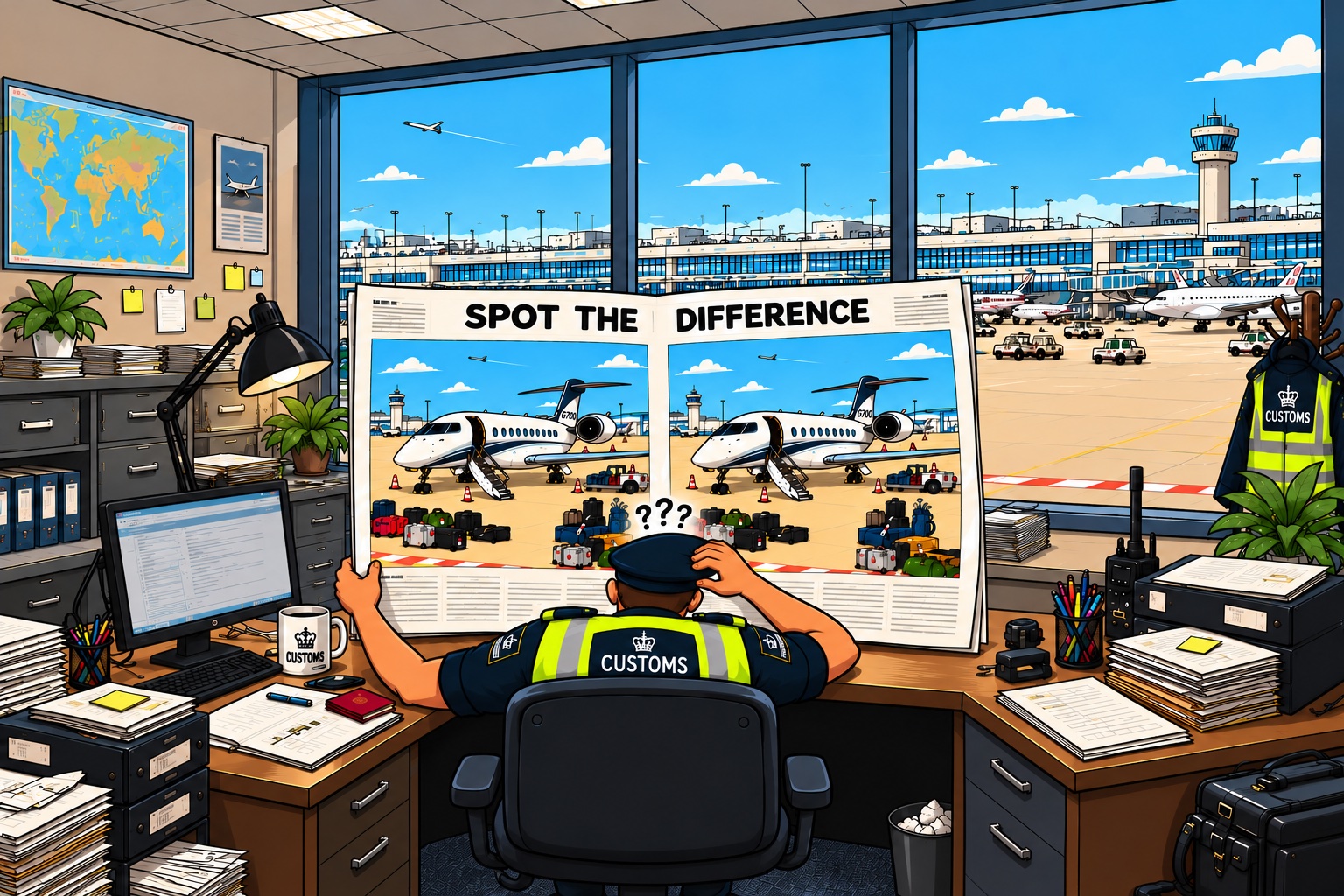
Once your certified MTOW hits 45,500kg or more, things change. Generally, both you and your passengers will need to be screened. It no longer matters whether you’re commercial (i.e. Part 135) or private (Part 91). This can be a big deal for an owner who isn’t used to being sent through a body scanner, or having their LV luggage rummaged through by a security guard.
Up until the latest generation of Gulfstreams and Globals, it never really mattered for most business jets. But much like our waistlines, the newer flagship jets have grown.
Some airports become a problem
EDMO/Oberpfaffenhofen is a good example. If you’re above 45.5 tonnes and carrying passengers, the required security screening becomes an issue. Smaller airports like EDMO don’t necessarily have the screening facilities needed to handle you. That can leave you with few options – operate a crew-only ferry, use another airport, or reduce the aircraft’s certified MTOW.
Both Gulfstream and Bombardier have recognised the problem. Bombardier has Service Bulletins available to reduce the certified MTOW of the aircraft, while Gulfstream has an ASC which does essentially the same thing. Both these options come at a cost, but they can be a great option when you’re planning that summer European vacation with the boss.
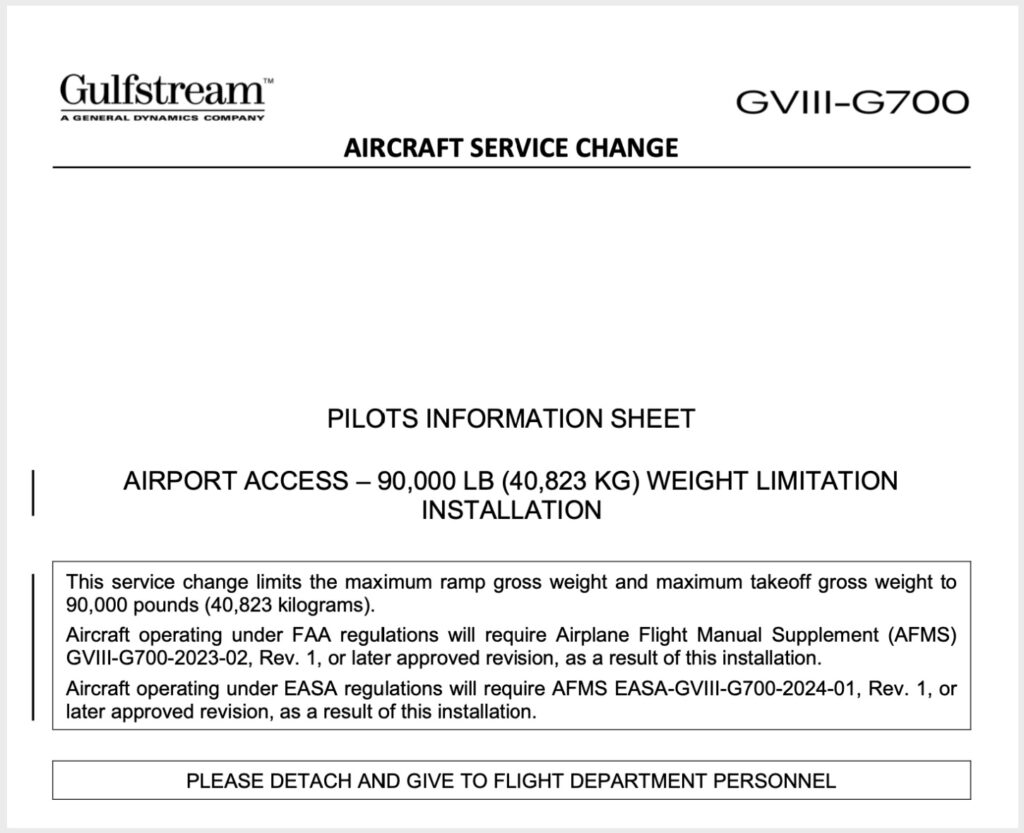
Gulfstream ASC 009B
Your 45.5+ tonne jet can therefore go on a paperwork diet and come out the other side below the magic number.
Problem solved? Not quite…
Not everyone recognises the diet
The UK allows the lower certified weight to be used without too much drama. Apply the applicable aircraft change and, from a security perspective, you can use the lower weight. In my experience with our G700, this means providing the signed aircraft logbook page and the relevant ASC from Gulfstream.
But across Continental Europe, things can be different. In several countries, including Switzerland and the Netherlands, the weight on your state-of-registry noise certificate needs to match the reduced weight you’re trying to use. Simply turning up with an ASC or Service Bulletin saying your aircraft is now below 45.5 tonnes may not be enough.
Having spent the last few summers operating in Europe, my advice is to check what paperwork your state of registry will issue to support the lower MTOW. This is something worth sorting out long before the aircraft is heading to Europe.
These weight changes have to be applied in the way the manufacturer requires, and often that means your engineer needs to be the one to sign it off in the aircraft’s logbook. So just make sure you prepare well in advance.
It’s not just about security
There is another reason the 45.5 tonne diet can be useful: permits, slots and parking.
LFKF/Figari is a good example. Summer is the busy season, and getting a private turnaround flight into Figari below 45.5 tonnes is not terribly difficult. But if you’re carrying some extra winter weight and end up above the threshold, your permit application can be treated alongside commercial traffic.
Now your G700 or Global is fighting for the same limited airport capacity as the airlines. That can make slots and parking considerably harder to get, particularly during the summer when Figari is already rammed with airline and leisure traffic.
So if you’re going to use the lower MTOW, tell your handler from the start. They’ll need to know before they apply for permits and slots, as the lower weight could make a difference.
EUROCONTROL still thinks you’re fat
There is one place where the diet won’t help you!
EUROCONTROL still uses the manufacturer’s standard MTOW when calculating your route charges. And you’ll also find the same thing with many airport charges – most use the highest listed weight as their standard, and there’s not much room for negotiation.
So you can lose the weight for security, but somehow still be too fat when it comes to the bill ✈️ 🍽️ 💵

More on the topic:
More reading:
- Latest: Below 45.5 Tonnes: What Difference Does It Make?
- Latest: Middle East Airspace – Current Operational Picture
- Latest: NAT Pack 2026: All the North Atlantic goodies
- Safe Airspace: Risk Database
- Weekly Ops Bulletin: Subscribe
- Membership plans: Why join OPSGROUP?






 Get the famous weekly