



Key Points
- The EU is rolling out two new border systems that affect passenger flights into the Schengen Area: EES and ETIAS. EES changes what happens to passengers when they cross the external Schengen border, and also introduces new pre-departure checks for operators. Both systems are run by eu-LISA, the EU agency responsible for large-scale border IT systems.
- For passengers: EES is now live. Since 10 April 2026, most non-EU passengers arriving into the Schengen Area for a short stay go through EES at the border – passport details, fingerprints and facial images are recorded digitally instead of passports being stamped. This includes both visa holders and visa-exempt travellers.
- For operators: it’s a separate requirement. From 10 April 2026, operators must use the eu-LISA carrier interface to check passengers holding certain short-stay Schengen visas before departure, confirming they still have valid entries remaining. There is currently no EES check for operators to make for visa-exempt passengers.
- Visa-exempt passengers will come into the operator checks later under ETIAS, currently expected in late 2026. When that starts, operators will need to check that passengers who require ETIAS have a valid authorisation before departure.
EES – what happens to passengers?
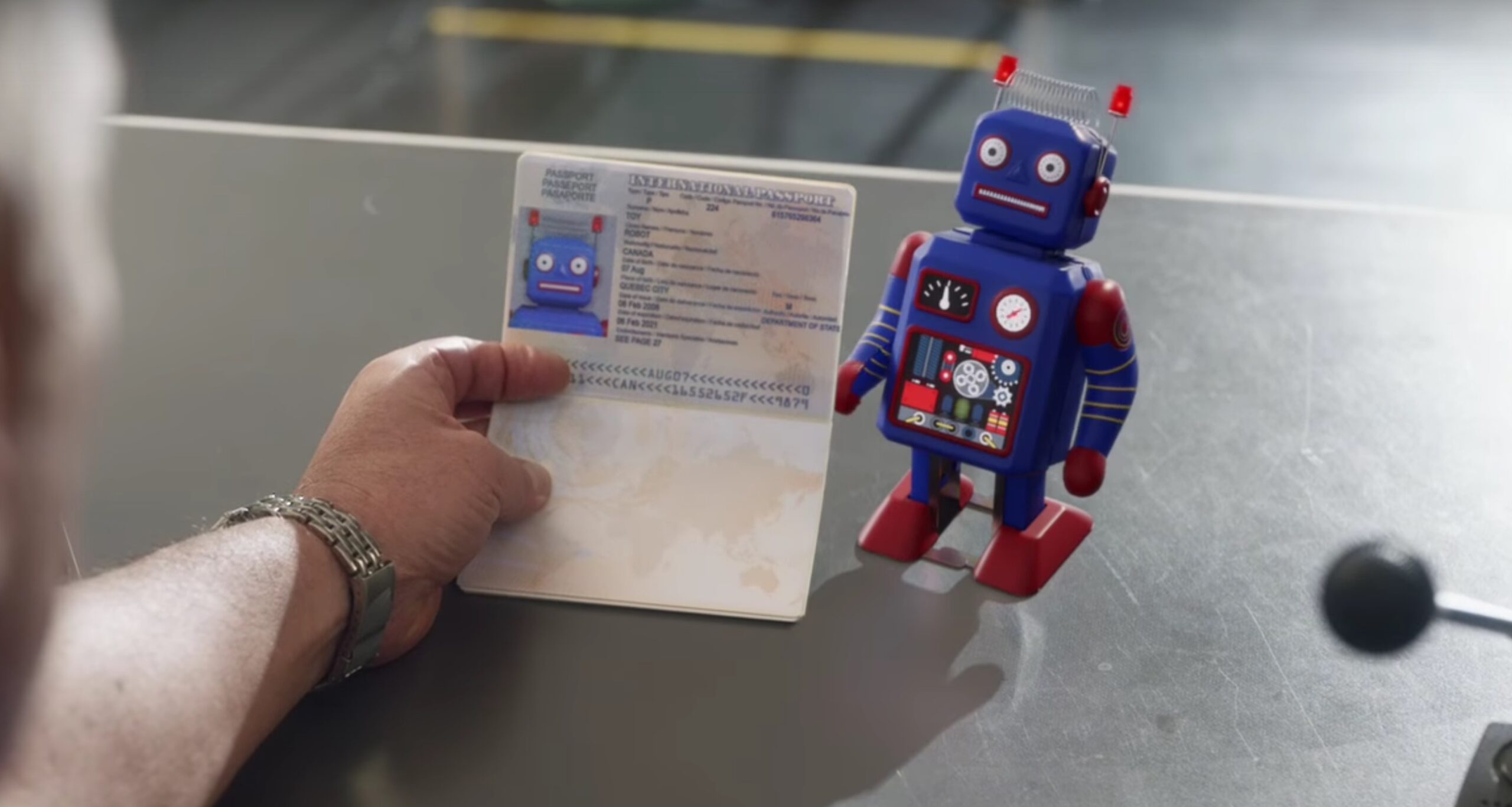
Think of EES as the EU’s digital replacement for passport stamping.
Since 10 April 2026, when passengers cross an external Schengen border, most non-EU travellers visiting for a short stay are processed through EES by border control.
That means their passport details, entry and exit, fingerprints and facial image are recorded digitally instead of relying on passport stamps.
This includes both passengers who need a Schengen visa and those who are visa-exempt. So a visa-exempt passenger, such as a US or UK national visiting for a normal short stay, still goes through EES on arrival.
There are some exemptions (for example certain residence permit and long-stay visa holders) but for most non-EU passengers arriving for a short stay, EES is now simply part of entering Schengen.
The rollout has been a bit bumpy so far, with delays of up to several hours reported at some airports, and some locations scaling back or temporarily reverting to manual processing.
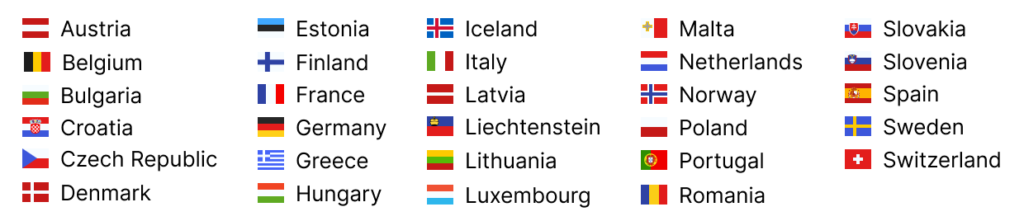
The system currently covers 29 European countries participating in the EES programme:
EES – what does the operator have to do?
For the operator, it’s a separate question.
The main operational requirement is a pre-departure check through the eu-LISA carrier interface.
If you are carrying passengers holding short-stay Schengen visas (single or double-entry), you must query the carrier interface before departure to confirm that they still have valid entries remaining.
There is no EES check for the operator to make for visa-exempt passengers. They still go through EES at the border, but you don’t currently query them through the carrier interface before the flight.
The query can be made any time within 48 hours before departure. In practice, some operators are reporting delays in getting set up on the system, so it’s worth allowing extra time if you’re not already registered.
And there’s one other important question: does this operator requirement apply to private flights? More on that below.
ETIAS
ETIAS is a separate system that will apply to visa-exempt travellers.
It will apply to 30 European countries (the 29 EES countries plus Cyprus).
It is essentially the EU’s version of the US ESTA: a short online travel authorisation required before travelling.
When ETIAS launches (currently expected late 2026), operators bringing passengers into the Schengen Area will need to verify that travellers who require ETIAS have a valid approval before boarding.
Operators will have to perform this check through the same eu-LISA carrier interface used for EES.
As with EES, the verification query can be made within 48 hours before departure.
ETIAS is expected to include a transition period followed by a grace period, meaning enforcement will ramp up gradually after launch.
The ETIAS fee will be €20, waived for travellers under 18 or over 70.
For more info on all the basic stuff of EES and ETIAS, check out the homepage here.
Are private operators exempt from the pre-departure checks?
Since 2024 we have asked eu-LISA this question many times, in different ways.
Important: this is about what the operator has to do before departure. It does not exempt passengers from going through EES at the border.
eu-LISA’s position had originally been that the carrier requirements applied to commercial flights, not private flights.
They confirmed that:
- Private flights with non fee paying passengers were out of scope for the carrier requirements.
- This remained the case even if the pilots were paid to operate the aircraft.
- Operators using privately owned aircraft for private purposes were not considered “carriers” and did not need to connect to the carrier interface.
- Company owned and operated aircraft flying to the EU for private purposes also fell under the private flight definition.
Based on this, the industry understanding was simple: private operators did not need to register with eu-LISA or make the pre-departure EES/ETIAS checks.
However!
In Jan 2026, eu-LISA refined this position, with a new and much narrower distinction. They told us the following:
Privately operated flights that are not open for public use, with a crew hired directly by the aircraft owner, do not need to comply with EES and ETIAS obligations, therefore, no need to register with eu-LISA and query the travellers in scope of EES and ETIAS.
Flights of private aircrafts managed by a professional operator (crew, maintenance, handling, etc.), or managed by a commercial charter operator, even if the flights are not open for public use, need to comply with EES and ETIAS obligations, therefore, the operator needs to register with eu-LISA and query the carrier interface.
In other words:
Owner-operated private flights with owner-hired crew = no operator EES / ETIAS checks.
Professionally managed or charter-operated private flights = operator EES / ETIAS checks required.
Again, this distinction is about the operator requirement. Passengers who are subject to EES will still go through EES at the Schengen border regardless of whether they arrived on a commercial flight or a private one.
This explains why two aircraft that both look like “single owner private flights” can now fall on opposite sides of the operator rule, depending on how the aircraft and crew are managed.
Why some private flights are registering anyway
Several OPSGROUP members who do purely owner-operated private flights have told us that they have registered for the system anyway. The benefit of doing this is that you will be able to confirm prior to the flight that your pax have all the proper documentation they need – potentially avoiding any nasty surprises on arrival.
With the EES system, passports will eventually no longer be stamped. For visas that allow only a limited number of entries, operators will otherwise have no easy way to confirm whether those entries have already been used unless they query the system.
Also, similar story when ETIAS starts. Though there will be a website to confirm a passenger has an approved ETIAS, eu-LISA says there are a lot of reasons for an ETIAS to be revoked, so checking the system prior to the flight will help make sure the ETIAS is still valid.
More info for operators
Operator Guide PDF: If you’re trying to get your head around how all this actually works in practice, PNRGO have put together a solid step-by-step operator guide you can download here. It walks through the carrier interface, how the queries work, and some of the edge cases you’re likely to run into.
For more info, you can check the eu-LISA homepage for operators here.
For answers to pretty much all the questions we can think of, including how to actually use the system as an operator, check this FAQ document provided by eu-LISA.

More on the topic:
More reading:
- Latest: NAT Pack 2026: All the North Atlantic goodies
- Latest: New 2026 NAT Oceanic Checklist
- Latest: The Bahamas wants your cash
- Safe Airspace: Risk Database
- Weekly Ops Bulletin: Subscribe
- Membership plans: Why join OPSGROUP?






 Get the famous weekly







Great article – however I think I’m in the gray zone and it’s still unclear if I need to comply with EES / EITAS.
Our outfit operates pt 91 only, and only the owner, owner’s family, and owner’s guests are ever on board. Pilots are employed by a management company, and operate the aircraft for the owner. The legal operator (as listed on LOAs, eAPIS) is the name of the aircraft owner.
The article seems to say that professionally managed aircraft need to comply, even if it’s private use only. But then it states —–>
Therefore, if you transport solely the owners of the plane and their guests, you will not need to register with eu-LISA.
In other words:
Owner-operated private flights with owner-hired crew = no EES / ETIAS.
Professionally managed or charter-operated private flights = EES / ETIAS required.
Can you clarify the apparent contradiction?
Thanks
Mike
Hi Mike. I think you probably will have to comply, unfortunately. The latest eu-LISA guidance seems to focus less on “private vs commercial” and more on whether the aircraft is professionally managed. So even though you’re pure Part 91 and only carrying the owner/family/guests, the fact the pilots are employed by a management company likely puts you in scope.
Roger that. Thanks David