



If you are planning a long hop across the South Pacific, NTAA/Tahiti is the obvious dot in the middle of the map. It is the only international airport in French Polynesia, the main South Pacific stop.
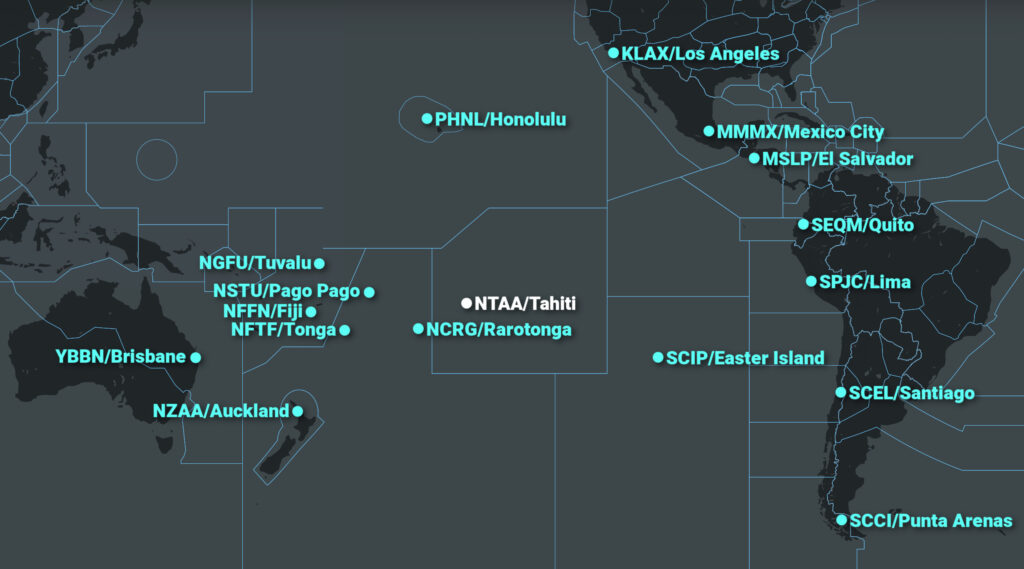
Right now though, it is not quite the simple H24 option it appears to be on paper. Airport and ATC capacity are stretched, airlines get priority, and BizAv has to fit around some fairly tight restrictions.
This is a quick guide to what is going on, and how to make NTAA/Tahiti work for you without nasty surprises.
The Not-So-Simple BizAv Reality at NTAA
For non-based BizAv, Tahiti has some quiet “avoid these hours” rules. Several daily blackout windows line up with the airline rush. During those peak periods, visiting non-scheduled flights cannot arrive or depart unless the airport manager approves it. These limits are not seasonal and seem driven by local capacity pressure during the busiest airline banks. Handlers say the squeeze has been noticeable since mid-2025.
The restrictions currently run into early June 2026. The exact hours vary by day and are published in rolling Notams, so you need to check the current version before planning.
Tahiti also has limits as a diversion alternate. During busy periods, aircraft not based locally or already scheduled at NTAA generally need approval to file it as an alternate. Medevac flights are the standing exception. These diversion limits currently run into early April 2026.
For South Pacific crossings, this turns NTAA into an airport with practical operating hours. If it’s in your plan as a destination or alternate, check the Notams carefully, in local time and UTC.
Another thing to watch out for: the ATS reporting office is not operating normally. Non-scheduled flight plans must be sent by email to SEAC-PF-BRIA-BF@aviation-civile.gouv.fr, and you should wait for acknowledgement before assuming you are filed.
What Local Handlers Say
Local handlers in Tahiti gave us a very helpful look at how things work in practice, and their insight fills in a lot of the gaps that the Notams leave out.
NTAA is H24 and fully equipped for any bizjet, but its daily rhythm follows the airline peaks. Outside the restricted hours you still get full international services, including fuel, CIQ and parking support.
Nearby NTTB/Bora Bora and NTTR/Raiatea are domestic only, with shorter hours, no CIQ and limited fuel at NTTB. They are not suitable as international alternates and cannot replace NTAA if you need a reliable option in the middle of the Pacific.
CIQ pre-clearance: TASC FBO told us they can arrange full CIQ pre-clearance before arrival. The process is simple. You send inbound and outbound GENDECs together with passport scans for all crew and passengers, and everyone fills out an immigration card in advance. Immigration then pre-clears the names and meets the aircraft on arrival for a quick visual check and passport stamp. When the paperwork is sent early enough, the entire process can be as fast as loading the bags into the car. For tight turnarounds this is a major time-saver.
Biosecurity rules: French Polynesia is strict on biosecurity, similar to Australia or New Zealand. Cabin disinsection with an approved spray is mandatory at top of descent. Plant and animal products and any live animals need prior approval. Weapons and ammunition require separate permission. Cash over 10,000 EUR equivalent must be declared. In short, paperwork matters here.
Fuel: NTAA has unlimited Jet A1 for normal bizjet demand. Fuel is supplied through different arrangements depending on the handler. For example, TASC FBO provides fueling exclusively under the Petropol (ExxonMobil) brand, which means the fuel release must be issued under Petropol for them to accept it. Releases from other suppliers cannot be used with this setup. If you arrive without a release, major credit cards such as Amex, Visa or MasterCard are accepted. Because Tahiti is such an important mid-Pacific fuel stop, sending the correct fuel release ahead of time is very helpful.
Permits: Landing permits must be requested directly by the operator through the French Polynesia CAA portal. Private flights should apply at least 72 hours ahead. Commercial and charter flights need at least 14 days. Handlers cannot apply on your behalf, but they can guide you through the process. In the portal you can nominate your preferred handling agent so everyone sees the same set of documents.
If the portal is unavailable for any reason, requests can also be submitted by email. Include:
- Full schedule
- Tail number
- Aircraft type
- MTOW
- Company name and address
- GENDEC
- Name of your handling agent
Send email requests to seac-pf-sna-preflight-ld@aviation-civile.gouv.fr, ideally copying your handler so they can follow and support the request.
FBO contacts:
- TASC FBO Tahiti: nuutea@tascfbo.com, info@tascfbo.com
- Air Tahiti FBO: ulric.allard@airtahiti.pf, ops.ei@airtahiti.pf
Tahiti is still the key South Pacific stop for long-range BizAv, but it is a “plan it properly or it will not work” kind of place. If you plan around the peak-time restrictions and sort permits and fuel early, NTAA works smoothly. Treat it like a simple H24 diversion and it may catch you out.
If you have recent experience here, please send us an Airport Spy Report. A short postcard-style note is enough and it helps everyone flying the same route.
More on the topic:
- More: Germany issue new warnings, Manila may not ban GA after all
- More: Midweek Briefing: Where is Zika, Elevated North Korea Risk
- More: Midweek Briefing 25MAY: Cairo airspace -GPS jamming, Australia: new RNP rules (again)
- More: Monday Briefing: Sinai Airspace avoided, Low Vis creates day of chaos
More reading:
- Latest: Paris Ramp Checks: Illegal Charters and Tax Avoidance
- Latest: Middle East Airspace – Current Operational Picture
- Latest: Greenland NAT Alternates: March 2026 Update
- Safe Airspace: Risk Database
- Weekly Ops Bulletin: Subscribe
- Membership plans: Why join OPSGROUP?




 Get the famous weekly