Why do we see US Military Notams?

Back in March, an OPSGROUP member reached out to us after the following Notam appeared in their flight plan briefing package.

As EGKB/Biggin Hill (UK) was their filed alternate, the Notam was of some interest. A quick email to the airport authority confirmed that the ILS was fully serviceable and available.

The member contacted Jeppesen directly about the Notam, and here was their response:

“The Notam in question is actually a US DOD procedural Notam which only applies to US military pilots and those flying under contract/partnership with the DOD. So, while the tower may confirm that the approach is in-service, the US military is not authorized to fly it for reasons known only to them…”

The following questions remained:

• Why are we seeing these Notams in the first place?

• What is the reason for the restriction on military aircraft?

The short answer is that the response from Jeppesen was correct – but could use a little more explanation.

Where we get our Notams from.

There are two primary “original” sources for Notams around the world:

  1. The European AIS Database (EAD) – run by Eurocontrol
  2. The US DoD (Department of Defense). It supplies Notams to the FAA for their ‘Notam Search’ app, and their SWIM feeds – the FAA’s information-sharing platform.

If your flight plan package is sourcing Notams from the US DoD (and not being filtered correctly), you will see military Notams included – like the one above. Think of them like company notams, for internal use. In this sense, they are not ‘true’ Notams and shoud be completely disregarded by civilian operators.

But why the UK?

To use the DoD Notam feed correctly, military Notams need to be filtered out. But there may be more to it than that.

You’ll see the EGKB Notam above has a ‘V’ designator.

In the UK ‘V’ series Notams mean the following:

“Notification of Security Advice to UK Air Operators by Government to provide guidance/instructions on Airspace Security Risks. Volcanic Ash related information within En-Route Airspace London FIR/UIR, Scottish FIR/UIR, Shannon FIR/UIR and Shanwick Oceanic FIR…”

In the US, they mean something different:

“A NOTAM information pertaining to a location’s published instrument procedures, i.e., Standard Instrument Approach Procedure (SIAPs), Standard Instrument Departure (SIDs), Departure Procedures (DPs). These NOTAMs shall be published under the direction of TERPS personnel…”

Which is why in this case (and many others) we may still see these Notams find their way into our briefing packs.

In a Notam-tale as old as time: just because they’re there, doesn’t mean they’re relevant. The potential for confusion holds strong – especially if civilian operators misinterpret Notams never meant for them in the first place.

Why does the military have their own restrictions?

Because they do! In the same sense one airline can do something another does not allow.

Common sense indicates that the way military aircraft are operated differs substantially from civilian aircraft – and that the margins and procedures designed for us do not necessarily work in the same way for them.

Have more info?

If you have something you’d like to add to this article, we’d love to hear from you. You can reach us at team@ops.group.


The Finish Line: NOTAM SPRINT 2023

From May 8-12, the NOTAM Alliance will host a NOTAM SPRINT: a workshop to create a framework for a vastly improved NOTAM Briefing for pilots and dispatchers. The NOTAM Alliance is a user-led group of airlines and aircraft operators focused on radically changing how NOTAMs are provided to flight crews, and includes major airlines like Austrian, Lufthansa, Aer Lingus and United Airlines.

The background to the NOTAM Sprint is a year of tremendous gains in NOTAM improvement. 2023 started with an FAA system failure, which in turn brought global attention to the NOTAM issues that pilots face every day – oversized 50-page+ briefing packages that are impossible for crews to parse. This creates a huge safety risk: critical updates affecting their airports and route of flight are regularly missed.

After decades of attempts to solve the NOTAM problem, the advances in Artificial Intelligence and a fresh approach to the core issues in 2023 led to a two-month review of the content of NOTAM messages. During February and March, a working group of 50 pilots, dispatchers and NOTAM experts created a “Top 50” list of tags that can be applied to any NOTAM, across 9 categories: Airport, Approach, Runway, Taxiway, ATC, Navigation, Airspace, Hazards, and Library. A Large Language Model (LLM) can then used to apply the appropriate tag to any NOTAM, which allows them to be sorted and filtered.

The result is a shortened “SuperNOTAM” Briefing harnessing the “Dark Cockpit Philosophy” – presenting first only critical NOTAMs to flight crew, with the more routine operational NOTAMs in a Supplement for reference. Irrelevant NOTAMs are filtered out. Each airline can set their own preferences as to which NOTAM types are deemed most critical (eg. Runway closures, Fuel warnings, Rescue/Fire cover), and which are routine/operational (eg. Parking stand changes, frequency outages, taxiway changes). The most persistent “junk” NOTAMs – Birds, Grass Cutting, and Obstacle Light outages – can be consigned to the scrap heap if desired.

The NOTAM SPRINT aims to create a working prototype of the model, turning the theory into reality, and reducing the NOTAM content at least tenfold. Over five days, airlines, operators, pilots and dispatchers will work on the key areas of the model.

All users are welcome to particpiate in the event, which will have daily Zoom group chats, a Slack working group, and an evening Notam Newsletter to summarise the day’s progress. At the end of the five days, the goal is to have an open-source blueprint for a NOTAM model that all aircraft operators will be able to employ, and ultimately, bring long-awaited and much needed relief to flight crews and dispatchers worldwide.

To read more about the event, visit the event page NOTAM SPRINT 2023, and to register, use this link.

NOTAM SPRINT 2023 – links


Taking the Trash Out: Let’s fix NOTAMs

After a hiatus of a year or so, we’re back working on NOTAMs. In 2021 we ran a campaign with ICAO (and IFALPA, and IFAIMA) to improve NOTAMs. We focused on “Old” NOTAMs, ones that sit in the system for no good reason, sometimes for as long as 20 years. They are mostly gone – including the Albanian NOTAM about the Y2K problem.

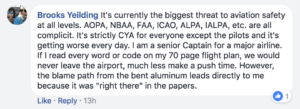
That’s good, but the NOTAM problem isn’t fixed. Rob, below, summed it up nice and simply last week.

So, let’s continue the work. Why do we have a system that makes it extremely easy to miss critical items? And how do we fix it? Let’s visualize the problem.


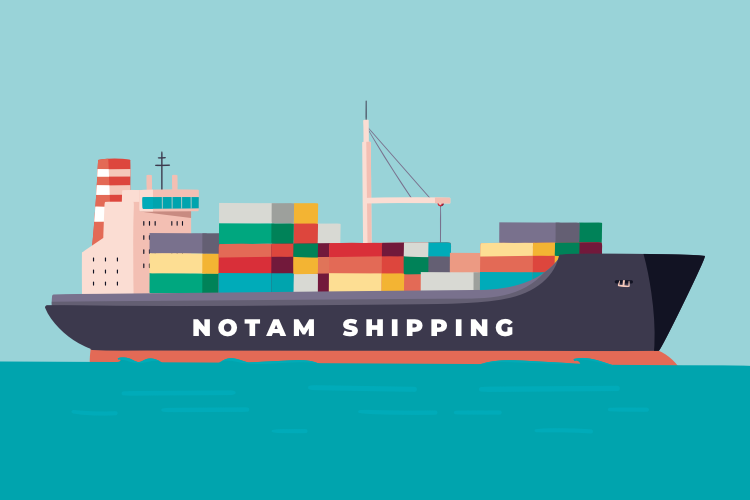
NOTAMs are like containers on a ship

Imagine you’re the pilot of a Boeing 787 about to sit down at a briefing table to review NOTAMs for your flight from Copenhagen to Bangkok today. You will get a folder containing a printout of NOTAMs for your route. Here they come.

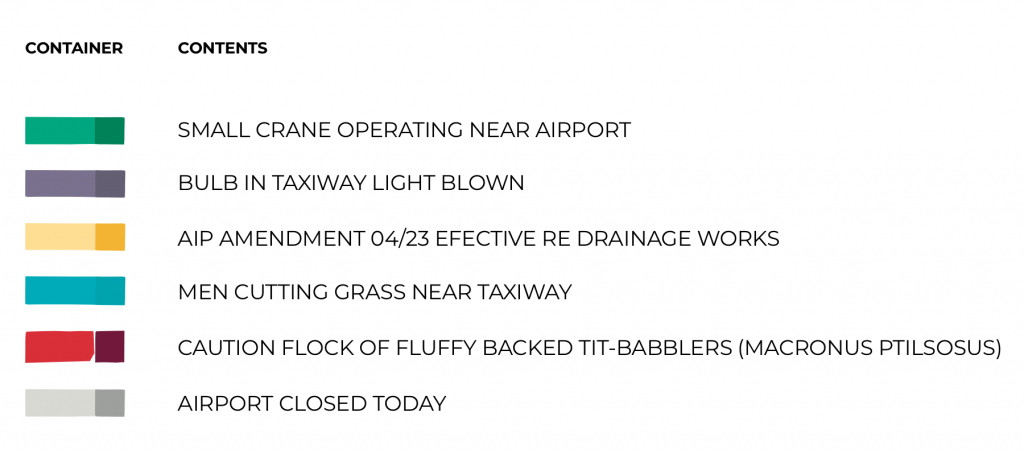
Each container is a NOTAM. Unlike actual containers on actual ships, there is no manifest. We don’t know what’s in the container until we open it and take a look. That means that we can’t automatically sort them out beforehand, and we can’t put them in any order of importance. Therefore, the pilot gets a random list of NOTAMs, and it’s up to them to make sense of it.

If you only had six NOTAMs to take a look at, no big deal. You’ll spot that the airport is closed today. But we usually have somewhere between 100 and 1,000. The result? A system that makes it extremely easy to miss critical information.


Finding the simple fix

This is a simplified version of the problem, but not by much.

Question, then: How do we improve the NOTAM system so we can sort and filter them? 

Let’s get a technical for a moment, since we’re going to need some smart people that understand the system architecture. Here are some basics that are important.

  1. There isn’t really an international “NOTAM system”. Each country issues NOTAMs for their airspace, and keeps a local list of them for pilots in that country. Other countries can query that list (done via the AFTN, with an RQL message), and get a copy of new NOTAMs (by sending an RQN message). Not every country does this, but if they do, they’ll then have a limited database of NOTAMs from selected other countries. A tiny handful of countries, regions, and organizations do this for every country, which makes for a fairly reliable international database of NOTAMs. Examples of this are the FAA (NOTAM Search), US DoD (DINS), and Europe (EAD). These databases form the source data used by pilots and operators, often via service providers like Jeppesen, LIDO, Foreflight etc. who may apply some final processing to attempt to sort and filter them for their customers.
  2. Since there isn’t an international NOTAM system, then logically, nobody is in charge of it. ICAO sets the standards for when a country should issue a NOTAM (Annex 15), how they are formatted (Doc 10066), and what codes to use (Doc 8400). Eurocontrol publishes a guidance manual (called OPADD). That’s about it. Nobody has the job of monitoring all international NOTAMs for quality or quantity.
  3. The NOTAM structure is very limited. It uses a limited character set called ITA2, which pre-dates ASCII. This limits messages to UPPER CASE. The format is set in Doc 10066, giving a NOTAM 7 sub-parts from A to G, preceded by a Qualifier called the “Q-code“. In theory, the Q-code tells the reader what the NOTAM is about (magically solving the container problem above), but in practice, it doesn’t work. Why? There are too many choices, and therefore they are often applied incorrectly, or not at all. The Q-code categories were dreamed up in 1950, and there are 13,783 possible Q-codes. 20% of NOTAMS don’t have a Q-code at all (The NOTAM office often enters XX or XXXX, meaning “not sure”).


What’s in the NOTAM container?

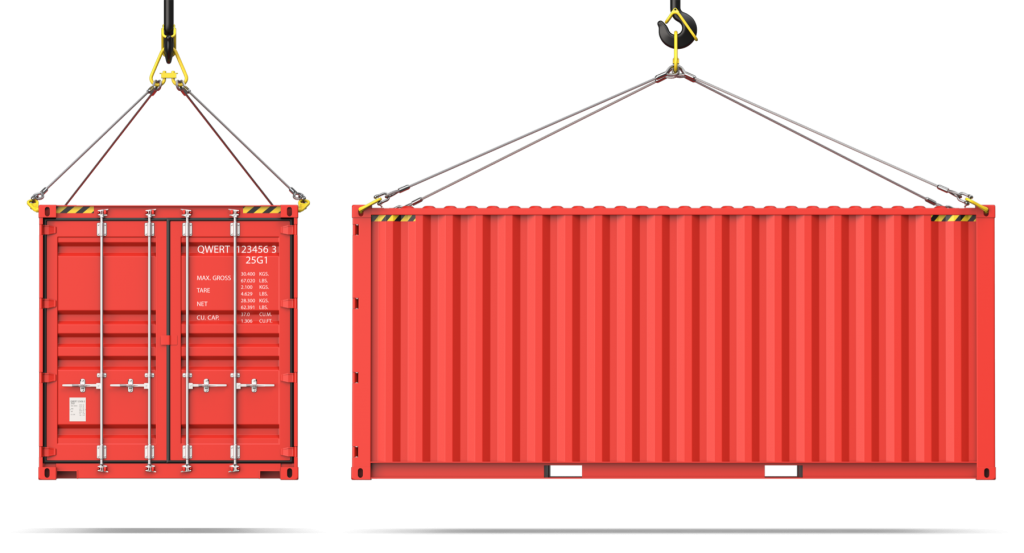
Let’s get back to the yard, and lower down one NOTAM container and take a look.

We know it came in on the NOTAM ship so it relates in some way to our route today, but we don’t know what’s in it. Therefore, we can’t sort it or filter it out. It just joins all the other NOTAMs that we load up into the pilot’s briefing, and leave it to them to make sense of.

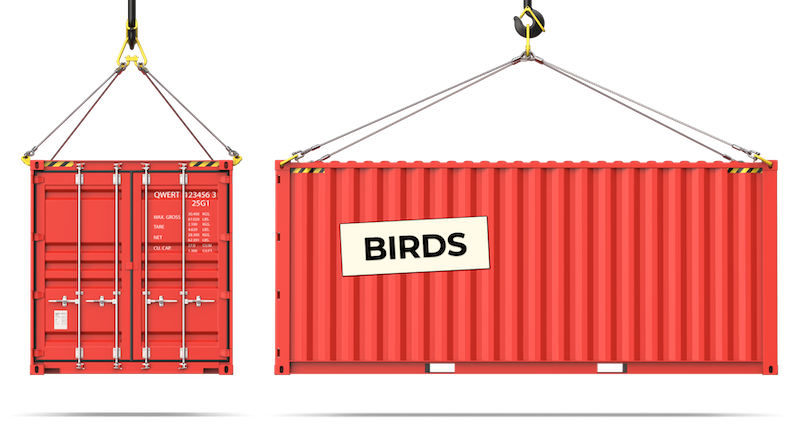
But if the shipper (the originating NOTAM Office) puts a label on it saying “BIRDS“, then we immediately know what to do with it.

Pretty quickly we can start organizing the containers. Each operator can figure out the order they want to put them in, and which ones to leave at the back of the yard.

By knowing what the NOTAM is about, in advance, we can set up some basic processing rules. Each aircraft operator is different: Airlines don’t care about broken obstacle lights 5 miles from the airport, but a Police helicopter does. Perhaps someone cares about birds, most pilots don’t. It doesn’t matter; let the operator decide for themselves how important each label is, and what order to put them in (or discard).


Sounds easy, but is it?

In a huge list of NOTAMs, the ability to sort and filter them is the key to making them manageable. If they are sorted and filtered, then it’s unlikely a pilot will miss the big ones. Back to what Rob said (⬆️)  the problem is that it’s extremely easy to miss critical items, and that’s what we want to change.

We have some limitations:

  1. It must be a simple change. There are 193 countries that are ICAO members, each one ultimately resistant to a system-wide change that will cost money and require infrastructure investment. It would be lovely to start from scratch with a new system, but it’s not feasible. We need a simple change to the format with big impact. Conversely, if you think even that is impossible, just remember that Snowtams changed format in 2021.
  2. We can’t use Item E. To be able to sort and filter, a computer has to be able to know what the NOTAM is about, without having to read the content text. It can’t make sense of the text in Item E (the text of the NOTAM) – we tried this some years ago with machine learning, and after 2 millions passes, AI wasn’t able to formulate an algorithim that worked. There are just too many countries with different ways of writing NOTAMs to use Item E. So we must have a label of some kind.
  3. We must change the back end, not the front end. This must be a change available to everyone. Sure, Foreflight does good stuff, especially with US domestic NOTAMs. There’s a bunch of software and apps that can help to make NOTAMs more digestible. Some can be displayed graphically, but not many. Big airlines have back-office staff to organize and even rewrite some NOTAMs. But they all do it differently, and not many of them solve much of the big problem. We’re still getting dozens, even hundreds, of pages of NOTAMs to read.

That’s where the work begins. We don’t have all the answers, and we need some smart NOTAM-folk to help. It’s not the intention here to present a vague solution and say “This is it” – this article is intended to generate some critical thought and discussion on what the “Big Fix” looks like. Labelling them in some way seems the way to go, but we’re not sure.


Remember this …

There’s nothing like saying “NOTAMs, what do you think?” to generate a slew of pilot complaints, jokes (some great memes after the January outage!), and things that need to be fixed. We’ve been working on this here for a couple of years, but efforts to fix the b*rds date back almost 60 years. With that in mind, addressing the most common talking points may help.

  1. NOTAMs suck. We know. We’re just a bunch of pilots and dispatchers that really don’t like them, and we’re doing our best to make change happen. But if we want to solve them, we have to find the one thing that fixes most of the big problem in one hit. UPPER CASE is tough to read, but that’s not the big problem. Abbreviations are annoying, but that’s still not the big problem. The Big Problem is that we can’t see the critical stuff because we have to read hundreds of them before flight in no particular order. If we can sort and filter them, that means we’ll see the important stuff first, and don’t have to read such a long list.
  2. General ranting at the FAA, ICAO, IATA, or even the government doesn’t help. Instead, help us to help find a sensible solution, draw it out, think it out, test it, and we can then present it to those that can help implement it.
  3. Digital Notams. Sometimes this comes up as a solution that’s on the horizon, and will fix everything. That conversation has been happening for at least 20 years, and while a lot of good people are working on this, it doesn’t fix the problem we have right now. In a perfect world, SWIM and Digital Notams will come online in 2028 (five years from now), and start to solve some of the issues. Problem is, we live in an imperfect world, and the chances that this will solve our woes as they exist today are slim.
  4. Hey, I made a thing that solves NOTAMs. Like we said above, yes, there are some really great apps, graphical tools, and software that help make some sense of NOTAMs. Foreflight is a favourite amongst us pilots. But despite some of the advances, the originating NOTAM is still a brutalist remnant of the early 20th century, and the vast majority of pilots still get giant chunks of NOTAM text to plod through. We want to fix the problem at source. At the same time, it’s likely that the smart people that made these things can also be the smart people to solve the source problem!


So, what now?

We want to hear from you! Write to us at team@fixingnotams.org. We can only solve this as a community group, and we’re working on a few events to get people together for some discussion. We’ll set up a few group chats on Zoom to get the discussion started and some ideas flowing.

Ultimately, the plan is to start funnelling some ideas along the pipeline until we reach one that really seems to work, and take that to the organizations that can implement it. So, it’s up to you. Want to get involved? You’re awesome! Please reach out to us.


US Grounds All Flights After NOTAM System Failure

Update 12Jan 1100z:

The Misery Map of flight delays in the US isn’t looking too bad today, following yesterday’s Notam system meltdown that resulted in a nationwide ground stop and the cancellation of more than 10,000 flights according to FlightAware. The FAA has said the Notam system “continues to remain operational and stable” today. For ops to/within the US today, keep an eye on the latest FAA Advisories here.


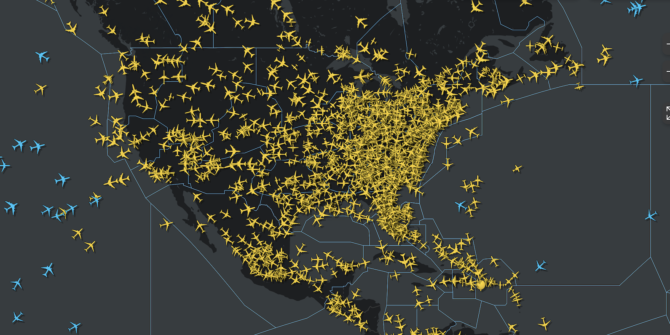
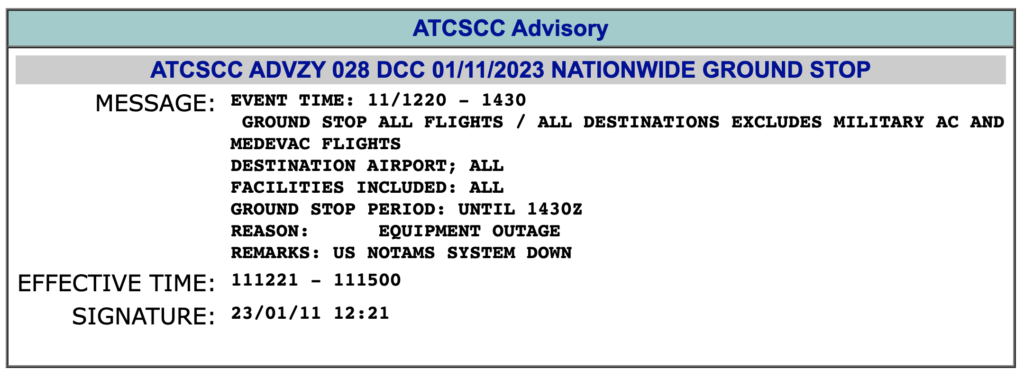
The US grounded all flights on the morning of Jan 11, due to a glitch with the Notam system.

Here’s the ATCSCC advisory giving the order:

The Notam system failed at 2028 UTC on Jan 10, after which time no new Notams or amendments were processed.

The FAA lifted the ground stop shortly before 9am EST on Jan 11, saying that “normal air traffic operations are resuming gradually”. Later that night, they announced that the outage was likely due to a software issue.


Springer’s Final Thought

We all hate Notams.

Let’s qualify that. A significant number of pilots and dispatchers have told us that they are concerned about Notams, and would like to see an improved system.

The FAA has said last week’s meltdown was due to a damaged database file. Our focus has never really been on the software on the back-end of the Notam system, but on the impact of Notams on pilots and operators.

We’ve been campaigning for changes to the current Notam system for a long time – not because the system might crash, but because of the daily impact to pilots who are forced to use an archaic briefing system from the 1920’s that causes critical flight information to be missed.

If you’ve read the news today about this mysterious “Notam system” causing widespread travel misery, and you want to learn more about this ongoing issue, you can start your adventure here.


China Airport Alternate Restrictions

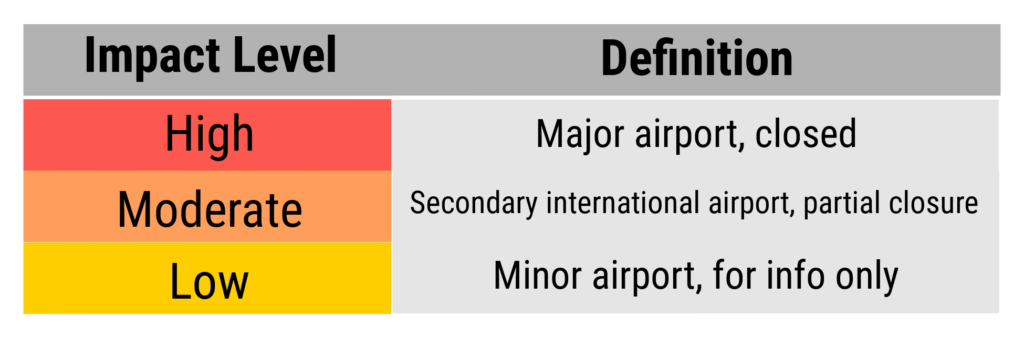
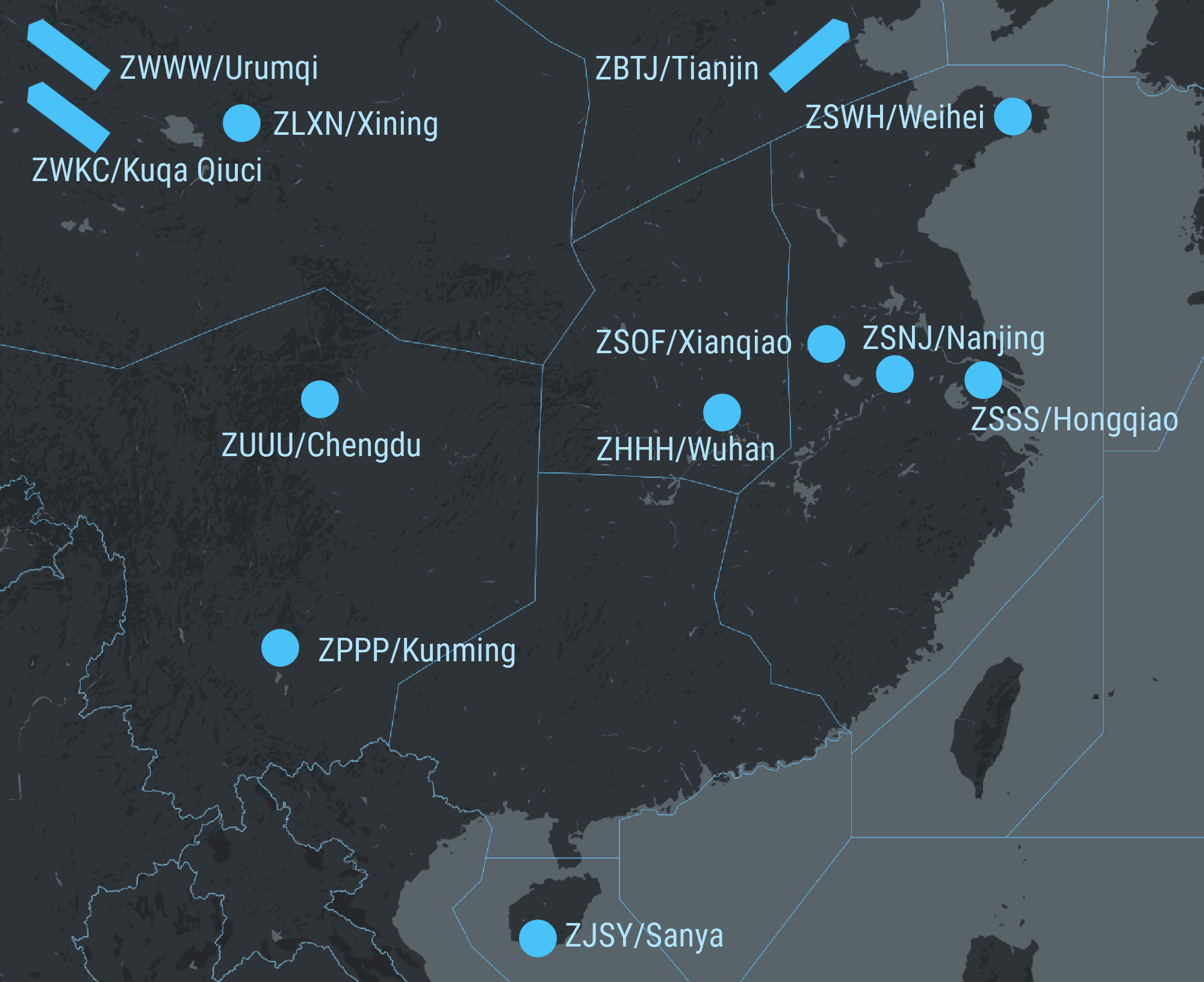
There are a multitude of Notams advising that certain airports in China are not to be used as alternates. Here is a list of those to look out for so you can plan and ensure your flight is not impacted, and a few others we thought worth mentioning.

The Notams

The ‘unavailability’ Notams, give or take slightly different dates, all say this – 

AD NOT AVBL FOR INTERNATIONAL ALTN FLIGHT(INCLUDE HONG KONG, MACAO AND TAIWAN FLIGHTS) EXCEPT EMERGENCY FLIGHT.

So don’t plan to use as an alternate, an en-route fuel or tech diversion, or anything else that wouldn’t be classified as an emergency.

The Airports

ZJSY/Sanya International – 12/31/2021

G2993/21 Sanya Phoenix International serves the Hainan region – the southernmost province of China (on the island).

ZSWH/Weihai – 12/09/2021

F6913/21 This is not a major international airport, Weihei lies on the eastern coast, north of ZSPD/Shanghai  Pudong beside the Yellow Sea and is the closest Chinese airport to South Korea.            

ZSNJ/Nanjing Lukou – 12/31/2021

F6912/21 A secondary international airport, this maybe used as an alternate for ZSPD/Shanghai Pudong. ZSHC/Hangzhou remains available, as does ZSSS/Shanghai Hongqiao (see below).

ZSSS/Shanghai Hongqiao – 12/19/2021

F6888/21 Only runway 18L/36R is unavailable, runway 18R/36L remains open and has both ILS CAT I and RNAV capability, and is 10,827’ (3300m) length.

ZSOF/Hefei Xinqiao – 01/18/2022

F6798/21 This is a secondary international airport service the Hefei region, inland from Shanghai.

ZBTJ/Tianjin Binhai – 02/28/2022

E3619/21 Runway 16R/34L is not available to any large (B747, A380) aircraft except if an emergency special transportation.

ZLIC/Yinchuan Hedong – 12/09/2021

L1155/21 Another minor international airport. It is unlikely you would feel this a an alternate as it has limited international operations. Hedong serves the autonomous Ningxia Hui region to the north east and lies in close proximity to mountainous terrain.

ZWKC/Kuqu Qiuci – 01/31/2022

W0547/21 This is a domestic airport serving the Xinjiang autonomous region and would not be recommended as an alternate.

ZWWW/Urumqi – 12/30/2021

W0500/21 Urumqi is one of the primary enroute and emergency diversion alternates for the Himalayan region flights into China. Taxiways A and B (so both main taxiways) are closed due maintenance, as is runway 07/25.

However, it remains available for emergencies, but it is not clear how much notice would be required.

ZHHH/Wuhan Tianhe – 12/31/2021

G2452/21 Wuhan is closed for all except emergencies due to stand shortages only.

ZUUU/Chengdu Shuangliu – 12/26/2021

U3453/21 Chengdu is a major international airport in central China. The airport remains open, but is not available for BizAv flights wishing to park overnight unless you are based there, or its an emergency.

ZLXN/Xining Caojiabao – 12/02/2021

L0900/21 Although an international airport, this primarily only serves domestic flights into the region. ZLLL/Lanzhou would be the closest major international airport, and this remains available.

ZPPP/Kunming – 01/31/2022

U3133/21 Kunming is also restricted in parking and not available for overnight parking to any BizAv aircraft unless based there or landing due emergency.

Diverting in China

In general, diversions in China can be problematic if you head somewhere unplanned – and by this we mean not on your flight plan.

Much of the airspace is governed by the military which can result in delays for you while ATC coordinates with them. Take extra fuel for dealing with things like not getting the flight level you wanted, en-route weather deviations, random re-routes and delays with re-clearances if you do need to divert.

China also have stringent ATC procedures and hand out fines for errors, and occasionally impose restrictions for repeated errors so know the country rules and regs, including their contingency procedures as these differ to ICAO.

China have been known to impose “do not commit to destination” policies on some operators – this basically means they expect you to have enough fuel to not get into a low fuel situation at your destination airport. If you are going to, they expect you to divert to your alternate instead (which my result in you committing to that so look at that weather well in advance).


Assessing the Risk: Operations Over Conflict Zones

ICAO Doc 10084, if you have not come across it, is a sixty plus page document looking at ‘Risk Assessment for Civil Aircraft Operation Over or Near Conflict Zones’. Important stuff.

But despite manuals and procedures, regulations and recommendations telling us how to watch out for, assess, mitigate and manage the risk of conflict zones, there remains a much bigger and more significant risk to safety because of conflict zones.

So, what is this risk, and more importantly, what can we do about it in the aviation community?

Information

The huge hindrance to maintaining safety does not lie just with the SAMs themselves. It lies with information – the quality, quantity, reliability and promulgation of it. The result is that risk assessments are fundamentally flawed, understanding is limited and critical information does not reach those who need it.

So, there are four big points that need considering when we look at conflict zones and their impact on airspace safety:

  1. The Bigger Question – A risk assessment is much more than just asking “Is there a weapon down there?”
  2. Rules alone do not change the behavior of states – Information from states is critical, but it is often not shared, or not shared very well.
  3. Are we actively seeking information, or simply waiting for it to come our way? – The safety process does not stop at the state level, it continues (should continue) dynamically with operators and with the pilots, so understanding the situation is important.
  4. How can we do better? – Individuals and the industry have a responsibility to ensure information and strategies are shared.

1. The Bigger Question

The bigger question is to do with how risk is assessed, and it is a complex process even when information is available.

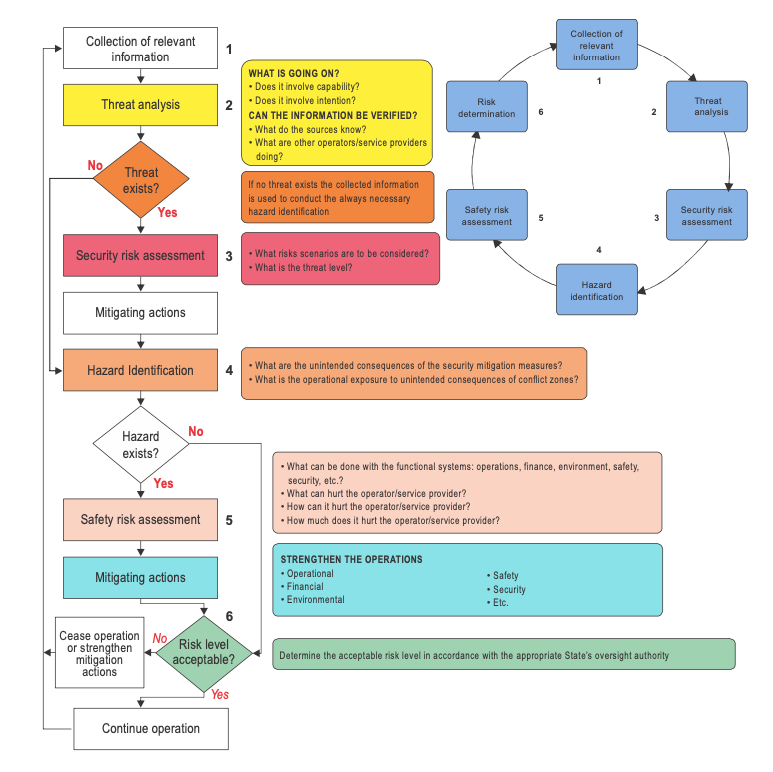
ICAO Doc 10084 lays out the risk assessment process. It’s an interesting read and worth taking a few minutes to think about because understanding the background to conflicts and what the key factors at play are is the only way for safety strategies and risk assessments to continue, and continue they should – it does not stop when a Notam is released.

The process is dynamic and needs to continue with the operator and the pilots too.

What are the key factors in a risk assessment?

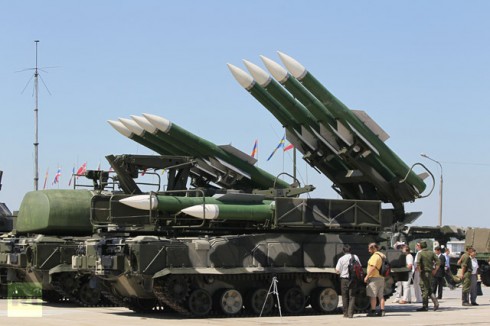
First up, what are we actually talking about here? Long-range Surface-to-air missiles (SAMs) can reach aircraft cruising in excess of 25,000ft (7600m). They are often linked with radar sensor systems to help identify targets, and are mobile and easily and quickly relocated.

So we need an assessment of what danger these pose to airlines and airplanes, and this means we need to know who has them (the capability) and also their intent (who or what do they plan to target).

But it is not that simple. Where there is intent, there is not always capability; and as importantly, where there is capability there is not always intent. The Iranian shoot down is a clear example of this. So we also need to consider the unintentional risks as well.

The questions asked look something like this:

  • Is there use of military aircraft in combat roles or for hostile reconnaissance (including unmanned aircraft)?
  • Are aircraft used to transport troops into the area and do these routes coincide with civil air corridors, or lie close and so pose a risk of misidentification between civil and military aircraft operating in the area?
  • What are the politics relating to the region?
  • What are the training levels of SAM operators and what is the military deployment of SAMs? How reliable and credible is the information shared by the state regarding this?
  • Is there a lack of effective air traffic management over the relevant airspace? Is the state fully in control of their own territory and do they fulfil all their ATC, coordination and promulgation (of information) obligations?
  • Do civil aircraft route pass over or close to locations or assets of high strategic importance or which may be considered vulnerable to aerial attack in a conflict situation?

But, the risk continues beyond this initial assessment because we also have to identify any ongoing consequences of an event. If a major airport is targeted, the impact is not only with the initial damage – if that initial damage is to the ATC systems required to maintain control and separation of aircraft then now we have reduced safety in the airspace and a much larger level of disruption.

So, we must think about the overall severity, and with that the tolerability of an infrastructure or operation. We are asking both ‘What can it hurt?’ and ‘How much it will hurt?’ 

This assessment, according to the ICAO document, is thrown into a matrix and churns out a ‘Risk Level’ which leads to the actions taken. 

Sounds simple, but there is one key point here – 

This info is not easy to come by. It is rarely reliable, and there is a qualitative narrative that makes it very subjective. The information has to be promulgated from states.

Which leads us to Point Number 2.

2. Rules do not change the behavior of a state….

States are responsible for sharing info on hazards, on what mitigation strategies they have in place, and the assessed impact of the strategies they adopt.

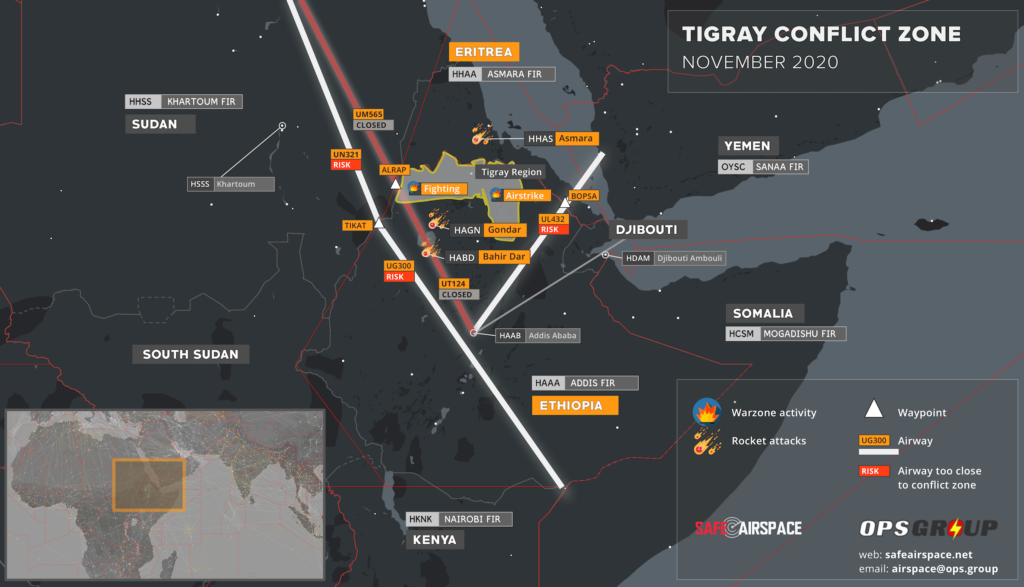
This often does not happen, or it does not happen well. Look at Ethiopia/Tigray region situation – misleading Notams and no guidance from the Ethiopian authorities led to Opsgroup issuing our own warning regarding the situation.

Further to that, ICAO only mandated the reporting of hazards in notices to pilots since 2020, and some states are still failing to do so.

3. People are not seeking information, they are waiting for it to come their way

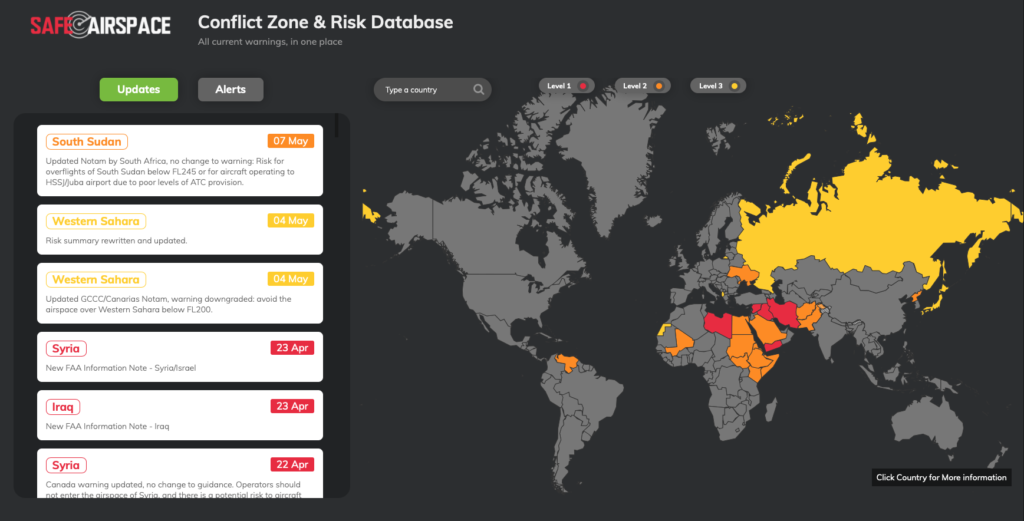
This is why SafeAirspace was created.

Information is not being shared well and risk assessments are fundamentally flawed because the information on key factors is simply not available or reliable most of the time.

What’s more, people are rarely questioning whether the information they received was reliable, accurate or complete. Few proper risk assessments are taking place because those responsible are waiting for the information to come to them, and without a proper risk assessment, mitigation strategies are not sufficient, and are not being passed on to those who need them – the pilots.

What is the Operator’s continued role in the process?

Every operator is responsible for continuing the risk assessment. It is not enough to simply direct crew to a Notam. Ensuring crew have a full briefing on the threat and any mitigation strategies is important.

  • Emergency and abnormal procedures should be considered in advance. Take Mogadishu airspace where only flights on specific airways over the water are allowed. What is the strategy here in case of an engine failure or depressurization? If you operate over this region, you should have access to this information.
  • Operators are also responsible reviewing fuel requirements – ensuring additional fuel is provided for potential diversions around conflict zones.
  • If aircraft will be operating into conflict zones, then a review of MEL items which can be deferred is a good call – can the aircraft get out again without requiring maintenance or fueling?

What is the pilot’s continued responsibility in the process?

The information and strategies we see at the operations end are things like these:

  • Coordination between military authorities, security and ATS units
  • Briefings of personnel
  • Identification of civil aircraft by military units
  • Issuance of warnings and navigation advice
  • Air Traffic Restrictions
  • Closure of Airspace

But this does not mean the full risk has been removed. Understanding this, understanding how the situation got to this point, and understanding the risk assessment and safety management that has taken place is vital because the process now continues with you, the pilot, and this a fundamental step in continuing to manage safety.

  • The Crew, and the Commander of the aircraft are responsible for the safety of the aircraft and the passengers. Of course, we all know that, but if you are given a Notam saying “this airspace ain’t great, maybe avoid it” and then you fly through it, where does the responsibility of your operator end and yours begin?
  • Reading notams, the AIPs, AICs, and being aware of the threats of the airspace you might be asked to operate into is vital. More than that, ensure you are aware of any mitigation strategies required.
  • Pre-prepare for diversions and know where you can safely go. Some diversions might take you through prohibited airspace so if you are operating in the vicinity of some, have a route ready in box two so you can easily avoid airspace when you need to.
  • Be aware of security threats and hazards on the ground, in advance.
  • Consider the serviceability of aircraft equipment before you go – critical equipment would be communication systems, and those required to ensure military units can identify them as civilian;
  • Have an awareness of the potential political implications if diverting into some regions with certain nationalities onboard. If you divert there, what will happen to your passengers and crew, and why?
  • Report things. Keep the information loop going.

4. How can we do better?

Aeronautical info from states and authorities is your first point of call. AICs, AIPs and Notams are going to contain info on advisories, restrictions and recommendations.

If you are an FAA operator, then the FAA put out KICZ notams and this page has all the current ones for airspace.

Networks and organizations such as us here at OPSGROUP try to share relevant and up-to-date information on airspace, conflicts and the risks that are out there.

Open sources like social media and news sites are also good – but be careful, these may come from unconfirmed or unreliable sources. We recommend checking info with other sources too, like handling agents in the area.

Finally, talk to other pilots and operators, and be sure to report information you have from operating in or through airspace.


NOTAM 2021 update: progress, at last

Here’s something you might not have been expecting: at long last, true progress on fixing NOTAMs.

If you’ve been following the story over the last few years, you’ll know that there has been an ever brightening spotlight on the problem. Here at OPSGROUP, we’ve certainly been vocal about the issue. The response to our first blog post back in 2017 was huge, and so we made it our mission: Let’s Fix NOTAMs.

We started out with a campaign to bring attention to the problem: We wrote the Field Guide to Notams, ran a Worst NOTAM competition at EBACE, held a Notam Summit in New York, conducted a pilot and dispatcher survey with 2100 responses, asked OPSGROUP members for support and input, ran a design contest, and through all of this gathered ideas on how to fix things. That led to an updated article in 2019 titled “Why Pilots are reading a Reel of Telegrams in the Cockpit” – which gathered more energy and interest around the problem. We then formed a Notam Team, started the “Fixing Notams” website, worked with other industry groups looking at the issue like the AIS Reform Coalition, and saw the FAA host the first industry gathering on NOTAMs in November 2019. We started a petition to keep momentum going, with 8800 people signing our plea to fix Notams.

In terms of specific solutions, we tried a bunch of things. We built an AI bot with ICAO, called NORM – to see if we could use machine learning to sort out the mess. In the Notam Team, we looked at the problem from the ground up, and looked at building an entirely new system, called N2. We also collaborated further with ICAO to build the Notameter, a tool to analyse the quality of existing Notams. Internally at OPSGROUP, our small team spent many hours researching, pondering, idea generating and data analysing.

The result? Much learning, much discussion, much collaboration – but no concrete results or fixes. This the way of things. NOTAMs are harder than they look. The AI was not able to make sense of Notams in the way we’d hoped, the initial Notameter was interesting but wasn’t changing anything. A brand new system wasn’t going to work: despite the failings, the existing system has buy-in and trust, and attempting to circumvent that with an entirely new mechanism sounds inspiring, but isn’t practical.

But progress doesn’t always come along the path that you expect. And in the quiet, dark days of a Covid-dominated December, a small group of die-hard Notam Fixers formed to continue the battle. Taking all the learnings of the Notam journey over the last few years, we sat down together once a fortnight over the last few months, and forged a new path. Each of us represented our own group of allies in the mission: ICAO, IFAIMA, IFALPA, and OPSGROUP. This togetherness created a renewed energy to solve the problem.

And now, we have traction.

Next month, ICAO will spearhead the launch of a Global Campaign on NOTAM Improvement. Our aim is to solve the Notam Problem in manageable chunks, gathering energy as we solve them and make progress. Rather than re-invent the wheel, we will fix the system from within, starting with the easier aspects and progressing from there. The first phase of this campaign focuses on Old Notams. At any one time, there are about 35,000 active Notams globally, and 20% of these – one in five – are old; in other words, not respecting the existing rules of Notams being issued in principle once only for a maximum of three months (everything else should go into the AIP, an AIC, or some other publication).  We are drawing on the collective cooperation of the AIS community – the Notam Officers – to uphold the rules and get rid of Notams that don’t follow them. The result will be a potential decrease of 7,000 Notams per month, and a 20% reduction in the size of the average briefing packet.

The ICAO Global Campaign on Notam Improvement will kick off with a worldwide webinar on April 8th, for which ICAO has issued an invitation to member states by State Letter. After this, a series of bi-monthly progress webinars will start on June 16th.

The backing of ICAO means we are now tackling the Notam Problem head on, with the fullest force.

The focus on “Old Notams” is just the first phase of this campaign. As well as tackling this particular aspect of the Notam Problem, we will be creating awareness of the wider issue, especially in the AIS community, and forming support mechanisms for AIS offices around the world to deal with not just Old Notams, but also further improvements down the track. In Phase Two, we plan to look more closely at how we can improve the mechanics of the system itself.

NOW, versus Later

An important distinction to make here is that this work is on “NOTAMs, Now“. There is separate, ongoing work in the field of the “Future of NOTAMs”. You may have seen acronyms like SWIM and AIXM, and terms like Digital Notams or Graphical Notams. The FAA, ICAO, Eurocontrol, and other agencies are building a model for the future, when NOTAM’s will change from the current AFTN format and transmission into an internet, or IP based, transmission and following a service-oriented approach. This work is valuable, but with a target implementation date of 2028, has a different focus. Even if it goes smoothly, it would not instigate change until 2028. Needless to say, if we don’t fix the underlying issues now, it may not even solve them then, either.

Thing-Labelling

For the enthusiasts, I’ll delve some more into the Notam Problem, what we’ve learned, and what the next phase of fixing might look like.

In Phase One, the brief is simple and clear: remove Old Notams, and reduce the count. That count – or total volume of Notams – reached about 1.9 million in 2020. Reducing that count by 20% means a reduction in the volume of Notams that pilots are presented with pre-flight. It’s a simple, quick win.

In Phase Two, we will be able to look at the first systemic change – not just reducing the count as in phase one, but finding ways to improve the quality and usability of the system as a whole.

One potential option is how we can label Notams. You might recall we built an Artificial Intelligence bot with ICAO, called NORM. The terms Artificial Intelligence (AI) and Machine Learning are in essence still interchangeable, and the latter makes things easier for most of us to comprehend. Machine learning is really just “Thing Labelling” (see this article from Cassie at Google). Very simply: tell me what this thing is about, and I can do something with it. NORM wasn’t able to “thing label” quite as well as we’d hoped, but the concept remains valid for Notams – if you can tell me what this Notam is about, I can do things with it.

We have a manual thing-labeller for NOTAMs built in: the Q-code. This five letter code, like QFAHX, which means “This NOTAM is about Birds“. The trouble is, that there are far too many choices. There are 179 Subjects (60 AGA, 47 ATM, 40 CNS, 27 Nav Warnings, 5 Other) and 77 Conditions (16 Availability, 16 Changes, 26 Hazards, 19 Limitations). The number of permutations, or possible 5 letter Q-codes, is therefore 13,783.

The result? As you might imagine, the person putting a NOTAM into the system has to choose a Q-code, and with that many choices, the same subject can have a host of different Q-codes. In a review of all Notams issued in 2020, we found 1,063 different Q-codes in common use. In addition, we found that 47% of Aerodrome Notams, and 25% of FIR Notams, used the Q-code “XX” or “XXXX”, which translates as “I don’t quite know which one to use”.

Net result: The Q-code isn’t a reliable thing-labeller as it stands. However, if we refine the number of available Q-codes to a set amount, like 50, or 100, we then have a robust and reliable way of labelling the Notam. And if we have a reliable label, then we can do two magical things: SORT and FILTER them. Sorting means that we can present critical items first (like a runway closure), and Filtering means we can exclude things we don’t care about (Birds, perhaps).

A key item on the Pilot wishlist is “Show me the critical stuff first”. If the NOTAM can be labelled to show “What is this NOTAM about”, it would allow end users (directly, or through the NOTAM distributors like Lido, Jeppesen, ARINC, etc.) to reliably filter and sort them. In other words, Closed Runways appear first and Birds and Grass Cutting appear last, if at all. The magic of refining the Q-code field to achieve this is that we don’t need to build anything new, make any structural changes to a Notam message (exceptionally challenging), nor create a burden on states to invest in new technology. It’s a simple, very effective, tweak.

There are other recognised issues: for example, the Upper Case format, Plain English vs Abbreviations, and in time, I believe we can solve those too.

Getting closer to the solution

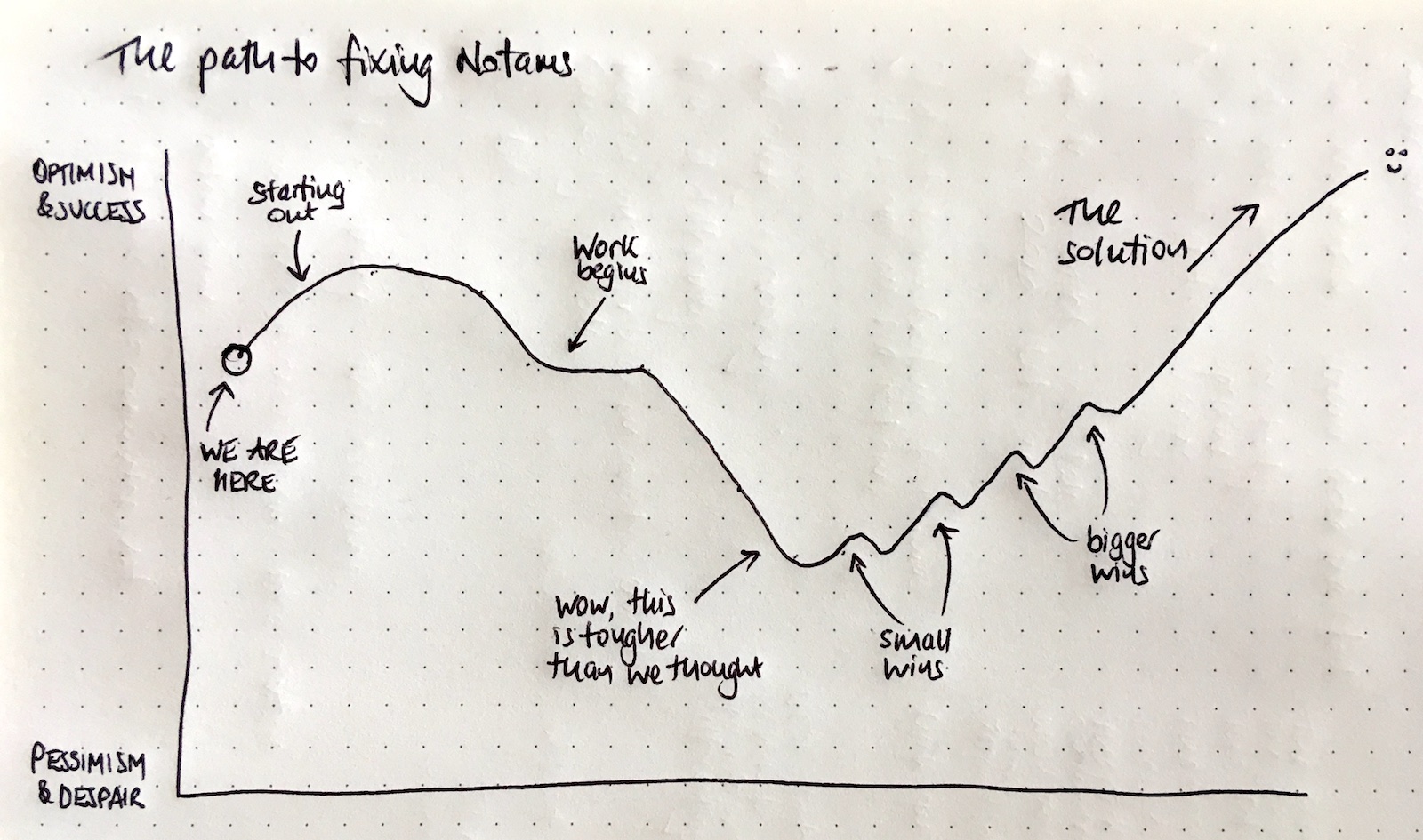
For those of you that have been with us for a longer period,  you might remember the little chart I drew a year or two back. Fixing Notams was never going to be easy.
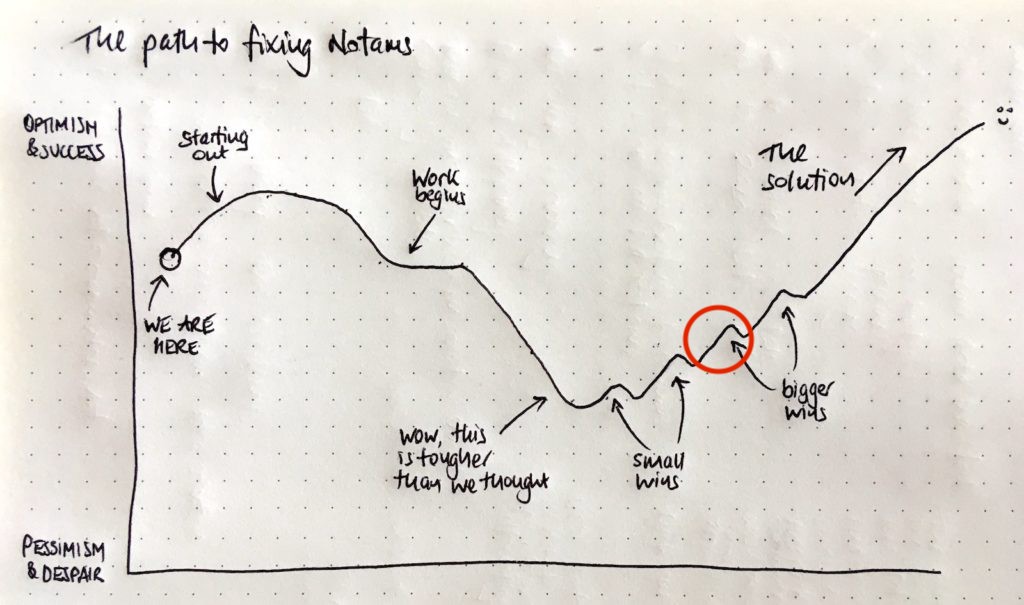
I think we’re somewhere around the red circle area. We have done so much, and we now have global attention, a harmonious, energised group of organizations working on the problem, and as of April 2021, the backing and full force of ICAO in this Global Campaign for Notam Improvement.

I’m excited to see what we can achieve from here.

Further reading and links


Eurowings flight to nowhere highlights Notam problems

Confused about whether you’re allowed to fly to Italy at the moment? You’re not the only one!

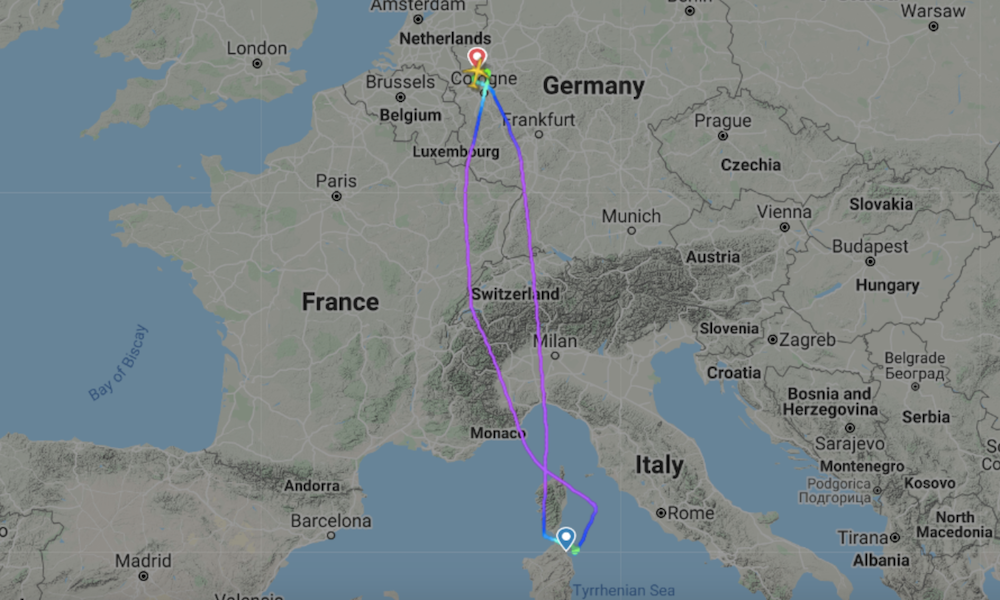
A Eurowings (Lufthansa’s European low-cost subsidiary) flight from EDDL/Dusseldorf to LIEO/Olbia ended up diverting back to Germany this week, after discovering the airport was actually closed to commercial traffic.

Yes, there was a Notam, and yes, it looks like they missed it – though that’s maybe not surprising given the Notams being pumped out on the national LIBB/LIMM/LIRR codes at the moment saying how pretty much all airports across the country have now reopened – including LIEO!



So let’s play a game of ‘spot the difference’. Here’s the National one, published on May 19:

A3028/20 (Issued for LIBB LIMM LIRR) COVID-19:
ALL FLIGHTS ARRIVING/DEPARTING TO/FM ITALY MUST COMPLY WITH THE REQUIREMENTS OF THE DECREE OF THE PRESIDENT OF THE MINISTERIAL COUNCIL OF 17 MAY 2020 ON FOLLOWING AIRPORTS: LIPY, LIBD, LIME, LIPE, LIEE, LICC, LIRQ, LIMJ, LICA, LICD, LIMC, LIRN, LIEO, LICJ, LICG, LIBP, LIRP, LIRA, LIRF, LIMF AND LIPZ, COMMERCIAL FLIGHTS, COMMERCIAL FLIGHTS ON DEMAND (AEROTAXI) AND GENERAL AVIATION FLIGHTS ARE ALLOWED.
GENERAL AVIATION ACTIVITY AND COMMERCIAL AVIATION ACTIVITY ON DEMAND (AEROTAXI) WITH AIRCRAFT HAVING MAXIMUM APPROVED CABIN CONFIGURATION EQUAL OR LESS THAN 19 SEATS, CARGO FLIGHTS AND POSTAL SERVICE ARE ALLOWED ON ALL REMAINING AIRPORTS.
GENERAL AVIATION ACTIVITY, COMMERCIAL AVIATION ACTIVITY ON DEMAND (AEROTAXI)WITH AIRCRAFT HAVING MAXIMUM APPROVED CABIN CONFIGURATION EQUAL OR LESS THAN 19 SEATS ARE ALLOWED ON AIRFIELDS/HELISURFACES/HYDROSURFACES MANAGED/AUTHORIZED/OCCASIONALS, WITHIN THE LIMITS OF APPLICABLE AUTHORIZATIONS IN COMPLANCE WITH THE PROVISIONS OF THE DECREE OF THE PRESIDENT OF THE COUNCIL OF MINISTERS OF 17 MAY 2020
RMK: GENERAL AVIATION ACTIVITY AND A COMMERCIAL AVIATION FLIGHT ON DEMAND ON LIRF IS NOT PERMITTED.
19 MAY 11:16 2020 UNTIL 02 JUN 22:00 2020 ESTIMATED.
CREATED: 19 MAY 11:27 2020

And here’s the one for LIEO/Olbia, published two days later on May 21:

B2520/20 – COVID-19.
AERODROME CLOSED TO COMMERCIAL AVIATION TRAFFIC IN COMPLIANCE WITH REGIONE SARDEGNA DECREE 23 OF 17TH MAY 2020.
RMK: GENERAL AVIATION ACTIVITY AND COMMERCIAL AVIATION ACTIVITY ON DEMAND (AEROTAXI) WITH AIRCRAFT HAVING MAXIMUM CABIN CONFIGURATION EQUAL OR LESS THAN 19 SEATS ARE APPROVED IN COMPLIANCE WITH MINISTRY OF INFRASTRUCTURE AND TRANSPORTATION DECREE 207/2020 AND REGIONE SARDEGNA DECREE 23 OF 17TH MAY 2020.
REF AIP AD 2 LIEO 1-1. 21 MAY 15:14 2020 UNTIL 02 JUN 22:00 2020 ESTIMATED.
CREATED: 21 MAY 15:14 2020

The national one says the airport is open, the local one says the airport is closed – a classic case of Notamisery

A number of news reports on this incident have been quick to criticise the operator — and also the crew — for this oversight. We’re not sure we really feel like jumping on that particular bandwagon. We could talk at length about The Notam Problem (indeed, we have done so, here, here, here, and here, and also here).

The Notam problem is clear: we have an antiquated, cumbersome, ineffective, frustrating, dangerous system. Pilots are missing the essential few pieces of information, unable to hear the call of criticality in a cacophony of irrelevant noise. And it obviously doesn’t help when one Italian sends you a Notam saying an airport is open, and another Italian sends you one saying it’s closed.

These are also “unusual times” – we keep hearing those words in the news, but it’s true. Two months in to the Covid-19 pandemic, it feels like “ops : normal” is still a long way off for most of us – whatever job we do in aviation, wherever we fly. People are tired. The changes are constant. A spokesperson for Eurowings summed this up pretty well in a statement released after this incident at Olbia: Against the background of the current corona crisis, the situation at numerous airports in Europe is very dynamic, which is manifested in the large amount of information provided on operating hours or airport closures that are often changed at short notice as well as daily changes in entry regulations in the various countries.” 

As this incident shows, wherever you’re headed, whatever you read in a Notam, it’s always worth double-checking exactly what’s allowed at the airport you’re flying to. Don’t be afraid to give them a call. If you need to find some local airport contacts, the Flock website is one of the best free contact databases we’ve seen so far (and no, they don’t pay us to say that!)

In related news – Italy has said it will start allowing unrestricted travel to and from European countries, with no quarantine requirement, from June 3. No official word yet on when restrictions will be lifted on flights to and from countries outside of Europe – but the external borders of the EU remain closed to non-essential travel until June 15 at the earliest. More on that here.


NOTAMs: Creating the solution through community collaboration

Update: November 1st, 2019: The Notam Team is up and running – we’re fixing Notams. Follow our progress at fixingnotams.org.

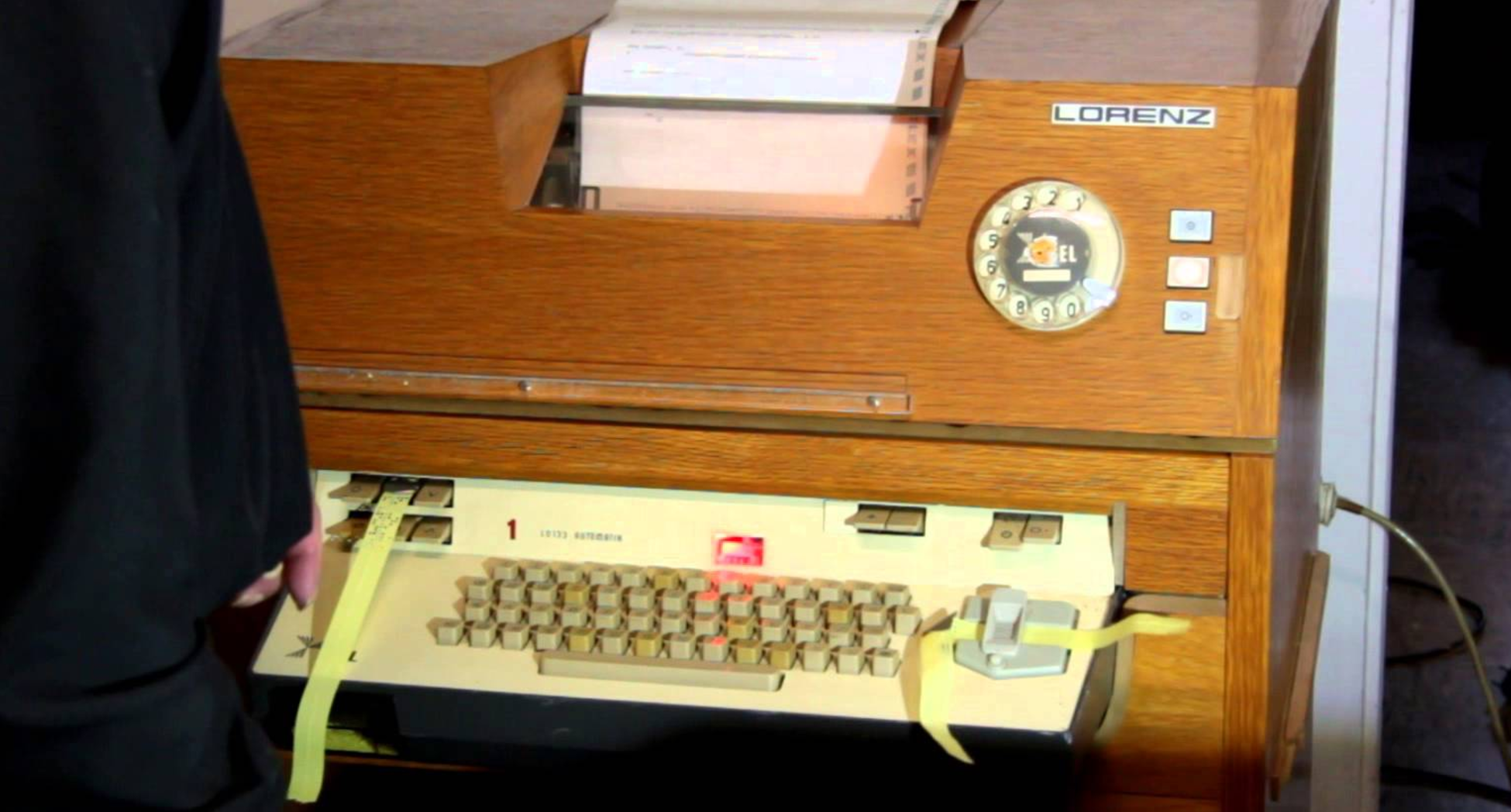
There cannot be a more agreed upon problem in aviation. Every single airline, every single flight: the most critical information about that flight is passed to the pilots in the style of a Telegram from the early 1900’s. Coded, abbreviated, often undecipherable, upper case chunks of text: the least human-friendly format imaginable.

A news story in 2013 declared “Plug pulled on the world’s last commercial electric telegraph system”.

Shhh. Don’t tell them. Not true. Our NOTAM system is still proudly flying the flag. We use the ITA-2 International Telegraph Alphabet character set from 1924, instead of ASCII, which the rest of the world switched to in 1963. Ever wonder why Notams are all upper case? That’s why. We use Q-codes (from 1909) to categorize the message. We use abbreviations heavily, because it costs more money to send messages in plain text format. Wait, scratch that – that logic ended in the 90’s because, well, the internet.

And so, while the passenger is choosing emojis for their last What’sApp message before the aircraft doors close, in the cockpit the pilot is deciphering what the impact of this Telegram might be 🤷‍♀️:

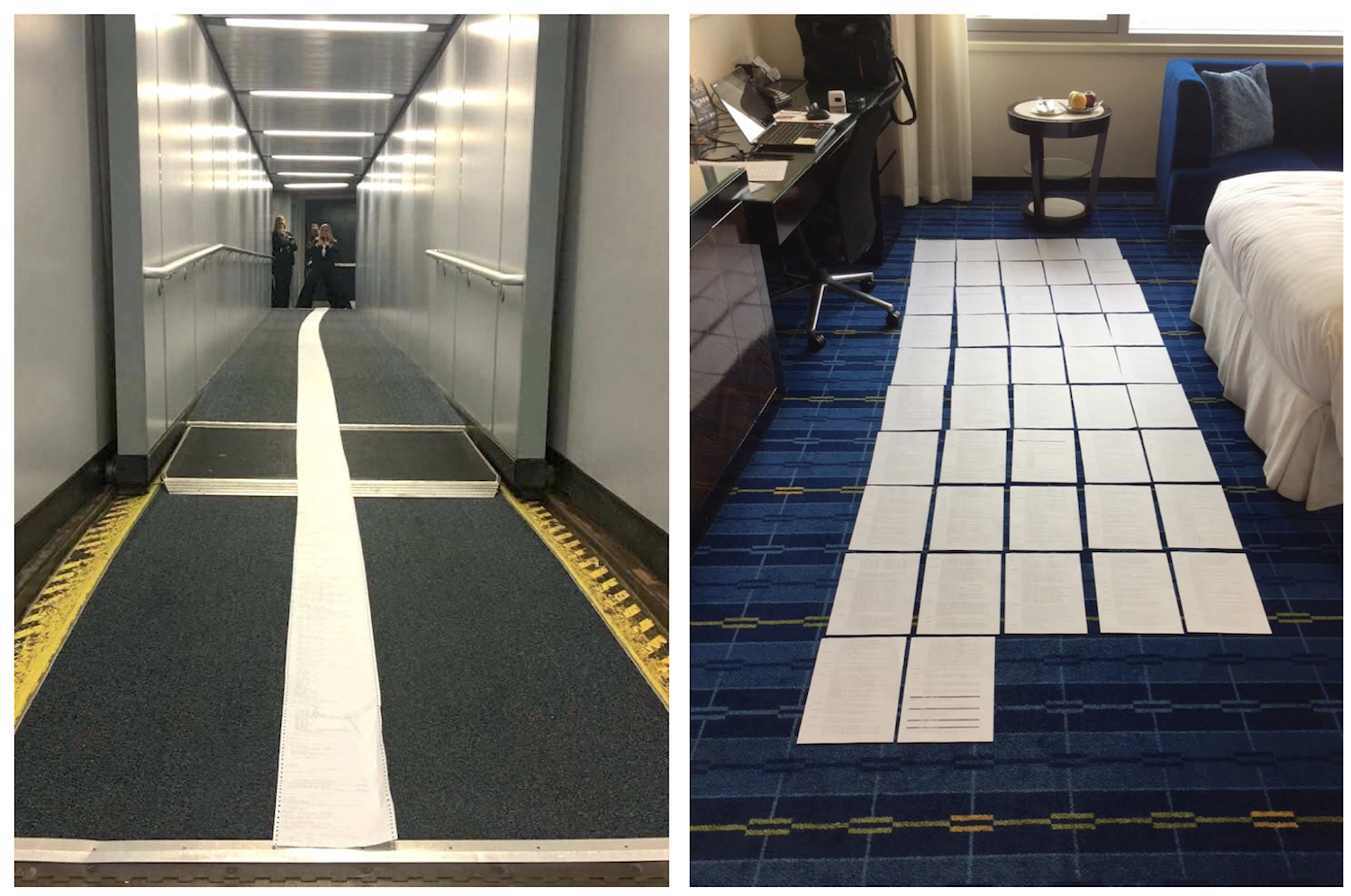
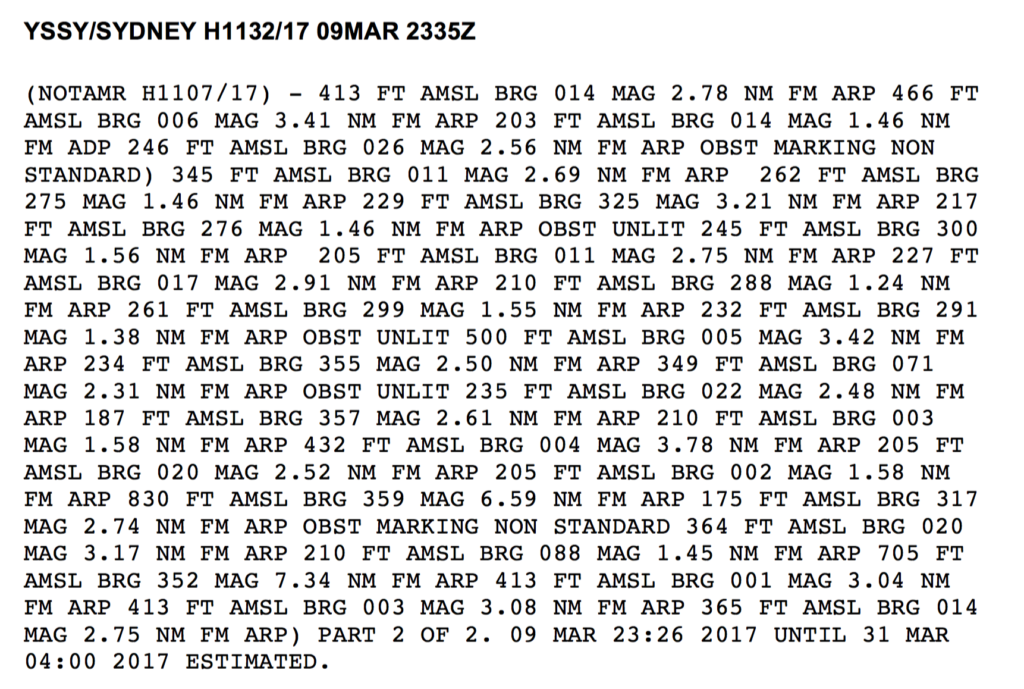
🙏. If that seems tough to get through, now consider what 50 pages of it looks like:

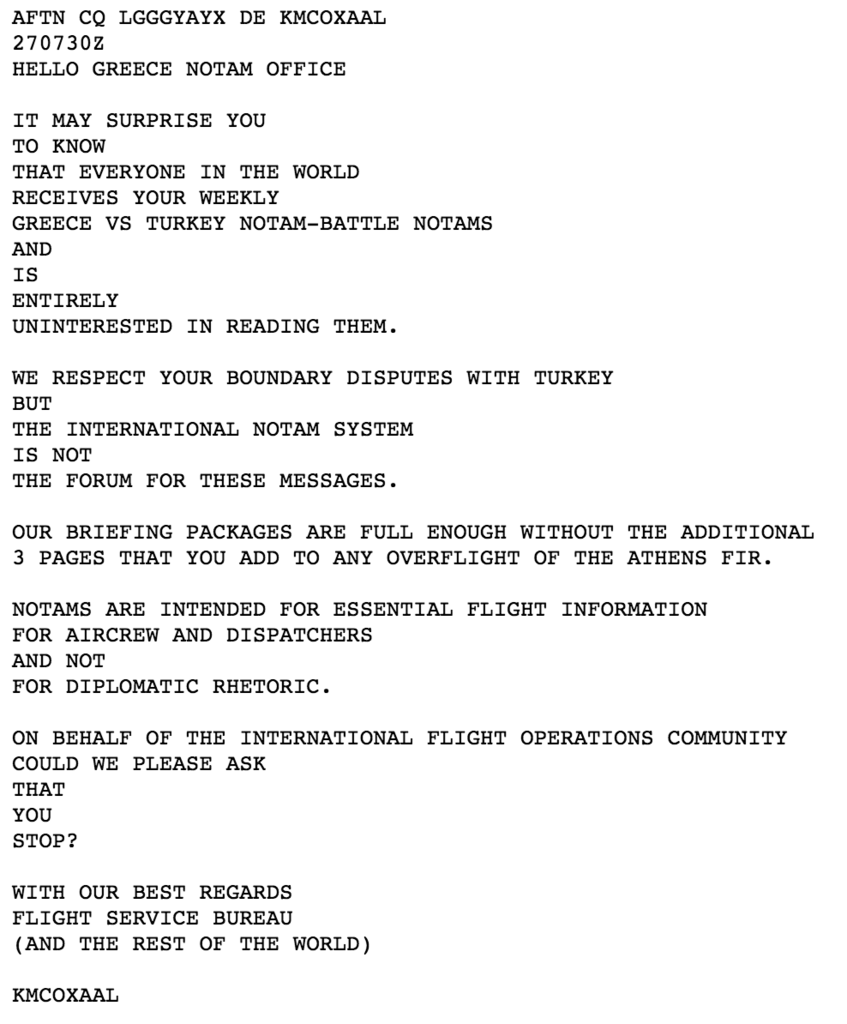
That is the average size of the Notam Briefing package that each crew is given. And so, your job as a pilot at briefing time, is to find the one Notam that will end your career or endanger the aircraft, in a package the same size as a short novel. Buried deep in Birds of Bangkok, War and Peace by Greece and Turkey, Unlighted Tiny Obstacles, Goat grazing times, Grass cutting timetables – is a runway closed, a diversion airport unavailable, a decision height changed. And you’ll miss it.


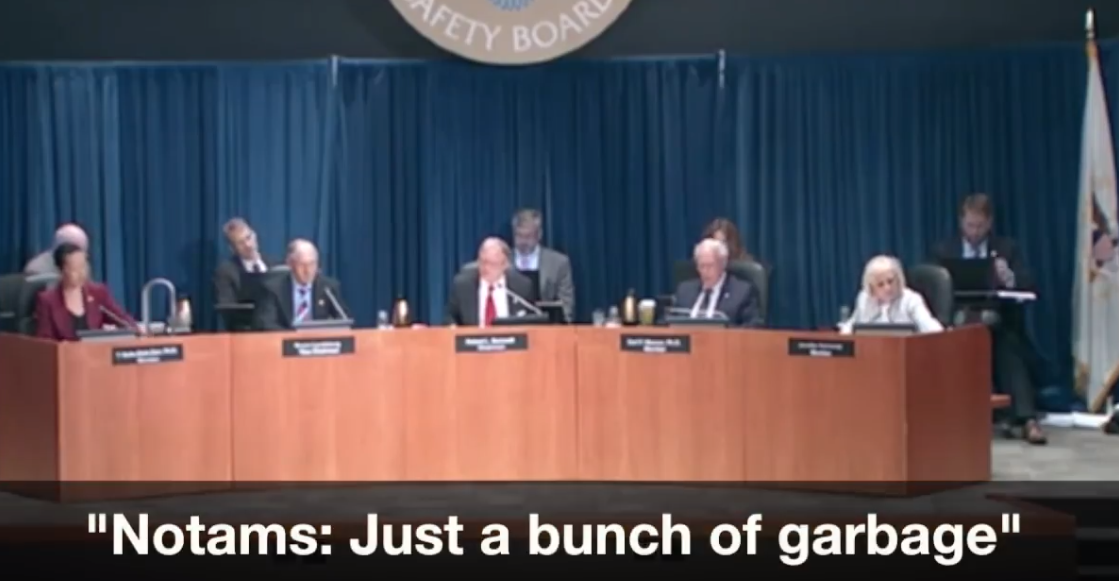
Air Canada 759 missed the one telling them that 28R was closed in San Fransisco, so they tried to land on the taxiway. Only an alert United crew prevented the worst crash in American history, and then only by 14 feet, or 1 second. That led to the NTSB to declare “Notams are Garbage”.

From the Final NTSB Report: “Concerns about legal liability rather than operational necessity, drive the current system to list every possible Notice to Airmen (Notam) that could, even under the most unlikely circumstance, affect a flight. The current system prioritizes protecting the regulatory authorities and airports. It lays an impossibly heavy burden on individual pilots, crews and dispatchers to sort through literally dozens of irrelevant items to find the critical or merely important ones. When one is invariably missed, and a violation or incident occurs, the pilot is blamed for not finding the needle in the haystack!”

Thank you, Robert Sumwalt, for calling the problem out.

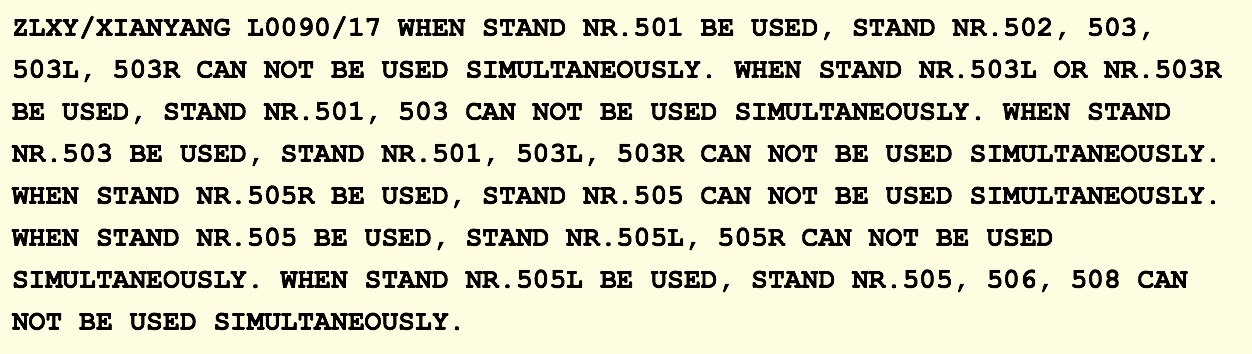
It’s not just the volume, or readability – it’s the Mensa-level problem solving skills required to parse the contents. Answer this question: If you’re on Parking Stand 505 Right, can someone else use Stand 503 Left?

If you did figure it out, how long did it take? Now multiply that time by 250, a straw-poll average number of Notams in a briefing. Think this is manageable in the 20 minutes the crew have to brief the flight?

In 2007, the annual count of Notams reached 500,000. This year, 2019, we are on track for 2 million Notams. The problem is intensifying, and rapidly. We are drowning in the data, but missing the message. Every change imaginable is stuffed into the system:

And this Chinese entry is the best one of 2019 so far …

Say it out loud.

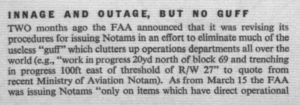
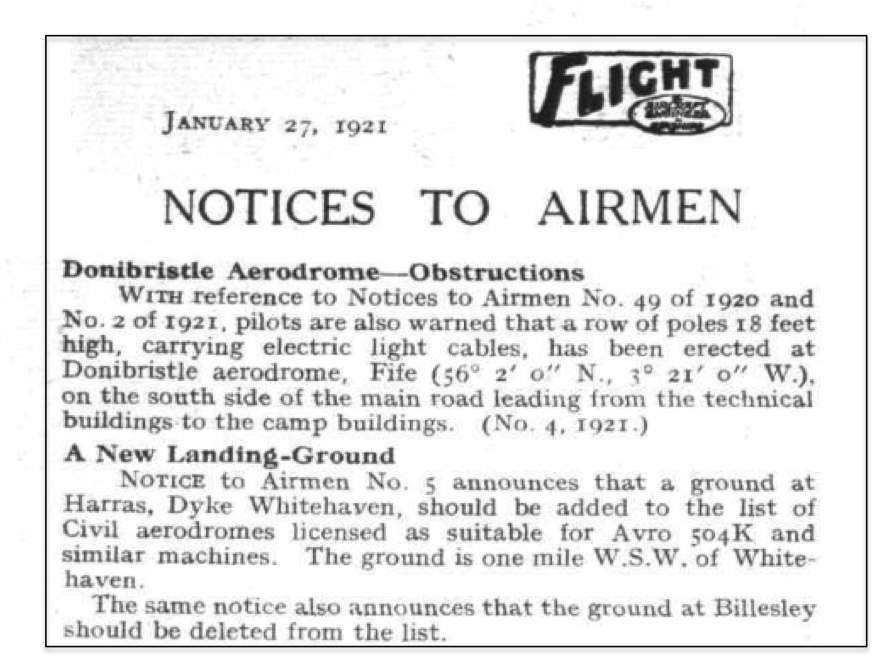
In 1964, Flight International published a snippet from the FAA, declaring that the Notam system was being revamped, and from March 15th that year only essential, critical Notams would be allowed to remain. That was 55 years ago. We’ve tried, and we’ve failed, many, many times, to solve the problem.

But – enough about the problem. If you are a pilot, dispatcher, or controller, you know only too well the problem, and its impact.


How about we talk about how we find the solution instead?


Let’s start here.

I’m gathering a team of people that understand the problem from the user perspective. A team of pilots, dispatchers, controllers, and anyone else that wants to help. A team of people that care about solving the problem because of how it affects us every day, and because we know that one day, we’ll be bitten by it. A team motivated by a desire to make this better for our colleagues, and those that will follow us.

We’re not fixing it because we have to, but because we want to.

We’re not fixing it to make a profit, or because it enhances the bottom line somewhere. We’re fixing it because we want it to change.

Most importantly, we’re fixing it as a community, collaborating to create the space to allow the solution to come.

Zooming out a little, if we look at this as not an aviation problem, but a communication problem, it becomes less unique, less challenging. Many bigger problems have been solved by looking at them differently.

So we’re going to collaborate with smart thinkers, problem solvers, designers, coders, creatives. We’re going to work together as people, rather than agencies or companies. We’re going to jump into a process that might be messy, challenging, difficult, and will often seem impossible.

As per this handy graph I’ve drawn:

Don’t join us to force change – this is the change. Don’t join us to shout louder – this problem is bigger than any one agency or organization. Don’t join us if you think this is someone else’s problem to fix – it’s our problem, and we’ll fix it together.

The first step is creating the space for this magic to happen. Join us if you have no idea how to solve it yet, but you have positive energy to contribute.

The Notam Team needs you! We start July 1st (yep, you’re already late, so jump in). We have set a lifespan of 9 months – do, or die.

The first part of the process is the gathering, the coming together. Once we’ve all said hello and had a look around, we’ll start with the first and most important step – creating that space for the solution. Figuring out how best to collaborate, invite creativity in, think differently. Then, the research – the science, the data, the hard facts. Identify the problem, and the impact. And from there … well, it’s unwritten. Not knowing is part of the approach. Oh, and we’re going to have fun. There’s no creativity without fun.

I believe the problem is eminently solvable, but only as a community. And I hope you’ll join us! If you’re in – just write to me at mark.z@ops.group.


NTSB: Current NOTAM system is “just a bunch of garbage”

You were all very supportive when we wrote the initial article on the BS Notam problem last year, and have followed our journey in fixing the problem since then.

Big news!

The NTSB called the Notam System a bunch of garbage on Tuesday this week, and assigned probable cause of the AC759 incident in SFO to the Notams that were missed.


What this means to OpsGroup is massive fuel to our fire: we are working hard to fix this problem, and having a public facing government organisation like the NTSB come down like a ton of bricks on the Notam System drives us forward in leaps and bounds.

The group members have been decisive in helping us to identify the problem and taking action to fix this. So, we want to acknowledge all of you! Great work!

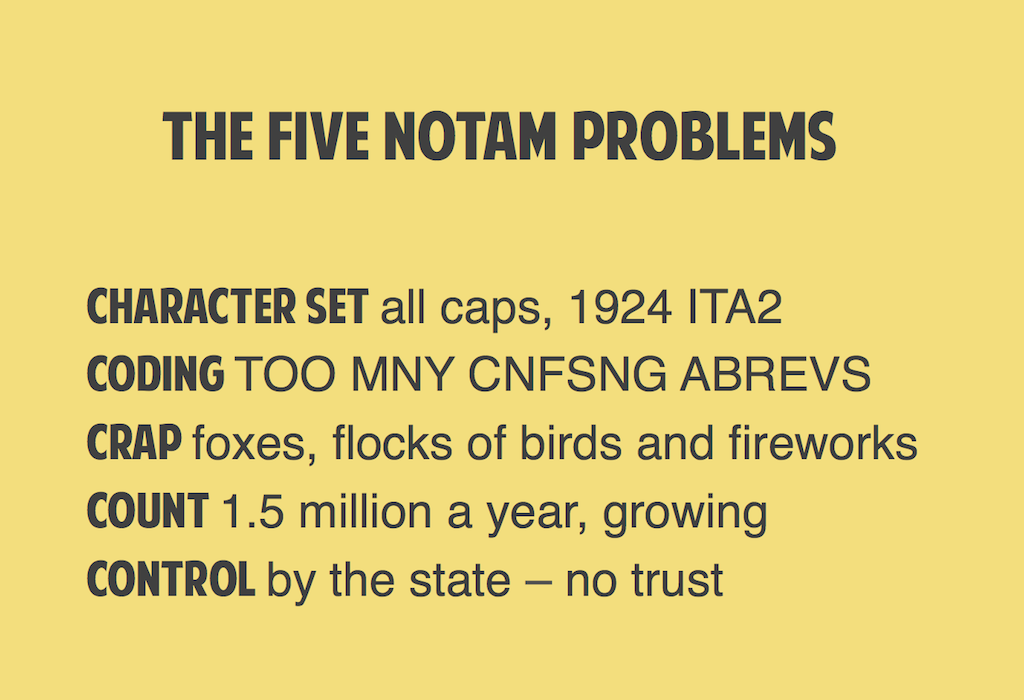
In solving two of the above five problems, we have been working with ICAO for several months now. You all got involved in Normand 17,000 Notams later, we happy to report that version 0.1 of Norm is now live on the ICAO website. Norm is a bot – an AI, that has learned what Notams look like, and thanks to OpsGroup rating these 17,000 Notams, is also learning which ones are critical and which ones are not.

He’s still young. He doesn’t get everything, but if you feed him a Notam you’ll see him assign it a criticality of 1-5.

This will in turn allow us to sort Notams, putting the most important stuff first.


Bad NOTAMS = Runway overruns in Hamburg

If you’re headed to Hamburg, watch out. The runway is shortened, and the Notams are vague.

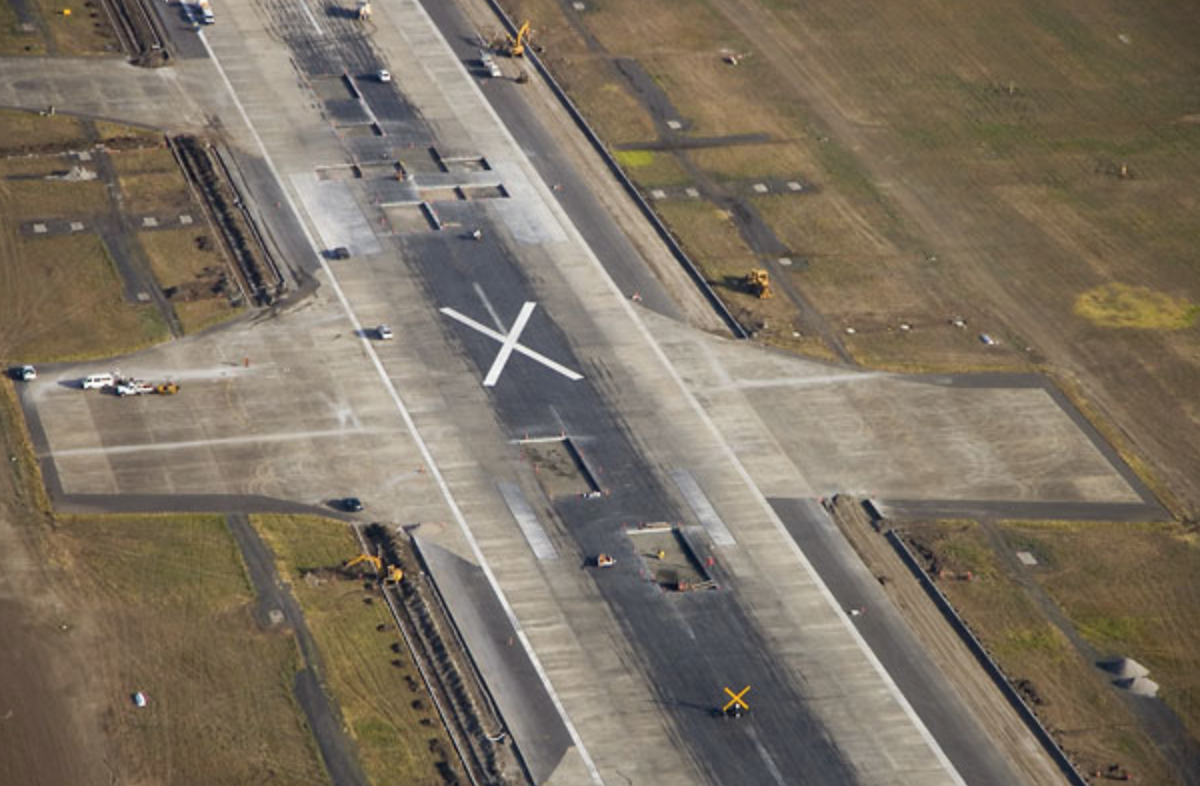
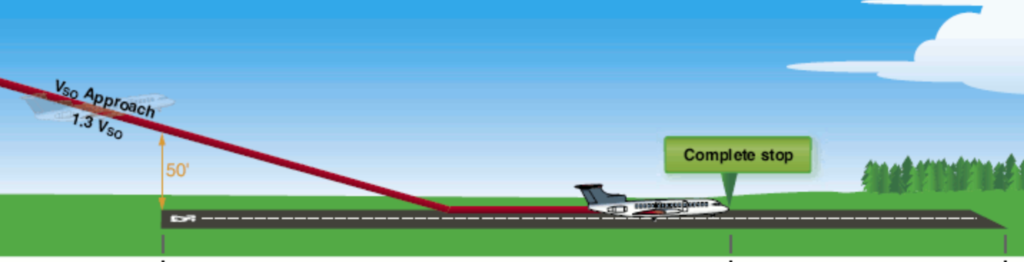
Poorly written NOTAMs struck again this week in Hamburg, Germany, when an A320 and a B737 both overran Runway 05 on landing – the first by SAS on May 11  and the second by Ryanair on May 15.

Runway 05 in EDDH/Hamburg has been undergoing works and a litany of related NOTAMs and AIP SUP were issued to explain.

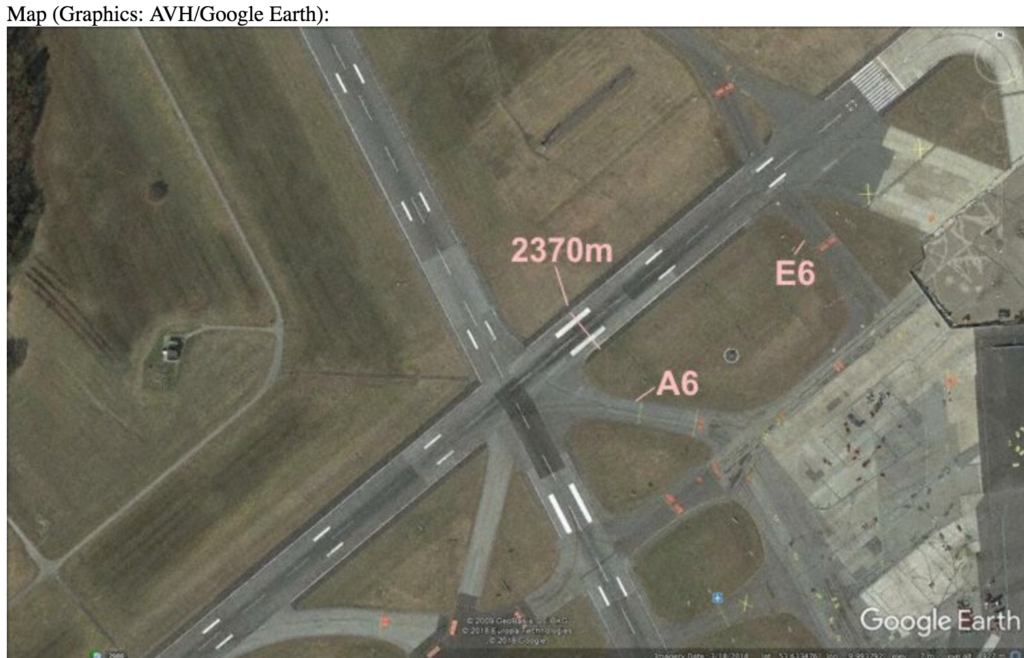
A1608/18 – RWY 05 LDA 2370M. 12 APR 04:00 2018 UNTIL 23 MAY 21:00 2018. CREATED: 05 APR 09:50 2018

A1605/18 – SHORTENED DECLARED DISTANCES FOR RWY 05/23. AIP SUP IFR 09/18 REFERS. 12 APR 04:00 2018 UNTIL 23 MAY 21:00 2018. CREATED: 05 APR 09:42 2018

A2223/18 – TWY A1, A3, A4, A5 CLOSED. 02 MAY 10:26 2018 UNTIL 01 JUL 04:00 2018. CREATED: 02 MAY 10:27 2018

A2044/18 – ILS RWY 05 NOT AVBL. AIP SUP IFR 09/18 REFERS. 23 APR 09:17 2018 UNTIL 23 MAY 21:00 2018. CREATED: 23 APR 09:17 2018

A1725/18 – CONSTRUCTION EQUIPMENT IN DEP SECTOR ALL IFR DEPARTURES RWY 05. PSN WITHIN AN AREA 533810N 0095948E AND 533805N 0100023E. MAX ELEV 89 FT. NOT MARKED AND LIGHTED. SUP 09 2018, CONSTRUCTION WORK EDDH REFER. 12 APR 04:00 2018 UNTIL 23 MAY 20:00 2018. CREATED: 09 APR 13:10 2018

A1609/18 – RWY 23 CLOSED FOR ARR. 12 APR 04:00 2018 UNTIL 23 MAY 21:00 2018. CREATED: 05 APR 09:52 2018

Despite this, both were unable to stop before the last open exit (A6) and vacated further down the runway. Thankfully both resulted in no injury because all construction equipment was kept clear of, and beyond, taxiway E6.

A better NOTAM may have been:

RWY 05 IS SHORTER THAN USUAL DUE TO CONSTRUCTION WORK AT 23 END. REDUCED LANDING DISTANCE IS 2370M. LAST TAXIWAY OPEN FOR EXIT IS A6. CONSTRUCTION EQUIPMENT ON RUNWAY BEYOND TAXIWAY A6. 

You get the idea. Concise and plain language in one NOTAM to make it clear what the issue is and the consequences of going beyond 2370m of runway.

They did, to their credit, try and tidy it up since the incidents:

A2563/18 – RWY 05 CLSD EAST OF TWY A6. RWY 05 LDA 2370M. RWY 05 NON STANDARD TDZ AND AIMING POINT MARKINGS AT 400M FM THR ISO 300M. ADJUST LDG PERF ACCORDINGLY. 17 MAY 16:30 2018 UNTIL 23 MAY 21:00 2018. CREATED: 17 MAY 16:31 2018

In another serious incident associated with these runway works, a Vueling A320 (another foreign operator) nearly landed at the wrong airport on May 11. Thankfully ATC intervened on that one.
All incidents are now the subject of investigation.

Naturally it’s imperative for crew and disptachers to check and read all NOTAMS thoroughly. But with over 40 current just for EDDH/Hamburg right now, it’s easy to understand why things get missed.

Until then “adjust landing performance accordingly”.

Extra Viewing:


OPSGROUP wins bid to control 1.8 million km area of Pacific Airspace

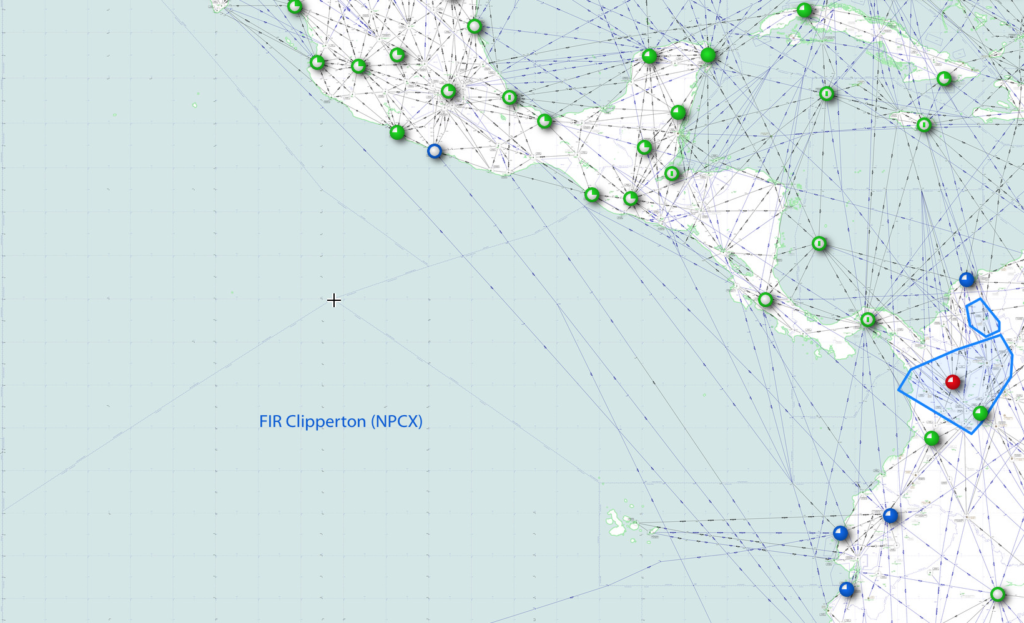
1st April 2018: Clipperton Oceanic starts operations today, and is the world’s newest piece of airspace!

This one is different though – the users are in charge.

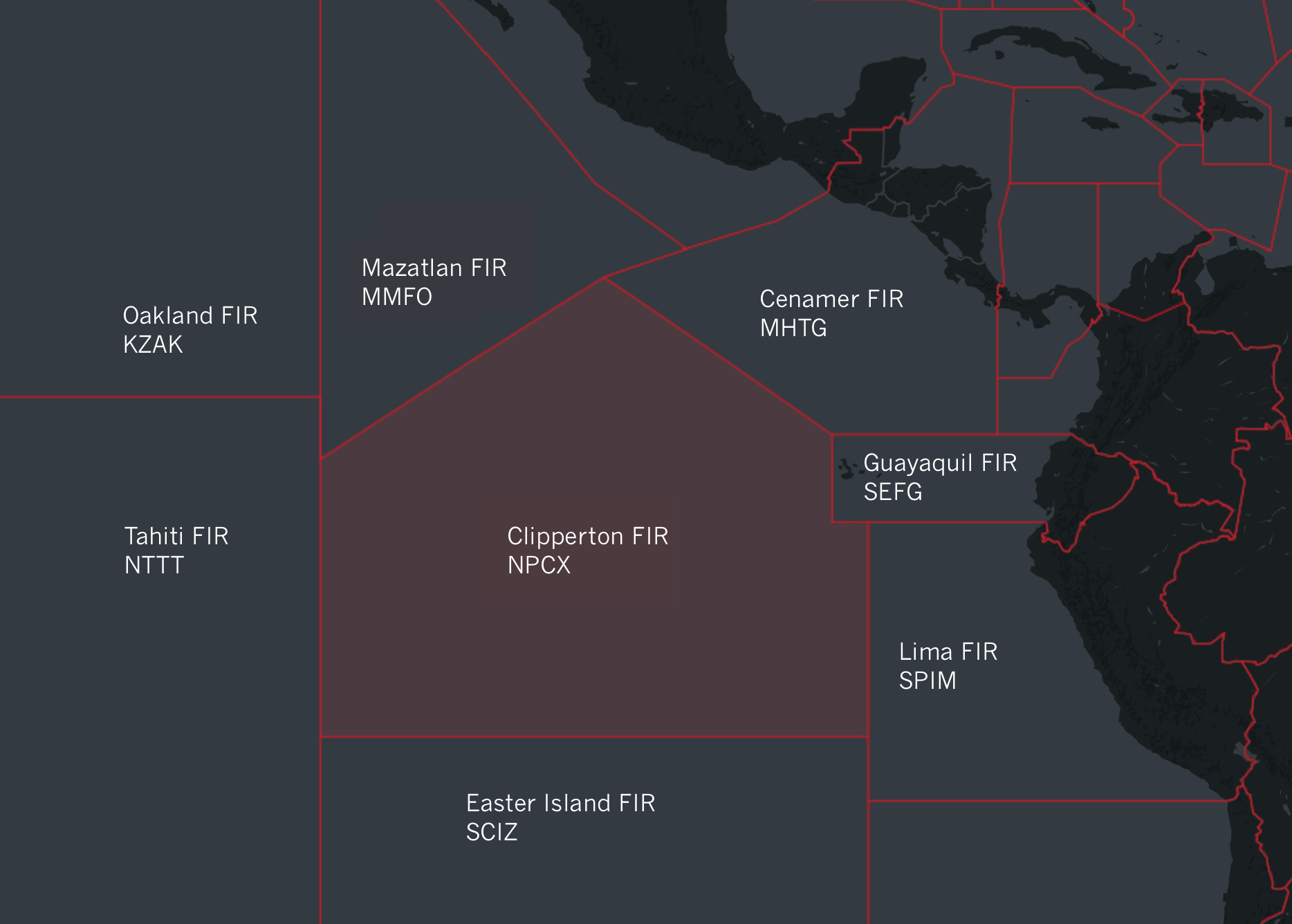
OPSGROUP take official control today of the Clipperton Flight Information Region (FIR) in the South Pacific, a 1.8 million square kilometre chunk of airspace west of the Galapagos Islands and north of Tahiti. The FIR has been unused since 1958, when the Clipperton Oceanic centre and radio service closed.

Announcing the news in an official Press ReleaseFrancois Renard, PM of the Clipperton Government said: “We are a little island but we are proud of our history in Pacific aviation. The years from 1937-1958, when Clipperton Oceanic was a name known to all passing aircraft, are looked back on fondly here. Now, we look forward – to a resumption of traffic on these once busy routes, and we are confident that OPSGROUP is the key to making this happen”.

For the first time, regulations are set by the users. There is no requirement for PBCS, RNP, ADS-B, ADS-C, GNS, GNSS, HLA, MNPS, RLAT, RLON, SLOP, or any of the other exponentially increasing acronyms that operators struggle to keep up with. No LOA’s, no slots, no delays. And no ramp checks. There are no Notams. Although it is large, it’s a simple piece of airspace, and that allows for a simple approach.

Juergen Meyer, a Lufthansa A350 Captain, and a long standing OpsGroup member said: “We’ve seen enough. Ercan (the Cyprus based Turkish ATC centre) doesn’t officially exist, yet you have to call them every time. French Guyana seems to have abandoned their ATC centre. Several African countries have outsourced their entire Permit Department, meaning you have to pay extortionate amounts just to secure a routine overflight. Greece and Turkey continue to hijack the Notam system for a diplomatic war. CASA Australia, like many others, continues to publish absolutely unreadable Notams, endangering safety. Nobody dares to enter the Simferopol FIR. The French ATC service is on strike more often than they are not. Libya lies about the security risks at their airports. Egypt and Kenya refuse to publish safety information because it would harm their tourism.”

Jack Peterson, an Auckland based operator of 2 G550’s, said: “If all these agencies can exist with a poor service, then why not try something different? Clipperton puts the users in charge, and we get to decide whether any of these rules or procedures actually serve us. Now that we have our own airspace, we can make it safe and user-friendly rather than user-hostile. And the South Pacific is the perfect place to start.”

OPSGROUP has also banned Ramp Checks within the region, a practice where pilots are taken hostage by the local Civil Aviation Authority during routine flights, and held accountable for the mistakes of their company, not being released from the ordeal until they submit with a signature.

The Clipperton FIR has a chequered history.

The island is named after a Pirate (John Clipperton). First activated in 1937, Clipperton Oceanic Radio provided a Flight Information and Weather service to trans-Pacific flights for 21 years, until it lost funding from a French-British-American government coalition in 1958.

In 1967, the Soviet Union attempted to takeover the airspace, offering to build several Surveillance Radars on the island. That was seen by the United Nations as a cover story, with their interest being more likely centred on having additional monitoring territory proximate to the US.

Since then, the Flight Information Region has remained dormant, appearing in most Flight Planning systems as “XX04”. Until the agreement with FSB, no service of any kind was provided.

The move has been seen by some observers as similar to the delegation of control of Kosovo airspace to Hungary in 2013, under a 5-year agreement that will likely be extended. Reinhard Kettu, newly appointed Oceanic Director, FSB, commented: “It’s not really the same thing. The Kosovo thing was just a delegation of Air Traffic Control, and at that, just for civil aircraft. Here, in Clipperton, FSB is taking full control of the aviation system. That will allow us to introduce an across-the-board user-first system.

On the Notam issue, OPSGROUP founder Mark Zee commented: “We’ve made things really simple here. Critical Notams, for the most part, tell us of a binary Yes/No for availability. Runway closed, ILS unavailable, Frequency u/s. It’s basically an On/Off switch, and the existing system handles that pretty well. When it comes to everything else, they fail, badly. So much rubbish about unlit towers, cranes, birds, and the rest. That makes up the noise. So, we’ve banned them in this new airspace, while we work on a better system. We will notify operators through the DCA of any withdrawn essential service or facility, for example if our HF is broken. Nothing else.”

Operationally, there are two new airways, UN351 and UN477, with 8 associated waypoints. HF is provided on the South Pacific MWARA Network, on the same frequencies as Auckland, Brisbane, Nadi, and Tahiti – 5643 and 8867 will be the primary ones.

Flight plans should be addressed to NPCXZQZX and NPCXZOZX. Although only HF is required to enter the airspace, CPDLC is provided and the AFN logon is NPCX. To begin, only a Flight Information Service is provided; no alerting, SAR, or Air Traffic Control service is part of the agreement. The rest is detailed in Clipperton AIC 03/18.

FSB and the Clipperton Government have also partnered with Thales and the KPA Military Construction Unit in a US$27 million agreement to build an entirely new Oceanic Control Centre on the Island, to be completed by 2021. “Until then, we will rely on HF and position reporting, but from 2021 we will be able to use space-based ADS-B”, said Mr. Kettu.

Clipperton Oceanic welcomes all. If you’re passing, say hello on HF. And if you’re planning to enter the airspace, make sure to read AIC03/18.

Media contacts:

Further Reading:


Fixing Notams – we’re on it. Help us.

Update: November 1st, 2019: The Notam Team is up and running – we’re fixing Notams.
Follow our progress at fixingnotams.org.


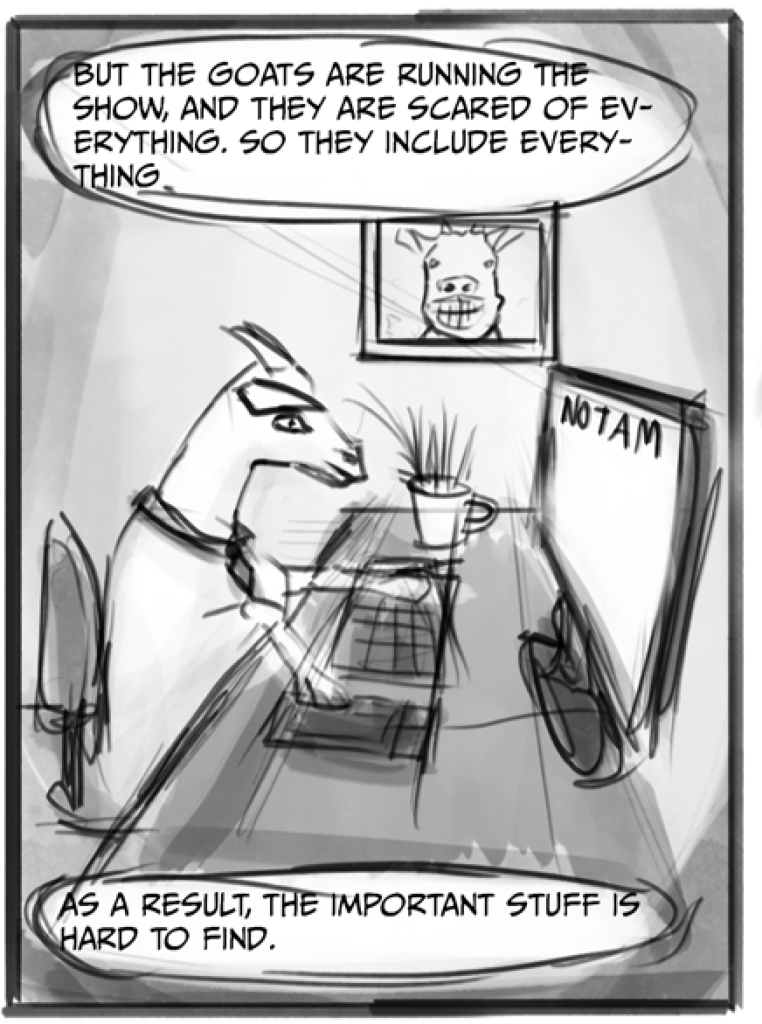
OK. We’re done writing articles about it, and making goat jokes – we’ve moved the “Fixing Notams” job to the top of our list..

OpsGroup is all about information – getting the essential risks and changes that flight ops personnel need to know about into their hands without delay. Our group agrees – plenty of colourful comments on Notams from members.

Now we want your ideas and opinions on the fix.

Here’s our ask:

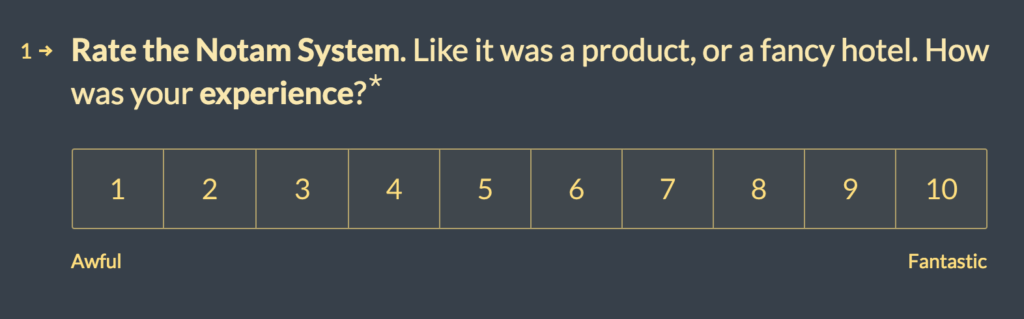
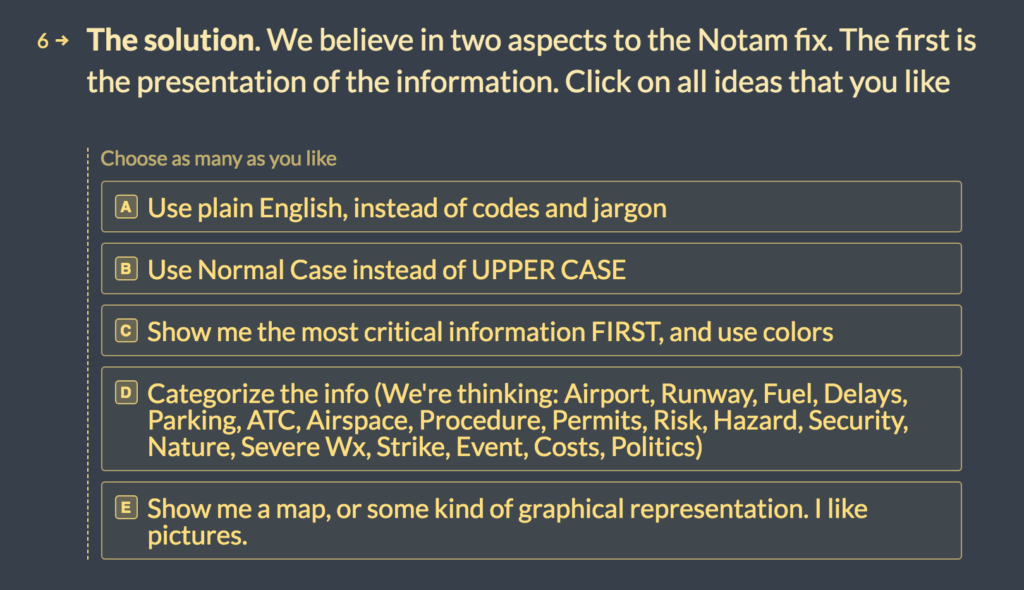
1. Rate the current system – and then click the things you would like to see.

2. If you’re in charge of a group of people – whether you are the Chief Pilot at Lufthansa, the Tower Chief in Shannon, or manage an Ops team of two – Get this out to your people and ensure everyone has their say.

Forward this to your team of ATCO’s, Pilots, Dispatchers:

We especially want to hear from pilots, controllers, and dispatchers, and if you read on, you’ll see why.

Do it like this:

  • Send them the survey link: https://fsb1.typeform.com/to/irZiFM
  • OR, click here for a magic pre-written email
  • OR, send them a link to flightservicebureau.org/notams
  • OR, share this facebook post:

The survey direct link is: https://fsb1.typeform.com/to/irZiFM


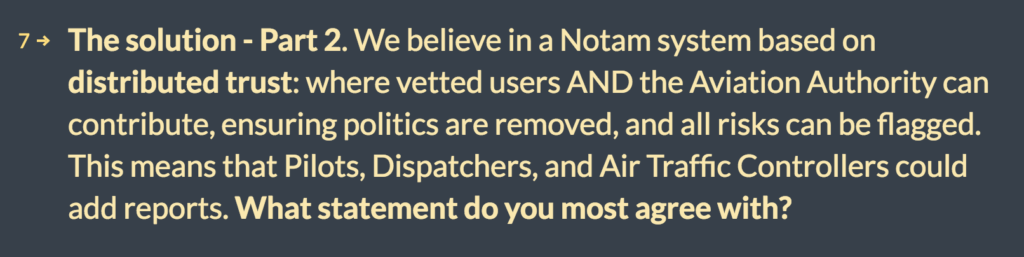
The Solution

If you took the survey, you saw this:

That part is pretty easy – presenting the Output of the system is a straightforward enough task.

The Input part – that’s where the real work is.

First, we are working on an Artificial Intelligence answer to finding Critical Notams in the current legacy system. This will allow us to present the data flow in order of what matters, and leave those cranes, birds, and grass cutters right at the bottom.

Second,

If you read my article on MH17 – a darker truth, you’ll understand why it’s important to open up the system to allow a trusted group to shape the information flow.

That begins with Pilots, Air Traffic Controllers, and Dispatchers. I have the great fortune to be all three, and it’s very clear to me that just like Trip Advisor – and our own “Airport Spy” in OpsGroup – this idea will work. We’ve already seen in OpsGroup how much we trust the information from other users in our group.

It’s key to the future trust of the Notam system. Which we should rename, but that’s another days work.

If you got this far, thank you for being part of the solution! You can always write me a note at mark@fsbureau.org

Thanks!
Mark.


Here’s what pilots and controllers REALLY think about Notams

Update: November 1st, 2019: The Notam Team is up and running – we’re fixing Notams. Follow our progress at fixingnotams.org.


We think Notams suck. No other way to say it. After a few articles we wrote (BS Notams, The Notam Goat Show, and more worryingly, the MH17 Notam problem), we got some feedback in the comments section. And thought we should share, because they really show the problem. So, here they are.

Caution, some strong language!

We’re working on a solution, so you can help and add your thoughts as a comment below. Also, send us the really bad ones and enter the 2018 Notam Goat Show contest.


Personally I think taxiway and apron closure NOTAMs are too readable, I think they should be distributed in RADIAL/DME format, or perhaps raw Lat-Lon. Additionally, time should be specified in seconds since the founding of the FAA.

TAXIWAY CLOSED BETWEEN ORL180/08.5DME ORL181/08.6DME ORL181/08.65DME ORL180/08.65DME FROM 1829088020S to 1829190200S

What could be more clear than that?


I wonder if a buried Notam ever did contribute to bent metal, injury, or death? I agree that the volume of nuisance notams is a real task to read through wether it be a long or short turn. However, nothing will be done till there is blood. That’s how the FAA works. Till then, its on us to be like aviation lawyers before every flight regardless of schedule.


Maybe we can get them in binary?

You have to go to binary first, then convert to Morse.

01010100 01000001 01011000 01001001 01010111 01000001 01011001 00100000 01000011 01001100 01001111 01010011 01000101 01000100 00100000 01000010

—– .—- —– .—- —– .—- —– —– —– .—- —– —– —– —– —– .—- —– .—- —– .—- .—- —– —– —– —– .—- —– —– .—- —– —– .—- —– .—- —– .—- —– .—- .—- .—- —–

For good measure they should be put through an Enigma machine, too. And the output formatted to wingdings


Yes. The NOTAM system is fucked. We have Notams about those solar arrays near Vegas in every flight plan. Yes, I see them. I want to know if the damn runway is closed. Why the weird coding? Is it to make pilots feel multi-lingual?


It’s funny, they seem to have every little f*ing detail about towers that are under 400 agl 20 miles either side of my route with one light bulb missing but I can’t get a god damn reliable source for f*ing TFRs. Even the piece of shit FAA website for TFRs is not a “complete and accurate source” but some guy in a FSS station is?????? Such complete and utter bullshit.


The reason nobody reads NOTAMs is because they are mostly garbage.
Why do I care that a crane that is 200 feet AGL ten miles from any airport is unlit? We can’t fly below 500AGL anyway.
Why do I have to decipher code that can easily be written as: From 20170608 1900Z to 20170610 0000Z CYYZ Taxiway L Closed
The system is broken and nobody cares to fix it.


I f*in’ love doing a flight from Newark to DC and getting notams about the North Atlantic Tracks. Motherf***r, if I end up on the tracks during that leg in a 145, the Notams are the least of my damn problems.


The biggest frustration for me is the NOTAMs don’t match reality. KAUS often NOTAMs a runway closed for several hours a couple days each week. Yet we get there and it’s open.
Or an airport will NOTAM an ILS out of service for the day. Show up at the airport and they’re using that ILS.
My home airport is KDAL. One of the PAPIs was out for three days before they NOTAM’d it out of service. Delta landing in front of me asked about it. Tower said they showed it on and asked me. I said, “Uh… It’s been out for several days. I thought y’all knew?”
Finally, my favorite: Surprise runway closures for routine runway inspections. NOTAM? Nah. BTW there’s a 150′ tower 15 miles away with a light out and there’s birds around the airport. Awesome.


I can honestly say that if it isn’t a runway closure or terminal closure then I don’t really care. The amount of closed taxiways at every airport is absurd. Not to mention many of them are closed year round with no intention of opening them again, just a permanent NOTAM.


Can only agree. It has been raised at the RAPACs, but no progress to date.


If I’m 5nm from the ARP at 150′ AGL, then I have more things to worry about than a crane without a red light…

Ass-covering gone mad. Really… a tree

OBST TREE 58FT AMSL
PSN 386M FM THR RWY 25 AND 183M LEFT OF RWY 25 CL
BRG 047 MAG 0.91NM FM ARP
FROM 01 310536 TO 03 300500 EST


My personal favourite is the “trigger notam” cross-referencing to yet another unfindable / unreadable pile of nonsense.
Just tell us what matters to an “Airman”; today and leave the grand plan, 12 month projection crap out of NOTAMS.


All of this so true, I imagine a world of technology and wonder (ozrunways/avplan/anything but airservices/casa))where we can quickly read a Notam and weather briefing without having to nut it out and do a slow-ass flight plan every time. 2017 and we still cant embrace all the tech.


I totally agree. The last thing any crew is going to be able to do when checking NOTAMs before departure is to magic up a way to access cross-referenced documents in various other publications. Especially when the departure point is not anywhere near base ops, or even any other operations centre.


B.S. NOTAMS….100% concur. Our whole world of aviation is being swamped by similar legal ass-covering paperwork. How can ANY pilot be expected to remember all the additional codicils that do NOTHING to improve safety of flight, but rather give an army of lawyers and providers more chances to fleece an already cash-strapped industry?…..Rant over!


Congratulations, its our industry, the users should be heard.
Start with a blank sheet of paper, what do we want to know in a “NOTAM” and how best to communicate it in a cockpit / in a flight briefing package. If the current format was frozen in 1924, the next system needs to be good for a couple of years.


This information ceased to be “NOTAMs” long ago. Today they are “NOTOLs”, Notice To Litigants. Thanks for making an effort to change this ancient system.


How many pilots out there actually read ever Head Office Notams or even daily Notams in meticulous detail? Few (if any). You sign on an hour before departure, there is simply not enough time to divulge all the ass covering crap that’s generated daily. Airline companies only want one thing, OTP; how a pilot goes about that they couldn’t care less as long as you don’t break any rules! NOTAMS = “None Other Than Aircraft Missing Slots”


You can bet your life, the one you needed to see at 3 in the morning was the one you missed! Any wonder…


Well said. Have you ever read “MEN AND EQUIPMENT NEAR THE RUNWAY: LANDING WITH CAUTION”?
So, If you don’t tell me that, I will land recklessly..


You are a mind reader.
You captured the issue perfectly and the historical context was excellent. While airspace and aircraft have all continued to develop our most basic system of communicating the status of an airport/airspace has not. I could take that further and say communication with ATC is still by AFTN for the most part.So now put yourself in the position of dispatcher/FOO working a series of long haul ETOPS Flight. You might have 20 or more departure /Take off alternate station notams, a whole galaxy of FIR/UIR Notams, not to mention all of the ETOP alternates and if you re-dispatch/re-analysis, you will get to do it inflight once again. Now do that 15-20 times depending on workload. Can you say human data saturation?
This article certainly illustrates the infrastructure issues we face, but it doesn’t come close explaining some of the processes and procedures we have had to put in place to ensure:
1. That we actually get NOTAMS.
2. That we get airport conditions as some countries don’t put them out as Series-S ICAO NOTAM versus Series-A (Yes, theses are the countries that haven’t fully adopted ICAO standards which were adopted in 1944 and ratified in 1947 by the Chicago convention).
Question: What is the current year?


I absolutely agree. My personal bugbear is those lists of co-ordinates …. do they think anyone actually plots them on a map? They might as well not be published at all.


What is clear is the professional approach to the information received: too many inputs, disorderly given, contextually irrelevant, redundant and unusable. A kind of “cry wolf” syndrome, making the pilot complacent about such a bullshit. The very day someone of us is caught in a legal battle for a system-induced mistake leading to a incident, overlooking the NOTAMs will not appear as an excuse. How to make these information valuable?


Yes… and why oh why are we still using the coded TAF language. We don’t have bandwidth issues anymore. We take plain English, code it, then decode it back to plain English. Surely a TAF written in plain English is not too hard a transition.


We train the pilots of tomorrow, they are inundated with everything the industry throws at them and the unintelligible Nonsense contained in some NOTAMS are just another accident waiting to happen. With all the technology at our disposal today, the filtering systems, electronics messages systems, integration tools and smart people to think about it, there is a solution out there. I suppose we just need to make enough noise in the right places to make a change. Oh well best we get started. hmmm, perhaps a NOTAM about change is needed.


And don’t forget about TFR’s that pop up. The one time I didn’t look at TFRs I got trapped having to divert from Chicago to an outlying airport even though we were part135 and even though we got an IFR clearance and the tower gave us takeoff permission. And center control for an hour just kept passing us on.


How about a change in the format of NOTAMS too, so we don’t have to wade through the whole lot in order to parse the relevant information. NOTAMS are removed when thy are no longer valid, so why cling to chronological order as an indexing system. How about putting them in order of critical relevance: Firstly, changes to airfield opening hours and services (fire, fuel etc). Secondly, changes to runway lengths/closures/etc. Thirdly, changes to approaches available. All the rest can be thrown into the mix at the end of the NOTAM.


Excellent analysis. My personal favorite is the NOTAM sort order which tells me that the REIL lights don’t work, the glideslope is out, the runway markings are non-standard, the localizer is out… ending with: runway closed. Tell me that first, all the other BS becomes irrelevant.


About two days before I saw this post, I’d sent a long email to my company telling them of the NOTAMs we don’t need to see. Then I saw this. Brilliant! I’ve just sent the link to this piece to the company to reinforce that opinion. I’m hoping our briefing pack will be several pages thinner the next time I go to dispatch.


I have come up with a name for this problem: “NOTAM Spam”. It’s a serious one, alright — ASRS Callback #426 brought it up in the context of the US NAS, and I’m sure it’s only worse for international operations. It sounds like ICAO needs to put out a recommendation or SARP about NOTAM spam control…


95% of Notam’s we read are not applicable, or nothing can be done about them. Oh great, I’ll pull out my chart and plot the 25 co-ordinates to see if this airspace will affect my flight -_- that’s one Notam example from plenty of the same type, in the same Notam briefing. Now add the other irrelevant Notam types as mentioned by others in the comments.


Thanks for the article. I shared it with my fellow dispatchers at AAL. We read pages and pages of BS notams on a daily basis and wondered if anyone else had similar feelings about the whole process.


Post your thoughts below! 


The NOTAM Goat Show 2018

We’re on the hunt for prize Notams. 

In every definition of a Notam that exists, including the ICAO one, it includes these words: “the timely knowledge of which is essential“. Unfortunately, many Notam-creators’ sense of the essential shows a clear failure to understand the term . This is CNN’s version of fake news at it’s worst.

Now, we recently found one that listed peak goat-grazing times near the airport, so we thought we’d run a NOTAM Goat Show. And there will be prizes. We’re looking for the worst: the most irrelevant, the most useless, the most boring, the most unreadable. All those crappy Notams that are part of the 100 page print out you get in your flight briefing.

Send us your worst! goatams@fsbureau.org

There will be prizes, and as fun as all this is, you actually are helping to solve the problem of Bullshit Notams. We’re working on it.


The problem of Bullshit Notams

Update: November 1st, 2019: The Notam Team is up and running – we’re fixing Notams. Follow our progress at fixingnotams.org.


This article created a firestorm of engagement – several hundred emails and 127,000 people that visited the blog. Most of it was overwhelmingly positive. Some of it wasn’t. Please read my follow up in response.


It’s absolutely ridiculous
.

We communicate the most critical flight information, using a system invented in 1920, with a format unchanged since 1924, burying essential information that will lose a pilot their job, an airline their aircraft, and passengers their lives, in a mountain of unreadable, irrelevant bullshit.

Yes CASA Australia, that’s you. Yes, Greek CAA, that’s you. And you’re not alone.

In an unintended twist of irony, the agencies seeking to cover their legal ass are party to creating the most criminal of systems – an unending flow of aeronautical sewage rendering the critical few pieces of information unfindable.

This is more than just hugely frustrating for each pilot, dispatcher, and controller that has to parse through it all; it’s downright dangerous.

If you’re a pilot, you’ll either have already experienced this, or you’re going to – you stuff something up, and then be told: “but there was a Notam out about that”. Sure enough, there it is in black and white (and in big capital letters). Do you think that “but there were 100 pages of them” is going to be a valid defence?


Well, it should be. The same agency conducting your post-incident interview is busy on the other end stuffing the system full of the garbage that prevented you from seeing it in the first place.

There are three parts to the problem: the system, the format, and the content. The system is actually quite amazing. The AFTN network connects every country in the world, and Notam information once added is immediately available to every user. Coupled with the internet, delivery is immediate.

The format is, at best, forgivable. It’s pretty awful. It’s a trip back in time to when Notams were introduced. You might think that was the 1960’s, or the 50’s. In fact, it’s 1924, when 5-bit ITA2 was introduced. The world shifted to ASCII in 1963, bringing the Upper and Lower case format that every QWERTY keyboard uses today, but we didn’t follow – nope, we’ll stick with our 1924 format, thank you.

Read that again. 1924. Back then, upper case code-infested aeronautical messages would have seemed impressive and almost reassuring in their aloofness. But there weren’t in excess of 1 million Notams per year, a milestone we passed in 2013. The 1 million milestone is remarkable in itself, but here’s something else amazing: in 2006, there were only 500,000. So in seven years, Notams doubled. Why? Are there twice as many airports in the world? No. Twice as many changes and updates? Possibly. But far more likely: the operating agencies became twice as scared about leaving things out.

And so onto the culprit: the content. The core definition of a Notam is ESSENTIAL flight information. Essential, for anyone tasked with entering information into the Notam System, is defined as “absolutely necessary; extremely important”. Here’s a game you can play at home. Take your 100 page printout of Notams, and circle that ones that you think can be defined as essential. See how many fit that bill.

So why is all this garbage in the system? Because the questions that the creators of Notams ask are flawed. The conversation goes like this:

– “Should we stick this into a Notam?”
– “Yeah, we’d better, just in case”.

How many are actually asking, “Is this essential information that aircrew need to know about ?”. Almost none. Many ‘solutions’ to the Notam deluge involve better filtering, Q codes, and smart regex’s. This overlooks the core problem. It’s not what comes out that needs to be fixed, it’s what goes in.

Even in 1921, we had much the same problem. Obstacle, 18 feet high, several miles from the runway.

Nobody cares. Unless you’ve parked the Eiffel Tower on the threshold, leave this stuff for the AIP. And nobody cares about kites either. Nor about goat-grazing times. We don’t care if your bird scarer is U/S. We don’t care if there’s a cherry-picker fixing a bulb somewhere. We don’t care when you’re cutting your grass.

Nor do we care about closed taxiways. The only way I can get onto a taxiway is with an ATC clearance, and ATC will not clear me onto a closed taxiway.

We care if the airport is going to be closed when we get there. If we’re going to have to divert because the runway is shut. If someone might shoot at us. If there are new rules. We care about the critical items, but we won’t see them as things stand.

And so, about here is where a normal editorial piece might end with “we hope that the authorities improve the system”, and sign off.


But not here.

We’re in the business of doing things here at FSB, not just talking about them.

Last year we wrote a few pieces about the Greece vs Turkey Notam battle. This month we did a group look at Briefing Packages, and it was astonishing to see how many pages of this diplomatic drivel still appeared in all our members’ Briefings. All in all, on average 3 full pages of every briefing for a flight overflying Greece or Turkey contained this stuff.

So, we sent Greece a polite AFTN message on behalf of all of us.


That’s just one piece of a thousand-piece puzzle, and it would be nice to think that one piece at a time we could fix the sytem. Let’s get real. It’s a monster, and it’s out of control.

We don’t think that we can fix the Notam system.

But, we can think about a different solution. And that’s exactly what we’re doing right now in OpsGroup. With almost 2000 members, we can make a difference. Watch this space. Or, if you want to help take action, send your thoughts to goatams@ops.group.


Venezuela NOTAMs, where have you gone?

Last year, Venezuela partly stopped sending out Metars.

This year, they’ve gone one better, and stopped sending out NOTAMs entirely.

Anything with an SV** in front of it shouldn’t be high on your tech stop list at the moment, but for those that do need to operate to an airport in the country, or carry it as an alternate, this is definitely a problem.

How are you handling the outage? Comment below.