Simthing to Think About

What are you practicing with your crew in the sim nowadays? An engine failure on take-off? A few technical malfunctions? An assessment of their competencies and then send them on their way for another year?

Well, we thought we might suggest a slightly different sim scenario for you to think about…

What else should you be throwing at your crew?

There have been a bunch of recommendations out from the authorities suggesting crew swot up on their Unreliable Speed procedures because the number of these occurring have increased a lot recently. Something to do with aircraft coming out of long term storage with bugs nesting in their probes…

However, an ‘Oracle of the NAT’ recently pointed out to us that many crew have not been doing anywhere near as many NAT routings, which means their NAT procedures probably need as much attention as their airplane’s pitot ports do.

What are we talking?

Incorrectly flown contingency procedures (not to do with weather) were one of the top reasons for lateral deviation events in the NAT in 2020. Now it was admittedly only 6% but that is still one of the Top Ten mess ups, and a mess up easily prevented with practice.

There were also a few incorrectly flown weather deviations. These procedures are not hard to do, but they do need thinking about once in while (preferably before you’re actually up there needing to know them) which is why the sim suggestion was presumably made. 

Left, right, up, down. Quick, whaddya do? (Credit: Ramon Stalenhoef)

Now, you could just email everyone a reminder of how to do it. A bit of text and a diagram. But a handier way to recap (and in a way that properly puts the info into their heads) would be to really put crew up there, throw some “fun” failures at them, and let them practice “for real” in the sim.

So, what’s the recommendation?

Well, we ain’t no trainers, but between us we have seen a few sims ourselves in our time. So here is what we suggest you might want to throw into a sim session if you think your crew could do with a refresher…
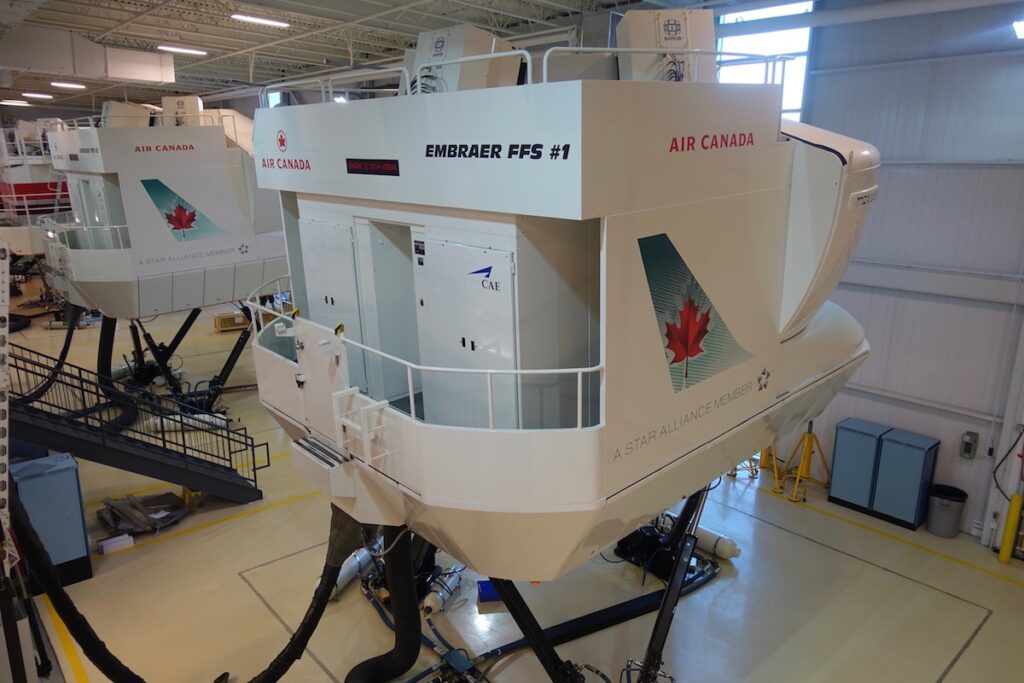
FFS for Full Flight Sim. Not for what all pilots think when they see ‘SIM Check’ on the roster.

The Opsgroup Ops on the NAT Sim Scenario Storyline Suggestion.

Let’s set the scene. It is the middle of the night, the flight is somewhere over the North Atlantic, dark, lonely and quiet, when…

KABOOM! Rapid decompression.

This throws in a nice bit of startle factor (which is also something pilots need practice in dealing with.)

Now those contingencies will be put to the test – how much to turn, how much to offset, what else do they need to do and say?

There is also that good old Situational Awareness thing to look at as well.

Do they, for example, identify where other traffic is, think about the NAT tracks and their proximity to the next parallel one, and think about whether they were SLOPing already or not?

Let’s get really mean.

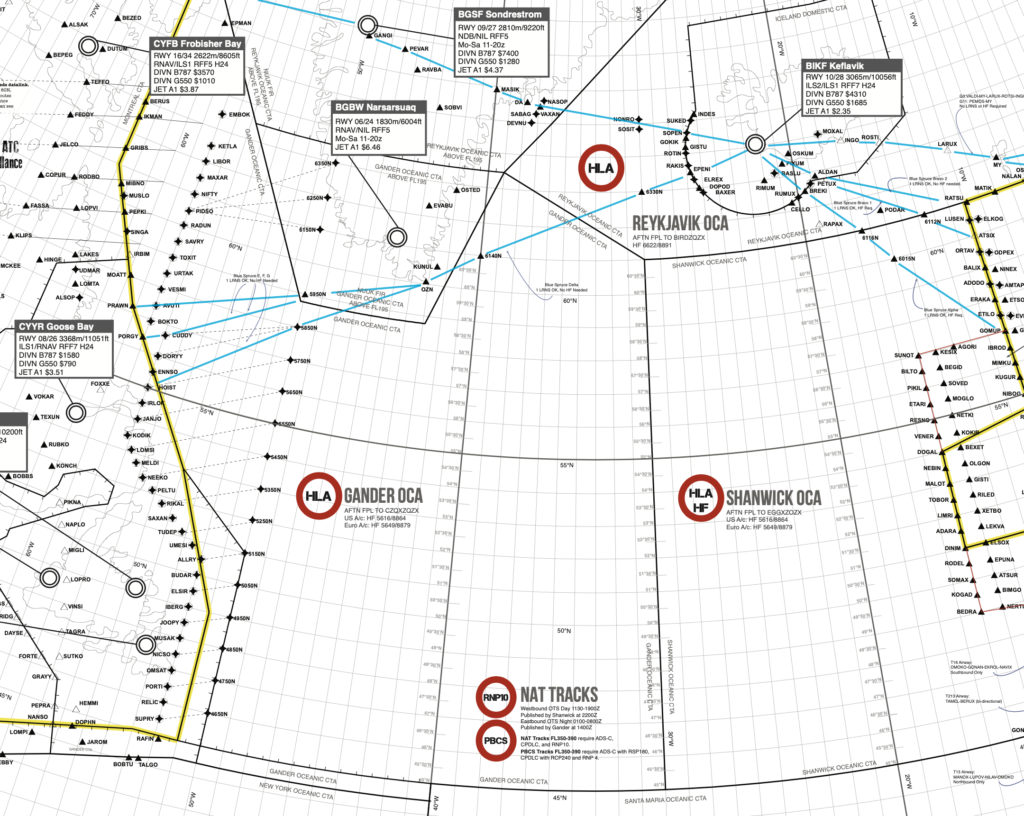
A big thing to consider with NAT flights is just how remote and far from land you often are. So Big Picture proactive planning is a good habit to get into.

This means setting up for emergency diversions before you find yourself suddenly having to do one. An awareness of where the closest and most suitable spot for a landing is in advance might really save the day. Or at least a few panicked minutes of trying to work it out.

This is important anywhere, but particularly so when flying in the NAT because something like a rapid decompression is going to have you zooming down to FL95.

Fuel can become a big problemo quickly, but so can separation to other traffic if you start diving down and crossing tracks.

The fun seat.

Where we would do it.

We would be mean trainers. The ones that people always call sick for. Power-crazed with the fun of coming up with mean scenarios to inflict on our poor pilots!

We would definitely make sure it was remote, with a massive headwind making the “nearest” in distance the furthest in time. We would probably throw in some bad weather at one to see if the crew fly themselves into a corner, and maybe an HF blackout or ATC Zero just to make those radio procedures a bit more fun.

Then we would sit back and enjoy watching it unfold while rubbing our hands together gleefully.

You might be nicer than us though.

If you are then you could always share the following with your crew before the sim session:

Skills Fade.

The real point of this is that recent surveys of pilots returning to work (after prolonged periods) have shown that it isn’t the hand flying that gets rusty (well, it does, but comes back pretty fast).

It is the Procedures and the Workload Management which really suffer.

Unusual or unused (or not regularly used) contingencies and SOPs will need refreshing. The NAT is a prime spot where additional threats and challenges make it all the more important to not be rusty when you route through.

So sims to get your pilots’ flying skills up to scratch are critical. Practicing those engine-out procedures, crosswind landing techniques and general “How do I make actually it move?” hand-flying sessions will definitely help with confidence levels.

But opportunities to (re) consolidate those procedures, particularly those ones in challenging airspace like the NAT which are likely to be required on a standard flight could make a very big difference to safety in a practical way.


2019: Safety Net on the NAT

2019 seems so long a go. A golden age for aviation with airplanes swooshing happily through the skies, and none so happy as those crossing the NAT.

Or were they?

Well, now we can check because the NAT Systems Planning Group 2019 Annual Safety Report has just been released. 2019 might seem a fair old while ago, but the report speaks of a time before Covid when aviation was at normal levels and so offers good guidance on what’s up in the NAT world normally.

What is monitored?

If you were thinking the only things you’re monitored on are your competencies and KSAs in sim assessments, then think again. You are being watched all the time, and especially so in the NAT where 12 Safety Key Performance Indicators are watched like a hawk watches a juicy mouse in long grass.

Targets for reducing the number of errors in these areas are set using three year rolling data.

So, how did we all do?

Well, in 2019, six of the targets were met and there were notable improvements in these three areas:

  • Percentage of long duration height deviations
  • Rate of long duration height deviations where datalink was not in use
  • Number of minutes spent at wrong fight level for aircraft not using datalink

So, pilots have got better at reading their altimeters and not flying at the wrong altitude.

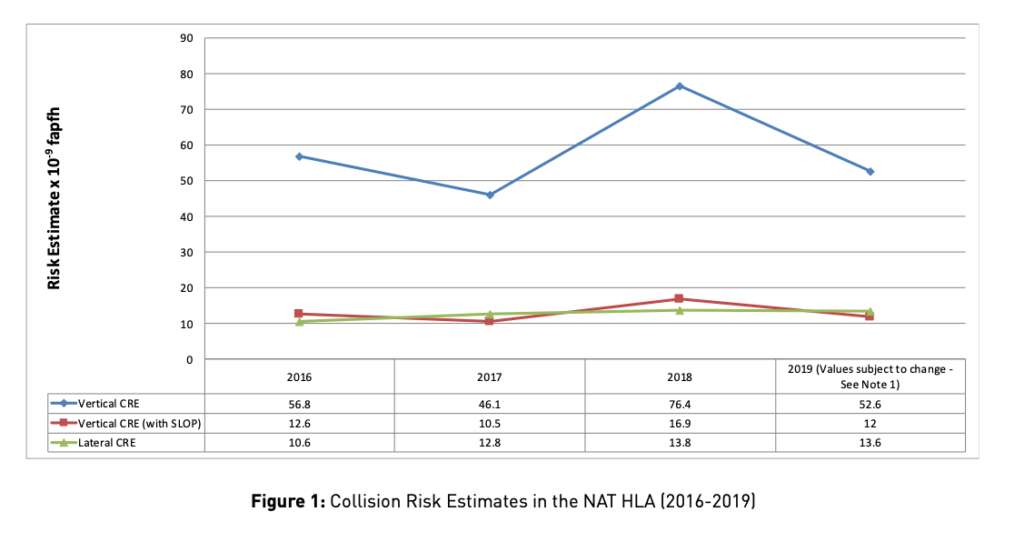
The risk of vertical collision estimate saw an impressive 30% improvement, and they reckon with the use of SLOP this can be reduced another 77% making it… 30/100*77{equation stuff}#100[somethingbysomethingoversomethingelse]… a lot less likely we will fly into each other. Good job all.

What is going less well?

Lateral collision risk estimates reduced, but there were still 80 reported lateral deviations. So we’re flying at the right altitude, but sometimes in the wrong place.

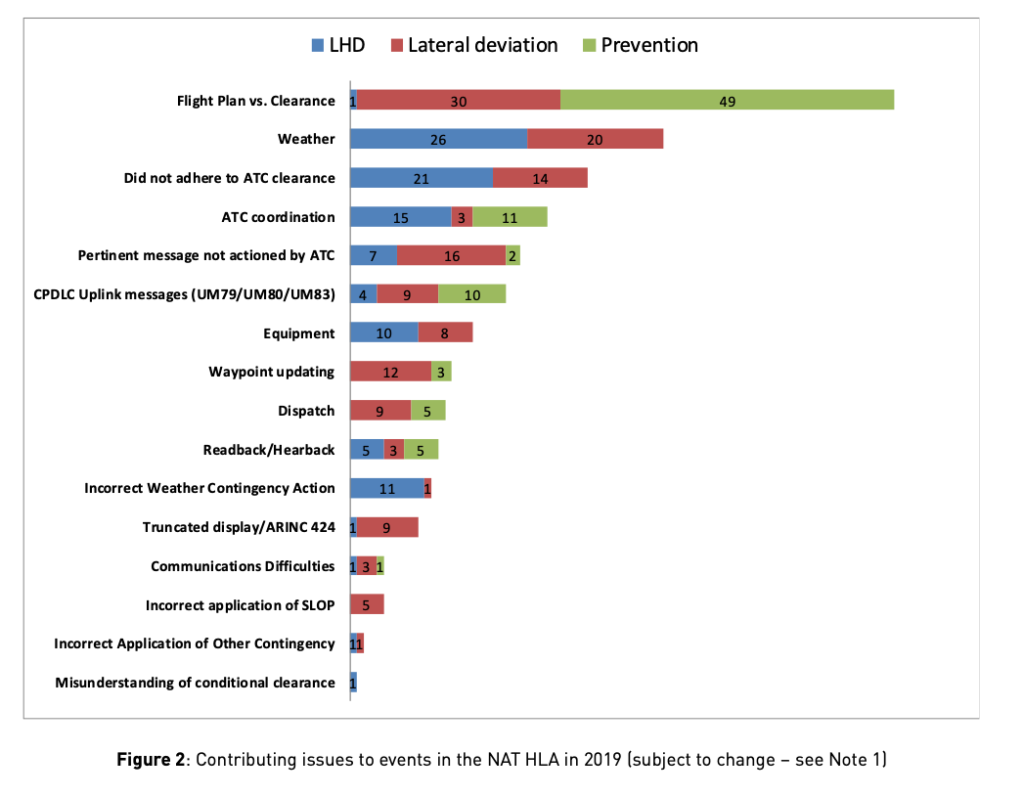
Flight plan versus what ATC actually cleared pilots to do are the top of the list, making up 30% of  the total. 49 of those were prevented by ATC. Not adhering to ATC clearances increased from 10% in 2018, to 13% in 2019, and weather was another biggie making up 17% of all lateral deviations.

ATC coordination errors were also in the top 5 (11%) so don’t congratulate them too much. ATC were also provided with conformance monitoring tools which highlighted cleared versus selected level differences, and route assignment monitoring tools to help them intervene and prevent deviations. With these in place, the performance in the second half of 2019 did improve a lot.

Ok, congratulate them a lot, they’ve made it much safer for us up there.

Overall, what’s the verdict?

No gold star because there were still 266 events reviewed in 2019 by the SPG. These included:

  • 83 large height deviations
  • 118 (actual) lateral deviations including
    • 42 GNEs
    • 44 ATC interventions where ATC prevented pilots making GNEs
  • 73 prevented events where ATCOs stopped aircraft flying an uncoordinated flight profiles or entering the wrong airspace sort of things.

It isn’t always pilots going wrong though. Some of these were down to equipment issues, some down to ATC not responding quick enough. Here is the full breakdown – 

What else is going on up there?

Well, in 2019, when a normal number of aircraft were still flying, they were able to properly monitor the communication and surveillance side of things too, and a whopping 70% of core NAT traffic were using ADS-B. 83% of aircraft were making use of CPDLC over HF radio as well, and the use of these is a big factor in improving the safety and efficiency up there.

The report says this leads to a ‘greater focus on strategic rather than tactical techniques’ which sounds like ‘we are now planning aircraft not to fly near each other’ rather then ‘when aircraft get too close we move them out of each other’s way’.

As a reminder, you have until February 25 to get yourself Datalinkable – the NAT Datalink mandate comes in then.

What next?

2020 data might be a little skewed given a lot less traffic flew, (and many of those who did probably did so after a big gap of not flying), but the overall trend is big improvements. ADS-B is an excellent thing, ATC have a bunch of tools to help them make us safer, and pilot errors are reducing.

There is also a NAT2030 vision plan which is aiming for:

  • more flexibility through ‘dynamic airborne rerouting”
  • improved contingency procedures
  • better comms and surveillance and new technologies
  • a focus on improving the environmental impact
  • and maybe even some new visitors to the region in the shape of unmanned aircraft supersonic aircraft and even balloons

Until then, get out your own balloons and have a little celebration because safety is improving on the NAT. Now put them away. There is still work to be done.

The full report can be checked out here


Planning for “ATC Zero” events in Oceanic Airspace

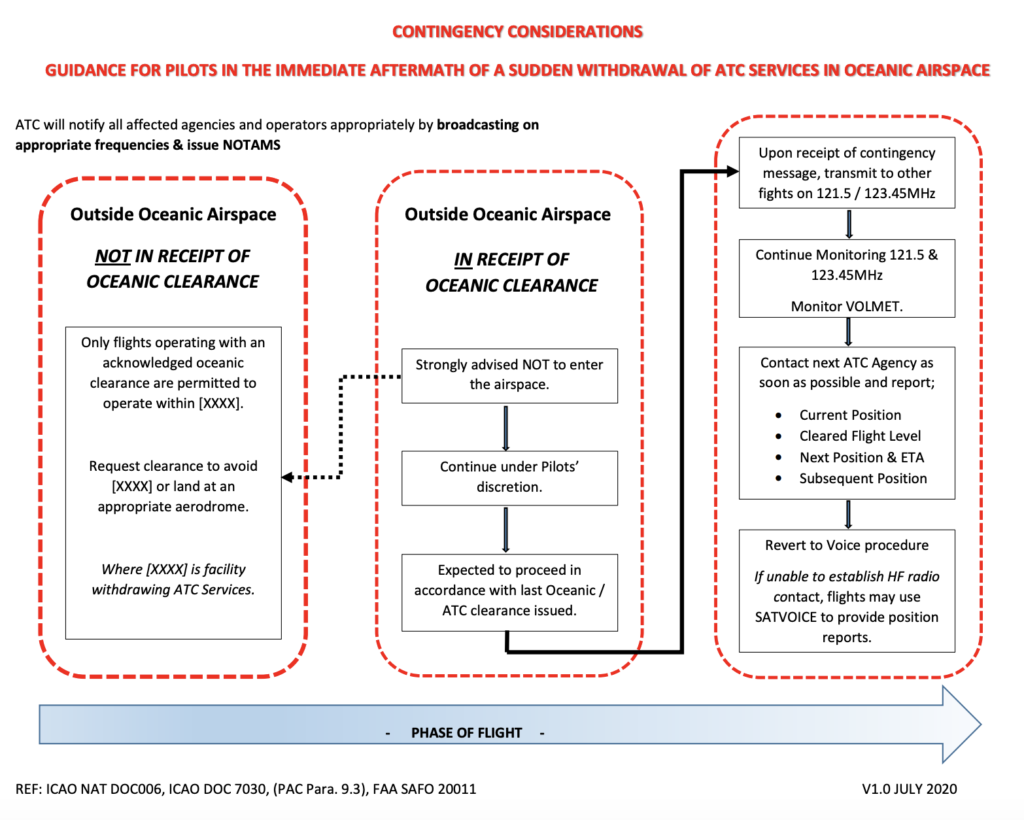
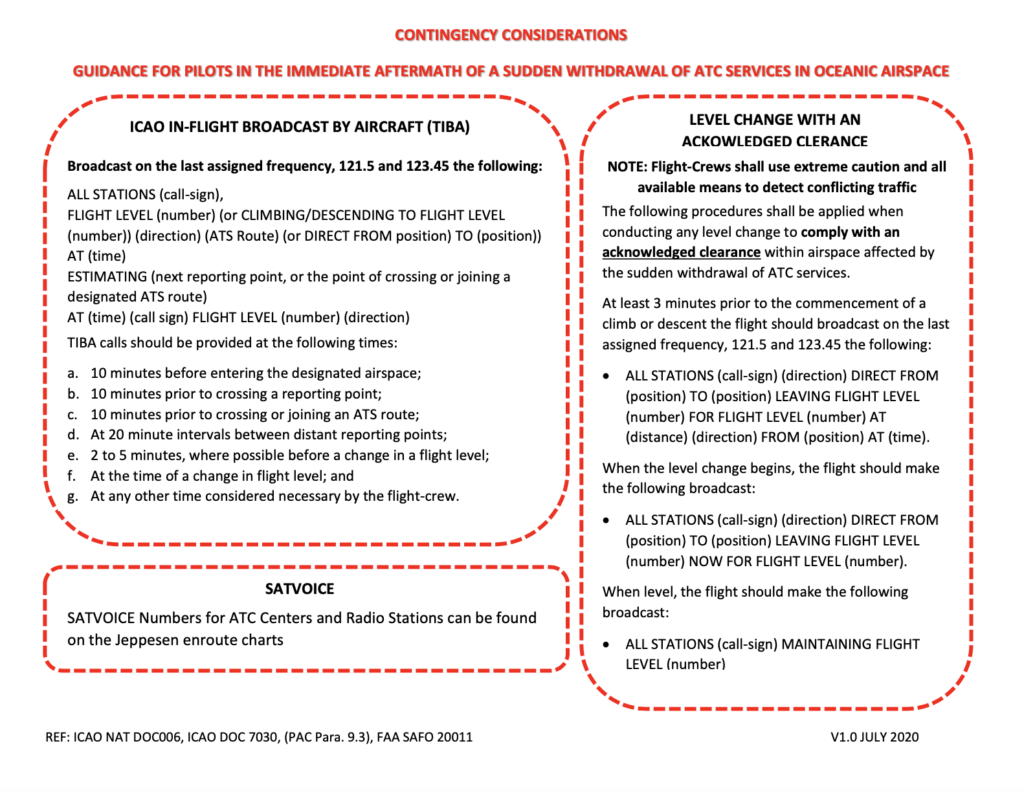
You’re halfway across the Atlantic when ATC declares that they are suspending all services. TIBA procedures are now in effect. Would you know what to do next? As Covid infections impact ATC facilities, short notice closures are currently a constant risk. With the possibility of an entire oceanic ATC area being shut down due to Covid, there are some big questions to consider, and to factor in to your planning: Are you tankering enough fuel if you suddenly have to fly around large sections of oceanic airspace? Where are your ETPs? Do you have a wet footprint?

Back in 2011, there was an incident where transatlantic flights were not allowed to enter CYQX/Gander oceanic airspace due to a smoke situation in ATC control centre which meant that controllers had to be evacuated. They issued a Notam, but that wasn’t much use to the traffic en-route at the time, which all had to be re-routed around the CYQX/Gander Oceanic FIR – a vast portion of oceanic airspace.

Fast forward to March of this year, where New York Air Route Traffic Control Center was forced to temporarily close due to a controller testing positive for Covid-19. The affected airspace restricted flights into New York area airports, with aircraft having to take longer routes in order to avoid closed sectors, as well as Oceanic airspace which stretches from New York past Bermuda and services flights heading to the Caribbean, Europe, South America, and Africa.

The New York ARTCC is not the only ATC center that has been affected over the past few months due to controllers coming down sick with coronavirus. Eleven sites across the US, including at major airports in New York, Chicago, and Las Vegas, have been temporarily closed for cleaning, affected flight operations. Some facilities have been closed for several days leaving inbound and departing aircraft left to their own devices for taxi, take-off, and landing.

NAT Doc 006 is the official go-to manual to check what happens during these “ATC Zero” events on the North Atlantic, but the spate of recent ATC shutdowns in the US led the FAA to re-examine the increased potential for these situations occurring during the Covid crisis, and in early July they published a SAFO as a result.

The NAT Doc 006 and the US SAFO are great resources, but here are two more which you might not know about!

Code7700.com has published an excellent 2-page crib sheet with clear guidance for pilots on what to do in these situations. You can download it here:

And 30WestIP.com have recorded a video webinar discussing this topic in more detail, which you can view here: