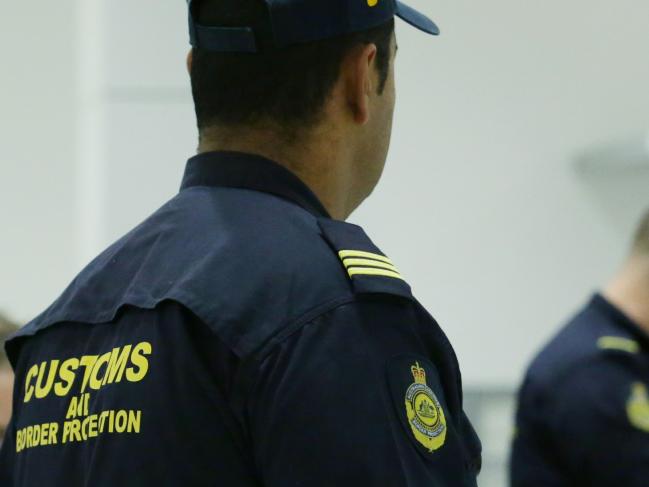
Pavlof Eruption wreaking havoc, Brussels Airport remains closed: Midweek Briefing 30MAR

Pavlof Eruption wreaking havoc 30MAR16 Volcano Pavlof erupted on Sunday and is currently on aviation colour code ‘RED’. It has caused havoc for North Pacific, Alaskan and Northern Canadian operations. The latest predictions have the ash upwards of FL400 and extending over Northern Alaska and Canada. You can find the latest information through the Alaskan VAAC.

Brussels Airport remains closed 30MAR16 EBBR is still closed with the possibility of opening later this week. Currently all commercial flights are still prohibited from operating into EBBR. Only ferry, emergency, SAR, State, general aviation and cargo flights are authorized with a slot that can be coordinated through the Belgium Slot Coordination website.


EZZZ/Europe The U.S. State Department along with numerous other countries have issued a Europe wide travel warning in response to the attack in Brussels. While extra vigilance should be exercised it is also a very generic response to a threat that has yet to fully understood from a commercial aviation perspective. If you would like to be kept up to date on specific travel alerts from the U.S. State Department you can sign up through their STEP program.

FAA/United States there have been 583 reported hazards from Aug 22/2015-Jan 31/2015 between aircraft and Drones. None of these incidents have caused any collisions or damage but extra vigilance must be exercised until the FAA can regulate the use of these drones in the terminal areas.

RPHI/Manila has issued an advisory for aircraft operating in the vicinity of the Bulusan Volcano and the Kanlaon Volcano due to an alert level 1 of activity. Flights operating in the vicinity are advised to avoid flying close to the summit.

LFXX/France a general strike has been declared for March 31st. Possible impact to airline operations. Please make sure you check with Eurocontrol or FIR NOTAMs for further restrictions.

FXXX/Nigeria The NNPC or Nigerian National Petroleum Corporation has stated that steps are currently being taken to end the countries fuel shortage but may take upwards up 2 months. Please check with local handlers for the availability aviation fuel supply until the issue is resolved.

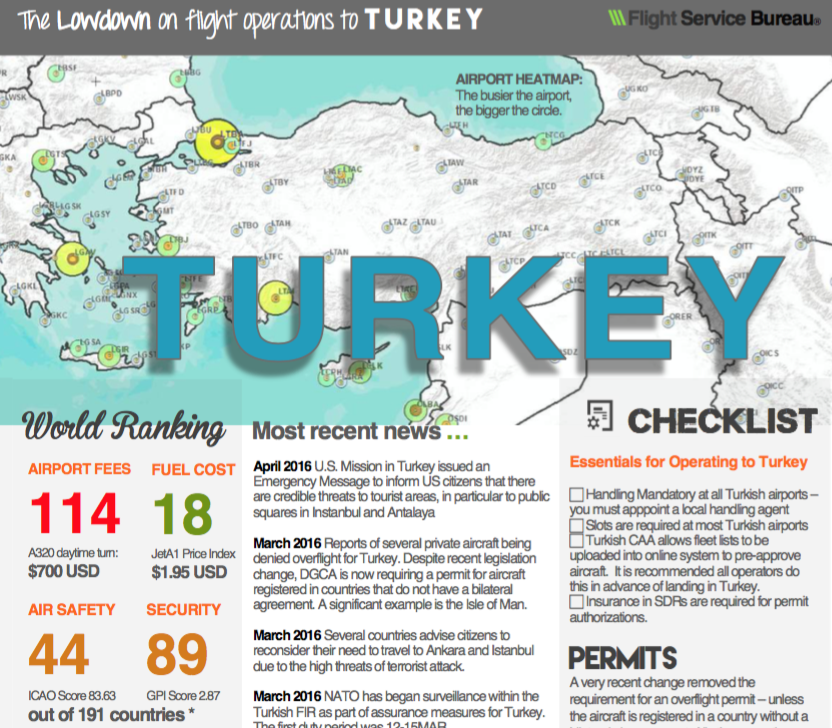
LXXX/Turkey has issued a nationwide terror alert and the Israeli Counter-Terrorism Bureau has advised for all of it’s citizens to leave the country. Extra vigilance should be exercised if operating to and from Turkey for the foreseeable future.

UXXX/Russia has stated that aviation authorities are intensifying it’s inspections of aircraft from Russian and International budget carriers in wake of the Rostov-on-Don accident.

DGAC/Ghana FIR issued NOTAM A0128/16 due to VHF freq 130.9 being not reliable for all Oceanic traffic entering ACCRA FIR from the South East due to maintenance. All traffic must contact ACCRA on HF 8903KHZ or logon to ADS-C/CPDC “DGAC” until positive VHF contact is established.

VNKT/Katmandu There have been a few reports that the Tower at VNKT has been reporting erroneous weather to pilots. One example of such a report  was “Tower informed us that there was some 3 km of visibility this morning but it to be less than 1.5 km while Kathmandu was engulfed by haze”. If you encounter any issues while operating into VNKT please send us a note to bulletins@fsbureau.org.

VIAR/Amritsar has suspended all night operations for 1 year due to the planned reconstruction of the airports runways.

VTBD/Bangkok Officials approved an expansion that will allow for more aircraft, passengers and vehicle parking. The plan also includes provisions to cut landing fees during off-peak hours at VTBD and VTBS in an effort to increase usage of both airports. The project includes plans to extend the runway, add office buildings, and create additional parking zones for aircraft. The expansion is expected to be completed in 2025.

Angola The Ministry of Health in Angola has reported an ongoing outbreak of yellow fever in Luanda Province. The government of Angola requires all travelers older than 9 months to show proof of yellow fever vaccination on arrival. The CDC has a ‘Watch Level 1, Practice Usual Precautions’ advisory in place.

FAA/United States has issued Advisory Circular 00-30C. It describes the various types of CAT (Clear Air Turbulence) along with avoidance techniques and possible future forecast systems for helping Dispatchers and Pilots in the planning stages for proactive flight planning.

View the full International Bulletin for 30MAR2016


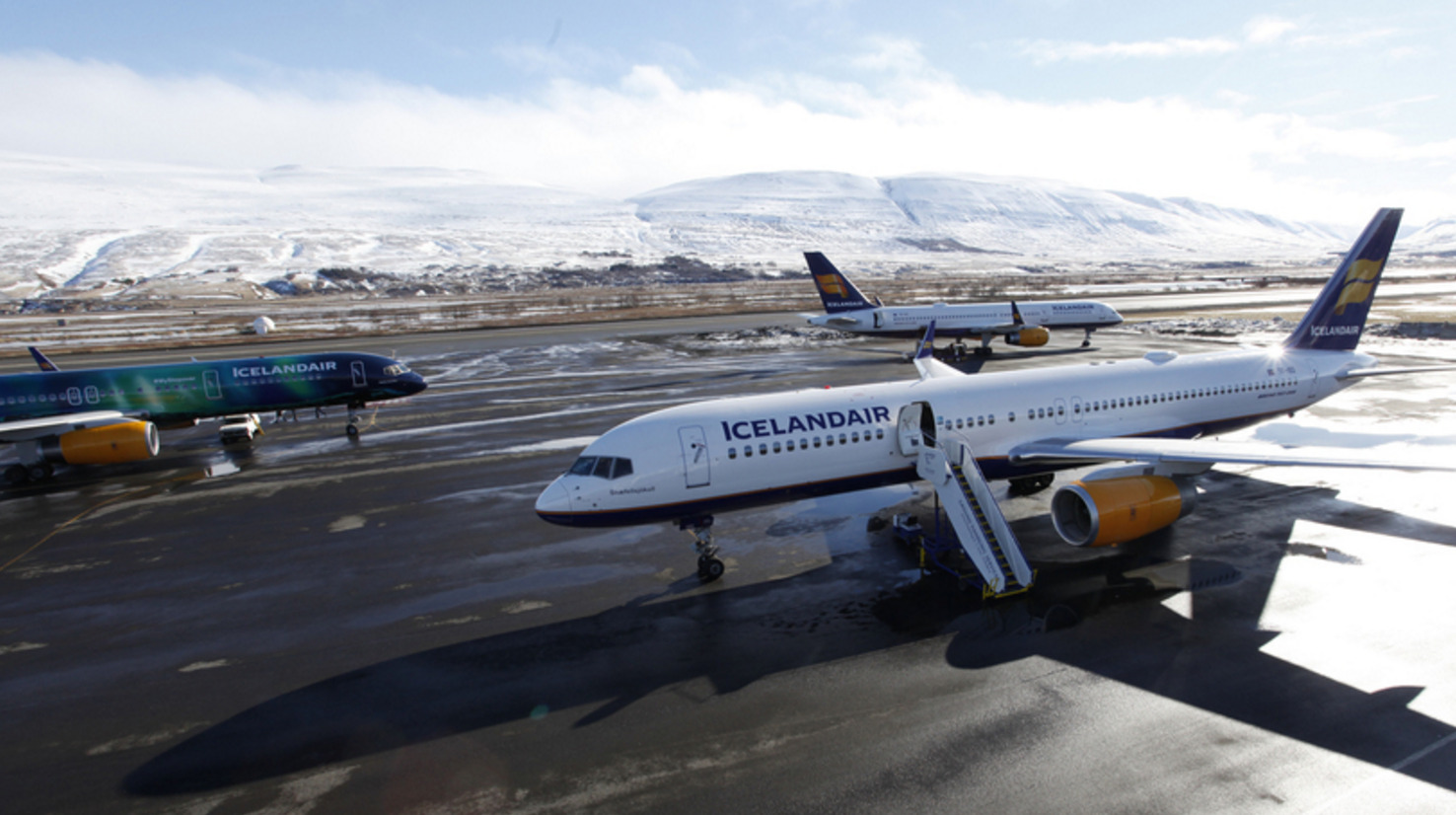
Cheapest Jet fuel on the Atlantic? $1.15 a gallon

The cost of a gallon of Jet A1 has been rather unstable lately. Over the last couple of years, we’ve produced several versions of our  North Atlantic Plotting Chart, and as we’ve done so, the price of Jet A1 has dropped each time across the Atlantic seaboard.

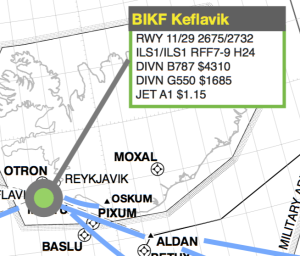
So, where is cheapest? Answer: Keflavik. $1.15 for a gallon of Jet A1 at the best available commercial airline rate. Now, that was six weeks back or so, when we did the research for the chart, and prices have been rising since (tracking the Oil price pretty well).

BIKF

Next best on the list is Shannon, Ireland – $1.37 USD/USG, thanks to the Shannon Free Zone, which strips out most of the taxes that the EU levies as standard.

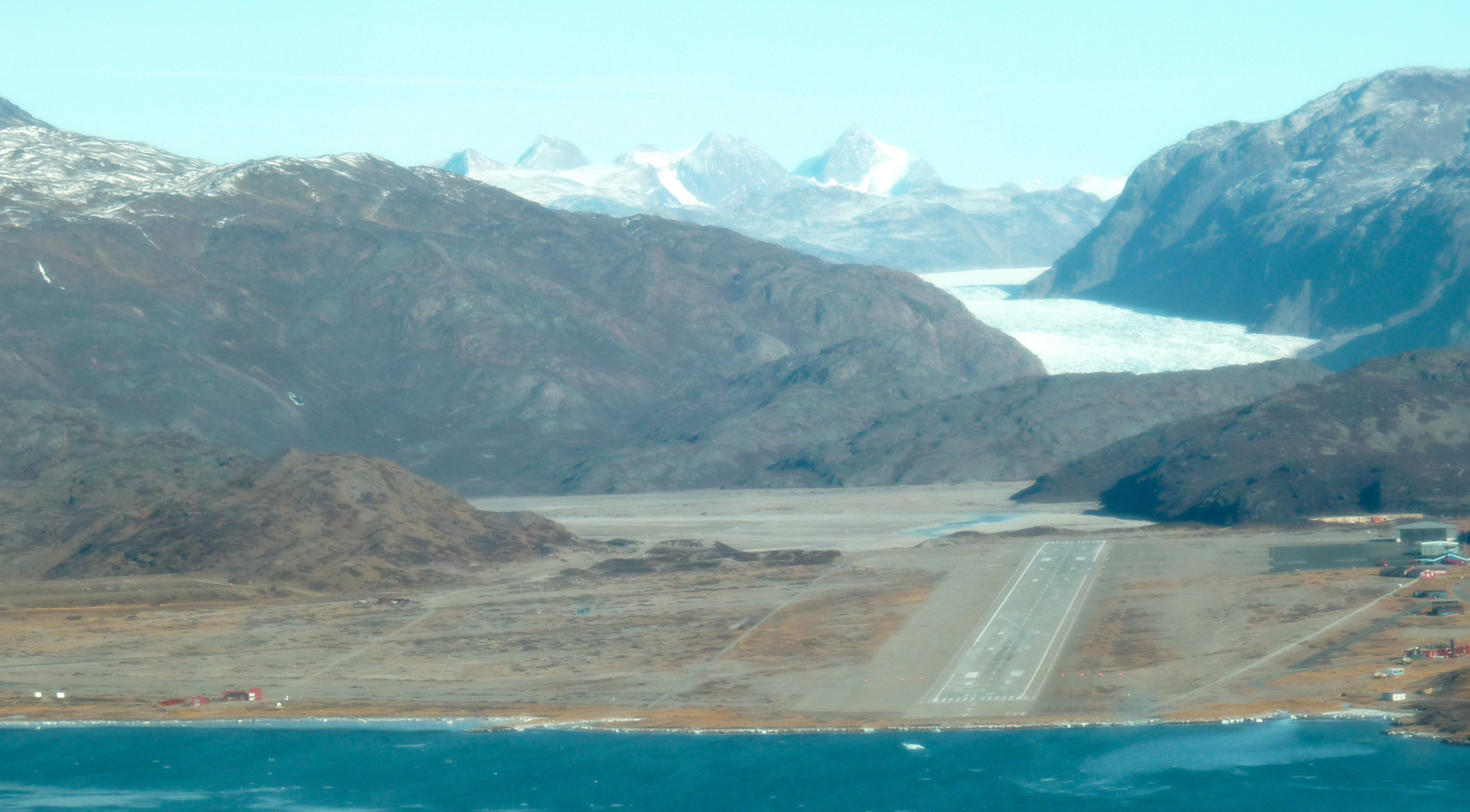
Next question, then: most expensive? Narsarsuaq, at $5.65 for a gallon. Why so much more? Primary reason: getting the fuel to BGBW is an awful lot harder than getting it to BIKF. The rest is down to the difference in government tax policy.

Fuel price is of course not the only tech stop or diversion consideration on the North Atlantic, but given that security, safety, and service quality is pretty much equal across the entire NAT region, it’s an important factor – along with the cost of handling.

If you look at the snapshot above, you can see that your G550 will cost around $1685 including Airport Fees; taking a B787 to KEF will run around $4300 all in.

The North Atlantic Plotting Chart has all this information for all the common North Atlantic ETOPS/Diversion Fields – namely: CYYT/St Johns, CYQX/Gander, CYJT/Stephenville, CYYR/Goose Bay, CYFB/Iqaluit, BGSF/Sondrestrom, BGBW/Narsarauq, BIKF/Keflavik, EGPF/Glasgow Intl, EGAA/Belfast, EINN/Shannon, and LPLA/Lajes.
Download NAT Plotting Chart


Take a close look at this chart. Notice anything strange?

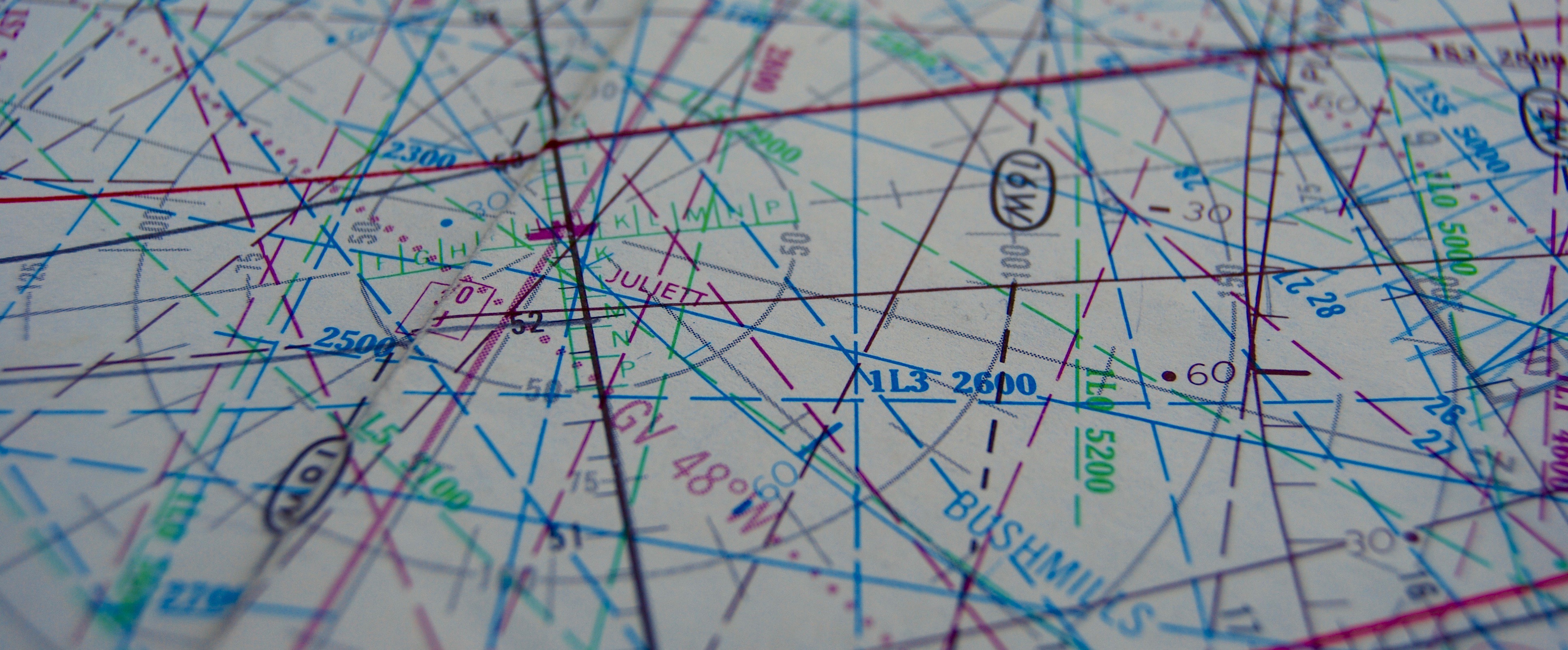
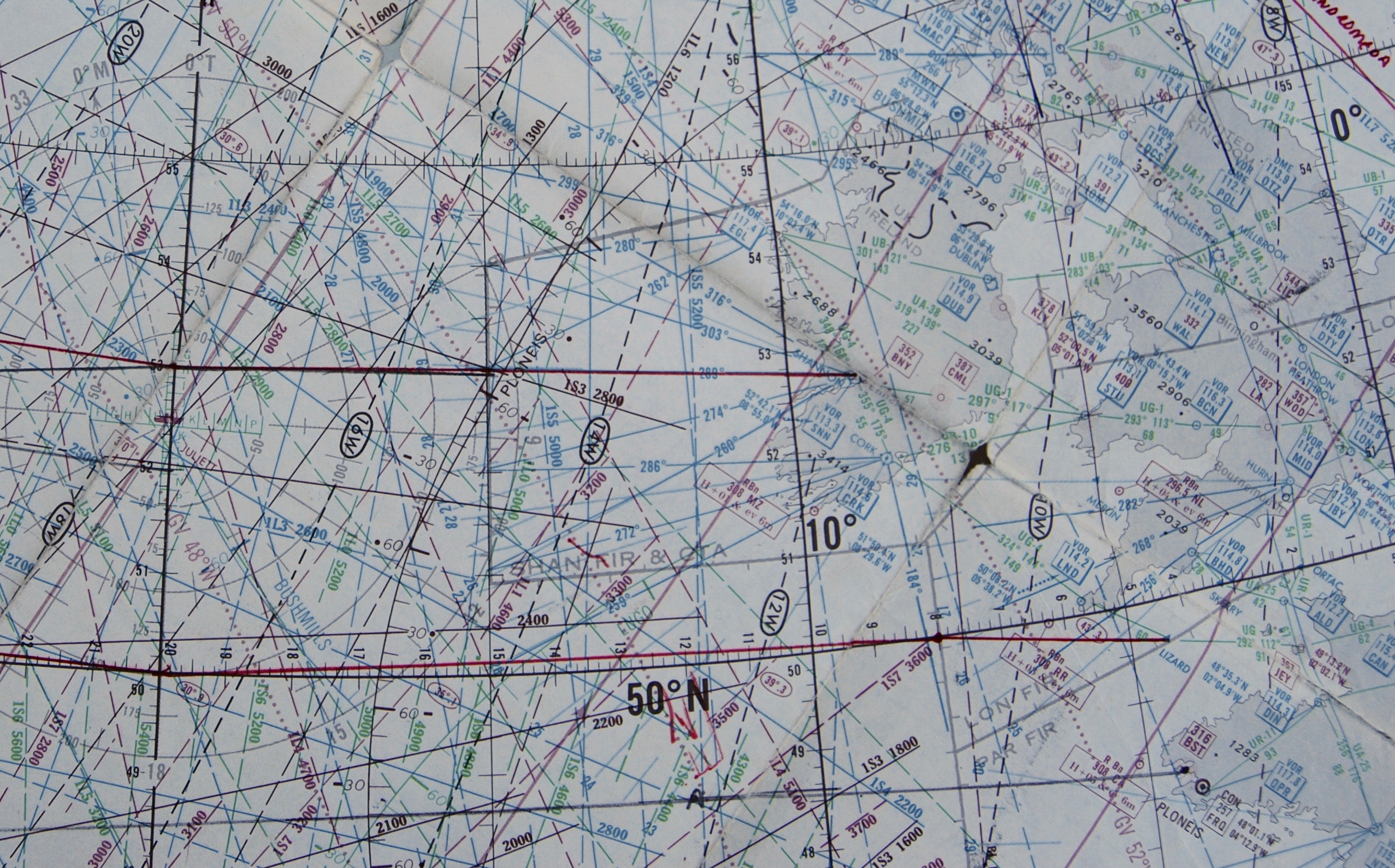
On second thoughts – let’s ask another question, that might be easier: Notice anything familiar? I’ll venture a guess: probably not. This is a North Atlantic Plotting Chart from the 70’s (hauled out of the Flight Service Bureau archives), and it’s the area just west of the Shannon FIR, at 20W. Busy place, back in 1973.

So what are we looking at, exactly? Most of the coloured lines are LORAN lines (dashed ones indicating the station is only receivable at night); but there is also a range ring for the BUSHMILLS (MWN) Consol Navigation Station on the North coast of Ireland (long since gone).

Shannon FIR 1973

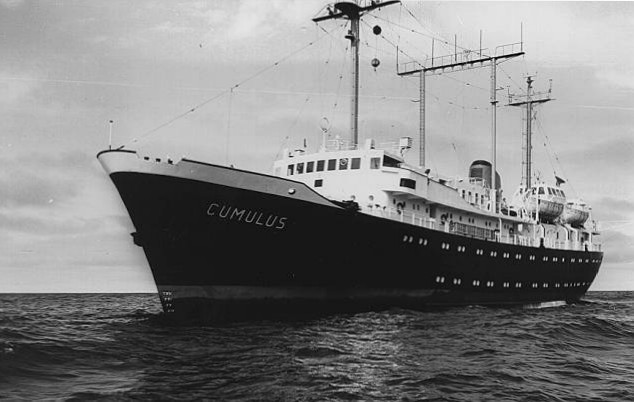
Most interesting is the waypoint marked JULIETT. It’s 52’30N and 20W: Officially known as an Ocean Station Vessel (OSV), this was a Weather Ship operated by the UK and the Netherlands and permanently in position. It was used back in those days to take regular radiosonde readings, collect weather reports, act as a radio beacon (NDB on 370Khz), and provide Search and Rescue (SAR) cover.

There were 10 such ships on the Atlantic; A through E operated by the US coast guard; and I through M by the Europeans.

cumulu11-1

Howard Cox, in “Ocean Weather Ships”, writes: “Light aircraft were reasonably frequent ‘visitors’ on their delivery flights to the UK or Europe. Without exception there was always something not working –VHF but no HF or vice versa, no heating, no DF and so it went on. I remember one occasion when we were on Juliet when we were requested by Shanwick Oceanic Control to keep the ships navigation beacon on continuously and to keep a continuous radar watch on from a certain time. An aircraft being ferried to Europe via the UK had taken off from Gander and lost his radio compass before he had even reached the US Coast Guard cutter manning Ocean Station Charlie.”

Cox continues, “They had brought him over the top of them using their radar, ‘set’ the radar beam in the direction of Juliet and guided the pilot as far as they could along the beam till out of range. We did likewise when he reached our part of the ocean, setting the beam in the direction of Shannon Airport in Ireland and guiding him along that until he passed out of range. In the meantime Shannon did the same when he got in range of them. He was lucky, he made it, crossing the Atlantic courtesy of three radars!”

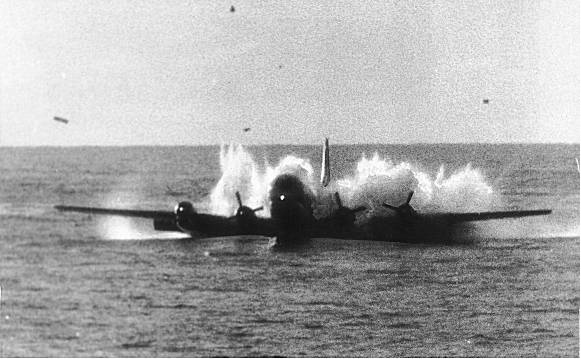
The value of the SAR function of these ships was proven in the Pacific 1956, when about 1200 miles west of San Francisco Pan Am flight 6 ditched after a double engine failure with no fatalities; all 44 people on board survived thanks to Ocean Station November, which is where this photo was taken from.

561016PanAmDitches-3

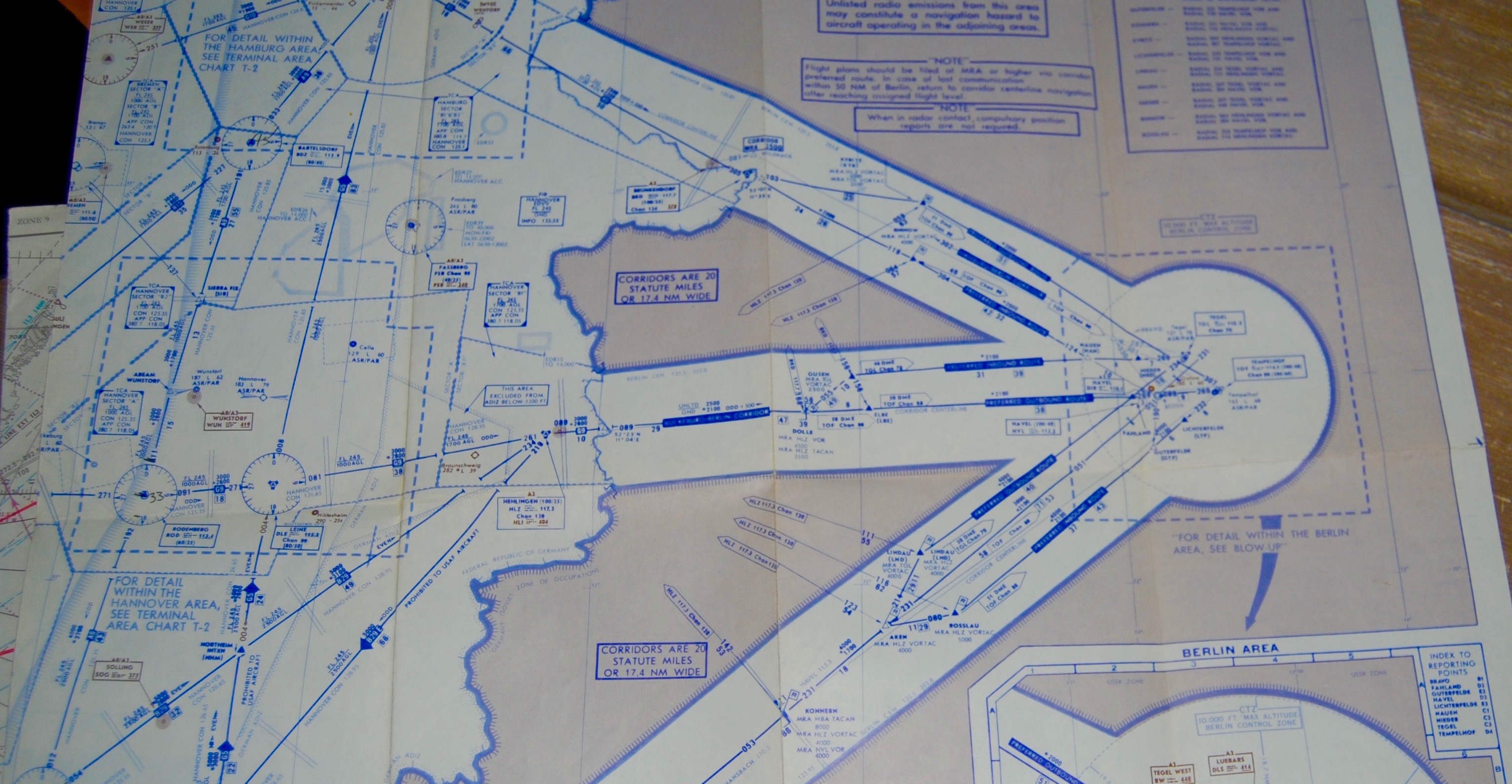
Our next look at old charts will be this one from the Cold War, showing a very distinctive three-corridor system of entry and exit to ….

Pankow


Overflight Risk – North Korea, Australian strike: Midweek Briefing 23MAR

Australian Airport Strikes cancelled 23MAR Australia had been set up for a week of Airport Chaos over the Easter Break, with Border Protection and other government services planning a huge list of strikes – but the events in Belgium yesterday prompted an announcement this morning that the strike is cancelled. Read the full article.

North Korea overflight getting riskier 23MAR Over the last fortnight, North Korea has been launching short and medium range missiles like they are going out of style. Nobody in Pyongyang has any intention of aiming them at civil airliners, but the objective is not where the risk lies. Read the full article.


EBBR/Brussels Remains closed until 0000Z on 24MAR, at earliest. If operating to Europe, expect increased security, checks, and delays not just in Belgium but across the continent. ANSP’s and AO’s are invited to join an ad-hoc teleconference organized by Eurocontrol NMOC at 1100Z today. For the log-in procedure, please refer to the Crisis portlet in the protected NOP.

HKNW/Nairobi Four British nationals were arrested on 21MAR for taking pictures of aircraft at Wilson Airport (HKNW/WIL). The detainees have been ordered to pay 2,000 USD or face up to a year in prison.

VHHH/Hong Kong is taking a close look at Airlines and AO’s that depart outside their allocated slot times. Airport capacity is critical and the Airport Company has said they will restrict operators seen to be abusing slot times – the official guideline is departing more than 15 minutes outside your slot window is frowned upon. Have a read of AIC 02/2016 – plenty of background information there if you operate regularly.

KZZZ/USA Thanks to Lee I. for this update – The FAA has now activated 11 of the planned 56 Airports offering CPDLC-DCL. Next up are KTEB/Teterboro and KLAS/Las Vegas on 28MAR.

MDZZ/Dominican Republic Business visitors and tourists who extend their stays beyond 30 days are now subject to an exit fee.

ZKPY/Pyongyang On 21MAR, at approximately 1519 local time (0619 UTC), North Korea launched several missiles into the Sea of Japan. South Korean media reported that the missiles landed approximately 125 mi/200 km from the North Korean city of Hamhung. U.S. military officials stated that they were monitoring the situation with a heightened defense posture. The North Korean military conducted the launch in response to ongoing military exercises between U.S. and South Korean troops.

Zika Virus The Centre for Disease Control (CDC) has listed the ZIKA virus as an “Alert Level 2”. You can find more details on which countries are specifically affected through the CDC website. The CDC has recently added Cuba to the list of affected countries.

URRR/Rostov Airport operational again following crash of B738 on 19MAR.

ZSSS/Shanghai will host ABACE2016 on 12-14APR at Shanghai Hawker Pacific Business Aviation Centre (BAC). Shanghai has two airports of entry (AOEs) – ZSSS and Pudong (ZSPD). Both require airport slots (and have general aviation (GA) departure curfews in place 0700-0900 local). While ZSPD operates 24 hours, ZSSS has night curfews in effect 0001-0559 local. It’s only possible to obtain one slot, at either airport, during peak hours of 0900-2200 local. Also, by regulation, aircraft aren’t permitted to reposition from ZSPD to ZSSS, and vice versa. ZSSS has a fixed-base operator (FBO), while ZSPD doesn’t. Parking is limited to a maximum of three days at ZSSS but is generally unrestricted at ZSPD. Drive time between the two airports ranges from 45 to 60 minutes, depending on traffic (Thanks Sheng Young for this info).

SZZZ/Ecuador The Sangay volcano, located between the provinces of Chimborazo and Morona Santiago in the Andean and Amazon regions has shown increased activity as of 05MAR, with small explosions and tremors. Some ash flow has been observed towards the south. Please check the VAAC for further details.

GVNP/Cape Verde on 12MAR, 6 members of a TAAG Angola Airlines crew were targeted in an attempted armed robbery in Praia, Cape Verde. Reports indicate that assailants opened fire on the bus that was transporting the crew from GVNP/RAI to a hotel in Prainha. The bus driver was able to elude the attackers, and there were no injuries.

PLCH/Christmas Island has no JetA1 until 17APR. Elsewhere in the Pacific, PKMJ/Majuro has no fuel 21-25MAR, and PTPN/Pohnpei is out of supply until 28MAR.

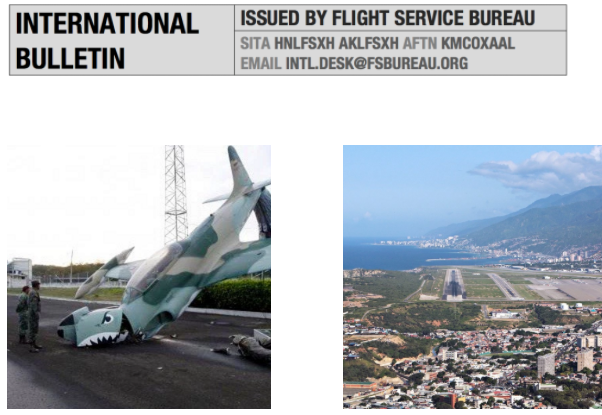
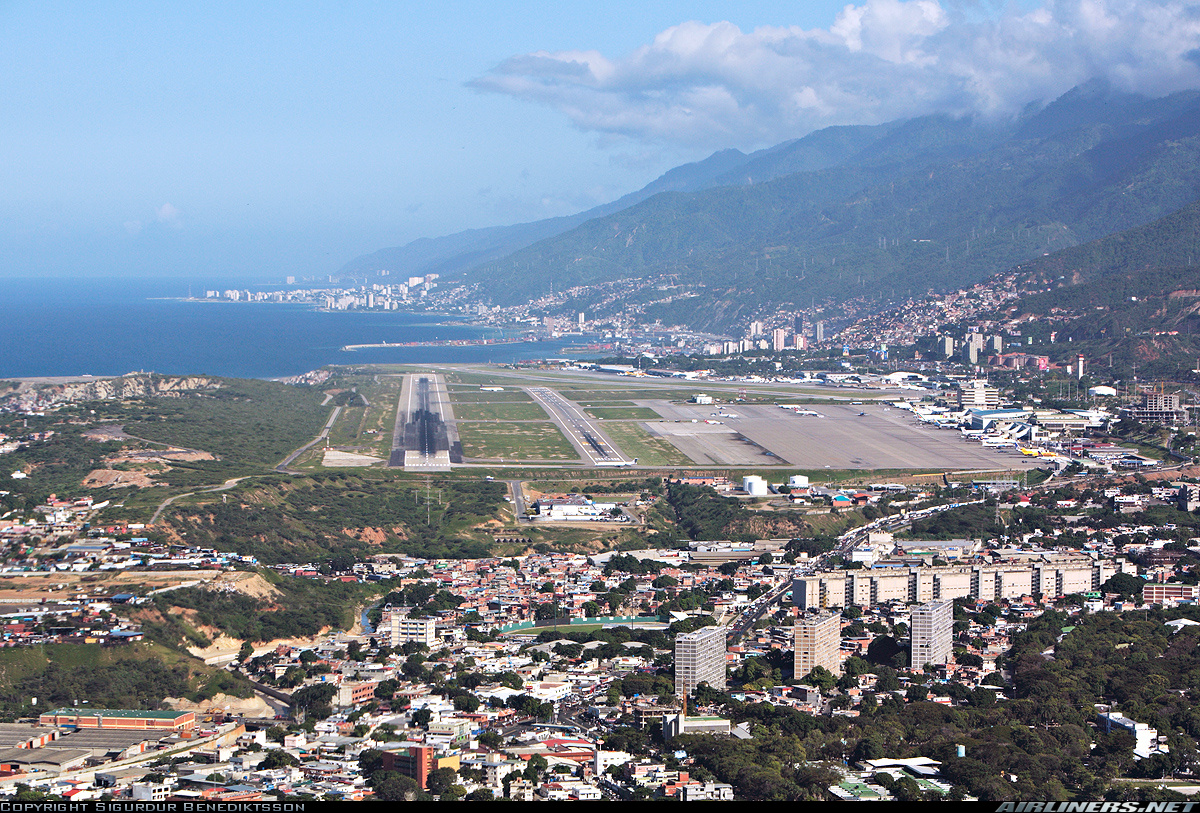
SVMI/Caracas On 19MAR, assailants on a motorcycle shot a man who had recently arrived on a flight from Germany – while resisting a robbery attempt as he was walking along an outside corridor near a terminal at Caracas’ Simon Bolivar International Airport (SVMI/CCS).


View the full International Bulletin for 23MAR2016


North Korea overflight getting riskier

Update: FSB removed North Korea warnings on May 14, 2018

The annual posturing between the DPRK (North Korea), and the US/South Korea, follows a fairly regular pattern each year. The cycle involves escalating threats (by both sides), a cooling off process, a long period of nothing, and then a resumption of threats. History tells us that there is nothing to fear, because this is always the way it works on this peninsula, but then a slightly less micro view also tells us that we don’t always make the correct risk assessment.

Prior to MH17 (B777 shootdown, Ukraine), our view of missiles in the commercial aviation community was a little casual.  Post-incident, the rule of ‘overflights are safe’ as a standing principle was removed,  and suddenly a whole lot more interest was applied to what was going on underneath the airways, even if we were up at FL350.

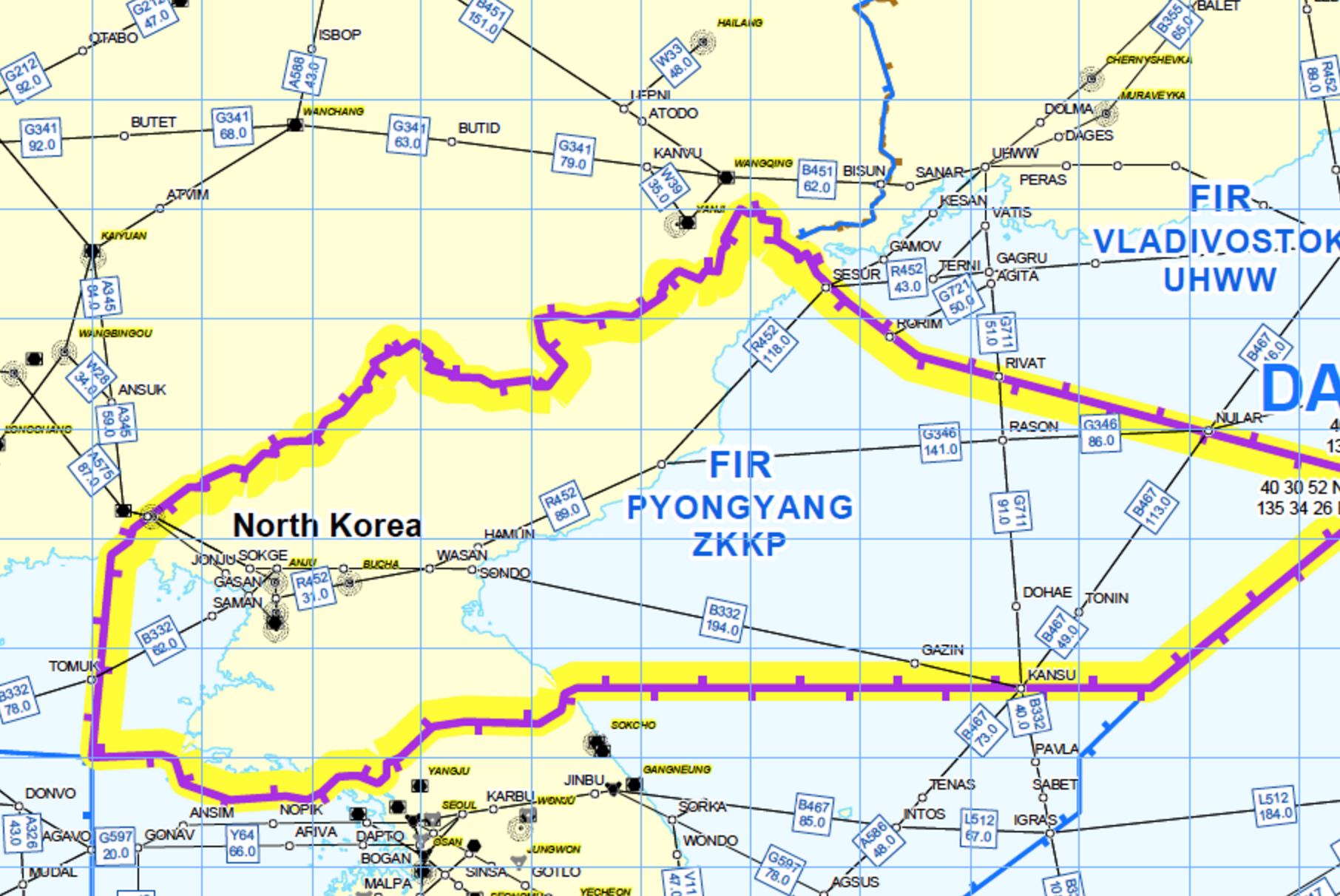
In specific terms, over the last fortnight, North Korea has been launching short and medium range missiles like they are going out of style. Nobody in Pyongyang has any intention of aiming them at civil airliners, but the objective is not where the risk lies. Late last year when Russia fired 30+ missiles into Syria, at least 5 of them went off course (including way above where they should have flown).

This wayward tracking is the greater part of our concern, for all flights within the Pyongyang FIR (ZKKP). Most international overflights are using the North-South airways over water to the east of the landmass, and it’s worth considering that the missiles launched in the last week have been directed out over the sea in this direction (not coincidentally in the direction of Japan, who isn’t on the DPRK Christmas card list either).

US Operators are in any case restricted by SFAR79, but everyone else should be keeping a close eye on their North Korean overflight plans. (If this hasn’t put you off, you can read the full North Korea overflight permit requirements).

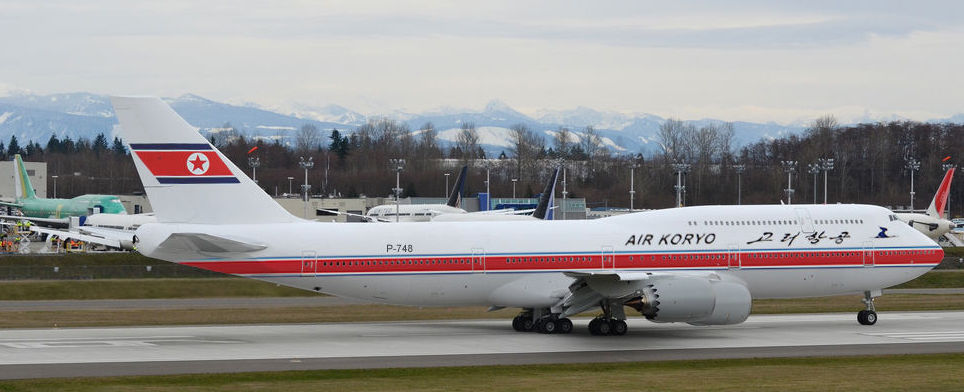
Air Koryo B747-8


Australian Airport Strike cancelled

Announced this morning, Wednesday 23MAR: Australia had been set up for a week of Airport Chaos over the Easter Break, with Border Protection and other government services planning a huge list of strikes – but the events in Belgium yesterday prompted a cancellation of the strike.

Some airport staff have already been engaged in stop work action at airports in Cairns, Townsville, Perth, Darwin and Adelaide as part of the two-year battle over pay and conditions.

Bigger disruptions were anticipated tomorrow when staff at major international airports in Sydney, Melbourne and Brisbane were going to mount a 24-hour strike starting at midnight.

Earlier today Prime Minister Malcolm Turnbull urged the Community and Public Sector Union to reconsider, following the attacks in Brussels. The union has now confirmed it has instructed staff not to strike, and attend work as normal.

According to a statement, National Secretary Nadine Flood said the decision was made after the Prime Minister’s comments. Earlier Mr Turnbull told Channel 7 he had been assured that there would be adequate security at the airports, but he pressured the union to retract its plans.


Join our writing team!

Your interest in International Flight Ops is likely as strong as ours, and much as we want to keep you informed and engaged on the most relevant changes and topics – it’s sometimes hard! So, we thought we’d add a couple of guest writers to our blog.

Do you want to join in? It’s pretty easy – you’ll get a login and can create your own articles that will be published to our blog readers.

  • You get a login to our blog site (25,000 readers)
  • Write an article about an International Ops topic that you genuinely care about or are strongly interested in
  • Add in the most relevant links and photos, and you’re done!

Keen? Email us at bulletin@fsbureau.org


Midweek Briefing: High Seas Airspace, Canada New Entry Rules

High Seas Airspace – near misses 16MAR The Baltic Sea (Scandinavia) is seeing an alarming rise in traffic proximity events, and ICAO has issued guidance to operators with background and information. Military flights operating under ‘due regard’ are, well – not. Read the full article about High Seas airspace.

Canada New Entry Rules – relaxed 16MAR The new Canada Entry Rules – requiring most visitors to have an eTA before departing – came into force yesterday; with a caveat. In short: you should have one, but it’s OK if you don’t – at least until September 2016. Read the full article.


Cxxx/Canada The new Canada Entry Rules – requiring most visitors to have an eTA before departing – came into force on 15MAR; with a caveat. In short: you should have one, but it’s OK if you don’t – at least until September 2016. Read the full article.

Cxxx/Canada Effective 30MAR, Canadian rules will no longer require an approach completely independent of GNSS at the planned destination. However, where a GNSS approach is planned at both the destination and the alternate, the aerodromes will need to be separated by a minimum of 100 NM. Refer AIC5/16.

Baltic Sea Based on several concrete examples of missing flight plans, the Russian Federation, Finland and Estonia agreed to define 7 new waypoints for State aircraft operations over the High Seas that could be used, to replace the current string of LAT/LONG coordinates, to facilitate all future FPLs between St. Petersburg FIR and Kaliningrad FIR. The ICAO Secretariat assigned the following 5LNCs: PISIS-PIDINPISIM-PIRUX-PINIX-PIVAX-PIPOM. All involved States (Russian Federation, Estonia, Finland and Latvia) agreed to implement/publish these waypoints (all over the High Seas), for the 30 MAR 2016 AIRAC date. Read the High Seas Airspace article.

North Atlantic CPDLC and ADS-C services will be out of service in Gander, Shanwick, Shannon and Reykjavik FIRS on 21MAR for periods lasting no longer than a few hours due to Inmarsat satellite replacement work. Please check the FIR NOTAM’s that pertain to your operation that day.

Kxxx/United States Due to a missile launch from within Miami Airspace the FAA has issued NOTAM A0366/16 to advise of the potential impact to operations with KZMA, KZWY and TJSJ FIRs from March 16 to March 17th. Please check the NOTAM for full details on all the possible routing constraints.

LTXX/Turkey NATO has begun surveillance within the Turkish FIR as part of assurance measures for Turkey. The first duty period was 12-15MAR.

Time Changes Clocks go forward/back depending on whether you’ve just had a long winter or a long summer. The US changed on 13MAR, most of Europe is on 27MAR, Australia and NZ on 03APR. TimeandDate.com has a very useful list.

KTEB/Teterboro A new Charted Quiet Visual Runway 19 visual approach will be published on 31MAR. Starting 04APR, the FAA will test the procedure for 180 days to gauge pilot compliance and environmental impact to determine if the procedure will become permanent.

YMML/Melbourne will host the Formula 1 Grand Prix 17-20MAR, with additional traffic to both YMML and YMEN/Essendon during these dates.

KATL/Atlanta Officials in Atlanta are laying the groundwork for an expansion of the world’s busiest airport. Work will begin soon on a $6 billion expansion and renovation project at Hartsfield-Jackson Atlanta International Airport. Workers will update the domestic passenger terminal and concourses, and add a sixth runway and a hotel. Work begins on concourse renovations later this year.

Lxxx/Austria has issued AIC 4/16 outlining the near future use of more direct Free Route Airspace.

Oxxx/Iran The U.S. State Dept issued a Travel Warning to reiterate and highlight the risk of arrest and detention of U.S. citizens, particularly dual national Iranian-Americans, in Iran, and to note that FAA has advised U.S. civil aviation to exercise caution when flying into, out of, within, or over the airspace over Iran.

NVVV/Port Vila Runway 11/29 will be closed from 16MAR at 1300Z until 17MAR at 1930Z for maintenance. This essentially closes the airport during the time period.

Yxxx/Australia A reminder that Easter travel could be severly disrupted with Border Force and Immigrationstaff at international airports across Australia planning to take strike action on the eve of Good Friday.

UIBB/Bratsk Don’t go. No fuel. Until 31MAR.

View the full International Bulletin 16MAR2016


High Seas Airspace – What is it?

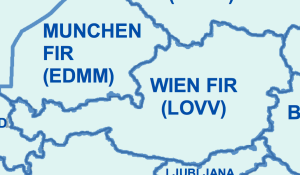
Austria might have the worlds most perfect little piece of airspace. Wien (Vienna) FIR matches the countries’ political boundaries perfectly. There is no ocean, no disputed boundaries, and no delegation of ATC.

Wien FIR

For most others, it’s not as straightforward. For some, it’s beyond complex.

So how do countries determine what their airspace looks like? Airspace overhead the actual landmass belongs without question to the country, so that’s easy.

Then, from the shoreline out to 12nm are the Territorial Waters, as agreed by the UN Convention on the Law of the Sea in 1982 – giving us “Territorial Waters Airspace”.

The next chunk is the 12nm-200nm area – the Exclusive Economic Zone. In aviation, this sometimes has an effect on whether prior permission in the form of an Overflight Permit is required – Peru and Ecuador have in the past claimed this requirement. Beyond this, International Waters exist.

In aviation, the term of reference has become High Seas Airspace, and is taken to refer to anything outside the 12nm buffer where no country has sovereign jurisdiction over airspace. By international agreement, chunks of airspace are assigned to individual countries to provide an ATC service, because we prefer to have ATC watching us and providing separation, in comparison to trying to do it ourselves using 126.9 and TCAS.

As has been recently the case over the Black Sea, that agreement isn’t always unanimous, and ICAO sometimes has to tread a difficult political line in assigning their preferred responsibility – last month Ukraine opened up routes in “High Seas Airspace” that Russia also wanted to have a crack at managing.

The Baltic Sea has long been a generator of news stories of close encounters with the Bear (Tu-95), this is because of the multitude of small chunks of High Seas Airspace that allow flights out of Russia towards the UK and Europe. ICAO is concerned at the rising incidences of conflict between civil traffic (that’s us) and military flights over the Baltic.

These military flights operate under Due Regard – but often don’t file flight plans and ATC know nothing about them until they are pretty close to you. You’re unlikely to see them on TCAS either. So, that regard is not so high.

We’ll continue the next time with a look at “No FIR Airspace” – those chunks of High Seas airspace where nobody is in control, mysteriously marked “XXX” on our charts.


Why we have a “Now” Page

Internet rulebook: Flashy is better. Make it polished, add images, video, a quote, and wrap it up with some ads. Sometimes (often, mostly?) – that’s a tedious way to get through simple information. It’s a clear message that the reader isn’t being put first.

Most websites have an “About”, and a “Contact us”. But what is that person, or that company doing now? Would it be useful to have a “Now” page? We thought it might be, and we also thought the simpler, the better.

So, we added one, and you can see it at fsbureau.org/now.


Midweek Briefing: Australia Airport Workers Strike, ICAO Toughens Aircraft Tracking

Australia Airport Workers Strike 09MAR The Community and Public Sector Union (CSPU) announced the possibility of a strike during the week of 21 March, as well as three weeks of rolling airport strikes by Border Force and Immigration Department staff at international airports across the country. Airport staff members are expected to begin a work stoppage on 24 March, to coincide with the Easter holiday weekend, and will walk off the job at airports, freight terminals and other related sites. The work stoppages will be held to protest wage freezes and work conditions. Further details are likely to emerge closer to the strike.

ICAO Toughens Aircraft Tracking while in distress 02MAR The ICAO has announced new requirements for the real-time tracking of civilian aircraft in distress, following the disappearance of Malaysia Airlines flight MH370 two years ago. The ICAO’s governing council approved proposals for planes to carry tracking devices that can transmit their location at least once a minute in cases of distress. Aircraft operators will have to ensure their flight recorder data is recoverable, while the duration of cockpit voice recordings is being extended to 25 hours, ICAO said in a news release. These changes will take effect between now and 2021.


United States Visa Waiver Program Passport Requirements Take Effect April 1. Visa Waiver Program (VWP) travelers must present an e-Passport containing a biometric chip in order to enter the United States visa-free after March 31, 2016.  VWP travelers who do not hold an e-Passport should apply for a new passport as soon as possible to ensure that they can continue to use the program without interruption. The e-Passport requirement applies only to VWP travelers; it does not affect holders of U.S. visas.

Canada Electronic Travel Authorization Deadline Relaxed It has been announced that visa-exempt nationals who plan to enter or exit and re-enter Canada by air will be able to board their flight without an Electronic Travel Authorization (eTA) from March 15, 2016 until fall 2016.

India has extended its e-Tourist Visa program to applicants from 37 additional countries. Also, the visa-on-arrival program for certain Japanese nationals who are unable to apply for a regular or electronic visa has been relaxed to allow multiple visits per calendar year. Lastly, the deadline for Person of Indian Origin card holders to apply for the Overseas Citizen of India card in lieu of Person of Indian Origin card has been extended until June 30, 2016.

Ecuador The Ecuador’s Geophysical Institute reported that the Tungurahua volcano has experienced a series of eruptions. Pyroclastic flows and fallen ash have collected near the crater. During past eruptions, the volcano’s clouds of ash have disrupted flights to major airports in the region.

KZWY/New York Oceanic has issued NOTAM A0105/16 advising restrictions to routings in the WATRS PLUS area due to the (QVR) Oceana Radar being U/S on March 9th and March 10th between the hours of 14-22Z. The restrictions are issued as follows:

Northbound: L453 will be closed.

Southbound: M201 will be clsd btn int atugi and hanri.

Only aircraft equipped with operational ADS-260B out may use the following routes:

Southbound: L453 between LEXAD and ONGOT

North-eastbound: M201 between HANRI and ATUGI

All ADS-260B out aircraft must file an icao flight plan.

UIBB/Bratsk issued a NOTAM restricting the arrivals to only scheduled services due a fuel shortage until March 31st.

PKMJ/Majuro (Marshall Islands) Monthly tanker replenishment is planned for Mar 21-25. During this time, fuel will not be available.

VTSP/Phuket,Thailand has issued a NOTAM advising that the parking of private aircraft is prohibited overnight until April 25th.

Nigeria has experienced a country wide fuel shortage. Please check with your handler ahead of time to ensure fuel is available. Tankering is highly recommended until further notice.

LCCC FIR/Nicosia FIR Late notification of a military exercise in LCCC ACC starting on 09/03/2016 0300 UTC until 11/03/2016 1000 UTC. Exercise areas and route closures announced by following NOTAMs:

A0191/16 through A0196/16, A0208/16 and A0209/16 for area specifications. A0215/16 through A0220/16 for the route closures.

Please see the following graphic outlining the area:

Military Exercise Cyprus

View the full International Bulletin 09MAR2016


Midweek Briefing:EU Border Controls Expanded, New NAT Plotting Chart published

EU Border Controls expanded 02MAR Travellers and crews operating to Denmark, Belgium and other EU countries will need to present travel documents to enter from another Schengen country. The security checks will likely cause travel delays for EU and non-EU travellers into the Schengen area.

New NAT Plotting Chart published 02MAR With the multitude of changes on the North Atlantic in the last few months, including new Tracks, end of MNPS, new HLA, RNP4 – we have published an updated and revised Plotting Chart for the NAT region, showing all new requirements and with updated Airport and Fuel pricing. It’s effective 03MAR.


VOXX/India has expanded its e-Tourist Visa (eTV) program to applicants from 37 additional countries. Eligible visitors under the eTV include business visitors and those traveling to sightsee, visit friends or relatives or to make short medical visits. Nationals from a total of 150 countries are now eligible for the program.

EXXX/Europe Due to the introduction and continuation of border controls in the European Union, travellers to Denmark, Belgium and other EU countries will need to present travel documents to enter from another Schengen country. The security checks will likely cause travel delays for EU and non-EU travellers into the Schengen area. Belgium has instituted border controls at its borders with France. The security checks will remain in place until at least 23MAR.

KTEB/Teterboro will close 0500-1700Z (12 hour closure) this weekend – from midnight Saturday until noon Sunday. This closure is necessary to install new, mandatory hold short signs on Runway 19, which will close the runway intersection. Helicopter operations will be permitted during the closure.

HKXX/Kenya A visa on arrival is now available again at Nairobi, reversing the previous procedure established last year forcing all visitors to obtain one prior to flying. Online visas are still available. http://evisa.go.ke/evisa.html

NFXX/Fiji As of 25FEB, there are 42 confirmed deaths in Fiji due to the damage caused by Cyclone Winston, which made landfall over the 20-21 February weekend. Approximately 35,000 people are sheltering in evacuation centers. There has been little to no contact with remote islands; therefore, the number of casualties and people displaced is likely much higher. Concern about the outbreak of mosquito-borne viruses, such as Zika and dengue fever.

WAXX/Indonesia Australian DFAT updated its travel advice for Indonesia, which reads: “We advise you to exercise a high degree of caution in Indonesia, including Jakarta, Bali and Lombok, due to the high threat of terrorist attack. We continue to receive information that indicates that terrorists may be planning attacks in Indonesia”

SKXX/Colombia is introducing ADS-B, with associated new phraseologies that crew should be aware of. ATC may ask “Notify capacity ADS-B”; response “ADS-B transmitter”, “ADS-B Receiver”, or “Negative ADS-B”. Full AIC.

LOWW/Vienna has a couple of new RNP AR (Authorisation Required) approaches to RWY 16 and 34 on test.

LIXX/Italy is joining the Free Route Airspace (FRA) bandwagon, airspace trial this coming weekend 05-07MAR at FL370 and above in Roma, Milano, Padova and Brindisi ACC, and Malta ACC.

UKXX/Ukraine Did you know that there was reduced horizontal separation in Ukraine airspace (RHSM)? Neither did we. Check out AIC 02/16.

UIBB/Bratsk has fuel supply issues again, current shortage until 31MAR.

View the full International Bulletin 02MAR2016


World’s longest flight? That’s about to change …

So what is the longest scheduled air route in the world at the moment? If you said Panama-Dubai, you’d be right – but only for a few more days. As things stand, the PTY-DXB route, all 7463nm of it, takes on average 17 hrs 30.

With the introduction of the Boeing 787, the number of routes around the 7000nm mark is steadily increasing, to the point that we’re probably going to have to stop calling them “Ultra Long Haul Routes”. They are becoming the new norm. United are operating a SFO-SIN route with the 787-9 at 7339nm, and LAX-MEL at 6905nm.

From March 1st, the longest route in the world will become Auckland-Dubai, operated by Emirates with a B777-200LR. The leg distance is 7668nm, and westbound this will be around 17 hrs 15. Use of the AUSOTS Track System and extension of UPR’s (User Preferred Routes) into the New Zealand FIR has allowed this route to work, so that UAE can select the optimum wind routing for much more of the flight.


Midweek Briefing: New Wake Turbulence Categories, Fiji Cyclone Winston

New Wake Turbulence Categories 24FEB New Wake Turbulence Categories will begin a slow introduction in Europe on 22MAR at Paris Airports LFPG/De Gaulle and LFPB/Le Bourget, where the current four (Light, Medium, Heavy, Super) will become six. Those six new categories are Light, Medium (with Lower and Upper), and Heavy (with Lower, Upper and Super). Read the full article …

Fiji Cyclone  Winston 24FEB Fiji sustained widespread damage throughout the Islands on 21FEB from Tropical Cyclone Winston; most airports are open and operating again, including all international airports (NFFN/Nadi, NFNA/Suva). The following domestic airports are also open: Kadavu, Labasa, Rotuma, Labasa, Rotuma, Gau, Kadavu. NFNA/Suva has no overnight parking available at present due to congestion caused by the Relief effort.


NFFN/Nadi, Fiji Hit by Tropical Cyclone Winston on 21FEB, while there is widespread damage throughout the Islands, most airports are open and operating again, including all international airports (NFFN/Nadi, NFNA/Suva). The following domestic airports are also open: Kadavu, Labasa, Rotuma, Labasa, Rotuma, Gau, Kadavu. Note that NFNA/Suva has no overnight parking available at present due to congestion caused by the Relief effort.

KAGS/Augusta, USA Special Procedures in place 07-10APR for US Masters Golf Tournament.

EXXX/Europe New Wake Turbulence Categories will begin a slow introduction in Europe on 22MAR at Paris Airports LFPG/De Gaulle and LFPB/Le Bourget, where the current four (Light, Medium, Heavy, Super) will become six. Those six new categories are Light, Medium (with Lower and Upper), and Heavy (with Lower, Upper and Super). The rules are part of the RECAT-EU project, with the intention of squeezing more traffic into busy European Airports by applying more precise turbulence separation rules. The separation minima are determined specific to each Aircraft Pair. For example, at the moment, an A330 following a B777 (Heavy behind heavy) requires 4 miles in trail. With the new rules, that is reduced to 3nm. An A320 can now follow 4 miles behind a B777, instead of the current 5nm. There are no Flight Planning Changes (continue to use /L,M,H,J for the ICAO Category). For crews, you’ll notice the smaller separation, but there are no changes to callsigns or pilot obligations – for now. Read full article.

DRRR/Niamey FIR Air Traffic Control 48HR strike 24 and 25FEB. The ASECNA Contingency plan is activated, with ATC provided by neighbouring ACC’s Dakar and N’Djamena.

LTXX/Turkey We have received several reports that Overflight Permits, which were removed as a general requirement for non-scheduled flights in 2015, are being requested by Turkey for Business Aviation aircraft, specifically M- and VP- registrations. Reports welcomed to clarify to bulletin@fsbureau.org.

RCTP/Taipei Airport works on several parking positions may create availability issues from 04MAR-04APR especially for Airbridge gates. Check with handler.

LFPB/Paris Le Bourget Due WIP airport will be closed during 10 nights from 15FEB to 26FEB, every night from 2045 to 0500Z. No Medevac flights will be possible.

EPKK/Krakow Runway 07/25 is closed daily 2330-0430 until 03MAR.

UXXX/Simferopol FIR EASA published an updated SIB 2015/16 regarding the use of Simferopol FIR on 17FEB. The key change is the phased reintroduction of the use of Simferopol FIR for international transit traffic, on the basis of an evaluation of the high seas portion of the airspace (ie. outside the 12nm territorial limit of the Crimean Peninsula). This airspace provides routes UL851 and UM856 (Odesa South Sector), which since 17FEB are suggested by EASA for use by overflying traffic.

YMML/Melbourne will host the Formula 1 Grand Prix 17-20MAR, with additional traffic to both YMML and YMEN/Essendon during these dates.

EHAM/Amsterdam has changed the callsign of Schiphol Start-up to “Schiphol Planner”.

OYAA/Aden, Yemen Airport closed and all flights cancelled since 21FEB due to security concerns.

NVVV/Port Vila On 17FEB local officials signed an agreement with a private contractor to begin repairing the runway. Several airlines suspended flights on 23JAN due to safety concerns with the airport’s runway. Aviation officials stated that the renovations should begin in March.

View the full International Bulletin 24FEB2016


Caution Wake Turbulence: New Rules for the EU

What Wake Turbulence Category is a B757? That long favoured question by Dispatch Trainers and ATC Instructors will become a thing of the past under new rules slowly being introduced in Europe, where the current four (Light, Medium, Heavy, Super) will become six. The first place you will see this happening is at LFPG/Paris Charles de Gaulle and LFPB/Paris Le Bourget, from 22 MAR 2016.

Those six new categories are Light, Medium (with Lower and Upper), and Heavy (with Lower, Upper and Super). The rules are part of the RECAT-EU project, with the intention of squeezing more traffic into busy European Airports by applying more precise turbulence separation rules.

The separation minima are determined specific to each Aircraft Pair. For example, at the moment, an A330 following a B777 (Heavy behind heavy) requires 4 miles in trail. With the new rules, that is reduced to 3nm. An A320 can now follow 4 miles behind a B777, instead of the current 5nm.

There are no Flight Planning Changes (continue to use /L,M,H,J for the ICAO Category). For crews, you’ll notice the smaller separation, but there are no changes to callsigns or pilot obligations – for now.

New-Wake-Turbulence-Categories-RECAT-EU


Sample-Aircraft-Categories-RECAT EU

 
References:


Midweek Briefing: Residual Disinsection for Italy, New Moscow Airport

Italy  now requiring Residual Disinsection 17FEB In light of the spreading global coverage of Zika Virus cases, countries are rapidly changing rules related to Quarantine and Health. Italy is now requiring residual aircraft disinsection for every aircraft coming from any area, not only Zika affected ones.

Moscow Ramenskoye opens to civil traffic 17FEB UUBW/Moscow Ramenskoye, which previously served as a military airfield, is scheduled to open to civil traffic as an International Airport on 16MAR, becoming the fourth Moscow Airport. Read more … 


UUBW/Moscow Ramenskoye, which previously served as a military airfield, is scheduled to open to civilians as an International Airport on 15MAR2016. The airport will be Moscow’s fourth largest and is expected to serve approximately 1.9 million passengers per year. Russian Railways is planning on constructing a direct rail link between the facility and Moscow. Read the full article.

Worldwide As the mosquito-borne Zika virus spreads worldwide, some health and aviation authorities have begun targeting business aircraft to be treated with insecticide – similar to requirements that have been in place for commercial aircraft arriving from certain points of origin. The most prominent to date is Italy, which has reported several recent cases of the Zika virus affecting people who returned from trips to South America and the Caribbean. A “Certificate of Residual Disinsection” is now required for all aircraft operating in Italy, following recommended WHO and International Civil Aviation Organization Annex 9 procedures. Italy had originally limited the certificate requirement to aircraft arriving from Zika-affected countries, but “within 36 hours that changed” to all countries. Authorities in Costa Rica are requiring that aircraft arriving from affected countries be sprayed on arrival – with crew, passengers and luggage aboard – with an insecticide provided by the local agriculture department.

UADD/Taraz, Kazakhstan has been upgraded to RFF/Rescue Fire CAT9, and with regular international flights starting in June, should have customs available. Maybe become a useful Central Asian en-route alternate.

UKLV/Lviv FIR, Ukraine A new Notam (A0193/16) is issued to extend the ban in Ukrainian Airspace of any aircraft operator registered in the Russian Federation until 09MAY.

NWWW/Noumea has multiple runway (and therefore airport) closures until 25FEB, check Notams carefully if operating.

NZAA/Auckland Work is currently in progress on the threshold of RWY 23L with the threshold inset 2,270m.  The information is contained within AIP updates and not via NOTAM. Operators should note there is are no ILS approaches available at Auckland until 30MAR. While weather is usually very good during February and March operators can expect delays in poor wx.

NZQN/Queenstown is closed from 1800 each day until 31MAR for runway widening works.

AYPY/Port Moresby Telecoms outage continues. To contact ATC Centre
use (675) 325 8704 instead of published numbers. Multiple VHF freqs out of service, use HF 5565 as alternate.

RPHI/Manila has a radar outage on 18-19FEB meaning procedural control will affect the Luzon island area within the FIR, 10/15 minute enroute separation as standard.

Somalia A local terrorist organisation claimed responsibility for the bombing of a Daallo Airlines passenger aircraft on 02FEB shortly after it took off from Mogadishu’s Aden Adde International Airport (HCMM/MGO). The bombing forced the Airbus A321-111 to make an emergency landing at Mogadishu’s airport.

South Africa Refurbishment will affect Johannesburg’s OR Tambo International Airport (FAOR/JNB) beginning 13FEB when security and immigration will move from Terminal A to the Central Terminal. Slow processing expected until end March.

US and Cuba advance Air Service agreement US officials will travel to Havana to officially sign the agreement that will make the two countries a step closer for its first commercial flights. Once the  US-Cuba air travel pact that was agreed upon on 16DEC2015 will be finalized, airlines will have about two weeks to submit applications for US-Cuba routes with the US Department of Transport and get approval from Cuban authorities to obtain space at Cuban airports. Industry experts expect that the first Cuba-bound flights will be in the air sometime in 2016.

View the full International Bulletin 17FEB2016


New Moscow Airport: Ramenskoye

March 16th will see the official opening of UUBW/Moscow Ramenskoye to civilian flights, after a long history of serving as an experimental design base for both military and civil aircraft, with most Russian OKB’s having a base on the airfield.

The main runway 12/30 is 5,402 metres, making it the second longest runway in the world, second only to ZUBD/Qamdo Bamda in Tibet (that one is 5500m).

Ramenskoye will be the fourth International Civil airport in Moscow, and will provide an additional alternative to Sheremetyevo, Domodedovo, and Vnukovo.  It is also known as Zhukovsky, and hosts the MAKS Airshow every two years.

The data: ICAO: UUBW, IATA: ZIA, Runway Length: 5402m, Elevation: 404ft, Operator: Ramport.


Midweek Briefing: New Canada Entry Rules, Winter Storms clear Newfoundland

New Canada Entry Rules 10FEB CXXX/Canada Starting 15 MAR 2016, visa-exempt foreign nationals who fly to or transit through Canada will need an Electronic Travel Authorization (eTA). Exceptions include U.S. citizens and travellers with an existing visa, and commercial aircrew. Read more …

Winter Storms clear Newfoundland 10FEB Nova Scotia and Newfoundland (CYQX, CYHZ, CYYT) have two severe Winter Storms passing through this week; Halifax will see up to 40cm of snow, affecting diversion choices on the North Atlantic. The visualisation above shows the US Winter storm at the end of January.


MKJK/Kingston FIR Jamaica, has ongoing issues with radar coverage and serviceability, leading to ad-hoc flow management procedures including 15 minute en-route separation, and 10 minute arrival separation at international airports. Latest update indicates this will continue throughout February. We have had several reports from international airlines of delays averaging around 1 hour on departure. Further reports welcome to bulletin@fsbureau.org.

SKED/Bogota ACC, Colombia is applying 20 minute spacing for northbound flights heading into Jamaican airspace due to the increasing delays there.

SPIM/Lima FIR Peru have published new Aircraft Interception procedures for Civil Aircraft. Probably worth a look – although, we must warn you, they are in Spanish only, and exceptionally lengthy. Maybe just double check that overflight permit and keep in touch with ATC instead.

North Atlantic As mentioned last week, effective 04FEB MNPS Airspace is replaced by HLA/High Level Airspace on the North Atlantic. A popular topic. RNP4 or RNP10 now required. Read our International Ops Notice 01/2016 or our blog post: Did you know MNPS is over?

NVVV/Port Vila, Vanuatu Several airlines have suspended operations here effective 01FEB16 over concerns as to the condition of the runway. Airport remains open without restriction.

PACD/Cold Bay has no Jet A1 Fuel avaiable until 29FEB

HRYR/Kigali‘s runway is closed on a nightly basis from 0200-0700 local time (0000-0500 UTC) until 31MAR for repairs.

North Korea launched a long range rocket at 0031Z on 07FEB. According to preliminary reports, the rocket passed over the Japanese island of Okinawa and landed in the Pacific Ocean. US military officials stated that the rocket did not pose a threat to the United States or allies in the region. South Korean media reported that North Korea is preparing for another nuclear test and has the technology necessary for an inter-continental ballistic missile (ICBM).

AYPY/Port Moresby has a number of common VHF frequencies out of service because of a Telecomms fault. ATC advise to call them on HF HF 5565, 8861, 6622, or 8837, if able.

View the full International Bulletin 10FEB2016


A different map: Winter Storm

Apart from the routine Flight Operations that we support at the Flight Service Bureau, we spend a fair bit of time building new things.  Much of time, those things involve maps, and so we keep our eyes out for new ideas … and we especially liked this graphic presentation of US Winter Storm Jonas at the end of January 2016.

We took the original and slowed it down a little, but what you’ll see here is forecast data from NOAA’s High Resolution Rapid Refresh Model to animate the storm’s arrival in the Mid-Atlantic. The map shows water equivalent accumulated snow depth, or WEASD, which we can think of as the volume of water contained in the snow on the ground.

JonasMap


Canada Entry: New Rules for 2016

Update (16MAR2016): Canada has announced a Leniency Period for this new rule “until Fall” – which we take to mean September 2016. Visit the official site link below for the latest.


Starting 15 MAR 2016, visa-exempt foreign nationals who fly to or transit through Canada will need an Electronic Travel Authorization (eTA). Exceptions include U.S. citizens and travellers with an existing visa.

The system is similar to the ESTA (Electronic System for Travel Authorization) currently in use by the USA. Until now, visa-exempt foreign nationals seeking entry to Canada are not systematically screened for admissibility until they arrive at a Canadian port of entry.

The Canadian pre-approval system will only be required for TRV-exempt individuals seeking to enter Canada by air to visit on a temporary basis. A fee of CAD $7.00 will be required for processing. Electronic travel authorization will be valid for a period of five years.

A number of exemptions from the requirement to obtain pre-approval to travel will be in place, including:

  • nationals of the United States,
  • individuals already in possession of a Canadian temporary resident visa,
  • certain foreign diplomats,
  • commercial air crew
  • individuals in possession of a visa to enter the United States on a flight bound for that country in transit through Canada, where the sole purpose of the flight stopping in Canada is for purpose of refuelling,
  • individuals transiting through Canada as a passenger on a flight who are in possession of any visa required to enter the country of destination

For the full details, and to apply for an eTA if you need one, take a look at the official Canada eTA site.


Midweek Briefing: Chinese Airport Delays, Eurocontrol NOP Changes

Chinese Airport Delays 03FEB ZXXX/China This is the busiest travel week of the year in China, with millions travelling for the Chinese New Year on 08FEB. Winter storms are forecast to impose delays across central Chinese airports; those currently affected include ZWWW/Urumqi Diwopu, ZSNJ/Nanjing Lukou, ZGGG/Guangzhou, and ZHHH/Wuhan Tianhe.

Eurocontrol NOP Changes 03FEB There are some significant changes to the daily Eurocontrol Briefings effective this week. Network News is no longer, and the D-1 daily conference is also gone. Instead, an Initial Network Plan is published each day at 1700Z on the Network Operations Portal.


TTxx/Trinidad and Tobago The annual Carnival in Port of Spain will take place on 08-09FEB . Travel and tourism activities are expected to continue for up to two weeks after the celebration and will be busiest during weekends. 10FEB (Ash Wednesday) is expected to be the busiest day of the year at the Port of Spain airport.

EISN/Shannon FIR Correction ** Due to a number of flights deviating from clearances prior to exiting Shanwick OCA, flight crews are reminded that Eastbound route clearances issued by Shannon Control for aircraft exiting Oceanic Airspace apply from AGORI, SUNOT, BILTO, PIKIL, ETARI, RESNO, VENER, DOGAL, NEBIN, MALOT, TOBOR, LIMRI, ADARA, DINIM, RODEL, SOMAX, KOGAD, BEDRA, OMOKO, TAMEL AND LASNO. Flights shall not turn before these points. In other words: wait until you enter (** Thank you to Shannon ATC for pointing out the error in last weeks bulletin).

North Atlantic Effective 04FEB MNPS Airspace is replaced by HLA/High Level Airspace on the North Atlantic – extended with Bodø joining Shanwick, Gander, Reykjavik, New York, and Santa Maria. RNP4 or RNP10 now required. Read our International Ops Notice 01/2016 or our blog post: Did you know MNPS is over?

Eurocontrol NOP Changes There are some significant changes to the daily Eurocontrol Briefings effective 01FEB. Network News is no longer, and the D-1 daily conference is also gone. Instead, an Initial Network Plan is published each day at 1700Z on the Network Operations Portal.

FMMM/Madagascar CAA have issued a reminder to inbound operators that a Passenger List must be sent 24 hrs prior to departure for Madagascar, by email to gdpx@acm.mg.

MKJK/Kingston FIR Jamaica, has ongoing issues with radar coverage and serviceability, leading to ad-hoc flow management procedures including 15 minute en-route separation, and 10 minute arrival separation at international airports. Delays appear likely. Reports welcome to bulletin@fsbureau.org.

FHAW/Ascension Island is now operating at Rescue and Firefighting Category 8/RFF8.

United Kingdom Last week the UK Registered Traveller Service, which is the equivalent of the US Global Entry program, was expanded to include a few more countries: Hong Kong, Singapore, South Korea and Taiwan. Additionally, Bristol and Cardiff will be added to the list of participating airports.

MUXX/Cuba Flight crews of US based aircraft can now remain in Cuba with their aircraft when traveling to the island nation, instead of having to reposition immediately after offloading passengers. The change took effect on 27JAN, with new amendments to the Cuban Assets Control Regulations and Export Administration Regulations issued by the U.S. OFAC and BIS.

NCRG/Rarotonga, Cook Islands has new hours of ATC service: 2050 SUN-0400 MON, 1500 MON-1930 MON, 0530 WED-1400 WED, 2100 THU-1000 FRI, 2100 FRI-1000 SAT, 1400 SAT-1930 SAT, 0600 SUN-1130 SUN. These are UTC/Z Times, local is UTC-10. Raro is an important diversion airport in the South Pacific, especially for Easter Island and Tahiti. ATC is avail with 30 mins PN outside these hours (call +682 25890/71439).

EHAM/Amsterdam has raised the minimum vectoring altitude from 1200ft to 1600ft, which seems to spell an end to those super efficient 3 mile final approaches to 06. Still the best Terminal ATC in Europe.

Europe EASA has launched a 2 person cockpit survey to open discussion on the impact of their new recommended practice of always having 2 crew members in the cockpit.

PKMJ/Majuro, Marshall Islands – ExxonMobil will have no fuel during tanker replenishment, scheduled for 13-17FEB.

ZXXX/China This is the busiest travel week of the year in China, with millions travelling for the Chinese New Year on 08FEB. Winter storms are forecast to impose delays across central Chinese airports; those currently affected include ZWWW/Urumqi Diwopu Int’l, ZSNJ/Nanjing Lukou Int’l, ZGGG/Guangzhou, and ZHHH/Wuhan Tianhe.

ENGM/Oslo Oslo Airport has started supplying Air BP Biojet via its regular fuel hydrant system, naming three large European airlines as launch customers. It is now is supplied from the main fuel farm, via common storage and distribution facilities, without the need for segregated infrastructure. Previously, it had to be provided by fuel truck.

DNKK/Kano ACC Nigeria, Area Radar Service is provided H24 from 04FEB.

View the full International Bulletin 03FEB2016


UK Registered Traveller service updated

Those that enjoy waiting at Immigration can skip this article; for the rest of us, every additional measure in mitigating those delays are more than welcome. Last week the UK Registered Traveller Service , which is the equivalent of the US Global Entry program, was expanded to include a few more countries: Hong Kong, Singapore, South Korea and Taiwan.  Additionally, Bristol and Cardiff will be added to the list of participating airports.

Good news then, especially with the revelation that the target processing time at life-sapping airports like London Heathrow is 45 minutes. If you’ve had the pleasure to fly to LHR’s American cousin, JFK, then you may well be among those who’ve waited in the 1-2 hour statistical range.

For positioning crews, airline staff, or anyone else that isn’t eligible for the Duty Crew line – enrolling in a couple of these programs will prove useful. Global Entry gets you automatic entry into TSA Pre✓® as well (which will come in handy when you discover that US Domestic queues for TSA are as long as the international ones …)


On simplifying International Flight Information …

Our aim with the weekly International Ops Bulletin that we produce is to take relevant operational news affecting International Flight Operations each week, and simplify it.

It’s a learning process for us as well, because the technical language of aviation is often unnecessarily verbose, legalese, jargon-filled text. Spare a moment for those of us that don’t have English as our first language (and that’s most).

Our process is to read through the source data, translate them into bullet point plain English, and combine these with the Flight Reports, News, and Input that we get from our 25,000 or so readers.

For each item, we also ask ourselves one simple question. Would this affect my decision as an Aircraft Operator to fly to this Airport? If yes, then we’ll include it – relevance is as important as clarity.

Some stories are worth expanding into a quick blog post, primarily to gather the useful links into one spot so that you can explore more of the story if you want to, and those will appear here.

We’ve now moved to publishing the Bulletin on a Wednesday; blog posts can happen anytime. For regular email delivery, just pop your details in here.


Midweek Briefing: Mexico Volcano Eruption, Atlantic MNPS is over… Introducing HLA

Mexico Volcano Eruption 29JAN Popocatepetl Volcano, which is 55 kilometres southeast of Mexico City, had its last major eruption in 2000; it erupted on Tuesday this week affecting flight operations at MMPB/Puebla, and with the risk of further eruptions affecting operations in Mexico City itself.

Atlantic MNPS is over… introducing HLA 29JAN Effective next week, 04FEB, there are another round of changes on the North Atlantic – HLA/High Level Airspace is the replacement for MNPS, and the airspace is extended with Bodø joining Shanwick, Gander, Reykjavik, New York, and Santa Maria. Read our International Ops Notice 01/2016.


North Atlantic Effective 04FEB MNPS Airspace is replaced by HLA/High Level Airspace on the North Atlantic – extended with Bodø joining Shanwick, Gander, Reykjavik, New York, and Santa Maria. RNP4 or RNP10 now required. Read our International Ops Notice 01/2016 
or our blog post: Did you know MNPS is over?

TTxx/Trinidad and Tobago The annual Carnival in Port of Spain will take place on February 8 and 9, 2016. Travel and tourism activities are expected to continue for up to two weeks after the celebration and will be busiest during weekends. February 10, 2016 (Ash Wednesday) is expected to be the busiest day of the year at the Port of Spain airport. February 8 to 9, 2016 is also expected to be a congested time for departures.

KSFO/Super Bowl 50 The FAA will not be imposing a slot-based special traffic management program for the game on 08FEB, but ramp reservations, made through specific FBOs, will be required for all arrivals and departures from 04-08FEB. The rule will apply to all airports in the region, including San Francisco International, Oakland International, Hayward Executive, Norman Y. Mineta San Jose International, Livermore Municipal, Buchanan Field, Napa County, Charles M. Schulz-Sonoma County, Monterey Regional, Watsonville Municipal and Salinas Municipal. NBAA has set up a Super Bowl 50 information page that includes links to the FAA arrival/departure routes.

Uxxx/Tajikistan The U.K.’s Foreign and Commonwealth Office (FCO) issued updated travel advice for Tajikistan that reads as follows: “In early September 2015, armed clashes involving security forces resulted in a number of deaths close to Dushanbe International Airport and in the Romit Valley not far from Dushanbe. While tensions have eased, security remains heightened. You should continue to take extra care, monitor the local media and check this advice regularly.”

KFZZ/Falcon Field, Arizona In January and February, Runways 4R/22L and 4L/22R at Falcon Field Airport (FFZ) in Mesa, AZ will be closed non-concurrently for the taxiway ALPHA realignment construction project. These are hard closures with no potential for runway recall. Runway 4L/22R had closed Jan. 12, at 6 a.m. (1300Z) and will remain closed until Saturday, Jan. 30, 2016. Runway 4R/22L is expected to close Monday, Feb. 1, at 6 a.m. (1300Z) and remain closed until Sunday, Feb. 15.

Kxxx/United States A few weeks ago we reported on new FAA FDC NOTAMs that eliminate the need to obtain a TSA Waiver for domestic flights in the US. on 17JAN The FAA has corrected an error in these (in simple terms, they forgot to include some previously issued exceptions), and so there are 3 brand new NOTAMS effective – these are 6/4255, 6/4256 and 6/4260. Got some time?Read the original NOTAMs in full.
Mxxx/Mexico The U.S. Department of State warns U.S. citizens about the risk of traveling to certain places in Mexico due to threats to safety and security posed by organized criminal groups in the country. U.S. citizens have been the victims of violent crimes, such as homicide, kidnapping, carjacking, and robbery by organized criminal groups in various Mexican states. This Travel Warning replaces the Travel Warning for Mexico, issued May 5, 2015

EISN/Shannon FIR Due to a number of flights deviating from clearances prior to exiting Shanwick OCA, flight crews are reminded that Eastbound route clearances issued by Shannon Control for aircraft exiting Oceanic Airspace apply from AGORI, SUNOT, BILTO, PIKIL, ETARI, RESNO, VENER, DOGAL, NEBIN, MALOT, TOBOR, LIMRI, ADARA, DINIM, RODEL, SOMAX, KOGAD, BEDRA, OMOKO, TAMEL AND LASNO. Flights shall not turn before these points.

Uxxx/Russia The Russian Institute of Volcanology has issued a code orange alert after Russia’s Zhupanovsky volcano began erupting earlier this week, sending clouds of ash and gas to 27,000 ft. A code orange advises pilots to avoid flying near the ash cloud, reportedly moving over the North Pacific Ocean driven by prevailing easterly winds.

UIII/Irkutsk has issued NOTAM A0134/16 closing RWY 12/30 weekly on Tuesdays from 1210-1450Z beginning Feb 02 and ending March 22. UIII is not available as an alternate during those times.

UHSS/Yuzhno is closed daily between 0330-0500Z due to preventative maintenance. No end date has been issued.

RPHI/Manila FIR has begun Phase 1-b of an ADS/CPDLC trail. The specific details of the plan can be found here.

Wxxx/Indonesia  As of 19JAN, Mount Egon has been erupting on Flores Island, which is located east of Bali Island. Egon emitted large amounts of ash and noxious gas. As of yet, the eruption has not caused any flight delays or cancellations; however, previous volcanic eruptions in the lesser Sunda Islands have caused extended delays in Denpasar and Mataram.

Zxxx/China Talks with the Zhuhai municipal government, Chinese government, Zhuhai Airport Authority and the Civil Aviation Authority China (CAAC) resulted in temporary International China Inspection and Quarantine (CIQ) services at Zhuhai Airport for non-scheduled business aviation movements. Following the approval late last month, China’s National Port Administration Office opened a temporary customs port on January 1. The approval is renewable on a six-month basis. During the “approval period” from January 1 to June 30, crewmembers of foreign business aviation flights can enter and exit China via the temporary business aviation port at Zhuhai Airport.
View the full International Bulletin 27JAN2016


Did you know MNPS is over? Meet HLA, the new North Atlantic Airspace.

From Feb 4th, 2016, MNPS (Minimum Navigation Performance Specifications) Airspace is being dumped as a term (no loss, really), and replaced by the much more user friendly NAT High Level Airspace or NAT HLA. MNPS first came into being in 1977, and this change is significant in that the requirements for approval to enter the new NAT HLA are updated – you must now have RNP4, or RNP10. Also, the rest of the Atlantic welcomes Bodø Oceanic to the fray – it joins Shanwick, Gander, Reykjavik, New York, and Santa Maria to make up the new NAT HLA, which keep the original vertical profile of FL285-FL420.

In short, that’s all you need to know. You should read our International Ops Notice 01/16 for the full story.