What altitude is ‘safe enough’ to overfly a Conflict Zone?

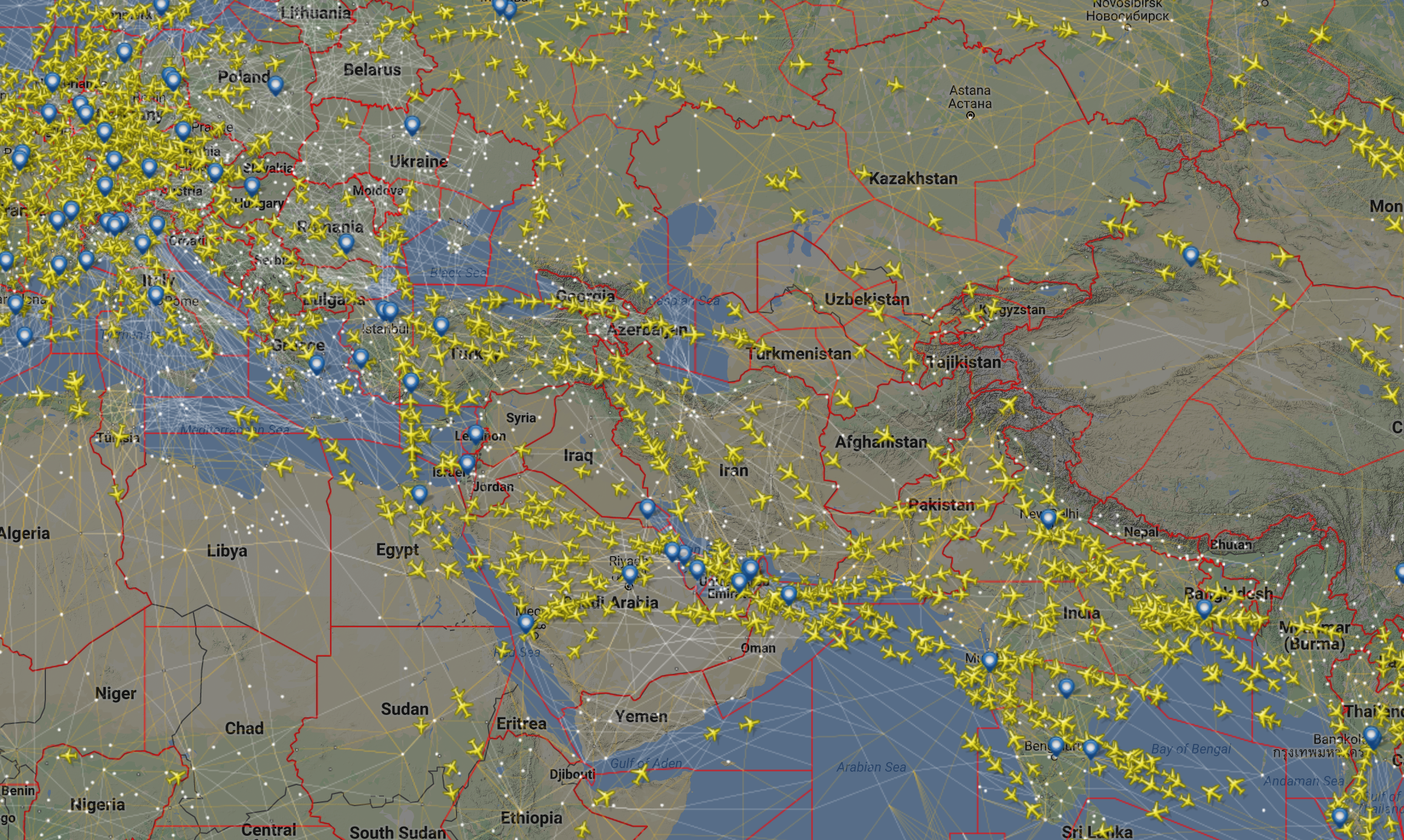
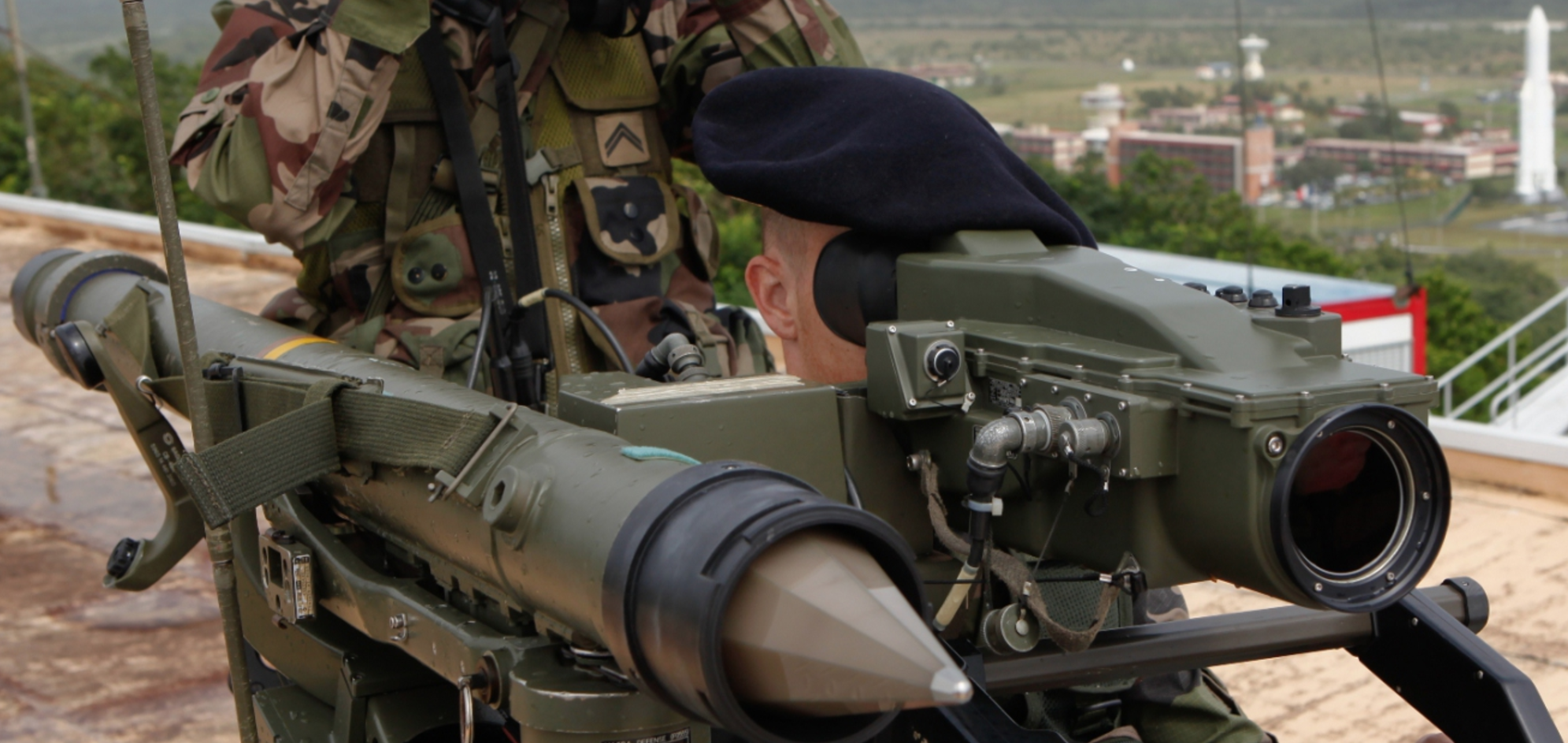
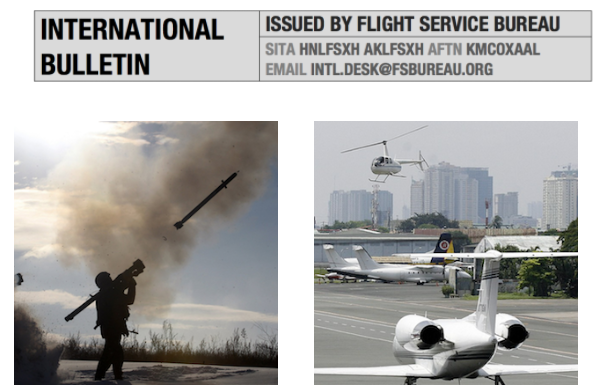
Most conflict zone guidance from Aviation Authorities is based on the risk posed by MANPADS – Man Portable Air Defence Systems, or more descriptively – Shoulder Launched Surface to Air Missiles (SAMS).

Large-Unit SAM attacks on aircraft are uncommon – MH17, removed from the sky by a Russian-made Buk missile, was the first aircraft to be shot down by a large SAM unit since a Siberia Airlines Tupolev in 2001. These large units – requiring a radar system as part of the mechanism – have never been used by terrorists. Almost all incidences involving large-unit SAMs have involved misidentification. There is no safe altitude from a large SAM.

MANPADS, on the other hand, represent a greater threat to aircraft in 2017. These shoulder-launched systems are very portable, and far more likely to fall into the wrong hands. Common ranges are in the 10,000 – 15,000 ft range. The most dangerous is the FIM-92 Stinger, which has an operational ceiling of 26,000 ft (and there is concern that these have reached anti-government rebels in Syria)

The internationally promulgated standard safe altitude for overflight has now become about 25,000 ft AGL. Most CAA/State guidance is issued based on this number. There are two important points for aircraft operators to note:

    • That is 25,000 feet Above Ground Level. A missile could easily be launched from a mountain, or higher ground, so if you take 25,000 feet as your safety margin, make sure to add the terrain elevation beneath. In South Sudan, for example – Juba is at 2,000 feet – most of the country is at about this height. So 27,000 feet should be the minimum safe level, and you can work with FL270.
    • This is based on the assumption that we’re not worried about Stingers. Especially in the Middle East, a higher safe altitude might be better. FL300 seems like a good place to start.


References:


Germany issue new warnings, Manila may not ban GA after all

Germany issues new warnings 25JAN Germany has issued fresh warnings on the airspace of EgyptSouth Sudan, and North Korea, in three separate Notams issued in the last week. We have updated the SafeAirspace.net country information pages with the specifics. Read the article


Manila may not ban GA after all 25JAN RPLL/Manila is not moving as quickly towards a complete ban of non-scheduled and General Aviation traffic as feared. This is good news for International Operators. Read the article.


HEZZ/Egypt, HSZZ/South Sudan, ZKZZ/North Korea Germany has issued fresh warnings on the airspace of EgyptSouth Sudan, and North Korea, in three separate Notams issued in the last week. We have updated the SafeAirspace.net country information pages with the specifics.

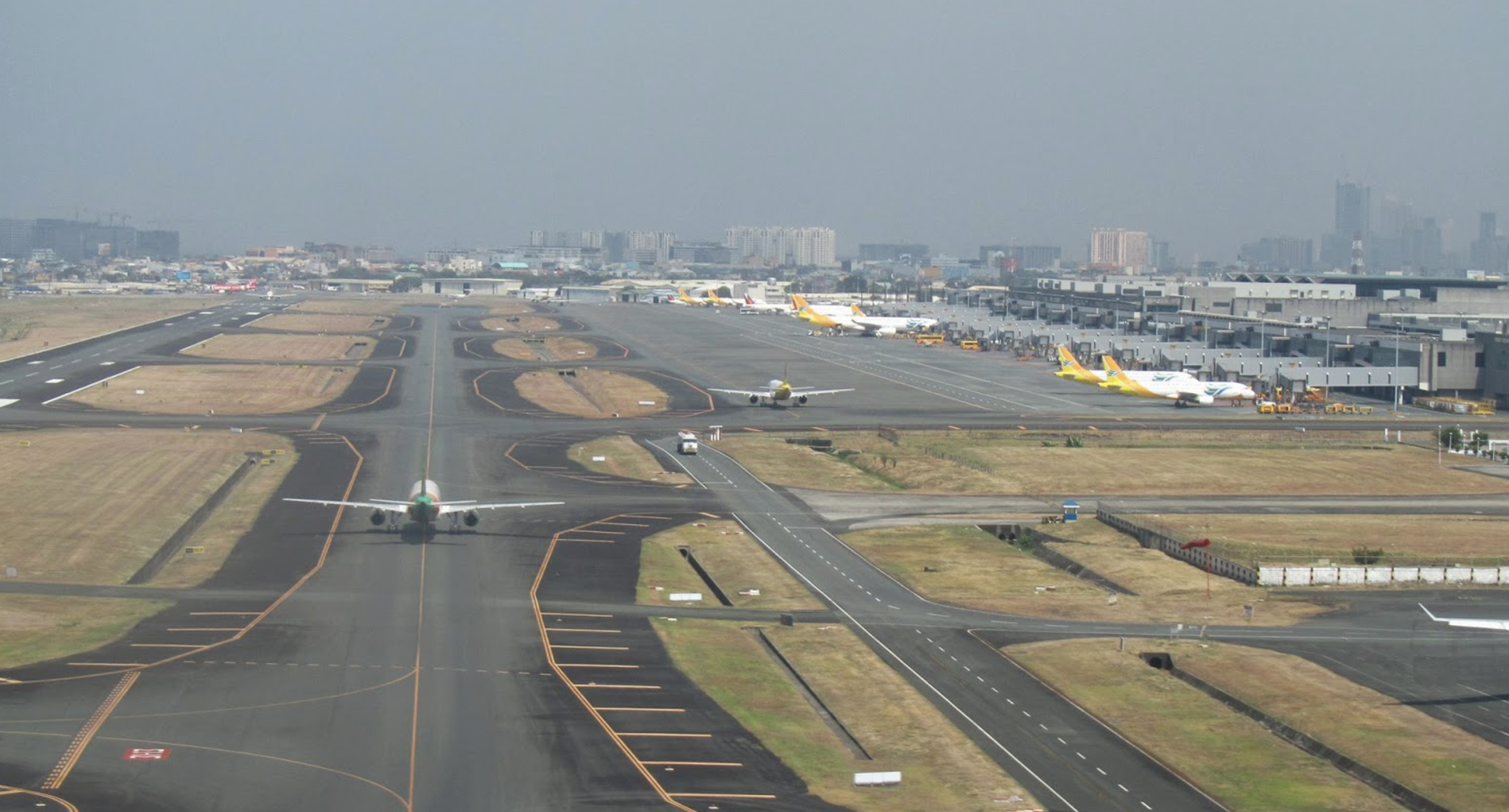
RPLL/Manila is not moving as quickly towards a complete ban of non-scheduled and General Aviation traffic as feared. This is good news for International Operators. Read the article.

NTAA/Tahiti The airport is open again as of Monday morning local time, after closing due to flooding after torrential rains, but many taxiways remain flooded. Expect delays in handling and tech stops.

KZZZ/USA Announced yesterday and expected to come into force this week, is an immediate ban on US visas (and therefore US travel) for citizens from 7 countries: Iraq, Iran, Syria, Yemen, Sudan, Somalia and Libya. This is distinct from the Visa Waiver Program ban in effect since January 2016.

GBZZ/Gambia FSB Risk Level changed from Level Three to “No Warnings” on Jan 24. New president has taken power. Parliament revoked State of Emergency. Situation calm.

SBZZ/Brazil In the last bulletin we had a headline about a Boeing 767 shot on approach in Brazil. A bullet was found lodged in the wing. Some updates to that story are here, and safeairspace.net’s Brazilpage is updated.

VZZZ/Southeast Asia Don’t forget it’s New Year in Asia this weekend. Travel-related delays and government office and business interruptions will peak 27 Jan to 01 Feb, and could last longer in Taiwan, Vietnam and China, where the holiday will be celebrated through 02 Feb.

EDDB/Berlin Brandenburg will now not open until 2018, as they found more problems with the fire system this week. This is a recurring story, which dates back to 2012. So, for the foreseeable, you’re stuck with Tegel and Schoenefeld.

LTFJ/Sabiha Gökçen (Istanbul) Due to insufficient capacity at LTFJ, applications for individual non-scheduled flights will be refused, and private/charter flights can only be operated at “non-busy hours”.

KBPI/Palm Beach is going to see some new TFR restrictions due to the proximity of Donald Trumps Mar-a-Lago estate. If operating when he’s down here, you’ll have to depart from a gateway airport to PBI – those are TEB, HPN, IAD, MCO and FLL. NBAA has the details.

LSGG/Geneva EBACE is on from Monday, 22 May through Wednesday, 24 May 2017. Now would be a good time to get those slots booked if you’re planning to head over.

LFMN/Nice has a new procedure where ATC will alert crews to windshear.

MSLP/San Salvador‘s only runway 07/25 will be closed from 1600-1700 each day until Feb 3rd.

VGHS/Dhaka The UK Department for Transport (DfT) announced today that it recently carried out assessments of security at Dhaka International Airport. Following this, the DfT has assessed that security at Dhaka airport does not meet some international security requirements (they haven’t said which).

OMAD/Abu Dhabi (Al Bateen) is hosting the International Defence Exhibition in February, so will not be available to IFR traffic daily between 0600-0800Z until Feb 23rd. There are also restrictions on using it as an alternate.

DNAA/Abuja The latest on the Abuja closure is that it will be completely closed to all traffic from March 8th – April 19th.

SKCG/Cartagena‘s only runway 01/19 is closed daily 0530-1100Z until Feb 6th.

NVZZ/Vanuatu Health authorities have declared a dengue outbreak following a large increase in suspected cases in December 2016 and January 2017. Protect yourself against mosquito bites

WSZZ/Singapore is implementing the new ICAO SID/STAR phraseologies from March 2nd. Read AIP SUP 29/17.

LIRF/Rome Fiumicino is working on 16R until March, so 25 will be used for deps and 16L for arrivals. This means delays, especially if you want 16L/34R for departure – they say up to a 60 minute taxi time.

UKZZ/Ukraine amended the military boundaries of its airspace on Monday Jan 23rd, identifying the Donbas conflict zone region as a separate area. More details here.


View the full International bulletin 25JAN2017


Updated airspace warnings for Egypt, South Sudan, North Korea

Germany has issued fresh warnings on the airspace of Egypt, South Sudan, and North Korea, in three separate Notams issued in the last week. Germany is one of four states that provides Aircraft Operators with conflict zone and risk advice. We have updated the SafeAirspace.net country information pages with the specifics.

The current Flight Service Bureau summary of each country follows:

Egypt Since the Arab Spring, Egypt’s stability and security situation as a state has declined. In October 2015 a Russian A321 was brought down over the Sinai peninsula by a bomb loaded at HESH/Sharm El Sheikh. In the aftermath, it was initially feared that a missile had caused the crash. Multiple warnings still in place from that fear. 19 May 2016 EgyptAir Flight MS804 from Paris to Cairo disappeared over the Mediterranean, cause unknown. GPS jamming reported at HECA/Cairo several times in 2016. High threat from terrorism in Egypt. Further attacks are likely. Not recommended as a tech stop. [Read full country information]

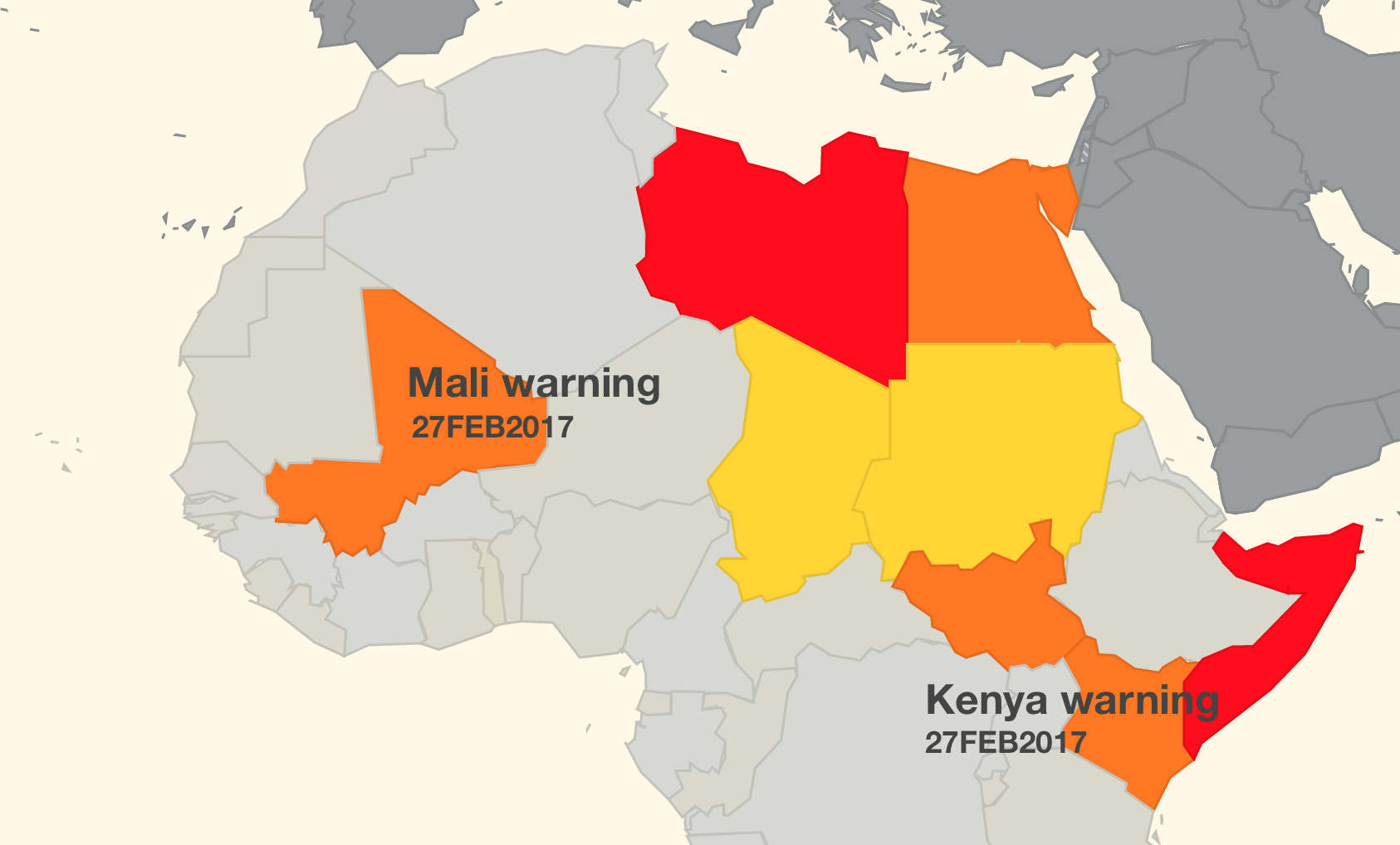
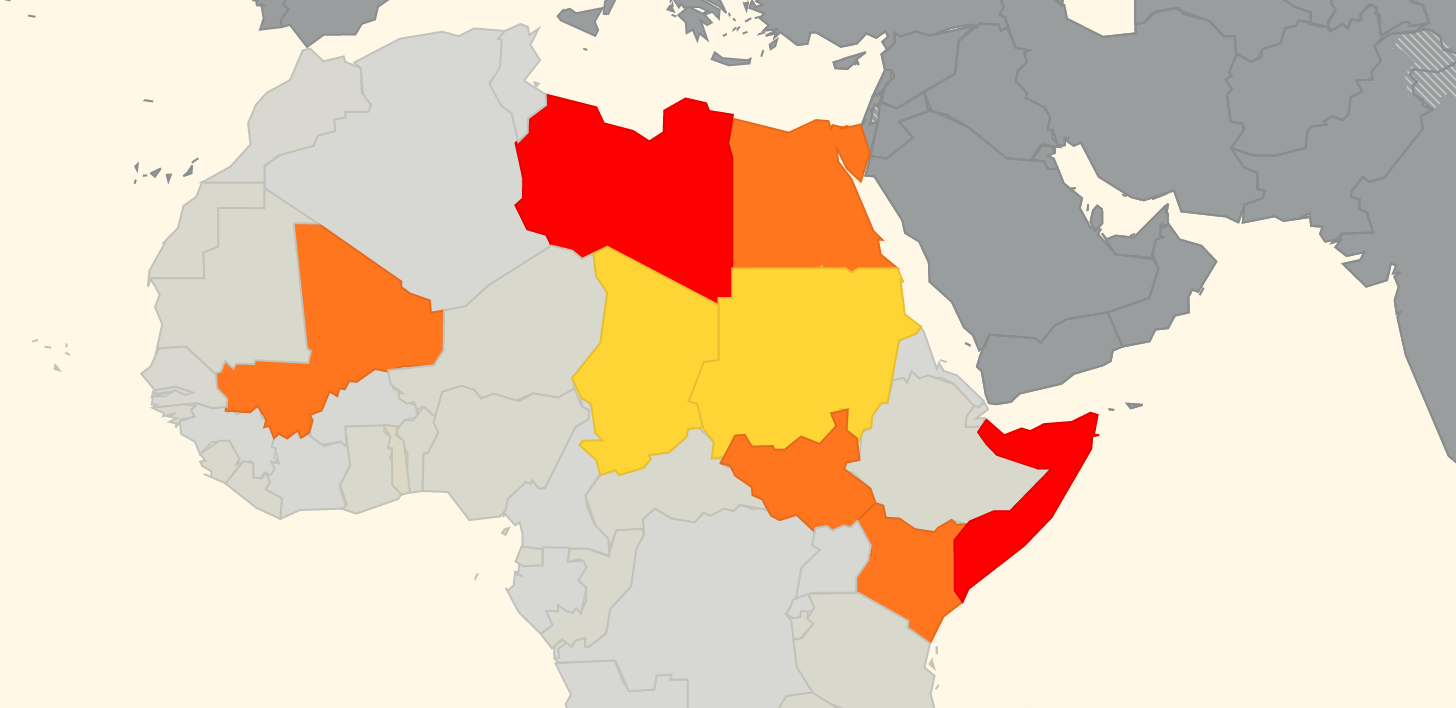
South Sudan Conflict Zone. South Sudanese Civil War since 2013. The security situation in Juba has been relatively calm since the July 2016 crisis. Daily reports of fighting throughout the rest of the country. The security situation is especially unstable in the Equatorias in the south. MANPADS risk to overflights. In addition, the South Sudanese army has declared intention to shoot down Aircraft without permits. Most Authority guidance recommends min FL260. We think FL300 is a better minimum for overflights. [Read full country information]

North Korea The level of tension on the Korean peninsula can change with little notice. Multiple missile launches in 2016, increasingly without prior notice to ICAO. The range of these has increased – previously safe airways B467 and G711 are now at risk. Over 1000 reports of GPS jamming issues reported by operators in the vicinity of the North/South Korean border. SFAR79 prevents US operators from operating west of 132E, other Authorities restrict operations east of that line. [Read full country information]


References:


Manila’s GA ban-plan may be softening – RPLL

RPLL/Manila is not moving as quickly towards a complete ban of non-scheduled and General Aviation traffic as feared. This is good news for International Operators.

Background: The airport is heavily congested, it’s a big deal in the Philippines, and the President himself started the action to fix things.

The original plan  was that February 2017 would see all GA traffic moved to other airports (aka RPLC/Clark or RPLB/Subic Bay). For international operators, neither of these are great alternatives. Clark can be a 3 hour drive to Manila, and Subic Bay is further again, with about a 4 hour drive.

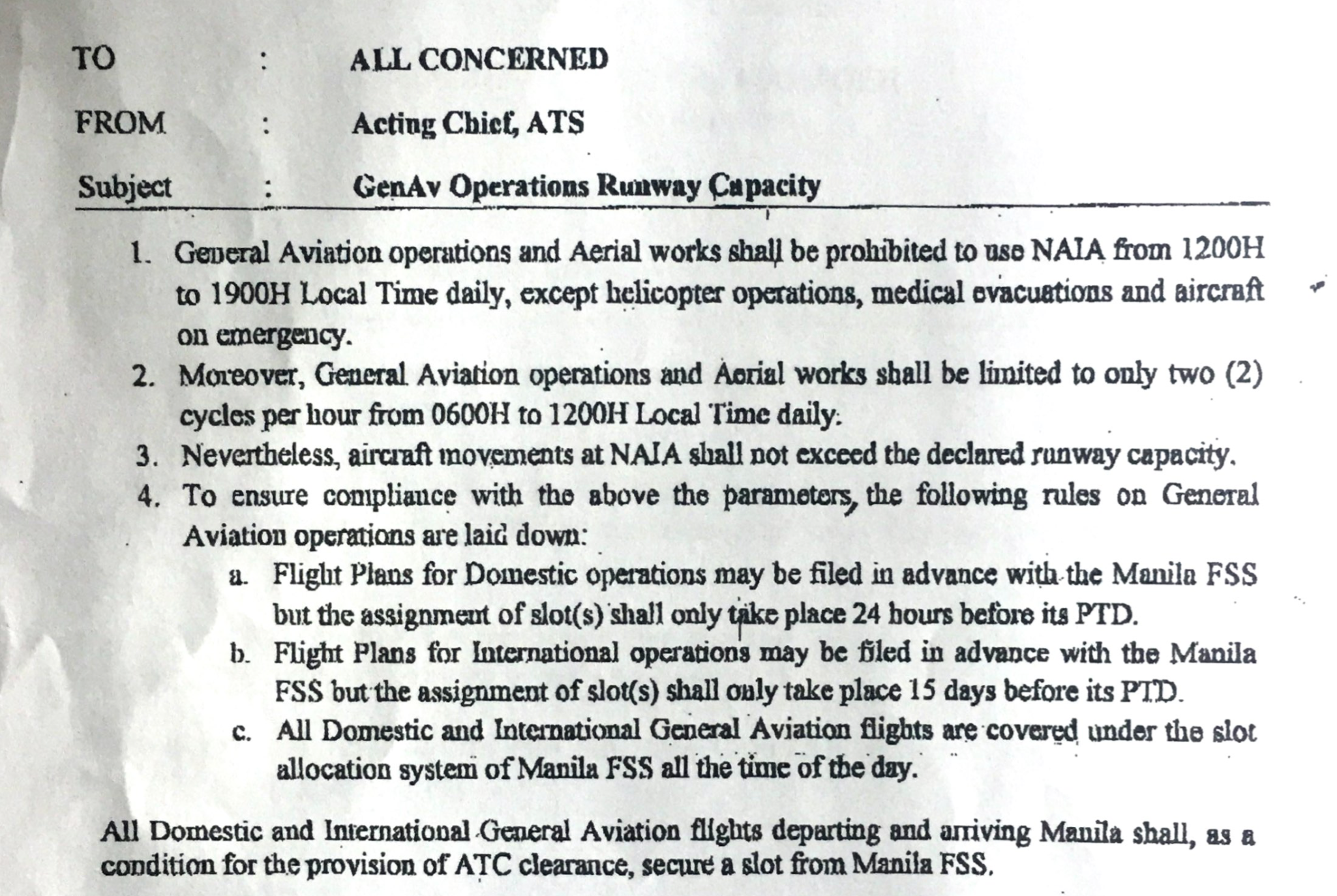
However, the original threat of moving everything that isn’t line traffic out of RPLL might have dissipated. The NAIA Airport Company has now introduced some hefty slot restrictions for GA:

  • 2 GA movements from 0600-1200 local time
  • No GA movements between 1200-1900
  • Slots will be assigned only 24 hours in advance for domestic flights
  • Slots will be assigned maximum 15 days in advance for international flights

The word on the ground (as of January 25th) from the local handling agents, is that the Airport Authority is evaluating whether this might be a sufficient restriction for GA. It seems that they don’t want to exclude GA or non-scheduled flights entirely. We’ll keep you posted.


Boeing 767 shot on approach in Brazil

Details still emerging: this page will be updated. Report any information to report@safeairspace.net.

25 JAN – Information updated.

At Flight Service Bureau we rarely report on individual aircraft incidents, because the impact to other operators in International Flight Operations  is very minimal.  This case is different.

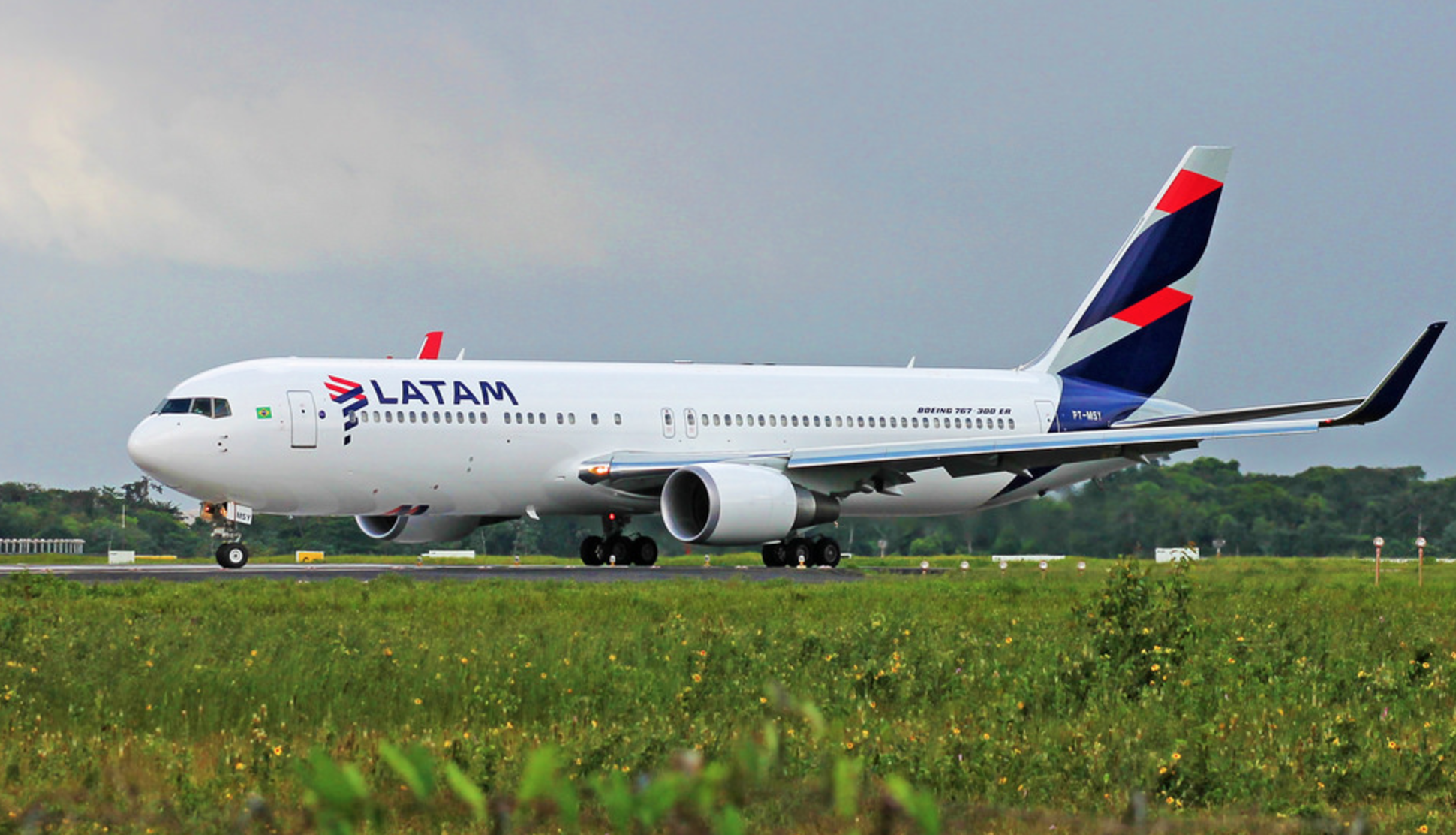
We received an OPSGROUP member report of an incident that occurred around January 15th, to a B767-300 operated by Latam Airlines, on approach.

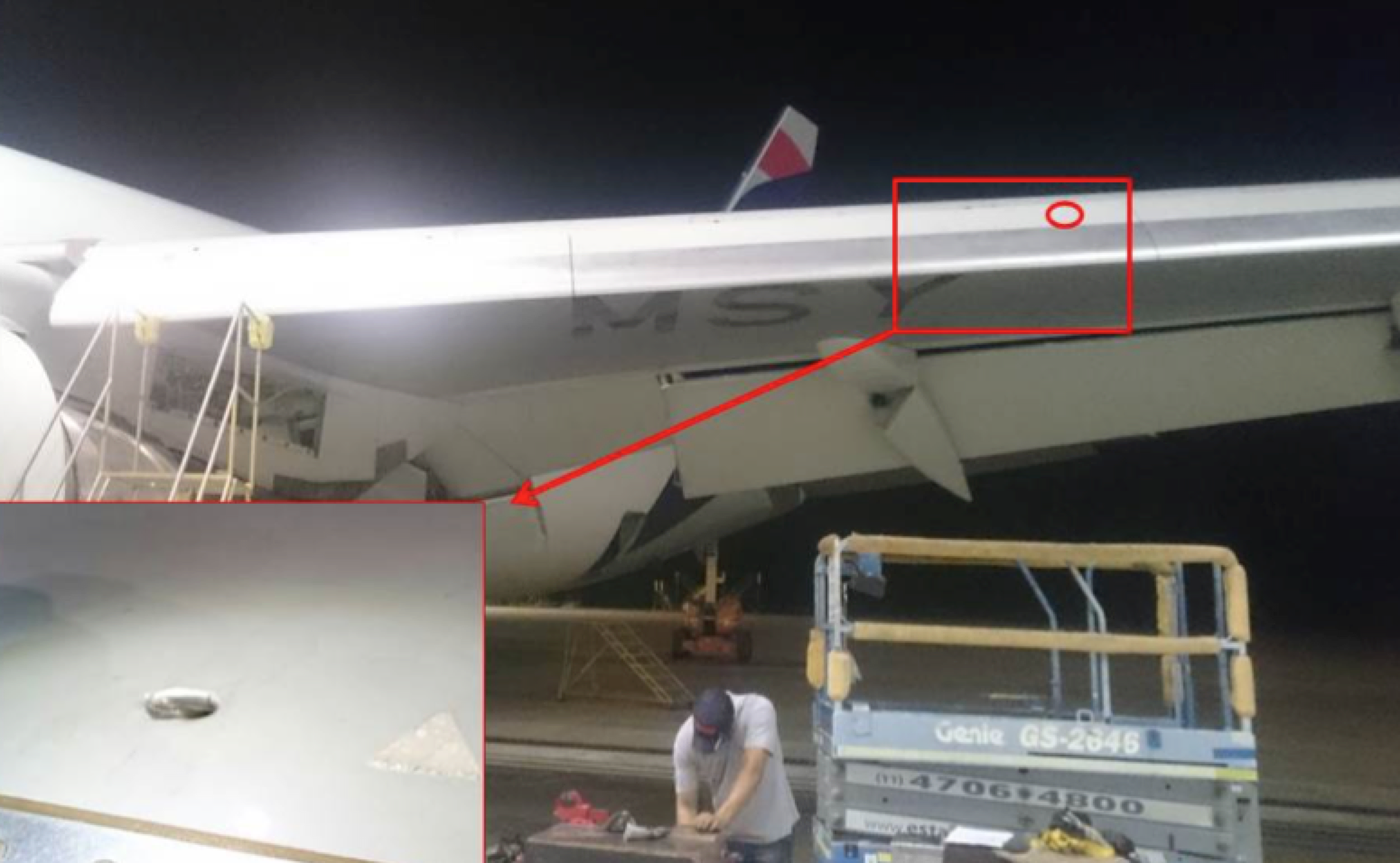
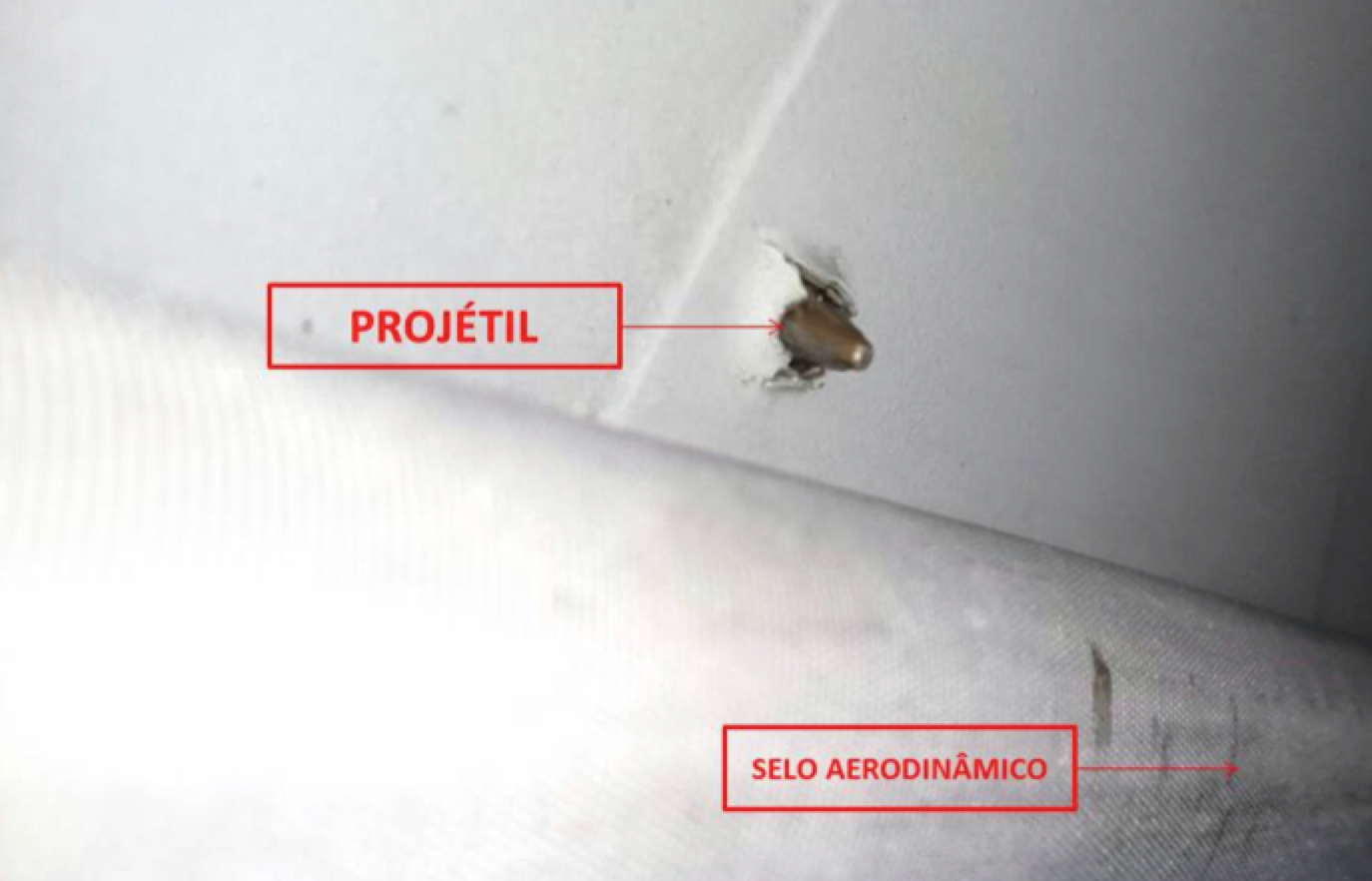
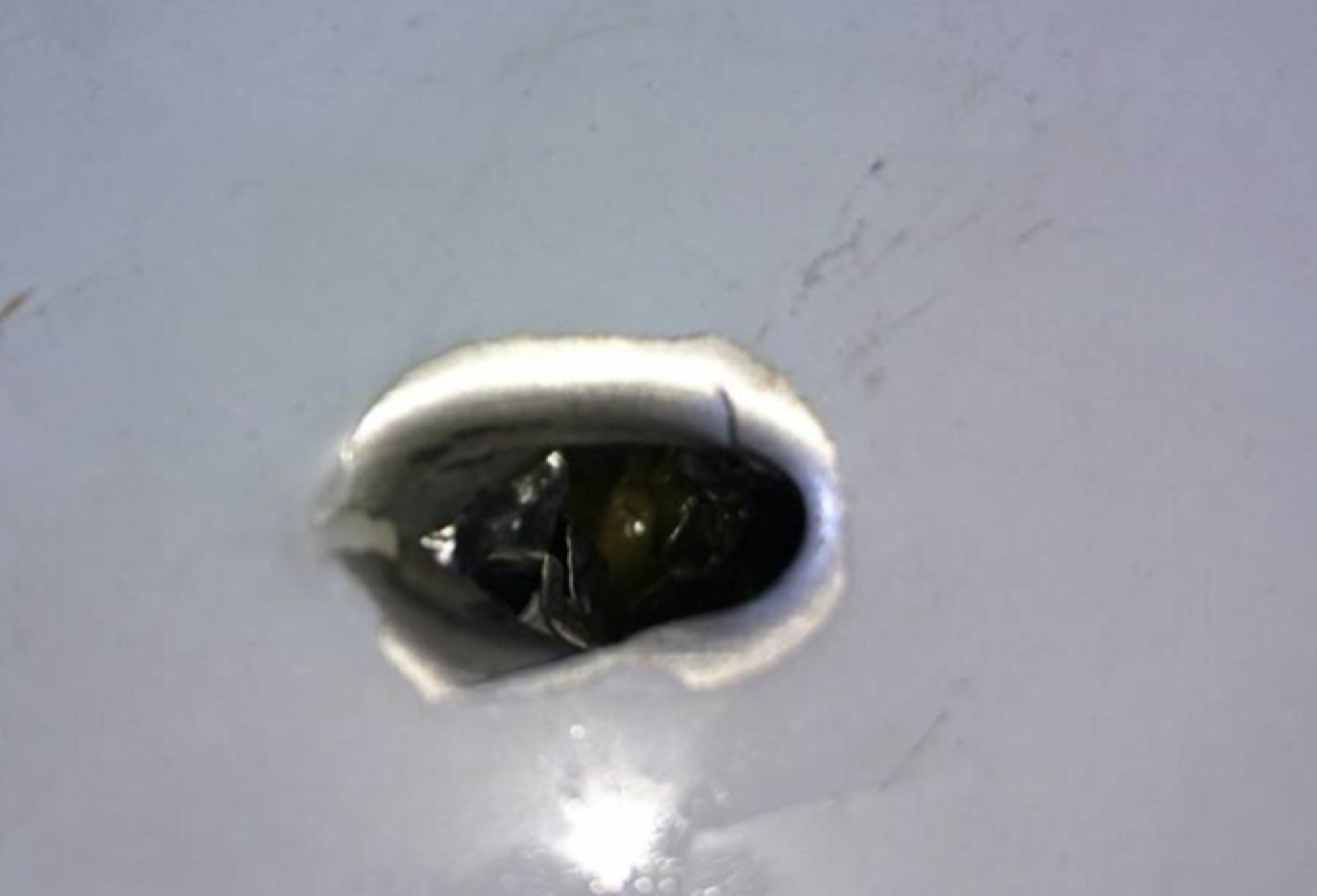
Our initial report indicated that the 767 was fired upon on approach to Runway 15 at SBGL/GIG – the main Rio de Janeiro airport. A 7.62mm bullet lodged in the No. 3 slat, on the left wing. Pictures are below. Subsequent reports from other sources suggest that it may have occured in Sao Paolo.

The specific location in Brazil is therefore uncertain, but anecdotal evidence suggests that the aircraft overflew a favela on approach, and that Rio remains the most likely candidate for the location.

Rio Airport has however asked us to publish this statement:

RIOgaleão, concessionaire responsible for the operation of Tom Jobim International Airport, in Rio de Janeiro (Brazil), informs that there has not been any record of an aircraft hit by a bullet within the airport site. The airline’s press office, in a statement, informed to the Brazilian press that it has activated the national and aviation security agencies. The public agencies investigate the case to identify where the incident occurred.

An entry for Brazil with the full report has been added to SafeAirspace.net, our shared repository on threats to aviation including Conflict Zones, Airspace Security, and Overflight risk.


Update:

19JAN: Rio Airport has asked us to publish this statement:

RIOgaleão, concessionaire responsible for the operation of Tom Jobim International Airport, in Rio de Janeiro (Brazil), informs that there has not been any record of an aircraft hit by a bullet within the airport site. The airline’s press office, in a statement, informed to the Brazilian press that it has activated the national and aviation security agencies. The public agencies investigate the case to identify where the incident occurred.


References:


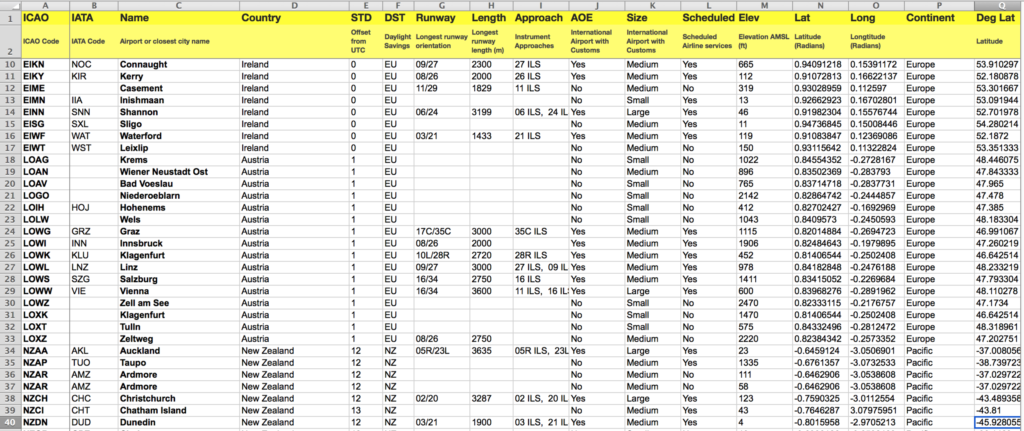
World Airports Database

We needed a reliable, comprehensive Airport database for International Flight Ops. There wasn’t one out there.

That was six years ago. All of the databases that we found online – both paid for and free – had flaws that made them unusable in the daily Flight Operation. Too short, too long, not enough data, wrong codes, badly formatted … We realised that we had to built a new one from scratch.

So we did. In the interim, we’ve added all kinds of useful data to it, updated it, and made it into what we think is the best database for Ops Controllers, Pilots, Airlines, Software developers, and service providers.

Take a look at the database – you can see a sample 100 records, but the full version is a paid product.

Download the sample

static1.squarespace


International Bulletin: B767 shot on approach to Rio, Updated SafeAirspace Map

B767 Shot on approach to Rio 

18JAN A B767-300 was fired on last night during approach to Runway 15 SBGL/Rio de Janeiro. One 7.62mm bullet lodged in the left wing. Read the article.

Updated SafeAirspace Risk Map 

18JAN We have updated SafeAirspacewith information for Aircraft Operators on The GambiaNorth KoreaBrazilUkraine, and Turkey.


GBZZ/The Gambia State of emergency declared on 17th January. Foreign citizens being evacuated. Banjul International Airport (GBYD/BJL) and land borders remain open, for now. More at safeairspace.net/information/the-gambia.

UKZZ/Ukraine Flight Service Bureau has issued an updated summary for Ukraine’s airspace. There are two risk issues in Ukraine. First: arms fire. Including MH17, multiple aircraft (the others all military) have been shot down since the beginning of the Donbass region war in 2014. The 10th ceasefire was declared in December 2016, but not holding. This risk is contained within the Dnipropetrovsk FIR – UKDV. The second issue affects the Simferopol FIR which is Disputed Airspace. (Ukraine:UKFV, Russia:URFV). In March 2014, Russia annexed Crimea. The ATC Center is in Simferopol, Crimea, and is now run by Krymaeronavigatsiya. Russia claims the airspace. Ukraine refuses to recognise the change, and asks crews to talk to Ukrainian controllers in Dnipro/Odesa ACC instead of Simferopol ACC. Four routes are approved by EASA through the high seas portion of the airspace.

KIAD/Washington and area airports – guaranteed busy during the Presidential Inauguration this Friday, Jan 20. Updated restrictions here. Departure slots required for aircraft departing IAD between Friday, Jan. 20 and Sunday, Jan. 22. Departure slots can be obtained through an IAD FBO of choice (Ross Aviation or Signature Flight Support). Slots will be divided equally between the two FBOs at IAD.

VZZZ/Southeast Asia Lunar New Year holiday season, which falls on 28th Jan. Travel-related delays and government office and business interruptions will peak 27 Jan to 01 Feb, and could last longer in Taiwan, Vietnam and China, where the holiday will be celebrated through 02FEB.

BGBW/Narsarsuaq A seasonal reminder that if you’re planning to use Narsarsuaq as a destination, alternate, or enroute alternate outside of the operating hours (MON-SAT 1000-1900z daily until 03APR), you must contact the airport in advance to apply for them to stay open for you:
Email: bgbw@mit.gl. Also make sure you file your ATC FPL including the AFTN address: BGBWZTZX.

EKCH/Copenhagen A copy of the AOC must accompany fuel release or expect an MOT charge of approximately $1.70 USD to be charged. Next destination must be shown on the fuel release or expect delays.

EGPH/Edinburgh, Scotland Until Apr 1st, you will need PPR to operate to Edinburgh, due to reduced parking capacity.

RPLB/Subic Bay will be closed for maintenance bewtween 0100-0800z until January 20th.

SKZZ/Colombia New Tower and ACC for Bogota. From 16th Jan – 15th Feb moving of Bogota’s ACC will take place. ATS/AIS/COM/MET/ATFM services transition process should not affect operations, however, due to the large change extent foreseen, some failures might occur in the process.  AIC 1/17 outlines contingency procedures in place

SVZZ/Venezuela has closed its land borders with Colombia and Brazil periodically in the last 12 months. Border closures occur frequently, often with short notice. The Venezuelan government will withdraw the 100 bolivar note (VEF 100) from circulation as of 20 January 2017.

LYBA/Beograd If you have any outstanding navigation fees in Serbia, better get them paid, or they’ll add a 9.88% interest charge.

HSSS/South Sudan Flight Service Bureau has issued an updated summary for South Sudan’s airspace: Conflict Zone. South Sudanese Civil War since 2013. The security situation in Juba has been relatively calm since the July 2016 crisis. Daily reports of fighting throughout the rest of the country. The security situation is especially unstable in the Equatorias in the south. MANPADS risk to overflights. In addition, the South Sudanese army has declared intention to shoot down Aircraft without permits. Most Authority guidance recommends min FL260. We think FL300 is a better minimum for overflights.

ZKKP/North Korea Flight Service Bureau has issued an updated summary for DPRK North Korea’s airspace: The level of tension on the Korean peninsula can change with little notice. Multiple missile launches in 2016, increasingly without prior notice to ICAO. The range of these has increased – previously safe airways B467 and G711 are now at risk. Over 1000 reports of GPS jamming issues reported by operators in the vicinity of the North/South Korean border. SFAR79 prevents US operators from operating west of 132E, other Authorities restrict operationseast of that line.

ZZZZ/Worldwide How have you been getting on with the new ICAO SID/STAR phraseolgies? In short, some countries are implementing, and others aren’t. What is your country doing? Tell us at bulletin@fsbureau.org.


View the full International Bulletin 18JAN2017


Sorry, you gotta go to Seletar: Ops to Singapore

Singapore Changi Airport has been named the best airport in the world by Skytrax for the past four years running.

It already has a butterfly garden, free 24-hour cinema, rooftop swimming pool and spa, but soon it’s going to become even more awesome – work is currently underway on the new ten-storey ‘Jewel Terminal’, scheduled for completion in 2018, with a gigantic ‘rain vortex’ waterfall cascading from the ceiling, indoor rainforest park, playgrounds, shopping mall and hotel complex. If it ends up looking anything like the pictures in the brochure, it will be pretty spectacular…

Unfortunately, if you’re operating a business jet to Singapore, you probably won’t be allowed to go there!

The Singapore authorities will not allow overnight parking at Changi for charter flights under any circumstances, and parking for private flights is limited to a maximum of 48 hours. Slots are required, and with the amount of scheduled traffic currently in place, unless you’re planning to do a really quick turn at super off-peak times (ie. the middle of the night), your request will probably be denied.

This is where the authorities would like all corporate flights to go instead:

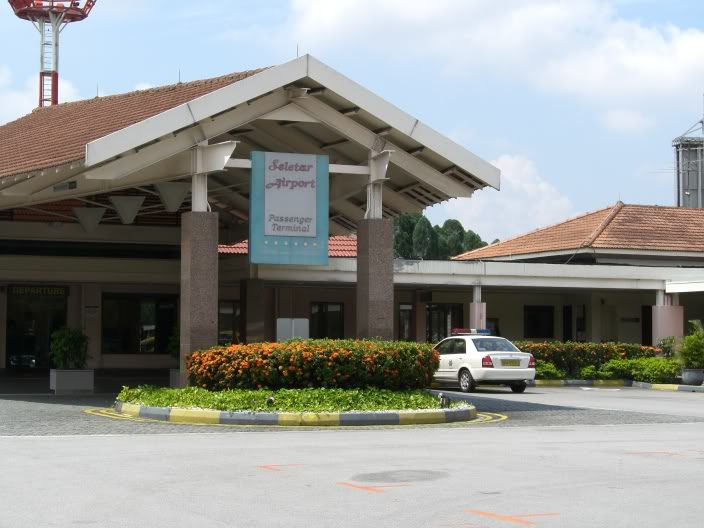
Seletar Airport. Doesn’t look quite as fantastic, does it?

The good news is that unlike Changi, at Seletar there is much less congestion, no parking time limits, and much lower handling costs. However, it does only have a 6024 ft runway and is not due to have ILS installed until some time next year. Added to that, fuel is around $1 per US gallon more expensive than at Changi.

Whether you end up going to Changi or Seletar, if you’re operating as a non-scheduled commercial flight you’re going to need a landing permit, which means you’re going to have to jump through a few hoops.
Here’s a quick breakdown of how to organise that non-sked flight:

Step 1: Get an ‘Operations Permit’ (OP)

You will need to open an ATLAS Account with CAAS and then log in to appoint a handling agent. Then either you or the handling agent will be able to liaise with the authorities to obtain the Operations Permit (OP).

This is basically a blanket approval for that operator to conduct revenue flights to Singapore, and you may have up to 20 aircraft on this permit.

Once this permit is approved, CAAS will advise the validity period which may be up to one year, although the OP will only remain valid for as long as the other aircraft documents are valid for. The OP usually takes 3 working days for approval by CAAS if all paperwork submitted is in order.


Step 2: Get an ‘Air Transport Permit’ (AT)

After securing the OP, it means CAAS have in principle approved you as an operator to carry out charter flights to Singapore.

With the OP in place, you can then apply for an Air Transport Permit (AT) which is required for every individual charter schedule into Singapore (WSSS or WSSL). The AT Permit for WSSS usually takes around 3-5 working days for approval by CAAS, although they will often reject your request and demand that you operate to WSSL instead. The AT Permit for WSSL usually takes around 3 working days for approval.

For the OP and AT permits, you should register an account here:
https://appserver1.caas.gov.sg/ATLAS/welcome.do


Step 3: Slots –  but only if you’re going to Changi!

Remember, slots are only required at Changi, and not at Seletar. You can only obtain slots after you’ve obtained an OP and an AT. Slots will likely take several hours to obtain, and available slot times may differ from what you’ve requested, due to other scheduled traffic. You can only submit requests for slots a maximum of 7 days prior to ops, and a minimum of 24 hours prior. And you will nearly always need to change your schedule in order to match available slot options!

For more information than you could ever possibly need about slot requests at Changi, check the Singapore AIC 2/13:
http://www.caas.gov.sg/caasWeb2010/export/sites/caas/en/Regulations/Aeronautical_Information/AIC/AIC_PDFs/2-13.pdf

For requesting Changi airport slots, if you already have an account then you should use the online system:
https://www.online-coordination.com

Or if you don’t have an account then just send an email with your request in the standard SCR format to:
csc@changiairport.com

Other things to consider…

  • If you’re operating as a private flight to Singapore (instead of non-scheduled commercial), life suddenly gets considerably easier, as permits are not required for private flights! Just make sure you have parking arranged, and file your inbound ATC flight plan 12 hours in advance, being sure to copy in the Singapore ATC AFTN address WSJCZQZX. You’ll still need slots if operating to Changi, but at least you don’t have the added hassle of having to obtain the OP/AT.
  • Permits are not required for Singapore overflights either. The only exception to this is for special airworthiness flights, where for both overflights and landings you basically follow same process – apply for a Singapore Permit To Fly. To do that, complete the form at the following link: http://www.caas.gov.sg/caasWeb2010/export/sites/caas/en/PDF_Documents/Others/aw101.doc
  • It’s also worth noting that in the Singapore FIR, ADS-B is now mandatory for aircraft wishing to fly at or above FL290.


Australia ADS-B requirements: 2017 onwards

Last year Australia switched off most of its navaids, meaning that RNP became a requirement.

This year, they’re asking all aircraft flying in Australian airspace to be ADS-B equipped after February 2nd, 2017. ADS-B means that controllers can use your uplinked GPS position, instead of mammoth SSR Radar Units all over the country.

There are two exemptions:

  • Small Australian-registered GA aircraft
  • Foreign-registered aircraft with the restriction that you must fly below FL290 in continental airspace, and stick “RMK/NIL ADSB AUTH” into Field 18 of the Flight Plan.

You don’t need to apply for special authorisation, just show up.

References:


Shanwick Bogus Messages

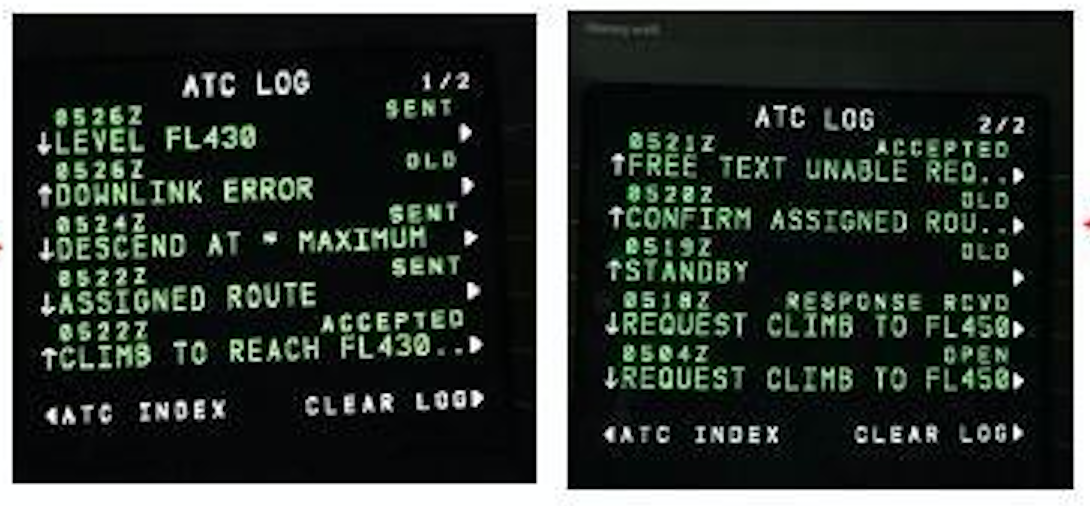
Just around New Years, a story started growing legs about Bogus CPDLC messages from Shanwick and Gander. In the most worrying version of events, the G550 crew received a “Descend at Max Rate” type message on CPDLC, and when they checked on voice with ATC it hadn’t come from them.

We had lots of replies on this – both by email and in slack, thanks everyone! So here is the event summary as pieced together by the community:

– This was a single event that happened in December, at 0500Z one morning, to a G550
– It was caused by an avionics bug in the FMS – a valid error message was parsed incorrectly and assigned a value of “Descend at max rate” by the FMS, which appeared on the screen.
– Fears of it being some kind of spoofing or hack are unfounded. The initial story spread like wildfire! But ultimately, a non-event.

Confirm Assigned Route

This was the second part of the concerns about CPDLC messages from Shanwick. Lots of crews have been getting an FMS message after passing the Oceanic Entry Point saying “Confirm Assigned Route”. We’ve probably gotten 50 distinct messages/emails/queries on this. Many crews don’t know quite what this is or what to do with it, and many wondered if it was also a “bogus message”.

This is normal. It’s a new procedure, and this message is now automatically sent by Gander, Shanwick, and Iceland. The reason for the message, is to act as a cross check, now that we’re all cruising with 30 miles between us instead of the old school 60. When you do “Confirm Assigned Route”, then ATC knows that you’re both on the same page.

We first mentioned it here in November, have a read. The only recent update is that Gander and Iceland have automated the CPDLC message, so everyone that logs on will get the “Confirm Assigned Route” message.


The Hidden Costs of Operating to China

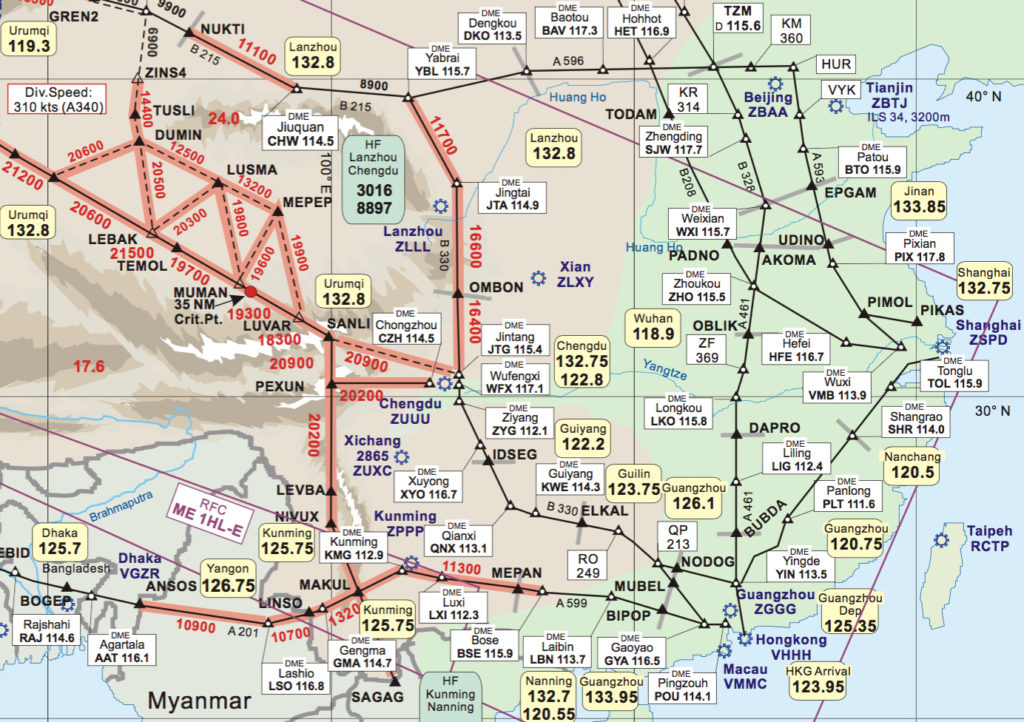
China has always been challenging to operate to. Handling rates are prohibitively expensive, half the country’s airways are closed to foreign operators, and slots and parking at the major airports can often be impossible to obtain.

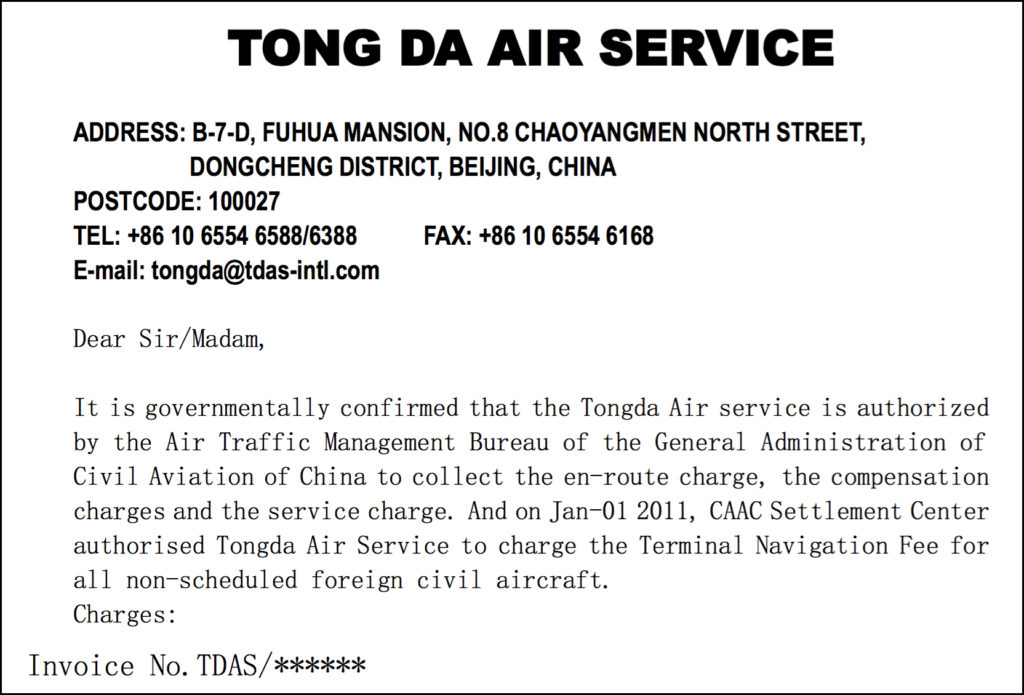
But often the most frustrating thing about operating to China is just trying to work out what all the different charges are for. If you receive a big bill post-flight from a company called Tong Da Air Service, unfortunately it’s not a scam! These guys are the government-appointed agency in China who are responsible for collecting all the NAV fees for flights by foreign operators.

It’s important to know in advance what you will get charged here, as it’s not totally clear  without doing a bit of digging – and your handling agent will likely not include all these complicated fees when they provide you with handling quotes!

For NAV fees in China, you will always get charged for four separate things:

  • En-Route Charge.
  • Terminal Navigation Charge.
  • Compensation Charge (the fee paid to the government for the permit)
  • Service Charge (Tongda Air’s charge for obtaining the permit)

Importantly…

En-Route Charge = this is charged for each individual flight

Terminal Navigation / Service Charge / Compensation Charge = these are charged per permit, and are always set costs.

So let’s say you fly RKSS-ZBAA-RKSS: you will need to pay En-Route Charges for each sector, and one set of Terminal Navigation / Service / Compensation charges.

Similarly, if your routing involves multiple domestic flights within China, (eg. RKSS-ZBAA-ZBTJ-ZSPD-RKSS) you only need one permit to cover all those stops,  which means you will only pay one set of Terminal Navigation / Service / Compensation charges. So far so good…

But let’s say you fly something like RKSS-ZBAA-VHHH-ZGSD: on this routing you will effectively be departing China when you go to VHHH, so you will need two permits – one for each stop in China (ZBAA and ZGSD). And because of this, you would need to pay two sets of Terminal Navigation / Service / Compensation charges!

china-map

So here’s how you work out the 4 charges:

1. En-Route Charge

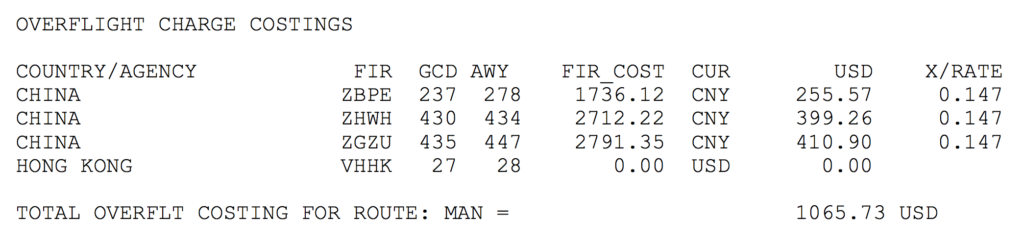
There’s a very lengthy and complicated method of working this out, but the easiest thing to do is just use your flight-planning tool to tell you the answer. Most tools have this function – just make sure you click the button that says something like ‘overflight costs’ and find the section on the output of the flight plan that looks something like this:

screen-shot-2016-11-08-at-13-34-35

(Showing costs for a B737 operating from ZBAA/Beijing to VHHH/Hong Kong)

2. Terminal Navigation Charge

MTOW                      Charges (RMB Yuan)
Up to 25                    990
26-50                         1060
51-100                      1060 + 21*(T-50)
101-200                   1920 + 23*(T-100)
above 201               3820 + 27*(T-200)

T = the actual MTOW rounded up to the nearest tonne

So for example:
an aircraft with a MTOW of 60T = 1060 + 21*(60-50) = 1270RMB
an aircraft with a MTOW of 110T = 1920 + 23*(110-100) = 2150RMB
an aircraft with a MTOW of 210T = 3820 + 27*(210-200) = 4090RMB

3. Compensation Charge

This will always be $3000.

4. Service Charge:

This will be either $1200 for landing permit, or $500 for overflight permit.


New Dangerous Goods regulations from Jan 1st

You can view the full list of changes here, but this list might be a little handier. From Jan 1st, the new edition of the IATA Dangerous Goods Regulations (Edition 58) will be applicable.

  • Replacing the existing lithium battery handling label with a new multi-modal lithium battery mark to be phased in over two years, with a deadline of December 2018 (Figure 7.1.C)
  • Introducing a new Class 9 dangerous goods label specifically for lithium batteries, to be phased in over two years, with a deadline of December 2018 (Figure 7.3.X)
  • Many new and modified special provisions
  • Allowing shippers to assign a substance to a class or division different to that shown in the List of Dangerous Goods (IATA DGR 4.2), subject to approval by the appropriate national authority
  • Adding classification criteria for polymerizing substances into Division 4.1
  • Adding new UN numbers and Proper Shipping Names for “polymerizing substances,
  • liquid and solid, stabilized” (PI 459) and “polymerizing substances, liquid and solid requiring temperature
  • Updating Special Provision A104 for UN1230, Methanol that requires all packages containing methanol to bear a Division 6.1 toxic hazard label (in addition to the Class 3 flammable label)
  • Changing the documentation requirements for hazmat air shipments

Reference:

IATA DGR Changes from 1st Jan, 2017.


International Bulletin: France -ATC Reroutes, FAA updates weather guidance

France – ATC Reroutes 17NOV France is switching from old paper trips to new fancy electronic ones, and there will be reroutes from today onwards … Read the article.

FAA updates weather guidance 17NOV One of the most comprehensive weather resource docs out there, the AC00-45 Aviation Weather Handbook, has been updated by the FAA. We’ve got it in full technicolor for you on slack (OPSGROUP only) (it’s in the #general channel)


VTZZ/India [blur]Problems associated with the removal of 500 and 1000 INR banknotes have extended to the airports: for handling, many services are often paid in cash by your handler – and that cash is much harder to come by. We’ve been asked by several Indian handlers to advise foreign operators to carry plenty of USD, for a while.[/blur]

ZZZZ/Worldwide [blur]The ICAO SID/STAR saga continues: Finland, Singapore, and the UK won’t be joining the party for now. Add your country to the list, if you know the status.[/blur]

BGTL/Thule [blur]For Friday, they are open, but only for aircraft operating in conjunction with the SPAR83 mission. And emergencies, we guess.[/blur]

CYHM/Hamilton [blur]is now RFF Category 7.[/blur]

EKZZ/Denmark [blur]The government announced on 14NOV2016 that it will be extending border controls through at least 12FEB2017. The announcement was largely expected, as the country has lauded the border controls as being highly effective since putting them into place in JAN2016.[/blur]

CYQX/Gander [blur]Canada has issued an updated AIC about the NAT Datalink Mandate – dated 10NOV. The only difference (that we can spot) is the removal of the requirement for VHF coverage in the exempted area.[/blur]

KZZZ/USA [blur] Effective November 29th, 2016, all citizens or nationals of the People’s Republic of China (PRC) who have been issued a 10-year B-1, B-2  or B1/B2 (tourist/business) visa will be required to apply for Electronic Visa Update System (EVUS) approval prior to traveling to the United States. EVUS is a web based system that determines the eligibility of visitors with a valid 10-year visa to travel to the United States and is valid for 2 years or until the traveler’s visa or passport expires.[/blur]

EEPU/Parnu, Finland [blur]is out of Jet A1 until the end of the month[/blur]

NZZZ/New Zealand [blur]All airports are operating normally after the 7.5 earthquake last Monday, travel in the northern part of the South Island remains extremely difficult.[/blur]

AYPM/Port Moresby [blur]has been having ongoing issues with HF. The story is that the HF station where the transmitters are located, has been regularly vandalised, and some gear stolen. Therefore, they are building a new site and expect to have that running by the end of 2017 – in the interim, they are restoring a smaller HF station at ‘8 mile’. [/blur]

EDDH/Hamburg [blur]has something going on from 07-10DEC: they would prefer you didn’t file EDDH as an alternate on those days.[/blur]

UKZZ/Ukraine [blur]From 15-25 November large scale demonstrations are planned in Kiev. These protests could turn violent, cause road closures and disrupt local transport. You should monitor the media and avoid large gatherings[/blur]

SKBO/Bogota [blur]has a bunch of changes due to construction work: runways, approaches, all affected – review the details.[/blur]

RPLL/Manila [blur]We’ve had several more reports of GPS problems in the Manila FIR, especially on approach to and departure from Manila itself. If you plan to lose GPS, then that’s probably a safe place to start from.[/blur]

BKPR/Kosovo [blur]On 13NOV, authorities in Kosovo announced that the International Telecommunication Union will give Kosovo its own international dialling code, +383, on 15 December. Previously, Kosovo used the dialling codes of Serbia, Monaco and Slovenia – paying approximately 217 million USD for that.[/blur]

TQPF/Anguilla [blur]Hours of operation now 1045Z-2300Z. Two hour PPR needed for operations outside hours. Contact Lindon or Jabari: lindon.hodge@gov.ai, jabari.harrigan@gov.ai.[/blur]

SKCG/Cartagena [blur]is closed daily overnight, until the end of the month.[/blur]

SCZZ/Chile [blur]There are ongoing public sector strikes across the country. Expect possible delays at border check points, ports and airports due to striking Chilean customs staff. Check with your local handler for updates.[/blur]

DNZZ/Nigeria [blur]Renewed reports of fuel shortages in the country; local airlines have had to reduce schedules to to lack of fuel – if operating, plan ahead carefully.[/blur]

Join OpsGroup to View the Full International Bulletin 17NOV2016

What happens when


Reroutes over France … not because of an ATC strike, this time

You’ll see lots of new acronyms being bandied about, like ERATO, EEE, a new DSNA ATM system in LFBB in accordance with SESAR … but in simple terms (our favourite words): France is changing from using paper strips to electronic strips for separating enroute aircraft, from November 17th, 2016.

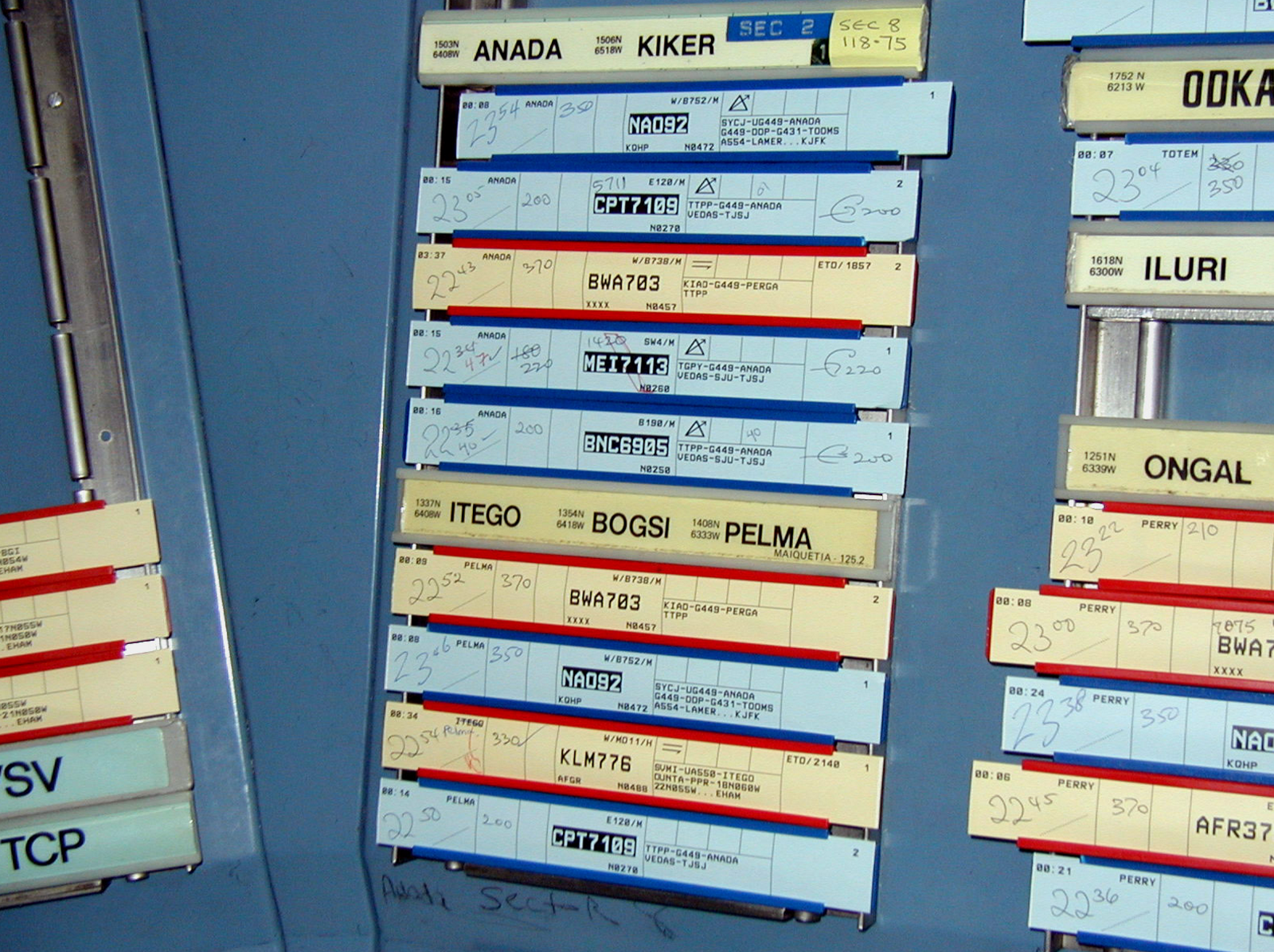
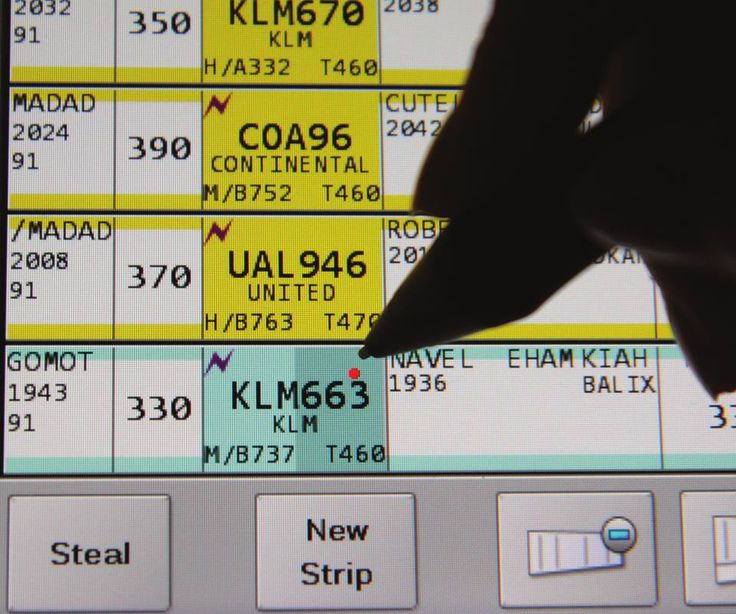
Since more or less day one of Air Traffic Control, paper has been used to record where the airplane is, and then placed somewhat geographically in relation to the other airplanes that might affect it. Changes are written on the strip by hand, with a pen.

Like the picture above.

Because getting rid of any paper whatsoever is the most important thing in the world right now, there is a new electronic version of the same thing (and France is calling theirs ‘ERATO‘). Which looks a little like this:

elecboard


So, Bordeaux (LFBB) Center is first … starting today, November 17th. And because nobody is entirely sure how well this is all going to work, a whole bunch of traffic has to be rerouted away from Bordeaux, so that there aren’t too many aircraft per controller – both to allow them to learn, and in case it goes feet up.

Which means mass reroutes, and delays. There are contingency routes – which have become very familiar to operators after this years “Summer of Strikes” – the Tango Routes will be popular again.

Looking ahead, the plan calls for two weeks of fairly heavy reroutes, and then another two weeks of lower impact restrictions. They have said though, that normalisation won’t occur until after Christmas.

So, if you want some different options for getting around the Bordeaux FIR:

  • For north-south flights The Tango Routes – via Shanwick
  • For east-west flights try to file further north, into Belgian/Eurocontrol/German airspace, or come south into Barcelona/Marseilles
  • Read the Eurocontrol NOP – especially on the Tactical page on the ATFCM Measures (Scenarios) portlet -and selecting the link Scenario List: ID RR*ERA
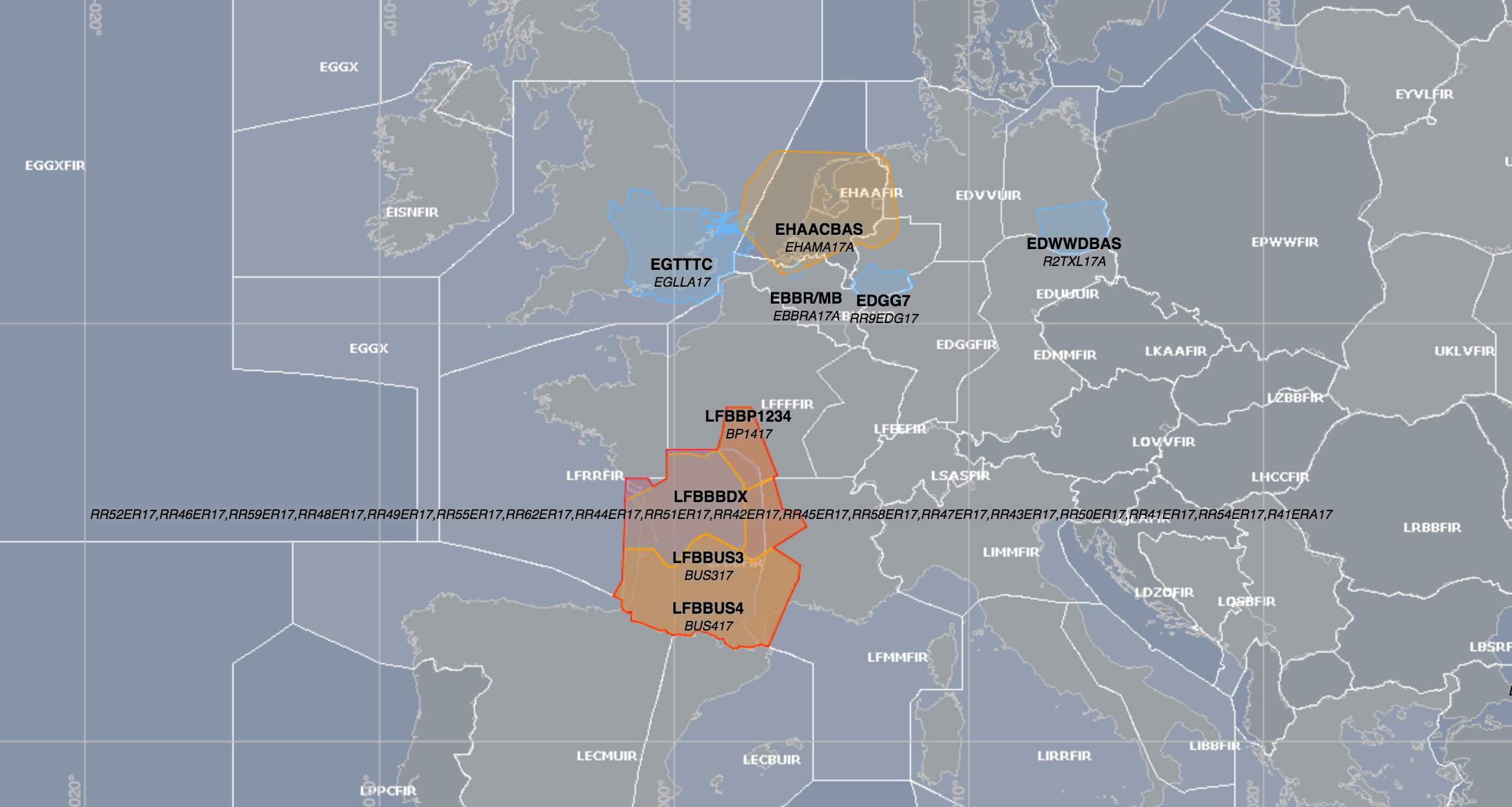
  • And, here’s a map – the red part is LFBB/Bordeaux FIR – don’t file through here:

lfbb-erato-map

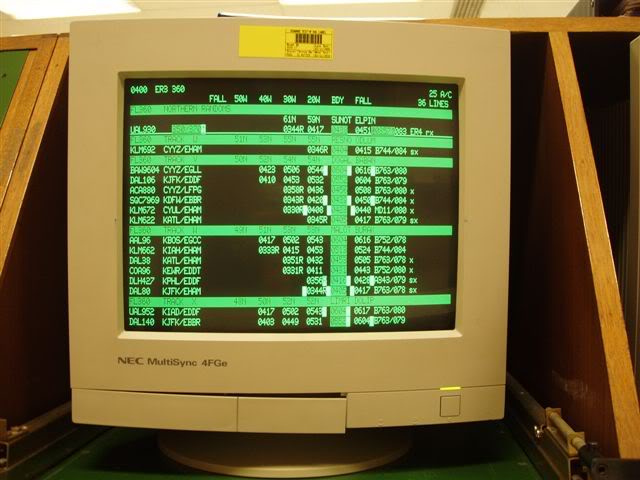
The transition from paper to paperless has been going on for a while: Shanwick went ‘electronic’ in the mid 1980’s: this is what the enroute controllers’ screen looked like.

fdpssmall


Finally, here’s the ‘official version’:

DSNA, France’s air navigation service provider, is carrying out an in-depth modernisation of its en-route air traffic management system to cope with the increase of air traffic in France.

From November 17, 280 air traffic controllers at the Bordeaux Area Control Centre (ACC) will handle flights with a new-generation, stripless ATC system called ERATO Electronic Environment (EEE).

The EEE programme based on a SESAR solution has been co-financed by the European Union. EEE provides a modern work environment and innovative control assistance tools.

Nevertheless, as a prelude to any major ATC system implementation, capacities have to be temporarily reduced to allow each air traffic controller to master in real time operations all the new capabilities.

Delays in the south-west of France are therefore to be expected during two weeks. No flight cancellations have been requested by DSNA.

To minimise the impact on flight punctuality, DSNA, has developed a transitioning plan in close cooperation with the Network Manager (Eurocontrol), neighbouring air navigation service providers, and the most affected airlines and airport operators.

Eurocontrol traffic simulations shown that for this transition period, up to 500 flights will need to be rerouted each day to avoid the airspace under the responsibility of Bordeaux ACC.

Moreover, military activities in high altitude training areas will be limited. Regional airports will be impacted along with all flights from or to Paris from the south.

ERATO2Maurice Georges, CEO of DSNA, said: “DSNA staff is totally mobilised with the implementation of this major project. I appreciate the efforts made by the entire aviation community to ensure a successful commissioning of the Electronic Environment ERATO in Bordeaux.

“The transitioning phase ahead of us relies on high predictability for all flights and trustworthy collaborative processes with our customers and partners”.
This major technological step will enable DSNA to deliver a high level of performance. Within the framework of the FABEC and in line with our Single European Sky commitments, DSNA will thus meet new challenges ahead for safe and sustainable air transport.”


New ICAO SID/STAR Phraseologies from 10 November 2016 (or not?)

This is not going to be a short story.

But here’s the summary. In June 2016, ICAO updated Doc 4444 (the Air Traffic Control bible) with Amendment 7.

One of the main things this new bit does, is to change what the controller will say to the pilot, on a Standard Instrument Departure (SID), and on a Standard Instrument Arrival (STAR).

The new phraseology headline is “CLIMB VIA” and “DESCEND VIA”, but there are many more new parts to it.

So, here’s the problem. Doc 4444 is the master document, but each country has to implement the changes. And many are not – because they haven’t had time to train the controllers, or because they haven’t done a safety case (ie. figured out if anything in the new phraseologies might be dangerous), or … other reasons.

Some states have even published AIC’s to say that they won’t be implementing the changes (Australia, Switzerland). Others have already published the changes (Iceland, for example).

Confusing? You bet. For now, do two things:

  1. Read the new rules, because you’ll hear them from November 10th, but we’re not exactly sure where yet.
  2. Comment below and tell us any additional info you have.

The new rules are here:

  1. ICAO State Letter (the official version, with the verbatim changes to Doc 4444)
  2. A summary leaflet from ICAO – the highlights.
  3. SID/STAR Scenarios and Example Phraseologies from ICAO (a longer document).

We’ll keep this page updated as we hear more …

Will be implementing the change
Iceland
Latvia
Sweden (if we read AIP Supp 89 correctly)

Won’t be implementing the change – yet

Finland
Singapore
Australia
Switzerland
United Kingdom (not until late 2017, earliest)


International Bulletin: Winter is Coming, Updated Canada Requirements

Winter is coming 09NOV With the clocks changing, it’s a reminder that we’re not far away from the snowstorms, deicing delays, cancelled flights, airport shutdowns, and those big invoices for de-icing fluid. Our new author Frank Young has an article.

Updated Canada requirements 09NOV From tomorrow, November 10, an eTA is now mandatory for flights to Canada (for most people), and there’s an update to flying to Canada with a previous conviction. Read the article.


BIKF/Keflavik Long a destination for flight certification testing (because it’s cold and windy), will not accept test flights until February next year, thanks to runway renovation work.

ZZZZ/Worldwide Last week we ran a story about the new ICAO SID/STAR phraseolgies. In short, some countries are implementing, and others aren’t. We’re going to make a list of who’s doing what, so that you as an operator or pilot will have some idea. Can you help us? What is your country doing? Tell us at bulletin@fsbureau.org.

LTBA/Istanbul At about 0100 local time on 6 November, two people on a motorcycle opened fire outside Istanbul Ataturk International Airport, prompting a temporary closure. Reports indicate that authorities apprehended both suspects and did not find additional weapons or explosives on their persons. Officials briefly placed the airport on lockdown but reopened the facility at about 0130. The incident reportedly did not affect flights, and the gunfire harmed no civilians or police officers.

CZZZ/NAT Region The FAA has recently determined that time estimates provided by pilots in oceanic CTAs are less accurate than expected, particularly when adverse weather causes pilots to deviate from the planned course. These inaccurate estimates can compromise the separation of aircraft. Have a read.

YMML/Melbourne Be aware of recent hoax ATC calls. Someone with a handheld radio has been making “go-around” transmissions on the Tower frequency, and at least one aircraft has responded. Airservices says there have been 15 such transmissions in the last few weeks.

CZZZ/Canada The NBAA has issued useful updated info for flying to Canada with previous convictions – Canada is known for refusing entry based on DUI charges. Today, November 9, is also the last day that you can enter Canada without an eTA.

PWAK/Wake Island – an ETOPS alternate – is closed on 11NOV for Veterans Day. They do say they will attend with 30 mins notice, so maybe two ETOPS circles are required for that day. Check other US ETOPS alternates on this date also.

UCZZ/Kyrgyzstan Since 4 November, if you’re staying for longer than 5 days, you must register with the local authorities.

PKMJ/Majuro is downgraded to Cat 6 until November 23, which may affect some operators using this as an ETOPS alt.

EGNX/East Midlands airport has some weekend closures for the next six weeks.

VIZZ/India announced on 8 November that 500 and 1,000 rupee banknotes will cease to be legal tender as of 0000 local on 9 November 2016.

EVLA/Liepaja (one of Latvia’s three international airports) is now closed to all operations. They say they will be open again in Spring 2017. Fingers crossed.

LAZZ/Albania has been experiencing heavy rains, high winds and flooding throughout the country, causing road blockages, school closures, and disruptions in ferry services. The army has been mobilized for rescue and relief operations.

LFLL/Lyon If you’ve been using LFLL as an alternate at weekends, you’ll have to cut that out from December 10th, they don’t want weekend diversions of non-sched flights.

EGKK/Gatwick has advised of a new series of rail strikes that will run through to January next year.

MHTG/Central America FIR reminds operators that a CENAMER notification by AFTN is required for all flights planning to enter the airspace.

MTZZ/Haiti The US has published updated advice for Haiti: U.S. citizens are advised not to travel to the southern peninsula of Haiti, commonly referred to as the “southern claw.” The U.S. Embassy has currently banned unofficial travel to the southern peninsula and allows official travel only after consultation with its security office. There is widespread devastation throughout the southern claw with the most affected areas on the western tip of the peninsula. Travelers can expect difficult travel conditions with roads made impassable by landslides, damaged roads, and bridge failures. There is also widespread damage to buildings and infrastructure, including gas stations and cell towers, loss of electricity, and shortages of food and potable water. U.S. citizens who choose to travel to the southern claw in spite of these risks should carry sufficient water, food, fuel, and medicine to last longer than their anticipated stay. The security environment around the southern claw is fluid and uncertain.

LFOB/Paris Beauvais is closed overnight from 2200 to 0600Z, for 14-25 November inclusive, due to stuff.

HAZZ/Ethiopia On November 8, the Command Post – the body tasked with implementing Ethiopia’s state of emergency – lifted the restriction imposed on foreign diplomats, which restricted them from traveling more than 25 mi/40 km outside of Addis Ababa. The Command Post also lifted and revised several other state of emergency provisions; however, the changes are minor and are not likely to affect the current situation. The curfew and communication restrictions remain in place

NFTF/Tonga Fua’amoto (the main airport) has new operating hours – these are, in UTC: 1600 SUN TO 0530 MON, 1025 MON TO 0800 TUE, 1600 TUE TO 0530 WED, 1000 WED TO 0800 THU,0900 THU TO 1200 THU, 1600 THU TO 0530 FRI, 1600 FRI TO 0800 SAT. They’ll accept div traffic outside these hours, call +676 22 608 – but prefer no surprises on Sundays.

OMAA/Abu Dhabi will see heavy traffic for the Grand Prix on November 27, avoid if possible.

SBZZ/Brazil The office that processes Foreign Civil overlight and landing permits has updated hours of operation: Mon-Fri 1230Z-2230Z.

SBCT/Curitiba airport would like 4 hour PPR notice for non-scheduled flights, and request that you call them on 55-41-3381-1478 to arrange that.

SPJC/Lima, Peru has an upcoming APEC meeting 14-21 November, with a decent increase in traffic expected, and a few restrictions. They’ve also warned pilots to pay attention to radios and transponder codes to avoid them sending up the jets – good advice.

TVSV/ET Joshua Airport is closed due to flooding.

VECC/Kolkata Radio has a new HF frequency: 8861, with hours 1330Z-0130Z. Use this if 6556 or 10066 isn’t working for you.

CZQX/Gander is going to auto-send you a “Confirm Assigned Route” message from 01DEC, on entry into their OCA – if you are FANS 1/A equipped. If you’re not sure how to feel about that, read our previous article.

LCCC/Nicosia There’s a good deal of mil activity – UN, and Russian – in the Cyprus region at the moment. Read the LCCC and surrounding FIR Notams carefully. Oh, and if you’re not up to date on your Greek-Turkish FIR dispute, add LGGG and LTBB to that. As 2016 draws to a close, enough regional history has been published for an entire novel. This weeks Notam series covers the 1923 Lausanne Peace Treaty.

NZZC/New Zealand published a change to SID procedures today, and our brain hurts. We’re not sure if this is related to the 10NOV ICAO SID/STAR changes, or .. something else. If you’ve got it deciphered, let us know. THE STANDARD INSTRUMENT DEPARTURE (SID) SPECIFIES IN BOTH DIAGRAMMATIC AND NARRATIVE FORM ANY OF THE FOLLOWING: THE DIRECTION OF TURN, HEADINGS, TRACK, DISTANCES, SIGNIFICANT POINTS AND ALTITUDE REQUIREMENTS. WHERE TRACKING TO OR FROM A NAVIGATION AID IS NOT POSSIBLE, DESIRED TRACKS ARE SHOWN AND DUE ALLOWANCE FOR WIND IS TO BE MADE. AIRCRAFT ARE TO CONTINUE CLIMBING THROUGHOUT THE SID UNLESS IN COMPLIANCE WITH PUBLISHED ATC MAINTAINS, DEPARTURE MINIMUM SAFE ALTITUDE (MSA) OR AS OTHERWISE INSTRUCTED. WHERE CONTINUOUS CLIMB TO THE END OF THE SID IS NOT REQUIRED A DEPARTURE MSA MAY BE DEPICTED ON THE RELEVANT CHART. THE DEPARTURE MSA REPRESENTS THE LOWEST ALTITUDE FOR OBSTACLE CLEARANCE ALONG THE ENTIRE DEPARTURE ROUTE (INCLUDING TRANSITIONS). IT REMAINS THE PILOT’S RESPONSIBILITY TO MEET SUBSEQUENT ENROUTE MSA/MINIMUM FLIGHT ALTITUDE (MFA)/MRA/MEA REQUIREMENTS APPLICABLE AFTER SID TERMINATION. DEPARTURE MINIMUM SAFE ALTITUDES DO NOT ENSURE CONTROLLED AIRSPACE CONTAINMENT.

OEZZ/Saudi Arabia has issued an extension of the policy that requires all aircraft with a destination in Yemen to first land in OEBH/Bisha – through to 08FEB next year. The only exceptions are the UN, Red Cross, and MSF.

VHHK/Hong Kong is going to move to a new ACC and ATC Tower towards the end of this month. There will be delays. The actual date hasn’t yet been notified, we’ll let you know when we hear.

View the full International Bulletin 09NOV2016

Flying to Canada with a criminal record

The NBAA has posted useful updated information on flying to Canada with previous convictions, which may affect your passengers, or crew. Canada is known for refusing entry to the country if you have a DUI charge on your record.

Here are the highlights:

If denied admission because of a DUI, a traveler’s options depend on the time elapsed from the completion of the sentence or probation period, not the arrest date.

  • If it has been 10 years or more, you’re automatically deemed rehabilitated, and the border agent welcomes you to Canada.
  • Between 5 and 10 years from the completion of a sentence or probation, travellers can apply for “criminal rehabilitation,” which documents that someone is “no longer a public safety threat in Canada and costs up to $1,000, said Healy.
  • For those whose sentence or probation ended less than 5 years ago, Canadian border officials can offer a one-time free temporary resident permit. The permit, which costs $200, is good for up to a year, and you can enter and leave Canada as needed during the approved period. A traveler can apply for a permit at a consulate or at the border, but a traveler’s ability to use this option at the border is at the discretion of the border official involved.

Also, from tomorrow, November 10, 2016 – most people will need an eTA to enter Canada. More on that here.


An eTA is now required to enter Canada – November 10, 2016

Earlier this year Canada introduced a requirement for an eTA – like the US Esta.

For a while, it was OK to travel without one. That’s now over – you need one.

As of November 10, 2016, travellers with passports from eTA-required countries who enter Canada by air will need an eTA.

The leniency period ended on November 9, 2016: during this period you could have boarded your flight without an eTA, as long as you had appropriate travel documents such as a valid passport. During the leniency period, border services officers can let you enter the country as long as you meet the other requirements to enter Canada.

The authorization is electronically linked to your passport and is valid for five years or until your passport expires, whichever comes first.

Applying for an eTA is a simple and inexpensive ($7 Canadian) online process that will take just a few minutes. Most eTA-eligible applicants will get their authorization within minutes of submitting the online form.

If you need an eTA, you should:
⁃ get it when you plan your trip – do not wait for the last minute to apply and
⁃ travel to Canada with the passport you used to get your eTA.

References:


Winter Is Coming

Well, we have a question for you.” The New York Center controller seemed amused.

“Go ahead,” I replied, my voice made uneven by the moderate turbulence we were bouncing around in. As I answered, I cast another look over my shoulder at the ice on the wings. The Dash-8 boots were doing their job, at least for now. The aircraft took on a bit of shudder as the props flung ice unevenly off of the blades.

The Center controller delivered the news with a mixture of ironic humor and pity. “Williamsport wants to know if you want them to plow the runway. They say they are closed currently. They have four inches of snow on the runway, but there is a hard crust of ice on top.”

I quickly retrieved the flight release and rifled through the six foot paper scroll to find the NOTAMs. Nothing about the airport being closed, thank Zeus. At least I didn’t miss something big like that. Dispatch should have known—but here we were, halfway between Philadelphia and Williamsport, in and out of freezing rain. I eyed the fuel gauges critically. Plenty left to get there and fly back, if need be. At least there was that.

“Well yeah,” I told the controller. “Plowing the runway would be helpful.”

That night ended with a circling approach to minimums through a narrow valley in light freezing rain mixed with snow. The First Officer flew the approach perfectly, and thanks to the superior stopping power of the Dash 8 we had plenty of slick runway left to play with. Just another Northeast U.S. winter night—par for the course from November until March.

Winter is coming. In some parts of the world, winter is already here and people are insistent on staying inside on top of their twin mattress. However, for pilots, they still have to brave the weather. Flying always brings challenges, but winter supplies extra problems that separates mere pilots from imaginative problem solvers. Problem solving must always be wrapped in a healthy rind of risk analysis. When things go bad in winter weather, they often go bad in a big way.

The accident record is filled with examples of the problems that ice and snow can cause. The American Eagle ATR in Indiana in 1994 was brought down by the crew’s lack of appreciation for the extreme effects of super-cooled large droplets (SLD). In 2005, Southwest Airlines slid off of the end of a slick runway at Chicago Midway. There have been icing induced loss of control events the world over and a few aircraft seem to slip off of the taxiway every winter. Sometimes, simply the additional worry and workload posed by extreme winter weather can add risk. A crew can find themselves rapidly being overcome by events, leaving little time to make decisions in a highly dynamic environment.

de-icing

Technology has come a long way in helping to mitigate the risks that winter can pose. There are now predictive charts for SLD that pilots can examine prior to flight. Deice and Anti-ice fluid technology has improved in past years; there are now three different types of fluid available for use, each tailored for a specific application. The holdover times (the amount of time that fluids remain effective) are revised on a yearly basis as formulations change and the science improves. Some airports are even experimenting with large heaters and infrared deicing technology. Predictive weather tools are much better as well, leading to proactive cancellations that allow aircraft to be positioned for relatively rapid system recovery once a major winter storm has passed.

But there are still problems … Even the best anti-icing fluids can rapidly lose effectiveness in the right conditions; temperatures near freezing with high humidity makes for large, wet flakes that can quickly saturate even the most robust Type 4 fluids and render them useless. Weather systems can capriciously change course with little warning, meaning the difference between a snow apocalypse and a mild dusting of white. Winter is expensive too, with deicing and anti-icing fluids costing more per gallon than jet fuel. Duty days get longer, crews get fatigued, schedules lag and dispatchers become swamped with work. There is nothing more expensive than operating a late airline, and late is often the rule rather than the exception when it comes to winter operations.

So, what is the key to safe winter operations? Planning is essential, but so is flexibility. Many airports have instituted gate hold programs for deicing operations, which helps prevent needless burning of jet fuel on the taxiway. Proactive assessment is key. Knowing the conditions at the destination prior to departure can mean the difference between a successful outcome and tens of thousands to dollars of expense for a divert to an alternate. Caution is the most important concept. Aircraft performance numbers are important, but takeoff and landing distance data should be taken with a grain of salt: it is not uncommon for conditions to vary significantly along the runway length, especially at smaller airports with limited snow removal capabilities.

Planning and caution can mean the difference between a successful, safe operation and having to have a crew have to get creative in the middle of the night. Winter is coming. Time to get ready.


International Bulletin: Sharm El Sheikh reopens, New ICAO Phraseologies 10NOV

Sharm El Sheikh reopens 03NOV  HESH/Sharm El Sheikh, Egypt has reopened to international traffic, with a number of airlines starting services again on 01NOV. However, there are conflicting views on security at the airport, depending on your state of registry. Read article.

New ICAO Phraseologies 03NOV From 10NOV, new international aviation phraseology for SIDs and STARs is effective, but there’s a problem. Read article.


OEJN/Jeddah, Saudi Arabia On 27OCT, Saudi Arabia intercepted and destroyed a ballistic missile launched from Houthi-controlled territory in Yemen. The Houthis confirmed the launch via the Saba news agency, saying that the missile was targeting Jeddah International Airport (OEJN), not the holy city of Mecca, as some other news reports had claimed.

EHEH/Eindhoven has new procedures for PPR effective 30OCT – if you’re flying there, get PPR direct from the airport. You can read all the info on their new GA page. Oh, and there’s now a fee. €300 for PPR for a 21 ton aircraft, for example.

LFMN/Nice Runway 04R/22L will be closed during November.

WARR/Juanda Airport is closed due to works in progress except for helicopter medical evacuations from until 15NOV

UTZZ/Tajikistan Disagreement between Russia and Tajikistan may lead to operational restrictions between the two countries. Air traffic between Moscow and Dushanbe may be suspended from 08NOV.

FAZZ/South Africa Reports this week suggest that foreign nationals entering South Africa through any port of entry should expect delays up to four hours due to a new enhanced security measure that requires the capture of fingerprints and a photograph. OR Tambo in Jo’burg seems to be the worst offender.

BGKK/Kulusuk has updated opening hours: 1100-1900Z Tuesday to Saturday. They ask for 3 hours minimum notice PPR.

PLCH/Christmas Island Fuel is in short supply, notified as being only available for Scheduled service and emergency flights. PLCH is often used on Pacific crossings as an alternate, so any diversion would be considered an ‘emergency’, but check before actually planning a tech stop.

LEZZ/Spain Previously notified fuel strike now appears to be one provider only, so it looks like impact minimal.

DGAA/Accra ATC is having a few VHF issues, primarily on 126.7 – if you can’t reach them, call HF 8903 instead.

EDDT/Berlin Tegel will be busy 14-18 NOV due to state visits, they won’t accept GA/Private traffic during this time, but you can check specifics with them at vvd-txl@berlin-airport.de

HLLS/Sabha, Libya The airport has been closed for over 2 years due to fighting in the area. A new Notam has been issued which officially extends the closure period to 26DEC, as talks continue between the authorities and local groups to find a way to re-open the airport.

LYBE/Belgrade Jet A1 not available through the airport fuel service provider until the end of the month. Make sure you get a confirmed fuel release through a third-party fuel provider before operating here.

LTZZ/Turkey On 29 October, the US Department of State ordered the departure of family members of employees posted to the US Consulate General in Istanbul due to security information indicating extremist groups continued aggressive efforts to attack US citizens in Istanbul. US Operators should consider ops into airports in Turkey carefully.

OMDB/Dubai Traffic was stopped for approx 1.5 hours on 29OCT due to a drone. The Airport closed from 1930-2050 LT, and some flights were diverted. OMSJ/Sharjah was also briefly closed due to the same drone. Unauthorized drones have halted airport operations in Dubai twice in recent months.

GMZZ/Morocco is busy from 4-20NOV, GA and non-sched traffic will see restrictions. Check their Notam A0896 from 01NOV. If you’re part of the event, put RMK/COP22 in your FPL. No long stays will be allowed.

WSSL/Singapore Seletar We’ve received crew reports of challenges with visual approaches into Seletar (there are no instrument approaches). There are unlighted obstacles on the approach to Runway 21. After dark, approaches are only possible to Runway 03. More importantly, noise rules will soon demand a challenging base turn, greater than 5 degrees, to a half-mile 3.5 degree final, to a 1% down slope runway. We welcome further comments (bulletin@fsbureau.org).

LGZZ/Greece There will be a ferry strike between the Greek mainland and all Islands on 24NOV. No services will operate that day.

FTZZ/Chad Reports of nationwide public service strike including Airport operations at N’Djamena. The unions stated that the strike will persist until the government pays overdue wage arrears.

View Full International Bulletin 03NOV2016


Sharm El Sheikh reopens to international traffic, conflicting views on that …

HESH/Sharm El Sheikh, Egypt has reopened to international traffic, with a large number of airlines starting services again on 01NOV.

Before the bombing of Metrojet 9268 one year ago, Sharm was the 3rd busiest airport in Egypt.

However, there are conflicting views on security at the airport, depending on your state of registry. Operators from Germany, Poland, Russia have now started operations, but UK government policy keeps HESH on the ban list.

Our overflight advice for the Sinai Peninsula remains in place, on the basis of FAA Notam KICZ 6/16, and EASA SIB 2014-30R2 (UK and Germany) . View safeairspace.net for the current map.

At the same time, Egyptian newspapers are carrying stories that Tourism levels will return to pre-2011 levels within the next few months. Now that’s optimistic.

opg-safeairspace


International Bulletin: Hong Kong pain in the ass, Haiti relief operations

Hong Kong is a pain in the ass – it’s official 20OCT Authorities in Hong Kong confirmed yesterday that the airport is a giant pain, especially for non-scheduled operators. Lining up slots, parking, permits and handling is extremely difficult. End result: a mountain of frustration. Read the article.

Haiti relief operations – and Airbus Flight 101 20OCT After Hurricane Matthew last week, MTPP/Port-au-Prince (Toussaint Louverture) became a central focus in relief efforts for Haiti. OpsGroup member Airbus operated an amazing relief flight from Lyon. Read the article.


VTZZ/Thailand is in a period of mourning following the death of His Majesty, King Bhumibol on 13 October. This is a time of deep sorrow for Thai people – refrain from any behaviour that may be interpreted as festive, disrespectful or disorderly. Abide by local laws and respect Thai customs. There may be some disruption of commercial and public services during the mourning period, especially during the first 30 days (until 13 November). Tourist attractions are open with the exception of Wat Pra Kaew (Temple of the Emerald Buddha) and the Grand Palace in Bangkok. Expect traffic disruptions and heightened security around these areas as people pay their respects to the late King.

EBBR/Brussels All non-scheduled flights destined to EBBR are allowed only after special permission by Airport Authority before start of flight. Contact +32 2 7536900 or inspect@brusselsairport.be.

DTZZ/Tunisia extended the state of emergency on 18OCT, set to expire, by three months. The state of emergency went into effect following a series of terrorist attacks in 2015 and has been extended multiple times.

ORBB/Baghdad FIR Traffic entering from Baghdad FIR (ORBB) to Ankara FIR (LTAA) shall file their FPL as follows: NINVA-OTKEP-SRT at FL320 and above. NOTAM A4572/16 refers.

Solomon Islands There has been a confirmed outbreak of dengue fever in the capital city, Honiara; you should follow the advice of the local authorities and take steps to avoid being bitten by mosquitoes; you should take out comprehensive travel and medical insurance before travelling to the Solomon Islands

TXKF/Bermuda Due to maintenance, the Bermuda Radar system will be out of service on Friday. Recommended reroute to avoid airspace. New York Center overflight procedures will be in effect. Routes have been developed to provide limited non-radar service within the airspace. All departures from Bermuda will be held down at FL310.

OJAI/Amman, Jordan Runway 26L/08R will be closed for urgent pavement maintenance on these days in November:  01,08,15,22,29: from 0930-1330Z. The airport will not be available for either normal operations or emergency diverts during the closure period.

OEZZ/Saudi Arabia From 8 to 10 October there were several missile attacks reported near the Saudi / Yemeni border and the southern Red Sea.

ZZZZ/Worldwide Regulatory and voluntary bans on Samsung Galaxy Note7 smartphones is spreading as airlines and airport authorities around the world are announcing bans or restricted usage on the device, which has been withdrawn by Samsung after some devices caught fire. Ban notices are being issued primarily through airline online check-in pages, as well as via public announcements in airport terminals and onboard aircraft. The US Department of Transportation (DOT) was first to issue a total ban on taking the device on board, as a passenger or as air cargo, when it gave an emergency order Oct. 15 with FAA.The devices are being banned because of fire concerns, and the fallout following an incident involving a smoking smartphone on board a Southwest Airlines aircraft in Louisville, Kentucky on Oct. 5.

YZZZ/Australia will not be implementing the changes in the ICAO PANS-ATM (Doc 4444), as they say they haven’t had enough time to work on the safety case – ie. figuring out if these changes are dangerous in any way. In short, they won’t be saying “Climb via SID” or “Climb via STAR”, which are the new phraseologies.

TTZP/Piarco wins the award for most confusing AIC of the week, namely AIC03/16 issued on 13OCT. Titled “RVSM Implementation”, it appears that Trinidad is finally implementing RVSM in their airspace. But wait, they did that in 2005. So what’s new in this AIC? It’s a mystery. Take a look and see if you can spot it.

KLAX/Los Angeles 3 out of the 4 runways at KLAX have now been renovated. Runway 6R/24L reopened on 16OCT after renovations. Improvements to the fourth and final runway, 07L/25R, will begin OCT22 and continue until June 2017. This last runway will be partially closed until January, and then closed completely to allow for more extensive work to be done

FSIA/Seychelles Runway will be closed on Thursday 20 and 27 Oct between 1815-0245z and Friday 21 and 28 Oct between 1900-0215z. Can be opened in cases of emergency.

UHPP/Petropavlovsk Eruption in progress at Klyuchevskoy volcano (N5603E16038) near UHPP. Ash cloud reported at 0720z on 17 Oct from ground level up to FL300.

VVZZ/Vietnam Typhoon Sarika is forecast to bring hazardous sea and weather conditions to parts of northern Vietnam from around 19 October 2016; heavy rainfall could lead to flooding and landslides

KLAS/Las Vegas Because of the next presidential debate that will be held in Las Vegas on October 19, 2016, intermittent road closures will affect access to McCarran International Airport (LAS) between 4 pm and 10 pm on that date. The recommended route to the airport from the east side of the valley is westbound Flamingo Road to southbound Paradise Road. The recommended route to the airport from the west side of the valley is eastbound Tropicana Avenue to southbound Paradise Road.

OIIX/Tehran FIR The minimum safe level on R462 between DENDA and METBI has been raised to FL140.

KSFO/San Francisco has a new ATC Tower operational since Sunday last, located between Terminals 1 and 2. Per the local report, it “offers controllers a 650-square-foot work area with unobstructed 235-degree views of the airport’s runways and taxiways”. Hopefully there’s not much going on in the other 125 degrees.

OSZZ/Syria Russia’s only aircraft carrier, Admiral Kuznetsov, is nearing the end of a work-up period outside the port of Murmansk before heading for the eastern Mediterranean, reportedly to begin air operations against targets in Syria.

EGPK/Prestwick will be closed from midnight to 0400Z on 21OCT, due to a planned ATC power outage. ATC reachable during outage at +447917 424603.

RPZZ/Philippines Typhoon Sarika recently passed through the island of Luzon as a category 4 storm. Transportation routes, power and telecommunications systems could be affected in some areas. Other services that may be affected in these areas include emergency and medical care, as well as water and food supplies. If travelling to affected areas, exercise caution, monitor local news and weather reports, and follow the advice of local authorities.

View full International Bulletin 20OCT2016 

Hong Kong is a pain in the ass – it’s official

After a few members complained, we put  the question out to OpsGroup:  is operating a non-scheduled flight to Hong Kong really that difficult?

The response was a resounding “Yes”. 

Why then? Operators talk of having to cancel planned flights, that it’s impossible to get a decent schedule, and even with a poor one, that lining up slots, parking, permits and handling is extremely difficult. End result: a mountain of frustration.

Trying to get slots at Hong Kong International Airport has always been tricky. Now the world’s third busiest airport with over 1000 flights per day departing from its two runways, severe congestion means that only a handful of daily slots have been available to private, corporate and non-scheduled operators.

Here’s a look at a typical daily slot availability chart at Hong Kong International Airport:

typical-daily-hk-slot-availability

Back in March 2016, the airport authority made it mandatory for all BA/GA operators to start using the Online Coordination System (OCS) to reserve their slots, rather than by email as they had done previously. But for many, this system has proven to be frustrating, as a lack of enforcement has meant that slot hoarding and mismanagement by some operators has largely gone unpunished.

But in a recent attempt to crack down on such behaviour and to prevent slots going unused, the airport authority has tightened restrictions for operators flying into or out of Hong Kong. You now need all 4 of the following to be confirmed in advance: landing permit, parking, ground handling, and slots.

New changes mean that slots can be booked up to 14 days in advance (instead of 7 days as before), and authorities will monitor the slot system for intentional misuse – which could lead to operators being banned from using the system altogether. Other violations include any cancellations of outbound flights less than 72 hours before departure, and delays on the day by more than 2 hours – although any off-slot operations outside a tolerance of +/-20 minutes can still flag up for potential slot misuse.


hk-apt-chart

As for parking – again, severe congestion means this is problematic. Parking is confirmed on a first-come-first-served basis, and can be applied for up to 30 days in advance – ultimately, the earlier you apply the better. However, parking requests for 5 days or more will likely be rejected, and overnight parking is often denied during busy periods. If this happens, unfortunately the best strategy is still to just keep making new applications until you get accepted!

Over 100 business jets use HKIA as their home base, but fewer than 70 parking spaces are available at any given time, and the GA ramp itself only has space for 20 aircraft. If full, the authorities will rarely grant parking on the commercial side, and often they will just deny the parking request altogether. Once your parking is approved, you’ll receive a confirmation, and this must be given to your ground handler.

It should be noted that the requests for the landing permit, parking, ground handling and slots are all separate from each other, and need to be applied for individually. We would recommend the following, in order:


1. Apply for LANDING PERMIT

Can be done whenever, but should probably be done first.

www.cad.gov.hk/english/efiling_home.html

Civil Aviation Department (CAD)

Email: asd@cad.gov.hk, gcmtse@cad.gov.hk

Phone: +852 2910-6648, -6629


2. Apply for PARKING

Can be done up to 14 days in advance of flight, the earlier you do this the better!

https://extranet.hongkongairport.com/baps/

Hong Kong Airport Authority (HKAA)

Email: bjetslot@hkairport.com


3. Apply for GROUND HANDLING

There are plenty of agents and handlers at VHHH, but only one dedicated FBO for BA/GA flights:

http://www.hkbac.com/en

Hong Kong Business Aviation Centre (HKBAC)

Email: hkbac@hkbac.com

Phone: +852 2949 9000


4. Apply for SLOTS

Will only be considered 14 days prior to flight.

http://www.hkgslot.gov.hk/Online_Coordination.html

Hong Kong Schedule Coordination Office (HKSCO)

Email: hkgslot@cad.gov.hk

Phone: +852 2910 6898


A Juggling Act: The Dispatcher

Dispatch Center

“Don’t assume.  Verify, verify, verify.”  That’s good advice from James, an experienced dispatcher working for one of the largest passenger and cargo airlines in the Middle East.

The job of dispatching, on its face, seems straightforward and simple:  Prepare legal releases, make sure they are sent to the crews, follow the flights along their journey, and coordinate with the crews on any unexpected issues that pop up.  The reality, however, is that the dispatch center for an airline of this size is a complicated beehive of activity.  They work to safely dispatch flights to and from 6 continents 24 hours a day.
From the time James arrives at work for his morning shift at 0300z, the unexpected is the rule rather than the exception.  The workload is high: during a twelve hour shift, James might dispatch between 22 and 27 flights, three or four of which might be Ultra Long Range (ULR) operations.  The goal is to have the releases ready six hours in advance.  That seems like a lot of time, but for ULR operations it can take between one-and-a-half and two hours to plan a flight.  The aviation business is dynamic—this is especially true in the Middle East.  As departure time approaches, James might have to revise the release five times due to changes in aircraft loading.  The goal is to order enough fuel to complete the flight successfully, but not so much as to detrimentally impact the economic viability of the flight.  It is a constant juggling act where one has to always be flexible.  “You try to stay organized and pace yourself,” James says.

EmiratesBut the clock is always running, and delays can cost money—big money.  Operations from Europe and the Middle East to India and Southeast Asia can prove especially challenging in this regard.  There is an enormous amount of traffic on these routes and every aircraft must transit the Muscat FIR.  Muscat doesn’t have radar coverage over much of its area of responsibility, so air traffic control is done the old fashioned way: position reports and time estimates.  This isn’t like flying through radar controlled airspace; separation between aircraft must be increased to ensure safety.  To accommodate all of the flights, every day at 1500z until 0000z Muscat institutes strict flow control through its FIR.  Missing a departure time by even a few minutes can result in your planned altitude being unavailable, resulting in an increase in fuel burn.  “Missing a slot time means getting stuck at FL270 all the way across the Indian Ocean,” James says.

The African continent offers particular dispatching challenges not seen elsewhere in the world.  Africa is a morass of differing rules and regulations that can change whenever an aircraft crosses an international border.  Overflight privileges  must be obtained well in advance and prescribed company routes must be rigidly adhered to.  If an aircraft unexpectedly wanders into the wrong county’s airspace, “you might find yourself in a spot of bother,” James says.

NOTAM communication in Africa is notoriously poor.  James tells the story of a recent flight where the crew was advised that the airport in Nairobi was closed after they were airborne; in fact, they were less than two hours out.  James quickly began coordinating with the Kenyan authorities and planning viable divert alternatives.  The Kenyan voice on the other end of the phone insisted that, although the airport was technically closed, it would be no problem for the aircraft to land.  “This really isn’t the way we should be doing business,” James says.

While Africa presents challenges, flights over China experience route rigidity unequaled throughout the world.  When an aircraft needs to change course for weather avoidance, the common response from Chinese air traffic control is, “maintain the airway.”

How do dispatchers plan safe routes through such extensively controlled airspace?  Preflight planning must include a very careful look at the weather and NOTAMS for active restricted airspace and incorporate routing that give dangerous areas a wide berth.  “You plan as conservatively as you can, but you have a limited selection of routes that are approved six months in advance,” James says.

Dispatching for a global airline presents many challenges.  Professionals like James have become outstanding information gatherers, meteorology gurus, and consummate diplomats negotiating a wide range of cultures and national regulations.  For a dispatcher, curiosity is an important risk management tool.  Nothing is left to chance.


Airbus Flight 101 – Relief to Haiti

After Hurricane Matthew last week, MTPP/Port-au-Prince (Toussaint Louverture) became a central focus in relief efforts for Haiti. One of our OPSGROUP members, Airbus Industrie – took an A330 that’s normally used for testing, and flew it with supplies from France to Haiti.

Thanks Pedro @Airbus for this flight and trip report – and thank you for your contribution to the relief effort as well. All the crew members on board were volunteers.  We’re very proud to have you as a member of our group.

departure

Report from Pedro Dias, Airbus Industrie:

RELIEF FLIGHT TO HAITI – FLIGHT AIB101 – AIRBUS A332

A request from NGO has raised to carry to Haiti 25 tons of medical equipment, first aid supplies, portable water station as well as a team of 40 people (28 military Rescuers, 4 doctors and nurse, 8 NGO staff). Airbus, thru the “Airbus Foundation”, responded positively and offers to help providing our A332. This aircraft is a test aircraft, partially equipped with pax seats and offer the full capacity of its cargo. On Monday 10th October we were ready to go!

First stop in LYS where all the NGO equipment was stored, after a short night Cargo and passengers were on board ready for a 9h30 flight.

AIB101 T/O @ 05H45UTC

Nice flight with some turbulence approaching the Caribbean Area… This long flight gave us the opportunity to talk with our fellow passengers and understand their motivation to go to such devastated places. Very interesting dialogue, which made all of us understand that we are lucky to be where we live.

haiti1

After overflying a small part of the Island we’ve been cleared to land. On the ground a B747 was already there, offloading equipment sent by French government.

Handling was efficient but slow, as could be expected, and the airport was a bit messy due to Matthew but also to the heavy work on the airport, have to be careful of all trucks and excavators crossing taxiways and parking with no radio contact!!!

tail

We had to wait for customs to clear our cargo, finally everything went smooth and after less than 2 hours on the ground we were ready to leave. Fuel was not available, things have changed since I guess, we planned a fuel stop at PTP (Pointe-à-Pitre, Guadeloupe) before flying back to Toulouse.

ramp

2h Flight to PTP, then 2h on the ground and after a 08h00 flight it was 0550Z on Wednesday when we landed at Toulouse after 24h around the clock for this tiring but really rewarding flight.

All crew and Airbus team were volunteers to help on this flight, we know that what we bring is a drop in the ocean but we expect it will help people there, and we hope many more flights will follow soon”

Thank you Airbus and Pedro for this report!