


Key Points
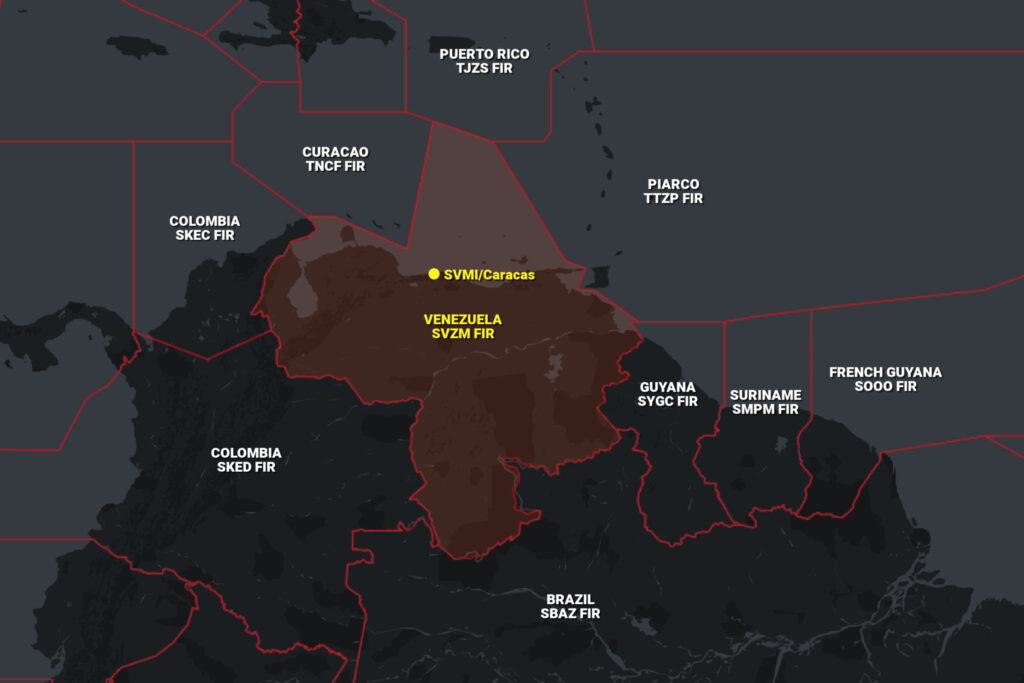
- The FAA has issued new airspace warnings for both the TJZS/San Juan and SVZM/Maiquetia FIRs, following a sharp rise in state aircraft activity across the southern Caribbean.
- SVZM is the main concern: the FAA cites a worsening security picture, GPS interference, and increased Venezuelan military mobilisation, including air-defence capability that raises the overflight risk.
- Airlines have already suspended flights to Venezuela and are routing around the SVZM FIR via Colombia and neighbouring FIRs.
- Avoid SVZM unless absolutely necessary. The risk level for overflights is higher than usual.
- TJZS remains open, but expect more state traffic, occasional non-standard ATC coordination, and busier airspace as military activity increases near Puerto Rico.
Puerto Rico: New FAA warning for the TJZS/San Juan FIR
On 18 November, the FAA issued KICZ A0010/25, advising extreme caution at all levels in the TJZS FIR because of an increase in state aircraft operations. They don’t say who these aircraft are, but the language almost always means military traffic that may not be working standard civil ATC.
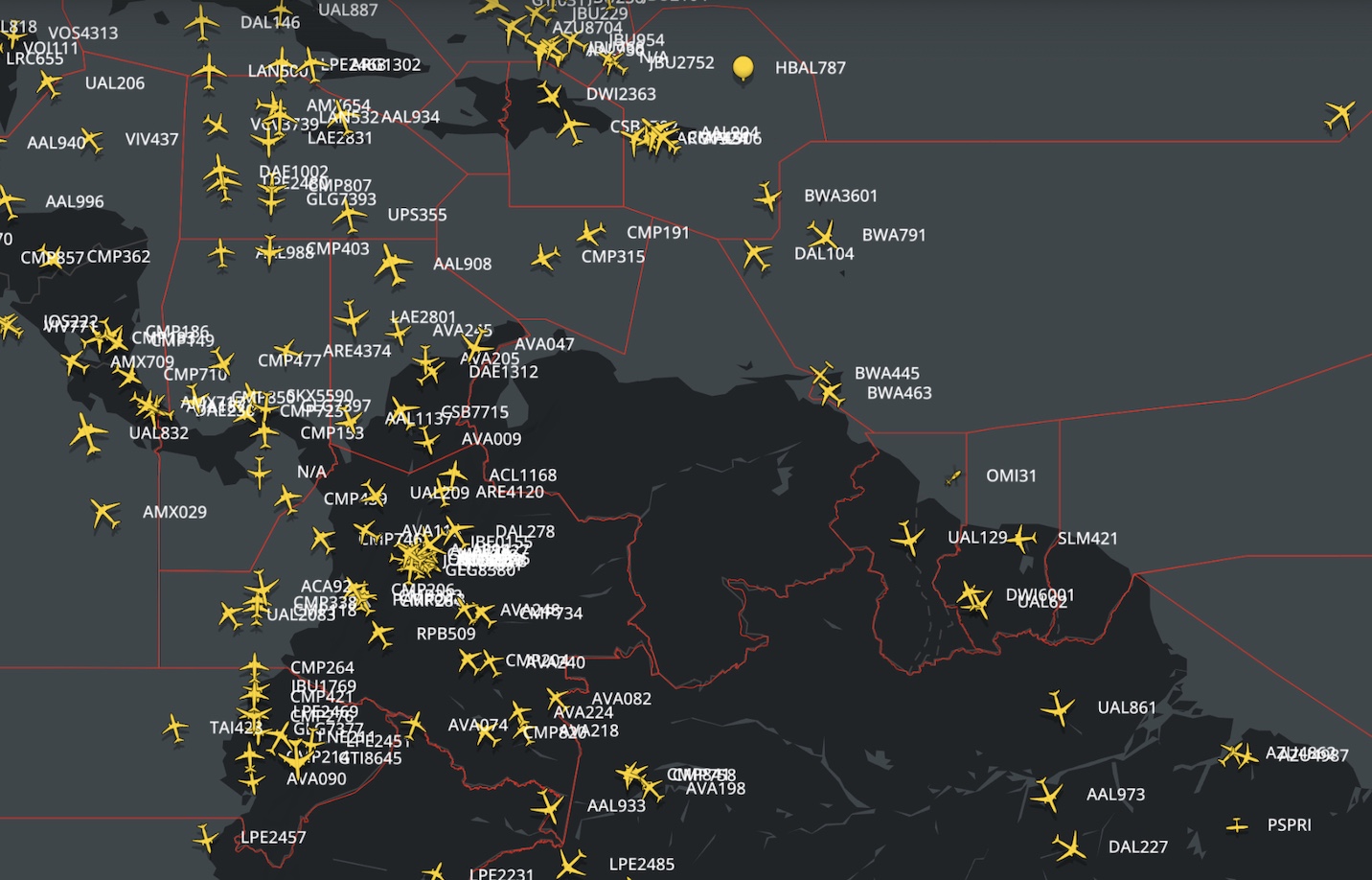
That matches what’s happening: more US reconnaissance, tanker and transport flights, plus a larger naval presence in nearby waters. The US has also carried out strikes on suspected drug-smuggling boats. Venezuela has publicly objected to the buildup, raising tension across the wider region.
For crews, the key point is that TJZS may now see unpredictable state movements and non-standard ATC interactions.
Venezuela: A much stronger FAA warning
On 21 November, the FAA issued the more serious KICZ A0012/25 for the entire SVZM FIR. It cites a worsening security situation and increased military activity, and requires 72 hours’ advance notice from US operators planning to enter the FIR.
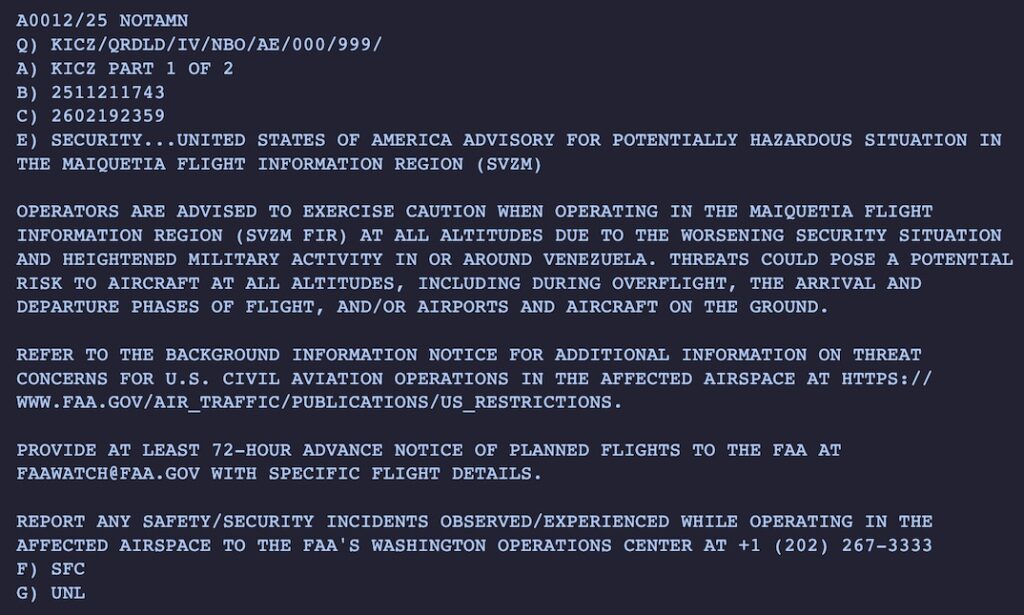
The FAA’s Background Note backs this up: crews have reported GPS interference in the SVZM FIR with effects that can extend 250 nm from the source, and Venezuela has stepped up its military posture with mass mobilisation and air-defence systems that can reach civil levels. There’s also a low-altitude risk from MANPADS. Venezuela isn’t threatening civil aviation, but the overall environment means the risk level for overflights is higher than usual.
Spain and Portugal have also issued their own near-identical warnings for Venezuelan airspace. Both tell crews to avoid the SVZM/Maiquetia FIR until early December. They cite increased military activity, air-defence systems active at all levels, and poor coordination between parties in the area. This matches the FAA’s view and adds two more state recommendations to stay clear of Venezuelan airspace.
Airlines are already pulling back
In the past few days, several airlines have suspended services to Venezuela (the ones we know about so far: Iberia, Air Europa, Plus Ultra, TAP, LATAM, Avianca, GOL, Caribbean Airlines and Turkish Airlines).
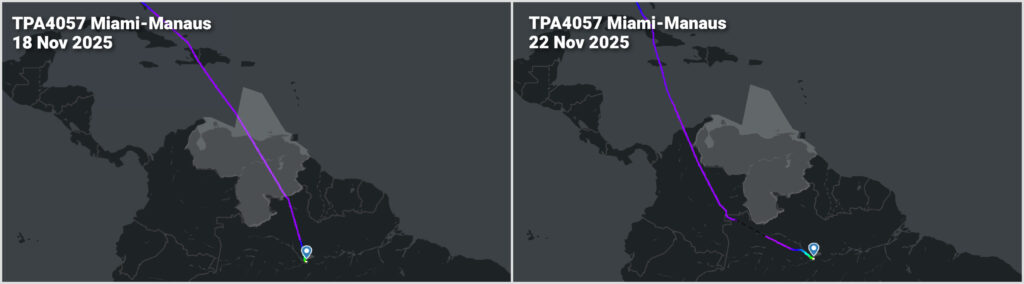
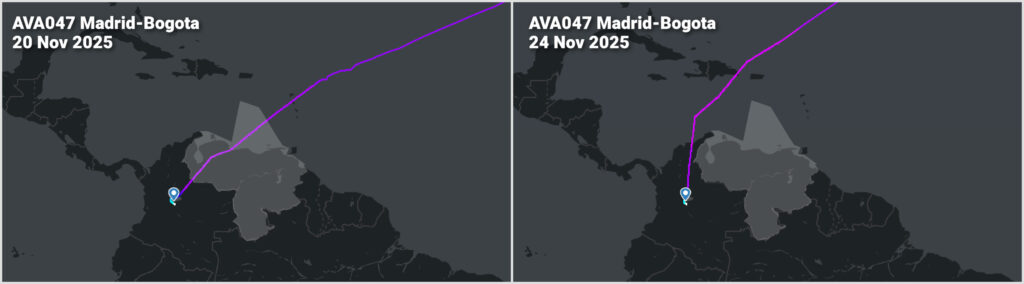
It looks like most overflights are now adopting the same strategy: avoid SVZM completely and route via Colombia or neighbouring FIRs, rather than cut across Venezuelan airspace.
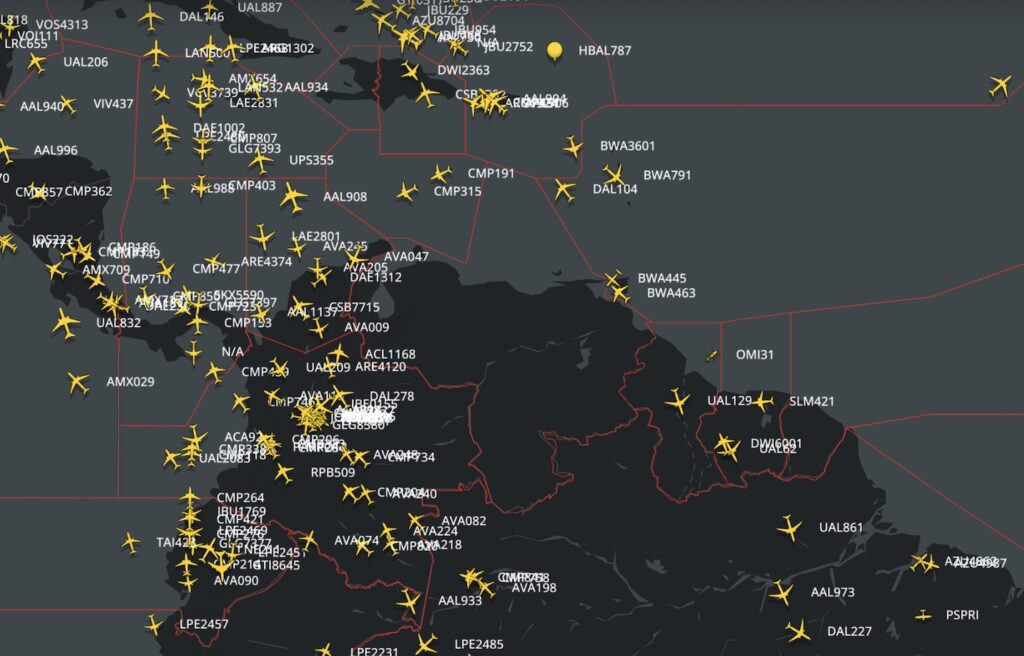
Venezuela’s civil aviation authority INAC has announced that it revoked operating permits for six foreign airlines on 26 Nov 2025: Iberia, TAP Air Portugal, Avianca, LATAM Airlines Colombia, Turkish Airlines and GOL. INAC said the decision followed the airlines’ move to suspend their services to and from Venezuela after recent air safety alerts issued by the US and Spain. IATA has urged the Venezuelan authorities to reconsider the move.
Why all this is happening
The FAA hasn’t given a detailed explanation, but recent US military activity in the region gives plenty of context. Public reporting shows:
- The USS Gerald R. Ford carrier group and several destroyers off northern South America.
- USAF heavy bomber flights along the Venezuelan coast.
- Multiple recent strikes on suspected drug-smuggling boats.
- Venezuela condemning the buildup and calling the US presence a direct threat.
All of this is happening in airspace corridors used by civil traffic, which explains the new warnings.
What crews need to watch for
Three main things:
- GPS interference is active. Crews have reported GNSS issues in SVZM with lingering effects after exit.
- Military traffic is up and less predictable. State aircraft may not be on civil ATC, may appear without ADS-B, and may manoeuvre unexpectedly – particularly in TJZS and on the northern edge of SVZM.
- Avoid SVZM unless absolutely necessary. Airlines are already doing this, and the FAA warning together with Venezuela’s current military activity makes overflight risk higher than usual.
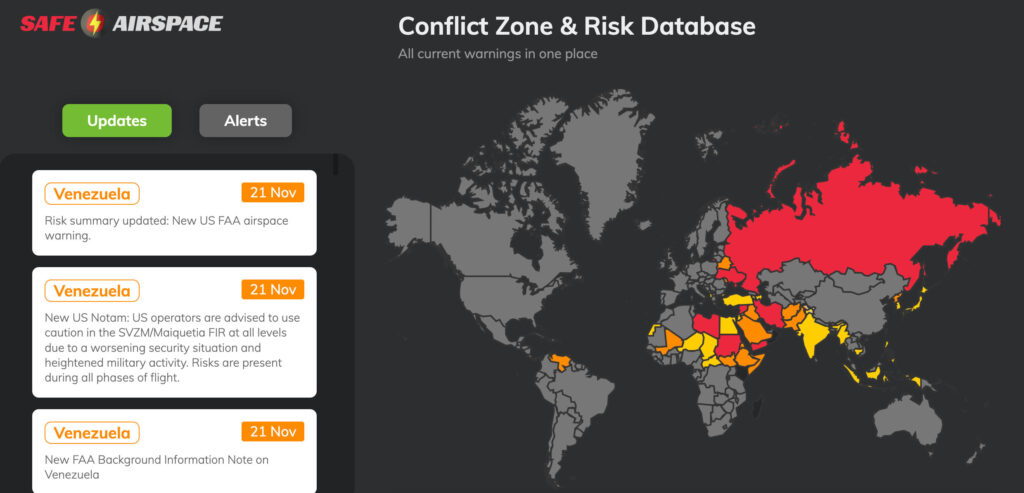
For more info on these airspace warnings, check safeairspace.net – our conflict zone and risk database. And if you have any info you’d like to share with us, please get in touch via news@ops.group.
More on the topic:
- More: Venezuela & Caribbean Airspace Update
- More: Venezuela: FAA Restriction Lifted
- More: Venezuela Aviation Situation: Anything to Report?
- More: Going Viral: The non-Covid nasties to watch out for
- More: Venezuela issues another surprise ban on GA/BA Flights
More reading:
- Latest: Paris Ramp Checks: Illegal Charters and Tax Avoidance
- Latest: Middle East Airspace – Current Operational Picture
- Latest: Greenland NAT Alternates: March 2026 Update
- Safe Airspace: Risk Database
- Weekly Ops Bulletin: Subscribe
- Membership plans: Why join OPSGROUP?



 Get the famous weekly