


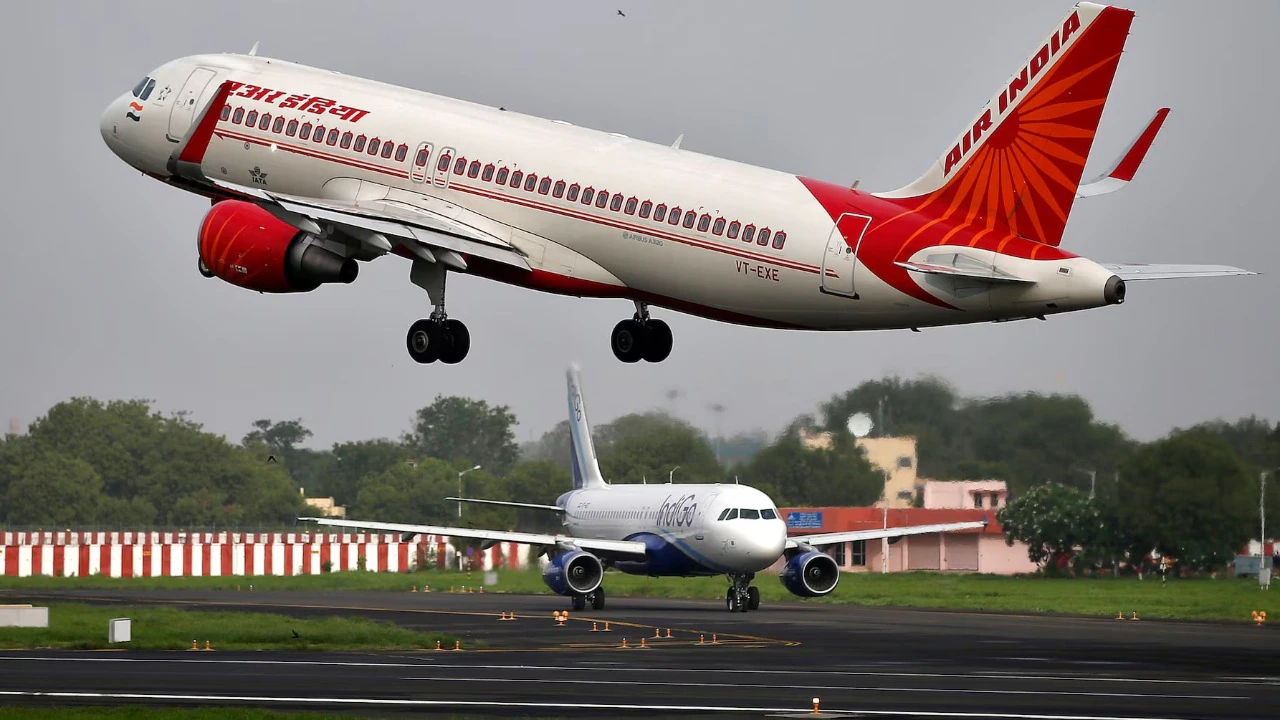

India’s DGCA has issued new pilot reporting rules after a week of GPS interference in the Delhi area.
In early November, crews approaching VIDP/Delhi saw navigation anomalies including false EGPWS warnings, incorrect position data and altitude errors – consistent with GPS spoofing.
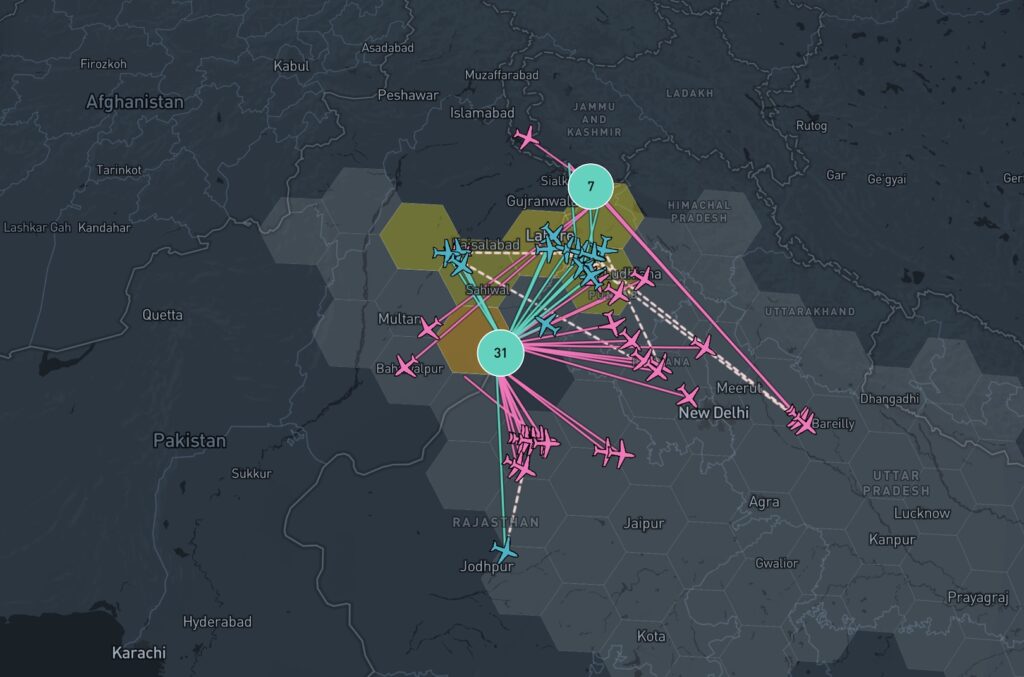
Image the work of GPSwise and SkAI Data Services.
Hundreds of flights were affected. ADS-B integrity in the Delhi TMA briefly dropped to zero, leaving ATC unable to rely on GPS-based surveillance.
The timing coincided with the temporary withdrawal of ILS for runway 10/28, which increased reliance on RNAV procedures.
The paperwork trail
DGCA first outlined its GNSS-interference reporting process in a 2023 Advisory Circular.
On 10 Nov 2025, they followed up with a new SOP on GNSS Spoofing – which included the “report within 10 minutes” requirement.
Crews flagged parts of it as unclear, so on Nov 17, DGCA issued an Addendum to clarify exactly what pilots and operators must do!
What pilots need to do
If interference is detected before top of descent:
- Tell ATC as soon as possible.
- Notify your operator’s post holder (responsible manager) by any available means.
- The post holder must then notify DGCA immediately using the form below.
If interference is detected after top of descent, or only discovered after landing:
- Report it to the post holder as part of normal post-flight duties.
- The post holder must then notify DGCA using the same form.
DGCA emphasises that the goal is timely reporting, not enforcement!
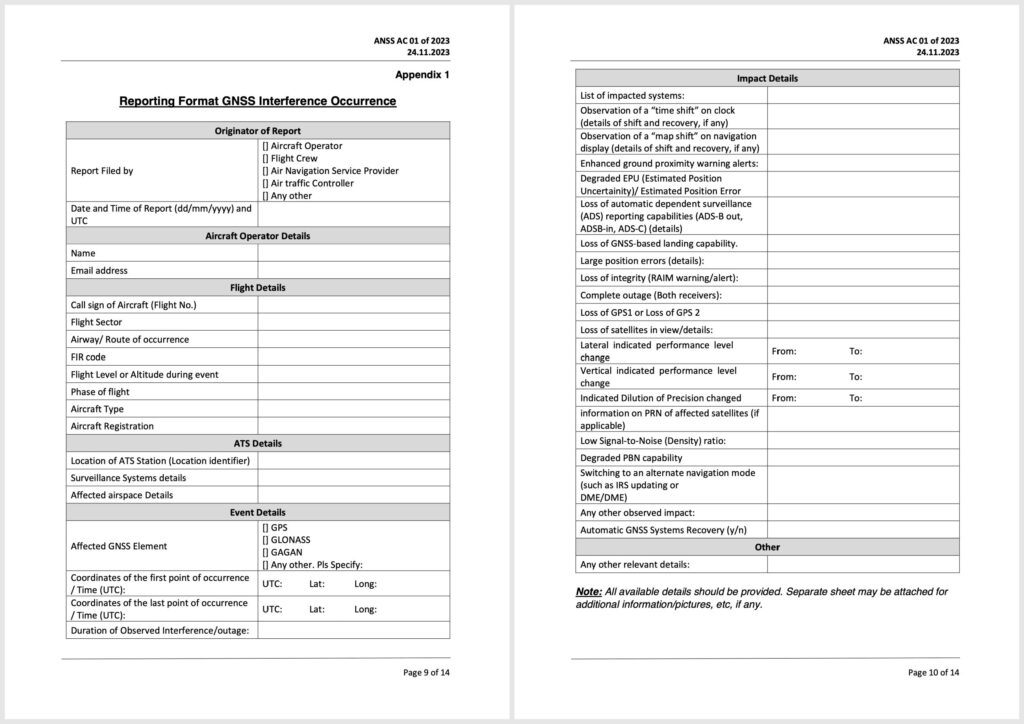
Click for PDF.
What to expect
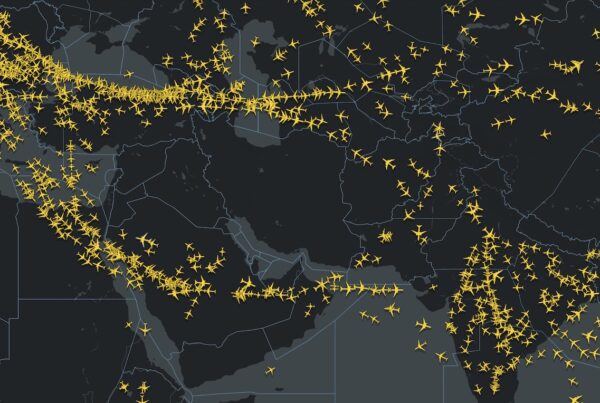
A reminder that GPSwise (powered by the experts at SkAI Data Services) provides a real time GPS Spoofing and Jamming map spanning the globe. You can access it here.
Their current data shows a steady interference patch northwest of Delhi. It isn’t constant, but it’s there often enough that crews should expect occasional GNSS issues when routing through that area and be ready to cross-check and revert to conventional procedures.
More on the topic:
- More: Pakistan/India Airspace Update
- More: ADC Numbers in South Asia: What You Need to Know
- More: Where is the spoofing today? Two maps to help
- More: GPS Spoofing Update: Map, Scenarios and Guidance
- More: FAA warning issued, further serious navigation failures reported
More reading:
- Latest: Paris Ramp Checks: Illegal Charters and Tax Avoidance
- Latest: Middle East Airspace – Current Operational Picture
- Latest: Greenland NAT Alternates: March 2026 Update
- Safe Airspace: Risk Database
- Weekly Ops Bulletin: Subscribe
- Membership plans: Why join OPSGROUP?



 Get the famous weekly







Hi All,
the reporting procedure before top of descend is in most cases irrational and not practicable.
What I do not read is, which DGCA measures support pilots and what efforts are made to improve the situation from authority side.
Sorry – but the mentioned procedures have no mitigation effect on flight safety. Those are just increasing bureaucracy effort.