The Changing Face of Disaster Relief Flying – How General Aviation (and Social Media) is Making A Huge Impact

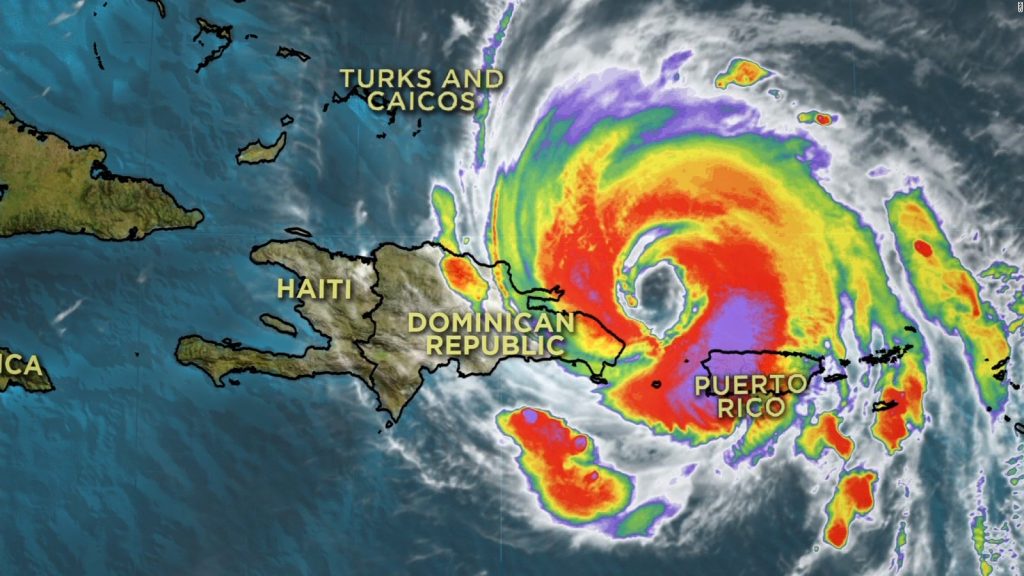
Approximately 200 miles east of Puerto Rico at Flight Level 390, a Miami Center air traffic controller beckoned us on the radio and commanded, “Descend to 17,500 or below and squawk VFR. Good luck.” Hurricane Maria had made land fall over Puerto Rico not even 48 hours prior, and, without power on the island, there were no San Juan Center air traffic controllers to coordinate aircraft flying through their large parcel of airspace.

This was our flight department’s first attempt at delivering humanitarian aid into a natural disaster zone so we expected some unknowns, but this directive was a bit unnerving. We had just begun our trip only hours earlier out of Ft. Lauderdale and now ATC wanted us to fly VFR over the ocean, 200 miles off the coast of our destination? Unknowns are one of many issues flight crews face on a constant basis, but being unprepared is quite another dreaded beast. Were we in over our heads?

A Burgeoning Resource

“Before Hurricane Katrina and the earthquake in Haiti, it was rare for Part 91 and 135 operators to partake in disaster relief,” explained Robin Eissler, the founder of PALS, Patient Airlift Services. “The past 14 years have seen so much change.”

When Katrina struck, Eissler began working with other flight department managers and dispatchers through the NBAA’s Airmail system to figure out a way to coordinate a general aviation response to the disaster. This would eventually become the building blocks for the HERO (Humanitarian Emergency Response Operator) Database, the NBAA’s registry for flight departments seeking to assist in such emergencies. “In terms of our HERO Database, we help to connect the aviation resource (airplane or other individual volunteer) with the relief organization best able to utilize that asset,” said Douglas Carr, Vice President, Regulatory and International Affairs of the NBAA. “Business aircraft can fly on short notice into airfields in which many airliners and cargo planes cannot.” The HERO program works closely with many humanitarian groups, especially Eissler’s PALS.

Shortly after Eissler formed PALS, the earthquake in Haiti struck. She described the general aviation humanitarian response as the grand experiment, “The government response was limited initially. The airlines shut down, and, other than military aircraft, corporate aircraft became a major source of delivering aid. We had over 1,000 flights for food and medical supply drops as well to evacuate the injured.”

In those early trials of PALS and the HERO Database, social media was a major asset. “We had a 13-year old girl in Haiti hit by a bus just after the earthquake and doctors said she needed an immediate evac,” recalled Eissler. “There were strict slots to get into Port Au Prince, and we had a G5 in Connecticut set to depart to get her when it had an engine issue. We immediately posted a need for help on our registry but also on Facebook. Five minutes later a Pilatus pilot just getting ready to leave Haiti posted that he had some room on the aircraft for her. She was delivered to the plane in critical condition laying in the bed of a pickup truck. But she’s alive and well today. Many might think social media is silly, but it can save lives.”

Now that the registries have been tested through further natural disasters, pilots and dispatchers can easily log-in and quickly see what requests have been posted and what missions might match their departments’ capabilities.

Haiti also played a major role in the creation of LIFT, a not-for-profit logistics provider for other NGO’s. It’s founder, Michael Rettig, spent over 30 years in the freight forwarding business. As he assisted in Haiti’s humanitarian response he saw what potential general aviation aircraft had to offer to such a response but also witnessed the lack of organization and preparation.

Rettig thrives on the efficiency of the supply chain and now applies his logistics experience to disaster relief through his organization. “60%-80% of every dollar spent on humanitarian aid used to be spent on logistics. That was way too inefficient,” he explained. “There’s a need for general aviation in humanitarian relief but there was a lack of coordination.”

Large transportation companies like UPS, FedEx and Maersk formed LET’s, Logistics Emergency Teams, to coordinate disaster relief. But general aviation was lacking such coordination. FEMA’s National Response Coordination Center was willing to listen to GA advocates but there needed to be more preemptive coordination. “Too many general aviation aircraft were showing up with aid that wasn’t necessarily what was needed,” Rettig said. “Flying in a G5 filled with Fiji water is a waste of money and resources. I much rather see medications like insulin or advanced communication system components and specialized technicians that can set them up being flown in. Corporate aircraft plug into the overall response framework by delivering high value, high impact aid.” Rettig and Eissler are very familiar with each other as their organizations work hand in hand during these responses. The required aid – whether it be medical or tech oriented – can be flown in and then medical patients can be flown out.

Planning Ahead

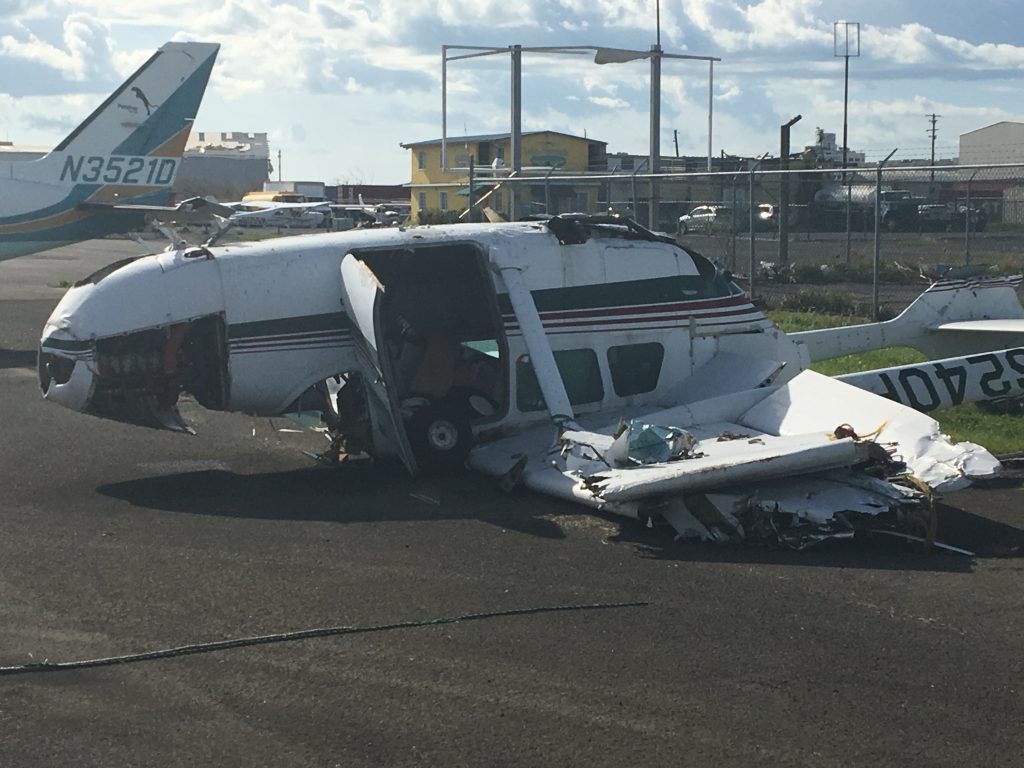
As we flew through the Wild West of uncontrolled airspace towards Puerto Rico, talking over a common radio frequency to the aircraft both ahead of and behind us as we obsessively monitored their positions on our Traffic Collision Avoidance System, we finally entered the traffic pattern over a small satellite airport in San Juan. After landing, we tried to maneuver down a taxiway with overturned Cessnas, mangled helicopters, obliterated hangars and even a pit bull limping down the tarmac. This was definitely unexpected.

Thankfully we had one of our maintenance technicians along with us who go out of the plane and guided us safely around the strewn debris. Surface conditions of the airfield are of a primary concern when entering a disaster zone, and without power and phone communications, there may not be much information available. Having a dedicated operator on the ground is so much more helpful in determining the safety of an airfield than putting all your trust in an email from an FBO employee or a flyover to check for debris.

Zac Clancy is Vice President of Global DIRT (Disaster Immediate Response Team), a nonprofit organization made up of prior military personnel who immediately arrive in disaster zones and even pre-position themselves in areas prior to a hurricane’s arrival. “We have multiple responsibilities from restoring communication connectivity to securing and transporting aid.” Once aircraft drop off the aid, what exactly happens to it? “We’ve seen cargo planes drop off tons of humanitarian aid on the tarmac and then leave. No one takes responsibility for it, no one protects it. We unload it, take legal responsibility for it and then work with other NGO’s to deliver it,” Clancy explained. Global DIRT employees also work directly with airport tower controllers in these affected areas on getting ATC slots and clearances for GA operators. “It’s interesting, in many cases I simply walk up to the control tower, knock on the door and speak directly with the controller,” said Clancy.

“We’ll assist you once you get here, but I highly suggest that all operators have a plan in place prior to any type of natural disaster response,” said Clancy.

As we unloaded boxes upon boxes of aid in the blistering afternoon air, we started to reexamine our original “plan”. Our dispatcher had worked tirelessly without rest since the hurricane hit to organize the flights as this type of mission was new to all of us, and she was learning on the go. “It’s the little things you don’t think of that you need to have already planned for. What are you willing and not willing to pack on the airplane? What company personnel should be permitted to go? Even, what type of packaging should be used?! Misunderstandings and miscommunications like these cause delays and headaches,” she explained. “What an aircraft owner or a corporation’s executive team may assume is possible, may not be so. Prior understanding is a key. And their understanding of the risks involved are necessary as well.” Eissler agreed, saying, “Corporate flight departments can get nervous once you start talking about safety and security and all the logistics on the ground. Working with us offers that extra layer of liability protection.” Rettig added – “If I can advise one thing, it’s to partner with a vetted organization that deals with these things. Don’t show up unannounced. No one wants disaster tourism.”

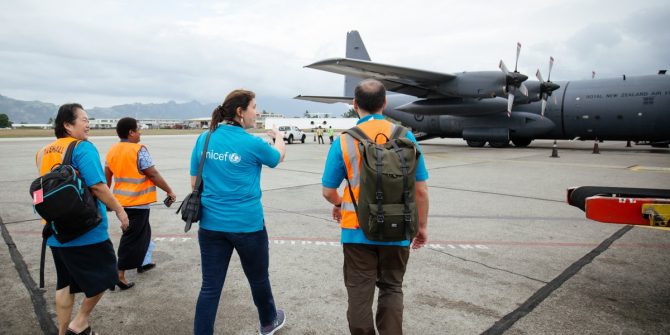
As we prepped our aircraft for departure, the skies over the small executive airport began to get congested with business jets transporting their own aid. A few go-arounds occurred and some aircraft exited the traffic pattern to manoeuvre back around to re-enter. Clear and detailed communications between flight crews were essential for safety.

As for communications on the ground, we were thankful to have a satellite phone to speak to our point of contact in the city that was delivering the aid by truck. ETA updates were necessary as NOTAM’s spelled out that all aircraft must depart the island by sundown or be stuck overnight. Thankfully, our maintenance technician had just finished dealing with an issue with our ELT as we didn’t even want to even consider the possibility of getting stuck overnight.

As we taxied to depart from our first disaster aid drop we were somewhat disappointed. We had planned on making two drops that day but delays in ATC letting us depart Ft. Lauderdale as well as delays in the actual delivering of the aid took much longer than we expected and there would be no way to make another round trip before nightfall. There was also a sense of guilt at having empty seats in the aircraft as we flew back to the mainland. Clancy couldn’t iterate enough, “The return legs of the relief flights are often under-utilized. While there is the need for aid coming in, often times there’s a need for things to go out as well: people highly in need of medical care, stranded citizens, and returning aid workers. Unfortunately, these flights back are empty because the planning wasn’t in place to know of such need.” In our situation, that would be the last time we would fly back with an empty aircraft.

Coordination

At the hotel that night, I began posting on OpsGroup about what we had witnessed, what we had learned, and what some of our concerns and misunderstandings were. The response was relieving as other operators and OpsGroup personnel chimed in with much needed info and support for the continuing flights.

Our dispatcher took her job to the next strata, and, in the ensuing days, we had much more structured missions. She coordinated with LIFT to send our own company’s disaster relief aid over in a cargo plane; no more strategic packing of goods in our corporate jet and no leaving behind of aid that was too big to fit in our plane. Whatever we needed to get over to the island could go. In exchange, Rettig coordinated a flight in which we flew technicians from a large tech company into a decommissioned naval airfield to begin fixing a specialized communication system to bring back cell coverage across the island.

There were no instrument approaches, just a government issued airport diagram. But a surprise radio contact from a Marine Corps air traffic controller aligned with a battalion sheltering in one of the decrepit hangars offered much appreciated assistance. Once again, the unexpected! As the technicians and engineers worked through the day, we could sense that this mission, which our aircraft was well suited for, may offer much more to the overall disaster response than the general aid we had delivered the day before.

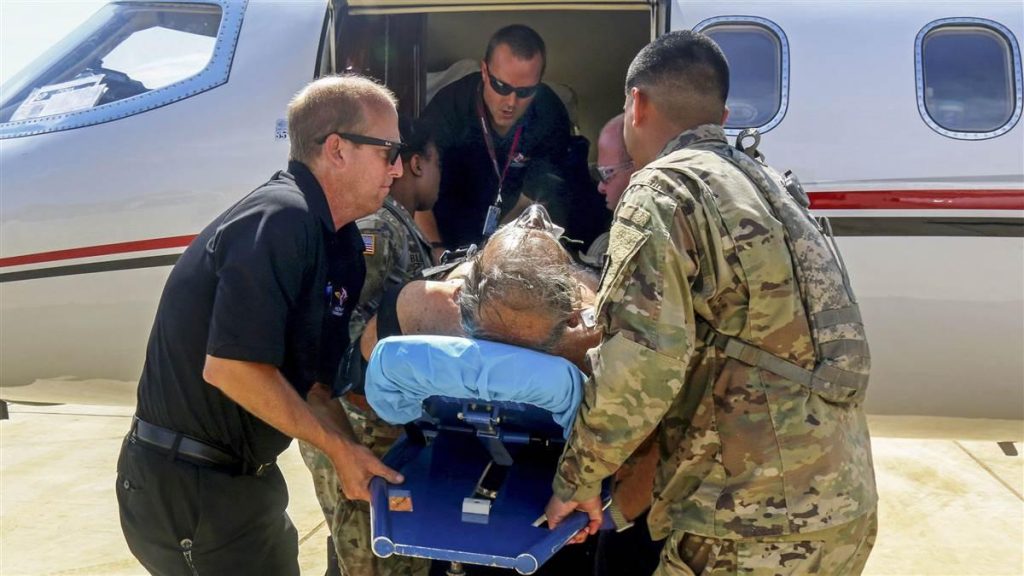
The following day we flew in security and NGO personnel set up by ALANAid, American Logistics Aid Network, which works closely with LIFT, into San Juan International Airport, by then fully operational. Upon return, PALS filled the aircraft with sick and elderly personnel.

Again, we were a bit weary of what to expect as far as handling those in medical need. “As for planning, a flight department should know how they want to deal with the sick and elderly,” said Eissler. “We have you covered liability-wise, but departments have some small decisions to make beforehand – like, if they want passengers sitting up or laying down. What food, drink or medications you may want onboard. Many people don’t think of these things prior to picking up these passengers. But we point them in the right direction.”


Once we met our passengers, though, all weariness evaporated. Just witnessing their appreciation for simply taking them out of the sweltering FBO and into our aircraft’s air conditioning was heartwarming. And that would pale in comparison to witnessing them being reunited with family on the mainland.

The response in Puerto Rico made clear that there are a number of organizations that can assist a flight department in delivering disaster relief. Yet it seems to be a very small circle. They all seem to know each
other, work with each other… and, more importantly, respect each other.

It makes sense, considering the reason many of these people do this type of purposeful work. Before Katrina, Eissler was overseeing an aircraft management company.  A few years later after creating PALS, she would be getting calls from the military. “I’ve ordered an Air National Guard commander where to send his aircraft while standing in my kitchen on the phone. I’ve yelled at a commander for landing his C130’s on a runway that couldn’t support its weight. I’ve called in for a King Air to fly over a runway to check its integrity for other aircraft. And here I am – a mom in Texas and I’m making these calls!”

Rettig took a similar path; before Haiti he was working for a large shipping corporation but after coordinating a small aid flight in a friend’s PC12 to Haiti he found a passion. Now he’s handling transportation in all forms and sizes to assist NGO’s with humanitarian aid logistics across the globe. That passion underlies how many of these organizations can help general aviation departments in their effort to deliver humanitarian aid.

We continued flying into Puerto Rico for a few more days. Each day the mission changed but the logistics of the flights got easier as basic services began coming back on line. On our last flight back to the mainland to drop off passengers in Ft. Lauderdale, I walked an elderly woman with kidney failure into the FBO. After her awaiting family celebrated her arrival she hugged me with a tear smeared face. She then proceeded to FaceTime with her niece, an unmarried nurse in NYC. While holding me in the in frame of the phone’s video feed, she asked if I was married and if I’d like to meet her niece. More of the unexpected! Her hearty laugh was a great ending note on what was such a meaningful – and adrenaline filled – week of flying.

That year we would respond to hurricane aftermaths in Texas, Florida and North Carolina. And though we hope for no more natural disasters, we know better. And we look forward to helping in any way we can when they do happen. In normal operations we focus on service to ensure safe and successful business operations, the importance of which cannot be overstated. But when disaster relief becomes the business at hand, one cannot help to feel an even greater sense of purpose. Though achieving that goal can be daunting and anxiety-ridden, there are dedicated people out there to help in succeeding in that mission. And all who take part just may find enjoyment in the experience, even in the unexpected.

Resources


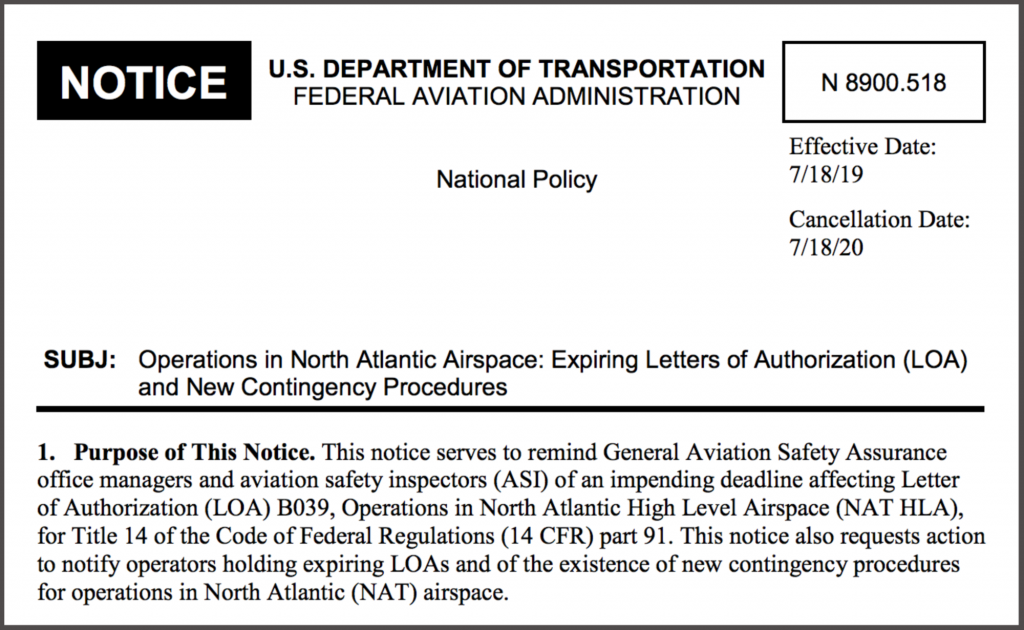
Your MNPS approval is about to expire (so don’t get banned from the NAT)

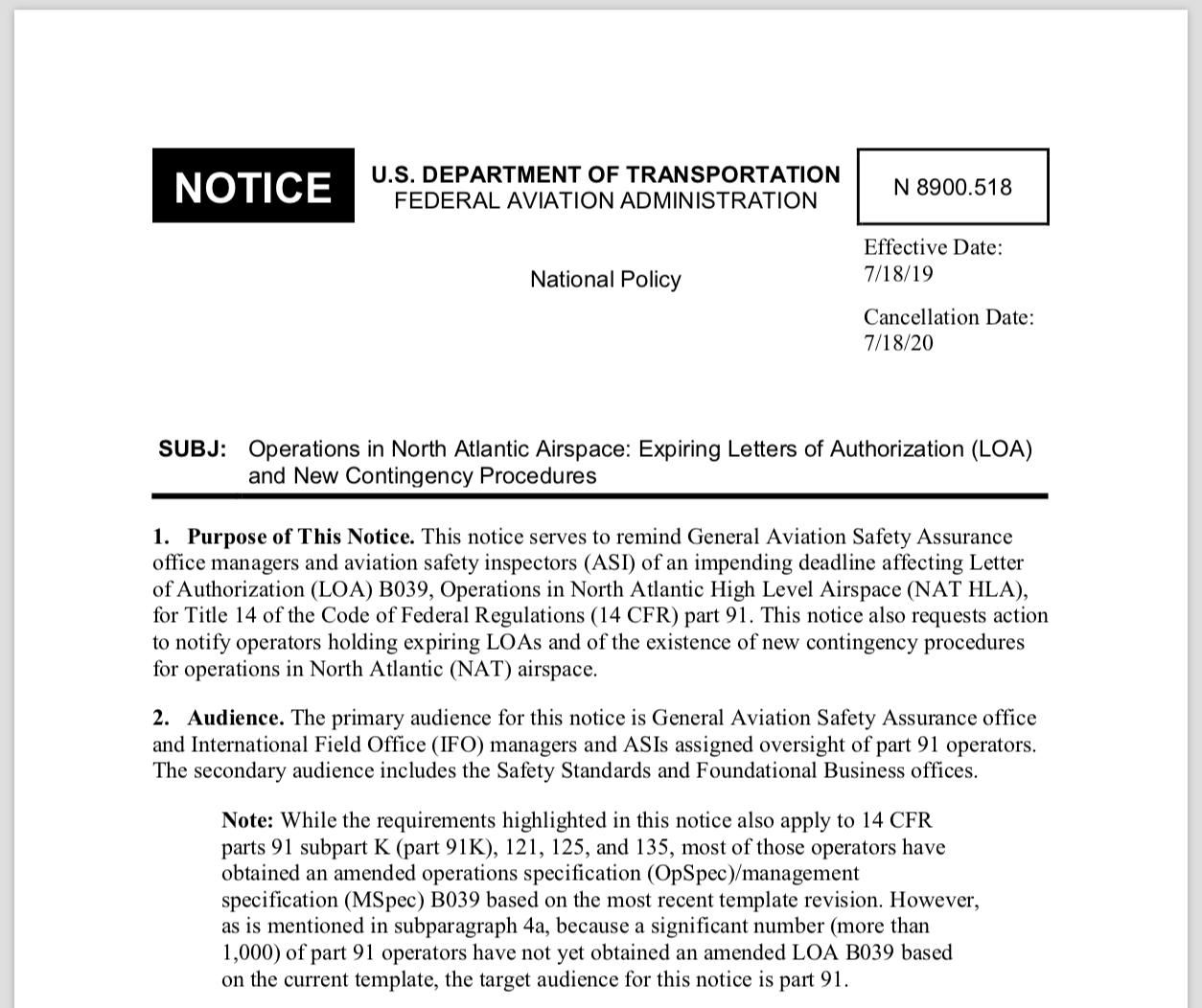
U.S. operators with the old MNPS approvals issued before 2016 have until 31 Dec 2019 to get these updated if they want to keep flying on the North Atlantic!

The FAA issued new guidance on this on 18 July 2019:

They say that there could be more than 1,000 GA operators who still have old NAT MNPS approvals, and all these operators will need to get new B039 LOAs to be able to continue flying on the North Atlantic beyond 31 Dec 2019.

The new B039 LOA is for “Operations in the North Atlantic High Level Airspace”. To get it, operators need to provide evidence of compliance with the NAT HLA requirements particularly in regard to RNP 10 equipage, flight crew training (including the new contingency procedures), and have operating procedures in place.

Operators will also need to make sure they have an B036 LOA for “Oceanic and Remote Continental Navigation Using Multiple Long-Range Navigation Systems”.

Here’s the lowdown: If you have an old MNPS approval, you need to apply for the B039 LOA very, very soon! The closer we get to the Dec 31 deadline, the stronger the chance that it will take longer for the FAA to process yours, and this means that 2020 will not get off to a good start when you have to explain why you’ve been banned from the NAT! Help yourself, and the FAA, get through this by applying for it as soon as possible.

Mitch Launius is an International Procedures Instructor Pilot with 30West IP and can be contacted through his website: www.30westip.com


Two is Not Enough: New NAT Doc 007 (Version 3) – August 2019

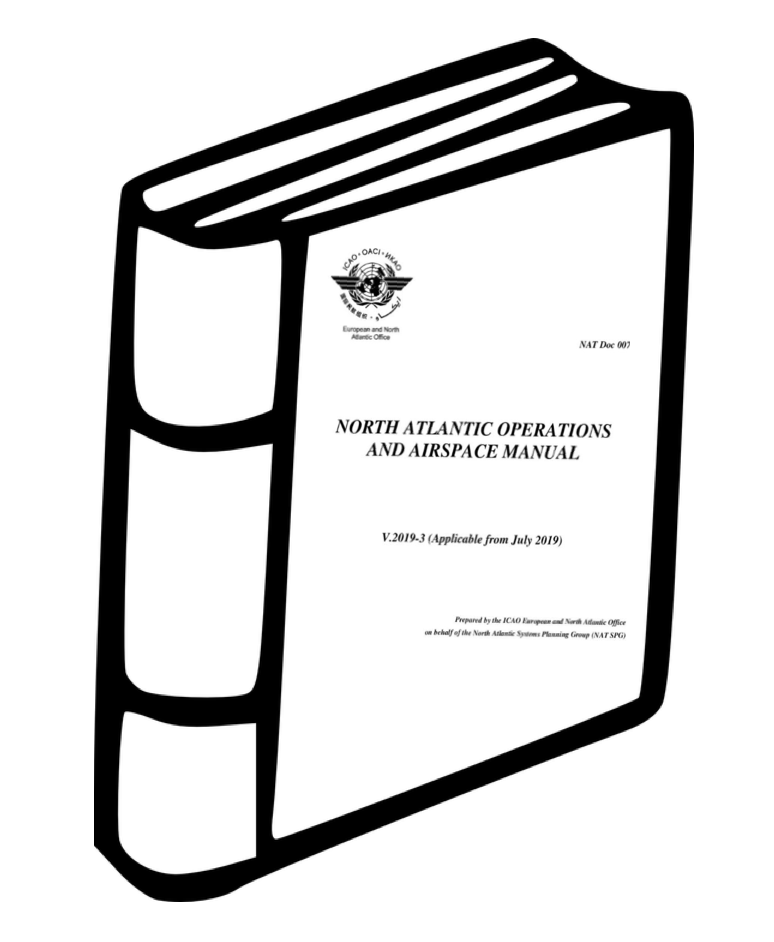
NAT Doc 007 is the Bible of the North Atlantic. It’s full of NAT goodness – all the specifics about how to operate your aircraft safely through the complex airspace of the region is here.

And there’s another new edition!

The NAT changes over the last few years have been coming thicker and faster than the sandwiches at Katz’s Deli on the Lower East Side. And now, there’s more. Effective August 7th, 2019, NAT Doc 007, Version 3, is the latest tome to digest. As aviation documents go, it’s written in pretty digestible language. There’s just a lot in it. But this is the first time we’ve had 3 editions of this in one year.

So, we’re going to start naming them after 007 Movies to keep track of them all. This is the “Two is Not Enough” edition.

NAT Doc 007, Version 3, 2019:
Download the full NAT Doc 007.

So, here are the three things that have changed this time:

1. We got new SLOP rules! This is a biggie. Instead of the three previous choices (0, 1, or 2nm), we now have Twenty One choices! More on this below.

2. 99 problems and Datalink is one. The short version: check that you’ve got the latest software update for your datalink.

3. The next datalink mandate (2C) is capped at FL410. This comes in January 30th next year. And so, the Checklist for Dispatchers is updated.

The new SLOP rules

Now, let’s take a closer look at the big change – SLOP (Strategic Lateral Offset Procedure). To get up to speed, check out our full article on SLOP – the how, and why (and where).

The change here is that instead of just being able to SLOP 1 or 2 nm right of track, (or fly the centreline), you go from these three choices to twenty one – you can use any one of 21 Micro-SLOP offsets. Specifically: 0.0 nm, 0.1 nm, 0.2 nm …. OK, you get it. All the way up to 2.0 nm Right of track.

Simple, right?

Not quite. It’s not yet fully clear which of the OCA’s have given the green light for this, even though NAT Doc 007 now says you should Micro-SLOP if you can.

But, phoning around the Oceanic Houses, we’ve got this to tell you:

1. Gander – you can micro-SLOP right now! An AIP amendment will follow soon.
2. Shanwick – you can micro-SLOP right now! A Notam will be published soon, and the AIP will be updated in Dec 2019.
3. New York – they will allow micro-SLOP from 12th Sept 2019, and will update the AIP in Jan 2020.
4. Santa Maria – you can micro-SLOP right now! Nothing published officially yet, but that’s what the good people from the oceanic control centre have told us.
5. Iceland – just like New York, they will allow micro-SLOP here from 12th Sept 2019 as well. When that happens, you will still not be allowed to SLOP below FL285 within the Reykjavik CTA (that’s the domestic part over Iceland, and the airspace over Greenland above FL195). We asked them to publish a Notam about this – and they actually did!! Check it out!
6. Bodo – Nothing official yet, but ATC say they “have no objections” to operators micro-SLOPing right now. (Currently, SLOP is only allowed here above FL285 within the OCA.)

That’s the current picture as of 1100z on Monday 19th Aug.

We will update this as soon as we get more info. Got something for us? Email us!


Good news from Australia – the TSP just got easier

If you’re amongst the many international aircraft operators stung by the lengthy and document-heavy process to obtain an Australian Transport Security Program approval, good news has reached OPSGROUP HQ –  there is a new TSP-Lite version that you can apply for.

The Dept. of Home Affairs has created what they call a “Secretary-Issued TSP … a new simplified way for operators who meet certain criteria to apply for a TSP”. They tell us “This application is much shorter than the standard TSP application”.

Do you qualify for the new TSP-Lite?

Yes, if you can answer YES to all of these questions (the first two are the big ones):

  1. Your flights are private or charter operations and not operated on a fixed schedule or route; and
  2. You do not have temporary or permanent operational facilities in Australia; and
  3. You do not allow passengers or aircraft operator staff to enter the landside security zone (sterile area) of a security controlled airport; and
  4. You do not allow passengers or aircraft operator staff to mix with other passengers of prescribed air services in airside areas; and
  5. You do not transport persons in custody.

The Dept also told us that “Under our legislation there is still the same maximum decision making time for a Secretary-Issued TSP, however in practice, the intent is that we will be able to review and approve these applications much faster.”

Crack open a slab of VB! This is great news. Now, this has just started up, so it remains to be seen how it works in practice.

For more on how to apply for a normal TSP, the new TSP-lite, and to trade intel with other operators, jump into the TSP Victim Support Group in the Members Dashboard, login below.


Why, How and Where should you SLOP?

In Short: Strategic Lateral Offset Procedures (SLOP) costs nothing and increases flight safety. If the airspace permits it, you should be “randomly” offsetting, especially across the North Atlantic. Left is for losers – don’t SLOP left of track.

Update: August 2019 – you can now “MicroSLOP” in the NAT. Check out the changes.

We had a discussion in OpsGroup recently about SLOP (Strategic Lateral Offset Procedures) and it elicited some interesting responses, as well as some confusion.

So – Why, How and Where should you SLOP?

Why?

GPS technology allows modern jets to fly very accurately, too accurately it turns out sometimes! Aircraft can now essentially fly EXACTLY over an airway/track laterally (think less than 0.05NM), separated only by 1000FT vertically. A risk mitigation strategy was proposed over non-radar airspace to allow pilots to fly 1-2 nautical miles laterally offset from their track, randomly, to increase flight safety in case of any vertical separation breakdown.

How did we get here?

Navigation paradox

What we just described is known as the navigation paradox. The research shows that “increases in navigational precision” actually increases the collision risk – huh?

Here are some interesting stats to consider:

  • In a simulation, aircraft cruising at random altitudes have five times fewer collisions.
  • During a 2000 study, it was shown that hemispherical cruising altitude rules resulted in six times more mid-air collisions than random cruising altitude non compliance.
  • If more randomness was applied to the hemispherical cruising level model, the navigational paradox risk could have been largely reduced and up to 30 midair collisions avoided (up to 2006). Including the tragic GOL 2006 accident.

So we get it; the rules of the air, sometimes inject risk to flight safety due to their lack of randomness.

A way to reduce risk and inject randomness?

It was 2004 when SLOP was adopted in the most congested non-radar airspace in the world, namely the North Atlantic.

Although the Navigation Paradox is the reason SLOP was introduced and continues to be implemented, there are some nice risk mitigation side-effects too: wake turbulence reduction (at times), contingency buffers if you experience severe turbulence and can’t maintain altitude (“level busts”), etc.

SLOP therefore reduces the risk between traffic which is not operating in accordance with the correct air traffic control clearance or where an error has been made in the issue of an air traffic control clearance.

Still, there is a large number (>40%) of aircraft not adopting these procedures even though they are now mandatory on the NAT.

If >40% of pilots are using SLOP 0 (meaning no offset at all), what does that matter? That means half the flights are operating over the same lateral paths and all it takes is one minor vertical deviation for there to be a significant loss of separation.

The daily NAT track message always reminds pilots to employ SLOP procedures:

FOR STRATEGIC LATERAL OFFSET AND CONTINGENCY PROCEDURES FOR OPS IN 
NAT FLOW REFER TO NAT PROGRAMME COORDINATION WEBSITE WWW.PARIS.ICAO.INT.
SLOP SHOULD BE STANDARD PROCEDURE, NOT JUST FOR AVOIDING WX/TURB.

How should you SLOP?

Consider some best practice advice:

  • LEFT IS FOR LOSERSnever offset LEFT. On bi-directional routes a LEFT offset will INCREASE collision risk rather than decrease it. There are areas in the NAT Region where bi-directional traffic flows are routinely used. And there are times when opposite direction traffic may be encountered in any part of the Region. Once upon a time (between introduction of RVSM and pre-SLOP, it was ok to go LEFT, not anymore!)The only exception would be in certain airspace where ATC request you to SLOP LEFT (e.g. China).
  • The system works best when every 2 out of 3 crossings you fly, you apply an offset. Shanwick says this generally means at least 1 out of 3 aircraft are slopping.
  • You don’t need to ask ATC for approval; you can SLOP from the NAT entry point to the NAT exit point.
  • Only offset if your FMC has the function to do so – do not do it manually.
  • Good airmanship applies here. What’s happening around you? Who is above, below and near you on the same track. Co-ordinate on 123.45 if needed.
  • 2nm RIGHT is the maximum approved SLOP.
  • Flip a coin to decide like some do! Captain is PF? 1R going west; First Officer 2R going east etc. Studies show that on the NAT, 40% do 1R and only 20% go 2R. Don’t be afraid to go the full 2R!
  • If you are overtaking someone, the ICAO guidance in NAT DOC 007 is to apply SLOP so as to create the “least amount of wake turbulence for the aircraft being overtaken”.

Where though?

Our friend Eddie at Code 7700 gave a great comprehensive list so here it is verbatim.

  • Africa, almost all remote locations employ SLOP. Check the Jeppesen Airways Manual / Air Traffic Control / State Rules and Procedures – Africa) to be sure. Rule of thumb: if you are in radar contact, you probably should not SLOP.
    • One notable exception where they don’t want you to SLOP is in the HKNA/Nairobi FIR. The AIP states: “SLOP is not applicable in the Nairobi FIR due to efficient surveillance and communication systems.” (We do remind you however that recently in the Nairobi FIR, a 767 and 737, both at FL370 came a little too close for comfort).
  • Australia is another special case. You may only offset in the OCA, and, if you’re still on radar, then you need to tell ATC, both when starting the offset, or changing it. Within domestic CTA airspace, you must fly centerline. (According to Australian guidance in Jeppesen Pages).
  • China, on routes A1, L642, M771, and N892 (according to China guidance in Jeppesen Pages). In some areas they employ their unique SLOP offsets, but do allow the standard 1 nm and 2 nm offsets.
  • New York, Oakland and Anchorage Oceanic FIRs (according to U.S. FAA guidance).
  • Oceanic airspace in the San Juan FIR (according to U.S. FAA guidance).
  • North Atlantic Track Region: SLOP is mandatory (according to the North Atlantic Operations and Airspace Manual).
  • The Pacific (including the NOPAC, Central East Pacific (CEP) and Pacific Organized Track System (PACOTS) (according to U.S. FAA guidance).
  • South Pacific airspaces (according to U.S. FAA guidance).
FAQ:
  • Should I SLOP crossing the Atlantic even if I’m on a random route or above the published NAT FL’s?

Yes! You should especially do it then. There is a higher chance of opposite direction traffic. That extra mile or two (randomly selected of course) could be a life saver!

  • What about micro-slop?

That is lateral offsets between 0 and 1 nm (0.1 etc). ICAO mentions “LOP provisions as specified in ICAO PANS-ATM Doc.4444 were amended 13 November 2014 to include the use of “micro-offsets” of 0.1 Nms for those aircraft with this FMS capability. Appropriate guidance for the use of this amended procedure in the North Atlantic is under study and hence pending.”

And now, since August 2019, this is beginning to be approved for operations on the NAT. Read the update!


We might have missed something or maybe we didn’t cover your specific question?

Drop us a line and will do our best to answer.

Bottom line, SLOP costs nothing but increases flight safety.


No, Pakistan’s airspace is not closed

Several reports have emerged in the media over the past few days claiming Pakistan has closed a number of airways to Indian carriers, linking these closures to the rising tensions between the two countries over the disputed Kashmir region.

But these reports are not strictly accurate. Pakistan has partially closed some airways in the north of the country used for overflights between India and Afghanistan, which pass over OPDI/Dera Ismail Khan airport – but these particular airway closures have been ongoing since 23rd July. Local agents say these closures are simply due to operational reasons, and not related to the current political situation.

Here’s the Notam which has caused all the fuss:

OPLR NOTAM A0785/19
FLW RTE SEGMENTS OF INTL ATS RTE WI LAHORE FIR WILL NOT BE AVBL
AT OR BELOW FL460 DUE OPS REASONS.

INTL ATS RTE RTE SEGMENT
============ ===========
A466 SAKUV-SAJAN
N644 REGET-D.I.KHAN
P500/M881 LAKRA-D.I.KHAN

ALTN RTE SEGMENT AVBL FOR TRANSITS AT OR ABOVE FL300:
SULOM / LA – INDEK DCT NONIB – HANGU – LAJAK / SITAX (VIA SAJAN) / DOBAT (VIA REGET) AND VICE VERSA.
NOTE: FLT BELOW FL300 TO OPR VIA INDEK DCT 3333N07251E (BTR VOR 114.6 MHZ) DCT KALMI NONIB AND
VICE VERSA.

GND – FL460, FM 06TH AUG TO 05TH SEP 2019 BTN 0245-1100 DLY (EXCLUDING SUNDAYS),
06 AUG 12:30 2019 UNTIL 05 SEP 11:00 2019.
CREATED: 06 AUG 12:43 2019.


So these airways will be closed between 0245-1100z daily (except Sundays) until Sep 5. And there’s an alternate route for operators to use, from SULOM on the Indian FIR boundary, to LAJAK on the Afghanistan FIR boundary. Hardly a big deal.

The rest of Pakistan’s airspace remains open to overflights.

It is true that this week has seen a worsening of diplomatic ties between India and Pakistan with regards to the disputed Kashmir region.

Indian-administered Kashmir has been on lockdown since 5th August, when the Indian government decided to take back control of the region by stripping it of its special constitutional status.

Authorities in Pakistan are not too happy about this, and have responded by downgrading their diplomatic ties with India and suspended trade between the countries. Both countries’ air forces are now on high alert, and there has been daily artillery shelling along the Line of Control by both sides.

But for now, most of the airspace over Pakistan remains open to overflights.


July 2019 North Atlantic Update

There are four new things to tell you about the North Atlantic, following the flurry of new and updated NAT Bulletins that ICAO issued last week. Get ready for some acronyms! Here’s a summary:

1. OWAFS

Operations Without an Assigned Fixed Speed
ICAO NAT Bulletin 2019_001

We wrote about this before. This Bulletin just formalises the practice that has already been in place since April 2019 in the Shanwick, Santa Maria, and New York Oceanic FIRs (not WATRS).

Here’s how it works: You’ll get a normal oceanic clearance, with a fixed Mach Number, like you always did. But then somewhere after the Oceanic Entry Point, you may get a CPDLC message saying RESUME NORMAL SPEED. You should reply with WILCO. What that means is: Fly ECON, or a Cost Index with Variable Mach. You can fly within 0.01 up or down of your cleared Mach, but if it varies by 0.02 or more you must advise ATC.


2. ASEPS

Advanced Surveillance Enhanced Procedural Separation
ICAO NAT Bulletin 2019_002

ASEPS was another trial that started in April 2019 – this time in the Shanwick, Gander and Santa Maria FIRs.

So far it has only been for longitudinal separation, which can be brought down to as close as 14NM for compliant aircraft (RVSM/HLA approval, ADS-B, and fully PBCS compliant – which means meeting the specifications of RNP4, RCP240 and RSP180).

But in the new Bulletin, from October 2019 they plan to reduce lateral separation for compliant aircraft as well – down to 19NM from the previous limit of 25NM.

There are no plans to change the design of the NAT Tracks, which will continue to be spaced 25NM apart. The initial benefit of the 19NM lateral separation will basically just be that steeper route angles will now be available for pairs of aircraft flying parallel routes outside of the NAT Track system – the current “gentle sloping turn” limitation is 3 degrees latitude between 10 degrees of longitude, but on 10th October 2019 that will change to a limitation of 4 degrees latitude between 10 degrees of longitude. The result of this will be a lateral separation of 19NM on the steeper turning routes.

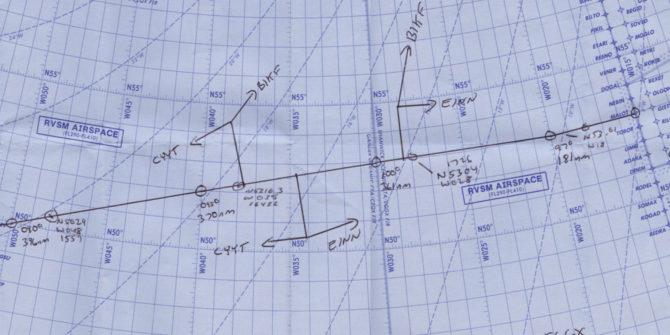
Images courtesy of 30WestIP


3. Data Link Performance Improvement Options

ICAO NAT Bulletin 2019_003

Nothing to worry about, this is just a list of common datalink errors and what to do about them.

Two key take-aways:

  1. Update your aircraft avionics software as soon as updates are available.
  2. Answer your messages within 60 seconds or send a Standby message (recent data indicates Business Aviation operators are very bad at this).


4. NAT DLM – The North Atlantic Data Link Mandate

ICAO NAT Bulletin 2017_001_Revision 04

This one is just a slight revision to the plans for the datalink mandate. Datalink is currently required between FL350-390 in the NAT region, and from 30th Jan 2020 this mandate will be extended to between FL290-410.

So with this revised Bulletin, the change is that they have decided they will cap it at FL410 – whereas previously there were no plans for any upper limit at all. This will basically match the NAT HLA and RVSM vertical limits and makes sense. This will allow non-compliant aircraft to continue to operate at FL430 and above – mostly GA/BA operators.


Further reading:

Special thanks to Mitch Launius at 30WestIP.com for help with this post. For assistance with international procedures training for business aviation crews worldwide, check out the website.


Africa: Hajj 2019 routes in operation

The Hajj routes for 2019 will take effect from 18 Jul through to 9 Oct.

What are Hajj routes?
Every year, millions of pilgrims travel to Mecca and other sites in Saudi Arabia – and this changes the predominant traffic flow over the African continent. ATC in the FIRs most affected put in place standard routings to help flow that traffic.

Normally, traffic is very much north-south predominant, with Europe-Africa flights being the main flow. When Hajj operations start up, a good amount of traffic starts operating east-west (ie. Africa-Saudi Arabia and vice versa), and this is something to be aware of when cruising along at FL330 with spotty HF comms.

So, in addition to the normal IFBP belt and braces on 126.9, keep an eye out for a much higher amount of crossing traffic during the coming months.

The FIR’s affected are: Algiers, Accra, Brazzaville, Dakar, Jeddah, Kano, Khartoum, N’Djamena, Niamey, Roberts, and Tripoli.

Of these, watch out for Tripoli – risk remains high across Libyan airspace at all flight levels, and multiple countries have “do not fly” warnings in place. There are daily airstrikes taking place, severe limitations in ATC services, and massive areas of the FIR are without surveillance and communications capabilities. Malta FIR is currently managing all east-west routes in this airspace, and operators can contact them for additional information on email: airspace.cell@maltats.com

The Hajj routings are contained in this ASECNA AIP Supplement.

Further reading:

  • Read IFALPA’s information on recommended procedures when operating in the African region here.

Incredible people making aviation a force for good, and how you can help

What does your overnight look like when you are downroute? After you’ve checked in to the hotel, and maybe had a quick nap, what’s on your list of things to pass the time? Maybe you’ll swap your pilot uniform for a tourist t-shirt, head into the city, and explore a little. Perhaps you’ll have arranged a coffee with an old friend or colleague. Or, maybe just hang out at the crew hotel and relax.

Not Kimberly Perkins.  There’s something more rewarding to be done.

Through her non-profit organization Aviation for Humanity, Kimberly will be heading to the local school, shelter, or orphanage, to meet the children and present them with backpacks and school supplies. She’s not alone. Having started the mission in 2016, they’ve already helped hundreds of people in places like Ethiopia, Tanzania, Mongolia, Nigeria, and Puerto Rico – and closer to home, in Hawaii – where kids in need in Kona received supplies over several visits.

If you’re like me, aviation has given you a lot – not just a career, but a lifetime of wonder, beauty, excitement, and joy. Aviation is special – that’s why we’re in it. And it’s no secret that we’re going through a tough time right now in the eyes of the public. So, when I see aviation giving back – doing something for the world – it’s important to highlight and bring attention to that. We need more of this.

This is why I want to celebrate and share the work that Kimberly, and the many volunteers, are doing. So, how does it work? Pretty simple:

1. You contact Aviation for Humanity, and tell them where you’re going
2. They will locate an underfunded school or orphanage for you to visit, and arrange for the supplies.
3. You go, and share the story of the journey back with Aviation for Humanity.

Imagine using your trip abroad to make a difference in the world – just one short visit, and you can give an entire school or orphanage much needed supplies.

Running a non-profit isn’t easy, and there’s another way you can help right now. Kimberly needs a volunteer Executive Director –  to manage coordination with volunteers, logistics for shelter visits, managing social media, fundraising, writing articles, and other things that move the mission forward. Is that you? Maybe you’ve recently retired and are looking for a way to contribute back to aviation? Maybe you’ve got extra time on your hands, or you know someone that this might be suited to? 2-6 hours a week will get you started.

I love seeing the work that OPSGROUP members are doing individually. As I was ‘wow-ing’ my way through the work that Kimberly does, I found another group member featured on an Aviation for Humanity trip – namely Cheryl Pitzer. Cheryl was on our Member Chat a few weeks ago (#7, see it here in the dashboard).

Cheryl, pictured right, flies the MD-10 “Flying Eye Hospital” for Orbis International – an amazing airplane that is part of the Orbis mission of bringing people together to fight avoidable blindness. On that call, Cheryl told us about the work Orbis does, the challenges of operating the airplane internationally, and the reward of using aviation as an agent for good in the world. This is another incredible cause that you too can get involved in.

Kimberly and Cheryl are true aviation pioneers, not just for the non-profit causes that they work so hard on, but also as pioneering women in aviation. It’s no secret that this beloved industry of ours has a massive imbalance of diversity. The numbers and statistics identify the issue  – averaging out the small amounts of data that are actually published on the subject, show that the global percentage is around 5% – that’s both the number of female pilots, and the number of women in top management positions at airlines.

Changing those numbers – attracting more women to aviation – is just part of the issue. What is life like if you are one of the 5%? From an interview that I read in another publication, Kimberly said “As I moved through my flying career, I was never lucky enough to encounter a female manager mentor. As I looked up that corporate ladder, it was a sea of men. Such an environment can be lonely, unwelcoming and intimidating“.

For me, right now, that is something that we can all do something about. What is the environment like at your airline or operation? Could you see how it could be lonely, unwelcoming and intimidating? How can you change that?

Just like the work that’s being done for the non-profits, you can do something to make a difference. That difference grows, it’s exponential. It starts with the realisation that you have the power to make things better for other people, especially if you are in a leadership position. A good place to start is by realising that if you do have the power to make things better, but you don’t, then you’re simply part of the problem.

I certainly see some of the inherent aviation gender biases here in OPSGROUP. It’s usually not intentional, nor anything usually deep rooted in opinion – it’s just been built into the system over the last 80 years of how commercial aviation used to work.  Sometimes we have group calls that end with someone saying “Thank you Gentlemen”.  The very term NOTAM is indicative of the problem – Notice to (air) Men.  I like to imagine what it would be like to turn up to work every day and read a flight briefing that is headed “Notice to Women“. I certainly would feel excluded.

You might think that this is subtle, tiny, not important. But the things that create environments that are lonely, unwelcoming and intimidating are usually subtle and unintentional. Only by putting ourselves in the position of others, can we see the full impact.

It’s a process of education that starts with the willingness to see things a little differently, and then making a decision to do something that changes things for the better. Just like Kimberly and Cheryl have done.


Charter Flights Within Russia Now Require Cartel Approval

There’s a new rule for charter flights to Russia, effective 21 JUN, which says you must now seek permission from a bunch of different Russian carriers and companies (a.k.a. the ‘Cartel’) before you can go.

The way it’s written suggests that it applies to all charter flights, even if you fly straight in and out again. But local agents are saying it’s more complicated than that. They say that for aircraft with less than 20 seats, you only need Cartel approval for charter flights with domestic legs in Russia:

Russia is issuing new rules thick and fast at the moment. Last week it was for private flights – to fly domestic legs in Russia you now have to get approval from Customs in advance. If the early feedback from local agents is correct, the new rule issued this week for charter flights seems to have been designed to establish a parallel framework for dealing with foreign commercial operators wanting to fly domestically within Russia.

The process seems fairly straight-forward: you send off an email to the group of Russian carriers and companies, and once you get permission from all of them, you can then apply for your landing permit.

They’re saying that your request for approval should be made at least 5 days in advance of your planned flight. But you also have to then add on extra time to get your landing permit – there’s a 1-day lead time for aircraft with less than 20 seats, and a 5-day lead time for those with 20 seats or more.

Here is the info you need to send them:

  • Full company name and postal address, telephone number, e-mail address, and the name of the country that issued your AOC.
  • Flight details: date of a flight, flight number, point of departure, point of destination, and anywhere else you’re stopping en-route.
  • Aircraft details: type, nationality, and reg.
  • Passengers: names and total number, and details of any cargo transported.
  • Charterer of the aircraft: name, postal address, and e-mail address.
  • Consignor and consignee details

To check out exactly who is in the Cartel, plus the email addresses you should send your requests to, click here if your aircraft has less than 20 seats, and here if it has more than 20 seats.

Once that’s all done, and you have permission from everyone, send copies of everything along with your landing permit application straight to the authorities, at: permit@matfmc.ru and aviapermit@scaa.ru

This is a new procedure, so we expect there will be some teething problems early on, but initial reports from OPSGROUP members suggest that it’s already working, with non-objections coming back from the Cartel fairly quickly.

For full details of this new rule, straight from the horse’s mouth, check out Russian AIP SUP 14/19.


US issues Emergency Order – No Fly Zone for Civil Aircraft – Iran

The FAA has issued an Emergency Order to US Civil Aircraft, prohibiting all American aircraft operators from entering the Tehran Flight Information Region (OIIX) FIR in the area above the Persian Gulf and Gulf of Oman.

Notam A0019/19 was issued at 0148 UTC, June 21st.

The Notam specifically prohibits any airline or aircraft operator from flying within Iranian airspace in the region that the US drone was shot down in on June 20th.

Some airlines had already reported suspending operations in Iranian airspace. This Notam ensures that US operators cannot operate in the area. Although the official applicability is to US aircraft only, since MH17 all countries rely on advice from the US, the UK, France and Germany to highlight airspace risk.

The full Notam follows (bolded parts by OPSGROUP):
A0019/19 NOTAMN Q) KICZ/QRDLP/IV/NBO/AE/000/999/
A) KICZ PART 1 OF 2
B) 1906210148
C) PERM
E) SECURITY..UNITED STATES OF AMERICA PROHIBITION AGAINST CERTAIN FLIGHTS IN THE OVERWATER AREA OF THE TEHRAN FLIGHT INFORMATION REGION (FIR) (OIIX) ABOVE THE PERSIAN GULF AND GULF OF OMAN ONLY.


ALL FLIGHT OPERATIONS IN THE OVERWATER AREA OF THE TEHRAN FLIGHT INFORMATION REGION (FIR) (OIIX) ABOVE THE PERSIAN GULF AND GULF OF OMAN ONLY ARE PROHIBITED UNTIL FURTHER NOTICE DUE TO HEIGHTENED MILITARY ACTIVITIES AND INCREASED POLITICAL TENSIONS IN THE REGION, WHICH PRESENT AN INADVERTENT RISK TO U.S. CIVIL AVIATION OPERATIONS AND POTENTIAL FOR MISCALCULATION OR MIS-IDENTIFICATION.THE RISK TO U.S. CIVIL AVIATION IS DEMONSTRATED BY THE IRANIAN SURFACE-TO-AIR MISSILE SHOOT DOWN OF A U.S. UNMANNED AIRCRAFT SYSTEM ON 19 JUNE 2019 WHILE IT WAS OPERATING IN THE VICINITY OF CIVIL AIR ROUTES ABOVE THE GULF OF OMAN.


A. APPLICABILITY. THIS NOTAM APPLIES TO: ALL U.S. AIR CARRIERS AND COMMERCIAL OPERATORS; ALL PERSONS EXERCISING THE PRIVILEGES OF AN AIRMAN CERTIFICATE ISSUED BY THE FAA, EXCEPT SUCH PERSONS OPERATING U.S.-REGISTERED AIRCRAFT FOR A FOREIGN AIR CARRIER; AND ALL OPERATORS OF AIRCRAFT REGISTERED IN THE UNITED STATES, EXCEPT WHERE THE OPERATOR OF SUCH AIRCRAFT IS A FOREIGN AIR CARRIER.


B. PERMITTED OPERATIONS. THIS NOTAM DOES NOT PROHIBIT PERSONS DESCRIBED IN PARAGRAPH A (APPLICABILITY) FROM CONDUCTING FLIGHT OPERATIONS IN THE ABOVE NAMED AREA WHEN SUCH OPERATIONS ARE AUTHORIZED EITHER BY ANOTHER AGENCY OF THE UNITED STATES GOVERNMENT WITH THE APPROVAL OF THE FAA OR BY A DEVIATION, EXEMPTION, OR OTHER AUTHORIZATION ISSUED BY THE FAA ADMINISTRATOR. OPERATORS MUST CALL THE FAA WASHINGTON OPERATIONS CENTER AT 202-267-3333 TO INITIATE COORDINATION FOR FAA AUTHORIZATION TO CONDUCT OPERATIONS.


C. EMERGENCY SITUATIONS. IN AN EMERGENCY THAT REQUIRES IMMEDIATE DECISION AND ACTION FOR THE SAFETY OF THE FLIGHT, THE PILOT IN COMMAND OF AN AIRCRAFT MAY DEVIATE FROM THIS NOTAM TO THE EXTENT REQUIRED BY THAT EMERGENCY.
THIS NOTAM IS AN EMERGENCY ORDER ISSUED UNDER 49 USC 40113(A) AND 46105(C). ADDITIONAL INFORMATION IS PROVIDED AT: HTTPS://WWW.FAA.GOV/AIR_TRAFFIC/PUBLICATIONS/US_RESTRICTIONS/

Earlier today, we published an article summarizing the risk to Aircraft Operators in the Gulf region – “The Threat of a Civil Aircraft Shootdown in Southern Iran is Real


In addition to the Notam, the FAA Threat Analysis Division have also published background information on the current situation (download that PDF here )


In that document, the FAA says: “Although the exact location of the attack is not yet available, there were numerous civil aviation aircraft operating in the area at the time of the intercept. According to flight tracking applications, the nearest civil aircraft was operating within approximately 45nm of the Global Hawk when it was targeted by the Iranian SAM. FAA remains concerned about the escalation of tension and military activity within close proximity to high volume civil air routes and the Iran’s willingness to use long-range SAMs in international airspace with little to no warning. As a result, there is concern about the potential for misidentification or miscalculation which could result in the inadvertent targeting of civil aviation.”

The Iran risk is being monitored at Safe Airspace – the Conflict Zone & Risk Database. The Iran country page also has more information on further overflight considerations in other parts of the Tehran FIR.


The Threat Of A Civil Aircraft Shootdown In Iran Is Real

As we know by now, at 23:35Z last night (June 19, UTC), Iran shot down a US UAV on a high-altitude recon mission in the Straits of Hormuz. This was no small incident. The UAV was a $200 million aircraft, weighing 32,000 lbs, with the same wingspan as a 737.

Although Iran and the US have slightly different versions of the position of the shooting down in the media, the approximate area is very clear, and marked on the map below, which shows the airspace picture at 2335Z, the time of the shootdown.

A high-res version of this map is available here.

For civil operators, the Straits of Hormuz have always been an area of high military activity, so it’s tempting to mark this as ‘more of the same’.  However, over the last few weeks tension between the US and Iran has heightened, and the launching of a surface to air missile by Iran represents an escalation in the current situation that crosses a threshold –  warranting a very close inspection by airlines and aircraft operators overflying, or using airports like Dubai, Abu Dhabi, Ras Al Khaimah, Muscat, and Fujairah.

As we approach five years since MH17, we should remember the build up to that shootdown took several months, and there are the warning signs here that we must pay close attention to. In the lead up to MH17, 16 military aircraft were shot down before MH17 became the 17th. Look closely at the map. Civil aircraft were very close to the site of this incident.

This morning, we sent this out to our members in OPSGROUP:

OIZZ/Iran Earlier today, a large US military drone was shot down by Iran over the Strait of Hormuz. The US say it was over international waters, Iran say it was within their FIR. Either way, it means that SAM missiles are now being fired in the area, and that represents an escalation in risk. It appears a 787 was very close to the missile site this morning. Avoiding the Strait of Hormuz area is recommended – misidentification of aircraft is possible. If you are coming close to Iran’s FIR, it’s essential that you monitor 121.5, as Iran uses this to contact potentially infringing aircraft. Local advice from OPSGROUP members says ‘Even if the operator/pilots think they will come close or penetrate Irans Airspace they should contact Iran Air Defense on 127.8 or 135.1’. If the Iranians have an unidentified aircraft on their radar and not in contact with them they will transmit on guard with the unidentified aircraft coordinates, altitude, squawk (if there is one), direction of travel and then ask this aircraft to identify themselves as they are approaching Iranian ADIZ. Monitor safeairspace.net/iran for the latest. 

Last September, when Syria shot down a Russian transport aircraft, we published an article on that risk, and noted “50 miles away from where the Russian aircraft plunged into the sea on Monday night is the international airway UL620, busy with all the big name airline traffic heading for Beirut and Tel Aviv. If Syria can mistakenly shoot down a Russian ally aircraft, they can also take out your A320 as you cruise past.” That same risk of misidentification exists here in the Straits of Hormuz.

Apart from the misidentification risk, is the risk of a problem with the missile itself. The missile used by Syria in September was a Russian S-200 SAM, which was the same missile type that brought down Siberian Airlines Flight 1812 in 2001. The missile can lock on to the wrong target, and this risk is higher over water. The missile system used by Iran last night was a domestically-built Raad Anti-Aircraft system, similar to the Russian Buk that was used against MH17. Any error in that system could cause it to find another target nearby – another reason not to be anywhere near this part of the Straits of Hormuz.

Bear in mind that as an aircraft operator you won’t be getting any guidance from the Civil Aviation Authorities in the region. As we saw with Syria, even when an aircraft had been shot down on their FIR boundary, the only Notams from Cyprus were about firework displays at the local hotels. It won’t be any different here. You need to be the one to decide to avoid the area.

A further risk, if you needed one, is retaliation by the US. It seems probable that the US will at least try to find an Iranian target to make an example of. If you recall the Iran Air 665 tragedy, back in July 1988, which occurred in the same area, the US mistakenly shot down that aircraft thinking it was an Iranian F-14.

Bottom line: we should not be flying passenger aircraft anywhere near warzones. That’s the lesson from MH17, and that’s the lesson we need to keep applying when risks like this appear on our horizon.

The Iran risk is being monitored at Safe Airspace – the Conflict Zone & Risk Database. The Iran country page also has more information on further overflight considerations in other parts of the Tehran FIR.

Further reading:


Sources for this article:


Flying within Russia just got tougher – leave your business jet at home

There’s a new Customs procedure in Russia that we’re trying to get to grips with. It’s called “Import 53” (IM53), and it affects foreign aircraft looking to do private flights on domestic legs within Russia. It’s a tricky one – so much so that some of the Customs authorities at the airports there in Russia don’t even understand it themselves.

The standard block of text doing the rounds is this:

Please be aware cabotage flights are strictly prohibited in Russia. To perform flights inside Eurasian Economic Union(EAEU) by aircraft with foreign registration, customs clearance must be obtained by aircraft owner in accordance with the customs legislation. Import to the territory of the Eurasian Economic Union (EAEU) of a foreign aircraft of business aviation with dry weight(BOF) less than 28 tons with the number of passenger seats less than 19 without payment of customs taxes is possible according to customs procedure called IM53(Import 53) which must be performed without commercial benefit by aircraft owner, authorized person or by customs broker. Otherwise, 3% of the amount of import customs duties and taxes would be applied upon the release of the aircraft for domestic consumption.

Most of the bigger handling agents at the major airports are sending this out. But what does it mean? We asked a dozen questions to try to get a clear answer, and it seems this is it:

Private flights: you can operate domestic legs in Russia if your aircraft is below 28 tonnes (62,000 lbs) and less than 19 seats – by applying for IM53. If your aircraft busts either of those two metrics (above 28 tonnes, or 19 seats or more) you can’t apply for IM53, and you therefore can’t fly domestic legs in Russia.

And here’s where it gets super annoying – to get IM53 approval, you have to request it direct with Customs yourself, or use a customs broker. From the handling agents we’ve spoken to, they are not allowed to help with this.

(Also watch out for the whole ‘Eurasian Economic Union’ thing – that includes: Russia, Belarus, Kazakhstan, Armenia, Kyrgyzstan. So watch out if you’re planning on flying between Russia and any these other countries, as Customs will consider it to be a domestic flight!)

We have received reports from members saying that this new rule is already affecting some of their trips to Russia, and that some local Customs at smaller airports are as confused as everyone else about exactly how it interpret them:

Our local handler in [insert second tier Russian city] advises us to cancel the trip there.

The problem is that this Customs procedure, Import 53, is pretty new, and very complicated. It must be opened first in the airport of entry, then closed in the last airport of EAU. Their Customs officers don’t know how to interpret the new rules (probably afraid, who knows?), and refuse to do this.

The last client who arrived to [insert second tier Russian city] had to delay the departure for 6 hours due to the new Customs procedure, and our handler says it is a very good result, and they were lucky.

Our handler cannot guarantee that everything will go well in [insert second tier Russian city], the situation could become worse any time, and there is nothing we can do with Customs. If the customer still wants to go there, it will be at their own risk. 

With the new IM53 rule, the authorities seem to be attempting to establish a standard rule for foreign aircraft operating domestic legs in Russia. Have you been to Russia recently and tried to do a domestic leg? How did it go? Let us know, and help us get the word out.


Rockwell GPS fix coming soon

A large number of operators have been affected this week by a software glitch in some Rockwell Collins GPS receivers. After a few days of head-scratching, the cause of the problem was tracked back to the receivers’ failure to compensate for the “leap second” event which happens once every 2.5 years when the US Government update their satellites – which they did on 9th June.

This meant that certain aircraft equipped with the affected GPS receivers suddenly started getting ‘ADS-B fail’ messages, which initially led to groundings of aircraft which did not have GPS on their minimum equipment lists (MEL).

In a note from Rockwell on Monday 10th June, they advise that the next scheduled update by the U.S. Government to the GPS constellation is set for Sunday 16th June at 0000Z. This is when things should start working again, but they are not guaranteeing this will definitely fix the issue. Rockwell told OPSGROUP it’s a ‘wait and see’ situation.

In the meantime, it seems as though all the affected aircraft have been identified, and you should know at this stage if yours is working or not. Some aircraft remain grounded because there is no MEL relief. Rockwell are advising those who have not powered on their GPS units since the 9th June should leave them switched off. Make sure to check the advice from your OEM – some are advising to pull the GPS circuit breakers to prevent further issues. 

Until the issue is fixed, many aircraft will be forced to fly non-RNP routes below FL280 and navigate VOR-VOR, or else remain on the ground.

For more on this, or if you have something to share, head over to the OPSGROUP forum.


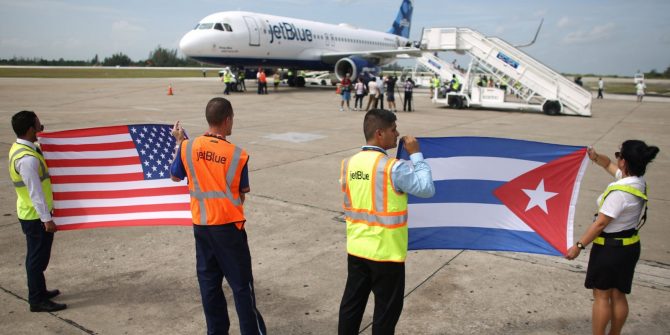
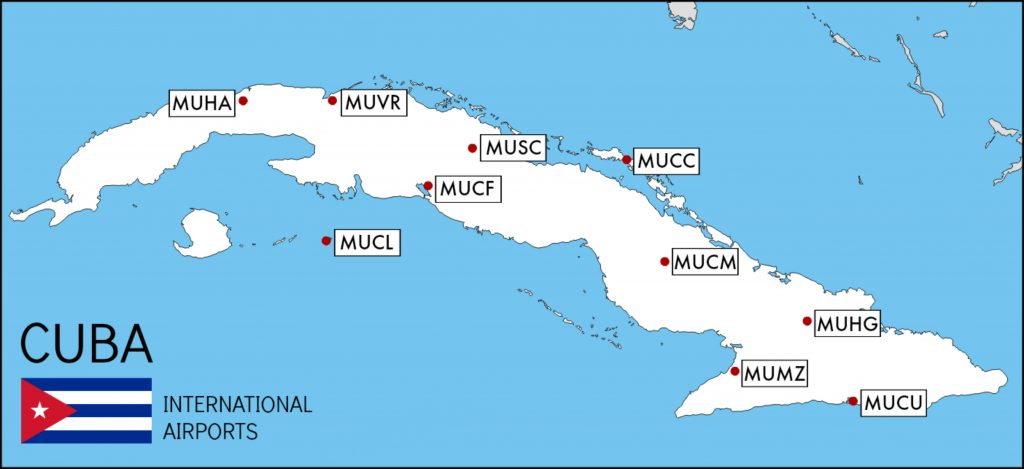
Total ban on US private flights to Cuba

Effective today, June 5th, no US private aircraft will be allowed to travel to Cuba. The rule comes from the BIS – the US Bureau of Industry and Security, part of a further clampdown on Cuba policy by the US government.

We spent the day here in OPSGROUP clarifying the new rules and what it means for US operators.

What happened? BIS issued a new rule today, June 5 called “Restricting the Temporary Sojourn of Aircraft and Vessels to Cuba”. [official copy here] [Guidance here]. 

This is tough to read and understand. Nothing new about that. So, we asked OPSGROUP, discussed it with a whole bunch of members, got some legal interpretation, and got some great help from the NBAA.

Here’s the plain English wrap up:

  • US Part 91 private flights: Effective June 5, you cannot operate an N-reg aircraft privately to Cuba for any reason. This includes Corporate. It doesn’t matter if your passengers meet the “category requirements (see later)”, it’s a no go. 
  • Part 135 Air Ambulance: You can go, and you don’t need a license. From the rules: “Air ambulances operating under 14 CFR part 135, may depart from the United States under its own power for any destination”. “Air ambulances will remain eligible for the license exception when destined to Cuba”.
  • Part 135 Charter: This was unclear because of the wording of the new rules. But you can go. We asked BIS specifically about this, and the wording of the new paragraph is meant to be read as a series of options that allow you to go to Cuba – 135 is covered under the “AOC holder” bit.
  • Part 129: You can go. Part 129 is foreign operators. An example would be Air Canada doing a charter from JFK-HAV. That’s allowed.
  • Part 121: No changes. Airlines can operate.

BIS vs OFAC

The first gatekeeper of Cuba rules is BIS. If they don’t prohibit your operation, eg. Part 91 – then you proceed to the second gatekeeper – OFAC, and look into whether you need a license, and what category your passengers are travelling under.

Categories of allowed travel

There were 12 categories – or “reasons” to be allowed to go to Cuba. There are now 11. The one removed was known as “People to people”. These are set by OFAC.

What does Cuba say?

Thanks to one of our members who called the Cuba CAA this morning, and got this:
In our country there is no regulation in this regard. They can fly over
and land registrations of any nationality without any distinction
provided they meet the requirements requested and that you know
all right
.”

As we would expect, none of the restrictions come from the Cuba side. So everyone continues to be welcome in Havana, it’s just the US government that is restricting matters for US operators.

A super simple FAQ

Can I fly my private C172 to Cuba?
No. 

Can I fly my owner to Cuba in a G550, if he passes the ‘category test’?
No. He can go, but has to go on a commercial service.

Can I operate a Corporate Jet to Havana, for business reasons?
No. Regardless of the reason the principles might want to go to Cuba, you cannot operate any aircraft under Part 91.

But I see in the rules that you can apply for an exemption from BIS?
Yeah, you can, but they will say no. “License applications for the temporary sojourn to Cuba of those vessels and aircraft are subject to a general policy of denial.”

Can I operate a charter flight to Cuba?
Yes. BIS rules don’t prohibit this. But you then need to look into the OFAC rules.

Can I go to Mexico first, and then to Cuba?
No. In their lengthy FAQ, “A license from the Bureau of Industry and Security (BIS) is required to fly private or corporate aircraft to Cuba, even if the aircraft stops in another country first.”. And y’all ain’t gettin’ no license.

I am a Canadian operator. Can I operate to Cuba?
Yep. This is all about US operators being restricted. You can fly direct to Havana like you always did, and under the Part 129 bit in the new rule, you can also operate from the US to Cuba. 

So, we think we have this all correct as the final version. If we don’t hear any objections, we’ll add this to the OPSGROUP databank, and make a blog post. From here, we will post this in the new Forum, and the discussion can continue there!

THANKS EVERYONE!

Great team effort today to get this into an understandable-by-humans format. Well done!


Another Pakistan overflight route reopens

Three months since the Pakistan airspace closure began, there are now finally some options for overflights between Pakistan and India.

Since April, there has only been one airway available for flights between the two countries – airway P518, for westbound flights only.

At that time, Pakistan also published a bunch of Notams saying that they would allow eastbound overflights on a few airways which connect Oman and India through Pakistan’s airspace over the Gulf of Oman, but initially India did not authorise the use of these.

That changed on 2nd June, when India published a Notam saying they would allow eastbound flights to enter Indian airspace at waypoint TELEM.

So now, piecing together the Notams issued by both countries, here are the options for overflights:

Westbound
Airway P518, from waypoint KABIM on the Pakistan/India border in the south, to either KEBUD or ASVIB on the the Pakistan/Iran border in the north.

Eastbound
Choice of two routes from waypoint ALPOR on the Oman/Pakistan border in the west, to waypoint TELEM on the Pakistan/India border in the east.

Some airlines have started using both these eastbound and westbound routes, although many continue to avoid Pakistan by routing south over the ocean instead.

India and Oman both therefore remain congested with extra flights – they have published Notams showing all the restrictions on the various different overflight routes, are advising operators to carry extra fuel, and to expect lower flights levels than requested.

Most of the Pakistan airspace restrictions which were introduced in Feb 2019 have been extended to 27 July: specific routes remain open for international flights to all the main airports in Pakistan, and for east-west overflights of the country (i.e. between China and Iran).

Why?
On Feb 26, Pakistan shot down an Indian military jet and captured a pilot in a major escalation between the two countries over disputed Kashmir. This came a day after India launched air strikes on militant bases across the border in Pakistan, which itself was a response to a deadly attack on Feb 14 when a militant killed more than 40 Indian troops in Kashmir. The captured pilot has since been returned to India, but tensions remain heightened between the two countries in wake of airstrikes by each side in areas in the border region.

Airspace warning
The US FAA has since updated its airspace warning for Pakistan, which now notes that military activity by Pakistan and India in the disputed Kashmir region poses a potential inadvertent risk to aviation at all altitudes. The US continues to warn against flying into or over Pakistan due to the risks posed by “extremist and militant activities”, although it does not recommend any specific minimum safe altitude for overflights; other countries advise FL250 or above, but we think FL300 is more sensible. More info

If you have further ops info to report, please do! Email us at blog@ops.group, or comment below.


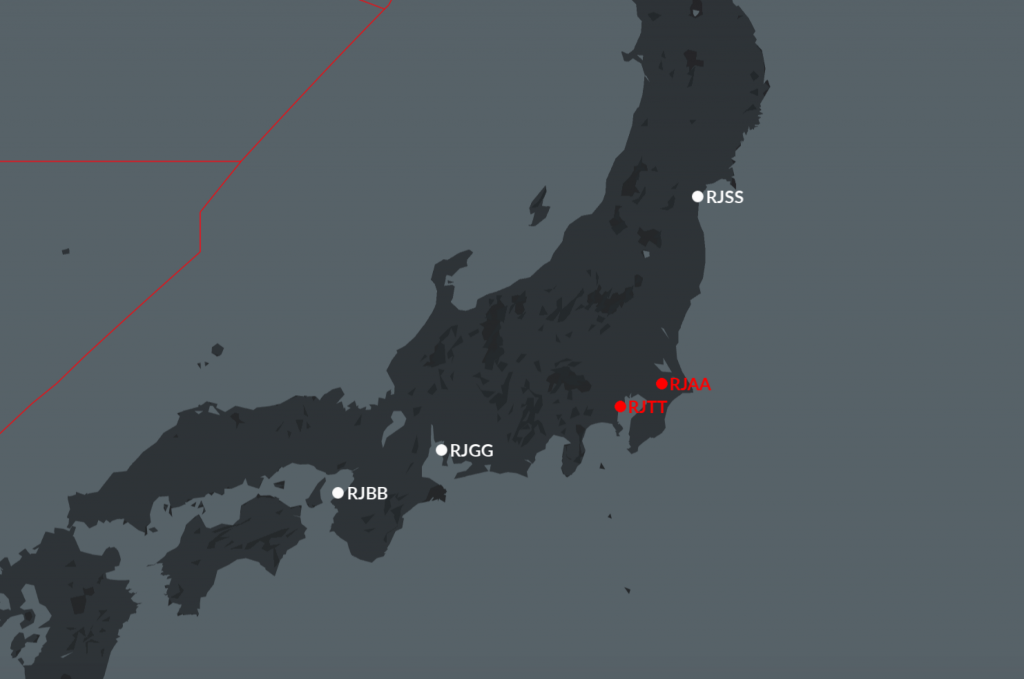
New rules for ops to Japan

Operators to all the main airports in Japan must now sign a statement saying they will take measures to ensure objects don’t fall off the aircraft. The authorities also want you to agree to pay compensation for any incidents where damage is caused by falling objects – potentially also when the falling objects don’t even come from your aircraft!

For the past ten years, Japan has required its own airlines to report any objects falling off aircraft during take-off or landing. But from March 2019, this applies to all foreign operators too. 

Japan published AIC 7/19 on 28 FEB 2019, which outlines the measures they require all crews to take when operating at Japan’s airports. It comes with two attachments which both need to be signed and returned to the Japanese authorities by post, prior to ops.

Technically, you must send hard copies of these to each airport you will fly to in Japan. However, local handler Aeroworks has told us that operators can email them copies of everything by email, along with a power of attorney letter, and they are authorised to pass everything on to local authorities – they can provide this service for most airports in the country.

Attachment 1: This lists all the measures to take, including: completely draining the lav/waste pipes prior to take off to prevent ice blocks from forming, confirming all panel doors are closed, inspecting for leaks, removing rainwater or snow from cargo when loading.

Attachment 2: This is a strange one. It says the following:

“In case that it is unable to identify one specific aircraft which caused the damage by falling objects from aircraft (hereinafter referred to as “the causing aircraft”) and to identify a person responsible for the compensation of the damage, and if the Falling Object Confirmation Committee established in Regional Civil Aviation Bureaus of Ministry of Land, Infrastructure, Transport and Tourism determines a presumably causing aircraft (hereinafter referred to as “the acknowledged aircraft”), the operator of the acknowledged aircraft shall bear the amount of expenses for compensation of the damage, proportionally divided by the number of the acknowledged aircraft.”

If we’re reading that right, that basically means if something falls off a plane and causes damage, and they can’t figure out which specific one it came from, whichever aircraft were in the area at the time may all be required to share the cost of paying for any compensation that may be due!

Over the past few years there have been a number of high-profile incidents in Japan where objects have fallen off aircraft. In September 2017, an aircraft panel fell onto a car driving on a busy street in Osaka; and in May 2018, a hospital in Kumamoto was sprayed with metal fragments from an aircraft that had suffered engine failure after taking off from RJFT/Kumamoto Airport. 

With the Tokyo Olympic Games coming up in July 2020, local authorities are keen to ensure no such incidents occur here.

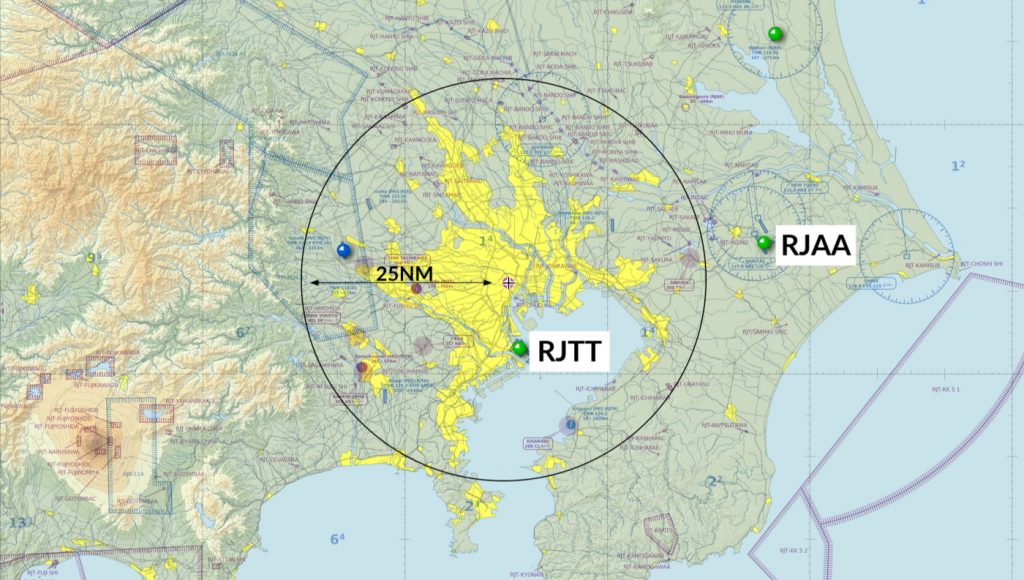
Airport authorities are looking at ways to increase slot capacity at Tokyo’s airports, and one such measure will be to revise the arrival routes to RJTT/Tokyo Haneda, which will mean that flights will operate almost directly over the city centre – and these new rules regarding objects falling off planes have been implemented in response to this.

Further reading
The presentation made by the Japanese delegation to ICAO’s Air Navigation Oct 2018 Conference, regarding the various measures taken to prevent objects falling off airplanes in Japan. Check it out here.
IFALPA has published a Safety Bulletin which provides some great info on the various different approaches that are available at RJTT/Tokyo Haneda, depending on the wind direction and the time of the day, with a focus on the reduced options available if operating overnight. Definitely worth a read if operating to RJTT. Check it out here.


Goose Bay: “Our runway is broken”

Larger jets will not be allowed to land on three out of four runways at Goose Bay for the next three months, as they’ve found cracks after the winter thaw. 

The airport has settled on a final version of their “Our runway is broken” Notam, and it looks like this:

05/037 – CYYR RWY 08, 26 AND 34 NOT AVBL FOR ACFT WITH TIRE PRESSURE OF 1.0MPA (145 PSI) OR GREATER AND ACFT WITH ACN/PCN OF 40 OR GREATER, EXC MEDEVAC AND AVBL AS EXTENDED RANGE TWIN-ENGINE OPS (ETOPS) ALTERNATE. 
21 MAY 14:01 2019 UNTIL 17 AUG 23:59 2019. CREATED: 21 MAY 14:06 2019

So not the most pilot-friendly piece of information! Unless you happen to know your tire pressure off-hand, best head for RWY 16, which is the only one that remains fully open and operational to all aircraft (the only reason RWY 34 is restricted is because aircraft using that runway touch-down on the intersection with RWY 08/26 – which is where some of the cracking damage has been found).

The Notam does state that the other three runways at CYYR can still be used an ETOPS alternate, meaning that you’re allowed to divert there in an emergency regardless of size, weight, tire pressure, or ACN. However, with the deteriorating runway conditions they’re also warning of possible aircraft damage due to loose sealant and asphalt:

05/038 (190206) – CYYR RWY 08/26 SFC IS DETERIORATING AND CRACKING AND MAY PRODUCE FOREIGN OBJECT DEBRIS (LOOSE SEALANT AND ASPHALT) ACFT DAMAGE MAY OCCUR. 23 MAY 18:20 2019 UNTIL 23 AUG 23:59 2019. CREATED: 23 MAY 18:24 2019

ACN vs PCN

The mention of “ACN/PCN” in Goose Bay’s Notam made us close our eyes and try to imagine a world where Notams just made immediate sense.

Knowing your tire pressure is one thing, but trying to work out your ACN number is a much more tricky business, as it has to factor in the aircraft’s maximum centre of gravity, maximum ramp weight, wheel spacing, tire pressure, and other factors. Your AFM should have a bunch of pages which tell you this (or you can have a quick look here instead).

Once you know your ACN number (or rather, ‘numbers’ – as there are different ACN numbers for each aircraft depending on the strength of the runway you’ll be landing on), you can then check it against the runway PCN number – the number issued for each runway which tells you what kind of surface it is, how strong it is, and what level of stress it is able to withstand.

Ultimately, if your aircraft’s ACN is equal to or less than the runway’s PCN, you’re good to go.

In the AIP, Goose Bay’s runway PCN is 076FBXU. The important bits here: 

  • the PCN number here is 76
  • the F means that the runway is ‘Flexible’ (i.e. made of asphalt rather than concrete)
  • the B means it is of ‘Medium’ strength
  • the X means it has maximum tire pressure of 1.75 MPa. 

So, under normal circumstances, CYYR has a runway PCN of 76, meaning most aircraft would be able to operate here:

But with all the runway cracking that’s been going on, Goose Bay’s PCN number is no longer accurate. It’s probably safer to assume the B is more like a D right now – runway strength ‘Very low’. And the new CYYR Notam suggests the new PCN number is 40 (as aircraft with an ACN number higher than that are not allowed to go there).

Other NAT alternates?

A quick check on GoCrow shows us there’s really nothing available to the north of CYYR:

But there are some decent options to the south:

This isn’t the first time Goose Bay has had problems with its runways. In Nov 2017, the airport was closed due to ‘sticky’ runways – during snow removal crack sealant was found on vehicles after they were used on the runways.

Further reading:

  • United Airlines has downgraded Goose Bay Airport’s suitability for diversions, after one of its flights with 250 passengers on board diverted there on 19th Jan 2019, and was then forced to spend 16 hours on the ground as there were not enough customs staff available to process everyone on board to enter Canada. Customs opening hours at the airport are 8am to midnight daily.

What’s going on in the Strait of Hormuz?

Amid rising tensions between the US and Iran, on 16th May the US FAA issued a new Notam and Background Notice advising operators to exercise caution in the overwater airspace above the Persian Gulf and Gulf of Oman.

The US has deployed warships and planes to the region, and withdrawn embassy staff from Iraq in recent days, and Iran has allegedly placed missiles on boats in the Persian Gulf.

In their Background Notice, the US FAA say that “Iran has publicly made threats to US military operations”, and are concerned about “a possible risk of miscalculation or misidentification, especially during periods of heightened political tension and rhetoric.” They also warn of increased GPS jamming by Iran throughout this region.

The US published another airspace warning for Iran back in September 2018, but that was mainly focussed on the risks of overflying Iran itself due to missiles fired from sites in the far west of the country against targets in Syria. That warning only made passing reference to the Gulf region – the only tangible risk at that time being due to Iran’s “test launches” in the area between Iran and Dubai, where the Iranian military regularly fire missiles during drills to practise blockading the Strait of Hormuz. 

In May 2018, the US pulled-out of the Iran nuclear deal, and re-imposed sanctions. Since then, the relationship between the two countries has rapidly gone downhill. This week, the White House Press Secretary said that Washington would continue its “maximum pressure” campaign on Iran, adding the US would like to see “behavioural change” from the country’s leadership. 

With the military build-up in the Gulf region, the US government has been quick to defend its actions, but the message seems to be clear: we don’t want war, but we’re ready for one.

As National Security Adviser John Bolton said in a statement this week: “The United States is not seeking war with the Iranian regime… but we are fully prepared to respond to any attack, whether by proxy, the Islamic Revolutionary Guard Corps or regular Iranian forces.”

The full FAA Notam and Background Notice text is below. SafeAirspace.net is now updated with the new information.

KICZ NOTAM A0015/19 
SECURITY..UNITED STATES OF AMERICA ADVISORY FOR OVERWATER AIRSPACE ABOVE THE PERSIAN GULF AND GULF OF OMAN. 

THOSE PERSONS DESCRIBED IN PARAGRAPH A BELOW SHOULD EXERCISE CAUTION WHEN OPERATING IN OVERWATER AIRSPACE ABOVE THE PERSIAN GULF AND THE GULF OF OMAN DUE TO HEIGHTENED MILITARY ACTIVITIES AND INCREASED POLITICAL TENSIONS IN THE REGION, WHICH PRESENT AN INCREASING INADVERTENT RISK TO U.S. CIVIL AVIATION OPERATIONS DUE TO THE POTENTIAL FOR MISCALCULATION OR MIS-IDENTIFICATION. ADDITIONALLY, AIRCRAFT OPERATING IN THE ABOVE-NAMED AREA MAY ENCOUNTER INADVERTENT GPS INTERFERENCE AND OTHER COMMUNICATIONS JAMMING, WHICH COULD OCCUR WITH LITTLE TO NO WARNING. 

A. APPLICABILITY. THIS NOTAM APPLIES TO: ALL U.S. AIR CARRIERS AND COMMERCIAL OPERATORS; ALL PERSONS EXERCISING THE PRIVILEGES OF AN AIRMAN CERTIFICATE ISSUED BY THE FAA, EXCEPT SUCH PERSONS OPERATING U.S.-REGISTERED AIRCRAFT FOR A FOREIGN AIR CARRIER; AND ALL OPERATORS OF AIRCRAFT REGISTERED IN THE UNITED STATES, EXCEPT WHERE THE OPERATOR OF SUCH AIRCRAFT IS A FOREIGN AIR CARRIER. 

B. PLANNING. THOSE PERSONS DESCRIBED IN PARAGRAPH A PLANNING TO OPERATE IN THE ABOVE-NAMED AREA MUST REVIEW CURRENT SECURITY/THREAT INFORMATION AND NOTAMS; COMPLY WITH ALL APPLICABLE FAA REGULATIONS, OPERATIONS SPECIFICATIONS, MANAGEMENT SPECIFICATIONS, AND LETTERS OF AUTHORIZATION, INCLUDING UPDATING B450. 

C. OPERATIONS. EXERCISE CAUTION DURING FLIGHT OPERATIONS DUE TO THE POSSIBILITY OF INTERRUPTIONS TO INTERNATIONAL AIR TRAFFIC DUE TO HEIGHTENED MILITARY ACTIVITIES AND INCREASED POLITICAL TENSIONS IN THE REGION. POTENTIALLY AFFECTED OVERWATER AIRSPACE ABOVE THE PERSIAN GULF AND THE GULF OF OMAN INCLUDES PORTIONS OF THE TEHRAN FIR (OIIX), BAGHDAD FIR (ORBB), KUWAIT FIR (OKAC), JEDDAH FIR (OEJD) , BAHRAIN FIR (OBBB), EMIRATES FIR (OMAE), AND MUSCAT FIR (OOMM). THOSE PERSONS DESCRIBED IN PARAGRAPH A MUST REPORT SAFETY AND/OR SECURITY INCIDENTS TO THE FAA AT +1 202-267-3333. 

SFC – UNL,16 MAY 23:11 2019 UNTIL PERM. CREATED: 16 MAY 23:17 2019

FAA Background Information Regarding U.S. Civil Aviation – For the Overwater Airspace Above the Persian Gulf and Gulf Of Oman Region.

Due to increased political tensions and heightened military activities in the region, there is an increasing inadvertent risk to U.S. civil aviation operating in overwater airspace above the Persian Gulf and Gulf of Oman. As a result, on 16 May 2019, the FAA issued Notice to Airmen (NOTAM) KICZ A0015/19, advising U.S. civil flight operations to exercise caution when operating in the above area. 

Iran has publicly made threats to U.S. military operations in the Gulf region. In addition, Iran possesses a wide variety of anti-aircraft-capable weapons, including surface-to-air missile systems (SAMs), man-portable air defense systems (MANPADS) and fighter aircraft that are capable of conducting aircraft interception operations. Some of the anti-aircraft-capable weapons have ranges that encompass key international air routes over the Persian Gulf and the Gulf of Oman. Additionally, Iran recently conducted a military exercise in the region, demonstrating their unmanned aircraft system (UAS) capabilities. Although Iran likely has no intention to target civil aircraft, the presence of multiple long-range, advanced anti-aircraftcapable weapons in a tense environment poses a possible risk of miscalculation or misidentification, especially during periods of heightened political tension and rhetoric. 

There is also the potential for Iran to increase their use of Global Positioning System (GPS) jammers and other communication jamming capabilities, which may affect U.S. civil aviation operating in overwater airspace over the Persian Gulf and the Gulf of Oman. 

The FAA will continue to monitor the risk environment for U.S. civil aviation operating in the region and make adjustments, as necessary, to safeguard U.S. civil aviation.


Beijing Airport is filling up fast

There always seems to be some kind of random event going on in Beijing making life hard for GA/BA ops. This month it’s the Conference on Dialogue of Asian Civilizations, and already the parking situation for GA/BA is starting to look pretty bleak.

ZBAA/Beijing

There are two main periods with heavy restrictions: 

0800L on 13 May to 0800L on 17 May
0800L on 21 May to 0800L on 24 May

(Beijing local time is UTC+8, so you can read those times as 0000z).

During these periods, only one slot will be made available per hour for aircraft not connected with the event, and no overnight parking will be allowed. So that means short turnarounds might be possible, but you’ll be lucky to get a slot. 

Plus there’s the other standard ongoing rule at ZBAA to keep in mind:

Daily between 0900-2200L, GA/BA can only make one movement per aircraft.

So this means that if you arrive during this period you then have to wait til 2200L before you’re allowed to depart again! Confusing? You bet.

ZBTJ/Tianjin

Many operators like to use cheeky ZBTJ/Tianjin as an alternative to ZBAA/Beijing, but it’s now getting busy here too. Local handlers here are saying that ZBTJ is not allowing any overnight parking for GA/BA at all right now, and even some requests for short-term parking are being denied as well.

This is related to ongoing construction work planned through to the end of June, which means a bunch of stands are closed, and with an influx of aircraft shifting over from ZBAA, there’s less space all round.

ZBSJ/Zhengding

Where?? Fair question. We had to find it on a map. Zhending! Home to… well, not very much, by the looks of it. Unless temples, towers, and Olympic table tennis training centres are your thing.

But the good news is that the airport currently has no restrictions on GA/BA flights. Although they don’t have an FBO or VIP lounge here (#notsurprised), the airport has a nice long 11,000ft runway, and is open H24. You can get in touch with Mainland GroundExpress to arrange handling here.


Fly it like you stole it – free speed on the NAT

This is a new one, and it’s a good one for pilots! Being introduced slowly is a new flexibility – flying without a fixed Mach speed. In simple terms, you get to decide how fast you fly.

Like all new things on the NAT, we have an acronym. This one is OWAFS. Operations Without an Assigned Fixed Speed. But you’ll also see it as referred to as “Variable Mach”, and “Resume Normal Speed”.

When does this start?

It already has! It’s starting out as a trial (everything on the NAT starts out as a trial), and some members are already reporting getting “RESUME NORMAL SPEED” messages from Shanwick. The official start date is April 8, 2019. Three OACC’s are doing this – Shanwick, Santa Maria, and New York Oceanic (not WATRS).

For no good reason, here’s a picture of the Shanwick Oceanic control room in 1989. Much has changed since!

How does it work?

You’ll get a normal oceanic clearance, with a fixed Mach Number, like you always did. Somewhere after the Oceanic Entry Point, if you are selected for the trial, you’ll get a CPDLC message saying RESUME NORMAL SPEED. You should reply with WILCO. What that means is: Fly ECON, or a Cost Index with Variable Mach.

So, once I get that, no restrictions on speed?

Correct! But, ATC will expect you to fly ECON/Cost Index, and normally, that should be pretty close to your cleared Mach (within 0.01 up or down). If you’re doing something different, tell them. If the resulting speed differs from your Oceanic Clearance Mach by 0.02, or more, you must tell ATC.

Rules for Shanwick (Don’t ask for it)

• Flight must be data link connected to EGGX
• Flight must be eastbound and operating solely in Shanwick Oceanic airspace and exiting into UK/Ireland/Continental European airspace
• Flight cannot exit into Santa Maria
• RESUME NORMAL SPEED will be offered on a “manual” tactical basis
Do not request RESUME NORMAL SPEED

Rules for New York and Santa Maria (You can ask)

• Flight must be data link connected to LPPO or KZWY
• Flights must be wholly within Santa Maria and New York East Oceanic airspace and not enter Gander or Shanwick airspace
• Flights can enter New York East Oceanic airspace or Santa Maria airspace from Gander airspace or Shanwick airspace and receive RESUME NORMAL SPEED uplink message
• New York West (WATRS airspace) is excluded
• RESUME NORMAL SPEED can be requested if not offered

Background and History

(Thanks, Jeff Miller @IATA, for this and the condensed info above!)

Both Airbus and Boeing advocate cost index (ECON) as the most efficient way to fly. Operators use cost index (ECON) globally, except for the North Atlantic (NAT) where flights are assigned a fixed Mach by ATC and flight crews are required to fly the assigned Mach. Depending on the distance from the departure airport to the oceanic entry, most operators flight plan the aircraft with cost index to the oceanic entry point and again after oceanic exit. Flight crews use the desired fixed Mach number from the computer flight plan that is generated by the cost index, as the requested Mach number for the crossing. It is possible the flight crew may request a Mach greater than or less than the flight plan Mach to improve scheduled arrival time. IATA led the ICAO NAT, Operations Without an Assigned Fixed Speed (OWAFS) project team to enable the use of a variable Mach in the NAT. The North Atlantic Systems Planning Group (NAT SPG) is expected to fully endorse OWAFS late June 2019 for an official implementation in late 2019 for all NAT OCAs. Full automation for all Air Navigation Service Providers (ANSPs) is expected by Q1 2020.

So I can use this for turbulence speed changes?

Yep, but remember, if you’re slowing down or speeding up significantly (0.02 or more), tell ATC your new speed.

Anything else?

That’s it for now. Remember, it’s a trial – later in the year full implementation is expected. Don’t ask for it if you aren’t offered, unless you’re in New York or Santa Maria airspace. Tell ATC if you’re changing by 0.02 or more from the Oceanic Clearance.

And most importantly, keep us posted on your experiences with this!


“THIS NOTAM IS AN EMERGENCY ORDER” – FAA on Venezuela

At 8.30pm tonight, the FAA issued a new “Do Not Fly” instruction to US operators, barring all operations into or over Venezuela, unless operating at or above FL260, and giving a window of 48 hours to leave the country.

The order comes on a day of an information battle waged between Maduro and Guaidó, and although the coup status is uncertain, one thing is clear: taking your aircraft to Venezuela is not a good idea.

The new Notam, KICZ A0013/19, has as postscript: “THIS NOTAM IS AN EMERGENCY ORDER ISSUED UNDER 49 USC 40113(A) AND 46105(C).” It gives US operators 48 hours to leave Venezuela.

Over the past year, the situation in Venezuela has steadily declined, and in OPSGROUP we have issued multiple alerts and warnings, most recently today, on the back of several member reports:

The Venezuelan authorities had also published a Notam on 30 APR banning all GA/BA flights from operating to/from airports in the country, but this has since been cancelled.

The new FAA Notam leads with:

“ALL FLIGHT OPERATIONS IN THE TERRITORY AND AIRSPACE OF VENEZUELA AT ALTITUDES BELOW FL 260 BY THE PERSONS DESCRIBED IN PARAGRAPH A BELOW ARE PROHIBITED UNTIL FURTHER ADVISED DUE TO INCREASING POLITICAL INSTABILITY AND TENSIONS IN VENEZUELA AND THE ASSOCIATED INADVERTENT RISK TO FLIGHT OPERATIONS.”

and is issued as a Permanent Notam with no expiration date.

Rerouting options for overflights choosing to avoid, would be either west via Colombia, or east via Guyana and Piarco.

The full FAA Notam text is below. SafeAirspace.net is now updated with the new information.

FAA Notam KICZ A0013/19 issued May 1st, 2019, 0025Z.:

KICZ A0013/19 – SECURITY..UNITED STATES OF AMERICA PROHIBITION FOR
VENEZUELA

ALL FLIGHT OPERATIONS IN THE TERRITORY AND AIRSPACE OF VENEZUELA AT ALTITUDES BELOW FL
260 BY THE PERSONS DESCRIBED IN PARAGRAPH A BELOW ARE PROHIBITED UNTIL FURTHER ADVISED
DUE TO INCREASING POLITICAL INSTABILITY AND TENSIONS IN VENEZUELA AND THE ASSOCIATED
INADVERTENT RISK TO FLIGHT OPERATIONS.

A. APPLICABILITY. THIS NOTAM APPLIES TO: ALL U.S. AIR CARRIERS AND COMMERCIAL OPERATORS;
ALL PERSONS EXERCISING THE PRIVILEGES OF AN AIRMAN CERTIFICATE ISSUED BY THE FAA, EXCEPT
SUCH PERSONS OPERATING U.S.‐REGISTERED AIRCRAFT FOR A FOREIGN AIR CARRIER; AND ALL
OPERATORS OF AIRCRAFT REGISTERED IN THE UNITED STATES, EXCEPT WHERE THE OPERATOR OF
SUCH AIRCRAFT IS A FOREIGN AIR CARRIER.

B. PERMITTED OPERATIONS. THIS NOTAM DOES NOT PROHIBIT PERSONS DESCRIBED IN PARAGRAPH
A (APPLICABILITY) FROM CONDUCTING FLIGHT OPERATIONS IN THE ABOVE-NAMED AREA WHEN
SUCH OPERATIONS ARE AUTHORIZED EITHER BY ANOTHER AGENCY OF THE UNITED STATES
GOVERNMENT WITH THE APPROVAL OF THE FAA OR BY A DEVIATION, EXEMPTION, OR OTHER
AUTHORIZATION ISSUED BY THE FAA ADMINISTRATOR. OPERATORS MUST CALL THE FAA
WASHINGTON OPERATIONS CENTER AT 202-267-3333 TO INITIATE COORDINATION FOR FAA
AUTHORIZATION TO CONDUCT OPERATIONS.

C. ALLOWANCES. PERSONS DESCRIBED IN PARAGRAPH A ABOVE WHO ARE IN THE TERRITORY AND
AIRSPACE OF VENEZUELA AT THE TIME THIS NOTAM IS ISSUED MAY DEPART THE TERRITORY AND
AIRSPACE OF VENEZUELA BY THE MOST EXPEDITIOUS POSSIBLE ROUTE WITHIN 48 HOURS FROM THE
TIME THIS NOTAM IS ISSUED, IF THE PILOT IN COMMAND DETERMINES THAT THE OPERATION CAN
BE CONDUCTED SAFELY.

D. EMERGENCY SITUATIONS. IN AN EMERGENCY THAT REQUIRES IMMEDIATE DECISION AND ACTION
FOR THE SAFETY OF THE FLIGHT, THE PILOT IN COMMAND OF AN AIRCRAFT MAY DEVIATE FROM THIS
NOTAM TO THE EXTENT REQUIRED BY THAT EMERGENCY.

THIS NOTAM IS AN EMERGENCY ORDER ISSUED UNDER 49 USC 40113(A) AND 46105(C).
SFC – FL259; 01 MAY 00:25 2019 UNTIL PERM. CREATED: 01 MAY 00:28 2019


Sudan airspace reopens

Sudan airspace reopened at 1200Z on Apr 12, having been closed for 24hrs following a military coup.

So the HSSS FIR is now once again open for overflights. As for flights to HSSS/Khartoum Airport, all the airlines who were forced to cancel flights during the airspace closure have now resumed operations, and Opsgroup members have reported receiving landing permissions from the authorities again. Local handlers have told us: “The airport is now functioning normally with more security support”.

The military has declared a three month state of emergency, and has deployed soldiers to secure key sites around Khartoum, with armoured vehicles and tanks parked in the streets. Protests against the new military government are still ongoing, although there have not been many reports of any violence. A nightly curfew was introduced on 11 APR for Khartoum between the hours of 10pm and 4am, but this was later lifted.

In response to the military coup, the U.S. has now issued an updated Travel Advisory for Sudan and raised its level of advice from “Level 3: Reconsider Travel” to “Level 4: Do Not Travel.”

Despite all this, still only one international airspace warning exists for Sudan, which was issued by France last year and modified in Jan 2019, recommending overflight above FL200 in the country’s southern edge (where Sudan borders with South Sudan) and western edge (where Sudan borders with Central African Republic and Chad). France’s warning for South Sudan remains the same: overflights should be at FL240 or above. More info at Safeairspace.


Malaysia and Singapore agree truce over Seletar airspace closure

Update Apr 6: The Malaysian authorities have now lifted the airspace closure north of Seletar again, and in return Singapore will abandon plans for ILS at the airport – and will now draw up plans for GPS approaches instead. The new agreement brings an end to days of disruption, with operators having to take off and circle overhead to 6000ft before being cleared enroute; it will also allow Malaysian airline Firefly to commence planned flights to Singapore, which had been postponed since Dec 2018 due to the dispute.

The new ILS approach on RWY 21 at WSSL/Seletar airport was due to take effect on 3rd Jan 2019, but Malaysia effectively killed it.

They claimed that the ILS approach –most of which lies within Malaysia’s airspace to the north of the airport– would impose height restrictions around the Pasir Gudang industrial area, and would stunt growth in the area.

Malaysia decided to create a no-fly-zone across an entire chunk of airspace just across the border from Singapore, up to 6000ft. This ultimately would have made RWY 21 ILS approaches at WSSL/Seletar impossible.

Singapore and Malaysia’s foreign ministers have met multiple times this year to discuss the issue, eventually resulting in Malaysia agreeing to cancel the restricted airspace they imposed, and in return Singapore agreeing to abandon the ILS procedures.

Discussions are set to continue regarding a wider ongoing dispute over airspace sovereignty, with Malaysia saying it wants to take back airspace delegated to Singapore under an agreement in 1974.

In other news: The night curfew at Seletar is now in effect. AIP SUP 86/2018 confirms that with effect from 1st Jan 2019, the airport will be closed to all flights (except medevac and emergency diverts) nightly from 22-07 local time.


Greenbacks and Greenland – $3000 to file as an alternate

Trans-atlantic operators who have been putting RALT/BGBW or RALT/BGSF on their flight plans have been receiving hefty invoices post-flight.

Both BGBW/Narsarsuaq and BGSF/Kangerlussuaq are popular airports to use in flight planning as an emergency divert and for ETOPS, as they are perfectly positioned right in the middle of the big empty chunk of nothing that exists between the east coast of Canada and Iceland.

Both airports are open Mon-Sat 11-20z (8am-5pm local time), and completely closed on Sundays and on public holidays (watch out for these sneaky ones!).

So if you file a flight plan with either as alternates from Mon-Sat 11-20z, you won’t get charged.

But outside these hours, you will get charged. It gets slightly complicated here: the charges in the box below apply when they stay open for you to use as an ETOPS alternate at any time that they are closed (which is between 20-11z), but there’s an extra 10% charge on top of that for any time they are closed and fast asleep in bed, (which is between 00-08z). Got it?

Important to note: these get charged even if you don’t actually divert to BGBW/BGSF. 15,870 Danish Krone equates to $2585 USD!

If you want them to stay open for you to use as an ETOPS alternate, you need to put RALT/BGBW or RALT/BGSF in your flight plan – they’ll see it, and will stay open for at the times you need. But bear in mind that if they’re closed already at the time you file your flight plan, they won’t see it! So they prefer you to do it properly and arrange everything in advance by email: get in touch with them at PPR@mit.gl

If you get an invoice from a company called Global Aviation Data A/S, unfortunately it’s not a scam email – they are the guys who work with Greenland Airports to collect the monies owed when operators request these airports to stay open for them.

The really interesting thing is this – if more than one operator asks BGBW/BGSF to stay open for them at the same time, the costs are not shared between these operators – they both have to pay the standard fees! That’s great news for the Government of Greenland, who will be getting paid multiple times by different operators for BGBW/BGSF to stay open at the same time!